Author: Kat

  • How Do I Get A National Insurance Number (Everything You Need to Know)

    How Do I Get A National Insurance Number (Everything You Need to Know)

    National Insurance is simply a type of tax which employers, employees, and those who are self-employed pay money into the Her Majesty’s Revenue and Customs (HMRC). It is used to fund state benefits, such as the State Pension and Maternity Allowance.

    For those coming from Australia think of a National Insurance Number like a Tax File Number, for Kiwis it is similar to an Inland Revenue Department (IRD number) or for Canadians it is similar to your Social Insurance Number (SIN).

    What is a National Insurance Number?

    This is the unique number provided to you once your application has been successful. You will receive a letter that will include the National Insurance number which will be two letters, six numbers and another letter, for example, SR 123456 A.

    The number will be used by the HRMC use to track the amount you have contributed and therefore what you are entitled to.

    You can find your National Insurance number:

    • on your payslip
    • on your P60 (end of year tax summary)
    • on letters about your tax, pension or benefits
    •  in the National Insurance section of your personal tax account.

    Applying for National Insurance

    Where do I get a National Insurance Number From?

    To get a National Insurance number you will need to apply by phone. The line is open Monday to Friday from 8am to 6pm, the phone number is 0345 600 0643.

    Just to note that numbers that start with 0345 can be charged at a higher rate depending on whether it is a mobile, landline and the phone company you are using. Here are some approximate costs you can expect, for a landline phone for approximately one minute are 9p and a mobile phone for approximately one minute are between 3p to 55p.

    Alternatively, you can pay a company to organise this for you. Companies will offer starter kits, for example, 1st Contact and Britbound offer these. It will take the stress out if setting up a bank account and national insurance.

    I recommend the package called ‘The Social One’ with Britbound which will set you back £75. I am not affiliated with Britbound, they were just awesome when I moved to the UK.

    What Happens When You Apply for a National Insurance Number?

    Jobcentre Plus will advise whether you need to attend an ‘Evidence of Identity’ interview or send you a postal application.

    If you require an interview confirm the date, time and location of your interview and what information/documentation you need to support your application.

     A post application will require you to fill out the form and attach the relevant information. For example, mine I attached a copy of my passport and visa with in the application.  

    As I mentioned above I used a company to apply for my National Insurance number and it was the simple post application.

    National Insurance Number Interview

    The Jobcentre may ask you to attend an interview during the application process. If you are requested to attend a national Insurance number interview, you will be asked about your circumstances and why you need a National Insurance number so nothing to scary. You will also need to bring the supporting documents to bring to prove your identity, such as:

    • passport or identity card
    • residence permit
    • birth or adoption certificate
    • marriage or civil partnership certificate
    • driving licence

    Can I apply for a National Insurance Number Before I Move to the UK?

    You need to be in the UK to apply for your National Insurance Number (NIN) so this cannot be done before you arrive.

    There is one exception to the rule which is on some types of visa, you may have a National Insurance (NI) number printed on the back of your biometric residence permit (BRP). If this is the case you will not need to apply for a National Insurance Number.

    Do I Need to Have a Secure Address to Apply?

    Yes, you do need a secure address and cannot be a hotel, hostel or B &B. This is the part I struggled with when I first moved here! I was going around in circles without having a secure address and this was the main reason why I ended up using Britbound. They provide a secure address that I could use which just made the whole start-up process easier. To find out more about the getting an address here.

    The important thing to remember is that the address used for your NI application is going to become the default mailing address for any correspondence from the HMRC. If you do use a temporary address make sure you add this to your change of address checklist.

    National Insurance Payments

    How Much Will I Pay?

    National Insurance is based on your gross earnings so if you earn more than £162 a week (this is the figure for the tax year 2018 to 2019) then you will have to pay NICs. Just like any tax this will vary depending on how much you earn will reflect how much you pay.

    For 2018 to 2019 tax year you will pay:

    • £162 to £892 a week (£702 to £3,863 a month) 12%
    • Over £892 a week (£3,863 a month) 2%

    As an employee, the money you earn (your salary or hourly wage) is called your gross pay. When deductions from your gross pay such as tax and National Insurance have been taken off, the amount left (and what is paid into your bank account) is called your net pay. You can see what your gross pay was and how much has been deducted on your payslip.

    When do I Pay National Insurance?

    National Insurance contribution is taken from your gross pay (your salary or hourly wage). When you receive your payslip, it will state the amounts that have been deducted for National Insurance and Income tax. You won’t pay this if you do not meet the tax threshold.

    If you are self-employed then you will need to set up a regular payment to the HMRC to cover this requirement.

    Will I have to pay National Insurance? And Is National Insurance essentially another tax?

    Yes, anyone working in the UK will have to National Insurance. You will always see two tax lines on your payslips so Income tax and National Insurance number.

    What do National Insurance payments pay for?

    Your National Insurance contributions will go towards various state benefits and services, including:

    • The NHS
    • The State Pension
    • Unemployment benefits
    • Sickness and disability allowances

    Other Handy National Insurance Information!

    Who Needs to Know My National Insurance Number?

    Once you get your National Insurance there are a couple of people that will need to know about your National Insurance number will be companies that have an input or output for tax, so:

    • HM Revenue & Customs (‘HMRC’)
    • Employers and pension providers
    • Department for Work and Pensions
    • the Student Loans Company
    • Banks and building societies if you want to open an ISA.

    What Do I Do If I Lose or Forget My National Insurance Number?

    If you have lost or forgotten your National Insurance number you can either contract the HM Revenue and Customs, complete the online form on the HMRC website or call the National Insurance enquiries helpline on 0300 200 3500 (lines are open 8am to 5pm, Monday to Friday).

    Can I Start Work Without a National Insurance Number?

    Yes, you can start work without a National Insurance number. Employers should understand that organising a NI number for the first time is a process and will take a few weeks.

    Smaller companies may not be familiar with employing someone who has headed here from overseas to work and could expect you to have one when you start.  If you are met with any employer who tells you they cannot employ you without an NI number, this is incorrect and you can refer to the HRMC which states that you can start without a NI Number.

    Can My Employer Pay Me Without a National Insurance Number?

    Yes, your employer can pay you without a National Insurance Number and you will be generally be taxed with an emergency tax code until you have been issued with an NI number from HMRC. Emergency tax is at a higher rate.

    Is National Insurance a Replacement for Travel Insurance?

    National Insurance is not a replacement for travel insurance as it is just another form of tax. Some of the tax contributions does go towards funding the National Health Service (NHS) which is where the confusion comes from.

    Being covered by the NHS (for EU passport holder or visa that allows you to work or study here for a period of more than six months) means you do not pay to see a doctor or visit a hospital. You can additionally pay for private health insurance as well, this is down to personal choice and whether you want to.

    Do I Still Need to Get Travel Insurance?

    Yes! National Insurance is not the same as travel insurance. It won’t cover you for cancelled flights, lost luggage and all of those added extras that travel insurance comes with. I recommend that you get travel insurance for the first few months whilst you establish yourself in the UK.

    I Have Paid an Immigration Health Surcharge (IHS) Fee – Do I Still Have to Pay National Insurance?

    Yes, you will need to pay both. It is one of those “unfair” things that the government has added to those coming to the UK on visas.

    More Moving to the UK Articles

  • Things to Organise Before Moving to the UK

    Things to Organise Before Moving to the UK

    So you’re moving to the UK. Massive, also, you’ve just signed yourself up for a five-month admin project disguised as the best decision you’ll ever make. I’ve done this move (badly, the first time, more on that in a minute), so here’s the checklist I wish someone had handed me: month by month, no fluff, so your last few weeks at home go to people you love instead of a spreadsheet.

    Download the free checklist it’s a Google Sheet, tick things off as you go, it can take the chaos so your brain doesn’t have to.

    5 Months Out: Paperwork o’clock

    Sort Your Visa Situation First

    Everything else on this list is scenery until this box is ticked. If you’re not a UK or Irish citizen, your visa is the whole game: start here, not last.

    You can only apply around 3 months before you travel, but “prepare” starts now. Work out which visa you actually need on GOV.UK’s visa overview, because the requirements are genuinely different route to route. As a baseline you’re looking at:

    • A valid passport
    • Proof you meet the financial requirement for your visa (usually needs to sit in your account for a set stretch of time before you apply; check the current figure on GOV.UK, it moves)
    • The visa fee plus the Immigration Health Surcharge (this funds your NHS access, it’s not optional)

    Worth knowing if you’re on a Youth Mobility Scheme visa (this used to be called “Tier 5”; if you’re seeing that name anywhere, you’re on an old page): some nationalities now go through a ballot before they’re even invited to apply, so build that extra step into your timeline. Everything runs through GOV.UK directly now, there’s no separate third-party portal.

    Coming to the UK on the Ancestry visa route instead? Here’s exactly how I applied for mine. And if you’re worried about needing a job lined up before you can move at all, here’s how I did it without one.

    The Pivot: work out your visa route today, even if you can’t apply yet. Everything downstream of this (job hunting, flights, accommodation) gets easier once you know your timeline.

    Check Your Passport is Valid

    Check Your Passport is Valid​

    Your passport needs more than a year’s validity from your UK arrival date. If it doesn’t clear that bar, renew it before you touch the visa application; a visa tied to an expiring passport is a problem you don’t want to discover at the airport.

    Most countries run an embassy or consulate in the UK that can renew your passport once you’re here too, so it’s not the end of the world if you land and realise.

    Purchase Your Flights! (Optional)

    Book Your Flights

    The fun part. The main UK airports for long-haul arrivals are Heathrow and Gatwick. If you’re coming from Australia, Canada, the US or South Africa, you’ll almost certainly land at one of the two.

    You don’t have to book before your visa’s approved; some people wait, some people don’t, it’s genuinely a vibes call. What’s not optional: there’s no physical card to collect anymore. The old “pick up your BRP within a month of arrival” step is gone. The UK moved to a fully digital eVisa system. Your status lives online, in a UKVI account, linked to your passport. Set that account up as soon as your visa’s approved, not after you land; it’s one less thing to think about jet-lagged.

    Worth It / Not Worth It, booking early: Worth it if you’re travelling over Christmas, Easter or peak summer, when fares climb fast. Not worth it if your visa timeline is still shaky; a flexible or fully refundable fare costs more up front but saves you a rebooking headache if your dates move.

    4 Months Out: The Great Unpacking

    Organise Your Belongings

    While 4 months may seem like a long time away it can take a while to organise your belongings especially when you need to sell a car or decided what to do with your furniture so it’s good to start having a plan on what you are doing with your belongings.

    Then make a list of what you are taking with you, keeping (storage, at your parents etc), selling, donating and throwing away.

    I was lucky enough to store my belongings at my parents’ house and I just ended up donating the rest as I left it so last minute to sell anything.

    Check If You Require Any Qualifications or Permits to Work in the UK

    Check if you have restrictions, permits or qualifications required for your job in the UK, the lead time, supporting information and process.

    As I am sure you are aware each country will have its own standards for each industry. Some professions will require you to be certified in the UK or have restrictions/permits around certain jobs. For example, health professionals can check what license you require on the Health & Care Professional Council, here.

    Not all international qualifications can be transferred and be able to do the same job. My friend couldn’t work as a pharmacist on her New Zealand qualification, so she’s had to work as pharmacist’s assistant.

    If you are unclear of what qualifications or permits are required I suggest speaking to a UK recruiter in your field. They should be able to recommend what companies are looking for in terms of qualifications or permits.

    Sometimes permits are referred to as a UK Visa which is unhelpful when you are trying to find job-specific permits so make sure you are specific when explaining.

    3 Months Out: Go-Time

    Apply For Your Visa

    This is the mark. Get your visa application in the second you’ve got your supporting documents together, applying via GOV.UK directly for whichever route applies to you (Youth Mobility Scheme, Ancestry, family, skilled worker, etc.). Decisions typically land within a few weeks, though timing varies by country and route; check current processing times on GOV.UK before you plan around a date.

    Start Job Hunting, Tentatively

    The stressful bit. Job markets don’t translate 1:1 country to country. Do your homework on realistic UK salary expectations for your role before you start applying. While you’re browsing job ads, note the keywords and phrases that keep coming up and work them into your CV, because ATS systems and recruiters both respond to them.

    Receipts: most UK recruiters won’t seriously engage until you’re already in the country. This happened to my mum when she moved over, and it happened to me too. Tentative applications now, real traction once you land.

    Update Your CV and LinkedIn

    You need an updated CV for the visa application anyway. Kill two birds: refresh it with the keywords from your job-hunting research, update your LinkedIn to match, and get a current profile photo up while you’re at it.

    List Your Car, If You’ve Got One

    High-value items take longer to sell. Get it listed now so it’s not still sitting on the driveway the week you fly.

    2 Months Out: The Unglamorous Middle

    OrSort Medical and Dental Check-Ups

    Get everything done before you leave (check-ups, specialists, dentist) and get copies of your medical records plus a doctor’s letter for any medication you’re bringing, since rules vary hugely by country.

    Here’s the part that trips people up: you can’t get an NHS number until you’re physically in the UK and registered with a GP, and that registration takes time. Until then you’ve only got emergency NHS access. Bring enough medication to cover your first couple of months while you get sorted.

    Sort Travel Insurance

    Cover yourself for the first few months while everything else is in motion: lost bags, cancelled flights, getting sick before you’re NHS-registered. Boring admin, genuinely worth it.

    Book Somewhere to Land

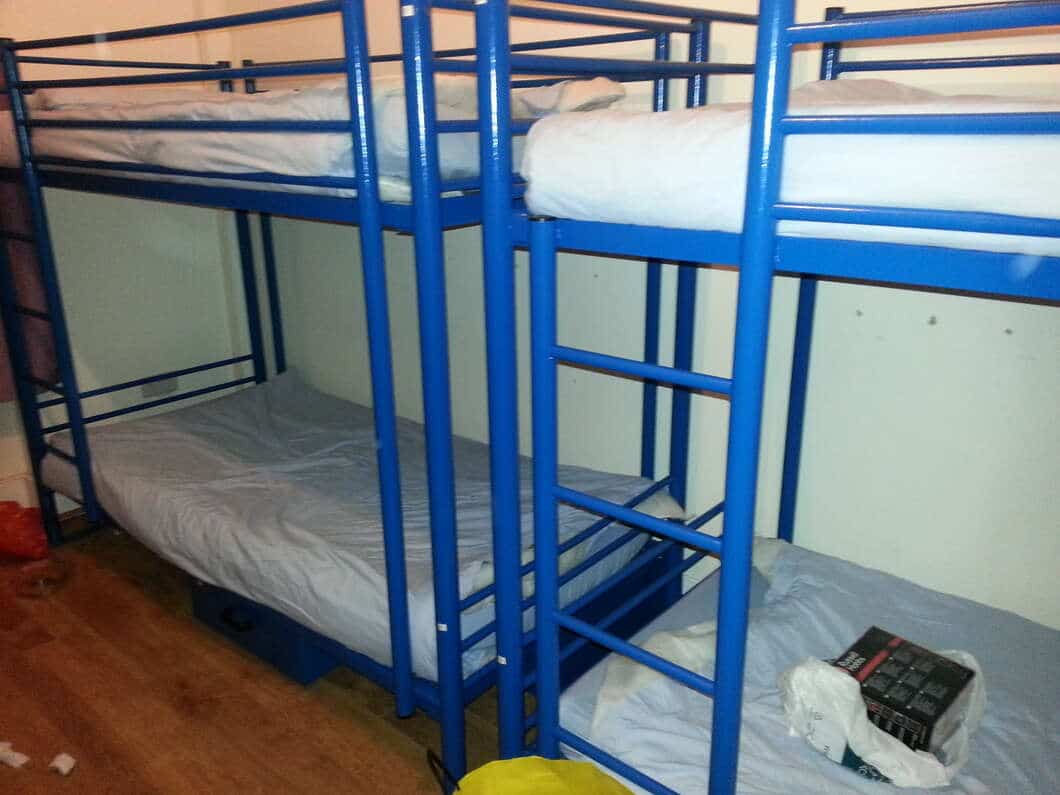
    Hostel Dorm Room in London
    Hostel Dorm Room in London

    UK accommodation ranges from farm stays to castles to five-star everything, but for your first few weeks you want something that gets you settled fast, not something Instagrammable.

    Worth It / Not Worth It, hostel vs. private room: Worth it (hostel) if you want to meet people fast and don’t mind shared space while you flat-hunt; it buys you a ready-made social circle in week one. Worth it (private room / Airbnb) if you’re moving as a couple or family, or just need your own space to decompress after a long-haul flight. Either way, book something short-term and flexible; don’t lock into 6 months somewhere you haven’t seen.

    Facebook groups like Kiwis in London or Aussies in London (or your country’s equivalent) are also a solid source of short-term room listings from people who are travelling. I used both when I landed and they were genuinely useful.

    Sort a Bank Account and National Insurance Prep

    A few relocation companies package up bank account and National Insurance setup into a “starter kit.” Check what’s currently operating before you commit, since this space changes, but it can be worth it if you’d rather pay to skip the admin.

    You can set up a UK-facing bank account before you arrive with some banks (HSBC’s overseas account route, or a non-traditional option like Starling, Wise or Monzo, country availability varies), or check whether you can open one before you move at all. Otherwise it’s free to set up once you land, just a bit slower for appointments and verification.

    Your National Insurance number, though, you genuinely cannot apply for until you’re in the UK: it’s tied to proving you’re here with the right to work. Good news: the process is mostly online now. Apply on GOV.UK, prove your identity (often via an app rather than an in-person appointment), and it typically takes around 4 weeks from there. You can start working before your NI number arrives, as long as you can prove your right to work another way; don’t let an employer tell you otherwise. Everything else you need to know about your NI number is here.

    The Pivot: don’t panic-chase your NI number the second you land. Apply as soon as you’re settled with a UK address, keep your confirmation email as proof you’ve applied, and get on with everything else.

    Sell What’s Left and Sort Your Car

    The stuff you didn’t get to at the 4-month mark: friends, a car boot sale, or the usual resale sites. You’ll be surprised how little you miss most of it (mine was fine, apart from my Kitchenaid, which I still think about). What you will notice is not having to think about insurance, maintenance or storage for any of it, at least for the first few months, before the accumulating starts all over again.

    Handle Your Lease or Property

    Renting? Give your landlord notice now. Own it? Start organising a letting agent if you’re renting it out while you’re gone.

    Switch to Email-Only Everywhere You Can

    Tedious. Do it now while you’ve still got the mental bandwidth. Switch every account you can to paperless, and for anything that won’t budge, arrange a mail redirect to someone who can hold it for you.

    1 Month Out: The Final Push

    Hand In Your Notice (or Lock In a Sabbatical)

    The nerve-racking one. Check if a sabbatical’s on the table before you resign outright; some employers will hold your job for a year or two unpaid, and it’s a genuinely useful safety net. I took nine months off before I actually resigned, and having that “it’s not fully closed” option made the whole leap feel less permanent.

    Cancel or Notify Utilities and Subscriptions

    Tell your utility providers (water, gas, electricity, council) you’re leaving so your final bills are accurate. Cancel or pause everything else: broadband, streaming, car insurance, breakdown cover, mobile, gym. Check for exit fees before you cancel, especially on mobile contracts; that’s where they hide.

    Scan and Back Up Every Important Document

    Passport, visa, driver’s licence, medical records: scan the lot and store copies in at least two places (cloud drive, email to yourself, email to a parent). Print one physical copy and keep it separate from the original. You’ll need copies of your visa and passport for your NI application, and if you ever lose the originals abroad, having scans makes replacing them dramatically less painful.

    Find Your People Before You Land

    Join an online community for wherever you’re headed before you arrive: Meetup, Facebook groups, whatever’s active for your city. It’s the fastest way into a social circle and a good place to crowdsource the small stuff, like which phone provider or which neighbourhood. I joined both Kiwis in London and Aussies in London the day I landed and they carried me through the first few months.

    13 tips on making friends in London, mostly transferable to the rest of the UK too.

    Tidy Up Your Bank Accounts

    Check with your bank whether you can switch to a fee-free account for the move, and if you’re keeping a fee-paying one open, make sure there’s enough in it to cover the charges. Close anything you won’t use, and cancel any credit cards with annual fees you don’t need anymore.

    Tell your bank you’re travelling: where, and for how long. Unflagged foreign transactions can get your account frozen for security, which isn’t ideal when you’re trying to access your money abroad. And if you’ll have a UK number, make sure your bank can reach you on it, especially for security codes.

    Plan How You’ll Access Money

    Bring at least two ways to pay, because cards break or get lost more often than you’d think. A friend of mine lost one card and had two others fail on a Europe trip, not a situation you want with zero backup. Options worth mixing:

    • A small amount of local currency, enough that you’re not carrying (or short of) large cash sums
    • A prepaid travel card; check the withdrawal and purchase fees before committing
    • Your existing debit card, being mindful of foreign transaction and ATM fees on both ends
    • A credit card with low or no foreign fees
    • Keep your home account open and transfer money over as needed once you’re set up locally. I use and recommend Wise for this, still haven’t found better rates

    Unlock Your Phone and Sort a SIM

    If your phone’s locked to your home network, get it unlocked before you fly so it’ll take a UK SIM. Confirm it’s compatible with UK SIM cards while you’re at it.

    You can arrange a UK SIM before you leave (giffgaff ships internationally) or just grab one on arrival: airports, phone shops and some supermarkets all sell them. Honestly, doing it on arrival is the easier call. You can compare providers (EE, O2, Three, Vodafone, Tesco Mobile, giffgaff, iD Mobile and others) once you actually know what coverage you need.

    Sort Your Airport-to-Accommodation Plan

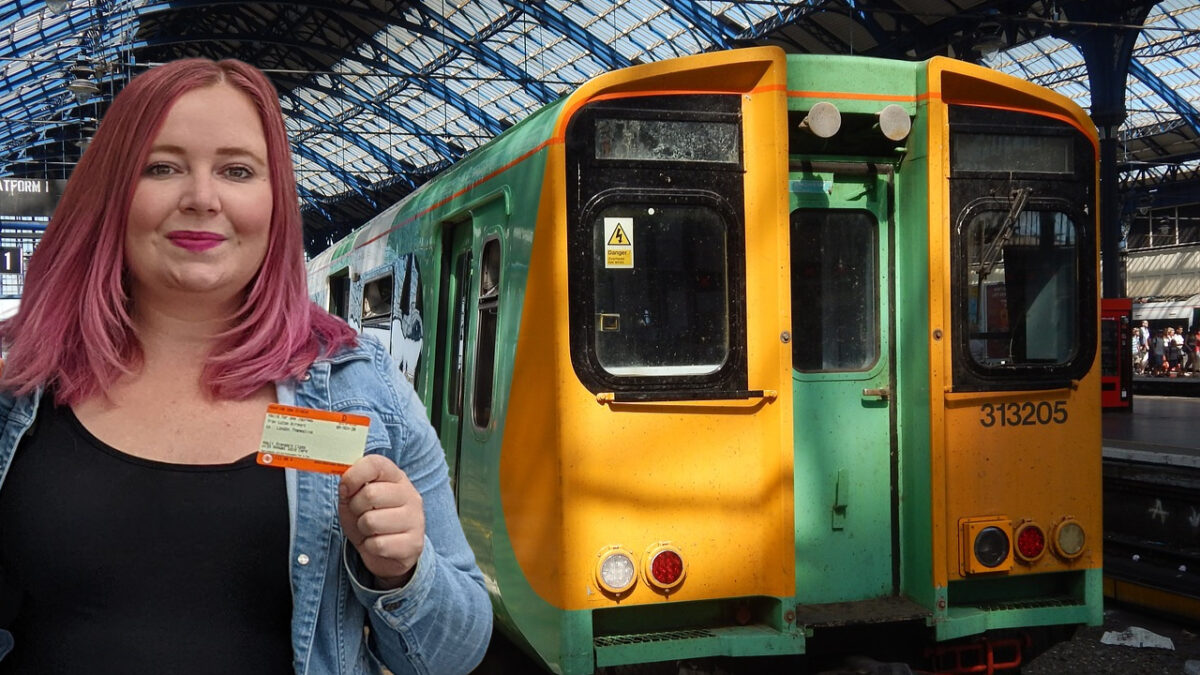
    How to Travel by Train in the UK

    Every UK airport has train, bus, taxi and private transfer options, and the “best” one depends entirely on which airport you’re landing at.

    By train: booking ahead usually saves money via National Rail Enquiries; most UK train company websites let you book from abroad with no card fee. Selecting station collection over postal delivery avoids the postage charge (just bring the card you paid with).

    Tip if you’re landing at Heathrow: most people now just tap in with a contactless bank card or phone rather than buying an Oyster card. The fares and daily caps are identical, and you skip the Oyster card’s fee entirely. If you do want a physical Oyster card, it’s now a flat, non-refundable fee rather than a deposit you get back, worth factoring in.

    By bus: National Express covers most UK airports with direct coach routes; a few smaller operators run airport-specific routes for the likes of Luton and Stansted.

    Taxi or private transfer: a private transfer gets you a fixed price agreed up front, versus a taxi’s metered mileage-and-time fare. Worth comparing options through a transfer comparison site before you land.

    Worth It / Not Worth It, Oyster vs. contactless: Not worth it, for most people. Contactless gets you the same fares and caps with zero card fee and nothing to remember to top up or reclaim. Worth it only if you don’t have a contactless-capable card, or you specifically want a physical backup card in your wallet.

    Download the checklist again if you’ve lost it in seventeen browser tabs by now; track your progress, tick it off, breathe.

    Let me know in the comments how the admin’s going, and if you’ve got a horror story from your own move, send it my way. I collect those.

    More Moving to the UK Articles

  • Cost of Living in London 2021 (by a local)

    Cost of Living in London 2021 (by a local)

    Thought about moving to London? Then you’ve probably been trying to understand how much it will cost to live here and no doubt you would have stumbled across articles about how expensive the cost of living is in London.

    I will breakdown what my monthly expenses are living in London and show you examples of the past few years. Plus anything else you should consider when budgeting for when you move.

    Even though the city can be expensive there are savings to be had as well! Always negotiate where you can or try some of the free activities London has to offer for entertainment.

    Cost of Housing in London

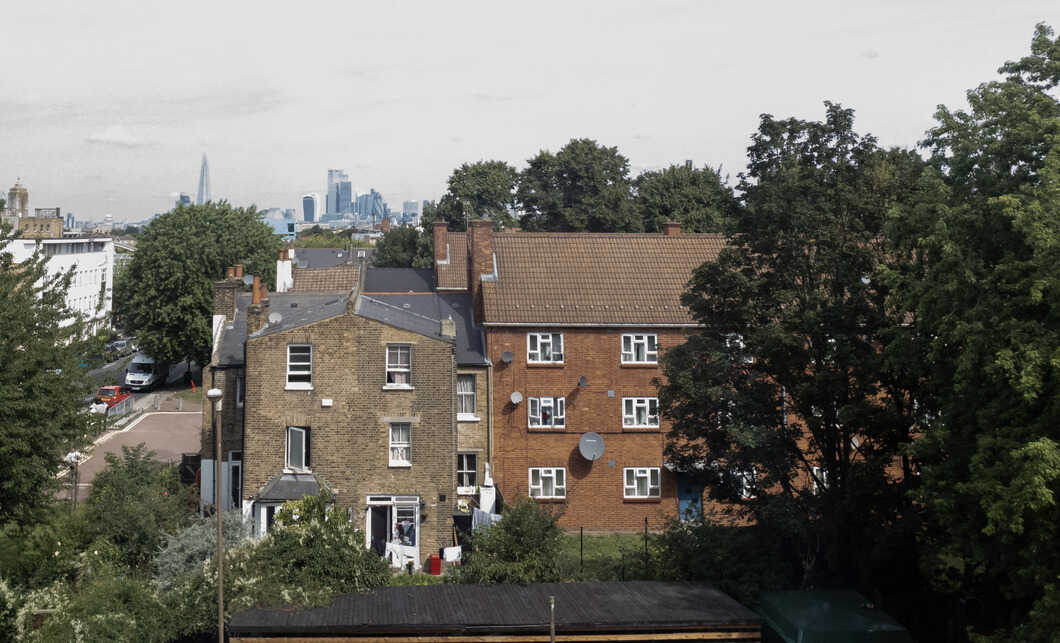
    London flat block in Peckham.
    London flat block in Peckham.

    A high percentage of your salary in London will go on renting or paying a mortgage for a property. To give you an idea of the percentage of salary you might be putting towards rent:

    • Hamptons survey in 2020 said that the average 21-29 year old spent 34% of their pre-tax income on renting a room.
    • Trust for London has said that the average one-bedroom property is equivalent to 46.5% of gross-median pay

    In 2021 there may be some savings on rent as rental prices have been dropping, especially in central London. SpareRoom has said that renting a room is 8% lower in Q4 of 2020 compared to 2019. 

    According to Zoopla, in October 2020, the average cost of rent in London fell by 6.9 per cent.

    When starting your property search, I recommend using a tool like the London Mayor website heat map as it will give you the median prices for the area.

    Renting a Whole Property 

    The average rental price in London in 2021 for new tenancies, according to Homelet.co.uk, is £1,572 a month. 

    As the flat I live in is owned by my boyfriend the cost of living here is different. If it was on the market as a rental it would rent out between £1,600 to £1,700 for a two-bedroom flat in zone 3. 

    When looking for a flat to rent I would start with Zoopla or Rightmove, these sites are where estate agencies will list properties. 

    Psst. Don’t forget to read my guide on How to Find a Flat in London where I cover everything you need to know.

    Renting A Room 

    It’s very common in London to live in shared accommodation where you rent a room within a flat or house. According to the Hamptons survey the average Londoner rented a room for £728 which is up 2.8% from 2019. 

    Renting rooms will generally be excluding utilities so this cost is something you should check with your potential roommates. 

    When I was renting from 2013 to 2016 I paid from £650 to £740 for a double room in zone 2 living with 3 other people and these prices are not including utilities. 

    Spareroom will help provide prices on rooms, especially those looking to keep costs down and live with other people. You can check this document on the average of room prices across London. 

    They have a handy tool for helping you find where to live, try it out. If you are a couple expect to pay more for a room than a single person but split between the two of you it will be cheaper.

    Psst. Don’t forget to read my guide on How to Find a Flat in London where I cover everything you need to know.

    Renter’s Insurance

    Renter’s insurance is formally referred to as tenant’s insurance and this is designed for people who are renting properties. 

    There are two types of insurances:

    • Tenants Liability Insurance insures you in the event of any accidental damage to items that belong to or are provided by your landlord in the property. As it is common to have furnished accommodation in the UK, this can protect you from accidentally damaged items and deposit deductions. 
    • Tenants Contents Insurance is to protect your contents if there are any issues like fire, theft, accidental damage or other insured risks. 

    You can opt to have both insurances within your policy. 

    Your landlord will not insure your personal possessions in their property, they may have building insurance to cover the property but if there was a fire it would be your responsibility for your contents. 

    Prices for insurance can start as little as £10 a month so it is an affordable cost for peace of mind. 

    Do I need Tenants Liability or Tenants Contents Insurance?

    No, they are not mandatory requirements to rent a property in the UK. It depends on how much risk you want to take on whether you get the insurance. 

    Utilities in London

    The common utilities and household bill for London include council tax, electricity, gas, water, internet and TV licnese. I will breakdown what each one is and how much to expect.

    For the utilities you are allowed to choose your own supplier you can use comparison tools like Money Super MarketGo Compareor U-Switch to find the best supplier for you.

    Council Tax 

    Council tax is an annual fee that is paid to the local council to fund local services like rubbish collection, police and fire services. 

    You can choose whether you pay over 10 or 12 monthly instalments or annually. When you receive your bill contact your local council to set-up the payment plan. I currently pay mine in 12 monthly instalments. 

    The amount of council tax you pay will vary on where you live and how much the property costs. There are also reductions available, for example:

    • Live alone (25% discount) 
    • Student 
    • Low income 

    You can read more about exemptions and reduction here. 

    Here’s a summary of my monthly payments: 

    2018 Costs
    2019 Costs
    2020 Costs
    2021 Costs
    £130.30
    £137.00
    £141.41
    £142.00

    Electric and Gas 

    For electric and gas suppliers you can choose your own supplier. These are the big suppliers for electricity and gas in London E. ON, British Gas, EDF Energy, Npower, Scottish Power and SSE. 

    Although there are more than 20 suppliers providing electricity and gas. Using websites like Money Super MarketGo Compare or U-Switch will help you narrow which provider you should choose.

    There are two types of energy tariffs that will be offered: 

    • Fixed-rate tariffs mean you pay for each unit of electricity or gas you use. 
    • Variable-rate tariffs mean you will have a varied rate in the price which can go up or down at any time. 

    All the other tariffs will be a variation of the two mentioned above. 

    Many providers will offer discounts if you choose them as the electric and gas supplier. It’s important when choosing that you check the deals at the time. 

    Here are my electricity and gas costs over the years: 

     
    2018 Costs
    2019 Costs
    2020 Costs
    2021 Costs
    Electricity
    £ 30.74 
    £38.06
    £38.06
    £85.61
    Gas
    £30.38
    £36.21
    £36.21

    In 2021 I’ve changed to a dual supplier for my energy bills. I’m now with Octopus Energy on their Supergreen Octopus which is 100% renewable electricity & the gas is fully carbon offset.

    The cost of energy has gone up due to the fact there are three of us now working from home and I paid a few extra pounds to support green energy. 

    Water 

    Thames Water is the main supplier for water and sewerage services to London and a large proportion of central Southern England. Unfortunately, there is no shopping around for this! 

    You can find out more details about how your bill will work with Thames water here

    There are options for paying your water bill, it can be from weekly to annual payments. I personally pay monthly and here are water costs over the years:

    2018 Costs
    2019 Costs
    2020 Costs
    2021 Costs
    £31.21
    £32.70
    £33.46
    £33.46

    Internet 

    Broadband is a fixed price in the monthly bills so it’s easy to budget for. Simply choose the speed that you need for your household and a provider that is offered in your area. As there is competition in this space you will be able to bargain for the best price. 

    You can also get combination packages like tv and broadband, mobile and broadband or all three combined. 

    I pay quite high prices for my internet as I wanted a fast fibre connection. It actually ended up being cheaper in recent years to get tv and broadband bundles. I highly recommend negotiating as I saved £21 a month on my latest renewal. 

    My internet breakdown over the years

    2018 Costs
    2019 Costs
    2020 Costs
    2021 Costs
    £41.23 – Fibre only
    £49 – Fibre only
    £49 – Fibre with TV
    £53 – Fibre with TV

    TV License (optional)

    TV license is required if you plan on watching free view TV or apps like the BBC iplayer. You can check if you need one on their website

    I do pay for a TV license as we watch free view TV. Over the cost of a year it’s only a couple of pounds a month. You can pay for this either monthly or yearly. 

    Here is how much I paid in TV license costs over the years:

    2018 Costs
    2019 Costs
    2020 Costs
    2021 Costs
    £150.50 (yearly)
    £150.50 (yearly)
    £157.50 (yearly)
    £157.50 (yearly)

     Monthly Price for Utilities in London

    The total cost for the household is £327.20 for 2021 which covers Council Tax, electricity, gas, water, internet and TV license.

    2018 Costs
    2019 Costs
    2020 Costs
    2021 Costs
    £276.40
    £305.51
    £311.27
    £327.20

    Individual Monthly Costs

    As an individual you will have varying costs in your budget. This will include mobile phone, groceries, personal care, healthcare and any other line item you consider a monthly cost.

    Mobile Phone 

    Mobile phone costs will vary based on what type of contract you plan on getting or have. I personally buy my phones out right now so I have a sim only contract and went for a more data driven package.

    For £10 I get 5,000 minutes and 10GB of data. 

    Since 2019 the cost of my sim only contract hasn’t changed and has been a predicable cost.  

    2018 Costs
    2019 Costs
    2020 Costs
    2021 Costs
    £50 (phone & sim contract)
    £10 (SIM Only) 
    £10 (SIM Only)
    £10 (SIM Only)

    What’s the Monthly Transport Cost in London

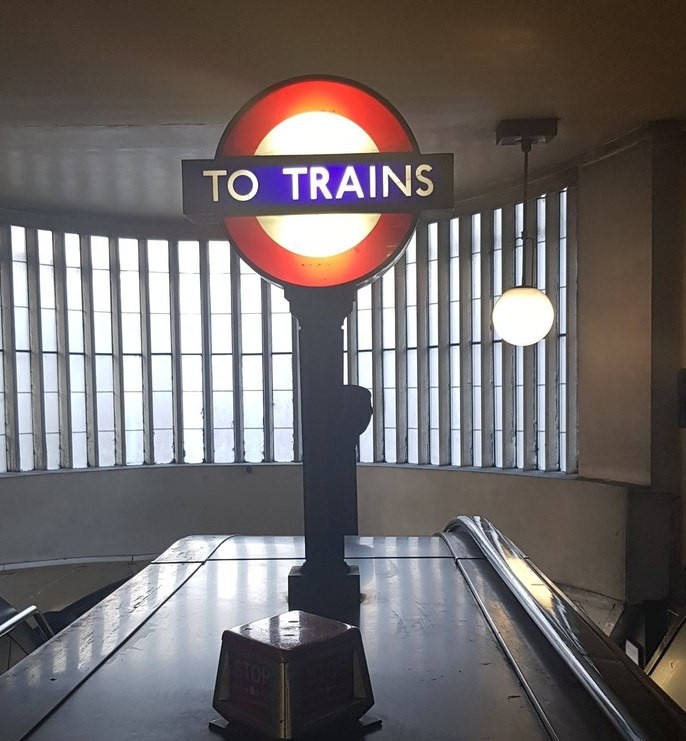
    To London Underground
    To London Underground

    The most popular way to get around London is using public transport by either using an Oyster Card or contactless. Having a travel card will allow you to travel freely using multiple modes of transport, bus, tube and national rail.

    Depending on how you like to budget you can either opt for contactless or pay for an oyster card for a set period, weekly, monthly or yearly. 

    Contactless will charge you per journey until you reach the daily cap and then automatically apply the weekly cap when you hit this spend. 

    A popular choice is to get a weekly or monthly travel card. This does really help with budgeting as you can just top up your oyster on payday and not have to worry about travel until your next pay.

    Monthly Travelcards 2021
    Zones 1–2£142.10
    Zones 1–3£167.10
    Zones 1–4£204.30
    Zones 1–5£243.10
    Zones 1–6£260.00
    Zones 1–7£283.10
    Zones 1–8£334.10
    Zones 1–9£370.60

    Just to note: Weekly travel cards will charge you more admin fees. The longer you buy a travel card the cheaper it is. You can also get a yearly travel card which can save you £300 per year and comes with an Annual Gold Card. The Gold Card gives you 1/3 off certain National Rail Routes.

    Instead of buying a travel card I opt for paying as you go. I used to work from home two days a week and don’t always use transport on the weekend. I used to roughly spend about £120 to 150 on travel around London.

    However now I work full time from home and now spend nothing on travel. When London starts to open up I see this cost increasing. 

    Tip: Considering buying a Railcard as you can save a 1/3 off rail fares. This is great if you plan on weekend trips around the UK, heading to the airport and much more. Make sure you read the terms and conditions before purchasing.

    Owning a Car 

    Having a car in London you need to consider paying for the following: 

    • road tax
    • congestion charges
    • car insurance
    • parking permits
    • MOTs – this stands for the Ministry of Transport and the purpose of this is to check the safety, roadworthiness, and exhaust emissions of the vehicles on UK roads.
    • fuel

    When we had a Ford KA (small two-door hatchback) and paid about £150 for road tax, insurance around £350 and an MOT a year is around £60. 

    Alternatively, if you only require a car every so often there are plenty of car rental companies across London. You could consider hiring Zipcar. Zipcar is an American car-sharing company and a subsidiary of Avis Budget Group. Zipcar provides automobile reservations to its members, billable by the minute, hour or day; members may have to pay a monthly or annual membership fee in addition to car reservations charges.

    Psst… If you are thinking about getting a car in London here are things to consider.

    How Much Do Groceries Cost?

    Grocery shopping will vary depending on your tastes, you can be thrifty or highend shopping at organic independents. Shopping at stores like Lidl, Aldi and Iceland will be the cheapest places to buy groceries from. Mid-range stores are Tesco and Sainsbury. The high-end stores are Marks & Spencer and Waitrose.

    I generally shop at Tesco’s, Sainsbury and Good Club for my groceries but I have been trying to swap to more local suppliers when I can. 

    My weekly food shops have increased due to being home for a year. I tend to spend £100 a week on food shops now as we don’t go out.

    The food covers 3 people eating vegetarian with household products (i.e. cleaning products and toilet paper). All my meals included both a lunch and dinner portion which is 14 portions of food a week. 

    For monthly budgeting, I would start at £200 a month for a single person and £400 for a couple. This would be shopping at a midrange supermarket covering 2 meals a day and household products. 

    Personal Care 

    This cost is purely dependent on what your routine is and how much you want to spend. I would add up your current personal care costs and convert this into pounds so you can see roughly how much this will cost you. 

    Overall I spend £44.32 per month on general personal care items. 

    The biggest cost comes in when we start talking about my hair. Since I switched to having pink hair this has come with a lot of additional costs and I could easily spend £200 a month on this. Yes I know it is a crazy amount to spend but I do really love my hair and I can afford it. 

    Healthcare (Prescriptions, Dentist, etc.)  

    Even though we pay for the NHS through our taxes there can be some costs associated with healthcare. For example, going to the dentist will have an associated cost for a check-up, teeth clean and other work you may need. If this something you do regularly (which you should) then it is something to factor into your budget. 

    Make sure you register with an NHS dentist and not a private dentist as you won’t get the NHS caps otherwise. 

    I generally try to go to the dentist every 6 – 12 months for a clean and once a year for a check-up. Teeth cleaning isn’t subsidised so this cost in my experience is from £60 to £100 depending on the clean you opt for. 

    For a check-up with an NHS dentist, I pay £23.80. You can see what each NHS dentist band costs here. 

    If you have any health conditions, wear glasses or anything else in this bracket then I would add this to your budget. 

    As I have migraines I have a set of medication I pay for every 2 months. Prescription costs are capped as well, I currently pay £9.15 for each item. Contraception is free in the UK so there will be no cost associated with this. 

    As a minimum, I would budget £100 for dentist visits a year and then add on any prescriptions, eye care or other items you need. 

    Entertainment

    Entertainment is where all the spare cash can go! Most people I surveyed in 2019 spent between £60 to £100 a week on entertainment (eating out, activities, events etc.). There were a few that were savvy and spent between £40 to £60.

    For me, it really depends on the week and what I am doing. I generally allow myself a £200 to £250 spending budget a week depending on what I am doing. I could save money in this area but I do pay for a lot of items that I need to run this website and give you all the information you need when out and about in London.

    How Much Does A Meal Cost In London?

    Incredible Waffles at Duck and Waffle
    I just had a show a picture of the waffles at Duck and Waffle. Not only are they pretty but they are so tasty!!!

    Meals can range in price depending on how much you like to eat or drink and whether it is a cheap eats place or Micheline star restaurant in Mayfair. Eating out tends to be where the money goes the fastest.

    Here is a rough guide to what to expect:

    • Brunch will be around £15 to £20 including coffee.
    • Bottomless Brunch will be around £35 to £50.
    • Lunch will be around £10 to £20 at a restaurant or Café.
    • Dinner can be from £15 to £50.

    If you are just picking up a quick bit during your lunch break at work then you can get a cheap Tesco meal deal for £3 or something a bit fancier like Pilpel (falafel) or Barburrito will be around £6.

    How Much Does Alcohol Cost In London?

    Drinks out in London
    Drinks out in London

    Just like meals, alcohol will range depending on where you decide to go out. To make a night out cheaper make sure you make the most of the happy hours or drink beforehand.

    Alternatively, you can find some BYO (bring your own booze) restaurants as well like Tayyab’s but they aren’t as common in London.

    Here is a rough guide to what to expect:

    • A bottle of average wine in a restaurant will be between £12 to £25.
    • A beer in a restaurant will be between £4.00 and £6.00 for a pint. Craft beer will be more expensive than your general lager. If you really love craft beer make sure you check out the Bermondsey Beer Mile.
    • Cocktails will be around £8 – £18 depending on where you head out to. As mentioned above bars in London will offer happy hour for example you can get 2 for1 at Be at One for £8-9 or All Bar One half-price cocktails for £4.50.
    • Our favourite store wine is a Toro Loco from Aldi for £3.89. Otherwise, around £6 to £8 will get you a good wine in Sainsbury and Tesco. Places like Marks & Spencer will cost upwards of £8.
    • Craft Beer at a grocery store is around £1.50 to £3 per bottle or can.

    Drinking alcohol in parks and on the street is allowed in London. When the sun comes out or the temperature goes up you will see Londoners flocking to the park with picnics and drinks, it’s truly the way to experience London like a local. It’s a great way of having a cheap day out with friends or family.

    Cost For Activities In London

    View from One New Change is St. Paul’s Cathedral
    View from One New Change is St. Paul’s Cathedral

    London has a great range of free and paid activities which is perfect as you will always have something available to do no matter what your budget is. Here is a rough guide to what to expect:

    • Cinema tickets – £10 to £20 per person. The cinema is not a place I visit very often and tend to stick to Netflix with some wine at home. If you are a movie lover you can get monthly passes for £17.90 making it cheaper to see movies.
    • Theatre tickets – £20 to £100 per person. There are some good deals around for Theatre tickets especially if you are not phased where you sit. I have previously scored tickets for £17 to see Wicked and Charlie and the Chocolate Factory. If you are happy to stand for 3 hours you can get £5 tickets to the Globe.
    • Museums – mostly free! well at least all my favourite museums are! Here are 9 museums you must visit.
    • Sight Seeing – Free to £30 per person plus travel. For example, Sky Gardens is free (find out the local tips with this video), whereas the London Eye would be from £23. Exploring Windsor Castle would require you to buy train and attraction tickets making the day more like £40 to £50 without food included.

    Find out all the tips on how to book London attractions and how to save money with this article.

    Other Costs 

    Don’t forget to add any additional costs you might have like enjoying a good cup of coffee, a monthly Netflix subscription or clothing.

    Summary of London Monthly Living Expenses 

    To summarise the costs, the core household bills with groceries for 3 people comes to £727.20 and our estimated rent being £1,600 for a 2 bedroom flat then the cost would be £2327.20 a month.

    I spend about £117.55 a month on things like personal care, healthcare and mobile phone. 

    A grand total of £893.28 as an individual living in a shared flat with 2 other people.

    As I am no longer travelling to work that does save me £150 a month and my going out expenses are 0 at the moment. This will go up when more things open up in 2021. 

    Here Are Two Hypothetical Examples Of Potential Cost For London

    Renting a room in a flat with 2 other people: 

    Room Rent*
    £728
    Core Bills
    £109
    Groceries
    £200
    Mobile
    £10
    Personal Care
    £20
    Healthcare*
    £8
    Transport*
    £142
    Total
    £1,217

    Renting a property as a couple: 

    Rent
    £1,572
    Core Bills
    £327
    Groceries
    £400
    Mobile
    £20
    Personal Care
    £80
    Healthcare
    £17
    Transport
    £284
    Total
    £2,700
    Per person
    £1,350

    All costs are based on what I spend or the averages I have included in this article. It’s just to help guide you on what to think about. *Property rent is based on average spend, healthcare is based on you going to the dentist once a year and transport is based on zone 1-2 monthly travel card. 

    More Living in the UK Articles

  • How to Catch a Bus from Sofia to Skopje

    How to Catch a Bus from Sofia to Skopje

    When planning our bus trip from Sofia to Skopje there was more information available about the bus routes than some of the other Balkan destinations. We knew that we couldn’t book in advance and what bus we were aiming for which was the 15:00 to Skopje arriving at 19:25.

    Just to reassure ourselves of what times the buses were leaving to Skopje we headed to the bus station to buy our bus tickets. It was a little detour out of our day but turns out it was highly valuable as we weren’t sure which bus station the buses leave from and the timetable was slightly different.

    Which bus station do I catch a bus from in Sofia? And what facilities does the bus station have?

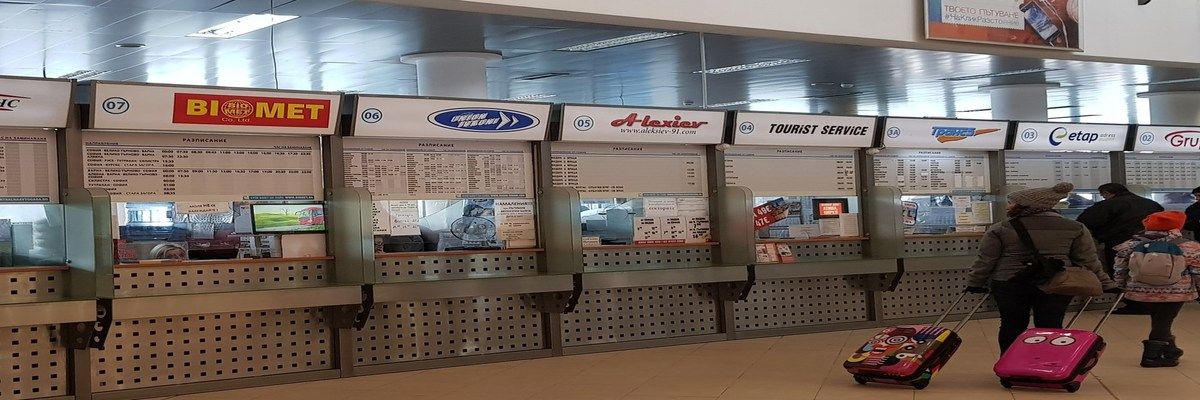
    There are two bus stations in Skopje, one for domestic buses which is the Central Bus Station Sofia and one is the International which is the Serdika Bus Station. The “Serdika” Bus Station is just an open parking lot with lots of travel agents and stalls.

    This is the Central Bus Station in Sofia which is the other bus station and not the one you need for the international buses. (insert picture)

    Central Bus Station in Sofia
    Central Bus Station in Sofia. Not the right bus station for buses to Skopje from Sofia.

    “Serdika” Bus Station is the correct station you need to catch a bus from Sofia to Skopje. As you can see highlighted on the map below.


    Note that when you are in Bulgaria and Macedonia you’ll need to be able to read the Cyrillic alphabet to make any sense out of timetables (except in the bus stations in Sofia and Skopje).

    The bus station has a shop, cafes, toilets (which cost money), local buses and tram stands nearby and taxis.
    If you are standing outside of the Matpu 96 with your back to the office behind the first set of building in front of you will be a supermarket you can buy snacks and drinks before the trip.

    WIFI is not freely available but Matpu 96 did have free WIFI in their offices to use for their customers.

    Where to buy bus tickets in Sofia? How much will a ticket cost?

    In some countries you can book tickets online however in Bulgaria it was only possible to book tickets at the bus station. I recommend getting your tickets the day before, not because they sell out, as a precaution so you don’t get stranded and have all the information you need for your journey.

    To buy tickets you will need your passport. We made the mistake the first time of going there without our passports and were unable to purchase tickets the first time round.

    There are two travel agents currently selling bus tickets from Sofia to Skopje which are Makedonija saobraćaj and Matpu 96. Both travel agents are both located in “Serdika” Bus Station near each other.

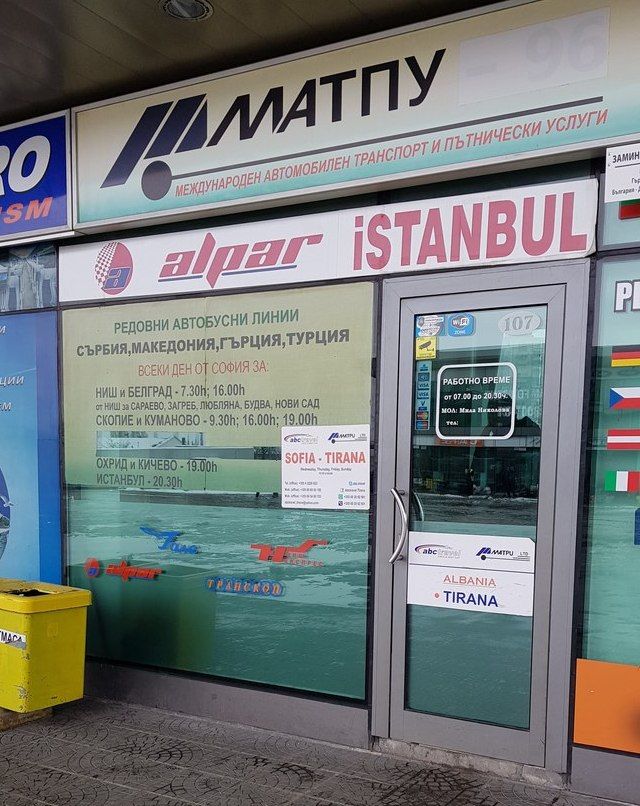
    Matpu 96 sells bus tickets from Sofia to Skopje
    Matpu 96 sells bus tickets from Sofia to Skopje

    Matpu 96 will run buses daily at 09:30, 16:00 and 19:00. When we were travelling the 19:00 was cancelled for the day we were catching a bus to Skopje.

    Bus tickets from Sofia to Skopje will cost 30 lev each. Matpu 96 did have a card machine but they requested payment in cash.

    When we were travelling it was the off-peak season so the tickets didn’t sell out and just made sure we arrived an hour before to make sure we had a seat.

    Things to consider and what to expect on the bus journey from Sofia to Skopje?

    Be on time! The buses do leave on time from Sofia so make sure you get there 15 minutes beforehand if you have a ticket already. If you don’t have a ticket allow 30 – 60 minutes to buy a ticket.

    Being such a long bus ride it’s a good idea to take a few snacks and drinks for the journey. Be careful with your liquid intake as you just never know when the next stop will be and make sure you take some change on the journey to pay for the facilities. There are generally no working toilets on the buses and you may go for a couple of hours without a stop.

    There were a few bus stops on the way but it the journey was quite tame compared to some of our other experiences.

    Do I need to go through border security exiting Bulgaria?

    Yes, you will need to go through border security exiting Bulgaria. The security process was not extensive when we went through.

    The guard boarded the bus to check everyone’s passports and then collected them. Then they were taken for processing and once clear handed back to the bus driver who distributed the passports back to the owners.
    There were brief checks underneath the bus in the luggage compartments. They may do stricter spot checks but we were not subjected to these on our trip.

    Do I need to go through border security entering Macedonia? And will I need a visa?

    Yes, you will need to go through border security entering Macedonia. Like the Bulgarian border the security processes were quite relaxed. The guards collected our passports, processed them and were handed back to us.

    Macedonia does have visa requirements unless you are from one of these countries; Argentina, America, Albania, Australia, Azerbaijan, Botswana, Bosnia and Herzegovina, Brazil, Cuba, Israel, Japan, Kazakhstan, Canada, Costa Rica, Chile, European Union Citizen, Malta, Monaco, Mexico, United Arab Emirates, Ukraine, Turkey, Russia, Peru, Serbia, Uruguay, New Zealand, Kosovo, Peru, Panama, Montenegro and Venezuela. If you from one of the countries listed this means that you can stay in the country for up to 90 days.

    For further information about visas see Travel Macedonia,

    Arriving at Skopje Bus Station


    Above is the location of the Skopje Bus and Coach Station that you need to go to. Psst… you can save the map about.

    Skopje bus station has an indoor area that has shops, cafes, ATM’s (cash machines), toilets, local bus stands nearby and taxis. WIFI is not freely available so to get WIFI you will need to buy something at one of the cafes to access it. The toilets will also cost money to use and will need small MKD denominations to pay.

    There are quite a few taxi drivers offering you lifts to your destination at the bus station. These generally won’t be metered taxis so make sure that you agree to a price before getting in. A good way to avoid being ripped off check with your accommodation before you arrive so you know how much you should be paying.

    Our taxi driver tried to charge us 300 Macedonian Dener (MKD)! Which is way more than the hostel recommended we pay. Eventually, we got the taxi driver down to 200 Macedonian Dener (MKD) instead.

    If your accommodation calls the taxi companies it will generally be an official company with a metre and depending on your location will cost around 120 to 200 Macedonian Dener (MKD).

    Local buses do run to the bus station and are a cheaper alternative than a taxi.

    Not sure about what to do in Skopje? Things to do in Skopje will cover everything you need to know about visiting the city.

    Let me know in the comments how your bus journey is! 

    More Balkans Articles

    How to Catch a Bus from Sofia to Skopje
    When planning our bus trip from Sofia to Skopje there was more information available about the bus routes than some of the other Balkan destinations. Here is my step by step guide on catching a bus from Sofia to Skopje including how to buy tickets, information about bus station and much more… #sofia #skopje #busfromsofiatoskopje #Bulgaria #Macedonia
  • How to Catch a Bus From Tirana to Kotor

    How to Catch a Bus From Tirana to Kotor

    Kotor was one of the 9 destinations we were travelling to on our Balkans trip. I didn’t do much research on how to get a bus from Tirana to Kotor. As it was a common theme for there to be limited information about buses for most of the Balkan destinations we decided it was easier to buy tickets when we arrived at each destination.

    As soon as we arrived at Tirana station we were on a mission to book our bus trip from Tirana to Kotor for a few days ahead.

    The first travel agent we visited, to our surprise, didn’t have a bus leaving for 5 days! With our tight schedule, this was not going to work. However, the second travel agent (Osumi Travel) we visited sold tickets for the daily bus run by Old Town Travel which is the company that has established a direct bus from Tirana to Kotor.  This has made the journey a lot easier and quicker. Here is the approximate timetable for the journey:

    Bus station Depart
    TIRANA 08:00
    SHKODER 10:00
    g.p.HANI I HOTIT (AL) 11:00
    g.p.BOŽAJ (CG) 11:20
    PODGORICA 12:00
    BUDVA 13:30
    KOTOR 14:00

    Travelling from Kotor to Tirana follows the same timetable but of course in reserve. The buses from Kotor and Tirana meet at g.p.HANI I HOTIT (AL) stop where you will swap buses and continue to your destination. The bus driver kept us informed of which bus stops we were reaching and when we needed to swap over.

    Which bus station do I catch a bus from in Tirana? And what facilities does the bus station have?

    The Tirana bus “station” is just an open parking lot with lots of travel agents and stalls. It was not obvious whilst walking around that there was WIFI, ATMs or toilets available around the station.

    As the station is just off the main street there are cafes and ATMs down the main road so it won’t be an issue finding something close by to get WIFI, money or toilets.

    Where to buy bus tickets in Tirana?

    Unlike some of the other Balkan countries, you can buy your tickets in advance and online! If you head over to Old Town Travel you will be able to purchase tickets there. This is the only available method you will be able to pay by card and print the tickets beforehand.

    As mentioned above we didn’t book tickets in advance for any of our bus journeys in the Balkans and at each bus station we scouted out who sold tickets for our journey, in this case, the bus from Tirana to Kotor. There are two travel agents that will sell you tickets to Kotor but one only runs ad-hoc bus and the other will sell you daily tickets to Kotor.

    The travel agent and bus station is located in the same location, so if you head to the station below you will be able to get your tickets and catch the bus. Psst you can save the map below.

    The company that sells daily tickets is Osumi Travel. However, they only take cash to purchase tickets and as we had no money we opted for buying tickets the morning of departing. The company advised us that the bus doesn’t sell out during offseason and it wouldn’t be a problem to buy a ticket on the day. They were right, we only had two other people on our bus making a grand total of four people.

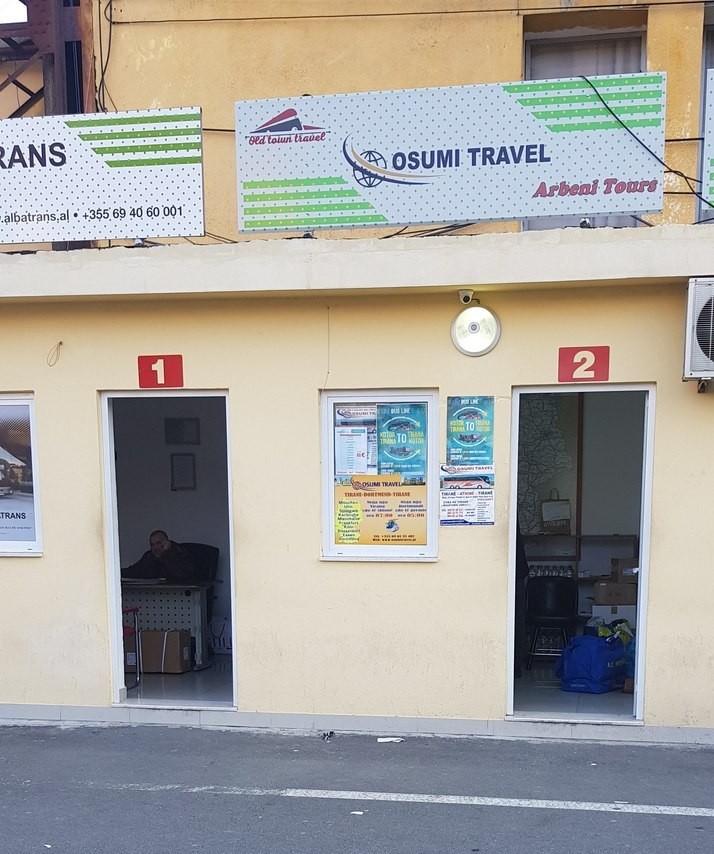
    Osumi Travel where you can buy tickets from Tirana to Kotor
    Osumi Travel where you can buy tickets from Tirana to Kotor

    What do I need to buy tickets for Tirana to Kotor and how much will a ticket cost?

    Arriving on the day the bus driver told us not to buy tickets at Osumi Travel and ushered us on to the bus where we paid at a later point. It was straightforward buying tickets from the bus driver, although he only requested payment about halfway to the border and was a bit disappointed when we handed over Albanian Lek instead of Euros. A ticket will cost €25 Euros or 3,500 Albania Lek.

    Osumi Travel did accept Euros or Albania Lek to purchase tickets from them as well.

    Another common theme with buses is that you also need to pay for each larger item of luggage (rucksack or suitcase) you hold underneath the bus or in this case the minivan so make sure you have €2 euros per bag.

    Things to consider and what to expect on the bus journey from Tirana to Kotor

    Be on time! The bus left exactly on time so make sure you give yourself plenty of time to get there as there is only one bus a day leaving for Kotor.

    Be prepared! The road quality is poor in Albania and there is a tremendous amount of potholes to endure on the trip! When you enter Montenegro the road is better quality but they do have very windy roads along the coast.

    The first stop of the journey is Shkoder and there were no free toilets at this stop. The bus does make another stop just before the border which will be g.p.HANI I HOTIT (AL) stop. The stop will be a petrol station where there will be free toilets and a shop to buy supplies like water and snacks.

    Once you arrive at the petrol station you will be swapping from the minivan to a standard bus. Depending on border security the other bus may take 20 – 30 minutes to pick you up and the other passengers will swap to the minivan.

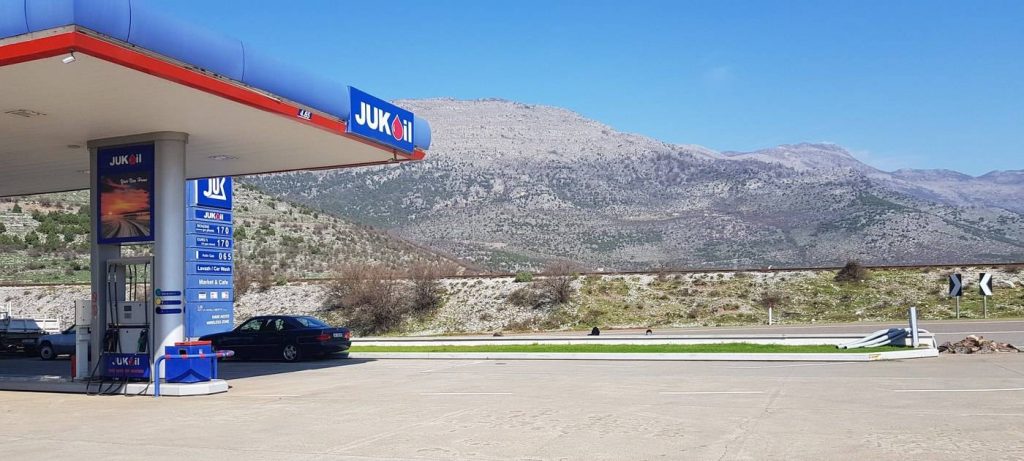
    g.p.HANI I HOTIT (AL) bus stop where the bus from Tirana to Kotor stops at.
    g.p.HANI I HOTIT (AL) bus stop where the bus from Tirana to Kotor stops at.

    Do I need to go through border security exiting Albania?

    Yes, you will need to go through border security exiting Albania. The border crossing was long as it was basically a one way street with cars, trucks and buses weaving in and out.

    The guard boarded the bus to check everyone’s passports and then collected them. Then they were taken for processing and once clear handed back to the bus driver who distributed the passports back to their owners.

    Additionally, they open the luggage sections underneath the bus and have a brief look around. Although they may do stricter spot checks that we did not experience on our journey.

    Do I need to go through border security entering Montenegro? And will I need a visa?

    Yes, you will need to go through border security when entering Montenegro. The same level of security was applied when we were entering the country.

    Anyone that is from the EU, USA, Norway, Iceland, Switzerland, Canada,  Australia, New Zealand or Japan may enter Montenegro for up to 30 days without a visa.

    Those holding a valid Schengen Visa can enter, transit and stay in Montenegro without needing to show a Montenegrian visa for up to 30 days. For more information about Montenegro visas check the Ministry of Foreign Affairs website.

    Arriving at Kotor Bus Station


    Above is where the Kotor bus station is located. Psst you can save the map below.

    The bus station in Kotor is super close to the Old Town. You will arrive at the bus station before seeing the Old Town of Kotor. If you exit the station, at front of you will find the main road that you arrived on, turn right and there will be a supermarket 3-5 minute walk away. Once you have walked for about 6-8 minutes you will reach the first entrance to the Old Town of Kotor.

    Kotor bus station has an undercover area with an ATM (cash machine), toilets and taxis. If you are staying outside of the Old Town you may want to catch a cab. The station has free WIFI  and requires no password to access the internet so it will be super easy to Google your journey.

    Toilets will also cost money to use and cost €0.50 cents.

    And there you have it – our journey on the bus from Tirana to Kotor. Let me know in the comment below how your trip to Kotor was!

    More Balkans Articles

  • How to get a bus from Skopje to Tirana

    How to get a bus from Skopje to Tirana

    When planning our bus trip from Skopje to Tirana it became evident how little information was available. After hours of searching on Google, I found a bus on Balkanviator which is a website that frequently pops with bus information. Balkanviator displayed a bus that suited the times for our trip which was leaving Skopje at 23:00 and arriving in Tirana at 07.30.

    It turned out that this bus did not exist and there was only one night buses from Skopje to Tirana leaving at 19:00 and arriving at 02:00. Be mindful that using websites like Balkanviator may not give you actuate information. By the end of my internet searching I was still clueless on what time I would be able to get to Tirana by bus. Even the hostel couldn’t rely on the information that they had and mentioned that travellers have been stranded before!

    Not to worry, there are buses from Skopje to Tirana! Three in buses a day were running when we were there, a bus at 06:00, 09:00 and 19:00 and taking approximately seven hours but this is dependent on border security.

    You can look at SAS website for timetables but they don’t show all the buses that are running from Skopje.  After a few glitches on this trip using Balkanviator I would suggest that this website shouldn’t be used as a reliable source.

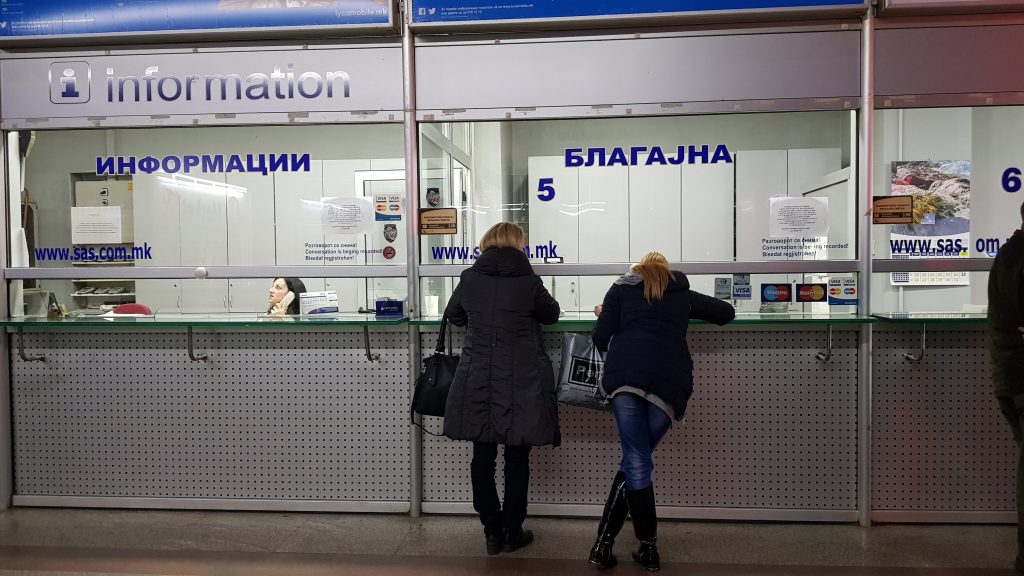
    The best way to confirm is by heading to Skopje Bus Station and asking the information desk for the latest bus timetables.

    Which bus station do I catch a bus from in Skopje? And what facilities does the bus station have?

    There is only one main international bus station in Skopje which is located next to the Railway Station. It’s about a 20-minute walk from the Alexander The Great Statue in Skopje City Centre.

    Above is the location of the Skopje Bus and Coach Station that you need to go to. Psst… you can save the map about. 

    Local buses run to the bus station or alternatively you can catch a taxi. Some taxi drivers will run their meters and some will negotiate with you. If your accommodation calls the taxi companies it will generally be an official company with a metre and depending on your location will cost around 120 to 200 Macedonian Dener (MKD).

    Skopje bus station has an indoor area that has shops, cafes, ATM’s (cash machines), toilets, local bus stands nearby and taxis.

    WIFI is not freely available so to get WIFI you will need to buy something at one of the cafes to access it.
    Toilets will also cost money to use and will need small MKD denominations to pay.

    Note that when you are Macedonia you’ll need to be able to read the Cyrillic alphabet to make any sense out of timetables (except in the central station in Skopje).

    Where to buy bus tickets in Skopje?

    In other Balkan countries we were used to approaching travel agents which had the destination we were looking for and we did the same when we were in Skopje. However, it turns out that the types of travel agents we were approaching in Skopje bus stations weren’t offering the tickets we needed.

    The windows that have www.sas.com.mk written on them will sell you tickets to Tirana for the various companies running the routes.

    Where to buy bus tickets in Skopje Central Bus Station
    Where to buy bus tickets in Skopje Central Bus Station

    In some countries you can book tickets online however in Macedonia it was only possible to book tickets at the bus station. I recommend getting your tickets the day before, not because they sell out, as a precaution so you don’t get stranded and have all the information you need for your journey.

    What do I need to buy tickets from Skopje to Tirana and how much will a ticket cost?

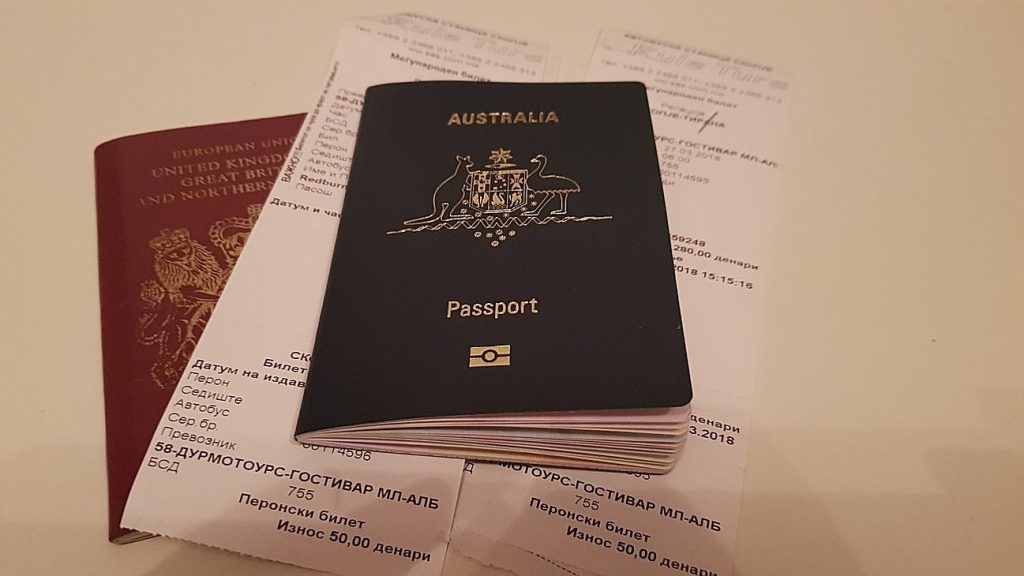
    To buy tickets to Tirana you will need your passport, Albania visa (if required), cash or a Master/Visa card to pay. As I said above there is an ATM in the station if you do need to take out money.

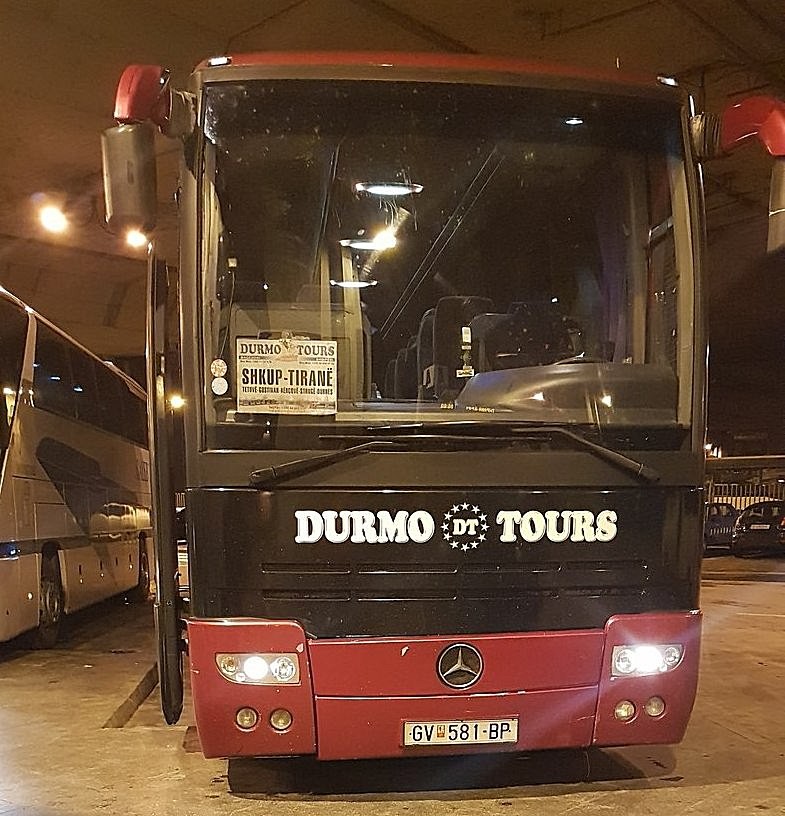
    One ticket cost 1,280MKD this including luggage for the Durmo Tours service.

    Bus tickets from Skopje to Tirana
    Bus tickets from Skopje to Tirana

    Things to consider and what to expect in the bus journey from Skopje to Tirana

    Durmo Tour Bus from Skopje to Tirana
    Durmo Tour Bus from Skopje to Tirana

    Be on time! Even though Macedonia has a relaxed culture and they take their time to do things, the buses do leave on time at the main station.

    Our bus did a couple of stops on our way to Tirana, even a detour to the coast which ended up adding an extra 2 hours to our journey. They even picked up a car door and randomly dropped it at a petrol station to a guy on the side of the road.

    Be prepared! The road quality is poor and there is a tremendous amount of potholes to endure on the trip!

    Being such a long bus ride it’s a good idea to take a few snacks and drinks for the journey.

    There are generally no working toilets on the buses and you may go a couple of hours without a stop. In Macedonia you are always required to pay to use the toilets at the stations/ stops but in Albania all the toilets were free at the stations/stops. Be careful with your liquid in take as you just never know when the next stop will be and make sure you take some change on the journey to pay for the facilities.

    At least with Albania you don’t have the dilemma of not having the currency to use the bathrooms as I have experienced in the other countries.

    Do I need to go through border security exiting Macedonia?

    Yes, you will need to go through border security exiting Macedonian. The security process for when we travelled through was light compared to other border checks I have gone through.

    The guard boarded the bus to check everyone’s passports and then collected them. Then they were taken for processing and once clear handed back to the bus driver who distributed the passports back to the owners.

    Additionally, they open the luggage sections underneath the bus and have a brief look around. Although, they may do stricter spot checks and we were not subjected to these on our trip.

    Do I need to go through border security entering Albania? And will I need a visa?

    Yes, you will need to go through border security when entering Albania. The same level of security was applied when we were entering the country.

    As Albania is currently outside of the Schengen Zone you may require a visa depending on your nationality. For example, as an Australian I did not need a visa and I was allowed to stay for up to 90 days. The same applies to EU citizens, including the UK, and to US citizen. To check whether you need a visa click here. 

    Arriving at Tirana Bus Station

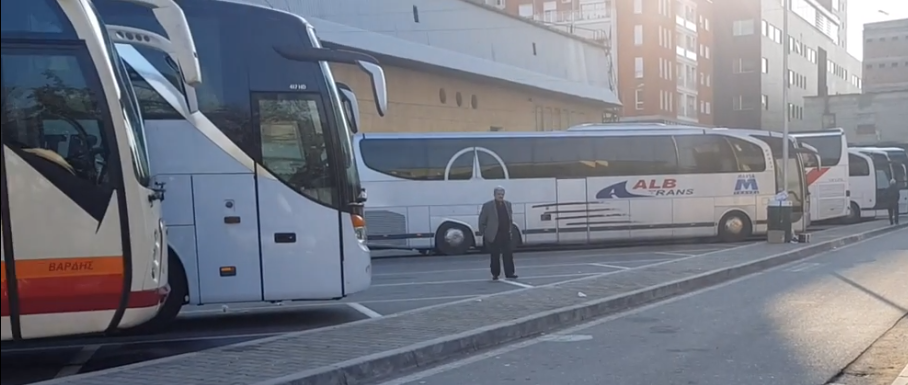
    The bus from Skopje will terminate at Tirana Central Bus Station.
    The bus from Skopje will terminate at Tirana Central Bus Station.

    Once you get off the bus you will be surrounded by a few taxi drivers offering their services. If you do opt for a taxi make sure you agree on the price before getting in the taxi as they don’t often run metres. Getting around the city should not cost you more than 300 to 400 (Albanian Lek).

    The Tirana bus “station” is just an open parking lot with lots of travel agents and stalls. It was not obvious whilst walking around that there was WIFI, ATMs or toilets available around the station.

    As the station is just off the main street there are cafes and ATM’s down the main road so it won’t be an issue finding something close by to get WIFI, money or toilets.

    Above is the location of the Tirana Bus Station that you need to go to. Psst… you can save the map about. 

    I hope the information above helps you plan your bus journey from Skopje to Tirana. Let me know in the comments below of your experiences!

    More Balkans Articles

  • 5 Ideas to Getting a UK Address Before Moving Here

    5 Ideas to Getting a UK Address Before Moving Here

    Everything you need to do to set up your life in the UK requires a secure UK address for official documentation to be sent to. For example, bank accounts and National Insurance Number (NINO) require a UK address. Neither the banks or HMRC (Her Majesty’s Revenue and Customs) will send out the official documentation to an unsecured address like a hostel or a hotel.

    It is possible to get proof of address and there are a variety of ways to achieve this. However, it’s not possible to get an address before you move to the UK without the help of a company, family, friends or having a place you’ve rented or bought beforehand. 

    I moved to the UK solo and found out first hand what challenges there are in getting a UK address. It can seem like a catch 22 situation. How do I get a bank account without an address? How do I get a NINO without an address? On the other hand, how do I get an address without a bank account?

    Options for Getting Proof of a UK Address

    Here are a few options you can try to get proof of a UK Address:

  • Using family or friends address to get an NI Number (NINO)
  • Engineered way
  • Register to Vote
  • Using a company to set-up a UK Address
  • Use BritBound to set-up your address
  • Depending on what your requirement is for a proof of address, some of the options provided will be more successful evidence than others, so please keep this in mind.

    How Do I get UK Address Using Family or Friends?

    As I mentioned above this can make the process easier! There are a couple of ways you can get documents to prove you have a UK address with family or friends. From using them as a reference to get your NINO, to sending your bank statement to them and registering to vote in their area.

    1. Using a Family or Friends Address to Get an NI Number (NINO)

    Using a family or friends address to get an NI Number (NINO)

    A NINO letter can be used as a proof of address, however, some banks don’t allow this as proof so double check beforehand which ones do.

    So how do I use my family or friends to get a NINO? I have not tried this method as I didn’t have this option available but you can get your family member or friend to write a letter confirming that you are staying at their address. This letter must be supported by a tenancy or rental agreement, utility bill or bank statement in the name of the person who issued the letter.

    I have put together a template you can use for the letter (just copy and paste, fill/delete the sections that apply to you and there you go! You have a letter from your family or friends).

    The Manager

    <insert address>

    <insert date>

    RE: <insert name>

    I <insert friends or relative name (as name stated on the utility bill or bank statement)> confirm that <your passport name>, date of birth <insert date of birth>, is my tenant/friend/relative (delete as appropriate) and has known me <insert year> year. She/He is currently residing with me at <insert address that is on a utility bill or bank statement> and has been here since <insert date>.

    She/He currently pays me a rental amount of £ <insert amount> per week/month.

    Or

    She/He is staying with me rent free.

    Should you require any further information, please contact me on the following number.

    Kind Regards,

    <signature>

    <insert friends or relative name (as name stated on the utility bill or bank statement)>

    Just take the above letter with the evidence and hopefully you will be one step closer to getting your NINO. As I mentioned I have not tried this method so if in doubt just give them a call beforehand to confirm.

    2. Evidence of Address via the Engineered Way

    This approach is generally referred to as the Engineered Way and is basically getting your home country bank to send you a bank statement with your friends or family address. It’s super simple, just use the following steps:

    • Adjust the address on your file on your non-UK bank account to a UK address.
    • Once the change in address had gone through apply for a for your non-UK bank to send a statement.
    • The statement will now be delivered to your UK address providing a proof of address.

    It’s been a successful and unsuccessful route for people who have used this so keep this in mind. You may wait a month and then find a bank doesn’t accept this as proof (for example).

    3. Register to Vote

    Another way you can get a proof of address is to register to vote with your local council. Search for your local council and get added to the “electoral roll” and then they will send you a letter confirming your registration which is an “official letter from the council”. This is only applicable if your nationality allows you to be eligible to vote. For example; EEA citizen and Commonwealth countries like Australia, New Zealand and Canada.

    Once you get this letter you can then use this as proof of address to get your NINO. Once you get your NINO then you would have two letters that can be used for proof of address to show the bank. Although be mindful that using NI as proof of address could take up to 6-8 weeks to get a letter delaying you getting an account.

    P.S. Registering to vote is a good idea anyway as it helps build your credit score.

    4. Using a Company to Set-up a UK Address

    Before I moved over I paid for a Quick Start Pack with Visa First to assist me in the process. This provides a mail holding service which I made an assumption could be my way around this whole address palaver but unfortunately they don’t provide a service that can be used by HRMC. Quick Start Packs no longer exist with Visa First, however, they still offer packages to get things like your NINO.

    There are a couple of companies that provide this service like 1st Contact and Britbound. Although personally, I used BritBound to set up my accounts.

    5. Use BritBound to Set-up Your Address

    You can sign up with BritBound who will provide you with a UK address and help you set up your bank account and NINO. They will contact you when you have mail. You can either collect your mail in person or ask them to forward it (tracked) to an address of your choice.

    Whoo! BritBound was the company that got me out of this Catch 22 situation. It’s so stressful being stuck in the loop of not getting a job, bank account, NINO or flat all due to not having an address.

    The package is called ‘The Social One’ which will set you back £85 but will cover all the essentials you need. (I am not affiliated with Britbound, they were just awesome when I moved to the UK.)

    Why Can’t I Get a Virtual UK Address?

    An option I looked into was getting a virtual address but virtual address companies also need a UK address to be able to set one up (I know right! Frustrating). The reason is to prevent potential fraud and money laundering via these services so the government put in regulations like the London Local Authorities Act 2012 and the Money Laundering Regulations Act 2017.

    This meant that these services have to put you through what’s called the Identity Verification Process (KYC). When you fill in the registration forms your personal details will be run through an identity verification system which checks your name, UK address and date of birth. If you pass this check then you will have a virtual address.

    Comment below and let me know your experience on getting a UK Address! And any other processes that worked for you.

    More Moving to the UK Articles

  • How to get a UK Bank Account Before Moving to the UK

    How to get a UK Bank Account Before Moving to the UK

    It is natural to want to arrange everything you will need in the UK before you move over including a UK bank account and a National Insurance Number (NINO). But to get a UK bank account or NINO in the UK you are expected to be living in the UK with a residential address. It never occurred to me just how difficult it could be for a bank to give you an account until I tried to get one in the UK.

    I thought a bank account would be a simple process! I just grew up with one, it was part of life in Australia and if I wanted to get one with another bank then I could just do that.

    It is possible to get a bank account before moving to the UK. Here are the options you can opt for before you move to the UK. The first option is to set-up an HSBC Overseas account (country dependent) or alternatively with one with a non-traditional bank like Monese, Wise (again country dependent) or Monzo.

    To get an account with one of the big banks like Lloyds, Santander, Barclays or NatWest you will need to do this in person. HSBC does fall within the big bank realm but as above you can create an overseas account.

    What Banks can I Set-up an Account with before I Move to the UK?

    Let’s start with Monese Current Account

    Monese Current Account
    Monese Current Account

    You can open a Current Account with Monese even if you are new to the country, don’t have a credit history, or don’t have a regular fixed income.

    It takes about five minutes to set up through their app, then a 10-second video call to prove your identity and you just need to provide your passport. Which is great as you don’t need to provide local proof-of-address which is what all the big banks ask you to prove.

    Wise Borderless Bank Accounts

    Transferwise Boardless Account
    Wise Boardless Account

    It’s not a usual bank account, you don’t have to fill in any forms or have a foreign proof of address. Wise Borderless Accounts give you a unique account number and bank code so if you meet the criteria it is a great way to start out before you open with one of the bigger banks.

    Wise does also come with a debit card to use.

    It’s great as a multi-currency account that lets you keep money in 28 currencies and convert between them at the real exchange rate whenever you need. I don’t have a Borderless Account but I do use their service frequently for transferring money to and from Australia.

    Monzo Current Account

    Monzo Current Account
    Monzo Current Account

    Monzo does require you to have a UK address, however, they do not currently validate the UK address. Like Monese you need to do a 10-second video call to prove your identity and you just need to provide your passport.

    Currently, Monzo does not validate against a UK address and you could potentially do this off an Airbnb, hostel or hotel. Monzo only previously gave you debit MasterCard which you basically used a prepaid cart but it now gives you a bank account and bank codes to get paid for a job.

    I do have a current account with Monzo, I mainly use the card to manage my monthly spending or use the card to travel overseas with as they give great exchange rates.

    HSBC Overseas Account

    HBSC offers an overseas account and allows you to open an account in 37 different countries including Australia, France, Hong Kong, New Zealand and the UK.

    If you are a person that prefers traditional banks and in a country, they offer this in then this is the best option or already bank with HSBC they can get your accounts up and running before you arrive.

    Simply get the below documents ready as evidence for your application and apply on online.

    • Passport
    • Proof of income
    • Source of income
    • Other documentation such a visa’s may be required Subject to qualifications, status and local country laws and regulations.

    Once the application is completed one of their International Banking Specialist will get in touch with you to arrange a meeting to verify your documentation, alongside your application form

    Use a Company to Set-up your Bank Account like Britbound

    I recommend using a company to do it for you such as Britbound. The package is called ‘The Social One’ or “The Cheap One” which will set you back £75 but will cover all the essentials you need. (I am not affiliated with Britbound, they were just awesome when I moved to the UK.)

    BritBound will provide you with a UK address and help you set up your bank account and NINO. They will contact you when you have mail. You can either collect your mail in person or ask them to forward it (tracked) to an address of your choice.

    What Evidence do I need to Set-up a UK Bank Account (with one of the big banks)?

    To set up a bank with one of the big banks in the UK you will need to bring:

    • Your passport (mandatory)
    • Biometric Residence Permit (mandatory if you are on a UK visa)
    • A letter of employment (bank-dependent), proof of address which can be a rental contract or bills in your name to a UK address (mandatory) and potentially a letter from your current bank advocating you as a customer (bank-dependent).

    The list above sounds overwhelming, when I opened an account all I had to show was my passport and visa details so it is possible to present very little evidence and still got an account. I would always you check the terms and condition before choosing a bank.

    What Documents can I use as Proof of Address in the UK?

    These are the most common forms of proof of address:

    • UK Driving License
    • UK or foreign bank/credit card statement printed by the bank and less than 3 months old (no statements from store cards). Read more about how to get a foreign statement here
    • UK mortgage statement printed by your mortgage provider and less than 1 year old (although unlikely to have if you have just moved here)
    • Council related documents like a tax bill, payment book, exemption certificate, tenancy agreement (less than a year old and again unlikely to have if you have just moved here)
    • Jobcentre Plus letter confirming your NINO as proof of address. (To use this as proof of address it needs to be less than 3 months old).

    Being fresh off the boat means that you probably don’t have any of the above document just like I didn’t. Keep reading to see how you can get a bank account without these documents.

    How do I Open a UK Bank Account without a Proof of Address?

    As a general rule, you can’t open a bank account in the UK and this is the hardest part of the process! Setting up an account with one of the big banks do require you to have an address. Occasionally some banks will take your word for it but your application is at risk of being rejected.

    You can set-up a UK bank account without a UK proof of address. Monese and Wise do not require you to have a UK address to apply for their current accounts. Monzo does require you to have a UK address although they do not validate the address. If you don’t feel comfortable using a non-traditional bank you can use a company to do this.

    Psst… want to know more about setting up your life in the UK? Check out Things to Organise Before Moving to the UK or Cost of Living in London post to get you started!

    Let me know in the comments if there are any other methods you’ve used that have worked or how you got on with the process.

    More Moving to the UK Articles

  • What You Need to Know Before Going to Vietnam

    What You Need to Know Before Going to Vietnam

    Vietnam is known for its bustling and energetic cities, delicious food – think pho and banh mi, breath-taking natural landscapes and beaches. A backpacking paradise and slowly becoming a tourist hotspot. Here is my guide covering what you need to know before going to Vietnam.

    Visas and entering Vietnam

    Nationality, the length of stay and single/multiple entries are factors in the visa process and determine which type of visa you need. As the official website doesn’t explain the requirements of when you need a visa in detail, I suggest having a look at one of the companies I mention below or check out Lonely Planet before applying. For example as a UK passport holder, you can enter the country for 15 days before needing a visa. As an Australian, I need a visa no matter the circumstance.

    If you need a visa there are two options:

    • Apply at the embassy before your trip.
    • Use a visa company to obtain an entry letter – this was the cheapest option.

    There are a few scam sites so do be careful. After some research these two companies were the most popular ones; Vietnam Visa Choice (I used) and Vietnam Visa Center which is also recommended.

    The process of using a visa company:

    1. Apply for a letter of admission from the one of the visa companies
    2. Once received, print the letter
    3. Print the visa application form online and fill it out
    4. Prepare two recent passport photos. I used UK passport size for my application
    5. You will need USD to pay for the visa, make sure you exchange this before arriving in Vietnam and provide the latest fee with your visa documents
    6. Provide all of the above to the visa department in the airport.

    Vaccinations

    Vaccinations are recommended, the usual Typhoid, Hep A & B and up to date tetanus etc. Take into account where you are travelling as you may need malaria tablets. A nurse or doctor will advise appropriately what you need, just take a list of cities and areas you are visiting.

    Getting around

    Travelling by bus, train and plane around Vietnam are the easiest options. Most backpackers will use the bus as it’s the cheapest option and the sleeper buses look pretty comfortable. The Vietnam train network makes it easy to travel down the coast, it is a little more expensive than the buses.

    Read: Six Things to know about Overnight Trains in Vietnam

    The Seat 61 and Route Planner websites helped me organise my adventure via train and bus.

    Money

    Vietnamese Dong is the local currency and I suggest exchanging currency on arrival or make withdrawals from ATM’s. ATM’s come with their own challenges, depending on the bank some will only let you withdraw 1,000,000 to 2,000,000 which is 35 to 70 gbp. Look for Citibank or HSBC ATM’s to get out more money as they allow you to withdraw more money at a time and means less bank fees!

    Vietnam does accept USD for accommodation and tours but I mainly paid in Vietnamese Dong.

    Highlights

    Hanoi

    Food and Flower Vendors in Hanoi
    Street vendors selling food and flower in Hanoi

    1. Hanoi Kids it’s a student-run organisation by taking travellers on city tours of Hanoi including food tours. They volunteer themselves to improve their English with travellers to provide cross-cultural experiences.
    2.Try an egg coffee it is a meringue on top of a black coffee and speciality of Hanoi
    3.Hoa Lo Prison get an interesting perspective on the prison and to make your own mind up about ‘hilton’.
    4.For a view of communism in Vietnam head to the Ho Chi Minh Mausoleum.
    5.Bai Hoi, sit on a cart enjoying a local beer.

    Ho Chi Minh

    1.Remnants museum gives an overview of the Vietnam War. Prepare yourself for some really shocking and sad photos of the war. It’s hard to believe that was only 40 years ago and still affecting the country.
    2.Pasteur street brewing company is a microbrewery in Vietnam, get the tasting plate!
    3.Cu Chi Tunnels immense network of connecting underground tunnels located in the Củ Chi District.
    4.Mekong Delta River
    5.Ben Than Markets is a bustling marketplace offering food, clothes, drinks and fresh produce.

    Ha Long Bay

    Dao Ti Top, Ha Long Bay
    Dao Ti Top, Ha Long Bay

    Ha Long Bay features a wonderful network of 3,000 islands displaying towering limestone pillars, emerald waters and evergreen forests. It also has a surprising selection wildlife living in the bay, including elegant eagles and monkeys swinging around in the forests.

    Read more about Ha Long Bay here…

    Hoi An

    Japanese Bridge in Hoi An
    Japanese Bridge in Hoi An

    1.Explore the old town
    2.Hoi An is famous for it’s tailors and if you are in the market for some new clothes and suits it’s the best place to have them made in Vietnam.
    3.Cycle to the nearby villages passing through the rice paddies to An Bang Beach & Cam Thanh coconut palm village.

    Read more about Hoi An here…

    Phong Nha-Kẻ Bàng National Park

    Phong Nha-Kẻ Bàng is a picturesque park surrounded by mountains, a vast network of caves, tropical forests and underground rivers. I highly recommend adding this to your Vietnam tour!

    Read more about Phong Nha-Kẻ Bàng here…

  • How to Renew your Australian Passport in the UK

    How to Renew your Australian Passport in the UK

    I can’t believe it’s almost 10 years since getting my first adult passport! It’s a little sad that I now have to renew it! For those here wanting to know how to renew your Australian passport in the UK, here is my experience and guide to applying for your renewal.

    Australia only has one consulate in the UK and that is in London. If you live outside of London you will need to book travel as you do need to complete the process in person. Plus if you are a Harry Potter fan you will get to see Gringotts?

    Disclaimer: This is based on my experience and you should speak to the Passport Office if you are unsure. Here is the link for the UK Australian Embassy Passport Office. 

    How long does it take?

    Allow at least 4+ weeks for your application as the passport will take up to 3 weeks to arrive and you need to allow time to book an appointment with the Passport Office. If you are in a rush there is an express service that will come at a cost but you can get your new passport within 2 days after the appointment.

    Here is a timeline and guide for the process:

    Australian Passport Renewal Timeline & Guide
    Australian Passport Renewal Timeline & Guide

    Renewal Cost

    Your new passport will cost the price of an ordinary adult passport, plus an overseas processing charge and special delivery charge. As the prices increase every year check the latest Australian Passport fees here. The website shows prices in Pounds (GBP) and Australian Dollars (AUD).

    Renewing your passport in 2019 will cost £239 ($425 AUD). The cost breakdown is £165.00 ($293 AUD) for a 10-year passport, £74.00 ($132 AUD) for the application to be processed overseas and £6.50 for postage.

    If you need your passport quicker than 3 weeks you can get the priority processing which is 2 business days at an extra cost of £121 ($215 AUD).

    Get New Passport Photos

    UK passport photos are a different size to Australian passport photos. It’s super easy to get alternative sizes. You will need to go to a photo store like Snappy Snaps and they will ask you what type of passport photo you need and next thing you know you have Australian passport sized photos.

    Australian passport minimum photo size is 45mm x 35mm or larger to be accepted. If your photograph is larger than these measurements DO NOT trim it to size. The size of your head in the photograph must measure from bottom of chin to crown of head 32mm to 36mm.

    More about the passport photo guidelines here.

    Complete the Renewal Application Form Online

    To apply for the renewal you need to meet the follow criteria and be over 18:
    • was issued when you were 16 years of age or over; and
    • was valid for at least two years when issued; and
    • was issued in your current name, date of birth and sex; and
    • is current or expired less than three years ago.

    If you meet the criteria then you can continue with the online application form. First, you will need to create an AusPassport account with the Department of Foreign Affairs and Trade before you can start the application.

    It will ask you to provide information on your current passport details, personal information and emergency contact details. The form will take less than two minutes to complete.

    If you wish to get a physical form you will need to contact the Passport Office and they will post one out to you.

    Save a copy to your computer and record the application number. Print out the form, sign it and attached the photos. One photo needs to have your first and last name with your signature on the back. All instructions will be on the front of the form if you need to double check anything.

    Renewal Form for Australian Passport
    Front page of the renewal application form

    Example of an online Australian Passport Form
    As you can see the form is quite simple to fill out and requires little information.

    Book an Appointment

    The Passport Office in London now has an online booking service, simply click here and book an appointment. To book an appointment by phone, call 020 7887 5816 between the hours of 9am-12pm on weekdays. The London Passport office operates on an appointment system and will not accept walk-ins.

    Booking times are only available from 9 am to 4 pm Monday to Friday and they will be closed on Australian and UK holidays. Your appointment will need to fall within these hours.

    The Passport Office will give you a confirmation number which you will need to note down and take on the day.

    For further information about lodging your application please click here.

    For those that can wait and don’t want to travel to London, there is also an Outreach Center that is run by the Passport Office. For more information on these types of appointments here.

    Lodge the application in person

    The Passport Office is located at:

    Australian High Commission
    Australia House
    Strand
    LONDON WC2B 4LA

    If you are visiting an Outreach Center the Passport Office will provide you with location details. 

    On the day of your appointment make sure you get there 10 to 15 minutes early. The Passport Office has airport style security. On arrival you press the buzzer telling the security guard that you have an appointment; they only let one person in at a time.

    Once you are through security you’ll reach a computer screen into which you enter your booking confirmation and it will print you a ticket with your number. There is a waiting area whilst you wait for your number to be called.

    When the Passport Clerk calls you up you simply present the form with the passport photos and your passport. Once they are happy with your application and accepted payment they will cancel the old passport by cutting off the long edge of the cover. Your old passport will be handed back to you afterwards.

    Old Australian Passport
    Once the passport office cuts the edge of your passport this makes the passport obsolete and you can no longer travel with it.

    Your new passport will be posted to you and can take up to 3 weeks to be delivered.

    Do You Need To Transfer Your Visa To Your New Passport?

    Most visas are now on the Biometric Residence Permit (BRP) cards but if you have an old style visa like me, that is in your old passport then all you need to do is carry both passports with you when you are travelling. If you have a BRP card then your old passport can be put away and be a reminder of all the adventures you’ve had together.

    There is an option to get your visa turned into a BRP card, although it’s an expensive process that I feel is unnecessary.

    New Australian Passport
    This is what the new Australian Passports look like. I do prefer the old navy blue compared to the royal blue. 

    Renewing Your Australian Passport in the UK (Video)