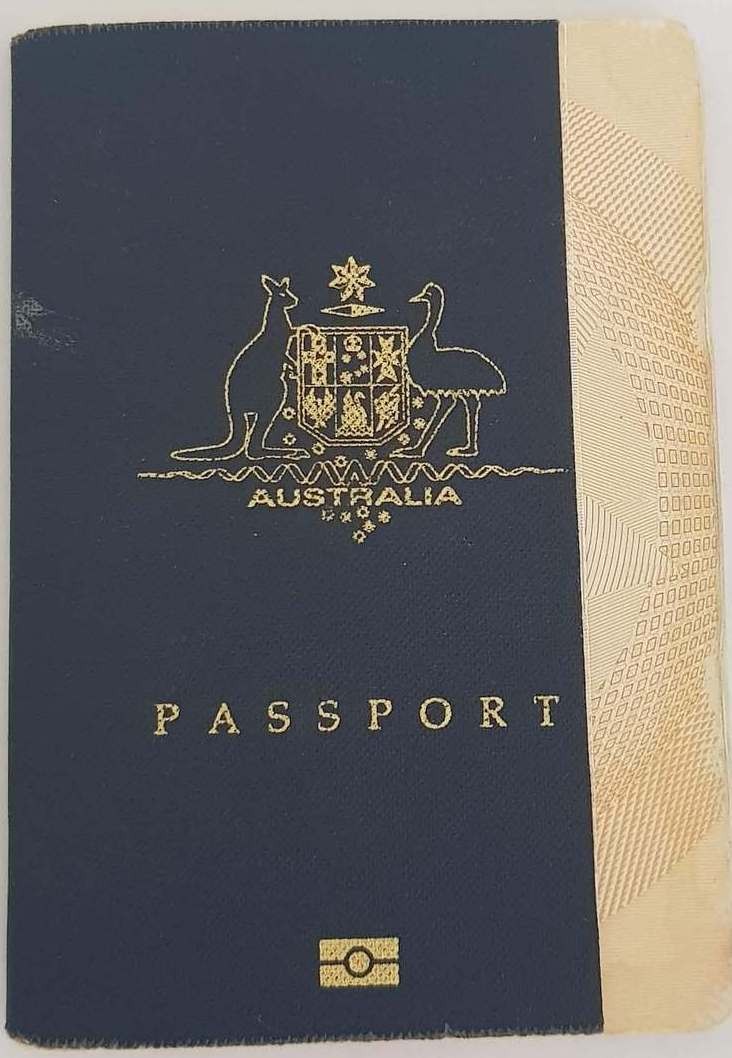
Ten years has come up and you’ve realised you need to renew your Aussie passport in the UK. It’s by post now, with no appointment. So you won’t get to see Gringotts any more, or go to Australia House. Here’s how you do it.
The spend
AUD 611, adult ten-year passport
The booking
none, it goes by post
Takes
at least six weeks
Works for
Australians in the UK renewing an adult passport
Fact check · 24 September 2026
I’m not an adviser. I renewed mine in 2017, in person. The rules below are the High Commission’s as at 24 September 2026. Check the High Commission’s postal renewal page before you send it.
1. Check you can renew by post
You can if all of these are true:
You were at least 16 when your last passport was issued.
It expired in 2016 or later.
It was valid for two years or more.
It hasn’t been lost, stolen, damaged or cancelled.
You’re not changing your name, gender, date of birth or place of birth.
If not, you need a new application instead. The High Commission’s page tells you which.
2. Get your photos
Go to a proper photo shop. No photobooth photos.
I went to Snappy Snaps, or somewhere like the post office. They both have shops all around and they’ll take the photo easily. Slightly expensive.
Send at least two.
Write your full name on the back of one in black pen.
3. Fill in the forms
Fill in the adult renewal application form online. Click Application portal, then the adult renewal form. Print it. Sign and date it in black pen. The date next to your signature must be within the last six months.
Print and fill in the Payment Authorisation Form. You pay in Australian dollars only. Your UK bank may charge you for it.
4. What goes in the envelope
The application form
The photos
The payment authorisation form
Don’t send your old passport or any original documents.
5. Post it
Put it in an A4 envelope, addressed to:
Passport Office (adult renewal), Australian High Commission, Strand, London WC2B 4LA
Send it by Royal Mail, tracked. No courier.
Keep the tracking number.
6. Wait for it to come back
Allow at least six weeks. There’s no priority or express service. If you have to travel within three weeks, the High Commission has an emergency passport route instead.
The new passport comes back to your UK address by Royal Mail Special Delivery.
7. Keep your old passport
Your old passport stays with you. It’s cancelled automatically 30 days after the new one is issued.
I prefer the old navy to the newer blue.
8. Your visa
If you’re on an eVisa, update your passport details in your UK Visas and Immigration (UKVI) account when it arrives. Gov.uk says an out-of-date account can mean delays when you travel. You can’t change it while a visa application is waiting on a decision.
There is so much to do in Brussels in a day that you could easily stretch it so much longer. As you may know, Belgium is probably best known for its beer, waffles, pomme frites and chocolate.
This day itinerary is crafted to get your fill of all these delights whilst seeing all the sights in the Belgian capital.
The best thing about a day trip to Brussels is that most touristy sights are within walking distance of each other and you will be able to maximise your time here. Unless you end up drinking too many strong Belgium beers.
Things You Should Know Before Going To Brussels
With a day trip, it’s easy to get caught up in the tourist traps or not know the low down of the city. Here are a couple of things you should know when visiting.
Money: Euro is the currency.
Train Stations: There are 3 train stations in Brussels Nord, Brussels Centrale and Brussels Midi, make sure you check where you arrive and depart from. Occasionally, people turn up to the wrong ones and miss their trains.
Airports: There are two airports in Brussels; Brussels Airport (the closest airport) and Brussels South Charleroi Airport (the furthest airport where cheaper airlines generally fly into).
National Languages: There are 3 national languages in Belgium. Depending on where you are travelling, you will find there will be a dominant language for that area. French and Flemish are mostly spoken in Brussels but they also speak German in areas of Belgium.
Explore the Lovely Neighbourhoods: I highly recommend wandering around the cute cobblestone streets of Sablon, St Gilles and Les Marolles.
Visit the Quirky Museums: Museum of Musical Instruments, the Royal Museum of Army and Military History, Autoworld, and the Belgian Comic Strip Museum. If you plan on seeing a few museums pick up a Brussels Card as this will give you access for a set price.
Find the Best Views: In my opinion, there is nothing better than a panoramic view of a city. Here’s where you get the best views in Brussels:
5th Floor of the Royal Library of Belgium.
10th Floor of the Museum of Musical Instruments.
Be Careful Where You Eat on Rue de Bouchers: It is a street full of pushy waiters trying to get you to eat there with inflated tourist prices and subpar food. I have a fantastic restaurant recommendation later in the article that is worth eating at but do be careful!
Find the Less Busy Chocolate Shops: A lot of the chocolatiers have shops outside of the Galeries; these won’t be as busy and better options to visit. Open Google Maps and type in the chocolatier you wish to visit. You will be able to take your time, try the chocolates and get a lot better customer service.
Avoid the 1 Euro Waffle stands!: These will likely be very mediocre waffles and disappoint you! Later in the article, I recommend the waffle company I like to visit but do your research so you can get the best possible waffles.
Make the Most of Lunch Specials: Lots of restaurants offer lunch specials which is a great way to save money and get a good meal! Consider this over splurging for dinner.
What to do in Brussels in One Day
I have designed this day in Brussels itinerary to fit in all the main sites on a logical walking route. Plus it is totally adjustable to your interests and I’ve added some other restaurants, chocolatiers, pomme frites and drink places for alternative options.
Parc de Bruxelles (Brussels Park)
Starting your day off at Parc de Bruxelles (Brussel Park) also known as “Parc Royal”. It’s the largest urban park in Brussels and a great way to start the morning with a nice stroll.
In the 1770s the whole area of Court was completely changed. Thanks to Guimard who drew the new design for the park and Zinner the gardener. The park was transformed with sculptures, fountains and footpaths.
Palais Royal de Bruxelles (Royal Palace)
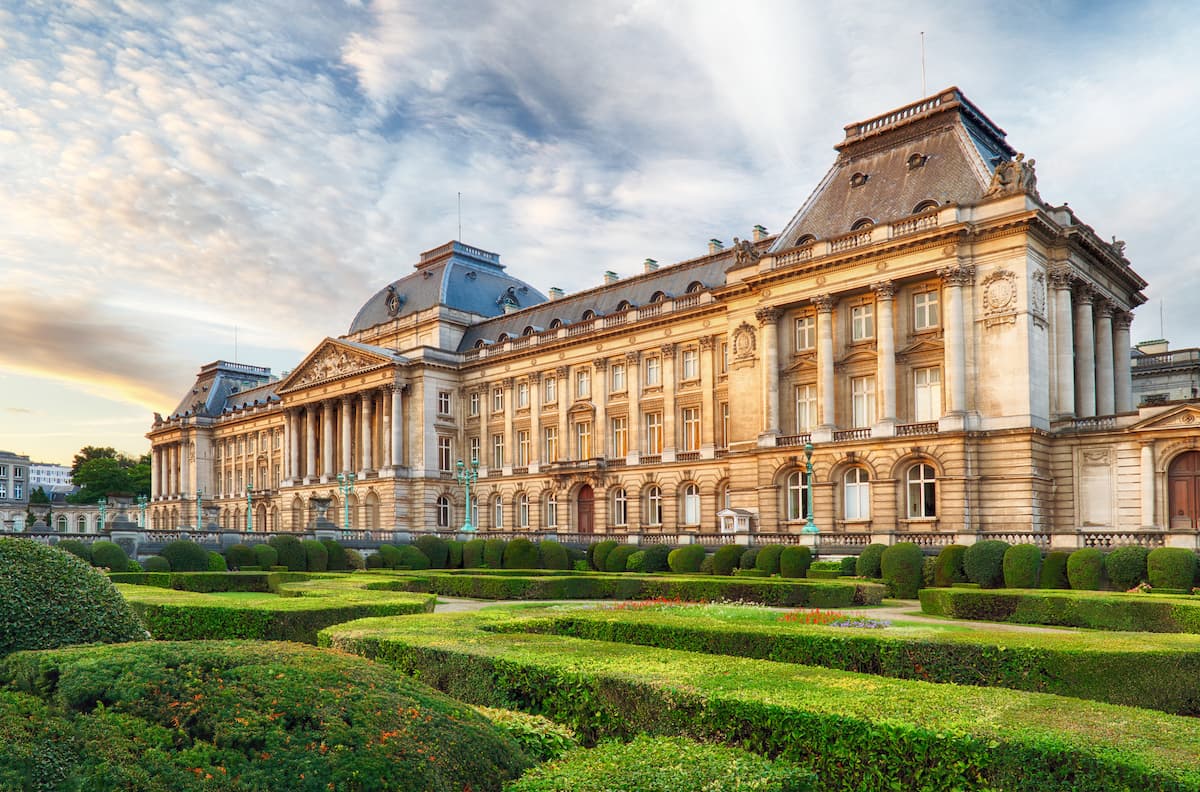
From the park, you will see one of the cities most magnificent landmarks, the Royal Palace. The facade you see today is from the 1900th was instructed to be built by King Leopold II. Architect Alphonse Balat designed new rooms like the ‘Grand Staircase’, ‘Throne Room’ and the ‘Grande Gallerie’.
It’s no longer home to the King and Queen of Belgium and is now used for Head of State duties.
There is only a short window that you can visit inside the Palace. Between the 21 July (the national bank holiday) until the beginning of September. The Palace opens from Tuesday until Sunday at 10:30 am and closes at 5 pm.
Place Royale
Place Royale is quite photogenic so grab a quick photo and admire the picturesque place.
It’s a public square surrounded by Neoclassical buildings, lined with gardens and at the centre of the square is a statue of Godfrey of Bouillon, (the leader of the first crusade in 1096) mounted on his horse. The main building you’ll notice is Saint Jacques-sur-Coudenberg and it has a magnificent view of Palais de Justice.
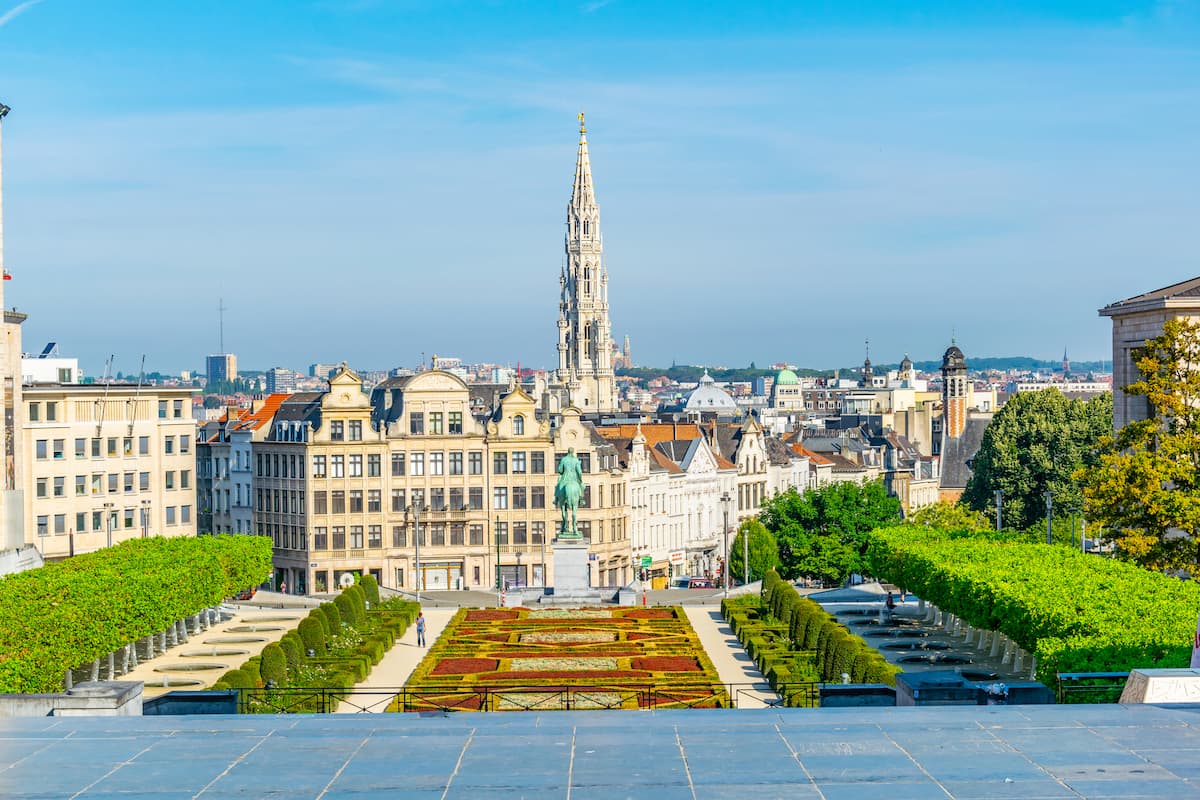
Mont des Arts – Views and Museums
Mont des Arts translate to the hill/mount of arts which means you must come here for the views and art.
The area was converted into the arts’ quarter by King Leopold II at the end of the 19th century. They sourced various architects and urban planners to create a space to accommodate different cultural institutions.
The public park has a chilled ambience, during the summer it’s great to have a drink and spend an afternoon here whilst enjoying the views.
Cathédrale Saint-Michel et Sainte-Gudule (St Michael and St Gudula Cathedral)
The Cathedral is built in Gothic style architecture and took over 300 years to build. From 1047 until the eighth century the cathedral was called St Michael, it was renamed St Michael and St Gudula Cathedral when the relics of the martyr of St Gudula were brought to the cathedral.
Even though it was built centuries ago, only in 1962 was it given cathedral status.
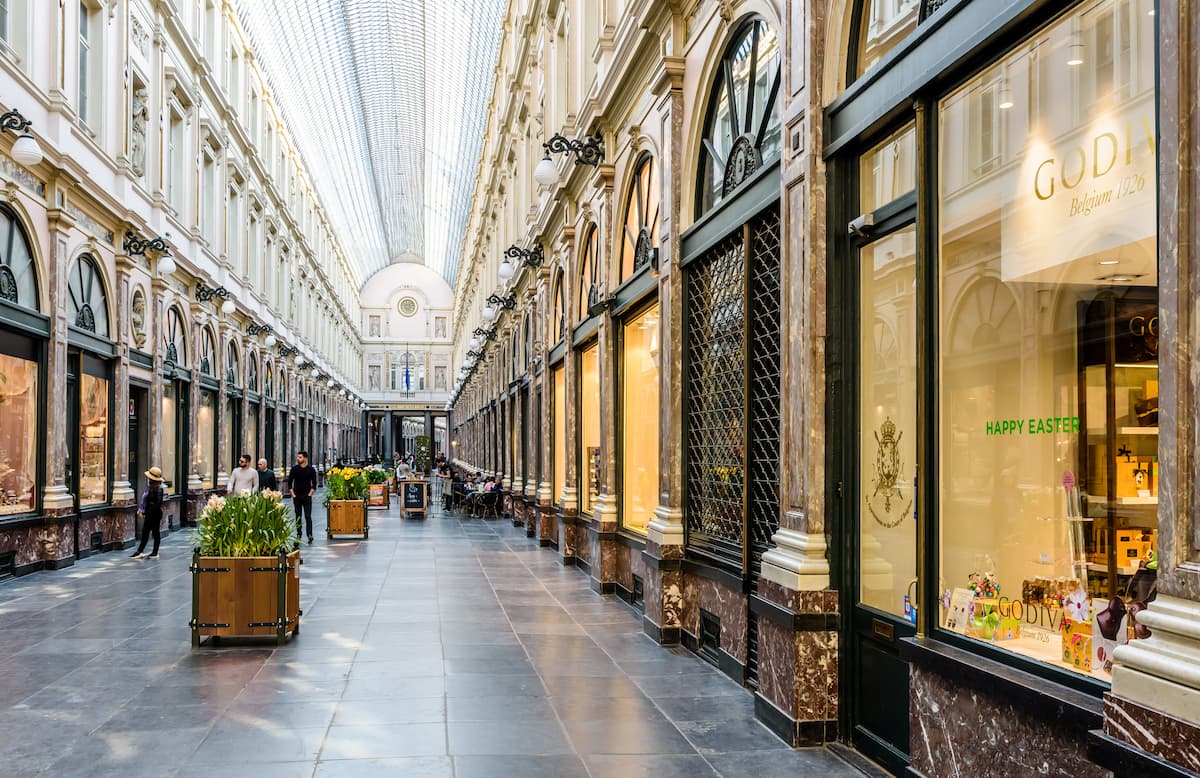
Galeries Royales Saint-Hubert (the Royal Saint-Hubert Galleries)
The Galeries are elegant are shopping arcades, you will find three that are connected together’ Galerie de la Reine, Galerie du Roi and the Galerie des Princes.
Inside are little shops selling jewellery, chocolate shops, boutiques, restaurants and bars. The main attraction is the beautiful ceiling. It is a little touristy but it’s free and a wonderful place to browse and enjoy the architecture.
On a rainy day, you can also catch a movie at one of the cinemas; Cinema Galeries in the Royal Galleries or Cinematek. They show movies in multiple languages.
If you love a bookstore then you must check out Bortier Gallery (on rue de la Madeleine). They have a fantastic range of second-hand books.
Lunch at Aux Armes de Bruxelles
Most of the restaurants on Rue des Bouchers are often poor quality and your general tourist places, however, there are always some great places around if you know where to go. As one of my friends used to live in Brussels she had the perfect place to recommend and one that locals would visit on Rue des Bouchers which is called Aux Armes de Bruxelles.
Rudy Vanlancker has brought back Aux Armes de Bruxelles to its former glory. His goal to make the restaurant to be the most beautiful brasserie in the downtown area.
You’re guaranteed food that tastes great, in a traditional Belgian style and friendly staff.
Alternative spots to grab food in Brussels:
Madame Chapeau in St Jacques is famous for Brussels seafood.
Les Brassins in Ixelles for the rabbit stew.
Soleil d’Afrique in Matong for the vibrant food and cocktail.
Rue de Flandres off Place St Catherine for Asian cuisine.
Pin Pon is a converted fire station into a hipster vibe brunch spot.
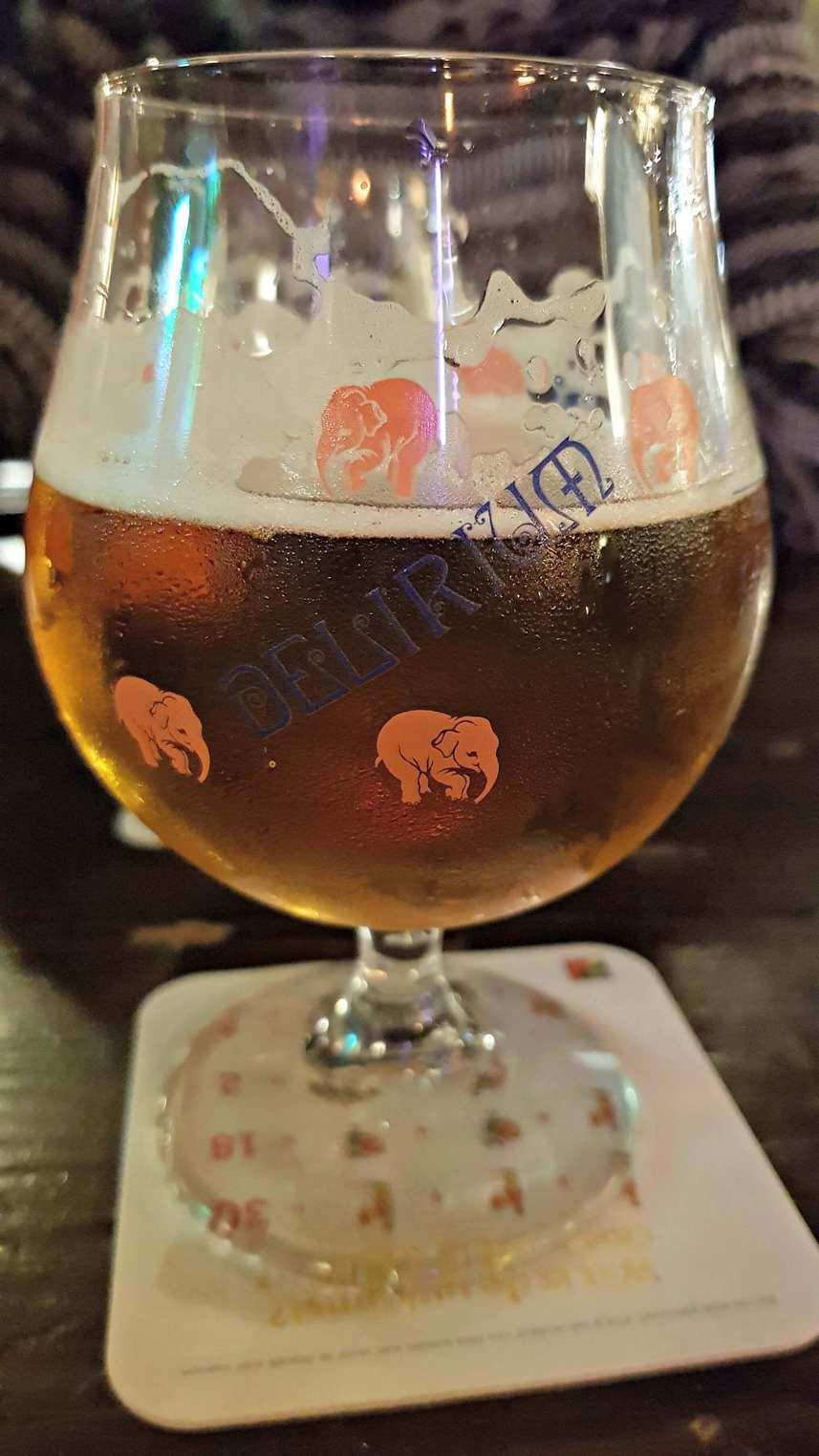
Try some Belgian Beer at Delirium
Délirium Café is located near Aux Armes de Bruxelles, it’s down a little passage called Impasse de la Fidélité. The sister Jeanneke Pis of the Manneken-Pis is also here opposite the entrance. Grab a quick photo before entering Délirium Café.
It’s no wonder beer lovers from around the world love this place. You can taste more than 2000 beers from around the globe. Delirium Café holds the Guinness World Record for the most beers offered!
The Belgium Delirium Café offers a range of beers from over 60 countries, that’s about 2000 beers including beers from Belgium! Make sure you try one of Delirium’s delicious beers whilst you are there.
Do be careful with Belgium beers as they are generally around 7% – 9%. We always opt for half beers when we are in Belgium due to the strength.
One of my favourite things to do when travelling is learning! If you want to know more about Belgium Beer, I highly recommend taking a tour. This will be a few hours, sampling different beers and visiting some of the top bars in Brussels. Find out more information about the tour on Get Your Guide.
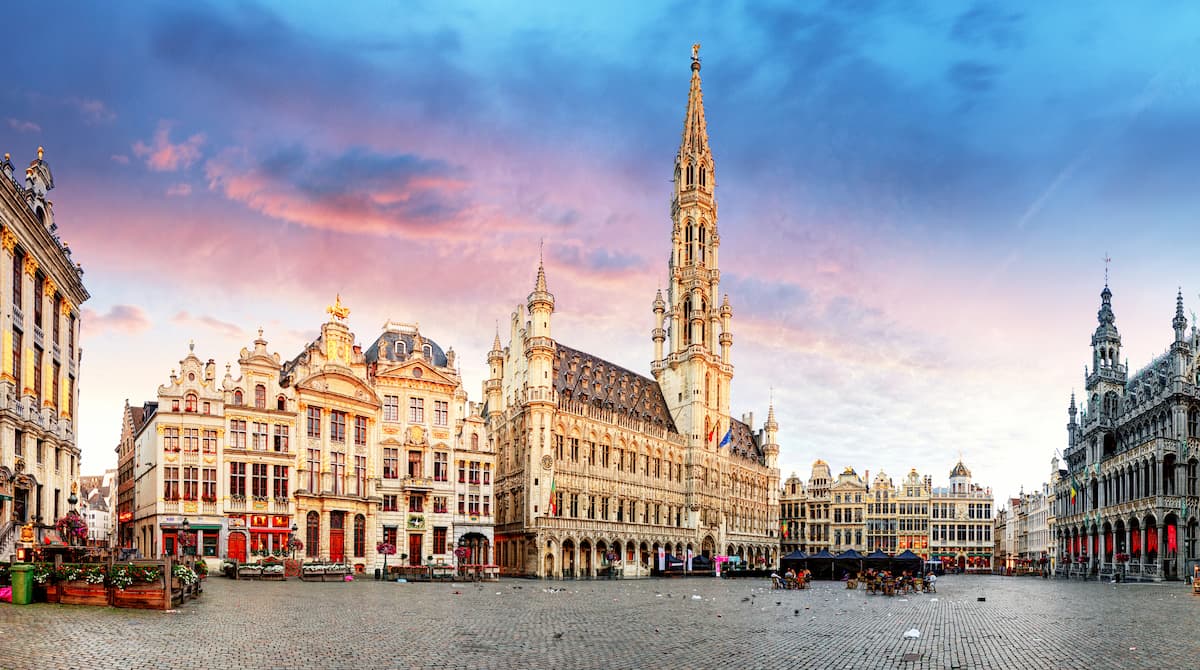
Grote Markt (Grand Place)
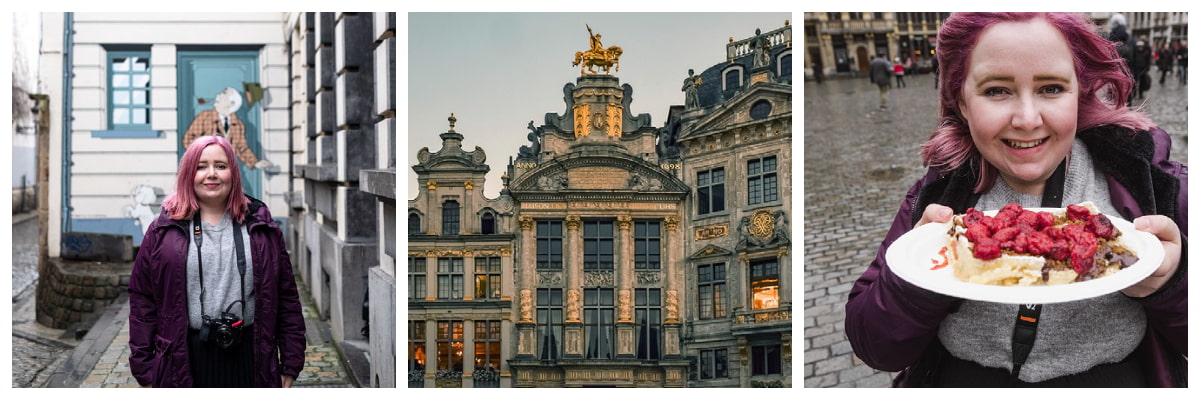
Grand Palace is the central square with lovely guild houses and the town hall, the designs are breathtaking and you could spend hours staring at the details.
A panorama of the square should be taken by anyone visiting Grand Place. You will be able to see all the wonderful buildings in the city square.
Buildings worth mentioning:
Hotel de Ville (Town Hall): Southeast of the square is the Town Hall. The building is Brabantine Gothic architecture and the oldest building in the square. Looking up at the tower you will see the archangel Michael staring at you from the 96m tower which was constructed in the fifteenth century. Guided tours do run in the building in Dutch, English and French on Tuesday and Wednesday afternoons.
Maison du Roi: Currently this is the Museum of the City of Brussels (Musée de la Ville de Bruxelles) that features artworks from the sixteenth century and some of Mannekin Pis’ wardrobe (the peeing statue you will see on your tour)! Before it was the museum this was the King’s House and owned by Charles V, ruler of the Spanish Empire and the Holy Roman Empire.
Maison des Ducs de Brabant: You can’t do anything else but look at the beautiful exterior of the six houses. The buildings are known as “Ducs de Brabant” due to the statues of dukes that adorn the walls. If there was a photo opportunity, that would be it. The place is always crowded and there is no good time to take a photograph, but try anyway.
Le Pigeon: The artists’ guildhall was where Victor Hugo lived during his time in exile from France.
Guild Houses: The Grand Place is lined on each side with a number of guild houses and a few private houses. They are mostly reconstruction in 1695 after the bombardment. The facades are based on Italian Baroque with some Flemish influences and include pilasters and balustrades.
It is the perfect place for a photo opportunity so make sure you get your cameras ready. If you do come here earlier in the day i.e. before 8am the square will be lined with rubbish bags etc so just be warned you might have to get creative with your photography.
During the Christmas holidays, you will see a truly magical sight. The Grand Place is full of festive events and markets. Brussels holds other festivals in the square as well such as the famous colourful flower carpet they lay every two years.
Eat Some Waffles at Maison Dandoy
Now that you’ve got a bit more walking out of the way it’s time for some of the best waffles in Brussels! Jean-Baptiste opened the first Maison Dandoy shop in the heart of Brussels in 1829 so it’s ingrained in the history of the city.
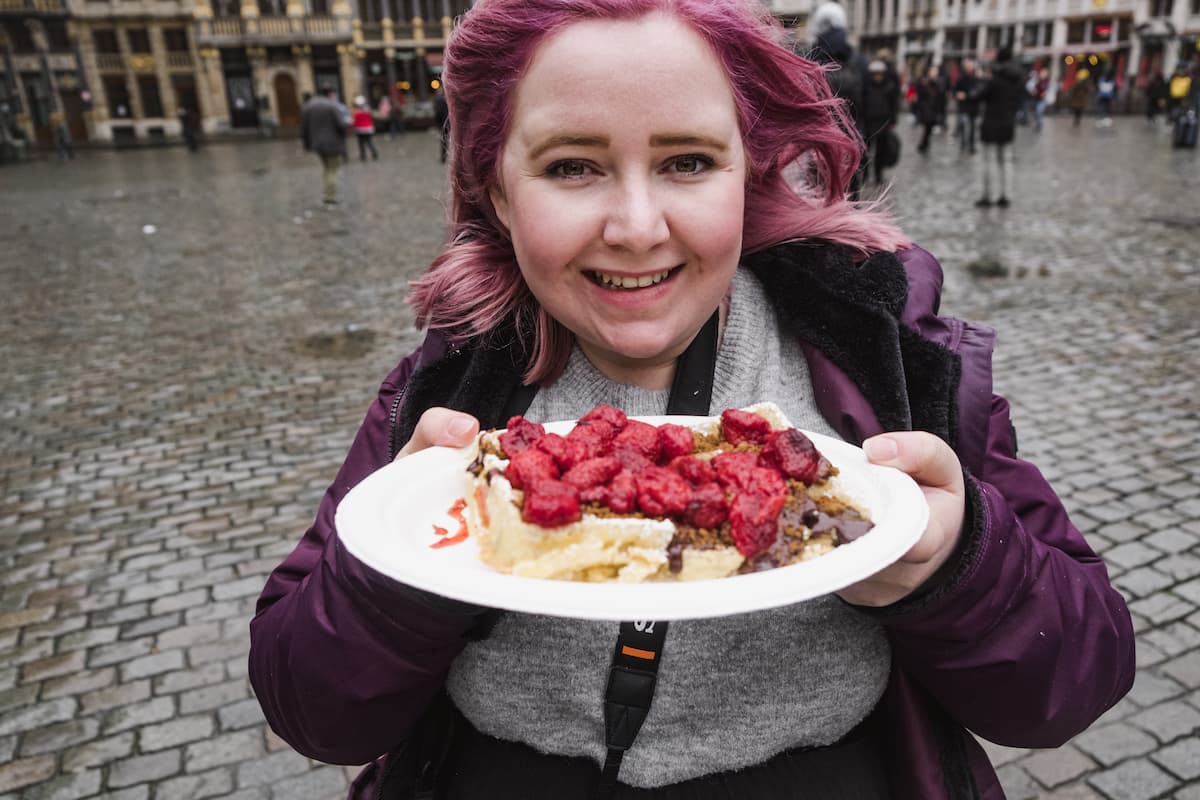
They have a pop-up waffle shop just around the corner from Grand Place. I had the best waffles topped with strawberries and chocolate!
Maurice Vermersch of Brussels created the waffle we all know and love. The lovely crispiness on the outside and fluffy waffle insides, with the deep square pockets imprinted in from the iron. He introduced these to Americans in 1964 World’s Fair in New York City and this is when they became popular. The name changed from Brussels waffles to Belgian waffles as he thought most Americans didn’t know where Brussels was.
There is also another waffle you can try, the Liege waffle. It’s extra sweet as it contains pearl sugar in the dough, causing a delicious caramelised crust. Think of it like a really dense brioche bun but in a waffle.
And if you haven’t had enough sweet, there are more! Maison Dandoyare is most famous for its speculoos. The biscuits are made with butter, brown sugar and then moulded into handcrafted wooden moulds. There are all sorts of flavours you can try! These make the perfect gift to take home or a snack while you’re travelling around.
Comic Strip Walk
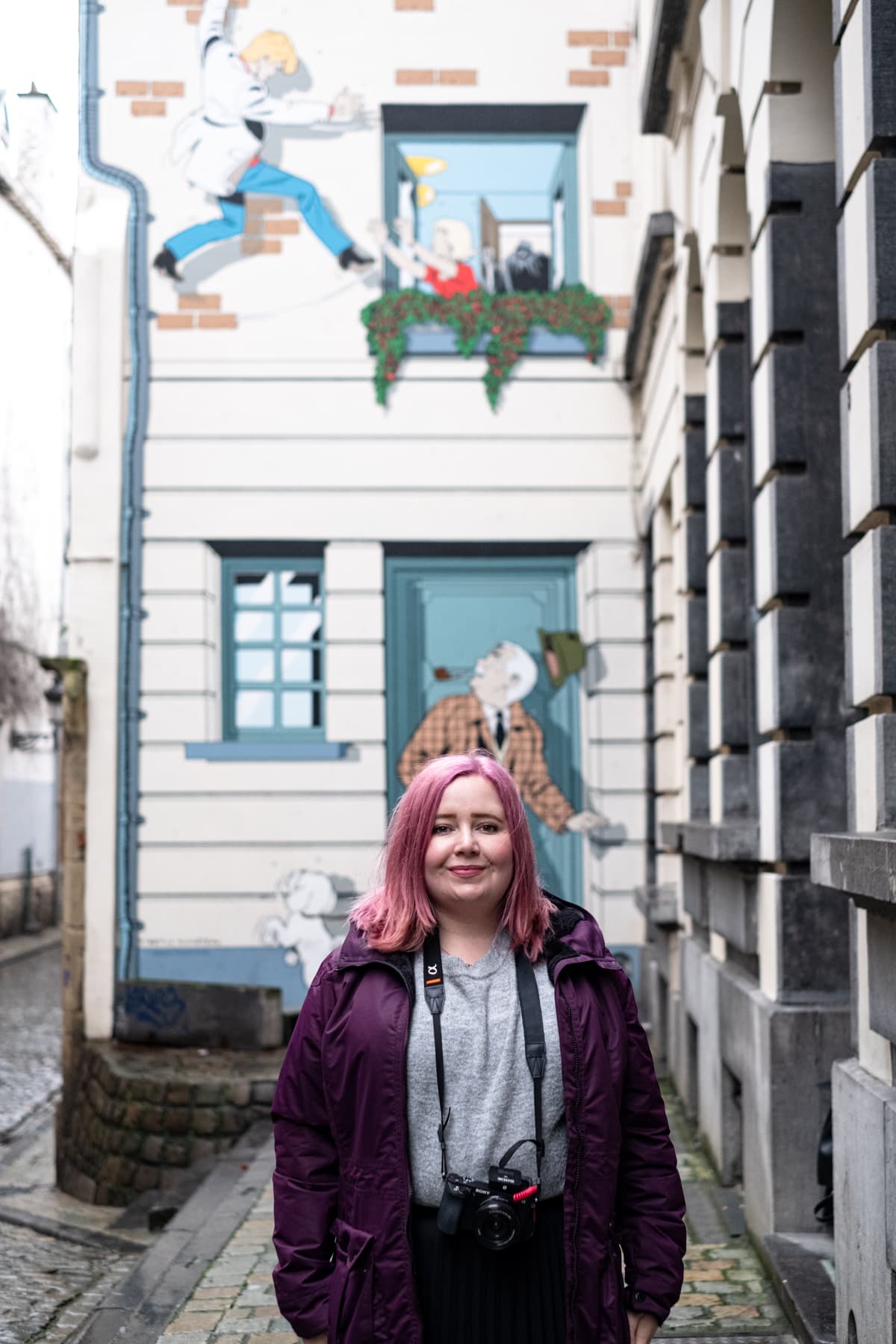
Started in the 1990s to pay tribute to the characters and authors of the Franco-Belgian comics. Some of the comics you can see are ‘The Adventures of Tintin’, ‘The Smurfs’ to ‘The Adventures of Astérix’.
This can be an outing in itself, however, if you only have a day then there are a few in a little cluster before you head to your next destination.
Do look out for them when you are walking around though! I’ve added some additional ones on the map too but visit Brussels has a whole guide on the Comic Strip Walk.
Manneken Pis Statue
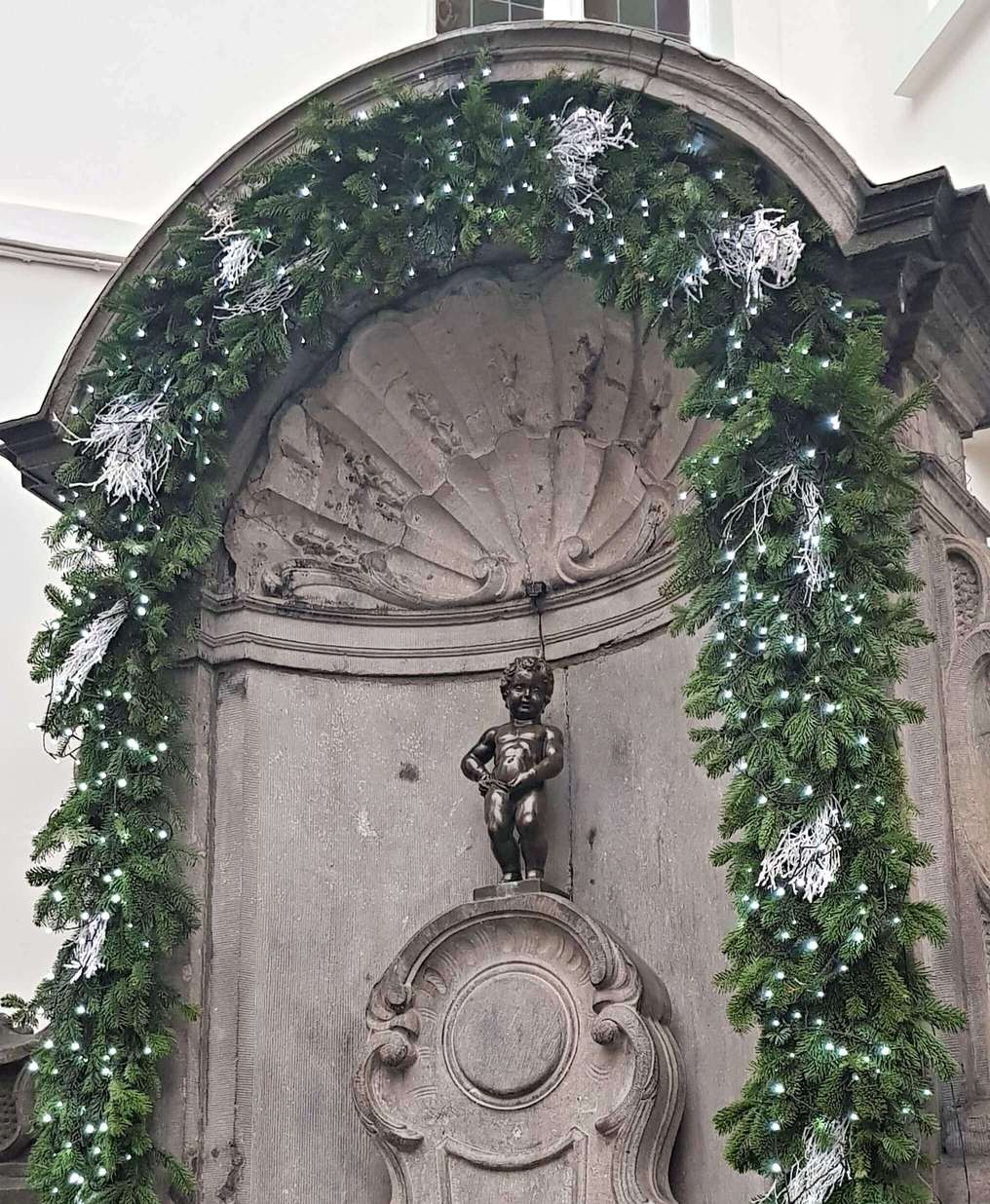
Manneken-Pis statue is often referred to as one of the worst tourist attractions but since you’re here you might as well see it. Basically, the statue is a naked boy peeing into a fountain.
They love to dress the statue in costumes, they get creative too! Anything from Elvis, Dracula, Santa Claus just to name a few. He actually has over 1000 outfits which are pretty impressive for a statue.
And if you are wondering what the legends are surrounding the Manneken Pis Statue, then these are my favourite three:
The little boy tried to put a fire out and thus saved the city.
During a battle in Ransbeke the boy was in a bucket in some trees and peed on the enemies and made them lose the battle.
Or… The boy peed on the witch’s house and decided to turn him into a statue.
Try Some Belgian Chocolates
Belgium has some of the best chocolate in the world, especially its chocolate pralines. You can’t visit unless you sample some chocolate goodies. You will find both good and bad chocolatiers in the heart of Brussels so make sure you do your research before choosing one.
For those who are chocolate addicts check out independently owned Elisabeth, Artisan Chocolatier Mary or Neuhaus.
There is a shop just located around the corner from Manneken-Pis statue on Rue de l’Etuve. It was started by Jean Neuhaus who was a Swiss with Italian roots when he decided to layer the medicines he was giving people with a fine layer of chocolate.
His grandson in 1912 invented the Belgian praline. Basically, he evolved his grandad’s idea, instead of filling the chocolates with medicine it had the delightful filling of pralines. Then continuing the inventions Louise Agostini, Jean Neuhaus Jr.’s wife created the ballotin which is the beautiful chocolate box that is iconic today.
This independent boutique named Elisabeth sells some of Belgium’s best sweets. The owner travels all over the country to taste famous Belgian delicacies as well as long-forgotten local cuisine. From Cuberdon noses to Frederic Blondeel’s to tasty chocolate truffles, you’ll find something to buy here.
One of the most famous chocolate shops in Brussels is Artisan Chocolatier Mary. The first shop opened in 1919 and has always been busy. The original boutique on Rue Royale has an array of pralines and hand-rolled truffles that you have to try!
If you want to splash out, go to Pierre Marcolini. It’s also about 15-20 minutes’ walk from Grand Place and is a nice area to wander with more shops, cafes and bars.
Alternatively, sign up for a chocolate workshop at Zaabär. They hold regular courses on learning to make chocolate and makes for a great day out! Or sample gourmet chocolate with a tasting tour. Discovering the best chocolatiers in the city. Find the tour here on Get Your Guide.
Ready for Another Drink? Try Poechenellekelde or Goupil le Fol
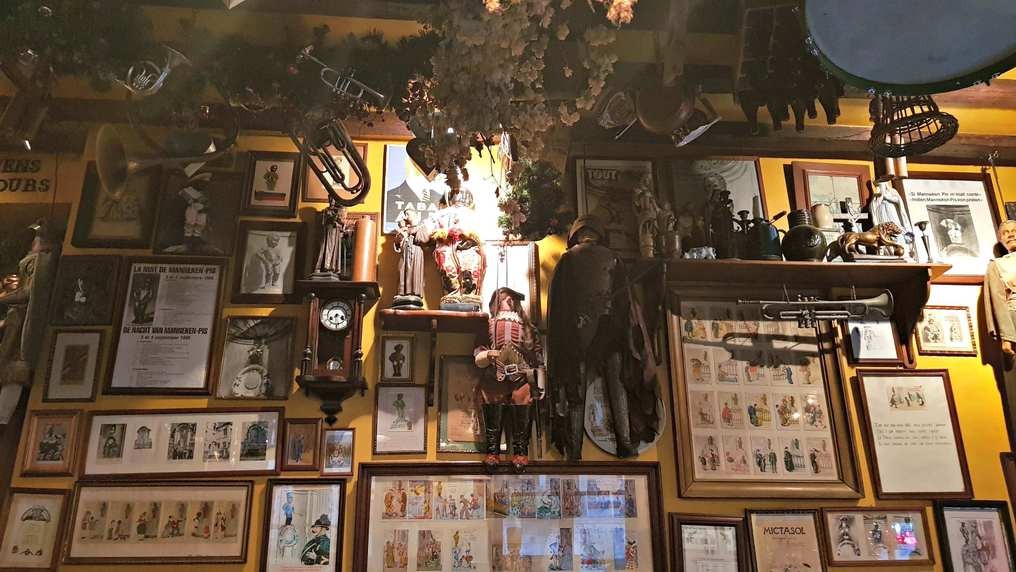
Poechenellekelde has a unique atmosphere with lots of puppets dangling from the ceiling and they have an excellent range of Belgian beers. As you are in Belgium you must also try a lambic beer. It’s a sour fruity beer unique to Belgium.
I highly recommend pairing a lambic with a cuberdon which is a cone-shaped Belgian candy. On my beer tour in Ghent my tour guide introduce this to me and it was an amazing pairing!
Nearby is a quirky little wine bar called Goupil le Fol (cash only). The bar specialises in cherry wine, blackberry and raspberry wine, nut wine and liquors. The interior is very quirky! The wine was so delicious, too easy to drink and way stronger than it tasted.
Alternative spots to grab a drink in Brussels:
Café Belga.
Moeder Lambic.
Brussels Beer Project.
La Brocante.
Lord Byron.
Finish the Day off With Fries
After a few drinks, the best way to end the day is with some pomme frites! Always a great idea to soak up the alcohol and prevent a hangover. Even if you haven’t spent the day drinking these are a must to try anyway!
In World War 1, there was a misunderstanding that Belgiums speak French and the American soldiers, therefore, thought they were in France. So when they stumble across these delicious deep-fried potatoes they called them French Fries.
The pomme frites are Bintje potatoes that are cut into thick pieces and double-cooked in beef tallow. They first cook the fries at a lower heat and then deep fry them at higher heat just before serving.
Most of the best Fries are found outside the centre of Brussel but Kirstie Will Travel recommends trying Café Georgette. They come in cute newspaper wrappings, leave the skin on the fries and have some of the best sauces.
Do beware if you’re a vegetarian then most pomme frites are not vegetarian friendly as it’s cooked in beef drippings.
Other places to add to your list is:
Fries Food Truck in Place Flagey
Maison Antoine
Friterie du Miroir
How to Get to Brussels
Brussels is easy to get to by multiple transport modes. Here are some options:
Brussels by Plane
The nearest airport to the city is Brussels Airport, which is around 25 minutes drive from Grand Place. There is also Brussels South Charleroi Airport which tends to have the cheaper flights (Ryanair), but it is just over an hour away.
Brussels Airport has direct trains that run every 15 minutes and takes 17 minutes to travel into Central Brussels.
Brussels South Charleroi Airport needs you to get a train and bus. Take any bus on line A and you’ll arrive at Charleroi-South station which will take you to the centre.
Day trip to Brussels by Rail
It is super easy to do a day trip to Brussels from London by rail, just catch the Eurostar. The Eurostar runs regularly, getting you from London to Brussels within 2 hours. Trains also run from Paris, Amsterdam and Luxembourg.
Brussels by Bus
Bus companies run various routes to Brussels from cities like Amsterdam, Berlin, London and Paris.
Flixbus and Eurolines are two popular bus companies that run services to Brussels.
Where to Go Next in Belgium?
Belgium has so many great places to visit! Make sure you check out this 3 Day Belgium Itinerary that covers Brugges (so-called The North Venice) and Ghent. Both are wonderful historic cities and perfect to visit whilst you’re in Belgium.
So, fellow adventurers, as you can see on what to do in Brussels in a day trip and it is so easy to get around. If you would prefer to do Brussels in a day in a guided tour then the City of Brussels gives you some options.
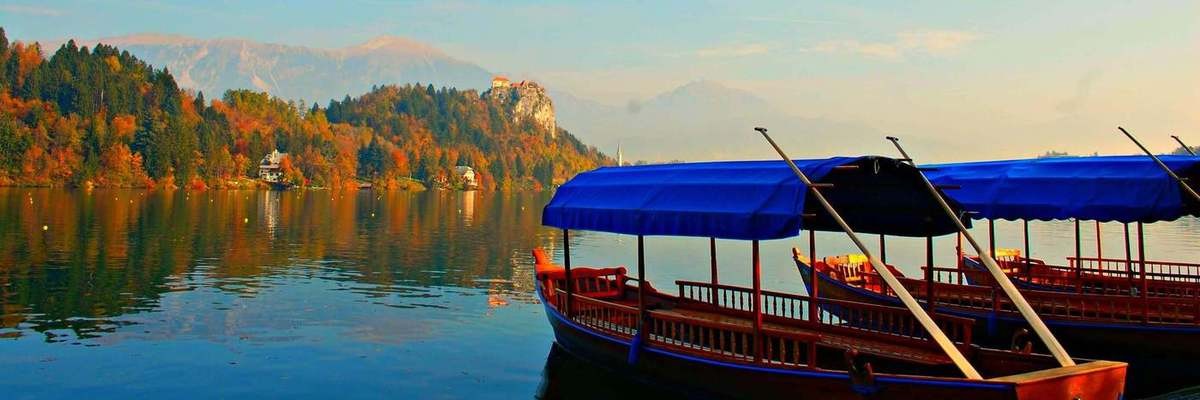
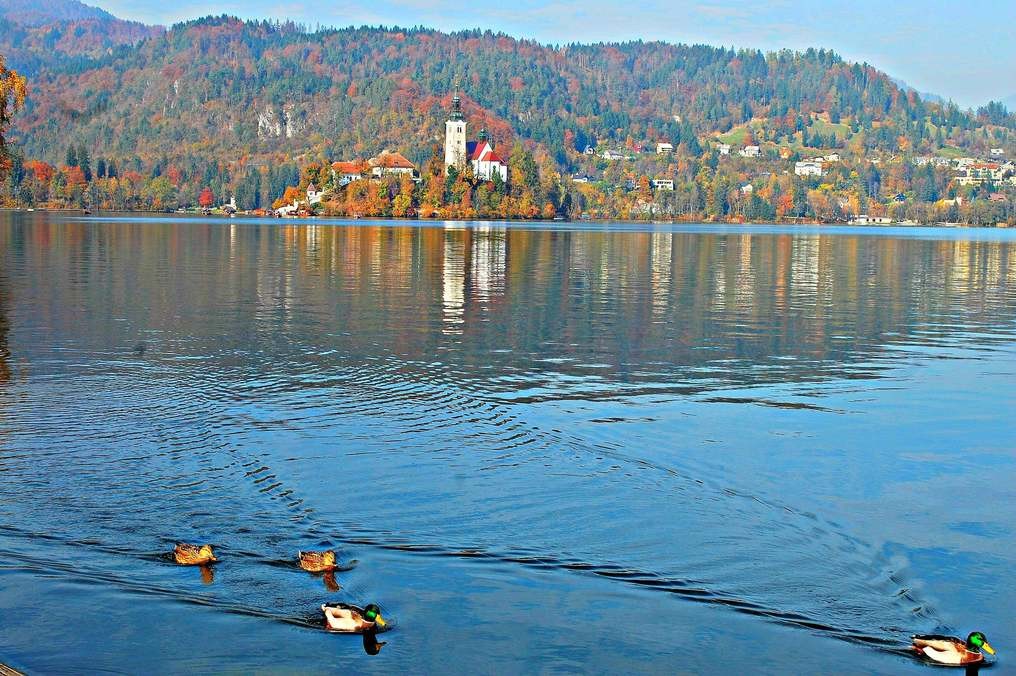
Do you ever choose a destination based on photos? Bled is one of the most famous views of Slovenia. The first time I saw pictures of Bled I was captivated by its beauty. With its green-blue lake, the little island with its church and the mountains of the Julian Alps, it’s truly breathtaking and it’s no wonder we are captivated.
Bled is not the only gorgeous place in Slovenia, there is also a sister lake, Bohinj. This lake is more naturally stunning than Bled which has its man-made embellishments. Again, surrounded by the Julian Alps, close by are lovely walking trails, waterfalls and rivers.
How to get to Bled?
Depending on your choice of transport method will be the deciding factor on how you get to Bled. Driving will be about 45 – 60 minutes from Ljubljana Airport and city centre of Ljubljana. Lake Bohinj is an additional 30 minute drive from Bled.
Public transport means that you need to catch the bus or train from Ljubljana. The Lesce Train station has frequent connections with Ljubljana but it is 4.5km away from Bled. By bus – in Summer there are buses that departure on the hour to and from Ljubljana Bus station and in winter they are less frequent so check the timetable. The bus goes all the way to Lake Bohinj with several steps along Lake Bled.
Where to stay?
We rented a lovely Airbnb, House Gabrijel, that was a 20 to 30-minute walk from the town centre that I highly recommend. As Bled is a popular place for tourist there is a lot of accommodation available.
What to do in Bled?
Lake Bled and Pilgrimage Church of the Assumption of Maria
Walks or Hikes Around Bled
Bled is a perfect place to enjoy the outdoors and take some lovely scenic walks. One of the most popular and easiest routes is Velika Osojnica. It’s a view point over Bled and you will enjoy panoramic views of the lake and Bled. There are plenty of options to keep you busy of different lengths and difficulty levels, check out some of the walks here.
Visit the Island on Lake Bled
Across the lake on the Island you’ll see the iconic Pilgrimage Church of the Assumption of Maria. You can visit the island by swimming (during good weather), renting a rowing boat and docking at the island or by taking a ride in a traditional wooden “pletna” boat.
Taking the plenta boat does mean that the oarsman will time how long you can spend on the island. The church does cost money to enter which we opted not to do and just enjoyed a walk around.
Bled Castle and the Restaurant
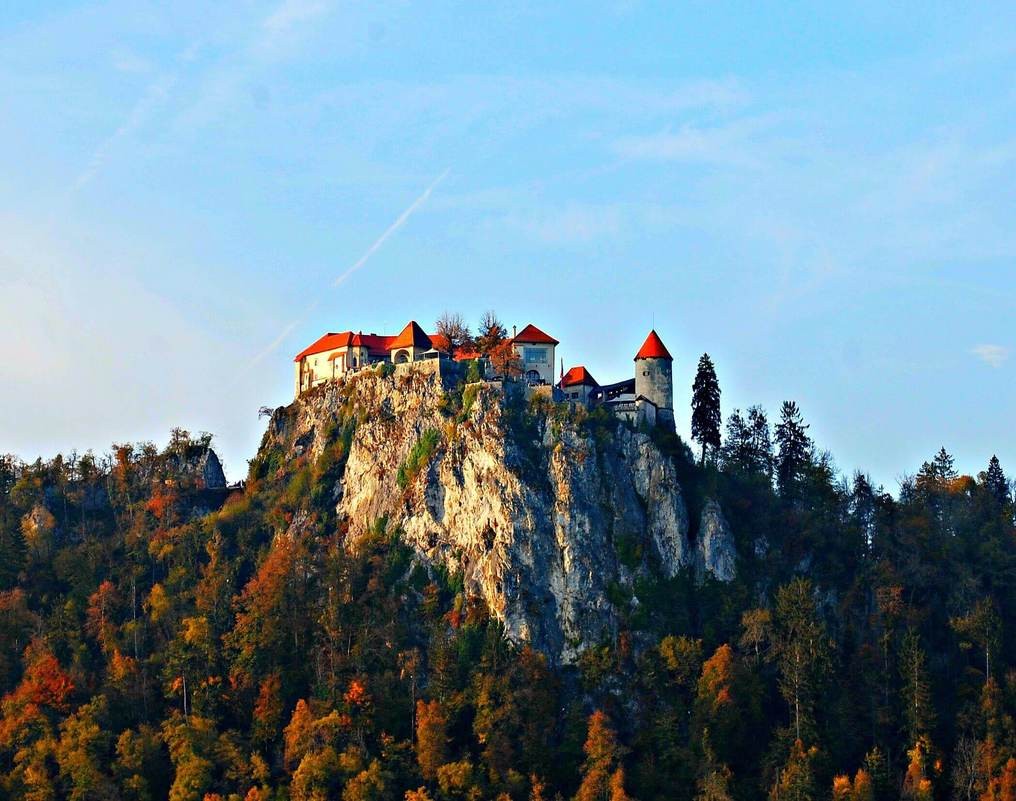
Bled Castle
At the top of the cliff is the Bled Castle, it’s about a 15-minute walk up the cliff. On a sunny day, it is a spectacular spot to enjoy a glass of wine overlooking the lake and town.
If you’re thinking about having lunch at the castle then make sure you make a reservation by sending them an email, details here.
The restaurant didn’t have any space for walk-in on the day we went and you won’t get bonus of free entrance! Taking the entrance price off the menu does make the food more affordable, although if you After 6pm you must have the £60 set menu.
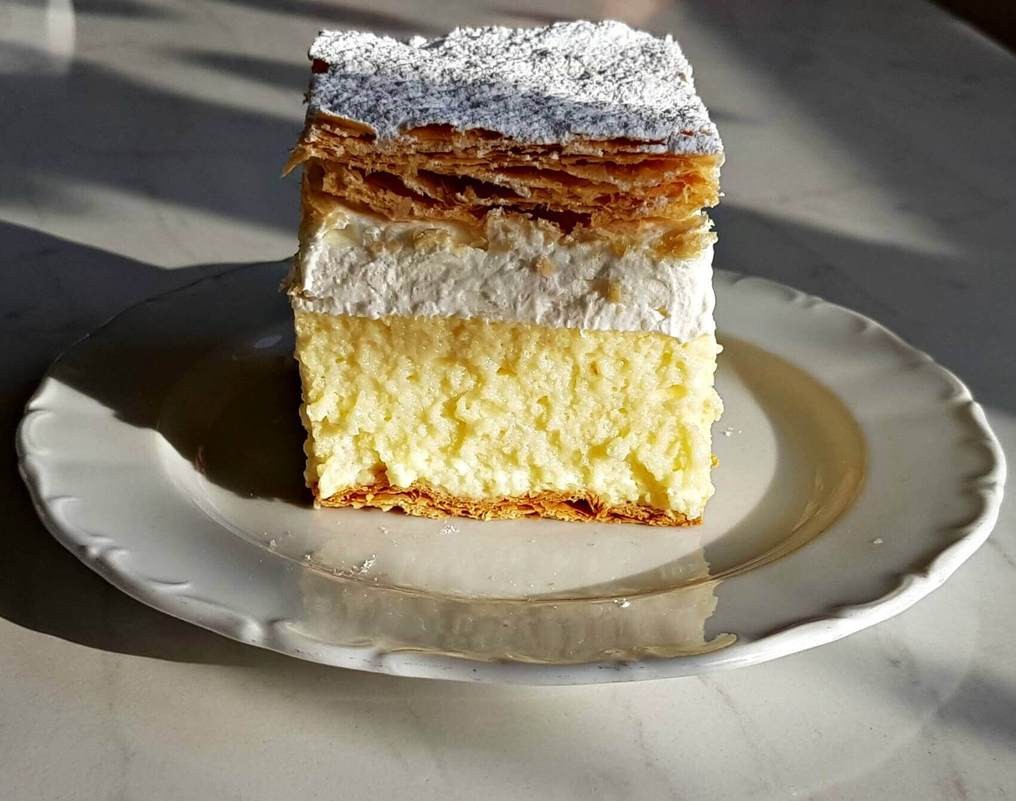
Try the Famous Bled Cake (Kremna Rezina)
Lake Bled Cake
Bled has a traditional cream cake known as Kremna Rezina. It dates back to the Hight of the Austro-Hungarian empire in the 18th and 19th century. You will see pictures of the cake everywhere! We went to Confectionery Winter – Grajska cesta 3, 4260 Bled, Slovenia to try the cake.
Where to eat in Bled?
Dinner at Sova
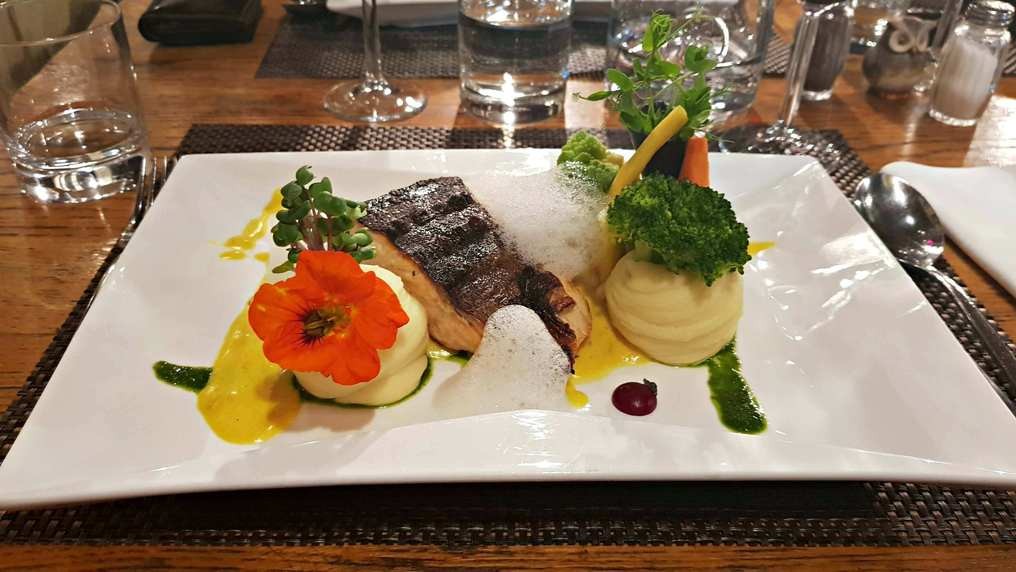
Sova – Slovenian food which I’d say is inspired by Italian food and meat-based dishes. It was our hosts’ favourite restaurant and did serve some incredibly delicious food.
Penzion Mlino – Also served Slovenian food and a selection of Slovenian wines.
Riklijeva Cesta – It’s a pizzeria, serving cheap pizza and drinks.
What to do in Bohinj?
Lake Bohinj and Triglav National Park
Bohinj
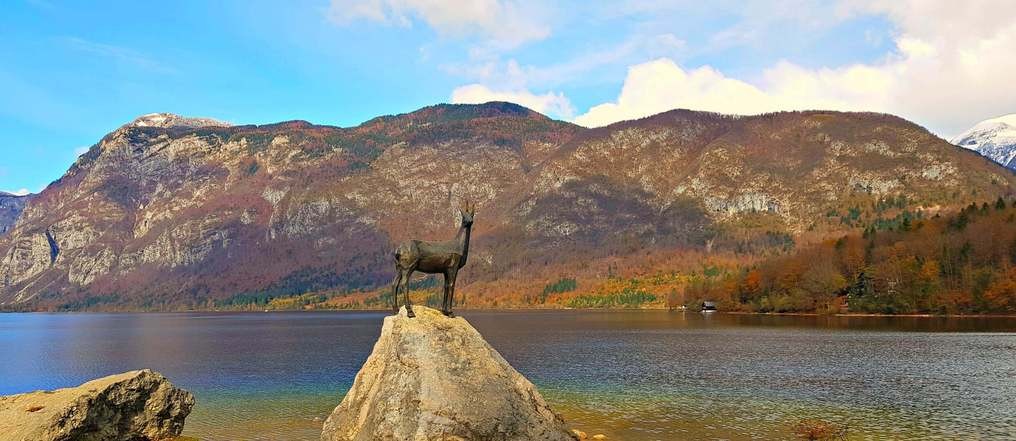
Lake Bohinj is Slovenia’s largest natural lake. With the crystalline waters reflecting the beautiful forest and the fall foliage was totally dreamy. The lake sits within the Triglav National Park and it is a popular place for those who love the outdoors. Lots of hiking trails, stunning scenery, swimming (when the weather allows) and skiing during winter.
As I mentioned earlier you can catch the bus to Bohinj or if you lucky enough to have a car it’s a thirty to forty-five-minute drive away. Make sure you stay on the main roads if you are driving, especially if you are not confident with windy one-way roads with lots of obstacles.
Take the Vogel to the top of the Julian Alps
Vogel, Lake Bohinj and Triglav National Park
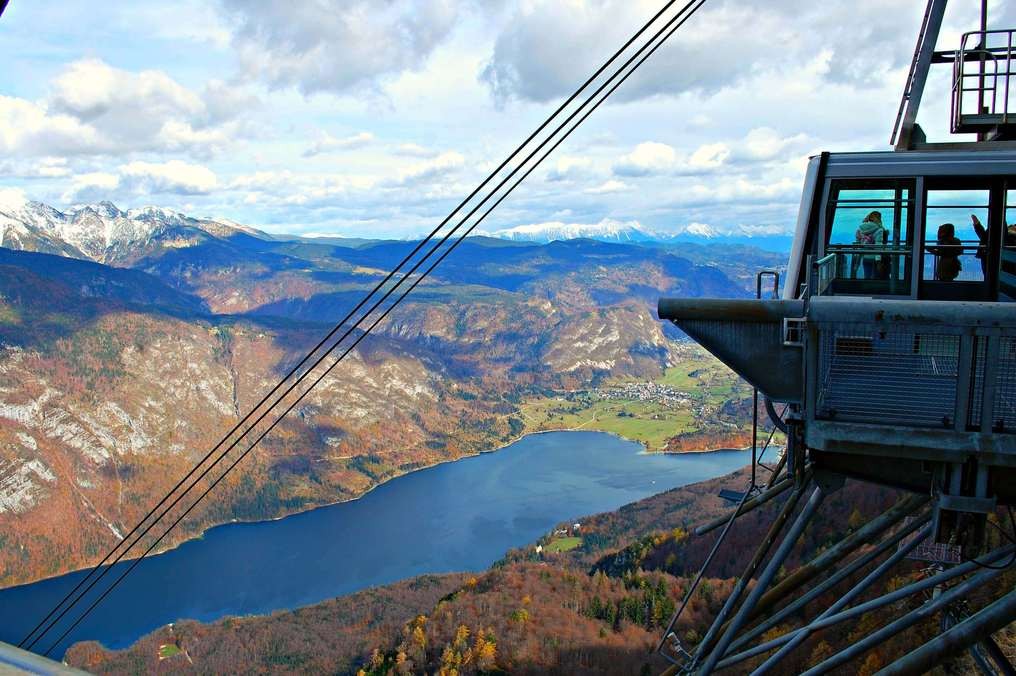
The Julian Alps stretch from north-eastern Italy to Slovenia. The highest peak being Mount Triglav which rises to 2,864 m. Here you can catch the cable car to the top of Mount Triglav a perfect place to capture the panoramic views of the mountains and Lake Bohinj.
In the summer, take the trails nearby and have a lovely day out hiking. In the winter, it opens up to ski slopes and winter sports.
Hike to the Savica Waterfall
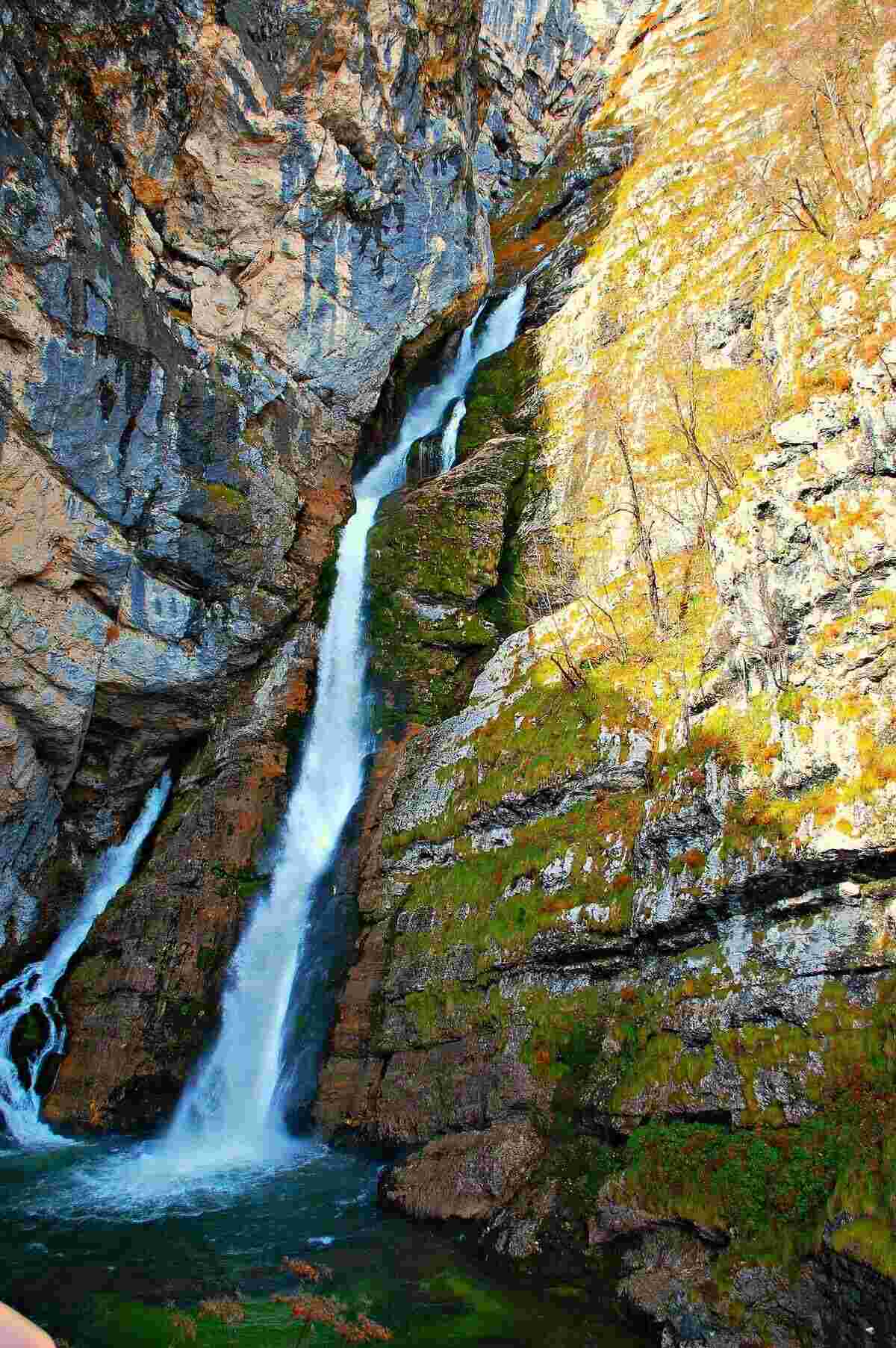
Savica Waterfalls are great for a half day hike and during summer would be a perfect place to enjoy a picnic on the route. Making your way up the hill, surrounded by the woods feels magical. As you get higher, the trees almost part to reveal the amazing landscape below and waterfall. On the other side, you can see the valley and beautiful forest surrounded by lakes and mountains.
Tip, the waterfall isn’t free and make sure you are carrying a couple of euros cash to cover the cost of entry.
Day Trip to Ljubljana
The capitals name for me the name isn’t easy to pronounce so let’s start with the correct pronunciation of Ljubljana. It’s pronounced as ‘lyoo-BLYAH-nah’. It’s not a big city, it can easily be covered by foot and save money on transport.
We, unfortunately, got rained out! The weather apps were not joking (like the UK) that it would pour down with rain. From a perfect warm almost summer day to torrential rain! Listen to the weather reports as they are pretty spot on.
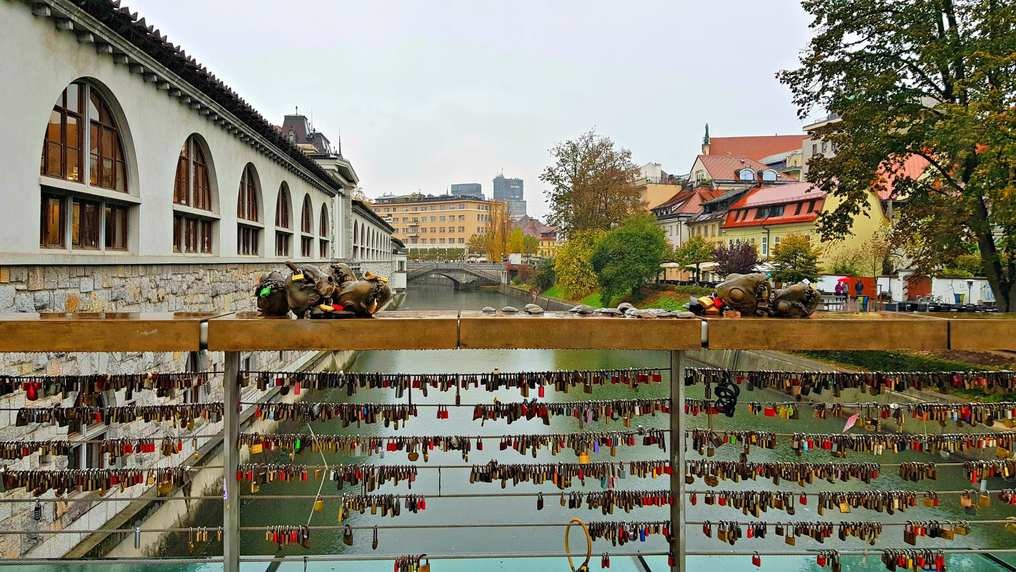
Hopefully, you have better weather than us, I recommend visiting the Dragon Bridge, Ljubljana Castle, taking a walk through the Old Town and a stroll around the canals.
What are you most looking forward to seeing in Slovenia?
Whilst the ancestry visa relies on having a British grandparent, if you have a British parent then you might be eligible to apply for a ‘right of abode’. Essentially as the child of a British citizen, you have the right to permanent residency. This is a right you inherited at birth. However, to be able to clear customs and live in the UK you’ll need to prove this. You do this by applying for a ‘certificate of entitlement’.
Disclaimer: This is based on Laura’s experience applying for a right of abode certificate of entitlement from Australia and again from within the UK. The steps are applicable to Australians, so please double check the lodgement process in your own area. You should seek professional advice if you are unsure. Go to GOV UK to check if there have been any changes to the visa rule & fees.
Before You Start
Firstly you’ll need to have at least one parent who was born in the UK and was a citizen of the UK and its colonies when you were born or adopted. You’ll also need to be a citizen of a Commonwealth country yourself.
This method of entry into the UK best serves those who were born before 1983 and who are claiming their rights through their mother’s side. Those born after 1983 automatically become citizens and require a different process.
Visa Cost
The certificate of entitlement costs £321 within the UK. Unlike an ancestry visa, youth mobility or sponsorship there is no NHS fee to be paid, which could be a considerable saving if you are planning on remaining in the UK for an extended period. Your certificate is also valid for the duration of your passport.
I would highly recommend renewing your passport prior to making an application for your certificate of entitlement as overseas embassies tend to process applications faster (2 weeks in Australia for me versus 5 months when reapplying in the UK). You will also have to reapply and pay the full cost again, it doesn’t roll over to your new passport.
Criteria
You have right of abode if all the following apply:
If you are a British citizen
One of your parents was born in the UK and a citizen of the United Kingdom and colonies when you were born or adopted
You were a Commonwealth citizen on 31 December 1982
You didn’t stop being a Commonwealth citizen (even temporarily) at any point after 31 December 1982
A female Commonwealth citizen who is, or has been, married to a man with the right of abode at any time before 31 December 1982
a UK and Colonies (CUKC) woman who is, or has been, married to a man with right of abode at any time before 31 December 1982.
Documentation Required
The documents you require for your application are:
Evidence of employment in the UK (if applicable)
Financial evidence – bank statements, term deposit statements etc.
Letter of invitation from a British citizen living in the UK (not mandatory, but preferential)
Proof of relationship documents – your birth certificate, your mother’s birth certificate (grandparents are not required)
Evidence of accommodation upon arrival (this can be a hotel booking or your referee in their letter of invitation can state that you are staying with them, even if this is not a long-term arrangement).
If this is not your first time applying, the process will be slightly different from within the UK and you will also have to send your expired passport as well as your new passport to prove you’ve previously had a certificate of entitlement. You are unable to have two current certificates in two documents at the same time.
Application Process
An electronic application process has recently been introduced, which saves you having to send all of your original documents to be processed via post. First, you’ll need to create your application using the Gov.UK website. Once this is complete, you will then need to book an appointment at a visa application centre, which will generally be in your capital city.
The process is as follows:
All documents must be A4 size.
You must separate your documents which will allow the barcode scanners to sort your paperwork correctly.
Any documents which are smaller or larger than A4 size, must be photocopied onto A4 sized paper. This includes the pages of any previous passports.
All documents must be free from any staples, clips or pins before they are submitted.
Torn, crumpled or heavily creased documents cannot be scanned and therefore must be photocopied onto A4 sized paper before they are submitted.
Documents should not be laminated
Once you have scanned in your documents, you will then record your biometric data (photograph and inkless fingerprints). You can then choose whether you’d like to collect your documents in person at the visa application centre or have them delivered to you by post. Generally, this will just be your passport.
The Benefits
In addition to the cost benefits, a right of abode application doesn’t expire. You are also treated like a British Citizen (because by rights or descent you are!) so you can complete customs like a local (you can’t quite use the eGates yet as you’ve got a foreign passport). This also means you won’t receive a stamp in your passport when you re-enter the country. If you chose, you can apply for British citizenship and a British passport immediately, and not have to wait like if you were on an ancestry visa. Please note though that if you apply for citizenship via application rather than by staying in the country the required time, you won’t be able to pass your ancestry on to any children. Nonetheless, your children will still be able to obtain an ancestry visa through your parent (their grandparent).
About Laura from Passport Collective
Laura is an Australian primary school teacher who has just spent 2 years teaching in the UK. Which has given her many opportunities to see the world, and hopes to encourage others to undertake their own adventures. Follow her adventure on Passport Collective,Instagram, FacebookandPinterest.
Did you know that the world consumes close to 2.25 billion cups of coffee every day? What better way to celebrate International Coffee Day than a roundup of the best coffee shops from travel bloggers, either places they’ve stumbled upon whilst travelling or their favourite local coffee spots.
International Coffee Day is on the 1st of October. From the 29th of September there will be more than 70 events in 35 countries around the world celebrating International Coffee Day.
Make sure you don’t forget to use #InternationalCoffeeDay when you upload those amazing coffee cups or spots on the 1st of October.
Here are our picks of the Best Coffee Shops Around the World…
1. Black Lab in London, UK
Black Lab London
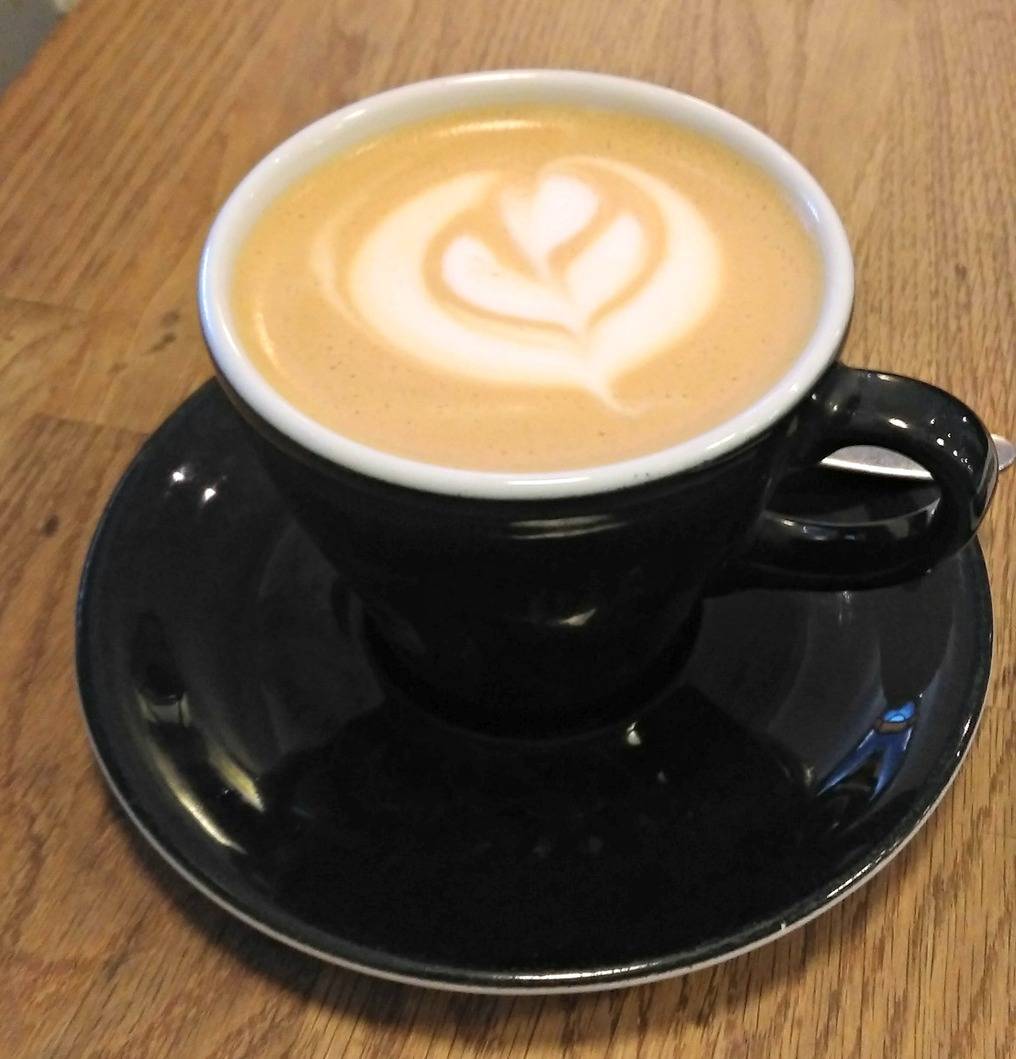
I discovered this fantastic coffee shop when I was living in Clapham and have been in love with their coffee ever since. The owner even convinced me to move to oat milk over soya milk, trust me it’s so much better!
It’s not your usual coffee place where you pick a latte or cappuccino. You start with choosing what blend you want, followed by milk choice, oat, almond or milk, then lastly volume 6 oz, 8 oz or 10 oz.
The blends change regularly so you always have something new to try occasionally making the decision harder. Stuck on choice? The staff are helpful, friendly and knowledgeable.
If the coffee doesn’t win you over then their counter full of delicious looking sandwiches and cakes should.
By Kat at Kat’s Gone Global. Follow Kat’s adventures on her Facebook and Instagram.
2. Freedom Cafe in Durban, South Africa
Durban Freedom Cafe coffee
Our favourite coffee spot in Durban, South Africa is a very quirky little café ‘called The Freedom Café’.
The Freedom Cafe’s part of a boutique hotel in the centre of the city but what makes it so unique is it a converted shipping container painted fire red with an added glass room and finished off with very trendy decor.
This quirky little spot oodles with character and makes the best cappuccino that you can enjoy in their magical garden with your pooch.
Durban Concious cafe
By Liza and Lisa at Souldrifters. Follow Liza and Lisa’s adventures on their blog and Facebook.
3. Mazarine Café in San Francisco, USA
Mazarine Café in San Francisco, USA
I am not a huge coffee drinker, but if I have to get my cup of Joe, I stop by Mazarine Cafe to get my caffeine fix. Mazarine cafe is located on San Francisco’s busy Market street and is a cute french cafe with minimalistic decor, great coffee selection (espresso, drips and cold brew) and lip smacking delicious food such as avocado toast and ginger molasses cookie.
Their coffee is ethically sourced from all over the world, including South America and India and like most cafes in San Francisco, you can get your beverage lactose free by requesting almond or soy milk.
Mazarin’s restroom has a super funky decor made of book covers plastered all over the walls. I love visiting this tiny quiet spot when I am in down town San Francisco for a hot drink and something to eat.
They also have a small outdoor patch with bright yellow tables and chairs that are perfect to soak in the San Francisco sun or visit with your dog.
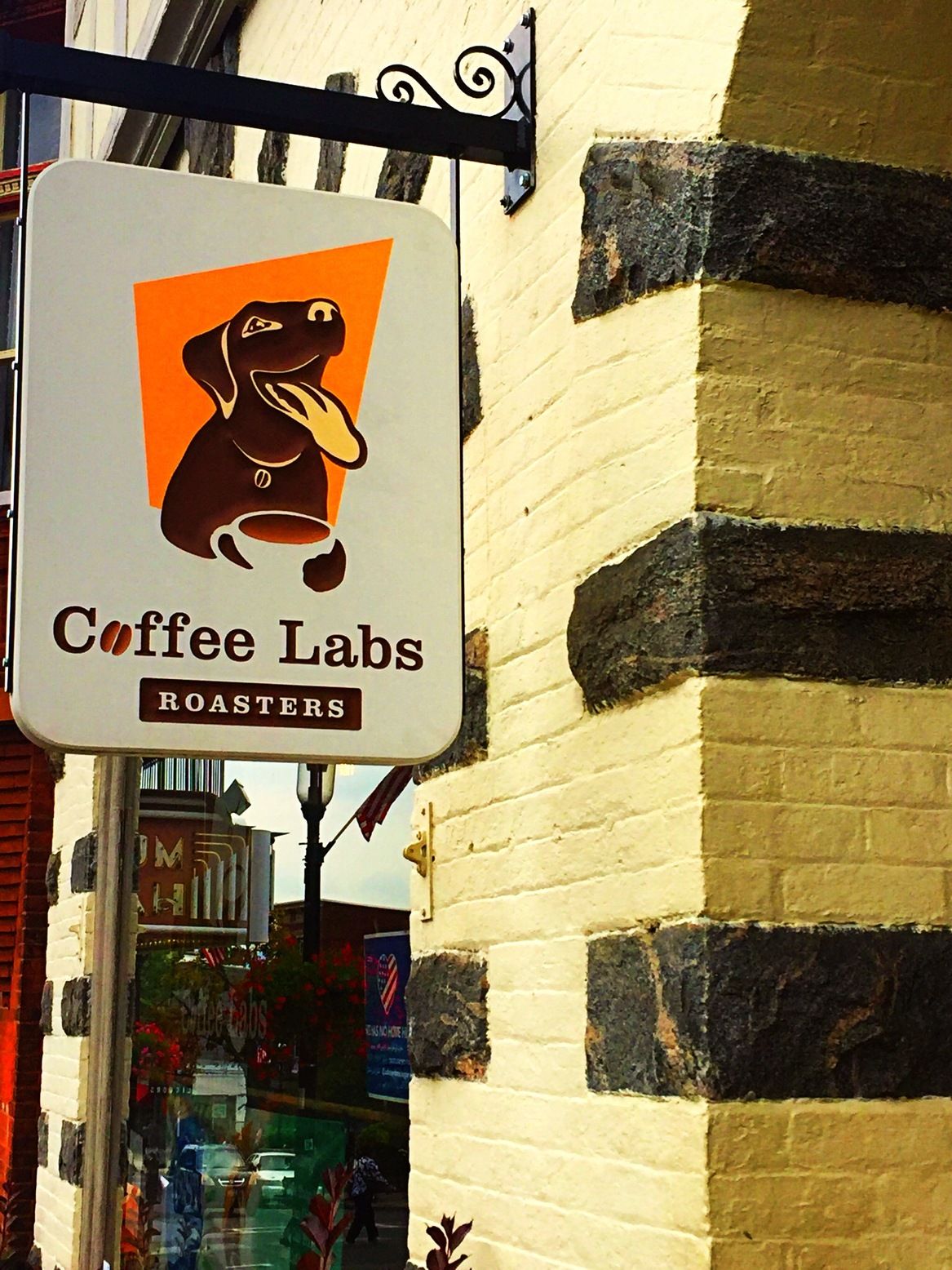
Okay, so if I had to pick just one coffee shop to frequent for the rest of my life, it would be Coffee Lab Roasters in Tarrytown, New York. Where is Tarrytown you may wonder? Well, it is just next door to a little town called Sleepy Hallow that you may have heard of (Headless Horseman anyone?). And they serve the best coffee that I have ever had in my life.
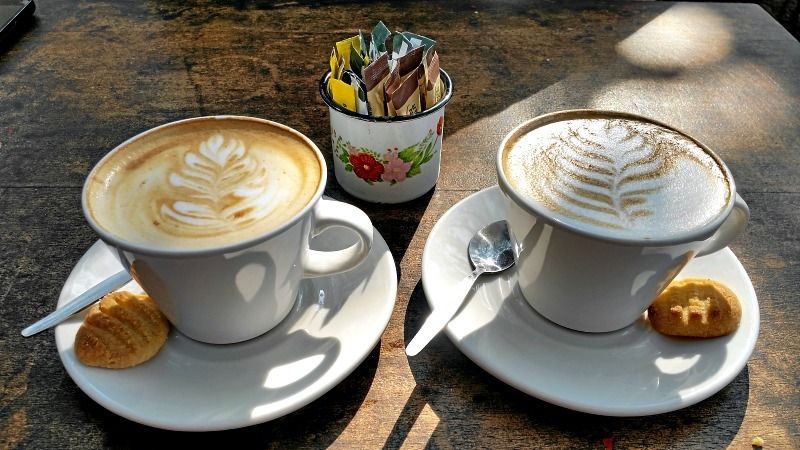
I mean sure, the staff are passionate about what they do and create foam cats and elephants in you cappuccino but the real star here is the coffee. Here, they serve espresso that is bold, rich, and vibrant in flavour but that also doesn’t overpower you with bitterness.
Just a truly divine coffee experience that is enhanced by both the local artwork that adorns the walls and the local artists who routinely have musical gigs here; a truly fun and flavourful experience for anyone in the area.
My search for Panama’s famous geisha coffee led my husband and I to Café Sucre, a vibrant coffee shop in Panama City’s Casco Viejo neighbourhood.
Café Sucre had everything I love in a coffee shop: it was lively and upbeat, packed with both locals and visitors, and staffed with baristas whose genuine enthusiasm for great coffee and service made us feel at home.
While the menu offers all of the coffee drinks you may expect to find at a great coffeehouse, the geisha coffee was truly memorable. Geisha coffee is recognized as the most expensive coffee in the world; because it is grown at a higher altitude than most other coffee beans, a single pound can sell for more than 50 USD!
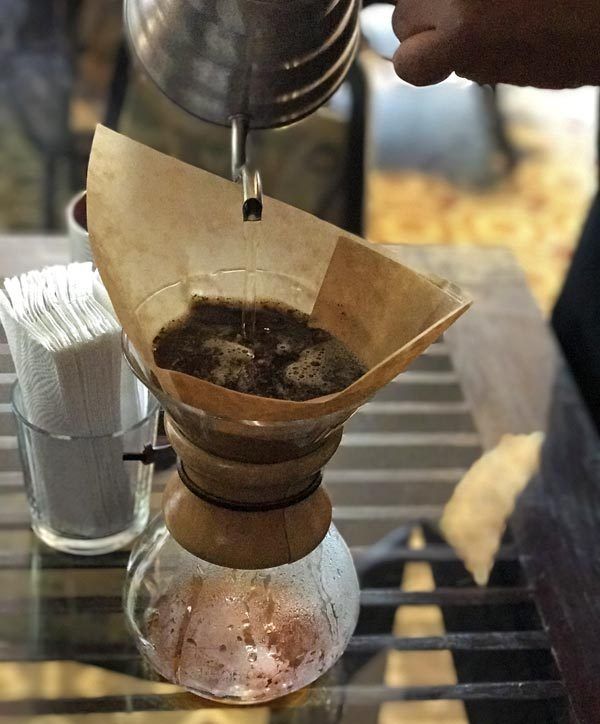
Our barista prepared the coffee right at our table while we watched; he poured hot water over the grinds and let it steep for close to five minutes before serving us.
The wait was worth it; geisha coffee is deliciously light and floral, and we were happy to take our time to enjoy it as baristas stopped by our table to check on us and chat with us about our travels.
When our cups were empty and it was time to leave, we felt like we were saying goodbye to great friends. When my travels take me through Panama City, Café Sucre will always be my first stop!
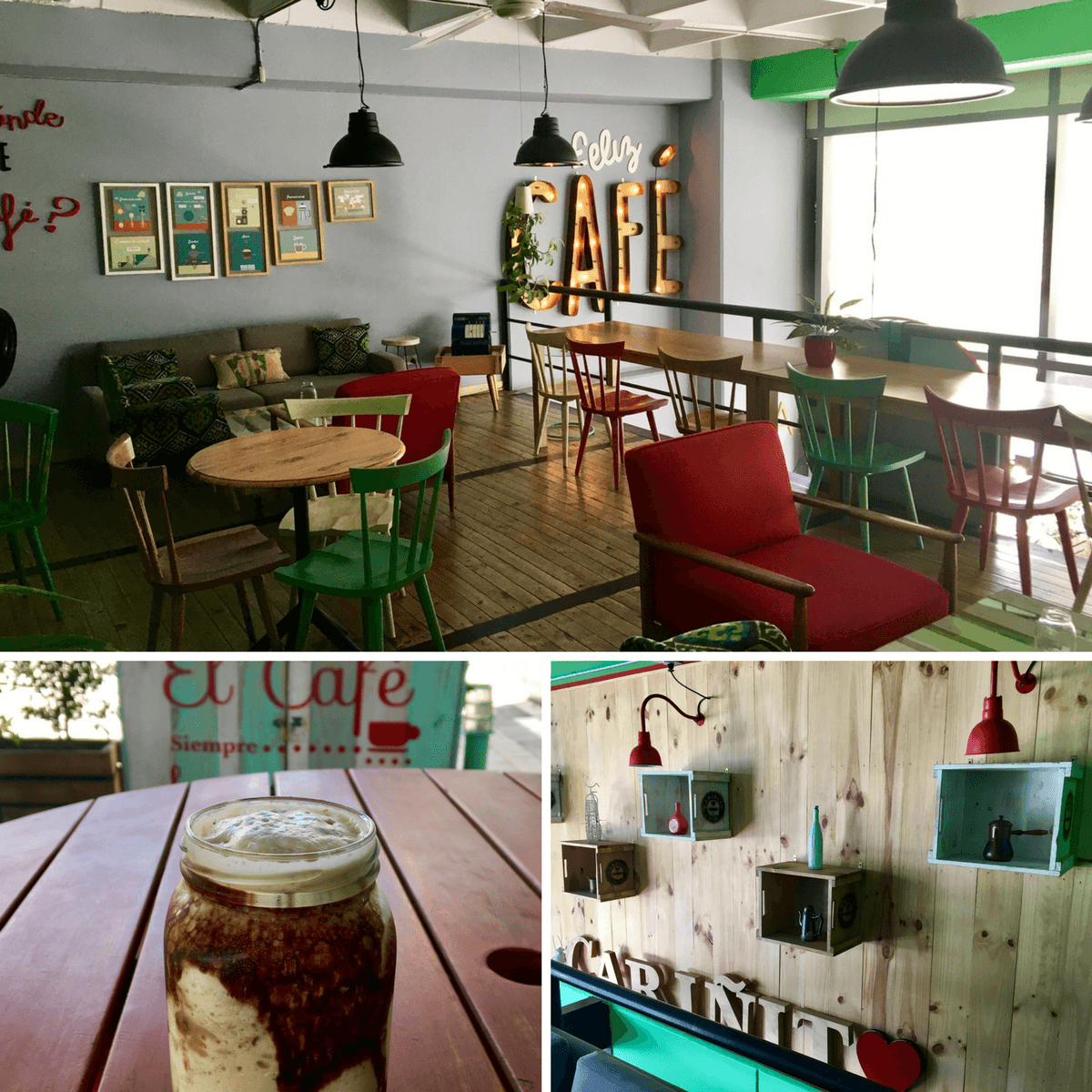
Sourcing good coffee is top of my priority list when arriving in a new city. Good coffee, free wifi and cheap beer (usually in that order). While I love South America for many, many reasons, I can’t claim to have forgiven it for disappointing us on the coffee front on sooooo many occasions. Luckily, little gems like El Cariñito Cafe in Medellin exist, for a much-needed caffeine fix.
Nestled in a quiet street of Medellin, close to the popular area of El Poblado, El Cariñito is quirky and cool. With giant, neon-lit signage adorning its walls and furniture made out of vintage suitcases, it is hipster heaven. This place isn’t just all style though, it packs a seriously good coffee punch.
Medellin can be oppressively hot during the summer months, so our go-to was the Coffee Frappucino to help cool down. Really good frappucinos are hard to find, sometimes too sweet or too watery. El Cariñito got it bang-on; cold, creamy and coffee-y with a liberal dollop of chocolate sauce for a bit of sweetness. A total refresher, under the hot Medellin sun. All served in a recycled jam jar, obvs.
I don’t drink a lot of coffee, but there is something so delicious about a good iced coffee in the summertime that I find hard to resist!
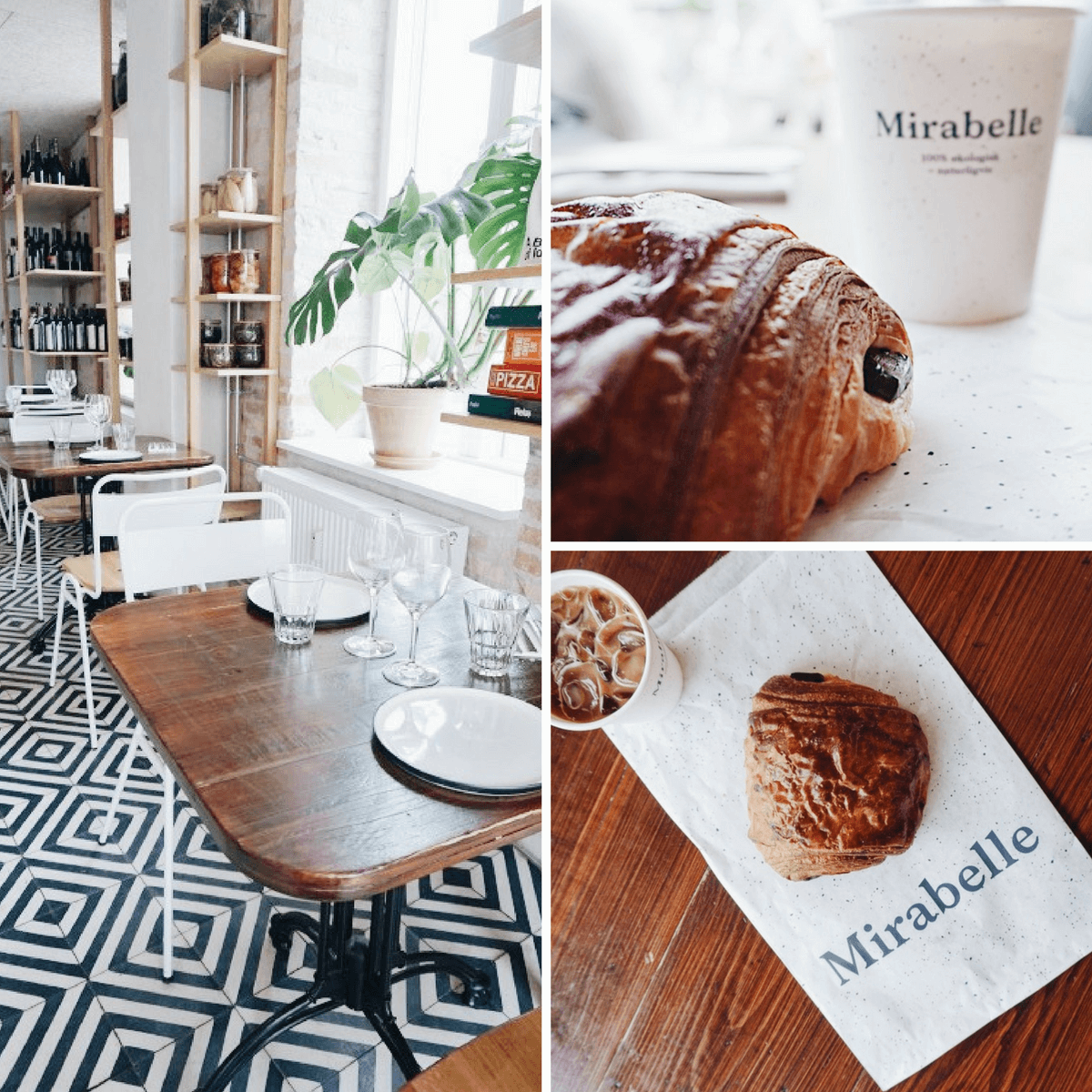
During my first trip to Copenhagen in June, I discovered a coffee shop called Mirabelle Bakery (through Instagram – which is always a great way to find pretty, yummy spots to eat!) and fell in love with the atmosphere and their iced coffee. Their chocolate croissants were also to die for!
They have a gorgeous organic café serving, brunch, lunch and dinner attached to their coffee window, which looks out onto a bustling little street in the artsy Inner Nørrebro neighbourhood.
I got two iced coffees (I would’ve gotten a third, but didn’t want to give myself a heart attack from all the espresso!) and just sat and enjoyed taking it all in.
The service was friendly and cheerful, the coffee and croissant perfection. I could’ve stayed there all day. I highly recommend checking Mirabelle out next time you’re in Copenhagen!
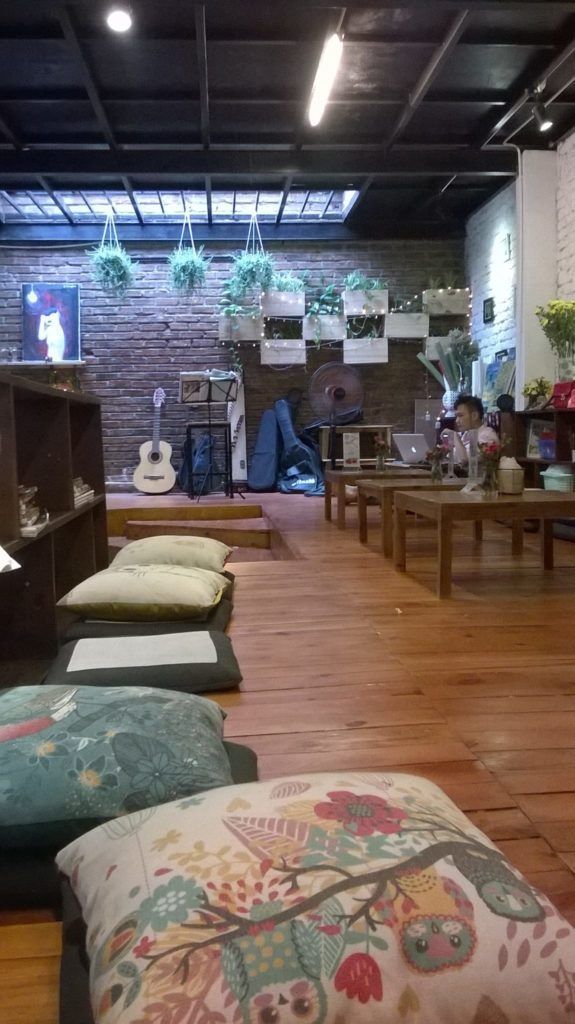
It can be a difficult task to find a really relaxing cafe but this place has it down to a tee. Tucked down a little alleyway and nestled between houses, it is filled with cushions and books and accompanied by some chilled music.
There is a lovely roof terrace filled with plants which is great for evenings/ cooler days. They have a great selection of coffees, smoothies and food. My favourite is their delicious passionfruit smoothie.
It is the perfect place to enjoy a coffee, read and take a break from the chaotic Hanoi streets. I went there every week when I lived in Hanoi, and I’m always searching for another quiet oasis that can compare with it.
By Janine at Same Same but Different. Follow Janine’s adventures on her blog, Facebook and Instagram.
9. Vietanmese Egg Coffee
Vietnamese egg Coffee by the sea
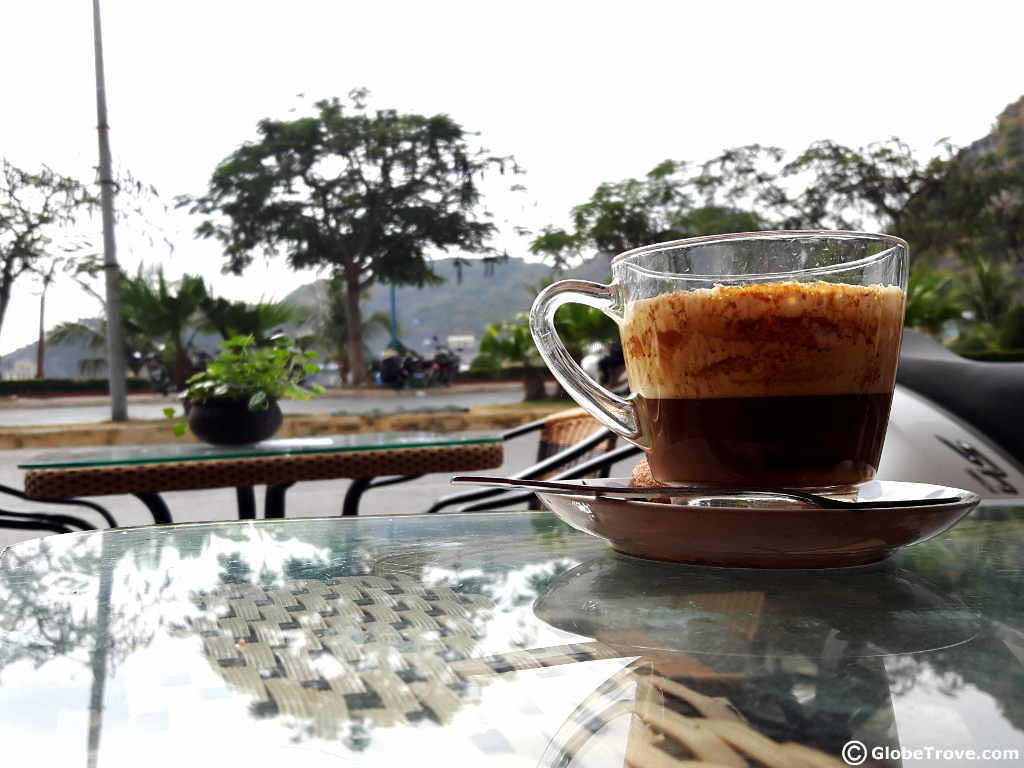
Vietnam is really famous for its coffee. The number of experiments that each café performs on their coffee is sometimes mindboggling. One of the most epic coffees that I have tasted was Egg coffee.
This particular coffee is a speciality of Hanoi but I only got to taste it once we reached Cat Ba island. Vietnamese egg coffee is an acquired taste. At first, I thought that they used the white of the egg to give it the flavour. It was only later that I learnt that the Vietnamese use the yolk of the egg. They whisk it with sugar before adding it to coffee mix.
Yup! The description makes many people squirm but I have to say that it was one of the best coffees I have ever tasted. I tried searching for it in the rest of Vietnam but was sadly disappointed. If I had to describe the taste of the coffee I would say that it tastes a lot like a warm tiramisu.
The coffee really needs to be had as a dessert. I loved it! I’m so glad that I got a chance to try it and I keep recommending it to everyone who heads over to Vietnam.
As a traveller, it can be hard and tiring to find a vegetarian restaurant. Vegetarianism is a growing lifestyle across the world so in celebration of World Vegetarian Day fellow travel bloggers and I have put together a list of our the best vegetarian restaurants and cafés across the world.
1. The Honest Vegan in Belfast, UK
The Honest Vegan Belfast
The Irish are known for heavy meat dishes with carbs and therefore historically it has not been the easiest place for vegetarians or vegans to find a restaurant.
Located on Lisburn Road you’ll find The Honest Vegan. They feel passionate about the concept of cruelty-free food, you won’t even find honey on their menu.
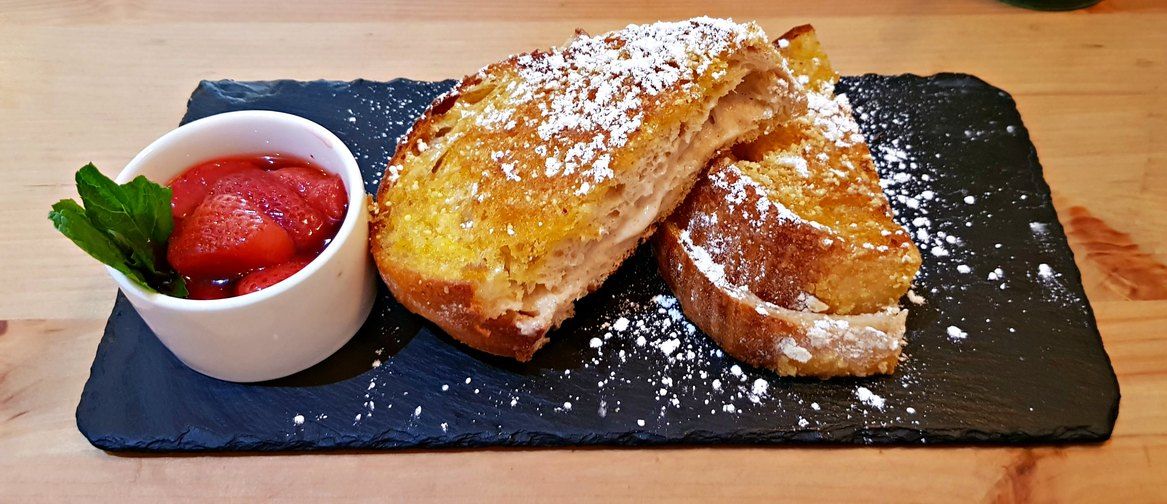
Entering the café, the staff will give you a warm welcome and sit you down explaining the menu and the specials. On the waiter’s recommendations, we were sold on the French Toast and Chocolate pancakes accompanied by some delicious smoothies.
Not only was the food scrumptious but the bill only came to £17 for two people. A bargain compared to London!
By Kat at Kat’s Gone Global. Follow my adventures on Facebook and Instagram.
2. Teresa Carles in Barcelona, Spain
Flax & Kale
Teresa Carles is a renowned vegetarian chef in Barcelona. She has several vegetarian restaurants in the city, all of which are excellent, but my favourite is Flax & Kale.
Actually, Flax & Kale is flexitarian, not vegetarian, and has a couple of fish dishes too. The menu highlights if each dish includes oily fish, is vegan friendly, gluten free, or raw food, so you always know what you are eating.
Each dish is beautifully presented, garnished with edible flowers and carefully selected ingredients to delight the palate. The shared mezze starter plate is a must, with three types of hummus to try, including black hummus with activated carbon (much nicer than it sounds!), quinoa ‘meat’balls, and crudités.
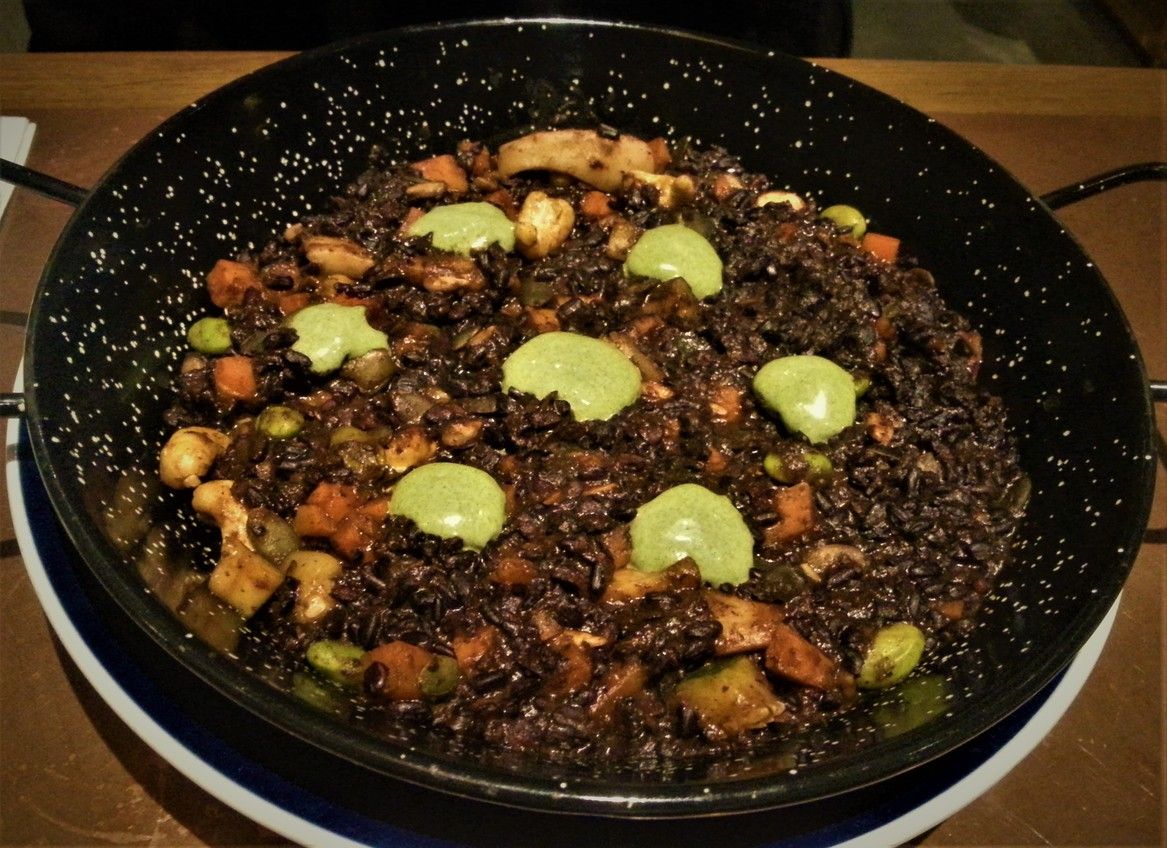
For main course, for me the stand out dish is the vegetarian black rice. Black rice is a traditional seafood dish in Barcelona, usually made with squid ink to colour the rice. This version though has no fish or seafood, with slices of coconut flesh replacing the squid rings, fresh edamame beans and a green pea & chlorella garlic sauce finish the dish.
It is one of those meals you just don’t want to end! Juice lovers can choose from the wide range of pressed and squeezed colourful juices, or for the less virtuous there is wine or beer to accompany the meal too. The décor is sleek and simple, service excellent, and it is, without a doubt, one of the best restaurants in Barcelona, vegetarian or otherwise!
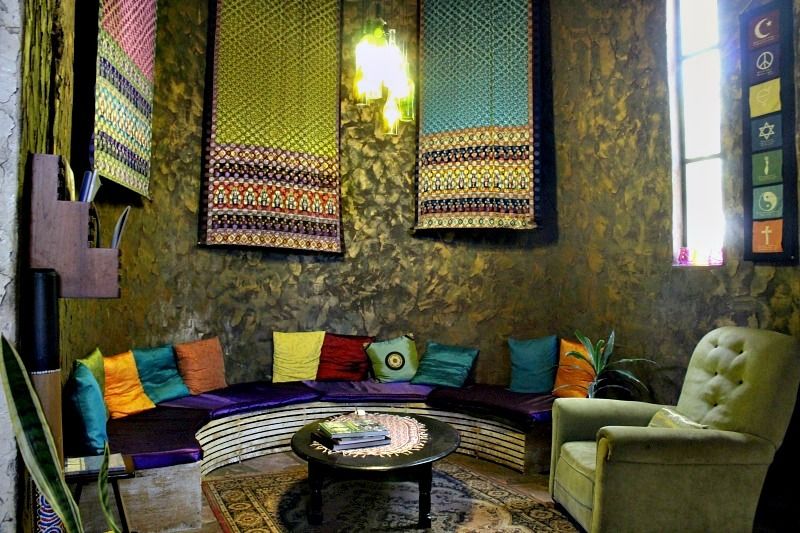
In Hillcrest, South Africa you will find our favourite vegetarian restaurant which is also has Vegan options available. Conscious Café has so many things that makes it unique, not to mention that the cafe is situated in a genuine old stone castle.
Everything they serve is as natural as can be and sourced from local farmers or comes directly from their own garden. Their menu consists of fresh squeezed juices, smoothies, Classic Haloumi wraps, lasagne and soups. All baked goodies are made in their kitchen with organic ingredients.
Meals can be enjoyed inside in an Eastern Decorated stoned walled lounge or outside in the garden under a tree to the beautiful sounds of the wind chime. The food here is made with real love and the ambiance of the atmosphere just makes the food taste even better.
By Liza and Lisa at Souldrifters. Follow Liza and Lisa’s adventures on their blog and Facebook.
4. Udipi Palace in San Francisco, USA
Udipi
My favourite vegetarian spot in San Francisco is undoubtedly Udipi Palace in the food haven neighbourhood of Mission.
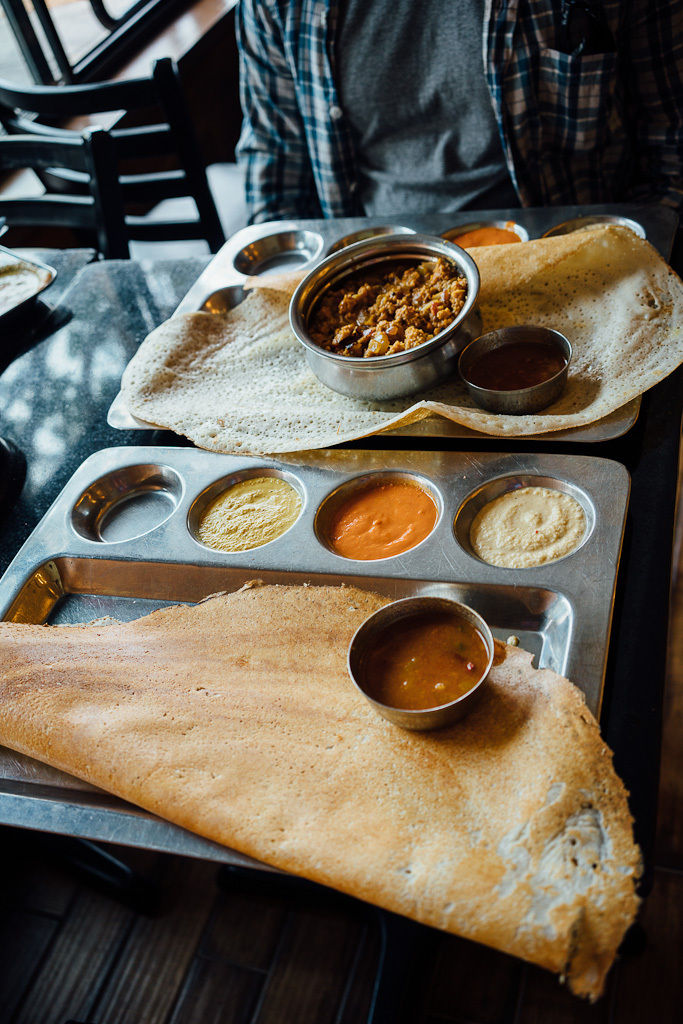
Located on Valencia street, this 100% vegetarian restaurant has been serving tasty south Indian fare for over a decade, most of which is also gluten free thanks to the generous use of rice flour in making the delectable crepes called Dosas and steamed cakes or Idlis.
There are also Indian platters or “thalis” that you can order if you are feeling particularly hungry and these come with the whole gamut of rice, roti (Indian flat bread), side dishes, lentils and dessert for a complete meal.
The prices are extremely reasonable for San Francisco and you will be spoiled for choices since everything is meat free. This restaurant is cash only though but no advance reservations are required.
Being a vegetarian, or vegan, traveler is a unique challenge, since most cultures tend to be meat based and actually show reverence for their guests, by presenting them with the best meat dishes they have to offer. And any vegetarian or vegan dishes presented, are generally side dishes that lack the creativity and appeal of an excellently prepared main course.
This happens all the time, like when someone hands you a plate of mashed potatoes and calls it dinner.
That’s why, when you find an amazing restaurant, with great vegetarian options, you want to share the knowledge. Now, it probably comes as no surprise that New York City has amazing vegetarian options. I mean, New York City is one of the major culinary capitals of the world. But, I don’t want to spend $10,00 on a Michelin star rated dish.
So, to find reasonably priced, delicious vegetarian food, I had over to Macbar, on 54 Prince Street. At Mac Bar, all they sell is macaroni and cheese, and it is the stuff that dreams are made of.
Yes, the restaurant isn’t fancy, since Macbar primarily does take out, but the macaroni and cheese is heavenly with such great options as shroom’ mac, the traditional, four cheese, and primavera. And a small container only costs $7.99!!! A bargain for such divine, cheesey goodness.
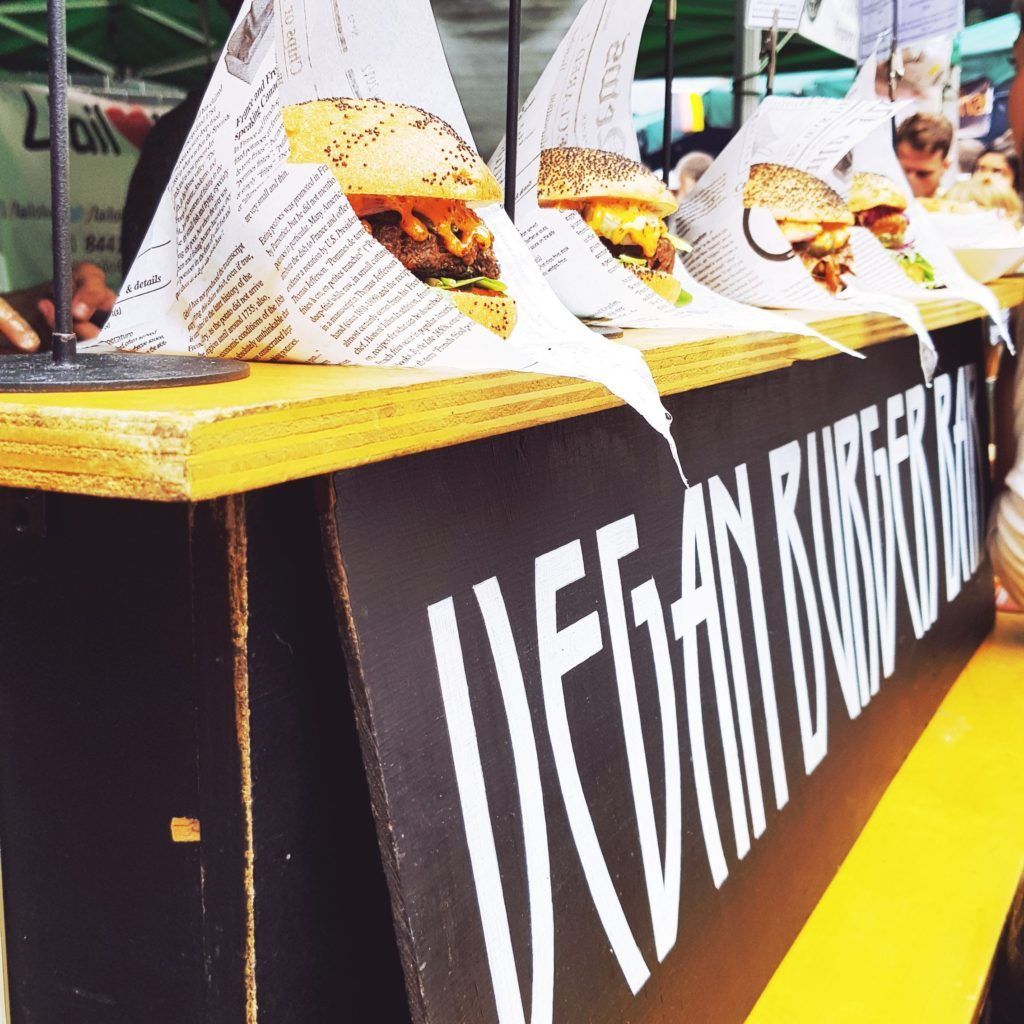
Borough Market in London Bridge is one of my favourite places to grab market food. The vendors constantly out do themselves with incredible quality food. Last time on my adventures to Borough Market I discovered the Big V London which hosts a burger bar stall called ‘Vegan Burger Bar’.
Not only is it totally vegan but they source the produce from UK farms like Ted’s veg (Borough Market) grown on his farm near Boston in Lincolnshire. Plus all packaging is biodegradable just to add another nice touch to help the environment.
The promise of meat free bacon meant that I couldn’t help but choose the Classic V Facon Cheeseburger. It’s a seitan mushroom burger on poppy seed bun with house slow roasted tomato relish, house burger sauce, pickles, red onion, vegan cheddar and house maple facon.
By Kat at Kat’s Gone Global. Follow my adventures on Facebook and Instagram.
7. Cafe Infinito in Valencia, Spain
Cafe Infinito in Valencia, Spain
There are so many vegetarian restaurants in Valencia so you are never out of options, but this restaurant wins it for us. The food is amazing and the staff are super friendly. They have a big menu including a great selection of tapas, main courses (burgers, wraps, pasta) and desserts.
Everything is delicious but our favourite dishes are the rice and mushroom croquettes and sundried tomatoes with bread.
The brownie is also to die for. I love the atmosphere, there is always great jazz/chilled music playing and the friendly staff definitely add to the experience. It is now the restaurant we take all our friends and family when they come to visit, and they always enjoy it too, meat-eaters included!
By Janine at Same Same but Different. Follow Janine’s adventures on her blog, Facebook and Instagram.
8. Wild Food Cafe in Neal’s Yard, London
Wild Food Cafe in Neal’s Yard, London
I was recently in London to see Disney’s Lion King show in the West End with my boyfriend (who eats meat). We chose to stay close to Covent Garden for dinner so we only had a short walk to the theatre afterwards. Neal’s Yard was the best option for us; I ate at the Wild Food Cafe and my boyfriend grabbed a few pizza slices from Homeslice next door!
I’d browsed through Wild Food’s menu online before we arrived and it all looked amazing. All the food served is vegan and I had a hard time choosing what to settle on. I finally decided on ‘Spiral-way-to-Heaven’ which was a sort of pasta dish made entirely from celeriac and parsnip with a sage & lemon creamy sauce. It was incredibly filling and refreshing.
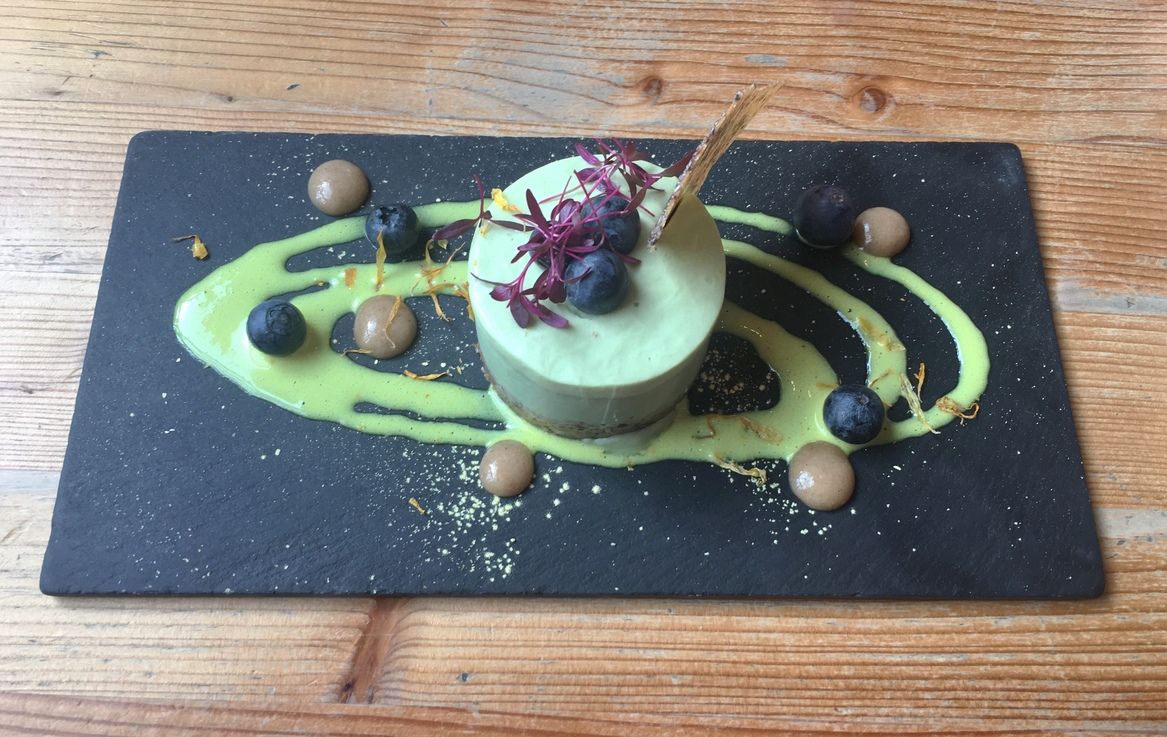
For dessert I had the matcha cheesecake which was really creamy and had lovely citrus flavours running through it. I heard good things about the white chocolate tart from the customer next to me as well, so can wholeheartedly recommend either. All of the dishes were presented beautifully and proved that vegan food can look sophisticated!
There is usually a bit of a queue to get into Wild Food as it has become very popular. If you’re lucky enough to get a window seat, the view over the infamous Neal’s Yard makes for some lovely photos.
By Jen at Jen to Paper. Follow Jen’s adventures on her blog, Facebook and Instagram.
Let me know your favourite Vegetarian or Vegan restaurant. Have you tried any of the places we’ve recommended above? Where is your favourite vegetarian restaurant?
Belfast may not be the first idea when you think weekend break but it’s definitely a hidden jewel of the UK. Belfast has had a turbulent past, called the troubles and now that it has settled it has allowed the city to grow and flourish. With its beautiful landscape, whiskey, beer, lively bars and restaurants, Belfast has a great mix of outdoors and fun!
Here are 11 Things to do in Belfast, Northern Ireland…
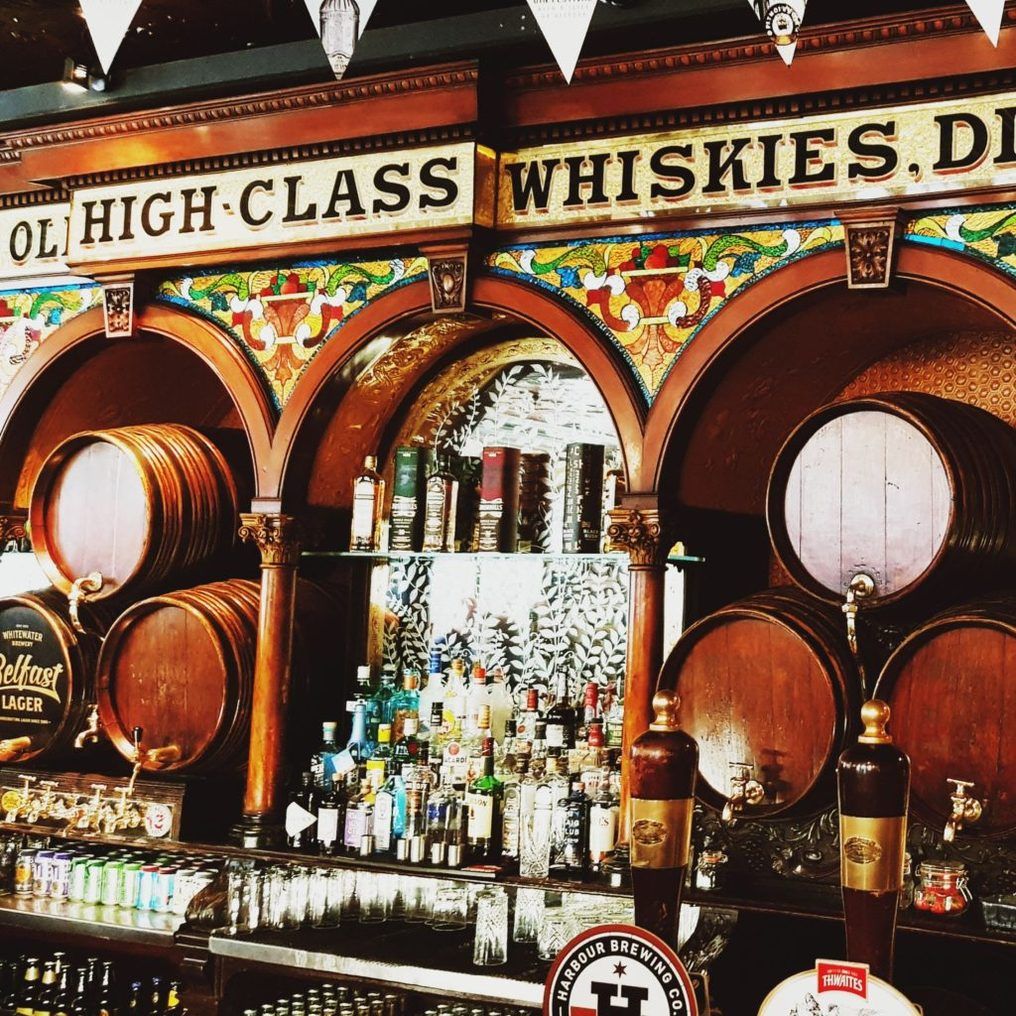
1. Visit Crown Liquor Saloon
The Crown Liquor Saloon has been around since 1884, it’s a Victorian gin palace with an ornate Victorian exterior, carved-mahogany booths and etched-glass. Even if you don’t drink you have to go! Just grab a Coca-Cola and enjoy this absolutely beautiful bar, it is super busy being a tourist attraction in itself so be prepared for the crowds and to be on the lookout for one of the private booths.
Being one of the mightiest gin places so you have to grab a gin whilst you are there.
Crown Liquor Saloon
2. Grab some food at St Georges Market
St Georges Market is another example of a Victorian-era building built between 1890 and 1896. It’s open on Saturdays and Sundays offering countless food options, coffee, stalls and arts & craft.
In Northern Ireland, Ulster fry is the dish to try. A fried meal with bacon, eggs, sausage, black pudding, white pudding, tomatoes, mushrooms, soda bread and potato bread. Just leave out the meat if you are a veggie and try the slices of bread! If you are there for breakfast or brunch I would recommend grabbing an Ulster Fry.
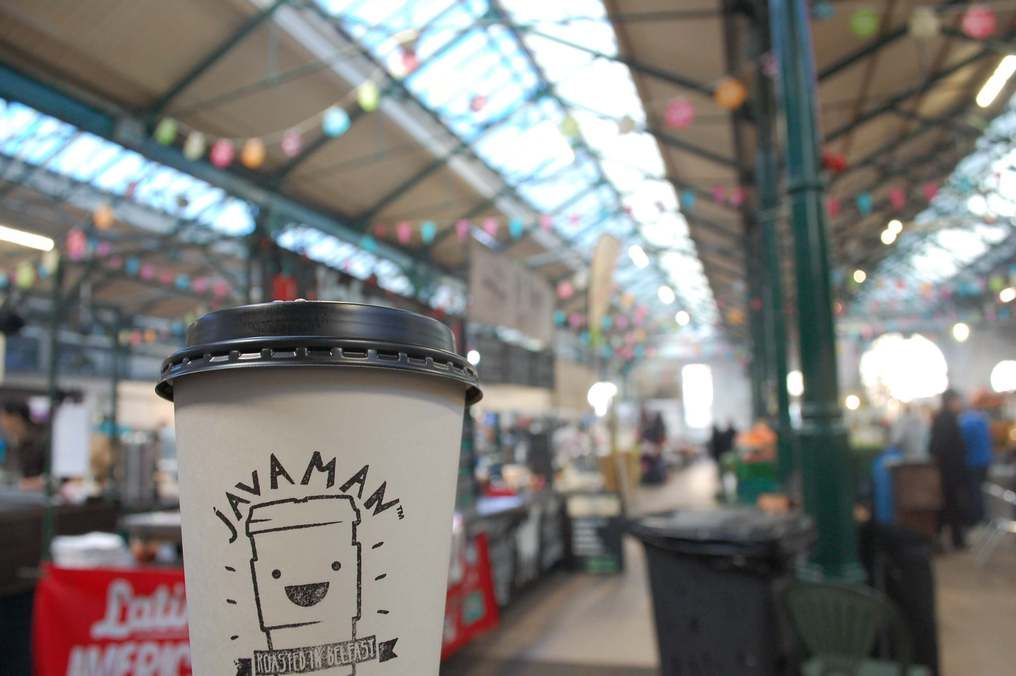
Coffee lover? I recommend trying Java Man coffee.
Coffee at St Georges Market
3. Enjoy the nightlife in Cathedral quarter
Cobblestoned streets, nightlife scene, restaurants, pubs and beer gardens. This is where the main nightlife area is, head out to one of the local bars or pubs like:
The Dirty Onion is one of Belfast oldest buildings and has been repurposed as an authentic Irish pub with a modern twist. It has the biggest beer garden in Belfast, if you are heading there in winter it does have a cover (so you won’t get wet) and lots of heaters to keep you cosy and warm.
Duke of York is located down a cobbled street, it has a great atmosphere and décor to match with the paraphernalia of the printer’s trade, mirrored whiskey bar and old advertising signs.
The Garrick is known to have a great selection of beers and a welcoming, classic pub vibe.
4. Visit the Titanic Museum
The Titanic quarter is where the famous ship was built at the Harland and Wolff shipyard in Belfast. It is now home to the Titanic Museum and has one of the world’s largest urban-waterfront regeneration projects.
5. Wander around the Botanic Gardens
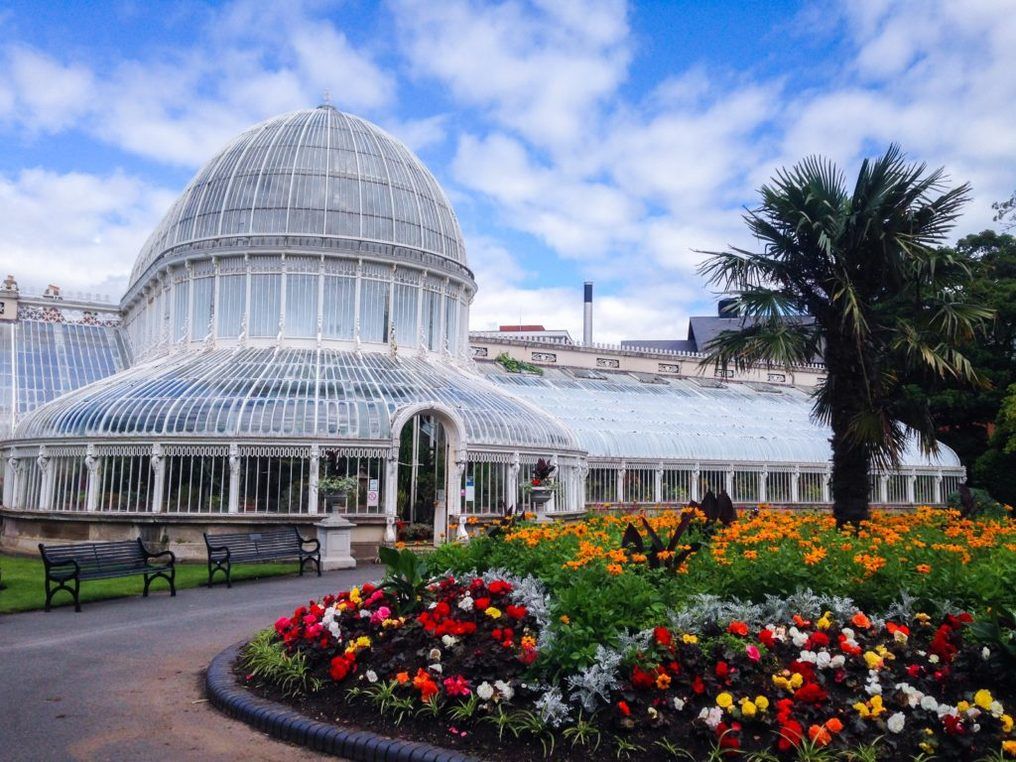
Enjoy a stroll around the Botanic Gardens. Along the way check out the Palm House, an example of a glasshouse made from curved iron and glass.
Psstt… nearby is Boojum’s it’s Belfast’s most famous Burrito place. It’s a sin not to have a Boojum when in Belfast.
Botanic Garden Belfast
7. Take a day trip to the Giant’s Causeway
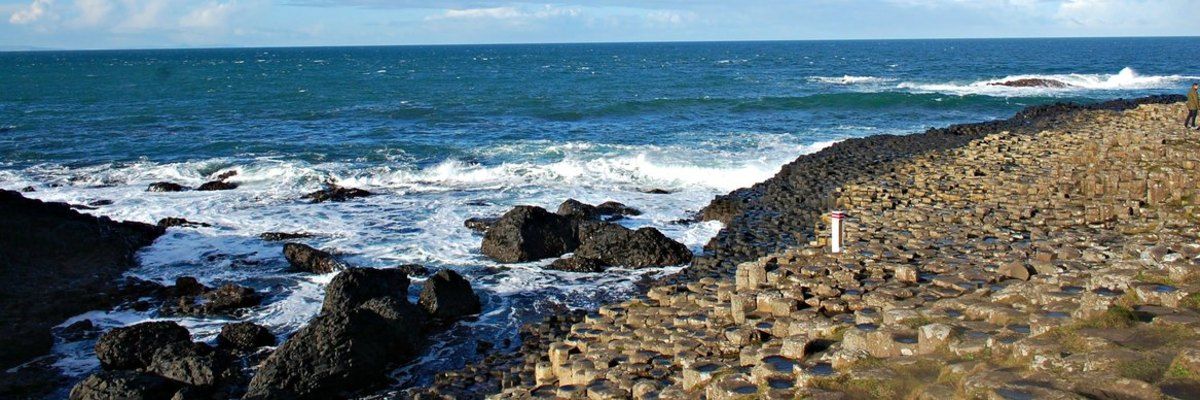
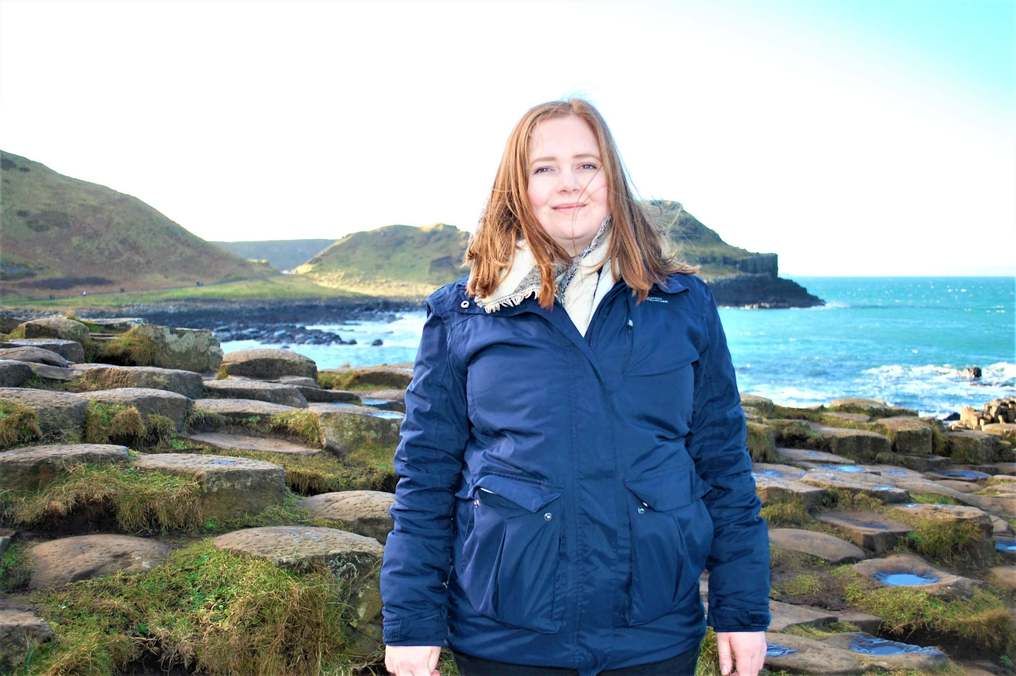
The Giant’s Causeway is possibly the most famous landmark in Northern Ireland and worth a day trip during your visit to Belfast. It’s worth mentioning that the Giants Causeway is free, there a local path that you can take and you don’t need to pay the tour fee of £11.50.
It’s not the only famous landmark you can also visit Carrickfergus Castle, the Dark Hedges, Carrick-a-Rede Rope Bridge and Dunluce Castle.
I recommend renting a car so you can explore the true extent of what Northern Ireland has to offer.
Explore the history and culture of Belfast and Northern Ireland through the murals. The murals are scattered around the city but the most famous mural is the peace wall.
The peace lines or walls were installed to separate the Catholic and Protestant neighbourhoods. The Falls Road and Shankill Road is the most famous part of the peace wall. Here you will find murals reflecting those communities’ that have a pro-British stance or more recently sectarian slogans.
Other murals to visit:
The Titanic area has a painting showing Captain Smith overlooking the ill-fated liner (for those who don’t know he was the captain of the Titanic). The mural is located on the corner of East Belfast’s Dee St and the Newtownards Rd.
Who else grew up reading Narnia books? CS Lewis was Belfast-born writer and there are some murals that feature scenes from his books The Lion, The Witch and The Wardrobe. This is also in the Titanic area and you can find the of East Belfast’s Dee St. and Ballymacarrett Rd.
9. Take a black taxi tour
Belfast is famous for its Black cab tours. Why not get to know the city with a local guide, taking it you around Belfast’s historic sites and history behind the city.
10. See some of the Game of Thrones filming locations
Northern Ireland has some of the most fantastic Game of Thrones filming locations right on their doorstep from Winterfell to The Dothraki Sea. Even if you’re not a big GOT fan the sites themselves are incredibly beautiful. There are over 25 filming locations like Cushendun Caves, Murlough Bay, Ballintoy Harbour, Larrybane, Antrim plateau, Castle Ward, Inch Abbey and Downhill Strand are featured in the series.
Looking for a tour for Game of Tour? I recommend the ironically named tour company Game of Thrones Tours. There are three tours you can choose from:
Belfast Winterfell Locations Trek
Belfast Iron Islands, Giants Causeway and Rope Bridge Adventures
Belfast Iron Islands, Giants Causeway and Castle Adventure.
11. Taste some Whiskey
Try some Irish whiskey, even if you’re not a whiskey lover you can opt for an Irish Coffee. I recommend trying Bushmills it is the oldest licensed distillery.
Bushmills Pub
What were your favourite places in Belfast to visit? Let me know in the comments below!
Finding a flat in London can be challenging! These helpful tips for renting in London will give you a starting ground on what to look out for.
When I moved to London, I had never rented! I literary moved overseas and out of home at the same time. I had no idea what to expect when trying to find a place, I was living in a hostel while working full time, with backpackers coming and going for the first 4 months.
This handy moving checklist covers everything from changing over utilities and packing to your first day essential tasks in your new home.
Know the Types of Tenancy/ Renting Arrangements
If it’s your first time renting in England then it’s important to understand the type of tenancy you have. It will influence the rights you have as a tenant.
Here are some of the types of tenancies you could come across:
assured shorthold tenancy (AST).
excluded tenancy (lodging).
assured tenancy.
non-assured tenancy.
regulated tenancy.
company let.
Whilst the list seems long you will generally be renting an assured shorthold tenancy (AST). I tend to find that room rental to be either be lodging so living with your landlord or the share accommodation share an AST agreement.
Assured Shorthold Tenancies (ASTs)
The most common rules for an AST is that:
the property you rent is private.
it is your main acoomodation.
the landlord doesn’t live with you (that would be lodging).
and the contract started after 1989.
Excluded Tenancies or Licences (Lodging)
This is for when you live with your landlord so when you share rooms like kitchen, bathroom or living room this is deemed as lodging. With this type of tenancy, you will have less protection for things like eviction.
A common problem for new residents is that you have a minimal credit score or work history which could impact how much rent you need to pay upfront. The same applies if you have a bad credit score history.
Some landlords will request that you provide 3 to 6 months rent in advance to minimise the risk of renting the property to you. This can come as a big shock if you’ve not factored it in your move costs. Overall this is to ensure the landlord has security and you won’t miss payments.
It can be negotiated but it is up to the landlord whether they accept the agreement. Please note that this is not a deposit, it is rent upfront.
One of the cons of living in London is that the rent is high and sometimes can be up to 50% of your salary. It’s good to research whether the rental market is in a decline or in high demand to see what your negotiation tactics will be but it’s negotiable. This includes:
the amount you wish to pay – a good place to start is finding similar flats in the area to get an idea of what they are going for. If you find a similar flat goes for £100 less then see if they would take it like other places are going for x price.
Adding furniture (beds, wardrobes etc)
Repairs
Break clauses
When you submit your offer the landlord will respond whether they accept or reject the offer. Rooms to rent are not usually negotiable but houses and flats are.
Weekly Vs Monthly Pricing
Properties will either have weekly or monthly rental prices. When the price says weekly be aware that there are not 4 weeks in a month.
To figure out what the monthly rent would be, use the weekly cost, times it by 52 weeks and then divide by 12.
For example,
£500 x 52 = £26,000 yearly rent
£26,000 / 12 = £2,166.66 monthly rent
Where to Find Rental Properties
Starting your hunt for a property will depend on what you are looking for. Here are some recommendations for your search:
Whole Properties
Zoopla orRightmoveare the best places to start looking for a home. You will be able to set a budget and property preferences with the search settings.
Private landlords listing their rental properties on OpenRent. The properties will be managed by the landlord rather than an agency. You might not find the property you are looking for on OpenRent as there isn’t as much stock on the website.
Lets with Pets is a fantastic starting point as you’ll need to find a pet-friendly rental property.
Sign-up to a few agencies in the area you are searching in some of the common ones are Hamptons, Foxtons, Knight Frank and Savills.
Shared Accommodation
To save on cost flatshare may be your most affordable option.
SpareRoom is one of the go-to websites for finding a flat. It’s free to use but you will have more success with the paid version.
Check Facebook Groups, Aussies in London, Kiwis in London and many others have weekly flat posts.
Gumtree, I tend to stay away from this one as it is easier to get scammed.
Zoopla and Rightmove will also have rooms listed by agents. You won’t get to choose your roommates if you use an agent to get a flat.
The Underground Isn’t Everything
Yes, you don’t need to live near the underground. As much as it’s a great transport option, areas by bus or national rail are just as great. In South East London, most of the area doesn’t have an underground due to the clay soil but we still get around fine!
There are plenty of great places like Crystal Palace, Alexandar Palace, areas of Greenwich and many others that don’t have underground links that are wonderful to live in.
How to Fend Off the Competition
The rental market in London moves quickly and find a property you like, it’s good to be ready!
Speak to the agent or landlord to see what kind of information they will need beforehand and that way you are prepared with your paperwork. Plus it will be similar documentation for most properties so it’s effort well spent. Consider taking the documentation to you on the viewing.
Holding deposits are another way you can secure a place. They are now capped at one week’s rent and they are not required to protect a holding deposit in a scheme like the other deposit.
Once your agreement is signed this either is returned to you, counted towards your deposit or your initial rent.
Be Careful of Scams
Scams are unfortunately are common when renting in London. You need to keep your wits about you and if something feels off then take a step back. It’s better to investigate than hand over some money to find out someone has run away with it!
I find there are more room renting scams especially on the likes of free listing sites such as Gumtree but they can pop up anywhere!
A couple of tell-tale points it’s a scam:
Poorly worded and spelling mistakes in the description of the property.
The same phone number, email address or contact name appear in different adverts.
The pricing is unusual for the area.
When they contact you they ask for a deposit before viewing the property.
The photos look like they may have been copied from the internet.
No viewings are allowed.
Overall follow the main principle never give anyone money without seeing the property, especially if they ask you to wire it through Western Union!
Make a List of Trustworthy Estate Agents
When you start your search it’s a good idea to make a list of agents you would be happy to rent through. Some things to consider checking:
Website: Is it professional, branded well? If it’s not scammy then that’s a great start.
Reviews: Are there lots of complaints? Do the complaints seem realistic and not someone complaining about something relatively minor.
Are they a part of the PTO: Estate agents can sign up to be a part of different associations like The Property Ombudsman (TPO) or Property Mark which is to show their commitment to professional standards. Most agents will have the schemes they are a part of in the footer of their website or you can search on The Property Ombudsman website to see if they are a member.
Do they have physical offices? There are some online agents such as Purple Bricks but most agents will have a physical office. Check on Google Maps to see if it is properly branded as this can also come up with scams.
Understand the Deposits and Fees You Need to Pay
In 2019, England brought in new acts to change the fees and deposits renters need to pay for AST tenancy agreement. This is why it’s important to know the type of tenancy you are entering as it will affect the fees you are paying as I mentioned at the start of the article.
If you do find someone charges you incorrectly then they can be reported.
Here are the PERMITTED CHARGES in accordance with the Tenant Fee Act 2019:
First month’s rent in advance.
Tenancy Deposit 5 or 6 weeks depending upon the rental amount.
Holding Deposit maximum one week’s rent.
Early termination when requested by the tenant a charge not exceeding the financial loss experienced by the landlord.
Utilities, communication services, TV licence and council tax.
Default charge for late payment of rent limited to interest charged at 3% above the Bank of England base rate, when rent is more than 14 days late.
Default charge for replacement of lost key or security device equivalent to cost incurred.
Changing the tenancy documents after the commencement of the tenancy – this is around £50 with VAT.
The same rules DO NOT apply to a Non-Housing Act Tenancy which is formed when one of the following criteria is in place:
The annual rent exceeds £100,000 (if only!).
The property is occupied by an entity (Company let) rather than an individual.
The property is not used as a main or primary home.
There is a Resident Landlord.
Understand the Difference Between Being a Leaseholder and Not
There is no difference if you are moving into a room rather than a house if your name is on the lease, you’ll have the same rights.
All tenants are ‘jointly and severally liable’ which means that if one of the other tenants does not pay their portion of the rent then you can be pursued for it by the landlord.
When Viewing Check for Mould, Water Pressure etc
Check the water pressure in the bathroom
Flats in London can come with problems, this can be for various reasons like the age of the property. I currently live in an 1890 building that was converted into flats and due to the age of the building, I don’t have double glazing on the windows. It gets pretty cold here in the winter due to this.
However, the building is heritage and requires like for like windows. It’s not something we can afford to replace but things like this are something you should keep in mind when viewing properties.
Some of the common issues I come across is:
Mould – common in lower ground and ground flats but also in bathroom areas. Recently our bathroom had mould, no matter how much we cleaned it, it kept coming back. Added some new bathroom paint and it’s been great ever since. Something like this might be on your repair list.
Water Pressure – Ok, so a bit of an odd one! Although surprisingly it is quite common for the pressure to be very weak.
In my first apartment, this was a serious issue. The water pressure failed in one of our apartment bathrooms for over a month without being fixed, I ended up spending a lot of time at the gym to shower. Good for my waistline but overall a frustrating experience.
Check What Break Clauses There Are
A break clause is a provision that can be included in the contract which will allow either party to end the lease early. Unforeseen circumstances could come up and it’s good to understand your break clause in case you need to end the lease in the future.
You can request a specific break clause when negotiating your lease or there will be a standard clause in your contract which will or won’t allow you to break the lease.
Check the specific wording of the clause to see the conditions. For example, a 12-month long contract can have a break clause at the six-month point, allowing the renter or the landlord to end the AST after six months.
It may be possible to change tenants within a tenancy and leave with a Section 47/48 Notice but the landlord is not obligated to allow the change and there will be a cost associated.
As a Renter You Pay Council Tax
One of the bills that surprised me when I moved to London was that I had to pay council tax. The cost will change borough to borough and whether you have single occupancy, student, living with multiple people, property type, etc.
Conduct a thorough inventory for the room and apartment
When you move in you should receive an inventory for the room, apartment or house from the landlord or agent. Check that everything is correct and make sure any amendment is documented with photos.
If the landlord or agent doesn’t have an inventory, then create your own by taking photos and documenting the condition and assets. Ideally, the landlord should sign this inventory.
I was caught out on this, I didn’t realise you needed an inventory and when I left my first flat the landlord decided to charge me £50 for a couch I apparently damaged. It was a white couch! who puts a white item in a share house?! and I lived with 4 other people which could have been anyone. Before I left I made sure I had it dry cleaned so was pretty annoyed about losing my £50. In fairness, it wasn’t a lot of money and was a lot of effort to fight to get the money back.
Ask for Everything in Writing
Any conversation you have with the landlord or agent should be followed up or stated in writing, then you can go back on this at a later stage if you need to.
This goes for anything like landlord or agency wanting to inspect the house to handing in your notice. Any changes in agreements like a change of rent should be included in a contract variation.
Find Out Where Your Deposit Will Be Held
Putting down a deposit can be anything from a few hundred to thousand pounds (of course price range dependent) and you should understand where your deposit is being held.
Your deposit should be protected if you rent a flat under Assured Shorthold Tenancy contract (AST) and kept in a government-approved tenancy deposit scheme (TDP). After the tenancy is finished the landlord has 10 days to return the deposit with deductions agreed by both parties.
The money will stay in the deposit protection scheme until the dispute is resolved.
Once the tenancy is established landlord or letting agent need to give you documentation on where your deposit be held as well.
There is now a Zero Deposit Guarantee which means you no longer have to pay a deposit upfront, instead, these deposit guarantees will request 1 weeks’ worth of rent and a yearly admin fee. You will not get your money back using this method so if your rent is £1,000 a month and therefore, you’d lose around £200 + the admin fee. If there are any damages during the tenancy you will still be liable for these.
Understand How Rent Increases Work
We all get annoyed when the train tickets go up every year by RPI, you should expect the same for your rent. You’ll be at your bank account thinking there is another percentage of my salary gone. In most cases, your agent or landlord will increase the rent each year and is subjected to the market, RPI or both.
Guides and Website to Read Before Renting
How to rent guideis put together by the government and it’s a great checklist of everything you should know when renting in England.
This is a really useful documentfor anyone struggling with understanding the new acts and fees you can be charged.
Citizens Advice – provides free, independent, confidential and impartial advice to everyone on their rights and responsibilities. They will be able to help you understand your contract, issues with break clauses, the condition of the property and much more.
Shelter – housing and homelessness charity that offers advice and support.
London has no shortage of Museums and Galleries. It can be hard to choose which one to go to! Most Museums and Galleries are free in London so it’s also great for a rainy day, waiting for payday and any other excuse because why not… Here are nine museums you must visit in London.
1. The Wallace Collection
Wallace Collection
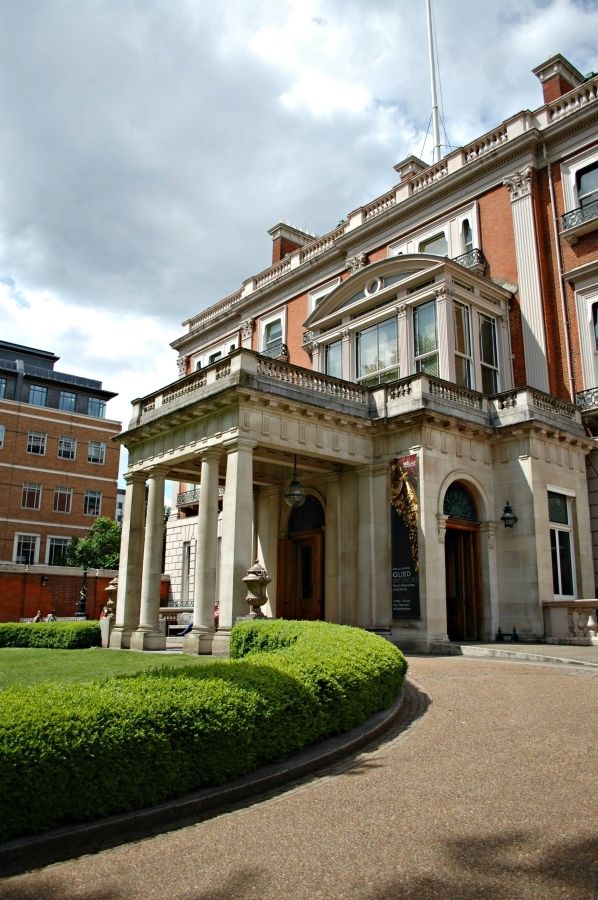
The Wallace Collection is known for having a French 18th Century decorative arts genre and is the largest collection in the United Kingdom. A private collection that was created by Richard Seymour-Conway who left the house and artwork to his illegitimate son Sir Richard Wallace.
Peyton and Byrne also run a restaurant in the gallery. A perfect spot for some afternoon tea and a break from wandering around the gallery.
2. The Wellcome Collection
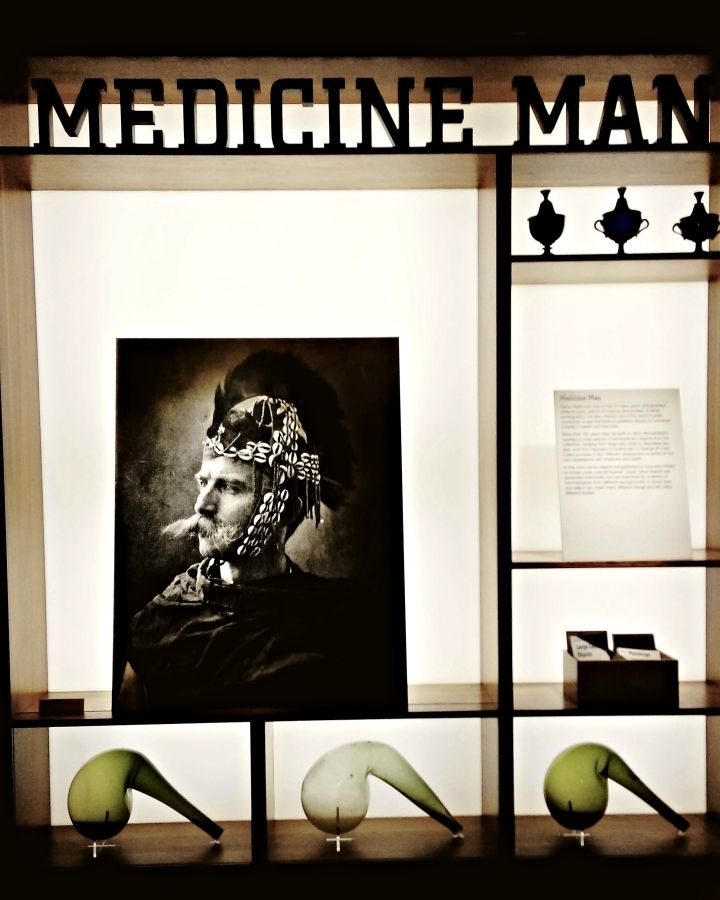
Wellcome Collection Medicine Man
The Wellcome Collection has medical antiquities, plus hi-tech modern displays and art. The collection was started by Sir Henry Wellcome who was fascinated by the historical development of medicine worldwide. He travelled lengths to gather the collection that is now on display.
Only a small selection of Wellcome Collection is on display in the ‘Medicine Man’ section of the museum.
3. National Portrait Gallery
National Portrait Gallery
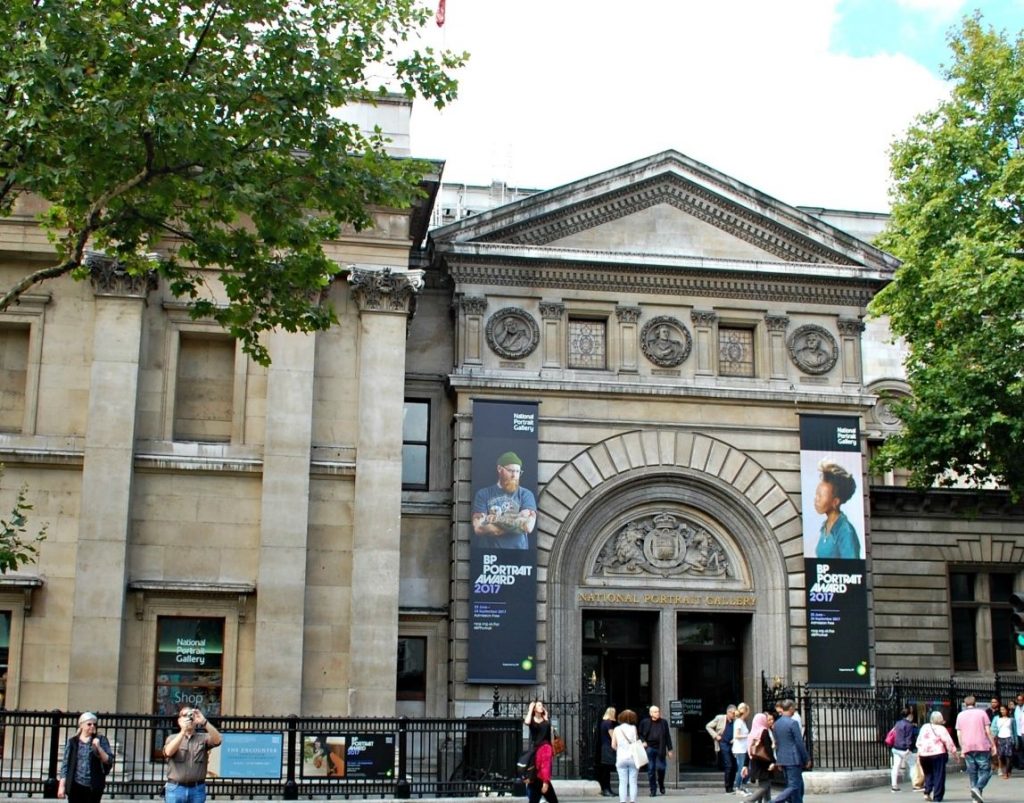
The National Portrait Gallery was the first portrait gallery in the world to open to the public back in 1856. The gallery hosts portraits of historic importance, sculptures, and drawings.
It has expanded the exhibits to a constantly changing selection of contemporary work and stages exhibitions of portrait art by individual artists.
4. Natural History Museum
Natural History Museum
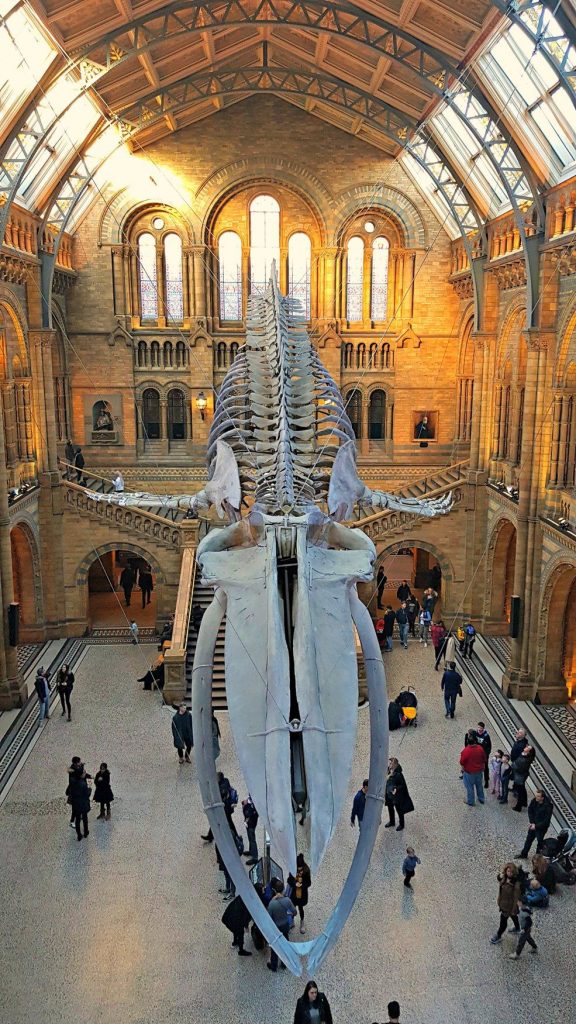
You can just picture David Attenborough walking the halls and filming one of his documentaries through the grand building. It must be said that it is my favourite museum with the grand architecture, great exhibitions (for example the wildlife photographer of the year and butterflies’ exhibitions) and walking around the halls seeing the dinosaurs.
I recently purchased the yearly pass, it’s not something that I normally do but if you plan to go to exhibitions then it’s totally worth it. For £60 you get a year’s membership with 10 guest passes. When you pay for 2 exhibitions each then you already make your money back.
5. Horniman Museum
Horniman Museum
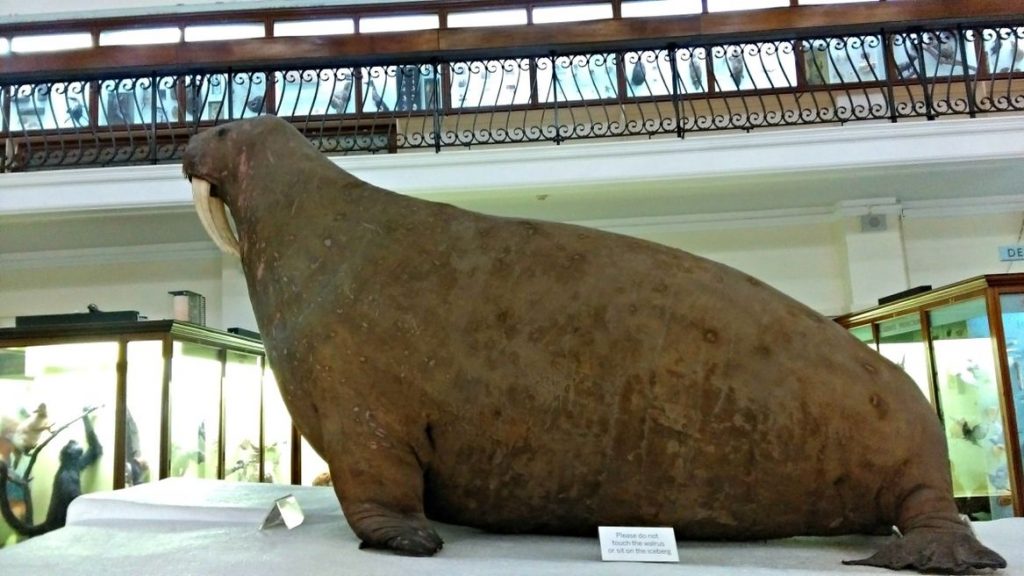
I like to think that the Horniman Museum is most famous for the overstuffed walrus. Back in the day when people didn’t really know that walrus have fat rolls…
Slightly further out than central London in Forrest Hill but still easy to get to by the Overground.
6. Museum of London
Learn the history of London from prehistoric to modern times. The museum is in the London Wall and conveniently near sections of the original London Wall. Once you’re done exploring the museum complete the London Wall walk and experience more of historic London.
7. Tate Modern
Tate Modern is one of the four galleries out of the Tate collection in the United Kingdom, the other galleries are Tate Britain, Tate St Ives and Tate Liverpool. As you can tell by the name of the gallery, the gallery displays modern and contemporary art from 1900 to the present day.
8. Viktor Wynd’s Museum of Curiosities, Fine Art & Natural History
Viktor Wynd’s Museum of Curiosities, Fine Art & Natural History
Viktor Wynd’s has an interesting collection and the only museum that has an entry fee on this list. Walking down the steps in the small crowded room you will discover skulls, taxidermy specimens and assorted oddities. The myths about mermaids are real in here with monkeys attached to the bodies of fish.
You can enjoy a cocktail sitting next to a taxidermy lioness with a hat on her head and all the weird cocktails they offer.
9. British Museum
British Museum
The museum has been around for a while opening its doors to the public in 1759. The British Museum has an extensive collection something along the lines of 8m pieces in human history, art and culture.
What are your favourite museums in London? Let me know in the comments!
Street art and graffiti has really skyrocketed in the last couple of years and now some cities are totally embracing this as a part of their identity especially in London’s East End. Shoreditch has incorporated this as a part of the vibe and feel of the area. It’s now is a hotspot for famous street art by the likes of Banksy, El Mac, Stik, Space Invader, Jimmy C, Dscreet and Phlegm.
The street art and graffiti is scattered throughout Brick Lane, Shoreditch, Fashion Street, Bateman’s Row and Spitalfields. This is a lot of ground to cover to find the pieces or artist you are looking for.
Street Art Tours
An excellent way to see the street art and graffiti is to go on one of the many street art walking tours. I chose Strawberry Tours when I did this earlier in 2017 as it’s run as a free walking tour but there are also paid options.