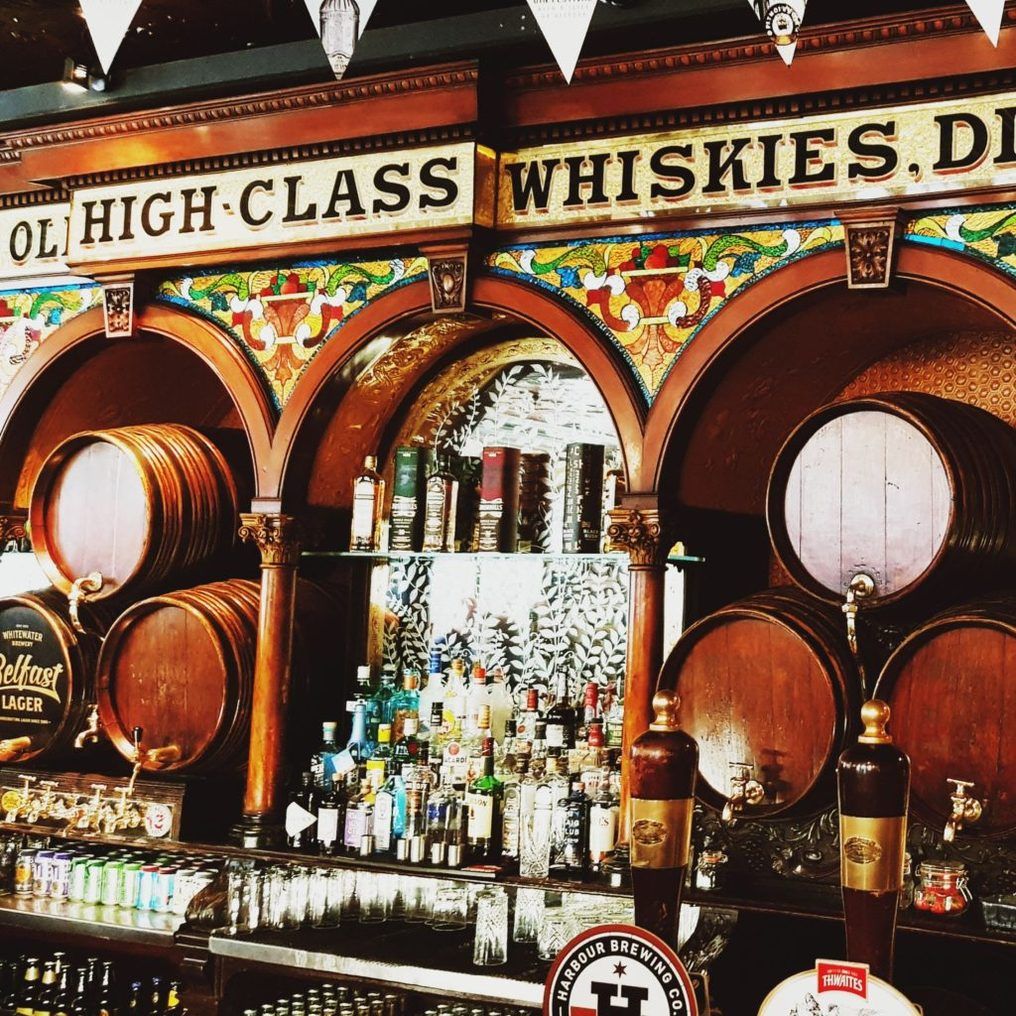
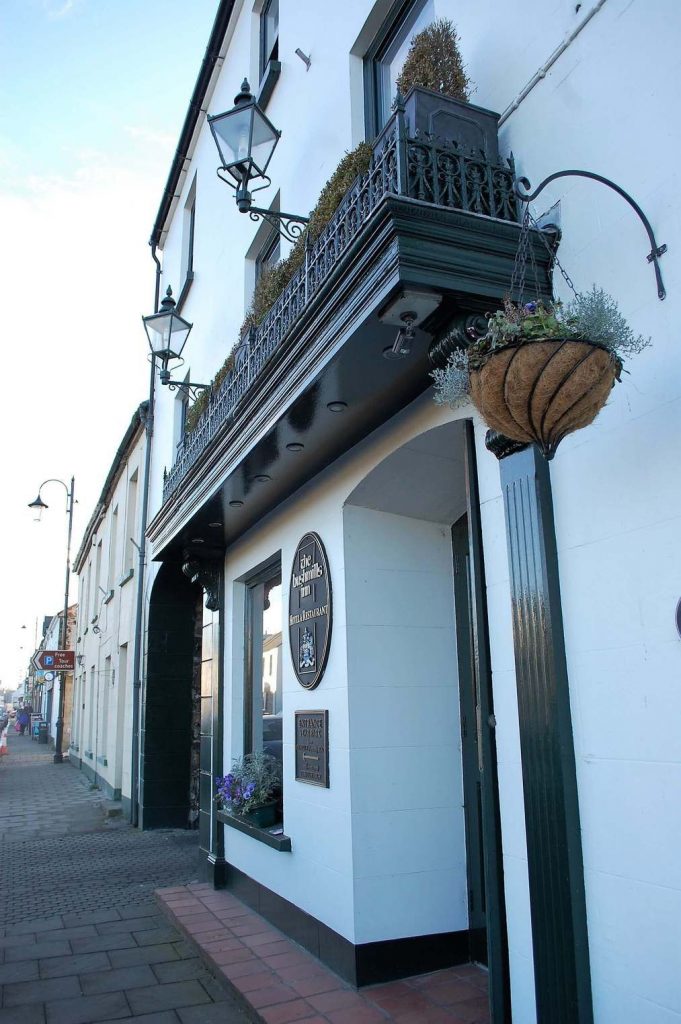
Discover England, Northern Ireland, Scotland and Wales with its breath-taking scenery, history and culture it is packed with appeal for travellers. It’s hard to travel more than a few miles without stumbling upon a castle, pub, stately home or historic village. Alternatively, explore one of the bustling cities like London, Glasgow, Cardiff, Edinburgh, Belfast and Manchester…
When you’ve finished your meal at a restaurant, how do
you ask for the check in London? In London, we ask for the bill and not the
check. However, if you did ask your waiter for the check they would understand.
I’ve seen some forum saying
that some people ask for the ticket. I’ve never heard anyone in London ask for
the ticket unless you are picking up items in the cloak room or at an event.
A quick
note, while tipping is customary in the UK it’s not expected in the same way
other countries do. All staff by law must be paid the minimum wage and the
employer is not allowed to use tips to top up the employees pay. The
expectations on tipping varies from
place to place.
Examples for Asking for the Check/Bill
The polite way for asking for the bill in the UK would be:
May we have the check/bill, please?
Could we have the check/bill, please?
Could we get the check/bill, please?
Or if the waiter comes by and
asks you if you would like anything else, then just say “no thank you, just the
bill, please”.
In a fancier restaurant, you
would say something like “no thanks, I think that’s all for tonight” and then you’ll be presented with the
bill.
The person that asks for the bill is
normally the one presented with the bill. It’s not gender specific, if you ask
for it you will you’ll get it.
A Guide to Tipping in London
Every type of establishment has its own rules for tipping so here’s a quick guide for each type.
Restaurants
Tipping can be awkward and confusing
and the UK doesn’t make it easy with having two ways that tips can work in a
restaurant.
Some restaurants add a 12.5%
to 15% surcharge to the bill and some leave it up to you how much you want to
pay. If the tip is discretionary a safe
bet is to leave between 10% and 15% as a tip.
For tips that are my choice,
I don’t tend to leave more than 10%. Normally my tips are just the coins I have
left in my wallet which will be a few pounds or I will round the bill up. For
example, if it was £27 I would round up to £30.
For service charge the
restaurants are required to state on the menu if a service charge is included
on your bill. If it’s unclear just ask the waiter to confirm.
If you don’t get the level of
service you are expecting you can refuse to pay the service charge. The service
should match the type of establishment you are in so comparing a takeaway store
against Michelin restaurant isn’t a fair comparison.
A fancy bar will have similar
rules to a restaurant especially if they have table service. There will be a
high chance that your bill will have a service charge in this scenario.
For pubs, it’s not necessary
to tip but if you wish to the bar staff will be happy! At the counter there
will be a tip jar that you put your tip into. The pub will normally share this
between all the staff.
Alternatively you can offer
to buy them a drinks by saying ‘and one for yourself’. Although this may not be
permitted depending on the pub or bar so a cash tip is always easiest.
Takeaway Food
With the likes of Deliveroo, UberEats,
Just Eat and Hungry House it’s really easy to get food delivered to your hotel
or apartment. Tipping isn’t required for takeaway but some people do like to
tip. Some sites will prompt you at check-out to provide a tip or you can give
the delivery driver some change as appropriate.
When picking up your food
from the takeaway restaurant tipping isn’t appropriate, simply just collect
your food and pay.
Fast Food Shops
There is no need to tip in fast food restaurants.
Cafes and Coffee Shops
Coffee in a London cafe.
In a cafe or coffee shop,
when you have table service then tipping is usual. Like restaurants, you do
have a mix of service charge and customary tips.
If there is no table service
then there is generally a tipping jar available. In places like Starbucks you
may find that they don’t get many tips, you will find independents get a few
more tips or places that regulars go and build a rapport with the person
serving them.
Paying with Cash or Card?
In London you will get a mix
of payment options, some will be cash or card only and some will accept both as
a payment. Normally you will find a sign somewhere stating if it is cash or
card only.
When presented with a bill in
a place that takes both payments then you need to state to the waiter you would
like to pay with card. The waiter will bring the card machine over to you
for payment. Some machines will allow you to pay the tip on the card machine
but this is hit and miss as an option.
Paying tips by the card
machine could mean that a portion of the tip is taken as a transaction fee and
potentially some could be deducted for income tax. Therefor (therefore) tips are
normally preferred in cash.
Cash is really simple! Leave the cash with the bill and the waiter will collect the money. If you state “don’t worry about the change” or something along those lines then the staff will usually assume this is meant as a tip. Otherwise the waiter will bring you back your change. Depending on whether service charge is included you can then leave an appropriate tip.
One of the most frequently asked questions before moving to the UK is, can I move to the UK without a job?
Yes, you can move to the UK without a job if you have enough money to support yourself and if you are born to British parents or qualify for one of the following visa’s:
Tier 5 Youth Mobility (this is country and age-restricted)
If you are from Australia, Canada, New Zealand, Japan, Monaco, Hong Kong, Taiwan or the Republic of Korea and between the ages of 18 and 30 the Tier 5 Youth Mobility visa could be the one for you.
It’s a perfect visa for those who want to move aboard, plus the UK is a great base for travel. Although this visa cannot be extended and means after the 2-year term has ended you will have to leave the UK, obtain sponsorship or another visa.
Some professions will require you to be certified in the UK or have restrictions on certain jobs so do some research beforehand. For example, my friend couldn’t work as a pharmacist on her New Zealand qualification so she’s had to work as pharmacist’s assistant.
UK Ancestry Visa
If you have a grandparent born in the UK and are a Commonwealth citizen you may be eligible for a UK Ancestry Visa. Not only does this visa cover you moving to the UK but this visa can be extended to your family members or dependants (including unmarried and same-sex partners).
After spending 5 years in the UK, you can switch from the UK Ancestry to Indefinite Leave to Remain (ILR) which is permanent residency and then naturalise after being on IRL for a year.
What you will need for a UK Ancestry Visa:
Your Passport
Birth certificate
Parent birth certificate
Grandparent birth certificate
Potentially your grandparents’ and parents’ marriage certificates
Savings in your bank account – no official guidelines
If you have a British parent then you might be eligible to apply for a ‘right of abode’. Essentially as the child of a British citizen, you have the right to permanent residency. This is a right you inherited at birth.
What you will need for Right to Abode:
One of your parents was born in the UK and a citizen of the United Kingdom and colonies when you were born or adopted
You were a Commonwealth citizen on 31 December 1982
You didn’t stop being a Commonwealth citizen (even temporarily) at any point after 31 December 1982.
Evidence of employment in the UK (if applicable)
Financial evidence – bank statements, term deposit statements etc.
Letter of invitation from a British citizen living in the UK (not mandatory, but preferential)
Proof of relationship documents – your birth certificate, your mother’s birth certificate (grandparents are not required)
Evidence of accommodation upon arrival (this can be a hotel booking or your referee in their letter of invitation can state that you are staying with them, even if this is not a long-term arrangement).
Are you or your partner a British citizen, EEA National or settled in the UK (they have ‘indefinite leave to remain’ or proof of permanent residence) and you’ve been living together for more than two years or are married? Then you could be elidable for a spousal visa.
What you will need for a Spousal Visa:
A civil partnership or marriage that’s recognised in the UK; or
Prove that you have been living together in a relationship for at least 2 years
A plan that you will marry or enter into a civil partnership in the UK within 6 months of arriving
Be capable of speaking English to a good level
Proof that you can financially support yourself
Visa fee plus the healthcare surcharge.
Can a US Citizen Live in the UK?
It’s not as easy for an American to move to the UK like it is for Australian, Canadian or Kiwi. The most common type of visas for US citizen is a student, work or family visas.
Tier 2 Sponsorship visa is your best bet unless you have met the love of your life that’s a UK Citizen or someone that can have a spouse on their visa like the UK Ancestry. Sponsorship does defeat the purpose of moving without a job but it is a great option if you can find a placement.
Another option is if you have a UK heritage where your mum, dad or yourself were born in the UK you can get a passport.
If you have a Canadian (or another Commonwealth country) passport you could also look into your eligibility to get a youth mobility visa.
The Tier 4 Student visa is also an option but there will be restrictions for the adult and child visa types. The adult visa will allow you to work up to 20 hours as long as it doesn’t interfere with your studies.
Lastly the Tier 1 visa’s can be an option if you have enough money to get an investor, get an entrepreneur or bring your own business to the UK.
Use the link in the above section to see what you qualify for or consult with an immigration lawyer for the best options for you.
How to Move to the UK Without a Job
Many people have made the move like myself and it’s totally doable to move to the UK without a job. So how were myself and other successful? And if so, how did we go around finding employment once they got there?
From here on out I am going to assume you’ve figured out that you have the ability to work in the UK and you are now ready to start with the next steps. This guide will walk you through the two to three fundamental steps of moving to the UK:
Do you have enough funds ready for the move?
Applying for your visa (if required)
How to successfully job search (with hints and tips)
Do You Have Enough Funds Ready for the Move?
In my article how much money should I save to move to the UK I recommend bringing over £5,000 as a single person. The budget based on getting cheap accommodation like living in a hostel or moving into a shared house and without the visa cost included.
You should consider an amount that will cover three months’ worth of accommodation, travel, food, six weeks’ worth of bond money, being without a job and some money for fun activities per person.
You should also factor initial travel costs which can be another £50 to £1000 per person.
If you are lucky enough to have friends and family to stay within the UK they will be a life saver. Saving you a ton of money on accommodation!
You can also save money on travel cost by locating yourself near to a high street which will give you access to shops, parks and other facilities you may need. Being savvy with your money in general and knowing where to spend it will help the pocket too!
Planning to move to a new place without any funds is always risky. It’ll put you in positions like:
accepting a job you may not want to do
not being able to support yourself if there are issues with the market
many other issues that crop up when finding a job
or 2020 hits the world and we have no idea whether they will have a job.
Of course, this is fine if you are happy to accept the risk of not having enough savings.
Speaking from experience, I didn’t have enough money saved when I moved here and it ended up with a ton of credit card debt.
By making this mistake it meant having to go to my family and asking for my first months’ rent and bond.
Moving overseas was totally worth it but if I had put it off by three to fourth months to have enough money would have been better for my financial stability. I ended up spending four years paying off my debt each month.
How to Apply For A UK Working Visa (If Required)
The biggest part of getting a UK work permit is the preparations, mainly, the time to save (unless you’ve got that all sorted). All working permits will have pre-requisites and the two common ones are:
English language requirement.
Financial maintenance for yourself and any family members.
Valid Passport – No matter where you’re from, you’ll need a valid passport in order to enter the UK.
As a minimum, you will need to meet the financial requirements for your visa even if you don’t plan on moving with the recommendation mentioned above.
Additionally, the visa cost can be quite expensive in itself with the IHS surcharge.
I moved over on a UK Ancestry visa which is a 5-year working visa. It’s one of the more expensive visas as you have to pay for the IHS fee for every year of your visa a UK Ancestry Visa (i.e. 5 times £400 plus visa fee) which will set you back around £2,000 in fees alone.
Not all visas are clear in the financial requirements so to be safe I always recommend using the Youth Mobility requirement which is £1,890 per person if there is no definition.
Process for Applying for UK Visa’s
Six to three months before you intend to arrive in the UK you can apply for a UK visa depending on your visa type. Applications go through the British Embassy or High Commission closest to you and tend to be quicker when dealt with in Commonwealth countries. Processing time, in general, is around 3 weeks but it is visa dependent.
You can check the likely processing time for different nationalities on the UK government website.
Applications are started online, some visas are required to have your fingerprints and other biometric data recorded. This means that you will need to visit your nearest visa application centre (in your home country) to have your biometric data processed.
If you’re already in the UK (and need to switch your visa type or extend it for example) then you can apply at a UK based application centre. It’s highly unlikely you will be eligible to apply within the UK.
The general application process will be as followed:
fill in the application form and answer in English
pay the health surcharge
pay for the visa fee online (in most cases)
print out your form
book and attend an appointment at a visa application centre
have your biometrics taken (fingerprints and photo) for a biometric residence permit
What Happens If I Don’t Qualify for One Those Visas?
If you can’t meet any of the above then you will need to look into sponsorship which will require a job before you can move to the UK.
Depending on the Tier 2 visa types you could also be evaluated against the points system and appear on the shortage occupation list. Make sure you double-check that the employer has a license or is willing to apply for one and for a better chance that your job is on the shortage list.
Alternatively, tier 1 visas could be an option if you have the exceptional talent, business or investor.
How to Successfully Job Search (Hints And Tips)
Finding a job in the UK can either be really easy or hard depending on your profession. London is very competitive and generally always has been.
It’s never affected my ability to get a job, with motivation and determination you will get there.
However, some industries are having a rough time with Brexit like the property industry and there have been redundancies with the downturn of the market.
My day job is as an IT project manager and on average each job it has taken me one month to land a job. I was willing to accept any job when I arrived so my first job in the UK was actually as an Information Manager not as a Project Manager.
After 9 months of deciding I wanted to stay in the UK I took a lower-level role as Project Coordinator. After another 9 months I moved on to be a Project Manager again and since then all my jobs have been as a Project Manager for the last 4 years.
The main ways I applied for these jobs was through jobs boards, connecting with recruiters and individual companies.
Here are 10 tips to get you started:
In this day and age social media plays a big part in our lives. Check that your Facebook and social media presence is boss proof. Google yourself. Might be a bit awkward if they find a compromising photo of you.
Update your resume, LinkedIn, any portfolios and general documents that go with job hunting. Then ensure on LinkedIn that you have ticked that you are open to new opportunities and are following influencers in your industry. LinkedIn is a popular tool in the UK to find jobs, I get a message at least every week from recruiters asking whether I want to apply for xyz job.
Have a UK number – no one wanted to speak to my mum whilst she had an Australian number.
In the UK the majority of jobs go through recruiters and they typically specialise in fields. Target recruiters that may suit your career by looking at who is advertising the job suitable for you.
Register with the largest employment websites like Monster, Indeed, Total Jobs, and Job Site.
Upload your resume to these job sites like Monster and Indeed. One of my bosses always recommended doing this on a Sunday so you are in the first batch that week recruiters are sifting through.
When you find a job to apply to tailor your application to suit. You should be demonstrating your experience and utilising examples of how you meet the job description.
In your cover letter and resume you could go beyond the role itself and look at the objectives of the organisation at large then help solve for those in your application.
Be ready to write your resume to address different application requirements.
Allow extra time for travel in case of some unforeseen event especially if you are new to the area. It is almost impossible to recover from being late to an interview.
Many of us have become
accustomed to having air conditioning when travelling so it can be
concerning when you start reading that most of London does not have
air-conditioning available.
Let’s
get to the important question, do you need air-conditioning in London? No, you
don’t, unless London is experiencing a heatwave. The temperature during summer
is an enjoyable mid 20’s (70°F) during the day and mid 10’s (55°F) in the
evening. Most British housing will not have air-conditioning and will
opt for heating instead.
Along with British houses
don’t expect air-conditioning when you walk into cafes,
pubs and restaurants. It’s always a surprise when a place does have
air conditioning with the exception of shops and workplaces.
If you do need
air-conditioning then you will need to research your hotels well. It will be
harder to find Airbnbs for the above reasons and hostels that are equipped with
this facility.
London Temperatures During
Summer
London is generally in (the)
mid-20s (70°F) as you can see in the table below but low 30s (86°F) isn’t
unheard of. When London does get hot it can get stuffy and a bit humid).
Month
Average Temperature
June
21°C / 13°C or 70°F/ 55°F
July
23°C / 15°C or 73°F / 59°F
August
23°C / 15°C or 73°F / 59°F
In 2018 London and the UK had
a massive heatwave with temperatures over 30°C / 86°F that lasted for quite a
few weeks. An unusual event for the UK – where the grassed died in parks,
Londoners melted from the heat, shops sold out of fans and trains struggled to
run.
As an Australian I don’t find
these heatwaves too bad, I actually quite enjoy them! It’s a nice break from
the normal drizzly days. If you are from a cold country or used to
air-conditioning then this weather could be a challenge for you.
How To Survive A Heatwave In London
Found yourself in a London
heatwave? I’ve got some practical tips as well as fun activities to make the
most of summer!
Let’s Start with the Practical Tips!
Fans Are Your Saviour
Get a little fan to take
around with you, like those ones you get in Asia or a little electronic one.
Ask your hotel for a fan if they don’t have air conditioning. In my experience hotels will have these available.
Carry Water
During a heatwave you will
have constant messages from the London Underground reminding you to carry
water. The messages can get pretty annoying but when you are stuck at a red
signal dying from the heat you will be thankful. Some of those lines can get
pretty hot!
Lately, I have noticed a rise in water fountains available at National Rail stations which is great for refilling your bottles. At main attractions, there is (are) generally water fountains too!
Avoid Public Transport at Rush Hour
The tube can be almost
unbearable in the summertime. The central line has been recorded to have a
temperature of 40°C (104°F) with no air-conditioning or ways to cool the train
down it can be unbearable. Then when you mix the heat with rush hour you get
lots of hot sweaty people! Imagine the fun of summer rush hour is. It’s a major complaint amongst
Londoners. P.s. Air conditioning varies on the public transport you are taking
so sometimes you luck out but most times there will be none. It will change on
some lines when they finally roll-out the new trains.
Look for other alternatives like buses or travelling in non-peak times. Sometimes I will head out for a drink until the peak hour has died down a little.
Invest in a Mist Spray
The adult version of running
in the sprinklers! Facial mist spray! It is great for when you are overheating
and need something to cool you down.
Fun Activities to Stay Cool in London Summer!
Go Swimming
London has lidos located
around the city which are ideal for cooling down during the heat. It’s a
popular way to cool down so during peak times you’ll have to queue to get your
cold-water fix.
Here are a few lidos in
London:
Hampstead
Heath Swimming Ponds – Hampstead Heath
Oasis
Sports Centre – Covent Garden
Tooting
Bec Lido – Streatham Park
London
Fields Lido – Hackney
Serpentine
Lido – Knightsbridge
Brockwell
Lido – Herne Hill
Have a Picnic
Londoners love having a
picnic and head to the park when it’s warm. At any chance during summer I
will grab my dinner, picnic blanket and head to the park to catch the sun,
light and fresh air. Some recommendations:
Hyde Park
Most popular with tourists,
it’s a London attraction in itself and close to other London Landmarks so great
if you are a tourist and only have a short time to explore.
Primrose Hill
Amazing view of the city
while you enjoy a drink or some cheese, yes please! The hill is perfectly
located to give you views of the London skyline.
Richmond Park
The best thing about Richmond
park is the deer! Instead of people watch you can deer watch while enjoying
your lovely picnic.
Crystal Palace
Crystal Palace was once a
holiday destination for Londoners and was home to the famous Crystal Palace
until it burnt down. You’ll discover the foundations of the Crystal Palace, the
first illustrated statue version of dinosaurs, a maze, a local farm plus the
kids can interact with the animals and lots of park space for a picnic.
Enjoy a Drink at a Rooftop Bar
All the advice says to avoid alcohol when it’s too hot! Boo, frozen cocktails on a rooftop is a magical way to cool down in my opinion.
A few recommendations:
Bussy and Franks – Slightly outside of the tourist area (still in zone 2) these two rooftop bars give amazing views of London
Queen of Hoxton – Located in Shoreditch, this bar is transformed twice-yearly into some cool themes.
Skylight London – A new addition to the rooftop bars in London. In summer it’s an urban lawn club with Croquet, Pétanque and Street Food.
Bar Elba – Has a happy hour every day until 6 pm and then from Sunday to Thursday from 9 pm to 11 pm.
Enjoy a Cold Beer in a Beer Garden
Green space can be hard to
come by in some areas of London so the next place we flock to is pubs with beer
gardens or riverside pubs. Sitting in a lovely garden enjoying a cold beer to
cool down is the best way to enjoy the summer.
Pub with beer gardens:
Canonbury
– Canonbury
Alwyne
Castle – Canonbury
The
Albion – Barnsbury
Earl
of Essex – Islington
The
Edinboro Castle – Camden
Magic
Garden – Battersea
The
Ship – Wandsworth
The
Half Moon – Herne Hill
The
Duke of Edinburgh – Brixton
The
Faltering Fullback – Finsbury Park
The
Sun – Camberwell
The
Rose Pub and Kitchen – New Cross
The
Windsor Castle – Kensington
Riverside pubs:
Crate
Brewery – Hackney Wick
Cutty
Sark Tavern – Greenwich
The
Lighterman, King’s Cross – King’s Cross
Lockside
Lounge – Camden
Mason
& Company – Hackney Wick
The
Narrowboat – Hoxton
Find the Best Ice-cream
London is a foodie’s
destination and there is nothing better than enjoying a nice cold ice-cream
when the weather is sweltering.
Milk Train Cafe – Covent Garden: Most famous for its cones
wrapped in fairy floss and delicious matcha ice-cream
Udderlicious – Barnsbury: I first discovered this place when I was
living in Islington and went back almost every hot day it was acceptable to eat
ice-cream! The ice-cream flavour is amazing!
Yorica – Soho: A vegan’s dream place! or anyone on a plant-based diet. It’s
the first dairy, egg, nut and gluten-free
ice-creamery.
Do you have any recommendations to survive the heat or any accommodation you found that has air-conditioning? Let me know in the comments below!
Passports are one of the most important items
when travelling and there can be so many different rules regarding them.
The internet is filled with debates on whether you should or shouldn’t
carry your passport.
Should you keep your passport with you in London? The times you should keep your passport with you are; at the airport, international train station, checking in to a hotel or hostel, changing money, hiring a car, picking up event tickets, buying alcohol or proving you’re old enough to get into a pub or club.
Your licence can suffice as
proof but some companies can be sceptical whether it’s real or a fake
licence if you are providing an international version. There have been
times when I’ve tried to buy alcohol on my Australian licences and have been
rejected.
There is a counter-argument
that you don’t need to bring any ID with you when you are in the UK but I
disagree, especially if you are driving or younger-looking and plan on buying
alcohol or are heading to a pub, bar or club.
Of course, if you aren’t driving or no longer get asked to prove your age then it’s
purely your choice if you bring ID.
I don’t carry my passport
with me unless it is required, instead, I carry my licence in my
wallet. I’m in my late 20’s and I still to this day get asked to prove my age,
the easiest way to do this is with my UK licence.
Before I got my
UK licence I was using my Australia licence as proof for my
age. However, any time I needed to go to the bank I also had to bring my
passport to prove who I was.
What Is A Valid Form of Identification?
This really depends on the reason you need the identification for, here are acceptable forms of ID in the UK:
A photo driving licence
A passport
Proof of age card, such as the PASS card from the national Proof of Age Standards Scheme
Biometric Residency Permit.
4 Tips to Keeping Your Passport Safe
Lock it Up
Lock your passport away in either the safe or locker provided by your accommodation. If a lockable space is not provided secure your bag with a travel lock. You can ask your accommodation to keep your passport safe as well. I personally prefer keeping it in my room or with my belongings but I am aware that some people prefer to carry it with them.
Have Electronic Copies
Before you head on your
travels make sure you have electronic copies. Save these to your cloud or
non-cloud drive and e-mail a copy to yourself and family or friends.
Things can happen when you
are not careful, like my dad. One day he was doing a bit of washing and didn’t
check his pockets. He likes to keep his passport in his pocket along with his
wallet (no idea why). Next thing he knows he’s pulling out a totally ruined
passport from his trouser pocket. Not so helpful when you live in another
country as fly in and fly out. Luckily, he had copies of his passport and was
given an exception by the airline and immigration to get to the nearest embassy
to replace his passport.
It’s easier to prove your
identity when you have copies available when the original isn’t around or if
the physical copy is damaged.
Some people do take
photocopies and carry those instead of carrying around the physical version.
Hide It
When travelling in public areas ensure your passport is secure. I keep my passport in a zip pocket within a bag that would be hard to grab without me noticing. Whatever method you choose to keep your passport safe make sure it’s hard for people to snatch it without you noticing or the person just wouldn’t be able to find it.
Protect Your Passport
Damaging your passport is
another pain! I covered my dad’s incident of damaging his passport but there
are other things than washing machines that ruin your passport.
The UK is famous for its
drizzle and rain so keep it as safe as possible to prevent water
damage and travel with a waterproof cover. Additionally watch out for anything
that can cause rips and tears.
Not sure how I managed to get
tears in my passport, I think it was from the plane tickets, immigration cards
and then pulling them out caused wear and tear. At one point the Australian
Immigration officer was advising me to replace my passport soon before I lost
the most important page. The passport managed to withstand quite a number
of years more of use with a bit more TLC.
Have you had any incidents with your passport? Let me know your stories in the comments below.
Staying in a hostel in London was my first solo hostel experience and it turned out to be really positive. After years of staying in hostels in London and around the world I can say that having concerns about the safety of a hostel is a common feeling, especially if you are new to travelling.
Are London hostels safe? Yes, they are safe. Don’t worry you are not alone with this doubt, safety it is quite a popular question. You do need to take a couple of steps to ensure that you and your belongings can remain safe. These aren’t anything outside of common sense.
In this guide, I will share my experience and tips for staying safe.
Who Stays in London Hostels?
London hostels tend to attract two types of people, those who are looking for budget-friendly accommodation and those who have just moved to the UK.
As travellers you will find that most people are looking to meet like-minded people so those who are up for new experiences and enjoying what London has to offer.
The chances that the people staying in the same room want to steal or attack you is not very high on their list. We all just want to be mates right?
Here Are 11 Tips for Staying Safe in London Hostels
1. Research The Hostel Location
London is a big place and when researching a location to stay can be overwhelming! London is a set of little towns put together to make a city with their own vibes so making the right choice is important. Before choosing a place you should decide what kind of experiences you want to have, do you want to be able to walk to the landmarks easily, do you want to party, are you looking for some peace and quiet? This will all affect where you should stay in London.
From there you can then look at narrowing down the locations and safety of those areas of London. The London crime map is great for comparing safety in different areas.
A few recommendations of what areas to stay in London:
Bermondsey & London Bridge
Area vibe: It’s the perfect place to stay if you love to discover new street-food, craft beer and gin.
Safety: I commute into London Bridge and work in the City of London so I am really familiar with the safety in this area. At no point have I ever felt unsafe walking around this area, however, there was an incident in the area which upped the safety. You will find that London Bridge and other parts that have bollards protecting the pedestrian pathways.
Covent Garden and Soho
Classic shot of Piccadilly circus
Area Vibe: Right in the middle of the action, always bustling, surrounded by restaurants and bars and in the theatre district.
Safety: In the heavy populated areas you will see police presence and also in high traffic pedestrian pathways bollards protecting those areas. Being a high tourist area it does attract people stealing phones, wallet, cash and anything that is easy to grab. Just make sure you are aware of what you are doing with your belongings.
Greenwich
Area Vibe: It is further out to see the main attractions of London but the attraction is that it is a little quieter, full of open space and greenery. Plenty of restaurants, markets, bars or a great place to have a picnic when the sun is shining.
Safety: It’s a reasonable place to stay as far as safety, lots of tourists during the day and local around.
Shoreditch
Shoreditch Street Art and Graffiti Tour
Area vibe: There is always something happening in Shoreditch from the curry mile, vintage shopping, street art and cool bars there is something to keep you occupied every day of the week.
Safety: It’s one of the nightlife areas so you will see more drunk people and an occasional argument but nothing you wouldn’t see in any nightlife area. The area has incidents of theft like bikes riding by and stealing your phone. Make sure you are aware of what you are doing with your phone and belongings.
2. Read The Reviews of The Hostel
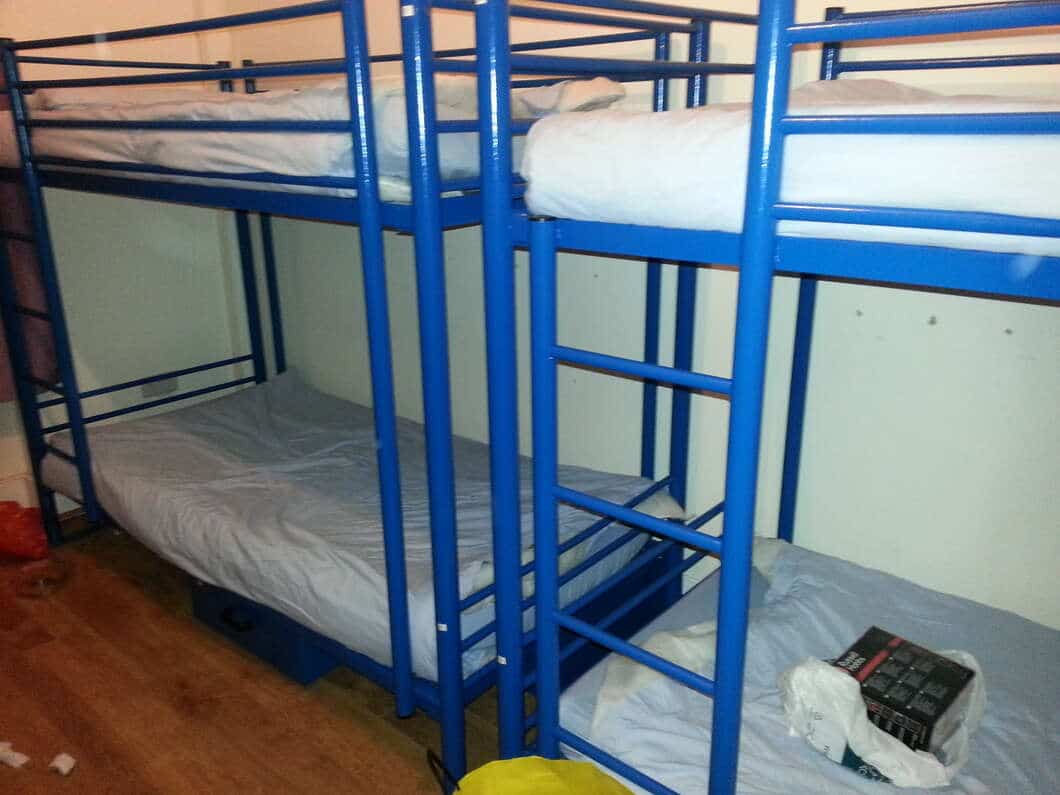
Hostel Dorm Room in London
Reading reviews of the hostel can help you determine whether it’s worth staying there, for example, value for money, security, location, staff, atmosphere, cleanliness and facilities.
If the reviews start highlighting that people feel unsafe in the area, their stuff was stolen or they felt harassed then it’s a big red flag! As a rule, I will read a minimum of 10 reviews on each hostel I am considering staying at to get a feel of people thought of the place.
3. Consider Female-Only Rooms and/or Hostels
Not everyone is comfortable staying in mixed rooms but thankfully for us ladies there female-only rooms and hostels.
Benefits of staying in female-only accommodation:
The rooms are better equipped for the female traveller with a high-quality mirror, lots of hooks and hairdryers.
Dorm rooms can be smaller e.g. you could find yourself in a 6-bed dorm instead of a 12 bed one.
It’s easier to get changed in female only dorms, you don’t have to worry about boys looking at you.
Guys aren’t allowed so you won’t have those awkward moments if someone picks up.
Disadvantages:
Female dorms cost more than mixed dorms so will have an impact on your budget.
Girls can be just as messy!
4. Know How to Get to Your Hostel When You Arrive
My first experience of trying to get to my hostel in London was a disaster. After landing in London after a 20+ hour flight from Australia, I was really tired lugging a heavy suitcase and thought a print out of the hostel directions (no map) would be enough to get me to the hostel.
I had never been to London and had no understanding of the complicated transport connections (I’m for a small city where the train only goes in 4 directions). Totally oblivious that the hostel was in Kingscross which is a major hub for public transport in London with about 20 exits to get out of the tube station.
After spending about an hour walking around in circles and asking for help I finally found my hostel.
Make sure you know how to get to your hostel when you arrive! This is super important if you are arriving late at night. With the increase of free WiFi and the ability to download offline maps finding your way is a lot easier! In doubt grab a taxi so you get there safely.
5. Speak to The Staff if You Have Concerns
Hostel staff will be very familiar with the area so raise any concerns you have with them. They should be able to tell you what to watch out for, scams and places to skip. It’s common the staff will be living at the hostel or in London so they are a great source for information.
6. Use The Lockers
Before you start travelling pick up a good travel lock. Look for locks that cannot be easily damaged, cut or otherwise accessed with some effort and the right tools. Four–digit padlocks are great as you can have over 10,000 combinations and almost impossible for people to figure it out.
A good hostel will offer lockers to store your belongings in. When you get into your room check that the locker is tack, nothing is damaged and then just lock it on your way out.
7. Watch Your Belongings You Care About
As someone that travels with lots of tech items, this is something I am most worried about when travelling. First, have good travel insurance to cover high-value items so if anything does happen you aren’t out of pocket.
Every time you leave the room put your high-value items in the locker and lock it. Even if you feel safe in your dorm rooms you never know what could happen. Private rooms don’t always have lockers so consider locking your bag and distributing it so it’s harder to find.
8. Copy Your Passport and e-mail it to Yourself
Take copies of your passport, any visa or important documents before you travel. E-mail copies to yourself and your family as a safety measure. It’s way easier proving who you are when there are photocopies!
I also only take out one form of ID so if I take my licence I don’t take my passport, if I take my passport I leave my licence behind.
9. Know Where Your Nearest Embassy Is
London has a pretty good police force, after all it’s a big city and they deal with a lot of crap! Knowing where your embassy is will help you if something like your passport gets lost or stolen. Luckily London is a hub for embassies so there is a good chance your embassy will be in London to support you.
10. Drink Responsibly
It’s sad that I have to include this in the tips as there is still a culture that it’s ok to take advantage of people when they are intoxicated. Whether it’s sexual assaultor stealing your belongings and it can happen across both genders.
It’s easy to get carried away when making new friends and I am definitely guilty of having too many drinks on more than one occasion when travelling.
I’ve never been in an incident myself where I have been assaulted but I have definitely been robbed on a night out (both in London and in Australia) so it doesn’t matter what city you are in this can happen anywhere!
Carry the hostel business card with you so you can give it people (taxi driver, police officer etc) if you need help. If you feel like you are unsafe or just want to make sure people know where you are at all times text a friend your location even if they are not in the same country or awake.
11. Hide Some Backup Money in a Different Pocket
Find a few secret pockets to hide cards and money in as another precaution. This tip is more than just safety it protects you if anything happens to your money.
As an example on a recent trip to Thailand, I decided to take one travel card and then my credit card plus my normal bank card. I got off the plane after a full day of work and then 18 hours of travel, put my travel card in the ATM and then forget to take it out! The receiving cash before taking my bank card through me off and I never took it out in my tired state ?.
After losing out on covering everything back to pounds next thing I know I’m looking at my American express statement thinking how on earth has my balance gone down £500! Turns out someone got my credit card details and went on a spending spree. Thankfully it’ll all get refunded and my boyfriend is travelling with another travel card so I didn’t end up getting all the bank fees. It just goes to show always travel with multiple cards!
If you have any questions about the areas and whether they are safe, let me know in the comment below. Plus if you have any safety tips I would love to hear about them.
London is one of my favourite cities in the world! There is always something to do and explore. I still to this day have a hit list of all the places that I want to visit, it’s never ending.
As this will be your first time in London, trust me, you’ll have a great time! There is something for everyone and a never-ending supply of activities, food, bars, theatres and much more to explore.
Why is this London Travel Guide Different?
I want to make sure that you have the best resource for your first time visiting London. There are a lot of key things you should know to make the most of your trip. I come from a from a small city and I was confused as hell when I first landed at Heathrow! I am sure like me you want to arrive ready and prepared for your London trip.
This is why I’ve made this London First Timers Travel Guide, so you have a one-stop resource for everything you’ll need to know.
This First Timers Travel Guide will give you the breakdown on:
Things to do and see
Planning Your Trip to London (all the practical things!)
The best hostel and hotels
What areas to stay in
Restuarants and Bars
London at a Glance
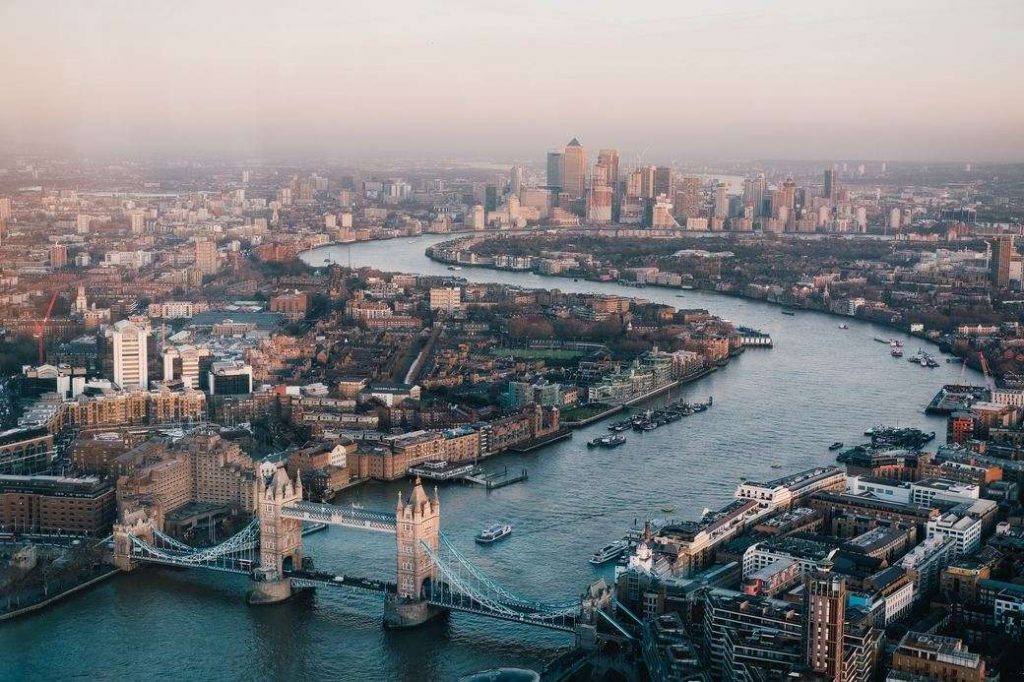
Aerial view of London
Costs, Top Attractions, Weather and Best Time to Go
London is well known to be one of the most expensive cities in the world, so it is key that you plan and make your pounds go further!
The great thing about London is the museums are free and there are ways you can experience things that cost money for less (included later in the guide). These can easily activities can easily be mixed and matched.
Average Costs in London
Budget
Dorm Beds £15 to 30 Markets, Lunchtime specials for food £3 to £15 (per meal). If you get a kitchen you can definitely save money here! Visit all the free museums and cheap sights! Travel zone 1 & 2 up to £8.40 (per day) or walk (completely free ;))
Midrange
Double Room in a Hotel £100 Dinner with Drinks £30 Theatre and Paid Sights £10 to £15 Travel zone 1 & 2 up to £8.40 (per day)
Top End
Four-star/ boutique hotel £200+ Three Course Dinner with Drinks £80 to £100 Theatre and Paid Sights £10 to £200 Cab Trips £30+
Examples
Just to give some quick examples of my spending when I go out to have fun. The other day I had a big “night out” (i.e. it was my sisters birthday and I spoilt her). It cost £224 (£75 each) for 3 of us to go out in Soho. What we bought was one round of cocktails, one bottle of wine at a wine bar and dinner was 3 courses (tapas style), one bottle of wine and a jug of margaritas.
The other day I went out for a low key Saturday night microbrewery which involved burgers with chips and 3 rounds of drinks then we stumble on a wine bar which included another bottle of wine plus a sherry to take home. This all came to £70 between two of us.
Things To Do in London
My favourite things to do in London for some reason all revolve around exploring hidden gems of London, food and drinking! But as it’s your first time in London you need to see some of the famous sights as well. My list is not definitive (London has months worth of activities!) and tailored to what I think you should see when you first come to London.
Before you head to the sights and pay for entry have a look at:
Days Out Guidewhich offers you 2for1 deals on London attractions. Great if there is a group of you just make sure you buy a National Rail ticket (oyster and TFL tickets don’t count) and get the vouchers (either print online or get one at a National Rail station).
The London Pass will provide you access to loads of sights. Simply purchase how many days you would like, active the card within a year (i.e. your travel date) and show it at the venue.
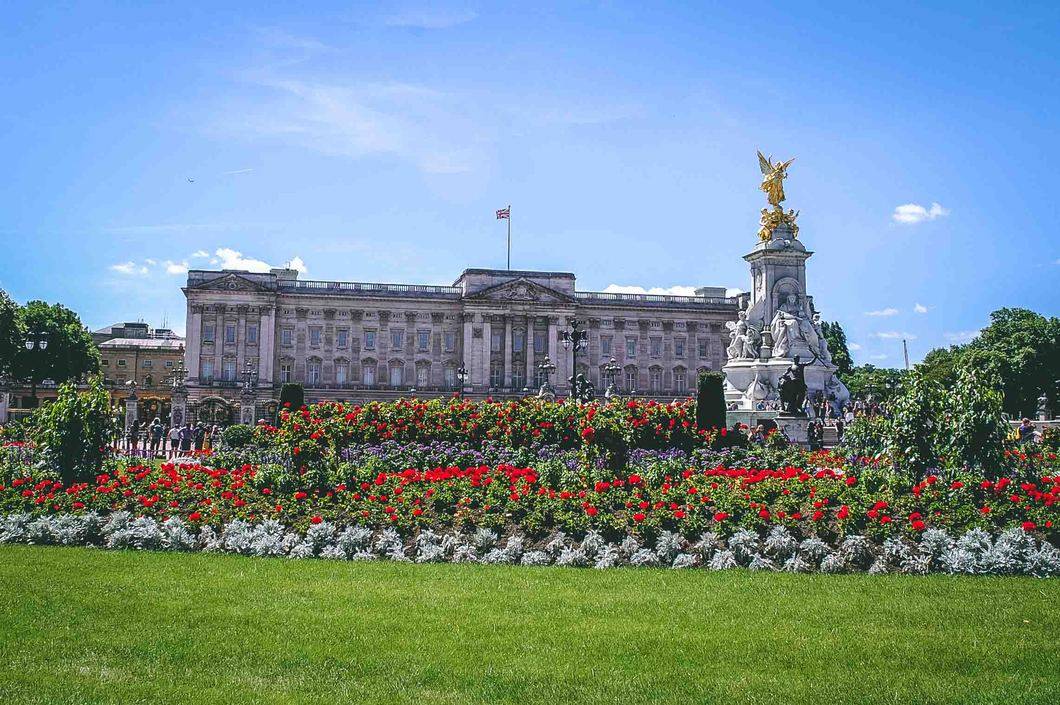
The beautiful garden at Buckingham Palace hiding all the tourists.
It is one of the few remaining working royal palaces. You might even see the Queen drive past (I honestly did see her drive past once when I was on a walking tour).
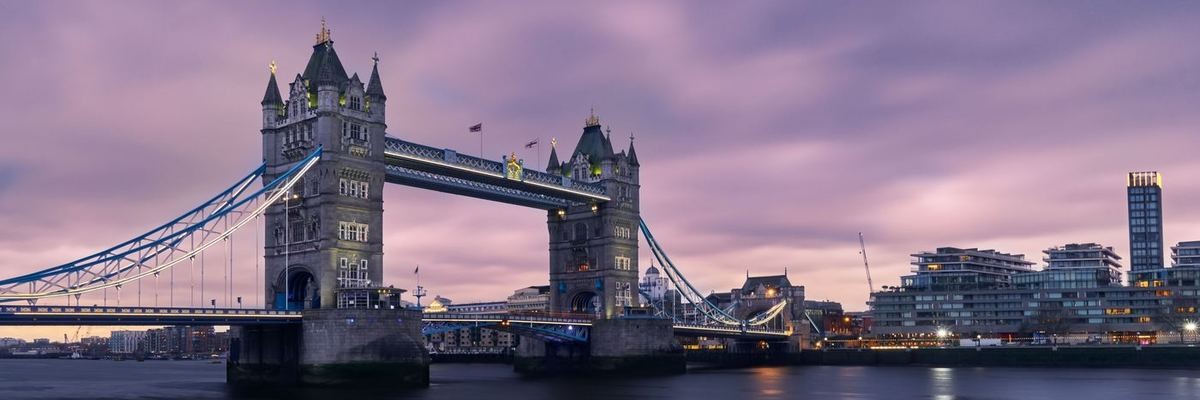
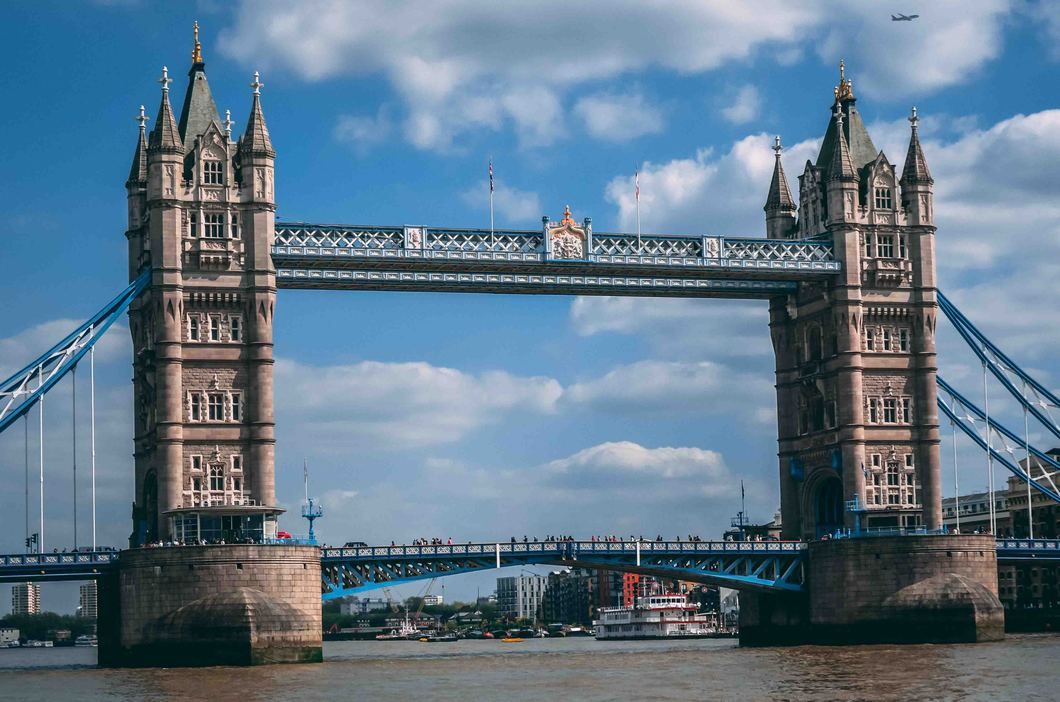
The Tower of London and Tower Bridge
If you are keen to watch the bridge go up check out the latest time at Bridge Lift.
Everyone always thinks that Tower Bridge is called London Bridge. Tower Bridge is the pretty one you want to see, the other is just a plain old boring bridge however it is a great photo op place for Tower Bridge.
All the Museums and Galleries
The best thing about London are the museums as they are all free!!! Here are just some of the ones you can visit:
Big Ben is going through a couple of repairs at the moment as it’s sinking (needs a little TLC). Still, see the Parliament building but expect loads of scaffolding.
Piccadilly Circus and the Trafalgar square
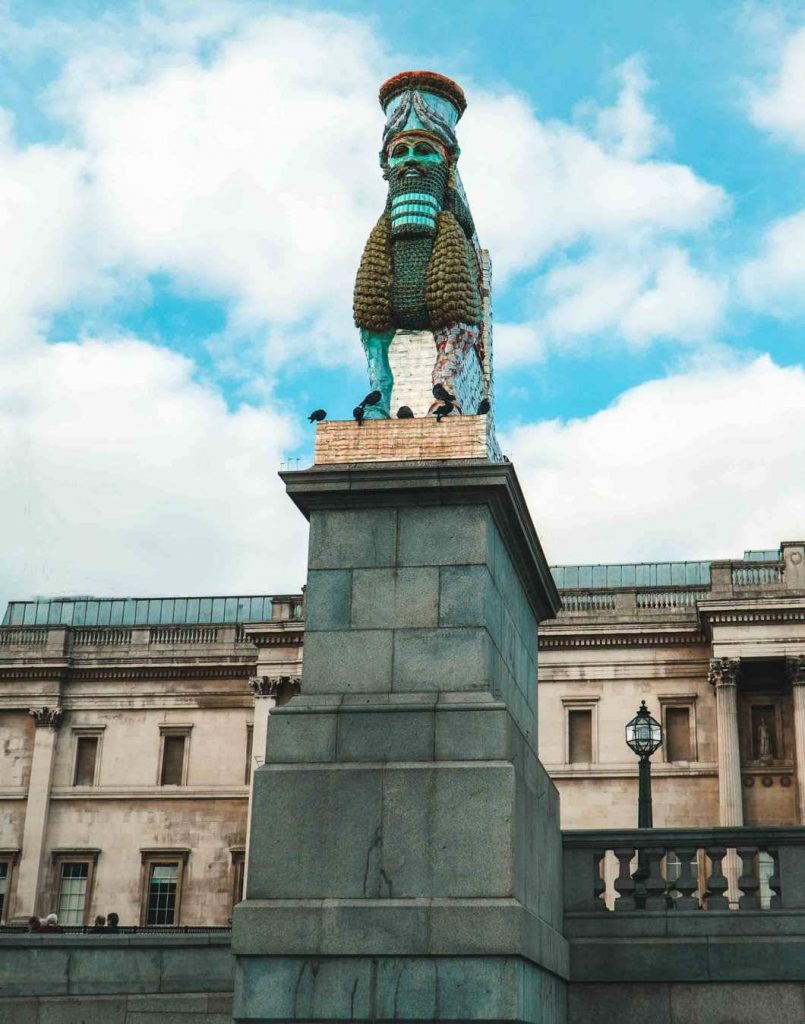
Fourth Plinth in Trafalgar Square
See the latest statue on the Fourth Plinth in Trafalgar Square. So there is more to do in the area then just see the plinth nearby are all the theatres, China Town and restaurants.
Westminster Abbey
Most of us will remember Westminster Abbey from Kate Middleton and Prince William’s spectacular wedding in 2011 but the Abbey has played a big role in UK’s history. Benedictine monks set-up up the original church around 1050’s but in 1245 Henry III pulled down the church and replaced it with the Abbey we see today.
Impressively since William the Conqueror (way back in 1066), the Abbey has been where the British sovereigns have been crowned with the exception of Edward V and Edward VIII that were never crowned.
If you got Westminster Abbey for a Sunday Service you can enter the abbey for free, the downside to this is that you won’t be able to roam around for free.
Explore the best parks in London
There is always a good reason to explore one of London’s beautiful parks from boating in Hyde Park to deer-spotting in Richmond. During a sunny day Londoners will flock to the parks enjoying picnics, drinks, brisk walks and some fresh air. Here are some of my favourite London parks:
If you want a perfect view of St Paul’s head to the roof of One New Change Building. The bar at the top is quite fancy so there will be dress code restrictions but you can just visit the balcony without any restriction.
St Pauls has played an important role in London’s history from royal weddings to state funerals. Located near the river it’s one of London’s iconic attractions to visit. Even if you don’t make it inside the Cathedral it is a beautiful building to visit.
Fun fact, buildings in London can’t disrupt St Paul’s view. It’s classed as a protect view which is why London has some interesting shaped buildings.
Covent Garden
Covent Garden at Christmas time. It’s always so festive!
In the West-end you will discover Covent Garden! Home to a beautiful market, a hot spot for shopping, near the theatres, restaurants, bars and full of history.
Greenwich and Docklands
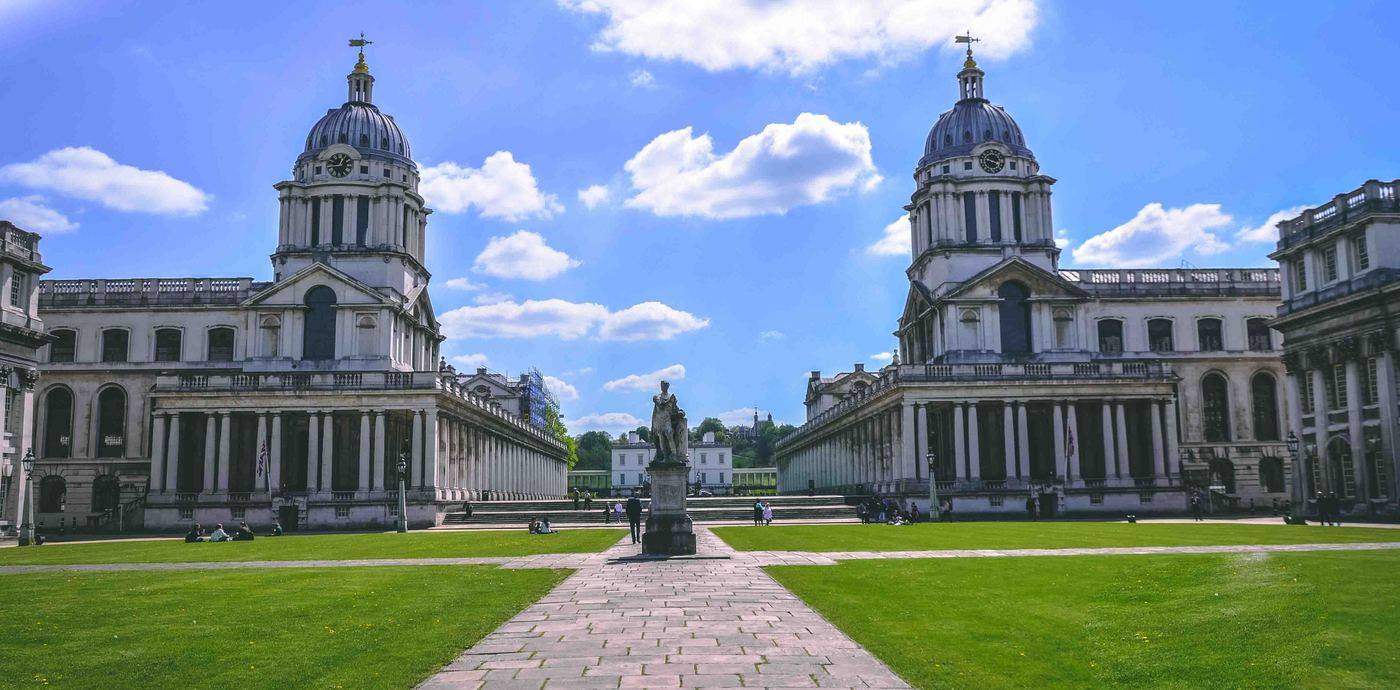
University of Greenwich
This is a day in itself from markets, museums to parks there is a lot of cover in Greenwich. The coolest thing is the Greenwich Mean Time (GMT) line (where the worlds time is set from).
Visit all the Markets and eat all the food
The delicious food at Bricklane Markets (open on Sundays).
Here are just a few of my favourite markets:
Leather-lane market and Whitecross street market are food markets open Mon to Friday during lunchtime. A popular place for those working in the area to grab food.
Borough markets is a must to see and just a great place for eating all the food tasters but my favourite place is the vegan burgers.
Bricklane markets are open on Sunday, lots of vintage, arts & craft and variety of food.
Mercato is another great marketplace style of venue offering lots of food and drinks options plus they have a cinema.
Columbia Flower Market is as the name says a flower market. Open on a Sunday it has a great vibe, buskers playing on the street, food stalls and coffee places!
See one of the great views of London
View from Duck and Waffle with a typical grey London day.
What better way to enjoy London’s view then in one of these wonderful buildings capturing panoramic views of the city.
Here are some of my choices:
The Shard – I suggest going to the Oblix Bar, it’s free to go up there and a lovely place to grab a drink whilst soaking up the views.
Sky Garden – It’s free to go to the Sky Garden you just need to book in advance.
Duck and Waffle at the Heron Tower – You need to grab breakfast here, delicious food and fantastic views!
Bussy and Franks – Slightly outside of the tourist area (still in zone 2) these two rooftop bars give amazing views on London.
The list could go one but I have listed my top 5 views of London so check out the article.
I just had a show a picture of the waffles at Duck and Waffle. Not only are they pretty but they are so tasty!!!
Do I need to buy tickets for museums and theatres in advance?
Museums will have exhibitions that you can buy tickets to. If there is an exhibition you want to see then booking this in advance is a good idea and it will be a time slot on a day. General entry to the museums is free and you will be able to see a lot of cool stuff without seeing exhibitions. I highly recommend the wildlife photographer of the year award at the national history museum.
Theatres are best to be booked in advanced if you are set on seeing a show and price range. You can get last minute tickets fairly easy as lots of people book in advance and don’t show but these will be various prices points.
Have a REALLY good London Attraction Suggestion?
There are endless things to do in London so I’ve barely touched the surface but would love to add your favourite attraction tip in. Let me know in the comments below.
London Weather
The weather is so easy to complain about in London! I think it’s the number one topic of Londoners. I always recommend bringing an umbrella and a jacket just in case.
If you are debating whether to visit in London in spring or autumn make here’s a list of local favourite events during these seasons.
Summer (June to August)
Warm to hot days, generally between 20 to 30 degrees and most daylight!
Autumn (September to November)
Milder day, generally between 10 to 20 degrees. Mostly sunny at the start of autumn and head to more drizzle towards November.
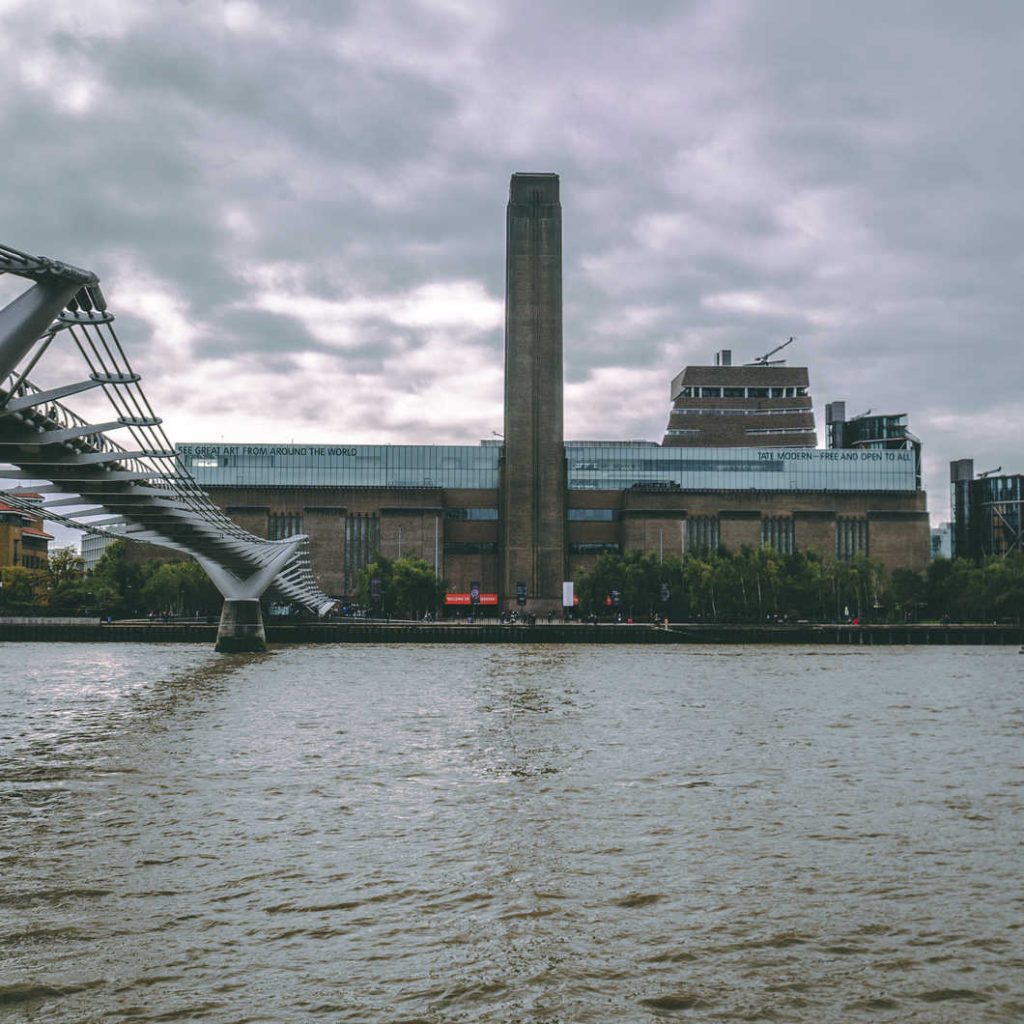
Cloudy autumn day over the Tate Modern.
Winter (December to February)
Cool days, generally around 0 to 10 degrees. Mostly drizzle or rain during the winter months.
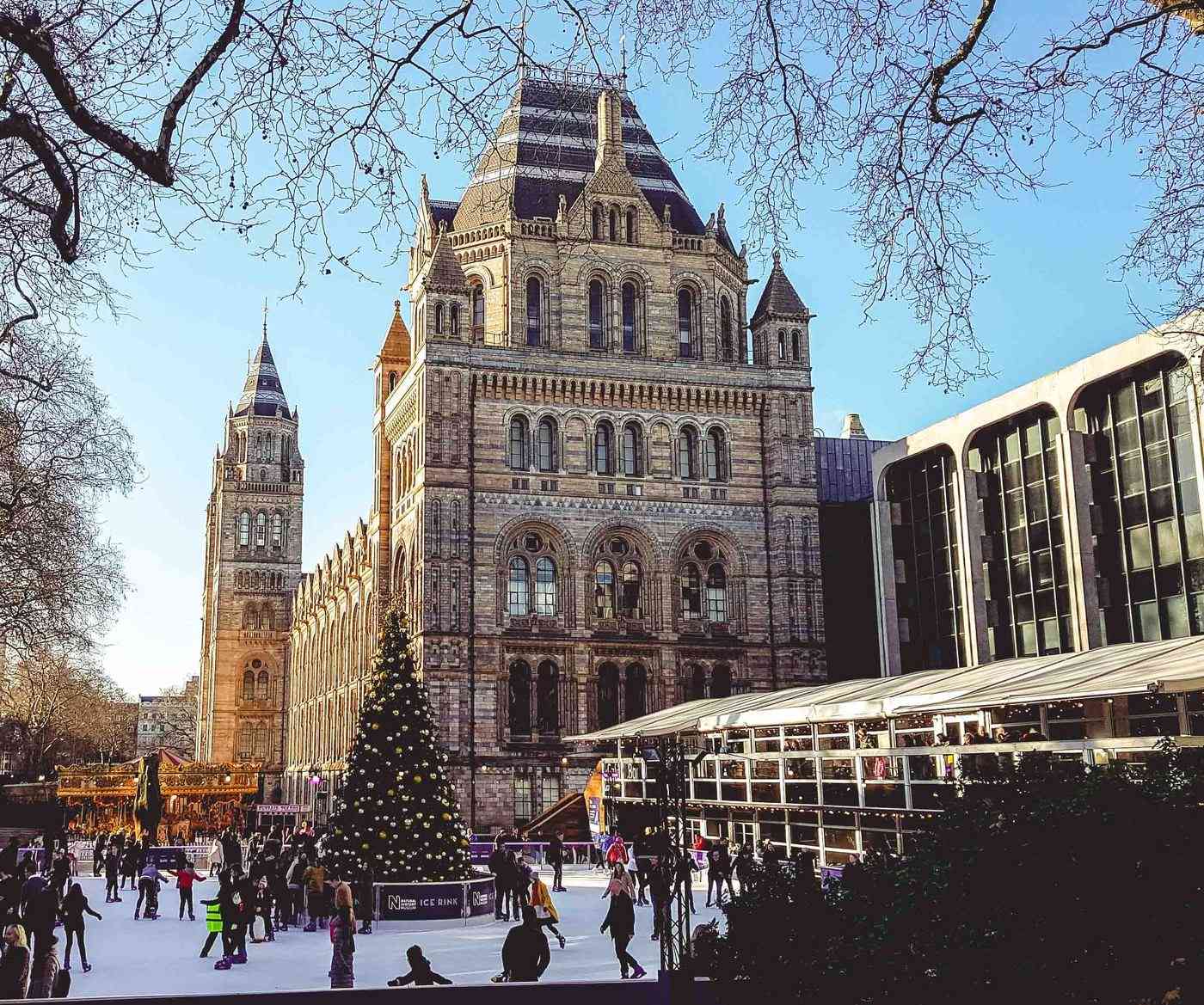
Natural History Muesum at Christmas time
Spring (March to May)
Mild weather, generally around 10 to 20 degrees. The weather can be hit and miss, either really sunny or drizzle.
The weather has slowly been changing in London and season seem to be later (at least to me). In 2018 we still had snow in late March and then a few weeks later a heatwave of 25 degrees with beautiful sun.
Best Time To Go To London
The ‘BEST’ time to go to London can vary a lot depending on what you want to do. Some people are picky about the weather, while others don’t want to blow their budget during high season. Here is how I see it: ANYTIME is a good time to be in London! Just beware that the UK weather is unpredictable, the weather likes to keep us on our toes.
If you like Good Deals: March to May & September to November
OFF SEASON. Heading to London outside of the school holidays has the most perks! You can enjoy lower hotel prices, people are friendlier and there is just better deals. If you are looking for a deal then avoid Easter and the May bank holidays.
Personally, I love travelling in Europe in September and October, the weather is generally warm, not too crowded and sunny!
If you love better weather then: July & August
The middle of the summer has the sunniest days and school holiday which means bigger crowds! As it is the summer season across Europe the whole continent will be more expensive. I would only recommend going over the summer if you hate rain, love hustle and bustle and have a bigger budget.
When to Avoid Travelling to the UK (in general)
If possible, DO NOT plan your arrival for Christmas Day or Good Friday. There will be NO available public transport, taxis will increase their prices and only a limited number will be open for check-in.
Planning Your Trip to London
Planning Your Trip to London
Tourist Visa in the UK
Being an Australian, a Kiwi, a Canadian, South African or an American you will not need a tourist visa and are allowed to enter the UK for up to 6 months.
An EU national can enter the UK without needing a tourist visa however who knows after Brexit and what immigration laws will be agreed.
How to Get a Tourist Visa London
One of the most important things about travelling apart from having enough money and a valid passport is to ensure that you have a visa or the eligibility to enter a country. Some nationalities will need a tourist visa when visiting the UK easiest way to check is by using the gov.uk website and you use their visa questionnaire to find out.
The questionnaire will provide links at the end to the application details. If you are eligible for a standard visitors visa then follow this link for all the details https://www.gov.uk/standard-visitor-visa.
Which airport should I fly into?
A question I see all the time is which London Airport should I fly into? The airports available will differ depending on whether it is a long or short haul flight and whether it is a budget airline.
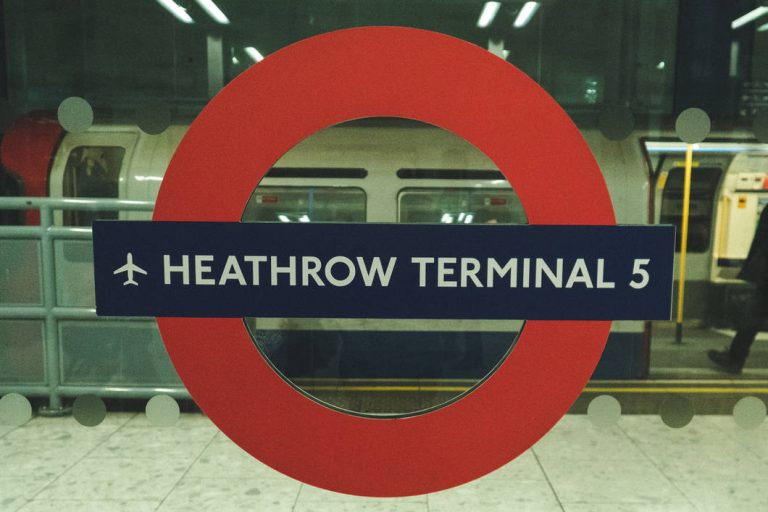
The tube is the easiest and cheapest way to travel from Heathrow to London.
Each airport does have access to transport to get into London and here is a breakdown using Covent Garden as the measure for distances/ time:
Heathrow Airport – 18 miles/50 minutes – London Underground (i.e. the tube) runs the Piccadilly line (dark blue line) to Heathrow, Heathrow Connect and Express (trains) taking you into Paddington Station and National Express Buses will run from Heathrow into London to various bus stations. The tube is the cheapest method is the tube costing £6.40 to get to zone 1. You will be able to Oyster Card or Contactless for this option (recommended) or purchase a ticket (not recommended).
Gatwick Airport – 28 miles/90 minutes – Gatwick Express, Southern and Thameslink all run train services to London Victoria and London Bridge. National Express runs buses into Victoria Bus Station (and a few others). The cheapest way is the bus but the trains are the quickest way which is about £8.40 to £25 into London. You can also use an Oyster Card or Contactless (bonus you won’t need to wait in a ticket queue if you use these options) on the train services or just buy a train ticket.
Stansted Airport – 38 miles/70 minutes – Stanstead Express runs train services into Liverpool Street station or you can catch National Express buses into Liverpool Street and Victoria. You will need to buy tickets for these services as Oyster Card or Contactless are not options.
Luton Airport – 35 miles/70 minutes – Thameslink runs services into London Bridge, London Blackfriars, City Thameslink, Farringdon and London St Pancras International (basically it’s all the same line). However, you will need to catch a bus from the airport to the station. Again National Express will run buses into London Victoria. You will need to buy tickets for these services as Oyster Card or Contactless are not options.
London City Airport – 10 miles/40 minutes – This airport is in the centre of London you will be able to catch Transport for London services (TFL) like DLR and buses. You will be able to Oyster Card or Contactless for this option (recommended) or purchase a ticket (not recommended).
London Southend Airport – 42 miles/85 minutes – I don’t really count this in my airports but technically it’s no further than Standstead Airport.
How to Get Around London
London has a wide range of transport it offers and little quirks to go along with it! City Mapper will be your best friend in London so make sure you download the app before arriving in London. I love it for figuring out transport modes and routes, however, the walking functionality to me is less friendly so I use Google maps for walking routes.
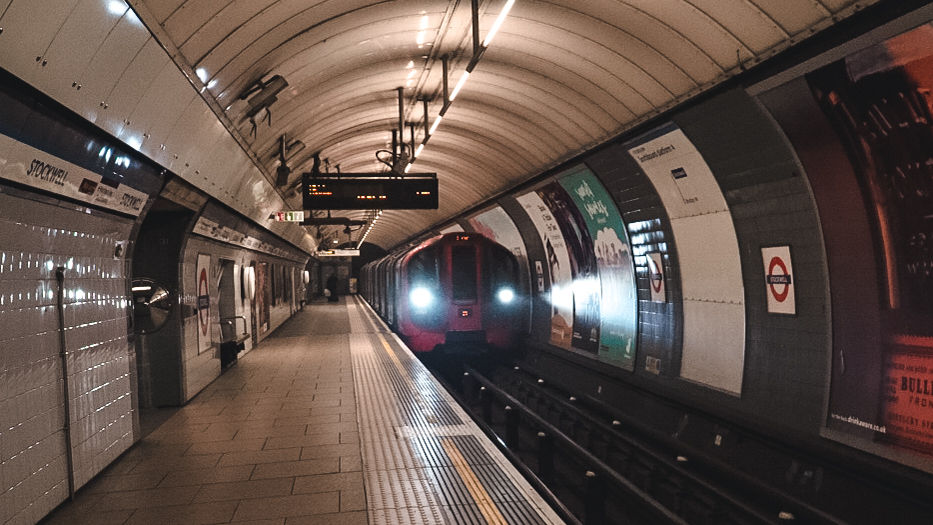
All aboard the bustling tube! Don’t let this photo fool you, peak times on the tube are intense! Super crowed platforms, everyone squeezing themselves on and occasionally smelling your neighbour’s armpit.
What is an Oyster Card?
It’s a plastic smart card which holds credit to allow you to travel on the London network. The card can be used to travel on various modes of transport in London like a bus, Tube, tram, DLR, London Overground, TfL Rail, Emirates Air Line, River Bus services and most National Rail services.
You can buy an Oyster card at the ticket machines or as I mention above in things to in London you can buy this in advance. It’s £5 for the Oyster Card which you can get refunded when you are heading home plus any change left on the card.
You can also use contactless payments so if your card has the ability to do this then you don’t need to purchase or top up an Oyster card.
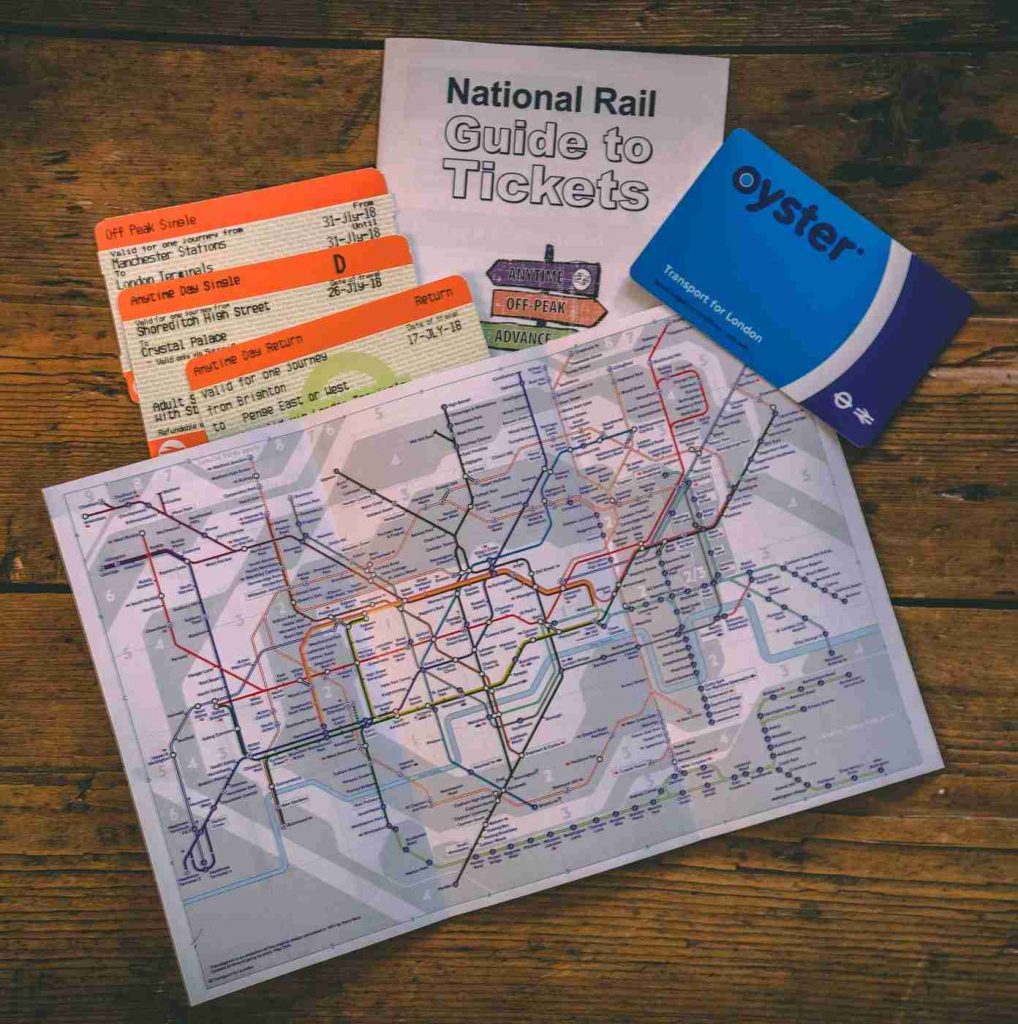
In the top left you have the orange credit card style National Rail ticket and in the top right you have the blue Oyster Card.
Quirks of London Transport System
As I mentioned in the airport section all airports will provide you with the ability to use Oyster cards and when you leave London zones you won’t be able to use your Oyster card either. You’ll end up having to buy a ticket when you arrived at the station, generally at a higher price.
If you buy a travel card be aware that Emirates Air Line and River Bus services (the ferry) will be an additional cost (it’s costly as well!).
There are two types of credit methods, pay as you go and travel cards. Depending on your itinerary will be the deciding factor on which type of credit you should by. Staying under 4 days you should do pay as you go and over 5 days you should buy a travel card. Be aware that the travel cards are either weekly (7 days) or monthly (30 days).
Is an Oyster Card the same as the London Pass?
No, the London Pass is a card a discounted prepaid card which gives you access to certain attractions.
How hard will it be to navigate the trains? How long of a ride is it?
I found the tube the easiest mode to concur when I arrived in London. At the stations there will be tube or national rail maps which are free and will help you navigate the system. The buses require a little more coordination and needing to know where the stands are.
Should I Rent a Car?
London is so easy to get around without a car there should be no need for you to rent a car whilst you are here. Planning to travel more of the UK then look at getting a car when you have finished in London. I tend to pick up cars from the airport or further away location so I am not stuck driving in London (the traffic is horrible).
Buy Travel Insurance
Travel insurance just gives you that piece of mind and protects you from the unknown. It always recommended that you purchase travel insurance and it is a prerequisite for some of the visas as well.
It’s worth mentioning that a few countries have reciprocal health agreements with the UK such as Australia, New Zealand and Canada which means you can get healthcare when travelling.
London Packing Tips
Bringing the kitchen sink isn’t a good idea if you struggle to carry the bag up and down staircases, uneven payment or crowds. London’s infrastructure is quite old and means that there isn’t a lot of lifts or accessibility around the city.
Clothes:
Casual Wear – London is quite chilled with its clothing vibe unless you are living it up in the rich life! I can’t remember the last time I wore heels on a night out. The general items like tops, jeans, skirts or even shorts in the summer.
Formal-ish Outfit – People do make an effort to look casual smart like a nice dress on or guys will wear a long sleeve shirt. The ladies can convert a simple dress with some jewellery, a jacket and comfortable shoes. Guys might want to pack a light collared shirt, some nice jeans and closed shoes. Personally I mix it up between a top/jeans and dresses with flat shoes or boots. My boyfriend tends to wear collared shirts and jeans with closed in shoes.
Comfy Shoes – Pack your walking shoes! It’s key to making the most of your trip to London. Pack another pair of shoes that you can pair with a nice outfit for nights out.
Jumper, Coat or Jacket (and Winter Wear) – This is a must! The weather in the UK can be so unpredictable, it could be July and you still hit a 15-degree day then it shoots up to 25 and during winter it can get cold. Considering it was still snowing in March it just shows all the extremes of the weather (albeit unusual for us). During the summer bring a light jacket and jumpers. London doesn’t have the coldest winters but it’s cold enough to warrant scarfs, gloves and big jackets.
Nightwear – Staying in a shared room then you need nightwear but if you are living the high life in a private room or hotel I will leave that up to you.
Personal Care – The usual items like toothpaste, hand sanitiser, face wash, deodorant, shampoo and conditioner.
Technology:
Camera – Optional item to take with you.
Phone
Laptop – Optional item to take with you.
Chargers – Phone, laptop and camera chargers.
Battery Pack – if you plan on using your phone loads this is an essential item (at least to me).
Power Board – I find having a small power board is a handy item to have whilst travelling, especially, when you have lots of electronics to charge.
Adapter / Converter – Universal adapters are the best to carry around and there is no need to worry about carrying one for each country you visit! If you do forget you will be able to pick one up so no need to worry! Hotels and hostel can have loan ones available too. London uses the 3 prong UK plug at 230V, so unless you are from the UK you will need an adapter/converter.
Money
In the UK, we use the British Pound (GBP). The currency does have a few nicknames like Pound Sterling, Sterling, Quid and Nicker so you might hear these said by the locals. Card is widely used in the UK and in London some places are turning card only so having a pre-topped up travel card, debit card or credit card before you come is a must.
There are exchange places dotted around London and lots of ATMs around if you do wish to get cash out during your stay. If you are using cash the currency is broken down into:
Banknotes: Frequently used are £5, £10 and £20 (this is the only notes ATMs will dispense). Rarely used are £50 and £100 (it’s really hard to spend £50 & £100. If a currency exchange or bank gives you theses ask for smaller notes).
Coins: 1p, 2p, 5p, 10p, 20p, 50p, £1 and £2.
If you forget, don’t fret, you can use your card and then take out cash when you are in the city. Airport exchanges and ATMs will give you a worse exchange rate so you are best off waiting to get cash out. It’s there if you do need it.
I have to admit, converting my Australian dollars into Pounds makes me sad. When you have $50 and it ends up being £25 to £30 (on a good day).
London reminds me of little towns put together to make a city and each area has its own vibes. You will find no “best” neighbourhood to stay in London as it is dependent on your interests and budget. For a weekend central areas will be way more convenient than being a few zones out but if you are here for a week being less central will help the budget.
It’s also crucial that you can either walk place or are near good transport links as it’s what us Londoners rely on.
I’ve detailed 15 of the best places to stay if you want somewhere that is walking distance to London’s best attractions.
A couple of areas I recommend are:
Bermondsey & London Bridge
One of my favourite areas in London is Bermondsey & London Bridge. It’s the perfect place to stay if you love to discover new street-food, craft beer and gin. For the beer lovers, it’s a must to check out Bermondsey Beer Mile. A bunch of brewers decided to cleverly to locate their microbreweries under the railway arches.
Close to sights like Borough Markets, Tower Bridge and the Tower of London and has good transport links.
Covent Garden and Soho
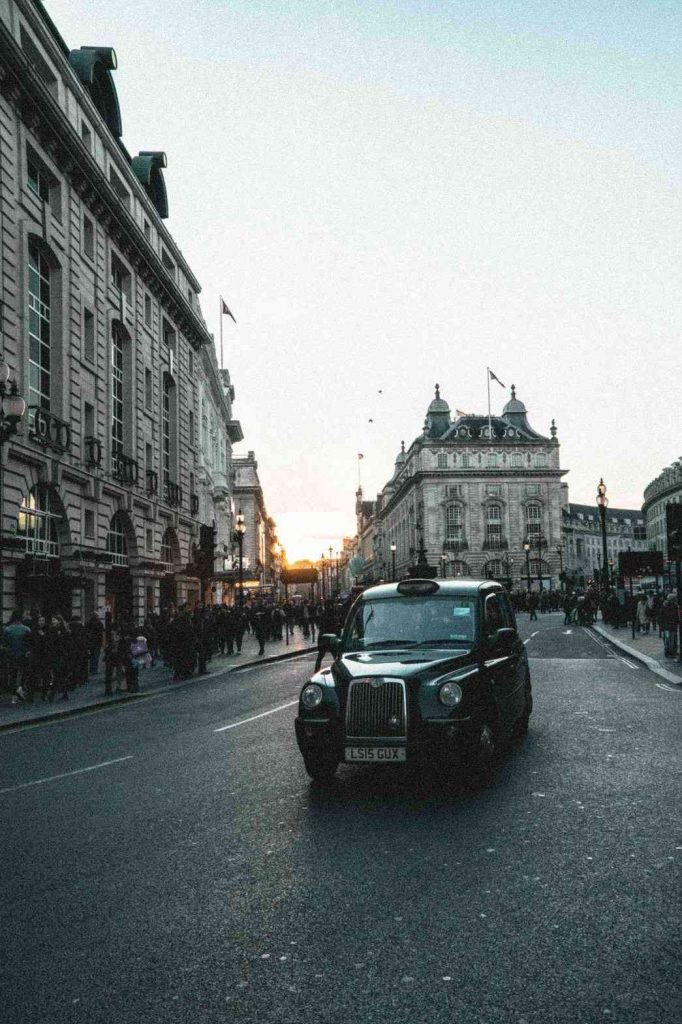
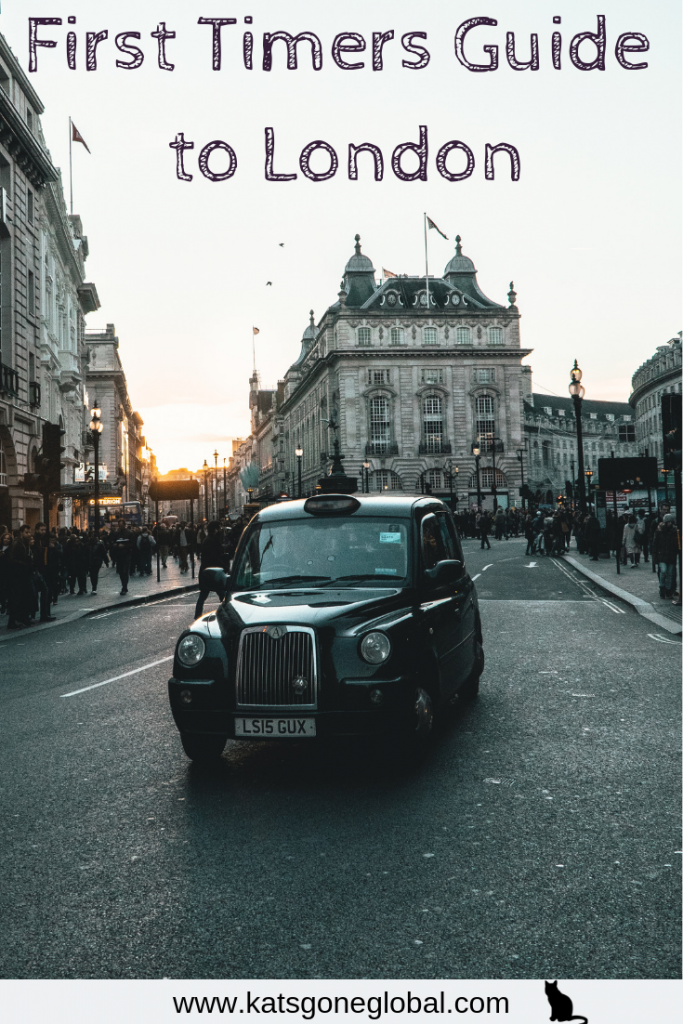
My favourite photo I’ve taken of London lately. Classic shot of Piccadilly Circus with a Black Cab. It’s only around the corner from Soho and Covent Garden.
Right in the middle of the action, always bustling, surrounded by restaurants and bars and in the theatre district.
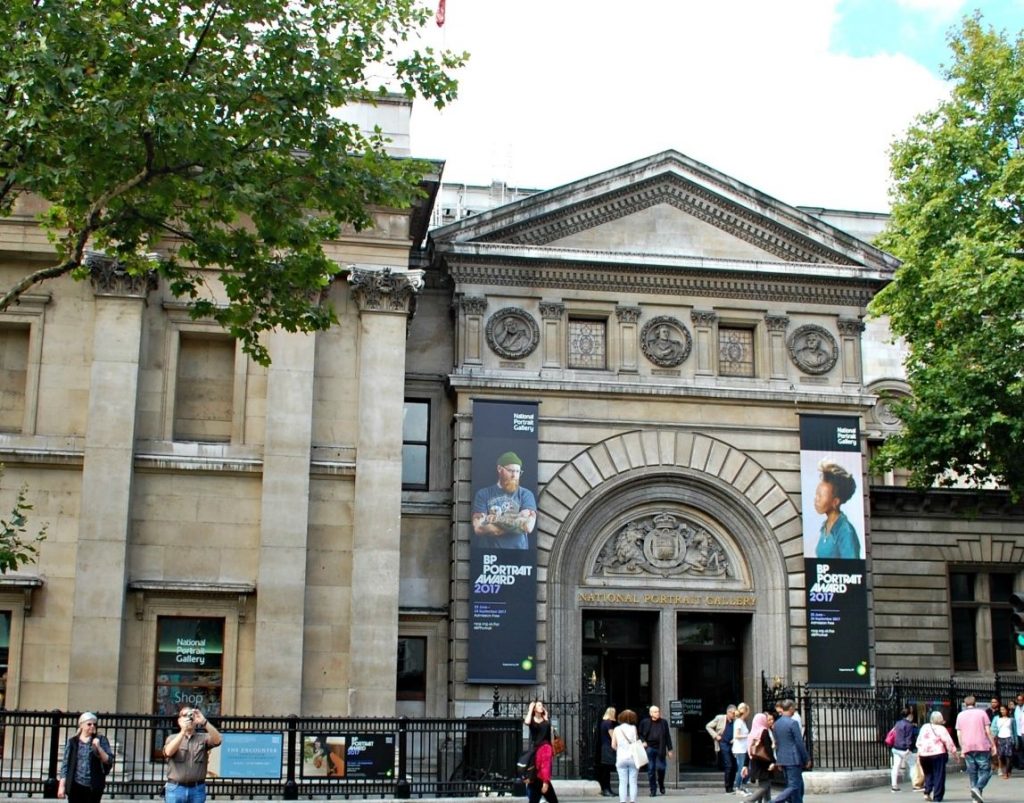
Close to sights like National Portrait Gallery, Oxford Circus and Southbank. There are good transport links as well.
Greenwich
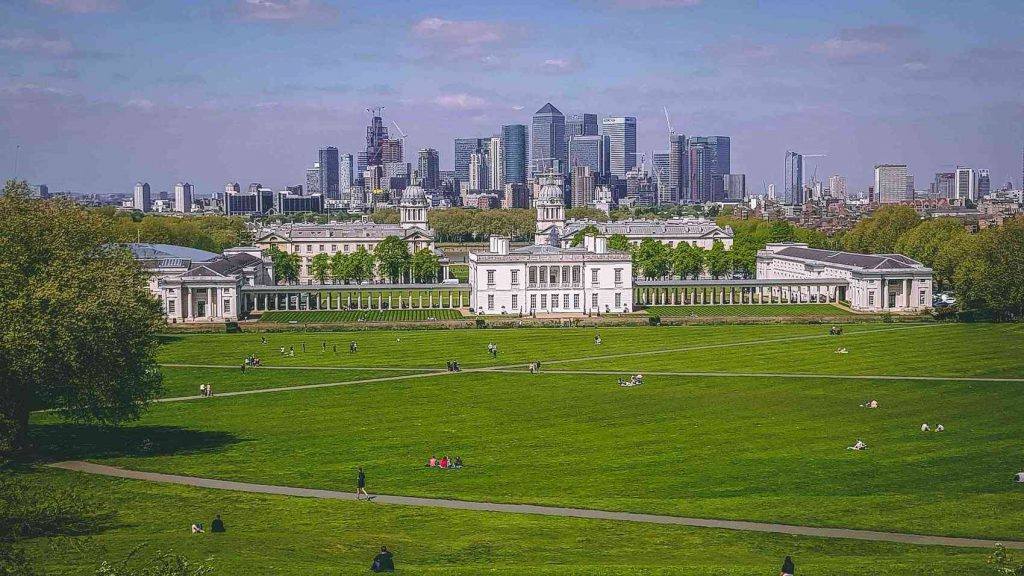
View from Greenwich Park with Canary Wharf in the background.
A little quieter, full of open space and greenery. Slightly outside of the hustle and bustle but only a 20 minutes journey by tube, DLR or Thames Clipper. Plenty of restaurant, markets and bars to check out as well or a great place to have a picnic when the sun is shining.
Shoreditch and Hackney
Very hip and trendy areas (says someone non-trendy). From the curry mile, vintage shopping, street art and cool bars there is something to keep you occupied every day of the week. It’s one of the main areas I spend my time in London exploring and highly recommend to anyone visiting.
With a wealth of activities like finding Banksy artwork, street art, cute little markets and shops, enjoying a curry on Bricklane and the restaurant/cafe scene you can see why it’s a fav spot. Watch more of the YouTube video here.
Other London neighborhood to consider would be Victoria, St Pancras/ Kingscross, Earls Court, Camden, Kensington or Mayfair.
Hostels to Consider
Even today I still stay in hostels as I love that they are budget-oriented and sociable accommodation. I know people worry about whether hostels are safe and to help ease your worries about them here are 11 London hostel safety tips.
There are 100’s of hostels you can choose in London so make sure you research before choosing. Here are 4 hostels I would recommend checking out, I’ve either stayed here or had friends rave about these hostels.
Clink78
Clink78 was once a former courthouse is now a vibrant hostel. Clink is centrally located in Kings Cross with great transport links. Offering a range of rooms from private to 12 person dorms with wifi, kitchen, luggage storage, bar, laundry and 24/7 reception.
Wombats City Hostel
Wombats City Hostel is located in several European cities so there is no surprise there is one in London. Located in Whitechapel and super close to Shoreditch with lots of lively bars, restaurants and cafes. Offering a range of rooms from private to 6 person dorms with wifi, kitchen, luggage storage, bar, laundry and 24/7 reception.
Generator
Generatoris another chain that has several locations over Europe. Located in between Kings Cross and Russel square it is centrally located. Offering a range of rooms from private to dorms with wifi, kitchen, luggage storage, bar, restuarant, laundry and 24/7 reception.
St Christopher’s
St Christopher’s has 8 locations in London so choose the area that suits you best is centrally and you’ll be able to determine which St Christopher’s is the one for you. I tend to think of this chain to be more party hostels in some of the locations. Offering a range of private and dorms rooms with wifi, breakfast, luggage storage, bar, laundry and 24/7 reception.
Hotels to Consider
I always find that hotels add a sense of luxury to your trip and London doesn’t disappoint with it’s range. There is something to suit every traveller and your budget. Here are some of the hotels you could conisder on your trip to London.
Qbic
Sustainability is an important feature in a hotel in this day and age. Qbic ticks the boxes in sustainability with its modern decor that features creative designs and uses sustainable practices.
They have thought about everything in this mid-range priced hotel with incorporating sustainable materials, an eco-friendly rain shower and comfort with a natural bespoke mattress. Other amenities in The Qbic include free Wi-Fi, free tea and coffee, and free bike rentals.
Leman Locke
Leman Locke is an apartment style hotel, giving you the comforts of your own home but stay outside of the status quo. Located in the heart of Aldgate and a short distance to the City of London, Shoreditch and the Tower of London. Apart from the usual facilities like wifi, Locke guest can experience the regular curated events (ie. yoga, tastings, etc.), yoga / meditation rooms and access to Locke Labs (Locke’s unique take on meeting rooms).
Motel One
Not sure why they have named the hotel a Motel One but it’s nothing like what I picture a motel to look like. With its stylish design and affordable prices it makes it a great choice. Surprisingly the weekend is cheaper than during the week but I put that down to the location (i.e. where lots of people go to work). The downside to this hotel is that the area is not very happening during the weekend. However, it’s so close to Tower Bridge, Leadenhall Markets (where parts of Harry Potter were filmed) and Sky Garden. You only need to walk towards the river to find the action (i.e. Saturday/ Sunday night).
Restaurants and Bars
I have mentioned a couple of markets and restaurants in things to do in London but it’s always good to have more options. Being a vegetarian these will all have vegetarian options.
Indian
I really like Indian food so here is my pick of restaurants Cinnamon Bazaar, Dishoom (various locations), Hoppers (don’t take reservations), Tayyabs (it’s also BYO) or Bricklane curry mile (it’s all about bargaining with the owners).
Vietnamese
In London there is also Vietnamese mile which mainly around Hackney area. I tend to go to BunBunBun Vietnamese Food which is also BYO. For chain restaurants Pho and Ping Pong (not Vietnamese) are good.
Vegetarian and Vegan
Specifically vegetarian and vegan my top choices would be Mildreds, Vanilla Black (quality of a Michelin star restaurant without the price) and Ethos.
The amazing vegetarian dessert at Vanilla Black.
Pubs
It’s a hard job choosing pubs! and my list could go on forever but here are a couple; Porterhouse (Irish Pub), the Wigmore (slightly fancier), the Old Fountain and any of the microbreweries.
Pizza and Burgers
There are lots of chain restaurants in London but my favourite go to‘s are pizza and burgers. For pizza, I recommend Franco Manca and Homeslice (they server 20″ pizzas). For burgers, my all time favourite is Patty and Bun with their Shroom burger. Honest Burgers just launched the All Beyond burger for those that haven’t heard of it, it’s the bleeding vegan burger, it’s a strange thought but if you miss meat then it’s an alternative choice.
The 20″ pizza at Homeslice.
Dessert
How doesn’t love a bit of dessert?! I only have two recommendations at the moment as I am always trying to avoid the sugar but if you love icecream then I suggest checking out Milk Train (fairy floss ice-cream!) or try Bake (icecream served in a fish-shaped cone).
How much do I tip in London?
In London (and the UK as a general) there is a 12.5% surcharge that some restaurants add to the bill, if this is added then you don’t need to tip. Double-check the bill and then if the service charge isn’t included then you can give a 10% tip.
For pubs, it’s not necessary to tip but if you wish to the bar staff will be happy! There is generally a tip jar that you put your tip into. The pub will generally share this between all the staff.
Bonus tip as taxis don’t belong in this section… For taxis it is common to round up to the closest pound or say the amount you would like to pay (i.e. the meter says £7.10 and you wish to pay £9).
Before you visit London for the first time there are a number of things you should consider. I’ve got you covered in this First Timers Guide to London with insider tips!
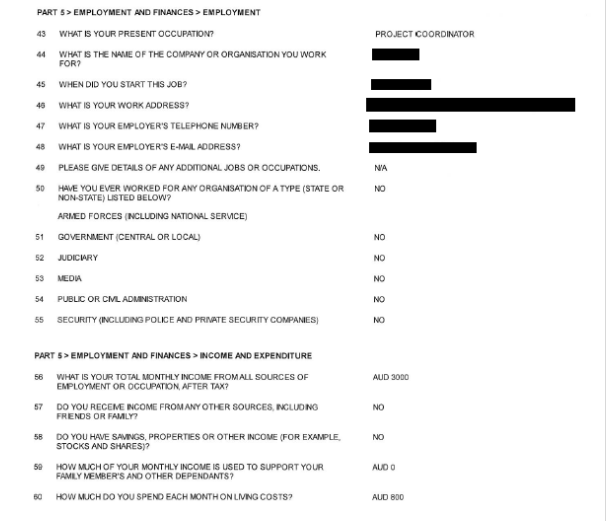
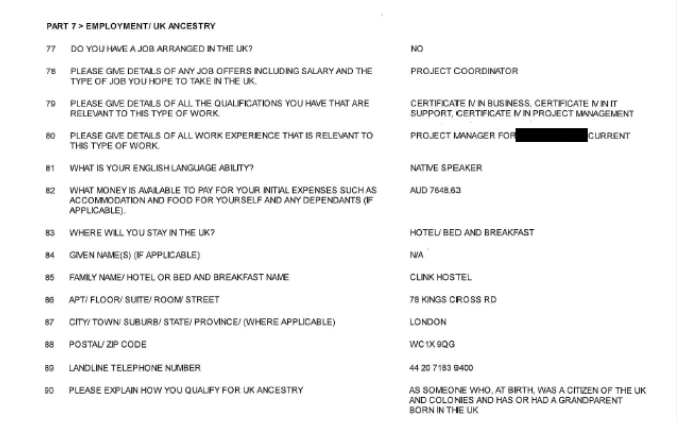
One of the most confusing things about applying for visas is the questions in the application and the evidence. What on earth do they expect you to answer and provide!? As it’s such a stressful process I wanted to make sure I could share on the information I entered on my UK Ancestry Visa.
As the process does change regularly make sure you go to the gov.uk website before applying. This is all based on my information and when I applied. I have linked through all the official documents to speed up the process.
Disclaimer: Please note this information is based on my application and evidence (I’m not a lawyer or immigration advisor). The article is to help guide you on what to expect question wise and get you thinking of what to prepare. Your answers should be tailored to you and your information. If you are unsure reach out to the Home Office or my friends at Britbound who will be able to help you. Here are some other documents that may be helpful:
Disclaimer: This is based on my experience and you should seek professional advice if you are unsure. Go toGOV UK to check if there have been any changes to the visa rule & fees.
Where to Start Your UK Ancestry Visa Application
The UK Ancestry visa is moving to the new application process so to apply you need to go to the gov.uk website. Depending on which country you are applying from the gov.uk website will direct you to the right place.
I’ve had a lot of questions about whether you should use VFS Global or were they come into the process. VFS Global is just like using a visa service such as VisaFirst and 1stContact. I actually used VFS Global for my Russian visa as they run a few services for different countries. If you wish to go with a visa service to submit your application then they are a company you could choose to use.
VFS Global do run some of the visa application centres (as a contracted third party) and that’s mainly where they come into the process. This is where you do your biometrics appointment and get your application stamped.
Please note the UK gov have announced that IHS surcharge will be increased to £625 in the coming months. This means that the 5 years will now cost £3,125.
Start an Application
To ensure you are directed to the right place (as they are migrating their systems) go to the gov.uk website. The form will look slightly different from the screenshots in my application and included in the article. The questions are basically the same so the information in this article still applies.
Now for the Questions and Evidence…
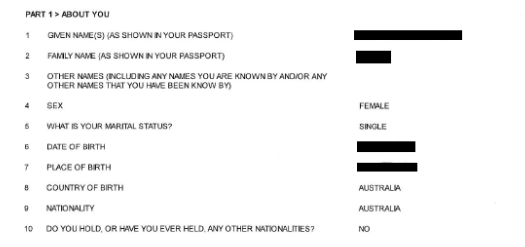
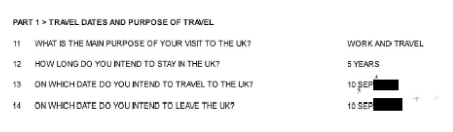
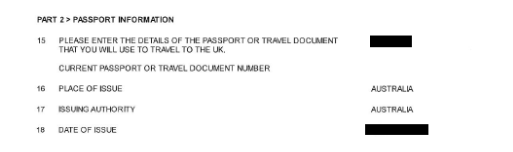
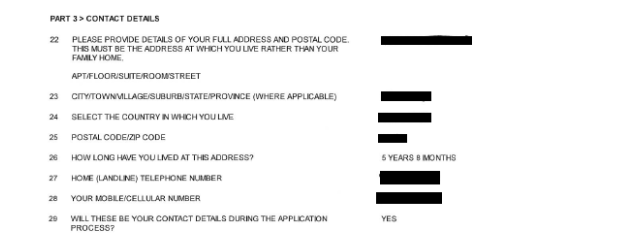
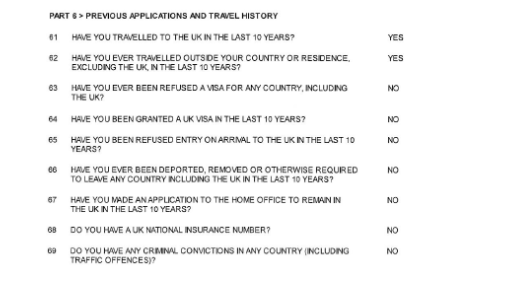
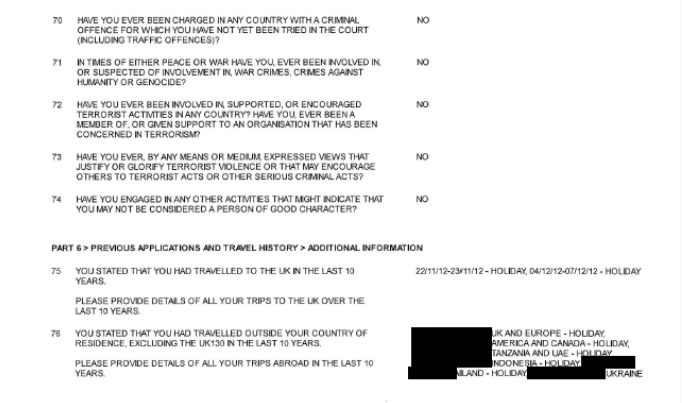
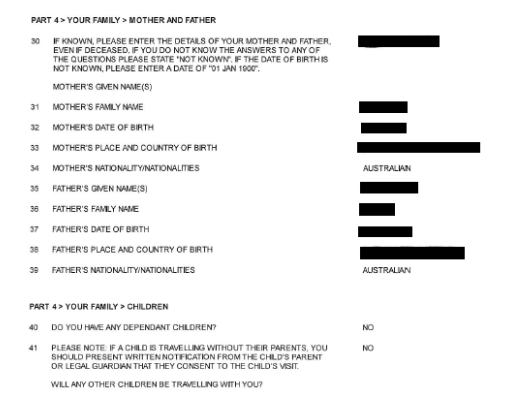
Let’s go through the questions! I have put this in order of the sections within the online application and then added photos from my final application. You will notice that not all questions/answers end on the final application or in the same order so hopefully it all makes sense.
Passport and Travel
Information
The Passport and Travel Information section is basically noting down what is stated in your passport or travel document so I won’t break this section down to much.
Is this your first
Passport? My answer was no.
Then you need to enter your details of all other passports and travel documents held over the last 10years: Also state any non-documented nationalities you have held. I previous had a child’s passport so I entered these details and also submitted this passport along with my application as evidence.
Are you travelling with anyone? I put no for this answer as I was moving here by myself.
Date of planned arrival in the UK? i.e. when you planned to land in the UK
How long do you intend to stay in the UK? I put 5 years for this answer (the length of the visa).
What is the main address and contact details of where you will be staying whilst in the UK?I put the hostel that I would be staying at when I first arrived. Other options ishotel, Airbnb, friends or family etc.
Example of my application:
An extract from the final application. As you can see these should be pretty easy for you to fill 🙂
Example of the travel dates and purpose of travel section.
The passport information summary on the application.The passport information summary on the application.
Personal Details and Travel History
Personal details covers information like where you live, how long you have lived there and general information. The interesting section is where it covers your travel and criminal history, let’s begin!
Have you been issued any visa for the UK, UK Overseas Territories or Commonwealth Country in the last 10 years? I put no as Australians don’t need visas to visit the UK or Commonwealth countries and I have never had a work visa. If you are country that does then put any visitor or work visas you’ve had here. A quick summary of information you will need if you select yes:
Type of visa issued – State the type of visitoror wok visa here
Date of Issue – Date of Issue as stated in thepassport or travel document
Date of Expiry – Date of Expiry as stated in the passport or travel document. If the passport ortravel document has no date of expiry please enter 01 JAN 2050.
Issuing Authority – that authority issued yourvisa i.e. British Embassy, High Commission, Consulate
Have you ever travelled to the UK in the last 10 years? The one and only trip (technically two entries) I had to the UK was detailed here. You can put up to 5 trips you have had to the UK. I suggest putting latest to oldest dates (just my preference).
Have you made an application to the Home Office to remain in the UK in the last 10 years? I put no for this answer. Unless you have requested for Settlement or any visa like that then you answer will be no.
The application then goes into whether you have be refused entry, deported, elected to leave the UK and any other country. Hopefully you will be able answer no to all these questions.
Have you ever travelled outside your country of residence, excluding the UK, in the last 10years? I listed out all my trips, this needs to be as arcuate as possible. For my most recent application I was given 30 lines however it was a different visa but expect to have between 10 to 30 lines in the application to enter this. Again using the latest to oldest trip order. If you feel like it you can add a spreadsheet detailing your remaining trips but I didn’t provide a spreadsheet with my application Ancestry application.
Have you ever been issued with a UK National Insurance Number? E.g. QQ 123456A Unless you have lived in the UK previously you won’t have a National Insurance Number. If you curious to know more about National Insurance Number I have detailed everything in this article.
The application then goes into criminal records, whether you are a terrorist and other information around your criminal history.
Example of my application:
Ancestry Visa Application Travel History Sectionncestry Visa Application Travel History Section2
Family Details
Family details is about your mother and father, your relationship status and whether you have children. This section should be a breeze.
For evidence I only provide my mums birth certificate as my dad isn’t linked to my ancestral heritage to the UK. If the birth certificates can tie your ancestral heritage then shouldn’t need a marriage certificate. If linking the heritage isn’t obvious then marriage certificates are a must.
Example of my application:
Ancestry Visa Application Family Details
Employment and Income
What is your total monthly income from all sources of employment or occupation, after tax? WhenI submitted my application I added what currency I was paid in so my answer was: AUD 3000 (for example).
The Type of work undertaken – For this question I just described my field and put IT ProjectManagement.
Do you have any additional paid jobs or occupations? If you have any more jobs add them here.
For evidence I also provided my employment contract to support the employment section.
Income and
Expenditure
Do you have savings, properties or other income, for example from stocks and shares? My answer was no as I didn’t have any income streams. If you do add them here.
How much do you spend each month in GBP(£) on living costs? I actually put this in AUD and not GBP as it was the thing at the time. It’s just a summary of what you spend on rent, bills etc each month converted into GBP.
The questions in the Income and Expenditure section is where people get the most confused.
For this sections first, work out the total cost of your trip: flights, hotels, meals, train tickets, everything, in the currencies you’re paying in. Then convert to pounds and calculate the total.
Once establish the costs you need to figure out if you are paying for the whole trip or are you getting someone else to support your trip? If someone else is paying then did they buy your plane ticket? Will they be paying for the hotel stay? Are they reimbursing you for what you spend? Convert all that to pounds and add it up.
How much of your total monthly income in GBP(£) is given to family members and other dependents? My answer was no but if your parents or anyone is supporting you add the amounts here.
What is the cost to you personally of your trip in GBP(£)? I put a combination of my flights, accommodation and expenses for this. If someone is helping you pay for this then only put the amount that you are paying in this section so basically what is this personally costing you. I didn’t provide any evidence for this.
The total amount of money you have for this trip? I just put what my total saving was for this answer, for example, AUD 8000. This was supported by bank statements as evidence.
If you want to know how much to save before moving to the UK, I suggest reading ‘How Much Money Should I Save to Move to the UK?’. You can through all my suggestions out the window and wing it! In that case just have enough to show you can support yourself, I always recommend £1,890 as a minimum.
The cost of the aeroplane, boat or train tickets? Whatever you ticket cost to get to the UK. If you don’t have a ticket then find the most realistic cost by using Skyscanner etc. Slightly ironic that the advice is don’t book you travel before your visa is approved! I didn’t provide any evidence for this.
The cost of your accommodation? I calculated my first months accommodation cost for this answer. I didn’t provide any evidence for this.
The cost of your living expenses? I estimated this cost, for example, £600. It should cover things like transport, estimated food budget etc. It’s a bit of an odd question. I didn’t provide any evidence for this.
If you want to know the cost of living in LondonI have you covered! It’s based on my costs living here.
Is someone other than
you paying for all or a part of your trip? If someone is paying for a part
of your trip this is where you add this. I didn’t have any one supporting me
but having a statement from the person/ money in your account will help support
the application (that’s just my personal opinion).
Example of my application:
As you can see in Employment and Income section, not all of my questions I had answered actually ended up on the final version. No idea why or whether this has now changed.
Family and Friends in
the UK
Please enter details
of what you plan to do whilst in the UK. My answer was ‘to live and work in
the UK’.
Do you have any
friends or family in the UK? I didn’t so my answer was no.
Medical Treatment
There is a whole series of questions on whether you have ever received medical treatment in the UK. As someone that never had medical treatment in the UK my answer was no but if you have then put in the relevant information.
UK Ancestry
Finally where you put your heritage and how you qualify for UK Ancestry.
How do you qualify for UK ancestry? Add your relevant grandparents details here.
I provided my granddad’s birth certificate as proof, along
side my mums birth certificate as mentioned in an earlier section.
Do you have a job arranged in the UK? You don’t need to have a job lined up to qualify to move to the UK on Ancestry. My answer was no as I didn’t have a job.
For evidence I provided my resume. The GOV UK website states that the evidence can be in the form of job offers you’ve received or a business plan if you’re self-employed.
What is your English Language ability? English is my native language was my answer. If it isn’t just put the level of English you speak (not exactly sure the terminology you should use).
What money is available to pay for your initial expenses such as accommodation and food for yourself and any dependents (if applicable)? My answer was whatever was in my savings account at the time it was just under $8,000. You should add the currency code in front of your answer so the answer should look like AUD 8,000. I also linked this to the same amount I had in the ‘the total amount of money you have for this trip’.
For the evidence I provide 3 months of bank statements to
support this.
Example of my application:
The questions in this section have changed a little since I applied, at least it’s less information you need to enter.
Additional Information
Is there any other information you wish to be considered as part of your application? I didn’t have any extra evidence so I put no for this.
Summary of Documentation
In the bullets below is a summary of all the evidence I provided for my UK Ancestry visa. I go more into detail about how to get grandparents birth certificates and the process in ‘What You Need to Know When Applying for Your UK Ancestry Visa’.
I find lots of threads asking whether the documents must be originals or copies can be supplied. Just to add clarity to this point always provide originals to be safe, don’t worry the documents are returned to you.
The printout of your online application.
The copy of your biometrics appointment information.
Current passport, plus previous passports.
Birth certificate.
The birth certificate of your parent (only the parent of the grandparent you’re applying through).
The birth certificate of your grandparent.
Marriage certificate (to support heritage if unclear).
Three months of bank statements showing £1,600 (which was the requirement at the time). Bank statements should be printed on branch-specific letterhead with the contact info for the branch where it was printed. If not, each statement should be stamped and/or signed. If they won’t do that, a letter from a branch manager confirming their authenticity and correctness will suffice.
Resume/ CV (to prove that you can and intend to work in the UK) and you can also include printouts of registration emails from UK job sites e.g. Reed, London Jobs, Indeed.
I also included my employment contract to support the employment and finances (not sure if it was necessary, just something else I did include).
Hopefully, that has given you some insight into what information you need for your application. If you are unsure reach out to the Home Office or my friends at Britbound who will be able to help you.
Belfast may not be the first idea when you think weekend break but it’s definitely a hidden jewel of the UK. Belfast has had a turbulent past, called the troubles and now that it has settled it has allowed the city to grow and flourish. With its beautiful landscape, whiskey, beer, lively bars and restaurants, Belfast has a great mix of outdoors and fun!
Here are 11 Things to do in Belfast, Northern Ireland…
1. Visit Crown Liquor Saloon
The Crown Liquor Saloon has been around since 1884, it’s a Victorian gin palace with an ornate Victorian exterior, carved-mahogany booths and etched-glass. Even if you don’t drink you have to go! Just grab a Coca-Cola and enjoy this absolutely beautiful bar, it is super busy being a tourist attraction in itself so be prepared for the crowds and to be on the lookout for one of the private booths.
Being one of the mightiest gin places so you have to grab a gin whilst you are there.
Crown Liquor Saloon
2. Grab some food at St Georges Market
St Georges Market is another example of a Victorian-era building built between 1890 and 1896. It’s open on Saturdays and Sundays offering countless food options, coffee, stalls and arts & craft.
In Northern Ireland, Ulster fry is the dish to try. A fried meal with bacon, eggs, sausage, black pudding, white pudding, tomatoes, mushrooms, soda bread and potato bread. Just leave out the meat if you are a veggie and try the slices of bread! If you are there for breakfast or brunch I would recommend grabbing an Ulster Fry.
Coffee lover? I recommend trying Java Man coffee.
Coffee at St Georges Market
3. Enjoy the nightlife in Cathedral quarter
Cobblestoned streets, nightlife scene, restaurants, pubs and beer gardens. This is where the main nightlife area is, head out to one of the local bars or pubs like:
The Dirty Onion is one of Belfast oldest buildings and has been repurposed as an authentic Irish pub with a modern twist. It has the biggest beer garden in Belfast, if you are heading there in winter it does have a cover (so you won’t get wet) and lots of heaters to keep you cosy and warm.
Duke of York is located down a cobbled street, it has a great atmosphere and décor to match with the paraphernalia of the printer’s trade, mirrored whiskey bar and old advertising signs.
The Garrick is known to have a great selection of beers and a welcoming, classic pub vibe.
4. Visit the Titanic Museum
The Titanic quarter is where the famous ship was built at the Harland and Wolff shipyard in Belfast. It is now home to the Titanic Museum and has one of the world’s largest urban-waterfront regeneration projects.
5. Wander around the Botanic Gardens
Enjoy a stroll around the Botanic Gardens. Along the way check out the Palm House, an example of a glasshouse made from curved iron and glass.
Psstt… nearby is Boojum’s it’s Belfast’s most famous Burrito place. It’s a sin not to have a Boojum when in Belfast.
Botanic Garden Belfast
7. Take a day trip to the Giant’s Causeway
The Giant’s Causeway is possibly the most famous landmark in Northern Ireland and worth a day trip during your visit to Belfast. It’s worth mentioning that the Giants Causeway is free, there a local path that you can take and you don’t need to pay the tour fee of £11.50.
It’s not the only famous landmark you can also visit Carrickfergus Castle, the Dark Hedges, Carrick-a-Rede Rope Bridge and Dunluce Castle.
I recommend renting a car so you can explore the true extent of what Northern Ireland has to offer.
Explore the history and culture of Belfast and Northern Ireland through the murals. The murals are scattered around the city but the most famous mural is the peace wall.
The peace lines or walls were installed to separate the Catholic and Protestant neighbourhoods. The Falls Road and Shankill Road is the most famous part of the peace wall. Here you will find murals reflecting those communities’ that have a pro-British stance or more recently sectarian slogans.
Other murals to visit:
The Titanic area has a painting showing Captain Smith overlooking the ill-fated liner (for those who don’t know he was the captain of the Titanic). The mural is located on the corner of East Belfast’s Dee St and the Newtownards Rd.
Who else grew up reading Narnia books? CS Lewis was Belfast-born writer and there are some murals that feature scenes from his books The Lion, The Witch and The Wardrobe. This is also in the Titanic area and you can find the of East Belfast’s Dee St. and Ballymacarrett Rd.
9. Take a black taxi tour
Belfast is famous for its Black cab tours. Why not get to know the city with a local guide, taking it you around Belfast’s historic sites and history behind the city.
10. See some of the Game of Thrones filming locations
Northern Ireland has some of the most fantastic Game of Thrones filming locations right on their doorstep from Winterfell to The Dothraki Sea. Even if you’re not a big GOT fan the sites themselves are incredibly beautiful. There are over 25 filming locations like Cushendun Caves, Murlough Bay, Ballintoy Harbour, Larrybane, Antrim plateau, Castle Ward, Inch Abbey and Downhill Strand are featured in the series.
Looking for a tour for Game of Tour? I recommend the ironically named tour company Game of Thrones Tours. There are three tours you can choose from:
Belfast Winterfell Locations Trek
Belfast Iron Islands, Giants Causeway and Rope Bridge Adventures
Belfast Iron Islands, Giants Causeway and Castle Adventure.
11. Taste some Whiskey
Try some Irish whiskey, even if you’re not a whiskey lover you can opt for an Irish Coffee. I recommend trying Bushmills it is the oldest licensed distillery.
Bushmills Pub
What were your favourite places in Belfast to visit? Let me know in the comments below!
London has no shortage of Museums and Galleries. It can be hard to choose which one to go to! Most Museums and Galleries are free in London so it’s also great for a rainy day, waiting for payday and any other excuse because why not… Here are nine museums you must visit in London.
1. The Wallace Collection
Wallace Collection
The Wallace Collection is known for having a French 18th Century decorative arts genre and is the largest collection in the United Kingdom. A private collection that was created by Richard Seymour-Conway who left the house and artwork to his illegitimate son Sir Richard Wallace.
Peyton and Byrne also run a restaurant in the gallery. A perfect spot for some afternoon tea and a break from wandering around the gallery.
2. The Wellcome Collection
Wellcome Collection Medicine Man
The Wellcome Collection has medical antiquities, plus hi-tech modern displays and art. The collection was started by Sir Henry Wellcome who was fascinated by the historical development of medicine worldwide. He travelled lengths to gather the collection that is now on display.
Only a small selection of Wellcome Collection is on display in the ‘Medicine Man’ section of the museum.
3. National Portrait Gallery
National Portrait Gallery
The National Portrait Gallery was the first portrait gallery in the world to open to the public back in 1856. The gallery hosts portraits of historic importance, sculptures, and drawings.
It has expanded the exhibits to a constantly changing selection of contemporary work and stages exhibitions of portrait art by individual artists.
4. Natural History Museum
Natural History Museum
You can just picture David Attenborough walking the halls and filming one of his documentaries through the grand building. It must be said that it is my favourite museum with the grand architecture, great exhibitions (for example the wildlife photographer of the year and butterflies’ exhibitions) and walking around the halls seeing the dinosaurs.
I recently purchased the yearly pass, it’s not something that I normally do but if you plan to go to exhibitions then it’s totally worth it. For £60 you get a year’s membership with 10 guest passes. When you pay for 2 exhibitions each then you already make your money back.
5. Horniman Museum
Horniman Museum
I like to think that the Horniman Museum is most famous for the overstuffed walrus. Back in the day when people didn’t really know that walrus have fat rolls…
Slightly further out than central London in Forrest Hill but still easy to get to by the Overground.
6. Museum of London
Learn the history of London from prehistoric to modern times. The museum is in the London Wall and conveniently near sections of the original London Wall. Once you’re done exploring the museum complete the London Wall walk and experience more of historic London.
7. Tate Modern
Tate Modern is one of the four galleries out of the Tate collection in the United Kingdom, the other galleries are Tate Britain, Tate St Ives and Tate Liverpool. As you can tell by the name of the gallery, the gallery displays modern and contemporary art from 1900 to the present day.
8. Viktor Wynd’s Museum of Curiosities, Fine Art & Natural History
Viktor Wynd’s Museum of Curiosities, Fine Art & Natural History
Viktor Wynd’s has an interesting collection and the only museum that has an entry fee on this list. Walking down the steps in the small crowded room you will discover skulls, taxidermy specimens and assorted oddities. The myths about mermaids are real in here with monkeys attached to the bodies of fish.
You can enjoy a cocktail sitting next to a taxidermy lioness with a hat on her head and all the weird cocktails they offer.
9. British Museum
British Museum
The museum has been around for a while opening its doors to the public in 1759. The British Museum has an extensive collection something along the lines of 8m pieces in human history, art and culture.
What are your favourite museums in London? Let me know in the comments!
Street art and graffiti has really skyrocketed in the last couple of years and now some cities are totally embracing this as a part of their identity especially in London’s East End. Shoreditch has incorporated this as a part of the vibe and feel of the area. It’s now is a hotspot for famous street art by the likes of Banksy, El Mac, Stik, Space Invader, Jimmy C, Dscreet and Phlegm.
The street art and graffiti is scattered throughout Brick Lane, Shoreditch, Fashion Street, Bateman’s Row and Spitalfields. This is a lot of ground to cover to find the pieces or artist you are looking for.
Street Art Tours
An excellent way to see the street art and graffiti is to go on one of the many street art walking tours. I chose Strawberry Tours when I did this earlier in 2017 as it’s run as a free walking tour but there are also paid options.