Category: United Kingdom

Discover England, Northern Ireland, Scotland and Wales with its breath-taking scenery, history and culture it is packed with appeal for travellers. It’s hard to travel more than a few miles without stumbling upon a castle, pub, stately home or historic village. Alternatively, explore one of the bustling cities like London, Glasgow, Cardiff, Edinburgh, Belfast and Manchester…

  • 25 Fantastic Gifts For Someone Travelling To London

    25 Fantastic Gifts For Someone Travelling To London

    Not sure what to get someone going to London and want to give them a gift to make their trip extra special? Depending on their type of trip you can surprise them with fantastic London experiences or some practical gifts to really kick start their holiday.

    Unless YOU’RE the one visiting London and want to get some amazing London gift ideas for your birthday, Christmas or a special occasion.

    Let’s not keep you waiting and get started with the London gift guide with 25 ideas that travelers will love!!

    1# London Tour Gift Vouchers

    Kat-in-front-of-Street-Art-in-Shoreditch
    Exploring Shoreditch street art in East London.

    I always believe experiences are the best gift to receive and London tours cover this perfectly. Not only are you giving them great memories but making sure your giftee has the best time in London.

    London tours are great as they allow you to explore parts of the city you wouldn’t usually go to. The tour guide will add insight into the history and culture of the place. There are so many different tours to choose from, here are some to consider:

    Join a small group on an immersive walking tour through East End London, and solve the Jack The Ripper murders. A ripperologist will be there to guide you through all aspects, from historical context to analyzing theories behind Jack The Rippers motives.

    Shoreditch is a hotspot to see for famous street art by the likes of Banksy, El Mac, Stik, Space Invader, Jimmy C, Dscreet and Phlegm. Why not try the East End and Street Art Tour. The tour guide will show where to find the best piece and see a bit more of the grungy side of London.

    Discover London’s pubs with a Historical Pub Walking Tour. Not only will your giftee taste some of London’s finest brews in 4 of the city’s most historic pubs but learn the history and discover hidden backstreets.  

    2# A Magical Tour of Harry Potter Studios and Transfers

    Warner Bros. Studio Tour London
    Famous sorting hat! Which house will you end up in?

    Get ready to board your giftee on the Hogwarts Express from Platform 9 3/4. Make sure you present this gift as Hogwarts letter to enhance the excitement!

    A day out to Warner Bros. Studio Tour with a transfer will be magical and they get to see the behind-the-scenes walking tour of sets, props, and costumes used in the Harry Potter movies.

    If they don’t have a whole day available then a walking tour around London will take you to Platform 9 ¾ trolley at King’s Cross Station, a stroll through Diagon Alley, visit the Leaky Cauldron, and much more.

    3# Traditional or Unique Afternoon Tea Experiences
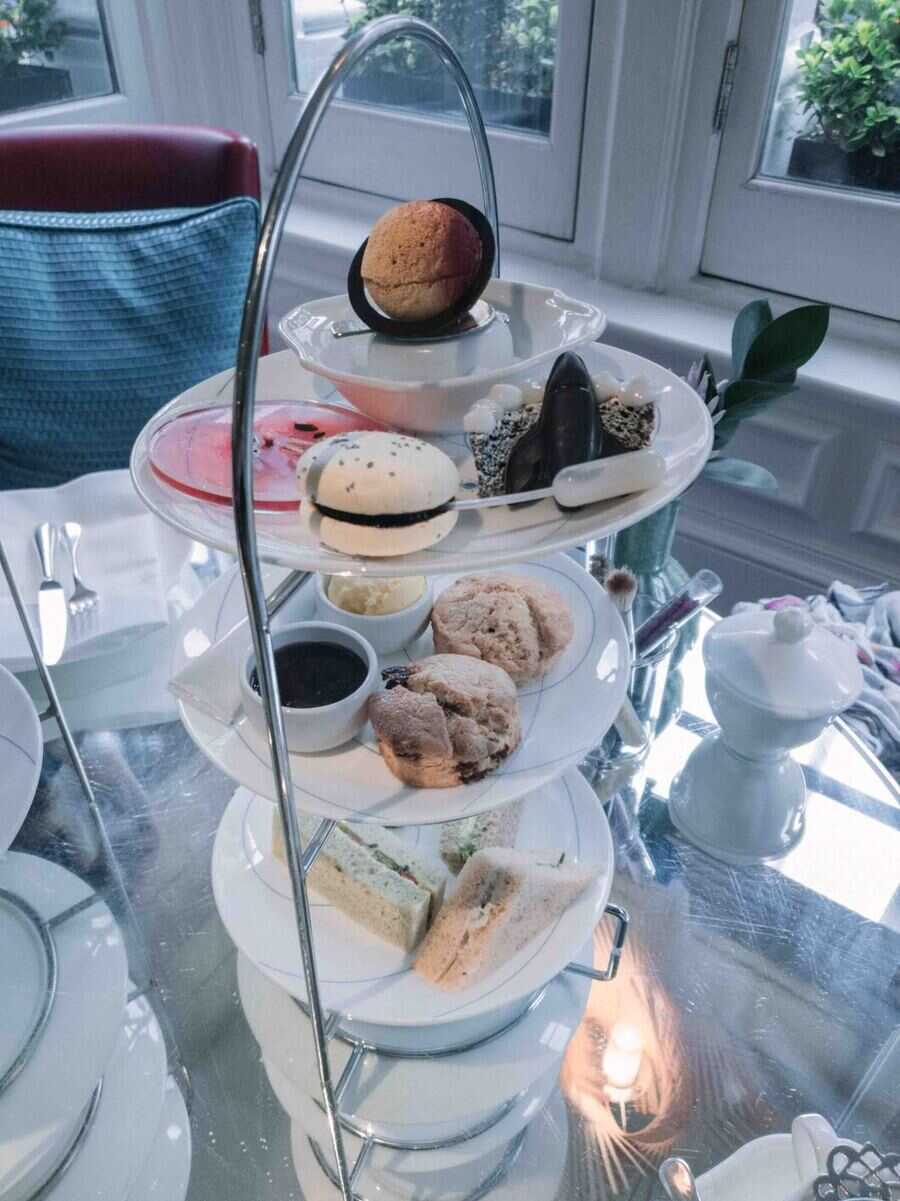
    science-themed-afternoon-at-The-Ampersand-Hotel
    Scienced themed afternoon tea at the Ampersand Hotel.

    Afternoon tea is a must do in London. It’s a long-standing tradition and happens to be a fun thing to do. As the name implies, afternoon tea is tea and snacks in the afternoon. Typical food served includes finger sandwiches, crumpets, sausage rolls, scones and cakes. There are plenty of places in London that offer afternoon tea experiences.

    If you think your giftee will enjoy a traditional British afternoon tea, then there are plenty of classic tea rooms to choose from. Here are some examples:

    Luxurious tea at Fortnum & Mason – The afternoon tea is one of the most famous and iconic in London. They will put on their signature tea towers with a delicious plate of ever-changing pâtisserie, classic sandwich and perfect scones.

    Afternoon tea at The Ritz is a classic thing to do in London. It’s one of the greatest hotels in the world, soak up the atmosphere with a glass of chilled Champagne and enjoy the delicious treats.

    Personally, I like something a little quirkier, so themed afternoon teas are perfect! From science to Harry Potter themed afternoon tea there is one for you. Here are some examples:

    Mad Hatter’s Tea Party at Sandersons – Alice in Wonderland is my favourite theme in the world and the Mad Hatter’s Tea Party is incredible!

    G & Tea at Mr. Fogg’s – Gin lovers dream, this afternoon come with tea-infused gin pots.

    Science Afternoon Tea at Ampersand – Inspired by the science museum they make the whole experience come alive with sounds, visuals and interactive. My brother and sister surprised me with this as a birthday present and I can say it was a lot of fun!

    Afternoon Tea Buses – add some sight seeing with your afternoon tea with a bus tour of London. Harrods or B Afternoon tea buses are a great choice.

    Two recommendations for vouchers site are Afternoon Tea or Virgin Experience Days. When searching you will come across some places like Cafe Rouge, Caffe Concerto, Patisserie Valerie and various others. These are chain restaurants and won’t be a unique experience so I wouldn’t recommend booking these places as a gift.

    Tips for booking an afternoon tea experience on a voucher site. Read the terms and conditions before booking as you want to make sure the dates are redeemable for your giftee date of travel to London.

    4# Delicious Food Experiences

    Galvin La Chapelle
    Wonderful food at Galvin La Chapell.

    London is one of the most multicultural cities in the world, and this is reflected in the diverse choice of places to eat. Honestly, London is a foodie’s dream!  

    Traditional British food meets international dishes to create a melting pot of cuisine, and the city offers an exciting culinary experience. Many of London’s restaurants offer unique dining experiences, some of my choices are:

    • Virgin Experience has some great deals for Michelin Starred restaurants, normally they are three-course dining with a glass of wine or bubble, two to check out are, Galvin La Chapelle or Ormer Mayfair by Michelin-Awarded Chef Shaun Rankin.
    • Alyn Williams at the Westbury – My boyfriend took me here for one of my birthdays and the food was incredible. We indulged on a three-course meal with cheese and wine. I dream about how good the food was still!
    • An unmissable experience is a Thames dinner cruise. Take in the shining lights of the city as you sail down the River Thames, passing the stunning sights including Tower Bridge, Canary Wharf and Greenwich.
    • Circus is a quirky cabaret restaurant located in Covent Garden. Enjoy Pan-Asia food whilst watching the amazing acts from performers in between food courses.

    5# Boozy Cocktail Experiences

    Cocktails at Cahoots
    Cocktails at Cahoots.

    Alternatively, a cocktail experience is another great idea as you will be spoilt for choice in London. There are plenty of world class cocktail bars to choose from, many of them offering unique experiences.

    Make your giftee’s trip extra special with a cocktail masterclass at one Gordon Ramsey’s restaurant. This fun experience involves learning how to crush, mix and stir different cocktails. They’ll get to enjoy a snack platter and glass of Bellini as well.

    For more cocktail masterclass options you could try:

    Theatrical cocktail experiences are super fun! At Alcatraz, the prison cocktail bar, your giftee will need to put their stealth skills to the test and smuggle in their liquor without the guards being aware!

    6# Spoil Them With A Hotel Gift Voucher

    If you really want to spoil your giftee, then a hotel voucher could do the trick. If they haven’t yet booked accommodation, then you could offer to pay for their stay. But if your giftee is celebrating something, or they simply deserve something special, then you could treat them to a luxury hotel break.

    There are plenty of gift vouchers that combine a night’s stay with an experience such as The Shard or a Thames cruise. Check out the range of hotel breaks and experiences here.

    #7 Shop at Harrods With A Gift Card

    Chances are, you’ve probably heard of Harrods before. It’s the largest department store in Europe, covering 1.1 million square feet of retail space.

    Established in 1849, it is located in the affluent district of Knightsbridge. Harrods has seven floors and 330 departments offering the best products in food, fashion, homeware and technology. You can find everything from designer handbags to artwork by Andy Warhol.

    The store also has many restaurants to choose from, including a sushi bar, pizzeria or Harrods Tea Rooms. If your giftee likes shopping, you can get them a gift card to spend at Harrods. Find out more here.

    8# Splurge On Theatre Tickets

    No trip to London would be complete without a trip to the theatre. London’s West End is a world famous theatre district, with 38 theatres to choose from.

    The very first theatre opened in 1663, and today it is arguably the world’s largest theatre district. From comedies to musicals to operas to dance productions, there is something for everyone in the West End.

    Some of the longest-running West End shows include The Lion King, Les Misérables, The Phantom of the Opera and Mamma Mia! If you think your giftee will enjoy seeing a play, then you can purchase a theatre ticket gift card and let them choose their favourite show.

    9# Uncover London Attractions
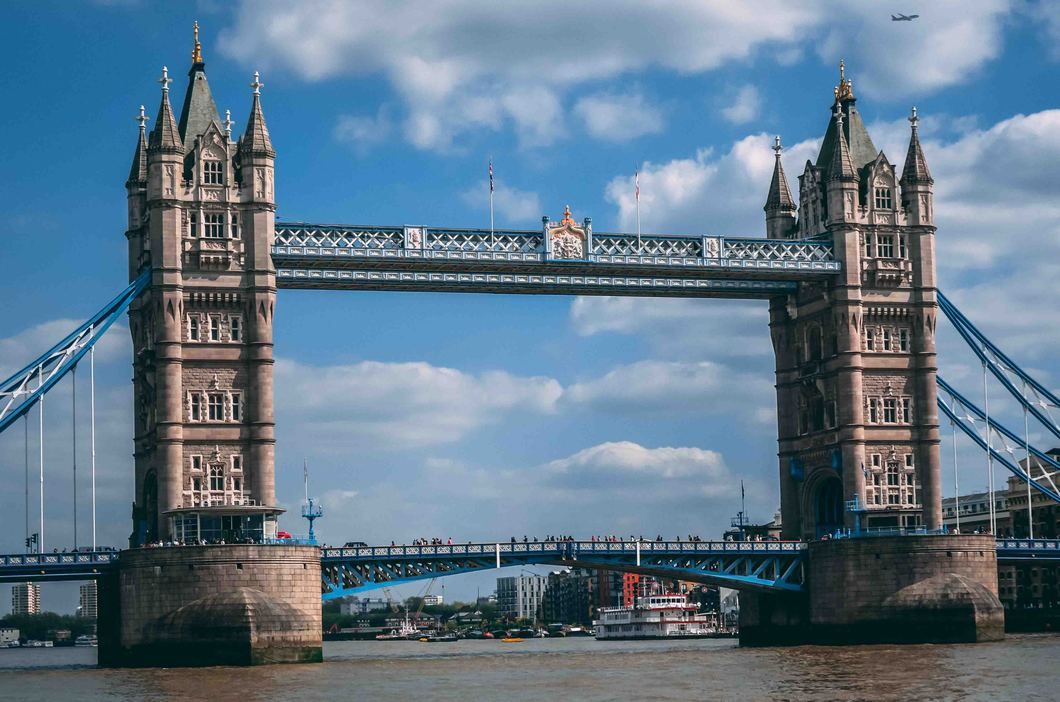
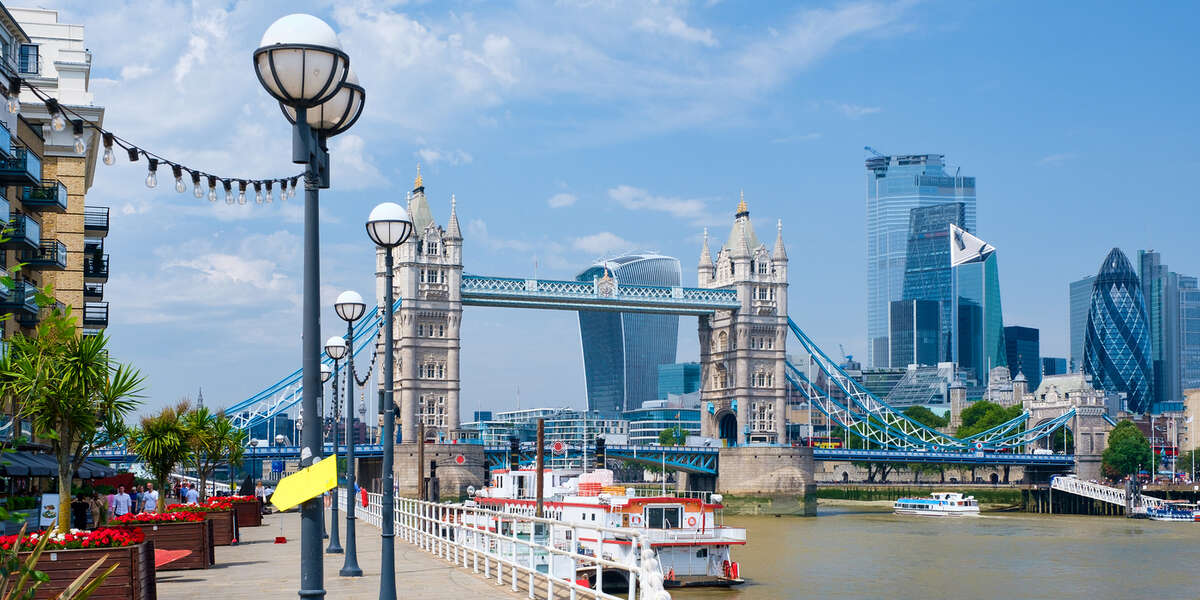
    Tower Bridge
    London’s famous Tower Bridge.

    London has an incredible range of attractions to visit and see. While London is incredibly lucky to have a great range of free activities, your giftee may want to explore more of the iconic sights in depth.

    These tickets can really add up cost-wise, so getting them as a gift would certainly be appreciated.

    Some of the classics include Tower of London and Crown Jewels, The London Eye, Tower Bridge and Westminster Abbey.

    Before buying tickets, you may want to check if this works for them as some will be for a specific date and time.

    If you’re heading to London with them, then I also suggest reading what to book ahead in London as I go in-depth when you should consider planning certain things.

    10# Save With The London Pass

    The London Pass is the ultimate gift. It grants you access to over 80 of London’s attractions. As well as historical attractions like Westminster Abbey, St Paul’s Cathedral and the Tower of London, the Pass also includes activities like the Science Museum IMAX, the London Zoo and the Wembley Stadium Tour.

    It also includes hop-on, hop-off bus tours, as well as a Thames Riverboat cruise. There are different options for the London Pass depending on your desired duration and range from 1 Day Passes to 10 Day Passes.

    If you know that your giftee will be taking in the sights as much as possible, then it’s a great way of helping them save money on attraction entrance fees. Find out more about the London Pass here.

    11# Get Them Around London With A Visitor Oyster Card
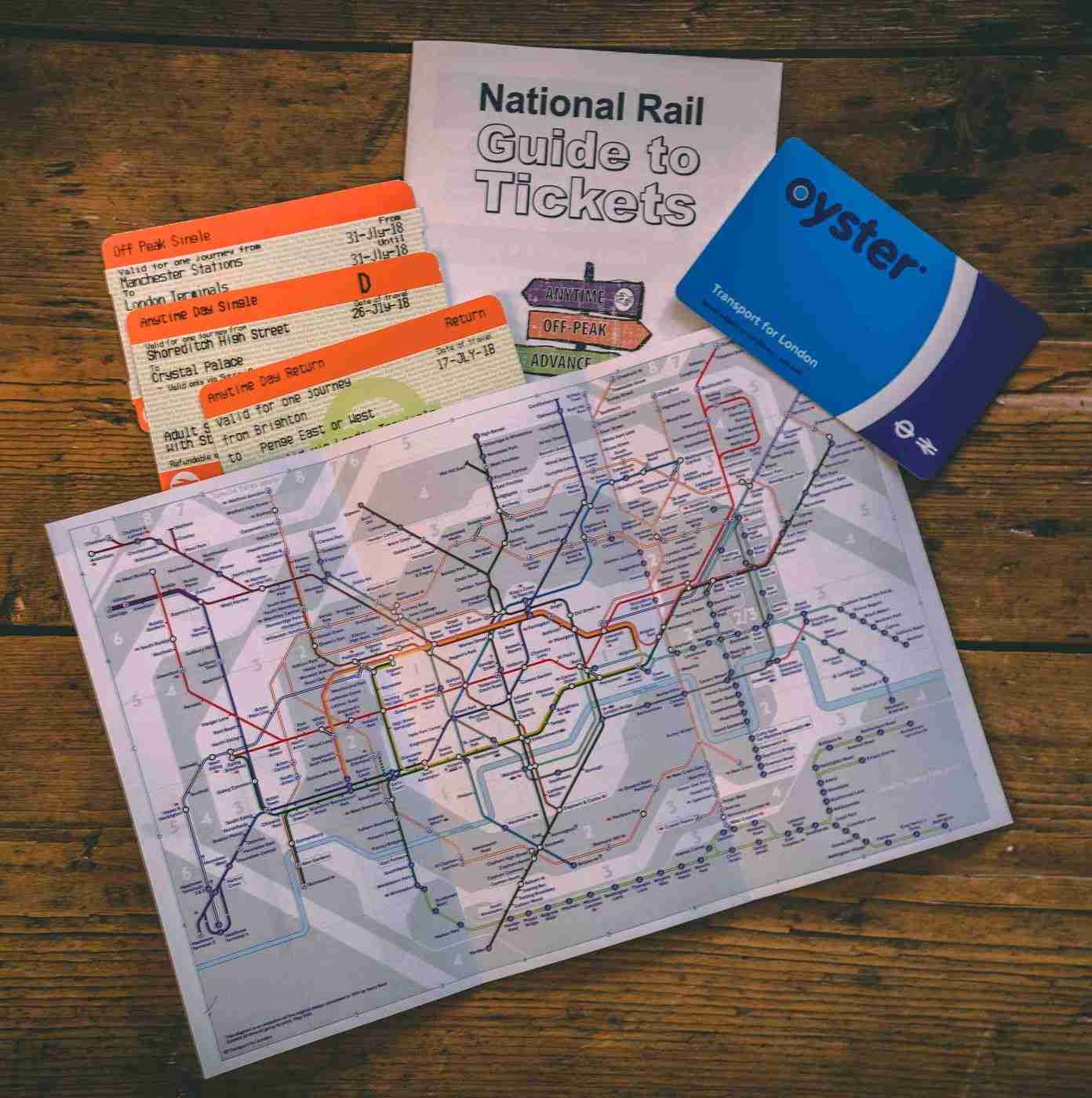
    London Transport

    Oyster card is the best practical gift you can buy. If your giftee travelling around then they’re likely going to need to use the public buses, trains or the Tube.

    There are two options: Visit Oyster card or Travelcard. The Oyster card can be used in all zones, and you top it up with as much money as you like. The Travelcard is a pass which you pay upfront for and gives you unlimited rides for a stated number of days (1 Day, 7 Days, 1 Month, 1 Year).

    You can buy an Oyster card or Travelcard online and have it delivered to your giftee so that it’s ready to use the moment they land. You can find out more information about the different options on the TFL website.

    12# A Travel Umbrella To Rescue Them From British Weather

    An umbrella, or ‘brolly’ as the Brits call it, is an essential item for anyone travelling to the UK. The British weather is unpredictable, and rain showers have a knack of turning up unexpectedly.

    A travel sized umbrella is a great option as they tend to be more lightweight and fold up easily compared to full sized umbrellas. They’re the perfect size to fit in a backpack as well.

    The only downside to a travel sized umbrella is that they’re not usually as strong as full-sized ones when it comes to withstanding gusts of wind. That being said, there are a good selection of travel umbrellas that have been designed to be wind resistant, such as this one from Amazon.

    For something more classic you can get a handmade umbrella from Bucklesbury. The umbrella is designed to provide both coverage and protection. The high-quality materials used in its construction make it stand up well against rain, wind or other inclement weather conditions – perfect for your next outdoor event!

    13# Save Yourself From The Drizzle With A Rain Jacket

    Rain jackets are slightly more convenient than umbrellas, in that they leave your hands free.

    If you think your giftee is likely to be out and about taking photos or using their hands to carry around shopping bags, then a rain jacket is probably a better option.

    Rain jackets also offer much better protection from the wind and can keep you warmer. They don’t have to be bulky either – there are many rain jackets that are made from light, stretchy material and are easy to roll up and stick in a daypack. Check out this one from Patagonia.

    14# Waterproof Travel Backpack

    When exploring a city, a backpack is a must-have. It’s the most practical way of carrying around your camera, money, maps, guidebook, water bottle and anything else you need for the day. They’re also much better for your back if you’re going to be carrying around all your belongings.

    Many backpacks are specially designed for day to day use and have an assortment of inner and outer pockets to make the most of the space. My tip is to find a bag that’s waterproof, as a little extra protection against the London rain won’t hurt. This compact backpack made from lightweight material is a great choice from Amazon.

    15#Stay Charged With A Portable Charger

    What’s worse than exploring a new city and having your phone die? You’ve got the Tube map up, you’re Googling best lunch spots in London, when suddenly your phone is out of power.  

    If you want to get something that your giftee will really appreciate, a power bank will do the trick. The problem with portable chargers is that a lot of them aren’t that travel friendly, as they can be quite heavy and bulky to carry around.

    The ideal size to bring on travels is one that fits neatly in a pocket, so I’ve picked the Anker charger from Amazon as it’s compact and lightweight, but also has a great charging capacity.

    16# Universal Power Adapter
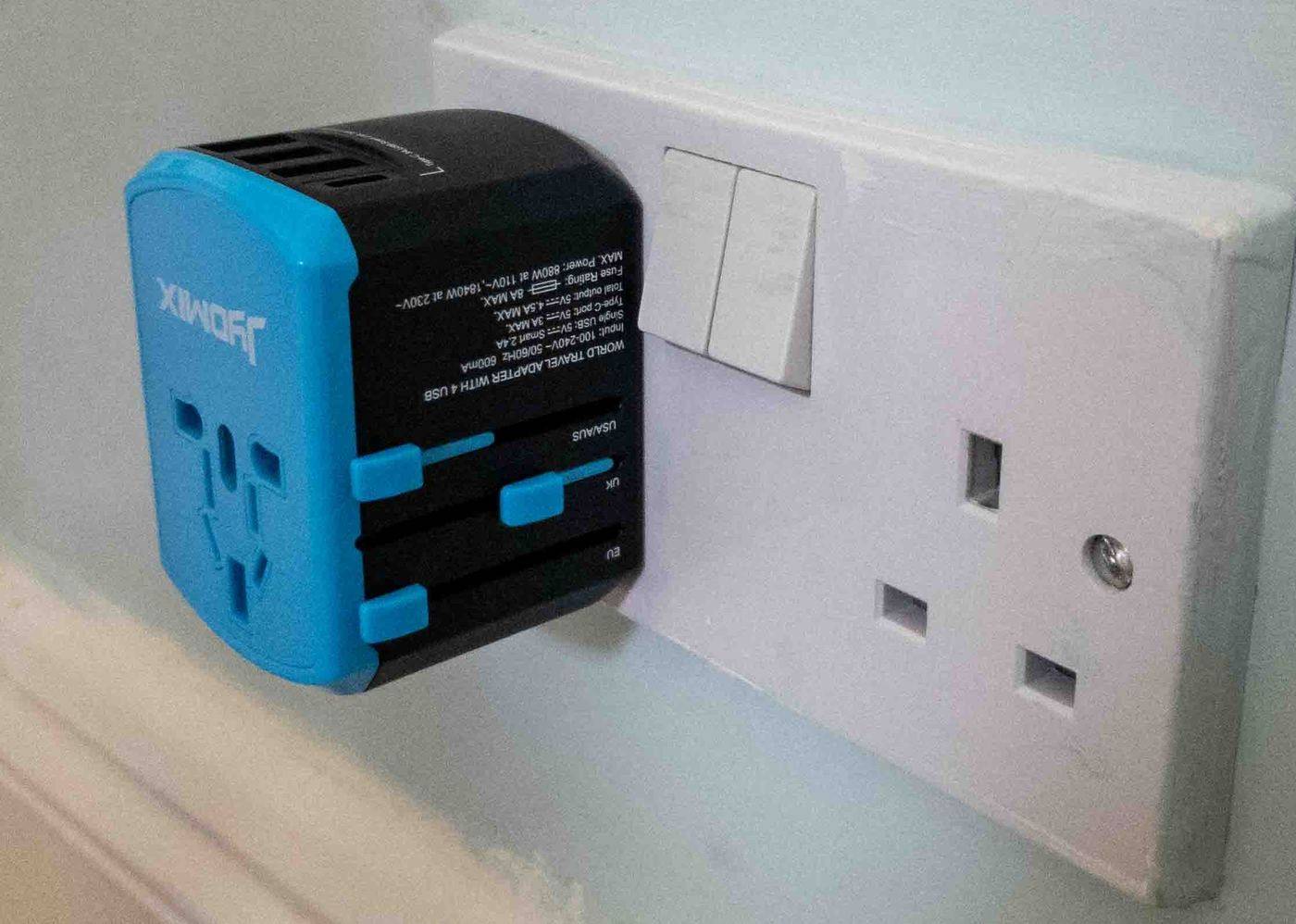
    VGUARD-Worldwide-Travel-Adapter-4-USB-Ports

    This is an essential item that every traveller should have in their suitcase. There are different plug types around the world, which makes charging your devices tricky if you don’t have the right plug.

    Travel adapters are designed so that they can be used in any country, and you can plug your devices right into them no matter what type it is. The power plugs and sockets in the UK are of type G, with a standard voltage of 230V and a standard frequency of 50 Hz.

    This one from Amazon has four USB charging ports and one wall charger. It’s my go to when travelling the world!

    17# Be Green With A Reusable Shopping Bag

    London is a fantastic shopping destination. From world class markets filled with unique finds, to modern shopping centres, to local independent brands, there’s so much to be found in London.

    As the UK charges for plastic bags and it’s a great way to help the planet then a reusable tote bag is a great gift for those souvenirs or food shops.

    Reusable bags come in many different shapes and sizes, and many of them have fun patterns and designs too. Why not theme it with your trip and get a London tote bag from Etsy.

    18# Keep Hydrated With A Reusable Water Bottle Or Keep Cup

    A big inconvenience when travelling is having to keep buying bottled water wherever you go, ending up with a huge pile of plastic bottles at the end of your trip. A great solution to this is to get a reusable water bottle that you can fill up wherever you go.

    London’s tap water is safe to drink, so your loved one just needs to fill it up in the morning and they’re good to go.

    If they’re more of a hot drinks person, then a reusable coffee cup or thermos is also a good idea. Many coffee shops in London encourage people to bring their own thermoses or flasks to cut down on plastic waste, and they sometimes offer cheaper deals if you bring your own cup. Check out Sigg’s collection of water bottles.

    19# Organise Their Life With Packing Cubes

    Packing can be stressful. Trying to strategically fit together clothes, shoes, books, toiletries and gadgets in one suitcase is like solving an impossible jigsaw.

    Why not help your giftee have an efficient and stress-free packing experience by gifting them with some packing cubes? These are fabric containers used to pack your belongings, and their shape makes them easy to stack and arrange in a suitcase.

    They keep the contents of a suitcase organised, and often have compression zippers on them so you can fit more into a smaller space. They usually come in a set of different sizes, like this one on Amazon.

    20# Tech Case

    When travelling, tech and gadgets are always vulnerable to getting damaged. If you’re not careful, they can get tossed around and broken pretty easily. Not to mention having to unpack and repack them when going through airport security. And don’t get me started on tangled cables.

    This is why a tech case is always a good investment. This is a really useful gift that the receiver is bound to appreciate. Tech cases come with different pockets for your phone, ipad, batteries, chargers, earphones and passport, so your giftee can have an effortless and seamless experience. Check out this tech case.

    21# Store Memories In A Travel Journal
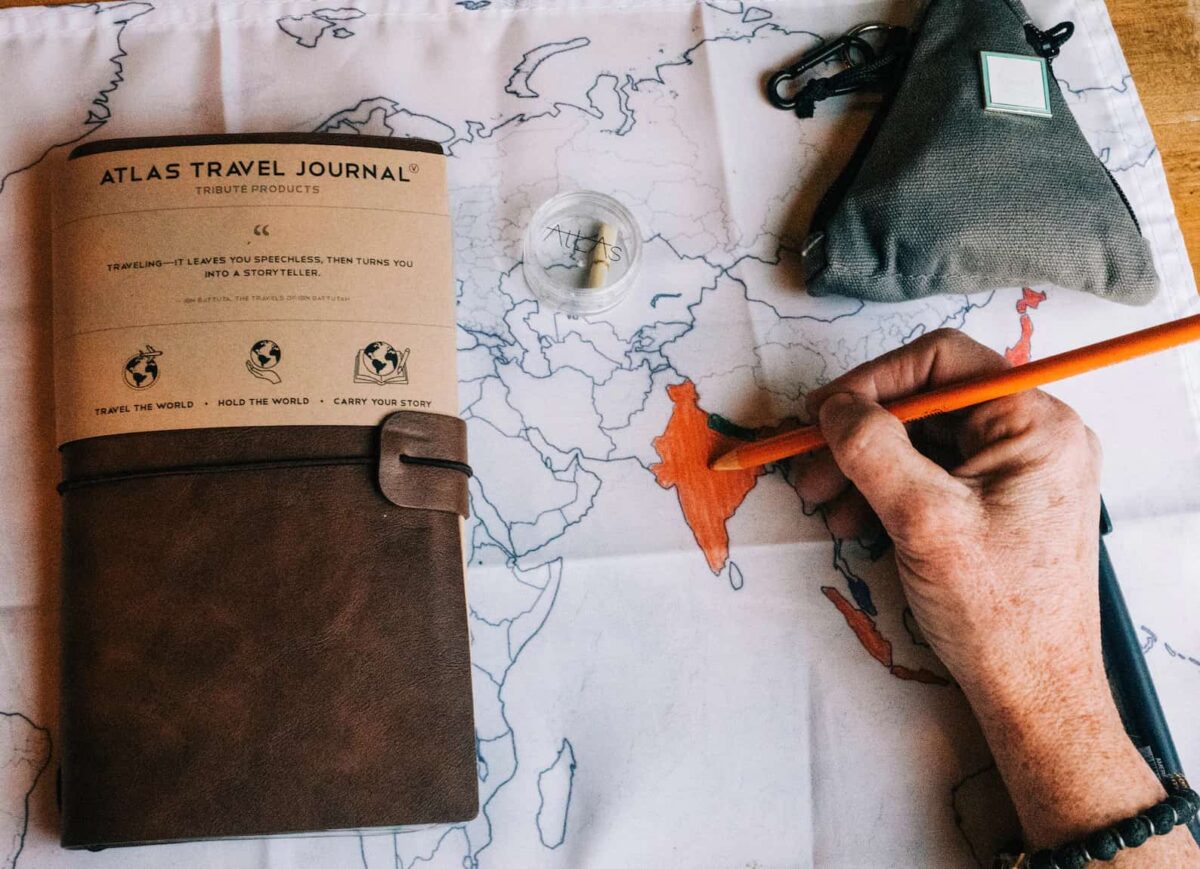
    Atlas Travel Journal made by Tribute Products
    Credit: Atlas Travel Journal made by Tribute Products

    For those who love writing and all things creative, then a travel journal is a wonderful gift. Travel journals are great for recording memories and stories experienced on a trip. They’re a place where you can jot down notes and plan your day and are miles better than the notes app on your phone.

    Travel journals don’t have to be a plain lined notebook either. There are many journals out there specifically made for documenting a trip. They come complete with maps, daily planners and itinerary sections, budget sections and pouches to keep hold of your tickets, brochures etc.

    This beautiful handmade journal from Tribute Products is the perfect travel journal gift!

    22# A Travel Guide So They Know Their Way Around
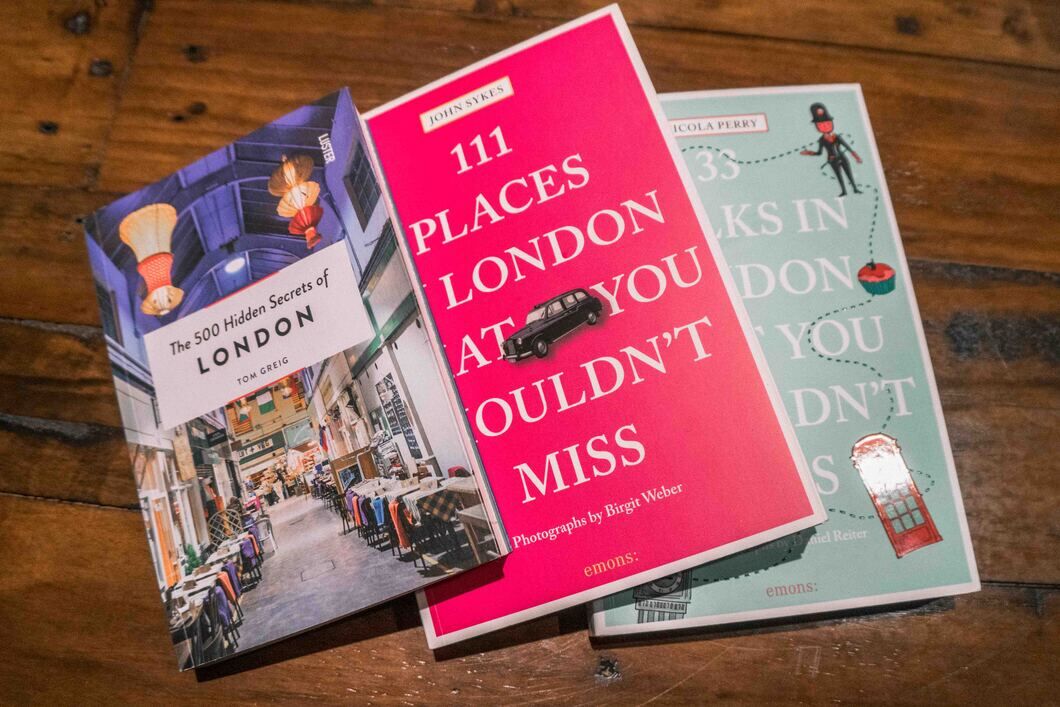
    A London Travel Guide so they know their way around the city.
    A London Travel Guide so they know their way around the city.

    I know what you’re thinking – who needs a guidebook when you have the internet? It might seem counterintuitive to lug around a guidebook when you could just look up the information on your phone.

    Guidebooks are great not just because they’re offline, but because they have everything in one place – maps, advice, directions, recommendations.

    Two of my favourites are 33 Walks in London That You Shouldn’t Miss and The 500 Hidden Secrets of London. They offer a different spin that the normal guide books like Lonely Planet with more off the beaten path options. Both can be bought on Amazon or in local book stores.

    23# Help Them Understand the Cockney Lingo!

    The term cockney describes the dialect of the English language that was traditionally spoken by working class Londoners. Cockney is known for its coded language born out of rhyming slang.

    It was thought to have originated as a code used by criminals in the mid 19th century. It’s a really fascinating dialect, and if they have an interest in linguistics and British culture, then a book about cockney slang could prove to be a really fun gift. This book on Amazon would be a great read on the plane and learn some phrases or words that they might come across whilst in London.

    24# Capture Memories With A Travel Camera

    There is a huge selection of travel cameras out there to suit different price points, needs and experience. An all rounder is the Panasonic Lumix TZ200.

    For a reasonable price tag, you get high image quality, a compact body, WiFi connectivity, 15x optical zoom lens and great colour and clarity even in low light. It’s a nifty little gadget that is perfect for carrying around on travels.

    Look at the specs Panasonic Lumix Travel Camera on Amazon.  

    I personally use Sony A6500 which has now been superseded and replaced with the A6600.

    25# Comfortable Walking Shoes

    Having comfortable walking shoes for London sightseeing is a must. Nothing puts a damper on a holiday more than blisters or sore feet do.

    While outdoor hiking shoes are overkill, a good pair of closed-toe trainers should give the right support.

    If your giftee has a favourite brand, then it’s a good idea to check their website to see what options are available for walking shoes.

    Otherwise, I’ve put together a few suggestions both for men and women. The Omni Walker from Saucony is frequently highly rated for providing heel and arch support, here’s the Women’s and Men’s version.  

    The Gel Nimbus 21 from Asics is another popular model. It has great cushioning to keep your feet comfortable all day long, here’s the Women’s and Men’s version.  

    If a friend or family member is going to be travelling to London, then buying them a gift to take is a nice little gesture. There are plenty of things that your loved one could use in London, and it doesn’t have to be something tangible either. Even a day out or experience could make their trip even more special. 
    More London Articles

  • 21 Things You Can Only Buy in England

    21 Things You Can Only Buy in England

    With the internet making the world a smaller place it is easier than ever to buy almost anything anywhere. It is increasingly difficult to find a gift or memento that is individual and can only be bought in England.

    Having searched from top to bottom to find the best selection of items that you can or certainly should only buy in England.

    Here’s a list of the top England Gifts and Souvenirs!

    Traditional Authentic Sussex Trug

    Traditional-Authentic-Sussex-Trug
    Traditional Authentic Sussex Trug

    A Sussex Trug is a special kind of basket made with chestnut frame and willow boards.

    A real Sussex Trug is handmade by craftsmen who have had the craft handed down to them through the generations.

    Originally created for agriculture to collect produce the Trugs are ideal for a variety of uses in the garden or for storing or displaying in the home.

    It is boat shaped and indeed, Trug is a variation on the Anglo-Saxon word “trog” meaning boat shaped and has a number of uses today such as for gathering flowers or vegetables from the garden, for holding fruit, vegetables or to hold potpourri or herbs and spices.

    A great thing about buying a genuine craftsman made Sussex Trug is that the makers also take conservation seriously and a careful buyer should always look out for the “Association of Sussex Trug Basket Makers” stamp on the Trug before making a purchase.

    The stamp of the Association of Sussex Trug Basket Makers on the base of a trug is your guarantee that it is a genuine Sussex Trug, made using traditional methods and materials. Beware imitations!

    Buy in Sussex, ideally from The Truggery, which can be found on the outskirts of the Hailsham side of Herstmonceaux.

    Coopers Croft
    Herstmonceux
    Hailsham BN27 1Q

    English Wine

    Mount-Vineyards-English-White-Wine

    There are a number of dedicated growers producing first class English white and red wines including some top-quality sparkling wine. English Wine growing was mostly concentrated in the south and south-east of England, where the chalky soil is ideal for the vines.

    However, increasingly there are vineyards in many other parts of England, in particular in the south-west and even further north.

    Here are four established vineyards:

    Mount Vineyard

    The Mount, Church Street, Shoreham, Kent, TN14 7SD

    In the quintessentially British village of Shoreham, you will find Mount Vineyard. Not only is it a great gift but a fantastic day out. You can spend the afternoon finding out about the history of Mount Vineyard, tasting five English wines and enjoying a cheese board.

    Watch this video guide on exploring a day out in Mount Vineyard.

    Biddenden Vineyard

    Biddenden, Kent, TN27 8DF

    A commercial vineyard for over 50 years, Biddenden wine is a well known English wine. Their Bacchus is usually very good and competes admirably alongside the best Sauvignon Blanc from anywhere.

    Bolney Vineyard

    Near Haywards Heath, West Sussex, RH17 5NB

    One of the pioneers of modern English winemaking Bolney Vineyard offers a great collection of white, red and sparkling wines. Wine is a matter of taste, but you cannot go wrong with a selection of Bolney sparkling wines, made using the Champagne Method Traditionale, their sparkling wine is English and very, very special.

    Breaky Bottom Vineyard

    Near Firle, East Sussex, BN7 3EX

    Breaky Bottom Vineyard is situated in a hidden valley on the South Downs and is only open by appointment. However, their wines can be bought from nearby Middle Farm Shop where a good collection of English wines and ciders can be bought. Owner and caretaker of the vines Peter Hall chose the location because it reminded him of the Champagne region of France and today he specialises in carefully blending the wines to produce some fantastic tasty wines. Look out for the Breaky Bottom Chardonnay Pinot 2010, it is truly fantastic.

    English Craft Beer

    In 2002 there were around 500 Craft Beer Brewers in England, then in the budget the chancellor offered a tax break to small breweries and that has seen a 200% rise of registered craft breweries, little wonder then that there are now plenty of craft beers to choose from, from deep, velvety, chocolate like porters, to gentle, refreshing pale ales and everything in between.

    Most of these breweries only sell directly to the public or in their local area. If you like beer or want to take home something different, they are well worth seeking out.

    Here are a couple in different areas:

    York Brewery

    Beer pack from York Brewery is the perfect example of things you can only buy in England.
    Beer pack from York Brewery is the perfect example of things you can only buy in England.

    The Black Sheep Brewery, Wellgarth Masham, North Yorkshire, HG4 4EN

    York Brewery opened in 1996 and they have poured their heart and soul into brewing fine. Enjoy a range of handcrafted ales that are brewed from inside the historic city walls of York.

    Due to rent increases they have relocated their production temporarily to Black Sheep Brewery.

    Salcombe Brewery

    Kingsbridge, Devon, TQ7 4BL

    At the time of writing Salcombe Brewery offers 11 beers: pale ale, amber ale, golden ale, 2 seasonal ales, Christmas ale, a citrusy pale ale exclusively for Rock Fish, best bitter, light gold and brown ale.

    There is sure to be a flavour to suit everyone. The brewery also sells merchandise items such as caps, mugs and tea shirts from the shop and Brewery tours are available.

    Green Jack Brewery

    Lowestoff, Suffolk, NR32 2NZ

    Green Jack Brewery offers 10 beers and monthly seasonal special brews. With names like Little Green Man and Lurcher Stout they also offer ales in a box as well as bottles and cans.

    Derbyshire

    For the best choice of craft beers, though, head for Derbyshire. Probably due to its pure spring water, Derbyshire is home to a large number of craft breweries, approximately 70 in all, so is a good county to visit to buy some English Craft Beer, too many to mention them all, but head to Buxton or Derby and you are sure to find a brewery and a beer that you like.

    Read more about London’s craft beer scene and enjoying tasty beers on the Bermondsey Beer Mile.

    English Cider and Apple Juice

    Many regions in England claim to be the home of the best English Cider and this means that you will be able to pick up some tasty cider or apple juice just about wherever you go. Get out of the cities and visit a cider farm for a tasting session to get the best cider day out experience.

    Somerset is a county known for its cider heritage and they call it “Scrumpy” as well as some of the big producers being there or using apples grown there, Somerset has a few really good cider farms to buy from including:

    Perry’s Cider Mill

    Ilminster, Somerset, TA19 0NY

    Perry’s is a long-established cider farm, visitors can enjoy a lovely few hours of a cider mill experience, including a small museum and a cafe.

    Good range of ciders and juices.

    Cornish Orchards

    Westnorth Manor Farm, Duloe, PL14 4PW

    They make and stock a range of craft cider, hedgerow cider, alcohol-free, apple juice, other fruit presses and they provide very nice gift packs, flagons and cider in a box for parties.

    The cider is guaranteed made using natural, animal and additive-free ingredients in South Cornwall.

    English Gin

    A box of wonderful Jensen’s Gin.

    Where better to buy English Gin than in England whether you plum for the old names like Gilbey’s or Gordon’s, it has to be English and with a lot of small producers setting up to make Gin, it is a great to buy some from a small or revamped producer.

    Some examples of places to buy:

    Jensen’s

    55 Stanworth St, Bermondsey, London SE1 3NY

    Jensen’s is a London distillery that produces a great dry gin. Perfect for those old-style London gin cocktails with bursting with juniper flavour and aromatic bite.

    Fishers Gin Ltd

    Crag Path, Aldeburgh, IP15 5BT

    Produced right on the coast and sold in a beautiful patterned bottle, Fishers Gin is made using botanicals from the Suffolk coast, so it is made using rock samphire, Bog Myrtle, spignel and wood avens and the aroma offers a hint of the sea and the flavour can best be described as a salty herbaceous aromatic unique flavour.

    Ramsbury Single Estates Spirits

    Stockclose Farm, Aldbourne, Marlborough, Wiltshire, SN8 2NN

    For a light, yet flavoursome gin, try Ramsbury Single Estates Gin which is made in copper vats and a feature is the floral aroma and fruity flavour from the combination of juniper and quince used to make the gin.

    Slingsby

    An older brand that was revamped in 2014 is Slingsby Gin of Yorkshire available from their shop at:

    Spirit of Harrogate, 5-7 Montpellier Parade, Harrogate, North Yorkshire, HG1 2TJ

    They stock over 150 Gins and 30 tonics at their Harrogate store, naturally including their own varieties, look out for the Rhubarb Gin and the Gooseberry Gin as well as the “London Gin”. Their Gins are made using natural spring water from the Tewit Well.

    Rhubarb is their “London Gin” infused with Yorkshire Rhubarb from the Rhubarb triangle and described as having a complex flavour, with hints of primrose and green botanicals.

    Slingsby Gooseberry Gin is described as having tangy sharpness, fruity sweetness and is unmistakable as an infusion using their “London Gin” as a base.

    English Vodka

    Whilst not as fashionable or as fruity as English Gin, English Vodka is another spirit that is being made in England by large and small distillers all over the country.

    Wild Knight Distillery

    Beachamwell, Norfolk, PE37 8BJ

    Wild Knight makes their Vodka using water from ancient chalk aquifers and Norfolk Barley, creating a Vodka with some kick. They also make a caramel infused version called Nelson’s Gold for something creamy, sweet and completely different.

    Godminster

    Bruton, Somerset, BA10 0EH

    Organic producer Godminster began their Vodka making journey by experimenting with leftover fruit and the first batches were trialled by the staff and their families. They offer a small selection of infused Vodkas such as blackberry, elderflower and Horseradish using organic Vodka bought in from London. The blackberry is like drinking blackberry cough sweets but with a kick at the end, the elderflower is much more tame, being fruity and hints at citrus, being very refreshing and the Horseradish is not for the faint-hearted as it has some kick.

    English Antiques

    A good deal of England’s history can be told through its antiques and England is the place to buy them. Whether you are interested in a Queen Anne Chair or an Edwardian Bookcase, a Victorian Seed Pearl Ring or a Georgian Sapphire Brooch, maybe an antique costume, whatever you like, you will find unique antique items in England’s Antique shops in towns and villages all over, or maybe go to an antiques auction for an exciting buying experience; just be careful scratching your nose!

    English Silver

    English tea served in the finest silver.
    English tea served in the finest silver.

    For hundreds of years, English Silver has been rated as the finest in the world and the best place to buy the best English Silver is of course England. Bargains can sometimes be found in antique shops, but most dealers will know the current value, so buy things you really like from auctions, antique shops or jewellers.

    Blue John Items

    Blue John is a natural stone crystal that can only be found from one seam in the hills near Castleton, Derbyshire. The Crystal is polished and used in jewellery and ornaments and because of the variation in the crystal each item will always be completely unique.

    English National Trust and English Heritage Memento’s

    The National Trust and English Heritage are charities that look after the heritage of the country. They both supplement their income with gift shops at many of their historical sites and have some shops in other places. They both often stock unusual and unique items as well as logo memorabilia; lookout for pretty mugs, milk jugs and tea towels from the National Trust or Stonehenge memorabilia or maybe a Battle of Hastings Chess Set from English Heritage.

    Union Jack and County Flag Memorabilia

    Union Jack memorabilia can be found in many places across England and include just about everything you can think of and maybe some things that you hadn’t thought of as well.

    Some of the counties of England also have their own flags and it is also possible to buy flags, bumper stickers, T-shirts and so on when visiting the gift shops in the counties. Cornwall especially has a thriving market of Cornwall or Kernow flag items.

    Buckfast Tonic Wine and Homemade Tonic Marmalade

    Visit Buckfastleigh Abbey on the edge of Dartmoor in Devon and you can buy some wonderful tonic wine, still made from the original Benedictine Monk’s secret recipe. Or you could buy some of their tasty homemade tonic marmalade made using the tonic wine that you can also buy at the Abbey.

    Artisan Crafts

    England is famous for its Arts and Crafts Movement Antiques and Architecture, today there are many artisan craftsmen and craftswomen working tirelessly in all areas of the country and it is possible to buy some fabulous items.

    Look out for people like Holly Jordan Anderson – Woven Textiles, wonderful use of textures and colours into fabric. Or Sadie Clancy’s “Quirky art and steampunk collectables, all handmade and a one-off” or Fabric art by Aruna Mene, a textile artist who specialises in vibrant fabric art from recycled textiles. Or look out for hand-turned wooden bowls and vessels, sculptures and garden items.

    Undiscovered English Artists

    As well as the galleries in London and the big companies like Hauser and Wirth there are small galleries, selling the work of local artists in many towns and cities. Often, the work of these almost completely undiscovered artists can be bought at very reasonable prices and who knows…. maybe one day, your chosen artist will become famous and your chosen piece will be worth a fortune. A piece of original art makes a fantastic unique gift or memento; especially if it reflects the area you have enjoyed visiting.

    Some small galleries selling local interest art include:

    The Strand Art Gallery

    Brixham Harbour Devon, TQ5 8EH

    They boast over 400 paintings for sale featuring the Brixham Artists who often feature on television, offering seascapes and vistas of the local area and more.

    Colchester School of Art

    The Minories, 74 High Street, Colchester Essex, CO1 1UE

    A professionally run gallery in a historic Georgian building, exhibiting and selling art from students.

    Or for work from well known contemporary English artists, there is:

    The Harley Gallery

    Wellbeck, Sherwood Forest, Nottinghamshire, S80 3LW

    They have exhibitions of work from leading contemporary artists that change about 5 times a year.

    English Pottery

    With names like Royal Worcester, Denby and Wedgewood, English pottery is world-renowned and the best place to buy English Pottery is in England.

    Sadly the famous blue and white striped Cornishware pottery is now outsourced and made overseas, it is however quite possible to find some genuine Cornish Made Cornishware in antique and vintage shops and markets. There are also a few Cornish potters and you can buy some genuine Cornish pottery made with Cornish clay in Cornwall:

    Chouch Studio Pottery

    33 W End, Redruth TR15 2SA

    Chough Studio Pottery sells a wide range of English Pottery from their Redruth store, or course this includes Cornish pottery.

    The Mill

    Nat Bonney Ceramics, Unit 4 College Hill, Penryn TR10 8FN

    Look out for Natalie Bonney Ceramics near Falmouth for functional handmade stoneware. Buy direct or from some local independent shops.

    English Soap

    At craft fairs and markets all over England as well as in independent health food shops, you can buy lovely handmade completely plant-based naturally fragranced soap. Many are certified organic and vegan.

    Fragranced with things like rose, geranium, lavender and rosemary the soaps are a luxurious treat as well as being good for your skin and often beautifully presented.

    Green Living

    Hessle, East Riding of Yorkshire, HU13 0BW

    Offer soaps made with olive oil are SLS and paraben-free.

    Blarob Trading

    Carlisle, Cumbria

    The range includes Stimulating, Refreshing and Invigorating Rosemary Soap. immune system stimulant Tea Tree Soap and healing and purifying Peppermint Soap.

    Or for a bigger brand go for Neal’s Yard whose products are all made in England, are cruelty-free, sustainable, natural and organic and they are a carbon-neutral company. They are Vegan Society and Soil Association registered too.

    Neal’s Yard

    Gillingham Dorset, SP8 4EU

    Choose from Lavender and Tea Tree, Wild Rose or Geranium and Orange soaps. They have a few shops around the country as well as the original Neal’s Yard in London where it all began.

    English Lavender Products

    Yummy and practical lavender Products at Mayfield Lavender Farm.
    Yummy and practical lavender Products at Mayfield Lavender Farm.

    These days when most people think of Lavender they think of the pictures of the Lavender fields of France, but England has a long tradition of Lavender fields and creating natural Lavender products too. Here are four Lavender fields in England:

    Mayfield Lavender Farm

    1 Carshalton Rd, Banstead SM7 3JA

    In Banstead, you’ll find Mayfield Lavender Farm where 25 acres of lavender is grown. It’s popular as an Instagram hotspot but you can also buy organic oil and lavender product. The farm is open to the public from June to September.

    Yorkshire Lavender

    Terrington, York, YO60 6PB

    Yorkshire Lavender is set in an area of outstanding natural beauty (AONB). They have a range of products created from their own Lavender, including bubble bath, hand wash, body lotion, shampoo and conditioner.

    Cotswold Lavender

    Hill Barn Farm Snowshill, Broadway, Worcestershire, WR12 7JY

    Cotswold Lavender grows 12 varieties of Lavender and offer a wide range of Lavender products for skincare, fragrance, wellbeing, gifts, culinary and seeds.

    The Hop Shop

    Castle Farm, Redmans Lane, Nr Sevenoaks, Kent, TN14 7UB

    Castle Farm is the largest producer of Lavender in the UK and has a strong conservation policy.

    Visit them and explore their shop where they sell pure lavender essential oils as well as therapeutic blends. They also sell plants, dried flowers and gift packs.

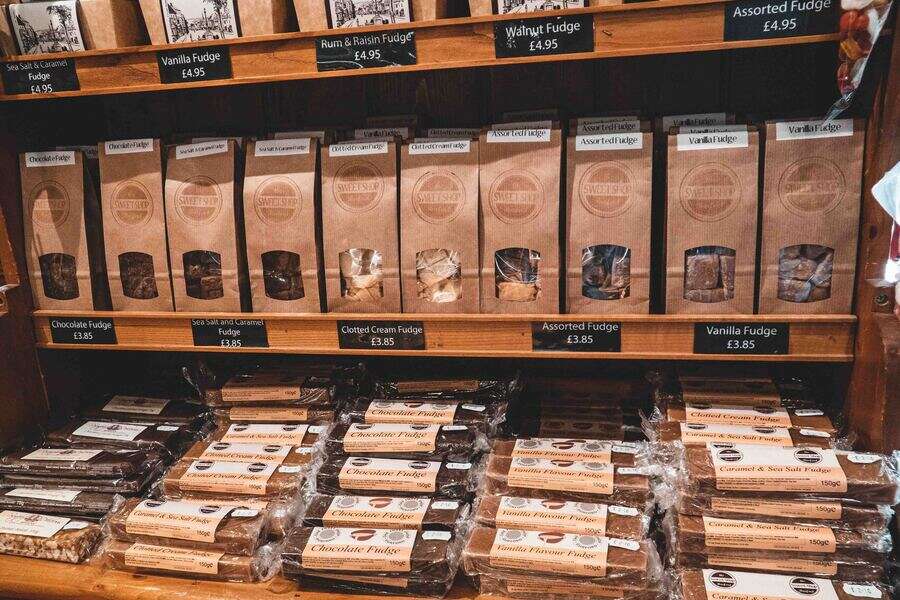
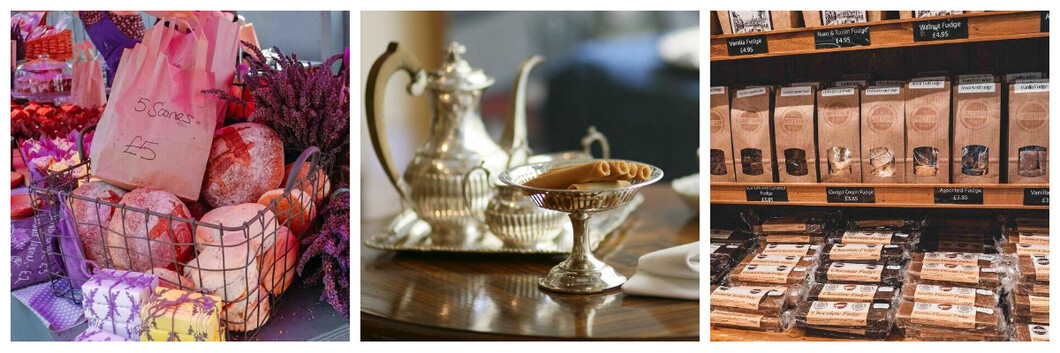
    English Fudge

    English Fudge in the Cotswolds.

    Fudge may have been invented in America, but English Fudge has a strong following and English producers have made Fudge their own.

    Fudge Kitchen

    Hemsted House, Lyminge Kent, CT18 8DL

    With 35 years experience Fudge Kitchen offers a large range of fudge and fudge based items, such as selection boxes, gift boxes, union jack boxes and even a fudge wedding cake sculpture and a lot of their range is Vegan-friendly.

    Burley Fudge

    Burley, New Forest, Hampshire, BH24 4BS

    Burley Fudge also offers a wide range of flavours and fudge based items, including sugar-free and vegan items. They have a decadent fudge hamper and even a Fudge Club.

    Cadbury’s Chocolate

    Cadbury’s chocolate are famous world-wide but the chocolatier originally started in England by selling their Dairy Milk bar in 1914. While you can find the chocolates in any stores make your trip special by taking a visit to Cadbury’s World in Birmingham and get the full experience.

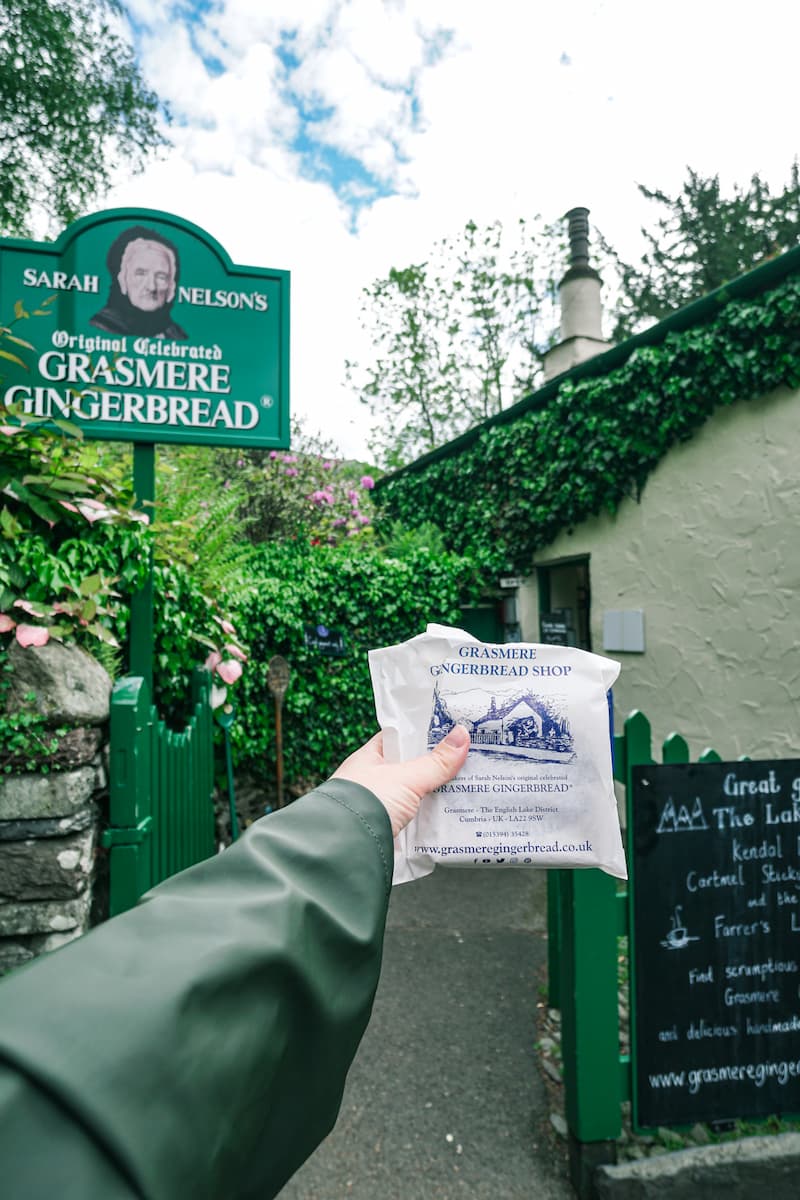
    Grasmere Gingerbread

    The famous Grasmere Gingerbread
    The famous Grasmere Gingerbread

    Church Cottage, Grasmere, Ambleside LA22 9SW

    In a picturesque village in the Lake District, you’ll find the famous Grasmere Gingerbread. When you walk into the shop the smell of spices and the aroma of gingerbread wafting through. Invented by Victorian cook Sarah Nelson in 1854 it’s now been passed down to third-generation owners Joanne and Andrew Hunter.

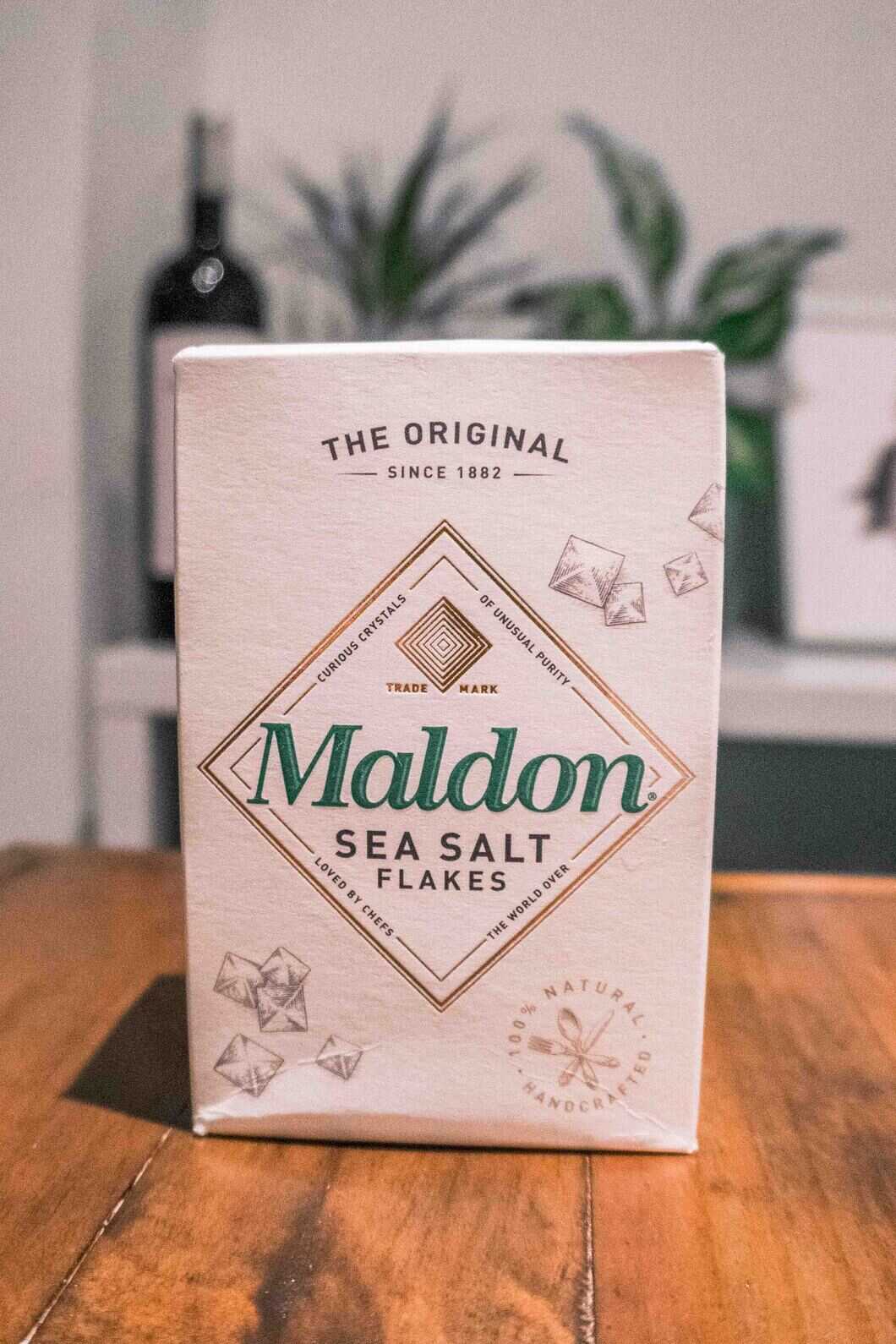
    Maldon Sea Salt

     Maldon Sea Salt can easily be picked up from one of the supermarkets in the UK making it an easy gift to take home.
    Maldon Sea Salt can easily be picked up from one of the supermarkets in the UK making it an easy gift to take home.

    Located in Seaside town of Maldon Essex is Maldon Sea Salt. Generations of the Osborne‘s have been harvesting the naturally formed pyramid crystals to create some of the best sea salt.

    In 2012, Maldon Sea Salt was granted a Royal Warrant by the Queen as official purveyors of sea salt so you know it’s pretty good.

    This is just a selection of things that can only be bought in England and places where they can be bought. There are so many great things you can buy in England, I have a whole list just for London.

    More England Articles

  • 18 Things To Do In London Without Alcohol

    18 Things To Do In London Without Alcohol

    Whoever said you need alcohol to have fun clearly hasn’t been to London. London is filled with things to see and do that you won’t even have time for a pint. To make it easier, I’ve put together a list of things you can do in the city if you want to stay teetotal. 

    What can you do in London without alcohol? London has a full calendar of exciting events and activities that don’t require alcohol. From cruises down the River Thames to finding vintage treasures at Portobello Road Market, there are plenty of things to keep you busy.

    Read on to discover the best things to do in Britain’s capital.

    Take a Walking Tour of London

    As you probably already know, London is a city full of history and culture. From magnificent old buildings, to edgy, artsy areas, London offers plenty of things to see, and the best way to take it all in is by foot.

    Now, I know what you’re thinking – walking around a city the size of London sounds daunting, especially if you’re not familiar with the different areas. Which is why a walking tour is a great idea.

    Most companies offer different packages so you can choose which sights and areas you’re most interested in seeing. This way, you don’t have to spend time researching and putting together an itinerary. Plus, you’ll learn a lot of interesting facts about the city from the tour guides.

    I’d recommend using Free Tours By Foot. They’re a pay-as-you-feel tour company, and they offer both guided and self-guided tours.

    What’s great about them is that as well as offering tours of the main London landmarks like Big Ben and Tower Bridge, they also have tours that let you explore off the beaten track parts of town that you usually wouldn’t see. Some of their most popular options are the graffiti and street art tour, and the Harry Potter tour. 

    Go for a Long Walk

    Continuing the walking theme and getting some more fresh air, look at taking one of London’s scenic walks. From exploring canals to seeing the deer in Richmond park, there is a walk for you.

    The London Wall

    There is something about soaking up the history and imagining what it was like 1000’s of years ago. The London Wall walk is perfect for this, you explore Roman ruins, Tower of London, Barbican and Museum of London.

    It’s 2.5-mile walking around Roman ruins built around in AD200 and what was known as the City of London for 1700 years. During the Second World War most of the wall was torn down but you can find fragments of the wall hidden among the office blocks.

    Richmond to Hampton Court Palace

    Perfect for those who love nature, it’s an 8-mile walk that is surrounded by trees, water and some stately homes. The path will take you along Richmond riverside, past Petersham Nurseries, Ham House, Marble Hill, Eel Pie Island and end up in Hampton Court Palace. 

    Capital Ring Road

    Challenge yourself with the 15 walks from the capital ring walk which is 78 miles (126KM) through London’s nature reserves and landmarks. Not only do you have something to do for quite a few weekends, but you also get your step count up!

    Watch a Film at an Independent Cinema

    Catch a movie marathon at the Prince Charles Cinema!
    Catch a movie marathon at the Prince Charles Cinema!

    Forget big name cinema franchises – independent cinemas are where it’s at. You can say goodbye to overcrowded theatres, uncomfortable seats and sticky floors. Independent cinemas are more intimate, have cosy decor, and don’t tend to exclusively show box office films.

    London has a great independent cinema scene showing new and old films, classic British films and foreign flicks. 

    Regent Street Cinema is said to be the birthplace of British cinema. Built-in 1848, this ornate picture house only has 187 seats. It is one of the few cinemas in the UK where you can watch 16mm and 35mm film, as well as 4K film.

    It also features exclusive premieres, documentaries and repertory screenings. If you can tear your eyes away from the screen, look up and admire the art deco features and domed ceiling. 

    Visit Royal Botanic Gardens, Kew 

    If you’re looking to escape from the hustle and bustle of the city, Kew Gardens is the perfect place to go. This UNESCO World Heritage Site is home to the world’s most diverse collection of living plants, and you could pretty much spend the whole day getting lost in them.

    Kew Gardens has an amazing range of displays, including the Princess of Wales Conservatory with its ten different climate zones; the Orchid Collection and its beautiful colours; and the Carnivorous Plant Collection with its cunning traps. 

    Kew Gardens is great for visitors of all ages. The Treetop Walkway is a favourite and offers a special view from 18m up into the tree canopy. For a moment of quiet reflection, visit the Japanese Landscape.

    Combining a Garden of Peace, a Garden of Activity and a Garden of Harmony, it’s quite easy to forget you’re in London. If you fancy yourself as a bit of a chef, visit the Kitchen Garden to see what fruit and veg is growing, and learn about producing healthy and sustainable food. You can even taste some of the produce, as they are used in Kew’s restaurants.  

    Find Something to Read at Daunt Books

    Daunt Books isn’t just any bookshop. It’s one of London’s prettiest independent bookshops. Opened in 1990 by James Daunt, the flagship store in Marylebone is located in an Edwardian building with a stunning galleried main room complete with oak balconies, a conservatory ceiling and stained glass windows. So as well as browsing for books, you might want to get your camera out.

    Although it initially specialised in travel books, it now offers an expansive choice of genres. However, the bookshop has still kept its books arranged by country, no matter what the topic is.

    Daunt Books also has branches in Cheapside, Chelsea, Hampstead and Holland Park, but I recommend popping into the Marylebone one for the best experience. 

    Learn More About London at a Museum

    Natural-History-Museum
    Natural History Museum is one of my favourite places, I love going every couple of months and exploring new parts of the museum.

    You can’t come to London and not visit at least one of the city’s world-class museums. With fantastic exhibitions, events and vast permanent collections, there are plenty of museums to choose from.

    It’s pretty difficult to rank them in terms of top museums, as they each have something different on offer, but here are three that you should definitely visit:

    Natural History Museum

    With more than 80 million plant, animal, fossil, rock and mineral specimens, the Natural History Museum is one of the most exciting museums in London. Fun fact: some of the specimens on display were collected by Charles Darwin himself.

    Get lost in the different zones and meet animatronic dinosaurs, or take an escalator ride down to the centre of the Earth. 

    Tate Modern

    The Tate Modern is all things modern and contemporary art from around the world. Right on the bank of the Thames, the former oil-fired power station is home to the works of Picasso, Dali, Warhol, Matisse and Pollock, to name a few.

    The building itself is a magnificent piece of architecture, worth visiting in its own right.

    Victoria and Albert Museum

    This museum is arguably the world’s most glamorous collection of decorative art, design, textiles and fashion. The V&A museum is divided into different sections – fashion, theatre, furniture, architecture – and date back to several hundred years. One of the highlights is Queen Victoria’s sapphire and diamond coronet.

    Visit a Classic British Tearoom

    science-themed-afternoon-at-The-Ampersand-Hotel
    My brother and sister treated me for a lovely science-themed afternoon at The Ampersand Hotel for my birthday one year. They cater to all types of diets as well!

    Nothing is more quintessential British than afternoon tea. The tradition is thought to date back as far as 1840 when the Duchess of Bedford declared her love for tea and snacks a few hours before dinner.

    Typical afternoon tea snacks include scones, finger sandwiches, crumpets, sausage rolls and copious cups of tea. This tradition quickly became a fashionable social event.

    During the Victorian era of the 1880s, women from the upper class echelons of society would don their long gowns, gloves and hats, and head to afternoon tea which was served between four and five o’clock.

    But don’t worry, these days you’re not required to wear your best gown, and there are plenty of places in London that you can indulge in afternoon tea. From the traditional classics to quirky twists, there’s something for everyone.

    Check out:

    • The Mary Poppins afternoon tea at Aqua Shard,
    • The science-themed afternoon at The Ampersand Hotel inspired by the Science Museum,
    • Or for a super cliche British experience – the afternoon tea bus tour at B Bakery. Hop aboard a double-decker bus at Victoria, try out all the tea and snacks, and enjoy a guided voiceover tour of London.

    Go on a Thames Cruise 

    I’ve started this list with walking tours of London, but a river cruise is also highly recommended. Some of the best views of the city are from the River Thames, and it’s also a great way to escape the tourist crowds.

    There are many types of cruises on offer, from afternoon tea cruises, dinner cruises, sunset cruises, jazz cruises, a speed boat tour, or if you’re not looking for anything fancy – a simple hop-on, hop-off cruise. 

    For a convenient and affordable option, I recommend taking the Westminster to Greenwich Sightseeing Thames Cruise. This cruise leaves from Westminster Pier every 30 to 40 minutes. As you travel east, you’ll get to spot some of the city’s iconic landmarks, including:

    • The Tower of London,
    • Tower Bridge;
    • and Shakespeare’s Globe Theatre.

    When you arrive in Greenwich, you can check out the National Maritime Museum, Greenwich Observatory and the Greenwich Market. You can return back on the boat if you like, or catch a train back to central London. 

    Hunt for Bargains at One of London’s Markets

    Markets have been an integral part of London life for hundreds of years. If you enjoy hunting for special finds at markets, then you’ll be spoilt for choice in London. There is such a huge range across the city, from vintage and antique markets to food and farmers markets, to fashion and jewellery markets.

    While each one of them offers great bargains, here are the top three that I recommend:

    Borough Market

    Located near London Bridge, Borough Market is a gourmet’s paradise. The market specialises in top quality food, and you’re bound to find a huge range of delicacies to satisfy your hunger.

    Meat, fish, veg, home-baked cakes and bread, oils and condiments – whatever you’re craving, you’ll find it. There’s also a street food section with a great selection of international cuisine. The market is open Monday to Saturday.

    Portobello Road Market

    Portobello Road Market is thought to be the world’s largest antiques market. It’s located in Notting Hill, known for its charming colourful houses and the set of Hugh Grant and Julia Roberts’ Notting Hill.

    While you can also buy groceries and household goods here, it’s best known for the selection of antiques with hundreds of stalls selling jewellery, books and collectables dating as far back as the 1600s. While the market is open Monday to Saturday, Saturdays are the best day to find antiques.

    Brick Lane Market

    Each Sunday, Brick Lane Market comes alive. This East London market is full of antiques, fabrics, arts and crafts, vintage fashion, vinyls, furniture and unique gifts. If you get hungry, there are over 30 street food stalls selling everything from curry, to ribs, to vegan choices.

    Brick Lane Market is a fantastic place to come if you don’t quite know what you’re looking for – the sheer unpredictability of what you’ll find is an experience in itself. 

    Have a Picnic in One of London’s Green Spaces

    London can get quite hectic, so sometimes it’s nice to find a quiet space to escape from the traffic and crowds. Luckily, London has plenty of parks and green spaces that you can unwind in.

    Once you’ve bought some tasty treats at Borough Market, head to Hyde Park, one of London’s largest Royal Parks. At the bottom of Hyde Park is the Serpentine, the city’s oldest boating lake. Hire a rowing boat and see if you can spot any wildlife, including ducks, swans, coots and tufty-headed grebes.

    For a more rural feel, head to Hampstead Heath. This sprawling space makes a contrast to the manicured parks found elsewhere in London. Covering over 790 acres, Hampstead Heath has swimming ponds, playing fields, tennis courts, and tall grass meadows to get lost in.

    Head to the south-east part of the park and climb up Parliament Hill for breathtaking views over the city. The wooded areas are protected conservation spaces, and are great if you want to catch a glimpse of some wildlife.

    Try Your Hand at Bowling or Table Tennis

    A night out doesn’t always have to involve a bar or a club. Games venues are cropping up all over the city, and are really fun places to unleash your inner child.

    If you’re visiting in the winter, they’re also a good excuse to spend time indoors. All Star Lanes are a favourite for bowling, and have several branches spread out across the city. Most of their venues are decked out in a retro 50s American style, and they also serve food if you fancy a bite. 

    Bounce is another popular destination if you want to play ping pong. With two venues in Shoreditch and Farringdon, it’s a fun place to get competitive with your friends.

    Bounce has recently launched Wonderball, which is augmented reality, projection mapping, a giant game which takes gaming to the next level. If you get hungry, head to the restaurant for gourmet burgers, pizzas and tacos. 

    Travel Back In Time at the Tower of London

    Theatre-at-the-Tower-of-London
    Theatre practice at the Tower of London

    The Tower of London may have a reputation for blood and torture, but its history is undeniably fascinating and is one of the most visited attractions in the city.

    It has served as a royal palace, an armoury, a medieval fortress, a prison and a zoo. The Tower is also home to the Crown Jewels which are still used in royal ceremonies today. 

    The Tower of London runs tours guided by Beefeaters, who are the ceremonial guardians of the Tower. Traditionally, they are responsible for guarding any prisoners in the Tower and looking after the Crown Jewels.

    Today, they’ll guide you through the White Tower, Traitors’ Gate and Tower Green where Anne Boleyn was executed. If you’re there at the right time, you might just catch an event such as the 62-gun salutes and the Ceremony of the Keys. 

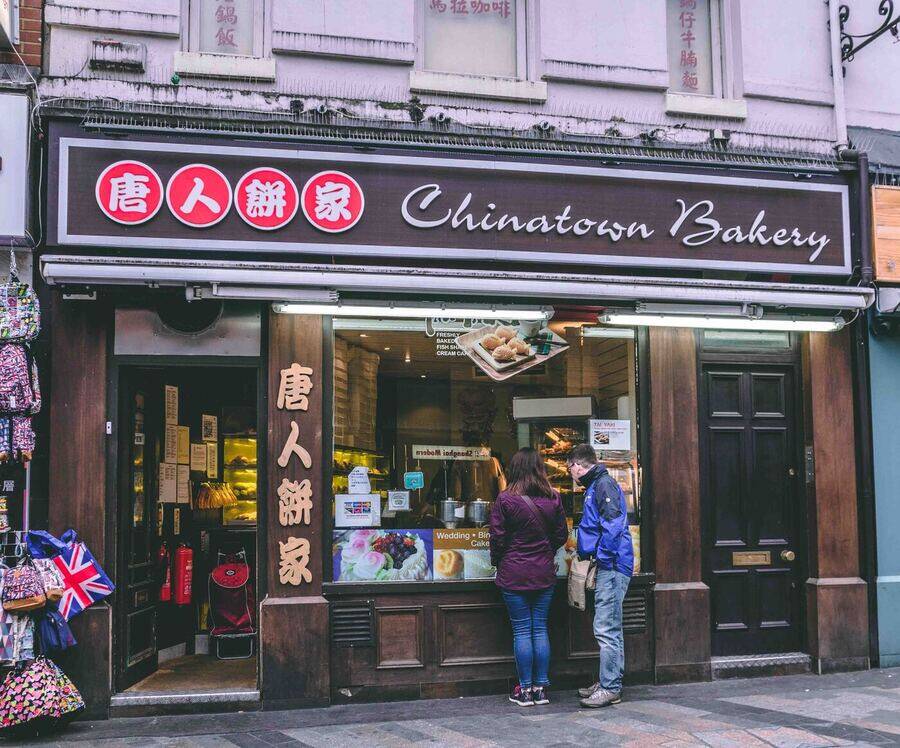
    Explore Chinatown

    Pick up some tasty treats at Chinatown Bakery.
    Pick up some tasty treats at Chinatown Bakery.

    Chinatown is one of the most colourful and lively pockets of London. Located near Leicester Square and Soho, Chinatown is part of London’s West End. The area started to form in the 1950s, starting with a few Chinese restaurants.

    Over the next few decades, other businesses and services made their home here, gradually turning the area into a hub for Chinese and East Asian culture. Chinatown is pedestrianised, so it’s easy to get around on foot.

    There is so much to look at in the neighbourhood itself, such as the stone lions, paper lanterns, buildings decorated with Chinese symbols, dragons and the grand, ornamental gate. 

    You should come here hungry, as the authentic Chinese food is not one to miss. There is a great selection of restaurants, all you can eat buffets, bakeries and supermarkets to choose from. If you fancy something different, you’ll also find other cuisines including Korean, Malaysian, Vietnamese and Japanese. 

    Catch a Theatre Show in the West End

    It would be a crime to come to London and not head to one of West End’s theatres. For hundreds of years, the culture and history of central London have been associated with West End shows.

    The very first theatre opened in the West End in 1663 and is still in use today. Over time, more and more theatres opened, and today it is the world’s largest theatre district. 

    There are all kinds of plays and dramas to suit different tastes, from comedies to musicals to operas to dance productions. Some of the most famous, long-standing plays include:

    • The Lion King at the Lyceum Theatre,
    • The Phantom of the Opera at Her Majesty’s Theatre, Wicked at the Apollo Victoria
    • and Mamma Mia! at the Novello Theatre.

    However, the theatres in the West End don’t just cater for big shows. There are many venues hosting smaller, more intimate productions and specialise in fringe and experimental theatre, such as the Canal Cafe Theatre and the Gate Theatre.

    Whip up Something Tasty at a Cookery Class

    It’s often said that the best way to discover a city is through its food. But what if you make that food yourself? When British food is mentioned, you probably think of fish and chips, pies, and Sunday Roast.

    But it’s much more than that – British food takes inspiration from different cultures that have made their home in British society. So what’s a better way to learn more about British cuisine than through a cookery class? It doesn’t matter whether you’re a culinary artist or a ready meal type of person – there’s always room for improvement. 

    There are many cooking schools in London, ranging from budget to expensive, easy to advanced, and vegan to meaty.

    A good place to start is at L’atelier des Chefs. With two locations in Oxford Circus and St Paul’s, this cookery school has classes ranging from 30 minutes to four hours. L’atelier des Chefs offer British cooking classes that focus on simple recipes made from quality ingredients. Some of the dishes include perfect roast potatoes, lamb leg steak, roast cod and sticky toffee pudding. 

    Do a Sports Stadium Tour 

    Arsenal-Stadium
    Arsenal Football ground during match day.

    If you’re a sports fan, then you’ve come to the right place. London is home to world class sporting events, and football is a favourite. London has five major football teams which are in the English Premier League: Arsenal FC, Chelsea FC, Tottenham Hotspur FC, Crystal Palace FC and West Ham United FC.

    Tours are available at any of these stadiums, and they’re pretty comprehensive. Amongst other things, you’ll get to see the players entrance, home and away dressing rooms, head coach’s office, media rooms and the pitch itself. Most stadiums have a museum as well, with interactive games, memorabilia, trophies, kit etc. 

    If tennis is more your thing, then the Wimbledon Lawn Tennis Museum is not one to miss. Go on a 90 minute tour of the grounds and sit in the players’ seats at the Media Centre, come face to face with the Championships Trophies and catch a glimpse of Andy Murray’s outfit from the London 2012 Olympics. The museum’s latest VR technology lets you travel back in time to experience the history of the game. 

    Do a London Food Tour

    Food tours are the perfect way to try some new delicious foods that you may have not discovered yet. Get your chocolate fix at Chocolate Ecstasy, try ethnic and international foods in East London or get some cheesy bits at Neal’s Yard Dairy.

    Free London Food Tour

    Who doesn’t love a free tour! Strawberry Tours offers a free London Food Tour which takes you around East London from London’s favourite chips to the salted beef bagel at Brick Lane Bagel Bake.

    The details: The tour starts at 2pm on Tue, Thu, Sat & Sun and will take approximately 2 hours. More information here.

    Chocolate Ecstasy

    Love chocolate? Then this tour is for you! Jennifer Earle creates tours with the best chocolate shops, bakeries and gelaterias in London. Their popular tour is Mayfair Chocolate Tour, tasting the classic English fondants (favourite of our Queen ?), a taste of treats from European countries (Belgium chocolate is incredible!) and maybe a sneaky dessert like Banoffee Pie.

    Every tour takes about three hours and you will get to explore different areas of London too.

    The details: The Mayfair Chocolate Tour runs from 10am–2pm on Mondays, Fridays and Saturdays. The cost is £44 per person.

    Cheese Tasting at Neal’s Yard Dairy

    Neal’s Yard is known as one of London’s prettiest areas and has one of the best-known cheese shop! There are also branches in Covent Garden and Borough Market. They host lots of tasty cheese tasting classes and workshops.

    The Dry January tasting is designed to serve as a light meal with 6-8 kinds of cheese with a sample of 3-4 soft drinks. The idea is to give you an introduction to pairing cheese with non-alcoholic beverages plus all the accompaniments.

    The details: All the events can be found on their website and generally around £40.

    Attend Festivals

    There are so many fantastic festivals that take place in London each year, attending one will be a great way to spend your time. You will get to meet new people (both local and tourist), what is more, you also get to experience the festival culture in London.

    Some ideas to look into; London Restaurant Festival, London’s Coffee Festival, BBC Proms in the Park, Underbelly Festival in South Bank or British Summer Time Hyde Park.

    Whether you don’t drink at all, or you’re just participating in Dry January, there is plenty to do in London that doesn’t involve alcohol. Even on a night out, there’s a huge range of activities where you don’t need to step foot in a bar. London is packed with history and culture, and it’s virtually impossible to run out of things to do. With that being said, pick an activity and get exploring!

  • Is London Better In Spring Or In Fall? A Local’s Guide

    Is London Better In Spring Or In Fall? A Local’s Guide

    London is one of those cities that has a charm to it no matter what time of the year you visit. Having said that, if you’re looking to avoid the tourist crowds in summer, it’s best to consider visiting in spring or fall.

    To help you decide when to visit, I’ve put together all the exciting events that both seasons have to offer.

    London’s temperatures rarely differ between spring or fall, and you can expect warm days in both seasons. Spring and fall are the rainiest seasons, so remember your umbrella! But don’t let the rain get you down – both seasons have plenty of events that’ll make your time in the capital memorable. 

    Keep reading to find out what’s on offer in both seasons.

    What to do in London in the Spring

    Spring in the UK comes early, with mild temperatures and blossoming trees appearing as early as late February.

    At the start of spring you’ll find cheaper accommodation deals, but keep in mind that prices usually increase in March and April as it hits the Easter holidays.

    The months between February and May are packed with events to suit everyone, from couples and families to nature lovers and sports fans.

    February in London

    For schools in the UK, the spring half term holidays take place during the middle of February. This means that there are more families and children out and about in the city compared to quieter months.

    However, it’s still a good time to visit, especially if you’re travelling without children. 

    Imagine Children’s Festival

    Having said that, if you are travelling with kids then you should definitely check out the Imagine Children’s Festival at the Southbank Centre.

    This is a 12 day arts festival that happens in February each year, dedicated to families experiencing all sorts of art and culture together. Expect to see performances, music, literature, comedy, creativity and parties for children aged 0 – 11. 

    Valentine’s Day

    If you’re travelling with your significant other, then why not celebrate Valentine’s Day while you’re in London? Whether you like to keep it casual or go all out, the city isn’t short of romantic spots.

    Try something different with a dinner cruise on the Thames. Or snuggle up next to the fire at one of London’s many pubs. Or try a quintessentially English afternoon tea, with many places featuring themed menus for the occasion. 

    Pancake Day

    Don’t laugh just yet. In London, there’s a long tradition of Pancake Day races held to raise money for charity. Head to one of the city’s many markets to witness the fun-filled event, and cheer on contestants as they flip pancakes in a frying pan while they try to complete the race course.

    Don’t forget to treat yourself too – many cafes do special pancake menus to mark the occasion. Pancake Day usually takes place in February, but may sometimes fall in March, depending on the date for Easter. 

    London Fashion Week

    London Fashion Week comes to the city every February and September. Showcasing over 250 designers, it is one of the ‘Big Four’ fashion weeks, along with New York, Milan and Paris. The February event showcases the fall/winter collections from the designers, sharing trends for the following season.

    Traditionally, Fashion Week was invite-only but is now open to the public. Purchase a ticket to the catwalk shows and you might just rub shoulders with A-list celebrities, reality TV stars, high profile fashion writers, bloggers and photographers. 

    March in London

    While February might still be a bit cold, the weather begins to improve in March. You’ll see the beginning of a ‘proper’ spring, with temperatures averaging 10°C. Most of the city’s parks will be green and blooming by now, making it the perfect time to go out and explore.

    St Patrick’s Day

    Every 17 March, Ireland celebrates St Patrick’s Day. Although it isn’t a national holiday in England, London joins in the festivities with an annual parade and festival that showcases the best of Irish dance, music, food, culture and arts.

    The parade usually happens on the weekend closest to 17 March and sets of from Piccadilly along a 2.4km route through the city’s landmarks.

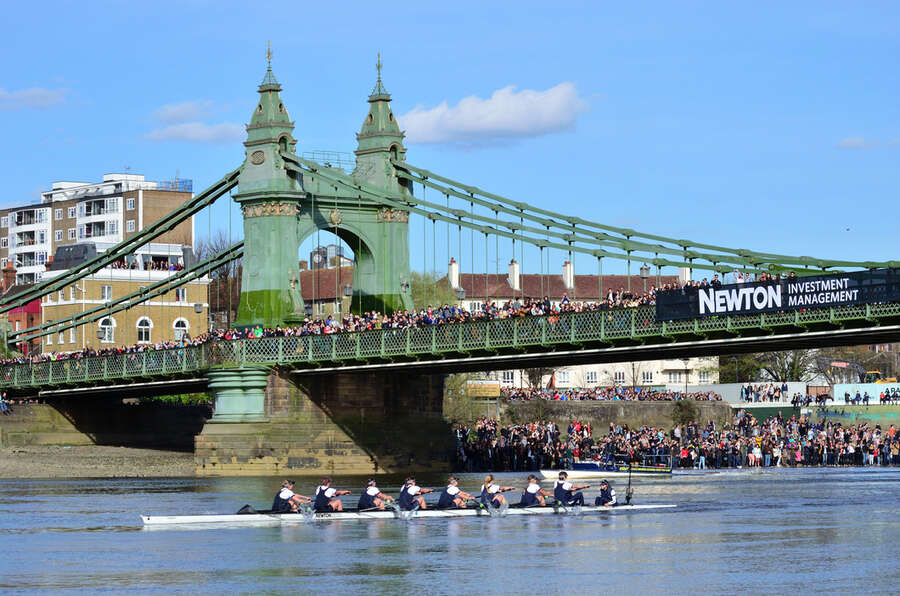
    The Boat Race 

    The Oxford and Cambridge boat Rac in London which is the perfect thing to do in Spring.
    The Oxford and Cambridge boat Rac in London which is the perfect thing to do in Spring.

    Make your way to the riverbanks of the Thames and watch teams from Oxford and Cambridge universities race in one of London’s largest annual sporting events.

    First taking place is 1829, this free event is a must do. Both the women’s and men’s teams battle it out along the 6.8km route along Putney and Mortlake, and you can find great viewing spots either side of the river.  

    International Women’s Day 

    8 March is International Women’s Day, and London is not short of events to mark the occasion. Each year, the city celebrates the social, economic, cultural and political achievements of women around the world. There are tons of interesting events to attend, including workshops, talks, performances and festivals. 

    April in London

    April has quite similar weather to March, and may even be slightly rainier. Some days may be cloudy and chilly, and some may be mild and sunny. It’s a good idea to be prepared for different weather conditions, so make sure you pack a waterproof jacket as well as lighter layers. 

    Easter Weekend

    Easter weekend is a great time to be in London. Although the dates vary each year between March and April, for the most part Easter weekend takes place in April.

    There are a ton of events going on in the city. Try locally made chocolate eggs, or join an Easter service at one of London’s churches, including Westminster Abbey and St Paul’s Cathedral.

    Head to Trafalgar Square to witness The Passion of Jesus, an extraordinary open-air play featuring 100 performers. 

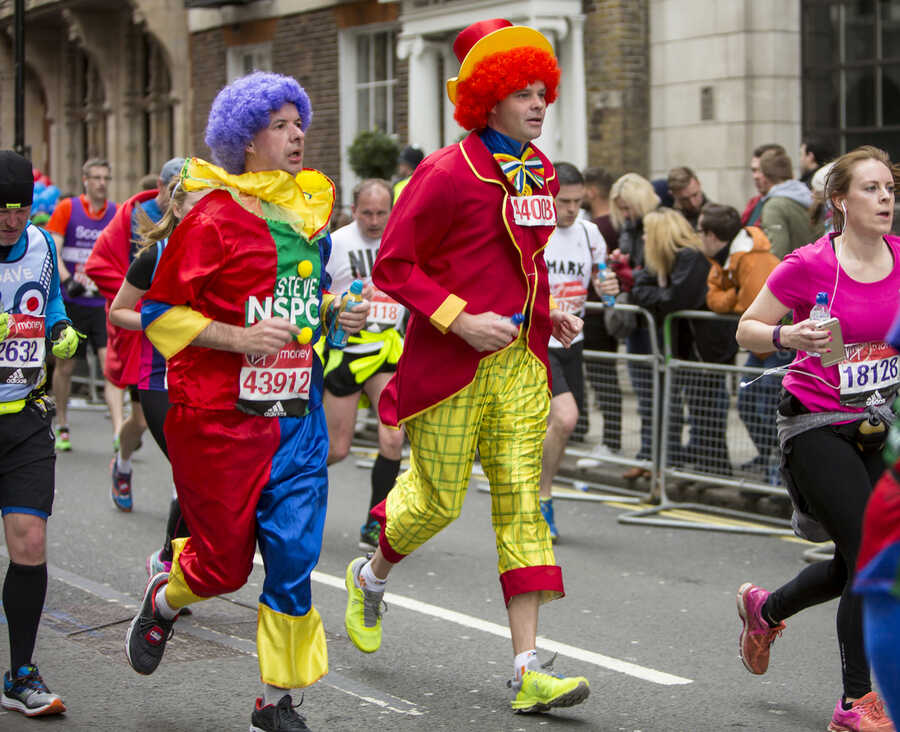
    Virgin Money London Marathon

    Virgin-Money-London-Marathon
    Virgin Money London Marathon is a fun day out. People get dressed up and raise money for charity.

    First run in 1981, the London Marathon takes place in spring each year, usually in April. Since the first ever run, the marathon has raised over £450 million for charity, and is the largest annual fundraising event in the world.

    Join millions of people watching and cheering from the sidelines in London’s 42.3km street party!

    Feast of St George

    Saint George’s Day, also known as the Feast of St George, is England’s national day. All things English are celebrated, so this is a great chance to learn more about English culture.

    The free festival comes to Trafalgar Square each year, and is complete with live music, brass bands, medieval jousting tiltyard, comedy shows and family games. Since the Feast of St George is traditionally a day of feasting, there are a huge selection of food stalls to sample.

    Vaisakhi 

    London is one of the most multicultural cities in the world, and over 200 languages are spoken throughout its neighbourhoods. London is known to celebrate diversity with different events and festivals.

    Each April, Londoners come together to celebrate Vaisakhi, a historical and religious festival in Hinduism and Sikhism. Head to Trafalgar Square to learn more about Sikh and Punjabi tradition, heritage and culture.

    Take part in fun activities, learn about Gatka – an ancient martial arts, and enjoy traditional food and Indian tea. 

    May in London

    Although May is the start of the peak season, it is a great time to visit London. Average temperatures fall in the high teens and the days are longer, with the sun setting at about 9pm. There are two May bank holidays, which means plenty of events throughout the city. 

    RHS Chelsea Flower Show

    RHS-Chelsea-Flower-Show

    Each May, the RHS Chelsea Flower Show is held in the grounds of the Royal Hospital Chelsea. Since its very first show in 1912, it has become the most famous flower and landscape gardens show in the UK.

    Garden designers, plant specialists and florists come together to create beautiful garden exhibits, floral displays and plant sculptures.

    The show sees more than 150,000 visitors each year, including members of the British Royal Family.

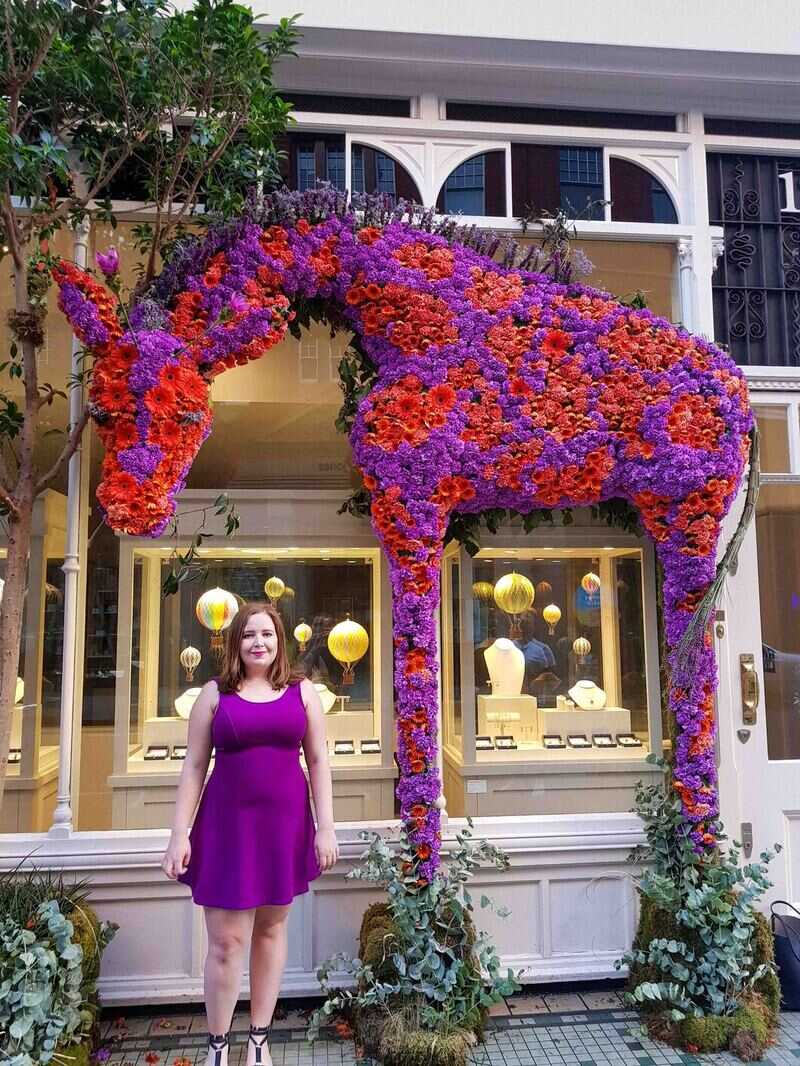
    Chelsea in Bloom

    Kat-at-Chelsea-in-Bloom
    Aren’t the flowers at the Chelsea in Bloom wonderful?

    Chelsea in Bloom is a free event that happens alongside RHS Chelsea Flower Show. Chelsea’s best retailers, restaurants and hotels come up with creative flower designs.

    The designs are on King’s Road, Sloane Street and the little streets in between. They come up with some pretty impressive artwork! There is a different theme each year, in 2019 it was ‘Under the Sea’.

    Catch an outdoor cinema event

    If you’re a film buff, then you definitely shouldn’t miss rooftop film season. Each May, different venues hold outdoor cinema events in fantastic locations throughout the city.

    Whether you’d like to watch Jaws while floating on top of a pool, or catch a classic 80s film on a rooftop with 360° views over London, this is something unique to write home about. 

    London Wine Week

    Each May, London celebrates all things vino at this week long festival, with over 100 venues across the city participate in discovering and appreciating wine.

    The programme includes tastings, showcases, pop-up prosecco gardens, dinners, masterclasses, meet the maker evenings and parties.

    So if you’re a serious oenophile, or simply just love a glass or two, make sure you don’t miss this event.

    London History Day

    First held in 2017, London History Day takes place on May 31 each year. The date marks the anniversary that Big Ben was completed in 1859.

    This is a perfect time to visit the city, as many museums, galleries and cultural spaces offer behind the scenes tours, rarely-seen exhibits and special events.

    Make the most of the warm May sunshine with historic walking tours of London, a great way to learn more about the city and take all the sights in. 

    What to do in London in the Fall (Autumn) in London

    As the temperatures drop and fall approaches, the busy summer months wind down. It’s easier to find deals on accommodation and airfares around this time of year, and you’ll also find that there is more availability when booking theatre or event tickets. As the leaves turn red and the crisp mornings arrive, stay cosy with these events. 

    September in London

    Schools are back and the tourist crowds start to thin out, which means that London’s sights aren’t as jam-packed.

    The weather in September starts to cool down, although there can still be warm, mild days. You won’t experience too much rain, although there may be some light showers rather than torrential downpours. 

    Totally Thames Festival

    Every year since 1997, the whole month of September is dedicated to the Totally Thames Festival. There are over 100 events covering art installations, exhibitions, concerts, films, performances and workshops.

    For the more adventurous, you can join a river boat marathon, a Thames swimming event and night kayaking. Events are spread across the city, so find one you like and join in the fun!

    London Design Festival 

    Every September for the past 17 years, the London Design Festival has promoted the city’s creativity. With over 400 events and exhibitions, the festival draws in an estimated 580,000 people from around the world.

    The Victoria and Albert Museum is the official hub for the festival, and offers an extensive programme of events, talks, keynotes, daily tours and workshops.

    However, you’ll also find installations dotted all around the city. 

    Open House London

    Emirates cable car in London
    Not all the places in Open Houses in London are houses, places like Emirates cable car has been a part of the event.

    One weekend in September each year, London opens the doors of over 800 of its biggest, most renowned buildings.

    With the aim of making architecture accessible to everyone, you can venture in some of London’s most secretive buildings to discover hidden histories and get interior inspiration.

    The best part is that this event is free, but as it’s so popular, you can expect to queue. The buildings are spread across 30 London boroughs, so you’ll need to plan in advance which locations to visit.

    If you live in London you can also volunteer at the open house days.

    Pearly Kings and Queens Harvest Festival

    Each September, London celebrates the harvest with the Pearly Kings and Queens decked out in their dazzling costumes.

    The tradition dates back to the 19th century when Henry Croft, a street sweeper who went out and collected money for charity wearing a dark suit covered in pearls to attract attention.

    Today, people gather at Guildhall Yard to celebrate the fall harvest with traditional entertainment including Morris dancing, maypole dancing, marching bands, and a street parade. Everyone is dressed in bright pearl buttons, and it is truly an unforgettable sight. 

    October in London

    In October, heavy rains and mist return to the capital. Having said that, there is only an average of 15 days of rainfall, so you’ll still see some dry and sunny days. Trees start to change colours around this time of year, and transform London into a vibrant red and orange palette. 

    London Restaurant Festival

    Meat caver at Bindisa longest lunch as a part of the London Restaurant Festival.
    Meat caver at Bindisa longest lunch as a part of the London Restaurant Festival.

    What’s a better way to explore a city than through its food? Every October, the London Restaurant Festival returns to the city. Now in its 11th year, the festival celebrates the diverse range of restaurants that London has to offer.

    You can enjoy a collection of food and drink events across the city, and try out curated menus, restaurant hopping tours, movie nights and masterclasses in various cuisines. With events in over 250 bars and restaurants, you won’t run out of options for sampling the best of London’s cuisine.

    BFI London Film Festival

    This annual film festival runs every October for two weeks. Founded in 1957, the festival screens more than 300 films, documentaries and shorts from approximately 50 different countries.

    While many film professionals and actors attend the festival, it’s still a public festival, and offers opportunities for people to see films that don’t have a UK screening, or exclusive access to films that haven’t been released yet.

    You may have to get tickets for talks by actors, directors and filmmakers, but there are tons of free events like quiz nights, performances and documentary screenings.

    Halloween

    While Halloween in the UK isn’t as big as it is in the US, it’s definitely growing in popularity and in cities like London, there are plenty of spooky things to do.

    London has quite a gory past, including Jack the Ripper, the Black Death, the Bloody Tower at the Tower of London and the London Dungeons all making the city the perfect place to spend Halloween.

    There are many tours and experiences you can take to discover the bloody history of the city. If you prefer a more cheerful, less scary Halloween experience then head to one of London’s many parties.

    The city’s pubs, bars and clubs are alive with different parties, so grab your best costume and get spooky.

    November in London

    November is pretty much the end of fall and you can expect cold, wet and windy weather throughout the month. If you love the festive season then good news –

    Christmas tends to start early in the UK, with many streets, shops and restaurants putting up lights and decorations in November. But if you’re the type of person who thinks Christmas should start in December, then don’t worry – there are still a few festivities in November to get through first.

    Bonfire night

    Remember, remember the fifth of November. Each year, London commemorates the day that Guy Fawkes attempted to blow up the Houses of Parliament in the Gunpowder Plot of 5 November 1605.

    Huge bonfires are lit in various locations around the city, and the London sky becomes a colourful display of fireworks. You can also experience other activities like funfairs and music, plus heaps of seasonal food and drink. 

    Remembrance day

    Each November, London remembers the people who lost their lives in the war with various commemorative events such as concerts and church services.

    Remembrance Sunday is held on the second Sunday of November, where a service and parade attended by the Queen takes place.

    There are also events at the Imperial War Museum, where you can learn more about wars through exhibitions and collections.

    Hyde Park Winter Wonderland

    This is London’s must-visit Christmas destination. Opening in mid November, there’s no harm in getting the holiday season started early with a huge selection of festive entertainment and activities.

    You can skate to live music at the UK’s largest outdoor ice rink, or sit back and admire the acrobatic performances at Zippos Christmas Circus. Catch spectacular views over the city from the top of the Giant Observation Wheel, or create your own ice sculpture at the Ice Sculpting workshops.

    For some hot food, head to the German style Bavarian village full of bratwurst, roasted nuts, waffles, Berliners and tons of other Christmas treats. 

    London Jazz Festival

    Every November, one of the UK’s landmark music events comes to the capital. The festival brings together emerging talent with established musicians from the jazz world.

    Experience a mix of concerts, events and performances, from headline shows to intimate recitals.

    You can find events at various venues across London, from large, well-known concert halls such as the Royal Festival Hall, to smaller spaces such as the Purcell Room. 

    The Verdict

    Is London Better In Spring Or In Fall? It’s hard to choose between spring or fall. London is such an amazing city with plenty of events throughout the year.

    Overall, the spring months are filled with a lot more outdoor events, so if you’re looking to spend time exploring the city by foot and soaking up the warm weather, then I’d recommend visiting between February and May.

    If you don’t mind chillier temperatures and less daylight, then fall can be a great time to visit. There are many events between September and November that’ll give you a taste of traditional British food, art and culture.

    Whichever season you decide to visit, you’ll be sure to find a huge selection of things to do – just remember to pack your umbrella!

    More London Articles

    If this is your first time in London, make sure you read my guide with all my insider tips to make your first trip to London amazing! Some things also require booking in advance, see my guide on what to book in ahead in London.

    Here is more London inspiration and frequently asked questions.

  • 9 Reasons You Need Travel Insurance for the UK

    9 Reasons You Need Travel Insurance for the UK

    Travelling to the UK can be expensive. With airfare, places to stay, and things to do, you’re going to spend some money. Travel insurance is another expense layer on top of that!

    I’ve seen several posts across the internet questioning if it is worth the money you’re spending? If something happens to you whether it’s a cancelled flight or something more serious the initial outlay is worth it.

    Do I need travel insurance for the UK? I always recommend getting travel insurance. If you think “I don’t need it” or “I won’t get hurt” please rethink that as it DOES happen. While most trips go to plan if it doesn’t you’ll be happy you spent that little bit of money on travel insurance.

    Why should someone get travel insurance for the UK? Travel insurance can be beneficial to travellers regardless of their planned destination. The top 9 reasons you need travel insurance for the UK:

    1. Medical Emergencies
    2. You Need an Emergency Medical Evacuation
    3. Baggage and Belongings Mishaps
    4. Cancellation of Your UK Trip
    5. You Miss Your Connection
    6. Flight Cancellation
    7. Your Passport is Lost
    8. Your Travel Company Files Bankruptcy
    9. Stress-free Car Hire

    Before you get travel insurance, you’ll need to know more about it: what it is, why you might want it, and what kind you may want depending on the trip that you’re planning. We’ve outlined all the basics here, to help you decide.  

    What Is Travel Insurance – and Why Would I Need if?

    Travel insurance is just like any other kind of insurance, in that it ensures your safety and wellbeing. When travelling, this can mean a few different things. Most of them have to do with the safety of you and your belongings. Different types of insurance cover different things and can have more or less coverage than others.

    To get started, we’ll outline some of the most important things that you need to know about travel insurance. Having a basic understanding of what is most commonly covered will give you a better understanding of what you might want to protect while travelling to the UK.

    9 Reasons You Need Travel Insurance for the UK

    1. Medical Emergencies While the UK

    As much as we would all like to hope that our vacations will go according to plan, accidents are inevitable. Most of the time they aren’t that serious but there is always the chance that a serious injury happens to you while you’re in another country.

    The problem is, of course, that most health insurance may not extend to a UK hospital if you’re as a citizen of another country.

    If you know you’re going to travel to the UK, and before you buy travel insurance, call your health insurance company. Find out if you are covered or if your existing health insurance plan offers a travel supplement. If it’s available, find out the cost of that so you can compare when you look at specific travel insurance.

    2. You Need an Emergency Medical Evacuation

    Rugby-players-preparing-to-catch-contestants-in-the-cheese-rolling-festival
    Rugby players helping at the Glouster Cheese Rolling to catch contestants after running down the hill chasing the cheese! They also assist in the injuries that occur in this dangerous sport and there are a few brutal ones.

    While the UK might not seem the first place you may need an emergency medical evacuation there are plenty of stories of people getting lost during a hike in Scotland or Wales, some requiring airlifts off mountains.

    During my travels, I have witnessed things that you just don’t think will happen. As an example, on a sailing trip around the Greek Islands, I watched a lady fall out a window at a bar and shatter her elbow. While the UK has better safety standards than Greece, she needed to get airlifted off this island as we were in a remote location. If she didn’t have travel insurance the cost would have been thousands of euros that she owed.

    By having travel insurance it will return the initial cost outlay. If you plan for outdoor activities this will give you the peace of mind whatever happens on your adventures.

    3.  Baggage and Belongings Mishaps

    One of the easiest problems to come into contact with when travelling (especially internationally) is to have luggage get lost in transit. Ending up in the UK without any of your things would probably be extremely frustrating.

    On top of missing some of your favourite products, if you’re not staying with friends or family who can lend you clothes, you will probably have to shell out money just to be clothed the rest of the trip!

    Investing in travel insurance for your trip to the UK could save you from having to spend your money on clothes and other supplies that you don’t really need. Baggage insurance usually comes in the form of reimbursement for lost goods, so you would still have to buy new clothes, but you would get reimbursed, making them free in the end.

    This process is still stressful and tedious, but insurance can definitely help ease the cost.

    4. Cancellation of Your UK Trip

    Most trip reservations are going to include a non-refundable booking fee and, very often, a booking fee on top of it. If something happens and you end up having to cancel your trip, you could be paying even more money for a trip that you didn’t get to take.

    Thankfully, most travel insurance includes cancellation coverage, which reimburses you for any extra funds that you might have to spend due to cancelling your trip. If you have an ever-changing schedule, look for a travel insurance plan that has really good cancellation. This way, you can relax even if something comes up.

    Pay attention to what kind of situations your cancellation insurance covers. There is a wide range of cancellation coverages policies and packages. Some comprehensive packages include a “cancel for any reason” insurance. This option is just what it sounds like: an assurance that you can back out of your trip for any reason, within a stated time frame.

    5. You Miss Your Connection

    Travel doesn’t always go to plan and you discover that you are going to miss a connection that impacts your trip. Whether is joining a cruise, tour bus, train or flight this will be an additional or lost cost to your trip.

    Having missed connection coverage will be providing you with the assistance services to help you arrange and pay for those travel changes.

    6. Flight Cancellation

    Flight-Cancellations

    From natural disasters to industrial action there are factors out of your hand that could your flight cancelled. With cancellation or interruption coverage you will have the money refunded and the costs covered for a new ticker or stay in a hotel.

    Now, this doesn’t mean that the airline won’t cover you in instances, but insurance gives you that extra support if the airline ends up being difficult. Do read the terms and conditions of the booking to ensure what you are covered for in case of a cancellation.

    7. Your Passport Is Lost

    You’ve taken your passport on a night out and realise it’s no longer in your bag and now you’re stuck! I’ve witnessed this happen a few times, even when I was renewing my passport at the Australian Embassy in London.

    Not sure about your countries emergency passport but getting an Australian passport overseas is expensive!

    Lost passport coverage will help you getting the process expedited and paying for the new passport.

    P.s. want to know if you should take out your passport in London? Read this article.  

    8. Your Travel Company Files for Bankruptcy

    With travel companies like Thomas Cook and Monarch going bankrupt in the last few years you just never know if your trip will be safe. Travel insurance can recoup the cost you would lose if the company cancels due to financial default and provide assistance finding an alternative solution to your trip.

    9. Stress-free Car Hire

    Driving in a new country can be stressful and for most of the world, the UK drives on the other side of the road.  Car accidents can happen, so I always make I have car insurance if I am renting a car. One of the biggest ways that car rental companies earn money from you is via insurance. Including car insurance in your trip policy can save you money and still be covered!  

    What Types of Travel Insurance Are Available for My Trip?

    A typical travel insurance policy will have coverage for most of your concerns when visiting the UK.  These include trip cancellations, medical emergencies, travel delays, and lost luggage. However, you may choose to get additional coverage to cover cruises, adventure activities or a higher coverage on your belongings (if you decided to bring a lot of camera gear as an example).

    Coverage Type

    While every individual travel insurance company is going to price their plans differently, there are two specific groups of plans that you can get. Depending on the situation that you’re in, you’re going to either want basic coverage or comprehensive coverage.

    • Basic Cancellation Coverage:

    This is exactly how it sounds. Basic cancellation coverage is only going to cover trip cancellation fees and non-refundable deposits for flights, hotels, etc. It also oftentimes covers baggage loss or damage, but not much more than that. This is perfect for any short, standard trip to the UK.

    • Comprehensive Coverage:

    This is the coverage that is going to help you get out of a dangerous situation or get medical attention for no out-of-pocket costs. If you are going on an extended UK trip or plan on doing particularly dangerous activities, a more comprehensive plan might be something to look into.

    The Cost of Insurance Coverage Based on Traveler’s Age

    Like many other types of insurance, travel insurance actually increases in cost as you age. So, the younger you are, the less you will pay for more coverage. This is mostly because of the increased risk of medical problems for older individuals because their health is in decline.

    Older travellers may have more health issues that make them at risk of needing medical assistance or attention while travelling. And, while most insurance companies will still offer coverage, it will cost more as you age – and that cost will be compounded, depending on what kind of coverage you are interested in.

    However, when you price compare, check to see which companies offer special packages for seniors. It’s possible to find special deals and group rates, too. 

    What Doesn’t Travel Insurance Cover?

    Travel insurance isn’t a miracle coverage, nor does it offer generous coverage of any and all potential travel-related issues. Like other forms of insurance, there will be some fine print to travel insurance.

    • Pre-existing Conditions – This is a big one to remember if you don’t disclose or choose a travel insurance policy that covers this then you could not be cover. If your trip to the UK is negatively affected by a medical emergency that has anything to do with a condition already existing in your medical records, you will have no coverage. This is a very unfortunate exception to coverage, but it exists, and you should definitely be aware of it if you do have any pre-existing conditions.
    • Individual Risks – While medical costs are generally covered by comprehensive insurance plans, there is always the chance that they will take individual risks into account. This can be a bit vague when it comes to things like outdoor accidents but is more clear-cut in other scenarios.

      For example, you are not covered you are under the influence of drugs or alcohol when the medical emergency occurs. High-risk sports, like scuba diving or bungee jumping, are also not covered automatically, with only some plans providing them as add-ons for an additional fee.
    • Disease Outbreaks – Strangely enough, even though they cover most medical emergencies and disasters, travel insurance plans usually do not cover medical treatment for a disease involved in an outbreak. They may, however, cover travel costs to escape after the outbreak has been labelled an emergency.

    Important tip: Most of the time, your homeowner’s insurance will cover the loss of personal property while travelling. If you have homeowner’s insurance, you may still have coverage in this area, so check with your agent before you leave for your destination.

    Choosing Your Travel Insurance

    Just like there isn’t just one kind of car insurance, there are different types of travel insurance to choose from. Which type you need depends on your situation and sometimes you have the ability to choose one that is cheaper or has more coverage than another.

    The process of picking your travel insurance actually involves a lot more control than you might think. Here are the primary categories of travel insurance plans and why each one might fit your specific travel needs.

    Single Trip Travel

    If you’re just visiting the UK once, this is the plan for you. This kind of plan will cover a trip that you are going on alone (or that you are only covering yourself for) and only the once. The cost depends mostly on your age and the length of the trip, without much change between areas of travel.

    Annual Multi-Trip Travel

    If you are travelling regularly, you’re going to want to get a multi-trip plan. This plan continues through each of your visits and costs less overall than getting a new policy for each individual trip.

    Group Travel

    If you are travelling with more people than yourself, a group plan may be more beneficial in the long run. The best thing about group travel plans is that they are just as comprehensive for a lower price per person. This is best for large groups, but any group larger than two people would do well to have a group plan.

    Senior Citizen Travel

    If you’re a senior, you can get an insurance plan specific to your needs. It includes coverage for pre-existing conditions and even more medical assistance, which can be beneficial to those dealing with health issues at their advanced age.

    Student Travel

    There are also travel insurance plans specifically for students. These plans usually have increased protective measures and may include add-ons for emergency evacuations. These plans are also usually just more accommodating in general, but because of this can be a bit pricier than some single trip plans.

    When Should You Get Travel Insurance?

    The easiest answer? Get it as soon as possible after you have booked your trip. The more exact answer depends on the travel insurance plan. Most of them are around two weeks after you’ve booked your flight, hotel room, and anything else so that they can get all of the necessary information.

    You can even get travel insurance after you’ve already left. Many, if not most, travel insurance companies offer the ability to get travel insurance when already abroad. They do have a cap-off date of around two weeks after you arrived at your destination, but if you would still like travel insurance but are a little late, you can get covered.

    While getting your coverage late is doable, the best time to get your coverage is still as early as possible. Travel insurance companies, like all insurance companies, are risk-based. That means that they are going to give coverage based on any determined risk. The earlier that you get your insurance before leaving, the more aware they are that you will avoid risk. So, the earlier that you get the insurance, the more coverage you are likely to receive.

    Is Travel Insurance Worth It When Visiting the UK?

    Travel insurance is always worth the costs to give you peace and mind that you will be covered on your trip. If you are planning on doing any outdoor adventure, cruising or bringing expensive items like cameras and laptops make sure these are included in your policies.

    Picking a travel insurance company can be overwhelming with all the choices, depending on the type of trip I have I will either start with an aggregators website like Go Compare, Confused and Money Super Market or go straight to trusted travel insurance companies like World Nomads, Covermore or True Traveller.

    • True Traveller is only for Europeans so it is restricted if you are travelling from places like Australia or the United States.
    • World Nomads is a very popular travel insurance company that provides cover across the world and also when you don’t have a country you reside in.  
    • Covermore will cover you if you are from Australia, India, New Zealand, the United States and the UK.

    More London Articles

    Hostels are a great way to save money when travelling solo, here are 11 Safety Tips. If you’re worried about travelling to London and whether it’s safe.

    Here are some more inspiration and frequently asked questions.

  • Foreign Prescriptions In The UK: Are They Valid?

    Foreign Prescriptions In The UK: Are They Valid?

    Getting your medications as and when due, is critical to managing health conditions. So, it is totally normal for you to be concerned about filling your medications, especially when you are away from home or overseas. In this article, we are going to be looking at whether foreign prescriptions are accepted in the UK.

    Are Foreign Prescriptions Valid in the UK? Foreign Prescriptions are not valid or accepted in the UK. Supplying medicine based on prescriptions issued outside the UK is considered illegal in the UK. However, there are exceptions to those issued in the EEA (European Economic Area) or Switzerland.

    Read on for more information regarding drug prescriptions in the UK and what to do in case of emergencies.

    Do UK Pharmacies Accept Foreign Prescriptions?

    Llyods Pharmacy UK

    Foreign prescriptions are prescriptions issued by a doctor in a particular country and then presented in another country. Simply put, it is when a patient presents a prescription from Country A to a pharmacist or doctor in Country B.

    In the UK, there are strict laws guiding drug dispensation and prescriptions. The Medicines for Human Use (Prescribing by EEA Practitioners) Regulations 2008 largely guides the laws on this subject. According to this Regulation, UK pharmacies are prohibited from accepting foreign prescriptions. As a result, issuing drugs based on prescriptions outside the UK, the EEA and Switzerland are considered illegal in the UK.

    So, if you are travelling to the UK, it is advisable to bring your medication along. Alternatively, you can see a doctor in the UK to prescribe a new medication for you. Although this process might take longer, it is better suited for people who are planning an extended visit or stay in the UK.

    Exceptions To The No Foreign Prescription Rule In The UK

    Although it is illegal for UK pharmacies to accept foreign prescriptions, there are few exceptions to this rule. They include:

    1. UK pharmacies are allowed to accept prescriptions from countries in the EEA (European Economic Area) and Switzerland. You will able to present your foreign prescriptions in UK pharmacies if your doctor or dentist is registered in a European Economic Country or Switzerland.

    However, you should note that EEA provision only applies to EEA doctors and dentists. Unfortunately, other medical practitioners such as nurses and pharmacists are not included in the provisions made for EEA or Switzerland.

    This means that a drug prescription written by a pharmacist or a nurse in the EEA and Switzerland cannot be accepted or dispensed in a UK pharmacy.

    Importantly, you must be able to prove that your doctor is from an EEA country or Switzerland and provide a valid prescription from such a doctor. Alternatively, you can also ask your doctor to request on your behalf as far as the doctor is registered in the EEA or Switzerland.

    However, a pharmacy in the UK may not be able to accept your prescription, even if it is from EEA or Switzerland doctor due to a language barrier. That is, a prescription written in a language that the pharmacist doesn’t understand.

    Furthermore, UK pharmacies cannot accept or dispense prescriptions of drugs that are controlled or drugs that do not have a UK marketing authorization.

    So, even though the prescription for these drugs is from registered medical practitioners in the EEA area, they won’t be considered valid. You might have to look for other alternatives for your supply.

    What To Look For In A EEA Or Switzerland Prescription

    Before you accept an EEA or Switzerland prescriptions, you have to be sure that what you are looking at is the real deal. The following are the information you have to look out for:

    • The date the prescription was signed
    • The name and address of the EEA or Switzerland Registered Doctor or Dentist.
    • The name of the patient and the address of the patient if the patient is more than 12 years old.
    • The details of the drugs, these include the common name, strength, and dosage.
    • The qualifications of the EEA or Switzerland registered Doctor.

    All the information above should be written in ink, and they can’t be cleaned off.

    What To Do In Case Of Emergency

    In an event where you need your meds urgently, you may able to get them with the following conditions.

    Life-threatening emergencies:  If you are in a life-threatening situation, and you need access to medication immediately, a pharmacist may be able to offer an alternative solution. At the end of the day, the goal is to preserve and save a life. However, this is only applicable in life-threatening cases.

    Otherwise, you must provide evidence that you have been prescribed before by a doctor registered and living in the UK, EEA or Switzerland. If you have all these, then the next thing is to visit the pharmacy.

    At the pharmacy, you will have to agree that you need the medicine urgently. In addition, the pharmacist will have to be satisfied that the dose is appropriate for the patient. If satisfied, the pharmacist may provide an emergency supply until you can get your usual supply.

    Note: A pharmacist may not be able to dispense controlled drugs. In a case where the pharmacist is unable to dispense an emergency supply of a drug, they are obliged to advise you on alternatives.

    How Long Is A Prescription Valid?

    Like drugs, prescriptions expire too, and you need to be conversant with how long they are valid for. Generally, prescriptions in the UK are valid for 6 months from the date signed on the prescription, unless of course, the prescription is for a controlled drug. 

    However, the date on a prescription can either be the date it was signed by the doctor or the date specified by the doctor for the drug not to be dispensed until that date. In a case where both these dates appear, your 6 months count starts from the date that the doctor specified for the drug to be dispensed.

    What To Do When Your Meds Gets Stolen or Lost During A Trip

    It is not unusual for your prescription drugs or stolen while on a trip. If you are visiting the UK and this happens to you, below are some tips to will facilitate your either replacement or alternative options.

    NOTE: This option is only available to those living in the EEA or Switzerland.

    • Plan before you leave: it is advisable to plan your trip and all you will need during your trip, including your meds. If you can pack your prescription bottle or a copy of your prescription drugs, then do, it will help a great deal in the event of theft or loss.

    However, if they are too much to pack, you can either compile a list containing all the details of the drug and the doctor’s address and number or take a photo of the drugs and the details.

    This way, you can prove that the drugs have been prescribed for you before.

    • It is also helpful if you can get a letter from your doctor. This letter must include the details of the prescriptions, reasons for needing the drug, and your name and address. You can present this letter to the pharmacist for a replacement.
    • Report to the Police: In the case of theft, it is advisable to file an official report with the police. This official report could help you prove that your medication was stolen and needs to be replaced.
    • To prevent theft or loss, it is better to carry your drugs in a bag that is always with you. Packing it in a suitcase might be convenient, but it is also very easy to misplace or get stolen.
    • You can also consult a doctor in the UK for your prescription replacement. If you are not in too much of a hurry, this is a better way. The UK doctor will make sure you end up with the appropriate replacement, especially if the drugs you are looking for are brand name drugs.
    • If all the above doesn’t work, you can opt for shipping your prescriptions drugs to you. However, before you do this, you need to research the laws guiding shipment of prescription drugs in your area. For instance, you cannot ship controlled drugs into the UK.

    Tips on How to Manage Your Prescription Drugs While Travelling

    • Carry them along: Never travel without your prescription drugs. If you are travelling to the UK and you are not from EEA or Switzerland, it is better to carry your medications as your travel. If you pack them along, getting your prescription will be impossible unless it is a life-threatening situation.

    Also, don’t forget to pack them in a carry-on bag that is always with you. This is to prevent theft and facilitate easy access.

    Another tip is to always carry more than enough. Carrying more than enough will ensure that even if your trip gets extended, you will still be covered.

    • Leave your Meds in their Original packs and containers: Repacking your meds may seem convenient but could cause problems in the long run. If your meds are not in their original package, it could cause issues such as delays or confiscation during a security search.

    More so, removing your meds from their original packs may expose it to harmful conditions.

    • Always take a copy of your prescription and a letter from your doctor with all the necessary details I mentioned above.
    • Be sure you are on the right side of the law: a drug might be legal in one country and illegal in another. Before travelling with your medications, research the country you are visiting to make sure the drug is legal in the country you are travelling to.
    • Research on whether your meds are sun-sensitive or not. To avoid sunburns when out.
    • It might also be helpful to find out the generic names of your prescribed drugs, in case you don’t find the one you are used at your destination.

    Differences between Brand Name Drugs and Generic Drugs

    A brand name drug goes through a process of research, development, and tests before marketing. The drug has a trademark, that is protected by a patent. Selling or producing such drugs is only limited to the company that has the patent for the drug.

    The patent of a brand name drug usually gives the company a monopoly of the drug until such time that the patent expires. After expiry, the generic versions of the drug can now come up in the market after fulfilling Medicines and Healthcare Products Regulatory Agency (MHRA)’s requirements.

    Generic drugs, therefore, are drugs that are copies of brand name drugs. They are expected to have the same use, dosage, safety, risks, and strength of the brand name drug.

    Generally, there are two basic differences between a brand name drug and a generic drug. These include the name of the drug and the cost of the drug.

    The name of a brand name drug is usually different from its generic versions. The brand name drug name is created by the pharmaceutical company that created the drug in the first place, while the generic drug is usually named after the active ingredient in the drug.

    A brand name drug is usually more expensive than a generic drug. Most times, public health facilities go for generic drugs rather than the brand name drugs. Generic drugs are not only cheaper, but they are also as effective as the brand name drug.

    If you are wondering why brand name drugs are more expensive, it is because the makers of brand drugs have to pay for research, development, testing, advertising, and promotion. This also explains why brand name drugs are given a patent for the monopoly over the drug for a period of time.

    On the other hand, generic drugs don’t have to go through the research and some other costs that brand name drugs do. So, they can afford to be less expensive than the original drug.

    Generic drugs are as safe as brand name drugs. They are tested using the same criteria for brand name drugs. Generic drugs are also required to follow Medicines and Healthcare Products Regulatory Agency (MHRA) regulations before being approved.

    Generic drugs are required to have the same active ingredients as the brand name drug, The same mode of consumption, quality, strength, and dosage. Though subtle differences are allowed in terms of colour, packaging, shape, and labelling.

     In addition, generic drugs are permitted to have flavouring and a different preservative from the brand name drug, however, these inactive ingredients must be safe for human consumption.

    Can I buy Drugs Without Prescription?

    There are some drugs you can buy without needing a prescription. A prescription drug is one that requires a prescription from a registered medical practitioner before it can either be dispensed or sold. Prescriptions are necessary because these drugs can be abused if not supervised. In essence, your prescription ensures that you have a legal, medical reason for using the drug.

    Drugs that you can buy without a prescription?

    A lot of drugs for minor illnesses do not require a prescription to be dispensed. These type of drugs are called ‘over the counter drugs’- which means you can easily buy them, treat the illness without seeing a doctor. Some of these drugs include:

    • Pain killers, cold and cough medicines or syrups.
    • Fever
    • Medicines for Diarrhoea, sore throat and allergies
    • Itching and constipation
    • Medicine, like eyedrops and emergency birth control drugs. Though emergency contraception drugs are available without a prescription, you might need pharmacist supervision, in that case, you will have to buy from behind the counter.

    Tips to Help You Take Your Meds According to Prescription

    Taking your medication according to the prescription is critical to managing that health condition as well as your safety. That said, here are some tips that can help you.

    • Create a schedule and stick to it: fix a time that you will be taking your meds and stick to it. To aid you, you can set an alarm to remind you or create a routine that will make you remember. For instance, you can choose to take your meds after breakfast every day.
    • Always bring more than enough whenever you are outside the house or travelling. Taking more than enough will ensure that you don’t get stranded whenever you are not at home.
    • Develop a medicine calendar or record to keep track of your dosage.
    • You can invest in a pill container. This will help you organize your meds. You can separate the meds in the pill container to avoid confusion. If you are using a pill container, you will have to fill at the same time whenever you finish what you have in the container.
    • If you are travelling overseas, apart from bringing more than enough medication, always make sure that your medications are secured in your carry-on bag to avoid losing them or having them stolen.

    Sources and Further Reading

    The Pharmaceutical Journal “Law and Ethics: Dispensing overseas Prescriptions”,3 July 2004.

    What to do when presented with a prescription from another European country: insight from a qualitative study of pharmacists in England.

    REGULATORY GUIDANCE for Dispensing Prescriptions issued by EEA doctors and dentists, Revised December 2010.

  • 7 Magical Things to Do in England at Christmas Time

    7 Magical Things to Do in England at Christmas Time

    Christmas in England is a time of magic and wonder, whatever your age or life stage, there is magic all around if you look for it. 

    The cities are brightened with light and commercialism and can be fantastic places to experience the wonder of the season with the bright lights, parties and hustle and bustle. 

    For a truly magical experience do something different, maybe you already have traditions and obligations, maybe you don’t….. now is the time to create some new ones and very often, even in the 21st Century looking back at history is where the magic can truly be found. 

    Go out of the comfort of the city or big town and embrace the magic that England has to offer. 

    Here is a guide of things to do at Christmas time in England.  There is so much to offer outside of the cities.

    1. Visit a Christmas Market

    Christmas markets are sprouting up everywhere and there are some fantastic city markets, but for a magical experience try one of the country markets, here are a few from around England.

    Ulverston Dickensian Christmas Market

    Famously one of the best for atmosphere and olde worlde charm the event is held towards the end of November so is one of the earliest too and attracts thousands of people. 

    With cobbled streets, fancy dress, horse-drawn carriages and free entertainment you can embrace the theme by hiring fancy dress and with a little imagination experiencing a different era.

    To complement the Christmas market the towns great pubs, cafes and specialist shops there is a traditional fairground and music to add to this magical experience.

     Getting there:

    Ulverston is just a few miles from the Lake District National Park and just over an hour by train from Morecambe. 

    Benefitting from a train station, there are regular trains and buses. 

    By car the nearest motorway is the M6 and travel time is approximately 30 minutes from the motorway.

    Knaresborough Christmas Market

    Knaresborough offers a bustling street market, selling local produce and crafts, seasonal goods and gifts. The market is next to Castlegate the cobbled courtyard of interesting independent shops which complements the market experience.  Morris dancers and various live music concerts by a variety of artists add to the fun, the weekend is finished off with a grand firework finale on Sunday evening.

    Getting there:   

    Just a few miles from Harrogate, Knaresborough is centrally located and easily accessible from York, Leeds or Bradford. Regular buses from York and Leeds, the car journey from either is less than an hour with park and ride and a bus shuttle in place.

     Petworth Christmas Market

    Extending from Market Square to Lombard Street and High Street with stalls also in the Leconfield Hall, the Christmas market offers all day entertainment such as buskers, a magician, live music, Father Christmas and lantern making.  A lively nativity features Darcy the Donkey and the usual shops stay open until 8pm.  The Petworth market is a one day market with the light switch on at 6pm. 

    Getting There

    Petworth is situated on the A272 and is about 30 minutes by car from Horsham or Chichester. Train and bus from Horsham takes a little over an hour and bus from Chichester an hour and 10 minutes.

    2. Go to a Pantomime

    Pantomime at Christmas time in England is a great activity
    Pantomime at Christmas time in England is a great activity.

    Ever been or never been, Panto is a fun packed traditional evening for everyone, not just for kids or those with kids.  Many of the smaller ones offer value for money and a great laugh and are well worth a journey or overnight stay.

    The Frome Musical Theatre Company presents a Pantomime at the Frome Memorial Theatre from the end of December to the first week of January.  For the 2019/20 season they offer Beauty and Beast and promise slapstick, humour filled magical panto suitable for all.

    Getting There:

    Frome is in Somerset close to the Wiltshire border and easily accessible from Bath 30 minutes by car and 50-57 minutes by bus or train and Salisbury 45 minutes by car and 1 hour 17 minutes by train.

    If you prefer a professional pantomime, the Great British Pantomime Awards Winner, the Yvonne Arnold Theatre in Guildford is sure to please with a line up of professional singers and actors their pantomimes always deliver.

    Getting There:

    On the A31 Guildford is accessible from all directions, easy from London it is around 25 minutes by car from Kingston upon Thames and +/- an hour by train.

    3. Go and Gather Your Tree

    Bring out Your Hunter Gather Instinct go forage for a Christmas Tree.

    What could be more seasonal than embracing your hunter gatherer and going to cut down (or collect) your Christmas Tree from the farm? Many farms now offer the opportunity of going and choosing your tree, cutting it down or if you are brave digging it up and this is a great way to kick off the season.  Many offer roasted chestnuts, mulled wine or tea and coffee around an open tin fire too.

    Look in your local press; check on line for the area you want to go to, here are some to get you started:

    • Hertfordshire: Dane End Christmas Tree Farm
    • Surrey: Alice Holt Woodland Park
    • Warwickshire: Crocker’s Christmas Tree Farm
    • Staffordshire: Keele Christmas Tree Farm
    • Somerset: Mendip Christmas Tree Farm
    • Dorset: Cranborne Manor Garden Centre (close to Wiltshire and Hampshire)

    4. Go to the Lighting-up Ceremony of a Historic Town or Village

    Light Up!

    Everyone knows about the Famous Lighting-Up Ceremonies in Trafalgar Square, Regent Street and Oxford Street in London, but there are similar smaller ceremonies going on in towns, cities and villages up and down the country.  It is much more of a personal experience to visit a village for their lighting up ceremony.

    St Ives in Cornwall, Home to a Tate Modern Art Gallery is one of the first to light up each year and the town celebrates with a parade of lights through the ancient seaside town.

    Barnstaple in Devon go further than many others with a special appeal in the lead up and a star will be lit to remember loved ones.  Money is raised towards Children’s Hospice South West and a local adults Hospice. The event features twinkling and sparkling stalls, a giant snow globe, naughty elves and celebrity guests.

    Christchurch in Dorset boasts real reindeer, donkeys and a chance to dress up for photos, their switch on is done by a local television personality and street food and mulled wine is abundant.  Christchurch also has a street market and live music.

    In West Sussex, Horsham have gone high tech with a 10 minute projected show every 15 minutes every day in December designed to give the town a ‘festive buzz’.

    The Kent village of Downe village lights were started in the early1990’s and this quaint village that is easily accessible from London offers a brilliant light display with a backdrop of the pretty historic village cottages and traditional inn.

    Castleton in the Peak District boasts ‘One of the most dazzling displays’ where the main street is adorned with brightly lit Christmas trees at every opportunity.  But it doesn’t stop there the magic is village wide featuring Christmas trees and enticing window displays galore.

    5. Visit a National Trust Property

    The National Trust saysChristmas is here, and all across the country magnificent houses and beautiful gardens are being transformed with twinkling lights to add some winter cheer.’

    Many National Trust historic houses lay on special events and decorations to create a magical Christmas, phone ahead or check online as advance booking is often required.

    Norfolk: Blicking Estate with its magical tree lit drive and Christmas themed rooms, Blicking Estate offers visitors a truly, wonderfully magical Christmas experience, The view of the lights on Temple Walk with the fountain and acorns lit up on the Parterre are not to be missed, but once seen will always be remembered.

    Suffolk: Ickworth offers a sound and light based trail through the Italianate garden that glows, including the magic of a gothic Victorian Stumpery and some exciting modern additions.

    Worcestershire: Hanbury Hall gives visitors a truly unique experience of a ‘70’s and ‘80’s Christmas Party, built as a country retreat the house is decorated and themed with the excess of the ‘70’s and ‘80’s, look out for the ghetto blaster and the period tinsel and trees.

    Berkshire: Basildon Park provides visitors with opulent Christmas decor and thousands of tree lights offering the experience of a luxurious Victorian Christmas.

    Hertfordshire: Ashridge Estate, offers a magical opportunity to meet and join the chocolatier team from Auberge Du Chocolat to sample their locally made chocolate.

    Wiltshire: Avebury Manor has Christmas Carol themed room decor, lavishly decorated with handmade festive displays.  Whilst there enjoy a walk around the mystical Neolithic Avebury Stones for a truly magical experience at this world heritage site.

    6. The Festival of Light at Longleat

    The-Festival-of-Light-at-Longleat

    Privately owned by the Marquis of Bath, Longleat House and Safari Park is a well known tourist attraction. 

    Increasingly the winter spectacular of the Longleat Festival of Light is becoming more and more famous.

    The Festival of Light display runs alongside all the usual traditional celebrations, such as the Santa Train, an Enchanted Christmas Tree Show and Longleat House throws open its doors to visitors showcasing fabulous festive 1920’s decor. 

    Over a thousand lanterns transform the house and grounds into a twinkling, glowing wonderland and with the light festival is truly magical and not to be missed.

    7. Attend a Cathedral or Church Service

    Cathedrals are architecturally beautiful buildings and whatever your faith it is well worth looking around inside one. 

    Do so at Christmas and everything is extra special. The acoustics tend to be fantastic and any musical concert at a church or cathedral is magical and breathtaking. 

    As well as the traditional midnight mass, many cathedrals and churches hold special ceremonies in the run up to Christmas both the traditional advent services and other things like carol services. 

    Because the way it works a cathedral will always be in a city, the city does not have to be large Wells City, home to the breathtaking Wells Cathedral, dedicated to St Andrew the Apostle is home to about 10,500 people, compared to London at almost 9 million is a tiny place near Cheddar in Somerset.  Yet Wells is a thriving, beautiful Anglican Cathedral well worth a visit.

    It is well worth seeking out the cathedral nearest to you and having a look around at the architecture and the magical stories the building can tell you.  Another famous cathedral outside of London is York Minster or The Cathedral and Metropolitical Church of Saint Peter in York to give it its full title. 

    Many churches and cathedrals will hold the Christingle service, which is a modern tradition of candlelight and oranges, aimed mainly at children and is a spellbinding service to see.   

    Or you could find a church or cathedral with a nativity scene to enjoy as a reminder of the meaning of Christmas.

    Whatever you decide to do, England has a lot to offer at Christmas.

  • How To Get Internet And Wi-Fi In London

    How To Get Internet And Wi-Fi In London

    We are living in a digital age and constantly in need of staying connected via the internet. Regardless of where we are, we all have one thing in common, we all want a good Internet connection. If you don’t want to spend time looking for constant, uninterrupted Internet and WI-FI in London, this article is just for you!

    How to Get Internet and WI-FI in London? There are several options available to people who want a good internet and WI-FI connection in London. These options include but are not limited to buying a local sim card with a data plan, searching for public Wi-Fi or using hotel Wi-Fi, getting a Travel Wi-Fi Hotspot, and lastly roaming your sim.

    For more on information on what your internet and Wi-Fi options in London are, continue below.

    Staying Connected in London: Internet & WI-FI Options

    Staying connected with your loved ones and the world at large is important. Depending on your plan and budget, below are some internet and WI-FI options to help you stay connected when in London.

    Buying a SIM Card

    The local sim cards will have etched cut-outs for three sizes so you will have no issues finding a provider that fits with your phone.
    The local sim cards will have etched cut-outs for three sizes so you will have no issues finding a provider that fits with your phone.

    One of the options available to you is to buy a local sim card. A local Sim card will give you the advantage of texting and making calls. You can also access the internet by buying a local data plan. Getting a sim card can be the best options if you don’t plan on needing big amounts of data.

    However, you should know that your device will need to be unlocked before you can use data on the phone. If you are not sure whether your device is unlocked or not, you can check with the place you got the phone from.

    With a local sim card, you should be able to access the internet with the highest speed possible. In addition, you will also be able to use a phone as a hot spot to connect your other gadgets that might require internet access.

    Read this before purchasing a SIM card: Do all Phones Work with UK Sim Cards? What to Know Before Visiting.

    Advantages of buying a local SIM card

    • Cost-effective when compared to hefty roaming charges
    • The added advantage of calling and texting
    • Good for people planning for an extended visit or stay in London
    • Offers the fastest local speed possible

     Disadvantages of buying a local SIM card

    • You will have to first find, buy, and then insert the sim card before you can be connected. This may prove stressful, especially if you are not familiar with your surroundings.
    • Though a local sim card is cost-effective to the owner, loved ones trying to call or text you may incur heavy charges.
    • You may have to wait till you can get a sim card before you can contact your loved ones.
    Vodaphone vending machine at Heathrow Airport in the baggage reclaim area.
    Vodaphone vending machine at Heathrow Airport in the baggage reclaim area.

    Get an International or Europe Only Sim Card

    The only difference between the two is that a Europe only sim card is limited to Europe and cheaper than an international sim card. With an international sim card, you don’t need to always buy a new sim when you are visiting another country. Hence, it will be a good option for people who are always travelling- it is simple and very convenient.

    Advantages of Getting an International or Europe only Sim Card

    •  Having one sim card to use for almost every country is really a very convenient way of traveling.
    • Reduces the cost of your loved ones calling or texting you. Compared to a local sim or roaming fees, this is certainly the best to keep in touch with your loved ones.
    • International data plans work with locked phones. You don’t need to worry whether your device is locked or unlocked.
    • The hassle of a language barrier is eliminated. You can manage and top your accounts in your language.
    • Gives you the advantage of contacting your loved ones immediately after touching down.
    • Your loved ones can reach you anywhere you are, since it is the same sim.

    Disadvantages of International or Europe only Sim Card.

    • Europe only sim cards are limited to only countries within the European Union.
    • An International Sim card and data plan might be very expensive in the long run. So, it won’t be advisable if you are on an extended stay or visit.
    • Some countries don’t make provisions for international sims. However, London has provisions for international sim cards.

    Searching for Public WI-FI or Using Hotel WI-FI

    WI-FI is one of the cheapest options available for internet users. What is more, you need to unlock your phone to use WI-FI or access the internet.

    It’s possible to find free WI-FI hotspots in many places in London. In fact, you can access free WI-FI in places such as Starbucks, McDonald’s, Cafés, Underground (if you have a local sim), etc. though you may have to buy something if it is a restaurant in order to gain access.

    However, the downside is that you would have to stay in one place to stay connected, instead of exploring the city. Using WI-FI can also be inconvenient, especially if you are travelling. You may not be able to search for directions if you get lost. More so, public WI-FI is not your best option if you want uninterrupted network connection.

    Using your Mobile Data

    It is also possible to use your mobile data to access the internet if you are not scared of the charges that it will attract. By using your mobile data, you will be attracting hefty charges unless you have international data coverage.

    If you want to avoid this, there are better options to explore, such as WI-FI, Local Sim, etc. when accessing the internet in London.

    Getting Travel Mobile Wi-Fi Hotspot

    This will be a great choice if you are travelling in a group to London. Although it is also a good choice for a solo traveller. A travel WI-FI Hotspot provides you with your own 4G unlimited network. In London, this can be up to 5GB daily.

    One of the obvious advantages of a Travel WI-FI Hotspot is that you can your share hotspot with others. You can connect up to 10 devices at once and still be able to access the internet at high speeds.  

    This means you can connect your laptop and other gadgets to the WI-FI Hotspot if you are a solo traveller or share among the group if you are travelling in a group.

    Advantages of Using a WI-FI Hotspot

    • Ability to connect up to 10 devices
    • Convenient and easy to carry while travelling
    • A good option for a group of travellers or a family
    • Can connect anywhere, once it is in range.

    Disadvantages of using WI-FI hotspot

    • There is a risk of it getting lost or stolen
    • You will always have to carry the mobile WI-FI Hotspot around
    • You have to keep the mobile WI-FI Hotspot charged always
    • It can be inconvenient for a group once splitting occurs
    • Running costs might be expensive on the long run.

    Get a Customized Roaming SIM

    Roaming your ordinary or local sim may be too expensive and getting a local sim every time, your travel might be too stressful. Alternatively, you can get a customized roaming sim.

    For instance, KnowRoaming offers a SIM sticker that involves you applying a sticker to your existing SIM card. This sticker basically turns your sim into a super dual SIM card that you can use when you travel without replacing your sim.

     There are various options and data packages depending on your choice and preference.

    Internet Access Options

    Internet service is widely available in London. Most time you will find them added to cable and satellites service. There are various types of connection, depending on what you want. Some of these include ADSL, Cable, etc. The speed and cost also vary from one provider to the other.

    Some of the Internet Providers in London include:

    Sky – offer speeds of up to 24 Mb, BT Broadband, TalkTalk, Virgin Media,  Orange, Vodafone, Calico UK Internet Service, Abel Internet, and Plusnet.

    Installation

    After deciding the type of connection, you want, you will need to contact your chosen service provider for installation. Usually, you won’t need to have the engineers over, though it might be necessary if you are just installing for the first time.

    What Does Installation Involve?

    Basically, installation involves setting up the modem or router and filter. After setting up, you will then configure the internet access on a computer, and after that, you are ready to access the internet.

    Note: You will need some documents to successfully install your internet access.

    Documents Required for Installation includes proof of identity (Valid full EU passport or Valid non- EU passport, Current and Valid UK Driving License), Utility bill or lease agreement, as the case may be.

    What is WI-FI?

    The term ‘WI-FI’ is used to describe the technology through which the internet is distributed wirelessly into our devices. The keyword here is ‘wirelessly,’ meaning it does not require a cable to work, and you can connect your device remotely once your device is in range. For Wi-Fi to work, you will need to buy broadband.

    Note: Broadband is generally what brings the WI-FI to your home. Broadband is the technology responsible for connecting your personal internet to the global one. It specifically brings the internet to you with the help of wires, cables, and exchanges.

    While broadband brings the internet to you specifically, you still need a wireless router before you can access and use the internet. Once you have your broadband deal, the next step is to plug your wireless router into your broadband connection.

    The wireless router will dispense the WI-FI connection to a specific band range. As a result, you will be able to connect your devices anywhere within that range without needing cables and the like.

    Wi-Fi Options in London

    O2 WI-FI

    O2 WI-FI offers free service. The most amazing part is that you don’t have to be an O2 customer to use O2 WI-FI. All you have to do to use it is sign up, and that is all!  

    Places you can find O2 WI-FI in London include McDonald’s, Debenhams, Costa Coffee, House of Fraser, Café Rouge, etc. O2 WI-FI gives you quick access. It requires no password or username to connect.  To connect to O2’s Free WI-FI service, you can use an app on your Apple and Android device. For more info go to O2 Wi-Fi.

    Starbucks UK

    If you are looking for free WI-FI, then you can visit any Starbucks. Starbucks usually offers a two-hour free session. Though the WI-FI only lasts for two hours, this doesn’t mean you are limited to those two hours per day. You can have as many sessions as you want per day, all you need to be to reconnect after your 2 hours elapse. For more information on how to use this, visit Starbucks UK.

    The Cloud

    The Cloud is another free WI-FI service that you can use in London. The advantage of this option is that it serves thousand of hotspots in the UK. This means it is easier to find a place to connect as you go.

    However, before you can use the Cloud, you will need to create a Cloud account. This is not difficult at all. All you need to do is to create a username and password, and then log in through your device’s browser when you get to a place that has a Cloud WI-FI hotspot. You can visit The Cloud for more information and help.

    Virgin Media

    Virgin Media is a Pay-for-Service Wi-Fi network in London. It provides full, speedy WI-FI internet access by connecting customers to Virgin Media Hotspots all across the city. This way you can connect to the internet from almost anywhere, even underground!

    They also provide WI-FI access to home users via broadband and routers. There are different packages on offer, depending on your preference. Some of these include Virgin Media Hub, Virgin Media Broadband, Virgin Mobile Pay Monthly among others

    Virgin Media service is not free. You will need to pay a certain amount to get broadband and a router set up. You also don’t need a phone line to set up and connect, which is an added advantage.

    However, if you don’t want to totally switch to Virgin Media WI-FI Service permanently, you can always use their services by buying a WI-FI Pass for a temporary period- this could be for a day, week or a month, your choice! For more information, visit Virgin Media

    BT WI-FI

    British Telecom (BT WI-FI) is one of the fastest and most widely used WI-FI services in London and the UK generally. It offers a broadband service that is connected to most of the hotspots in public places. This means you can use this service when you are mobile or up and about.

    Boingo

    Boingo is unique in the sense that they are not just limited to London and the UK. They provide different international packages and data plans, which means you can also use it when you are in London. The Boingo Mobile service costs $7.95 USD per month for UNLIMITED Wi-Fi access worldwide at 600,000+ Wi-Fi hotspots –a good deal if you ask me.

    You can download their Boingo Mobile Wi-Fi app to your device and sign-up before you leave on your trip.   For more info go to Boingo.

    Pros and Cons of WI-FI Internet Access

    Pros

    • Easy to find: You can find WI-FI hotspots almost everywhere in London, making a convenient choice for data users.
    • Convenient for heavy data users: If you are a heavy data user, using a mobile data plan or roaming your sim might get too expensive and cumbersome in the long run. With a speedy WI-FI such as Virgin Media, heavy data users can surf and download without hassles.
    • Able to Connect almost any device: Once your device is able to access the internet, then rest assured, you can use WI-FI for it, and what is more, you won’t need a cable or wire to connect to the internet!
    • Automatic connection: Once you put your WI-FI password into your device, connection henceforth will be automatic. No hassles, just a simple, quick connection.
    • You can connect from anywhere within range:  Your router distributes the WI-FI over a band range in your home. Once you plug in your router to your broadband, you can connect from anywhere once you are in range.
    • You can deploy your Wi-Fi internet access to your other devices by using a hot spot.

    Cons

    • You may experience low speeds, especially if you are not using reliable broadband.
    • WI-FI is susceptible to interference, and this may affect speed and even workability.
    • The range of a typical WI-FI router is still very limited. Ideally, the range will encompass your entire home, but when you walk about the streets, you will need to continually jump from one WI-FI Hotspot to another.
    • Security risks: Security may be a problem, especially when using public WI-FI.

    Who is Wi-Fi for?

    The beauty of Wi-Fi is that it is for almost everyone, except maybe you don’t use or have smartphones and computers, a reality that is almost impossible in this age. Wi-Fi will be highly beneficial to the following group of people.

    • Household and families: A family, especially a large one, will need WI-FI for their numerous internet needs. Doing a data plan for each member of the family will not only be stressful but also expensive.
    • Rented apartments: As neighbours, you can share the same WI-FI connection. The costs can be shared between the neighbours. This could be a cheaper option compared to individual data plans.
    • Student Hostels or Apartments: Like rented apartments, student hostels could also share the same WI-FI and manage the cost for better internet access.
    • Heavy data users: Heavy data users such as gamers, tech nerds, and the likes will want a broadband WI-FI connection. It is relatively cheaper and more convenient.
    •  Practically anyone: Do you have a device? Do you need internet access? If Yes, then WI-FI can be for you. Though you may have a mobile data plan, the beauty of WI-FI is that you can connect from anywhere in your house.

    How do I Setup WI-FI?

    If you want Wi-Fi personally at home, you only need to follow a few simple steps below.

    • Choose a broadband deal – You’re going to need to choose a broadband company to supply your WI-FI.
    • Wait for router or engineer to arrive – Once ordered, one of two things will happen. Most broadband providers will send your broadband Wi-Fi router through the post, and then you just plug it in as directed.

    However, some broadbands suppliers such as Virgin Media may require a visit from an engineer to set up the broadband.

    • After setting up the broadband, the next step is to plug the router and switch it on.  This isn’t difficult at all; you can just follow the manual instruction on how to do it. If you still encounter any problems, then maybe it is time to contact your service provider.
    • After plugging in the router, you are now connected to the WI-FI. To secure your connection, you will need to set a password or preferably change your password from what came with it to your chosen password. It is advisable to set a password that is strong, and at the same time, you can easily recollect.
    • All you need to do now is to connect devices and browse away. To connect your device, go to WI-FI settings on your device, click on your router, and enter your password. Voila! You are connected!

    Places You Can Find Free WI-FI In London

    Most hotels and B&B’s have Wi-Fi service for their guests. This means internet access in your accommodation is already sorted out. For your daily outing, however, finding internet access may not be as easy. To save you the stress, we have gathered some ideas on how you can stay connected using free WI-FI.

    Note: Most of these options are free, except for a few exceptions.

    • Get Wi-Fi on Tours: If you are visiting London on vacation, one of the easiest ways to access the internet is to get Wi-Fi from the Tour company you signed up. Most tours guides offer some sort of data plans and can share their hotspot with you so that you could quickly use Wi-Fi. 
    • Sign up to O2 Wi-Fi:  As earlier mentioned, O2 WI-FI is one of the few free WI-FI that gives you quick internet access. You can download the O2 Wi-Fi App, so you can find the nearest hotspot to you, even when you are offline. The O2 App is available on both Apple and Android platforms.
    • Bus Tours are one of the easiest ways to gain access to free WI-FI in London. Most tour bus these days have free WI-FI for ticket holders, you can just try your luck!
    • Sign up to the Cloud: Places you can find Cloud WI-FI hotspot include Pizza Express, Wagamama, shopping centres among others.

    All you need to do to gain access to cloud WI-FI is to create a Cloud account and then use username and password to login through one of their hotspots.

    • Apart from WI-FI service companies, most major, airport, train stations, restaurants, and shopping malls offer free WI-FI to their customers.
    • Starbuck offers free WI-FI, all you need to do is simply get a coffee and enjoy the two-hour session they provide freely. If you are not satisfied with your two hours session, you can reconnect once the two hours are over.
    •  You may able to access free WI-FI in some streets in London such as Oxford St, Trafalgar Sq., Piccadilly Circus, Islington’s Upper St. and the City of London. Though using in these streets is free of charge, nevertheless, you have to register before using
    • You might also get free Wi-Fi in McDonald’s, where free 24-hour period Wi-Fi are offered to customers. Though you will have to at least buy something.
    • If you are looking for temporary solutions, you can opt for buying Virgin Media’s WI-FI Pass.
    • Use internet cafés: old? Yes, but internet cafes still work, and you might be surprised at how cheap they are. So why limit yourself, when you can access the internet in the comfort of a Café?
    • Online-4-Free.com offers a Free WI-FI coverage that covers the banks of River and some surrounding streets. All the site wants in return is for you to watch a short advertisement every thirty minutes — a small price to pay considering.
    • Some public libraries, such as the British Library offers free internet access for members that are registered.

    FREE WI-FI TIPS

    • Always take permission or ask before logging in to a WI-FI network in public spaces. You may be violating a law by logging in without permission.
    • There is always a security risk when using a public WI-FI, so make sure that there are good security measures in place before logging in. You also need to be careful of your passwords and login data when logging in a public space

    More London Articles

    If you are visiting London you may want to get a SIM card, here’s everything you need to know about phones working with UK SIM cards. If you run out of battery while exploring the city make sure you read where can you charge your phone in London.

    Here are some more inspiration and frequently asked questions.

  • This is Why English Homes Have Two Taps (& How to Adapt)

    This is Why English Homes Have Two Taps (& How to Adapt)

    One of the first things I noticed when I moved to the UK, is that the bathrooms have two taps. It’s an odd thing to pick up on but I guess when you are used to having mixed taps in your home country its something you need to get used to.

    This is why English homes have two taps – In the UK, there’s a law that prohibits mixing cold water and hot water from their separate boilers, one for cold water in the attic for drinking and one for hot water downstairs which is not drinkable. 

    Using London as an example, and with a little detective work, we can create a picture of how London’s water system was developed, along with major issues involved, in the last few hundred years. This will answer the question of how they ended up with two faucets.

    Why do UK Houses Have Water Tanks?

    The reason for the two water tanks is to prevent any used cleaning water from the house (possibly contaminated) flowing back into the cold drinking water.

    How to use British taps

    There are really only two simple methods:

    1. Plug the sink, fill it with both hot and cold water to get to your preferred temperature, and then wash in this water.
    2. Open both taps at the same time, move your hands really fast between both of them and, if you do it quickly enough, you can sort of get the water mixed.

    Why are Cold Taps on the Right?

    The simple answer to this question is that most people are righthanded, and the cold tap is used the most. So, therefore, the hot tap is on the left.

    Where does London’s Drinking Water Come From?

    Water-Fountain-at-National-Rail-Station-in-the-UK

    The majority of London’s drinking water, almost 70% in total, is retrieved from reservoirs outside the city, which have collected water directly from the Thames River.

    After being treated at facilities to ensure removal of any harmful elements, it is transported through one mammoth feeder pipe to smaller reservoirs around the city’s perimeter, after which it is fed through a web of piping directly to residential homes and building throughout London.

    So, what about the remaining 30% of drinking water? This is the other percentage of drinking water which is retrieved from boreholes that access groundwater directly and pump it to the surface.  It then goes through the same treatment and pipe system and combines to reach the city.

    On a typical day in London, this water system provides over 2,100 million litres of drinking water, which doubles during hot spells.

    How is London’s Sewer Water Treated?

    When you flush a toilet or drain your sink, the used water goes down a drainpipe and travels out into the larger system of sewer pipes under the roads of London.

    Local sewers then join a larger web of sewer pipes and wastewater finally reaches to a sewage treatment facility – sometimes by drainage and sometimes by pumping.

    Then the first stage of purifying wastewater involves removing large objects that could damage equipment or present pollution to local waterways.

    After this separation, wastewater still contains organic solid matter, meaning human waste. The following stage separates this solid waste from the remaining water. This is done by pumping the water into large settlement tanks, where it settles for a determined amount of time. Separation occurs during this process, which causes the solids to sink to the bottom of the tank.

    At this stage, even though the visible bits of sludge and solid waste have been removed, it is still most important to ensure that the smaller and sometimes invisible nasty bugs are also taken out.

    After that second treatment, the final wastewater is then passed through the last settlement tank, where the good bacteria sink to the bottom. In the end, the final clean water is pumped over a separation wall near the top of the tank and out into the waterways.

    Residential Plumbing Design in London

    England has had a long and rich history with all things related to the bathroom. There are still unused sewers from the Romans underground, as well as visible remnants of Roman walls above ground.

    Bathhouses used to be in operation along the Thames River until the fifteenth century, then individual bathrooms began as early as the 1700s and evolved into elaborate bathrooms by the Victorian Period in the late 1800s.

    Another all-important device was invented in England at this time by Thomas Crapper, which represented another function of water use that needed to be addressed.

    It’s obvious that, by the 1800s, Londoners required both hot and cold water daily in their own homes. Plumbing pipes, water heaters, and fixtures accommodated this starting then and continuing to the present.

    However, with London’s unhealthy past related to drinking water and wastewater, a case could be made that Brits prefer two taps and separate water tanks to ensure they will never have to deal with water-related illnesses again.

    Short History of UK Residential Water

    The real boom of innovative water companies providing water to London’s residential districts took place in the 1700s and 1800s. There was a boom in modernization as homeowners demanded clean and ultra-convenient water for their families and the upgrade efforts were led by the New River Water Company, the London Bridge Waterworks, and others.

    Borough by borough, this transformation occurred, with some of the last areas like Kensington and Chelsea added to the system during the nineteenth century. However, in parallel with the push for convenient drinking water, major problems had developed with the sewage system.

    London is well-known for having water sewage issues a mere century earlier in the 1600s, with the black plague being traced to the water system and killed an estimated 100,000 people. So, it was incredibly important to determine the current causes of foul-smelling sewage water that gave such a bad reputation to the city and the River Thames around which it is built.

    Joseph Bazalgette, a civil engineer and expert with water systems, was engaged to take on the huge task of planning and building a new sewer system for the city of London. Constructed during the mid-1800s, the new sewer system pulled used water from London’s homes and buildings and fed them out through major waterways.

    This building project was truly on a mammoth scale and almost equal to a “world wonder.” To understand the scope of this building effort, here are some statistics:

    • Six interceptor sewers needed building, covering 100 miles
    • These were fed by 450 miles of main sewers
    • These were fed by 13,000 miles of local street sewers
    • 318 million bricks were used in the building process
    • 670,000 cubic meters of concrete was used to build
    • 2.7 million cubic meters of land were excavated

    The entire sewer system was designed and built in such and practical manner, that it left hundreds of miles underground for the eventual construction of London’s famous and highly efficient Underground train system, similar to New York’s subways but cleaner.

  • How to Drive a Foreign Car in the UK: Complete Requirements

    How to Drive a Foreign Car in the UK: Complete Requirements

    Planning a trip to the UK can be fun and daunting, especially when it comes to transportation. Driving in the UK has its own quirks, just like driving in any country. If you’re staying in the UK for any length of time, you may want to consider using your own car, especially if you live within driving distance of the UK.

    But how to drive a foreign car in the UK? If you are not a resident of the United Kingdom, you can drive a foreign car without registering it in the UK for up to 6 months. If you are a resident of the UK, you are not allowed to drive any car that is not registered in the UK with only a few exceptions.

    Whether you are a UK resident looking to import your dream car or a non-UK resident planning the trip of a lifetime, I have all the information you need to know about how to drive a foreign car in the UK.

    How to Use a Foreign Car in the UK If You Are Visiting

    If you are simply planning a short visit to the United Kingdom, then you are in luck because the UK makes it easy for visitors to use their own cars on UK roads. There is very little you will have to do to be able to travel to the UK with your foreign registered car.

    The United Kingdom allows all non-residents to use their foreign cars in the United Kingdom for up to six months as long as that car is registered and legal in the country where you are a resident, and the car is covered by insurance. (source)

    It is important to note that the six-month allowance does not need to be consecutive. If you are driving your car in the UK for six months total, no matter how many times you leave the UK, you must go through the process of registering the car, paying associated taxes, and getting insurance in the UK.

    This can pose a problem for people who travel to the United Kingdom frequently for business or to visit family. To drive legally in the UK, you will need to keep track of how many days you spend there throughout the year.

    So, if you are planning a trip to the United Kingdom, then you will probably be fine to drive your foreign registered car, but here are some requirements your car must meet and some things to consider like how you will get the car to the UK and whether you have enough insurance on it.

    Car Requirements

    There are some requirements that you and your car must meet in order for you to use it in the United Kingdom. In most cases, these requirements will not be difficult to meet and are rather reasonable. (source)

    1. The car must be registered to the driver, or the driver must have proof that they are allowed to use the car. This is to help prevent the theft of foreign vehicles.
    2. The registration number must be displayed on the front and back of the car.
    3. Registration numbers need to be displayed in Latin characters and Arabic numbers so those police officers can read it.
    4. There must be some sign of what country the vehicle is registered in on the rear of the car. This can be added to the car specifically for your trip or be a part of the registration number.
    5. The car must be legal and safe for road use in the country where it is registered.

    Essentially if you are legally driving your car in your country of residence, then you can legally drive it in the UK for a short visit without issue.

    Transporting the Car

    First make sure that you really want to bring your own car with you. If you’re only going to the UK for a short vacation and visiting primarily urban destinations, bringing your own car may just be an added headache.

    If you are committed to bringing your foreign car to the UK, you will need to figure out how you are going to get it there.

    If you’re coming from Europe, you can have your car transported (with you in it) by train on the Channel tunnel. It costs about £49 per vehicle. Not bad considering you can fit your whole family in the car, and the crossing only takes about 35 minutes.

    You can also take a ferry depending on where you are coming from, but this will take much longer than taking the Channel tunnel.

    If you live outside of Europe or you are not travelling across Europe in your car to get to the UK, then you will need to have the car shipped through a shipping company. This would be the case if you were from the United States or Australia, and probably only cost-effective if you are making a permanent move.

    Parking

    Before you get to the UK make sure that you have parking available for your car. This is especially true if you are travelling to a busy urban area like London. Parking comes at a premium in some areas.

    Check with wherever you are staying that there will be a place for your car to park.

    Driving on the Left Side

    An estimated 35% of the world’s population drives on the left side of the road, and the United Kingdom is one of these places. If you’re from a country that drives on the left side of the road, then your transition to driving in the UK will be much easier.

    If you’re used to driving on the right side of the road, then you’re going to experience a learning curve. Most people find driving on the left side a fairly easy transition, but it does take some getting used to. You’ll be surprised at how different it feels!

    You can use your right-hand traffic car, as in a car that is designed to be driving on the right side of the road, in the UK. You can even register a right-hand traffic car in the UK if you need to. However, it can be more difficult to get used to driving on the left side of the road if you’re still using your right-hand traffic car.

    Here are some tips if you’re used to driving on the right-hand side of the road:

    • Place a reminder on your dashboard like a post-it note that says “drive on the left!” It may seem silly, but it can be really helpful.

     Most of us spend enough time behind the wheel that the process of driving becomes second nature. We hardly need to think about it at all, but this can get you into trouble when you are still getting used to driving on the left side.

    • Before your trip, try practising simple manoeuvres like parking and turning in an empty parking lot. This will give you a chance to work out any initial issues you might experience in a safe environment instead of the first time you pull onto a road in the UK.
    • Avoid bringing a manual transmission. This is especially true if you aren’t used to driving a manual transmission vehicle. You don’t need to be thinking about shifting gears when you’re getting used to driving on the opposite side of the road and traffic signs and laws you aren’t used to.
    • If possible, start your trip someplace that does not have heavy traffic so that you can adjust to this different way of driving without the stress of traffic.
    • If you come across any traffic circles, and you probably will as they are very common in the UK, remember that traffic flows counterclockwise. You will need to turn left when entering a traffic circle.
    • Look up the most important traffic laws and what traffic signs mean in the UK so that you don’t unintentionally break any traffic laws. This will allow you to focus on driving on the left side instead of deciphering signs.
    • For your first trip, make sure you have mapped out where you’re going or that you have a GPS so that everything goes as smoothly as possible.

    Check Your Insurance

    To drive any car in the UK, you must have valid car insurance. If you use a rental car, the car will come with at least the minimum amount of insurance required. You can often choose to add extra insurance for an added fee.

    As long as your car is insured in the country where it is registered and that insurance covers you during international trips, you will not need to make any changes to your car insurance. If your insurance does not cover international trips, you will need to add that coverage to your policy.

    You do not need to get the insurance that is authorized to provide insurance in the UK unless you are in the United Kingdom for more than 6 months or if you are a resident of the UK. Essentially, if you need to go through the car registration process, you will need to switch the insurance as well.

    Paperwork when Traveling by a Foreign Car in the United Kingdom

    When you are travelling in the UK with a foreign-registered car, you will need to make sure that you keep proof that you are doing it legally in the car with you at all times to you to prevent your car from being confiscated.

    This will include your driver’s license, registration paperwork, proof of insurance, and any proof you have of the day you entered the UK with your vehicle. If you got an exemption from the HMRC so that you would not have to register your car in the UK, then you should also have that available.

    If you are driving a car that is not your own, you will also need to prove that you have permission to use the car.

    How Long Can I Drive in the UK with a Foreign Driver’s License?

    Registering your car is not the only thing you have to think about when driving in the UK as a non-resident.

    • As the law currently stands, no matter where you are from, you are allowed to drive in the UK for up to 12 months if you have a driver’s license from any country.
    • If you have a license issued by a country that is a member of the EU or EEA, you can use that license in the UK until it expires.
    • If you have an EU license because you exchanged it with a non-EU license, you can only use it for 12 months before getting a UK license.
    • If you have an exchangeable international license, you can use it for up to 12 months before you must exchange it for a UK license without taking a driving test.
    • If you are in the UK for over 12 months and you do not have an EU, EEC, or exchangeable driver’s license, you will need to take a driver’s test to obtain a UK driver’s license and be allowed to continue driving in the UK.

    You do not need to get an International Driving Permit, but if your license is in a language other than English, you may find it useful to have one in the event that you are pulled over for a traffic violation.

    • An International Driving Permit is essentially a translation of your driving credentials into several different languages.

    When Do You Have to Register a Foreign Vehicle?

    As I said above, if you are a resident of the UK, then you will need to register your foreign car right away regardless of how long you expect to use it in the UK. There is no loophole in the law that allows you to get around this.

    Some erroneously think that by leaving the UK every six months, you can avoid having to register the car in the UK, but this is not the case for a number of reasons. (source)

    First of all, the wording of the law is clear. If you are a resident of the UK and import foreign care, you must register your car in the UK and pay all necessary taxes that are associated with that.

    Secondly, for residents, there is not a six-month grace period for registering the car. You have to register an imported car within two weeks of its arrival in the UK, and you are not permitted to drive it before it is registered.

    If you are planning on visiting the UK with your car, but you are not planning to take the car back out of the UK when you leave, then you must register the car in the UK. For example, if you are visiting a vacation home, and you intend to leave your car at the vacation home while you are not there, it must be registered in the UK.

    If you become a resident while you are visiting the UK, you will need to register your vehicle in the UK. For example, if you decide to stay in the UK long term after finishing a course of study.

    Additionally, it is important to note that a UK resident cannot even drive a car that is owned by a non-resident unless it is registered in the UK. Seriously, there are loopholes!

    Who is Considered a Resident of the United Kingdom?

    To be considered a resident of the United Kingdom, you must reside in the UK for 185 days out of a tax year (source). This is just a few days over half a year. This means someone who travels to the UK for one week out of the month through the entire year is not a resident.

    If your residency status changes while you are in the UK, then you will need to go through the process for importing a car into the UK immediately.

    If you are not a resident, but your car is in the UK for more than 6 months out of 12 months, then you need to register it in the UK.

    A police officer may consider you to be a resident if you have a UK driver’s license, bank card, and employment in the UK (source). If you are not a resident, you must be able to prove it. Be sure to keep documentation that supports this claim.

    The Exceptions

    There are some very specific exceptions to these rules that allow a UK resident to drive a foreign car in the UK.

    The most commonly used exception is for rental vehicles. If you drive a rental vehicle from another country in the UK, you will not be violating any laws as a resident of the UK. This allows UK residents to travel freely. Meaning, a UK resident could fly to France, and return to the UK using a rental car registered in France.

    Diplomatic vehicles are also exempt from following the same rules as other vehicles that drive in the UK long term. A diplomatic vehicle is allowed to drive on UK roads with foreign registration without being subjected to the same requirements as other vehicles.

    If you work in a country that is part of the EU, you can temporarily use a company vehicle in the UK that is registered in your employer’s country. You also do not need to worry about breaking the law in this case.

    Students and temporary workers residing in the UK for a fixed period longer than 6 months may also be exempt from needing to register their car in the UK. They will need to apply to the HMRC for an exemption before or upon arrival. (Source)
    How to Register a Foreign Car in the UK

    If you are a resident or become a resident of the UK, then you must register your car in the United Kingdom, and if you plan on staying in the UK for more than 6 months, it is a good idea to register your car sooner rather than later.

    To register a car in the United Kingdom as a resident, you will need to go through the process of importing the car.

    First, you will need to notify HM Revenue and Customs (HMRC). If you import the car from the EU, you will need to notify HMRC using the Notification of Vehicle Arrivals service. If you import the car from outside of the EU, you will need to use form C384. (source)

    After you submit the proper paperwork, the HMRC will tell you if you have to pay a Value Added Tax (VAT) or duty and will notify you when your application has been processed so that you can proceed with the next steps.

    You will not have to pay a VAT if you have already paid a VAT in another EU country, the car has been used for more than 6 months, AND the vehicle has been driven more than 6,000 kilometres or 3,728 miles.

    If you are required to pay a VAT, then you need to pay it to HMRC before you can register the car.

    Next, if the vehicle is less than 10 years old, then you will need to get vehicle approval. This step basically ensures that your vehicle meets safety and environmental standards.

    If the car is registered in the EU, you simply need a European Certificate of Conformity. If it is not an EU registered car you will need to apply for Individual Vehicle Approval (IVA). (source)

    Once you have completed all of these steps, you can order an imported pack from the DVLA to register the vehicle. It can take up to 6 weeks before you receive your registration certificate.

    Why Aren’t UK Residents Allowed to Drive Foreign Registered Cars?

    It seems strange that non-residents are allowed to enter the UK with foreign registered cars, but the residents of the UK cannot have such freedom, but there are good reasons that the government insists upon this.

    The UK government estimated that between 2010 and 2013 an estimated 350,000 cars had been driven in the UK illegally, which costs £60m in unpaid road taxes.

    But the financial hits don’t stop there. An estimated £2.3m in speeding fines were avoided by improperly registered drivers over a two-year period, as well as millions of pounds of parking tickets. (source)

    There is also an association between criminal activity and foreign-registered vehicles. Drivers of foreign-registered vehicles are difficult to track down, and they know it. They are more likely to flee the scene of an accident, and a foreign registered car will allow someone to get away with a crime more easily. (source)

    Of course, most people driving foreign registered cars are a tourist and not criminal masterminds, but using foreign-registered cars is a method used by some criminals to avoid detection.

    If a car is going to be in the UK permanently, the UK government wants to be able to track down who is driving it. It is not just about the money, but about the safety of the roads.

    What’s the Worst that Can Happen?

    What kind of consequences are in place for people driving improperly registered cars? The consequences are not overly severe as driving a car that is not registered the right way is not a criminal offence.

    No one is going to jail because they haven’t registered their car in the UK when they should have.

    The consequences can vary by location, but this is generally what you can expect to happen if you are found to be driving an improperly registered car. If a police officer pulls someone over for driving an improperly registered vehicle, he can confiscate the car on the spot and leave those in the car stranded.

    In order to get your car back, you must pay the pound a set fee, daily charges, and a surety fee. In addition, you must properly register the car in the UK within a certain number of days. Consequences for second-time offenders can be more severe including having their car taken and destroyed.