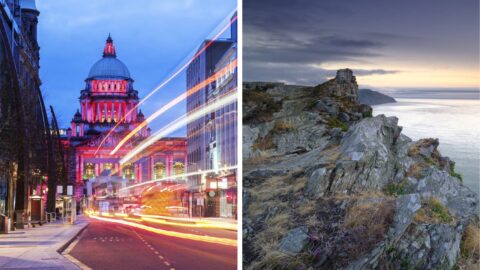
Category: England

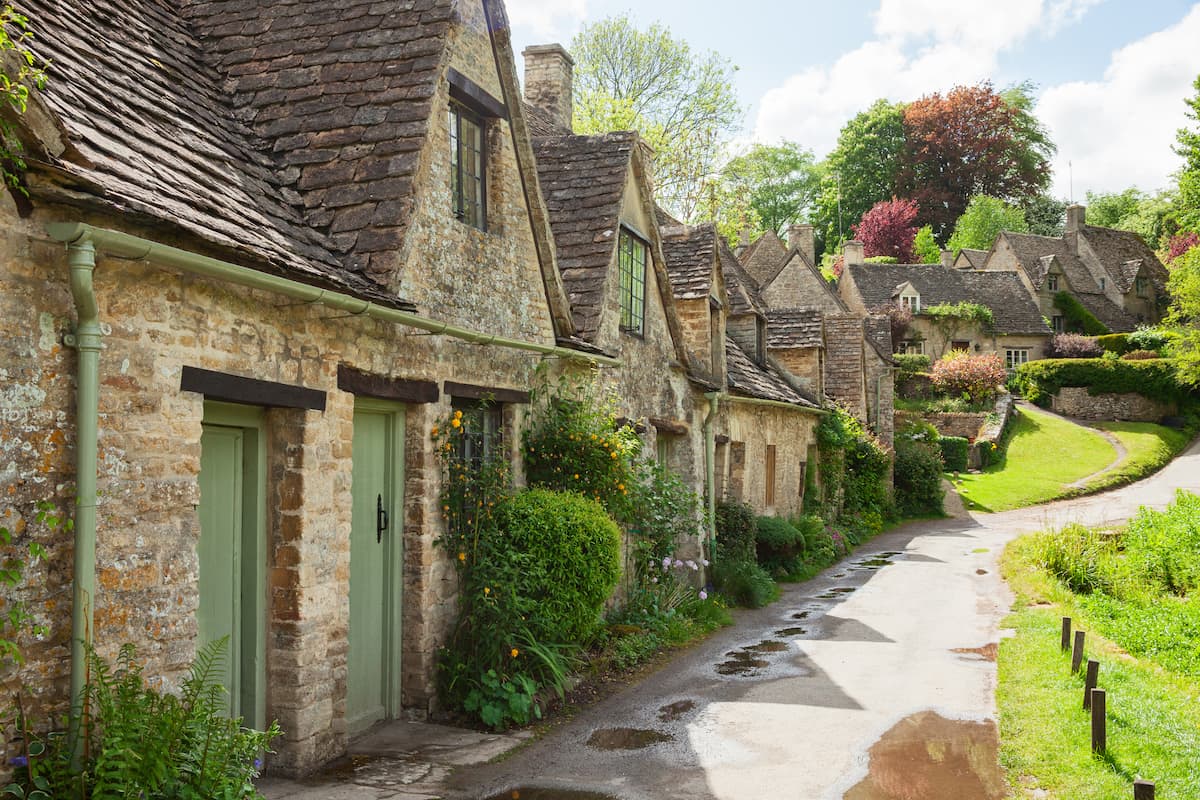
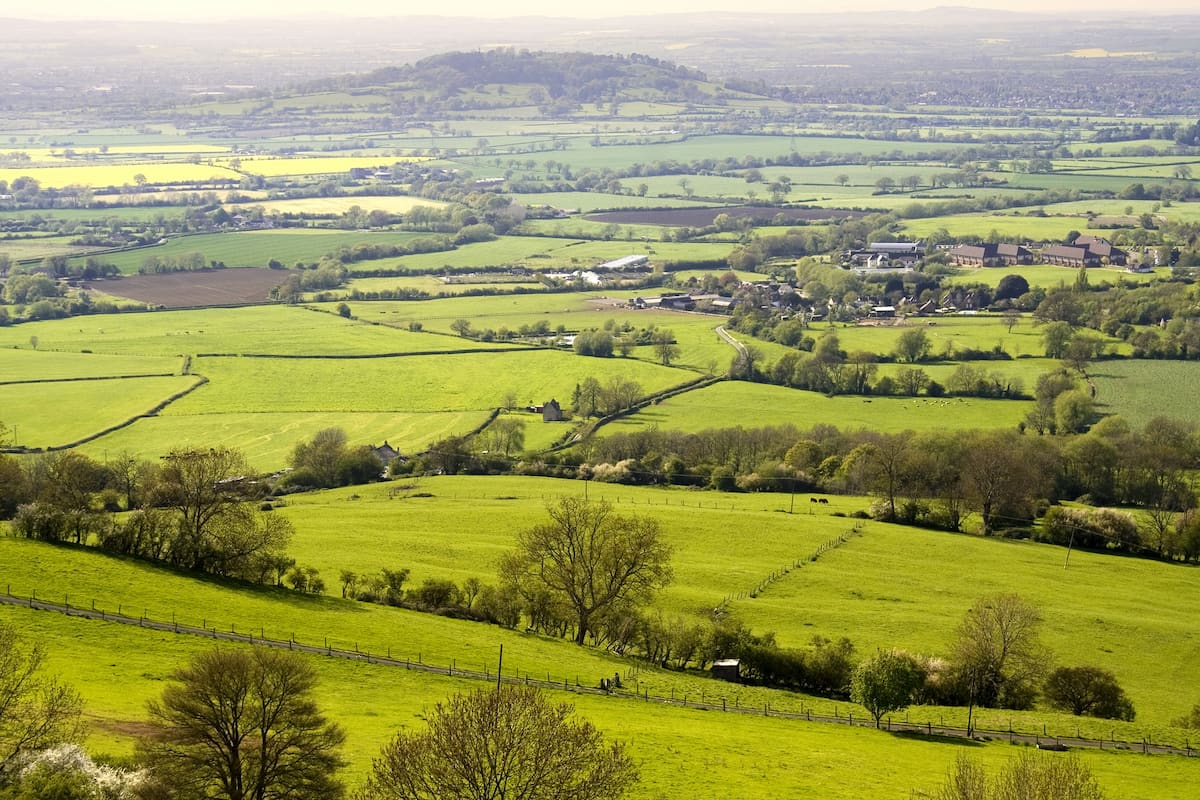
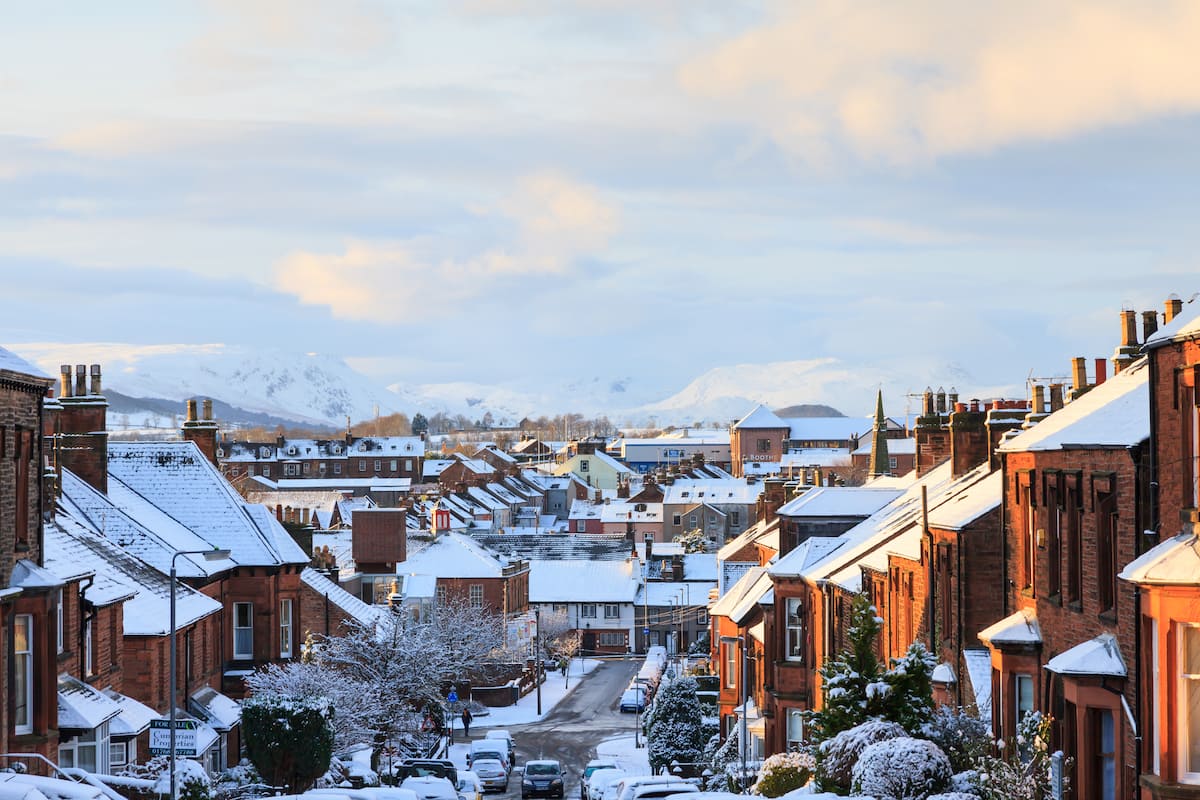
Discover England’s unique history, cobbled street towns, villages full of thatched cottages, castles, rolling hills, pubs and afternoon tea. England is great for all types of travellers and has a location that will suit everyone, including London, Yorkshire, Cornwall, Lake District, Bath, Cotswolds, Devon, Brighton and more.

  • How to Spend 24 Hours in Manchester

    How to Spend 24 Hours in Manchester

    Manchester is a vibrant, energetic city with world class museums, a fantastic music scene, famous football clubs and galleries. Here’s how to explore Manchester in 24 hours. 

    Manchester was founded as a result of a cotton mill built along the River Irwell (which now forms one side of the city centre), today this once-booming industrial hub has transformed itself into a cultural hotbed with a great foodie scene, craft beer and independent shops.

    I’ve got all the must-dos and the best places to eat and drink for a great day in Manchester.

    There’s no question that time will be tight and schedules hectic, but there really is a wealth of things you can see in just 24 hours. 

    Federal Cafe

    Federal Cafe

    Start the day off with breakfast! Federal Cafe is a popular hotspot for those who love a good breakfast and coffee! Do expect queues to eat at Fed but if you get there early enough you should be able to squeeze in before peak time. 

    There are two locations you can choose from, Deansgate or Northern Quarter. 

    The cafe was opened by Claudio and Emily for those who are passionate about great coffee and amazing brunch.

    It honestly is a little slice of Antipodean happiness (as they describe and I 100% agree with). They serve coffee from Ozone who are a Kiwi business that has chains in New Zealand and the UK. You can also expect the ripest avocados (avos), if they aren’t they send them back to their vendors! 

    If you are unhappy with any bit of the food or coffee, send it back and they will re-make everything until you’re happy. 

    As the flat white and avo on toast are an Australian classic breakfast that’s what I ordered! With a touch of halloumi on the toast. What better way to fuel up for a day of exploring. 

    John Rylands Library

    John Rylands Library

    John Rylands Library is one of the most beautiful libraries I’ve ever been to! All the reviews I read before visiting is that it is a real-life Harry Potter library and I have to agree. 

    Imagine a beautiful neo-Gothic building filled with books, reading rooms with beautiful stained glass windows and intricate ceilings, that’s John Rylands Library. 

    Enriqueta Rylands built the library in memory of her late husband John Rylands. The vision was to enrich the city’s architecture.

    She also helped with the curations of the library with two foundational collections: the incomparable collection of printed books assembled by the 2nd Earl Spencer (which she bought for £210,000 in 1892) and the earl of Crawford’s collection of manuscripts (costing £155,000 in 1901).

    Along with these great collections, the library holds some of the rarest and most beautiful books in Britain like

    • the first editions of Dickens’ novels still in their original wrappers,
    • and a first edition of Shakespeare’s Sonnets.

    Best of all, it’s free! And it’s a working library so you can actually read some of the books on the shelves or bring your own book and chill in one of the reading rooms.

    The Rylands is open Wednesday to Saturday, 10am to 12pm and 1.30 to 5pm.

    Central Library

    Central Library

    Central Library dominates St Peter’s Square and has been at the heart of the city for over 150 years. Inside is the Wolfson Reading Room which is the space you really want to see here. With a huge dome roof, wooden panelling and wonderful architecture.

    It also houses one of Europe’s most significant collections of archive materials about the history of socialism in Britain as well as being home to 8 million books! 

    Open everyday but Sunday’s.

    In the entrance hallway, is one of the bee statues, created a part of “bee in the city”. Bees have become the symbol of Manchester and in the 1840s even added into the Manchester coat of arms. You will see little signs of the bees around Manchester keep an eye out, whether it’s street art or a symbol on the bins.

    Manchester Bee Statue

    Manchester Town Hall

    Manchester Town Hall is a beautiful building that’s been around since 1822. It’s currently undergoing refurbishments. This should re-open in 2024 but at the moment it’s covered in scaffolding.

    The Town Hall is designed by Alfred Waterhouse who also designed London’s Natural History Museum so you know it’s a beautiful building. Once it’s restored, you can see the majestic staircases, and the beautiful Mayor’s parlour and a stunning clock tower.

    Manchester Art Gallery

    The Manchester Art Gallery has been open since 1823 as an educational institution to help people grow their creativity, imagination and health. See displays that show how the collection was created with connections back to Manchesters people and its arts history!

    They also have a range of great temporary art exhibitions like how hot drinks shape our lives or Derek Jarman: Protest!.

    The gallery is open from 10am to 5pm Wednesday to Sunday and free!

    Barton Arcade

    Barton Arcade

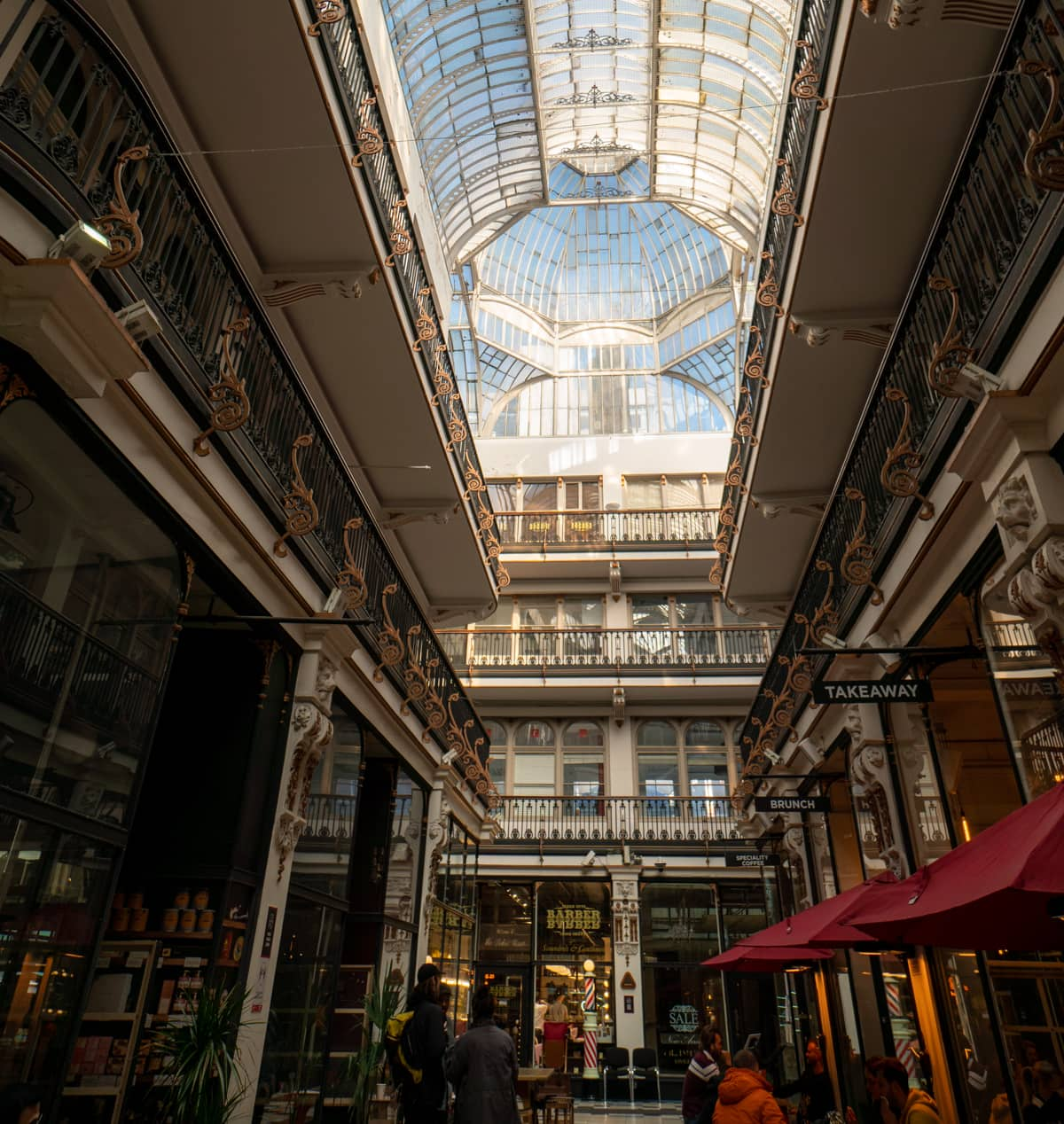
    The Barton Arcade is a grade II-listed Victorian arcade set between Deansgate and St Ann’s Square. Built in 1871 it has been restored to its original grandeur with ornate black and gold balconies curving around windows.

    Inside is Pot Kettle Black is a popular cafe in Manchester. Owned by rugby league players Jon Wilkin and Mark Flanagan with an extensive menu that covers healthy breakfasts like coconut porridge or spelt grain pancakes to indulgent dishes like Manchester tart French toast or chorizo & scrambled egg tacos, this place has something for everyone!

    Manchester Catherdral

    The Manchester Cathedral has been the centre of its city’s history for nearly 600 years. In 1421, King Henry V signed a royal charter granting permission to build a collegiate church and in 1847 when a new diocese was created this historic site became known as the cathedral.

    When you’re walking around lookout for the bees on the roof and kangaroos carved into thrones. They have also done a lot of work to make the archives available to the public.

    Open everyday from 9.30am to 4.00pm.

    The National Football Museum is just around the corner so if you’re a football fan this will be the museum to visit on your trip.

    Northern Quarter

    The Northern Quarter in Manchester is a popular destination for culture and creativity. Here you’ll find countless independent fashion stores (some well-known like Afflecks Palace), record shops or cafés & restaurants.

    This part of town has plenty going on during the day too with shopping and sightseeing opportunities galore waiting around every corner…

    Street Art

    Manchester Street Art

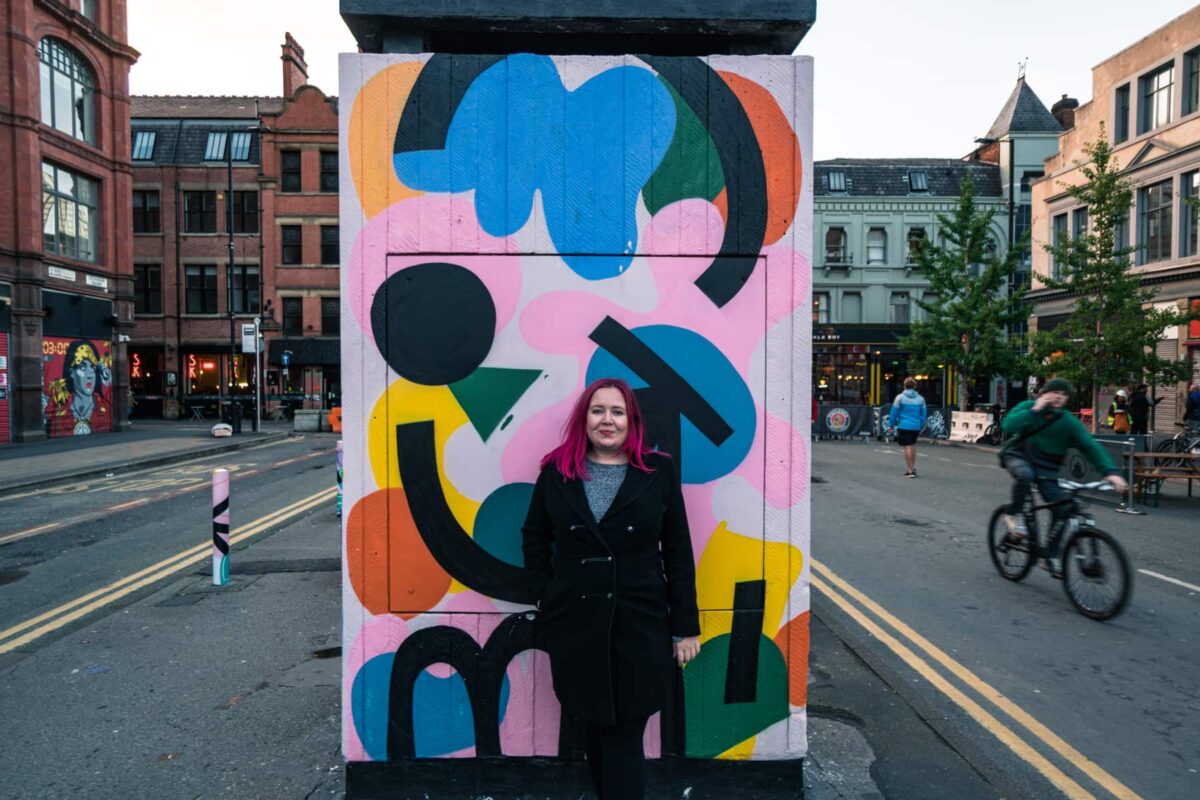
    See the latest street art on Stevenson Square and Spear Street where pieces are constantly being replaced with new ones. Making it a unique experience for any visitor who appreciates artwork like myself!

    Hayley Flynn occasionally offers walking tours so if you’re lucky enough to be in town while she is running one then definitely book a spot. Find out more about Skyliner Street Art Tours.

    Manchester Craft and Design Centre

    Housed inside a lovingly preserved former Victorian fish market is the Craft and Design Centre

    The centre has two floors of art studios that are open to the public. Step inside to discover local art, ceramics, jewellery or sculpture – all made by very talented people!

    Afflecks Palace 

    Walking through the streets of Manchester, you’ll stumble upon a little place called Afflecks. This shopping centre is full of fun and interesting shops ranging from vintage clothes to hand-made jewellery. You can find all sorts in this one building so go explore!

    Eat and Drink in NQ

    A great way to spend your day or evening in the Northern Quarter is by dining at one of its many restaurants. You won’t have any trouble choosing from pizza, Thai food or even authentic German cuisine- there’s something for everyone! 

    Nells Pizza

    Nells Pizza

    Talking about food, it’s time for lunch. Nell’s Pizza dough is slow-fermented over 36 hours to allow for a perfect combination of strength and lightness. The best ingredients are treated simply with care and attention – this New York style pizza has it all!

    I went for Cheese and Onion pie which is a Northern classic but on a pizza! It comes with burnt onions, mozzarella, Lancashire cheese, chives and parmesan.

    Mackie Mayor

    Mackie Mayor

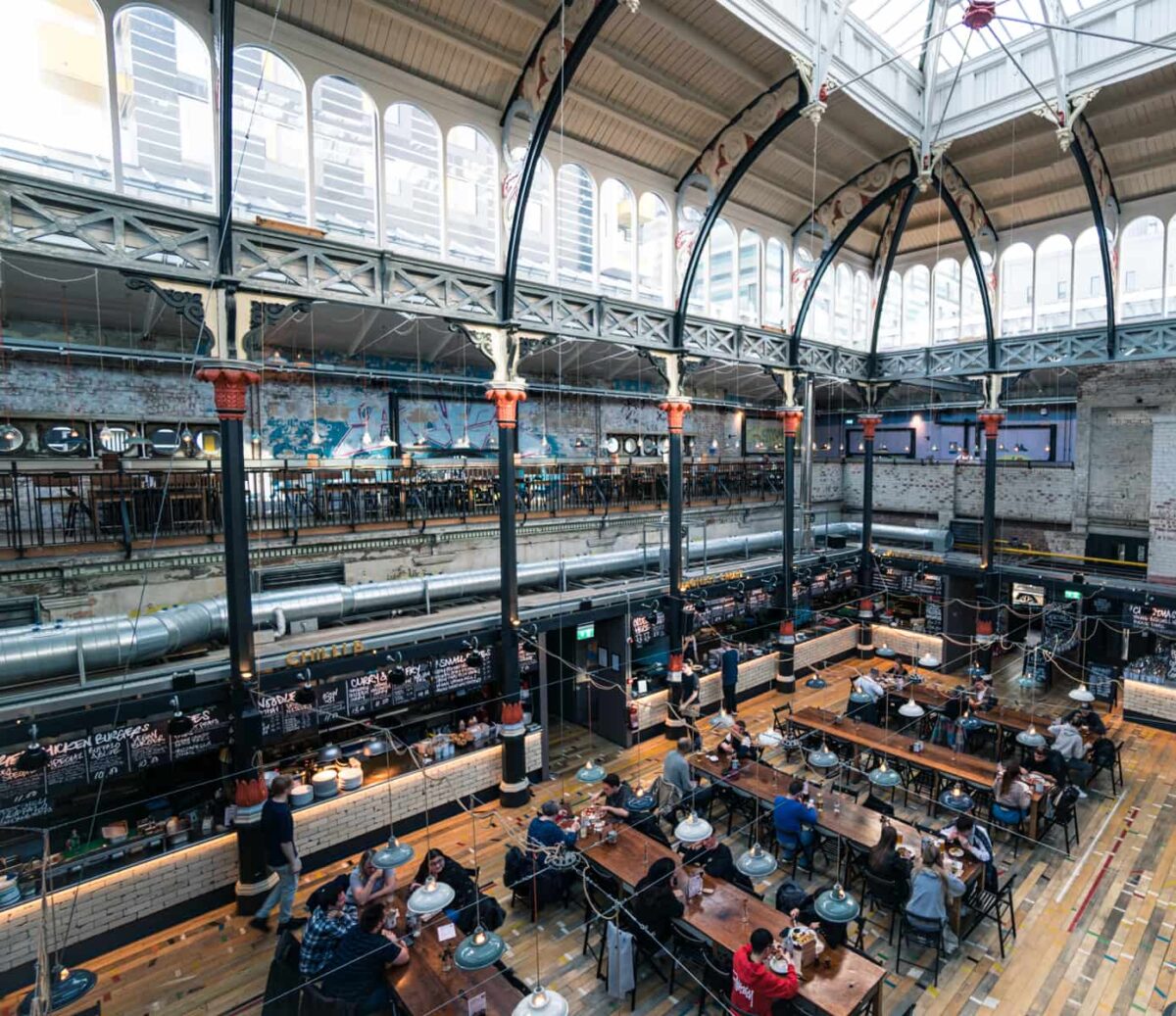
    On the edge of Manchester’s famous Northern Quarter is Mackie Mayor is a food hall in an 1858 Grade II listed market building.

    There are no signs outside advertising what awaited inside then we might never have known about this hidden gem.

    The perfect spot for brunch, lunch, dinner or a few drinks from vendors like:

    Jack in the Box is one of Blackjack Beers bars. I’ve tried a lot of beers and honestly have to say that their beers wowed me. With a huge selection, it was hard to pass up a whole evening drinking through the range. Blackjack beers have been brewing in Manchester Since 2012.

    I know that cask beer isn’t everyone’s favourite but it’s a part of their DNA so expect some good quality casks. It makes up more than 50% of their brewing.

    BAB

    chickpea and halloumi bab

    BAB is an independent restaurant with unique dishes from the Mediterranean. Watch as their chefs work with locally-sourced ingredients and homemade sauces to create your meal in their open theatre-style kitchen.

    The chickpea and halloumi bab is 100% worth ordering!

    Wolf At The Door (for a cheap meal)

    Wolf At The Door

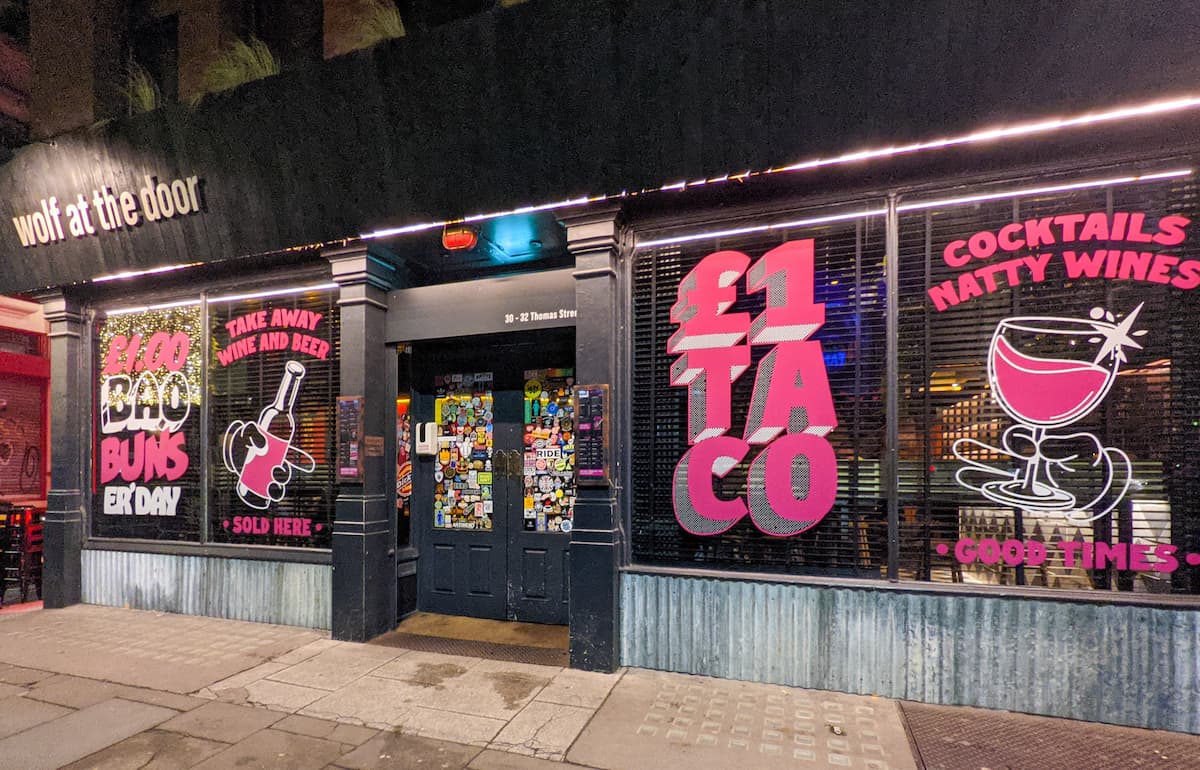
    Wolf at the Door offers tasty tacos for £1 yes! I said £1, not sure how they can even afford to provide us food at this cost. And don’t forget the bao buns.

    Ordering a drink is a must! You can’t just come here for the cheap food but they have a great cocktail menu, all the draught beer and a load of delicious wine too.

    Beatnikz Republic Bar

    Stop at Beatnikz Republic Bar for some independent craft beer. The taproom offers 14x keg and 4x cask lines with half dedicated to their own beers and a half to guest beers.

    Hotel Options for the Evening

    I’ve tried quite a few hotels in Manchester, here are my fav picks:

    Great John Street Hotel is a 4-star hotel. The building is a Victorian former schoolhouse so it has a lot of wonderful architecture. The rooms are beautiful! Last time I stayed here I had a second floor just for my bathroom which had a free-standing bath.

    The Midland first opened it doors in 1903 and still gives a timeless elegance feel when you enter the building. With over 302 rooms, spa facilities and award-winning restaurants it’s a great place to stay.

    For an affordable option, the Motel One is perfect, centrally located, has comfortable beds and low costs.

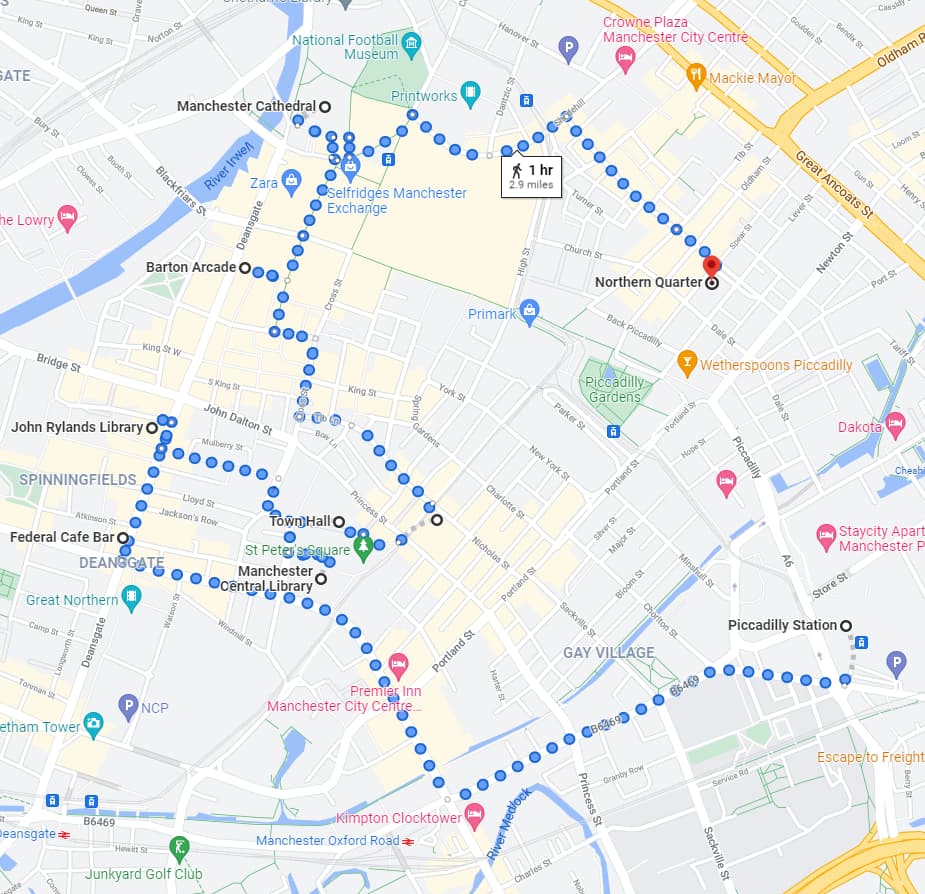
    Manchester 24 Hour Map

    Manchester 24 hour map

    Manchester has a lot to offer for 24 hours! This is just a brief window into my personal selection of what the city has to offer. For more ideas on where to go in England, here’s a list of day trips I recommend from London.

  • 15 Best National Trust Places To Visit In England

    15 Best National Trust Places To Visit In England

    National Trust locations are a great way to explore some of Britain’s most beautiful landscapes and historic buildings. From castles, gardens and stately homes to ancient monuments and wildlife reserves there’s something for everyone. 

    It is the largest charity in Europe for protecting historic places, buildings and the countryside. They help maintain these properties and are able to from us visiting, membership fees and donations.

    The Trust looks after miles of coastline, common-land and less important historical properties that are of national importance and interest to Britons and overseas visitors alike. They are one of the biggest land and building owners in Great Britain. 

    This bucket list of the best National Trust places is a great way to start exploring. Why not grab a yearly membership if you live in England or one of the Touring Passes for travellers. 

    National Trust Houses

    Belton House

    Most beautiful grounds

    belton house

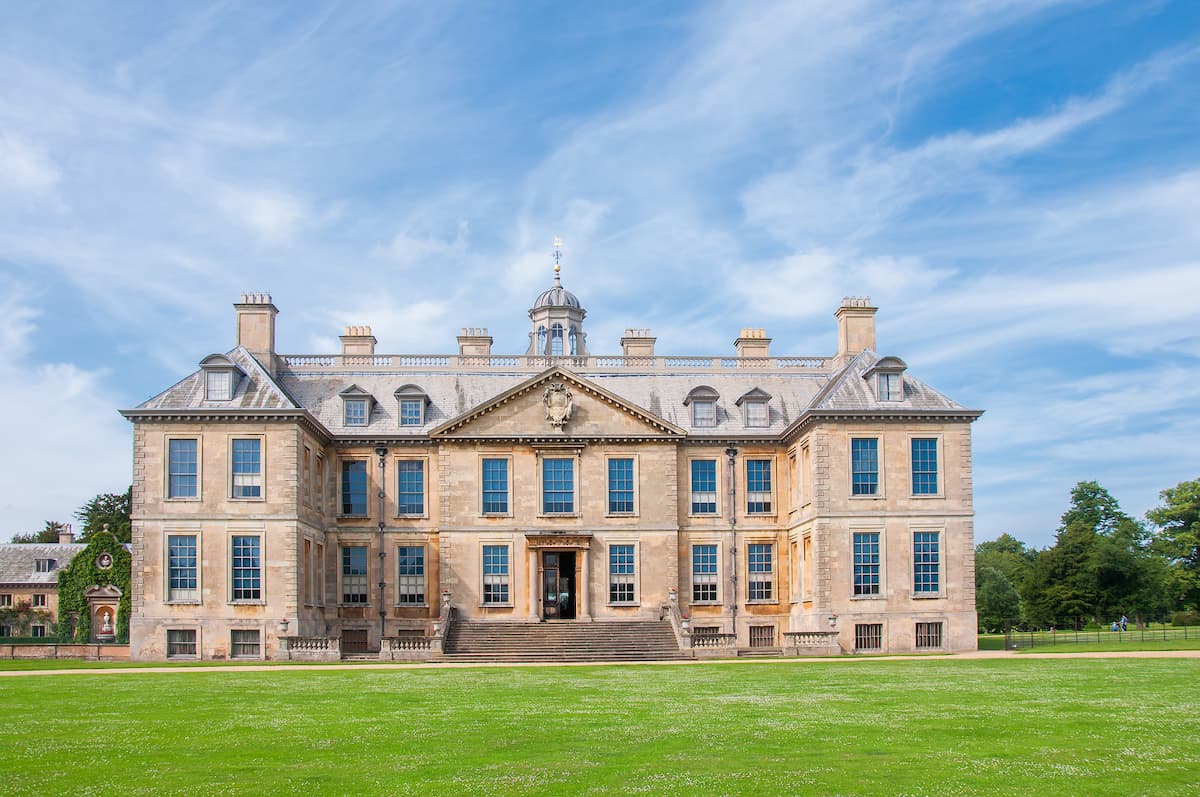
    Explore the gardens of this beautiful Grade I listed 17th-century mansion located in the parish of Belton, Lancashire.

    Built between 1685 and 1688 by Sir John Brownlow, Belton House is the perfect spot for a warm summer day exploring the vibrant gardens and surrounding wooded areas.

    Discover the fascinating history of this ancient building by taking a walk through the house itself before visiting the stunning lake house. The kids will fall in love with the fabulous adventure playground and the cryptic maze. But will they ever get through it?

    Entry to this site is free for National Trust Education Group Members. However, there is a small fee to pay for facilitated sessions that range between £1-£3 per child.

    Petworth House

    Fascinating Art

    Petworth House

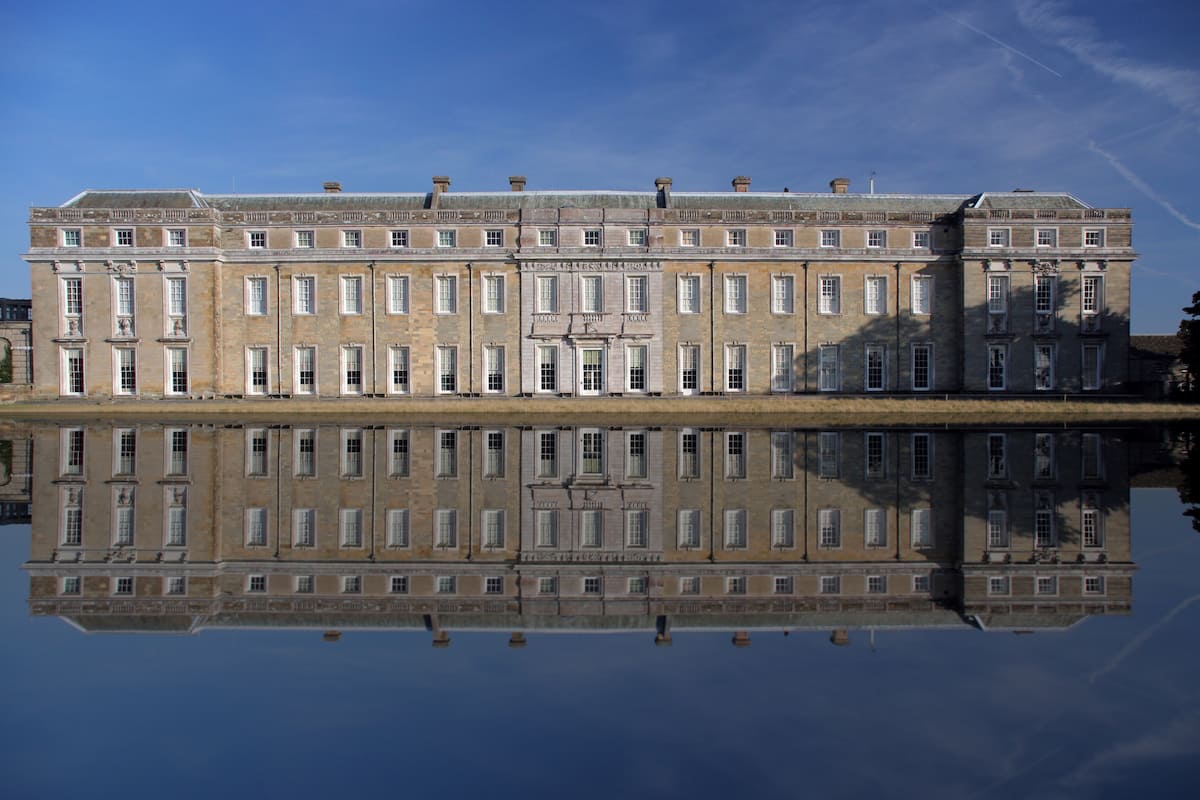
    Located in the parish of Petworth, West Sussex lies Petworth House. This 17th century Grade I listed building is home to some of the most stunning pieces of art which are proudly displayed around this magnificent country manor.

    The remarkable collection includes work by Flemish Baroque artist Van Dyck, Gainsborough, Reynolds and Turner and reflects a time of survival and success through the Napoleonic Wars and the Gunpowder Plot.

    Petworth Park is home to over 900 fallow deer, which can be seen resting and grazing around the vast 700-acre parkland.

    The free interactive Park Explorer can be used to uncover details about the land and its future projects. Let the children get involved with a trip around the artist trail to sketch away with a sketchbook and coloured pencils provided by the team at Petworth House. There is an on-site café; however, it is recommended to take a picnic as queues can be long, particularly in the summer months, and the children may become impatient!

    West Green House

    Breathtaking gardens

    Get prepared to be amazed by the stunning gardens that span across ten acres of land. West Green House is an 18th-century country house situated in leafy Hampshire.

    Over the last twenty years, the garden has been revamped by Australian garden designer Marylyn Abbott, who restored the gardens to a truly exceptional standard.

    Take a walk through the tranquil gardens to see some impressive features and vibrant flowers. Be sure to pay a visit to the walled gardens to witness the interesting layout and check out the vegetable and spice garden to see how easy it can be to grow your own veg!

    Unfortunately, West Green House is not open to the public as both the house and the garden are privately owned. You can use your National Trust membership for free entry, but guest passes are not valid.

    Click here to see a list of properties that are exempt from the Guest Pass promotion.

    Chastleton House And Garden

    Interesting history

    Owned by the National Trust since 1991, this Grade I listed Jacobean house can be found in the beautiful county of Oxfordshire. With its impressive topiary and scenic gardens, Chastleton House can be enjoyed by young and old for a truly memorable day out.

    Both the house and garden have been slowly restored over the past 30 years, and it is true to say that this charming country mansion is a time capsule of living history. The National Trust team has done a magnificent job of preserving Chastleton back to the condition in which it was found.

    Areas of the house are over 400 years old and are deemed uninhabitable. Therefore access is prohibited.

    While there are no on-site catering facilities, feel free to make a stop at the nearby Church of St Mary for a spot of tea and cake.

    Fenton House

    Most bizarre relics

    Fenton House is a 17th-century mansion, previously known as Ostend House.

    Not much is known about the owners that once lived here. However, the previous name suggests connections to Flemish trading and was most likely the property of a City merchant.

    The house is based in Hampstead, just a handy 5-minute walk from the tube station. Stroll up the narrow path to discover this charming detached house decorated with ancient works of art, countless porcelain and china ornaments and (bizarrely) a variety of harpsichords dotted around the place.

    Visit the attic floor for stunning views of the city before exploring the apple orchard and lush, well-maintained gardens. Bask in the sunshine or enjoy a picnic in the vibrant sunken garden of this wonderfully historic building.

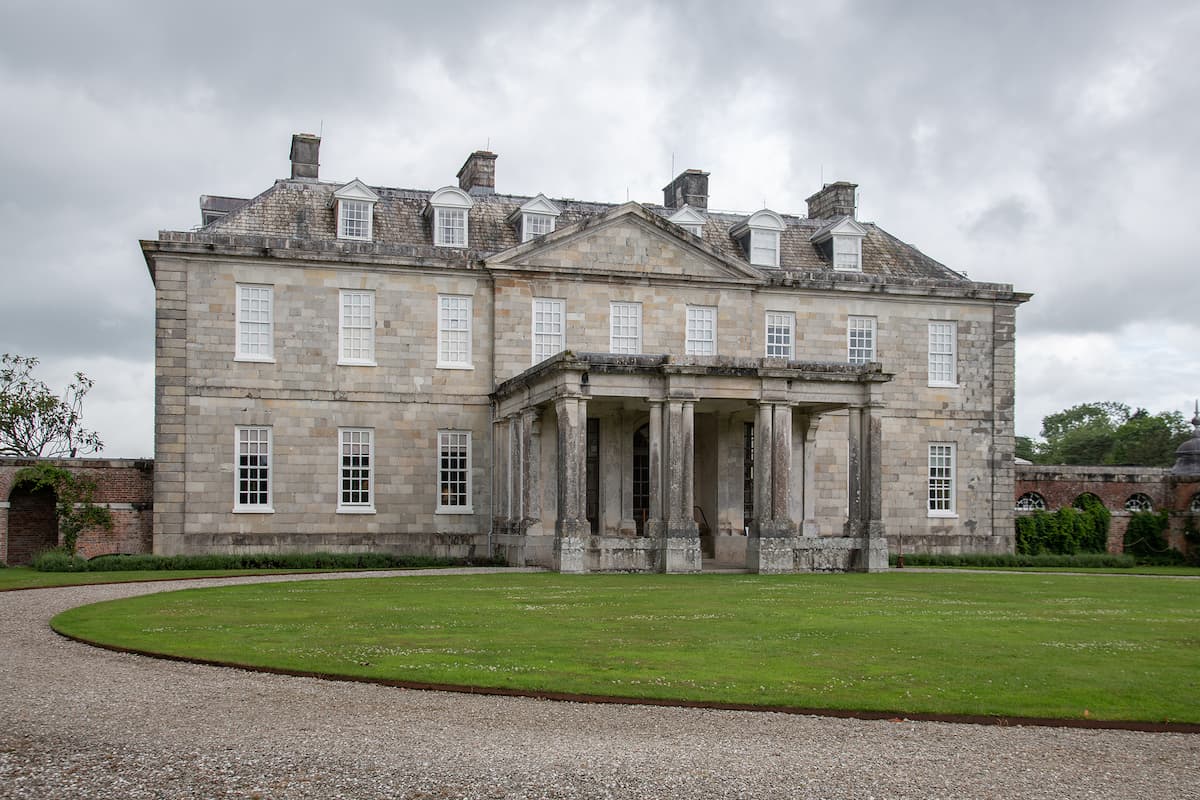
    Antony House

    Still occupied by the owners

    Antony House in the Cornwall village of Antony
    Antony House in the Cornwall village of Antony
    Source: Chris Moncrieff Dreamstime.com

    Antony House is still very much lived in by the Carew-Pole family, who kindly allow visitors to view areas of this historic mansion. This Grade I listed building is situated between the Cornish towns of Torpoint and (aptly named) Antony and was built in the 18th century.

    Film director, Tim Burton, filmed parts of Alice in Wonderland at Antony House after searching for a “perfect, pocket-sized mansion” with “intimate interiors” and “landscaped gardens”. Luckily, Antony House ticked every box!

    The house itself is filled with a marvellous collection of family paintings along with interesting modern pieces. Refreshments are available in the lavish tea room, where tables are placed in the arches so guests can overlook the house.

    Explore the fabulous combination of formal gardens and wild woodland that are particularly stunning in the warmer months when the vast array of flowers bloom.

    Castles

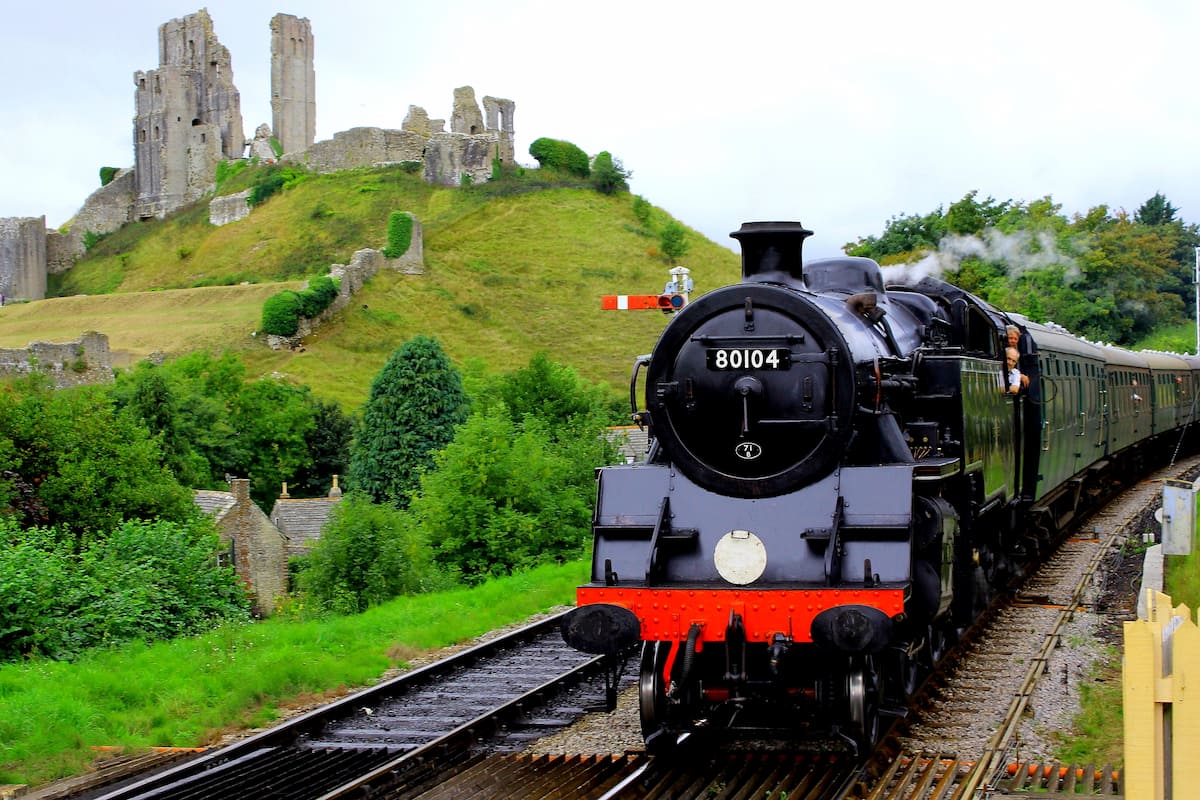
    Corfe Castle

    Most Scenic

    Steam Train passing Corfe Castle
    Steam Train passing Corfe Castle
    Source: Edwin Broersma Dreamstime.com

    This charming castle sits in the village of Corfe in the Isle of Purbeck and has dominated its spot for over 1000 years.

    Historically, it has been a Saxon stronghold, a fortress for the Normans, a royal palace and a grand family home. Shaped by warfare, the ruins are a product of the English Civil War. The destruction of Corfe Castle is seemingly bittersweet, as it is one of the most beautiful attractions along Devon’s Jurassic Coast.

    The children will love taking part in a series of medieval games such as hand tennis, soft archery and Nine Men’s Morris, a traditional board game.

    Visitors can explore the sea views and amazing wildlife along the Purbeck coast.

    Enjoy a cream tea in the courtyard before checking out the adorable model village to see how the castle would look in a state of completion. The tour of Corfe Castle takes around an hour to see everything and is a great attraction to do some serious sightseeing.

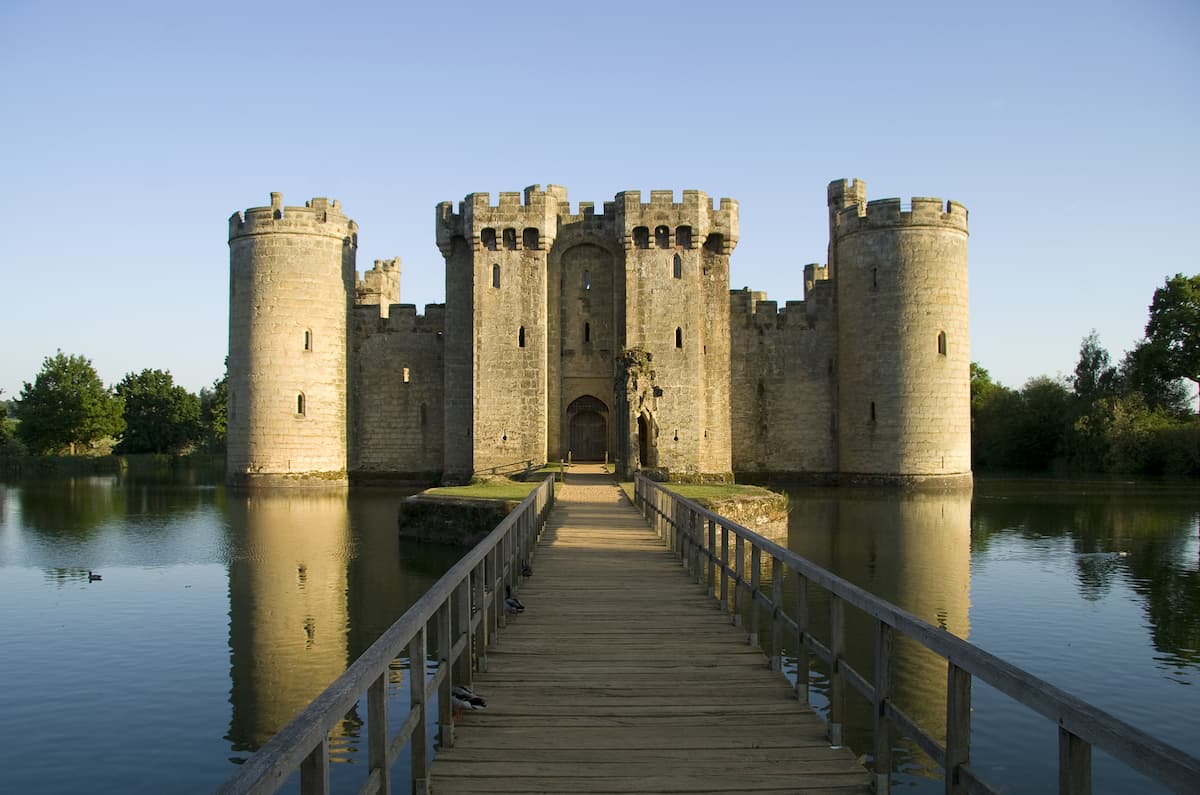
    Bodiam Castle 

    Great selection of activities

    Bodiam Castle

    This 14th-century medieval moated castle can be found in Robertsbridge, West Sussex. The splendid ruins are interesting to explore, and medieval activities are available.

    The castle was built in 1385 for Sir Edward Dallingridge and his wife Elizabeth Wardedieu to defend the surrounding area during the Hundred Years’ war.

    While the insides of the castle are uninhabitable, the outside has survived well over the years and is an incredible ancient monument. Join in the fun summer holiday activities where both children and adults can take part in the games.

    Why not try your hand at mini jousting or archery? Learn more about this epic time in history through exciting storytelling and armour demonstrations. The new Castle Characters trail is an exciting journey through history to find out more about the people who worked and lived at Bodiam Castle.

    Entry is from 10:30 am until 5 pm, and there is a charming little tea room serving refreshments so you can take a break to admire the beautiful setting.

    Dunster Castle and Watermill

    Fabulously maintained

    Throughout its history, Dunster Castle has been owned by just two families. Originally a fortress, the castle was eventually turned into a family home and has been in the hands of the National Trust since 1976.

    A fun fact about Dunster Castle is that in the 1470s, the bill for repairing the gateway cost just £1 and is still standing today!

    Explore the working mill and its traditional machinery, which spans across three floors. Over 18 tonnes of wholegrain flour has been produced here since it opened in 2014 and is available to purchase at the watermill.

    The grand Dunster stables date back to the 17th century and are one of the earliest surviving stable blocks owned by the Trust.

    Once you have finished exploring the castle and its fascinating history, you are free to relax in the beautifully maintained gardens with a stunning array of tropical plants. Refreshments are available at the charming outdoor pop-up café, or you can travel into nearby Dunster Village for a browse.

    Lindisfarne Castle

    Best views

    This striking monument has an interesting backstory to it which begins when it was built in 1550.

    Historically, the castle was constructed to house soldiers, who used the building for gunnery practice and to watch out for incoming trouble across the horizon.

    It wasn’t until 1901 when it was taken over by Country Life magazine owner, Edward Hudson who used the help of a young architect, Edwin Lutyens, that the castle was transformed into a holiday home.

    While many of the original features were lost during the renovation period, if you look closely, you will still find remains of the original layout. The dining room is probably the best surviving example, and there is also an original staircase that leads to the Upper Battery.

    Getting to the castle requires crossing a tidal causeway, so it is recommended to check when it is safe to cross. Hopefully, the weather is on your side when visiting, as the Holy Island views are simply unmatched.

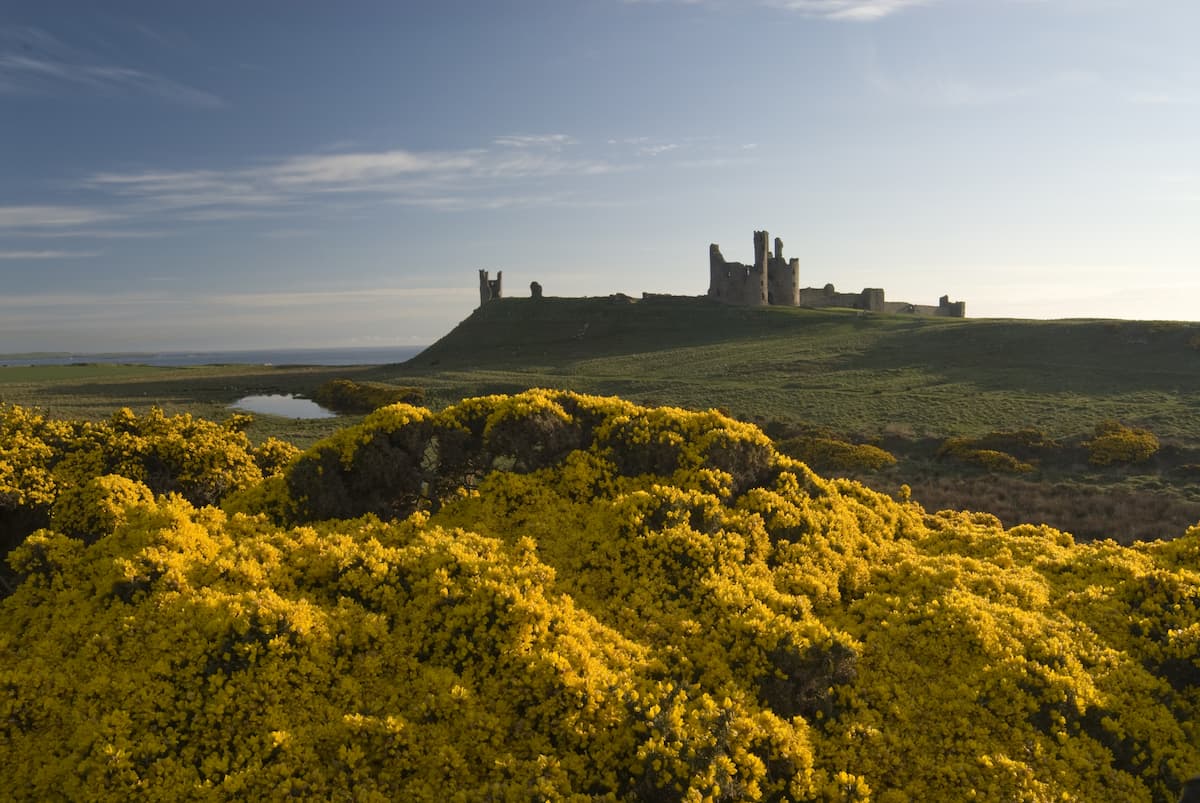
    Dunstanburgh Castle

    Most accessible ruins

    Dunstanburgh Castle

    Located on a remote headland of Northumberland, Dunstanburgh Castle is a sight to behold sitting proudly on the coastline.

    The history dates back to 1313 when the Earl Thomas of Lancaster created it as a fortress which, according to research, was built on a far grander scale than originally proposed.

    From a distance, it doesn’t look like much until you reach it, which requires a mile-long walk from the nearby village of Craster. However, don’t let the walk put you off if you have young children, as they will love exploring the rock pools as well as various nooks and crannies on the way up.

    The majority of the ruins are accessible, with the gatehouse being the most intact, so there is plenty to explore.

    Dunstanburgh Castle has featured on many British travel programmes for its beautiful setting and fascinating history. The exceptional views are a favourite among visitors, and if you look closely, you will also find kittiwakes and fulmars nesting in the cliffs below.

    Parks

    Osterley Park and House

    Most lavish house

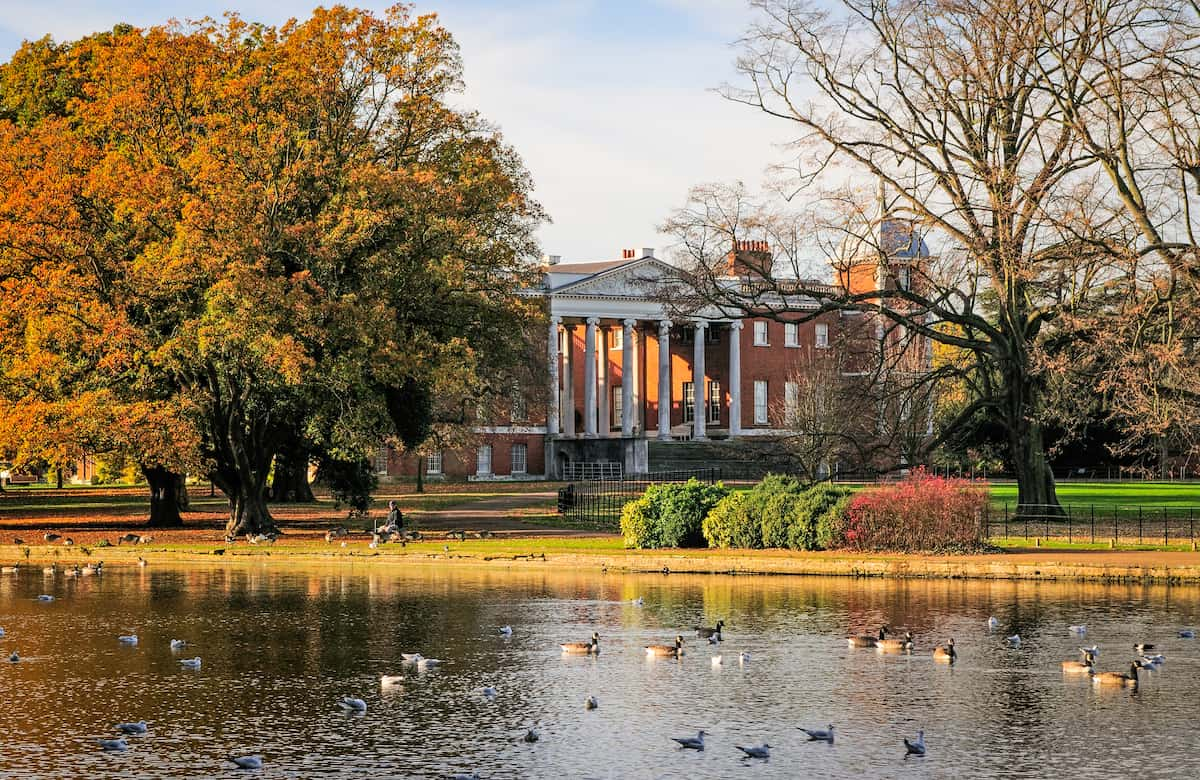
    Osterley Park house and lake, London
    Osterley Park house and lake, London
    Source: Marina Endermar Dreamstime.com

    This stunning Georgian country estate dates back to the 1570s and is located between the London boroughs of Ealing and Hounslow.

    Remodelled between 1761 and 1765, parts of the estate are Grade I and II listed with the park labelled as Grade II.

    The neoclassical interiors of Osterley House are immediately apparent upon entry, including Roman statues, Greek pottery and ceramics, which seemed to be a craze during mid-Georgian times.

    Lavishly decorated with historical paintings, tapestries and endless delicate ornaments, the property is truly remarkable and has been maintained extremely well over the years. Tours of the house are self-guided but do not hesitate to ask a member of staff for more information.

    The formal gardens are a great spot for a picnic or a bike ride, and the children will be kept busy with the adventurous play trail and fun activities such as table tennis. Finish off the day with a visit to the café for a cup of tea before visiting the gift shop for some souvenirs to remember your day out.

    It goes without saying that Osterley Park and House is one of the best National Trust places to visit with its vast array of relics, stunning architecture and fascinating history.

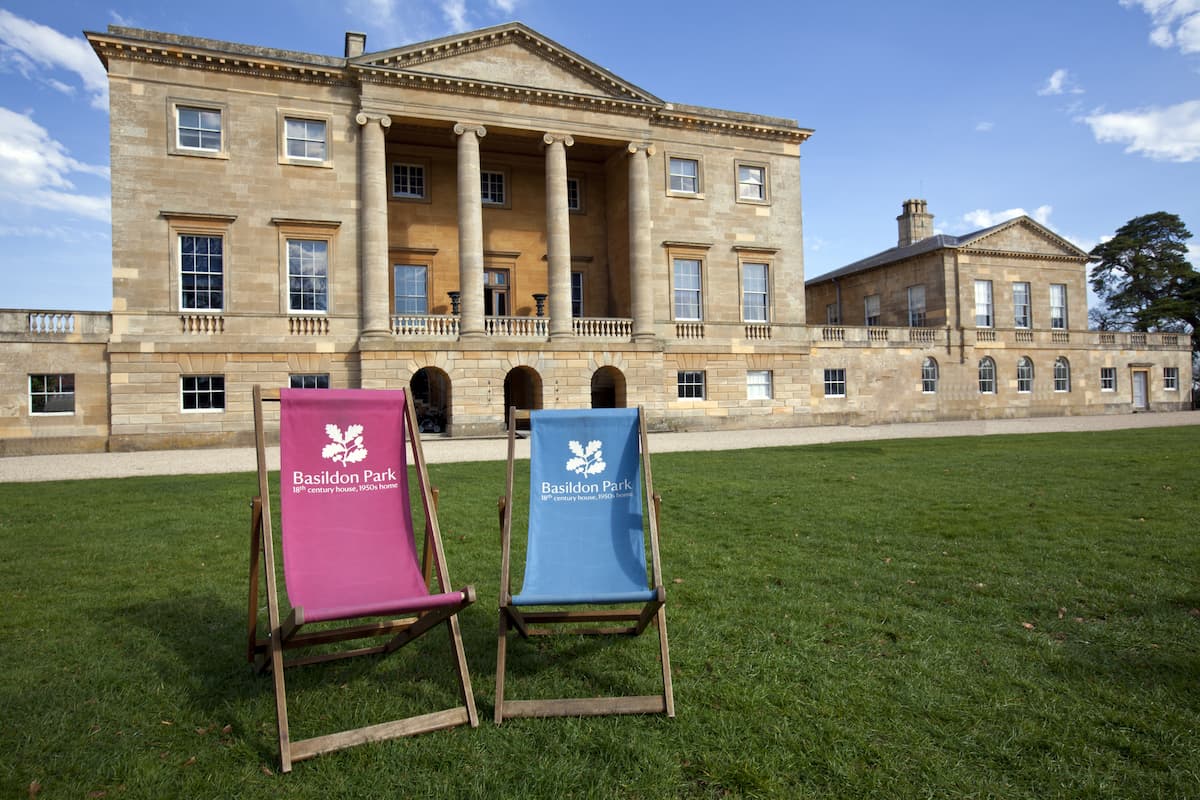
    Basildon Park

    Best walks

    Basildon Park
    Basildon Park
    Source: Alanjeffery Dreamstime.com

    This country house is a Grade I listed building nestled between the picturesque villages of Upper Basildon and Lower Basildon.

    Basildon Park estate was first purchased back in 1771 by a man named Francis Sykes. Sykes demolished the original house and employed an architect to build the magnificent mansion we see today.  

    During the First World War, the property was used as a recuperation unit for soldiers where they could gain strength, learn new skills and provide the local community with materials. It also came in handy in the midst of the Second World War when it was used for D-Day training and, later, a prisoner of war camp for the Italians and Germans.

    The house was given to the National Trust in 1978 and is a popular tourist spot for adults and children of all ages. Explore the history of Basildon Park by taking a step inside to view ancient paintings and grand furniture.

    The impressive gardens adorned with climbing roses and vibrant flowers are the perfect spot for a picnic. Look out for the Copper Beech tree at the front of the house which was planted in 1850 and holds memories of romance.

    There are four different walkways to choose from if you fancy a stroll through the parkland, which are enjoyable whatever the season.

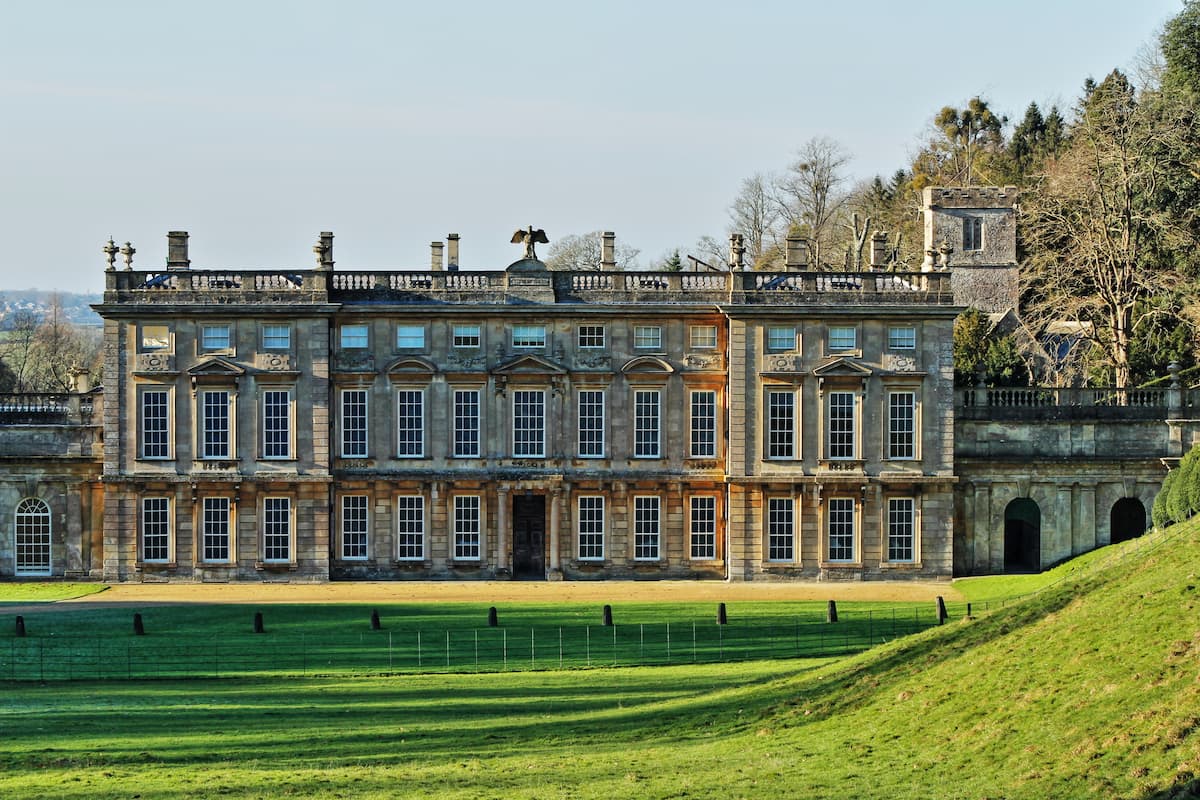
    Dyrham Park

    Hidden gem

    17th century castle in Dyrham Park, England

    This Baroque country mansion lies in the village of Dyrham, South Gloucestershire.

    There is evidence from archaeological excavations to show that Dyrham Park goes back as far as the Bronze Age, although the house we see today has had many renovations over the years.

    The house was first opened to visitors in 1961 after being transferred to the National Trust. Since then, the house has been well preserved and is a hidden gem among the hustle and bustle of life as we know it.

    Step inside this grand manor to find out more about the founder of Dyrham Park, William Blathwayt. View the collection of stunning artwork and furniture to get a taste of the 1600s.

    Take a woodland walk or a tour of the gardens (it doesn’t matter if you aren’t very green-fingered!). The children will love the wooded play area complete with play tractors, and you can end the day with ice cream from the on-site café.

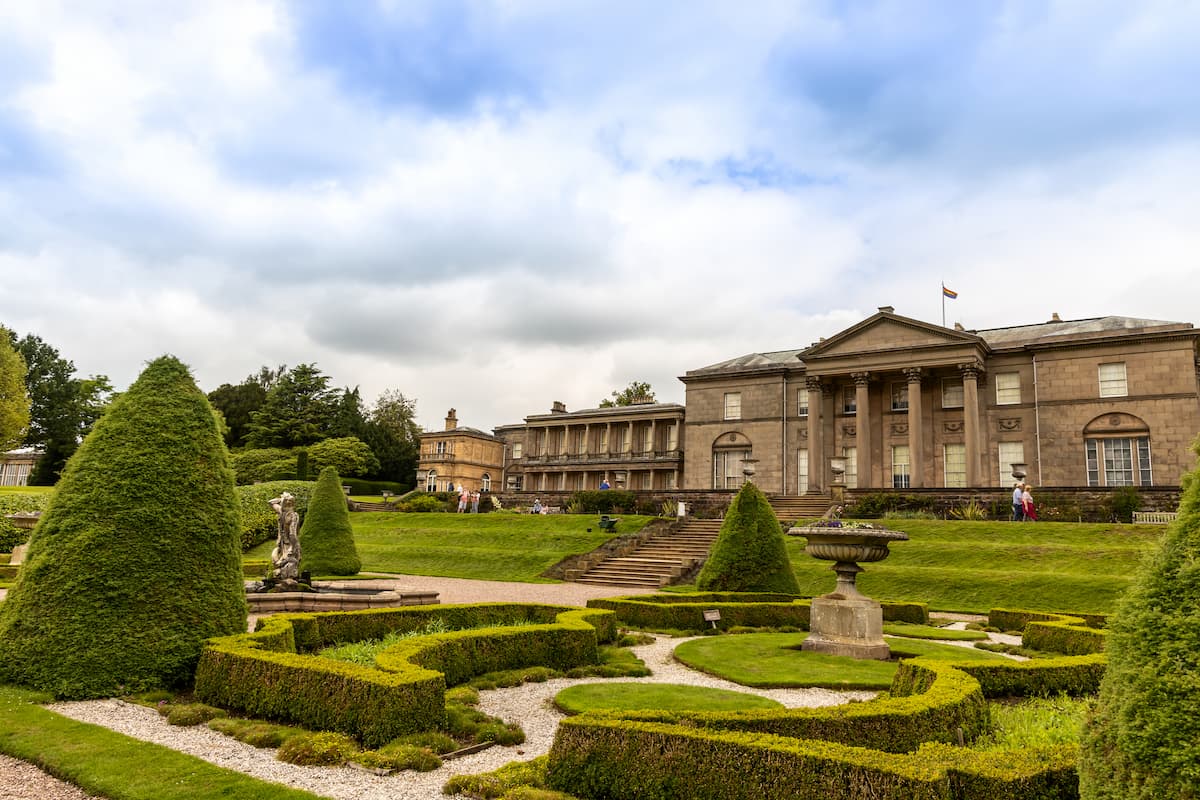
    Tatton Park

    Best place for children

    Formal garden and an historic mansion at Tatton Park in England

    You won’t be stuck for things to do at one of the most historic estates in the UK. Tatton Park is located in the town of Knutsford, Cheshire.

    With over 50 acres of gardens, an authentic 1930s working farm, and fun outdoor activities, a visit to Tatton Park will ensure a memorable day out with the family.

    The history of Tatton House is still unfolding and is home to over 8000 books rendering it one of the most important library collections owned by the National Trust. Uncover centuries of history through ancient collections of art and ceramics with tales about what life was like for the workers.

    Discover the beauty of the walled kitchen garden, the products of which can be purchased at the on-site garden shop. The idyllic Japanese gardens are truly magical, and you are bound to see plenty of deer roaming the woodland. Be careful not to scare them!

    The children will be worn out by the end of the day after constructing a fortress at the den building zone and figuring their way out of Maize Maze. They will also love holding the newly hatched chicks and feeding the fluffy lambs at the working farm.

  • 17 Best UK Christmas Markets to Get Festive At

    17 Best UK Christmas Markets to Get Festive At

    Christmas Markets in the UK are some of the best, places like Winchester have often been voted the best Christmas Market in Europe. You know you’re going to get in the festive spirit with these locations.

    It’s one of the most popular events during this time of year, with thousands of visitors flocking to see what’s on offer at each location. From traditional German food stalls selling sausages and mugs of steaming hot spiced cider, to French patisseries serving up delicious pastries and cakes, there are plenty of options for everyone. And if you want something more unusual then why not try some local craft beers or wines?

    Let’s get in the festive vibe with these 17 Best Christmas Markets in the UK.

    1. Manchester Christmas Markets

    Dates: December 8 – December 22, 2021

    Manchester Christmas Market
    Manchester Christmas Market

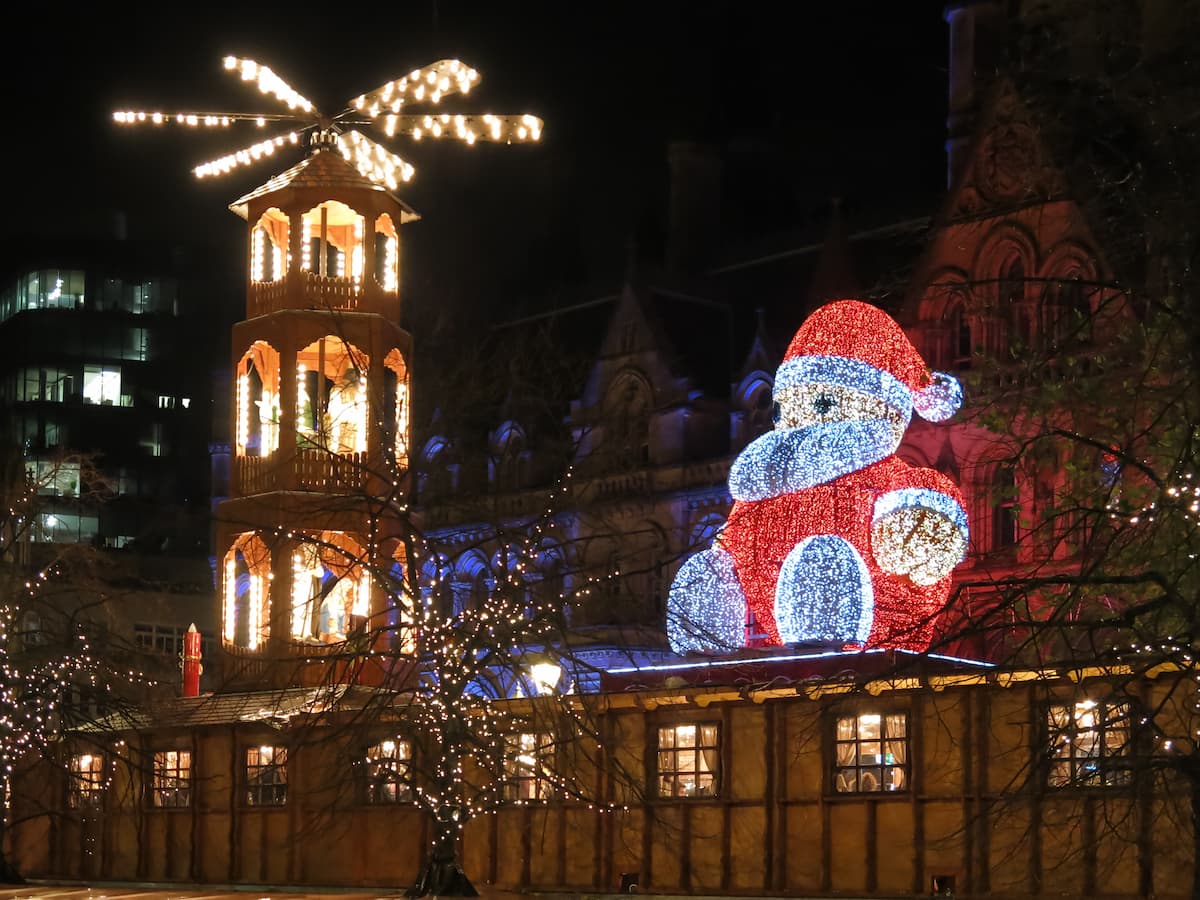
    Launched in 1999 in St. Annes Square, the award-winning Manchester Christmas Markets are some of the best in the northwest. Unlike some, the Manchester markets are stretched out across the town centre and attract millions of visitors annually. 

    These Christmas markets are the perfect place to meet for a festive mulled wine with friends or if you are looking to purchase the perfect Yuletide gift for that special someone. Even though they are spread out, Manchester is a pretty small town, so it does not take long to get around it.

    Other attractions include the mesmerising lights display at Piccadilly Gardens, or why not try out your ice skating skills on the ice rink at Cathedral Gardens?

    2. Winchester Christmas Markets

    Dates: November 19 – December 8, 2021

    Wine stall at Winchester Christmas Market
    Wine stall at Winchester Christmas Market

    Consistently voted one of the UK’s best Christmas markets,  Winchester has been voted the second-best place in the UK for its markets which are held in none other than Winchester Cathedral itself.

    Let go of all worries by immersing yourself in the hustle and bustle of these lively Christmas markets. German delicacies are aplenty in this place, including succulent Bratwurst hot dogs and raisin and walnut stollen. Our mouths are watering just thinking about it!

    3. Edinburgh Christmas Markets

    Dates: November 12, 2021 – January 5, 2022

    Edinburgh during festive season
    Edinburgh during festive season

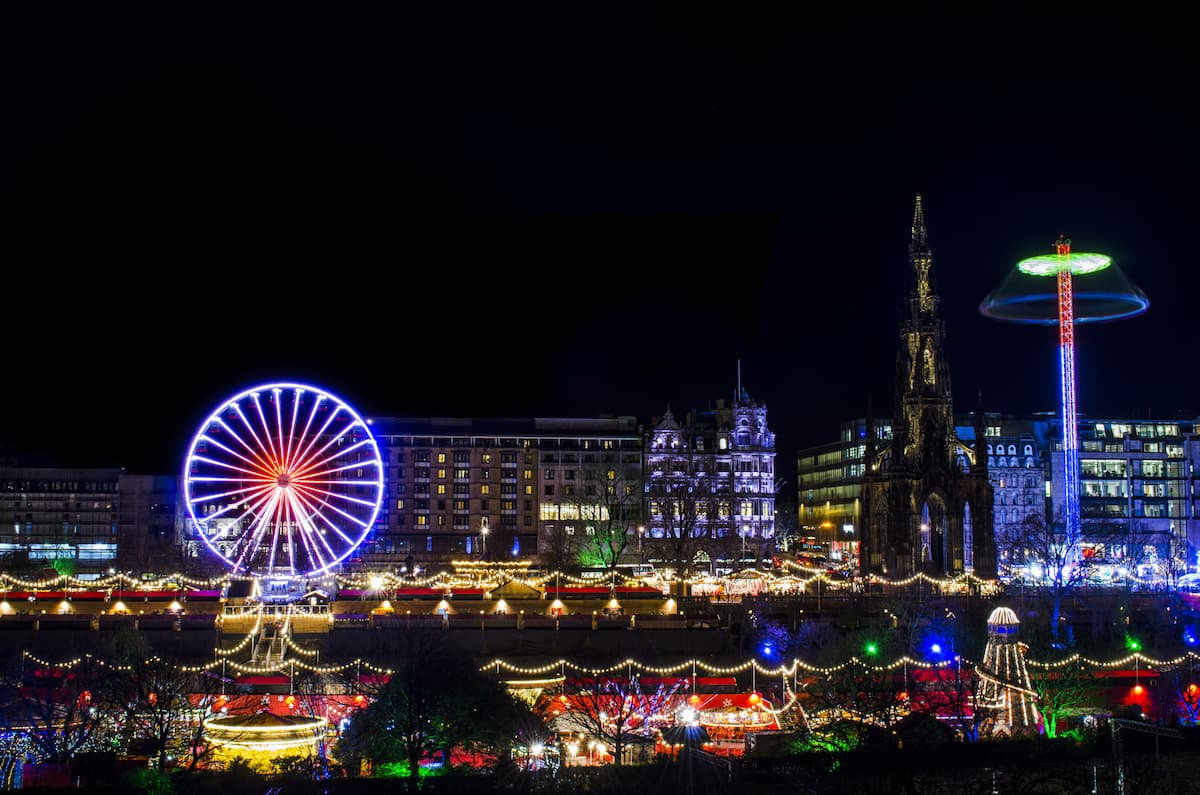
    Edinburgh Christmas Markets are one of the most popular in the UK. Known for its festivals, Edinburgh is not shy when it comes to providing for tourists. The Edinburgh Christmas markets not only cater to the public with ample food and drink but fun attractions such as the Ferris wheel and the star flyer can also be enjoyed by couples and families.

    While the main markets are based in East Princes Street Gardens – with the breathtaking Edinburgh Castle as the backdrop – there are more along the Royal Mile, which is just a short walk away.

    Fancy a romantic, illuminated walk? Then look no further than the Street of Light, whereby 60,000 lights are put on display annually. This happens on George Street or the Royal Mile and is a truly magical sight.

    If you have visited Edinburgh city before, you will know that parking can be a nightmare, so our advice would be to use public transport that is reasonably priced and frequent.

    4. Bath Christmas Market

    Dates: November 24 – December 19, 2021

    Bath Christmas Market
    Bath Christmas Market

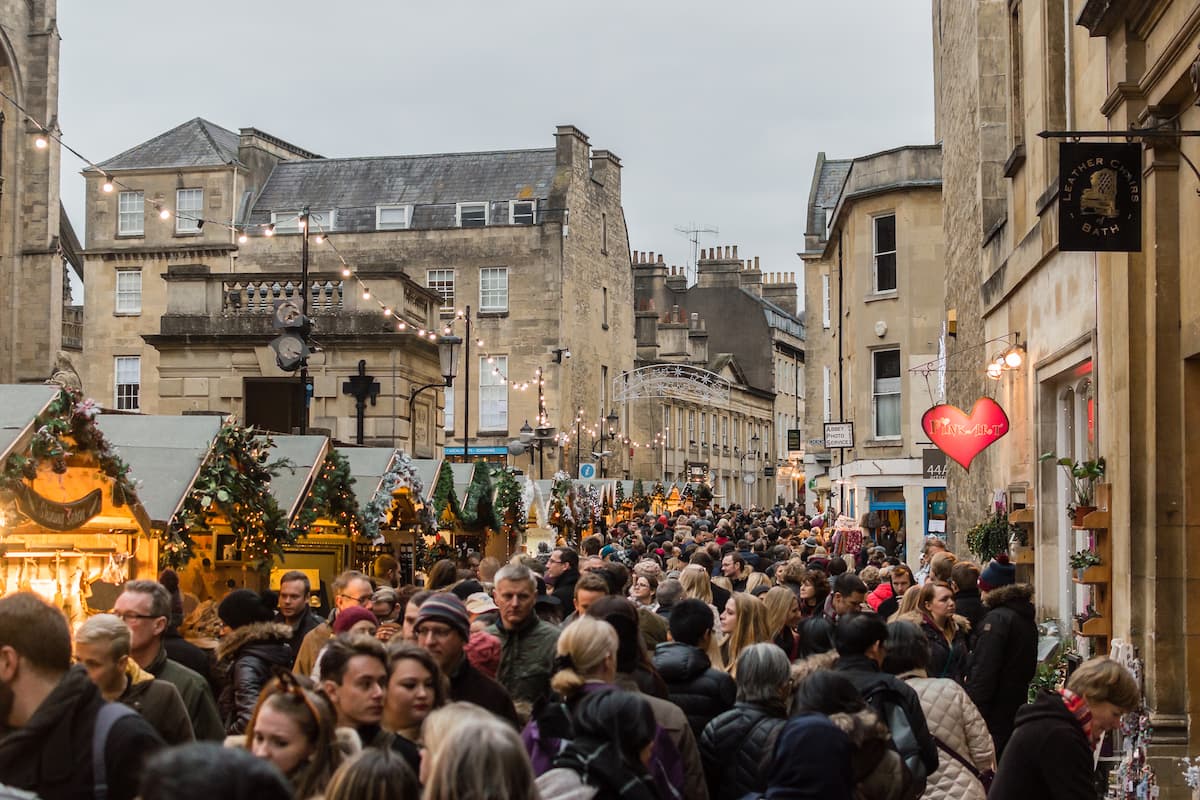
    Known for its beautiful architecture, Bath also has some great Christmas markets where you can feast on tasty potato pancakes and enjoy a delicious mug of creamy hot cocoa.

    Each stall is run by an independent business, serving the public with food, drinks or unique handcrafted gifts. The markets are all within walking distance of one another and can be found around the town centre and nearby the stunning Bath Cathedral.

    However, the most exciting attraction is the Victorian merry-go-round, which is a hit with both adults and children every year. The town of Bath is known for its stunning architecture, which looks even more magical at Christmas.

    5. Hyde Park Winter Wonderland

    Dates: November 19, 2021 – January 3, 2022

    Winter Wonderland in Hyde Park

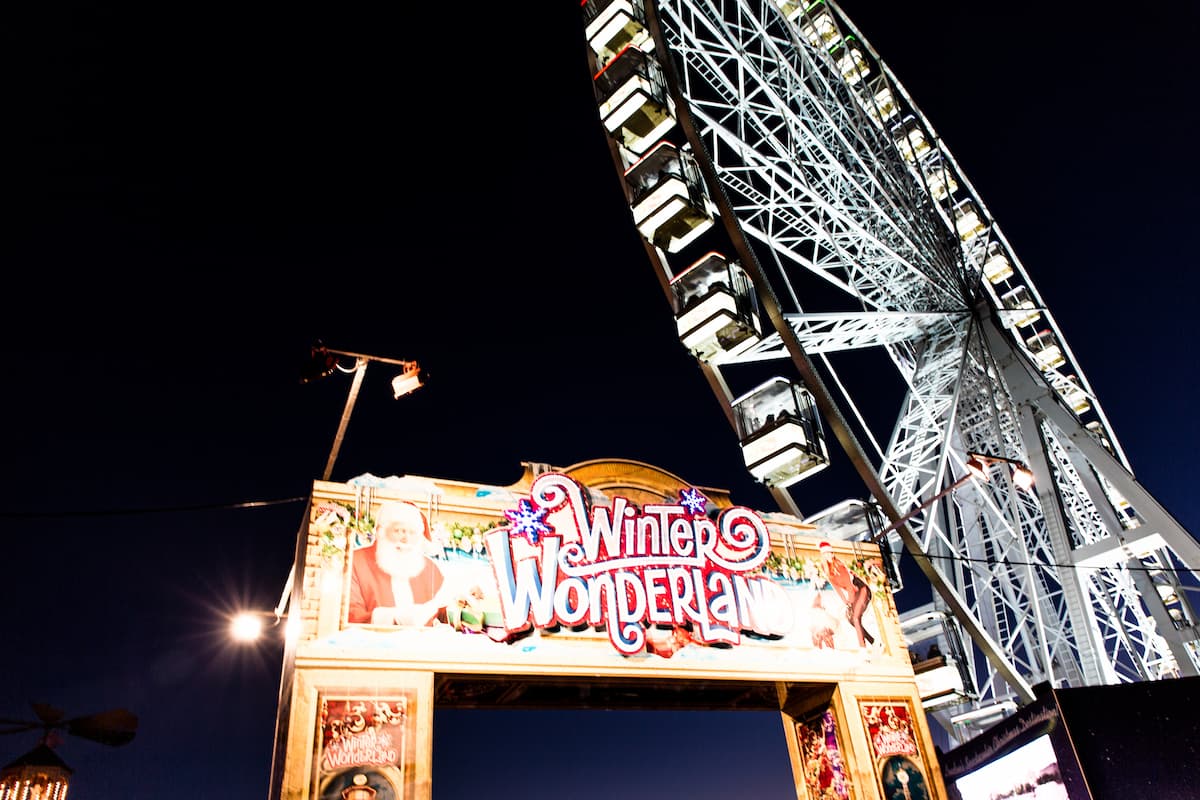
    If you are celebrating Christmas in London this year, pay a visit to Winter Wonderland at Hyde Park. Here you will find over 100 wooden huts serving visitors the finest German delicacies and festive drinks. Handmade trinkets and ornaments can be purchased if you are looking for the perfect Christmas gift.

    Not only is this place blanketed by fairy-lit stalls, but there is also an ice rink, fairground rides, and it wouldn’t be complete without a visit to Santa’s grotto! There is something for everyone at Winter Wonderland, but although entry is free, many of the rides are not, so think ahead and book in advance to avoid disappointment.

    Driving to this location can be a bit of a nightmare as the roads in London are particularly busy. Public transport is the best way of getting to Winter Wonderland.

    Here’s more London Christmas Markets you can visit!

    6. Birmingham Frankfurt Christmas Market

    Dates: November 4 – December 22, 2021

    Crowds enjoying the German Christmas market in Birmingham
    Crowds enjoying the German Christmas market in Birmingham

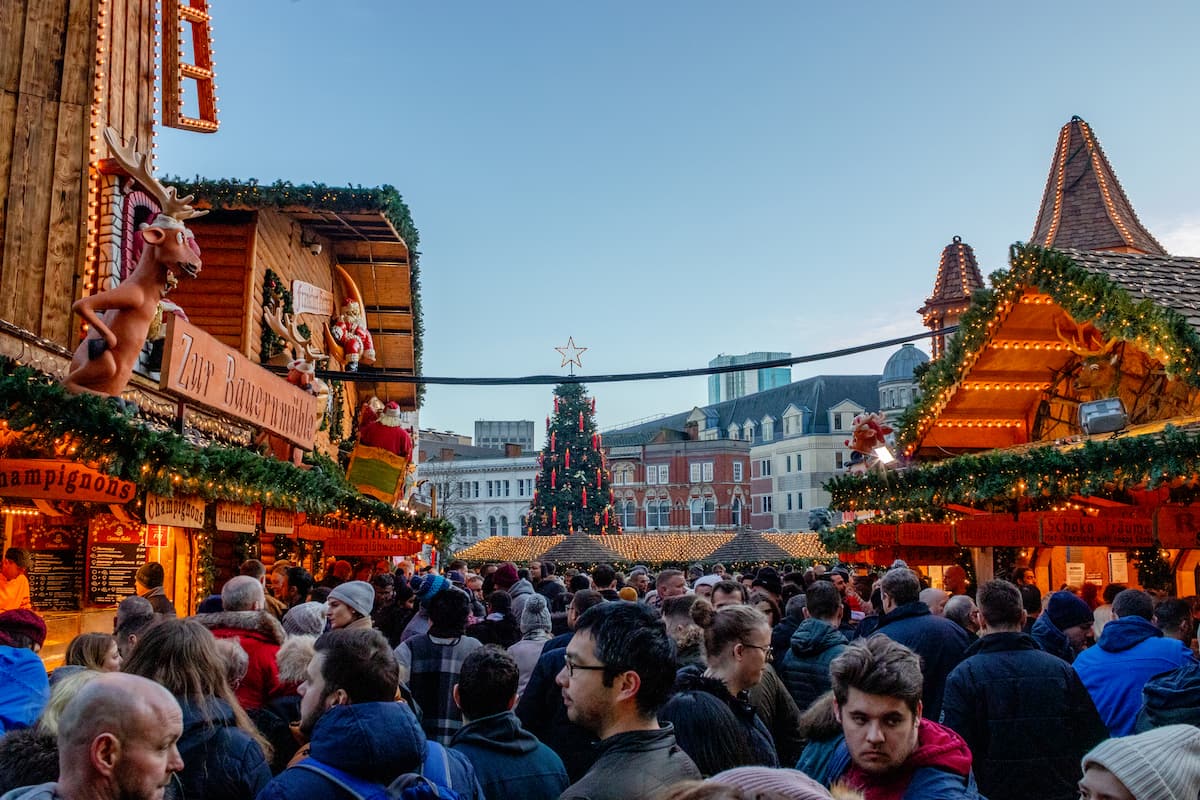
    The Birmingham Frankfurt Christmas Market is known as the largest market outside of Germany and Austria. With over 80 fairy-lit wooden huts, the markets stretch across the city centre, serving visitors freshly baked churros with chocolate and steaming mugs of mulled wine. Handcrafted decorations and framed festive pictures, as well as unique toys and games for children, can be purchased.

    The Birmingham Frankfurt Christmas market is easily one of the best Christmas markets in the UK. Therefore, it is also one of the busiest, particularly over the weekend. If the hustle and bustle isn’t quite your thing, a good tip is to arrive around lunchtime when they are just warming up.

    Again, public transport is heavily advised, and the New Street train station is just a few minutes walk from the markets that offer free entry to everyone.

    7. Belfast Christmas Markets

    Dates: November 20 – December 23, 2021

    belfast christmas markets

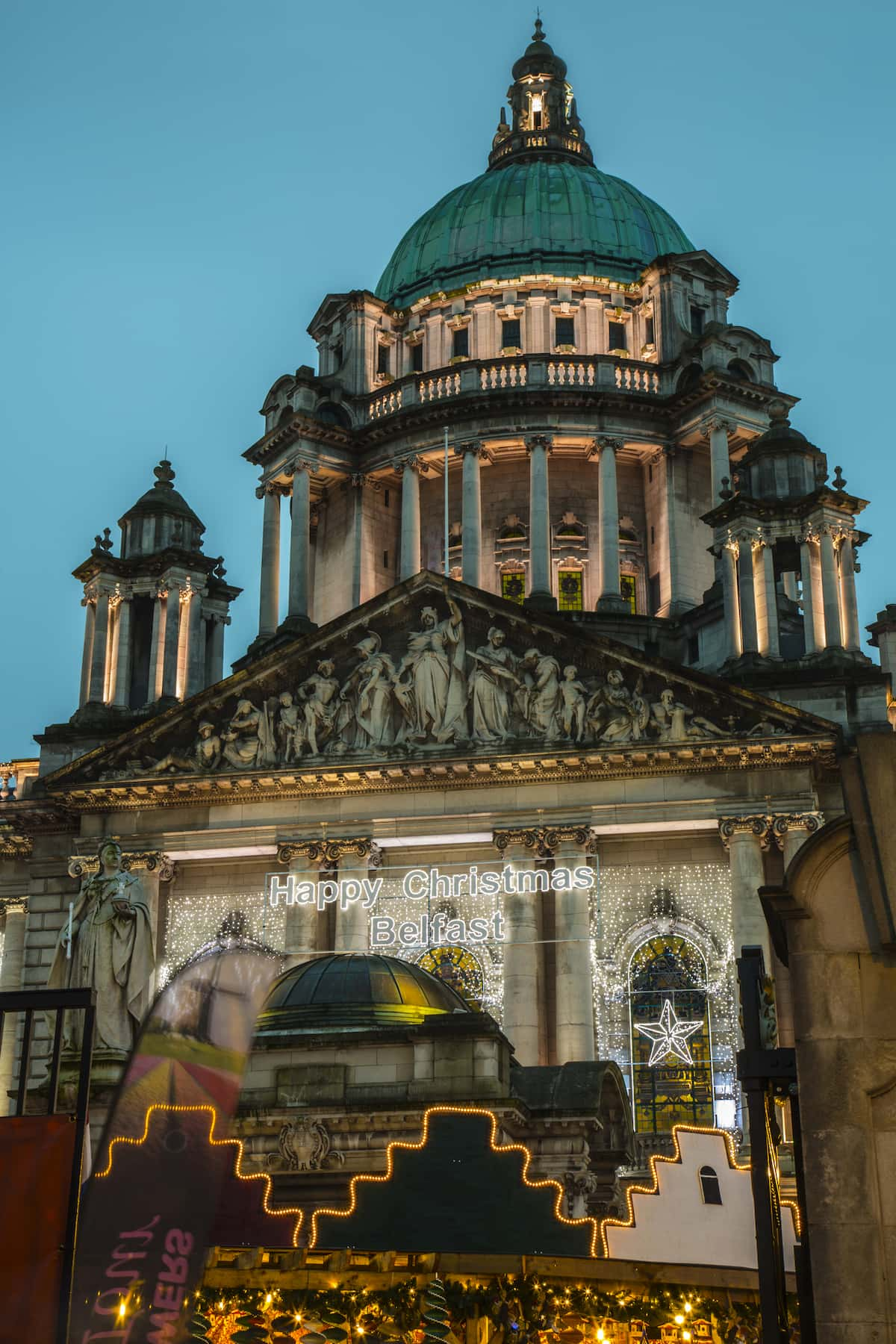
    Known as Northern Ireland’s main Christmas market, it certainly doesn’t disappoint. The adorable Alpine huts keep customers satisfied by serving up tasty treats and drinks. There are even two large heated beer tents for those who want to sit down and enjoy a stein of beer or glühwein (mulled wine).

    If that isn’t enough, there are also fairground rides for both adults and children to enjoy before visiting Santa in his grotto. The Belfast Christmas Markets are erected outside Belfast City Hall, which is a remarkable building on its own. In fact, once you have finished at the markets, why not take a tour of the City Hall for free?

    8. Southbank City Centre Christmas Markets

    Dates are yet to be confirmed, but they usually run from mid-November to early January.

    craft stalls at Christmas market at the Southbank
    Craft stalls at Christmas market at the Southbank

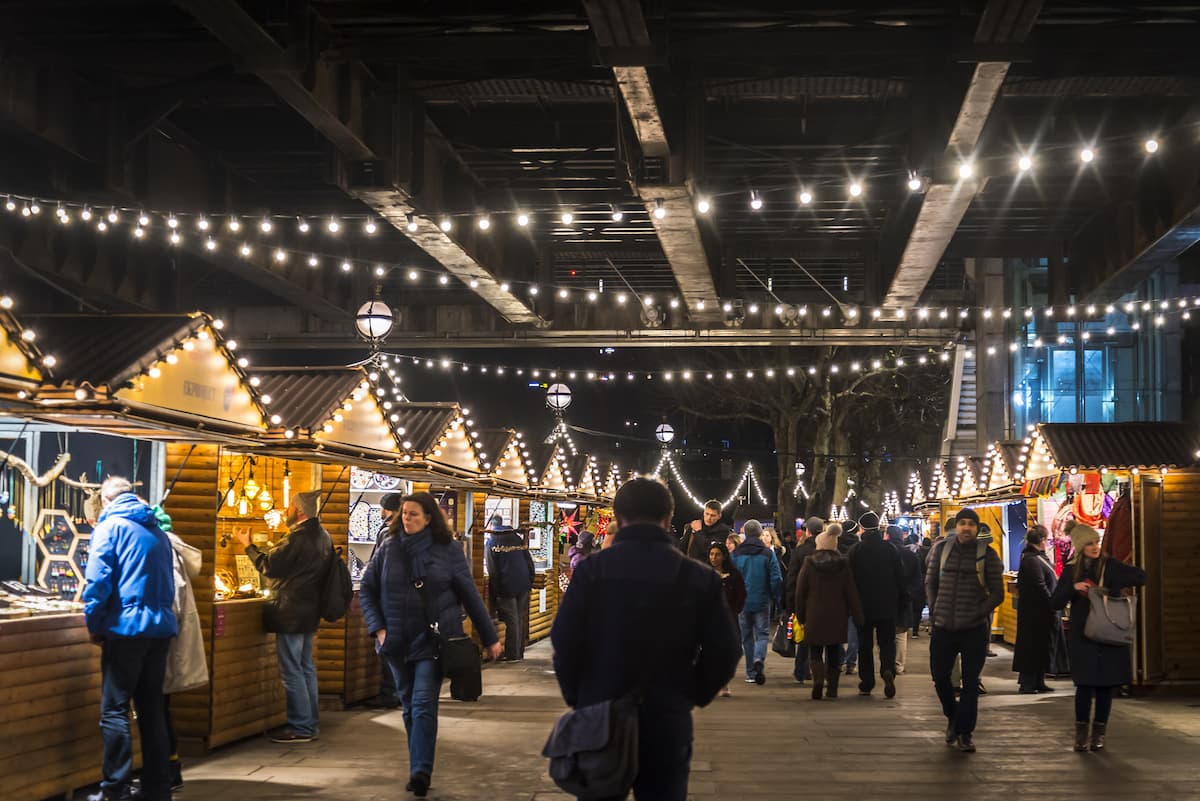
    What could be better than enjoying tasty treats and hot beverages whilst overlooking the Thames? Get yourself down to the Southbank City Centre Christmas markets to experience it for yourself!

    Spend the evening perusing the authentic wooden stalls for a new Christmas tree decoration, or maybe you are meeting up with friends for a festive tipple. Book a meal at The Jimmy Lodge Snow Globes, which can accommodate up to 10 people, so you can fine dine under the stars. There is always the rustic, vine-covered pergola at Applebee’s Fish, where friends and family can meet up for a well-deserved meal and a catch-up.

    Don’t forget to get a selfie with the gigantic Christmas tree before you leave!

    9. York St Nicholas Christmas Markets

    Dates: November 18 – December 23, 2021

    Without a doubt, York is one of the most beautiful towns in the UK. With its cobbled streets and quaint timber-framed houses, York rakes in its visitors all year round, particularly during the festive period.

    The York St Nicholas Christmas markets are spread out along Parliament Street and all the way down to St Sampsons Square. Here you will find numerous Alpine-style chalets serving nothing but the best festive food, drink and gifts.

    If you are a real foodie, then the York Christmas markets will not disappoint. Many stalls offer a choice of local cheeses, jams, chutneys and don’t forget to warm yourself up with a steaming mug of hot chocolate (you deserve that extra shot of Baileys!).

    The vintage funfair in King’s Square is great fun if you have children, with the helter-skelter and the merry-go-round being a top favourite! Strategically placed next to the funfair is a vendor selling mulled wine and cider if you fancy treating yourself to a little tipple!

    10. Leeds Christkindelmarkt

    Dates: November 6 – December 18, 2021

    Held annually at Millenium Square, Leeds Christkindelmarkt is one of the most established Christmas markets in the UK. Draped in twinkling fairy lights and festive decor, the square is transformed into a magical winter wonderland.

    Authentic wooden huts serve visitors with the finest German and Scandinavian delicacies as well as handmade jewellery, toys and unique Christmas tree decorations.

    You can’t leave without calling in for Breakfast with Santa, of course! Book in at Alp Chalet to dine with him before burning the calories off with a walk around the fairground rides. Breakfast with Santa is a ticketed event, so an early booking is highly recommended.

    11. Stratford-upon-Avon Victorian Christmas Market

    Dates: December 9 – December 12, 2021

    Stratford-upon-Avon Victorian Christmas Market
    Stratford-upon-Avon Victorian Christmas Market

    ‘To be, or not to be. That is the question.’

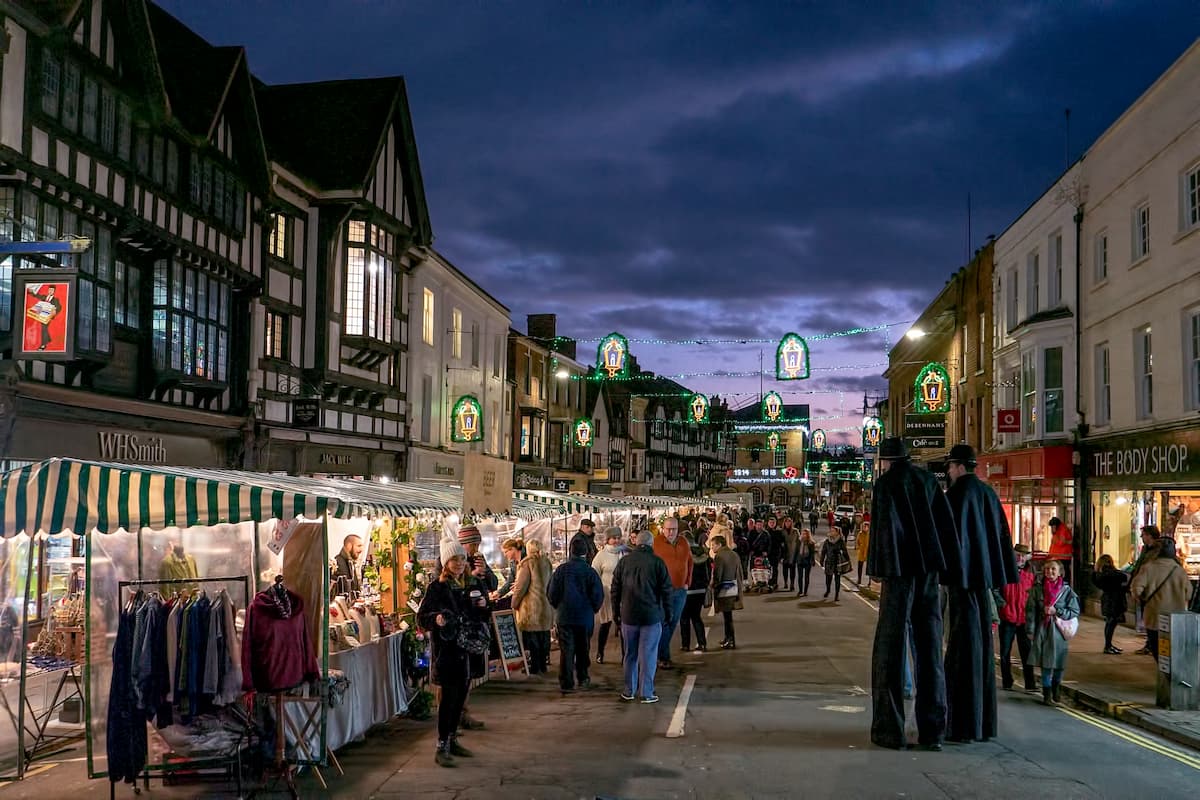
    Take a step back in time by visiting the award-winning Victorian Christmas markets. Located in the hometown of William Shakespeare, the Christmas markets cover several streets across the town centre and boast over 300 stalls. Each trader is dressed head-to-toe for the occasion in traditional Victorian garments. Enjoy your day by perusing the markets which sell festive treats and gifts suitable for all. A community craft fair will also be held at the town hall on Sheep Street if you are feeling creative.

    Last year, the Victorian Christmas markets had over 100,000 visitors, so arrive before lunchtime if you want to browse in peace! The opening times differ depending on which day you plan your visit, but they are roughly open between 10 am and 8 pm.

    12. Cardiff Christmas Market

    Dates: December 11 – December 23, 2021

    cardiff christmas market

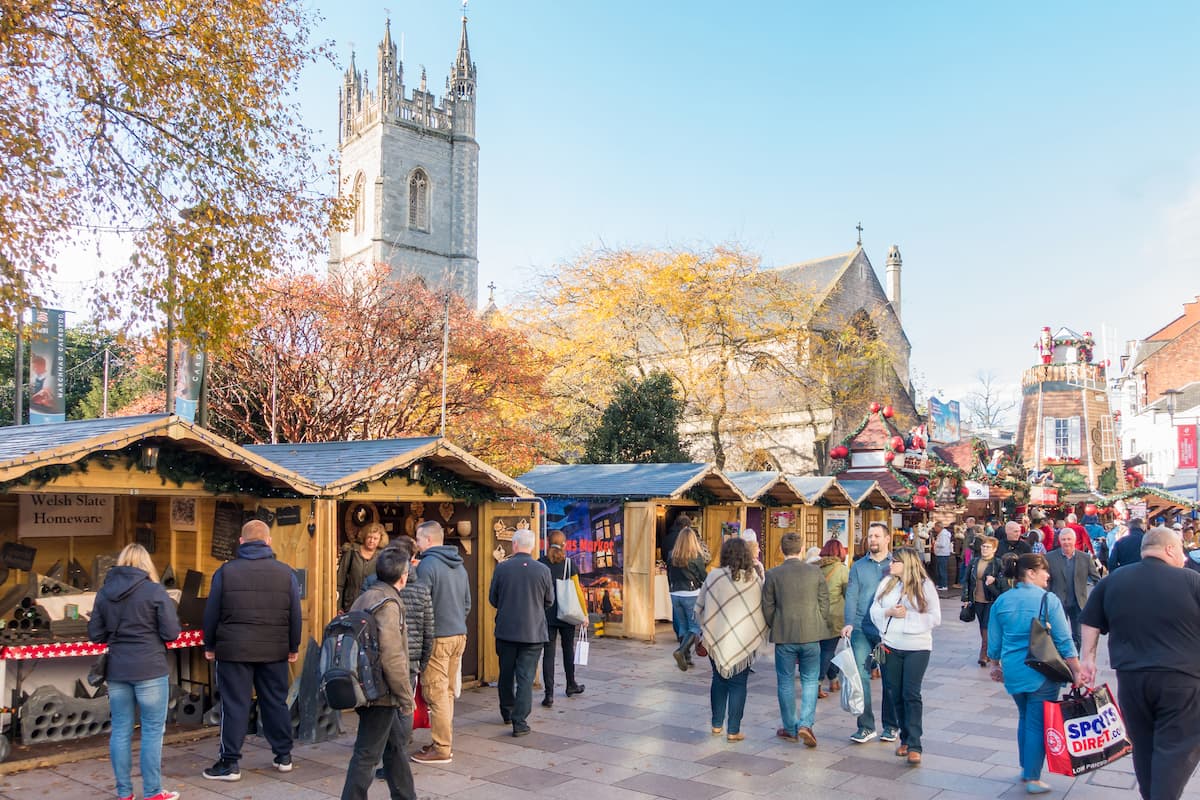
    The Cardiff Christmas Market is one of, if not the best in Wales. Get that festive feeling by indulging in delicious chocolate treats along with a cheeky mulled cider. Why not? It’s Christmas! Traditional welsh cakes can also be purchased along with ceramic goods and homemade gifts.

    A visit to the Gingerbreadmun House is a must. Treat the children to a sweet gingerbread man decorated with colourful icing and smiley faces. This can be found outside Cardiff Central Library. Santa’s Grotto is also worth a visit at the Black Tower at Cardiff Castle, a 13th-century landmark.

    Getting to the markets is easy as there are plenty of places to park your cars, such as local Park and Ride locations or an NCP. Alternatively, the bus and train services run frequently if you want to stay for a hot toddy or two!

    13. Nottingham Christmas Market

    Dates: December 4 – December 24, 2021

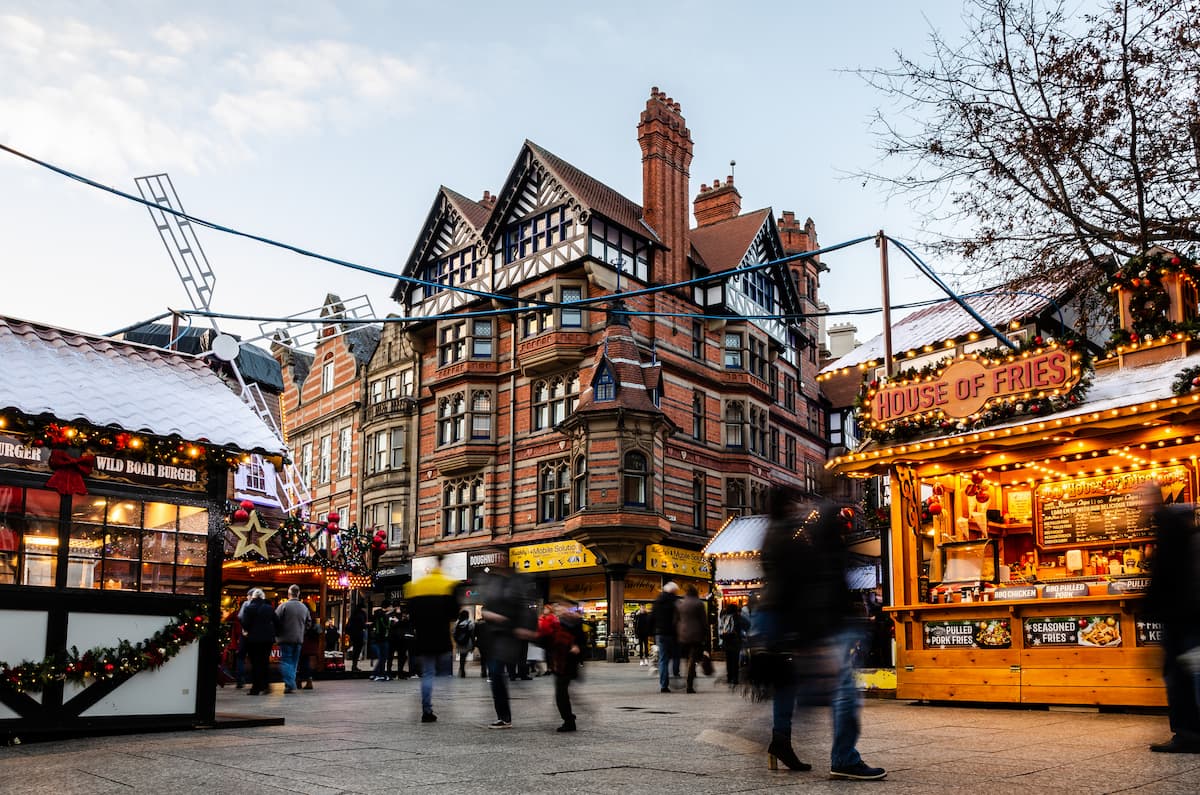
    Christmas Market in Old Market Square, Nottingham
    Christmas Market in Old Market Square, Nottingham

    Overlooked by a 32-meter high observation wheel, the Nottingham Christmas market is the largest in the East Midlands. With over 70 Bavarian-style wooden chalets, there is something for everyone, including continental food, local cheeses, handcrafted wooden toys and home accessories.

    The stalls stretch out across Old Market Square, Long Row and Smithy Row so visitors can browse the market without feeling too crowded. The 18-meter high Christmas tree is always a firm favourite and creates an exciting, festive atmosphere. There are also a variety of small rides for the young ones to enjoy – that should tire them out!

    Although there may be a small mug deposit to pay if you fancy a beverage, entry is free. If visiting by car, there are plenty of multi-storey car parks that can be found dotted around the town. Nottingham also has a main train station, as well as two bus stations and a reliable tram network.

    Due to the pandemic, the event has been scaled down, so do not hesitate to check out the website for full details.

    14. Chester Christmas Markets

    Dates: November 18 – December 22, 2021

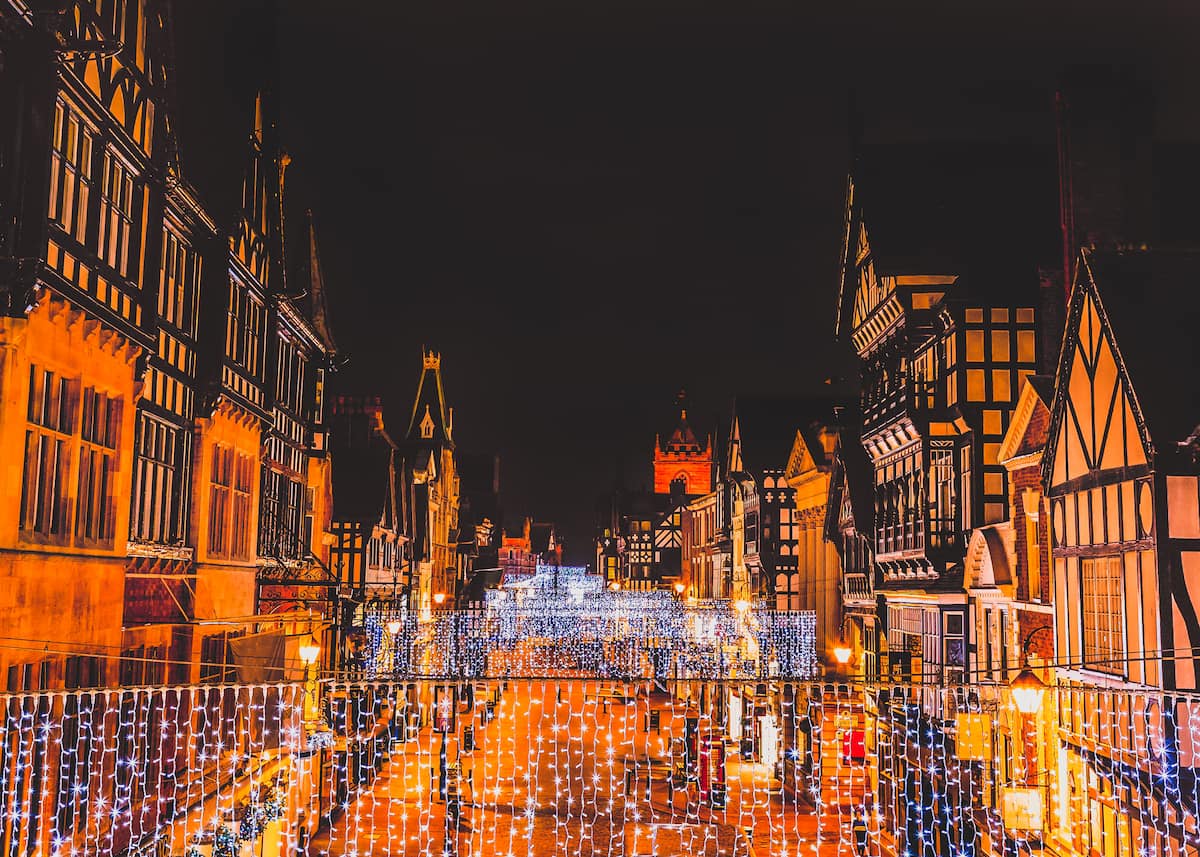
    Eastgate Street Chester
    Eastgate Street Chester

    The Chester Christmas markets are one of the best in Cheshire. Celebrated in the heart of the city, just a stone’s throw away from Chester Cathedral and Chester Town Hall, the markets boast 70 wooden fairy-lit chalets. Everything from succulent Yorkshire pudding wraps and hot toddies is sold here, including stocking fillers and authentic festive gifts.

    Have a pit stop at the Real Ale bar for a hot mulled wine before tucking into a tasty hog roast barm. The cathedral city of Chester is a beautiful place, so feel free to explore the cobbled streets to work off all of those mince pies!

    Getting around Chester is simple with its well-connected trains and frequent buses; there really is no need to take the car. However, if driving, there are many park and ride locations as well as multiple car parks. Entry to the market is completely free. It is open daily but with differing closing times. From Thursday to Saturday, the market closes at 8 pm. From Sunday to Wednesday, the markets close at an earlier time of 6:30 pm.

    15. Lincoln Christmas Market

    Dates: 2nd – 5th December 2021

    Open for just three days, this traditional market is located in the stunning Cathedral Quarter. Browse over 200 Bavarian-themed huts selling a wide selection of continental delicacies, hot beverages and plenty of handcrafted Yuletide gifts and accessories.

    Based between the gothic cathedral and the magnificent Norman Castle, the Lincoln Christmas markets make for the perfect day out with the family.

    Why not make a pit stop to St Paul-in-the-Bail, a 12th-century church that offers children the chance to write and decorate letters to Santa Claus. The finished product is then posted into the Christmas Postbox, where its destination is none other than the North Pole itself!

    If you have time, take a walk along Lincoln Castle with its illuminated walls. This event runs from 6 pm to 9 pm and offers visitors the chance to wander through mesmerising displays of twinkling fairy lights with refreshments to follow afterwards on the castle grounds.

    16. Rochester Christmas Markets

    Dates: Yet to be confirmed

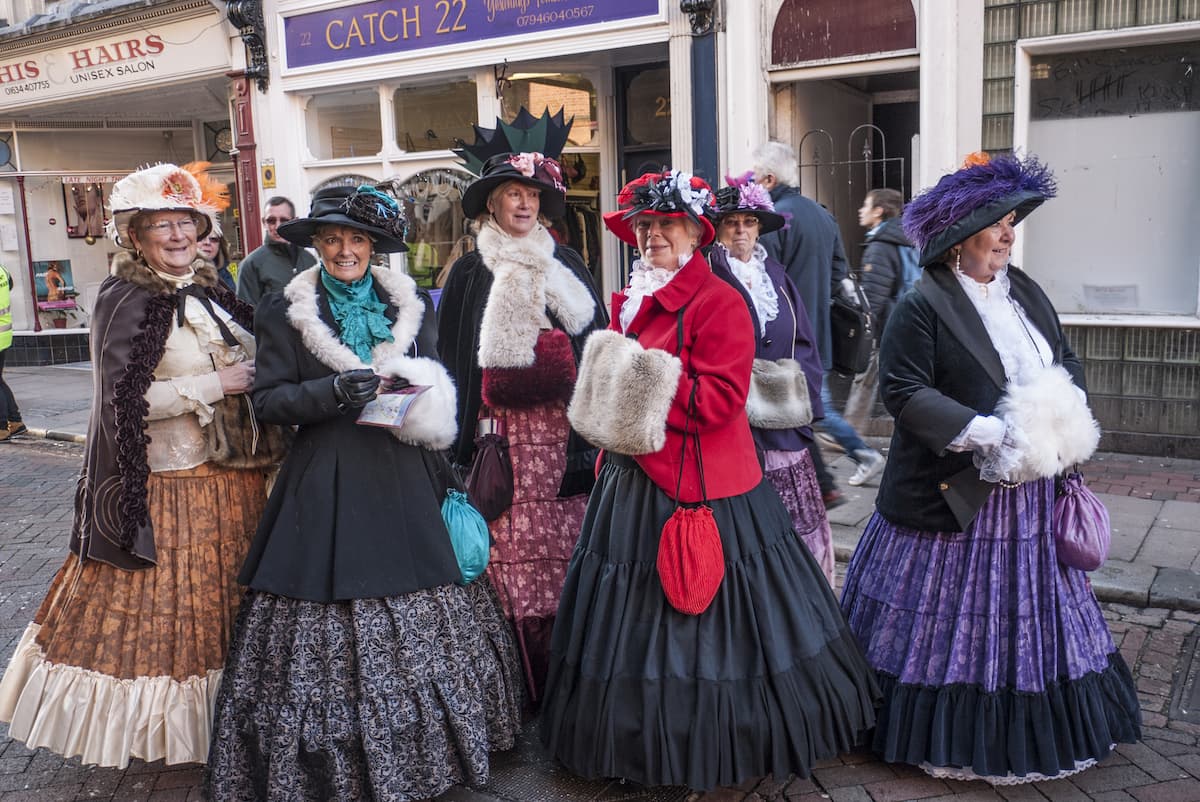
    annual Rochester Dickensian Christmas Festival Parade
    Annual Rochester Dickensian Christmas Festival Parade

    The breath-taking view of the 11th century Rochester Castle should be enough to persuade anybody to visit the Rochester Christmas markets!

    This Kent-based market attracts over 130,000 visitors every year and can be found in Rochester’s Castle Gardens. Scour the stalls for authentic handmade gifts before treating yourself to a juicy hot dog followed by a delicious mug of hot chocolate. The markets coincide with the infamous Dickensian Victorian Festival, where costumed characters entertain visitors with carol-singing and parades.

    The opening days and times are still yet to be confirmed. You can keep up to date by visiting this website.

    17. Norwich Christmas Markets

    Dates: Yet to be confirmed.

    Norwich takes the festive season very seriously, so instead of just one market, it holds several across the city, all on the same weekend. The Norwich Global Christmas Market is the largest and is located in The Forum, where only the finest authentic handcrafted gifts and paintings can be purchased.

    Step outside the doors and enjoy churros with chocolate and festive mince pies before slurping on a hot mug of mulled cider (that’ll keep your hands warm!). The Norwich Christmas Fayre can be found over at the cathedral, where, unfortunately,  more indulging is required.

    Looking for meat-free choices? Look no further than the Vegan Christmas Market held at Open Norwich, where the tastiest of vegan treats can be enjoyed – all cruelty-free, of course.

    One of the most anticipated attractions is, of course, the Tunnel of Light which is one of the largest in Europe. This 45-meter spectacle consists of 57,000 LED bulbs and over five miles of cabling. Pretty impressive, huh?

    Other events worth checking out are the Norwich Castle projections, where the Norwich BID team showcases a new projection each year. So wrap up warm and enjoy the show! Or perhaps you fancy getting crafty with festive wreath making at the Maids Head Hotel, in which a festive brunch – along with a mandatory glass of fizz- is included in the price.

  • Romantic Road Cotswolds (2 Drives You Can Take)

    Romantic Road Cotswolds (2 Drives You Can Take)

    The Cotswolds area in England is an Area of Outstanding Natural Beauty AONB with many Sites of Special Scientific Interest as well. 

    The outstanding natural beauty is enhanced by the man-made beauty of the honey-coloured stone cottages and the vast amount of ancient history and heritage in the area.

    Despite being a tourist hotspot, there are many, many opportunities for a romantic road trip within the Cotswolds and the area is awash with romantic cottages and hotels to stay in as well.

    Here, we are going to take you on not one but two romantic days out in the Cotswolds starting from the Regency Town of Cheltenham.

    Route 1: Romantic Road Cotswolds (with Off the Beaten Path Locations)

    Romantic Road Cotswolds (with Off the Beaten Path Locations)

    The getting away from it, the countryside meanders romantic road trip:

    This road trip is mainly about getting away from the madding crowd but not missing out on some beautiful, but busy places.  Hopefully, the advice on where to stop for a stroll will work and these places will not be overrun with couples who have read this enjoying romantic breaks!

    From Cheltenham

    Head out to the B4632 via Prestbury and you can enjoy the slower pace of the B road and admire some lovely houses on the outskirts of Cheltenham before entering the countryside.

    Just after a straight piece of road and the sign for Winchcombe and the 30 mile an hour sign turn right towards Belas Knap, right again into a narrow tree-lined lane Corndean Lane.

    The trees open up to reveal the lovely view of Belas Knap Long Barrow as you drive along the side of the hill.  Stay on this road until you reach a crossroads where you can turn right for Charlton Abbots and Guiting Power, take this turn.  Follow on and go straight across the crossroads for Guiting Power.

    Guiting Power is a nice, quiet village and an ideal place to park up and go for a walk to admire the many different building styles in the honey stone.

    Leaving Guiting Power head for Bourton-on-the-Water via B4068 and then Lower Slaughter and Upper Slaughter.  This route takes you onto the high ground again and affords stunning countryside views. 

    Once you get to Bourton-on-the-Water turn into Landsdowne which leads into the High Street and the prettiest part of the town.  You can decide if you want to stop here or drive through, if stopping there are parking spaces on the road that make a good place to walk along and back to.

    Pavement cafe, Bourton on the Water

    Continue along Rissington Road to Little Rissington and immediately before the road sign for Upper Rissington turn left signposted for Stow-on-the-Wold

    Turn left immediately after Phipp Feeds, you are going to Wyck Rissington, the smallest of the four Rissington’s and a place with a lovely 750-year-old church where Gustuv Holst was organist for a while.   

    Wyck Rissington takes you on to the A462 where you need to turn left and then right to Lower and then Upper Slaughter.  It is definitely worth stopping in Lower Slaughter and having a lovely walk, it should be much quieter and is less commercial than Bourton-on-the-Water and is a very beautiful, romantic place for a stroll.

    River Eye at Lower Slaughter

    Onwards towards Batsford Arboretum and you have a choice once you get there depending on your preferences…  Batsford Arboretum is described as a lovely place for a romantic walk and it does look very beautiful.

    However, you do have some more towns and villages to see and are on course for the National Trust’s very special, internationally renowned Hidcote Manor Gardens

    On the way to Batsford, you will pass through lovely Lower Swell, turn right at the T junction and on to Upper Swell where you briefly go onto the B4077 by turning left and then right.  This brings you onto the A424 and turn right onto the A44 towards Batsford Arboretum, or left to go straight to Blockley via the B4479.

    From Batsford Aboretum, it would be right from their entrance and then right onto the B4479 and through Blockley on towards Hidcote Manor Gardens.

    If not going to Hidcote Manor Gardens then you would not need to turn off for Blockley, but go on to the Broadway Tower.

    If going to Hidcote Manor Gardens pop it into the Sat Nav at Blockley, go on through Ebrington and you should soon pick up the brown signs for Hidcote Manor Gardens that will guide you in. 

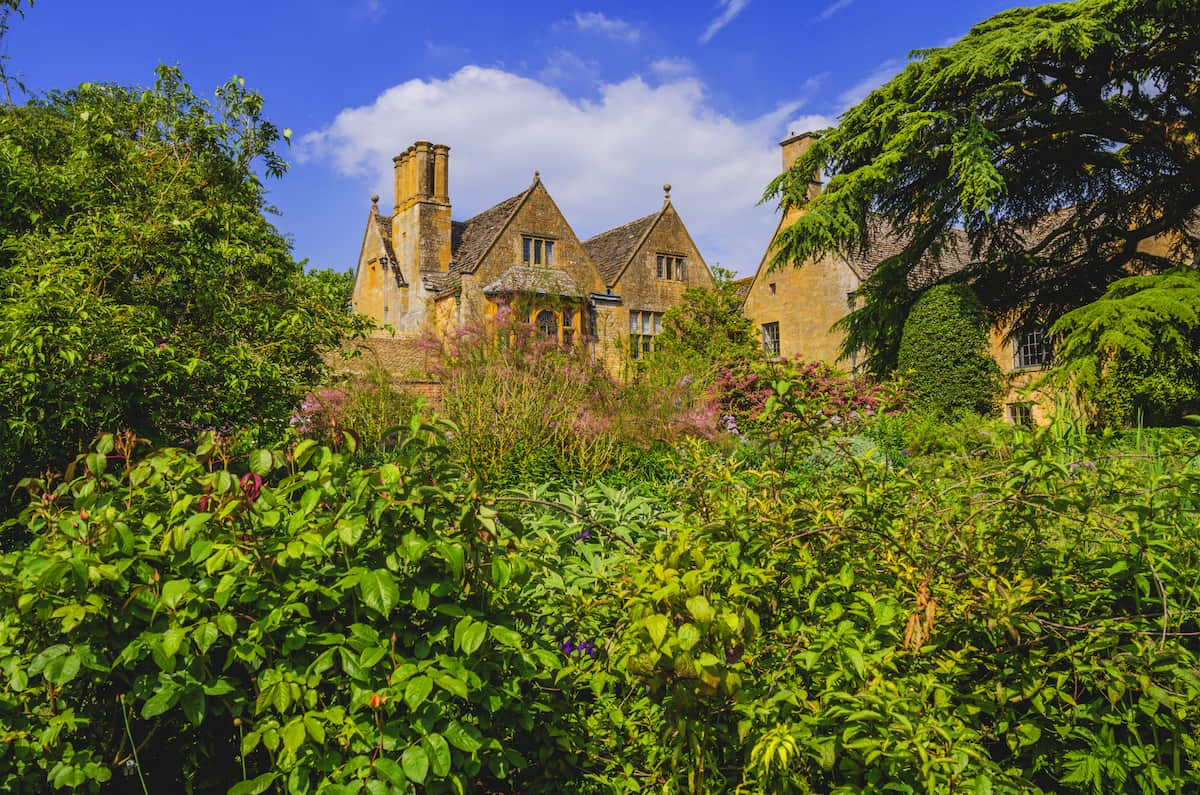
    When you leave Hidcote Manor Gardens head for Broadway Tower a folly designed to be seen from Lady Coventry’s house in Worcester.  It is on one of the highest hills in the area and the views are stunning.

    Hidcote manor gardens in the english cotswolds

    Now, back to Cheltenham via the B4068 and A436.

    This trip is largely about exploring the beautiful country lanes and getting off of the usual road routes to do so.  Therefore, I strongly urge you to use a sat nav with caution, mainly only put on if you think you may have taken a wrong turn in the many lanes and are near the next destination.  The Romantic Road depends on being off the main routes.

    Approximately 4-5 hours drive time depending on traffic and approximately 75 miles.

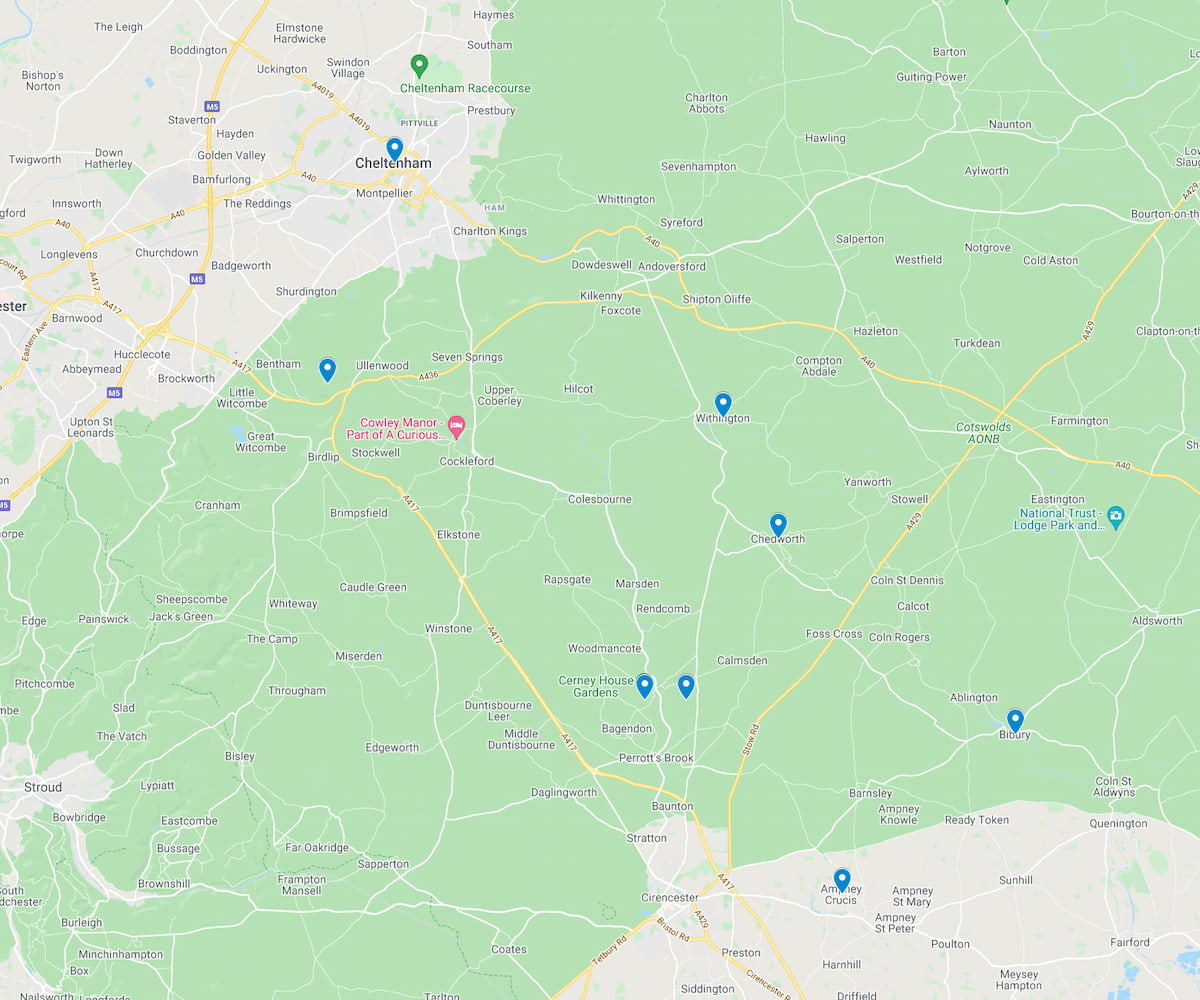
    Route 2: The Path Less Travelled Tour

    Route 2 The Path Less Travelled Tour

    This trip takes in some lovely ancient historical locations and landscapes as well as some achingly romantic settings for you to enjoy with your loved one.

    Head out of Cheltenham on the A40.  This takes you past the Dowdeswell Reservoir before you turn off towards Withington, Chedworth and Bibury.

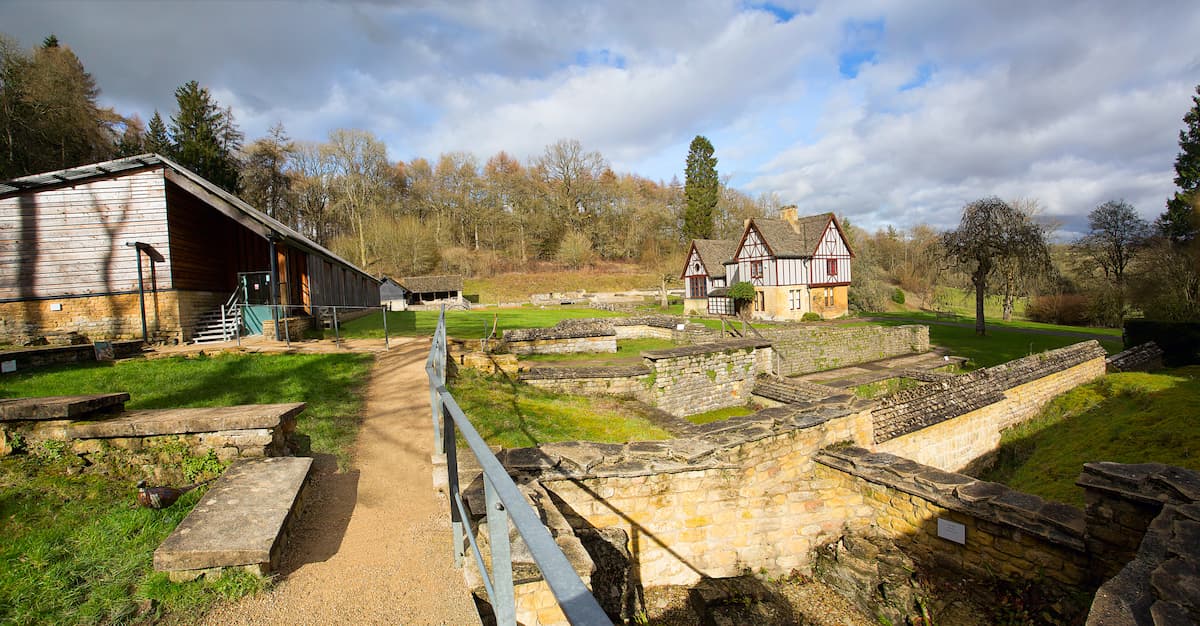
    Withington is a very pretty place to drive through and is a natural route to get the Chedworth, where a visit to the Chedworth Roman Villa is recommended along with a stroll around the village.  Depending on the time of day you set out, the Roman Villa is a romantic place for a picnic lunch.  Although, you may decide to enjoy a coffee at the onsite cafe at other times of day and have lunch elsewhere.

    Chedworth Roman Villa

    Before you go, have a look around Chedworth, there are some very pretty cottages.

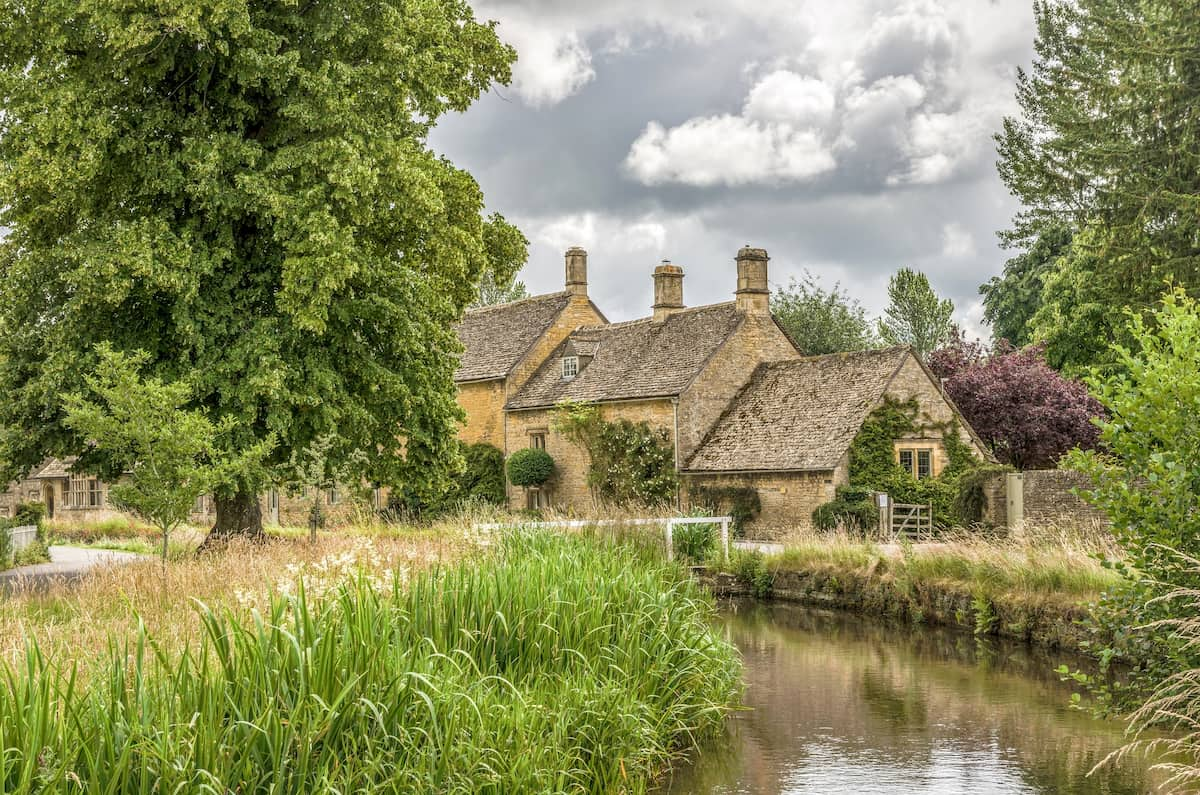
    Drive to Bilbury, you will travel a short way on the A429.  A must-stop location. Bilbury is beautiful, romantic and a perfect place to enjoy some relaxing time together, to allow the stresses of life to fade away as you walk arm in arm alongside the bubbling river and enjoy the peace and tranquillity that Bilbury offers. 

    Old street with traditional cottages in beautiful spring day , Bibury

    Ampney Crucis is the next drive-through location and when you get to the T junction, turn right and then follow the road through the village to the crossroads and turn right onto the A417, London Road towards Cirencester. 

    Pop Cerney House Gardens in the sat nav and you will be guided through Cirencester, a place to visit on a less romantic day.

    Cerney House Gardens is well known as a romantic beauty spot in the Cotswolds and is a must-visit location on this trip.  They have a cosy cafe, a shop and plant sales.

    When you have enjoyed the gardens, take a drive through the village of North Cerney, it is another one of those pretty, unassuming Cotswolds villages that is peaceful and beautiful.

    Driving back towards Cheltenham from North Cerney to enjoy some time at Crickley Hill, you are in an ancient, historical landscape: There is a great deal of Roman history in the area and Channel Four’s Time Team excavated near the route to find Roman ruins.  The area has many ancient burial mounds, barrows and hill forts.

    The route along the A435 is largely tree-lined to start with making for a very pleasing dappled light as you motor along. 

    After the turn off to Cockleford there is a small crossroads, with the left turn signposted for Cowley.  Turn off down here and into Cowley, a lovely off the beaten track place with some stunning architecture to see as you drive through.

    On the other side, the lane once again takes you into the heart of the ancient landscape as you head towards Crickley Hill.  After about 2 miles turn left at the crossroads onto the A436.  Observe the brown sign and turn right to Crickley Hill.

    Views from Crickley Hill Country park near Gloucester

    Crickley Hill is jointly managed by the National Trust and Gloucestershire Wildlife Trust and not only is it a lovely place for a walk, but it is of immense importance for wildlife.  It has evidence of human habitation right back to 4000 BC and the National Trust advise that it has magnificent views ‘magnificent views towards Robinswood Hill and May Hill, and the Brecon Beacons and Black Mountain beyond.’

    Following a bracing and romantic walk at Crickley Hill taking in the stunning far-reaching views, it is time to head back to your accommodation in Cheltenham for a luxurious bath and well-deserved cocktails.

    Approximately 2.5 – 3.5 hours drive depending on traffic and Approximately 56 miles.

  • Top 17 Self Catering Castle Stays in England

    Top 17 Self Catering Castle Stays in England

    Staying in a castle is a romantic, wonderful experience.
    Whilst England has a selection of Castle Hotels offering indulgence and luxury, there are also a large number of wonderful, romantic, historic self catering options to stay in a castle.  Just imagine for a weekend or a week you are king or queen of all you survey?  Or, maybe you have always dreamt of being a princess or knight or your little darlings have?

    Read on for 17 handpicked top options for a holiday in a castle:

    All properties are unique and offer something different and special. They are not sorted in order of preference; they are sorted simply into alphabetical order.

    Blencowe Hall

    Penrith Cumbria – Sleeps 24

    Penrith Winter

    Seen from a distance Blencowe Hall looks like an impressive manor castle and indeed Blencowe Hall is a Grade I listed fortified manor house that has a rich history dating back to medieval times. 

    As you approach the house you can see the towers, one of which has the extensive damage evident from an attack during the English Civil War. 

    Blencowe has 12 bedrooms and 2 of these have huge glass windows that are an interesting contemporary repair that fills the gaps of the historic damage and leaves the history in place offering stunning views. 

    The decor is a traditional and contemporary style that compliments the period features. The grounds are lovely with formal gardens that reach 30 acres of walled gardens are in keeping with the style and age of the house.

    Blencowe is an extremely comfortable location for a family get together or offers various options for larger groups. The kitchen has a four oven Aga as well as an electric oven and gas hob. 

    There are 2 American style fridge freezers and plenty of equipment for large groups. There is a breakfast room and formal dining room both that seating 24, a butler’s pantry, games room, 11 bathrooms, 2 cloakrooms and plenty of space and comfort.

    USP:  The damaged tower with its modern repair.

    Book your stay here.

    Cotehele

    Near Saltash, Cornwall – Sleeps various

    Cotehele House

    Cotehele is a Medieval castle with Tudor additions and is a country estate in the care of the National Trust.  From the moment you arrive, you know you are caught up in the history of the place. 

    Cotehele is open to the public and has a range of activities, interests and shops to suit most people.  Few visitors though realise that one of the doors marked private leads to a holiday apartment or that the cottages near the sawpit are available to rent for holidays, or even that there are 2 other castle-like holiday cottages in the grounds.

    Hall Court

    The most special is Hall Court the apartment in the oldest part of the castle. Wow!  The apartment is accessed from the ground floor and sleeps 2.  Upstairs is a comfortable sitting room that oozes castle charm, a well-appointed kitchen/diner, a bathroom and a double bedroom. 

    For those going away with family as well as the romantic castle apartment, there are 8-holiday lets in all, with 7 cottages to choose from at Cotehele as well.

    Retainers Court

    Overlooking the ancient chapel, Retainers Court is a lovely 15th Century 2 story house, with thick walls and castle mullioned windows. 

    Retainers Court sleeps 3, having a sitting room, kitchen, dining area, bathroom, double and single bedrooms. Not accessible due to location and very steep stairs.  Under 12’s are not allowed to stay at Retainers Court.

    Malt House

    Malt House is situated on the private Cotehele Quay and overlooks the river Tamar, from the outside it looks like a mini castle due to its tower.  Sleeps 6 in king-size, twin and a room that can be either, en-suite to master and 2nd bathroom, kitchen, sitting room, utility and a tower room.

    All Cotehele Accommodation

    You come and go as you please and a later checkout is available on Sunday’s.  Guests have free access to the grounds out of hours, so can really enjoy the place once the visitors and staff have left or finished for the day.

    USP:  A true taste of an ancient working estate on the banks of a river.

    Deer Park

    Near Malton, Yorkshire – Sleeps 10

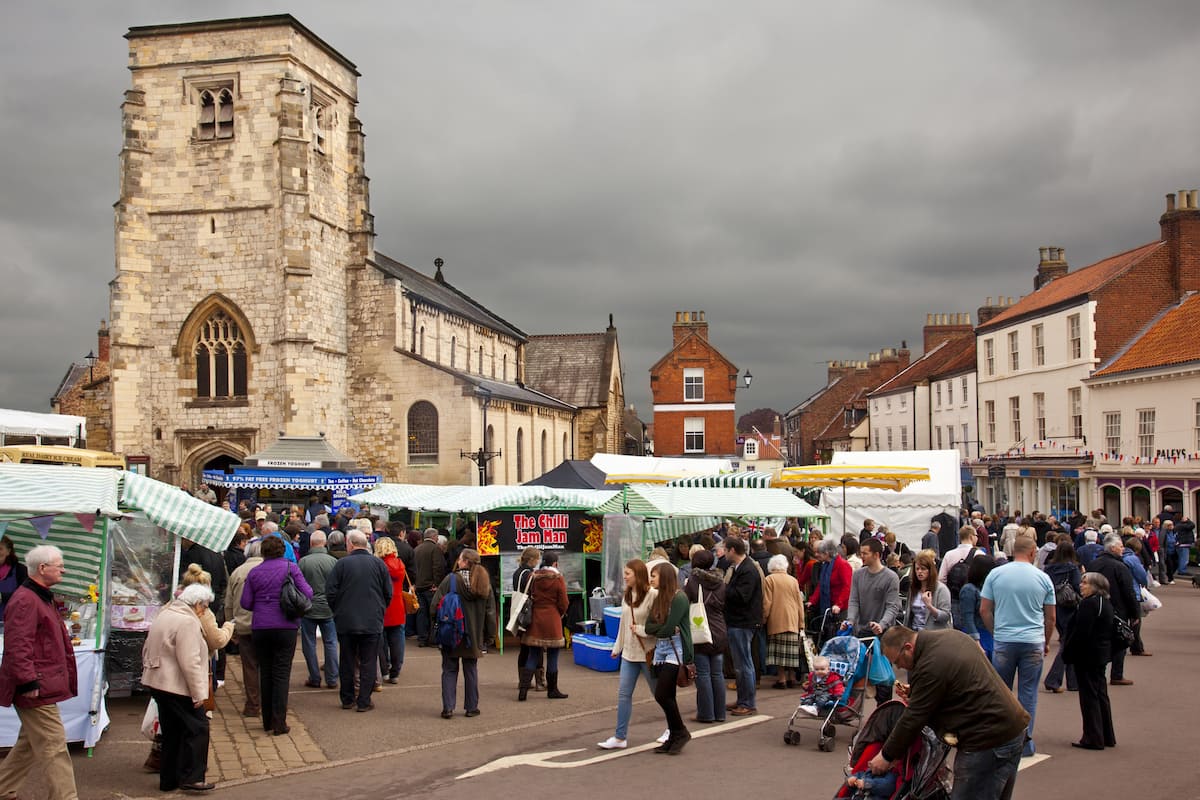
    Market Day - Malton - Yorkshire - England

    A folly built by the gentry to look like a castle that is now available for self-catering holidays.  Described as a ‘crenellated, gothic miniature castle with a long and fascinating history’, the folly is Grade II listed and surrounded by an enclosed garden with views over 20 acres of parkland to Scampston Hall a stately home. 

    With 6 bedrooms, including some on the ground floor the folly sleeps 10 and has a ramp for accessibility and they accept dogs.  On the ground floor there is a large kitchen including an Aga, utility room, dining room, breakfast room, drawing room, morning room and hall.

    USP:  A listed Folly making a mini castle that is accessible for all.

    Book your stay here.

    The Mediaeval South East Tower of Great Yarmouth

    Great Yarmouth, Norfolk – Sleeps 4 – 12

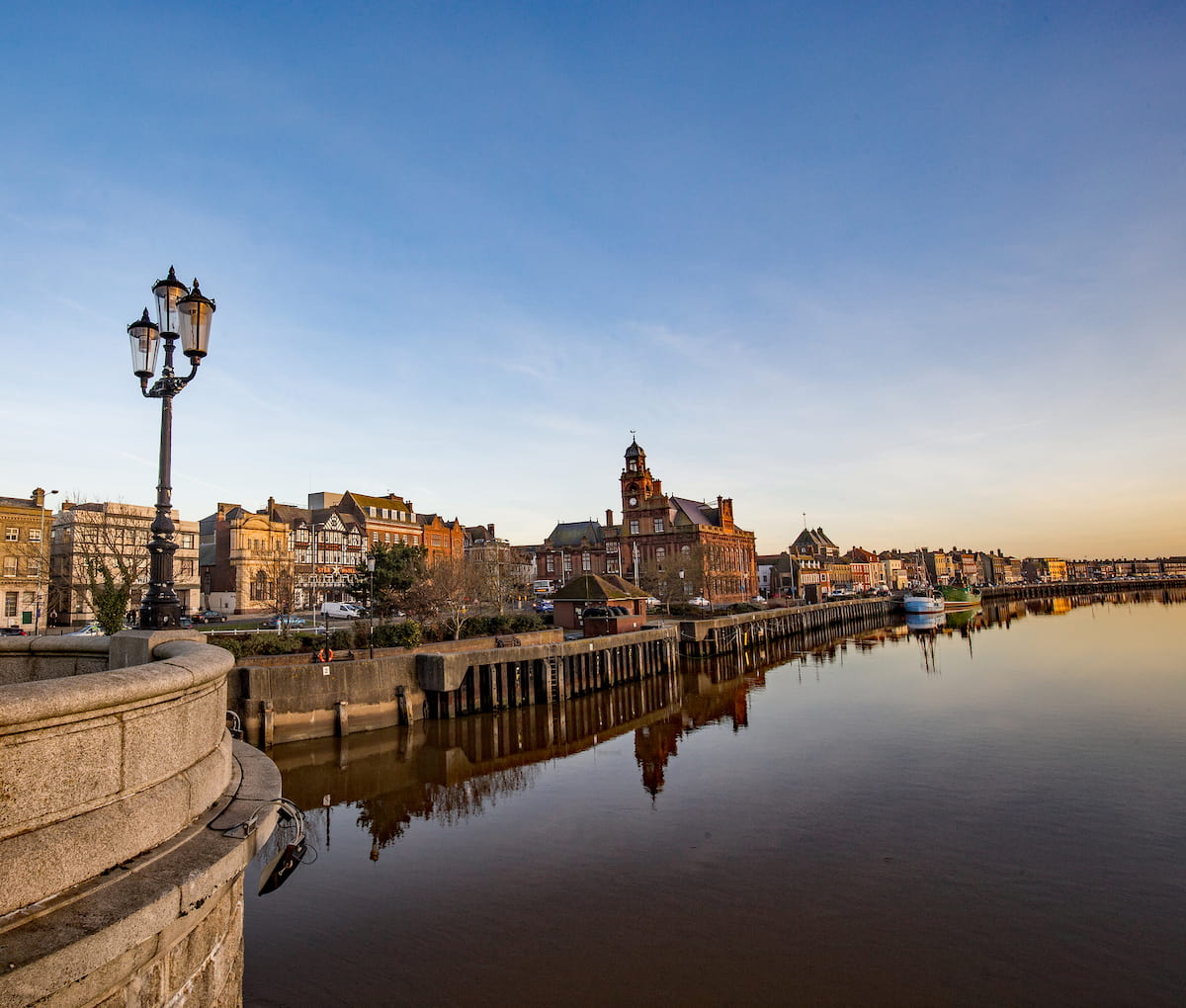
    A view along the Aouth Quay in the town of Great Yarmouth

    The Mediaeval castle that forms part of Great Yarmouth’s ancient wall is spread over 5 floors and has a kitchen diner, sitting room, two bedrooms, 1 double and twin and space for up to 4 double airbeds for larger groups,  there is 1 bathroom, a car parking space, with free on-street parking close by near the medieval wall. 

    The thick castle walls feature original + shaped windows and the interior stonework is mostly painted white below the beamed ceilings.  There are modern touches, there is Wifi and a dishwasher as well as everything you’d expect.  The decor is an eclectic mix of 19th and 20th Centuries and adds to the charm of the place.

    USP:  An historical building with accommodation over 5 floors.

    Book your stay on Airbnb here.

    The Old Folly

    Hunmanby near Filey, Yorkshire – Sleeps 2

    Stay in your own castle ruin for a week or weekend.  With gothic arched windows and vaulted ceilings, this folly has the feel of a castle and the outside appearance of a castle ruin.

    Near the Yorkshire coast, the comfortable accommodation comprises of a kitchen, comfortable sitting room, minstrels gallery and bedroom with modern bathroom.  Book a stay and dogs go free, the garden is accessed via a big archway and is shared, there is also shared freezer space.

    USP:  Stay in a very comfortable castle ruin.

    Book your accommodation here.

    Orchardleigh Castle

    Frome, Somerset – Sleeps 12

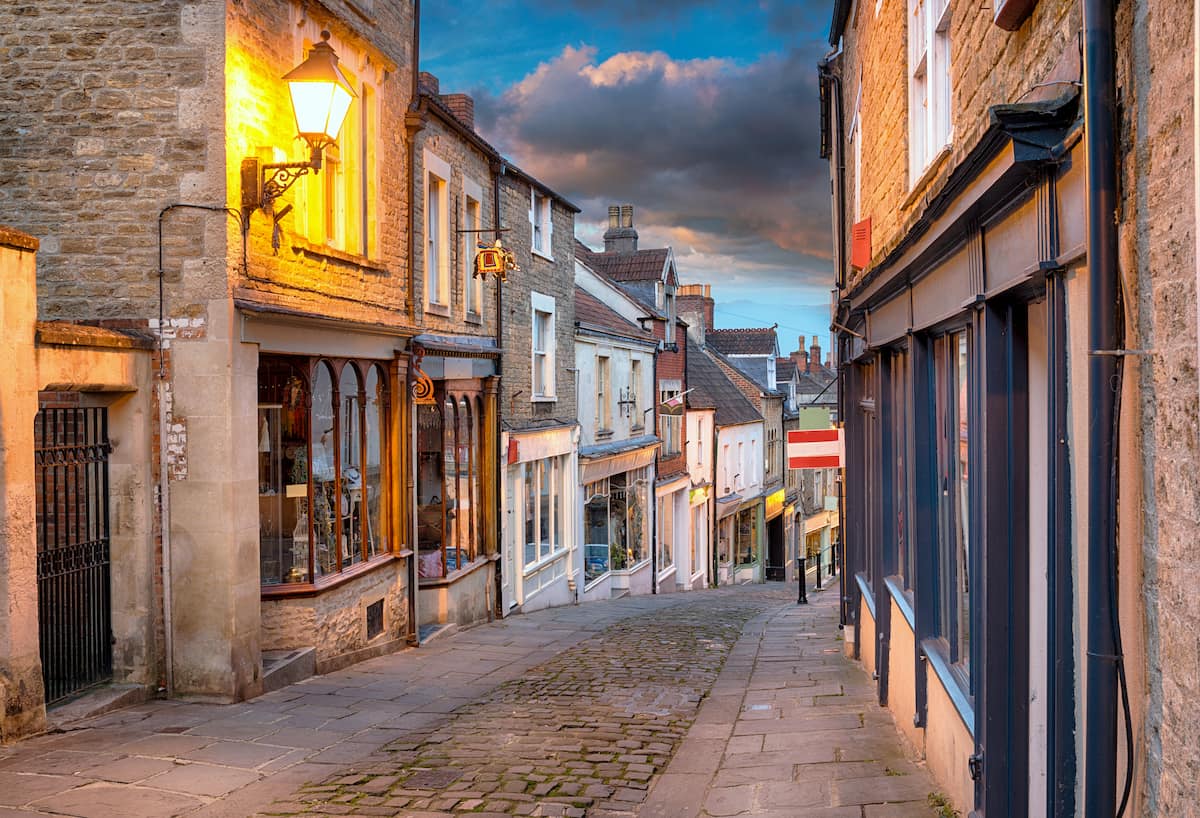
    Dusk at Frome

    Ten miles from Bath the Castle is set in a 500-acre estate and sleeps 24.  The 2 battlements can be rented separately and each sleeps 12.  Each battlement has a garden with hot tub and BBQ and inside the stone floors, wood panelling and exposed stone walls act as a reminder that this is a very old building. 

    USP:  2 battlements that can be booked together or separately.

    Book your stay here.

    Pottergate Tower

    Alnwick, Northumberland – Sleeps 2

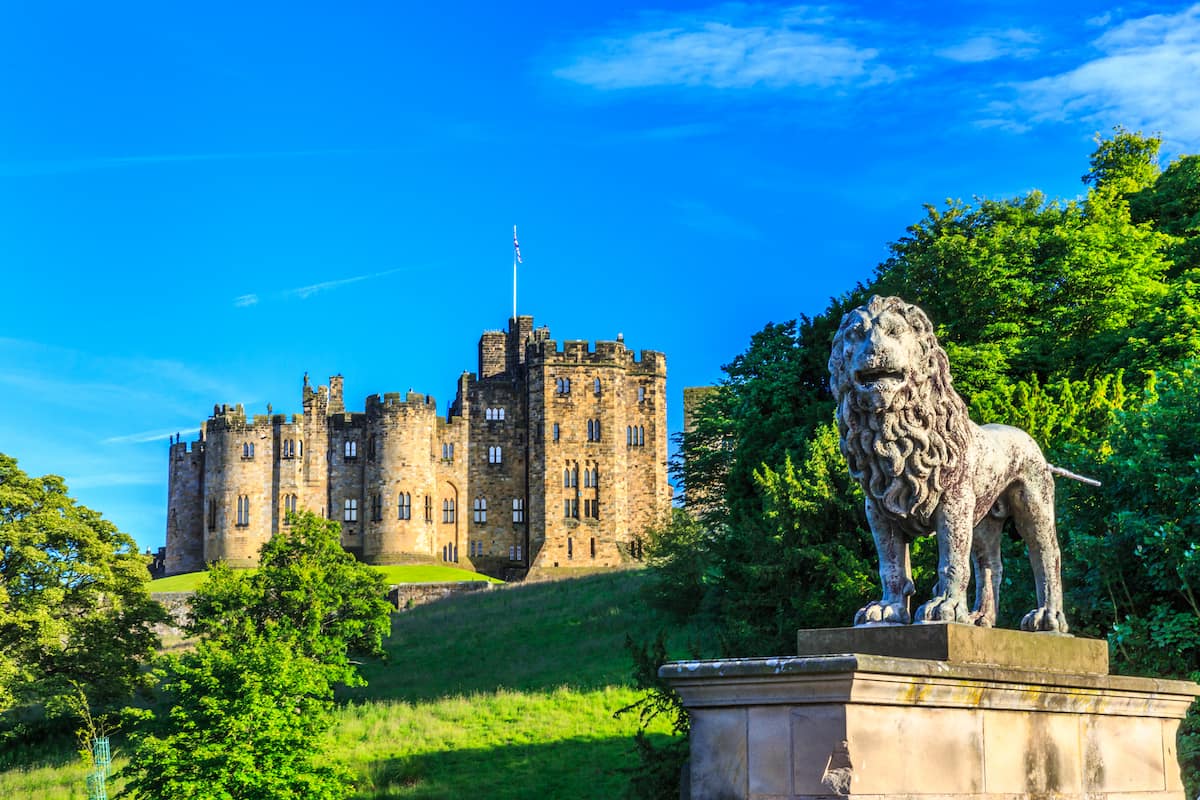
    Alnwick Castle, England

    Pottergate Tower sleeps 2 and was built as part of the town of Alnwick’s defences.  The contemporary furnishings are very tastefully done to enhance the ancient surroundings and the tower simply oozes tasteful, romantic charm.

    The views across the rooftops of Alnwick and beyond are stunning and include the castle itself and the surrounding countryside. 

    The first floor kitchen and dining area are reached via a spiral staircase and another staircase takes you up to the living area and luxurious modern bathroom. 

    The mezzanine bedroom at the top has a lovely beamed ceiling and stone walls; it feels like a true castle bedroom.  Pottergate has thick stone walls, arched windows and it is impossible to forget that this really is a Grade 2 listed medieval castle-like tower. 

    The tower is a historical landmark that was listed in 1952 and is an easy walk to Alnwick Castle, which is instantly recognisable as Hogwarts in the Harry Potter films.

    USP:  Unique contemporary style, tastefully done to compliment the medieval.  Overlooks “Hogwarts”, but had the name Potter already.

    Book the Pottergrate Tower here.

    Quartermasters Apartment Brancepeth Castle

    Brancepeth near Durham County Durham – Sleeps 3

    Quartermasters Apartment is a ground floor south facing apartment in the castle, one of the oldest castles in the north of England, Brancepeth Castle and is close to Durham, a UNESCO World Heritage Site. 

    The apartment sleeps 3 and features charming cosy accommodation that includes bare stone walls. The living space is open plan and there is a double bedroom and single bedroom, 2 shower rooms. 

    Guests have free access to some of the castle grounds and there is parking for 2 cars. The castle has a fascinating history and once belonged to the famous Neville family.

    USP:  Ground floor, wheelchair friendly.

    Book your stay at Brancepth Castle here.

    Scargill Castle

    County Durham – Sleeps 2

    Scargill Castle was built in 1550 on the site of an even earlier medieval castle. Recently it has been lovingly and carefully restored into a delightful retreat for two from a crumbling ruin. 

    21st Century comfort sits alongside the historic character with ease. When you arrive you pull into your own private parking space and go through a gate into your private sheltered courtyard gardens, go into the sunny entrance hall and marvel at the internal stone doorway leading to the stone staircase to the upstairs, the castle has a kitchen, banqueting dining hall, living room, bedroom and bathroom. 

    A hamper of food and wine is left for guests and treats for visiting dogs along with a tea tray set for when you arrive.

    USP:  See the restoration photos and those from the television programme Time Team.

    Book your stay at with Booking here.

    Shute Barton

    Axminster, Devon – Sleeps 10

    Shute Barton building in East Devon

    Shute Barton is described as an exclusive holiday home and as one of Devon’s most important manors.  Arriving at Shute Barton to start your holiday, you cannot help but be impressed by the battlements and tower. 

    There are many original features including one of the largest fireplaces in England in the Great Kitchen.  The house has 5 bedrooms and sleeps 10. The ground floor has a kitchen, laundry room, dining room, sitting room and games room as well as the Great Kitchen with that fireplace. 

    There are 2 steep spiral staircases to the bedrooms on the 1st floor.  The rooms are 3 doubles, a twin and a room that can be twin or double. 

    There is a staircase to a medieval hall on the top floor with an original ceiling that is unheated but available to guests.  There is a private garden exclusive to the castle on 2 sides and larger gardens to explore. 

    Shute Barton welcomes up to 2 dogs and late checkout is available on Sundays.

    USP:  Great Kitchen with its fireplace and the top floor medieval hall.

    Book your stay with the National Trust here.

    Tawstock Castle

    Barnstaple, Devon – Sleeps 8

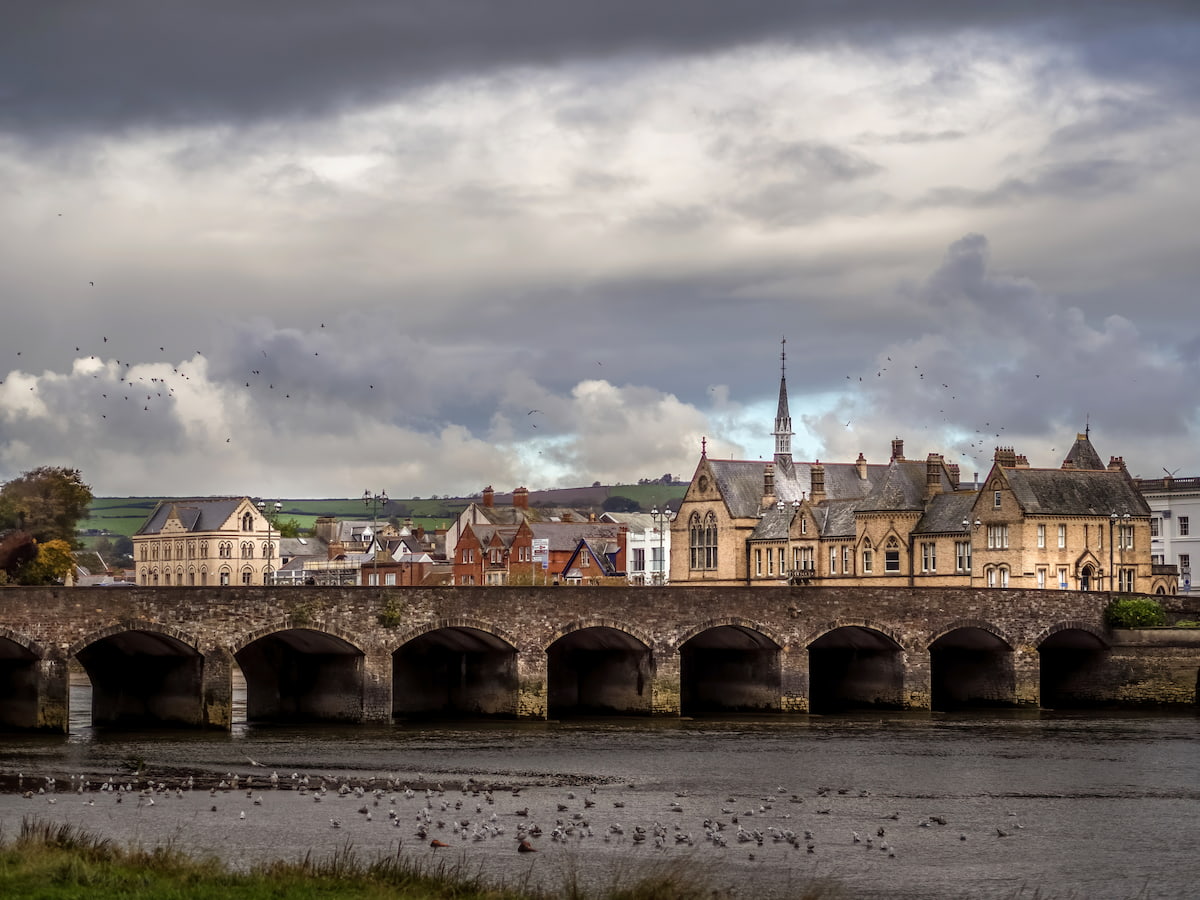
    Barnstaple medieval Long Bridge which spans the River Taw in North Devon

    Tawstock is a Grade II listed 18th Century Bailey Castle situated on a rounded hilltop in open countryside that gives stunning 360 degree views of Devon countryside. 

    The wood-panelled ceilings top the mixture of original features and modern tech. The kitchen is modern, slick and partly circular, there is a living/dining area, a ground floor shower room, 4 bedrooms including 2 rounded ones, 2 doubles and 2 twins, and one of the twins has twin four poster beds which is a nice taste of history. There are 2 bathrooms. 

    Tawstock Castle has a roof terrace, an acre of fenced lawn and is set in 8 acres of parkland. There is ample parking and a helipad.

    USP:  A Hilltop standalone fortress.

    Book your stay with Booking here.

    The Tower

    Blickling, Norfolk – Sleeps 4

    The Tower is a romantic compact tower that looks like a castle and stands alone surrounded by its own garden and then countryside.  There is a fantastic roof terrace giving the added charm to the elegantly appointed little castle.

    The Tower sleeps 4 people but is not suitable for children under 6 due to the bedrooms being on different floors and separated by a steep spiral staircase. There is parking for 2 cars.    

    The accommodation comprises of a kitchen and a sitting/dining room and bathroom on the ground floor, with a twin that can be made into a double on the first floor and a further double bedroom with en-suite on the second floor.  The Tower roof terrace leads to the round tower.

    USP:  A castle in miniature that has a square and a round tower.

    Book your stay with National Trust here.

    The Turret

    Charlecote Park, WarwickSleeps 6

    With a view of the grounds and the entrance gatehouse and surrounding parkland, the Turret is another unique Castle style holiday home, this time in the Turret of a large country house.  Accessed by an ancient “secret” door the comfortable first floor self contained apartment sleeps 6 in 3 bedrooms has pretty latticed windows, period features and exposed beams.

    USP:  A secret door leads up to a comfortable apartment.

    Book your stay with Cottage World.

    Walton Castle

    Clevedon, Somerset – Sleeps 16

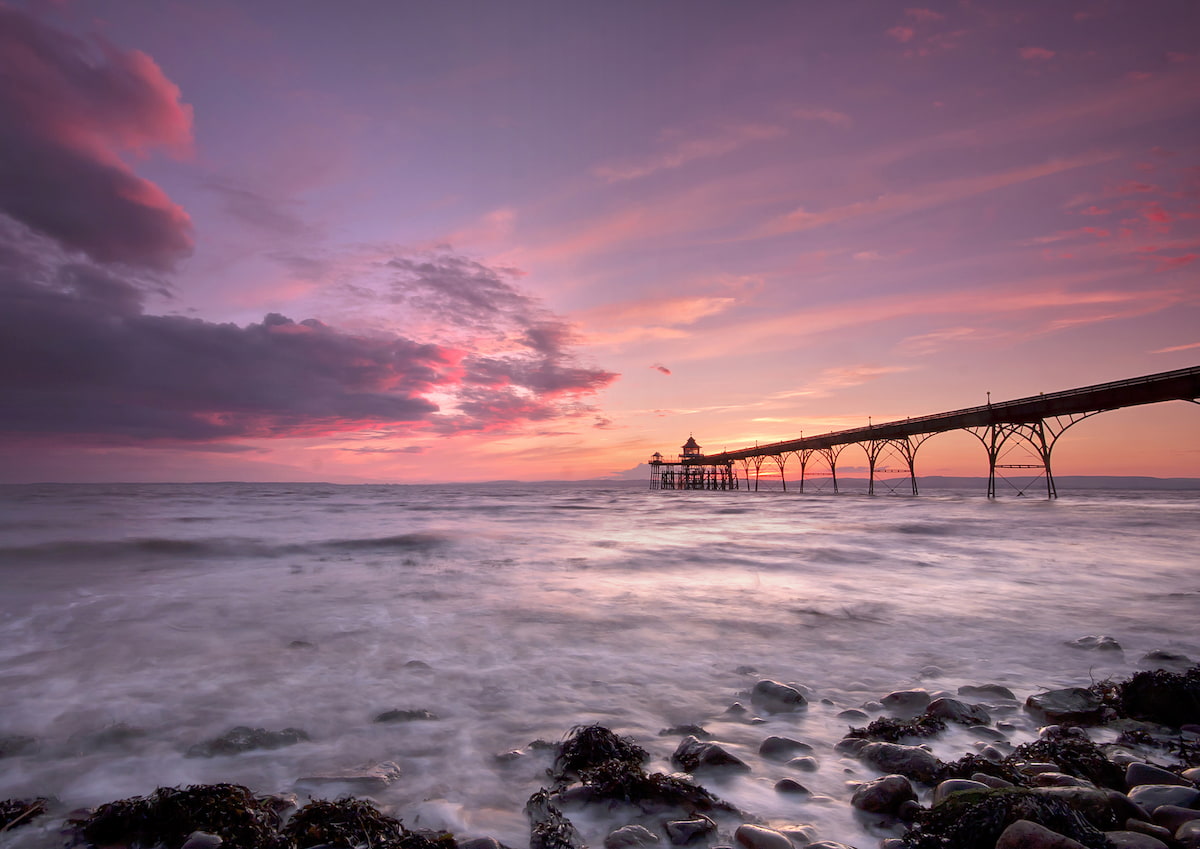
    Clevedon Pier sunset

    A fascinating castle with circular cobbles and lion statues, close to the sea and not far from Bristol this 17th Century castle sleeps 16 in 8 bedrooms, 5 of which are actually some of the eight castellated turrets that surround the central octagonal castle. 

    The main entrance opens into a large kitchen with an impressive circular granite dining table. On the first floor, there is a grand sitting room, library and reading room and on the top floor there is a lovely master bedroom with en-suite and a private terrace. 

    Downstairs from the kitchen there are 2 double rooms with a Jack and Jill bathroom and the 5 outside rooms all have en-suite.

    Outside there is a sunken patio that leads to the underground swimming pool, has a hot tub and BBQ area.

    USP:  Impressive castle with an underground swimming pool.

    Book your stay here.

    The Water Tower

    Trelissick Estate, TruroSleeps 2

    This is a romantic getaway that will take your breath away!  The arched barn door entrance leads to the winding staircase and the 4 storey Victorian tower has a circular shaped room on each floor. 

    It really does look like a fairytale princess tower and you could imagine Repunzel letting down her hair. The Water Tower sleeps 2 for a romantic getaway.

    The bathroom is on the ground floor, a double bedroom on the first floor, with the sitting room next and the kitchen/diner at the top, so this is truly a quirky place to stay. The accommodation is pretty and there is a reserved parking space and a garden that is shared with another holiday cottage. 

    USP:  Quirky fairytale princess tower.

    Book your stay with National Trust here.

    Watermouth Castle

    Near Ilfracombe, DevonSleeps various

    Watermouth Castle

    Situated at Watermouth Bay on the north coast of Devon and housing 7 self-contained apartments featuring a shared heated indoor swimming pool. 

    This castle was built in the mid 19th Century and has recently undergone extensive restoration.  2 of the apartments overlook the harbour, 3 overlook the south court of the castle towards the wooded hillside and 1 has sea views from the living room.

    The apartments are in a separate part of the castle to that which is open to the public; however guests enjoy free passes to the castle attractions which include a museum, theme park style attractions, a large model railway, underground theatre and water spectacular.  The castle is only 500 metres from the beach.

    USP:  An historic castle apartment stay on a mini theme park.

    Book your stay here.

    Whitehall Pele Tower

    Mealsgate, Cumbria – Sleeps 8

    A Grade 1 14th Century tower the miniature castle-like house has been the same family for over 150 years and has an acre of grounds incorporating a fascinating Victorian manor house ruin. 

    The first floor sitting room has a large Tudor fireplace and the tower sleeps 8 in 4 bedrooms, the large well-appointed kitchen/dining room incorporates 2 full-sized ovens and has a separate utility room.  Also, on the ground floor is a games room. 

    The first floor has a large sitting room and 2 bedrooms with a bathroom and separate WC.  On the top floor is the master bedroom, another bedroom and a bathroom and the stairs to the roof terrace. The Tower has views over the ancient pastureland that is home to lovely wildlife and birds.

    NB: The centrally heated house offers a unique and comfortable place to stay, but if the oil central heating is on for more than 8 hours there is an additional charge at £3.00 per extra hour per day.

    USP:  A Victorian Manor House ruin in the grounds of this 14C Tower.

    Book your stay with Cottages here.

    What better backdrop for a romantic weekend, or big family event that a castle….  Above are 17 of the best options in England to suit a variety of needs and tastes. 

    What they all have in common is their long history and sense of that history.  All have comfortable accommodation that is self-catering so you can come and go as you please, some offer catering options that you may wish to explore when you look into booking.


  • Complete Packing List For England

    Complete Packing List For England

    There are several factors to consider before you visit England, most importantly, the weather! The temperamental nature of the climate here means you need to come prepared for any eventuality! 

    You need to allow for frequent changes in the weather when planning your packing list for England.

    Whatever time of year you visit, layering is key for every season.  Centre your vacation wardrobe around items that mix and match. That way you ensure that you can add or remove clothing as things heat up or cool down.

    It must have been a Brit who said:

    There is no such thing as bad weather just inappropriate clothing.

    Whatever else you neglect to take a thin waterproof coat or umbrella is essential. It’s very rare that you will get perfect weather here but sometimes England likes to surprise us like in Sept 2020 with 10 days of beautiful 25 C degrees. Here is a look at the other most important things to take with you on your exciting trip to England.

    england packing list

    Essential Travel Item

    Important travel documents are essential for any trip, some to consider when packing:

    • Passport: The most important item on the list (unless you live in the UK).
    • Driving License: Your driving license will be useful as well, even if you are not planning to hire a car as you can use it as an ID in most cases.
    • Visa (if required): Make sure you read the entry requirements to the UK. Some countries need a visa and others will need 6-month validity in their passport.
    • Tickets and documents: These are generally kept electronically but having a folder ready with everything handy will save you any stress. I always create Google maps with the places I’m staying and want to visit, an excel spreadsheet of all the places I’m staying and travel information. Keeping electronic versions of your passport and license will also help if anything happens to them. This will also be handy if you are flying into the UK as immigration may ask where you are staying.
    • Money: Card payments are widely accepted in England. In some cases, places won’t accept cash or card so it’s good to have a mix of both. I keep most of my money on a card and have about £40 in cash for the odd thing that requires it. Wise offers multi-currency cards which are perfect for travelling and have been my go-to card company for my business.
    • Credit Card (optional): Credit cards are great for backup or if you’re like me and like to gain points! MasterCard and Visa are widely accepted in England. American Express is not as widely accepted but has been growing over the past few years.
    • Travel Insurance: It’s not often something you have to use while travelling but if anything goes wrong on your travels you will be thankful you do. World Nomads offer travel insurance online and you can get a quote here.

    Essential Travel Clothing

    This list is created to be adjusted on whether you’re here for a weekend break to staying for a couple of weeks. And adjust to your style!

    Tops

    Kat in Norfolk with an Icecream

    I would recommend 2-3 tops, that can be re-worn a few times.

    • T-Shirts: Pack a couple of t-shirts that can be worn alone or when layering if the weather is changeable or turns cold. I go for more vest top style but whatever works great for layers and adding with bottom outfit.
    • Collared Shirts: These can look great! I love pairing mine with a dress or use as a light jacket. For men, these are great for pairing with cinos and it will give you the flexibility to go out to nicer places or just look snazzy for photos.
    • Long Sleeve Tops: These are great when you are layering your wardrobe to accommodate changing weather.

    Trousers, Jeans, Shorts and Skirts

    I would recommend 2 pairs of pants/bottom layers.

    • Jeans: personally I like wearing jeans and these work in most weather conditions so pack at least one pair.
    • Lightweight trousers: not only will they save weight in your luggage but if you do get wet they dry out quickly.
    • Chinos (men): are a great choice for smart casual or daytime wearing.
    • Skirts (women): are a good option for all weather types, in the summer it’s nice and cool, in the winter pair with some warm tights.
    • Shorts: Warm weather is ideal for having a pair of shorts.
    • Active Wear (if outdoor-based holiday): England has a lot of great walks and hikes available which a good pair of outdoor trousers will come in use.

    Dress

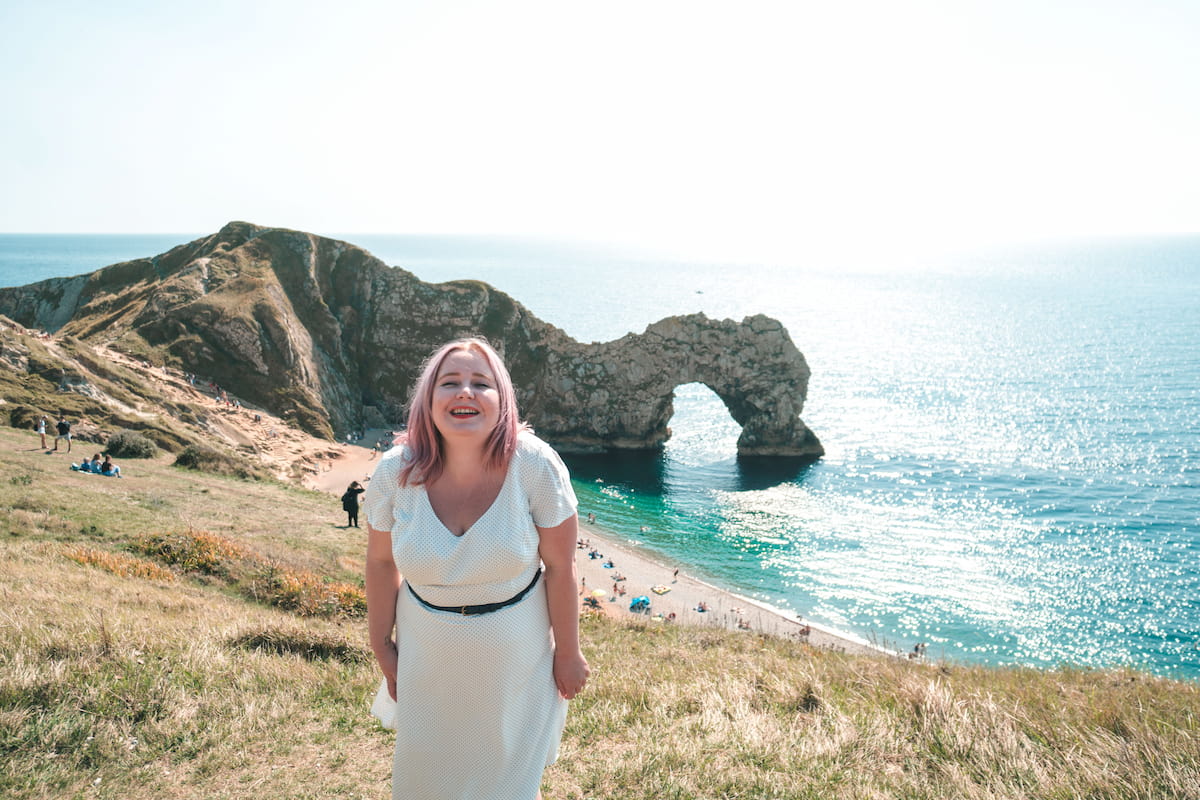
    Kat in a white dress at Durdle Door

    I love taking dresses on trips, something that can be both casual and dressed up. Add some stockings just in case it gets cold.

    Coat or Jacket

    A good coat or jacket is a must for the trip. In the summer bring a lighter jacket and for the winter, a winter coat.

    Jumper, Sweater or Cardigan

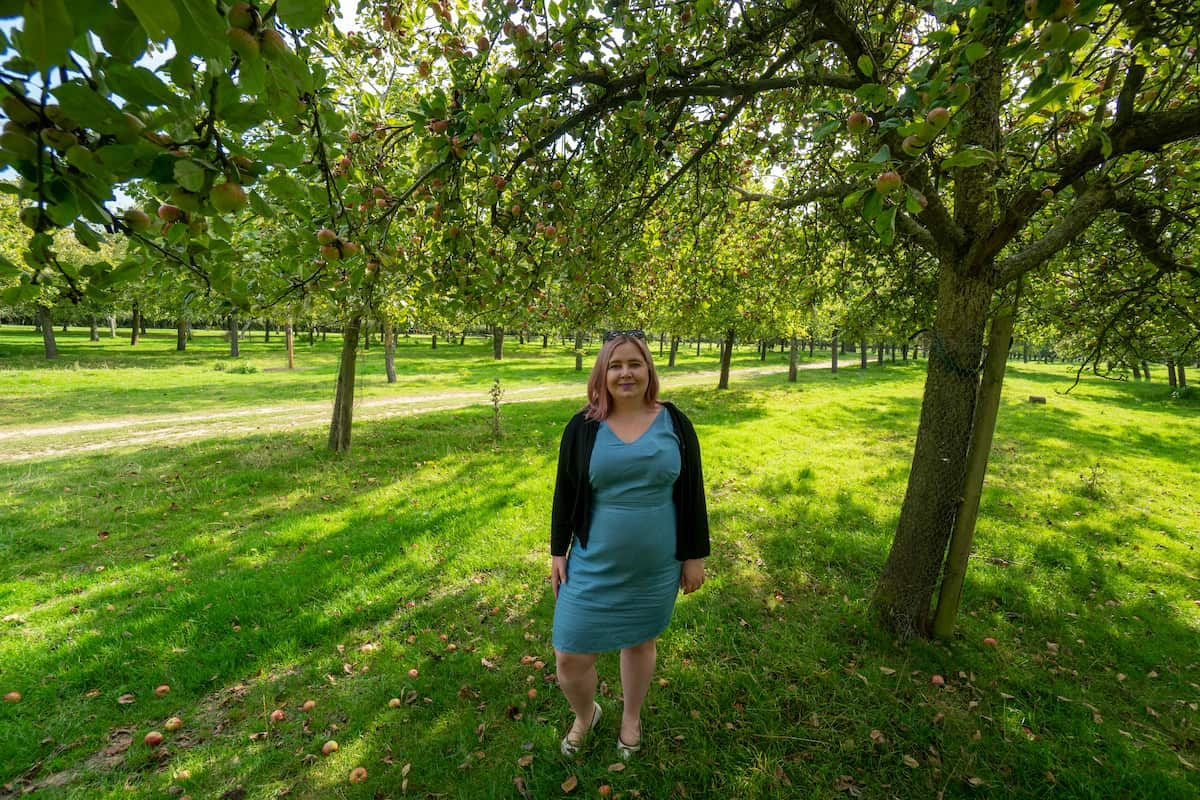
    Kat in Somerset at a Cider Farm

    A jumper or sweater that will go with most of the clothes you have brought with you will hopefully be something you don’t need, but it doesn’t take up much room in your case if you do need one.

    Cardigan is a surprisingly versatile item to take on vacation to England. Ideal when the English wheater is warm, but not quite warm enough, they work as a halfway house between nothing over your top and a jumper. 

    Waterproof Jacket

    A raincoat can be a better option than an umbrella depending on the weather and generally made of light material that it’s a nice addition to pack. Something like this Blacks Waterproof Jacket which comes in various colours!

    Scarf

    Kat in Covent Garden during Christmas

    A scarf is a great item, it adds warmth when it’s cold or be an easy item to use over a jacket in the summer.

    Consider bringing a pashmina scarf. “Pashmina” is a general term for a large scarf; it’s a style of scarf rather than a brand name or material type.  Modern Pashmina’s come in every possible colour and lots of different materials. If you don’t have one choose one bright and bold or to complement the capsule wardrobe you are taking on vacation.

    Underwear

    • Bra (women): Comfortable, sexy, sports bra or whatever type fits your style and holiday.
    • Socks: Even if you are going in the height of the English summer take a pair of comfy socks, they’ll double up as slippers on cold mornings.
    • Boxers (men): Add a pair for each day you’re travelling.
    • Underwear (women): If you’re anything like me then you’ll have a pair for each day and a few just-in-case spares.

    Pyjamas

    No matter what you sleep in, a set of PJ’s will serve you well. Just get changed when chilling with a glass of wine after an exhausting day of sightseeing. Ahh, Bliss!

    Swim Suite

    Planning on visiting the English Seaside or enjoying a swim in your hotel pool then bringing a swim suite is worth it.  

    Shoes

    Kat at glastonbury tor

    Comfortable footwear is a must, whatever you think you are going to be doing; you are bound to visit some historical sites, museums and the like.  For long walking days, I always pack trainers and then during the evening switch to comfy ballet flats or boots for the evening.

    If you are planning on hiking or exploring any of the outdoor areas then either good waterproof walking shoes or rain boots (wellington boots as we like to say!) are a must. I wear Brashers Walking Boots for the days I go hiking.

    There are lots of city and town areas in England that have cobbled streets which are not great for high heels or inappropriate shoes (at least in my opinion). Thicker heels like wedges or boots will be more appropriate.

    I’d add some flip flops if visiting in the summer or staying in a hostel (makes me feel better about using shared bathrooms).

    Electronics

    This is where I tend to pack the most stuff! My camera bag is always extremely full and it’s a battle between clothes and this!

    Phone

    Most of us won’t forget our phone when travel but the plugs to charge our phones can often be forgotten. Make sure you add these to your list!

    I suggest also downloading some apps to make your trip easier:

    • Google Maps – offline maps so you will be able to find your way around England without the internet. I also create maps of all the places I want to travel so that I have it handy when I land and can easily see whats in the area.
    • Trainline App – this will allow you to buy tickets for trains across Great Britain and it saves all your mobile tickets to the app when you register (great for not losing your tickets.
    • City Mapper – this is great for telling you all the routes available from buses to trains. It will even do things like show you the best carriage on the tube for your exit!
    • WhatsApp – I’d like to think most of us use WhatsApp these days but it’s the number one app people message each other in England on
    • Get Your Guide – This is great for booking attractions and will save your tickets on your phone.
    • Tiqets – Another great ticket company to use for booking attractions in England.
    • The National Trust – You can either get a membership or pay for sites individually. Discover what Britians countryside has to offer with over 585 places you can see.
    • Wise – I use this for checking the exchange rates but also it’s a great travel card. You can also download xe.com app if you prefer for exchange rates.

    Portable Travel Charger

    Running out of phone battery is frustrating when you’re out so having a portable charger will save you in those moments! I recommend the Anker range, they are always reliable. Check out the latest prices on Amazon here.

    Travel Adapter

    VGUARD-Worldwide-Travel-Adapter-4-USB-Ports
    My favourite travel adapter, save you bringing all the bulky plugs!

    An absolute must is a travel charger for your phones, camera and any other electrical or chargeable items from home. I have a multi-country use one so that I’m not needing one for every country I visit.

    I use this Worldwide Travel Adapter, you can find the latest prices on Amazon. The adapter covers most countries and has 3 USB ports that become so handy when you have loads of devices to charge.

    Headphones

    There are going to be times you want some peace and quiet or to listen to some music on your phone.  Don’t forget your headphones!

    I recently bought the Sennheiser Wireless Headphones, not only do they have great sound but the noise cancelling is brilliant! The only negative is that my hair occasionally gets caught in the headphones.

    Camera

    Most of us have cameras on our phones, but for the best possible shots, you cannot beat your standalone purpose-made camera.  So, for the best possible photographs while in England take a camera and snap away.

    Currently, I use a Sony to shoot all the videos and photos you find on my website. I have the crop framed mirrorless camera and I love it because it is compact. The only negative is you don’t get the full range on the lenses. Check out the latest prices for Sony A6600 on Amazon.

    For longer trips, I do bring portable hard drives and my laptop to transfer all my photos across. If you are bringing just your phone then look at online storage to backup all the photos.

    Toiletry Bag

    Adjust to your preferences, I try and keep this as light as possible. It’s generally where all the additional weight is added in!

    General Items

    • Eye Mask & Ear Plugs – Depending on the time difference and the type of accommodation you have and maybe whilst getting about on public transport, these may prove invaluable items that don’t take up much room.
    • Toothbrush and Toothpaste
    • Medication – Please don’t forget any prescribed medicines or meds that you use that may not be readily available. You will be able to get generic medication like panadol or ibuprofen over the counter here.

    Skin Care

    • Face Wash: A must-have to wash off the dirt and days outing.
    • Moisturiser: bring a good moisturiser as our skin does take a beating when travelling. I find the cold weather cracks my skin and then in the summer it gets the sun.
    • Sunscreen: Much to everyone’s shock, England can get warm and you can get sunburnt. If you’re travelling here in the summer add this to your list.
    • Travel-Friendly Makeup: I always bring foundation, mascara and a choice of my favourite lipsticks. As I travel with it in my hand luggage I make sure it’s travel-sized to go through security.
    • Body Wash: Normally I leave this behind as accommodation comes with it or I can pick it up at the store but you may want to bring your favourite body wash.
    • Chapstick – chapped lips is the worst! I recommend bringing some chapstick to avoid this. I love these handmade lip balm on Etsy, they are Organic Ingredients, Plastic-Free, Biodegradable, No Preservatives or Additives.

    Hair Care

    • Hairband: is handy to keep it back from your face if the wind gets up or when you don’t feel like washing your hair.
    • Hair Product: I try and keep this as travel-sized as possible as it adds weight. If you are visiting for the weekend then try and wash your hair before you come so you don’t need to worry about it. Or consider buying products here to save on the weight.

    Handy Items to Carry

    • Umbrella – Whichever time of year you visit England you will be very lucky not to get some rain.  Often it is the soft, gentle type that soon gets you soaked and an Umbrella is ideal for this type of rain. It can get windy here so I would make sure that it is a windy proof umbrella and something that won’t break.
    • Tote bag – in the UK we charge to add bags to your shopping, having a tote bag is great to save on buying bags or if you have additional things you need to carry around. Something like this London Skyline tote bag on Etsy.
    • Pen – Having a pen randomly comes in handy so I always have one in my bag.
    • Sunglasses – for when the sun occasionally comes out.
    • Reusable Water Bottle – You can drink the water in England so to save on money I bring on a reusable bottle like this Stainless Steel Water Bottle found on Amazon.
    • Hand Sanitiser – I feel like this is a must now! Add a small bottle in your bag.
    • Dry Bag Dyneema Cuben Fiber DCF Ultralight Waterproof Roll Top Dry Bag (mouth full!) is perfect for keeping whatever you need dry! The Dyneema material is lightweight, had high tear resistance and 15x stronger than steel. You won’t find anything else like it on the market.
    • Travel Towel (optional)Microfiber towels are brilliant for travelling, they are ultra-compact/lightweight, fast-drying and super absorbent. These towels not only have antibacterial ions but come in cute patterns and can be found on Etsy.
    • Laundry Bag – One of the worst things about any kind of holiday is the amount of dirty laundry that gradually piles up. Avoid getting dirty laundry mixed up with clean clothes by storing it in a laundry bag, such as this one reusable mesh laundry bag on Etsy.
    • Lightweight Combination Locks – If you’re leaving your luggage in places or staying in a hostel having a lock is important! TSA locks scarily easy to get keys for so I recommend a combination padlock like this one on Amazon.

    Backpack

    Chances are you’ll take a backpack on board as your hand luggage.  They really are the easiest bags to carry and tend to be a free part of your luggage.  Then, once you are in England they are a practical and easy bag to pack your daily needs into.

    I personally rate Osprey bags, I’ve had mine for over five years and they are still going strong. They aren’t the trendiest items but they are extremely practical. Here’s their ultra-light backpack range on Amazon.

    Things You Don’t Need to Take

    Please don’t PACK anything that makes you look like a tourist! You will stick out and you want to blend in like a local.

    Hair Dryer

    Hairdryers are big bulky items to take in your luggage allowance but also they may not be compatible with the UK voltage. If your hairdryer isn’t compatible with 230 volts then it will risk causing a fire hazard and American hair dryers are a classic for not being compatible. Read the instruction manual first to ensure safety for us in the UK.

    Generally, hotels and accommodation will have them.

    Heavy Items

    • Full sized shampoo and conditioner – these add additional weight and take up space.
    • Books – if you must bring 1 book but if you plan on lots of reading opt for a kindle or digital books.
    • Valuable jewellery or items – there is no need for valuable items to be brought on holiday with you. It just adds additional stress.

    Are You Reading this as a Resident in England?

    Well then, you will know most of this already!  Layers are key for clothes to take on vacation, pack light and dress for comfort and style.  The advantage of being a local is you are not restricted to what you can fly with. So, you lucky people can take more.

    Overseas or Staycationers:

    All have fun; England is a beautiful place with lots of things to see and do.

    How many you take of each item, is down to personal choice and how long your trip is for.  Just to be sure though, for each day you will need a vest, top, jumper, trousers, skirt or shorts, shoes and underwear.  Plus, the Pashmina and one of the coats to wear on top as well.

    Just remember, you’ll want to dress and pack for all types of weather in one day!  That’s easy enough – right!

    Have an absolutely fabulous time in England and one more thing…

    Don’t forget your travel insurance!

  • 5 Spectacular DIY UK Train Tours

    5 Spectacular DIY UK Train Tours

    The UK is full of historic cities, rolling countryside, breathtaking coastline and stunning mountain ranges. To truly take it in, the best way to travel is by train. Take your time exploring, and spend as long as you want at each place. 

    These DYI train tours are designed to go through the most scenic train tours in the country. Whether it’s cities or natural landscapes, there is an option for you to explore the best of the UK than by train.

    Here’s some inspiration for your next train tour around the UK.

    Yorkshire Rambler 

    top left a photo of Sheffield, top right a photo of Leeds and bottom photo Whitby.

    Yorkshire is a historic county in northern England. It’s well known for its Roman and Viking heritage, Norman castles, medieval abbeys and Industrial Revolution cities. As well as history and heritage, Yorkshire is also home to some of the most beautiful scenery in the UK. There are three national parks in Yorkshire – the Yorkshire Dales National Park, North York Moors and a large chunk of the Peak District National Park

    A great place to start is the city of Sheffield in South Yorkshire. It’s right on the doorstep of the Peak District National Park, so it’s a good opportunity to explore the great outdoors. The city also has a wealth of attractions, from the Millenium Gallery to the Sheffield Botanical Gardens. Sheffield is home to the largest theatre complex outside of London, so if you want to catch a show then head to Tudor Square. 

    From Sheffield, catch the train to Leeds (the quickest journey is 39 minutes). Leeds is full of historic buildings, such as Temple Newsam, Kirkstall Abbey and Harewood House.

    You can also explore Yorkshire’s industrial past at the city’s various museums like Armley Mills and Leeds City Museum. One of the best museums is the Royal Armouries, home to the National Collection of Arms and Armour.

    Leeds is quickly rising through the ranks as a foodie city, and you’ll find a whole slew of restaurants and eateries around the city centre.

    Next, head further north to York (22 minutes). This walled city was founded by the ancient Romans. York is best explored by foot, and a great place to start is by walking along the remains of the walls. When you explore the city centre, make sure to stop by York Minster, the massive 13th century Gothic cathedral. This impressive building is one of the largest of its kind in Northern Europe. For a little retail therapy, head to The Shambles, an old street with overhanging timber-framed buildings housing all kinds of independent shops and boutiques.

    From York, take the train to Malton (24 minutes). Malton is a market town with the self-proclaimed nickname of ‘Yorkshire’s Food Capital’. It’s home to a staggering wealth of artisan shops and food festivals, so if you fancy yourself as a gourmand, then it’s worth exploring the town.

    From Malton, take a bus to Pickering (20 minutes). From the 1930s themed Pickering Station, you can head to the seaside town of Whitby on the North Yorkshire Moors Railway. This is one of the world’s greatest heritage railway experiences. Climb aboard a steam or diesel train which takes you through 24 miles of breathtaking scenery.

    At Whitby, make sure you climb the famous 199 Steps up to Whitby Abbey which overlooks the town. This is said to be the inspiration for Bram Stoker’s Dracula. But that’s not all. Whitby has a lot of interesting history, from the jet industry (those gleaming black gemstones that the Victorians loved), to Captain Cook who was born nearby and later trained in Whitby. 

    Map of the Yorkshire Rambler Route

    West Highlands

    Top left street art in Glasgow, top right Jacobite stream train going over the bridge in Fort William.

    The Scottish Highlands are a truly magical place. Think breathtaking landscapes, big skies, dramatic scenery, fantastic food and welcoming people. It’s a natural playground just begging to be explored. The western part of the highlands stretch from the Moor of Rannoch to the west coast past Glen Coe and Fort William.

    The West Highlands are bursting with grand scenery, with towering rocky mountains to wild glens and sprawling moors. Naturally, the best way to explore the region is by train. There’s one train that goes all the way from Glasgow to Mallaig, so you don’t have to worry about swapping trains. You can either journey the whole way through (5 hours and 14 minutes) or stop at some of the most notable spots below.

    Start your journey in Glasgow, Scotland’s cultural hub. As well as a thriving music scene and plenty of acclaimed museums, the city is home to institutions like the Scottish Opera, Scottish Ballet and National Theatre of Scotland. So if you’re a culture vulture, it’s definitely worth exploring.

    While you’re here, it would be rude not to sample some of Scotland’s finest whisky. The Clydeside Distillery is a historic scotch maker located in the old Pumphouse building down at the docks. Join one of the tours to learn more about the distillation process, and sample a few wee drams of whisky. 

    From Glasgow, jump on the train to Mallaig. Stop at Arrochar and Tarbet (1 hour and 14 minutes). This railway station sits between the villages of (you guessed it), Arrochar and Tarbet. Arrochar lies on the shores of Loch Long, and Tarbet on the shores of Loch Lomond. The two villages are only a half hour walk apart, so you can cover both if you wish. Arrochar is popular with hikers, especially since it’s home to the beautiful Arrochar Alps. At Tarbet, you can head to the pier and choose from a variety of cruise options to explore the largest freshwater lake in Scotland. 

    Next stop, Fort William (2 hours and 38 minutes). This is the largest town in the Highlands, second to the city of Inverness. It’s the gateway to Ben Nevis, the UK’s highest mountain. If you’re not up for a challenging hike, there are plenty of other outdoor activities you can get stuck into, like skiing at Nevis Range or taking a stroll through Glencoe. 

    From Fort William to Mallaig, you have two options. The first one is to hop back on the West Highland Line to Mallaig (1 hour and 21 minutes). A more unique experience would be to climb aboard the Jacobite Steam Train. The train journeys over the Glenfinnan Viaduct – made famous by the Harry Potter films – for 84 miles north through world-class scenery. You can get off and explore Glenfinnan and Arisaig, the two stops between Fort William and Mallaig. 

    Once you get to the fishing port of Mallaig, take the ferry to the Isle of Skye (45 minutes). Known for its rugged landscapes, charming fishing villages and medieval castles, this is the largest island in the Inner Hebrides. Some of the must-sees are the natural landmarks like Quiraing, the Storr and Fairy Pools. Portree is the largest town on the island and makes a great base for exploring. 

    Map of West Highlands train route in Scotland

    North Wales Coasts, Castles and Mountains

    top left, beach view of Llandudno with sea front houses, top right Kat standing at a waterfall in Betws Y Coed and bottom view from a walk in Snowdonia.

    North Wales is one of Britain’s oldest established tourist regions. Snowdonia National Park covers 823 square miles and is home to Wales’ highest mountain, Snowdon (1,085 metres). There are plenty of outdoor activities in Snowdonia if you’re feeling adventurous. In addition to stunning scenery, there is also plenty of culture and history to explore. Discover ancient castles, visit charming seaside towns and be wowed at some of the most unique attractions in Britain.

    Start your journey in Llandudno, one of the best seaside towns in Wales, nicknamed the Queen of Welsh Resorts. This Victorian seaside resort is home to the longest pier in Wales which stretches 700m out to sea. Grab a bite to eat and walk along the magnificent promenade to enjoy the views. Another fun thing to do is to ride on the Great Orme Tramway to visit the world’s largest prehistoric copper mines. 

    Next, catch the train to Betws Y Coed (40 minutes). This picturesque village is the gateway to the peaks and lakes of Snowdonia National Park. Surrounding the village is Gwydir Forest Park. Full of leafy trails, waterfalls, and mountain lakes, it’s a magical place for a walk. Want to get your pulse racing? Betws Y Coed is at the centre of mountain biking, with the Marin Route taking you around the peaks and pines of the Gwydir Forest. 

    Next stop, Blaenau Ffestiniog (35 minutes). Once a famous slate mining town, Blaenau Ffestiniog now relies on tourists who come to visit the Llechwedd Slate Caverns. This is one of the most unique attractions in Wales and shouldn’t be missed. Head deep underground via cable railway and step into the world of a slate miner. See how slate was mined through multimedia displays that shows the harsh working conditions to life – be prepared to duck as you scramble through dark tunnels.

    From Blaenau Ffestiniog, you’ll hop on the heritage Ffestiniog Railway which runs to Porthmadog.

    Porthmadog is a bustling harbour town, once the busiest slate port in North Wales. The town has a picturesque harbour and plenty of shops and attractions, including the nearby Portmeirion. This is an Italianate style village with a variety of shops, cafes, a picturesque piazza, exhibitions and displays. From Porthmadog, climb aboard the Welsh Highland Railway which runs from Porthmadog to Caernarfon. 

    One of the stops you should visit is Beddgelert. This is a picturesque village just south of Snowdon. It won’t take you long to walk around the village and admire the pretty buildings – make sure you stop by a traditional cafe or tea room for a drink. 

    From Beddgelert, hop on the train again. If you’ve decided to challenge yourself to a climb up Snowdon, get off the train at Rhyd Ddu. This village is a starting point for walks up Snowdon, and is one of the traditional routes up the mountain. 

    The last stop on the Welsh Highland Railway is Caernarfon. The town is home to Wales’ most famous castle and UNESCO World Heritage Site. The magnificent Caernarfon Castle was built in the 13th century by Edward I as a royal palace and military fortress. You can take a tour of the castle and learn more about its history. After the castle, make your way through the town’s narrow streets and to the vibrant waterfront.

    Map of the route through North Wales

    Cornish Explorer

    Top left the views at Bodim Beacon, top right view of Newquay from the beach and bottom Eden Project in St Austell.

    Cornwall is a county on the very southwestern tip of England. With over 400 miles of coastline, it’s one of the UK’s favourite summer holiday destinations. The south coast of Cornwall is nicknamed the Cornish Riviera for its collection of picturesque seaside villages. Meanwhile, the north coast is dotted with towering cliffs and seaside resorts. But look beyond the sandy beaches and sparkling blue waters and you’ll find world-class galleries, unique attractions, glorious countryside and fantastic food. 

    Start your journey in Bodmin. There is plenty to do in this historic town which was once Cornwall’s county town. Bodmin Jail is one of the most interesting places to visit, dating back to the 18th century. Take a tour and soak up the spooky ambiance! A great picnic spot is the hilltop of Bodmin Beacon which overlooks the town. Check out the 144 foot tall Gilbert Memorial. Want to visit a historic house? Lanhydrock is one of the finest country houses in Cornwall. Owned by the National Trust, this fine Victorian manor has 50 rooms open to the public.

    Next, head to Newquay (1 hour and 9 minutes). Known as the surf capital of England, Newquay has an array of incredible sandy beaches where you can try some watersports or simply relax. The town is an important fishing port, and a trip to Newquay Harbour is a must. From here you can join fishing trips and excursions. Trenance Gardens and boating lake is a great place for a relaxing lunch before you head to Trenance Leisure Park.

    From Newquay, hop on the train to St Ives (2 hours and 24 minutes). St Ives is known for its surf beaches and strong art scene. Porthmeor is the best known beach, popular with swimmers and surfers. It backs onto the Tate Gallery, a must-visit if you’re interested in art. For more art, the Barbara Hepworth Sculpture Garden is a fantastic place to see where one of St Ives’s most influential artists worked. A unique activity in St Ives is to take a bat trip out to Seal Island to get up close to grey seals.

    Next, head to Penzance (23 minutes), the most westerly major town in Cornwall. Stroll down Chapel Street, the most historic street in Penzance. Running from the town centre to the harbour, Chapel Street is lined with shops, houses and hotels, many of which date back to the 18th century. Just around the corner you’ll find The Exchange, a contemporary art gallery. Ranging from local to international artists, there’s plenty to be seen here. Down on the seafront, you’ll find Jubilee Pool, a beautiful art deco seawater lido. 

    Next up, Falmouth (1 hour and 12 minutes). The town has a pretty old harbour and docks on one side of town, with sandy beaches on the other. Positioned on the headland is Pendennis Castle. It’s open to the public and is definitely worth a visit. On the dockside, the National Maritime Museum is a fun way to kill a few hours. Set over three floors, it covers all things nautical. For some beaches, you have the choice of Gyllyngvase beach or Swanpool beach within walking distance of town. 

    From Falmouth, hop on the train to Truro (28 minutes). While you’re in Cornwall, you should definitely visit one of its many gardens. The subtropical climate means there’s an abundance of unique plants to see, and Trelissick is one of the best gardens in the county. For some history, check out Truro Cathedral. There are free guided tours around this lovely Gothic Revival building. If you visit between April and October, Enterprise Boats run different cruises between Truro’s harbour and Falmouth which sail through the AONB on the Fal River.

    The last stop on the Cornish explorer is St Austell (15 minutes). A must-see is Eden Project, two giant biomes featuring plants collected from around the world. Next, head to the Lost Gardens of Heligan. The magnificent 19th century gardens are a real-life secret garden. To explore Cornwall’s mining history, visit Wheal Martyn, part of the Cornish Mining World Heritage Site. It’s the UK’s only china clay museum with plenty of interactive things to do. 

    Map of the train route for the Cornish Explorer.

    The UK’s Historical Southern Cities

    Top left, Kat at Clifton Bridge in Bristol, top right is the beautiful Bath building and bottom Tower Bridge.

    On this Bristol to London journey, you’ll be stopping at some of the UK’s most historic cities in the south of England. There are plenty of things to do and each city offers something different. From the vibrant port city of Bristol, the university city of Oxford, to the world-class city of London, hop on this journey to discover the best of the UK’s cities.

    Start your journey in Bristol. Straddling the River Avon, the city has a rich maritime history with lots to see and do. Once the main port, the Harbourside is now a cultural centre where you’ll find tons of attractions, markets, bars, restaurants, sports and activities.

    If there’s only one thing you do here, make sure it’s climbing aboard Brunel’s SS Great Britain, an iconic ship and museum.

    A must-see in the city is the Clifton Suspension Bridge, an engineering feat spanning the Avon Gorge and the River Avon. Walk across it or admire the views from the grassy parkland. 

    Next, head to Bath (11 minutes). No visit to Bath would be complete without seeing the Roman Baths. See how the Romans used to relax, and learn what life was like through interactive exhibits. Although you can’t bathe there, you can take a dip at the Thermae Bath Spa. The luxurious rooftop pool offers 360 views of the city as well as treatments and relaxation spaces.

    For more views, climb Bath Abbey’s tower. Bath is home to a whole array of museums and galleries to dive into. Whether it’s Victorian life or fashion, you’re bound to find something interesting. 

    After Bath, journey on to Salisbury (56 minutes). This medieval cathedral city is the departure point for Stonehenge, as it’s only nine miles south of the prehistoric stone circle. It goes without saying that a quick trip to Stonehenge is a must. After that, make sure you see more of the city itself. Check out the impressive Salisbury Cathedral, home to the best preserved Magna Carta. Book onto a Tower Tour for some panoramic views. Check out Salisbury Market Place for a range of markets held throughout the week, including the Charter Market which dates back to medieval times.

    Next stop, Winchester (56 minutes). Right on the edge of the South Downs National Park, it’s a great base for exploring the Park and trying out some outdoor activities like climbing, hiking and mountain biking. Winchester Cathedral is the longest Gothic cathedral in Europe and is full of exquisite details, perfect for history lovers. For more history, the Winchester City Museum is bursting with things to see. Dating back to 1861, it’s home to Roman artefacts, Edwardian costumes, and Jane Austen’s personal belongings.

    From Winchester, catch the train to Oxford (1 hour and 22 minutes). This famous university city is best explored on foot. Start with a University of Oxford tour for a behind the scenes look at the magnificent campuses. The Oxford Botanic Gardens and Arboretum is the UK’s oldest botanic garden and set within 130 acres of woodland – the perfect place for green thumbs. The Pitt Rivers Museum is a museum you can actually get excited about, with half a million (very fascinating) exhibits. Another great way to see the city is by going on a punting tour. Glide down the River Cherwell and see the city’s iconic landmarks from a unique angle.

    Last but not least, London (53 minutes). London has it all, so whatever you’re interested in, you won’t be disappointed. If it’s your first time here, then it could be fun to play tourist and see all the main attractions like the London Bridge, the Tower of London, London Eye and Buckingham Palace. London also has numerous museums covering everything from science to fashion to transport. Are you a foodie? London’s street markets, cafes and restaurants don’t disappoint. 

    Train maps of the UK Historical Cities route.

    More UK Articles

  • 10 Best Day Trips From London By Coach

    10 Best Day Trips From London By Coach

    No matter how great London is, sometimes you’ll find yourself needing a change in scenery. London is surrounded by towns and cities which are full of history, culture and attractive scenery. Here are the best day trips from London by coach.

    Coach travel is often the cheapest way to get around England if you don’t drive. The two main coach companies, National Express and Megabus, offer routes to many destinations around the country, and at bargain prices. 

    Below is a list of places that are only a short coach journey from London. Perhaps these can inspire your next day out!

    Colchester

    Colchester Essex with River Colne
    Colchester Essex with River Colne

    Just under three hours by coach from London Victoria is Colchester, a historic town in Essex. It’s known as Britain’s first city and was once the capital of Roman Britain (then called Camulodunum). With a history of over 2,000 years, there is plenty to explore here.

    To kickstart your historic tour of Colchester, the best place to start is the Colchester Castle Museum. The castle is home to the largest Norman castle keep in Europe, and was built on the foundations of the Roman Temple of Claudius. You can take a guided tour of the castle and visit the museum, where you can admire artefacts like mosaics and the Colchester Gladiator Vase.

    Castle Park is a lovely place to relax and have a picnic, with a boating lake, play park and crazy golf course. To explore more of the town’s Roman heritage, you can trace the remains of the Roman walls that were built around the city, including the Balkerne Gate, Britain’s oldest Roman gate. 

    One of the most popular attractions in the town is Colchester Zoo. With a large emphasis on conservation, the zoo is home to over 260 species from around the world. There are themed zones such as the Orangutan Forest, the Kingdom of the Wild and Edge of Africa.

    If you’re after more of a cultural day out, Colchester has some excellent museums and art galleries. Hollytrees Museum is a free, local history museum with a particularly interesting array of Colchester-made clocks.

    If it’s nature you’re interested in, the Natural History Museum has plenty of fascinating things to uncover. Make sure to visit Firstsite, an architecturally stunning art museum showcasing contemporary visual art, exhibitions, films and events. 

    Margate

    Aerial view of the beach and white cliffs, Margate
    Aerial view of the beach and white cliffs, Margate

    Two hours and 40 minutes by coach, Margate is a seaside town on the southeast coast of Kent. Being so close to London, Margate has been a popular seaside resort for at least 250 years, with city-dwellers drawn to its sandy beaches. With all the classic fittings of a traditional seaside town like a theme park, arcades and theatres, the town is also artsy, young and uber cool.

    Margate Main Sands is a Blue Flag winning beach. Alongside the huge stretch of golden sands, you’ll find plenty of cafes, attractions and children’s rides. Just behind the beach is the Old Town, full of gorgeous Georgian and Victorian buildings housing independent shops, boutiques, galleries and cafes.

    Along the Main Sands you’ll also find Old Kent Market, an indoor market housed within an old cinema building from 1911. Find all sorts of things in here, from food and crafts, to vinyl and cocktails. 

    A must visit in Margate is Shell Grotto. Discovered in 1835, this mysterious structure consists of 70 ft of winding passages decorated with 4.6 million shells, forming mosaics of gods and goddesses, trees and patterns. No one actually knows why it was built, but there are plenty of interesting theories.

    If you’re into the arts then make sure to visit Turner Contemporary, an art museum built on the site of a boarding house in which J. M. W. Turner once lived in. You’ll find ever-changing exhibitions from local and international artists, focusing on art from 1750 to the present day.

    If you’re interested in learning more about Margate, the Margate Museum has engaging exhibitions on the evolution of the town as a seaside resort. 

    Brighton

    Kat-at-Brighton-Pier

    It wouldn’t be a list of London day trips without Brighton. You can get to ‘London-by-the-Sea’ in two hours and 25 minutes from London Victoria. This seaside resort on the south coast of England attracts day-trippers from all over the south for days at the beach, shopping and partying.

    It’s home to Brighton Palace Pier, the UK’s biggest tourist attraction outside of London. The pier pushes out into the sea for half a kilometer and has fairground rides, traditional games, two arcades and a giant soft play area. Definitely a must-see.

    Down on Brighton Beach and Seafront, you’ll find a pebble beach that stretches over five miles long, as well as plenty of bars, clubs and cafes. One of the most popular attractions on the seafront is the British Airways i360. This observation tower has 360° panoramic views at 162 meters above the city. While you’re there, splash out on a cocktail at the Nyetimber Sky Bar.

    If you’re celebrating something, Brighton is the place to be. There are numerous bars and clubs to suit your needs, whether it’s gastropubs, gay bars, live music venues, stylish cocktail bars or mega-clubs. You can find them dotted around the Lanes, North Laine, Trafalgar Street, Churchill Square and Western Road.

    Need to find a last-minute gift? Brighton is a fab place for a spot for shopping. The Lanes, once an old fishing quarter, is now a maze of narrow alleys packed with restaurants, cafes, independent shops, boutiques and antique stores. You can also head to North Laine, a hip shopping district with over 300 shops. It’s a particularly great place to find artwork and designs, including glassware, jewellery, ceramics, sculptures and clothing. 

    Canterbury

    Medieval houses and river Stour in Canterbury Old Town
    Medieval houses and river Stour in Canterbury Old Town

    Just two hours by coach will take you to Canterbury, a cathedral city and UNESCO World Heritage Site. With the River Stour winding through it, Canterbury is a beautiful city with plenty of old buildings and cobbled streets.

    No trip to the city is complete without visiting the famous cathedral, one of the oldest Christian structures in England. It’s best known as the site of the murder of Thomas Beckett, killed by King Henry II’s army in 1170. You can take a guided tour of the cathedral and admire the stunning architecture.

    The Romans have also made their mark on the city, and you can discover more about their legacy at the Canterbury Roman Museum. Built on the remains of a former Roman townhouse, there are a wide range of artefacts and original mosaics to see.

    Another fun museum is the Beaney House of Art & Knowledge. It showcases everything from paintings and ancient Egyptian artefacts, to Anglo-Saxon antiques and pilgrim badges. 

    Although the city is pedestrian-friendly, a fun way of sightseeing is by taking a boat tour down the river. From this vantage point, you can see landmarks like the Dominican Priory and Greyfriars Chapel from unique angles. After the boat tour, stop off for lunch at one of Canterbury’s many cafes (Cafe St Pierre is one of my favourites), or have a picnic at one of the city’s green spaces.

    Westgate Gardens are a huge area of different landscapes including woodland, meadows, formal gardens and riverside. After lunch, catch a show at Marlowe Theatre, Canterbury’s leading performing arts venue. Whatever you’re interested in, whether it’s concerts, dramas, musicals, contemporary dance shows, ballets, operas, comedy shows, you’ll definitely find something you enjoy.

    Winchester

    Nestled in the rolling chalk hills of the South Downs, Winchester is only one hour and 50 minutes from London. This ancient cathedral city has some of the country’s oldest institutions.

    The best place to start is Winchester Cathedral, and at over 170 metres long, is the world’s longest Gothic Cathedral. Step inside and discover over 1,000 years of history. Admire the 12th century wall paintings, medieval carvings and the illuminated Winchester Bible.

    Another stop you should make is the Winchester City Museum. Dating back to 1861, the museum has exhibits on historical Winchester, Jane Austen, the Romans and the Anglo-Saxons. While you won’t be able to see Winchester Castle in all its glory, you can still see the Great Hall, which is all that remains. One of the best remaining medieval halls in the country, the Hall has beautiful stained glass, marble columns and the perfectly manicured Queen Eleanor’s Garden. 

    As the city is surrounded by the South Downs, it would be rude not to get out in nature. While a long hike might not be practical on a day trip, there are still plenty of short walks in and around Winchester. One of the best ones is Watermeadows and St Catherines Hill. As you wander along the River Itchen, you’ll be spoilt with lush scenery and some of the city’s most dramatic landmarks.

    Cambridge

    Punting Down the River Cam
    Punting Down the River Cam

    While it may be more touristy than the other destinations on this list, you could argue that it’s popular for a reason. A two hour and 15 minute coach journey from London takes you to one of England’s finest cities.

    Synonymous with the world-renowned Cambridge University, the city boasts culture, history, architecture and plenty of things to do. If you want to learn more about the university, official tours of the colleges are offered by Blue Badge Guides. See exclusive parts of the campus and learn more about its history and quirky customs.

    Speaking of history, the Fitzwilliam Museum is the best place to step back in time. The museum is far from boring – it’s home to over half a million pieces of art that dates as far back as 2,500 BC. Whether it’s paintings, ancient artefacts, jewellery, textiles, arms and armour, the museum has it all. 

    If it’s a sunny day, one of the top activities in Cambridge is punting. A punt is a flat-bottomed boat that is propelled down a river by a punter. First introduced at the start of the 20th century, it has since become a popular local activity. Glide down the River Cam and see how many landmarks you can spot (spoiler: you’ll see King’s College Chapel, the Mathematical Bridge and the Bridge of Sighs).

    Another fun activity is visiting the Cambridge University Botanic Garden. Stretched over 40 acres, this heritage garden boasts over 8,000 plant species from all around the world. The gardens are divided into different sections, including the Mediterranean Beds, Scented Garden and Stream Garden. There are also several glasshouses full of tropical rainforests, desert flowers and alpine flora.

    Salisbury

    Two hours and 30 minutes by coach from London is Salisbury. This city is mostly known for one of the most famous visitor attractions in the UK, Stonehenge. It’s less than 10 miles from Salisbury, and you can get a coach tour from the city centre if you wish to visit it.

    Salisbury offers a lot more than just Stonehenge. The medieval cathedral city and its surrounding area is bursting with Neolithic, Bronze Age and Iron Age history, so there is plenty of history to explore. Salisbury Cathedral is a must-see. At 123 metres, this magnificent Gothic cathedral currently holds the record for the tallest spire in the UK.

    It’s also home to the largest cloister in the country, as well as housing one of the oldest working clocks in the world. If you can hack the 332 stairs, the tower tours are a must. The cathedral is home to the Magna Carta Chapter House, where the best-preserved copy of the 1215 Magna Carta lies. This is just one of four originals in the world and is definitely worth a viewing.

    If you’re interested in historic houses, then Salisbury doesn’t disappoint. Mompesson House is a townhouse constructed in the 18th century. Look out for the stucco work on the walls and ceiling, the oak staircase and period furniture.

    Arundells is another beautiful home, once the residence of former prime minister Sir Edward Heath. Guided tours are available and there are plenty of interesting things to see, including Heath’s personal collections.

    On a sunny day, there’s nothing better than a walk through Harnham Water Meadows. A source of inspiration for English painter John Constable, you can trace his footsteps on a two-mile circular walk that sets off from the cathedral. Sit beside the river and admire the lush views over to the cathedral.

    Folkestone

    Folkestone Harbour and Jetty
    Folkestone Harbour and Jetty

    Two hours and 35 minutes from London is Folkestone, a lovely seaside town in Kent. Right on the southern edge of the North Downs, the town lies in a valley between two cliffs. This position made it an important harbour and shipping port during the 19th and 20th centuries.

    Today, there are plenty of things to explore in the town, from Victorian architecture and waterfront parks, to a bustling harbour and exciting attractions. The main beach in Folkestone is Sunny Sands, a clean, sandy beach popular all year round. On the cliffs right above the beach is The Leas, a pretty promenade landscaped in the mid 19th century.

    Along the promenade you’ll find cafes, monuments and the Leas Cliff Hall Theatre. If you don’t fancy the zig-zagging steps up to the promenade, you can also take the cliff lift. One of the main attractions in Folkestone is the Harbour Arm. Until the turn of the millennium, this structure was used as a transport hub that linked Folkestone to mainland Europe. It fell into disuse for a number of years, before recently being rejuvenated. It’s now the best summer dining destination, with street food stalls, semi-permanent eateries and live music. You can even watch movies and sporting events at the Harbour Screen. 

    Within the historic town centre, you’ll find the Folkestone Creative Quarter. It’s home to a collection of galleries, artists’ studios and performance spaces, as well as quirky shops, cafes and restaurants. There is also the Quarterhouse, a performing arts venue with live music, film screenings, comedy and plays. To learn more about the history of the town, the Folkestone Museum covers five main themes: fashion, frontline, maritime, natural and ancient, and is a great place to spend an hour or so.

    Folkestone is surrounded by natural beauty, and getting outside is a must. Towards the east of the harbour is East Cliff and Warren Country Park, a 300 acre park and Site of Special Scientific Interest. As you walk along the paths, enjoy stunning views of the famous White Cliffs. Don’t forget to look down too, as this is one of the best places to go fossil hunting in the South East.

    Southampton

    Southampton England
    Southampton England

    Southampton is two hours and 20 minutes away from London by coach. Hampshire’s largest city, a visit to Southampton is a fantastic day out as there are plenty of things to do and see. The ill-fated Titanic departed from here and on the 100th anniversary of its departure, the SeaCity Museum was opened. Find out about Southampton’s history as a key port, and hear the stories of the people and goods that travelled through the city since the Middle Ages.

    Another interesting museum is the Solent Sky Museum. In the early 20th century, the city was home to the aviation manufacturer Supermarine who designed the Spitfire fighter plane. The museum showcases the story of the Supermarine brand, and you can check out the vast collection of planes, propellers and jet engines. 

    A fun way to see Southampton is from a ferry. With frequent departures from Southampton Town Pier, the Hythe Ferry makes a short, scenic trip over to the village of Hythe on the west side of the estuary. The trip also includes a ride on the world’s smallest gauge electric pier train, dating back to the First World War.

    One of the main draws for culture vultures is the Mayflower Theatre. This 2,300 capacity theatre first opened in 1928 as the Empire Theatre. Catch theatre productions, musicals, operas and stand-up comedy.

    If you’re keen to see some art, the Southampton City Art Gallery has one of the best art collections in the south of England, with up to 5,000 pieces of art covering eight centuries. 

    Portsmouth

    Portsmouth England cityscape

    In just two hours, you can get from London to Portsmouth, a historic port city. There are tons of interesting attractions here, from museums and castles, to beaches and shopping. Portsmouth has been a significant naval base for centuries, and two thirds of the Royal Navy’s modern surface fleet is docked here.

    There are many ways you can explore this city’s rich maritime history. Portsmouth Historic Dockyard is an area of the HM Naval Base that is open to the public. You’ll find a collection of historic buildings and some of the most famous ships, like the HMS Victory, HMS Warrior and the HMS M33 which fought in the Battle of Gallipoli. You’ll also find the Royal Navy Submarine Museum, the Explosion Museum of Naval Firepower, National Museum of the Royal Navy and the Mary Rose Museum. 

    Once you’re clued up on your naval history, take a break along the seafront. The beach stretches along the entire southern end of Portsea Island, from Old Portsmouth to Eastney. One of the best attractions along the seafront is Southsea Castle. Built in 1544, the castle was constructed by King Henry VIII as part of a series of fortifications to protect the country from invaders. Explore the keep and enjoy panoramic views from the top all the way over to the Isle of Wight. Another interesting attraction along the seafront is the D-Day Story. This museum tells the story of the Allied invasion of Normandy in 1944, where Portsmouth was a key embarkation point. See the collection of artefacts including tanks, jeeps and machine guns.

    Portsmouth is a shopper’s paradise, with countless boutiques, markets and unique finds. Gunwharf Quays is a great place to find designer goods. It’s also the site of the Emirates Spinnaker Tower which offers stunning views across the city and sea. Commercial Road and Cascades Shopping Centre is also a fab place to find bargains. You can also take a short bus journey to Southsea which has plenty of antique shops, boutiques and independent stores.

    More England Articles

  • Road Trip From London to Edinburgh: East and West Routes

    Road Trip From London to Edinburgh: East and West Routes

    One of the best ways to see what England and Scotland have to offer is by completing a self-drive road trip from London to Edinburgh. Today, I’ve added all my favourite places for the ideal London to Edinburgh road trip, full of the best stops along the way.

    The two itineraries cover everything from historic towns, Area of Outstanding Natural Beauty, UNESCO heritage sites, film locations and much more!

    Starting your trip in London without a car (honestly, you don’t want the headache of driving there) then choose whether you want to do the east or west route of England before ending up in Edinburgh. Unless you live here and have no choice but to drive through London.

    If you have enough time make sure you do the full loop and soak in what England and Scotland have to offer.

    I am so excited to share all the things I love about these countries! Let’s get started!

    Things to Know Before Driving From London to Edinburgh

    If you are looking for the best options for car rental then I always use Europcar or Enterprise cars in the UK.

    For my great British road trip, I used Europcars long rental option which gave us the car for half the price for 28 days, unlimited drivers and delivered to my door! The only drawback to this option is we were limited to 2,520 miles which just covered our round trip. There is another option at 3,360 miles.

    Don’t forget to take out a travel insurance policy before travelling, even if you are local this will protect your belongings whilst you travel. I always like to use World Nomads for my travels – get a quote from WorldNomads here.

    Other things to know before travelling:

    • Don’t rent a car in London! – Chances are that you will be staying in Central London (unless you live here then skip to option 1 and 2 routes) and it’s honestly a total nightmare to drive here.
      Not only that there are congestion charges which cover quite a large radius. For each option I have added a recommended airport to pick up a rental car, this will save you driving time and the stress of driving in London.
    • Fill-up at supermarket petrol stations – Asda, Morrisons, Sainsburys, Tesco etc. will all offer cheaper petrol by some margin. If you stop at any of the petrol stations along the motorway you could easily see prices increased by 10 to 20 pence per litre!
    • Choose to either drive the East or West Route – I’ve split the itinerary into two routes as it’s more logical to follow these routes rather than zig-zagging across the country.
    • Overloading your trip – Try not to cram half of England and Scotland into a two-day trip otherwise you will not see much apart from the road.
    • Don’t drive from London to Edinburgh in one go – Unless you are familiar with driving long distances I don’t recommend trying the 8-hour drive. As someone that grew up with long distant driving across Australia, I still struggle with driving over here and recommend at least having 1 overnight stop. Plus you will be missing all the amazing things to see driving straight there!
    • Potential Tolls – Some routes suggested can have tolls but I have found these pretty easy to avoid. Check Google maps before driving and it will highlight toll roads. For example, the M6 has one (west route) however, you can just take the non-toll M6 route to save the money.
    • Download Parking Apps – A lot of parking around the country is paid and I am not sure about you but I never really carry cash any more. Download these apps before hitting the road; Just Park, Pay by Phone and Ring Go. They were by far the most frequent ones I encountered. Another way I have saved money with parking in cities is by booking in advance on Just Park. Weirdly in Bristol, it was cheaper to pay for a week’s worth of parking than two days!
    • English Heritage – If you’re interested in visiting a bunch of different historic sites, you can purchase an Overseas Visitors Pass or if you’re living in England a yearly membership. Not only does this save you money at each individual place it includes parking! Valid at over 100 places, you can choose between a 9 or a 16 day passes.  

    Start in London: 2 Day Itinerary

    Before starting your road trip to Edinburgh it’s time to explore London! It’s a good idea to stay somewhere within close proximity to attractions and activities so here are some of the best places to stay in London.

    Looking for something a little more off the beaten path to visit in London? Here is a list of alternative things to do in London that will not disappoint!

    Psstt… To make the most of your time in London make sure you read my London sightseeing tips to get the most of your time in the city!

    Day 1: West of London

    Natural-History-Muesum-at-Christmas-time
    Christmas time at Natural History Muesum is such a magical time.

    Start the day by going to Kensington and pick one of the fantastic free museums:

    • Natural History Museum – In my opinion this is the best museum in London. I always think of David Attenborough speaking whilst I am walking through the gorgeous building learning about dinosaurs.
    • Victoria and Albert Museum
    • Science Museum

    If you get there by 9am you will beat all the crowds and fewer crowds means you will be able to walk around faster.

    Next walk through Kensington Palace & Gardens, through Hyde Park finally reaching Buckingham Palace. If watching the changing of the Guards is on your list then make sure you get to Buckingham Palace by 10:45 (I also have some tips in my London sightseeing tips on the best spot to watch this). I would say it would be impossible to do the changing of the Guard and a muesum so if it’s high on your list choose one or the other.

    Afterwards head to Westminster Abbey and Big Ben before crossing Westminster Bridge to Waterloo.

    Once you’re in Waterloo you can explore Leake Street Tunnel which became a famous street art spot after Banksy hosted the Cans Festival there in 2008. It’s the largest area in London for street art so it’s frequently having new pieces added or replaced.

    Ready for a drink? The Waterloo Tap is also a short walk from Waterloo Station and set up in a converted railway arch, this funky bar boasts 20 kegs and 6 casks on constant rotation. They also serve bar snacks but not full meals.

    Head back to the Thames path (i.e. The Queen’s Walk) and you’ll arrive at the London Eye. Make sure you read my guide on what to book in London where I cover everything you need to know about booking the London Eye.

    Continue east down the Thames and you will see either the Underbelly Festival (summer event) or Rekorderlig Cider Lodge (winter event). There are lots of stalls that offer food and drinks, alternatively there plenty of restaurants around the Southbank.

    Cross back over the Golden Jubilee Bridge to Embankment. Just a short way up Villiers Street you will find Gordon’s Wine Bar which is a 19th-century wine bar in a candlelit vaulted cellar. It’s lovely to grab a glass of wine here and just relax your feet for a bit.

    Finish your day off in Covent Garden and Soho. There are lots of bars, restaurants and theatre options in the area, plenty to keep you entertained for an evening!

    Day 2: East of London

    Kat-in-front-of-Street-Art-in-Shoreditch
    Here’s an example of one of the street art peices you can see in Shoreditch.

    Start the day off at St Paul’s Cathedral, on the weekend the area is super quiet apart from the tourists in the area. For a great view head to One New Change and go to the viewing platform.

    Afterward, you can go by the Monument which commemorates The Great Fire of London, decide whether you want to climb the 311 steps or just have a sneak peek at it.

    Cross London Bridge to Borough Market. Everyone gets confused with London Bridge and Tower Bridge. The first one is the functional one and Tower Bridge is the beautifully designed bridge originally opened in 1894 which you can see across the Thames from London Bridge.

    Have a late breakfast or early lunch (brunch) stop at Borough Market. I am always overwhelmed by the choice of food options. It suits all dietary requirements as well!

    Head back to the Thames Path and you will pass HMS Belfast, get a great photo opportunity of the London Skyline before crossing Tower Bridge.

    Once you are finished the next place is the Tower of London! If you decide to go inside check out the 2 for 1 on Days Out Guide or buy tickets online to save a little bit of money.

    Shoreditch is a great place to stop for food, find street art, have a drink on a rooftop, explore BOXPARK for food and shopping or find a secret bar like the Mayor of Scardy Cat Town.

    Brick Lane is known as the curry mile and to really get the authentic feel you need to haggle for Indian food. Otherwise, head to one of the amazing restaurants like the famous Dishoom. If you’re lucky enough to be there on Sunday then Brick Lane hosts markets full of food stalls until 5pm.

    East and West England Routes to Edinburgh

    Both of these routes can be customised to how many days you have available to you. As a minimum give yourself two days to allow two pit stops and one overnight stay somewhere. Seven days will truly allow you to see the best of both routes and if you want to do the loop then allow at least 14 days!

    This is not including the days you wish to spend in London and Edinburgh.

    Option 1: East England Route to Edinburgh

    The best place to pick up a hire car for option 1 is Stansted Airport. This will cost a little bit more money to get to if you’re catching the train as it’s a National Rail line, however, booking your tickets in advance or getting the coach will save you money.

    The east route will mainly take you on the A1 and A1(M)/A1 to Edinburgh.

    Cambridge

    Drive: Roughly 1hr 30mins depending on where you start your journey in London.

    Cambridge is one of the most well-known cities in England, and it’s easy to see why it is so popular with tourists!  The city has some of the most amazing architecture in all of England and a world-famous university as well.  Due to the large student population there is so much to do as well as numerous great places to eat and drink in the centre of the city!

    There are many things that are fun to do when you visit Cambridge, but an absolute must-try is the famous punting! A punt is a flat bottomed boat, which is used for leisure time and pushed across the water using a quant pole. This is a popular method of seeing some of the Colleges on the university, as well as the Bridge of Sighs which is very popular among tourists.

    You can choose to punt yourself or pay for a tour like this shared tour for up to 4 people.

    Some other popular tourist attractions in Cambridge include:

    • King’s College Chapel – A huge and stunning chapel with beautiful ceilings and carvings.
    • The Botanic Gardens – The gardens are home to several greenhouses and a seriously impressive collection of different plants!
    • Mathematical Bridge – Officially known as the Wooden Bridge, this is one of the most famous bridges in the UK due to its unique design and structure.
    • St. John’s College – If you want to see the most incredible college in Cambridge then this is certainly one of the most impressive.  It is known across the UK for its annual May Ball, one of the best parties going!

    Just to bear in mind that the preferred option for parking in Cambridge is to park and ride. Unless your accommodation offers parking as a part of your stay.

    Stamford

    Drive: 55 minutes from Cambridge.

    Fancy a quick stop off in a picturesque and historic town?  Why not take a drive to the cobbled streets of Stamford, the gorgeous Georgian town in Southwest Lincolnshire.  You may not have heard of the town before, but you’re sure to recognise parts of it, such as Burghley House, if you’ve seen the films Pride and Prejudice or The Da Vinci Code as it was used as a filming location in both.

    Stamford is the kind of place where you can simply wander; behind every corner and down every alley is more stunning architecture to see. The town is incredibly walkable and has many pretty churches, such as St Mary’s Church (12th century) and All Saint’s Church (13th century).

    Sheffield and the Peak District

    Drive: 1hr 30mins from Stamford.

    Kat standing in front of the lake with Chatsworth House in the background.

    Sheffield is one of the greenest cities in the UK, and is right on the doorstep of the Peak District National Park. 

    The Peak District offers many opportunities for outdoor activities such as hiking, paragliding and rock climbing – what’s not to love? It’s also the UK’s first ever National Park back in 1951.

    For a nice and easy stroll, I suggest the Mam Tor Walk trail which takes you to one of the Peak’s most iconic views. This 4.5km circular route is steeped in ancient history and you’ll be rewarded with views of the Vale of Edale, Peveril Castle and the Hope Valley. 

    The world famous Chatsworth House was used as Pemberleyin Pride and Prejudice; Hardwick Hall was used as Malfoy Manor in the Harry Potter films and the medieval Haddon Hall was used in Kit Harrington’s Gunpowder. 

    If the great outdoors isn’t for you, there are plenty of other things that Sheffield can offer:

    • For a spot of shopping go to Meadowhall.
    • Sheffield has the largest theatre complex outside London, the two major theatres are the Lyceum Theatre and the Crucible Theatre.
    • Visit the tropical butterfly house which is popular with the locals.
    • Visit Our Cow Molly which is a working dairy farm and makes delicious icecream.

    Leeds

    Drive: 50 minutes from Sheffield.

    Leeds is a thriving city and one of the larger cities in England.  It’s a hub for art, culture and history so the city offers something for everyone.

    For museums and art galleries, I recommend visiting:

    • Royal Armouries Museum
    • Leeds City Museum
    • Thackray Medical Museum
    • the National Coal Mining Museum
    • Leeds Art Gallery
    • Henry Moore Institute
    • The Tetley

    Microbreweries have really popped up all over the UK in the last few years and Leeds has some you should add to your list. Many of the breweries will hold tours and tasting. Some of the most established ones are Leeds Brewery, Northern Monk and North Brewing Company.

    York

    Drive: 40 minutes from Leeds.

    Clifford’s Tower, North Yorkshire
    Clifford’s Tower, North Yorkshire

    Step back into medieval times with York’s winding cobbled streets, magnificent cathedral and stone walls surrounding the city. The best thing about York is that everything is within walking distance so it gives you a break from all that driving.

    Things to add to your list include:

    • Walking the city walls
    • Climbing Clifford’s Tower
    • Rascal buns at Betty’s tearoom
    • Walk down the Shambles to see the beautiful shop fronts
    • If you happen to be in York on the first Friday of the month then you need to visit York’s Farmers Market

    Newcastle-Upon-Tyne

    Drive: 1hr 40mins from York.

    Newcastle has a great reputation for its lively atmosphere and friendly people. There are numerous cocktail bars, trendy clubs, traditional pubs and restaurants all over the city.

    The city gets its name from the fortress sitting on the River Tyne which you can go and see as a part of your tour, including the great hall and the view from the roof. To learn more about the history of the city check out the Laing Art Gallery. Alternatively visit the Discovery Museum which gives an interesting account of Newcastle’s background in shipbuilding and coal mining, and how that evolved over time through technological innovation.

    Here are a few more sights to check out:

    • BALTIC centre for contemporary art
    • Live theatre – check out a theatrical performance
    • The Biscuit Factory – a great art gallery and awesome brunch spot
    • St. Nicholas Cathedral

    North Berwick

    Drive: 2hrs from Newcastle Upon Tyne

    This is one of the most stunning towns in Great Britain offering beautiful beaches, amazing food and a great castle! Here are some of the best things to do:

    • The Scottish Seabird Centre – See a variety of birds at this charitable research centre which dedicates itself to protecting indigenous wildlife in the area. You can also take a boat tour at some times of the year to see some seabirds in the wild! Depending on the season you may even see puffins!
    • The Lobster Shack – This is known to be one of the best places in the area to enjoy a fresh catch right from the ocean!  Enjoy a half lobster and chips and appreciate how incredible the fresh produce is!
    • Tantallon Castle – The castle ruins sit right on the Firth of Forth overlooking the sea. It has a rich history of sieges and feuds dating back to the 14th century!
    • Bass Rock – This famous rock sits proudly in the Firth of Forth and is a site of special scientific interest due to the fact that it homes the world’s largest local gannet colony.
    • Yellowcraig Beach – This is a gorgeous beach that should not be missed on your travels – it makes for one of the most stunning coastal walks in the area!

    Option 2: West England Route to Edinburgh

    The best place to pick up a hire car for option 2 is Heathrow Airport. It will save you driving through London and therefore is a lot less stressful!

    Windsor Castle (Stop en route to Oxford)

    Drive: 40 minutes from Heathrow Airport.

    Windsor-Castle
    The view of Windsor Castle from the entrance gates.

    Windsor is a stunning town and walking through it on the way to the castle is an absolute treat in itself.  And the awe certainly does not stop when you reach the glorious 1,000-year-old castle.  To explore the castle and its grounds in full, it will take around two hours.  The highlight of visiting the castle is certainly the beautiful St. George’s Chapel where the Duke and Duchess of Sussex were married in 2018.

    Windsor Castle is open Thursday to Monday, entry times start at 10am and the last admission at 3.30pm. Buy tickets to Windsor Castle here.

    Oxford

    Drive: 50 minutes from Windsor.

    Christ Church in Oxford England
    Christ Church in Oxford

    One of the best things about Oxford is that you can see the city on foot, from the most famous colleges, to historic pubs, to the many free museums.

    The historic Oxford University was first established in the 12th century and is the oldest speaking English university in the world. The university does not have a campus so you will see the buildings spread across the city.

    Famous works of literature were written in Oxford such as Alice in Wonderland, The Lord of the Rings and the Chronicles of Narnia.

    Here are some other great things to do while you are in Oxford:

    • Bodelian Library
    • Radcliffe Camera
    • University Church of St Mary the Virgin
    • Oxford University Museum of Natural History

    After exploring the town, why not take some time to visit Highclere Castle which is very nearby.  You may recognise the castle from the opening scenes of popular period drama Downton Abbey, and it certainly lives up to how excellent it looks on screen.  The castle was built in the 17th century and encompasses 5,000 acres of land that you can explore at your leisure, including the Secret Garden, the Monk’s Garden, the White Border and some beautiful woodlands.

    Bath

    Drive: 1 hour and 30 minutes from Oxford.

    pulteney-bridge-in-bath
    Pulteney Bridge in Bath

    An essential of visiting Bath is of course to visit the famous Roman Baths, which are surprisingly well preserved given how old they are.  Continuing with the stunning architecture of the baths, Bath Abbey should be your next stop, where you can climb the gothic tower and admire the views.

    Booking a walking tour for Bath is a great idea if you want to make sure that you see all the sights as well as getting some highly valuable and interesting information on the history of this fascinating town.

    There is a wealth of things you can do in Bath so make sure you allow enough time.

    Cotswolds

    Drive: As Bath is on the edge of the Cotswolds it will be right at your doorstep. Castle Combe is an easy 30 minutes drive from Bath. It depends on which towns are on your list.

    Not sure where you want to go to the Cotswolds? Here are 6 Perfect Cotswolds Day Trip Itineraries.

    Cotswolds-Towns-and-Villages
    Honey coloured building of the Cotswolds.

    The Cotswolds is a continuous stream of picturesque villages and beautiful natural landscape, truly resembling something out of a storybook or fairytale. As the Cotswolds is a collection of villages it is best to know where it is that you want to go in advance of getting on the road.

    Bilbury

    On the banks of the River Coln, Bilbury is home to one of the most well-known streets in the area, Arlington Row. If you are looking for the quintessential fairytale style streets and crooked brick cottages that the Cotswolds are so well known for, then this is the place for you.

    Stow-on-the-Wold

    This sweet little town is perched right at the top of a hill and features a gorgeous church, a small gallery and a famous farmers market held on the second Thursday of each month.  You will definitely want to grab a bite at Lucy’s Tearoom for some yummy freshly baked goods!

    Castlecombe

    This is without a doubt one of the best places in the Cotswolds to admire the beautiful honey-coloured bricks of the cottages and get the ultimate photos. The southern tip of the village is where you will get that classic shot of the village.

    Bourton-on-the-Water

    Right on the River Windrush, Bourton-on-the-Water is a pretty Cotswolds town and is known as the Venice of the Cotswolds. Walk down the river and see what the Cotswolds is most famous for the honey-coloured bricks. Alternatively, enjoy a drink or food at one of the village’s cafes.

    Gloucester

    Drive: Gloucester is on the northeast edge of the Cotswolds so this will be a short drive as well.

    Historical-cathedral-city-Gloucester

    Start by exploring the area around College Court where you will find The House of the Tailor of Gloucester, which inspired the author Beatrix Potter. The building is now a museum with a shop that is dedicated to the author.

    Next head over to Gloucester Docks which is Britain’s most inland port. You will discover Victorian warehouses, a working dry dock and a Mariners Chapel. A lot of the buildings have been converted into restaurants, tap rooms and shops.

    Don’t forget to see Gloucester Cathedral. It is an 11th century Romanesque and Gothic masterpiece. You may even recognise the cathedral’s corridor as it’s featured in the Harry Potter movies!

    There is quite a lot to do in Gloucester so this could be a stop in itself but if you are short for time then a few hours will cover the main sites.

    Stratford-Upon-Avon

    Gloucester to Stratford-Upon-Avon is 1 hour drive.

    Shakespeares-Birthplace
    Shakespeares Birthplace

    Stratford-upon-Avon is where William Shakespeare was born and most activities in this town are based around Shakespeare. 

    The Stratford’s Historic Spine is where the most important buildings of the town are and some of the buildings date back to the 15th century. The walk through the spine is approximately 0.6 miles (0.9 km) and will take you to mosts of the iconic sites in the town.

    Starting at Henley Street you can see the building where Shakespeare was born. Tours are offered to see Shakespeares’ birthplace.

    Anne Hathaway’s cottage is where Shakespeare courted his bride to be. You can pay to go inside the 500 years old cottage and see items from the 13 generations that lived there including the original furniture. Consider buying a ticket online which gets you into all of these attractions!

    There are also lots of wonderful independent restaurants, cafes and bars in the heart of the city where you can have a great dining experience no matter what you’re after.

    I would recommend going for some afternoon tea as it is a British tradition; this is arguably one of the most quintessentially British places you could have it! 

    Fancy something savoury instead? Chef Gordon Ramsay swears that Barnaby’s is the absolute best place to get yourself some fish and chips, and it’s right next to the Royal Shakespeare Company.

    Chester

    Drive: Stratford-Upon-Avon to Chester is around 2 hours and 30 minutes. Makes sure you avoid the toll road on the M6 and carry on the non-toll M6 route.

    You are now pretty much at the halfway point between London and Edinburgh and sitting right on the Welsh border.  This city has a rich history for you to explore; learn about Roman Legionnaires, Vikings, Normans and Anglo Saxons on your travels through the city.

    The city is nearly completely surrounded by walls, which are considered to be the most well preserved in Great Britain running nearly two miles long.  Other historic sites include:

    • The oldest racecourse in Great Britain
    • The largest Roman amphitheater in Great Britain
    • A one thousand year old Cathedral, with some amazing medieval carvings within
    • Seven hundred year old Rows galleries

    Chester has one of the largest zoos in the UK and dedicates some of its resources to the conservation of endangered species. This makes for a great day out for visitors of all ages!

    Liverpool

    Drive: the drive to Liverpool is a quick one at 40 minutes.

    Pier-Head-Liverpool
    Pier Head Liverpool

    Time to visit one of England’s major cities – the home of The Beatles, it’s Liverpool!  This is the UK’s fifth biggest city, and there is so much to see and do that you could spend your entire trip there!  Check out some of the historic areas, which have been granted World Heritage Status by UNESCO, like the Royal Albert Dock Area and William Brown Street.

    There is also a great art and creative scene making for some awesome murals and street art as well as some art galleries.  Here are some locations to check out:

    • Cains Brewery Village
    • Red Brick Vintage Market
    • Baltic Market
    • Tate Liverpool
    • Museum of Liverpool

    If you’re spending the day in Liverpool, don’t forget to check out this day guide.

    Manchester

    Drive: Liverpool to Manchester is 1 hour.

    View-of-Manchester
    View of Manchester

    Manchester is known across the UK for its rich and diverse cultural scene! After all, it is the home of The Smiths, Oasis, and the Stone Roses.  It also has numerous other sights such as galleries, museums and plenty of pubs and restaurants too!  Here are some of the highlights:

    • Afflecks Palace – This is one of the best things to do in Manchester; it is ‘an emporium of eclecticism, a totem of indie commerce in Manchester’s Northern Quarter’ – enjoy looking through craft stores and at jewellery and trinkets.  It is truly a unique place.
    • Chinatown – You will know that you have reached Chinatown when you see the giant red archway that leads into the area.  The area has a large number of Asian restaurants and cafes serving delicious food and even some karaoke! One of my favourite places to eat is Try Thai (I know it’s not Chinese!) but it offers great food and I often visit on my trips to Manchester.
    • Federal Cafe – This place is known across the city as a trendy brunch spot with fantastic coffee – it’s totally instagrammable!
    • PLY – Best pizza in the city, and very affordable – enough said!
    • Football – Manchester is home to premier league teams Manchester United and Manchester City. As you can imagine that means there is a football atmosphere! You can try and catch a game or visit the National Football Museum.
    • John Rylands Library – This building is one of the best examples of neo-Gothic architecture in Europe and an incredible library. One of the cool facts about the building is that it was the first place in Manchester to be lit by electricity.

    As I travel to Manchester a lot, I’ve tried a significant amount of hotels in the city! By far my favourite is the Great John Street Hotel which is a 4-star hotel. The building is a Victorian former schoolhouse so it has a lot of wonderful architecture. The rooms are beautiful! Last time I stayed here I had a second floor just for my bathroom which had a free-standing bath. My other hotel recommendations are the Lowry Hotel and the Midland.

    Here’s how to spend 24-hours exploring Manchester.

    Lake District

    Drive: 1 hour and 30 minutes to reach the outskirts of the Lake District.

    swan-and-moored-boats-in-Lake-Windermere
    Swan and moored boats in Lake Windermere.

    The Lake District has some incredible things to do – you’ll want to take your time and make sure you’ve seen all that you wish to!

    Rydal Mount

    Whether you’re a literature buff or not, you’re definitely not going to want to miss visiting the home of Wordsworth, Rydal Mount in the small village of Ambleside.  The famous poet resided here for the latter part of his life, and you can walk in the beautiful gardens that were once landscaped by Wordsworth himself!  You can even take a look at the place where he wrote, as well as his library!

    The Lakes Distillery

    This distillery was founded in 2014 and has become one of the most popular in the Cumbria area in recent years. It produces gin, vodka and whisky.  Even better? It uses local produce to do so!

    The distillery is awesome to visit – it even has alpacas! Plus, there is a shop, so you can buy your favourite drinks and take them home with you!

    Lake Windermere

    This is the largest natural lake in England, and gives a great picture of the beauty of the Lake District.  If you are going to go to any lakes in the Lake District, make sure its this one.  There are tonnes of amazing things to do around the lake, such as boating, running, hiking and cycling!

    Grasmere Gingerbread

    One of the most famous things you can buy in the Lake District is Grasmere Gingerbread. When you walk into the shop you will smell the spices and the aroma of gingerbread. The perfect snack to grab for your road trip! If it is winter then pair it with a nice hot drink alongside a fireplace.

    Find out more about whether you should choose the Lake District or Peak District, here.

    Finish in Edinburgh

    You have finally arrived at your destination; Scotland’s capital city of Edinburgh!  This city is great to spend a couple of days exploring, particularly the old town which is where you will find the castle!

    For ideas of what to see and do during your time here, check out my article on the 7 Day Drive Loop from Edinburgh to Glasgow.

    More Articles on the UK

  • 19 Famous Things About England

    19 Famous Things About England

    England is famous for a variety of things and there are certain things that will pop up instantly like the iconic double-decker red bus, fish and chips, pubs, cream tea, castles, football, the Beatles and many more great things.

    Make sure you add some of these to your list when visiting England! Whether it’s experiencing the pub culture whilst drinking some English beer to soaking in the historic sites, there is something for everyone!

    Pubs

    The Churchill Arms Public House at Christmas
    The Churchill Arms Public House at Christmas
    Source: Chris Dorney _Dreamstime

    Pubs play a big part in English culture and across the UK. Whether you are going to meet a friend for a drink, going out for a meal or to enjoy the famous Sunday roast, there is always a reason to go to a pub. There are roughly 39,000 pubs across England and some date back quite a few centuries.

    There is always a debate about which is the oldest pub in England and they will come up with an inventive way of saying they are the oldest for something. Here are some of the famous claims!

    • The Ye Olde Trip to Jerusalem in Nottingham claims it’s the oldest pub as it was established in 1189, however, there is no documentation to prove this.
    • The Prospect of Whitby in Wapping says it’s the oldest riverside pub, opening in 1520. The pub is in a Tudor style and served scholars such as Charles Dickens and Samuel Pepys. If you’re in London it’s well worth adding this to your list of pubs to visit.
    • The Adam and Eve in Norwich is said to be the longest-running establishment but of course, there are no official records to confirm this. Staff claim that the earliest known reference of the pub is in 1249 when it was a brewhouse owned by Benedictine monks.
    • The Porch House’s is an Inn located in Cheltenham in the Cotswolds. Their claim is that they are the oldest Inn with evidence of a pub since 947AD. It’s now a five-star hotel and they have kept some of the original features like fireplaces, windows and oak doors.

    English Beer

    Beer has been brewed in England for hundreds of years and the beer they are most known for is a real ale (fermented cask beer). The beer is served from the cask via a hand pump at cellar temperature (between 10–14 °C (50–57 °F). Depending on where you’re from this style is very different from keg style beer which is carbonated and served cold.

    The most common types of casks beer are bitter, mild, brown ale and old ale. There are other options like stout, porter and IPA.

    When ordering for the first time I suggest asking for half a pint, just in case, it’s not your style! It’s often the cheapest beer available in pubs so it can save a bit of money on drinks.

    Interested in learning more about English pubs and beers? Why not take a historical pub walking tour in London. You will stop by 4 pubs, have a few pints and learn all about the history of these alehouses.

    Fish and Chips

    Fish and chips originated in England and it is a well-known classic, especially when visiting the seaside! In my experience, each seaside town will have at least two fish and chip shops so you will have a choice. Of course, the locals will argue their favourites. It’s a must to try on your travels.

    When fish and chips were first combined is unknown but Joseph Malin, a Jewish immigrant, opened the first recorded shop in 1860. Followed by Mr Lees who opened a shop Mossley in the North of England in 1863. In the middle of the 19th century, this dish started to become popular in London and South East England.

    Local’s refer to fish and chips shops as “chippy” so add this to your slang list!

    Stonehenge

    Stonehenge is arguably the world’s most famous prehistoric monument. The UNESCO World Heritage Site has always been shrouded in mystery, and speculation of its meaning and significance continue to develop today.

    It was built by Neolithic people around 5000 years ago, about 2500 BC and Archeologists are still trying to figure out all the mysteries behind these stones. I highly recommend when visiting buying a ticket so that you can get a free audio guide which explains the history and findings around the stones.

    As it’s one of the most popular tourist attractions outside of London during the summer it can get really busy so booking tickets in advance is recommended. For residents of England, you can English Heritage membership, which gets you free entry to Stonehenge and many other benefits. Otherwise, I recommend a Stonehenge tour as this will be the easiest route to get there.

    Afternoon Tea

    Kat drinking tea at the Mad Hatters Tea Party at Sandersons
    Kat drinking tea at the Mad Hatters Tea Party at Sandersons

    Afternoon tea is a long-standing British tradition that was introduced by Anna, the seventh Duchess of Bedford, in 1840. As the name implies, afternoon tea is tea and snacks in the afternoon. It started with the Duchess getting peckish in the afternoon and had a tray of bread and butter and cake brought to her room.

    After a while this became a habit and the Dutchess extended an invite for her friends to join her. Later the afternoon tea became a fashionable social event. Now there are plenty of classic tea rooms across England to choose from. Here are some examples:

    • Afternoon Tea Buses – add some sightseeing with your afternoon tea with a bus tour of London. Harrods or B Afternoon tea buses are a great choice.
    • Afternoon Tea for Two at James Martin Manchester – Named one of the Sunday Times top 100 restaruants in Britian, you know you are in for a treat. With free flowing prosecco and delicious treats like sticky toffee éclair, ginger chocolate and hazelnut mousse, and melt-in-the-mouth scones.
    • Traditional Afternoon Tea for Two at Oakley Court, Windsor – Located in a beatiful Victorian manor a few miles away from Windsor castle is the Oakley Court Afternoon Tea. Nothing beats freshly made scones with clotted cream and seasonal homemade fruit preserves. Once you’ve finished enjoying all the food you can explore the magnificent grounds or enjoy relaxing in the manor.
    • York Afternoon Tea Cruise – All aboard the Captain James Cook! You will sail through York city and then downstream to Bishopthorpe Palace whilst enjoying home-made sandwiches, delicious finger dessert and of course, scones.

    The Royal Family

    The Royal Family is probably the most famous thing about England, not least because historical eras are referred to by English monarchs even in other countries outside of the commonwealth.

    Our present Queen, Queen Elizabeth the Second has been on the throne since 1952 and her long reign followed on from a few turbulent years for the country. Queen Elizabeth did not expect to one day become Queen; her Uncle Edward VIII abdicated to marry American divorcee Wallis Simpson in 1936 and Elizabeth’s father, next in line to the throne became King George VI.  Suddenly the lives of Elizabeth and her younger sister Margaret changed.  

    The royal family is celebrated by the English people and a large number of ceremonies and rituals take place at regular times in connection with the royal family.

    Buckingham Palace

    Buckingham Palace and the Changing of the Guard
    Buckingham Palace and the Changing of the Guard

    A few of the London Landmarks are famous and just like the Sydney Opera House or the American White House or The Taj Mahal are instantly recognisable to people as being that particular country.  Along with Big Ben, The Tower of London and The Houses of Parliament Buckingham Palace is one of the famous landmarks that signifies England.

    Buckingham Palace, which is in the Westminster part of London, is known around the world as the home of the monarch, the main offices for the monarchy and as a backdrop for state occasions.

    Castles

    Photo-in-front-of-Windsor-Castle

    England is well known for its castles, the most famous is probably one of the alternative homes of the Queen; Windsor Castle, which in turn is famous for its beautiful long driveway of almost 3 miles, with its long straight.

    Windsor is the oldest castle in the world that is still occupied and the Queen famously spends a lot of her spare time there.   Parts are open to the public and for private tours.  

    Other famous castles that are instantly identified with England include:

    • The beautiful, romantic Leeds Castle that is in Kent, near Maidstone.  
    • Studley Castle in Warwickshire is an impressive building that is instantly recognisable due to being one of the Warner Leisure Group’s adults hotels.
    • Bodiam Castle in East Sussex is a fine example of a 14th Century castle and with its moat, and towers has captured the imagination of many children for history projects.

    Did you know that you can stay in Castles around England? Here are 15 castle hotels in England you can stay in.

    Architecture

    England is famous for its architecture:  We all have different favourites, but there are some stunning ancient cobbled, thatched cottages; timber framed Tudor buildings of Stratford-Upon-Avon and other places too; honey coloured stone cottages; higgledy-pickledy seaside cottages; proud Portland Stone buildings; ancient farmhouses and geometrically perfect Georgian homes;  Edwardian terraces; Victorian houses often identifiable by their high V shaped roofs; arts and crafts buildings with individual style.  

    As well as the homes above English Stately homes of various styles and splendour are English icons.

    History

    England has a long history and famous “landmarks” in the history of the nation include Queen Victoria; the industrial revolution; the dissolution of the monasteries by Henry VIII; the sealing of the Magna Carta; the battle of Hastings; the war of the roses; the gunpowder plot; the battle of Waterloo; Admiral Lord Nelson and his ship HMS Victory.  

    The English were the Inventors of the telephone, the steam engine and the power loom.

    Famous Literary

    England has produced many famous writers, poets and playwrights.  Most notably:

    William Shakespeare
    Charles Dickens
    Jane Austen
    the Bronte sisters
    Thomas Hardy
    Lord Byron
    William Wordsworth
    George Elliot
    Percy Shelley
    Agatha Christie
    John Milton
    William Blake
    J R R Tolkien
    Alfred Tennyson
    Rudyard Kipling
    D H Lawrence
    Beatrix Potter

    A lot of tourists seek out the homes, birthplaces and inspiration locations for many of these famous literary stars, consequently, Stratford-upon-Avon, famous as the home of William Shakespeare is a draw for tourists and many of the buildings connected to Shakespeare remain and are maintained for prosperity and tourism.  Other places include the Lade District’s connection to Beatrix Potter and William Wordsworth and much of Dorset is known as Hardy’s Dorset.

    The Beatles

    The Beatles from the 1960’s are still one of the best known pop groups in the world.  They grew up in Liverpool and changed the world of music in Britain and influenced the rest of the world.  

    Everyone knows the Beatles’ story right, so I won’t bore you with too much detail here. In the early days, the band went through name changes and line-up changes before they were signed by George Martin and released their first single in 1962, closely followed by Please, Please me.  The Beatles became known for their falsetto harmonies, Harrison’s guitar work and of course the Lennon and McCartney song writing.  Within a year of their first single release The Beatles, known as the Fab Four were the biggest artists throughout Europe and they were setting fashion and hair trends almost as fast as they were selling music.

    Interested in learning more about the Beatles? Why not take a Beatles Tour by Taxi in Liverpool. You will visit iconic sites such as Penny Lane and Strawberry Fields and learn what inspired this great band.

    Harry Potter

    The Sorting Hat at Warner Bros. Studio Tour London
    The Sorting Hat at Warner Bros. Studio Tour London

    Author J K Rowling dreamt up Harry Potter and the stories that surround the character when on a train.  Little wonder then that the Hogwarts Express features so strongly in the psyche of the books.

    ‘Jo conceived the idea of Harry Potter in 1990 while sitting on a delayed train from Manchester to London King’s Cross. Over the next five years, she began to map out all seven books of the series. She wrote mostly in longhand and gradually built up a mass of notes, many of which were scribbled on odd scraps of paper.’  (Rowling J K 2016).

    J.K. Rowling

    Just like the Beatles, Harry Potter is synonymous with England and the wonderful, creative writing by Rowling was captured so well in the films that the allure of Harry Potter reached a far larger audience than it might have done had it only been available in print.

    Potter and his friends’ adventures were filmed partly in the studio and partly on location and there are many places in England that Potter fans can visit to see first hand where some of their favourite scenes were filmed.  Oxford featured heavily as a film location.

    The real Kings Cross Station is the setting for platform 9¾ where the students caught the train to go to school at Hogwarts.  London City Hall, Millennium Bridge and Claremont Square are just some of the London locations used as locations for filming the stories.  Other locations include Alnwick Castle, Durham Cathedral, Lacock Abbey and Hardwick Hall. 

    The Making of Harry Potter Studio tours always sell out in advance so make sure you book this ahead of time to avoid being disappointment. You can also do a Harry Potter London walking tour or see the filming locations in Oxford.

    Glastonbury Festival

    The Glastonbury Festival of Contemporary Performing Arts

    To give it its full title!

    Probably the most famous music festival in the world the Glastonbury Music Festival started as the Pilton Pop, Talk & Blues Festival at Worthy Farm in Somerset.  The tickets were priced at just £1.00 and included free milk!

    The 2019 festival carried a ticket price of £248.00.  The festival gained popularity among music fans and as it grew features more and more genres of music.  Being televised by the BBC increased the popularity of the event onto the global stage.

    The Music Scene

    England is well known for its music scene, the love of music the country has and for the stars from there such as the Beatles mentioned above and other bands including:

    • Oasis
    • Blur
    • The Spice Girls
    • One Direction
    • Little Mix
    • The Rolling Stones
    • The Smiths
    • Whitesnake
    • Black Sabbath

    and singers such as:

    • Cliff Richard
    • Adele
    • Amy Winehouse 
    • David Bowie
    • Robbie Williams
    • Freddie Mercury
    • Katie Perry
    • Joss Stone

    That English music influences musicians elsewhere in the world is undisputed and that the style of music is frequently distinctive and instantly recognisable is probably one of the reasons why England is so well known for music.

    The Actors

    English actors don’t only star in English films, many of them also appear and star in films overseas.  The Royal Shakespeare Society is also world famous as a training ground for classical actors, especially for stage work.  Many alumni from the college go onto perform in films as well.

    When in England it is well worth seeing a Shakespeare play performed or to seek out a live play that includes an actor you have seen and liked in a film.

    State and film acting are a huge part of the British economy and are a draw for visitors.

    Some of the current well know faces of stage and screen:

    • Colin Firth
    • Hugh Laurie
    • Tom Hardy
    •  Jude Law
    • Michael Caine
    • John Cleese
    • Christian Bale
    • Keira Knightly
    • Kate Winslet
    • Helen Mirren
    • Emma Watson
    • Helena Bonham-Carter
    • Amelia Fox
    • Michelle Dockery

    The Spitfire

    England is very well known for the little airplane that changed the course of World War 2.  

    There is a very good reason why the Spitfire captured the imagination of so many of our grandparents and great-grandparents, the little aircraft represented hope, romance and courage.

    For his book Spitfire – A Very British Love Story, Author and pilot John Nichol interviewed many people who flew, worked on, or otherwise remember the Spitfire to create an incredible account of the development of the aircraft and what it meant to so many people.  Nichol explains how the aeroplane spanned a full global deployment to find fame during WWII. 

     The National Trust

    Bodiam Castle
    Bodiam Castle, East Sussex

    The National Trust was founded in 1895 by Octavia Hill, Sir Robert Hunter and the Canon Hardwicke Rawnsley.  Hill was a social reformer and a determined, strong-minded person: 

     ‘We all want quiet. We all want beauty … we all need space. Unless we have it, we cannot reach that sense of quiet in which whispers of better things come to us gently.’

    Hill, O

    The above quotation by her is a statement that would have raised a few eyebrows in 1895 amongst the upper echelons of society. The three founders all believed that nature, beauty, history and historic places are for everyone and that historic places should be preserved for everyone. The National Trust was born.

    The quote is as true today as it was then and the National Trust is a protector of open spaces and beautiful places.

    In 2020 The National Trust celebrated its 125th anniversary and is one of the UK’s largest charities. The National Trust cares for historic places, buildings and countryside in the UK and is actually the largest conservation charity in Europe.  

    Many of us enjoy a look around a stately home or a walk to the grounds or parkland. The Trust though looks after miles of coastline, common-land and less auspicious historical properties that are of national importance and of interest to Brits and overseas visitors alike. 

    Here are some National Trust buildings I recommend adding to your list:

    • Montacute House, Somerset
    • Bodiam Castle, East Sussex
    • Wray Castle, Cumbria

    Want to explore more? Here are 15 National Trust places you need to visit in England.

     The Mini Car

    Born in 1959, the little car with a wheel at each corner remains today a celebrated icon of 1960’s Britain.  The car was as British as it could be, the car was designed with women in mind and early marketing described the mini as perfect for going shopping in.

    The mini features a lively performance, easy handling, and is easy to park.  By 1965 a million of them had been made and sold.  Today they are a classic cars and enthusiasts preserve them with a passion.  They are fuel-efficient and quick, making them a fun car for those who want something different.

    The Mini name for new cars is now owned by BMW and they make a modern car called Mini that bares only a passing resemblance to the original.

    The great thing is about the Classic Mini is that it can be fitted with an electric motor, so people who love the style of the little old car can still drive one with a clear conscience.
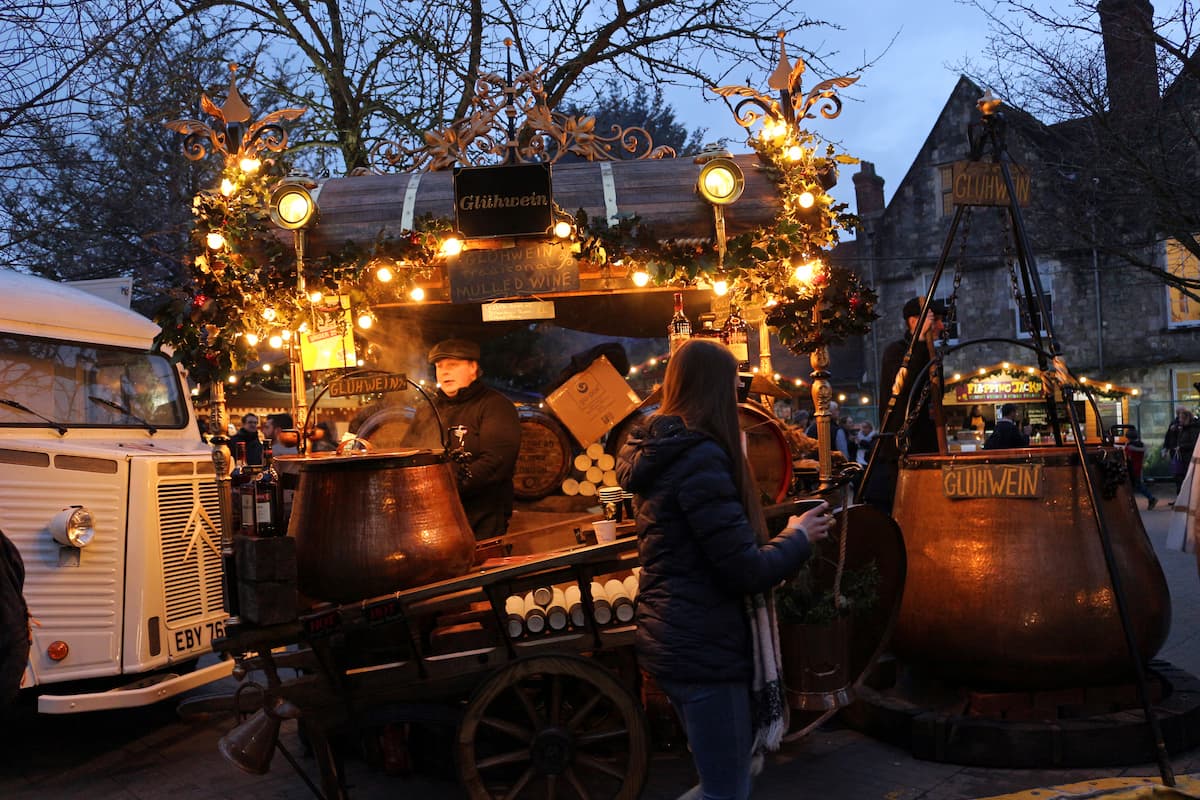
    More Articles About England