Category: England

Discover England’s unique history, cobbled street towns, villages full of thatched cottages, castles, rolling hills, pubs and afternoon tea. England is great for all types of travellers and has a location that will suit everyone, including London, Yorkshire, Cornwall, Lake District, Bath, Cotswolds, Devon, Brighton and more.

  • Is London Better In Spring Or In Fall? A Local’s Guide

    Is London Better In Spring Or In Fall? A Local’s Guide

    London is one of those cities that has a charm to it no matter what time of the year you visit. Having said that, if you’re looking to avoid the tourist crowds in summer, it’s best to consider visiting in spring or fall.

    To help you decide when to visit, I’ve put together all the exciting events that both seasons have to offer.

    London’s temperatures rarely differ between spring or fall, and you can expect warm days in both seasons. Spring and fall are the rainiest seasons, so remember your umbrella! But don’t let the rain get you down – both seasons have plenty of events that’ll make your time in the capital memorable. 

    Keep reading to find out what’s on offer in both seasons.

    What to do in London in the Spring

    Spring in the UK comes early, with mild temperatures and blossoming trees appearing as early as late February.

    At the start of spring you’ll find cheaper accommodation deals, but keep in mind that prices usually increase in March and April as it hits the Easter holidays.

    The months between February and May are packed with events to suit everyone, from couples and families to nature lovers and sports fans.

    February in London

    For schools in the UK, the spring half term holidays take place during the middle of February. This means that there are more families and children out and about in the city compared to quieter months.

    However, it’s still a good time to visit, especially if you’re travelling without children. 

    Imagine Children’s Festival

    Having said that, if you are travelling with kids then you should definitely check out the Imagine Children’s Festival at the Southbank Centre.

    This is a 12 day arts festival that happens in February each year, dedicated to families experiencing all sorts of art and culture together. Expect to see performances, music, literature, comedy, creativity and parties for children aged 0 – 11. 

    Valentine’s Day

    If you’re travelling with your significant other, then why not celebrate Valentine’s Day while you’re in London? Whether you like to keep it casual or go all out, the city isn’t short of romantic spots.

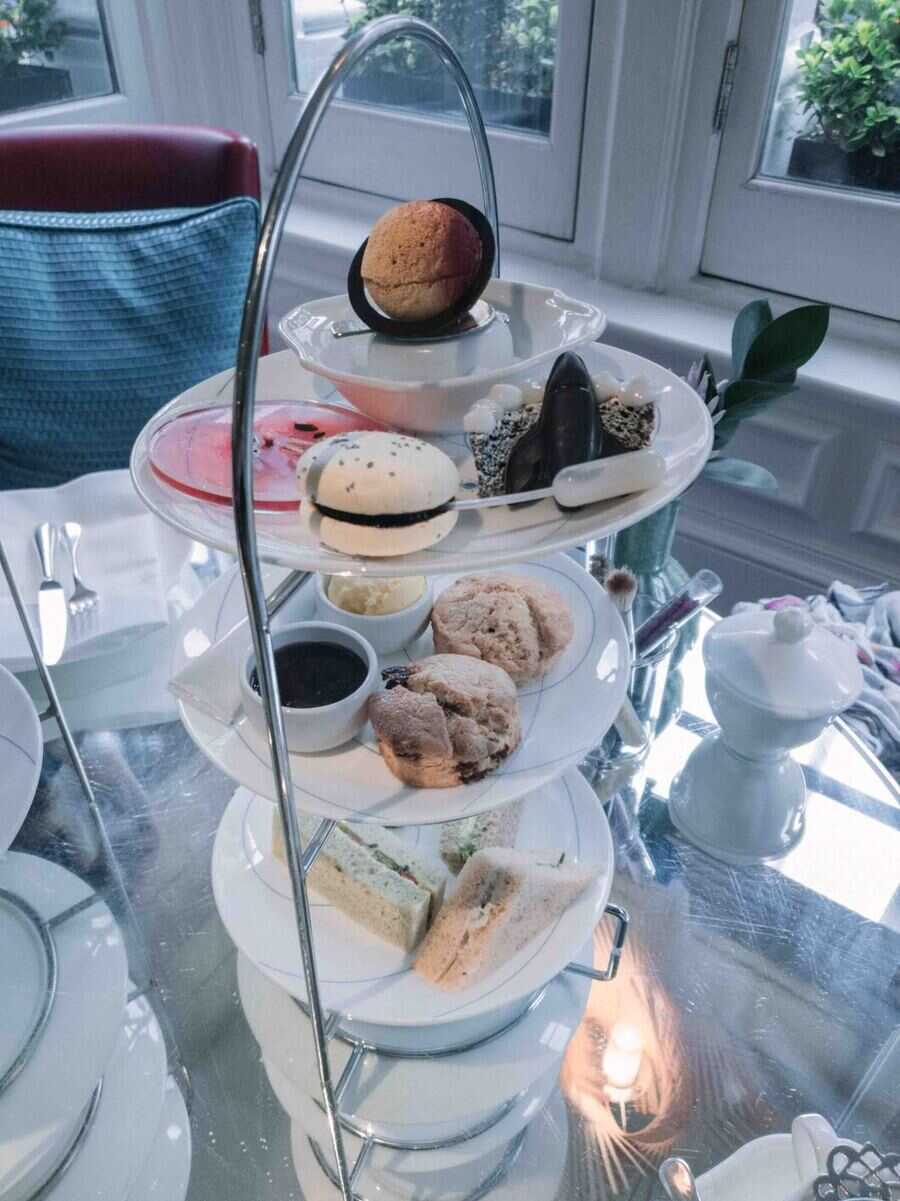
    Try something different with a dinner cruise on the Thames. Or snuggle up next to the fire at one of London’s many pubs. Or try a quintessentially English afternoon tea, with many places featuring themed menus for the occasion. 

    Pancake Day

    Don’t laugh just yet. In London, there’s a long tradition of Pancake Day races held to raise money for charity. Head to one of the city’s many markets to witness the fun-filled event, and cheer on contestants as they flip pancakes in a frying pan while they try to complete the race course.

    Don’t forget to treat yourself too – many cafes do special pancake menus to mark the occasion. Pancake Day usually takes place in February, but may sometimes fall in March, depending on the date for Easter. 

    London Fashion Week

    London Fashion Week comes to the city every February and September. Showcasing over 250 designers, it is one of the ‘Big Four’ fashion weeks, along with New York, Milan and Paris. The February event showcases the fall/winter collections from the designers, sharing trends for the following season.

    Traditionally, Fashion Week was invite-only but is now open to the public. Purchase a ticket to the catwalk shows and you might just rub shoulders with A-list celebrities, reality TV stars, high profile fashion writers, bloggers and photographers. 

    March in London

    While February might still be a bit cold, the weather begins to improve in March. You’ll see the beginning of a ‘proper’ spring, with temperatures averaging 10°C. Most of the city’s parks will be green and blooming by now, making it the perfect time to go out and explore.

    St Patrick’s Day

    Every 17 March, Ireland celebrates St Patrick’s Day. Although it isn’t a national holiday in England, London joins in the festivities with an annual parade and festival that showcases the best of Irish dance, music, food, culture and arts.

    The parade usually happens on the weekend closest to 17 March and sets of from Piccadilly along a 2.4km route through the city’s landmarks.

    The Boat Race 

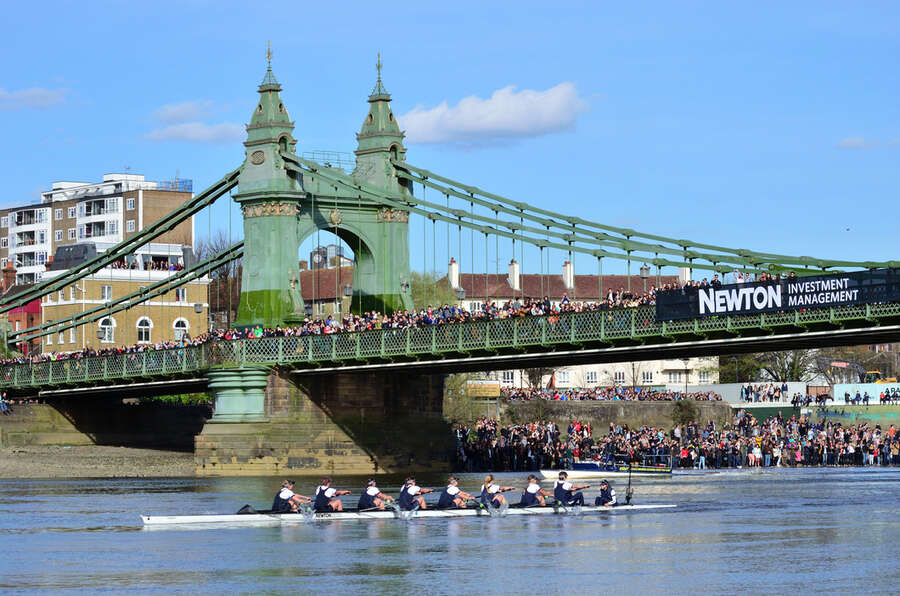
    The Oxford and Cambridge boat Rac in London which is the perfect thing to do in Spring.
    The Oxford and Cambridge boat Rac in London which is the perfect thing to do in Spring.

    Make your way to the riverbanks of the Thames and watch teams from Oxford and Cambridge universities race in one of London’s largest annual sporting events.

    First taking place is 1829, this free event is a must do. Both the women’s and men’s teams battle it out along the 6.8km route along Putney and Mortlake, and you can find great viewing spots either side of the river.  

    International Women’s Day 

    8 March is International Women’s Day, and London is not short of events to mark the occasion. Each year, the city celebrates the social, economic, cultural and political achievements of women around the world. There are tons of interesting events to attend, including workshops, talks, performances and festivals. 

    April in London

    April has quite similar weather to March, and may even be slightly rainier. Some days may be cloudy and chilly, and some may be mild and sunny. It’s a good idea to be prepared for different weather conditions, so make sure you pack a waterproof jacket as well as lighter layers. 

    Easter Weekend

    Easter weekend is a great time to be in London. Although the dates vary each year between March and April, for the most part Easter weekend takes place in April.

    There are a ton of events going on in the city. Try locally made chocolate eggs, or join an Easter service at one of London’s churches, including Westminster Abbey and St Paul’s Cathedral.

    Head to Trafalgar Square to witness The Passion of Jesus, an extraordinary open-air play featuring 100 performers. 

    Virgin Money London Marathon

    Virgin-Money-London-Marathon
    Virgin Money London Marathon is a fun day out. People get dressed up and raise money for charity.

    First run in 1981, the London Marathon takes place in spring each year, usually in April. Since the first ever run, the marathon has raised over £450 million for charity, and is the largest annual fundraising event in the world.

    Join millions of people watching and cheering from the sidelines in London’s 42.3km street party!

    Feast of St George

    Saint George’s Day, also known as the Feast of St George, is England’s national day. All things English are celebrated, so this is a great chance to learn more about English culture.

    The free festival comes to Trafalgar Square each year, and is complete with live music, brass bands, medieval jousting tiltyard, comedy shows and family games. Since the Feast of St George is traditionally a day of feasting, there are a huge selection of food stalls to sample.

    Vaisakhi 

    London is one of the most multicultural cities in the world, and over 200 languages are spoken throughout its neighbourhoods. London is known to celebrate diversity with different events and festivals.

    Each April, Londoners come together to celebrate Vaisakhi, a historical and religious festival in Hinduism and Sikhism. Head to Trafalgar Square to learn more about Sikh and Punjabi tradition, heritage and culture.

    Take part in fun activities, learn about Gatka – an ancient martial arts, and enjoy traditional food and Indian tea. 

    May in London

    Although May is the start of the peak season, it is a great time to visit London. Average temperatures fall in the high teens and the days are longer, with the sun setting at about 9pm. There are two May bank holidays, which means plenty of events throughout the city. 

    RHS Chelsea Flower Show

    RHS-Chelsea-Flower-Show

    Each May, the RHS Chelsea Flower Show is held in the grounds of the Royal Hospital Chelsea. Since its very first show in 1912, it has become the most famous flower and landscape gardens show in the UK.

    Garden designers, plant specialists and florists come together to create beautiful garden exhibits, floral displays and plant sculptures.

    The show sees more than 150,000 visitors each year, including members of the British Royal Family.

    Chelsea in Bloom

    Kat-at-Chelsea-in-Bloom
    Aren’t the flowers at the Chelsea in Bloom wonderful?

    Chelsea in Bloom is a free event that happens alongside RHS Chelsea Flower Show. Chelsea’s best retailers, restaurants and hotels come up with creative flower designs.

    The designs are on King’s Road, Sloane Street and the little streets in between. They come up with some pretty impressive artwork! There is a different theme each year, in 2019 it was ‘Under the Sea’.

    Catch an outdoor cinema event

    If you’re a film buff, then you definitely shouldn’t miss rooftop film season. Each May, different venues hold outdoor cinema events in fantastic locations throughout the city.

    Whether you’d like to watch Jaws while floating on top of a pool, or catch a classic 80s film on a rooftop with 360° views over London, this is something unique to write home about. 

    London Wine Week

    Each May, London celebrates all things vino at this week long festival, with over 100 venues across the city participate in discovering and appreciating wine.

    The programme includes tastings, showcases, pop-up prosecco gardens, dinners, masterclasses, meet the maker evenings and parties.

    So if you’re a serious oenophile, or simply just love a glass or two, make sure you don’t miss this event.

    London History Day

    First held in 2017, London History Day takes place on May 31 each year. The date marks the anniversary that Big Ben was completed in 1859.

    This is a perfect time to visit the city, as many museums, galleries and cultural spaces offer behind the scenes tours, rarely-seen exhibits and special events.

    Make the most of the warm May sunshine with historic walking tours of London, a great way to learn more about the city and take all the sights in. 

    What to do in London in the Fall (Autumn) in London

    As the temperatures drop and fall approaches, the busy summer months wind down. It’s easier to find deals on accommodation and airfares around this time of year, and you’ll also find that there is more availability when booking theatre or event tickets. As the leaves turn red and the crisp mornings arrive, stay cosy with these events. 

    September in London

    Schools are back and the tourist crowds start to thin out, which means that London’s sights aren’t as jam-packed.

    The weather in September starts to cool down, although there can still be warm, mild days. You won’t experience too much rain, although there may be some light showers rather than torrential downpours. 

    Totally Thames Festival

    Every year since 1997, the whole month of September is dedicated to the Totally Thames Festival. There are over 100 events covering art installations, exhibitions, concerts, films, performances and workshops.

    For the more adventurous, you can join a river boat marathon, a Thames swimming event and night kayaking. Events are spread across the city, so find one you like and join in the fun!

    London Design Festival 

    Every September for the past 17 years, the London Design Festival has promoted the city’s creativity. With over 400 events and exhibitions, the festival draws in an estimated 580,000 people from around the world.

    The Victoria and Albert Museum is the official hub for the festival, and offers an extensive programme of events, talks, keynotes, daily tours and workshops.

    However, you’ll also find installations dotted all around the city. 

    Open House London

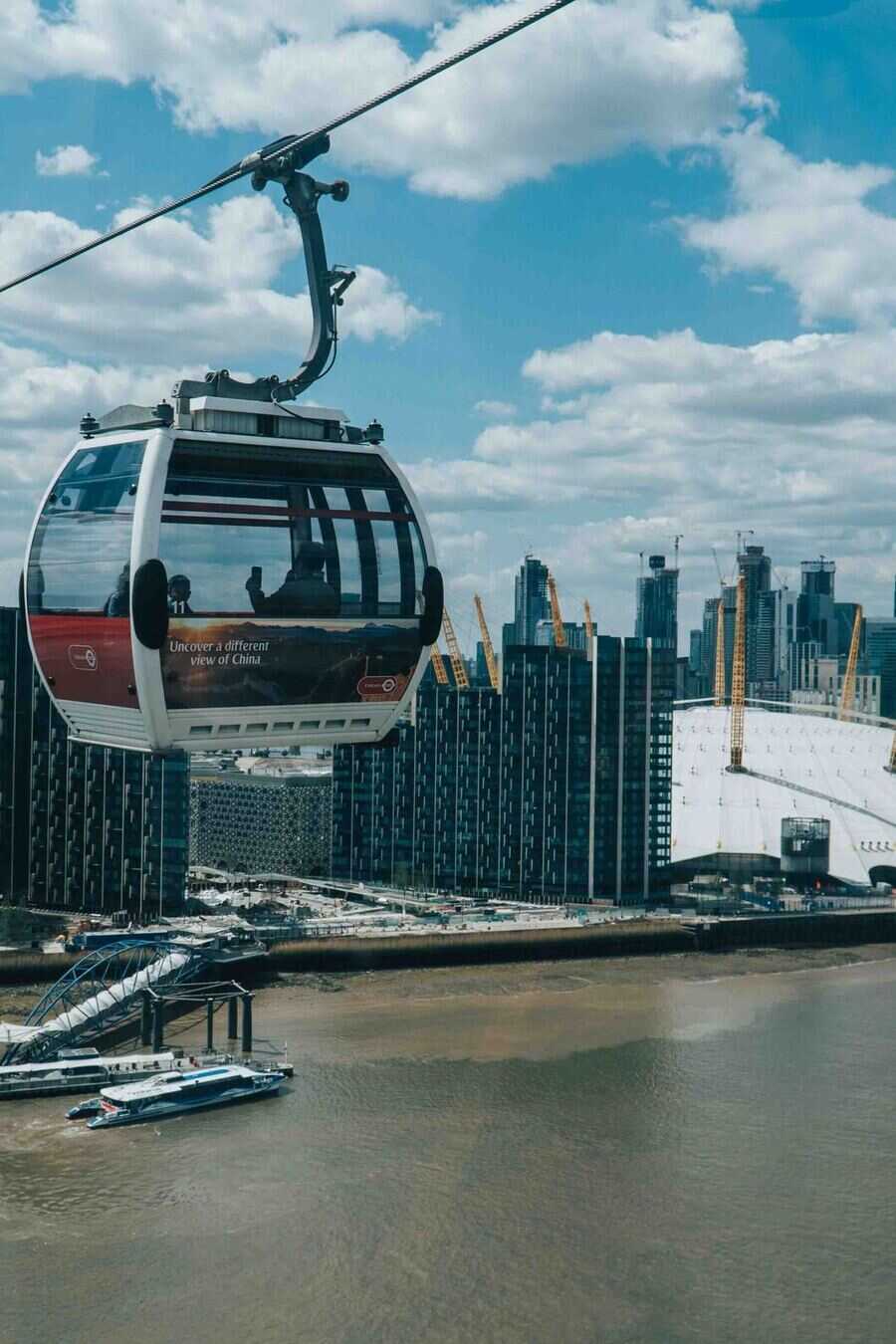
    Emirates cable car in London
    Not all the places in Open Houses in London are houses, places like Emirates cable car has been a part of the event.

    One weekend in September each year, London opens the doors of over 800 of its biggest, most renowned buildings.

    With the aim of making architecture accessible to everyone, you can venture in some of London’s most secretive buildings to discover hidden histories and get interior inspiration.

    The best part is that this event is free, but as it’s so popular, you can expect to queue. The buildings are spread across 30 London boroughs, so you’ll need to plan in advance which locations to visit.

    If you live in London you can also volunteer at the open house days.

    Pearly Kings and Queens Harvest Festival

    Each September, London celebrates the harvest with the Pearly Kings and Queens decked out in their dazzling costumes.

    The tradition dates back to the 19th century when Henry Croft, a street sweeper who went out and collected money for charity wearing a dark suit covered in pearls to attract attention.

    Today, people gather at Guildhall Yard to celebrate the fall harvest with traditional entertainment including Morris dancing, maypole dancing, marching bands, and a street parade. Everyone is dressed in bright pearl buttons, and it is truly an unforgettable sight. 

    October in London

    In October, heavy rains and mist return to the capital. Having said that, there is only an average of 15 days of rainfall, so you’ll still see some dry and sunny days. Trees start to change colours around this time of year, and transform London into a vibrant red and orange palette. 

    London Restaurant Festival

    Meat caver at Bindisa longest lunch as a part of the London Restaurant Festival.
    Meat caver at Bindisa longest lunch as a part of the London Restaurant Festival.

    What’s a better way to explore a city than through its food? Every October, the London Restaurant Festival returns to the city. Now in its 11th year, the festival celebrates the diverse range of restaurants that London has to offer.

    You can enjoy a collection of food and drink events across the city, and try out curated menus, restaurant hopping tours, movie nights and masterclasses in various cuisines. With events in over 250 bars and restaurants, you won’t run out of options for sampling the best of London’s cuisine.

    BFI London Film Festival

    This annual film festival runs every October for two weeks. Founded in 1957, the festival screens more than 300 films, documentaries and shorts from approximately 50 different countries.

    While many film professionals and actors attend the festival, it’s still a public festival, and offers opportunities for people to see films that don’t have a UK screening, or exclusive access to films that haven’t been released yet.

    You may have to get tickets for talks by actors, directors and filmmakers, but there are tons of free events like quiz nights, performances and documentary screenings.

    Halloween

    While Halloween in the UK isn’t as big as it is in the US, it’s definitely growing in popularity and in cities like London, there are plenty of spooky things to do.

    London has quite a gory past, including Jack the Ripper, the Black Death, the Bloody Tower at the Tower of London and the London Dungeons all making the city the perfect place to spend Halloween.

    There are many tours and experiences you can take to discover the bloody history of the city. If you prefer a more cheerful, less scary Halloween experience then head to one of London’s many parties.

    The city’s pubs, bars and clubs are alive with different parties, so grab your best costume and get spooky.

    November in London

    November is pretty much the end of fall and you can expect cold, wet and windy weather throughout the month. If you love the festive season then good news –

    Christmas tends to start early in the UK, with many streets, shops and restaurants putting up lights and decorations in November. But if you’re the type of person who thinks Christmas should start in December, then don’t worry – there are still a few festivities in November to get through first.

    Bonfire night

    Remember, remember the fifth of November. Each year, London commemorates the day that Guy Fawkes attempted to blow up the Houses of Parliament in the Gunpowder Plot of 5 November 1605.

    Huge bonfires are lit in various locations around the city, and the London sky becomes a colourful display of fireworks. You can also experience other activities like funfairs and music, plus heaps of seasonal food and drink. 

    Remembrance day

    Each November, London remembers the people who lost their lives in the war with various commemorative events such as concerts and church services.

    Remembrance Sunday is held on the second Sunday of November, where a service and parade attended by the Queen takes place.

    There are also events at the Imperial War Museum, where you can learn more about wars through exhibitions and collections.

    Hyde Park Winter Wonderland

    This is London’s must-visit Christmas destination. Opening in mid November, there’s no harm in getting the holiday season started early with a huge selection of festive entertainment and activities.

    You can skate to live music at the UK’s largest outdoor ice rink, or sit back and admire the acrobatic performances at Zippos Christmas Circus. Catch spectacular views over the city from the top of the Giant Observation Wheel, or create your own ice sculpture at the Ice Sculpting workshops.

    For some hot food, head to the German style Bavarian village full of bratwurst, roasted nuts, waffles, Berliners and tons of other Christmas treats. 

    London Jazz Festival

    Every November, one of the UK’s landmark music events comes to the capital. The festival brings together emerging talent with established musicians from the jazz world.

    Experience a mix of concerts, events and performances, from headline shows to intimate recitals.

    You can find events at various venues across London, from large, well-known concert halls such as the Royal Festival Hall, to smaller spaces such as the Purcell Room. 

    The Verdict

    Is London Better In Spring Or In Fall? It’s hard to choose between spring or fall. London is such an amazing city with plenty of events throughout the year.

    Overall, the spring months are filled with a lot more outdoor events, so if you’re looking to spend time exploring the city by foot and soaking up the warm weather, then I’d recommend visiting between February and May.

    If you don’t mind chillier temperatures and less daylight, then fall can be a great time to visit. There are many events between September and November that’ll give you a taste of traditional British food, art and culture.

    Whichever season you decide to visit, you’ll be sure to find a huge selection of things to do – just remember to pack your umbrella!

    More London Articles

    If this is your first time in London, make sure you read my guide with all my insider tips to make your first trip to London amazing! Some things also require booking in advance, see my guide on what to book in ahead in London.

    Here is more London inspiration and frequently asked questions.

  • 9 Reasons You Need Travel Insurance for the UK

    9 Reasons You Need Travel Insurance for the UK

    Travelling to the UK can be expensive. With airfare, places to stay, and things to do, you’re going to spend some money. Travel insurance is another expense layer on top of that!

    I’ve seen several posts across the internet questioning if it is worth the money you’re spending? If something happens to you whether it’s a cancelled flight or something more serious the initial outlay is worth it.

    Do I need travel insurance for the UK? I always recommend getting travel insurance. If you think “I don’t need it” or “I won’t get hurt” please rethink that as it DOES happen. While most trips go to plan if it doesn’t you’ll be happy you spent that little bit of money on travel insurance.

    Why should someone get travel insurance for the UK? Travel insurance can be beneficial to travellers regardless of their planned destination. The top 9 reasons you need travel insurance for the UK:

    1. Medical Emergencies
    2. You Need an Emergency Medical Evacuation
    3. Baggage and Belongings Mishaps
    4. Cancellation of Your UK Trip
    5. You Miss Your Connection
    6. Flight Cancellation
    7. Your Passport is Lost
    8. Your Travel Company Files Bankruptcy
    9. Stress-free Car Hire

    Before you get travel insurance, you’ll need to know more about it: what it is, why you might want it, and what kind you may want depending on the trip that you’re planning. We’ve outlined all the basics here, to help you decide.  

    What Is Travel Insurance – and Why Would I Need if?

    Travel insurance is just like any other kind of insurance, in that it ensures your safety and wellbeing. When travelling, this can mean a few different things. Most of them have to do with the safety of you and your belongings. Different types of insurance cover different things and can have more or less coverage than others.

    To get started, we’ll outline some of the most important things that you need to know about travel insurance. Having a basic understanding of what is most commonly covered will give you a better understanding of what you might want to protect while travelling to the UK.

    9 Reasons You Need Travel Insurance for the UK

    1. Medical Emergencies While the UK

    As much as we would all like to hope that our vacations will go according to plan, accidents are inevitable. Most of the time they aren’t that serious but there is always the chance that a serious injury happens to you while you’re in another country.

    The problem is, of course, that most health insurance may not extend to a UK hospital if you’re as a citizen of another country.

    If you know you’re going to travel to the UK, and before you buy travel insurance, call your health insurance company. Find out if you are covered or if your existing health insurance plan offers a travel supplement. If it’s available, find out the cost of that so you can compare when you look at specific travel insurance.

    2. You Need an Emergency Medical Evacuation

    Rugby-players-preparing-to-catch-contestants-in-the-cheese-rolling-festival
    Rugby players helping at the Glouster Cheese Rolling to catch contestants after running down the hill chasing the cheese! They also assist in the injuries that occur in this dangerous sport and there are a few brutal ones.

    While the UK might not seem the first place you may need an emergency medical evacuation there are plenty of stories of people getting lost during a hike in Scotland or Wales, some requiring airlifts off mountains.

    During my travels, I have witnessed things that you just don’t think will happen. As an example, on a sailing trip around the Greek Islands, I watched a lady fall out a window at a bar and shatter her elbow. While the UK has better safety standards than Greece, she needed to get airlifted off this island as we were in a remote location. If she didn’t have travel insurance the cost would have been thousands of euros that she owed.

    By having travel insurance it will return the initial cost outlay. If you plan for outdoor activities this will give you the peace of mind whatever happens on your adventures.

    3.  Baggage and Belongings Mishaps

    One of the easiest problems to come into contact with when travelling (especially internationally) is to have luggage get lost in transit. Ending up in the UK without any of your things would probably be extremely frustrating.

    On top of missing some of your favourite products, if you’re not staying with friends or family who can lend you clothes, you will probably have to shell out money just to be clothed the rest of the trip!

    Investing in travel insurance for your trip to the UK could save you from having to spend your money on clothes and other supplies that you don’t really need. Baggage insurance usually comes in the form of reimbursement for lost goods, so you would still have to buy new clothes, but you would get reimbursed, making them free in the end.

    This process is still stressful and tedious, but insurance can definitely help ease the cost.

    4. Cancellation of Your UK Trip

    Most trip reservations are going to include a non-refundable booking fee and, very often, a booking fee on top of it. If something happens and you end up having to cancel your trip, you could be paying even more money for a trip that you didn’t get to take.

    Thankfully, most travel insurance includes cancellation coverage, which reimburses you for any extra funds that you might have to spend due to cancelling your trip. If you have an ever-changing schedule, look for a travel insurance plan that has really good cancellation. This way, you can relax even if something comes up.

    Pay attention to what kind of situations your cancellation insurance covers. There is a wide range of cancellation coverages policies and packages. Some comprehensive packages include a “cancel for any reason” insurance. This option is just what it sounds like: an assurance that you can back out of your trip for any reason, within a stated time frame.

    5. You Miss Your Connection

    Travel doesn’t always go to plan and you discover that you are going to miss a connection that impacts your trip. Whether is joining a cruise, tour bus, train or flight this will be an additional or lost cost to your trip.

    Having missed connection coverage will be providing you with the assistance services to help you arrange and pay for those travel changes.

    6. Flight Cancellation

    Flight-Cancellations

    From natural disasters to industrial action there are factors out of your hand that could your flight cancelled. With cancellation or interruption coverage you will have the money refunded and the costs covered for a new ticker or stay in a hotel.

    Now, this doesn’t mean that the airline won’t cover you in instances, but insurance gives you that extra support if the airline ends up being difficult. Do read the terms and conditions of the booking to ensure what you are covered for in case of a cancellation.

    7. Your Passport Is Lost

    You’ve taken your passport on a night out and realise it’s no longer in your bag and now you’re stuck! I’ve witnessed this happen a few times, even when I was renewing my passport at the Australian Embassy in London.

    Not sure about your countries emergency passport but getting an Australian passport overseas is expensive!

    Lost passport coverage will help you getting the process expedited and paying for the new passport.

    P.s. want to know if you should take out your passport in London? Read this article.  

    8. Your Travel Company Files for Bankruptcy

    With travel companies like Thomas Cook and Monarch going bankrupt in the last few years you just never know if your trip will be safe. Travel insurance can recoup the cost you would lose if the company cancels due to financial default and provide assistance finding an alternative solution to your trip.

    9. Stress-free Car Hire

    Driving in a new country can be stressful and for most of the world, the UK drives on the other side of the road.  Car accidents can happen, so I always make I have car insurance if I am renting a car. One of the biggest ways that car rental companies earn money from you is via insurance. Including car insurance in your trip policy can save you money and still be covered!  

    What Types of Travel Insurance Are Available for My Trip?

    A typical travel insurance policy will have coverage for most of your concerns when visiting the UK.  These include trip cancellations, medical emergencies, travel delays, and lost luggage. However, you may choose to get additional coverage to cover cruises, adventure activities or a higher coverage on your belongings (if you decided to bring a lot of camera gear as an example).

    Coverage Type

    While every individual travel insurance company is going to price their plans differently, there are two specific groups of plans that you can get. Depending on the situation that you’re in, you’re going to either want basic coverage or comprehensive coverage.

    • Basic Cancellation Coverage:

    This is exactly how it sounds. Basic cancellation coverage is only going to cover trip cancellation fees and non-refundable deposits for flights, hotels, etc. It also oftentimes covers baggage loss or damage, but not much more than that. This is perfect for any short, standard trip to the UK.

    • Comprehensive Coverage:

    This is the coverage that is going to help you get out of a dangerous situation or get medical attention for no out-of-pocket costs. If you are going on an extended UK trip or plan on doing particularly dangerous activities, a more comprehensive plan might be something to look into.

    The Cost of Insurance Coverage Based on Traveler’s Age

    Like many other types of insurance, travel insurance actually increases in cost as you age. So, the younger you are, the less you will pay for more coverage. This is mostly because of the increased risk of medical problems for older individuals because their health is in decline.

    Older travellers may have more health issues that make them at risk of needing medical assistance or attention while travelling. And, while most insurance companies will still offer coverage, it will cost more as you age – and that cost will be compounded, depending on what kind of coverage you are interested in.

    However, when you price compare, check to see which companies offer special packages for seniors. It’s possible to find special deals and group rates, too. 

    What Doesn’t Travel Insurance Cover?

    Travel insurance isn’t a miracle coverage, nor does it offer generous coverage of any and all potential travel-related issues. Like other forms of insurance, there will be some fine print to travel insurance.

    • Pre-existing Conditions – This is a big one to remember if you don’t disclose or choose a travel insurance policy that covers this then you could not be cover. If your trip to the UK is negatively affected by a medical emergency that has anything to do with a condition already existing in your medical records, you will have no coverage. This is a very unfortunate exception to coverage, but it exists, and you should definitely be aware of it if you do have any pre-existing conditions.
    • Individual Risks – While medical costs are generally covered by comprehensive insurance plans, there is always the chance that they will take individual risks into account. This can be a bit vague when it comes to things like outdoor accidents but is more clear-cut in other scenarios.

      For example, you are not covered you are under the influence of drugs or alcohol when the medical emergency occurs. High-risk sports, like scuba diving or bungee jumping, are also not covered automatically, with only some plans providing them as add-ons for an additional fee.
    • Disease Outbreaks – Strangely enough, even though they cover most medical emergencies and disasters, travel insurance plans usually do not cover medical treatment for a disease involved in an outbreak. They may, however, cover travel costs to escape after the outbreak has been labelled an emergency.

    Important tip: Most of the time, your homeowner’s insurance will cover the loss of personal property while travelling. If you have homeowner’s insurance, you may still have coverage in this area, so check with your agent before you leave for your destination.

    Choosing Your Travel Insurance

    Just like there isn’t just one kind of car insurance, there are different types of travel insurance to choose from. Which type you need depends on your situation and sometimes you have the ability to choose one that is cheaper or has more coverage than another.

    The process of picking your travel insurance actually involves a lot more control than you might think. Here are the primary categories of travel insurance plans and why each one might fit your specific travel needs.

    Single Trip Travel

    If you’re just visiting the UK once, this is the plan for you. This kind of plan will cover a trip that you are going on alone (or that you are only covering yourself for) and only the once. The cost depends mostly on your age and the length of the trip, without much change between areas of travel.

    Annual Multi-Trip Travel

    If you are travelling regularly, you’re going to want to get a multi-trip plan. This plan continues through each of your visits and costs less overall than getting a new policy for each individual trip.

    Group Travel

    If you are travelling with more people than yourself, a group plan may be more beneficial in the long run. The best thing about group travel plans is that they are just as comprehensive for a lower price per person. This is best for large groups, but any group larger than two people would do well to have a group plan.

    Senior Citizen Travel

    If you’re a senior, you can get an insurance plan specific to your needs. It includes coverage for pre-existing conditions and even more medical assistance, which can be beneficial to those dealing with health issues at their advanced age.

    Student Travel

    There are also travel insurance plans specifically for students. These plans usually have increased protective measures and may include add-ons for emergency evacuations. These plans are also usually just more accommodating in general, but because of this can be a bit pricier than some single trip plans.

    When Should You Get Travel Insurance?

    The easiest answer? Get it as soon as possible after you have booked your trip. The more exact answer depends on the travel insurance plan. Most of them are around two weeks after you’ve booked your flight, hotel room, and anything else so that they can get all of the necessary information.

    You can even get travel insurance after you’ve already left. Many, if not most, travel insurance companies offer the ability to get travel insurance when already abroad. They do have a cap-off date of around two weeks after you arrived at your destination, but if you would still like travel insurance but are a little late, you can get covered.

    While getting your coverage late is doable, the best time to get your coverage is still as early as possible. Travel insurance companies, like all insurance companies, are risk-based. That means that they are going to give coverage based on any determined risk. The earlier that you get your insurance before leaving, the more aware they are that you will avoid risk. So, the earlier that you get the insurance, the more coverage you are likely to receive.

    Is Travel Insurance Worth It When Visiting the UK?

    Travel insurance is always worth the costs to give you peace and mind that you will be covered on your trip. If you are planning on doing any outdoor adventure, cruising or bringing expensive items like cameras and laptops make sure these are included in your policies.

    Picking a travel insurance company can be overwhelming with all the choices, depending on the type of trip I have I will either start with an aggregators website like Go Compare, Confused and Money Super Market or go straight to trusted travel insurance companies like World Nomads, Covermore or True Traveller.

    • True Traveller is only for Europeans so it is restricted if you are travelling from places like Australia or the United States.
    • World Nomads is a very popular travel insurance company that provides cover across the world and also when you don’t have a country you reside in.  
    • Covermore will cover you if you are from Australia, India, New Zealand, the United States and the UK.

    More London Articles

    Hostels are a great way to save money when travelling solo, here are 11 Safety Tips. If you’re worried about travelling to London and whether it’s safe.

    Here are some more inspiration and frequently asked questions.

  • 7 Magical Things to Do in England at Christmas Time

    7 Magical Things to Do in England at Christmas Time

    Christmas in England is a time of magic and wonder, whatever your age or life stage, there is magic all around if you look for it. 

    The cities are brightened with light and commercialism and can be fantastic places to experience the wonder of the season with the bright lights, parties and hustle and bustle. 

    For a truly magical experience do something different, maybe you already have traditions and obligations, maybe you don’t….. now is the time to create some new ones and very often, even in the 21st Century looking back at history is where the magic can truly be found. 

    Go out of the comfort of the city or big town and embrace the magic that England has to offer. 

    Here is a guide of things to do at Christmas time in England.  There is so much to offer outside of the cities.

    1. Visit a Christmas Market

    Christmas markets are sprouting up everywhere and there are some fantastic city markets, but for a magical experience try one of the country markets, here are a few from around England.

    Ulverston Dickensian Christmas Market

    Famously one of the best for atmosphere and olde worlde charm the event is held towards the end of November so is one of the earliest too and attracts thousands of people. 

    With cobbled streets, fancy dress, horse-drawn carriages and free entertainment you can embrace the theme by hiring fancy dress and with a little imagination experiencing a different era.

    To complement the Christmas market the towns great pubs, cafes and specialist shops there is a traditional fairground and music to add to this magical experience.

     Getting there:

    Ulverston is just a few miles from the Lake District National Park and just over an hour by train from Morecambe. 

    Benefitting from a train station, there are regular trains and buses. 

    By car the nearest motorway is the M6 and travel time is approximately 30 minutes from the motorway.

    Knaresborough Christmas Market

    Knaresborough offers a bustling street market, selling local produce and crafts, seasonal goods and gifts. The market is next to Castlegate the cobbled courtyard of interesting independent shops which complements the market experience.  Morris dancers and various live music concerts by a variety of artists add to the fun, the weekend is finished off with a grand firework finale on Sunday evening.

    Getting there:   

    Just a few miles from Harrogate, Knaresborough is centrally located and easily accessible from York, Leeds or Bradford. Regular buses from York and Leeds, the car journey from either is less than an hour with park and ride and a bus shuttle in place.

     Petworth Christmas Market

    Extending from Market Square to Lombard Street and High Street with stalls also in the Leconfield Hall, the Christmas market offers all day entertainment such as buskers, a magician, live music, Father Christmas and lantern making.  A lively nativity features Darcy the Donkey and the usual shops stay open until 8pm.  The Petworth market is a one day market with the light switch on at 6pm. 

    Getting There

    Petworth is situated on the A272 and is about 30 minutes by car from Horsham or Chichester. Train and bus from Horsham takes a little over an hour and bus from Chichester an hour and 10 minutes.

    2. Go to a Pantomime

    Pantomime at Christmas time in England is a great activity
    Pantomime at Christmas time in England is a great activity.

    Ever been or never been, Panto is a fun packed traditional evening for everyone, not just for kids or those with kids.  Many of the smaller ones offer value for money and a great laugh and are well worth a journey or overnight stay.

    The Frome Musical Theatre Company presents a Pantomime at the Frome Memorial Theatre from the end of December to the first week of January.  For the 2019/20 season they offer Beauty and Beast and promise slapstick, humour filled magical panto suitable for all.

    Getting There:

    Frome is in Somerset close to the Wiltshire border and easily accessible from Bath 30 minutes by car and 50-57 minutes by bus or train and Salisbury 45 minutes by car and 1 hour 17 minutes by train.

    If you prefer a professional pantomime, the Great British Pantomime Awards Winner, the Yvonne Arnold Theatre in Guildford is sure to please with a line up of professional singers and actors their pantomimes always deliver.

    Getting There:

    On the A31 Guildford is accessible from all directions, easy from London it is around 25 minutes by car from Kingston upon Thames and +/- an hour by train.

    3. Go and Gather Your Tree

    Bring out Your Hunter Gather Instinct go forage for a Christmas Tree.

    What could be more seasonal than embracing your hunter gatherer and going to cut down (or collect) your Christmas Tree from the farm? Many farms now offer the opportunity of going and choosing your tree, cutting it down or if you are brave digging it up and this is a great way to kick off the season.  Many offer roasted chestnuts, mulled wine or tea and coffee around an open tin fire too.

    Look in your local press; check on line for the area you want to go to, here are some to get you started:

    • Hertfordshire: Dane End Christmas Tree Farm
    • Surrey: Alice Holt Woodland Park
    • Warwickshire: Crocker’s Christmas Tree Farm
    • Staffordshire: Keele Christmas Tree Farm
    • Somerset: Mendip Christmas Tree Farm
    • Dorset: Cranborne Manor Garden Centre (close to Wiltshire and Hampshire)

    4. Go to the Lighting-up Ceremony of a Historic Town or Village

    Light Up!

    Everyone knows about the Famous Lighting-Up Ceremonies in Trafalgar Square, Regent Street and Oxford Street in London, but there are similar smaller ceremonies going on in towns, cities and villages up and down the country.  It is much more of a personal experience to visit a village for their lighting up ceremony.

    St Ives in Cornwall, Home to a Tate Modern Art Gallery is one of the first to light up each year and the town celebrates with a parade of lights through the ancient seaside town.

    Barnstaple in Devon go further than many others with a special appeal in the lead up and a star will be lit to remember loved ones.  Money is raised towards Children’s Hospice South West and a local adults Hospice. The event features twinkling and sparkling stalls, a giant snow globe, naughty elves and celebrity guests.

    Christchurch in Dorset boasts real reindeer, donkeys and a chance to dress up for photos, their switch on is done by a local television personality and street food and mulled wine is abundant.  Christchurch also has a street market and live music.

    In West Sussex, Horsham have gone high tech with a 10 minute projected show every 15 minutes every day in December designed to give the town a ‘festive buzz’.

    The Kent village of Downe village lights were started in the early1990’s and this quaint village that is easily accessible from London offers a brilliant light display with a backdrop of the pretty historic village cottages and traditional inn.

    Castleton in the Peak District boasts ‘One of the most dazzling displays’ where the main street is adorned with brightly lit Christmas trees at every opportunity.  But it doesn’t stop there the magic is village wide featuring Christmas trees and enticing window displays galore.

    5. Visit a National Trust Property

    The National Trust saysChristmas is here, and all across the country magnificent houses and beautiful gardens are being transformed with twinkling lights to add some winter cheer.’

    Many National Trust historic houses lay on special events and decorations to create a magical Christmas, phone ahead or check online as advance booking is often required.

    Norfolk: Blicking Estate with its magical tree lit drive and Christmas themed rooms, Blicking Estate offers visitors a truly, wonderfully magical Christmas experience, The view of the lights on Temple Walk with the fountain and acorns lit up on the Parterre are not to be missed, but once seen will always be remembered.

    Suffolk: Ickworth offers a sound and light based trail through the Italianate garden that glows, including the magic of a gothic Victorian Stumpery and some exciting modern additions.

    Worcestershire: Hanbury Hall gives visitors a truly unique experience of a ‘70’s and ‘80’s Christmas Party, built as a country retreat the house is decorated and themed with the excess of the ‘70’s and ‘80’s, look out for the ghetto blaster and the period tinsel and trees.

    Berkshire: Basildon Park provides visitors with opulent Christmas decor and thousands of tree lights offering the experience of a luxurious Victorian Christmas.

    Hertfordshire: Ashridge Estate, offers a magical opportunity to meet and join the chocolatier team from Auberge Du Chocolat to sample their locally made chocolate.

    Wiltshire: Avebury Manor has Christmas Carol themed room decor, lavishly decorated with handmade festive displays.  Whilst there enjoy a walk around the mystical Neolithic Avebury Stones for a truly magical experience at this world heritage site.

    6. The Festival of Light at Longleat

    The-Festival-of-Light-at-Longleat

    Privately owned by the Marquis of Bath, Longleat House and Safari Park is a well known tourist attraction. 

    Increasingly the winter spectacular of the Longleat Festival of Light is becoming more and more famous.

    The Festival of Light display runs alongside all the usual traditional celebrations, such as the Santa Train, an Enchanted Christmas Tree Show and Longleat House throws open its doors to visitors showcasing fabulous festive 1920’s decor. 

    Over a thousand lanterns transform the house and grounds into a twinkling, glowing wonderland and with the light festival is truly magical and not to be missed.

    7. Attend a Cathedral or Church Service

    Cathedrals are architecturally beautiful buildings and whatever your faith it is well worth looking around inside one. 

    Do so at Christmas and everything is extra special. The acoustics tend to be fantastic and any musical concert at a church or cathedral is magical and breathtaking. 

    As well as the traditional midnight mass, many cathedrals and churches hold special ceremonies in the run up to Christmas both the traditional advent services and other things like carol services. 

    Because the way it works a cathedral will always be in a city, the city does not have to be large Wells City, home to the breathtaking Wells Cathedral, dedicated to St Andrew the Apostle is home to about 10,500 people, compared to London at almost 9 million is a tiny place near Cheddar in Somerset.  Yet Wells is a thriving, beautiful Anglican Cathedral well worth a visit.

    It is well worth seeking out the cathedral nearest to you and having a look around at the architecture and the magical stories the building can tell you.  Another famous cathedral outside of London is York Minster or The Cathedral and Metropolitical Church of Saint Peter in York to give it its full title. 

    Many churches and cathedrals will hold the Christingle service, which is a modern tradition of candlelight and oranges, aimed mainly at children and is a spellbinding service to see.   

    Or you could find a church or cathedral with a nativity scene to enjoy as a reminder of the meaning of Christmas.

    Whatever you decide to do, England has a lot to offer at Christmas.

  • This is Why English Homes Have Two Taps (& How to Adapt)

    This is Why English Homes Have Two Taps (& How to Adapt)

    One of the first things I noticed when I moved to the UK, is that the bathrooms have two taps. It’s an odd thing to pick up on but I guess when you are used to having mixed taps in your home country its something you need to get used to.

    This is why English homes have two taps – In the UK, there’s a law that prohibits mixing cold water and hot water from their separate boilers, one for cold water in the attic for drinking and one for hot water downstairs which is not drinkable. 

    Using London as an example, and with a little detective work, we can create a picture of how London’s water system was developed, along with major issues involved, in the last few hundred years. This will answer the question of how they ended up with two faucets.

    Why do UK Houses Have Water Tanks?

    The reason for the two water tanks is to prevent any used cleaning water from the house (possibly contaminated) flowing back into the cold drinking water.

    How to use British taps

    There are really only two simple methods:

    1. Plug the sink, fill it with both hot and cold water to get to your preferred temperature, and then wash in this water.
    2. Open both taps at the same time, move your hands really fast between both of them and, if you do it quickly enough, you can sort of get the water mixed.

    Why are Cold Taps on the Right?

    The simple answer to this question is that most people are righthanded, and the cold tap is used the most. So, therefore, the hot tap is on the left.

    Where does London’s Drinking Water Come From?

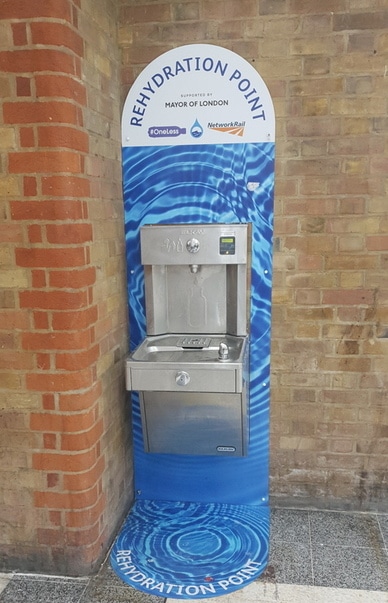
    Water-Fountain-at-National-Rail-Station-in-the-UK

    The majority of London’s drinking water, almost 70% in total, is retrieved from reservoirs outside the city, which have collected water directly from the Thames River.

    After being treated at facilities to ensure removal of any harmful elements, it is transported through one mammoth feeder pipe to smaller reservoirs around the city’s perimeter, after which it is fed through a web of piping directly to residential homes and building throughout London.

    So, what about the remaining 30% of drinking water? This is the other percentage of drinking water which is retrieved from boreholes that access groundwater directly and pump it to the surface.  It then goes through the same treatment and pipe system and combines to reach the city.

    On a typical day in London, this water system provides over 2,100 million litres of drinking water, which doubles during hot spells.

    How is London’s Sewer Water Treated?

    When you flush a toilet or drain your sink, the used water goes down a drainpipe and travels out into the larger system of sewer pipes under the roads of London.

    Local sewers then join a larger web of sewer pipes and wastewater finally reaches to a sewage treatment facility – sometimes by drainage and sometimes by pumping.

    Then the first stage of purifying wastewater involves removing large objects that could damage equipment or present pollution to local waterways.

    After this separation, wastewater still contains organic solid matter, meaning human waste. The following stage separates this solid waste from the remaining water. This is done by pumping the water into large settlement tanks, where it settles for a determined amount of time. Separation occurs during this process, which causes the solids to sink to the bottom of the tank.

    At this stage, even though the visible bits of sludge and solid waste have been removed, it is still most important to ensure that the smaller and sometimes invisible nasty bugs are also taken out.

    After that second treatment, the final wastewater is then passed through the last settlement tank, where the good bacteria sink to the bottom. In the end, the final clean water is pumped over a separation wall near the top of the tank and out into the waterways.

    Residential Plumbing Design in London

    England has had a long and rich history with all things related to the bathroom. There are still unused sewers from the Romans underground, as well as visible remnants of Roman walls above ground.

    Bathhouses used to be in operation along the Thames River until the fifteenth century, then individual bathrooms began as early as the 1700s and evolved into elaborate bathrooms by the Victorian Period in the late 1800s.

    Another all-important device was invented in England at this time by Thomas Crapper, which represented another function of water use that needed to be addressed.

    It’s obvious that, by the 1800s, Londoners required both hot and cold water daily in their own homes. Plumbing pipes, water heaters, and fixtures accommodated this starting then and continuing to the present.

    However, with London’s unhealthy past related to drinking water and wastewater, a case could be made that Brits prefer two taps and separate water tanks to ensure they will never have to deal with water-related illnesses again.

    Short History of UK Residential Water

    The real boom of innovative water companies providing water to London’s residential districts took place in the 1700s and 1800s. There was a boom in modernization as homeowners demanded clean and ultra-convenient water for their families and the upgrade efforts were led by the New River Water Company, the London Bridge Waterworks, and others.

    Borough by borough, this transformation occurred, with some of the last areas like Kensington and Chelsea added to the system during the nineteenth century. However, in parallel with the push for convenient drinking water, major problems had developed with the sewage system.

    London is well-known for having water sewage issues a mere century earlier in the 1600s, with the black plague being traced to the water system and killed an estimated 100,000 people. So, it was incredibly important to determine the current causes of foul-smelling sewage water that gave such a bad reputation to the city and the River Thames around which it is built.

    Joseph Bazalgette, a civil engineer and expert with water systems, was engaged to take on the huge task of planning and building a new sewer system for the city of London. Constructed during the mid-1800s, the new sewer system pulled used water from London’s homes and buildings and fed them out through major waterways.

    This building project was truly on a mammoth scale and almost equal to a “world wonder.” To understand the scope of this building effort, here are some statistics:

    • Six interceptor sewers needed building, covering 100 miles
    • These were fed by 450 miles of main sewers
    • These were fed by 13,000 miles of local street sewers
    • 318 million bricks were used in the building process
    • 670,000 cubic meters of concrete was used to build
    • 2.7 million cubic meters of land were excavated

    The entire sewer system was designed and built in such and practical manner, that it left hundreds of miles underground for the eventual construction of London’s famous and highly efficient Underground train system, similar to New York’s subways but cleaner.

  • 6 Options on Where Can You Charge Your Phone in London

    6 Options on Where Can You Charge Your Phone in London

    Travelling can take a toll on your phone’s battery life, you want to be capturing all those London moments and navigating the city. The last thing you want on your trip is not to be able to capture something! So where can you charge your phone in London?

    • ChargedUp
    • Powermat
    • Aircharge
    • Charging at your accommodation
    • John Lewis Charging Station in Oxford Circus
    • Use any public charging outlet available (with your charger & adapter)

    There are plenty of phone charging options in London, even some newer London buses are adapted with USB ports! I’ve never had an issue finding a place to charge my phone when I am out and about. All the cafes, restaurants and tourists’ areas will have options. I always travel with a power bank just in case I run into issues for whatever reasons.

    Your Options for Charging Your Phone in London

    1.    ChargedUp

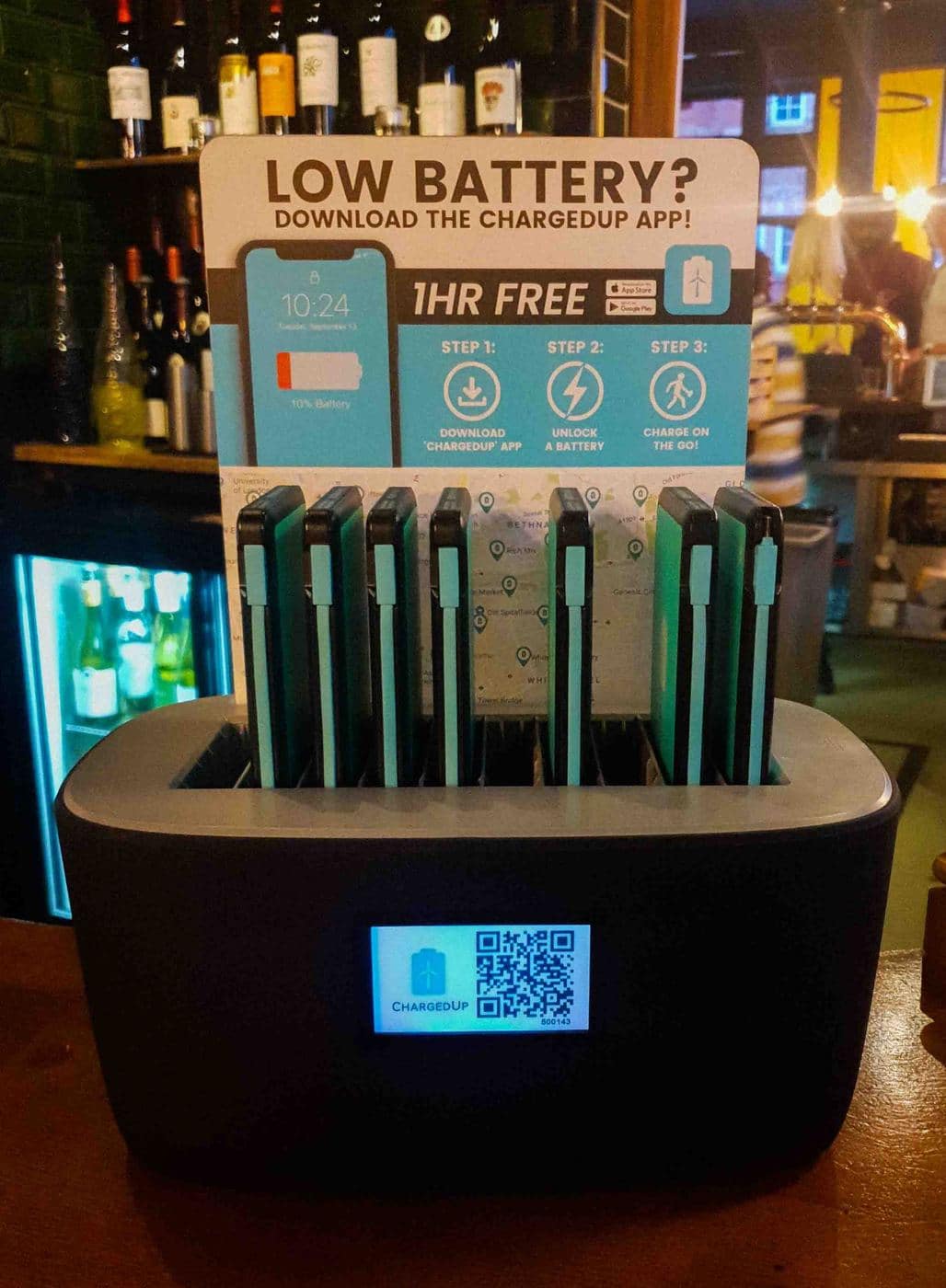
    ChargedUp Station at a pub in London
    ChargedUp Station at a pub in London.

    It is becoming more convenient to get charging equipment in London. ChargedUp is a business that places vending machines in places like:

    • Restaurants
    • Shops
    • Bars
    • Hotels
    • And more

    The only disadvantage with ChargedUp is that they only have an IOS app to find charging points. Brands like DoubleTree by Hilton, wework, Stonegate Pub Company, Selfridges & Co, Pergola, M&S, Laine’s, Brewdog, and Boxpark are partnered with ChargeUp so you will likely find them in one of their venues.

    Simply pay the fee to rent the charging pieces you need for the duration of your stay. When you finish using them, simply return them to any ChargedUp vending machine. This is a great help for those that want to avoid packing too many items.

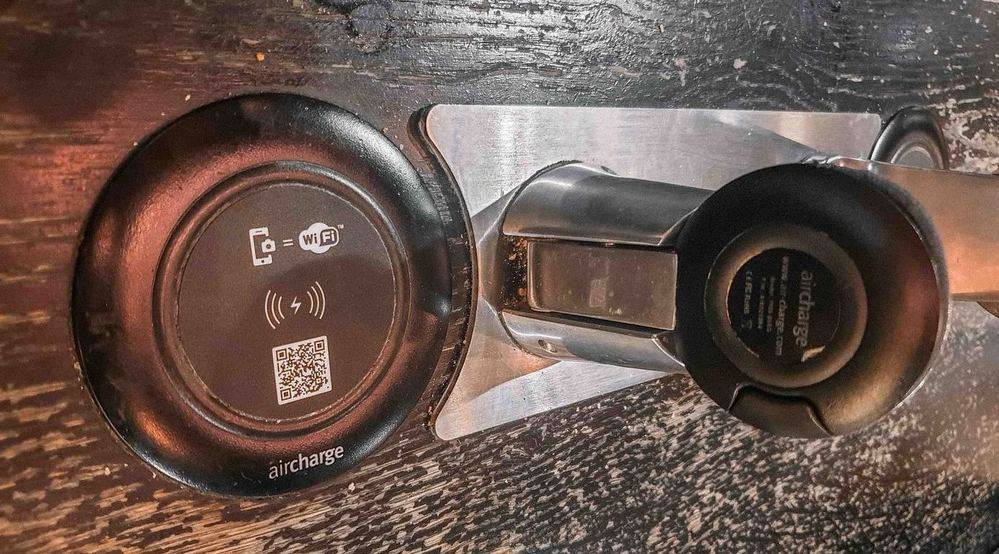
    2.    Aircharge

    AirCharge-in-Starbuck
    You will find these Aircharge stations (or versions of) in all the brands I mention below.

    Aircharge has paired up with brands like McDonald’s, Starbucks, YO! Sushi, Costa Coffee and Vapiano to provide customers with Qi wireless charging stations. McDonald’s is the largest provider to date with more than 400 UK stores offering these facilities.  

    The easiest way of finding the closest charging station is by using Aircharge app. Using your location, it will guide you to the closest station.

    You do need to have a newer phone for Aircharge to work. If your phone is on the list below, then it will work with Qi wireless technology:

    • Apple iPhone: XS Max XS, XR, 8, 8 Plus,
    • Samsung Galaxy: S10 Plus, S10, S10e, Note 9, S9, S9+, Note 8, S8, S8+, S7, S7 Edge (Plus more devices)
    • Sony: Xperia XZ3, Xperia XZ2 Premium, Xperia XZ2 (Plus more devices)
    • LG: G7 ThinQ, V30, G6 (US version only), G4 (optional), G3 (optional) (Plus more devices)
    • Nokia: 9 PureView, 8 Sirocco
    • Huawei: P30 Pro, Mate 20 Pro,
    • Microsoft Lumia: 1520, 1020, 930, 929, 928, 920
    • Google: Pixel 3 XL, Pixel 3,
    • Nexus: Nexus 6, Nexus 5

    For the phones that aren’t compatible will need to get adapter to use Aircharge.

    3.    Powermat

    Powermat is another charging facility that can be found in stores around central London. Places like; All Bar One, LEON, Heathrow Airport and German Doner Kebab are offering Powermat charging stations. As they are using wireless charging technology your phone will need to have these capabilities.

    To use Powermat, simply place your phone on the Powermat spot and it will start charging your phone.

    You can find the location by using the link here.

    4.    John Lewis Charging Station in Oxford Circus

    Oxford Circus is a connection point between Regent Street and Piccadilly. The term “circus” can be confusing if you are not from England. It literally means circle in this case, translated from Latin.  There are many shops present in the circle around this street junction.

    John Lewis is a well-known department store in London and has a Chargebox station inside the store. The best part of the ChargeBox is that the first 30 minutes are free!

    You can find a ChargeBox in the John Lewis store located in Oxford Circus. These are small lockers with charging plugs in them. You can simply put your phone in the locker and use the provided key to keep everything safe.

    If you don’t want to wander too far away from your phone, you should explore the cheese room on the lower ground floor. Honestly, it is a cheese lover heaven! But back to phones…

    After 30 minutes it will disconnect your phone and if you want more charge you will have to reconnect it again.

    Where to find them:

    • On level 5 at Place to Eat entrance
    • Place to Eat – Right.
    • Ground floor next to Customer Collections.

    5.    Charging at Your Accommodation

    Charging your phone at your accommodation it is the easiest way. If you’re like me it’s just habit to charge your phone when you’re asleep. If I find I end up glued to my screen before leaving I will give the phone a quick top-up before heading out the door. That extra 15 minutes can help!

    Hotels/Hostels

    USB ports are becoming a popular way of charging your phone instead of having the old school plugs. You should bring an adapter and the plug just in case your hotel hasn’t caught up with the latest trend. In most cases when I am travelling in the UK, I find that I don’t need my plug, but you can occasionally get caught out.

    Adapters are necessary because the plugs in the UK have three prongs. Depending on where you are travelling from, your plugs may be completely different. Be sure to get enough adapters to allow everyone in your group to charge as needed.

    Airbnb

    Staying in an Airbnb it is unlikely you will have USB so if you need a power convert then I suggest getting one before travelling.

    6.    Use Any Public Charging Outlet Available (With Your Charger & Adapter)

    Charging your phone while you are shopping for coffee or food is a great way to top up your phone. After all, we must rest our feet sometime after all that sightseeing!

    Cafes, Coffee Shops and Restaurants

    There are generally power points and free internet in cafes, coffee shops and restaurants. If you can’t see the powerpoint straight away, just ask the staff and they will be able to let you know the best seats to get that top-up.

    National Rail

    On some of the National Rail trains, there will be power points available, especially the long-distance trains like Edinburg to London. Having a power adapter and charging equipment means you can easily take advantage. However, you won’t find these on the Underground, unfortunately.

    Other Public Transport / Stations

    I have found some London stations popping up with charging facilities like Shoreditch High Street station. Just through the gates, on the left-hand side, you will find charging facilities that come with the different plug adapters to meet all your charging needs.

    On some newer London buses, I have also discovered USB ports to charge your phone. The route I have seen it the most on is the 521 from London Bridge to Waterloo.

    It’s not a guaranteed way to charge your phone though.

    Do You Need Plug Adapters in London?

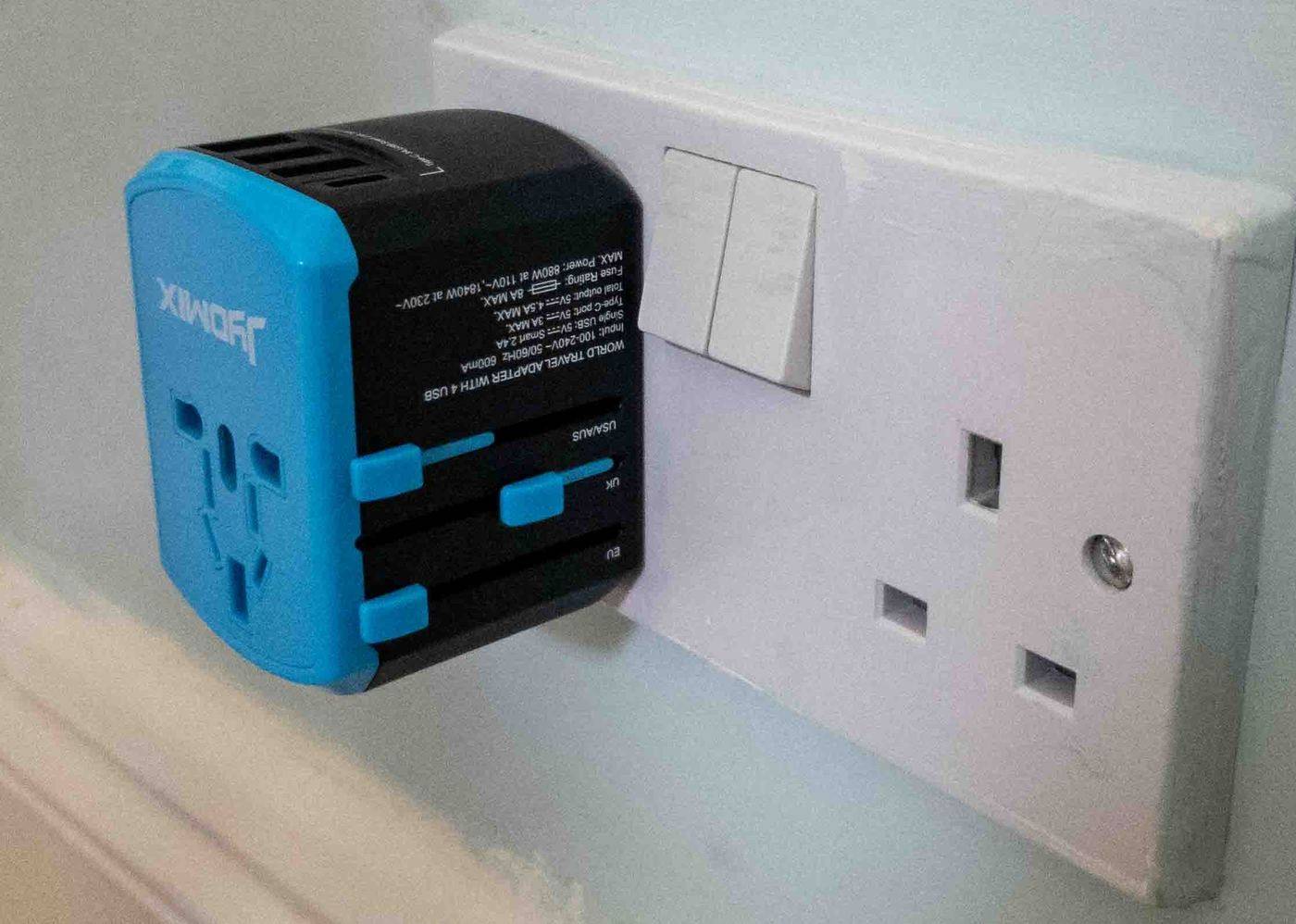
    VGUARD-Worldwide-Travel-Adapter-4-USB-Ports
    My favourite travel adapter, save you bringing all the bulky plugs!

    London plugs have three prongs. If you are coming from elsewhere in the UK, you may not need an adapter. Europe includes many countries outside of the UK, and outlets can vary.

    If you are coming from the United States, you need an adapter for London. Most of Europe has two-pronged plugs; however, the prongs are shaped differently than U.S. prongs. Ireland and the UK are the exceptions (with 3 pronged).

    No matter where you are travelling from, you will likely need an adapter if you are traveling in the UK.

    Adapters are inexpensive and I recommend getting one for worldwide use. This enables you to use your adapter for all of your travels and doesn’t lock you down to the UK. Here is my favourite adapter VGUARD Worldwide Travel Adapter, 4 USB Ports (Amazon).

    Do You Need Power Converters in London?

    Power converters are necessary if your devices cannot handle the higher voltage in London. The median voltage in the UK is 230 volts. Check your devices before you go to find out what they run on. You can ruin a phone or laptop that cannot handle the voltage difference.

    Look on the plug for your phone to see what the voltage limits are. Some items, such as iPhone chargers, do fine with the voltage difference. Look on the website for your phone or computer brand to find out if the UK voltage is safe for your product.

    Quality Brands

    It is convenient to replace a broken charging plug or cable with an inexpensive copy. Even in your home country, there are warnings against this, however. You may severely limit the longevity of your device by using off-brand charging equipment.

    If you are travelling overseas, purchase plugs and cables that match the brand of your phone. This ensures that everything is of good quality. This can prevent dying cables and damaged devices.

    Most phones come with a charger and cable. People often buy cheap charging items, so they have extras in the car or around the house. Find the original plug and cable before your trip or buy a new one. Some companies get their products certified for use with common brands like Apple and Samsung. Read the fine print before you purchase these.

    Purchasing Charging Equipment for London

    It is easy to purchase adapters for travel. Most equipment is very affordable. Even if you need several items, you are likely to spend very little. You can find adapters at Boots, WH Smiths, electronics stores, and department stores.

    If you do not want to pack extra items, you can easily purchase adapters in London. This is a common item bought by tourists, so they are easy to find. If you do not plan on using the adapters again soon, be kind and hand them off to another tourist before you head home.

    Why Outlets are Different in London

    The reason for varying outlets around the world is simpler than you may think. There is more global travel now than when electricity was new. Even after the invention of electricity, it was not in use like it is today. Early uses mainly included lights and fans.

    Different people were busy setting up electricity in different parts of the world. They each simply came up with an outlet design that met their needs. Frequency and voltage changed in the UK after World War II. The frequency of 50 hertz matches up with the standard in many other places.

    Britain changed over to a higher voltage during the 1950s. The United States did not change at this time, as most of their homes already had large appliances running on 120 volts. It would have made things difficult for a large part of the population.

    Most electronics and small appliances work with a variety of voltages. This dual voltage ability makes it easier for manufacturers to sell items globally. You can get an idea of whether you need a voltage adapter by learning about voltage in different countries.

    • UK/ Europe- anywhere from 220 to 240 V
    • United States- 110/120 V
    • Japan- 100 V
    • Australia- 230 V
    • Brazil- 127/ 220 V (in the process of changing, some older buildings are still 127 V)

    Other Electrical Items to Consider

    Adapters can be helpful for many items, not just phones and computers. As people often travel with electric razors, hairdryers, and cameras. You should be able to use your adaptor for most items.

    Before travelling make sure you check out the tag to find out if your appliances are dual voltage. This means you can use them anywhere in the world with only an adapter.

    If you have older appliances or some odd brands, you may need to purchase a voltage adapter, as well. You can simplify your trip by using disposable razors purchased in London and use the hair dryers that come with your accommodation.

    More London Articles

    If you are visiting London you may want to get a SIM card, here’s everything you need to know about phones working with UK SIM cards. If want to know more about WiFi and internet in London this article has you covered.

    Here are some more inspiration and frequently asked questions.

  • Do all Phones Work with UK Sim Cards? What to Know Before Visiting.

    Do all Phones Work with UK Sim Cards? What to Know Before Visiting.

    When travelling to the United Kingdom, you may consider using a local SIM card from the UK. If you have a phone with an interchangeable SIM card, then you should take advantage of a local SIM card’s benefits.

    Do all phones work with UK Sim cards? Not all phones work with SIM cards from the United Kingdom. Some phones operate on a network called CDMA which will prevent you from being able to use a foreign card. If your phone operates on GSM, then you can use a UK SIM card after you have the phone unlocked.

    What to know before visiting? It is important for travellers to know whether your phone is compatible with using a UK SIM card and where to find them. If you don’t have a compatible phone, it is good to know what other options are available.

    There’s a lot of avenues for you to take to avoid the hassles of using your phone overseas. If you have the right phone for it, travelling the world with your mobile device can be a breeze. Once you know, you’ll be armed with a better understanding of your phone and how to travel with it.

    Taking Your Mobile Phone to the United Kingdom

    You can take your phone with you when you travel to the UK but using your mobile phone while you’re in the UK can be costly from roaming charges. If you don’t want any unexpected bills when you return home, then it might be wise to take advantage of a local SIM card to avoid such fees.

    If your phone is compatible with a different card, then there are SIM cards set up as a pay-as-you-go system. You can buy an initial large sum of data, voice, and text which you plan to use the entire time, or you can add more data as you go.

    If your phone comes from Canada or Australia, then your phone likely runs on GSM, but if you’re from the United States you may have a phone which runs on a different network than those internationally. Some companies out of the US, such as Verizon and Sprint, run their phones on the CDMA network which makes them unable to use a local SIM card.

    CDMA and GSM

    The reason certain phones don’t work with other SIM cards is that they use a system called CDMA which stands for Code Division Multiple Access and they don’t even use SIM cards to operate. Phones which do communicate using SIM cards are working on a system called Global Systems for Mobile Communication or GSM.

    They are both ways to access radio channels and both compress multiple calls into one radio wave. The reasons for using one network or the other was a choice for providers while some companies saw faster speeds and response times on CDMA, the others wanted the wider use by choosing GSM.

    The difference between these two is how they communicate with each other. A CDMA phone communicates with specific coded segments for talking. So, the receiver’s phone only takes out its portion of the coded segments. The benefits for phones on CDMA are:

    • Increased immunity to interference
    • High-speed internet for faster data

    GSM is a time division system, so calls take turns on a radio wave, but the receiver only hears their time slot. There are a lot of claims that GSM isn’t as responsive or as fast as CDMA, because most of them still connect to older 3G networks. Having a GSM phone means:

    • Can be unlocked
    • A higher percentage of the world is running on the network
    • Can easily switch carriers, local or international

    The Challenge of Locked Mobile Phones

    Cell service providers have the ability to lock a phone to their network when the service is shut down. When a phone is locked, many of the features are disabled and the phone cannot use a SIM card from another provider.

    The phone is locked by having a code on it which enables the phone only to use the provided network, but if the phone is unlocked it can accept and use SIM cards for other networks. In 2017, Canada passed a law banning mobile companies from locking phones.

    If you find yourself to be a tech-savvy individual, then there are videos on the internet which guide you through the process to unlock your phone. Some companies will unlock the phones for you, but if not, a third party out of the UK can unlock it, usually at the cost of purchasing their SIM cards.

    United Kingdom’s Wireless Service Providers

    Any SIM card purchased in the United Kingdom will be considered a UK SIM card. This encompasses England, Wales, Scotland, and Northern Ireland.

    There are many popular providers to choose from:

    • EE Limited
    • Vodafone
    • 02
    • Three UK
    • Sky Mobile
    • Giffgaff
    • Virgin Media

    These have been ranked as the best working mobile networks in the UK. Each offers competitive rates and the highest quality in data and voice throughout the United Kingdom, but for precise details, you can learn more.

    Using a local UK card will work in most other countries in Europe, so if you plan to take a trip to France or any nearby countries, you can take your phone with you and not worry about any additional charges. Much of the world runs on GSM, so you always have the option to use the local SIM card of wherever you’re travelling to.

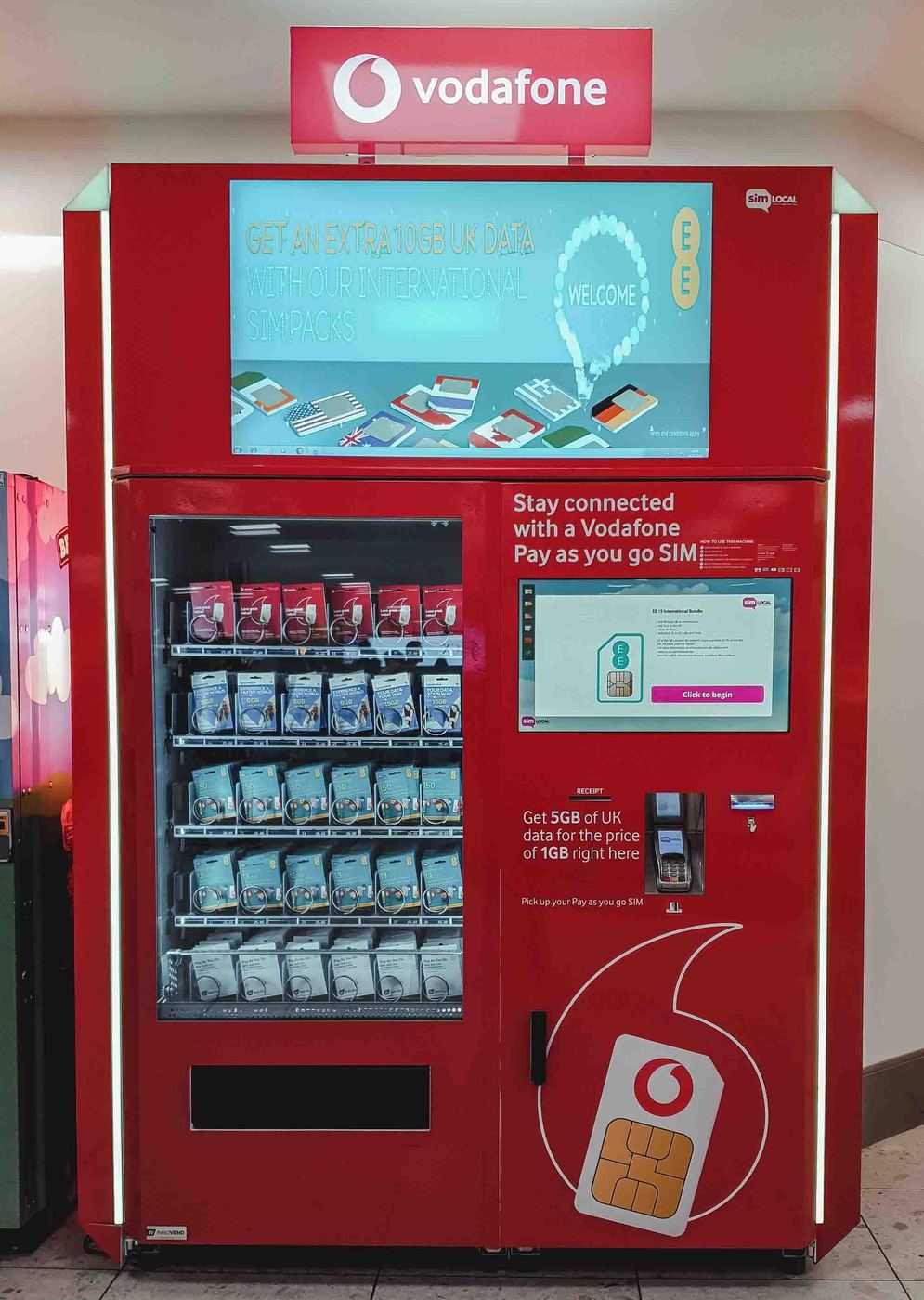
    Vodafone stand in the airport
    Vodafone stand in the airport

    Prepaid Cards and Knowing your Usage

    If you’re only visiting the UK, then you can purchase one of the SIM cards with prepaid data and voice. It is important to know how much data you’re going to need when you’re not planning on using a Wi-Fi connection.

    The Sim cards can be bought with as little a 2GB and many offer unlimited data use for a certain period. Much of these pre-paid plans offer unlimited talk and texts, but each SIM card only lasts for an extensive amount of time such as 30 or 90 days.

    If your planning on travelling outside of the cities and towns of the UK, then it is recommended to go for a high amount of data since you may need it for travel directions or information. For cities, you may not need such a high amount as there are ample times to connect with a business or hotel’s internet.

    What Happens When You Take Out Your SIM Card?

    It is best to take a SIM card out when the phone is turned off to avoid any possible glitches or software malfunctions. When your phone doesn’t have a SIM card in it:

    • You will not be able to make or receive any phone calls
    • You can’t access the internet without Wi-Fi
    • You can still make emergency calls

    Taking your SIM card out will not damage your phone but for these reasons, it’s good to keep your card in your phone until you have another to switch out.

    When Visiting

    UK SIM cards can’t be purchased outside of the country unless you purchase it online. Buying online will save you time and allow you to have already the SIM card ready when you get to your destination. However, if you don’t purchase online, you can find them for sale in airports, some gas stations, and every mobile phone store.

    If your phone isn’t compatible for a local SIM card, then you can rent Wi-Fi packs which create a wireless hotspot. While using local internet you can utilize apps such as WhatsApp or Skype to make any necessary international calls. Many phone shops in the UK also offer disposable phones which work similarly to the pay-as-you-go SIM cards and can be recycled after use.

    More London Articles

    If you are visiting London you may want to how to Get internet and Wi-Fi in London, read this link. If you run out of battery while exploring the city make sure you read where can you charge your phone in London.

    Here are some more inspiration and frequently asked questions.

  • Money Exchange and Paying in London: 13 Tips and Tricks

    Money Exchange and Paying in London: 13 Tips and Tricks

    If you’re planning a trip to London and you have questions about money, you are not alone. With so many options available you will have no trouble finding solutions on how to spend your money and advice for paying for things in London.

    One of the first questions you probably have is, should I exchange money before I go to London?  You should exchange some money before you leave but plan to get the rest in London. When you do, remember that London and the rest of the UK do not use the Euro. Since London is one of the world’s financial capitals, you will be able to access your money and spend it pretty much as you do in the U.S.

    As London is a mecca for tourists, they want you to spend your money.  Here are some things to know and even a few tips and tricks to have up your sleeve before you head across the pond.

    Think Pounds, Not Euro

    When the euro was first proposed as a single currency for the European Union (EU), the UK Prime Minister (Tony Blair) decided that the euro needed to pass five economic tests. The tests didn’t meet the expected outputs so the UK opted to keep the pound (technically the “pound sterling”) as its official currency.

    Therefore, if your stay is only to London or the rest of the UK, then you will only need the British Pound.  If you are planning to travel in the rest of Europe, then you will need Euros or those countries’ currencies.

    Deciding on the amount of each to take will require some planning.  We’ll talk more about that later.  First, let’s decide where to get your pounds sterling.

    Is Exchanging Money Before Traveling a Good Idea?

    You should make a decision based on numerous factors, including:

    • How much time you have before leaving?
    • Whether my travel card will give good rates for the destination
    • If the destination is cash-driven
    • Your comfort level about how much foreign currency you want to have with you

    If you have plenty of time before leaving, then you should consider getting some pounds or find a travel card that suits you.

    The security of having some British pounds as soon as you arrive in London is nice but make sure you always find the best place to exchange your money. Banks will usually give you worse exchange rates and charge additional fees.

    How To Turn Your Money into Pounds?

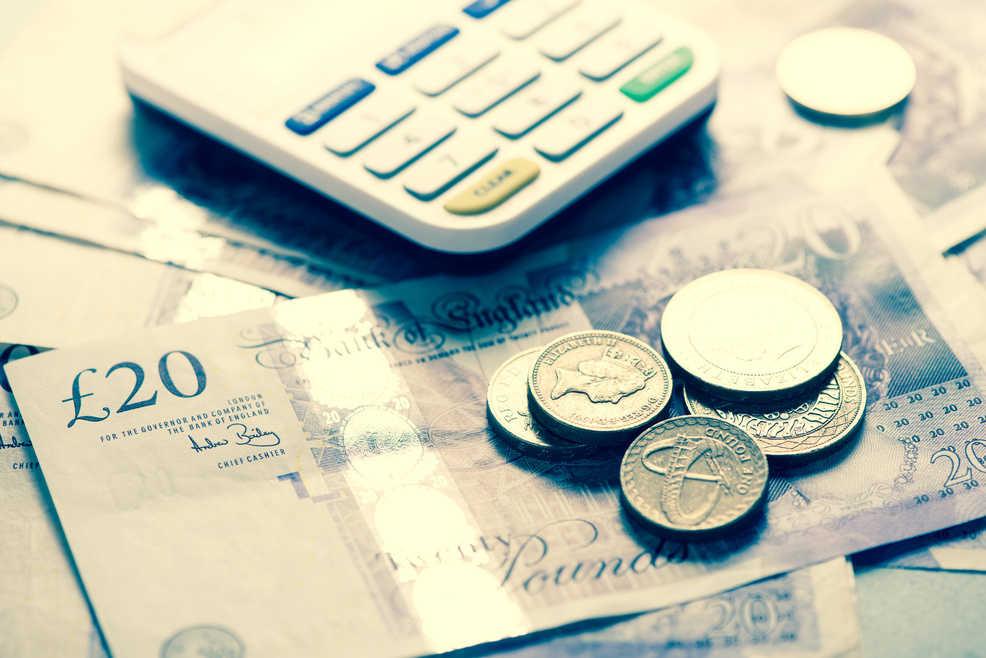
    British Pounds with a Calculator

    As someone that travels constantly getting the best rates for my money is very important! I always recommend Googling the best travel cards or exchange places in your hometown or city before purchasing pounds.

    You have several options for getting hold of those pounds.

    • Pre-paid travel card
    • Travel Credit Card
    • Money Exchange Places
    • Large National Banks
    • Your local bank or credit union
    • In America you can go to AAA offices (American Automobile Association)
    • Post Office

    Travel Card

    Finding a travel card (debit or credit) that suits your needs and the trip is important. London is slowly becoming more card only so I would recommend travelling with at least one card. Countries like Sweden are already leading the way with becoming card only economies.

    When choosing a card bear in mind a credit card will give you additional support when travelling and debit gives you cheaper withdrawals (in most cases). For this reason, I like to travel with both.

    In the UK you will find the common ones Mastercard and Visa are more widely accepted in the UK but American Express is very easy to use in London and major stores.

    Getting Money from Your Bank

    If you have an account at one of the major banks, such as Bank of America, Wells Fargo, or Citibank (follow the links for more information), then the transaction will be fairly easy.  You can order in person or online, but you will have to wait for several days to receive your pounds. 

    Smaller banks and credit unions will typically also be able to exchange currency.  You might not get the best rates with a smaller bank, but you will avoid the delivery fees that larger banks charge to deliver the bills to you.  Whether you use a credit union or a larger bank, you will have to wait a few days to receive the pounds.

    Why We Got Some Pounds Before Traveling

    Before I lived in London, I travelled to London a few times. Each time I made sure that I went to my local money exchange to get out a £100 before coming to the UK. I also have my 28 Degrees Mastercard (Australian based credit card) and normal banks cards with me.

    It was super easy to get the money I told them how many British Pounds I wanted and next thing I knew I had the cash in my hand.

    I hate having to deal with airport kiosks or currency exchange stores. This way if I need a taxi, a bottle of water or some food I was set. It’s a little comfort blanket when travelling.

    Why Getting Money While on the Way is a Bad Idea

    Don’t. 

    Airport Kiosks will have the highest fees and poor exchange rates, so only use them as a last resort.  Even airport ATM’s will give you poor exchange rates so walk past them as quickly as possible and head into the city before exchanging or using an ATM (if possible).

    Getting Money in London

    There are numerous places to exchange money in London and whenever I need of an exchange place I always tend to end up at ACE-FX (mainly because it’s on my commute). Thomas Exchange Global, Eurochange and UK Post Offices are a good place to start if you don’t have time to research before exchanging.

    To see the best rate use the buyback function of Money Saving Experts, simply put in your home currency and how much you want to exchange, the result will appear with the best exchange place that day.

    If you are trying to find a money exchange on the street look for the bureaux de change signs.

    In tourist areas, you will often see currency exchange kiosks or storefronts.  They will post their rates, which will usually look to be quite favourable.  But read the fine print—there will be fees associated with the transaction. Add in those fees, and that favourable rate isn’t so favourable.

    Banks are another option but generally, require you to have your passport.

    Find a Cash Machines Instead

    Kat getting money out of the ATM
    Kat getting money out of the ATM

    ATMs are everywhere in London. Savvy travellers walk past currency exchange vendors, banks, hotels, or the bureau de change (the French name for British exchange counters) in the post office and head for the nearest ATM. If you have the right travel card this will always be the winner option.

    They will be easy to spot at airports, banks, and other high traffic areas.  However, if you are off the beaten path (you rented a B&B on a quiet street), Link Q provides an online service that will show you nearby ATMs.  You can download the Link app or use their website to locate one near you.

    Things to Keep in Mind When Using the ATM in London

    You can use your credit or debit card to get pounds. Put your card in, enter the pin, and make a withdrawal. You will receive your card back first and then the cash.

    Do not accept the currency conversion by the ATM! This will always give you the worst exchange rate. It will give you an idea of how much you are taking out which is always a good indication to ensure you have enough money to withdraw.

    Some important advice:

    • You may have to pay fees so double-check what fees you will be charged before you leave
    • Visa and Mastercard will work anywhere; American Express sometimes; and Discover won’t
    • Cards with Visa and Mastercard logos are ideal as they are most commonly used
    • If you’re worried that your bank or credit unions card won’t work, consider opening an account a different account or getting a prepaid travel card—at least for the trip
    • It’s a good idea to have a back-up card in case the ATM, for various reason, the ATM is hungry and eats your card, the card gets demagnetized or the card doesn’t work.
    • Contact your bank(s) before you leave so they have the dates and location of your travel. Even if they say you don’t need to, do it anyway, there is nothing worse than being overseas and your card is blocked.

    Debit cards in most cases will have fewer fees associated to them, I say this as I did have a credit card that was specifically for travellers and provided better rates than my debit card. Generally, avoid using your credit card in an ATM, unless it’s an emergency.  Cash advance fees, transaction fees, exchange fees—that’s a lot of fees. On top of that, your bank may charge higher interest rates for cash advances.

    One last thing: A lot of ATMs in London don’t always have letters on their pins, so if you have memorized Always Scramble Your Eggs, memorize 2-7-9-3. 

    Using Money in London

    London is moving towards paying electronically so you want to have at least one card when travelling to the UK but ideally two cards. 

    • Your credit card is good for larger purchases (hotels, shops, car rental agencies) and for ordering online. I also like paying with a credit card for the protection they provide to your purchases, it’s my go-to card in London.
    • Your home countries cash is a good back-up. I like to have a hundred dollars for an emergency. You never know if the ATMs won’t work, all your cards get rejected, and you’ve run out of pounds.  Cash is cash.
    • But keep the cash as a back-up and never use it at places that say they accept foreign currency. You will receive the worst exchange rates.
    • Pounds sterling

    Paying by Card

    Card is widely used in the UK and in London some places are turning card only, so it is essential that you have the ability to pay by card.

    Paying Electronically (Phone, Watches, etc.)

    In London, especially, it is becoming easier to pay for goods or services with your phones.  Although they are not universally used yet, more and merchants are accepting ApplePay or GooglePay, with ApplePay being accepted at more locations.  Both services work with Visa or MasterCard debit or credit cards.

    Having said that, you will still be paying in pounds so having the right card is essential otherwise you will be charged an exchange fee.

    What About Those Euros?

    If you have some Euros, will you be able to spend them in London?  There are two answers: no and maybe

    • No.  Most shops won’t accept euros.  It’s not worth the hassle to them.
    • Maybe.  Large department stores in London will take euros. Harrods, and Selfridges, for example, will.  Marks and Spencer even have bureaux de change in its larger stores.
    • But even if you can get someone to take your euros, you should consider that it is a foreign currency transaction with hidden exchange rates
    • Smaller stores often have clerks not familiar with taking foreign currency, which will mean more time waiting to pay and less time for exploring
    • Euro coins will almost never be taken
    • Your chances of paying with euros outside of London is practically nil unless you’re at the airport.

    If you plan to travel to Europe after leaving London, get Euros once you arrive at your next destination (unless you want to pay for two exchange rate fees—dollars to pounds, then pounds to euros). If you are visiting London after a European visit, plan ahead so you aren’t stuck with euros that you probably won’t be able to use in most of London.

    About coins: coins for larger denominations are quite common in Europe.  You won’t be able to exchange them when you get back home (but you will be able to exchange your pounds sterling!).  Unless you want to add them to your coin collection or have them to show off (British money is quite fascinating), spend them on knick-knacks, exchange them for paper money, or give them away.

    Is British Similar to American Money?

    In concept, yes.  Pounds sterling, or pounds, are divided into 100 units, just as our dollar.  The coins will look different, but the principle is the same.  Anything under a pound is called a penny, as in 50 pence

    • Larger coins are more commonly used.  If you’re changing is under 5 pounds, expect to receive coins.  1 pound and 2-pound coins are common
    • Differences in coins are not based solely on size or colour; there are also differences in shapes
    • There’s a 2 pence coin

    You will usually hear British people say “pee” rather than pence, as in 50p (50 pee). More colloquially, a pound is known as a “quid”, a five-pound note is a “fiver” and a ten-pound note a “tenner.”

    In appearance, no.  Bills larger than a pound—called notes in London—come in the same denominations you are used to. However, the notes have many surprising differences. 

    • Size–Not all notes are the same size
    • Feel–They have a smoother feel than dollars
    • Security features are more obvious
    • Colour—not all notes are the same colour

    At first British notes take some getting used to. You might decide to take some home as a souvenir. They are great conversation starters, especially if you have gathered some friends and want to talk about your trip.

    Money in the Rest of the UK

     Just to add a little more confusion to the mix—money in all of the UK is not the same.  Both the Bank of Scotland and the Bank of Northern Ireland have their own versions of the pound sterling.  They have the same value, but different images for the notes and different engravings on the coins.  If you visited either of those places and then head to London, you may encounter some difficulties using them.

    It is still a legitimate currency in the UK, but some places can be funny accepting it. To get around this just pop into a bank and they will be able to give you the English version. I tend to find that chain stores will accept the currency with no issues.

    Staying Safe with Money

    London is considered a safe city by most measures. With any city, there are things you need to be careful of. Here are some things to watch out for:

    • Pick pocketer which operate mainly in high tourist areas and crowded trains (tubes) or buses. Be on alert and ensure your wallet is kept in a place you’ll notice something happening. I personally like to keep my wallet in secret pocket or in a hard to get place in your bag, in your front trouser pocket or keep your handbag at the front of your body.
    • Try to avoid walking alone at night in places such as parks and side streets or any unfamiliar environment. If you do have to walk, stick to busy places where is a lot of activity CCTV and good lighting.

    Of course, any time you go into a touristy area you risk spending money on things you could purchase elsewhere for much less.  

    A Pretravel Checklist

    • Make sure you have contacted your bank regarding travel dates and locations
    • Check your cards for expiration dates
    • Memorise your pin
    • Adjust your ATM withdrawal limit. You will want to exchange larger amounts if your bank charges a single withdrawal fee.
    • European ATMs will withdraw funds from your checking account, not your savings account
    • Ask about fees so you won’t be surprised later
    • Traveller’s checks will incur extra fees and lines at banks to cash them.  Not worth your time

    Determining How Much Something Costs

    Wonder how much that cup of coffee costs in American dollars? You can use a currency converter, but why would you use up your phone data when you can use your head? Since the pound is decimalized, knowing the currency rate and doing a little mental math will get you to a close estimate.

    Say the currency rate was 1.3 pounds for a dollar.  Since the price charged is the price you pay—taxes are calculated in the amount—your 3 quid cup of coffee costs you $3.90. Of course, it was a freshly-made Americano, not something that might have been sitting around for two hours.

    Final Thoughts

    Hopefully you are travelling to London for pleasure, or at least you are able to add a little pleasure if it is a business trip. If you do some planning ahead, you will be able to limit the extra expenses so that you come home with fond memories, some treasures (who can resist buying something a little extra), and no surprises.

    More London Articles

  • Drinking Water in the UK: What You Need to Know

    Drinking Water in the UK: What You Need to Know

    When travelling overseas one of the key questions that always pops up is about whether water is safe to drink. After all, staying hydrated is important, especially when you are travelling. 

    Is it safe to drink tap water in the UK?  Yes. Tap water in the UK is rigorously and regularly tested to ensure it is safe for human consumption.  Drinking from taps is generally considered safe. As a tourist, you need to worry less about water safety than finding drinking water.

    Why UK Tap Water is Safe to Drink

    The United Kingdom has some of the most stringent water standards.  A robust testing and monitoring program which ensures the quality of the water in the UK.

    Each of the countries in the UK tests their water independently, and the results have to be published on an annual basis.  These results are overwhelmingly positive. For example, in 2014 a total of 3,853,350 water quality tests were carried out. Only 32,427 (or 0.04%) of those tests showed water that did not fully comply with water quality standards, according to a report by the Drinking Water Inspector.

    By law, water companies in Great Britain are required to provide water suitable for drinking, cooking and washing. The results of those tests are required to be made available for consumers if they request them.

    In addition, the results are published online annually. If you are interested in looking at some of the data, you can find out more about water quality at DiscoverWater.co.uk.

    “Water coming from UK taps is the most stringently tested in the world,” said Prof Paul Younger, of Glasgow University.

    Source: The Telegraph

    Great Britain Compares Well Against Other Countries

    The Global Data Index is another source that rates water.  It lists the UK’s drinking water quality as the 13th best in the world.  The index uses data from a variety of testing sources, looking for data on the following chemicals:

    • Nitrates
    • Faecal coliform
    • Fluoride levels
    • Total Dissolved Solids
    • Data for each water source

    The data is combined and measured against other countries to come up with a country’s ranking.  Great Britain’s water quality is equal to the United States’ and higher than France’s, Denmark, and Canada, among others.

     Drinking Water’s Sources

    Some parts of Great Britain have a reputation for having “bad” water, especially London and the area around it.   Since the water is thoroughly tested, why does London’s water get such a bad rap?   

    It’s because of the source of the water. Most tap water in the southeast of England—where London is located—is groundwater, which is water that has filtered through underground rocks, gathering minerals.  Surface water, which is water from lakes, pond, and rivers, contains far fewer minerals. 

    Because of the additional minerals, groundwater has a taste that many describe as “hard.”  Hard water picks up minerals, especially calcium and magnesium, as it passes through limestone.  Water that is purer does not contain those minerals and is considered “soft.”

    What About the Rest of Great Britain?

    The further north one travels from London, the softer the water becomes. The main factor behind this is the trace amounts of minerals found in surface water. Northern England, Scotland, and, to a lesser degree, Wales are home to numerous large freshwater lakes, and these lakes provide much of the drinking water for those areas.

    The rainfall that the UK is known for constantly provides fresh water, which helps the surface water remain fresh instead of stagnant.

    Ensuring Drinking Water is Safe

    To ensure the water is safe, water companies use a complex filtration process. The process is:

    • Surface water is kept in reservoirs to help organic matter break down
    • Then it is filtered to remove floating objects
    • Chemicals are added to make removing silt particles easier
    • Water is aerated so that gases like carbon dioxide can be removed
    • Then organic compounds are removed so the water is clear
    • Ozone injection comes next to break down any pesticides present
    • Finally, chlorine is added to kill any bacteria that is still remaining.

    Ironically, the taste of chlorine shows up more in the soft water.  The minerals in hard water cover up the chlorine taste better.   

    How the British Consume Water

    Tappwater surveyed people throughout the UK to find out what they thought about their water.  The results show that the further north, the lower the percentage of people who drink get their drinking water primarily from bottled water.

    • In England, 15% of people drink mainly bottled water
    • In Scotland, the percentage is 4%
    • In Wales, it’s 13%
    • Northern Ireland has the highest percentage of 17% choosing to drink bottled water.

    The majority of residents in the UK obviously trust their drinking water, though many purchase a water filter, through companies such as Tappwater.

    Water Advice

    Clearly, British water is rigorously tested, is judged very safe by independent sources and is provided by people who take their responsibility to provide safe water seriously.  As a tourist, however, you might still have some questions.

    Can You Drink Water from Bathroom Taps?

    Bathroom in St Johns Hotel Manchester

    Yes. The water in bathrooms comes from the same water supply as water in sinks.  Sometimes a public bathroom telling you not to drink the water. If so, it’s probably because of an uncovered storage tank in either the basement or attic. If you don’t see a sign and you are thirsty, drink away.

    Can I Order Tap Water in Restaurants?

    If you are eating out, it is acceptable to ask for plain water—ask for taps—and they shouldn’t charge you.

    What About Warm Water?

    Generally, the advice is to avoid drinking from the hot tap.  The reason given is that hot water coming from a storage tank or water heater might not be as fresh. Hotels and other public venues are required to indicate which taps (what the British call faucets) you shouldn’t drink from.

    What If the Water is Cloudy?

    Sometimes tap water looks cloudy, this isn’t something to worry about. Air trapped in the pipework or dissolved chalk particles are usually the cause.

    Air Bubbles

    If repairs or maintenance work is done by the water company are done nearby, air can enter the water supply. A pocket of air can also become trapped in a building’s pipework.

    The concentration of thousands of air bubbles causes the water’s milky appearance. The water will clear in a few minutes, clearing first in the bottom of the glass. Trapped air can also water to sputter from the tap. Let the water run for a minute or two and the problem should “clear” up.

    Chalk Deposits

    If you have cloudy water and the water clears from the top and takes a long time, then you are drinking water with chalk deposits.  Chalk is one of the natural minerals in groundwater, so you most likely won’t encounter chalky water unless you are in Southeast England. The water is still safe to drink, but it certainly won’t be appealing.

    Isn’t Bottled Water Safer?

    If you are thinking that bottled water will be safer, you might want to keep a few things in mind. There are fewer regulations around bottled water and testing. Bottled water is only mandated to be tested at least once a month, whereas, drinking water must be checked daily before it leaves a pumping station. 

    Bottled water can contain toxins due to the plastic, even with the move to BPA free bottles you can still find them laced with other chemicals. These can seep out if bottles are exposed to heat or sit around for a long time.

    Best Places to Find Free Drinking Water in the UK

    The best way to get free drinking water in the UK is using the Refill app or website. The biggest contributor to the scheme is Pret Manger, if you’ve been to the UK before there is no shortage of these stores.

    Refill is a campaign that is attempting to make it easier for people to refill water bottles as a way to cut down on plastic bottle waste. They sign up businesses that will become “Refill Stations.”

    Finding water fountains in the UK is a little difficult. There are more popping up in train stations and bigger tourists’ areas to help reduce plastic water bottles. If you use the Re-fill app then this will let you know where the closest fountain or store that you can get water from

    Water Fountain at National Rail Station in the UK
    Water Fountain at National Rail Station in the UK

    Another great source for finding water is Find-a-Fountain. They are trying to rectify the problem by mapping water fountains throughout London. They even have a free app. Make sure you read the description before you head out to the water fountain. The app will highlight the water fountains in their database are not functioning which is super handy.

    Unlike the rest of Europe, tap water is provided and you should never have to pay for water. So ask the pub, café, restaurants, bar or wherever you stop in for a drink or some food if they would kindly fill up your water bottle or check if they have a water station. I’ve never had anyone reject filling up my water bottle so just ask.

    What about Water Bottles?

    The cost of buying bottled water can add up quickly so unless your preference is drinking bottled water there are other options. There are plenty of free options; I recommend buying a reusable water bottler like the Super Sparrow Stainless Steel Vacuum Insulated Water Bottle (my go-to water bottle).  Alternatively, as space is a premium when flying, especially overseas, a collapsible bottle is something to consider. There are many different kinds and styles available, such as this one.

    Otherwise, you can buy a plastic bottle when you arrive and continue re-filling.  Water bottles can be purchased anywhere.  

    Purchasing a Filtered Water Bottle

    If you have decided that you are going to fill up a water bottle before you leave your hotel room but are still not convinced the water will be safe, then consider a filtered water bottle.

    The LifeStraw Go Water Filter Bottle is a wonderful example that filters water while you drink it. Perfect for travelling around the UK.

    These bottles work on one of two principles:

    • Some filter the water as you drink it
    • While others filter the water as it is going into the bottle

    Both use charcoal as the primary filtering agent. 

    Not All Filters Are Created Equal

    Some filtered water bottles are designed to remove minerals and chemicals so that the water tastes better. Other bottles have filters that remove bacteria, viruses, and parasites. Read the label carefully. In most cases, the more a filter removes, the more expensive it becomes.  You might decide that a trip to the UK doesn’t warrant the same level of filtration as a camping trip or less well-developed countries.

    Filters will also need to be replaced. Most bottles list how long their filters last, but some do so by listing gallons (or litres) and others by how the number of cycles. Honestly, there doesn’t seem to be much of a difference how long they last. 

    Not All Bottles Are Created Equal

    Water bottles are made from four different materials, and each has its benefits and drawbacks.

    Material
    Benefits
    Drawbacks
    Aluminium
    Lightweight and recyclable
    Aluminium changes the taste of water
    Check the label to see if the manufacturer is using BPA-free plastic as a liner
    Glass
    No health risk associated with it
    Easy to keep clean
    Keeps water tasting fresh
    Not good for sports enthusiasts
    Heavy
    Stainless
    steel
    Clean and durable
    Needs no lining to keep water tasting fresh
    Typically the most expensive choice
    Plastic
    Usually, the least expensive
    Easy to find
    Durability can be an issue
    Tendency to scratch

    Bottle-less Filters

    There are also several filters that are water bottle filters. These filters are designed to be used with a variety of bottles.  One advantage of these is they are much smaller and lighter, which can be helpful for packing. Another is that these filters can be used with most existing water bottles. Lifestraw is one manufacturer of bottle-less filters. 

    Water Bottles and Airport Security

    Wondering if you can bring a bottle of water through airport security? The regulations for bringing water from the TSA website state:  

    Thirsty flyers—Bottled water: You can’t bring a bottle of water through the checkpoint, but you can bring an empty bottle through the checkpoint and then fill it up once you’re through security. That will even save you a few bucks.

    To make my process easier through airport security, I always remove my water bottle out of my bag so the security guard can quickly verify my water bottle is empty. I have saved my bag from additional checks so many times by doing this.

    Essentially, Water is Essential

    To sum it up, the UK has some of the best water and I recommend bringing a water bottle with you or keep refilling a plastic bottle. Refill will guide you to your closest free water, Pret A Mangers are always nearby or just ask when you’re sitting down for food or a drink if they’d kindly fill your bottle up.

    More London Articles