Whether you are deciding to live outside your home country tentatively as an expat or deciding to immigrate permanently there are a few things you need to know beforehand. Make moving abroad as easy and as stress-free as possible by following these simple tips.
It is natural to want to arrange everything you will need in the UK before you move over including a UK bank account and a National Insurance Number (NINO). But to get a UK bank account or NINO in the UK you are expected to be living in the UK with a residential address. It never occurred to me just how difficult it could be for a bank to give you an account until I tried to get one in the UK.
I thought a bank account would be a simple process! I just grew up with one, it was part of life in Australia and if I wanted to get one with another bank then I could just do that.
It is possible to get a bank account before moving to the UK. Here are the options you can opt for before you move to the UK. The first option is to set-up an HSBC Overseas account (country dependent) or alternatively with one with a non-traditional bank like Monese, Wise (again country dependent) or Monzo.
To get an account with one of the big banks like Lloyds, Santander, Barclays or NatWest you will need to do this in person. HSBC does fall within the big bank realm but as above you can create an overseas account.
What Banks can I Set-up an Account with before I Move to the UK?
Let’s start with Monese Current Account
Monese Current Account
You can open a Current Account with Monese even if you are new to the country, don’t have a credit history, or don’t have a regular fixed income.
It takes about five minutes to set up through their app, then a 10-second video call to prove your identity and you just need to provide your passport. Which is great as you don’t need to provide local proof-of-address which is what all the big banks ask you to prove.
Wise Borderless Bank Accounts
Wise Boardless Account
It’s not a usual bank account, you don’t have to fill in any forms or have a foreign proof of address. Wise Borderless Accounts give you a unique account number and bank code so if you meet the criteria it is a great way to start out before you open with one of the bigger banks.
Wise does also come with a debit card to use.
It’s great as a multi-currency account that lets you keep money in 28 currencies and convert between them at the real exchange rate whenever you need. I don’t have a Borderless Account but I do use their service frequently for transferring money to and from Australia.
Monzo Current Account
Monzo Current Account
Monzo does require you to have a UK address, however, they do not currently validate the UK address. Like Monese you need to do a 10-second video call to prove your identity and you just need to provide your passport.
Currently, Monzo does not validate against a UK address and you could potentially do this off an Airbnb, hostel or hotel. Monzo only previously gave you debit MasterCard which you basically used a prepaid cart but it now gives you a bank account and bank codes to get paid for a job.
I do have a current account with Monzo, I mainly use the card to manage my monthly spending or use the card to travel overseas with as they give great exchange rates.
HSBC Overseas Account
HBSC offers an overseas accountand allows you to open an account in 37 different countries including Australia, France, Hong Kong, New Zealand and the UK.
If you are a person that prefers traditional banks and in a country, they offer this in then this is the best option or already bank with HSBC they can get your accounts up and running before you arrive.
Simply get the below documents ready as evidence for your application and apply on online.
Passport
Proof of income
Source of income
Other documentation such a visa’s may be required Subject to qualifications, status and local country laws and regulations.
Once the application is completed one of their International Banking Specialist will get in touch with you to arrange a meeting to verify your documentation, alongside your application form
Use a Company to Set-up your Bank Account like Britbound
I recommend using a company to do it for you such as Britbound. The package is called ‘‘The Social One’’ or “The Cheap One”which will set you back £75 but will cover all the essentials you need. (I am not affiliated with Britbound, they were just awesome when I moved to the UK.)
BritBound will provide you with a UK address and help you set up your bank account and NINO. They will contact you when you have mail. You can either collect your mail in person or ask them to forward it (tracked) to an address of your choice.
What Evidence do I need to Set-up a UK Bank Account (with one of the big banks)?
To set up a bank with one of the big banks in the UK you will need to bring:
Your passport (mandatory)
Biometric Residence Permit (mandatory if you are on a UK visa)
A letter of employment (bank-dependent), proof of address which can be a rental contract or bills in your name to a UK address (mandatory) and potentially a letter from your current bank advocating you as a customer (bank-dependent).
The list above sounds overwhelming, when I opened an account all I had to show was my passport and visa details so it is possible to present very little evidence and still got an account. I would always you check the terms and condition before choosing a bank.
What Documents can I use as Proof of Address in the UK?
These are the most common forms of proof of address:
UK Driving License
UK or foreign bank/credit card statement printed by the bank and less than 3 months old (no statements from store cards). Read more about how to get a foreign statement here
UK mortgage statement printed by your mortgage provider and less than 1 year old (although unlikely to have if you have just moved here)
Council related documents like a tax bill, payment book, exemption certificate, tenancy agreement (less than a year old and again unlikely to have if you have just moved here)
Jobcentre Plus letter confirming your NINO as proof of address. (To use this as proof of address it needs to be less than 3 months old).
Being fresh off the boat means that you probably don’t have any of the above document just like I didn’t. Keep reading to see how you can get a bank account without these documents.
How do I Open a UK Bank Account without a Proof of Address?
As a general rule, you can’t open a bank account in the UK and this is the hardest part of the process! Setting up an account with one of the big banks do require you to have an address. Occasionally some banks will take your word for it but your application is at risk of being rejected.
You can set-up a UK bank account without a UK proof of address. Monese and Wise do not require you to have a UK address to apply for their current accounts. Monzo does require you to have a UK address although they do not validate the address. If you don’t feel comfortable using a non-traditional bank you can use a company to do this.
I can’t believe it’s almost 10 years since getting my first adult passport! It’s a little sad that I now have to renew it! For those here wanting to know how to renew your Australian passport in the UK, here is my experience and guide to applying for your renewal.
Australia only has one consulate in the UK and that is in London. If you live outside of London you will need to book travel as you do need to complete the process in person. Plus if you are a Harry Potter fan you will get to see Gringotts?
Allow at least 4+ weeks for your application as the passport will take up to 3 weeks to arrive and you need to allow time to book an appointment with the Passport Office. If you are in a rush there is an express service that will come at a cost but you can get your new passport within 2 days after the appointment.
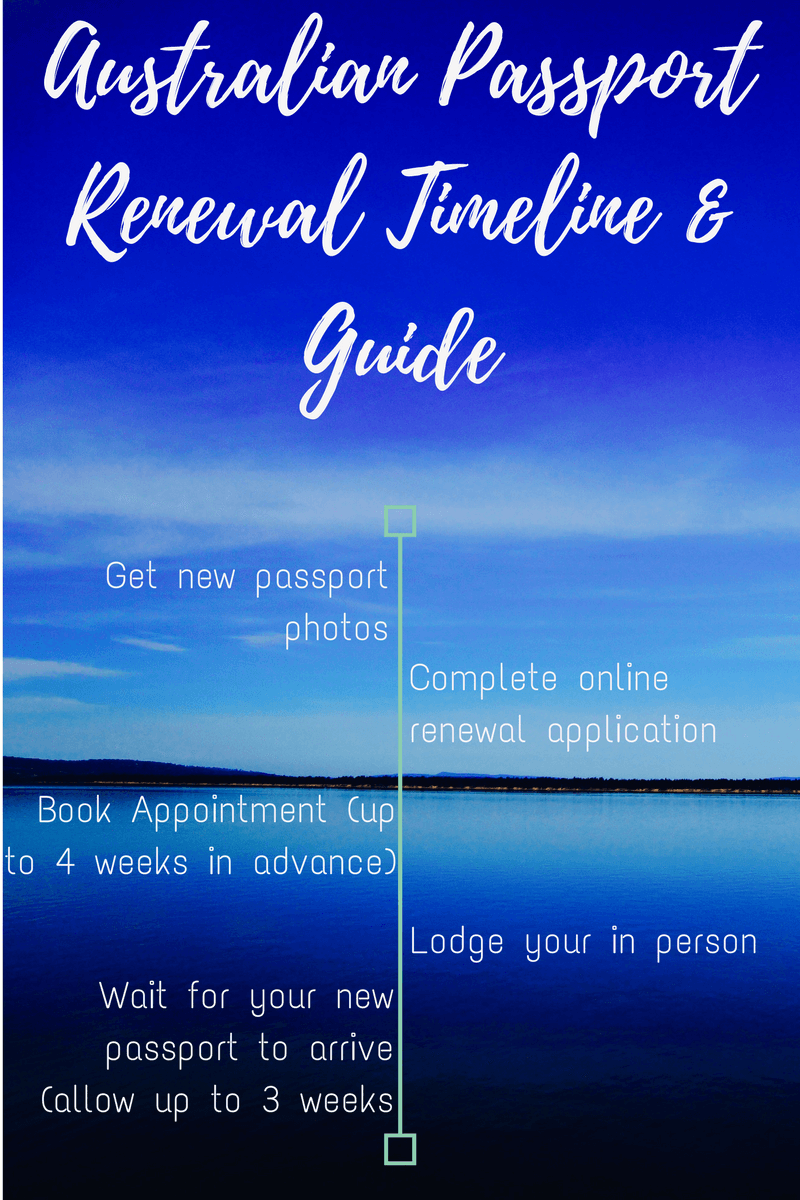
Here is a timeline and guide for the process:
Australian Passport Renewal Timeline & Guide
Renewal Cost
Your new passport will cost the price of an ordinary adult passport, plus an overseas processing charge and special delivery charge. As the prices increase every year check the latest Australian Passport fees here. The website shows prices in Pounds (GBP) and Australian Dollars (AUD).
Renewing your passport in 2019 will cost £239 ($425 AUD). The cost breakdown is £165.00 ($293 AUD) for a 10-year passport, £74.00 ($132 AUD) for the application to be processed overseas and £6.50 for postage.
If you need your passport quicker than 3 weeks you can get the priority processing which is 2 business days at an extra cost of £121 ($215 AUD).
Get New Passport Photos
UK passport photos are a different size to Australian passport photos. It’s super easy to get alternative sizes. You will need to go to a photo store like Snappy Snaps and they will ask you what type of passport photo you need and next thing you know you have Australian passport sized photos.
Australian passport minimum photo size is 45mm x 35mm or larger to be accepted. If your photograph is larger than these measurements DO NOT trim it to size. The size of your head in the photograph must measure from bottom of chin to crown of head 32mm to 36mm.
To apply for the renewal you need to meet the follow criteria and be over 18: • was issued when you were 16 years of age or over; and • was valid for at least two years when issued; and • was issued in your current name, date of birth and sex; and • is current or expired less than three years ago.
If you meet the criteria then you can continue with the online application form. First, you will need to create an AusPassport account with the Department of Foreign Affairs and Trade before you can start the application.
It will ask you to provide information on your current passport details, personal information and emergency contact details. The form will take less than two minutes to complete.
If you wish to get a physical form you will need to contact the Passport Office and they will post one out to you.
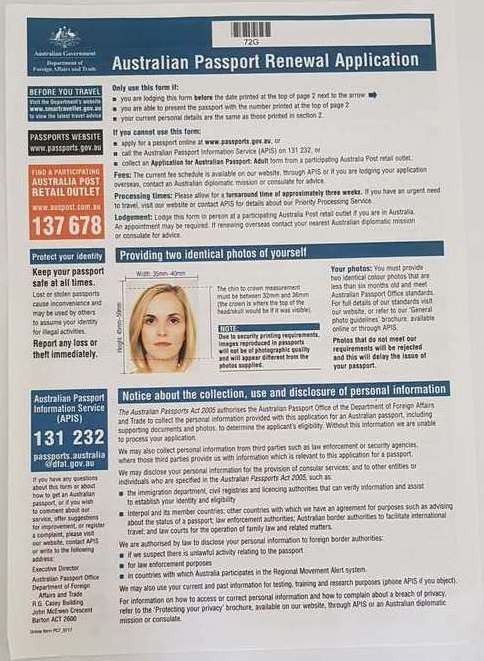
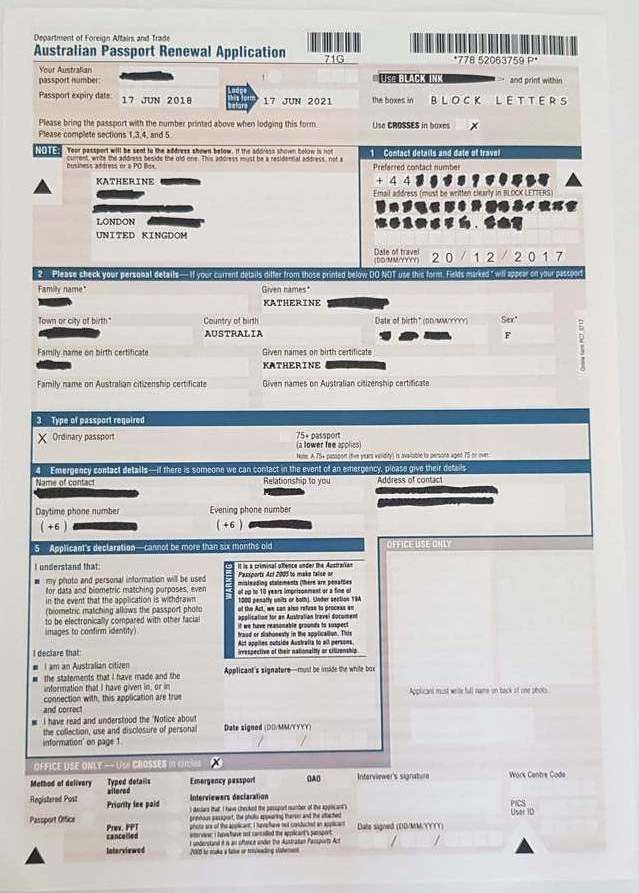
Save a copy to your computer and record the application number. Print out the form, sign it and attached the photos. One photo needs to have your first and last name with your signature on the back. All instructions will be on the front of the form if you need to double check anything.
Front page of the renewal application form
As you can see the form is quite simple to fill out and requires little information.
Book an Appointment
The Passport Office in London now has an online booking service, simply click here and book an appointment. To book an appointment by phone, call 020 7887 5816 between the hours of 9am-12pm on weekdays. The London Passport office operates on an appointment system and will not accept walk-ins.
Booking times are only available from 9 am to 4 pm Monday to Friday and they will be closed on Australian and UK holidays. Your appointment will need to fall within these hours.
The Passport Office will give you a confirmation number which you will need to note down and take on the day.
Australian High Commission Australia House Strand LONDON WC2B 4LA
If you are visiting an Outreach Center the Passport Office will provide you with location details.
On the day of your appointment make sure you get there 10 to 15 minutes early. The Passport Office has airport style security. On arrival you press the buzzer telling the security guard that you have an appointment; they only let one person in at a time.
Once you are through security you’ll reach a computer screen into which you enter your booking confirmation and it will print you a ticket with your number. There is a waiting area whilst you wait for your number to be called.
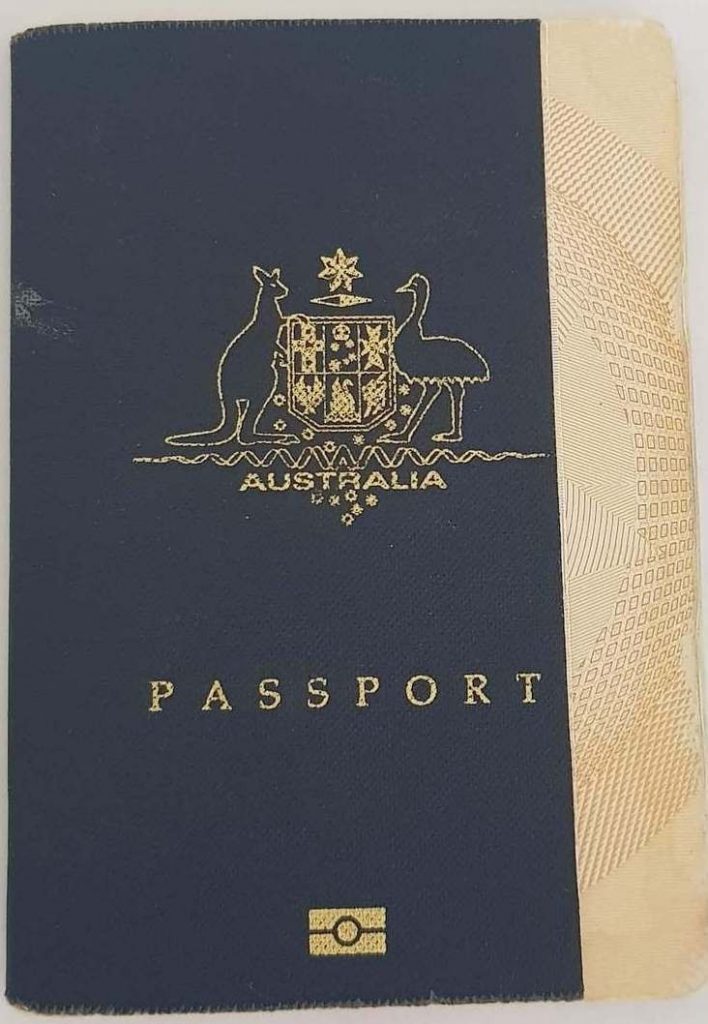
When the Passport Clerk calls you up you simply present the form with the passport photos and your passport. Once they are happy with your application and accepted payment they will cancel the old passport by cutting off the long edge of the cover. Your old passport will be handed back to you afterwards.
Once the passport office cuts the edge of your passport this makes the passport obsolete and you can no longer travel with it.
Your new passport will be posted to you and can take up to 3 weeks to be delivered.
Do You Need To Transfer Your Visa To Your New Passport?
Most visas are now on the Biometric Residence Permit (BRP) cards but if you have an old style visa like me, that is in your old passport then all you need to do is carry both passports with you when you are travelling. If you have a BRP card then your old passport can be put away and be a reminder of all the adventures you’ve had together.
There is an option to get your visa turned into a BRP card, although it’s an expensive process that I feel is unnecessary.
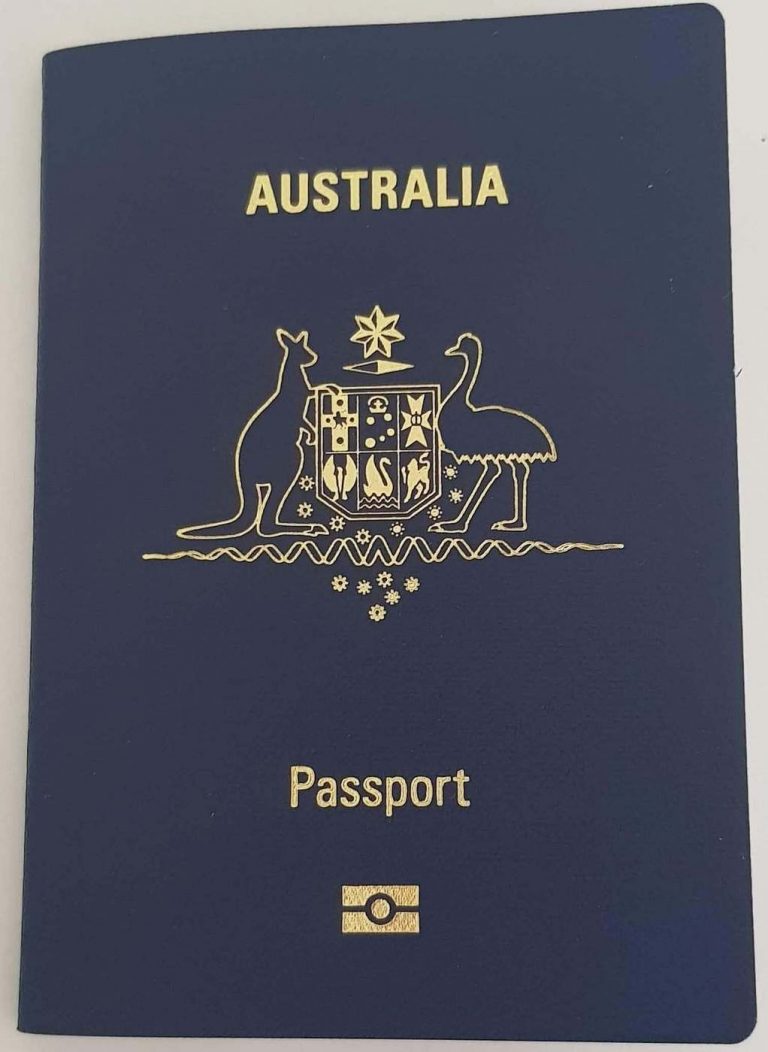
This is what the new Australian Passports look like. I do prefer the old navy blue compared to the royal blue.
Renewing Your Australian Passport in the UK (Video)
Whilst the ancestry visa relies on having a British grandparent, if you have a British parent then you might be eligible to apply for a ‘right of abode’. Essentially as the child of a British citizen, you have the right to permanent residency. This is a right you inherited at birth. However, to be able to clear customs and live in the UK you’ll need to prove this. You do this by applying for a ‘certificate of entitlement’.
Disclaimer: This is based on Laura’s experience applying for a right of abode certificate of entitlement from Australia and again from within the UK. The steps are applicable to Australians, so please double check the lodgement process in your own area. You should seek professional advice if you are unsure. Go to GOV UK to check if there have been any changes to the visa rule & fees.
Before You Start
Firstly you’ll need to have at least one parent who was born in the UK and was a citizen of the UK and its colonies when you were born or adopted. You’ll also need to be a citizen of a Commonwealth country yourself.
This method of entry into the UK best serves those who were born before 1983 and who are claiming their rights through their mother’s side. Those born after 1983 automatically become citizens and require a different process.
Visa Cost
The certificate of entitlement costs £321 within the UK. Unlike an ancestry visa, youth mobility or sponsorship there is no NHS fee to be paid, which could be a considerable saving if you are planning on remaining in the UK for an extended period. Your certificate is also valid for the duration of your passport.
I would highly recommend renewing your passport prior to making an application for your certificate of entitlement as overseas embassies tend to process applications faster (2 weeks in Australia for me versus 5 months when reapplying in the UK). You will also have to reapply and pay the full cost again, it doesn’t roll over to your new passport.
Criteria
You have right of abode if all the following apply:
If you are a British citizen
One of your parents was born in the UK and a citizen of the United Kingdom and colonies when you were born or adopted
You were a Commonwealth citizen on 31 December 1982
You didn’t stop being a Commonwealth citizen (even temporarily) at any point after 31 December 1982
A female Commonwealth citizen who is, or has been, married to a man with the right of abode at any time before 31 December 1982
a UK and Colonies (CUKC) woman who is, or has been, married to a man with right of abode at any time before 31 December 1982.
Documentation Required
The documents you require for your application are:
Evidence of employment in the UK (if applicable)
Financial evidence – bank statements, term deposit statements etc.
Letter of invitation from a British citizen living in the UK (not mandatory, but preferential)
Proof of relationship documents – your birth certificate, your mother’s birth certificate (grandparents are not required)
Evidence of accommodation upon arrival (this can be a hotel booking or your referee in their letter of invitation can state that you are staying with them, even if this is not a long-term arrangement).
If this is not your first time applying, the process will be slightly different from within the UK and you will also have to send your expired passport as well as your new passport to prove you’ve previously had a certificate of entitlement. You are unable to have two current certificates in two documents at the same time.
Application Process
An electronic application process has recently been introduced, which saves you having to send all of your original documents to be processed via post. First, you’ll need to create your application using the Gov.UK website. Once this is complete, you will then need to book an appointment at a visa application centre, which will generally be in your capital city.
The process is as follows:
All documents must be A4 size.
You must separate your documents which will allow the barcode scanners to sort your paperwork correctly.
Any documents which are smaller or larger than A4 size, must be photocopied onto A4 sized paper. This includes the pages of any previous passports.
All documents must be free from any staples, clips or pins before they are submitted.
Torn, crumpled or heavily creased documents cannot be scanned and therefore must be photocopied onto A4 sized paper before they are submitted.
Documents should not be laminated
Once you have scanned in your documents, you will then record your biometric data (photograph and inkless fingerprints). You can then choose whether you’d like to collect your documents in person at the visa application centre or have them delivered to you by post. Generally, this will just be your passport.
The Benefits
In addition to the cost benefits, a right of abode application doesn’t expire. You are also treated like a British Citizen (because by rights or descent you are!) so you can complete customs like a local (you can’t quite use the eGates yet as you’ve got a foreign passport). This also means you won’t receive a stamp in your passport when you re-enter the country. If you chose, you can apply for British citizenship and a British passport immediately, and not have to wait like if you were on an ancestry visa. Please note though that if you apply for citizenship via application rather than by staying in the country the required time, you won’t be able to pass your ancestry on to any children. Nonetheless, your children will still be able to obtain an ancestry visa through your parent (their grandparent).
About Laura from Passport Collective
Laura is an Australian primary school teacher who has just spent 2 years teaching in the UK. Which has given her many opportunities to see the world, and hopes to encourage others to undertake their own adventures. Follow her adventure on Passport Collective,Instagram, FacebookandPinterest.
Finding a flat in London can be challenging! These helpful tips for renting in London will give you a starting ground on what to look out for.
When I moved to London, I had never rented! I literary moved overseas and out of home at the same time. I had no idea what to expect when trying to find a place, I was living in a hostel while working full time, with backpackers coming and going for the first 4 months.
This handy moving checklist covers everything from changing over utilities and packing to your first day essential tasks in your new home.
Know the Types of Tenancy/ Renting Arrangements
If it’s your first time renting in England then it’s important to understand the type of tenancy you have. It will influence the rights you have as a tenant.
Here are some of the types of tenancies you could come across:
assured shorthold tenancy (AST).
excluded tenancy (lodging).
assured tenancy.
non-assured tenancy.
regulated tenancy.
company let.
Whilst the list seems long you will generally be renting an assured shorthold tenancy (AST). I tend to find that room rental to be either be lodging so living with your landlord or the share accommodation share an AST agreement.
Assured Shorthold Tenancies (ASTs)
The most common rules for an AST is that:
the property you rent is private.
it is your main acoomodation.
the landlord doesn’t live with you (that would be lodging).
and the contract started after 1989.
Excluded Tenancies or Licences (Lodging)
This is for when you live with your landlord so when you share rooms like kitchen, bathroom or living room this is deemed as lodging. With this type of tenancy, you will have less protection for things like eviction.
A common problem for new residents is that you have a minimal credit score or work history which could impact how much rent you need to pay upfront. The same applies if you have a bad credit score history.
Some landlords will request that you provide 3 to 6 months rent in advance to minimise the risk of renting the property to you. This can come as a big shock if you’ve not factored it in your move costs. Overall this is to ensure the landlord has security and you won’t miss payments.
It can be negotiated but it is up to the landlord whether they accept the agreement. Please note that this is not a deposit, it is rent upfront.
One of the cons of living in London is that the rent is high and sometimes can be up to 50% of your salary. It’s good to research whether the rental market is in a decline or in high demand to see what your negotiation tactics will be but it’s negotiable. This includes:
the amount you wish to pay – a good place to start is finding similar flats in the area to get an idea of what they are going for. If you find a similar flat goes for £100 less then see if they would take it like other places are going for x price.
Adding furniture (beds, wardrobes etc)
Repairs
Break clauses
When you submit your offer the landlord will respond whether they accept or reject the offer. Rooms to rent are not usually negotiable but houses and flats are.
Weekly Vs Monthly Pricing
Properties will either have weekly or monthly rental prices. When the price says weekly be aware that there are not 4 weeks in a month.
To figure out what the monthly rent would be, use the weekly cost, times it by 52 weeks and then divide by 12.
For example,
£500 x 52 = £26,000 yearly rent
£26,000 / 12 = £2,166.66 monthly rent
Where to Find Rental Properties
Starting your hunt for a property will depend on what you are looking for. Here are some recommendations for your search:
Whole Properties
Zoopla orRightmoveare the best places to start looking for a home. You will be able to set a budget and property preferences with the search settings.
Private landlords listing their rental properties on OpenRent. The properties will be managed by the landlord rather than an agency. You might not find the property you are looking for on OpenRent as there isn’t as much stock on the website.
Lets with Pets is a fantastic starting point as you’ll need to find a pet-friendly rental property.
Sign-up to a few agencies in the area you are searching in some of the common ones are Hamptons, Foxtons, Knight Frank and Savills.
Shared Accommodation
To save on cost flatshare may be your most affordable option.
SpareRoom is one of the go-to websites for finding a flat. It’s free to use but you will have more success with the paid version.
Check Facebook Groups, Aussies in London, Kiwis in London and many others have weekly flat posts.
Gumtree, I tend to stay away from this one as it is easier to get scammed.
Zoopla and Rightmove will also have rooms listed by agents. You won’t get to choose your roommates if you use an agent to get a flat.
The Underground Isn’t Everything
Yes, you don’t need to live near the underground. As much as it’s a great transport option, areas by bus or national rail are just as great. In South East London, most of the area doesn’t have an underground due to the clay soil but we still get around fine!
There are plenty of great places like Crystal Palace, Alexandar Palace, areas of Greenwich and many others that don’t have underground links that are wonderful to live in.
How to Fend Off the Competition
The rental market in London moves quickly and find a property you like, it’s good to be ready!
Speak to the agent or landlord to see what kind of information they will need beforehand and that way you are prepared with your paperwork. Plus it will be similar documentation for most properties so it’s effort well spent. Consider taking the documentation to you on the viewing.
Holding deposits are another way you can secure a place. They are now capped at one week’s rent and they are not required to protect a holding deposit in a scheme like the other deposit.
Once your agreement is signed this either is returned to you, counted towards your deposit or your initial rent.
Be Careful of Scams
Scams are unfortunately are common when renting in London. You need to keep your wits about you and if something feels off then take a step back. It’s better to investigate than hand over some money to find out someone has run away with it!
I find there are more room renting scams especially on the likes of free listing sites such as Gumtree but they can pop up anywhere!
A couple of tell-tale points it’s a scam:
Poorly worded and spelling mistakes in the description of the property.
The same phone number, email address or contact name appear in different adverts.
The pricing is unusual for the area.
When they contact you they ask for a deposit before viewing the property.
The photos look like they may have been copied from the internet.
No viewings are allowed.
Overall follow the main principle never give anyone money without seeing the property, especially if they ask you to wire it through Western Union!
Make a List of Trustworthy Estate Agents
When you start your search it’s a good idea to make a list of agents you would be happy to rent through. Some things to consider checking:
Website: Is it professional, branded well? If it’s not scammy then that’s a great start.
Reviews: Are there lots of complaints? Do the complaints seem realistic and not someone complaining about something relatively minor.
Are they a part of the PTO: Estate agents can sign up to be a part of different associations like The Property Ombudsman (TPO) or Property Mark which is to show their commitment to professional standards. Most agents will have the schemes they are a part of in the footer of their website or you can search on The Property Ombudsman website to see if they are a member.
Do they have physical offices? There are some online agents such as Purple Bricks but most agents will have a physical office. Check on Google Maps to see if it is properly branded as this can also come up with scams.
Understand the Deposits and Fees You Need to Pay
In 2019, England brought in new acts to change the fees and deposits renters need to pay for AST tenancy agreement. This is why it’s important to know the type of tenancy you are entering as it will affect the fees you are paying as I mentioned at the start of the article.
If you do find someone charges you incorrectly then they can be reported.
Here are the PERMITTED CHARGES in accordance with the Tenant Fee Act 2019:
First month’s rent in advance.
Tenancy Deposit 5 or 6 weeks depending upon the rental amount.
Holding Deposit maximum one week’s rent.
Early termination when requested by the tenant a charge not exceeding the financial loss experienced by the landlord.
Utilities, communication services, TV licence and council tax.
Default charge for late payment of rent limited to interest charged at 3% above the Bank of England base rate, when rent is more than 14 days late.
Default charge for replacement of lost key or security device equivalent to cost incurred.
Changing the tenancy documents after the commencement of the tenancy – this is around £50 with VAT.
The same rules DO NOT apply to a Non-Housing Act Tenancy which is formed when one of the following criteria is in place:
The annual rent exceeds £100,000 (if only!).
The property is occupied by an entity (Company let) rather than an individual.
The property is not used as a main or primary home.
There is a Resident Landlord.
Understand the Difference Between Being a Leaseholder and Not
There is no difference if you are moving into a room rather than a house if your name is on the lease, you’ll have the same rights.
All tenants are ‘jointly and severally liable’ which means that if one of the other tenants does not pay their portion of the rent then you can be pursued for it by the landlord.
When Viewing Check for Mould, Water Pressure etc
Check the water pressure in the bathroom
Flats in London can come with problems, this can be for various reasons like the age of the property. I currently live in an 1890 building that was converted into flats and due to the age of the building, I don’t have double glazing on the windows. It gets pretty cold here in the winter due to this.
However, the building is heritage and requires like for like windows. It’s not something we can afford to replace but things like this are something you should keep in mind when viewing properties.
Some of the common issues I come across is:
Mould – common in lower ground and ground flats but also in bathroom areas. Recently our bathroom had mould, no matter how much we cleaned it, it kept coming back. Added some new bathroom paint and it’s been great ever since. Something like this might be on your repair list.
Water Pressure – Ok, so a bit of an odd one! Although surprisingly it is quite common for the pressure to be very weak.
In my first apartment, this was a serious issue. The water pressure failed in one of our apartment bathrooms for over a month without being fixed, I ended up spending a lot of time at the gym to shower. Good for my waistline but overall a frustrating experience.
Check What Break Clauses There Are
A break clause is a provision that can be included in the contract which will allow either party to end the lease early. Unforeseen circumstances could come up and it’s good to understand your break clause in case you need to end the lease in the future.
You can request a specific break clause when negotiating your lease or there will be a standard clause in your contract which will or won’t allow you to break the lease.
Check the specific wording of the clause to see the conditions. For example, a 12-month long contract can have a break clause at the six-month point, allowing the renter or the landlord to end the AST after six months.
It may be possible to change tenants within a tenancy and leave with a Section 47/48 Notice but the landlord is not obligated to allow the change and there will be a cost associated.
As a Renter You Pay Council Tax
One of the bills that surprised me when I moved to London was that I had to pay council tax. The cost will change borough to borough and whether you have single occupancy, student, living with multiple people, property type, etc.
Conduct a thorough inventory for the room and apartment
When you move in you should receive an inventory for the room, apartment or house from the landlord or agent. Check that everything is correct and make sure any amendment is documented with photos.
If the landlord or agent doesn’t have an inventory, then create your own by taking photos and documenting the condition and assets. Ideally, the landlord should sign this inventory.
I was caught out on this, I didn’t realise you needed an inventory and when I left my first flat the landlord decided to charge me £50 for a couch I apparently damaged. It was a white couch! who puts a white item in a share house?! and I lived with 4 other people which could have been anyone. Before I left I made sure I had it dry cleaned so was pretty annoyed about losing my £50. In fairness, it wasn’t a lot of money and was a lot of effort to fight to get the money back.
Ask for Everything in Writing
Any conversation you have with the landlord or agent should be followed up or stated in writing, then you can go back on this at a later stage if you need to.
This goes for anything like landlord or agency wanting to inspect the house to handing in your notice. Any changes in agreements like a change of rent should be included in a contract variation.
Find Out Where Your Deposit Will Be Held
Putting down a deposit can be anything from a few hundred to thousand pounds (of course price range dependent) and you should understand where your deposit is being held.
Your deposit should be protected if you rent a flat under Assured Shorthold Tenancy contract (AST) and kept in a government-approved tenancy deposit scheme (TDP). After the tenancy is finished the landlord has 10 days to return the deposit with deductions agreed by both parties.
The money will stay in the deposit protection scheme until the dispute is resolved.
Once the tenancy is established landlord or letting agent need to give you documentation on where your deposit be held as well.
There is now a Zero Deposit Guarantee which means you no longer have to pay a deposit upfront, instead, these deposit guarantees will request 1 weeks’ worth of rent and a yearly admin fee. You will not get your money back using this method so if your rent is £1,000 a month and therefore, you’d lose around £200 + the admin fee. If there are any damages during the tenancy you will still be liable for these.
Understand How Rent Increases Work
We all get annoyed when the train tickets go up every year by RPI, you should expect the same for your rent. You’ll be at your bank account thinking there is another percentage of my salary gone. In most cases, your agent or landlord will increase the rent each year and is subjected to the market, RPI or both.
Guides and Website to Read Before Renting
How to rent guideis put together by the government and it’s a great checklist of everything you should know when renting in England.
This is a really useful documentfor anyone struggling with understanding the new acts and fees you can be charged.
Citizens Advice – provides free, independent, confidential and impartial advice to everyone on their rights and responsibilities. They will be able to help you understand your contract, issues with break clauses, the condition of the property and much more.
Shelter – housing and homelessness charity that offers advice and support.
If you were born in a Commonwealth country, chances are that you have ancestral ties to the United Kingdom (UK). If it were your grandparent/s that were born in the UK, the Channel Islands or the Isle of Man you may be eligible for UK Ancestry visa.
The visa allows you to work and live in the UK for an initial 5-year period. Not only does this visa cover you moving to the UK, but this visa can be extended to your family members or dependants (including unmarried and same-sex partners).
Disclaimer: This is based on my experience (I’m not a lawyer or immigration advisor) and you should seek professional legal advice if you are unsure. Go to GOV UK to check if there have been any changes to the visa rule & fees.
UK Ancestry Visa Criteria
The UK Ancestry visa is quite simple and only has 5 requirements. If you are:
Commonwealth citizen.
Age 17 or older.
Can and intend to work in the UK.
Can adequately support and accommodate yourself.
And… As mentioned above, show your UK ancestral ties and provide proof that at least one of your grandparents was born:
In the UK (including the Channel Islands and the Isle of Man).
Before 31 March 1922 in what is now the Republic of Ireland.
On a British-registered ship or aircraft.
UK Ancestry doesn’t apply for generations before your grandparents, so if your ancestral heritage was your great grandma that was born in the UK then you would NOT be eligible to apply. If one of your parents was born in the UK to see the article on applying for your ‘Right to Abode’or alternatively you can apply for a UK passport.
Before you start applying
The earliest you can apply is three months before you plan to leave. Allow at least five to six weeks for the application process.
As you required to fork out a lot of money to pay for the visa, IHS fee and have savings to support the visa application, I suggest you start the saving process as far in advance as you can.
I finally put together my UK Ancestry Application and explanation around the questions! Make sure you head over to get the details.
When I applied for my UK Ancestry visa application I was told that I needed to provide 3 months of bank statements showing that I had more than £1,600 in my account.
The GOV.UK website no longer specifies what the financial requirements are to meet the UK Ancestry visa. This is frustrating when you are trying to plan to save and provide the right evidence to be successful.
However, you should have savings in your bank account for at least 3 months before applying.
Visa Cost
The UK has now added an extra NHS charge to all nationalities applying for UK visa and this is an extra £624 per year. As the UK Ancestry visa is valid for 5 years the total cost will be £3,120 for the NHS fees plus the normal fee of £516.
Applying Yourself or Using a Company for Your UK Ancestry Visa?
At the time I applied for my visa the application appeared complicated and I didn’t want to muck it up, so I found a company to help me. I used Visa First, filled out the questionnaire and sent it off with all the relevant documents.
Since going through the process with a company and learning about the application it turns out it was easy! When my sister decided she was moving over I quickly and successfully helped her with the application.
My advice is not to let the forms scare you! It is an easy process.
Still keen on using a company then I would recommend using my friends at Britbound.
Just to give you an extra bonus to start your adventure, Sarah at Britbound is giving you 10% off visa package! Just use the code KATSGONEGLOBAL.
Do I Need Original Documents for my UK Ancestry Application?
I find lots of threads asking whether the documents must be originals or copies can be supplied. Personally, I always provide originals for my application just in case they wish to see the originals and I did provide original documents for this application.
Only a few application centres require you to post your documentation and generally handed back to you on the day so there is less risk of these being lost in transit.
I have known people to provide copies of their documents and be successful. Additionally, others that have had a justice of the peace verify the documents are genuine.
In UK Ancestry document it says that documents must look genuine and that originals must be provided when translated.
Documentation Required for Ancestry Visa Application
Recently I got my hands on the latest checklist of evidence you may require for your application. I’m so excited to be able to share this with you!
All documents provided with an application must be in English which will need a full translation that has been independently verified.
Please note this should be tailored to your application and the answers you provide. If you are unsure please check with UKVI or look at a company like Britbound to help you out.
Passport, Identity and Residency
Valid Passport or travel document.
Evidence of your permission to be in the country where you are applying from, if you are not a national of that country i.e. a valid visa or a VEVO printout or letter from DIBP (based on Australian residency).
Other identification documents i.e birth certificate or national identity card.
Evidence of Current Employment or Studies
If you are currently employed, evidence of your employment and the total income stated on the application form like a letter from your employer, payslips, tax returns/ business registration documents and business bank account statements. I included my employment contract to support employment and finances.
If you are studying then evidence to support this like a letter from your university or school and other proofs of studies.
If you were previously studying then evidence of qualifications obtained like a certificate of award, academic reference or transcripts. I didn’t provide any of my qualifications but I know recent applicants that have, for example, documents to support they are an Australian Account.
Evidence of Finances
Evidence to meet the cost of the trip and monthly income, as stated on the application form, for example, if someone is paying for you then you need bank statements of the person paying for the trip, providing maintenance to the applicant in the UK or if it’s you paying then your own personal accounts to support this (which you should have anyway 🙂 with the below bullet).
A bank statement which meets the requirements as stated in the points-based policy guidance relating to your UK Ancestry application.
I provided three months of bank statements. Bank statements should be printed on branch-specific letterhead with the contact info for the branch where it was printed.
If not, each statement should be stamped and/or signed. If they won’t do that, a letter from a branch manager confirming their authenticity and correctness will suffice.
Evidence of Property and Assets
If you own any property or assets then you will need either mortgage statements, property deeds, tenancy agreements, accountants letters or land registration documents.
Evidence of Travel, UK Accommodation or Sponsorship
Evidence of your travel arrangements so flights, accommodation bookings or travel agent documents.
If you have a UK sponsor then you will need a letter of invitation from the sponsor, evidence of the UK immigration status, evidence of the sponsors accommodation and finances. So basically passport/visa’s, bank statement and tenancy agreements or mortgage.
Evidence of Intent to Work
Resume/ CV (to prove that you can and intend to work in the UK)
Other evidence to consider:
Printouts of registration emails from UK job sites e.g. Reed, London Jobs, Indeed.
Communication with recruitment agencies.
Job Applications.
Just to note you don’t need to secure a job before applying for the Ancestry Visa. The requirement is that you only need to show the intent to work which is why I used my resume as supporting information.
Evidence of UK Ancestry
The birth certificate of your parent (only the parent of the grandparent you’re applying through).
The birth certificate of your grandparent.
Marriage certificate (to support heritage if unclear).
If your UK Ancestry is easy to identify via the birth certificate then you will only need to provide the birth certificates, for example:
Your current surname matches your parents’ name on their birth certificate
On your grandparent, you can track your parents’ connection with their maiden name or surname.
If you can’t track the ancestry via the birth certificates then you will need to provide marriage certificates or adoption papers to prove the requirement.
I remember being a bit bewildered at all the documents required and had originally thought I needed to get my mum’s birth and marriage certificate; my grandparent’s marriage certificate.
The marriage certificates weren’t needed for my application and added another expense to the process. At least I now have copies if I ever need them.
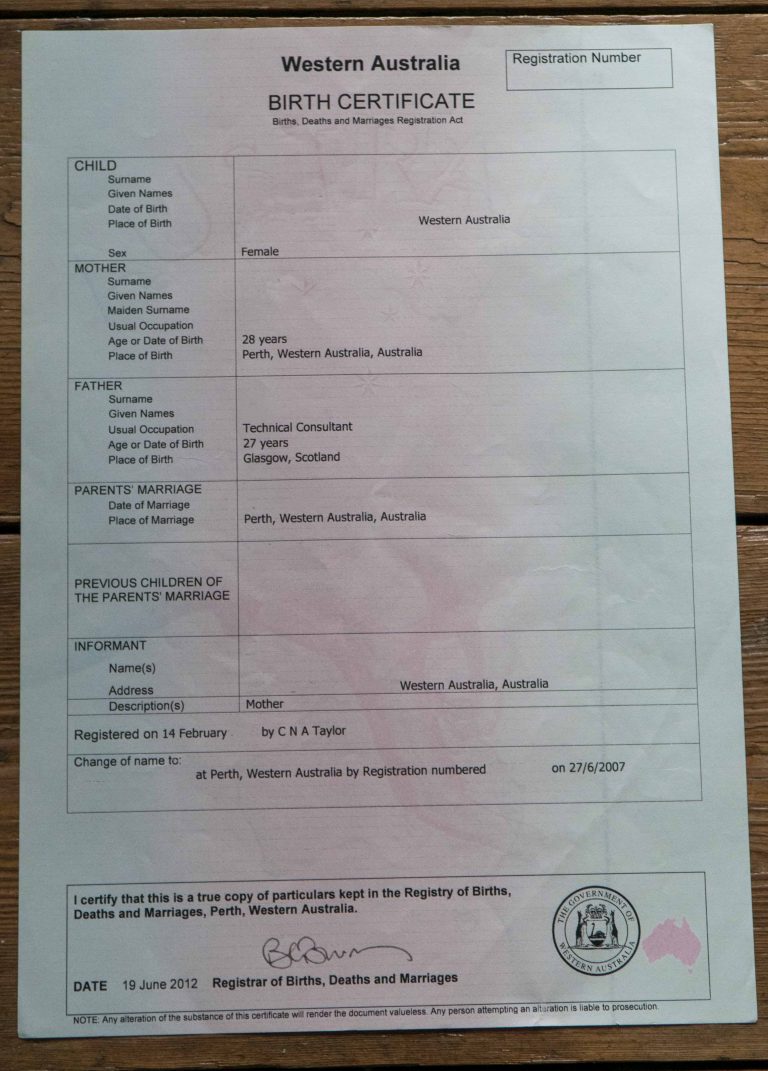
Example of WA Birth Certificate for UK Ancestry Application
What if I Don’t Have my Grandparent’s Original Birth Certificate?
This is a common problem that people face when trying to apply for UK Ancestry visa. I was faced with this when I was applying for my visa as my granddad died when my mum was 13 years old and she did not have any copies of his birth certificate.
There’s a different process for British, Welsh, Scottish and Northern Ireland certificates. Here is a list of the departments to get certificates for each of these countries:
For British and Welsh Grandparents
It is possible to order a copy of a birth, death or a marriage certificate on the General Register Office (GRO) website. You’ll need to register on the website to order a copy of a birth, adoption, death, marriage or civil partnership certificate for England and Wales. At the time of writing, certificates cost £9.25.
For Scottish Grandparents
As my granddad was Scottish I used Scotlands People to buy my granddads birth certificate. They even sent it to Australia! Which was fantastic and I didn’t have to apply in person. Go to Scotlands People and use the search indexes to find your grandparent (which is free). At the time of writing each certificate cost £12.
For Northern Irish Grandparents
You will need to go to the NI Direct website. It will allow you to order a copy of your grandparent’s birth, adoption, marriage or civil partnership certificate for Northern Ireland. At the time of writing a certificate costs £15.00.
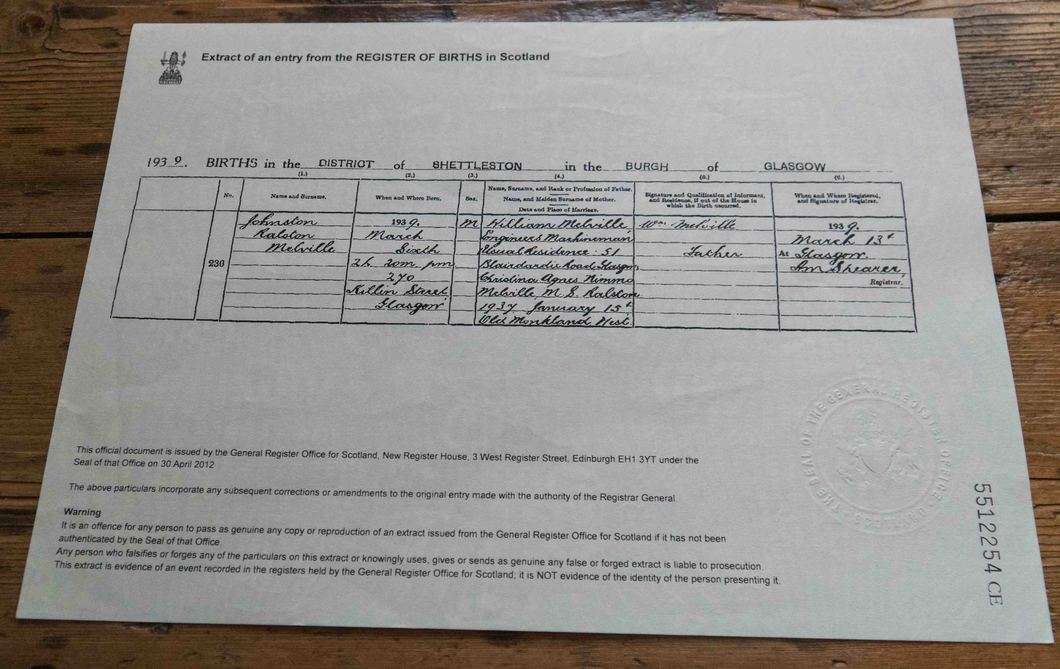
Example of an Official Scottish Birth Certificate
My granddad’s birth certificate that I provided during my UK Ancestry application.
There are quite a few questions on whether you can provide copies or require an original birth certificate for the application.
As you can see in the photo it says that it is an extract of an entry from the Register of Births in Scotland. The certificate also has an embossed stamp, a unique number and states that it is an official document from General Office for Scotland. You will need to take an original copy or photocopy of the official birth certificate.
The company that I used for my Ancestry visa actually questioned me if this was an official copy. I ended up calling General Office for Scotland who assured me that this is an official government copy and was accepted as evidence in my application, my sister’s application and my mum applying for her UK Passport.
Fill Out and Submit Application
The UK Ancestry visa is moving to the new application process so to apply you need to go to the gov.uk website. Depending on which country you are applying from the gov.uk website will direct you to the right place.
psst.. I have finally put together a post explaining the questions and answers I put for my UK Ancestry Application.
Complete the online application, pay and then you will receive your booking confirmation for your biometric appointment.
There is only a set amount of appointments opened so keep trying every day or so. If you struggle to get an appointment they now have walk-in days. For Perth the walk-in days were twice a week and cost an additional $95AUD so check with your visa centre what days they run walk-in appointments.
With the new biometric resident permit (BRP) you will no longer get the full visa in your passport. They provide you with a temporary 30-day vignette visa until you collect the visa for a post office in the UK.
In the application, it will ask you to choose a post office to collect your BRP from. I suggest choosing a central post office in the city or near your accommodation to make the collection easy!
For more information about applying in Australia and New Zealand, read the articles below:
Before your appointment ensure that you have the following documents ready to take with you:
The printout of your online application form
The copy of your biometrics appointment information
All supporting documentation (birth certificates, passports, resume, bank statement showing fund and any other evidence).
Biometric Appointment
Next your biometric appointment! Exciting. Take along all the documents, application and booking confirmation.
The visa application centre will take your “biometric information” which is fingerprints and a photo. At the appointment, they will scan your documentation and hand the documents back to you.
Once your application is processed they will then post your passport back with your visa. If you have paid the $95 (based on Australian costs) you will get to keep your passport and they will issue the visa on the day.
UK Ancestry Visa Processing Time
On average you will receive a decision on your visa application within 3 weeks of lodging your application but this may vary depending on your country of residence.
You can check the guide processing timesto find out how long your visa will take to process in your country.
Other Useful Information
What is a 30 Day Vignette Sticker?
Instead of getting a vignette with the full granted leave, the Immigration Department now issue what’s called a 30-day vignette sticker. It’s based on your planned arrival date, for example, I’ve put that I am arriving in the country on the 8th of August then I have 30-days from this date to collect my visa.
It is very important to make sure you choose your intended travel date carefully and it is what is represented on the application form when applying for the visa.
You will not be able to travel to the UK before this date. The permit will only be valid as of the intended date of travel if you cannot travel on between these dates then you will need to apply for an extension.
Can I Apply for a Vignette Extension?
Yes, it is possible to get a vignette transfer (extension). There would be an additional cost to your application and country dependent.
There is another online application form to be completed similar to that of your initial visa application.
The British High Commission will then provide you with a new 30-day permit to accommodate your new proposed travels.
Even though you will be issued a new entry date this will not change your visa start date. If you plan on applying for permanent residency at some point you will need to factor this into your decision as if it’s longer than 180 days in a rolling year your will need to apply for UK Ancestry extension.
Then you will need to select “transfer your visa to a new passport online if you’re outside the UK”. It’s a little confusing the terminology they use but it is the correct choice for replacing the vignette.
Complete the application form – it’s basically applying for a new visa the information they request 🙁
Pay the fee
Arrange your Biometrics appointment – unfortunately, with every visa change you need to go for another biometric appointment. I’ve had mine done 3 times now!
Upload the relevant documentation (Proof of Maintenance, same criteria as before for UK Ancestry Visa)
Attend your Biometrics
Post your passport – You can keep it if you wish to pay additional fees.
Wait for the return of your passport with your new entry vignette.
What’s a Biometric Residence Permit (BRP) Card?
Biometric Residence Permit (BRP) is your actual visa and basically looks like a drivers licence. It holds all your immigration status and entitlements while you are in the UK.
Being a part of Facebook groups I occasionally see people lose their BRP on things like a night-out or silly travel incident, please, please, keep your BRP safe. It doesn’t cost too much to replace, it’s just a pain… A new BRP costs £56 if you apply by post, however, the processing time is 8 weeks and in person will cost more.