Author: Kat

  • How to Travel to England with Your Pets

    How to Travel to England with Your Pets

    Traveling the world is an amazing, broadening experience, but it can be hard to figure out the logistics of a vacation to England when you want to bring your pet along with you. Luckily, traveling to England with a pet is not as difficult as it once was.

    In order to travel in England with a dog, cat, or ferret, you will have to have your pet microchipped, get a pet passport or third-country veterinary certificate, and have it vaccinated against rabies. There are a variety of other requirements depending on the kind of pet you have and where you are traveling from.

    Continue reading below for the complete details on how to travel to England with a pet, including what requirements your pet must meet and how to make their time traveling as comfortable as possible.

    Disclaimer: You should check GOV UK for the latest information on travelling to England with pets.

    UK Requirements for Travelling to England with a Dog, Cat or Ferret

    It wasn’t that long ago that it was very difficult to travel to England with a pet. England is a rabies free country, and they are looking to keep it that way, but they have loosened the laws in the past decade so that now it is fairly easily to travel with a pet in England.

    These rules apply to residents of the UK as well as foreigners that are just visiting. If you are a UK resident and travel out of the country with your pet, you will have to meet the same requirements as anyone else traveling into the UK from that country.

    No matter what country you and your pet are traveling from, it must be microchipped, have a pet passport or a veterinary certificate, an up to date rabies vaccination, and potentially there will be even more requirements depending on where the pet is traveling from.

    But don’t worry, all the requirements are manageable as long as you have enough time to plan ahead.

    Microchipping

    A microchip is a permanent and electronic way of providing identification for your pet. If a pet gets out of its traveling crate and loses it collar, it can still be identified using a microchip scanner.

    The microchip itself is a small device no bigger than a grain of rice that is implanted just under your pets skin, usually between their shoulder blades. The microchip has a unique number that is read using a microchip scanner. This number is connected to a database that provides contact information for the pet’s owner.

    If your pet is not already microchipped, then you will need to bring your pet to a vet to get a microchip implanted, and you will need to add your information to the database. If your pet has already been microchipped, be sure the contact information in the database is up to date.

    When getting a microchip for travelling to England, there are a few things you need to know.

    • First, your pet must be microchipped before or at the same time that it gets its rabies vaccination. If your pet was not microchipped at the time that it got its rabies vaccination, it would have to get the vaccination again.
    • The microchip that you use should also meet the International Organization for Standardization’s standards for microchips. If the microchip does not meet these standards, there is a chance that the microchip scanner used when you arrive in England will be unable to read it.
    • Microchipping is not necessary if your pet has an identification number that was tattooed on it on or before July 3, 2011. The number must be recorded in their pet passport.

    EU Pet Passport

    A pet passport is not really like a human passport at all. It does provide some identifying information and a photo of your pet, but its main purpose is to chronicle the pet’s veterinary treatments and immunizations.

    Pet passports are offered by many veterinarians across Europe at reasonable prices, but if your vet does not offer them, they should be able to refer you to a vet that does without any issue.

    If you live outside of the European Union, you must get an official veterinary certificate that essentially does the same thing that a pet passport does. However, where a pet passport will last for the life of your pet as long as your pet is kept up to date on its vaccinations, a veterinary certificate will only be good for 4 months after you arrive in the UK.

    The official veterinary certificate must be obtained within 10 days of arrival in England.

    If you are planning to stay for an extended period of time with your pet in England or anywhere in the UK, you can get an EU pet passport while you are in Europe. Your pet may be required to undergo an examination and may get additional vaccinations, even if your pet already got the same vaccinations before you arrived in England. 

    To get a pet passport when you arrive in England, you will need to schedule a visit to a veterinary office that can distribute them when you arrive.

    Vaccinations Against Rabies

    Before you can bring your pet to England, it must be vaccinated against rabies. This is a very strict requirement because rabies does not exist in England either in domesticated animals or wildlife.

    Rabies is a virus that is commonly transmitted from dog saliva to humans when an infected dog bites the human, although many animals are capable of contracting rabies and passing it to humans through a bite. 

    Rabies can be lethal to both pets and humans, and it can be found on every continent except Antarctica, so it is truly rare that England has avoided it.

    A pet must receive his rabies vaccination or the last of his primary course of vaccinations at least 21 days before arriving in England. The vaccination should be recorded in the pet passport or on the veterinary certificate.

    Your pet’s booster vaccinations must be up to date, and all of the pet passport or official veterinary certificate must be filled out properly.

    The information required includes your pet’s date of birth, microchip number, the date it was put in or read, and where it is located, the date of the vaccination, the vaccine manufacturer and product name, the vaccine batch number, the date the vaccination is valid until and the vet’s signature and contact details.

    If the pet passport or official veterinary certificate is not filled out properly, your pet could be prevented from traveling or it could be held in quarantine for 4 months, and you would be responsible for paying the expense of this.

    If you are traveling from one of the Unlisted Countries, or any country not listed on the two lists displayed on this page, then you will have additional requirements that must be met to show unequivocally that your pet has been vaccinated against rabies.

    1. Of course, you first must vaccinate your pet against rabies.
    2. Thirty days after your pet has its rabies vaccination, it must get a blood test to prove that it has sufficient rabies antibodies.
    3. The vet must send the blood sample to an EU approved blood testing laboratory. The purpose of this is to show that the vaccination worked, and your pet is protected against rabies.
    4. If your blood test results do not show that your pet it immune to rabies, it cannot travel to England. 
    5. If your blood test results show that your pet is immune to rabies, you still must wait 3 months before you can travel to England.
    6. This 3-month wait is not necessary if you had the pet vaccinated, blood tested and given a pet passport in the UK before traveling to an unlisted country.
    7. The vet must enter the test results and record the day the test was given on the official veterinary certificate.

    Timing Requirements

    You can send your pet on ahead of you when traveling to England, but you must arrive within five days of your pet’s arrival.

    You can also authorize your pet to travel with someone else if part of your travel companions is going ahead of you with your pet.

    If you or another authorized person cannot pick up the pet within five days, you have to follow a whole other set of rules for bringing pets in the UK for commercial reasons.

    It is best for your pet that you arrive within 5 days of your pet anyway because traveling can be a very stressful for pets.

    Special Requirements

    There are some special requirements placed upon dogs in general, cats coming from Australia, and cats and dogs traveling from Malaysia. If your traveling with a dog or a cat coming from Australia or Malaysia, you will definitely want to follow the requirements below.

    Special Requirements for Dogs

    Dogs are some of the most common traveling companions because they generally can handle the stress of travel far better than other animals like cats, but there are two extra requirements for traveling to England with a dog.

    If you are traveling to England with a dog, the dog must be treated for tapeworm every time it enters the UK. 

    The tapeworm treatment must be given at least 24 hours before your pet’s arrival and no more than 5 days before. The vaccine itself must contain praziquantel or an equivalent that is proven to be effective against Echinococcus multilocularis (tapeworm).

    Make sure your vet lists the tapeworm treatment in your pet passport or official veterinary certificate. This information must include the name and manufacturer of the product, the date and time the dog was treated, and the vet’s stamp and signature.

    If you are a UK resident and taking your pet out of the UK for a short trip, then you can give the treatment before you leave. You must stay abroad for at least 24 hours and return within 120 hours (5 days).

    Additionally, there are certain types of dogs that are not permitted in England. These include Pit Bull Terriers, Japanese Tosas, Dogo Argentinos, and Fila Brasileiros.

    Whether your dog is one of these types is determined by look, not by its name or breed. Even a dog mixed with one of these types can be a banned dog.

    Special Requirements for Cats Travelling from Australia

    Due to incidences of the Hendra virus in Australia, England has some special requirements for cats that travel from Australia to the UK.

    Hendra virus is a rare viral infection that can cause a variety of flu like symptoms in humans that can range from mild to life threatening. It is also known to cause life threatening illness in horses. (source)

    If you are traveling to England from Australia with a cat, you need to obtain a certificate from the Australian Department of Agriculture that states that your cat has not been exposed to the Hendra virus in the past 60 days before your departure. (source)

    Special Requirements Cats and Dogs Traveling from Peninsular Malaysia

    Due to incidences of the Nipah virus in peninsular Malaysia, England requires some extra assurance that cats and dogs traveling from there have not been exposed.

    The Nipah virus can cause acute respiratory illness and fetal encephalitis in humans and it is known for causing severe disease in pigs which results in devastating economic loss for pig farmers. (source)

    When traveling from Malaysia with your pet, you will need to get a certificate from the Malaysian government’s veterinary health services.

    This certificate must show that your pet has not been in contact with a pig within 60 days of departing the country, has not been on a holding where Nipah disease has been found within 60 days of departing the country, and has a negative blood test result for the Nipah virus antibody.

    This blood test must be performed at a specially approved laboratory for the Nipah virus, and the blood draw must occur no more than 10 days before you plan to leave Malaysia.

    What About Traveling with Guide or Assistance Dogs?

    If you are traveling with an assistance or guide dog, it must meet all the requirements of other dogs including microchipping, vaccinations, and tapeworm treatments. 

    However, an assistance or guide dog is allowed to travel on more routes and are typically allowed to travel in the air cabin while other pets often must travel separated from their owners.

    Typically, UK travel companies will recognize your pet as a guide dog if it was trained by a company associated with Assistance Dogs International or the International Guide Dog Federation.

    Traveling to England via air, rail, or ferry is typically not a problem when you have an assistance or guide dog, but in all circumstances the guide dog must meet the same requirements as any other dog.

    It is always a good idea to call ahead and check with the company that you are traveling with to make sure that they can allow an assistance dog to stay with you and any requirements that may be necessary like a special car harness to secure the dog during takeoff and landing.

    Some companies will need to know ahead of time to ensure that they have enough space for your assistance dog.

    Traveling with Other Animals

    Dogs, cats, and ferrets are clearly not the only animals you may wish to travel with when you are visiting England. If you have a less conventional travel companion, there are a different set of requirements you must follow.

    If you are from the EU, then you can travel freely. The UK does not place any travel restrictions or requirements on pet rodents, rabbits, birds, invertebrates, amphibians, amphibians, or reptiles. This covers the most common animals that you might travel with.

    If you live outside of the EU and you are traveling with any of these animals, they will need to spend 4 months in quarantine before they can enter the UK. You are responsible for the cost of the quarantine which varies depending on the carrier.

    Horses are able to travel using a similar method as a dog or a cat. They must get a passport, have their health examined by a vet, and be up to date on any vaccinations (source).

    For questions about bringing a pet that is not a cat, dog, or ferret, you can contact the Centre for International Trade. (source)

    Pets that are exotic or not native to the UK will likely not be allowed to enter England. If you are a resident of the UK, you may be able to have a pet that is not native to England, but you must get special licenses.

    How to Make Your Pet Comfortable While Traveling

    Be certain that you really need to bring your pet with you. Many animals do not enjoy any part of traveling. Cats, for example, are very resistant to changing their environment and are prone to trying to find their way back home the moment they are given the opportunity. Time in a foreign country will most certainly be fun for you, but your pet might not have the same feelings.

    If you want to bring your pet with you, then begin to plan your trip at least two months in advance to ensure that you have plenty of time to get the necessary paperwork and vaccinations sorted out. This is especially true if you’re traveling from a country outside of the European Union.

    If you are planning to travel with your pet to England from an unlisted country, you should begin planning 6 months out because of the extra requirements for traveling from these countries.

    By preparing well in advance for your trip to England with your pet, you will ensure that your pet does not end up in quarantine or not allowed into the UK, which would likely be a very stressful and uncomfortable situation for your pet.

    Here are some simple tips you can follow when preparing for a trip to England with your pet.

    General Travel Tips

    Allow your pet to get used to being in their carrier, if you plan to use one. Let them explore it. Coax them into if they are hesitant and reward them with a treat and plenty of praise.

    If it can be managed, it is best not to feed your pet a few hours before travel. This will help keep your pet from getting sick if they become nauseous.

    Avoid causing your pet an upset stomach and bring a supply of your usual brand of food. It may be more difficult to locate in England, and many pets do not react well to a change in their diet.

    Along with your pet’s microchip, it is a good idea to have an identification collar on your pet in case it becomes lost. This way you can be contacted right away if your pet is found.

    Once you are in England, dogs are generally allowed on most city buses, trains, and the underground as long as there is enough room for them, and they are on a lead.

    If your dog is not used to being in new places on a leash, you will need to help them get used to both being on a leash and being in new places before traveling. 

    Tips for Traveling to England by Car with a Pet

    Get your pet used to riding in the car. This is extra easy if you have a dog as most dogs adjust quickly to going for a ride in the car. Start by taking short trips with your pet. 

    It may not be necessary to try to get your car used to riding in the car. For many cats no amount of practice will get them used to ride in a car. Focus on getting them used to their carrier so that they will feel secure when in the car.

    Plan to make many stops along the way for your pet to get out of the car. Once again this is extra important when traveling with dogs. Cats are not likely to enjoy exploring new places and are easier to lose track of.

    If you’re traveling with an adventurous cat, it may be worth getting your cat used to wearing a harness and walking on a leash. Some cats will bear this better than others, but it will allow you to let them out of their carrier to stretch their legs once in a while.

    The safest place for most pets is in a pet carrier in the back seat. Don’t let your pets roam the car.

    For a dog, you can also use a car harness that secures the dog in the vehicle and helps keep them safe in the event of an accident.

    The Eurotunnel has designated pet areas for your pet to relieve themselves. It is a good idea to take advantage of these areas before crossing the channel.

    Ferries often have different rules about pets. If you are planning to take a ferry, you will need to check with them in advance to be sure that your pet can cross.

    Avoid leaving your pet in the car alone, especially in warm temperatures. This can be very dangerous for many pets.

    Tips for Traveling to England by Airplane with a Pet

    If your pet is very small or an assistance animal, it may be allowed to travel with you in the cabin of the plane in a carrier. This will depend on the airline’s specific regulations. You should call ahead to see where your pet will be traveling in the plane.

    If your pet is larger, then it most definitely will be required to ride in its carrier in the cargo hold.

    You need to have a transport carrier or box that is approved by the airline and well ventilated.

    The travel carrier or box must also be large enough for your pet to lie down, stand, and turn around. This will help your pet travel safely and comfortably.

    Make sure your pet is comfortable in their carrier. You can place a favorite toy or blanket in the carrier to help comfort them in your absence.

    Look for direct flights so that your pet does not spend as much time in high stress situations. 

    If you are arriving at a warm destination, try to arrange it so that you can arrive in the evening or night to help keep your pet cool and transition well. It is easy for a pet in a travel carrier that is stressed out to become overheated.

  • 8 Fabulous London Staycation Ideas

    8 Fabulous London Staycation Ideas

    London is one of my absolute favourite places (after all I have made it my second home) and the perfect spot for a weekend getaway or staycation! 

    Each area of London has something different to offer. Whether you’re looking to unwind in a leafy neighbourhood, get in touch with your creative side or experience the vibrant culture, there’s something for everyone on a London staycation.

    As the city is so large and diverse, I’ve put together a guide to help you choose where to stay and things to do on your staycation.

    Best Places to Stay on a London Staycation

    1.  Richmond

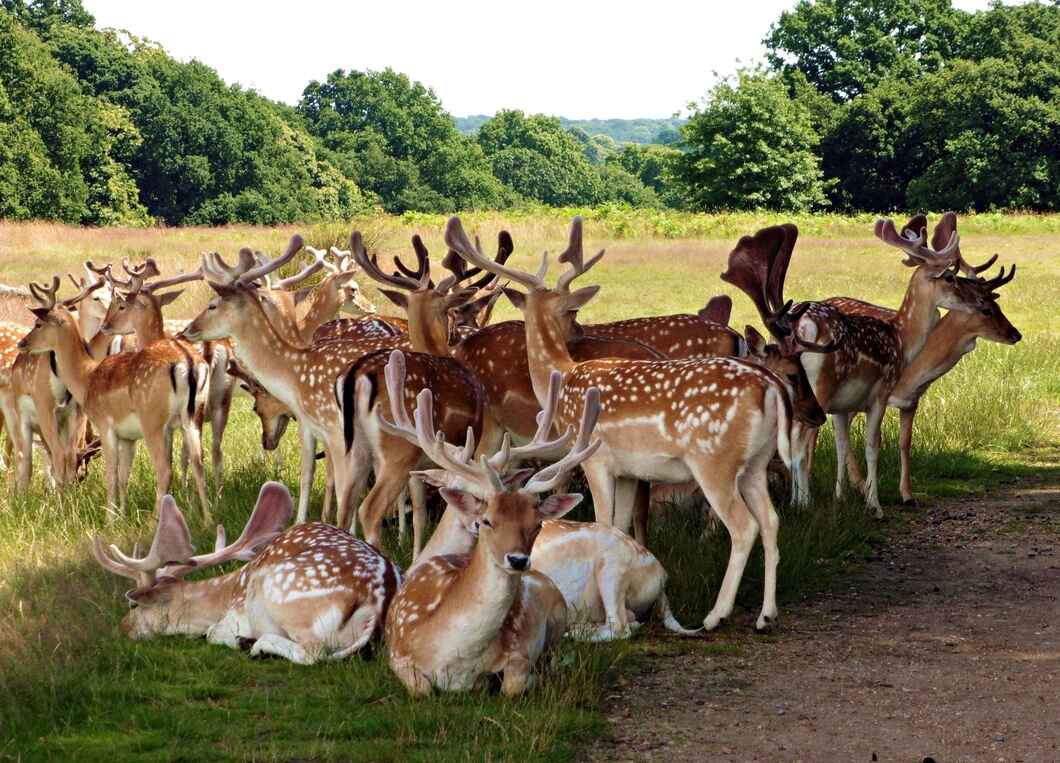
    Deer in Richmond Park London
    Deer in Richmond Park

    Richmond is a residential area in southwest London by the River Thames. Although it’s only half an hour on the train from central London, you’ll feel like you’re worlds away from the rush of the city.

    Richmond has fantastic shops, excellent dining and pretty architecture, and has long been a favourite escape for royalty, including King Henry VIII and Queen Elizabeth I.

    The area isn’t lacking in things to do either, with historical houses, museums, galleries, theatres and open spaces.

    Places to Stay and Eat in Richmond

    The Petersham Hotel

    The Petersham Hotel is the perfect choice for a luxurious staycation.

    Located in a Victorian country house overlooking the River Thames, the hotel boasts a range of stylishly decorated rooms to choose from.

    Enjoy modern British cooking in a relaxed atmosphere at the hotel restaurant.

    Its floor to ceiling windows offer the best views of the Thames and surrounding countryside.

    Coach & Horses Pub and Hotel

    Situated opposite Kew Gardens, the Coach & Horses Pub and Hotel is housed in a modernised Georgian coaching inn.

    The botanical inspired rooms have all the amenities including Sky+ and a minibar, and are so comfortable you won’t want to leave.

    Enjoy seasonal British classics either in the Atrium or outside on the patio.

    To dine out, head to the vibrant and flamboyantly decorated Rock & Rose. This restaurant and cocktail bar serves an international menu alongside a wide selection of exotic cocktails.

    Things to do in Richmond

    A visit to Kew Gardens is a must when in Richmond. This UNESCO World Heritage Site is home to the world’s largest and most diverse botanical and mycological collections.

    You can easily spend a whole day here walking amongst the different plant and flower collections.

    Richmond Park is another great place to spend the day in nature. It’s the largest Royal Park in London with woodland, ancient trees and wild deer.

    It’s home to the beautiful Isabella Plantation, as well as golf courses, fishing at the ponds and a handful of cafes.

    Don’t miss out on the cultural attractions that Richmond has to offer. The Richmond Theatre opened in 1899 and has since hosted a wide range of entertainment.

    Hampton Court Palace is another special place where you can make your way around the royal palace and admire the art collection.

    2. Notting Hill

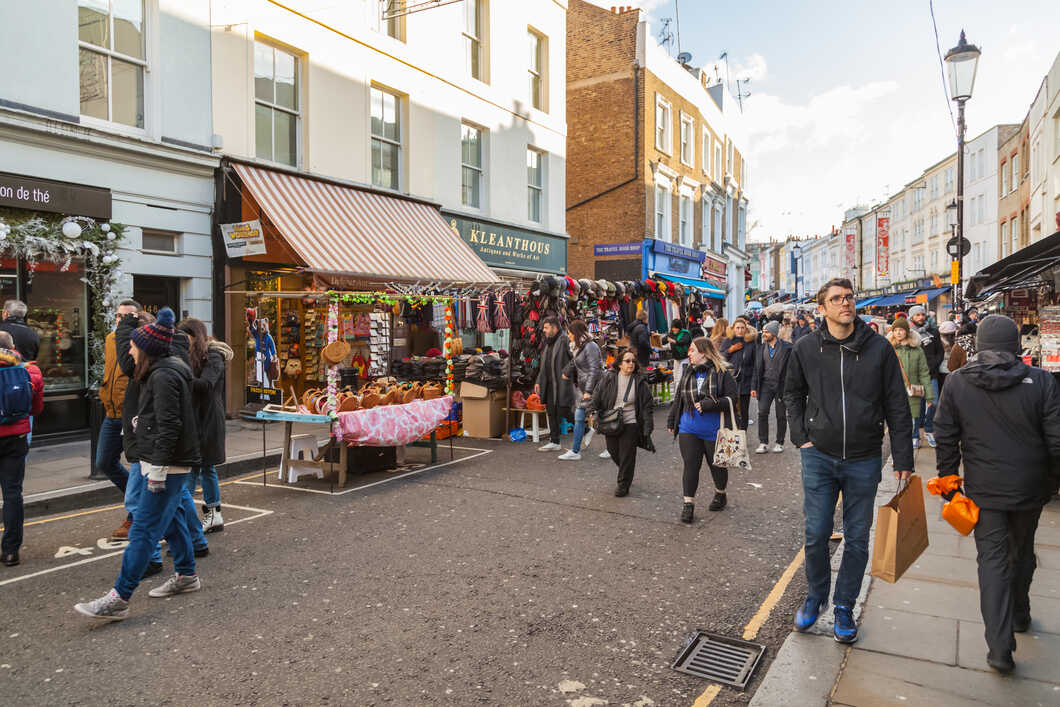
    Portobello market in Notting Hill London
    Portobello markets is a couple of markets bundled into one. Saturday is when the markets are in full swing. You will find stalls with vintage books to antiques to vintage clothing to some great street food.

    Notting Hill is one of the city’s most iconic neighbourhoods, and one of the best places for a staycation.

    It’s most famous for being home to Portobello Market and the world’s second biggest carnival, which happens every August.

    The trendy area has plenty of things to do, fantastic bars and restaurants, and is the perfect place to experience the best of London’s vibrant culture.

    Places to Stay and Eat in Notting Hill

    Portobello Hotel

    The Portobello Hotel is a luxurious boutique hotel known for its eclectic spirit and eccentric charm.

    The hotel is in fact two converted neoclassical mansions, with a selection of individually decorated rooms.

    Located down a quiet street, the hotel guarantees ultimate relaxation with comfy bedding, coffee and tea making facilities and a minibar.

    Have a tipple at the honesty bar before you head out into town.

    Portobello House

    Another fantastic place is Portobello House. This cosy boutique hotel has beautifully decorated bedrooms, each with luxuriously comfortable bedding for a good night’s sleep.

    You’ll find everything you need, from a flat screen TV to a Nespresso coffee machine. If you fancy staying in for dinner, the hotel also has a Felliniesque cocktail bar and gourmet bistro.

    For a fancy dinner, make your way to Core by Clare Smyth, an elegant and informal fine dining restaurant which uses sustainable British produce.

    Things to do in Notting Hill

    Heading to Portobello Road Market is a must do when in Notting Hill. Stretching over two miles, it’s the world’s largest antiques market, and has over 1,000 traders.

    Open six days a week, the market also has stalls selling jewellery, clothes, ceramics, music, bric a brac and a range of international street food.

    A unique attraction in Notting Hill is the Museum of Brands. It’s a collection of historical branded goods dating back to the 1800s, and has products ranging from fashion and cosmetics, to food and advertising.

    End the day with a flick at the Electric Cinema. Get comfy in plush armchairs and a glass of wine at one of the oldest working cinemas in the country. 

    3. Hampstead

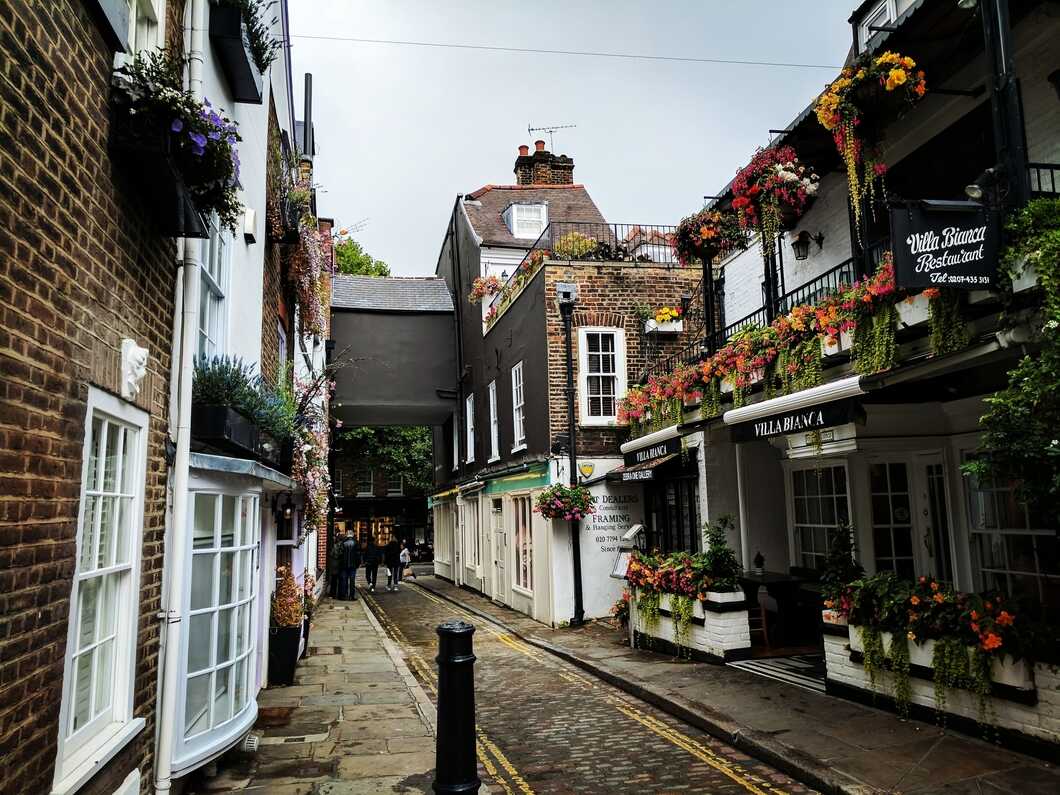
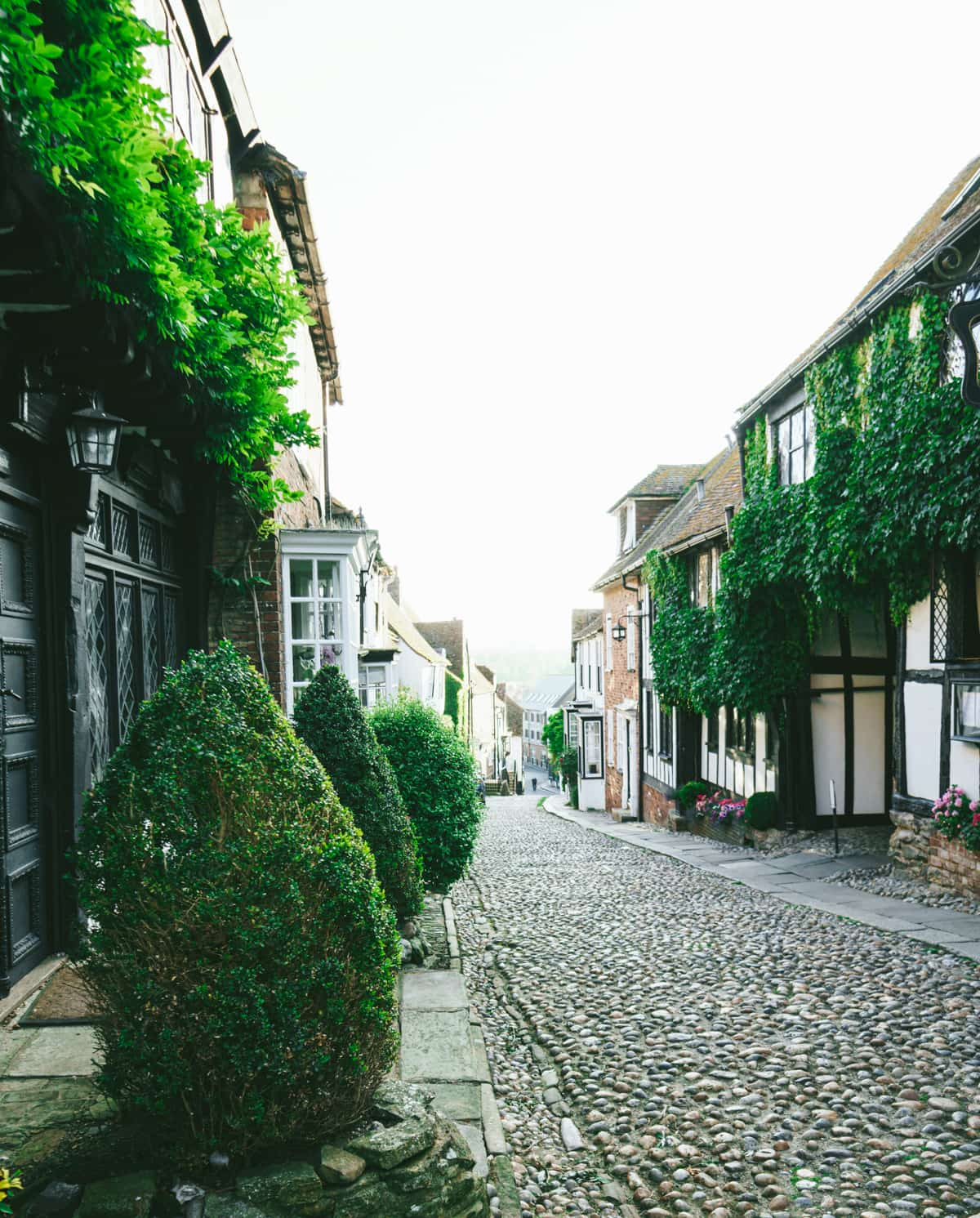
    Cute street in Hampstead
    Explore the cute streets in Hampstead.

    If your ideal getaway for some relaxation is in a peaceful village, then Hampstead comes pretty close.

    This urban village in north London is situated right next to Hampstead Heath, one of the city’s largest and greenest open spaces.

    It’s a peaceful area of London with quaint little streets and a literary history – the best place to experience life at a slower pace.

    Places to Stay and Eat in Hampstead

    Haverstock Hotel

    Haverstock Hotel is a boutique hotel located between Belsize Park and Camden Town.

    The rooms are decorated in elegant, neutral tones and have all the facilities you need, including a TV and tea and coffee making facilities.

    The hotel is set in quiet surroundings and ideally placed for exploring on foot.

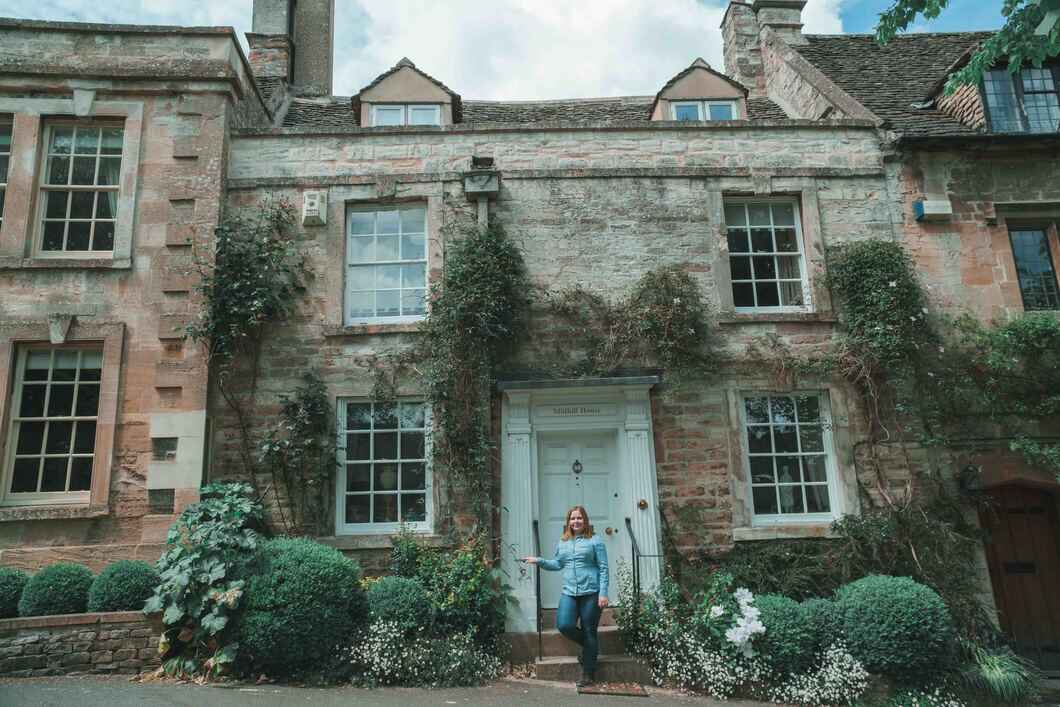
    Sakkson House Rooms & Suites

    If you’re planning on staying indoors, Sakkson House Rooms & Suites is a great place to put your feet up.

    The rooms exude comfort, with upscale furnishings, boutique style decor and king sized beds with Hypnos mattresses.

    With a minibar and complimentary Netflix and Amazon Prime, that’s your night in sorted.

    If you do decide to head out, 28 Church Row serves Spanish and Italian inspired dishes with small plates designed for sharing.

    Tucked away in the basement of a Georgian building, the wooden beams and furniture create a warm, cosy atmosphere.

    Things to do in Hampstead

    A visit to Hampstead Heath is a necessary part of your stay. If it weren’t for the panoramic views of the London skyline, you’d be forgiven for thinking you were in the countryside.

    Its wide expanses of grassland, woodland and range of natural habitats makes it a haven for wildlife. There are rambling walks, outdoor swimming ponds, an open air lido and a beautiful listed pergola and garden.

    Hampstead High Street is the heart of the village. It’s a lovely place to shop, with an array of boutiques, restaurants, cafes and delis. Discover interesting finds in shops that line the little side alleys.

    You don’t have to be an art connoisseur to appreciate the work at Kenwood House. This former stately home is now a museum and one of London’s hidden gems. Make your way through the house and admire the artwork before wandering around the gardens.

    4. Kensington

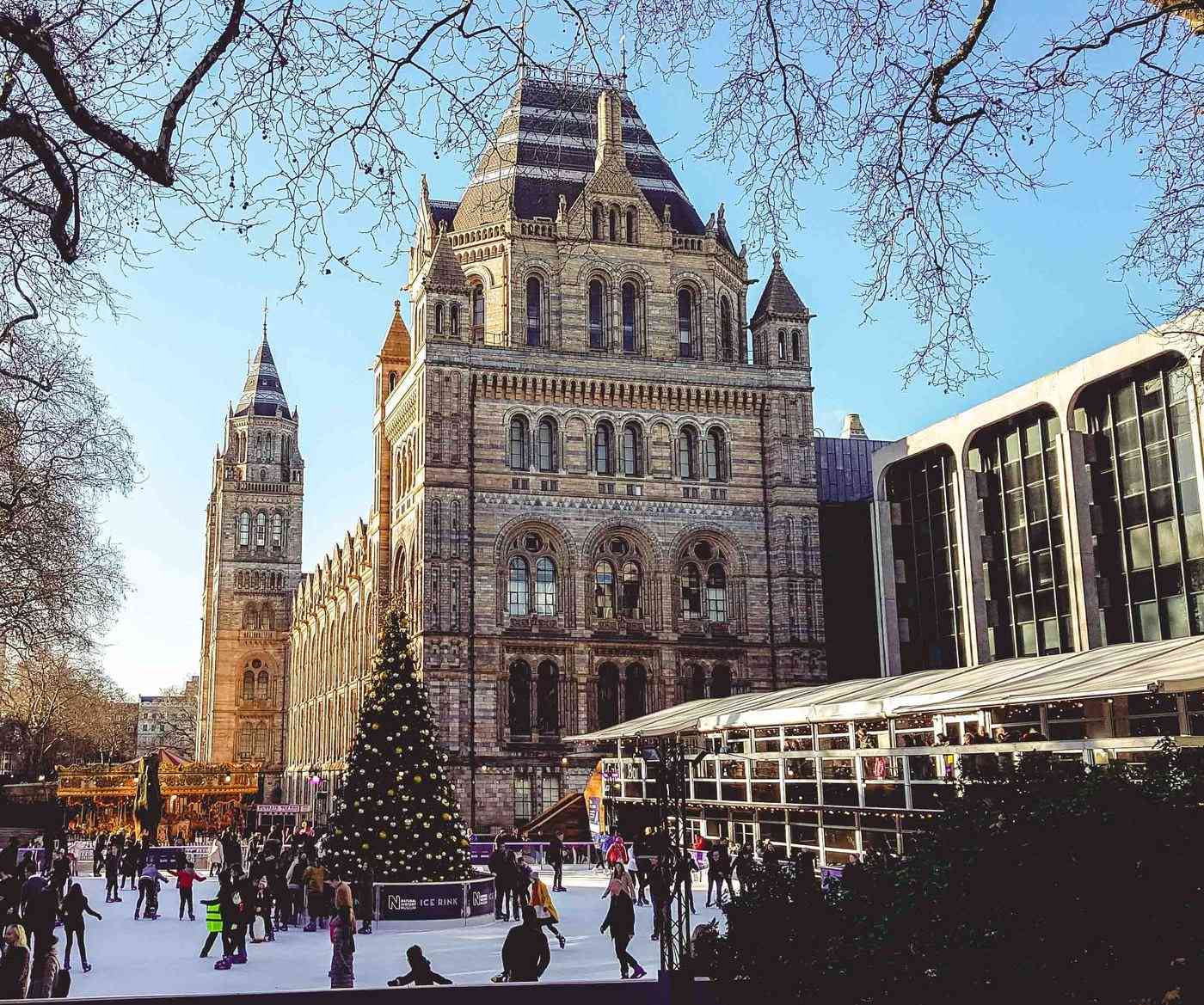
    Natural-History-Muesum-at-Christmas-time
    Christmas time at Natural History Muesum is such a magical time.

    If you’re looking for a sumptuously luxurious staycation, Kensington is as posh as it gets.

    The area is home to elegant townhouses, world-class shopping and upscale dining. It’s also a cultural hotspot, with a range of museums and the famous Royal Albert Hall. Perhaps rather surprisingly, the area has its fair share of green spaces to unwind in.

    Places to Stay and Eat in Kensington

    Make believe you’re in Italy with a stay at the Baglioni Hotel. This Italian-style hotel is the perfect luxury break.

    The exquisitely decorated suites are generously spacious, and most of them overlook the lush greenery of Hyde Park.

    In the restaurant, wine and dine on traditional Italian dishes with a contemporary twist. Get your sweat on at the hotel gym, or enjoy pure relaxation at the Baglioni Spa.

    The Ampersand Hotel is another fabulous place to stay. The rooms and suites are individually designed, with a minibar and satellite TV.

    The hotel restaurant, Apero, serves fresh Mediterranean food alongside aperitifs at the bar. Don’t miss the award-winning Science Afternoon Tea in the Drawing Rooms. There’s also a well-equipped gym.

    For a chic but relaxed meal out, Alexandrie Restaurant serves food inspired by Egyptian home cooking. French, Italian and Greek flavours are incorporated in the traditional Egyptian recipes.

    Things to do in Kensington

    A staycation is all about treating yourself, so why not splurge a little at Harrods. One of London’s most iconic shopping destinations, Harrods is spread over seven floors.

    If you’re more of a foodie, discover the flavours of the food hall, where you can find everything from exotic fruits to freshly baked cakes.

    Museums always make for a great day out. Luckily, Kensington is home to three of the best museums in the city: the Victoria & Albert Museum, the Natural History Museum and the Science Museum.

    Kensington Palace has been a royal residence since the 17th century, and today it’s the official London residence for the Duke and Duchess of Cambridge. Explore the palace and discover the range of exciting exhibitions on display.

    Kensington Gardens was once the private grounds of Kensington Palace. There’s a lot to see here, including the peaceful Italian Gardens and the Albert Memorial.

    Make sure to pop into the Serpentine Galleries where you’ll find contemporary art exhibitions. Opposite the gardens is the Royal Albert Hall, a concert hall and one of the country’s most treasured buildings.

    5. Clerkenwell

    Clerkenwell is a unique part of London. It feels new, but also has a way of making you feel as if you’ve stepped back in time.

    It’s quite a pretty area, full of historic buildings and several museums and attractions. It’s also attracted a large concentration of restaurants, bars and pubs, so it’s one of the best areas to stay in if you’re a foodie.

    Places to Stay and Eat in Clerkenwell

    The Rookery is a quirky boutique hotel set in an 18th century building. The hotel oozes period charm from every corner, with original period features, paintings and antiques, and 17th century carved oak and Victorian four-poster beds.

    But you’re not far from modern comforts either, and each room has a TV, wifi, a minibar and room service. Visit the honesty bar and enjoy drinks in the conservatory or cosy garden.

    Set in a Georgian townhouse, the Zetter Townhouse Clerkenwell is located in a quiet, cobbled square.

    The individually designed rooms are decked out in luxury fabrics, refined decor and antique furnishings. Go for a drink at the cocktail lounge before heading out for dinner.

    There are too many fantastic restaurants in Clerkenwell that it would be impossible just to recommend one.

    Moro has been serving Mediterranean food for over 20 years, with plenty of North African and Spanish dishes.

    Breddos Tacos is a taqueria serving Mexican small plates like tacos and tostadas, with the addition of unique twists like kung pao pork and octopus al pastor.

    Wash it all down with mezcal or margaritas (or both – you’re on staycation).

    For some fine European food, The Coach is the go-to. Established in 1790, the restaurant serves classic and signature dishes with a French influence. The Sunday roast is particularly popular – the perfect way to end the weekend.

    Things to do in Clerkenwell

    Clerkenwell is an excellent place to shop. There are tons of independent boutiques, coffee shops and cocktail bars along Exmouth Market.

    They spill out onto the pedestrianised street, creating a very European feel to it. The street also has an outdoor market of the same name. The market primarily focuses on international street food, so visit around lunchtime and see what you can find.

    For literary fans, the Charles Dickens Museum is an interesting place to go. Set in the author’s former home, the museum has over 100,000 items to explore including manuscripts, rare editions, personal items and paintings.

    If you’re not ready to go home just yet, why not catch a show at the Sadler’s Wells Theatre. This performing arts venue is dedicated to international dance, and has performances from contemporary, to flamenco, to ballet.

    6. Shoreditch

    Street-Art-in-Shoreditch

    Whether you have a creative streak in you or prefer to appreciate art from a distance, Shoreditch is the place to be.

    It’s the creative hub of London’s East End, and is full of street art, hip hangouts, trendy restaurants and interesting markets and shops.

    It’s a great place if you’re looking to experience the cool, quirky side of London during your staycation.

    Places to Stay and Eat in Shoreditch

    Montcalm Royal London House is a 5 star luxury hotel with a modern vibe. You’ll find everything you need in the stylishly decorated rooms, including a smart TV with international channels, a minibar and Nespresso machine.

    The hotel also has an indulgent Ayurvedic spa with a range of treatments as well as a gym. Enjoy a meal on the rooftop brasserie and admire the spectacular views across London. 

    The Curtain takes an industrial-chic approach to its decor. The rooms and suites have exposed brickwork, hardwood floors, marble bathrooms, and large windows for loads of natural light.

    Head to the rooftop brasserie for fresh seasonal food, or take a dip in the rooftop pool. For some pampering, check out the different treatment rooms at the spa.

    How often can you say you’ve had Peruvian food? Try something different and head to Andina Shoreditch, a restaurant specialising in traditional food from the Peruvian Andes. Open all day, the restaurant serves up healthy but delicious dishes in a lively, friendly atmosphere.

    Things to do in Shoreditch

    The number one thing to do in Shoreditch is to admire street art. Walk from Shoreditch to Brick Lane to take in some of the most impressive works, and look out for pieces by famous street artists like Banksy.

    Make sure to visit Redchurch Street and Shoreditch Triangle as well.

    Pressed for time? Take a guided walking tour of the best spots with Shoreditch Street Art Tours.

    Shoreditch is one of the best areas for shopping and is home to several markets. Columbia Road Flower Market is one of the most popular weekend markets, selling everything from houseplants to bouquets.

    Other markets in the area include Old Spitalfields Market and Brick Lane Market.

    Shoreditch is a fab place for a night out, with tons of trendy bars and clubs. From rooftop bars like Queen of Hoxton, to ping pong and drinks at Bounce Old Street, there are plenty of places to experience the city after the sun goes down.

    7. Marylebone

    Marylebone is a chic and fashionable area of London, and is particularly known for its world-class shopping. This affluent district is full of beautiful Georgian buildings and is a great place to stay if you’re after some serious luxury.

    Places to Stay and Eat in Marylebone

    Dating back to 1835, The Langham is one of the most prestigious hotels in London, and has hosted celebrities, royalty and foreign dignitaries.

    The stylish rooms combine Victorian charm with modern amenities including a mini bar, Nespresso machines and 24 hour room service.

    The Langham has a spa and health club complete with a swimming pool, sauna, steam rooms, gym and treatment rooms. Grab drinks at the Artesian bar before dinner at the stylish restaurant, Roux at the Landau.

    Another iconic Marylebone hotel is The Landmark London, established in 1899.

    Relax in the peaceful luxury of the spacious rooms and suites, decked out in fine fabrics and elegant furniture. Indulge in health and beauty treatments at the spa which boasts a steam room, sauna, reflexology and massages.

    There are two restaurants to choose from – fine dining at the Winter Garden, and modern European dishes at Great Central Bar & Restaurant.

    Ishtar is an upscale Turkish restaurant serving modern and traditional dishes.

    You’ll find freshly prepared seasonal food, mezzes, grilled meats and seafood, and a wide variety of vegetarian dishes. No meal at Ishtar is complete without a Turkish coffee and traditional dessert.

    Things to do in Marylebone

    Marylebone has its fair share of attractions, including museums and art galleries. For true detectives, the Sherlock Holmes Museum is a fun place to spend a few hours.

    Step into the world of Sherlock Holmes and Doctor Watson at 221B Baker Street. If you’re interested in visiting an art gallery, the Wallace Collections has a beautiful assemblage of French paintings, furniture, porcelain and body armour.

    Escape the crowds and go for a walk in the peaceful Regent’s Park. If you happen to be there between May and September, you’ll find open air theatre performances.

    There is also a boating lake where you can hire boats and pedalos. Climb up Primrose Hill for one of the best views of London.

    Avoid the crowds of Oxford Street and head down Marylebone High Street where you’ll find a great selection of independent boutiques, shops and restaurants.

    8. Chelsea

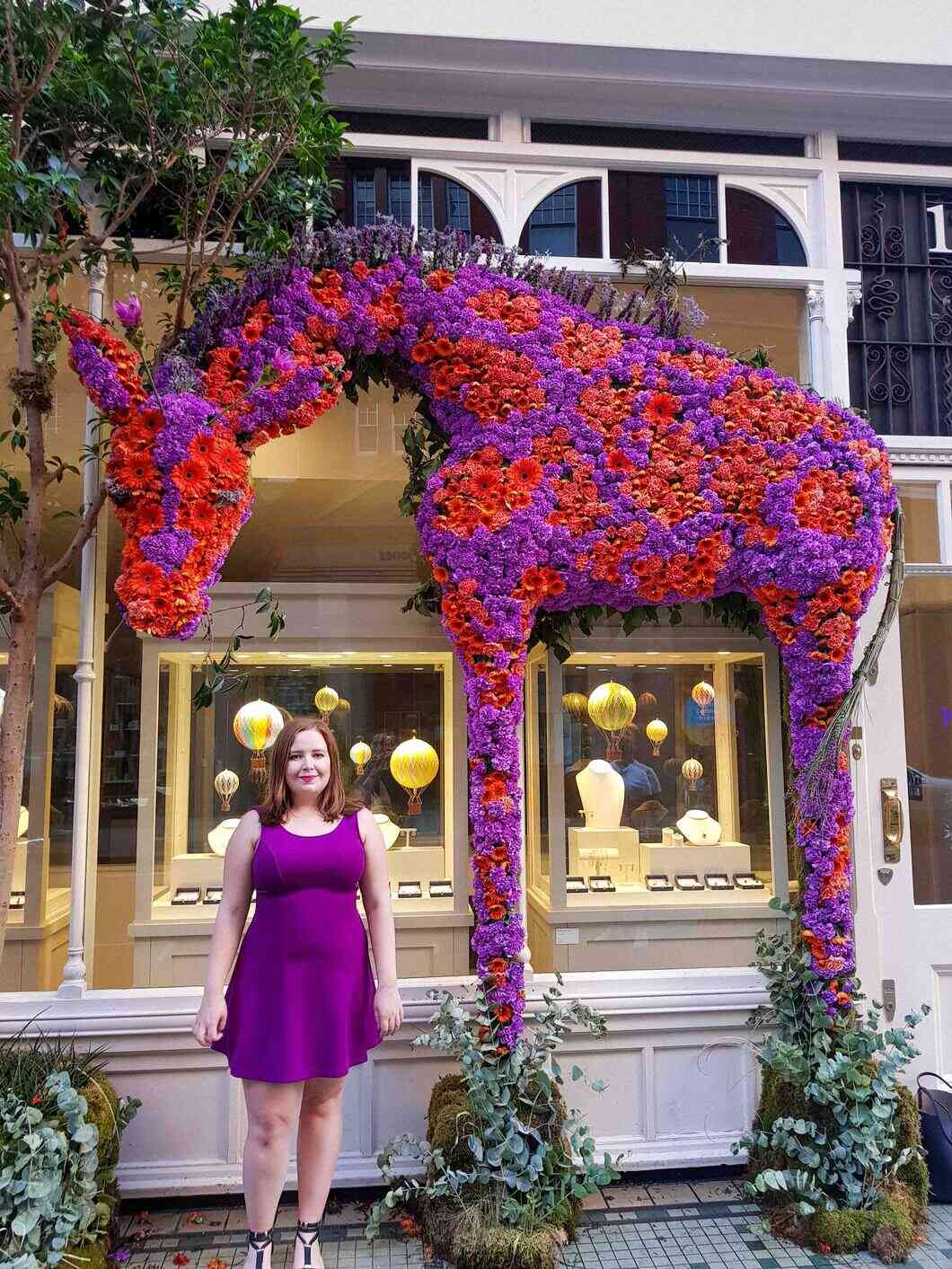
    Chelsea-in-Bloom
    Chelsea in Bloom happens every May. The high streets stores participate in elaborate flower displays.

    Another affluent area of London for a fancy staycation is Chelsea. It’s more than just football, flowers and reality TV – it’s also home to amazing restaurants, galleries and excellent shopping.

    Places to Stay and Eat in Chelsea

    The Draycott Hotel is a five star luxury hotel set in a romantic Victorian townhouse. The individually decorated bedrooms provide a welcoming place to relax, with cosy fireplaces and Victorian antiques.

    Relax in a contemporary, chic setting at Sloane Place Hotel. The bedrooms have comfortable Hypnos beds, Nespresso machines and TVs. Head to the Sloane Club and try a range of health and beauty treatments.

    For a unique meal, Rabbit is a restaurant serving farm to table dining. Using sustainable ingredients from the family farm in Sussex, Rabbit creates modern British dishes using wild and seasonal produce.

    Things to do in Chelsea

    Chelsea has a reputation for excellent shopping, and the shops are a reflection of how prosperous the neighbourhood is.

    Splurge on designer brands on Sloane Street, or pop into independent boutiques down King’s Road.

    Chelsea is also a great place to find antiques, and there are plenty of shops and auction houses down Lots Road.

    There is no shortage of tranquil green spaces either. Chelsea Physic Garden is one of London’s best-kept secrets. Established in 1973 as an apothecaries’ garden, it’s home to over 5,000 types of plants. Relax amongst the greenhouses and rock gardens.

    For an upmarket tipple, Chelsea has plenty of top-class bars and lounges, such as Barts or Beaufort House Chelsea. If you don’t fancy a rowdy night out, why not catch a show at the Royal Court Theatre, known for its innovative, thought-provoking performances. 

    More London Articles

  • How to Get Around the Cotswolds Without a Car

    How to Get Around the Cotswolds Without a Car

    Touring the Cotswolds without a car can seem a challenge to start with but after some research, it can be surprisingly easy to get around without a car.

    How do you get to Cotswolds without a car? Getting to the Cotswolds is quite easy from Bath, Oxford or London. Whether you decide to go by train, bus, coach or book a tour there are several ways you can succeed in getting to the Cotswolds.

    To help with the process here is a useful guide to getting around the Cotswolds without a car.

    Getting Around the Cotswolds Without a Car

    There are a few ways to get around the Cotswolds without a car by either catching the train, bus, coach or book a tour.

    Whatever your reason for not wanting to drive in England it can be an enjoyable experience not driving. The ability to be able to read, enjoy, take in the countryside or just not have the additional stress can add to the holiday vibes.

    The only downside is that you have to keep an eye on the time and how long it will take you to get to the train station or bus stop to catch the next train or bus on your journey.

    Some towns that are harder to visit without a car so keep in mind that you might not get to all the places that are on your list or require a few exchanges.

    Easiest Way to Get to the Cotswolds is Starting in Oxford

    Christ Church in Oxford England
    Christ Church in Oxford

    Getting to Oxford is actually very straightforward and it is well worth starting your Cotswolds trip with some time in Oxford. 

    The university town of Oxford is famously known as the town of the dreaming spires. 

    The university does dominate the centre of Oxford with its beautiful buildings showcasing stunning architecture. 

    Book lovers will head to Blackwells the famous academic bookseller and Harry Potter fans will be in their element in central Oxford (see 10 Places to visit in England outside of London). 

    There are plenty of green spaces to explore in Oxford and the outskirts on every side feature some beautiful areas to explore as well. 

    Oxford Cotswolds by Bus

    There is a shuttle bus service called The Airline from the Oxford Bus Company that runs from to and from London Heathrow to Oxford 44 times a day, making Oxford a very good option for anyone travelling from overseas and planning to tour or stay in the Cotswolds.  Advance booking is recommended.

    There is also a regular bus service that runs from Bristol International Airport to Oxford several times a day by National Express.

    Once at Oxford there are buses that go on to many of the Cotswold towns with stops in the villages on the way.

    Oxford Cotswolds by Train

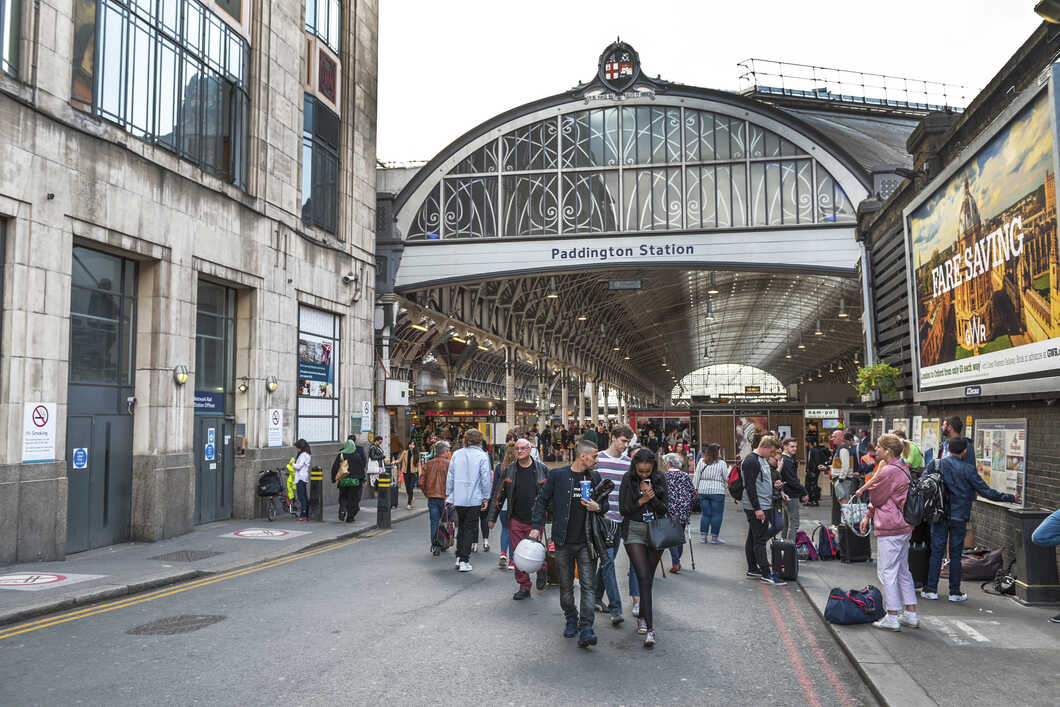
    Paddington Train Station London
    Paddington Train Station

    Once in Oxford, there are good train links to lots of Cotswolds locations and it is well worth checking out a train timetable to see the options available. For example, you can go on to Moreton-in Marsh, Cam and Dursley or Bath stations.

    You can use the Cotswolds Discoverer by Rail Pass for GWR trains between Oxford and Moreton-in-Marsh.

    Getting to Oxford there are trains from Birmingham, Bristol, London and many other locations.

    The best way to get train tickets is by using National Rail Enquiries or Trainline. This applies to all the routes that are mentioned in this article. If you know the company operating these routes you can also buy directly from the train company.

    Birmingham – Oxford

    The train journey from Birmingham has no changes and takes one hour and seven or one hour and eight minutes.

    Bristol Temple Meads – Oxford

    Around one hour and twenty minutes with one change from Bristol Temple Meads.

    London Marylebone – Oxford

    Trains take from an hour to an hour and a half with no changes on some options.

    London Paddington – Oxford

    London Paddington to Oxford is from under an hour to just over an hour and tickets can be picked up very cheaply too.

    London to Cotswolds by Bus

    There is a daily National Express coach from London to Bourton-on-the-Water and hourly coaches direct from London Victoria to Cheltenham in the Cotswolds.

    London to Cotswolds by Train

    London to the Cotswolds by train is surprisingly easy; all you have to do is get to Paddington Station or Marylebone Station!  Okay, okay, it helps to know whereabouts in the Cotswolds that you want to go to.  Here are some options:

    London Paddington – Bath Spa

    Bath Spa from London Paddington can be done in as little as 1 hour 19 minutes with typical journeys all being below an hour and a half. There are no changes.

    London Paddington – Stroud

    Trains leave every hour throughout the day for Stroud and takes 1 hour and 28 minutes. There are no changes.

    London Paddington – Gloucester

    Travel times vary and the longer journey time actually takes longer, so choose your train time wisely.  Travel time tends to be between 1 hour and 46 minutes and 2 hours and 19 minutes.  As well as costing less the 1 hour 46 option also has no changes, making it the obvious choice.

    London Paddington – Cheltenham Spa

    There are various timing option and change options to go to Cheltenham from London.  The quickest is 1 hour 50 minutes with a change at Bristol Parkway, but the simplest is the slightly longer journey time of 1 hour 59 minutes with no changes.

    London Paddington – Dursley (Cam & Dursley)

    Travel times are between 1 hour 53 minutes and 2 hours and 23 minutes with a change at Bristol Parkway or Gloucester depending on which option you choose.

    London Paddington – Moreton in Marsh

    Most train journeys from London Paddington to Morton-in-Marsh take 1 hour and 29 minutes without any changes.

    London Marylebone – Moreton-in-Marsh

    Most trains take about an hour and three quarters from Marylebone with a change at Oxford for Moreton-in-Marsh.

    UK to Cotswolds

    If starting out from somewhere else then National Express coaches offer coaches to the Cotswolds from lots of locations and if you prefer of course trains link up with a bit of planning, if you can get a train to London or Oxford then you can get to the Cotswolds.

    Car Service London to Cotswolds

    One of the leading taxi and tour companies in the Cotswolds, Cotswold Executive Cabs not only offer individual tours of the Cotswolds area, but they will also collect you from London or London Airports to take you to your Cotswold destination.

    Car Tours Around the Cotswolds

    Groups of up to 8 people can book a dedicated tour guide/chauffeur to guide you around the Cotswolds at your own pace and to see the things you want to see. 

    The companies sometimes offer their preferred set routes, but where you stop and how long you stay is up to your group of friends or family. 

    This can be a very useful way to take an easier option for a day in the middle of a walking and public transport tour or if you prefer you could hire a chauffeur for the whole time. 

    Cotswolds Discovery Pass

    A brilliant way to get about in the Cotswolds is to use the Cotswolds Discovery Pass that is accepted by trains and most bus companies. 

    You simply buy a pass per day and hop on and off where you want to. 

    Using the Cotswolds hop on hop off bus system is a great way to see and explore villages and other beautiful things that you may not otherwise have known about. 

    It is also a great way to meet some of the local people, which is always the absolute best way to find out about the best places to visit, eat at and so on. 

    The tickets can be bought up to 3 months in advance from a train station or from the bus on the day.  Buses that offer the Cotswold Discovery Pass are Stagecoach, Pulhams, Johnsons Excelbus and Swanbrook.

    Cotswolds by Tour

    Tours are the easiest option when visiting the Cotswolds. The trip is pre-planned so all you need to do is rock up to the pick-up point and be guided around the Cotswolds.

    The only negative is that you won’t get off the beaten path but you will have someone knowledgable give you facts about the places you are visiting.

    Tours can be anything from a day trip to a few days. Trips will leave from Bath, Oxford or London, here are some options:

    Day Trips From London to the Cotswolds

    Each tour leaves between 7:45 to 9:15 am, are roughly 10 to 12 hours and have English guides. Meeting points are normally near Victoria station but ensure you check beforehand so you don’t miss your tour!

    Oxford and Cotswolds villages day trip highlights:

    • Visit one of the oldest English speaking universities – Oxford and you’ll get a peek inside Great Hall at Christ Church College.
    • Explore the traditional villages of the Cotswolds.
    • Visit Minster Lovell Hall and the charming town of Bibury.

    Oxford, Stratford Upon Avon, Cotswolds and Warwick highlights:

    • The day will start in the beautiful Cotswolds towns which are the highlight of the trip!
    • Next visit the Medieval Warwick Castle, which was originally built by William the Conqueror in 1068.
    • On the third stop, you will visit the birthplace of William Shakespeare, Stratford Upon Avon.
    • Lastly, Oxford. A jam-packed day of sightseeing!

    Stonehenge, Stratford, Bath & Cotswolds 

    • Visit the prehistoric monument Stonehenge.
    • Walkthrough the beautiful Bath before taking a scenic drive through the picturesque Cotswolds.
    • Discover Stratford-upon-Avon where you will visit Shakespeare’s Schoolroom & Guildhall.

    Day Trips From From Bath to the Cotswolds

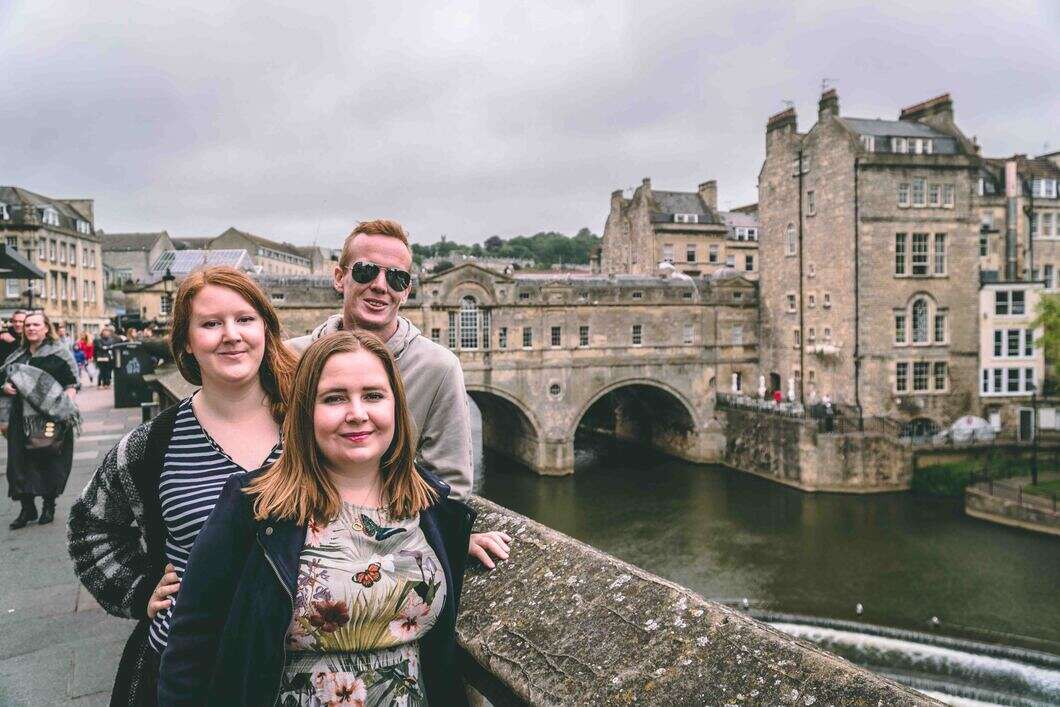
    Kat and family at Pulteney Bridge
    Kat and family at Pulteney Bridge in Bath

    Tours are between 8 to 9 hours which depart from various locations in Bath.

    Cotswold Discovery Tour highlights:

    • This tour will allow you to visit the classic and famous Cotswolds towns. The list includes Castle Combe, Malmesbury, Bibury, Arlington Row, Bourton-on-the-Water, Stow-on-the-World and Tetbury.

    Stonehenge, Salisbury and the Cotswolds day tour highlights:

    • The tour starts with Stonehenge before going South to Salisbury to visit the Cathedral City.
    • Next is visiting some of the best Costwolds towns! On the agenda is Lacock, Biddestone, and Castle Combe.

    Day Trips From From Oxford to the Cotswolds

    Tours depart from the Oxford visitors centre and are typically around 7 hours.

    Cotswolds Towns and Villages small group tour highlights:

    • Like the Bath version, this tour covers all the best Cotswolds towns. This includes Great Tew, Stow-on-the-Wold Bourton-on-the-Water, known as the “Venice of the Cotswolds” and Burford.
    • You will also explore the valley of the River Windrush and discover amazing villages such as Swinbrook and Asthall.

    Cotswolds and Blenheim Palace with pub lunch highlights:

    • Nothing beats having a pub lunch at one of the Cotswold’s finest pubs – this has to be on the bucket list!
    • Explore the stunning Blenheim Place and Gardens, the birthplace of Winston Churchill.
    • And we can’t forget the main reason for your trip which is visiting the villages! The tour includes Burford, Bibury, Bourton-on the-Water and Stow-on-the-Wold.

    Longer Trips From London to the Cotswolds

    These tours are run by Rabbie’s and pick up location will change depending on the package you choose.

    Cotswolds, Bath, and Oxford: 2-Day Tour from London highlights:

    • Spend more time exploring Bath and the Cotswolds – cover all the best highlights.
    • Admire the ancient stone circle of Avebury, a World Heritage Site.

    Oxford and The Cotswolds: 3-Day Small-Group Tour highlights:

    • Visit the birthplace of Winston Churchill the beautiful Blenheim Place.
    • A dedicated afternoon exploring Stratford-Upon-Avon the birthplace of William Shakespeare.
    • Get as close to the medieval ages as possible at Warwick Castle.
    • Explore the university city of Oxford.
    • And of course, discover England’s beautiful Cotswold villages.

    Finally:

    Whatever type of Cotswolds trip you want, it is easy to get around without a car. Yes, you have to manage your time carefully. 

    Maybe pack a bit less stuff if you are going to be walking from the train station or bus stop to that dream accommodation you have booked, but The Cotswolds without a car independently is very, very possible and a lot of fun.

  • 15 Best Places To Visit In England Without A Car

    15 Best Places To Visit In England Without A Car

    England is filled with wonderful historic sights, grand palaces and ancient castles. Luckily, you don’t always need a car to get to them. This guide will highlight some of the best places to visit in England without a car.

    Many of the country’s sites and attractions date back to a time when there were no cars, trains or buses. Although they lie in remote locations that may seem hard to get to, don’t let this stop you from going – many of them are accessible via public transport, bike or on foot.

    Read on to discover the different places you can visit without a car.

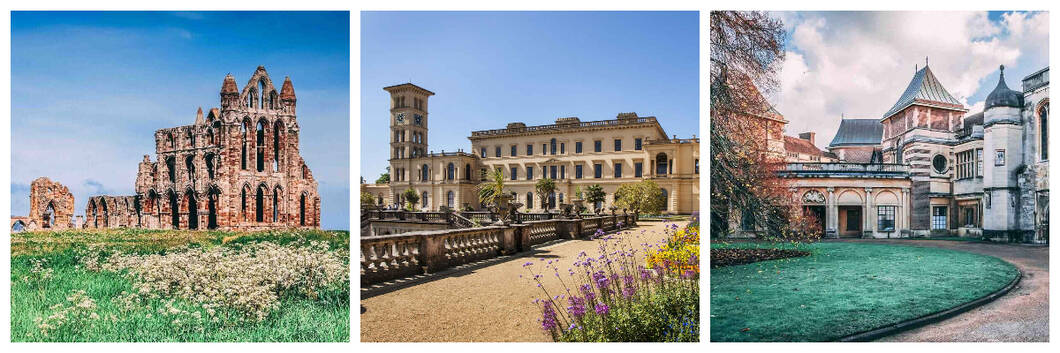
    Eltham Palace, London

    Eltham Palace North Side London
    North-side of Eltham Palace

    Eltham Palace in Greenwich was once a medieval palace and a Tudor royal house before it came to be what it is today – a unique Art Deco mansion. Millionaires Stephen and Virginia Courtauld bought the palace in 1933 and restored it into an extravagant home.

    Take an interactive guide which explains the history of the palace more, and get a feel for what the couple’s lives were once like.

    There are some pretty unusual rooms in the palace, like the map room where they would plan expeditions and the sleeping quarters which were designed especially for their pet lemur. Make your way through the dramatic entrance hall, the luxurious golden bathroom and the basement bunker.

    Head outside into the 19 acres of beautiful gardens. Stroll through the Rock Garden and cross the moat on London’s oldest working bridge. Grab a bite to eat in the glasshouse cafe, and check out some Art Deco gifts in the shop. Mottingham Station is half a mile from the palace, whereas Eltham station is a bit further away. 

    You can also take the TfL bus service – 124, 126, 160 and 161 stop close by.

    Clifford’s Tower, North Yorkshire

    Clifford’s Tower, North Yorkshire

    When visiting the historical city of York, a visit to Clifford’s Tower is a must. Standing on a high mound with stunning views across the city, Clifford’s Tower is almost all that is left of York Castle, which was built by William the Conqueror in 1068.

    The tower has suffered a stormy past, having been burned twice before it was rebuilt in the 13th century. The name comes from Roger de Clifford who was hanged from the tower walls for treason against Edward II.

    You can take a self-guided tour on the ground floor, once home to the royal exchequer and treasury. Make your way to the top of the tower and take the wall walk.

    From here you’ll be able to see the remains of the medieval castle, and spot for the buildings which form the ‘Eye of York’. Clifford’s Tower is a short walk from York station, but there are also several buses which stop along Clifford St and Tower St.

    Stonehenge, Wiltshire

    Stonehenge is arguably the world’s most famous prehistoric monument. The UNESCO World Heritage Site has always been shrouded in mystery, and speculation of its meaning and significance continue to develop today.

    Take your time walking around the stone circle and admire the great columns. The visitor centre has an exhibition with over 250 archaeological objects including jewellery, pottery and even human remains.

    Nearby you’ll find five recreated Neolithic houses which are furnished with artefacts like axes and pottery. They’re based on the remains of houses which were excavated in 2006 and 2007, and give you a glimpse of what a typical home looked like when Stonehenge was built.

    You can find out more about what life was like four and half thousand years ago from volunteer guides, who can show you what common daily activities were like, including grinding grain and making rope out of rushes.

    There is a Stonehenge Tour Bus which collects visitors from Salisbury train and bus stations throughout the year. Otherwise, I recommend a Stonehenge tour as this will be the easiest route to get there.

    Pendennis Castle, Cornwall

    Pendennis Castle was constructed by Henry VIII between 1540 and 1542. Originally built as an artillery fort, the castle has defended Cornwall for hundreds of years, including defence against invasion from France and the Holy Roman Empire.

    The castle is perched on a headland and has panoramic views out to sea and the nearby town of Falmouth. There are plenty of exciting activities to get stuck into at Pendennis Castle. Visit the exhibition that explains the role of Pendennis Castle during the First World War, and take a look at the artefacts and memorabilia from that era.

    The castle has a collection of big guns used as coast defence weapons from Tudor, Napoleonic, Victorian and 20th century times. There is even a tunnel leading to Half Moon Battery, where ammunition was stored in the Second World War. You can find out how enemy ships were spotted during the war at the Battery Observation post.

    If you fancy something to eat, why not dine as the Tudors did in the castle’s cafe, which serves fresh Cornish dishes made with a Tudor twist. Falmouth Docks station is half a mile from Pendennis Castle.

    There is also the Falmouth Town Shuttle Bus 366 which stops at Pendennis Rise, close to the castle.

    1066 Battle of Hastings Abbey and Battlefield, Sussex

    1066 is a particularly significant year in British history, which was when the Battle of Hastings was fought. The armies of King Harold and William the Conqueror came to face each other, changing the course of England’s history.

    You can visit the site where the battle happened, and follow its tale with an audio guide. Explore the ruins of the abbey, the site where King Harold allegedly died. The abbey gatehouse has an exciting exhibition which looks at the stories of the abbey throughout history, complete with fascinating artefacts. The gatehouse also has a rooftop viewing platform with panoramic views across the battlefield.

    The site is also home to a rare surviving example of an ice house and dairy, which were commonly used for entertaining guests. The ice house at Battle Abbey was built between 1810 and 1820 and features a thatched dairy and underground icehouse, once used to store ice collected from ponds. The train station at Battle is half a mile from the abbey.

    There are local buses as well, including Stagecoach services 304 and 305, and Renown services 95 and 355.

    Tynemouth Priory, Tyne and Wear

    tynemouth priory tyne and wear
    Tynemouth Castle and Priory was once the largest fortified ares in England. The castle overlooks the North Sea and the River Tyne.

    Located on the North East coast of England, Tynemouth Castle and Priory is set on a rocky headland overlooking Tynemouth Pier. The priory was founded in the early 7th century, and in 651 King Oswin of Deira was buried at Tynemouth.

    He was the first of three kings who were buried at the priory. The two other kings to be buried here were Osred II and Malcolm III, and the site became a place of pilgrimage.

    Through the ‘Life in the Stronghold’ exhibition, you can discover the story of the priory from its original beginnings as an Iron Age settlement, an Anglo-Saxon monastery, a royal castle, artillery fort and coastal defence. There is also a 15th-century chapel to be explored.

    Don’t miss the restored gun battery and canon, used to defend Tyne during the First and Second World Wars.

    With stunning views across the North Sea and the River Tyne, the surrounding gardens are a great place to have a picnic on a sunny day. Tynemouth metro station is half a mile away from the priory. The 306 bus runs from Newcastle city centre to Whitley Bay, and Tynemouth Village is the closest stop.

    Carlisle Castle, Cumbria

    Carlisle Castle is located near the ruins of Hadrian’s Wall. First built in 1092 by William Rufus, the castle was built as a defence against the Scots. It was constructed on top of the remains of a Roman fort dating back to the first to fourth centuries.

    The castle is probably most known for being the place Mary, Queen of Scots was held captive in 1568. You can visit the tower that she was imprisoned in and learn more about her time at the castle through the exhibition.

    Listen to the stories of prominent inhabitants of the castle, including Bonnie Prince Charlie and Kinmont Willie Armstrong.

    Take a look at the stone carvings in the castle keep, or discover the warden’s apartment which was once King Richard the Third’s bedroom.

    The castle is home to Cumbria’s Museum of Military Life, which displays the 300 year history of Cumbria’s Infantry Regiment. It has an immersive exhibition, featuring a First World War trench environment, audio/visual displays, an extensive collection of uniforms, medals and weapons, and an interactive trail for kids.

    Carlisle Castle is half a mile away from Carlisle station. Make your way through the historic town centre and under a subway at the Tuille House Museum.

    There are also several Stagecoach buses that stop nearby.

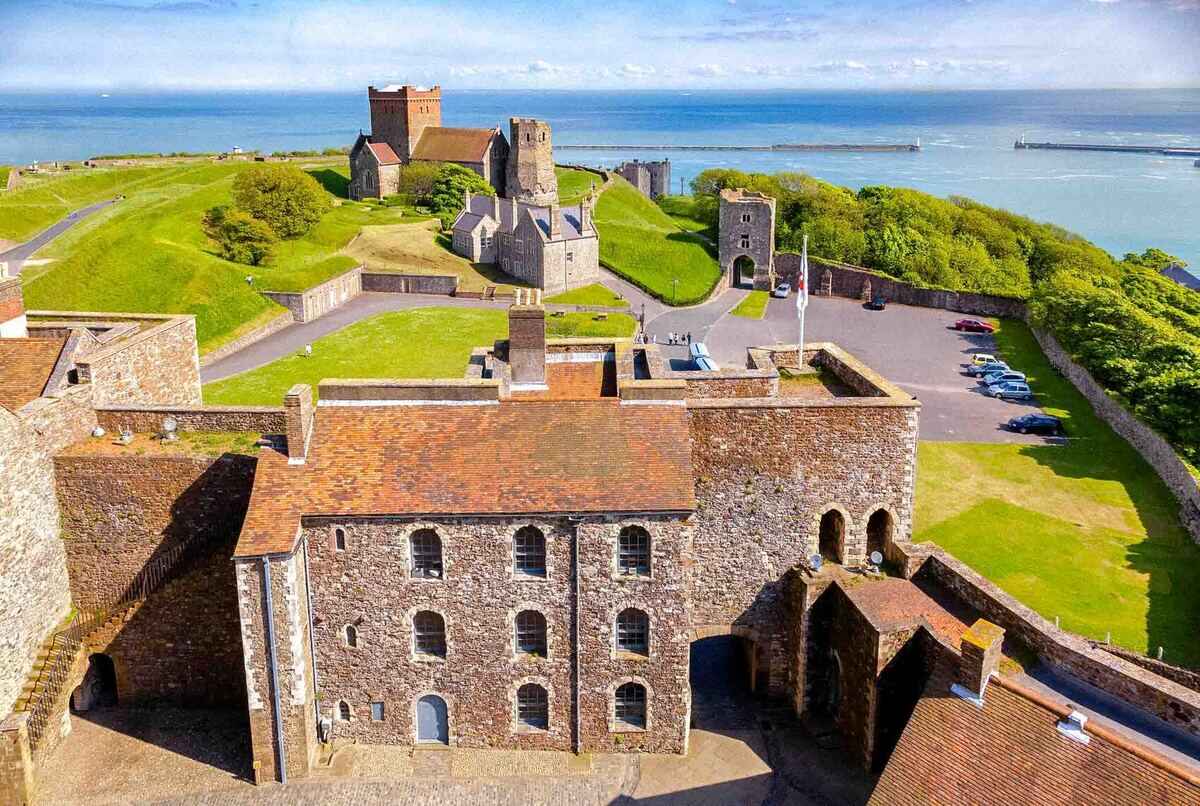
    Dover Castle, Kent

    dover castle kent
    Inside of Dover Castle with St Mary and Roman lighthouse in the background.

    One of the largest castles in England, Dover Castle was founded in the 11th century by William the Conqueror and is nicknamed the ‘Key to England’ because of its remarkable defences. There is so much to explore within the castle.

    Start at the Great Tower and admire the luxurious furnishings, decked out to what it would’ve looked like in medieval times. Head down to the underground hospital where Second World War casualties were treated.

    There are audio effects in place, including the gripping story of an injured pilot fighting for his life. Explore the wartime tunnels beneath the castle and watch footage from the Dunkirk evacuation, or check out the oldest surviving lighthouse in the country.

    The castle has an escape room which is inspired by the Cold War history of the castle. Once you’ve solved the puzzle, reward yourself with a treat from the choice of eateries.

    The Dover Priory station is a half an hour walk from the castle. You can also take the Stagecoach 15 bus which leaves from Priory Street. There’s also the option of taking a taxi from the station which shouldn’t cost too much.

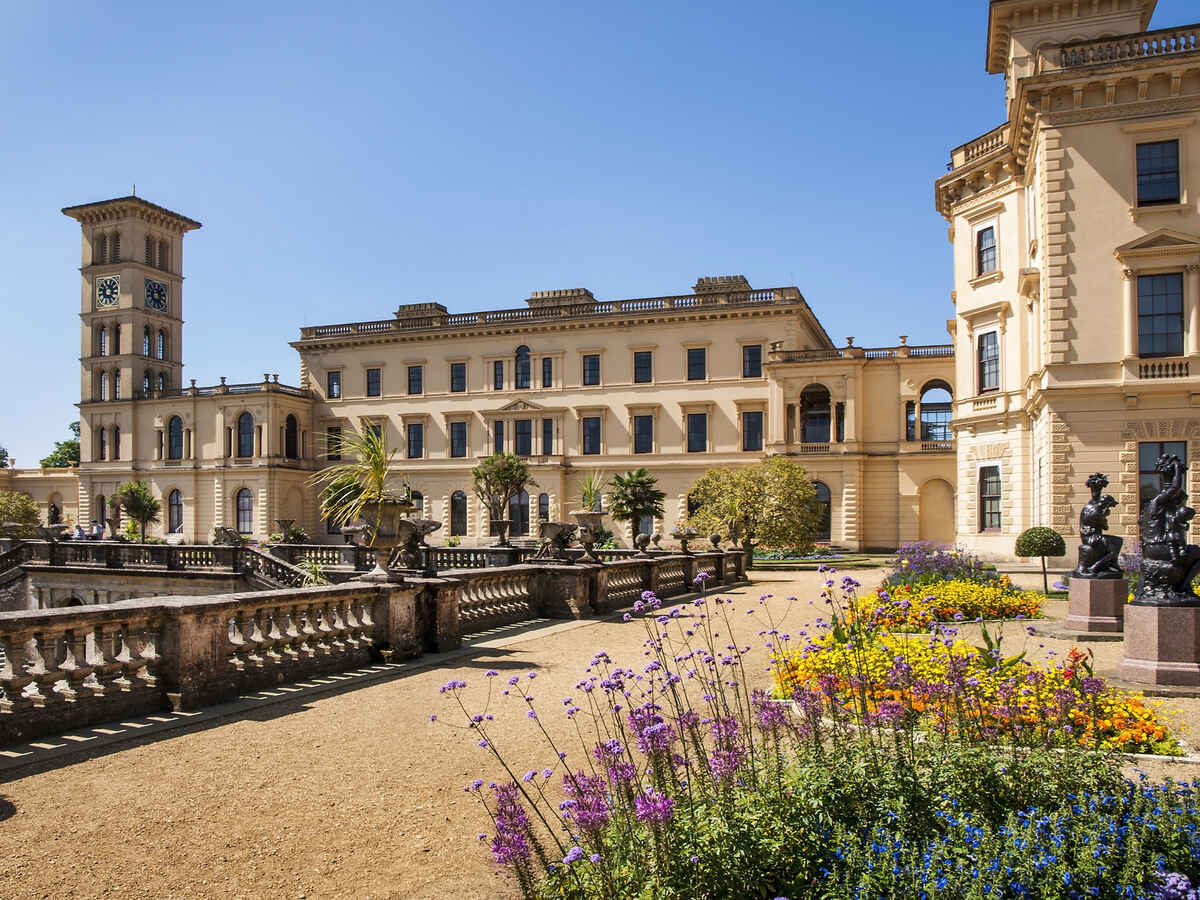
    Osborne, Isle of Wight

    osborne isle of wight
    Queen Victoria used Osborn House as her summer home and passed away here in 1901. It was designed by her husband Prince Albert in the Italian Renaissance style.

    Queen Victoria once said “it is impossible to imagine a prettier spot” when describing Osborne House, her royal holiday home on the Isle of Wight. Constructed between 1845 and 1851, Queen Victoria and Prince Albert’s rural retreat was built in the style of an Italian Renaissance palazzo.

    In 1901 Queen Victoria died at the house, which is now open for tours. Explore the lavish staterooms where the Queen would entertain royals and aristocrats. Admire the collection of artwork that the couple accumulated over the years, many of them Christmas and birthday present to each other.

    Queen Victoria and Prince Albert had nine children, and you can take a look at the nursery and family rooms at the palace. Step onto the balcony that the royal couple used to sit on, and see the Queen’s bedroom where she died.

    There is a ‘Children at Osborne’ exhibition where you can learn about the different children and their interests and personalities. The palace has a beautiful private beach where the Queen bathed and her children learned to swim. It’s open to the public, and there’s even a cafe where you can grab an ice cream.

    To get to Osborne, take the Southampton to Cowes ferry and then a bus to Osborne.

    Chiswick House, London

    This Palladian villa in west London is an impressive example of 18th century British architecture. The house was designed by Richard Boyle, the third Earl of Burlington and completed in 1729.

    Inside, you’ll find exquisitely decorated rooms, filled with paintings and architectural drawings belonging to Boyle. The house was never designed to be a private residence and was seen as an architectural experiment. Look out for the velvet wallpaper and the beautifully intricate ceilings.

    The garden itself is worth visiting, notable for being the birthplace of the English Landscape Movement. Spread over 65 acres, there is so much of it to explore.

    Admire the famous cedars of Lebanon, relax by the lake and check out the camellia collection in the conservatory. The garden cafe is an airy, modern space to relax in, and serves breakfasts, light lunches and cakes.

    If you visit in the autumn, you can even buy fresh produce from the garden. Chiswick station is only half a mile from the house on the District and Overground lines.

    The nearest tube station is Turnham Green, just over a mile away.

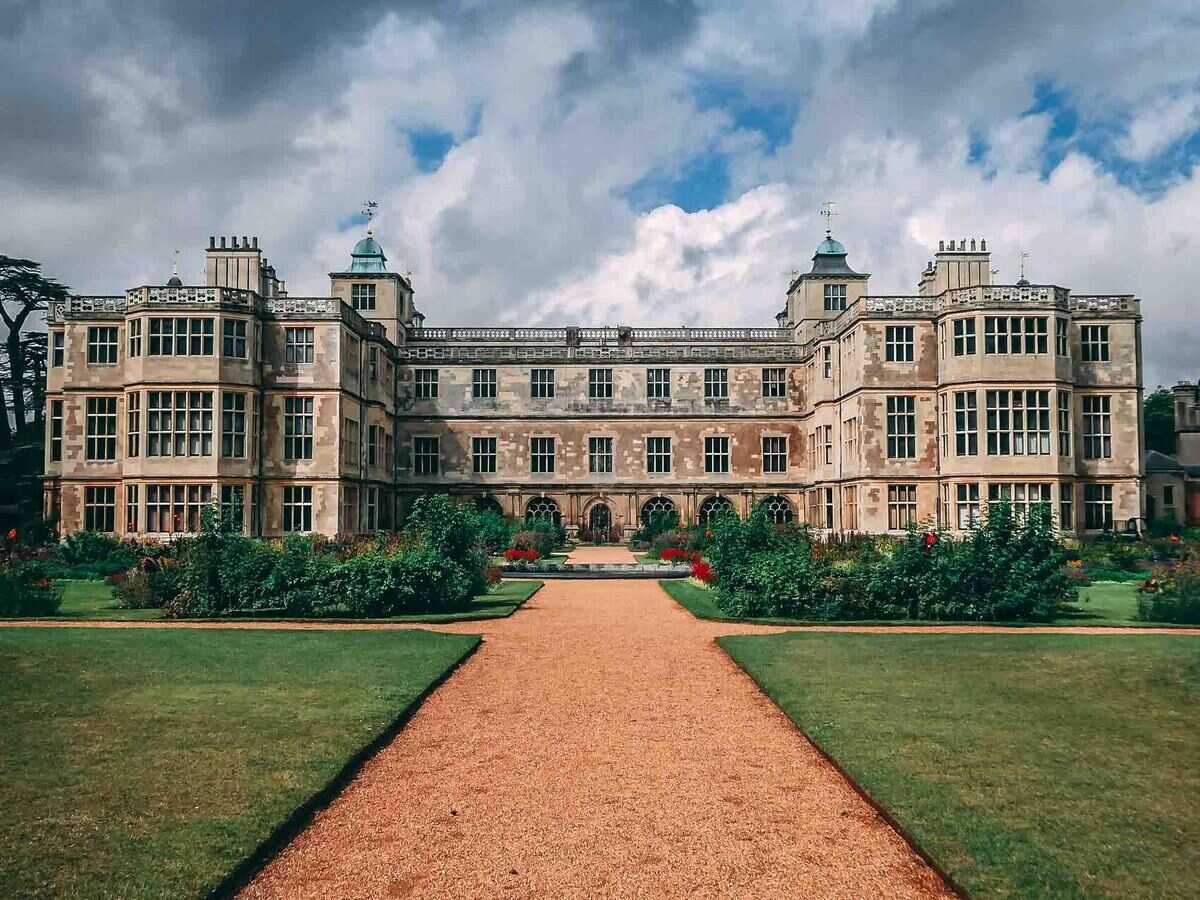
    Audley End House and Gardens, Essex

    audley end house and gardens essex

    This 17th century country house is one of the finest Jacobean houses in England. The house was built on the site of Walden Abbey, a monastery granted to Henry VIII in 1538.

    It was transformed into a domestic house, before being extended into a grand mansion for entertaining King James I. The first Baron of Braybrook made significant changes to the house before he passed in 1797, including designing new rooms.

    Wander through the different rooms, including the great hall, state apartments, dressing rooms and the 18th-century chapel. The state bed is one of the most notable 18th-century beds in England and was made especially for a royal visit in 1794.

    Kids will love the 1830s nursery room and dressing up as Victorian children. Learn about what life was like as a Victorian servant in the Service Wing and Coal Gallery.

    The Baron of Braybrook also commissioned Capability Brown to design the gardens. The River Granta runs through the gardens, with several charming bridges crossing it.

    Don’t miss the serpentine lake and the walled kitchen garden, which is full of organic fruit and veg. 

    Audley End station is a mile and a quarter away from the house and there is a footpath that runs along the main road.

    Alternatively, there are several local buses that go to Saffron Walden and stop within a quarter of a mile to the house.

    York Cold War Bunker, North Yorkshire

    The formal name for this bunker is Royal Observer Corps 20 Group Headquarters. This semi-submerged nuclear bunker is perhaps one of the most mysterious and eerie English Heritages sites, and was only open to the public from 2006.

    The bunker was opened in 1961 when it was used by different government agencies until it closed in 1991. It was originally used by the Royal Observer Corps, and designed to monitor fallout in case of a nuclear attack. The bunker features decontamination rooms and sewage ejectors which could serve up to 60 people in bombproof conditions.

    The bunker runs guided tours which include a short introductory film showcasing original Corps members who tell their stories of working in the bunker during the Cold War. The bunker is only a half hour walk from York station. There are also several buses that stop close by.

    Pevensey Castle, Kent

    Pevensey Castle is a medieval castle and former Roman Saxon Shore fort built around 290 AD. Although it’s not known for certain why it was built, it’s thought to have been a part of a Roman defensive system to guard the coast against Saxon pirates.

    After the Romans, the castle fell into ruins but was subsequently occupied by the Normans, where William the Conqueror landed for the first time in 1066. During the Second World War, the castle was used by the Home Guard, British and Canadian Armies and the United States Army Air Corps.

    Today, the site is managed by English Heritage and you can still see the machine gun posts that were left there.

    Take a tour to discover the 16 centuries of history. The dungeons are open to visitors and there is a newly added museum. It displays important artefacts including jewellery, household items and weapons which were excavated from the site.

    Pevensey and Westham and Pevensey Bay stations are both a ten-minute walk from the station. The 55 Stagecoach bus connects the stations to the castle.

    Whitby Abbey, North Yorkshire

    Whitby Abbey Spring

    Perched on a clifftop with magnificent sea views, Whitby Abbey is one of the most interesting attractions in North Yorkshire and has been popular with visitors for over 1500 years.

    The abbey was once a 7th century Christian monastery which later became a Benedictine abbey. Over the years, it has served as a king’s burial place, the location for a historic meeting between Celtic and Roman clerics, the home of the poet Caedmon, and perhaps most famously as the inspiration for Bram Stoker’s Dracula.

    Walk around the extensive ruins of the abbey and enjoy views over the town and across the sea. Walk in the footsteps of many different religious leaders, artists, writers and poets, including St Hild, a leading abbess. At the visitor centre, you’ll find exhibitions that tell the story of the abbey using artefacts including medieval manuscripts, Anglo-Saxon crosses and a signed copy of Dracula.

    During the school holidays there are plenty of activities for the whole family to get involved in. Whitby station is served by Northern Rail and the North York Moors Railway.

    The abbey is only half a mile from the station and includes a walk up the famous 199 steps.

    Stott Park Bobbin Mill, Cumbria

    The Stott Park Bobbin Mill was built in 1835, and is still working today. It was designed to produce millions of wooden bobbins which were used in the spinning and weaving industries in Lancashire. Located on the picturesque shores of Lake Windermere, the mill is the only remaining working bobbin mill in the Lake District.

    There are tours on offer to find out about the story of the mill and learn about the production process from tree to the bobbin.

    See the original Victorian machinery at work, which was originally powered using a waterwheel and steam engine.

    The tour guides will give demonstrations on how the machinery is used and you can even see bobbins being made. Don’t forget to pick one up for yourself at the gift shop.

    Although relatively small compared to other mills, there were around 250 men and boys who worked here, producing approximately a quarter of a million bobbins per week.

    The mill was named best small visitor attraction at the Cumbria Tourism Awards in 2014, and won Silver at the visit England Awards in 2015.

    To get to Stott Park, take a boat from Ambleside or Windermere. Windermere station has trains from Oxenholme Lake District station.

  • 17 Terrific Ways on How to Cure Wanderlust Without Travelling

    17 Terrific Ways on How to Cure Wanderlust Without Travelling

    How do you manage your wanderlust when you’re stuck at home, dreaming of adventure somewhere else?

    Whether you’re housebound due to illness, lack of funds, no annual leave left or something else – there are plenty of ways to still get your fix without venturing far from home or breaking the bank.

    If you are wondering how to cure wanderlust? Here are 17 terrific ways that can help you cure your wanderlust in your own city – or even at home in your own kitchen, lounge, or backyard.

    1. Enjoy the Outdoors
    2. Get in Your Kitchen
    3. Go on A Virtual Tour of One of The World’s Famous Museums
    4. Watch A Performance at Shakespeare’s Globe Theatre
    5. Enrol in A Free Online Course
    6. Get Green-Fingered
    7. Have A Group Skype Or Zoom Meet-Up with Friends from Your Travels
    8. Embrace A New Hobby
    9. Go Hiking
    10. Meet Your Inner Yogi
    11. Sunrise and Sunset
    12. Immerse Yourself in A Great Book
    13. Plan Your Next Adventure
    14. Enjoy A Day of Pampering
    15. Embrace A New Culture at Home
    16. Invent A Cocktail Night
    17. Learn A Language

    Keep on scrolling down, to get the full scoop on any and each of these ideas!

    1# Enjoy The Outdoors

    You don’t have to venture far to get your wanderlust. No matter where you live there will be an outside area that you can make the most of and even make it an adventure.

    As someone that lives in London, here are some of the ideas that come to mind!

    The Capital Ring allows you to see and experience just how diverse this great city really is. It is 78 miles long though, so it’s divided into 15 sections – you won’t be able to do it all at once!

    Hampstead Heath is definitely a place to wander and forget that you’re actually in London. With thick parts of the forest to walk through, swimming ponds, plenty of wildlife, and Kenwood House to visit, it’s a big slice of English countryside within an enormous city.

    Walk up to the top of Parliament Hill – the highest point of the Heath – for a spectacular free view of the city. It’s a great spot to watch the sunset, with a slice of pizza and a bottle of wine. Perfetto!

    Even just stepping out your front door and taking a different route than you usually would, might take you to a part of town you never knew existed. So jump on your bike, strap on your rollerblades, or simply tie up your shoelaces and hit the road!

    2# Get In Your Kitchen

    Vegan Nachos
    There is nothing better than exploring the world through food. Currently dreaming about eating these Vegan Nachos.

    One of the best things about travelling is trying new foods and experiencing the local cuisine. You can still go on a gastronomic journey in your own kitchen. Browse recipes online and take yourself around the world with your cooking.

    I personally love to cook a lot of Japanese, Indian, Italian and Thai. Having a collection of cookbooks or YouTube channels really helps to get the inspiration juices flowing.

    The great thing about YouTube is that there are plenty of videos online where you can watch locals whipping up something in their own kitchens. You’ll receive authentic tuition in a variety of cuisines without having to leave your own home.

    Some of my favourites are Peaceful Cuisine (plant-based Japanese), chef Gaz Oakley, the Vegan Italian Kitchen, Mary Lin’s Test Kitchen and Vegan Richa.

    3# Go On A Virtual Tour Of One Of The World’s Famous Museums

    British Museum

    Just because the museums are closed or you can’t get to them, doesn’t mean that you can’t “visit” them.

    Many of the world’s top museums have online collections – some even have virtual tours.

    Here’s a list of my top thirteen recommendations – click on the museum of your choice to be redirected!

    4# Watch A Performance At Shakespeare’s Globe Theatre

    London’s famous Globe Theatre and the adjoining traditional candlelit theatre, the Sam Wanamaker Playhouse, may both be currently closed – but you can still watch performances from the comfort of your own home.

    Globe Player has a whole catalogue of performances from the famous stage, featuring some of the most critically acclaimed and memorable adaptations from the past decade.

    For the cost of a Groundling ticket (cheapest in the house!), you can rent a private performance in your very own home.

    Probably a heck of a lot more comfortable than standing in the Groundling Pit, too – not to mention safer weather-wise, especially at the moment!

    If you’re particularly fond of the Bard, bundles of nine Globe seasons are also available to purchase. There is also a limited amount of free content on Globe Player for you to enjoy.

    5# Enrol In A Free Online Course

    There’s a ton of free courses that you can do online, including many from some of the world’s leading universities and institutions.

    The majority are highly interactive, with the option for you to not only ask questions of course leaders, educators, and experts in a given field – but also provide the opportunity to “meet” and engage with fellow students in the same course from all around the world. You may even make some great friends that you can meet up with on future travels!

    Future Learn has a good selection of short online courses from a variety of top universities and specialist organisations.

    Or why not enrol in a photography course, and master your skill ahead of capturing some amazing images on your next trip?

    6# Get Green-Fingered

    Get back in touch with nature by giving your garden some TLC. If you don’t have one, it might be time to invest in some house plants. They’re great for oxygenating your home, as well as bringing a bit of peace and tranquillity.

    Many exotic species also thrive outside their place of origin – so head to the garden centre and seek out any plants that differ from what you’re used to, reminding you of places you’ve visited, or hope to visit. Another way to cure wanderlust!

    7# Have A Group Skype Or Zoom Meet-Up With Friends From Your Travels

    Missing some of the amazing people you’ve met on your travels? Arrange a catch-up!

    Free apps like Skype and Zoom enable you to “meet” with friends via video conference (it’s even possible on Facebook Messenger, depending on the number of people).

    Grab a few drinks, chat, and play some games. Zoom actually has a whiteboard feature which would allow you to play Pictionary and other games (you can get a free Pictionary word generator here). Or why not put together a pub quiz? Play some of your favourite holiday games from the trip, or find something new and challenging.

    This is even something you could do with your local tribe if you’re housebound or strapped for cash.

    8# Embrace A New Hobby

    I’ve lost count of the number of times I’ve said: “I wish I had the time to start painting again”, “I’d love to write a book”, or “knitting looks really cool” (no lie)!

    Being stuck at home is the perfect time to start that new thing you’ve always wished you could do. If it’s a new skill, you’ll find loads of free videos and tutorials online.

    Painting is a great way to get your creative juices flowing, and there’s no limit to what you can paint – or where! You could paint some favourite scenery from memorable places you’ve visited – or where you’d like to go next?

    Another fantastic idea is scrapbooking – print off your holiday snaps and turn them into a special memento.

    9# Go Hiking

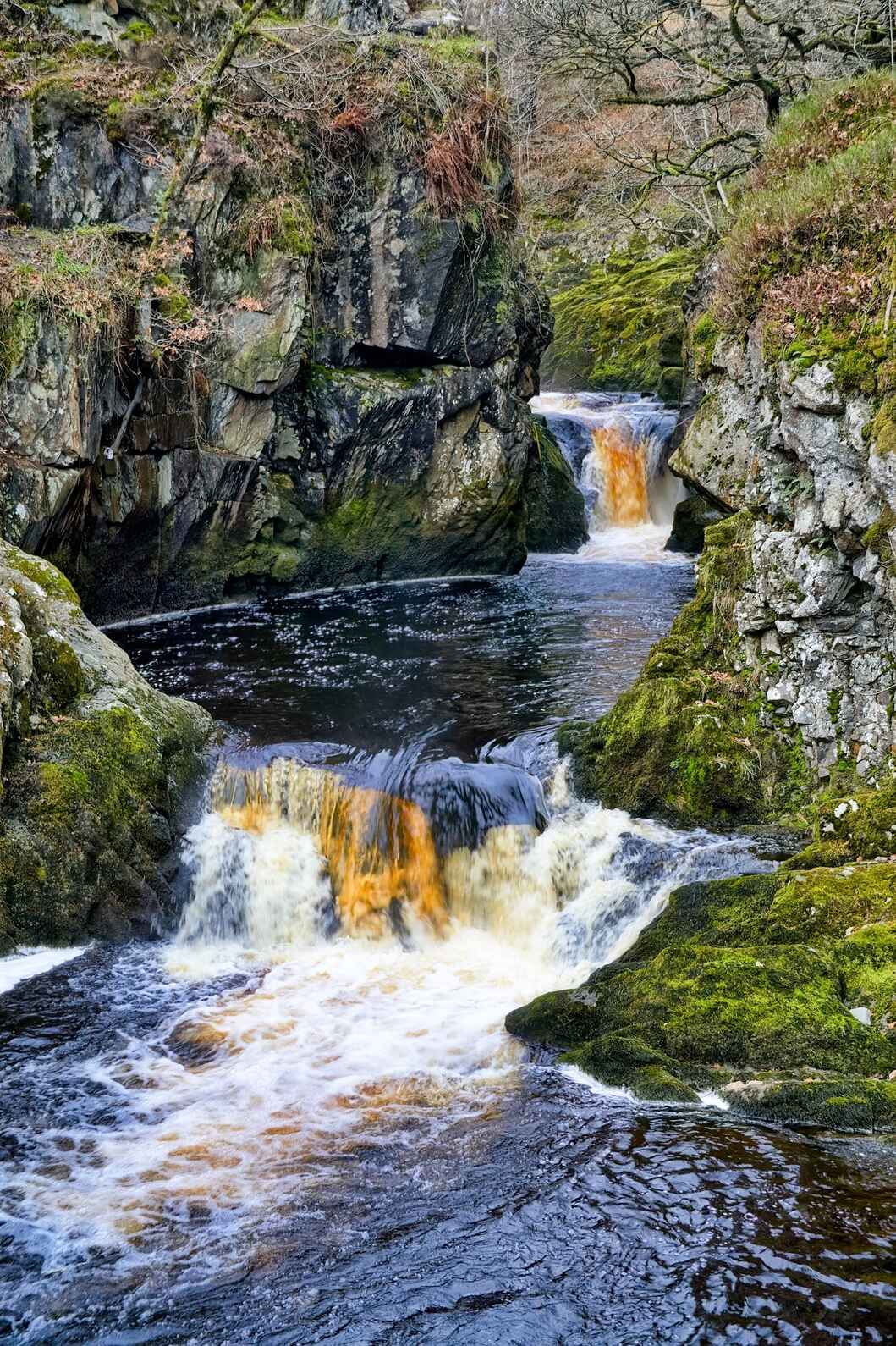
    Ingleton-Falls-North-Yorkshire

    See if there are any hiking trails near to you – you might be surprised! But even if you’re housebound, you can still explore some of the world’s greatest trails via YouTube.

    Loads of videos have been uploaded that enable you to “hike” the Great Divide in Colorado, the Appalachian Trail, the great National Parks – and more. Might even inspire your next trip!

    If you live in England or plan on travelling here at some point, here are 15 Spectacular Forest And Woodland Walks In England that are perfect to add to your list!

    10# Meet Your Inner Yogi

    Yoga is a great way to bring some inner peace as well as strengthen your body. If you’re not able to get to a yoga class, the great news is that there are many now online – and the majority are free.

    A number of yoga teachers are now also live streaming their classes – so see if there is one that you can join in real time.

    If you can’t get outside for your daily yoga fix, don’t worry – you’ll still benefit greatly from daily yoga practice in your lounge.

    I love Yoga with Adriene – she has free classes for all levels on her YouTube channel.

    11# Sunrise and Sunset

    Enjoy the peacefulness of rising early to greet the sun. If you’ve ever done it, you’ll know there’s something special about it.

    Also take a moment to enjoy sunsets from your own window or backyard.

    So often, sunsets are a memorable experience when travelling – but we rarely make the effort to appreciate them where we are right now.

    12# Immerse Yourself In A Great Book

    It’s actually incredibly easy to experience a new place right where we are – simply by immersing ourselves in a good book. Many of us have a stack of novels that we’ve never opened, but if you don’t, there’s no shortage of stories that can be downloaded to your phone or tablet.

    Go on an adventure in a foreign land, explore the great outdoors, have a summer romance, or solve a crime…

    Some of my favourite reads recently are:

    13# Plan Your Next Adventure

    Even if you can’t travel at the moment for whatever reason, there is nothing to stop you planning your next trip. Make a bucket list to brainstorm some ideas about where you might like to go next.

    Sign up to airline, rail, and tour company mailing lists so that you’re the first to see the good deals as they become available. Do some accommodation hunting for your dream location – small and unusual options can often book out quickly, so it’s good to keep an eye on things.

    Get tips from locals on some of the online travel forums – maybe even make a new friend to meet up with once you are there.

    Think about what museums are a must to visit, which walking tours look good, and which restaurants you’ll want to eat at. A lot of the stress will be taken out of your next trip if you plan it (and start saving for it!) well in advance.

    18# Enjoy A Day of Pampering

    Rebalance your well-being with some pampering at home. Treat yourself to a facemask session, rope someone into giving you a massage ?, take a luxurious bath or just relax.

    One of the least expensive things you can do for your skin is a sheet mask. Sheet masks originated from Japan and South Korea and are a great gateway into their beauty routines. They are also widely known all over Asia so you will find them in a lot of beauty stores.

    The best time to use a sheet mask is during the night or in the morning before you apply your make-up.

    The creamer and richer mask should be used at night so all the goodness can sink into your skin while you are sleeping. Wake up feeling radiant and glowing.

    19# Embrace a New Culture at Home

    The great thing about travelling the world is adopting other cultures into your lifestyle. One that became popular in 2017 was Hygge.

    Hygge is a part of Danish and Norwegian culture which is all about the atmosphere and experiences than about things. It’s meant to invoke a sense of cosiness and comfortability.

    Some of the things it’s been called ‘the art of creating intimacy’, ‘cosiness of the soul’, ‘cosy togetherness’ and ‘cocoa by candlelight’.

    Some of the words that the locals associate hygge with are:

    • Hot drinks
    • Candles
    • Fireplaces
    • Christmas
    • Board games
    • Holiday
    • Music
    • Sweets and cake
    • Cooking
    • Books
    • Sundays
    • And much more.

    Nothing sounds better than lighting some candles or cosying up to a warm fireplace with hot cocoa and really embracing ‘cocoa by candlelight’.

    20# Invent A Cocktail Night

    Cocktails are always the best treat on a holiday and a little splurge. Whether you have a virgin or alcoholic cocktail, it’s a cool and refreshing way to lift the spirits!

    The most popular holidays cocktails that come to mind are strawberry margarita, a daiquiri, a mojito or a pina colada.

    No matter what your choice of cocktail is, invent a cocktail night to escape back to those holiday memories.

    Just imagine drinking a pina colada pretending you’re on a beach and singing:

    “If you like Pina Coladas, and getting caught in the rain

    If you’re not into yoga, if you have half a brain

    If you like making love at midnight, in the dunes of the cape

    I’m the love that you’ve looked for, write to me, and escape”

    Rupert Holmes – Escape (The Piña Colada Song)

    I’ll leave you with that thought!

    21# Learn A Language

    Learning a language is a really great way to connect with locals and really embrace the culture when you get to travel again.

    I’ve been saying for ages that I should learn a language and I’ve recently joined Rosetta Stone for 12 months to learn Spanish. Hopefully, I will be a semi-pro by the end of it ?.

    If you are looking to save money, then Duolingo is a great free app that has quite a few languages on offer.

    You can also look at Meet-up to get together with other people learning languages or reach out on Facebook groups to find like-minded people. 

    With all the options available it’s hard to keep putting it off!

    In conclusion…

    As you can see, not being able to go anywhere doesn’t mean that you can’t still have some great adventures, experience art and culture, enjoy sunsets, savour exotic culinary delights, or appreciate the great outdoors.

    Cure your wanderlust by focussing on some of the best that travel has to offer: great food, fine art, exploring somewhere different, learning something new, and connecting with awesome people and great conversation.

    All of this can, in fact, be done within the confines of where you are right now. Using the tools that you have, enjoy this wonderful life! 

  • 10 Amazing Places to Visit in England Outside of London

    10 Amazing Places to Visit in England Outside of London

    England has a fascinating culture and history, a varied landscape and a lot of unique places both natural and manmade. While London is one of my favourite places in the world there are places to visit in England outside of London.

    There are so many reasons why you should get outside of London, for example:

    • Historical interest, in particular, it is all around and easy to see and with a little imagination also experience. 
    • Nature is an important part of English heritage and some of these get out of the cities to experience the natural phenomenon of the countryside.

    If you’re searching for ideas of where you can go in England other than London? Here are 10 incredible ideas for new adventures and places to visit in England.

    Beatles Trail

    Fab four taxi tour cab infront of Penny Lane sign
    Make sure you visit the famous Penny Lane street sign.

    Most people will know that the iconic pop group of the ‘60’s The Beatles come from Liverpool and unsurprisingly there is a Beatles Trail:

    It is possible to buy a map and plan your own trail around the city, but there are also several guided tours to take you around the Beatles home city and check out the Beatles hotspots.

    Start with the museum in the Albert Dock all about the Beatles called The Beatles Story, the museum is the authority on all things Beatles and even has replicas of some of the famous places, such as The Cavern and Matthew Street.  You are whisked back to the 1960’s for a fact filled Beatles experience.

    Visit Penny Lane and Strawberry Field, Paul McCartney’s childhood home, which is now also a museum and John Lennon’s childhood home.  See the murals drawn by Cynthia Lennon and the fabulous Beatles statue.

    The Lake District National Park

    The cute rowboats in Windermere in the Lake District.
    The cute rowboats in Windermere in the Lake District.

    England’s first national park, The Lake District in Cumbria is unique with its rolling hills, rugged areas and sweeping lakes all interspersed with cute villages, Scafell Pike, England’s tallest mountain is also in the Lake District.  

    Whilst Scafell Pike is a must do for serious hill walkers, there are several routes up the mountain to suit different people and stunning far reaching views from the top. 

    It is not just the hill walkers who gain from visiting the Lake District though, there is such a lot that is special about the area.  There are lots of other easier trails suitable for the less experienced or pleasure walkers, gentle rambles and family friendly explorations and even guided walks. 

    It is also not only walking that the Lake District offers either, there are cycling friendly trails, boat hire and of course the chance to just sit and look out over a lake and watch the world go by. 

    Lake Windermere is the largest and probably the best known of the lakes and it is possible to take boats from village to village around the lake. 

    Watch the various water vessels or hire a boat, kayak or paddle board and get out on the water that way. 

    There is a visitor centre near Windermere which includes children’s play area and treetop nets, fully enclosed nets like trampolines nine metres off the ground. 

    One of the smaller lakes Coniston is a great place to stay with plenty of little shops, pubs and B&B’s nearby. 

    Visit the pretty village of Hawkshead with its cobbled lanes, Beatrix Potter gallery and Wordsworth connection, there are pubs and cafes to enjoy as well.

    An example of a different attraction is the Haverthwaite Steam Railway which is a great way to enjoy the spectacular scenery of the Leven valley.

    Covering nine hundred square miles there are plenty of choices of where to go and things to find to explore.

    Cotswolds Towns and Villages

    Burford is a quintessential Cotswold town with beautiful honey-coloured natural stone. Perfect for photos!
    Burford is a quintessential Cotswold town with beautiful honey-coloured natural stone. Perfect for photos!

    England has many pretty villages and towns; one of the best places to see several in one day or over a few days is to visit the Cotswolds

    An area of outstanding natural beauty AONB, the natural beauty is enhanced by the honey-coloured natural stone that many of the houses are built from. 

    The Cotswolds is an area which is in parts of five counties in south-west England; Gloucestershire, Wiltshire, Oxfordshire, Warwickshire, Worcestershire and North East Somerset including the famous town of Bath.

    Many of the listed places will offer B&B and it is possible for the independent traveller to find a hidden gem off the beaten track.  Here though to start with are two stunningly beautiful places to visit:

    Castle Combe Wiltshire

    The houses are built from the lovely honey hued Cotswold stone topped with rustic ancient tiles and the locals ensure it is kept pretty with lovely hanging baskets and well kept gardens. 

    Castle Combe was featured in the film War Horse and if you decide to stay there, be sure to leave the car and go for a stroll to best appreciate the beauty of the little town.

    Bourton-on-the-Water Gloucestershire

    Picture postcard perfect and the quintessential Cotswold village, there is no wonder it is called the Venice of the Cotswolds. 

    The main street has the river Windrush running alongside it, crossed at regular intervals by low Cotswold stone bridges, the backdrop if the tickle of water lends a romantic feel to this beautiful place. 

    There is plenty to do in Bourton-on-the-Water, there is a world famous motor museum, a model village that beautifully captures the village in an easy to explore miniature version, a model railway, a nature reserve, a brewery and and  of course some lovely little shops, cafes and pubs.

    Other places recommended to visit are Burford, Fairford or Woodstock and if grand houses interest you then visit Blenheim Palace the birth place of Sir Winston Churchill which is in Woodstock. 

    Rye

    Mermaid Street in Rye
    Mermaid Street in Rye

    Rye in East Sussex, lying serenely between rolling hills and the English Channel just along the coast from Hastings, it is a must visit location teeming with history through the ages and giving a fascinating glimpse into medieval England together with the nearby Harbour, Rye offers a unique experience. 

    With its cobbled lanes and crooked half timbered houses, Rye retains much of its medieval character and it is easy to imagine being back in history, was that a smuggler skulking in a doorway or just a shadow? Is that secret passage safe…? 

    Mermaid Street is a good place to start with its timber framed houses, many with unusual names giving a taste of the history of the place, these days the town is peaceful and gentle, picturesque and a great place for taking photos. 

    The town has far reaching views over the Rye Harbour Nature Reserve, but whilst there take a trip down to the Harbour to see the little boats and enjoy a bracing walk along the coast to Camber Sands, a large expanse of sand dunes, gently lapped by the English Channel most of the time, but occasionally stormily moody. 

    The great thing is you can enjoy a walk along and get a bus back to Rye. 

    Stay at the Hope Anchor Hotel for far reaching views or the eleventh century Mermaid Inn, which is also a great place to stop for a drink and it is definitely a must to go in and explore the inside of this ancient Inn. 

    Rye has long been a draw for literary people and a visit to Lamb House where the American author Henry James wrote three of his novels and the house has also been used a few times as a film location. Rye has a railway station, making it ideal for non-driving visitors and has some wonderful little independent shops.

    Rye and Rye harbour offer a unique and diverse experience, there are the ancient cobbles and pretty houses of medieval Rye and there is also architecture and preserved history throughout the ages to the present day and it is very easy to spend a lot of time walking along the ancient cobbles before exploring the harbour and other architecture.

    Clovelly

    Clovelly
    Clovelly

    The West Country Coast of England has many picturesque towns and villages and pretty harbours nestled into the hillside, none though catch the imagination quite like Clovelly on the North Devon Coast.

    Nestled in steep tree lined cliffs, Stunningly pretty Clovelly’s cobbled, steep, main street barely more than a path in places is flanked by pretty mostly terraced cottages, some with little shops and galleries and of course cafes. 

    The walk down is steep and tricky, unfortunately, this is not for the faint hearted or less able, but for anyone who can this is a must visit destination, the memory will stay with you for a lifetime. 

    Once at the bottom, the last few steps open up to a viewing point over the pretty little harbour and right at the bottom of the town is the Red Lion Hotel.  Clovelly’s charm is increased by the donkeys being pretty much the only mode of transport to carry things up the hill, including tired children. 

    The path can be so treacherous that delivery men and locals use sledges to drag things up and down. 

    Lindisfarne – Holy Island

    Lindisfarne Holy Island
    Lindisfarne Holy Island

    St Aiden arrived at Lindesfarne in 635 AD and decided to open a monastery, thus as legend has it changing the island forever. 

    Lindisfarne is now often known as Holy Island and is an island attached to the mainland off of the Northumbria coast by a causeway, adding to the mysticism of the place. 

    The island is cut off from the mainland twice a day and any visit needs to be preceded by checking the tide times when the causeway will be closed. 

    Living on the island is a small community of less than two hundred people and many of these are involved with the tourism of the island.

    Lindisfarne Castle built in the 1500’s is what dominates the island from a mainland viewpoint and is now in the care of the National Trust. 

    The Priory Ruins where there is also a museum is the other main attraction once on the island. 

    Still a location for Pilgrims, who walk an alternative route to the island than the causeway, you don’t need to be religious or a pilgrim though to appreciate and enjoy the unique island. There is also lots of wildlife and history to add interest. 

    Lindesfarne has a new car park where all but disabled visitors must leave their cars, or for those without a car who don’t wish to walk, it is possible to access the island from the mainland via a boat trip.

    Birmingham Back to Backs

    Birmingham Canals
    Birmingham Canals

    Within easy reach of the city centre are the Birmingham Back to Backs, are a step back in time.  The little houses offer an interesting insight into the lives of the Birmingham working classes between the 1840’s and 1970’s. 

    These historically important and fascinating houses are just a few minutes’ walk from the Bullring and the picturesque area of the canal. 

    There is a lovely 1930’s sweetshop and interesting displays, a souvenir shop and various craft workshops. It is even possible to stay in a Back to Back Cottage managed by the National Trust, in fact they have two: 52 Inge Street in a Victorian style and 1930’s style 54 Inge Street. 

    Jurassic Coast

    Kat in a white dress at Durdle Door
    The most iconic photo of the Jurassic Coast is Dorest’s Durdle Door beach.

    England’s Jurassic coast is a World Heritage Site (UNESCO) and of tremendous historical interest and importance due to the access it gives scientists to the Triassic, Jurassic and Cretaceous periods. 

    There is literally millions of years worth of history available to see there.  If this is of little interest to you, don’t worry, there is more to the area than the fantastic and unique geology, although it is still this unique geology that creates the beauty. 

    The Jurassic coastline is a ninety five mile stretch of Dorset and Devon coastline and has created a stunning and varied landscape. Known for fossils, this is the place to do some serious fossil hunting or the casual searcher can also turn up some interesting fossils on a stroll combing the beaches.

    Staggeringly beautiful cliff tops, give way to sweeping slopes and hidden valleys, the landscape inland is no less outstanding and plays home to some lovely pretty Dorset and Devon villages that are well worth exploring.

    Although, probably the best way to enjoy the coastline is to walk all or part of the Jurassic Coast South West Coast Path, part of a much longer footpath that incorporates these ninety five miles. 

    There are plenty of places to join and for a shorter taste of the walk and to enjoy probably the most famous landmark Durdle Door, a simply magnificent natural limestone arch that juts out to sea next to a sheltered beach cove.  Durdle Door was created by the power of waves eroding the rock causing a hole through the rock that looks like a doorway.

    There is a handy car park near Durdle Door and access is by going through camp site to access the South Coast Path and the phenomenon is visible from the cliff top, there is an handy path that goes down to the sheltered shingle beach below, where it is possible to get much closer to Durdle Door and also to see some of the layers in the rock of the cliff. 

    Nearby is Lulworth Cove, a beautiful curved almost fully enclosed large natural cove, offering beauty, tranquillity and a sheltered place for sea bathing.  

    It is possible to walk along the cliff tops to the Cove and that is a fantastic way to view its breathtaking beauty. 

    If going by car, follow signs for West Lulworth, the village at Lulworth Cove that has a pub, toilets and take-a-way.

    Harry Potter Oxford Tour

    Explore the beautiful buildings in Oxford and discover Harry Potter filming locations.
    Explore the beautiful buildings in Oxford and discover Harry Potter filming locations.

    Whilst it is possible to tour the Warner Brothers Studios in London to see the sets where a lot of the films were made, another interesting aspect of the films is that a lot of it was also filmed at Oxford or inspired by Oxford. 

    Fortunately, it is possible to visit this historical learning city and see where many of the scenes were filmed and the sites that inspired the film makers to bring Hogwarts to life.

    Go to Oxford and search on your own or book a tour; either way let your imagination run away with you as you walk the corridors walked by Harry, Hermione and Ron. 

    Duke Humfrey’s Library which is only accessible by a private tour is where the invisibility cloak library scene was filmed and Divinity School’s Bodleian Library was used as Hogwarts Infirmary, both in The Philosopher’s Stone.

    The wonderful gothic Christ Church College was used a lot and can be spotted in a lot of scenes, the staircase in the scene where Professor McGonagall met Harry, Hermione and Ron and the scene where Hermione shows Harry the Quidditch trophy was filmed here. 

    The New College Cloisters feature in Harry Potter and the Goblet of Fire when Harry saw Malfoy sitting on a giant oak tree and Mad Eye Moody turned him into a ferret.  The real tree used in the film is right there in the cloisters.

    A lot of the impressive architecture of Oxford was used to create the sets at the studios drawing inspiration and direct copies from Oxford an example being the Tudor Great Dining Hall of Christ Church College inspired the set of Hogwarts Great Dining Hall and it is easy to see the similarities.

    An absolute must for Harry Potter fans.

    Portsmouth Historic Dockyard

    Portsmouth Historic Dockyard
    Portsmouth Historic Dockyard

    Portsmouth Historic Dockyard offers a varied and interesting day out and a peak in to England’s maritime history. The attractions include:

    Henry VIII’s flagship the Mary Rose, the genuine remains are in Portsmouth an almost perfect half, giving an interesting insight of a 500 year old English ship.  As well as the actual Mary Rose the museum also has a lot of Tudor artefacts on show.

    Lord Nelson’s famous HMS Victory is also at Portsmouth and undergoing restoration, the tours of Nelson’s ship are highly informative and interesting.

    Another attraction is the Dockyards Apprentice, an historical recreation of 200 years of dockyard history exploring the ingenuity behind traditional boatbuilding techniques and imagined through the eyes of the dock workers.

    For younger visitors there is also a Horrible Histories section.

    The Dockyard is right next to the Royal Navy base and it is possible to see some of the modern fleet. This is just a snapshot of what is available at the Dockyard and a visit is a fascinating day.

    Finally:

    The above ten ideas are a snapshot of some of the must visit places in England, some are a little off the usual tourist routes and less busy, being wonderful to do at any time.  The following are best done out of the main summer season to gain the best possible experience:

    The Cotswolds can get very busy in the summer and the lovely towns and villages can be enjoyed at any time.  Probably best appreciated when less busy, but Castle Combe is at its best when the hanging baskets are in bloom when it is absolutely stunning. 

    Clovelly really is a must visit location, go in the spring, avoiding school holidays if you can when it is less busy, alternatively, arrive early and you’ll be climbing up when the bulk of visitors are going down.

    The Jurassic Coastline is stunning at any time, if you are not bothered about sea bathing or paddling the beautiful coastline can be appreciated at any time and is quieter in the winter and autumn months, when a crackling log fire at the pub at Lulworth Cove is incredibly welcoming after a walk along the South West Coat Path from Durdle Door.

    The Portsmouth Historic Dockyard is always very busy at bank holidays and when special exhibitions are on.  Best visited in the spring or summer or as a winter break outing.

    Whilst the other places are also busy, The Lake District’s main tourist traps can be very busy, but avoid them and there are miles and miles of countryside to explore. 

    Birmingham is always a busy place, but the Back to Backs give you an hour or so to catch your breath and step back in time. 

    The holiday lets there are an ideal base to explore the area or when visiting the theatre. 

    Liverpool is also always busy, but go on a Beatles tour and it is as though time does not matter as you walk where the Fab Four walked and see where they played and grew up.

  • 23 Fantastic Ways on How to Spend Summer in England

    23 Fantastic Ways on How to Spend Summer in England

    Wondering how to spend a summer in England? The country has so much to offer you will never be bored! From activities on the beach, enjoying Cowes week, dancing the day at a music festival to drinking English wine at a winery.

    Spend summer holidays in England with truly quintessential English experiences.

    Here’s How You Might Enjoy Spending a Summer in England

    1# Have a Boatload of Fun a Henley Regatta

    When: end June/early July Henley-on-Thames, Oxfordshire

    Henley-Regatta

    The Henley Regatta or to give its full title The Henley Royal Regatta is a unique annual event and an important part of the English “season”. 

    First held as a carnival in 1839, the regatta is considered an important social as well as sporting event.  

    The Regatta is held at the very end of June or early July at Henley-on-Thames, Oxfordshire the event lasts for 5 days and is an excuse to drink plenty of chilled champagne or Pimms cocktails. 

    However, the 2021 regatta will see an extra day added to accommodate two new women’s races into the programme.

    It used to be a time to wear striped jackets and straw boaters, the uniform being synonymous with Henley Regatta and whilst this is still partly true, these days visitors must follow a different but strict dress code:

    The Stewards Enclosure is the “top” area and members must be backed by two existing members to apply, there is a long waiting list of between five and eight years.  

    This area also has the most strict dress code and even the use of mobile phones is banned, the Stewards Enclosure is a members only section where members who have pre-bought tickets may bring guests, as long as the guests follow the dress code and rules. 

    No children under ten years are allowed in this area. 

    So if you are invited to the Stewards Enclosure remember you will need to remember this dress code:

    Gentlemen

    Lounge suits, or jacket or blazer with flannels a cravat or tie must be worn.

    Ladies

    Ladies must wear a dress or skirt with a hemline below the knee and will not be allowed in if wearing trousers, culottes or any type of divided skirt.  Not essential, but ladies are expected to wear a hat. 

    The Regatta Enclosure is on the opposite side of the river in Berkshire and is open to competitors and the public. Ladies are only allowed one small handbag and this area always has strict search policy. 

    There is not a strict dress code for the Regatta Enclosure, but expect to dress smartly and think, meeting the mother in law or a wedding rather than a night on the town, no denim, sportswear or trainers.

    The enclosure is just a five-minute walk from the railway station and opens half an hour before the first race and there is food and drink available.

    2# Seas the Day at Cowes Week

     West Cowes, Isle of Wight

    When: August

    Cowes-Week

    Retaining the boating theme Cowes Week on the Isle of Wight is also an annual event and usually takes place in early August. 

    Established in 1826 the modern event has seen many changes and more races added. 

    To see the many yachts out around the area is an exhilarating sight and even the casual visitor can pick a team to support and watch their progress either from the land or from a boat. 

    Chartered boats are available to get out on the water and closer to the action, but the best viewpoints are on The Parade or The Green on land.  Between 800 and 1000 boats compete in different races and there is always a buzz in the air and a real festival atmosphere. 

    The free to enter Cowes Parade Village is a temporary “village” set up for the event and a great place to enjoy the festival feel and where you can get drinks and food to suit all.

    3# Brighten My Day Brighton

    Anytime

    Enjoy-a-summers-day-in-Brighton

    There is something very special and unique about the Sussex City of Brighton and Hove. 

    To get the most out of a trip to Brighton, you need to have an idea what you are going to do whilst there as there is so much to see and do. 

    As a seaside town, Brighton is always more fun in the summer.

    Must do’s during a visit to Brighton is to visit and spend time in the area known as The Lanes. Full of antique shops, designer boutiques and jewellers the lanes are a joy and a unique experience. 

    Partly olde worlde, partly bohemian but always a joy, they feature some great vegan cafes and look out for the Banksy street art. 

    A short walk from The Lanes is the Royal Pavilion, commissioned by King George IV as a seaside pleasure palace and completed in 1830’s the pavilion is extravagant and opulent and is the only British Royal Palace not owned by the crown or the state and has an interesting and varied history. 

    Its central location ensures that not only is it the main Brighton landmark, but it is easily accessible.

    A much newer addition to Brighton’s must-see/do attractions is the British Airway i360 Viewing Tower Bar a three hundred and sixty-degree view over Brighton and out to sea, the seafront based tower is taller than the London Eye and is wheelchair accessible.  The tower offers fantastic views and a unique bar experience.

    A visit to Brighton would not be complete without a stroll along Madeira Drive, a sea-level road that sits below the main road towards the marina. 

    The road gives lovely views out to sea and features lovely ironwork arches and whilst there maybe go for a swim or paddle on the shingle beach. 

    Brighton used to have two piers, one burnt down, but the Palace Pier with its slot machines, rock shop and junk food remains and is at the junction of Madeira Drive and the A259.

    4# Have a Wheelie Good Time on the Cycle Trail

    Anytime

    Camel-Trail-in-Cornwall-Cycle-Trail

    Hire a bike or take your own, up and down the country there are old disused railway lines made into cycle paths and walkways and many of them have a cycle hire shop nearby. 

    The paths are frequently ideal for walkers and joggers as well, many being pushchair and wheelchair friendly.

    A fine example is The Camel Trail in Cornwall which takes its name from the town of Camelford where part of the trail goes. 

    Covering approximately 20 miles the trail is frequently started midway along the trail at Wadebridge, but I think it is best started at Bodmin where there is a bicycle hire shop and parking. 

    The nicely surfaced trail is almost level and there is even a steam train station alongside part of it where it is possible to see the trains steam trains or even catch one. 

    Other attractions on the trail include a vineyard, tea rooms and a public house. 

    The nature is lovely with several species of wildflowers and views of moorland and the river, the trail is frequently wooded, the surfaced path going through woodland making it a sheltered outing on a hot day. 

    There is a small section that requires users to join a busy road in Wadebridge, but otherwise is a safe, serene environment for all users. 

    The main part of the trail is managed by Sustrans who manage many cycle paths created from old railway lines all over the country, thus ensuring safe leisure for cyclists, pedestrians and horse riders in some areas too. 

    Like The Camel Trail many of the cycle paths have handy parking areas and cycle hire shops nearby.

    5# Out and Aboat – Poole Harbour Tour

    Poole Harbour Tour

    Anytime

    Poole-Harbour-Tour

    Being an island, there are plenty of opportunities to go on a boat off of the English coast or on one of the many rivers. 

    If you have not experienced sea sailing before then a tour of the unique and sheltered Poole Harbour is a great tour to start and offers a highly entertaining experience without the wildness of the open sea.

    The tour takes ninety minutes and includes the Sandbanks Peninsula with its footballers houses, Brownsea Island famous for the brown squirrel and the famous Old Harry Rocks at Studland Bay. 

    The tour offers a lovely experience featuring live commentary, pointing out everything from the multi-million-pound waterfront houses to the abundant nature.  

    The boat has an open upper deck for an outside sea-salt experience or the more comfortable lower saloon lounge has a fully licensed bar. 

    It is a great way to experience seeing boats come and go and maybe even one of the new Sunseeker motor yachts being tested from the close water level vantage point of the tour boat. 

    The harbour offers a variety and has a wonderful heritage.

    6# Dance Away at a Music Festival

    When: Various Dates

    With performing arts being such an important part of life in England, no summer is complete without a trip to a music festival. 

    There are many to choose from and often your choice will depend on the headline acts, yet sometimes it is the lesser known acts that you remember long after the excitement of seeing a favourite star from a distance.

    Glastonbury is the biggest and most famous.  Started in 1970 it has grown and grown and is held in the last weekend of June most summers. 

    In the early 2000s the festival was made much bigger with more camping areas and a bigger Pyramid Stage and admits around one hundred and thirty thousand revellers each festival. 

    These days it has a hundred or more stages and is sure to have something for everyone.

    For a smaller family friendly vibe check out Camp Bestival held in the grounds of Lulworth Castle, Dorset at the end of July or Early August the festival features several different types of camping options, mainly for tents there is a trailer tent and caravan area and a camper van field. 

    There is dressing up, clowns, fairground rides, adventure trails and much, much more to keep the children entertained as well as the music. 

    The musical acts are various and previous acts have included Blondie, Madness, TPau, Mark Ronson, Jess Glynne, Tears for Fears and Fat Boy Slim.

    7# Eat Your Way Through the Vegan Festival

    Vegan Burger Bar in Borough Market London UK

    Enjoy a vegan festival or camp out; here are a couple of the bigger ones:

    Great Yorkshire Vegan Festival, Leeds, Yorkshire

    When: Mid June

    If you are a vegan this is a must go to festival, for vegetarians, flexitarians and the curious there is a lot of delish plant-based food and with one hundred and fifty stalls each day so much to try and to learn about.  The festival includes informative talks and workshops, cooking demos, yoga, music and live entertainment.

    Vegan Camp Out, Newark, Nottingham

    When:  August

    The Vegan camp out weekend offers a weekend of camping, talks, yoga and fun.  Attendees can camp on-site or stay nearby and have a day pass and it is described as the worlds largest vegan festival and the most international vegan event.

    8# Sealiously visit the Seal Sanctuary

    Anytime

    The seal sanctuary is a charity that rescues and rehabilitates Grey Seal pups from around the Cornish coast. 
    The main reason for the existence of the Seal Sanctuary is the rescue and rehabilitation of sick and injured seals from around the coastline and every year they rehabilitate approximately 70 grey seals returning them to the wild. 

    However, some seals and some other similar species that would not survive in the wild have a permanent home at the sanctuary. 

    Needing to raise funds the charities trustees realised that they could open the gates and charge people to visit the centre. 

    They also realised that it was an effective way of educating people about the work they do and the species’ they help. 

    These days the sanctuary is open to visitors 364 days of the year from 11am to 4pm, closed only on Christmas day.  To get the most out of a visit the best time to visit in the summer. 

    The sanctuary is in Gweek a sweet little unassuming Cornish village three and a half miles from Helston and surprisingly far inland close to the Helford River.

    Located close to the river bank on the south coast, the sanctuary enjoys glorious sunshine and is a truly glorious place to be in the summer. 

    There are plenty of walks, picnic areas or areas to sit and enjoy the view.  The staff are on hand to answer any questions and they talk to visitors about the animals at feeding times. 

    A must visit if in Cornwall and you are interested in conservation.

    9# Visit Stonehenge for the Solstice Experience

    When:  Summer Solstice

    Enjoy the vibe of an all-nighter at this famous location in Wiltshire.  Built by Neolithic and Bronze Age people the original reason for Stonehenge is unknown to us with any certainly although many believe that the site was created with some sort of religious reason. 

    The stones are arranged in such a way that at both the winter and summer solstices the sun sets and rises in perfect alignment with the stones and it is a fantastic phenomenon to experience. 

    Pagans believe that it was built to celebrate the sun and the moon and these days some four thousand five hundred years later it is a place of celebration for Pagans, Druids and many other new age or curious people at the two solstices and at other times.

    Today, it is a particularly important site for Pagans and Druids at the winter solstice, but for casual observers, the summer solstice is a great place to witness the phenomenon of the sunset and to enjoy the summer solstice and see the various celebrations. 

    Stonehenge is a World Heritage Site and is managed and protected by English Heritage, so it is no longer possible to get up close and touch the stones, unless by a pre-booked individual tour.  However, they do usually allow managed open access for the solstices.

    10# Go Glamping

    Anytime

    Yurts, Pods, Shepherd Huts, Bell Tents and more…..  All come under the heading of Glamping, luxury camping for the discerning. 

    The word Glamping comes from “Glamorous Camping” which sums it up pretty well.

    All over England, there are Glamping sites, either whole centres set up for it, individual accommodation or a few options at a campsite or on someone’s land. 

    Glamping accommodation is freestanding and close to nature, glamping is what you make it, get back to nature, have an alternative luxury break or something in between. 

    Just be sure to ensure you are getting the level of accommodation your desire when making a booking.  With so many to choose from a good glamping experience in the place you want is bound to be achievable, here are some interesting ones:

    Green Valley Yurts

    Green Valley Yurts near Dorchester in Dorset offers a tranquil yurt or bell tent experience; there are three yurts in a beautiful stunning meadow and the addition of three bell tents in the summer months. 

    The yurts are tastefully furnished and have a double bed, futons, cosy blankets and cushions, a wood-burner and an outside fire pit. 

    There is a small shared barn space with fridges and freezers as well as washing up facilities, showers, toilets and a bath. 

    Yurt or Pod

    Near Stowmarket in Suffolk you could stay in Gertie the Yurt, the individual, the traditional yurt is based in the glorious Suffolk countryside and has a kitchen area complete with fridge, kettle, toaster, combi-microwave and all the kitchen bits you will need. 

    There is a double bed, a single bed and camp beds table and chairs, wood-burning stove and separate private toilet and shower facilities. 

    Gertie shares her paddock with two pods which offer a slightly different experience and have overhead heaters and air conditioning for the discerning traveller. 

    The pods are much smaller and have a bed settee that pulls out into a double, a camp bed and a children’s floor mattress. 

    Again, there is a kitchen area with fridge, kettle, toaster and combi-microwave and individual shower and toilet pod nearby. 

    Shepherds Hut

    To enjoy a stay in a genuine 1890’s Shepherds Hut head for Dover and Greenhill Farm. Updated to give the luxury and peace that discerning glampers want the shepherd’s hut is situated in its own meadow with stunning countryside views of the Kent downs. 

    The hut has a generous king-size bed, en suite and kitchen area as well as a wood burner and a fire pit outside. 

    Lloyds Meadow in Chester

    For a closer to camping experience head for Lloyds Meadow in Chester, Cheshire and their bell tents. But these five-metre bell tents are nothing like the basic camping experience, these are tall enough to stand up in for a start and feature comfortable beds, built-in groundsheets and Indian cotton rugs, if you want to cook, you’ll need to bring the required equipment with you or pay extra for a pack. 

    Showers and toilets are nearby and flat shoes or even wellington boots and a torch are recommended as must a to bring! 

    There is a pub within walking distance and this is the stepping stone experience between real glamping and real camping.

    11# Enjoy a Drink in a Pub Beer Garden

    Anytime

    View from Granta Pub
    View from Granta Pub

    The English love their pubs, especially during summer! We flock to the nearest pubs that have a beer garden or a riverside. If there is no garden then the streets will be lined with people catching the sun.

    Honestly, I can’t think of a better way to enjoy summer than sitting in a lovely garden drinking a cold beer to cool down.

    For something unique in microbreweries in London check out the Bermondsey Beer Mile.

    12# Explore an English Winery

    Anytime

    Explore-Mount-Vineyard-Winery-during-the-summer

    When you think of wine regions England is not the first place that comes to mind. There are quite a few wineries in Kent and a great starting point to get your taste for English wine.

    I highly recommend visiting Mount Vineyard and booking the wine tasting. One of the lovely staff members will walk you through English Wine Making in Kent, about English winemakers in the area and general history on how winemaking started.

    The Mount Vineyard is located just outside of London in Shoreham making it one of the perfect day trips from London by train.

    Watch this video guide on exploring a day out in Mount Vineyard.

    13# Connect with Nature in the Lake District

    Anytime

    Windermere-in-the-Lake-District

    In the northwest corner of England, in the county of Cumbria is the Lake District. It’s famous for its quaint villages that are set in a picturesque landscape of lakes, mountains, forest and fells.

    It’s a great destination to escape during the summer and the heat. Try some waterbased activities like:

    • boat cruises
    • water skiing
    • stand-up paddleboarding
    • and canoeing.

    If water isn’t your thing, there are plenty of alternatives to discover, like:

    • Theatre on the Lake
    • Lake District Summer Music 
    • Kendal Calling
    • Brewery Arts Centre 
    • Zeffirellis 

    14# Find a Sandy Beach

    Kat standing in front of weymouth beach

    Anytime

    After searching for a sandy beach in the UK for years I honestly thought it was a myth but trust me there are some dotted around England.

    They may not live up to my Australian dreamy beaches but the areas are still stunning.

    Here are some ideas:

    • Botany Bay: Kent 
    • Woolacombe Beach: Devon
    • Porthminster Beach: Cornwall
    • Bournemouth Beach: Dorset
    • Compton Bay: Isle of Wight
    • Runswick Bay: Yorkshire

    Btw there are plenty of amazing beachside towns to visit in England so if you just want some sun and beach you will have plenty to choose from.

    15# Go Punting in Cambridge

    Anytime

    Punting on the river Cam
    Punting on the river Cam

    If you have seen pictures of things to do in England then you have surely come across some punting photos.

    A punt resembles a Venetian gondola but instead of a curved bottom, it’s flat. The boat is steered by standing on the back and using a pole to push off from the riverbed. It can be quite entertaining watching self-punted boats compared to the organised tours. Punting takes skill and dexterity to steer.

    It’s a great way of spending a summers day along the canals enjoying the views of Cambridge.

    16# Take a Hike in One England’s Forest

    Anytime

    Ashridge-Estate-Hertfordshire

    Located all over the country you will discover Area of Outstanding Natural Beauty (AONB) which boost great forest and woodlands to hike.

    From ancient woodlands, to giant beech trees, to hidden grassy glades, waterfalls, forest is filled with beautiful wildflowers and rivers England makes for a beautiful hike where ever you choose.

    For some inspiration, here are 15 Spectacular Forest And Woodland Walks In England.

    17# Picnic in a Local or Royal Park

    Anytime

    The Brits love heading to green space or the sea when it’s warm. Having a picnic whilst soaking up the sun just makes it so much better. After all, we don’t get too much sunlight throughout the year.

    Either follow the locals to the closest park or open Google’s maps to see the closest one to you. Make sure you pack a blanket, some snacks and cold drinks! You will even discover portable BBQs in the shops when summer fully hits.

    Ps. You are allowed to drink in most parks in England.

    18# Watch a Cricket Game

    When: April to September

    Watching cricket is quintessentially British and traditional summer gamed played. The cricket season lasts from April to September. 

    With major cricket grounds located all over England and some of the most famous in the world, you can imagine it attracts a crowd.

    Local games are the easiest to score tickets to and can generally get these for £5+ depending on what team you want to watch. Check the ground for the latest matches available.

    For big international matches, these need to be booked far in advance and likely will sell out if you’re not quick enough.

    Where to watch a cricket match:

    • Lord’s, London
    • Bristol County Ground, Bristol
    • Edgbaston, Birmingham
    • Headingley, Leeds
    • The Oval, London
    • Old Trafford, Manchester
    • Trent Bridge, Nottingham

    19# Explore One of Englands Canals

    Anytime

    The-boats-along-Regents-Canal

    Across England’s major cities, you will discover a network of canals that run through them. From people living in canal boats, people walking their dog, taking a leisurely cycle to just looking for a place to relax, it’s a great place to spend the summer.

    These canals became popular in the 18th century (also known as the Canal Age) as a part of the industrial revolution which is why we have so many today.

    Some of my favourite places to visit in London is Little Venice, Hackney Wick (which has a great range of breweries) and the little restaurants and cafes scattered around.

    20# Open-Air Theatre or Cinema

    When: During the Summer Month

    Venues across England will ensure that our summer months and extra hours of daylight will have al fresco entertainment with Open-Air Theatre or Cinema.

    Lots of venues will allow you to pack a picnic hamper and bring along rugs to get comfortable in the open-air settings. Do check the T&Cs first.
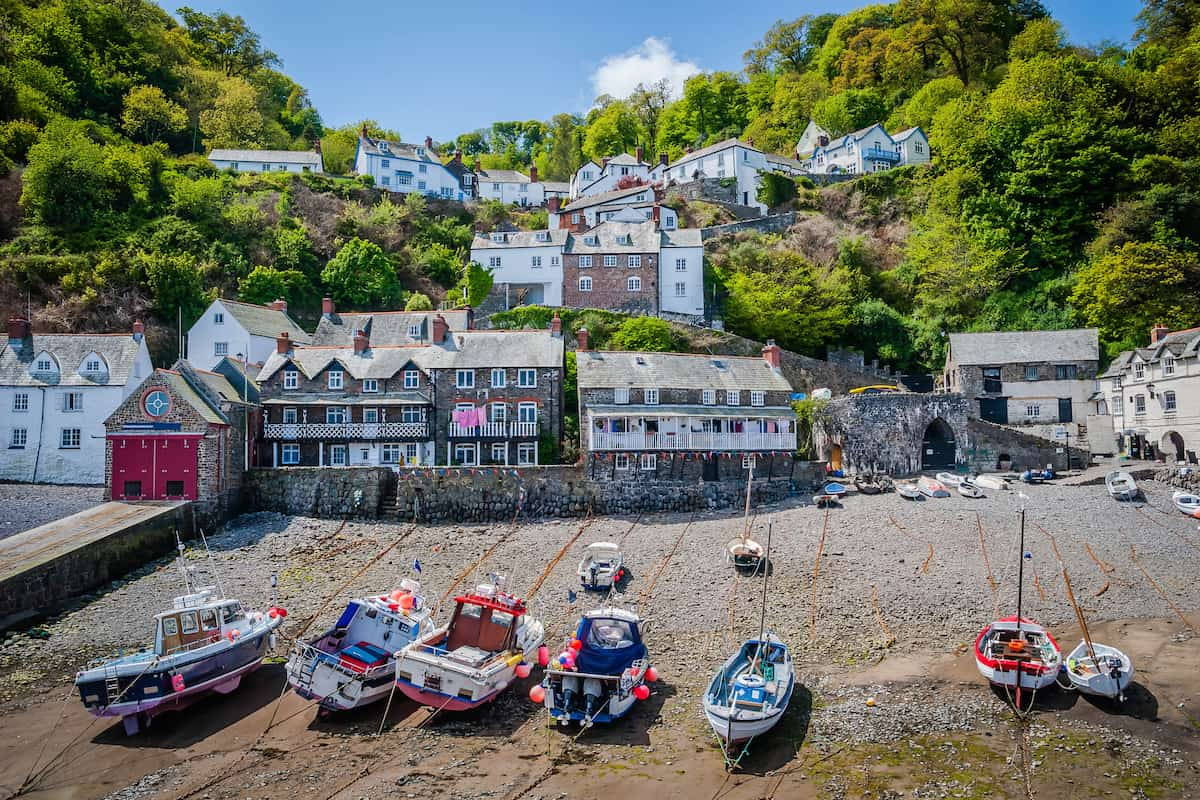
    Check the local newspapers, Timeout Magazine and websites for the events in your area as they do change year to year. Here are some more regular venues and shows:

    • Rooftop Film Club – multiple venues across London
    • Kilworth House Theatre – grounds of Kilworth House Hotel in south Leicestershire
    • Stamford Shakespeare Company – Tolethorpe Hall, Stamford
    • Heartbreak Productions – Various venues

    21# Cool Down in a Lido

    Anytime

    Go-for-a-Swim-in-Hampstead-Heath

    Lidos are located around the country which are ideal for cooling down during the heat. It’s a popular way to cool down so during peak times you’ll have to queue to get your cold-water fix.
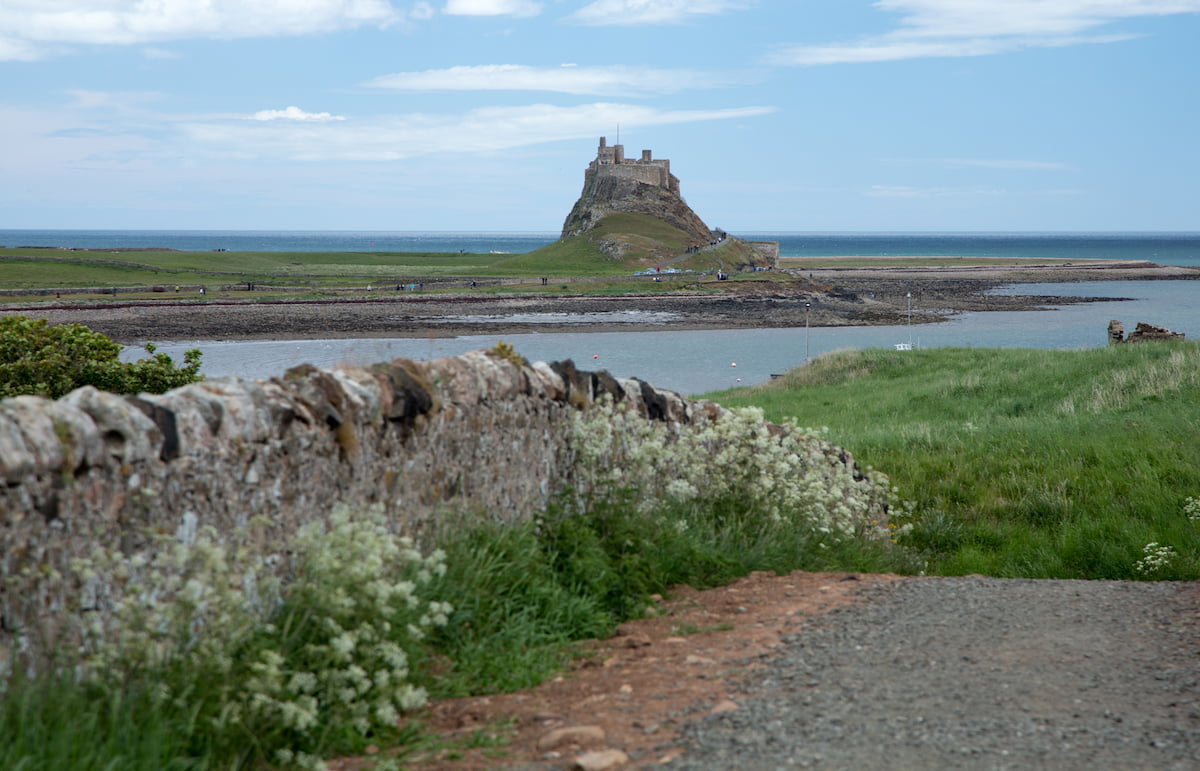
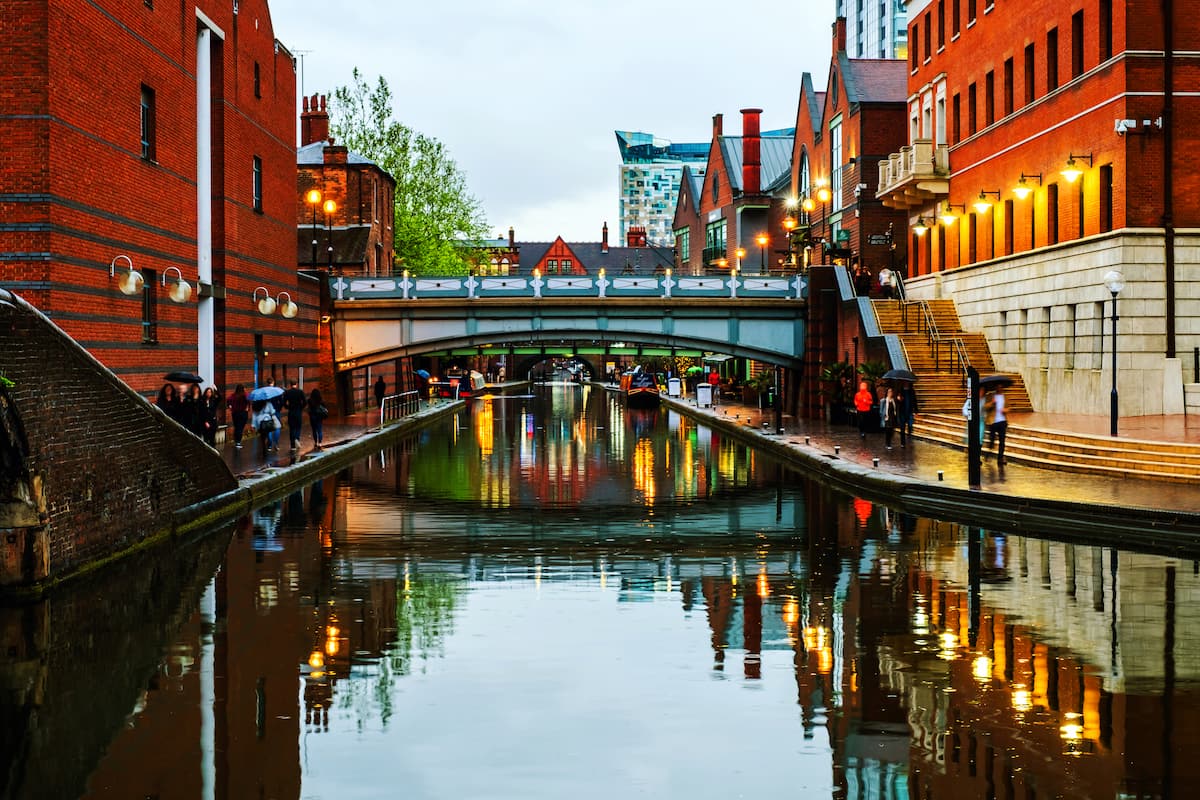
    The first open air swimming pools were built in the mid-1800s. Then it raised in popularity where 169 outdoor pools were built all over the country in the 1930’s.

    As like anything, funding cuts hit and lots were shut down or demolished. Thanks to those who wanted to preserve them and spent the last decade to bring them up to scratch we still have plenty to visit.

    Fancy taking a dip or swim here are a few lidos you can visit:

    • Saltdean Lido, Brighton
    • Sandford Parks Lido, Cheltenham
    • Jubilee Pool, Cornwall
    • Hampstead Heath Swimming Ponds – Hampstead Heath
    • Oasis Sports Centre – Covent Garden
    • Pells Pool, Lewes, East Sussex
    • London Fields Lido – Hackney
    • Serpentine Lido – Knightsbridge
    • Lymington Sea Water Baths, Hampshire
    • Brockwell Lido – Herne Hill
    • Tinside Lido, Plymouth 
    • Clifton Lido, Bristol

    22# Watch the Tennis Championships at Wimbledon

    When: July

    Tennis Championships at Wimbledon is the oldest tennis championship in the world and one of the most prestigious you could watch. The first few weeks in July is when the games will start.

    Whether you buy premium tickets, line up on the day or picnic outside watching the big screens watching Wimbledon should be on the summer must-see list.

    Don’t forget the classic snack and drinks! Sipping Pimms or eating strawberries with clotted cream all add to the experience.

    23# Watch Cars Flyby at British Grand Prix

    When: July

    Watching the car fly by at the British Grand Prix is one of the best sporting events to watch. It has been held annually in England since 1948 and the races have been held at the historic Silverstone Circuit near the village of Silverstone in Northamptonshire since 1987.

    Formula One (also known as F1) is the highest class of single-seater auto racing so you know you can expect a day of adrenaline-filled races.

    You can either grab a one day or the three-day weekend pass to see the F1.

    Finally:

    These twenty-three options and suggestions are just an idea of some of the things that we can do in an English summer.  

    The selected things that can be done anytime are best experienced in the summer and the events that are listed will have a different date each year, but this year’s date can easily be found on-line. 

    The suggestions in different parts of the country could easily be enjoyed as part of a short or longer break if they are not within easy reach of your location.  Go out and explore and enjoy your English summer.

  • 15 Spectacular Forest And Woodland Walks In England

    15 Spectacular Forest And Woodland Walks In England

    England is home to some of the most beautiful and magical forests and woodlands.

    From ancient trees to panoramic views, this guide will help you find the best forest and woodland walks in the country.

    Wherever you live, it’s always a good idea to get out and about in nature. Spending time in nature has been proven to be beneficial for your wellbeing, particularly for your mental health.

    Luckily, England has plenty of choices when it comes to forest walks.

    Continue reading to discover some of the best forest and woodland walks in England.

    1. Ingleton Falls, North Yorkshire

    Ingleton Falls, North Yorkshire
    Ingleton Falls, North Yorkshire

    The Ingleton Waterfalls Trail is a circular route stretching for 4.5 miles and takes you through some of the best parts of the Yorkshire Dales.

    Along the route, you’ll find oak woodland, a series of waterfalls, and many rare plants, birds and trees that have made their home in the ancient base rocks that form the Peak District.

    These features have made Ingleton Glens a Site of Special Scientific Interest (SSSI).

    The walk starts by following the River Twiss through Swilla Glen. Pass through Pecca Falls, Pecca Twin Falls, Holly Bush Spout and Thornton Force, which is the most well-known waterfall on the trail, dropping 46 feet into the River Twiss. At this point, there is a viewing area which is a great picnic or rest stop.

    Continue the trail past Beezley Falls and Rival Falls, where you’ll see the River Doe plunge into a pool nicknamed the ‘Black Hole’. Make your way along the footpath to Baxenghyll Gorge and Snow Falls.

    The final part of the trail goes through the charming village of Ingleton.

    Website: https://www.ingletonwaterfallstrail.co.uk/
    Cost: Please note there is an entry fee for this walk

    2. Grizedale Forest, Cumbria

    Grizedale Forest, Cumbria
    Grizedale Forest, Cumbria

    The Lake District in Cumbria is sure to make any list of best forest walks. One of the most beautiful walks in the area is Grizedale Forest, covering 9 square miles of woodland.

    There is plenty to do in the forest, from walking and cycling to adventure activities like Go Ape and Forest Segway.

    For the best views of Cumbria’s famous lakes and mountains, you’ll have to take on a more challenging climb.

    Although it’s only 1.5 miles long, Machell’s Coppice Trail is a tough walk. It’s worth it though, as you’re rewarded with views over Coniston. Carron Crag is another difficult trail.

    The climb up to Carron Crag – the highest point in Grizedale at 314 metres – takes you through woodland before offering panoramic views over the Lakeland Fells, the Howgills and Morecambe Bay.

    If you prefer a less demanding climb, then there are several easier walks you can take. The Millwood Trail is a 1.5-mile-long loop which offers lovely views of Grizedale Valley.

    The Ridding Wood trail is an easy, 1-mile long walk that passes through oak woodland and ornate trees.

    On your walk, make sure to keep an eye out for the many sculptures which are scattered throughout the forest, which have been created by leading international artists.

    Website: https://www.forestryengland.uk/grizedale
    Cost: There are no costs to enter the forest but you will need to pay for parking.

    3. Hatfield Forest, Essex

    Hatfield Forest, Essex
    Hatfield Forest, Essex

    Hatfield Forest is Britain’s best surviving royal hunting forest from medieval times. Back in that period, the word ‘forest’ referred to an area of deer, rather than trees.

    Today, you can still see plenty of fallow deer and muntjac deer roaming around, as well as foxes, rabbits, weasels and hedgehogs.

    The forest stretches over 403 hectares and is a biological SSSI. Hatfield Forest is also renowned for its conservation work to improve the habitats of kingfishers, terns and reptiles, as well as assessing the health of the deer population and non-native crayfish.

    There are a range of trails you can take to explore different corners of the forest. The Capability Brown Walk allows you to discover a series of sites that were linked to the development of the forest as a pleasure ground in the Victorian era, including a lake and an accompanying picnic area.

    The Golden Boots Walk is best done in the summer, when the forest’s fields are turned golden by over 300 million buttercups. Another fantastic walk is the Flitch Way and Forest Walk.

    This is a circular walk suitable for the whole family and takes you past ancient trees including the remains of the Doodle Oak – once the largest oak tree in the country. Other walks include the Tree Walk and Forest Walk.

    Website: https://www.nationaltrust.org.uk/hatfield-forest
    Cost: There are no costs to enter the forest but you will need to pay for parking.

    4. Ashridge Estate, Hertfordshire

    Ashridge Estate, Hertfordshire
    Ashridge Estate, Hertfordshire

    Ashridge Estate is set in 2,000 hectares of the Chiltern Hills, an Area of Outstanding Natural Beauty (AONB).

    A mixture of beech and oak forests, commons and chalk downlands, the estate is a fascinating mix of landscapes teeming with wildlife.

    You’ll be able to recognise the magical forest from the 2014 film Maleficent starring Angelina Jolie, which was filmed here.

    One of the highlights of the estate is the Bridgewater Monument, a granite column built-in 1832 to remember the third Duke of Bridgewater who once lived on the estate.

    You can climb the 172 steps to the viewing platform, and admire the scenery that stretches for miles across the Chilterns.

    There are miles of footpaths on the estate that you can choose from. The Old Copse and Thunderdell Wood walk is an easy circular walk that takes you across lush meadows and through areas of woodland.

    The Bridgewater Monument to Pitstone Windmill Circular Walk is a moderate walk just over seven miles long. You’ll get to see stunning views over the Chilterns and the Vale of Aylesbury.

    Some of the other walks include the Trail to Golden Valley Walk, the Duncombe Terrace Walk, the Three-in-one Woodland Walk, the Boundary Trail Walk, the Battle of Berkhamsted Common Trail, the Ancient Trees Walk and the Bridgewater Monument to Ivinghoe Beacon Trail.

    Website: https://www.nationaltrust.org.uk/ashridge-estate
    Cost:
    Climbing the Monument is £2.50, however, the rest of the estate is free.

    5. Eaves Wood, Lancashire

    Eaves Wood is a truly magical place. From ancient woodlands, to giant beech trees, to hidden grassy glades, this forest is a fantastic place for a stroll.

    The forest is filled with beautiful wildflowers like primroses and bluebells, and you might even catch a glimpse of deer through the trees.

    Eaves Wood is part of the Arnside and Silverdale AONB, and there are plenty of walks in the area that include Eaves Wood in their trails, including the Silverdale Circular Walk, which takes you through Eaves Wood and onto the coastal path and Silverdale Green.

    Eaves Wood is about one mile from the village of Silverdale, and there are several different entrances into Eaves Wood.

    On your walk, make sure to climb to the top of King William’s Hill. Here you can admire the views over to the Yorkshire Dales and Bowland Fells.

    Visit the Pepperpot, which is a peculiar little monument built to commemorate the Golden Jubilee of Queen Victoria.

    Website: https://www.nationaltrust.org.uk/arnside-and-silverdale/features/eaves-wood
    Cost:
    No cost

    6. Cardinham Woods, Cornwall

    Cardinham Woods, Cornwall
    Cardinham Woods, Cornwall

    One of Cornwall’s hidden gems, Cardinham Woods is a wonderful spot to immerse yourself in nature.

    The woodland is nestled in a beautiful valley and is filled with babbling brooks, secret glades and viewing points.

    There are four walking trails here, and most of them are easy to access. They’re all well maintained and easy to navigate.

    The Callywith Wood Walk takes you to a viewpoint where you can trace the valley of Cardinham Water back up to its source on Bodmin Moor.

    The Deviock Walk is a long loop with only one steep section as you make your way down the valley side – but don’t worry, the picnic area at Scots Pine is worth the walk.

    The Lady Vale Walk tracks the river upstream to Lady Vale Bridge and is one of the most scenic routes in the woods.

    Wheal Glynn is a harder walk, with a steep ascent to the old lead and silver mine of Wheal Glynn.

    Website: https://www.forestryengland.uk/cardinham-woods
    Cost:
    Parking for 2 hours is £2 and all day is £5. There are no other costs to enter the park.

    7. Kielder Forest, Northumberland

    Kielder Forest, Northumberland
    Kielder Forest, Northumberland

    Kielder Forest is actually a man-made woodland. Covering 250 square miles, the forest is the largest working forest in England.

    The forest is packed with things to do, such as cycling and mountain biking, fishing and geocaching. If you’re a wildlife enthusiast, then Kielder won’t disappoint – the forest is also home to England’s largest remaining population of red squirrels, as well as Northumberland’s only breeding osprey population.

    The forest is known for some of the darkest night skies in England, and there are evening stargazing tours that you can take. If you’re not a night person, then there are plenty of trails that you can do during the day.

    Hindhope Linn is a stunning waterfall, and you can access the trail through the forest, overlooking Blakehope Burn. The Tarset Bastle Trail is named after the chaotic history of the Border raider days.

    The trail passes five bastles, which are fortified farmhouses that were built as protection against raiders in the 16th and 17th century.

    The Sidwood Trail is a short route that goes past the site of the former Sidwood House, passing through conifer crops and open grassland. Other walks in the forest include the Walksburn Walking Trail and the Lakeside Way.

    Website: https://www.visitkielder.com/visit/know-before-you-go
    Cost:
    Daily parking is £5 and to park overnight is £10. The park is free to enter.

    8. Wistman’s Wood, Devon

    The druids stone Woodland mossy in Wistmans wood in Devon.
    The druids stone Woodland mossy in Wistmans wood in Devon.

    Wistman’s Wood looks exactly like it came out of a fairytale. Moss-covered boulders and twisted, lichen-covered trees give the forest an enchanted, mystical feel, and has often been the centre of supernatural stories. It’s one of the highest oakwoods in Britain and is also an SSSI.

    Wistman’s Wood Walk is a circular walk starting at a car park near the Two Bridges Hotel.

    The footpath leads up to Longaford Tor, which offers panoramic views over Dartmoor. The trail then passes Littaford Tor and Crockern Tor, which are large rock outcrops.

    Lych Way is another route that passes through Wistman’s Wood, and is an ancient footpath dating back to medieval times.

    Another trail is the Two Bridges Dartmoor Walk, which is a circular walk that passes through Wistman’s Wood before heading to Bellever Forest.

    Website: https://www.visitdartmoor.co.uk/things-to-do/wistmans-wood-p224413
    Cost:
    No cost.

    9. Forest of Dean Sculpture Trail, Gloucestershire

    The Forest of Dean is a sprawling area of woodland covering more than 42 square miles.

    It is one of the oldest woodlands in England, and a large part of it was used as royal hunting grounds before 1066.

    The forest is teeming with wildlife and is particularly known for its birds. There is a large population of peregrine falcons which can be seen from Symonds Yat rock. Mandarin ducks and reed warblers can also be found at Cannop Ponds.

    There are numerous walks covering different parts of the forest. Although quite challenging, some of the best views are on the Lancaut Loop, which involves steep limestone cliffs and narrow ledges by a river drop. For an easier trail, try the Daffodil Way, which is a scenic circular way passing through woodland, meadows, ponds and streams.

    One of the most well-known walks in the Forest of Dean Sculpture Trail. The trail links a collection of 16 sculptures which were commissioned for the forest in 1986.

    The entire trail is 4.5 miles long, but there are shorter options at 2.2 miles and 3 miles which only pass a selection of the sculptures. One of the highlights of the sculptures is ‘Cathedral’, a 15-foot stained glass window hanging from the trees.

    Website: https://www.wyedeantourism.co.uk/sculptrail
    Cost:
    Entry is £1.

    10. Puzzlewood, Gloucestershire

    Puzzlewood, Gloucestershire
    Puzzlewood, Gloucestershire

    Not far from the Sculpture Trail is Puzzlewood, also located in the Forest of Dean. With pathways winding through moss-covered boulders, charming wooden bridges and knotted tree formations, it’s easy to see why Puzzlewood has a magical atmosphere.

    It’s believed that JRR Tolkien drew inspiration from Puzzlewood for his novels The Hobbit and Lord of the Rings. The forest has also been used as multiple film sets, including Merlin, Doctor Who and Star Wars.

    Puzzlewood is a great place for a family stroll. There are plenty of meandering pathways to follow, which were laid down in the early 1800s.

    Little has changed since then, and the same pathways still exist. As you make your way through the forest, look out for secret caves and peculiar rock formations along the way.

    Website: https://www.puzzlewood.net/
    Cost:
    Prices are based on ages groups, see below:

    • Adult: £7(concessions £6)
    • Child aged 3-16: £6 (concessions £5)
    • Child aged 2 and under: Free
    • Family (2 adults and 2 children): £25

    11. Wandlebury Country Park, Cambridgeshire

    Wandlebury Country Park is a gorgeous countryside estate on the Gog Magog Hills, just south of Cambridge. There are eight miles of marked trails that lead you through 110 acres of woodland and lush meadows, which are home to grazing Highland cattle.

    To the north of the park, you’ll find Beech Avenue, a 400 metre long avenue of beech trees that lead to a historic Roman road. To the south you can take in the views of Magog Down, which are a range of low chalk hills.

    The park is a very family friendly place, and there are plenty of things to see and do to keep kids entertained. There is a den building area, a games field and a wildlife viewing hide.

    Wandlebury Country Park is seeping in history, and the park isn’t short of historic buildings. Look out for the Tadlow Granary, an agricultural building from the 15th century, as well as the remains of a 5th century Iron Age Hill Fort.

    Website: https://www.cambridgeppf.org/wandlebury-visit
    Cost:
    Entry is free but car parking charges of £3 apply.

    12. Hardcastle Crags, West Yorkshire

    Gibson mill in Hardcastle Crags West Yorkshire with river and woodland.
    Gibson mill in Hardcastle Crags West Yorkshire with river and woodland.

    Once nicknamed the ‘Switzerland of Yorkshire’, Hardcastle Crags is a beautiful woodland valley two miles north of Hebden Bridge.

    The area is full of rocky ravines, trickling streams and stunning waterfalls. Within the valley you’ll find a 19th century cotton mill named Gibson Mill. This is a former cotton mill which is now an environmentally self-sustaining visitor centre, and you can even take guided tours to learn more about its history.

    The valley was also home to the Blake Dean Railway, but this was disassembled in 1912. You can still see the foundations of the railway on one of the trails.

    There are over 15 miles of footpath to explore in Hardcastle Crags. The Railway Trail leads you through woodland and into the upper valley for panoramic views over the moorlands.

    The Mill Walk has two options depending on your ability. Either follow the higher paths for a more challenging route, or follow the riverside path for a more laid back stroll.

    Crags Constitutional Walk follows the valley upstream from Gibson Mill. You’ll pass by mill ponds and weirs before reaching The Crags. These are rocky hills, and there are stunning views of the valley from the top.

    Website: https://www.nationaltrust.org.uk/hardcastle-crags
    Cost:
    No cost.

    13. Ashdown Forest, East Sussex

    Ashdown Forest, East Sussex
    Ashdown Forest, East Sussex

    Ashdown Forest was AA Milne’s inspiration for the Five Hundred Acre Wood, home to Winnie the Pooh and his friends.

    There are even Pooh-related sights to see in the forest, including the Poohsticks bridge, Roo’s Sandpit and the Heffalump trap. This area has a history that can be traced back to the medieval times, when it was used as a hunting forest shortly after the Norman conquest of England.

    Today, it covers 9.5 square miles of land – the largest area of land with public access in South East England. Ashdown Forest’s heathlands are an SSSI, a Special Protection Area for birds and a Special Area of Conservation, so there is plenty of flora and fauna to see here. Keep an eye out for different species of deer and woodland birds.

    The forest is extremely popular with walkers and has miles of paths to take. There are two long distance routes which are quite popular – the Vanguard Way and the Wealdway which runs from south to north.

    These paths cross through the forest before meeting near Old Lodge Nature Reserve. Other walks include Southern Slopes and the Airman’s Grave, Chelwood Vachery, the Old Airstrip and Broadstone Amble.

    Website: https://www.ashdownforest.org/home/index.php
    Cost:
    No cost.

    14. Foxley Wood, Norfolk

    Foxley Wood is a nature reserve in Foxley, and at 300 acres, it is the largest remaining area of ancient woodland in Norfolk.

    Foxley Wood is mentioned in the Domesday Book, and some areas of the woods are over 6,000 years old. Foxley Wood is an SSSI, a Nature Conservation Review site and a National Nature Reserve.

    The area is particularly rich in flora, and has over 250 recorded species including lily of the valley and early purple orchid. During the spring, visitors flock to the area to see the bluebells which take over the woods.

    There are also tons of woodland birds, including the great spotted woodpecker and the treecreeper.

    For the past 1,000 years, the area was used to harvest wood. However when the demand dropped in the 20th century, it became unused.

    The paths that were used for moving the chopped down wood still exist today, and they criss cross throughout the forest.

    You can also take the circular walk, which is a 2.8 mile loop which is easy for all levels.

    Website: https://www.norfolkwildlifetrust.org.uk/wildlife-in-norfolk/nature-reserves/reserves/foxley-wood
    Cost:
    No cost.

    15. Hamsterley Forest, Durham

    Hamsterley Forest is the largest forest in Durham, covering over 4,900 acres. This area of broadleaved and coniferous woodland is spread along the sides of a picturesque valley. It’s a great spot for recreational activities like cycling, walking, horse riding and mountain biking.

    These activities are mostly centred around the eastern end of the forest where the visitor centre, tea rooms and play area are located.

    There are four fantastic walking trails to choose from, all of them offering the chance to spot wildlife. If you head out in the early morning, you might be lucky enough to see salmon leaping upstream, roe deer, and even adders.

    The Bedburn Valley Walk is a moderate, short circular walk which takes you through oak woodland. The Riverside Trail is a family friendly route that even the little ones in pushchairs can enjoy. It takes you along the tranquil banks of the Bedburn Beck to Low Redford.

    For a quieter walk, take on the Spurlswood Valley Walk which stretches for 4.5 miles. The Three Becks Walk is the longest of the four, but is also the most scenic one. It’s extra beautiful in the autumn, when all the beech and birch trees turn into a sea of yellow and red.

    Website: https://www.forestryengland.uk/hamsterley-forest
    Cost:
    You will need to pay for parking which is

    • Up to 1 hour £2
    • All day £6
    • Bank Holidays £10

    England is a fantastic place to get outdoors. All around the country are spectacular forest walks, each of them offering something different. According to Forest Research, 10% of England’s land area is covered by forest – this is over 8,000 miles of nature and woodlands to explore.

    It’s a great way of staying fit and healthy, and getting outdoors can drastically improve your mental and physical health. With plenty of options wherever you are in the country, you’re bound to find a trail that’s right for you.

  • 15 Best Places To Stay In London For Walking

    15 Best Places To Stay In London For Walking

    While London is well connected with buses and the Tube, sometimes the best way to see a city is on foot. I’ve put together a guide to some of the best places to stay in London if you want to explore the city by walking.

    It’s a good idea to stay somewhere within close proximity to attractions and activities. Especially if you are looking for somewhere to stay in London for your first time.

    London is made up of different areas which can sometimes feel like a collection of villages. Each area has something different to offer, from leafy neighbourhoods and expansive parks, to canal walks and lively markets. These areas are great for walking around and exploring the city at a leisurely pace.

    Where To Stay In London

    Choosing the best neighbourhood to stay in London can be a hard choice!

    Tap into the local knowledge and discover the best places to stay in London for walking. Find out what London attractions are nearby, some favourite local spots, closest transport links and much more.

    If you’re travelling during peak season or holidays, it is best to book your accommodations in advance. Trust me accommodation will sell out or be very expensive.

    I recommend checking sites like Booking.com and Agoda for hotel and hostel bookings.

    Explore Green Spaces and Museums in South Kensington

    Christmas at the Natural History Museum is magical. It's all decked out with Christmas trees and an ice-staking ring. Do make sure you book in advance as it can get super busy.
    Christmas at the Natural History Museum is magical. It’s all decked out with Christmas trees and an ice-staking ring. Do make sure you book in advance as it can get super busy.

    For those who love museums and green space, South Kensington is a perfect match. You’ll find all the best free museums here including the Victoria and Albert Museum, the Science Museum and the Natural History Museum.

    For green space, you will have Kensington Gardens and Hyde Park to explore. If you wish to give walking a little rest London has a great public bicycle renting scheme and Kensington and Hyde Park make for a great cycling route (make sure you read my guide to cycling in Hyde Park).

    You should also stop by the Orangery at Kensington Palace for a spot of afternoon tea, see some art at the Serpentine Gallery and pay respects to Princess Diana.

    The Royal Albert Hall is in the area too, so check out the latest concerts, ballet, opera and performances they may be running. It’s one of my favourite venues to see performances!

    High Street Kensington (the area) is where you will find the best shopping, you’ll find everything from the Whole Foods Market to Urban Outfitters.

    Closest Attractions in South Kensington

    You will find many of London’s of museums and other top attractions in South Kensington:

    • Victoria and Albert Museum
    • the Science Museum
    • the Natural History Museum
    • Kensington Palace
    • Kensington Gardens
    • Hyde Park
    • Serpentine Gallery
    • Royal Albert Hall
    • Holland Park

    Underground (London only)

    • Gloucester Road (Circle, District and Piccadilly Lines)
    • South Kensington (Circle, District and Piccadilly Lines
    • Earl’s Court (District and Piccadilly Lines)

    Recommendations for Accommodation in South Kensington

    Get Fashionable in Marylebone

    Located in the West End, Marylebone is a fashionable and trendy area. Marylebone High Street is a great place to shop whilst avoiding the crowds of Oxford Street. Voted best street in London by BBC4, the high street is full of independent boutiques and chic cafes.

    If you fancy yourself as a bit of a detective, check out the immensely popular Sherlock Holmes Museum on 221b Baker Street. This museum is set up to pay homage to Arthur Conan Doyle’s version, and there isn’t anything on the BBC version starring Benedict Cumberbatch.

    Madame Tussauds is another popular attraction in Marylebone. This wax museum has waxworks of historical and famous figures, and many tourists flock here to take selfies with Queen Elizabeth II.

    If you’re a fan of French art, then head to the Wallace Collection – an assemblage of 18th century French paintings, furniture, porcelain and medieval armour and weaponry. You can even enjoy French cuisine at Peyton & Byrne’s French style brasserie.

    Marylebone’s Farmers Market is open every Sunday and has over 40 stalls of fresh produce, cakes, bread, seafood, and dips and preserves. Buy something tasty for lunch and head to Regent’s Park. Here you can take a stroll amongst the roses or hire a rowboat to take out on the lake.

    Closest Attractions in Marylebone

    Some of the best attractions that are walking distance from Marylebone are:

    • Sherlock Holmes Museum on 221b Baker Street
    • Madame Tussauds
    • Wallace Collection – they also do an affordable afternoon tea here as well!
    • Marylebone’s Farmers Market is open every Sunday
    • Home to the famous Daunt Books
    • Regent’s Park

    Underground (London only)

    • Baker Street (Circle, Hammersmith & City, Metropolitan, Bakerloo and Jubilee lines)
    • Bond Street (Central and Jubilee lines)
    • Edgware Road (Bakerloo line)
    • Edgware Road (Circle, District, Hammersmith & City lines)
    • Marylebone (Bakerloo line)
    • Marble Arch (Central line)

    Recommendations for Accommodation in Marylebone

    Best for Sightseeing is Covent Garden

    Covent Garden is right in the middle of London making it the perfect place to locate yourself for sight-seeing. Above is Covent Garden Market where you will find lots of market stalls and shops.
    Covent Garden is right in the middle of London making it the perfect place to locate yourself for sight-seeing. Above is Covent Garden Market where you will find lots of market stalls and shops.

    Covent Garden is a popular area for sightseeing on foot, as it’s made up of many little streets with plenty of things to see and do. The main attraction in the area is Covent Garden Market. Selling everything from handmade crafts and goods to jewellery, antiques and homeware, Covent Garden Market is not one to miss.

    The London Transport Museum is in the heart of Covent Garden and has interactive galleries and exhibitions where you can explore the growth of transport in modern London.

    For a memorable night out, head to the Royal Opera House to see the ballet, dance, opera and music performances.

    If you fancy something to eat afterwards, there are a wide range of restaurants in the centre of Covent Garden. Rules is London’s oldest restaurant, founded in 1798.

    If you’re wandering around the alleys and courtyards, make sure you go to Neal’s Yard. Full of colourful window frames and charming coffee shops, this is a great place to stop and watch the city go by.

    If you prefer to shop, then Neal’s Yard also has some of the best shops, including the famous Neal’s Yard Remedies for organic health and beauty products.

    Don’t forget the Cheese Tasting at Neal’s Yard which is the perfect thing to do if you’re not drinking!

    Closest Attractions in Covent Garden

    • Covent Garden Market
    • London Transport Museum
    • Rules – London’s oldest restaurant
    • Royal Opera House
    • Neal’s Yard
    Neal's Yard is a short walk from Covent Garden lined with cute cafes and restaurants. Plus the colourful buildings make for a good photo op.
    Neal’s Yard is a short walk from Covent Garden lined with cute cafes and restaurants. Plus the colourful buildings make for a good photo op.

    Underground (London only)

    • Covent Garden (Piccadilly Line)

    Recommendations for Accommodation in Covent Garden

    Enjoy the Nightlife in Soho & Leicester Square

    In China Town, you can discover some amazing bakeries. Look out for the teriyaki fish with matcha ice cream!
    In China Town, you can discover some amazing bakeries. Look out for the teriyaki fish with matcha ice cream!

    Soho is an area forming part of London’s West End and has been London’s best entertainment district since the 19th century.

    Known for its nightlife, Soho has a huge choice of bars and clubs and is also the centre of the LGBT scene in London. There is a fantastic music scene in Soho which dates back to the 1940s, and you can find clubs such as Ronnie Scott’s and 100 Club that regularly host live music.

    If nightlife is not your cup of tea, Soho can still be a great place to stay. There are plenty of interesting boutiques, as well as famous stores like Hamleys, Liberty, Agent Provocateur and Paul A Young.

    You can also visit The Photographers’ Gallery which often has exhibitions and is free after 17.00.

    A six-minute walk away is the pedestrianised Leicester Square, home to the city’s theatres and cinemas. Make sure you catch a show at one of the theatres – try Leicester Square Theatre, first constructed as a church in 1955.

    Spotting celebrities isn’t uncommon in this area, as Leicester Square is where all the film premiers are held, as well as the London Film Festival.

    Take some time to walk around Chinatown and sample one of its many restaurants and all you can eat buffets. Admire red lanterns, have a go at karaoke or browse traditional supermarkets.

    If you’re in London during Chinese New Year, then don’t miss out on the celebrations, which include music, acrobatics and dancing.

    Head to the Hippodrome Casino, the UK’s largest casino. Or if you’re travelling with kids, then they might enjoy the world’s largest Lego Store.

    Closest Attractions in Leicester Square and Soho

    Get your dancing shoes on for a good evening out in Leicester Square and Soho or explore some of the other attractions the area has to offer, like:

    • Shopping in Bond Street, Regent Street and Carnaby Street. Don’t forget to check out my guide on the things you can only buy in London, some of the items can be discovered in this area like Benjamin Pollock’s Toy Shop.
    • The Royal Opera House home of The Royal Ballet
    • St Martin-in-the-Fields Church
    • Somerset House
    • Leicester Square
    • Trafalgar Square
    • National Gallery
    • People-watching at a pavement café on Old Compton Street
    • Grab a drink as The French House which is a Grade-II listed pub
    • Drink on the underground at 1940s-themed bar Cahoots
    • Eat Mexican at a sex shop at La Bodega Negra
    • Theatres from West End musicals to classic plays and comedies, there is a wide range of staged entertainment in the area. I would recommend seeing:
      • The Lion King at the Lyceum Theatre
      • Book of Mormon
      • Aladdin

    Underground (London only)

    • Leicester Square (Northern and Piccadilly lines)
    • Tottenham Court Road (Central and Northern lines)
    • Piccadilly Circus (Piccadilly and Bakerloo lines)
    • Oxford Circus (Bakerloo, Central and Victoria lines)

    Recommendations for Accommodation in Leicester Square

    Stay in One of the Coolest Area’s – Shoreditch and Brick Lane

    Shoreditch and Bricklane is east of the city and one of the cooler areas to stay.

    You will discover all the trendy coffee shops, famous street art, some of the best markets like Columbia Road Flower Market or Bricklane, barter for some Indian on the biggest curry mile in the UK and party at some of Shoreditch’s best clubs.

    Make sure you check out my video guide of my favourite things to do in Shoreditch.

    Plus, you’re not far away from Tower of London, St Paul’s Cathedral, Shard and Borough markets. They are only a 40-minute walk away.

    Closest Attractions in Shoreditch and Brick Lane

    • Columbia Road Flower (only open Sunday’s)
    • Bricklane
    • Bricklane Markets (only open Sunday’s)
    • Jack the Ripper – the famous London serial killer, try and figure out the mystery
    • Street Art and Graffiti Tour – Explore famous artworks of Banksy, MR Cenz, Jimmy C, Zabou and more fantastic artists
    • The restaurant scene! Some of my favourites include Dishoom, Tayaabs, Andina and BunBunBun Vietnamese Food
    • Barter for Curry on Bricklane
    • Sky Garden
    • Duck and Waffle
    • Explore the rooftop bars like the Queen of Hoxton
    • Boxpark
    • Eat street food at Dinerma
    Shoreditch is a hotspot for street art, get lost on the side streets and discover the new artworks.
    Shoreditch is a hotspot for street art, get lost on the side streets and discover the new artworks.

    Recommendations for Accommodation in Shoreditch and Brick Lane

    Find Magic in King’s Cross and Euston

     St Pancras Station and hotel is a beautiful building. Take a stroll around and admire the architecture.
    St Pancras Station and hotel is a beautiful building. Take a stroll around and admire the architecture.

    The first time I came to London I stayed in King’s Cross and it was a great hub to base yourself. Not only is it good for walking but if your feet get tired it’s close to three main lines and central hub for the tube network.  

    If you are a massive Harry Potter fan then you will recognise King’s Cross as it’s where Platform 9 and ¾ but there is much more to the area!

    Explore the beautiful St Pancras Station and hotel, get your reading on at British Library, explore London’s Regent’s Canal, see the cool medical antiquities at the Wellcome Collection, explore the works of Charles Dickens at his museum and of course, we can’t forget the British Museum!

    Closest Attractions in King’s Cross and Euston

    • Platform 9 and ¾
    • St Pancras Station and hotel
    • British Library
    • Regent’s Canal
    • Wellcome Collection
    • British Museum
    • Drink Shop Do for a bit of art and craft fun!
    • Explore the lost tunnels of Euston (this needs to be booked in advance)
    • Charles Dickens Museum

    Recommendations for Accommodation in King’s Cross and Euston

    Discover Craft Beer in Bermondsey and London Bridge

    Borough Markets is on everyone's must-see list for good reason! The food here is amazing. If you come during the week you find the markets a little less crowded then on a Saturday.
    Borough Markets is on everyone’s must-see list for good reason! The food here is amazing. If you come during the week you find the markets a little less crowded then on a Saturday.

    One of my favourite areas in London is Bermondsey & London Bridge. It’s the perfect place to stay if you love to discover new street-food, craft beer and gin. It’s close to sights like Borough Markets, Tate Modern, HMS Belfast, London Bridge Experience and Tombs, Tower Bridge and the Tower of London and has good transport links.

    Top tip: Get free views at the Shard by heading to the 32nd floor and say you’d like to go to the bar.

    For the beer lovers, it’s a must to check out Bermondsey Beer Mile. A bunch of brewers decided to cleverly to locate their microbreweries under the railway arches.

    Psst… Want to know what to book ahead before coming to London? I’ve put this guide together to help you.

    Closest Attractions in Bermondsey and London Bridge

    • Borough Markets
    • Tate Modern
    • HMS Belfast
    • London Bridge Experience and Tombs
    • Tower Bridge and the Tower of London
    • Maltby Street Markets
    • Bermondsey Beer Mile
    • Eat good pasta at Padella
    • Enjoy views at the Shard

    Recommendations for Accommodation in Bermondsey and London Bridge

    Be Centrally Located in South Bank and Waterloo

    South Bank and Waterloo are very central to all the main site in London and a fantastic location for the sightseeing orientated visitor.

    It’s close to the Houses of Parliament, Florence Nightingale Museum, SEA LIFE London, the Coca-Cola London Eye, the Globe Theatre, the Southbank Centre, the BFI Imax, Tate Morden, Oxo Tower and The London Dungeon.

    Along the Bankside there are trendy shops and restaurants waiting to be discovered. Just across the Hungerford Bridge and Golden Jubilee Bridges is the Strand which is full of more restaurants and shops. One of my favourites is the oldest wine bar in London, Gordon’s wine bar.

    A short walking distance away is the National Portrait Gallery, Covent Garden, Leicester Square and Soho.

    Closest Attractions in South Bank and Waterloo

    • Houses of Parliament
    • Florence Nightingale Museum
    • SEA LIFE London
    • Coca-Cola London Eye
    • Globe Theatre
    • Southbank Centre
    • Experience London like a local an buy a book at Southbank Centre Book Market
    • Enjoy a movie at the BFI Imax
    • Explore famous modern art at the Tate Morden
    • Get free views at the Oxo Tower
    • The London Dungeon.

    Recommendations for Accommodation in South Bank and Waterloo

    Get Academic in Bloomsbury

    If you’re looking for a quiet, leafy area to stay in then Bloomsbury the perfect place. This fashionable residential area is situated in London’s West End district.

    The most well known attraction in Bloomsbury is the British Museum, the UK’s largest museum. Home to around eight million works, the collections are dedicated to human history, art and culture.

    Bloomsbury is home to several academic institutions, including University College London, University of London, New College of Humanities, University of Law and the Royal Academy of Dramatic Art, to name a few. For this reason, the quality of bookshops here are next to none. Skoob Books is worth a visit, and offers good deals on second-hand books.

    Bloomsbury is built for walking around. With its wide, tree-lined streets and many squares, it’s a slice of tranquillity in the hustle and bustle of London. Malet Street is one of the prettiest streets in the area. It’s also the location of Senate House, the former HQ of the Ministry of Information in WW2.

    Russell Square is a lovely green space to relax in, complete with a charming central fountain. If you get hungry, head down to Torrington Place for a range of cosy eateries, from juice bars and vegan cafes, to Spanish deli food.

    Closest Attractions in Bloomsbury

    • British Museum
    • Explore the academic institutions
    • Skoob Books
    • Wander the beautiful tree-lined streets
    • Senate House, the former HQ of the Ministry of Information in WW2
    • Torrington Place for a range of cosy eateries
    • Russell Square

    Underground (London only)

    • Russell Square (Piccadilly line)
    • Goodge Street (Northern line)
    • Warren Street (Northern and Victoria lines)

    Recommendations for Accommodation in Bloomsbury

    Explore One of the Prettiest Borough – Hampstead

    Hampstead is arguably one of the prettiest boroughs in north London. It has quite a village feel to it and is popular with academics, artists and media figures. With its charming little streets and open spaces, Hampstead is a fantastic area to discover on foot.

    Hampstead Heath is a hilly expanse of parkland that covers 320 hectares. It has quite a wild feel to it compared to the many well-manicured parks in London. With its ponds, woodland and grasslands, it’s easy to forget that you’re in London.

    If you’re visiting in the summer, you can have a dip at one of the swimming ponds, with different ponds for men only, women only and mixed.

    On the edge of the Heath, you’ll find Kenwood House, a large stately home which is open to the public. Boasting a remarkable collection of artworks including Rembrant and Veneer, the house has a beautiful interior worth admiring.

    The Freud Museum is also a great place to stop by. Once the home of Sigmund Freud, it is now a museum with an impressive collection of items in the field of psychoanalysis. Freud’s study and personal library is a highlight of the house, left in the same condition as he used it.

    If you fancy a bit of shopping, head to Hampstead High Street for shops, cafes, delis and boutiques, as well as the little side streets tucked around it.

    Closest Attractions in Hampstead

    • Wander the charming little streets and open spaces
    • Hampstead Heath Parkland
    • Enjoy a swim in the pond during summer
    • Hampstead High Street for shops, cafes, delis and boutiques
    • Freud Museum
    • Kenwood House

    Underground (London only)

    • Hampstead (Northern line)
    • Belsize Park (Northern line)
    • Swiss Cottage (Jubilee line)
    • Finchley Road (Jubilee and Metropolitan line)

    Recommendations for Accommodation in Hampstead

    Experience Local Views in Primrose Hill

    Another villagelike area is Primrose Hill. Full of grand Victorian terraced houses and pastel-coloured buildings, the area is extremely picturesque. It has become one of the most expensive areas to live in and is home to many notable figures and celebs.

    The name was also given to its hilltop park. You can climb to the top of Primrose Hill, which offers beautiful views at 65 m high. It’s a great place for a picnic during the warmer months and a popular sunset viewing spot. There are also sports facilities and a children’s playground, so there’s something for everyone.

    If you prefer to eat in, then Regent’s Park Road is a stone’s throw away and has the best choice of gastropubs, chic cafes, delis and tearooms. After a meal, browse through the fashion boutiques and independent stores dotted along the road.

    Every Saturday, Primrose Hill Market opens on Elsworthy Rd. The farmers market offers fresh produce, homemade bread and cakes, cheeses, beer, wine and street food.

    A great day out is only an eight-minute walk from Primrose Hill. The ZSL London Zoo has over 650 animal species to see, including lions, penguins and gorillas. The zoo is devoted to wildlife conservation and there are different talks and activities you can attend.

    Camden is also a short walk away and has tons of things to explore. Best known for its markets, Camden has everything from punk to retro to vintage. Find clothing, jewellery, handmade crafts, home decor, records, souvenirs, books – whatever you need, you’ll find it. The street food market has dishes from all over the world, with price tags that won’t put a dent in your pocket.

    Closest Attractions in Primrose Hill

    • Bring a picnic and enjoy some of the best free views in London on Primrose Hill
    • Every Saturday, Primrose Hill Market opens on Elsworthy Rd
    • Regent’s Park Road for good food
    • ZSL London Zoo
    • Super close by is Camden with no shortage of things to do

    Underground (London only)

    • Chalk Farm (Northern line)
    • Camden Town (Northern line)
    • Swiss Cottage (Jubilee line)
    • St John’s Wood (Jubilee lines)

    Recommendations for Accommodation in Primrose Hill

    Find Your Navigation in Greenwich

    Greenwich is full of green spaces and views. Climb to the top of the hill to get panoramic views of Greenwich and Canary Wharf.
    Greenwich is full of green spaces and views. Climb to the top of the hill to get panoramic views of Greenwich and Canary Wharf.

    Right on the bank of the River Thames in Greenwich, a historic area of London. It’s a beautiful area of the city and is home to royal residences, green spaces, and exciting attractions.

    The Royal Observatory Greenwich is a must-visit. Home to the Prime Meridian Line, a planetarium, a 4.5 billion-year-old asteroid and the UK’s largest refracting telescope – you don’t have to be a fan of astrophysics to visit this place. It’s the perfect place to learn about time zones and how ships selected their longitudes.

    Greenwich has a prominent maritime history, and there are plenty of maritime-related activities and attractions that you can visit. The National Maritime Museum is filled with stories of Britain’s adventures at sea.

    There are more than two million items on display, including maritime art, cartography, model ships, navigational instruments and many more. You can also jump onboard the Cutty Sark, a 19th-century tea clipper. You can take a tour of the ship and find out what life was like bringing tea back from China.

    Another spot for maritime fans is the Old Royal Naval College. This World Heritage Site originally served as a hospital, before it became a training establishment for naval officers. The impressive architecture has served as a filming location for many films, including Sherlock Holmes, The King’s Speech and National Treasure 2.

    For some quiet time, make your way to Greenwich Park. Here you can spot some deer, walk through a rose garden and admire the views of the London skyline over the River Thames.

    Have a browse through Greenwich Market, which has been going since 1737. It’s open seven days a week and offers a wide variety of goods – crafts, designs, food, fashion, jewellery, antiques, artwork, home decor – you name it. There is also a food court with cuisine from around the world.

    Closest Attractions in Greenwich

    • Royal Observatory Greenwich
    • Prime Meridian Line
    • National Maritime Museum
    • Cutty Sark
    • Old Royal Naval College
    • Greenwich Park
    • Greenwich Market
    At the top discover Prime Meridian Line and  Royal Observatory Greenwich.
    At the top discover Prime Meridian Line and Royal Observatory Greenwich.

    Underground (London only)

    • North Greenwich (Jubilee line)

    Recommendations for Accommodation in Greenwich

    Surround Yourself in Nature in Richmond

    Richmond is a town in south-west London and is a fantastic area to stay if you want to be surrounded by nature but still be close to the city’s attractions.

    Richmond is home to the Royal Botanic Gardens, Kew. This is London’s largest UNESCO World Heritage Site and hosts the world’s most diverse assortment of living plants. There are beautiful glasshouses to discover here, tropical rainforests, exotic flowers and a canopy walkway that sails through the treetops.

    To explore even more nature, head to WWT London Wetland Centre. Walk around the lakes, ponds and gardens, and see if you can spot any wild birds including kingfishers, Eurasian sparrowhawks and ring-necked parakeets.

    Richmond is a perfect place for walking. There are many walks you can do, and the district has over 250 public rights of way. Some of the best walks are the Thames Path National Trail, the Loop Walk and the Capital Ring.

    For a bit of culture, the beautiful Victorian Richmond Theatre hosts dramas, musicals, operas, dance and family entertainment. Hampton Court Palace is also a great place to visit.

    This royal palace was built in 1515, and today, the palace is a popular tourist attraction. Venture inside the palace to admire the artwork from the Royal Collection, get lost in the Hampton Court Maze, and walk around the well-kept gardens.

    If you’re interested in rugby, and in particular the Rugby Football Union, then a visit to Twickenham Stadium is a must. You can take a tour of the stadium and visit the World of Rugby Museum.

    Closest Attractions in Richmond

    • Royal Botanic Gardens, Kew
    • WWT London Wetland Centre
    • Best walks are the Thames Path National Trail, the Loop Walk and the Capital Ring
    • Victorian Richmond Theatre
    • Hampton Court Palace
    • Twickenham Stadium for World of Rugby Museum
    Royal Botanic Gardens, Kew
    Royal Botanic Gardens, Kew. Don’t forget to watch my Youtube video on things to do at Kew Gardens.

    Underground (London only)

    • Richmond (District line)

    Recommendations for Accommodation in Richmond

    Glitz and Glam of Chelsea

    Chelsea in Bloom is a wonderful time to walk around seeing all the shops decked out in flower displays.
    Chelsea in Bloom is a wonderful time to walk around seeing all the shops decked out in flower displays.

    Chelsea is one of the most affluent areas in London. It’s packed with world-class restaurants, fantastic shopping and superb galleries.

    For a spot of open-air retail therapy, head to Duke of Yorks Square where you’ll find big names like Zara and Banana Republic.

    The boutiques down King’s Road offer unique finds, or if you prefer designer brands then head to Sloane Street.

    If you’re more of an antique fan, then make your way down to Lots Road to find antique shops and auction houses.

    Stamford Bridge is Chelsea FC’s home ground. If you visit in football season (August-May) you may be lucky enough to get a ticket for one of their matches. If not, you can still take a tour of the stadium, and even visit their museum.

    Chelsea is a great place for a walk as it’s located right off the river. Take a walk along Chelsea Embankment and cross the Albert Bridge. This takes you to Battersea Park, where you can hire rowing boats and pedalos, play mini-golf and check out the Pumphouse Gallery for some contemporary art.

    Amongst all the glitz and glam of Chelsea is the Chelsea Physic Garden. This green space was founded in 1673 as an apothecaries’ garden. Today, it still hosts more than 5,000 types of plants amongst greenhouses and rock gardens. It’s a lovely place to wander around and wind down.

    Closest Attractions in Chelsea

    • Duke of Yorks Square for Shopping
    • Boutiques down King’s Road
    • Chelsea FC’s home ground
    • Enjoy the wonderful flower shows in May like RHS Chelsea Flower Show and Chelsea in Bloom
    • Talk a walk along the Thames
    • Battersea Park
    • Chelsea Physic Garden

    Underground (London only)

    • Sloane Square (District and Circle lines)

    Recommendations for Accommodation in Chelsea

    Enjoy Cultural in Belgravia

    Belgravia is another affluent area of London and has a high concentration of expensive properties. It’s home to many embassies, and if you wander down the streets you’ll be able to spot the many different flags.

    Belgravia is not short of cultural attractions. To see some artwork, head to the Ministry of Nomads art gallery – a boutique art agency that travels the world to find unique pieces.

    For some live music, stop off at Cadogan Hall, one of London’s best concert venues. It has everything from classical music to jazz and folk, as well as hosting talks and debates.

    If you have a sweet tooth, then Belgravia is the perfect place to visit. There are many fantastic bakeries and patisseries here, including Peggy Porschen, Dominique Ansel Bakery and R Chocolate London.

    If you’re looking for a heartier meal, then check out The Grenadier. This pub is built on what was once soldiers’ barracks, and the pub building was an officers’ mess. Look out for the ghost of a soldier said to haunt the pub.

    Closest Attractions in Belgravia

    • Ministry of Nomads art gallery
    • Cadogan Hall, one of London’s best concert venues
    • Visit one of the bakeries and patisseries like Peggy Porschen, Dominique Ansel Bakery and R Chocolate London
    • Enjoy a drink at the Grenadier

    Underground (London only)

    • Sloane Square (District and Circle lines)
    • Victoria (District and Circle lines)
    • Knightsbridge (Piccadilly line)
    • Hyde Park Corner (Piccadilly line)

    Recommendations for Accommodation in Belgravia

    London is built up of many different areas, and each area feels like its own little village. This makes it the ideal place for walking around and discovering each area by foot.

    If you do get tired of walking, there are good Tube connections to discover other parts of the city.

    Walking is a great way to explore a city, as you’re taking everything in at a slower, more relaxed place, and allowing yourself more time to soak in the culture and atmosphere.

  • Can You Use Your Irish Free Travel Pass in England?

    Can You Use Your Irish Free Travel Pass in England?

    Free travel passes are a social welfare program in Ireland that allows seniors and some other people to travel on public and some private transportation lines without paying. A common question that arises is whether people can use these free travel passes in England as well. 

    Can you use your Irish free travel pass in England? The answer is no: England, Scotland, and Wales have their own free travel schemes separate from Ireland. Irish free travel passes only work between the Republic of Ireland and Northern Ireland. 

    Despite the fact that an Irish free bus pass doesn’t work in England, it is still a very effective social program. Continue below to read more about where you can travel with an Irish free travel pass, and how to travel for free in England. 

    Irish Free Travel Passes Only Work in Ireland

    The main reason that Irish free travel passes only work in Ireland is that the other members of the United Kingdom have their own free travel programs for social welfare, and you must be a resident of those areas in order to take advantage of them.

    The only cross-border travel that the Irish free travel pass will be eligible for is cross-border travel between the Republic of Ireland and Northern Ireland. 

    To be able to use your Irish free travel pass to travel without paying between the Republic of Ireland and Northern Ireland, you must meet a few conditions:

    • The journey must begin on one side of the border and end on the other side. Round trip tickets are not eligible for a free travel pass.
    • You can only use one mode of transportation at a time. You cannot combine a trip that includes both a bus ride and a train ride, or the trip will not be free.
    • You must use one through-ticket for your entire journey. You can set up a multi-legged journey across the border, but the location of your final destination must be clearly printed on your ticket.

    Who Can Get A Free Travel Pass in Ireland? 

    In Ireland, free travel passes are allotted to people that are over 66 years and a few other categories that receive a government pension. If you are over 66 and receive a government pension, your free travel pass will be issued to you automatically. 

    If you receive a government pension for disabilities, you will receive your free travel pass when you are first inducted into the disabilities program. 

    In most cases, you do not have to manually apply for an Irish travel pass if you are eligible to receive one. If there is some question whether or not you should have an Irish free travel pass and you haven’t gotten one in the mail, you should contact your local government bureau. 

    How Do I Travel Free in England?

    England has its own sets of rules and regulations with regards to free travel passes used in-country. These vary from region to region, and London has its own set of rules for free travel pass use. Here are some of the rules regarding free travel pass used in the rest of the UK:

    • In most of England, if you are a resident, you can apply for a free travel pass from the local council as soon as you reach the state pension age, whether you’re a man or a woman. The state pension age depends on where you were born. 
    • In Wales, if you are a resident, you can apply for a free travel pass once you are 60 years of age. 
    • In London, if you are a resident, you can apply for a free travel pass once you are 60 years of age, but the free travel pass for London works only on London mass transportation systems. 
    • In Scotland, if you are a resident, you can apply for a free travel pass once you are 60 years of age.

    Other Ways to Save Money Traveling on a Travel Pass in England

    If you are a senior (the demographic the free travel passes of the UK are geared towards), there are other options available to facilitate free travel if you are travelling within the United Kingdom. 

    Here are some of the methods you can use to save money travelling across the UK when you’re a senior: 

    • The Senior Railcard is an annual savings card that you can use across the United Kingdom for steeply discounted train fare across several areas of the UK. 
    • Many individual private coaches and train operators offer senior discounts for older travellers. Call ahead and see what concessions each business offers before deciding which one to travel with.
    • In more rural areas of the United Kingdom, some local village councils make special concessions for travel fares for seniors. It’s worth it to check in before you travel in these areas and see if there are any discounts offered. 

    Limitations and Advantages of a Free Travel Pass in England and the UK

    Like in Ireland, the free travel passes offered in the rest of the United Kingdom come with certain conditions that must be met in order for them to be used. The free travel scheme is very convenient for people who meet the qualifications, but there are rules to follow. 

    Here are some of the limitations and advantages of a free travel pass in England and the rest of the UK other than Ireland:

    • The free bus pass in England only works during off-peak travel times, which means it is only eligible for free travel between 9:30AM and 11PM on weekdays and all day on weekends and public holidays. 
    • People living in Wales can use their Wales free travel pass to travel in and out of England, as long as their journey begins and ends in Wales. 
    • There are no unified schemes of free travel across Great Britain, so you must obtain a free travel pass from your region of origin, and it is only eligible for that region alone; a free travel pass in Scotland does not work in England, nor one from Ireland or Wales. 

    Where Can I Use My Free Irish Pass? 

    There are several major public transportation companies that will accept a free travel pass within the borders of Ireland, both in the Republic of Ireland and in Northern Ireland. 

    Here is a list of the major companies that accept a free travel pass in the Republic of Ireland:

    Here is a list of the major companies that accept a free travel pass in Northern Ireland:

    Using Free Travel Passes in Ireland and England

    One of the best advantages of living in Ireland or England is access to their robust mass transportation systems and social welfare programs. If you are an elderly or disabled resident, it can make life easier not having to pay fares constantly when you are unable to drive yourself.

    While you can’t use your Irish free travel pass on English buses and trains, there are plenty of places in Ireland that you can use it, and England has its own free travel schemes available if you are eligible. Just be sure to check ahead before you make plans. Happy travelling! 

    More England Articles