Category: United Kingdom

Discover England, Northern Ireland, Scotland and Wales with its breath-taking scenery, history and culture it is packed with appeal for travellers. It’s hard to travel more than a few miles without stumbling upon a castle, pub, stately home or historic village. Alternatively, explore one of the bustling cities like London, Glasgow, Cardiff, Edinburgh, Belfast and Manchester…

  • Best Places To Live In The UK

    Best Places To Live In The UK

    Are you thinking of making a big move to the UK? Or perhaps you’re thinking of relocating someplace else within the country? Either way, take a look at this guide to the best places to live in the UK. 

    The UK is full of fabulous places to set up home, complete with fantastic transport links, excellent schools, and activities for the whole family to enjoy. Whether it’s by the sea, nestled in the countryside, or close to bustling towns, the UK has some great places for you to potentially call home.

    Keep reading to find out more about the best places to live in the UK. 

    England

    Horsham, South East
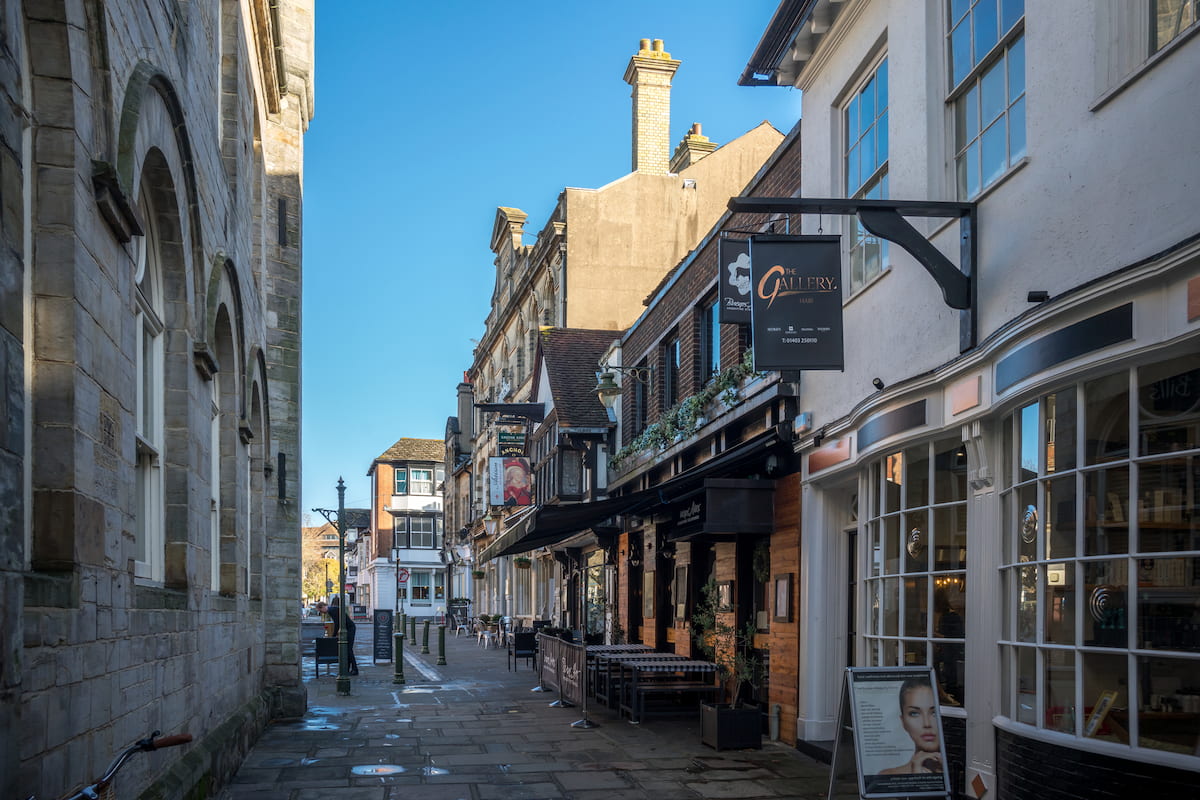
    town centre in Horsham West Sussex

    Horsham is a market town in Sussex. Set in incredible parkland and beautiful countryside, the town is often voted one of the best places to live in England.

    It’s the perfect blend of old and new. Horsham has excellent transport links, and the hustle and bustle of the city is easy to get to. It’s under 30 minutes by car from Crawley and Gatwick, and the Horsham Train Station offers direct links to London. 

    But it’s not just the transport links that make Horsham such an attractive place to live. The town is popular with families as it boasts some great schools that have excellent Ofsted ratings. A large factor that affects how desirable a place is to live in, is the existence of green space.

    There are numerous fields, parks and open spaces in and around the town, such as Horsham Park, Warnham Local Nature Reserve and Leonardslee Lakes & Gardens. The National Trust Nymans is only a short drive away, and the High Weald Area of Outstanding Natural Beauty is also nearby. 

    In town, you’ll find plenty of places to eat and drink, from popular chains to independent restaurants. Although the town is more laid back, there are a few excellent pubs and bars. When it comes to leisure, you won’t run out of things to do. There are many gyms and sports clubs, an excellent high street, two markets a week, and a fab entertainment centre.

    Selby, Yorkshire and The Humber
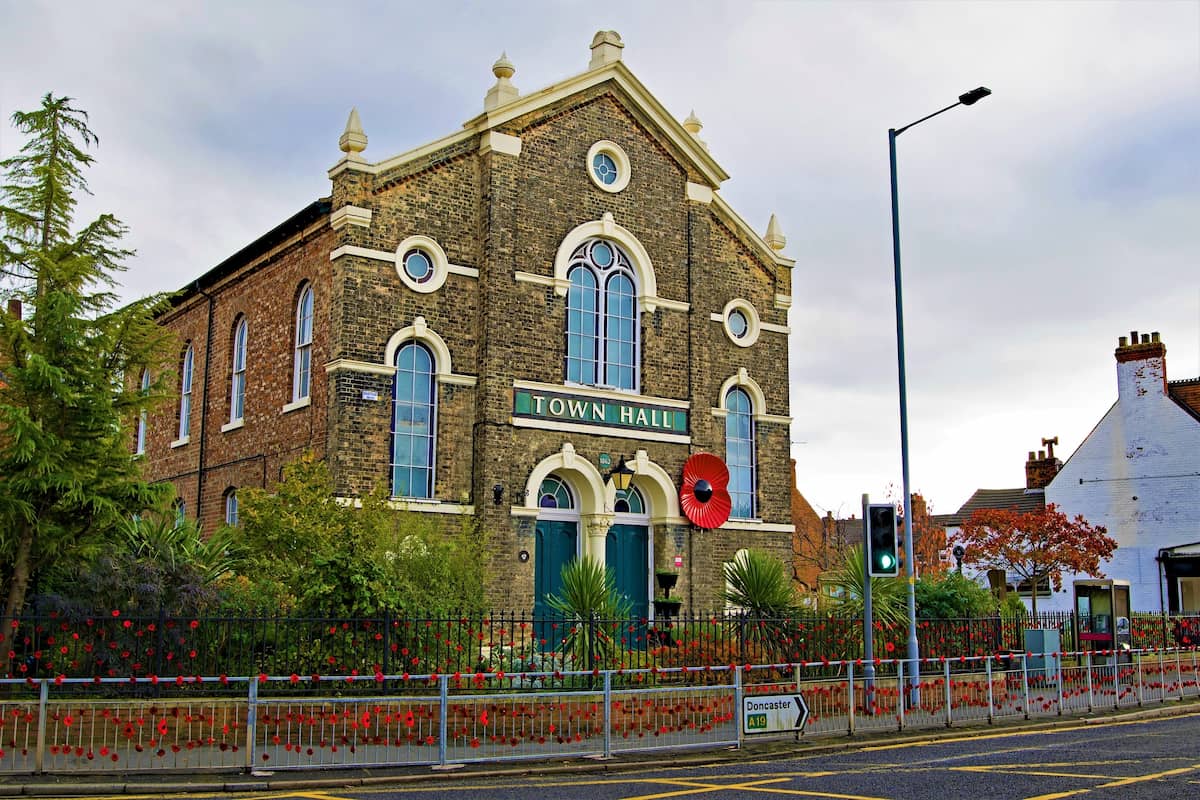
    Centenary poppies display at Selby Town Hall

    Selby is a historic town and one of Yorkshire’s hidden gems. Situated in the heart of Yorkshire, it enjoys excellent transport links to Leeds, York and Hull, as well as the coast and Yorkshire’s National Parks. 

    Selby is a fantastic place to live, especially for families. The town is located in one of the safest parts of one of the safest counties in England, so it sees a lot of people staying long term.

    Another draw for families is the top quality education. Selby and the surrounding area has one of the country’s leading further education colleges, excellent primary schools and great independent schools. 

    One of the main draws that Selby has are the house prices, which are significantly lower than neighbouring urban areas. This means that you’ll get more bang for your buck. Plus, being surrounded by all that beautiful Yorkshire countryside makes it extra worth it.

    If you’re a walker or a cyclist, the Selby district has countless walks and trails that wind through picturesque villages and outstanding countryside. For something more local, Barlow Common Nature Reserve is a peaceful place for a stroll. 

    There are plenty of things to do in town as well. Selby Leisure Centre offers swimming pools, exercise classes and sports facilities. There’s also the Summit Indoor Adventure Park which is fun for the whole family.

    In the centre of town, you’ll find Selby Abbey, a huge and breathtaking medieval abbey founded in 1069. Fancy a bit of shopping? You’ll find a huge array of chains and independent shops. 

    Cheltenham, South West
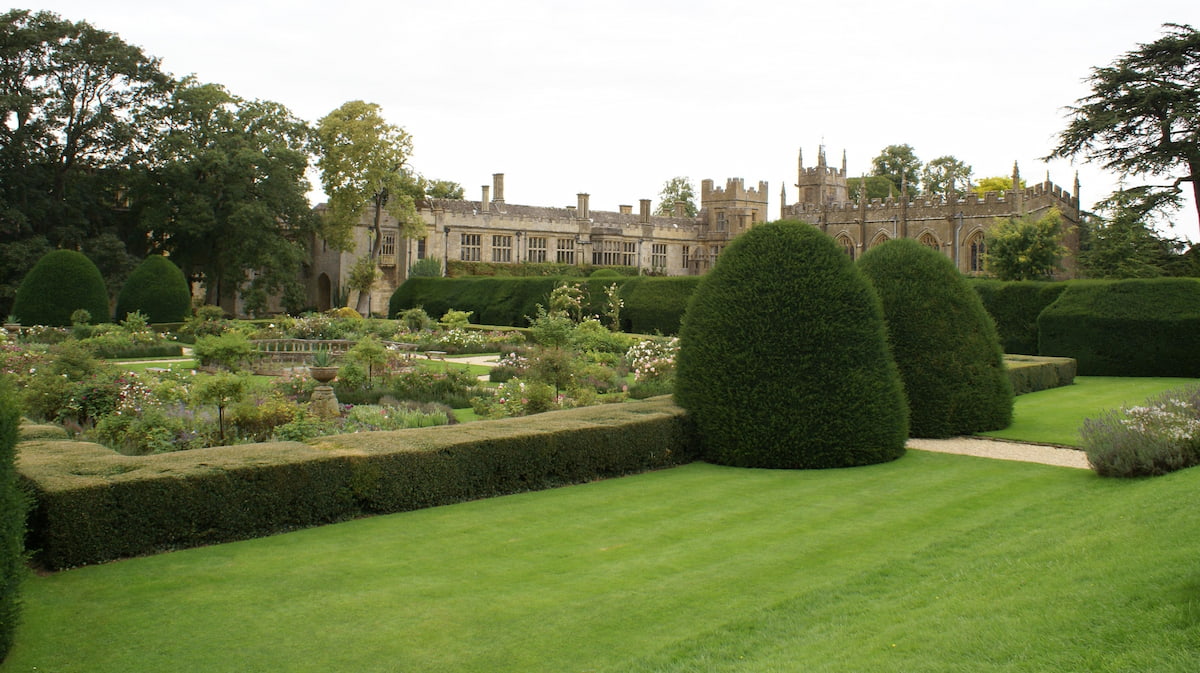
    Sudeley Castle garden and church in Winchcombe, Cheltenham

    Cheltenham is a large spa town in Gloucestershire, on the edge of the Cotswolds. Famous for its Regency architecture, the town has plenty to offer. A word of warning: if you fancy moving to Cheltenham, you’ll need deep pockets as the house prices are higher than other areas in the UK.

    Having said that, it’s totally worth it. 88 miles west-northwest of London, 38 miles northeast of Bristol and 41 miles south of Birmingham, the town is well connected. London Paddington can be reached in just under two hours from Cheltenham Spa train station, and Bristol is only 45 minutes away by train.

    Cheltenham has been recognised as the best place to raise a family, and it’s no surprise why. There are 14 Ofsted ‘Outstanding’ schools within three miles of the town. But it’s not just the excellent schools that make Cheltenham such a great place to live. It’s also packed with things to do.  

    There are tons of lush green parks such as Montpellier Gardens and Pittville Park. There’s also the Sandford Parks Lido which is perfect for hot days.

    The town also happens to be a key shopping destination, with traditional shopping streets, arcades and markets. You’ll also find cultural treasures like the Cheltenham Town Hall, the Holst Birthplace Museum and the Pittville Pump Room.

    Of course, no conversation about Cheltenham would be complete without a mention of the legendary Cheltenham Racecourse.

    Bollington, North West
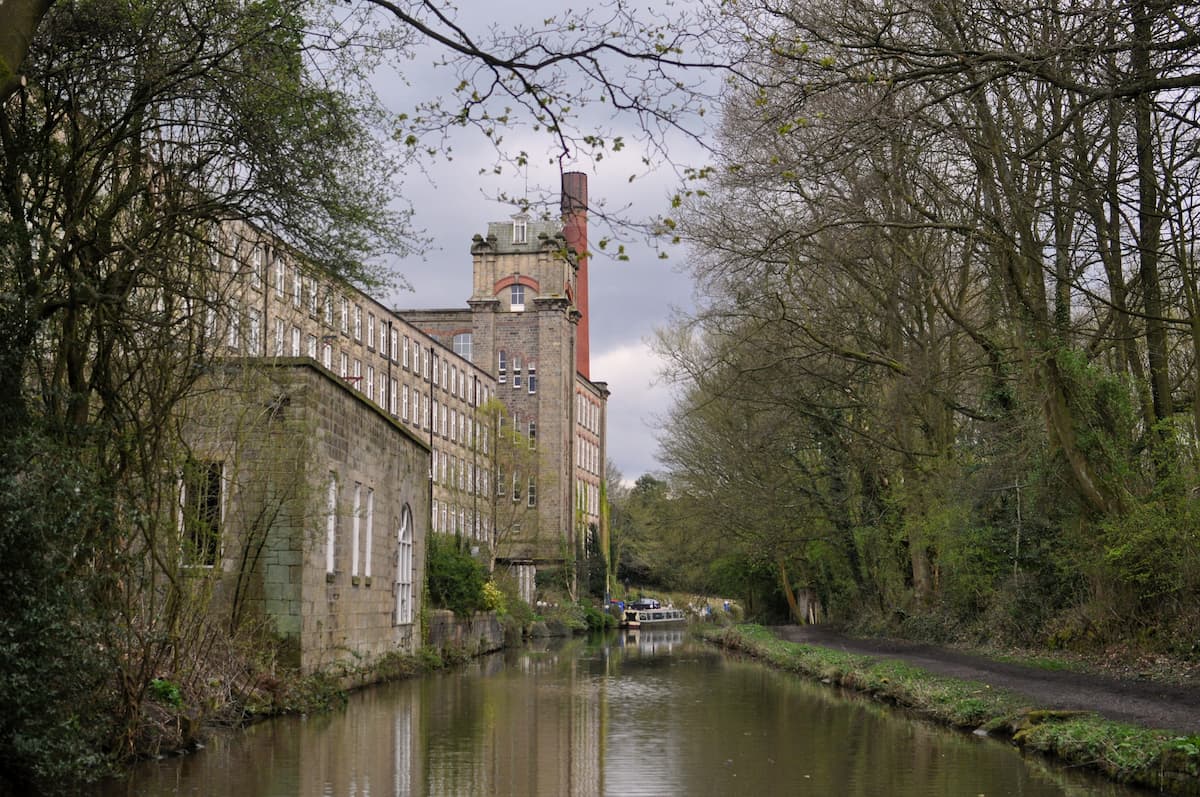
    An old factory on the banks of the canal near Bollington in Cheshire

    Fancy settling down somewhere in the North West? Bollington is the place to be. Situated in Cheshire, the town sits on the edge of the beautiful Peak District National Park and Macclesfield Forest.

    The Macclesfield Canal runs through Bollington, adding to the picturesque scenery. Plus, it’s known to residents as ‘Happy Valley’, so it’s definitely a great place to live. With so much outdoors to explore, it’s no wonder that the quality of life is so great in Bollington.

    Although transport links aren’t as well-connected as other places on this list (expect a longer drive to the M56 and M60 motorways), you can still access places like Macclesfield and Alderley Edge pretty easily. 

    With four primary schools in Bollington and secondary schools within travelling distance, it’s an ideal location for families. There are plenty of activities for the whole family to get involved in, whether it’s outdoor activities like walking and cycling, shopping or discovering the town’s famous landmark White Nancy.

    Bollington also has a fantastic community spirit, with plenty of local organisations, clubs and events like the Bollington Brass Band, Bollington Light Opera Group and Bollington Festival. Bollington also enjoys a good reputation for the number and quality of pubs and restaurants it has. 

    Scotland

    Dundee, Dundee
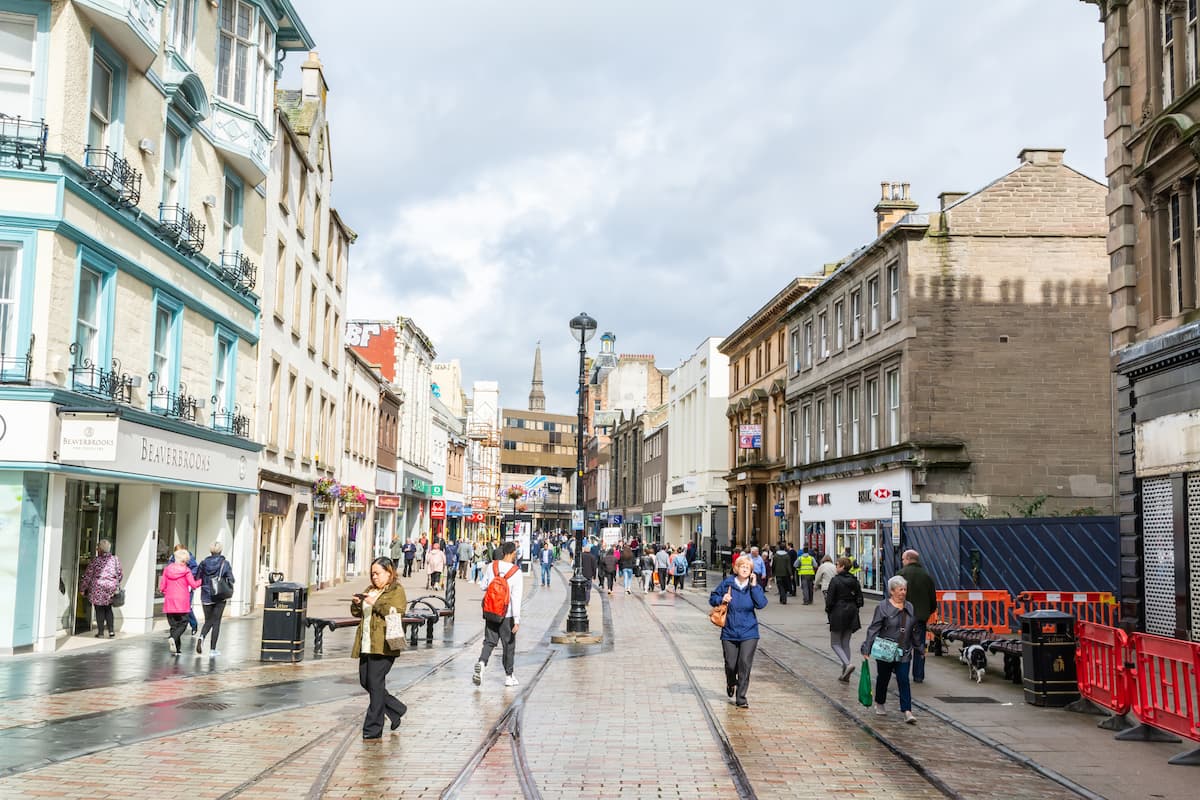
    Murraygate pedestrian street in Dundee

    Dundee is a coastal city in eastern Scotland, set at the mouth of the River Tay. Although it’s the country’s fourth largest city, it’s quite compact, making it easy to get around on foot. It also happens to be Scotland’s sunniest city, making it an attractive place to live.

    Another factor which makes it very liveable is how well connected the city is, with Edinburgh and Glasgow less than 90 minutes by train. Dundee Airport offers direct flights to London City Airport. 

    Another reason that Dundee is so attractive to live in is the abundance of schools. There are currently 38 primary schools, nine secondary schools, one special educational needs school and two universities in the city. Dundee is also not short of things to do.

    The city has gone through major regeneration, including the £1billion Dundee Waterfront project which has transformed it into a modern and vibrant city. There are plenty of shops, galleries and other cultural venues, with the food and drink scene really taking off. You’ll find a huge variety of cafes, bars and restaurants dotted around the city.

    Dundee is the first UK city to be awarded the UNESCO City of Design status. With a rich history of innovation and creativity, the city has become a hub for the digital industries, with the V&A Museum of Design being one of the most popular attractions. 

    With so much culture and history (plus, it’s super affordable compared to other Scottish cities), it’s a no brainer that Dundee is one of the best places to live in Scotland, and the UK.

    Leith, Edinburgh
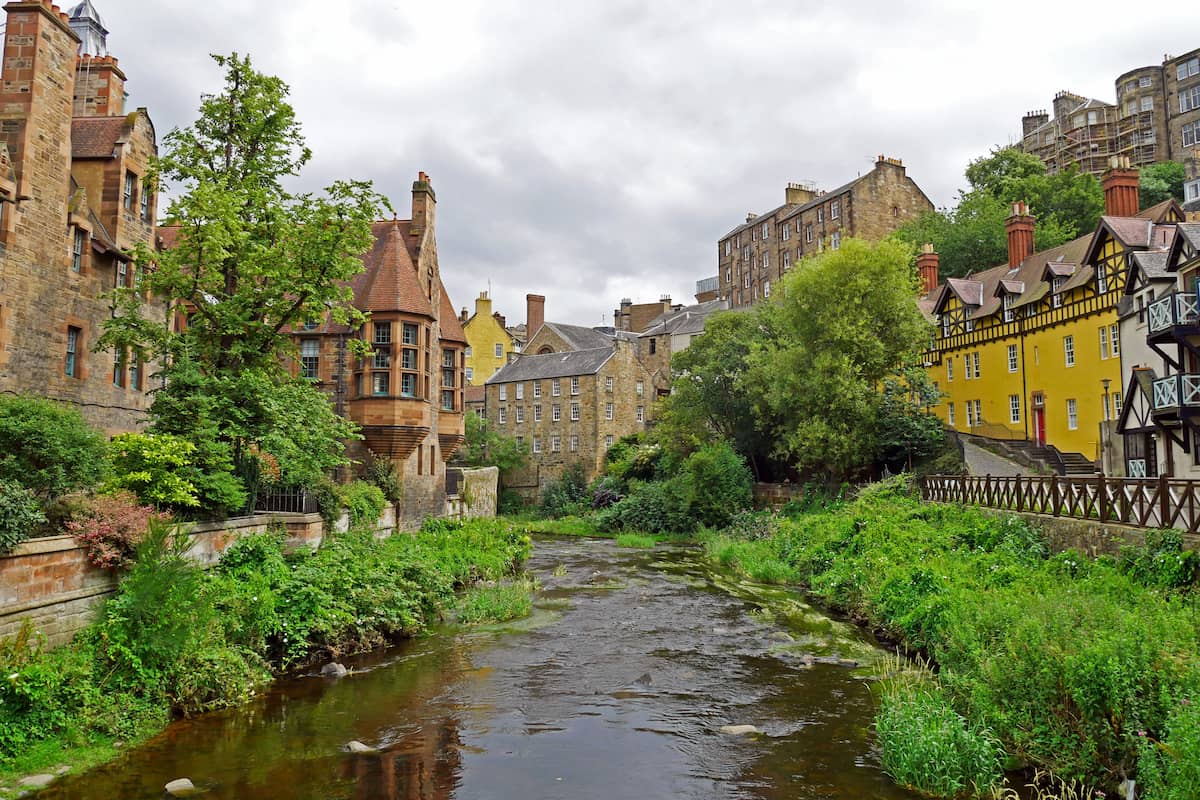
    Dean Village along the river Water of Leith in Edinburgh

    Leith is a port area in the north of Edinburgh and one of the coolest neighbourhoods in the UK. In the 18th century, it was a busy port with huge ships bursting with wool, wine, spices and raw materials. Today, it’s a trendy area boasting its own distinct characters. The great thing about Leith is that it’s its own area, but benefits from all that Edinburgh has to offer. 

    One of these things is Edinburgh’s excellent transport links. The neighbourhood itself is only 12 minutes drive to the centre of Edinburgh, where you’ll find two mainline stations as well as Edinburgh Airport on the outskirts of town. 

    Leith is a great place to bring the kids up. While the kids will benefit from a wide selection of schools in Edinburgh and the surrounding areas, Leith has plenty of things to keep the whole family entertained. There are plenty of open spaces and walks, such as Leith Links and the Water of Leith Walkway.

    Plus, there’s always something happening in the neighbourhood. The Leith Festival combines eight days of theatre, music and arts, and is definitely not one to miss. You’ll find the Biscuit Factory, an arts and fashion hub, Leith Theatre and The Pitt, a street food market with live music.

    Speaking of food, the food and drink scene in Leith is second to none. As well as Michelin starred restaurants, there are also traditional pubs, delis, bistros and plenty of the famous Leith seafood.

    Dunblane, Stirling
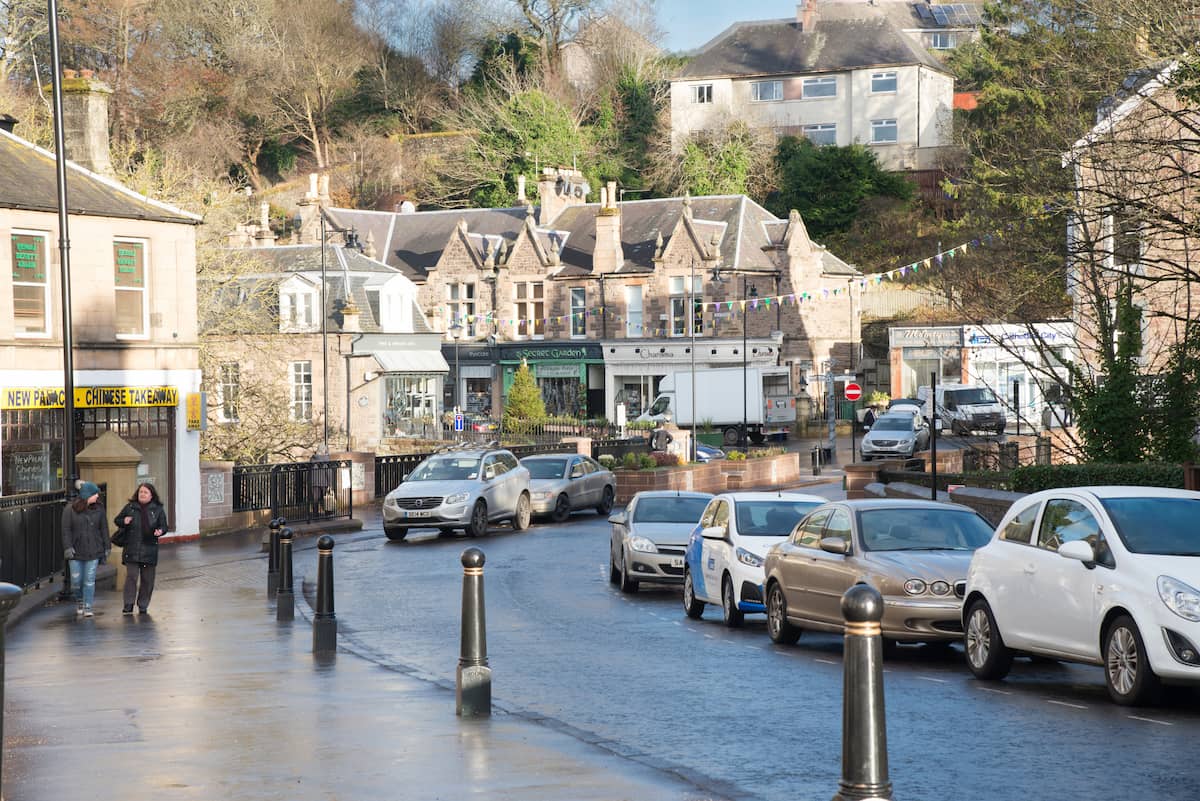
    Dunblane Town Centre Scotland

    Dunblane is a town in central Scotland. Just a 10 minute drive north of Stirling, Dunblane is a commuter town. It has easy access to the A9, with Glasgow and Edinburgh commutable by car.

    The train station offers regular links to Glasgow and Edinburgh as well as Stirling and Perth. But Dunblane is far from being a shoddy commuter town. Its safe and friendly community, reputable schools, central location, and attractive surrounding countryside make it a great place to live. 

    Dunblane is a fantastic environment to raise a family. The low crime rates and community spirit make it a great place for families. There is also an excellent choice of schools, from primary schools through to high schools. Plus, the University of Stirling is only a short distance away. 

    There are tons of activities and events to get involved in Dunblane. You’ll find local sports clubs, youth clubs and voluntary groups. You also have the great outdoors on your doorstep, and there are woodland walks and biking trails in Laighills Park and Sherrifmuir. An hour’s drive away is the Trossachs National Park. 

    The town itself has an excellent range of local shops and a fabulous selection of bars and eateries. There are also some historical gems, like the Leighton Library and the best-known feature of the town, the impressive 13th-century cathedral.

    Wales

    Cowbridge, Vale of Glamorgan

    Cowbridge is a market town in the Vale of Glamorgan. Dating back to Roman times, it’s one of the few medieval walled towns in Wales.

    Full of history, quaint old buildings and surrounded by rolling Welsh countryside, it’s no wonder that Cowbridge is such an attractive place to live.

    What’s more, Cowbridge has great transport links, which makes it a popular commuter town. It’s about a 25-minute drive to Cardiff, with the nearest train station, Bridgend, only six miles away. 

    If you’re moving with the family, Cowbridge Comprehensive School is one of the best performing secondary schools in Wales. There is also a nursery and primary school in the area.

    If you’re a shopaholic, you’ll love Cowbridge. It’s been dubbed the ‘Bond Street of Wales’ for its unique blend of shops and boutiques, whether it’s fashion, furniture, vintage items, gifts or food. When it comes to food and drink, Cowbridge doesn’t disappoint. There are plenty of country pubs, restaurants and cafes to refuel. 

    For a small town, there’s a surprising amount of things to do. You have St Quentin’s Castle, Old Beaupre Castle, Cowbridge Physic Garden, South Wales Aviation Museum. Nearby, you’ll find the National Trust Dyffryn Gardens. Cowbridge is only a 20 minute drive to Nash Point, a headland and beach with an iconic lighthouse.

    Tenby, Pembrokeshire
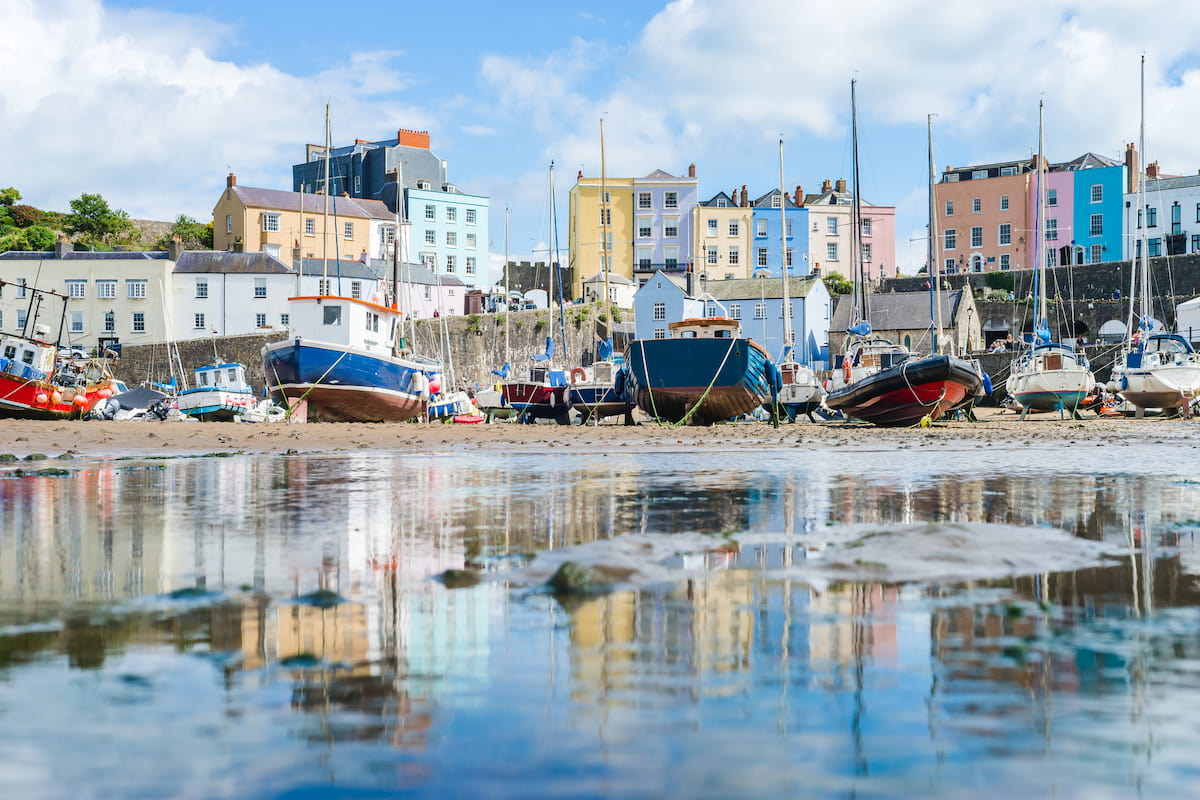
    Boats in the bay at low tide with town view in Tenby bay, Wales

    Tenby is a harbour town in the southwest of the country, and arguably one of the best seaside towns in Wales.

    This isn’t the place to live if you want to be in the thick of it. It’s a relaxed, peaceful place that is perfect for people looking for a slower pace of life. Having said that, it’s not completely out of the way. There are rail services to Pembroke, Carmarthen and Swansea. A drive to Swansea is about an hour and a half. 

    There are a selection of primary schools, and one secondary school, so it may be something to think about if you’re moving with teenagers. However, there is plenty to keep the kids (and the adults) entertained.

    When it comes to beaches, you’ll be spoilt for choice. From family-friendly beaches to secluded beaches, there’s something for everyone.

    Walkers will love Tenby, as there are countless coastal walks right from the town. The Pembrokeshire Coast Path is one of the most scenic routes, a 4.5-mile walk with panoramic views. Caldey Island is only 20 minutes away by boat and is the perfect getaway. 

    Abergavenny, Monmouthshire
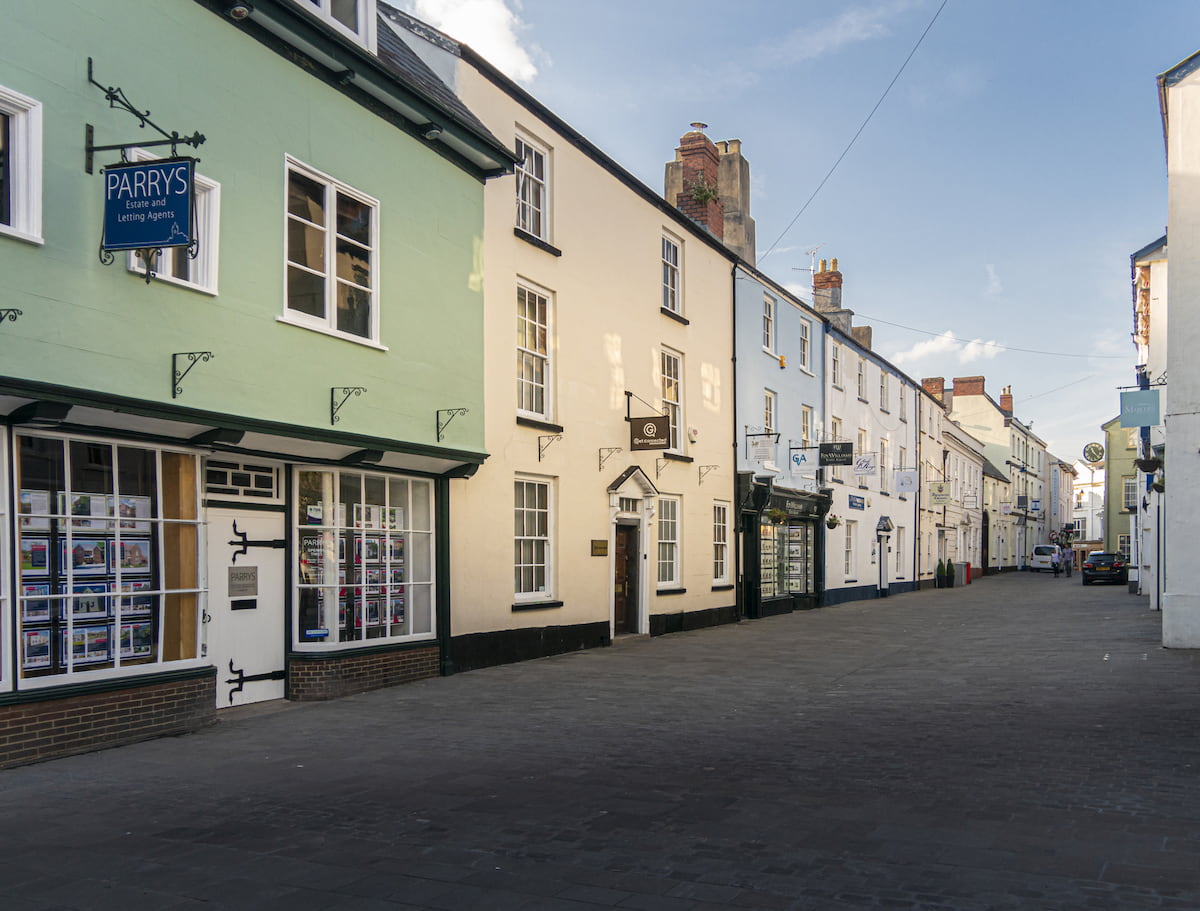
    Abergavenny Town, Wales

    Abergavenny is a market town in Monmouthshire and is nicknamed ‘The Gateway to Wales’. Surrounded by seven mountains, it’s the perfect base for exploring the Brecon Beacons National Park and the Blaenavon World Heritage Site. 

    If you’re thinking of moving here, one of the first things you’re going to want to know is if it’s well connected. The answer is yes! By train, Cardiff is only 40 minutes away, Newport is 25 minutes and Hereford is 24 minutes. Sounds perfect. But what about schools? Abergavenny has a selection of highly rated primary schools, and one secondary school. 

    The town is an excellent place to raise a family, and has tons of things for kids to explore. Aside from attractions like Abergavenny Castle and Museum, the town is surrounded by historical gems like Llanthony Priory. Being right on the doorstep to the mountains also means there’s a wealth of activities like hiking, walking, cycling and climbing. 

    If you’re a foodie, you’ll love Abergavenny. This lively town is famous for its annual food festival, which transforms the town’s streets into a huge buffet of food stalls, chef demonstrations and entertainment for two days each September. There are also regular food and craft markets which attract the best artisan producers. Sugar Loaf Vineyard overlooks the town, and you can drop in to sample some of the finest Welsh wine.

    Northern Ireland

    Holywood, Co Down
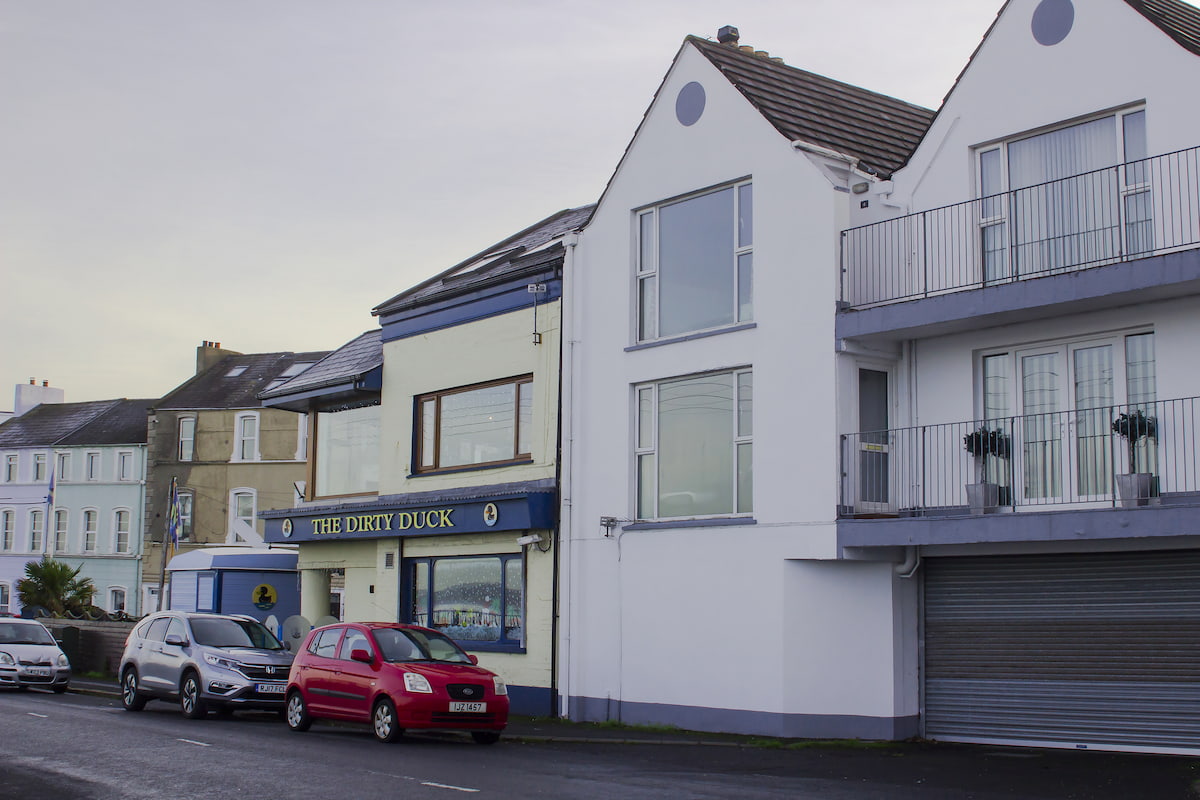
    The Dirty Duck restaurant and pub n Holywood County Down

    Holywood (not a typo!) is a town in the metropolitan area of Belfast, which lies on the shores of the Belfast Lough. It’s the perfect combination of seaside and city, with the vibrant Belfast only a short train journey away.

    Only 11 minutes drive from Belfast, Holywood benefits from all the great transport connections that the city has. Belfast has rail and road connections with towns and cities in Northern Ireland, and Belfast Airport has flights to over 70 destinations. 

    Families thinking of moving to Holywood will benefit from a wide selection of schools, an abundance of green areas, stunning views and a chic town centre.

    The town centre is a real hub of activity, with an emphasis on independent shops and boutiques, elegant eateries and traditional pubs. The town’s Victorian appeal has been perfectly preserved, but with all the modern amenities you could wish for. 

    There are plenty of sporting facilities and local parks which is perfect for those with an active lifestyle. If you fancy getting out on the water, the Holywood Yacht Club is one of the oldest yacht clubs in Ireland, catering for all levels and abilities.

    Ballycastle, Co Antrim

    Boats in the bay at low tide with town view in Tenby bay, Wales

    Ballycastle is a lively seaside town in County Antrim, situated on the north-easternmost tip of Ireland. Surrounded by the sea, glens, forests and ancient rock, the town is a beautiful place to set up home. It’s also a short drive from the iconic Giant’s Causeway.

    If you’re a Game of Thrones fan, you’ll be excited to know that Ballycastle and the surrounding area was used as filming locations. Never watched Game of Thrones? Not to worry. You can still enjoy the breathtaking natural beauty of the place.

    Some of the most popular attractions include Ballycastle Beach, Carrick-a-Rede Rope Bridge, Rathlin Island and the Antrim Coast and Glens Area of Outstanding Natural Beauty. 

    The town itself has a rich history with over 50 listed buildings within the ‘18th Century Conservation Area’. It blends old and new, with its very own Blue Flag Marina situated within the inner harbour.

    There are several primary and secondary schools in Ballycastle and the surrounding area, so it’s an ideal location for families. Although trains don’t come near Ballycastle, Belfast or Derry are just over an hour’s (very scenic) drive. 

    Hillsborough, Co Down
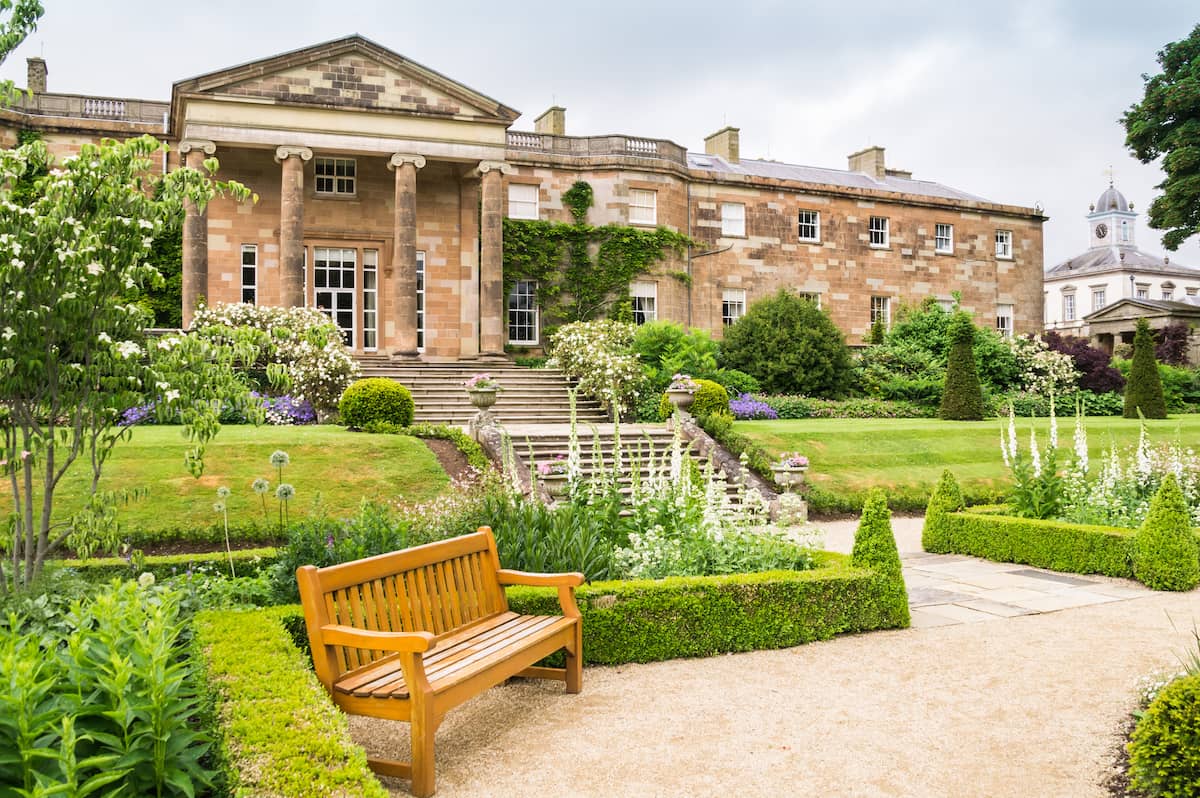
    Landscape view of Hillsborough Castle, Northern Ireland

    Hillsborough is a village in County Down, only 19km from Belfast. It’s the ideal place to be if you want to live in a quiet and peaceful setting without being too far from the city and all its amenities.

    The excellent location has resulted in Hillsborough becoming part of the commuter belt of Belfast. This also works well if you have kids, because even though there are several primary schools in and around Hillsborough, Belfast is just 20 minutes by car and has a wealth of schools to choose from.  

    Kids will find it pretty difficult to be bored in Hillsborough. Despite its size, the village has a lot to offer when it comes to outdoor activities. Hillsborough Forest offers 150 acres of mixed woodland to explore. Fancy a boat trip? The village is also only a half hour’s drive to the Lough Neagh lake.

    The town itself has an array of cheerful shops and cafes to enjoy. It’s also home to the International Oyster Festival which happens every year, and attracts visitors from all over the world.

    Many people think of the village as Northern Ireland’s answer to the Cotswolds, due its picturesque scenery and significant amounts of Georgian architecture. Speaking of architecture, the nearby Hillsborough Castle and Gardens is home to visiting royals, so if it’s good enough for the royals then it’s good enough for us. 

  • Complete Packing List For England

    Complete Packing List For England

    There are several factors to consider before you visit England, most importantly, the weather! The temperamental nature of the climate here means you need to come prepared for any eventuality! 

    You need to allow for frequent changes in the weather when planning your packing list for England.

    Whatever time of year you visit, layering is key for every season.  Centre your vacation wardrobe around items that mix and match. That way you ensure that you can add or remove clothing as things heat up or cool down.

    It must have been a Brit who said:

    There is no such thing as bad weather just inappropriate clothing.

    Whatever else you neglect to take a thin waterproof coat or umbrella is essential. It’s very rare that you will get perfect weather here but sometimes England likes to surprise us like in Sept 2020 with 10 days of beautiful 25 C degrees. Here is a look at the other most important things to take with you on your exciting trip to England.

    england packing list

    Essential Travel Item

    Important travel documents are essential for any trip, some to consider when packing:

    • Passport: The most important item on the list (unless you live in the UK).
    • Driving License: Your driving license will be useful as well, even if you are not planning to hire a car as you can use it as an ID in most cases.
    • Visa (if required): Make sure you read the entry requirements to the UK. Some countries need a visa and others will need 6-month validity in their passport.
    • Tickets and documents: These are generally kept electronically but having a folder ready with everything handy will save you any stress. I always create Google maps with the places I’m staying and want to visit, an excel spreadsheet of all the places I’m staying and travel information. Keeping electronic versions of your passport and license will also help if anything happens to them. This will also be handy if you are flying into the UK as immigration may ask where you are staying.
    • Money: Card payments are widely accepted in England. In some cases, places won’t accept cash or card so it’s good to have a mix of both. I keep most of my money on a card and have about £40 in cash for the odd thing that requires it. Wise offers multi-currency cards which are perfect for travelling and have been my go-to card company for my business.
    • Credit Card (optional): Credit cards are great for backup or if you’re like me and like to gain points! MasterCard and Visa are widely accepted in England. American Express is not as widely accepted but has been growing over the past few years.
    • Travel Insurance: It’s not often something you have to use while travelling but if anything goes wrong on your travels you will be thankful you do. World Nomads offer travel insurance online and you can get a quote here.

    Essential Travel Clothing

    This list is created to be adjusted on whether you’re here for a weekend break to staying for a couple of weeks. And adjust to your style!

    Tops

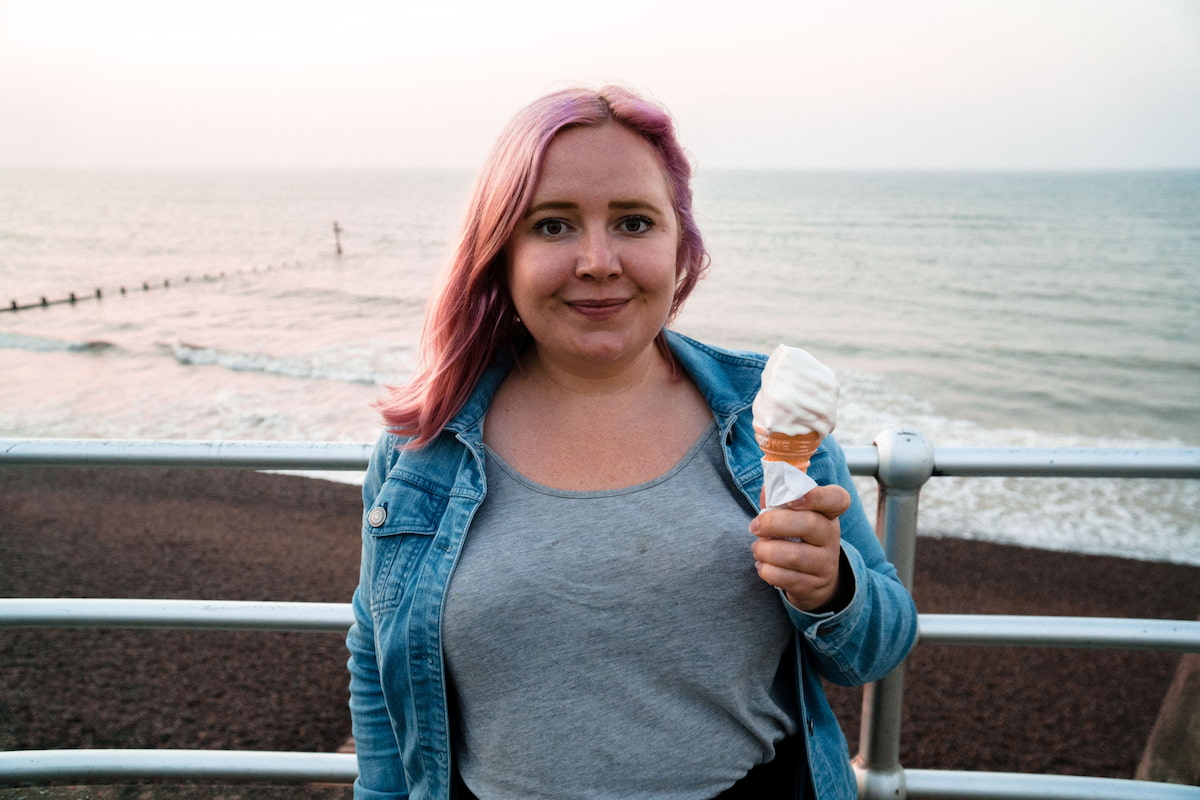
    Kat in Norfolk with an Icecream

    I would recommend 2-3 tops, that can be re-worn a few times.

    • T-Shirts: Pack a couple of t-shirts that can be worn alone or when layering if the weather is changeable or turns cold. I go for more vest top style but whatever works great for layers and adding with bottom outfit.
    • Collared Shirts: These can look great! I love pairing mine with a dress or use as a light jacket. For men, these are great for pairing with cinos and it will give you the flexibility to go out to nicer places or just look snazzy for photos.
    • Long Sleeve Tops: These are great when you are layering your wardrobe to accommodate changing weather.

    Trousers, Jeans, Shorts and Skirts

    I would recommend 2 pairs of pants/bottom layers.

    • Jeans: personally I like wearing jeans and these work in most weather conditions so pack at least one pair.
    • Lightweight trousers: not only will they save weight in your luggage but if you do get wet they dry out quickly.
    • Chinos (men): are a great choice for smart casual or daytime wearing.
    • Skirts (women): are a good option for all weather types, in the summer it’s nice and cool, in the winter pair with some warm tights.
    • Shorts: Warm weather is ideal for having a pair of shorts.
    • Active Wear (if outdoor-based holiday): England has a lot of great walks and hikes available which a good pair of outdoor trousers will come in use.

    Dress

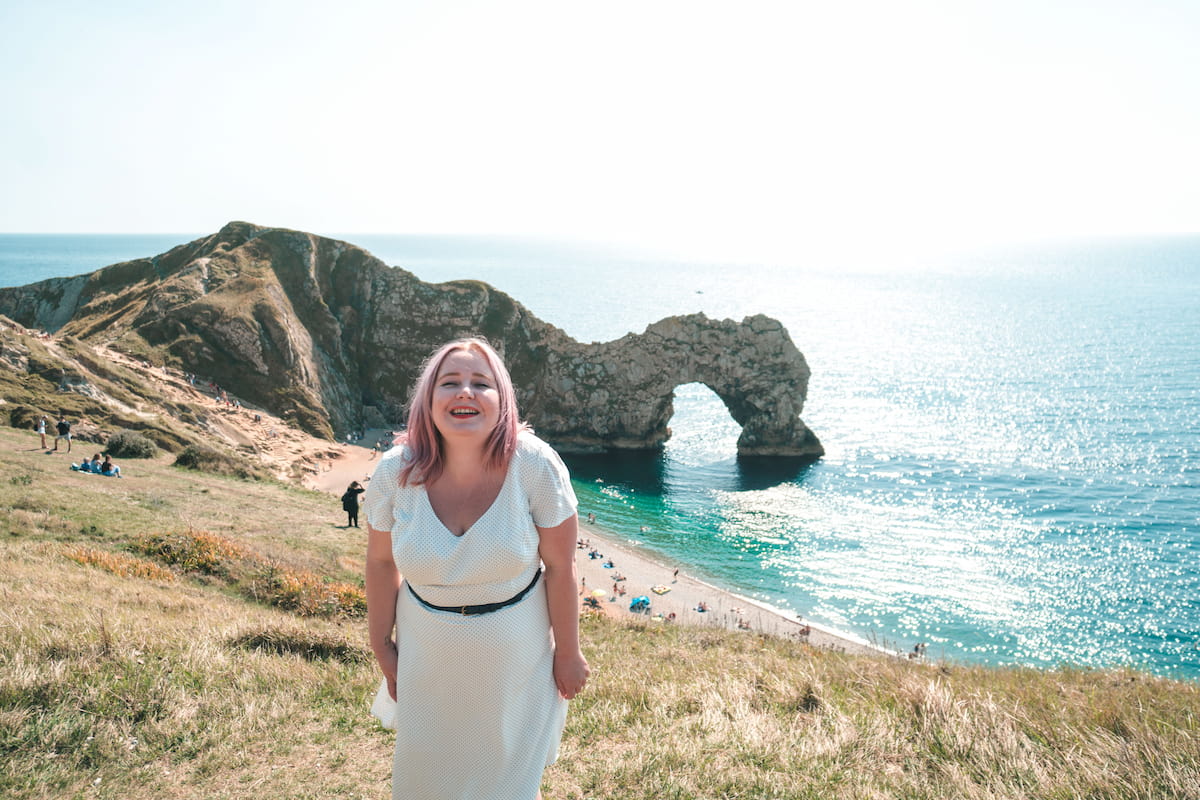
    Kat in a white dress at Durdle Door

    I love taking dresses on trips, something that can be both casual and dressed up. Add some stockings just in case it gets cold.

    Coat or Jacket

    A good coat or jacket is a must for the trip. In the summer bring a lighter jacket and for the winter, a winter coat.

    Jumper, Sweater or Cardigan

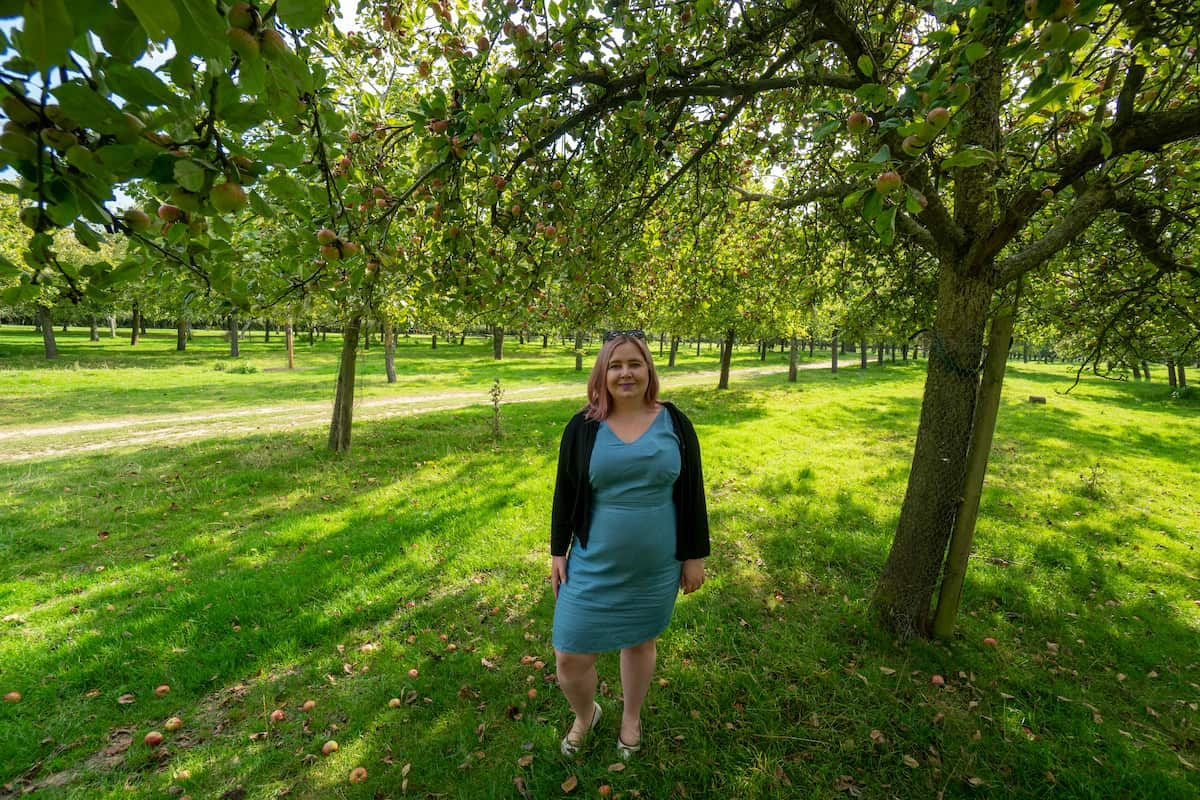
    Kat in Somerset at a Cider Farm

    A jumper or sweater that will go with most of the clothes you have brought with you will hopefully be something you don’t need, but it doesn’t take up much room in your case if you do need one.

    Cardigan is a surprisingly versatile item to take on vacation to England. Ideal when the English wheater is warm, but not quite warm enough, they work as a halfway house between nothing over your top and a jumper. 

    Waterproof Jacket

    A raincoat can be a better option than an umbrella depending on the weather and generally made of light material that it’s a nice addition to pack. Something like this Blacks Waterproof Jacket which comes in various colours!

    Scarf

    Kat in Covent Garden during Christmas

    A scarf is a great item, it adds warmth when it’s cold or be an easy item to use over a jacket in the summer.

    Consider bringing a pashmina scarf. “Pashmina” is a general term for a large scarf; it’s a style of scarf rather than a brand name or material type.  Modern Pashmina’s come in every possible colour and lots of different materials. If you don’t have one choose one bright and bold or to complement the capsule wardrobe you are taking on vacation.

    Underwear

    • Bra (women): Comfortable, sexy, sports bra or whatever type fits your style and holiday.
    • Socks: Even if you are going in the height of the English summer take a pair of comfy socks, they’ll double up as slippers on cold mornings.
    • Boxers (men): Add a pair for each day you’re travelling.
    • Underwear (women): If you’re anything like me then you’ll have a pair for each day and a few just-in-case spares.

    Pyjamas

    No matter what you sleep in, a set of PJ’s will serve you well. Just get changed when chilling with a glass of wine after an exhausting day of sightseeing. Ahh, Bliss!

    Swim Suite

    Planning on visiting the English Seaside or enjoying a swim in your hotel pool then bringing a swim suite is worth it.  

    Shoes

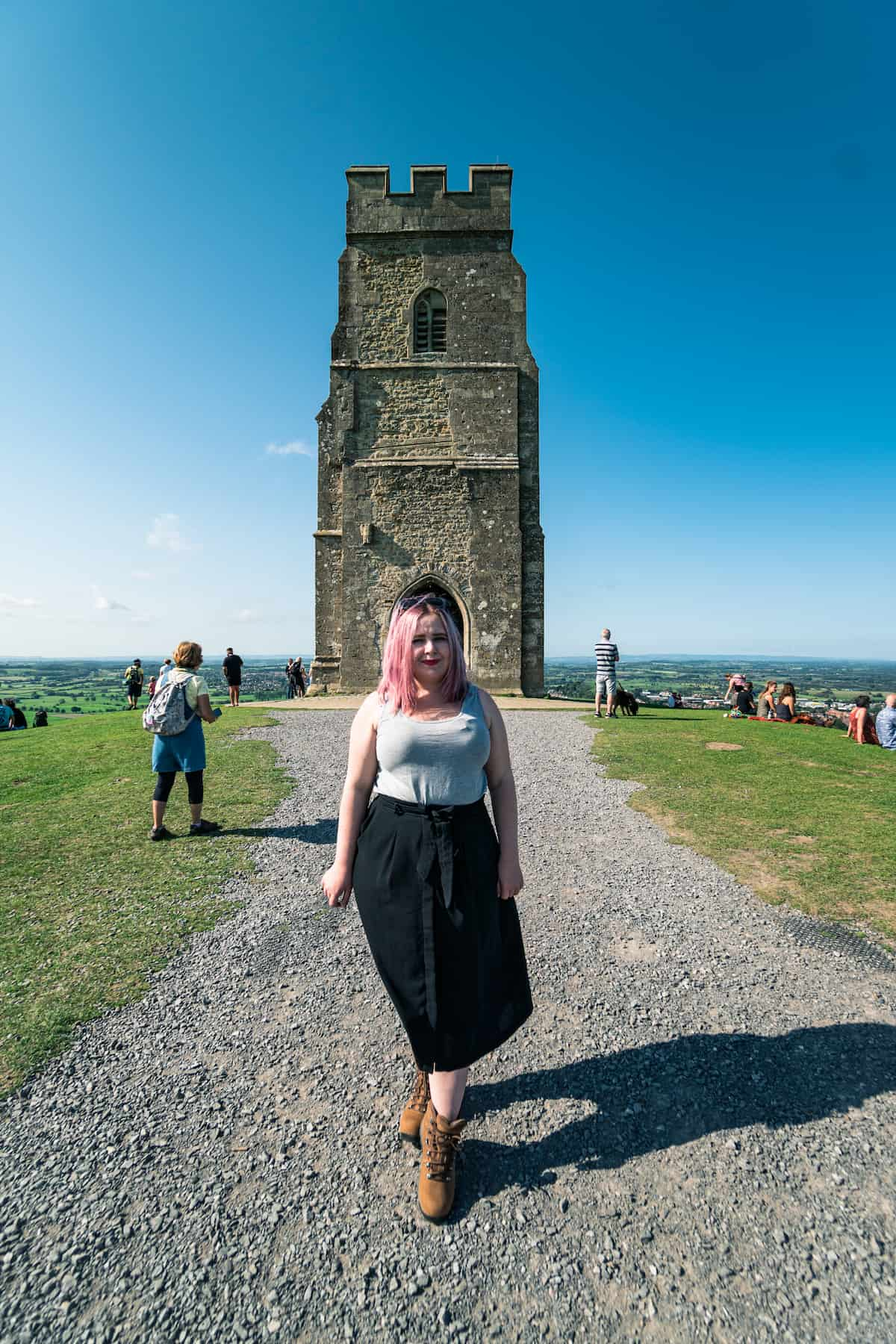
    Kat at glastonbury tor

    Comfortable footwear is a must, whatever you think you are going to be doing; you are bound to visit some historical sites, museums and the like.  For long walking days, I always pack trainers and then during the evening switch to comfy ballet flats or boots for the evening.

    If you are planning on hiking or exploring any of the outdoor areas then either good waterproof walking shoes or rain boots (wellington boots as we like to say!) are a must. I wear Brashers Walking Boots for the days I go hiking.

    There are lots of city and town areas in England that have cobbled streets which are not great for high heels or inappropriate shoes (at least in my opinion). Thicker heels like wedges or boots will be more appropriate.

    I’d add some flip flops if visiting in the summer or staying in a hostel (makes me feel better about using shared bathrooms).

    Electronics

    This is where I tend to pack the most stuff! My camera bag is always extremely full and it’s a battle between clothes and this!

    Phone

    Most of us won’t forget our phone when travel but the plugs to charge our phones can often be forgotten. Make sure you add these to your list!

    I suggest also downloading some apps to make your trip easier:

    • Google Maps – offline maps so you will be able to find your way around England without the internet. I also create maps of all the places I want to travel so that I have it handy when I land and can easily see whats in the area.
    • Trainline App – this will allow you to buy tickets for trains across Great Britain and it saves all your mobile tickets to the app when you register (great for not losing your tickets.
    • City Mapper – this is great for telling you all the routes available from buses to trains. It will even do things like show you the best carriage on the tube for your exit!
    • WhatsApp – I’d like to think most of us use WhatsApp these days but it’s the number one app people message each other in England on
    • Get Your Guide – This is great for booking attractions and will save your tickets on your phone.
    • Tiqets – Another great ticket company to use for booking attractions in England.
    • The National Trust – You can either get a membership or pay for sites individually. Discover what Britians countryside has to offer with over 585 places you can see.
    • Wise – I use this for checking the exchange rates but also it’s a great travel card. You can also download xe.com app if you prefer for exchange rates.

    Portable Travel Charger

    Running out of phone battery is frustrating when you’re out so having a portable charger will save you in those moments! I recommend the Anker range, they are always reliable. Check out the latest prices on Amazon here.

    Travel Adapter

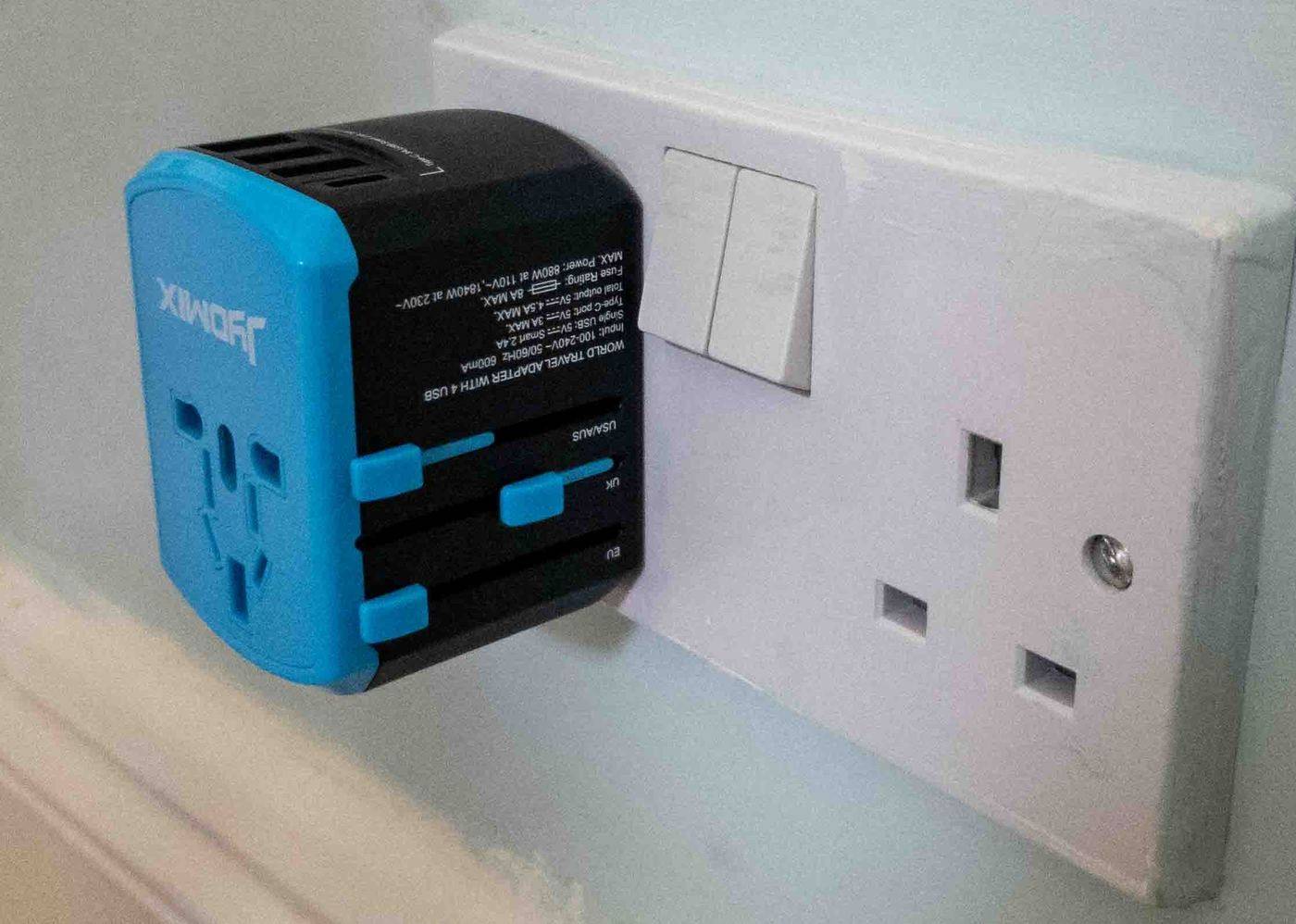
    VGUARD-Worldwide-Travel-Adapter-4-USB-Ports
    My favourite travel adapter, save you bringing all the bulky plugs!

    An absolute must is a travel charger for your phones, camera and any other electrical or chargeable items from home. I have a multi-country use one so that I’m not needing one for every country I visit.

    I use this Worldwide Travel Adapter, you can find the latest prices on Amazon. The adapter covers most countries and has 3 USB ports that become so handy when you have loads of devices to charge.

    Headphones

    There are going to be times you want some peace and quiet or to listen to some music on your phone.  Don’t forget your headphones!

    I recently bought the Sennheiser Wireless Headphones, not only do they have great sound but the noise cancelling is brilliant! The only negative is that my hair occasionally gets caught in the headphones.

    Camera

    Most of us have cameras on our phones, but for the best possible shots, you cannot beat your standalone purpose-made camera.  So, for the best possible photographs while in England take a camera and snap away.

    Currently, I use a Sony to shoot all the videos and photos you find on my website. I have the crop framed mirrorless camera and I love it because it is compact. The only negative is you don’t get the full range on the lenses. Check out the latest prices for Sony A6600 on Amazon.

    For longer trips, I do bring portable hard drives and my laptop to transfer all my photos across. If you are bringing just your phone then look at online storage to backup all the photos.

    Toiletry Bag

    Adjust to your preferences, I try and keep this as light as possible. It’s generally where all the additional weight is added in!

    General Items

    • Eye Mask & Ear Plugs – Depending on the time difference and the type of accommodation you have and maybe whilst getting about on public transport, these may prove invaluable items that don’t take up much room.
    • Toothbrush and Toothpaste
    • Medication – Please don’t forget any prescribed medicines or meds that you use that may not be readily available. You will be able to get generic medication like panadol or ibuprofen over the counter here.

    Skin Care

    • Face Wash: A must-have to wash off the dirt and days outing.
    • Moisturiser: bring a good moisturiser as our skin does take a beating when travelling. I find the cold weather cracks my skin and then in the summer it gets the sun.
    • Sunscreen: Much to everyone’s shock, England can get warm and you can get sunburnt. If you’re travelling here in the summer add this to your list.
    • Travel-Friendly Makeup: I always bring foundation, mascara and a choice of my favourite lipsticks. As I travel with it in my hand luggage I make sure it’s travel-sized to go through security.
    • Body Wash: Normally I leave this behind as accommodation comes with it or I can pick it up at the store but you may want to bring your favourite body wash.
    • Chapstick – chapped lips is the worst! I recommend bringing some chapstick to avoid this. I love these handmade lip balm on Etsy, they are Organic Ingredients, Plastic-Free, Biodegradable, No Preservatives or Additives.

    Hair Care

    • Hairband: is handy to keep it back from your face if the wind gets up or when you don’t feel like washing your hair.
    • Hair Product: I try and keep this as travel-sized as possible as it adds weight. If you are visiting for the weekend then try and wash your hair before you come so you don’t need to worry about it. Or consider buying products here to save on the weight.

    Handy Items to Carry

    • Umbrella – Whichever time of year you visit England you will be very lucky not to get some rain.  Often it is the soft, gentle type that soon gets you soaked and an Umbrella is ideal for this type of rain. It can get windy here so I would make sure that it is a windy proof umbrella and something that won’t break.
    • Tote bag – in the UK we charge to add bags to your shopping, having a tote bag is great to save on buying bags or if you have additional things you need to carry around. Something like this London Skyline tote bag on Etsy.
    • Pen – Having a pen randomly comes in handy so I always have one in my bag.
    • Sunglasses – for when the sun occasionally comes out.
    • Reusable Water Bottle – You can drink the water in England so to save on money I bring on a reusable bottle like this Stainless Steel Water Bottle found on Amazon.
    • Hand Sanitiser – I feel like this is a must now! Add a small bottle in your bag.
    • Dry Bag Dyneema Cuben Fiber DCF Ultralight Waterproof Roll Top Dry Bag (mouth full!) is perfect for keeping whatever you need dry! The Dyneema material is lightweight, had high tear resistance and 15x stronger than steel. You won’t find anything else like it on the market.
    • Travel Towel (optional)Microfiber towels are brilliant for travelling, they are ultra-compact/lightweight, fast-drying and super absorbent. These towels not only have antibacterial ions but come in cute patterns and can be found on Etsy.
    • Laundry Bag – One of the worst things about any kind of holiday is the amount of dirty laundry that gradually piles up. Avoid getting dirty laundry mixed up with clean clothes by storing it in a laundry bag, such as this one reusable mesh laundry bag on Etsy.
    • Lightweight Combination Locks – If you’re leaving your luggage in places or staying in a hostel having a lock is important! TSA locks scarily easy to get keys for so I recommend a combination padlock like this one on Amazon.

    Backpack

    Chances are you’ll take a backpack on board as your hand luggage.  They really are the easiest bags to carry and tend to be a free part of your luggage.  Then, once you are in England they are a practical and easy bag to pack your daily needs into.

    I personally rate Osprey bags, I’ve had mine for over five years and they are still going strong. They aren’t the trendiest items but they are extremely practical. Here’s their ultra-light backpack range on Amazon.

    Things You Don’t Need to Take

    Please don’t PACK anything that makes you look like a tourist! You will stick out and you want to blend in like a local.

    Hair Dryer

    Hairdryers are big bulky items to take in your luggage allowance but also they may not be compatible with the UK voltage. If your hairdryer isn’t compatible with 230 volts then it will risk causing a fire hazard and American hair dryers are a classic for not being compatible. Read the instruction manual first to ensure safety for us in the UK.

    Generally, hotels and accommodation will have them.

    Heavy Items

    • Full sized shampoo and conditioner – these add additional weight and take up space.
    • Books – if you must bring 1 book but if you plan on lots of reading opt for a kindle or digital books.
    • Valuable jewellery or items – there is no need for valuable items to be brought on holiday with you. It just adds additional stress.

    Are You Reading this as a Resident in England?

    Well then, you will know most of this already!  Layers are key for clothes to take on vacation, pack light and dress for comfort and style.  The advantage of being a local is you are not restricted to what you can fly with. So, you lucky people can take more.

    Overseas or Staycationers:

    All have fun; England is a beautiful place with lots of things to see and do.

    How many you take of each item, is down to personal choice and how long your trip is for.  Just to be sure though, for each day you will need a vest, top, jumper, trousers, skirt or shorts, shoes and underwear.  Plus, the Pashmina and one of the coats to wear on top as well.

    Just remember, you’ll want to dress and pack for all types of weather in one day!  That’s easy enough – right!

    Have an absolutely fabulous time in England and one more thing…

    Don’t forget your travel insurance!

  • How to Travel Scotland on a Budget: 35 Money-Saving Tips

    How to Travel Scotland on a Budget: 35 Money-Saving Tips

    The great thing about travelling to Scotland is that there is a way to go anywhere and everywhere on a budget and without breaking the bank. Even the places that are known for being a little more pricey, such as Edinburgh or Skye, can be done in a cheaper way.

    However, there are some places that are cheaper than others. For instance, Glasgow as a city tends to be less expensive than Edinburgh, so it might be a good idea to seek accommodation in Glasgow and visit Edinburgh as a day trip, or perhaps spend only one night there. The same logic can be applied to visiting the islands, which can often be pricier than places on the mainland.

    Much of this depends on when it is that you travel. Inevitably peak seasons will see a spike in prices of plane fairs, accommodation and even food, drink and tourist attractions. For this reason, if you are looking to save money then the best thing to do is to travel between the months of October and May, as June to September is when you could expect to see those price increases.

    Scotland on a Budget

    Getting Around: Budget Transport in Scotland

    Buses Instead of Trains

    One unfortunate reality of travelling in Scotland is that train travel is rather expensive, and can significantly increase the cost of your trip if you do it regularly enough.

    A great alternative to taking trains is to take buses instead. The best option is the budget bus company Megabus, offering tickets at a fraction of the price of a train. For even cheaper fares, book in advance on the Megabus website. This means booking a specific bus at a specific time, but cuts the price even further!

    Off-Peak Trains

    Booking train tickets in advance will save you a ton of money. There are different types of tickets that you can buy:

    • Advance (where you can save the most money) – With the advance tickets, you need to travel at the exact time and on the train stated on the ticket. These only go on sale 12 weeks before your intended travel date.
    • Off Peak – cheaper tickets than any time and allow you to travel any time off-peak. There may be restrictions on routes so double check beforehand.
    • Anytime – this ticket gives you the ability to travel anytime and will be the most expensive ticket available.
    • Group tickets – if there is more of you travelling and these can be cheaper than the advance ticket.

    ScotRail is the official train provider for most national travel, however, some of the stream trains or trains from other parts of the UK cross into Scotland.

    You can use Trainline to find the best ticket for your trip. They also have other information like live train times so you can track if there are any delays or what platform your train is leaving from.

    Scotrail Travel Passes

    Consider getting the spirit of Scotland travel pass which includes travel on trains, buses, coaches and ferries. 

    There are two passes to choose from, four days unlimited travel over eight consecutive days or eight days unlimited travel over fifteen consecutive days. Find out more on ScotRail’s website.

    RailCards

    Consider getting a railcard if you’re under 30, over 60, travel as a family, travel as a couple, or have a registered disability. Railcards give 1/3 off Anytime, Off-Peak and Advance fares which are perfect if you plan on travelling Scotland by rail!

    Even if you don’t live in the UK or not a British citizen you can still buy a railcard if you meet all the criteria. The best way is by buying online and downloading the digital rail app on your phone. When buying you will be provided instructions on how to do this.

    If the system has an issue with your non-UK postcode then use EC1A 4HD, it’s the Rail Delivery Group’s postcode that runs the RailCards. At the payment stage, you can select your correct nationality then enter the correct postcode for your billing address.

    Any other issues like invalid passport will be on the railcards website FAQ.

    Once purchase you will be able to buy discounted tickets through approved suppliers like Trainline.

    Subway and Local Buses

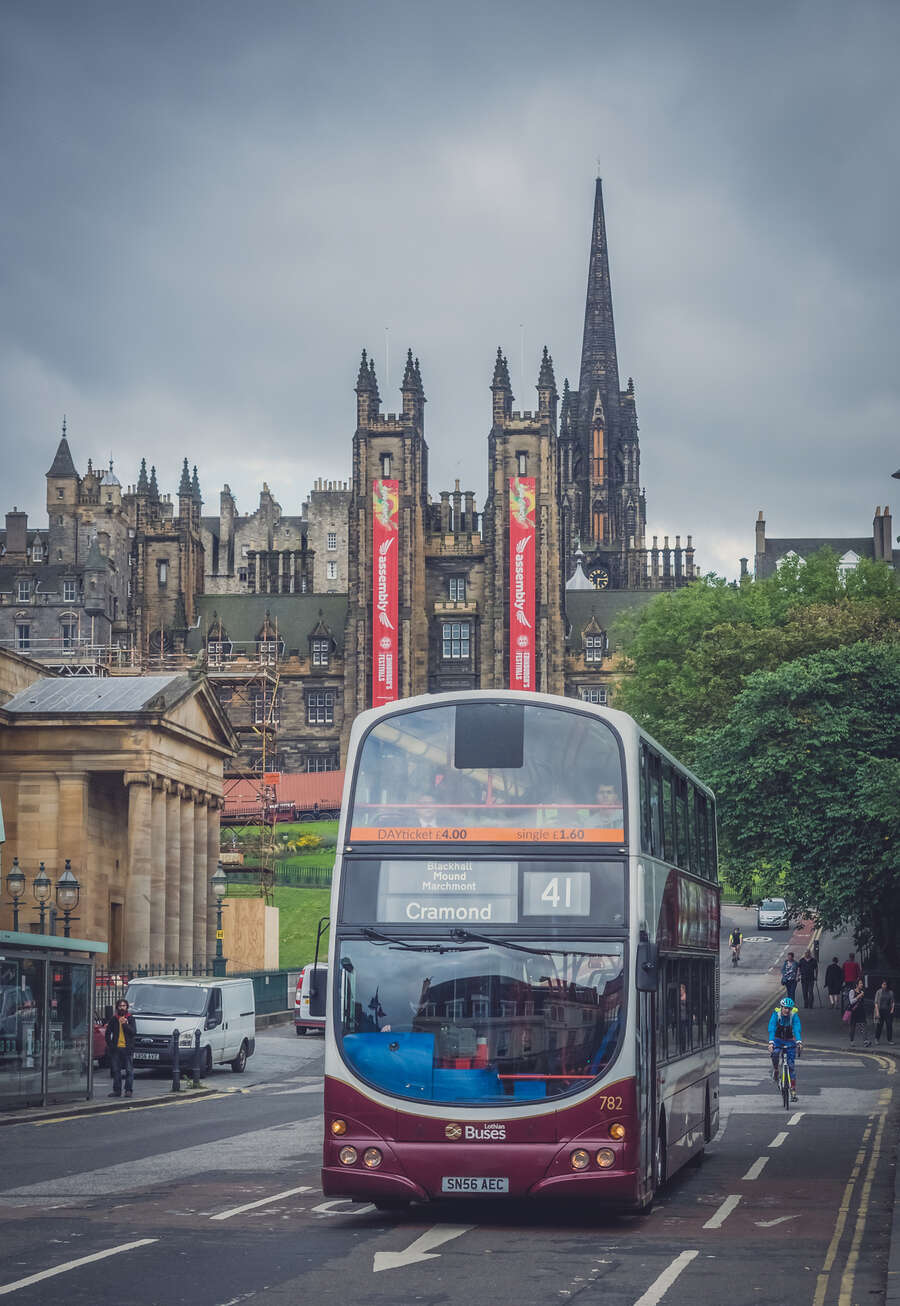
    Modern-double-deck-bus-operated-by-Lothian-busses-in-the-centre-of-Edinburgh-Scotland

    For travelling around local areas, there are budget options available as well.  In Glasgow, the underground will take you almost anywhere you need to go in the city, and a day pass is just £4 (5-6 US dollars), which you can use as many times as you like throughout the day.  If you need to get somewhere outside of the route of the underground, there are also excellent local train services in Glasgow that are inexpensive.

    In Edinburgh, the local buses will take you anywhere in the city, and use a ‘tap in’ contactless system.  That means that if you tap your card whenever you get on a bus, you will automatically be capped at the cost of a Day Pass (£4.50) after tapping three times.  Similar to Glasgow’s underground, this means you can travel the entire city at this cost, no matter where you are going!

    How to Explore Scotland Without a Car has more tips on how you can see Scotland with transport.

    Local Taxi Companies

    Rather than using the standard Black Cabs that can be found in all the major cities in the country, try using local taxi services instead, as they work out much cheaper.

    • Glasgow – Network Taxis
    • Edinburgh – Capital Cars
    • Aberdeen – Rainbow City Taxis
    • Dundee – Dundee Taxis

    Car Hire in Scotland

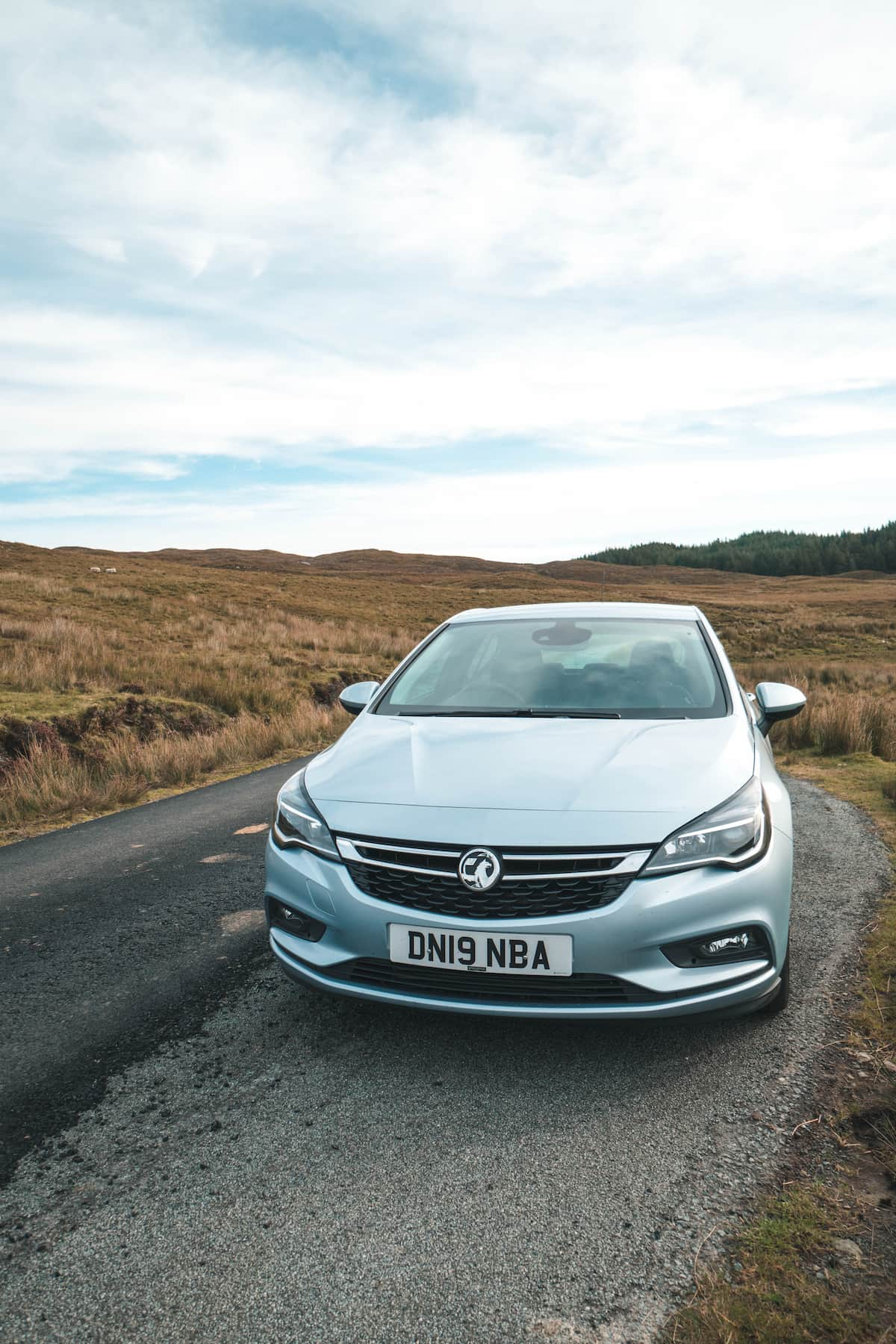
    Our rental car on the road with the Highlands in the background.

    I always use car aggregators like Rental Car or Sky Scanner to find the cheapest cars or check my credit card for any offers for my road trips. Once I have a list of options I’ll either book the best-priced option or call those car companies to see if they can offer any other deals.

    Things to watch out when booking a car:

    • Additional drivers will always drive up the price of car hire so if you are travelling with other people and wish to share the driving you can expect that to add an extra £8 to £10 a day.
    • Read the small print on whether the car company accepts third party assurance as this can save you. If you can use third party insurance then this can save you additional money if you want more coverage.
    • Where you rent the car will affect the price, normally renting within the cities like Edinburg or Glasgow can cost you more money than slightly outside of the city.

    Visiting for a Month? Save on Long Term Car Rental

    When I did my Great British Road Trip over the summer I used Europcar’s long rental option which gave us the car for half the price for 28 days, unlimited drivers and delivered to my door! This is a perfect way to save on the cost of renting a car and you can still get the long term hire if you’re visiting from overseas. Just pick it up at the closest location.

    Here are some road trip ideas for your Scottish adventures:

    Fill-up at Supermarket Petrol Stations 

    Asda, Morrisons, Sainsburys, Tesco etc. will all offer cheaper petrol by some margin. If you stop at any of the petrol stations along the motorway you could easily see prices increased by 10 to 20 pence per litre! By searching for these petrol stations you’ll easily find savings.

    Pre-Book Parking

    Sometimes you can get better deals on parking if you pre-book. Use websites like Your Parking Space or Just Park to find any deals to save you money. I use this for when I park in cities as this is where the money adds up if your accommodation doesn’t offer cheap or free parking.

    Download these apps before hitting the road; Just Park, Pay by Phone and Ring Go. They were by far the most frequent ones I encountered.

    Save on Scotland Accommodation

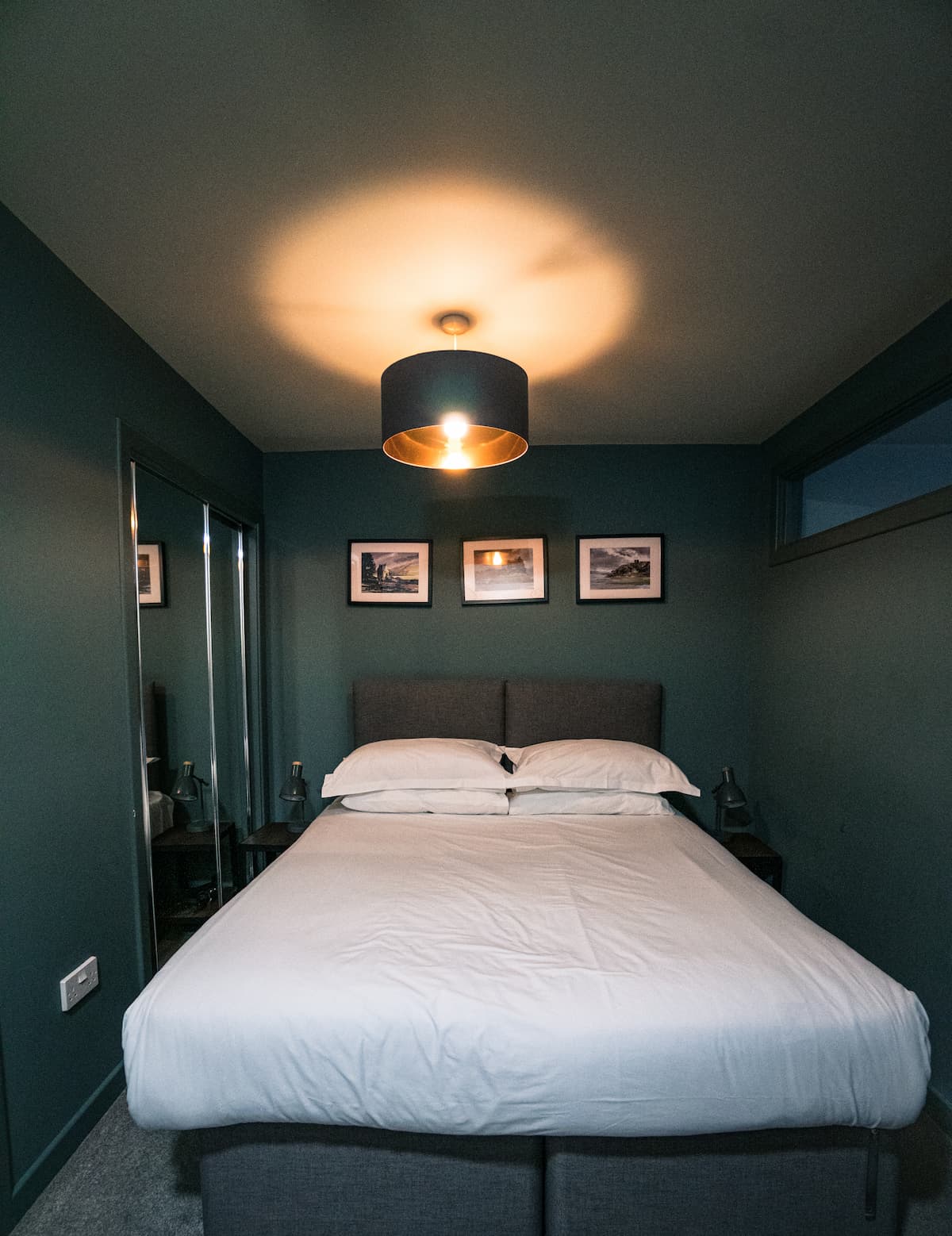
    Hotel Room in Oban

    Book your Accommodation well in Advance

    Affordable accommodation books out well in advance, especially if you’re visiting in the summer months. Once you’ve confirmed your dates look at booking your accommodation shortly after so you get the best deals. Having cancellation options will give you the freedom to cancel if you need to re-arrange your travel.

    Stay Outside of the City Centre

    The best way to find cheap accommodation is to look outside of the central areas of any given place.  Staying where other tourists tend to stay will almost always mean that there is a price increase, which can be easily avoided by researching areas a little outside of the centre of a city or town.

    Airbnb

    Like many other European countries, Airbnb is extremely popular in Scotland, particularly in the summer months as many Scots prefer to leave the business of the Fringe Festival and other tourist attractions, and instead rent out their home at this time.  The great thing about Airbnb is that the properties tend to be cheaper than on other booking sites which can be a huge money saver during busy times like the Edinburgh festival or Hogmanay.

    Bothies

    Bothies are a little known hidden gem of Scotland and make the perfect accommodation for those who love the outdoors and are travelling on a budget.  Bothies are normally situated in the Scottish mountains and require a hike to get there – some longer than others, and are a simple, basic shelter.  The great thing about bothies is that they are entirely free to stay in, making them the perfect budget travel option.

    To stay in a bothy, you do need to be slightly more prepared, as they are very basic and do not have amenities.  This means bringing sleeping materials, food and water just like one would if they were camping.  Some of them even have fireplaces, so be sure to bring wood and a lighter if that is the case.  Staying in a bothy is a wonderful experience for any outdoor lover!

    Find more about bothies here.

    Hostels

    There are many great hostel options all over Scotland which offer highly comfortable and very affordable options for accommodation on your travels.  The best thing about hostels is that they can even allow you to stay right in the centre of a popular city or town, at a fraction of the price of a hotel in those given areas.

    The standard of hotels across the country also tends to be fairly consistent in terms of standards, meaning that you do not have to sacrifice your comfort in order to save money.

    Student Accommodation

    Some of the universities will rent out the student accommodation and this can offer a cheap way to stay in the cities. This is mainly during the uni holidays so Christmas (December, January), Easter (March, April) and summer (June, July, August, September).

    • University Rooms – Broker for handling short-term stays at many colleges and universities in the U.K.
    • Budgetstayuk – Offers accommodation for five universities in Edinburgh.

    Camping

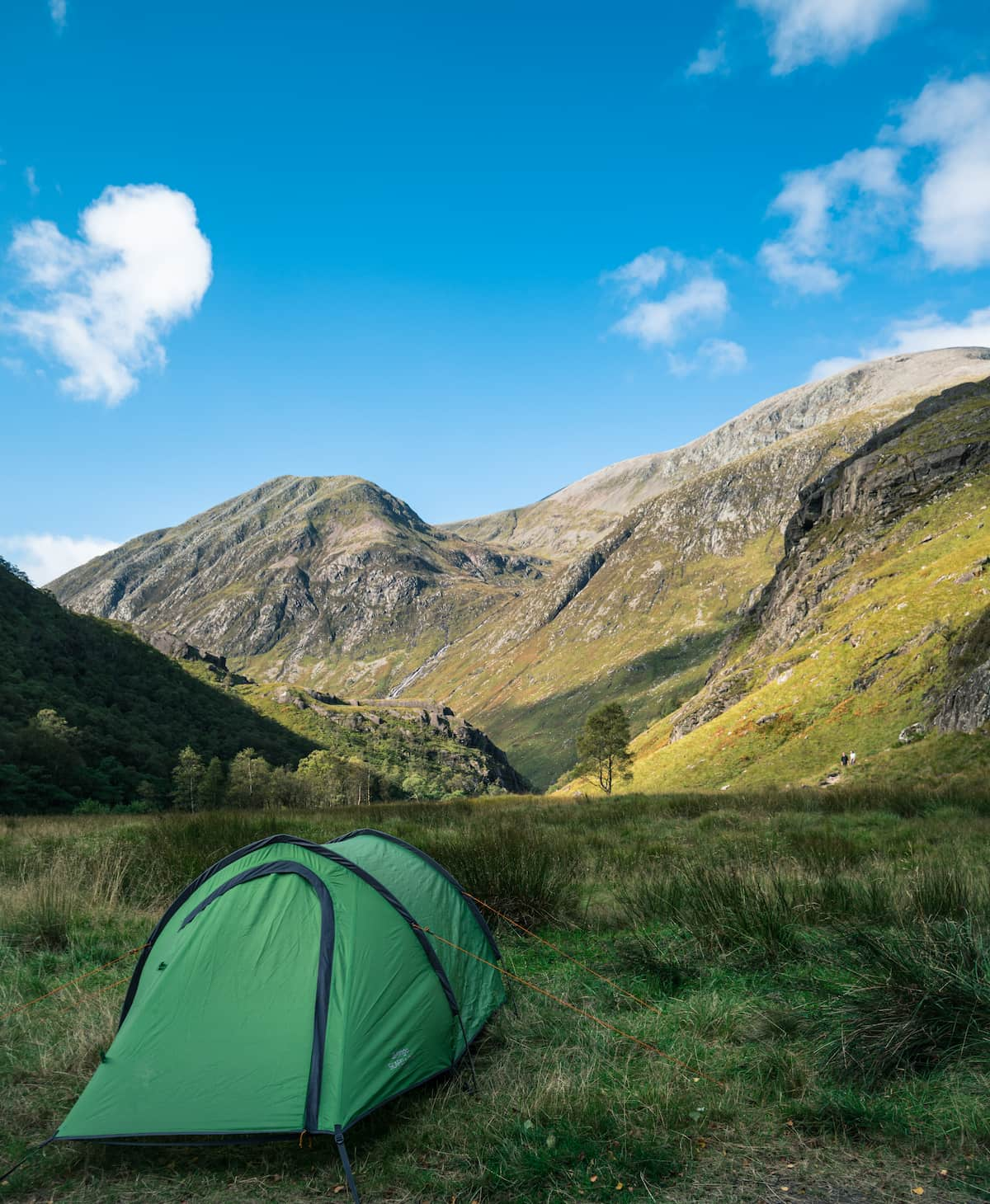
    Wild Camping in Fort William

    Camping offers perhaps one of the most budget-friendly ways to travel all around Scotland.  Many official campsites allow for you to stay there for as little as £5 each per night, bringing the cost in at much less than even a hostel could offer. 

    Even better still, in Scotland, you can make use of the Freedom to Roam act and save a lot of money on your trip. The act means that all land is accessible to anyone in the country, which isn’t just great for walks and hikes but also for camping anywhere you like. 

    Anyone camping in Scotland can pitch a tent in any non-closed off area and not pay even a penny to do so – this is, without a doubt, the most cost-effective way to see rural Scotland.

    Food

    Eat in pubs

    A great part of Scottish culture is that almost every pub serves food as well as drinks.  This does not mean that there are simply bar snacks available, but more often than not that there will be a full menu available, often a similar sized one to an actual restaurant, with a huge selection of different starters, mains and desserts.  The great thing about this is that the meals in pubs are normally a fraction of the price of a meal in a restaurant, with main courses usually ranging from £7 to £10 on average.

    Make Your Own Food

    Supermarkets are a great way to save on food and I frequently create a picnic or cook my own food. The cheapest stores to purchase food at are Aldi and Lidl. Asda, Tesco and Sainsbury being your mid-range store, normally where I shop. Marks and Spencers (M&S) or Waitrose are on the high-end.

    Meal deals are available at some supermarkets where you can normally pick up a sandwich, drink and crisp for £3. If you have a kitchen at your accommodation then there are also dinner meal deals options like stirfry deal or ready meals.

    Tap Water = Free

    Something that is important to remember in terms of saving money is that tap water is entirely free and safe to drink across Scotland, meaning that purchasing any drinking water at all is unnecessary.  Cafes, restaurants and bars will be happy to refill personal drinking bottles with tap water, and ordering it in a restaurant is also free.

    Local Beer

    Drinking local, Scottish beer in bars and pubs while in Scotland is by far the cheapest option when buying alcohol on your trip, and this is no bad thing.  There is a whole variety of Scottish beer to choose from and much of it is excellent.  While the prices of even local beers vary depending on where you go, you can certainly bring the price down by a couple of pounds just by choosing something local.

    Here are some of the more affordable local beers to go for:

    • Tennents (a local favourite)
    • Innis and Gunn (a craft favourite)
    • WEST (for german beer lovers)
    • Brewdog (technically they are a big brewery now but they started as craft beer and originated in Scotland)

    Malt of the Month

    Kat drinking whisky at Tobermory

    If it’s whisky you are looking to try, there is even an affordable way to do that.  As with other spirits, drinking whisky regularly can be expensive, especially when you aren’t sure what the affordable options are.

    A great way around this is to opt for a Malt of the Month.  The majority of Scottish pubs, particularly the smaller ones and ones in the rural highlands, will have offers and specials where a type of whisky is less expensive than usual.  This is also a great way to try different types of whisky while you are in the famous drink’s home!

    Street Food

    Street food is massively popular in larger Scottish towns and cities and is a super affordable way to eat out.  Fish and chips is the best example of this, with a ‘fish supper’ coming in at around £5 normally, but there are many other types too; falafel is very popular in Edinburgh and Glasgow, as are kebabs.

    Tips

    It is important to remember to tip when eating out in Scotland, but it is also important not to over-tip, or tip unnecessarily if you are trying to save money.

    It is customary when at a restaurant to tip 10% of what the total bill came to; it is not necessary to tip more than this. If you find that there is a service charge added to your bill then that is the tip so don’t add more to this unless you are impressed with the service.

    Furthermore, in Scotland, it is not expected that you tip bartenders or delivery people – you can of course do so if you wish, but if you are trying to save money then remember it is not necessary.

    Lunch Deals

    If you are a foodie, and do want to eat out in restaurants while you are away, then the best way to do this on a budget is to look for lunch deals, which make eating out a far more budget-friendly option.

    It is common for restaurants to offer a limited menu of two or three courses for a reduced price during certain hours of the day.  Be sure to research this before heading out to a restaurant to eat, to be sure that you are getting the best price.

    Save Money On Scotland’s Tourist Attractions

    Historic Scotland Explorer Pass

    Historic Scotland Explorer Pass is a great way to save money on attractions. It allows groups and individuals to discover over 70 places in Scotland. For each day that a pass is valid, you can visit as many locations as you like – for no additional cost.

    Historic Scotland also offer a yearly membership if you live here.

    National Trust Membership

    National Trust membership is perfect if you’re planning to visit a lot of the sights included within the trust. From coastlines to castles, art to architecture, wildlife to wilderness, there is something for everyone.

    If you’re living in the UK then consider a yearly membership as you will get free or concessionary entry to places owned by National Trust organisations including in England, Wales and Northern Ireland. Not only does this save you money at each individual place it includes parking!

    Find out more about the National Trust Membership here.

    Day’s Out Guide

    Days Out Guide is a great way to save money on attractions in Scotland if you’re travelling there by train or hold a train ticket (i.e. London to Edinburgh). It offers 2 for 1 price for various attractions. To be able to use the deal you need to book the vouchers online or visit a rail station for the voucher (it needs to be a physical copy) and have a National Rail ticket for each person.

    Walking Tours

    A walking tour is a great way to get the feel of any city, from someone who lives there themselves.  A tour will normally take you around all of the key areas of the centre of a city or town, and teach you about the place’s history as well.

    The great thing about walking tours is that the vast majority of them have no costs upfront and are based on tipping which means you can decide what amount fits in your budget. There are now walking tours available in every city in Scotland!

    Bus Tours

    Similar to the walking tours, bus tours are a great way to explore a city,  but taking a bus gives you the opportunity to see so much more!

    Bus tours tend to take the structure of a one-off payment for a day ticket, which allows one to get on and off any tour bus in the city at any time based on what they would like to see.  This is great value and means that you don’t have to waste any time working out where to go!

    The prices of tickets vary, but the best value tour is certainly to be found in Edinburgh, where an adult can buy a 24-hour ticket for just £8

    Free Fringe

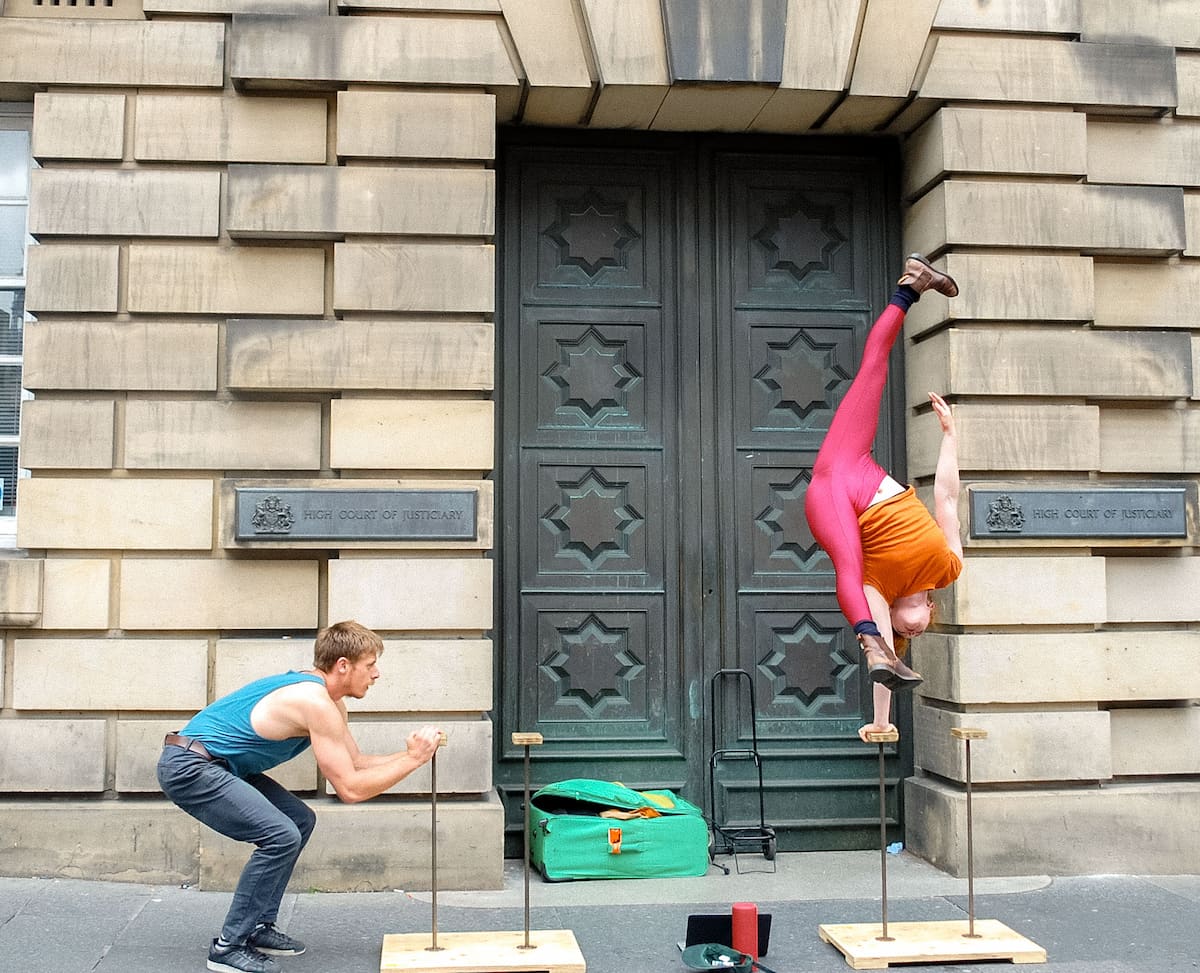
    performers at Fringe Festival Edinburgh

    Of course, the most inexpensive time to visit Edinburgh is in the off-season, but no one could blame you for wanting to visit the city during the Fringe Festival in August.  This is an expensive time to visit the city, but there are still ways to bring the cost down significantly.

    The best way to do this is to stick to the free fringe shows as much as possible! Every time I have attended fringe these are 90% of the shows I go to! These shows are widely advertised throughout the city and are a great way to discover a huge variety of different shows and talents without paying any money for them!  Performing artists will ask for tips at the end, but it is up to you how much you want to pay them!

    Do make sure that you bring change so that you can tip the performers!

    Also on the first week of fringe lots of performances offer 2-4-1 tickets to warm up so it’s a great way to save some money. If there is a show you really want to see make sure you book this in advance! The biggest shows will book out months in advance, just like the accommodation.

    Live Music

    Live music is a huge staple of Scottish culture, and much of it remains unorganised in the sense that it still happens in bars and pubs – meaning that much of it is free.

    There are lots of small music venues, especially around Glasgow and Edinburgh, that will advertise live music on different nights of the week; in Edinburgh, Leith Walk and the Old Town are the places to be, in Glasgow it’s Bath Street and Sauchiehall Street.

    Even in rural Scotland, however, you can still expect to find pubs with traditional Scottish music, often on weekend evenings – if you find yourself in a small village on your travels, ask around at local pubs to find out more!

    Cathedrals

    For those who love history or architecture or both, Scotland has a whole wealth of cathedrals open to the public and completely free to enter.

    The most popular examples are St. Giles Cathedral in Edinburgh, situated right on the Royal Mile, or St. Mary’s Scottish Episcopal Cathedral in Glasgow, but a cathedral can be found in every city in the country!

    Free Museums and Galleries

    There are plenty of great free museums and art galleries all over Scotland, but they are especially great for making city breaks much cheaper.  Luckily, Edinburgh and Glasgow have a particularly high concentration of free attractions such as these:

    Edinburgh

    Museum of Edinburgh

    One of the historic buildings on the Royal Mile, the Museum of Edinburgh houses a collection of pieces relating to the origin of the city, its history, and some of its most well-known legends!

    The Museum of Childhood

    This museum hosts a collection of children’s toys, books and games and was the first museum in the world to be dedicated specifically to the history of childhood.  The pieces date back to the 1800s.

    Scottish National Portrait Gallery

    The Scottish National Portrait Gallery is an art museum holding the country’s collection of portraits of all Scottish people.  Here can also be found the Scottish National Photography Collection.

    The People’s Story Museum

    This one tells the stories of the working-class people of Edinburgh from the late 18th century to the present day, as told through oral history and written material.

    National Museum of Scotland

    This museum holds collections representing the culture and histories of Scotland, as well as collections relating to science, technology, natural history and world cultures.

    National Gallery of Scotland

    This gallery holds Scotland’s national collection of fine art from the early renaissance to the end of the 19th century.  It is situated on the Mound in the centre of Edinburgh and is one of the city’s most popular free attractions.

    Museum on the Mound

    This museum focuses on money and economics, located in the Bank of Scotland Head Office building on the Mound.

    Scottish National Gallery of Modern Art

    This is a part of the National Galleries of Scotland and is home to a collection of stunning pieces of modern and contemporary artwork.  It is comprised of two buildings, Modern One and Modern Two.

    Glasgow

    Kelvingrove Art Gallery & Museum

    This is one of Scotland’s most popular tourist attractions and features an astounding twenty-two themed galleries and an impressive eight thousand different pieces, including Salvador Dali’s masterpiece ‘Christ of St John of the Cross’ which is the most famous piece in the gallery.

    Gallery of Modern Art

    This is the main gallery of contemporary art in Glasgow and it also offers temporary exhibitions and workshops too.  The gallery displays work by both local and international artists, and works to display social issues through many of its major projects.

    Riverside Museum

    Riverside Museum is Glasgow’s award-winning transport museum.  It hosts an amazing three thousand objects to look at – everything you could imagine, from skateboards to locomotives, to cars, to prams – there is even a Stormtrooper!  There are also over ninety touch screen panels which can be used to access more information.

    St. Mungo Museum of Religious Life & Art

    This museum is dedicated to the subject of religion, one of the only of its kind worldwide, and hosts collections relating to all of the world’s major religions and also has a Zen garden.

    The Tall Ship at Riverside

    This is a restored Victorian sailing ship which can be explored.  It hosts maritime-themes exhibitions, tours, and a miniature cinema.

    People’s Palace and Winter Gardens

    This is a museum and glasshouse situated in Glasgow Green which has been open since the late 1800s.  Its purpose is to tell the story of Glasgow and its people from 1750 to the present day.

     Provand’s Lordship

    A medieval historic house museum by Glasgow’s Cathedral.  It is one of the only surviving medieval buildings in Glasgow and is one of the two oldest buildings in the city.

    Scotland Street School Museum

    This is a museum of school education, located in a former school that was designed by Glasgow’s own Charles Rennie Mackintosh, one of the country’s most celebrated architects.  It now tells the story of education in Scotland over the time period of one hundred years.

    The Lighthouse

    This is Scotland’s centre for Design and Architecture, due to the fact that Glasgow has been named as the UK’s city of Architecture and Design.  It hosts many interesting events and exhibitions and boosts the creative industry of the city.

    Hunterian Museum and Art Gallery

    This museum and gallery is homed in the old buildings of the University of Glasgow and is the oldest museum in Scotland.  Inside can also be found the Mackintosh House, the Zoology Museum and the Anatomy Museum.

  • 30 Things to Know Before Travelling to Scotland

    30 Things to Know Before Travelling to Scotland

    Scotland is a very popular tourist destination, now more than ever before, due to its stunning landscapes, tourist attractions and friendly people. 

    Before you set off there are some things you should know before travelling to Scotland. If you’re ever stuck locals will always be willing to help you out if you need, and travel options are fairly easy to work out.

    Scotland Is Its Own Country

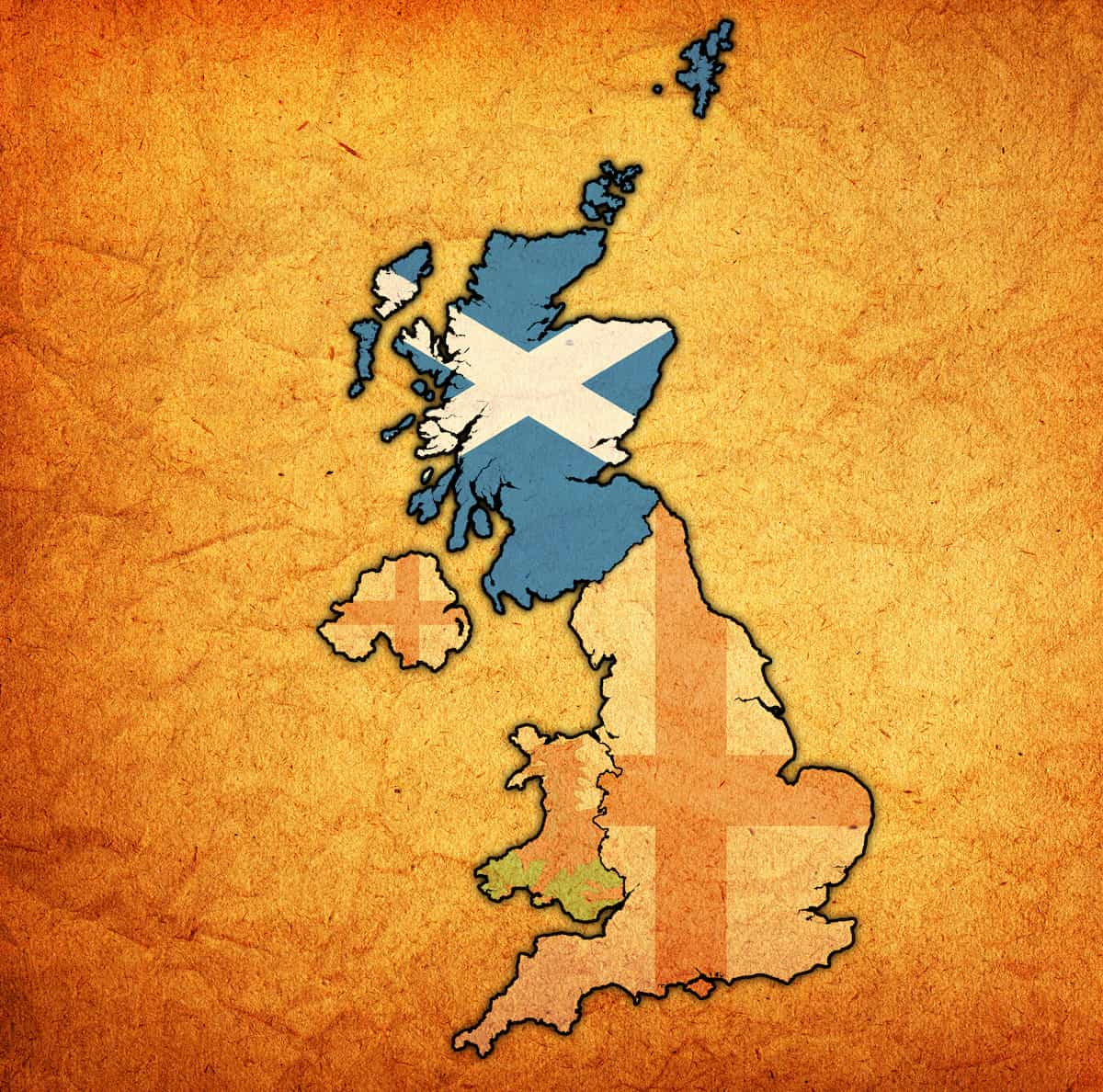
    Map of Scotland

    Scotland is its own country and is not to be confused with England or combine the countries in the UK as one – a common mistake that people make! 

    Scottish people are very proud of their country, culture and customs, and it is a very distinct place. They have their own traditions, people and history, as well as its own parliament and first minister. This is why it makes it great to travel around as you’ll get to experience this on your adventures.

    Another common mistake is to refer to Scottish people as ‘Scotch’ when this is actually more commonly used to refer to a Scottish thing, not a person.  Scottish people actually refer to themselves as Scots, which is also the name given to the language that was historically spoken there.

    Bring The Right Clothes

    Wearing the right clothes in Scotland

    This may seem like an obvious suggestion, people don’t tend to go to Scotland for its weather after all, but it is one of the most important things to consider in preparation for your trip to Scotland. 

    I remember travelling from Italy to Scotland and I did not pack the right clothes! As I’ve travelled to Scotland every year since I moved to London I should have known better but there I was trying to layer all my clothes to keep warm.

    The weather in Scotland is very changeable – one minute it can be blazing sunshine and the next pouring rain or crazy hailstones, so it is very important to be prepared for all occasions.

    Thankfully I brought the most essential item a rain jacket! Due to the high winds in Scotland, an umbrella often will not last more than ten minutes in poor weather, so a sturdy waterproof is your best bet for sure. Something like this waterproof Weekend Jacket from Peter Storm, which comes in two colours red and yellow.

    You will also want to pack layers of warm clothing, even if visiting in the summer.  Summers in Scotland can see temperatures as high as 27 degrees celsius during the day, but even in the hottest times the evenings get chilly, and the temperature is often misleading and can feel much colder due to the wind.  If you prepare by bringing the right layers, you can still expect to sit out on a summer night!

    Wear Comfortable Walking Shoes

    Kat wearing brasher walking boots

    Whether it’s walking around one of the Scottish Cities or hiking somewhere in the Scottish countryside, comfy shoes are a must. A pair that is waterproof is a bonus as well! It rains a bit in Scotland so these will keep your feet nice and dry.

    Most of the cities will have cobbled streets so high heels or any shoes that aren’t compatible with this should be left behind. I tend to pack trainers and walking boots when I go as they cover both scenarios. I own these Brasher walking boots which are super comfortable, you can check out the latest styles on Blacks. If there are no walks planned then skip the walking boots.

    Then for evening nice ankle boots or some flats.

    Avoid August in Edinburgh – Unless Attending the Fringe Festival

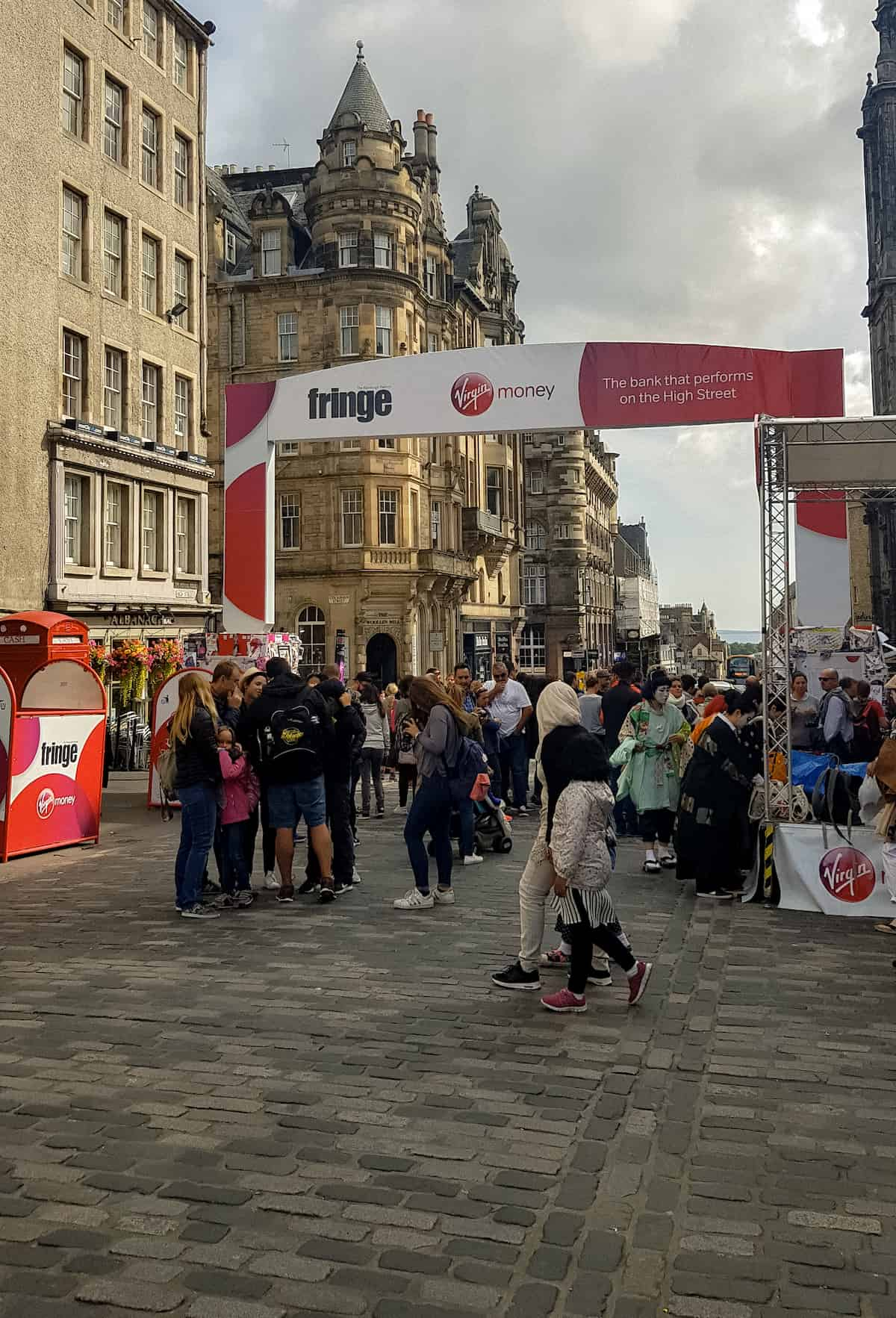
    Streets of Edinburgh during fringe festival

    The world-famous Edinburgh Fringe Festival happens every August and brings in thousands of people each year. For the full month of August, the streets are full of tourists attending the various theatre, comedy and music events.

    Whilst it’s a great time to visit Scotland, if you’re trying to cut costs or avoid crowds it’s best to skip this time of year.

    Pro tip: if you’re planning on going to the Fringe Festival book accommodation as soon as you know you’re going. I try and book accommodation in January or the year before to get the best deals.

    If you are booking the train there, tickets open 12 weeks before your travel dates. Any tickets offered before then will be advanced tickets and these are the most expensive train tickets you can buy. To find out the latest prices check the Trainline website.

    Book Accommodation in Advance

    The popular routes around Scotland get booked out fast, areas like Glencoe, Fort William, the Isle of Skye or Inverness. Once you have confirmed your dates for your visit book ASAP!

    Explore Scotland Off the Beaten Path

    View from Ord on Isle of Skye

    Every destination has the typical bucket list items and there are plenty of amazing places to see in Scotland. My favourite moments have been getting off the beaten path and experiencing the hidden gems.

    On the Isle of Skye, the drive to Dun Scaith Castles was one of my favourite drives on the Isle of Skye. It takes you to areas not as many tourists go down, we stopped Starting point for the walk can be found here.

    Or explore one of the Islands like the Isle of Mull which is an easy ferry ride from Oban which is included in my 7 Day Scottish Highlands Itinerary.

    Book Ferry Crossings in Advance

    A friend prewarned me to book my car on to the ferries in advance after missing out on space for their trip to the Isle of Mull. This saved me on my trip so I passing this tip on to you! I managed to get the timeslots I wanted the week before thanks to this tip.

    Ideally, allow at least a week in advance to book this or once you know your dates. Calmac Ferries is the ferry service, book your tickets here or save for later!

    Don’t Drive, Try the Spirit of Scotland Travel Pass

    Driving is not for everyone! The best way to travel around Scotland without a car is by public transport and due to the good connections, you will be able to do this with ease. Consider getting the spirit of Scotland travel pass which includes travel on trains, buses, coaches and ferries. 

    There are two passes to choose from, four days unlimited travel over eight consecutive days or eight days unlimited travel over fifteen consecutive days. Find out more on ScotRail’s website.

    What’s the Difference Between Scottish and British Money?

    The Bank of England is the central bank for the UK it is a legal tender that must be accepted throughout the UK.

    However, in Scotland the retail bank’s Bank of Scotland, Royal Bank of Scotland, and Clydesdale Bank each issue their own Scottish banknotes. These are legal currencies that can be used to pay for goods and services but outside of Scotland, you may find businesses a little more reluctant to accept them. This is because they are not issued by the Bank of England.

    If you find yourself in other countries of the UK and not accepting your Scottish banknotes, pop into a bank to get them exchanged.

    Invest in a National Trust Membership

    National Trust membership is perfect if you’re planning to visit a lot of the sights included within the trust. From coastlines to castles, art to architecture, wildlife to wilderness, there is something for everyone.

    If you’re living in the UK then consider a yearly membership as you will get free or concessionary entry to places owned by National Trust organisations including in England, Wales and Northern Ireland. Not only does this save you money at each individual place it includes parking!

    Find out more about the National Trust Membership here.

    Edinburgh is Colder – but Glasgow is Wetter!

    Edinburgh, being closer to the sea, tends to be much colder as a city, with a harsher wind coming in from the coast.  The rainfall is not as frequent or as heavy, although it may not feel that way (Scotland is still a very rainy country as a whole), you really want to focus on layering up and keeping warm in this windy city.

    Glasgow is a far warmer city due to being further inland but as it is still situated on the west coast, it does have far higher rainfall than its east coast counterparts.  It rains in Glasgow every month of the year, so even in the summer months, you won’t be able to escape it!  Once again, a rain jacket is your best bet.

    Narrow Roads

    Growing up driving on Australian roads I had to get used to driving on the narrow road here. Not all cars can drive on the roads too! As I was driving around Isle of Skye I frequently saw signs saying that motorhomes would be too heavy or wide for the roads.

    It’s a little adjustment but it is easy to get used to these. They do add more time to your journey so buffer this in, as well, as your vehicle size.

    You Won’t See Really See People Wearing Kilts

    Scottish man playing bag pipes

    As much as we would love the scenes of Outlander when we visit, the Scots only wear kilts for special occasions (i.e. weddings) for the most part. Psssttt – if you find a busker in a kilt playing the bag pips then they deserve a tip. It’s such a difficult instrument to learn and takes years! Plus you’ll probs snap a photo of them and give them the funds to continue playing.

    Explore the Natural Beauty of Scotland

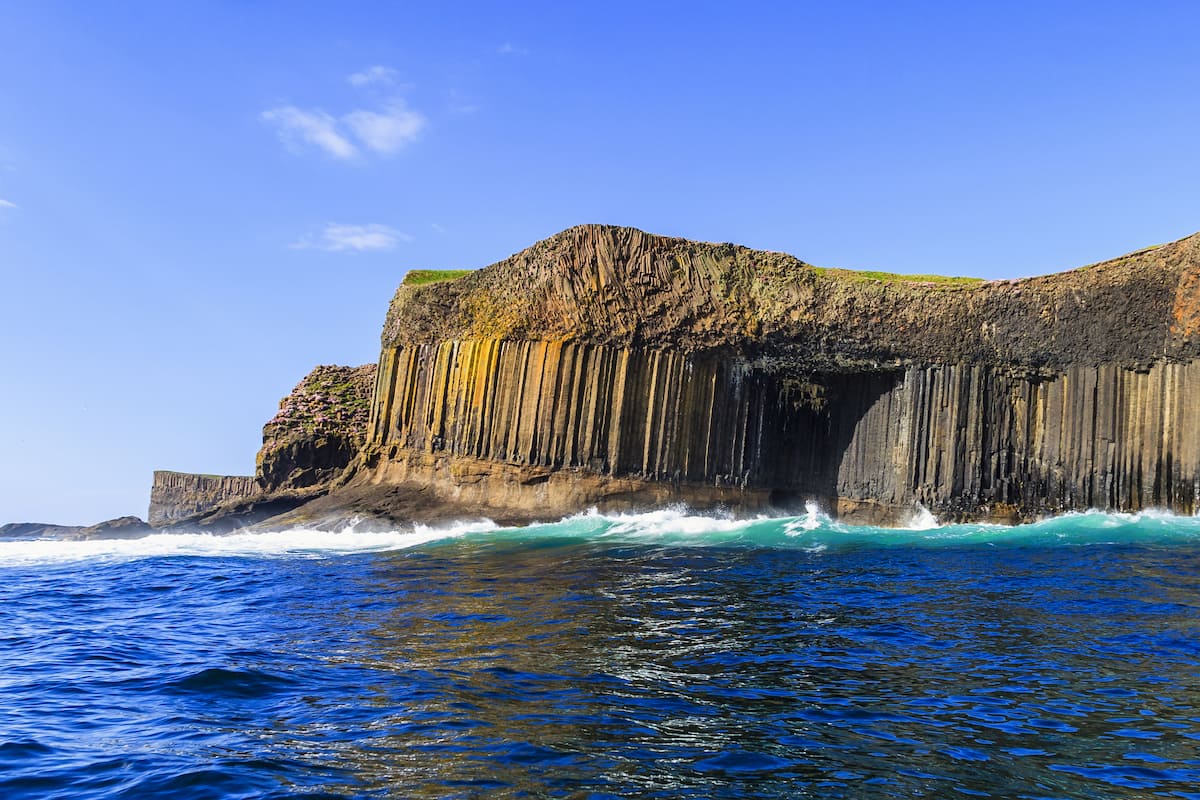
    Fingals cave Staffa island on the coast of Scotland

    Every corner your turn in Scotland you will be in awe with its natural beauty from its beautiful coastline, towering mountains and enchanting islands.

    This means there will be lots of natural attractions and you won’t need to travel far to find them. Here are some of my picks:

    • Fingal’s Cave – this has been on my list for years! On the Isle of Staffa you will find the Scottish version of the Giants Causeway. This does require a boat tour to get there and you can find tours leaving from Oban. During the summer you may even get to see puffins!
    • Star Gazing in Galloway Forest Park – the UK’s first designated Dark Sky Park, the forest offers the best conditions for stargazing. You’ll be able to see more than 7,000 stars and planets.

    You Might Experience a “Language Barrier”

    Just like any country accents will vary but the thick Scottish accent can be hard to understand if you’re not used to it. It’s something to be mindful of and just let them know if you’re struggling to understand.

    Scottish Gaelic

    English is the main language, however, the Celtic language of Gaelic is still spoken throughout Scotland and it is considered the founding language of the country. Don’t be surprised when you see bilingual road signs, discover the tv channel dedicated to Gaelic or hear people speaking it in the Highlands.

    Paying With Debit and Credit Cards

    Paying by card is widely accepted throughout the country. Visa and Mastercard are the most accepted cards, major retailers will accept American Express. Make sure you have a Visa or Mastercard with you when you travel.

    I always like using Wise as my travel card as they make it easy to keep multiple currencies and get the best exchange rates.

    Tour Responsibly

    Scotland’s Highlands and Islands are known throughout the world for their stunning beauty and has many visitors every single year. This is great for Scotland, as its economy thrives on tourism and it brings great support for the small businesses in rural areas. 

    However, we need to support responsible tourism and minimise our negative impacts on the environment and local communities. This is something that we learn over time while travelling and being conscious about it builds the habits over time.

    Taking care of the landscape mostly comes down to common sense, such as leaving sites how you found them, taking litter away and not dropping waste that conflicts with the natural ecosystem. 

    Or designing your trip carefully so that you’re leaving a positive footprint in Scotland. For example, instead of a big tour group opt for smaller organised tours like Rabbies who average about 10 people per group.

    Instead of booking accommodation with Airbnb, see if you can book with the accommodation directly so they are getting money to support their small business.

    Go On An Epic Road Trip

    Go on an epic road trip in Scotland

    The best way to really explore Scotland is by car and there is no shortage of epic road trips you can go on.

    • Central Scotland – this can include the country’s capital city, Edinburgh, as well as Stirling, Loch Lomond and Perthshire.  This is a nice easygoing route, with more cities and towns than mountains and countryside – it’s great if you want to see the famous sight such as Edinburgh Castle or the Kelpies!
    • The West Coast and Islands – you can hop between islands on car-friendly ferries to discover beautiful beaches and tall mountains. The west coast without a doubt has the best variety of urban and natural routes to take.
    • Wester Ross – head far north to experience parts of Scotland that almost seem undiscovered!  Still, serene lochs and towering mountains await you here (included in route 500).
    • Angus – situated between Dundee and Aberdeen, this underrated section of coastline can be made into an entire holiday! This coastline is rugged and untamed, in the most perfect way!
    • The East Coast – there are so many little hidden gems of towns on the East Coast, and every town has its own special charm.  Food, drink and pretty harbours – all can be found on this coastline!
    • The North Coast – take an epic journey along the whole north coast and discover Scotland’s most rural landscapes!

    For more inspiration read 10 Scenic Places to Visit in Scotland by Car (That You’ll Love).

    Visit a Loch That is Not Loch Ness

    Loch Ness is one of the most famous and popular tourist attractions in Scotland, mostly due to the famous folklore that surrounds it.  While it is fun to go and learn about the famous Loch Ness monster, it is a good idea to go off the beaten track a little more and explore some Lochs that aren’t as popular with tourists. 

    This also speaks to the previous point about touring responsibly; it is very important that we do not overwhelm the landscape too much, so why not go and explore some of the other many Lochs that Scotland has to offer?

    Try Visiting Some of the Smaller Islands

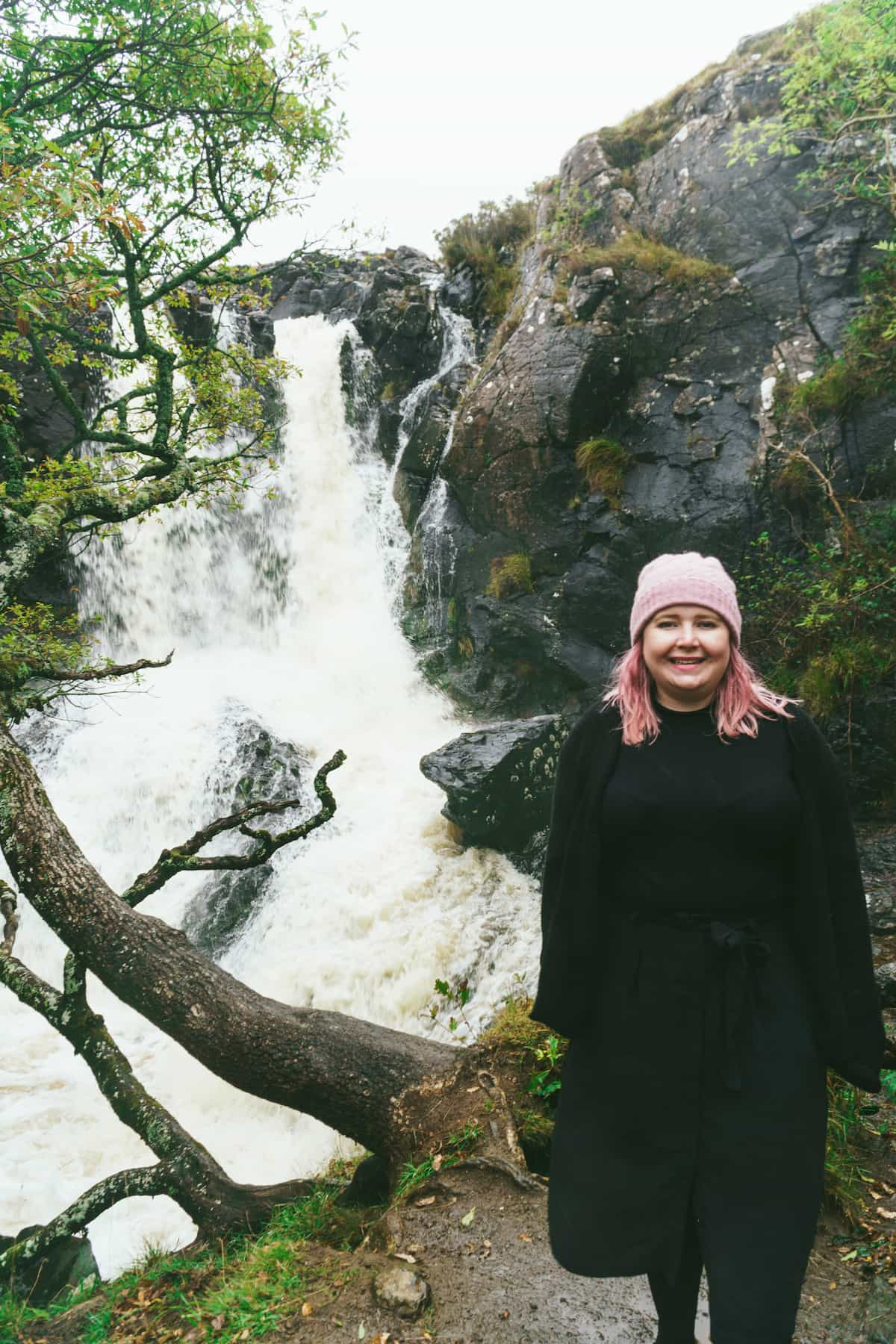
    Kat at a waterfall on the Isle of Mull

    Why not take a look into travelling to smaller islands, rather than crowding on the well-known ones that everyone else visits, such as Skye, Mull or Islay.

    The small islands offer the same stunning scenery but without all of the tourists! 

    Try out Rum, Eigg, Muck or Canna instead – they are off the beaten track and you will certainly be rewarded for your efforts.

    Simply take a ferry from Mallaig and explore these stunning islands on foot; you are protecting the landscape and contributing to overwhelming the popular islands much less!

    There Is No Such Thing as Trespassing in Scotland

    There is always a great opportunity to go off the beaten track in Scotland due to the Freedom to Roam act, meaning that you can wander wherever you please and do some real exploring.  You can even camp anywhere you like as well, which should certainly be made the most of! 

    Watch Out for the Midges!

    Thankfully, Scotland does not have any dangerous animals or insects, so there isn’t much that you have to watch out for.  However, while the midges certainly do not pose any danger to people, they tend to come in huge quantities when you go anywhere near water in Scotland. 

    A midge is a small fly that is part of the mosquito family which can be found all over the world. 

    Unfortunately, Scotland has a particularly high volume of the type of midge that bites.  Their bites can be very irritating, particularly if you get a lot of them at once, and so it is better to avoid them as much as possible.

    The most effective way to avoid getting bitten is to cover up, and voice sitting out near water on still days and evenings.  Of course, if you are camping then this can be difficult to stick to; but not to worry, you can purchase an inexpensive and wonderful antidote in the form of an after bite stick, designed to take the itch out of those pesky bites. 

    Stand Your Ground at the Pub

    Bars and pubs do not do table service (unless it’s 2020/2021) – this is reserved solely for restaurants.  In pubs, Scots go to the bar to get their orders and pay on the spot. This means that things can get pretty crazy on busy weekend nights and it is not uncommon to be four or five rows away from the bar at any given time. 

    That is why it is customary to buy a round of drinks for those that you are with, and they will do the same for you; this prevents an entire group of people queueing at the bar to get served for one drink.  If someone buys you around, the general rule is that you will get up to get the next one at the bar when the drinks are coming to an end.

    This may sound like a lot of nonsense, but in actual fact, it creates a great atmosphere and means that everyone gets talking while waiting for drinks. Being social with everyone you meet is part of the fun of getting out for a drink, so the Scots rarely mind being piled up at the bar for ten minutes before being served.

    Respect the Queue

    It is not uncommon for someone at the bar to wave you up first to be served before them – Scots are very friendly and polite as a general rule. However, queues, in general, are something taken seriously in Scotland, and skipping someone’s place in a queue without an offer is considered very rude. To avoid rubbing any locals up the wrong way, the best thing to do is to join a queue and wait your turn unless someone offers their spot to you.

    Drink Your Whisky Right

    Kat drinking whisky at Oban Distillery

    A trip to Scotland just would not be complete without trying some of the national drink – whisky.

    A common mistake made by tourists is to order a ‘scotch’ at the bar, and drink it down in one as if it were a shot.  In Scotland, however, it is called whisky by locals and it is bought in a measure referred to as a ‘dram’.

    Once purchased, Scots savour whisky while drinking it; drinking it slowly and enjoying every sip. If you want to fit in with the locals, this is the way to drink your whisky.

    Scots also do not mix their whisky with soft drinks, such as coke, and normally it is not to be had with ice either.  You can, of course, order both, but if you want to fit in with the locals then neat whisky is the way to go!

    If you know nothing about whisky, simply ask the bartender what they would recommend – they’re sure to have a favourite!

    Haggis Is Great, but There Is More to Eat

    Haggis is potentially one of the most well known parts of Scottish culture, and it has long been joked that it is the only thing Scottish people ever eat!  While it can commonly be found on a menu, or deep-fried in a chip shop, it is not as common as one might think.

    If you do not already know what haggis is made of, it is probably wise to do so before eating it.  It is a pudding made of sheep’s heart, liver and lungs, mixed together with oats, spices, onion and salt, encased in a sheep’s stomach.  If this sounds terrible to you, many places serve veggie versions which taste remarkably similar to the real thing!

    In truth, haggis is wonderful and every tourist should certainly try it once – but if the concept of it is a little odd to you and you don’t fancy it, do not worry – there are plenty other things to eat!

    Try Some Different Local Delicacies Instead

    Tunnocks

    Scotland actually has many native foods and drink aside from the famous haggis; here are some of the best ones to look for:

    Irn Bru

    This brightly coloured soft drink is a must-try for anyone coming to Scotland.  It can be found in pretty much any shop or supermarket and is inexpensive to try.  We all know the Scots love a drink, right?  Well, Irn Bru is a nationwide hangover cure – so if you do find yourself feeling the effects of one whisky too many, that would be the perfect time to try.

    Shortbread

    This delicious combo of sugar, butter and flour is a staple of Scottish home baking and a delicacy that you are sure to enjoy!  It can be bought in supermarkets, but try and find some fresh baked if you can.

    Oatcakes

    You are likely to find many things made from oats as you travel the country, due to the fact that they are one of the only grains that grow well in the north of Scotland and have long since been the staple grain used in Scottish foods.

    Oatcakes are baked oat biscuits which can be eaten savoury or sweet and are sure to keep you full for hours.

    Cullen Skink

    This is another delicacy of Scotland which, like haggis, is not to everyone’s liking.  It is a thick soup made from smoked haddock, potatoes and onions and is served with bread.  The smell is extremely strong due to the smoked fish, but it tastes absolutely delicious.
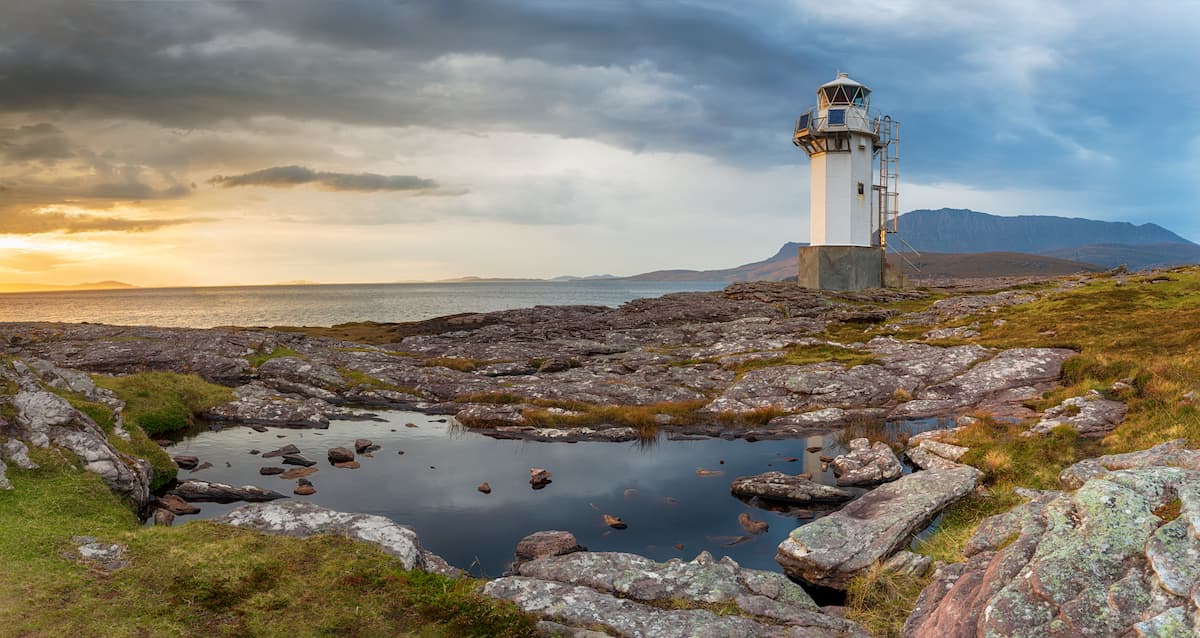
    Stovies

    You may notice that the majority of Scottish foods are stodgy, warming and hearty – it is surely  needed due to the weather!  Stovies are an absolute favourite to warm you on a cold day and can now commonly be found as street food as well!

    The ingredients can vary, but traditionally they are made with chunks of potato, carrot and onions, then normally featuring some sort of meat or haggis.  They are normally served with either oatcakes or bread to scoop up every drop!
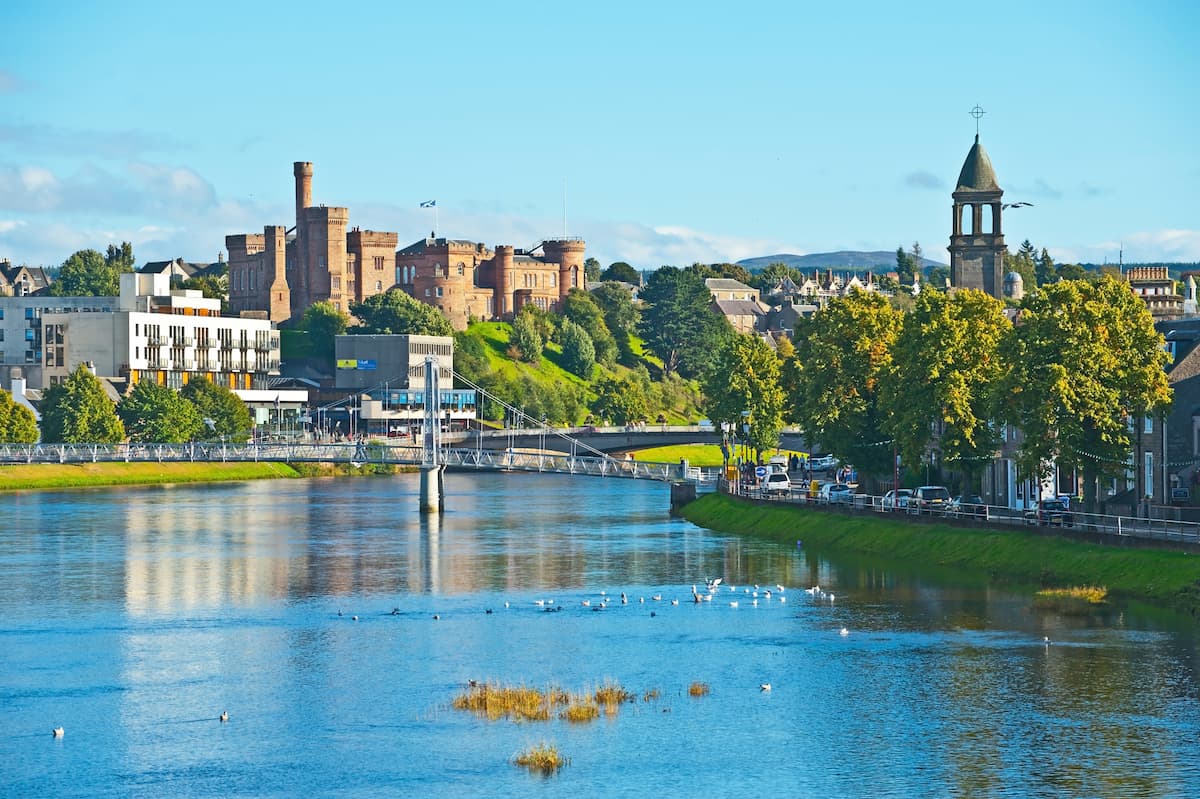
    Tunnock’s Tea Cakes

    The Tunnock’s brand is an absolute favourite in Scotland, serving sweet treats to go with the huge proportion of tea and coffee drunk across the country.
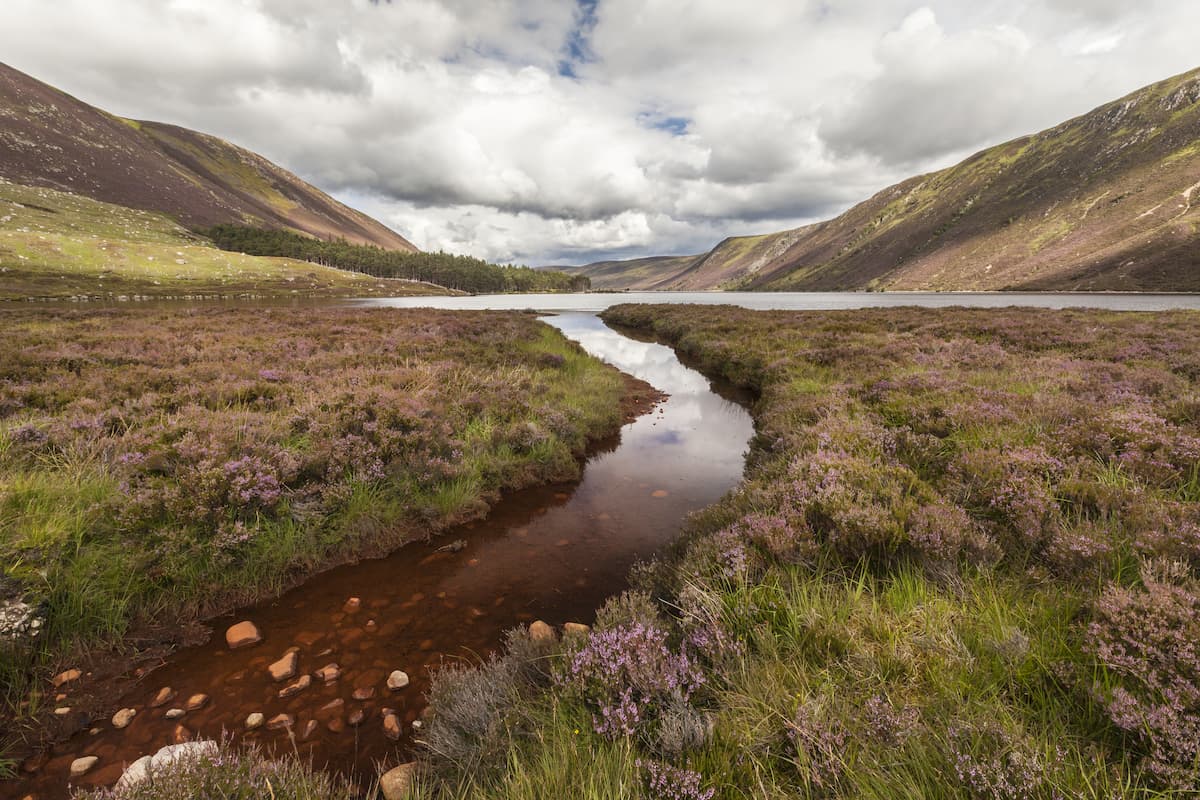
    The tea cake is comprised of a small shortbread biscuit, topped with gooey marshmallow and coated in milk chocolate.

    Tunnock’s also have some other tasty treats, such as the caramel wafer or caramel log!

    Tablet

    If you have a sweet tooth then this treat is certainly for you!  Tablet is a confection made from sugar, condensed milk and butter, hardening to make a more brittle version of fudge.  It can only be eaten in small quantities by most due to the sweetness, but it is absolutely delicious!

    Don’t Bother Trying to Drive in the Cities

    The middle of the major cities in Scotland often suffers from bad traffic congestion, meaning that more often than not it takes longer to drive through the city centre than it would do to walk in the exact same area. 

    Walking through the cities also gives a unique experience of the place, particularly in Glasgow and Edinburgh where you cannot drive much through the centre of the cities anyway, and cars are forced to take far more roundabout routes instead, missing much of the main city centres. 

    Walking, on the other hand means you can experience every part of the city; pedestrianised shopping streets, cobbled side-alleys strung with fairy lights, and stunning parks – all just on the route of where you are trying to go!

    Don’t Be Offended if People Aren’t Excited About Your Ancestry

    Of course, it can be exciting to get to visit a place where parts of your family came from, but it is important to remember when speaking about your Scottish ancestry with people from Scotland that they hear this all the time.  In fact, it is one of the most common things tourists will speak about when speaking to scottish locals.  So don’t be too offended if people aren’t thrilled for you, they aren’t being rude, they just hear it a lot!

    Instead, why not try to have a discussion with locals about their culture, heritage and history, to be more educated about the places where your ancestors are from.  This is guaranteed to make you many friends in Scotland – Scots are very friendly and love to chat, especially over a drink!

    Fast Facts

    • Scotland uses the British Pound
    • The national animal is a unicorn (I’m not joking)
    • Glasgow is the largest city
    • Perth is the newest city
    • Scotland has over two thousand castles!  The most popular are Edinburgh Castle, Stirling Castle, Urquhart Castle, St. Andrews Castle and Doune Castle.
    • Most museums and art galleries are free to enter
    • Drivers in Scotland drive on the left side of the road
    • Scots is a language but is no longer spoken widely.  All native Scots speak English.
    • Gaelic is still spoken, but not by many people.  Only around 60,000 people speak it now, mostly in the Outer Hebrides.
    • Scotland is full of mountains – mountains over three thousand feet are called Munros – there are 282 of them
    • There are over 120 whisky distilleries in the country and you can tour many of them, and have samples!
    • There are 900 Scottish islands, most of them uninhabited.  The main island groups are the Orkney Islands, the Shetland Islands, the Inner Hebrides, and the Outer Hebrides.
    • Scotland hosts many world-famous festivals such as Edinburgh’s Hogmanay (New Year’s Eve), the Edinburgh Fringe, The Stonehaven Fireball Festival, Celtic Connections and the Islay Festival of Music and Malt.
    • Scotland has very long summer days and very long winter nights due to how far north it is.  In the summer you can expect daylight until 11pm during late June, however, in winter you are looking at darkness by 5pm in the north.

    Overall, these tips will surely help you get by on your travels around Scotland, but overall you can’t go far wrong!  The country is very safe and the people very laid back; if you ever need a hand with anything at all, simply ask around and someone will be willing to help you out!

    Scotland is a welcoming place, and if you respect it, then it will respect you right back

  • Best of Scottish Highlands: 7 Day Itinerary

    Best of Scottish Highlands: 7 Day Itinerary

    It is no secret why tourists from all over the world want to visit the Scottish Highlands, with its beautiful coastline, towering mountains and enchanting islands, but it can be difficult to know where to begin when planning a route – there seems to be so much to see, and so many routes to choose from!

    This route intends to have you begin at one of the major cities (Edinburgh or Glasgow) and come back down to them at the end so that it can be easily worked in with flights and other travel arrangements, however, the routes are simple and can easily be changed if there are parts you wish to add or change. 

    This is only one of many routes that can be taken through the Highlands, but it aims to give a great seven-day introduction to Scotland’s northern lands!

    Day 1 – Drive to Oban

    Drive: From Glasgow 2hrs 24 mins or Edinburgh 2 hrs 58 mins

    Seaside view of Oban
    Seaside view of Oban

    The first day of your trip to the Highlands sees you driving from one of the major cities to the town of Oban. 

    Not only will the motorway routes from Scotland’s two major cities bring you to Oban faster, but they will provide you with a beautiful scenic drive along the way as well. 

    On your way from the central belt to the wondrous highlands, you will be taken through Loch Lomond and the Trossachs National Park and have the opportunity to gaze over some of the best scenery the country has to offer. 

    Loch Lomond is the largest Loch that Britain has to offer, making your first drive one of the most impressive ones by far.

    Around 40 minutes into your drive you will reach the glorious Loch, so while you’re stopping to stretch your legs, why not enjoy some award-winning fish and chips by the Loch-side while you take in the beauty that surrounds you? 

    The Lomond fish bar is a popular stop for locals and tourists alike and is the perfect way to enjoy a favourite of Scots cuisine. 

    Sweeneys River Cruise

    To get more views of the Loch you can take a cruise like Sweeney’s. They have a few options but the one-hour circular tour of Loch Lomond’s South basin which is a good balance between seeing it and time.

    You will learn the history in the area, what happened between the clans, how Robert the Bruce sheltered as a fugitive before he was to become King of Scotland and much more.

    The rest of the drive will take you through some equally picturesque villages and towns, such as Luss or Dalmally, which prove to be some of the most perfect photo-taking spots along the Lochside and before you know it, you will have arrived in the tranquil and beautiful town of Oban.

    Directly translated from Gaelic, Oban’s name means ‘little bay’, but when you arrive here you will quickly realise that it is so much more than that. 

    The small town, inhabiting only around 8,500 people, is surrounded by seaside as well as countryside, making it a well-renowned holiday destination among Scottish people.

    If you are partaking in this particular whistle-stop tour of the Highlands, then it is certainly recommended that you stay near the centre of the small harbour town in order to make the most out of the attractions that it has to offer. I personally stayed at the Randal Apartments which is central to the town and has free street parking from 6pm until 9am.

    Once you are in the centre of the town it becomes very easy to travel to most places by foot and explore the galleries, independent shops, museum and even the local distillery. 

    Of course, the key attraction in Oban is the sea-front which brings in masses of tourists every single year, and for good reason too! As you wander along the seafront you can have a look at the wonderful ruins of Dunollie Castle and check out the sensational sunsets on the beach. 

    If you’re looking to try some Scottish Whisky then there is a local distillery right in town. Jim our tasting guide was absolutely hilarious and the dram was pretty good too!

    Kat drinking whisky at Oban Distillery

    For views make your way McCaig’s Tower at sunset.

    At the end of the day, why not enjoy a cosy local meal at one of the pubs or restaurants around the harbour to get a real feel for the atmosphere of the town.

    The Oban Fish & Chip Shop was voted by Rick Steve’s to be one of the best fish and chips he’s ever had. They offer veggie options like haggis for us that don’t eat meat.

    Cuan Mor was another place we dined at, with good food options and a good range of drinks to choose from. They don’t take bookings, it’s the first-come-first-served basis.

    Optional Extra: Isle of Mull or Staffa

    Kat at Tobermory
    Kat at Tobermory

    Depending on how much time you have you could sneak in a day trip or a night in the Isle of Mull. One of the things I really wanted to do whilst I was Oban was going on a wildlife cruise and high on my list is to see puffins (sadly it was the wrong time of the year).

    To name just a couple of examples of great tours near Oban, West Coast Tours and Staffa Tours both run tours of all three of these islands, making the organisation of this part of the trip much easier. 

    Another benefit of choosing an organised tour is that you can be sure not to miss any of the best parts of the islands on your travels, such as the rugged landscapes of Mull, with its lengthy coastline and interesting wildlife and sealife, such as puffins, whales, dolphins, sea eagles and basking sharks. 

    Whilst I didn’t take a tour, instead opting for driving around the island, I saw an Eagle! It was incredible seeing one just sitting on a pole looking over the seaside.

    Nor would it be wise to skip on a trip to the peaceful small Isle of Iona, with its tiny population of around 130 people, which is described by all who visit as a truly enchanting trip. 

    Walk among architecture which carries huge historical significance, such as the restored medieval abbey (which still holds services!) and St Oran’s chapel alongside Reilig Odhram, which is said to be the burial place of forty-eight Scottish kings, even the world-famous Macbeth!

    And then, you certainly would not want to miss out on a trip to the famous Fingal’s Cave on the Isle of Staffa, which hosts some of the most wondrous geological features in Scotland – which is really saying something! 

    If you’ve heard of Giants Causeway in Northern Ireland then you might have heard the tale about the two giants. The legend has it that Fionn (the Irish Giant) was challenged to a fight by the Scottish giant Benandonner. Fionn accepted and built the causeway across the North Channel.

    There are two endings to the tale, one being that Fionn hides from Benadonner due to his size and the other that he defeats the Scottish Giant. As we are in Scotland we will side with the fact the Irish giant was too scared.

    Around the cave one can expect to find the stunning, naturally formed basalt structures that surround it, forming towering columns around the mouth of the cave making it appear like a highly thought-out architectural structure.

    The great thing about these islands is that they are small and easy to travel around in only one day, while still being able to see all of the incredible sights that are available on them.  All in all, this is a truly worthwhile detour to make on your trip!

    Day 2 – Oban to Glencoe

    Drive: 53 minutes

    the view at Glen Coe

    The next stop on the trip is Glencoe, which is a short drive from Oban.

    Glen Coe, the most famous and historic glen Scotland’s land has to offer! The impressive-looking glen (narrow valley, to those who aren’t Scots) was formed naturally hundreds of years ago by volcanic activity and glacier movement. 

    The village of Glen Coe itself is located between Loch Leven and the mouth of the aforementioned Glen, which means it’s the perfect location to be in if you are looking for a base to explore the Lochaber area. 

    As you drive through the Glen you will be shown the volcano itself and can explore the very birth of the glen, right back to when it was first formed all those years ago. 

    Any Harry Potter fans travelling with you? Perfect! You can visit some of the locations where parts of the actual movies were shot.

    The third film, The Prisoner of Azkaban, was filmed in three different locations around Glencoe; the mountainsides can be recognised by those with a keen eye as the backdrop of Hagrid’s hut, and you can also find the Hogwarts bridge and gatehouse in this magical location. 

    A whole day can be spent exploring these locations for sure, but there is so much else to do as well!

    About an hours drive from Glencoe is one of the best opportunities for photography that your trip will offer, not least of all due to the fact that you can find the Glenfinnan Viaduct with just a small detour, and relive the iconic Harry Potter moment itself.

    Jackabite train going over Glenfinnan Viaduct

    For the classic photo of the train crossing the Glenfinnan Viaduct, you will need to time it and depending on the time of the year there will be either one or two trains running. For more information check the Jackabite train timetable.

    The train will roughly arrive 45 minutes after departing Fort William over the Viaduct. Parking does fill up quickly and the good viewpoints are taken about an hour before.

    In terms of walking, Glencoe offers beautiful scenic walks for all levels of hikers; there are plenty of routes for the experienced hillwalker, with difficulty that could still pose a challenging but highly enjoyable hike. 

    There are also shorter and far easier walks that could be suitable for families travelling with children, or simply for those who want to take it slightly easier! 

    One of the easier walking routes, is the Ballachulish Slate Quarries and Loch Leven route. This walk is only about two kilometres long and takes roughly one hour to complete at a moderate pace, but still offers stunning scenery at a difficulty suitable to even the least experienced hill walker! 

    For those who desire more of a challenge, there are some excellent options such as the Kinlochleven Blackwater Reservoir, consisting of around seventeen kilometres and taking around six hours to complete, or the Pap of Glencoe which is a similar length. 

    Whatever it is you hope to get from walking in Glencoe, it can happily deliver!

    Rest in one of Glencoe’s beautiful lodges or inns, which appear to be straight out of a fairytale, and get a good night sleep ahead of a day of exploring the gorgeous town tomorrow!

    Day 3 – Glen Coe to Skye

    Drive: 2 hours and 15 minutes (to the bridge crossing) and then a day around the Isle of Skye. P.s. leave as early as you can to make the most of your time on the Isle of Skye.

    The next destination, which will be the stunning Isle of Skye, around a three and a half-hour drive from Glen Coe but you will certainly be rewarded for it! 

    Leave as early as you can as you will want to make sure you have as much time as possible on the Isle of Skye.

    I recommended that you stay two nights rather than one – this will also give you some much-needed rest time after the long drive! 

    There are hundreds of things to do on Skye and you will only be able to choose a few of them, so this time it really depends on what it is that you are looking for!

    Eilean Donan Castle 

    Eilean Donan Castle

    On your way to the Isle of Skype is Eilean Donan Castle. In the early 13th century the castle was built to protect the lands of Kintail against the Vikings. Over the years the castle went through changes but the ultimately culminated in the castle’s destruction was the Jacobite risings of the 17th and 18th centuries.

    Then in 1911 Lieutenant Colonel John MacRae-Gilstrap bought the island and decided to restore the castle to it’s former glory which completed in 1932. Now it makes for the perfect stop on your road trip! You can take some amazing photos, learn more about the castle and the role it had in Scottish history and a bathroom break.

    The opening times do vary and I recommend checking their website beforehand.

    Dun Scaith Castle

    View from Ord on Isle of Skye

    The drive to Dun Scaith Castles was one of my favourite drives on the Isle of Skye. It takes you down roads that aren’t as too full of tourist. On your journey there you will stop by a great beach to take photos and relax a little.

    A bit more of a drive down you will find Dunscaith Castle. It is in ruins so don’t expect a grand castle here but there is a great little walk there. Starting point for the walk can be found here.

    Fairy Pools

    One of the most famous attractions on the island is, of course, the world-renowned Fairy Pools of Skye.  These crystal clear blue pools attract visitors from all over, and for good reason too! They make for some excellent photos and in the summer they are even a popular wild swimming destination.

    When you arrive there will be a parking lot that gets pretty busy during the high season. It does cost money so you will need to bring some change and they are only just building facilities there. Further up the hill you can find free parking spots and overall depends on how much you like walking back up steep hills.

    The walk to the fairy pools was a little challenging for me as I have a fear of stairs, heights and don’t like jumping over things. No idea why! One guy even had to guide me across so I could make it, I just froze trying to get across. I make it sound way worse than it is, it is truly easy for someone that doesn’t have any of these issues.

    As you will need to step over wet rocks so I highly recommend grip shoes for the walk as well!

    When you arrive at the first waterfalls, you will know that you have arrived at the magical pools and from there you can work your way up the river and explore the other pools. If you are looking for some swimming and jumping opportunities, the first waterfall is the best option for you – but a wetsuit is certainly recommended if you feel the cold!

    Talisker Whisky Distillery

    If you’ve read my guide on things you can only buy in Scotland then you know that Talisker Skye is one of my recommended drams! It’s well-rounded whisky with some sweet notes coming through.

    As it’s a short drive from the Fairy Pools it’s a good pit stop pick up some whisky before heading to the hotel for the evening. If your group opts for the tasting then as the designated driver you can take your tasting home with them. I love this as you can learn all about the whisky but you’re not drinking and driving.

    Portree

    Of course, no trip to Skye could possibly be complete without a trip to the capital village of Portree, sat on the east side of Skye by a beautiful, quaint bay.  The village was originally created for fishing and gets its name from the Gaelic translation for ‘Port on the Slope’. 

    It’s also the perfect place to base yourself on the Isle of Skye. I stayed at the Portree Hotel, the hotel it’s self was nice enough. What I really loved was the bar/restaurant. The staff there were so welcoming and friendly, the atmosphere really drew me each night we stayed there!

    Book your restraurant reseveration in advance! These book out months in advance in some cases. We were really lucky that the hotel we stayed at always had openings for the guest due to this. However if you don’t have this option then reverse way ahead!

    Day 4 – Isle of Skye

    Today is all about spending a full day on the Isle of Skye on the top loop of the Island.

    Neist Point Lighthouse

    Neist Point Lighthouse

    Following the one-way country lanes, you will reach the coastline and end up at Neist Point. It’s the most westerly point of Skye. It was built in 1900 and used to be manned. Now it has an automatic system and no longer requires assistance.

    To visit the lighthouse, it’s a 2.2km walk down a steep staircase to get to the lighthouse. When I visited the winds were very strong and it seemed unsafe to walk down there.

    At the end of the carpark there is an old shed, if you walk behind that to the right then you will walk across the hill. This will give you a good view of the lighthouse without having to walk down. I opted for this over walking to the lighthouse due to the high winds. Either way be very careful if it’s bad weather.

    Quiraing

    The Quiraing is a beautiful scenic walk with dramatic cliffs and perfect for photography. The Trotternish ridge was formed by a massive landslip which has created high cliffs, hidden plateaus and pinnacles of rock.

    It’s a 4.5 mile (7km) walk which takes about 2 hours with no stops. Due to the cliffs the walk is not suitable for walking in some weather conditions so double check before making the hike.

    Starting location is here.

    Old Man Of Storr

    The most popular by far has got to be the Old Man of Storr walk, a large pinnacle of rock which can be seen for miles around the island.  This famous rock was created by a large landslide which left its distinctive and easily-recognisable shape.  The walk in total is under four kilometres and takes the average hiker around one hour and fifteen minutes without breaks, it can be accessed from the main road by Portree.

    Day 5 – Skye to Ullapool

    Rhue Lighthouse near Ullapool in Scotland

    Be warned, many people find it a huge challenge to leave Skye once they have had the opportunity to experience it once, and this may be the way that you feel too!  But not to worry, plenty of other equally amazing and enchanting places await you!

    The drive to Ullapool is just over three hours with no stops, but once you arrive the driving will all be worthwhile!  It is the most northern point of this trip, and therefore the ‘highest land’ that we will be visiting on this particular Highland trip. 

    It’s a small town in terms of its residents, with only around 1,500 in population, but it has long been popular among tourists, and you will soon see why. 

    The harbour town feels full and busy due to the vast amount of activities and excellent atmosphere that they create; and, as with the other locations we have explored so far, it is, of course, beautiful as well! In fact, it is one of the most preserved natural towns in the UK, meaning that outdoor activities are plenty.

    While this itinerary does not set out the timings or plans to go to the outer Hebridean islands such as Stornoway or Lewis, these islands are easy to reach, they are only a short ferry ride from Ullapool, and therefore can easily be added to any Highland itinerary.

    This town is unique in style and has a very different atmosphere to others in the Scottish Highlands, in that it is often compared to the likes of Scandinavia and Canada with its rugged scenery and sunshine that beats down hot in the summer. 

    One of the best ways to experience this aspect of the Highlands is without a doubt the Summer Isles cruise, allowing you to see the interesting wildlife that the isles have to offer, such as the white-tailed eagles that can often be spotted around the coastline. 

    This cruise is a great way to do a quick tour around the islands if you do not wish to make them a full part of your itinerary, as you will be able to see their coasts as you sail by.  The cruise lasts for roughly two hours and they tend to run throughout the spring and summer each year.

    More time on your hands? Consider driving North Coast 500!

    Day 6 – Ullapool to Inverness

    2 hour drive

    River Ness and Inverness Castle

    The drive from Ullapool to the national park will take roughly two hours, and takes you through the city of Inverness, which is the largest city in the north of Scotland. 

    Inverness is a slightly busier place with some nightlife and a huge number of restaurants to choose from. The Castle Tavern is always a popular choice, with real ale, good food and an excellent pub garden for those sunny days.

    Situated in Fortrose on the Black Isle, just north of Inverness, the Anderson was once named one of the best places in the world to get a beer and features an impressive collection of Scottish and international tipples. Try local favourites from the Black Isle Brewery or the Cromarty Brewery, both known for their prize-winning beers.

    Wander the city centre and explore the Inverness Castle and St Andrew’s Cathedral. On a sunny day in Inverness make sure you take a wander along the sheltered riverside paths around the Ness Islands – a group of islands in the middle of the River Ness which are connected by Victorian suspension bridges.

    If you’re visiting with wee ones, hop into a rowing boat on the pond in nearby Whin Park or take a ride on the Ness Island Miniature Railway, open weekends and during the school holidays. It’s a real treasure only a short walk from Inverness city centre.

    Day 7 – Inverness to Cairngorms National Park

    Loch Muick in the Cairngorms National Park of Scotland

    This famous national park is going to be the final big stop on this Highlands trip and is going to begin taking you further down south, back in the direction in which you came. 

    Once you do arrive in the Cairngorms, however, it’s time to begin mapping out which of the many activities available that you would like to do.  Of course, outdoor activities are why many people choose to visit the national park, and there are plenty of activities no matter when it is that you choose to go.  In the summer, choose from hillwalking, kayaking, mountain biking, water sports and so many more; in the winter, why not opt for some of the snowsports that the park has to offer, or visit the UK’s only sled dog centre?

    However, activities in the national park span far beyond just outdoor ones, so feel free to explore castles, museums, adventure parks, breweries and outdoor centres as well.  Even better; there are scheduled events that are put on throughout the year, such as the annual Husky Rally, or the Whisky Festival; so one could even plan the trip especially around one of these.

    This concludes our Highlands itinerary and is intended to give a very brief overview of some of the most beautiful and interesting parts of the Highlands; there is, of course, so much more to be seen and explored!

    FAQs

    When is the best time to visit the Scottish Highlands?

    The majority of people choose to visit the Scottish Highlands between May and September, because that tends to be when Scotland’s weather is best, and when there is the most daylight.  The busiest times are certainly July and August, so if you wish to have more space and better vacancies in accommodation then outside of those months works best, however even in the busiest months it is still highly enjoyable and has plenty space for everyone!

    Geographically, where is the highlands?

    Traditionally, the highlands have been classified by Scots as anything north of the Highland Boundary Fault which crosses the mainland of Scotland in an almost straight line from around Helensburgh to Stonehaven.  Nowadays, however, some parts of the counties Nairnshire, Morayshire, Banffshire and Aberdeenshire are excluded from classification as ‘Highland’ due to the fact that they do not share the same geographical and cultural features of the other parts of the highlands.

    How long should my trip be?

    The itinerary provided here recommends seven days to travel the Highlands rather extensively, but of course, it depends on two things

    1. How deeply you wish to get to know each place
    2. How many places you wish to see

    That is, the itinerary here is by no means exhaustive, and there are many other places in the Highlands that are worth visiting as well, with enough destinations and things to do that could easily last weeks, but if you want to see a good portion of the area and see everything you would like to, then 7 days is a good starting point.

    Can I camp in the Highlands?

    Absolutely! In fact, it is actively encouraged that tourists come and camp in Scotland.  Upon a simple online search or even a short drive through a given area, it will be easy to find multiple campsites of varying sizes and with varying amenities and costs.  Camping is an excellent way to experience parts of the rural Highlands without having to rely on nearby hotels and inns, and it gives you a little more freedom to explore the lesser-known parts of the country.

    Another bonus of camping in Scotland is that wild camping is allowed as well, meaning that if you’re looking for something less structured you can pitch up at pretty much any unenclosed location for the night.  Be sure to research the wild camping rules before you go, to ensure that you are abiding by the regulations.

  • 5 Spectacular DIY UK Train Tours

    5 Spectacular DIY UK Train Tours

    The UK is full of historic cities, rolling countryside, breathtaking coastline and stunning mountain ranges. To truly take it in, the best way to travel is by train. Take your time exploring, and spend as long as you want at each place. 

    These DYI train tours are designed to go through the most scenic train tours in the country. Whether it’s cities or natural landscapes, there is an option for you to explore the best of the UK than by train.

    Here’s some inspiration for your next train tour around the UK.

    Yorkshire Rambler 

    top left a photo of Sheffield, top right a photo of Leeds and bottom photo Whitby.

    Yorkshire is a historic county in northern England. It’s well known for its Roman and Viking heritage, Norman castles, medieval abbeys and Industrial Revolution cities. As well as history and heritage, Yorkshire is also home to some of the most beautiful scenery in the UK. There are three national parks in Yorkshire – the Yorkshire Dales National Park, North York Moors and a large chunk of the Peak District National Park

    A great place to start is the city of Sheffield in South Yorkshire. It’s right on the doorstep of the Peak District National Park, so it’s a good opportunity to explore the great outdoors. The city also has a wealth of attractions, from the Millenium Gallery to the Sheffield Botanical Gardens. Sheffield is home to the largest theatre complex outside of London, so if you want to catch a show then head to Tudor Square. 

    From Sheffield, catch the train to Leeds (the quickest journey is 39 minutes). Leeds is full of historic buildings, such as Temple Newsam, Kirkstall Abbey and Harewood House.

    You can also explore Yorkshire’s industrial past at the city’s various museums like Armley Mills and Leeds City Museum. One of the best museums is the Royal Armouries, home to the National Collection of Arms and Armour.

    Leeds is quickly rising through the ranks as a foodie city, and you’ll find a whole slew of restaurants and eateries around the city centre.

    Next, head further north to York (22 minutes). This walled city was founded by the ancient Romans. York is best explored by foot, and a great place to start is by walking along the remains of the walls. When you explore the city centre, make sure to stop by York Minster, the massive 13th century Gothic cathedral. This impressive building is one of the largest of its kind in Northern Europe. For a little retail therapy, head to The Shambles, an old street with overhanging timber-framed buildings housing all kinds of independent shops and boutiques.

    From York, take the train to Malton (24 minutes). Malton is a market town with the self-proclaimed nickname of ‘Yorkshire’s Food Capital’. It’s home to a staggering wealth of artisan shops and food festivals, so if you fancy yourself as a gourmand, then it’s worth exploring the town.

    From Malton, take a bus to Pickering (20 minutes). From the 1930s themed Pickering Station, you can head to the seaside town of Whitby on the North Yorkshire Moors Railway. This is one of the world’s greatest heritage railway experiences. Climb aboard a steam or diesel train which takes you through 24 miles of breathtaking scenery.

    At Whitby, make sure you climb the famous 199 Steps up to Whitby Abbey which overlooks the town. This is said to be the inspiration for Bram Stoker’s Dracula. But that’s not all. Whitby has a lot of interesting history, from the jet industry (those gleaming black gemstones that the Victorians loved), to Captain Cook who was born nearby and later trained in Whitby. 

    Map of the Yorkshire Rambler Route

    West Highlands

    Top left street art in Glasgow, top right Jacobite stream train going over the bridge in Fort William.

    The Scottish Highlands are a truly magical place. Think breathtaking landscapes, big skies, dramatic scenery, fantastic food and welcoming people. It’s a natural playground just begging to be explored. The western part of the highlands stretch from the Moor of Rannoch to the west coast past Glen Coe and Fort William.

    The West Highlands are bursting with grand scenery, with towering rocky mountains to wild glens and sprawling moors. Naturally, the best way to explore the region is by train. There’s one train that goes all the way from Glasgow to Mallaig, so you don’t have to worry about swapping trains. You can either journey the whole way through (5 hours and 14 minutes) or stop at some of the most notable spots below.

    Start your journey in Glasgow, Scotland’s cultural hub. As well as a thriving music scene and plenty of acclaimed museums, the city is home to institutions like the Scottish Opera, Scottish Ballet and National Theatre of Scotland. So if you’re a culture vulture, it’s definitely worth exploring.

    While you’re here, it would be rude not to sample some of Scotland’s finest whisky. The Clydeside Distillery is a historic scotch maker located in the old Pumphouse building down at the docks. Join one of the tours to learn more about the distillation process, and sample a few wee drams of whisky. 

    From Glasgow, jump on the train to Mallaig. Stop at Arrochar and Tarbet (1 hour and 14 minutes). This railway station sits between the villages of (you guessed it), Arrochar and Tarbet. Arrochar lies on the shores of Loch Long, and Tarbet on the shores of Loch Lomond. The two villages are only a half hour walk apart, so you can cover both if you wish. Arrochar is popular with hikers, especially since it’s home to the beautiful Arrochar Alps. At Tarbet, you can head to the pier and choose from a variety of cruise options to explore the largest freshwater lake in Scotland. 

    Next stop, Fort William (2 hours and 38 minutes). This is the largest town in the Highlands, second to the city of Inverness. It’s the gateway to Ben Nevis, the UK’s highest mountain. If you’re not up for a challenging hike, there are plenty of other outdoor activities you can get stuck into, like skiing at Nevis Range or taking a stroll through Glencoe. 

    From Fort William to Mallaig, you have two options. The first one is to hop back on the West Highland Line to Mallaig (1 hour and 21 minutes). A more unique experience would be to climb aboard the Jacobite Steam Train. The train journeys over the Glenfinnan Viaduct – made famous by the Harry Potter films – for 84 miles north through world-class scenery. You can get off and explore Glenfinnan and Arisaig, the two stops between Fort William and Mallaig. 

    Once you get to the fishing port of Mallaig, take the ferry to the Isle of Skye (45 minutes). Known for its rugged landscapes, charming fishing villages and medieval castles, this is the largest island in the Inner Hebrides. Some of the must-sees are the natural landmarks like Quiraing, the Storr and Fairy Pools. Portree is the largest town on the island and makes a great base for exploring. 

    Map of West Highlands train route in Scotland

    North Wales Coasts, Castles and Mountains

    top left, beach view of Llandudno with sea front houses, top right Kat standing at a waterfall in Betws Y Coed and bottom view from a walk in Snowdonia.

    North Wales is one of Britain’s oldest established tourist regions. Snowdonia National Park covers 823 square miles and is home to Wales’ highest mountain, Snowdon (1,085 metres). There are plenty of outdoor activities in Snowdonia if you’re feeling adventurous. In addition to stunning scenery, there is also plenty of culture and history to explore. Discover ancient castles, visit charming seaside towns and be wowed at some of the most unique attractions in Britain.

    Start your journey in Llandudno, one of the best seaside towns in Wales, nicknamed the Queen of Welsh Resorts. This Victorian seaside resort is home to the longest pier in Wales which stretches 700m out to sea. Grab a bite to eat and walk along the magnificent promenade to enjoy the views. Another fun thing to do is to ride on the Great Orme Tramway to visit the world’s largest prehistoric copper mines. 

    Next, catch the train to Betws Y Coed (40 minutes). This picturesque village is the gateway to the peaks and lakes of Snowdonia National Park. Surrounding the village is Gwydir Forest Park. Full of leafy trails, waterfalls, and mountain lakes, it’s a magical place for a walk. Want to get your pulse racing? Betws Y Coed is at the centre of mountain biking, with the Marin Route taking you around the peaks and pines of the Gwydir Forest. 

    Next stop, Blaenau Ffestiniog (35 minutes). Once a famous slate mining town, Blaenau Ffestiniog now relies on tourists who come to visit the Llechwedd Slate Caverns. This is one of the most unique attractions in Wales and shouldn’t be missed. Head deep underground via cable railway and step into the world of a slate miner. See how slate was mined through multimedia displays that shows the harsh working conditions to life – be prepared to duck as you scramble through dark tunnels.

    From Blaenau Ffestiniog, you’ll hop on the heritage Ffestiniog Railway which runs to Porthmadog.

    Porthmadog is a bustling harbour town, once the busiest slate port in North Wales. The town has a picturesque harbour and plenty of shops and attractions, including the nearby Portmeirion. This is an Italianate style village with a variety of shops, cafes, a picturesque piazza, exhibitions and displays. From Porthmadog, climb aboard the Welsh Highland Railway which runs from Porthmadog to Caernarfon. 

    One of the stops you should visit is Beddgelert. This is a picturesque village just south of Snowdon. It won’t take you long to walk around the village and admire the pretty buildings – make sure you stop by a traditional cafe or tea room for a drink. 

    From Beddgelert, hop on the train again. If you’ve decided to challenge yourself to a climb up Snowdon, get off the train at Rhyd Ddu. This village is a starting point for walks up Snowdon, and is one of the traditional routes up the mountain. 

    The last stop on the Welsh Highland Railway is Caernarfon. The town is home to Wales’ most famous castle and UNESCO World Heritage Site. The magnificent Caernarfon Castle was built in the 13th century by Edward I as a royal palace and military fortress. You can take a tour of the castle and learn more about its history. After the castle, make your way through the town’s narrow streets and to the vibrant waterfront.

    Map of the route through North Wales

    Cornish Explorer

    Top left the views at Bodim Beacon, top right view of Newquay from the beach and bottom Eden Project in St Austell.

    Cornwall is a county on the very southwestern tip of England. With over 400 miles of coastline, it’s one of the UK’s favourite summer holiday destinations. The south coast of Cornwall is nicknamed the Cornish Riviera for its collection of picturesque seaside villages. Meanwhile, the north coast is dotted with towering cliffs and seaside resorts. But look beyond the sandy beaches and sparkling blue waters and you’ll find world-class galleries, unique attractions, glorious countryside and fantastic food. 

    Start your journey in Bodmin. There is plenty to do in this historic town which was once Cornwall’s county town. Bodmin Jail is one of the most interesting places to visit, dating back to the 18th century. Take a tour and soak up the spooky ambiance! A great picnic spot is the hilltop of Bodmin Beacon which overlooks the town. Check out the 144 foot tall Gilbert Memorial. Want to visit a historic house? Lanhydrock is one of the finest country houses in Cornwall. Owned by the National Trust, this fine Victorian manor has 50 rooms open to the public.

    Next, head to Newquay (1 hour and 9 minutes). Known as the surf capital of England, Newquay has an array of incredible sandy beaches where you can try some watersports or simply relax. The town is an important fishing port, and a trip to Newquay Harbour is a must. From here you can join fishing trips and excursions. Trenance Gardens and boating lake is a great place for a relaxing lunch before you head to Trenance Leisure Park.

    From Newquay, hop on the train to St Ives (2 hours and 24 minutes). St Ives is known for its surf beaches and strong art scene. Porthmeor is the best known beach, popular with swimmers and surfers. It backs onto the Tate Gallery, a must-visit if you’re interested in art. For more art, the Barbara Hepworth Sculpture Garden is a fantastic place to see where one of St Ives’s most influential artists worked. A unique activity in St Ives is to take a bat trip out to Seal Island to get up close to grey seals.

    Next, head to Penzance (23 minutes), the most westerly major town in Cornwall. Stroll down Chapel Street, the most historic street in Penzance. Running from the town centre to the harbour, Chapel Street is lined with shops, houses and hotels, many of which date back to the 18th century. Just around the corner you’ll find The Exchange, a contemporary art gallery. Ranging from local to international artists, there’s plenty to be seen here. Down on the seafront, you’ll find Jubilee Pool, a beautiful art deco seawater lido. 

    Next up, Falmouth (1 hour and 12 minutes). The town has a pretty old harbour and docks on one side of town, with sandy beaches on the other. Positioned on the headland is Pendennis Castle. It’s open to the public and is definitely worth a visit. On the dockside, the National Maritime Museum is a fun way to kill a few hours. Set over three floors, it covers all things nautical. For some beaches, you have the choice of Gyllyngvase beach or Swanpool beach within walking distance of town. 

    From Falmouth, hop on the train to Truro (28 minutes). While you’re in Cornwall, you should definitely visit one of its many gardens. The subtropical climate means there’s an abundance of unique plants to see, and Trelissick is one of the best gardens in the county. For some history, check out Truro Cathedral. There are free guided tours around this lovely Gothic Revival building. If you visit between April and October, Enterprise Boats run different cruises between Truro’s harbour and Falmouth which sail through the AONB on the Fal River.

    The last stop on the Cornish explorer is St Austell (15 minutes). A must-see is Eden Project, two giant biomes featuring plants collected from around the world. Next, head to the Lost Gardens of Heligan. The magnificent 19th century gardens are a real-life secret garden. To explore Cornwall’s mining history, visit Wheal Martyn, part of the Cornish Mining World Heritage Site. It’s the UK’s only china clay museum with plenty of interactive things to do. 

    Map of the train route for the Cornish Explorer.

    The UK’s Historical Southern Cities

    Top left, Kat at Clifton Bridge in Bristol, top right is the beautiful Bath building and bottom Tower Bridge.

    On this Bristol to London journey, you’ll be stopping at some of the UK’s most historic cities in the south of England. There are plenty of things to do and each city offers something different. From the vibrant port city of Bristol, the university city of Oxford, to the world-class city of London, hop on this journey to discover the best of the UK’s cities.

    Start your journey in Bristol. Straddling the River Avon, the city has a rich maritime history with lots to see and do. Once the main port, the Harbourside is now a cultural centre where you’ll find tons of attractions, markets, bars, restaurants, sports and activities.

    If there’s only one thing you do here, make sure it’s climbing aboard Brunel’s SS Great Britain, an iconic ship and museum.

    A must-see in the city is the Clifton Suspension Bridge, an engineering feat spanning the Avon Gorge and the River Avon. Walk across it or admire the views from the grassy parkland. 

    Next, head to Bath (11 minutes). No visit to Bath would be complete without seeing the Roman Baths. See how the Romans used to relax, and learn what life was like through interactive exhibits. Although you can’t bathe there, you can take a dip at the Thermae Bath Spa. The luxurious rooftop pool offers 360 views of the city as well as treatments and relaxation spaces.

    For more views, climb Bath Abbey’s tower. Bath is home to a whole array of museums and galleries to dive into. Whether it’s Victorian life or fashion, you’re bound to find something interesting. 

    After Bath, journey on to Salisbury (56 minutes). This medieval cathedral city is the departure point for Stonehenge, as it’s only nine miles south of the prehistoric stone circle. It goes without saying that a quick trip to Stonehenge is a must. After that, make sure you see more of the city itself. Check out the impressive Salisbury Cathedral, home to the best preserved Magna Carta. Book onto a Tower Tour for some panoramic views. Check out Salisbury Market Place for a range of markets held throughout the week, including the Charter Market which dates back to medieval times.

    Next stop, Winchester (56 minutes). Right on the edge of the South Downs National Park, it’s a great base for exploring the Park and trying out some outdoor activities like climbing, hiking and mountain biking. Winchester Cathedral is the longest Gothic cathedral in Europe and is full of exquisite details, perfect for history lovers. For more history, the Winchester City Museum is bursting with things to see. Dating back to 1861, it’s home to Roman artefacts, Edwardian costumes, and Jane Austen’s personal belongings.

    From Winchester, catch the train to Oxford (1 hour and 22 minutes). This famous university city is best explored on foot. Start with a University of Oxford tour for a behind the scenes look at the magnificent campuses. The Oxford Botanic Gardens and Arboretum is the UK’s oldest botanic garden and set within 130 acres of woodland – the perfect place for green thumbs. The Pitt Rivers Museum is a museum you can actually get excited about, with half a million (very fascinating) exhibits. Another great way to see the city is by going on a punting tour. Glide down the River Cherwell and see the city’s iconic landmarks from a unique angle.

    Last but not least, London (53 minutes). London has it all, so whatever you’re interested in, you won’t be disappointed. If it’s your first time here, then it could be fun to play tourist and see all the main attractions like the London Bridge, the Tower of London, London Eye and Buckingham Palace. London also has numerous museums covering everything from science to fashion to transport. Are you a foodie? London’s street markets, cafes and restaurants don’t disappoint. 

    Train maps of the UK Historical Cities route.

    More UK Articles

  • 10 Best Day Trips From London By Coach

    10 Best Day Trips From London By Coach

    No matter how great London is, sometimes you’ll find yourself needing a change in scenery. London is surrounded by towns and cities which are full of history, culture and attractive scenery. Here are the best day trips from London by coach.

    Coach travel is often the cheapest way to get around England if you don’t drive. The two main coach companies, National Express and Megabus, offer routes to many destinations around the country, and at bargain prices. 

    Below is a list of places that are only a short coach journey from London. Perhaps these can inspire your next day out!

    Colchester

    Colchester Essex with River Colne
    Colchester Essex with River Colne

    Just under three hours by coach from London Victoria is Colchester, a historic town in Essex. It’s known as Britain’s first city and was once the capital of Roman Britain (then called Camulodunum). With a history of over 2,000 years, there is plenty to explore here.

    To kickstart your historic tour of Colchester, the best place to start is the Colchester Castle Museum. The castle is home to the largest Norman castle keep in Europe, and was built on the foundations of the Roman Temple of Claudius. You can take a guided tour of the castle and visit the museum, where you can admire artefacts like mosaics and the Colchester Gladiator Vase.

    Castle Park is a lovely place to relax and have a picnic, with a boating lake, play park and crazy golf course. To explore more of the town’s Roman heritage, you can trace the remains of the Roman walls that were built around the city, including the Balkerne Gate, Britain’s oldest Roman gate. 

    One of the most popular attractions in the town is Colchester Zoo. With a large emphasis on conservation, the zoo is home to over 260 species from around the world. There are themed zones such as the Orangutan Forest, the Kingdom of the Wild and Edge of Africa.

    If you’re after more of a cultural day out, Colchester has some excellent museums and art galleries. Hollytrees Museum is a free, local history museum with a particularly interesting array of Colchester-made clocks.

    If it’s nature you’re interested in, the Natural History Museum has plenty of fascinating things to uncover. Make sure to visit Firstsite, an architecturally stunning art museum showcasing contemporary visual art, exhibitions, films and events. 

    Margate

    Aerial view of the beach and white cliffs, Margate
    Aerial view of the beach and white cliffs, Margate

    Two hours and 40 minutes by coach, Margate is a seaside town on the southeast coast of Kent. Being so close to London, Margate has been a popular seaside resort for at least 250 years, with city-dwellers drawn to its sandy beaches. With all the classic fittings of a traditional seaside town like a theme park, arcades and theatres, the town is also artsy, young and uber cool.

    Margate Main Sands is a Blue Flag winning beach. Alongside the huge stretch of golden sands, you’ll find plenty of cafes, attractions and children’s rides. Just behind the beach is the Old Town, full of gorgeous Georgian and Victorian buildings housing independent shops, boutiques, galleries and cafes.

    Along the Main Sands you’ll also find Old Kent Market, an indoor market housed within an old cinema building from 1911. Find all sorts of things in here, from food and crafts, to vinyl and cocktails. 

    A must visit in Margate is Shell Grotto. Discovered in 1835, this mysterious structure consists of 70 ft of winding passages decorated with 4.6 million shells, forming mosaics of gods and goddesses, trees and patterns. No one actually knows why it was built, but there are plenty of interesting theories.

    If you’re into the arts then make sure to visit Turner Contemporary, an art museum built on the site of a boarding house in which J. M. W. Turner once lived in. You’ll find ever-changing exhibitions from local and international artists, focusing on art from 1750 to the present day.

    If you’re interested in learning more about Margate, the Margate Museum has engaging exhibitions on the evolution of the town as a seaside resort. 

    Brighton

    Kat-at-Brighton-Pier

    It wouldn’t be a list of London day trips without Brighton. You can get to ‘London-by-the-Sea’ in two hours and 25 minutes from London Victoria. This seaside resort on the south coast of England attracts day-trippers from all over the south for days at the beach, shopping and partying.

    It’s home to Brighton Palace Pier, the UK’s biggest tourist attraction outside of London. The pier pushes out into the sea for half a kilometer and has fairground rides, traditional games, two arcades and a giant soft play area. Definitely a must-see.

    Down on Brighton Beach and Seafront, you’ll find a pebble beach that stretches over five miles long, as well as plenty of bars, clubs and cafes. One of the most popular attractions on the seafront is the British Airways i360. This observation tower has 360° panoramic views at 162 meters above the city. While you’re there, splash out on a cocktail at the Nyetimber Sky Bar.

    If you’re celebrating something, Brighton is the place to be. There are numerous bars and clubs to suit your needs, whether it’s gastropubs, gay bars, live music venues, stylish cocktail bars or mega-clubs. You can find them dotted around the Lanes, North Laine, Trafalgar Street, Churchill Square and Western Road.

    Need to find a last-minute gift? Brighton is a fab place for a spot for shopping. The Lanes, once an old fishing quarter, is now a maze of narrow alleys packed with restaurants, cafes, independent shops, boutiques and antique stores. You can also head to North Laine, a hip shopping district with over 300 shops. It’s a particularly great place to find artwork and designs, including glassware, jewellery, ceramics, sculptures and clothing. 

    Canterbury

    Medieval houses and river Stour in Canterbury Old Town
    Medieval houses and river Stour in Canterbury Old Town

    Just two hours by coach will take you to Canterbury, a cathedral city and UNESCO World Heritage Site. With the River Stour winding through it, Canterbury is a beautiful city with plenty of old buildings and cobbled streets.

    No trip to the city is complete without visiting the famous cathedral, one of the oldest Christian structures in England. It’s best known as the site of the murder of Thomas Beckett, killed by King Henry II’s army in 1170. You can take a guided tour of the cathedral and admire the stunning architecture.

    The Romans have also made their mark on the city, and you can discover more about their legacy at the Canterbury Roman Museum. Built on the remains of a former Roman townhouse, there are a wide range of artefacts and original mosaics to see.

    Another fun museum is the Beaney House of Art & Knowledge. It showcases everything from paintings and ancient Egyptian artefacts, to Anglo-Saxon antiques and pilgrim badges. 

    Although the city is pedestrian-friendly, a fun way of sightseeing is by taking a boat tour down the river. From this vantage point, you can see landmarks like the Dominican Priory and Greyfriars Chapel from unique angles. After the boat tour, stop off for lunch at one of Canterbury’s many cafes (Cafe St Pierre is one of my favourites), or have a picnic at one of the city’s green spaces.

    Westgate Gardens are a huge area of different landscapes including woodland, meadows, formal gardens and riverside. After lunch, catch a show at Marlowe Theatre, Canterbury’s leading performing arts venue. Whatever you’re interested in, whether it’s concerts, dramas, musicals, contemporary dance shows, ballets, operas, comedy shows, you’ll definitely find something you enjoy.

    Winchester

    Nestled in the rolling chalk hills of the South Downs, Winchester is only one hour and 50 minutes from London. This ancient cathedral city has some of the country’s oldest institutions.

    The best place to start is Winchester Cathedral, and at over 170 metres long, is the world’s longest Gothic Cathedral. Step inside and discover over 1,000 years of history. Admire the 12th century wall paintings, medieval carvings and the illuminated Winchester Bible.

    Another stop you should make is the Winchester City Museum. Dating back to 1861, the museum has exhibits on historical Winchester, Jane Austen, the Romans and the Anglo-Saxons. While you won’t be able to see Winchester Castle in all its glory, you can still see the Great Hall, which is all that remains. One of the best remaining medieval halls in the country, the Hall has beautiful stained glass, marble columns and the perfectly manicured Queen Eleanor’s Garden. 

    As the city is surrounded by the South Downs, it would be rude not to get out in nature. While a long hike might not be practical on a day trip, there are still plenty of short walks in and around Winchester. One of the best ones is Watermeadows and St Catherines Hill. As you wander along the River Itchen, you’ll be spoilt with lush scenery and some of the city’s most dramatic landmarks.

    Cambridge

    Punting Down the River Cam
    Punting Down the River Cam

    While it may be more touristy than the other destinations on this list, you could argue that it’s popular for a reason. A two hour and 15 minute coach journey from London takes you to one of England’s finest cities.

    Synonymous with the world-renowned Cambridge University, the city boasts culture, history, architecture and plenty of things to do. If you want to learn more about the university, official tours of the colleges are offered by Blue Badge Guides. See exclusive parts of the campus and learn more about its history and quirky customs.

    Speaking of history, the Fitzwilliam Museum is the best place to step back in time. The museum is far from boring – it’s home to over half a million pieces of art that dates as far back as 2,500 BC. Whether it’s paintings, ancient artefacts, jewellery, textiles, arms and armour, the museum has it all. 

    If it’s a sunny day, one of the top activities in Cambridge is punting. A punt is a flat-bottomed boat that is propelled down a river by a punter. First introduced at the start of the 20th century, it has since become a popular local activity. Glide down the River Cam and see how many landmarks you can spot (spoiler: you’ll see King’s College Chapel, the Mathematical Bridge and the Bridge of Sighs).

    Another fun activity is visiting the Cambridge University Botanic Garden. Stretched over 40 acres, this heritage garden boasts over 8,000 plant species from all around the world. The gardens are divided into different sections, including the Mediterranean Beds, Scented Garden and Stream Garden. There are also several glasshouses full of tropical rainforests, desert flowers and alpine flora.

    Salisbury

    Two hours and 30 minutes by coach from London is Salisbury. This city is mostly known for one of the most famous visitor attractions in the UK, Stonehenge. It’s less than 10 miles from Salisbury, and you can get a coach tour from the city centre if you wish to visit it.

    Salisbury offers a lot more than just Stonehenge. The medieval cathedral city and its surrounding area is bursting with Neolithic, Bronze Age and Iron Age history, so there is plenty of history to explore. Salisbury Cathedral is a must-see. At 123 metres, this magnificent Gothic cathedral currently holds the record for the tallest spire in the UK.

    It’s also home to the largest cloister in the country, as well as housing one of the oldest working clocks in the world. If you can hack the 332 stairs, the tower tours are a must. The cathedral is home to the Magna Carta Chapter House, where the best-preserved copy of the 1215 Magna Carta lies. This is just one of four originals in the world and is definitely worth a viewing.

    If you’re interested in historic houses, then Salisbury doesn’t disappoint. Mompesson House is a townhouse constructed in the 18th century. Look out for the stucco work on the walls and ceiling, the oak staircase and period furniture.

    Arundells is another beautiful home, once the residence of former prime minister Sir Edward Heath. Guided tours are available and there are plenty of interesting things to see, including Heath’s personal collections.

    On a sunny day, there’s nothing better than a walk through Harnham Water Meadows. A source of inspiration for English painter John Constable, you can trace his footsteps on a two-mile circular walk that sets off from the cathedral. Sit beside the river and admire the lush views over to the cathedral.

    Folkestone

    Folkestone Harbour and Jetty
    Folkestone Harbour and Jetty

    Two hours and 35 minutes from London is Folkestone, a lovely seaside town in Kent. Right on the southern edge of the North Downs, the town lies in a valley between two cliffs. This position made it an important harbour and shipping port during the 19th and 20th centuries.

    Today, there are plenty of things to explore in the town, from Victorian architecture and waterfront parks, to a bustling harbour and exciting attractions. The main beach in Folkestone is Sunny Sands, a clean, sandy beach popular all year round. On the cliffs right above the beach is The Leas, a pretty promenade landscaped in the mid 19th century.

    Along the promenade you’ll find cafes, monuments and the Leas Cliff Hall Theatre. If you don’t fancy the zig-zagging steps up to the promenade, you can also take the cliff lift. One of the main attractions in Folkestone is the Harbour Arm. Until the turn of the millennium, this structure was used as a transport hub that linked Folkestone to mainland Europe. It fell into disuse for a number of years, before recently being rejuvenated. It’s now the best summer dining destination, with street food stalls, semi-permanent eateries and live music. You can even watch movies and sporting events at the Harbour Screen. 

    Within the historic town centre, you’ll find the Folkestone Creative Quarter. It’s home to a collection of galleries, artists’ studios and performance spaces, as well as quirky shops, cafes and restaurants. There is also the Quarterhouse, a performing arts venue with live music, film screenings, comedy and plays. To learn more about the history of the town, the Folkestone Museum covers five main themes: fashion, frontline, maritime, natural and ancient, and is a great place to spend an hour or so.

    Folkestone is surrounded by natural beauty, and getting outside is a must. Towards the east of the harbour is East Cliff and Warren Country Park, a 300 acre park and Site of Special Scientific Interest. As you walk along the paths, enjoy stunning views of the famous White Cliffs. Don’t forget to look down too, as this is one of the best places to go fossil hunting in the South East.

    Southampton

    Southampton England
    Southampton England

    Southampton is two hours and 20 minutes away from London by coach. Hampshire’s largest city, a visit to Southampton is a fantastic day out as there are plenty of things to do and see. The ill-fated Titanic departed from here and on the 100th anniversary of its departure, the SeaCity Museum was opened. Find out about Southampton’s history as a key port, and hear the stories of the people and goods that travelled through the city since the Middle Ages.

    Another interesting museum is the Solent Sky Museum. In the early 20th century, the city was home to the aviation manufacturer Supermarine who designed the Spitfire fighter plane. The museum showcases the story of the Supermarine brand, and you can check out the vast collection of planes, propellers and jet engines. 

    A fun way to see Southampton is from a ferry. With frequent departures from Southampton Town Pier, the Hythe Ferry makes a short, scenic trip over to the village of Hythe on the west side of the estuary. The trip also includes a ride on the world’s smallest gauge electric pier train, dating back to the First World War.

    One of the main draws for culture vultures is the Mayflower Theatre. This 2,300 capacity theatre first opened in 1928 as the Empire Theatre. Catch theatre productions, musicals, operas and stand-up comedy.

    If you’re keen to see some art, the Southampton City Art Gallery has one of the best art collections in the south of England, with up to 5,000 pieces of art covering eight centuries. 

    Portsmouth

    Portsmouth England cityscape

    In just two hours, you can get from London to Portsmouth, a historic port city. There are tons of interesting attractions here, from museums and castles, to beaches and shopping. Portsmouth has been a significant naval base for centuries, and two thirds of the Royal Navy’s modern surface fleet is docked here.

    There are many ways you can explore this city’s rich maritime history. Portsmouth Historic Dockyard is an area of the HM Naval Base that is open to the public. You’ll find a collection of historic buildings and some of the most famous ships, like the HMS Victory, HMS Warrior and the HMS M33 which fought in the Battle of Gallipoli. You’ll also find the Royal Navy Submarine Museum, the Explosion Museum of Naval Firepower, National Museum of the Royal Navy and the Mary Rose Museum. 

    Once you’re clued up on your naval history, take a break along the seafront. The beach stretches along the entire southern end of Portsea Island, from Old Portsmouth to Eastney. One of the best attractions along the seafront is Southsea Castle. Built in 1544, the castle was constructed by King Henry VIII as part of a series of fortifications to protect the country from invaders. Explore the keep and enjoy panoramic views from the top all the way over to the Isle of Wight. Another interesting attraction along the seafront is the D-Day Story. This museum tells the story of the Allied invasion of Normandy in 1944, where Portsmouth was a key embarkation point. See the collection of artefacts including tanks, jeeps and machine guns.

    Portsmouth is a shopper’s paradise, with countless boutiques, markets and unique finds. Gunwharf Quays is a great place to find designer goods. It’s also the site of the Emirates Spinnaker Tower which offers stunning views across the city and sea. Commercial Road and Cascades Shopping Centre is also a fab place to find bargains. You can also take a short bus journey to Southsea which has plenty of antique shops, boutiques and independent stores.

    More England Articles

  • 24 Staycation Packing List Ideas

    24 Staycation Packing List Ideas

    The best thing about packing for a staycation is that you can pack whatever you want! It eases the stress and all the rules of international travel or just flying in general.

    You have more flexibility in things you can bring and next thing you know you will have brought the kitchen sink. At least that’s what happens to me.

    To make the packing process easier, I’ve put together a list of staycation must-haves. The essential staycation packing list includes anything that helps you enjoy your accommodation, their amenities and your surroundings. From comfy PJs, books, games, self-pampering, hiking boots and whatever fits your style of relaxation.

    I’m laying out all my favourite staycation essentials that I bring on trips.

    Indoor Essentials

    These indoor items are picked specifically for the sole purpose to relax and unwind. Perfect for those spa weekend or a luxurious hotel break!

    Even if you don’t have luxury accommodation by adding some of these items to any indoor staycation you can easily create your own sense of luxury for the fraction of the cost.

    Books and Other Reading Material

    book for a staycation

    In the chaos of our daily lives, we often struggle to find the time to curl up with a good read. I am so guilty of this! I have a ton of books that I just never get around to reading and my pile just grows.

    Just setting that time aside in your staycation you’re bound to at least get one book of that reading list or dusty old book that’s been sitting on your bookshelf.

    Make sure you bring a good supply of books or magazines to keep you entertained while you relax by the pool, chill on the couch or soak in the bubble bath.

    For some travel recommendation, I’ve got a great list of books in how to cure wanderlust.

    A Device Loaded with Audiobooks and Podcasts

    Packing the kitchen sink is not everyone’s style so if you prefer to pack light and not carry around a hardcopy, you can download audiobooks onto a phone, tablet or kindle.

    Apps like Audible, Scribd and Kobo allow you to sign up for a subscription service which lets you browse hundreds of thousands of titles.

    Similarly, there are a ton of apps where you can listen to podcasts. Some of the most popular ones include RadioPublic, Pocket Casts, Spotify and Podbean.

    The benefit of having audiobooks and podcasts is that you can listen to them on the go, whether it’s on a walk in the countryside, or lying back with a face mask.

    Face Masks or Self-Pamper Kit

    Cup O' Coffee

    Speaking of face masks, in my opinion, these are an essential item on a staycation packing list.

    Have it on while you soak in the bath or while you settle back with a glass of wine and your favourite show. In terms of packing, sheet masks are the best option as they’re light and individually wrapped, so you don’t have to worry about spillage or lugging around a chunky pot.

    However, I do love my ‘Cup O’ Coffee‘ face and body mask so adding a bit of bulkiness to my luggage is worth it for this product.

    Nugg has a fantastic range of face masks which come in easy to carry around packaging. The best part is that all their products are natural, contain no harmful chemicals, cruelty-free and environmentally friendly.

    Bath Salts, Bath Bombs or Bubble Bath

    Who doesn’t love bath products on a relaxing weekend? There is a sense of enjoyment watching a bath bomb fizzling in that warm water. By adding your favourite bath products this just levels up your staycation.

    In most hotels, bath products are provided in the bathroom. However, these aren’t always of the best quality, especially if you have sensitive skin. Not to mention the environmental impact of them, as the little plastic bottles are thrown away and sent to landfill even if only a fraction is used.

    These handmade bath bombs are the perfect way to relax, they use natural oils and epson salts moisturise and soothe your skin. For something a bit more try these doughnut bath bombs!

    Do double check that they have a bath! There is nothing more disappointing than rocking up to your accommodation for a relaxing weekend and the bathtub is missing!

    Candles

    Candles are another essential self-care ingredient. Candles are scientifically proven to help us relax, from the visual aspect of the soft flame to the different scents triggering our senses.

    Try to find a candle with a scent known for its relaxing properties, such as lavender, vanilla or jasmine. But before you make a purchase, it’s worth finding out if your accommodation lets you have candles in your room.

    Neom have a range of beautifully scented candles which are 100% natural. They have different purposes too – to help you sleep, help you relax and to boost your energy.

    These 100% Soy Wax Candles from Pontie Wax are a great alternative option! Each candle is in a lovely glass jar with non-toxic vegetable-based soy wax. The candles will entice you with their fragrant essential oils.

    A streaming device

    If you’re tired after exploring all day, settling in front of the TV always seems like the most tempting thing to do. If your hotel or accommodation doesn’t have a smart TV then take a streaming device with you for instant access to Netflix, Now TV, Amazon Video and more. There are a lot of streaming devices out there, so it can get confusing when trying to choose the best one. I’ve picked out the top two:

    Amazon Fire TV is a good all rounder, and there are tons of apps and channels to choose from. You can watch all your favourite shows from Netflix, BBC iPlayer, Hayu, Prime Video etc in 4K. You can also use the Alexa controlled voice remote to switch channels and apps. Check it out here:

    The Google Chromecast Ultra lets you stream TV, movies, music, sports and more directly from your phone to your TV. If your TV is 4K, then you can stream compatible shows and films in the same quality.

    Board games

    Games for a staycation

    Board games are a popular and fun way to spend quality time with your friends and family. Whether you’re a board game nerd or going back to the classics like Scrabble, Bananagrams, Monopoly and Ludo, make sure you bring along some options for a cosy night in.

    My latest favourite game is Dobble, it’s a light-hearted game that tests your speed, observation and reflexes. It is a race to find the one matching image between one card and another but they through you off by the different sizes and placed on any part of the card.

    Comfy pyjamas

    Loungewear is your new uniform this staycation. Unless you’re happy just chilling in a hotel robe, then comfy clothes are a must-have. Invest in a new pair of luxuriously comfortable pyjamas to lounge about and Netflix in. You don’t have to look too far either – the majority of your favourite high street brands are bound to have a loungewear section.

    Areopress

    As a coffee lover, I need to start my morning with a good cup of coffee! The Aeropress is perfect for this as it’s light and compact. Pair it with a hand grinder and pack some of your favourite coffee beans, then you’re all set!

    Staycation Activities

    For nature lovers, there’s nothing better than planning a trip into the outdoors. If you’re a seasoned adventurer, then you’re probably well-versed on what to pack. But if you don’t take outdoorsy trips that often, or simply need a little reminder, then here are a few ideas on what to bring.

    Swimming and Sun Essentials

    Swim Suit

    Swim suits are a must if you are spending a weekend at the seaside, heading to a spa, or planning on using the hotel pool, a swimsuit is needed. Most fashion retailers have a lot more options during the lead up to summer, so you’ll probably find it easier to find something you like if you shop during this time.

    Sunscreen

    Whether it’s summer or winter, sunscreen is a must. Although in winter the UVB rays are weaker, the UVA rays are just as strong and can cause damage. So if you’re going to be spending a lot of time outdoors, make sure you slather on sunscreen!

    It’s very easy to find, and your local drugstore or chemist is bound to have it. Research has found that the ingredients in sunscreen, such as oxybenzone and octinoxate, are damaging towards human health as well as coral reefs. There are quite a few eco-friendly, all-natural sunscreen brands on the market, such as Badger sunscreens, Life Basics and Blue Lizard.

    Dry Bag

    Dyneema Cuben Fiber DCF Ultralight Waterproof Roll Top Dry Bag (mouth full!) is perfect for keeping whatever you need dry! The Dyneema material is lightweight, had high tear resistance and 15x stronger than steel. You won’t find anything else like it on the market.

    Travel towel

    Microfiber towels are brilliant for travelling, they are ultra-compact/lightweight, fast-drying and super absorbent. These towels not only have antibacterial ions but come in cute patterns!

    Raincoat

    Kat in a raincoat

    A raincoat is always a sensible idea. They offer much better protection than an umbrella and can withstand high winds. There are great ranges of raincoats on Blacks and they come in various colours, check out the styles here.

    Umbrella

    Much like a raincoat, an umbrella is an essential item if you’re staycation is in the UK. If you’re not planning on doing any major outdoor activities, then an umbrella should suffice. If you don’t already have one, I’d recommend getting a compact, travel sized umbrella that fits inside your weekend bag.

    Drinking flask or water bottle

    We all know how important it is to stay hydrated when you’re out and about. When we’re travelling, we often buy tons of bottled water which isn’t at all good for the environment.

    To stop this bad habit, it’s definitely worth buying a reusable water bottle that you can fill up with tap water before you head out for the day. You could also bring a flask if you want hot drinks on the go.

    For water bottles, I recommend buying a reusable water bottler like the Super Sparrow Stainless Steel Vacuum Insulated Water Bottle (my go-to water bottle). Alternatively, as space is a premium then consider a collapsible bottle such as this one.

    If you’re looking for a travel coffee mug, check out Ecoffee Cup. Their cups are made from natural fibre, corn starch and resin, and are completely environmentally friendly. Plus, they have products in a wide range of colours and designs.

    Walking boots

    Kat in her hiking boots at Glenfinnan Viaduct Scotland
    Kat in her hiking boots at Glenfinnan Viaduct Scotland

    It’s worth taking a pair of walking boots with you if you’re going to be spending time on walks and hikes outdoors. This way, you won’t have to worry about ruining your favourite shoes or having to do a deep clean! If you already have a favourite footwear brand, it’s worth checking if they do walking boots. Otherwise, some great outdoor brands are Regatta, Karrimor and Mountain Warehouse.

    Portable BBQ

    Going on staycation means that you can bring things that you usually can’t bring when travelling internationally – like a portable BBQ. This is a good idea if you’re staying in a self-catering accommodation with a garden. Disposable BBQs aren’t kind to the planet, and if you’re planning on doing a BBQ every night of staycation then it’s worth purchasing something a little sturdier. This one from Mountain Warehouse has foldable legs and a carry case, perfect for packing away in the car.

    Picnic Blanket

    A picnic blanket is a fundamental item for a day out. There’s nothing worse than getting ready to have lunch and realising you’ve left the picnic blanket at home. Avoid a soggy bottom by taking one with you. If you don’t have one yet, I’d recommend getting one that’s waterproof, lightweight, portable and compact.

    I love this waterproof backed picnic blanket in llama / alpaca print cotton from Annie Willows.

    Picnic Basket with Accessories

    A picnic blanket comes hand in hand with a picnic basket. If you’re planning several picnics during your staycation, why not invest in a basket that comes complete with accessories like plates and cutlery. It’s also worth purchasing one that comes with an insulated lining to keep your food warm and your drinks cool.

    This Green Tweed Double Lidded Hamper comes with a matching blanket and built in cooler compartment! Perfect for a 2 person picnic.

    Essential Travel Photography Gear

    I get a lot of questions about what camera gear I use on my travels but with today’s technology phones capture a lot of our memories. For quick moments I still use my phone as my go-to camera. To up your photography game getting an app like Adobe Lightroom.

    I must admit I love having my gro pro and Sony a6500. As someone that does travel photography and videos, it really ups the production value I can get.

    The Sony A6600 (the new version of my camera) is great for photography and video. The best thing is having interchangeable lenses as well which you can adapt to the style you’re aiming for. With the kit lens, it does make for a small size camera making it perfect for carrying around on holiday without weighing your bag down.

    If your staycation involves a lot of action like mountain biking, watersports and hiking, then you might be keen to capture footage of your adventures. The GoPro Hero 8 Black is designed for outdoor activities. This nifty little gadget offers 4K video and different video modes to get various shots, such as night lapse and live streaming.

    Binoculars

    Whether you’re going wildlife watching in nature, stargazing or attending a sports event on staycation, binoculars are really handy. When choosing the best binoculars, a few things I recommend taking into consideration are how waterproof they are, their anti-fogging properties and how hardy they’re built. The Nikon Prostaff 3S 10×42 is one of the best binoculars out there. It’s super robust and is designed to prevent moisture ingress. With a good zoom and image quality, the pricing suggests excellent value.

    Other essentials

    Here are some other items that are worth taking with you.

    Day pack

    If you plan on exploring during the day, you’re going to need a day pack to carry your water bottle, suncream, snacks etc. It’s a good idea to use a bag that’s waterproof just to make sure your camera and phone are safe.

    I personally rate Osprey bags, I’ve had mine for over five years and they are still going strong. They aren’t the trendiest items but they are extremely practical.

    Here’s their ultra-light backpack range.

    Laundry bag

    One of the worst things about any kind of holiday is the amount of dirty laundry that gradually piles up. Avoid getting dirty laundry mixed up with clean clothes by storing it in a laundry bag, such as this one reusable mesh laundry bag.

    Portable speaker

    Wherever you are on holiday, music always makes it better. Whether you’re gathering round a campfire, lying on the beach or having a romantic dinner, music always sets the mood.

    It’s now easier than ever to bring your music on the go with a huge range of portable speakers on the market.

    The Anker Soundcore Mini is a great size for taking on your travels. But despite its size, it packs a punch when it comes to sound quality. As well as having an AUX function, it works with Bluetooth and micro SD support for endless audio options. Check it out here:

    A roof box

    If you’ve packed your car to the brim and still need to squeeze in that portable BBQ, then it might be worth investing in a roof box just for a little extra space. Some companies and retailers that I would recommend checking out are The Roof Box Company, Halfords and GO Outdoors.

    More Staycation Articles

  • How to Explore Scotland Without a Car

    How to Explore Scotland Without a Car

    If you want to travel the lengths of Scotland but don’t have a car with which to do so, then no problem! Travelling Scotland is made easy by the wealth of other options available to travellers; be it buying a Scotrail Spirit of Scotland rail pass, utilising the widespread cross-country and local bus services, using the impressive national cycle network, or hiking on your own two feet, there will be a way to travel the country that suits you and you needs.

    Benefits Of Travelling Without A Car

    Travelling in a car always seems like the easy option, and it does give you unrivalled flexibility when travelling anywhere.  But there are so many benefits to seeing Scotland without being inside a car, and in many ways it allows you to appreciate the country more and see things in a different way as well as meeting people as you go as well as being more environmentally friendly!

    Not having your own vehicle can lead you to places you perhaps would never have considered going otherwise, and see sights that you didn’t even know existed.  Using lots of different forms of transportation also allows you to see how many of the locals experience living in Scotland, seeing small towns that are a little more off the beaten track.

    It is very easy to visit most of the popular attractions in Scotland by foot, bike or public transport.  This also gives you the opportunity to get exercise as you travel as well as keeping fewer cars on the Scottish roads, resulting in less pollution.  Car-free tourism is one of the best things about Scotland both as a place to live and as a tourist attraction, and it is a great idea to take advantage of this!

    Using The Train To Travel Scotland

    Travelling to Edinburg Scotland by Train
    Travelling to Edinburg Scotland by Train

    The fastest way to get around Scotland without a car is certainly by train.  Scotland has an excellent rail service which spreads across a large amount of the country and delivers a very quick and direct service – often getting travellers to their destination even faster than by car.

    A clear benefit of rail travel is that, because trains do not run on the roads, you can avoid traffic congestion and do not have to take any irritating detours if something goes wrong. 

    Scotrail services tend to be on time the majority of the time and therefore makes for a very efficient way to travel all in all.  It also allows you to sit back, relax and enjoy the gorgeous scenery without having to worry about directions or roads!

    The only issue with train tickets in Scotland is that they tend to be very expensive if bought separately, which is why it is certainly better to buy a Scotrail pass instead, as it reduces the cost hugely. 

    For example, the Highland Rover pass can be purchased for £95 and covers four days of unlimited travel over an eight-day period, when travelling in the north and west highlands; perfect for making multiple trips. 

    There are many of these types of passes that can be purchased depending on where you would like to go, making train travel a more affordable option.

    Here are some examples of popular train lines that will take you on different routes throughout Scotland:

    The West Highland Line

    Jacobite Express going over Glenfinnan
    Jacobite Express going over Glenfinnan

    This line spans from Glasgow all the way to Mallaig, with an alternate route going to Oban.  This route is definitely superior in terms of the views and scenery on the way, offering some of the most stunning scenery in Scotland.  In particular, the route goes via Glenfinnan which is by far one of the most impressive views Scotland has to offer.

    The Far North Line

    This line takes travellers from Inverness all the way to the northernmost point of mainland Scotland, John O’ Groats.  This is a great route as it takes you through some of the less-visited parts of the country so it’s a great way to get off the beaten track a little bit.  A highlight for sure is that it bypasses the amazing Dunrobin Castle, which every tourist should see on their trip!

    The Kyle Line

    This line takes you from east to west, rather than north or south, and allows you to witness a purely stunning landscape, including the Torridon Peaks, Achnashellach Forest and Ben Wyvis all in one journey!  This journey will show you the two absolute staples of the Scottish landscape: mountains and lochs.

    Travelling Scotland By Bus

    Modern double deck bus operated by Lothian busses in the centre of Edinburgh, Scotland
    Modern double deck bus operated by Lothian busses in the centre of Edinburgh, Scotland

    Regardless of how many railcards and passes you use, the train is never going to be as cost-effective as taking the buses to your destination in Scotland.  Buses can cost up to half of the price of a train ticket (a bus to Aberdeen is on average around £20, while a train ticket is often £40 or more), so if you are travelling on a budget then a  bus is a great option for you.

    The most budget friendly and widespread options in the country are Megabus and Citylink, which take you to every major city (Edinburgh, Glasgow, Inverness, Aberdeen, Dundee) and even some of the smaller towns:

    • Aviemore
    • Fort William
    • Perth
    • Pitlochry
    • Stirling

    And more!

    Bus prices are cheap all the times, and the prices don’t go up massively as train fares do, but there are still things that you can do to make sure you are definitely getting the best prices for your travel:

    • Book online – tickets online are often much cheaper when booked online rather than booked on the bus.  This also ensures that you get a seat on the bus you wish to get, rather than having to wait around for another.
    • Compare prices between different operators – oftentimes the different operators will have competitive prices, meaning that the cost of a journey will come up lower on one of their websites.  Sometimes you can even score a cheaper seat on a luxurious Megabus Gold, and enjoy a large leather seat and free refreshment.
    • Book in advance  – prices tend to go up as you get closer to the day of the trip, so make sure you book in advance to get a better price.
    • Book right at the last minute – on the other hand, if a bus is not full right before the journey (one or two hours before) then the prices can sometimes be slashed then too.  If you are not a stressful traveler, and don’t mind leaving things to the very last minute, this is always a good trick to try!
    • Look for special offers – often big sales or special deals will be advertised on the operator’s website, such as the famous £1 trip from Glasgow to Inverness! 

    Once you get to your destination there will usually be some form of local bus to take you exactly where you need to be.  The buses in Edinburgh are particularly great and very inexpensive, and Glasgow have a great service too as well as a much faster underground!  In the middle of these bigger cities, it is actually far faster to get around by public transport than it is to take a car, which can be even slower than walking at times due to heavy traffic congestion.

    In the Highlands and more rural areas of Scotland, buses are far less frequent due to the fact that there are far less people living there; it simply would not make sense to have the services that you would find in a busy city!  This leaves one other option in terms of buses, which is to book a bus with a small tour group which will take you around the highlands with a tour group and a guide, ensuring that you will never be stuck in the middle of nowhere waiting for a bus that won’t arrive for twelve hours!

    Explore Scotland With A Tour Company

    View from Portree over the sea with the colourful houses and a boat
    View from Portree over the sea with the colourful houses and a boat

    On my first visit I went on a day trip to the Highlands, it was a full day of exploring but totally worth it to see the sights! If you want an easy stress free way to see Scotland then using a tour company to Scotland is one of the best options.

    The trips vary in length from 12 hours to days worth, here are some of my favourite choices:

    From Edinburgh: 3-Day Isle of Skye and The Highlands Tour

    This three-day tour covers the beautiful scenery of the Highland, lochs and Glencoe. Visiting famous sights from film locations like James Bond, Game of Thrones, Harry Potter and Outlander. It includes capturing the iconic photo of the magnificent Glenfinnan Viaduct.

    Accommodation in Inverness isn’t included in this tour, you can either use their recommended places or book your own. It does allow you to adjust the accommodation to your budget range.

    Bring Your Bicycle And Use The National Cycle Network

    Tourist on a Cycle holiday in Scotland
    Tourist on a Cycle holiday in Scotland

    Due to the lack of buses in these areas, if you want to see the areas of rural Scotland your other option is to use the vast National Cycle Network that Scotland offers.  The great thing about this is that there are lots of traffic-free paths, making your cycle as easy as possible!  There are also many long-distance routes that can be taken which have all been put onto OS maps, making it very easy to work out which route to take, and also to make cycling your primary mode of transport on your trip. 

    Here are some of great options for long-distance routes you can take:

    The Caledonia Way

    Campbelltown -> Inverness | Distance – 234 miles | Time to cycle – 20 hours

    Roads between Campbeltown and Oban but a traffic free cycle from Oban to Inverness

    This route shows some of the most dramatic scenery that the Highlands has to offer, with some amazing views of the west coast islands and stunning coastlines.

    This route also allows you to pass two of the greatest wonders of Scotland – Loch Ness and Ben Nevis.

    The Hebridean Way

    Vatersay -> Bottom of Lewis | Distance – 184 miles | Time to cycle – 15 hours

    This route gives you a great opportunity to island hop via ferry, towards the Isles of Harris and Lewis.  This is certainly one of the wildest regions of the country and is the perfect quiet getaway from busy cities.

    Coast and Castles North

    Edinburgh -> Aberdeen (via Fife) | Distance – 172 miles | Time to cycle – 14 hours

    This route showcases many castles including the stunning Dunnottar castle.  Aberdeenshire has a huge number of impressive castles, and this route is a great way to see lots of them as well as the beautiful north coast.

    Edinburgh to Glasgow

    Edinburgh -> Glasgow | Distance – 57 miles | Time to cycle – 10 hours

    Picturesque meadows, canals and woodlands

    There are two gorgeous nature reserves on this route – Bogburn Flood Lagoons Nature Reserve & Blawhorn Moss National Nature Reserve.

    Hike Scotland’s Beautiful Landscape

    View of the sea in the Isle of Skye
    View of the sea in the Isle of Skye

    Walking around Scotland may be the hardest way to travel but it is also the cheapest and often the most rewarding.  There is a reason why hiking in Scotland is so popular – the stunning landscape all over the country can best be appreciated on foot, and it is made easy by trails such as the West Highland Way and the John Muir Way, which are mostly off the main roads and therefore pretty much traffic-free.

    A lot of the routes on these trails are similar to the cycle trails, but there are still times where being on foot has its advantages over bike, due to the trails which can only be accessed when walking.  These trails allow you to explore huge sections of the country if completed in full, but they are also incredibly versatile as you can join the routes at many points and come off them easily too.

    The John Muir Way

    Helensburgh -> Dunbar | Distance – 134 miles

    This trail takes you near the major cities of Glasgow and Edinburgh meaning it fits really well between two great city breaks!

    If you do choose to do the whole thing in one go, you should give yourself around ten days to do the entire thing from start to finish.

    The West Highland Way

    Milngavie -> Fort William (Passes Loch Lomond, Glen Etive and Ben Nevis) | Distance – 96 miles

    This route usually takes around seven days to complete, and those walking the route either take a tent to camp with, or book B&Bs in advance of doing the trail.

    This trail gets very busy during the summer months so make sure to take this into account if you are booking accommodation.

    The Southern Upland Way

    Cockburnspath -> Portpatrick | Distance – 214 miles

    This is a very long route, which has some long stretches that can be tough on your feet.  Therefore the best way to do it is in two parts, and take a week to do each section.  Moffat is a great place to divide the route.

    The Great Glen Way

    Fort William -> Inverness | Distance – 77 miles

    The Great Glen is the longest Glen in Scotland and goes via Loch Ness

    Popular Tourist Attractions That Don’t Require A Car

    Edinburgh Castle

    The castle is only a very short walk from Waverly Train Station, via the stunning Royal Mile!

    Edinburgh Zoo

    The zoo is accessible from the centre of Edinburgh by bus which stops across the road from the zoo, and you can get the same bus back to the centre from the bus stop on the same street as the entrance.

    Gallery of Modern Art

    From Haymarket train station in Edinburgh, the gallery is less than a mile to walk and provides a fun day out if the weather isn’t great!

    National Museum of Scotland

    Once you’re in Edinburgh city centre, the museum is only a short walk up the Bridges and has great accessibility to so many other tourist attractions around the city too.

    St Giles Cathedral

    This is another really accessible attraction, just a short ten to fifteen minute walk from Edinburgh Waverley Station.

    Glasgow Botanic Gardens

    From the city centre, it’s easy to hop on an underground train from Buchanan Street which gets you to Hillhead in just eight minutes!  From Hillhead, turn right and walk along Byres Road until you see the stunning Botanics.  The walk is around five minutes.

    Glasgow Science Centre

    Grab the train from Glasgow Central Station and take the 3 minute journey to the Exhibition Centre which is just a short walk from the science centre.  Alternatively, you can walk from the city centre, which only takes around half an hour in total.

    Kelvingrove Art Gallery and Museum

    Take the underground to the Kelvinhall stop from any stop in Glasgow, turn left and walk straight until you see the stunning museum building – this one is super easy!

    Loch Lomond Shores

    Loch Lomond Cruise with Sweenys
    Loch Lomond Cruise with Sweenys

    Hop on a train at Queen Street station in Glasgow and take a ride to Balloch, which takes around fifty minutes.  Once you get off the train you’re just a short ten minute walk from the shores, and a whole day of fun!

    Falkirk wheel

    Take the train from Glasgow or Edinburgh to Falkirk High train station, and then take the scenic canal route, around 2.5 miles, to get to the wheel.

    Robert Burns Birthplace Museum

    The birthplace museum of Scotland’s most famous poet, Rabbie Burns, is located in Ayr, which is around fifty minutes from the centre of Glasgow by train.  Once you arrive in Ayr you can walk to Alloway town where the poet’s birthplace is situated.  After visiting the Cottage, The Poet’s Path leads to the main Burns Birthplace Museum with the nearby attractions of Alloway Auld Kirk (Old Church, in Scots) and the bridge, famous from the Burns poem Tam o’ Shanter.

    Stirling Castle

    Hop on a train at Queen Street and take the short journey to Stirling town.  The walk to the castle is very pleasant and takes you through some lovely streets via the old town jail and Church of the Holy Rude.

    Scotland has an abundance of gin distilleries but nearby Stirling Castle you Stirling Distillery where you can take a tour and taste of their gin. It’s the perfect souvenir to take home from Scotland.

    Fast Facts

    There is also the little-known option of air travel in Scotland, although it is rarely necessary. This is mostly useful for getting to the islands.  There are airports in Edinburgh, Glasgow, Aberdeen, Dundee, Inverness, Prestwick, Barra, Benbecula, Campbeltown, Fair Isle, Islay, Orkney, Shetland, Stornoway, Tiree, and Wick.

    There is also the little-known option of air travel in Scotland, although it is rarely necessary. This is mostly useful for getting to the islands.  There are airports in Edinburgh, Glasgow, Aberdeen, Dundee, Inverness, Prestwick, Barra, Benbecula, Campbeltown, Fair Isle, Islay, Orkney, Shetland, Stornoway, Tiree, and Wick.

    • Aberdeen – 3 hours
    • Aviemore – 3 hours 30 minutes
    • Fort William – 4 hours 30 minutes
    • Perth – 1 hour 30 minutes
    • Inverness – 4 hours
    • Pitlochry – 2 hours 20 minutes
    • Stirling – 1 hour 30 minutes
    • Glasgow – 1 hour 20 minute

    You can buy train tickets in advance, but currently there is no online ticket option at the gates of train stations, so you do need to leave enough time to print your tickets before your train.  This can be done at any ticket machine in the station or at the ticket desk.

    Best Resources For Travelling Scotland Without A Car

    Below are some of the best resources to use in order to organise your adventure:

    • Scotrail– this is Scotland’s rail network website.  Tickets and travel passes can be bought here, but tickets still need to be printed at the station.
    • Caledonian Sleeper – this is a luxury overnight train service travelling from London to Scotland. 
    • West Coast Railways – if you are looking to hop on the Jacobite Express then check out this resource.
    • Rabbies Coach Tours – this is a great small group coach tour, which can be used for regions where buses are less frequent
    • Citylink – one of the main coach travel companies
    • Megabus – the other main coach travel company
    • First Bus – Bus operator all over Scotland
    • Lothian Buses – Local bus service in Edinburgh.  Get the free app and use the journey planner to figure out which buses to get.
    • Sustrans Cycle Network – this is the charity that maintains the vast cycle network in Scotland.  The cycle routes can be found here
    • UK Campsite – here you can find all of the campsites you can stay at as you travel.
    • Walk Highlands – amazing way to find walking routes anywhere in Scotland

    More Scotland Articles

  • Road Trip From London to Edinburgh: East and West Routes

    Road Trip From London to Edinburgh: East and West Routes

    One of the best ways to see what England and Scotland have to offer is by completing a self-drive road trip from London to Edinburgh. Today, I’ve added all my favourite places for the ideal London to Edinburgh road trip, full of the best stops along the way.

    The two itineraries cover everything from historic towns, Area of Outstanding Natural Beauty, UNESCO heritage sites, film locations and much more!

    Starting your trip in London without a car (honestly, you don’t want the headache of driving there) then choose whether you want to do the east or west route of England before ending up in Edinburgh. Unless you live here and have no choice but to drive through London.

    If you have enough time make sure you do the full loop and soak in what England and Scotland have to offer.

    I am so excited to share all the things I love about these countries! Let’s get started!

    Things to Know Before Driving From London to Edinburgh

    If you are looking for the best options for car rental then I always use Europcar or Enterprise cars in the UK.

    For my great British road trip, I used Europcars long rental option which gave us the car for half the price for 28 days, unlimited drivers and delivered to my door! The only drawback to this option is we were limited to 2,520 miles which just covered our round trip. There is another option at 3,360 miles.

    Don’t forget to take out a travel insurance policy before travelling, even if you are local this will protect your belongings whilst you travel. I always like to use World Nomads for my travels – get a quote from WorldNomads here.

    Other things to know before travelling:

    • Don’t rent a car in London! – Chances are that you will be staying in Central London (unless you live here then skip to option 1 and 2 routes) and it’s honestly a total nightmare to drive here.
      Not only that there are congestion charges which cover quite a large radius. For each option I have added a recommended airport to pick up a rental car, this will save you driving time and the stress of driving in London.
    • Fill-up at supermarket petrol stations – Asda, Morrisons, Sainsburys, Tesco etc. will all offer cheaper petrol by some margin. If you stop at any of the petrol stations along the motorway you could easily see prices increased by 10 to 20 pence per litre!
    • Choose to either drive the East or West Route – I’ve split the itinerary into two routes as it’s more logical to follow these routes rather than zig-zagging across the country.
    • Overloading your trip – Try not to cram half of England and Scotland into a two-day trip otherwise you will not see much apart from the road.
    • Don’t drive from London to Edinburgh in one go – Unless you are familiar with driving long distances I don’t recommend trying the 8-hour drive. As someone that grew up with long distant driving across Australia, I still struggle with driving over here and recommend at least having 1 overnight stop. Plus you will be missing all the amazing things to see driving straight there!
    • Potential Tolls – Some routes suggested can have tolls but I have found these pretty easy to avoid. Check Google maps before driving and it will highlight toll roads. For example, the M6 has one (west route) however, you can just take the non-toll M6 route to save the money.
    • Download Parking Apps – A lot of parking around the country is paid and I am not sure about you but I never really carry cash any more. Download these apps before hitting the road; Just Park, Pay by Phone and Ring Go. They were by far the most frequent ones I encountered. Another way I have saved money with parking in cities is by booking in advance on Just Park. Weirdly in Bristol, it was cheaper to pay for a week’s worth of parking than two days!
    • English Heritage – If you’re interested in visiting a bunch of different historic sites, you can purchase an Overseas Visitors Pass or if you’re living in England a yearly membership. Not only does this save you money at each individual place it includes parking! Valid at over 100 places, you can choose between a 9 or a 16 day passes.  

    Start in London: 2 Day Itinerary

    Before starting your road trip to Edinburgh it’s time to explore London! It’s a good idea to stay somewhere within close proximity to attractions and activities so here are some of the best places to stay in London.

    Looking for something a little more off the beaten path to visit in London? Here is a list of alternative things to do in London that will not disappoint!

    Psstt… To make the most of your time in London make sure you read my London sightseeing tips to get the most of your time in the city!

    Day 1: West of London

    Natural-History-Muesum-at-Christmas-time
    Christmas time at Natural History Muesum is such a magical time.

    Start the day by going to Kensington and pick one of the fantastic free museums:

    • Natural History Museum – In my opinion this is the best museum in London. I always think of David Attenborough speaking whilst I am walking through the gorgeous building learning about dinosaurs.
    • Victoria and Albert Museum
    • Science Museum

    If you get there by 9am you will beat all the crowds and fewer crowds means you will be able to walk around faster.

    Next walk through Kensington Palace & Gardens, through Hyde Park finally reaching Buckingham Palace. If watching the changing of the Guards is on your list then make sure you get to Buckingham Palace by 10:45 (I also have some tips in my London sightseeing tips on the best spot to watch this). I would say it would be impossible to do the changing of the Guard and a muesum so if it’s high on your list choose one or the other.

    Afterwards head to Westminster Abbey and Big Ben before crossing Westminster Bridge to Waterloo.

    Once you’re in Waterloo you can explore Leake Street Tunnel which became a famous street art spot after Banksy hosted the Cans Festival there in 2008. It’s the largest area in London for street art so it’s frequently having new pieces added or replaced.

    Ready for a drink? The Waterloo Tap is also a short walk from Waterloo Station and set up in a converted railway arch, this funky bar boasts 20 kegs and 6 casks on constant rotation. They also serve bar snacks but not full meals.

    Head back to the Thames path (i.e. The Queen’s Walk) and you’ll arrive at the London Eye. Make sure you read my guide on what to book in London where I cover everything you need to know about booking the London Eye.

    Continue east down the Thames and you will see either the Underbelly Festival (summer event) or Rekorderlig Cider Lodge (winter event). There are lots of stalls that offer food and drinks, alternatively there plenty of restaurants around the Southbank.

    Cross back over the Golden Jubilee Bridge to Embankment. Just a short way up Villiers Street you will find Gordon’s Wine Bar which is a 19th-century wine bar in a candlelit vaulted cellar. It’s lovely to grab a glass of wine here and just relax your feet for a bit.

    Finish your day off in Covent Garden and Soho. There are lots of bars, restaurants and theatre options in the area, plenty to keep you entertained for an evening!

    Day 2: East of London

    Kat-in-front-of-Street-Art-in-Shoreditch
    Here’s an example of one of the street art peices you can see in Shoreditch.

    Start the day off at St Paul’s Cathedral, on the weekend the area is super quiet apart from the tourists in the area. For a great view head to One New Change and go to the viewing platform.

    Afterward, you can go by the Monument which commemorates The Great Fire of London, decide whether you want to climb the 311 steps or just have a sneak peek at it.

    Cross London Bridge to Borough Market. Everyone gets confused with London Bridge and Tower Bridge. The first one is the functional one and Tower Bridge is the beautifully designed bridge originally opened in 1894 which you can see across the Thames from London Bridge.

    Have a late breakfast or early lunch (brunch) stop at Borough Market. I am always overwhelmed by the choice of food options. It suits all dietary requirements as well!

    Head back to the Thames Path and you will pass HMS Belfast, get a great photo opportunity of the London Skyline before crossing Tower Bridge.

    Once you are finished the next place is the Tower of London! If you decide to go inside check out the 2 for 1 on Days Out Guide or buy tickets online to save a little bit of money.

    Shoreditch is a great place to stop for food, find street art, have a drink on a rooftop, explore BOXPARK for food and shopping or find a secret bar like the Mayor of Scardy Cat Town.

    Brick Lane is known as the curry mile and to really get the authentic feel you need to haggle for Indian food. Otherwise, head to one of the amazing restaurants like the famous Dishoom. If you’re lucky enough to be there on Sunday then Brick Lane hosts markets full of food stalls until 5pm.

    East and West England Routes to Edinburgh

    Both of these routes can be customised to how many days you have available to you. As a minimum give yourself two days to allow two pit stops and one overnight stay somewhere. Seven days will truly allow you to see the best of both routes and if you want to do the loop then allow at least 14 days!

    This is not including the days you wish to spend in London and Edinburgh.

    Option 1: East England Route to Edinburgh

    The best place to pick up a hire car for option 1 is Stansted Airport. This will cost a little bit more money to get to if you’re catching the train as it’s a National Rail line, however, booking your tickets in advance or getting the coach will save you money.

    The east route will mainly take you on the A1 and A1(M)/A1 to Edinburgh.

    Cambridge

    Drive: Roughly 1hr 30mins depending on where you start your journey in London.

    Cambridge is one of the most well-known cities in England, and it’s easy to see why it is so popular with tourists!  The city has some of the most amazing architecture in all of England and a world-famous university as well.  Due to the large student population there is so much to do as well as numerous great places to eat and drink in the centre of the city!

    There are many things that are fun to do when you visit Cambridge, but an absolute must-try is the famous punting! A punt is a flat bottomed boat, which is used for leisure time and pushed across the water using a quant pole. This is a popular method of seeing some of the Colleges on the university, as well as the Bridge of Sighs which is very popular among tourists.

    You can choose to punt yourself or pay for a tour like this shared tour for up to 4 people.

    Some other popular tourist attractions in Cambridge include:

    • King’s College Chapel – A huge and stunning chapel with beautiful ceilings and carvings.
    • The Botanic Gardens – The gardens are home to several greenhouses and a seriously impressive collection of different plants!
    • Mathematical Bridge – Officially known as the Wooden Bridge, this is one of the most famous bridges in the UK due to its unique design and structure.
    • St. John’s College – If you want to see the most incredible college in Cambridge then this is certainly one of the most impressive.  It is known across the UK for its annual May Ball, one of the best parties going!

    Just to bear in mind that the preferred option for parking in Cambridge is to park and ride. Unless your accommodation offers parking as a part of your stay.

    Stamford

    Drive: 55 minutes from Cambridge.

    Fancy a quick stop off in a picturesque and historic town?  Why not take a drive to the cobbled streets of Stamford, the gorgeous Georgian town in Southwest Lincolnshire.  You may not have heard of the town before, but you’re sure to recognise parts of it, such as Burghley House, if you’ve seen the films Pride and Prejudice or The Da Vinci Code as it was used as a filming location in both.

    Stamford is the kind of place where you can simply wander; behind every corner and down every alley is more stunning architecture to see. The town is incredibly walkable and has many pretty churches, such as St Mary’s Church (12th century) and All Saint’s Church (13th century).

    Sheffield and the Peak District

    Drive: 1hr 30mins from Stamford.

    Kat standing in front of the lake with Chatsworth House in the background.

    Sheffield is one of the greenest cities in the UK, and is right on the doorstep of the Peak District National Park. 

    The Peak District offers many opportunities for outdoor activities such as hiking, paragliding and rock climbing – what’s not to love? It’s also the UK’s first ever National Park back in 1951.

    For a nice and easy stroll, I suggest the Mam Tor Walk trail which takes you to one of the Peak’s most iconic views. This 4.5km circular route is steeped in ancient history and you’ll be rewarded with views of the Vale of Edale, Peveril Castle and the Hope Valley. 

    The world famous Chatsworth House was used as Pemberleyin Pride and Prejudice; Hardwick Hall was used as Malfoy Manor in the Harry Potter films and the medieval Haddon Hall was used in Kit Harrington’s Gunpowder. 

    If the great outdoors isn’t for you, there are plenty of other things that Sheffield can offer:

    • For a spot of shopping go to Meadowhall.
    • Sheffield has the largest theatre complex outside London, the two major theatres are the Lyceum Theatre and the Crucible Theatre.
    • Visit the tropical butterfly house which is popular with the locals.
    • Visit Our Cow Molly which is a working dairy farm and makes delicious icecream.

    Leeds

    Drive: 50 minutes from Sheffield.

    Leeds is a thriving city and one of the larger cities in England.  It’s a hub for art, culture and history so the city offers something for everyone.

    For museums and art galleries, I recommend visiting:

    • Royal Armouries Museum
    • Leeds City Museum
    • Thackray Medical Museum
    • the National Coal Mining Museum
    • Leeds Art Gallery
    • Henry Moore Institute
    • The Tetley

    Microbreweries have really popped up all over the UK in the last few years and Leeds has some you should add to your list. Many of the breweries will hold tours and tasting. Some of the most established ones are Leeds Brewery, Northern Monk and North Brewing Company.

    York

    Drive: 40 minutes from Leeds.

    Clifford’s Tower, North Yorkshire
    Clifford’s Tower, North Yorkshire

    Step back into medieval times with York’s winding cobbled streets, magnificent cathedral and stone walls surrounding the city. The best thing about York is that everything is within walking distance so it gives you a break from all that driving.

    Things to add to your list include:

    • Walking the city walls
    • Climbing Clifford’s Tower
    • Rascal buns at Betty’s tearoom
    • Walk down the Shambles to see the beautiful shop fronts
    • If you happen to be in York on the first Friday of the month then you need to visit York’s Farmers Market

    Newcastle-Upon-Tyne

    Drive: 1hr 40mins from York.

    Newcastle has a great reputation for its lively atmosphere and friendly people. There are numerous cocktail bars, trendy clubs, traditional pubs and restaurants all over the city.

    The city gets its name from the fortress sitting on the River Tyne which you can go and see as a part of your tour, including the great hall and the view from the roof. To learn more about the history of the city check out the Laing Art Gallery. Alternatively visit the Discovery Museum which gives an interesting account of Newcastle’s background in shipbuilding and coal mining, and how that evolved over time through technological innovation.

    Here are a few more sights to check out:

    • BALTIC centre for contemporary art
    • Live theatre – check out a theatrical performance
    • The Biscuit Factory – a great art gallery and awesome brunch spot
    • St. Nicholas Cathedral

    North Berwick

    Drive: 2hrs from Newcastle Upon Tyne

    This is one of the most stunning towns in Great Britain offering beautiful beaches, amazing food and a great castle! Here are some of the best things to do:

    • The Scottish Seabird Centre – See a variety of birds at this charitable research centre which dedicates itself to protecting indigenous wildlife in the area. You can also take a boat tour at some times of the year to see some seabirds in the wild! Depending on the season you may even see puffins!
    • The Lobster Shack – This is known to be one of the best places in the area to enjoy a fresh catch right from the ocean!  Enjoy a half lobster and chips and appreciate how incredible the fresh produce is!
    • Tantallon Castle – The castle ruins sit right on the Firth of Forth overlooking the sea. It has a rich history of sieges and feuds dating back to the 14th century!
    • Bass Rock – This famous rock sits proudly in the Firth of Forth and is a site of special scientific interest due to the fact that it homes the world’s largest local gannet colony.
    • Yellowcraig Beach – This is a gorgeous beach that should not be missed on your travels – it makes for one of the most stunning coastal walks in the area!

    Option 2: West England Route to Edinburgh

    The best place to pick up a hire car for option 2 is Heathrow Airport. It will save you driving through London and therefore is a lot less stressful!

    Windsor Castle (Stop en route to Oxford)

    Drive: 40 minutes from Heathrow Airport.

    Windsor-Castle
    The view of Windsor Castle from the entrance gates.

    Windsor is a stunning town and walking through it on the way to the castle is an absolute treat in itself.  And the awe certainly does not stop when you reach the glorious 1,000-year-old castle.  To explore the castle and its grounds in full, it will take around two hours.  The highlight of visiting the castle is certainly the beautiful St. George’s Chapel where the Duke and Duchess of Sussex were married in 2018.

    Windsor Castle is open Thursday to Monday, entry times start at 10am and the last admission at 3.30pm. Buy tickets to Windsor Castle here.

    Oxford

    Drive: 50 minutes from Windsor.

    Christ Church in Oxford England
    Christ Church in Oxford

    One of the best things about Oxford is that you can see the city on foot, from the most famous colleges, to historic pubs, to the many free museums.

    The historic Oxford University was first established in the 12th century and is the oldest speaking English university in the world. The university does not have a campus so you will see the buildings spread across the city.

    Famous works of literature were written in Oxford such as Alice in Wonderland, The Lord of the Rings and the Chronicles of Narnia.

    Here are some other great things to do while you are in Oxford:

    • Bodelian Library
    • Radcliffe Camera
    • University Church of St Mary the Virgin
    • Oxford University Museum of Natural History

    After exploring the town, why not take some time to visit Highclere Castle which is very nearby.  You may recognise the castle from the opening scenes of popular period drama Downton Abbey, and it certainly lives up to how excellent it looks on screen.  The castle was built in the 17th century and encompasses 5,000 acres of land that you can explore at your leisure, including the Secret Garden, the Monk’s Garden, the White Border and some beautiful woodlands.

    Bath

    Drive: 1 hour and 30 minutes from Oxford.

    pulteney-bridge-in-bath
    Pulteney Bridge in Bath

    An essential of visiting Bath is of course to visit the famous Roman Baths, which are surprisingly well preserved given how old they are.  Continuing with the stunning architecture of the baths, Bath Abbey should be your next stop, where you can climb the gothic tower and admire the views.

    Booking a walking tour for Bath is a great idea if you want to make sure that you see all the sights as well as getting some highly valuable and interesting information on the history of this fascinating town.

    There is a wealth of things you can do in Bath so make sure you allow enough time.

    Cotswolds

    Drive: As Bath is on the edge of the Cotswolds it will be right at your doorstep. Castle Combe is an easy 30 minutes drive from Bath. It depends on which towns are on your list.

    Not sure where you want to go to the Cotswolds? Here are 6 Perfect Cotswolds Day Trip Itineraries.

    Cotswolds-Towns-and-Villages
    Honey coloured building of the Cotswolds.

    The Cotswolds is a continuous stream of picturesque villages and beautiful natural landscape, truly resembling something out of a storybook or fairytale. As the Cotswolds is a collection of villages it is best to know where it is that you want to go in advance of getting on the road.

    Bilbury

    On the banks of the River Coln, Bilbury is home to one of the most well-known streets in the area, Arlington Row. If you are looking for the quintessential fairytale style streets and crooked brick cottages that the Cotswolds are so well known for, then this is the place for you.

    Stow-on-the-Wold

    This sweet little town is perched right at the top of a hill and features a gorgeous church, a small gallery and a famous farmers market held on the second Thursday of each month.  You will definitely want to grab a bite at Lucy’s Tearoom for some yummy freshly baked goods!

    Castlecombe

    This is without a doubt one of the best places in the Cotswolds to admire the beautiful honey-coloured bricks of the cottages and get the ultimate photos. The southern tip of the village is where you will get that classic shot of the village.

    Bourton-on-the-Water

    Right on the River Windrush, Bourton-on-the-Water is a pretty Cotswolds town and is known as the Venice of the Cotswolds. Walk down the river and see what the Cotswolds is most famous for the honey-coloured bricks. Alternatively, enjoy a drink or food at one of the village’s cafes.

    Gloucester

    Drive: Gloucester is on the northeast edge of the Cotswolds so this will be a short drive as well.

    Historical-cathedral-city-Gloucester

    Start by exploring the area around College Court where you will find The House of the Tailor of Gloucester, which inspired the author Beatrix Potter. The building is now a museum with a shop that is dedicated to the author.

    Next head over to Gloucester Docks which is Britain’s most inland port. You will discover Victorian warehouses, a working dry dock and a Mariners Chapel. A lot of the buildings have been converted into restaurants, tap rooms and shops.

    Don’t forget to see Gloucester Cathedral. It is an 11th century Romanesque and Gothic masterpiece. You may even recognise the cathedral’s corridor as it’s featured in the Harry Potter movies!

    There is quite a lot to do in Gloucester so this could be a stop in itself but if you are short for time then a few hours will cover the main sites.

    Stratford-Upon-Avon

    Gloucester to Stratford-Upon-Avon is 1 hour drive.

    Shakespeares-Birthplace
    Shakespeares Birthplace

    Stratford-upon-Avon is where William Shakespeare was born and most activities in this town are based around Shakespeare. 

    The Stratford’s Historic Spine is where the most important buildings of the town are and some of the buildings date back to the 15th century. The walk through the spine is approximately 0.6 miles (0.9 km) and will take you to mosts of the iconic sites in the town.

    Starting at Henley Street you can see the building where Shakespeare was born. Tours are offered to see Shakespeares’ birthplace.

    Anne Hathaway’s cottage is where Shakespeare courted his bride to be. You can pay to go inside the 500 years old cottage and see items from the 13 generations that lived there including the original furniture. Consider buying a ticket online which gets you into all of these attractions!

    There are also lots of wonderful independent restaurants, cafes and bars in the heart of the city where you can have a great dining experience no matter what you’re after.

    I would recommend going for some afternoon tea as it is a British tradition; this is arguably one of the most quintessentially British places you could have it! 

    Fancy something savoury instead? Chef Gordon Ramsay swears that Barnaby’s is the absolute best place to get yourself some fish and chips, and it’s right next to the Royal Shakespeare Company.

    Chester

    Drive: Stratford-Upon-Avon to Chester is around 2 hours and 30 minutes. Makes sure you avoid the toll road on the M6 and carry on the non-toll M6 route.

    You are now pretty much at the halfway point between London and Edinburgh and sitting right on the Welsh border.  This city has a rich history for you to explore; learn about Roman Legionnaires, Vikings, Normans and Anglo Saxons on your travels through the city.

    The city is nearly completely surrounded by walls, which are considered to be the most well preserved in Great Britain running nearly two miles long.  Other historic sites include:

    • The oldest racecourse in Great Britain
    • The largest Roman amphitheater in Great Britain
    • A one thousand year old Cathedral, with some amazing medieval carvings within
    • Seven hundred year old Rows galleries

    Chester has one of the largest zoos in the UK and dedicates some of its resources to the conservation of endangered species. This makes for a great day out for visitors of all ages!

    Liverpool

    Drive: the drive to Liverpool is a quick one at 40 minutes.

    Pier-Head-Liverpool
    Pier Head Liverpool

    Time to visit one of England’s major cities – the home of The Beatles, it’s Liverpool!  This is the UK’s fifth biggest city, and there is so much to see and do that you could spend your entire trip there!  Check out some of the historic areas, which have been granted World Heritage Status by UNESCO, like the Royal Albert Dock Area and William Brown Street.

    There is also a great art and creative scene making for some awesome murals and street art as well as some art galleries.  Here are some locations to check out:

    • Cains Brewery Village
    • Red Brick Vintage Market
    • Baltic Market
    • Tate Liverpool
    • Museum of Liverpool

    If you’re spending the day in Liverpool, don’t forget to check out this day guide.

    Manchester

    Drive: Liverpool to Manchester is 1 hour.

    View-of-Manchester
    View of Manchester

    Manchester is known across the UK for its rich and diverse cultural scene! After all, it is the home of The Smiths, Oasis, and the Stone Roses.  It also has numerous other sights such as galleries, museums and plenty of pubs and restaurants too!  Here are some of the highlights:

    • Afflecks Palace – This is one of the best things to do in Manchester; it is ‘an emporium of eclecticism, a totem of indie commerce in Manchester’s Northern Quarter’ – enjoy looking through craft stores and at jewellery and trinkets.  It is truly a unique place.
    • Chinatown – You will know that you have reached Chinatown when you see the giant red archway that leads into the area.  The area has a large number of Asian restaurants and cafes serving delicious food and even some karaoke! One of my favourite places to eat is Try Thai (I know it’s not Chinese!) but it offers great food and I often visit on my trips to Manchester.
    • Federal Cafe – This place is known across the city as a trendy brunch spot with fantastic coffee – it’s totally instagrammable!
    • PLY – Best pizza in the city, and very affordable – enough said!
    • Football – Manchester is home to premier league teams Manchester United and Manchester City. As you can imagine that means there is a football atmosphere! You can try and catch a game or visit the National Football Museum.
    • John Rylands Library – This building is one of the best examples of neo-Gothic architecture in Europe and an incredible library. One of the cool facts about the building is that it was the first place in Manchester to be lit by electricity.

    As I travel to Manchester a lot, I’ve tried a significant amount of hotels in the city! By far my favourite is the Great John Street Hotel which is a 4-star hotel. The building is a Victorian former schoolhouse so it has a lot of wonderful architecture. The rooms are beautiful! Last time I stayed here I had a second floor just for my bathroom which had a free-standing bath. My other hotel recommendations are the Lowry Hotel and the Midland.

    Here’s how to spend 24-hours exploring Manchester.

    Lake District

    Drive: 1 hour and 30 minutes to reach the outskirts of the Lake District.

    swan-and-moored-boats-in-Lake-Windermere
    Swan and moored boats in Lake Windermere.

    The Lake District has some incredible things to do – you’ll want to take your time and make sure you’ve seen all that you wish to!

    Rydal Mount

    Whether you’re a literature buff or not, you’re definitely not going to want to miss visiting the home of Wordsworth, Rydal Mount in the small village of Ambleside.  The famous poet resided here for the latter part of his life, and you can walk in the beautiful gardens that were once landscaped by Wordsworth himself!  You can even take a look at the place where he wrote, as well as his library!

    The Lakes Distillery

    This distillery was founded in 2014 and has become one of the most popular in the Cumbria area in recent years. It produces gin, vodka and whisky.  Even better? It uses local produce to do so!

    The distillery is awesome to visit – it even has alpacas! Plus, there is a shop, so you can buy your favourite drinks and take them home with you!

    Lake Windermere

    This is the largest natural lake in England, and gives a great picture of the beauty of the Lake District.  If you are going to go to any lakes in the Lake District, make sure its this one.  There are tonnes of amazing things to do around the lake, such as boating, running, hiking and cycling!

    Grasmere Gingerbread

    One of the most famous things you can buy in the Lake District is Grasmere Gingerbread. When you walk into the shop you will smell the spices and the aroma of gingerbread. The perfect snack to grab for your road trip! If it is winter then pair it with a nice hot drink alongside a fireplace.

    Find out more about whether you should choose the Lake District or Peak District, here.

    Finish in Edinburgh

    You have finally arrived at your destination; Scotland’s capital city of Edinburgh!  This city is great to spend a couple of days exploring, particularly the old town which is where you will find the castle!

    For ideas of what to see and do during your time here, check out my article on the 7 Day Drive Loop from Edinburgh to Glasgow.

    More Articles on the UK