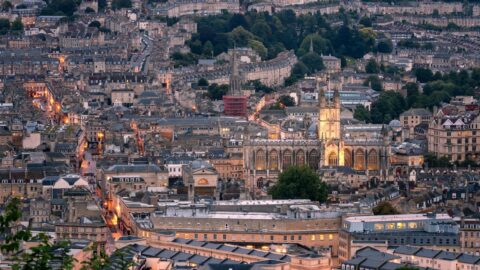
Category: United Kingdom

Discover England, Northern Ireland, Scotland and Wales with its breath-taking scenery, history and culture it is packed with appeal for travellers. It’s hard to travel more than a few miles without stumbling upon a castle, pub, stately home or historic village. Alternatively, explore one of the bustling cities like London, Glasgow, Cardiff, Edinburgh, Belfast and Manchester…

  • 8 Ways to Spend the Perfect Day in Bath

    8 Ways to Spend the Perfect Day in Bath

    The city of Bath, set in the valley of River Avon in the county of Somerset, is only 100 miles west of London. This makes it an easy day trip by car or train from the city. If you’re looking for a special day out, the world-renowned city of Bath is unique unto itself. Famous for the Roman Baths and stunning Renaissance and Georgian architecture, you’re sure to have the perfect day in Bath and I’ll show you how.

    Bath’s natural thermal springs are what gives the city its name and people are drawn to the waters for their medicinal properties, first discovered by King Bladud in 836 BC. The healing waters cured him of a skin disease that had seen him ostracized and the healing stories continue even today.

    The Romans were the first to make the pilgrimage to Bath in the first century AD and named the city Aquae Solis or “Waters of the Sun.” But they weren’t the last as over 100 films and TV productions have taken place in the picturesque town since 1931. As you can see, history is the very foundation of Bath.

    The 15th century Abbey, Pump Room and Roman Baths are right in the heart of the city, which is easily walkable. Because of this, you’ll be able to see all the highlights in just one day, but you might find yourself drawn back to this mesmerizing city for a whole weekend. Named a UNESCO World Heritage Site in 1987, Bath is a vibrant city with first-rate restaurants, museums, theatres, shopping, along with ancient historic landmarks.

    1. Visit the Famous Roman Baths
    Roman Baths
    Roman Baths

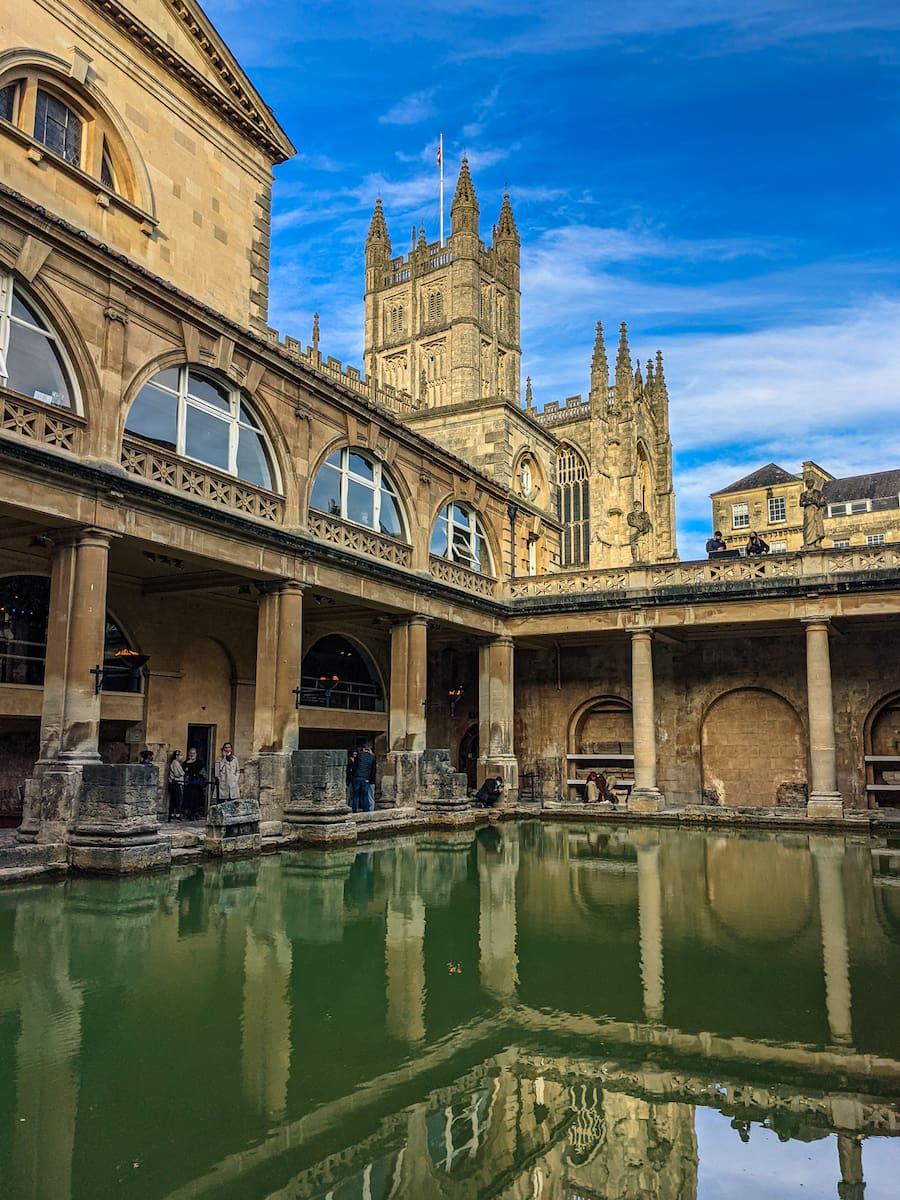
    Once one of the most lavishly religious spas in the world, The Roman Baths are still to this day fed by thermal underground spring water, Britain’s only natural hot spring. Contrary to what I first thought, you don’t go to the Roman Baths for a spa day, but to see the ancient baths, its architecture and ruins. Make sure and book tickets ahead of time so you don’t miss out on the 2,000 years of history in this magnificent structure.

    When the Romans settled in Bath in 70AD, they built the city around the baths that actually exist beneath the city streets, in order to control the water, which was considered to be sacred. The baths themselves became a place not only for bathing, but for socializing as well. Today you’ll experience the baths in the open air, but in those days in would’ve been enclosed with a roof.

    The sections intact in the complex are amazingly well-preserved and provide deep history into how the Romans lived and socialised. You’ll explore change rooms and plunge pools, as well as artefacts including jewellery and coins that were thrown into the water to “please the Gods.” Throughout your tour, you’ll see intricate mosaics, stonework and monuments.

    The Roman Baths also have an interactive museum for all ages. And there’s even an opportunity for you to sample the mineral-rich spring water or have afternoon tea in the Pump Rooms! The Romans Baths will give you a taste of the royal vibe that seems to be spread all over Bath.

    Tip: Follow the audio guide for interesting Roman anecdotes.

    2. Marvel at the Bath Abbey
    Bath Abbey
    Bath Abbey

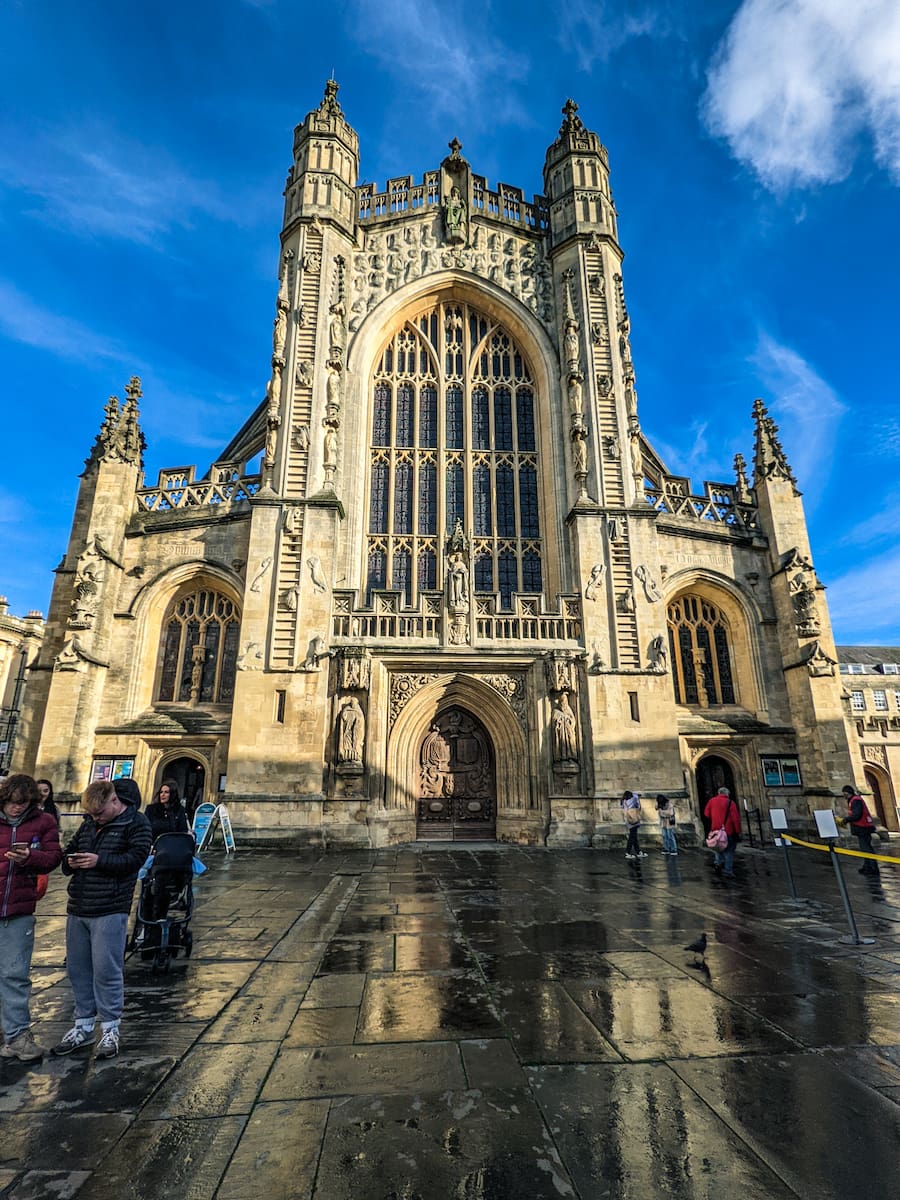
    Bath Abbey is England’s last great medieval church, formerly a Benedictine Monastery. Begun in 1499 by Bishop King and dissolved in 1539, it now serves as a parish church and welcome sanctuary in the heart of vibrant Bath. With awe-inspiring architecture and a vast history, Bath Abbey welcomes thousands of visitor each year.

    There are multiple tours you can partake in, evening climbing the 212 steps of Bath Abbey Tower for amazing city views or you can just take some quiet time and marvel at the famous fan-vaulting and stained glass within the ancient walls of this still working church. The 18th century Bath Abbey Heritage Vaults are worth visiting as well, where they have exhibitions of over 1600 years of abbey history.

    There’s no entry price to wander around the abbey, however, donations are accepted and appreciated. And of course, there are no tours on Sundays as it’s a day of worship so plan your day trip accordingly.

    3. Explore the Shops in the City Centre
    Try the fudge at fudge kitchen
    Try the fudge at fudge kitchen

    Bath has one-of-a-kind shopping for the fact that it’s set against the backdrop of Georgian grandeur. The central streets are jam-packed with independent and high street, well-known brands. You’ll feel luxurious just walking through one of the most stylish shopping destinations in the UK, surrounded by gorgeous ancient buildings towers.

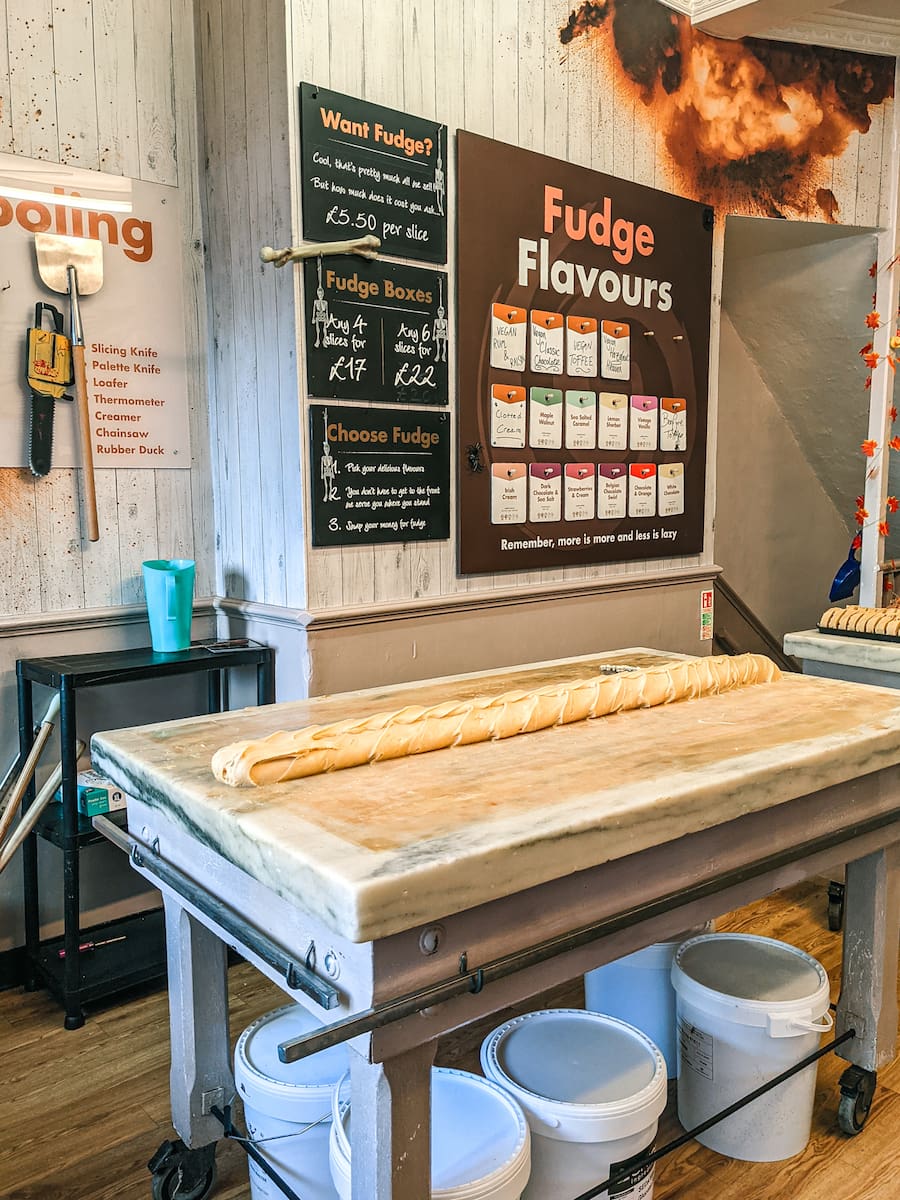
    However, my favourite shops are always food-related! The fudge kitchen serves up some of the most delicious fudge. Their staff are so fun and welcoming. Watch them make the fudge through the windows or go in and try some of the flavours they have on offer.

    For those of us who don’t have milk, they have non-dairy versions available too.

    4. Indulge in the Excellent Restaurants & Bars

    Grab a gin at Canary Gin Bar
    Grab a gin at Canary Gin Bar

    There’s no doubt you’re going to get hungry during all your sightseeing in Bath. Or perhaps you fancy a glass of wine, gin or rum? Throughout the city you’ll find no shortage of classy restaurants, bars and pubs to satisfy all your heart’s desires and your belly! I’ve listed a few places I’ve personally visited and recommend to make your day absolutely perfect in atmospheric Bath.

    • Beckford Bottle Shop – The Beckford Bottle Shop is a contemporary wine shop with a Bistro next door. It’s a great place to try and buy wine, along with cheese, charchuterie and small plates.
    • Canary Gin Bar – The Canary Gin Bar is the Bath Distillery Gin Bar. With elegant gin cocktails galore or Bath Gin from Teapots, this is a must-visit for gin lovers of all kinds.
    • Fidel Rum Bar – If you prefer rum over gin, then you definitely want to stop at the Fidel Rum Bar for a wide selection of flavoured rums.
    • Bath Pizza Co – Calling all pizza lovers! Don’t miss the Bath Pizza Co, placing #2 at the UK National Pizza Awards.
    • The Dark Horse – The Dark Horse has high-class drinks and service with a high focus on their unique artwork.
    • Garrick’s Head – The Garrick’s Head Pub & Dining Room is located next to the Theatre Royal, with lunch & dinner served at the bar, terrace or beautiful dining room.
    • Chequers – Chequers has chic cocktails and classic British cuisine, with the best Sunday roast in town.

    5. Take in the Sights at Pulteney Bridge
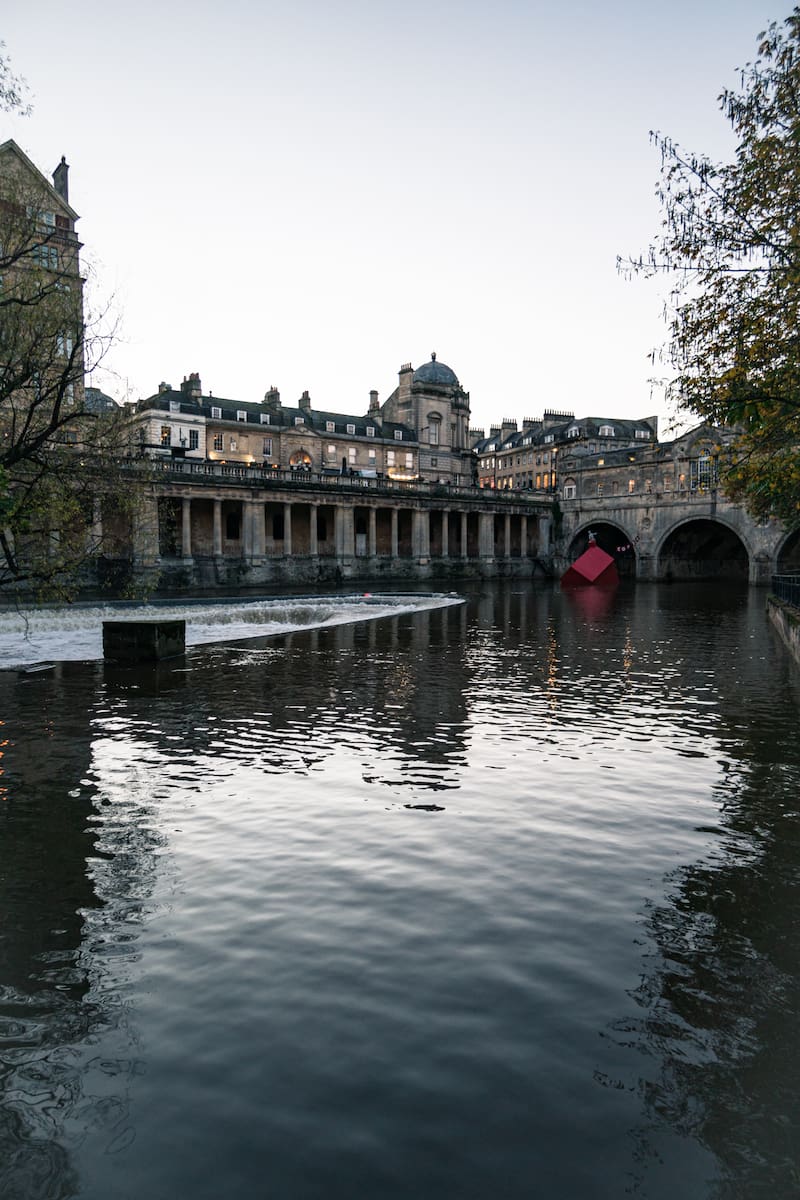
    Pulteney Bridge
    Pulteney Bridge

    Pulteney Bridge is just behind Bath Abbey and is one of the most photographed bridges in Britain and you’ll see why. I always feel as though I’m on a movie set when I come upon these scenes. It really feels like a fairy tale land and when you’re standing on Pulteney Bridge and find you can’t stop taking pictures, you’ll get it.

    The remarkable stone bridge named for Frances Pulteney was built in Palladian style in 1769, with built-in shops lining either side. Not surprisingly, it’s one of the only bridges in the world built in this way. The 18th-century landowner, William Johnstone Pulteney was the wealthiest man in Great Britain at the time and named the bridge after his lovely wife.

    Pulteney Bridge is also located just upriver from the Pulteney Weir. Pulteney Weir is a unique v-shaped barrier built in the river in the 1970s to help prevent flooding.

    Explore the area around the bridge by popping into the quaint shops and even take a boat ride down the River Avon to the village of Bathhampton and back again. With only a ten minute walk from the city centre, make sure and fit the Pulteney Bridge into your schedule. For the best pictures, get a bit further away for the full views.

    6. Appreciate the Architecture at the Royal Crescent

    Kat at Royal Crescent
    Royal Crescent

    The Royal Crescent is just that; a sweeping 500-foot curvature forming a crescent, that contains a row of thirty terraced houses. All of these refurbished, luxury Georgian townhouses are identical and were built in late 1700s, with 114 Ionic columns. The Royal Crescent is an architectural marvel that can’t be missed driving or walking through the city.

    The No. 1 Royal Crescent is the first building at the eastern end and is of national and architectural importance, serving as the headquarters of the Bath Preservation Trust as well as being a historic museum. Explore what life was like in Georgian domestic life for Bath’s fashionable residents, both above and below the stairs. The furnished, authentic room displays give you a real sense of what it must have been like in these residences between 1776-1796.

    Fun Fact: If you’re a Bridgerton fan, the Royal Crescent is a must-see as it was home to the Featherington family.

    7. Get Bookish at the Jane Austen Centre

    Bath’s most famous resident author, Jane Austen, has a permanent exhibition at the Jane Austen Centre. If you’re a writer or avid reader, you’ll find this display simply fascinating. The Centre showcases how much of an effect living in a Georgian city had on her writing and her life as a whole.

    Tour around the building and its exhibits, which of course revolve all-around Jane Austen herself. It’s a unique experience where costumed actors give an introductory talk and then lead you on to your own self-guided tour.

    Jane made Bath her home from 1801-1806 and published two of her six novels while living there. You’ll find Northanger Abbey and Persuasion were inspired by her time in Bath. Explore this interactive, immersive experience. And when your tour is complete, pop into the gift shop and have a cup of tea in the Regency Tea Room.

    8. Relax at Thermae Bath Spa

    The height of my Bath experience was at the Thermae Bath Spa, which is a properly great way to end your day before heading home, and it’s just off the city centre. If you time it just right and are there during sunset, it will be an experience you won’t soon forget! At the spa, you’ll bathe in two incredible baths that are fed by naturally warm, mineral-rich water. This is the modern answer to the ancient baths.

    The Minerva Bath is the larger of the two baths and is named after the Roman Goddess of Health and Wisdom. This indoor bath is complemented by an invigorating whirlpool and soothing jets along the inside wall of the bath for further relaxation. Have a swim or stay in one place and melt away into the healing thermal waters.

    If you decide to add on any extras to your visit to Thermae, you’ll be led into the Wellness Suite. Within the suite, you’ll be delighted to find an Infrared Room, a Celestial Relaxation Room, two Aroma Steam Rooms and an invigorating Ice Chamber. You really can’t go wrong with any of these options!

    Once you’ve completed your time indoors, the lift will take you to the open-air rooftop pool. This is where the sunset magic takes place, but at any time of day, you’ll have epic views of Bath. The water felt warmer to me up on the rooftop and the air seats and bubbling jets added to the magical ambience of the steam floating above the water. Spend this time in your day relaxing your muscles and mind.

    Make your reservations in advance for the Thermae Bath Spa as they tend to book up quickly.

    So as you can see, Bath is one of the most memorable cities to visit in all of the United Kingdom and it’s an extra-special day trip from London. With majestic buildings and ancient Roman bathhouses, Bath’s history makes it a wonderful place to spend the day.

    As in London, one of my favourite things to do in Bath is to just walk around and admire the architecture, and I recommend doing just that if you’re short on time. But hopefully, you’ve seen that Bath has so much to offer and you can hit all the hotspots on foot in just one day. I hope you’ll be inspired to go back time and again!
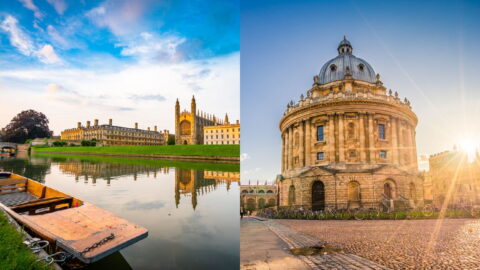
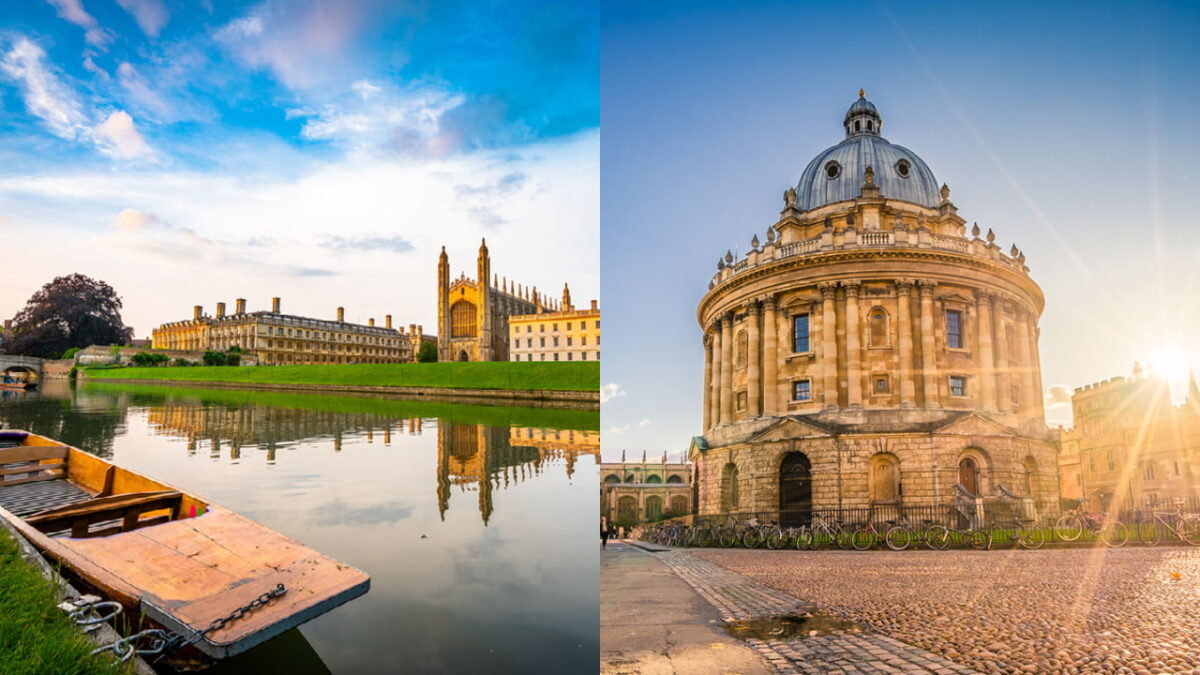
  • Cambridge vs Oxford: Which Should I Visit?

    Cambridge vs Oxford: Which Should I Visit?

    Two households, both alike in dignity, challenge each other to a magnanimous Boat Race once a year. 

    The fierce rivalry between Oxford and Cambridge has simmered for centuries, and while it’s officially a university head-to-head, it bleeds over into the cities themselves.

    But for all their apparent mutual dislike, these cities have a lot in common – which only makes choosing between them all the more difficult.

    Are you drawn to the stately magnificence of Oxford, or the charming tranquillity of Cambridge?

    Find out what separates these famous collegiate towns in this clash of the intellectual titans.

    Reasons to Visit Oxford

    Oxford is a beautiful city, with plenty of places to explore, charming pubs and a long history.

    But so is Cambridge.

    Here are a few things that set Oxford apart.

    The University of Oxford

    Oxford University
    Oxford University

    Yes, we’re going there. A tale as old as time; which is better, Oxford or Cambridge? 

    These are two of the finest educational institutions in the world. They’re ancient, prestigious centres that cultivate and encourage original thought and the greatest minds. Which is better is completely subjective – it’s like comparing the virtues of literature against science.

    Fortunately, we’re looking at the two from the perspective of a visiting tourist, not a hopeful student. That’s a different question entirely. 

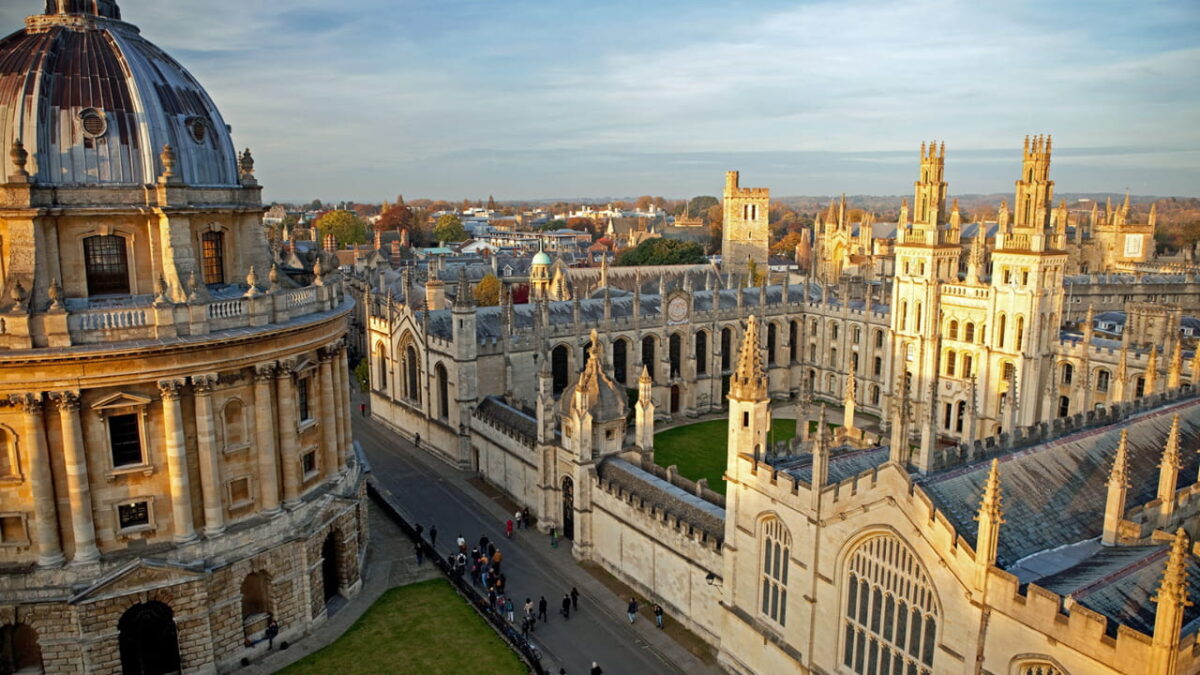
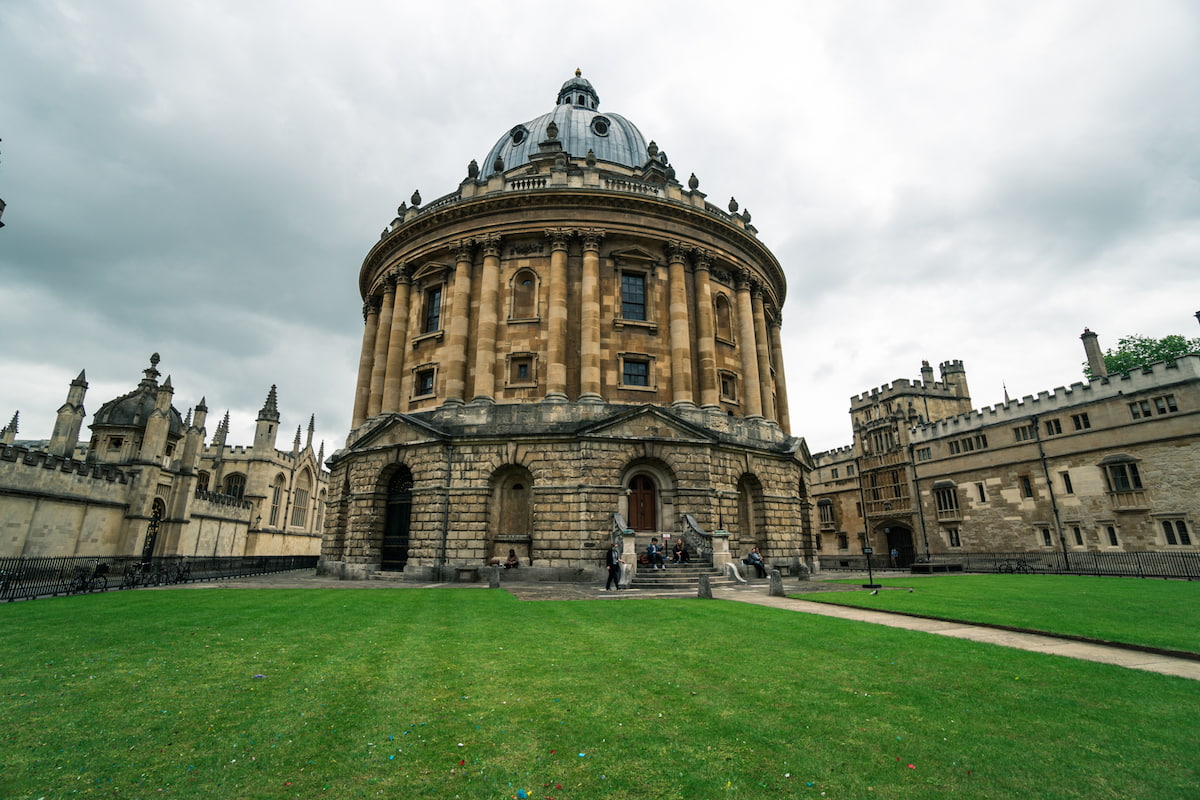
    Radcliffe Camera
    Radcliffe Camera

    Walking around the iconic Radcliffe Camera, joining a tour into the historic Bodleian Library, climbing St Mary’s Tower, stepping under the Bridge of Sighs: you can easily fill an entire day in Oxford without leaving the university. As for the colleges, I would recommend seeing Balliol College, New College and Christ Church College. Magdalen College is a little further out, but exceptionally pretty.

    Famous Alumni

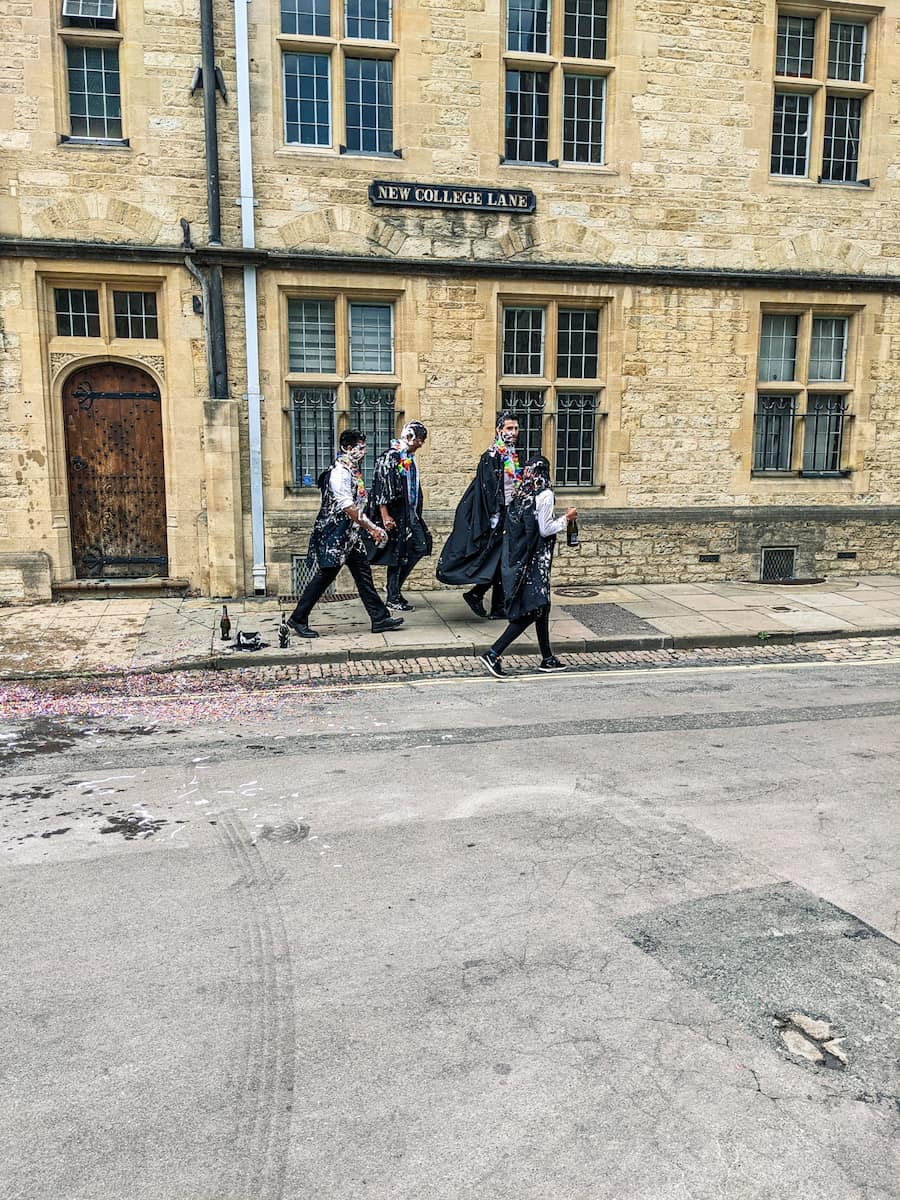
    University Students Celebrating
    University Students Celebrating

    The University of Oxford, founded in the 11th Century, is the oldest university in the English-speaking world (take that, Cambridge). By exploring its colleges and gardens, you are following in the footsteps of many of the greats of English Literature. 

    J.R.R. Tolkein, C.S. Lewis and Lewis Carroll all studied at Oxford. Those with sharp eyes should lookout for a stained glass tribute to Alice in Wonderland in Christ Church College.

    The Beautiful Architecture 

    Oxford view from Church of St Mary the Virgin
    Oxford view from Church of St Mary the Virgin

    The City of Dreaming Spires is, somewhat unsurprisingly, full of stunning buildings and architectural styles.

    The endless spires give Oxford its magnificent skyline, but the city has more to see at ground level. A thousand years of craftsmanship can be seen in Oxford, with architectural styles that cover centuries of time found in a single street. Neoclassical, Palladian and Gothic buildings are all present. The imposing Radcliffe Camera is one of the most recognisable Palladian-style buildings in the world.

    Visiting Oxford gives you the chance to admire the detail and artistry of the buildings up close. From the cloisters to the High Street, there’s so much to appreciate and enjoy. 

    Much of Oxford is built with stone of a similar colour – often Headington stone – which gives the city a fairly uniform, classic look.

    There are More ‘Things to Do’

    Oxford is a more attractive proposition for people who like to pack their days full of activities.

    It’s a slightly bigger city, livelier and packed full of tourist attractions. Besides the colleges themselves, the university has a few world-class museums and one of the oldest Botanic Gardens on Earth.

    The Ashmolean Museum and Pitt Rivers Museum are both free to enter. Any history buff – or anyone with the slightest interest – has to visit the Ashmolean while in Oxford. The art and archaeology museum houses work from the likes of Picasso, as well as an impressive collection from Ancient Egypt.

    Outside the university complex, Oxford has a castle, a Georgian covered market, great food and coffee culture, and a few other museums and parks to explore. 

    If you’re in Oxford for longer than a weekend, you could venture into the surrounding area. The city is in a more attractive location than Cambridge, close to the rolling hills and pretty villages of the Cotswolds.

    It’s an Unmissable Trip For Harry Potter Fans 

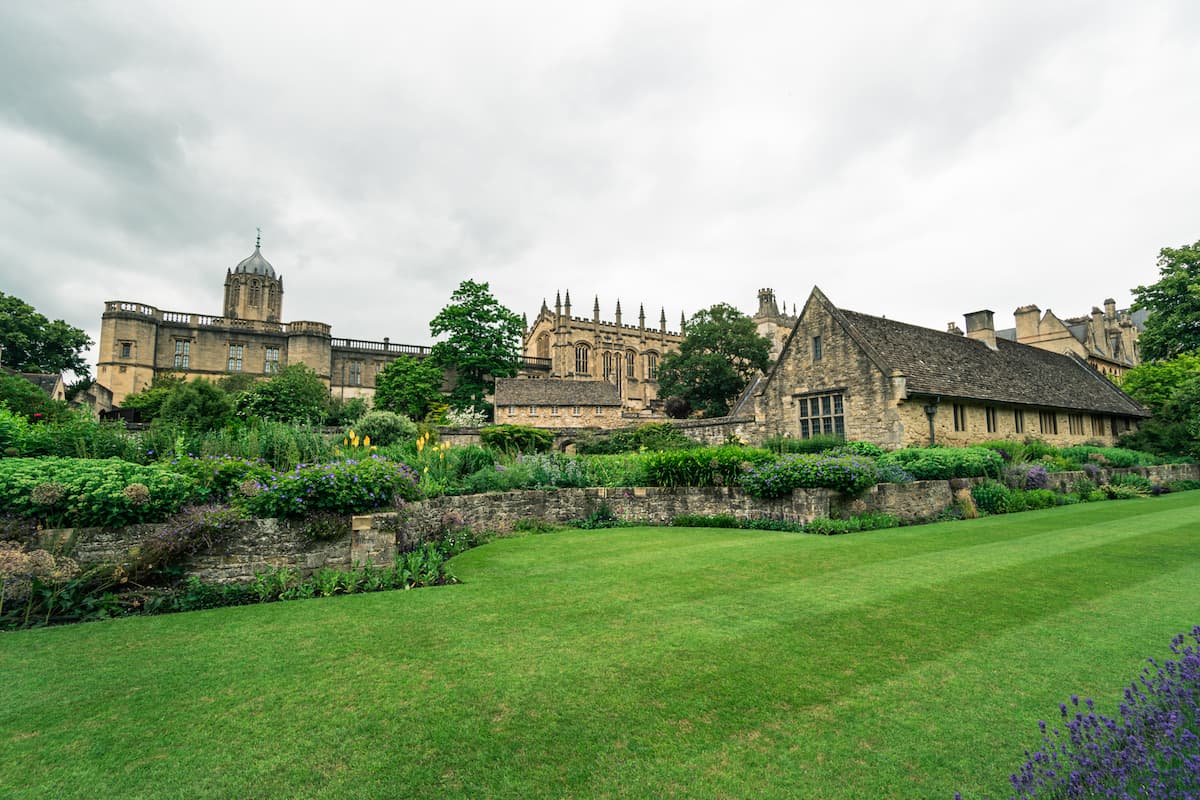
    Oxford christ church cathedral (2)

    For any avid Harry Potter fans, choosing between these cities is a no-brainer. Oxford is home to a number of filming locations from the series, and a few favourite haunts for the cast as well.

    You can go on a guided Harry Potter tour around Oxford, but these are usually where they’ll take you: 

    • Christ Church College – the famous college is home to two memorable Harry Potter locations. The inspiration for the Great Hall of Hogwarts is Christ Church College’s dining hall. Though it was originally intended to be a filming location, the hall was too small to fit four tables – the crew made a larger replica set for filming. The grand stairwell is a genuine filming location; Bodley staircase is the entrance into Hogwarts in the Philosopher’s Stone. It’s where the first years meet McGonagall before entering the Great Hall.
    • Bodleian Library – one of the more exclusive locations on this list, the Bodleian Library can only be accessed on a private tour. The Restricted Section in the first film is Bodleian’s very own Duke Humfrey’s Library.
    • New College – the Harry Potter crew certainly had their pick of cloisters in Oxford. In Goblet of Fire, they chose to film many of their corridor shots in the cloisters of New College. The courtyard, with its distinctive towering Oak tree, is another filming location – it was used as the setting for the memorable Malfoy-gets-turned-into-a-ferret scene in the same film.
    • The Turf Tavern – this was the pub of choice for the cast and crew during filming. It’s a cute historic pub with a fantastic atmosphere, hidden away on a tiny cobbled side-street. If you’re looking for a place for a pint or some traditional pub grub, this is the place to go.

    Reasons to Visit Cambridge 

    Cambridge is the cute, quiet counterpart to Oxford. This is why you should visit:

    The University of Cambridge

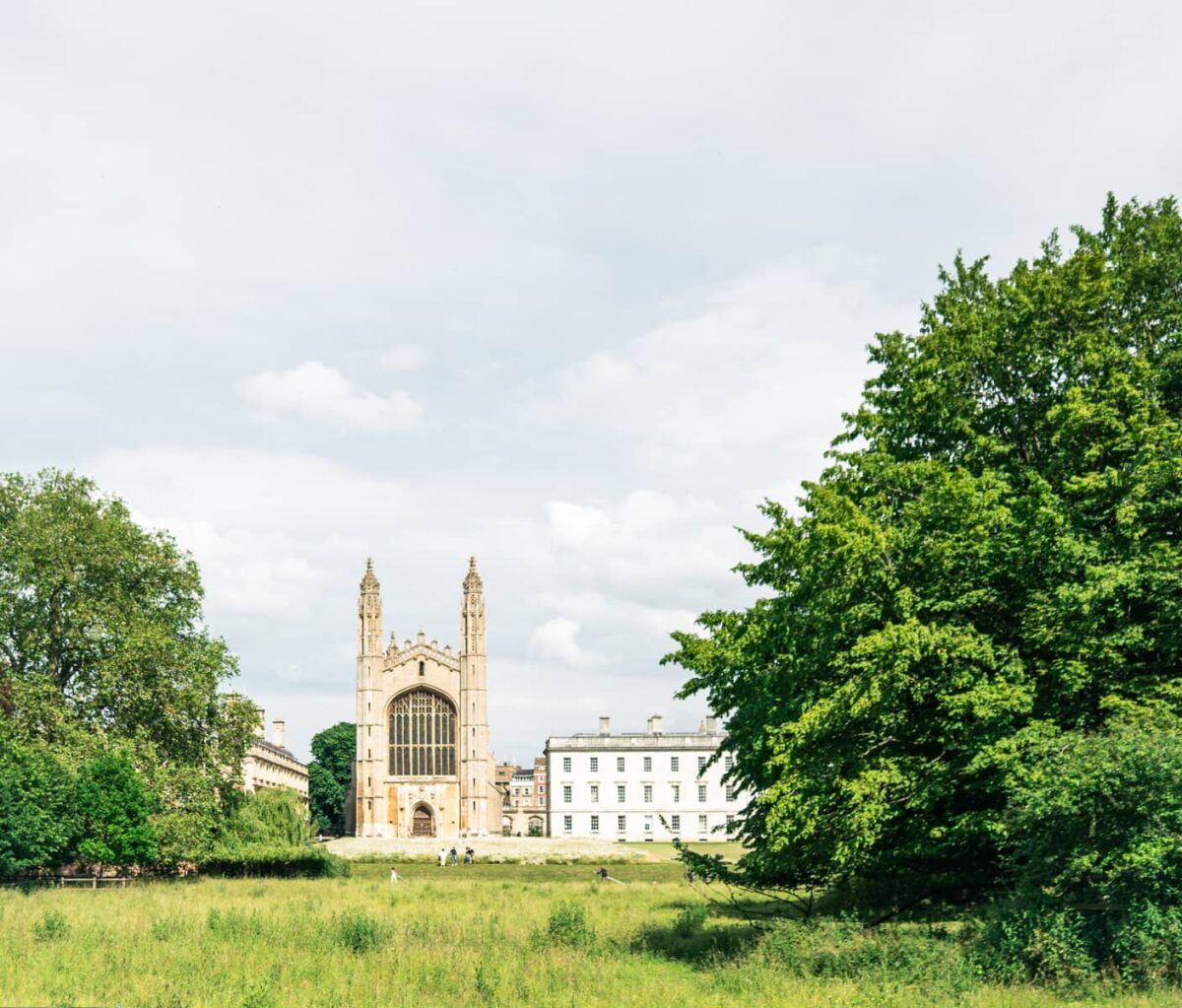
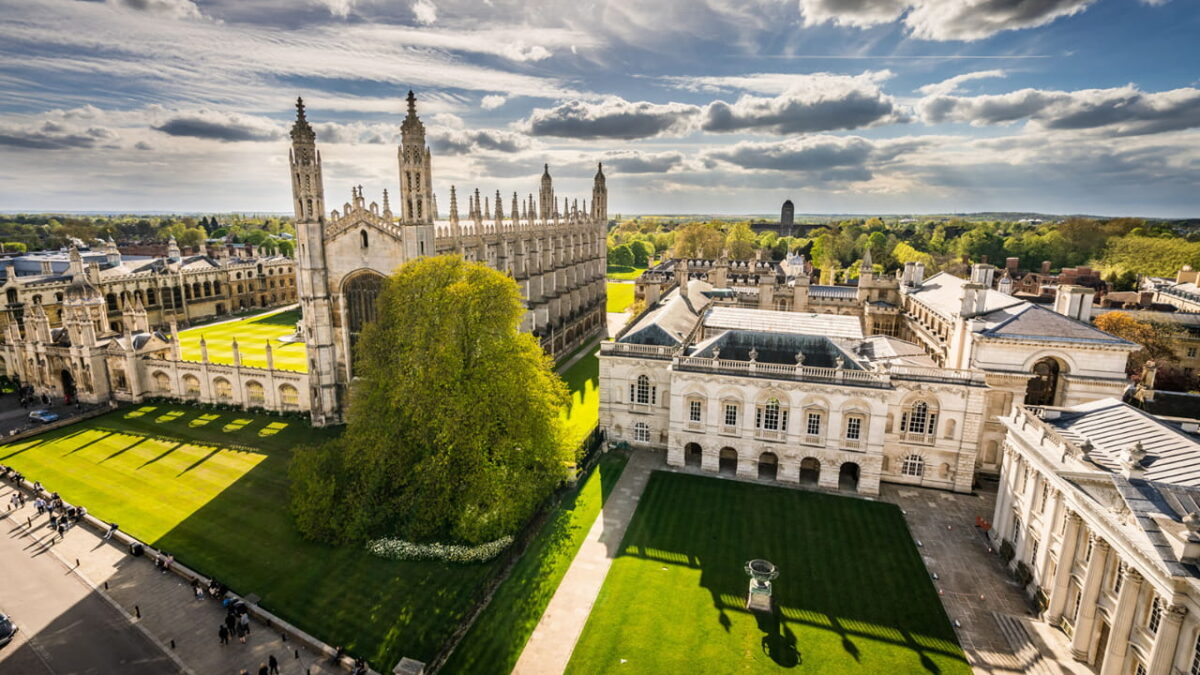
    Cambridge The Backs
    The Back is known as the rear of the universities.

    You can’t mention one without the other, and the universities are practically synonymous with the cities, so we have to compare them. 

    The younger half of Oxbridge isn’t so young – in the English-speaking world, it is only behind Oxford; it was founded in 1209. Since that time, the various colleges of Cambridge have seen some seriously notable students. Sir Issac Newton, Charles Darwin and Stephen Hawking are only a few of an impressive list of alumni.

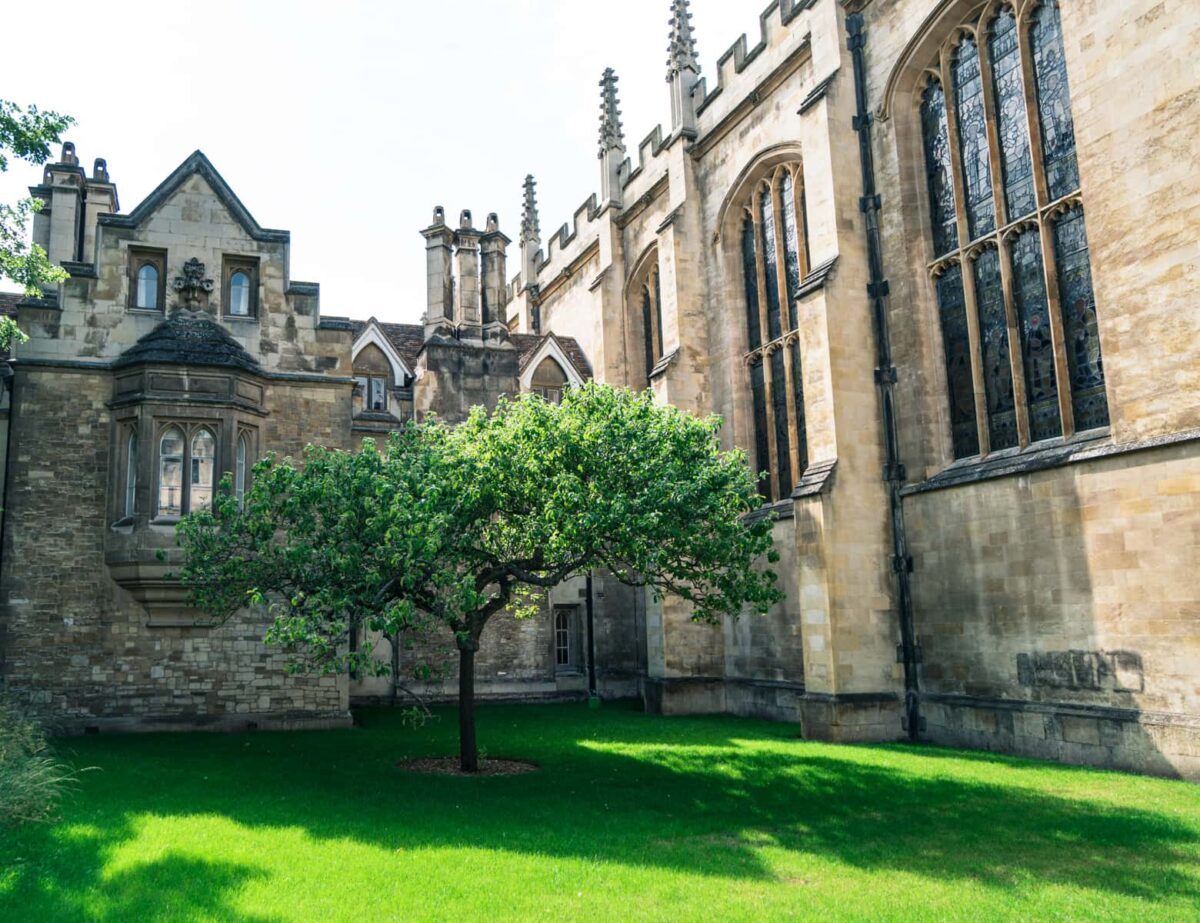
    The tree where Newton was hit on the head with an apple.
    The tree where Newton was hit on the head with an apple.

    You can explore most of the famous colleges, as only a few are not open to the public. The most popular of all is King’s College, which costs £10 for adults to enter (many of the others are free)

    It’s the image that comes to mind instantly when we think of Cambridge; the imposing Gothic structure of King’s College Chapel sitting near the banks of the Cam. Listening to the choir of the chapel – especially at Christmas – is one of those once-in-a-lifetime experiences.

    The Fitzwilliam Museum and Botanic Garden are also part of the university – and both are worth a visit.

    Everything in Cambridge feels connected to the university in some way. It’s influence over the town is bigger than Oxford’s; even the nightlife seems almost entirely focused on students.

    It’s Easier to Explore in a Day

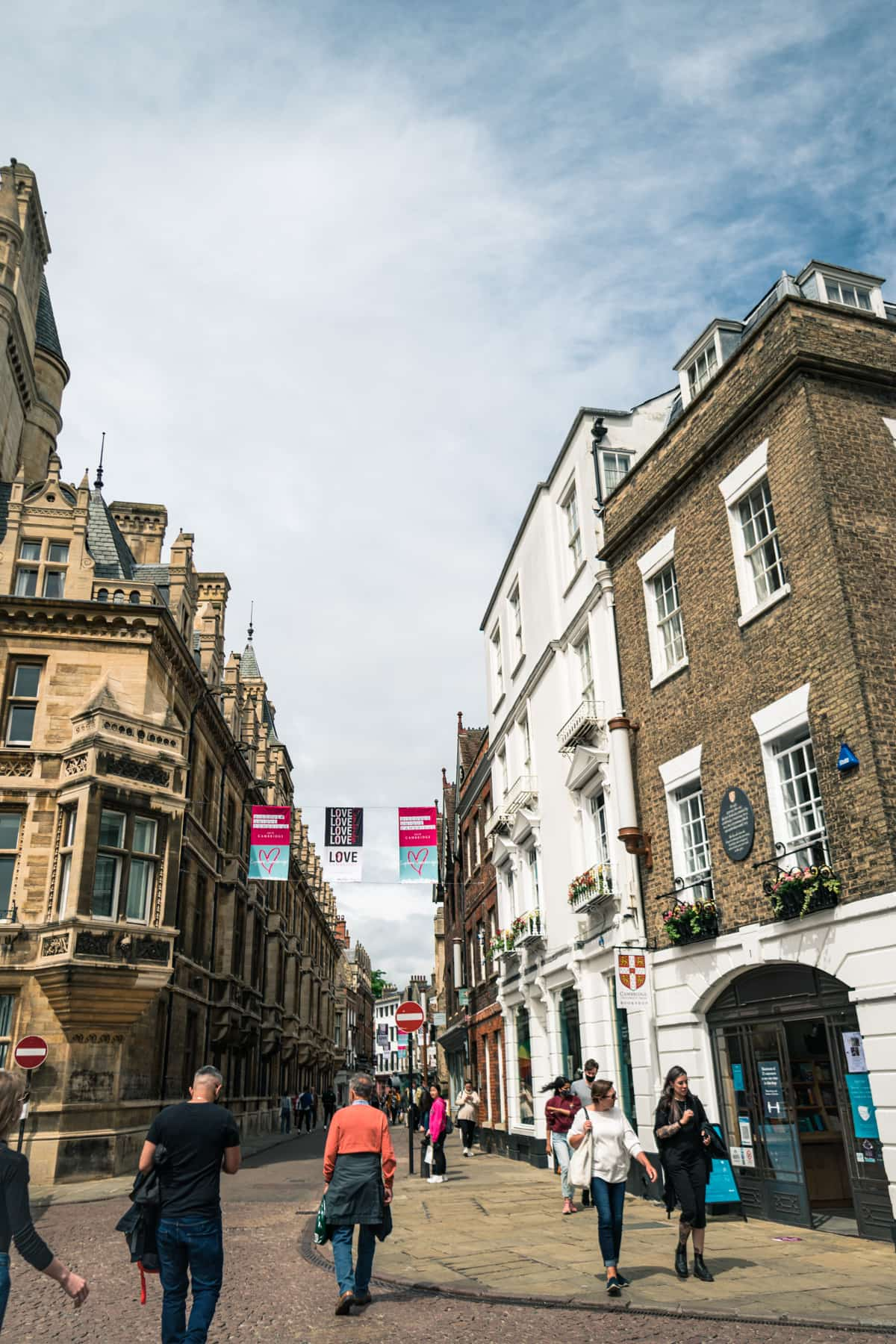
    Streets of Cambridge
    Streets of Cambridge

    Oxford isn’t as sprawling as some people make out, but it is bigger than Cambridge. While this extra space does come with more to do, it means it’s a little more work to get around. 

    The centre of Cambridge is nicely compact, with everything reachable on foot in 20 minutes or less. 

    You can grab your Chelsea bun from Fitzbillies Restaurant & Bakery and be in front of King’s College in less than 5 minutes. Add on another 5 minutes and you will find the Round Church; it’s not the kind of city break that requires miles upon miles of walking.

    You can easily see everything you would want to see in the city in a single day. Check out the colleges, try your hand at punting, or wander around window-shopping – you can do whatever you feel like in the moment, there’s no need to map your route.

    Cambridge doesn’t have to be rushed. It can be explored at a gentle, laid-back pace without the nagging worry of missing out on something.

    Cambridge is Prettier

    Cambridge Streets
    Cambridge Streets

    While the palatial buildings of Oxford may be more impressive, Cambridge is generally prettier. Not more beautiful, but prettier. 

    Lush rows of trees, pristine parks, a gently flowing river: Cambridge is in touch with its natural side. There’s so much greenery in this city; it is absolutely resplendent in the spring when the city starts to come to life.

    It’s also less imposing than Oxford.

    Where Oxford has a more uniform, structured layout, Cambridge is a labyrinth of narrow twisting streets. There’s a diversity to Cambridge’s architecture that Oxford, with its primarily Headington stone buildings, doesn’t have. There’s a charming mix of styles in Cambridge, from the colourful shopfronts of Magdalene Street to the honey-hued Regency-era Rose Crescent. 

    Classical, Tudor, Victorian, Medieval – Cambridge has a little bit of everything.

    Built 900 years ago, the Round Church is one of the finest examples of a medieval round church left in England.

    The River Cam

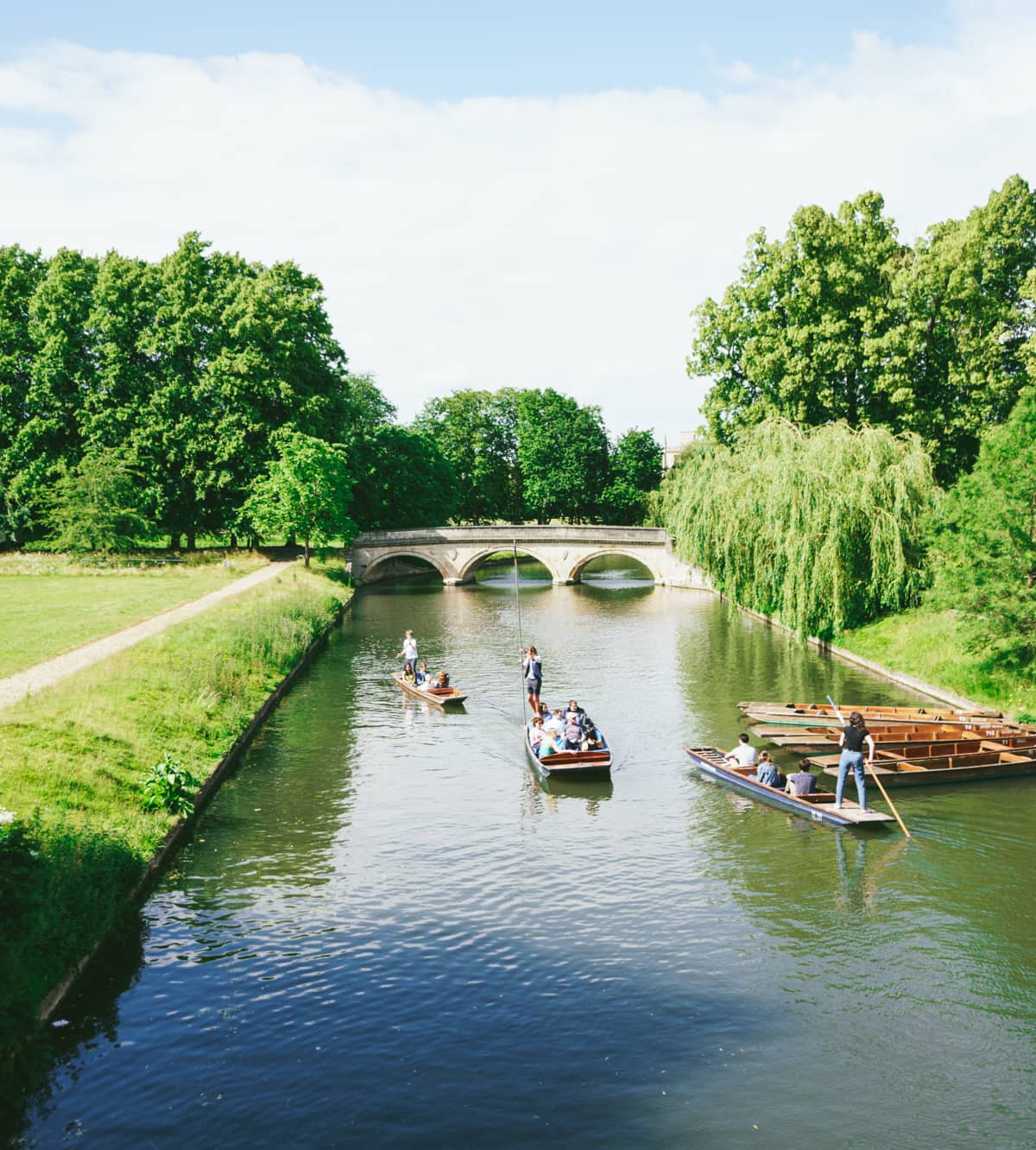
    Punting Down the River Cam
    Punting Down the River Cam

    The River Cam winds right through the centre of the city. It’s incredibly picturesque, with a near-constant stream of charming bridges and a magnificent overhanging willow tree. 

    The Mathematical Bridge and the Bridge of Sighs are the most memorable. The only way to see the Bridge of Sighs without entering university grounds is by punting along the river. It is one of the most breath-taking sights in Cambridge, so don’t miss it!

    Think of a scenic location in Cambridge and ‘The Backs’ will probably come to mind. This area of the city, where the medieval colleges of the university overlook the River Cam, is remarkably beautiful.

    It Has A Relaxed Atmosphere 

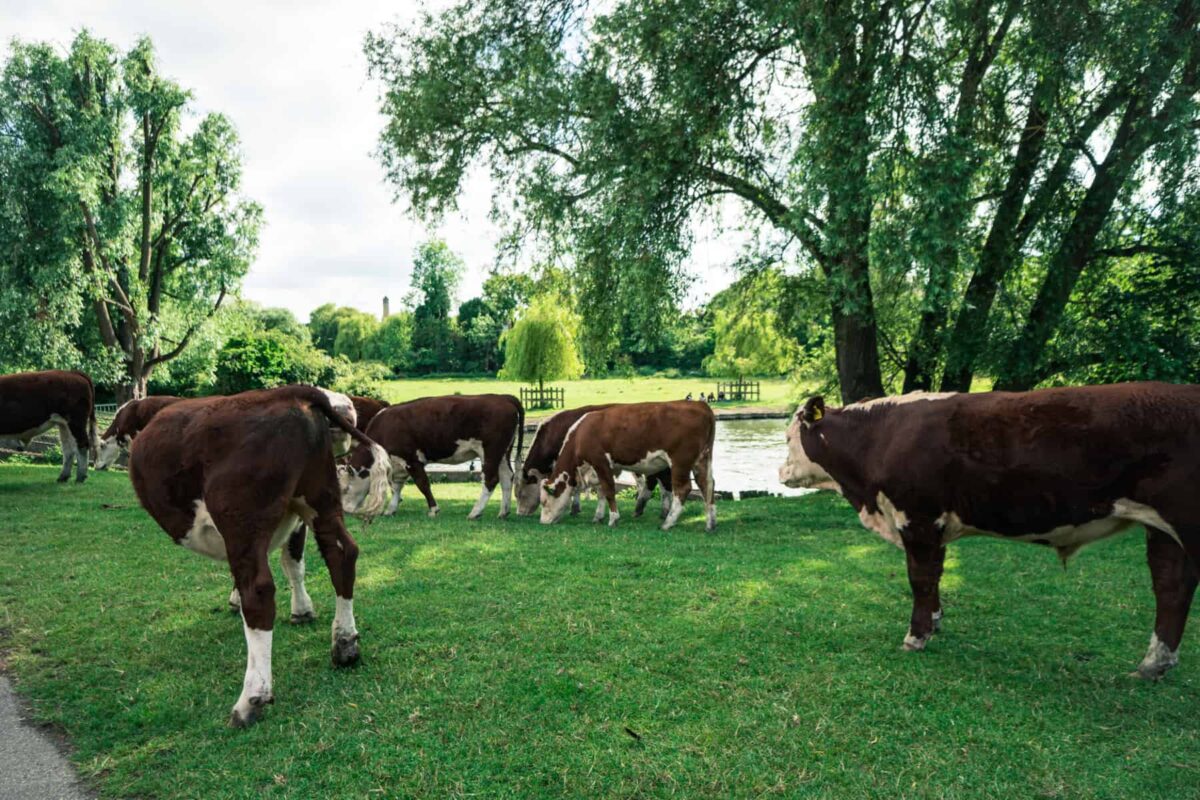
    Cows of Cambridge
    Have a picnic with the cows of Cambridge whilst watching people punting.

    Cambridge is the kind of town made for lounging by the river, sipping Pimms and taking it easy.

    This is the perfect escape from a busy lifestyle – if you want your trip to be relaxing, choose Cambridge over Oxford. It’s not quite as bustling, the pace of life is slower, and falling off the boat while punting is about as intense as it gets. 

    You will still find great street food, pubs and nightlife here. It is a student town, after all. But a day out in Cambridge is laid-back and easy-going, both in atmosphere and the ease of getting around. It’s a city break, but one that feels closer to the countryside.

    Should I Visit Both If I Can’t Decide Between Cambridge Or Oxford?

    This really depends on how much time you have. If your time in England is limited – or even less than a few months – it isn’t worth visiting both since they’re so similar. 

    Even if you are here long-term, it might only be worth it if you particularly love history or want to see the colleges of various alumni. I really like Cambridge and Oxford, and they do have their differences, but it isn’t essential to see both cities.

    Unless you have your heart set on seeing them both, choose the one that appeals to you most. You will find other places to visit in the UK that offer you something a bit different.

    A Summary On Whether You Should Visit Oxford or Cambridge

    This is ultimately a matter of personal taste. Both Oxford and Cambridge are fantastic cities to visit, with more similarities than differences. 

    It’s commonly said that Oxford is a city with a university in it, while Cambridge is a university with a city around it – the university is very much the focus of both, but in Cambridge there is little to do outside of it. This is a little unfair on Cambridge, but there is an element of truth to it. 

    I really love both of these cities, but I think overall Oxford has more to offer. 

    If you prefer quieter places with a lot of greenery, you will obviously prefer Cambridge. But for most, the imposing colleges and fuller itinerary of a visit to Oxford will be more appealing.

    If you’re still torn, I think the seasons and weather forecast can play a big part. On a lovely spring or hazy summer’s day, I would rather be in Cambridge. If the weather is a bit off or you’re visiting at a colder time of the year, Oxford is a much better choice.

  • 14 Things to do in Oxford in a Day

    14 Things to do in Oxford in a Day

    Lose yourself in the City of Dreaming Spires for a day, and wander the medieval streets home to England’s most prestigious university.

    Oxford is perfectly sized for a day trip – you can get a good grasp on the city in 24 hours, and everything is compact enough to be within walking distance. It’s surprisingly affordable too, as many of the city’s top attractions are free.

    Oxford is of course dominated by its famous university. It has been an intrinsic part of the city for a thousand years – the institution is even older than the Aztec empire.

    If you don’t recognise Oxford from the university alone, you might find familiar locations from films. The charming side streets and twisting alleys have inspired many creative minds. It’s no wonder that Oxford is a popular filming location – from Harry Potter to His Dark Materials, the city has always been a popular setting for fantasy epics.

    I’ve gathered a handful of my favourite things to do in Oxford – all are easily manageable for a day trip.

    One Day in Oxford

    Breakfast at The Handle Bar Café

    The Handle Bar Café
    Grab a coffee or good breakfast at the Handle Bar Café

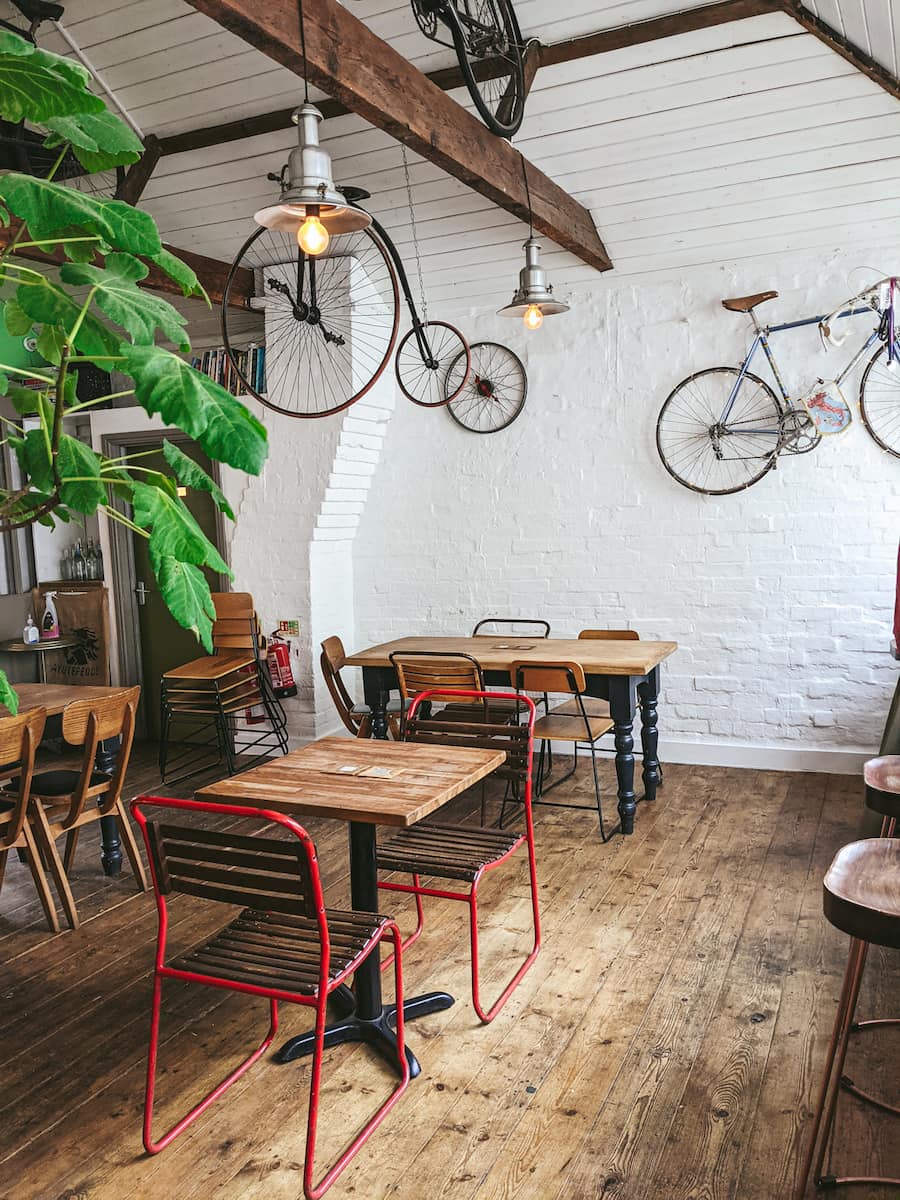
    Start the day with breakfast at the Handle Bar, a quirky café situated above a bike shop. The interior takes inspiration from the shop – penny farthings and vintage bikes line the walls. It’s whimsical, but muted; the café has character, but it’s chic, not over the top. All in all, the Handle Bar has a pretty low-key, casual vibe.

    More importantly, the food is amazing. You can get a locally-sourced full English breakfast in the HB Full House, or pick from an extensive brunch menu. There are plenty of vegan-friendly options, with everything from kimchi bowls to cauliflower fritters available. 

    On top of the delicious food, the Handle Bar is known for its artisan coffee.

    Explore Oxford University with an Alumni Guide

     University Students Celebrating
    University Students Celebrating

    What better way to explore the most prestigious university in England than with someone who studied there? Get the inside track on the hallowed halls of Oxford University, listening to stories of famous alumni, unusual traditions and the history of the colleges.

    You can book a tour here.

    Take a Photo of the Radcliffe Camera

    Radcliffe Camera
    Radcliffe Camera

    Easily the most iconic location in Oxford, the Radcliffe Camera is instantly recognisable in the image if not by name. The distinctive domed building is the most photographed landmark in the city and the first thing we picture when we think of Oxford. 

    The beautiful Palladian-style building was designed by James Gibbs in the 18th Century. Despite its name, the building has nothing to do with cameras: The camera is Latin for the chamber. Its actual use is as a reading room – an extension of the Bodleian Library.

    Keep in mind that it is a strictly stop and stare visit, as access to the library is restricted to limited guided tours for the general public.

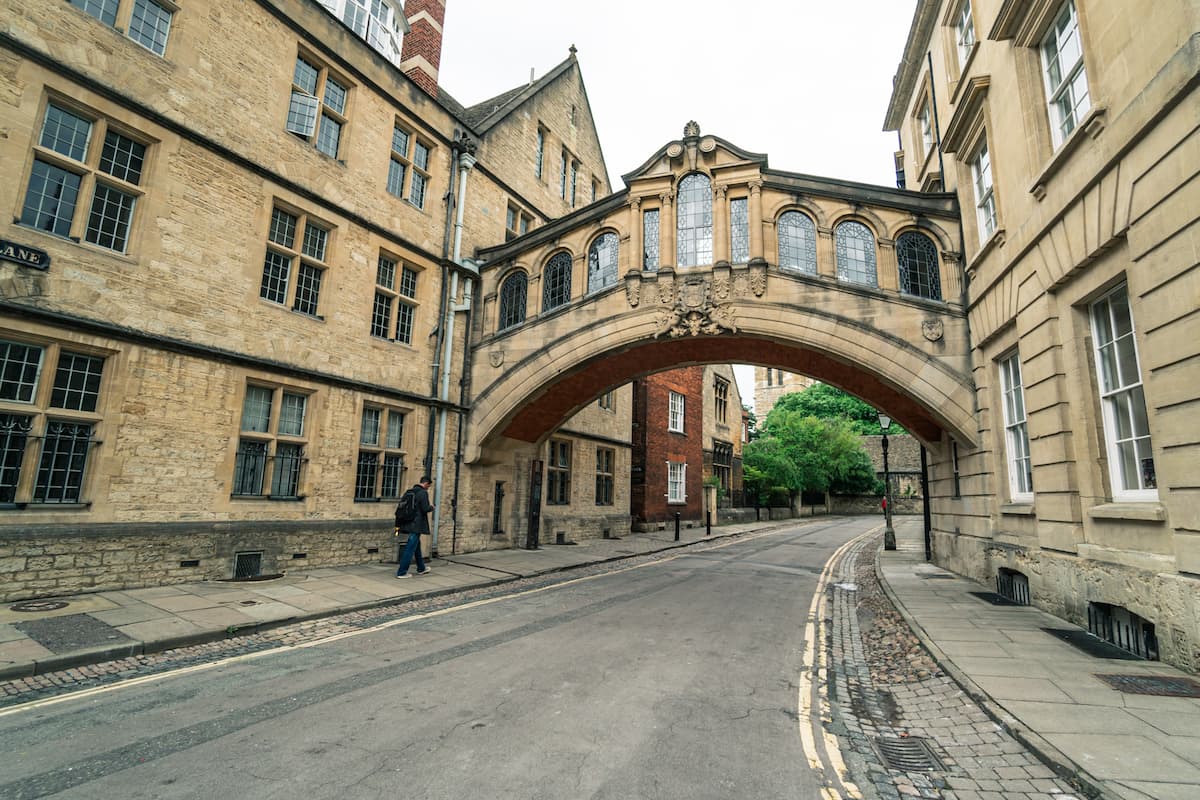
    Walk under the Bridge of Sighs

    Bridge of Sighs
    Bridge of Sighs

    The Hertford Bridge, or the Bridge of Sighs, earned the name with its famous resemblance to the Bridge of Sighs in Venice. But for all their similarities in appearance, their purposes couldn’t be more different.

    While the bridge in Venice was used to walk guilty prisoners from court to their cells, in Oxford, the bridge was used to connect the Old Quadrangle and the New Quadrangle buildings of Hertford College. Legend has it that the bridge was once closed to encourage the overweight students of Hertford College to take the stairs.

    New College

    If you’re a Harry Potter fan, it’s worth stopping by New College, on the same street. The cloisters were a filming location for Goblet of Fire – the Oak Tree was the location used for a duel between Draco Malfoy and Harry Potter.

    Browse the Restricted Section in the Bodleian Library

    Bodleian Library
    Bodleian Library

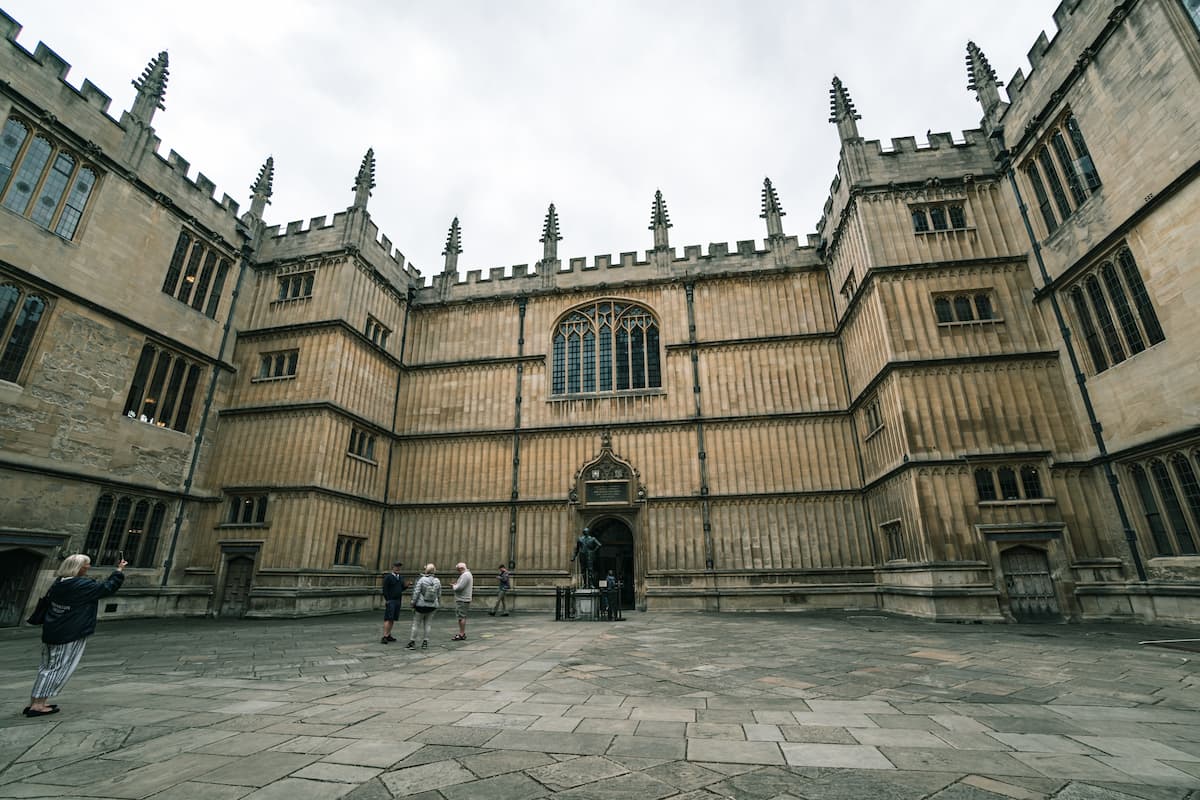
    Okay, there is no ‘Restricted Section’. Or there is – but it’s only for us, the general public, and it’s the whole library. You need to be on a guided tour to actually enter the building – and you should book as early as you can, as these tours tend to sell out quickly.

    You can still see the Restricted Section of the Harry Potter movies on a private tour, as the library scenes from the Philosopher’s Stone were filmed in the Duke Humfrey’s Library. The Bodleian Library is the oldest reading room in the world, opening in 1602. 

    You get the chance to wander the same halls as some of history’s greatest scholars. Oscar Wilde and J.R.R. Tolkein are just a few of the literary greats to have studied here.

    Grab a Coffee at The Society Café

    Oxford, a city with a huge student population trying to cram deadlines, was practically guaranteed to have a thriving coffee culture.

    There are great coffee shops all over the city, but if you’re looking for one reasonably close to the university you can’t go wrong with the Society Café. This independent, family-run café serves speciality coffee sourced from the highest quality coffee farms around the world.

    The café is relaxed and minimalist – you can grab a quick drink to go or sit and enjoy the peaceful setting.

    Climb the Tower of the Church of St Mary the Virgin 

    Church of St Mary the Virgin
    Church of St Mary the Virgin

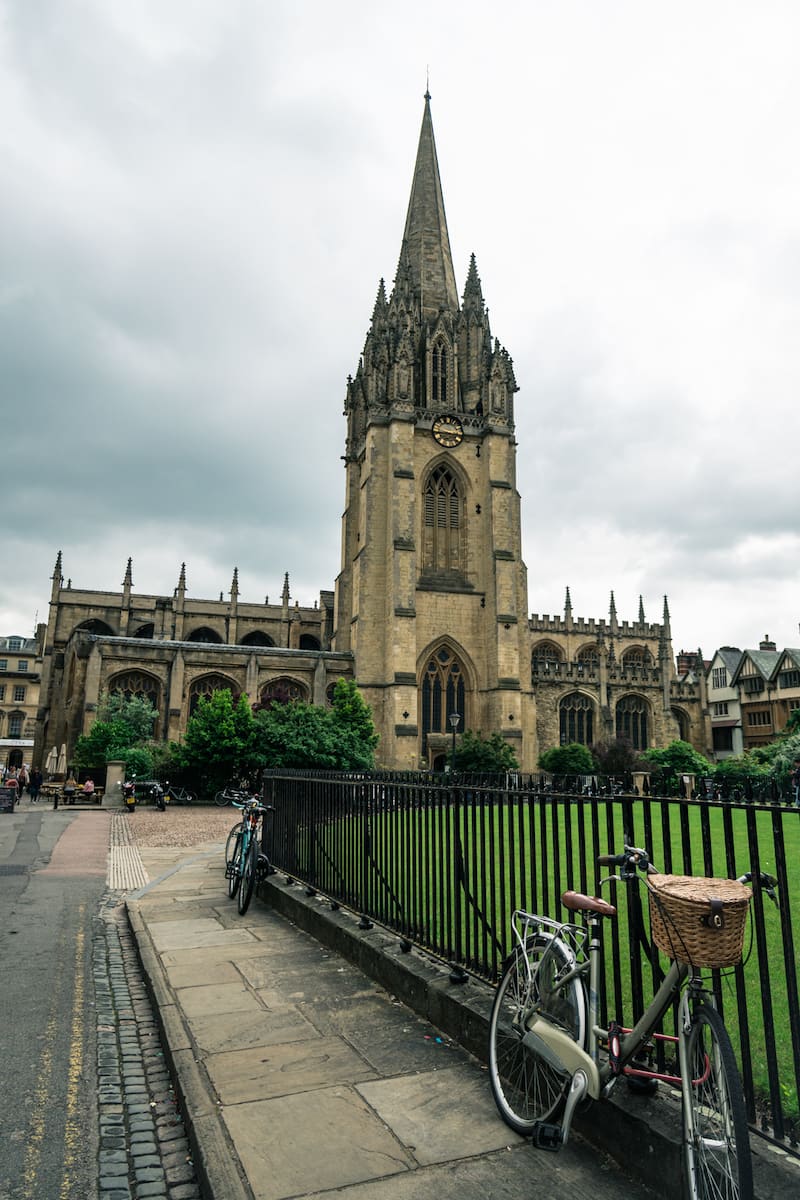
    Use the caffeine to power your way up the 127 steps of St Mary’s Tower. 

    It is well worth climbing the slightly treacherous spiral staircase – the view of the Radcliffe Camera is exceptional, and the panoramas over the city are unparalleled. There’s no better way to get a glimpse of those famous spires.

    Built in 1280, the tower is the oldest visible part of the church. But the rest of St Mary’s is also worth exploring. There’s little pieces of history everywhere: if you look closely at the south porch, you can see bullet holes carved out by the troops of Oliver Cromwell. 

    Entrance to the church is free, but it does cost £5 to climb the tower. Due to the age of the tower, there is no disabled access.

    Oxford University the view from Church of St Mary the Virgin
    Oxford University the view from Church of St Mary the Virgin

    The ‘Narnia Door’, a wooden door with a lion carving, and a solitary streetlamp, both said to inspire C.S. Lewis, can be found just around the corner.

    Punting along the Cherwell River

    Forever intertwined, Oxford and Cambridge are constantly bickering over who does what best. You might have heard of the Boat Race – but did you know both cities offer the opportunity to try your hand at punting?

    Cambridge may be more famous in that regard, but Oxford is no slouch. Ignore the River Thames and try the River Cherwell for a lovely meandering experience seeing the city from the water.

    It should technically be serene and peaceful, an idyllic and quintessentially English way to pass an hour or two. It can be very romantic and relaxing – if you’re good. If not, half the fun is staying upright on the boat and avoiding other tourists!

    Discover Exotic Plants at the Oxford Botanic Garden

    You will find over 5000 different species of plant in the University of Oxford’s Botanic Garden. Founded in 1621, it’s one of the oldest scientific gardens in the world, and the oldest botanic garden in the UK.

    You can spend as little or as long as you’d like in the gardens. It can stretch from a quick escape from the city to a lengthy stroll, admiring every corner of the garden. There’s a lot to see if you’re fascinated with plant life – it has one of the most diverse plant collections in England. 

    The walled garden is classically English in design and is still framed by the 17th Century stonework at its borders, while the glasshouses are filled with plants that could not typically survive an English climate. 

    The gardens were frequently visited by some of the most famous fantasy writers England has ever produced. J.R.R Tolkein was thought to use an ornamental black pine tree as inspiration for the Ents in Lord of the Rings. Some of the early illustrations of Alice in Wonderland feature the glasshouses – Lewis Carroll also used to frequent the garden.

    Journey Down the Rabbit Hole at Christ Church College & Cathedral

    Oxford christ church cathedral with lavender flowers
    Oxford Christ Church Cathedral with lavender flowers.

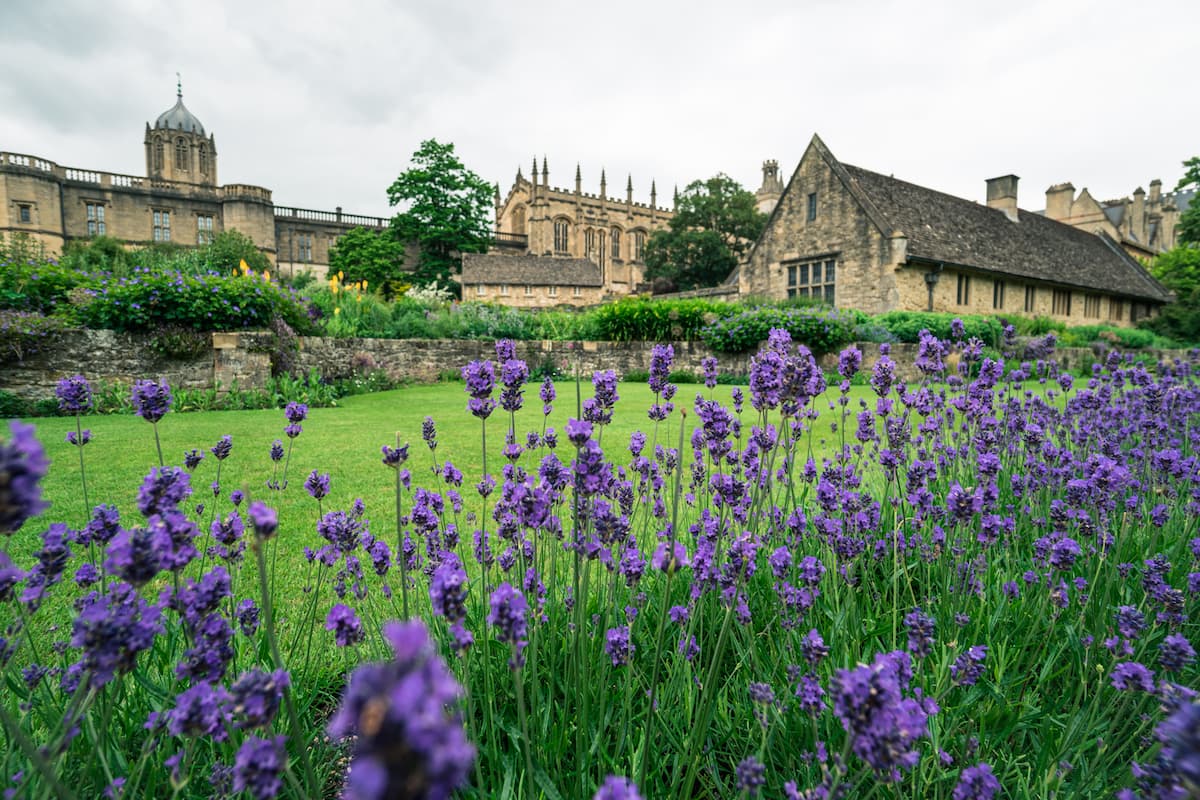
    Back at the University again – it’s an absolutely sprawling institution – Christ Church College & Cathedral are essential viewing for fans of Alice’s Adventures in Wonderland.

    It was here that Lewis Carroll first met Alice Liddell, the inspiration for the titular character. There’s a tiny tribute to Alice in Wonderland in the stained glass windows of the dining hall. If you look carefully, you will see small figures of characters like the Mad Hatter, March Hare and Alice herself in the corners of the window. 

    Another link to the book is through a secret door, said to be Lewis Carroll’s inspiration for the rabbit hole. This is in a private part of the college, so is not available for public viewing.

    Besides Alice in Wonderland, Christ Church College’s dining hall was used to design the Great Hall in Harry Potter. The room was unfortunately too small to film on location.

    Take a Detour Through the Covered Market

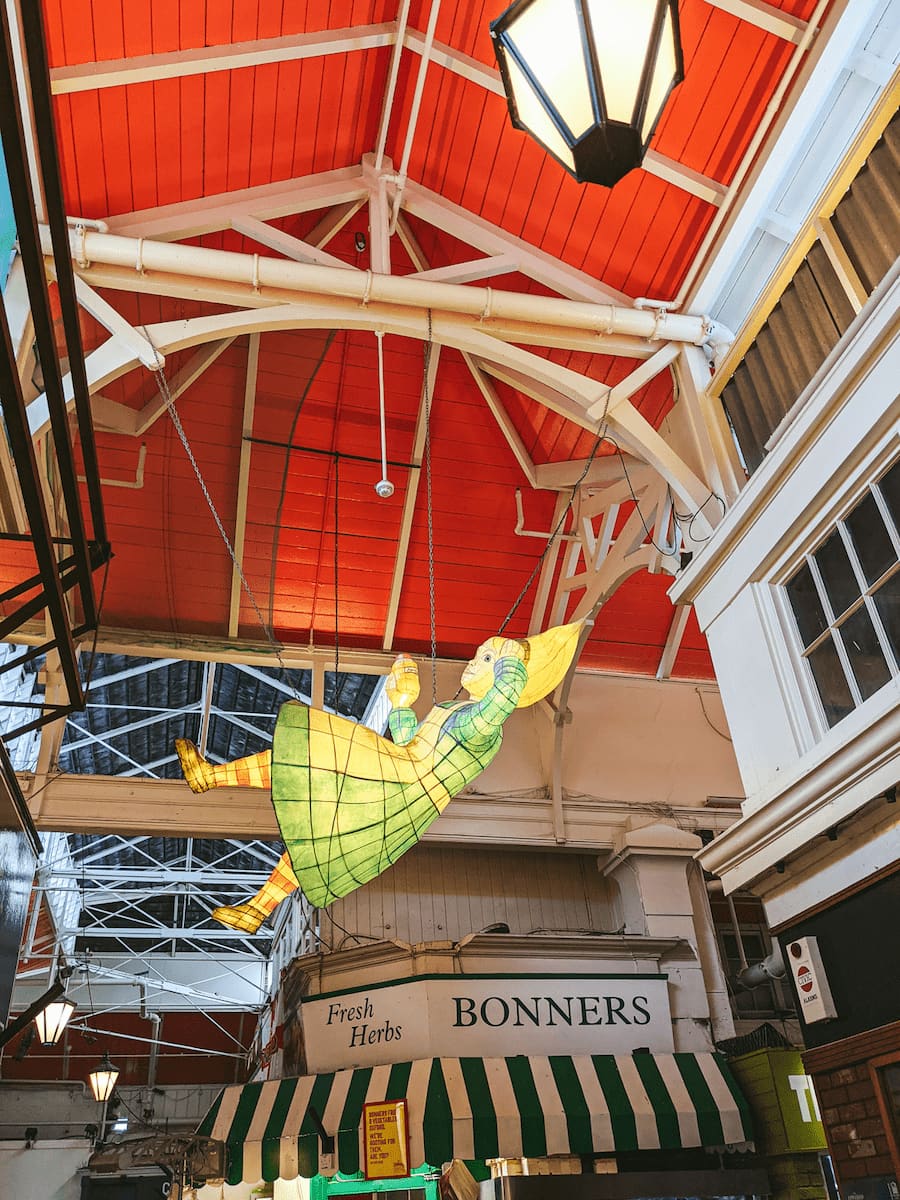
    Covered Market with Alice in Wonderland Lanterns
    Covered Market with Alice in Wonderland Lanterns

    The Covered Market has been a fixture of Oxford’s shopping scene since 1774. The market is essentially a blend of a traditional market and an old-fashioned shopping centre. The shops and market stalls are permanent – around half are food stalls, the rest are boutiques and independent shops.

    You can grab a bite to eat or buy a new handbag on a quick detour through the market.

    Visit a Museum

    As you would expect from an educational behemoth, Oxford has some great museums.

    • Ashmolean Museum – the University of Oxford’s museum of art and archaeology was founded in 1683. You can see everything from Ptolemy to Picasso in this museum. Whether you’re interested in Egyptian mummies or modern art, you’re sure to find something to fascinate you in this vast collection – and best of all, you get to do it for free.
    • Pitt Rivers Museum – the Pitt Rivers Museum is another of the University of Oxford’s museums. It houses the archaeological and anthropological collections of the university, with artefacts gathered from all around the world. Free entry.
    • The Story Museum – taking a page out of the University of Oxford’s book, this independent museum takes inspiration from the whimsical literary heritage of the city. While aimed towards children, people of all ages can enjoy the displays, which take you on a journey through stories from Winnie the Pooh to Horrid Henry. Tickets are £8.

    Explore Oxford Castle & Prison

    The imposing Oxford Castle is a remnant from the Norman Conquest of England, almost 1000 years ago. Its walls have seen a huge amount of history in the centuries since! The medieval castle is partly ruined due to damage inflicted during the English Civil War, between 1642 and 1651, when the battlements were taken apart and replaced.

    In the 18th Century, the castle became a local prison. You can explore the ruins and the cells of the castle on a guided tour. The tour includes a climb up St George’s Tower for views over the city and gives some fantastic insight into the castle’s history. The tickets are £14.45 for adults.

    Have a Pint at the Turf Tavern

    This tiny tavern can be easily missed if you’re not looking carefully. Tucked around the corner on a narrow cobbled street just off Holywell Street, the Turf Tavern is a traditional English pub. 

    I loved the atmosphere of this pub – it’s usually filled with students and locals, so it always feels lively and welcoming. The tiny rooms and low timbered ceilings give the pub that authentic historic pub feel, and the food and drink will give you the chance to try some traditional pub grub.

    The Turf Tavern is well-known for more than just its picturesque setting. The future Australian Prime Minister Bob Hawke famously set the Guinness World Record for consuming a yard glass of ale in 11 seconds in 1963. It’s also known for featuring on Inspector Morse, and was frequented by the Harry Potter cast and crew during filming.

    A Day in Oxford

    There’s more than enough to keep you occupied for a day in Oxford. It is truly a lovely city to explore – one of England’s most picturesque. 

    You could spend more time here if you want to take it at a slower pace, but it really is perfect for a day trip. If you’re lucky, by the end of your visit some of that famous Oxford intellect might have rubbed off! 

  • The Ultimate Day Trip From London to Cambridge

    The Ultimate Day Trip From London to Cambridge

    Cambridge is one of the most well-known cities in England as it’s synonymous with the world-renowned Cambridge University, founded in 1209. The city has some of the most amazing architecture in all of England, which makes it easy to see why Cambridge is a popular day trip destination.

    Between the picturesque cobbled streets, the towering ancient walls, the long history of scholars and inventions and the canal running through the city, Cambridge is a special place to visit. Add to that the charm of the students riding their bikes to and from their classes, the university vibe is rich and vibrant.

    Cambridge is a nice change of pace from busy London and has such a distinctly scholarly feel to it. Being the fourth oldest university in the entire world, it’s easy to understand why. And especially being home to famous names like Charles Darwin, Stephen Hawking and Sir Isaac Newton.

    Due to the large student population within 31 colleges, there is so much to see and do, as well as eat and drink. Whether you decide to partake in a walking tour or rough it on your own, Cambridge is a completely compact, walkable city. This Cambridge day trip will guide you through all the best sights to see and how to best use your time.

    Day Trip to Cambridge

    How to Get to Cambridge

    Cambridge sits about 50 miles north of London in the county of Cambridgeshire. The Cam river flows through the city, with plenty of green space and parks surrounding the university, giving it a leisurely, but stately feel.

    With non-stop service leaving from Kings Cross or Liverpool Street station in London, a train ride to Cambridge is quick and easy. You can expect to arrive in Cambridge in somewhere between 50 minutes to 1 1/2 hours depending on which route you take.

    Book your ticket through Trainline and don’t forget to get to add a railcard to save 1/3 off your journey!

    If you prefer to drive, depending on which end of London you depart from, it’ll take just one to 1 1/2 hours. If you do decide to make the drive, there’s a great Park and Ride for only 3 quid for up to 18 hours!

    So with all that said, a day trip from London to Cambridge is absolutely doable!

    Great St Mary’s Church

    A visit to Great St Mary’s Church is the perfect way to start your day in Cambridge. St Mary’s has been the University Church since 1209 and is still the spiritual hub of Cambridge today. Not only do you want to visit the church for the history, but for the bell tower!

    The bell tower is worth a climb for the phenomenal panoramic views of Cambridge and it’s a good way to orient yourself with a map of your day. There’s only one caveat; you must climb up a very narrow spiral stone staircase, with 123 steps! This is definitely not an activity for the claustrophobic, but I managed to make my way and it was completely worth it for the views.

    There is a small entrance fee for Great St Mary’s, but so worth it. I will say the fees I found online were different when I arrived so you may want to contact them beforehand for accuracy, if you’re on a budget.

    Cambridge Walking Tour

    Cambridge The Backs
    The Back is known as the rear of the universities.

    I don’t always think it’s necessary to take walking tours, but in Cambridge I highly suggest doing so and I would plan this for right after you visit the bell tower. Because there’s so much to see in Cambridge, a walking tour will ensure you get to visit all the main historical sites, as well as receive the history and sometimes quirky commentary by the guides.

    Because of the times we’re currently living in, as of January 2022, do keep in mind that none of the 31 colleges were open for visitors. Unfortunately, this has been the case for nearly two years now, but that doesn’t mean they aren’t worth seeing from the outside! For inside tours, you’d probably need more than one day.

    From ‘free tours’ to paying tours, there are a host of companies to choose from.

    Footprints Free Walking Tour runs a great tip-based tour and is always excellent.

    Otherwise, I highly recommend the Cambridge: Walking Tour led by Alumni with Kings College which has a set fee, you can find out more on Get Your Guide.

    During the two hours, I enjoyed hearing facts about the colleges and surrounding buildings I would’ve missed out on otherwise.

    The sights included on this tour for planning purposes are:

    • Corpus Christi College
    • Pembroke College
    • St Catharine’s College
    • Clare College
    • Kings College
    • River Cam
    • The Senate House
    • Trinity College

    And then you’ll also learn about:

    • Cambridge Five
    • History Of The Town
    • Student Life At Cambridge
    • University Ceremonies
    • Famous Graduates And Their Little Known Stories
    • The Famous Finishing Story

    I believe under different circumstances, tours would include access to the colleges, which makes it really worth the price, but as I stated, that’s not possible at the moment. If your heart is set on the entrance to a college, be sure to check the status before your trip to Cambridge.

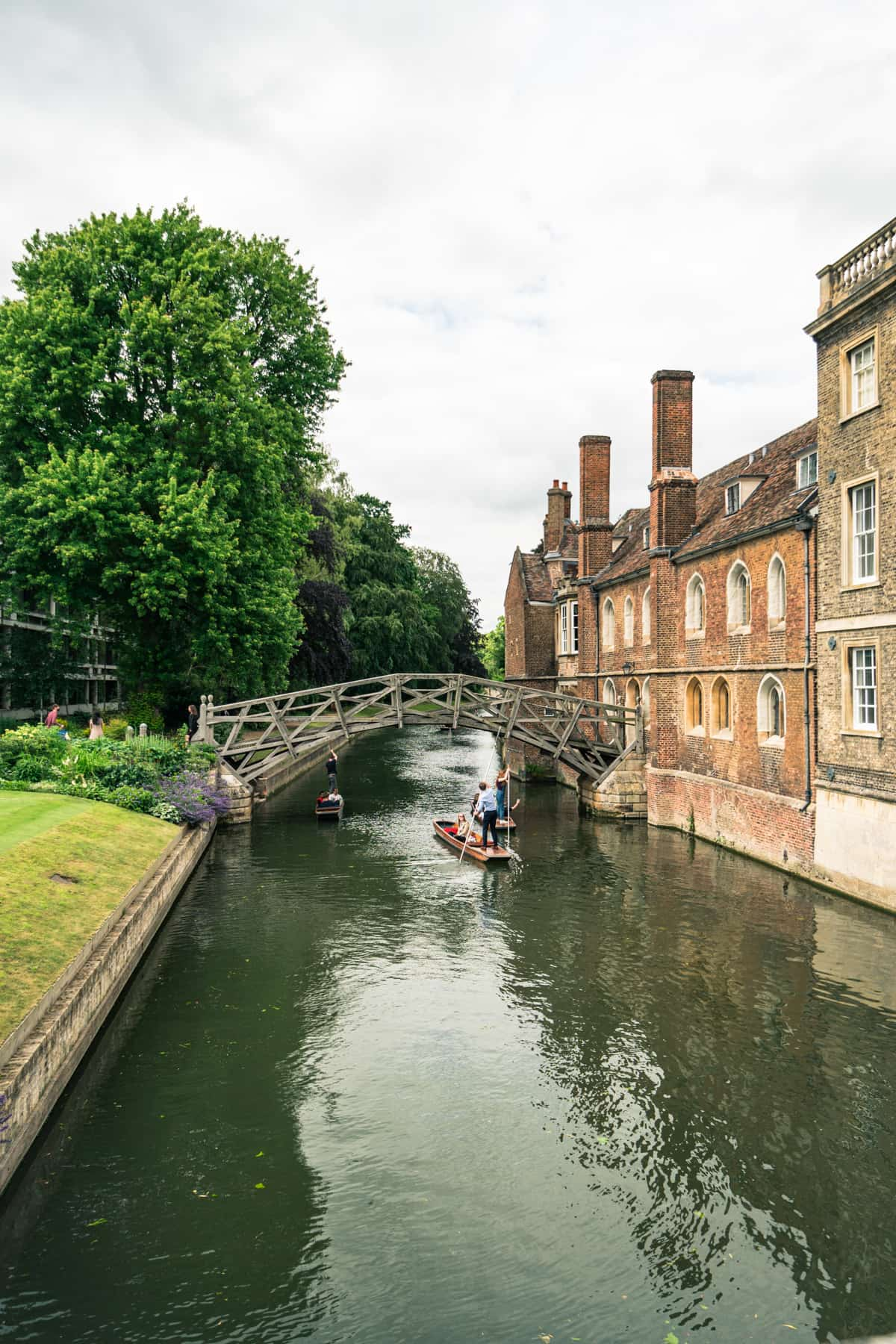
    The Mathematical Bridge

    The Mathematical Bridge with people punting underneath
    The Mathematical Bridge with people punting underneath.

    If you’re taking a walking tour, you’ll most likely head over to the famous Mathematical Bridge. But if you’re touring about on your own, this is a stop you don’t want to miss!

    The bridge is a part of Queen’s College and is one of the most recognizable features of Cambridge. The ‘Mathematical Bridge’ as we now call it, is built entirely with straight timbers, despite maintaining its arched shape.

    Myths grew at one point that Newton had designed the bridge and thus was known as ‘Newton’s Bridge’ for a time, but we know this is not true as it was designed by William Etheridge. The credit, however, largely goes to James King who defied the engineering odds to construct this special little bridge.

    While you’re at the Mathematical Bridge, you’ll also have a chance to see all the famous punting on the river. This is a great place to stop and now have some leisurely time.

    Punting Down the River Cam

    Punting Down the River Cam
    Punting Down the River Cam

    If the weather is good, you don’t want to miss a chance to punt down the River Cam. And even if the weather isn’t great, punting is still available with blankets and worth the ride.

    A punt is a flat bottomed boat, which is pushed across the water using a quant pole. This is a popular method of seeing some of the colleges within the university from a different angle, as well as the Bridge of Sighs, the second Cambridge bridge you must see.

    Punting was first introduced at the start of the 20th century and has since become a popular local activity. It’s very reminiscent of the canals in Amsterdam. Gliding down the river is about as leisurely activity as you can get and is great to fit in your day after you’ve gone on a walking tour.

    You can choose from self-punting, although not quite so relaxing, or you can pay for a tour like this shared tour for up to 4 people.

    Chelsea Buns at Fitzbillies

    Chelsea Buns at Fitzbillies
    Chelsea Buns at Fitzbillies

    A day trip to Cambridge from London is not complete without indulging in some Chelsea Buns. Fitzbillies is famous for these gooey buns and they have a mighty history.

    Fitzbillies was founded in 1920 by Ernest and Arthur Mason, using ‘demob’ money from the First World War. You can even still see their initials in worn-out gold letters on the shop front!

    They were the sons of local bread baker ‘Ticker’ Mason, so naturally, the boys specialised in fancy cakes, Chelsea buns. Fitzbillies quickly became the cake-shop of choice for the university and townspeople.

    Fitzbillies amazingly kept baking during and after the Second World War, during the days of rationing, when the Chelsea buns became a real treat.

    Then in 1998, a devastating fire tore through the building and it took nearly two years to rebuild. But they kept on going! They began baking offsite and selling Chelsea buns in the shop next door, where their Coffee Shop now stands.

    There was even more devastation in 2011 for the famous buns when Fitzbillies went through hard times, like many bakeries, and closed due to bankruptcy. Then thanks to social media, someone posted a lament to the Chelsea Buns on Twitter. And it was that tweet, seen by current owners Alison Wright and Tim Hayward, that kept the Chelsea Buns alive!

    Nine years later, they’re thriving with two locations on either side of town; Trumpington St and Bridge St, both serving up the makeshift ooey-gooey cinnamon roll with currants, the Chelsea Bun.

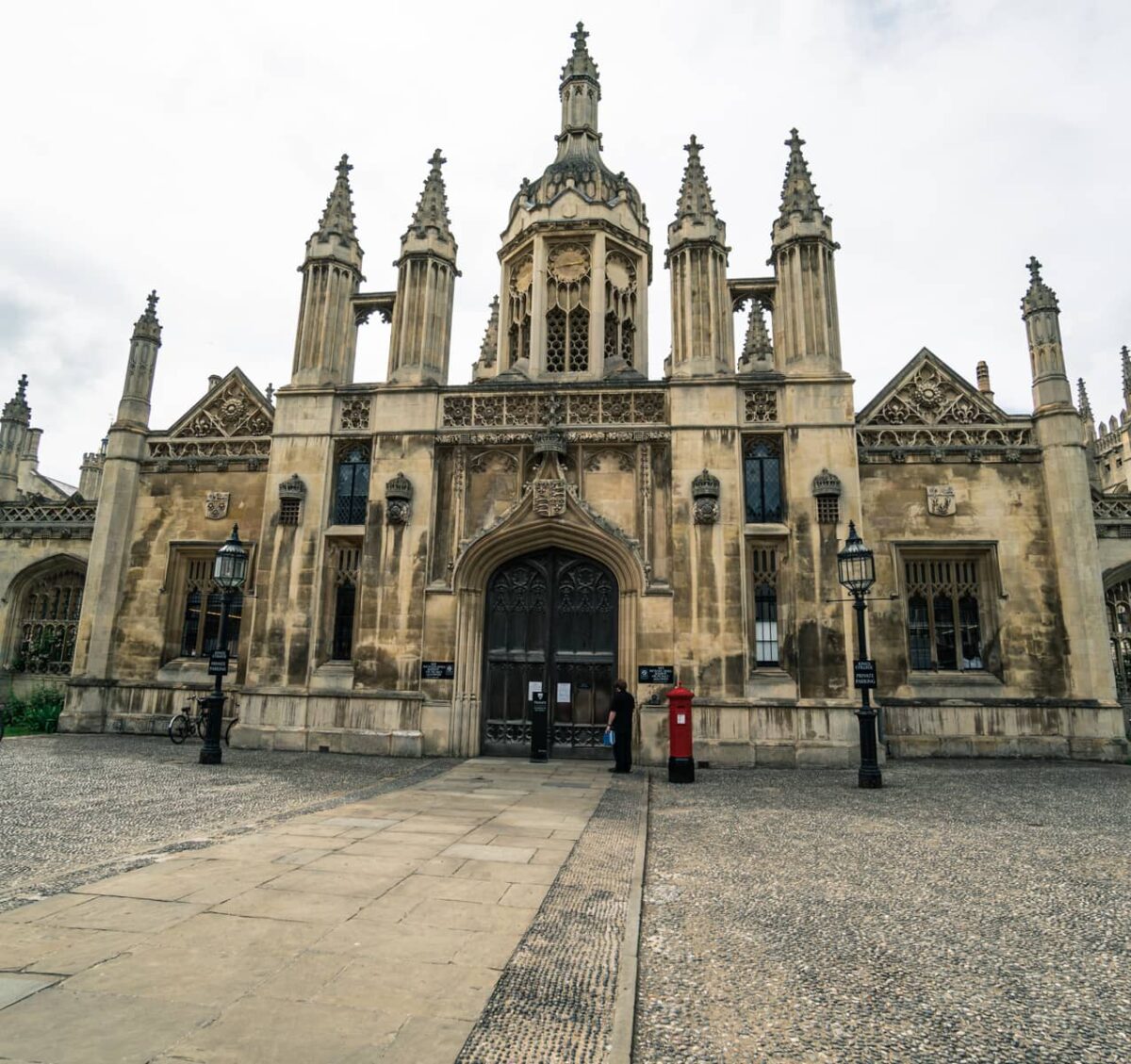
    King’s College Chapel

    Kings College in Cambridge
    Kings College

    Whether you’ve climbed the bell tower, participated in a walking tour, punted down the River Cam or have just been meandering through Cambridge, there is absolutely no way you haven’t seen King’s College Chapel by now. And this is without a doubt, a must-visit location, being the oldest surviving building of the college and most iconic building in Cambridge.

    This incredible feat of architecture, founded in 1441 by King Henry VI, has the largest fan-shaped ceiling in the world. The Late Gothic Chapel of King’s College is decorated with “The Adoration of the Magi” by Rubens and has beautiful stained glass windows, more resembling a cathedral than a college chapel.

    Luckily, visitors have now been welcomed back to the chapel and you can book your spot for a self-guided tour. Or you can attend an Evensong service in the evenings at 5:30 pm. This is a super unique way to experience the chapel for free and by candlelight.

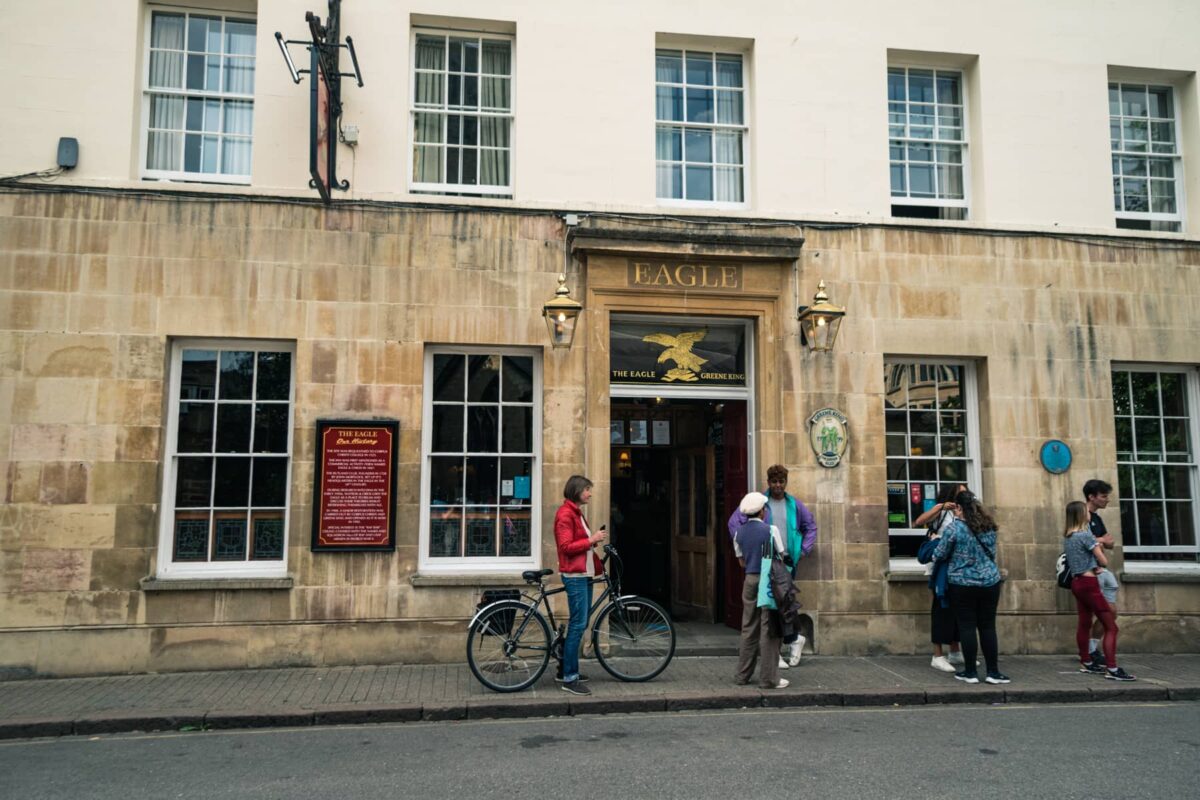
    The Eagle Pub

    The Eagle Pub with people standing in front.
    Next to the Eagle Pub is a great place to grab an icecream on a hot day!

    Learn all about the history of The Eagle Pub, it’s the oldest pub in Cambridge and right in the heart of the city, mere minutes around the corner from King’s College Chapel.

    The Eagle was opened in 1667 as the Eagle and Child. Because of its phenomenal location, it become a favourite for scientists and thinkers alike. 

    There’s a story that goes that on February 28, 1953, Francis Crick, who worked at the nearby Cavendish laboratory, made an announcement at the pub during lunch. He said that he and his colleague, James Watson, had discovered “the secret of life.” Turns out the two had actually cracked the double-helix structure of DNA! and it marked a pivotal moment in science.

    If you were also wondering how they discovered DNA at lunch?! Well, that’s with the help of Rosalind Franklin. They were looking at the x-ray she sent across when they discovered it. Her contributions to the discovery of the structure of DNA were largely unrecognized during her life. After the protest, in 2010 Rosalind’s name was finally added to the DNA statute.

    Outside the pub, you’ll see a plaque commemorating this pivotal moment in science, and they even serve an ale called DNA.

    But before all that, The Eagle was first a favourite for soldiers and airmen. During World War II, RAF and American airmen frequented the courtyard of the pub, where you can sit outback. Inside they apparently used candles to burn graffiti of their names and nicknames on the pub’s ceiling in the evenings. The graffiti was preserved and you can still catch a glimpse of this wartime art even today.

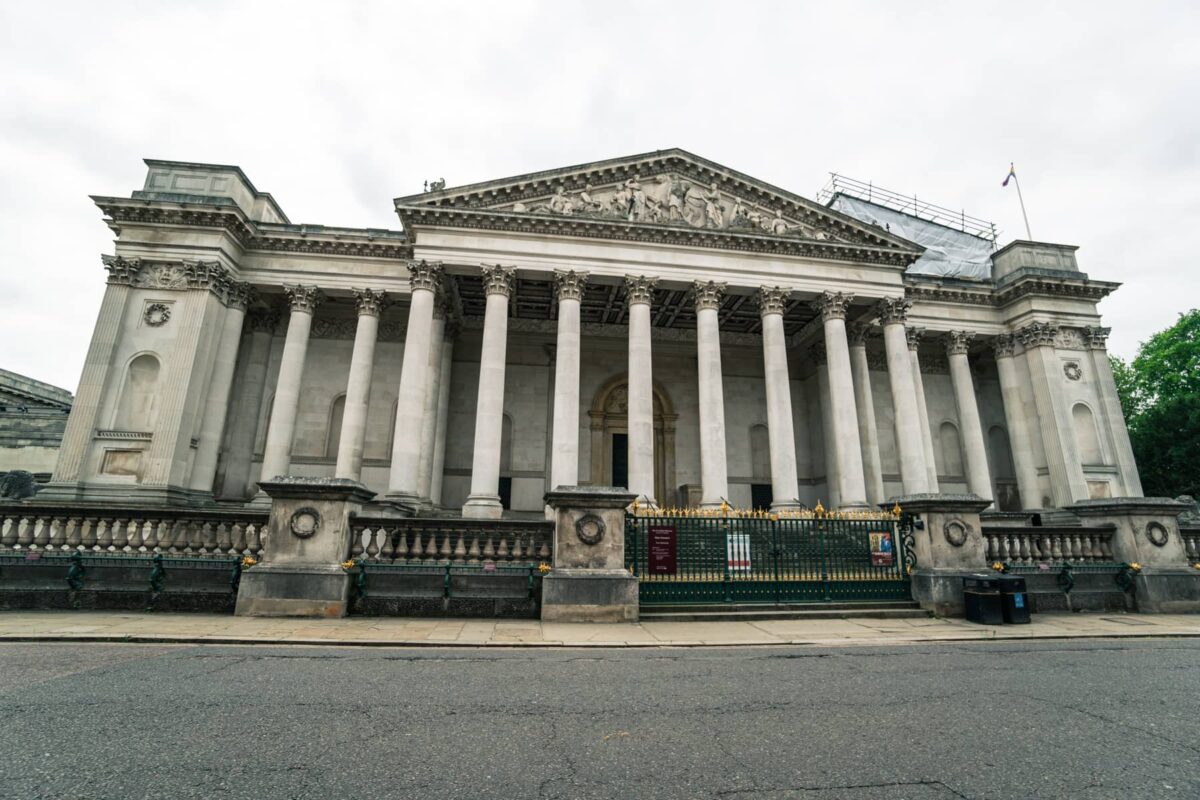
    The Fitzwilliam Museum

    The Fitzwilliam Museum
    The Fitzwilliam Museum

    Since most of the day has been spent outside, next head inside to the Fitzwilliam Museum, the best place to step back in time. The Fitz is known for being the most astonishing museum outside of London in all of the UK.

    The museum is home to over half a million pieces of art that date as far back as 2,500 BC. The beautiful building has impressive collections and some stunning pieces of artwork. It’s a big place, but very well laid out with paintings, ancient artefacts, jewellery, textiles, arms, armour and more.

    The Fitzwilliam Museum has free entry, but does require pre-booking online and is definitely worth a visit.  

    The Round Church

    The Church of the Holy Sepulchre, or The Round Church as it is known, is located on the corner of Round Church Street and Bridge Street. It is one of only four medieval round churches to survive after the First Crusade of 1097. The four include this one, Temple Church in London, St John’s in Little Maplestead, Essex, and Holy Sepulchre in Northampton.

    The chapel is cosy and appealing for visitors and it’s well worth popping in to look at the interesting architecture and wall displays.

    Cambridge University Botanic Garden

    If you still have time and it’s a lovely day, visit the Cambridge University Botanic Garden. Stretched over 40 acres, this heritage garden boasts over 8,000 plant species from all around the world. The gardens are divided into different sections, including the Mediterranean Beds, Scented Garden and Stream Garden. There are also several glasshouses full of tropical rainforests, desert flowers and alpine flora.

    And don’t forget the wonderful tearoom and cafe, both with lots of vegan options.

    Well, I hope you’ve seen what a wonderful day you can have in Cambridge on a day trip from London. You can absolutely see all the sights in one day, even in the winter when the days are short, and leave feeling much more educated and enlivened!

  • 14 Beatles Things to Do in Liverpool

    14 Beatles Things to Do in Liverpool

    Here Comes The Sun are words that were not often spoken in Liverpool. Luckily, Beatles fans aren’t visiting for the weather.

    There’s no better place to get to know the band than their old stomping grounds.

    Whether you’re a casual listener or the most ardent fan of the Fab Four, no trip to Liverpool is complete without ticking off a few landmarks of the city’s most famous export.

    If you’re not sure where to start, I’ve sorted a pretty comprehensive list of Liverpool’s best Beatles ‘Things to Do’. 

    Consider Taking a Tour

    A considerable amount of Beatles attractions are some distance apart and not easily walkable. If you have more time then there are plenty of public transport but if you’re short one time it’s easier to let someone else take the reins. Take all the stress out of roaming the city and hop on a tour that will guide you to all of the most iconic Beatles locations.

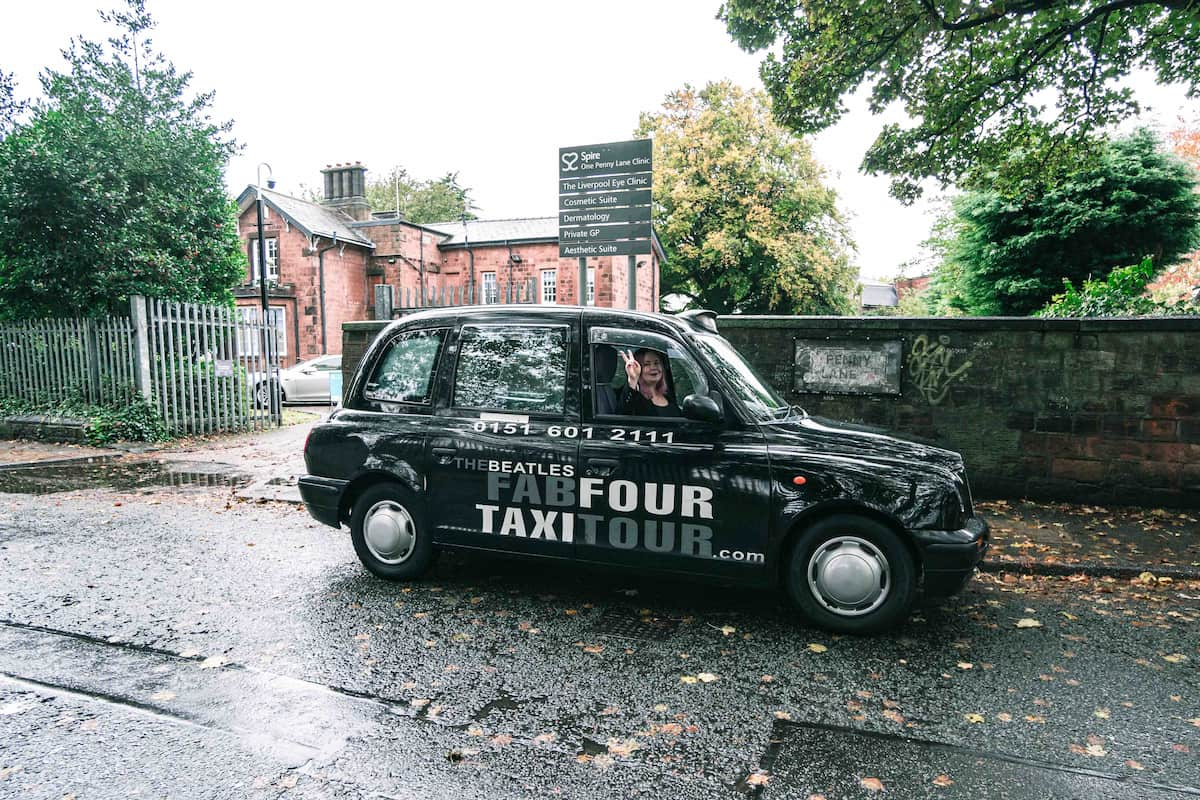
    Fab4Beatles Tour in front on Penny Lane
    Fab4Beatles Tour in front on Penny Lane

    Fab4taxitours

    I honestly can’t recommend fab4taxitours enough. Kevin was our wonderful tour guide, who grew up in Liverpool when the Beatles first started gave fascinating stories about the city and the Beatles. His passion, knowledge and own stories really made the tour! You travel to all the main attractions in a taxi – the tour takes over three hours to complete. 

    The taxis are limited to a maximum of six people per tour. It’s £130 per cab, so the more people on the tour, the cheaper it is. Book here.

    Magical Mystery Tour 

    The Beatles Magical Mystery Tour bus.
    The Beatles Magical Mystery Tour bus. Credit: Claudiodivizia on Dreamstime

    The Magical Mystery Tour takes you to all of the Beatles’ – including George and Ringo – childhood homes, their schools, and St Peter’s Church. You also get the chance to step off the colourful bus at Penny Lane and Strawberry Field.

    The two-hour tour, organised by Cavern City Tours, costs £19.95 for adults and ends at the famous Cavern Club.

    You’ll need a Ticket to Ride; Book one here.

    Liverpool Beatles Walk

    There is plenty of choices when it comes to Beatles walking tours in Liverpool. You can choose to explore different locations within the two-hour slot, as some tours focus on the waterfront, others on Woolton.

    Prices vary quite a bit – some tours are free – but they all have one thing in common: you will be led around Liverpool by a passionate and knowledgeable guide, who will undoubtedly tell you something about the Beatles that you didn’t know before.

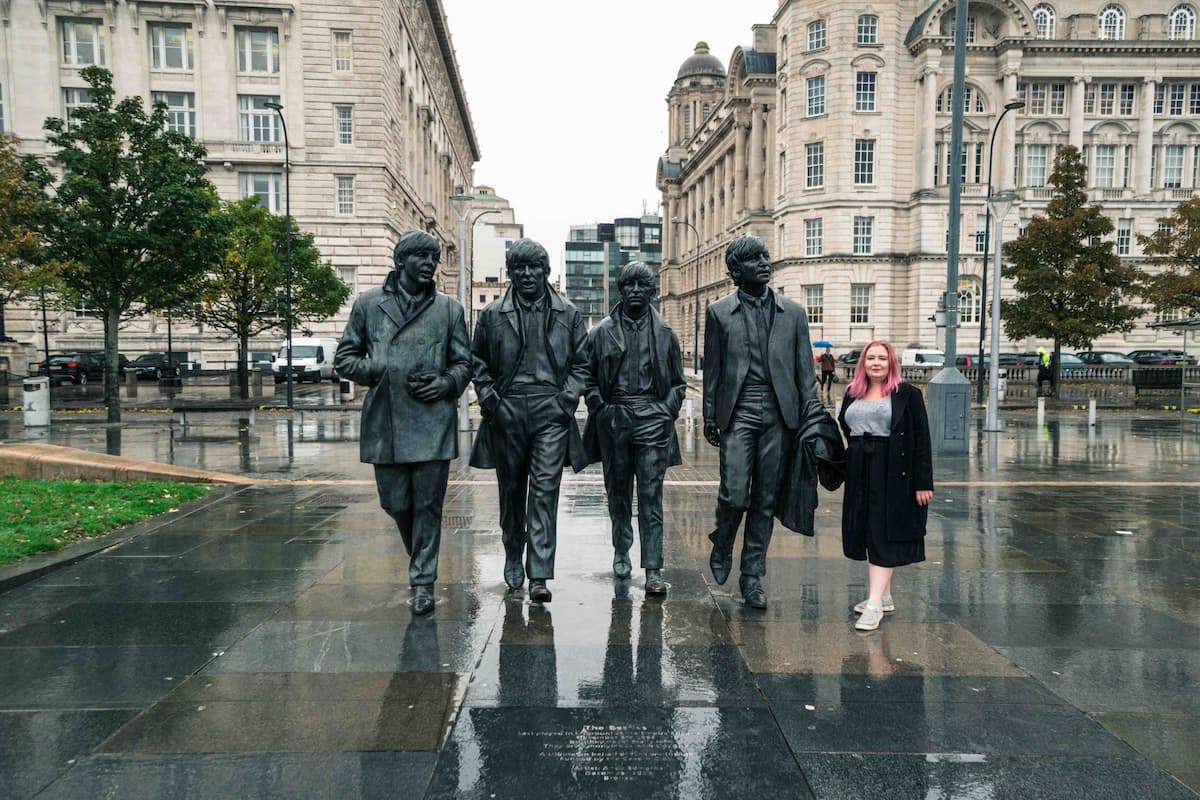
    The Beatles Statue, Pier Head

    The Beatles Statue, Pier Head
    The Beatles Statue, Pier Head

    Donated by the Cavern Club and designed by sculptor Andy Edwards, the Beatles have been cast in bronze on the waterfront since 2015.

    The slightly larger-than-life statue captures the spirit and laid-back swagger of the group perfectly as they walk together along Pier Head. There’s an astonishing level of attention to detail from the sculptor. 

    Look carefully and you will discover little talismans that represent something significant for each member of the band. 

    • On Ringo, you can see a tiny 8 etched into his shoe, alluding to the L8 postcode of his childhood home in Liverpool. 
    • George has a Sanskrit inscription along his belt in a nod to his spiritual beliefs. 
    • Paul is holding a camera, which is likely a tribute to his marriage to photographer Linda McCartney. 
    • John holds two acorns cast from outside the Dakota Building in New York, where he lived with Yoko Ono.

    It’s often used as a starting point for any Beatles pilgrimages across Liverpool. Other Beatles statues include:

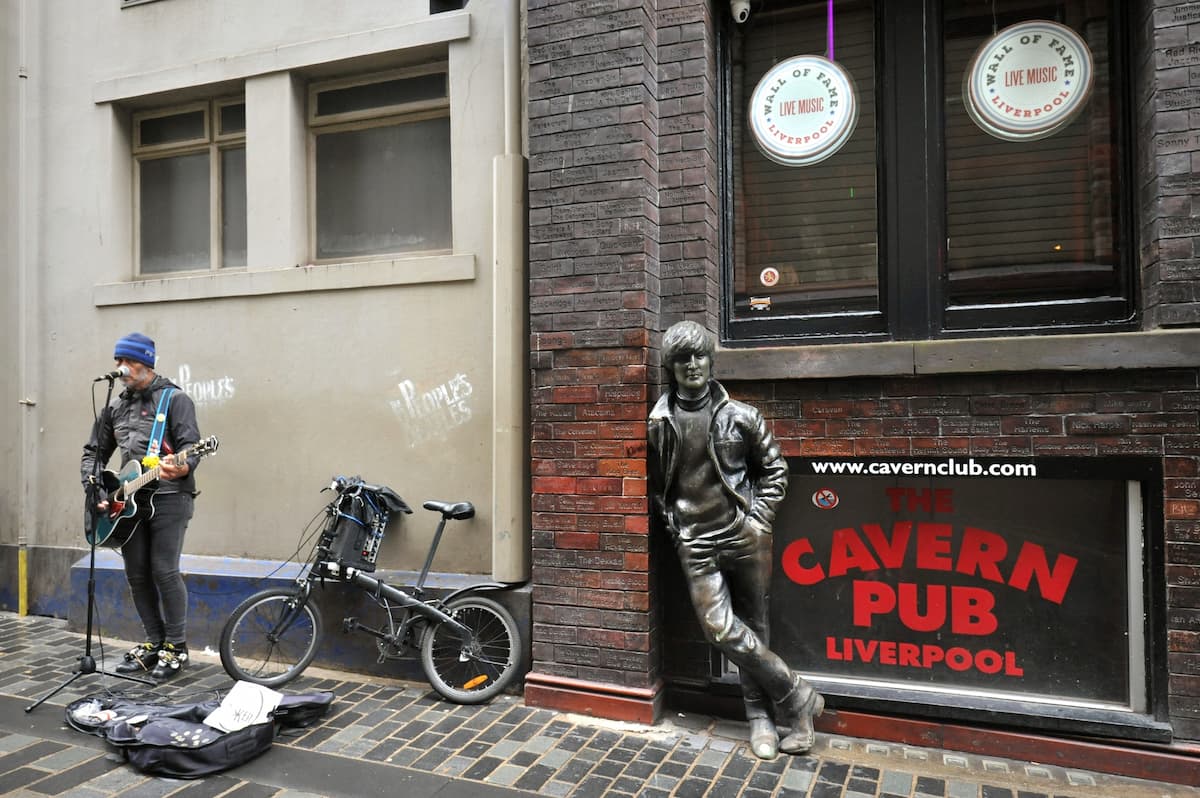
    The John Lennon Statue 

    Casually leaning against a wall close to the Cavern Club, this popular statue on Mathew Street just oozes cool.

    The Eleanor Rigby Statue 

    Not far from the John Lennon statue, the morose and solitary figure of Eleanor Rigby is dedicated to “all the lonely people”.

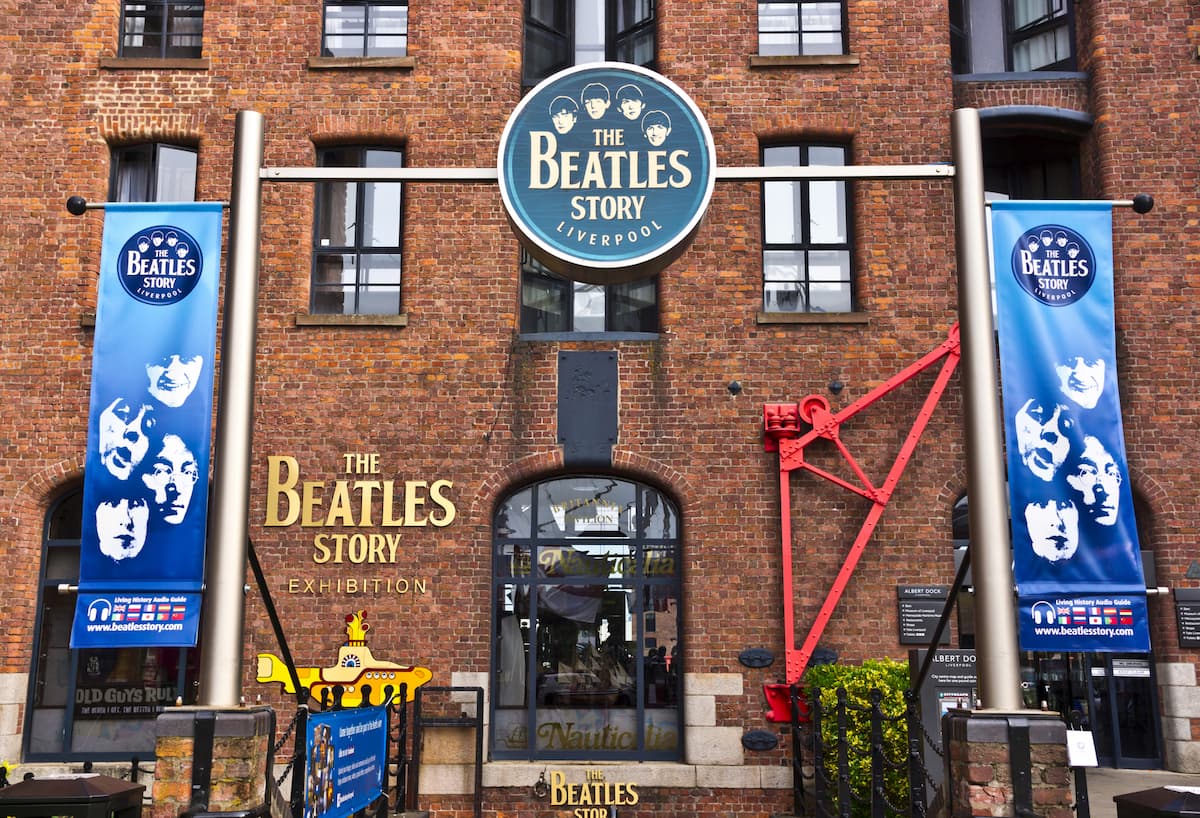
    The Beatles Story, Albert Dock

    Beatles museum in Liverpool
    Beatles museum in Liverpool. Credit: Debu55y on Dreamstime

    Walk 10 minutes along the waterfront from the Pier Head statue and you will find the largest permanent exhibition dedicated entirely to the band in the world; The Beatles Story.

    The award-winning exhibition isn’t your average museum – it’s not just a collection of items locked away in glass cabinets. You can walk through replicas of the Casbah, Mathew Street, Abbey Road Studios and The Cavern, all built to look as if they were straight out of the 60s.

    It’s an immersive experience seeing these iconic locations as the Beatles would have known them. The Beatles Story also contains an authentic replica of the Sgt Pepper suits, made by one of the original designers.

    Tickets are £17 for adults. Book here.

    Rock Out at the Cavern Club

    The Cavern Club nightclub
    The Cavern Club nightclub. Credit: Nicoleta Raluca Tudor on Dreamstime

    This iconic venue is often cited as the birthplace of the Beatles. It’s certainly the place they honed their skills and became the Fab Four of John, Paul, George and Ringo.

    The ‘most famous club in the world’ saw the rise of the Beatles from unknown rookies to local heroes. The club opened as a jazz club, but soon became the centre of Liverpool’s rock-and-roll scene. The Beatles performed at the Cavern Club over 290 times. 

    Perhaps the most important connection the band would ever form was made here. The manager that helped launch the band to worldwide success, Brian Epstein, first saw the Beatles at the Cavern Club. It was through this relationship that the band secured their first record deal.

    You can see some of Liverpool’s up and coming musicians at the club – there’s live music every night of the week. 

    If you want an exclusively Beatles-themed experience at the Cavern Club, join one of the behind-the-scenes tours.

    Though the original building was demolished, many of the old bricks were used in the rebuild.

    Four Lads Who Shook The World Sculpture

    On the wall outside of the Cavern, Arthur Dooley’s sculpture is thought to be the first Beatles statue ever erected.

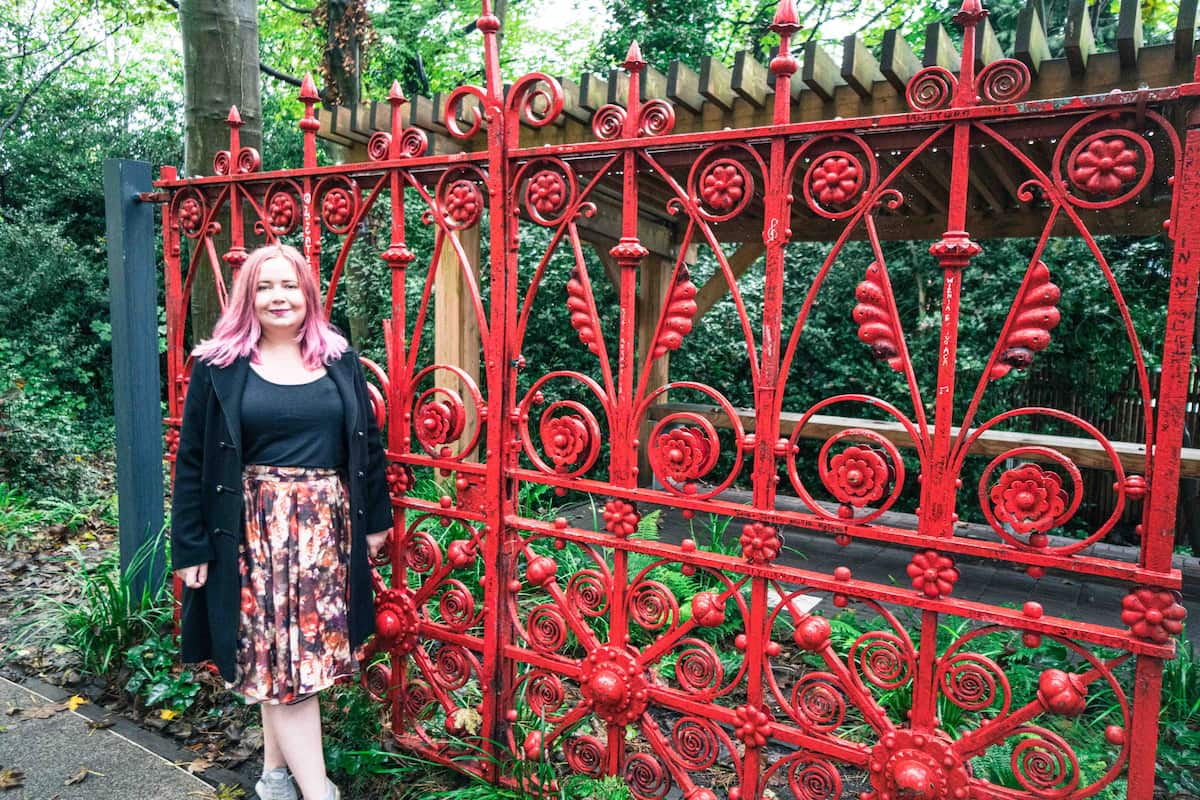
    Strawberry Field

    Strawberry Fields
    Strawberry Fields

    For years, Strawberry Field was a private property, inaccessible to fans. It was first and foremost a youth centre, acting as a children’s home for the Salvation Army.

    The site is now an award-winning exhibition, though supporting youth is still at its heart.

    Immortalised by John Lennon in Strawberry Fields Forever, the site has become a huge attraction for Beatles fans. John grew up close to the home and used to scale the walls to play with the children on the grounds. Posing in front of the iconic red gates is an inescapable necessity for any Beatles fan in Liverpool.

    Inside, you will find John Lennon’s ‘Imagine’ piano, on which the timeless song was composed and recorded. An early draft of the lyrics of Strawberry Fields Forever written in John’s handwriting is also part of the exhibit.

    Adult tickets are £10.95

    Penny Lane

    Penny Lane
    Penny Lane

    The year is 1967, and the Beatles are about to produce one of the single greatest years in music history. The list of hit songs written by the band this year is truly unprecedented – and that’s without even including the release of one of the most iconic albums of all time, in Sgt. Pepper’s Lonely Hearts Club Band

    Released on a double A-side single with Strawberry Fields Forever, Penny Lane quickly became another worldwide hit. The song saved the actual Penny Lane from being renamed. People flock to the street to pose with the street sign – and see lyrics like “the shelter in the middle of a roundabout” come to life.

    The Beatles’ Childhood Homes, National Trust

    The Beatles’ Childhood Homes, National Trust
    The Beatles’ Childhood Homes, National Trust

    Go back to where it all began for John and Paul, and explore the homes they grew up in. 

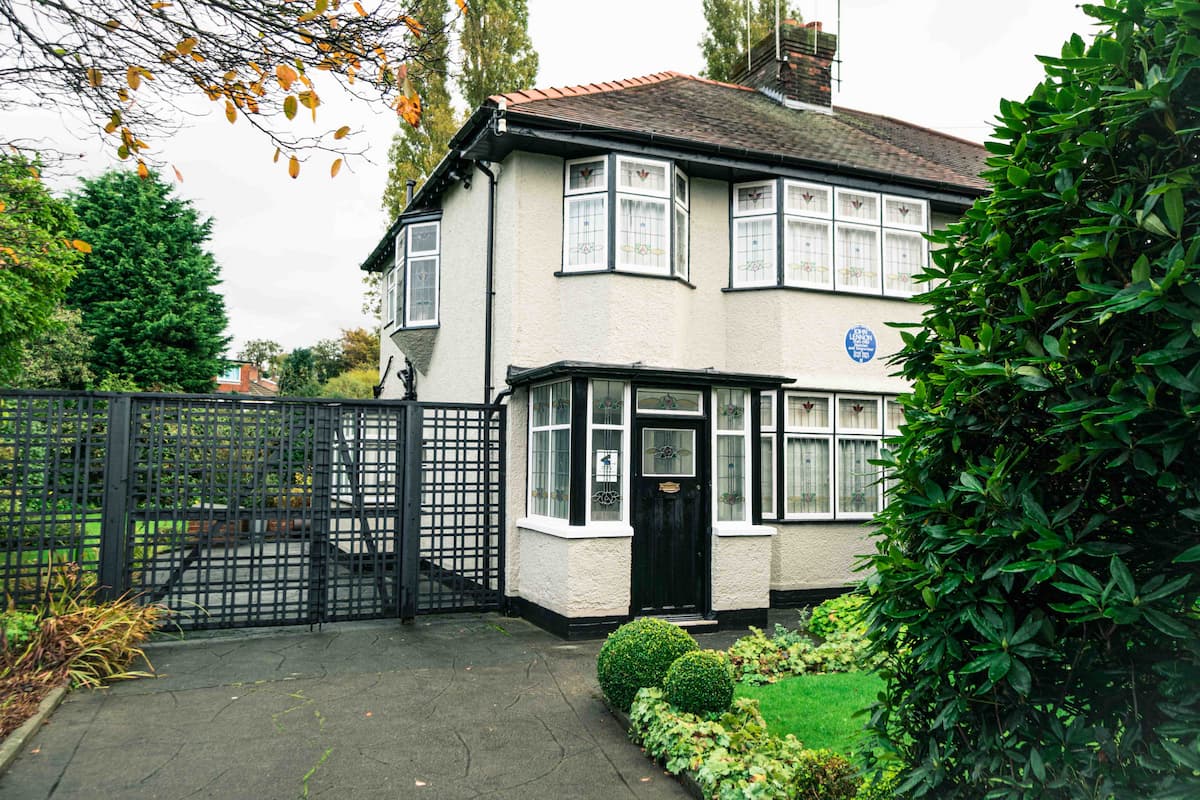
    Now in the care of the National Trust, both Mendips and 20 Forthlin Road – the childhood homes of John and Paul respectively – can be explored on a tour led by an official guide. Other tours will take you to the outside of the buildings, but if you want to venture inside it will be with a National Trust guide.

    The houses are the kind of unassuming and humble homes typical of the average family in Liverpool. None of the Beatles came from places of privilege. John, who lived with his Aunt Mimi on Menlove Avenue, was the only one of the four who could arguably be called middle class. 

    Wandering their homes really puts into perspective the incredible achievement of the four lads who shook the world.

    Both John and Paul had difficult childhoods, marred with tragedy – and the tour gives you some insight into their life before fame. Some of the Beatles earliest songs were written within these four walls, including Please Please Me and She Loves You.

    Tickets for the tour, which runs from March to November, are priced at £29 for adults. This includes both homes and transportation between the two.

    Ye Cracke – John Lennon’s Favourite Pub

    Beer at Ye Cracke Beatles
    Beer at Ye Cracke Beatles

    Follow in the footsteps of the Beatles and down a pint at Ye Cracke, a strangely named but friendly 19th-Century pub.

    Ye Cracke is one of Liverpool’s lesser-known Beatles spots – its connection to the history of the band is through only one member, John Lennon. This was one of John’s favoured local pubs – he was known to appear fairly regularly, sometimes bringing a date.

    He formed a band called ‘The Dissenters’ with three local lads at the pub; Stuart Sutcliffe, Bill Harry and Rod Murray. The group of art students were unimpressed with a poetry reading they had just heard and decided to form a group that would put Liverpool on the map. This was all promised after at least a few drinks, however, and the impromptu band never played even a single note.

    It’s strange to think: if ‘The Dissenters’ had taken off, The Beatles may have never existed.

    Hard Days Night Hotel

    Hard Days Night Hotel Liverpool
    Hard Days Night Hotel Liverpool CreditL Nicoleta Raluca Tudor on Dreamstime

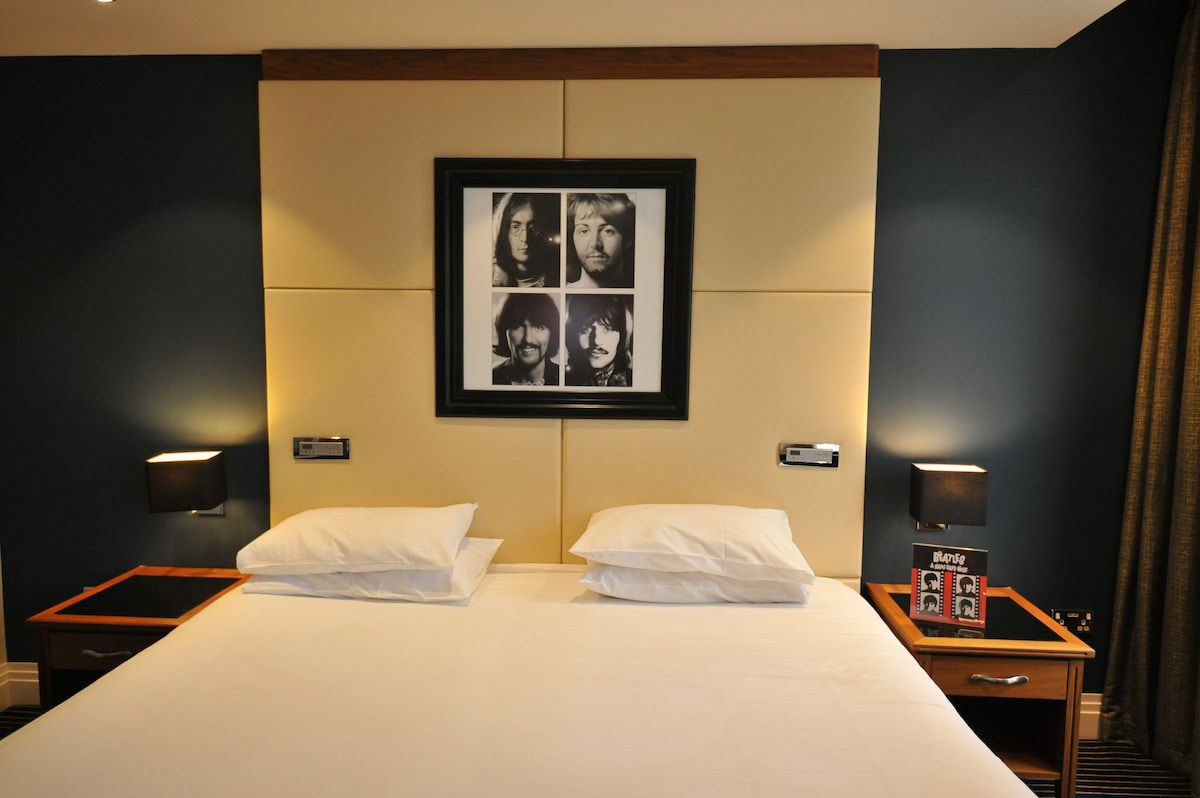
    If you want more than just a mere visit to a Beatles experience, you should try spending a night in one. The Hard Days Night Hotel opened in 2008 – much to the delight of hardcore fans everywhere – becoming the only Beatles inspired hotel in the world.

    Each room of the luxury hotel features commissioned artwork of the Beatles. There are little nods to the band all over the building.

    The Hard Days Night Hotel sits adjacent to the Cavern Club, making it the perfect place to round off a night of Beatles-themed revelry. 

    The Casbah Coffee Club

    The Cavern Club might be the most famous venue associated with The Beatles, but according to Paul McCartney, the Casbah Coffee Club is the one they considered their “personal club”.

    If you want to see the “place where all that started”, as McCartney phrased it, you have to visit this unique basement venue. Back before the Beatles, when John, Paul, George and Ken Brown were known as the Quarrymen, they used to perform here. The club was started by Mona Best, mother of Pete Best, as a members-only club for her sons. 

    When the Quarrymen first arrived to book the venue, they even helped decorate the walls.

    Like their childhood homes, the club shows the humble beginnings of the band. Before they were propelled into superstardom, this is all they were; just a young band playing in the basement.

    Tickets are £15 for a tour. You can occasionally even catch some live music.

    Liverpool Beatles Museum, formerly known as Magical Beatles Museum

    If you’re looking for a huge collection of the Beatles’ personal items and memorabilia, head to the Liverpool Beatles Museum on Mathew Street. 

    The museum and collection is the work of Roag Aspinall-Best, brother of Pete Best, the “Fifth Beatle”. 

    You walk along the museum’s bright and colourful hallways on a journey through the bands’ history. As well as housing memorabilia, the museum gives a thorough breakdown of the Beatles story, year by year.

    With over 1000 rare items housed under one roof, you could spend hours here.

    A few of the items found in the Liverpool Beatles Museum:

    • George Harrison’s Ukulele
    • The Beatles’ first drum kit
    • Stage clothes from the band’s time in Hamburg
    • A pair of John Lennon’s glasses

    Tickets are £15 for adults. You can book tickets on the website.

    The Yellow Submarine(s)

    Yellow Submarine Liverpool. Credit: Shahid Khan on Dreamstime

    For those arriving by plane, you will see the unmistakable sight of a yellow submarine soon after landing at Liverpool John Lennon Airport. 

    The sculpture was built in 1984 for the International Garden Festival by a group of young apprentices – it was so popular that it’s been a fixture in Liverpool since then. It was retired from public view after its condition deteriorated, but the huge sculpture was eventually restored to its former glory in 2005.

    It’s had pride of place at the airport ever since.

    Yellow Submarine Hotel

    After a hard days night, where better to lay back and relax than inside a yellow submarine. It’s certainly not the cheapest of overnight stays in Liverpool, but it is probably the most memorable. 

    Floating in Albert Dock, the fluorescent yellow sub is decked out in luxurious 1960s fashion, with gold discs lining the walls and furnishings imported from Paris and Italy. It’s a once in a lifetime kind of stay – where else could you be given the chance to live in a yellow submarine?

    Book here.

    Wander Around Woolton Village

    Woolton is yet another place that could claim to be the birthplace of The Beatles. The Church Hall is where John Lennon first met Paul McCartney; they were introduced to each other by mutual friend Ivan Vaughan, on July 6 1957.

    John often performs as part of The Quarrymen in the hall, but on July 6 it was Paul’s turn to impress. He played a few songs to the group and a few weeks later was invited to join. The rest, as they say, is history.

    Many places in Woolton have links to John – this is, after all, the neighbourhood he grew up in. You can walk from his Mendips home to Strawberry Field, or Reynolds Park, where he played as a child. The library, baths and picture house were all a feature of John’s childhood. 

    Just wandering around the street of Woolton will give you a sense of his upbringing, even if the neighbourhood has changed quite a bit since the 50s.

    The Church Hall has the clearest connection with the band’s origin, but St Peter’s Church has its own piece of Beatles lore…

    Find Eleanor Rigby’s Grave, St Peter’s Church 

    Find Eleanor Rigby’s Grave, St Peter’s Church 
    Find Eleanor Rigby’s Grave, St Peter’s Church 

    The desperately sad figure of one of the Beatles’ most famous songs, Eleanor Rigby is a name synonymous with loneliness. 

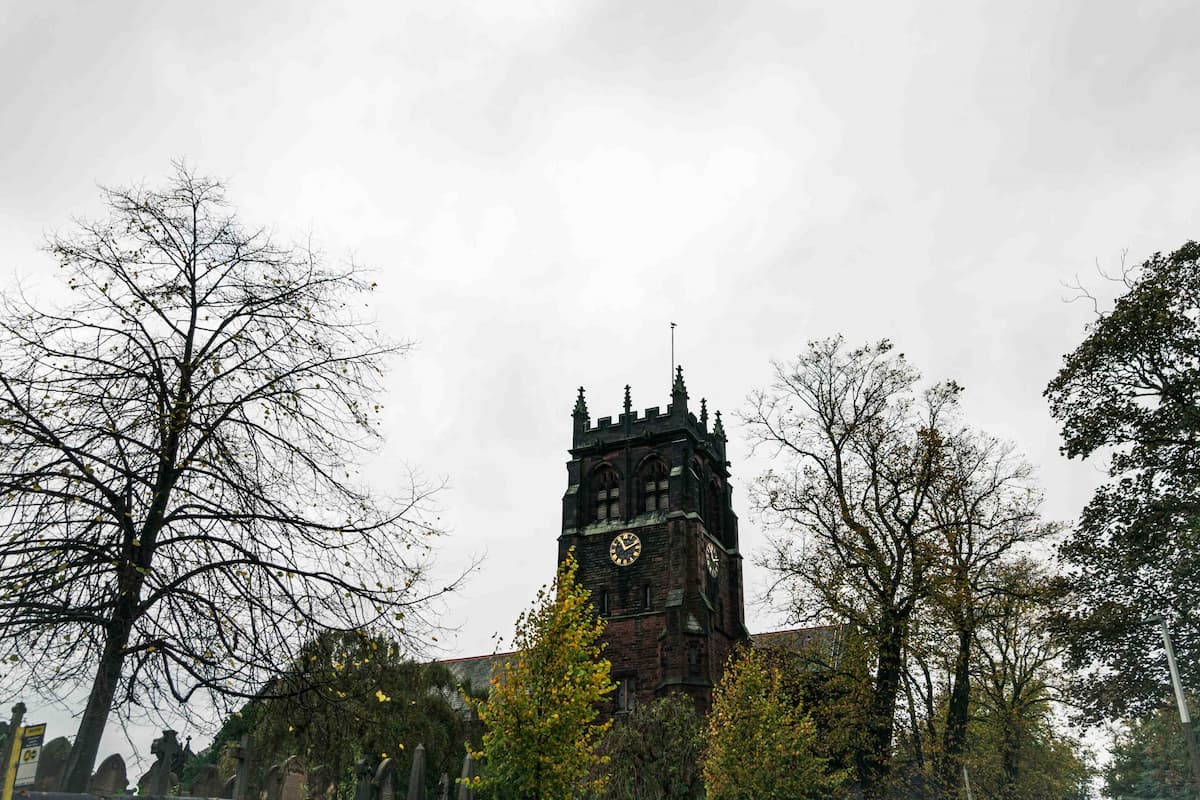
    But the possible inspiration behind the woman who “Died in the church and was buried along with her name” is located in the graveyard of St Peter’s Church. Paul McCartney used to cut across the church grounds with John Lennon to reach the hall behind it. Paul stated that the idea for the name came from the combination of an actress and a shop, though he later admitted the gravestone may have subconsciously played a part.

    There is little to suggest any link between the real Eleanor Rigby and McCartney’s version – the character is fictional – but the gravestone is an interesting connection to the Beatles nonetheless.

    You will find the gravestone in the section of the cemetery to the left of the church, in the second row closest to the road.

    Let it Be

    Speaking words of wisdom: any true Beatles fan has to visit Liverpool at some point in their lives. You don’t have to cram in everything I’ve mentioned here, but make sure to visit at least a few! They’re an unmissable part of the city’s culture.

    If you’re looking for places to eat or non-Beatles related activities, check out my guide to A Day in Liverpool. Be careful though – after eating all that delicious food, listening to I Am the Walrus starts hitting a little too close to home.

  • Your Guide to What’s in Whitstable: A Day-Trip

    Your Guide to What’s in Whitstable: A Day-Trip

    What’s in Whitstable? More than you might think! This pretty, seaside village is situated on the north coast of Kent, in southeastern England. If you’re a lover of seafood, fresh sea air and an artsy atmosphere, Whitstable is a relaxing day trip.

    “Whitstable was famous for its ‘Native Oysters’ which were collected from beds beyond the low water mark from Roman times until the mid-20th century.”

    As soon as you get into town, you’ll quickly see there’s a friendly, small community vibe. I found it really easy to chat with locals, who were very keen to share their stories of how they ended up in Whitstable. 

    There’s a thriving art scene, which is felt as you walk down the high street. The mix of unique gift shops, book stores, record shops and cafes will satisfy all the senses. 

    I went to Whitstable with one mission and was pleasantly surprised at how much it had to offer. I’ll break down the best reason for this day trip and a list of what makes this little town a place to visit more than once. 

    Start with a Coffee at Blueprint

    I opted for a pick-me-up at Blueprint Coffee. Blueprint Coffee is an independent coffee shop, with an on-site bean roaster. The coffee was superb and the ambience was atmospheric. Treat yourself to a brownie and even a book in the surprise little bookshop. This is a definite gem.

    Look Out for Street Art

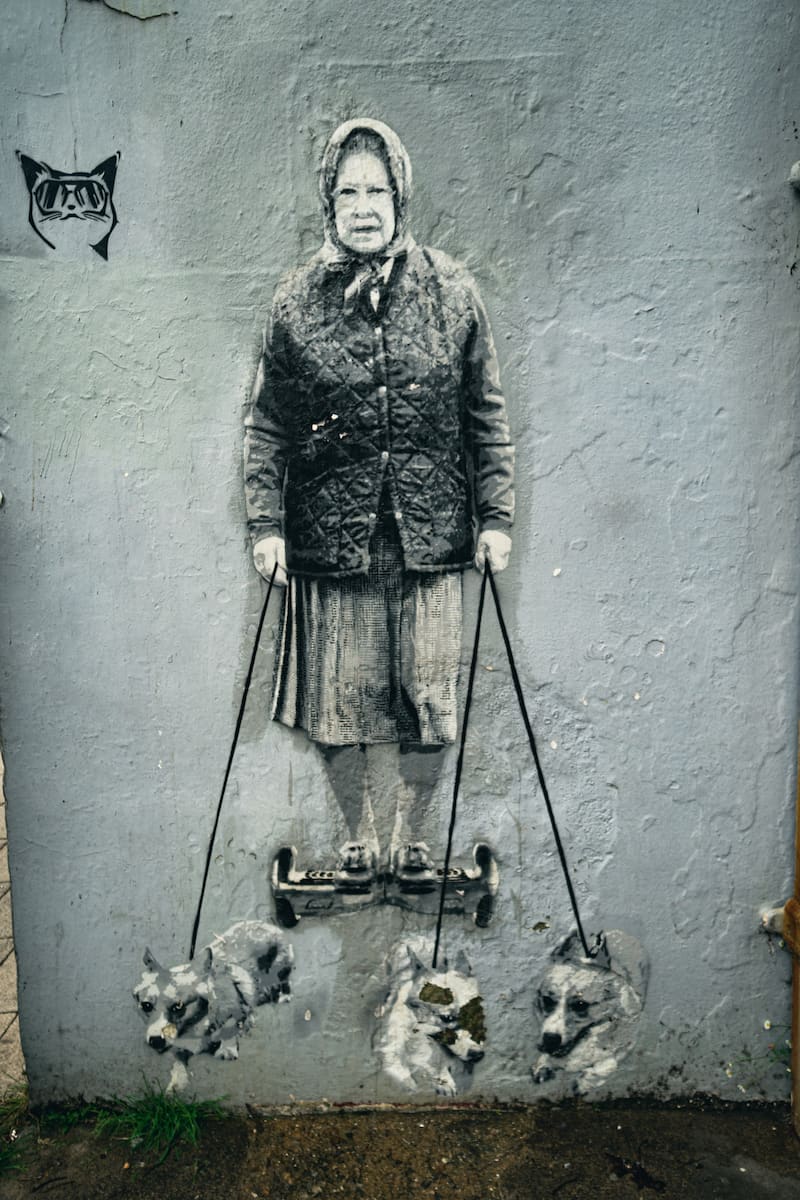
    humorous depiction of Her Majesty being towed along by her corgis
    A humorous depiction of Her Majesty being towed along by her corgis

    Do you love street art? I do! I’m always on the lookout for new graffiti and murals to check out in my travels. I discovered local street art by artist Catman.

    On the high street, next to Boots, is a humorous depiction of Her Majesty being towed along by her corgis.

    On the Pilgrims Hospice charity shop, a piece depicting an exhausting looking medic, and then next to it is a message about the plastic issue damaging the world, which was painted on David Attenborough birthday, basically saying time is running out, squeezing the life out of Planet Earth.

    His work is absolutely amazing! If you’re ever in the area, be sure to check out his pieces. You won’t be disappointed.

    Shopping on Harbour Street

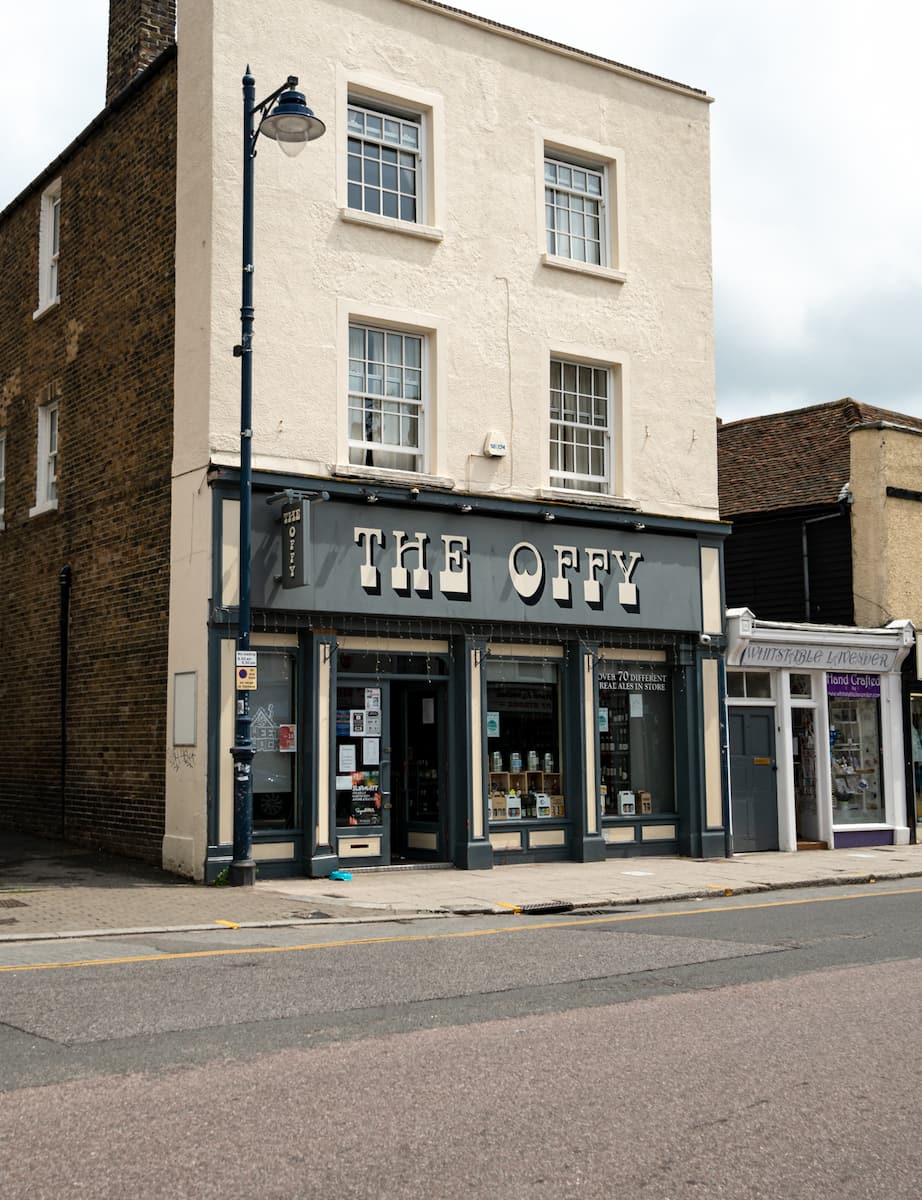
    The Offy

    My head kept turning in all directions as the window dressings were all so creative and inviting. I popped into a few shops and snagged some new linen pants from The Clothes Horse. There’s something about the seaside that makes me want to wear linen.

    Oxford Street Books is a must and if you get a sweet tooth while shopping, you definitely want to check out Sundae Sundae for ice cream, of course. 

    Pop into a few other unique shops:

    • Whitstable Lavender
    • Flory & Black
    • The Whiting Post
    • Duma
    • George’s 

    You’ll have a hard time moving on from the high street! There’s so much to see and it’s just about one block from the beach, which brings me to my next stop of the day. 

    Art Galleries

    If art galleries are a must, there’s several to choose from or you can do a complete gallery tour. The Whitstable Community Museum and Gallery has been added to this list for the history buffs. 

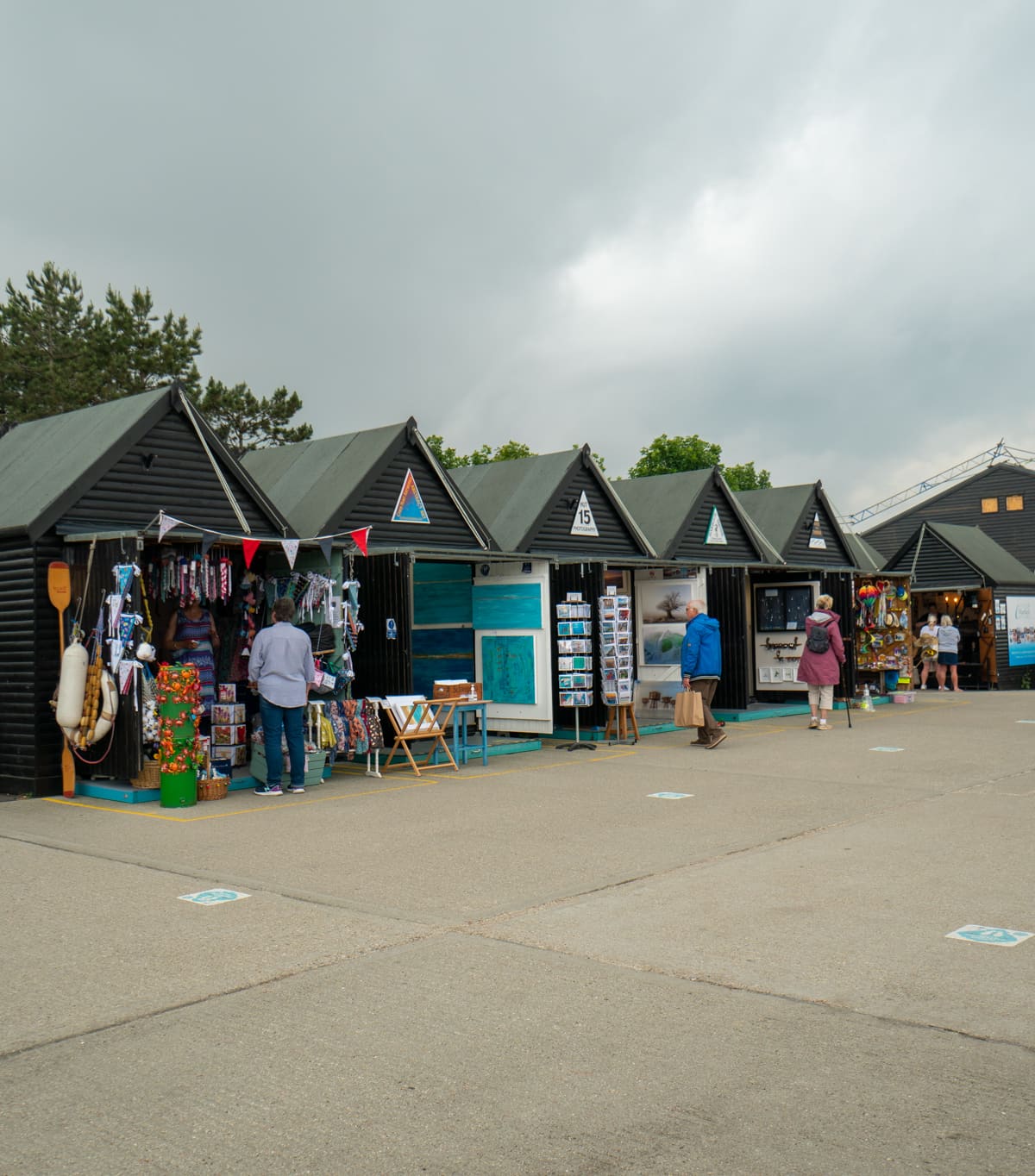
    Harbour Market Whitstable

    Harbour Market Whitstable

    The Harbour Market Whitstable is an eclectic market is home to a wide variety of vendors, selling everything from fresh seafood to vintage clothes.

    Whether you’re browsing for souvenirs or simply enjoying the nautical atmosphere, the Harbour Market is well worth a visit.

    The Lobster Shack

    The main reason people go to Whitstable is for the Oysters. As I’m a vegetarian it’s not something I eat but if you were seriously craving some good seafood, actually on the seaside and The Lobster Shack does not disappoint.

    The Lobster Shack is a beach bar that has amazing views and lots of outdoor seating. They’re located at the end of the East Quay in Whitstable Harbour, with stunning sea views over the Thames Estuary. Choose to sit as far out as you can on the dock and was able to watch the boats and fishermen coming and going from the working harbour.  

    It’s a bit of a walk to get to the entrance of The Lobster Shack, but you get to see first-hand what goes into growing oysters. I had no idea! In the eighteenth century, The Lobster Shack was actually an oyster grading house. There’s lots of history with the buildings in Whitstable. 

    With a warm and sunny it’s worth splurging on a complete seafood spread and a glass of bubbly. Wow, the oysters really were incredible. Check out a picture from a friend. You won’t leave hungry. And you can stay as long as you like, soaking up the sun and sound of the waves. 

    Travel Tip: In late August Whitstable Oyster Festival runs and it’s worth a visit! The Whitstable Oyster Festival began in the 1980’s and is still going strong today, every summer. Check out music and comedy on the Stage, join the oyster eating competition, build a grotto, go crabbing and watch the landing of the oysters. The 3-day party also has an oyster parade, so there’s something for everyone. If mollusks are your favourite, don’t miss this unforgettable oyster experience. Even the royals have been known to pop in from time to time. 

    Other Restaurants With a View

    The Whitstable Oyster Company for lunch

    The Whitstable Oyster Company is an old oyster warehouse with views over the estuary. Their menu is hand-written and changes daily depending on what’s fresh. They even serve oysters from their own beds!

    Bubble for breakfast

    Bubble is a family-run restaurant, operated by sisters Holly and Bryony and their team. Everything at Bubble is made to order with fresh ingredients from local suppliers. 

    Harry’s Cafe for all-day breakfast

    Harry’s Cafe is a super cute all-day breakfast diner. They offer vegetarian friendly, vegan and gluten-free options, as well as lunch and dinner. 

    Jojo’s for lunch or dinner

    Jojo’s is a family-run meat, meze and fish restaurant, serving home-made food with a Mediterranean influence. “We only use high-quality ingredients and trusted local suppliers, all our meat and eggs are free range, and our fish, of course, comes only from sustainable stocks.”

    Tankerton Beach

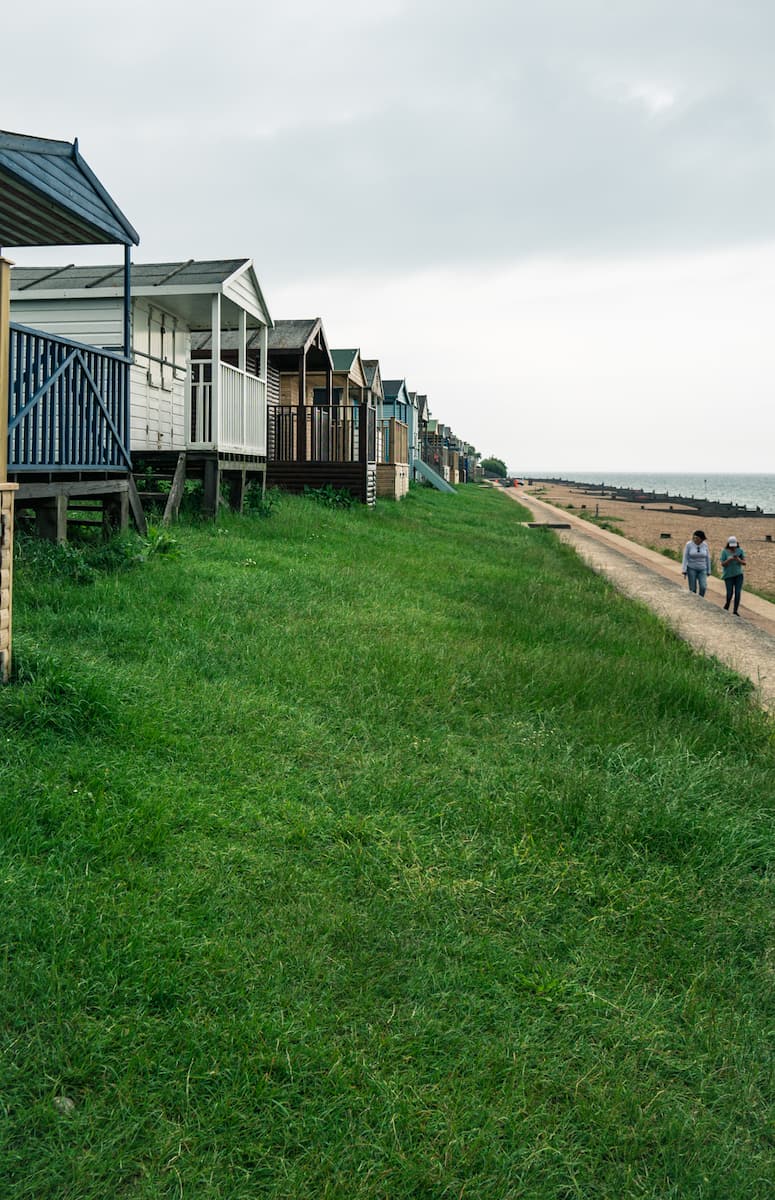
    Tankerton Beach huts
    Tankerton Beach huts

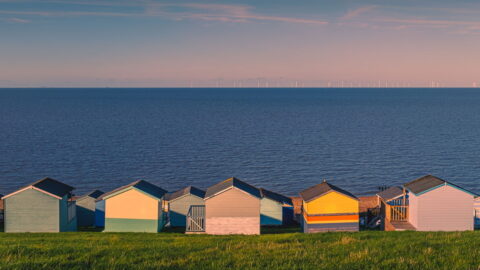
    It wasn’t quite warm enough for me to go swimming that day, but I did enjoy sitting on a bench overlooking the colourful beach huts above Tankerton Beach. This is where I found people to be the friendliest, with their dogs and children running along in the grass. 

    You don’t have to be on the sand to enjoy a view of the sea and I never get enough of the cute huts. They’re so perfectly English.

    This tranquil beach offers safe bathing and well managed facilities as well.

    At low tide enjoy what’s called ‘The Street.’ It’s a natural path that takes you right out to sea, perfect for paddling and exploring rock pools and sea life.

    Whitstable has several other beaches for you to check out as well. 

    West Beach Whitstable 

    West Beach is privately owned by the Whitstable Oyster Fishery Company. It’s a bit out of the tourist area of town, so a quieter scene. They also have beach huts and are dog friendly. 

    Reeves Beach

    Reeves Beach is the opposite, near the Harbour and main part of town. It’s a shingle beach, meaning it’s a pebble beach, with lots of benches and a pathway to walk on from the harbour. You can access this beach easily from the high street. 

    Walks in Whitstable

    If you have more time in the area, consider going on one of the wonderful walks.

    Whitstable Shore Circular

    If the weather’s nice, Whitstable Shore Circular is a 7.6 kilometre loop trail with scenic views of the seaside and is rated as moderate. The trail is primarily used for hiking, walking, running, and bird watching.

    Whitstable to Herne Bay

    The coastal walk from Whitstable to Herne Bay is 4.8 miles, rated fairly easy. Take your time and marvel at the colourful beach huts, birds and beachgoers. 

    Whitstable Castle

    Whitstable Castle

    If you never visit a town or city without visiting its local castle, then you won’t want to miss the Whitstable Castle and Gardens. Originally called Tankerton Towers, the castle was actually a residence and has been developed throughout history by successive owners. 

    The Gardens are another haven of relaxation, surrounded by beautiful rose gardens. You can even enjoy an afternoon tea or cream tea in the Tea Room after you’ve had a stroll around the grounds. 

    Sunset at the Old Neptune

    Drinks at Old Neptune
    Drinks at Old Neptune

    Whitstable is known for their sunsets as much as their oysters. If you’ve stayed the day and want to watch the sunset, the best place is The Old Neptune, where you can have a drink and take in the sunset on the beach. This old worldly pub has loads of character and charm and even live music. 

    What’s in Whitstable?

    There’s lots in Whitstable! But there’s not too much that you can’t see it all in a day. 

    I hope this has inspired you to visit the charming seaside town of Whitstable. Whether you’re wanting to spend the day on the beach, shopping, visiting art galleries or eating your way through the village, you’re sure to enjoy every minute of it. 

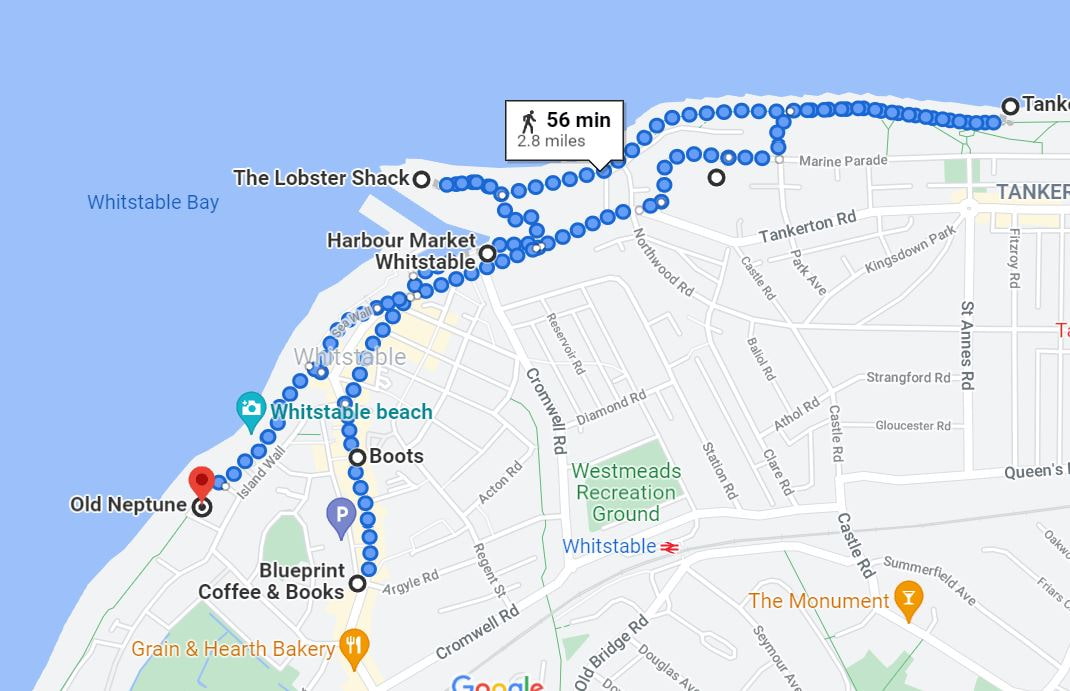
    Walking Route of Whitstable

    Whitstable Walking Map
  • A Day in Liverpool: Sightseeing, Food and Culture

    A Day in Liverpool: Sightseeing, Food and Culture

    Liverpool is a city that warrants at least a day of exploration. From its iconic waterfront to Beatles-related landmarks, there’s plenty to see and do. Plus, Liverpool boasts an impressive food scene, with options to suit all tastes. Whether you’re a first-time visitor or have been before, here’s how to make the most of a day in Liverpool.

    The northwest maritime city of Liverpool is the hometown of all four Beatles members, the world-famous football club and breathtaking museums and galleries.

    In the 18th to 20th centuries, Liverpool was a key migration and trade port whose ships dominated the slave trade in the transatlantic. When the 1960s hit, Liverpool became internationally known for the “Merseybeat” sound made famous by the Beatles. 

    Since the mid-twentieth century, Liverpool has become an English tourist destination, with a mix of historic and modern landmarks, fantastic shopping centres and restaurants to please every taste bud. 

    If you’ve only have a day in Liverpool, I’ve put together the absolute must-dos to make your day one to remember.

    Start at Dale Street Kitchen for Breakfast

    Starting the day in North East section of the city with breakfast at Dale Street Kitchen. Expect a relaxing atmosphere and award-winning breakfast dishes. 

    Fresh fruit smoothies, large classic English breakfasts and coffees to suit all tastes will kick start your morning the right way and give you all the energy you need for your day exploring  Liverpool. 

    Choose to Visit: Walker Art Gallery or World Museum

    Time to choose! Both the Walker Art Gallery and World Museum are great picks to spend the morning.

    Walker Art Gallery 

    Walker Art Gallery, Liverpool, UK
    Walker Art Gallery, Liverpool, UK

    The Walker Art Gallery is one of the UK’s largest art exhibitions outside London and is conveniently located on William Brown Street. The street houses galleries, museums & libraries that contain works from as early as 1300 AD all way up until modern day sculptures or paintings!

    The gallery is free to enter and is open Tuesday – Sunday, 10 am – 4 pm. 

    World Museum

    The World Museum is a free and fascinating place to visit. You can learn about history from space exploration, natural sciences such as dinosaurs or evolution theories in the exhibits! The museum was built way back in 1851 but still has an extensive collection of all things historical today with over 150 million artefacts on display.

    The World Museum is open Tuesday – Sunday, 10 am – 4 pm. 

    Radio City Tower

    The Radio City Tower is the tallest building in Liverpool and gives you an incredible view of all that this interesting city has to offer.

    If you aren’t afraid of heights, making your way 452 ft above the city centre is a fantastic and unique way to experience Liverpool’s varied scenery. 

    Built back in 1969, it’s home not only for our very own local radio station but also one heckuva gallery!

    The Radio Tower Beacon is open from 10:15 am – 5:15 pm on Saturdays and Sundays. 

    The Cavern Club

    Liverpool is home to the famous The Cavern Club, where the Beatles got their start. In the early 1960s, it quickly became the centre of the rock-and-roll scene, hosting The Beatles in their early years. 

    If you’re looking for a musical adventure while in Liverpool, this is the place to go! The Cavern Club has live music every night of the week, and there’s sure to be something that will get your toes tapping.

    More time? Go on an organised Beatles tour where you can learn all about the Beatles’ history. Their behind-the-scenes tour is even free to attend and the guide will explain all about the club’s history and myths.

    Whether you’re a Beatles fan or just looking for a great night out, the Cavern Club is definitely worth checking out!

    Mersey Ferry 

    Razzle Dazzle Ferry
    Razzle Dazzle Ferry

    Consider taking a Mersey Ferry Tour! You’ll get amazing views of the river and learn interesting historical facts about Liverpool’s musical heritage, maritime history and how the ferries played a role in the First World War. 

    Try and get a ticket on the Razzle Dazzle Ferry. It is a colourful boat that was designed by Sir Peter Blake and built to commemorate the First World War. The ferry is famous for being on The Beatles Sgt Pepper cover.

    Book your Mersey Ferry Tour today!

    The Mersey Ferry operates from 7:30 am – 7:30 pm on weekdays, and 10 am – 6 pm on weekends. 

    Tate Liverpool 

    Tate Liverpool 
    Tate Liverpool 

    The Tate Liverpool is an art gallery in the Royal Albert Dock displaying British art dating back to the 1500s. 

    The gallery is free to enter and once you’ve finished taking in the beauty of the art, you can stop for a coffee in the Tate Liverpool coffee shop. 

    The Tate Liverpool is open from 10 am – 5:50 pm, Tuesdays to Sundays. 

    The Beatles Story

    For all the Beatles fans out there, The Beatles Story is the world’s largest permanent exhibition dedicated solely to The Beatles. 

    The immersive journey takes you along their story from childhood all the way up to how they became one of the greatest bands in the world. 

    The opening times of The Beatles Story are subject to change, but it is open all days but Sunday.

    Bold Street Shopping

    The Knowledge Quarter and Georgian Quarter connect at Bold Street and boast a variety of shops, cafes and nightlife entertainment. 

    Some of your favourite chain stores, as well as smaller boutiques, can be found on Bold Street and once you’ve had enough of shopping, you can stop for a bite to eat in one of its restaurants serving up food from a selection of different countries. 

    Places to Eat in Bold Street

    Maray in Bold Street
    Maray in Bold Street

    Bold Street is a hub for a mixture of restaurants with cuisines from all over the world. Here are some of my favourites!

    • Bundobust on Bold street serves up Indian food that is catered to vegans and vegetarians in its pink and green retro restaurant. 
    • Greek Taverna is the place to go if you’re a Greek food lover. A vast selection of Greek tapas and main courses can be accompanied by a glass (or bottle) of wine in the bustling Bold Street restaurant. 
    • Maray has 3 restaurants dotted throughout Liverpool city centre, one on Bold Street, one on Albert Dock and one in Allerton. Exquisite Mediterranean food, including vegan and vegetarian dishes, will leave you wanting more in the low-lit restaurant and basement bar. 
    • Elif also has a few restaurants spaced out around Liverpool. The one on Bold Street, with its yellow features, serves up Turkish BBQ foods of all varieties that are a great healthy meal option. 
    • A great vegan and vegetarian restaurant is The Egg Cafe, not far from Bold Street.  The name may be deceiving, but the quirky cafe is plant-based and vegan. Their coffee beans are sourced from local suppliers and, where possible, they aim to be as sustainable and environmentally conscious as possible. 

    Grab a Coffee at Bold Street Coffee

    Fantastic coffee and breakfast stop can be found at Bold Street Coffee. All your usual English breakfast favourites can be enjoyed in this quaint little coffee shop, along with iced and hot coffees, made from specially roasted beans. 

    Liverpool Cathedral

    Liverpool Cathedral
    Liverpool Cathedral

    Liverpool Cathedral is the largest religious building in Britain and an iconic landmark of Liverpool that shouldn’t be missed.

    The Grade I listed building is built of local sandstone and has incredible features like stained glass windows and extraordinary archways. The cathedral is free to enter and you can also pay a fee to climb up the tower and enjoy the 360-degree open-air view. 

    Best Views of Liverpool from Liverpool Cathedral
    Best Views of Liverpool from Liverpool Cathedral

    The Liverpool Cathedral is open 7 days a week from 10 am – 6 pm. 

    Spend A Evening At Cains Brewery Village and The Baltic Market

    Cains Brewery Village is a historic area in Liverpool that has been transformed into a trendy spot for shopping, dining, and nightlife. With its beautiful old buildings and cobblestone streets, the village has a charming atmosphere that makes it a popular destination.

    It’s open from Wednesday to Sunday.

    If you are a Peaky Blinders fan, then you will love this place! Restored Grade 2 listed building in Liverpool’s iconic Cains Brewery Village looks like you have just walked into a scene from Peaky Blinders. The pub has proven to be a huge attraction for fans with its 1920s’ feel and great range of drinks.

    Cains Brewery Village
    Cains Brewery Village

    The Baltic Market

    The Baltic Market is a great place to visit if you don’t know what to eat or if you’re in the mood for a little bit of everything. 

    The food court type setting has vendors and live music circling the tables where you can sample a selection of foods from all different cuisines. 

    Traders at the Baltic Market:

    • Beef On The Block
    • Christakis
    • Little Korea
    • Spice Thai
    • Pattersons
    • Press Bros. Coffee
    • Hafla Hafla
    • Little Furnace
    • The Midnight Delivery
    • Bubbas Trap Kitchen

    Meat, vegetarian and vegan options are all available at the Baltic Market, so it really is a one stop shop for your whole party. 

    Have More Time? Consider Going to These Places

    Anfield

    All the football fans won’t want to miss a trip to the Anfield football stadium. 

    If you support the Liverpool football team or not, a guided tour around Anfield will have you marvel at the team’s history and give you access to parts of the stadium that are not open to the general public. 

    Anfield was originally built as a cricket stadium for Everton Cricket Club and was later taken over by Everton FC in 1884. After a dispute about rent, Everton moved out of Anfield and Liverpool FC was born. 

    It is best to book the stadium tour online to get an accurate representation of the availability. 

    Sefton Park

    Sefton Park in the south of Liverpool is a 235 acre Grade I historic park with incredible monuments and scenery. 

    Waterfalls, statues, and the stunning glass Palm House provide a tranquil and slow-paced escape from the hustle and bustle of the city centre. 

    If you look at Sefton Park on a map, you will see that footpaths frame the open green space, making the park an oval shape. Two natural watercourses flow into a man-made lake and in 2013, the park was awarded the prestigious Green Flag Award for its exceptionally high standards. 

    Sefton Park is 24 hours a day, all year round. 

    Liverpool 24 Hour Map

    Liverpool Walking Map

    Liverpool is a fantastic city with a lot to offer in just 24 hours. Its mix of indoor and outdoor activities are perfect for every weather condition and you’ll be sure to find something that’ll make your trip one to remember.

  • 15 Places to Visit in Bristol in 24 Hours

    15 Places to Visit in Bristol in 24 Hours

    Bristol is a vibrant and historic city that offers a wealth of things to do in 24 hours. Whether you’re looking to explore the city’s many museums and cultural attractions or enjoy a day out in the great outdoors, Bristol has something to offer.

    It’s become one of my favourite cities to visit and it’s easy to see why people love it so much. Regularly named in publications like National Geographic Traveller and Rough Guides as one of the coolest cities in Britain. And one of the best places to live.

    One of the main reasons I love to visit is the food and craft scene, honestly, it great! But if you only have one day in Bristol then you need a good mix of iconic landmarks, street art and plenty of authentic experiences.

    This route is perfectly planned in walking route order so you don’t backtrack, plenty of food stops and a mix of free and paid attractions. If your feet do get sore, consider taking one of the electric scooters or one of the well connected bus routes. There are a few hills at the end of the day.

    Here are some of the top things to do in 24 hours in Bristol.

    A Guide to Spending One Day in Bristol

    Girl with The Pearl Earring

    Girl with The Pearl Earring
    Girl with The Pearl Earring

    The famous world-renowned artist Banksy was born in Bristol in 1974, and you can still see his earliest work hidden around the streets of Bristol. When street art took Bristol by storm in the 1980s, Banksy took to the walls with a can of spray paint.

    As the Girl with the Pearl Earring is just around the corner from the SS Great Britain it’s a must to go and visit! Right?

    Although his work can now be found all throughout the world, there is something special about these pieces in his home city. His pieces now may sell for hundreds of thousands, but you can still witness his artistic style for yourself.

    Some of the most famous pieces include the Grim Reaper, The Cat and Dog and The Well Hung Lover. As Bristol is his home There are quite a few of his pieces you can stop by on this route.

    Visiting SS Great Britain 

    Visiting SS Great Britain 
    SS Great Britain 

    The SS Great Britain is not just a magnificent ship but full of interesting history. Get here at 10 am so you can spend 90-120 minutes on board exploring. Make sure you speak to the expert guides who are dotted around the ship! Not only are they entertaining but provide a wealth of additional facts, they know their stuff!

    The SS Great Britain is now a museum ship, although formerly it was a passenger steamship that was well ahead of her time. SS Great Britain was the first Iron steamship to cross the Atlantic Ocean and she held the record for the longest passenger ship in the world from 1845 to 1854. 

    In 1970 the SS Great Britain Project brought her home on an 8,000-mile journey from the Falkland Islands. She was restored and the trust continues to care for the ship, giving people the opportunity to see inside for themselves. 

    You can wander around the dining salon, take a walk along the promenade or head up to see the ship rigging. SS Great Britain is the city’s top visitor attraction making it a must if you are only spending one day in Bristol. 

    Book your ticket online today and the best thing is the ticket last for a year so I have been a few times.

    Between March to October, the site is open 10 am-6 pm. During the Autumn winter season, the site is open Thursday to Sunday 10 am-4:30 pm between the months of November to March. 

    Learn All About Bristols History at M Shed

    learn All About Bristols History at M Shed
    Learn All About Bristols History at M Shed

    M Shed is a museum dedicated to the history of Bristol and is the perfect place to visit if you are looking to learn more about the city. Some of the most popular galleries within the Museum include Bristol places, Bristol people and Bristol Life. 

    The Bristol places gallery focuses on how people have shaped the city. Here you can learn about how the city prepared for WWII, the variety of public transport vehicles that were used to get people around and how homes have changed throughout the years. 

    The Bristol People gallery focuses on music, art, industry and technology. This gallery takes you through the city’s trading past and its involvement in the Transatlantic Slave Trade.

    The Bristol Life gallery is all about peoples shared experiences within the city. Here you can find out about how families lived, worked and socialised throughout the centuries. 

    M Shed is open Tuesday to Sunday 10 am-5 pm.

    Bristol Cathedral, Bristol City Hall and Well Hung Lover

    This trio is within a few hundred metres of each other. As time is short, I’d recommend prioritising whether you want to go inside the Cathedral or City Hall. The architecture on the outside is wonderful so I haven’t ever felt I missed out by not going inside.

    Bristol Cathedral
    Bristol Cathedral

    Bristol Cathedral is a beautiful, historic site that offers visitors a unique glimpse into England’s religious history. The cathedral is one of the largest in the country, and its architecture is truly stunning.

    Bristol City Hall was built in the 1840s, and it’s been used as a municipal building ever since. It’s now home to the Bristol City Council. The hall is open to the public, and you can visit it for free. Whether you’re interested in politics or just want to see some stunning architecture, Bristol City Hall is worth having a look at.

    Well Hung Lover
    Well Hung Lover

    Across the road from City Hall is a mural called “The Well Hung Lover”, it features a man hanging from a window with two people looking out the window, a woman in her underwear and a man in a suit looking out the window for the man.

    Stop for Coffee at Playground Coffee House

    If you are a coffee lover and love a unique experience, then visiting the Playground Coffee House is a must. You get to sit on swings whilst sipping your delicious coffee, and there is an impressive selection of board games to play too. 

    Aside from the tasty coffee, there is a selection of loose-leaf teas to choose from. If you are feeling peckish, there is a selection of sandwiches and cakes. However, if you decide to visit in the evening, tiki cocktails will also be available! 

    St Nicholas Market

    Food at St Nicholas Market
    Food at St Nicholas Market

    St Nicholas Market is one of the best places to go in Bristol to grab a bite to eat for lunch. You will be spoiled for choice by the number of food vendors here and the best part? This market has food for all preferences and dietary requirements including vegan, vegetarian and gluten-free.

    You can dine and taste food from all over the world including the Caribbean, Portugal, Morocco and of course Britain.

    Although I always end up at the Eat a Pitta or Martina! Falafel and halloumi are perfect market food or any time, to be honest.

    Explore the Bristol Museum and Art Gallery

    Explore the Bristol Museum and Art Gallery
    Explore the Bristol Museum and Art Gallery

    If you are a culture buff then visiting the Bristol Museum and Art Gallery is a must. Consisting of three separate floors, the Museum has a variety of exhibits.

    The ground floor of the museum focuses on ancient Egypt, the ancient civilisation of the Middle East and archaeology objects from around the world. The Exhibition Gallery is also located on this floor, so make sure to research what is on before you visit.

    The first floor focuses on the best-preserved dinosaurs found in Britain (including the Bristol dinosaur). This area of the museum also focuses on wildlife, geology, minerals and film.

    The second and final floor of the museum is where the art galleries are found. The type of art found in this museum includes Romanticism, modern and contemporary art, Victorian art and Eastern art.

    The Bristol Museum and Art Gallery is open Tuesday to Sunday 10 am-5 pm.

    Wander Around the Royal Fort Gardens

    The Royal Fort Gardens are owned by the University of Bristol but are accessible to the public. Originally the gardens were used as a Civil War fortification to defend the city during the 17th century. However, today it is a popular tourist attraction and a great place to take a picnic.

    The Royal Fort House acts as a backdrop to the gardens, and there are popular pieces of art within the gardens to see. If you wander into the gardens you will come across a cool mirror maze called ‘Follow Me’ and an artistic piece called ‘Hollow’ which is made from 10,000 wood samples from across the world.

    To give you another reason to visit this special place, the Royal Fort Garden also has a wildflower meadow which was built to increase the number of pollinators. If you are only spending one day in Bristol, then make sure the Royal Fort Gardens are on your itinerary.

    Get Some Fresh Air on the Clifton Downs

    The Clifton Downs are the perfect place to visit if you are looking for a breath of fresh air. It is a large open green space located close to Clifton village and the Redland areas of Bristol. Taking a wander around the Downs is a great way to escape the city’s hustle and bustle, and the park offers beautiful views.

    There is more than enough room to take a football, play some sports, or simply head out on a stroll with a picnic.

    Visit Clifton Observatory

    The Clifton Observatory was established in 1766 and is one of the most iconic landmarks in Bristol. The Observatory was originally used as a windmill until it was damaged by a fire in 1777. The building was then left derelict for 25 years until an artist rented it as a studio in the 1800s.

    In 2015, Clifton Observatory was restored and today, there is a 360 café that offers unforgettable views of the Avon Gorge, the Clifton Suspension Bridge and of course Bristol itself.

    There is also a museum located here which is home to a Victorian-era Camera Obscura and there is now an entrance to Ghyston’s Cave found inside. Ghyston’s Cave (also known as Giants Cave) is a natural cave found within the Avon Gorge.

    For centuries it was only accessible from the top of the gorge or by a steep climb, but now there is a tunnel leading down into the cave from within the observatory. The journey down the tunnel leads out onto a viewing platform that offers incredible views of Avon Gorge and the suspension bridge.

    Marvel at the Clifton Suspension Bridge

    Marvel at the Clifton Suspension Bridge
    Marvel at the Clifton Suspension Bridge

    The Clifton Suspension Bridge is one of the most famous structures in Bristol and spans the Avon Gorge and River Avon. The bridge took 33 years to complete and opened in 1864 as a toll bridge, which it continues to be to this day.

    The bridge is a Grade I listed structure and is one of the oldest surviving iron suspension bridges in the world.  It is one of Bristols most iconic landmarks and is one of the city’s top tourist attractions. The Clifton Suspension Bridge has even been used as a backdrop for several films, television programmes and for advertising. It was even the sight of the first modern bungee jump in 1979.

    If you are spending one day in Bristol, in all honestly there is a limited amount that you can see. However, walking across the Clifton Suspension Bridge has to be on that list as the architecture is incredible.

    Dinner in Clifton

    The area is filled with charming shops and restaurants with plenty of great options for dining in Clifton. The usual chains can be found here like The Ivy, Giggling Squid, Zizzi, Coppa and Wagamama.

    Looking for some alternatives, try one of these:

    Rosemarino

    They produce simple and delicious regional Italian food. The menu changes every week as they use seasonal ingredients so you can always expect something new to try.

    New Moon Tapas

    Run by a husband-wife duo, expect a cosy atmosphere and the best tapas! The tapas are perfect for sharing with friends and the atmosphere friendly. You can expect to find a great selection of wines.

    Bristol Lido

    If you are looking for a more unique eating experience, then visiting Bristol Lido is the spot for you. Bristol Lido is home to spa facilities, a pool, and a new restaurant and cafe. You can lounge by the pool, head for a massage and then enjoy some tapas at the bar for lunch. 

    Finish with Cocktails at Her Majesty’s

    Cocktails at Her Majesty’s

    A quirky cocktail bar is the best way to finish off the night! The telephone box door opened and I found myself in a magical little bar. It’s amazing; there are so many items that remind you about what life was like back in old England.

    Then the cocktail menu is extensive and each drink has a theme! One ended up being in coconut on a palm tree pool floaty. They can also make all the classics too if the menu doesn’t tempt you.

    If you have more time in Bristol check out their sister bar: Filthy XIII 208, Cheltenham Road, Bristol. BS6 5QU.

    Alternative Things to Do in the Evening

    Wapping Wharf 

    Cargo is located within Wapping Wharf and is full of independent eateries and vendors. Whether you are looking for burgers, pizza, tapas, seafood or tasty treats, this area of Bristol has it all. 

    Spend Your Evening at the Bristol Hippodrome

    The Bristol Hippodrome is one of the largest theatre stages in Britain and is the perfect place to spend an evening in Bristol. The theatre is located right in the city centre and is known as Bristols ‘West End Theatre’ due to it hosting many major musical productions.

    If you are wondering about the quality of the theatrical productions then think of the ‘Lion King’, ‘Chicago’ and ‘Singin’ In The Rain’. However, if you aren’t a fan of theatre, the Bristol Hippodrome also hosts opera, ballet, popular comedians and tribute acts.

    Have a Blast at Bristol’s Retro Bowling Alley

    If you are looking for somewhere unique to visit, then why not head down to The Lanes. The Lanes is a boutique retro bowling alley with a twist. With a ‘50s diner-style decor, karaoke booths, a pool table and live music this is the place to come if you are looking for something different.

    There is also a bar, diner and beer garden at The Lanes, so pizza, alcoholic milkshakes and custom cocktails are all up for grabs.

    A Walking Map if You’re Spending One Day in Bristol

    Bristol Walking Map
    Bristol Walking Map

    Bristol is an incredible city and has so much to offer. This is just an overview of what you can get up to in this city, but these are the most popular and iconic attractions with a bit of uniqueness thrown in there. Although a hectic schedule for just spending a day in the city, it’s so worth it. Although if it’s possible to spend more than one day in Bristol, you definitely should! 

  • Winter Destinations UK: 14 Best Places To Visit

    Winter Destinations UK: 14 Best Places To Visit

    The days are shorter and the temperatures are dropping, but that doesn’t mean you have to hide away indoors until spring. There are plenty of amazing winter destinations in the UK to explore.

    From scenic mountain ranges to lively cities, here are some of the best places to visit during winter.

    Bundle up and get ready for an adventure!

    Belfast

    Best place to visit in December

    Belfast city at night, Northern Ireland, UK
    Belfast city at night, Northern Ireland, UK

    If you’re looking for a fun-filled destination to travel to in December then the Northern Ireland city of Belfast may be right up your street.

    Brimming with lively pubs and bars with fantastic attractions, Belfast is a great location to celebrate the festive season. With temperatures as low as 5 degrees, packing your thermals instead of your bikini is recommended! 

    Visit Belfast Christmas market for a mulled wine and a browse around the vast array of Alpine-style wooden huts selling handmade Yuletide gifts and home accessories. 

    Shop for last minute gifts at Victoria Square where you can find popular high street stores such as Mango, Goldsmiths and Tommy Hilfiger. It is also home to Belfast’s one and only Apple store which may come in handy when looking for that perfect present. 

    The infamous Titanic Belfast museum is worth a visit. Explore the iconic building and dive into the history of Titanic and all those onboard the ship during that fateful time. With places to eat and shop along the way, Titanic Belfast is a great day out for all the family. 

    Belfast is jam-packed with things to do socially, however the countryside here is simply unmatched. So throw on a pair of hiking boots and explore this beautiful land.

    Newquay

    Best Place For Winter Sun

    sunset over The Rumps and Pentire Head on the North Coast of Cornwall
    Sunset over The Rumps and Pentire Head on the North Coast of Cornwall

    Even during the hottest months of the year, the sun is never guaranteed anywhere in the UK, and even more so in the winter. But if you are going to find the sun anywhere in December your best bet is to travel down south.

    Cornwall is known for reaching high temperatures during the summer months and even though it will be cold in December, that little bit of sun is good for the soul.

    You will find that Newquay is generally a lot quieter than it is in the summer months. The bars and clubs are not as busy and there are less people out and about. But don’t let that stop you from exploring this charming corner of the UK. 

    Take a wintry walk along iconic Fistral Beach which is known across Europe for its ridiculously good waves. The beach takes on a different persona in the colder months as it changes from a jam-packed tourist spot to an eerily quiet spot paired with harsh winds and crashing waves. An afternoon stroll across this terrifyingly electric beach will most definitely blow away the cobwebs! 

    Warm yourself up with some delicious pub grub from Lanherne pub and restaurant, serving traditional home cooked food in a friendly setting. 

    Keep the children entertained with a trip to Blue Reef Aquarium where they will find loggerhead sea turtles, blacktip reef sharks and thousands of vibrant shoals of fish. Book ahead to reserve your spots. 

    York

    Overall Best Place To Visit in Winter

    Cathedral of York
    Cathedral of York

    York is a beautiful place to visit at any time of year. With its stunning architecture, ancient Shambles and sheer selection of pubs, bars and restaurants, you can’t go wrong. 

    Most people avoid travelling at this time of year so the town is less crowded which is great for visitors as they avoid the hustle and bustle of the busy streets. 

    Firstly, the York Christmas Markets are a must-do. Begin the festivities with a delicious hog roast bap washed down with a pint of spiced mulled cider before perusing the adorable wooden chalets for unique trinkets and handmade decorations. 

    Pay a visit to the breathtaking York Minster to see the jaw-dropping interiors of this historic cathedral. The Shambles is possibly the most visited attraction in york in which some buildings date back as far as the 13th century. Dive into the history of these timber-framed buildings that are arguably the best preserved in the world. 

    Hungry? Have a pit stop at one of the oldest pubs in York, The Old White Swan. The building dates back to the 16th century and is said to be haunted. The tallest man in the world, who stood at a whopping 8 feet tall, was also exhibited here in 1781.

    Cotswolds

    Best Place For A January Break

    Lower Slaughter, Gloucestershire, England
    Lower Slaughter, Gloucestershire, England

    When the festive period is over and done with, it is time to get back to reality before the “January Blues” kicks in. And when they do, just book a getaway to the picturesque Cotswolds! 

    Start the New Year with a mini break to this remarkable area of the UK known for its picture perfect landscape and long, scenic walking trails. 

    Walking through the Cotswolds is like being in a fairytale with its charming little villages and adorable bridges that cross over miniature waterways. It is a bit like Venice but on a much smaller scale. 

    Visit Churchill’s birthplace at the outstanding Blenheim Palace. Featured in the popular James Bond film, Spectre, this historic building is filled with lavish interiors and ancient ornaments. Explore the exquisite gardens adorned with climbing roses and ancient trees as you take in the splendour of this magnificent landmark.

    Whether you have donned your thermals for a wintry walk or you have spent the day exploring local attractions, there is always time for a spot of Afternoon Tea. The Old Bakery Tea Room offers a wide selection of food and drinks to keep those hunger pangs at bay. Warm your hands with a creamy Belgian hot chocolate or followed by homemade scones with a generous helping of Cornish clotted cream and jam.

    Edinburgh

    Best Place For A Winter City Break

    Edinburgh city skyline and castle at night, Scotland
    Edinburgh city skyline and castle at night, Scotland

    Edinburgh is the perfect place for a fun-filled city break, particularly during the winter months as there is so much to see and do.

    Known for its sheer amount of festive activities and wild Hogmanay celebrations, the city of Edinburgh is a great choice if you are looking for an action-packed break. 

    Visit the Christmas markets at Princes Street Gardens where you will find plenty of festive food and drink, an ice rink, Santa’s Grotto and an exciting children’s funfair. The streets are layered with glamorous decorations and twinkling lights which can be observed while strolling through the cobbled streets. George Street has produced some amazing light displays over the years which are always worth seeing. 

    Winter isn’t just about Christmas though, so why not dig deep into the fascinating history of the Scottish capital, by enjoying a day out at Edinburgh Castle. There is so much to see here including The Great Hall, the 12th century chapel, the cannons and the dazzling Scottish Crown Jewels. Other Royal attractions include  Royal Yacht Britannia and Holyrood Palace. Booking your tickets in advance is strongly advised as these attractions are busy all year round. 

    Put on your bobble hat and gloves to take a walk along Edinburgh’s Royal Mile. Attractions include the Museum of Edinburgh and the Scotch Whisky tasting museum – that will warm you up! 

    Whether you need to shop for Christmas presents or to hit up the January sales, Edinburgh has you covered. With a vast amount of designer and high street stores, you are sure to find what you are looking for. There is no shortage of pubs, bars and restaurants either so treat yourself to a well-deserved meal to celebrate your memorable city break in Edinburgh.

    Outdoor Activities

    The temperature may be close to freezing but that shouldn’t stop you from getting outdoors to take part in some utterly thrilling activities.

    Hike in the Lake District 

    Derwent Water from Keswick, Lake District National Park
    Derwent Water from Keswick, Lake District National Park

    The best things in life really are free. At least they are if you love hiking! 

    With plenty of marked routes, the Lake District is the perfect place for both experienced and amateur hikers. Whether you are looking for an intense hike or a leisurely stroll, there is a walk for everyone in this picture perfect haven. 

    Glenridding will take you on a 6.5 mile journey to Howtown where you can see great views of Ullswater and scenic fields and hills. Alternatively, the route from Aira Force to Glenridding will take you on a much shorter walk where you will pass by a stone arch bridge, a waterfall and ancient trees. 

    The beauty of hiking is that it is enjoyable whatever the weather. Breathing in the fresh countryside air does wonders for the mind and doesn’t cost a penny!

    Surf down South

    You may need more than just a pair of swimming shorts to go surfing in these sub zero temperatures. Cornwall is renowned for having some of the best waves along the English coastline due to the build-up of low pressure from the Arctic and Atlantic. 

    Croyde Bay is one of the most popular surfing destinations in the UK where you will find plenty of other surfers as well as surfing lessons and some great local pubs for a spot of lunch afterwards. 

    Snowboard in Scotland

    For a spot of snowboarding, head to Nevis Range Mountain for some serious downhill action. Located in The Highlands, these slopes have 35 ski runs which cross over Britain’s tallest mountain, Ben Nevis.

    The most popular ski resort can be found at Cairngorms Mountain. This ski resort has 23 ski runs and can be found in Cairngorms National Park which spans over 1400 square miles and is Britain’s largest National Park. 

    You don’t have to be an experienced skier to take part as lessons are available at most resorts to teach you the basics. You will probably get a laugh out of it too!

    Climb Snowdon

    Snowdonia snowcapped mountains and sunset
    Snowdonia snowcapped mountains and sunset.

    Snowden is one of the most popular mountains to climb in the UK and is visited all year round. There are six possible routes that will take you to the top of the 1,085 metre summit and the views from the top are definitely worth the climb. 

    Each route is around seven to nine miles to the top so be prepared for a full day of hiking. Children can take part however, it may not be too enjoyable for them, particularly in low temperatures. 

    You do not need to have any previous hiking experience and remember to pack a bag with food, drinks, a compass and a map.

    Go for a Wintry Dip in Derry

    Will you be daring enough to take a dip in the icy waters of Portnahapple? We didn’t think so! 

    Portnahapple can be found along the scenic coastline of County Derry when taking a walk down Port Path. Here you will find an old natural swimming cove which is sometimes used by visitors in the warmer months. 

    Port Path is a 6.5 mile trail where you will come across national treasures such as St. Patrick’s Well which according to history, was used to store Holy Water in the Stone Age. You may also stumble upon small stone houses in which ice was once stored during the colder months to preserve salmon when temperatures increased. 

    National Parks

    Booking a winter destination near a National Park ensures you will make the most out of your mini break away from reality. Many parks are open all year round with some great activities for thrillseekers and adrenaline junkies.

    The Peak District National Park

    Best For: Caving

    Cracken Edge in The Peak District
    Cracken Edge in The Peak District.

    The Peak District is where you will find the highest natural cavern in the UK. Titan Cave in Castleton was discovered by local pot-holers in 2000 and is a whopping 464 feet from top to bottom. Caving is one of the most popular things to do in Derbyshire and it’s easy to see why.  

    You can try your hand at caving under the guidance of an expert and all the necessary equipment will be provided for you. All you need to do is join in! 
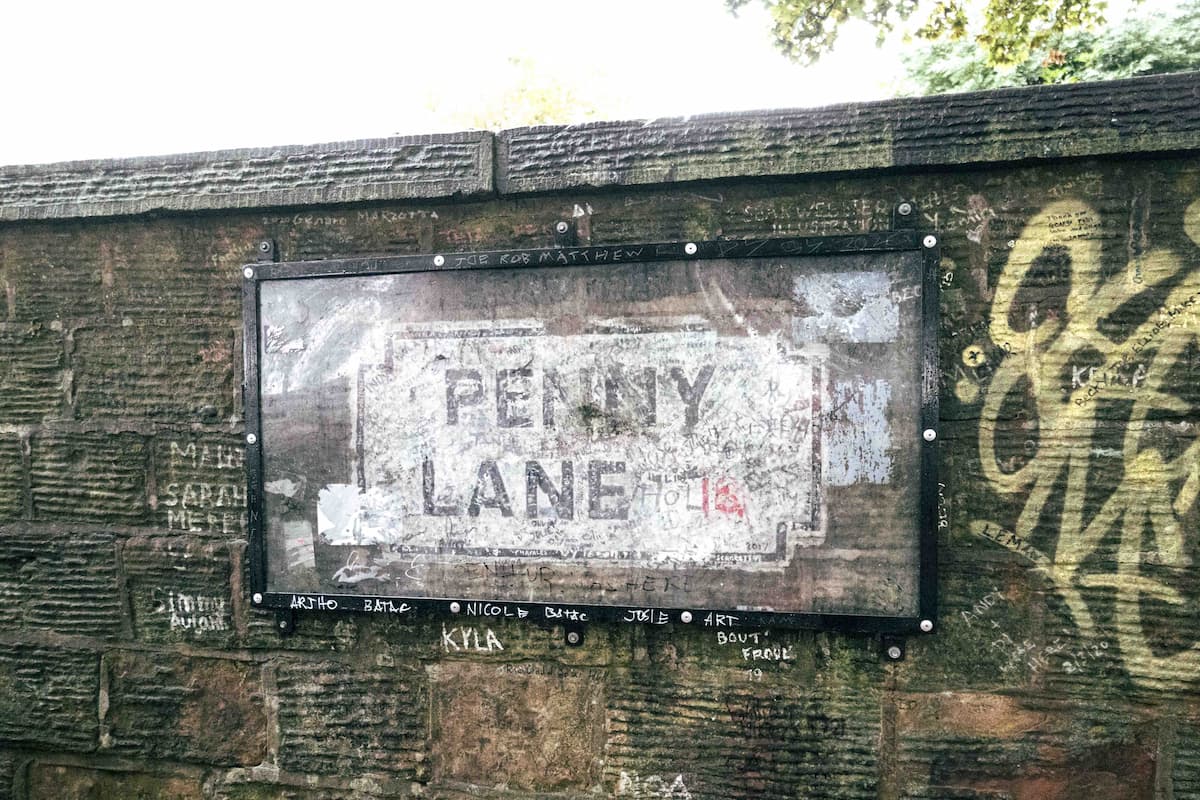
    Alternatively, there are many underground formations dotted around the Peak District which you can see by visiting a show cavern. These safe and well-lit caves make for a memorable and informative experience. 

    Exmoor National Park

    Best For: Stargazing

    Well known for its vast amount of walking trails, Exmoor National Park has dozens of paths that cater to all fitness levels and is the best place for stargazing. 

    Exmoor has some of the darkest skies due to minimal light pollution. If you look closely on a cloudless night, you will see the milky way along with magnificent astronomical sights and thousands of twinkling stars. 

    There is plenty to see on the walking trails such as vast bodies of water and lush countryside. Wildlife such as Red Deer and Ponies can be seen in their natural habitat, grazing lazily and resting. Be careful not to startle these enchanting creatures. 

    Pembrokeshire Coast National Park

    Best For: Coastline walks

    Broadhaven Bay beach on Pembrokeshire Coast in Wales
    Broadhaven Bay beach on Pembrokeshire Coast in Wales.

    Get ready for some phenomenal seaside scenery by visiting the Pembrokeshire Coast. Take in the wintry Welsh sun and fresh sea air with a walk along this fantastic trail. 

    If you look closely you will be able to spot Whales and Dolphins in the ferocious sea below. The cliff tops are great for birdwatching and witnessing the striking sunsets in the early evening.

    Pembrokeshire Coast National Park is one of the smallest in the UK, but don’t let that stop you from exploring the wonderful scenic landscape and magnificent sea views. 

    Loch Lomond and The Trossachs National Park

    Best For: Boating

    Loch Lomond Cruise with Sweenys
    Loch Lomond Cruise with Sweenys

    In 2002, Loch Lomond and The Trossachs became the first of two Scottish National Parks established by the Scottish parliament. 

    Rent a boat and cruise the icy waters of Loch Lomond to take in the stunning natural beauty of the Scottish landscape. There are over 30 islands dotted around the loch, so feel free to pay a visit to any one. 

    “The Trossachs” refers to a romantic area of mysterious woodland, rocky hills and views of the glittering lochs. Enjoy a wintry walk with the wind in your face which shares a link with some of the most famous poets in history including Sir Walter Scott, Coleridge and Wordsworth. 

    Loch Lomond National Nature Reserve is hauntingly beautiful in the winter months. The bare branches give way to breathtaking views of the surrounding area and you will hear the distinctive call of geese flying high above in the wintry skies. 

    Winter is a great time to visit for admiring the waddling ducks and elegant swans. There may not be much colour during this time of the year, but the impressive snow-capped mountains and piercing blue skies are enough to make your visit to this National Park an unforgettable experience. 

  • One Day in Cardiff: Best Things to Do in the Welsh Capital

    One Day in Cardiff: Best Things to Do in the Welsh Capital

    Cardiff is the perfect place for a day trip, it’s affordable and there are plenty of activities to do in this beautiful city.

    The city is home to plenty of historic attractions, and its vibrant nightlife scene means there’s always something to do. Whether you’re interested in enjoying a pint at a local pub or checking out some of Cardiff’s famous castles, there’s something for everyone in this charming Welsh city.

    Don’t forget sampling some Welsh delicacies like Welsh rarebit at Gwdihw or Welsh cakes!
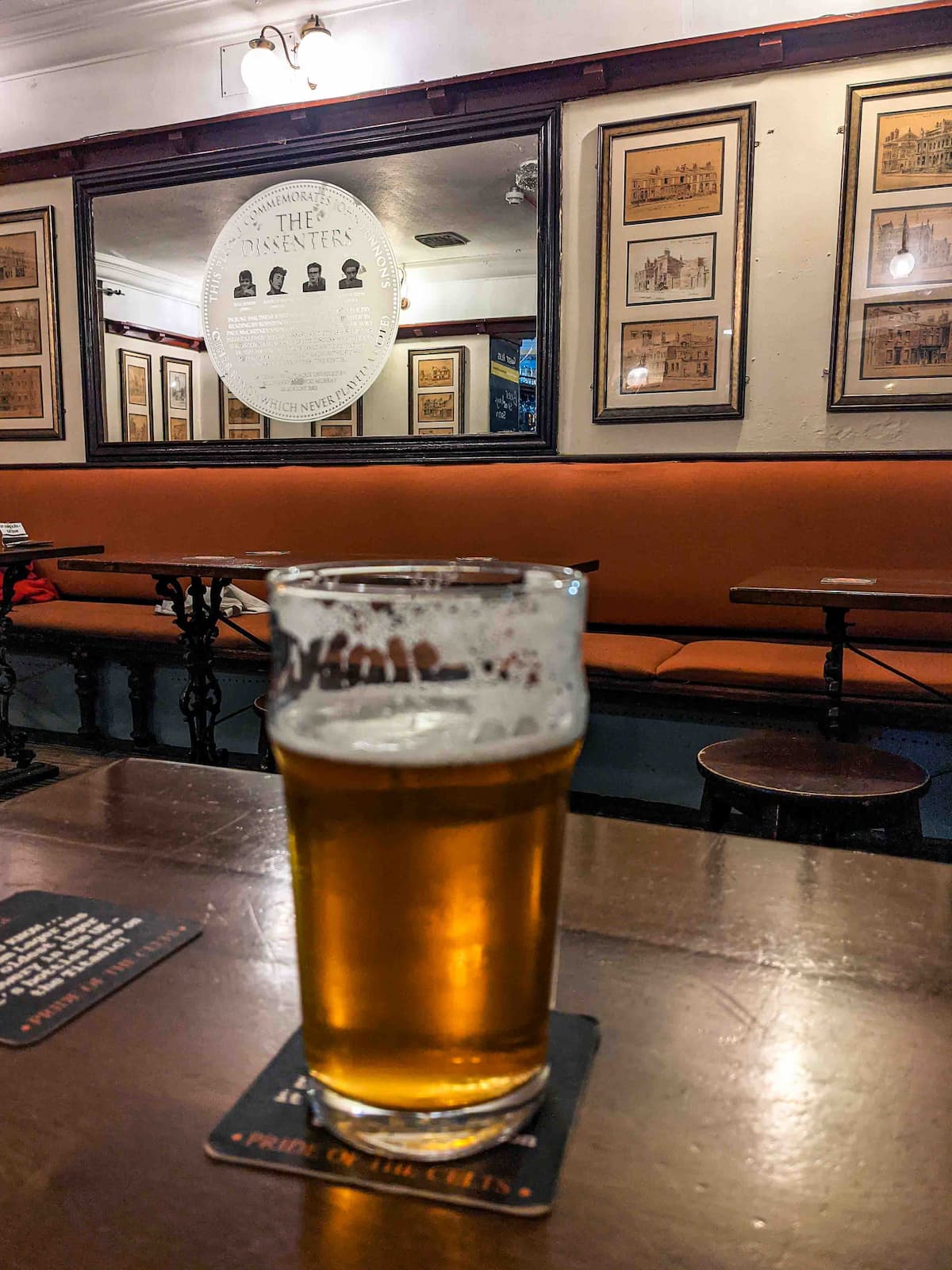
    Here are the best things to do in Cardiff in one day.

    Animal Wall

    Let’s start with its magnificent castle surrounded by The Animal Wall on the west of the entrance of the castle (Castle Street wall of Bute Park). Designed by William Burges in 1866, which started off with nine animal figures:

    • Baboons, Hyena, Bear, Wolf, Ape, Seal, Bear, Lioness, Lynx and two Lions (facing left or right)
    Right facing Lion on the Animal Wall
    Right facing Lion on the Animal Wall

    In 1931, six additional figures were designed by Alexander Carrick and added. These include:

    • Pelican, Ant-eater, Racoons, Leopard, Beaver and Vulture
    Racoons on the Animal Wall
    Racoons on the Animal Wall

    Fun fact: it inspired Dorothy Howard Rowlands, a local writer, to turn them into characters and imagined what antics the various animals on the wall got up to. She called them:

    • William the seal, Priscilla the pelican, Martha and Oscar the monkeys, Larry the lynx and Romulus and Remus the two lions

    Cardiff Castle

    Cardiff Castle
    Cardiff Castle

    As you enter the gates the colours of Capability Brown’s grounds are enough to make it worth seeing let alone the 900 years of history of the castle itself. Cardiff Castle was originally a Roman fort established at the end of the 50s AD.

    Following the Norman Conquest, the Castle’s keep was built, re-using the site of the Roman fort. The Castle passed through the hands of many noble families until 1766 when it became the home of the Bute family by marriage. 

    The 2nd Marquis of Bute was responsible for turning Cardiff into the world’s greatest coal exporting port and erecting the incredible house that now stands on the grounds. The Bute family retained the castle until 1947 when it was passed to the people of Cardiff, if you live, work or study in the city you are then lucky enough to receive the key to the castle, sadly that doesn’t mean you can move in.

    Unseen from the outside the whole of the battlement walls contains a passageway running from one end to the other which had been used as air raid shelters during the second world war for the residents of the city.

    If you’re looking for a real experience then head on into the dark and wet interior where Churchill’s voice booms out as the sounds of bombs are dropping overhead, you expect the ground to tremble. Equipped with the benches and bunk beds that would have accommodated families during the destruction of the city during the second world war it had provided for the thousands but now leaves a stark reminder of what it had been like during the war. 

    The castle café holds another delight with its original Roman wall discovered in 1888 when the Bute’s took on some further refurbishments, once sated by the traditional Welsh tea bread, Bara Brith served with lashings of butter and Welsh tea then it’s into the museum commemorating over 300 years of the proud and distinguished history of the 1st Queens Dragoon Guards and The Royal Welsh Guards including the Battle of Waterloo in 1815, Rorke’s Drift against the Zulus in 1879 and recent service in Iraq and Afghanistan. 

    As if that wasn’t enough make time to view the Bute family home with its incredible Arab room, main dining room, library and collection of artworks, the ceilings alone are worth the neck strain with their gold leaf decor.

    The clock tower, one of the most recognisable buildings on the Cardiff landscape with its beautiful heraldic artwork. Look out for the elaborate drain covers which have obviously been taken from the idea of the animal wall outside. 

    Welsh Cakes

    Welsh Cakes from Fabulous Welshcakes
    Welsh Cakes from Fabulous Welshcakes

    Trying Welsh delicacies is a must and across the road from the castle is Fabulous Welshcakes.

    The Welsh Cakes are a traditional sweet bread. The cakes are made of flour, butter, eggs, sugar, salt and raisins. Then cook on bakestone. A bakestone is a cast iron griddle that were placed on a fire or stovetop. Sometimes they are nicknamed bakestones for this reason.

    Personally, I am not a fan of dried fruit in my food and they have come out with none traditional versions like apple and chocolate.

    City Hall 

    City Hall Cardiff
    City Hall Cardiff

    Take time to wander to the Edwardian Baroque styled City Hall a place that anyone would enjoy working in let alone the Welsh government before they were moved to the much more modern quarters of the Welsh Assembly down on the bay.  Built of Portland stone it was opened in October 1906 and remains one of the cities most iconic buildings.

    Royal Acrades

    Royal Acrades with flowers
    Royal Acrades in Cardiff

    Heading towards the many shopping areas take a moment to consider the statue of Aneurin Bevan (1897 –1960), often known as Nye Bevan who was a Welsh Labour Party politician and founder of the modern National Health system which still runs today.

    If you have a thirst for shopping then take a stroll through the Royal Arcade the oldest arcade in Cardiff or one of the other five Victorian arcades all within an easy stroll of each other, filled with independent shops as well as the usual high street stores you can always pause for a coffee in the chic surroundings.

    My two recommendations for coffee places are:

    • Uncommon Ground Coffee Roastery
    • Corner Coffee

    Lunch

    Passing through the busy city streets if you’re feeling peckish there is a huge range of eateries from the street foods of Thailand, La Pantera Taco’s, or the big names of Café Rouge through to McDonalds.

    Although, the best pick is local contemporary Welsh food that can be found at Milkwood. For those who have a bit more to spend the elegance of the Park Restaurant.

    Welsh food you need to try!

    • Welsh rarebit – my sister thought this was rabbit! It’s fancy cheese on toast and so delicious
    • Glamorgan sausage – potato and cheese shaped sausage, yes please!
    • Anything with leeks – it became one of the emblems of Wales and you can find it on the coat of arms

    Cardiff Museum of Life and Spillers

    Small but giving a great overview of how Cardiff had prospered through the export of coal and wool and the arrival of modern technology and business. 

    Keep your eyes peeled for Spillers when you leave, apparently the oldest record shop in the world. Founded in 1894 by Henry Spiller at its original location in the Queen’s Arcade, the shop specialised in the sale of phonographs, wax phonograph cylinders and shellac phonograph discs. In the early 1920s, Henry’s son Edward took over the running of the business and, with the aid of the popular accordionist and band leader, Joe Gregory, sold musical instruments alongside the pre-recorded music. 

    Heading to the Bay

    Cardiff bay
    Cardiff bay

    As you get closer to the waterfront the modern buildings give a view of how the city is changing and keeping up with modern life, the subways alone are worth pausing to view for a moment with their colourful artwork. 

    Cardiff bay also known as Tiger Bay is Wales’s oldest multi-ethnic community. Sailors and workers from over 50 countries settled here in the early centuries including the Somalis, the Yeminis and Greeks, the incredible Shirley Bassey was also born there.

    Following the decline of shipping from the area, the ’90s saw the re-birth of the region as a leisure and business hot-spot and the founding of the National Assembly for Wales with a huge barrage balloon that impounds the Rivers Taff and the Ely to create a massive fresh-water lake. 

    Roald Dahl

    Take a rest at one of the many cafes by the Roald Dahl Plass named after the Cardiff-born author Roald Dahl, where the shape and space has made it a popular amphitheatre for hosting open-air concerts and productions in the summer months including some of the authors most famous works and admire the Wales Millennium Centre with its large timbered frontage looking out across the bay. 

    Science and Water

    Looking for more shops, then the Mermaid Quay will be worth a visit or if you’re feeling in a scientific mood then enjoy the two floors of interactive displays at Techniquest, Cardiff’s science museum. 

    A walk along the bay will take you to the lone building of the beautiful Norwegian church, founded in 1868 by Herman Lunde of Oslo, the Church was originally located at the entrance of Bute West Dock on land donated by the Marquis of Bute and acted as a Seaman’s mission with Scandinavian newspapers, magazines and facilities for writing letters home for Norwegian Sailors, particularly during World War II. The wonderful white structure looks as new today as it did when first built. 

    Nearby are the BBC studios where the delights of Torchwood, Dr Who and Casualty have been filmed, studio tours can be arranged with prior booking. 

    Cardiff Bay Wetlands Reserve

    If you have time and feel the need for somewhere quiet and tranquil to commune with nature then a short walk away is the Cardiff Bay Wetlands Reserve home to hundreds of birds and animals with its 8 hectares (19.8 acres) of wildlife don’t forget the binoculars. 

    Evenings in the City

    As evening falls there is so much on offer from Tiger Tiger and its circus acts to Cardiff Arms Park which hosts concerts and is home to the Welsh National sport, Rugby, or maybe just enjoy wandering through the city’s streets with its lights and illuminations stopping for a drink as you pass by the large number of bars or dancing the night away in the many nightclubs on offer. 

    Worth a Visit if you have Longer

    If you’re lucky enough to visit for New Year then don’t miss the impressive firework display over the castle on New Years eve when the cities residents gather to bring in the start of the next year. 

    If you have time then drive the half an hour journey to Barry home of the much-loved TV show Gavin and Stacey to see ‘what’s occurring’ or if you’re still looking for the ancient and love your castles take time to view Caerphilly Castle a short drive away from the city.

    A city that offers something for everyone regardless of age or walking ability and for every pocket whether you want luxury or cheap, Cardiff has it all.