Category: Scotland

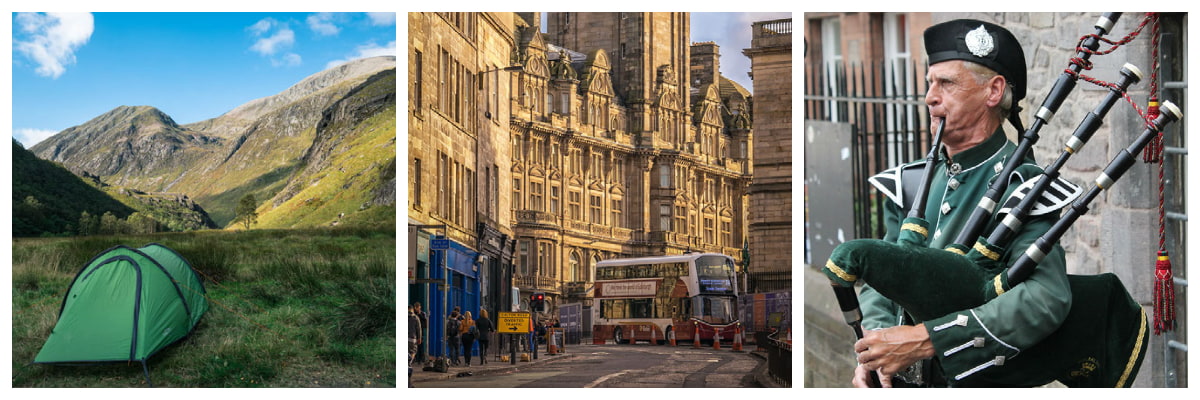
Scotland is a treasure trove of things to do and explore. From the history to stunning natural landscapes, outdoor activities and much more. I never get tired of heading to Scotland for a road trip, a weekend away or enjoying the Fringe Festival.

  • Winter Destinations UK: 14 Best Places To Visit

    Winter Destinations UK: 14 Best Places To Visit

    The days are shorter and the temperatures are dropping, but that doesn’t mean you have to hide away indoors until spring. There are plenty of amazing winter destinations in the UK to explore.

    From scenic mountain ranges to lively cities, here are some of the best places to visit during winter.

    Bundle up and get ready for an adventure!

    Belfast

    Best place to visit in December
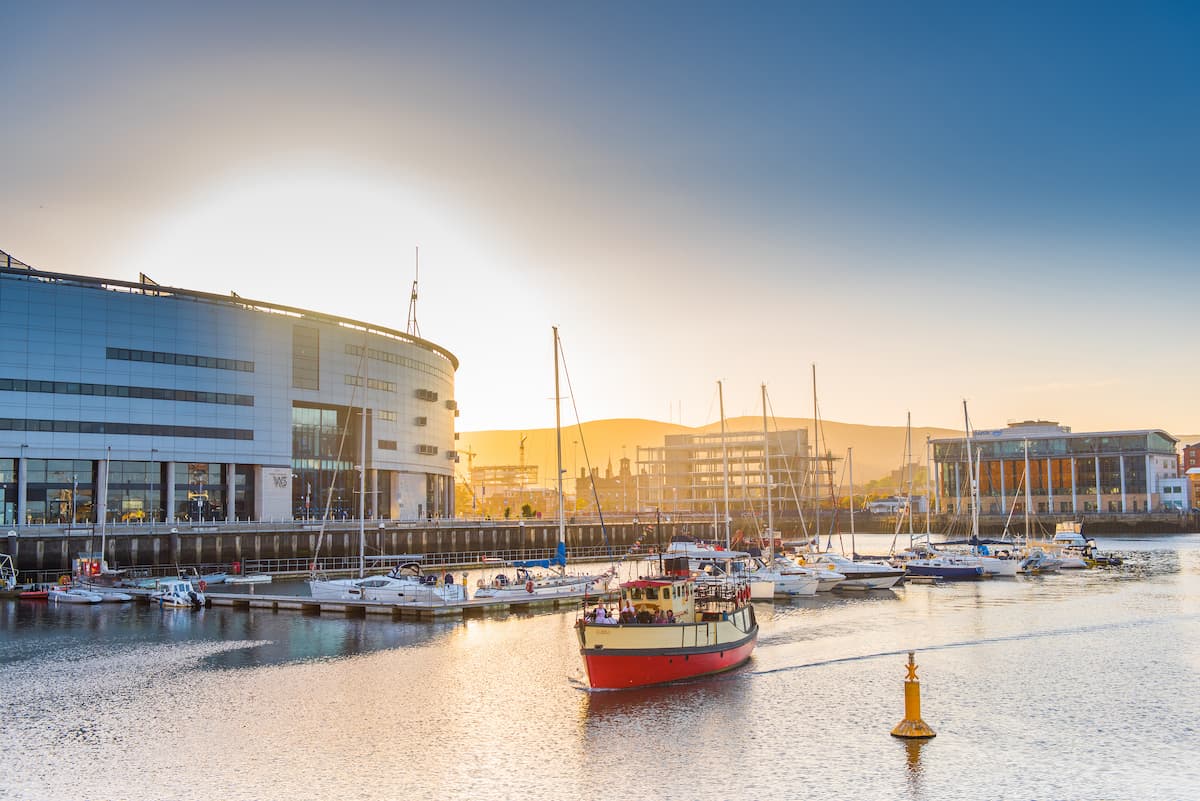
    Belfast city at night, Northern Ireland, UK
    Belfast city at night, Northern Ireland, UK

    If you’re looking for a fun-filled destination to travel to in December then the Northern Ireland city of Belfast may be right up your street.

    Brimming with lively pubs and bars with fantastic attractions, Belfast is a great location to celebrate the festive season. With temperatures as low as 5 degrees, packing your thermals instead of your bikini is recommended! 

    Visit Belfast Christmas market for a mulled wine and a browse around the vast array of Alpine-style wooden huts selling handmade Yuletide gifts and home accessories. 

    Shop for last minute gifts at Victoria Square where you can find popular high street stores such as Mango, Goldsmiths and Tommy Hilfiger. It is also home to Belfast’s one and only Apple store which may come in handy when looking for that perfect present. 

    The infamous Titanic Belfast museum is worth a visit. Explore the iconic building and dive into the history of Titanic and all those onboard the ship during that fateful time. With places to eat and shop along the way, Titanic Belfast is a great day out for all the family. 

    Belfast is jam-packed with things to do socially, however the countryside here is simply unmatched. So throw on a pair of hiking boots and explore this beautiful land.

    Newquay

    Best Place For Winter Sun
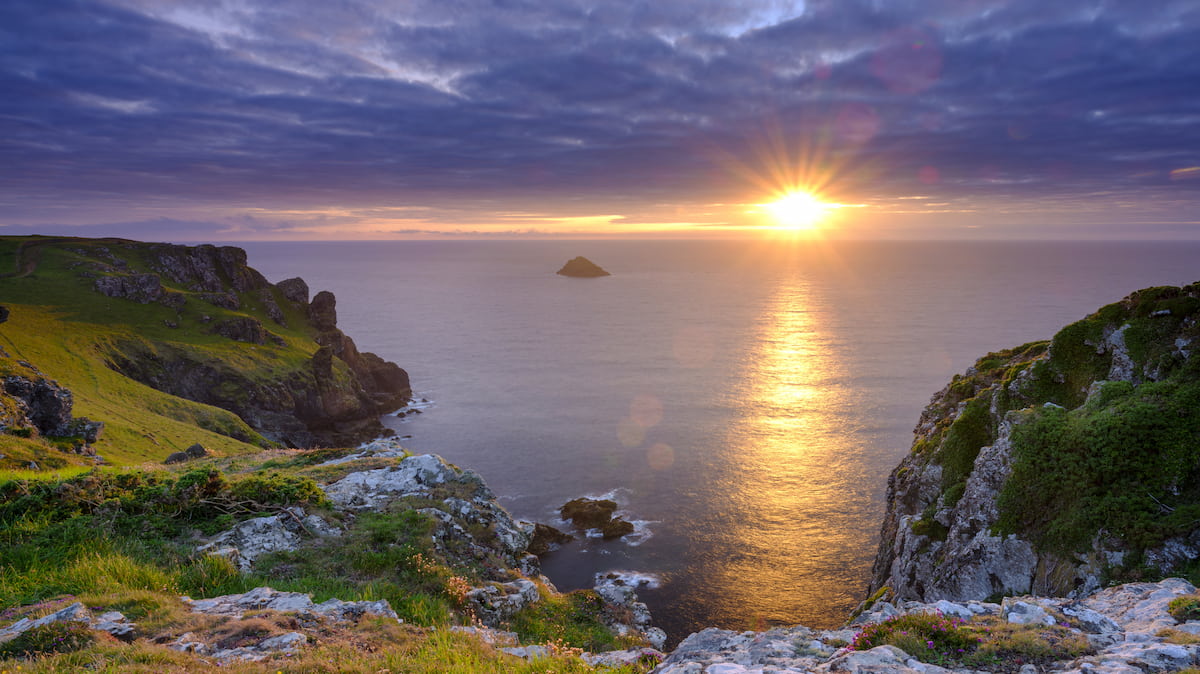
    sunset over The Rumps and Pentire Head on the North Coast of Cornwall
    Sunset over The Rumps and Pentire Head on the North Coast of Cornwall

    Even during the hottest months of the year, the sun is never guaranteed anywhere in the UK, and even more so in the winter. But if you are going to find the sun anywhere in December your best bet is to travel down south.

    Cornwall is known for reaching high temperatures during the summer months and even though it will be cold in December, that little bit of sun is good for the soul.

    You will find that Newquay is generally a lot quieter than it is in the summer months. The bars and clubs are not as busy and there are less people out and about. But don’t let that stop you from exploring this charming corner of the UK. 

    Take a wintry walk along iconic Fistral Beach which is known across Europe for its ridiculously good waves. The beach takes on a different persona in the colder months as it changes from a jam-packed tourist spot to an eerily quiet spot paired with harsh winds and crashing waves. An afternoon stroll across this terrifyingly electric beach will most definitely blow away the cobwebs! 

    Warm yourself up with some delicious pub grub from Lanherne pub and restaurant, serving traditional home cooked food in a friendly setting. 

    Keep the children entertained with a trip to Blue Reef Aquarium where they will find loggerhead sea turtles, blacktip reef sharks and thousands of vibrant shoals of fish. Book ahead to reserve your spots. 

    York

    Overall Best Place To Visit in Winter
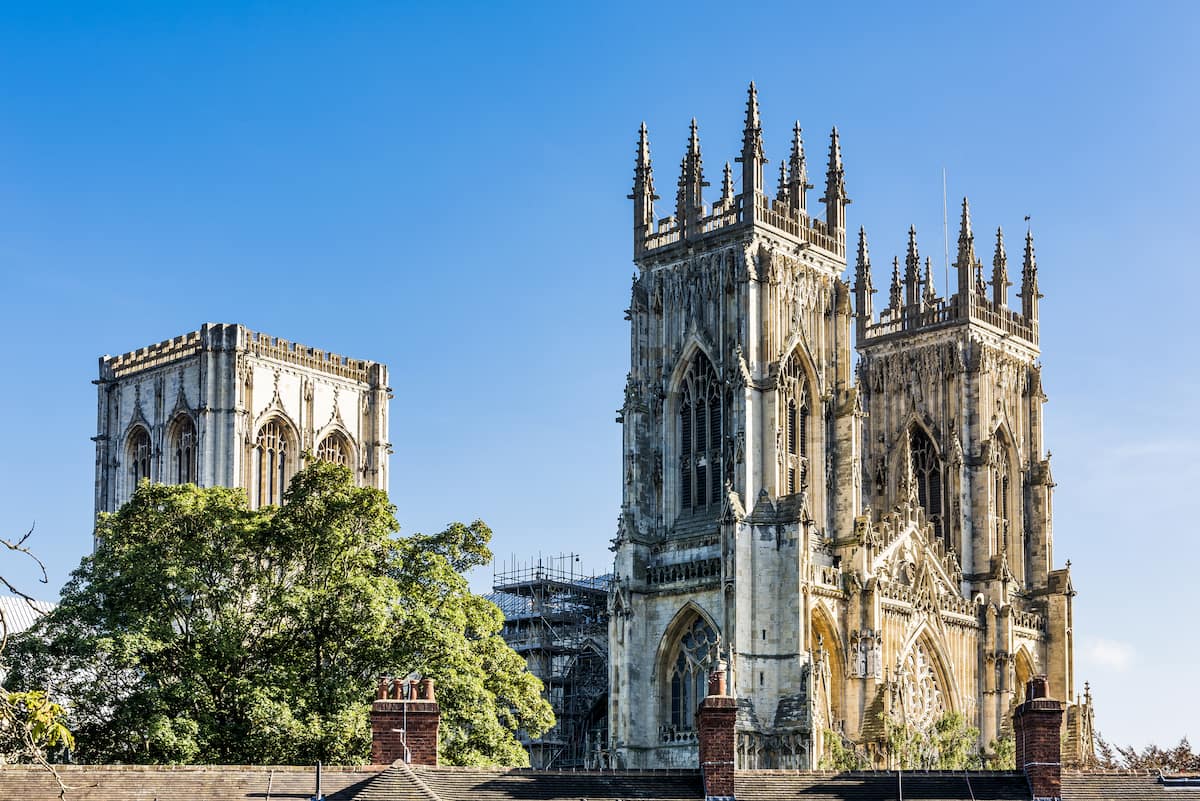
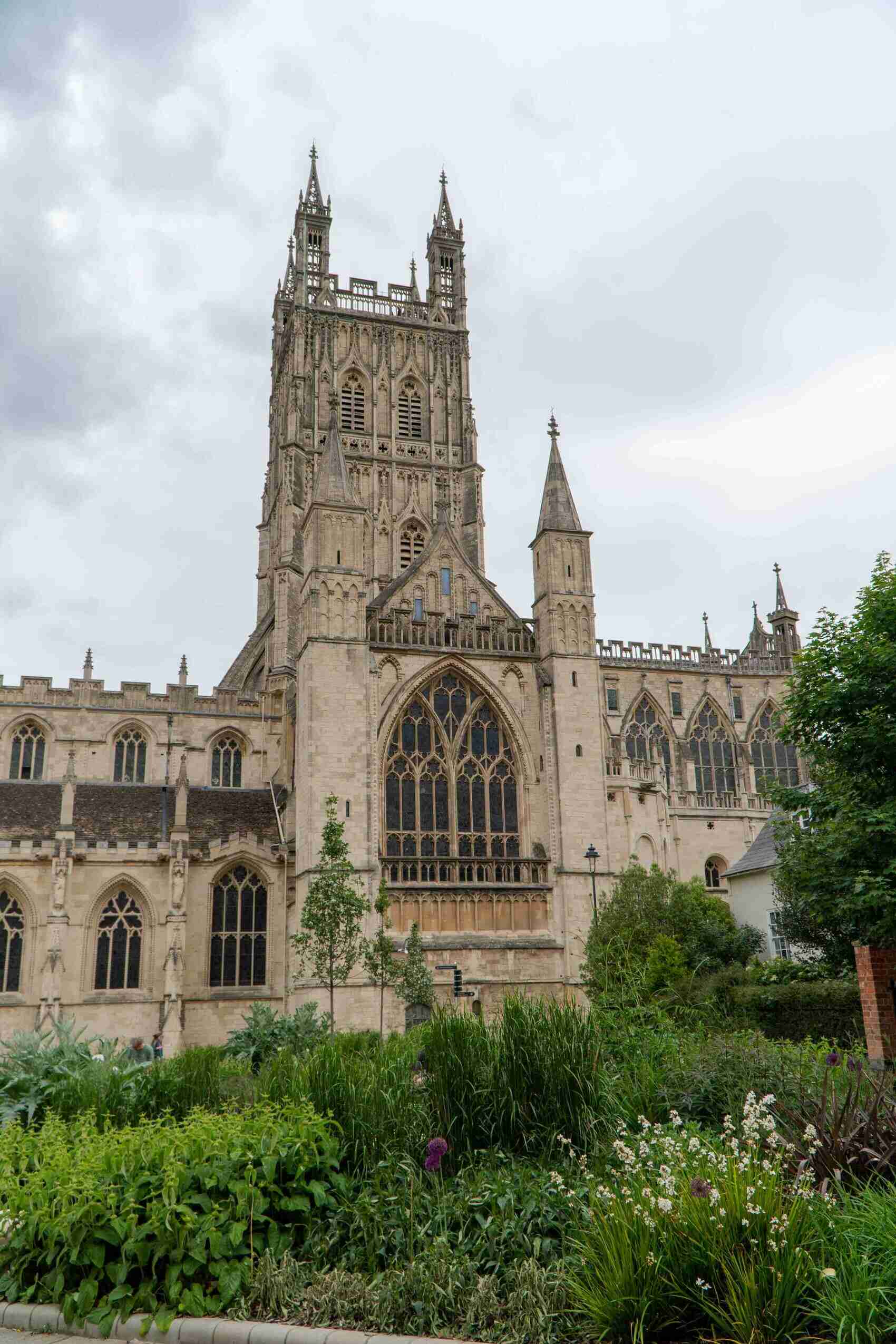
    Cathedral of York
    Cathedral of York

    York is a beautiful place to visit at any time of year. With its stunning architecture, ancient Shambles and sheer selection of pubs, bars and restaurants, you can’t go wrong. 

    Most people avoid travelling at this time of year so the town is less crowded which is great for visitors as they avoid the hustle and bustle of the busy streets. 

    Firstly, the York Christmas Markets are a must-do. Begin the festivities with a delicious hog roast bap washed down with a pint of spiced mulled cider before perusing the adorable wooden chalets for unique trinkets and handmade decorations. 

    Pay a visit to the breathtaking York Minster to see the jaw-dropping interiors of this historic cathedral. The Shambles is possibly the most visited attraction in york in which some buildings date back as far as the 13th century. Dive into the history of these timber-framed buildings that are arguably the best preserved in the world. 

    Hungry? Have a pit stop at one of the oldest pubs in York, The Old White Swan. The building dates back to the 16th century and is said to be haunted. The tallest man in the world, who stood at a whopping 8 feet tall, was also exhibited here in 1781.

    Cotswolds

    Best Place For A January Break
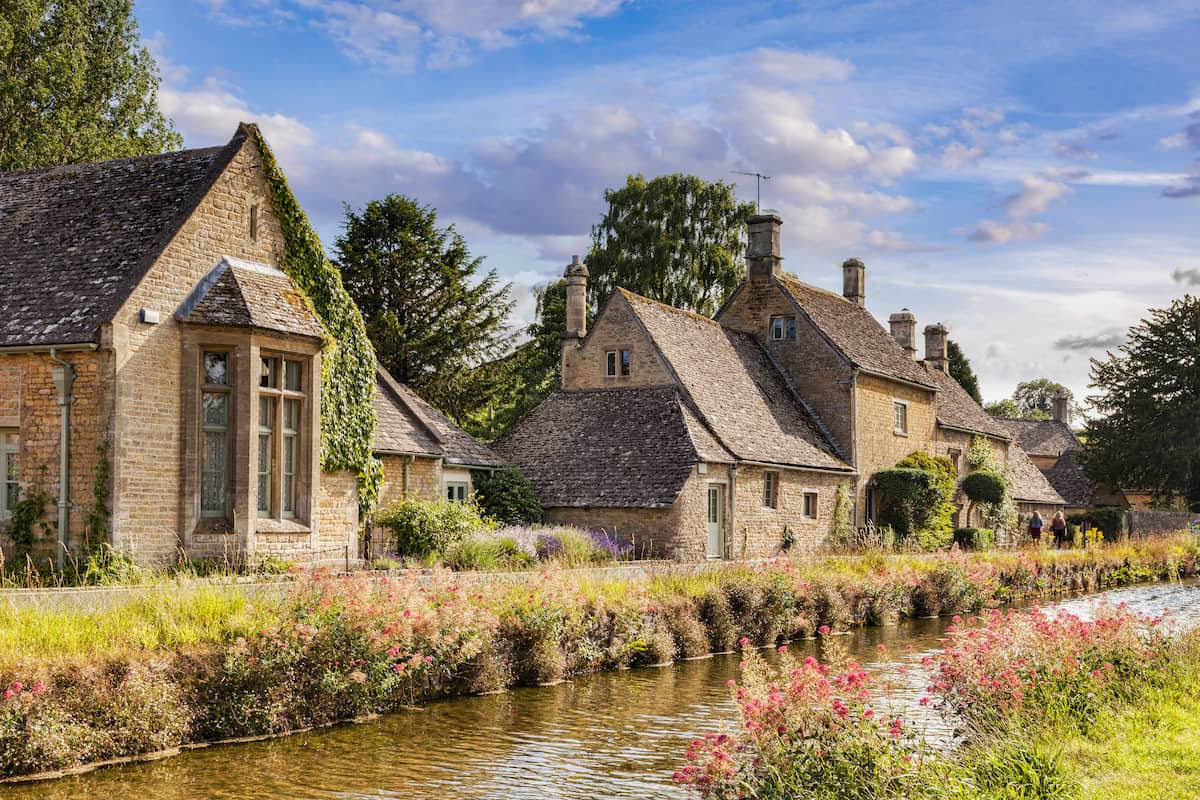
    Lower Slaughter, Gloucestershire, England
    Lower Slaughter, Gloucestershire, England

    When the festive period is over and done with, it is time to get back to reality before the “January Blues” kicks in. And when they do, just book a getaway to the picturesque Cotswolds! 

    Start the New Year with a mini break to this remarkable area of the UK known for its picture perfect landscape and long, scenic walking trails. 

    Walking through the Cotswolds is like being in a fairytale with its charming little villages and adorable bridges that cross over miniature waterways. It is a bit like Venice but on a much smaller scale. 

    Visit Churchill’s birthplace at the outstanding Blenheim Palace. Featured in the popular James Bond film, Spectre, this historic building is filled with lavish interiors and ancient ornaments. Explore the exquisite gardens adorned with climbing roses and ancient trees as you take in the splendour of this magnificent landmark.

    Whether you have donned your thermals for a wintry walk or you have spent the day exploring local attractions, there is always time for a spot of Afternoon Tea. The Old Bakery Tea Room offers a wide selection of food and drinks to keep those hunger pangs at bay. Warm your hands with a creamy Belgian hot chocolate or followed by homemade scones with a generous helping of Cornish clotted cream and jam.

    Edinburgh

    Best Place For A Winter City Break
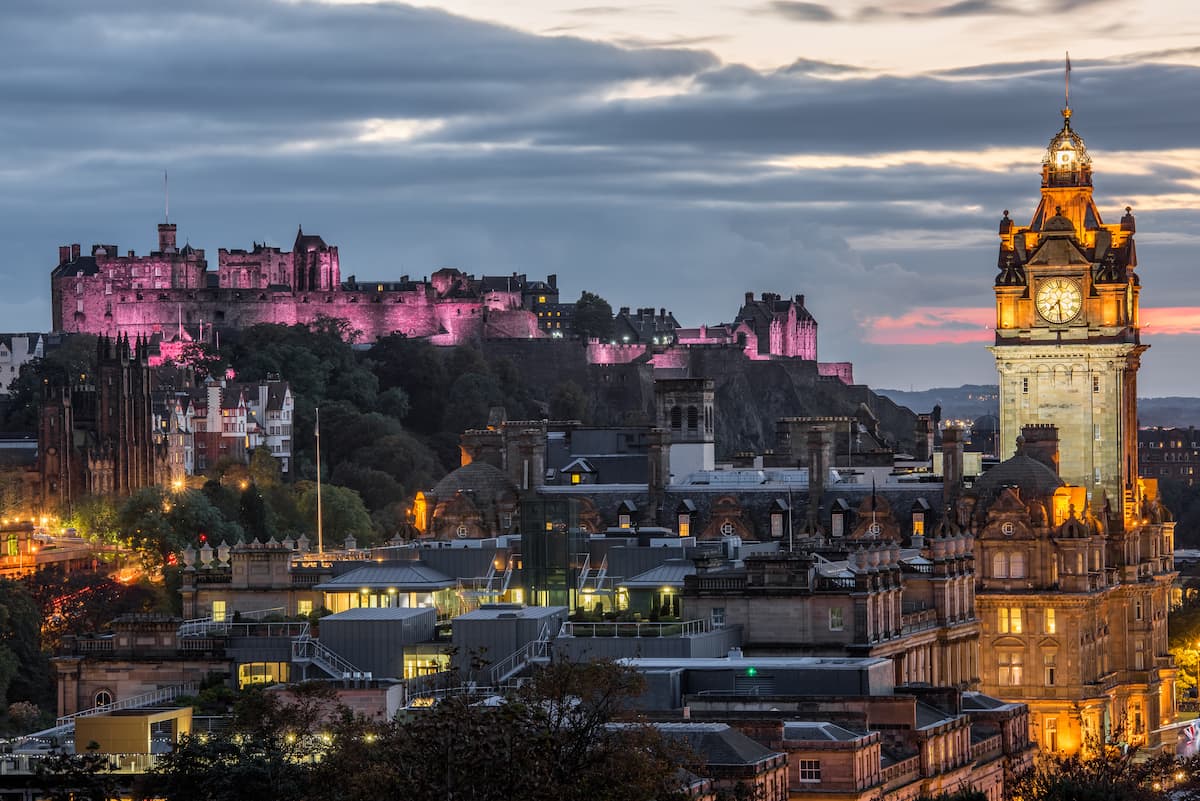
    Edinburgh city skyline and castle at night, Scotland
    Edinburgh city skyline and castle at night, Scotland

    Edinburgh is the perfect place for a fun-filled city break, particularly during the winter months as there is so much to see and do.

    Known for its sheer amount of festive activities and wild Hogmanay celebrations, the city of Edinburgh is a great choice if you are looking for an action-packed break. 

    Visit the Christmas markets at Princes Street Gardens where you will find plenty of festive food and drink, an ice rink, Santa’s Grotto and an exciting children’s funfair. The streets are layered with glamorous decorations and twinkling lights which can be observed while strolling through the cobbled streets. George Street has produced some amazing light displays over the years which are always worth seeing. 

    Winter isn’t just about Christmas though, so why not dig deep into the fascinating history of the Scottish capital, by enjoying a day out at Edinburgh Castle. There is so much to see here including The Great Hall, the 12th century chapel, the cannons and the dazzling Scottish Crown Jewels. Other Royal attractions include  Royal Yacht Britannia and Holyrood Palace. Booking your tickets in advance is strongly advised as these attractions are busy all year round. 

    Put on your bobble hat and gloves to take a walk along Edinburgh’s Royal Mile. Attractions include the Museum of Edinburgh and the Scotch Whisky tasting museum – that will warm you up! 

    Whether you need to shop for Christmas presents or to hit up the January sales, Edinburgh has you covered. With a vast amount of designer and high street stores, you are sure to find what you are looking for. There is no shortage of pubs, bars and restaurants either so treat yourself to a well-deserved meal to celebrate your memorable city break in Edinburgh.

    Outdoor Activities

    The temperature may be close to freezing but that shouldn’t stop you from getting outdoors to take part in some utterly thrilling activities.

    Hike in the Lake District 
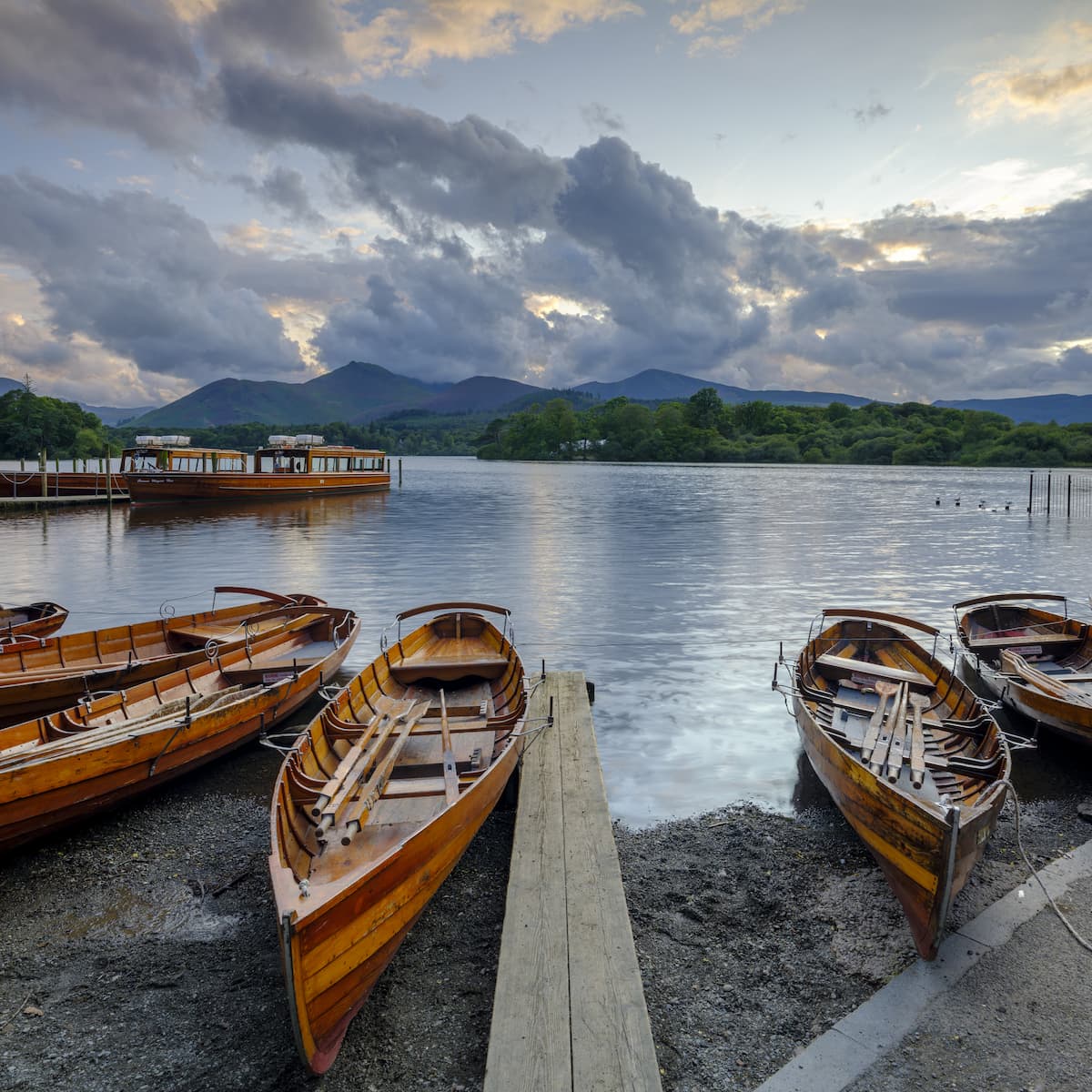
    Derwent Water from Keswick, Lake District National Park
    Derwent Water from Keswick, Lake District National Park

    The best things in life really are free. At least they are if you love hiking! 

    With plenty of marked routes, the Lake District is the perfect place for both experienced and amateur hikers. Whether you are looking for an intense hike or a leisurely stroll, there is a walk for everyone in this picture perfect haven. 

    Glenridding will take you on a 6.5 mile journey to Howtown where you can see great views of Ullswater and scenic fields and hills. Alternatively, the route from Aira Force to Glenridding will take you on a much shorter walk where you will pass by a stone arch bridge, a waterfall and ancient trees. 

    The beauty of hiking is that it is enjoyable whatever the weather. Breathing in the fresh countryside air does wonders for the mind and doesn’t cost a penny!

    Surf down South

    You may need more than just a pair of swimming shorts to go surfing in these sub zero temperatures. Cornwall is renowned for having some of the best waves along the English coastline due to the build-up of low pressure from the Arctic and Atlantic. 

    Croyde Bay is one of the most popular surfing destinations in the UK where you will find plenty of other surfers as well as surfing lessons and some great local pubs for a spot of lunch afterwards. 

    Snowboard in Scotland

    For a spot of snowboarding, head to Nevis Range Mountain for some serious downhill action. Located in The Highlands, these slopes have 35 ski runs which cross over Britain’s tallest mountain, Ben Nevis.

    The most popular ski resort can be found at Cairngorms Mountain. This ski resort has 23 ski runs and can be found in Cairngorms National Park which spans over 1400 square miles and is Britain’s largest National Park. 

    You don’t have to be an experienced skier to take part as lessons are available at most resorts to teach you the basics. You will probably get a laugh out of it too!

    Climb Snowdon
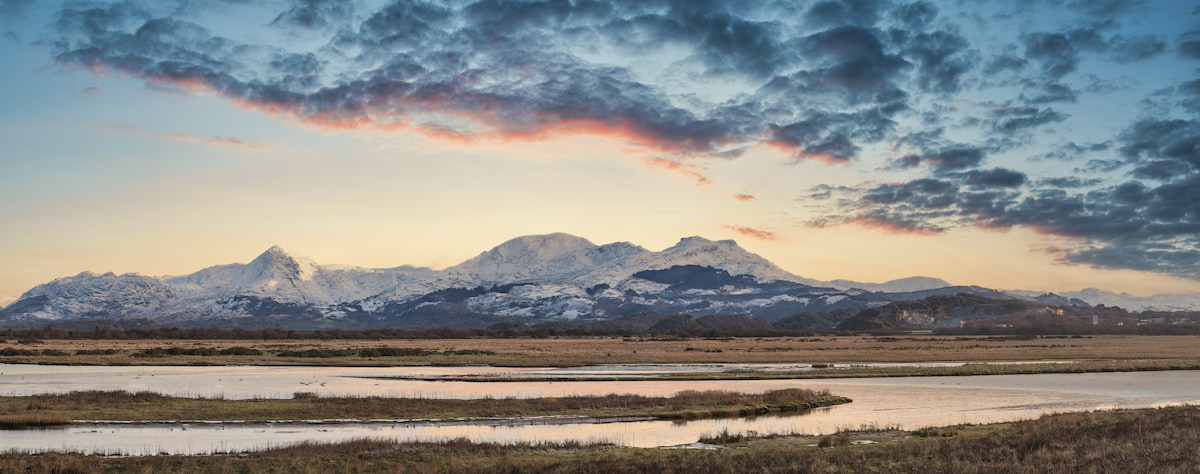
    Snowdonia snowcapped mountains and sunset
    Snowdonia snowcapped mountains and sunset.

    Snowden is one of the most popular mountains to climb in the UK and is visited all year round. There are six possible routes that will take you to the top of the 1,085 metre summit and the views from the top are definitely worth the climb. 

    Each route is around seven to nine miles to the top so be prepared for a full day of hiking. Children can take part however, it may not be too enjoyable for them, particularly in low temperatures. 

    You do not need to have any previous hiking experience and remember to pack a bag with food, drinks, a compass and a map.

    Go for a Wintry Dip in Derry

    Will you be daring enough to take a dip in the icy waters of Portnahapple? We didn’t think so! 

    Portnahapple can be found along the scenic coastline of County Derry when taking a walk down Port Path. Here you will find an old natural swimming cove which is sometimes used by visitors in the warmer months. 

    Port Path is a 6.5 mile trail where you will come across national treasures such as St. Patrick’s Well which according to history, was used to store Holy Water in the Stone Age. You may also stumble upon small stone houses in which ice was once stored during the colder months to preserve salmon when temperatures increased. 

    National Parks

    Booking a winter destination near a National Park ensures you will make the most out of your mini break away from reality. Many parks are open all year round with some great activities for thrillseekers and adrenaline junkies.

    The Peak District National Park

    Best For: Caving
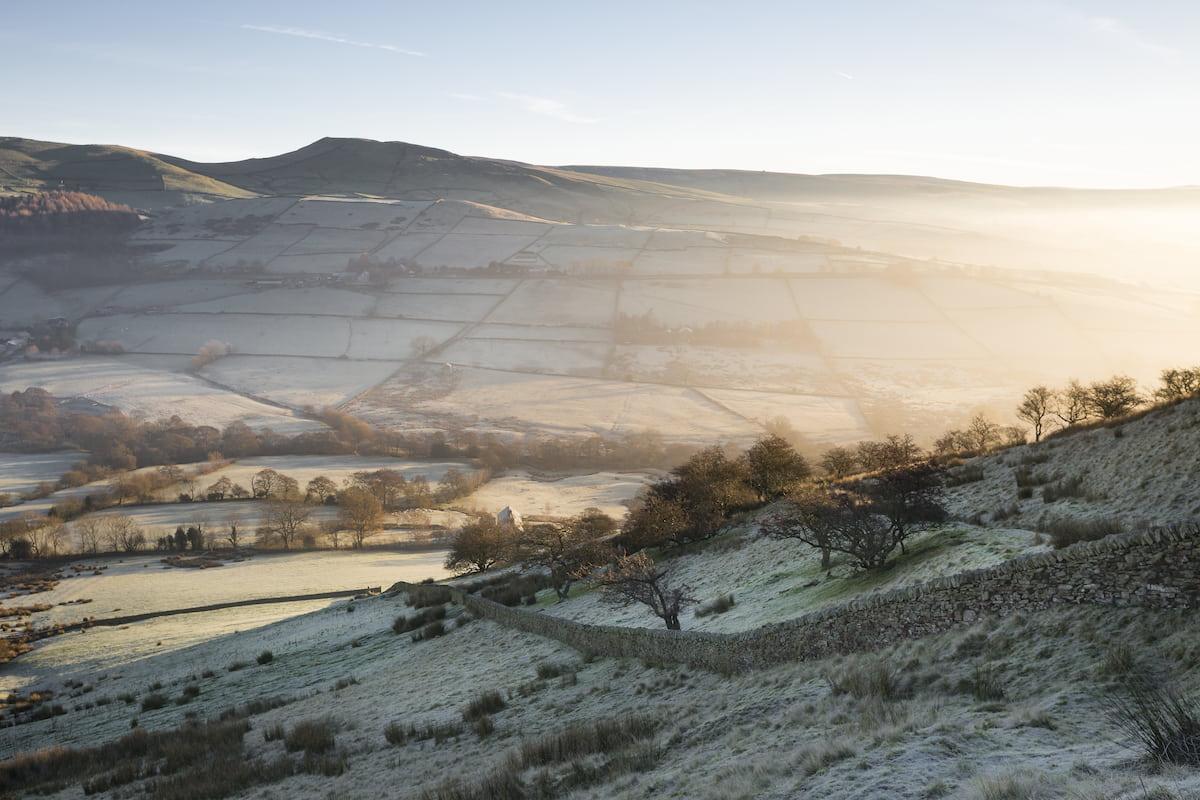
    Cracken Edge in The Peak District
    Cracken Edge in The Peak District.

    The Peak District is where you will find the highest natural cavern in the UK. Titan Cave in Castleton was discovered by local pot-holers in 2000 and is a whopping 464 feet from top to bottom. Caving is one of the most popular things to do in Derbyshire and it’s easy to see why.  

    You can try your hand at caving under the guidance of an expert and all the necessary equipment will be provided for you. All you need to do is join in! 

    Alternatively, there are many underground formations dotted around the Peak District which you can see by visiting a show cavern. These safe and well-lit caves make for a memorable and informative experience. 

    Exmoor National Park

    Best For: Stargazing

    Well known for its vast amount of walking trails, Exmoor National Park has dozens of paths that cater to all fitness levels and is the best place for stargazing. 

    Exmoor has some of the darkest skies due to minimal light pollution. If you look closely on a cloudless night, you will see the milky way along with magnificent astronomical sights and thousands of twinkling stars. 

    There is plenty to see on the walking trails such as vast bodies of water and lush countryside. Wildlife such as Red Deer and Ponies can be seen in their natural habitat, grazing lazily and resting. Be careful not to startle these enchanting creatures. 

    Pembrokeshire Coast National Park

    Best For: Coastline walks
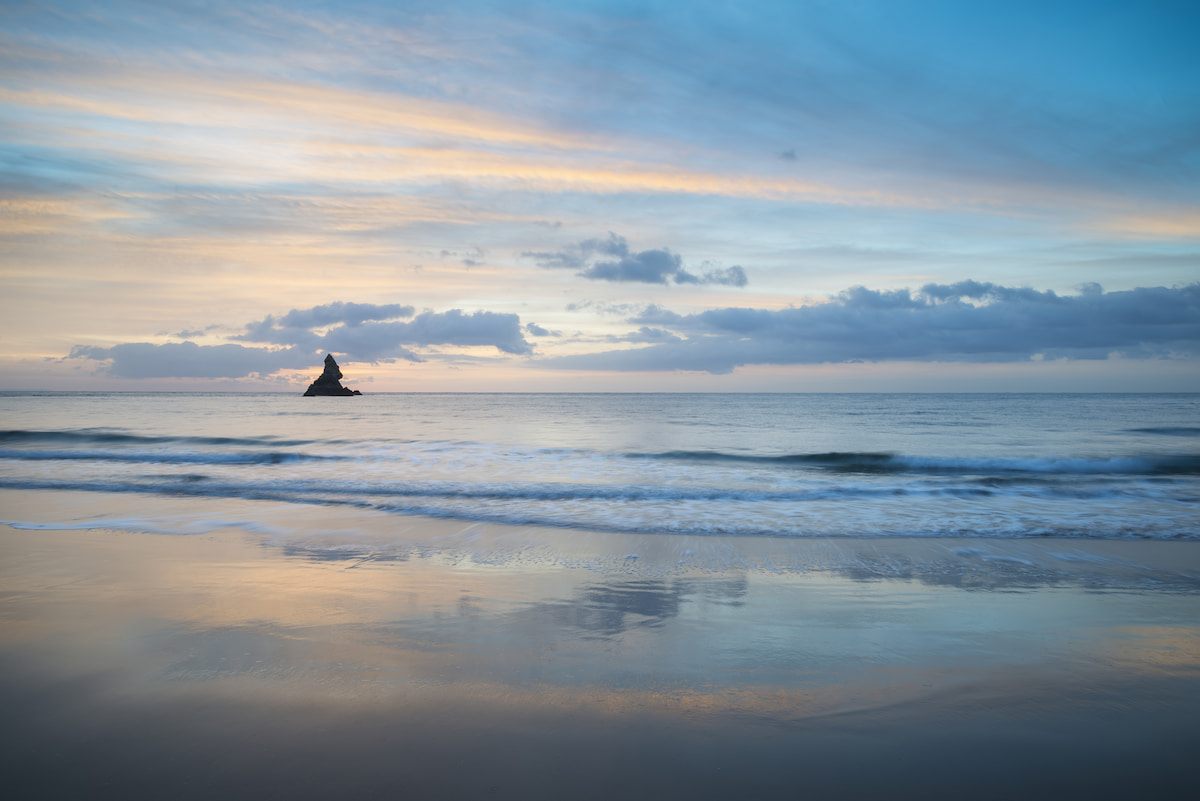
    Broadhaven Bay beach on Pembrokeshire Coast in Wales
    Broadhaven Bay beach on Pembrokeshire Coast in Wales.

    Get ready for some phenomenal seaside scenery by visiting the Pembrokeshire Coast. Take in the wintry Welsh sun and fresh sea air with a walk along this fantastic trail. 

    If you look closely you will be able to spot Whales and Dolphins in the ferocious sea below. The cliff tops are great for birdwatching and witnessing the striking sunsets in the early evening.

    Pembrokeshire Coast National Park is one of the smallest in the UK, but don’t let that stop you from exploring the wonderful scenic landscape and magnificent sea views. 

    Loch Lomond and The Trossachs National Park

    Best For: Boating
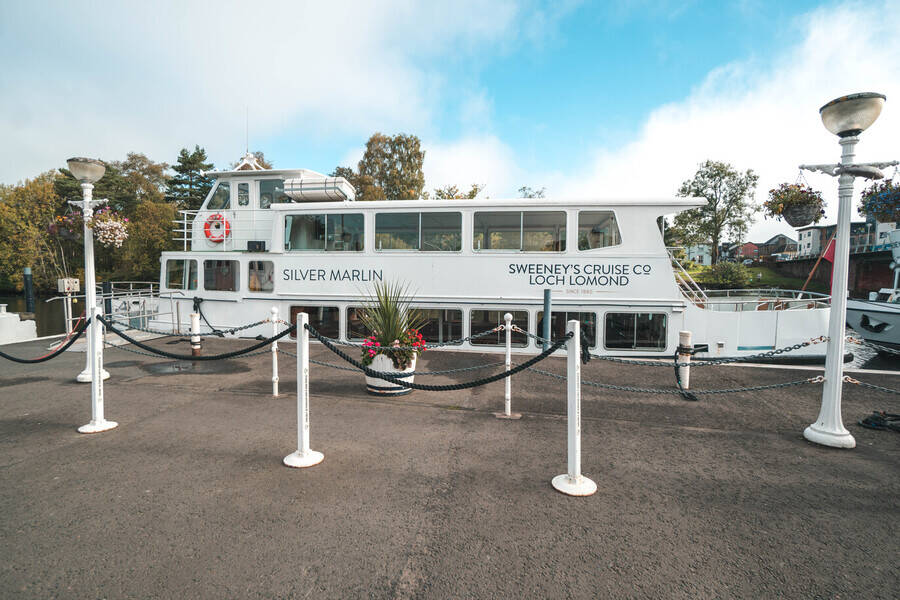
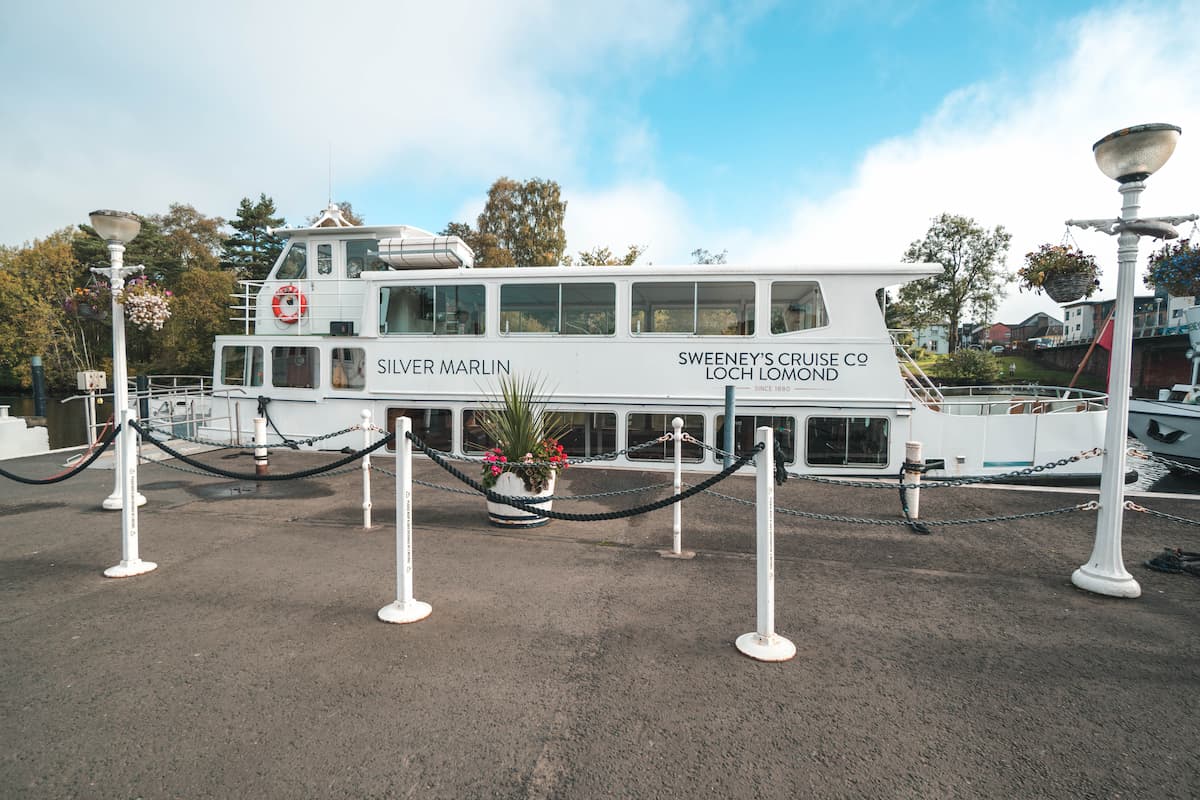
    Loch Lomond Cruise with Sweenys
    Loch Lomond Cruise with Sweenys

    In 2002, Loch Lomond and The Trossachs became the first of two Scottish National Parks established by the Scottish parliament. 

    Rent a boat and cruise the icy waters of Loch Lomond to take in the stunning natural beauty of the Scottish landscape. There are over 30 islands dotted around the loch, so feel free to pay a visit to any one. 

    “The Trossachs” refers to a romantic area of mysterious woodland, rocky hills and views of the glittering lochs. Enjoy a wintry walk with the wind in your face which shares a link with some of the most famous poets in history including Sir Walter Scott, Coleridge and Wordsworth. 

    Loch Lomond National Nature Reserve is hauntingly beautiful in the winter months. The bare branches give way to breathtaking views of the surrounding area and you will hear the distinctive call of geese flying high above in the wintry skies. 

    Winter is a great time to visit for admiring the waddling ducks and elegant swans. There may not be much colour during this time of the year, but the impressive snow-capped mountains and piercing blue skies are enough to make your visit to this National Park an unforgettable experience. 
  • 17 Best UK Christmas Markets to Get Festive At

    17 Best UK Christmas Markets to Get Festive At

    Christmas Markets in the UK are some of the best, places like Winchester have often been voted the best Christmas Market in Europe. You know you’re going to get in the festive spirit with these locations.

    It’s one of the most popular events during this time of year, with thousands of visitors flocking to see what’s on offer at each location. From traditional German food stalls selling sausages and mugs of steaming hot spiced cider, to French patisseries serving up delicious pastries and cakes, there are plenty of options for everyone. And if you want something more unusual then why not try some local craft beers or wines?

    Let’s get in the festive vibe with these 17 Best Christmas Markets in the UK.

    1. Manchester Christmas Markets

    Dates: December 8 – December 22, 2021

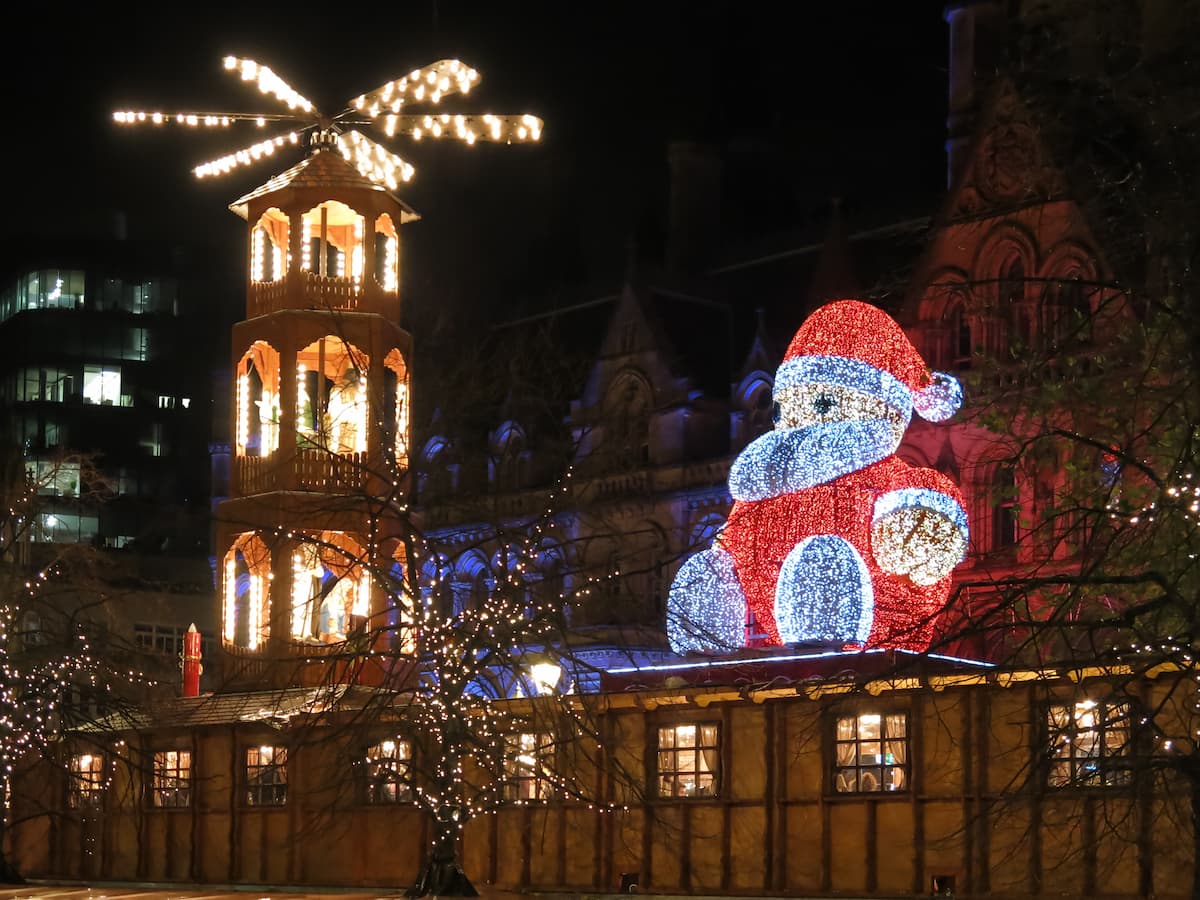
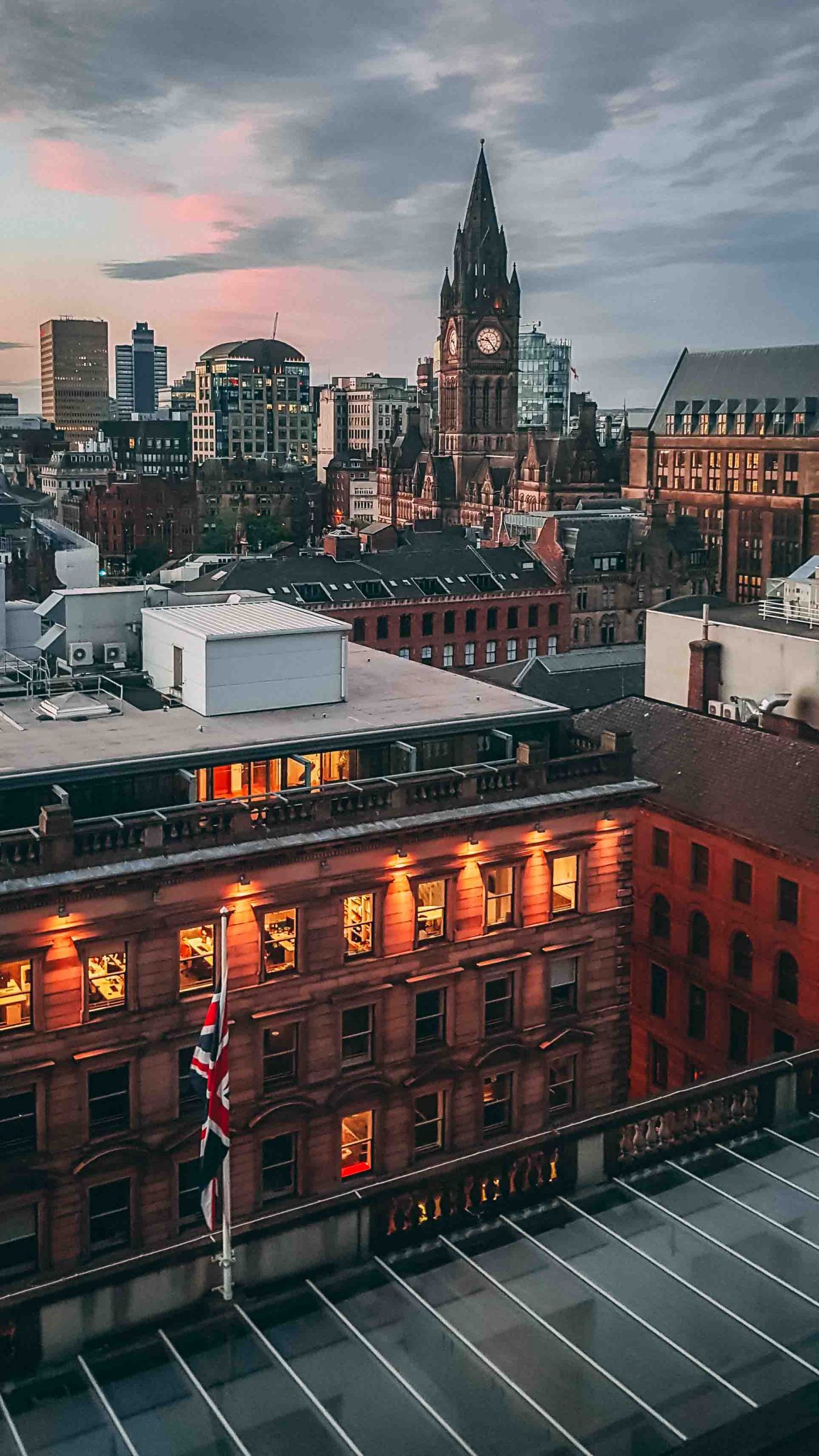
    Manchester Christmas Market
    Manchester Christmas Market

    Launched in 1999 in St. Annes Square, the award-winning Manchester Christmas Markets are some of the best in the northwest. Unlike some, the Manchester markets are stretched out across the town centre and attract millions of visitors annually. 

    These Christmas markets are the perfect place to meet for a festive mulled wine with friends or if you are looking to purchase the perfect Yuletide gift for that special someone. Even though they are spread out, Manchester is a pretty small town, so it does not take long to get around it.

    Other attractions include the mesmerising lights display at Piccadilly Gardens, or why not try out your ice skating skills on the ice rink at Cathedral Gardens?

    2. Winchester Christmas Markets

    Dates: November 19 – December 8, 2021

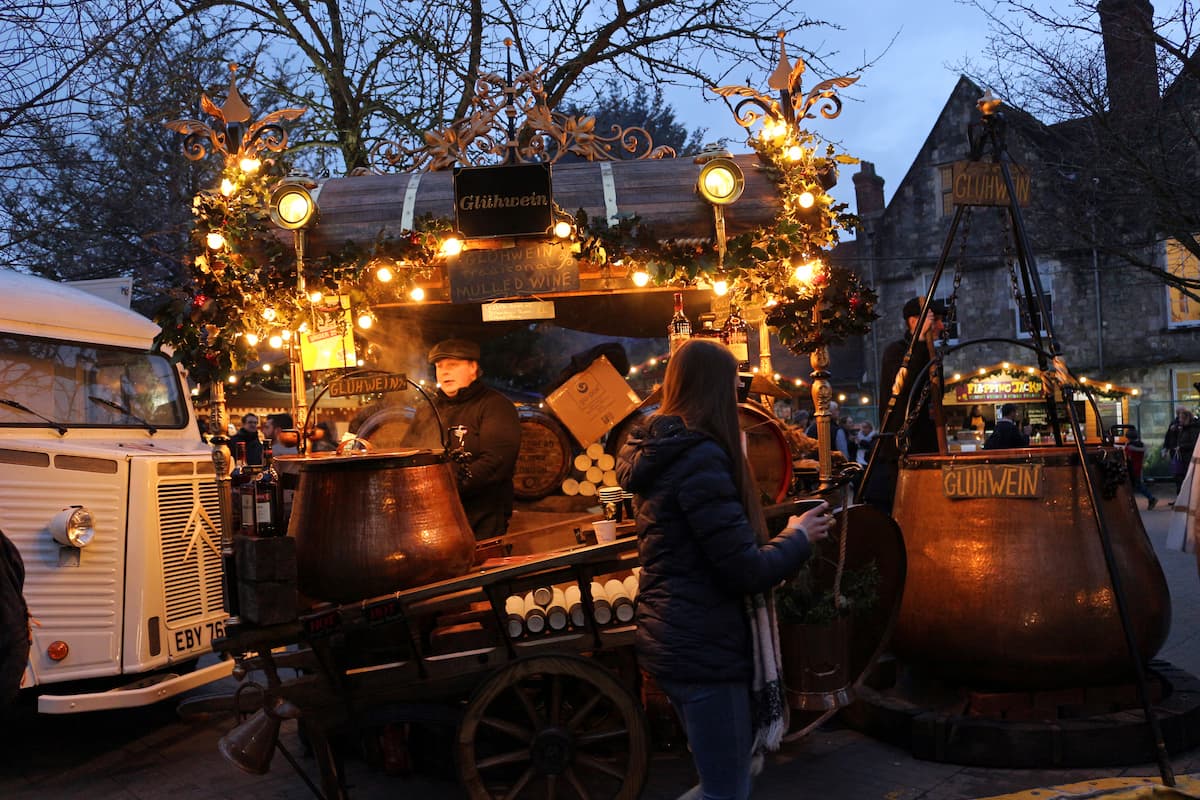
    Wine stall at Winchester Christmas Market
    Wine stall at Winchester Christmas Market

    Consistently voted one of the UK’s best Christmas markets,  Winchester has been voted the second-best place in the UK for its markets which are held in none other than Winchester Cathedral itself.

    Let go of all worries by immersing yourself in the hustle and bustle of these lively Christmas markets. German delicacies are aplenty in this place, including succulent Bratwurst hot dogs and raisin and walnut stollen. Our mouths are watering just thinking about it!

    3. Edinburgh Christmas Markets

    Dates: November 12, 2021 – January 5, 2022

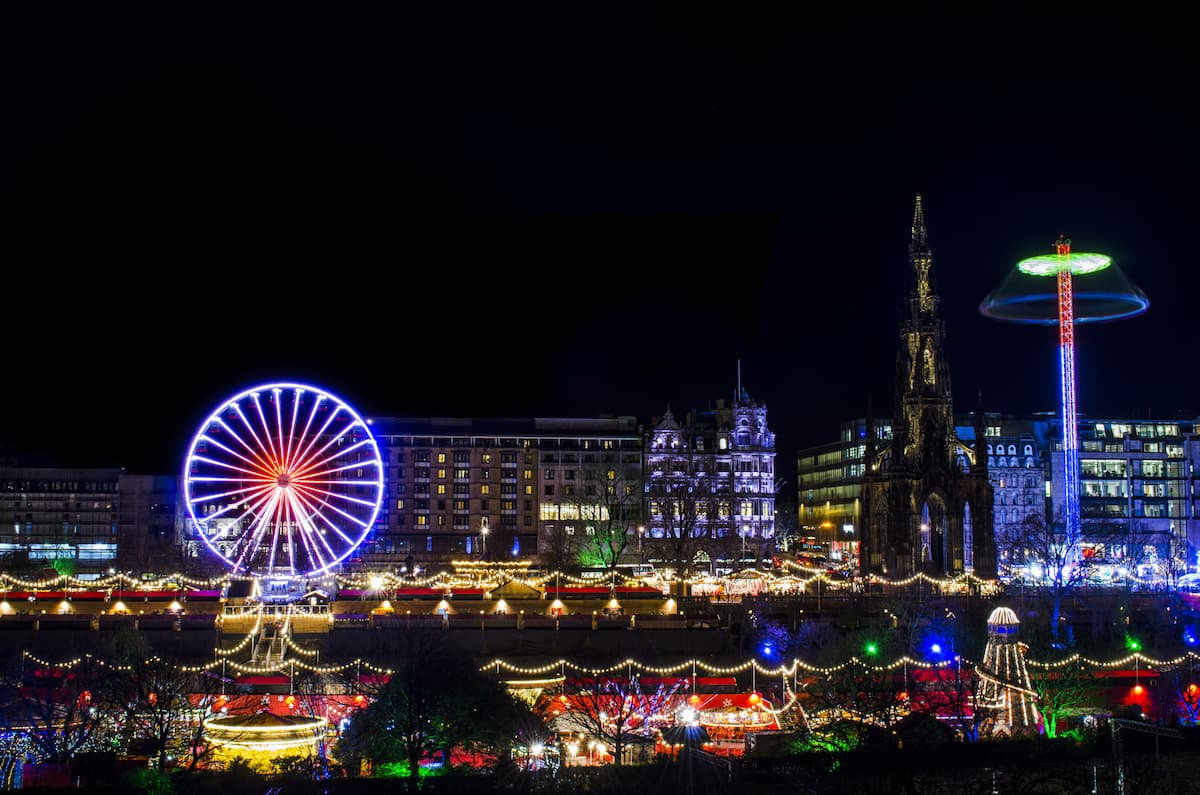
    Edinburgh during festive season
    Edinburgh during festive season

    Edinburgh Christmas Markets are one of the most popular in the UK. Known for its festivals, Edinburgh is not shy when it comes to providing for tourists. The Edinburgh Christmas markets not only cater to the public with ample food and drink but fun attractions such as the Ferris wheel and the star flyer can also be enjoyed by couples and families.

    While the main markets are based in East Princes Street Gardens – with the breathtaking Edinburgh Castle as the backdrop – there are more along the Royal Mile, which is just a short walk away.

    Fancy a romantic, illuminated walk? Then look no further than the Street of Light, whereby 60,000 lights are put on display annually. This happens on George Street or the Royal Mile and is a truly magical sight.

    If you have visited Edinburgh city before, you will know that parking can be a nightmare, so our advice would be to use public transport that is reasonably priced and frequent.

    4. Bath Christmas Market

    Dates: November 24 – December 19, 2021

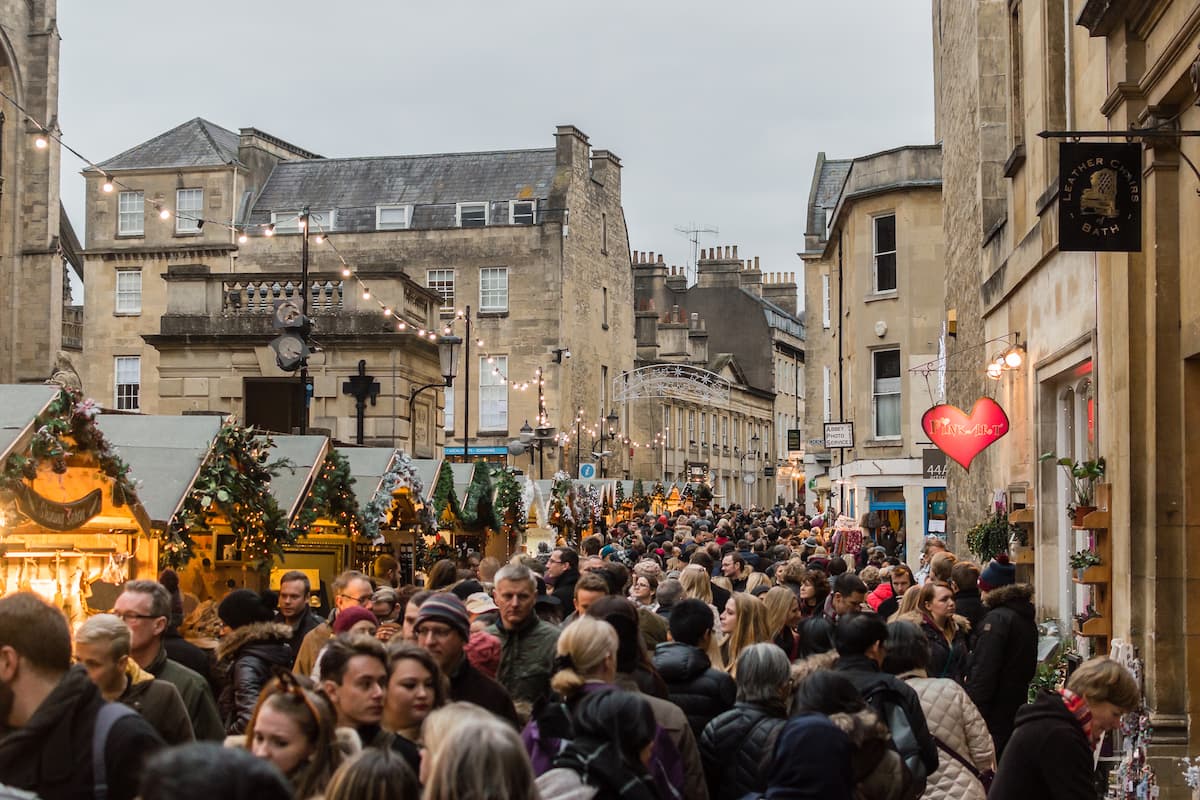
    Bath Christmas Market
    Bath Christmas Market

    Known for its beautiful architecture, Bath also has some great Christmas markets where you can feast on tasty potato pancakes and enjoy a delicious mug of creamy hot cocoa.

    Each stall is run by an independent business, serving the public with food, drinks or unique handcrafted gifts. The markets are all within walking distance of one another and can be found around the town centre and nearby the stunning Bath Cathedral.

    However, the most exciting attraction is the Victorian merry-go-round, which is a hit with both adults and children every year. The town of Bath is known for its stunning architecture, which looks even more magical at Christmas.

    5. Hyde Park Winter Wonderland

    Dates: November 19, 2021 – January 3, 2022

    Winter Wonderland in Hyde Park

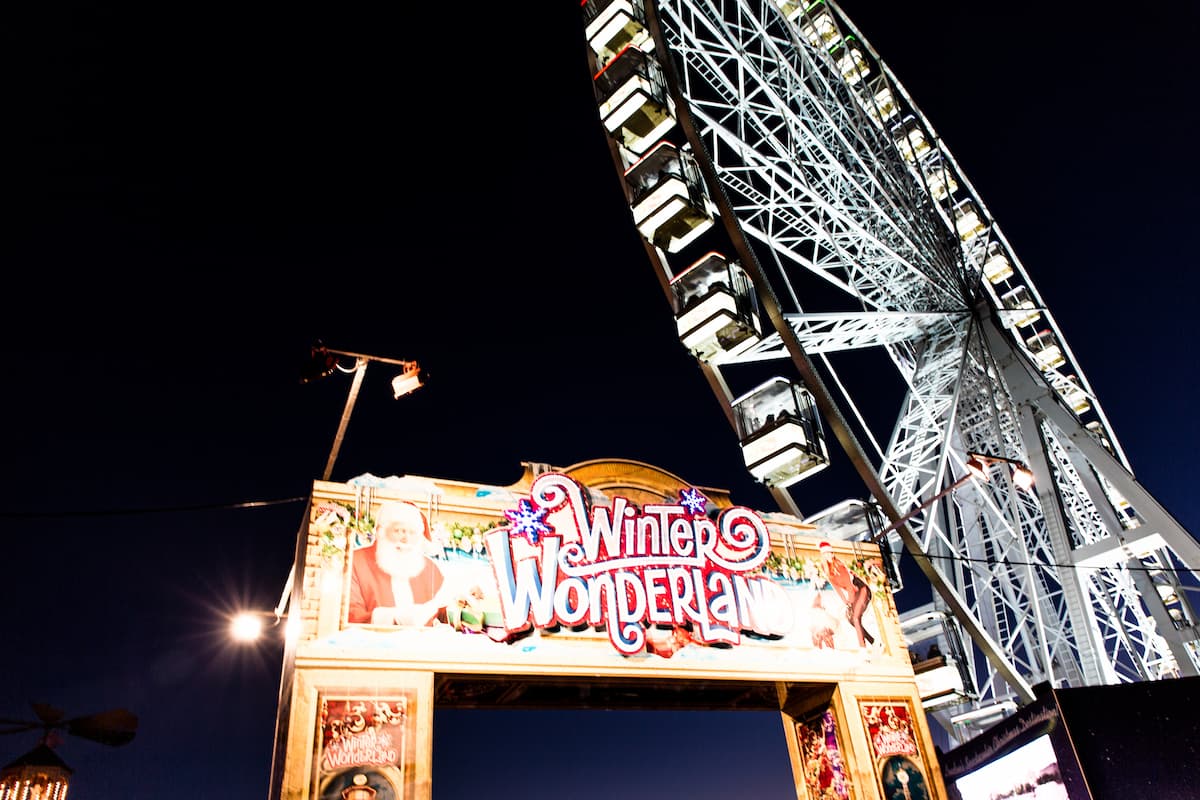
    If you are celebrating Christmas in London this year, pay a visit to Winter Wonderland at Hyde Park. Here you will find over 100 wooden huts serving visitors the finest German delicacies and festive drinks. Handmade trinkets and ornaments can be purchased if you are looking for the perfect Christmas gift.

    Not only is this place blanketed by fairy-lit stalls, but there is also an ice rink, fairground rides, and it wouldn’t be complete without a visit to Santa’s grotto! There is something for everyone at Winter Wonderland, but although entry is free, many of the rides are not, so think ahead and book in advance to avoid disappointment.

    Driving to this location can be a bit of a nightmare as the roads in London are particularly busy. Public transport is the best way of getting to Winter Wonderland.

    Here’s more London Christmas Markets you can visit!

    6. Birmingham Frankfurt Christmas Market

    Dates: November 4 – December 22, 2021

    Crowds enjoying the German Christmas market in Birmingham
    Crowds enjoying the German Christmas market in Birmingham

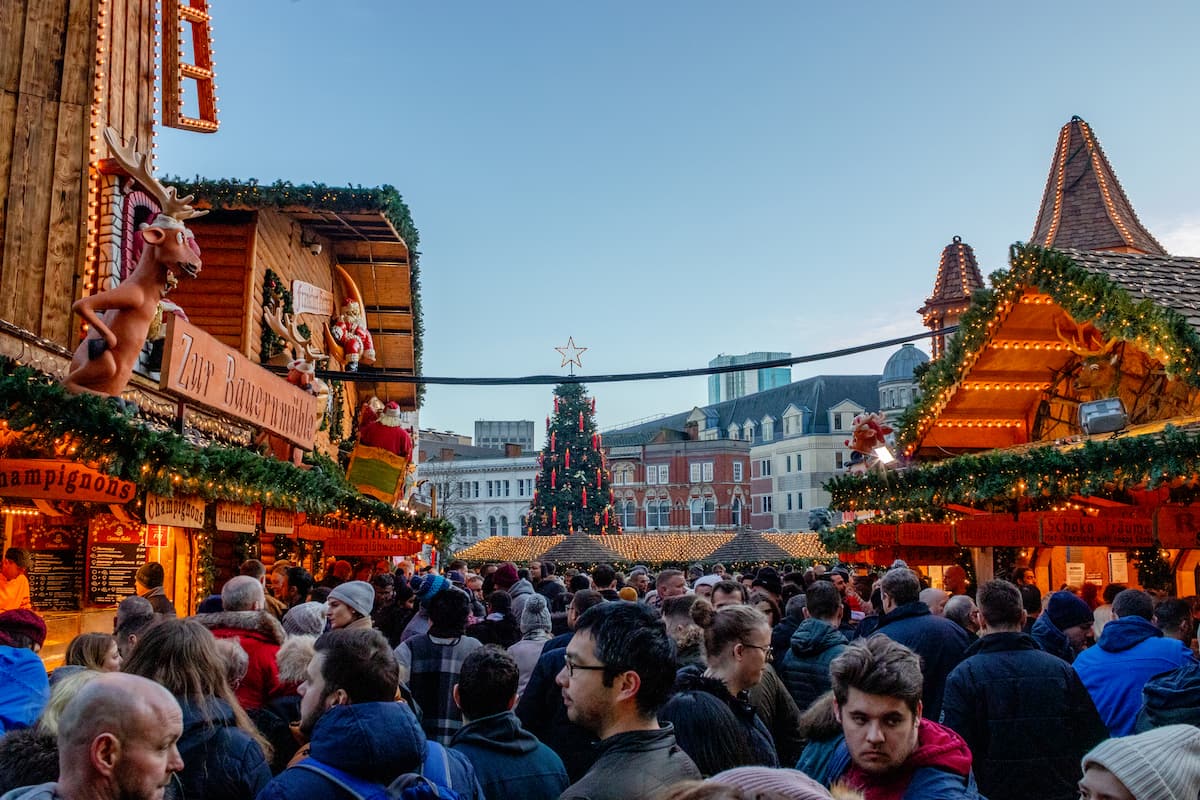
    The Birmingham Frankfurt Christmas Market is known as the largest market outside of Germany and Austria. With over 80 fairy-lit wooden huts, the markets stretch across the city centre, serving visitors freshly baked churros with chocolate and steaming mugs of mulled wine. Handcrafted decorations and framed festive pictures, as well as unique toys and games for children, can be purchased.

    The Birmingham Frankfurt Christmas market is easily one of the best Christmas markets in the UK. Therefore, it is also one of the busiest, particularly over the weekend. If the hustle and bustle isn’t quite your thing, a good tip is to arrive around lunchtime when they are just warming up.

    Again, public transport is heavily advised, and the New Street train station is just a few minutes walk from the markets that offer free entry to everyone.

    7. Belfast Christmas Markets

    Dates: November 20 – December 23, 2021

    belfast christmas markets

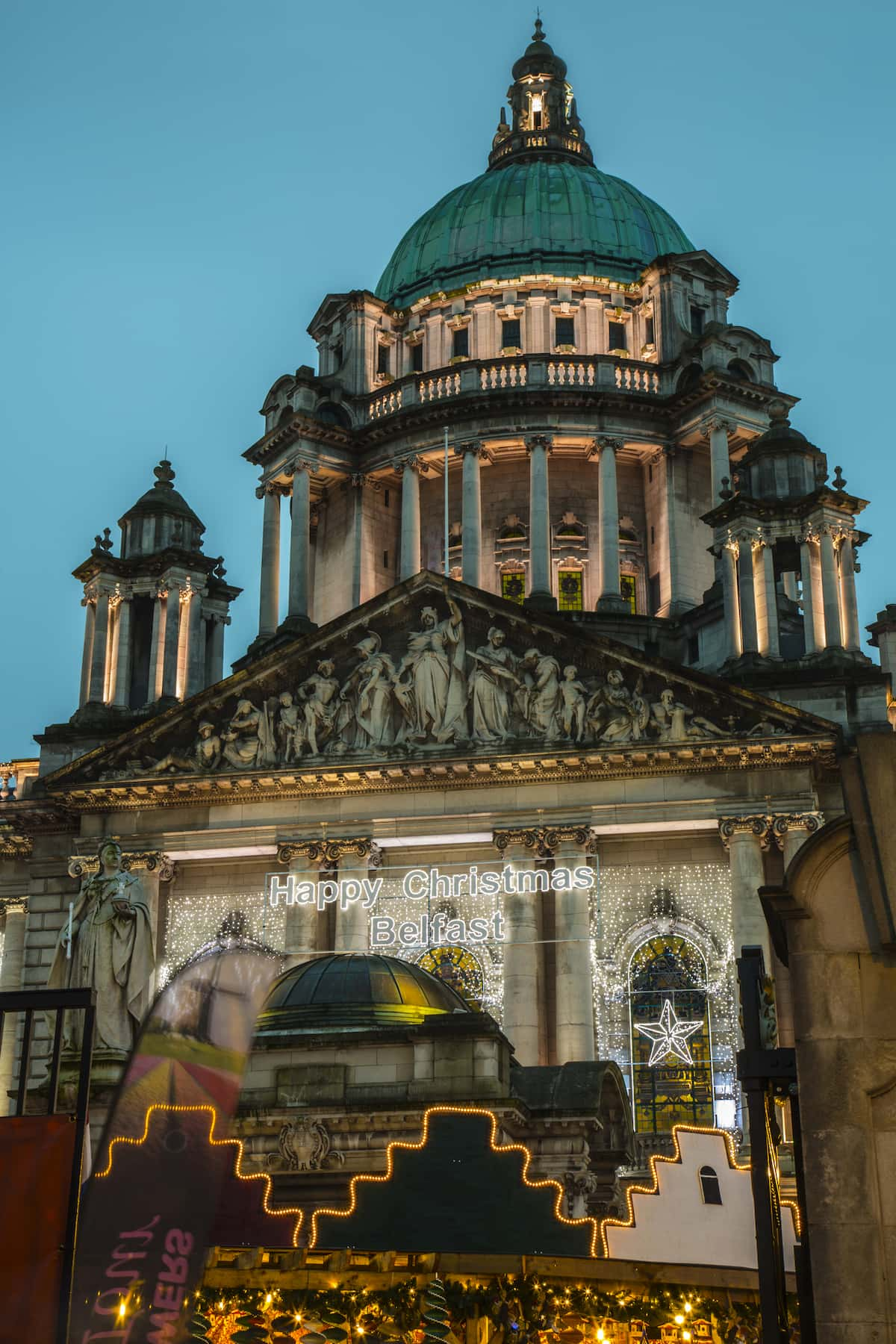
    Known as Northern Ireland’s main Christmas market, it certainly doesn’t disappoint. The adorable Alpine huts keep customers satisfied by serving up tasty treats and drinks. There are even two large heated beer tents for those who want to sit down and enjoy a stein of beer or glühwein (mulled wine).

    If that isn’t enough, there are also fairground rides for both adults and children to enjoy before visiting Santa in his grotto. The Belfast Christmas Markets are erected outside Belfast City Hall, which is a remarkable building on its own. In fact, once you have finished at the markets, why not take a tour of the City Hall for free?

    8. Southbank City Centre Christmas Markets

    Dates are yet to be confirmed, but they usually run from mid-November to early January.

    craft stalls at Christmas market at the Southbank
    Craft stalls at Christmas market at the Southbank

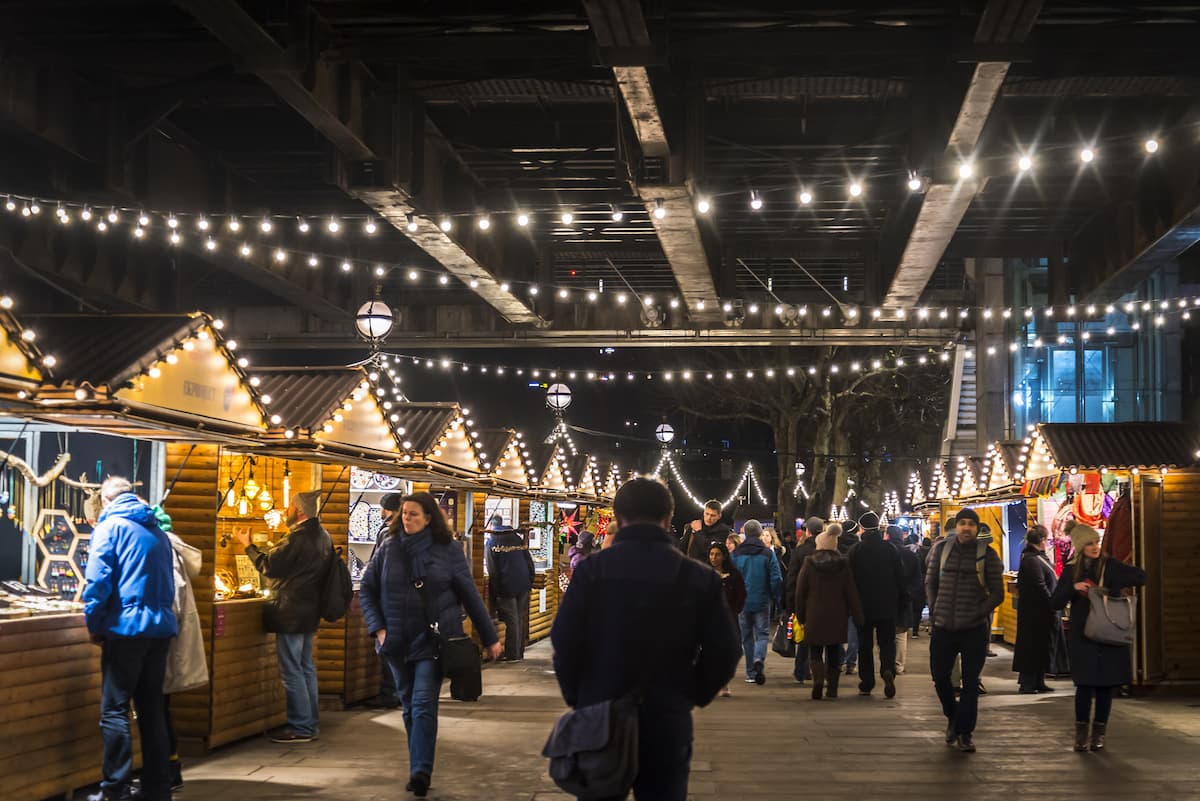
    What could be better than enjoying tasty treats and hot beverages whilst overlooking the Thames? Get yourself down to the Southbank City Centre Christmas markets to experience it for yourself!

    Spend the evening perusing the authentic wooden stalls for a new Christmas tree decoration, or maybe you are meeting up with friends for a festive tipple. Book a meal at The Jimmy Lodge Snow Globes, which can accommodate up to 10 people, so you can fine dine under the stars. There is always the rustic, vine-covered pergola at Applebee’s Fish, where friends and family can meet up for a well-deserved meal and a catch-up.

    Don’t forget to get a selfie with the gigantic Christmas tree before you leave!

    9. York St Nicholas Christmas Markets

    Dates: November 18 – December 23, 2021

    Without a doubt, York is one of the most beautiful towns in the UK. With its cobbled streets and quaint timber-framed houses, York rakes in its visitors all year round, particularly during the festive period.

    The York St Nicholas Christmas markets are spread out along Parliament Street and all the way down to St Sampsons Square. Here you will find numerous Alpine-style chalets serving nothing but the best festive food, drink and gifts.

    If you are a real foodie, then the York Christmas markets will not disappoint. Many stalls offer a choice of local cheeses, jams, chutneys and don’t forget to warm yourself up with a steaming mug of hot chocolate (you deserve that extra shot of Baileys!).

    The vintage funfair in King’s Square is great fun if you have children, with the helter-skelter and the merry-go-round being a top favourite! Strategically placed next to the funfair is a vendor selling mulled wine and cider if you fancy treating yourself to a little tipple!

    10. Leeds Christkindelmarkt

    Dates: November 6 – December 18, 2021

    Held annually at Millenium Square, Leeds Christkindelmarkt is one of the most established Christmas markets in the UK. Draped in twinkling fairy lights and festive decor, the square is transformed into a magical winter wonderland.

    Authentic wooden huts serve visitors with the finest German and Scandinavian delicacies as well as handmade jewellery, toys and unique Christmas tree decorations.

    You can’t leave without calling in for Breakfast with Santa, of course! Book in at Alp Chalet to dine with him before burning the calories off with a walk around the fairground rides. Breakfast with Santa is a ticketed event, so an early booking is highly recommended.

    11. Stratford-upon-Avon Victorian Christmas Market

    Dates: December 9 – December 12, 2021

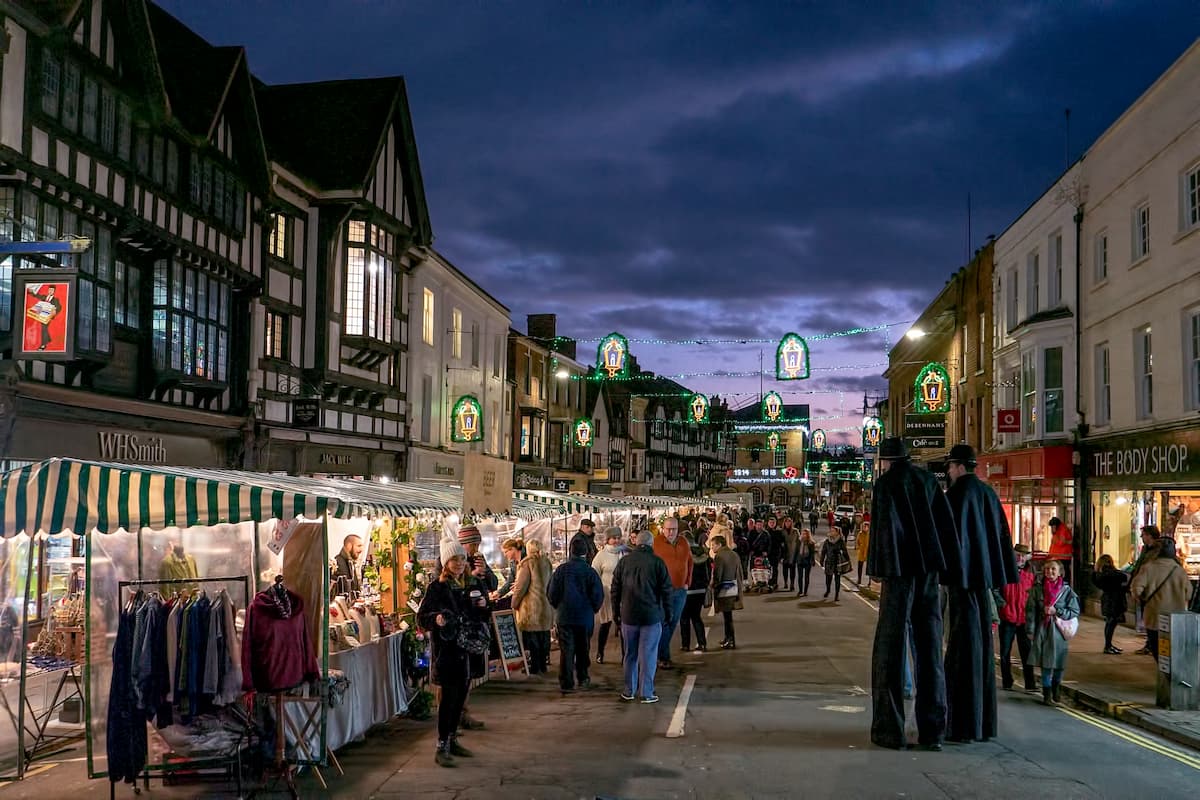
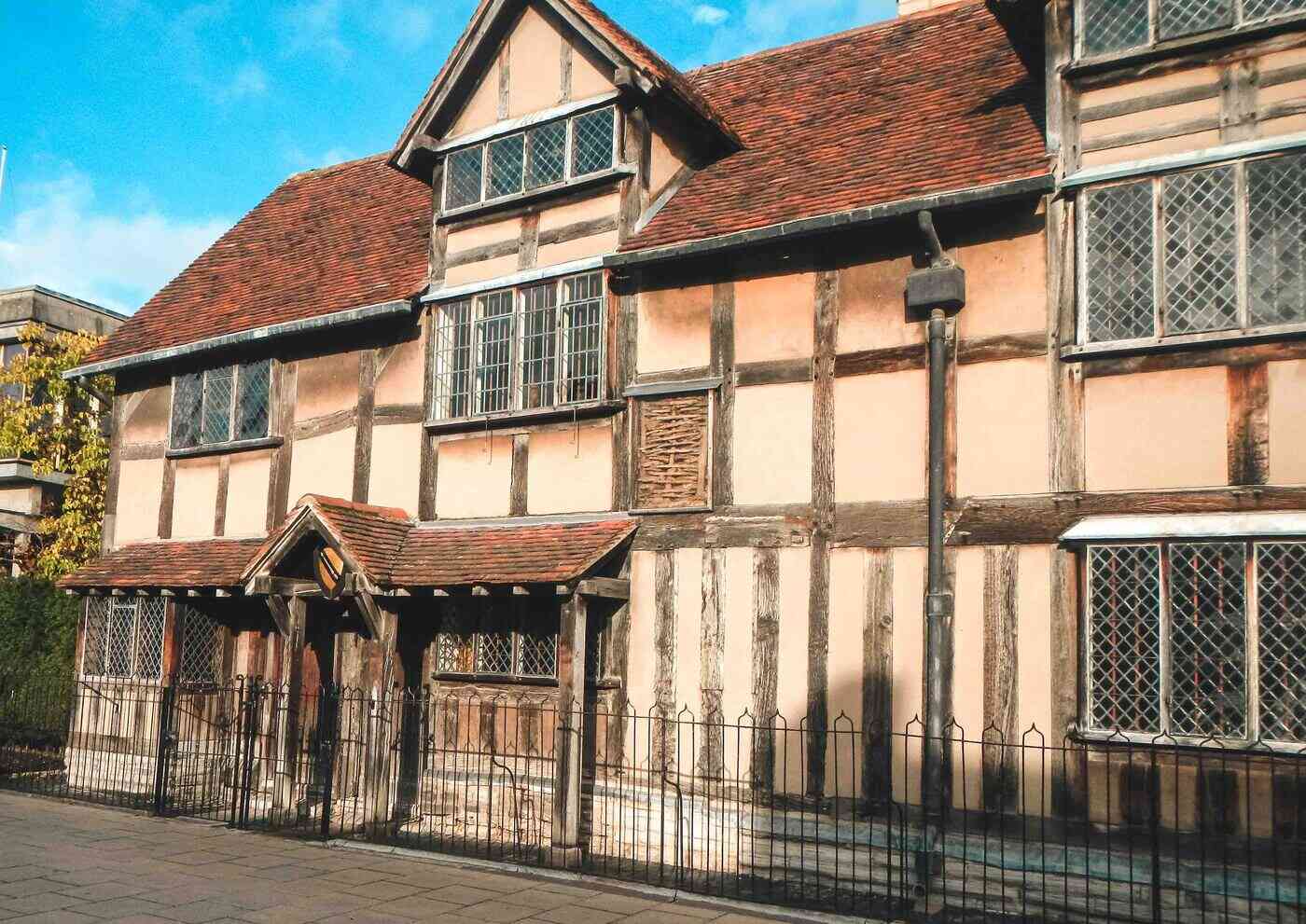
    Stratford-upon-Avon Victorian Christmas Market
    Stratford-upon-Avon Victorian Christmas Market

    ‘To be, or not to be. That is the question.’

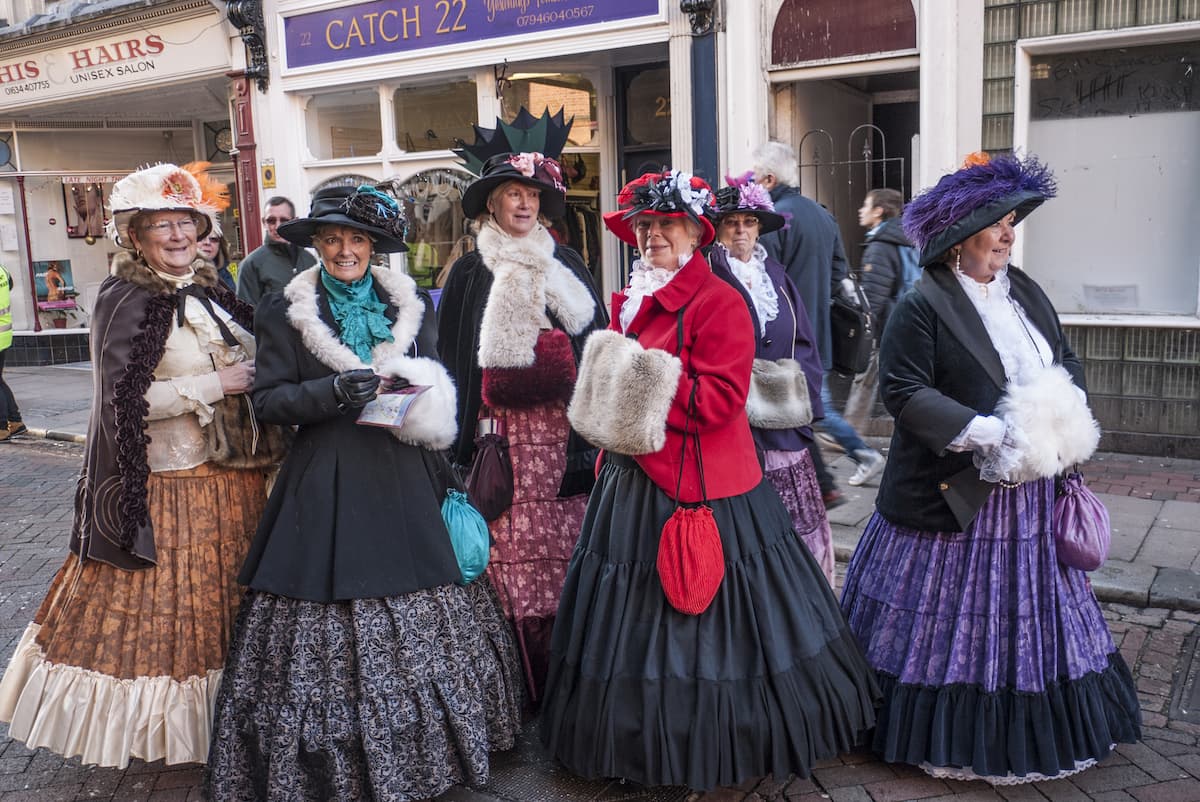
    Take a step back in time by visiting the award-winning Victorian Christmas markets. Located in the hometown of William Shakespeare, the Christmas markets cover several streets across the town centre and boast over 300 stalls. Each trader is dressed head-to-toe for the occasion in traditional Victorian garments. Enjoy your day by perusing the markets which sell festive treats and gifts suitable for all. A community craft fair will also be held at the town hall on Sheep Street if you are feeling creative.

    Last year, the Victorian Christmas markets had over 100,000 visitors, so arrive before lunchtime if you want to browse in peace! The opening times differ depending on which day you plan your visit, but they are roughly open between 10 am and 8 pm.

    12. Cardiff Christmas Market

    Dates: December 11 – December 23, 2021

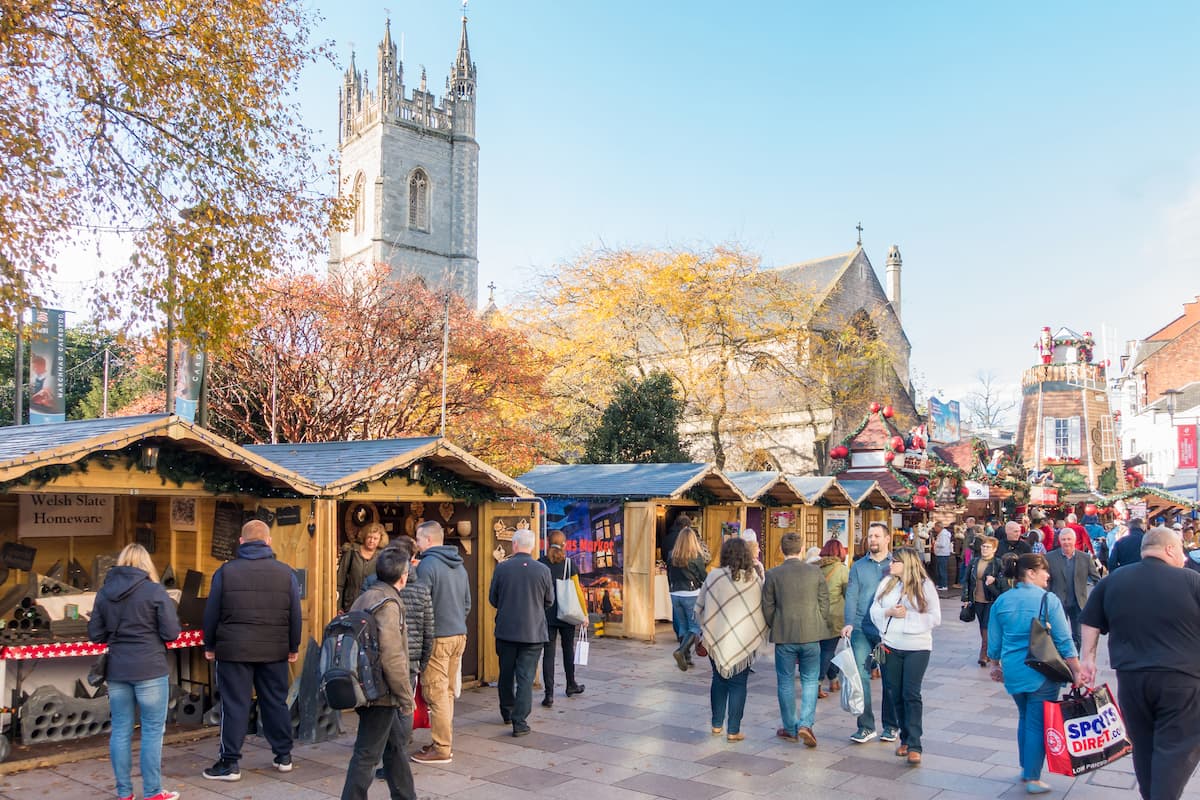
    cardiff christmas market

    The Cardiff Christmas Market is one of, if not the best in Wales. Get that festive feeling by indulging in delicious chocolate treats along with a cheeky mulled cider. Why not? It’s Christmas! Traditional welsh cakes can also be purchased along with ceramic goods and homemade gifts.

    A visit to the Gingerbreadmun House is a must. Treat the children to a sweet gingerbread man decorated with colourful icing and smiley faces. This can be found outside Cardiff Central Library. Santa’s Grotto is also worth a visit at the Black Tower at Cardiff Castle, a 13th-century landmark.

    Getting to the markets is easy as there are plenty of places to park your cars, such as local Park and Ride locations or an NCP. Alternatively, the bus and train services run frequently if you want to stay for a hot toddy or two!

    13. Nottingham Christmas Market

    Dates: December 4 – December 24, 2021

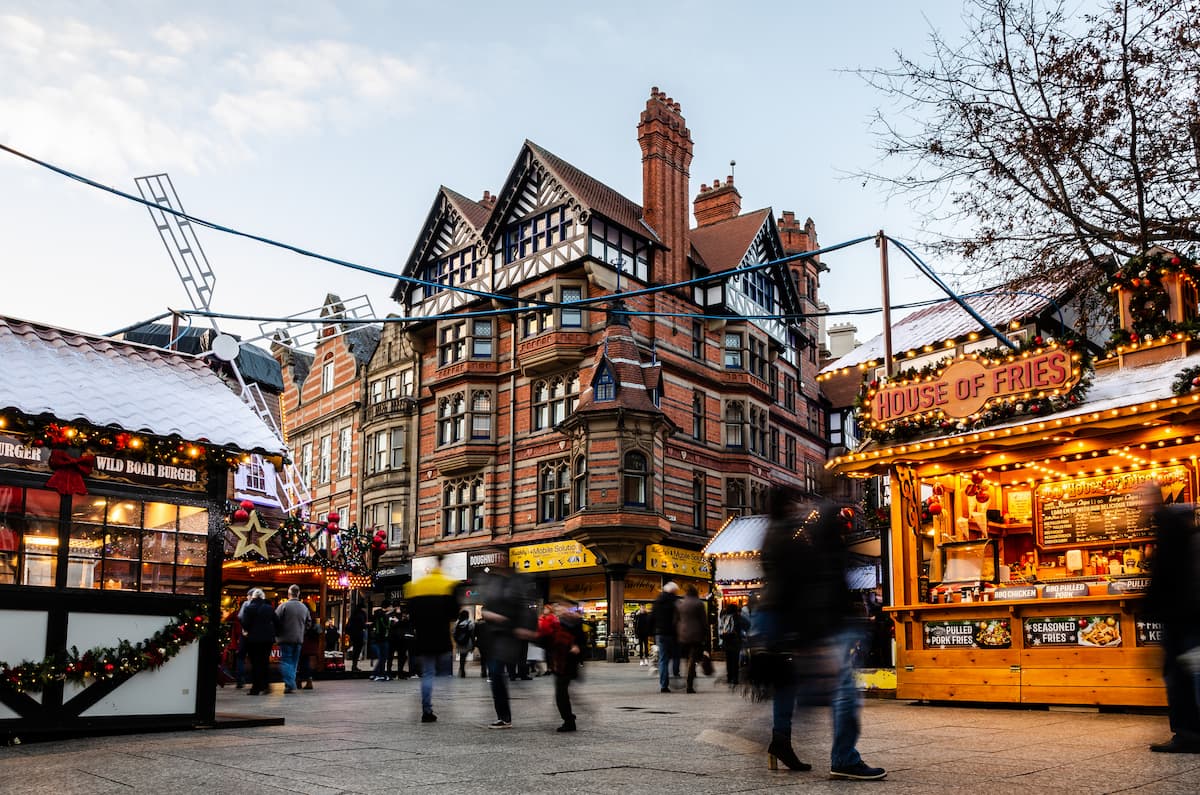
    Christmas Market in Old Market Square, Nottingham
    Christmas Market in Old Market Square, Nottingham

    Overlooked by a 32-meter high observation wheel, the Nottingham Christmas market is the largest in the East Midlands. With over 70 Bavarian-style wooden chalets, there is something for everyone, including continental food, local cheeses, handcrafted wooden toys and home accessories.

    The stalls stretch out across Old Market Square, Long Row and Smithy Row so visitors can browse the market without feeling too crowded. The 18-meter high Christmas tree is always a firm favourite and creates an exciting, festive atmosphere. There are also a variety of small rides for the young ones to enjoy – that should tire them out!

    Although there may be a small mug deposit to pay if you fancy a beverage, entry is free. If visiting by car, there are plenty of multi-storey car parks that can be found dotted around the town. Nottingham also has a main train station, as well as two bus stations and a reliable tram network.

    Due to the pandemic, the event has been scaled down, so do not hesitate to check out the website for full details.

    14. Chester Christmas Markets

    Dates: November 18 – December 22, 2021

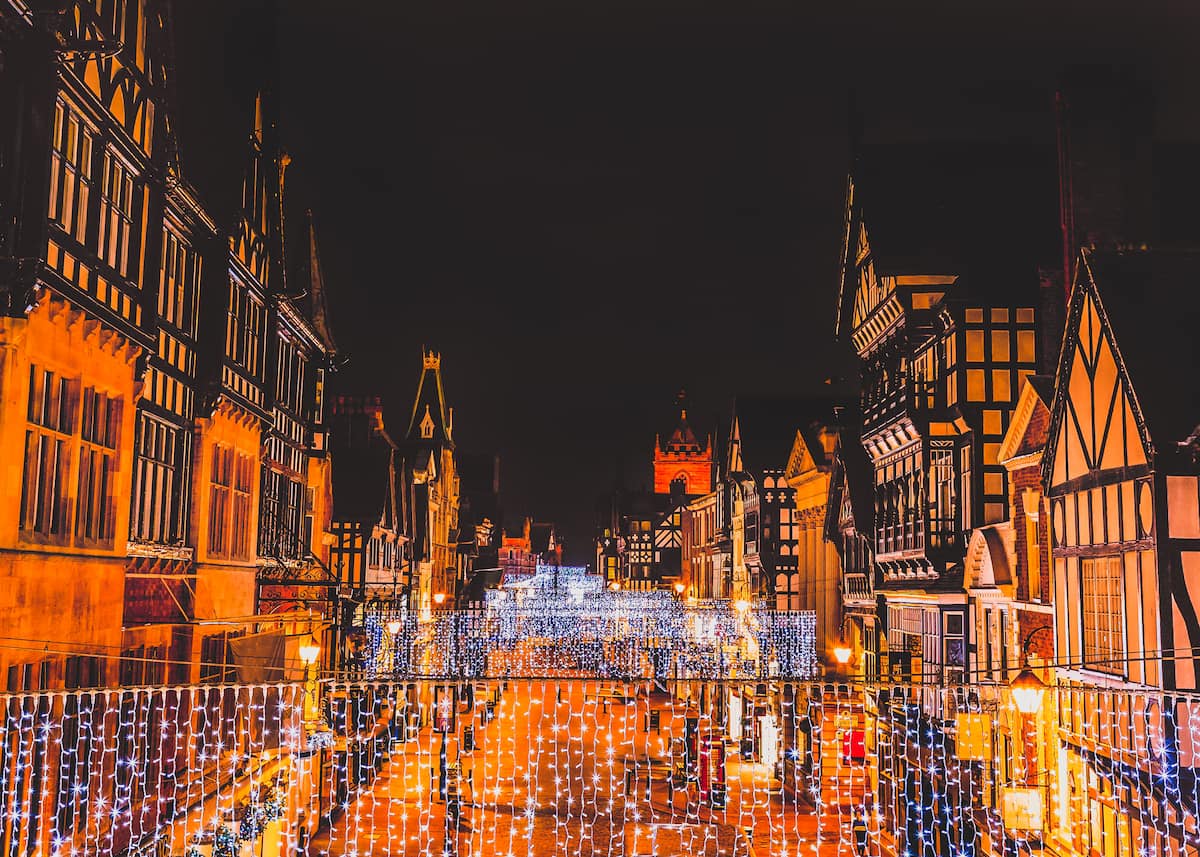
    Eastgate Street Chester
    Eastgate Street Chester

    The Chester Christmas markets are one of the best in Cheshire. Celebrated in the heart of the city, just a stone’s throw away from Chester Cathedral and Chester Town Hall, the markets boast 70 wooden fairy-lit chalets. Everything from succulent Yorkshire pudding wraps and hot toddies is sold here, including stocking fillers and authentic festive gifts.

    Have a pit stop at the Real Ale bar for a hot mulled wine before tucking into a tasty hog roast barm. The cathedral city of Chester is a beautiful place, so feel free to explore the cobbled streets to work off all of those mince pies!

    Getting around Chester is simple with its well-connected trains and frequent buses; there really is no need to take the car. However, if driving, there are many park and ride locations as well as multiple car parks. Entry to the market is completely free. It is open daily but with differing closing times. From Thursday to Saturday, the market closes at 8 pm. From Sunday to Wednesday, the markets close at an earlier time of 6:30 pm.

    15. Lincoln Christmas Market

    Dates: 2nd – 5th December 2021

    Open for just three days, this traditional market is located in the stunning Cathedral Quarter. Browse over 200 Bavarian-themed huts selling a wide selection of continental delicacies, hot beverages and plenty of handcrafted Yuletide gifts and accessories.

    Based between the gothic cathedral and the magnificent Norman Castle, the Lincoln Christmas markets make for the perfect day out with the family.

    Why not make a pit stop to St Paul-in-the-Bail, a 12th-century church that offers children the chance to write and decorate letters to Santa Claus. The finished product is then posted into the Christmas Postbox, where its destination is none other than the North Pole itself!

    If you have time, take a walk along Lincoln Castle with its illuminated walls. This event runs from 6 pm to 9 pm and offers visitors the chance to wander through mesmerising displays of twinkling fairy lights with refreshments to follow afterwards on the castle grounds.

    16. Rochester Christmas Markets

    Dates: Yet to be confirmed

    annual Rochester Dickensian Christmas Festival Parade
    Annual Rochester Dickensian Christmas Festival Parade

    The breath-taking view of the 11th century Rochester Castle should be enough to persuade anybody to visit the Rochester Christmas markets!

    This Kent-based market attracts over 130,000 visitors every year and can be found in Rochester’s Castle Gardens. Scour the stalls for authentic handmade gifts before treating yourself to a juicy hot dog followed by a delicious mug of hot chocolate. The markets coincide with the infamous Dickensian Victorian Festival, where costumed characters entertain visitors with carol-singing and parades.

    The opening days and times are still yet to be confirmed. You can keep up to date by visiting this website.

    17. Norwich Christmas Markets

    Dates: Yet to be confirmed.

    Norwich takes the festive season very seriously, so instead of just one market, it holds several across the city, all on the same weekend. The Norwich Global Christmas Market is the largest and is located in The Forum, where only the finest authentic handcrafted gifts and paintings can be purchased.

    Step outside the doors and enjoy churros with chocolate and festive mince pies before slurping on a hot mug of mulled cider (that’ll keep your hands warm!). The Norwich Christmas Fayre can be found over at the cathedral, where, unfortunately,  more indulging is required.

    Looking for meat-free choices? Look no further than the Vegan Christmas Market held at Open Norwich, where the tastiest of vegan treats can be enjoyed – all cruelty-free, of course.

    One of the most anticipated attractions is, of course, the Tunnel of Light which is one of the largest in Europe. This 45-meter spectacle consists of 57,000 LED bulbs and over five miles of cabling. Pretty impressive, huh?

    Other events worth checking out are the Norwich Castle projections, where the Norwich BID team showcases a new projection each year. So wrap up warm and enjoy the show! Or perhaps you fancy getting crafty with festive wreath making at the Maids Head Hotel, in which a festive brunch – along with a mandatory glass of fizz- is included in the price.

  • Scotlands North Coast 500: 7 Day Itinerary

    Scotlands North Coast 500: 7 Day Itinerary

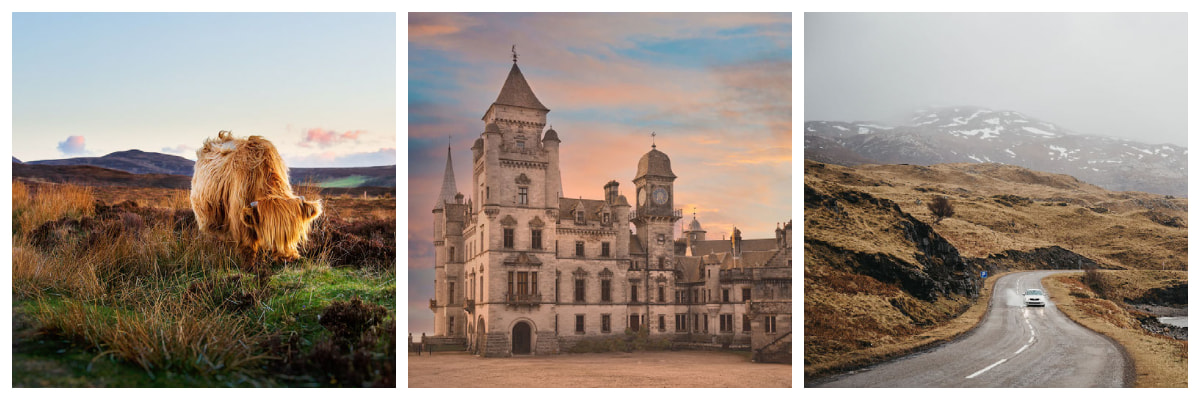
    The North Coast 500, Scotland’s answer to Route 66, is one of the most well-known ways to tour the highlands by car, incorporating over five hundred miles of beaches, mountains, lochs and ocean into one trip of a lifetime.

    This trip begins in the city of Inverness and takes you north to some of the most northerly points of mainland Britain and back down again.  This seven-day itinerary is designed to be your ultimate guide to the NC500, helping you to see all of the essential parts of this coastal route and tailor the experience to you.

    North Coast 500

    Things to know before you go on North Coast 500

    It’s important to plan your NC500 trip in advance for the benefit of Scotland’s landscapes and residents.  The land around the north coast is very well preserved and it is important that it remains this way.  In order to do this, ensure that you dispose of litter and waste in the appropriate way and follow the Scottish Outdoor Access Code to ensure that the landscape is undamaged when you leave it.

    Here are some tips and things to think about while planning your trip:

    Camping as Accommodation

    Camping is an excellent form of accommodation to consider while doing the NC500.  The route is a popular one, so hotels, hostels and B&Bs tend to book out very quickly and far in advance.  This makes camping an ideal way to do the route if you haven’t planned as far in advance.
    This is also a very economical way to travel, as campsites tend to be very affordable in Scotland, with wild camping as an option too.

    Tricky Roads

    The road leading up to the infamous Bealach na Ba road reads “not advised for learner drivers”, and while this is a particularly tricky road, the advice can be applied to a large portion of the roads on the NC500.

    Many of the roads are narrow, winding and single-track roads with sharp bends and a lot of wildlife nearby, so it is best to have an experienced driver behind the wheel for the duration of the trip.

    Book in Advance

    As soon as you know the dates you are doing the route, book your accommodation.  Every single year the North Coast 500 gets more and more popular, and even more people are considering it in 2020 due to foreign travel restrictions being tighter.

    It is important to remember that everyone follows a very similar route with a lot of the same stops and destinations, therefore the accommodation on the route is booked out entirely well before the summer months begin; July’s slots normally book out around January time.
    The good news is that there are over 600 accommodation options on the route, so if you’re organised then the choice will be all yours!

    Travel Off-Peak

    Like any popular tourist attraction, it has times where it is busier than others, so if you really do want your pick of accommodation and a quieter experience at popular tourist attractions then it is certainly wise to consider doing the route at an off-peak time.
    Historically, the route has been busiest in June, July and August as these are the months where the weather is best and where British schools are on summer break.  If you are looking for a balance between weather and quieter seasons, then May and September are great options to go for.

    Day 1 – Inverness – Dornoch

    58 min drive

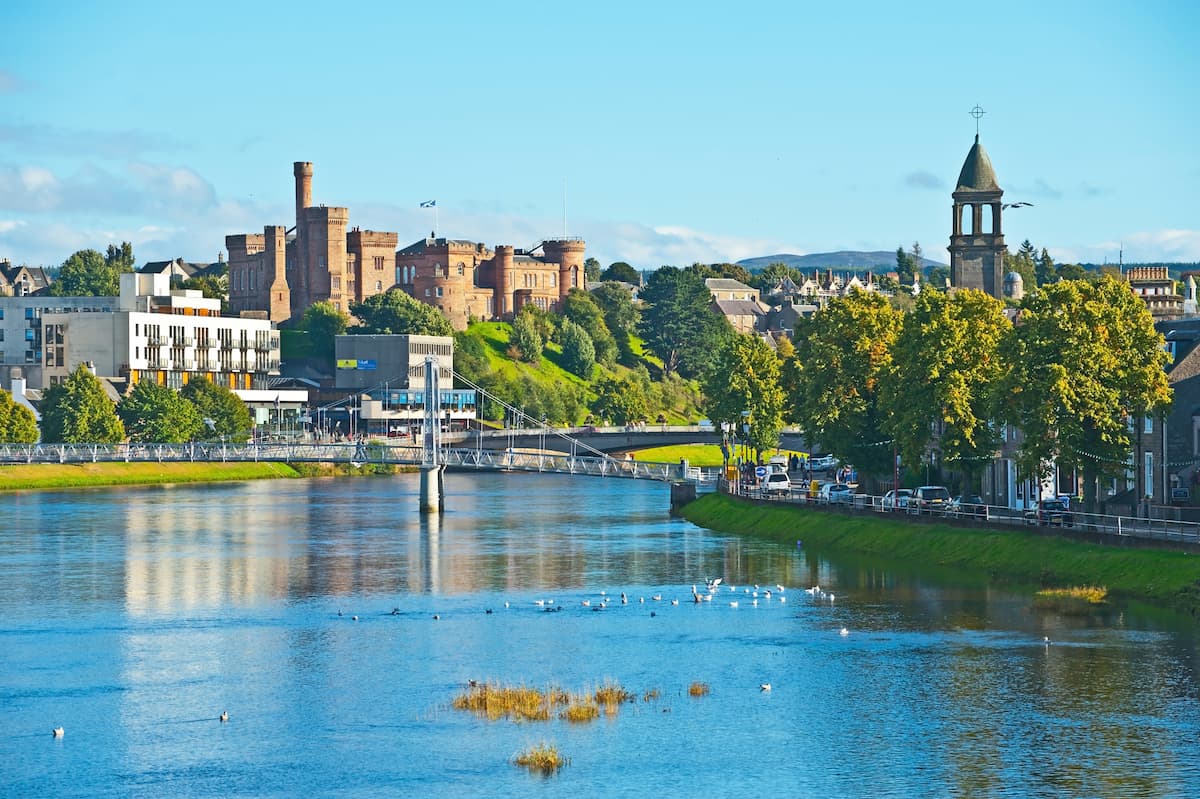
    River Ness and Inverness Castle

    Before you leave Inverness and begin on this road trip, you may wish to see a few of the sights before you hit the road.  The trip will also be taking you back to Inverness at the end so you can also choose whether you would like to see the city now or then.

    Whatever you decide to do, it is certainly worth your time to see the sights in and around the city, such as the castle and museum, or, only a short drive away, Loch Ness, Cawdor Castle and Culloden battlefield! It is certainly worth spending an entire day ticking off what you would like to see here.

    Once you have left Inverness, you are only a short hours drive from the town of Dornoch, a small seaside resort located in the county of Sutherland near where the Dornoch Firth opens into the Moray Firth.  It is no surprise that this town is so well known for its beach, with long stretching golden sands and clear shallow waters making it perfect for a long stroll or a family day out on a summer day.

    If it’s walks and exploration that you’re looking for, on the other hand, then why not try out the Falls of Shin walk?  Follow the road that takes you through Achany Glen all the way to a beautiful forest clearing, from which you can take all sorts of trails through woods and hills perfectly suited to walkers of all different abilities.  This is also a great walk to take with children, as there are plenty of easy-going routes and an abundance of natural playgrounds for them to enjoy! 

    Following the outdoor theme here, Dornoch also offers an excellent opportunity for spotting different kinds of local wildlife, both on the land and in the sea, such as ospreys, red deer, sea birds, seals, dolphins and ducks, which can all be located around the coastal areas.  The landscape in and around Dornoch has been preserved well and therefore provides a great home for a whole host of species that aren’t common in many parts of Scotland.

    Dornoch. Architecture, Art and Nature

    Day 2 – Dornoch – Wick

    1 hr 26 min drive

    Hopefully, Dornoch was the perfect taste of what the North Coast 500 has in store for you and that you are ready for your second journey along the North Coast.  Today’s drive is not a long one, coming in at only around an hour and a half, but there are still plenty of stops that you can make along the way.

    Main attractions on the road:

    Loch Fleet

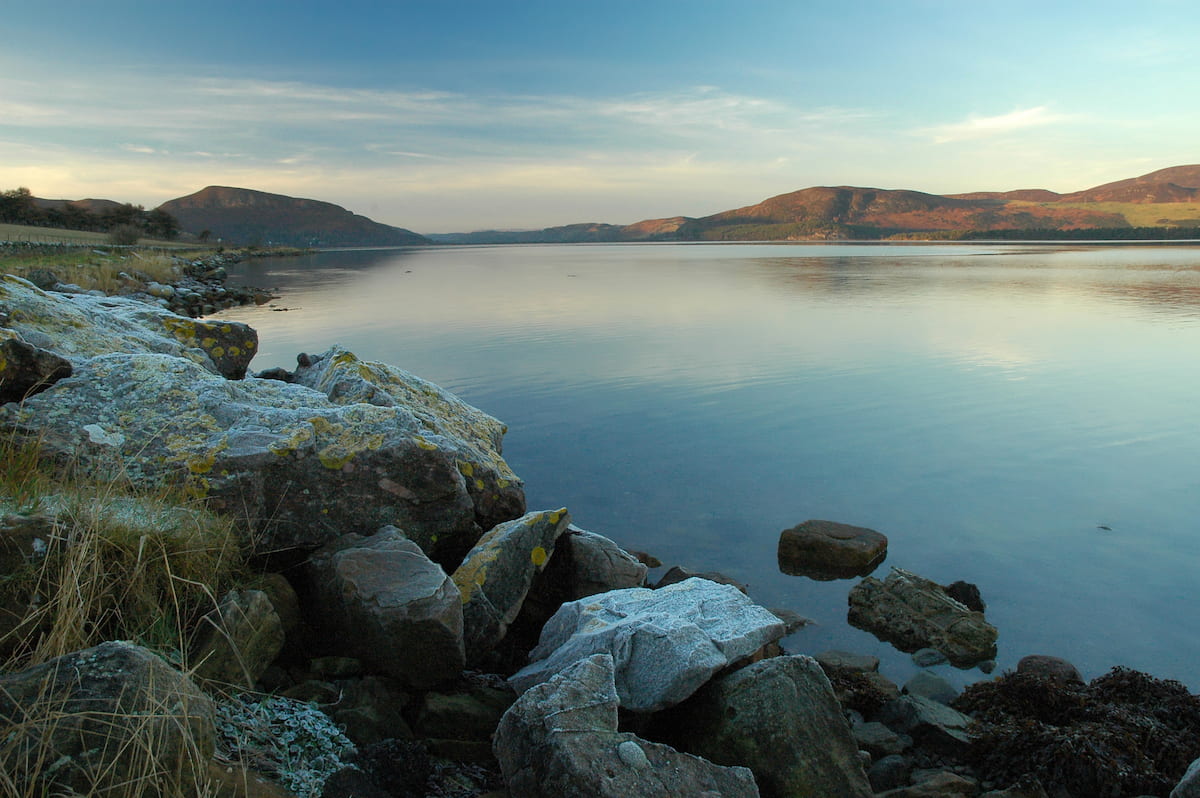
    Winter Dusk, Loch Fleet

    This loch is one of Scotland’s National Nature Reserves and exhibits a huge amount of animal and plant life to be observed, including otters, seals, wildfowl, sea birds, orchids and butterflies. 

    Due to the fact that the loch is a tidal basin, the landscape surrounding it is comprised of sand dunes, mudflats and pinewoods which prove to be a wonderful combination, particularly for those who enjoy bird watching and examining local plants.  There are plenty of excellent local walks to be done around the loch to experience these things.

    Golspie

    If you are looking to learn more about the history of the highlands, then Golspie is a great place to stop off and take some time to learn about the highland clearances through their statue of the First Duke of Sutherland erected in 1837. 

    The Duke is known for having a controversial role in the clearances and thus is a good place to gain some more knowledge of the effects that the clearances had on the people of the Highlands.

    Dunrobin Castle

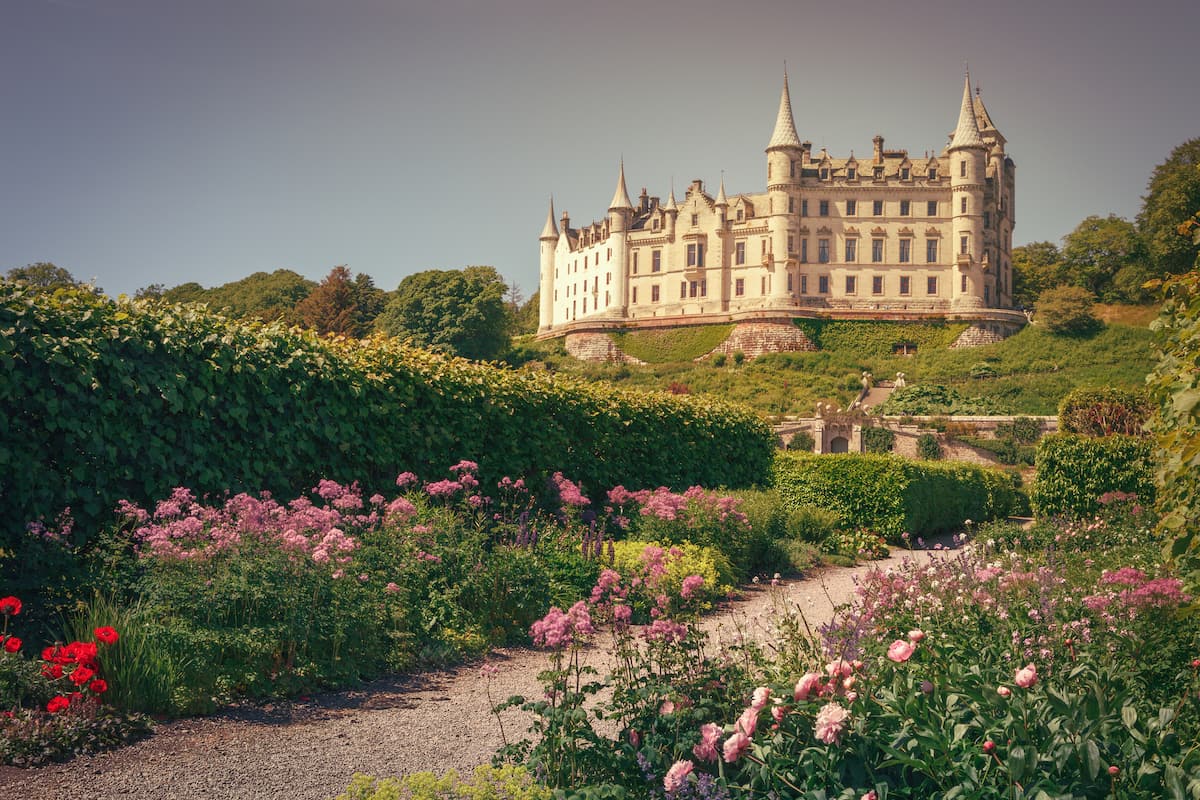
    The beautiful Dunrobin castle, northern Highlands in Golspie

    You simply cannot miss this castle while driving the road up north; it is a towering castle that resembles something out of a fairytale, with its towering turrets and spires and bright white appearance. 
    It is the largest of the Highlands castles, sporting an impressive one hundred and eighty-nine rooms, and was inhabited from the 1300s to the 1800s by various royals.  After this, it was used as a naval hospital during the First World War, and a boys’ boarding school during the 1960s and 70s. 

    The castle is open from April to October every year, meaning that you can even go in and have a look at its splendour inside.  It is truly difficult not to feel like a royal while roaming these stunning halls.

    Helmsdale

    View to Helmsdale

    Furthering your education on the highland clearances (for all you History buffs out there), Helmsdale is one of the more modern highland villages, as it was formed as a place to resettle members of the communities who had been removed from surrounding areas as a result of the clearances. 

    The town has now developed its very own character and has many attractions besides its rich and interesting history.  One of the main attractions in this picturesque harbour village is salmon and herring fishing, which is how it originally prospered in the 19th century.

    Now that you’ve broken up your drive suitably, it’s time to get back on the road for that final stretch until you arrive at your final destination of the day, the historical town of Wick. 

    This is where you will be staying for the night, meaning that alongside the sights that you can see when you arrive in Wick, you can also check out the restaurants and pubs situated in the centre of the town, to experience the atmosphere alongside the locals.

    If Scotland’s world-famous Scotch is something that you are dying to try on your tour, then why not make the most of Wick’s very own Old Pulteney Distillery, which is open to the public for a variety of tours and tastings, so you can experience the popular drink the way it was supposed to be tasted!

    Day 3 – Wick – Durness via John O’ Groats

    Caithness and Sutherland

    2hrs 28 min drive

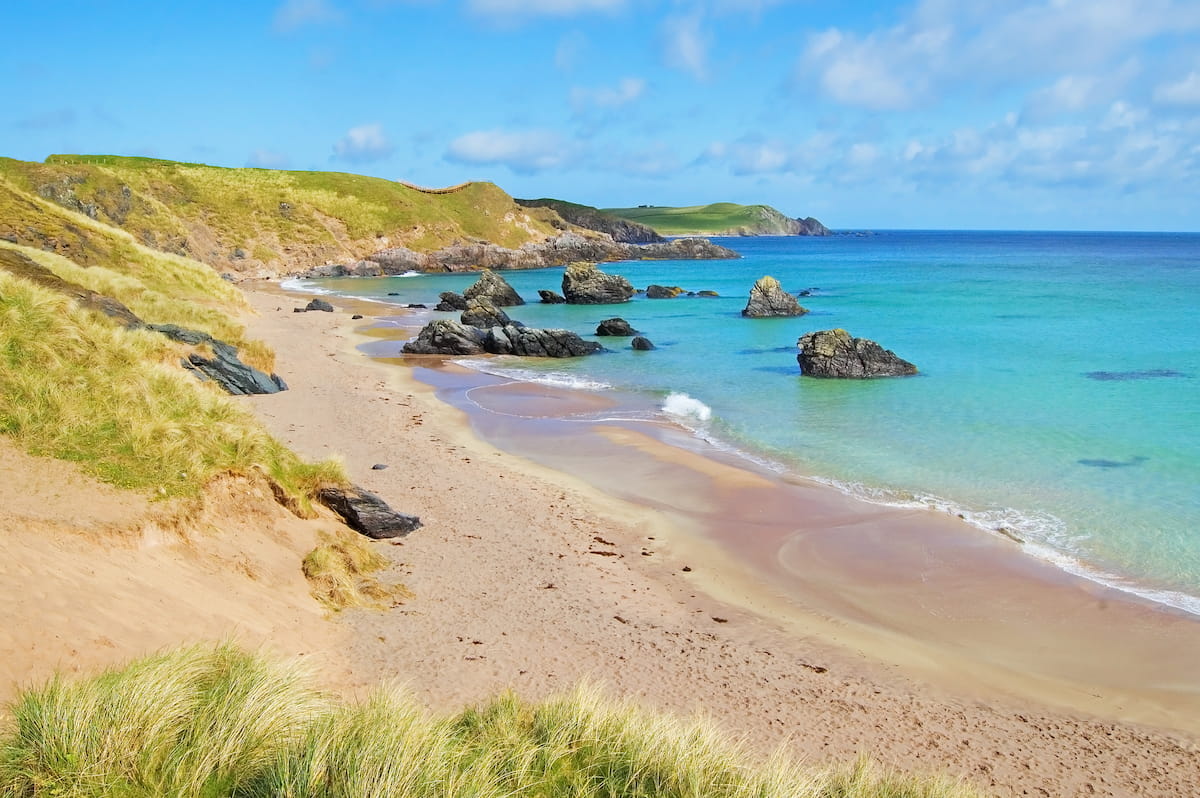
    Sango bay Durness beach

    This now concludes the western coast of the NC500, bringing you on to exploring the most northern parts of mainland Scotland.  Today sees you entering the North West Highlands Geopark, which holds a specific interest in terms of its geological features and also brings many a tourist due to its unrivalled beauty. 

    The next drive is the longest of the entire trip, coming in at nearly two and a half hours, but the good news is that you can break it up with one of the most popular stops on the North Coast 500, and the furthest northern settlement on mainland Britain, the world-famous John O’ Groats. 

    This drive will pose plenty of opportunities to see stunning scenery, more wildlife and some of Scotland’s best-hidden gem beaches.

    This drive will also see the driver encountering the first single-track roads of the trip, so it may be best to research some driving guides beforehand so that you feel more confident with how to drive on these types of roads. 

    John O’ Groats

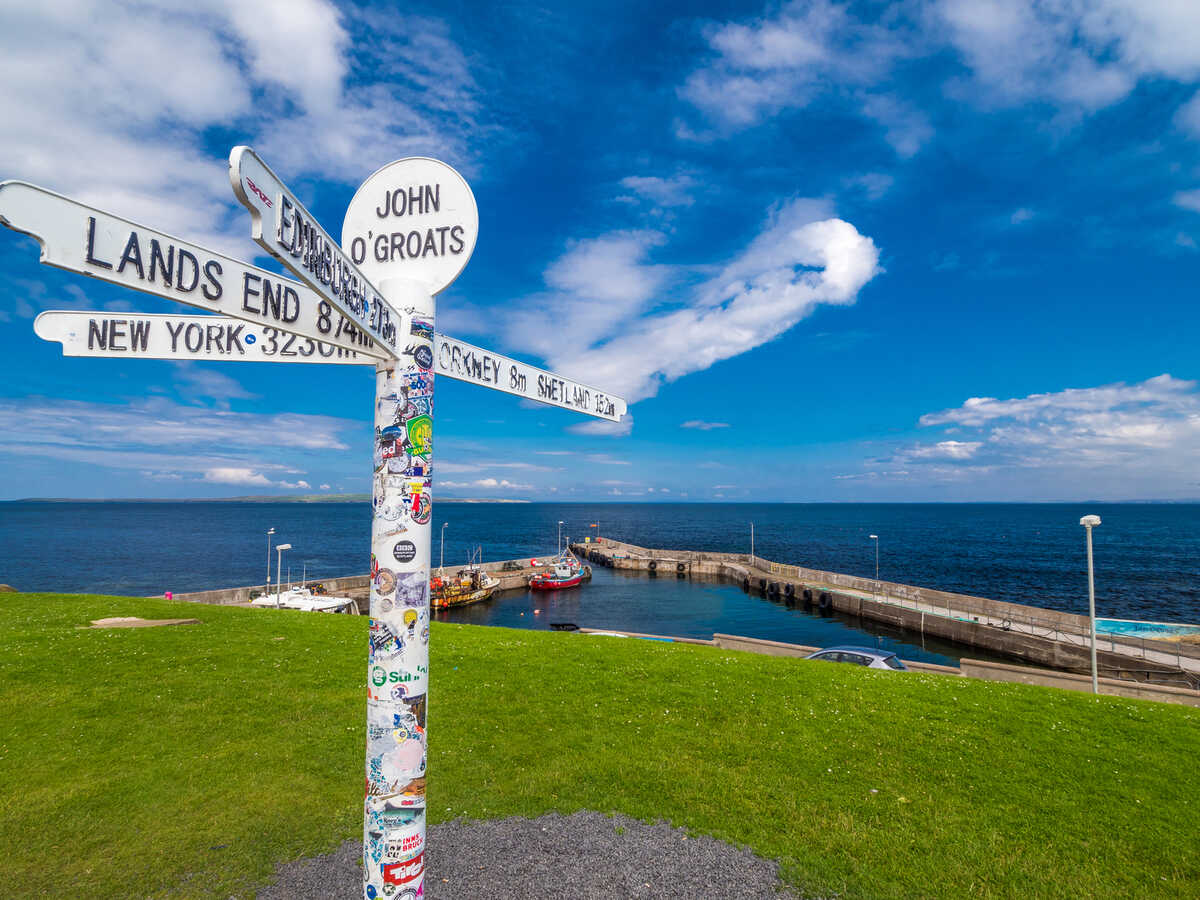
    Sign-post-at-John-O-Groats-Scotland

    This destination made its name in the world when it was incorporated into the ‘End to End’ route which connects the two farthest points of Great Britain (the other being Land’s End in Cornwall).  Although it is not the most northerly point, it is the furthest northern settlement on Mainland Britain. 

    The settlement is a prime location for views out over the North Sea and onto Orkney.  If you are visiting the village in the summer months then it is a great opportunity to take a sightseeing ferry and see what sea life you can spot! 

    The coastline in this part of the world is truly breathtaking and unlike anything that can be seen along the west and east coasts of Scotland, and the colourful houses sat neatly by the harbour really do look like something out of a movie!  Those of you from more southern parts of the world may also be able to experience the Northern Lights from this part of the world, so keep your eye out for the times where you are most likely to see them!

    As you continue on to Durness, there are plenty more stops you can make along the way – such as Dunnet, Thurso, Bettyhill and Tongue – all with their fair share of attractions and sights to see. 

    Your destination for the night, however, will be the village of Durness, which is known for its pristine turquoise waters resembling those in the south of mainland Europe. 

    The main attractions here are certainly the coastal ones, including Smoo Cave, a massive cavern easily reached down its well-maintained steps; Cape Wrath, a rocky coastal viewpoint where one can see sky and sea for miles ahead; or Balnakeil Beach, known specifically for its clear blue waters and peaceful stretches of golden sands.

    Day 4 – Durness – Lochinver

    1hr 24 mins drive

    The drive from Durness to Lochinver is only around an hour and a half, but there is plenty to be seen along the way:

    Scourie

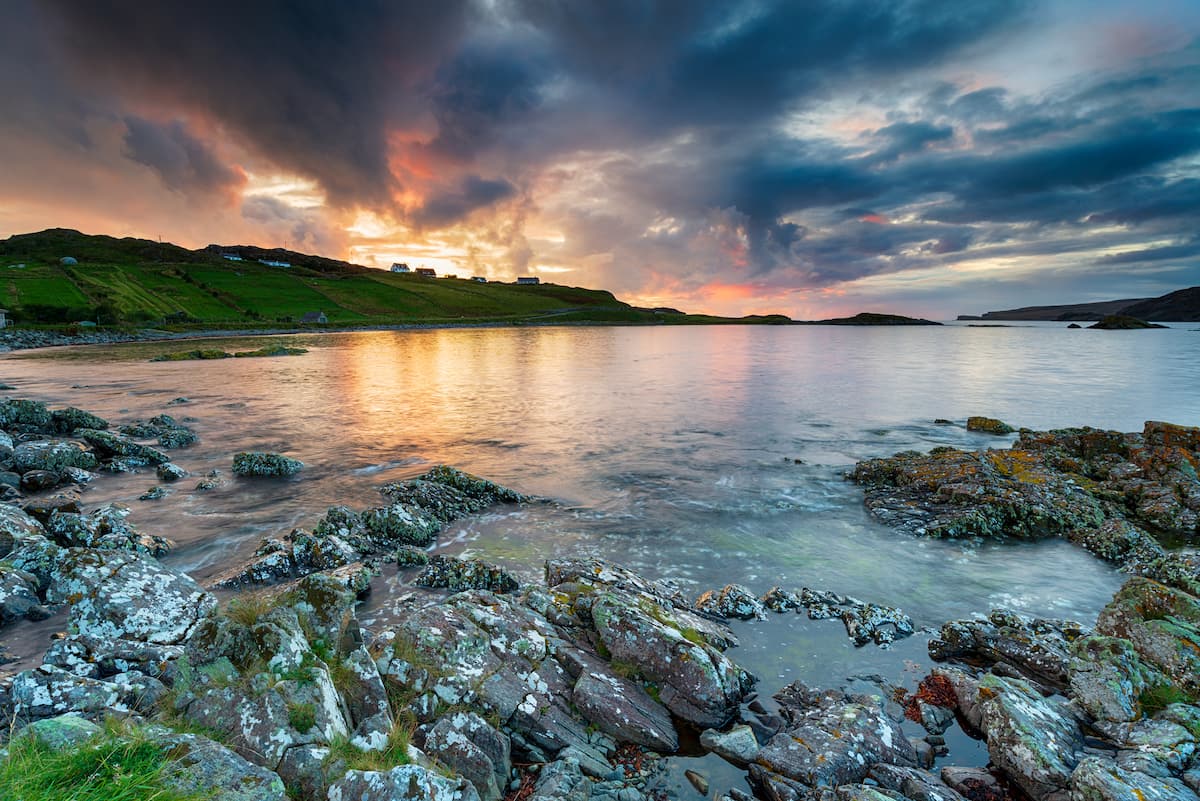
    Stunning sunset over the bay at Scourie

    Scourie is a small crofting village with a picturesque harbour with a unique looking rocky bay stretching far into the north-west. 

    Upon exploring the south side of the bay one can expect to see views stretching far north up the bay for the best views of the rocky landscape.  Ben Stack can also be seen from the right side of the bay, which is a popular site with tourists.

    Unapool

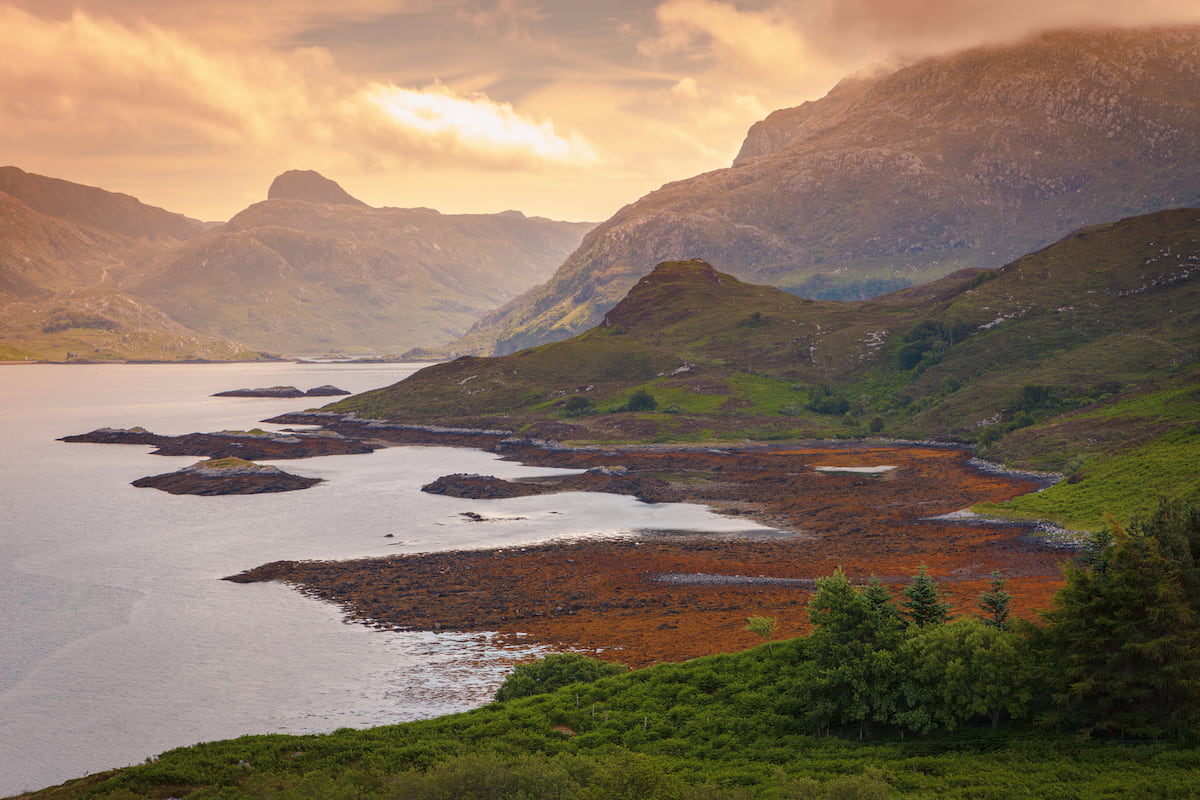
    Sunset at the Gleann Dubh loch in Unapool

    This is a great stop if you want to learn more about the North West Highland Geopark, as it has its very own exhibition room in the old Unapool schoolhouse. 

    There is plenty of visitor information here and a cafe where you can stop for a quick bite as well, and a small gift shop to give you the opportunity to support the Geopark! This can also give you some great ideas of other locations in the Geopark that you might want to visit on your travels.

    Once you’ve stopped at some of the quieter villages on your way to Lochinver, you can complete your journey and arrive in one of the most important fishing ports in the Assynt area; that’s right, you’ve arrived at Lochinver!

    There is so much to do in this stunning village, including pottery, hiking, cycling, fishing and walking – and don’t forget to stop off at the famous Lochinver Larder for one of their infamous pies.

    The town is split into three parts – the harbour, the village and Baddidarrach, along the shore of Loch Inver.  The village is where one can find a quaint high street with the main shops and services, including places to eat and drink. You can also visit the wonderful Assynt Visitor Centre, the free museum, and the Tourist information centre for more information on the local area.

    Day 5 – Lochinver – Gairloch

    2hrs 9mins drive

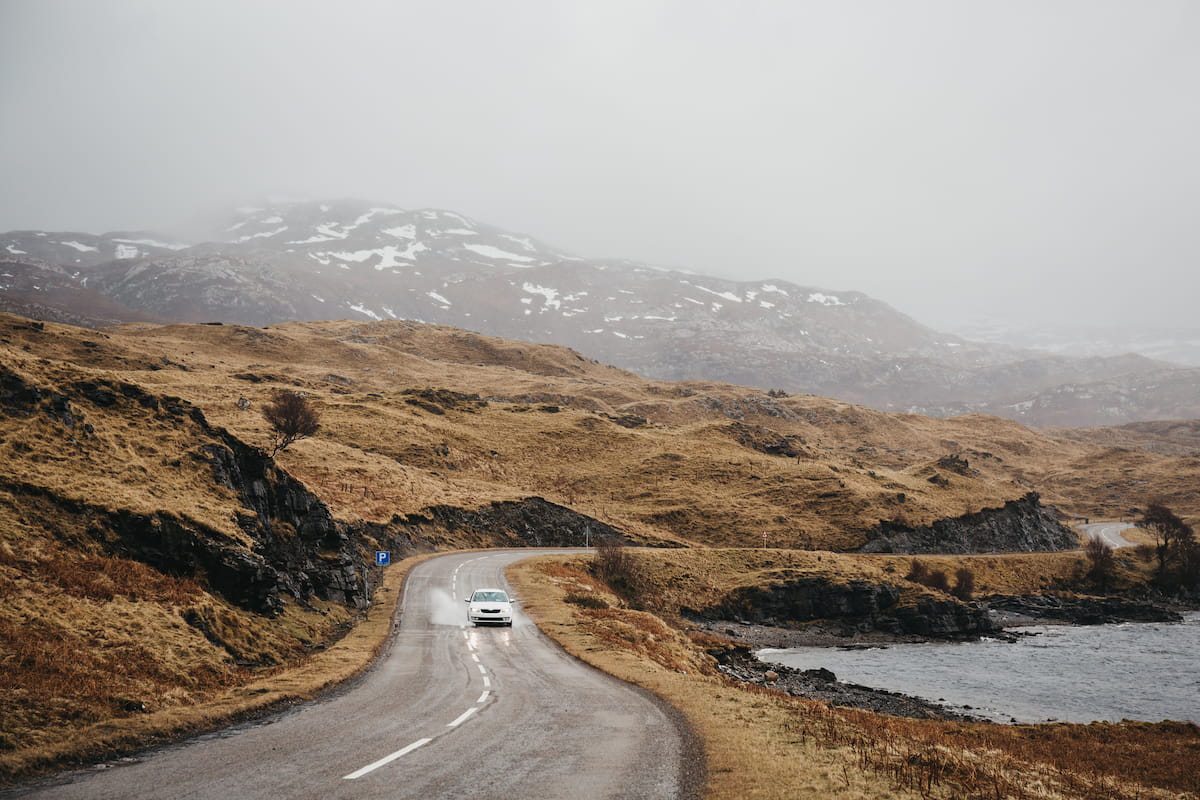
    Unidentified car driving on a road going through Scottish Highlands near Lochinver

    Making your way south down the west coast of Scotland, you are now making your way to the village of Gairloch, which will be your next destination.  Another popular stop on the NC500 is Ullapool, and for a full day guide on what to do here, check out our Highland Itinerary Guide.

    During this drive, your main attraction will certainly be the beaches – you are truly spoiled for choice!  The favourite of tourists and locals alike, however, is without doubt Mellon Udrigle Beach in Wester Ross, known for its white sand and turquoise waters that are just perfect for swimming in during the summer months.

    Gairloch itself, the destination of this drive, is like a concentrated version of the Scottish highlands due to the fact that it can offer you a little bit of everything that the highlands. It is a small village that spreads along the coastline, which has both beaches and rocky expanses.  It also offers islands, lochs and mountain views – it truly is like miniature highlands!

    Rather than being a once concentrated settlement, Gairloch actually has a few separate points within it that are worth visiting.  If it is Gairloch’s harbour that you are looking for then Charlestown is where you’re headed, but you can also head toward the golf club to the stunning beach, known for its sunset views.

    Driving north by Loch Gairloch then brings you to Strath which leads into Smithtown which is the commercial centre of Gairloch where you can find shops, inns and a hotel complete with a campsite which looks over the coast.  The views from all over Gairloch are what it is most known for, with its stunning shore and views over the Loch where it meets the sea.

    Day 6 – Gairloch – Beauly

    1hr 23mins drive

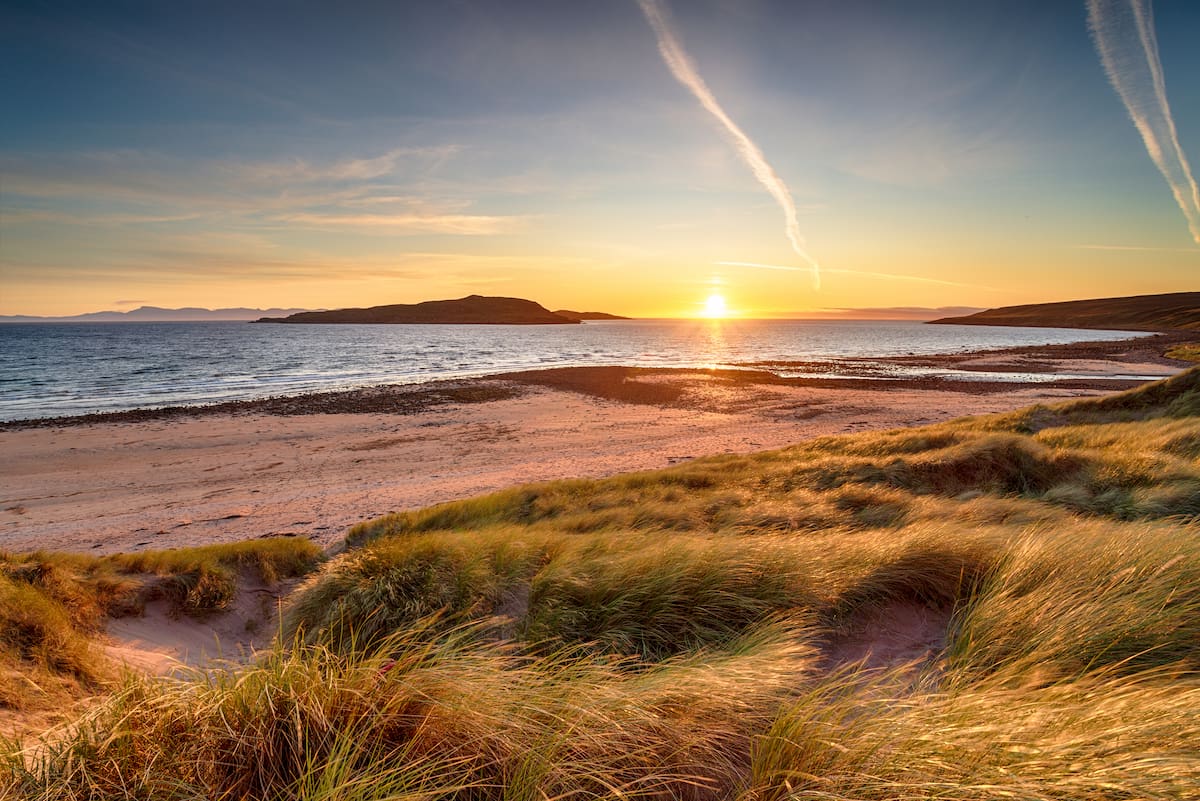
    Sunset over the dunes at Big Sand Beah at Gairloch

    We are now coming to the end of the trip and travelling to the thriving village of Beauly, nearly back to where we started the trip in Inverness. 

    Although you are only a twenty-minute drive away from Inverness now, Beauly is still a great place to stay for the night as it offers a whole range of things to do and a change of scene from the busy city.  We have had a share of difficult hikes on this trip and now reside in a location better suited to gentle walks around the River Beauly and the village.

    If you happen to be in the village on a Thursday evening, why not head over to the main square to hear Beauly’s own Pipe Band which plays there each week during the summer, providing an excellent atmosphere. 

    If you don’t happen to catch the band, however, then not to worry – the square is still the centre of activity in Beauly and there is still plenty to see and do around the area. There are many shops around the square as well as restaurants and pubs making it the perfect way to round off your NC500 trip – with a good meal and a drink!

    Day 7 – Beauly – Inverness

    26 mins drive

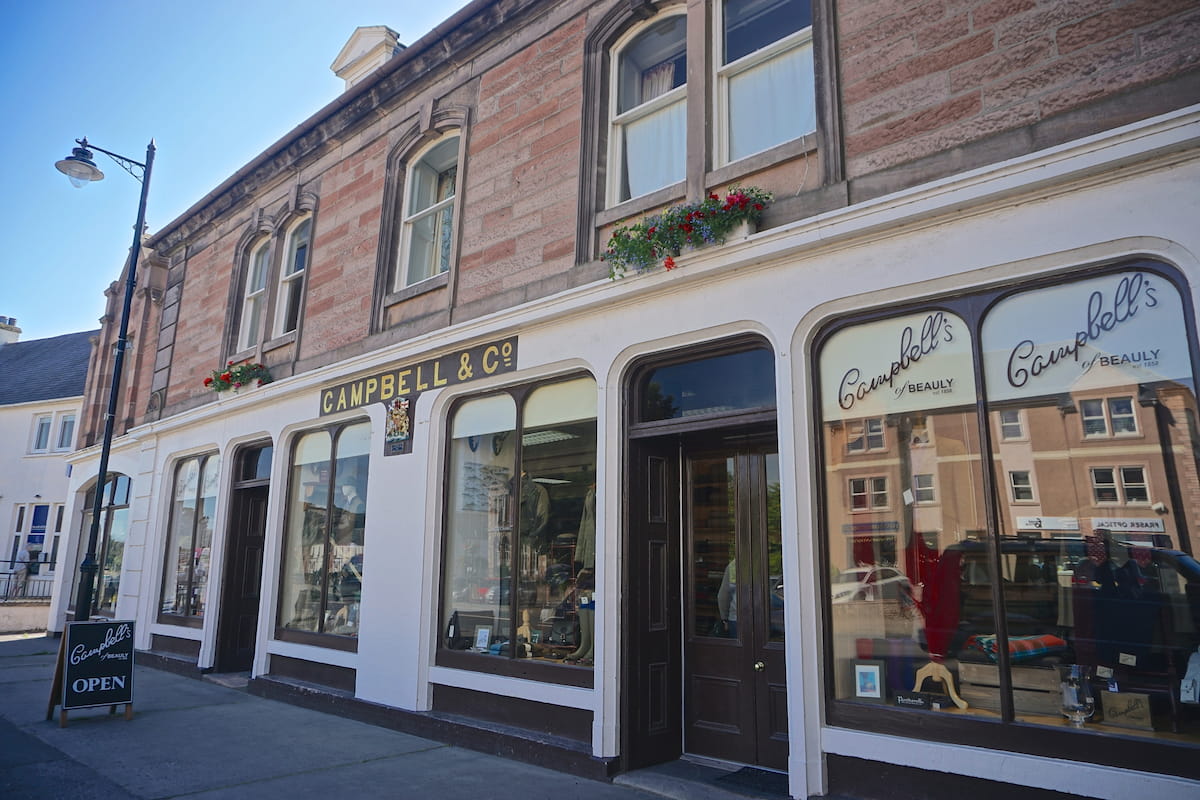
    The historic Campbell’s of Beauly 1858 on the High Street

    The route back to Inverness follows the southern shore of the Beauly Firth making it a very pleasant drive.

    FAQs

    How long does it take to drive the route?

    The standard advice from those who have travelled the route is that you take at least five days to travel the NC500 route, with between seven and ten days being the optimum period of time.  If you have less than five days then it is wise to focus on only part of the route or on perhaps two regions within the route.

    If you take more time to do the route, then you will simply be able to see more and spend more time in each place.  It is really up to you how long to choose to complete it in.  There is no shortage of places to see in the Highlands, and therefore it could be done over a much longer period of time, even incorporating some of the islands into the trip too.

    Is the route suitable for a caravan/motorhome?

    For the majority of the route, travelling in a motorhome or with a caravan will be fine.  However, the Bealach Na Ba stretch would not be suitable for a large motorhome or caravan, as it has a lot of steep hills and sharp bends, so if you are travelling with such a vehicle then it is recommended that you take the slip road up at the A896 instead for a safer journey.

    It is also recommended that you avoid the B869 from Lochinver to Kylesku in such a vehicle as

    this can also be difficult for large vehicles; instead, travel the A837 main road to be safe.

    How many miles is it?

    The route takes its name ‘NC500’ from the number of miles (roughly) that the drive is – it is 516 miles to be exact.

    This translates into 830.4km

    Where does the route officially start and finish?

    Officially the NC500 starts and ends exactly at Inverness castle, but more generally the route should take you in a loop around the Highlands and take you back to Inverness at the end.

    Does it matter which way round I go?

    This route takes you north on the east coast, and south on the west coast, but it is completely up to you which way round you choose to go.  Whether you go east or west, the route remains the same.

  • How to Travel Scotland on a Budget: 35 Money-Saving Tips

    How to Travel Scotland on a Budget: 35 Money-Saving Tips

    The great thing about travelling to Scotland is that there is a way to go anywhere and everywhere on a budget and without breaking the bank. Even the places that are known for being a little more pricey, such as Edinburgh or Skye, can be done in a cheaper way.

    However, there are some places that are cheaper than others. For instance, Glasgow as a city tends to be less expensive than Edinburgh, so it might be a good idea to seek accommodation in Glasgow and visit Edinburgh as a day trip, or perhaps spend only one night there. The same logic can be applied to visiting the islands, which can often be pricier than places on the mainland.

    Much of this depends on when it is that you travel. Inevitably peak seasons will see a spike in prices of plane fairs, accommodation and even food, drink and tourist attractions. For this reason, if you are looking to save money then the best thing to do is to travel between the months of October and May, as June to September is when you could expect to see those price increases.

    Scotland on a Budget

    Getting Around: Budget Transport in Scotland

    Buses Instead of Trains

    One unfortunate reality of travelling in Scotland is that train travel is rather expensive, and can significantly increase the cost of your trip if you do it regularly enough.

    A great alternative to taking trains is to take buses instead. The best option is the budget bus company Megabus, offering tickets at a fraction of the price of a train. For even cheaper fares, book in advance on the Megabus website. This means booking a specific bus at a specific time, but cuts the price even further!

    Off-Peak Trains

    Booking train tickets in advance will save you a ton of money. There are different types of tickets that you can buy:

    • Advance (where you can save the most money) – With the advance tickets, you need to travel at the exact time and on the train stated on the ticket. These only go on sale 12 weeks before your intended travel date.
    • Off Peak – cheaper tickets than any time and allow you to travel any time off-peak. There may be restrictions on routes so double check beforehand.
    • Anytime – this ticket gives you the ability to travel anytime and will be the most expensive ticket available.
    • Group tickets – if there is more of you travelling and these can be cheaper than the advance ticket.

    ScotRail is the official train provider for most national travel, however, some of the stream trains or trains from other parts of the UK cross into Scotland.

    You can use Trainline to find the best ticket for your trip. They also have other information like live train times so you can track if there are any delays or what platform your train is leaving from.

    Scotrail Travel Passes

    Consider getting the spirit of Scotland travel pass which includes travel on trains, buses, coaches and ferries. 

    There are two passes to choose from, four days unlimited travel over eight consecutive days or eight days unlimited travel over fifteen consecutive days. Find out more on ScotRail’s website.

    RailCards

    Consider getting a railcard if you’re under 30, over 60, travel as a family, travel as a couple, or have a registered disability. Railcards give 1/3 off Anytime, Off-Peak and Advance fares which are perfect if you plan on travelling Scotland by rail!

    Even if you don’t live in the UK or not a British citizen you can still buy a railcard if you meet all the criteria. The best way is by buying online and downloading the digital rail app on your phone. When buying you will be provided instructions on how to do this.

    If the system has an issue with your non-UK postcode then use EC1A 4HD, it’s the Rail Delivery Group’s postcode that runs the RailCards. At the payment stage, you can select your correct nationality then enter the correct postcode for your billing address.

    Any other issues like invalid passport will be on the railcards website FAQ.

    Once purchase you will be able to buy discounted tickets through approved suppliers like Trainline.

    Subway and Local Buses

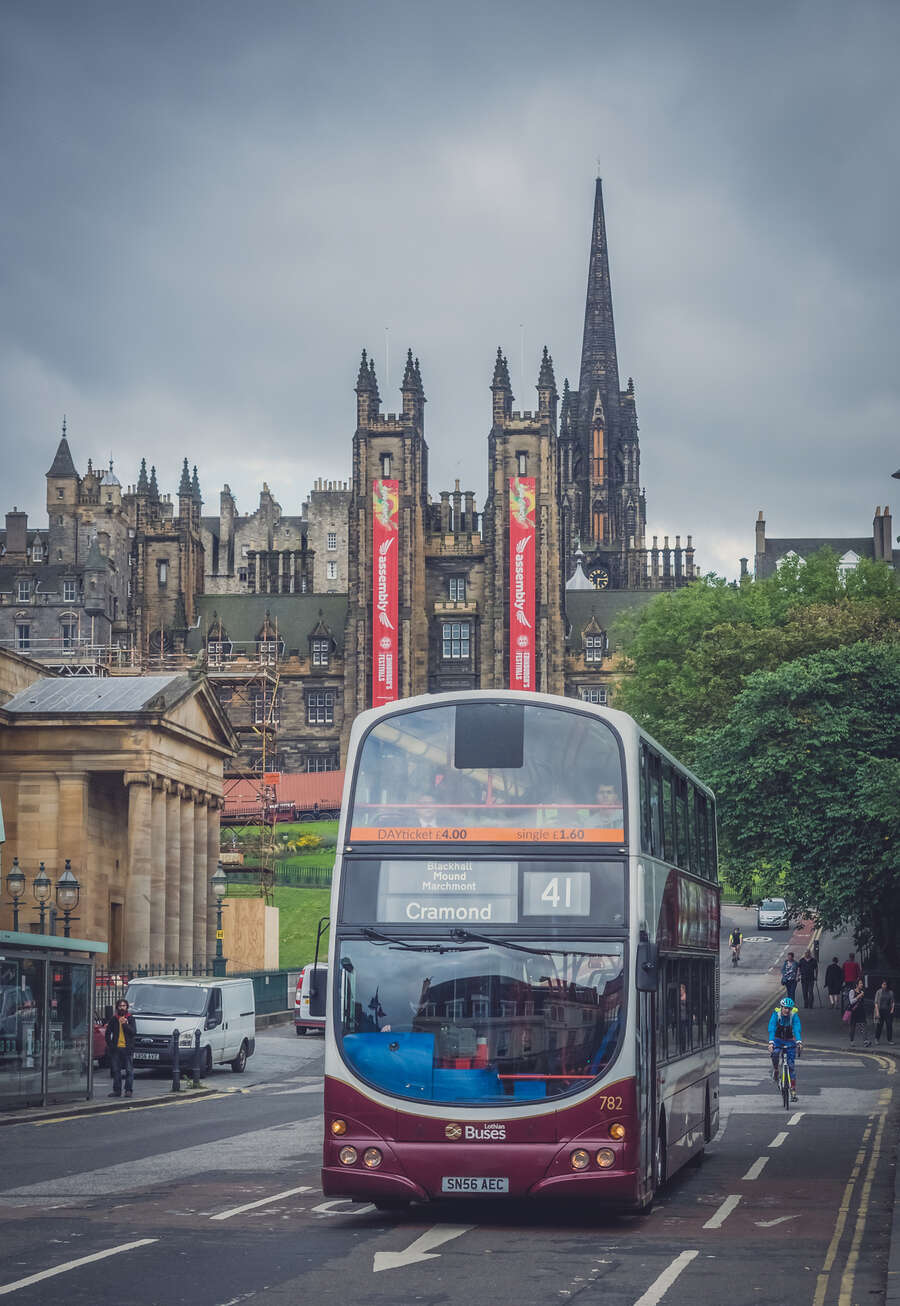
    Modern-double-deck-bus-operated-by-Lothian-busses-in-the-centre-of-Edinburgh-Scotland

    For travelling around local areas, there are budget options available as well.  In Glasgow, the underground will take you almost anywhere you need to go in the city, and a day pass is just £4 (5-6 US dollars), which you can use as many times as you like throughout the day.  If you need to get somewhere outside of the route of the underground, there are also excellent local train services in Glasgow that are inexpensive.

    In Edinburgh, the local buses will take you anywhere in the city, and use a ‘tap in’ contactless system.  That means that if you tap your card whenever you get on a bus, you will automatically be capped at the cost of a Day Pass (£4.50) after tapping three times.  Similar to Glasgow’s underground, this means you can travel the entire city at this cost, no matter where you are going!

    How to Explore Scotland Without a Car has more tips on how you can see Scotland with transport.

    Local Taxi Companies

    Rather than using the standard Black Cabs that can be found in all the major cities in the country, try using local taxi services instead, as they work out much cheaper.

    • Glasgow – Network Taxis
    • Edinburgh – Capital Cars
    • Aberdeen – Rainbow City Taxis
    • Dundee – Dundee Taxis

    Car Hire in Scotland

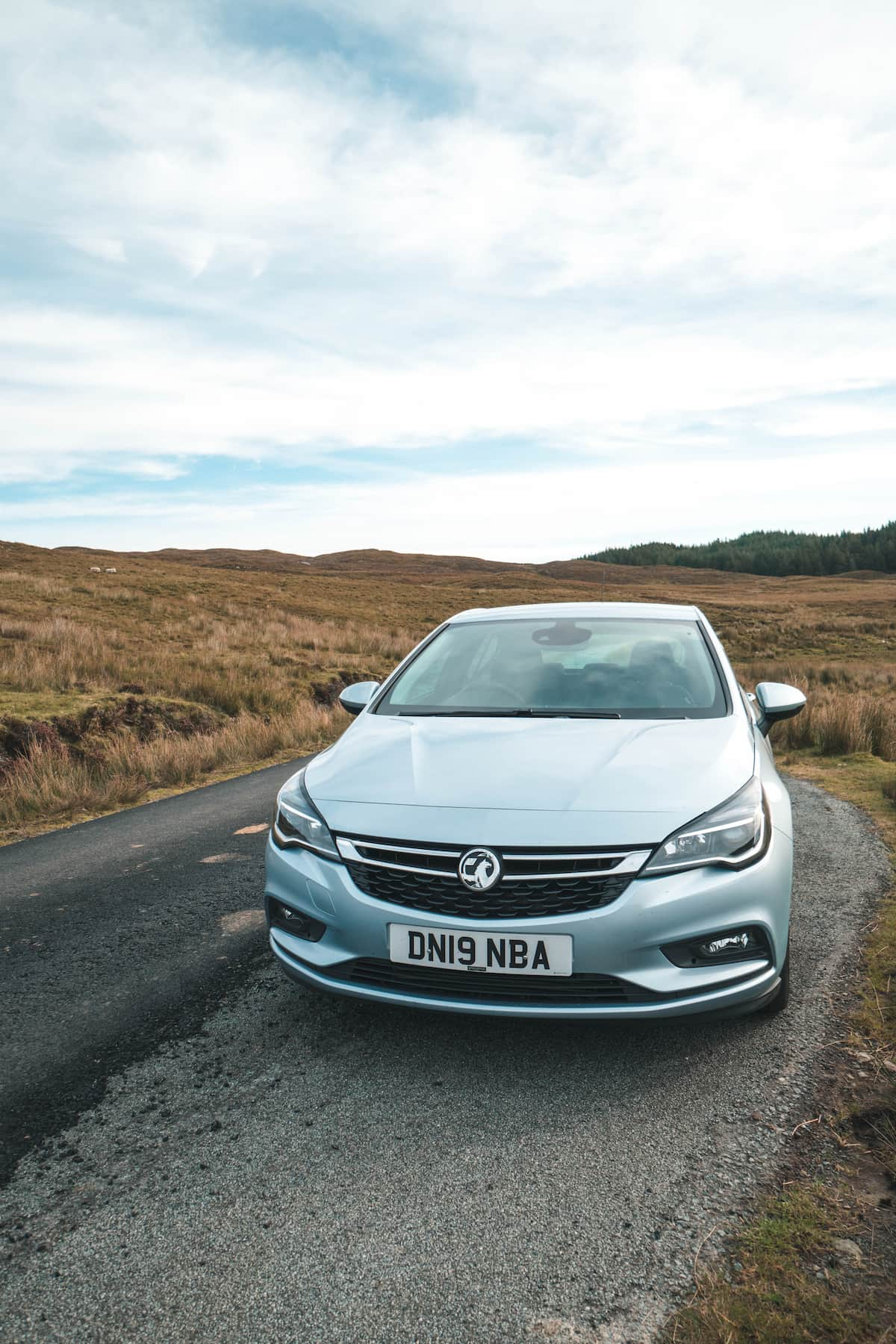
    Our rental car on the road with the Highlands in the background.

    I always use car aggregators like Rental Car or Sky Scanner to find the cheapest cars or check my credit card for any offers for my road trips. Once I have a list of options I’ll either book the best-priced option or call those car companies to see if they can offer any other deals.

    Things to watch out when booking a car:

    • Additional drivers will always drive up the price of car hire so if you are travelling with other people and wish to share the driving you can expect that to add an extra £8 to £10 a day.
    • Read the small print on whether the car company accepts third party assurance as this can save you. If you can use third party insurance then this can save you additional money if you want more coverage.
    • Where you rent the car will affect the price, normally renting within the cities like Edinburg or Glasgow can cost you more money than slightly outside of the city.

    Visiting for a Month? Save on Long Term Car Rental

    When I did my Great British Road Trip over the summer I used Europcar’s long rental option which gave us the car for half the price for 28 days, unlimited drivers and delivered to my door! This is a perfect way to save on the cost of renting a car and you can still get the long term hire if you’re visiting from overseas. Just pick it up at the closest location.

    Here are some road trip ideas for your Scottish adventures:

    Fill-up at Supermarket Petrol Stations 

    Asda, Morrisons, Sainsburys, Tesco etc. will all offer cheaper petrol by some margin. If you stop at any of the petrol stations along the motorway you could easily see prices increased by 10 to 20 pence per litre! By searching for these petrol stations you’ll easily find savings.

    Pre-Book Parking

    Sometimes you can get better deals on parking if you pre-book. Use websites like Your Parking Space or Just Park to find any deals to save you money. I use this for when I park in cities as this is where the money adds up if your accommodation doesn’t offer cheap or free parking.

    Download these apps before hitting the road; Just Park, Pay by Phone and Ring Go. They were by far the most frequent ones I encountered.

    Save on Scotland Accommodation

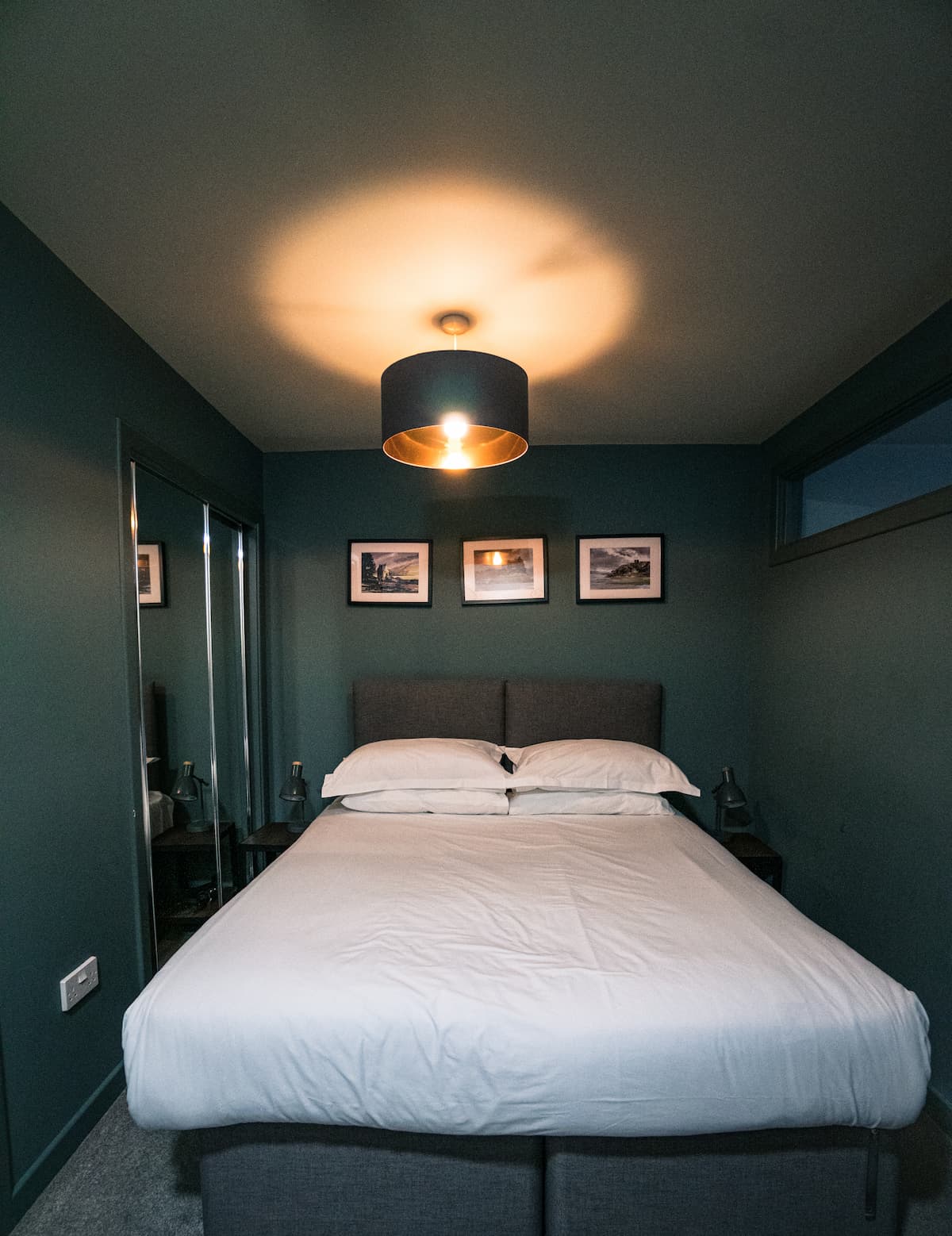
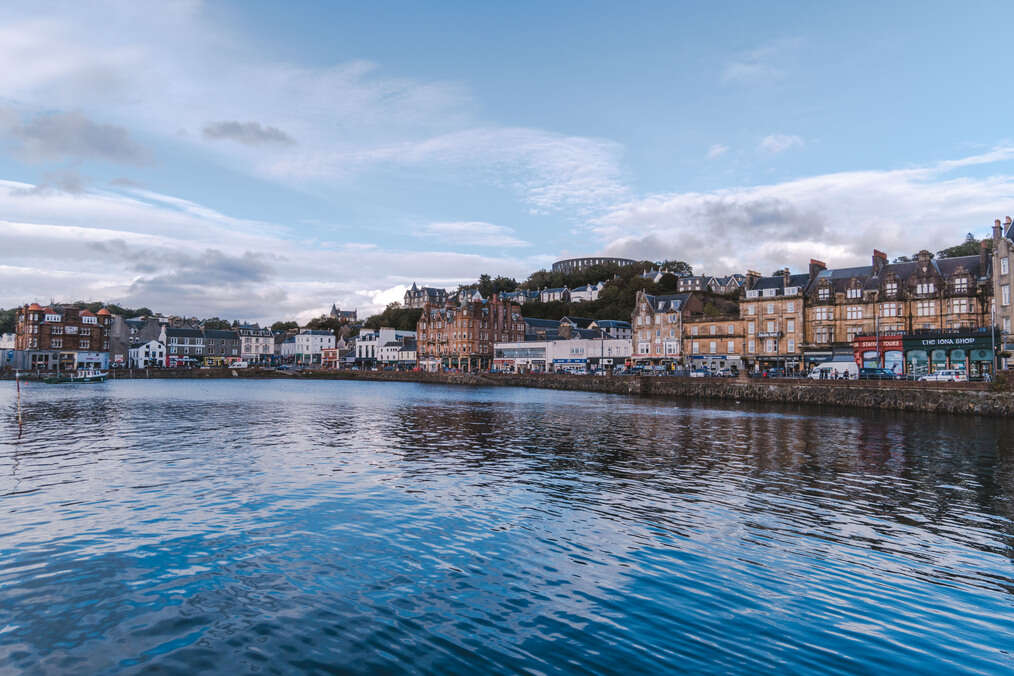
    Hotel Room in Oban

    Book your Accommodation well in Advance

    Affordable accommodation books out well in advance, especially if you’re visiting in the summer months. Once you’ve confirmed your dates look at booking your accommodation shortly after so you get the best deals. Having cancellation options will give you the freedom to cancel if you need to re-arrange your travel.

    Stay Outside of the City Centre

    The best way to find cheap accommodation is to look outside of the central areas of any given place.  Staying where other tourists tend to stay will almost always mean that there is a price increase, which can be easily avoided by researching areas a little outside of the centre of a city or town.

    Airbnb

    Like many other European countries, Airbnb is extremely popular in Scotland, particularly in the summer months as many Scots prefer to leave the business of the Fringe Festival and other tourist attractions, and instead rent out their home at this time.  The great thing about Airbnb is that the properties tend to be cheaper than on other booking sites which can be a huge money saver during busy times like the Edinburgh festival or Hogmanay.

    Bothies

    Bothies are a little known hidden gem of Scotland and make the perfect accommodation for those who love the outdoors and are travelling on a budget.  Bothies are normally situated in the Scottish mountains and require a hike to get there – some longer than others, and are a simple, basic shelter.  The great thing about bothies is that they are entirely free to stay in, making them the perfect budget travel option.

    To stay in a bothy, you do need to be slightly more prepared, as they are very basic and do not have amenities.  This means bringing sleeping materials, food and water just like one would if they were camping.  Some of them even have fireplaces, so be sure to bring wood and a lighter if that is the case.  Staying in a bothy is a wonderful experience for any outdoor lover!

    Find more about bothies here.

    Hostels

    There are many great hostel options all over Scotland which offer highly comfortable and very affordable options for accommodation on your travels.  The best thing about hostels is that they can even allow you to stay right in the centre of a popular city or town, at a fraction of the price of a hotel in those given areas.

    The standard of hotels across the country also tends to be fairly consistent in terms of standards, meaning that you do not have to sacrifice your comfort in order to save money.

    Student Accommodation

    Some of the universities will rent out the student accommodation and this can offer a cheap way to stay in the cities. This is mainly during the uni holidays so Christmas (December, January), Easter (March, April) and summer (June, July, August, September).

    • University Rooms – Broker for handling short-term stays at many colleges and universities in the U.K.
    • Budgetstayuk – Offers accommodation for five universities in Edinburgh.

    Camping

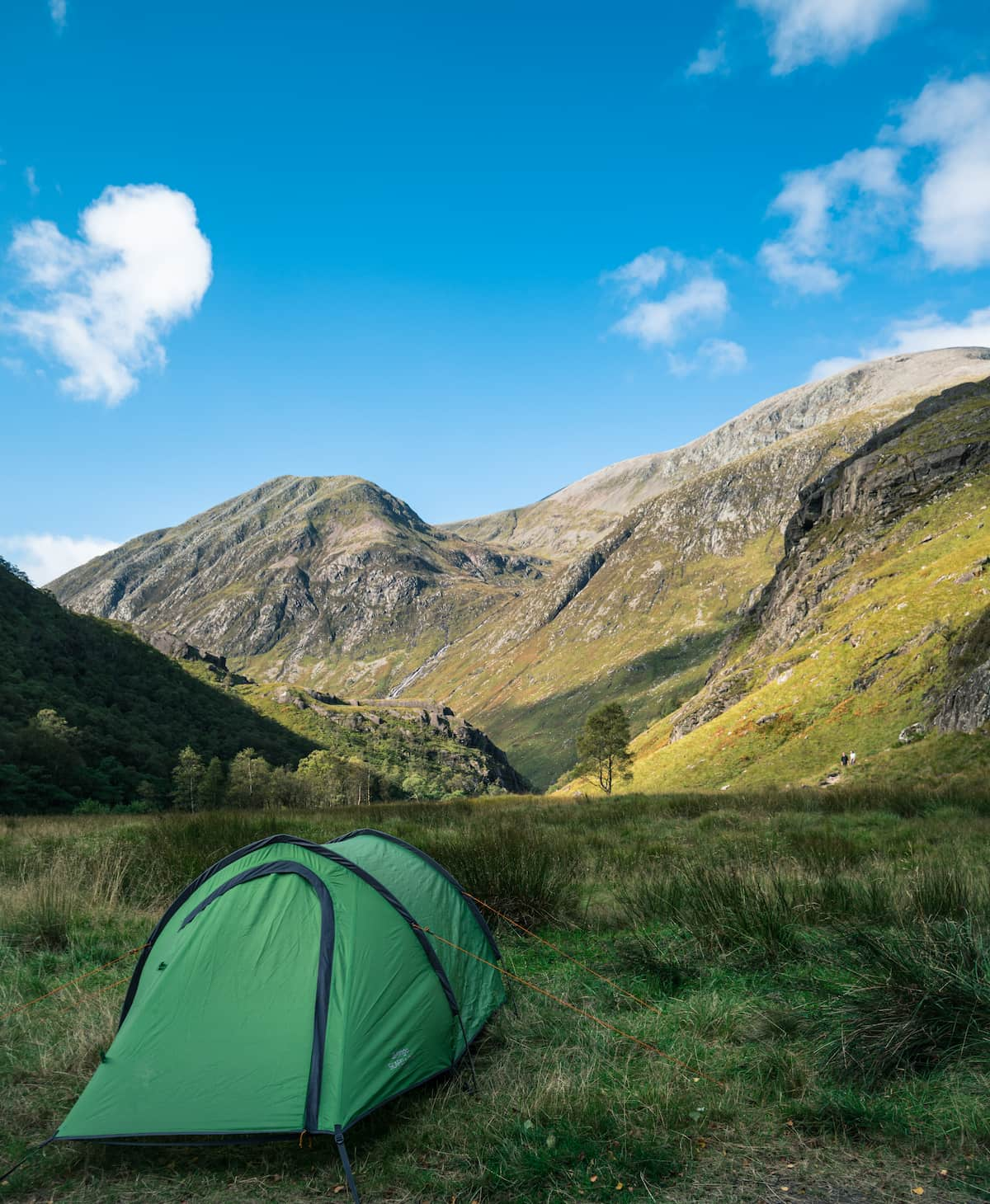
    Wild Camping in Fort William

    Camping offers perhaps one of the most budget-friendly ways to travel all around Scotland.  Many official campsites allow for you to stay there for as little as £5 each per night, bringing the cost in at much less than even a hostel could offer. 

    Even better still, in Scotland, you can make use of the Freedom to Roam act and save a lot of money on your trip. The act means that all land is accessible to anyone in the country, which isn’t just great for walks and hikes but also for camping anywhere you like. 

    Anyone camping in Scotland can pitch a tent in any non-closed off area and not pay even a penny to do so – this is, without a doubt, the most cost-effective way to see rural Scotland.

    Food

    Eat in pubs

    A great part of Scottish culture is that almost every pub serves food as well as drinks.  This does not mean that there are simply bar snacks available, but more often than not that there will be a full menu available, often a similar sized one to an actual restaurant, with a huge selection of different starters, mains and desserts.  The great thing about this is that the meals in pubs are normally a fraction of the price of a meal in a restaurant, with main courses usually ranging from £7 to £10 on average.

    Make Your Own Food

    Supermarkets are a great way to save on food and I frequently create a picnic or cook my own food. The cheapest stores to purchase food at are Aldi and Lidl. Asda, Tesco and Sainsbury being your mid-range store, normally where I shop. Marks and Spencers (M&S) or Waitrose are on the high-end.

    Meal deals are available at some supermarkets where you can normally pick up a sandwich, drink and crisp for £3. If you have a kitchen at your accommodation then there are also dinner meal deals options like stirfry deal or ready meals.

    Tap Water = Free

    Something that is important to remember in terms of saving money is that tap water is entirely free and safe to drink across Scotland, meaning that purchasing any drinking water at all is unnecessary.  Cafes, restaurants and bars will be happy to refill personal drinking bottles with tap water, and ordering it in a restaurant is also free.

    Local Beer

    Drinking local, Scottish beer in bars and pubs while in Scotland is by far the cheapest option when buying alcohol on your trip, and this is no bad thing.  There is a whole variety of Scottish beer to choose from and much of it is excellent.  While the prices of even local beers vary depending on where you go, you can certainly bring the price down by a couple of pounds just by choosing something local.

    Here are some of the more affordable local beers to go for:

    • Tennents (a local favourite)
    • Innis and Gunn (a craft favourite)
    • WEST (for german beer lovers)
    • Brewdog (technically they are a big brewery now but they started as craft beer and originated in Scotland)

    Malt of the Month

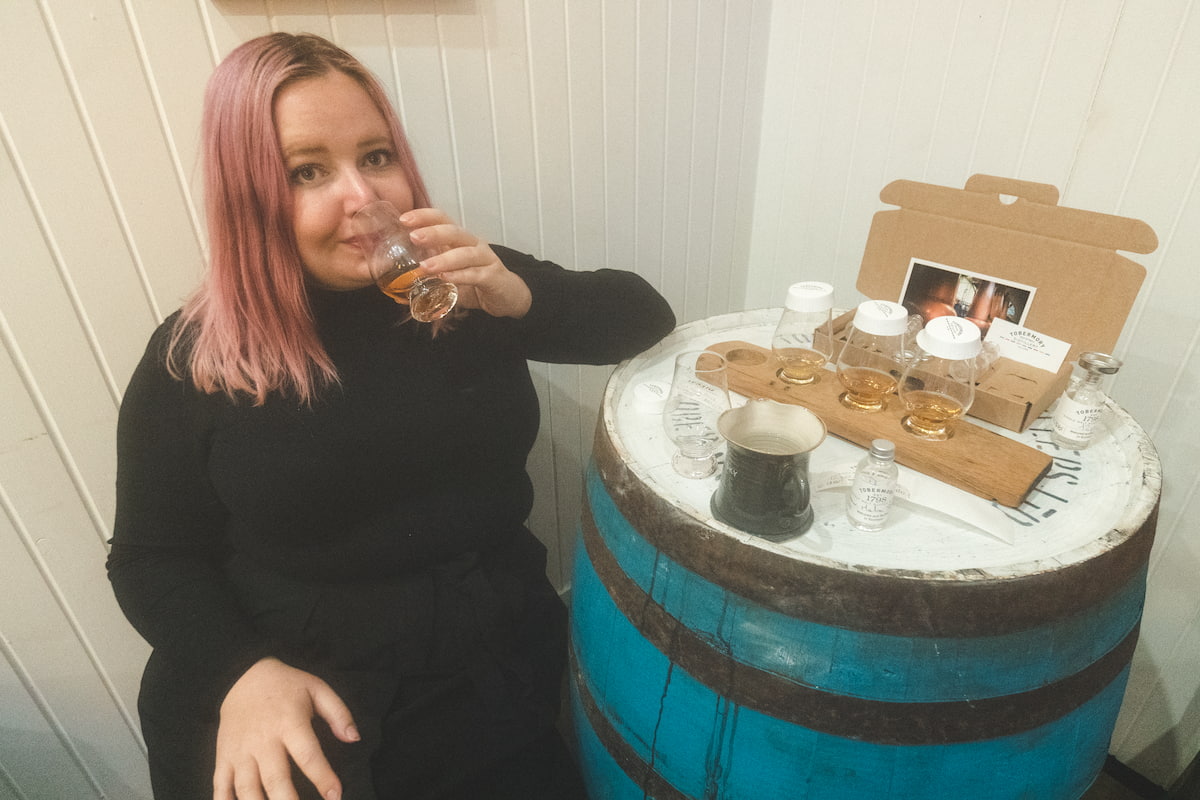
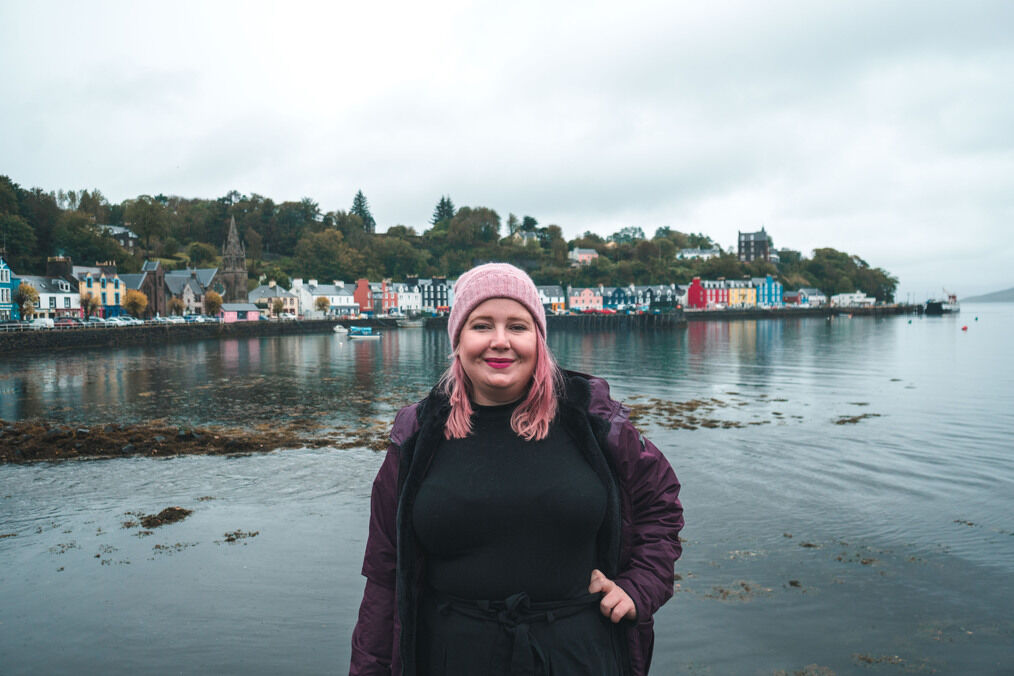
    Kat drinking whisky at Tobermory

    If it’s whisky you are looking to try, there is even an affordable way to do that.  As with other spirits, drinking whisky regularly can be expensive, especially when you aren’t sure what the affordable options are.

    A great way around this is to opt for a Malt of the Month.  The majority of Scottish pubs, particularly the smaller ones and ones in the rural highlands, will have offers and specials where a type of whisky is less expensive than usual.  This is also a great way to try different types of whisky while you are in the famous drink’s home!

    Street Food

    Street food is massively popular in larger Scottish towns and cities and is a super affordable way to eat out.  Fish and chips is the best example of this, with a ‘fish supper’ coming in at around £5 normally, but there are many other types too; falafel is very popular in Edinburgh and Glasgow, as are kebabs.

    Tips

    It is important to remember to tip when eating out in Scotland, but it is also important not to over-tip, or tip unnecessarily if you are trying to save money.

    It is customary when at a restaurant to tip 10% of what the total bill came to; it is not necessary to tip more than this. If you find that there is a service charge added to your bill then that is the tip so don’t add more to this unless you are impressed with the service.

    Furthermore, in Scotland, it is not expected that you tip bartenders or delivery people – you can of course do so if you wish, but if you are trying to save money then remember it is not necessary.

    Lunch Deals

    If you are a foodie, and do want to eat out in restaurants while you are away, then the best way to do this on a budget is to look for lunch deals, which make eating out a far more budget-friendly option.

    It is common for restaurants to offer a limited menu of two or three courses for a reduced price during certain hours of the day.  Be sure to research this before heading out to a restaurant to eat, to be sure that you are getting the best price.

    Save Money On Scotland’s Tourist Attractions

    Historic Scotland Explorer Pass

    Historic Scotland Explorer Pass is a great way to save money on attractions. It allows groups and individuals to discover over 70 places in Scotland. For each day that a pass is valid, you can visit as many locations as you like – for no additional cost.

    Historic Scotland also offer a yearly membership if you live here.

    National Trust Membership

    National Trust membership is perfect if you’re planning to visit a lot of the sights included within the trust. From coastlines to castles, art to architecture, wildlife to wilderness, there is something for everyone.

    If you’re living in the UK then consider a yearly membership as you will get free or concessionary entry to places owned by National Trust organisations including in England, Wales and Northern Ireland. Not only does this save you money at each individual place it includes parking!

    Find out more about the National Trust Membership here.

    Day’s Out Guide

    Days Out Guide is a great way to save money on attractions in Scotland if you’re travelling there by train or hold a train ticket (i.e. London to Edinburgh). It offers 2 for 1 price for various attractions. To be able to use the deal you need to book the vouchers online or visit a rail station for the voucher (it needs to be a physical copy) and have a National Rail ticket for each person.

    Walking Tours

    A walking tour is a great way to get the feel of any city, from someone who lives there themselves.  A tour will normally take you around all of the key areas of the centre of a city or town, and teach you about the place’s history as well.

    The great thing about walking tours is that the vast majority of them have no costs upfront and are based on tipping which means you can decide what amount fits in your budget. There are now walking tours available in every city in Scotland!

    Bus Tours

    Similar to the walking tours, bus tours are a great way to explore a city,  but taking a bus gives you the opportunity to see so much more!

    Bus tours tend to take the structure of a one-off payment for a day ticket, which allows one to get on and off any tour bus in the city at any time based on what they would like to see.  This is great value and means that you don’t have to waste any time working out where to go!

    The prices of tickets vary, but the best value tour is certainly to be found in Edinburgh, where an adult can buy a 24-hour ticket for just £8

    Free Fringe

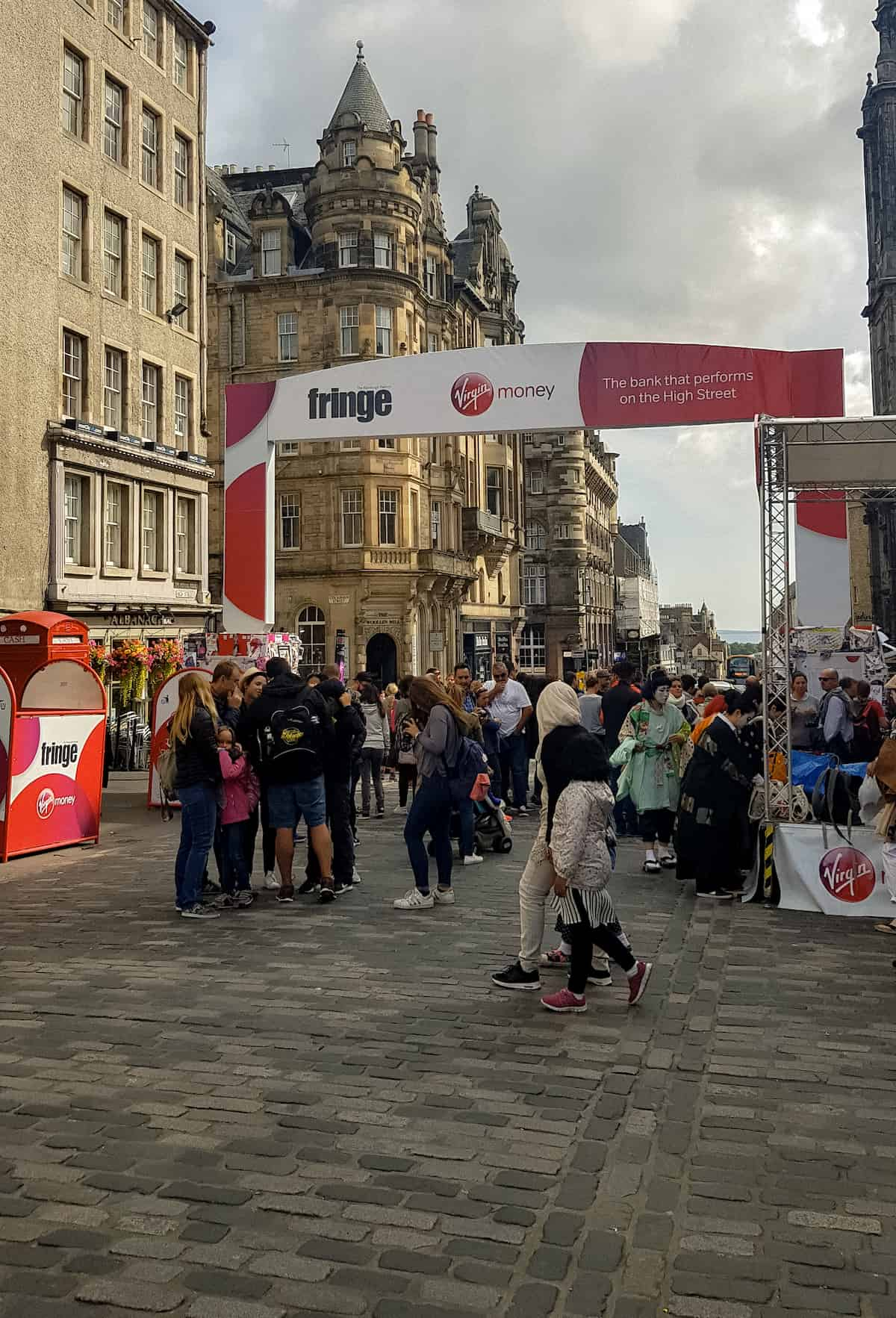
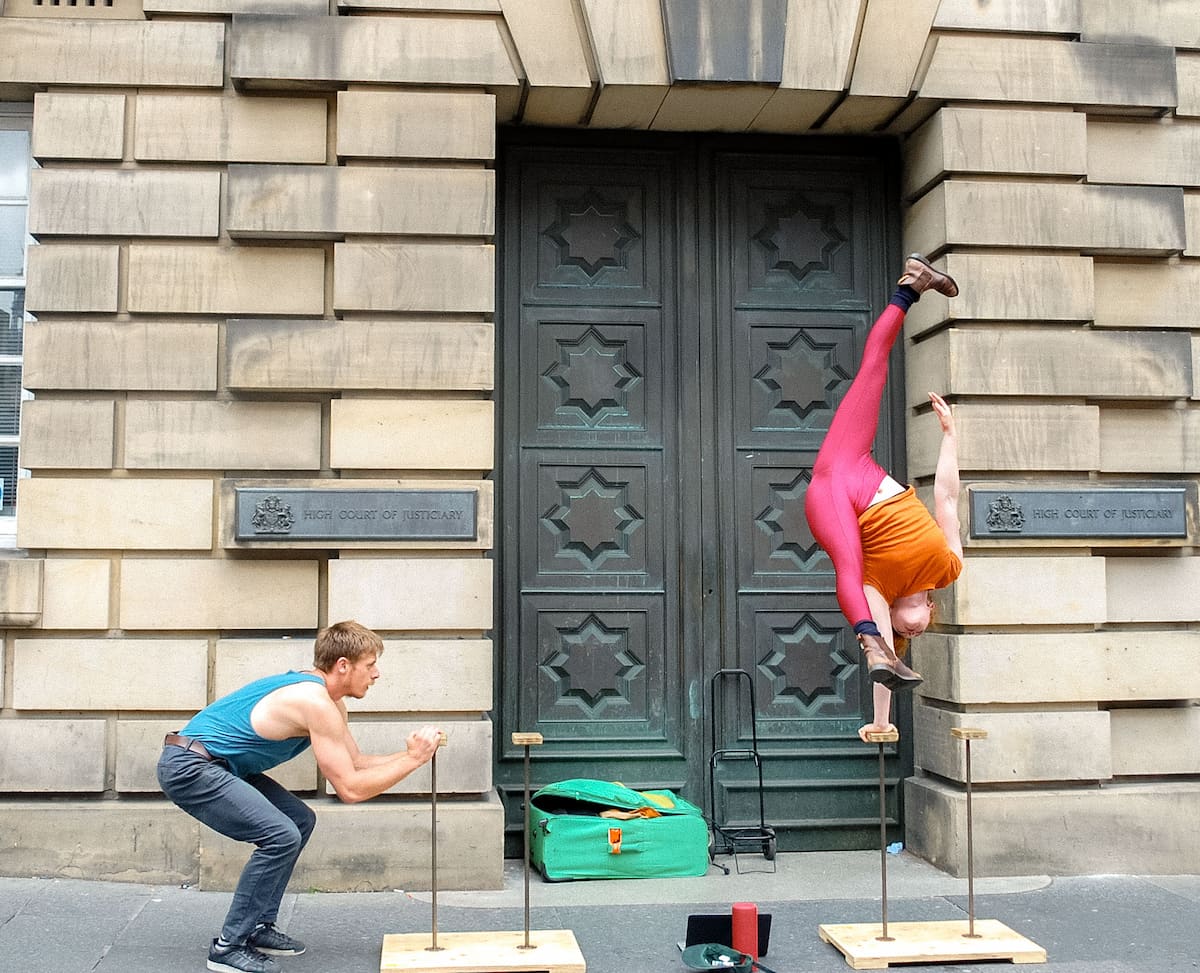
    performers at Fringe Festival Edinburgh

    Of course, the most inexpensive time to visit Edinburgh is in the off-season, but no one could blame you for wanting to visit the city during the Fringe Festival in August.  This is an expensive time to visit the city, but there are still ways to bring the cost down significantly.

    The best way to do this is to stick to the free fringe shows as much as possible! Every time I have attended fringe these are 90% of the shows I go to! These shows are widely advertised throughout the city and are a great way to discover a huge variety of different shows and talents without paying any money for them!  Performing artists will ask for tips at the end, but it is up to you how much you want to pay them!

    Do make sure that you bring change so that you can tip the performers!

    Also on the first week of fringe lots of performances offer 2-4-1 tickets to warm up so it’s a great way to save some money. If there is a show you really want to see make sure you book this in advance! The biggest shows will book out months in advance, just like the accommodation.

    Live Music

    Live music is a huge staple of Scottish culture, and much of it remains unorganised in the sense that it still happens in bars and pubs – meaning that much of it is free.

    There are lots of small music venues, especially around Glasgow and Edinburgh, that will advertise live music on different nights of the week; in Edinburgh, Leith Walk and the Old Town are the places to be, in Glasgow it’s Bath Street and Sauchiehall Street.

    Even in rural Scotland, however, you can still expect to find pubs with traditional Scottish music, often on weekend evenings – if you find yourself in a small village on your travels, ask around at local pubs to find out more!

    Cathedrals

    For those who love history or architecture or both, Scotland has a whole wealth of cathedrals open to the public and completely free to enter.

    The most popular examples are St. Giles Cathedral in Edinburgh, situated right on the Royal Mile, or St. Mary’s Scottish Episcopal Cathedral in Glasgow, but a cathedral can be found in every city in the country!

    Free Museums and Galleries

    There are plenty of great free museums and art galleries all over Scotland, but they are especially great for making city breaks much cheaper.  Luckily, Edinburgh and Glasgow have a particularly high concentration of free attractions such as these:

    Edinburgh

    Museum of Edinburgh

    One of the historic buildings on the Royal Mile, the Museum of Edinburgh houses a collection of pieces relating to the origin of the city, its history, and some of its most well-known legends!

    The Museum of Childhood

    This museum hosts a collection of children’s toys, books and games and was the first museum in the world to be dedicated specifically to the history of childhood.  The pieces date back to the 1800s.

    Scottish National Portrait Gallery

    The Scottish National Portrait Gallery is an art museum holding the country’s collection of portraits of all Scottish people.  Here can also be found the Scottish National Photography Collection.

    The People’s Story Museum

    This one tells the stories of the working-class people of Edinburgh from the late 18th century to the present day, as told through oral history and written material.

    National Museum of Scotland

    This museum holds collections representing the culture and histories of Scotland, as well as collections relating to science, technology, natural history and world cultures.

    National Gallery of Scotland

    This gallery holds Scotland’s national collection of fine art from the early renaissance to the end of the 19th century.  It is situated on the Mound in the centre of Edinburgh and is one of the city’s most popular free attractions.

    Museum on the Mound

    This museum focuses on money and economics, located in the Bank of Scotland Head Office building on the Mound.

    Scottish National Gallery of Modern Art

    This is a part of the National Galleries of Scotland and is home to a collection of stunning pieces of modern and contemporary artwork.  It is comprised of two buildings, Modern One and Modern Two.

    Glasgow

    Kelvingrove Art Gallery & Museum

    This is one of Scotland’s most popular tourist attractions and features an astounding twenty-two themed galleries and an impressive eight thousand different pieces, including Salvador Dali’s masterpiece ‘Christ of St John of the Cross’ which is the most famous piece in the gallery.

    Gallery of Modern Art

    This is the main gallery of contemporary art in Glasgow and it also offers temporary exhibitions and workshops too.  The gallery displays work by both local and international artists, and works to display social issues through many of its major projects.

    Riverside Museum

    Riverside Museum is Glasgow’s award-winning transport museum.  It hosts an amazing three thousand objects to look at – everything you could imagine, from skateboards to locomotives, to cars, to prams – there is even a Stormtrooper!  There are also over ninety touch screen panels which can be used to access more information.

    St. Mungo Museum of Religious Life & Art

    This museum is dedicated to the subject of religion, one of the only of its kind worldwide, and hosts collections relating to all of the world’s major religions and also has a Zen garden.

    The Tall Ship at Riverside

    This is a restored Victorian sailing ship which can be explored.  It hosts maritime-themes exhibitions, tours, and a miniature cinema.

    People’s Palace and Winter Gardens

    This is a museum and glasshouse situated in Glasgow Green which has been open since the late 1800s.  Its purpose is to tell the story of Glasgow and its people from 1750 to the present day.

     Provand’s Lordship

    A medieval historic house museum by Glasgow’s Cathedral.  It is one of the only surviving medieval buildings in Glasgow and is one of the two oldest buildings in the city.

    Scotland Street School Museum

    This is a museum of school education, located in a former school that was designed by Glasgow’s own Charles Rennie Mackintosh, one of the country’s most celebrated architects.  It now tells the story of education in Scotland over the time period of one hundred years.

    The Lighthouse

    This is Scotland’s centre for Design and Architecture, due to the fact that Glasgow has been named as the UK’s city of Architecture and Design.  It hosts many interesting events and exhibitions and boosts the creative industry of the city.

    Hunterian Museum and Art Gallery

    This museum and gallery is homed in the old buildings of the University of Glasgow and is the oldest museum in Scotland.  Inside can also be found the Mackintosh House, the Zoology Museum and the Anatomy Museum.

  • 30 Things to Know Before Travelling to Scotland

    30 Things to Know Before Travelling to Scotland

    Scotland is a very popular tourist destination, now more than ever before, due to its stunning landscapes, tourist attractions and friendly people. 

    Before you set off there are some things you should know before travelling to Scotland. If you’re ever stuck locals will always be willing to help you out if you need, and travel options are fairly easy to work out.

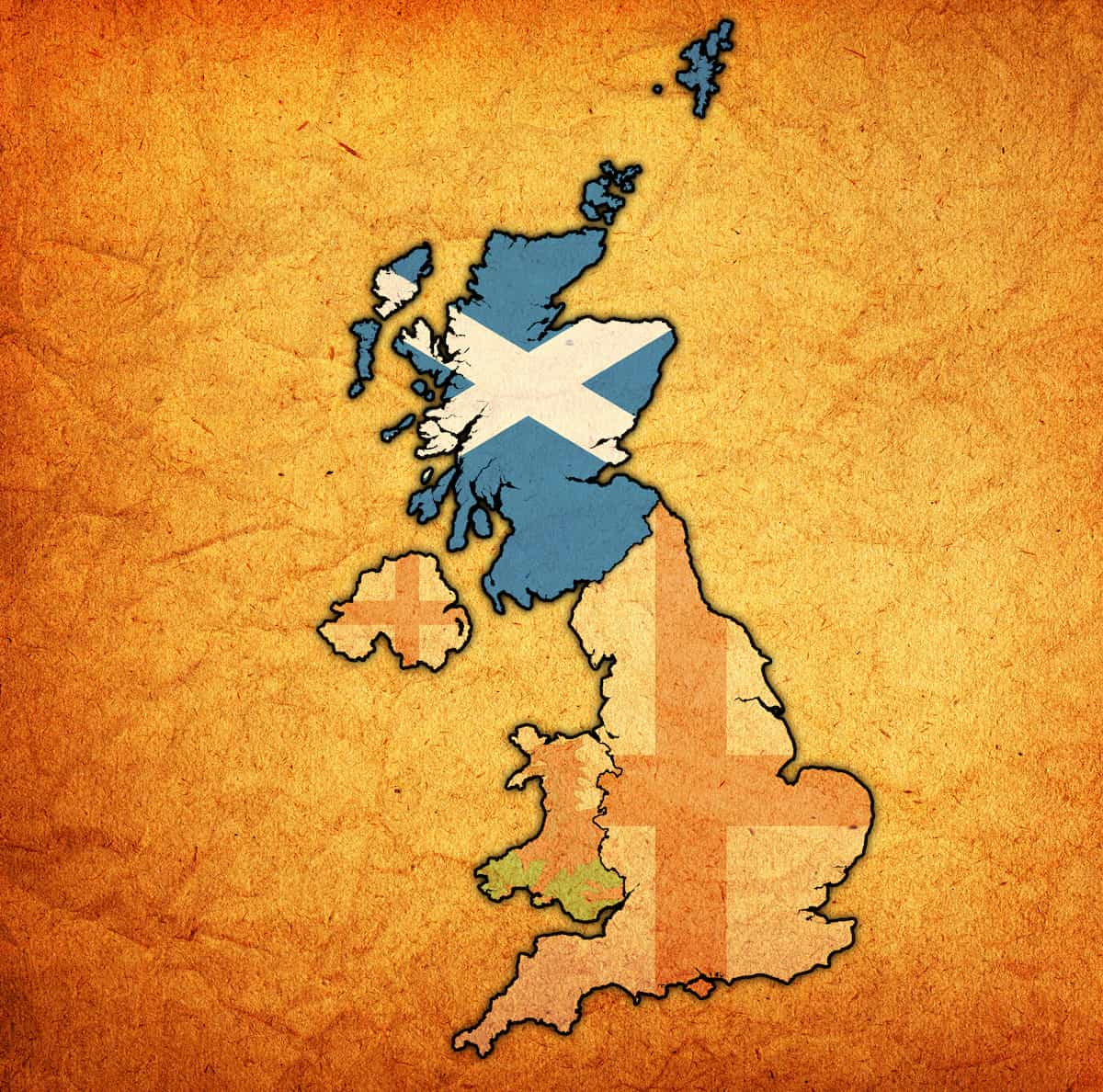
    Scotland Is Its Own Country

    Map of Scotland

    Scotland is its own country and is not to be confused with England or combine the countries in the UK as one – a common mistake that people make! 

    Scottish people are very proud of their country, culture and customs, and it is a very distinct place. They have their own traditions, people and history, as well as its own parliament and first minister. This is why it makes it great to travel around as you’ll get to experience this on your adventures.

    Another common mistake is to refer to Scottish people as ‘Scotch’ when this is actually more commonly used to refer to a Scottish thing, not a person.  Scottish people actually refer to themselves as Scots, which is also the name given to the language that was historically spoken there.

    Bring The Right Clothes

    Wearing the right clothes in Scotland

    This may seem like an obvious suggestion, people don’t tend to go to Scotland for its weather after all, but it is one of the most important things to consider in preparation for your trip to Scotland. 

    I remember travelling from Italy to Scotland and I did not pack the right clothes! As I’ve travelled to Scotland every year since I moved to London I should have known better but there I was trying to layer all my clothes to keep warm.

    The weather in Scotland is very changeable – one minute it can be blazing sunshine and the next pouring rain or crazy hailstones, so it is very important to be prepared for all occasions.

    Thankfully I brought the most essential item a rain jacket! Due to the high winds in Scotland, an umbrella often will not last more than ten minutes in poor weather, so a sturdy waterproof is your best bet for sure. Something like this waterproof Weekend Jacket from Peter Storm, which comes in two colours red and yellow.

    You will also want to pack layers of warm clothing, even if visiting in the summer.  Summers in Scotland can see temperatures as high as 27 degrees celsius during the day, but even in the hottest times the evenings get chilly, and the temperature is often misleading and can feel much colder due to the wind.  If you prepare by bringing the right layers, you can still expect to sit out on a summer night!

    Wear Comfortable Walking Shoes

    Kat wearing brasher walking boots

    Whether it’s walking around one of the Scottish Cities or hiking somewhere in the Scottish countryside, comfy shoes are a must. A pair that is waterproof is a bonus as well! It rains a bit in Scotland so these will keep your feet nice and dry.

    Most of the cities will have cobbled streets so high heels or any shoes that aren’t compatible with this should be left behind. I tend to pack trainers and walking boots when I go as they cover both scenarios. I own these Brasher walking boots which are super comfortable, you can check out the latest styles on Blacks. If there are no walks planned then skip the walking boots.

    Then for evening nice ankle boots or some flats.

    Avoid August in Edinburgh – Unless Attending the Fringe Festival

    Streets of Edinburgh during fringe festival

    The world-famous Edinburgh Fringe Festival happens every August and brings in thousands of people each year. For the full month of August, the streets are full of tourists attending the various theatre, comedy and music events.

    Whilst it’s a great time to visit Scotland, if you’re trying to cut costs or avoid crowds it’s best to skip this time of year.

    Pro tip: if you’re planning on going to the Fringe Festival book accommodation as soon as you know you’re going. I try and book accommodation in January or the year before to get the best deals.

    If you are booking the train there, tickets open 12 weeks before your travel dates. Any tickets offered before then will be advanced tickets and these are the most expensive train tickets you can buy. To find out the latest prices check the Trainline website.

    Book Accommodation in Advance

    The popular routes around Scotland get booked out fast, areas like Glencoe, Fort William, the Isle of Skye or Inverness. Once you have confirmed your dates for your visit book ASAP!

    Explore Scotland Off the Beaten Path

    View from Ord on Isle of Skye

    Every destination has the typical bucket list items and there are plenty of amazing places to see in Scotland. My favourite moments have been getting off the beaten path and experiencing the hidden gems.

    On the Isle of Skye, the drive to Dun Scaith Castles was one of my favourite drives on the Isle of Skye. It takes you to areas not as many tourists go down, we stopped Starting point for the walk can be found here.

    Or explore one of the Islands like the Isle of Mull which is an easy ferry ride from Oban which is included in my 7 Day Scottish Highlands Itinerary.

    Book Ferry Crossings in Advance

    A friend prewarned me to book my car on to the ferries in advance after missing out on space for their trip to the Isle of Mull. This saved me on my trip so I passing this tip on to you! I managed to get the timeslots I wanted the week before thanks to this tip.

    Ideally, allow at least a week in advance to book this or once you know your dates. Calmac Ferries is the ferry service, book your tickets here or save for later!

    Don’t Drive, Try the Spirit of Scotland Travel Pass

    Driving is not for everyone! The best way to travel around Scotland without a car is by public transport and due to the good connections, you will be able to do this with ease. Consider getting the spirit of Scotland travel pass which includes travel on trains, buses, coaches and ferries. 

    There are two passes to choose from, four days unlimited travel over eight consecutive days or eight days unlimited travel over fifteen consecutive days. Find out more on ScotRail’s website.

    What’s the Difference Between Scottish and British Money?

    The Bank of England is the central bank for the UK it is a legal tender that must be accepted throughout the UK.

    However, in Scotland the retail bank’s Bank of Scotland, Royal Bank of Scotland, and Clydesdale Bank each issue their own Scottish banknotes. These are legal currencies that can be used to pay for goods and services but outside of Scotland, you may find businesses a little more reluctant to accept them. This is because they are not issued by the Bank of England.

    If you find yourself in other countries of the UK and not accepting your Scottish banknotes, pop into a bank to get them exchanged.

    Invest in a National Trust Membership

    National Trust membership is perfect if you’re planning to visit a lot of the sights included within the trust. From coastlines to castles, art to architecture, wildlife to wilderness, there is something for everyone.

    If you’re living in the UK then consider a yearly membership as you will get free or concessionary entry to places owned by National Trust organisations including in England, Wales and Northern Ireland. Not only does this save you money at each individual place it includes parking!

    Find out more about the National Trust Membership here.

    Edinburgh is Colder – but Glasgow is Wetter!

    Edinburgh, being closer to the sea, tends to be much colder as a city, with a harsher wind coming in from the coast.  The rainfall is not as frequent or as heavy, although it may not feel that way (Scotland is still a very rainy country as a whole), you really want to focus on layering up and keeping warm in this windy city.

    Glasgow is a far warmer city due to being further inland but as it is still situated on the west coast, it does have far higher rainfall than its east coast counterparts.  It rains in Glasgow every month of the year, so even in the summer months, you won’t be able to escape it!  Once again, a rain jacket is your best bet.

    Narrow Roads

    Growing up driving on Australian roads I had to get used to driving on the narrow road here. Not all cars can drive on the roads too! As I was driving around Isle of Skye I frequently saw signs saying that motorhomes would be too heavy or wide for the roads.

    It’s a little adjustment but it is easy to get used to these. They do add more time to your journey so buffer this in, as well, as your vehicle size.

    You Won’t See Really See People Wearing Kilts

    Scottish man playing bag pipes

    As much as we would love the scenes of Outlander when we visit, the Scots only wear kilts for special occasions (i.e. weddings) for the most part. Psssttt – if you find a busker in a kilt playing the bag pips then they deserve a tip. It’s such a difficult instrument to learn and takes years! Plus you’ll probs snap a photo of them and give them the funds to continue playing.

    Explore the Natural Beauty of Scotland

    Fingals cave Staffa island on the coast of Scotland

    Every corner your turn in Scotland you will be in awe with its natural beauty from its beautiful coastline, towering mountains and enchanting islands.

    This means there will be lots of natural attractions and you won’t need to travel far to find them. Here are some of my picks:

    • Fingal’s Cave – this has been on my list for years! On the Isle of Staffa you will find the Scottish version of the Giants Causeway. This does require a boat tour to get there and you can find tours leaving from Oban. During the summer you may even get to see puffins!
    • Star Gazing in Galloway Forest Park – the UK’s first designated Dark Sky Park, the forest offers the best conditions for stargazing. You’ll be able to see more than 7,000 stars and planets.

    You Might Experience a “Language Barrier”

    Just like any country accents will vary but the thick Scottish accent can be hard to understand if you’re not used to it. It’s something to be mindful of and just let them know if you’re struggling to understand.

    Scottish Gaelic

    English is the main language, however, the Celtic language of Gaelic is still spoken throughout Scotland and it is considered the founding language of the country. Don’t be surprised when you see bilingual road signs, discover the tv channel dedicated to Gaelic or hear people speaking it in the Highlands.

    Paying With Debit and Credit Cards

    Paying by card is widely accepted throughout the country. Visa and Mastercard are the most accepted cards, major retailers will accept American Express. Make sure you have a Visa or Mastercard with you when you travel.

    I always like using Wise as my travel card as they make it easy to keep multiple currencies and get the best exchange rates.

    Tour Responsibly

    Scotland’s Highlands and Islands are known throughout the world for their stunning beauty and has many visitors every single year. This is great for Scotland, as its economy thrives on tourism and it brings great support for the small businesses in rural areas. 

    However, we need to support responsible tourism and minimise our negative impacts on the environment and local communities. This is something that we learn over time while travelling and being conscious about it builds the habits over time.

    Taking care of the landscape mostly comes down to common sense, such as leaving sites how you found them, taking litter away and not dropping waste that conflicts with the natural ecosystem. 

    Or designing your trip carefully so that you’re leaving a positive footprint in Scotland. For example, instead of a big tour group opt for smaller organised tours like Rabbies who average about 10 people per group.

    Instead of booking accommodation with Airbnb, see if you can book with the accommodation directly so they are getting money to support their small business.

    Go On An Epic Road Trip

    Go on an epic road trip in Scotland

    The best way to really explore Scotland is by car and there is no shortage of epic road trips you can go on.

    • Central Scotland – this can include the country’s capital city, Edinburgh, as well as Stirling, Loch Lomond and Perthshire.  This is a nice easygoing route, with more cities and towns than mountains and countryside – it’s great if you want to see the famous sight such as Edinburgh Castle or the Kelpies!
    • The West Coast and Islands – you can hop between islands on car-friendly ferries to discover beautiful beaches and tall mountains. The west coast without a doubt has the best variety of urban and natural routes to take.
    • Wester Ross – head far north to experience parts of Scotland that almost seem undiscovered!  Still, serene lochs and towering mountains await you here (included in route 500).
    • Angus – situated between Dundee and Aberdeen, this underrated section of coastline can be made into an entire holiday! This coastline is rugged and untamed, in the most perfect way!
    • The East Coast – there are so many little hidden gems of towns on the East Coast, and every town has its own special charm.  Food, drink and pretty harbours – all can be found on this coastline!
    • The North Coast – take an epic journey along the whole north coast and discover Scotland’s most rural landscapes!

    For more inspiration read 10 Scenic Places to Visit in Scotland by Car (That You’ll Love).

    Visit a Loch That is Not Loch Ness

    Loch Ness is one of the most famous and popular tourist attractions in Scotland, mostly due to the famous folklore that surrounds it.  While it is fun to go and learn about the famous Loch Ness monster, it is a good idea to go off the beaten track a little more and explore some Lochs that aren’t as popular with tourists. 

    This also speaks to the previous point about touring responsibly; it is very important that we do not overwhelm the landscape too much, so why not go and explore some of the other many Lochs that Scotland has to offer?

    Try Visiting Some of the Smaller Islands

    Kat at a waterfall on the Isle of Mull

    Why not take a look into travelling to smaller islands, rather than crowding on the well-known ones that everyone else visits, such as Skye, Mull or Islay.

    The small islands offer the same stunning scenery but without all of the tourists! 

    Try out Rum, Eigg, Muck or Canna instead – they are off the beaten track and you will certainly be rewarded for your efforts.

    Simply take a ferry from Mallaig and explore these stunning islands on foot; you are protecting the landscape and contributing to overwhelming the popular islands much less!

    There Is No Such Thing as Trespassing in Scotland

    There is always a great opportunity to go off the beaten track in Scotland due to the Freedom to Roam act, meaning that you can wander wherever you please and do some real exploring.  You can even camp anywhere you like as well, which should certainly be made the most of! 

    Watch Out for the Midges!

    Thankfully, Scotland does not have any dangerous animals or insects, so there isn’t much that you have to watch out for.  However, while the midges certainly do not pose any danger to people, they tend to come in huge quantities when you go anywhere near water in Scotland. 

    A midge is a small fly that is part of the mosquito family which can be found all over the world. 

    Unfortunately, Scotland has a particularly high volume of the type of midge that bites.  Their bites can be very irritating, particularly if you get a lot of them at once, and so it is better to avoid them as much as possible.

    The most effective way to avoid getting bitten is to cover up, and voice sitting out near water on still days and evenings.  Of course, if you are camping then this can be difficult to stick to; but not to worry, you can purchase an inexpensive and wonderful antidote in the form of an after bite stick, designed to take the itch out of those pesky bites. 

    Stand Your Ground at the Pub

    Bars and pubs do not do table service (unless it’s 2020/2021) – this is reserved solely for restaurants.  In pubs, Scots go to the bar to get their orders and pay on the spot. This means that things can get pretty crazy on busy weekend nights and it is not uncommon to be four or five rows away from the bar at any given time. 

    That is why it is customary to buy a round of drinks for those that you are with, and they will do the same for you; this prevents an entire group of people queueing at the bar to get served for one drink.  If someone buys you around, the general rule is that you will get up to get the next one at the bar when the drinks are coming to an end.

    This may sound like a lot of nonsense, but in actual fact, it creates a great atmosphere and means that everyone gets talking while waiting for drinks. Being social with everyone you meet is part of the fun of getting out for a drink, so the Scots rarely mind being piled up at the bar for ten minutes before being served.

    Respect the Queue

    It is not uncommon for someone at the bar to wave you up first to be served before them – Scots are very friendly and polite as a general rule. However, queues, in general, are something taken seriously in Scotland, and skipping someone’s place in a queue without an offer is considered very rude. To avoid rubbing any locals up the wrong way, the best thing to do is to join a queue and wait your turn unless someone offers their spot to you.

    Drink Your Whisky Right

    Kat drinking whisky at Oban Distillery

    A trip to Scotland just would not be complete without trying some of the national drink – whisky.

    A common mistake made by tourists is to order a ‘scotch’ at the bar, and drink it down in one as if it were a shot.  In Scotland, however, it is called whisky by locals and it is bought in a measure referred to as a ‘dram’.

    Once purchased, Scots savour whisky while drinking it; drinking it slowly and enjoying every sip. If you want to fit in with the locals, this is the way to drink your whisky.

    Scots also do not mix their whisky with soft drinks, such as coke, and normally it is not to be had with ice either.  You can, of course, order both, but if you want to fit in with the locals then neat whisky is the way to go!

    If you know nothing about whisky, simply ask the bartender what they would recommend – they’re sure to have a favourite!

    Haggis Is Great, but There Is More to Eat

    Haggis is potentially one of the most well known parts of Scottish culture, and it has long been joked that it is the only thing Scottish people ever eat!  While it can commonly be found on a menu, or deep-fried in a chip shop, it is not as common as one might think.

    If you do not already know what haggis is made of, it is probably wise to do so before eating it.  It is a pudding made of sheep’s heart, liver and lungs, mixed together with oats, spices, onion and salt, encased in a sheep’s stomach.  If this sounds terrible to you, many places serve veggie versions which taste remarkably similar to the real thing!

    In truth, haggis is wonderful and every tourist should certainly try it once – but if the concept of it is a little odd to you and you don’t fancy it, do not worry – there are plenty other things to eat!

    Try Some Different Local Delicacies Instead

    Tunnocks

    Scotland actually has many native foods and drink aside from the famous haggis; here are some of the best ones to look for:

    Irn Bru

    This brightly coloured soft drink is a must-try for anyone coming to Scotland.  It can be found in pretty much any shop or supermarket and is inexpensive to try.  We all know the Scots love a drink, right?  Well, Irn Bru is a nationwide hangover cure – so if you do find yourself feeling the effects of one whisky too many, that would be the perfect time to try.

    Shortbread

    This delicious combo of sugar, butter and flour is a staple of Scottish home baking and a delicacy that you are sure to enjoy!  It can be bought in supermarkets, but try and find some fresh baked if you can.

    Oatcakes

    You are likely to find many things made from oats as you travel the country, due to the fact that they are one of the only grains that grow well in the north of Scotland and have long since been the staple grain used in Scottish foods.

    Oatcakes are baked oat biscuits which can be eaten savoury or sweet and are sure to keep you full for hours.

    Cullen Skink

    This is another delicacy of Scotland which, like haggis, is not to everyone’s liking.  It is a thick soup made from smoked haddock, potatoes and onions and is served with bread.  The smell is extremely strong due to the smoked fish, but it tastes absolutely delicious.

    Stovies

    You may notice that the majority of Scottish foods are stodgy, warming and hearty – it is surely  needed due to the weather!  Stovies are an absolute favourite to warm you on a cold day and can now commonly be found as street food as well!

    The ingredients can vary, but traditionally they are made with chunks of potato, carrot and onions, then normally featuring some sort of meat or haggis.  They are normally served with either oatcakes or bread to scoop up every drop!

    Tunnock’s Tea Cakes

    The Tunnock’s brand is an absolute favourite in Scotland, serving sweet treats to go with the huge proportion of tea and coffee drunk across the country.

    The tea cake is comprised of a small shortbread biscuit, topped with gooey marshmallow and coated in milk chocolate.

    Tunnock’s also have some other tasty treats, such as the caramel wafer or caramel log!

    Tablet

    If you have a sweet tooth then this treat is certainly for you!  Tablet is a confection made from sugar, condensed milk and butter, hardening to make a more brittle version of fudge.  It can only be eaten in small quantities by most due to the sweetness, but it is absolutely delicious!

    Don’t Bother Trying to Drive in the Cities

    The middle of the major cities in Scotland often suffers from bad traffic congestion, meaning that more often than not it takes longer to drive through the city centre than it would do to walk in the exact same area. 

    Walking through the cities also gives a unique experience of the place, particularly in Glasgow and Edinburgh where you cannot drive much through the centre of the cities anyway, and cars are forced to take far more roundabout routes instead, missing much of the main city centres. 

    Walking, on the other hand means you can experience every part of the city; pedestrianised shopping streets, cobbled side-alleys strung with fairy lights, and stunning parks – all just on the route of where you are trying to go!

    Don’t Be Offended if People Aren’t Excited About Your Ancestry

    Of course, it can be exciting to get to visit a place where parts of your family came from, but it is important to remember when speaking about your Scottish ancestry with people from Scotland that they hear this all the time.  In fact, it is one of the most common things tourists will speak about when speaking to scottish locals.  So don’t be too offended if people aren’t thrilled for you, they aren’t being rude, they just hear it a lot!

    Instead, why not try to have a discussion with locals about their culture, heritage and history, to be more educated about the places where your ancestors are from.  This is guaranteed to make you many friends in Scotland – Scots are very friendly and love to chat, especially over a drink!

    Fast Facts

    • Scotland uses the British Pound
    • The national animal is a unicorn (I’m not joking)
    • Glasgow is the largest city
    • Perth is the newest city
    • Scotland has over two thousand castles!  The most popular are Edinburgh Castle, Stirling Castle, Urquhart Castle, St. Andrews Castle and Doune Castle.
    • Most museums and art galleries are free to enter
    • Drivers in Scotland drive on the left side of the road
    • Scots is a language but is no longer spoken widely.  All native Scots speak English.
    • Gaelic is still spoken, but not by many people.  Only around 60,000 people speak it now, mostly in the Outer Hebrides.
    • Scotland is full of mountains – mountains over three thousand feet are called Munros – there are 282 of them
    • There are over 120 whisky distilleries in the country and you can tour many of them, and have samples!
    • There are 900 Scottish islands, most of them uninhabited.  The main island groups are the Orkney Islands, the Shetland Islands, the Inner Hebrides, and the Outer Hebrides.
    • Scotland hosts many world-famous festivals such as Edinburgh’s Hogmanay (New Year’s Eve), the Edinburgh Fringe, The Stonehaven Fireball Festival, Celtic Connections and the Islay Festival of Music and Malt.
    • Scotland has very long summer days and very long winter nights due to how far north it is.  In the summer you can expect daylight until 11pm during late June, however, in winter you are looking at darkness by 5pm in the north.

    Overall, these tips will surely help you get by on your travels around Scotland, but overall you can’t go far wrong!  The country is very safe and the people very laid back; if you ever need a hand with anything at all, simply ask around and someone will be willing to help you out!

    Scotland is a welcoming place, and if you respect it, then it will respect you right back

  • Best of Scottish Highlands: 7 Day Itinerary

    Best of Scottish Highlands: 7 Day Itinerary

    It is no secret why tourists from all over the world want to visit the Scottish Highlands, with its beautiful coastline, towering mountains and enchanting islands, but it can be difficult to know where to begin when planning a route – there seems to be so much to see, and so many routes to choose from!

    This route intends to have you begin at one of the major cities (Edinburgh or Glasgow) and come back down to them at the end so that it can be easily worked in with flights and other travel arrangements, however, the routes are simple and can easily be changed if there are parts you wish to add or change. 

    This is only one of many routes that can be taken through the Highlands, but it aims to give a great seven-day introduction to Scotland’s northern lands!

    Day 1 – Drive to Oban

    Drive: From Glasgow 2hrs 24 mins or Edinburgh 2 hrs 58 mins

    Seaside view of Oban
    Seaside view of Oban

    The first day of your trip to the Highlands sees you driving from one of the major cities to the town of Oban. 

    Not only will the motorway routes from Scotland’s two major cities bring you to Oban faster, but they will provide you with a beautiful scenic drive along the way as well. 

    On your way from the central belt to the wondrous highlands, you will be taken through Loch Lomond and the Trossachs National Park and have the opportunity to gaze over some of the best scenery the country has to offer. 

    Loch Lomond is the largest Loch that Britain has to offer, making your first drive one of the most impressive ones by far.

    Around 40 minutes into your drive you will reach the glorious Loch, so while you’re stopping to stretch your legs, why not enjoy some award-winning fish and chips by the Loch-side while you take in the beauty that surrounds you? 

    The Lomond fish bar is a popular stop for locals and tourists alike and is the perfect way to enjoy a favourite of Scots cuisine. 

    Sweeneys River Cruise

    To get more views of the Loch you can take a cruise like Sweeney’s. They have a few options but the one-hour circular tour of Loch Lomond’s South basin which is a good balance between seeing it and time.

    You will learn the history in the area, what happened between the clans, how Robert the Bruce sheltered as a fugitive before he was to become King of Scotland and much more.

    The rest of the drive will take you through some equally picturesque villages and towns, such as Luss or Dalmally, which prove to be some of the most perfect photo-taking spots along the Lochside and before you know it, you will have arrived in the tranquil and beautiful town of Oban.

    Directly translated from Gaelic, Oban’s name means ‘little bay’, but when you arrive here you will quickly realise that it is so much more than that. 

    The small town, inhabiting only around 8,500 people, is surrounded by seaside as well as countryside, making it a well-renowned holiday destination among Scottish people.

    If you are partaking in this particular whistle-stop tour of the Highlands, then it is certainly recommended that you stay near the centre of the small harbour town in order to make the most out of the attractions that it has to offer. I personally stayed at the Randal Apartments which is central to the town and has free street parking from 6pm until 9am.

    Once you are in the centre of the town it becomes very easy to travel to most places by foot and explore the galleries, independent shops, museum and even the local distillery. 

    Of course, the key attraction in Oban is the sea-front which brings in masses of tourists every single year, and for good reason too! As you wander along the seafront you can have a look at the wonderful ruins of Dunollie Castle and check out the sensational sunsets on the beach. 

    If you’re looking to try some Scottish Whisky then there is a local distillery right in town. Jim our tasting guide was absolutely hilarious and the dram was pretty good too!

    Kat drinking whisky at Oban Distillery

    For views make your way McCaig’s Tower at sunset.

    At the end of the day, why not enjoy a cosy local meal at one of the pubs or restaurants around the harbour to get a real feel for the atmosphere of the town.

    The Oban Fish & Chip Shop was voted by Rick Steve’s to be one of the best fish and chips he’s ever had. They offer veggie options like haggis for us that don’t eat meat.

    Cuan Mor was another place we dined at, with good food options and a good range of drinks to choose from. They don’t take bookings, it’s the first-come-first-served basis.

    Optional Extra: Isle of Mull or Staffa

    Kat at Tobermory
    Kat at Tobermory

    Depending on how much time you have you could sneak in a day trip or a night in the Isle of Mull. One of the things I really wanted to do whilst I was Oban was going on a wildlife cruise and high on my list is to see puffins (sadly it was the wrong time of the year).

    To name just a couple of examples of great tours near Oban, West Coast Tours and Staffa Tours both run tours of all three of these islands, making the organisation of this part of the trip much easier. 

    Another benefit of choosing an organised tour is that you can be sure not to miss any of the best parts of the islands on your travels, such as the rugged landscapes of Mull, with its lengthy coastline and interesting wildlife and sealife, such as puffins, whales, dolphins, sea eagles and basking sharks. 

    Whilst I didn’t take a tour, instead opting for driving around the island, I saw an Eagle! It was incredible seeing one just sitting on a pole looking over the seaside.

    Nor would it be wise to skip on a trip to the peaceful small Isle of Iona, with its tiny population of around 130 people, which is described by all who visit as a truly enchanting trip. 

    Walk among architecture which carries huge historical significance, such as the restored medieval abbey (which still holds services!) and St Oran’s chapel alongside Reilig Odhram, which is said to be the burial place of forty-eight Scottish kings, even the world-famous Macbeth!

    And then, you certainly would not want to miss out on a trip to the famous Fingal’s Cave on the Isle of Staffa, which hosts some of the most wondrous geological features in Scotland – which is really saying something! 

    If you’ve heard of Giants Causeway in Northern Ireland then you might have heard the tale about the two giants. The legend has it that Fionn (the Irish Giant) was challenged to a fight by the Scottish giant Benandonner. Fionn accepted and built the causeway across the North Channel.

    There are two endings to the tale, one being that Fionn hides from Benadonner due to his size and the other that he defeats the Scottish Giant. As we are in Scotland we will side with the fact the Irish giant was too scared.

    Around the cave one can expect to find the stunning, naturally formed basalt structures that surround it, forming towering columns around the mouth of the cave making it appear like a highly thought-out architectural structure.

    The great thing about these islands is that they are small and easy to travel around in only one day, while still being able to see all of the incredible sights that are available on them.  All in all, this is a truly worthwhile detour to make on your trip!

    Day 2 – Oban to Glencoe

    Drive: 53 minutes

    the view at Glen Coe

    The next stop on the trip is Glencoe, which is a short drive from Oban.

    Glen Coe, the most famous and historic glen Scotland’s land has to offer! The impressive-looking glen (narrow valley, to those who aren’t Scots) was formed naturally hundreds of years ago by volcanic activity and glacier movement. 

    The village of Glen Coe itself is located between Loch Leven and the mouth of the aforementioned Glen, which means it’s the perfect location to be in if you are looking for a base to explore the Lochaber area. 

    As you drive through the Glen you will be shown the volcano itself and can explore the very birth of the glen, right back to when it was first formed all those years ago. 

    Any Harry Potter fans travelling with you? Perfect! You can visit some of the locations where parts of the actual movies were shot.

    The third film, The Prisoner of Azkaban, was filmed in three different locations around Glencoe; the mountainsides can be recognised by those with a keen eye as the backdrop of Hagrid’s hut, and you can also find the Hogwarts bridge and gatehouse in this magical location. 

    A whole day can be spent exploring these locations for sure, but there is so much else to do as well!

    About an hours drive from Glencoe is one of the best opportunities for photography that your trip will offer, not least of all due to the fact that you can find the Glenfinnan Viaduct with just a small detour, and relive the iconic Harry Potter moment itself.

    Jackabite train going over Glenfinnan Viaduct

    For the classic photo of the train crossing the Glenfinnan Viaduct, you will need to time it and depending on the time of the year there will be either one or two trains running. For more information check the Jackabite train timetable.

    The train will roughly arrive 45 minutes after departing Fort William over the Viaduct. Parking does fill up quickly and the good viewpoints are taken about an hour before.

    In terms of walking, Glencoe offers beautiful scenic walks for all levels of hikers; there are plenty of routes for the experienced hillwalker, with difficulty that could still pose a challenging but highly enjoyable hike. 

    There are also shorter and far easier walks that could be suitable for families travelling with children, or simply for those who want to take it slightly easier! 

    One of the easier walking routes, is the Ballachulish Slate Quarries and Loch Leven route. This walk is only about two kilometres long and takes roughly one hour to complete at a moderate pace, but still offers stunning scenery at a difficulty suitable to even the least experienced hill walker! 

    For those who desire more of a challenge, there are some excellent options such as the Kinlochleven Blackwater Reservoir, consisting of around seventeen kilometres and taking around six hours to complete, or the Pap of Glencoe which is a similar length. 

    Whatever it is you hope to get from walking in Glencoe, it can happily deliver!

    Rest in one of Glencoe’s beautiful lodges or inns, which appear to be straight out of a fairytale, and get a good night sleep ahead of a day of exploring the gorgeous town tomorrow!

    Day 3 – Glen Coe to Skye

    Drive: 2 hours and 15 minutes (to the bridge crossing) and then a day around the Isle of Skye. P.s. leave as early as you can to make the most of your time on the Isle of Skye.

    The next destination, which will be the stunning Isle of Skye, around a three and a half-hour drive from Glen Coe but you will certainly be rewarded for it! 

    Leave as early as you can as you will want to make sure you have as much time as possible on the Isle of Skye.

    I recommended that you stay two nights rather than one – this will also give you some much-needed rest time after the long drive! 

    There are hundreds of things to do on Skye and you will only be able to choose a few of them, so this time it really depends on what it is that you are looking for!

    Eilean Donan Castle 

    Eilean Donan Castle

    On your way to the Isle of Skype is Eilean Donan Castle. In the early 13th century the castle was built to protect the lands of Kintail against the Vikings. Over the years the castle went through changes but the ultimately culminated in the castle’s destruction was the Jacobite risings of the 17th and 18th centuries.

    Then in 1911 Lieutenant Colonel John MacRae-Gilstrap bought the island and decided to restore the castle to it’s former glory which completed in 1932. Now it makes for the perfect stop on your road trip! You can take some amazing photos, learn more about the castle and the role it had in Scottish history and a bathroom break.

    The opening times do vary and I recommend checking their website beforehand.

    Dun Scaith Castle

    View from Ord on Isle of Skye

    The drive to Dun Scaith Castles was one of my favourite drives on the Isle of Skye. It takes you down roads that aren’t as too full of tourist. On your journey there you will stop by a great beach to take photos and relax a little.

    A bit more of a drive down you will find Dunscaith Castle. It is in ruins so don’t expect a grand castle here but there is a great little walk there. Starting point for the walk can be found here.

    Fairy Pools

    One of the most famous attractions on the island is, of course, the world-renowned Fairy Pools of Skye.  These crystal clear blue pools attract visitors from all over, and for good reason too! They make for some excellent photos and in the summer they are even a popular wild swimming destination.

    When you arrive there will be a parking lot that gets pretty busy during the high season. It does cost money so you will need to bring some change and they are only just building facilities there. Further up the hill you can find free parking spots and overall depends on how much you like walking back up steep hills.

    The walk to the fairy pools was a little challenging for me as I have a fear of stairs, heights and don’t like jumping over things. No idea why! One guy even had to guide me across so I could make it, I just froze trying to get across. I make it sound way worse than it is, it is truly easy for someone that doesn’t have any of these issues.

    As you will need to step over wet rocks so I highly recommend grip shoes for the walk as well!

    When you arrive at the first waterfalls, you will know that you have arrived at the magical pools and from there you can work your way up the river and explore the other pools. If you are looking for some swimming and jumping opportunities, the first waterfall is the best option for you – but a wetsuit is certainly recommended if you feel the cold!

    Talisker Whisky Distillery

    If you’ve read my guide on things you can only buy in Scotland then you know that Talisker Skye is one of my recommended drams! It’s well-rounded whisky with some sweet notes coming through.

    As it’s a short drive from the Fairy Pools it’s a good pit stop pick up some whisky before heading to the hotel for the evening. If your group opts for the tasting then as the designated driver you can take your tasting home with them. I love this as you can learn all about the whisky but you’re not drinking and driving.

    Portree

    Of course, no trip to Skye could possibly be complete without a trip to the capital village of Portree, sat on the east side of Skye by a beautiful, quaint bay.  The village was originally created for fishing and gets its name from the Gaelic translation for ‘Port on the Slope’. 

    It’s also the perfect place to base yourself on the Isle of Skye. I stayed at the Portree Hotel, the hotel it’s self was nice enough. What I really loved was the bar/restaurant. The staff there were so welcoming and friendly, the atmosphere really drew me each night we stayed there!

    Book your restraurant reseveration in advance! These book out months in advance in some cases. We were really lucky that the hotel we stayed at always had openings for the guest due to this. However if you don’t have this option then reverse way ahead!

    Day 4 – Isle of Skye

    Today is all about spending a full day on the Isle of Skye on the top loop of the Island.

    Neist Point Lighthouse

    Neist Point Lighthouse

    Following the one-way country lanes, you will reach the coastline and end up at Neist Point. It’s the most westerly point of Skye. It was built in 1900 and used to be manned. Now it has an automatic system and no longer requires assistance.

    To visit the lighthouse, it’s a 2.2km walk down a steep staircase to get to the lighthouse. When I visited the winds were very strong and it seemed unsafe to walk down there.

    At the end of the carpark there is an old shed, if you walk behind that to the right then you will walk across the hill. This will give you a good view of the lighthouse without having to walk down. I opted for this over walking to the lighthouse due to the high winds. Either way be very careful if it’s bad weather.

    Quiraing

    The Quiraing is a beautiful scenic walk with dramatic cliffs and perfect for photography. The Trotternish ridge was formed by a massive landslip which has created high cliffs, hidden plateaus and pinnacles of rock.

    It’s a 4.5 mile (7km) walk which takes about 2 hours with no stops. Due to the cliffs the walk is not suitable for walking in some weather conditions so double check before making the hike.

    Starting location is here.

    Old Man Of Storr

    The most popular by far has got to be the Old Man of Storr walk, a large pinnacle of rock which can be seen for miles around the island.  This famous rock was created by a large landslide which left its distinctive and easily-recognisable shape.  The walk in total is under four kilometres and takes the average hiker around one hour and fifteen minutes without breaks, it can be accessed from the main road by Portree.

    Day 5 – Skye to Ullapool

    Rhue Lighthouse near Ullapool in Scotland

    Be warned, many people find it a huge challenge to leave Skye once they have had the opportunity to experience it once, and this may be the way that you feel too!  But not to worry, plenty of other equally amazing and enchanting places await you!

    The drive to Ullapool is just over three hours with no stops, but once you arrive the driving will all be worthwhile!  It is the most northern point of this trip, and therefore the ‘highest land’ that we will be visiting on this particular Highland trip. 

    It’s a small town in terms of its residents, with only around 1,500 in population, but it has long been popular among tourists, and you will soon see why. 

    The harbour town feels full and busy due to the vast amount of activities and excellent atmosphere that they create; and, as with the other locations we have explored so far, it is, of course, beautiful as well! In fact, it is one of the most preserved natural towns in the UK, meaning that outdoor activities are plenty.

    While this itinerary does not set out the timings or plans to go to the outer Hebridean islands such as Stornoway or Lewis, these islands are easy to reach, they are only a short ferry ride from Ullapool, and therefore can easily be added to any Highland itinerary.

    This town is unique in style and has a very different atmosphere to others in the Scottish Highlands, in that it is often compared to the likes of Scandinavia and Canada with its rugged scenery and sunshine that beats down hot in the summer. 

    One of the best ways to experience this aspect of the Highlands is without a doubt the Summer Isles cruise, allowing you to see the interesting wildlife that the isles have to offer, such as the white-tailed eagles that can often be spotted around the coastline. 

    This cruise is a great way to do a quick tour around the islands if you do not wish to make them a full part of your itinerary, as you will be able to see their coasts as you sail by.  The cruise lasts for roughly two hours and they tend to run throughout the spring and summer each year.

    More time on your hands? Consider driving North Coast 500!

    Day 6 – Ullapool to Inverness

    2 hour drive

    River Ness and Inverness Castle

    The drive from Ullapool to the national park will take roughly two hours, and takes you through the city of Inverness, which is the largest city in the north of Scotland. 

    Inverness is a slightly busier place with some nightlife and a huge number of restaurants to choose from. The Castle Tavern is always a popular choice, with real ale, good food and an excellent pub garden for those sunny days.

    Situated in Fortrose on the Black Isle, just north of Inverness, the Anderson was once named one of the best places in the world to get a beer and features an impressive collection of Scottish and international tipples. Try local favourites from the Black Isle Brewery or the Cromarty Brewery, both known for their prize-winning beers.

    Wander the city centre and explore the Inverness Castle and St Andrew’s Cathedral. On a sunny day in Inverness make sure you take a wander along the sheltered riverside paths around the Ness Islands – a group of islands in the middle of the River Ness which are connected by Victorian suspension bridges.

    If you’re visiting with wee ones, hop into a rowing boat on the pond in nearby Whin Park or take a ride on the Ness Island Miniature Railway, open weekends and during the school holidays. It’s a real treasure only a short walk from Inverness city centre.

    Day 7 – Inverness to Cairngorms National Park

    Loch Muick in the Cairngorms National Park of Scotland

    This famous national park is going to be the final big stop on this Highlands trip and is going to begin taking you further down south, back in the direction in which you came. 

    Once you do arrive in the Cairngorms, however, it’s time to begin mapping out which of the many activities available that you would like to do.  Of course, outdoor activities are why many people choose to visit the national park, and there are plenty of activities no matter when it is that you choose to go.  In the summer, choose from hillwalking, kayaking, mountain biking, water sports and so many more; in the winter, why not opt for some of the snowsports that the park has to offer, or visit the UK’s only sled dog centre?

    However, activities in the national park span far beyond just outdoor ones, so feel free to explore castles, museums, adventure parks, breweries and outdoor centres as well.  Even better; there are scheduled events that are put on throughout the year, such as the annual Husky Rally, or the Whisky Festival; so one could even plan the trip especially around one of these.

    This concludes our Highlands itinerary and is intended to give a very brief overview of some of the most beautiful and interesting parts of the Highlands; there is, of course, so much more to be seen and explored!

    FAQs

    When is the best time to visit the Scottish Highlands?

    The majority of people choose to visit the Scottish Highlands between May and September, because that tends to be when Scotland’s weather is best, and when there is the most daylight.  The busiest times are certainly July and August, so if you wish to have more space and better vacancies in accommodation then outside of those months works best, however even in the busiest months it is still highly enjoyable and has plenty space for everyone!

    Geographically, where is the highlands?

    Traditionally, the highlands have been classified by Scots as anything north of the Highland Boundary Fault which crosses the mainland of Scotland in an almost straight line from around Helensburgh to Stonehaven.  Nowadays, however, some parts of the counties Nairnshire, Morayshire, Banffshire and Aberdeenshire are excluded from classification as ‘Highland’ due to the fact that they do not share the same geographical and cultural features of the other parts of the highlands.

    How long should my trip be?

    The itinerary provided here recommends seven days to travel the Highlands rather extensively, but of course, it depends on two things

    1. How deeply you wish to get to know each place
    2. How many places you wish to see

    That is, the itinerary here is by no means exhaustive, and there are many other places in the Highlands that are worth visiting as well, with enough destinations and things to do that could easily last weeks, but if you want to see a good portion of the area and see everything you would like to, then 7 days is a good starting point.

    Can I camp in the Highlands?

    Absolutely! In fact, it is actively encouraged that tourists come and camp in Scotland.  Upon a simple online search or even a short drive through a given area, it will be easy to find multiple campsites of varying sizes and with varying amenities and costs.  Camping is an excellent way to experience parts of the rural Highlands without having to rely on nearby hotels and inns, and it gives you a little more freedom to explore the lesser-known parts of the country.

    Another bonus of camping in Scotland is that wild camping is allowed as well, meaning that if you’re looking for something less structured you can pitch up at pretty much any unenclosed location for the night.  Be sure to research the wild camping rules before you go, to ensure that you are abiding by the regulations.

  • 5 Spectacular DIY UK Train Tours

    5 Spectacular DIY UK Train Tours

    The UK is full of historic cities, rolling countryside, breathtaking coastline and stunning mountain ranges. To truly take it in, the best way to travel is by train. Take your time exploring, and spend as long as you want at each place. 

    These DYI train tours are designed to go through the most scenic train tours in the country. Whether it’s cities or natural landscapes, there is an option for you to explore the best of the UK than by train.

    Here’s some inspiration for your next train tour around the UK.

    Yorkshire Rambler 

    top left a photo of Sheffield, top right a photo of Leeds and bottom photo Whitby.

    Yorkshire is a historic county in northern England. It’s well known for its Roman and Viking heritage, Norman castles, medieval abbeys and Industrial Revolution cities. As well as history and heritage, Yorkshire is also home to some of the most beautiful scenery in the UK. There are three national parks in Yorkshire – the Yorkshire Dales National Park, North York Moors and a large chunk of the Peak District National Park

    A great place to start is the city of Sheffield in South Yorkshire. It’s right on the doorstep of the Peak District National Park, so it’s a good opportunity to explore the great outdoors. The city also has a wealth of attractions, from the Millenium Gallery to the Sheffield Botanical Gardens. Sheffield is home to the largest theatre complex outside of London, so if you want to catch a show then head to Tudor Square. 

    From Sheffield, catch the train to Leeds (the quickest journey is 39 minutes). Leeds is full of historic buildings, such as Temple Newsam, Kirkstall Abbey and Harewood House.

    You can also explore Yorkshire’s industrial past at the city’s various museums like Armley Mills and Leeds City Museum. One of the best museums is the Royal Armouries, home to the National Collection of Arms and Armour.

    Leeds is quickly rising through the ranks as a foodie city, and you’ll find a whole slew of restaurants and eateries around the city centre.

    Next, head further north to York (22 minutes). This walled city was founded by the ancient Romans. York is best explored by foot, and a great place to start is by walking along the remains of the walls. When you explore the city centre, make sure to stop by York Minster, the massive 13th century Gothic cathedral. This impressive building is one of the largest of its kind in Northern Europe. For a little retail therapy, head to The Shambles, an old street with overhanging timber-framed buildings housing all kinds of independent shops and boutiques.

    From York, take the train to Malton (24 minutes). Malton is a market town with the self-proclaimed nickname of ‘Yorkshire’s Food Capital’. It’s home to a staggering wealth of artisan shops and food festivals, so if you fancy yourself as a gourmand, then it’s worth exploring the town.

    From Malton, take a bus to Pickering (20 minutes). From the 1930s themed Pickering Station, you can head to the seaside town of Whitby on the North Yorkshire Moors Railway. This is one of the world’s greatest heritage railway experiences. Climb aboard a steam or diesel train which takes you through 24 miles of breathtaking scenery.

    At Whitby, make sure you climb the famous 199 Steps up to Whitby Abbey which overlooks the town. This is said to be the inspiration for Bram Stoker’s Dracula. But that’s not all. Whitby has a lot of interesting history, from the jet industry (those gleaming black gemstones that the Victorians loved), to Captain Cook who was born nearby and later trained in Whitby. 

    Map of the Yorkshire Rambler Route

    West Highlands

    Top left street art in Glasgow, top right Jacobite stream train going over the bridge in Fort William.

    The Scottish Highlands are a truly magical place. Think breathtaking landscapes, big skies, dramatic scenery, fantastic food and welcoming people. It’s a natural playground just begging to be explored. The western part of the highlands stretch from the Moor of Rannoch to the west coast past Glen Coe and Fort William.

    The West Highlands are bursting with grand scenery, with towering rocky mountains to wild glens and sprawling moors. Naturally, the best way to explore the region is by train. There’s one train that goes all the way from Glasgow to Mallaig, so you don’t have to worry about swapping trains. You can either journey the whole way through (5 hours and 14 minutes) or stop at some of the most notable spots below.

    Start your journey in Glasgow, Scotland’s cultural hub. As well as a thriving music scene and plenty of acclaimed museums, the city is home to institutions like the Scottish Opera, Scottish Ballet and National Theatre of Scotland. So if you’re a culture vulture, it’s definitely worth exploring.

    While you’re here, it would be rude not to sample some of Scotland’s finest whisky. The Clydeside Distillery is a historic scotch maker located in the old Pumphouse building down at the docks. Join one of the tours to learn more about the distillation process, and sample a few wee drams of whisky. 

    From Glasgow, jump on the train to Mallaig. Stop at Arrochar and Tarbet (1 hour and 14 minutes). This railway station sits between the villages of (you guessed it), Arrochar and Tarbet. Arrochar lies on the shores of Loch Long, and Tarbet on the shores of Loch Lomond. The two villages are only a half hour walk apart, so you can cover both if you wish. Arrochar is popular with hikers, especially since it’s home to the beautiful Arrochar Alps. At Tarbet, you can head to the pier and choose from a variety of cruise options to explore the largest freshwater lake in Scotland. 

    Next stop, Fort William (2 hours and 38 minutes). This is the largest town in the Highlands, second to the city of Inverness. It’s the gateway to Ben Nevis, the UK’s highest mountain. If you’re not up for a challenging hike, there are plenty of other outdoor activities you can get stuck into, like skiing at Nevis Range or taking a stroll through Glencoe. 

    From Fort William to Mallaig, you have two options. The first one is to hop back on the West Highland Line to Mallaig (1 hour and 21 minutes). A more unique experience would be to climb aboard the Jacobite Steam Train. The train journeys over the Glenfinnan Viaduct – made famous by the Harry Potter films – for 84 miles north through world-class scenery. You can get off and explore Glenfinnan and Arisaig, the two stops between Fort William and Mallaig. 

    Once you get to the fishing port of Mallaig, take the ferry to the Isle of Skye (45 minutes). Known for its rugged landscapes, charming fishing villages and medieval castles, this is the largest island in the Inner Hebrides. Some of the must-sees are the natural landmarks like Quiraing, the Storr and Fairy Pools. Portree is the largest town on the island and makes a great base for exploring. 

    Map of West Highlands train route in Scotland

    North Wales Coasts, Castles and Mountains

    top left, beach view of Llandudno with sea front houses, top right Kat standing at a waterfall in Betws Y Coed and bottom view from a walk in Snowdonia.

    North Wales is one of Britain’s oldest established tourist regions. Snowdonia National Park covers 823 square miles and is home to Wales’ highest mountain, Snowdon (1,085 metres). There are plenty of outdoor activities in Snowdonia if you’re feeling adventurous. In addition to stunning scenery, there is also plenty of culture and history to explore. Discover ancient castles, visit charming seaside towns and be wowed at some of the most unique attractions in Britain.

    Start your journey in Llandudno, one of the best seaside towns in Wales, nicknamed the Queen of Welsh Resorts. This Victorian seaside resort is home to the longest pier in Wales which stretches 700m out to sea. Grab a bite to eat and walk along the magnificent promenade to enjoy the views. Another fun thing to do is to ride on the Great Orme Tramway to visit the world’s largest prehistoric copper mines. 

    Next, catch the train to Betws Y Coed (40 minutes). This picturesque village is the gateway to the peaks and lakes of Snowdonia National Park. Surrounding the village is Gwydir Forest Park. Full of leafy trails, waterfalls, and mountain lakes, it’s a magical place for a walk. Want to get your pulse racing? Betws Y Coed is at the centre of mountain biking, with the Marin Route taking you around the peaks and pines of the Gwydir Forest. 

    Next stop, Blaenau Ffestiniog (35 minutes). Once a famous slate mining town, Blaenau Ffestiniog now relies on tourists who come to visit the Llechwedd Slate Caverns. This is one of the most unique attractions in Wales and shouldn’t be missed. Head deep underground via cable railway and step into the world of a slate miner. See how slate was mined through multimedia displays that shows the harsh working conditions to life – be prepared to duck as you scramble through dark tunnels.

    From Blaenau Ffestiniog, you’ll hop on the heritage Ffestiniog Railway which runs to Porthmadog.

    Porthmadog is a bustling harbour town, once the busiest slate port in North Wales. The town has a picturesque harbour and plenty of shops and attractions, including the nearby Portmeirion. This is an Italianate style village with a variety of shops, cafes, a picturesque piazza, exhibitions and displays. From Porthmadog, climb aboard the Welsh Highland Railway which runs from Porthmadog to Caernarfon. 

    One of the stops you should visit is Beddgelert. This is a picturesque village just south of Snowdon. It won’t take you long to walk around the village and admire the pretty buildings – make sure you stop by a traditional cafe or tea room for a drink. 

    From Beddgelert, hop on the train again. If you’ve decided to challenge yourself to a climb up Snowdon, get off the train at Rhyd Ddu. This village is a starting point for walks up Snowdon, and is one of the traditional routes up the mountain. 

    The last stop on the Welsh Highland Railway is Caernarfon. The town is home to Wales’ most famous castle and UNESCO World Heritage Site. The magnificent Caernarfon Castle was built in the 13th century by Edward I as a royal palace and military fortress. You can take a tour of the castle and learn more about its history. After the castle, make your way through the town’s narrow streets and to the vibrant waterfront.

    Map of the route through North Wales

    Cornish Explorer

    Top left the views at Bodim Beacon, top right view of Newquay from the beach and bottom Eden Project in St Austell.

    Cornwall is a county on the very southwestern tip of England. With over 400 miles of coastline, it’s one of the UK’s favourite summer holiday destinations. The south coast of Cornwall is nicknamed the Cornish Riviera for its collection of picturesque seaside villages. Meanwhile, the north coast is dotted with towering cliffs and seaside resorts. But look beyond the sandy beaches and sparkling blue waters and you’ll find world-class galleries, unique attractions, glorious countryside and fantastic food. 

    Start your journey in Bodmin. There is plenty to do in this historic town which was once Cornwall’s county town. Bodmin Jail is one of the most interesting places to visit, dating back to the 18th century. Take a tour and soak up the spooky ambiance! A great picnic spot is the hilltop of Bodmin Beacon which overlooks the town. Check out the 144 foot tall Gilbert Memorial. Want to visit a historic house? Lanhydrock is one of the finest country houses in Cornwall. Owned by the National Trust, this fine Victorian manor has 50 rooms open to the public.

    Next, head to Newquay (1 hour and 9 minutes). Known as the surf capital of England, Newquay has an array of incredible sandy beaches where you can try some watersports or simply relax. The town is an important fishing port, and a trip to Newquay Harbour is a must. From here you can join fishing trips and excursions. Trenance Gardens and boating lake is a great place for a relaxing lunch before you head to Trenance Leisure Park.

    From Newquay, hop on the train to St Ives (2 hours and 24 minutes). St Ives is known for its surf beaches and strong art scene. Porthmeor is the best known beach, popular with swimmers and surfers. It backs onto the Tate Gallery, a must-visit if you’re interested in art. For more art, the Barbara Hepworth Sculpture Garden is a fantastic place to see where one of St Ives’s most influential artists worked. A unique activity in St Ives is to take a bat trip out to Seal Island to get up close to grey seals.

    Next, head to Penzance (23 minutes), the most westerly major town in Cornwall. Stroll down Chapel Street, the most historic street in Penzance. Running from the town centre to the harbour, Chapel Street is lined with shops, houses and hotels, many of which date back to the 18th century. Just around the corner you’ll find The Exchange, a contemporary art gallery. Ranging from local to international artists, there’s plenty to be seen here. Down on the seafront, you’ll find Jubilee Pool, a beautiful art deco seawater lido. 

    Next up, Falmouth (1 hour and 12 minutes). The town has a pretty old harbour and docks on one side of town, with sandy beaches on the other. Positioned on the headland is Pendennis Castle. It’s open to the public and is definitely worth a visit. On the dockside, the National Maritime Museum is a fun way to kill a few hours. Set over three floors, it covers all things nautical. For some beaches, you have the choice of Gyllyngvase beach or Swanpool beach within walking distance of town. 

    From Falmouth, hop on the train to Truro (28 minutes). While you’re in Cornwall, you should definitely visit one of its many gardens. The subtropical climate means there’s an abundance of unique plants to see, and Trelissick is one of the best gardens in the county. For some history, check out Truro Cathedral. There are free guided tours around this lovely Gothic Revival building. If you visit between April and October, Enterprise Boats run different cruises between Truro’s harbour and Falmouth which sail through the AONB on the Fal River.

    The last stop on the Cornish explorer is St Austell (15 minutes). A must-see is Eden Project, two giant biomes featuring plants collected from around the world. Next, head to the Lost Gardens of Heligan. The magnificent 19th century gardens are a real-life secret garden. To explore Cornwall’s mining history, visit Wheal Martyn, part of the Cornish Mining World Heritage Site. It’s the UK’s only china clay museum with plenty of interactive things to do. 

    Map of the train route for the Cornish Explorer.

    The UK’s Historical Southern Cities

    Top left, Kat at Clifton Bridge in Bristol, top right is the beautiful Bath building and bottom Tower Bridge.

    On this Bristol to London journey, you’ll be stopping at some of the UK’s most historic cities in the south of England. There are plenty of things to do and each city offers something different. From the vibrant port city of Bristol, the university city of Oxford, to the world-class city of London, hop on this journey to discover the best of the UK’s cities.

    Start your journey in Bristol. Straddling the River Avon, the city has a rich maritime history with lots to see and do. Once the main port, the Harbourside is now a cultural centre where you’ll find tons of attractions, markets, bars, restaurants, sports and activities.

    If there’s only one thing you do here, make sure it’s climbing aboard Brunel’s SS Great Britain, an iconic ship and museum.

    A must-see in the city is the Clifton Suspension Bridge, an engineering feat spanning the Avon Gorge and the River Avon. Walk across it or admire the views from the grassy parkland. 

    Next, head to Bath (11 minutes). No visit to Bath would be complete without seeing the Roman Baths. See how the Romans used to relax, and learn what life was like through interactive exhibits. Although you can’t bathe there, you can take a dip at the Thermae Bath Spa. The luxurious rooftop pool offers 360 views of the city as well as treatments and relaxation spaces.

    For more views, climb Bath Abbey’s tower. Bath is home to a whole array of museums and galleries to dive into. Whether it’s Victorian life or fashion, you’re bound to find something interesting. 

    After Bath, journey on to Salisbury (56 minutes). This medieval cathedral city is the departure point for Stonehenge, as it’s only nine miles south of the prehistoric stone circle. It goes without saying that a quick trip to Stonehenge is a must. After that, make sure you see more of the city itself. Check out the impressive Salisbury Cathedral, home to the best preserved Magna Carta. Book onto a Tower Tour for some panoramic views. Check out Salisbury Market Place for a range of markets held throughout the week, including the Charter Market which dates back to medieval times.

    Next stop, Winchester (56 minutes). Right on the edge of the South Downs National Park, it’s a great base for exploring the Park and trying out some outdoor activities like climbing, hiking and mountain biking. Winchester Cathedral is the longest Gothic cathedral in Europe and is full of exquisite details, perfect for history lovers. For more history, the Winchester City Museum is bursting with things to see. Dating back to 1861, it’s home to Roman artefacts, Edwardian costumes, and Jane Austen’s personal belongings.

    From Winchester, catch the train to Oxford (1 hour and 22 minutes). This famous university city is best explored on foot. Start with a University of Oxford tour for a behind the scenes look at the magnificent campuses. The Oxford Botanic Gardens and Arboretum is the UK’s oldest botanic garden and set within 130 acres of woodland – the perfect place for green thumbs. The Pitt Rivers Museum is a museum you can actually get excited about, with half a million (very fascinating) exhibits. Another great way to see the city is by going on a punting tour. Glide down the River Cherwell and see the city’s iconic landmarks from a unique angle.

    Last but not least, London (53 minutes). London has it all, so whatever you’re interested in, you won’t be disappointed. If it’s your first time here, then it could be fun to play tourist and see all the main attractions like the London Bridge, the Tower of London, London Eye and Buckingham Palace. London also has numerous museums covering everything from science to fashion to transport. Are you a foodie? London’s street markets, cafes and restaurants don’t disappoint. 

    Train maps of the UK Historical Cities route.

    More UK Articles

  • How to Explore Scotland Without a Car

    How to Explore Scotland Without a Car

    If you want to travel the lengths of Scotland but don’t have a car with which to do so, then no problem! Travelling Scotland is made easy by the wealth of other options available to travellers; be it buying a Scotrail Spirit of Scotland rail pass, utilising the widespread cross-country and local bus services, using the impressive national cycle network, or hiking on your own two feet, there will be a way to travel the country that suits you and you needs.

    Benefits Of Travelling Without A Car

    Travelling in a car always seems like the easy option, and it does give you unrivalled flexibility when travelling anywhere.  But there are so many benefits to seeing Scotland without being inside a car, and in many ways it allows you to appreciate the country more and see things in a different way as well as meeting people as you go as well as being more environmentally friendly!

    Not having your own vehicle can lead you to places you perhaps would never have considered going otherwise, and see sights that you didn’t even know existed.  Using lots of different forms of transportation also allows you to see how many of the locals experience living in Scotland, seeing small towns that are a little more off the beaten track.

    It is very easy to visit most of the popular attractions in Scotland by foot, bike or public transport.  This also gives you the opportunity to get exercise as you travel as well as keeping fewer cars on the Scottish roads, resulting in less pollution.  Car-free tourism is one of the best things about Scotland both as a place to live and as a tourist attraction, and it is a great idea to take advantage of this!

    Using The Train To Travel Scotland

    Travelling to Edinburg Scotland by Train
    Travelling to Edinburg Scotland by Train

    The fastest way to get around Scotland without a car is certainly by train.  Scotland has an excellent rail service which spreads across a large amount of the country and delivers a very quick and direct service – often getting travellers to their destination even faster than by car.

    A clear benefit of rail travel is that, because trains do not run on the roads, you can avoid traffic congestion and do not have to take any irritating detours if something goes wrong. 

    Scotrail services tend to be on time the majority of the time and therefore makes for a very efficient way to travel all in all.  It also allows you to sit back, relax and enjoy the gorgeous scenery without having to worry about directions or roads!

    The only issue with train tickets in Scotland is that they tend to be very expensive if bought separately, which is why it is certainly better to buy a Scotrail pass instead, as it reduces the cost hugely. 

    For example, the Highland Rover pass can be purchased for £95 and covers four days of unlimited travel over an eight-day period, when travelling in the north and west highlands; perfect for making multiple trips. 

    There are many of these types of passes that can be purchased depending on where you would like to go, making train travel a more affordable option.

    Here are some examples of popular train lines that will take you on different routes throughout Scotland:

    The West Highland Line

    Jacobite Express going over Glenfinnan
    Jacobite Express going over Glenfinnan

    This line spans from Glasgow all the way to Mallaig, with an alternate route going to Oban.  This route is definitely superior in terms of the views and scenery on the way, offering some of the most stunning scenery in Scotland.  In particular, the route goes via Glenfinnan which is by far one of the most impressive views Scotland has to offer.

    The Far North Line

    This line takes travellers from Inverness all the way to the northernmost point of mainland Scotland, John O’ Groats.  This is a great route as it takes you through some of the less-visited parts of the country so it’s a great way to get off the beaten track a little bit.  A highlight for sure is that it bypasses the amazing Dunrobin Castle, which every tourist should see on their trip!

    The Kyle Line

    This line takes you from east to west, rather than north or south, and allows you to witness a purely stunning landscape, including the Torridon Peaks, Achnashellach Forest and Ben Wyvis all in one journey!  This journey will show you the two absolute staples of the Scottish landscape: mountains and lochs.

    Travelling Scotland By Bus

    Modern double deck bus operated by Lothian busses in the centre of Edinburgh, Scotland
    Modern double deck bus operated by Lothian busses in the centre of Edinburgh, Scotland

    Regardless of how many railcards and passes you use, the train is never going to be as cost-effective as taking the buses to your destination in Scotland.  Buses can cost up to half of the price of a train ticket (a bus to Aberdeen is on average around £20, while a train ticket is often £40 or more), so if you are travelling on a budget then a  bus is a great option for you.

    The most budget friendly and widespread options in the country are Megabus and Citylink, which take you to every major city (Edinburgh, Glasgow, Inverness, Aberdeen, Dundee) and even some of the smaller towns:

    • Aviemore
    • Fort William
    • Perth
    • Pitlochry
    • Stirling

    And more!

    Bus prices are cheap all the times, and the prices don’t go up massively as train fares do, but there are still things that you can do to make sure you are definitely getting the best prices for your travel:

    • Book online – tickets online are often much cheaper when booked online rather than booked on the bus.  This also ensures that you get a seat on the bus you wish to get, rather than having to wait around for another.
    • Compare prices between different operators – oftentimes the different operators will have competitive prices, meaning that the cost of a journey will come up lower on one of their websites.  Sometimes you can even score a cheaper seat on a luxurious Megabus Gold, and enjoy a large leather seat and free refreshment.
    • Book in advance  – prices tend to go up as you get closer to the day of the trip, so make sure you book in advance to get a better price.
    • Book right at the last minute – on the other hand, if a bus is not full right before the journey (one or two hours before) then the prices can sometimes be slashed then too.  If you are not a stressful traveler, and don’t mind leaving things to the very last minute, this is always a good trick to try!
    • Look for special offers – often big sales or special deals will be advertised on the operator’s website, such as the famous £1 trip from Glasgow to Inverness! 

    Once you get to your destination there will usually be some form of local bus to take you exactly where you need to be.  The buses in Edinburgh are particularly great and very inexpensive, and Glasgow have a great service too as well as a much faster underground!  In the middle of these bigger cities, it is actually far faster to get around by public transport than it is to take a car, which can be even slower than walking at times due to heavy traffic congestion.

    In the Highlands and more rural areas of Scotland, buses are far less frequent due to the fact that there are far less people living there; it simply would not make sense to have the services that you would find in a busy city!  This leaves one other option in terms of buses, which is to book a bus with a small tour group which will take you around the highlands with a tour group and a guide, ensuring that you will never be stuck in the middle of nowhere waiting for a bus that won’t arrive for twelve hours!

    Explore Scotland With A Tour Company

    View from Portree over the sea with the colourful houses and a boat
    View from Portree over the sea with the colourful houses and a boat

    On my first visit I went on a day trip to the Highlands, it was a full day of exploring but totally worth it to see the sights! If you want an easy stress free way to see Scotland then using a tour company to Scotland is one of the best options.

    The trips vary in length from 12 hours to days worth, here are some of my favourite choices:

    From Edinburgh: 3-Day Isle of Skye and The Highlands Tour

    This three-day tour covers the beautiful scenery of the Highland, lochs and Glencoe. Visiting famous sights from film locations like James Bond, Game of Thrones, Harry Potter and Outlander. It includes capturing the iconic photo of the magnificent Glenfinnan Viaduct.

    Accommodation in Inverness isn’t included in this tour, you can either use their recommended places or book your own. It does allow you to adjust the accommodation to your budget range.

    Bring Your Bicycle And Use The National Cycle Network

    Tourist on a Cycle holiday in Scotland
    Tourist on a Cycle holiday in Scotland

    Due to the lack of buses in these areas, if you want to see the areas of rural Scotland your other option is to use the vast National Cycle Network that Scotland offers.  The great thing about this is that there are lots of traffic-free paths, making your cycle as easy as possible!  There are also many long-distance routes that can be taken which have all been put onto OS maps, making it very easy to work out which route to take, and also to make cycling your primary mode of transport on your trip. 

    Here are some of great options for long-distance routes you can take:

    The Caledonia Way

    Campbelltown -> Inverness | Distance – 234 miles | Time to cycle – 20 hours

    Roads between Campbeltown and Oban but a traffic free cycle from Oban to Inverness

    This route shows some of the most dramatic scenery that the Highlands has to offer, with some amazing views of the west coast islands and stunning coastlines.

    This route also allows you to pass two of the greatest wonders of Scotland – Loch Ness and Ben Nevis.

    The Hebridean Way

    Vatersay -> Bottom of Lewis | Distance – 184 miles | Time to cycle – 15 hours

    This route gives you a great opportunity to island hop via ferry, towards the Isles of Harris and Lewis.  This is certainly one of the wildest regions of the country and is the perfect quiet getaway from busy cities.

    Coast and Castles North

    Edinburgh -> Aberdeen (via Fife) | Distance – 172 miles | Time to cycle – 14 hours

    This route showcases many castles including the stunning Dunnottar castle.  Aberdeenshire has a huge number of impressive castles, and this route is a great way to see lots of them as well as the beautiful north coast.

    Edinburgh to Glasgow

    Edinburgh -> Glasgow | Distance – 57 miles | Time to cycle – 10 hours

    Picturesque meadows, canals and woodlands

    There are two gorgeous nature reserves on this route – Bogburn Flood Lagoons Nature Reserve & Blawhorn Moss National Nature Reserve.

    Hike Scotland’s Beautiful Landscape

    View of the sea in the Isle of Skye
    View of the sea in the Isle of Skye

    Walking around Scotland may be the hardest way to travel but it is also the cheapest and often the most rewarding.  There is a reason why hiking in Scotland is so popular – the stunning landscape all over the country can best be appreciated on foot, and it is made easy by trails such as the West Highland Way and the John Muir Way, which are mostly off the main roads and therefore pretty much traffic-free.

    A lot of the routes on these trails are similar to the cycle trails, but there are still times where being on foot has its advantages over bike, due to the trails which can only be accessed when walking.  These trails allow you to explore huge sections of the country if completed in full, but they are also incredibly versatile as you can join the routes at many points and come off them easily too.

    The John Muir Way

    Helensburgh -> Dunbar | Distance – 134 miles

    This trail takes you near the major cities of Glasgow and Edinburgh meaning it fits really well between two great city breaks!

    If you do choose to do the whole thing in one go, you should give yourself around ten days to do the entire thing from start to finish.

    The West Highland Way

    Milngavie -> Fort William (Passes Loch Lomond, Glen Etive and Ben Nevis) | Distance – 96 miles

    This route usually takes around seven days to complete, and those walking the route either take a tent to camp with, or book B&Bs in advance of doing the trail.

    This trail gets very busy during the summer months so make sure to take this into account if you are booking accommodation.

    The Southern Upland Way

    Cockburnspath -> Portpatrick | Distance – 214 miles

    This is a very long route, which has some long stretches that can be tough on your feet.  Therefore the best way to do it is in two parts, and take a week to do each section.  Moffat is a great place to divide the route.

    The Great Glen Way

    Fort William -> Inverness | Distance – 77 miles

    The Great Glen is the longest Glen in Scotland and goes via Loch Ness

    Popular Tourist Attractions That Don’t Require A Car

    Edinburgh Castle

    The castle is only a very short walk from Waverly Train Station, via the stunning Royal Mile!

    Edinburgh Zoo

    The zoo is accessible from the centre of Edinburgh by bus which stops across the road from the zoo, and you can get the same bus back to the centre from the bus stop on the same street as the entrance.

    Gallery of Modern Art

    From Haymarket train station in Edinburgh, the gallery is less than a mile to walk and provides a fun day out if the weather isn’t great!

    National Museum of Scotland

    Once you’re in Edinburgh city centre, the museum is only a short walk up the Bridges and has great accessibility to so many other tourist attractions around the city too.

    St Giles Cathedral

    This is another really accessible attraction, just a short ten to fifteen minute walk from Edinburgh Waverley Station.

    Glasgow Botanic Gardens

    From the city centre, it’s easy to hop on an underground train from Buchanan Street which gets you to Hillhead in just eight minutes!  From Hillhead, turn right and walk along Byres Road until you see the stunning Botanics.  The walk is around five minutes.

    Glasgow Science Centre

    Grab the train from Glasgow Central Station and take the 3 minute journey to the Exhibition Centre which is just a short walk from the science centre.  Alternatively, you can walk from the city centre, which only takes around half an hour in total.

    Kelvingrove Art Gallery and Museum

    Take the underground to the Kelvinhall stop from any stop in Glasgow, turn left and walk straight until you see the stunning museum building – this one is super easy!

    Loch Lomond Shores

    Loch Lomond Cruise with Sweenys
    Loch Lomond Cruise with Sweenys

    Hop on a train at Queen Street station in Glasgow and take a ride to Balloch, which takes around fifty minutes.  Once you get off the train you’re just a short ten minute walk from the shores, and a whole day of fun!

    Falkirk wheel

    Take the train from Glasgow or Edinburgh to Falkirk High train station, and then take the scenic canal route, around 2.5 miles, to get to the wheel.

    Robert Burns Birthplace Museum

    The birthplace museum of Scotland’s most famous poet, Rabbie Burns, is located in Ayr, which is around fifty minutes from the centre of Glasgow by train.  Once you arrive in Ayr you can walk to Alloway town where the poet’s birthplace is situated.  After visiting the Cottage, The Poet’s Path leads to the main Burns Birthplace Museum with the nearby attractions of Alloway Auld Kirk (Old Church, in Scots) and the bridge, famous from the Burns poem Tam o’ Shanter.

    Stirling Castle

    Hop on a train at Queen Street and take the short journey to Stirling town.  The walk to the castle is very pleasant and takes you through some lovely streets via the old town jail and Church of the Holy Rude.

    Scotland has an abundance of gin distilleries but nearby Stirling Castle you Stirling Distillery where you can take a tour and taste of their gin. It’s the perfect souvenir to take home from Scotland.

    Fast Facts

    There is also the little-known option of air travel in Scotland, although it is rarely necessary. This is mostly useful for getting to the islands.  There are airports in Edinburgh, Glasgow, Aberdeen, Dundee, Inverness, Prestwick, Barra, Benbecula, Campbeltown, Fair Isle, Islay, Orkney, Shetland, Stornoway, Tiree, and Wick.

    There is also the little-known option of air travel in Scotland, although it is rarely necessary. This is mostly useful for getting to the islands.  There are airports in Edinburgh, Glasgow, Aberdeen, Dundee, Inverness, Prestwick, Barra, Benbecula, Campbeltown, Fair Isle, Islay, Orkney, Shetland, Stornoway, Tiree, and Wick.

    • Aberdeen – 3 hours
    • Aviemore – 3 hours 30 minutes
    • Fort William – 4 hours 30 minutes
    • Perth – 1 hour 30 minutes
    • Inverness – 4 hours
    • Pitlochry – 2 hours 20 minutes
    • Stirling – 1 hour 30 minutes
    • Glasgow – 1 hour 20 minute

    You can buy train tickets in advance, but currently there is no online ticket option at the gates of train stations, so you do need to leave enough time to print your tickets before your train.  This can be done at any ticket machine in the station or at the ticket desk.

    Best Resources For Travelling Scotland Without A Car

    Below are some of the best resources to use in order to organise your adventure:

    • Scotrail– this is Scotland’s rail network website.  Tickets and travel passes can be bought here, but tickets still need to be printed at the station.
    • Caledonian Sleeper – this is a luxury overnight train service travelling from London to Scotland. 
    • West Coast Railways – if you are looking to hop on the Jacobite Express then check out this resource.
    • Rabbies Coach Tours – this is a great small group coach tour, which can be used for regions where buses are less frequent
    • Citylink – one of the main coach travel companies
    • Megabus – the other main coach travel company
    • First Bus – Bus operator all over Scotland
    • Lothian Buses – Local bus service in Edinburgh.  Get the free app and use the journey planner to figure out which buses to get.
    • Sustrans Cycle Network – this is the charity that maintains the vast cycle network in Scotland.  The cycle routes can be found here
    • UK Campsite – here you can find all of the campsites you can stay at as you travel.
    • Walk Highlands – amazing way to find walking routes anywhere in Scotland

    More Scotland Articles

  • Road Trip From London to Edinburgh: East and West Routes

    Road Trip From London to Edinburgh: East and West Routes

    One of the best ways to see what England and Scotland have to offer is by completing a self-drive road trip from London to Edinburgh. Today, I’ve added all my favourite places for the ideal London to Edinburgh road trip, full of the best stops along the way.

    The two itineraries cover everything from historic towns, Area of Outstanding Natural Beauty, UNESCO heritage sites, film locations and much more!

    Starting your trip in London without a car (honestly, you don’t want the headache of driving there) then choose whether you want to do the east or west route of England before ending up in Edinburgh. Unless you live here and have no choice but to drive through London.

    If you have enough time make sure you do the full loop and soak in what England and Scotland have to offer.

    I am so excited to share all the things I love about these countries! Let’s get started!

    Things to Know Before Driving From London to Edinburgh

    If you are looking for the best options for car rental then I always use Europcar or Enterprise cars in the UK.

    For my great British road trip, I used Europcars long rental option which gave us the car for half the price for 28 days, unlimited drivers and delivered to my door! The only drawback to this option is we were limited to 2,520 miles which just covered our round trip. There is another option at 3,360 miles.

    Don’t forget to take out a travel insurance policy before travelling, even if you are local this will protect your belongings whilst you travel. I always like to use World Nomads for my travels – get a quote from WorldNomads here.

    Other things to know before travelling:

    • Don’t rent a car in London! – Chances are that you will be staying in Central London (unless you live here then skip to option 1 and 2 routes) and it’s honestly a total nightmare to drive here.
      Not only that there are congestion charges which cover quite a large radius. For each option I have added a recommended airport to pick up a rental car, this will save you driving time and the stress of driving in London.
    • Fill-up at supermarket petrol stations – Asda, Morrisons, Sainsburys, Tesco etc. will all offer cheaper petrol by some margin. If you stop at any of the petrol stations along the motorway you could easily see prices increased by 10 to 20 pence per litre!
    • Choose to either drive the East or West Route – I’ve split the itinerary into two routes as it’s more logical to follow these routes rather than zig-zagging across the country.
    • Overloading your trip – Try not to cram half of England and Scotland into a two-day trip otherwise you will not see much apart from the road.
    • Don’t drive from London to Edinburgh in one go – Unless you are familiar with driving long distances I don’t recommend trying the 8-hour drive. As someone that grew up with long distant driving across Australia, I still struggle with driving over here and recommend at least having 1 overnight stop. Plus you will be missing all the amazing things to see driving straight there!
    • Potential Tolls – Some routes suggested can have tolls but I have found these pretty easy to avoid. Check Google maps before driving and it will highlight toll roads. For example, the M6 has one (west route) however, you can just take the non-toll M6 route to save the money.
    • Download Parking Apps – A lot of parking around the country is paid and I am not sure about you but I never really carry cash any more. Download these apps before hitting the road; Just Park, Pay by Phone and Ring Go. They were by far the most frequent ones I encountered. Another way I have saved money with parking in cities is by booking in advance on Just Park. Weirdly in Bristol, it was cheaper to pay for a week’s worth of parking than two days!
    • English Heritage – If you’re interested in visiting a bunch of different historic sites, you can purchase an Overseas Visitors Pass or if you’re living in England a yearly membership. Not only does this save you money at each individual place it includes parking! Valid at over 100 places, you can choose between a 9 or a 16 day passes.  

    Start in London: 2 Day Itinerary

    Before starting your road trip to Edinburgh it’s time to explore London! It’s a good idea to stay somewhere within close proximity to attractions and activities so here are some of the best places to stay in London.

    Looking for something a little more off the beaten path to visit in London? Here is a list of alternative things to do in London that will not disappoint!

    Psstt… To make the most of your time in London make sure you read my London sightseeing tips to get the most of your time in the city!

    Day 1: West of London

    Natural-History-Muesum-at-Christmas-time
    Christmas time at Natural History Muesum is such a magical time.

    Start the day by going to Kensington and pick one of the fantastic free museums:

    • Natural History Museum – In my opinion this is the best museum in London. I always think of David Attenborough speaking whilst I am walking through the gorgeous building learning about dinosaurs.
    • Victoria and Albert Museum
    • Science Museum

    If you get there by 9am you will beat all the crowds and fewer crowds means you will be able to walk around faster.

    Next walk through Kensington Palace & Gardens, through Hyde Park finally reaching Buckingham Palace. If watching the changing of the Guards is on your list then make sure you get to Buckingham Palace by 10:45 (I also have some tips in my London sightseeing tips on the best spot to watch this). I would say it would be impossible to do the changing of the Guard and a muesum so if it’s high on your list choose one or the other.

    Afterwards head to Westminster Abbey and Big Ben before crossing Westminster Bridge to Waterloo.

    Once you’re in Waterloo you can explore Leake Street Tunnel which became a famous street art spot after Banksy hosted the Cans Festival there in 2008. It’s the largest area in London for street art so it’s frequently having new pieces added or replaced.

    Ready for a drink? The Waterloo Tap is also a short walk from Waterloo Station and set up in a converted railway arch, this funky bar boasts 20 kegs and 6 casks on constant rotation. They also serve bar snacks but not full meals.

    Head back to the Thames path (i.e. The Queen’s Walk) and you’ll arrive at the London Eye. Make sure you read my guide on what to book in London where I cover everything you need to know about booking the London Eye.

    Continue east down the Thames and you will see either the Underbelly Festival (summer event) or Rekorderlig Cider Lodge (winter event). There are lots of stalls that offer food and drinks, alternatively there plenty of restaurants around the Southbank.

    Cross back over the Golden Jubilee Bridge to Embankment. Just a short way up Villiers Street you will find Gordon’s Wine Bar which is a 19th-century wine bar in a candlelit vaulted cellar. It’s lovely to grab a glass of wine here and just relax your feet for a bit.

    Finish your day off in Covent Garden and Soho. There are lots of bars, restaurants and theatre options in the area, plenty to keep you entertained for an evening!

    Day 2: East of London

    Kat-in-front-of-Street-Art-in-Shoreditch
    Here’s an example of one of the street art peices you can see in Shoreditch.

    Start the day off at St Paul’s Cathedral, on the weekend the area is super quiet apart from the tourists in the area. For a great view head to One New Change and go to the viewing platform.

    Afterward, you can go by the Monument which commemorates The Great Fire of London, decide whether you want to climb the 311 steps or just have a sneak peek at it.

    Cross London Bridge to Borough Market. Everyone gets confused with London Bridge and Tower Bridge. The first one is the functional one and Tower Bridge is the beautifully designed bridge originally opened in 1894 which you can see across the Thames from London Bridge.

    Have a late breakfast or early lunch (brunch) stop at Borough Market. I am always overwhelmed by the choice of food options. It suits all dietary requirements as well!

    Head back to the Thames Path and you will pass HMS Belfast, get a great photo opportunity of the London Skyline before crossing Tower Bridge.

    Once you are finished the next place is the Tower of London! If you decide to go inside check out the 2 for 1 on Days Out Guide or buy tickets online to save a little bit of money.

    Shoreditch is a great place to stop for food, find street art, have a drink on a rooftop, explore BOXPARK for food and shopping or find a secret bar like the Mayor of Scardy Cat Town.

    Brick Lane is known as the curry mile and to really get the authentic feel you need to haggle for Indian food. Otherwise, head to one of the amazing restaurants like the famous Dishoom. If you’re lucky enough to be there on Sunday then Brick Lane hosts markets full of food stalls until 5pm.

    East and West England Routes to Edinburgh

    Both of these routes can be customised to how many days you have available to you. As a minimum give yourself two days to allow two pit stops and one overnight stay somewhere. Seven days will truly allow you to see the best of both routes and if you want to do the loop then allow at least 14 days!

    This is not including the days you wish to spend in London and Edinburgh.

    Option 1: East England Route to Edinburgh

    The best place to pick up a hire car for option 1 is Stansted Airport. This will cost a little bit more money to get to if you’re catching the train as it’s a National Rail line, however, booking your tickets in advance or getting the coach will save you money.

    The east route will mainly take you on the A1 and A1(M)/A1 to Edinburgh.

    Cambridge

    Drive: Roughly 1hr 30mins depending on where you start your journey in London.

    Cambridge is one of the most well-known cities in England, and it’s easy to see why it is so popular with tourists!  The city has some of the most amazing architecture in all of England and a world-famous university as well.  Due to the large student population there is so much to do as well as numerous great places to eat and drink in the centre of the city!

    There are many things that are fun to do when you visit Cambridge, but an absolute must-try is the famous punting! A punt is a flat bottomed boat, which is used for leisure time and pushed across the water using a quant pole. This is a popular method of seeing some of the Colleges on the university, as well as the Bridge of Sighs which is very popular among tourists.

    You can choose to punt yourself or pay for a tour like this shared tour for up to 4 people.

    Some other popular tourist attractions in Cambridge include:

    • King’s College Chapel – A huge and stunning chapel with beautiful ceilings and carvings.
    • The Botanic Gardens – The gardens are home to several greenhouses and a seriously impressive collection of different plants!
    • Mathematical Bridge – Officially known as the Wooden Bridge, this is one of the most famous bridges in the UK due to its unique design and structure.
    • St. John’s College – If you want to see the most incredible college in Cambridge then this is certainly one of the most impressive.  It is known across the UK for its annual May Ball, one of the best parties going!

    Just to bear in mind that the preferred option for parking in Cambridge is to park and ride. Unless your accommodation offers parking as a part of your stay.

    Stamford

    Drive: 55 minutes from Cambridge.

    Fancy a quick stop off in a picturesque and historic town?  Why not take a drive to the cobbled streets of Stamford, the gorgeous Georgian town in Southwest Lincolnshire.  You may not have heard of the town before, but you’re sure to recognise parts of it, such as Burghley House, if you’ve seen the films Pride and Prejudice or The Da Vinci Code as it was used as a filming location in both.

    Stamford is the kind of place where you can simply wander; behind every corner and down every alley is more stunning architecture to see. The town is incredibly walkable and has many pretty churches, such as St Mary’s Church (12th century) and All Saint’s Church (13th century).

    Sheffield and the Peak District

    Drive: 1hr 30mins from Stamford.

    Kat standing in front of the lake with Chatsworth House in the background.

    Sheffield is one of the greenest cities in the UK, and is right on the doorstep of the Peak District National Park. 

    The Peak District offers many opportunities for outdoor activities such as hiking, paragliding and rock climbing – what’s not to love? It’s also the UK’s first ever National Park back in 1951.

    For a nice and easy stroll, I suggest the Mam Tor Walk trail which takes you to one of the Peak’s most iconic views. This 4.5km circular route is steeped in ancient history and you’ll be rewarded with views of the Vale of Edale, Peveril Castle and the Hope Valley. 

    The world famous Chatsworth House was used as Pemberleyin Pride and Prejudice; Hardwick Hall was used as Malfoy Manor in the Harry Potter films and the medieval Haddon Hall was used in Kit Harrington’s Gunpowder. 

    If the great outdoors isn’t for you, there are plenty of other things that Sheffield can offer:

    • For a spot of shopping go to Meadowhall.
    • Sheffield has the largest theatre complex outside London, the two major theatres are the Lyceum Theatre and the Crucible Theatre.
    • Visit the tropical butterfly house which is popular with the locals.
    • Visit Our Cow Molly which is a working dairy farm and makes delicious icecream.

    Leeds

    Drive: 50 minutes from Sheffield.

    Leeds is a thriving city and one of the larger cities in England.  It’s a hub for art, culture and history so the city offers something for everyone.

    For museums and art galleries, I recommend visiting:

    • Royal Armouries Museum
    • Leeds City Museum
    • Thackray Medical Museum
    • the National Coal Mining Museum
    • Leeds Art Gallery
    • Henry Moore Institute
    • The Tetley

    Microbreweries have really popped up all over the UK in the last few years and Leeds has some you should add to your list. Many of the breweries will hold tours and tasting. Some of the most established ones are Leeds Brewery, Northern Monk and North Brewing Company.

    York

    Drive: 40 minutes from Leeds.

    Clifford’s Tower, North Yorkshire
    Clifford’s Tower, North Yorkshire

    Step back into medieval times with York’s winding cobbled streets, magnificent cathedral and stone walls surrounding the city. The best thing about York is that everything is within walking distance so it gives you a break from all that driving.

    Things to add to your list include:

    • Walking the city walls
    • Climbing Clifford’s Tower
    • Rascal buns at Betty’s tearoom
    • Walk down the Shambles to see the beautiful shop fronts
    • If you happen to be in York on the first Friday of the month then you need to visit York’s Farmers Market

    Newcastle-Upon-Tyne

    Drive: 1hr 40mins from York.

    Newcastle has a great reputation for its lively atmosphere and friendly people. There are numerous cocktail bars, trendy clubs, traditional pubs and restaurants all over the city.

    The city gets its name from the fortress sitting on the River Tyne which you can go and see as a part of your tour, including the great hall and the view from the roof. To learn more about the history of the city check out the Laing Art Gallery. Alternatively visit the Discovery Museum which gives an interesting account of Newcastle’s background in shipbuilding and coal mining, and how that evolved over time through technological innovation.

    Here are a few more sights to check out:

    • BALTIC centre for contemporary art
    • Live theatre – check out a theatrical performance
    • The Biscuit Factory – a great art gallery and awesome brunch spot
    • St. Nicholas Cathedral

    North Berwick

    Drive: 2hrs from Newcastle Upon Tyne

    This is one of the most stunning towns in Great Britain offering beautiful beaches, amazing food and a great castle! Here are some of the best things to do:

    • The Scottish Seabird Centre – See a variety of birds at this charitable research centre which dedicates itself to protecting indigenous wildlife in the area. You can also take a boat tour at some times of the year to see some seabirds in the wild! Depending on the season you may even see puffins!
    • The Lobster Shack – This is known to be one of the best places in the area to enjoy a fresh catch right from the ocean!  Enjoy a half lobster and chips and appreciate how incredible the fresh produce is!
    • Tantallon Castle – The castle ruins sit right on the Firth of Forth overlooking the sea. It has a rich history of sieges and feuds dating back to the 14th century!
    • Bass Rock – This famous rock sits proudly in the Firth of Forth and is a site of special scientific interest due to the fact that it homes the world’s largest local gannet colony.
    • Yellowcraig Beach – This is a gorgeous beach that should not be missed on your travels – it makes for one of the most stunning coastal walks in the area!

    Option 2: West England Route to Edinburgh

    The best place to pick up a hire car for option 2 is Heathrow Airport. It will save you driving through London and therefore is a lot less stressful!

    Windsor Castle (Stop en route to Oxford)

    Drive: 40 minutes from Heathrow Airport.

    Windsor-Castle
    The view of Windsor Castle from the entrance gates.

    Windsor is a stunning town and walking through it on the way to the castle is an absolute treat in itself.  And the awe certainly does not stop when you reach the glorious 1,000-year-old castle.  To explore the castle and its grounds in full, it will take around two hours.  The highlight of visiting the castle is certainly the beautiful St. George’s Chapel where the Duke and Duchess of Sussex were married in 2018.

    Windsor Castle is open Thursday to Monday, entry times start at 10am and the last admission at 3.30pm. Buy tickets to Windsor Castle here.

    Oxford

    Drive: 50 minutes from Windsor.

    Christ Church in Oxford England
    Christ Church in Oxford

    One of the best things about Oxford is that you can see the city on foot, from the most famous colleges, to historic pubs, to the many free museums.

    The historic Oxford University was first established in the 12th century and is the oldest speaking English university in the world. The university does not have a campus so you will see the buildings spread across the city.

    Famous works of literature were written in Oxford such as Alice in Wonderland, The Lord of the Rings and the Chronicles of Narnia.

    Here are some other great things to do while you are in Oxford:

    • Bodelian Library
    • Radcliffe Camera
    • University Church of St Mary the Virgin
    • Oxford University Museum of Natural History

    After exploring the town, why not take some time to visit Highclere Castle which is very nearby.  You may recognise the castle from the opening scenes of popular period drama Downton Abbey, and it certainly lives up to how excellent it looks on screen.  The castle was built in the 17th century and encompasses 5,000 acres of land that you can explore at your leisure, including the Secret Garden, the Monk’s Garden, the White Border and some beautiful woodlands.

    Bath

    Drive: 1 hour and 30 minutes from Oxford.

    pulteney-bridge-in-bath
    Pulteney Bridge in Bath

    An essential of visiting Bath is of course to visit the famous Roman Baths, which are surprisingly well preserved given how old they are.  Continuing with the stunning architecture of the baths, Bath Abbey should be your next stop, where you can climb the gothic tower and admire the views.

    Booking a walking tour for Bath is a great idea if you want to make sure that you see all the sights as well as getting some highly valuable and interesting information on the history of this fascinating town.

    There is a wealth of things you can do in Bath so make sure you allow enough time.

    Cotswolds

    Drive: As Bath is on the edge of the Cotswolds it will be right at your doorstep. Castle Combe is an easy 30 minutes drive from Bath. It depends on which towns are on your list.

    Not sure where you want to go to the Cotswolds? Here are 6 Perfect Cotswolds Day Trip Itineraries.

    Cotswolds-Towns-and-Villages
    Honey coloured building of the Cotswolds.

    The Cotswolds is a continuous stream of picturesque villages and beautiful natural landscape, truly resembling something out of a storybook or fairytale. As the Cotswolds is a collection of villages it is best to know where it is that you want to go in advance of getting on the road.

    Bilbury

    On the banks of the River Coln, Bilbury is home to one of the most well-known streets in the area, Arlington Row. If you are looking for the quintessential fairytale style streets and crooked brick cottages that the Cotswolds are so well known for, then this is the place for you.

    Stow-on-the-Wold

    This sweet little town is perched right at the top of a hill and features a gorgeous church, a small gallery and a famous farmers market held on the second Thursday of each month.  You will definitely want to grab a bite at Lucy’s Tearoom for some yummy freshly baked goods!

    Castlecombe

    This is without a doubt one of the best places in the Cotswolds to admire the beautiful honey-coloured bricks of the cottages and get the ultimate photos. The southern tip of the village is where you will get that classic shot of the village.

    Bourton-on-the-Water

    Right on the River Windrush, Bourton-on-the-Water is a pretty Cotswolds town and is known as the Venice of the Cotswolds. Walk down the river and see what the Cotswolds is most famous for the honey-coloured bricks. Alternatively, enjoy a drink or food at one of the village’s cafes.

    Gloucester

    Drive: Gloucester is on the northeast edge of the Cotswolds so this will be a short drive as well.

    Historical-cathedral-city-Gloucester

    Start by exploring the area around College Court where you will find The House of the Tailor of Gloucester, which inspired the author Beatrix Potter. The building is now a museum with a shop that is dedicated to the author.

    Next head over to Gloucester Docks which is Britain’s most inland port. You will discover Victorian warehouses, a working dry dock and a Mariners Chapel. A lot of the buildings have been converted into restaurants, tap rooms and shops.

    Don’t forget to see Gloucester Cathedral. It is an 11th century Romanesque and Gothic masterpiece. You may even recognise the cathedral’s corridor as it’s featured in the Harry Potter movies!

    There is quite a lot to do in Gloucester so this could be a stop in itself but if you are short for time then a few hours will cover the main sites.

    Stratford-Upon-Avon

    Gloucester to Stratford-Upon-Avon is 1 hour drive.

    Shakespeares-Birthplace
    Shakespeares Birthplace

    Stratford-upon-Avon is where William Shakespeare was born and most activities in this town are based around Shakespeare. 

    The Stratford’s Historic Spine is where the most important buildings of the town are and some of the buildings date back to the 15th century. The walk through the spine is approximately 0.6 miles (0.9 km) and will take you to mosts of the iconic sites in the town.

    Starting at Henley Street you can see the building where Shakespeare was born. Tours are offered to see Shakespeares’ birthplace.

    Anne Hathaway’s cottage is where Shakespeare courted his bride to be. You can pay to go inside the 500 years old cottage and see items from the 13 generations that lived there including the original furniture. Consider buying a ticket online which gets you into all of these attractions!

    There are also lots of wonderful independent restaurants, cafes and bars in the heart of the city where you can have a great dining experience no matter what you’re after.

    I would recommend going for some afternoon tea as it is a British tradition; this is arguably one of the most quintessentially British places you could have it! 

    Fancy something savoury instead? Chef Gordon Ramsay swears that Barnaby’s is the absolute best place to get yourself some fish and chips, and it’s right next to the Royal Shakespeare Company.

    Chester

    Drive: Stratford-Upon-Avon to Chester is around 2 hours and 30 minutes. Makes sure you avoid the toll road on the M6 and carry on the non-toll M6 route.

    You are now pretty much at the halfway point between London and Edinburgh and sitting right on the Welsh border.  This city has a rich history for you to explore; learn about Roman Legionnaires, Vikings, Normans and Anglo Saxons on your travels through the city.

    The city is nearly completely surrounded by walls, which are considered to be the most well preserved in Great Britain running nearly two miles long.  Other historic sites include:

    • The oldest racecourse in Great Britain
    • The largest Roman amphitheater in Great Britain
    • A one thousand year old Cathedral, with some amazing medieval carvings within
    • Seven hundred year old Rows galleries

    Chester has one of the largest zoos in the UK and dedicates some of its resources to the conservation of endangered species. This makes for a great day out for visitors of all ages!

    Liverpool

    Drive: the drive to Liverpool is a quick one at 40 minutes.

    Pier-Head-Liverpool
    Pier Head Liverpool

    Time to visit one of England’s major cities – the home of The Beatles, it’s Liverpool!  This is the UK’s fifth biggest city, and there is so much to see and do that you could spend your entire trip there!  Check out some of the historic areas, which have been granted World Heritage Status by UNESCO, like the Royal Albert Dock Area and William Brown Street.

    There is also a great art and creative scene making for some awesome murals and street art as well as some art galleries.  Here are some locations to check out:

    • Cains Brewery Village
    • Red Brick Vintage Market
    • Baltic Market
    • Tate Liverpool
    • Museum of Liverpool

    If you’re spending the day in Liverpool, don’t forget to check out this day guide.

    Manchester

    Drive: Liverpool to Manchester is 1 hour.

    View-of-Manchester
    View of Manchester

    Manchester is known across the UK for its rich and diverse cultural scene! After all, it is the home of The Smiths, Oasis, and the Stone Roses.  It also has numerous other sights such as galleries, museums and plenty of pubs and restaurants too!  Here are some of the highlights:

    • Afflecks Palace – This is one of the best things to do in Manchester; it is ‘an emporium of eclecticism, a totem of indie commerce in Manchester’s Northern Quarter’ – enjoy looking through craft stores and at jewellery and trinkets.  It is truly a unique place.
    • Chinatown – You will know that you have reached Chinatown when you see the giant red archway that leads into the area.  The area has a large number of Asian restaurants and cafes serving delicious food and even some karaoke! One of my favourite places to eat is Try Thai (I know it’s not Chinese!) but it offers great food and I often visit on my trips to Manchester.
    • Federal Cafe – This place is known across the city as a trendy brunch spot with fantastic coffee – it’s totally instagrammable!
    • PLY – Best pizza in the city, and very affordable – enough said!
    • Football – Manchester is home to premier league teams Manchester United and Manchester City. As you can imagine that means there is a football atmosphere! You can try and catch a game or visit the National Football Museum.
    • John Rylands Library – This building is one of the best examples of neo-Gothic architecture in Europe and an incredible library. One of the cool facts about the building is that it was the first place in Manchester to be lit by electricity.

    As I travel to Manchester a lot, I’ve tried a significant amount of hotels in the city! By far my favourite is the Great John Street Hotel which is a 4-star hotel. The building is a Victorian former schoolhouse so it has a lot of wonderful architecture. The rooms are beautiful! Last time I stayed here I had a second floor just for my bathroom which had a free-standing bath. My other hotel recommendations are the Lowry Hotel and the Midland.

    Here’s how to spend 24-hours exploring Manchester.

    Lake District

    Drive: 1 hour and 30 minutes to reach the outskirts of the Lake District.

    swan-and-moored-boats-in-Lake-Windermere
    Swan and moored boats in Lake Windermere.

    The Lake District has some incredible things to do – you’ll want to take your time and make sure you’ve seen all that you wish to!

    Rydal Mount

    Whether you’re a literature buff or not, you’re definitely not going to want to miss visiting the home of Wordsworth, Rydal Mount in the small village of Ambleside.  The famous poet resided here for the latter part of his life, and you can walk in the beautiful gardens that were once landscaped by Wordsworth himself!  You can even take a look at the place where he wrote, as well as his library!

    The Lakes Distillery

    This distillery was founded in 2014 and has become one of the most popular in the Cumbria area in recent years. It produces gin, vodka and whisky.  Even better? It uses local produce to do so!

    The distillery is awesome to visit – it even has alpacas! Plus, there is a shop, so you can buy your favourite drinks and take them home with you!

    Lake Windermere

    This is the largest natural lake in England, and gives a great picture of the beauty of the Lake District.  If you are going to go to any lakes in the Lake District, make sure its this one.  There are tonnes of amazing things to do around the lake, such as boating, running, hiking and cycling!

    Grasmere Gingerbread

    One of the most famous things you can buy in the Lake District is Grasmere Gingerbread. When you walk into the shop you will smell the spices and the aroma of gingerbread. The perfect snack to grab for your road trip! If it is winter then pair it with a nice hot drink alongside a fireplace.

    Find out more about whether you should choose the Lake District or Peak District, here.

    Finish in Edinburgh

    You have finally arrived at your destination; Scotland’s capital city of Edinburgh!  This city is great to spend a couple of days exploring, particularly the old town which is where you will find the castle!

    For ideas of what to see and do during your time here, check out my article on the 7 Day Drive Loop from Edinburgh to Glasgow.

    More Articles on the UK

  • 30 Things You Can Only Buy in Scotland

    30 Things You Can Only Buy in Scotland

    Something that many people do not realise is that Scotland has a highly distinct culture compared to the rest of the UK.  While it is similar in many ways to England, Northern Ireland and Wales, there are also many differences. 

    This means that if you are taking a trip to Scotland, you now have an opportunity to get something, either for yourself as a souvenir, something to enjoy while you are visiting, or as a gift for someone else, that you would be hard pushed to find anywhere else in the world! 

    Many aspects of Scottish culture are highly unique and will provide an experience as well as simply something to eat or to buy.  If you are unsure about how to find something, why not ask a local? The Scottish people are super friendly, and will be more than happy to help you out!

    Below is a list of 30 things that you can only buy, and that are fairly readily available, in Scotland.

    Haggis

    This is one of the most well known cuisines that Scotland has to offer, and while the idea of it may seem a little strange to some, the taste is absolutely delicious!

    Haggis is a savoury pudding including parts of a sheep alongside onion, oatmeal, suet, spices, and salt, mixed with stock.

    It is, unsurprisingly, not suitable for vegetarians, but not to worry! – there are plenty of veggie and vegan alternatives that taste a lot like the real deal!

    Haggis is typically not eaten alone, but served with turnips and potatoes – or, as the Scots call them, neeps and tatties! Alternatively, they are sometimes made into the traditional highland dish, stovies.

    Tablet

    Scottish Tablet

    Tablet is a confection of Scottish origin which closely resembles fudge, but with a harder and more crumbly consistency.  It is made from sugar, butter and condensed milk, so if you have a sweet tooth then it is perfect for you!

    It is thought that tablet was first produced as early as the 1700s, so it is truly a Scottish tradition now! It is commonly made for special occasions by family members, or as homemade christmas presents.  But if you do not have Scottish relatives, do not fear, you can still buy this sweet treat in shops all over Scotland!

    I used to buy this all the time when I went to markets in Australia, strangely. It was one of my favourite treats growing up and I guess comes from my Scottish heritage. Also missing this wonderful treat? My Scottish Tablet makes fresh to order batches delivered right to your door!

    Shortbread

    Scottish Shortbread Collector's Edition

    This traditional Scottish biscuit is a total staple of the culture, and while types of shortbread can be found elsewhere, you’ll never beat the home-baked Scottish version, still warm and dusted with sugar over the top!

    Shortbread can be found in most shops and supermarkets in Scotland, but if you can find the fresh-baked variety then definitely try that instead!  If you are looking to bring it home to someone else as a gift, you can find shortbread in pretty tartan boxes in many supermarkets and tourist shops – the tin is so lovely that people often keep it afterwards for decoration!

    Another childhood memory for me! I remember making Scottish shortbread with my mum. We inherited these shortbread molds which were passed down, they are beautifully carved wood molds and make the perfect looking shortbread. Similar style to these ones made by Texturra Workshop.

    Irn Bru

    Irn Bru
    Irn Bru

    Irn Bru is often described as Scotland’s other national drink (besides whisky of course) – it is a soft drink, bright orange and flavoured like bubble gum!  It sounds terrible, but oddly it is very refreshing and also comes in a sugar free variety.

    To locals it is most commonly used as a hangover cure, so if you hit the pubs too hard one night, then you know exactly what to go for the next morning!

    Tunnocks

    Tunnocks

    Thomas Tunnock Limited, better known as Tunnock’s, is a family-owned bakery based in Scotland.  This brand produces all manner of confectionary, all of which are worth trying!  From the gooey marshmallow of the Teacake, to the chewy caramel wafer, to the coconut log – it’s all fantastic! And also a staple of every Scottish household.

    Tunnocks make pretty cute pillows too!

    Clootie Dumplings

    To the non-Scot, this may sound like total gibberish, but it’s actually really simple!  A clootie dumpling is a spiced pudding with a collection of dried fruit inside.  It is wrapped in a cloth (clootie) amd boiled in water for a long period.  It is then sliced and served with custard.  You’re most likely to find this in the Highlands and Islands, but you may be able to source some around the central belt as well, in a more traditional restaurant.

    This pudding is normally associated with Christmas and Hogmanay, so if you visit around this time then you definitely need to give it a try. If you really want to bring a scent of Christmas to your house then Solas Mhor Candles have the perfect Clootie Dumplings inspired candle.

    Porridge Oats

    Of course, oats grow in different places around the world, but any Scot will tell you that none of them compare to the Scottish porridge oat.

    Porridge came about in Scotland due to lack of preservation methods for the oat crop, so it was made into a thick paste with salt – it was then stored in a wooden drawer and eaten over several days.

    Nowadays it is served warm with berries, milk, sugar or syrup and is delicious!

    Lorne Sausage

    Lorne sausage, sometimes called square sausage, is a flat type of sausage made out of minced meat and a variety of spices.  This is a very common food to find with breakfasts – in particular, it is associated with the ‘Full Scotish Breakfast’ and is served alongside bacon, eggs and other tasty things like that.  It can also be served in a breakfast roll for a quick bite.

    Macaroon Bars

    Another sweet treat here – the famous macaroon bar! They sound a little strange, but give them a chance and you won’t regret it.  They have a fondant centre, which is mostly made of icing sugar, but also with mashed potato – you can’t taste it,  don’t worry!  The fondant centre is coated in chocolate and then in toasted coconut.

    You can sometimes find these freshly made in a bakery, but shops and supermarkets are definitely your best bet – they come in small, individually packaged bars and are very inexpensive.

    Malt Scotch Whisky

    Malt Scotch Whisky is whisky that is distilled from malted barley – referring to the process of soaking the grains in water in order to germinate them. To make Scotch, barley must be the grain that is malted.  For it to be a single malt whisky, then it must be made in just one distillery.

    Scotch whisky is known throughout the world as one of the best kinds of whisky, so make sure you try the national drink at least once on your travels! 

    You can also buy some add-ons for your whisky, or a whisky-related souvenir. You will see plenty of little flasks around, even Harris Tweed ones!  And you can also choose some special whisky glasses branded with your favourite distillery.

    Not sure which ones to try? I visited a few whisky distilleries and had a few drams on my latest visit to Scotland, here are some of my favourites:

    • Talisker Skye: If you are planning a road trip to the Isle of Skye then this will be an easy activity to add to your list. Otherwise, you will find this distillery pop up a lot on whisky menus and in shops. The reason I like this whisky is it has a nice mix of sweetness, smoke and spice. Being new to the whisky world it’s a good beginner drink.
    • Tobermory 21-Year-Old: Going high-end here with this choice! I love any whisky that has been finished in Sherry or Port cask. The whisky is made sweet from the Manzanilla Sherry casks finish and it’s super smooth with smokey notes coming through.
    • Oban 14 Years Old Single Malt Whisky: Another good starter whisky. It has tastes of orange peel, sweetness, honey and hints of sea salt it gains from the nearby sea.

    Quick tip: check the allowance for alcohol to bring back to your home country if you are looking to take some back with you!

    Harris Tweed

    Harris Tweed is a famous tweet cloth that is handwoven by those who live on the Isle of Harris, an island in the Outer Hebrides. The tweed is also finished in the Outer Hebrides, and only ever made from pure wool which is dyed and spun in…you guessed it! The Outer Hebrides! You can tell if it is truly Harris Tweed by the signature ‘Orb’ mark on the garment.  Harris Tweed is a highly luxurious and great quality fabric and a great souvenir to take home with you.

    Collared by Mark creates beautiful Harris Tweed items for dogs & their owners. I particullary love the camera strap in his collection.

    Deep-Fried Mars Bar

    This one is pretty self-explanatory – it is an ordinary Mars bar, but deep fried in the same sorts of batter that fish might be fried in.  This is a solely Scottish tradition, and can be found in most fish and chip shops as a ‘dessert’. These are incredibly sweet, and I would recommend sharing one with another person as not many people can stomach one to themselves, but it is certainly worth a try.

    Edinburgh Rock

    Edinburgh rock is a traditional Scottish confection and is very distinct from classic rock.  Rather than being hard and glassy, it has a much softer and crumblier texture and is made from sugar, water, cream of tartar along with colourings to make different pretty pastel shades.

    Authentic Kilts

    I’m sure it is no mystery that the kilt is the traditional dress of the country – the pleated tartan skirts are known around the world as a stereotypical mark of a Scot.  The kilt originates in Highland dress with records as early as the 16th century, and is typically made of woolen cloth.  The dress is typically worn by men and  boys and is a symbol of pride and patriotism for Scottish people.

    Although kilts can be bought in other places, traditional kilts made in Scotland are made in accordance with tartans (patterns) that correlate with different ‘clans’.  This means that if you have Scottish ancestry, you can get a kilt to represent that, as well as ensuring the quality and authenticity of the piece.

    Scottish Heather Honey

    Scottish heather honey is a honey made from the nectar of the heather plant found most commonly in the highlands and it is known widely to be one of the tastiest and sweetest honey around. 

    It is a very floral and woody tasting honey that is opaque and semi-set (not too hard and not too soft), and has often been compared to the recently-famous manuka honey in terms of exceptional flavours.  As another bonus, it even has high vitamin levels and contains iron!

    Scottish Tea

    England might be the country best known for enjoying a cup of tea, but I can assure you that the Scots can certainly compete when it comes to how much tea they drink – and it isn’t the same tea either. 

    Scottish tea has its own unique qualities; it is much stronger in taste and darker in colour too, but it is still great with milk and a little sugar, just like English Breakfast. 

    The most commonly found is Scottish Breakfast tea, which can be found pretty much anywhere!  If you are looking for one in particular, keep an eye out for Scottish Blend, which is the most common and the one that all the locals drink.

    For a bit of fun, why not try this Whisky Loose Tea by Whittard. The leaf black tea is flavoured with Scotch whisky and they have added some heather petals to give it true Scottish spirit.

    Quaich

    A quaich is a shallow and small drinking cup with two handles, coming from the Gaelic work cuach, meaning ‘cup’.  Traditionally the quaich was used for whisky or brandy, and symbolises trust as two people can each take a handle and share the cup. 

    These can be bought in traditional shops around the highlands, or in tourist shops in the cities and make great souvenirs if you are looking for something traditionally Scottish and inexpensive. 

    They are often bought as gifts for special occasions such as weddings, christenings, birthdays and anniversaries as well as often being used for sporting trophies,  most Quaichs are made of wood, but some of them are also made of stone, pewter, brass or silver.

    Scottish Gin

    Kat drinking Stirling Gin

    Scotland has an abundance of gin distilleries so you are sure to find the time to try one of the many that are on offer.  The number of gin distilleries in the country is not an accident, it is actually due to the fact that the initial processes of distilling gin and whisky are very similar and use all the same equipment, meaning that many whisky distilleries have begun producing gin as well. 

    The reason for this is that whisky must age for at least three years and one day before being ready to drink, but gin is ready right away, so many distilleries produce gin while waiting for their whisky to age.

    Edinburgh Gin

    Edinburgh gin is an award-winning gin made in a small-batch Scottish distillery, always impressing their customers with amazing new flavours to try since their opening in 2010.  All of the gin is distilled in their local distilleries and with their stunning bottles and pretty colours, they make the perfect gift to take home.  If you aren’t into the fruity flavours, do not worry – they do a standard London Dry too!

    Tobermory Hebridean Gin

    Normally they make whisky but have decided to try out the gin game as well. Tobermory gin has done well in the first 6 months of production and won the Best Scottish Classic Gin at the World Gin in 2020. The botanicals include juniper, tea, heather, elderflower and sweet orange peel.

    Cairn O’Mohr Wine

    Cairn O’Mohr is a brand of amazing Scottish fruit wines that make a great gift for any wine lovers you may know! 

    These wines are made from berries, flowers and leaves that grow in Scotland – only the freshest of ingredients for a wonderful flavour.  Ingredients include strawberries, oak leaves, brambles and gooseberries – all of which can be found locally, and they are then fermented in the usual way. 

    You will usually find this wine at the farm or tourist souvenir shops.

    Tattie Scone

    A tattie (or potato) scone is a savoury type of bread made from potatoes, butter and salt in large quantities.  They are normally made into circular shapes and cut into quarters from there. 

    They are also a key component of the Scottish breakfast, often served in place of toast with the meal, or inside a breakfast roll (try one in a roll with egg, you won’t regret it!).  Pair this all with a strong cup of Scottish Breakfast tea and you’ll feel like a true Scot for sure.

    Cranachan

    Cranachan is a famous Scottish dessert which traditionally would signify the harvest time – made from fresh raspberries after they were harvested in June.  The dessert is a simple one, made mostly of raspberries and cream, but made all the more Scottish by the garnishes of oats and whisky which are added to the mix.  There are plenty Scottish restaurants that serve this delicious dessert, so look out for it on the menu if you go out to eat!

    Bread and Butter Pudding

    Another dessert!  Bread and butter pudding is a household favourite, traditionally home-made, and definitely something that everyone should try.

    This dessert is an interesting one, because it was actually originally a way to use bread that was going stale as a means of not wasting it.  The bread is layered with butter, currents, eggs, cream and sugar and dried fruit added to make a rich and moist dessert.  This honestly feels like a hug in food form, and you should seek it out if possible!

    Soor Plooms

    Soor ploom is Scots for ‘sour plum’ and refers to a small, round and green boiled candy characterised by its sharp sour flavour.  In traditional Scottish sweet shops they were to be  served loose in brown paper bags, and if you can find one of these shops then you’ll be transported back in time and get the very same service!

    Be careful when eating these – one too many can make your mouth sore due to how sour they are!

    Buttery

    A buttery, also called a rowie, rollie or Aberdeen roll, is a savoury bread roll originating from Aberdeen.  The reason why butteries taste so much better than regular bread rolls is because of the copious amount of butter and salt, making them extremely tasty but also perhaps not the healthiest option!

    In texture, the buttery is fairly similar to the croissant, but salty rather than sweet – although they can be made sweet by eating them with jam!

    Butteries originate in the highlands, and so are more often found in bakeries there (where they are best), but they can also be found in supermarkets and shops all over the country.

    Scotch Egg

    A Scotch egg is yet another somewhat strange invention of Scottish cuisine.  It consists of a whole hard boiled egg, wrapped in sausage meat and then coated in breadcrumbs before being either baked or deep-fried.  These tasty bites can be found cold in supermarkets and butchers, or a fancier version can be found served in restaurants.

    Tennent’s Beer

    Tennents Caledonian is Scotland’s leading brewer, with their brewery situated in Glasgow.  They produce a lager that is an absolute staple of Scottish culture, served in every bar and pub you could come across!  If you want to come across like a local, then ordering a pint of this at the bar will certainly do that.

    The beer itself is very light and easy to drink, so even if you aren’t a big beer lover you can certainly still give this a try.

    Highland Toffee

    McCowan’s highland toffee is a staple of every Scottish person’s childhood, and is sold for as little as twenty five pence at local shops.  Highland toffee is one of the oldest sweets available as well as one of the best loved ones.  They also have adorable Scottish-themed packaging which make them adorable lightweight gifts to take home with you.

    Authentic Tartan

    Authentic Scottish tartan can be found in many different forms, including the kilt of course, and many of those forms are highly portable, making for awesome souvenirs.

    A great thing to get as a gift or for yourself is a tartan scarf – they come in all different colour schemes and varieties and can be purchased in any Scottish shop that you see around!  They represent Scottish pride and are great accessories for men and women.  They are typically made of wool or cashmere, and sometimes even baby shawls!

    Scottish Slate

    Scotland has a long history of slate quarrying. During the peak of the slate quarrying, there were over 80 slate quarries in Scotland. You will find slate on Scottish buildings like the cute wee cottages with slate roofs or as a serving plate at a restaurant.

    I personally think they make a great cheese board or coasters for your glasses. The Scottish Slate has a few options you can choose from.

    Happen to be completing a great British trip? Then here are some more ideas of things you can only buy in London and England!

    More Scotland Articles