Category: Guide to Moving to the UK

  • Moving to the UK from the US: Step by Step Guide

    Moving to the UK from the US: Step by Step Guide

    If you’ve visited England, Ireland, Scotland or Wales – you know how absolutely stunning the UK is. A world all its own, this European nation is unique for more than just their currency and is a highly sought-after place to live. If you’re an American considering hopping the pond, this guide will be your complete how-to.

    As an American, it can be quite difficult to move to the UK but the questions are subjective and will depend on a variety of factors. It might not be possible to move there easily because you wish to. Visas will be required and often a reason – for a career, schooling or living with a family.

    Just because the process is difficult, doesn’t mean it’s impossible. This guide will be your comprehensive look at the preliminary steps to take, considerations to make if you’re on the fence about the move or just toying with the idea, as well as reasons why the UK may be your perfect home away from home.

    Disclaimer: You should seek professional legal advice if you are unsure about how to move to the UK. Go to GOV UK to check if there have been any changes to the visa rules.

    Ways of Getting into the UK
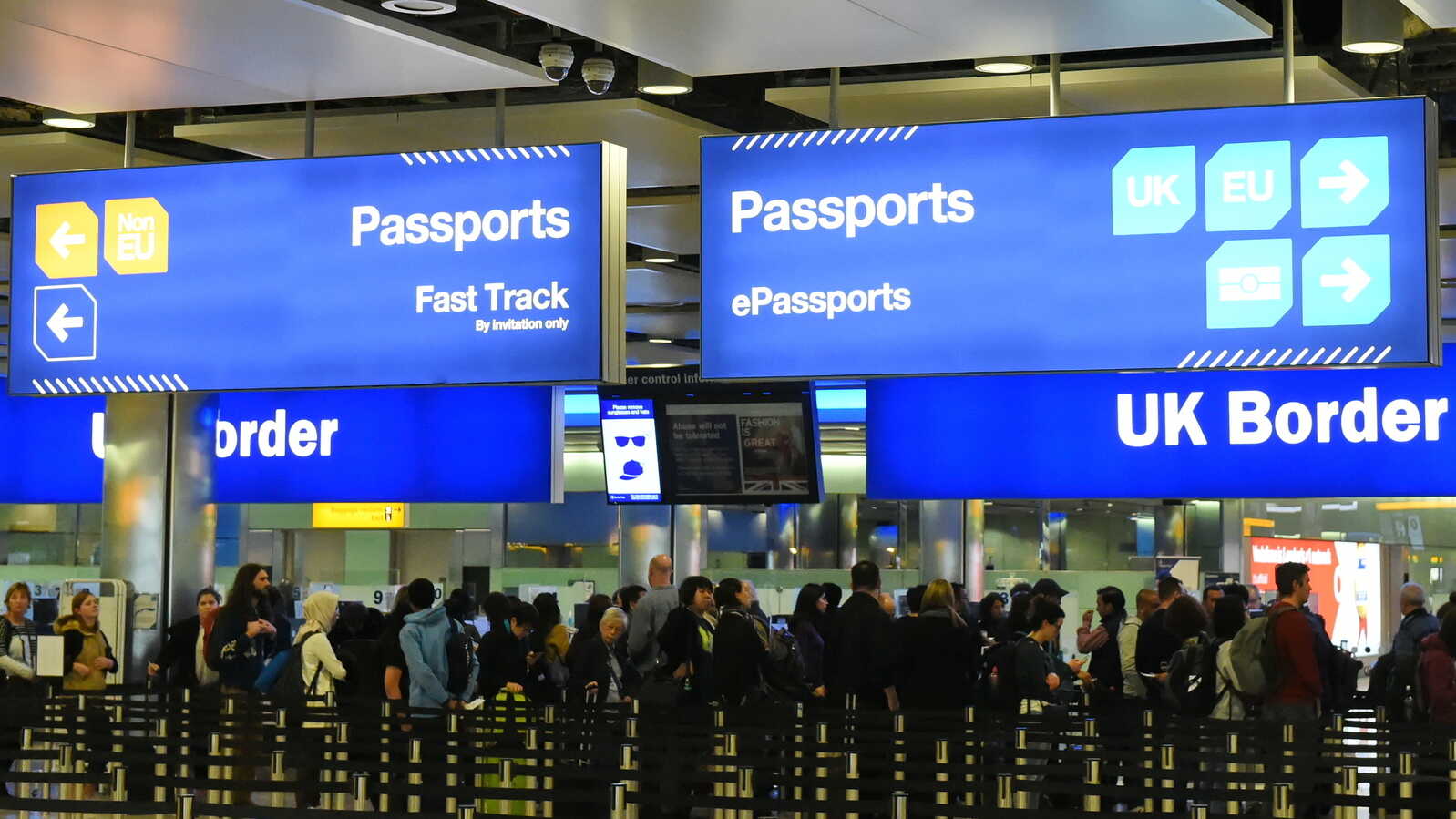
    UK Border gates at Heathrow

    There are some factors which will make your situation easier if you’re looking to get into the UK. This is not an extensive list of visa opportunities and I highly recommend reading the gov.uk site for more details and fully understand your options.

    Some of the following that may assist your process are:

    • Being married to a UK Citizen. This is arguably the most natural way but doesn’t go marrying someone just for that. They have laws against it, and you’ll probably get caught and owe $250,000 or more. Haven’t you seen, ‘The Proposal’?
    • You’re working in the UK. For this, you’ll be given a working visa, and this is much more permanent than any kind of tourist visa you can obtain. While most countries can enter the UK without a visa to travel, it’s an entirely different ball game to work in the UK. That will require a visa and sound reasoning for you being there.

      If you’re caught trying to work in the country, you will be removed from the country and barred up to 10 years from re-entering. Then how will you get you English Bitter Ale or fish and chips?
    • You’re related to someone in the country or have an ancestor. You will have an easier time with that country’s government if you have a link to the country. However with Brexit, if you move to the UK on a European passport there will be changes and you will need to add this into your plan.
    • You’re Hirable. If you have a skill that is in demand and an employer who is willing to pay for your visa, you can apply for a Tier 2 General visa. Those who might apply for this could be professions like doctors, pharmacists, certain scientists, engineers, etc. Essentially, having a reason to be there is better than not. In 2021 this will be changing to a point-based.
    • An American company wants to sponsor you. If they are willing to get you on an intra-company transfer, then the visa you’ll be looking for will be the Tier 2 Intra-Company Transfer Visa.
    • You’re creative. You could get a Tier 5 Temporary Worker Visa. You can pick under Creative, Sporting, Etc.
    • You wish to study in the UK. You can only do this visa if you plan to study full-time at university and pursue a degree in the UK.

    These are just some of the factors that may aid your entrance to the UK. None of them are guaranteed and you’ll need to hire a professional to consult if you’re unsure about your eligibility or record.

    Where to Find Information on UK Visa’s

    The first step will be to know which visa you’ll need. You’ll want to visit the British Government’s official websites and check based on your specific case. 

    If you’re unsure you should check with an immigration consultant or advisor as they will be up to date on the latest requirements.

    You’ll need to read all of the Tiers for the Visa structure and determine which one suits your needs. Some of the main ones are:

    1. Global Talent replaced the Tier 1 visa which allows people to move over as a recognised leader (exceptional talent), as an emerging leader (exceptional promise) or under the UK Research and Innovation (UKRI) endorsed funder option.
    2. Tier 2 Visa – If you’ve been offered a job in the UK., this is the visa you want to apply for. This is changing to point-based system in 2021.
    3. Tier 4 Student Visa – self-explanatory and only for short-term durations in the UK.
    4. Tier 5 – unfortunately American’s can’t get the Youth Mobility visa but there are other forms of Tier 5 like, Government Authorised Exchange, Creative and Sporting or Seasonal Worker Visa.
    5. Spouse Visa

    How to Apply for UK Visa

    Applications are started online and will require you to have your fingerprints and other biometric data recorded. As a part of your visa being processed, you will need to visit your nearest visa application centre (in your home country) to have your biometric data processed.

    You can hire a visa service to assist you through the bulk of paperwork and be certain it’s all done correctly. If you love filling out forms that require immense attention to detail, have at it!

    The general application process will be the following:

    • fill in the application form and answer in English
    • pay the health surcharge
    • pay for the visa fee online (in most cases)
    • print out your form
    • book and attend an appointment at a visa application centre
    • have your biometrics taken (fingerprints and photo) for a biometric residence permit.

    Requirements you may need to meet as a part of the UK visa application:

    • May need proof of your salary and that you can pay your bills, taxes, and living expenses
    • May need to prove your fluency in English (the USA is normally exempt from this)
    • May have to prove your funds and savings accounts, investment accounts, assets, etc
    • Valid Passport with your travel in the last 5 years
    • Not hold a criminal record
    • TB test from an approved clinic (if applicable).

    These are the basics, but factors will change depending on your situation so do your research and consult a professional on your specific case.

    If you’re not a UK or EU citizen, then make sure you get your visa arranged before leaving your home country. While Americans, Canadians, Australians, New Zealanders and nationals from certain other countries can usually enter the UK visa-free as tourists, this does not give you the right to work.

    When Should I Apply for the Visa?

    Timing of your visa processing will be very important, and you’ll need to check with the British High Commission. They all have different processing times, but you don’t want to start more than a year ahead.

    It will usually take 6 weeks so about 2-3 months ahead of your moving date is a good time to start. This is not a guarantee so do your research and understand that sponsorship is an entirely different beast that may take much longer.

    You certainly don’t want to buy your air tickets or pick the apartment out before you’ve gotten this approved or else, you’ll be locked into a lease in a country you aren’t allowed to live in! Messy.

    For official information on working visas and permit processing times please contact your nearest British Embassy or Consulate.

    Moving Checklist

    You’ve got what you need down to move and now you’re ready for the next steps. So what’s next?

    Here are some factors you’ll need to keep in mind for your move overseas.

    Research the Moving and Living Costs

    Knowing roughly how much money you need for the move and living costs will set you up for success when you arrive. You will need money for visa, flights, travel insurance, shipping items and if applicable bringing your pet over.

    To support your living costs you should try and prepare to have three months of accommodation, travel, food, five weeks’ worth of bond money and some money for fun activities. Unless you are luckily enough to have a company that is helping with your moving costs.

    Some article to help you figure out how much you should bring and expected living costs:

    Have an Emergency Fund

    With what we’ve have learnt in 2020, it’s super important to have an emergency fund in place for whatever circumstances occur.

    Now, this is totally up to you how much you put away but consider putting enough for emergency flight home and months worth living costs as a minimum. Just remember that most UK visas will state no access to public funds so you will be the one that needs to cover the cost if anything goes wrong or insurance to cover the situation.

    Organise and Prepare Your Stuff to Move Abroad

    There is a lot to organise when moving overseas and your list will depend on whether it is temporary or permanent. To get you started I have prepared a detailed pre-departure article and checklist.

    If you move is more permanent you will need to think more about shipping, storage or selling your belongings.

    Whatever you decide to do your suitcase will be the most important item for the first few weeks in the UK and I have a detailed UK packing list based on what I learnt when I moved here.

    Review Your Tax Requirements

    Taxes can become complicated when you move to another country. As an American, you will need to file a tax return even when you are living aboard. Check with your accountant what you will need to do with your taxes in the US.

    Sort Out Banking in the US and UK

    Sorting out bank accounts in the UK can be frustrating! There are quite a few checks that happen with traditional banks but with the new challenger banks things have become easier to set up.

    The first option is to set-up a Citibank Foreign Currency Account whilst in the US or alternatively with one with a non-traditional bank like Starling, Wise or Monzo.

    I dive into more details on how to get a UK bank account before moving to the UK.

    Postal

    Go online and you can input your new mailing address. This is important for the Post office to know where to forward your mail to. Updating this in the system will avoid the wrong things being delivered to an empty or newly leased out home in the US.

    Immunizations

    Check with the embassy and request the full list of what is required of you Healthwise to enter the country and remain for an extended duration. You can get this done in one trip to your local clinic.

    Travel Insurance

    Travel insurance can come in handy wherever you’re travelling too and can help for trip cancellation, trip interruption, accidental death or dismemberment, medical and dental care, transportation to medical facilities, loss of luggage or personal possessions and protection against the bankruptcy. It doesn’t hurt to have this protection while you see if your move to the UK is temporary or permanent.

    Flights

    I can tell you from personal experience that you want to buy your flights either very early or very last minute. Everyone’s buying them 2-6 months out so this will be the time where they gouge the prices. You can buy about 9-12 months out for the best deal (avoiding holidays and reading the surrounding dates of when it’s cheapest to make your journey.

    The other best time to purchase tickets is about a week or two before you depart. If you buy them the night before, they’ll be the cheapest. But there’s a whole other list of risks that come with that so don’t do this if you have deadlines waiting or you or a pet arriving before you, etc.

    Taking Your Pet Overseas

    Dog-in-front-of-a-plane-1

    We know you’re well researched because you’re here learning how to be the best pet owner possible. If you prep in advance, you’ll know how to move your family (including the fur-babies) overseas without a hitch.

    There are many components which will affect your timing. Perfect timing and a solid game plan with your vet is really the key to all of this running without any hang-ups that could delay you or your pup.

    Some tips if you’re thinking about or planning to move your fur-baby across the pond with you are:

    • Check with your vet if your species of animal is allowed in the UK. Yes, some won’t be. Check the list to be safer rather than sorrier.
    • Start looking for a home a couple to a few months early. You don’t want to be scrambling and it can take time to find the right place in a pet-friendly neighbourhood. We’ll discuss these in the next section.
    • Rabbies must be valid so keep all vaccination forms and certificates in one place.
    • If you’re presently living in an EU country, you’ll need to check if you need a pet passport. As adorable as these sound, they do take time to get so start early on this.
    • If you’re not from an EU country, then you’ll need a Third Country Approved Veterinary Certificate. You can find the links for different forms you may need to enter the UK here.
    • Get your pet microchipped before you leave. This works for any breed (feline, pup, ferret). This is sometimes a requirement of different countries anyways but this way if they run off, you can track them at any local vet. They all have the software to search for these chips.
    • Check with your vet for any vaccinations needed to the country and you’ll need about a month afterward before you can actually move them. For UK it is 21 days after vaccination before you can enter the country.
    • You cannot bring more than five pets unless it’s for a training or competition show. You can find the list of further requirements and information here – UK government and EU institutions.
    • You will have a form to fill out which is available in an open document, PDF, or Word format. This is to be filled out through the link above that says  UK government and EU Institutions). The form will be called – Health certificate for pets entering the EU from non-EU countries and some territories.
    • Your pet must enter the EU country up to 10 days from the date in which this certificate is issued and signed by your veterinarian. This certificate can be used for travel between EU countries, which includes the UK for up to four months from it’s issuing date.

    Things You May Love About the UK

    highland cow in Isle of Skye, Scotland

    This is a country that is easy to love. There are tons of culture, Shakespeare, Guinness, the Scotts, and more! Things that may capture your heart if you’re unsure about the move are:

    • The accents – if you love language and speaking the way we used to with care and intention, you will love the Brits and their absolutely marvellous way with words. Big fan, obviously.
    • Healthcare – it’s taken care of because you pay higher taxes, but wouldn’t you pay more to live in a place with beautiful streets and the governments taking care of its people?
    • Education – if you don’t know how much better education is overseas, google it. You’ll be amazed at how it’s even possible for the US to charge so much and take young people for their billion-dollar industry of student loans.
    • You like cold and rainy weather. This is a very personal one and will be up to where you thrive best and what environment you can handle for the long-term.
    • Great public transportation – you can probably sell your car and save thousands every year in expenses. The subway is fun, the buses are cheap, trains are a peaceful time to sit back and watch the countryside, and walking is a way of life here. Your legs will look amazing, your tush will be firm and your wallet will thank you.
    • Great pubs and nightlife. With a whole new appreciation for alcohol, there are fun times on every corner whether you want a bustling club or a quiet hole in the wall.

    If any of these made your heart sing along with rolling hills and beautiful countryside, the UK might be the place for you.

    If You’re Unsure About Moving

    View-of-the-St-Pauls-City-of-London

    On the fence about your move? Here are some reasons that may help you in deciding. This isn’t to build up a hate list against England, because I absolutely adore England.

    These are only factors to consider before you dive into a long and difficult process like moving your life overseas. You may not be cut out for it and that is more than fine.

    Things to consider are

    • Weather – it is freezing here and as someone that loves the heat, it’s still hard for me to adjust to this.
    • The culture – It’s different. If you love America and BBQ and Tex-Mex, you may not be interested in Shakespeare and libraries. It may be quieter but that may be the perk to some.
    • It’s expensive – far more expensive than in America. The average rent that you will pay in the UK varies depending on where you live. A one-bedroom flat averages at £850 (a bit more than $1000 USD) per month, but if you’re in the city you may be paying $2-3K for a one-bedroom flat. Along with expensive parking costs, higher food prices, etc. It can be a lot to adjust to.
    • They actually consume more alcohol than us. This is proven and they are known to start at a younger age in European countries. If this offends you or you don’t approve of tomfoolery, then you’re no fun. But you probably shouldn’t move to a loud spot in the city. You can consider a quieter rural spot, but the same traditions apply throughout the country.
    • There’s rarely sunshine – this wipes out your vitamin D and can truly be depressing. If you need sunshine and hate Seattle, don’t move to the UK.

    Final Thoughts

    Anytime someone is asking, ‘How difficult is –“it’s difficult to answer because the question is subjective. It’s based on personal opinion and what is difficult for me may not be difficult for you.

    I think the best advice anyone can have when embarking on a new adventure as big as moving continents; you need to be well researched and hire professionals that do this every day.

    Don’t be cheap when it comes to your move because if the process is done incorrectly, you miss a line in your paperwork, or something is done incorrectly – it’ll be your butt being deported back to the US.

    It could also result in your being banned from the country for 10 years. So do it right. Like a good tattoo, it’ll be pretty permanent, so you want it done by a professional.

    Read reviews, and you’ll see some people have a very simple time getting into the country. Many academics with PhDs found the process very easy.

    Good luck with your move and send me a postcard! Bon Voyage!

    More Resources for Moving to the UK

  • How to Move Your Pet From the US to the UK: A Step-by-Step Guide

    How to Move Your Pet From the US to the UK: A Step-by-Step Guide

    When they are choosing to travel to the United Kingdom, most people choose to travel solo, with people, or even with their pet. Bringing your pet to the U.K can be a lot of fun- you can walk the streets of London and eat the famous fish and chips together, hike along the Thames, or even walk along the White Cliff of Dover together.

    Here are the seven steps that you will need to move your pet from the U.S to the U.K:

    1. Make sure that your pet is allowed by the company you are travelling with
    2. Get the necessary tests and vaccinations for your pet
    3. Obtain a health certificate for your pet from your veterinarian
    4. Obtain a pet passport
    5. Fill out the Declaration Form
    6. Pick your mode of transportation that you feel is best for you and your pet
    7. Double-check that you have everything you need to travel with your pet

    But before going out on your trip, you have to make sure you have everything in order with your pet, or else they can be held in quarantine, which won’t be pleasant for either your or your pet.

    You have to make sure that your pet is healthy enough to travel for long hours, have the right documentation, and you have to make sure that your pet is going to be comfortable.

    If you are planning on travelling to the United Kingdom and you don’t want to leave your furry friend behind, here is a step-by-step guide to helping you move your pet across the world comfortably.

    Disclaimer: You should seek professional advice if you are unsure about how to move your pet to the UK. Go to GOV UK to check if there have been any changes to pet immigration.

    1# Make Sure That Your Pet is Allowed

    Unfortunately, not all pets are considered “pets” when it comes to international air travel. Most airlines will also only accept cats, dogs, and ferrets as pets that can travel on their planes. Therefore, pets like rabbits, hamsters, guinea pigs, or rats won’t be allowed to travel with you.

    If you do have pets that can’t fly with you, you will have to find someone to watch them for you while you are away, such as a family member, a friend, or a pet sitter.

    Some airlines and boats also don’t accept any pets at all. Therefore, you should always with the companies that you are planning to travel with to make sure that they even allow pets.

    If you are planning on traveling with multiple pets, you should expect to pay extra fees. Typically, you will only be allowed to travel with up to five pets. However, some airlines will only let you bring one on board.

    2# Get Your Pet the Necessary Tests and Vaccinations

    Before you embark on your adventures with your pet in the United Kingdom, you have to make sure that they are healthy enough for traveling and meet all of the U.K’s pet health standards. Your pets will have to get tested by a veterinarian for various diseases and illnesses. If they do have an illness, they have to get treated and be disease-free for several months before your trip.

    It’s important to get all of these done in advance because if you do not get your pet the proper tests and vaccinations, they can be held in quarantine for up to four months and you can be charged with fines.

    Tests

    Before you send your pet and yourself off to the U.K, you have to get them tested for tapeworms because they are an infectious disease. Your vet will have to analyze their stool in order to test them and to make a proper diagnosis.

    Even though you need a vet’s diagnosis to treat tapeworms, you can typically notice the symptoms in your pet yourself. They will typically notice your pet scooting and rubbing their behinds on the ground, licking or biting at their behinds, or they are visible in their stool.

    Tapeworms are incredibly common, especially in puppies, are extremely easy to get treated. If your pet has tapeworms, your veterinarian will prescribe a medication, called praziquantel, either orally or in a shot for them to take. Typically, it will take about a week to completely cure the tapeworms. However, some pets may need a second dose three weeks after.

    Because it takes some time to cure it, it’s important to do this as early as possible before your flight. If you put off the vet visit until right before your trip, you may have to postpone it if they have to get treated because they can not travel unless they are completely cured.

    In addition to tapeworms, you should also get your pet tested for any other illnesses to make sure that they are healthy and ready for the trip. The last thing that you want is to make an unexpected stop at a vet while you are on vacation. 

    Vaccinations

    In addition to getting tested for illnesses, your pet has to take some preventative measures. Your pets also have to get vaccinated for rabies before you take your trip. Rabies can be a very serious and deadly disease, and it’s important that your pet doesn’t have it before coming into contact with other people and animals.

    It is a good idea to get your pets rabies vaccination a month before you make your final arrangements because you are required to wait 21 days prior to the vaccination.

    Microchip

    Aside from getting them the proper tests and vaccinations, it is also a good idea to get your pet fitted with a microchip before transporting them to the United Kingdom.

    A microchip is an implant that acts as an identification for your pet. Despite what most people believe, it isn’t a tracking device. Microchips omit a radio frequency that can be scanned to show information on the pet.

    The microchip will have information like your pets name, your name, and your contact information. If your pet ever gets lost, this way someone will be able to identify your pet and contact you. The procedure for the implant is quick and painless for your pet. You can get the microchip implanted at most local vets or animal clinics.

    Not all microchip readers will be able to read every kind of microchip, especially if it’s across the world. When you are getting your microchip, make sure that it is compatible with microchip readers in the United Kingdom.

    It’s understandable to want to know where your pet is, especially if you are in a foreign country for the first time. Som if you are looking for a way to track your pet’s whereabouts, there are some collars that have GPS’s in them. These collars can be pretty expensive, but they are worth the extra buck for the reassurance of knowing where your pet is.

    3# Health Certificate

    In order for your pet to fly with you to the U.K, you will have to have documentation of all of the shots, tests, and microchips that you have for your pet. You can get this health certificate signed by your vet. The health certificate will prove that your pet is free from any infectious diseases and is healthy enough to fly.

    The health certificate will confirm that your pet has received all of the needed vaccinations and has been treated for anything recently. You should travel within 10 days of the certificate being issued and will only be valid for up to four months.

    The airport will ask to review the health certificate before you get on the plane and will not allow your pet to travel if you don’t have the documentation or it isn’t up to date. It is a good idea to make extra copies to keep with you in your luggage just in case.

    4# Pet Passport

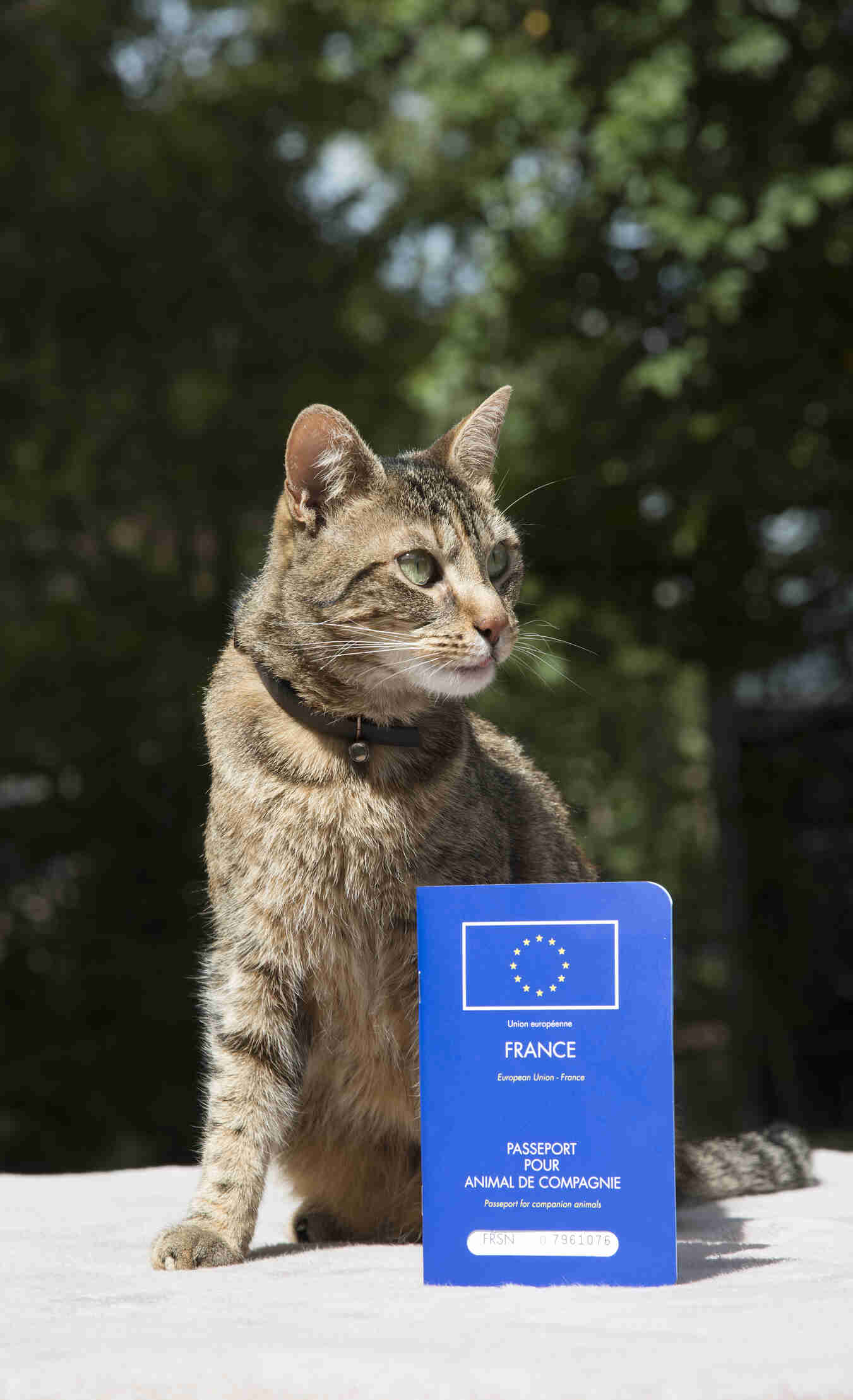
    Cat-with-a-french-pet-passport

    Just like how people need a passport to travel internationally, so do your pets. A pet passport is essentially the same as a typical passport, but it includes a little more information about your pet, including:

    • Your name and contact information
    • A full description of your pet
    • Microchip information
    • Proof of vaccinations
    • Proof of tapeworm test and treatments (if applicable)

    Typically, you can get your pet passport for your vet. If for some reason your vet does not provide pet passports, you can see if they can refer you a vet nearby that does, or you can contact the United States Department of Agriculture, Animal and Plant Health Inspection Service (USDA APHIS)

    5# Declaration Form

    Before you leave for your United Kingdom trip with your pet, you also have to fill out a Declaration form which states that you aren’t bringing your pet into the U.K for commercial purposes and prooves that you are the owner. This means that you aren’t planning on selling your pet while in the United Kingdom. You can find the form here.

    6# Pick Your Mode of Transportation

    Dog-in-front-of-a-plane-1

    There are a few ways that your pet can be transported to the United Kingdom, but it is ultimately up to you with what method you choose. If you are traveling from the United States to the U.K, the only ways that you have your pet transported are by plane or by boat.

    You can find a list of airlines that accept pets on their planes here, and you can find a list of ferries and cruises here. If you want to take a different airline or a different company, you can always call and ask what their policies for pets are.

    Each mode of transportation has different policies and procedures for handling your pet while you travel. Do your research and see which way to travel would be best for you and your pet. You can also contact the companies that you are considering to travel with and ask them what their specific procedures are.

    7# Double-Check

    Before you leave, you should double-check that you have all of the documents that you need for your pet and even some copies, just in case. The very last thing that you want is to be turned away for not having all of your needed documents.

    Because the rules and regulations for importing pets into the United Kingdom, be sure to double-check with the website for United States Department of Agriculture, Animal and Plant Health Inspection Service (USDA APHIS) for updated regulations. Since the U.K is composed of multiple countries, it is also good to double-check the requirements for the country you are landing in as they may be different from others.

    How Will Your Pet Be Transported?

    Plane-loading-cargo

    Whether you decide to travel in a plane or on a boat to the United Kingdom, there are a few different ways that your pet will be traveling. Because these options aren’t always ideal, you should really consider how your pet will be traveling and treated before bringing them on a trip.

    Here are a few ways that your pets can be transported:

    The Cargo Hold

    If you decide to travel with your pet on the plane, they will most likely be put in the planes cargo hold. They don’t get bathroom breaks or any sort of comfort during their ride. This kind of environment can be really unsettling for them because they will most likely be around other nervous pets, loud sounds, and will be alone.

    Luckily, the pilot can control the temperature of the plane, so your pet doesn’t get overheated. Before the flight, the pilot is informed about the cargo and any pets on board. However, you should double-check with them to make sure that the pilot does know about your pet.

    Some airlines even bring your pet’s water during the flight, or they will allow you to put water and food for them in their carriers. However, neither is guaranteed so you should call your airline and ask what their procedures are.

    If you are allowed to provide them with food and water, the best ways to do this is with clip on food and water dispensors so they don’t fly around during the flight.

    Your pets carriage will not be with the rest of the luggage, so you don’t have to worry about them getting thrown around or hurt. A planes cargo hold has a special section that securely holds pet carriers.

    Can You Bring Your Pet in the Plane Cabin With You?

    If you don’t want your pet to be transported in the cargo cabin, some airlines do let your pets fly with you in the cabin. Unfortunately, there are restrictions on how big your pet can be. Typically, they have to be able to fit into a carrier small enough to fit in a seat. Therefore, larger dogs will have to be flown in the cargo cabin of the plane.

    Most airlines also only let a certain number of dogs in the cabin, so it is a good idea to book your dogs spot as far in advance as possible. You should also expect to pay a fee to have your pet in the cabin with you. Most airlines can charge at least $500 extra for a one-way trip.

    Ship Kennel

    If you are choosing to travel with your pet by a cruise ship, your pet will most likely have to stay in the ship’s kennel. Much like a planes cargo hold, the kennel is located within the boat and hold the passenger’s pets. Your pet would have to stay in their carrier with limited bathroom breaks and time out of the cage. Some cruises also let you check in on your pet.

    However, some cruise lines do allow pets in private cabins, but they typically charge an extra fee. Ideally, you would rather your pet be in the room with you and not in a carrier for the duration of your trip. Therefore, you should contact your cruise line and see what options they offer.

    How to Make Your Pet More Comfortable for the Trip

    Having your pet travel internationally can be a very nervous situation for them. Depending on where you leave within the United States, it can be at least an 11-hour flight to the United Kingdom. Even though this may be a trip of a lifetime for the both of you, your pet’s comfort should be a priority.

    Here are some ways to make your pet more comfortable on the long trip over to the U.K:

    Direct Flights

    To reduce the amount of stress that your pet will be put through, you should try to get a direct flight to the United Kingdom, if possible. Long flights and layovers may be too stressful on your pet, so minimizing the number of hours traveling is better for your pet. Even though it may be more expensive to find direct flights, it will be better for your pet’s well-being in the long run.

    Airlines don’t typically take pets out of the cargo hold during layovers, and they can also get misplaced, just like luggage. In case something like this happens, you should also attach tags with your contact information on the crate and around your pet’s neck with a collar.

    Pick the Right Season

    Even though pilots can control the temperature in the plane, they can’t control the climate outside. It may not be a good idea to travel with your pet in the summer because they could potentially overheat. If you can’t have your pet with you in the cabin where you can monitor them, then it may not be a good idea to travel with high temperatures.

    Because of the same reasoning, most airlines will not let you bring pets onboard during certain times of the year. Especially when you are traveling from a colder place to a much hotter place, it is important to consider how comfortable your pet will be while traveling with these temperatures.

    A Comfortable Carrier

    Pet-Carrier

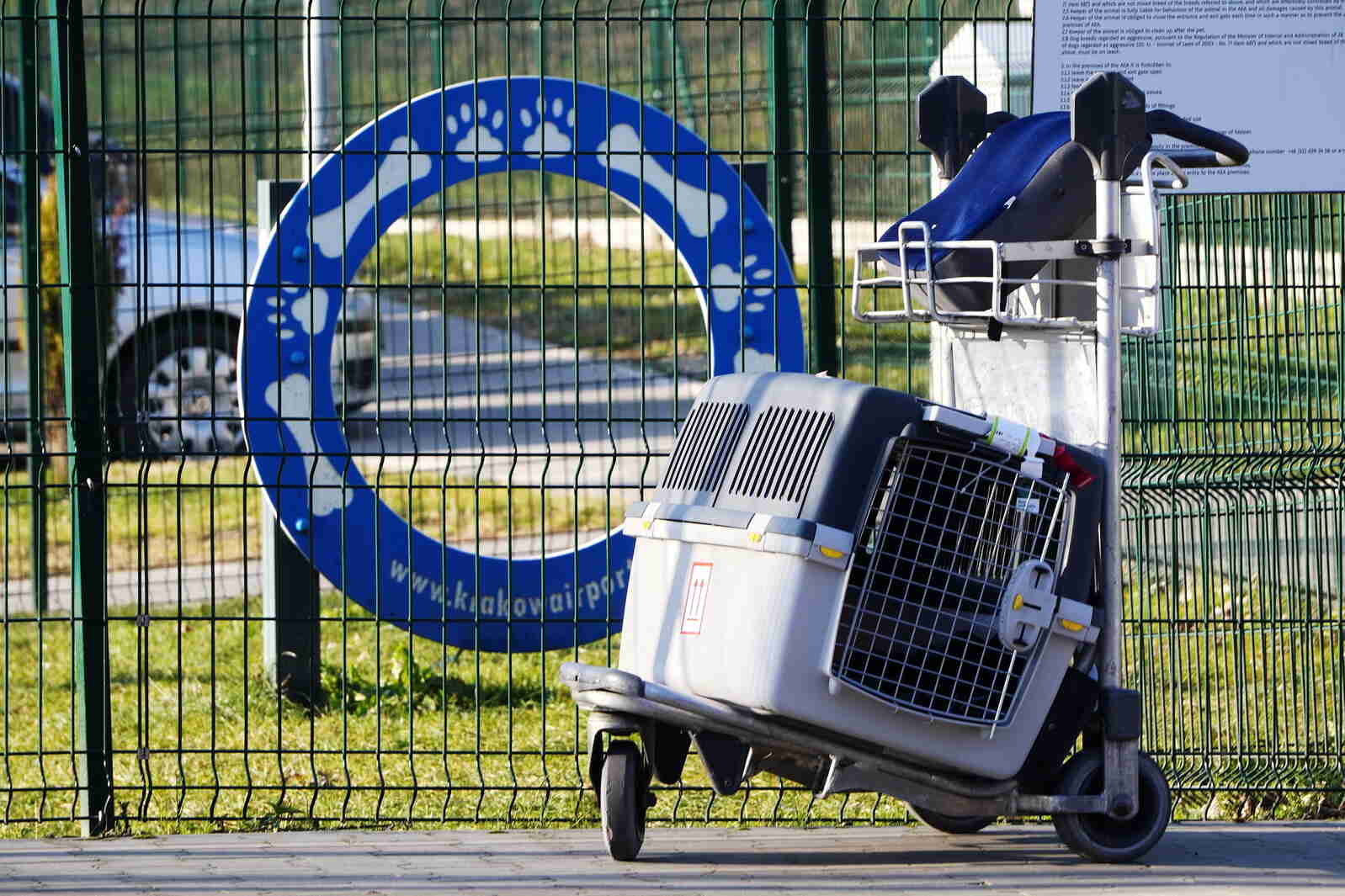
    If you do get the opportunity to have your pet on the plane with you, make sure you get a carrier that is comfortable enough for them. The ideal carrier for a plane ride is one that fits the allowed sizes but also leaves some room for your pet to move around and for you to put some treats and food in there.

    Unfortunately, if your pet is travelling in the cargo hold of a plane, they will most likely have to be in a gated carrier. However, you can make it more comfortable by adding some padding, like a bed and pee pads, and also add in some of their favourite toys to keep them entertained.

    Line the Carrier with Absorbent Pads

    Even though your pet may be house-trained, with the stress of a plane ride and the long flight, there may be some accidents. The nerves from flying could also upset your pet’s stomach, which could induce accidents. You can play it safe by lining the carrier with absorbent pads, like the brand DryFur.

    You should also sprinkle some deodorizer, like baking powder, in the carrier so if there is an accident, you and the people around you won’t have to smell it until the flight ends.

    To help prevent any unwanted accidents from happening on your flight, don’t feed your pet the morning of and cut off their drinking water two hours before the flight. This way, your pet won’t feel the urge to go while they are on the flight.

    Once you get on the plane and your pet gets a little more comfortable with the flight, you can give them water in increments. You don’t want your pet to dehydrate, but you also don’t want any accidents, so watch how much water you give them and how often.

    If you start to notice that your pet does have to go, take them into the plane bathroom with you and with a pee pad and try to get them to go there. It may take them a little while to go because they aren’t used to the environment, but it is definitely worth the patience, so they don’t go in the carrier. Make sure to clean up after your pet when you are finished.

    Attention

    Because they will most likely be anxious during the trip, be sure to give your pet lots of attention and reassurance. Even though most airlines probably won’t let you take your pet out of their carrier during the flight, you can still open it a little bit and give them a quick pet to reassure them that everything is okay.

    Most airports won’t let you bring in food or drinks before you go through security, but you may get away with bringing treats. Feeding them their favorite treats in moderation throughout the flight would be a great way for them to feel more comfortable.

    Most airlines won’t do frequent check-ins with the pets in the cargo hold, so they will be lonely most of the time. If this is important to you, then you should see about having your pet with you in the cabin.

    If you decide to travel by boat to the United Kingdom with your pet, you should aks your cruise about their policies on visiting your pet in the kennel. If you are allowed, try to visit them as frequently as possible so they don’t feel so alone.

    During your visits, play with them and pet them and make them feel loved. Even though your cruise may be fun, don’t cut your visits short. This is a scary time for them, so having you there makes the trip much easier.

    Sedatives

    You should always use sedatives as the last resort for keeping your pet calm and comfortable during the flight. Sedatives should only really be used with extremely nervous pets and you should only give your pet a sedative with the okay from the vet. Your pet may have some health problems that could react badly with this kind of treatment.

    There are some sedatives that won’t completely put your pet to sleep but will calm them down for the flight. Now there are CBD oils and treats for nervous pets, but you should also check with your vet before giving them to your pet. However, sedatives should be the last resort because they can have some adverse side-effects, such as breathing problems and dizziness.

    What About Service Animals?

    Service animals are, without a doubt, allowed to travel with you, even in the cabin of a plane. In fact, it is very common to have emotional support animals with them when they are flying because of how stressful it can be.

    Even though they are service animals, they do still have to have the proper tests and vaccinations in order to fly. When you go to the airport to board on your plane, make sure you have the proper identification for your service animal, including their vest and the proper documentation.

    More Resources for Moving to the UK

  • UK Packing List: What to Pack When Moving to the UK

    UK Packing List: What to Pack When Moving to the UK

    It’s so easy to want to pack the kitchen sink when you are moving overseas. In this article, I’m going to cover what you should pack when moving to the UK.

    One of the hardest things I had to do when moving was packing my life into 30kgs. At the end of the day, the UK has plenty of shops so whatever you miss you will be able to buy here. Just make sure you add the potential cost to how much money you bring to the UK.

    I am also a fan of using what you already own so investigate shipping your stuff over! I’ll go into this in more detail in another article (coming soon). 

    Before Starting

    There is nothing worse than rocking up to the airport and the airline wants to charge you a small fortune to take your stuff on the plane. Check the airlines baggage rules and the size of luggage that they allow.

    If you’re shipping over your belongings check if there is any import duty or additional surprise fees.

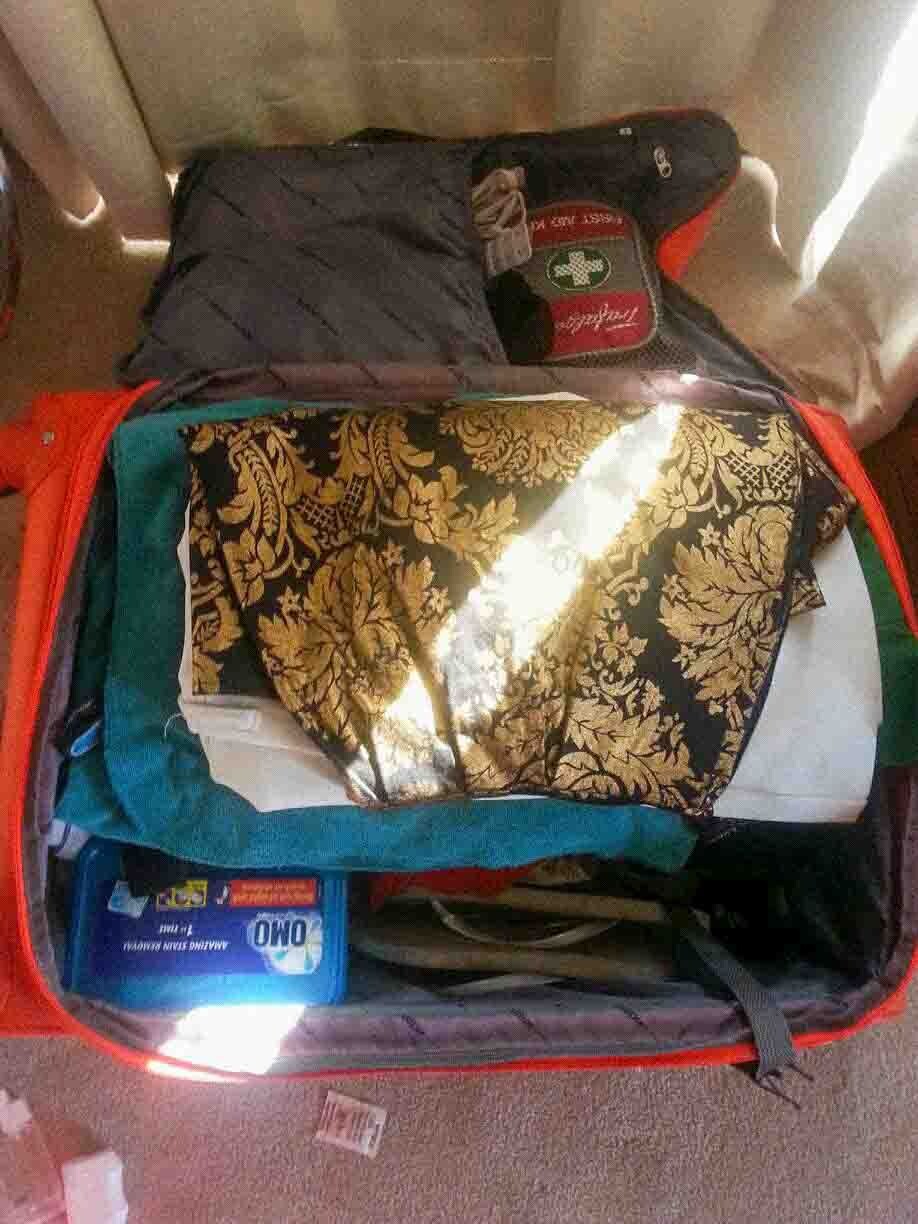
    Here's everything I packed when moving to the UK.
    Here’s everything I packed when moving to the UK.

    Luggage

    When it comes to the main luggage, this is personal preference and the main thing is utilising as much space as possible that the airline gives you.

    I always go with the lightest suitcases I can find as it can easily add to a couple of kilos that you cannot use.

    One of the things that I do recommend regarding your hand luggage is to bring a backpack over a wheelie suitcase. The reason being is that if you plan on travelling then airlines won’t charge you for a backpack. However, they will charge you for a wheelie case these days.

    It’s just super handy to use as a day pack. This is what I carry my camera and laptop and other day to day items in. My favourite is Osprey backpack, they have a great range that suits all types of needs.

    What should I pack for the UK?

    There are several factors to consider before you visit the UK, most importantly, the weather! The temperamental nature of the climate in the UK means you need to come prepared for any eventuality!

    Layering is key for every season so make sure as many items mix and match as possible so you can remove things as you get warm and put them back on as it gets cool.

    Clothes Items to Consider

    Work and Interview Outfits

    There’s a high chance that you’re going to be wanting to find a job while you’re over in the UK so bring at least one interview outfit and a few sets of work clothes.

    I work in the corporate world, so my interview outfit generally is a nice jacket with a dress. My go-to colour is a white dress, it’s never failed me to this day to get a job on the first interview.

    As a male, you would want to bring some nice shirts and a suit. As suits can be expensive it will save you some cash by bringing your favourite suit over then buying a new one.

    In recent years, I have noticed a change in workplace attire where the vibes have gone to smart casual attire rather than the traditional formal suits dependent on the industry. When chatting to the recruitment agencies or potential employers ask them what attire is in their policies.

    If you are worried about moving to the UK without a job, I cover my tips in this article and how I did it.

    Umbrella

    It rains a lot here. When I say it rains, it drizzles, so an umbrella will be a staple.

    Rain Jacket

    Rain jackets can be better than the umbrella and they don’t blow away in the wind! Also great for layering underneath so you get nice and cosy and not have to worry about the rain. Something like this Blacks Waterproof Jacket works perfectly for the UK weather.

    Winter Coat

    Kat in a winter coat for UK packing list

    When I moved over from Australia (from Perth) I didn’t bring my winter coats as I didn’t think they would handle the colder weather, so I bought winter coats here.

    If you have a good winter coat then pack it! It will save you money when you move over. A good jacket can get pricy.

    Light Jacket and Jumpers

    These are the light jackets I have in my wardrobe and with a scarf to add extra warmth.

    As I said above, layering is key! Light jackets and jumpers are the perfect layer items plus you need something for the warmer months as well.

    Dresses (optional)

    Dresses are nice and light, and they’re easy to layer up. Pack some tights or stockings to add additional warmth for the cooler days.

    Tops

    Personally, I love tops I can use for multipurpose so the ones you can wear to work but also casually or on a night out.

    As a male, a mix of shirts and tops will be perfect for all occasions.

    Bottoms – Skirts, Jeans and Chinos

    Jeans are a staple in my wardrobe in the UK. I wear them quite a lot, so they’re definitely an item I recommend bringing with you. Add in a few skirts for variety.

    If you’re a male, I would also suggest adding some chinos so that you can wear them on a night out. You might want to wear them on an interview, dress down Fridays, those kinds of things.

    Pyjamas

    Bring a summer set, and nice cosy winter pyjamas that you can just wrap up and snuggle when it’s nice and cold and grey outside.

    Shoes

    Bring a couple of pairs of shoes, especially trainers! I use them to walk everywhere around London and the UK.

    Comfortable boots or something equivalent should be a staple in your wardrobe. Perfect for the autumn and winter wardrobes, and they’re comfy to walk around.

    Add shoes that will fit your casual and work wardrobe. A pair of flipflops, sandals, formal shoes, loafers and whatever else you can think of.

    Be careful about how many you bring because they will take up your suitcase.

    One thing I do recommend if you’re a female is not to bring heels. I barely wear my heels here. I have a pair of wedges, two pairs that I wear to weddings and Christmas events and things like that.

    Underwear, Socks and Other Items

    All the essentials like underwear, socks, bras and swimwear.

    I would always go for the higher number of underwear as I don’t like ever running out!

    Essential Travel Electronics

    Here are the essential travel electronics I recommend considering bringing over. 

    Unlocked Mobile Phone

    The pesky phone companies don’t always give us unlocked phones and its key to getting a SIM Card when you get here. Additionally, check if your phone will work with a UK SIM card.  

    Laptop or Tablet (optional)

    Finding a job in the UK is a lot easier when you have a laptop or tablet making searching for and applying for jobs online easier.

    Cameras (optional)

    A camera is a great addition if you’ve got one because you’ll be exploring the country and travelling around, and it’s a fun way to capture your moments.

    Leave Behind the Hair Dryers

    I don’t recommend that you travel over with something like a hairdryer. Every single hairdryer that I’ve had from another country has blown up in the UK or whilst I’ve been travelling and that’s because the voltages do change. I’ve never had a problem with something like my phone or my camera but hairdryers just always seem to explode on me. Maybe I’m just jinxed.

    I bought one when I landed in London and it’s lasted over 6 years now so it was worth the £20 I spent.

    Travel Accessories List

    Here are the must-have travel accessories that will come in handy or to add to your buying list when you arrive.

    Travel Adapters

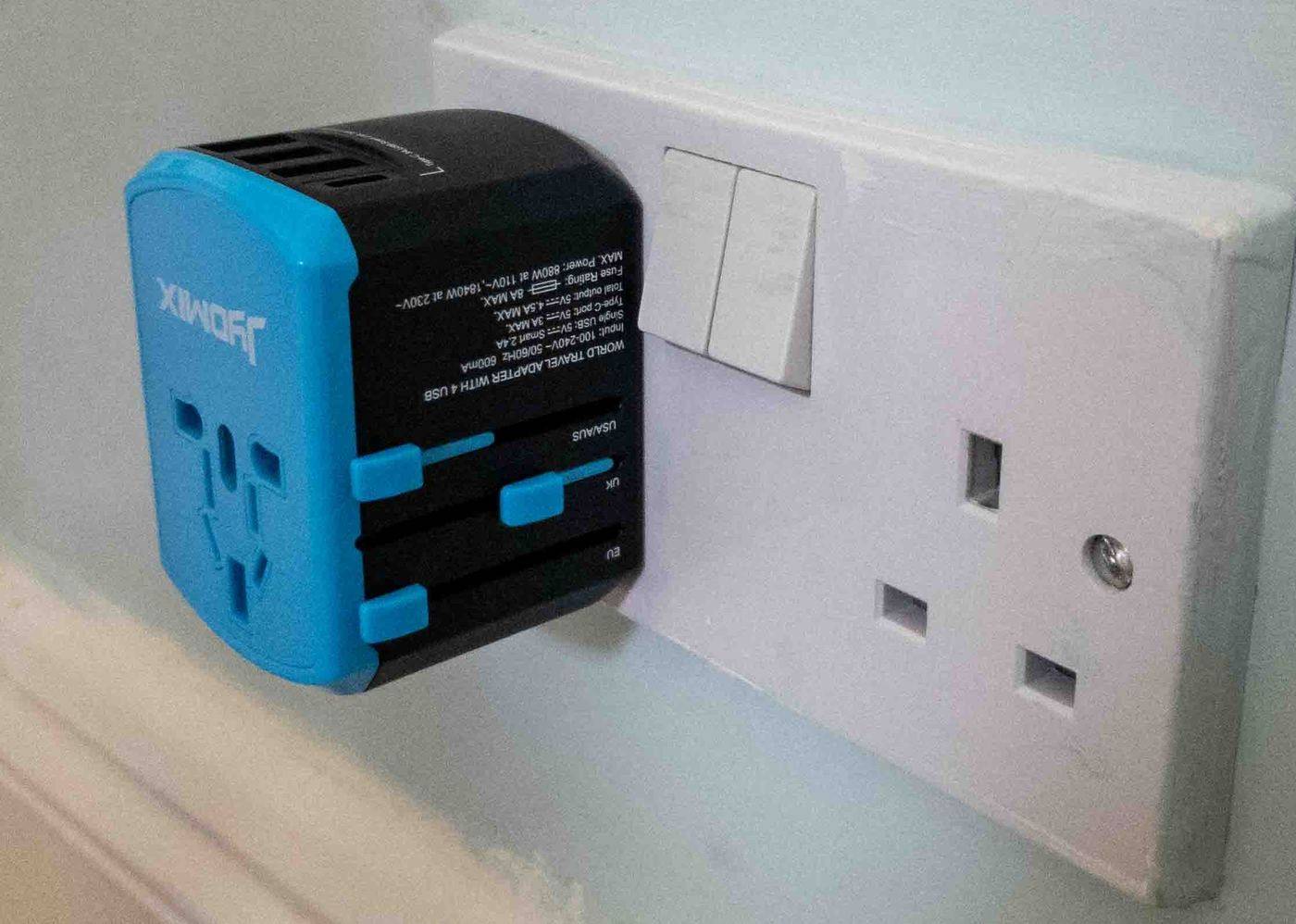
    VGUARD Worldwide Travel Adapter 4 USB Ports

    Travel adapters are inexpensive and I recommend getting one for worldwide use. This enables you to use your adapter for all of your travels and doesn’t lock you down to the UK. My favourite adapter is the Worldwide Travel Adapter, 4 USB Ports (Amazon).

    You may need to consider getting a voltage adapter for your electronic depending on what country you are from and the manufacture of that item. Here are the voltages:

    • UK/ Europe- anywhere from 220 to 240 V
    • United States- 110/120 V
    • Japan- 100 V
    • Australia- 230 V
    • Brazil- 127/ 220 V (in the process of changing, some older buildings are still 127 V)

    Home Country Powerboard

    If you’re moving over with lots of electronic items, then your home country’s power board will be useful. This just makes your life a lot easier when you’re trying to charge multiple things at the same time.

    Noising Cancelling Headphones

    Noise-cancelling headphones are great for plane rides, bus rides, and general peace while you are out and about. If you have a pair add that to your hand luggage.

    I’ve recently switched to Sennheiser Momentum Wireless Noise Cancelling Headphones which a brilliant! They not only have good sound but the noise cancelling is amazing. Making them perfect for travel. You can find them on Amazon here.

    Water Bottle

    Having a reusable water bottle comes in handy in day to day life, especially if your office is like mine and they run out of cups every day! There are plenty of free options; I recommend buying a reusable water bottler like the Super Sparrow Stainless Steel Vacuum Insulated Water Bottle (my go-to water bottle). Plus they come in different colours! Check out the colours for Super Sparrow on Amazon.

    What to know more about drinking water in the UK, I’ve got a guide here explaining everything you need to know.

    Keep Cup

    Keep cups are a great way to save landfill and money on coffee! Places like Starbucks, Pret A Manager and other coffee stores will give discounts if you bring your own coffee cups.

    Padlock

    Padlocks like the TSA approved ones are ideal for your bags, lockers, gym and future travels.

    Phone Power Bank

    Phone batteries just don’t last like they are used to and when you are new to a place you will be using more battery to find your way. I just picked up a power bank like this one and pop it into my day bag. Remember the cables for your phones/devices so when the battery is low you can stay connected.

    Anker is a popular brand for portable power banks, see the range on Amazon.

    Eye Mask & Ear Plugs

    Depending on the initial accommodation you choose eye masks and earplugs helps you zone out from the world.  

    Important Documents

    You need to bring your passport, bank and credit cards and your biometric letter (if that’s applicable).

    If you are planning to stay in the UK for an extended period, then you should consider bringing important documents with you like:

    • birth certificate
    • marriage certificate
    • citizenship certificate
    • divorce and custody arrangements
    • tax documents (tax assessment etc)
    • vaccination card
    • educational qualifications.

    Scan all your important documentation along with your passport and visa. Losing your document overseas can be a real pain and hard to replace! Having the scanned copies can be used to help sort out replacements making the process much easier.

    Currency

    Kat holding British Pounds

    Setting up a bank account in the UK can take some time and can be difficult when you don’t have a residential address. With the wave of online banking, there are ways you can set up your money until you can get a high street bank.

    Starting an account with companies like Wise means that you can easily access British Pounds and have UK bank details. There are more bank account options that I detail in my 101 guide to moving to the UK and Can I Get a UK Bank Account Before I Move to the UK? With Solutions.

    It’s easy to start a bank account with Wise and they are a great money transfer company when you’re ready to send money to the UK. Find out more on the Wise website.

    Medications

    If you are someone that needs to take medication like I do for my migraines, then bring over a stock of your medication. That will give you time to sign up to a GP and get your life settled here without having to stress of running out of medication.

    Here’s a quick checklist:

    • Ensuring that you have enough for 2-3 months to get you through the initial set-up in the UK. For ladies this includes your pill (even though it’s free in the UK it will save you stressing).
    • Get a letter from your doctor supporting the medication you take, how much, why you take it and any medical documents to support this. Also, not all medication is the same in the UK so it might be worthwhile asking your doctor to investigate UK alternatives.
    • Keep the original packaging when travelling.
    • Check with your doctor that it’s legal in the UK or some medication in your home country might not be available over the counter for example.

    Toiletries

    Toiletries really bulk up and add weight to your bag! Waiting until you get to the UK means you will have more space in your bag for the things that are more expensive to buy.  

    Avoid items that spill/explode like nail varnish and if you do make sure they are wrapped!

    I did bring all my make-up over as that is costly to replace!

    Household Items

    When I first moved I brought a quick dry towel with me because big fluffy towels take up a lot of space. However, if the UK is your only destination you might want to household items like bedding and towels with you.

    The most popular size of bed is a double. You can easily pick up household items from Sainsbury’s, TKMaxx and other house stores for £10 or so.

    In your budget include a set of funds for household items, unless you plan on shipping items to the UK. As a minimum you will need duvet, pillows, fitted sheets and towels.

    Sentimental Items

    Nothing adds a personal touch like sentimental items. Photos frames, books (in moderation, they are heavy), posters, decorations and the list goes on. Wrap them carefully or pack them in your hand luggage so they are nice and safe.

    Travel Insurance

    I recommend that you get travel insurance to cover your first 6 months in the UK.

    Do read the fine print when purchasing as travel insurance companies in the UK will not cover you in the UK until you have been living here for 6 months.

    Just to give an example, this the requirements travel insurance companies can use to determine if you are a citizen or resident:

    A citizen is described as a passport holder with:

    • a permanent residential address
    • with unrestricted right of entry to the country.

    A resident is a holder of a residency visa with:

    • unrestricted right of entry into the country
    • access to long-term medical care
    • a permanent residential address in the country.

    World Nomads is very popular for this reason as they will provide insurance to you without being a resident of a country.

    Globelink is another insurer that also provides cover for those without residence.

    Recap of what to pack when moving to the UK

    Save the list below to your phone so you can tick it off while you’re packing!

    • Work and Interview Outfits
    • Umbrella
    • Rain Jacket
    • Winter Coat
    • Light Jacket and Jumpers
    • Dresses (optional)
    • Tops
    • Bottoms – Skirts, Jean and Chinos
    • Pyjamas
    • Shoes
    • Underwear, Socks and Other Items
    • Unlocked Mobile Phone
    • Laptop or Tablet (optional)
    • Cameras (optional)
    • Travel Adapters
    • Home Country Powerboard
    • Noising Cancelling Headphones
    • Water Bottle
    • Keep Cup
    • Padlock
    • Phone Power Bank
    • Eye Mask & Ear Plugs
    • Important Documents
    • Currency
    • Medications
    • Toiletries
    • Household Items
    • Luggage
    • Travel Insurance

    Stock up on your favourite things! There are some things that you can get in the UK, for example, Australians can get vegemite but if you are a chicken salt lover this won’t easily found in the shops. Same goes with beauty products as some brands may not be available in the UK.

    More Moving to the UK Articles

  • Moving to the UK from Australia Checklist (Epic Guide!)

    Moving to the UK from Australia Checklist (Epic Guide!)

    You’re thinking about moving to the UK from Australia but you’re not sure of the steps you need to take to do so? In this guide, I’ll walk you through a moving to the UK from Australia checklist and things you should consider preparing if you are moving for a few months to indefinitely.

    Australia has quite a few reciprocal agreements with the UK and a few more visas available, so it does make the transition to the UK a little easier.

    Pssst. there are plenty of helpful tips in this post even if you’re not from Australia! Even if you’re moving from Australia to another country.

    Rights to Work and Employment

    Can Australians Live and Work in the UK?

    Yes, Australians can live and work in the UK. First you need to determine whether you can get a UK passport or what visa will allow you to do so. Here are the most common visas Australians move to the UK on:

    • Tier 5 Youth Mobility (age restricted to between 18 to 30)
    • UK Ancestry (grandparents were born in the UK)
    • Right to Abode/ UK Passport (parents were born in the UK)

    You can also move here on:

    • Spousal Visa (this includes if you have an EEA partner as well, (however this) will change for EEA after Brexit)
    • Student Visa (limited working hours)
    • Investor/ Set-up or run your own business
    • Exceptional Talent
    • And a few others…

    To check if you qualify for any of the visas above there is a check UK Visa questionnaire you can use here.

    Check That Your Job Is Transferable to the UK

    Some professions will require you to be certified in the UK or will have restrictions on certain jobs so do some research beforehand. For example, my friend couldn’t work as a pharmacist on her New Zealand qualification, so she’s had to work as pharmacist’s assistant.

    Yes, I know I am talking about New Zealand here and not Australia, but this is just one example that did affect my friend.

    Do I Require Any Qualifications or Permits?

    As the standards and permits are different in the UK some professions will require you to be certified or registered with a governing body for certain jobs, especially in health and construction.

    Check if you have restrictions, permits or qualifications required for your job in the UK, the lead time, supporting information and process.

    To see if they your higher education qualifications are transferrable use the NARIC website.

    What You Need to Organise as an Australian Moving Overseas

    In every guide I read it’s about what you need to do to set-up your life in the UK which is fantastic, but what about all the elements you need to do when leaving Australia? This guide will cover everything you need to know as an Aussie leaving Australia. I’ll cover things like tax, voting, banking and much more.

    Australian Tax

    ato website

    Being a resident of Australia, you will still need to do some tax activities while living overseas like non-lodgements, repaying HELP or TSL and paying tax on interest or investments. A few things you should consider before leaving are:

    Ensure myGov Account is Set-up

    This is one of the biggest mistakes I made when moving overseas, I always used an account so I never set-up a myGov account. Make sure you have set-up your account and have your passwords saved so you can get into the account. It will save you money when you need to do non-lodgements, tax returns or anything else you need to check.

    If you don’t have an account ATO will need to ask you two questions about:

    • Bank account details – this evidence failed for me as it was linked to my accountant.
    • Notice of assessment (one from the last 5 years) – scan copies of your assessments in case you need to the details.
    • Superannuation account details (one from the last 5 years)

    Repaying HELP and TSL Overseas (If Applicable)

    The Australian government announced a few years back that you will need to pay your HELP and TSL debt when living overseas. For those who only plan on being here a short time this won’t apply to you but those who plan on being out of the country for more than 183 days or more in any 12 months will need to pay.

    As of the 2017 to 2018 tax year these were the rules (the ATO have not updated for the 2018 to 2019 tax year).

    Your worldwide income
    What you need to do
    If your worldwide income for the 2017–18 year is at or below $13,968 (AUD). This is 25% of the minimum repayment threshold.
    You need to lodge a non-lodgement advice form.
    If your worldwide income for the 2017-18 year is above $13,968 (AUD).
    You need to report your worldwide income.  

    You can find all the details about what to do here.

    Foreign Residence Tax

    I mainly wish I had known about tax (super boring). Basically, I kept all my accounts in Australia including saving accounts which earned interest. As a foreigner any investment like properties, savings, shares and whatever earns you money within Australia will mean you fall into the foreign tax bracket.

    The outcome of being a foreigner means if you earn more than $1 you will need to pay tax.

    In the 2017/2018 tax year, I earnt $2 of interest and what an expense it was sorting this out. I have spent $90 sorting out 20 cents I owe the tax department for $2 of interest I earned. The ATO spent more on sending the letter to the UK than what I owed – ridiculous!

    For savings accounts it’s easy and you have two choices that your bank can support you with by withholding taxes:

    • Remove your TFN number (the bank will automatically withhold tax)
    • Ask the bank to withhold tax

    I can’t comment on the other areas as I’ve not had any investments and suggest talking to an accountant before making the move if your tax will be complicated.

    To find out if you need to pay tax or what to lodge you can use the ATO calculator as a guide.

    Money

    Banking in the UK

    Accessing your money overseas is handy (how else would we get those plane tickets?) and one of the most important items on the to do list. Not only can you save money by making the right decision, but it creates a stress-free environment when relocating.

    Most of this section is optional as it’s up to you how you want to manage your finances.

    How Much Money Should I Save to Move to the UK?

    Your savings might look big in Australia but then you exchange to pounds, next thing you’re your Aussie dollars are cut in half (depending on exchange rates at the time). Your poor savings account will take a hammering when moving to the UK. As a single person I recommend bringing over $10,000 to cover three months’ accommodation, travel, food, six weeks’ worth of bond money, being without a job and some money for fun activities. You will need to adjust your budget if you are moving as a couple or a family.

    I breakdown the cost of moving to the UK here and the cost of living in London based on my experience here.

    Tell Your Bank

    As I mentioned in the tax section, ensure that you tell your bank that you are leaving the country so they can set you up as a foreigner and ensuring they don’t block your cards and anything else they may do whilst you are overseas.

    Bank Fees (optional)

    Investigate whether there are accounts you can move to without fees or have minimal fees. With my bank there are no accounts I can move to that didn’t have fees that came with debit cards and all the banking needs I have. I now pay $5 every month to keep my account open which is about £60 a year. There was no point having the online savings account because I can’t transfer any money in and out without a current account attached to it.

    Setting up an HSBC UK Bank Account (optional)

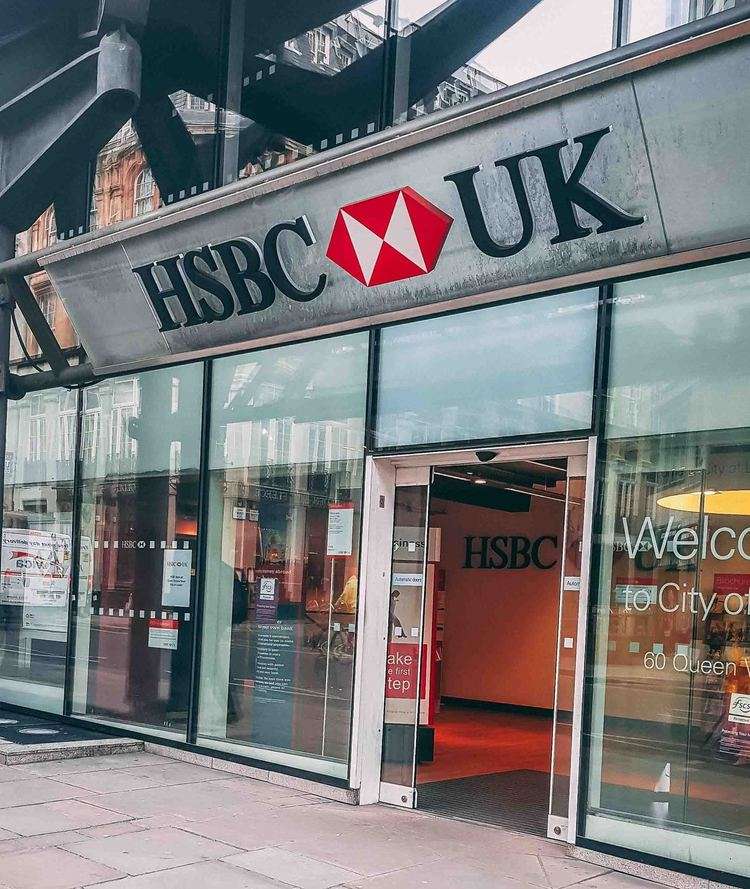
    Setting up a HSBC UK Bank Account

    Setting up a bank account in the UK can be a bit of a nightmare if you don’t have proof of address. One of the ways around this is a month before or earlier you plan on leaving for the UK set up an HBSC overseas account.

    Simply get the below documents ready as evidence for your application and apply on online.

    • Passport
    • Proof of income
    • Source of income
    • Other documentation such a visa may be required subject to qualifications, status and local country laws and regulations.

    Once the application is completed one of their International Banking Specialists will get in touch with you to arrange a meeting to verify your documentation, alongside your application form.

    Of course, there are more options available but without out proof of address in the UK it’s hard to set-up a bank account. I’ve detailed the bank accounts you can get without proof of address here.

    Don’t forget to read how to build a credit score as a new UK resident.

    Apply for a Stop-gap Card (Optional)

    If HSBC isn’t your preferred option, then you will be an overseas credit card or travel prepaid card before you leave. There are so many to choose from: NAB, Commonwealth Bank, ANZ, Qantas Card, Travelex, Australia Post, Velocity Frequent Flyer, St. George, Westpac, Travel Money O and many more!

    I used the 28 degrees Master card as my travel credit card as you pay no foreign transaction fees on purchases when travelling or shopping online and it had no card fees. Plus, a credit card comes in handy for emergencies.

    It gives you a convenient way of accessing money before you have all your finances set-up.

    Cancel Credit Cards (Optional)

    Cancel any credit cards that have a fee associated with them. You will need to remember to pay the yearly fees and spending money on your Australian cards means you will be hit with exchange rates. Instead look at getting a UK credit card when you are ready which will help with your credit score. 

    Loans (Optional)

    In 2018 the Australian population borrowed $2.54 billion in personal loans and therefore there is a chance that you could have a personal loan that you’ve not paid off. No judgement here, I moved over with a personal loan when moving to the UK. The biggest thing to factor in is:

    • Can you afford to pay it whilst you are looking for a job?
    • Can you fund it with your UK salary?

    It’s also important to know when your loan ends and any details you need to know about your accounts.

    For my loan I just made the repayments every week and then finally had enough funds to pay it off (only) to realise my loan company had changed! It wasn’t hard to get in touch and pay off the loan in the end, however it did require me to have a BPAY account, so I had to get my mum to step in.

    p.s. BPAY doesn’t exist in the UK.

    Transferring Money

    Transferring money with your bank can be a costly expense and I know very well from experience. Generally, banks will give you bad exchange rates and super high fees with the transfers. Look into companies that specialise in transferring money overseas like Wise, Western Union and World Remit. I still can’t believe today how much money I lost by using banks and not investigating the best way to transfer my money!

    Personally, I now exclusively use Wise as I tend to find they give the best Aus to UK and UK to Aus rates. If you are interested in Wise here is my referral code.

    Superannuation

    As a citizen of Australia, your superannuation is locked in place until you meet the conditions of release (i.e. reach preservation age and retire or satisfy another condition of release) – even if you have no intention of returning.

    The one thing to be mindful of is if your super fund cannot contact you then they could transfer your superannuation to the ATO. You can read more about the ATO managing your funds here.

    Notify your super fund that you are moving overseas so that they can continue managing your fund. 

    The UK has pensions which UK employers will pay into, so you won’t be receiving funds into your super unless you decide to self-contribute while living aboard.

    Combining Your Superannuation (optional)

    To save on fees and charges you should look at combining your superannuation and will make it easier to keep track of your super.

    Before I really knew how to manage my funds, I had three super funds managing my money and two smaller funds which I basically just lost money with, plus I had no idea who was managing them. Your main super fund will be able to track your other accounts and once you give them permission, they will request for the money to be transferred. It was super easy, and I didn’t have to do any of the leg work.

    Welfare Benefits

    Any government benefits you receive in Australia you will not receive if you move overseas with a few exceptions. To find out more check the Department of Human Services.

    Voting

    Australia still requires you to vote overseas if you plan on returning within 6 years. By registering as an overseas voter, you will be provided with an option to become a general postal voter so you will automatically receive a postal vote in the mail approximately 2–3 weeks after the announcement of the federal election.

    The other way you can vote is by going to the Australian Consulate in London if you don’t wish to do postal votes.

    If you plan on moving overseas indefinitely then you can unenroll to vote.

    All information about voting overseas can be found here.

    Driving in the UK

    Can I Drive in the UK on an Australian License?

    Australia and the UK have a reciprocal agreement which means you can drive and exchange your licence in the UK. For the first 12 months in the UK you won’t need to exchange your licence but after this you will if you wish to continue driving.

    Planning on purchasing a car? Insurance will be super expensive with your Australian licence (i.e. 3 times the price). I suggest waiting until you qualify for a UK licence as it will save you a ton of money.  To qualify for exchange, you need to have lived in the UK for 185 days.

    Suggestion for Car Insurance Companies

    Occasionally on the Aussies in London Facebook group car insurance question will pop up, there are two companies’ people normally recommend:

    As a general rule, Third Party is often cheaper than comprehensive insurance. Being under the age of 25 will also increase your car insurance.

    International Driving Permit (Optional)

    When travelling, rental car companies and other countries may wish for you to have an International Drivers Permit (IDP). For ease of renting cars, you may wish to get one before leaving Australia. They don’t cost a lot of money and it’s just another thing you don’t need to worry about if you do decide to drive around.

    You will also get cases where the car companies might not ask for the IDP but if you get pulled over by the police, they will be expecting to see this document.

    IDP in Australia are state specific, here are the following authorities you will need to contract to get one in your state:

    Health

    Healthcare in the UK

    Before we get into organising your health it’s important the note that your health may take a hit when moving to the UK. The strains of colds, flu and other bugs are different in the UK than Australia. People complain about the levels of sickness they experience when they first arrive here. Once you have adjusted to the changes your body will get back to normal (at least that’s what happened to me).

     Health Checks and Vaccinations

    Consider seeing your doctor, specialist or medical professional before you depart, especially if you have an existing medical condition. Just a general health check, ensure your vaccinations are up-to-date and anything else you need to discuss. 

    Medication

    If you take medication you should consider looking to:

    • Ensuring that you have enough for 2-3 months to get you through the initial set-up in the UK. For ladies this includes your pill (even though it’s free in the UK it will save you stressing).
    • Get a letter from your doctor supporting the medication you take, how much, why you take it and any medical documents to support this. Also, not all medication is the same in the UK so it might be worthwhile asking your doctor to investigate UK alternatives.
    • Keep the original packaging when travelling.
    • Check with your doctor that it’s legal in the UK or some medication in Australia might not be available over counter for example.

    Vaccination Card (Tip for Travelling)

    Bringing your vaccination card over with you is super handy when you need to travel. It’s one of those things I just added in with my documents I was bringing with me and came in handy when I was getting vaccinations for a trip to Vietnam. They knew exactly when I had my last jabs, so it was easy to determine the ones I needed to get for the trip, plus some countries require you to take the vaccination card with you to enter. Please note this is if you wish travelling whilst you are in the UK to countries like Africa or Asia, the UK doesn’t require you to have any vaccinations as a mandatory requirement for Australians.

    Prescription Glasses or Contact Lenses

    If you wear glasses take along a spare pair and/or a copy of the prescription so that they can be replaced if lost or broken.

    Bring enough contacts to last you for a few months or if they get lost.

    Reciprocal Health Care Agreements

    Australia has reciprocal health care agreements with the UK and as a tax paying resident you will get access to the NHS.

    Read more about the reciprocal health agreements and who is eligible
    There are a few questions I see popping up in forums whether NHS replaces travel insurance, the reciprocal health agreement with Australia nor the National Healthcare replaces your travel insurance. When you are travelling I suggest getting travel insurance as it will give you more coverage.

    Cancelling Private Health Insurance (Optional)

    Cancelling private health insurance is something to consider if you are moving over for a long time as it won’t provide you any benefit in the UK.

    An important thing to note if you are still earning a taxable income in Australia is that you may be subjected to the Medicare levy surcharge even if you are living in the UK. So, if you cancel your private health insurance while travelling overseas, you may be liable for the Medicare levy surcharge if your income exceeds the relevant threshold.

    Speak to your private health insurer about what it will mean to you if you cancel or suspend your cover.

    Travel Insurance

    One of the biggest reasons why us Aussies move overseas is to travel. I recommend that you get travel insurance to cover your first 6 months in the UK. Generally, travel insurance companies in the UK will not cover you in the UK until you have been living here for 6 months but you can always review the policies to see if the insurer has different rules.

    The other thing to consider with travel insurance is if you are insured in the UK the treatment will be in the UK. If you wish during an emergency to be sent back to Australia, then you need Australian Travel Insurance.

    Very generic but insurance is normally determined on if you are citizen or resident:

    A citizen is described as passport holder with:

    • a permanent residential address
    • with unrestricted right of entry to the country.

    A resident is a holder of a residency visa with:

    • unrestricted right of entry into the country
    • access to long-term medical care
    • a permanent residential address in the country.

    Important Documents

    Packing your passport and credit cards is great but if you intend to stay overseas for an extended period then you should consider bringing those important documents with you like:

    • birth certificate
    • marriage certificate
    • citizenship certificate
    • divorce and custody arrangements
    • tax documents (tax assessment etc)
    • educational qualifications.

    Scan all your important documentation along with your passport and visa.

    Packing for the UK

    Kat with a suitcase and clothing items covering What to Pack When Moving to the UK
    Watch the UK packing list video!

    Minimising your belongings is scary and exciting. It is the one and only time I would consider myself being a minimalist! At the end of the day, the UK has plenty of shops so whatever you miss you will be able to buy here.

    A full UK packing list can be found here. There are a few items that I think need an honourable mention, they are:

    • Australian power board- if you have a few devices this will make your life easier when charging devices.
    • Comfortable shoes – you will be walking a lot!
    • Interview outfit – got to look good for those interviews.
    • And stock up on your favourite things! There are some things that you can get in the UK like vegemite but if you are a chicken salt lover this won’t be available in the shops. Same goes with beauty products as some brands may not be available in the UK.

    Other Things to Organise

    An epic amount of organising was covered in this article and it’s not the end of the list of things to do before moving to the UK. Here another pre-departure article and checklist covering all the other areas not mentioned in the article.

    More Moving to the UK Articles

  • How Much Money Should I Save to Move to the UK? With a Cost Breakdown

    How Much Money Should I Save to Move to the UK? With a Cost Breakdown

    Now that you have made the big decision to move to the UK (congratulations!) you are probably thinking how much money should I save to move to the UK?

    I recommend saving over £8,000 as a single person. A budget like this will help you cover:

    • Tier 5 Youth Mobility visa (adjust to whether you need a visa and type, this could be as little as £75 if you have a British passport or as high £3,600 with a UK Ancestry)
    • Initial travel cost
    • One month of accommodation in a hostel
    • UK transportation
    • Food
    • Initial monhtly rent and deposit
    • Being without a job
    • and some money for fun activities.

    Holy (add swear word) right? Is it really going to cost me that much money to move to the UK? Just translating it in Aussie terms that’s $16,000 which is a lot of money!

    At the end of the day it is about your planning, risk factor and deals you can get. My sister only spent $5,000 of the $10,000 that she brought over but had me to support her. She spent her first 6 weeks rent free which you can imagine immensely helped the pocket. 

    The savvier you are with your accommodation, travel and food or happy to take the first job you are offered, the more room you have for being able to save less money. 

    Initial Costs

    There are numerous costs associated with moving across the world. These costs will all be one-offs to you moving to the UK budget, however, they may make a dent in your budget.

    Visa Cost (if required)

    Visa costs can quickly add up! You have the initial visa prices and then the immigration health surcharge (IHS).

    The table below is the most popular visas and the current costs as of Jan 2020. I’ve added examples of the potential costs you could expect, however, these vary depending on visa length, type and other variables. Always check the Gov website for the latest costs.

    Visa Type
    Cost (Applications Outside the UK)
    Example of Potential Cost
    Standard fee ranges from £610 to £1,408 depending on your circumstances
    Example cost of 5 year Skilled Worker visa: £3,730 to £4,528
    £516
    £3,636 for 5 year visa
    £244
    £1,184 for 2 year visa
    £1,523
    £3038 for 2.5 year visa
    £348
    £1,288 for 2 year visa
    Source: Gov UK Jan 2020 Costs

    Immigration Health Surcharge Fee (IHS)

    This fee gives you access to the UK National Health Service (NHS). The fees vary depending on the type of visa you’re applying for, here’s a summary:

    • £470 per year for a student or Youth Mobility Scheme visa, for example, £940 for a 2-year visa
    • £470 per year for visa and immigration applicants who are under the age of 18 at time of application
    • £624 per year for all other visa and immigration applications, for example £3,120 for a 5-year visa

    Not everyone likes filling out visa applications so I recommend Britbound to help. Just to give you an extra bonus to start your adventure, Sarah at Britbound is giving you 10% off visa package (Youth Mobility and UK Ancestry only)! Just use the code KATSGONEGLOBAL.

    Travel to the UK

    Flight to the UK

    You must get to the UK somehow! You’ll need to factor in flights, bus, train or however you plan to get here in your budget. The cost can be anything from £50 to £1,000 depending on your current location. The most I’ve had to pay for a one-way flight from Perth Australia was £500 so this is an area you can definitely reduce my estimated costs.

    Able to be flexible on the dates you can travel? Then head to Google Flights or Skyscanner and use their handy calendar tool to find the best travel dates for your route, by locating the dates with the lowest fares.

    Travel Insurance

    For travel insurance purposes you are only considered a resident in the UK after you live here for 6 months and this means you will need to get one way insurance for moving to the UK.

    One way travel insurance does end up costing more but I feel that it’s better to pay a few dollars for the peace of mind. If you are like me, sold all your belongings and only travelling with what you have left then it will be sad if you lost or had anything stolen!

    World Nomads offer one-way travel insurances which will cover you whilst you’re settling here.

    After 6 months you will be able to access cheaper insurance. Most banks will offer travel insurance with current accounts. This is the best place to check before looking at insurance packages. Normally it is a monthly recurring fee and will include other things.

    Otherwise use places like “Compare the Market” and “Money Supermarket” to find the best deals.

    Costs of Getting To/From Airport

    Costs of getting to from airport
    The classic black cab will be more expensive to get to and from the airport, whereas a pre-booked minicab will be cheaper and at a set price. Photo by Biel Morro on Unsplash

    Hopefully, this won’t be a massive expense, especially if a friend or a family member has a car and can drop you at the airport before you leave! Otherwise, it is another cost to factor in.

    Then it is figuring out how to get from the airport to your accommodation. If you plan on getting a taxi this will cost more, however, you can get pre-paid taxi service instead of metres which will be cheaper. Public transport or bus will be the cheapest option.

    For example, a taxi from Heathrow to Crystal Palace (Southeast London) costs between £40 and £60. The same route by public transport costs £8.40 although there are barely any lifts.

    Luggage

    Airlines will have baggage rules and it’s so easy to take the kitchen sink with you! It’s always cheaper to buy extra baggage up front than getting a shock at the airport. Alternatively, you can use shipping companies or the post to get those last items over.

    I’ve not included what it costs to ship furniture, household items and anything else over as I just bought everything I needed over here. This is where the cost of moving can significantly increase and depending on how long you plan on being here it may not be worth it if you are only here for two years.

    Costs When You Arrive in the UK

    The best practice is of course to have more savings than you need to cover the costs of any worst-case scenario. As we’ve seen with 2020 you just never know what surprises are around the corner.

    I suggest that you allow 3 months worth of padding into your budget, however, I understand this is not always achievable. As this varies from person to person you will be able to adapt the budget to suit your needs.

    The Office for National Statistics says that in 2019 the average family spent £585.60 per week which includes transport, housing and recreation, and culture. For a 3 month budget, this would be £7,027.20.

    If you are interested in the average cost of living in London check out this article. 

    Accommodation on Arrival

    Finding accommodation on arrival in the UK

    Firstly, you will need to factor in the cost of temporary housing, hotel or hostel while you are looking for a flat. I mention this in things you should organise before you move to the UK that I highly recommend you find accommodation that has a kitchen and allows you to cook your own food.

    Average Accommodation Cost

    I’ve gathered the average cost for hostel, hotel and Airbnb rooms to help establish potential costs for a month’s worth of accommodation.

    If you have friends or family to stay with this will add some major savings to your budget! You could also look into couch surfing or pet sitting as another option to save money. Think about staying outside of the city or tourist areas to make your money go a bit further. 

    I’d recommend joining Facebook groups as some people might be renting out their rooms whilst they are on holiday.

    Hostel Dorm Room

    Country
    Daily Average
    Example Cost for 1 Month
    England
    £24.57
    £736.99
    Northern Ireland
    £17.99
    £539.81
    Scotland
    £21.13
    £633.79
    Wales
    £21.71
    £651.39
    Source: HostelWorld

    Hotel Room

    Country
    Average Achieved Room Rate
    Example Cost for 1 Month
    London (included as it’s significantly higher)
    £158.39
    £4,751.70
    England
    £64.75
    £1,942.50
    Scotland 
    £60.35
    £1,810.50
    Wales
    £67.42
    £2,022.60
    Source: BDO Hotel Britain Lite 2020

    Airbnb

    Country
    Daily Average
    Example Cost for 1 Month
    England
    £70.10
    £2,103.00
    Northern Ireland
    £72.50
    £2,175.00
    Scotland
    £76.20
    £2,286.00
    Wales
    £134.95
    £4,048.50
    Source: Witter Blog

    Food

    Kat and friend at Duck and Waffle

    As mentioned a kitchen is something that really helps the budget go for longer in the UK and food is an expense that can add up quickly!

    Just as an example, if I grabbed a coffee and croissant at Pret that would be £4 to £5, Lunch would set me back around £7 then dinner anything from £10 upwards for a dish then add drinks at £5 to £10.

    Versus a weeks’ worth of food and cooking. Personally, I spend between £15 to £30 per week on food shopping and this is about 5 breakfast, lunches and dinners.

    Transport

    Catching the tube in London
    All aboard the bustling tube! Don’t let this photo fool you, peak times on the tube are intense! Super crowed platforms, everyone squeezing themselves on and occasionally smelling your neighbour’s armpit.

    According to the Office of National Statistics, the average family in the UK spends £80.20 per week on transport, including buying and maintaining a car and public transport.

    Using three months as a basic guide this means you will need between £960 for transport. However, this can easily be cut down if you use public transport. Even in London, you can get a travel card for £131 (zone 1 to 2 travel card) to £340 (zone 1 to zone 9 travel card) per month depending on zoning.

    There are ways that you can save on transport costs like staying walking distance to shopping centres, high streets and other amenities that you may need. That way you are only paying for transport to an interview, sightseeing or a day trip.

    Basic Needs

    One thing to note is it is very common to find furnished apartments or you can request that you landlord furnishes the apartment (this will be their choice).

    With a pre-furnished rental, you can expect the place to have bed frames/mattresses, tables, couches, fridge, washing machine etc. You will need to bring your owning bedding, towels, clothing and anything else you wish to make your place homely.

    I went to places like TK Maxx to buy quality products at a cheaper price like bedding, plates, ironing board, sheets, pots & pans.

    Phone sim card

    Most phone companies will offer low range prepaid sim cards for £10 and upwards. You’ll need to have an unlocked phone otherwise you will be locked into your current home provider. Below are just a few examples of the kind of deals you can get for £10 on a sim only contract:

    • Tesco’s £10 top-up gets you 3GB of data, 500 minutes and 5000 texts.
    • Giffgaff  £10 top-up gets you 3GB of data, unlimited minutes and unlimited texts.
    • Virgin Media £10 top-up gets you 2GB of data, 500 minutes and 500 texts.

    Spending Money

    Being new in the UK is understandably exciting and you most likely will want to explore your new city or town. In the UK there are a lot of free things to do which is super handy and of course some paid activities. Or trying out the latest coffee shop or restaurant.

    Rent And Deposits

    You will need to save the up-front costs such as rental deposit and first month’s rent. The rental deposit is typically four to five weeks’ rent.

    London will be the most expensive destination to move to in the UK so if you plan to move to a cheaper city like Liverpool, Glasgow, Cardiff, Nottingham Belfast or Birmingham cost can decrease.

    I’ve split the example costs into two sections, one if you rent a share house in a city and the other the average median prices for private rentals. Additionally an example of the initial costs to save towards. As these are averages you will need to adjust based on your circumstances.

    Share House

    Here are the average rent prices per city in a share housed.

    City
    Average Room Rent 2019
    Example of Initial Costs (with 1st months rent and deposit)
    Brighton 
    £647
    £1,294
    London 
    £728
    £1,456
    Glasgow 
    £558
    £1,116
    Leicester 
    £437
    £874
    Manchester 
    £491
    £982
    Nottingham 
    £436
    £872
    Bristol 
    £543
    £1,086
    Edinburgh 
    £563
    £1,126
    Aberdeen 
    £528
    £1,056
    Cardiff 
    £516
    £1,032
    Southampton 
    £459
    £918
    Oxford 
    £577
    £1,154
    Portsmouth 
    £467
    £934
    Cambridge 
    £564
    £1,128
    Leeds 
    £459
    £918
    Bournemouth 
    £473
    £946
    Birmingham 
    £438
    £876
    Newcastle 
    £418
    £836
    Liverpool 
    £406
    £812
    Sheffield 
    £420
    £840
    GB 
    £566
    £1,132
    Source: Hamptons Lettings Index

    Spareroom and Ideal Flatmate is where you can find listings for share houses.

    Private Rental

    Here is the median monthly rent across the UK in 2020.

    Location
    Median Monthly Rent
    Example of Initial Costs (with 1st months rent and deposit)
    £700
    £1,400
    £1,425
    £2,850
    £651
    £1,302
    £687
    £1,374
    £679
    £1,358
    Sources linked in the table.

    Zoopla or Rightmove are the best websites to get an idea of the price of renting a whole property.

    Just moving to England can make renting in London harder especially if you are fresh off the boat! The more time you spend in London working, the easier it will get over time. Here are some things to consider:

    • Not having a credit history will impact your ability to be accepted through estate agents. Some landlords will request that you provide 3 to 6 months rent in advance to ensure the landlord has security.
    • If you wish to go down the guarantor route to avoid paying so much rent up front you would need a person that is a UK homeowner who is willing to act as your guarantor so this can be a challenge.
    • You need to prove that you can legally be in the UK so British Passport, EU Passport or working visa. The paperwork can’t be started until you can prove this.

    More Renting Articles
    10 Things you need to know before you rent in London
    A Helpful Guide on How to Find a Flat in London

    Finding A Job

    Just to give an indication of how long it took me to find a job, each time I have searched for a permanent job in the UK as a Project Manager it has taken about a month. Whereas my mum struggled as her career is a bit more niche and needed more time to find a job that suited her.

    Summary of Total Costs

    Let’s summarise the costs so we can get a rough indication of the start-up budget. The following figures are based on a single person and as I mentioned above budgeting for 3 months of living costs. Some careers may be quick to find a job and others will take a bit longer so it’s good to factor in how long you could be unemployed.

    Initial Travel Costs

    Skilled Worker Visa (max example cost of 5 years) 
    UK Ancestry Visa (5 years)
    Youth Mobility Scheme Visa (T5) (2 years)
    Family Visas: Spouse, Children etc. (2.5 years)
    Student Visa (2 years)
    Visa and IHS
    £4,528
    £3,636
    £1,184
    £3,038
    £1,288
    Transport
    £500
    £500
    £500
    £500
    £500
    Travel Insurance
    £100
    £100
    £100
    £100
    £100
    Transport
    £60
    £60
    £60
    £60
    £60
    Total
    £5,188
    £4,296
    £1,844
    £3,698
    £1,948
    Disclaimer: these are estimations and not actual figures. Excludes shipping belongings to the UK.

    Estimated Living Costs (3 Months)

    England
    Northern Ireland
    Scotland
    Wales
    Hostel 1 Month
    £737
    £540
    £634
    £651
    Average Rent + Desposit
    £1,400
    £1,302
    £1,374
    £1,358
    Average Transport Cost
    £962
    £962
    £962
    £962
    Average Food Cost
    £743
    £743
    £743
    £743
    Average Recreation and Culture
    £923
    £923
    £923
    £923
    Average House Hold Bills
    £318
    £318
    £318
    £318
    Average Eating Out
    £488
    £488
    £488
    £488
    Basic Needs (bedding, household items, etc)
    £500
    £500
    £500
    £500
    Sim Card
    £30
    £30
    £30
    £30
    Estimated 3 Month Cost
    £6,101
    £5,806
    £5,972
    £5,973
    Disclaimer: these are not actual figures. Costs will vary country to country and what options you choose. The information is based off various sources linked throughout the article.

    Be sure to download the savings tracking checklist (it can be opened with Google Sheets) which covers all the items I mentioned in the article.

    Let me know in the comments below in the comments how your savings are going!

    More Moving to the UK Articles

  • How Do I Get A National Insurance Number (Everything You Need to Know)

    How Do I Get A National Insurance Number (Everything You Need to Know)

    National Insurance is simply a type of tax which employers, employees, and those who are self-employed pay money into the Her Majesty’s Revenue and Customs (HMRC). It is used to fund state benefits, such as the State Pension and Maternity Allowance.

    For those coming from Australia think of a National Insurance Number like a Tax File Number, for Kiwis it is similar to an Inland Revenue Department (IRD number) or for Canadians it is similar to your Social Insurance Number (SIN).

    What is a National Insurance Number?

    This is the unique number provided to you once your application has been successful. You will receive a letter that will include the National Insurance number which will be two letters, six numbers and another letter, for example, SR 123456 A.

    The number will be used by the HRMC use to track the amount you have contributed and therefore what you are entitled to.

    You can find your National Insurance number:

    • on your payslip
    • on your P60 (end of year tax summary)
    • on letters about your tax, pension or benefits
    •  in the National Insurance section of your personal tax account.

    Applying for National Insurance

    Where do I get a National Insurance Number From?

    To get a National Insurance number you will need to apply by phone. The line is open Monday to Friday from 8am to 6pm, the phone number is 0345 600 0643.

    Just to note that numbers that start with 0345 can be charged at a higher rate depending on whether it is a mobile, landline and the phone company you are using. Here are some approximate costs you can expect, for a landline phone for approximately one minute are 9p and a mobile phone for approximately one minute are between 3p to 55p.

    Alternatively, you can pay a company to organise this for you. Companies will offer starter kits, for example, 1st Contact and Britbound offer these. It will take the stress out if setting up a bank account and national insurance.

    I recommend the package called ‘The Social One’ with Britbound which will set you back £75. I am not affiliated with Britbound, they were just awesome when I moved to the UK.

    What Happens When You Apply for a National Insurance Number?

    Jobcentre Plus will advise whether you need to attend an ‘Evidence of Identity’ interview or send you a postal application.

    If you require an interview confirm the date, time and location of your interview and what information/documentation you need to support your application.

     A post application will require you to fill out the form and attach the relevant information. For example, mine I attached a copy of my passport and visa with in the application.  

    As I mentioned above I used a company to apply for my National Insurance number and it was the simple post application.

    National Insurance Number Interview

    The Jobcentre may ask you to attend an interview during the application process. If you are requested to attend a national Insurance number interview, you will be asked about your circumstances and why you need a National Insurance number so nothing to scary. You will also need to bring the supporting documents to bring to prove your identity, such as:

    • passport or identity card
    • residence permit
    • birth or adoption certificate
    • marriage or civil partnership certificate
    • driving licence

    Can I apply for a National Insurance Number Before I Move to the UK?

    You need to be in the UK to apply for your National Insurance Number (NIN) so this cannot be done before you arrive.

    There is one exception to the rule which is on some types of visa, you may have a National Insurance (NI) number printed on the back of your biometric residence permit (BRP). If this is the case you will not need to apply for a National Insurance Number.

    Do I Need to Have a Secure Address to Apply?

    Yes, you do need a secure address and cannot be a hotel, hostel or B &B. This is the part I struggled with when I first moved here! I was going around in circles without having a secure address and this was the main reason why I ended up using Britbound. They provide a secure address that I could use which just made the whole start-up process easier. To find out more about the getting an address here.

    The important thing to remember is that the address used for your NI application is going to become the default mailing address for any correspondence from the HMRC. If you do use a temporary address make sure you add this to your change of address checklist.

    National Insurance Payments

    How Much Will I Pay?

    National Insurance is based on your gross earnings so if you earn more than £162 a week (this is the figure for the tax year 2018 to 2019) then you will have to pay NICs. Just like any tax this will vary depending on how much you earn will reflect how much you pay.

    For 2018 to 2019 tax year you will pay:

    • £162 to £892 a week (£702 to £3,863 a month) 12%
    • Over £892 a week (£3,863 a month) 2%

    As an employee, the money you earn (your salary or hourly wage) is called your gross pay. When deductions from your gross pay such as tax and National Insurance have been taken off, the amount left (and what is paid into your bank account) is called your net pay. You can see what your gross pay was and how much has been deducted on your payslip.

    When do I Pay National Insurance?

    National Insurance contribution is taken from your gross pay (your salary or hourly wage). When you receive your payslip, it will state the amounts that have been deducted for National Insurance and Income tax. You won’t pay this if you do not meet the tax threshold.

    If you are self-employed then you will need to set up a regular payment to the HMRC to cover this requirement.

    Will I have to pay National Insurance? And Is National Insurance essentially another tax?

    Yes, anyone working in the UK will have to National Insurance. You will always see two tax lines on your payslips so Income tax and National Insurance number.

    What do National Insurance payments pay for?

    Your National Insurance contributions will go towards various state benefits and services, including:

    • The NHS
    • The State Pension
    • Unemployment benefits
    • Sickness and disability allowances

    Other Handy National Insurance Information!

    Who Needs to Know My National Insurance Number?

    Once you get your National Insurance there are a couple of people that will need to know about your National Insurance number will be companies that have an input or output for tax, so:

    • HM Revenue & Customs (‘HMRC’)
    • Employers and pension providers
    • Department for Work and Pensions
    • the Student Loans Company
    • Banks and building societies if you want to open an ISA.

    What Do I Do If I Lose or Forget My National Insurance Number?

    If you have lost or forgotten your National Insurance number you can either contract the HM Revenue and Customs, complete the online form on the HMRC website or call the National Insurance enquiries helpline on 0300 200 3500 (lines are open 8am to 5pm, Monday to Friday).

    Can I Start Work Without a National Insurance Number?

    Yes, you can start work without a National Insurance number. Employers should understand that organising a NI number for the first time is a process and will take a few weeks.

    Smaller companies may not be familiar with employing someone who has headed here from overseas to work and could expect you to have one when you start.  If you are met with any employer who tells you they cannot employ you without an NI number, this is incorrect and you can refer to the HRMC which states that you can start without a NI Number.

    Can My Employer Pay Me Without a National Insurance Number?

    Yes, your employer can pay you without a National Insurance Number and you will be generally be taxed with an emergency tax code until you have been issued with an NI number from HMRC. Emergency tax is at a higher rate.

    Is National Insurance a Replacement for Travel Insurance?

    National Insurance is not a replacement for travel insurance as it is just another form of tax. Some of the tax contributions does go towards funding the National Health Service (NHS) which is where the confusion comes from.

    Being covered by the NHS (for EU passport holder or visa that allows you to work or study here for a period of more than six months) means you do not pay to see a doctor or visit a hospital. You can additionally pay for private health insurance as well, this is down to personal choice and whether you want to.

    Do I Still Need to Get Travel Insurance?

    Yes! National Insurance is not the same as travel insurance. It won’t cover you for cancelled flights, lost luggage and all of those added extras that travel insurance comes with. I recommend that you get travel insurance for the first few months whilst you establish yourself in the UK.

    I Have Paid an Immigration Health Surcharge (IHS) Fee – Do I Still Have to Pay National Insurance?

    Yes, you will need to pay both. It is one of those “unfair” things that the government has added to those coming to the UK on visas.

    More Moving to the UK Articles

  • Things to Organise Before Moving to the UK

    Things to Organise Before Moving to the UK

    You’ve decided that you are moving! What an exciting adventure you have ahead but there are a couple of things to organise before moving to the UK to make it happen!

    The months before you leave you’ll have a huge number of things to do and organise. The sooner that you can get these things sorted and that checklist completed, the more you can enjoy those last couple of weeks with family and friends.

    Be sure to download the Things to Organise Before Moving to the UK checklist now (it can be opened with Google Sheets).

    5 Months Before Moving to the UK

    Prepare for Your UK Visa

    The first step on things to organise before you move to the UK is to check if you need a visa. If you’re not a UK or EU citizen, then make sure you get your visa sorted before.

    Generally, you can only apply 3 months before the date you depart for the UK but you should start preparing for your UK visa requirements early.

    As each UK visa requirements are different it’s good to double-check what you need to prepare. As a minimum you will need:

    • Your passport
    • Be able to meet UK visa financial requirements (in your bank account for ideally 3 months)
    • Visa fee plus the healthcare surcharge

    Check Your Passport is Valid

    Check Your Passport is Valid​

    It’s important that your passport is still valid and has more than one-year validity from your arrival date in the UK. If it doesn’t then ensure that you get a new passport before you apply for your visa.

    Most countries have an embassy in the UK which will have the facility for you to renew your passport. I have had to renew my passport in London and it was an easy process with the Australian embassy here. Learn about my experience on how to renew your Australian passport in the UK.

    Purchase Your Flights! (Optional)

    Book Your Flights

    The most exciting part is booking your one-way ticket! The most popular airports to fly into in the UK are Heathrow, Gatwick, Manchester, Stansted, Luton, Edinburgh, Birmingham, Glasgow, Bristol, Belfast International, Newcastle, Liverpool, London City, Leeds Bradford, Aberdeen and Cardiff.

    If you are arriving in London from countries like Australia, Canada, America and South Africa then you will be flying into Heathrow or Gatwick.

    Waiting for your visa to be approved before buying flights is also an option. Depending on the time of year last minute flights can be expensive especially around Christmas, Easter and Summertime (July to August). Buying a flight is all down to personal choice and when you feel most comfortable purchasing flights.

    Just to note the new system requires you to pick up your Biometric Residency Card (BRP) in the UK within the first month of issue date so you must do this before travelling elsewhere in the UK.

    4 Months Before Moving to the UK

    Organise Your Belongings

    While 4 months may seem like a long time away it can take a while to organise your belongings especially when you need to sell a car or decided what to do with your furniture so it’s good to start having a plan on what you are doing with your belongings.

    Then make a list of what you are taking with you, keeping (storage, at your parents etc), selling, donating and throwing away.

    I was lucky enough to store my belongings at my parents’ house and I just ended up donating the rest as I left it so last minute to sell anything.

    Check If You Require Any Qualifications or Permits to Work in the UK

    Check if you have restrictions, permits or qualifications required for your job in the UK, the lead time, supporting information and process.

    As I am sure you are aware each country will have its own standards for each industry. Some professions will require you to be certified in the UK or have restrictions/permits around certain jobs. For example, health professionals can check what license you require on the Health & Care Professional Council, here.

    Not all international qualifications can be transferred and be able to do the same job. My friend couldn’t work as a pharmacist on her New Zealand qualification, so she’s had to work as pharmacist’s assistant.

    If you are unclear of what qualifications or permits are required I suggest speaking to a UK recruiter in your field. They should be able to recommend what companies are looking for in terms of qualifications or permits.

    Sometimes permits are referred to as a UK Visa which is unhelpful when you are trying to find job-specific permits so make sure you are specific when explaining.

    3 Months Before Moving to the UK

    Apply for Your UK Visa

    Now that you are finally at the 3-month mark the most important thing is for you to apply for your visa. Start filling out the application once you’ve collected all the supporting documentation.

    Tier 5 Youth Mobility Visa:

    Go to Gov.UK Youth Mobility overview for the latest link to apply.

     UK Ancestry Visa:

    Go to Gov.UK UK Ancestry overview to get the latest link to apply.

    On average you will receive a decision on your visa application within 3 weeks of lodging your application but this may vary depending on your country of residence.

    Read more about UK Ancestry Visa and Right of Abode.

    Do Some Tentative Job Hunting

    Probably one of the more stressful things about moving overseas is finding a new job. Keep in mind that each different country has a different jobs market so you should do some research so you know what to expect. Whilst researching check what salary you should be expecting from a job in the UK.

    When you are looking at the adverts are there keywords and phrases that are commonly mentioned? Does your resume cover these? If not make sure that you are noting these down as you should be looking to incorporate the style of words being used in the advertisements.

    Just to note: recruiters prefer you to be in the UK before they start looking for jobs for you. This was a common occurrence when my mum moved over briefly this year and happened to me whilst I was travelling around a while back.

    Update Your Resume

    Whilst you have jobs on the mind start updating your resume (psst… you also need this for some visa applications) consider adding the keywords and phrases you found during your tentative job hunting in your resume.

    Update your LinkedIn profile with your latest resume information and new profile picture in preparation.

    Advertise Car for Sale (If Applicable)

    As it takes a little longer to sell high-value assets it is a good idea to start thinking about selling your car if you have one.

    2 Months Before Moving to the UK

    Organise Medical Check-ups and Medication

    Ensure you get all your check-ups with the doctors, specialists and dentist before you leave. If you have any medical issues or medication you need to make sure that you and your family get medical records and take a copy of the results. Each country has different rules for medication so it is good to have a letter from your doctor to support the medication you need.

    It takes time to get registered in the medical system in the UK. Until you get your NHS number you will only be able to use emergency services and you can’t get an NHS number until you get to the UK. So, it’s a good idea to ensure you have enough medication to cover your first two months whilst you establish yourself.

    Purchase Travel Insurance

    Arrange your travel insurance to cover you for your first couple of months in the UK. It’s never great to think of the worst that can happen but for whatever reason, if the airline loses your bag, you get sick, the flight gets cancelled etc you will be covered.

    Book Accommodation for Arrival

    Book Accommodation for Arrival

    There is a wide range of accommodation in the UK from farms stays to castles, canal boats to five-star hotels, you’ll find plenty to choose from. I always find hostels the best place to meet likeminded travellers but as a couple or family you may want something a little more private like an Airbnb.

    Saint James Backpackers in London was my favourite hostel during my time during my first couple of months in the UK (although it has been a couple of years now!). Kiwis in London and Britbound will also have others renting out their rooms whilst they are on holiday. It’s a good way to have some stability whilst finding a room.

    Other recommendations for London are Clink78, Wombats City Hostel, Generator and St Christopher’s. All are bigger chain hostels and have plenty of locations around London.

    Average Accommodation Cost:

    • Hostel  Dorm £15 to 40
    • Private Room in a Hostel or Airbnb £50+
    • Hotel Room or Whole Flat £100+

    Bank Account and National Insurance Starter Kit (if applicable)

    A couple of companies will organise a starter kit like 1st Contact and Britbound which will take the stress out if setting up a bank account & national insurance.

    I recommend using Britbound! The package is called ‘The Social One’ which will set you back £75 but will cover all the essentials you need. I am not affiliated with Britbound, they were just awesome when I moved to the UK.

    If you are looking to set-up a bank account before you move to the UK you could look at an HSBC Overseas account (country dependent) or alternatively with one with a non-traditional bank like Starling, Wise (again country dependent) or Monzo. Read more about opening a UK bank account before moving to the UK.

    You need to be in the UK to apply for your National Insurance Number (NIN) so this cannot be done before you arrive. What is National Insurance? National Insurance (NI) is a tax system in the United Kingdom paid by workers and employers for funding state benefits. Initially, it was a contributory form of insurance against illness and unemployment, and eventually provided retirement pensions and other benefits. Read more about everything you need to know about National Insurance.

    Alternatively, you can set up a bank account & national insurance by yourself when you arrive in the UK which will be cost-free. It will take a little extra time to do this as you will need to wait for appointments and evidence to support the application.

    Start Selling Non-Essential Belongings and Car (If Applicable)

    Now it is time to prepare sell the items that you no longer need and more importantly the high-value assets like your car. The years of clothes, shoes, furniture and decoration purchases that have accumulated in your home. These things that seemed necessary before now seem silly or unnecessary like those knick-knacks sitting on your bookshelf or that dress you never wore.

    Think about selling to your friends, hold a car boot sale, garage sale or website like Craigslist, Gumtree, eBay and any others you can think of!

    Personally, I didn’t miss half of my belongings when they were gone (apart from my kitchen items especially my Kitchenaid!). When it’s gone, you realize how much work goes into managing the relationship with your stuff. Just think of how you will not need to worry about insurance, maintenance, repairs, finding space for them, etc. It’s nice just having a suitcase and that’s your life. At least for the first few months then it all starts coming back again!

    Notify Landlord About Ending Rental Contract or Rent Out Your Property (If Applicable)

    Notify Landlord About Ending Rental Contract or Rent Out Your Property (If Applicable)​

    If you are renting notify your landlord that you will be terminating your lease. Have your own property? Start organising to rent out your property.

    Start Changing Mailing Addresses on All Accounts Who Send Mail, and Select ‘Email Only’ Where Possible

    I find tasks like this laborious for that reason I have added this task at the 2-month mark. Anything you change to sending you emails where possible.

    Any accounts that can’t be sent to an email, see if you can redirect your mail to family or friends.

    1 Month Before Moving to the UK

    Hand Notice in at Work or Agree a Sabbatical

    An exciting and nerve-racking moment! Handing in your contractual notice. Alternatively, check if your company has a sabbatical agreement. Some companies allow you to take a year or two off unpaid.

    I took a 9-month sabbatical before I decided to hand in my notice. It felt like I had a little more security if the move didn’t work out.

    Cancel or Inform Utilities and Subscription

    Notify utility companies (Water, gas, electric, council etc) that you’re leaving. This will enable them to calculate your final bills.

    Cancel contracts or subscriptions that are no longer needed. Broadband, Netflix, car insurance, breakdown cover, mobile phone, gym membership etc. Depending on your contract and agreement you could have exit fees, mobile contracts are a high culprit of these costs.

    Make Copies of Important Doc’s (Birth Cert, Passports Etc.)

    Scan your passport, visa, driver’s license, medical records and any other important documents. Store these documents in a couple of places like an online drive, your computer and email them to yourself. I also emailed the documents to my parents so they have copies as well.

    It’s also good to print a copy to keep in a separate place to the original. You will need copies of your visa and passport for the National Insurance Number application.

    Losing your document overseas can be a real pain and hard to replace! If you lose your original documents, the scanned copies can be used to help sort out replacements making the process much easier.

    Join Some Online Communities and Groups

    Join an online community of people who already live in the city you’re going to. Not only are they a great place to make friends and find out about events but are a good sounding board for questions you may have for example, which phone provider do I sign-up to?

    Meet-up is a great way to find some groups and common interests in the city you are moving to. There is everything from running groups to just general social groups.

    Facebook groups are another good way to find communities. I joined both Kiwi’s in London and Aussies in London when I landed in the UK. They host events, other members post rooms available for rent and much more.

    Here are 13 other great tips on how to make friends in London (pst. some apply across the UK).

    Consolidate You Bank Accounts and Ensure You Switch to a Zero-Fee Account

    Check with your bank if there is a way to avoid fees and switch to the account that they recommend. This way you don’t need to worry about incurring fees whilst aboard. If you are keeping it open and it does have fees that you have enough money in the account to cover the fees.

    Ensure that your money is stored in the accounts that have no bank fees and close any surplus bank accounts unless you think that you will use them. Depending on your bank accounts you could incur fees by keeping them open.

    Additionally, cancel any credit cards that have yearly fees so you don’t occur these whilst aboard or swap to no fee credit cards.

    Notify your banks you’re travelling, where to and for how long. If you don’t they may freeze your accounts for security reasons when they detect foreign transactions. Not ideal if you’re trying to access your money in another country.

    If you have a UK Phone number make sure you get the bank to switch to your international number or ask how you can do this when you have your UK number. This is important for them to get hold of you and if they send you texts with security codes you will still be able to receive these.

    Organise How You Will Access Your Money

    There are many options to set up your travel money. Depending on the country you are coming from and the options your country gives will impact your decisions. I recommend that you prepare at least two options as you never know what could happen. When I was travelling Europe my friend brought three cards, one was lost and two broke for various reasons. Nothing worse than being in a country with no way to get cash!

    Options to consider:

    • Buy a small amount of local currency before you leave. It’s not ideal to have large amounts of cash so that helps protect you against loss in any potential crimes (you just never know).
    • Prepaid travel money cards such as a Travelex card can be loaded with money and used as a debit card. These cards can come with fees to withdraw cash and purchases so just check which is the best option for you.
    • Debit cards can be used to withdraw cash from ATMs and pay for purchases. Be mindful though that foreign exchange and cash withdrawal charges may apply from both your bank and the bank abroad whose ATM you use.
    • Credit cards can also be used. When I left Australia I used a 28 Degrees Master Card as my preferred option to withdraw money. Before you decide that a credit card is your best option check the fees and terms. It does require you to pay the bill every month verse having the money being preloaded.
    • If you keep your current bank account open, once you are in the UK you can open up a local bank account and then you can transfer money to it. I personally use and recommend Wise, I have not found a better transfer company to date.

    Unlock Your Phone and Organise UK SIM Card

    Is your phone locked? If it is then you can skip to the next section. If your phone isn’t then making sure you speak to your mobile phone provider and request a network unlock code (NUC). This will allow you to buy a cheap local sim card in the UK.

    Next check if your phone is compatible with the UK as not all phones work with SIM cards from the United Kingdom.

    You can organise a UK SIM card before you leave or when you arrive in the UK. Personally, I think organising this as soon as you arrive is the easier option.

    If you did want to organise a UK SIM card before you arrive try a company like GiffGaff. They are a UK provider that ship internationally.

    You can buy SIM cards at airports, phone stores or at some supermarkets. Personally, I feel that this is an easier option and you will be able to choose a phone company that suits your needs.

    There are a few to choose from, for example; EE, O2, Three, Vodafone, ASDA Mobile, BT Mobile, Giffgaff, iD Mobile, The People’s Operator, Plusnet Mobile, Sky Mobile, Tesco Mobile and Virgin Media.

    Decide How You Are Getting from the Airport to Your Accommodation

    Arriving in a new country can be stressful and in the UK there are so many airport and transport options. All airports will have a variety of options bus, train, taxi and coach. Choosing an option will require some research to choose the best route as each airport will vary. To get you started I have highlighted some companies and way you can travel from the airports.

    By Train

    Decide How You Are Getting from the Airport to Your Accommodation​

    Booking trains in advance in most cases will save you money, so if train is your preferred option then looking at buying these before you leave.

    Living outside of the UK you can book train tickets on most train companies websites with no booking or credit card fees.

    The easiest way to find train tickets is by using National Rail Enquiries (who hands-off like Sky Scanner) to find the train company you wish to buy from.

    Alternatively, you can use companies Raileasy, Trainline and Red-spotted Hanky to purchase tickets from. These all offer the same tickets but these websites can have booking and credit card fees.

    You can select the option to collect tickets at the self-service ticket machines to avoid the £7.50 postage fee. Remember that you need the credit card you purchase with and booking number to collect your tickets.

    Tip: If you arrive at Heathrow Airport the cheapest way will be to get the tube. You can buy Oyster cards at the ticket machines in the underground station. It will be £5 for an Oyster card plus whatever you amount you top up with.

    You can also pre-buy an Oyster card and have this sent to your address before you arrive in London. Go to the Visit Brittan shop for more details. 

    By Bus

    National Express is the UK’s largest coach operator which provides frequent direct services to and from most airports.

    There will be other companies that will offer airport specific routes like Greenline to Luton Airport, Airport Bus Express and Terravison to Stansted Airport and not cover multiple airports.

    Taxi and Private Transfers

    If you want to avoid the hassle of public transport, consider taking a taxi or private transfer. Personally, I would choose private transfers as you can prepay a set price for your journey. Whereas a taxi is based on mileage, time and other factors which could add up to a lot of money.

    Skyscanner has a handy airport transfer comparison which will help narrow down the companies offering transfer services.

    For London, I would recommend using Minicabit.

    Don’t forget to download the Things to Organise Before Moving to the UK checklist now (it can be opened with Google Sheets) to track your progress!

    Let me know in the comments how you are getting on with organising things before moving to the UK!

    More Moving to the UK Articles

  • 5 Ideas to Getting a UK Address Before Moving Here

    5 Ideas to Getting a UK Address Before Moving Here

    Everything you need to do to set up your life in the UK requires a secure UK address for official documentation to be sent to. For example, bank accounts and National Insurance Number (NINO) require a UK address. Neither the banks or HMRC (Her Majesty’s Revenue and Customs) will send out the official documentation to an unsecured address like a hostel or a hotel.

    It is possible to get proof of address and there are a variety of ways to achieve this. However, it’s not possible to get an address before you move to the UK without the help of a company, family, friends or having a place you’ve rented or bought beforehand. 

    I moved to the UK solo and found out first hand what challenges there are in getting a UK address. It can seem like a catch 22 situation. How do I get a bank account without an address? How do I get a NINO without an address? On the other hand, how do I get an address without a bank account?

    Options for Getting Proof of a UK Address

    Here are a few options you can try to get proof of a UK Address:

  • Using family or friends address to get an NI Number (NINO)
  • Engineered way
  • Register to Vote
  • Using a company to set-up a UK Address
  • Use BritBound to set-up your address
  • Depending on what your requirement is for a proof of address, some of the options provided will be more successful evidence than others, so please keep this in mind.

    How Do I get UK Address Using Family or Friends?

    As I mentioned above this can make the process easier! There are a couple of ways you can get documents to prove you have a UK address with family or friends. From using them as a reference to get your NINO, to sending your bank statement to them and registering to vote in their area.

    1. Using a Family or Friends Address to Get an NI Number (NINO)

    Using a family or friends address to get an NI Number (NINO)

    A NINO letter can be used as a proof of address, however, some banks don’t allow this as proof so double check beforehand which ones do.

    So how do I use my family or friends to get a NINO? I have not tried this method as I didn’t have this option available but you can get your family member or friend to write a letter confirming that you are staying at their address. This letter must be supported by a tenancy or rental agreement, utility bill or bank statement in the name of the person who issued the letter.

    I have put together a template you can use for the letter (just copy and paste, fill/delete the sections that apply to you and there you go! You have a letter from your family or friends).

    The Manager

    <insert address>

    <insert date>

    RE: <insert name>

    I <insert friends or relative name (as name stated on the utility bill or bank statement)> confirm that <your passport name>, date of birth <insert date of birth>, is my tenant/friend/relative (delete as appropriate) and has known me <insert year> year. She/He is currently residing with me at <insert address that is on a utility bill or bank statement> and has been here since <insert date>.

    She/He currently pays me a rental amount of £ <insert amount> per week/month.

    Or

    She/He is staying with me rent free.

    Should you require any further information, please contact me on the following number.

    Kind Regards,

    <signature>

    <insert friends or relative name (as name stated on the utility bill or bank statement)>

    Just take the above letter with the evidence and hopefully you will be one step closer to getting your NINO. As I mentioned I have not tried this method so if in doubt just give them a call beforehand to confirm.

    2. Evidence of Address via the Engineered Way

    This approach is generally referred to as the Engineered Way and is basically getting your home country bank to send you a bank statement with your friends or family address. It’s super simple, just use the following steps:

    • Adjust the address on your file on your non-UK bank account to a UK address.
    • Once the change in address had gone through apply for a for your non-UK bank to send a statement.
    • The statement will now be delivered to your UK address providing a proof of address.

    It’s been a successful and unsuccessful route for people who have used this so keep this in mind. You may wait a month and then find a bank doesn’t accept this as proof (for example).

    3. Register to Vote

    Another way you can get a proof of address is to register to vote with your local council. Search for your local council and get added to the “electoral roll” and then they will send you a letter confirming your registration which is an “official letter from the council”. This is only applicable if your nationality allows you to be eligible to vote. For example; EEA citizen and Commonwealth countries like Australia, New Zealand and Canada.

    Once you get this letter you can then use this as proof of address to get your NINO. Once you get your NINO then you would have two letters that can be used for proof of address to show the bank. Although be mindful that using NI as proof of address could take up to 6-8 weeks to get a letter delaying you getting an account.

    P.S. Registering to vote is a good idea anyway as it helps build your credit score.

    4. Using a Company to Set-up a UK Address

    Before I moved over I paid for a Quick Start Pack with Visa First to assist me in the process. This provides a mail holding service which I made an assumption could be my way around this whole address palaver but unfortunately they don’t provide a service that can be used by HRMC. Quick Start Packs no longer exist with Visa First, however, they still offer packages to get things like your NINO.

    There are a couple of companies that provide this service like 1st Contact and Britbound. Although personally, I used BritBound to set up my accounts.

    5. Use BritBound to Set-up Your Address

    You can sign up with BritBound who will provide you with a UK address and help you set up your bank account and NINO. They will contact you when you have mail. You can either collect your mail in person or ask them to forward it (tracked) to an address of your choice.

    Whoo! BritBound was the company that got me out of this Catch 22 situation. It’s so stressful being stuck in the loop of not getting a job, bank account, NINO or flat all due to not having an address.

    The package is called ‘The Social One’ which will set you back £85 but will cover all the essentials you need. (I am not affiliated with Britbound, they were just awesome when I moved to the UK.)

    Why Can’t I Get a Virtual UK Address?

    An option I looked into was getting a virtual address but virtual address companies also need a UK address to be able to set one up (I know right! Frustrating). The reason is to prevent potential fraud and money laundering via these services so the government put in regulations like the London Local Authorities Act 2012 and the Money Laundering Regulations Act 2017.

    This meant that these services have to put you through what’s called the Identity Verification Process (KYC). When you fill in the registration forms your personal details will be run through an identity verification system which checks your name, UK address and date of birth. If you pass this check then you will have a virtual address.

    Comment below and let me know your experience on getting a UK Address! And any other processes that worked for you.

    More Moving to the UK Articles

  • How to get a UK Bank Account Before Moving to the UK

    How to get a UK Bank Account Before Moving to the UK

    It is natural to want to arrange everything you will need in the UK before you move over including a UK bank account and a National Insurance Number (NINO). But to get a UK bank account or NINO in the UK you are expected to be living in the UK with a residential address. It never occurred to me just how difficult it could be for a bank to give you an account until I tried to get one in the UK.

    I thought a bank account would be a simple process! I just grew up with one, it was part of life in Australia and if I wanted to get one with another bank then I could just do that.

    It is possible to get a bank account before moving to the UK. Here are the options you can opt for before you move to the UK. The first option is to set-up an HSBC Overseas account (country dependent) or alternatively with one with a non-traditional bank like Monese, Wise (again country dependent) or Monzo.

    To get an account with one of the big banks like Lloyds, Santander, Barclays or NatWest you will need to do this in person. HSBC does fall within the big bank realm but as above you can create an overseas account.

    What Banks can I Set-up an Account with before I Move to the UK?

    Let’s start with Monese Current Account

    Monese Current Account
    Monese Current Account

    You can open a Current Account with Monese even if you are new to the country, don’t have a credit history, or don’t have a regular fixed income.

    It takes about five minutes to set up through their app, then a 10-second video call to prove your identity and you just need to provide your passport. Which is great as you don’t need to provide local proof-of-address which is what all the big banks ask you to prove.

    Wise Borderless Bank Accounts

    Transferwise Boardless Account
    Wise Boardless Account

    It’s not a usual bank account, you don’t have to fill in any forms or have a foreign proof of address. Wise Borderless Accounts give you a unique account number and bank code so if you meet the criteria it is a great way to start out before you open with one of the bigger banks.

    Wise does also come with a debit card to use.

    It’s great as a multi-currency account that lets you keep money in 28 currencies and convert between them at the real exchange rate whenever you need. I don’t have a Borderless Account but I do use their service frequently for transferring money to and from Australia.

    Monzo Current Account

    Monzo Current Account
    Monzo Current Account

    Monzo does require you to have a UK address, however, they do not currently validate the UK address. Like Monese you need to do a 10-second video call to prove your identity and you just need to provide your passport.

    Currently, Monzo does not validate against a UK address and you could potentially do this off an Airbnb, hostel or hotel. Monzo only previously gave you debit MasterCard which you basically used a prepaid cart but it now gives you a bank account and bank codes to get paid for a job.

    I do have a current account with Monzo, I mainly use the card to manage my monthly spending or use the card to travel overseas with as they give great exchange rates.

    HSBC Overseas Account

    HBSC offers an overseas account and allows you to open an account in 37 different countries including Australia, France, Hong Kong, New Zealand and the UK.

    If you are a person that prefers traditional banks and in a country, they offer this in then this is the best option or already bank with HSBC they can get your accounts up and running before you arrive.

    Simply get the below documents ready as evidence for your application and apply on online.

    • Passport
    • Proof of income
    • Source of income
    • Other documentation such a visa’s may be required Subject to qualifications, status and local country laws and regulations.

    Once the application is completed one of their International Banking Specialist will get in touch with you to arrange a meeting to verify your documentation, alongside your application form

    Use a Company to Set-up your Bank Account like Britbound

    I recommend using a company to do it for you such as Britbound. The package is called ‘The Social One’ or “The Cheap One” which will set you back £75 but will cover all the essentials you need. (I am not affiliated with Britbound, they were just awesome when I moved to the UK.)

    BritBound will provide you with a UK address and help you set up your bank account and NINO. They will contact you when you have mail. You can either collect your mail in person or ask them to forward it (tracked) to an address of your choice.

    What Evidence do I need to Set-up a UK Bank Account (with one of the big banks)?

    To set up a bank with one of the big banks in the UK you will need to bring:

    • Your passport (mandatory)
    • Biometric Residence Permit (mandatory if you are on a UK visa)
    • A letter of employment (bank-dependent), proof of address which can be a rental contract or bills in your name to a UK address (mandatory) and potentially a letter from your current bank advocating you as a customer (bank-dependent).

    The list above sounds overwhelming, when I opened an account all I had to show was my passport and visa details so it is possible to present very little evidence and still got an account. I would always you check the terms and condition before choosing a bank.

    What Documents can I use as Proof of Address in the UK?

    These are the most common forms of proof of address:

    • UK Driving License
    • UK or foreign bank/credit card statement printed by the bank and less than 3 months old (no statements from store cards). Read more about how to get a foreign statement here
    • UK mortgage statement printed by your mortgage provider and less than 1 year old (although unlikely to have if you have just moved here)
    • Council related documents like a tax bill, payment book, exemption certificate, tenancy agreement (less than a year old and again unlikely to have if you have just moved here)
    • Jobcentre Plus letter confirming your NINO as proof of address. (To use this as proof of address it needs to be less than 3 months old).

    Being fresh off the boat means that you probably don’t have any of the above document just like I didn’t. Keep reading to see how you can get a bank account without these documents.

    How do I Open a UK Bank Account without a Proof of Address?

    As a general rule, you can’t open a bank account in the UK and this is the hardest part of the process! Setting up an account with one of the big banks do require you to have an address. Occasionally some banks will take your word for it but your application is at risk of being rejected.

    You can set-up a UK bank account without a UK proof of address. Monese and Wise do not require you to have a UK address to apply for their current accounts. Monzo does require you to have a UK address although they do not validate the address. If you don’t feel comfortable using a non-traditional bank you can use a company to do this.

    Psst… want to know more about setting up your life in the UK? Check out Things to Organise Before Moving to the UK or Cost of Living in London post to get you started!

    Let me know in the comments if there are any other methods you’ve used that have worked or how you got on with the process.

    More Moving to the UK Articles