Author: Kat

  • Travelling to Cornwall Without a Car – The Itinerary You Need

    Travelling to Cornwall Without a Car – The Itinerary You Need

    Exploring rural landscapes can seem like an impossibility without a car, but in Cornwall, it isn’t nearly as difficult as you might think.

    Most of those famous rolling hills, gorgeous beaches, and rugged cliffs can be reached by public transport. It just requires a fair bit of planning beforehand.

    What you lose in mobility and freedom you gain in relaxation. You can visit almost everything in Cornwall without having to stress about getting stuck in traffic, or worrying about where you’re going to park.

    This is how you can see Cornwall without a car – and the places you can visit.

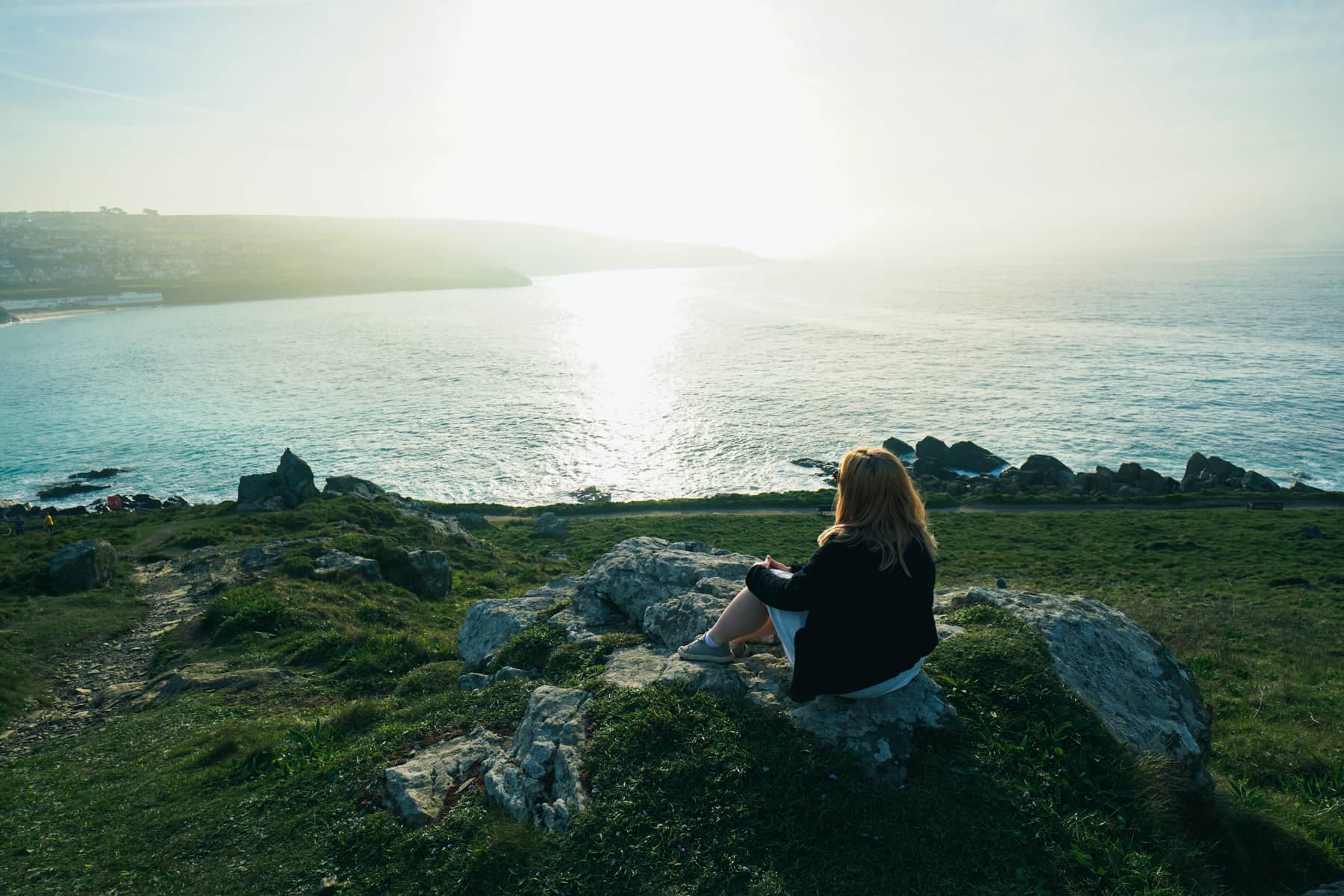
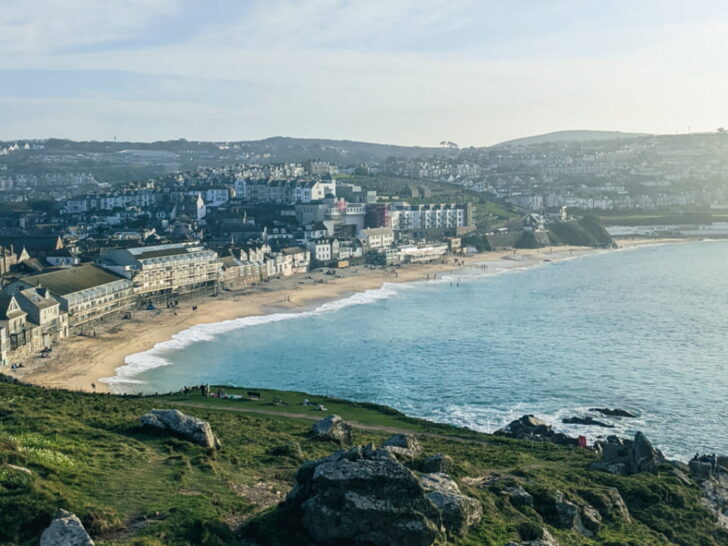
    View across St Ives
    View across St Ives

    Can You Get Around Cornwall Without a Car?

    Thanks to an extensive public transport system, you can easily get around Cornwall without a car. Your best bet is to catch the train or coach to one of the major hubs of Cornwall, like Truro, Newquay, or Penzance, and travel on from there.

    From London Paddington you can catch a train right to the end of Cornwall with Great Western Railway – it stops at the likes of Truro, Penzance and St. Ives.

    There are, inevitably, a few areas you will struggle to reach using public transport. Though the rail and bus network is far-reaching, the most remote coves, beaches, and countryside will be near impossible to visit.

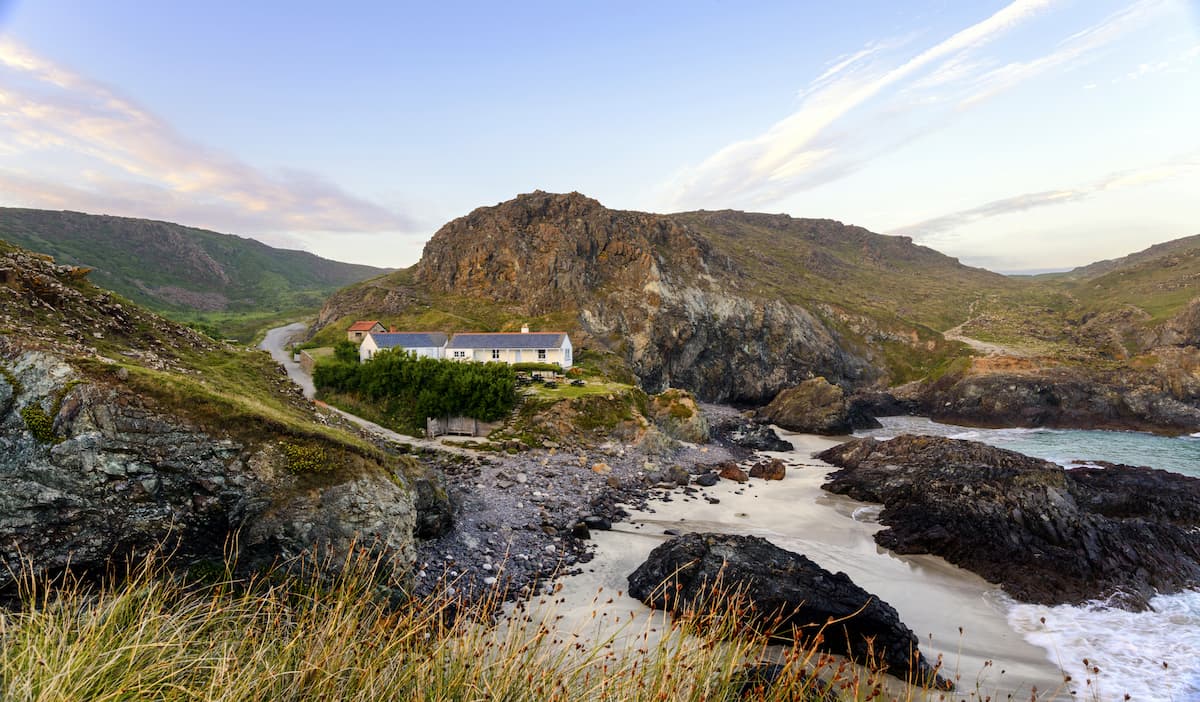
    If you’re willing to walk a few miles, you could visit a few additional places. Kynance Cove is a great example of this: it has no direct links with public transport, but you can stop at the Kynance Cove Turn bus stop and walk for 50 minutes to reach the beach.

    Where to Stay in Cornwall Without A Car: Choose a Base.

    You will want to stay in one of the main transport hubs, with plenty of connections to the rest of Cornwall. Ideally, your chosen town should be on a direct train line to a major city like London or Birmingham. 

    Luckily, there are quite a few of these.

    These towns are the best options for staying in Cornwall without a car. They are all well-connected to the rest of the region with train and bus routes.

    Truro 

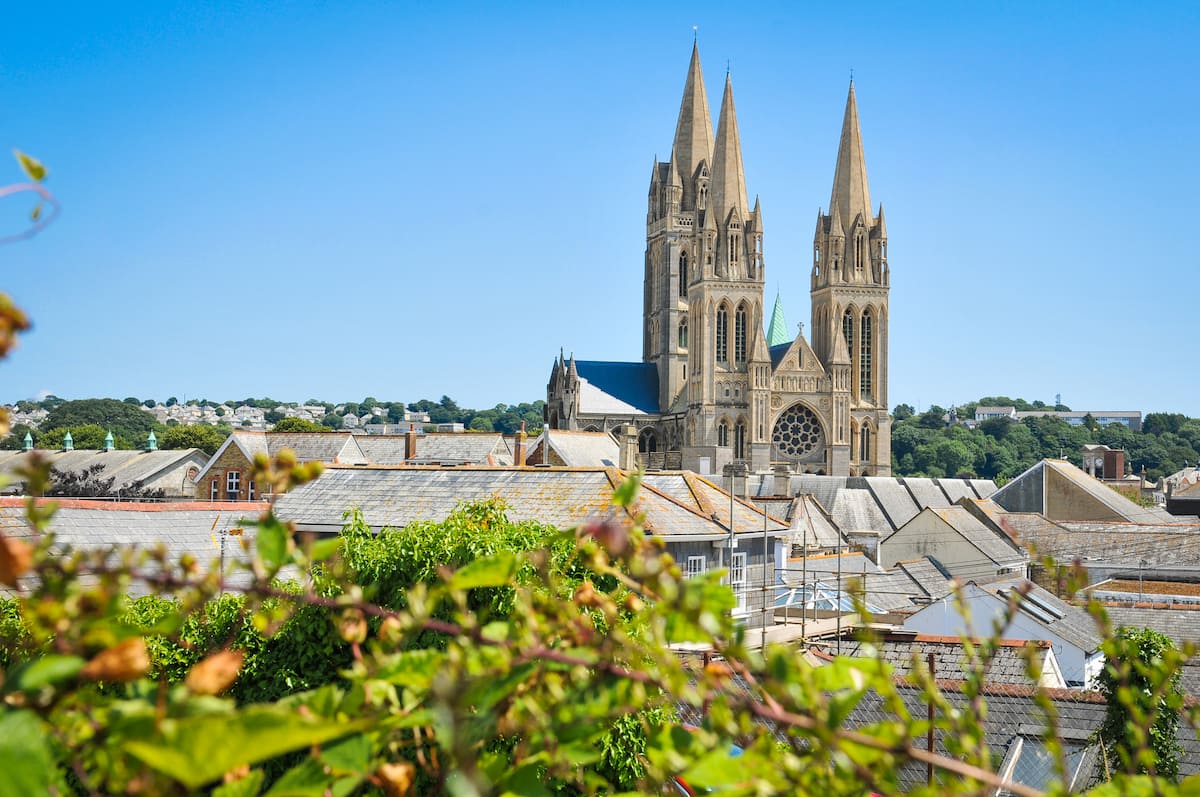
    Truro in Cornwall
    Truro in Cornwall

    It really does depend on what you want from a holiday in Cornwall, but I think Truro is one of the best bases for a short break. There are no beaches, but the city is centrally located – making it an ideal place to stay if you want to visit places on opposing ends of the region.

    This is the only city in Cornwall; it’s the best choice for people that like to have plenty of facilities at their fingertips. You will have a greater variety of restaurants, bars, and shops in Truro. There are more options for accommodation as well; one of the biggest benefits of staying in a city is this wider range of choice.

    Truro is only an hour from St Ives to the south via public transport and an hour to the Eden Project in the north. It works perfectly as a bridge between the two areas; ideal for those who want to dabble in both. 

    If travelling from London Paddington, you can arrive in Truro – without changing lines – in less than 5 hours.

    It might not be on the coast, but Truro is still a lovely city. The historic streets are winding and picturesque; it’s not just convenient, but a joy to visit in its own right.

    St. Ives 

    Beach at St Ives
    Beach at St Ives

    St. Ives is a little out of the way if you want to see more than the very southwest end of Cornwall. But it is, I think, the loveliest town to stay in that can be reached without a car.

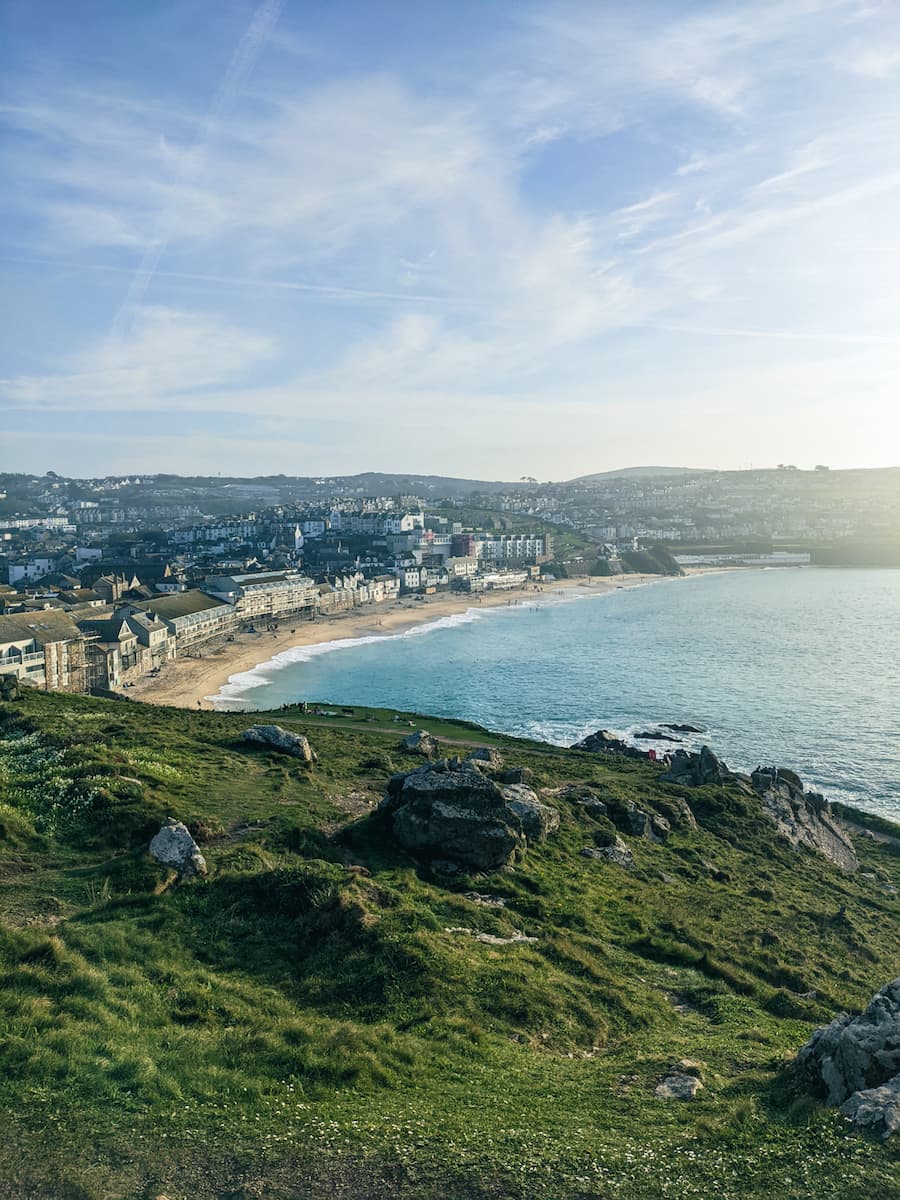
    If you like a town filled with charming cobbled lanes, cute boutiques and golden beaches, you will love St Ives. It also has an excellent food scene – with seafood a common speciality. Many seafront restaurants have the option to dine al fresco by the ocean. You will likely find St. Ives irresistibly delightful; it has a reputation that precedes it as a beautiful, laid-back and bustling destination.

    There are world-class art galleries in St Ives, with the Tate St. Ives an exceptional example, and a handful of museums. With half a dozen fantastic beaches on your doorstep and a wealth of culture to explore, you could spend your entire holiday in St Ives alone without issue.

    For people that want to venture further out, St Ives isn’t ideal. The likes of the Eden Project, Polperro and northwestern Cornwall are a little too far away. But you can experience the southwestern corner instead, which, for many people, is Cornwall’s most beautiful area. You can head to Penzance by train to find connecting buses to huge attractions like the Minack Theatre and St. Michael’s Mount.

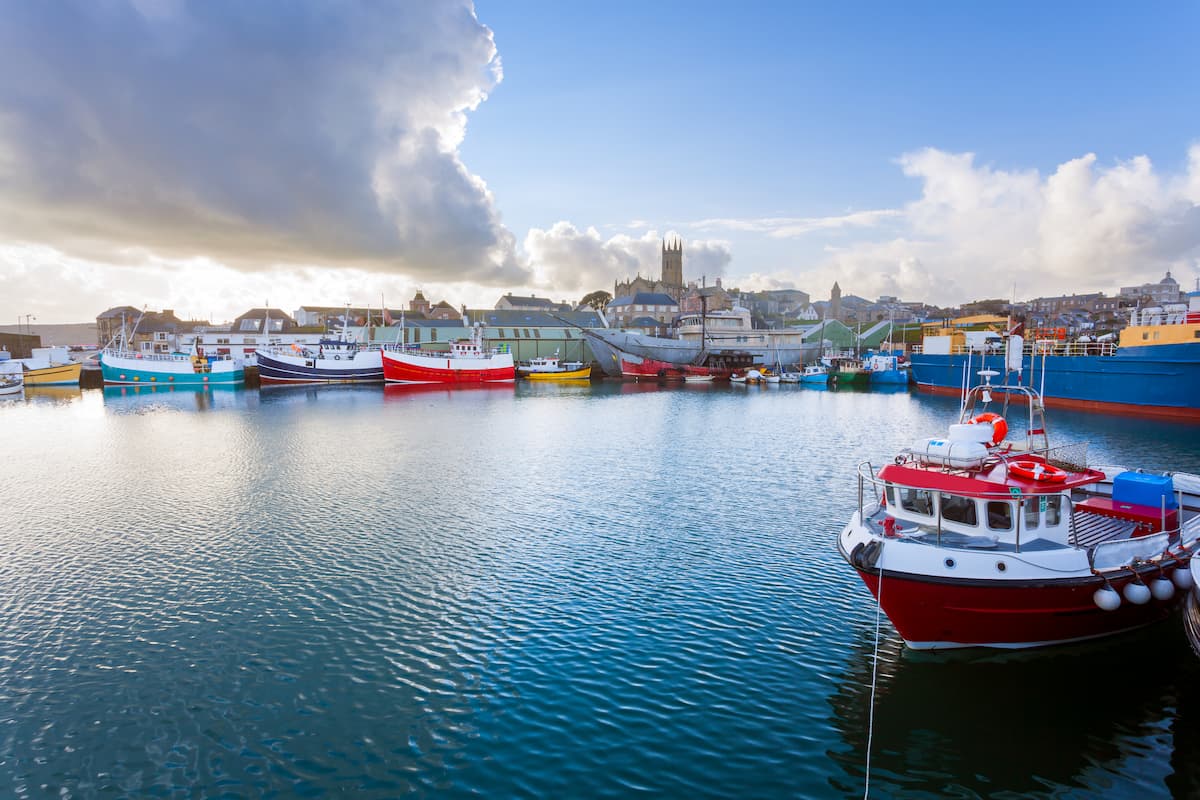
    Penzance 

    Penzance Harbour Cornwall
    Penzance Harbour Cornwall

    While not the prettiest town in Cornwall, Penzance is located in one of the prettiest areas. 

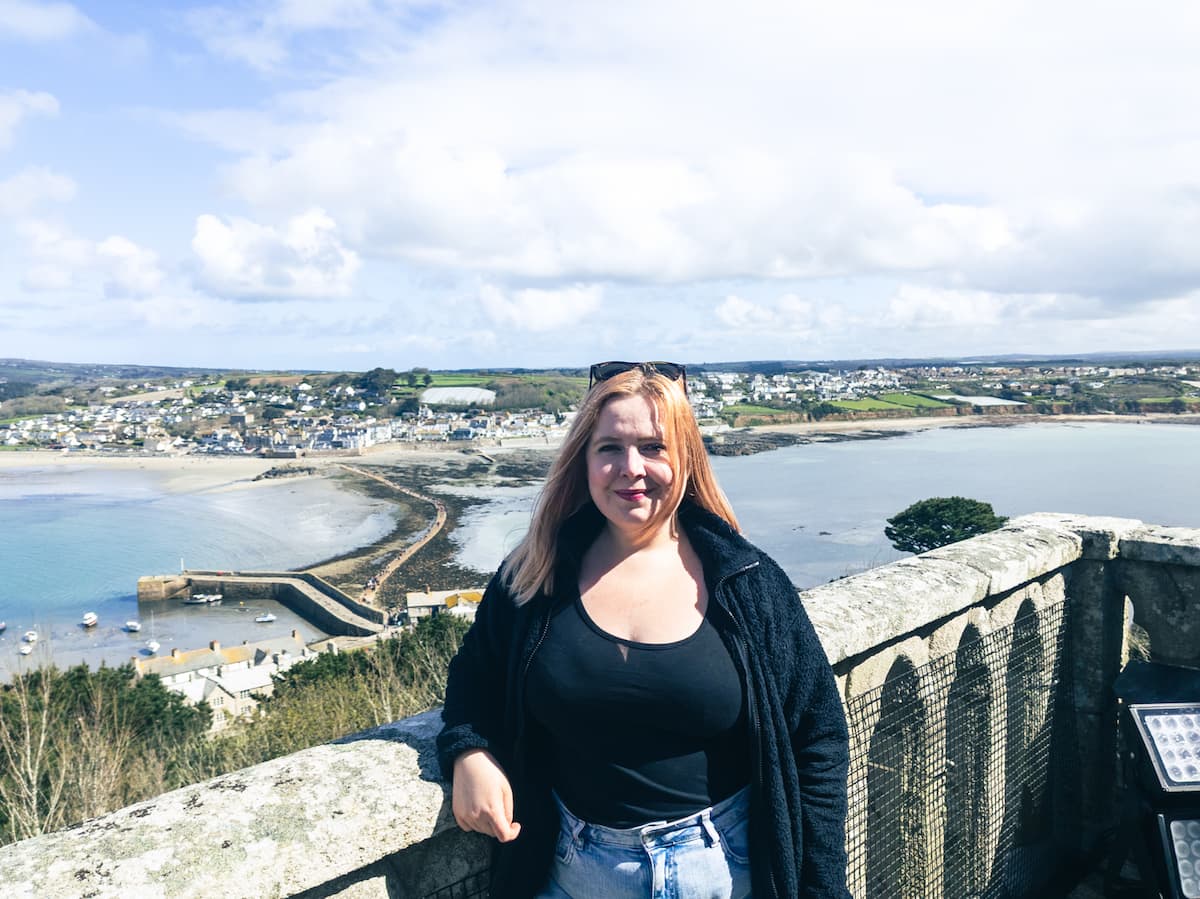
    It is situated in the corner of Mount’s Bay, which is home to some of the most gorgeous views on the Cornish coast. St. Michael’s Mount is only a few miles away from Penzance, just off the coast of the sweet village of Marazion. You can walk to the breathtaking castle and tidal island from Penzance in an hour, or catch a bus.  

    Mousehole is also close by; like Marazion, you could walk from Penzance down the coast to the village or catch a bus. Dylan Thomas once described Mousehole as the “loveliest village in England”. You will see why as soon as you reach it – the village is all narrow streets and ancient cottages; it’s a gorgeous little place, and the harbour is unbelievably quaint.

    Penzance itself has its own charm. The jaunty atmosphere of this bustling harbour town is infectious – even if Penzance isn’t the most upmarket town on the Cornish coast, it still makes for a fun base for your holiday. You can catch the Night Riviera Sleeper train from London Paddington to Penzance, so you can sleep the eight-hour journey away.

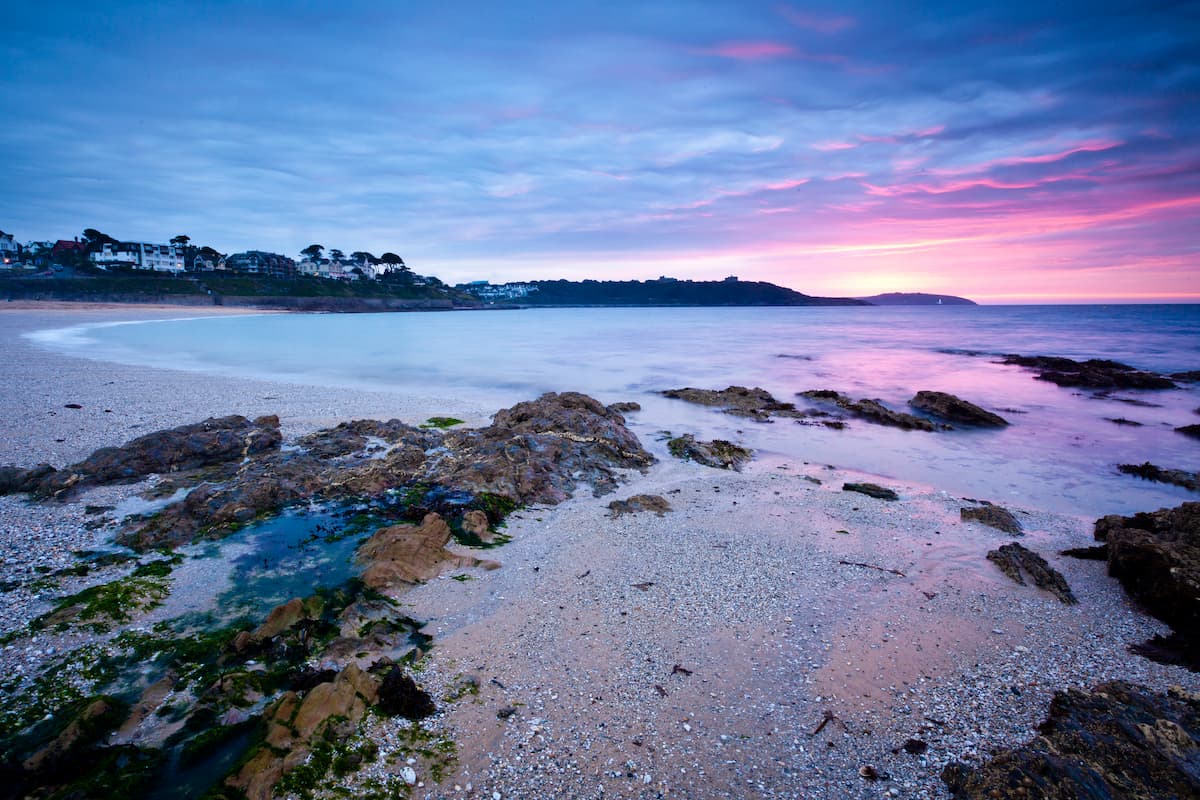
    Falmouth

    Gyllyngvase Beach Falmouth Cornwall
    Gyllyngvase Beach Falmouth Cornwall

    Falmouth is arguably best-known for its castle; Henry VIII built the imposing Pendennis Castle between 1540 and 1542 to defend against potential invaders from the continent.

    But the accompanying town is one of Cornwall’s more underrated locations. It has a lovely harbour, pretty Georgian shops and townhouses and a sizeable beach. Falmouth is also close to Penzance in the southwest, Trebah Gardens is nearby, and the likes of the Eden Project are reachable for a day trip. You can stay in Falmouth and explore a great deal of the rest of Cornwall without a car. 

    It’s a larger town, with plenty of restaurants and accommodation options, and has a handful of things to do. Besides the beach, castle and surrounding countryside, you can try out other activities like visiting the National Maritime Museum Cornwall or going on a boat trip. The town has a rich history to explore; Pendennis Castle is connected to the fascinating Tudor period, when it was built as an artillery fort to defend against the French, but is worth visiting for the views over the harbour alone. Falmouth’s harbour is the third deepest natural harbour in the world.

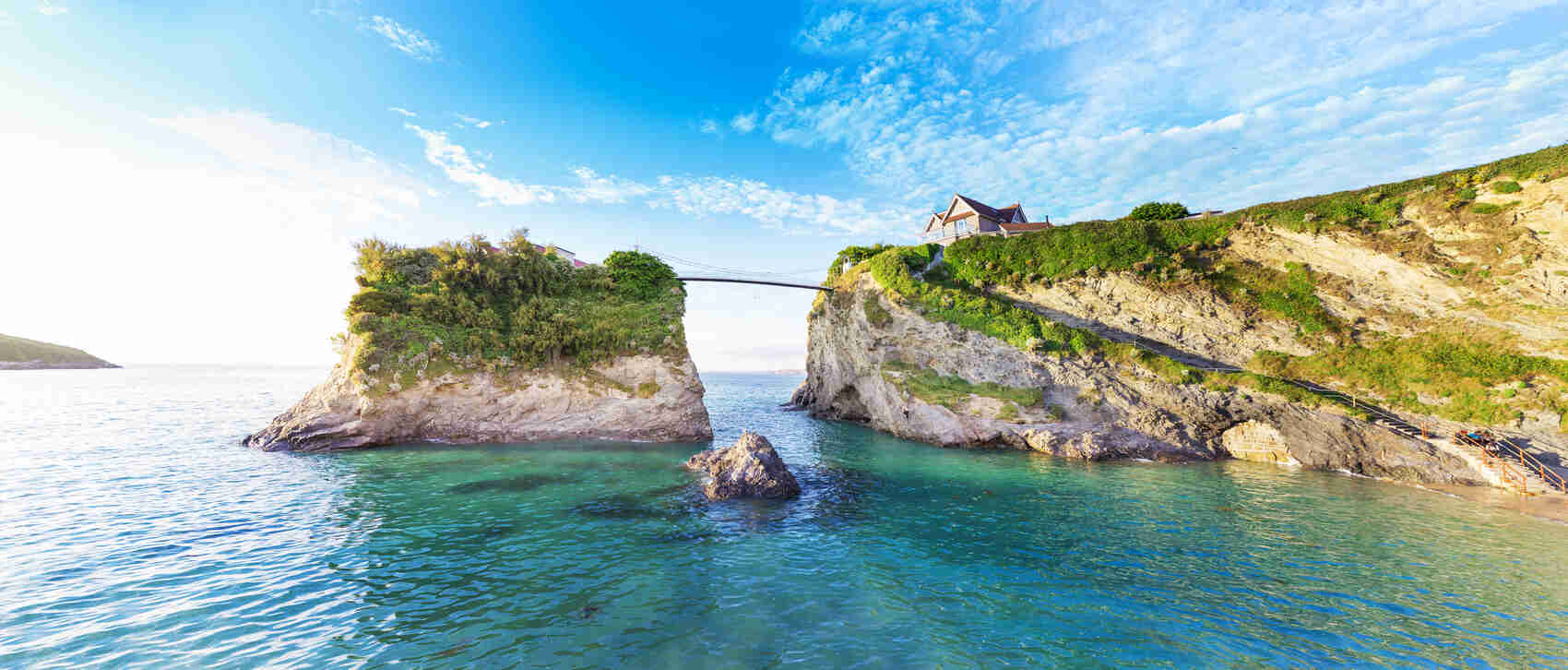
    Newquay

    Newquay Cornwall
    Newquay Cornwall

    Newquay is a vibrant town, with a bustling, raucous atmosphere. It feels a bit like a holiday resort – there are beaches and bars everywhere you look, and everyone’s there just to have a good time.

    It has been a popular destination for tourists for some time. Newquay has all the sandy beaches Cornwall is so famous for and is a fantastic holiday base for surfers. The Atlantic waves are whipped up into perfect surf on sandy Fistral and Watergate Bay beaches in particular. You can reach the gorgeous Perranporth beach by bus from Newquay; it really is an amazing base for beach-goers.

    Newquay has more than lovely beaches to boast about though, as it has great variety in places to eat, museums and things to do. It has a zoo and an aquarium; both are particularly good options on days when the weather isn’t up to par.

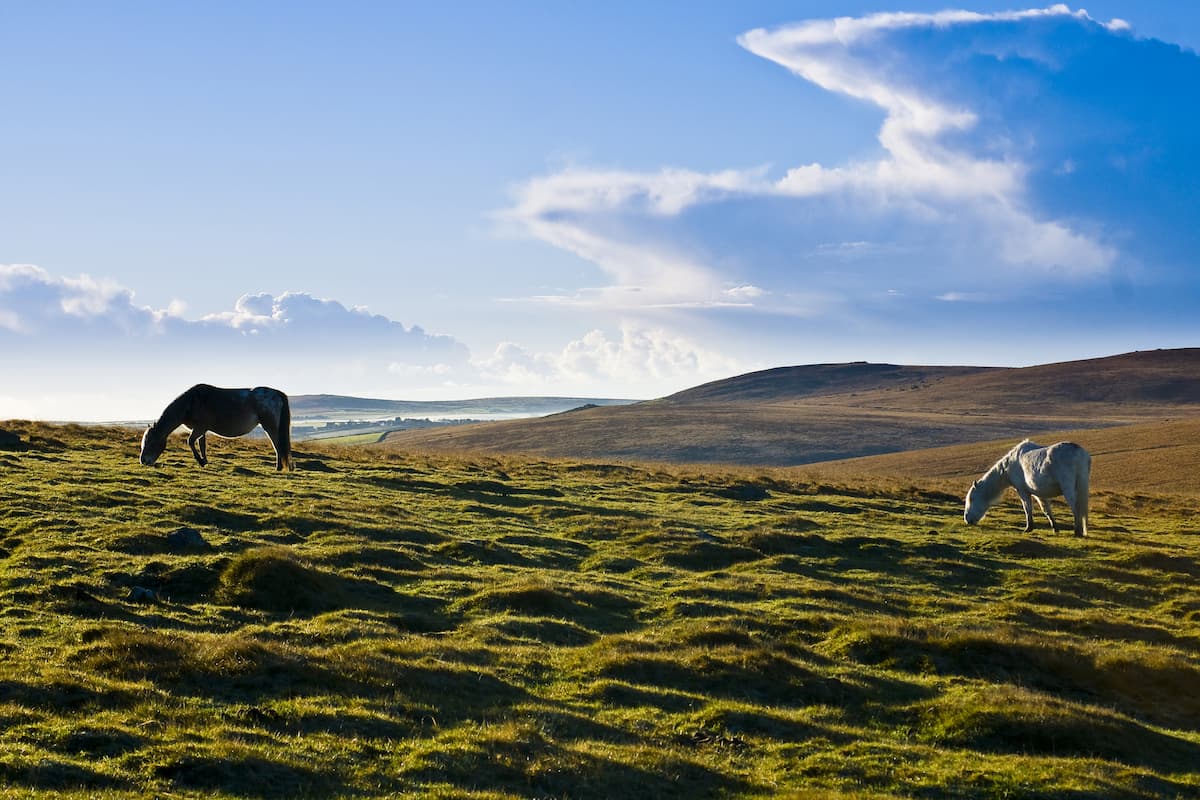
    Bodmin

    Bodmin Moor in Cornwall
    Bodmin Moor in Cornwall

    While not the most worldly of towns, Bodmin is well-placed for visitors who want to explore northwestern Cornwall. 

    The likes of Port Issac, Boscastle and Tintagel can only be reached by bus. These beautiful places are worth taking the extra time to explore – and most of these bus routes begin in Bodmin. Generally, it should take somewhere around an hour to reach Port Issac from Bodmin, and a little longer for the others.

    Bodmin is in an excellent position for people who want to focus on the northern coast of Cornwall. As for Bodmin itself, there isn’t a lot to say. The town is pretty and pleasant, but there’s nothing distinctly Cornish about it; it could be a nice, quiet rural town from anywhere in the English countryside.

    There are a few attractions, including Bodmin Jail and the National Trust’s Lanhydrock House and Garden, but its main purpose on this list is as a springboard to explore Cornwall’s wild northern coast.

    A Car-free Itinerary for a Long Weekend in Cornwall

    After settling in at your chosen base, you will want to spread your wings and explore the rest of the region. These are a few of the best attractions in Cornwall that can easily be visited without a car.

    All of the towns mentioned as potential places to stay – but particularly St Ives and Falmouth – could be added to a car-free itinerary if you’re not using them as a base.

    The Eden Project

    Visiting the Eden Project in Cornwall.
    Eden Project in Cornwall.

    Catch the train to St Austell station, which is on the main line from London Paddington, so runs fairly regularly. From there, you can catch a bus that takes you directly to the Eden Project.

    The Eden Project is one of the most famous eco projects in the world. Ever since it first opened its doors in 2001, the site has welcomed millions of visitors every year. The huge biomes have become an iconic sight in Cornwall – but what’s inside is even more impressive.

    There are two main biomes, with two artificial microclimates inside; the Mediterranean and the Rainforest. The Mediterranean biome is filled with the flora and fruits of Italy, Greece, and Spain; it stays a balmy 9–25°C, allowing the olive trees and more exotic species to flourish. You will journey outside of Europe in the South African and West Australian gardens, which add even more colour to the experience.

    The Rainforest biome is an experience like no other in Cornwall: temperatures of 35°C are often reached in the summer. You can walk through a jungle less than an hour from Truro, wander along a rainforest canopy walkway, see crashing waterfalls and tropical creatures all within this biome. A visit to Cornwall’s microcosm of the humid tropics is unforgettable; one of the region’s true unmissable attractions. 

    Porthcurno & the Minack Theatre

    Minack Theatre Cornwall
    Minack Theatre Cornwall

    The easiest way to reach Porthcurno is if you’re already staying in Penzance – it’s the nearest train station. From Penzance you can catch a bus with the First KERNOW A1 service, which stops at Porthcurno on its way to Land’s End.

    Porthcurno is often alluded to as the most beautiful beach in Cornwall. It is situated in a spectacular narrow ravine, with turquoise blue waves crashing gently against the light golden sand. The cliffs on either side are topped with greenery, while rugged rock formations curve out into the sea. It looks like a stunning secret cove, but Porthcurno is far from hidden; it can get quite busy at times, as it is one of the most famous beaches in Cornwall.

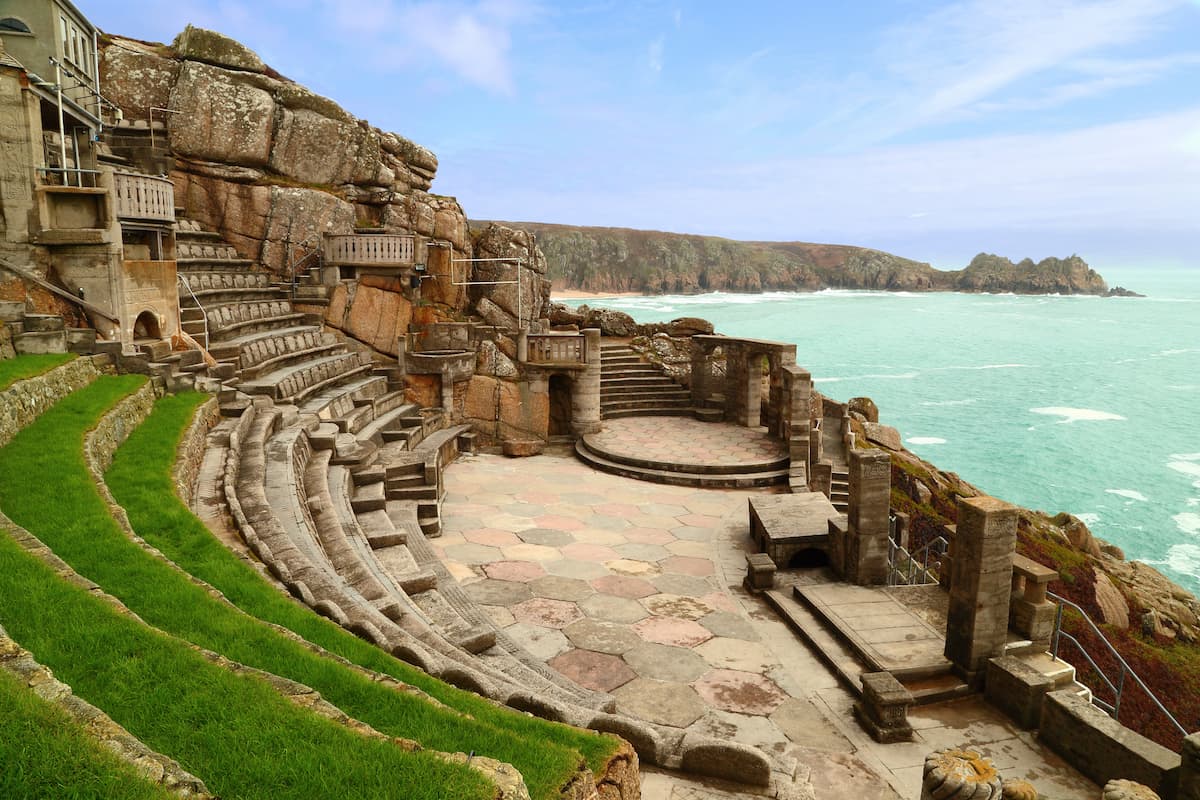
    The Minack Theatre, only a 5 minute walk away, is one of those incredible locations that seems both world-famous and a hidden secret all at once. The theatre, which is built to look like Roman ruins, is carved into the cliffside; it’s a spectacular venue that hosts performances overlooking the sea. 

    Trebah Gardens

    Trebah Gardens
    Trebah Gardens

    Without a car, Trebah Gardens is most easily reached from Falmouth by bus. 

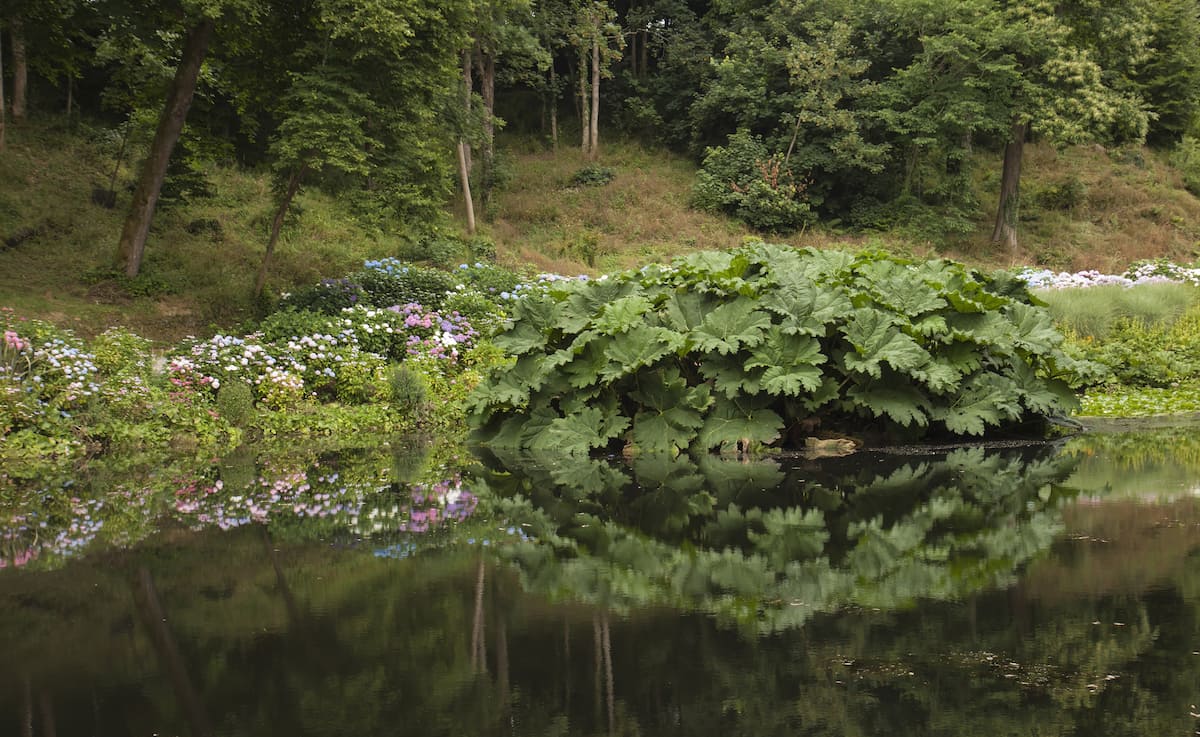
    Trebah Gardens is one of the handful of world-famous gardens dotted around Cornwall. It is located in a valley that provides a warmer microclimate for the plants, allowing more exotic varieties to grow. 

    Trebah has been ranked as one of the best 80 gardens in the world – it has taken 180 years of careful design and nurturing to reach that level of excellence. The garden follows a natural spring, which trickles through a series of pools until it reaches a Koi pond. You eventually reach a secluded private beach at the base of the cliffs.

    You can enjoy a new experience in the gardens with every season. Spring brings the bloom of a 100-year-old rhododendron, magnolias and camellias, but my favourite season in Trebah is early autumn, when the hydrangeas bring a burst of endless colour to the gardens.

    Looe & Polperro

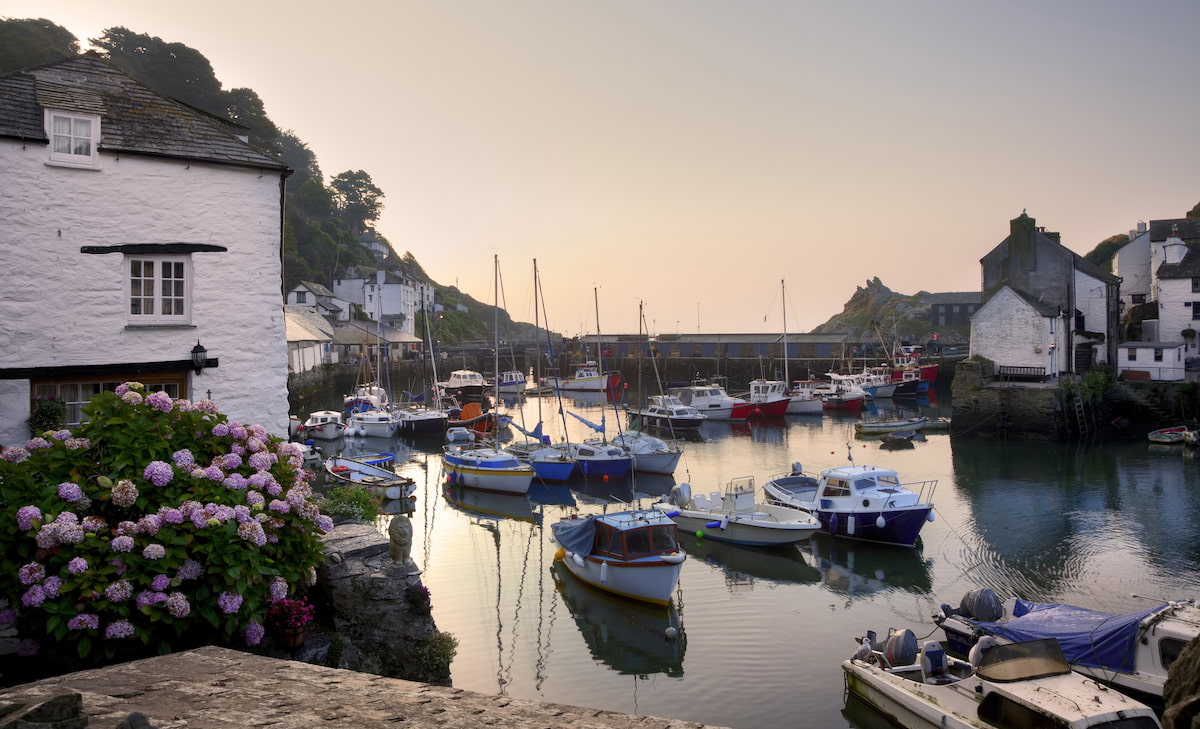
    Polperro in Cornwall
    Polperro

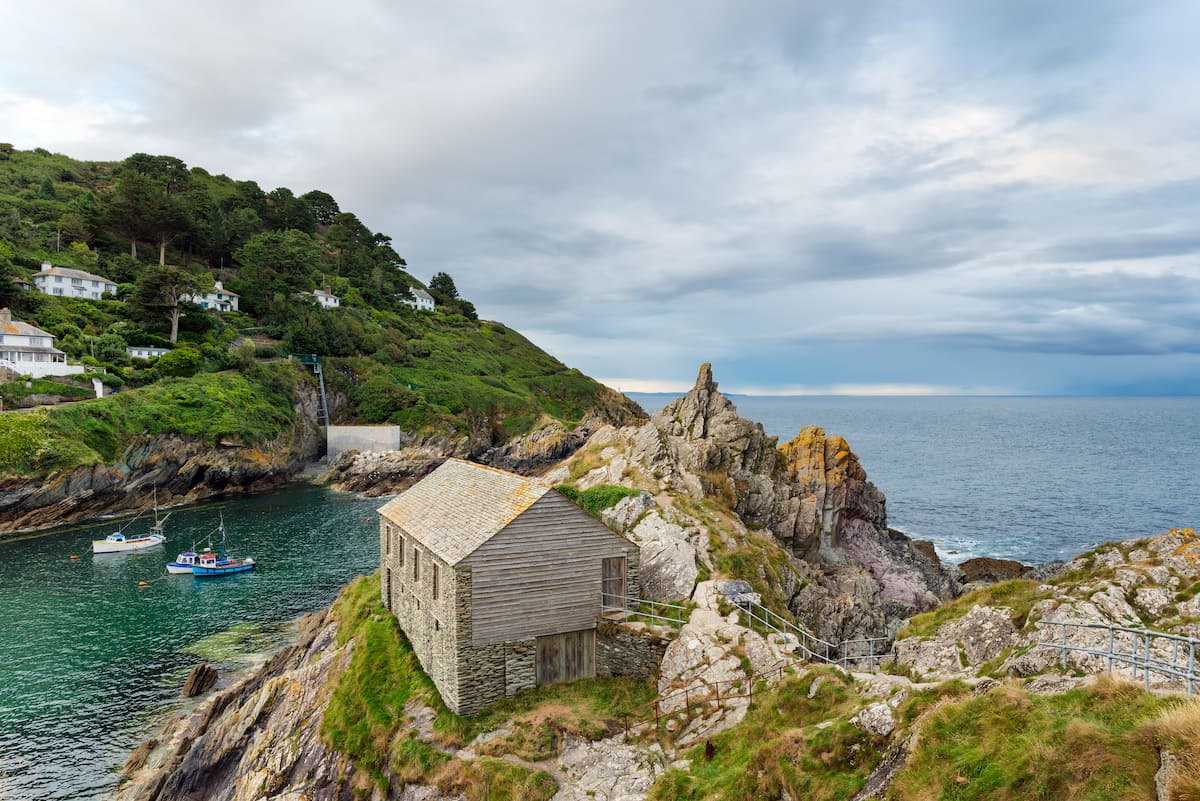
    If, when you think of Cornwall, quaint fishing villages of whitewashed cottages and bobbing boats come to mind, Looe and its neighbour Polperro will meet all your expectations.

    Looe is the larger of the two, being a town, but is still a peaceful coastal retreat. It’s a place where characterful buildings cling to hills on either side of its namesake river, and colourful boats linger in the harbour after a long day at sea. 

    Looe is an escape from stress and turmoil; a chance to experience a simple life in a pretty town by the sea, if only for a little while. You can spend your days exploring its winding cobbled streets, browsing its handful of boutique shops, lounging on its beach and wandering across its Victorian stone bridge to explore the other side of town. When you’re done with all of that, you can take the scenic route down to Looe’s pretty neighbour, Polperro.

    Polperro is only a few miles down the coast from Looe – the walk is a pilgrimage countless tourists and locals alike have undertaken over the centuries. The village is even more picturesque than Looe, where the crooked and ramshackle streets are replaced by uniformly pretty stone white cottages overlooking a harbour. Every corner of this tiny fishing village is worthy of a postcard: enjoy it by sampling an afternoon tea surrounded by views of tumbling hillside cottages and turquoise blue water. 

    Hiking and Bike Trails

    The best thing to do in Cornwall when travelling without a car? Explore the scenery at a slower pace.

    Cars are for getting from one scenic location to another. Once you’re there, they are nothing but a hindrance. Getting out and enjoying the countryside – whether on foot or by bike – is the best way to experience the Cornish landscape. If you’re staying in a great, public transport friendly location, you will be able to access hundreds of fantastic routes without even needing to drive.

    Some of the best hikes and trails you can reach without a car will be on your doorstep; there are dozens of routes to take from Penzance alone.

    St. Michael’s Mount

    Penzance Harbour Cornwall
    Penzance Harbour Cornwall

    Catch a bus from Penzance to Marazion – or walk – to enjoy one of the most incredible views in England: the lonely silhouette of St. Michael’s Mount in Mount’s Bay.

    This unbelievably romantic location has a long and fascinating history but is mostly appealing for purely aesthetic reasons. A beautiful castle sitting above an island in a glistening bay: St. Michael’s Mount is the stuff of fairy tales. To add even more charm to the location, the island is tidal. When the tide is out, a cobbled walkway is revealed, winding its way from Marazion up to the castle.

    Northwestern Cornwall (Easily reached from Bodmin):

    Tintagel Castle Cornwall
    Tintagel Castle Cornwall

    This part of Cornwall’s rugged coastline can be tricky to reach without a car. If you’re staying in St Ives or Penzance, it would be a fairly unrealistic expectation to visit.

    But staying in Bodmin – or even Truro and Newquay, at a push – makes it more accessible. All of these places can be reached by bus.

    • Boscastle. The quirky village of Boscastle is a mixture of picturesque scenery and unusual charm.
    • Padstow. Padstow is an upmarket coastal town – both the town and surrounding countryside are lovely and worth exploring.
    • Port Issac. This pretty fishing village is one of Cornwall’s most visited. The pretty harbour, sloping beach, and lovely scenery shouldn’t be missed! 
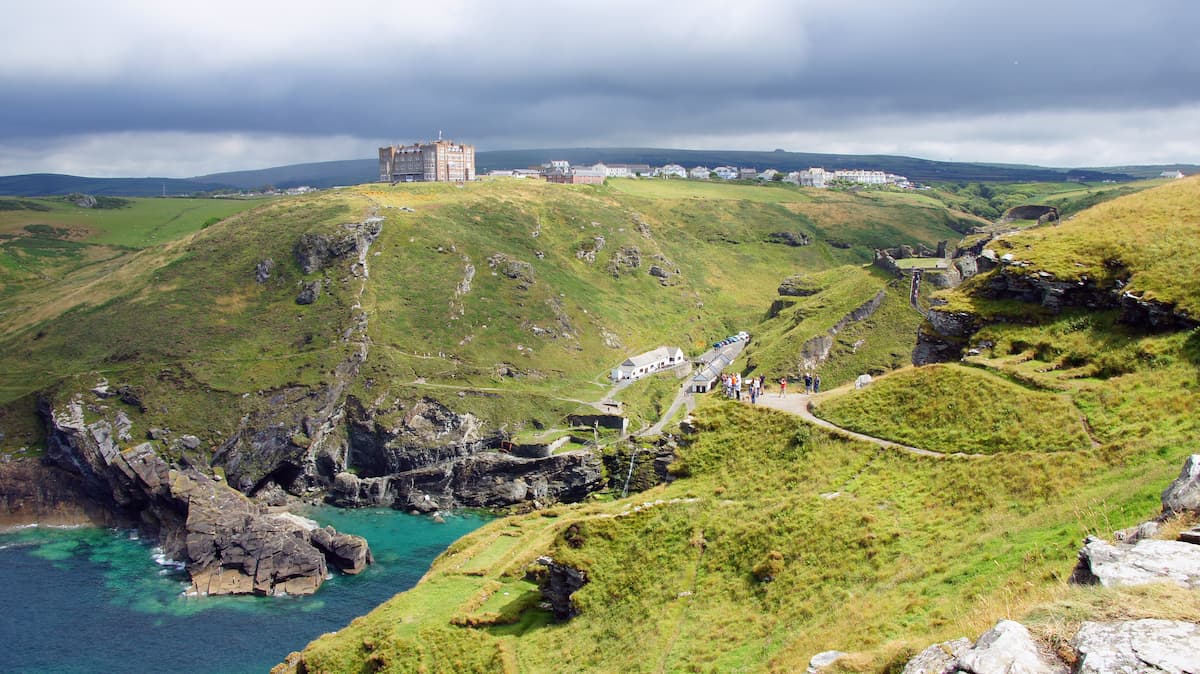
    • Tintagel Castle. An ancient ruin surrounded by mystery and magic: Tintagel Castle is supposedly the birthplace of the legendary British king, King Arthur of Camelot. The setting is beautiful; the coastline is typically dramatic and craggy. But the ruins and stories add a mystical quality to your visit. It is never more atmospheric than at the entrance of Merlin’s Cave, the supposed home of the famous wizard.

    Can you travel around Cornwall by train?

    Yes! The rail network in Cornwall is surprisingly comprehensive. Many of the villages and coastal locations will be off-limits to you if you stick to the railway, but the major towns are all accessible.

    Of course, you could quite happily travel all the way down to St. Ives by train and spend your entire trip there. It all depends on what you want to do and see.

    Is it easy to travel around Cornwall?

    Easy is all relative! If you plan your route well, travelling around Cornwall will feel incredibly simple.

    Leave it to the last minute and it might feel stressful – but hopefully this itinerary will take some of that burden. Public transport is easy to use and generally takes a lot of the stress out of travelling. As long as you are realistic about your expectations and check leaving times beforehand, you should easily be able to travel around Cornwall without a car.

    Visiting Cornwall Without a Car

    A visit to Cornwall using only public transport is surprisingly varied – there are few options and attractions off-limits to you.

    Choosing your base is the most important step (unless you plan on hopping from one to another), as what you will be able to see depends hugely on what is close by. You can explore so much of Cornwall without a car that not having one is no longer an excuse: book your holiday for this year, but be sure to avoid the most awkward months.

  • 12 Christmas Gift Ideas for Family and Friends Abroad

    12 Christmas Gift Ideas for Family and Friends Abroad

    On the twelfth day of Christmas, my true love sent to me… a food hamper and a gift card?

    Christmas is a time where we miss our family and friends abroad just that little bit more. Feel closer to those you love by gifting them a thoughtful present that shows just how much you appreciate them.

    It can be hard to find a gift that can be sent abroad easily, which is why I’ve used my own experience of presents for far-flung relatives to help, and amassed these 12 Christmas gift ideas. Hopefully you’ll find the perfect present somewhere below!

    Christmas Gift Ideas for Family and Friends Abroad

    A Merry Monstera

    House plants are the perfect Christmas gift: they give any room a homely, natural feel and are (in the right hands, at least!) a gift that will last far beyond the first few weeks of January.

    A Monstera plant is one of my favourites, but any house plant will do. You can always give the least green-fingered person in your circle a cactus. A house plant is a planet-friendly gift that will keep you in the thoughts of family and friends as they struggle to keep it alive!

    There are several websites you can use to purchase your gift, but Bloom&Wild, FloraQueen and Interflora are great options.

    Seasons Greetings With a Gift Experience

    It can be tricky when deciding on the perfect gift for someone. Will they like it? And will they even use it?

    Gifting friends and family abroad with an experience for a Christmas present is a great way of showing you care. They will think of you when they decide to use it!

    With generous expiration dates, the true beauty of gifting an experience is that the receiver can book a time and day best suited to them, so there is no pressure.

    Websites such as Virgin Experiences and Get Your Guide have a fantastic selection of experiences that won’t break the bank and cater to a wide range of customers.

    Driving Experience

    From Formula 1 to Ferraris: this is a great Christmas gift idea for any car enthusiast, where they can spend the day driving a luxury car of their choice.

    City Break

    Weekend trip to Malta
    Weekend trip to Malta

    Why not treat your loved one to a city break? You could arrange a trip at the same time for a chance to see each other. This is a great Christmas gift idea and gives them something to look forward to when the festive period is over.

    Spa Experience

    Give your loved ones a chance to simply sit back and relax. After all, some people prefer being pampered to a day spent running around a city! Booking a spa day as a gift is a great idea for those looking for a luxurious day away from it all.

    Theatre Tickets

    Even if they’re closer to Brisbane than Broadway, a theatre ticket is always a showstopper of a gift. Surprising your favourite theatre-nerd with tickets to their most-loved theatre show is bound to win you brownie points. So what are you waiting for? Get this show on the road!

    A Mini Break

    Kat at Royal Crescent
    Royal Crescent

    For an extravagant gift they’re not likely to forget, it’s hard to beat 2-3 nights away on a mini break. With the chance to choose their dream holiday from a selection of 100s of places, who could say no?

    There are gift boxes available that aren’t limited to only the cities, and offer short stays to a place of your loved one’s choosing. If they want to extend their break, it’s usually simple to add an additional night or two by going direct.

    Wine Tasting

    Malta’s 3 Cities Tour & Wine Tasting

    Know a wine connoisseur? For the person in your life that swirls their wine glass and talks about ‘aromas’, a wine tasting experience is the perfect gift. Maybe your parents live abroad, or you want to treat your siblings. You can never go wrong when it comes to wine!

    Gifting your friends and family with tickets to a vineyard or a distillery makes for the perfect day out. They may even raise a glass to you!

    Food Hamper

    For a gift of pure indulgence, and to share a slice of your favourite British foods, why not ship over a luxury food hamper from The Queen’s grocer, Fortnum and Mason.

    These iconic wicker baskets include only the most British of treats, including Royal Blend Tea, jars of sweet lemon curd and raspberry preserve, All Butter Crackers served with Piccadilly piccalilli and Fortnum’s fruitcake with luxurious Marc de Champagne truffles.

    If you want something a bit more budget-friendly and personalised, you can make your own food hamper. Fill a box with all the things you know the receiver will love to open. Whether it’s drinks, crisps or sweet delights, this package will remind them of the comfort of being at home.

    A Photo Album: a Picture-Perfect Christmas Present

    A Christmas classic. Putting together an album of memorable photos is another top-quality gift to send abroad to family and friends at Christmas. This is a more family-friendly gift than one for friends; older relatives just love an updated photo album.

    You could even add in some special messages and pictures drawn by the kids, which is bound to put a smile upon someone’s face.

    Gift a Jingle Bell Rock: Jewellery

    Credit: Custom Map Necklace Diamond Rose Jewellery

    If you know their taste in jewellery and want to send a long-lasting gift, sending a piece of jewellery to a loved one abroad is another great Christmas gift idea. Shop on Etsy for personalised pieces to give it that added sentimental touch.

    You could engrave a bangle with a friend’s name, send a keyring with a common phrase that is special to someone or purchase two necklaces, one for each of you that forms a heart when they connect so that you always have a piece of each other!

    A piece of jewellery doesn’t have to be expensive to be special to someone. If you do want to send a highly-priced item abroad, always remember to insure it, in case it gets lost or damaged.

    Santa’s Subscriptions

    Nothing says ‘I love you’ more than a monthly renewal! For the gift that keeps on giving, a subscription is a fantastic and convenient way to send a present abroad.

    You can get a subscription for almost anything these days, but here are a few ideas.

    Netflix

    Setting up a subscription for a friend couldn’t be easier and is a superb gift idea, particularly if they live in a country where the tv choice isn’t the best.

    The diverse selection of films, documentaries and tv series will keep them entertained for hours. You can even watch the same show at the same time despite being thousands of miles from each other.

    Coffee

    Coffee is an excellent Christmas Present
    Coffee is an excellent Christmas Present

    If your friends or family love coffee as much as I do, they’ll love a coffee subscription box. Every month will give them the chance to try a different type of coffee, to help them on their crusade to find the perfect brew.

    There are quite a few coffee subscriptions to choose from, but Batch is one of the best!

    Local Cinema

    There’s nowhere quite like the cinema for a movie buff. Seeing a new film on the big screen, avoiding the potential spoilers of waiting for streaming and eating bucket-loads of popcorn; the cinema’s an unmissable experience.

    Most countries and cinema chains now have a subscription service, and many independents will too. Look up their nearest cinema and gift them 12 months of the latest movies.

    VPN Service

    Some countries may block access to certain websites, and this is where a VPN service is useful. A VPN also allows users access to their subscriptions when travelling as well as other services that may require payment.

    Their Favourite Magazine

    An old-school subscription gift, but often a welcome one. The lovely thing about a magazine subscription is that it’s almost a personalised gift; you can choose either their favourite magazine, if they have one, or something that aligns with their interests, like travel or film.

    Amazon Kindle Unlimited

    The perfect present for a true bookworm is a subscription to the Amazon Kindle.

    This subscription gives users access to over one million books, audiobooks and magazines. This will keep a friend or member of your family entertained for hours on end and doesn’t require any postage or tracking numbers.

    Other Subscription Boxes

    A subscription box can include various products such as makeup, skincare or razors. They can be practical subscriptions or something of interest, whichever you feel is right for the person. Each month, the subscriber is sent samples of products along with discount vouchers for a selection of websites.

    The beauty of a subscription box is that there is no contract, so if a friend or member of the family no longer wants the subscription, you can cancel it with a click!

    Ho Ho Home Decor

    Credit: Aromatherapy Candles Kindred Fires

    Sending a small gift that friends or family can decorate their home with is again a great Christmas present to send abroad.

    It’s easiest to stick to small, neutral ideas such as a candle, a reed diffuser, a throw for the couch or small wall decoration. Bedsheets, dish towels and blankets are also a good idea, particularly if that special someone has moved away just recently and may not have a lot to furnish their new home with.

    If you want a practical gift, a tablet stand may come in handy if communication is going to be through a camera from now on. Choose from a wide selection of tablet stands from Amazon, which can be sent directly to the receiver’s address.

    No Gold, Frankincense and Myrrh? Time For a Money Transfer

    If you’re not too confident in your choice in gifts, or know the person would prefer some cold hard cash, sending money as a Christmas gift is sometimes the best, most stress-free choice for all parties.

    Getting the Best Deal

    While sending money to the recipient directly from your bank account to theirs may be easier and free, the exchange rate may mean they won’t receive as much as you think they will.

    Make sure you are fully aware of the fees (and any hidden fees) associated with transferring money by checking the terms and conditions of the company you choose to send it through. Don’t forget to triple-check you have the right details and give yourself plenty of time to factor in international transfers!

    Sending money through Wise takes around 7 days, depending on how much you want to send to the intended account, so it would be wise (see what we did there) to send a money transfer in advance.

    Choose A Recommended Company

    If you are sending large amounts of money, you want to be sure you are sending it with the right company.

    Wise is used by over 10 million people and is regulated by the FCA. It prides itself on being “The 7x cheaper international account”, making it a good, reliable choice.

    Christmas Decorations

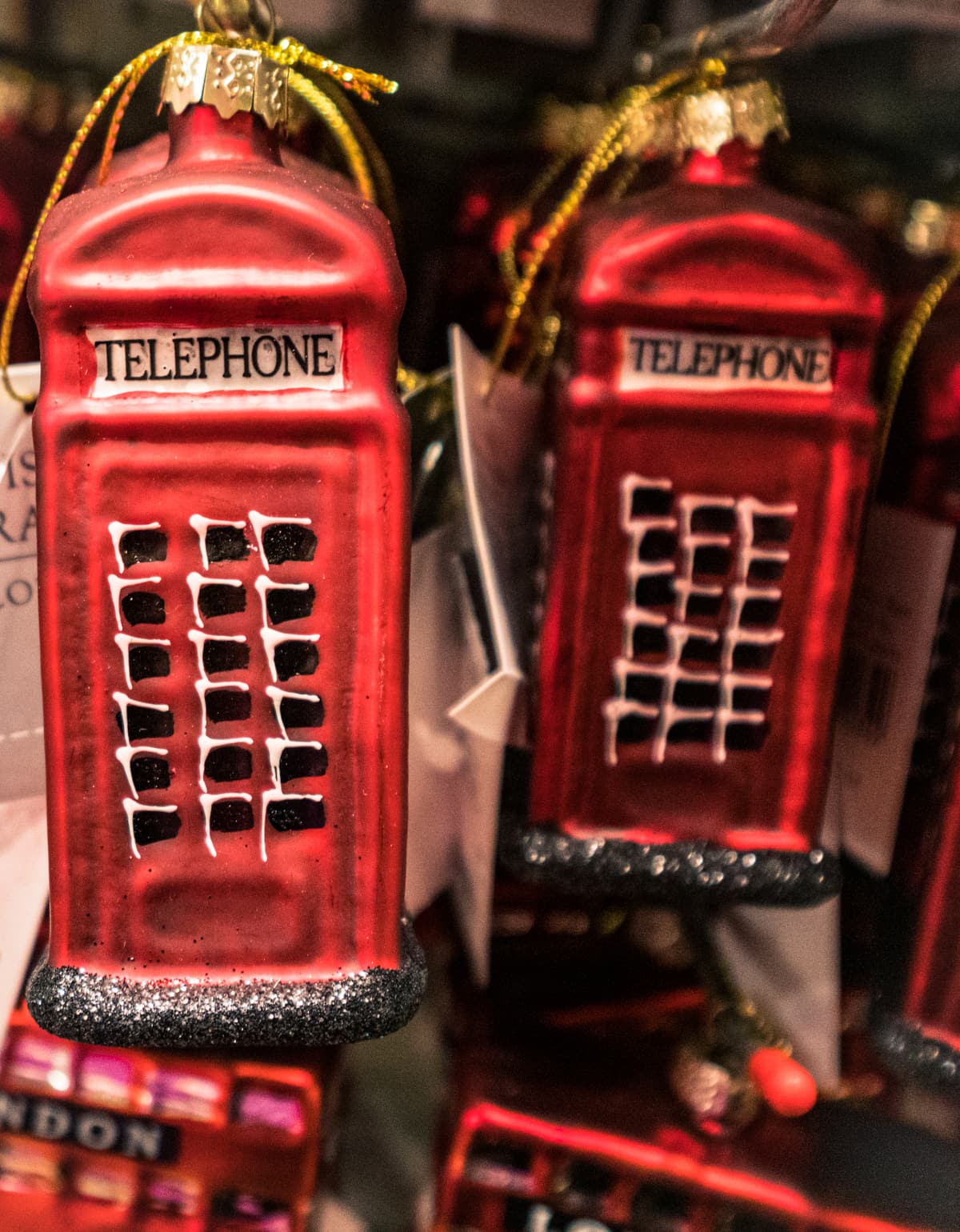
    London Telephone Box Christmas Decorations
    London Telephone Box Christmas Decorations

    Christmas decorations are a great gift to send abroad. Christmas decorations are often cherished for many years; it’s like sending a piece of home to the ones you love.

    If friends or family have only recently moved abroad during the festive season, they may not have had the chance to purchase any decorations for their new home.

    ‘Tis the Season for Gift Cards

    If you want something that feels a bit more like a gift than money, but still gives the person freedom to purchase a present of their choosing, a gift card is a reliable middle-ground. It’s convenient too, as they can be sent via email!

    Treat a friend with a gift voucher for their favourite restaurant or attraction. Maybe there is a certain retail store they spend a lot of money in, or perhaps they enjoy going to the cinema. Whatever it is that they enjoy doing, there is most likely a gift voucher for it which will be received gratefully.

    Personalised Gifts

    Personalised Photo Calendar

    Etsy is a great site to visit if you want to send a personalised photo calendar as a Christmas gift.

    You can add photos of people back home, pictures of yourself with whoever will be receiving this gift, or both!

    You can’t go wrong with a personalised calendar, and if you don’t want to put images inside, you could exchange them for inspirational quotes that are meaningful to whoever will be receiving it.

    Personalised Cushions

    Yes, personalised cushions are a thing! Stick your face on a soft pillow to send abroad to your friends and family. It doesn’t necessarily have to be your face; they may have a pet back at home that they miss.

    This fun Christmas gift is sure to put a smile on anyone’s face, and every time they sit down or make the bed in the morning, they will think of you!

    Custom Painting

    Head to Etsy once again – this time to commission a painting from an independent artist. Paintings of family, friends and pets are popular choices, but really you can request anything you like! You get a unique gift while also supporting local artists. Make sure to order in advance, as they’re likely to be busy closer to Christmas.

    Personalised Mugs and Glasses

    Who wouldn’t love a mug with your mug on it? Personalised mugs and glasses have all the appeal of a photo album, while also being a useful new addition to the kitchen cupboard.

    After all, who doesn’t love a new mug to drink their morning tea or coffee out of? The same goes for wine and beer glasses too.

    There is no need to worry about packaging and sending these fragile items, as you can order from Etsy to be sent straight to their home address. Don’t forget to add a gift message too, so they will know who it’s from!

    Clothing to Match the Climate

    Glaciers in Iceland
    Glaciers in Iceland

    Perhaps a friend or member of your family has moved to a country where the climate is warmer than it is back at home (lucky them!). If that is the case, why not send beachwear, a beach towel or flip flops as a Christmas gift. Chances are, they are going to need it.

    Similarly, if they have moved to somewhere with low temperatures, send them a set including gloves, a scarf and a bobble hat. A hot water bottle and a blanket is also a good idea.

    Christmas Care Package

    Being away from friends and family during the Christmas period can be quite a lonely time. Cheer up a loved one by sending a Christmas care package abroad!

    Care packages are relatively easy and fun to make. You simply grab a box and fill it with all the things you know the receiver will love. Maybe they have a favourite snack that is unavailable in the country where they now reside.

    Other things to add in are photos, magazines, cake mixes and sweets.

    For rules on what you can and cannot post, visit the website of the postal company to check the restrictions.

  • 3-Day Road Trip Cornwall: Best of the Cornish Coast

    3-Day Road Trip Cornwall: Best of the Cornish Coast

    Cornwall is home to Britain’s favourite coastline.

    Clear blue waters, golden beaches and dramatic cliff faces are the backdrops for quaint villages, crumbling ruins and world-class gardens. There’s so much to see in this corner of the UK; and Cornwall’s natural beauty is so consistent that it is perfect to explore via road trip.

    A 3-day road trip through Cornwall doesn’t give you heaps of time – but this itinerary will help you make the most of it.

    Day 1

    Begin your road trip through Cornwall by exploring the south coast.

    Polperro

    Fishing village of Polperro, Cornwall
    Fishing village of Polperro, Cornwall

    Start your road trip in the idyllic fishing village of Polperro. This postcard-perfect community can be found high up on the south coast of Cornwall; it’s perfectly located for the beginning of your holiday in the southwest.

    Cornwall is famous for its quaint seaside towns and villages – you have to visit at least one, and you may as well start with one of the best. Polperro is a charming collection of haphazardly placed cottages nestled within a ravine. The village and harbour are just wonderfully picturesque. Gently bobbing boats, 14th-century inns and the typically rugged Cornish scenery make for a stunning setting.

    The narrow streets of Polperro are lined with whitewashed cottages that carry a timeless appeal. Many of these buildings are now used to host art galleries, bakeries, jewellers and a whole host of other tourist-friendly retailers. But it all has a very quaint, historic feel; as there are no cars within the village itself – you park just outside – you can enjoy a completely old-world experience in Polperro. 

    The Eden Project

    Visiting the Eden Project in Cornwall.
    Eden Project in Cornwall.

    Drive 37 minutes down the coast to arrive at one of the most iconic attractions in all of Cornwall. 

    The Eden Project has fascinated visitors and captured imaginations for almost two decades. Though it is a relatively new addition to Cornwall’s tourist repertoire, it is arguably the most famous. 

    The project began in the late 90s, with the aim that visitors would leave the site a little more in tune with the natural world. Its purpose is largely to educate the general public, but the charity is also active in conservation.

    Each of the two main biomes is its own little contained world. Stepping inside one is a beautifully unique experience – it’s like being transported halfway across the globe. 

    The Mediterranean biome is pleasantly warm, with all the trimmings of a vineyard in Tuscany, the gnarled olive trees of a Greek island, and the fiery chillies of a Spanish valley. You can travel a little further afield just by taking a few extra steps within the biome; the vibrant South African, West Australian and Californian gardens add an even more global feel to an already worldly experience.  

    As wonderful as the Mediterranean biome is, I think the rainforest biome is even more impressive. You can lose yourself in the humid tropics of the rainforest, and temporarily transport yourself to the likes of SE Asia, West Africa, and South America. It stays between 18 -35°C all year round, so dress for warm weather!

    A rushing waterfall, a spectacular Rainforest Canopy Walkway and an abundance of tropical plants and animals await you in Cornwall’s very own miniature rainforest.

    The Lost Gardens of Heligan

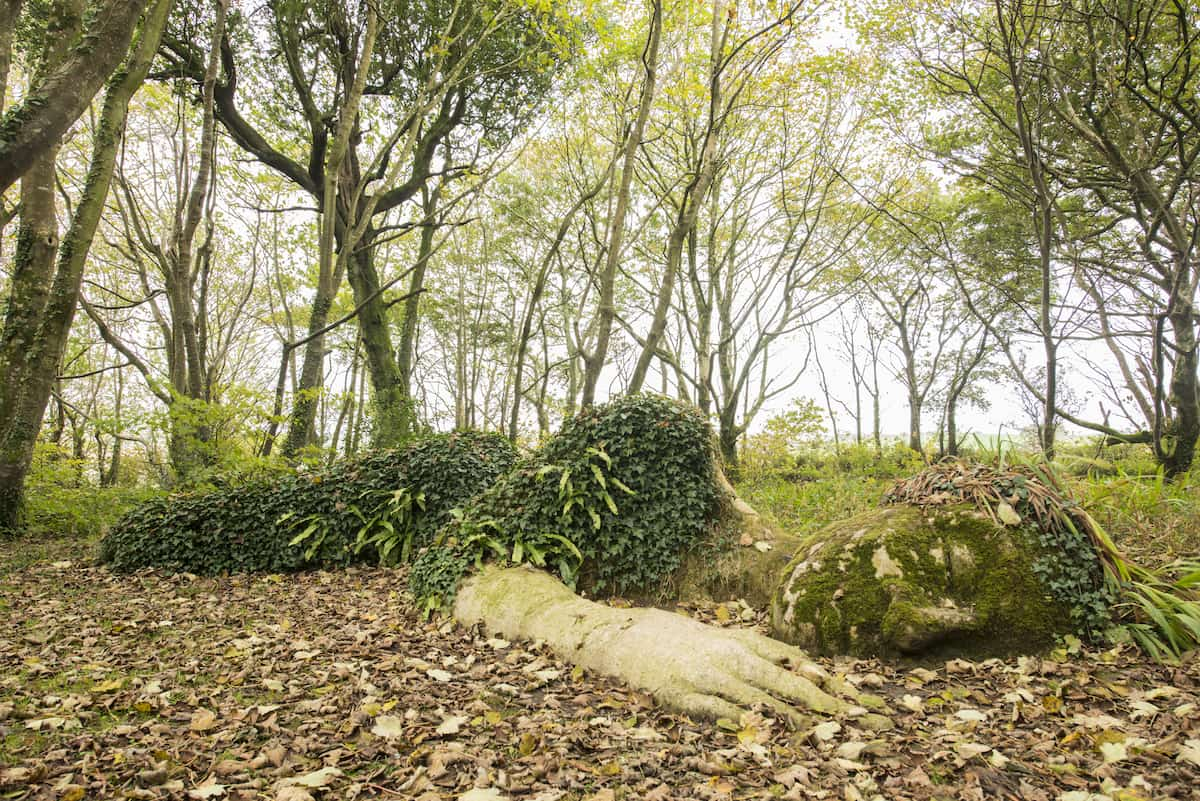
    Lost Gardens of Heligan in Cornwall
    Lost Gardens of Heligan in Cornwall

    Wander through the real-life Secret Garden of Cornwall in The Lost Gardens of Heligan; where the actual story behind the gardens feels almost as mythical as the name suggests. 

    Heligan’s gardens were absolutely flourishing in the 19th century. The Tremayne family had developed the estate’s grounds into one of Cornwall’s premier outdoor spaces. 

    But the estate was abandoned during World War I, and the gardens spent half a century lost to time. The forgotten grounds soon fell into disrepair; eventually becoming derelict as the decades passed. 

    The gardens were neglected for so long that the entrance became completely overrun by plants and ivy. It was only the chance discovery of a hidden door in the 90s that led to the restoration of the gardens.

    The ensuing recovery project was a huge success. Heligan is now home to one of the finest gardens in the UK. Its location within a valley creates a microclimate that allows a wide variety of plants to grow.

    You can wobble across a Burmese rope bridge in The Jungle or go for a romantic stroll through The Sundial Garden: the Lost Gardens have an unmatched diversity, and are a real joy to explore.

    Trebah Gardens 

    It would be a bit of a squeeze to fit in, but Trebah Gardens is en route to our next stop. 

    If you have the time, Trebah Gardens is worth a visit. The colourful gardens follow a gentle stream as it trickles down towards the seafront. The gardens are particularly vibrant in September when the hydrangeas come into bloom.

    Kynance Cove

    Kynance Cove Cornwall
    Kynance Cove Cornwall

    The Lizard Peninsula is one of the most dramatic – and photogenic – pieces of coastline in Cornwall.

    Kynance Cove is the crown jewel of that already treasured peninsula. This is honestly quite the detour from the most direct route down the south coast – it will add just over an hour on to your travel time. 

    But it is worth it. Serpentine rock formations weave between the sand and sea in Kynance Cove. It is one of the most photographed locations in Cornwall, thanks to the sheltered cove’s unmistakable staggered headlands of rock, white sands and turquoise waters.

    Climbing the hill opposite to Kynance Cove is possibly more impressive than being on the beach itself. It gives you a unique perspective on one of the most memorable vistas in Cornwall.

    Kynance Cove is best seen at low tide, when the beach is fully visible.

    Marazion

    At the end of a long day, you just want to put your feet up and relax. 

    A road trip is exciting, but can be tiring. Marazion is a lovely place to unwind after hours of driving. The ancient market town is small, but pretty and charming. It’s perfect for an overnight stay.

    If you’re looking for somewhere to eat, you will find a handful of cute pubs and cafes in the town. As you might have expected on the coast, they’re especially notable for their seafood offerings.

    Marazion is a lovely town, but what really puts it on the map is its proximity to St. Michael’s Mount; the views of the castle island are incredible.

    Day 2

    After spending the early morning relaxing in Marazion, it’s time to get back to exploring.

    St. Michael’s Mount 

    View from St. Michael’s Mount with the tide out
    View from St. Michael’s Mount with the tide out. There are two ways you can get to the island, when the tide is in by boat which you need to add to your ticket or when the tide is out you can walk across the path.

    Cornwall’s answer to Mont Saint-Michel in France is located on the south coast in Mount’s Bay; it’s an island anchored to the mainland by the whims of the tide. 

    St. Michael’s Mount is as close to a fairy tale as you can experience in everyday life. The scene is breathtakingly romantic: a medieval castle is perched high above an island of lush greenery, cutting an unmissable outline against the open sky. Mount’s Bay is a sparkling turquoise colour, completing the image of almost unnatural beauty. 

    St. Michael’s Mount Cornwall
    St. Michael’s Mount Cornwall

    It’s so beautiful that it could easily be a purpose-built tourist attraction. But the castle has stood for centuries – the first priory on the island was built in 1135. It played a particularly active role in politics during the medieval period, when an imposter to the throne occupied the Mount.

    You can explore the castle and gardens in the warmer months, but times are limited outside the peak of June, July and August. 

    St. Michael’s Mount is a tidal island: at high tide, it is cut off from the mainland. The water retreats to reveal a cobbled causeway winding across the bay, and you access the Mount by checking the tide times and embarking across this path. In April, ferries start to run between Marazion and the pretty harbour of St. Michael’s, allowing for extra visits during high tide.

    Mousehole

    Fishing town of Mousehole Cornwall. With small boats and a backdrop of the town.
    Mousehole Cornwall

    Skip across the bay from St. Michael’s Mount and you will land in Penzance; famously the setting of The Pirates of Penzance. But keep going – in truth, Penzance isn’t the loveliest town in Cornwall. Hidden just below it is the sweet village of Mousehole, once dubbed the “loveliest village in England” by poet Dylan Thomas.

    Mousehole is a tranquil respite for any weary traveller. The tiny fishing village has an enchanting atmosphere, and despite its popularity, still feels authentically Cornish. You can indulge in a Cornish Cream Tea, visit a museum, or set off on a boat ride from the fishing port. For such a small place, there’s plenty to see and do.

    Porthcurno

    Winning the unofficial competition for most beautiful beach in Cornwall is no easy task, but Porthcurno somehow manages to stand a cut above the rest. This small slice of paradise is carved out of the cliffside, nestled in a narrow valley on Porthcurno Bay.

    The water is a shade of blue more commonly seen in the Caribbean, and the beach is a golden layer of soft sand beneath your feet. The greenery of the cliffs on either side make for a striking burst of colour, and the contrast only enhances the beauty of Cornwall’s most breathtaking beach.

    Allow yourself a few hours to lounge on the sands and swim in the sea if the weather is nice. Even if the skies are grey you can still enjoy a visit to Porthcurno. The circular walk up the hillside and across the coastline from Porthcurno to Penberth Cove is spectacular. 

    The unmissable sea views, picturesque Penberth harbour, and clifftop perspective over the beach make this a hike worth taking in all weathers. Wander slightly off track to reach Pedn Vounder beach – this is one of the finest views of a craggy cove in Cornwall, and is usually deserted.

    Minack Theatre

    Minack Theatre
    Minack Theatre

    Even on a trip as brief as three days, you have to find the time to visit the Minack Theatre while in Cornwall. It is conveniently located on the cliffs overlooking Porthcurno beach – it’s so close that you don’t have to get back behind the wheel, you can just walk for five minutes and you’re there.

    It’s hard to imagine a theatre in existence more picturesque than the Minack. Hanging on the edge of a cliff sloping down to the sea, the theatre looks impossibly romantic. It almost looks like it could be the recently unearthed discovery of ancient ruins; the Minack has all the appearance of a Roman amphitheatre. 

    In actuality, the Minack Theatre was built as a private playhouse. Dreamed up by Rowena Cade, the Minack’s first ever performance was fittingly Shakespeare’s stormy masterpiece, The Tempest.

    During the summer season, when performances run from Easter to September, you could – and, maybe, should – catch a show. Matinee performances are fairly frequent and would fit into the schedule of a busy road trip itinerary. If there are no performances available, you can still tour the theatre. 

    The views over the sea from the theatre are simply sublime: no theatre has a better backdrop than the hazy blue of southern Cornwall’s sea and sky.

    Mayon Cliff Shipwreck

    Mayon Cliff Shipwreck in Cornwall
    Mayon Cliff Shipwreck in Cornwall

    The Mayon Cliff Shipwreck is a slight detour from the usual tourist hotspots. Situated only a few miles from the wildly overrated Land’s End, the wreck of the RMS Mülheim has been stranded on the rocky inlet of Castle Zawn cove for almost twenty years.

    The cargo ship has been teetering on the Cornish coast ever since its doomed voyage first ran into trouble. All that is left is the bow, which has been perched on the pebble beach since 2003, after a storm split the ship in two. You can walk to the wreckage as part of a scenic coastal route over Mayon Cliff.

    Amble through a carpet of heathland on your journey along the perilous cliffs, enjoying sweeping vistas of the ocean and a glimpse of Bronze Age castle ruins, a Victorian lookout, and the distant Longships lighthouse. 

    Of course, once you arrive on the shipwreck beach there isn’t much to do but admire the atmospheric surroundings. It’s not a beach to lounge on, but you can spend some time looking out to sea trying to spot the wildlife. Dolphins and porpoises are common, but everything from basking sharks to killer whales have been spotted off this coastline.

    Mên-an-Tol

    Men-An-Tol in Cornwall
    Men-An-Tol in Cornwall

    From a 21st century wreckage to an ancient stone formation. Travel back 3500 years, long before even the founding of Ancient Rome, to Mên-an-Tol. 

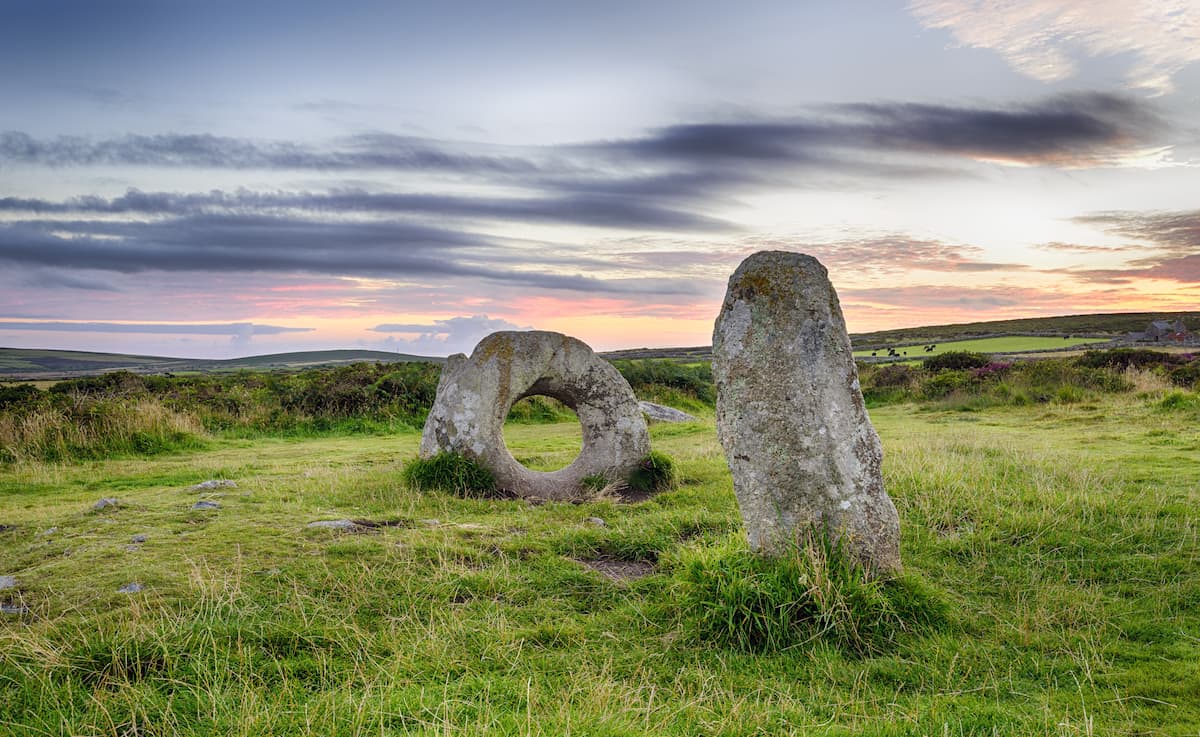
    Cornwall has a surprising amount of these stone circles and formations; the ancient Cornish societies had an astonishingly advanced grasp of stonework and craftsmanship. But this is perhaps the most impressive of the many remnants of early civilisations in Cornwall. The unusual pierced circular rock is one of only two of its kind in the UK.

    Cornwall is closer culturally to Wales, Scotland and Ireland, with its Celtic roots. There’s a distinct difference between Cornwall and the rest of England – it even has its own revived Cornish language. Visiting places like Mên-an-Tol gives us greater insight into a fascinating part of Cornwall’s history.

    This will be the longest stretch of travelling on your second day, though none of the journeys are particularly strenuous – the drive from the Mayon Cliff Shipwreck to Mên-an-Tol takes around 30 minutes, and the following trek to St. Ives slightly less. 

    Visiting Mên-an-Tol won’t require too much of your time. It’s a quick stop, but one worthy of a packed itinerary.

    St. Ives

    St Ives Cornwall
    St Ives Cornwall

    End your second day in Cornwall in pretty St. Ives; a town famous for glorious beaches, a thriving art scene, and an idyllic harbour. 

    The appeal of St. Ives is no secret, so it does tend to get very busy in the summer. But even if you are road tripping in the middle of August, I think it’s a place you just can’t miss. St. Ives is a charming collection of winding streets and golden beaches. It has a lovely atmosphere; simultaneously bustling and relaxed.

    You will find world-class art galleries in the town, with the Tate St. Ives a particular highlight. There’s great food options as well, with plenty of variety. The Cornish Deli does a mean pasty.

    Cobbled streets, quaint cottages and alabaster townhouses make up the town centre; the Down-a-long is especially charming. St Ives is a fantastic blend of culture and beauty – I can’t think of anywhere better to end your second day in Cornwall.

    Day 3

    Begin the final day of your road trip through Cornwall with breakfast by the beach in St. Ives. If you’re particularly fearless, go for a bracing early morning swim – you only have a few dozen beaches to choose from.

    Perranporth 

    Perranporth Cornwall
    Perranporth Cornwall

    Explore the St. Agnes Heritage Coast by visiting the longest stretch of uninterrupted sand in Cornwall at Perranporth.

    It’s a lovely way to while away a few hours. After all, no trip to Cornwall is complete without thoroughly perusing its beaches. 

    If you’re all beached out or the weather isn’t so great, feel free to skip this part of the road trip. But Perranporth is one of the finest beaches on the north coast; it’s well worth a few hours of your time if you’re willing. 

    Polzeath to the Rumps

    The Cornish coast is made for windswept hikes. The jagged cliff edges, golden beaches and endless ocean views are all meant to be savoured.

    You can enjoy a scenic walk on the northern coast as you wind your way back up through Cornwall. Polzeath is a sweet little village, but not all that notable by itself. The nearby scenery, which includes an Iron Age hillfort, is what makes this a worthwhile trip.

    Granite cliffs and the twin headlands of ‘the Rumps’ sit alongside the clear blue waters of the Atlantic Ocean. This is an excellent walk with very little foot traffic; you feel almost completely alone on these rugged hills. It also gives you a chance to get out of the car and stretch your legs, seeing some of Cornwall’s most beautiful countryside while you do so.

    Port Issac

    Port Issac Cornwall
    Port Issac Cornwall

    Pretty fishing villages are a dime a dozen in Cornwall. But there are some that continue to charm even repeat visitors with their beauty. Port Issac is one of them.

    The pretty fishing village is backed by green hills and opens on to the sea with a little beach. Port Issac is ideal for a lunch stop – it would give you enough time to explore the scenic village and relax in a cute cafe. The Cornish are incredibly loud advocates of a cream tea, and Angelique’s Tea Room does one of the best.

    Tintagel Castle

    Tintagel Castle Cornwall
    Tintagel Castle Cornwall

    Enter into a land of myth and legend at Tintagel Castle, and immerse yourself in the story of King Arthur and his Roundtable.

    There’s an air of mystery – and, some would say, magic – around Tintagel that has inspired storytellers for centuries. The setting is so dramatic that people tend to assume it simply must have had a grander purpose. According to legend, Tintagel is the birthplace of King Arthur. 

    Though the medieval castle is little more than ruins, it is easy to get swept up in the mythos of it all. It’s incredibly atmospheric, and the scenery is stunning. The precarious walk down to Merlin’s Cave, where the illustrious wizard supposedly lived, is especially memorable.

    Boscastle

    The final stop on our whirlwind tour of Cornwall is a village with huge character. It’s exceedingly pretty, as most Cornish villages are, but has an eccentricity that is unique to Boscastle. This is a village with a strong sense of personality, and oodles of charm.

    Famously the victim of flash flooding in 2004, Boscastle has recovered in spades in the years since. Stroll alongside the river as it meanders down through the tiny port village – the stone cottages of the village are built on either side of the river within a deep valley. 

    It’s an exceptionally beautiful setting. The location is matched in charm by the inhabitants. Boscastle is a friendly village with some unusual quirks – you can even visit a Museum of Witchcraft and Magic, and see an eclectic mix of voodoo dolls and crystal balls in the collection.

    Road Trip Roundup

    By the end of the three days, you will have packed in as much of Cornwall as is physically possible. You will have seen the rainforest of the Eden Project, the romantic St. Michael’s Mount, half a dozen gorgeous beaches, and a handful of charming towns and villages.

    Your road trip will have ticked off the best of the Cornish coast.

    But this little taster of Cornwall is a great introduction to the region, and is sure to leave you eager to return for more!

  • 10 Things to Do in Sheringham

    10 Things to Do in Sheringham

    Nestled almost halfway across the North Norfolk coastline is Sheringham, a quintessentially quaint seaside town with bucket loads of charm.

    The whole North Norfolk coast is an Area of Outstanding Natural Beauty, famous for sweeping views, open wilderness and endless skies. Sheringham is both part of and close to all the beauty the region has to offer.

    Sheringham is a few miles up the coast from Cromer, which is the more famous of the two towns. But I have always felt that Sheringham is the one not to miss.

    It is a bit quieter, a bit prettier, and, in my opinion, the nicer of the two. There’s also more to do than you might expect in such a small town; these are a few of my favourites.

    Explore the Victorian Town Centre

    Sheringham town

    Sheringham was once little more than a small, unassuming fishing village relying on the North Sea to fuel its economy. The introduction of the steam railway in 1887 transformed the village completely.

    An influx of seaside holidaymakers brought a lot of wealth to the village, and a town of Victorian houses and shopfronts soon sprung up around it. The town still revolves around tourism to this day; it is far busier in the summer than any other time. But Sheringham has managed to avoid the fate of many other seaside towns in the UK: it doesn’t feel tacky.

    Instead, the centre feels charmingly low-key, filled with stores owned by locals. You can visit boutiques and vintage stores, or pop in to a seaside store aimed at summer visitors.

    If you find the time, stop by The Courtyard. This charming covered arcade is home to six independent shops, including a craft store and a coffee shop.

    There is plenty of character in Sheringham. It has enough history and picturesque buildings to appeal to visitors without needing to add anything too flashy; the town may have expanded due to tourism, but you wouldn’t necessarily be able to tell just by visiting.

    One of the more popular Victorian sights in Sheringham is the clock tower, built in 1862, which acts as a focal point for the town.

    Tiptoe Across the Sand and Shingle Beach

    flag flying in the wind at Sheringham beach

    Facing down the agonising stretch of pebbles to reach the sea is one of the inevitable experiences of visiting most beaches in East Anglia.

    The beach at Sheringham might be a mixture of sand and shingle, but I can guarantee it will be the shingle you notice prodding into your feet. It doesn’t matter all that much though, once you reach the bracing cold of the North Sea all will be forgotten.

    Sheringham is a traditional seaside experience in England, right down to the beach huts and 99 flakes. Fortunately, the weather is usually better than you might expect: East Anglia sees more sunshine than anywhere else in the UK, and Norfolk is one of the driest counties. In the summer, you can spend hours lounging on the sand. Or, if the sandy areas are all occupied, a short time sitting uncomfortably on the rocks.

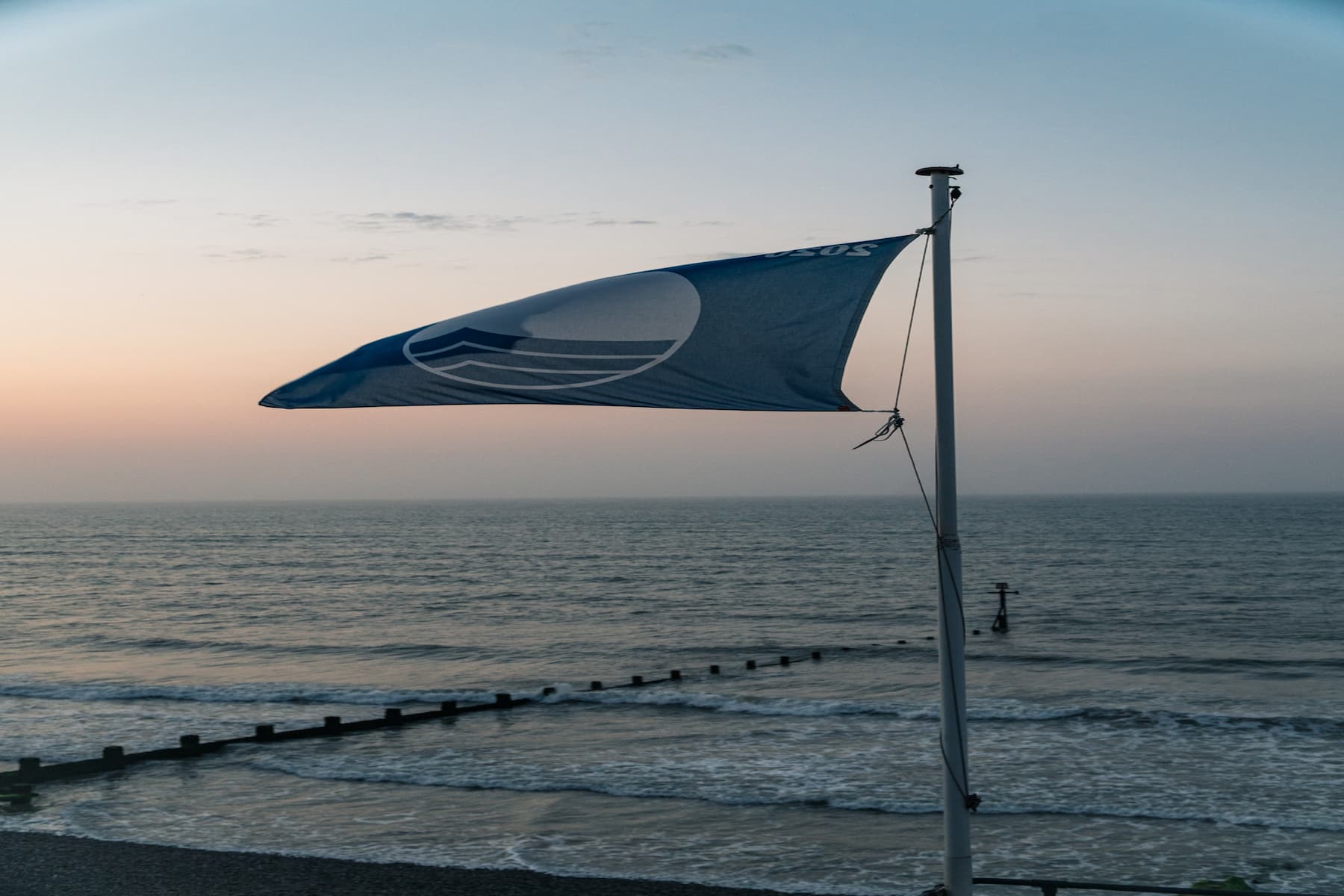
    Sheringham beach is beautiful, despite the shingle. The sky and sea merge to become an endless horizon, while the blue flag beach stretches for miles down the coastline. Most charming of all is the collection of colourful beach huts on the seafront.

    If you’re looking to find a place for takeout to bring to the beach, Sheringham has a handful of options. Fish and chips is traditional of course, but I often find myself at Fat Ted’s Street Food hut if I’m looking to grab food out.

    Walk up Beeston Bump

    Beeston Bump in Sheringham

    Make the climb up to Beeston Bump for spectacular views up and down the coast. On a clear day, you can see as far as Cromer and West Runton.

    The walk up isn’t long, but might leave you feeling a little breathless. You walk along the Norfolk Coastal Path for 15 minutes to reach the top. Beeston Bump looms large over Sheringham – the 63 metre high hill sits to the east of the town centre, and is a bit of an anomaly on an otherwise very flat landscape.

    Its unique status as a hill in Norfolk does come with some fantastic benefits: there are few places better to enjoy beautiful panoramas of the North Norfolk coast. It offers a brilliant view over Sheringham itself, and is a lovely walk which only takes a short amount of time. If you bring a picnic along, you could make an afternoon of it.

    Ride the North Norfolk Railway

    Chug merrily along the Poppy Line, one of the UK’s five great heritage railways; journeying through the gentle North Norfolk countryside by steam train is an experience of pure nostalgia.

    The Poppy Line connects two of Norfolk’s most charismatic towns, Holt and Sheringham. If you’re staying in Sheringham, then the trip to Holt is unmissable, and vice versa. The gorgeous Georgian town is a maze of charming courtyards and pretty side-streets. It’s very upmarket, and the shops and boutiques cater to that audience.

    Taking a trip on the North Norfolk Railway would be worth the trouble regardless of the towns on either end. You weave between wild heathland, rolling hills and stunning coastal views on a route that highlights the best North Norfolk has to offer.

    The trains themselves are beautiful machines, and the individual carriages are very Harry Potter-esque. The railway often hosts popular events, like Agatha Christie murder mysteries or ghost tours. Their dining carriages in particular are wildly popular – I, for one, am all aboard the Gin Train.

    Admire the Rhododendrons at Sheringham Park

    Sheringham Park explodes in colour in May and June, as the bloom of rhododendrons and azaleas reaches its peak.

    Bright reds, pinks, purples and yellows add a splash of cheerful vibrancy to the sprawling grounds of Sheringham Park. The gardens really come to life in the transition from spring to summer, but are a lovely refuge in nature all year-round.

    The grounds – and Sheringham Hall – were owned by the influential Upcher family before the estate fell into the hands of National Trust in 1986. Though the hall is privately owned, Sheringham Park has been managed and protected by the National Trust ever since.

    The park is notable as the best preserved design of famous landscape gardener Humphry Repton. Ornamental additions like ‘The Temple’ were part of Repton’s original design, but weren’t added until over a century after his death.

    Go on a Blustery Walk by the Sea

    Sheringham park walks

    The North Sea is an unruly beast, and the winds off it can knock you off your feet on a particularly blustery day.

    But walking along this wild coast, with the wind whipping through your hair and blasting you with sprays of salt water, makes for an atmospheric hike. The stark emptiness of parts of North Norfolk give it an almost desolate feeling – at times, it feels as though you can walk endlessly across a stretch of sand and never see another living soul. There is great beauty in this remote wilderness; where you have nothing but the sea, sky and jagged cliffs for company.

    It feels untouched, and deeply entrenched in the natural world: a walk by the sea from Sheringham towards Weybourne is an escape from hectic, modern life. Simply reconnecting with nature and allowing the distractions of the 21st century to fade away is a rejuvenating experience.

    Though North Norfolk does tend to get windier than most parts of the UK, it’s not always such dramatic weather. If it were, no-one would walk the miles of cliffside routes that so beautifully traverse this rugged landscape. The 9 mile Weybourne Circular Walk is a particularly lovely trail that combines the cliffs and coast with a gentler jaunt into Sheringham Park and the surrounding heathland.

    Eat an Ice Cream from Ellie’s

    Icecream by the beach in Sheringham

    No trip to the seaside is complete without an ice cream. And Sheringham has been home to the best ice cream in North Norfolk for 30 years.

    Ellie’s Ice Cream shop has been serving Ronaldo Ice Cream since 1990. The owner, Martin Jackson, was looking for an ice cream supplier that was genuinely local. One that, more importantly, used fresh fruit and the finest quality natural ingredients, with nothing artificial. He found it in luxury Norfolk ice cream supplier Ronaldo, and now sells 60 flavours of their ice cream in his shop.

    You will face the toughest choice of your holiday in Ellie’s: choosing your ice cream. Toffee & Butterscotch, Norfolk Apple Crumble, Eton Mess and Honeycomb are just a few of the flavours available. There are vegan-friendly sorbets, like Norfolk Blackcurrant, or you could go for something more unique – like Norfolk Lavender.

    A visit to Ellie’s is a real treat. You might find yourself jostling for a place in the queue; luckily, Ellie’s has two locations in Sheringham. One on the High Street, and one by the beach.

    Explore the Peter Coke Shell Gallery

    There couldn’t be a more fitting art gallery to visit at the coast than the Peter Coke Shell Gallery.

    Almost 200 shell sculptures are housed in the gallery, and they vary greatly in style; from mirror frames to floral arrangements. They are the work of Peter Coke, an actor and playwright by trade, who donated them to the gallery so that the general public could enjoy his collection.

    The artistry of the sculptures is wonderful, and offers something so different to what we usually expect from an art gallery. It’s an art style that appeals to all ages, and one that is increasingly uncommon in practice.

    Admission to the gallery is free, though donations are accepted.

    Get Lost in the Priory Maze & Gardens

    Hidden away southeast of the town centre, the Priory Maze & Gardens is a tranquil little oasis right on the edge of town.

    We strangely have Beeston Bump to thank for these beautiful gardens. The raised cliff shelters the gardens from the North Sea winds, creating a mild micro climate similar to what we see in Cornwall.

    Plants that could not typically survive in the area are thriving, creating an exotic garden that seems wonderfully out of place in England. Despite the existence of the beautiful Tasmanian Tree Fern garden and mediterranean gardens, the biggest attraction in Priory is the magnificent hedge maze.

    It is the only traditional hedge maze in Norfolk, and reaches an impressive height of seven feet. While running around the maze, you will probably stumble across a viewing platform – you can use the raised height to plot your way out, but also to spot the ruins of Beeston Priory, which run adjacent to the maze.

    After you have tired yourself out walking in circles, eventually escaping the maze, you can relax and enjoy a drink or a meal in the Priory tearoom.

    Priory Maze & Gardens closes for winter. Tickets are £6.50 for adults.

    Discover the Town’s Long History at The Mo, Sheringham’s Museum

    While Sheringham rose to prominence in the Victorian era, it existed as a fishing village long before that. It appears in the Domesday Book as a community of 28 households in 1086, suggesting that Sheringham has been a community for at least a thousand years.

    The Mo delves into the town’s long past, and their forays with vikings and pirates, but focuses mostly on the last two hundred years and Sheringham’s rich fishing heritage. The lifeboat collection is the most impressive part of the museum, but you can also learn much about the bravery of the town’s inhabitants during World War II.

    Another highlight of your experience at the museum will be the Viewing Tower, which offers 360 views over the coast and Sheringham itself.

    Tickets are £4.50 for adults – the museum relies on admissions to stay open.

    The Fisherman’s Lifeboat Museum is another fantastic little museum, but it is only open in the summer.

    Things to Do in Sheringham

    Sheringham might be small, but it isn’t boring. There are other things to do in the town besides these options, but the ten listed here are my favourites. A visit to Sheringham is great for anyone that loves the outdoors and seaside – you could easily spend a long weekend here exploring the local area, and a week if you travel a bit beyond that.

  • 18 Hip Things to Do in Shoreditch

    18 Hip Things to Do in Shoreditch

    Shoreditch in London’s East End is best described as hipster meets London chic. This vibrant destination is home to the famous Columbia Street Flower Market, Brick Lane, and is the vintage capital of the city. From funky street art to eclectic bars and restaurants, Shoreditch has more to offer than you might think.

    It’s said that Shoreditch earned its name from the water that ran across the area’s marshland, originally known as Soersditch, or Sewer’s Ditch. Some prefer a more romantic version though and like to believe that it was named after Jane Shore, a mistress of Edward IV. Allegedly, she was buried in a ditch in the area, but we know this can’t be true because the dates just don’t match up.

    Whatever you choose to believe, Shoreditch has really built itself up over the years from being one of the oldest slums of London to now being a creative hub of the East End. You’ll find nothing lacking in Shoreditch, with plenty to eat, see and do through every step of your day.

    This guide will take you through all the best things to do in Shoreditch after dark and during daylight hours. You’ll discover some of the coolest and most fun things to do in London’s East End and will be ready to visit time and again.

    1. Hunt for Street Art

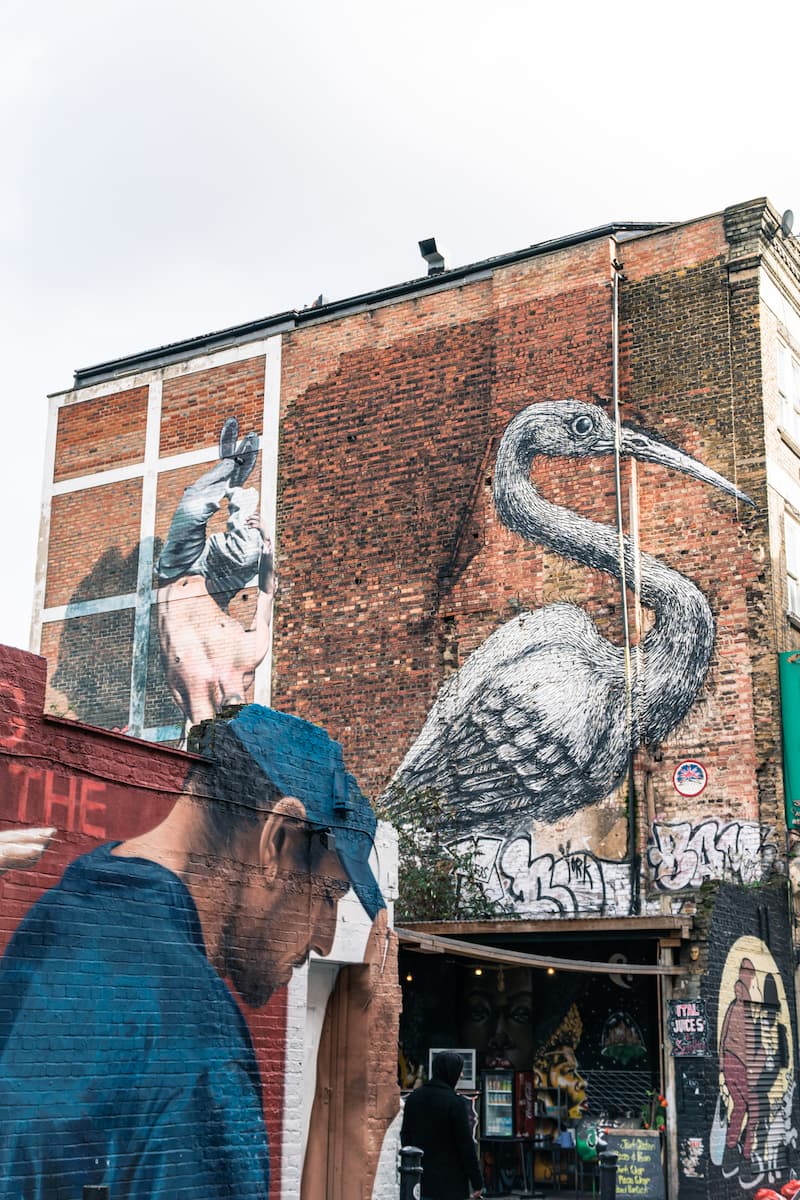
    Street art in Shoreditch

    Street art and graffiti has really skyrocketed in the last couple of years and London’s East End is really embracing this as a part of their identity, particularly Shoreditch. It’s now is a hotspot for famous street art by the likes of Banksy, El Mac, Stik, Space Invader, Jimmy C, Dscreet and Phlegm.

    The street art and graffiti is scattered throughout Brick Lane, Shoreditch, Fashion Street, Bateman’s Row and Spitalfields. So there’s a lot of ground to cover to find the artist or particular pieces you’re looking for.

    An excellent way to see all this brilliant street art is to go on one of the many street art walking tours. I chose Strawberry Tours when I did this earlier in 2017 as it’s run as a free tour, but there are also paid options such as Street Art London for roughly £12 to £15.

    2. Wander Through Brick Lane

    Bao buns at Bricklane Markets
    The delicious food at Bricklane Markets (open on Sundays).

    Brick Lane is one of East London’s best-known spots for buzzing markets, eclectic vintage shops, and funky street art. There really is something for everyone on Brick Lane, as you walk through the tantalizing smells of food and soak up the vibrant energy.

    And although this area was once associated with the likes of Jack the Ripper and his infamous murder locations, Brick Lane is know considered an ethnic, artistic hub that millions of people explore all year long.

    3. Go Vintage Shopping

    Brick Lane Vintage Market

    If you’re looking for vintage, you definitely must check out the Brick Lane Vintage Market. Vintage specialists come from all over the UK and Europe to take part in this funky market, with clothes dating back to the 1920s and then every decade up to the 90s.

    Whatever vintage wares you’re hunting for, you’re sure to find, from glam fur coats, vintage bridal wear, feather capes, menswear and distinctive accessories. There’s a lot of exciting finds to discover at the Brick Lane Vintage Market!

    Hunky Dory Vintage

    Hunky Dory Vintage is a small place with a refined style, proclaiming themselves to have “20th-century frocks and manly modes.” But despite their size, there’s plenty of vintage finds from faux fur jackets, double-breasted coats and pinstriped blazers.

    Here After

    Here After started as a market stall as a market stall and then expanded to a standalone stop at the top of Brick Lane in 2017. Anna Farnham, the founder, travels the world for her designer finds. Here you’ll see pieces from the 1970s to 1990s, such as patchwork jackets and florescent orange Moschino jeans.

    Rokit

    Rokit actually has four stores across the city and is a London classic, with its Brick Lane location stretching across three shopfronts. It’s not the cheapest of the vintage shops, but it does have all things quintessentially vintage. Find Dr Martens from years past, 70s suede jackets, 80s windbreakers, and 90s dungarees.

    Beyond Retro

    Beyond Retro also has other shops in Soho and Dalston, as well as its Cheshire Street store. This location is more of a warehouse and takes some time to get through. But you’ll come across peacoats from the 1940s and 1950s, psychedelic prints from the 70s, and 90s sportswear from Nike and Champion.

    Serotonin Village

    Serotonin Village will give you that hit of vintage you need with rare designer pieces. With the likes of Dior, Burberry, Versace and John Paul Gaultier, it’s no wonder their price point is a bit higher, but eccentric to say the least.

    Nordic Poetry

    Nordic Poetry has a vibe to it, that’s for sure. Starting with the bar that sits at the centre of the store, fanning out to the men’s and women’s pieces from the 1970’s to the 90s, a visit to this shop is a unique experience.

    4. Enjoy a Latin-Inspired Brunch at Andina

    All the shopping and street art hunting will leave you hungry and there’s no shortage of restaurants and street food around Shoreditch. One spot, in particular, I’ve enjoyed is brunch at Andina.

    Andina is inspired by traditional, family-run Andean eateries, with Peruvian classics such as ceviche made with tiger’s milk. They even import the best native ingredients from Peru, alongside locally sourced seasonal produce. Everything on the menu is designed to share and there are plenty of vegan, vegetarian and gluten-free options available too.

    Andina is open seven days a week for lunch and dinner, with special brunches on the weekends. With an upbeat soundtrack always playing and the Pisco always flowing, you’ll be sure to enjoy a meal here.

    5. Pick Up Some Arts and Crafts

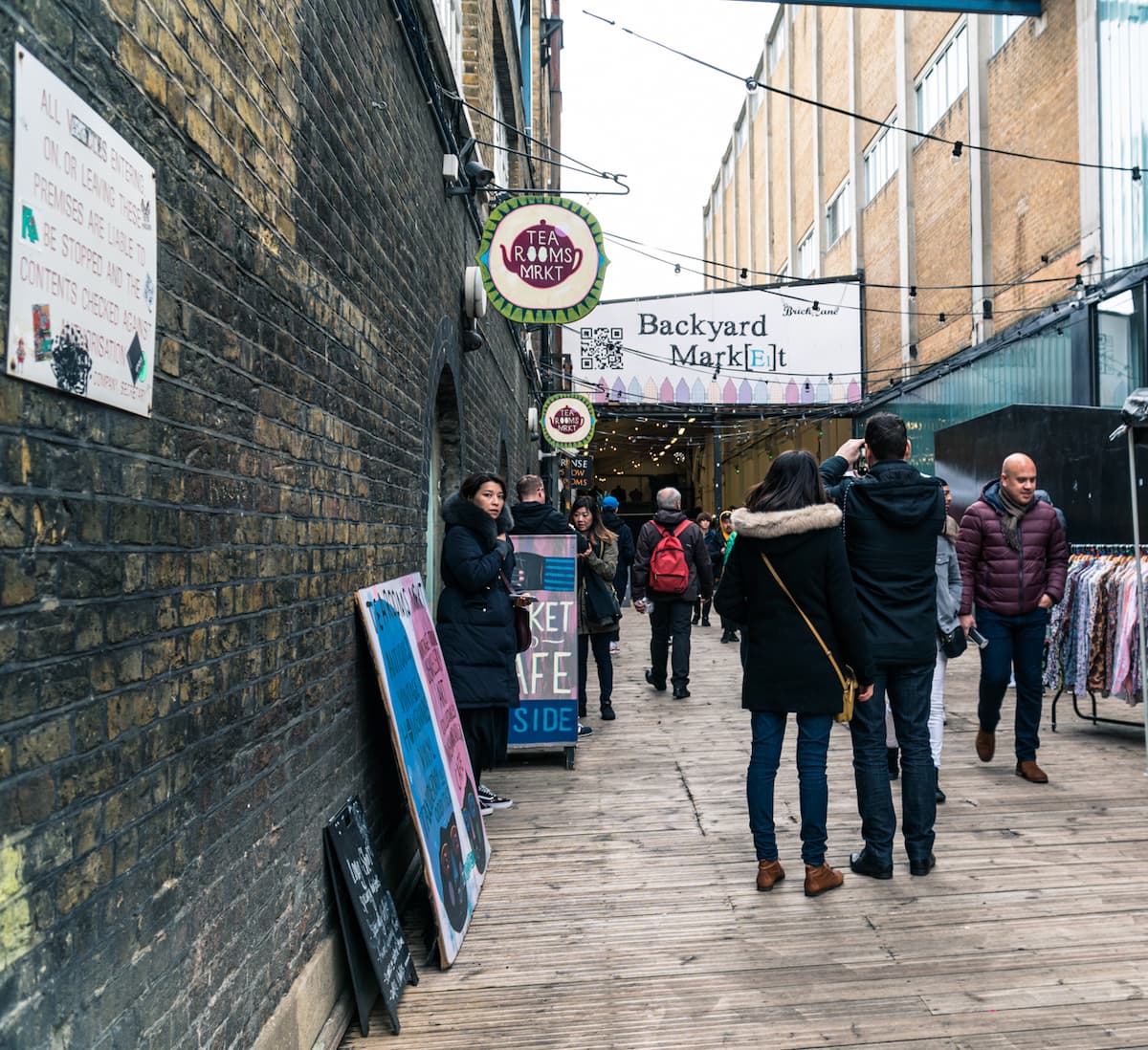
    Backyard Market in Shoreditch

    Right in the heart of Brick Lane, you’ll find the Backyard Market. I absolutely love arts and crafts, and the Backyard Market is where I’ve picked up some pieces that are now sitting in my house. This is a great place for treasures and trinkets from around the globe for the artsy and crafty types.

    6. Take a Tour of the 1800s

    Kat in Shoreditch

    Shoreditch is a great area for viewing houses and buildings from the 1800s. One of the most famous Instagram locations is a pink house on Winsley Street, with other notable locations at Princelet Street and Fournier Street. You could do a bit of a photoshoot while you stroll down these streets and admire all the history they have to offer.

    7. Cuddle Up in a Cat Cafe

    If you’ve never popped into a cat cafe, Lady Dinah’s Cat Emporium is a regal first choice. Cat cafes have really gained popularity in recent years, offering up cat cuddles from rescued kittens, while having tea and cakes.

    If you’re a cat person, you’ll love Dinah’s, which is the UK’s longest-running cat cafe. This is not your average cat cafe, which is why it’s become a kind of local legend. At Dinah’s, you’ll be immersed in a basement forest, with an Alice in Wonderland theme. They even have souvenirs, and no, they aren’t cats!

    8. Bury Yourself in a Book

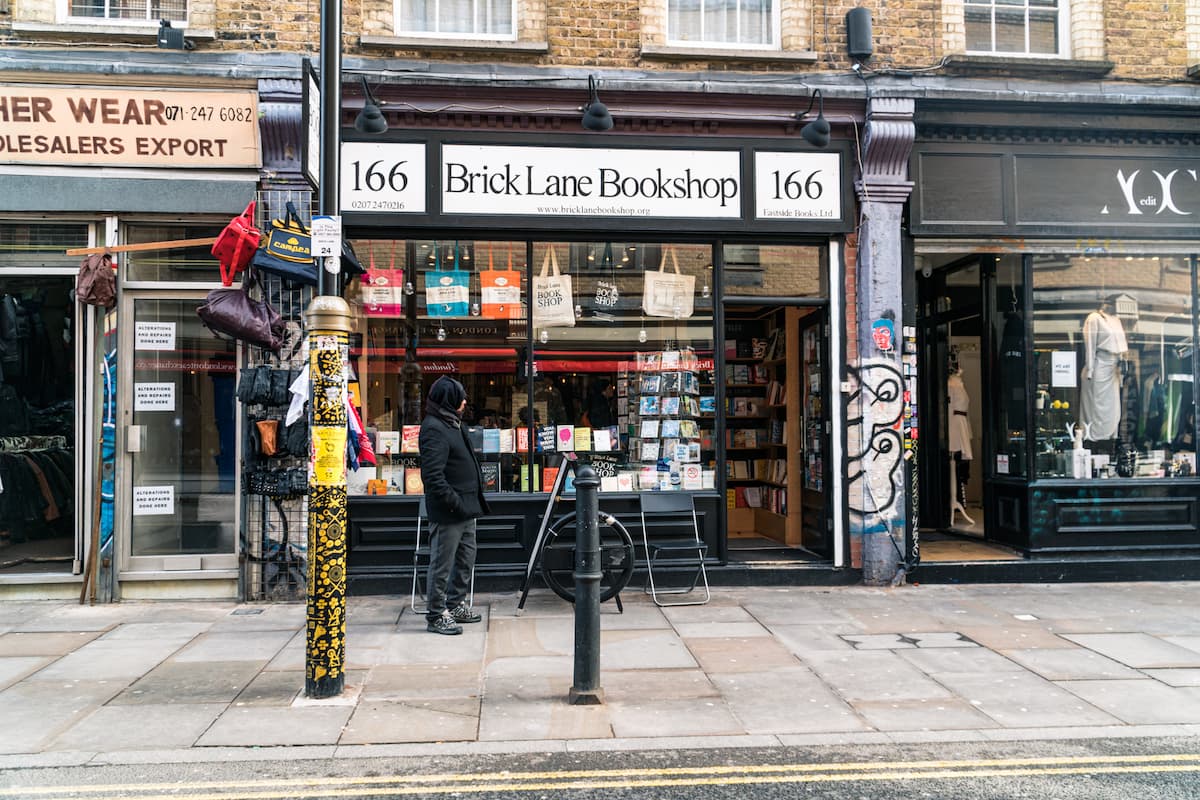
    Brick Lane Bookshop

    For all the book lovers who are also fans of vintage, check out Brick Lane Bookshop. This is an independent bookshop in Tower Hamlets, established in 1978 with fiction, non-fiction, London books, poetry, children’s classics, philosophy, graphic novels and more.

    A great place for local history with a fun stock of cards as well, Brick Lane Bookshop is a good addition to your day in Shoreditch.

    9. Stop and Smell the Roses

    Selection of Sunflowers at Columbia Road Flower Market

    The famous Columbia Road Flower Market in London has been going for decades and is the best place to go for a Sunday morning stroll, where you’ll find an array of plants, shrubs, bulbs and freshly cut flowers available at affordable prices.

    The flower market was originally a Saturday trading fair, but because of the rising requirements of the local Jewish community, the market had to eventually move to Sundays. But this worked out for the traders of Covent Garden and Spitalfields as they could then sell any leftover stock from Saturday’s trading.

    The French immigrants of London’s East End had a love for fresh cut flowers and songbirds and you’ll find the Birdcage tavern at the end of the market named after them. The market then suffered through World War II, but experienced a new renaissance in the 1960’s with the growing popularity of gardening programmes.

    Today you can visit the Columbia Street Flower market on Sundays from 8am-2pm, with traders setting up their stalls as early as 4am. Show up early for the best selection or arrive fashionably late for the best deals. You’ll find many of the traders at the market are 2nd and 3rd generation for their families. It’s very much a community market.

    10. Have Drinks in a Converted Police Station

    TT Liquor is an extremely unique establishment. They offer up a whole range of experiences, from cocktail making classes to tastings, supper clubs and classic film nights.

    In Shoreditch, they also have an incredible rooftop terrace with panoramic views over East London you don’t want to miss. And let’s not forget the intimate cellar cocktail bar and the specialist liquor store, selling only the finest of liquors and beverages. You for sure want to stop for a drink and more at TT Liquor.

    11. Play Tokyo Bingo

    If you want to take a break from London and escape to another country, then head to Hijingo. Hijingo is a bingo experience inspired by the Japanese capital, but with absolutely divine food as well. On the menu you’ll find hoisin duck croquettes, truffle spring rolls, and pork belly skewers, as well as a cocktail selection straight out of Japan. 

    For a foreign night out, with neon lights and bingo dabbers, head on over to Hijingo.

    12. Check Out an Event at the Truman Brewery

    The Truman Brewery is East London’s revolutionary arts and media quarter. For over 20 years, the Truman Brewery has been regenerating its ten acres of derelict and vacant buildings into amazing, useful office, retail and event spaces. This has made it a destination in its own right, with an array of independent shops, galleries, markets, bars and restaurants.

    13. Discover One of London’s Secret Bars

    Mayor-of-Scaredycat-Town-Shoreditch

    Head to The Breakfast Club on Artillery Lane and announce “I’m here to see the Mayor”. You’ll then step into the Smeg fridge into a quirky, candlelit speakeasy with a great selection of cocktails. The Mayor of Scaredy Cat Town is a special place for a drink, or brunch and a drink.

    14. Get Comfortable at the Museum of the Home

    The Museum of the Home was previously known as the Geffrye Museum and is an interesting museum to visit in London, where you’ll explore the concept of the home from 1600 to the present day.

    With premium installations and home galleries, you’ll experience room and gardens through time, that have all been recently renovated for your pleasure. The Museum of Home is free to visit and is open Tuesday through Sunday for a glimpse into the past.

    15. Be a Baller at Ballie Ballerson

    If you’re looking for something completely out of the ordinary and probably out of your comfort zone, take a pit stop at Ballie Ballerson. Release your inhibitions and your inner child in an adult ball pit, after you’ve loosened yourself up with a couple of drinks.

    Prices start at just £5 a session during the week or pay £15 on Saturday evenings. The amount of laughs you’ll have and Instagram worthy pictures you’ll get are worth the price of admission alone.

    16. Hang Out in a Rooftop Wigwam

    The Queen of Hoxton has everything you need for a night out. It’s a pub, club, and fringe theatre over two fun floors, with DJ’s playing it up. The rooftop is where you’ll want to head though because you can’t miss out on seeing the enormous wigwam set up during the winter months.

    17. Indulge in a Beigal Like No Other

    Beigal Bake is a 24/7 bagel shop that is a completely affordable indulgence. The line is always long, but it moves fast for the hungry visitors waiting on their epic portions of salt beef, smoked salmon, cream cheese and pretty much any other topping imaginable. Or just treat yourself to some heavenly beigel bites. Whatever you choose, you can’t lose at Beigal Bake!

    18. Stop by the Nomadic Community Gardens

    Shoreditch is a vibrant, upbeat are, so if you fancy something a little more peaceful during your visit, stop by the Brick Lane Nomadic Community Gardens. This private area is open to the public daily and you’ll even find street art, a cafe, and a library amid the vegetable plots.

    Directions can be tricky. From Brick Lane, go through to Allen Gardens, take a left through the underpass and you’ll see the gardens. Or alternatively, cross the footbridge from Cheshire Street and you’ll see a door opposite the bottom steps to the gardens. 

    Well, that’s our list of the top 18 interesting things to do in Shoreditch. As you can tell by now, there’s a lot to explore in London’s best East End neighborhood and I hope this guide has helped you plan your next visit! Whether you’re in London on holiday or you’re a resident here, visiting Brick Lane’s many markets and shops are a must.

  • A Local’s Guide to the Columbia Road Flower Market

    A Local’s Guide to the Columbia Road Flower Market

    The Columbia Road Flower Market has been a long-time love of Londoners dating back to 1869. You’ll find the finest quality plants and flowers, along with side streets filled with fantastic cafes, delis, vintage stalls, and galleries. This flower lover’s paradise is the best way to spend a slow Sunday in the East End.

    The History of the Columbia Road Flower Market

    Columbia Road has an interesting history and has really come up in the world. Originally, it was a path used to transport cattle down to Smithfield’s slaughterhouses. Not the best beginnings. And by the mid-19th century the whole area had become slums. Even worse.

    Luckily, in 1869, philanthropist Angela Burdett-Coutts bought the land and redeveloped it into a neo-gothic marketplace, to feed the poor of the East End. Unfortunately it was unpopular with the locals though and the market was demolished in 1960. More unrest.

    Then in the 1970s, there was a rapid decline of markets in London, but the locals in the area fought back for the market to return. When it finally did, it initially ran on Saturdays, but because of the East End’s many Jewish vendors, it later switched to Sundays.

    After all that chaos, now Columbia Road is an oasis in the East End. It overflows with bucketfuls of beautiful flowers, as market vendors line the narrow streets with houseplants, bulbs, herbs and shrubs.

    About the Market

    Selection of Sunflowers at Columbia Road Flower Market

    Bright colours, ()

    You can find the Columbia Road Flower Market in London’s East End from 8am-2pm on Sundays, where 2nd and 3rd generation flower vendors start setting up as early as 4am for the rush of Londoners out for their floral delights.

    Where is Columbia Road Flower Market?

    For a place with its address right there in the name, can be surprisingly difficult to find. Tucked away in London’s East End

    Midday used to be elbow to elbow with locals and tourists alike, searching for the perfect house plant. But nowadays you have to queue to enter the market. The entrance is at the Shoreditch end of Columbia Road, with the queue running through Ravenscroft Park.

    You’ll see wait times signposted and you can expect to wait up to 30 minutes. It’s a much different feel than it’s been for the past couple hundred years, but it does mean the shopping experience is a bit more relaxed. You might think that’s a good thing or you might not.

    Kat holding flowers at Columbia Road Flower Market

    You can also now pay for your flowers and foliage with the tap of your card, but you can be sure that cash is still a preferred form of payment. And cash in hand will more likely land you a better bargain. Make sure and shop around and don’t be afraid of bartering.

    The way out of the market is at the top of the road or you can loop back around a signposted route to return to Shoreditch. If you do loop back, make sure and check out the handful of vintage and plant shops behind the market street.

    Meet the Market Traders

    Range of flowers tat Columbia Road Flower Market

    A. E Harnett & Sons

    This family is based in Stock, Essex and has been in business for over 100 years. Being 4th generation growers, they supply the finest quality plants and flowers to retail and wholesale customers at the Columbia Road Flower Market.

    JD Succulents & Cacti Ltd

    This beautiful mother and daughter duo have specialised in succulents and cactus for many years at the flower market, and provide friendly service with their variety of unusual goods.

    Leahurst Nurseries

    Lyndon is a kiwi by birth and started his career in New Zealand, working with various environmental agencies. He moved to the UK over 30 years ago, where he’s become an accomplished nurseryman and landscaper.

    Lyndon has built up the eclectic boutique nursery in North London called Leahurst Nurseries, described as a “hidden gem.” It’s existed at its current site for over 65 years. Lyndon’s family run the nursery and stock an eclectic range of plants, while also offering bespoke landscaping services.

    Lyndon’s stall at the Columbia Street Flower Market is a must-see for any true plant enthusiast, which reflects the ever-evolving horticulture industry.

    Rainforest Relics

    Rainforest Relics are original pieces of recovered driftwood sourced from below water. They provide a fantastic range of driftwood sculptures, wooden item and unusual relics. Theses sculptures and relics will enhance your garden and home and are fabulous to gaze upon at the market.

    Rathbone Flowers

    Rathbone Flowers is a family-run florist based in Dagenham, featuring floral displays, funeral tributes, helium balloons, pot plants and house plants.

    The Flower Stall Market Square

    Retailers of fresh cut flowers on Columbia Road, the Flower Stall Market Square provides the best quality and variety for a reasonable price. They actually buy the bulk of their flowers from the live Dutch auction in Holland as well as directly from the Holland growers. They provide flowers for the general public and for wholesalers.

    Eating and Drinking Around the Market

    S Jones Cafe at Columbia Road Flower Market

    The great thing about the location of the flower market is that the flowers aren’t the only attraction. Columbia Road and the side streets surrounding it have plenty of quirky coffee shops, delicatessens, bakeries and restaurants.

    The Birdcage

    The Birdcage is a place where the locals of the East End actually co-exist with the hipsters, both equally eager to indulge in the true history of London. With wild weekend karaoke and quiet times throughout the week, this hotspot is a great place to pop in for a pint following the Columbia Road Flower Market. The pub also now has a cute outdoor bookable terrace so you can plan ahead.

    The Royal Oak

    The Royal Oak operates as an ‘early pub,’ serving the traders and customers of the Columbia Road Flower Market. It’s close association with the market has it opening its doors from 9am on Sunday mornings. With its rich history, the Royal Oak has been featured in quite a few wartime and gangster films so if your looking for a placed steeped in history, this is your place.

    Laxeiro

    Sunday breakfasts and brunches are popular at Laxeiro, with a long menu of authentic Spanish staples. Featuring paella, morcilla, pisto, fabada and meat-free snacks, this place proves to be popular amongst the Columbia Road crowd.

    Cafe Columbia

    Cafe Columbia in London’s East End is a tiny family-run cafe, selling simple breakfast bagels to go for under £10. The shop has been in business for 3 generations and is only open one day a week, on Sundays! This means everything is always freshly prepared and the bagels are warm and soft.

    Each bagel is stuffed with yummy ingredients such as mozzarella, tomato, bacon, sausage, egg, lettuce and sprouts. This is sure to keep you full as you wander through the flower market.

    Pavilion Bakery

    The Pavilion Bakery was opened in 2016 and is a cosy space for a delicious cinnamon bun and chai tea. With original Victorian tiles and flooring, which is heated by an industrious log burner, you’ll feel right at home. The Bakery is open 7 days a week and offers sourdough bread, pastries and take away lunches. And of course a selection of coffees, chais and teas to your taste.

    Stringray Globe Pizzeria

    If the weather happens to be a bit dodgy on the Sunday you visit the market, head over to the Stringray Globe Pizzeria, where they have a heated, covered terrace to help you out. This independent, family-run Italian restaurant and bar has been in business for over 20 years now and are always ready to serve the Columbia Road Flower Market patrons.

    Other Things to Do Around the Columbia Street Flower Market

    Go Vintage Shopping

    B Southgate is located in the heart of the Columbia Road Flower Market. Ben has been trading since 2003, with a stock ranging from 1900-1950. Find large-scale storage pieces to armchairs and small desk lamps, as well quirky useful things for the home.

    Wander Through Brick Lane

    explore Shoreditch Street Art

    There’s No Place Like the Museum of the Home

    The Museum of the Home

    the Nomadic Community Gardens

    Continue your flower a Brick Lane Nomadic Community Gardens.


    The Viktor Wynd Museum of Curiosities, Fine Art and UnNatural History

    Viktor Wynd’s Museum of Curiosities, Fine Art & Natural History
    Viktor Wynd’s Museum of Curiosities, Fine Art & Natural History

    This museum was described in The Fortean Times as,

    “the most wonderful collection of strange objects ever assembled under one roof, the modern equivalent of some 17th century kunstkammer, a collection of objects assembled at a whim on the basis of their aesthetic or historical appeal with little to link one wonder to another and no attempt at explanation.”

    The curious presentation is the lifelong project of the artist and writer Viktor Wynd and the subject of a monograph published by Prestel, called Viktor Wynd’s Cabinet of Wonders. Amongst the shrunken heads, skeletons, dodo bones, erotica and adult paintings, I must say they have a fabulous cocktail bar.

    Walk Around Spitalfields Market

    Spitalfields is a food and art market, as well as a trader’s market. It began operating in 1666 after the Great Fire of London, where the market stands today. Situated in the Tower Hamlets and surrounded by Lamb Street, Old Spitalfields Market, Brushfield Street and Bishops Square.

    Being one of London’s oldest markets, Spitalfields Market is open 7 days a week, where you’ll find an array of independent stall holders with hand-crafted and hard-to-find pieces that are sure to make your visit memorable.

    Explore Bethnal Green

    Just up the street from Columbia Road Flower Market is Bethnal Green, one of the city’s numerous districts to undergo a dramatic transformation in recent years. Once a gritty, rough, run-down area, the past couple of decades have brought with it quite a few hipster bars, trendy restaurants, art galleries, and even a boutique hotel.

    But despite the spread of gentrification, Bethnal Green has remained authentically East End, with family-run restaurants and pubs not too far off.

    Public Transport

    The Columbia Road Flower Market can be found in Bethnal Green near Brick Lane and Spitalfields. The nearest Overground stops are Hoxton or Shoreditch High Street, and are 5-10 minute walks. The nearest Tube station is Old Street.

    The Columbia Road Flower Market is a destination for any traveler to London or local alike. Being one of the top London attractions, you don’t want to miss this fragrant, flowering market, steeped in rich history. And with so much more to do in the area, the End End has never had more appeal than it does today. Don’t forget your trolley or oversized bags!

  • A Day Trip Guide to Kew Gardens

    A Day Trip Guide to Kew Gardens

    A visit to Kew Gardens is the perfect getaway from London, offering a tranquil setting in a botanical paradise. This top tourist attraction outside the city also happens to be a UNESCO World Heritage Site, and is one of the largest botanical gardens in the world. That’s why we’ve created this day trip guide to help you make the most out of your time at Kew Gardens.

    Officially called the Royal Botanic Garden of Kew, these beautiful grounds are perfectly manicured, with the indoor collections being equally and beautifully curated. There are over 50,000 different kinds of living plants in the Garden. A trip to Kew is your chance to get closer to nature and uncover the science behind the plants and glasshouses.

    Kew dates to the 18th century when it was established on the grounds of a royal palace. Originally only 9-acres, there are now 14,000 trees set over 300 acres for your exploration, all located in Richmond in Southwest London.

    There’s more than just plants though. This garden is a globally renowned scientific institution for fungal and plant research, with Victorian glasshouses and artwork to see as well.

    This guide will cover all the top attractions within Kew Gardens, as well as what to budget and the best times to visit. Always check their website before you go though because they temporarily shut exhibits down at random times, they always have new displays that might not be listed here, as well as pop-up events and festivals to enjoy.

    Kew Gardens Top Attractions

    Bamboo Garden and Minka House

    Bamboos are the fastest growing woody plants in the world and create dense landscapes wherever they grow. The Bamboo Garden at Kew has 130 bamboo species from China, Japan, the Himalaya and Americas, being one of the largest collections in the UK. They’re arranged by appearance to maximise the variety of form and leaf shapes. As you wander around, you’ll come across the Minka house. Meaning ‘houses of the people,’ these farmhouses are a treasured feature of Japanese heritage. The simple homes or ‘minka’ were common in Japan until the mid-20th century.

    Treetop Walkway

    tree walkway in kew gardens

    This is one of the things that you should definitely do at Kew Gardens is walk among the treetops. But if you’re like me and you’re slightly terrified of heights, it can be a little daunting. Just take a deep breath, enjoy the views and make sure you don’t look down.

    The Treetop Walkway towers 18 metres above the ground and is a chance to observe the complex ecosystem of the trees’ uppermost branches, birds, insects, lichen and fungi. On the ground level, you’ll find sculptures carved from tree trunks and a path that leads below ground to the Rhizotron, which is an underground lab for studying the soil.

    There are 118 steps up to the walkway in total.

    Palm House

    tropical jungle rainforest kew gardens conservaton

    Palm House is where you’ll wander through the depths of the rainforest, where the air is heavy and dense. Discover treasures like the oldest pot plant in the world, along with the disease-fighting periwinkle. Lots of these plants are endangered or extinct. Rainforests are vital to sustaining life on earth, making up 50% of species. The Palm House is a living laboratory giving a chance to glimpse the magic of the rainforest.

    The nearest entrance is Victoria Gate.

    Great Broad Walk Borders

    This is a feast for the senses! At 320 metres, these are possibly the longest herbaceous borders in the world. Arranged in colourful themes across eight large circular beds, you’ll be filled with fresh fragrances, feathery grasses, and dazzling flower beds that evolve with the seasons. Although they’re at their finest in summer, they’re still amazing in spring and autumn as well.

    The nearest entrance is Victoria Gate.

    Japanese Landscape

    This is the perfect place for quiet reflection, combining a Garden of Peace, Garden of Activity, Garden of Harmony and Japanese Landscape. You’ll find areas reminiscent of a traditional Japanese tea garden, stone lanterns, a dripping water basin, flowing water and stone and rock outcrops. The landscape was designed by Professor Fukuhara of Osaka University and has a near replica of the Gate of Nishi Hongan-ji (Western Temple of the Original Vow) in Kyoto, Japan. 

    Th nearest entrance is Lion Gate.

    The Arboretum

    There are 14,000 trees rooted in the Arboretum, with more than 2,000 species, including rare and ancient varieties. This is an opportunity to experience the diversity of forests around the globe, as it stretches across two-thirds of the Gardens. This incredible collection includes trees as old as the Gardens themselves, with many that you can’t find anywhere else in Britain.

    This gallery has a vivid collection of 19th century botanical art, with more than 800 paintings covering the walls. Marion North solo travelled the world to record the tropical and exotic plants that she so loved and chose to paint the plants in their natural setting. Her vast collection is on permanent display at Kew and is exhibited in geographical order so you can follow in her footsteps.

    The nearest entrance is Victoria Gate. The Gallery is located near the Temperate House and Pavilion restaurant.

    The Davies Alpine House

    Alpines are able to grow above the altitude at which trees can survive, making them some of the world’s most resilient plants. They’ve adapted to be able to endure severe conditions such as the Earth’s poles and Arctic mountaintops. Because they have a short growing season, the plants must flower and then set seed quickly. So, the flowers in this glasshouse are only displayed when they come into bloom, when you’ll see a range of bright purples, bold pinks, fragrant lavenders and many other unique species.

    Mediterranean Garden and King William’s Temple

    Get ready to be transported to the sun-kissed landscape of Southern Europe in this part of the Garden, depicting a typical Mediterranean natural habitat. Built in 1837 and standing in the centre of the Mediterranean Garden is King William’s Temple, in memory of William IV. The Tuscan porticos of the Temple, have iron plaques commemorating British military victories from 1760 to 1815.

    The Hive

    The Hive towers 17 metres high and is an installation recreating life inside a beehive. It’s one of the most photographed spots in the Gardens and a magnificent piece of contemporary art. You can actually walk inside the enclosure and enter into the world of a real beehive, with music in the background responding to the activity. This is the place to explore the secret life of bees and celebrate their role in sustaining life!

    The nearest entrance is Elizabeth Gate.

    Princess of Wales Conservatory

    Princess of Wales Conservatory

    This Conservatory has ten computer-controlled climate zones and a series of fascinating ecosystems. Discover carnivorous plants, spiky cacti and succulents, and a celebrated giant waterlily, with a surprise around every corner of the winding glasshouse.

    Elizabeth Gate is the nearest entrance.

    Library and Archives

    The Library and Archives collection at Kew spans 2,000 years, with classification and uses of plants, ecology, conservation and naming. This is for the garden lover, researcher or avid reader, with plenty of resources on botanic gardens and herbaria worldwide. The oldest collection dates back to the 1370s, with copies of ancient works of botany taking you back even further in time.

    The Main Library is located in the Herbarium building off Kew Green to the right of Elizabeth Gate.

    Queen’s Garden

    The Queen’s Garden has plants and architectural styles of the 17th century, designed to complement Kew Palace. Most of the plants in this garden are species grown in the 1600s or even earlier. In May and June, the displays in this garden are simply spectacular.

    Rose Garden

    The Rose Garden contains 170 different species of the rose, making it a floral feast for the eyes. Designed in 1848 by English landscape architect William Nesfield, it wasn’t actually planted with roses until the 1920s. The best time of day to see the Rose Garden at its best is early in the morning or early in the evening, when the scent linger between the beds.

    Temperate House

    huge tropical green glass house in kew gardens

    This incredible glittering cathedral is home to 1,500 species of plants. Travel the world with plants from Africa, Australia, America, Asia, New Zealand and the Pacific Islands. These are all temperate plants that need to live in conditions above 10 degrees to survive. The Temperate House tells us about how Kew is working to rescue these rare and already extinct plants.

    The nearest entrance is Lion Gate.

    Rock Garden

    The Rock Garden display is framed by sandstone peaks and cascading waterfalls, mimicking life in the world’s mountainous regions. It’s over an acre in size, being constructed in 1882, making it one of the oldest and largest Rock Gardens in the world. The naturalistic display transports you to a rugged, wild landscape, with planting combinations designed to evoke the communities seen in nature.

    Where to Eat and Grab a Coffee Within the Gardens

    While spending the day at Kew, you’re sure to need a perk up with coffee and food. Here are your five options within the Gardens.

    Orangery

    For indoor and outdoor dining, the Orangery even has pop-up stalls available. Warm yourself up with a toastie, burger or Lebanese Barbeque.

    Pavilion Bar and Grill

    Enjoy dining surrounded by vines with views of the Pagoda and Temperate House. This is the place for plant-based options, as well as burgers, seasonal salads and cake from the kitchen.

    The Botanical Brasserie

    Enjoy delicious breakfast, afternoon tea and lunch dishes and this hotspot.

    Victoria Plaza Cafe

    This is the place for the perfect picnic grub. Grab sausage rolls and barista coffee for eating in or for taking away.

    Family Kitchen Shop

    Craving some pizza? Add to that a salad bar and ice cream servery and you’re good to go! The Family Kitchen Shop is conveniently located right next to the Children’s Garden.

    Best Times to Visit Kew Gardens

    Kew Gardens has peak and off-peak times to visit, but it’s open year-round. Here’s what each season has to offer.

    Spring

    Naturally, signs of new life spring up all over the Gardens in the season of fresh beginnings. You’ll see swathes of yellow daffodils in various areas, while bluebell seekers should visit in April and May and head to the Natural Area for a carpet of blue. And while you’re at it, indulge the senses with cherry blossoms along Cherry Walk near the Temperate House and in the Japanese Landscape, on display between the end of March and the beginning of May.

    Summer

    water lilly house

    Summer at Kew offers something bright and beautiful at every turn. The Rose Garden is the top spot to visit during the summer months, bursting with sweet fragrances and a sea of colours, from yellow and orange to pink and scarlet. The Waterlily House offers the striking waterlilies, while the Mediterranean Garden is a sunny landscape.

    Autumn

    The trees steal the show in Autumn at Kew. This is the best time to visit the Treetop Walkway, overlooking the bronzed chestnut, beech and oak trees. The Japanese Landscape is another autumn hotspot, along with the Grass Garden and the picturesque autumn reflections in the Lake. Autumn is also the best time of year to see fungi.

    Winter

    Pavilion of Kew Gardens in Christmas time, London
    Pavilion of Kew Gardens in Christmas time, London

    There are many botanic gems to discover at Kew, even during the chilly months. Walking among the conifer collection, you’ll notice the bright winter berries mixed with cones and foliage. And the Holly Walk near the Temperate House has one of Europe’s biggest holly collections, adding in bright colourful dashes to the winter landscape. I’ve visited once during the Christmas lights display, which is incredible and I totally recommend seeing if you’re planning a visit around the holidays.

    Ticket Prices and Discounts

    Just to quickly cover tickets, the normal entry price to Kew Gardens is around £16, but it varies a bit with the time of year you go. You can also get a discount if you’re a student, family, or by using the Days Out Guide. For the Days Out Guide, you’l get a rail ticket, not an Oyster card, and it will give you a two for one voucher to enter. Purchasing tickets in advance is recommended.

    For Kew Gardens opening times check the website as they change throughout the year. Also be sure and download the map of the Gardens before you go to help guide your way.

    As you can see, Kew Gardens is definitely worth a visit! It had been on my London bucket list for ages and it was well-worth the wait. You’ll find something in every corner of Kew Gardens so keep your eyes open as you walk around. You don’t want to miss the colourful border paintings, majestic wooded areas, ornamental structures and garden art. Get ready for a multi-sensory sensation!

  • A Guide to the Coolest Things to Do in Brixton

    A Guide to the Coolest Things to Do in Brixton

    Brixton is a cool cultural hub, south of the Thames, and one of the most vibrant neighbourhoods in London. As the birthplace of David Bowie, Brixton is quirky and creative, and the ultimate foodie hotspot. From exploring Brixton Village and Market Row to discovering hidden gems and admiring the view from Brockwell Park, this is your guide to the coolest things to do in Brixton.

    After living near this area for years, it’s close to my heart and one of my favourite places to explore in South West London. You’ll feel immersed in the art scene as you walk down the streets with buildings covered in vibrant murals, and it continues to overflow through the many quirky cafes, pubs, coffee shops, and restaurants.

    With a somewhat hedonistic nightlife, Brixton enjoys top-notch music venues to suit many tastes in which there’s never a dull moment. The diversity will have you fitting in somewhere, whether it’s wandering through the Market or discovering what locals love most.

    There’s a strange rumour that Brixton is unsafe and this might’ve kept you from visiting before, but I’ve never had any reason to feel this way. I think the locals might be saying this to keep people away from their little slice of Caribbean heaven, just ten minutes from Central London. So be adventurous and keep reading for all the best things to do in Brixton!

    Visit the David Bowie Memorial

    David Bowie Memorial

    I can’t talk about Brixton without talking about Bowie. The legend that is David Bowie was born here, and his impact on the area lives long to this day. Just opposite the Brixton tube station is a street mural on Turnstall Road, that serves as a semi-permanent memorial to the icon. A huge piece of Ziggy Stardust is painted on the wall, with flowers, candles, cards, pictures and even tee shirts lying about, where Bowie fans have publicly paid their respects.

    The mural, now preserved by plastic, was painted by Australian artist, Jimmy Cochran, in 2013 and has become a shrine, almost feeling like a religious experience or cultural pilgrimage, for any visitor to leave their mark and pay tribute. People really go all out here, performing various rituals enacted with care and respect, especially since his death in 2016. A visit to the David Bowie Memorial should definitely be at the top of your list of things to do in Brixton, as it’s a part of living history.

    See the Best of Brixton’s Street Art

    Brixton's Street Art - michelle obama

    David Bowie isn’t the only piece of art to see in Brixton though! Around the area, you’ll find quite a few murals, meant to depict the community, politics and ideas, all painted by Brixton locals. They were actually funded after the riots in 1981 by the Lambeth Council.

    Beehive Place Mural

    There’s a series of portraits, sculptures and pictures you must see, adjacent to Brixton Station Road Market, with a silver plaque that states ‘The people were vibrant, the music was vibrant, they dressed vibrant #HandsofBrixton.’ These dynamic illustrations represent the local community in a gallery-like presentation.

    The Hand at Brixton Village

    There’s a semi-creepy, unravelling bandaged hand at the entrance of Brixton Village and Market Row. Next to a vegan food outlet, this vividly detailed piece makes a great talking point.

    Under the Arches of Brixton Station

    Under the arches of Brixton Station is a local protest from independent traders called, ‘Stop the Evictions,’ protesting rent increases and threats of eviction. This gallery of graffiti features the cheeky Bart Simpson, to portray defiance and oppose gentrification.

    Bob at Brixton Station Road Market

    Brixton has strong Caribbean ties so it feels natural to have a portrait of the smiling Bob Marley gracing the shutters of the food kiosk, Bush Man Kitchen. This black and white piece is autographed by local graffiti artist, Dope.

    The Crow on Stockwell Avenue

    The pedestrian walkway ‘One Love Street,’ features images of a crow and of a boy reaching for a clock on top of wooden bricks, by artist Unify. These darkly charming pieces you don’t want to miss.

    Hip Hop on Atlantic Road

    There’s a hip-hop themed fish eatery called Chip Shop Bxtn, which has covered its shutters and walls with faces of old-school American musicians. Spread along Atlantic Road and around the corner to Coldharbour Lane, feast your eyes on 2Pac, Big L and The Notorious B.I.G., in this English tribute.

    The Face at Electric Avenue

    A bright, peculiar face appears on the Coldharbour Lane side of Electric Avenue, hiding low on a brick wall and is a smaller form of street art popping up around town.

    Rock Down to Electric Avenue

    Electric Avenue was built in the 1880’s and has been immortalised by the song of the same name by Eddy Grant. It was the first market street to be lit by electric lights and today is home to a bunch of independent shops, as well as Brixton Market.

    Walk Through the Maze of Brixton Village and Market Row

    Brixton Markets

    Brixton Village and Market Row are two indoor markets housed in separates arcades, once the home of the dilapidated 1930’s Granville Arcade. Now completely revitalised, these markets have become the epicentre of culinary diversity, where more than 130 traders have set up shop.

    You’ll probably smell the delicious food before you arrive, with an eclectic mix of Caribbean, Portuguese, Jamaican, Mexican and French restaurants serving up their local dishes. But there’s more than just food here! Stroll through the maze of the arcades and you’ll discover a treasure trove of shops.

    Choose from an array of clothing, jewellery, homeware, art and music, with antique and vintage fashion and form. Pick up costumes, West African fabrics and enamel pots from vintage traders and fruit and veg from artisan food sellers. Perk up at an independent coffee shop, pop into a craft beer bar, or check out a cheese and charcuterie shop. It’s a fanfare!

    Grab a Post-Market Brew at Brixton Brewery

    This taproom has been set under a railway arch since 2013 when it first opened and is the perfect location for a craft beer tasting, post-Brixton Market. Each of the beers at Brixton Brewery is named after a Brixton landmark, and crafted in small batches, which are now sold nationwide. Try the likes of the Electric IPA and the Coldharbour Lager.

    Catch a Flick at The Ritzy

    The Ritzy is a Brixton institution, being one of the first purpose-built theatres constructed in 1911. Today the Ritzy still has that old-school picture palace feel, with the perfect balance of blockbusters and independent films. They also have late-night shows and classics across five screens and two bars. One bar serves up cafe food and offers views across Windrush Square, while the Upstairs hosts club nights and stand-up comedy shows. Take a break from Netflix and cosy up a the cinema!

    Explore Brixton’s History at the Black Cultural Archives

    Like much of London, Brixton has been shaped by its Afro-Caribbean community. After the end of the war, the Windrush generation arrived in London and many were shunned and refused places to work and live, but the impact of these generations should not be forgotten.

    As Britain’s only national centre preserving and celebrating the culture and heritage of those of the African and Caribbean descent, the Black Cultural Archives provides an authentic glimpse into the experiences of this community during the late 20th century.

    Generations of Africans and Caribbeans made the UK their home and you can walk through the Archives and see their struggles and successes through photographs, letters and literature. To learn about the subsequent generations of Black British people, you have to book ahead of time, but there’s an equally enlightening exhibition you can access without booking.

    See Brixton’s Hidden Gem: The Windmill

    Amidst the street art, food and music scene, you’ll also find a 19th-century windmill. Who would’ve thought? It may look a little out of place today, but Brixton’s old-school windmill is perfectly charming surrounded with delicate flowers and it did play a key role in the history of the area.

    Built in 1816, the windmill was leased to the Ashby family to mill flour, which was big business at the time. This wind-powered turbine was the height of cutting edge technology in Brixton and remained in the Ashby family until 1934. It was then forgotten about for more than two decades before it opened up to the public in the late 60’s after the surrounding area was made into a park.

    Renovated again in the 90’s, but still remaining an unappreciated attraction, the Brixton Windmill is truly one of the hidden gems of London.

    Stroll Through Brockwell Park

    Brockwell Park is a sprawling 50 acres of public green space, with wooded sections, floral beds and wide-open expanses. This is a place to for jogging, picnicking, and reading and serves as an oasis from the bustle and noise of Brixton.

    In the summer, take a dip in the fancy Lido, first constructed in the 1930’s to raise local spirits and now restored back its former glory. In the spring, retreat into the walled garden. Or any time of year, those in the know, go to Brockwell Park for the epic views of London’s iconic skyline.

    Get Cosy at Bookmongers

    This treasure trove is a second-hand bookshop lover’s dream. Bookmongers stocks a range of books from poetry, plays, cookery and craft books. There’s no real organisational system, but that’s what adds to the charm of the place and leaves you guessing at what you might find. The owner, Patrick, is always on hand to help and there’s even a shop dog to keep you company!

    Make Your Own Brew at the London Beer Lab

    Don’t miss this unique opportunity to brew your own ale at the London Beer Lab! This is by far an unusual activity in Brixton for all you beer connoisseurs. Within this independent microbrewery, you’ll have the chance to make and taste your own beer and you’ll even go home with a 5L brew your own kit to put your new skills to the test. You’ll weigh grains, pitch yeast and of course, sample plenty of beers.

    Lose Yourself at Pop Brixton

    Baba g at pop brixton

    It’s hard to describe exactly what Pop Brixton is, other than a time and money vortex! It started as a temporary project and has now turned into a mix of social projects, street food start-ups and small retailers. It’s essentially a hip gathering place, with over 55 thriving local businesses. And on Fridays and Saturdays from 6pm, it converts to an over-18’s venue, making it a good place to start your Brixton bar circuit.

    Dive Into Brixton’s Music Scene

    O2 Academy Brixton

    There are few better places to catch live music in London than in the artistic hub of self-expression. Whether you’re vibing with jazz, hip hop, folk, indie or mix of it all, you’re going to find it. I mean, it wouldn’t be Brixton if it wasn’t diverse.

    O2 Academy Brixton

    The O2 Academy Brixton is often booked by big names wanting to sell-out gigs in smaller venues. This former cinema, built in the 1920’s, has been one of London’s coolest non-arena venues since 1983. With a large main floor space for dancing and seating on the balcony, you’re sure to have a brilliant night at the Academy!

    Dogstar

    The Dogstar opened back in 1995, with big names rolling in, such as The Prodigy, Basement Jaxx and Massive Attack. These are just a few of the iconic acts that have graced through the doors of Dogstar, a legendary venue with top-quality DJ’s and the best up-and-coming artists and established artists.

    Electric Brixton

    Electric Brixton is still as fabulous as it was in the 90’s, with top notch dance DJ sets, in an old theatre setting that dates back to 1912. There’s a large main floor, with ornate plasterwork all over the walls and balcony.

    Hootananny’s

    If you’re in the mood to get rowdy, Hootananny’s is the place for you! It was made for those kind of nights where you end up dancing til the wee hours of the morning, maybe in more places than the dance floor. Hootananny’s will get you moving with their epic calendar of events, including excellent multicultural bands and artists that are guaranteed to move your hips. They also offer food! What could be better than an accompaniment of Caribbean food stalls on Friday and Saturday nights?

    The Effra Hall Tavern

    On Thursdays at The Effra Hall Tavern, enjoy the reputed Jamaican Jazz night. This sensational evening has bubbled up out of Brixton’s thriving and well-established Jamaican community and has seen some uber talented artists. Along with the authentic Jazz music, drink down a classic Red Stripe beer and eat some home-cooked jerk chicken. This a great relaxed joint, with traditional food and music.

    There you have it! These are by far the coolest things to do in Brixton. You can’t go wrong with anything on this list when you make your way to this artsy, cultural neighbourhood in London. Don’t miss out on all Brixton has to offer!

  • A Guide to the Best Places to Stay in the Peak District

    A Guide to the Best Places to Stay in the Peak District

    If you want to experience rural England at its quintessential best, you will struggle to do better than the Peak District. 

    Quaint villages, rolling hills, swooping valleys, stately homes and castles; the timeless beauty of England’s oldest National Park is always a joy to behold.

    From sleepy villages to slightly-busier towns; I’ll guide you through the Peak District’s best places to stay.

    Bakewell

    Best For: Location, Charm and Puddings 

    England derbyshire peak district national park, bakewell

    Settled on the River Wye, this little storybook town – of Bakewell Pudding fame – is one of the most visited places in the whole of the Peak District. 

    Bakewell has carved out its place as the heart of the Peak District, encapsulating everything we love most about the beloved National Park. It’s quaint with lovely architecture, filled with stone cottages and pretty ancient fixtures like Bakewell Bridge. 

    The town is blessed with plenty of character and rural charm, with a collection of small boutiques and independent stores to browse. It also has a long history and is surrounded by outstanding natural beauty. 

    Most importantly, it has Bakewell Pudding.

    You can’t stay in Bakewell and not try a Bakewell Pudding. It has long been a point of local contention agreeing on the exact location of its origin. But the general consensus seems to be that The Old Original Bakewell Pudding Shop is the place to go. They have a cosy restaurant serving the puddings – and other, less important things – upstairs.

    If you don’t have time to stop, you can grab a pudding (or its more famous cousin, the Bakewell Tart), to take away from the bakery on the ground floor. 

    Bakewell is also close to Chatsworth House and the 11th Century Haddon Hall, both of which are worth visiting. 

    The Monsal Trail, which involves following an abandoned Victorian Railway, isn’t far away. It’s one of my favourite walks in the Peak District.

    Buxton 

    Best For: People Without A Car

    View of the Thermal Baths Buxton
    View of the Thermal Baths Buxton Credit: Arenaphotouk on dreamstime

    Buxton isn’t technically in the Peak District as it occupies its own little island of space between the borders. It’s an honorary member though – it’s so close and similar to other parts of the Peak District that it might as well be one.

    Though the Peak District doesn’t lend itself well to people without a car, Buxton, and perhaps Bakewell, are your best options. 

    You can reach Buxton by train from the likes of Manchester, and use the bus network from there. Though buses aren’t the most frequent in rural areas, they link between Buxton, Bakewell and Castleton fairly regularly.

    The Pavilion Gardens are my favourite part of Buxton. It’s really lovely just to walk around them and admire the workmanship involved.

    From an architectural standpoint, Buxton is one of the most interesting towns in Derbyshire. It has a huge variety of architectural styles, ranging mostly from the Georgian to late-Victorian eras. The Buxton Opera House is particularly notable – the beautiful Edwardian theatre, designed by Frank Matcham, was opened in 1903.

    Directly influenced by the popularity of Bath, the Georgian Buxton Crescent, modelled after Bath’s Royal Crescent, was built for the Duke of Devonshire between 1780 and 1784. The Duke, William Cavendish, had hoped to emulate the success of the spa towns that had popped up across the country, and take advantage of the natural thermal springs beneath Buxton.

    Buxton has retained some of its heritage as a spa town, and you can easily find a spa or wellness centre to visit during your trip. The Crescent, however, hasn’t been in use for 20 years, though there is an ambitious project underway to change that.

    Buxton is also more of a ‘town’ than any place in the Peak District, meaning it has a bit more to offer in terms of shops and amenities. Though the high street has sacrificed some beauty for it, you are more likely to find the regular brands and shops here than anywhere else in the Park.

    For this reason, Buxton – while not cheap – is one of the best places to find budget-friendly options for accommodation.

    As for natural beauty, you will be well placed in Buxton to enjoy everything the Peak District has to offer. 

    There are some incredible hikes only a short journey away. The route from Chee Dale to Millers Dale is underrated – the stepping stones are just as pretty as in Dovedale, without anywhere near as much congestion.

    Poole’s Cavern, a naturally formed cave, is another attraction worth visiting in the area.

    Castleton

    Best For: Being a Picturesque All-Rounder

    River and cottage in Castleton, Derbyshire

    Though it has some serious competition, I think Castleton is the best all-rounder as a place to stay in the Peak District. It’s centrally located, picturesque, full of things to do and surrounded by natural beauty.

    Just getting to Castleton is idyllic, as each route into the village weaves through some of the loveliest scenery in the Peak District. Mam Tor is close by, as is the supposedly haunted Winnats Pass – you can start the walk to both from Castleton.

    You can wander up to the ancient Peveril Castle or delve into the multitude of caverns for an adventure right on your doorstep. Browse the boutiques of the village, or sit in a cafe or pub. It’s a quaint village with a relaxed atmosphere but has plenty to do.

    Castleton has an abundance of natural caves close by, but I think Speedwell Cavern, which involves an underground boat trip, is the best of the bunch. 

    Blue John, an incredibly rare semi-precious mineral, can only be found in this location in the UK. You can visit the Blue John Cavern or one of the jewellery shops in town for a glimpse of it. 

    Castleton is infamously home to Peak Cavern, or, as it is more commonly known, the Devil’s Arse. 

    Named as such for the strange sounds emerging from the cave – which we know now is the result of heavy rain trapping and displacing air, but back then could only be explained by the devil’s flatulence – the Devil’s Arse has been a tourist attraction for centuries.

    It was renamed Peak Cavern to avoid offending the visiting Queen Victoria. 

    Moving through the Devil’s Arse will require some crouching. The natural cave formation was carved higher in its smallest spaces to allow Queen Victoria to walk without stooping her head. At 4’11, or 152cm, that doesn’t leave much wiggle room for the rest of us.

    Matlock Bath

    Best For: Being Pretty, and a Lot of Fun

    View of Matlock Bath and the River Derwent and surrounding hills in Matlock Bath, Derbyshire, UK

    Tumbling down one side of a steep valley, Matlock Bath was built to be pretty. While most towns and villages are the result of workforces settling into communities, Matlock Bath was built with tourism in mind. 

    After the discovery of natural hot springs in 1698, a bathhouse was built. It became steadily more popular as access improved, but it wasn’t until a young Princess Victoria visited in 1832 that Matlock Bath really established itself.

    You can still visit a thermal spa in the village by booking a slot at the New Bath Hotel and Spa. The old Victorian baths are now used as an aquarium.

    The main street sits at the base of the valley overlooking the River Derwent, in the shadow of a towering forest. When staying in Matlock Bath, you will hear the hoots of owls in the aforementioned forest overnight. When the crowds have disappeared, you can truly enjoy the village at its picturesque best.

    Though the village is miles from the sea, it has the strange feel of a seaside resort. Arcades, fish and chips and a nearby theme park add an eclectic edge to the small village. That’s even ignoring the horde of bikers that tend to make an appearance in Matlock Bath.

    The Heights of Abraham, a cable car ride up to caverns and museums, is a popular local attraction.

    Because the village is both popular and tiny, it does get busy – but in some ways, that makes it a great base. You can enjoy it in the early morning and evening when the crowds have dispersed, while going out and exploring the rest of the Peak District when it is at its busiest.

    Edale

    Best For: Epic Hikes and Beautiful Walks

    Picturesque View on the Hills near Edale, Peak District National Park

    Edale is a sweet little village, but the reason it’s a great place to stay has nothing to do with the village itself. 

    It’s scenic, charming and easily reachable, but Edale is famous for what’s on the doorstep of the village, not what’s inside it. Some of the Peak District’s most stunning and dramatic scenery can be found just outside the boundaries of the village. 

    Kinder Scout is the highest point in the Peak District, which, at 636 metres, isn’t all that high. It does provide sweeping views over the landscape, however, and the walk is filled with all the lush greenery and wild beauty you might expect from the area. Wander down to the Mermaid’s Pool for a chance at being granted immortality. 

    Dalehead, Win Hill, and the Great Ridge of Mam Tor can be found close to Edale. Mam Tor is especially memorable – the jagged ridge is one of the most iconic walks in England. Edale is also famously either the beginning or end of one of Britain’s great hikes, the Pennine Way.

    Edale is a fantastic place to stay for people who enjoy long, blustering walks through the countryside. Though it is the scenery that draws people to Edale, the village is undeniably lovely. Pubs, cafes and little stone cottages make up a community that is sure to provide a relaxing getaway.

    Baslow

    Best For: Falling Charmingly Under-the-Radar

    The View from Baslow Edge

    On the doorstep of Derbyshire’s gorgeous Chatsworth House, Baslow is a pretty village that often gets overlooked by people visiting the Peak District.

    It’s a delightfully charming example of the postcard-perfect villages typically tucked away in Derbyshire’s countryside. Wander through a scene worthy of the Romantics as you cross the River Derwent, stepping on to a Jacobean stone bridge to enter into the village. 

    It doesn’t take visitors long to realise this is a community that has changed very little over the centuries; the buildings themselves, made largely from locally sourced sandstone and gritstone, are testament to that.

    Baslow is the kind of place you come to slow down and recharge; a reminder to enjoy the simple things in life, whether that’s a ramble through the countryside, or a pint in the village pub. It has the effortlessly laid-back feel you can only really experience in very rural communities.  

    It takes less than an hour to reach Chatsworth House on foot from Baslow, and would be 4.2 miles in total there and back. The House is home to the Duke and Duchess of Devonshire – it has belonged to the Cavendish family since the 16th Century. Often referred to as Britain’s favourite country house, the opulent decor, Baroque architecture and world-renowned gardens will leave you marvelling for hours.

    Baslow is also conveniently located to enjoy many of the Peak District’s most famous sights. Curbar Edge, a craggy rock formation popular with hikers and climbers is to the north, while Bakewell and picturesque Ashford in the Water are a short drive to the southeast.

    Eyam

    Best For: History Buffs

    Plague cottage, Eyam, Derbyshire
    Plague cottage, Eyam, Derbyshire Credit: Johnhill118 on Dreamstime

    Eyam’s biggest claim to fame is a rather grim one: the village was nearly wiped out by the plague. Fortunately, Eyam hasn’t been blighted by the bubonic plague for centuries – though the story of the village still fascinates people today.

    More than a story of disease and death, Eyam’s is one of self-sacrifice. The village is widely-known for its refusal to allow the plague to spread, at great personal cost. In the 17th Century, the people of Eyam isolated themselves from the surrounding communities, enduring a quarantine for 14 months in order to protect others. Though most of the villagers died, they succeeded – saving potentially thousands of lives in the nearby communities.

    You can visit the Eyam Museum to find out more about the story of the ‘Plague Village’, as well as learning about Eyam’s history prior to the plague and the recovery afterwards. The boundary stone, where people would leave supplies for the villagers to collect, and a few of the cottages from the time can still be seen by visitors.

    Besides learning about its tragic plague connections, Eyam is a fantastic place to stay for its location and picturesque setting. The village is centrally located within the Peak District, close to Bakewell and Chatsworth House, and only a short distance from great walks like the Monsal Trail.  

    Hathersage

    Best For: A Tranquil Escape

    Looking out to Hathersage Peak District

    For such an unassuming – if picturesque – village, Hathersage has an unusually large amount of connections to iconic legends and literature. 

    Most famously, the village served as inspiration for Charlotte Brontë in her greatest work, Jane Eyre. The village itself features heavily in the novel, but the surrounding wild moorlands and rugged peaks are almost characters in themselves: “There are great moors behind and on each hand of me; there are waves of mountains far beyond that deep valley at my feet”.

    Charlotte Brontë frequently visited Hathersage with a friend –  at the time, the Eyre family was the most prominent family in the area. You can follow a Jane Eyre Trail that takes you to all the main sights of the village.

    The graveyard of Hathersage Parish Church is an unmissable part of the village. It has the graves of the Eyre family, including one for a Jane Eyre. But even more famously, it’s the location of the grave of Little John, Robin Hood’s loyal righthand man. According to local legend, Little John’s bow, hat and mail shirt once hung inside the church.

    Hathersage, like much of the Peak District, is also a fantastic area for walking. Stanage Edge, the ridge featured prominently with Kiera Knightley in the 2005 film Pride & Prejudice, is typical of the undulating scenery in the area. Another great hike is the short circular route to Hathersage Stepping Stones.

    The village, which sits just north of the River Derwent, is also only a short car journey from the impressive Ladybower Reservoir. You can see Derwent Reservoir above it, which hides a sunken village. 

    If you prefer to be away from some of the busier towns in the Peak District, Hathersage is perfect. It’s pretty, close to everything and has some memorable sights and walks to enjoy.

    Where to Stay

    All the towns and villages in the Peak District are similar – they tend to be quaint, pretty and closely tied to nature. But they do have slight differences that may improve the quality of your holiday, according to your own preferences.

    Whether you would prefer to stay somewhere completely focused on walking like Edale, or a village with a lot of variety like Castleton, you are sure to enjoy your holiday in Britain’s oldest National Park.

  • Your Jurassic Coast Travel Guide (Everything You Need to Know)

    Your Jurassic Coast Travel Guide (Everything You Need to Know)

    Devon, Dorset, and dinosaurs. The Jurassic Coast spans 95 miles of rocky cliffs, sweeping sands and crashing waves.

    It is a natural UNESCO World Heritage site, putting it in the same illustrious bracket as the Galápagos Islands and Yellowstone National Park.

    Find out what makes the Jurassic Coast so spectacular in this comprehensive travel guide, with the inside track to its best places to visit and things to do, and plenty of essential travel information. 

    What, Where and Why: The Jurassic Coast

    Kimmeridge Bay In Dorset

    The Jurassic Coast sounds as if it should be in some incredibly exotic, far-flung destination, but it is actually a protected portion of land on England’s genteel southern coastline. 

    You will find most of the coast’s iconic landmarks in Dorset, but the UNESCO World Heritage Site is long enough that it stretches into Devon, which borders Cornwall in the southwest. The Jurassic Coast officially runs from Exmouth in Devon to Old Harry Rocks, near Swanage in Dorset.

    It is the only natural UNESCO World Heritage site in England – the distinctive rock formations, unusual landforms and rich fossil deposits make the Jurassic Coast a geological treasure. Besides its UNESCO status, much of the coastline is – quite unsurprisingly – a designated Area of Outstanding Natural Beauty.

    Crumbling white chalk cliffs characteristic of England’s southern shore make a striking contrast against the tumultuous blue of the English Channel. Add in golden sands, picturesque villages and lush greenery and you quickly start to see the appeal.

    So why is it called the Jurassic Coast? It’s more than just the astonishing collection of fossils found in the area. The formation of the very rocks beneath your feet takes you on a journey through 185 million years of the Earth’s history. Constant coastal erosion has revealed a sequence of rock formations covering the Triassic, Jurassic and Cretaceous periods.

    The Jurassic Coast gives us invaluable insight into the history of Earth. It’s importance can’t be constrained to any one country – as the heritage of the planet itself, it belongs to people the world over.
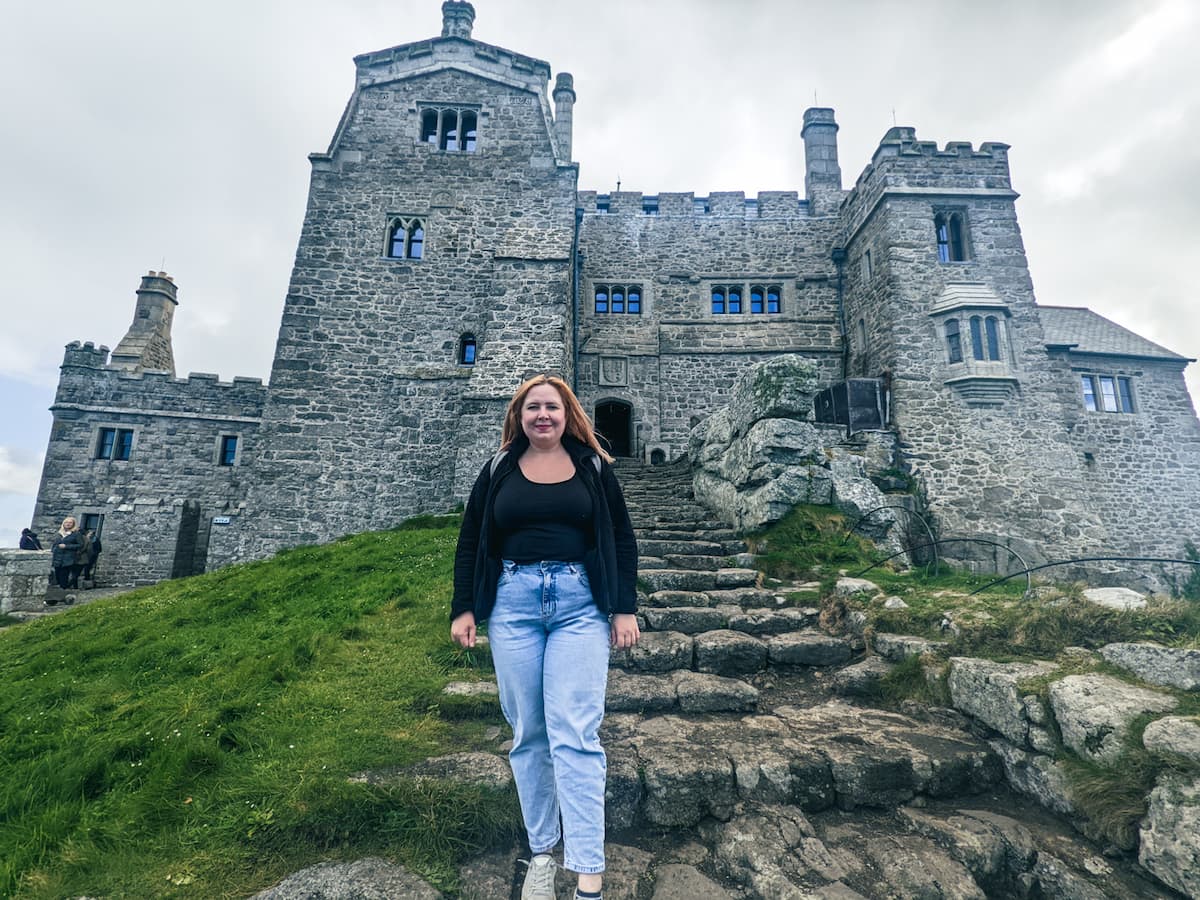
    Best Places to Visit

    The Jurassic Coach is overflowing with spectacular natural phenomenon, fantastic places to visit and stunning views. These are some of the best.

    Durdle Door

    Kat standing in front of Durdle Door
    Durdle Door on a Summers day

    Starting with the Jurassic Coast’s most recognisable landmark, the curving arch of Durdle Door has been a feature here for approximately 10,000 years. 

    Durdle Door is the result of countless years of coastal erosion – the sea pierced through the limestone cliffs all those millennia ago to form an archway; possibly the most famous naturally-formed arch in the world. 

    Only adding to its beauty is the fact that it is a relatively short-lived geological feature. The arch will eventually fall into the sea, leaving behind only a stack of rock. We are lucky to exist in the same time frame to enjoy it as it is today.

    Though a popular spot, Durdle Door is undeniably beautiful. Every top destination has a few unmissable places – and this is one of them. Whether you approach by traversing the steep wooden steps down to the beach or by boat, Durdle Door is a sight sure to steal your breath away.

    Lulworth Cove

    View of Lulworth Cove
    View of Lulworth Cove

    A few miles away from Durdle Door sits Lulworth Cove, Dorset’s premier beach destination.

    Dorset and the southwest of England, in general, is blessed with fantastic beaches. But Lulworth Cove is one of the most impressive. 

    The cove is almost perfectly circular and largely sheltered from the sea – only a small opening carved out 10,000 years ago connects the two. From a purely scenic standpoint, this is one of the finest beaches in England; the golden shingle beach backs up on to towering green hills that follow the arc of the cove until they drop to the sea.

    The geology of Lulworth Cove is also extraordinary. You would be hard-pressed to find clearer displays of rock folds, cove formation and coastal erosion anywhere in the world. 

    Unique geological formations like the folded stone, known as Lulworth crumple can be seen all around this area. The small cove of Stair Hole is a particularly good example. Walk further along from the beach and you will find the fossilised tree stumps of Fossil Forrest, which were alive a mind-blowing 145 million years ago.

    Chesil Beach

    England dorset coast chesil beach

    Yet another unique geological formation – the Jurassic Coast really earned its UNESCO status – is Chesil Beach, an 18 mile long shingle barrier beach. 

    The pebble beach stretches all the way from Portland to West Bay. Behind Chesil Beach is the Fleet Lagoon, which separates it from the mainland – the distance between them is decreasing every year by 15cm, as the sea slowly pushes Chesil Beach further into the lagoon. 

    The sheer size of this thin strip of land is impressive; it is rare to see a land formation like this, and there are only two others in England. While the beach is being pushed back, it still acts as a buffer for the mainland, reducing the power of waves

    If you’re visiting Chesil Beach, you should stop at the Isle of Portland. The beach is the only thing connecting the island to the mainland. Portland is a beautifully rugged island, home to a famously picturesque lighthouse and a great variety of birdlife.

    Old Harry Rocks

    Old Harry Rocks
    Old Harry Rocks

    Nervously peeping over the cliff edge to get a glimpse of Old Harry Rocks is one of the Jurassic Coast’s unmissable experiences. 

    Once connected to the mainland, the stack and stump of Old Harry and his wife were ripped away by coastal erosion. The distinctive chalk formations jut out into the English Channel, which continues to chip away at the soft chalk underbelly of the rock.

    If you’re curious about the unusual names, there are a few theories. One legend states that the name Old Harry comes from the devil (Old Harry is age-old slang for the devil) sleeping on the rocks, while another suggests they were named for an infamous smuggler, Harry Paye, who once hid his boat among the rocks. Whatever the truth behind the name, the rocks have continued to stir the imagination for centuries.

    With blue sea, white cliffs and the green grass atop them creating a stark contrast of colour, the weaving cliff edge and Old Harry Rocks make for a striking picture. 

    You can see the rocks well enough from the roughly hour long walk up the cliffs, but I would really recommend catching a boat trip out to see Old Harry Rocks if you can. They’re beautiful when seen from the land, but the wider perspective from the sea is truly spectacular.
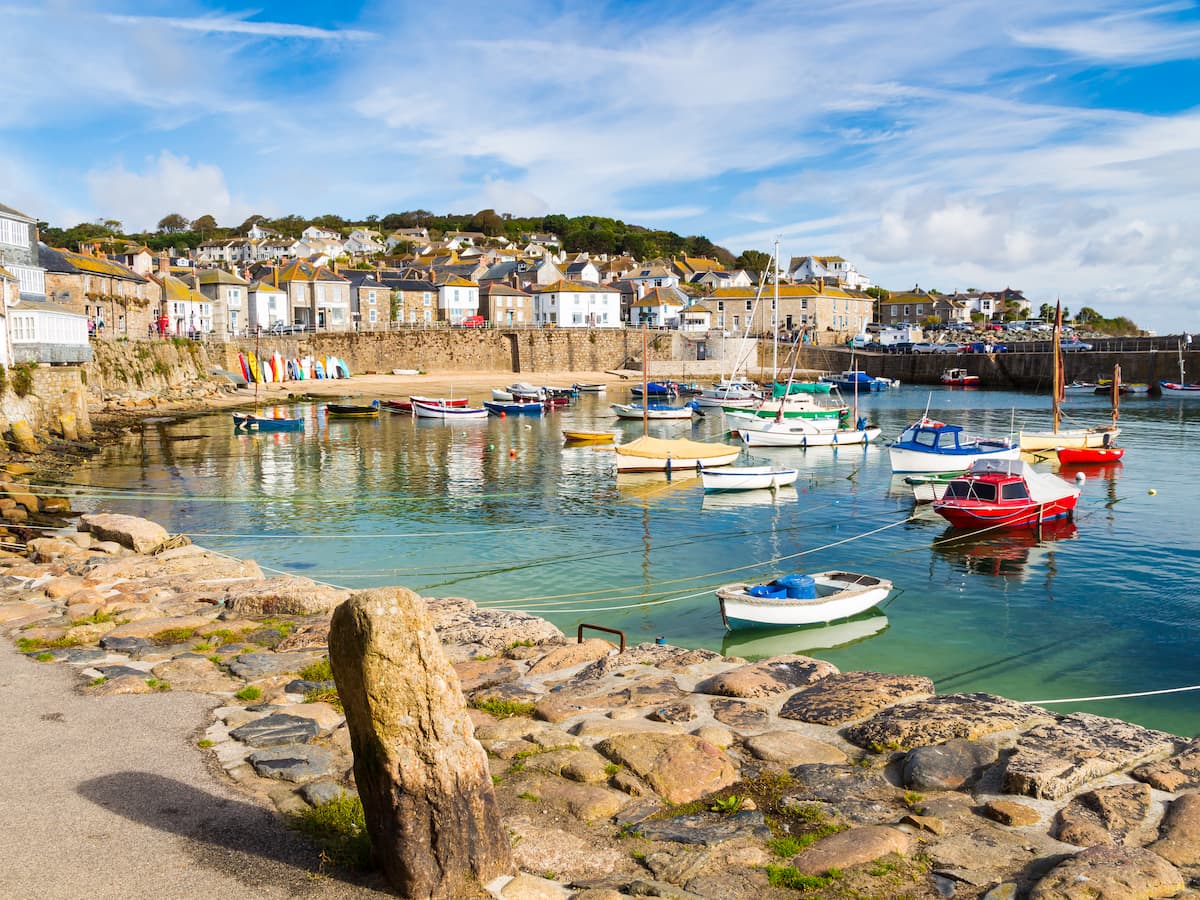
    Lyme Regis

    Lyme regis sandy beach dorset uk

    Boasting a picturesque harbour of bobbing sailboats, a seafront of pastel-coloured houses and a lovely beach, Lyme Regis is the quintessential upmarket seaside resort. With a classically pretty look and a bit of bustle, the town is one of the most popular on the Jurassic Coast.
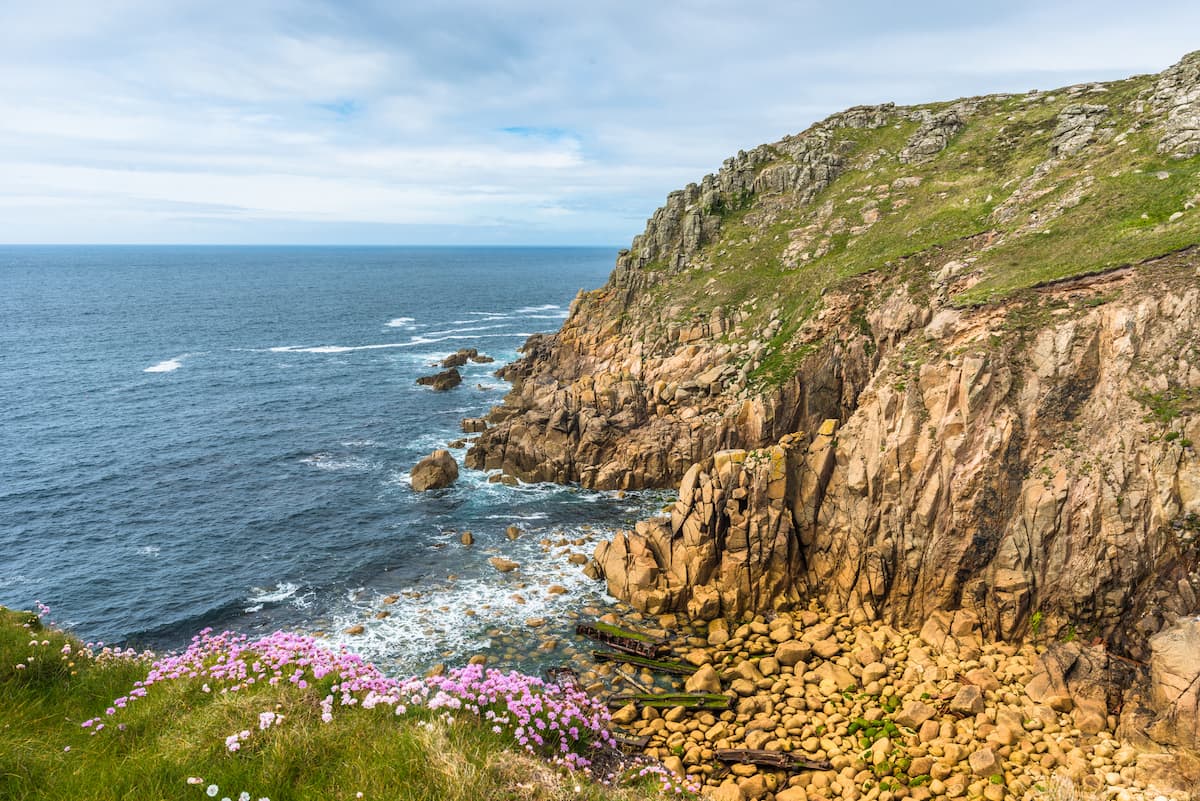
    It makes a lovely base for your holiday, but is worth visiting regardless. The colourful architecture is mostly from the Georgian and Regency era, giving the town a sophisticated look. Winding streets and independent boutiques add a layer of charm, while museums and art galleries give it a bit more depth as a place to visit. The Lyme Regis Museum is built on the site of Mary Anning’s former home. 

    The Cobb in Lyme Regis at sunset

    The pioneering paleontologist and fossil collector was born in Lyme Regis on 21st May 1799 and lived there until she died in 1847. Her work was groundbreaking at a time where geology had yet to truly exist as an official discipline, and teachings of the Bible were rarely challenged. Anning’s discoveries and documentation of dinosaur skeletons changed the scientific world; her work is honoured in the museum.

    Small, pretty and charming are all words I would use to describe Lyme Regis – quiet is not. It helps add to the joyful atmosphere pervading the town, but if the weather is nice, there are always crowds of people that follow.

    West Bay

    West Bay Beach

    West Bay has always been a favourite with visitors, but it is hard to deny that its popularity has skyrocketed since featuring prominently in the ITV crime drama Broadchurch. 

    The tiny settlement has two gorgeous sand beaches, rather unimaginatively named West Beach and East Beach. The backdrop of towering sandstone cliffs on East Beach is the one you’ll recognise: David Tennant and Olivia Colman filmed on location here for series one of Broadchurch. 

    Even people that have never seen the show will still love West Bay. You can’t go wrong with soft sands, gentle waves and the open sky. A small but quaint fishing village like West Bay is the perfect place to try fish & chips as they are intended: fresh from the sea, bought from an unassuming chip shop, and eaten overlooking the water.

    If you want to be somewhere a little more developed, nearby Bridport is a lovely little market town. 

    Corfe Castle

    Corfe Castle Dorset England

    If you asked for a list of prettiest villages in Dorset, Corfe Castle would be somewhere near the top. Dominated by the ruins of an ancient castle standing high over the village and filled with quaint cottages, this is a community ripped straight out of the pages of a storybook.

    It’s the kind of place that just breathes history. The precariously balanced castle has stood for a thousand years. It has been a Norman fortress, Royal castle and Saxon stronghold in that time, but the most famous event is the one that left it to ruin: the English Civil War. The Bankes family supported King Charles I against the Parliamentarians – Lady Bankes was left to defend the castle under siege in 1643 and 1645. They were eventually overcome, and the castle was destroyed.

    An hour of a time – and strong legs – are required to climb the hill and explore the castle. Panoramas over the Purbeck peninsula await you at the top.

    The village itself – named for Corfe Castle – has that typical quaint, rustic feel often found in rural England. Old stone cottages with brightly coloured doors, pretty gardens, tearooms, independent shops and country pubs are all found in Corfe Castle. It won’t take long to explore but is a lovely & relaxing way to while away an afternoon.

    Of all these places to visit, which should you absolutely not miss? 

    If you’re strapped for time, Durdle Door & Lulworth Cove are a two-in-one package, being so close together, and Old Harry Rocks and Lyme Regis are my other two must-visit locations on the Jurassic Coast.

    Things to Do

    Fossil Hunting

    If you’re staying in a place called the Jurassic Coast, it is only right that you should dedicate a little time to fossil hunting.

    You can technically find fossils practically anywhere along the Jurassic Coast, but true fossil hunters know that Charmouth is the best for it. 

    Foraging for fossils at Charmouth is safe and perfect for beginners; you usually have a good chance of finding something hidden on the beach. Especially on quiet days as the tide is going out! Not all fossils should be kept, but a few smaller ones (often ammonites, belemnites and crinoids), are fine to add to a collection.

    You can learn more about fossils – and how to find them – at the Charmouth Heritage Coast Centre.

    Walk (part of) the South West Coast Path

    Scenic Coastal Walks in Lulworth Cove
    Scenic Coastal Walks in Lulworth Cove

    England’s longest waymarked footpath covers an incredible 630 miles, running from Minehead in Sommerset along the coast until it reaches Poole Harbour in Dorset.

    I’m not advocating the whole trail here – but if you’re up to the challenge, I’m sure it is worth it – just the stretch across Dorset. The trail runs along cliff tops, past lagoons and along the beach as it weaves its way across the coastline.

    Many of the Jurassic Coast’s best places to visit are highlights of the walk. Chesil Beach, Lulworth Beach and Durdle Door all feature on the South West Coast Path. Distance aside, much of the walk is fairly easy-going. The trickier parts are mostly in the Purbeck area, where some of the ascents and descents can get very steep.

    You don’t have to follow the trail for endless miles, but it is worth hiking at least some of it if you are able. The views are simply sublime, and the path is well-trodden for good reason.

    Follow the acorn symbol – you’ll know you’re on the right track whenever you see them.

    Explore Tyneham Ghost Village

    tyneham ghost village

    Wander through an eerie abandoned village positioned on the Purbeck peninsula, close to Lulworth Cove and Kimmeridge Bay.

    Tyneham has been frozen in time since 1943, when an evacuation of the entire village was ordered during WWII. The space was used for military training, but even after the end of the war, the villagers were barred from returning.

    Today, you can see this time capsule of a village as a tourist attraction. A few buildings in the once idyllic Tyneham are in ruins, but many are preserved exactly as they were in the 1940s. We are so used to ruins being centuries removed from our time, that it feels a little unsettling to see more familiar buildings in such a state.

    You can see inside the school, church and farm – which have been kept in near-pristine condition, learn about the families that once lived in Tyneham and pose for a photo by the classic cream phone box. It’s an entertaining and unusual way to spend a few hours.

    The ‘lost’ village is open to the public most weekends and during the school holidays.

    See the Wildlife at Kimmeridge Bay

    Kimmeridge Bay Jurassic Coast

    Kimmeridge Bay offers an easily accessible glimpse of marine wildlife; the sheltered positioning of the bay makes it one of the safer spots to explore.

    As is ridiculously common on the Jurassic Coast, the geology of Kimmeridge Bay is both fascinating and important. You can see fossils entrenched in the ground and bedrock formed in the Jurassic age.

    The natural limestone ledges take you further out into the water without having to dip in the sea. Many anglers cast lines off from here, while others choose to search the rock pools for crabs and sea snails. 

    For those who prefer to get up close and personal with the creatures of the sea, snorkelling is popular in Kimmeridge Bay. Schools of fish are often spotted moving among the colourful seaweed on the sea floor. On occasion, seals and dolphins also make an appearance in the bay.

    To learn more about the marine wildlife of the area, head to the Wild Seas Visitor Centre.

    Where Should You Stay?

    Lyme Regis Beachscape

    Depending on your vacation style, you can stay in a hotel, cottage or a tent – as for location, I think anywhere on the Purbeck peninsula or in pretty Lyme Regis is hard to beat. 

    There isn’t an endless supply of hotels and B&Bs on the Jurassic Coast, but enough to get by; most range from mid-level to luxury budget-wise and get booked up quickly in the summer. If you prefer camping, there are dozens of sites up and down the coast. Most villages have at least a few cottages let out to holidaymakers and Airbnbs, but like the hotels, these tend to get booked up fast.

    How Long Will You Need to Explore the Jurassic Coast?

    Focusing on the Dorset stretch of coastline alone, a week should be enough time to explore the Jurassic Coast.

    If you want to extend your trip into Devon, you might want a little longer – 10 days would be plenty of time. Most of the Jurassic Coast’s biggest attractions and highlights are in Dorset.

    A week gives you time to see everything the coast has to offer without rushing too much. If you only have a long weekend, you can still have a great holiday. You just have to narrow down the places you want to see to a select few.

    Will I Need a Car? 

    Much of the Jurassic Coast is very rural, which is always easier to explore by car. Remote areas tend to have very little in the way of public transport, and what they do have is usually infrequent.

    You will find that the Jurassic Coast has a little more than most since it is a popular holiday destination with higher demand. Trains into Bournemouth and Weymouth are the quickest option, and you can catch a bus or taxi from there. 

    As is often the case, many of the most remote parts of the coast will be off limits to you without a car. You can still visit places like Corfe Castle and Old Harry Rocks, but the buses only run hourly from Poole.

    A car isn’t essential, but it makes exploring the coast much easier. Without a car, your best option really is to…

    Go on a Tour

    weymouth beach

    Joining a tour can be one of the best and most convenient ways to see the coastline. They’re particularly worthwhile for people travelling without a car. 

    Even people with cars would still benefit from joining one of the boat trips.

    • Poole Harbor and Islands Cruise – a 70 minute boat trip travelling around islands just off the Dorset coast. You will see the historic castle built by Henry VIII on Brownsea Island during your cruise, as well as the luxurious houses of the Sandbanks peninsula.
    • Jurassic Coast: Lulworth Cove and Durdle Door Coach Trip – see the Jurassic Coast’s most iconic sights, Lulworth Cove and Durdle Door, on this 3 hour excursion. Travelling with a knowledgable tour guide gives you the chance to find out more about the prehistoric history of the area.

    Is the Jurassic Coast Worth Visiting?

    Everyone has different expectations on holiday, but if you love rugged coastlines, beautiful scenery and the prehistoric age, the Jurassic Coast is absolutely worth visiting.

    How often do you get the chance to see millions of years of Earth’s history right under your feet? Classic white chalk cliffs, golden sands and sweeping views await you in this scenic coastal holiday. Take a break from the busy life and take it easy on the epic Jurassic Coast.