Here Comes The Sun are words that were not often spoken in Liverpool. Luckily, Beatles fans aren’t visiting for the weather.
There’s no better place to get to know the band than their old stomping grounds.
Whether you’re a casual listener or the most ardent fan of the Fab Four, no trip to Liverpool is complete without ticking off a few landmarks of the city’s most famous export.
If you’re not sure where to start, I’ve sorted a pretty comprehensive list of Liverpool’s best Beatles ‘Things to Do’.
Consider Taking a Tour
A considerable amount of Beatles attractions are some distance apart and not easily walkable. If you have more time then there are plenty of public transport but if you’re short one time it’s easier to let someone else take the reins. Take all the stress out of roaming the city and hop on a tour that will guide you to all of the most iconic Beatles locations.
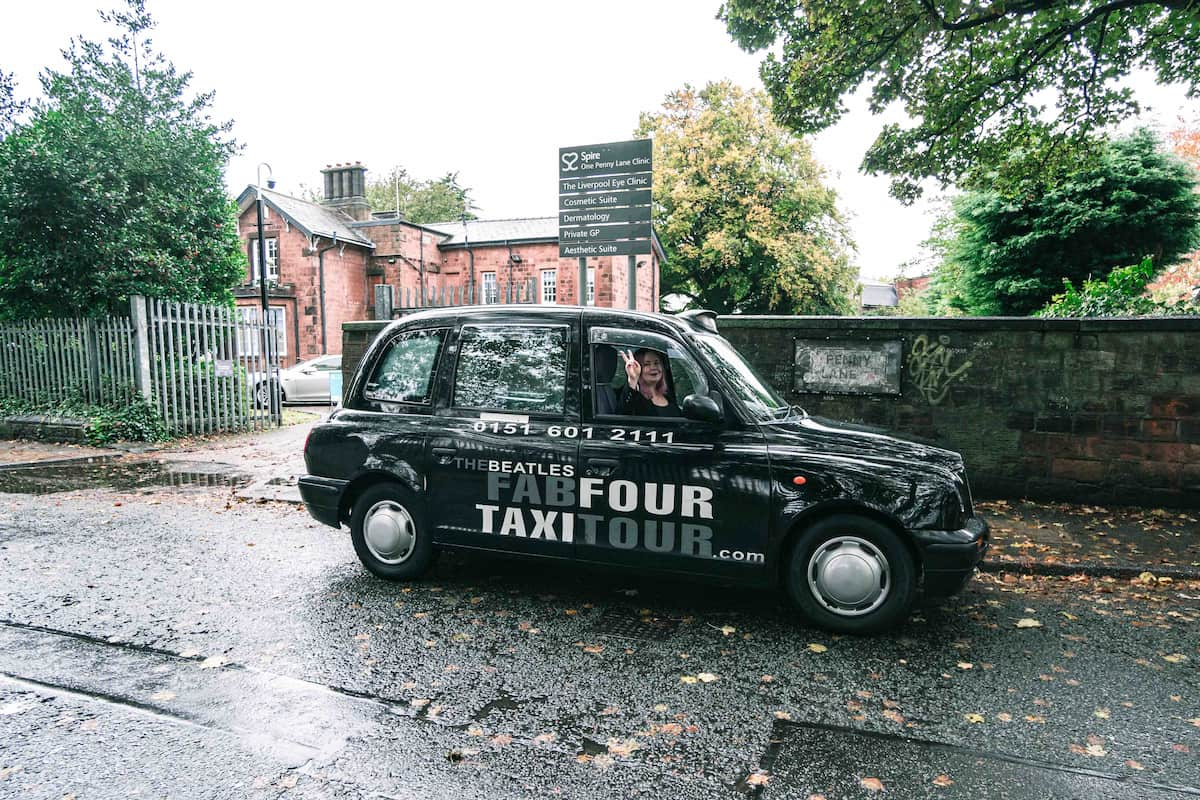
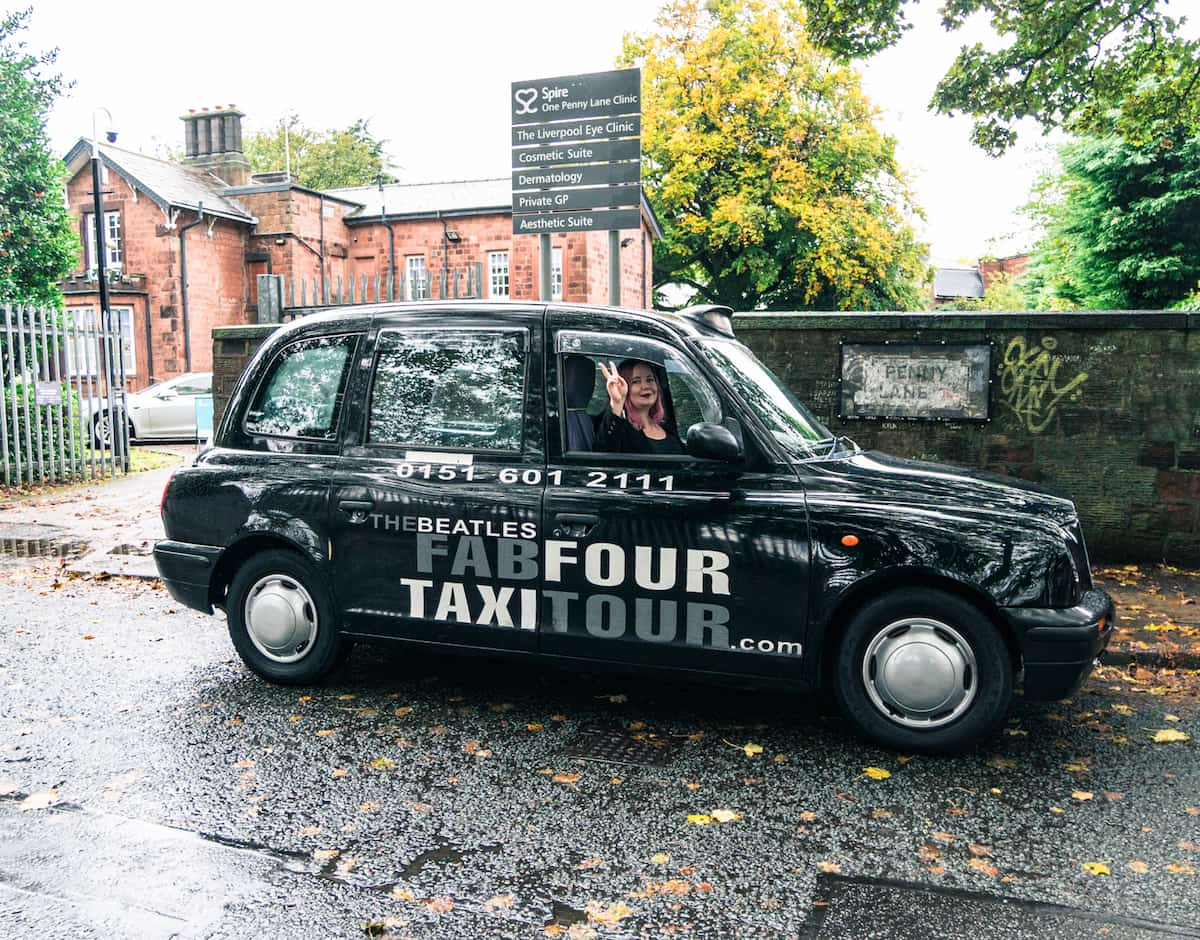
Fab4Beatles Tour in front on Penny Lane
Fab4taxitours
I honestly can’t recommend fab4taxitours enough. Kevin was our wonderful tour guide, who grew up in Liverpool when the Beatles first started gave fascinating stories about the city and the Beatles. His passion, knowledge and own stories really made the tour! You travel to all the main attractions in a taxi – the tour takes over three hours to complete.
The taxis are limited to a maximum of six people per tour. It’s £130 per cab, so the more people on the tour, the cheaper it is. Book here.
Magical Mystery Tour
The Beatles Magical Mystery Tour bus. Credit: Claudiodivizia on Dreamstime
The Magical Mystery Tour takes you to all of the Beatles’ – including George and Ringo – childhood homes, their schools, and St Peter’s Church. You also get the chance to step off the colourful bus at Penny Lane and Strawberry Field.
The two-hour tour, organised by Cavern City Tours, costs £19.95 for adults and ends at the famous Cavern Club.
There is plenty of choices when it comes to Beatles walking tours in Liverpool. You can choose to explore different locations within the two-hour slot, as some tours focus on the waterfront, others on Woolton.
Prices vary quite a bit – some tours are free – but they all have one thing in common: you will be led around Liverpool by a passionate and knowledgeable guide, who will undoubtedly tell you something about the Beatles that you didn’t know before.
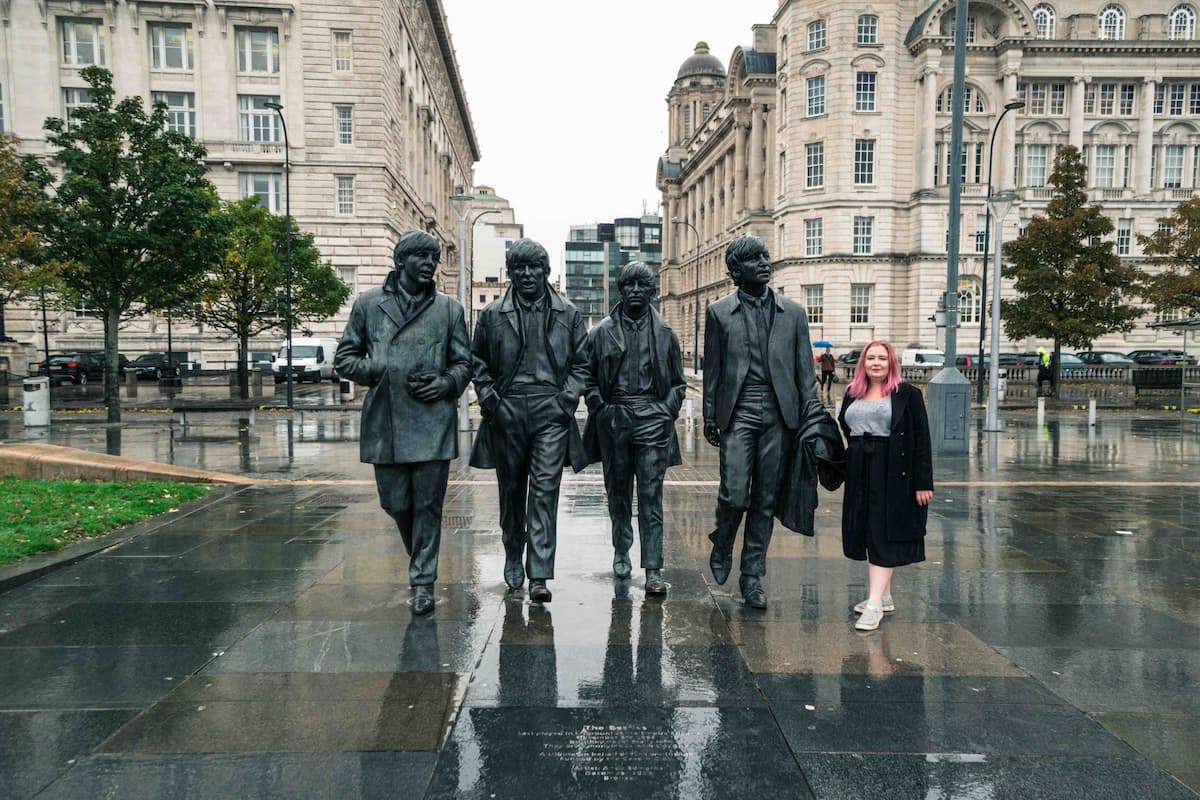
The Beatles Statue, Pier Head
The Beatles Statue, Pier Head
Donated by the Cavern Club and designed by sculptor Andy Edwards, the Beatles have been cast in bronze on the waterfront since 2015.
The slightly larger-than-life statue captures the spirit and laid-back swagger of the group perfectly as they walk together along Pier Head. There’s an astonishing level of attention to detail from the sculptor.
Look carefully and you will discover little talismans that represent something significant for each member of the band.
On Ringo, you can see a tiny 8 etched into his shoe, alluding to the L8 postcode of his childhood home in Liverpool.
George has a Sanskrit inscription along his belt in a nod to his spiritual beliefs.
Paul is holding a camera, which is likely a tribute to his marriage to photographer Linda McCartney.
John holds two acorns cast from outside the Dakota Building in New York, where he lived with Yoko Ono.
It’s often used as a starting point for any Beatles pilgrimages across Liverpool. Other Beatles statues include:
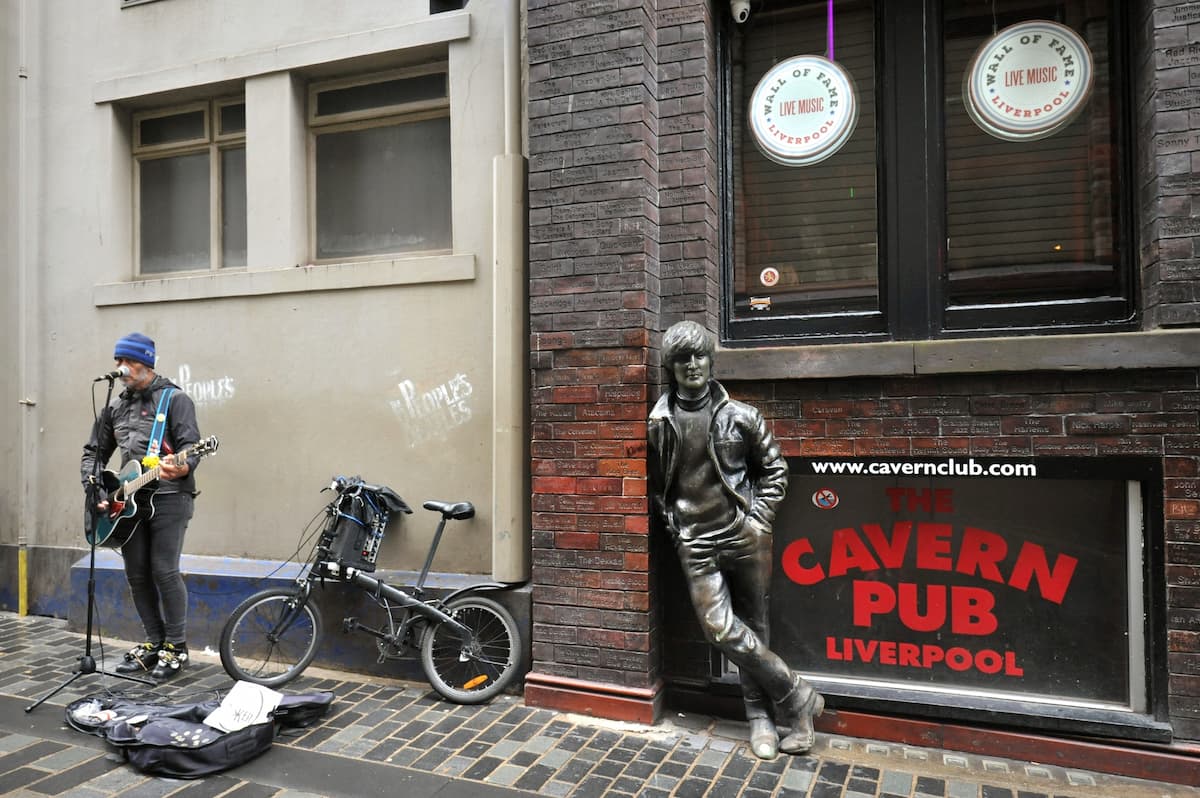
The John Lennon Statue
Casually leaning against a wall close to the Cavern Club, this popular statue on Mathew Street just oozes cool.
The Eleanor Rigby Statue
Not far from the John Lennon statue, the morose and solitary figure of Eleanor Rigby is dedicated to “all the lonely people”.
The Beatles Story, Albert Dock
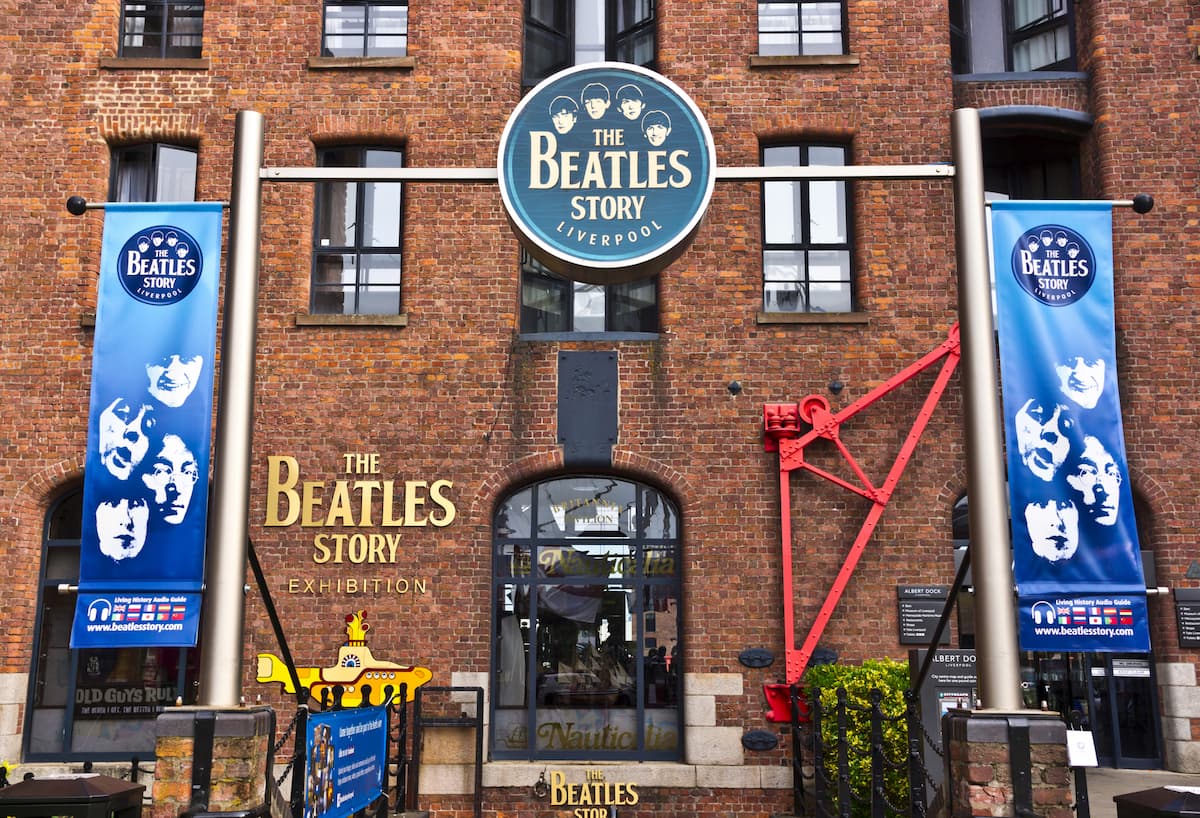
Beatles museum in Liverpool. Credit: Debu55y on Dreamstime
Walk 10 minutes along the waterfront from the Pier Head statue and you will find the largest permanent exhibition dedicated entirely to the band in the world; The Beatles Story.
The award-winning exhibition isn’t your average museum – it’s not just a collection of items locked away in glass cabinets. You can walk through replicas of the Casbah, Mathew Street, Abbey Road Studios and The Cavern, all built to look as if they were straight out of the 60s.
It’s an immersive experience seeing these iconic locations as the Beatles would have known them. The Beatles Story also contains an authentic replica of the Sgt Pepper suits, made by one of the original designers.
The Cavern Club nightclub. Credit: Nicoleta Raluca Tudor on Dreamstime
This iconic venue is often cited as the birthplace of the Beatles. It’s certainly the place they honed their skills and became the Fab Four of John, Paul, George and Ringo.
The ‘most famous club in the world’ saw the rise of the Beatles from unknown rookies to local heroes. The club opened as a jazz club, but soon became the centre of Liverpool’s rock-and-roll scene. The Beatles performed at the Cavern Club over 290 times.
Perhaps the most important connection the band would ever form was made here. The manager that helped launch the band to worldwide success, Brian Epstein, first saw the Beatles at the Cavern Club. It was through this relationship that the band secured their first record deal.
You can see some of Liverpool’s up and coming musicians at the club – there’s live music every night of the week.
If you want an exclusively Beatles-themed experience at the Cavern Club, join one of the behind-the-scenes tours.
Though the original building was demolished, many of the old bricks were used in the rebuild.
Four Lads Who Shook The World Sculpture
On the wall outside of the Cavern, Arthur Dooley’s sculpture is thought to be the first Beatles statue ever erected.
Strawberry Field
Strawberry Fields
For years, Strawberry Field was a private property, inaccessible to fans. It was first and foremost a youth centre, acting as a children’s home for the Salvation Army.
The site is now an award-winning exhibition, though supporting youth is still at its heart.
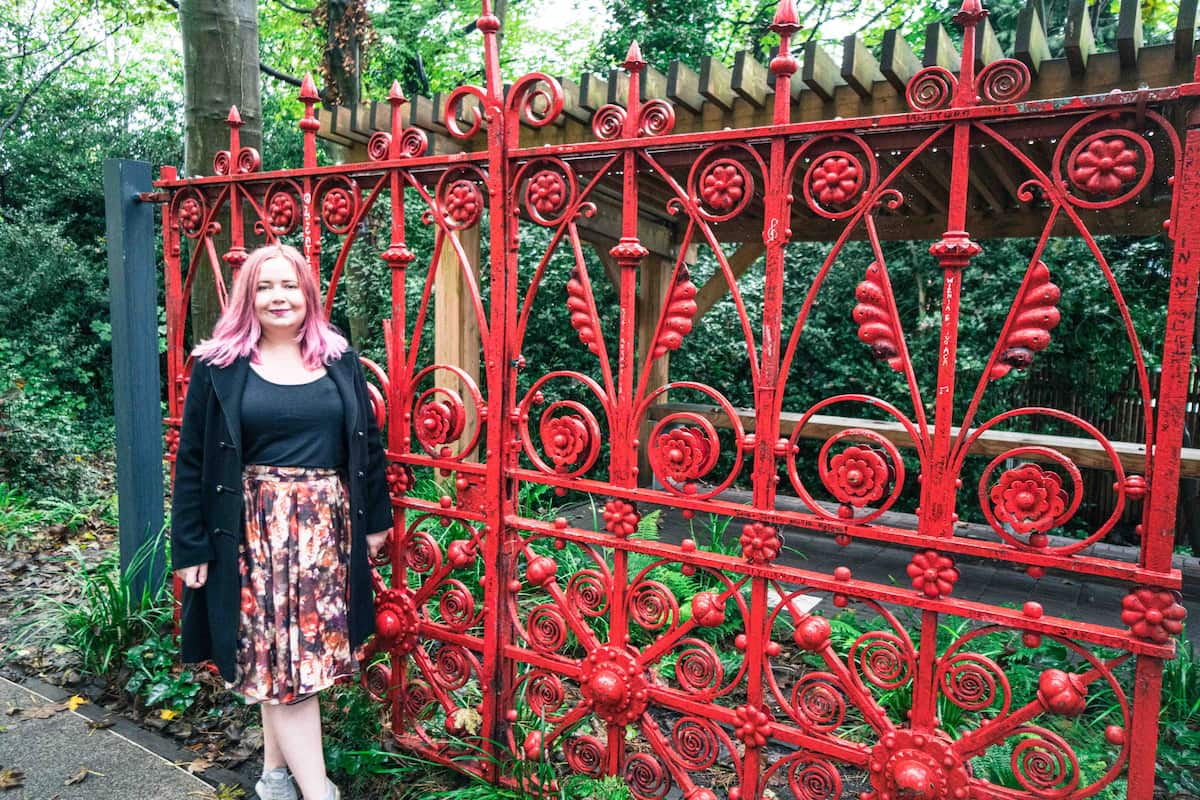
Immortalised by John Lennon in Strawberry Fields Forever, the site has become a huge attraction for Beatles fans. John grew up close to the home and used to scale the walls to play with the children on the grounds. Posing in front of the iconic red gates is an inescapable necessity for any Beatles fan in Liverpool.
Inside, you will find John Lennon’s ‘Imagine’ piano, on which the timeless song was composed and recorded. An early draft of the lyrics of Strawberry Fields Forever written in John’s handwriting is also part of the exhibit.
Adult tickets are £10.95
Penny Lane
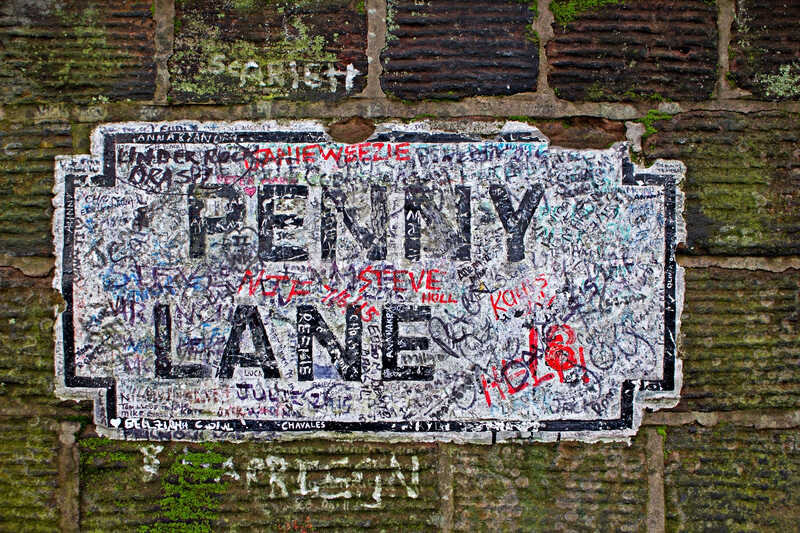
Penny Lane
The year is 1967, and the Beatles are about to produce one of the single greatest years in music history. The list of hit songs written by the band this year is truly unprecedented – and that’s without even including the release of one of the most iconic albums of all time, in Sgt. Pepper’s Lonely Hearts Club Band.
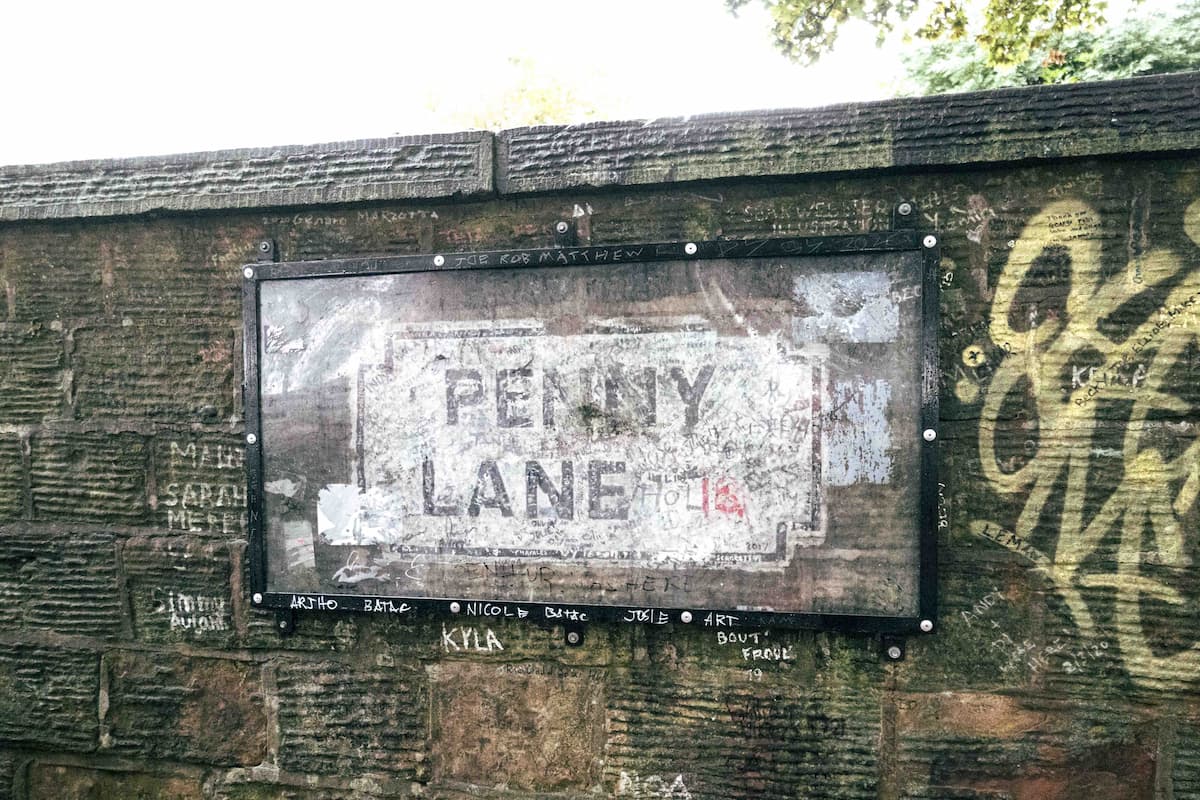
Released on a double A-side single with Strawberry Fields Forever,Penny Lane quickly became another worldwide hit. The song saved the actual Penny Lane from being renamed. People flock to the street to pose with the street sign – and see lyrics like “the shelter in the middle of a roundabout” come to life.
The Beatles’ Childhood Homes, National Trust
The Beatles’ Childhood Homes, National Trust
Go back to where it all began for John and Paul, and explore the homes they grew up in.
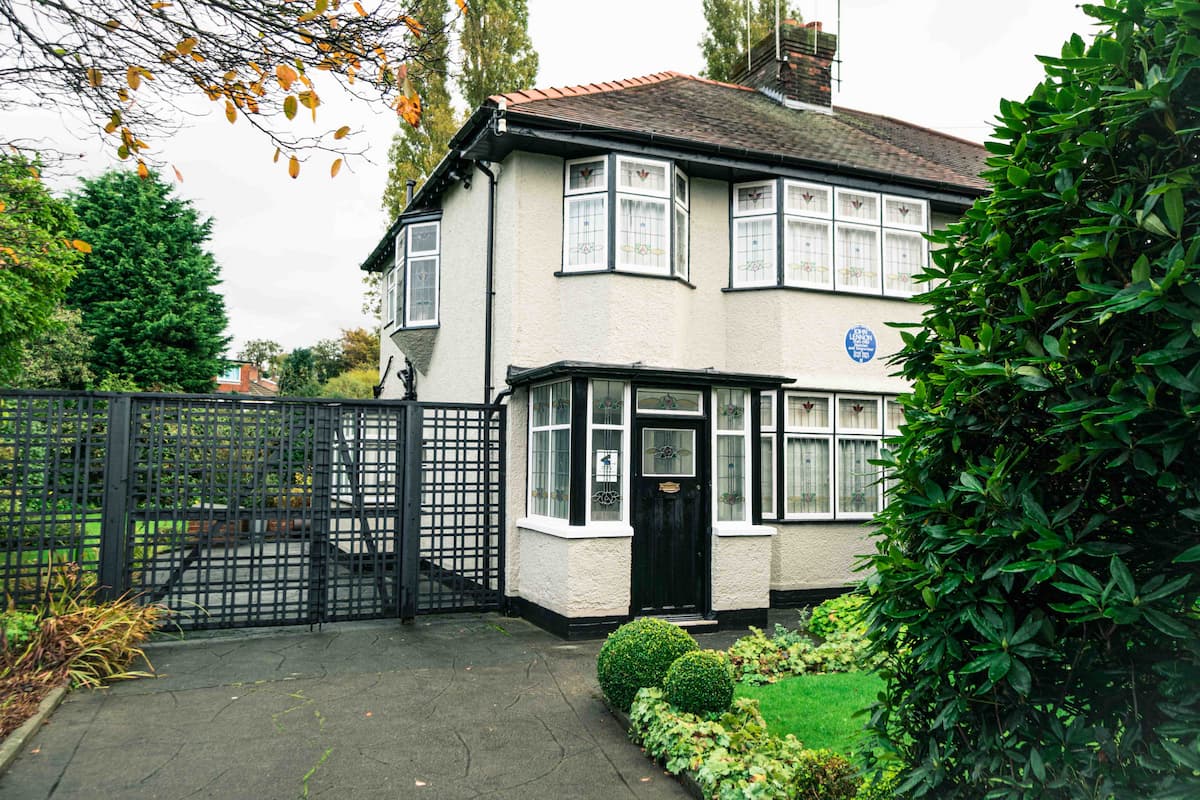
Now in the care of the National Trust, both Mendips and 20 Forthlin Road – the childhood homes of John and Paul respectively – can be explored on a tour led by an official guide. Other tours will take you to the outside of the buildings, but if you want to venture inside it will be with a National Trust guide.
The houses are the kind of unassuming and humble homes typical of the average family in Liverpool. None of the Beatles came from places of privilege. John, who lived with his Aunt Mimi on Menlove Avenue, was the only one of the four who could arguably be called middle class.
Wandering their homes really puts into perspective the incredible achievement of the four lads who shook the world.
Both John and Paul had difficult childhoods, marred with tragedy – and the tour gives you some insight into their life before fame. Some of the Beatles earliest songs were written within these four walls, including Please Please Me and She Loves You.
Tickets for the tour, which runs from March to November, are priced at £29 for adults. This includes both homes and transportation between the two.
Ye Cracke – John Lennon’s Favourite Pub
Beer at Ye Cracke Beatles
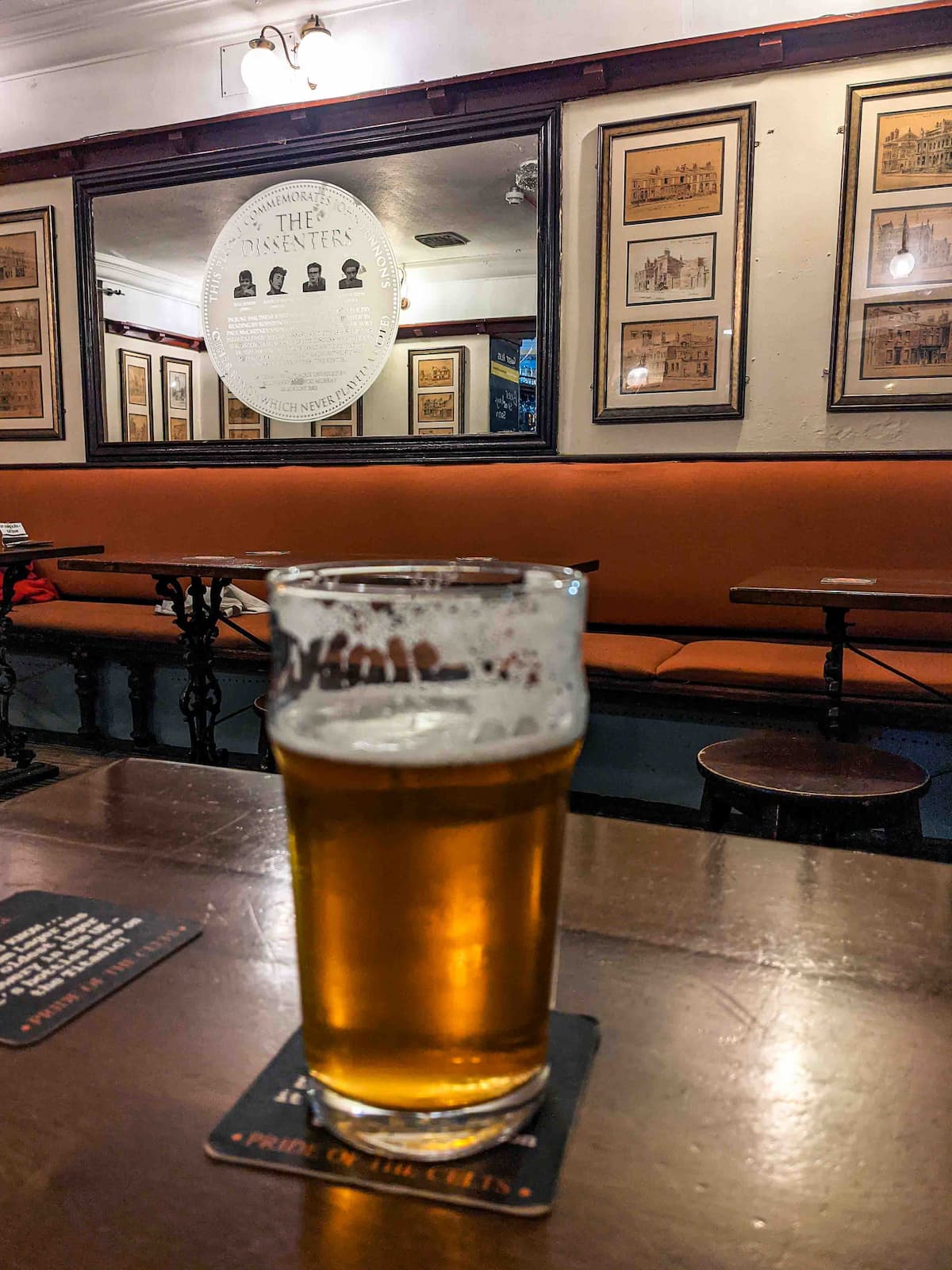
Follow in the footsteps of the Beatles and down a pint at Ye Cracke, a strangely named but friendly 19th-Century pub.
Ye Cracke is one of Liverpool’s lesser-known Beatles spots – its connection to the history of the band is through only one member, John Lennon. This was one of John’s favoured local pubs – he was known to appear fairly regularly, sometimes bringing a date.
He formed a band called ‘The Dissenters’ with three local lads at the pub; Stuart Sutcliffe, Bill Harry and Rod Murray. The group of art students were unimpressed with a poetry reading they had just heard and decided to form a group that would put Liverpool on the map. This was all promised after at least a few drinks, however, and the impromptu band never played even a single note.
It’s strange to think: if ‘The Dissenters’ had taken off, The Beatles may have never existed.
Hard Days Night Hotel
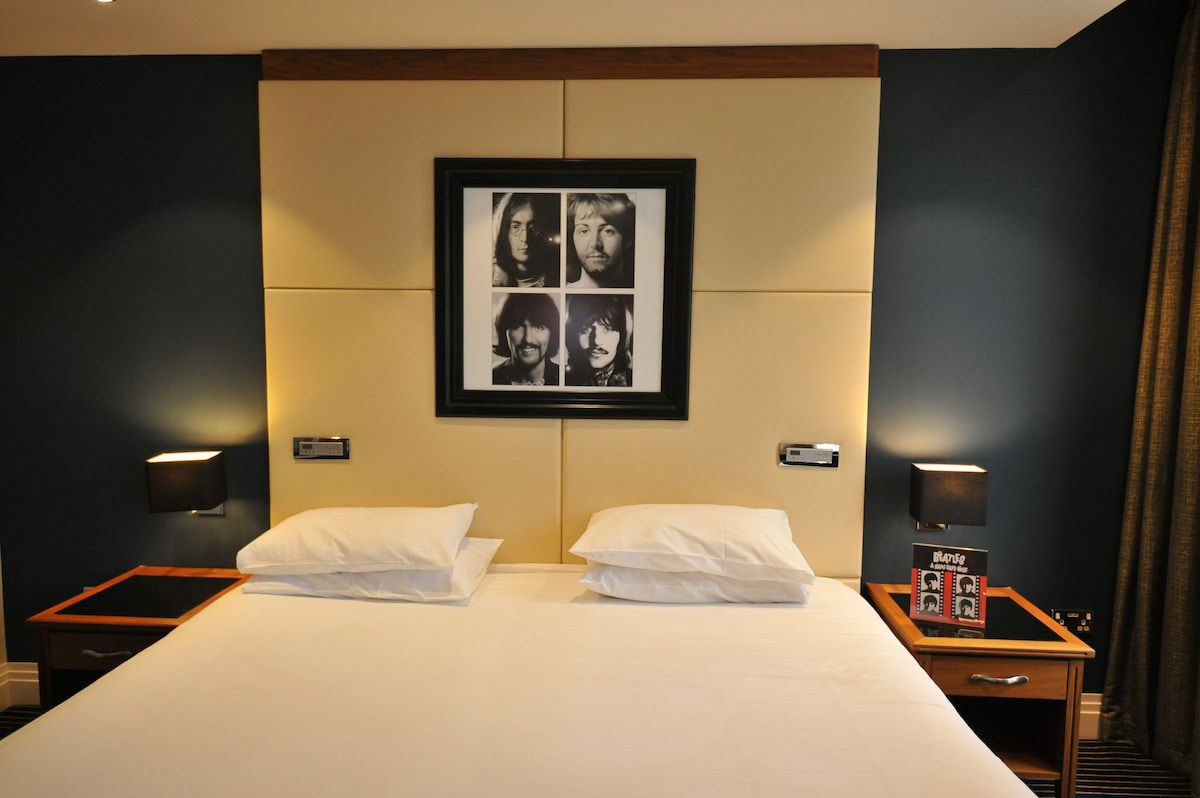
Hard Days Night Hotel Liverpool CreditL Nicoleta Raluca Tudor on Dreamstime
If you want more than just a mere visit to a Beatles experience, you should try spending a night in one. The Hard Days Night Hotel opened in 2008 – much to the delight of hardcore fans everywhere – becoming the only Beatles inspired hotel in the world.
Each room of the luxury hotel features commissioned artwork of the Beatles. There are little nods to the band all over the building.
The Hard Days Night Hotel sits adjacent to the Cavern Club, making it the perfect place to round off a night of Beatles-themed revelry.
The Casbah Coffee Club
The Cavern Club might be the most famous venue associated with The Beatles, but according to Paul McCartney, the Casbah Coffee Club is the one they considered their “personal club”.
If you want to see the “place where all that started”, as McCartney phrased it, you have to visit this unique basement venue. Back before the Beatles, when John, Paul, George and Ken Brown were known as the Quarrymen, they used to perform here. The club was started by Mona Best, mother of Pete Best, as a members-only club for her sons.
When the Quarrymen first arrived to book the venue, they even helped decorate the walls.
Like their childhood homes, the club shows the humble beginnings of the band. Before they were propelled into superstardom, this is all they were; just a young band playing in the basement.
Tickets are £15 for a tour. You can occasionally even catch some live music.
Liverpool Beatles Museum, formerly known as Magical Beatles Museum
If you’re looking for a huge collection of the Beatles’ personal items and memorabilia, head to the Liverpool Beatles Museum on Mathew Street.
The museum and collection is the work of Roag Aspinall-Best, brother of Pete Best, the “Fifth Beatle”.
You walk along the museum’s bright and colourful hallways on a journey through the bands’ history. As well as housing memorabilia, the museum gives a thorough breakdown of the Beatles story, year by year.
With over 1000 rare items housed under one roof, you could spend hours here.
A few of the items found in the Liverpool Beatles Museum:
George Harrison’s Ukulele
The Beatles’ first drum kit
Stage clothes from the band’s time in Hamburg
A pair of John Lennon’s glasses
Tickets are £15 for adults. You can book tickets on the website.
The Yellow Submarine(s)
Yellow Submarine Liverpool. Credit: Shahid Khan on Dreamstime
For those arriving by plane, you will see the unmistakable sight of a yellow submarine soon after landing at Liverpool John Lennon Airport.
The sculpture was built in 1984 for the International Garden Festival by a group of young apprentices – it was so popular that it’s been a fixture in Liverpool since then. It was retired from public view after its condition deteriorated, but the huge sculpture was eventually restored to its former glory in 2005.
It’s had pride of place at the airport ever since.
Yellow Submarine Hotel
After a hard days night, where better to lay back and relax than inside a yellow submarine. It’s certainly not the cheapest of overnight stays in Liverpool, but it is probably the most memorable.
Floating in Albert Dock, thefluorescent yellow sub is decked out in luxurious 1960s fashion, with gold discs lining the walls and furnishings imported from Paris and Italy. It’s a once in a lifetime kind of stay – where else could you be given the chance to live in a yellow submarine?
Woolton is yet another place that could claim to be the birthplace of The Beatles. The Church Hall is where John Lennon first met Paul McCartney; they were introduced to each other by mutual friend Ivan Vaughan, on July 6 1957.
John often performs as part of The Quarrymen in the hall, but on July 6 it was Paul’s turn to impress. He played a few songs to the group and a few weeks later was invited to join. The rest, as they say, is history.
Many places in Woolton have links to John – this is, after all, the neighbourhood he grew up in. You can walk from his Mendips home to Strawberry Field, or Reynolds Park, where he played as a child. The library, baths and picture house were all a feature of John’s childhood.
Just wandering around the street of Woolton will give you a sense of his upbringing, even if the neighbourhood has changed quite a bit since the 50s.
The Church Hall has the clearest connection with the band’s origin, but St Peter’s Church has its own piece of Beatles lore…
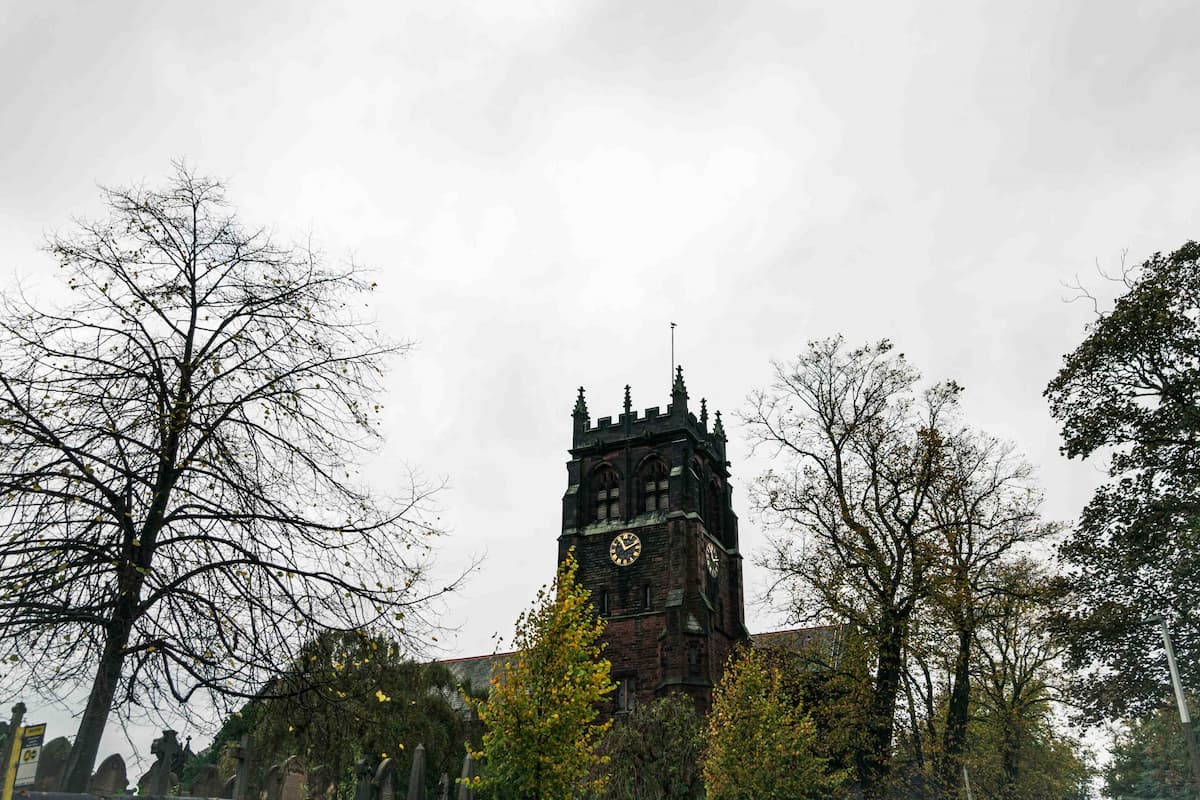
Find Eleanor Rigby’s Grave, St Peter’s Church
Find Eleanor Rigby’s Grave, St Peter’s Church
The desperately sad figure of one of the Beatles’ most famous songs, Eleanor Rigby is a name synonymous with loneliness.
But the possible inspiration behind the woman who “Died in the church and was buried along with her name” is located in the graveyard of St Peter’s Church. Paul McCartney used to cut across the church grounds with John Lennon to reach the hall behind it. Paul stated that the idea for the name came from the combination of an actress and a shop, though he later admitted the gravestone may have subconsciously played a part.
There is little to suggest any link between the real Eleanor Rigby and McCartney’s version – the character is fictional – but the gravestone is an interesting connection to the Beatles nonetheless.
You will find the gravestone in the section of the cemetery to the left of the church, in the second row closest to the road.
Let it Be
Speaking words of wisdom: any true Beatles fan has to visit Liverpool at some point in their lives. You don’t have to cram in everything I’ve mentioned here, but make sure to visit at least a few! They’re an unmissable part of the city’s culture.
If you’re looking for places to eat or non-Beatles related activities, check out my guide to A Day in Liverpool. Be careful though – after eating all that delicious food, listening to I Am the Walrus starts hitting a little too close to home.
One of the best ways to see what England and Scotland have to offer is by completing a self-drive road trip from London to Edinburgh. Today, I’ve added all my favourite places for the ideal London to Edinburgh road trip, full of the best stops along the way.
The two itineraries cover everything from historic towns, Area of Outstanding Natural Beauty, UNESCO heritage sites, film locations and much more!
Starting your trip in London without a car (honestly, you don’t want the headache of driving there) then choose whether you want to do the east or west route of England before ending up in Edinburgh. Unless you live here and have no choice but to drive through London.
If you have enough time make sure you do the full loop and soak in what England and Scotland have to offer.
I am so excited to share all the things I love about these countries! Let’s get started!
Things to Know Before Driving From London to Edinburgh
If you are looking for the best options for car rental then I always use Europcar or Enterprise cars in the UK.
For my great British road trip, I used Europcars long rental option which gave us the car for half the price for 28 days, unlimited drivers and delivered to my door! The only drawback to this option is we were limited to 2,520 miles which just covered our round trip. There is another option at 3,360 miles.
Don’t forget to take out a travel insurance policy before travelling, even if you are local this will protect your belongings whilst you travel. I always like to use World Nomadsfor my travels – get a quote from WorldNomads here.
Other things to know before travelling:
Don’t rent a car in London! – Chances are that you will be staying in Central London (unless you live here then skip to option 1 and 2 routes) and it’s honestly a total nightmare to drive here. Not only that there are congestion charges which cover quite a large radius. For each option I have added a recommended airport to pick up a rental car, this will save you driving time and the stress of driving in London.
Fill-up at supermarket petrol stations – Asda, Morrisons, Sainsburys, Tesco etc. will all offer cheaper petrol by some margin. If you stop at any of the petrol stations along the motorway you could easily see prices increased by 10 to 20 pence per litre!
Choose to either drive the East or West Route – I’ve split the itinerary into two routes as it’s more logical to follow these routes rather than zig-zagging across the country.
Overloading your trip – Try not to cram half of England and Scotland into a two-day trip otherwise you will not see much apart from the road.
Don’t drive from London to Edinburgh in one go – Unless you are familiar with driving long distances I don’t recommend trying the 8-hour drive. As someone that grew up with long distant driving across Australia, I still struggle with driving over here and recommend at least having 1 overnight stop. Plus you will be missing all the amazing things to see driving straight there!
Potential Tolls – Some routes suggested can have tolls but I have found these pretty easy to avoid. Check Google maps before driving and it will highlight toll roads. For example, the M6 has one (west route) however, you can just take the non-toll M6 route to save the money.
Download Parking Apps – A lot of parking around the country is paid and I am not sure about you but I never really carry cash any more. Download these apps before hitting the road; Just Park, Pay by Phone and Ring Go. They were by far the most frequent ones I encountered. Another way I have saved money with parking in cities is by booking in advance on Just Park. Weirdly in Bristol, it was cheaper to pay for a week’s worth of parking than two days!
English Heritage – If you’re interested in visiting a bunch of different historic sites, you can purchase an Overseas Visitors Pass or if you’re living in England a yearly membership. Not only does this save you money at each individual place it includes parking! Valid at over 100 places, you can choose between a 9 or a 16 day passes.
Start in London: 2 Day Itinerary
Before starting your road trip to Edinburgh it’s time to explore London! It’s a good idea to stay somewhere within close proximity to attractions and activities so here are some of the best places to stay in London.
Looking for something a little more off the beaten path to visit in London? Here is a list ofalternative things to do in London that will not disappoint!
Psstt… To make the most of your time in London make sure you read my London sightseeing tips to get the most of your time in the city!
Day 1: West of London
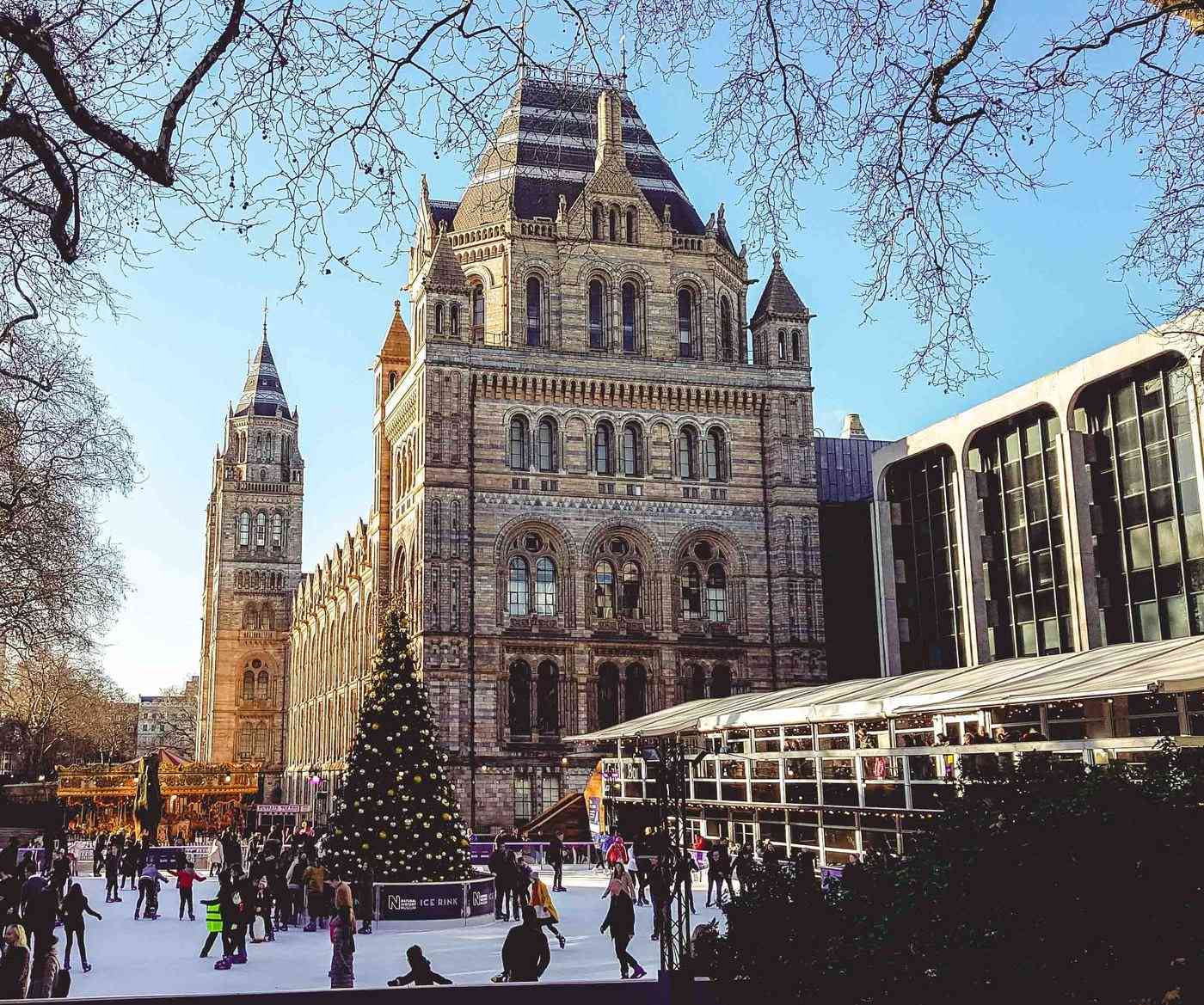
Christmas time at Natural History Muesum is such a magical time.
Start the day by going to Kensington and pick one of the fantastic free museums:
Natural History Museum – In my opinion this is the best museum in London. I always think of David Attenborough speaking whilst I am walking through the gorgeous building learning about dinosaurs.
Victoria and Albert Museum
Science Museum
If you get there by 9am you will beat all the crowds and fewer crowds means you will be able to walk around faster.
Next walk through Kensington Palace & Gardens, through Hyde Park finally reaching Buckingham Palace. If watching the changing of the Guards is on your list then make sure you get to Buckingham Palace by 10:45 (I also have some tips in my London sightseeing tips on the best spot to watch this). I would say it would be impossible to do the changing of the Guard and a muesum so if it’s high on your list choose one or the other.
Afterwards head to Westminster Abbey and Big Ben before crossing Westminster Bridge to Waterloo.
Once you’re in Waterloo you can explore Leake Street Tunnel which became a famous street art spot after Banksy hosted the Cans Festival there in 2008. It’s the largest area in London for street art so it’s frequently having new pieces added or replaced.
Ready for a drink? The Waterloo Tap is also a short walk from Waterloo Station and set up in a converted railway arch, this funky bar boasts 20 kegs and 6 casks on constant rotation. They also serve bar snacks but not full meals.
Head back to the Thames path (i.e. The Queen’s Walk) and you’ll arrive at the London Eye. Make sure you read my guide on what to book in London where I cover everything you need to know about booking the London Eye.
Continue east down the Thames and you will see either the Underbelly Festival (summer event) or Rekorderlig Cider Lodge (winter event). There are lots of stalls that offer food and drinks, alternatively there plenty of restaurants around the Southbank.
Cross back over the Golden Jubilee Bridge to Embankment. Just a short way up Villiers Street you will find Gordon’s Wine Bar which is a 19th-century wine bar in a candlelit vaulted cellar. It’s lovely to grab a glass of wine here and just relax your feet for a bit.
Finish your day off in Covent Garden and Soho. There are lots of bars, restaurants and theatre options in the area, plenty to keep you entertained for an evening!
Day 2: East of London
Here’s an example of one of the street art peices you can see in Shoreditch.
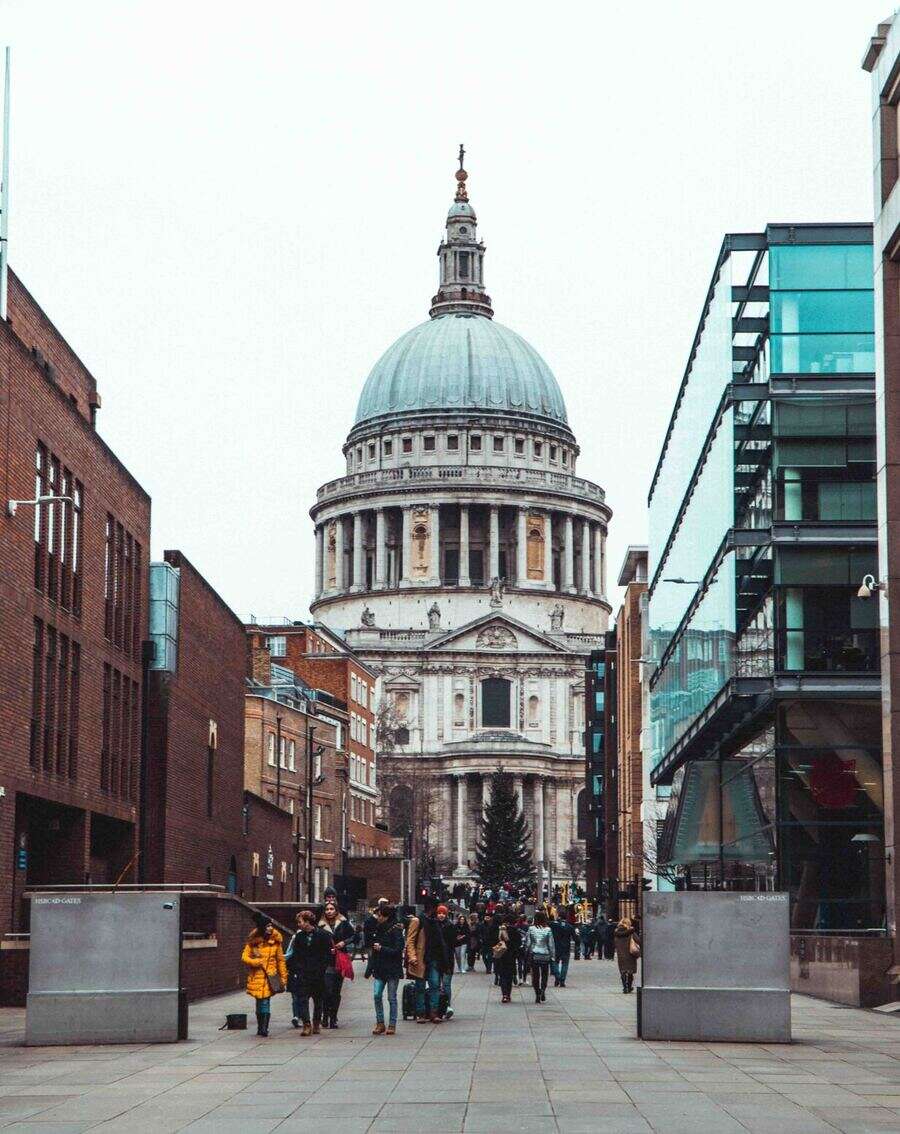
Start the day off at St Paul’s Cathedral, on the weekend the area is super quiet apart from the tourists in the area. For a great view head to One New Change and go to the viewing platform.
Afterward, you can go by the Monument which commemorates The Great Fire of London, decide whether you want to climb the 311 steps or just have a sneak peek at it.
Cross London Bridge to Borough Market. Everyone gets confused with London Bridge and Tower Bridge. The first one is the functional one and Tower Bridge is the beautifully designed bridge originally opened in 1894 which you can see across the Thames from London Bridge.
Have a late breakfast or early lunch (brunch) stop at Borough Market. I am always overwhelmed by the choice of food options. It suits all dietary requirements as well!
Head back to the Thames Path and you will pass HMS Belfast, get a great photo opportunity of the London Skyline before crossing Tower Bridge.
Once you are finished the next place is the Tower of London! If you decide to go inside check out the 2 for 1 on Days Out Guide or buy tickets online to save a little bit of money.
Shoreditch is a great place to stop for food, find street art, have a drink on a rooftop, explore BOXPARK for food and shopping or find a secret bar like the Mayor of Scardy Cat Town.
Brick Lane is known as the curry mile and to really get the authentic feel you need to haggle for Indian food. Otherwise, head to one of the amazing restaurants like the famous Dishoom. If you’re lucky enough to be there on Sunday then Brick Lane hosts markets full of food stalls until 5pm.
East and West England Routes to Edinburgh
Both of these routes can be customised to how many days you have available to you. As a minimum give yourself two days to allow two pit stops and one overnight stay somewhere. Seven days will truly allow you to see the best of both routes and if you want to do the loop then allow at least 14 days!
This is not including the days you wish to spend in London and Edinburgh.
Option 1: East England Route to Edinburgh
The best place to pick up a hire car for option 1 is Stansted Airport. This will cost a little bit more money to get to if you’re catching the train as it’s a National Rail line, however, booking your tickets in advance or getting the coach will save you money.
The east route will mainly take you on the A1 and A1(M)/A1 to Edinburgh.
Cambridge
Drive: Roughly 1hr 30mins depending on where you start your journey in London.
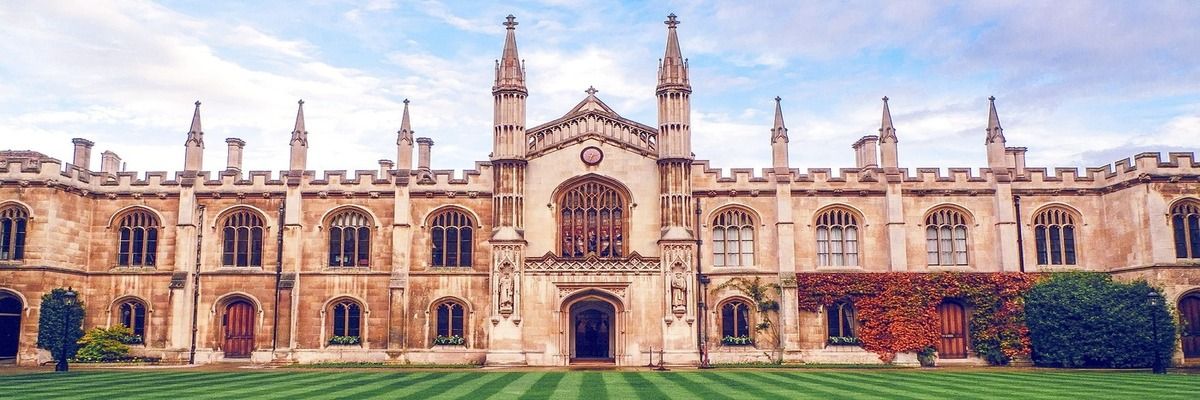
Cambridge is one of the most well-known cities in England, and it’s easy to see why it is so popular with tourists! The city has some of the most amazing architecture in all of England and a world-famous university as well. Due to the large student population there is so much to do as well as numerous great places to eat and drink in the centre of the city!
There are many things that are fun to do when you visit Cambridge, but an absolute must-try is the famous punting! A punt is a flat bottomed boat, which is used for leisure time and pushed across the water using a quant pole. This is a popular method of seeing some of the Colleges on the university, as well as the Bridge of Sighs which is very popular among tourists.
Some other popular tourist attractions in Cambridge include:
King’s College Chapel – A huge and stunning chapel with beautiful ceilings and carvings.
The Botanic Gardens – The gardens are home to several greenhouses and a seriously impressive collection of different plants!
Mathematical Bridge – Officially known as the Wooden Bridge, this is one of the most famous bridges in the UK due to its unique design and structure.
St. John’s College – If you want to see the most incredible college in Cambridge then this is certainly one of the most impressive. It is known across the UK for its annual May Ball, one of the best parties going!
Just to bear in mind that the preferred option for parking in Cambridge is to park and ride. Unless your accommodation offers parking as a part of your stay.
Stamford
Drive: 55 minutes from Cambridge.
Fancy a quick stop off in a picturesque and historic town? Why not take a drive to the cobbled streets of Stamford, the gorgeous Georgian town in Southwest Lincolnshire. You may not have heard of the town before, but you’re sure to recognise parts of it, such as Burghley House, if you’ve seen the films Pride and Prejudice or The Da Vinci Code as it was used as a filming location in both.
Stamford is the kind of place where you can simply wander; behind every corner and down every alley is more stunning architecture to see. The town is incredibly walkable and has many pretty churches, such as St Mary’s Church (12th century) and All Saint’s Church (13th century).
Sheffield and the Peak District
Drive: 1hr 30mins from Stamford.
Kat standing in front of the lake with Chatsworth House in the background.
Sheffield is one of the greenest cities in the UK, and is right on the doorstep of the Peak District National Park.
The Peak District offers many opportunities for outdoor activities such as hiking, paragliding and rock climbing – what’s not to love? It’s also the UK’s first ever National Park back in 1951.
For a nice and easy stroll, I suggest the Mam Tor Walk trail which takes you to one of the Peak’s most iconic views. This 4.5km circular route is steeped in ancient history and you’ll be rewarded with views of the Vale of Edale, Peveril Castle and the Hope Valley.
The world famous Chatsworth House was used as Pemberleyin Pride and Prejudice; Hardwick Hall was used as Malfoy Manor in the Harry Potter films and the medieval Haddon Hall was used in Kit Harrington’s Gunpowder.
If the great outdoors isn’t for you, there are plenty of other things that Sheffield can offer:
For a spot of shopping go to Meadowhall.
Sheffield has the largest theatre complex outside London, the two major theatres are the Lyceum Theatre and the Crucible Theatre.
Visit the tropical butterfly house which is popular with the locals.
Visit Our Cow Molly which is a working dairy farm and makes delicious icecream.
Leeds
Drive: 50 minutes from Sheffield.
Leeds is a thriving city and one of the larger cities in England. It’s a hub for art, culture and history so the city offers something for everyone.
For museums and art galleries, I recommend visiting:
Royal Armouries Museum
Leeds City Museum
Thackray Medical Museum
the National Coal Mining Museum
Leeds Art Gallery
Henry Moore Institute
The Tetley
Microbreweries have really popped up all over the UK in the last few years and Leeds has some you should add to your list. Many of the breweries will hold tours and tasting. Some of the most established ones are Leeds Brewery, Northern Monk and North Brewing Company.
York
Drive: 40 minutes from Leeds.
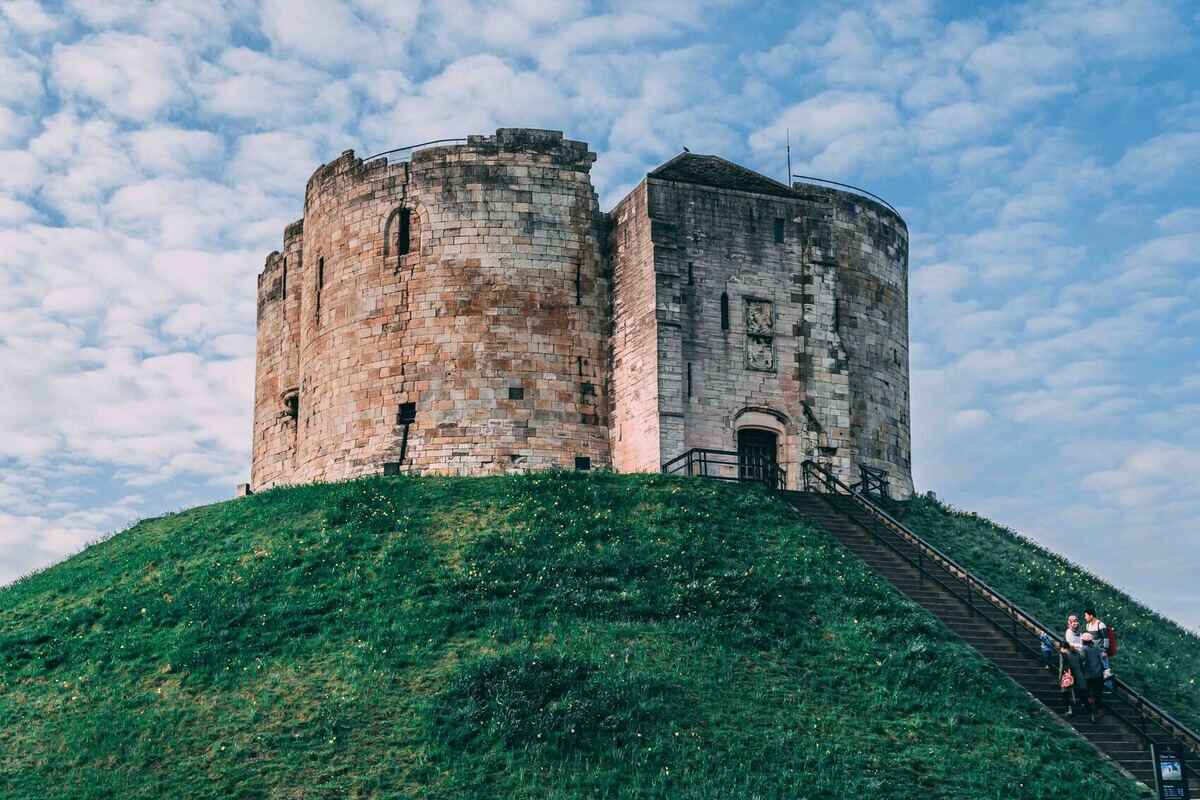
Clifford’s Tower, North Yorkshire
Step back into medieval times with York’s winding cobbled streets, magnificent cathedral and stone walls surrounding the city. The best thing about York is that everything is within walking distance so it gives you a break from all that driving.
Things to add to your list include:
Walking the city walls
Climbing Clifford’s Tower
Rascal buns at Betty’s tearoom
Walk down the Shambles to see the beautiful shop fronts
If you happen to be in York on the first Friday of the month then you need to visit York’s Farmers Market
Newcastle-Upon-Tyne
Drive: 1hr 40mins from York.
Newcastle has a great reputation for its lively atmosphere and friendly people. There are numerous cocktail bars, trendy clubs, traditional pubs and restaurants all over the city.
The city gets its name from the fortress sitting on the River Tyne which you can go and see as a part of your tour, including the great hall and the view from the roof. To learn more about the history of the city check out the Laing Art Gallery. Alternatively visit the Discovery Museum which gives an interesting account of Newcastle’s background in shipbuilding and coal mining, and how that evolved over time through technological innovation.
Here are a few more sights to check out:
BALTIC centre for contemporary art
Live theatre – check out a theatrical performance
The Biscuit Factory – a great art gallery and awesome brunch spot
St. Nicholas Cathedral
North Berwick
Drive: 2hrs from Newcastle Upon Tyne
This is one of the most stunning towns in Great Britain offering beautiful beaches, amazing food and a great castle! Here are some of the best things to do:
The Scottish Seabird Centre – See a variety of birds at this charitable research centre which dedicates itself to protecting indigenous wildlife in the area. You can also take a boat tour at some times of the year to see some seabirds in the wild! Depending on the season you may even see puffins!
The Lobster Shack – This is known to be one of the best places in the area to enjoy a fresh catch right from the ocean! Enjoy a half lobster and chips and appreciate how incredible the fresh produce is!
Tantallon Castle – The castle ruins sit right on the Firth of Forth overlooking the sea. It has a rich history of sieges and feuds dating back to the 14th century!
Bass Rock – This famous rock sits proudly in the Firth of Forth and is a site of special scientific interest due to the fact that it homes the world’s largest local gannet colony.
Yellowcraig Beach – This is a gorgeous beach that should not be missed on your travels – it makes for one of the most stunning coastal walks in the area!
Option 2: West England Route to Edinburgh
The best place to pick up a hire car for option 2 is Heathrow Airport. It will save you driving through London and therefore is a lot less stressful!
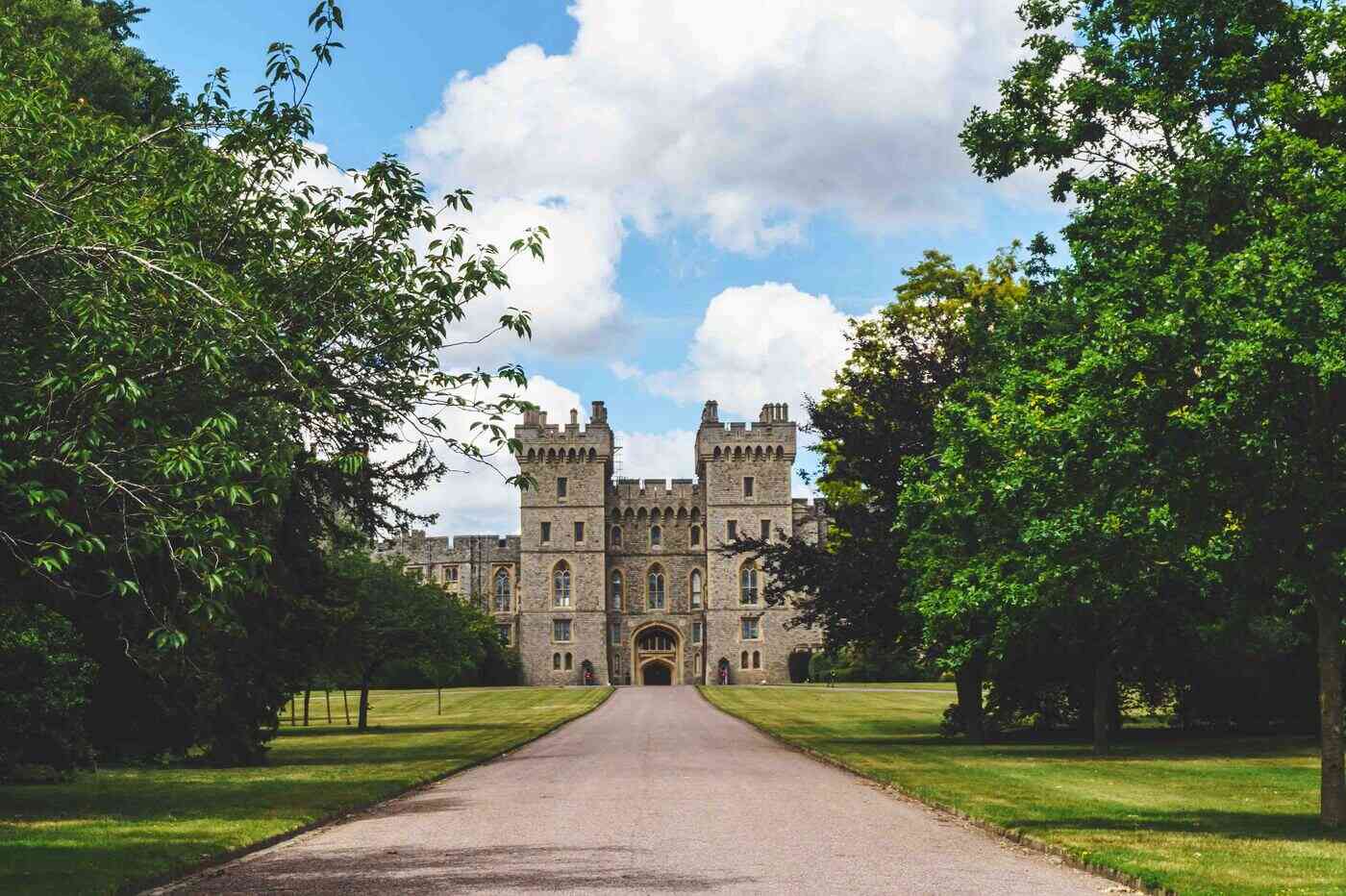
Windsor Castle (Stop en route to Oxford)
Drive: 40 minutes from Heathrow Airport.
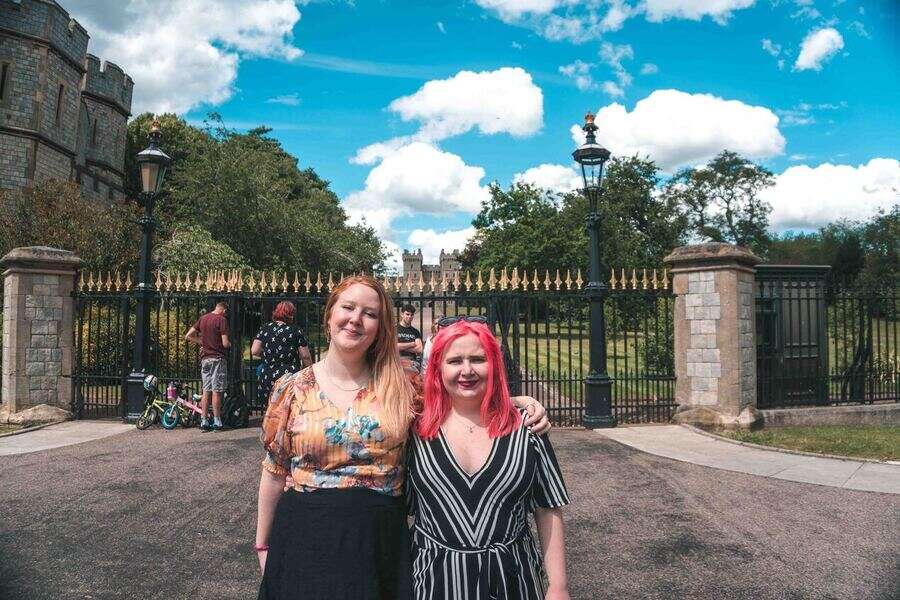
The view of Windsor Castle from the entrance gates.
Windsor is a stunning town and walking through it on the way to the castle is an absolute treat in itself. And the awe certainly does not stop when you reach the glorious 1,000-year-old castle. To explore the castle and its grounds in full, it will take around two hours. The highlight of visiting the castle is certainly the beautiful St. George’s Chapel where the Duke and Duchess of Sussex were married in 2018.
Windsor Castle is open Thursday to Monday, entry times start at 10am and the last admission at 3.30pm. Buy tickets to Windsor Castle here.
Oxford
Drive: 50 minutes from Windsor.
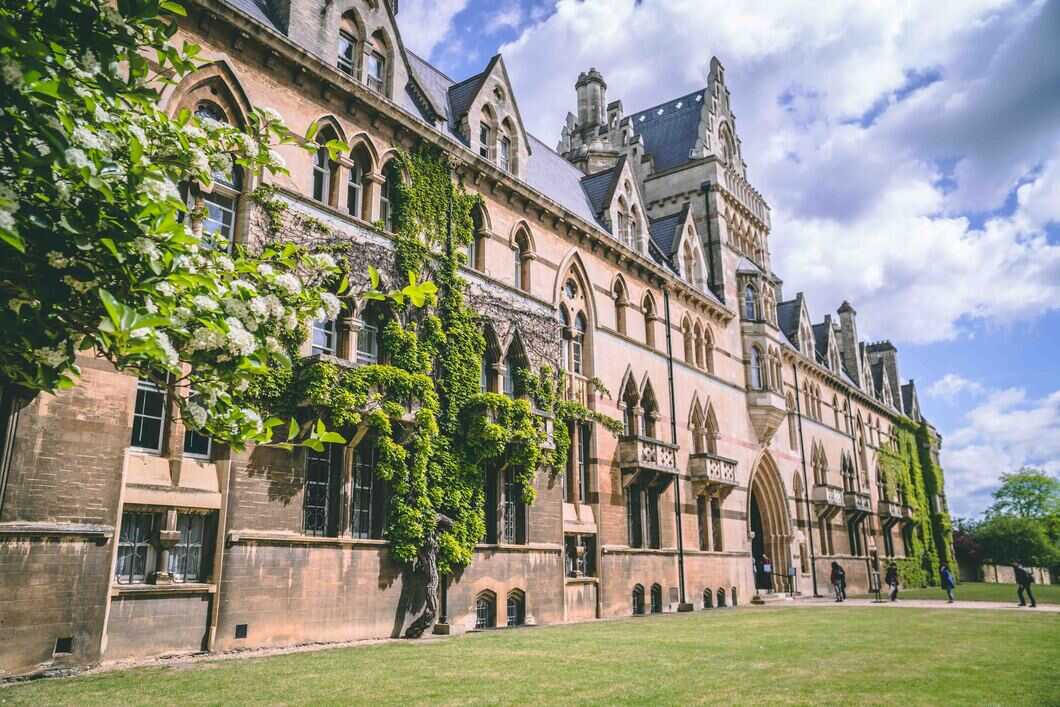
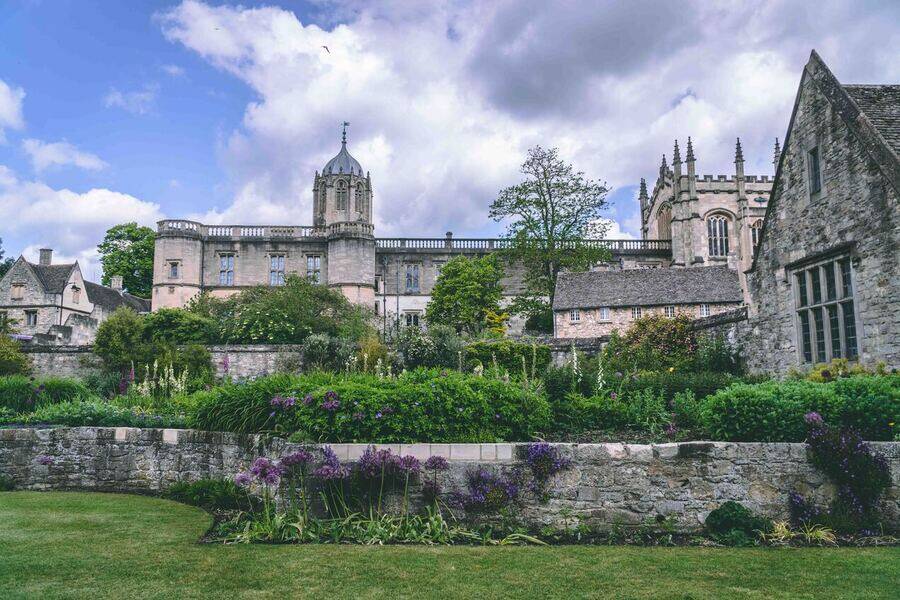
Christ Church in Oxford
One of the best things about Oxford is that you can see the city on foot, from the most famous colleges, to historic pubs, to the many free museums.
The historic Oxford University was first established in the 12th century and is the oldest speaking English university in the world. The university does not have a campus so you will see the buildings spread across the city.
Famous works of literature were written in Oxford such as Alice in Wonderland, The Lord of the Rings and the Chronicles of Narnia.
After exploring the town, why not take some time to visit Highclere Castle which is very nearby. You may recognise the castle from the opening scenes of popular period drama Downton Abbey, and it certainly lives up to how excellent it looks on screen. The castle was built in the 17th century and encompasses 5,000 acres of land that you can explore at your leisure, including the Secret Garden, the Monk’s Garden, the White Border and some beautiful woodlands.
Bath
Drive: 1 hour and 30 minutes from Oxford.
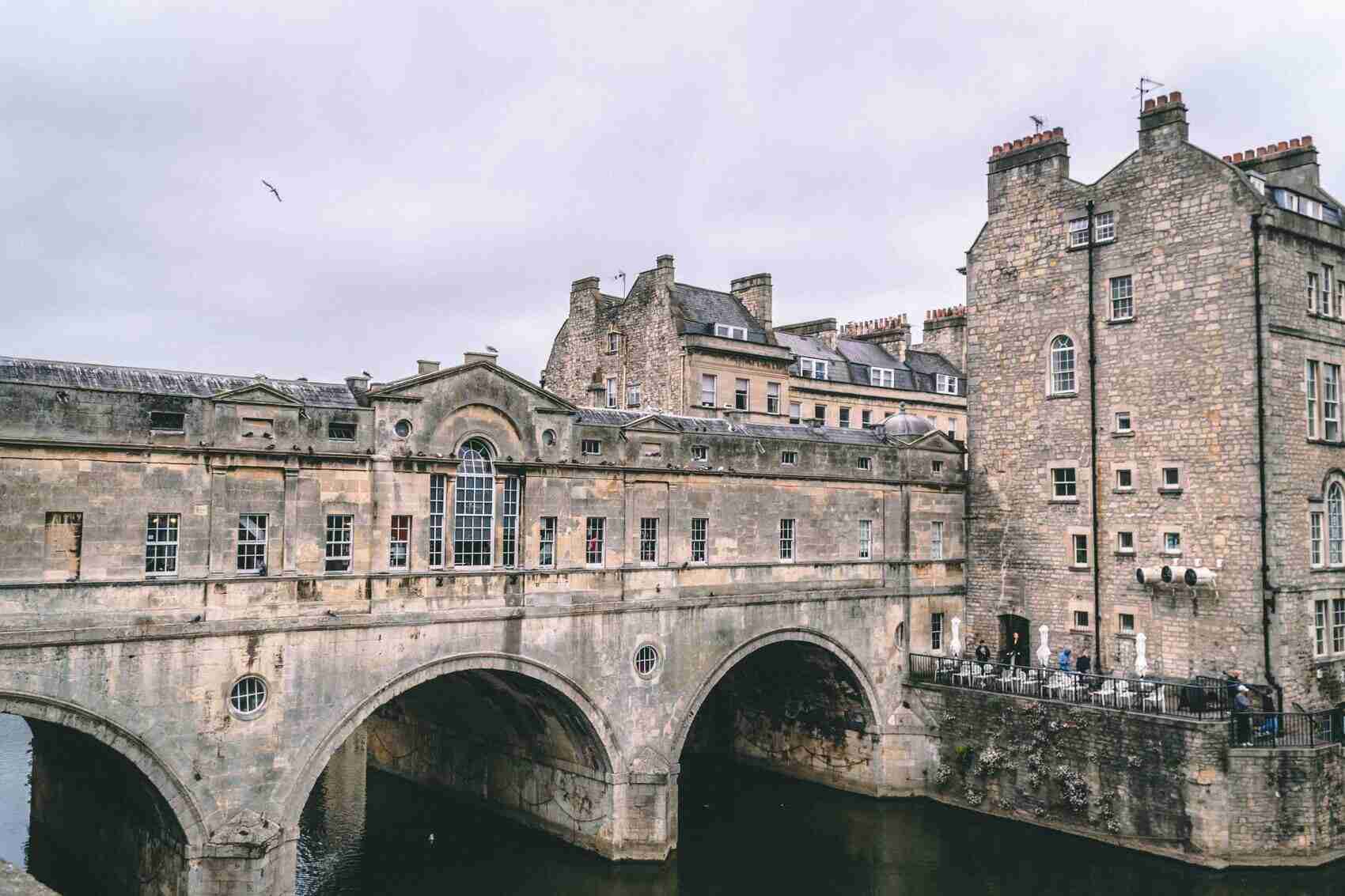
Pulteney Bridge in Bath
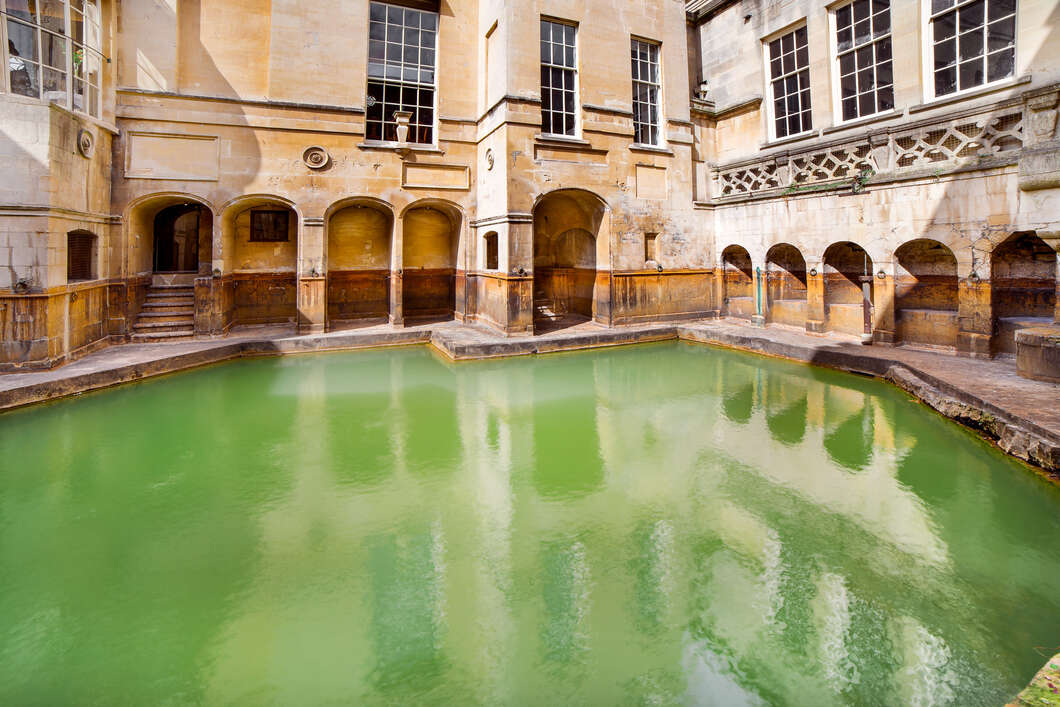
An essential of visiting Bath is of course to visit the famous Roman Baths, which are surprisingly well preserved given how old they are. Continuing with the stunning architecture of the baths, Bath Abbey should be your next stop, where you can climb the gothic tower and admire the views.
Booking a walking tour for Bath is a great idea if you want to make sure that you see all the sights as well as getting some highly valuable and interesting information on the history of this fascinating town.
Drive: As Bath is on the edge of the Cotswolds it will be right at your doorstep. Castle Combe is an easy 30 minutes drive from Bath. It depends on which towns are on your list.
The Cotswolds is a continuous stream of picturesque villages and beautiful natural landscape, truly resembling something out of a storybook or fairytale. As the Cotswolds is a collection of villages it is best to know where it is that you want to go in advance of getting on the road.
Bilbury
On the banks of the River Coln, Bilbury is home to one of the most well-known streets in the area, Arlington Row. If you are looking for the quintessential fairytale style streets and crooked brick cottages that the Cotswolds are so well known for, then this is the place for you.
Stow-on-the-Wold
This sweet little town is perched right at the top of a hill and features a gorgeous church, a small gallery and a famous farmers market held on the second Thursday of each month. You will definitely want to grab a bite at Lucy’s Tearoom for some yummy freshly baked goods!
Castlecombe
This is without a doubt one of the best places in the Cotswolds to admire the beautiful honey-coloured bricks of the cottages and get the ultimate photos. The southern tip of the village is where you will get that classic shot of the village.
Bourton-on-the-Water
Right on the River Windrush, Bourton-on-the-Water is a pretty Cotswolds town and is known as the Venice of the Cotswolds. Walk down the river and see what the Cotswolds is most famous for the honey-coloured bricks. Alternatively, enjoy a drink or food at one of the village’s cafes.
Gloucester
Drive: Gloucester is on the northeast edge of the Cotswolds so this will be a short drive as well.
Start by exploring the area around College Court where you will find The House of the Tailor of Gloucester, which inspired the author Beatrix Potter. The building is now a museum with a shop that is dedicated to the author.
Next head over to Gloucester Docks which is Britain’s most inland port. You will discover Victorian warehouses, a working dry dock and a Mariners Chapel. A lot of the buildings have been converted into restaurants, tap rooms and shops.
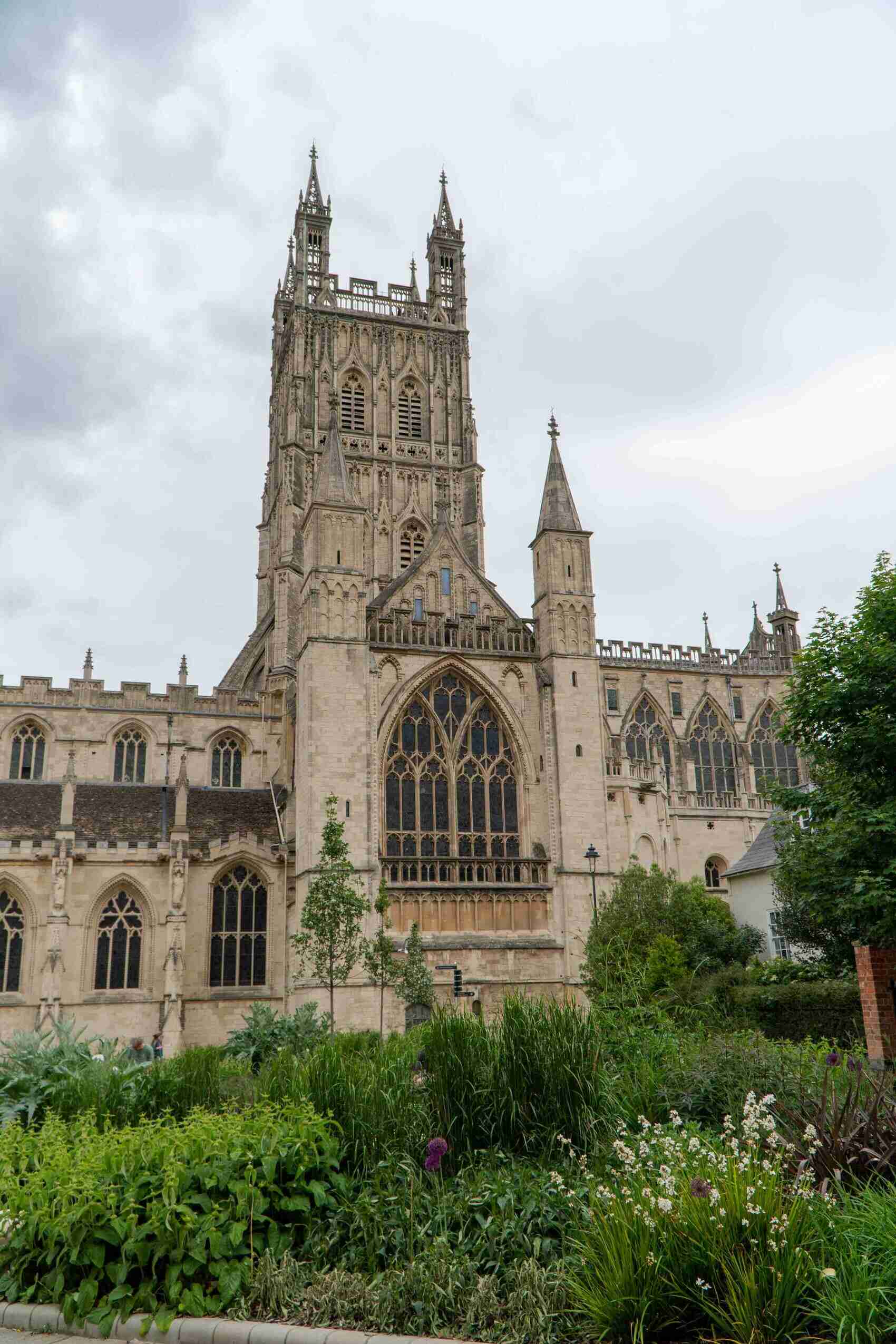
Don’t forget to see Gloucester Cathedral. It is an 11th century Romanesque and Gothic masterpiece. You may even recognise the cathedral’s corridor as it’s featured in the Harry Potter movies!
There is quite a lot to do in Gloucester so this could be a stop in itself but if you are short for time then a few hours will cover the main sites.
Stratford-Upon-Avon
Gloucester to Stratford-Upon-Avon is 1 hour drive.
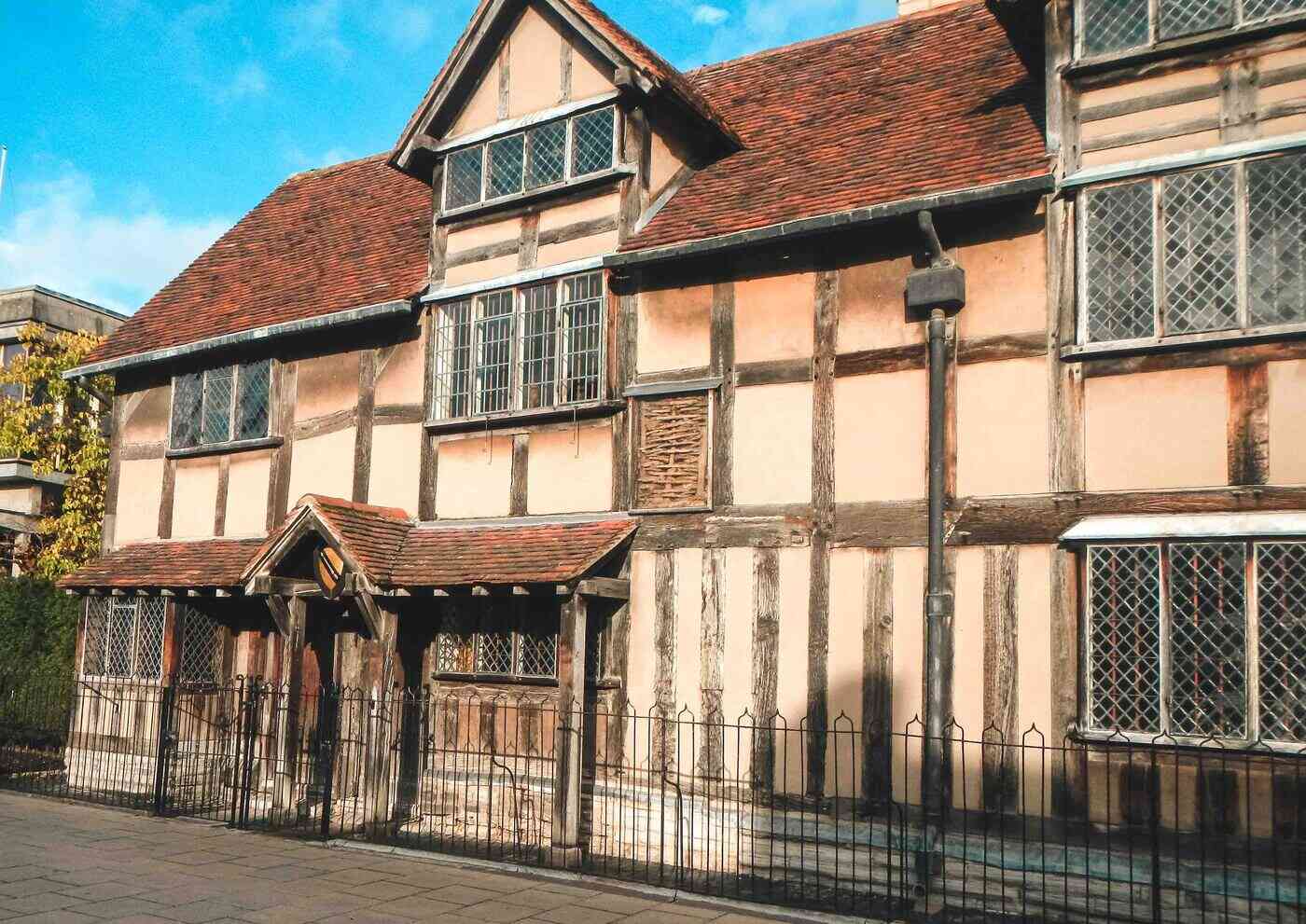
Shakespeares Birthplace
Stratford-upon-Avon is where William Shakespeare was born and most activities in this town are based around Shakespeare.
The Stratford’s Historic Spine is where the most important buildings of the town are and some of the buildings date back to the 15th century. The walk through the spine is approximately 0.6 miles (0.9 km) and will take you to mosts of the iconic sites in the town.
Starting at Henley Street you can see the building where Shakespeare was born. Tours are offered to see Shakespeares’ birthplace.
Anne Hathaway’s cottage is where Shakespeare courted his bride to be. You can pay to go inside the 500 years old cottage and see items from the 13 generations that lived there including the original furniture. Consider buying a ticket online which gets you into all of these attractions!
There are also lots of wonderful independent restaurants, cafes and bars in the heart of the city where you can have a great dining experience no matter what you’re after.
I would recommend going for some afternoon tea as it is a British tradition; this is arguably one of the most quintessentially British places you could have it!
Fancy something savoury instead? Chef Gordon Ramsay swears that Barnaby’s is the absolute best place to get yourself some fish and chips, and it’s right next to the Royal Shakespeare Company.
Chester
Drive: Stratford-Upon-Avon to Chester is around 2 hours and 30 minutes. Makes sure you avoid the toll road on the M6 and carry on the non-toll M6 route.
You are now pretty much at the halfway point between London and Edinburgh and sitting right on the Welsh border. This city has a rich history for you to explore; learn about Roman Legionnaires, Vikings, Normans and Anglo Saxons on your travels through the city.
The city is nearly completely surrounded by walls, which are considered to be the most well preserved in Great Britain running nearly two miles long. Other historic sites include:
The oldest racecourse in Great Britain
The largest Roman amphitheater in Great Britain
A one thousand year old Cathedral, with some amazing medieval carvings within
Seven hundred year old Rows galleries
Chester has one of the largest zoos in the UK and dedicates some of its resources to the conservation of endangered species. This makes for a great day out for visitors of all ages!
Liverpool
Drive: the drive to Liverpool is a quick one at 40 minutes.
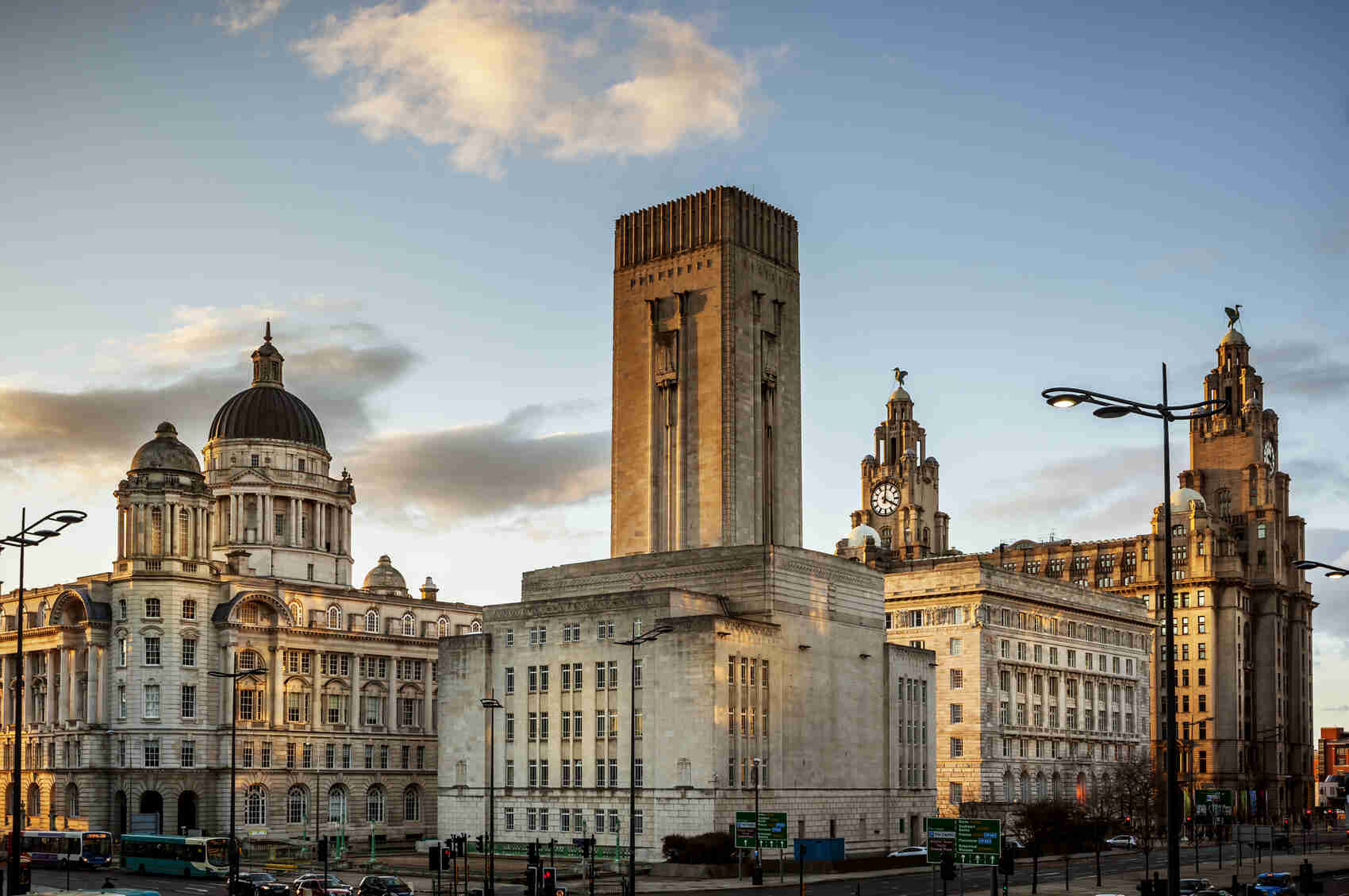
Pier Head Liverpool
Time to visit one of England’s major cities – the home of The Beatles, it’s Liverpool! This is the UK’s fifth biggest city, and there is so much to see and do that you could spend your entire trip there! Check out some of the historic areas, which have been granted World Heritage Status by UNESCO, like the Royal Albert Dock Area and William Brown Street.
There is also a great art and creative scene making for some awesome murals and street art as well as some art galleries. Here are some locations to check out:
Manchester is known across the UK for its rich and diverse cultural scene! After all, it is the home of The Smiths, Oasis, and the Stone Roses. It also has numerous other sights such as galleries, museums and plenty of pubs and restaurants too! Here are some of the highlights:
Afflecks Palace – This is one of the best things to do in Manchester; it is ‘an emporium of eclecticism, a totem of indie commerce in Manchester’s Northern Quarter’ – enjoy looking through craft stores and at jewellery and trinkets. It is truly a unique place.
Chinatown – You will know that you have reached Chinatown when you see the giant red archway that leads into the area. The area has a large number of Asian restaurants and cafes serving delicious food and even some karaoke! One of my favourite places to eat is Try Thai (I know it’s not Chinese!) but it offers great food and I often visit on my trips to Manchester.
Federal Cafe – This place is known across the city as a trendy brunch spot with fantastic coffee – it’s totally instagrammable!
PLY – Best pizza in the city, and very affordable – enough said!
Football – Manchester is home to premier league teams Manchester United and Manchester City. As you can imagine that means there is a football atmosphere! You can try and catch a game or visit the National Football Museum.
John Rylands Library – This building is one of the best examples of neo-Gothic architecture in Europe and an incredible library. One of the cool facts about the building is that it was the first place in Manchester to be lit by electricity.
As I travel to Manchester a lot, I’ve tried a significant amount of hotels in the city! By far my favourite is the Great John Street Hotel which is a 4-star hotel. The building is a Victorian former schoolhouse so it has a lot of wonderful architecture. The rooms are beautiful! Last time I stayed here I had a second floor just for my bathroom which had a free-standing bath. My other hotel recommendations are the Lowry Hotel and the Midland.
Drive: 1 hour and 30 minutes to reach the outskirts of the Lake District.
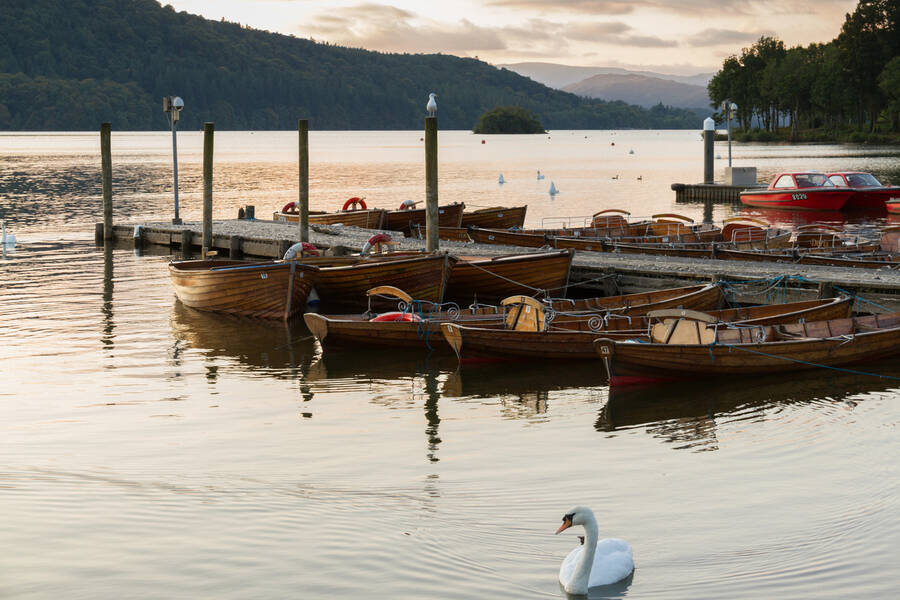
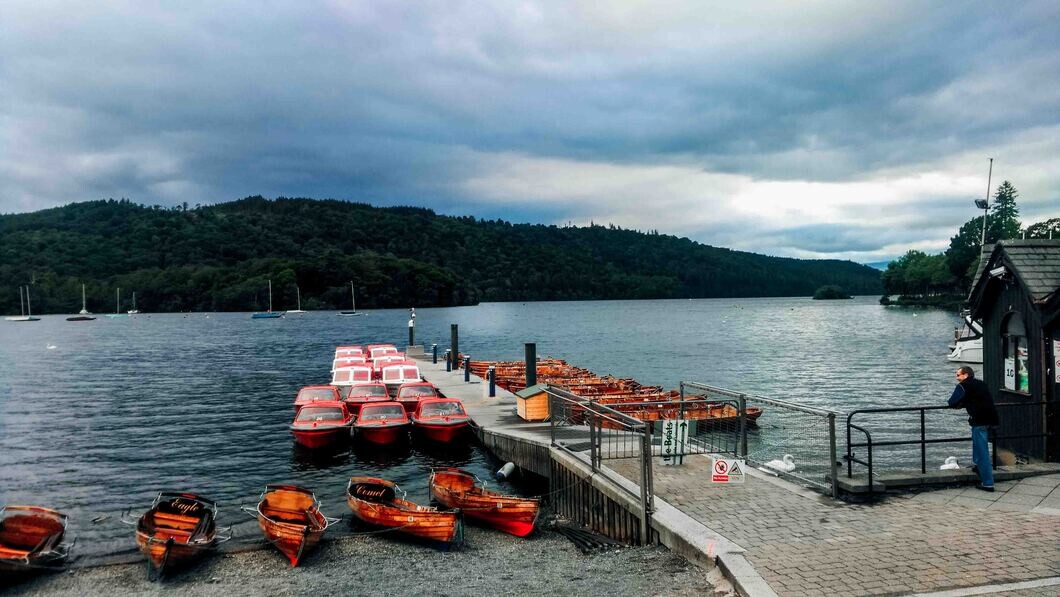
Swan and moored boats in Lake Windermere.
The Lake District has some incredible things to do – you’ll want to take your time and make sure you’ve seen all that you wish to!
Rydal Mount
Whether you’re a literature buff or not, you’re definitely not going to want to miss visiting the home of Wordsworth, Rydal Mount in the small village of Ambleside. The famous poet resided here for the latter part of his life, and you can walk in the beautiful gardens that were once landscaped by Wordsworth himself! You can even take a look at the place where he wrote, as well as his library!
The Lakes Distillery
This distillery was founded in 2014 and has become one of the most popular in the Cumbria area in recent years. It produces gin, vodka and whisky. Even better? It uses local produce to do so!
The distillery is awesome to visit – it even has alpacas! Plus, there is a shop, so you can buy your favourite drinks and take them home with you!
Lake Windermere
This is the largest natural lake in England, and gives a great picture of the beauty of the Lake District. If you are going to go to any lakes in the Lake District, make sure its this one. There are tonnes of amazing things to do around the lake, such as boating, running, hiking and cycling!
Grasmere Gingerbread
One of the most famous things you can buy in the Lake District is Grasmere Gingerbread. When you walk into the shop you will smell the spices and the aroma of gingerbread. The perfect snack to grab for your road trip! If it is winter then pair it with a nice hot drink alongside a fireplace.
You have finally arrived at your destination; Scotland’s capital city of Edinburgh! This city is great to spend a couple of days exploring, particularly the old town which is where you will find the castle!
For ideas of what to see and do during your time here, check out my article on the 7 Day Drive Loop from Edinburgh to Glasgow.
England truly has so much to offer, and there are plenty of amazing places within a couple of hours of London that showcase just how beautiful and diverse this country is. And best of all you don’t need a car – there are loads of places that you can easily get to by public transport.
Make sure you download the Trainline app – it will make planning your journey a breeze. Not only will it bring up all stations and all rail companies (so you will literally see all options) – you’ll also be able to check for any planned engineering works or disruptions. You can even see congestion and how full individual carriages are!
My top tip though would be not to venture anywhere too far away – e.g. Scotland! Although Edinburgh is doable as a day trip by train (4.5 hours each way), the required early start and very late finish (maybe even a sleeper train!) will leave you exhausted, and you won’t get the most out of the experience. Maybe save anywhere with a travel time of more than 2.5 hours each way for a weekend getaway! I genuinely suggest sticking to England for day trips.
But fear not, many top places to visit are closer to London than you may think.
Here are my most recommended day trips from London by train…
Oxford
When people say they only have time to do one day trip from London, I usually recommend Oxford. Home to the oldest university in the English-speaking world (only the University of Bologna and the University of Paris are older), it is a town steeped in tradition, and being one of the few places not to have been bombed at all during the Second World War, a rare opportunity to see genuine old buildings (as opposed to rebuilds).
One of the best things about Oxford is that you can set off from the train station on foot, and everything – from the most famous colleges, to historic pubs, to the many free museums – are within walking distance. Alice in Wonderland, the Lord of the Rings, and the Chronicles of Narnia are just some of the great works of literature that were born in Oxford.
A lot of Inspector Morse and even Harry Potter were filmed in Oxford – so it’s a great place to visit to see quintessentially English buildings, as well as some familiar film locations. The town really has something for everyone – and for that reason, my recommendations for Oxford will be a bit more extensive that the other day trips on my list!
Getting There
Direct trains run from Paddington Station every half hour, and the total journey time is less than one hour.
Things to Do
I’d definitely recommend doing a walking tour of Oxford, not only to get your bearings, but also to hear the unique history of this magical place. You won’t be able to get a true appreciation of what you’re looking at, without a walking tour! Footprints offer a 2-hour free (tips-based) walking tour, departing regularly throughout the day from Broad Street. The guides are Oxford students, so you’ll also get a unique insight of both the university as well as college life from the perspective of someone who really knows!
As for the colleges, not all of them are open to the public, and those that are, are sometimes closed for exams and special events. If there is a specific college that you are interested in visiting, I would urge you to phone in advance and check that they will be open for sightseeing on the day that you are visiting.
If you don’t have a college in mind, then I would highly recommend Christ Church – it is the largest, grandest, and most impressive. The dining hall is also the famous “Harry Potter dining hall” – so a must for fans!
Tickets are much more expensive than other colleges (£15 at the time of this article’s publication), but in my opinion, you do get what you pay for – including an audio tour, which is not offered by any of the other colleges I am recommending.
If Christ Church is outside your budget, you can visit either Balliol College or Trinity College for only a few pound. Alternatively, Worcester College is free to visit the impressive grounds as well as the college chapel (but you will not have access to any other buildings). Tickets for the colleges can be purchased at the entrances to them, when they are open.
Alternatively, also worth a visit is the Bodleian, one of the oldest libraries in Europe. It is a working library, so visitation is only possible via guided tour. Again, tickets are available at the entrance, when the library is open to visitors.
Oxford is also home to a number of free museums, including the Ashmolean, which believe it or not, is older than the British Museum (which claims to be the oldest public museum in the world – important to note that the Ashmolean is owned by the university).
The collection ranges from ancient artefacts such as Egyptian mummies, to contemporary art. Some of the items from the original 17th Century collection are still on display, including a lantern thought to have been used by Guy Fawkes during the Gunpowder Plot of 1605, Oliver Cromwell’s death mask, and the “posy rings” thought to have inspired the “one ring” in J.R.R. Tolkien’s Lord of the Rings. The Ashmolean – along with other museums – is free to visit, but donations are encouraged. The museums are typically open until 5pm, and closed on Mondays.
You can also get a great (free) view of the “city of dreaming spires” from the cafe on the top of the Ashmolean. Other great (cheap) views can be found atop Carfax Tower, Oxford Castle’s motte/mound, or the tower of the University Church of St Mary the Virgin, in Radcliffe Square.
A visit to Oxford wouldn’t be complete without a visit to some of the many historic pubs. My personal favourites are the Turf Tavern, thought to be the oldest pub in Oxford, in part dating back to the 12th Century.
A favourite haunt of the Harry Potter cast and crew, the Turf was also where former Australian Prime Minister Bob Hawke broke the Guinness World Record for downing a yard-glass of beer in 11 seconds, and where former US President Bill Clinton famously “puffed but did not inhale” a particular substance while he was a student at Oxford. Another favourite is the Eagle and Child – notorious for being the meeting place of the informal literary group the Inklings, including Tolkien and C.S. Lewis.
I’m often asked if which is better to visit: Oxford or Cambridge. In my opinion, it’s far better to visit Oxford – you can easily walk into the town from the train station (Cambridge will require a bus ride or taxi), it’s smaller (so easier to explore), and older. Oxford just has a feel to it that you don’t get from Cambridge, but both are fabulous places.
Bath
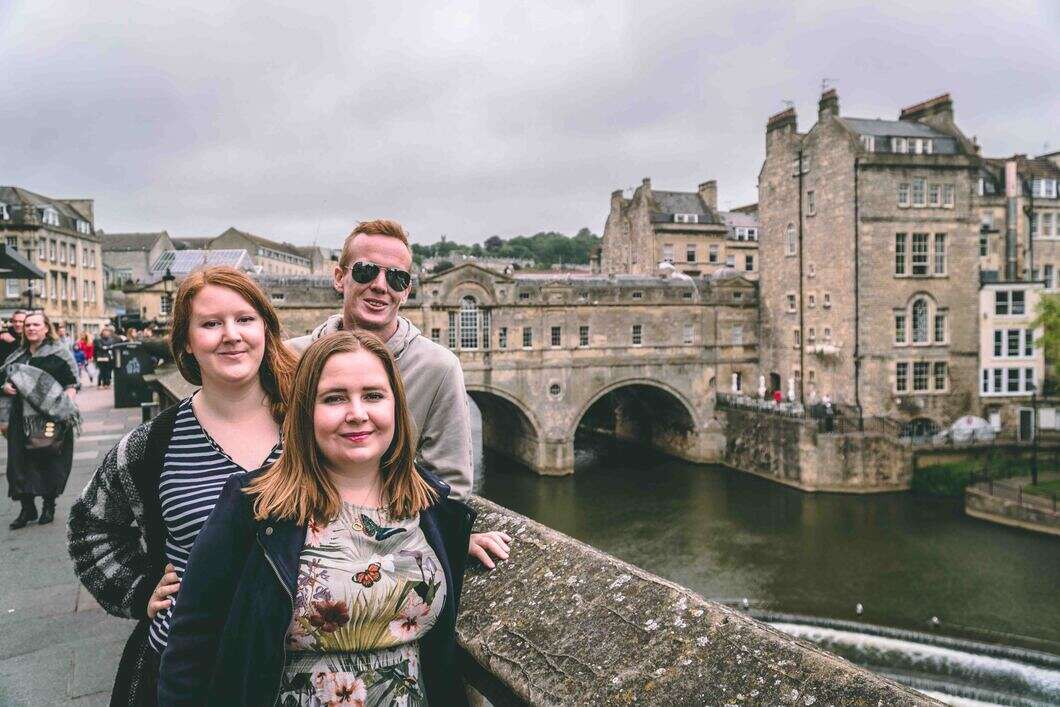
Kat and family at Pulteney Bridge in Bath
Only 80 minutes from London, Bath is another university town steeped in history. Named after its Roman-built baths, it is thought to be the only natural thermal spa in England, and the city was given World Heritage site status in 1987. Although some bombings happened here during the war, there are plenty of old buildings and cobbled streets that survive.
Getting There
Trains run from London Paddington to Bath Spa every hour.
Things to Do
Bath is a great city just to wander around yourself, armed with some basic history in a guidebook. Don’t spend too long doing this, as there are 2-3 other things that will definitely fill up your day…
The Roman Baths are understandably the main attraction in Bath. A well-preserved and hugely immersive museum, you’ll experience some of the fascinating Roman history of England. You can’t actually immerse yourself in the water here, but if you are looking for a spa experience, be sure to check out nearby Thermae.
Britain’s only operational natural thermal spa, it’s one of my favourites anywhere in the world. You can either pay for a 2-hour access to the facilities (includes robe and slippers), various treatments, or one of the great-value packages online. Most packages include a meal (vegans are catered for).
If you’re a Jane Austen fan, Bath should definitely be on your list to visit. In addition to the Jane Austen Centre, Visit Bath’s website has some great information for fan must-do’s in the city.
An unusual museum to visit in Bath is the Herschel Museum of Astronomy, and I’d highly recommend it. The home of William and Caroline Herschel, you can stand in the garden on the exact spot where the planet Uranus was discovered – first sighted through telescope in 1781.
If time permits and you’re very interested in doing it, you could also spend half of your day visiting Stonehenge. There are plenty of tour operators that offer excursions there from Bath city centre. It’s really difficult to visit Stonehenge using public transport, so it is a place I would always recommend booking on to an organised tour.
There are Stonehenge and Bath combined day trips via coach that depart London (Golden Tours and Premium Tours are just a couple of companies that offer these trips), but it’s also perfectly easy to book one of the many options departing Bath – and this would give you more flexibility in terms of your Bath sightseeing schedule.
However you do it, I would not recommend Stonehenge as a standalone day trip from London – you’ll spend more time on the coach than at the site, and if you’re going to travel that far, it is definitely worth combining the trip with Bath. Bath really has a lot of offer on its own for a full day, so Stonehenge might be better to include in a weekend trip – but for those who only have a day, it is definitely doable.
Stratford-Upon-Avon
Shakespeare’s hometown is definitely a worthwhile jaunt for fans of the bard. With an average journey time each way of 2 hours 20 minutes, it is a day trip farther away than the other rail journeys I am recommending – but definitely worth it. There are some direct fast trains that take just over 2 hours.
Getting There
Trains run from both London Euston and London Marylebone, and most require at least one change. Chiltern Railways do offer a direct service from Marylebone.
Things to Do
I absolutely recommend doing the 2-hour walking tour with Stratford Town Walk – only £7 for adults; it’s incredible value for money. Note that the walk only happens at 11am daily (there is a later walk at 2pm on Saturdays, but to be honest you’re best to start your day with the walk) – so try to get a train that will get you into Stratford by 10.30am at the latest!
There are a number of sites in and near the town that are relevant to Shakespeare – including his 5 “homes”. The Shakespeare Birthplace Trust offers a pass that will give you access to all 5 sites (for 12 months, if you’re keen to become a regular visitor!), and this is the best value for money, at only £23 for adults (comparably just to visit his birthplace, it is £18).
The house where Shakespeare was born, as well as Anne Hathaway’s cottage, are my top two must-do’s. Note that you won’t be able to walk to Anne Hathaway’s cottage – you’ll need to get a local taxi, but it’s definitely worth it. You’ll also need to get a taxi if you wish to visit the farm, which is even further away. I don’t think that in a day you’ll have time to do both the cottage and the farm – I’d personally recommend visiting the cottage over Mary Arden’s Farm.
Contrary to popular belief, Shakespeare is not buried in Poet’s Corner at Westminster Abbey (even though there is a statue there to memorialise him). He’s buried in the chancel of his local church in Stratford-upon-Avon: Holy Trinity, where he was also baptised. If you’d like to pay your respects, the church is free to visit – and his funerary monument is definitely worth seeing.
Stratford-upon-Avon is a worthwhile visit at any time of year, but I particularly recommend visiting around Shakespeare’s birthday, which is April 23rd. The week of his birthday sees a huge festival of celebrations, including a parade and other activities. Although typically a busier time to visit, the atmosphere is incredible.
Brighton
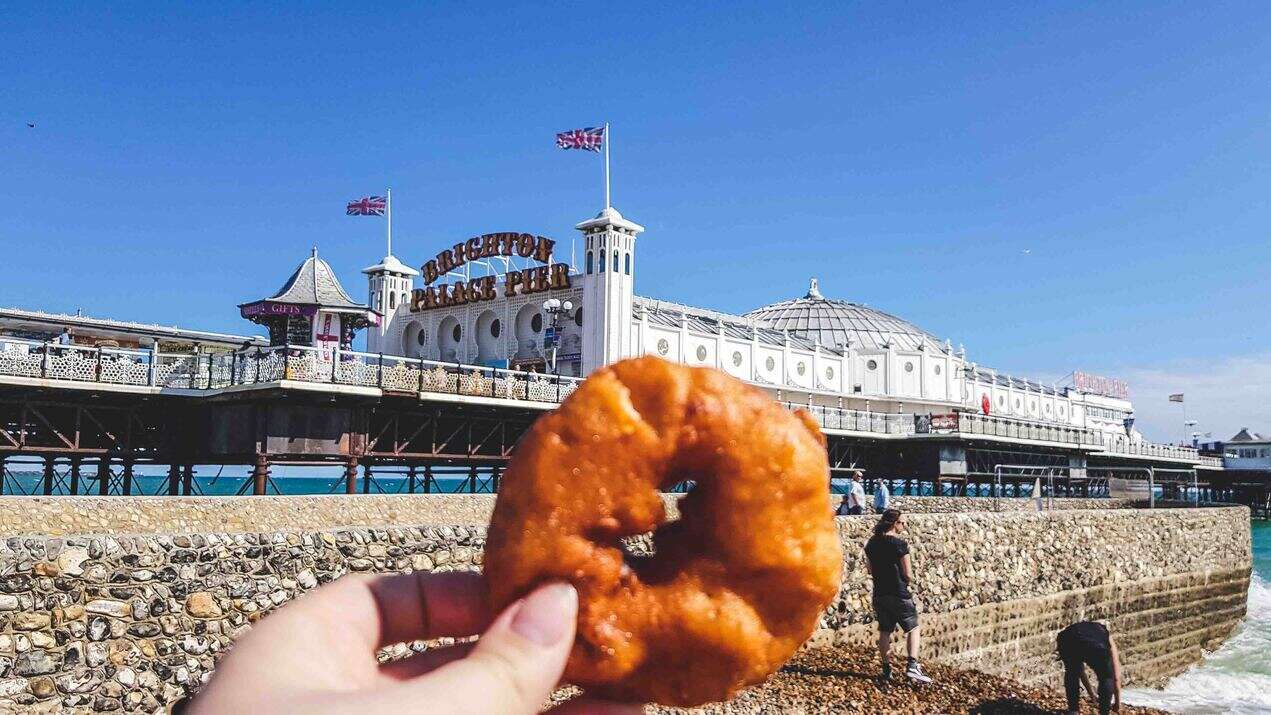
Right after I took this photo a Seagull swooped in and stole my donut! Watch out for them as they are pretty agressive in Brighton and not affriad to steal your food.
There are few things more quintessentially English than a day trip to the seaside. There’s no shortage of famous beaches and seafronts, though some of the more spectacular ones (such as those in Devon and Cornwall) are too far away for a day trip. Close to London, you’re best to head to Southend, Margate, or of course Brighton. Although you’ll find more sand in Southend or Margate (Brighton is a pebbled beach) – there’s a lot more to Brighton than simply heading to the beach.
Getting There
Brighton is on the same rail line as Gatwick Airport (obviously further away from London than Gatwick) – meaning that there is an abundance of direct trains, and they run regularly. The faster route is departing Victoria Station, but the Thameslink service goes via many suburban stations – so you may find that you’re able to pick up a train to Brighton close to home, rather than having to trek into central London to get one. If you are in central London, the Thameslink service typically runs via London Blackfriars (or some via St Pancras International).
Things to Do
Brighton is vegan foodie heaven… full disclosure: the main reason I go there is to eat! The city is regularly voted one of the most vegan-friendly cities in the UK (and even the world), so there is no shortage of vegan restaurants (as well as vegan-friendly restaurants) to enjoy.
Happy Maki is a vegan sushi bar, specialising in sushi burritos which are perfectly packed for a beachside snack. Or wait until you hit the beachfront itself and head to v360 for your fast food fix, followed up with some vegan whippy ice-cream!
For a proper sit-down meal head to Erpingham House, or for something a bit more laid-back, check out plant-based cafe Green Kitchen.
You may also be surprised to discover how many pubs in Brighton have a fully vegan kitchen, or host pop-ups within them. Tried and tested favourites include the Hope and Ruin – Beelzebab have long operated their fully vegan kitchen from within this iconic establishment, serving up vegan doners, hot dogs, loaded fries and more.
Or check out (although not fully vegan), vegetarian pub the Prince George which is only a short walk from the train station – making it the perfect place for a pub lunch, or as a final destination for a pint (or a few) before heading back to London. If you’re hungry, I recommend the loaded baked burrito! Opt for the pie and mash if your taste buds seek more traditional fare.
Of course there is much more to Brighton than just the food! It really is a great city to wander around. Be sure to spend a good chunk of time exploring Brighton Palace Pier – the biggest attraction in Southeast England.
A Grade II listed pleasure pier, it’s about as typically English as you can get – and offers a truly authentic experience in terms of what it has to offer, from the rides and amusements to the typical eats and drinks that you would expect from an old-fashioned fair (and of course many vegan options too)! If you are planning on doing a few rides, I would recommend getting a wristband as you will save a lot of money – and you can buy them 25% cheaper on the pleasure pier’s official website.
Also worth a look while you’re in town is the Royal Pavilion. Built as King George IV’s seaside pleasure home, it’s one of the most historic buildings in Brighton as well as probably also being the most exotic. A mix of Regency period grandeur, with strong influences from India and China, the Royal Pavilion is in the centre of town (towards the seafront, of course!) – so very easy to get to and see for yourself. You can purchase tickets to view the inside, which I would highly recommend, but it is also breathtaking from the outside… and access to the gardens is free.
Hampton Court Palace
Aside from St James’s Palace in London, Hampton Court Palace is the only surviving palace from the reign of King Henry VIII – and the only one of these two palaces that you can visit. Only 12 miles from central London, it is one of the easiest day trips that you can do from the capital.
Getting There
Direct trains run from London Waterloo to Hampton Court every half hour, with a journey time of 36 minutes. Cheap and cheerful, tickets are only £7.60 each way.
Things to Do
Building of Hampton Court Palace commenced in 1519, and the palace was initially intended for Cardinal Thomas Wolsey, a favourite of King Henry VIII. When Wolsey fell from favour (largely as a result of failing to negotiate an annulment for the king, who wanted rid of his first wife so that he could marry another) – the palace was handed back to Henry VIII, who then had it significantly extended. It ultimately became his favourite palace, and is the residence most associated with his reign.
Although often described as a Tudor palace, in fact much of the original palace was destroyed during the reign of King William III, who sought to rebuild something to rival the Palace of Versailles. However this work was not completed, leaving Hampton Court Palace an accidental mix of two styles – Tudor and Baroque.
Nonetheless, the palace remains firmly associated with the story of King Henry VIII and his six wives, and offers a true sense of both the Tudor period and more historic royal life – which is typically what most visitors to England are hoping for… as opposed to the more modern style, found inside the residences still used by the royal family today.
So, a visit inside the palace is a must. Tickets include access to the buildings, gardens and even a hedge maze! The maze was part of King William III’s work on the palace, and is the oldest surviving hedge maze in Britain. Also of interest are the royal tennis court (the oldest surviving real tennis court in England), and the world’s largest grape vine!
Personally I would recommend purchasing the full ticket, as the interior of the palace itself is a must-see… however, if you are only interested in the gardens and the maze, separate tickets for these are available on site (not online, where only the full ticket is available, costing around £19. It will only cost you a little less to miss the buildings).
Truly, this day trip is all about the palace, although there are some hiking trails in the area. The palace is also right on the River Thames, so there are plenty of nice spots for a riverside picnic. Alternatively, plenty of traditional pubs nearby!
Windsor Castle
While on the subject of royal palaces, Windsor Castle also makes a lovely day trip from London by train. The actual home of Her Majesty the Queen (she doesn’t actually live in London, she lives here!) and her favourite place to spend weekends, the 1,000 year old palace offers both a staggering amount of history and tradition, as well as a real sense of the day-to-day life of Britain’s modern working royal family.
The scene of many royal weddings, Windsor Castle has become particularly popular since the marriage of Prince Harry and Meghan Markle in St George’s Chapel – and even after stepping down from royal duties, the couple’s primary residence (Frogmore Cottage) is still within the castle estate.
Getting There
The fastest and easiest way to get from London to Windsor by train, is from Paddington Station – but note that there are no direct trains from London. Even though you will have to change trains, the total journey time will vary between 22 and 35 minutes! Too easy!
You’ll change to a Windsor and Eton Central train at Slough, and trains to Slough from London Paddington are incredibly frequent.
I would recommend setting out early for Windsor… like I say, it’s become an incredibly popular excursion from London since Harry and Meghan’s wedding. Thankfully both train journeys are relatively short, so it’s not a big issue if you can’t get a seat and have to stand. Be warned that the trains to Windsor and Eton are tiny though – usually only two carriages.
Things to Do
Another reason to set out early is to ensure that you catch the Changing the Guard ceremony at Windsor Castle – make sure that you choose a day that it’s actually happening! It’s not every day, but typically happens on Tuesdays, Thursdays and Saturdays at 11am. Schedules are subject to change, so always check online.
Do be aware though that the guard change can be cancelled last minute due to poor weather, or for other reasons, and you’re not always told why (if it’s short notice, the linked website is also unlikely to be updated). You’ll have a great day in Windsor regardless, even if the ceremony is cancelled unexpectedly.
Obviously the trains that arrive closer to the Changing the Guard ceremony start time tend to be busier, so try to get an earlier train to get ahead of the crowds.
You can actually catch a chunk of the ceremony from Windsor High Street itself – you don’t even need to pay for an admission ticket for the castle to do so. The band and guards march from Victoria Barracks on Sheet Street, up the High Street and into Windsor Castle. If you’re opting to watch them from the street, the best spots are on Windsor High Street itself, or on the Corn Exchange under Windsor Guildhall. Again, get there early to secure your spot. The march up the street takes about 10 minutes.
If you want to see that actual “changing” and full 30-minute ceremony that takes place in front of the castle, you will need to purchase an admission ticket – and allow extra time to actually get inside the grounds before the ceremony starts. Be sure to book your castle ticket in advance, online – and print at home.
Do allow at least 2-and-a-half (ideally 3) hours to visit Windsor Castle. It’s the oldest occupied castle in the world, and truly has so much to offer. The ticket price includes access to the magnificent State Apartments, Queen Mary’s doll’s house, the castle grounds, and St George’s Chapel. Not only did the chapel serve as Harry and Meghan’s wedding venue, 10 British monarchs are buried inside – including King Henry VIII. A free 30-minute Precinct tour is also included in the admission price.
After exploring the castle you will certainly have worked up an appetite. Although there are plenty of options for food in town, the castle’s cafe is definitely worth checking out before you leave. Situated in King Edward III’s medieval Undercroft, it is one of the oldest surviving spaces in Windsor Castle, and for centuries served as the castle’s wine cellar. The vegan chocolate cake is to die for!
For keen walkers, I’d recommend grabbing some food from the cafe and heading off along the Long Walk. From the castle gate to the Copper Horse (a statue of King George III) it’s around 2.7 miles, so be mindful of time, especially as a round trip. The Long Walk connects Windsor Castle with Snow Hill in Windsor Great Park, and is still used by royal carriages every year to get to the Ascot Races. Snow Hill makes a great spot for a picnic.
If you’re not up for the walk, a substantial lunch can be sourced from one of the town’s many pubs and restaurants. Windsor has become increasingly vegan-friendly, with most pubs having at least one decent option on the menu. Otherwise you’ll find the usual suspects such as The Real Greek, Giggling Squid, Wagamama, and others.
If time permits, spend the afternoon on a Thames river cruise. French Brothers offer either a 40-minute or 2-hour round trip. Alternatively, you can jump on the Windsor Duck, for a tour of both road and river!
Liverpool
Just like Shakespeare’s birthplace, the Beatles’ hometown is a little bit further away from London than some of these other places, but still doable as a day trip and absolutely worthwhile. More than just music and football, Liverpool was the main trade and migration port at the height of the British Empire, and famously nicknamed “the world in one city”.
Getting There
Direct trains run regularly from London Euston to Liverpool Lime Street, and are even more frequent if you’re happy with one change. The average journey time is 2 hours and 30 minutes.
Things to Do
The best way to easily cover much of the history and key sights of Liverpool over a period of about three hours, is by taking the “free” (tips-based) walking tour with Sandemans. Try to catch the 11am tour if you can. Although the tour does include some of the key Beatles sights and stories, if the band is the main reason for your visit, you may wish to check out Sandemans’ more in-depth Beatles to the Blitz tour, departing at 3pm.
Although the original Cavern Club that launched the fab four was demolished in 1973, it was authentically rebuilt on Mathew Street and remains an important venue today. A place of pilgrimage not only for Beatles fans but for musicians generally, it is arguably the most famous club in the world, and no visit to Liverpool is complete without stopping by. There will likely be a gig on while you’re in town, and in my opinion this is the best way to experience The Cavern. Alternatively, tours are also available.
But an absolute must for Beatles fans is a visit to The Beatles Story. More than just a museum, the exhibition is a truly immersive experience.
Away from the Beatles, you should head to Royal Albert Dock, the vibrant heart of Liverpool’s historic waterfront, to soak up the atmosphere and meet some friendly locals. The Victorian dock comprises of the country’s largest group of Grade I listed buildings, and is home to a number of independent shops, as well as museums and galleries if you’re looking to get your cultural fix. There’s also an abundance of places to eat and drink.
The city is famous for its architecture, much of which was influenced by its development into a major port of the British Empire. English Heritage has described Liverpool as England’s finest Victorian city, and you’ll certainly get a sense of this from Albert Dock. But the city is really a mix of architectural styles, spanning a period of about 300 years – and it’s certainly worth checking out some of the more modern buildings. A personal favourite is the Metropolitan Cathedral, nicknamed “Paddy’s Wigwam”. Built in the 1960s, it’s a curious mix of modern architecture, Gothic Revival, and rock ‘n roll!
Football fans should definitely head to Anfield, the home of Liverpool Football Club. A stadium tour is an absolute must-do for anyone who loves “the beautiful game”, and although not located in the city itself, there are loads of local buses that will get you there easily.
Dover
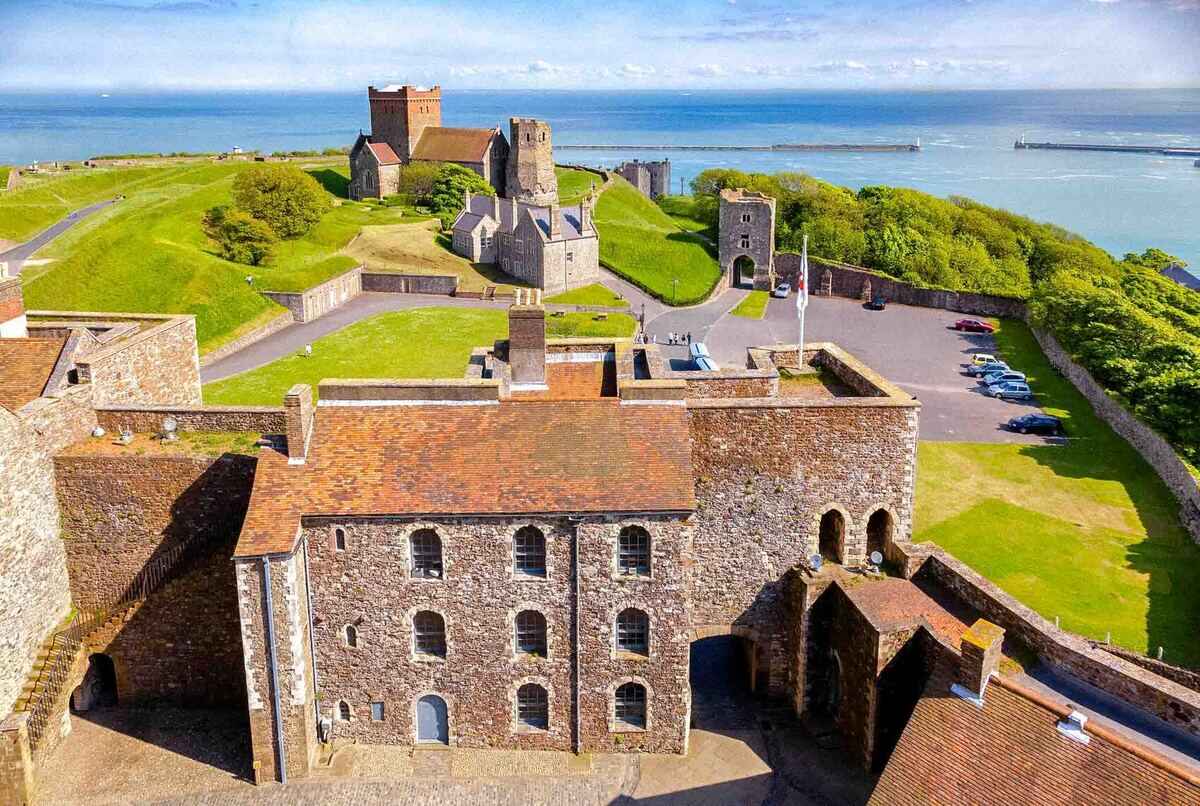
Inside of Dover Castle with St Mary and Roman lighthouse in the background.
Known as the Gateway to England, for centuries Dover has been the first point of contact for countless travellers entering Britain, and the iconic White Cliffs have been the last glimpse of the country for those crossing the English Channel. Before you decide to leave England behind and jump on a ferry to France, stick around to see what makes this famous port a perfect day-tripper’s destination.
Getting There
There are trains that run from London St Pancras International to Dover Priory every hour with Southeastern – and this is the train that you’ll want to get. You’ll see other trains going to Dover as well, but these are much slower. The high-speed Southeastern service will only cost you a few pounds more, and you’ll get there in half the time! The journey should take just over an hour.
Things to Do
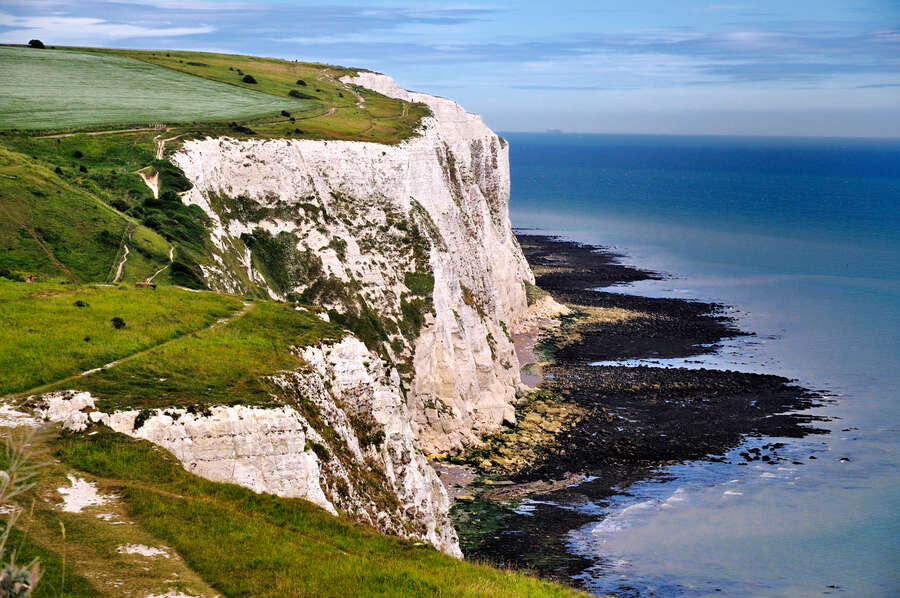
Dover has “Walkers are Welcome” status, and yes – this does mean that you can walk the famous White Cliffs themselves. I’d recommend you make this the first thing you do upon arrival.
The White Cliffs hold huge cultural significance for Britain, and are a national symbol of freedom and hope. They’ve played a huge rule in the shaping of English history since the arrival of Julius Caesar in 55AD, and have been linked to wars and invasions ever since.
It takes most people around 40 minutes to walk to the top of the cliffs from the town centre. It’s a beautifully scenic walk, with spectacular views of both the ocean and Dover Castle. You’ll know you’ve reached the top (and where the actual cliff walk begins, haha), when you spot the White Cliffs of Dover Visitor Centre. I recommend a brief stop here to both catch your breath, and also maybe grab a snack and a drink.
The walk along the cliffs boasts incredible views, and on a very clear day, it is sometimes possible to even glimpse France. The full walk is about 2 miles, and the end of it you will find the South Foreland Lighthouse. The current lighthouse is Victorian, but there have been various lighthouses on the site since the 14th Century. The former lighthouse keeper’s cottage now houses Mrs Knott’s Tearoom, where you can stop for some food and a cup of tea, surrounded by 1950s decor. I wouldn’t recommend lingering too long here, as there is much more to see!
It is possible to see both the White Cliffs and Dover Castle in the same day, as they are quite close to each other. I’d recommend refuelling with lunch, and then not wasting any time getting to the castle – as there really is enough to see there to spend a whole day at the castle itself!
If you fancy a pub lunch, there is no place more suitable than the historic White Horse Inn. Situated in the ruins of Norman Church, the building dates back to 1365! The cellar at this time was used as the town morgue! This award-winning pub has great vegan options too, but if you think you’ll be tempted to linger there, you may wish to visit the castle first (which closes at 5pm) and then hit up the White Horse for an early dinner instead.
Dover Castle boasts more than 2,000 years of history, and I have to say it is probably one of the best castles I have visited anywhere in the world. From the Great Tower of the Royal Court of King Henry II, you can also immerse yourself in the incredible history of the Second World War, including visiting the underground hospital that treated injured troops. There are also tours of the secret wartime tunnels that were used from Napoleonic times, up to as recently as the Cold War.
Bristol
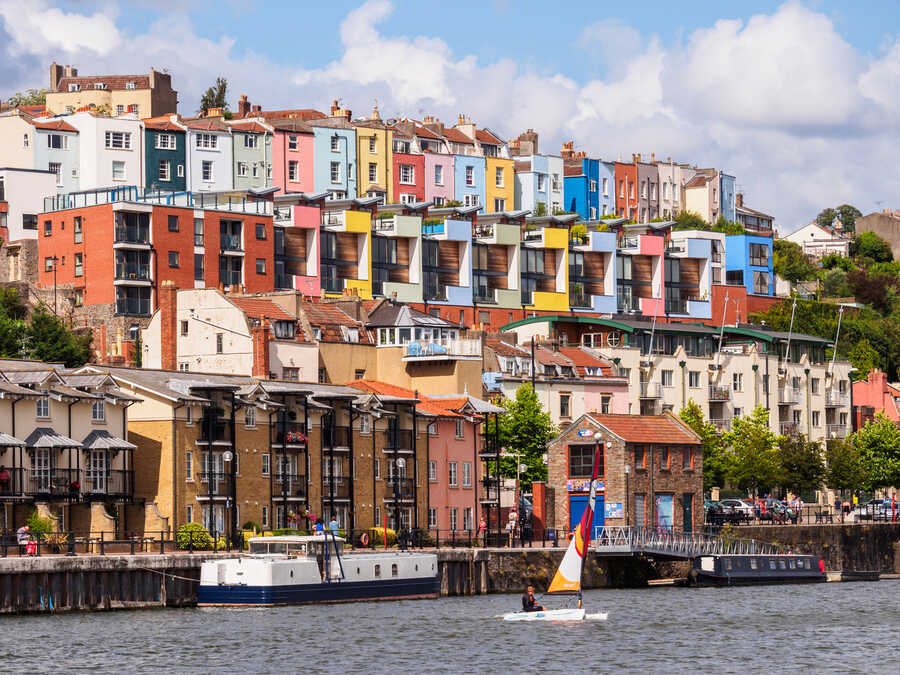
From its importance in maritime history, to Banksy – Bristol is a vibrant city that is so much more than a student town. Spilling with culture and not afraid to confront and address its oftentimes dark history – including associations with the slave trade – it’s a fiercely diverse and dynamic city, full of life and energy.
Getting There
Direct trains run hourly from London Paddington to Bristol Temple Meads. The total journey time is around 1 hour 40 minutes.
Things to Do
Being a student town, Bristol unsurprisingly has a great “free” (tips-based) walking tour. Spend a couple of hours with a local who will tell you the stories of the city, as well as show you all of the major sights including the great Clifton Suspension Bridge, Bristol Cathedral, the SS Great Britain, some of Banksy’s graffiti art, and more. The tour will finish down by the harbour, from where you will be able to head directly to just about anything of interest.
If you are a big Banksy fan, you’ll definitely want to spend some time seeing his many artworks and murals in the city. Born in Bristol in 1974, the city has always been one of his main canvases, and is home to some of his most famous pieces. Visit Bristol have listed some of his most important artworks on their website in order to allow you to do a self-guided walk; there’s even the Banksy Bristol Trail map you can download.
Hit up the old town and walk through St Nicholas Market, weaving your way through quirky stalls and street food in a Georgian arcade. Then head over to the Christmas Steps, a historic street dating back to the 17th century – flanked with cafes and antique shops.
If the steps weren’t too strenuous for you, climb Cabot Tower for a fabulous free view of the city. Another fun thing to do is head to the university campus to experience the mirror maze in Royal Fort Gardens.
M Shed is a museum all about Bristol and its people, and again – it’s free. Housed in a 1950s dockside transit shed, it is an interesting building in its own right. Immerse yourself in all aspects of Bristol’s history, from its settlement right up to the modern day, and learn about the events and controversies that have helped shaped the city to what it is today.
Bristol has played a key role in the aviation technology, and co-led the development of Concorde. A visit to Aerospace Bristol will take you on a supersonic journey through the history of British Concorde, as well as give you the opportunity to actually board the last Concorde to ever fly – the Alpha Foxtrot – although you won’t be flying anywhere! The museum is located out at the Filton Airfield, where every British Concorde made her maiden flight. There are local buses that will take you there, although it is a half-mile walk from the bus stop to the museum.
In 2019 Bristol was dubbed the “best vegan city in the world” – this is obviously up for debate, but unsurprisingly there is no shortage of incredible vegan restaurants to grab a bite to eat. I always find myself heading back to Vx, which incidentally was named the third best vegan restaurant in the entire world, haha. Specialising in vegan junk food, the chain first opened in Kings Cross, but don’t be fooled – the Bristol joint is far superior to its older London sibling.
These are just some of the many incredible places you can do as a day trip from London by train. So get out there and see England – it really has so much to offer.
Travelling solo in England is one of the best experiences. It’s quite safe, transport is excellent and the people are friendly. These are some of the best spots to visit, from dynamic cities, to seaside towns and rolling countryside.
England’s rail network has good links around the country. There are coaches connecting cities and towns, and local buses within smaller areas. There’s also the option of hiring a car if you want more flexibility in getting around. Whichever way you decide to travel, there are so many beautiful destinations to explore.
Keep reading to discover the best places to go as a solo traveller in England.
1# London
St Pauls Cathedral
Although England is so much more than London, the capital is definitely a great place to start if you’re travelling by yourself. You can get pretty much anywhere you like with Transport for London’s tube, buses and overground trains.
The city is packed with world-class attractions, and whatever your interests are, you’re bound to find something to do. If you’re a history buff then London is the perfect destination. Some of the world’s most well known historical buildings are located in London.
From royal residences like Buckingham Palace and Hampton Court Palace to religious monuments like Westminster Abbey and St Paul’s Cathedral, there is plenty of history to get lost in. London also has a large number of fascinating museums, from the Natural History Museum to the National Portrait Gallery.
There are plenty of options for sightseeing as well. Whether you like to whizz through the city on an open deck tour bus, walk around neighbourhoods or sail down the Thames, you can choose how you want to explore. If you prefer to take it easy and want to avoid the tourist crowds, London has plenty of green spaces including Hyde Park, Primrose Hill and Hampstead Heath.
If it’s raining, head to Kew Gardens for some incredible indoor jungles. You won’t be stuck finding a bargain either, as London is home to a huge variety of markets selling everything from fashion and jewellery, to vintage goods and antiques.
2# Oxford, Oxfordshire
Christ Church in Oxford
Oxford is a city that’s filled with beautiful old buildings, cobbled streets and picturesque views. Oxford Bus Company has great connections around the city, so you won’t be stuck for transport. Oxford is also a very bike-friendly city and is often the fastest way to get around, so it’s worth renting one out.
Another fun historical site is Oxford Castle and Prison. Visit the exhibitions and listen to the intriguing stories of the people who lived in the castle. Afterwards, climb St George’s Tower to enjoy panoramic views over Oxford.
Those of you who have a green thumb will love a visit to Oxford Botanic Gardens & Arboretum. It’s the UK’s oldest botanic garden and a great place to unwind amongst the greenery.
Another relaxing activity also happens to be a unique, quintessentially Oxford way of seeing the city – punting. Take in the charming old buildings as you float down the River Cherwell. If you’re looking to do a little shopping, the Covered Market has been selling everything from fresh produce to bric a brac since 1774.
3# The Cotswolds
The Cotswolds is an Area of Outstanding Natural Beauty which lies across six different counties. Covering almost 800 square miles, the best way to explore the area would be by car, as it offers you much more flexibility in the places you can visit. There are picturesque English villages, lively market towns, splendid country houses and rolling countryside.
Bourton on Water is a beautiful village nicknamed ‘Venice of the Cotswolds’ because the River Windrush flows right through it. Attractions in the village include the Cotswolds Motor Museum and the Model Village. Another charming village is Painswick, known as the Queen of the Cotswolds. It’s home to some of the best-preserved settlements in the area and has some great walking trails.
Cirencester is a lovely market town which was popular during the Roman era, and you can explore the Roman history at the Corinium Museum. For even more history, visit the impressive Berkeley Castle, originally built in the 12th century. If quirky old houses are more of your thing, then head to Snowshill Manor. This traditional Cotswolds manor house is filled with an assemblage of peculiar objects collected by the eccentric architect and artist Charles Paget Wade.
St Ives is a picturesque seaside town in Cornwall, famous for its fantastic surf beaches and art scene. The views here are second to none, with sparkling blue waters, cobbled streets and whitewashed cottages. It’s pretty easy to get around St Ives on foot or bicycle.
If you’re wanting to explore further out, it’s easiest to rent a car, although there are buses and trains that link St Ives with other coastal towns. If you’re interested in art, St Ives is a great place to be.
Its scenery has attracted artists including Barbara Hepworth, Turner, Henry Moore and Whistler. There are over 30 local art shops and galleries to visit, and some of the best ones are the Tate St Ives, the Barbara Hepworth Museum and Sculpture Garden and the New Craftsman Gallery.
Whether you enjoy watersports, paddling or relaxing on the sand, there are many beaches to choose from. From larger beaches like Porthminster and Harbour Beach, to quieter ones like Porthgwidden, you’re bound to find the perfect sandy spot for a picnic.
Another great way to appreciate the sea views is to go on a coastal walk. There are many that you can take, including the St Ives to Carbis Bay walk, St Ives to Zennor walk and the St Ives to Lelant walk. If you’re keen to get out on the ocean, why not take a boat trip to Seal Island. Trips run from the harbour and take you seal spotting – you might also spot sharks, dolphins, porpoises and sea birds.
5# Mersea Island, Essex
An old boat in the salt marsh at West Mersea
Mersea Island is an island in the Blackwater and Colne Estuaries in Essex. The island is connected to the mainland by the Strood, a causeway which often floods at high tide. Before driving over, make sure you check the tide times.
There are also buses which connect Colchester to West Mersea. Although the island is only eight miles square, there is so much to see and do. The waters around Mersea Island are calm and shallow, making it perfect for watersports. Paddleboarding, windsurfing, kitesurfing and sailing are particularly popular.
There are breathtaking views all around and if you have time, you can walk the entire island which takes about five hours. You’ll pass tidal flats, colourful beach huts, the Blackwater Estuary and farm land. If you want a shorter route, take the Cudmore Grove Country Park circular route.
There is evidence of human settlement on the island that dates back to pre-Roman times. It was very popular as a holiday destination for the Romans, as the Roman settlement of Colchester was nearby. Mersea Island was also a significant place for troops during both World Wars.
To explore more of the history, head to Mersea Island Museum which has exhibitions on the local, natural and marine history of the island. After exploring, make sure you sample the freshly caught local seafood. It’s especially known for its oysters which are cultivated from the creeks surrounding the island.
6# Norwich, Norfolk
Norwich Cathedral in the city of Norwich in the county of Norfolk in southeast England
The historic city of Norwich lies on the River Wensum in Norfolk. It’s a great place to visit solo as it’s safe, friendly and easy to get around. Steeped in history, Norwich is the most complete medieval city in the country, full of cobbled streets, ancient buildings, half-timbered houses and medieval lanes.
The first stop for any traveller should be Norwich Cathedral. This iconic building has over 1,000 colourful roof bosses, sweeping vaulted walkways and the famous cloisters. Norwich Castle is another must-see. Built between 1066 and 1075, the castle served as a jail for most of its life. Take a guided tour and make your way up to the battlements for panoramic views over the city.
Norwich is surrounded by beautiful countryside, and is the perfect place to spend time outdoors. Norwich is located within the Broads National Park, an area of navigable lakes and rivers. The park is filled with footpaths, nature reserves and wildlife parks – the perfect place to get away from it all. The best way to get around is by boat, canoe or kayak.
It’s also easy to explore on foot or by bike, as there many quiet country lanes along the edges of the water. Back in the city, the Plantation Garden is a restored Victorian garden which is packed with colourful flower beds and unique plants. You’ll also find a gothic fountain, Italianate terrace and a rustic bridge.
7# Liverpool, Merseyside
This maritime city is a fantastic destination to visit alone. The city centre is compact and easy to walk around, and the Merseyrail and local buses connect you to surrounding areas. Liverpool is rich in history and culture with world-class attractions.
It’s widely known as the birthplace of The Beatles, who were formed in the city in 1960. Check out The Beatles Story, an immersive walk-through experience with tons of memorabilia and merchandise. There are some amazing tribute acts who perform at The Cavern Club, an iconic live music venue that played a role in the birth of The Beatles.
Why not take a Beatles Tour by Taxi in Liverpool. You will visit iconic sites such as Penny Lane and Strawberry Fields and learn what inspired this great band.
Liverpool has a rich maritime history and was once one of the busiest docks in the world. The waterfront is a UNESCO World Heritage Site, and there are many attractions along it to explore. The Royal Albert Dock is a complex of dock buildings and warehouses, which is now a major tourist attraction.
It’s home to the Tate Liverpool, as well as an array of independent shops, boutiques and cafes. The Merseyside Maritime Museum and the Museum of Liverpool are also along the waterfront. The best way to admire the city’s skyline is from the Mersey Ferry, via a hop-on-hop-off ride along the River Mersey.
Liverpool Cathedral is the largest religious building in Britain and is definitely worth a visit. It’s a stunning building, home to the world’s highest and widest Gothic arches, the largest organ in the country and beautiful stained glass windows. Climb to the viewing platform for views across to Wales.
8# Canterbury, Kent
Canterbury is a cathedral city and a UNESCO World Heritage Site. Situated on the River Stour, the city is easy to get around. It’s set up for pedestrians, although there are also local buses within the city centre. Canterbury is famous for its cathedral, and no visit to the city would be complete without stepping foot inside one of the oldest Christian structures in England.
The cathedral is the seat of the Archbishop of Canterbury, although perhaps it’s best known as the place of murder of Thomas Becket who was killed by King Henry II’s army in 1170. Take a guided tour and trace the steps that pilgrims would’ve made in the Middle Ages.
If you’re more interested in the Romans, the Canterbury Roman Museum is a fascinating place. It’s built on the remains of a former Roman town house, and you can even see the original mosaics as well as other artefacts that were used in everyday life.
If you prefer a more relaxed approach to sightseeing, a boat tour down the River Stour is a unique way to see the city. Spot landmarks like the Dominican Priory and Greyfriars Chapel. There are many green spaces to chill out in too.
Make your way to the Westgate Parks, a formation of four different landscape areas made up of woodland, meadows, gardens and riverside. Culture vultures will love a trip to the Marlowe Theatre, Canterbury’s leading performing arts venue. With a wide programme of concerts, dramas, musicals, contemporary dance shows, ballets, operas, comedy shows, you’ll definitely find something you enjoy.
9# Exeter, Devon
Located on the River Exe, Exeter is a cathedral city in Devon. It was heavily influenced by the Romans, Tudors and Victorians, and boasts a rich history which is reflected in its sites and attractions.
Exeter is quite compact and has excellent transport links, so getting around is simple. Exeter Cathedral is one of the prettiest cathedrals from the Medieval era. Take a guided or audio tour to hear the stories of the people who influenced it. Spot the highlights of the cathedral, including the 15th century Astronomical Clock and the Minstrels’ Gallery.
Another historical sight in the city which can’t be missed are the Underground Passages. Unique to Exeter, this web of underground tunnels spreads for 425 metres across the city and were originally used to transport water in medieval times. Make your way through the tunnels on a guided tour.
Take a stroll through the city before stopping at the quayside. This is one of the most picturesque parts of Exeter and has a historically important past. Here you’ll see old warehouses and historic buildings, left behind from when the city was a thriving centre for the wool trade.
There are lots of shops and cafes at the quayside, which is a lovely spot to have a drink by the water. For a little adventure, head out to Haldon Forest Park, a 15 minute drive from the city centre. There is so much to do here, including Nordic walking, cycling, mountain biking and the Go Ape Treetop Adventure.
10# West Yorkshire
Whitby in Yorkshire with yachts and Saint Mary’s Church in the background.
West Yorkshire is a county that has everything – cultural cities, quaint market towns and scenic countryside. There are excellent train, coach and bus connections which link villages, towns and cities throughout the county.
For a spot of culture, head to the city of Leeds. It’s home to some wonderful art galleries, museums, theatres and live music venues which offer something to suit all tastes. Leeds Grand Theatre, City Varieties Music Hall and the Leeds Playhouse have a wide programme of events all year round.
Make sure to visit the Royal Armouries and see over 75,000 pieces of arms and armour from around the world. If you’re more interested in sculptures, the Yorkshire Sculpture Park near Wakefield won’t disappoint. The open-air gallery displays modern and contemporary pieces, and is set over 500 acres of parkland.
Experience the charm of a classic Yorkshire village in Haworth, once home to the Brontë sisters. Learn more about the famous bookwrights at the Brontë Parsonage Museum. Haworth is a great place to shop, and its pretty, cobbled High Street is packed with independent shops, boutiques, cafes and artisan bakeries.
The village is a great starting point for different walks on the surrounding moors. If you’re looking for a woodland walk, Hardcastle Crags offers some lovely views. Just north of Hebden Bridge, this woodland valley has over 15 miles of footpath. Make your way past rocky ravines, tranquil streams and alluring waterfalls.
11# The Lake District, Cumbria
A trip to the Lake District is a must when visiting England. Located in Cumbria, its name comes from the collection of glacial lakes that lie amongst the fells, moors and valleys. Its beautiful countryside has inspired writers and artists for centuries, and it’s not hard to see why.
It’s particularly popular with outdoor lovers and has plenty of hikes, walks and cycling trails. The Lakes is a great place to visit alone, as it’s very safe, the people are friendly and there is a wide choice of accommodation all around. The best way of getting around the area is by car, as a lot of the best places to see are quite remote and don’t have public transport links.
A good base for exploring the Lakes is Ambleside, a small town with interesting shops, pretty houses and tons of great restaurants. From here, you can walk to Stockghyll Force, a waterfall walk that boasts sweeping views over the town.
Grasmere is a pretty village filled with stone cottages and cafes. It’s home to Dove Cottage, where the writer William Wordsworth grew up. The Wordsworth Museum and Art Gallery is also located in the village.
Head to Tarn Hows in Coniston Waters for one of the most picturesque views in the area. There is a circular walk around the water which is suitable for all abilities. Another picture-postcard view is Wasdale Head from Wastwater. Wastwater is the deepest lake in the Lake District, and is surrounded by mountains including Scafell Pike, the highest mountain in England.
Chester was founded as a Roman fortress in the 1st century AD. It’s famous for its city walls which were built by the Romans as a defensive system. Stroll round the three kilometre walls and admire the many picturesque old buildings dotted round the city.
Look out for the Eastgate Clock which marks the original entrance to the Roman fortress of Deva. Another fun way to admire the views is by visiting the Chester Cathedral and climbing to the top of the central tower. It serves some of the best views across one city, two countries and five counties. You can also take a boat tour along the River Dee, where you’ll get to see some of the city’s landmarks as well as an abundance of wildlife.
You can’t visit Chester without going to Chester Zoo. One of the best zoos in the world and notable for its conservation efforts, Chester Zoo is enormous and is home to over 21,000 different animals. There are buses from Chester that travel straight to the zoo.
If you love to shop, Chester is an excellent place to be. Chester Rows is a series of half-timbered buildings dating back to Medieval times, and is now used as shopping arcades. You’ll find big-name brands as well as independent retailers.
To learn more about Chester and the surrounding area, visit the Grosvenor Museum. Housed in a magnificent Renaissance Revival building, you’ll come face to face with Roman artefacts, reconstructions of period houses, silverware, paintings and tombstones.
When travelling solo in England, you’ll be spoilt for choice when it comes to places to see. You’ll find that England is safe to travel around, and the locals are friendly and accommodating. There is so much fascinating history and culture to explore, and whether you prefer cities, towns or the outdoors, you won’t be short of places to visit.
England has a fascinating culture and history, a varied landscape and a lot of unique places both natural and manmade. While London is one of my favourite places in the world there are places to visit in England outside of London.
There are so many reasons why you should get outside of London, for example:
Historical interest, in particular, it is all around and easy to see and with a little imagination also experience.
Nature is an important part of English heritage and some of these get out of the cities to experience the natural phenomenon of the countryside.
If you’re searching for ideas of where you can go in England other than London? Here are 10 incredible ideas for new adventures and places to visit in England.
Beatles Trail
Make sure you visit the famous Penny Lane street sign.
Most people will know that the iconic pop group of the ‘60’s The Beatles come from Liverpool and unsurprisingly there is a Beatles Trail:
It is possible to buy a map and plan your own trail around
the city, but there are also several guided tours to take you around the
Beatles home city and check out the Beatles hotspots.
Start with the museum in the Albert Dock all about the
Beatles called The Beatles Story, the museum is the authority
on all things Beatles and even has replicas of some of the famous places, such
as The Cavern and Matthew Street. You
are whisked back to the 1960’s for a fact filled Beatles experience.
Visit Penny Lane and Strawberry Field,
Paul McCartney’s childhood home, which is now also a museum and John Lennon’s
childhood home. See the murals drawn by
Cynthia Lennon and the fabulous Beatles statue.
The Lake District National Park
The cute rowboats in Windermere in the Lake District.
England’s first national park, The Lake District in Cumbria is unique with its rolling hills, rugged areas and sweeping lakes all interspersed with cute villages, Scafell Pike, England’s tallest mountain is also in the Lake District.
Whilst Scafell Pike is a must do for serious hill walkers, there are several routes up the mountain to suit different people and stunning far reaching views from the top.
It is not just the hill walkers who gain from visiting the Lake District though, there is such a lot that is special about the area. There are lots of other easier trails suitable for the less experienced or pleasure walkers, gentle rambles and family friendly explorations and even guided walks.
It is also not only walking that the Lake District offers either, there are cycling friendly trails, boat hire and of course the chance to just sit and look out over a lake and watch the world go by.
Lake Windermere is the largest and probably the best known of the lakes and it is possible to take boats from village to village around the lake.
Watch the various water vessels or hire a boat, kayak or paddle board and get out on the water that way.
There is a visitor centre near Windermere which includes children’s play area and treetop nets, fully enclosed nets like trampolines nine metres off the ground.
One of the smaller lakes Coniston is a great place to stay with plenty of little shops, pubs and B&B’s nearby.
Visit the pretty village of Hawkshead with its cobbled lanes, Beatrix Potter gallery and Wordsworth connection, there are pubs and cafes to enjoy as well.
An example of
a different attraction is the Haverthwaite Steam Railway which is a great way
to enjoy the spectacular scenery of the Leven valley.
Covering nine
hundred square miles there are plenty of choices of where to go and things to
find to explore.
Cotswolds Towns and Villages
Burford is a quintessential Cotswold town with beautiful honey-coloured natural stone. Perfect for photos!
An area of outstanding natural beauty AONB, the natural beauty is enhanced by the honey-coloured natural stone that many of the houses are built from.
The Cotswolds is an area which is in parts of five counties in south-west England; Gloucestershire, Wiltshire, Oxfordshire, Warwickshire, Worcestershire and North East Somerset including the famous town of Bath.
Many of the
listed places will offer B&B and it is possible for the independent
traveller to find a hidden gem off the beaten track. Here though to start with are two stunningly
beautiful places to visit:
Castle Combe Wiltshire
The houses are built from the lovely honey hued Cotswold stone topped with rustic ancient tiles and the locals ensure it is kept pretty with lovely hanging baskets and well kept gardens.
Castle Combe was featured in the film War Horse and if you decide to stay there, be sure to leave the car and go for a stroll to best appreciate the beauty of the little town.
Bourton-on-the-Water Gloucestershire
Picture postcard perfect and the quintessential Cotswold village, there is no wonder it is called the Venice of the Cotswolds.
The main street has the river Windrush running alongside it, crossed at regular intervals by low Cotswold stone bridges, the backdrop if the tickle of water lends a romantic feel to this beautiful place.
There is plenty to do in Bourton-on-the-Water, there is a world famous motor museum, a model village that beautifully captures the village in an easy to explore miniature version, a model railway, a nature reserve, a brewery and and of course some lovely little shops, cafes and pubs.
Other places recommended to visit are
Burford, Fairford or Woodstock and if grand houses interest you then visit
Blenheim Palace the birth place of Sir Winston Churchill which is in
Woodstock.
Rye
Mermaid Street in Rye
Rye in East Sussex, lying serenely
between rolling hills and the English Channel just along the coast from
Hastings, it is a must visit location teeming with history through the ages and
giving a fascinating glimpse into medieval England together with the nearby
Harbour, Rye offers a unique experience.
With its cobbled lanes and crooked half timbered houses, Rye retains much of its medieval character and it is easy to imagine being back in history, was that a smuggler skulking in a doorway or just a shadow? Is that secret passage safe…?
Mermaid Street is a good place to start with its timber framed houses, many with unusual names giving a taste of the history of the place, these days the town is peaceful and gentle, picturesque and a great place for taking photos.
The town has far reaching views over the Rye Harbour Nature Reserve, but whilst there take a trip down to the Harbour to see the little boats and enjoy a bracing walk along the coast to Camber Sands, a large expanse of sand dunes, gently lapped by the English Channel most of the time, but occasionally stormily moody.
The great thing is you can enjoy a walk along and get a bus back to Rye.
Stay at the Hope Anchor Hotel for far reaching views or the eleventh century Mermaid Inn, which is also a great place to stop for a drink and it is definitely a must to go in and explore the inside of this ancient Inn.
Rye has long been a draw for literary people and a visit to Lamb House where the American author Henry James wrote three of his novels and the house has also been used a few times as a film location. Rye has a railway station, making it ideal for non-driving visitors and has some wonderful little independent shops.
Rye and Rye harbour offer a unique and
diverse experience, there are the ancient cobbles and pretty houses of medieval
Rye and there is also architecture and preserved history throughout the ages to
the present day and it is very easy to spend a lot of time walking along the
ancient cobbles before exploring the harbour and other architecture.
Clovelly
Clovelly
The West Country Coast of England has
many picturesque towns and villages and pretty harbours nestled into the
hillside, none though catch the imagination quite like Clovelly on the North
Devon Coast.
Nestled in steep tree lined cliffs, Stunningly pretty Clovelly’s cobbled, steep, main street barely more than a path in places is flanked by pretty mostly terraced cottages, some with little shops and galleries and of course cafes.
The walk down is steep and tricky, unfortunately, this is not for the faint hearted or less able, but for anyone who can this is a must visit destination, the memory will stay with you for a lifetime.
Once at the bottom, the last few steps open up to a viewing point over the pretty little harbour and right at the bottom of the town is the Red Lion Hotel. Clovelly’s charm is increased by the donkeys being pretty much the only mode of transport to carry things up the hill, including tired children.
The path can be so treacherous that delivery men and locals use sledges to drag things up and down.
Lindisfarne – Holy Island
Lindisfarne Holy Island
St Aiden arrived at Lindesfarne in 635 AD and decided to open a monastery, thus as legend has it changing the island forever.
Lindisfarne is now often known as Holy Island and is an island attached to the mainland off of the Northumbria coast by a causeway, adding to the mysticism of the place.
The island is cut off from the mainland twice a day and any visit needs to be preceded by checking the tide times when the causeway will be closed.
Living on the island is a small community of less than two hundred people and many of these are involved with the tourism of the island.
Lindisfarne Castle built in the 1500’s is what dominates the island from a mainland viewpoint and is now in the care of the National Trust.
The Priory Ruins where there is also a museum is the other main attraction once on the island.
Still a location for Pilgrims, who walk an alternative route to the island than the causeway, you don’t need to be religious or a pilgrim though to appreciate and enjoy the unique island. There is also lots of wildlife and history to add interest.
Lindesfarne has a new car park where all but disabled visitors must leave their cars, or for those without a car who don’t wish to walk, it is possible to access the island from the mainland via a boat trip.
Birmingham Back to Backs
Birmingham Canals
Within easy reach of the city centre are the Birmingham Back to Backs, are a step back in time. The little houses offer an interesting insight into the lives of the Birmingham working classes between the 1840’s and 1970’s.
These historically important and fascinating houses are just a few minutes’ walk from the Bullring and the picturesque area of the canal.
There is a lovely 1930’s sweetshop and interesting displays, a souvenir shop and various craft workshops. It is even possible to stay in a Back to Back Cottage managed by the National Trust, in fact they have two: 52 Inge Street in a Victorian style and 1930’s style 54 Inge Street.
Jurassic Coast
The most iconic photo of the Jurassic Coast is Dorest’s Durdle Door beach.
England’s Jurassic coast is a World Heritage Site (UNESCO) and of tremendous historical interest and importance due to the access it gives scientists to the Triassic, Jurassic and Cretaceous periods.
There is literally millions of years worth of history available to see there. If this is of little interest to you, don’t worry, there is more to the area than the fantastic and unique geology, although it is still this unique geology that creates the beauty.
The Jurassic coastline is a ninety five mile stretch of Dorset and Devon coastline and has created a stunning and varied landscape. Known for fossils, this is the place to do some serious fossil hunting or the casual searcher can also turn up some interesting fossils on a stroll combing the beaches.
Staggeringly beautiful cliff tops, give way to sweeping slopes and hidden valleys, the landscape inland is no less outstanding and plays home to some lovely pretty Dorset and Devon villages that are well worth exploring.
Although, probably the best way to enjoy the coastline is to walk all or part of the Jurassic Coast South West Coast Path, part of a much longer footpath that incorporates these ninety five miles.
There are plenty of places to join and for a shorter taste of the walk and to enjoy probably the most famous landmark Durdle Door, a simply magnificent natural limestone arch that juts out to sea next to a sheltered beach cove. Durdle Door was created by the power of waves eroding the rock causing a hole through the rock that looks like a doorway.
There is a handy car park near Durdle Door and access is by going through camp site to access the South Coast Path and the phenomenon is visible from the cliff top, there is an handy path that goes down to the sheltered shingle beach below, where it is possible to get much closer to Durdle Door and also to see some of the layers in the rock of the cliff.
Nearby is Lulworth Cove, a beautiful curved almost fully enclosed large natural cove, offering beauty, tranquillity and a sheltered place for sea bathing.
It is possible to walk along the cliff tops to the Cove and that is a fantastic way to view its breathtaking beauty.
If going by car, follow signs for West Lulworth, the village at Lulworth Cove that has a pub, toilets and take-a-way.
Harry Potter Oxford Tour
Explore the beautiful buildings in Oxford and discover Harry Potter filming locations.
Whilst it is possible to tour the Warner Brothers Studios in London to see the sets where a lot of the films were made, another interesting aspect of the films is that a lot of it was also filmed at Oxford or inspired by Oxford.
Fortunately, it is possible to visit this historical learning city and see where many of the scenes were filmed and the sites that inspired the film makers to bring Hogwarts to life.
Duke Humfrey’s Library which is only
accessible by a private tour is where the invisibility cloak library scene was
filmed and Divinity School’s Bodleian Library was used as Hogwarts Infirmary,
both in The
Philosopher’s Stone.
The wonderful gothic Christ
Church College was used a lot and can be spotted in a lot of scenes, the
staircase in the scene where ProfessorMcGonagall
met Harry, Hermione and Ron and the scene where Hermione shows Harry the
Quidditch trophy was filmed here.
The New
College Cloisters feature in Harry Potter
and the Goblet of Fire when Harry saw Malfoy sitting on a giant oak tree
and Mad Eye Moody turned him into a ferret.
The real tree used in the film is right there in the cloisters.
A lot of the
impressive architecture of Oxford was used to create the sets at the studios
drawing inspiration and direct copies from Oxford an example being the Tudor
Great Dining Hall of Christ Church College inspired the set of Hogwarts Great
Dining Hall and it is easy to see the similarities.
An absolute
must for Harry Potter fans.
Portsmouth Historic Dockyard
Portsmouth Historic Dockyard
Portsmouth Historic Dockyard
offers a varied and interesting day out and a peak in to England’s maritime
history. The attractions include:
Henry VIII’s
flagship the Mary Rose, the genuine remains are in Portsmouth an almost perfect
half, giving an interesting insight of a 500 year old English ship. As well as the actual Mary Rose the museum
also has a lot of Tudor artefacts on show.
Lord Nelson’s
famous HMS Victory is also at Portsmouth and undergoing restoration, the tours
of Nelson’s ship are highly informative and interesting.
Another attraction is the Dockyards Apprentice, an historical recreation of 200
years of dockyard history exploring the ingenuity behind traditional
boatbuilding techniques and imagined through the eyes of the dock workers.
For younger
visitors there is also a Horrible Histories section.
The Dockyard is right next to the Royal Navy base and it is possible to see some of the modern fleet. This is just a snapshot of what is available at the Dockyard and a visit is a fascinating day.
Finally:
The above ten ideas are a snapshot of some of the must visit places in England, some are a little off the usual tourist routes and less busy, being wonderful to do at any time. The following are best done out of the main summer season to gain the best possible experience:
The Cotswolds
can get very busy in the summer and the lovely towns and villages can be
enjoyed at any time. Probably best
appreciated when less busy, but Castle Combe is at its best when the hanging
baskets are in bloom when it is absolutely stunning.
Clovelly really is a must visit
location, go in the spring, avoiding school holidays if you can when it is less
busy, alternatively, arrive early and you’ll be climbing up when the bulk of
visitors are going down.
The Jurassic Coastline is stunning at
any time, if you are not bothered about sea bathing or paddling the beautiful
coastline can be appreciated at any time and is quieter in the winter and
autumn months, when a crackling log fire at the pub at Lulworth Cove is
incredibly welcoming after a walk along the South West Coat Path from Durdle
Door.
The Portsmouth Historic Dockyard is always very busy at bank holidays and when special exhibitions are on. Best visited in the spring or summer or as a winter break outing.
Whilst the other places are also busy, The Lake District’s main tourist traps can be very busy, but avoid them and there are miles and miles of countryside to explore.
Birmingham is always a busy place, but the Back to Backs give you an hour or so to catch your breath and step back in time.
The holiday lets there are an ideal base to explore the area or when visiting the theatre.
Liverpool is also always busy, but go on a Beatles tour and it is as though time does not matter as you walk where the Fab Four walked and see where they played and grew up.