Europe is one of the world’s most beloved travel destinations. Europe has something for everyone and caters for all types of traveller. Whether it’s a city break, beach destination, backpacking, seeking incredible scenery, immersing yourself in history, exploring famous art works or looking for culinary experiences…
When planning our bus trip from Sofia to Skopje there was more information available about the bus routes than some of the other Balkan destinations. We knew that we couldn’t book in advance and what bus we were aiming for which was the 15:00 to Skopje arriving at 19:25.
Just to reassure ourselves of what times the buses were leaving to Skopje we headed to the bus station to buy our bus tickets. It was a little detour out of our day but turns out it was highly valuable as we weren’t sure which bus station the buses leave from and the timetable was slightly different.
Which bus station do I catch a bus from in Sofia? And what facilities does the bus station have?
There are two bus stations in Skopje, one for domestic buses which is the Central Bus Station Sofia and one is the International which is the Serdika Bus Station. The “Serdika” Bus Station is just an open parking lot with lots of travel agents and stalls.
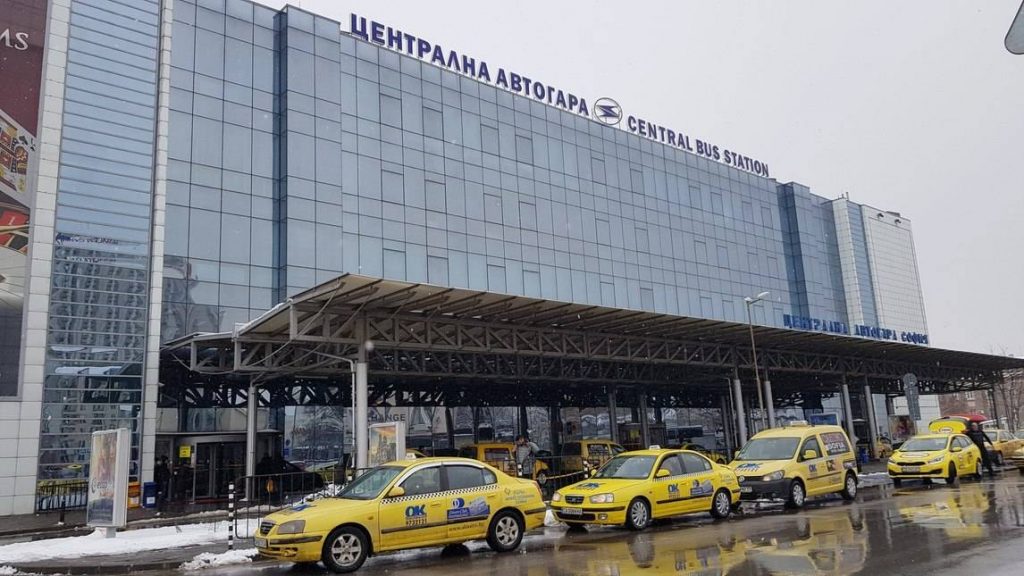
This is the Central Bus Station in Sofia which is the other bus station and not the one you need for the international buses. (insert picture)
Central Bus Station in Sofia. Not the right bus station for buses to Skopje from Sofia.
“Serdika” Bus Station is the correct station you need to catch a bus from Sofia to Skopje. As you can see highlighted on the map below.
Note that when you are in Bulgaria and Macedonia you’ll need to be able to read the Cyrillic alphabet to make any sense out of timetables (except in the bus stations in Sofia and Skopje).
The bus station has a shop, cafes, toilets (which cost money), local buses and tram stands nearby and taxis. If you are standing outside of the Matpu 96 with your back to the office behind the first set of building in front of you will be a supermarket you can buy snacks and drinks before the trip.
WIFI is not freely available but Matpu 96 did have free WIFI in their offices to use for their customers.
Where to buy bus tickets in Sofia? How much will a ticket cost?
In some countries you can book tickets online however in Bulgaria it was only possible to book tickets at the bus station. I recommend getting your tickets the day before, not because they sell out, as a precaution so you don’t get stranded and have all the information you need for your journey.
To buy tickets you will need your passport. We made the mistake the first time of going there without our passports and were unable to purchase tickets the first time round.
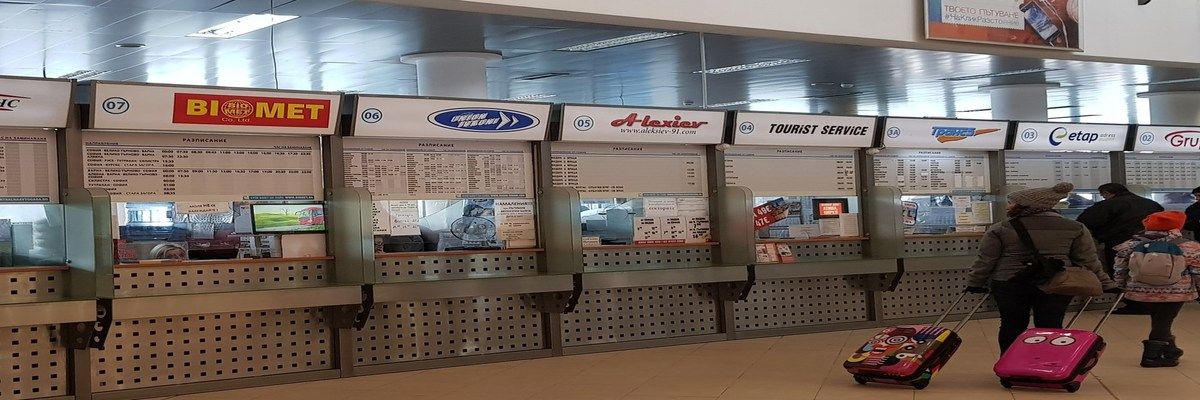
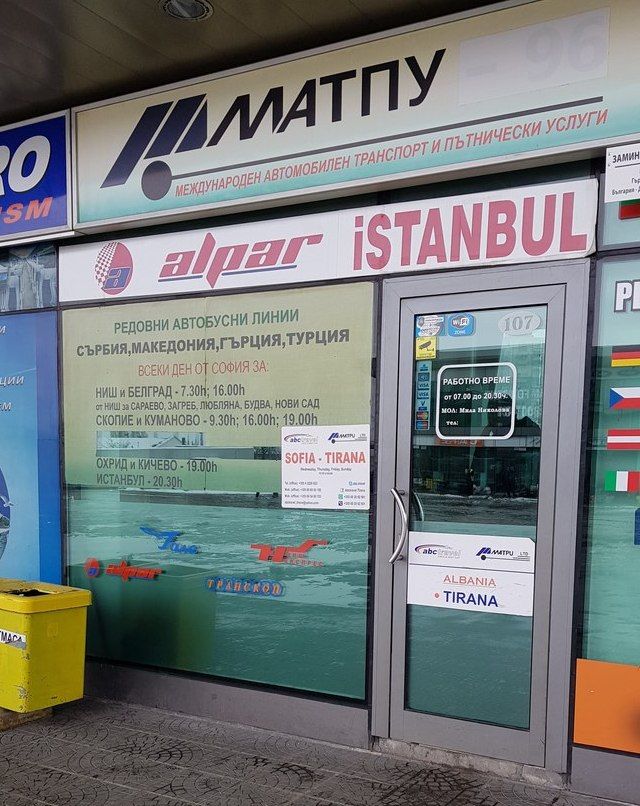
There are two travel agents currently selling bus tickets from Sofia to Skopje which are Makedonija saobraćaj and Matpu 96. Both travel agents are both located in “Serdika” Bus Station near each other.
Matpu 96 sells bus tickets from Sofia to Skopje
Matpu 96 will run buses daily at 09:30, 16:00 and 19:00. When we were travelling the 19:00 was cancelled for the day we were catching a bus to Skopje.
Bus tickets from Sofia to Skopje will cost 30 lev each. Matpu 96 did have a card machine but they requested payment in cash.
When we were travelling it was the off-peak season so the tickets didn’t sell out and just made sure we arrived an hour before to make sure we had a seat.
Things to consider and what to expect on the bus journey from Sofia to Skopje?
Be on time! The buses do leave on time from Sofia so make sure you get there 15 minutes beforehand if you have a ticket already. If you don’t have a ticket allow 30 – 60 minutes to buy a ticket.
Being such a long bus ride it’s a good idea to take a few snacks and drinks for the journey. Be careful with your liquid intake as you just never know when the next stop will be and make sure you take some change on the journey to pay for the facilities. There are generally no working toilets on the buses and you may go for a couple of hours without a stop.
There were a few bus stops on the way but it the journey was quite tame compared to some of our other experiences.
Do I need to go through border security exiting Bulgaria?
Yes, you will need to go through border security exiting Bulgaria. The security process was not extensive when we went through.
The guard boarded the bus to check everyone’s passports and then collected them. Then they were taken for processing and once clear handed back to the bus driver who distributed the passports back to the owners. There were brief checks underneath the bus in the luggage compartments. They may do stricter spot checks but we were not subjected to these on our trip.
Do I need to go through border security entering Macedonia? And will I need a visa?
Yes, you will need to go through border security entering Macedonia. Like the Bulgarian border the security processes were quite relaxed. The guards collected our passports, processed them and were handed back to us.
Macedonia does have visa requirements unless you are from one of these countries; Argentina, America, Albania, Australia, Azerbaijan, Botswana, Bosnia and Herzegovina, Brazil, Cuba, Israel, Japan, Kazakhstan, Canada, Costa Rica, Chile, European Union Citizen, Malta, Monaco, Mexico, United Arab Emirates, Ukraine, Turkey, Russia, Peru, Serbia, Uruguay, New Zealand, Kosovo, Peru, Panama, Montenegro and Venezuela. If you from one of the countries listed this means that you can stay in the country for up to 90 days.
Above is the location of the Skopje Bus and Coach Station that you need to go to. Psst… you can save the map about.
Skopje bus station has an indoor area that has shops, cafes, ATM’s (cash machines), toilets, local bus stands nearby and taxis. WIFI is not freely available so to get WIFI you will need to buy something at one of the cafes to access it. The toilets will also cost money to use and will need small MKD denominations to pay.
There are quite a few taxi drivers offering you lifts to your destination at the bus station. These generally won’t be metered taxis so make sure that you agree to a price before getting in. A good way to avoid being ripped off check with your accommodation before you arrive so you know how much you should be paying.
Our taxi driver tried to charge us 300 Macedonian Dener (MKD)! Which is way more than the hostel recommended we pay. Eventually, we got the taxi driver down to 200 Macedonian Dener (MKD) instead.
If your accommodation calls the taxi companies it will generally be an official company with a metre and depending on your location will cost around 120 to 200 Macedonian Dener (MKD).
Local buses do run to the bus station and are a cheaper alternative than a taxi.
Not sure about what to do in Skopje? Things to do in Skopje will cover everything you need to know about visiting the city.
Let me know in the comments how your bus journey is!
When planning our bus trip from Sofia to Skopje there was more information available about the bus routes than some of the other Balkan destinations. Here is my step by step guide on catching a bus from Sofia to Skopje including how to buy tickets, information about bus station and much more… #sofia #skopje #busfromsofiatoskopje #Bulgaria #Macedonia
Kotor was one of the 9 destinations we were travelling to on our Balkans trip. I didn’t do much research on how to get a bus from Tirana to Kotor. As it was a common theme for there to be limited information about buses for most of the Balkan destinations we decided it was easier to buy tickets when we arrived at each destination.
As soon as we arrived at Tirana station we were on a mission to book our bus trip from Tirana to Kotor for a few days ahead.
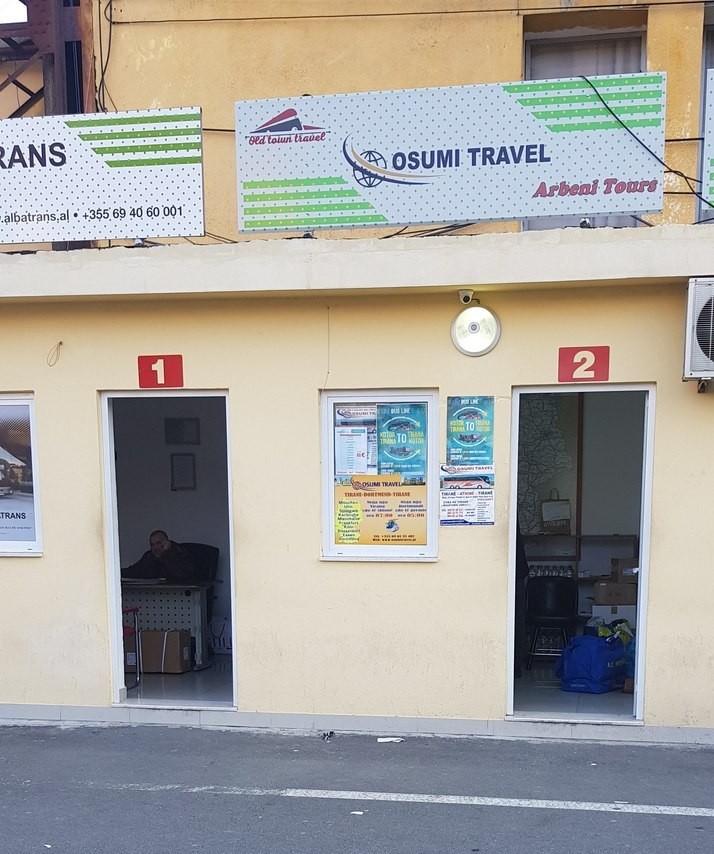
The first travel agent we visited, to our surprise, didn’t have a bus leaving for 5 days! With our tight schedule, this was not going to work. However, the second travel agent (Osumi Travel) we visited sold tickets for the daily bus run by Old Town Travel which is the company that has established a direct bus from Tirana to Kotor. This has made the journey a lot easier and quicker. Here is the approximate timetable for the journey:
Bus station Depart TIRANA 08:00 SHKODER 10:00 g.p.HANI I HOTIT (AL) 11:00 g.p.BOŽAJ (CG) 11:20 PODGORICA 12:00 BUDVA 13:30 KOTOR 14:00
Travelling from Kotor to Tirana follows the same timetable but of course in reserve. The buses from Kotor and Tirana meet at g.p.HANI I HOTIT (AL) stop where you will swap buses and continue to your destination. The bus driver kept us informed of which bus stops we were reaching and when we needed to swap over.
Which bus station do I catch a bus from in Tirana? And what facilities does the bus station have?
The Tirana bus “station” is just an open parking lot with lots of travel agents and stalls. It was not obvious whilst walking around that there was WIFI, ATMs or toilets available around the station.
As the station is just off the main street there are cafes and ATMs down the main road so it won’t be an issue finding something close by to get WIFI, money or toilets.
Where to buy bus tickets in Tirana?
Unlike some of the other Balkan countries, you can buy your tickets in advance and online! If you head over toOld Town Travelyou will be able to purchase tickets there. This is the only available method you will be able to pay by card and print the tickets beforehand.
As mentioned above we didn’t book tickets in advance for any of our bus journeys in the Balkans and at each bus station we scouted out who sold tickets for our journey, in this case, the bus from Tirana to Kotor. There are two travel agents that will sell you tickets to Kotor but one only runs ad-hoc bus and the other will sell you daily tickets to Kotor.
The travel agent and bus station is located in the same location, so if you head to the station below you will be able to get your tickets and catch the bus. Psst you can save the map below.
The company that sells daily tickets is Osumi Travel. However, they only take cash to purchase tickets and as we had no money we opted for buying tickets the morning of departing. The company advised us that the bus doesn’t sell out during offseason and it wouldn’t be a problem to buy a ticket on the day. They were right, we only had two other people on our bus making a grand total of four people.
Osumi Travel where you can buy tickets from Tirana to Kotor
What do I need to buy tickets for Tirana to Kotor and how much will a ticket cost?
Arriving on the day the bus driver told us not to buy tickets at Osumi Travel and ushered us on to the bus where we paid at a later point. It was straightforward buying tickets from the bus driver, although he only requested payment about halfway to the border and was a bit disappointed when we handed over Albanian Lek instead of Euros. A ticket will cost €25 Euros or 3,500 Albania Lek.
Osumi Travel did accept Euros or Albania Lek to purchase tickets from them as well.
Another common theme with buses is that you also need to pay for each larger item of luggage (rucksack or suitcase) you hold underneath the bus or in this case the minivan so make sure you have €2 euros per bag.
Things to consider and what to expect on the bus journey from Tirana to Kotor
Be on time! The bus left exactly on time so make sure you give yourself plenty of time to get there as there is only one bus a day leaving for Kotor.
Be prepared! The road quality is poor in Albania and there is a tremendous amount of potholes to endure on the trip! When you enter Montenegro the road is better quality but they do have very windy roads along the coast.
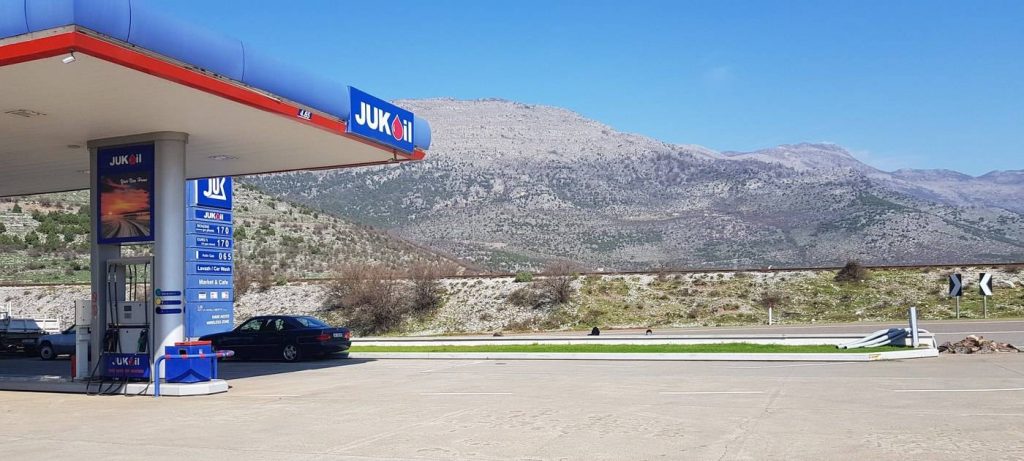
The first stop of the journey is Shkoder and there were no free toilets at this stop. The bus does make another stop just before the border which will be g.p.HANI I HOTIT (AL) stop. The stop will be a petrol station where there will be free toilets and a shop to buy supplies like water and snacks.
Once you arrive at the petrol station you will be swapping from the minivan to a standard bus. Depending on border security the other bus may take 20 – 30 minutes to pick you up and the other passengers will swap to the minivan.
g.p.HANI I HOTIT (AL) bus stop where the bus from Tirana to Kotor stops at.
Do I need to go through border security exiting Albania?
Yes, you will need to go through border security exiting Albania. The border crossing was long as it was basically a one way street with cars, trucks and buses weaving in and out.
The guard boarded the bus to check everyone’s passports and then collected them. Then they were taken for processing and once clear handed back to the bus driver who distributed the passports back to their owners.
Additionally, they open the luggage sections underneath the bus and have a brief look around. Although they may do stricter spot checks that we did not experience on our journey.
Do I need to go through border security entering Montenegro? And will I need a visa?
Yes, you will need to go through border security when entering Montenegro. The same level of security was applied when we were entering the country.
Anyone that is from the EU, USA, Norway, Iceland, Switzerland, Canada, Australia, New Zealand or Japan may enter Montenegro for up to 30 days without a visa.
Above is where the Kotor bus station is located. Psst you can save the map below.
The bus station in Kotor is super close to the Old Town. You will arrive at the bus station before seeing the Old Town of Kotor. If you exit the station, at front of you will find the main road that you arrived on, turn right and there will be a supermarket 3-5 minute walk away. Once you have walked for about 6-8 minutes you will reach the first entrance to the Old Town of Kotor.
Kotor bus station has an undercover area with an ATM (cash machine), toilets and taxis. If you are staying outside of the Old Town you may want to catch a cab. The station has free WIFI and requires no password to access the internet so it will be super easy to Google your journey.
Toilets will also cost money to use and cost €0.50 cents.
And there you have it – our journey on the bus from Tirana to Kotor. Let me know in the comment below how your trip to Kotor was!
When planning our bus trip from Skopje to Tirana it became evident how little information was available. After hours of searching on Google, I found a bus on Balkanviator which is a website that frequently pops with bus information. Balkanviator displayed a bus that suited the times for our trip which was leaving Skopje at 23:00 and arriving in Tirana at 07.30.
It turned out that this bus did not exist and there was only one night buses from Skopje to Tirana leaving at 19:00 and arriving at 02:00. Be mindful that using websites like Balkanviator may not give you actuate information. By the end of my internet searching I was still clueless on what time I would be able to get to Tirana by bus. Even the hostel couldn’t rely on the information that they had and mentioned that travellers have been stranded before!
Not to worry, there are buses from Skopje to Tirana! Three in buses a day were running when we were there, a bus at 06:00, 09:00 and 19:00 and taking approximately seven hours but this is dependent on border security.
You can look at SAS website for timetables but they don’t show all the buses that are running from Skopje. After a few glitches on this trip using Balkanviator I would suggest that this website shouldn’t be used as a reliable source.
The best way to confirm is by heading to Skopje Bus Station and asking the information desk for the latest bus timetables.
Which bus station do I catch a bus from in Skopje? And what facilities does the bus station have?
There is only one main international bus station in Skopje which is located next to the Railway Station. It’s about a 20-minute walk from the Alexander The Great Statue in Skopje City Centre.
Above is the location of the Skopje Bus and Coach Station that you need to go to. Psst… you can save the map about.
Local buses run to the bus station or alternatively you can catch a taxi. Some taxi drivers will run their meters and some will negotiate with you. If your accommodation calls the taxi companies it will generally be an official company with a metre and depending on your location will cost around 120 to 200 Macedonian Dener (MKD).
Skopje bus station has an indoor area that has shops, cafes, ATM’s (cash machines), toilets, local bus stands nearby and taxis.
WIFI is not freely available so to get WIFI you will need to buy something at one of the cafes to access it.
Toilets will also cost money to use and will need small MKD denominations to pay.
Note that when you are Macedonia you’ll need to be able to read the Cyrillic alphabet to make any sense out of timetables (except in the central station in Skopje).
Where to buy bus tickets in Skopje?
In other Balkan countries we were used to approaching travel agents which had the destination we were looking for and we did the same when we were in Skopje. However, it turns out that the types of travel agents we were approaching in Skopje bus stations weren’t offering the tickets we needed.
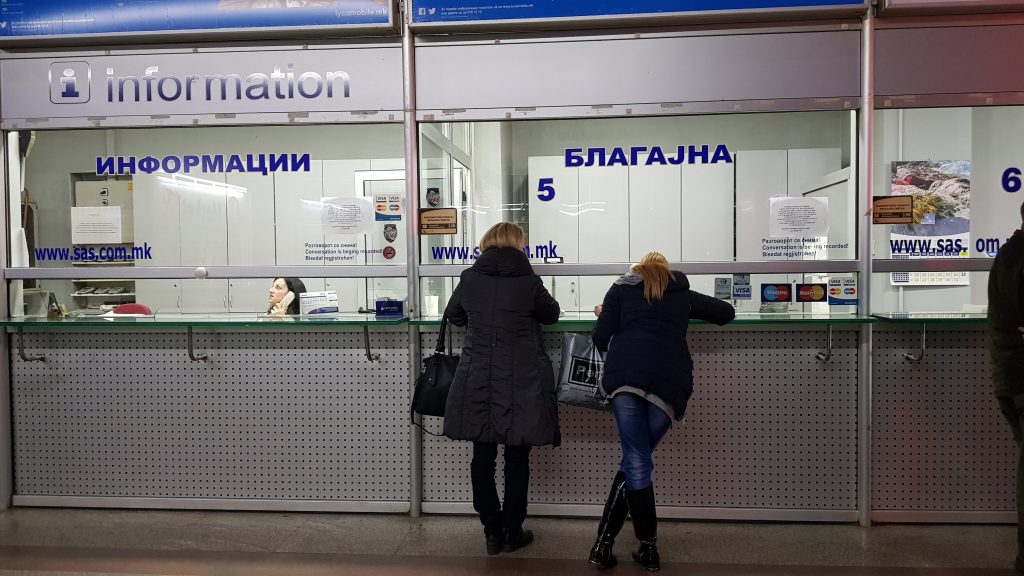
The windows that have www.sas.com.mk written on them will sell you tickets to Tirana for the various companies running the routes.
Where to buy bus tickets in Skopje Central Bus Station
In some countries you can book tickets online however in Macedonia it was only possible to book tickets at the bus station. I recommend getting your tickets the day before, not because they sell out, as a precaution so you don’t get stranded and have all the information you need for your journey.
What do I need to buy tickets from Skopje to Tirana and how much will a ticket cost?
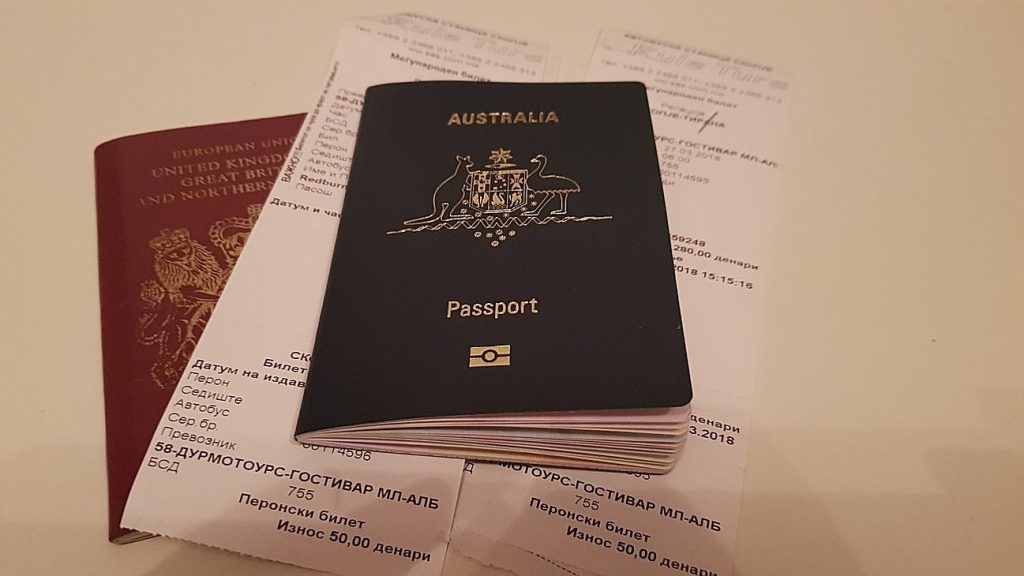
To buy tickets to Tirana you will need your passport, Albania visa (if required), cash or a Master/Visa card to pay. As I said above there is an ATM in the station if you do need to take out money.
One ticket cost 1,280MKD this including luggage for the Durmo Tours service.
Bus tickets from Skopje to Tirana
Things to consider and what to expect in the bus journey from Skopje to Tirana
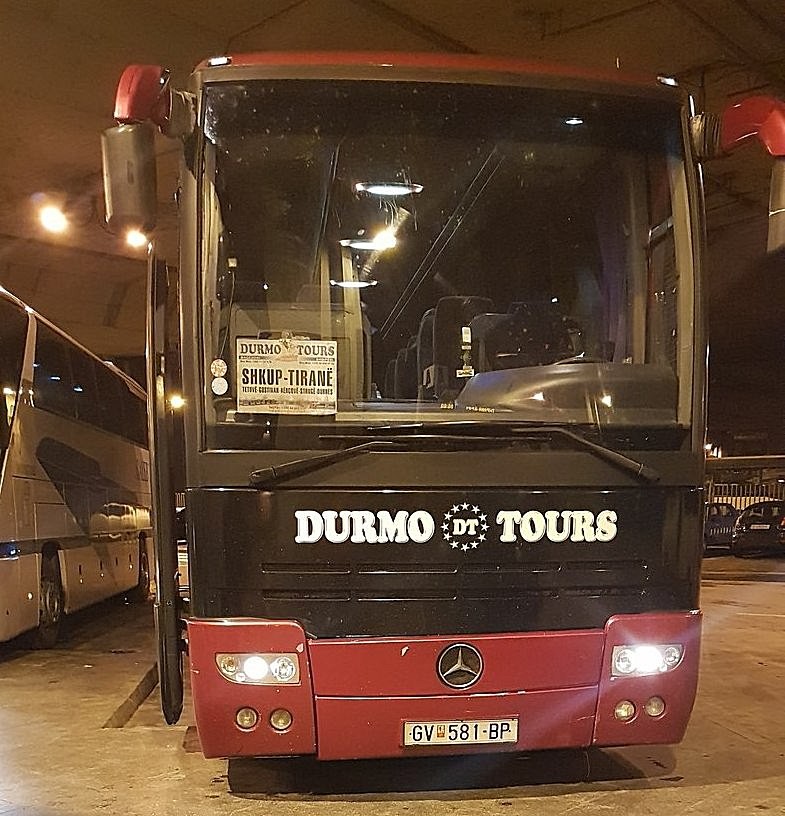
Durmo Tour Bus from Skopje to Tirana
Be on time! Even though Macedonia has a relaxed culture and they take their time to do things, the buses do leave on time at the main station.
Our bus did a couple of stops on our way to Tirana, even a detour to the coast which ended up adding an extra 2 hours to our journey. They even picked up a car door and randomly dropped it at a petrol station to a guy on the side of the road.
Be prepared! The road quality is poor and there is a tremendous amount of potholes to endure on the trip!
Being such a long bus ride it’s a good idea to take a few snacks and drinks for the journey.
There are generally no working toilets on the buses and you may go a couple of hours without a stop. In Macedonia you are always required to pay to use the toilets at the stations/ stops but in Albania all the toilets were free at the stations/stops. Be careful with your liquid in take as you just never know when the next stop will be and make sure you take some change on the journey to pay for the facilities.
At least with Albania you don’t have the dilemma of not having the currency to use the bathrooms as I have experienced in the other countries.
Do I need to go through border security exiting Macedonia?
Yes, you will need to go through border security exiting Macedonian. The security process for when we travelled through was light compared to other border checks I have gone through.
The guard boarded the bus to check everyone’s passports and then collected them. Then they were taken for processing and once clear handed back to the bus driver who distributed the passports back to the owners.
Additionally, they open the luggage sections underneath the bus and have a brief look around. Although, they may do stricter spot checks and we were not subjected to these on our trip.
Do I need to go through border security entering Albania? And will I need a visa?
Yes, you will need to go through border security when entering Albania. The same level of security was applied when we were entering the country.
As Albania is currently outside of the Schengen Zone you may require a visa depending on your nationality. For example, as an Australian I did not need a visa and I was allowed to stay for up to 90 days. The same applies to EU citizens, including the UK, and to US citizen. To check whether you need a visa click here.
Arriving at Tirana Bus Station
The bus from Skopje will terminate at Tirana Central Bus Station.
Once you get off the bus you will be surrounded by a few taxi drivers offering their services. If you do opt for a taxi make sure you agree on the price before getting in the taxi as they don’t often run metres. Getting around the city should not cost you more than 300 to 400 (Albanian Lek).
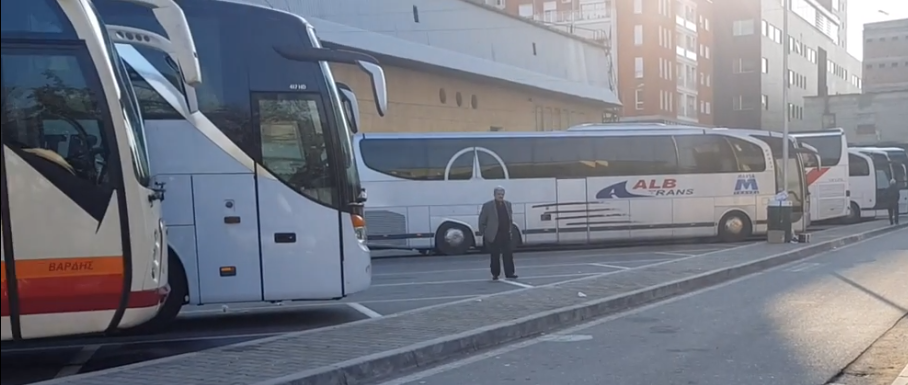
The Tirana bus “station” is just an open parking lot with lots of travel agents and stalls. It was not obvious whilst walking around that there was WIFI, ATMs or toilets available around the station.
As the station is just off the main street there are cafes and ATM’s down the main road so it won’t be an issue finding something close by to get WIFI, money or toilets.
Above is the location of the Tirana Bus Station that you need to go to. Psst… you can save the map about.
I hope the information above helps you plan your bus journey from Skopje to Tirana. Let me know in the comments below of your experiences!
There is so much to do in Brussels in a day that you could easily stretch it so much longer. As you may know, Belgium is probably best known for its beer, waffles, pomme frites and chocolate.
This day itinerary is crafted to get your fill of all these delights whilst seeing all the sights in the Belgian capital.
The best thing about a day trip to Brussels is that most touristy sights are within walking distance of each other and you will be able to maximise your time here. Unless you end up drinking too many strong Belgium beers.
Things You Should Know Before Going To Brussels
With a day trip, it’s easy to get caught up in the tourist traps or not know the low down of the city. Here are a couple of things you should know when visiting.
Money: Euro is the currency.
Train Stations: There are 3 train stations in Brussels Nord, Brussels Centrale and Brussels Midi, make sure you check where you arrive and depart from. Occasionally, people turn up to the wrong ones and miss their trains.
Airports: There are two airports in Brussels; Brussels Airport (the closest airport) and Brussels South Charleroi Airport (the furthest airport where cheaper airlines generally fly into).
National Languages: There are 3 national languages in Belgium. Depending on where you are travelling, you will find there will be a dominant language for that area. French and Flemish are mostly spoken in Brussels but they also speak German in areas of Belgium.
Explore the Lovely Neighbourhoods: I highly recommend wandering around the cute cobblestone streets of Sablon, St Gilles and Les Marolles.
Visit the Quirky Museums: Museum of Musical Instruments, the Royal Museum of Army and Military History, Autoworld, and the Belgian Comic Strip Museum. If you plan on seeing a few museums pick up a Brussels Card as this will give you access for a set price.
Find the Best Views: In my opinion, there is nothing better than a panoramic view of a city. Here’s where you get the best views in Brussels:
5th Floor of the Royal Library of Belgium.
10th Floor of the Museum of Musical Instruments.
Be Careful Where You Eat on Rue de Bouchers: It is a street full of pushy waiters trying to get you to eat there with inflated tourist prices and subpar food. I have a fantastic restaurant recommendation later in the article that is worth eating at but do be careful!
Find the Less Busy Chocolate Shops: A lot of the chocolatiers have shops outside of the Galeries; these won’t be as busy and better options to visit. Open Google Maps and type in the chocolatier you wish to visit. You will be able to take your time, try the chocolates and get a lot better customer service.
Avoid the 1 Euro Waffle stands!: These will likely be very mediocre waffles and disappoint you! Later in the article, I recommend the waffle company I like to visit but do your research so you can get the best possible waffles.
Make the Most of Lunch Specials: Lots of restaurants offer lunch specials which is a great way to save money and get a good meal! Consider this over splurging for dinner.
What to do in Brussels in One Day
I have designed this day in Brussels itinerary to fit in all the main sites on a logical walking route. Plus it is totally adjustable to your interests and I’ve added some other restaurants, chocolatiers, pomme frites and drink places for alternative options.
Parc de Bruxelles (Brussels Park)
Starting your day off at Parc de Bruxelles (Brussel Park) also known as “Parc Royal”. It’s the largest urban park in Brussels and a great way to start the morning with a nice stroll.
In the 1770s the whole area of Court was completely changed. Thanks to Guimard who drew the new design for the park and Zinner the gardener. The park was transformed with sculptures, fountains and footpaths.
Palais Royal de Bruxelles (Royal Palace)
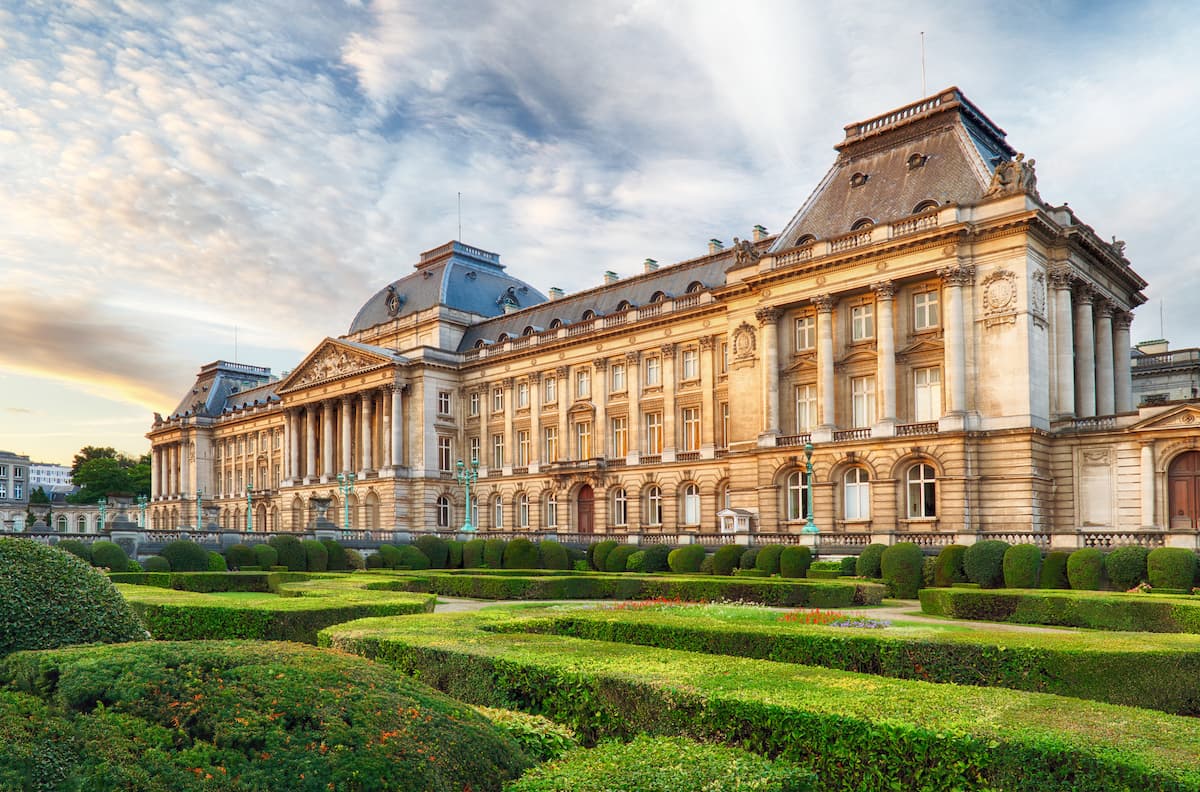
From the park, you will see one of the cities most magnificent landmarks, the Royal Palace. The facade you see today is from the 1900th was instructed to be built by King Leopold II. Architect Alphonse Balat designed new rooms like the ‘Grand Staircase’, ‘Throne Room’ and the ‘Grande Gallerie’.
It’s no longer home to the King and Queen of Belgium and is now used for Head of State duties.
There is only a short window that you can visit inside the Palace. Between the 21 July (the national bank holiday) until the beginning of September. The Palace opens from Tuesday until Sunday at 10:30 am and closes at 5 pm.
Place Royale
Place Royale is quite photogenic so grab a quick photo and admire the picturesque place.
It’s a public square surrounded by Neoclassical buildings, lined with gardens and at the centre of the square is a statue of Godfrey of Bouillon, (the leader of the first crusade in 1096) mounted on his horse. The main building you’ll notice is Saint Jacques-sur-Coudenberg and it has a magnificent view of Palais de Justice.
Mont des Arts – Views and Museums
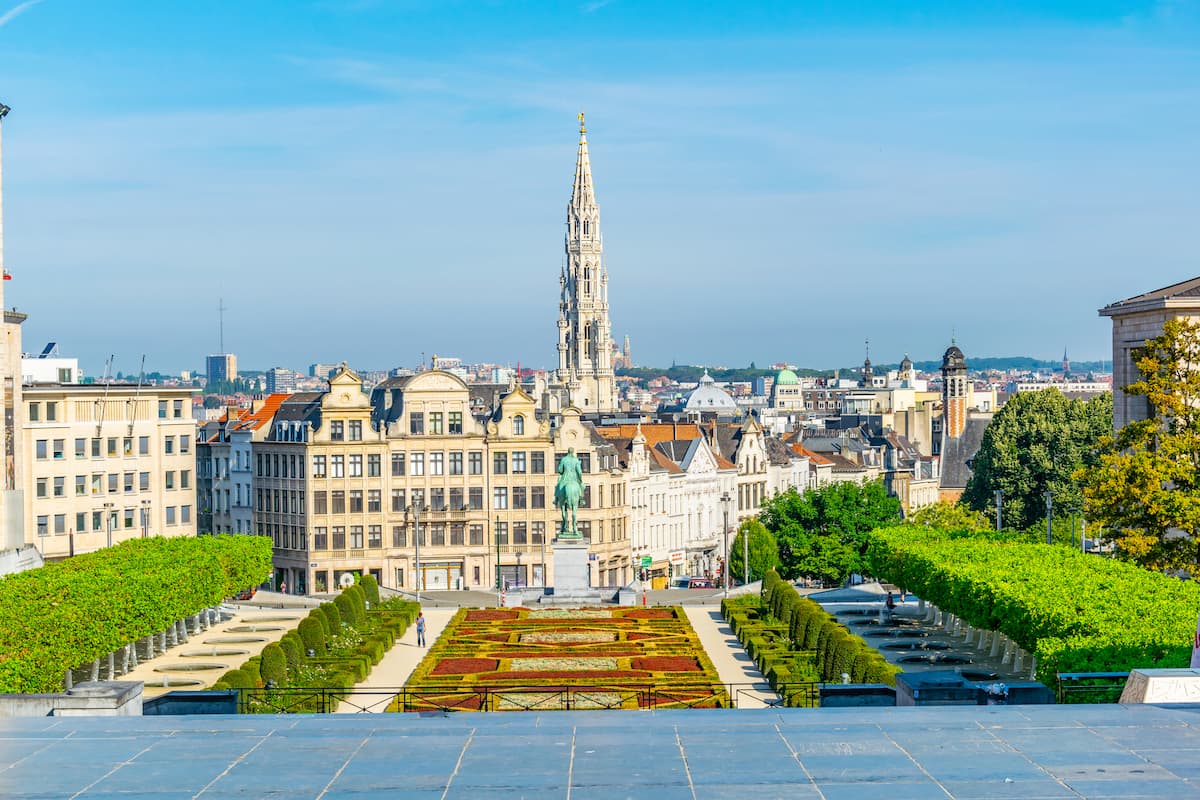
Mont des Arts translate to the hill/mount of arts which means you must come here for the views and art.
The area was converted into the arts’ quarter by King Leopold II at the end of the 19th century. They sourced various architects and urban planners to create a space to accommodate different cultural institutions.
The public park has a chilled ambience, during the summer it’s great to have a drink and spend an afternoon here whilst enjoying the views.
Cathédrale Saint-Michel et Sainte-Gudule (St Michael and St Gudula Cathedral)
The Cathedral is built in Gothic style architecture and took over 300 years to build. From 1047 until the eighth century the cathedral was called St Michael, it was renamed St Michael and St Gudula Cathedral when the relics of the martyr of St Gudula were brought to the cathedral.
Even though it was built centuries ago, only in 1962 was it given cathedral status.
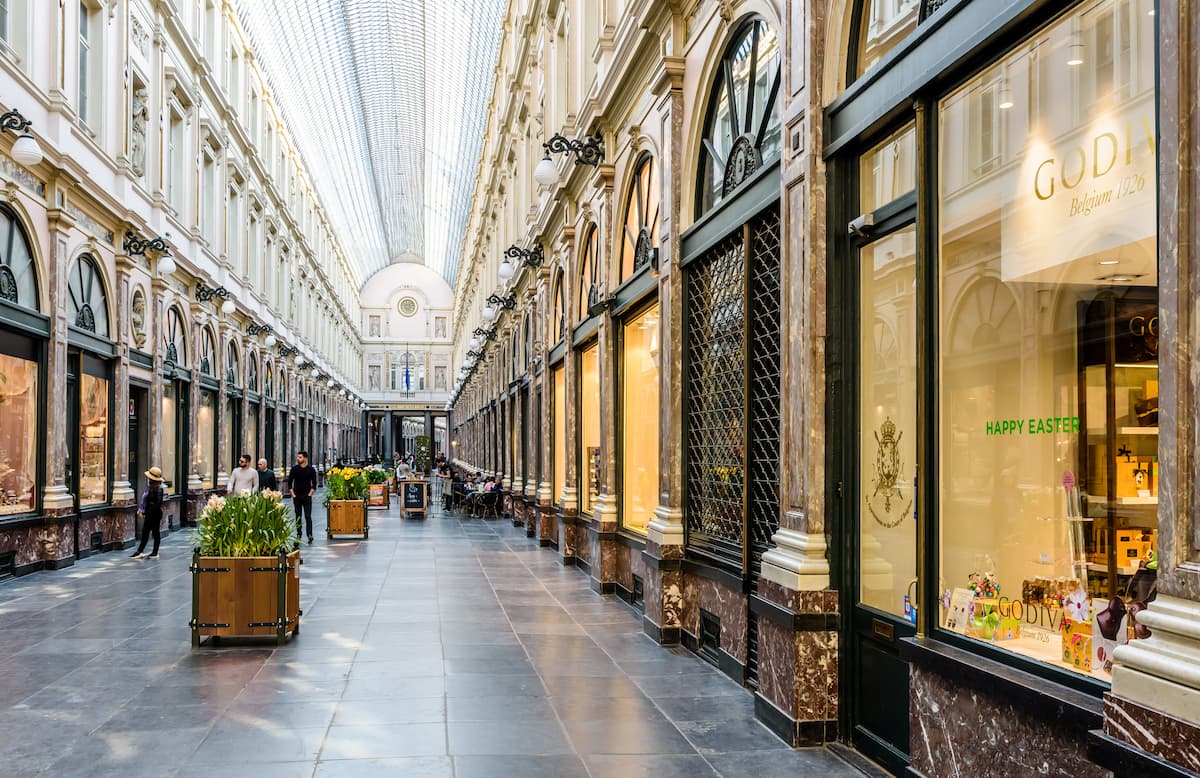
Galeries Royales Saint-Hubert (the Royal Saint-Hubert Galleries)
The Galeries are elegant are shopping arcades, you will find three that are connected together’ Galerie de la Reine, Galerie du Roi and the Galerie des Princes.
Inside are little shops selling jewellery, chocolate shops, boutiques, restaurants and bars. The main attraction is the beautiful ceiling. It is a little touristy but it’s free and a wonderful place to browse and enjoy the architecture.
On a rainy day, you can also catch a movie at one of the cinemas; Cinema Galeries in the Royal Galleries or Cinematek. They show movies in multiple languages.
If you love a bookstore then you must check out Bortier Gallery (on rue de la Madeleine). They have a fantastic range of second-hand books.
Lunch at Aux Armes de Bruxelles
Most of the restaurants on Rue des Bouchers are often poor quality and your general tourist places, however, there are always some great places around if you know where to go. As one of my friends used to live in Brussels she had the perfect place to recommend and one that locals would visit on Rue des Bouchers which is called Aux Armes de Bruxelles.
Rudy Vanlancker has brought back Aux Armes de Bruxelles to its former glory. His goal to make the restaurant to be the most beautiful brasserie in the downtown area.
You’re guaranteed food that tastes great, in a traditional Belgian style and friendly staff.
Alternative spots to grab food in Brussels:
Madame Chapeau in St Jacques is famous for Brussels seafood.
Les Brassins in Ixelles for the rabbit stew.
Soleil d’Afrique in Matong for the vibrant food and cocktail.
Rue de Flandres off Place St Catherine for Asian cuisine.
Pin Pon is a converted fire station into a hipster vibe brunch spot.
Try some Belgian Beer at Delirium
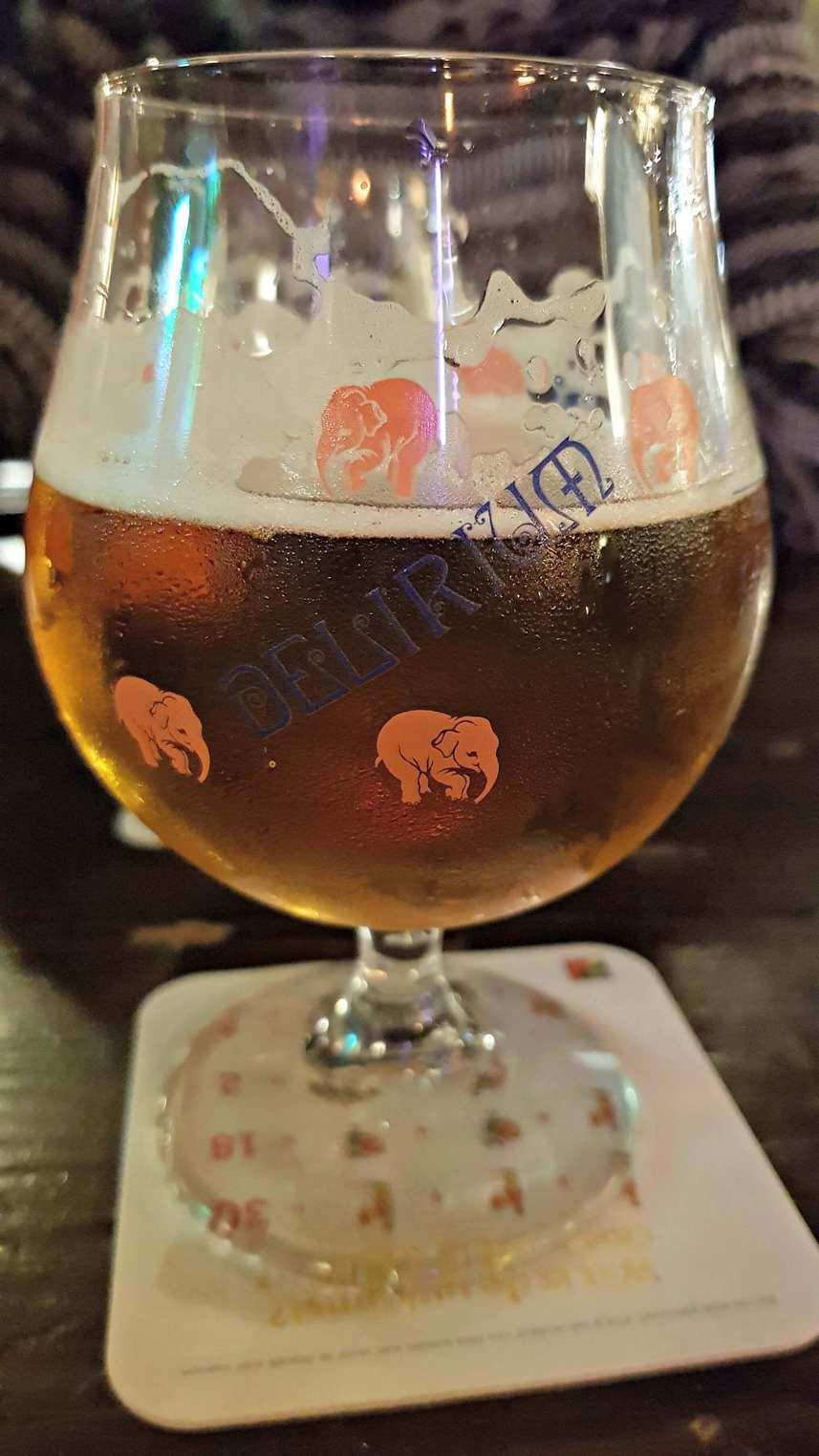
Délirium Café is located near Aux Armes de Bruxelles, it’s down a little passage called Impasse de la Fidélité. The sister Jeanneke Pis of the Manneken-Pis is also here opposite the entrance. Grab a quick photo before entering Délirium Café.
It’s no wonder beer lovers from around the world love this place. You can taste more than 2000 beers from around the globe. Delirium Café holds the Guinness World Record for the most beers offered!
The Belgium Delirium Café offers a range of beers from over 60 countries, that’s about 2000 beers including beers from Belgium! Make sure you try one of Delirium’s delicious beers whilst you are there.
Do be careful with Belgium beers as they are generally around 7% – 9%. We always opt for half beers when we are in Belgium due to the strength.
One of my favourite things to do when travelling is learning! If you want to know more about Belgium Beer, I highly recommend taking a tour. This will be a few hours, sampling different beers and visiting some of the top bars in Brussels. Find out more information about the tour on Get Your Guide.
Grote Markt (Grand Place)
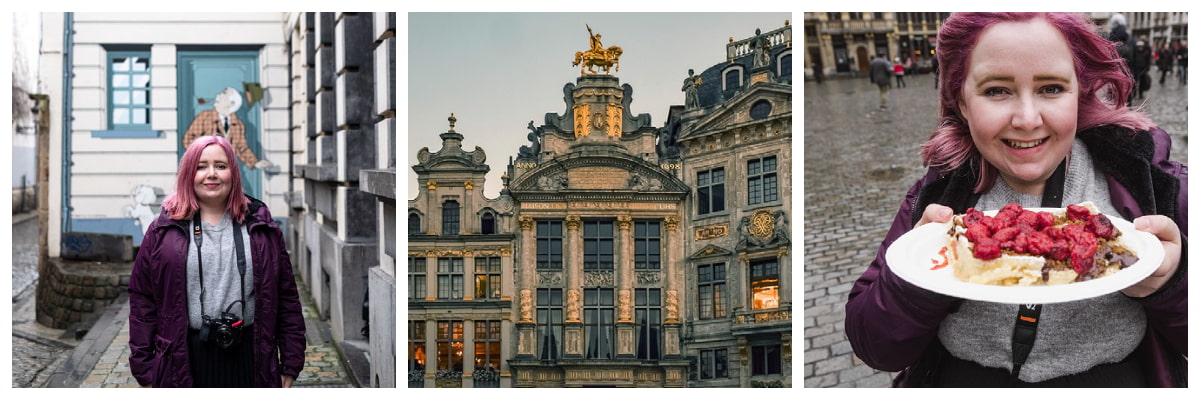
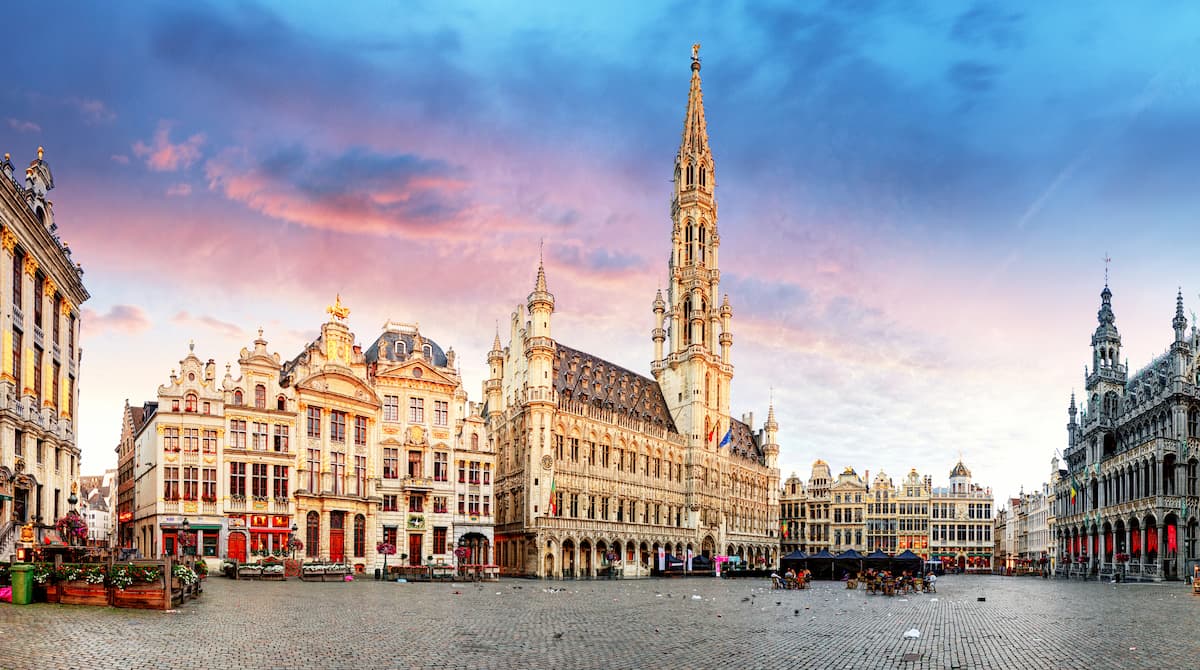
Grand Palace is the central square with lovely guild houses and the town hall, the designs are breathtaking and you could spend hours staring at the details.
A panorama of the square should be taken by anyone visiting Grand Place. You will be able to see all the wonderful buildings in the city square.
Buildings worth mentioning:
Hotel de Ville (Town Hall): Southeast of the square is the Town Hall. The building is Brabantine Gothic architecture and the oldest building in the square. Looking up at the tower you will see the archangel Michael staring at you from the 96m tower which was constructed in the fifteenth century. Guided tours do run in the building in Dutch, English and French on Tuesday and Wednesday afternoons.
Maison du Roi: Currently this is the Museum of the City of Brussels (Musée de la Ville de Bruxelles) that features artworks from the sixteenth century and some of Mannekin Pis’ wardrobe (the peeing statue you will see on your tour)! Before it was the museum this was the King’s House and owned by Charles V, ruler of the Spanish Empire and the Holy Roman Empire.
Maison des Ducs de Brabant: You can’t do anything else but look at the beautiful exterior of the six houses. The buildings are known as “Ducs de Brabant” due to the statues of dukes that adorn the walls. If there was a photo opportunity, that would be it. The place is always crowded and there is no good time to take a photograph, but try anyway.
Le Pigeon: The artists’ guildhall was where Victor Hugo lived during his time in exile from France.
Guild Houses: The Grand Place is lined on each side with a number of guild houses and a few private houses. They are mostly reconstruction in 1695 after the bombardment. The facades are based on Italian Baroque with some Flemish influences and include pilasters and balustrades.
It is the perfect place for a photo opportunity so make sure you get your cameras ready. If you do come here earlier in the day i.e. before 8am the square will be lined with rubbish bags etc so just be warned you might have to get creative with your photography.
During the Christmas holidays, you will see a truly magical sight. The Grand Place is full of festive events and markets. Brussels holds other festivals in the square as well such as the famous colourful flower carpet they lay every two years.
Eat Some Waffles at Maison Dandoy
Now that you’ve got a bit more walking out of the way it’s time for some of the best waffles in Brussels! Jean-Baptiste opened the first Maison Dandoy shop in the heart of Brussels in 1829 so it’s ingrained in the history of the city.
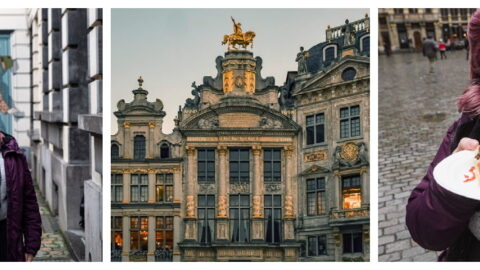
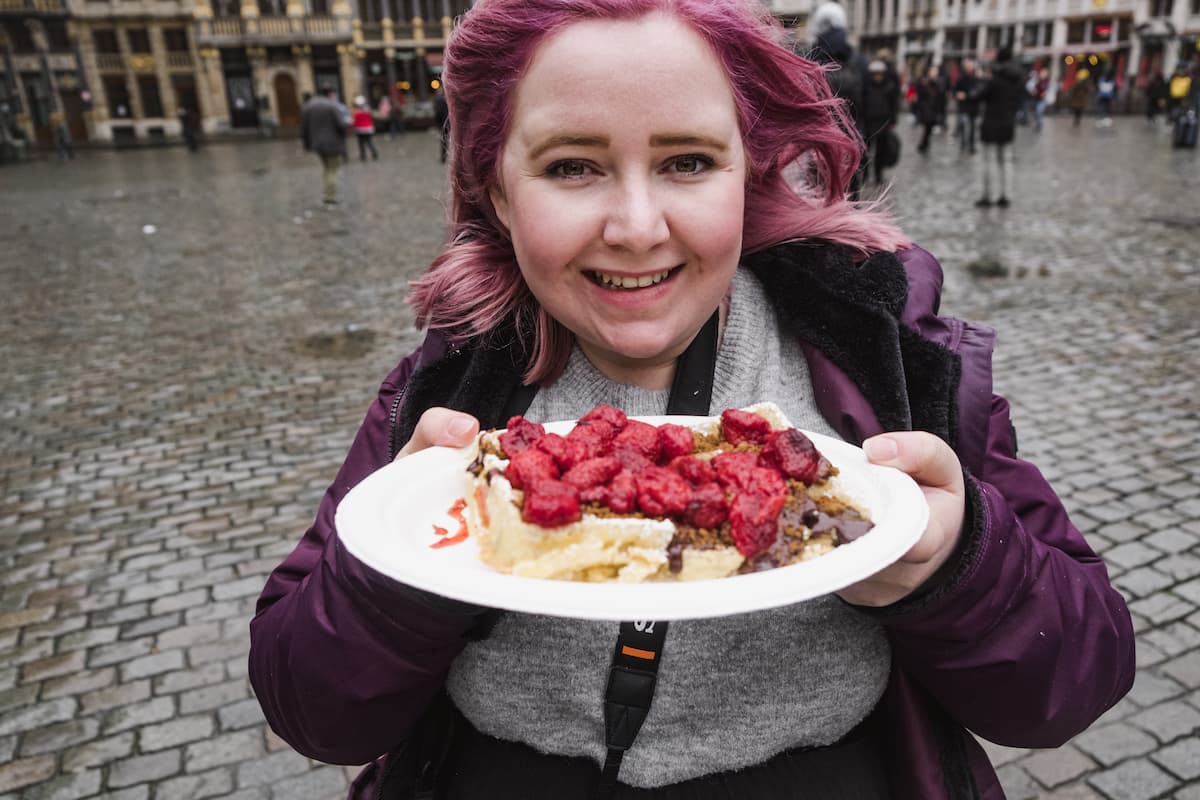
They have a pop-up waffle shop just around the corner from Grand Place. I had the best waffles topped with strawberries and chocolate!
Maurice Vermersch of Brussels created the waffle we all know and love. The lovely crispiness on the outside and fluffy waffle insides, with the deep square pockets imprinted in from the iron. He introduced these to Americans in 1964 World’s Fair in New York City and this is when they became popular. The name changed from Brussels waffles to Belgian waffles as he thought most Americans didn’t know where Brussels was.
There is also another waffle you can try, the Liege waffle. It’s extra sweet as it contains pearl sugar in the dough, causing a delicious caramelised crust. Think of it like a really dense brioche bun but in a waffle.
And if you haven’t had enough sweet, there are more! Maison Dandoyare is most famous for its speculoos. The biscuits are made with butter, brown sugar and then moulded into handcrafted wooden moulds. There are all sorts of flavours you can try! These make the perfect gift to take home or a snack while you’re travelling around.
Comic Strip Walk
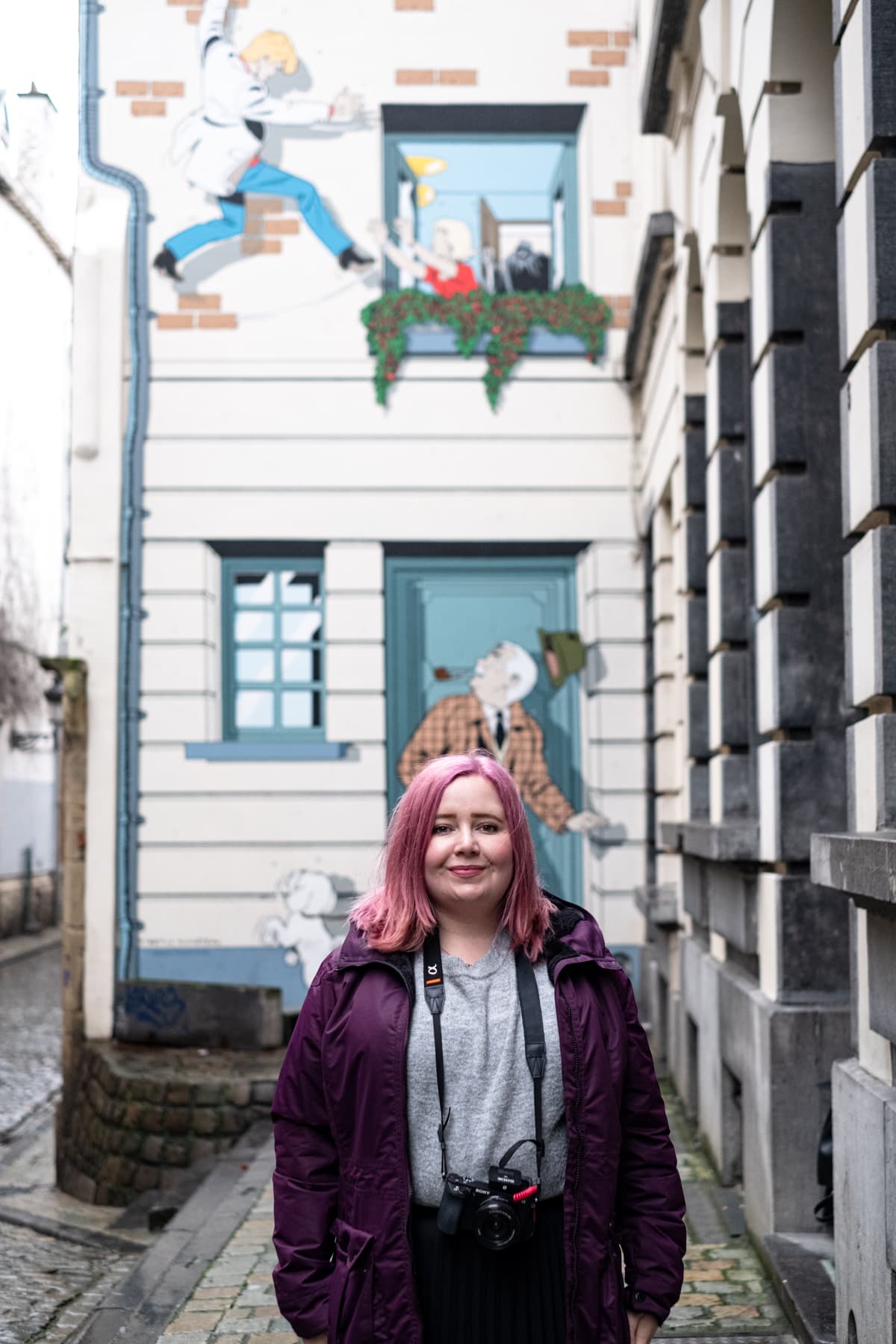
Started in the 1990s to pay tribute to the characters and authors of the Franco-Belgian comics. Some of the comics you can see are ‘The Adventures of Tintin’, ‘The Smurfs’ to ‘The Adventures of Astérix’.
This can be an outing in itself, however, if you only have a day then there are a few in a little cluster before you head to your next destination.
Do look out for them when you are walking around though! I’ve added some additional ones on the map too but visit Brussels has a whole guide on the Comic Strip Walk.
Manneken Pis Statue
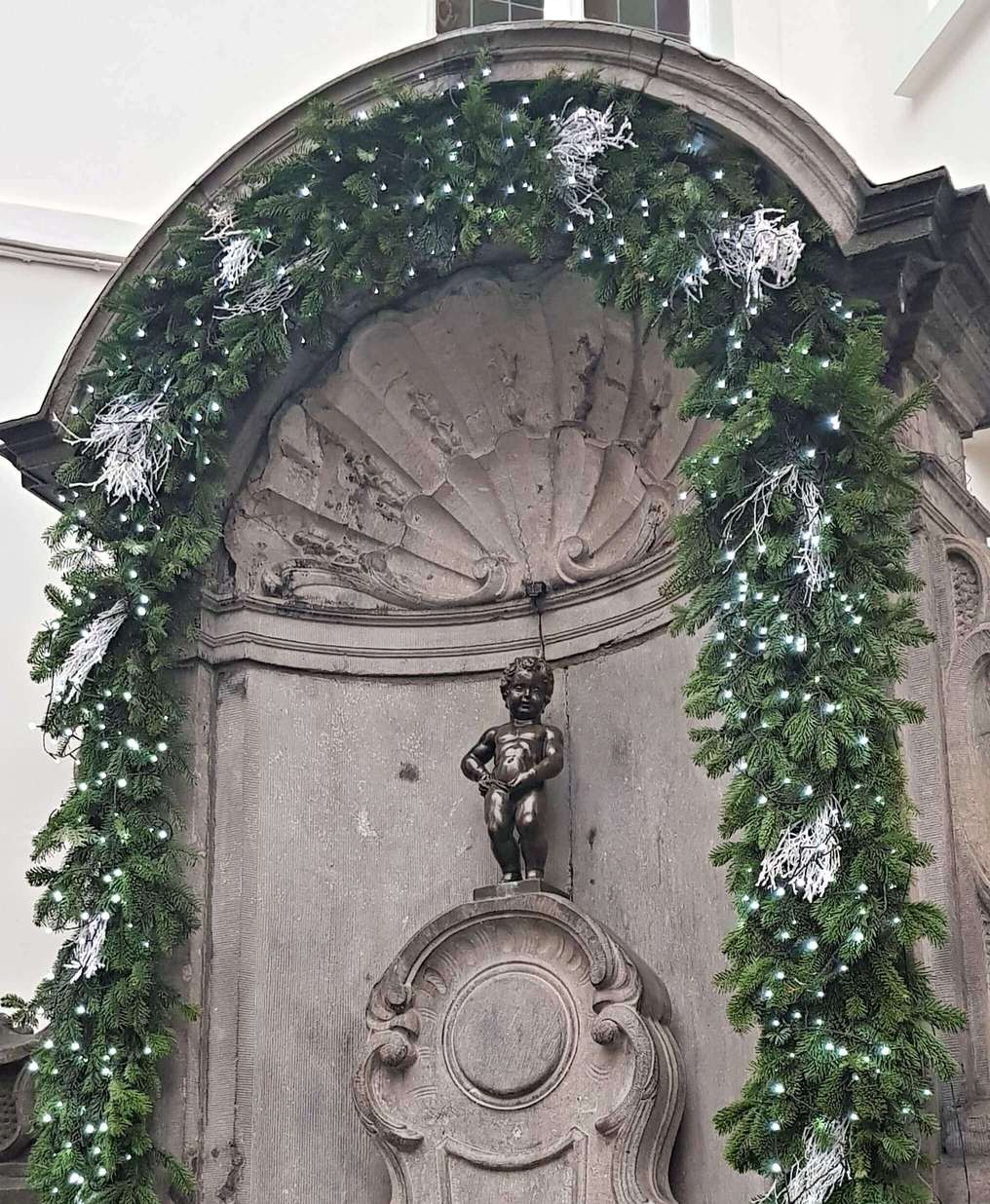
Manneken-Pis statue is often referred to as one of the worst tourist attractions but since you’re here you might as well see it. Basically, the statue is a naked boy peeing into a fountain.
They love to dress the statue in costumes, they get creative too! Anything from Elvis, Dracula, Santa Claus just to name a few. He actually has over 1000 outfits which are pretty impressive for a statue.
And if you are wondering what the legends are surrounding the Manneken Pis Statue, then these are my favourite three:
The little boy tried to put a fire out and thus saved the city.
During a battle in Ransbeke the boy was in a bucket in some trees and peed on the enemies and made them lose the battle.
Or… The boy peed on the witch’s house and decided to turn him into a statue.
Try Some Belgian Chocolates
Belgium has some of the best chocolate in the world, especially its chocolate pralines. You can’t visit unless you sample some chocolate goodies. You will find both good and bad chocolatiers in the heart of Brussels so make sure you do your research before choosing one.
For those who are chocolate addicts check out independently owned Elisabeth, Artisan Chocolatier Mary or Neuhaus.
There is a shop just located around the corner from Manneken-Pis statue on Rue de l’Etuve. It was started by Jean Neuhaus who was a Swiss with Italian roots when he decided to layer the medicines he was giving people with a fine layer of chocolate.
His grandson in 1912 invented the Belgian praline. Basically, he evolved his grandad’s idea, instead of filling the chocolates with medicine it had the delightful filling of pralines. Then continuing the inventions Louise Agostini, Jean Neuhaus Jr.’s wife created the ballotin which is the beautiful chocolate box that is iconic today.
This independent boutique named Elisabeth sells some of Belgium’s best sweets. The owner travels all over the country to taste famous Belgian delicacies as well as long-forgotten local cuisine. From Cuberdon noses to Frederic Blondeel’s to tasty chocolate truffles, you’ll find something to buy here.
One of the most famous chocolate shops in Brussels is Artisan Chocolatier Mary. The first shop opened in 1919 and has always been busy. The original boutique on Rue Royale has an array of pralines and hand-rolled truffles that you have to try!
If you want to splash out, go to Pierre Marcolini. It’s also about 15-20 minutes’ walk from Grand Place and is a nice area to wander with more shops, cafes and bars.
Alternatively, sign up for a chocolate workshop at Zaabär. They hold regular courses on learning to make chocolate and makes for a great day out! Or sample gourmet chocolate with a tasting tour. Discovering the best chocolatiers in the city. Find the tour here on Get Your Guide.
Ready for Another Drink? Try Poechenellekelde or Goupil le Fol
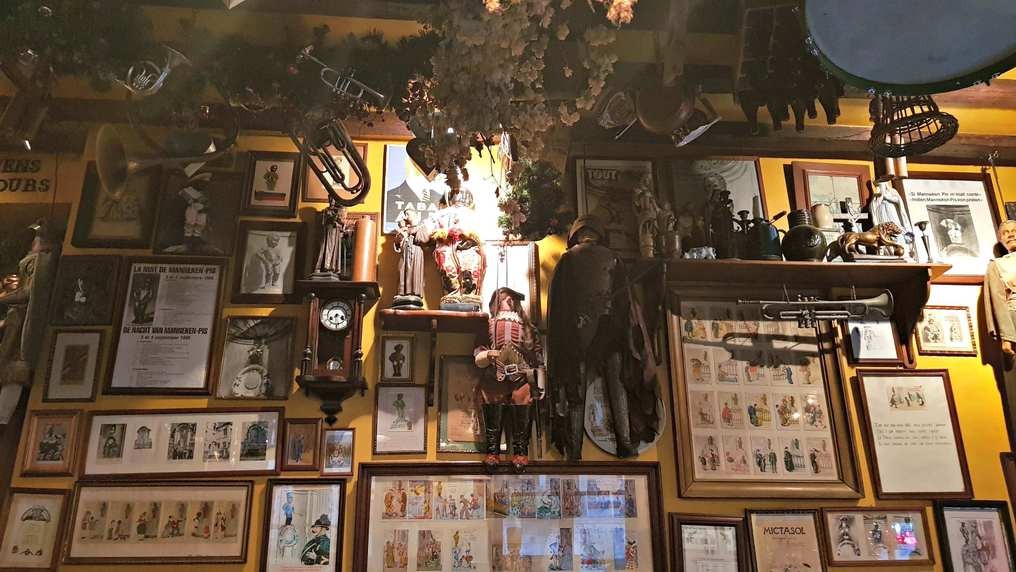
Poechenellekelde has a unique atmosphere with lots of puppets dangling from the ceiling and they have an excellent range of Belgian beers. As you are in Belgium you must also try a lambic beer. It’s a sour fruity beer unique to Belgium.
I highly recommend pairing a lambic with a cuberdon which is a cone-shaped Belgian candy. On my beer tour in Ghent my tour guide introduce this to me and it was an amazing pairing!
Nearby is a quirky little wine bar called Goupil le Fol (cash only). The bar specialises in cherry wine, blackberry and raspberry wine, nut wine and liquors. The interior is very quirky! The wine was so delicious, too easy to drink and way stronger than it tasted.
Alternative spots to grab a drink in Brussels:
Café Belga.
Moeder Lambic.
Brussels Beer Project.
La Brocante.
Lord Byron.
Finish the Day off With Fries
After a few drinks, the best way to end the day is with some pomme frites! Always a great idea to soak up the alcohol and prevent a hangover. Even if you haven’t spent the day drinking these are a must to try anyway!
In World War 1, there was a misunderstanding that Belgiums speak French and the American soldiers, therefore, thought they were in France. So when they stumble across these delicious deep-fried potatoes they called them French Fries.
The pomme frites are Bintje potatoes that are cut into thick pieces and double-cooked in beef tallow. They first cook the fries at a lower heat and then deep fry them at higher heat just before serving.
Most of the best Fries are found outside the centre of Brussel but Kirstie Will Travel recommends trying Café Georgette. They come in cute newspaper wrappings, leave the skin on the fries and have some of the best sauces.
Do beware if you’re a vegetarian then most pomme frites are not vegetarian friendly as it’s cooked in beef drippings.
Other places to add to your list is:
Fries Food Truck in Place Flagey
Maison Antoine
Friterie du Miroir
How to Get to Brussels
Brussels is easy to get to by multiple transport modes. Here are some options:
Brussels by Plane
The nearest airport to the city is Brussels Airport, which is around 25 minutes drive from Grand Place. There is also Brussels South Charleroi Airport which tends to have the cheaper flights (Ryanair), but it is just over an hour away.
Brussels Airport has direct trains that run every 15 minutes and takes 17 minutes to travel into Central Brussels.
Brussels South Charleroi Airport needs you to get a train and bus. Take any bus on line A and you’ll arrive at Charleroi-South station which will take you to the centre.
Day trip to Brussels by Rail
It is super easy to do a day trip to Brussels from London by rail, just catch the Eurostar. The Eurostar runs regularly, getting you from London to Brussels within 2 hours. Trains also run from Paris, Amsterdam and Luxembourg.
Brussels by Bus
Bus companies run various routes to Brussels from cities like Amsterdam, Berlin, London and Paris.
Flixbus and Eurolines are two popular bus companies that run services to Brussels.
Where to Go Next in Belgium?
Belgium has so many great places to visit! Make sure you check out this 3 Day Belgium Itinerary that covers Brugges (so-called The North Venice) and Ghent. Both are wonderful historic cities and perfect to visit whilst you’re in Belgium.
So, fellow adventurers, as you can see on what to do in Brussels in a day trip and it is so easy to get around. If you would prefer to do Brussels in a day in a guided tour then the City of Brussels gives you some options.
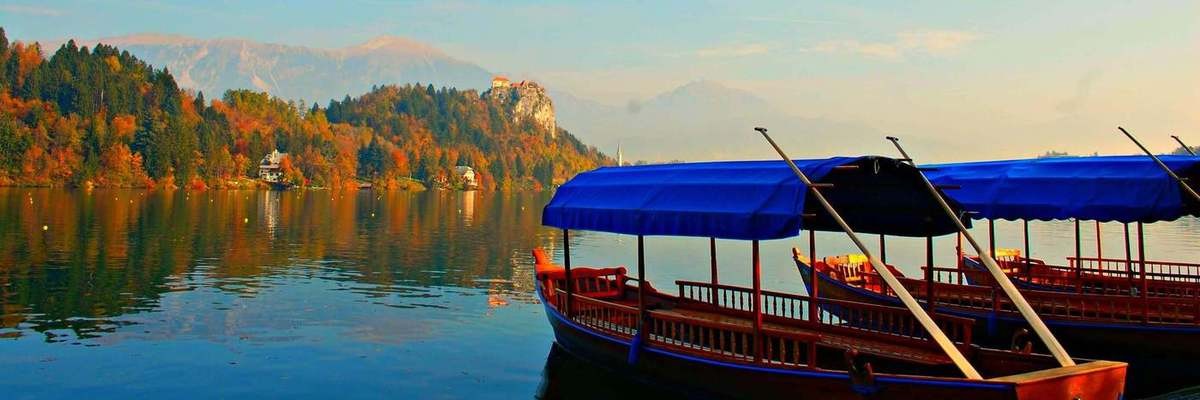
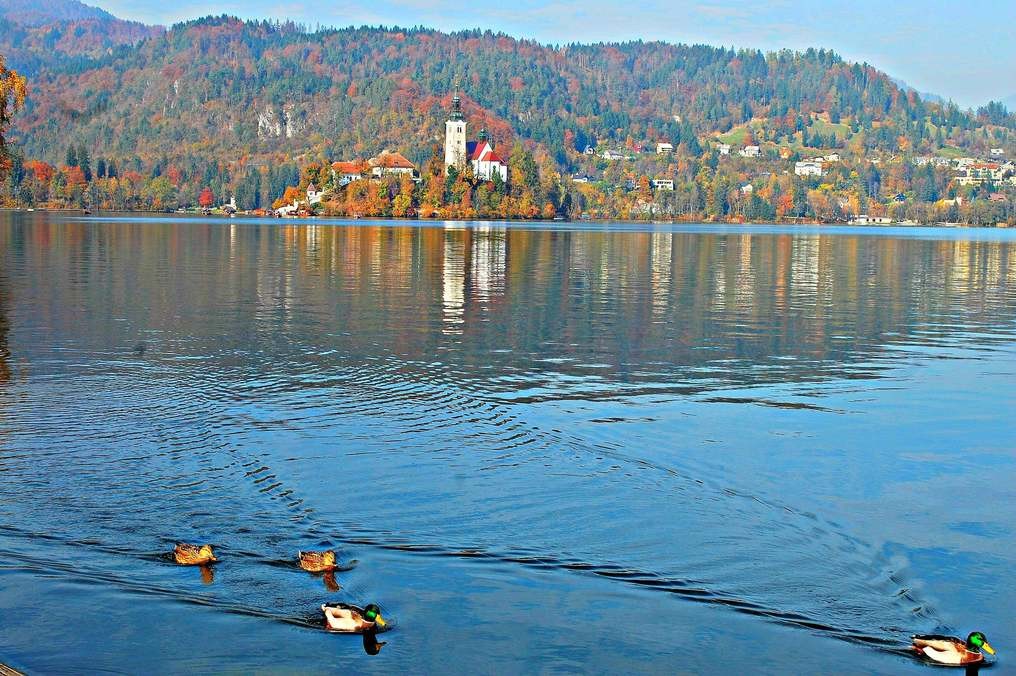
Do you ever choose a destination based on photos? Bled is one of the most famous views of Slovenia. The first time I saw pictures of Bled I was captivated by its beauty. With its green-blue lake, the little island with its church and the mountains of the Julian Alps, it’s truly breathtaking and it’s no wonder we are captivated.
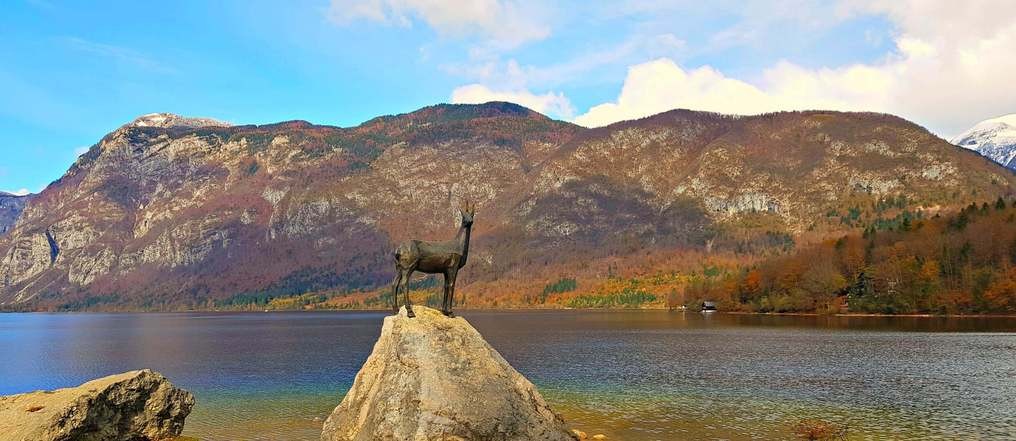
Bled is not the only gorgeous place in Slovenia, there is also a sister lake, Bohinj. This lake is more naturally stunning than Bled which has its man-made embellishments. Again, surrounded by the Julian Alps, close by are lovely walking trails, waterfalls and rivers.
How to get to Bled?
Depending on your choice of transport method will be the deciding factor on how you get to Bled. Driving will be about 45 – 60 minutes from Ljubljana Airport and city centre of Ljubljana. Lake Bohinj is an additional 30 minute drive from Bled.
Public transport means that you need to catch the bus or train from Ljubljana. The Lesce Train station has frequent connections with Ljubljana but it is 4.5km away from Bled. By bus – in Summer there are buses that departure on the hour to and from Ljubljana Bus station and in winter they are less frequent so check the timetable. The bus goes all the way to Lake Bohinj with several steps along Lake Bled.
Where to stay?
We rented a lovely Airbnb, House Gabrijel, that was a 20 to 30-minute walk from the town centre that I highly recommend. As Bled is a popular place for tourist there is a lot of accommodation available.
What to do in Bled?
Lake Bled and Pilgrimage Church of the Assumption of Maria
Walks or Hikes Around Bled
Bled is a perfect place to enjoy the outdoors and take some lovely scenic walks. One of the most popular and easiest routes is Velika Osojnica. It’s a view point over Bled and you will enjoy panoramic views of the lake and Bled. There are plenty of options to keep you busy of different lengths and difficulty levels, check out some of the walks here.
Visit the Island on Lake Bled
Across the lake on the Island you’ll see the iconic Pilgrimage Church of the Assumption of Maria. You can visit the island by swimming (during good weather), renting a rowing boat and docking at the island or by taking a ride in a traditional wooden “pletna” boat.
Taking the plenta boat does mean that the oarsman will time how long you can spend on the island. The church does cost money to enter which we opted not to do and just enjoyed a walk around.
Bled Castle and the Restaurant
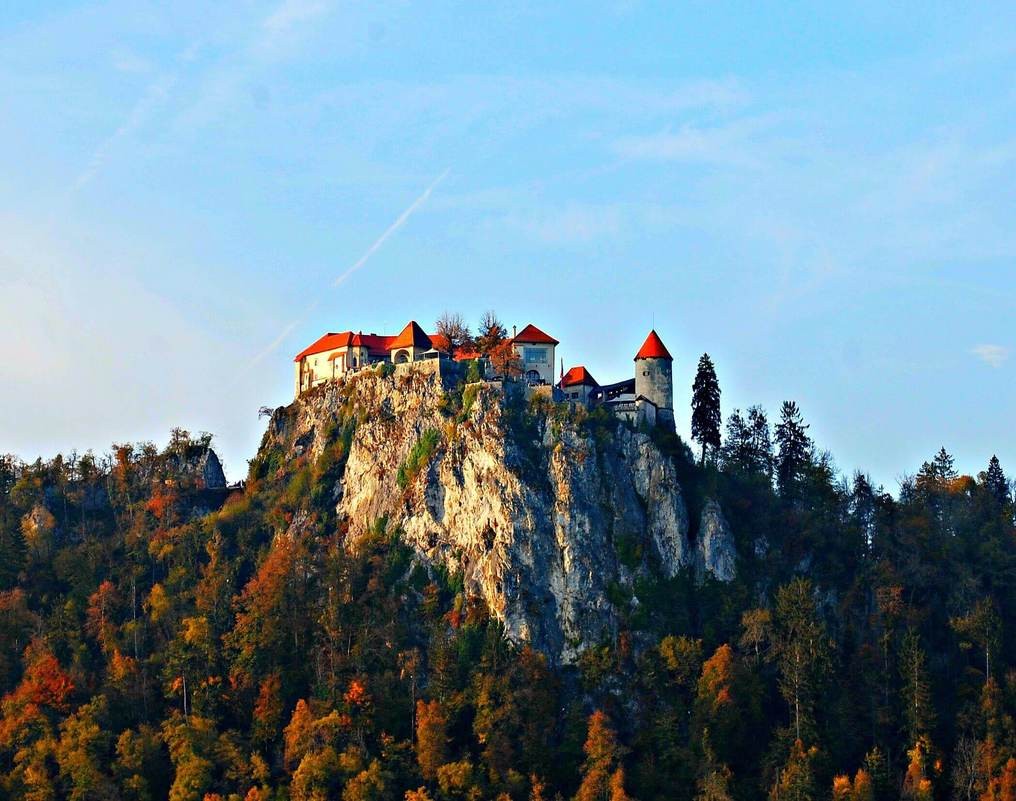
Bled Castle
At the top of the cliff is the Bled Castle, it’s about a 15-minute walk up the cliff. On a sunny day, it is a spectacular spot to enjoy a glass of wine overlooking the lake and town.
If you’re thinking about having lunch at the castle then make sure you make a reservation by sending them an email, details here.
The restaurant didn’t have any space for walk-in on the day we went and you won’t get bonus of free entrance! Taking the entrance price off the menu does make the food more affordable, although if you After 6pm you must have the £60 set menu.
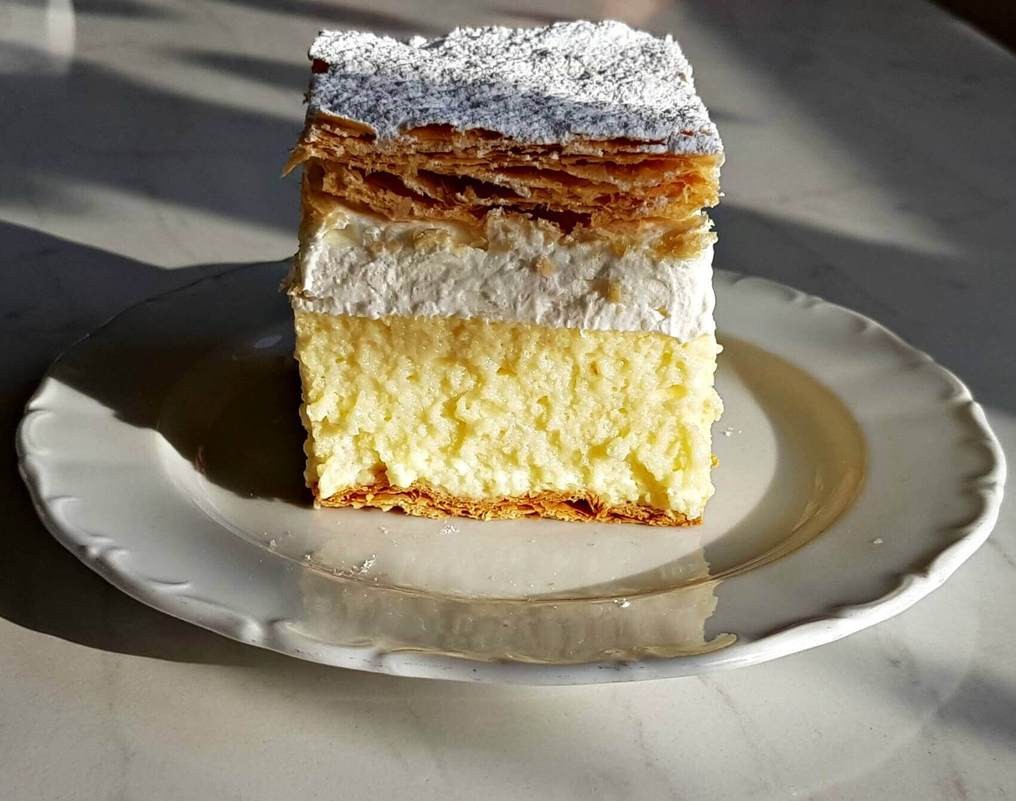
Try the Famous Bled Cake (Kremna Rezina)
Lake Bled Cake
Bled has a traditional cream cake known as Kremna Rezina. It dates back to the Hight of the Austro-Hungarian empire in the 18th and 19th century. You will see pictures of the cake everywhere! We went to Confectionery Winter – Grajska cesta 3, 4260 Bled, Slovenia to try the cake.
Where to eat in Bled?
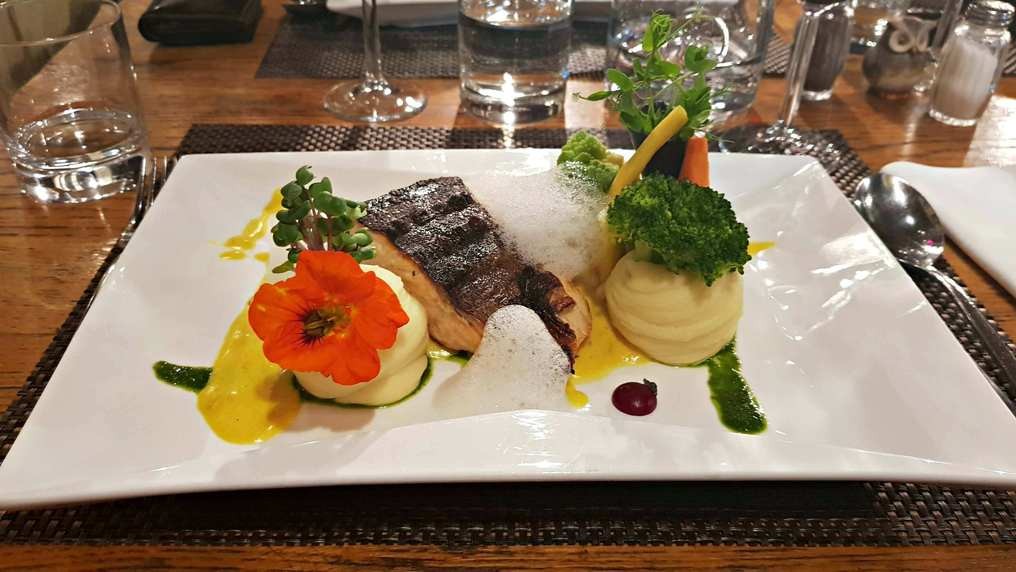
Dinner at Sova
Sova – Slovenian food which I’d say is inspired by Italian food and meat-based dishes. It was our hosts’ favourite restaurant and did serve some incredibly delicious food.
Penzion Mlino – Also served Slovenian food and a selection of Slovenian wines.
Riklijeva Cesta – It’s a pizzeria, serving cheap pizza and drinks.
What to do in Bohinj?
Lake Bohinj and Triglav National Park
Bohinj
Lake Bohinj is Slovenia’s largest natural lake. With the crystalline waters reflecting the beautiful forest and the fall foliage was totally dreamy. The lake sits within the Triglav National Park and it is a popular place for those who love the outdoors. Lots of hiking trails, stunning scenery, swimming (when the weather allows) and skiing during winter.
As I mentioned earlier you can catch the bus to Bohinj or if you lucky enough to have a car it’s a thirty to forty-five-minute drive away. Make sure you stay on the main roads if you are driving, especially if you are not confident with windy one-way roads with lots of obstacles.
Take the Vogel to the top of the Julian Alps
Vogel, Lake Bohinj and Triglav National Park
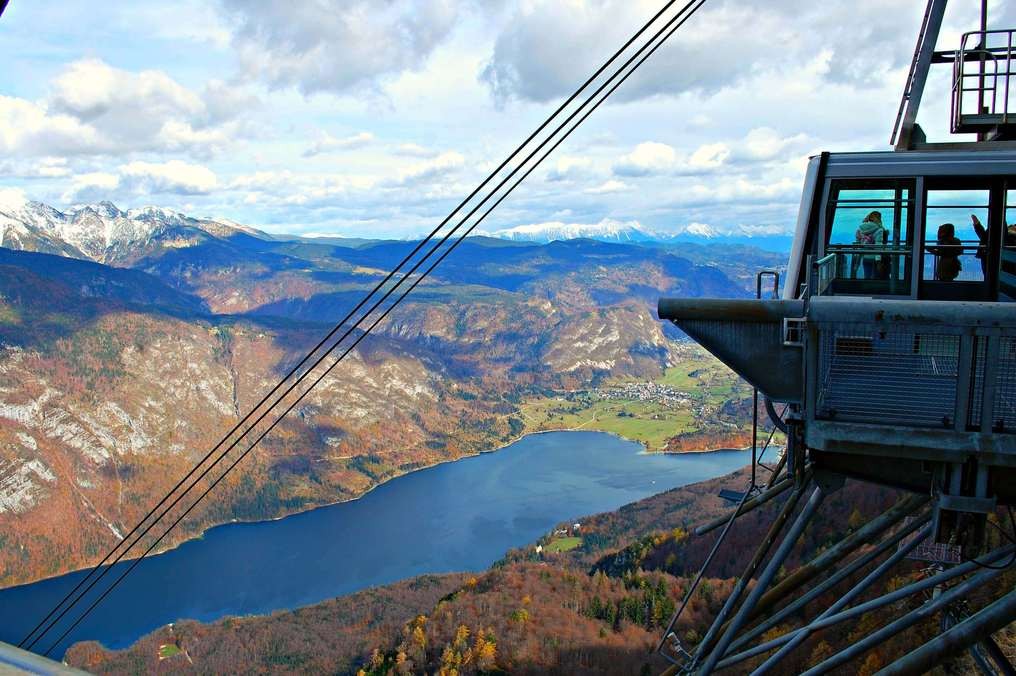
The Julian Alps stretch from north-eastern Italy to Slovenia. The highest peak being Mount Triglav which rises to 2,864 m. Here you can catch the cable car to the top of Mount Triglav a perfect place to capture the panoramic views of the mountains and Lake Bohinj.
In the summer, take the trails nearby and have a lovely day out hiking. In the winter, it opens up to ski slopes and winter sports.
Hike to the Savica Waterfall
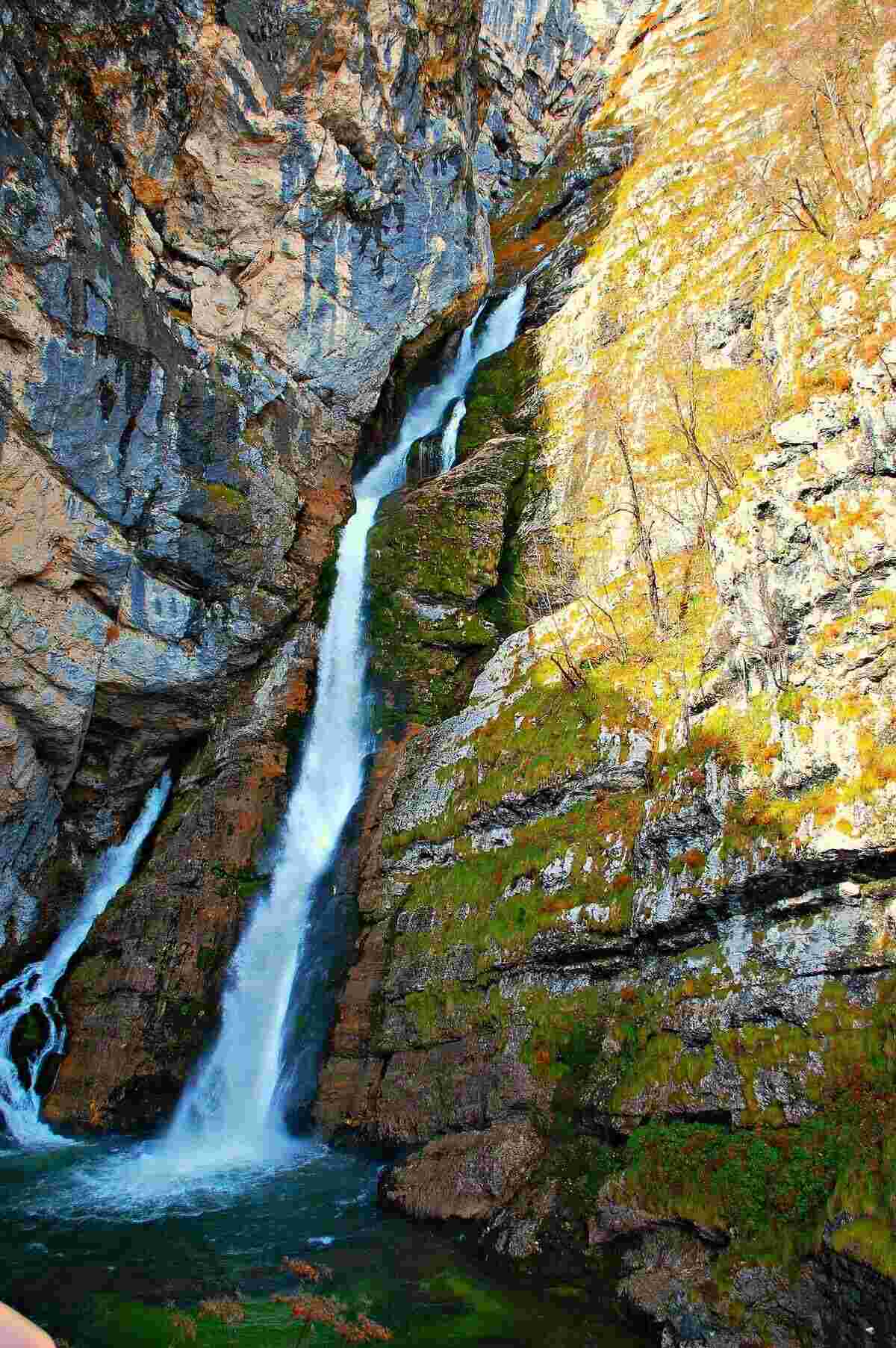
Savica Waterfalls are great for a half day hike and during summer would be a perfect place to enjoy a picnic on the route. Making your way up the hill, surrounded by the woods feels magical. As you get higher, the trees almost part to reveal the amazing landscape below and waterfall. On the other side, you can see the valley and beautiful forest surrounded by lakes and mountains.
Tip, the waterfall isn’t free and make sure you are carrying a couple of euros cash to cover the cost of entry.
Day Trip to Ljubljana
The capitals name for me the name isn’t easy to pronounce so let’s start with the correct pronunciation of Ljubljana. It’s pronounced as ‘lyoo-BLYAH-nah’. It’s not a big city, it can easily be covered by foot and save money on transport.
We, unfortunately, got rained out! The weather apps were not joking (like the UK) that it would pour down with rain. From a perfect warm almost summer day to torrential rain! Listen to the weather reports as they are pretty spot on.
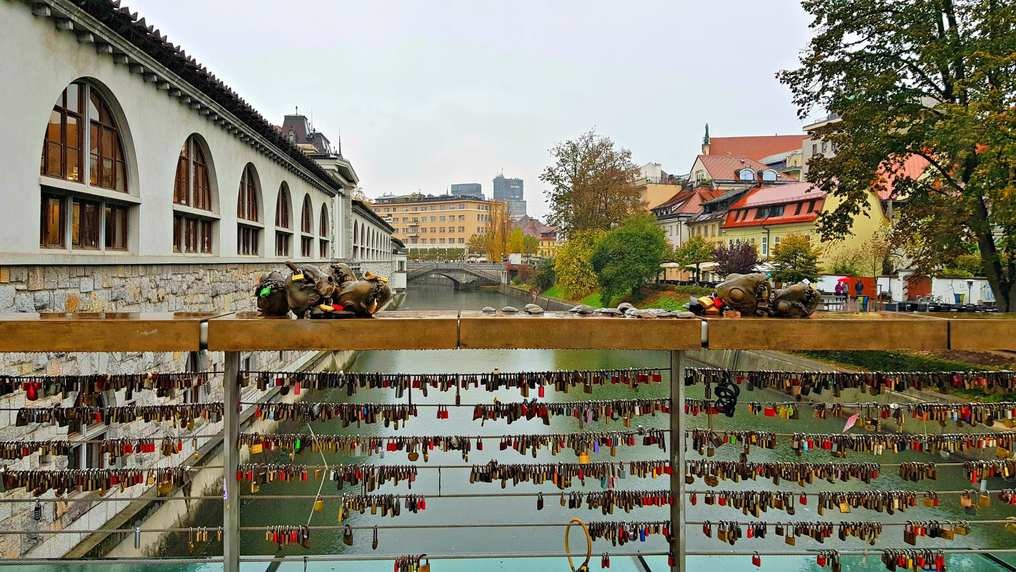
Hopefully, you have better weather than us, I recommend visiting the Dragon Bridge, Ljubljana Castle, taking a walk through the Old Town and a stroll around the canals.
What are you most looking forward to seeing in Slovenia?
Before travelling to Russia, there are important things to know to make your trip smooth and enjoyable. With stunning attractions like the Hermitage, the Kremlin, Kazan Cathedral, St Isaac’s Cathedral, Church of the Saviour on the Spilled Blood, and St Basil’s Cathedral, it’s no wonder Russia is becoming a tourist destination.
In this guide, I have outlined 18 key things to consider before your trip.
Cruise or ferry passengers can stay in Russia for 72 hours without a visa if they have booked tours through officially licensed companies. This includes:
St Petersburg
Kaliningrad
Vladivostok
Sochi
Vyborg
Korsakov (Sakhalin Island)
Novorossiysk
Arkhangelsk,
Zarubino (Primorsky Krai)
Murmansk.
Allow a month minimum to obtain your visa. The recommendation is to apply for your visa before booking flights and accommodation, although you need to list your host company, dates and at least need to know where you are interested in staying. They have recently introduced an e-visa scheme for some countries, to find out more information check out UK visa service centres guide.
2. Register Upon Arrival in Russia
The process of registering on arrival dates back past the Soviet times to ensure you were not occupying valuable Russian soil without authorities’ permission. The registration used to be a little stamp in your passport on a paper attached to your visa and/or on the new migration card (if it was given to you) before 2007 which needed to be registered within 72 working hours.
It has been a little more modernised since 2007 and is now a special piece of paper that confirms your registration has been submitted. It’s not meant to be your obligation and should be done by the accommodating party. However, if it’s not registered within seven working days upon arrival, you could be fined, deported (although deportation is unlikely) and denied entry to Russia for up to 5 years.
Our hostels provided us with the piece of paper we needed for our registration upon arrival. If they don’t provide this, chase your accommodation to provide this!
3. Everything is in Сyrillic Writing unless it is Tourist Related
All the writing is in Cyrillic which can make it interesting for those who are used to the Latin alphabet. I personally cannot read Cyrillic so this made it a little challenging to navigate and read menus at restaurants that didn’t have an English menu.
There are a few signs with English translations but some cities don’t have them at all. This of course, can make it a little frustrating for a tourist.
When I was travelling around google maps offline, a tourist map of the city or a phrase book/notepad which has necessary words like “exit” Выход, “entrance” вход, “restaurant” ресторан, “pharmacy”аптека, “bank” Банка and “metro” метро.
Our first experience of eating out at a restaurant where no one spoke English was a fun experience. We ended up randomly guessing what to eat on the menu. That is a little challenging when you are a vegetarian hoping for a non-meat dish!
The little icons looked like they would be burgers and pizza. My boyfriend thought he was getting a cheeseburger and ended up with plum dumplings. My sister thought she would end up with some kind of burger and got a chicken tuna sandwich. I got exactly what I thought I would, a margarita pizza!
Even though it was much to my amusement the others didn’t get what they wanted, my boyfriend enjoyed his plum dumplings. My sister, less so. She really doesn’t like tuna.
If you not so game at randomly selecting food then most restaurants in the tourist area will have English menus available. Just check the menu before you sit down.
4. English isn’t spoken too often in Russia
English is not as widely spoken in Russia as it is in many other popular tourist destinations in Europe. In Moscow, we found that English was less commonly spoken than in St Petersburg. Here are the best phrases to learn that will help you on your trip to Russia:
Hello Здравствуйте (ZDRAHST-vooy-tyeh)
Thank you Спасибо (spuh-SEE-buh)
Yes Да (dah)
No Нет (nyeht)
Goodbye До свидания (duh svee-DAH-nyah.)
I can’t speak Russian Я не говорю по-русски (хорошо). (yah nee guh-vah-RYOO pah ROO-skee [khah-rah-SHOH])
Do you speak English? Вы говорите по-английски? (vyh guh-vah-REE-tyeh pah ahn-GLEES-kee?)
Good morning Доброе утро (DOH-bruh-yeh OO-truh)
Good evening Добрый вечер (DOH-bryh VYEH-chuhr)
Where is the toilet? Где туалет? (gdyeh too-ah-LYEHT?)
Vodka водка (VOHT-kah)
Water вода/ой (vah-DAH / vah-DOY)
For all the tourist attractions we went to, we found that everyone spoke a little English so it was easy enough to buy tickets. Although, some museums did not translate from Russian to English and we skipped a couple of attractions because of this.
5. Best Currency to Exchanging Money for Roubles
The best currencies to exchange in Russia are US Dollars and Euros. Other currencies do not get a very good rate.
Only change money at banks, hotels and airport exchange bureaux. It is an offence to change money from street traders. Most major banks and currency exchanges will sell you Roubles as well.
6. Debit/Credit Cards are not widely accepted
There are places in Russia that will accept debit/credit cards for purchases and there are some that don’t. Debit/credit cards are becoming more popular and undoubtedly it will soon enough be much more widely accepted.
You can get money out from ATM machines where I was in Moscow and St Petersburg, and you could also get money from major banks.
I recommend you keep some cash on you at all times, particularly if you are going to eat out or accept any goods or services ahead of purchase so that you don’t get caught out not being able to pay.
7. Public Transport is the Best Way to Get Around Cities like Moscow and St Petersburg
Ploshchad Revolyutsii Metro Station Man with his Dog
Public transport is the best way to get around in most cities, especially the larger ones equipped with a subway system. The Moscow Metro is known as one of the world’s most efficient and cheapest underground transit systems. I would have to say the Moscow Metro is also one of the most beautiful. The stations are tourist attractions in their own right. Read more about how to complete a self-guided tour of the Moscow metro station during your visit.
In Moscow, our accommodation gave us an English version of the metro map, which was handy for navigating the metro. However, where and how to buy tickets won’t be included in the map, so make sure you know how to do this activity.
7. Don’t Drink The Tap Water
It is not uncommon even to open the tap to see some brown water coming out for a little while and not the highest quality of water. If small amounts of tap water are consumed, it won’t hurt you so brushing your teeth with the water will cause harm. It could cause an upset stomach or growing illness in your stomach at most.
When you are in Russia, drink bottled or filtered water. If you are ordering water at a restaurant and don’t want carbonated water, ensure you say that you want water without fizz or gas.
The accommodation we stayed at is Moscow, and St Petersburg installed a filter solution so their water was safe to drink and saved us money. Alternatively, boiling water from the tap can make it safe to drink.
9. Plan an Itinerary
Russia is a big place with lots to see especially if you are only covering Moscow and St Petersburg on your trip. Planning is key to make sure you cover the highlights, allow for museum and attraction closure days and time to cover some of the sheer sizes of the sights.
Creating your own DIY itinerary is the best way to explore Russia. Not only creating does creating your own DIY itinerary allow you to have flexibility but it is cheaper than a tour.
Russia does tend to have tourist and local prices so you will generally be paying more than the locals do. Museum tickets is an area you will generally see the prices difference against Russians. If you claim to be a Russian they will ask to see your passport or proof that you are a Russian resident.
It is still cheaper than other European destinations but the key to being careful with prices in Russia is making sure you understand what the cost should be especially for restaurants, cabs or buying souvenirs.
If you are lucky enough to be a student then using your student ID can save you money at museums and other attractions. Restaurants also have deals called ‘business lunches’, which are great value for dining out.
11. Be Prepared for the Weather
The weather in Russia is hard to predict and is generally very changeable. Places can be known to having 4 seasons in a day or just be extremes of hot and cold. Even the Russian locals do not know what to expect from the weather.
Not being from a cold country myself, I am not sure I could handle the extreme cold of Russia during the winter. If travelling during the winter, it’s more important to protect yourself from the wet, rather than the cold. As bigger cities will be warmer the snow will melt quicker and turn into mush than regional areas. Make sure if you are travelling during winter that you bring the right shoes. Had I gone there in winter I would have taken my snow boots.
When we visited Russia, it was during summer and we were very lucky with the weather! Only 2 days that rained out of the 8 days when we were there. The temperature was similar to a London summer and we just packed light clothes along with a jacket plus some umbrellas and good walking shoes like sneakers.
Summer weather in St Petersburg Russia
13. Take Off Your Shoes When You Enter Someone’s Home
Be prepared to take off your shoes when you enter someone’s house in Russia or even your accommodation. Slippers are usually offered to guests when they come to visit. It was a rule at our hostels that we took our shoes off and they offered us disposable slippers to wear around the hostel.
I think it is a mix of comfort and cleanliness due to the weather which can drag dirt through the house via your shoes.
14. You Can’t Buy Alcohol from a Store After 11 PM
Rocket and Bishops bar in St Petersburg
Shops will stop selling alcohol after 11pm so make sure you get your last-minute booze beforehand. Alternatively, places like Moscow and St Petersburg will have plenty of bars to party and drink the night away.
15. Dress up for a night on the town
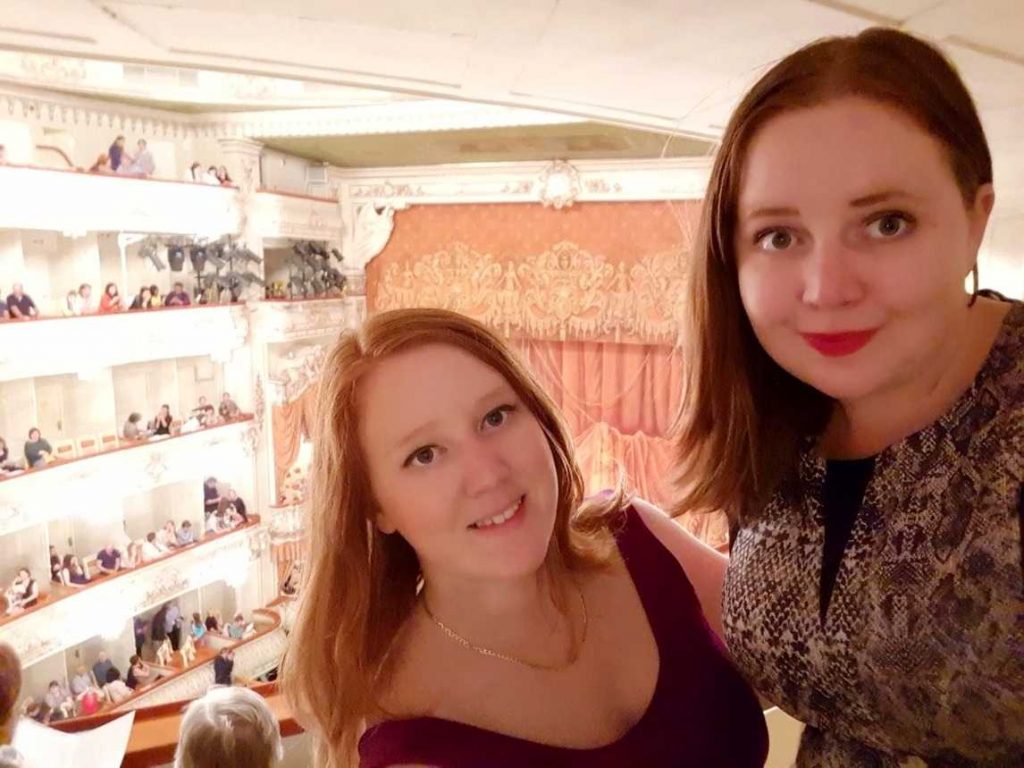
Dressed up to see the ballet at Mikhailovsky Theatre St Petersburg
Planning to hit the clubs whilst you are in Russia? It’s key to dress up otherwise you may not make it past the ‘face control’. For ladies it best to wear high heels and short skirts and for men to wear all black.
If you prefer to go to the theatre or a posh restaurant, do like the Russian do and dress up and you will fit in like a charm.
16. Asking for a Mixer with Your Vodka is a Sin
Vodka is a big deal for Russians and breaking the traditions and by not drinking it as a shot is a sin. If shotting vodka is a struggle then have a chaser with the shot like a lemon, a pickle or, perhaps, a separate glass of water. Vodka is drunk in swift shots, not sipped.
17. Be respectful in churches
When travelling we tend to dress for the weather in European countries and don’t always think that what we are wearing will be an issue. For example; if you walked into a church in Russia with shorts and a tank top it would not go down to well.
Ladies, when entering an active church you should cover your head and shoulders. In some monasteries and churches, it’s also required to wear a skirt, however, there are generally wraps are available at the door if you forget. Men have it easier with only needing to take off hats and not to wear shorts.
18. Check the Train Timetable
Long-distance train timetables are written according to Moscow time and can make it difficult when travelling across Russia’s multiple time zones. In most stations, the clocks are set to Moscow time. If you are only travelling between Moscow and St Petersburg there is nothing to worry about as they share the same time zone. Ensure you double check before travelling.
19. Reserve Tickets to the Russian Ballet (remember some close during August)
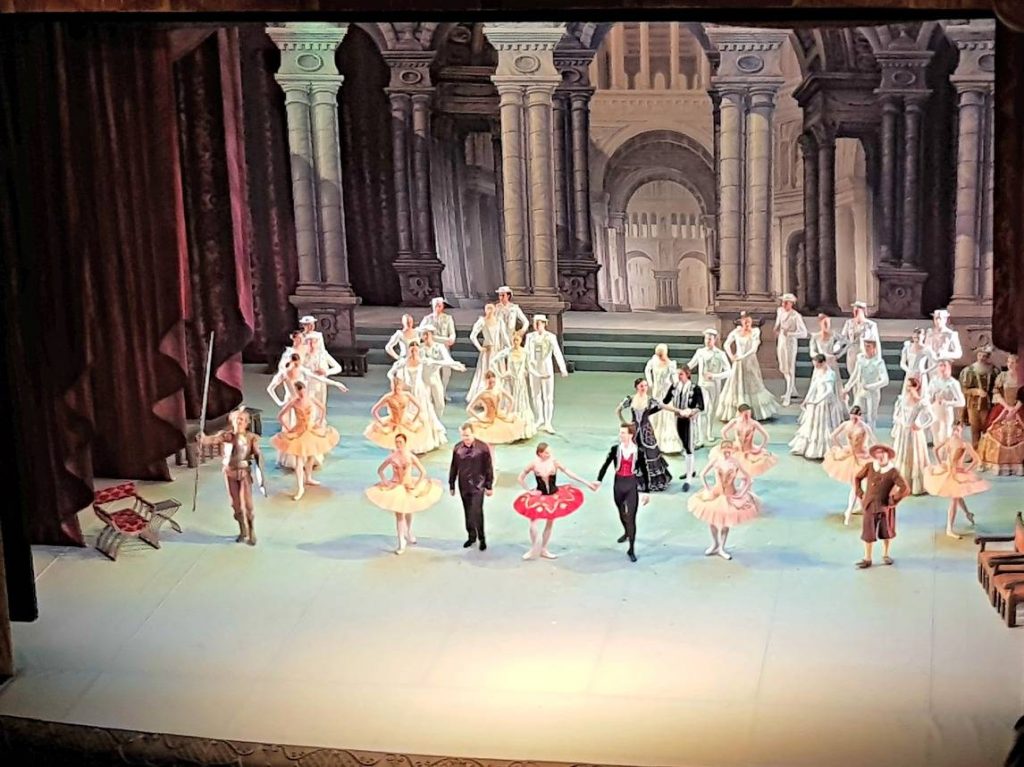
Ballet at Mikhailovsky Theatre St Petersburg
Book ballet tickets at least one month in advance as the reasonably priced tickets sell out fast and you could be left paying £150 and upwards. I booked us tickets online to the Mikhailosky Theater as they were around £25 – 30. Even though it was cheaper than the Bolshoi and the Mariinsky the performance was still spectacular.
Below are the top ballet theatres in Russia (if you are going to Moscow or St Petersburg in August some of the theatres close so you may not be able to see the ballet during this month). You will be able to see what performances are on, how much they cost and will be able to book your tickets online. Bolshoi Mariinsky Mikhailosky
You can see why Russia is fast becoming a popular tourist destination with magnificent attractions like the Hermitage, the Kremlin and Kazan Cathedral. There are a few things you need to know before heading to Russia and I have detailed 19 things to consider before you go. #Russia #travellingtorussia #keythingstoknowbeforetravellingtorussia
Moscow is renowned for Red Square, the Kremlin and St Basil’s Cathedral, the list could go on. It’s the capital of Russia, has an astounding 13.5 million people that live there and 9 million people a day catch the metro. Ok, so 13.5 million isn’t a lot when you think about Beijing or Delhi but it’s a lot for Europe.
It’s a vibrant city with a 24-hour vibe and a great mix of ancient and modern. Here is my Ultimate Guide on How to Spend Four Days in Moscow.
Day one
Red square is a must for day one of your Moscow trip and visit the marvellous buildings around like St Basil’s Cathedral, Kremlin and State History Museum. St Basil’s Cathedral must be one of the most beautiful buildings in the world. To think that Stalin wanted to knock down the cathedral so that he could fit tanks through Red Square, thankfully that didn’t happen and we still get to admire the architecture of the cathedral.
Depending on the day, you can go to see Lenin in his Mausoleum in Red Square. Lenin was the founder of Soviet Union and has been there since his death in 1924. It’s open 10am – 1pm, Tuesday-Thursday & Saturday.
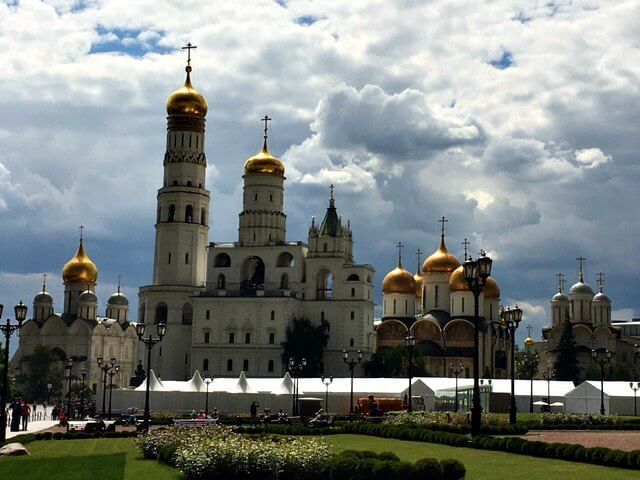
Tick off the top things to do in Moscow, go behind the State History Museum and see the inside of the Kremlin. Pass the Tomb of the Unknown Soldier and finally arrive at the ticket desk.
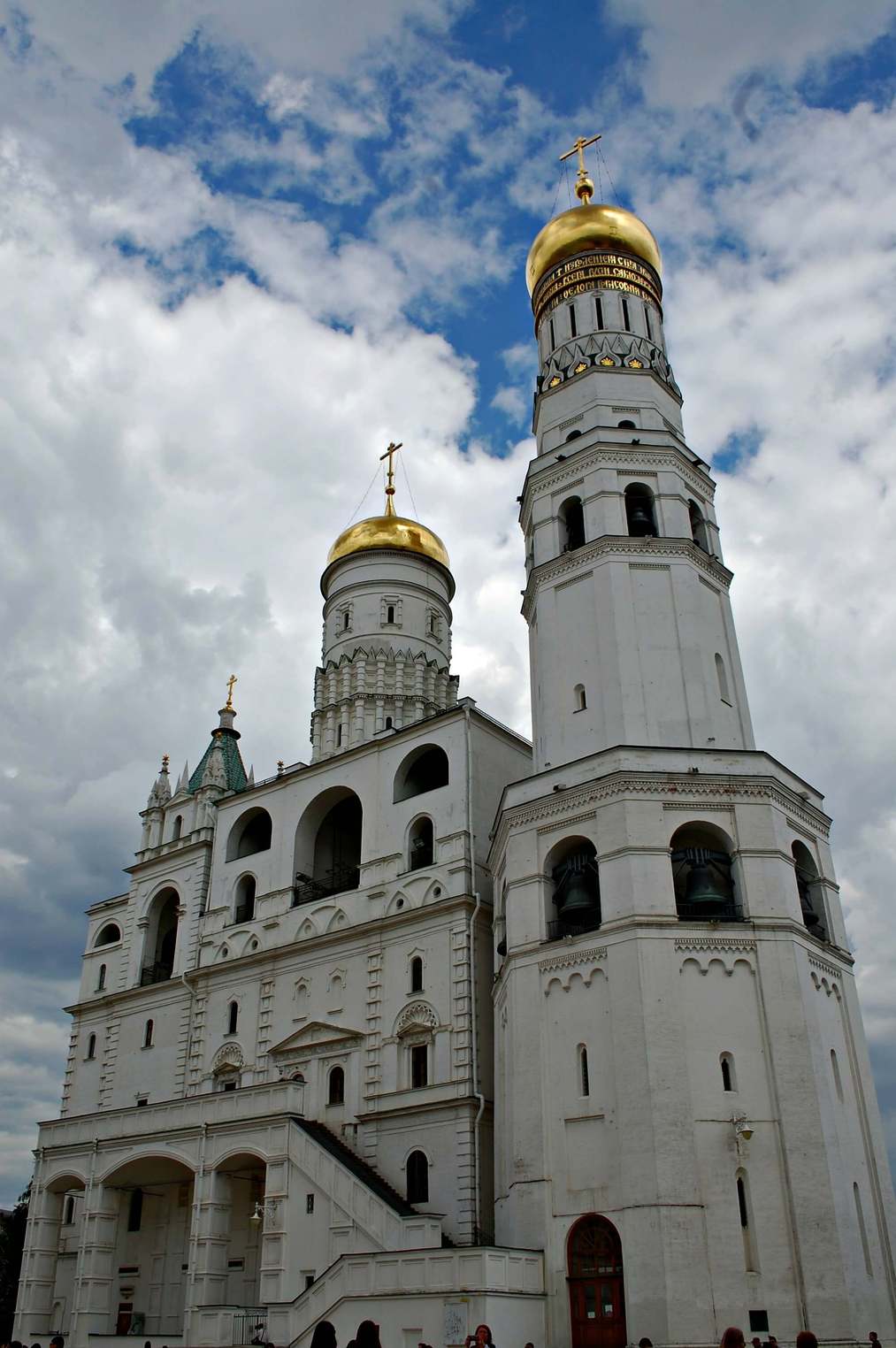
The ticket lines are a little confusing, there were two massive queues when we arrived and couldn’t tell what we were lining up for. I knew there were a couple of ticket types you can get so check which queue you want to wait in. It’s 500 roubles for complex, 700 roubles for the Armoury and complex, Ivan’s Bell tour is 250 roubles. Note that: Tickets to Armoury and Ivan’s Bell Tower are timed, tickets can be sold 45 minutes before opening times which are 10am, noon, 2.30pm and 4.30pm.
Inside the KremlinThe Ivan the Great Bell Tower
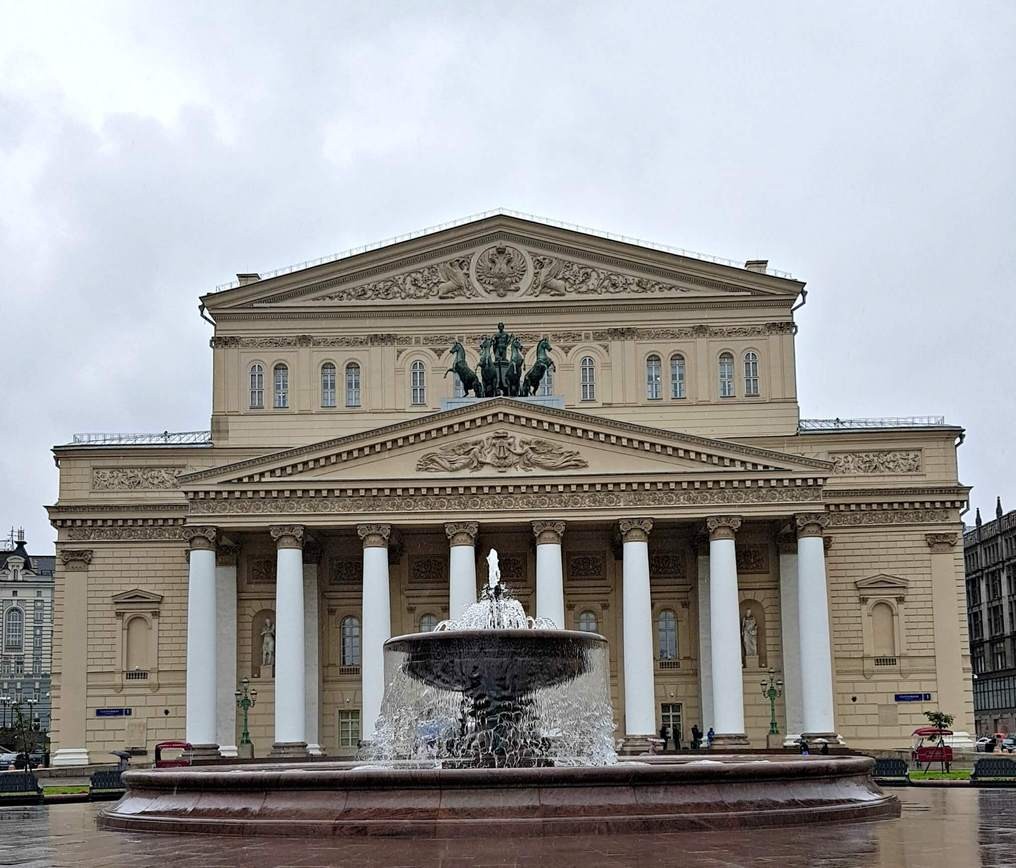
The Bolshoi Theatre is the most prestige ballet in Russia and one of the world’s leading ballet companies. It’s on the pricer end of ballet tickets at £150 per ticket upwards. Not in my budget for this trip, read how to spend four days in St Petersburg for other ballet options.
Russia is famous for it’s ballet and the Bolshoi is one of most famous places to watch the ballet.
Day Two
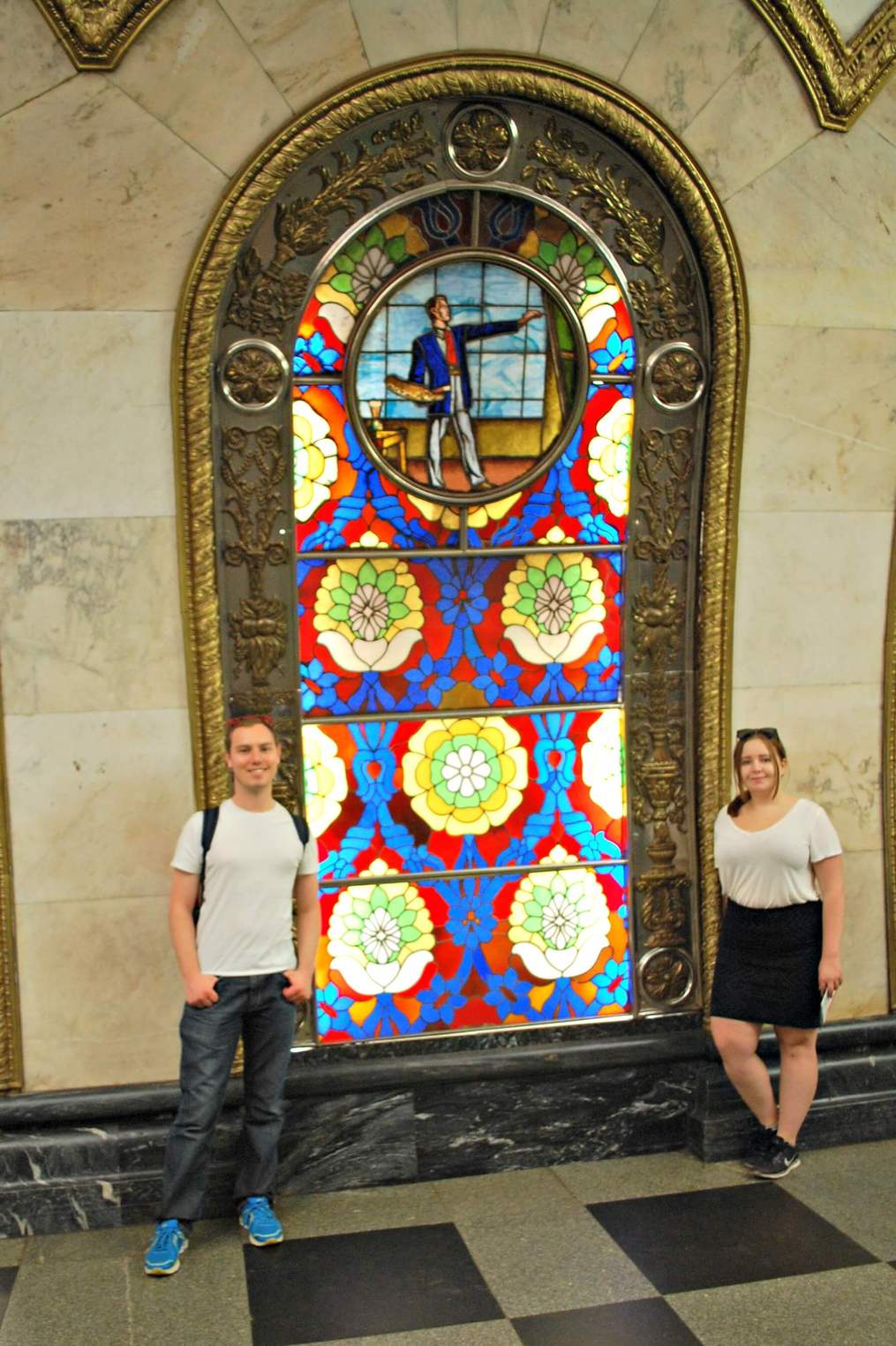
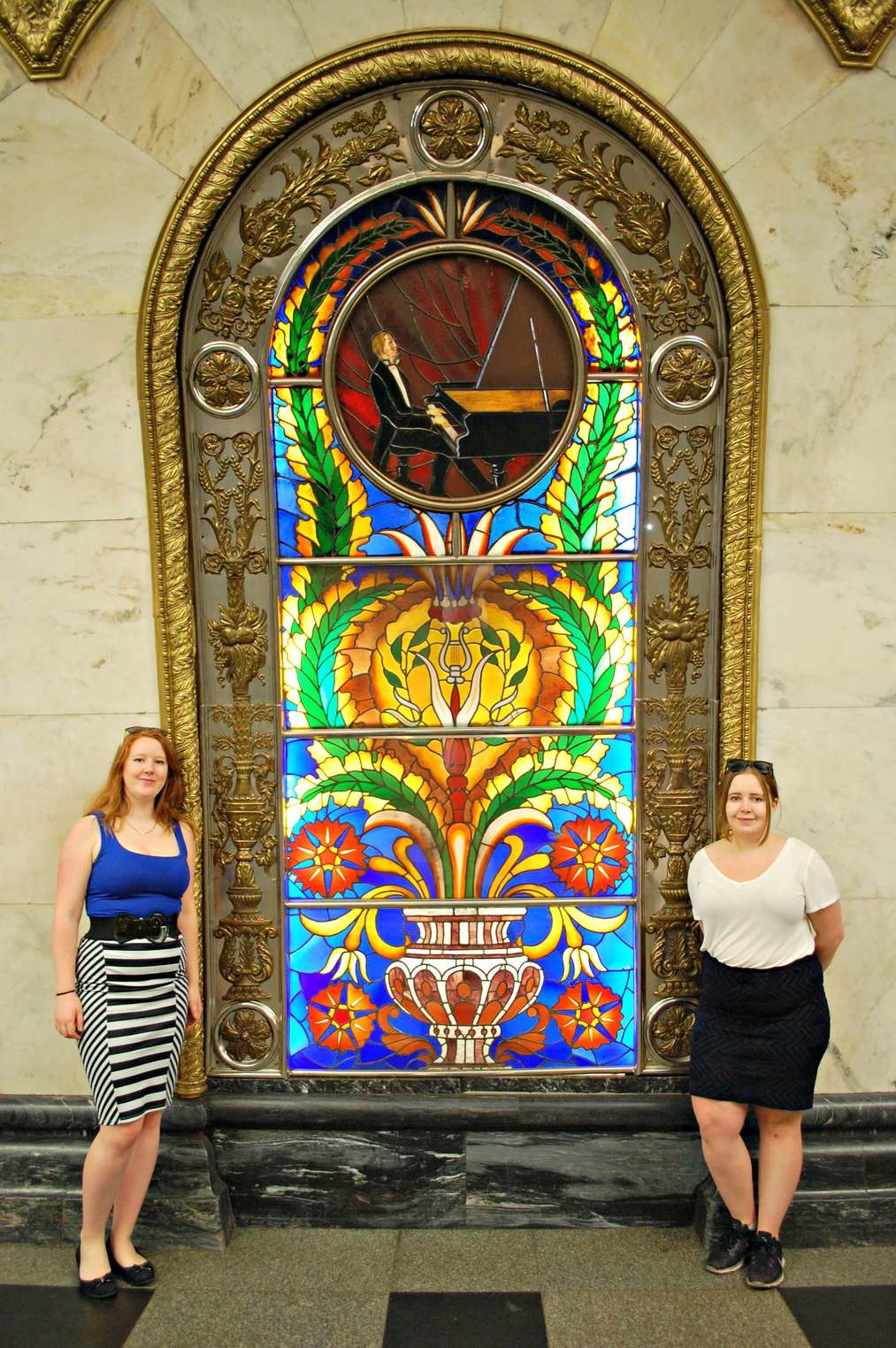
Spend a few hours in the Moscow Metro Stations which are a tourist attraction in their own right. Being in awe of the different styles from statues to stained glass windows and wonder why your commute to work doesn’t look like this! Read my self-guided tour of the Moscow Metro Stations here…
Novoslobodskaya Metro Station
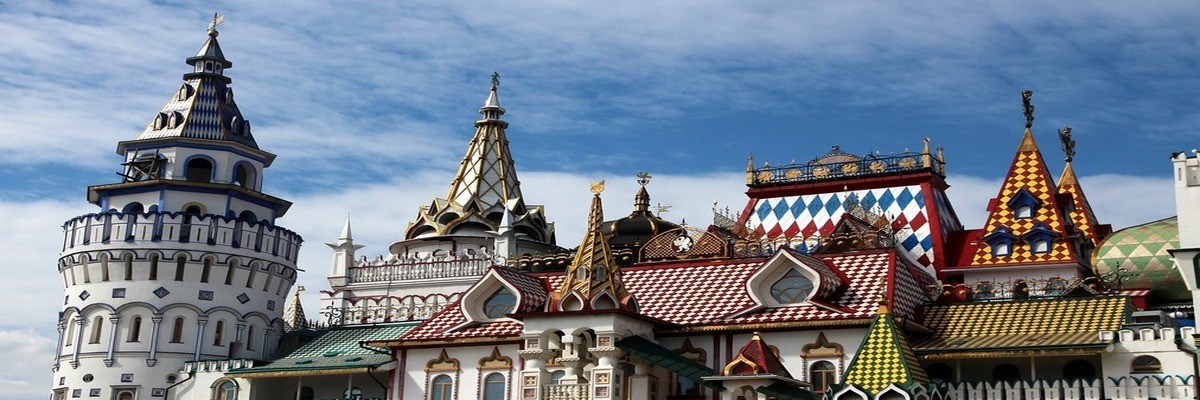
As you are already exploring the Metro station head to Izmaylovsky markets, it’s near Partizanskaya station. It’s like a Disney-like medieval village where you can bargain for your souvenirs and take some wonderful photos. Be careful you don’t get caught out like us with their opening hours which is Wednesday and Friday to Sunday.
Day three
Take a walk-through Gorky Park starting at the main gate, if the sun is shining grab an ice cream from one of the many vendors. People watch, catch a couple of skateboard or rollerblade tricks. Enjoy the endless activities the park offers from cycling, rollerblading, beach volleyball and table tennis.
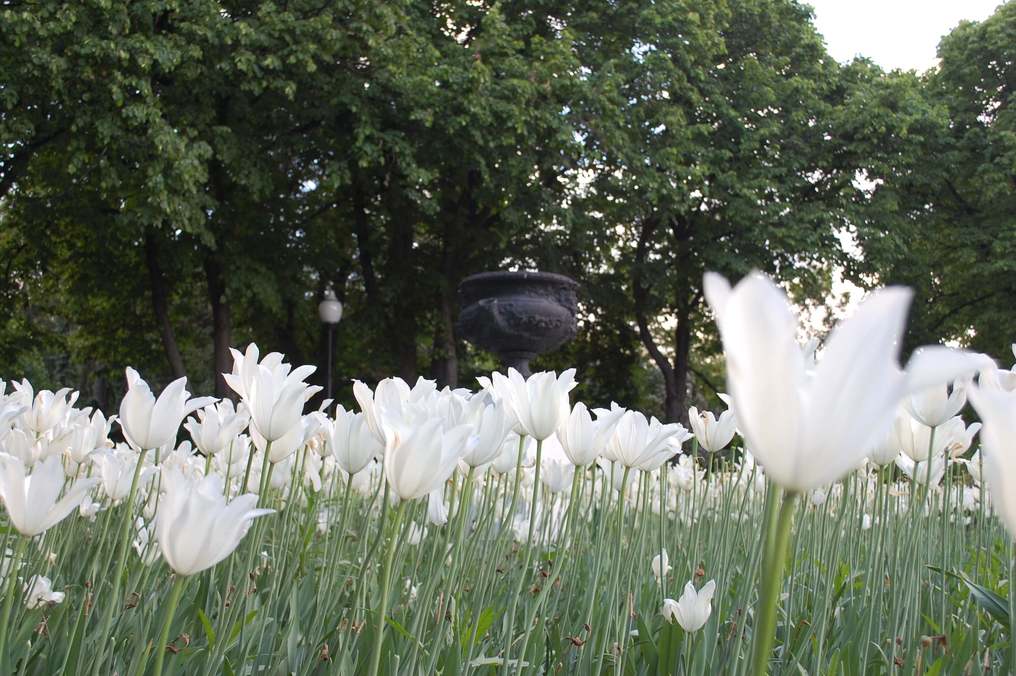
Flowers in Gorky Park
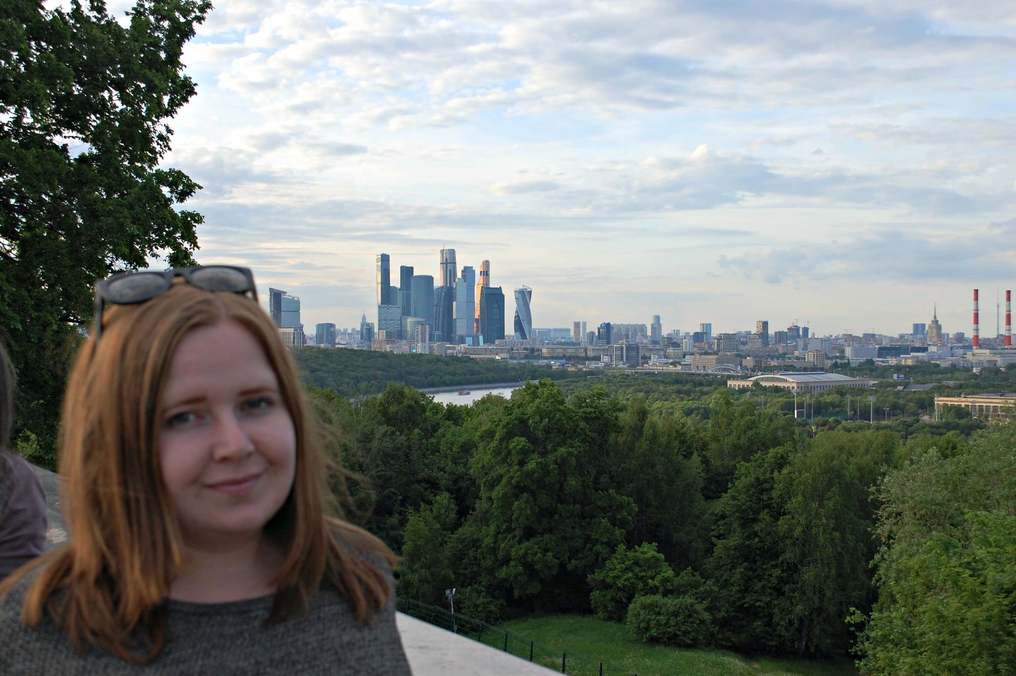
Close by is the Sparrow Hill Observation Platform. Catch bus 7 from Akademika Petrovskogo St (ул. Академика Петровского) stop to Universitetskaya Square. The platform is one of the highest points in the city and has spectacular views of Moscow. Directly behind the platform is Moscow State University.
Enjoying the views at Sparrow Hill Observation Deck.
Relax at Tramplin na Vorobyevykh (Трамплин на Воробьевых) for drinks and continue enjoying overlooking Moscow city.
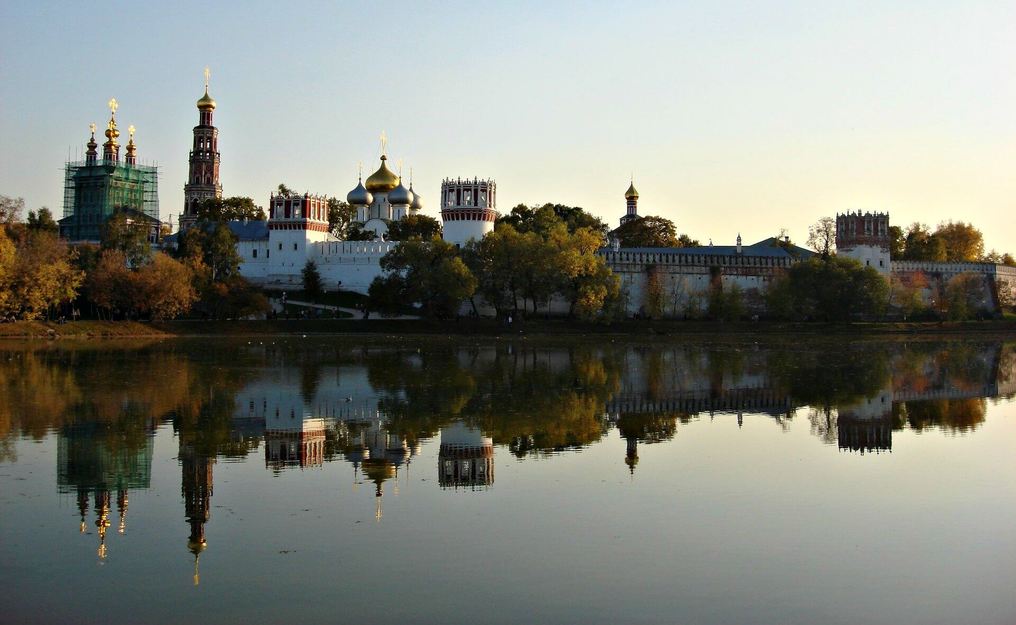
Walking back to Vorobyovy Gory station you can head across to Novodevichy Convent.
The convent was founded in 1524, and has been kept intact since the 17th century. Naturally, the Convent became a UNESCO World Heritage Site in 2004.
Novodevichy Convent
Day Four
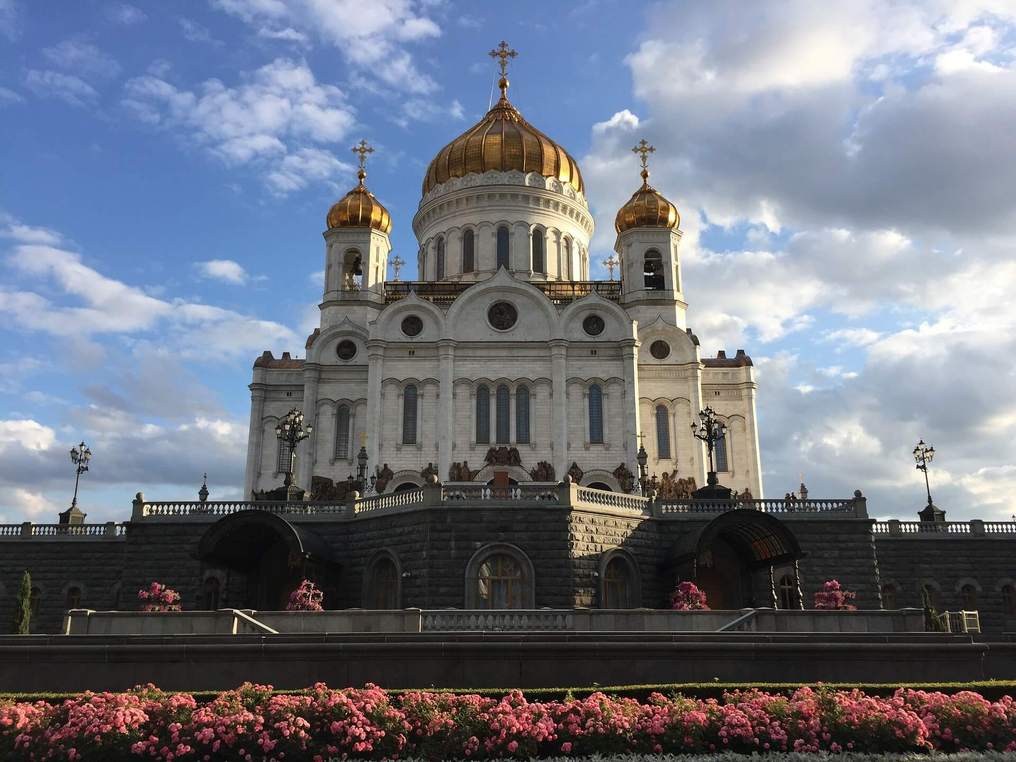
Spend the last day wandering around the streets of Moscow. Start at the Cathedral of Christ the Saviour. There have been two churches of this site, the current cathedral which was built between 1995 – 2000 and the original church, built during the 19th century. Stalin destroyed the original church in 1931. It was intended to be replaced with colossal Palace of the Soviets to house the country’s legislature. Construction was halted in 1941 when Nazi Germany invaded the Soviet Union during World War II.
Christ the Savior Cathedral
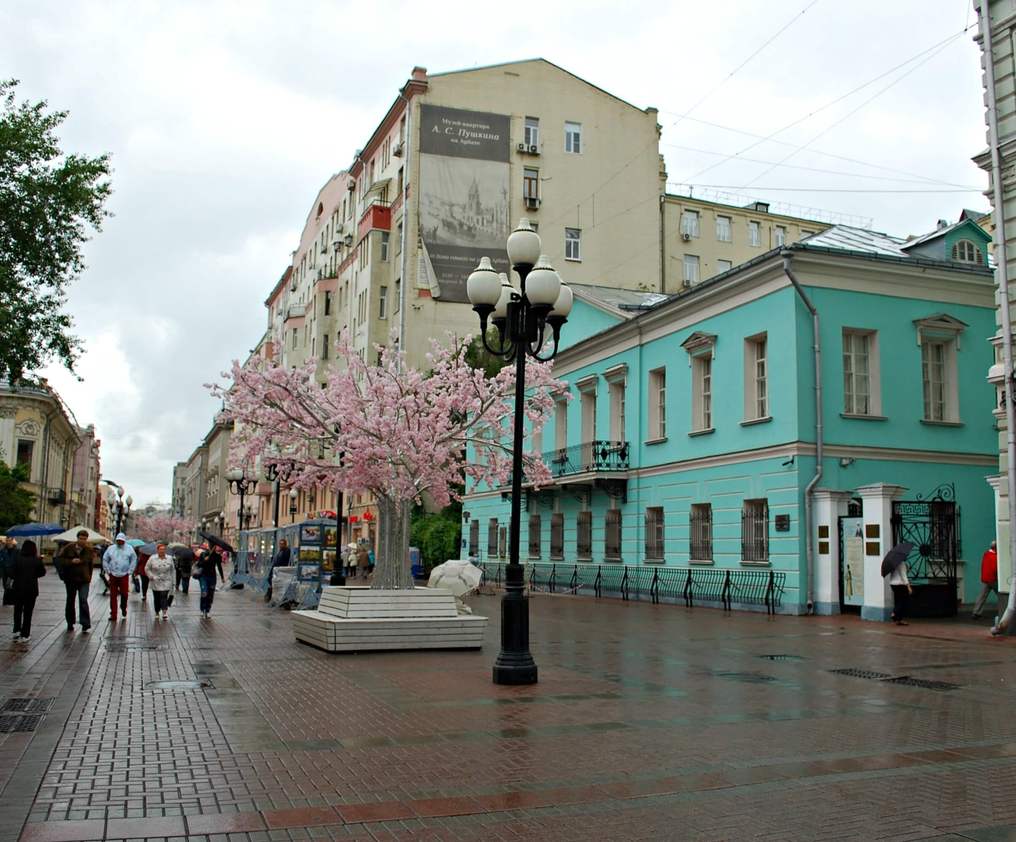
Nearby is Old Arbat Street, it’s one of the oldest surviving streets in Moscow and has been around since the 15th century. Old Arbat Street used to be an important trade route and home to craftsmen. Now Arbat is a pedestrian walkway with historic buildings, souvenirs shops and restaurants.
Old Arbat Street
Have you ever been to Moscow? What are you most excited to see? Let me know in the comments!
The Moscow Metro is known as one of the most efficient and cheapest underground transit systems in the world and I would have to say the Moscow Metro is also one of the most beautiful. The stations are tourist attractions in their own right. The idea behind the stations was to make the city’s metro stations “palaces for the people” and has translated into some spectacular stations.
It’s easy to get lost in exploring the different styles of the stations and the magnificent arts of work from statues to stained glass windows.
There are so many stations to choose from! Here are the top ten stations you could visit; Elektrozavodskaya (Электрозаводская), Shosse Entuziastov (Шоссе Энтузиастов), Nakhimovsky Prospekt (Нахимовский Проспект), Park Pobedy (Парк Победы), Prospekt Mira (Проспе́кт Ми́ра), Kievskaya (Ки́евская), Komsomolskaya (Комсомо́льская), Novoslobodskaya (Новослобо́дская) , Mayakovskaya (Маяковская) and Ploschad Revolutsii (Пло́щадь Револю́ции) .
Essentials for the tour
A map of the metro stations – As the signs in the stations are in Cyrillic, I suggest you highlight the Moscow Metro Stations you wish to see. This will make it easier when you are trying to find your way around the stations.
A ticket, which you can buy at the ticket booth (“касса”) of every station. I bought a single ride costs 55 rubles for my self-guided tour as you don’t ever step out of any station. Be careful not to head towards the exit which is labelled “ВЫХОД В ГОРОД”/ “Exit to the city”. You can pay for a tour of the stations although the prices are not budget friendly in my opinion and are generally over 1,900 rubles.
Here is a Self Guided Tour of the Moscow Metro Stations
This self-guided tour will take you to 4 stations, starting at Komsomolskaya (Комсомо́льская) and ending at Ploschad Revolutsii (Пло́щадь Револю́ции) which is near Red Square. I would allow at least 1-2 hours minimum as this gives you more time to explore.
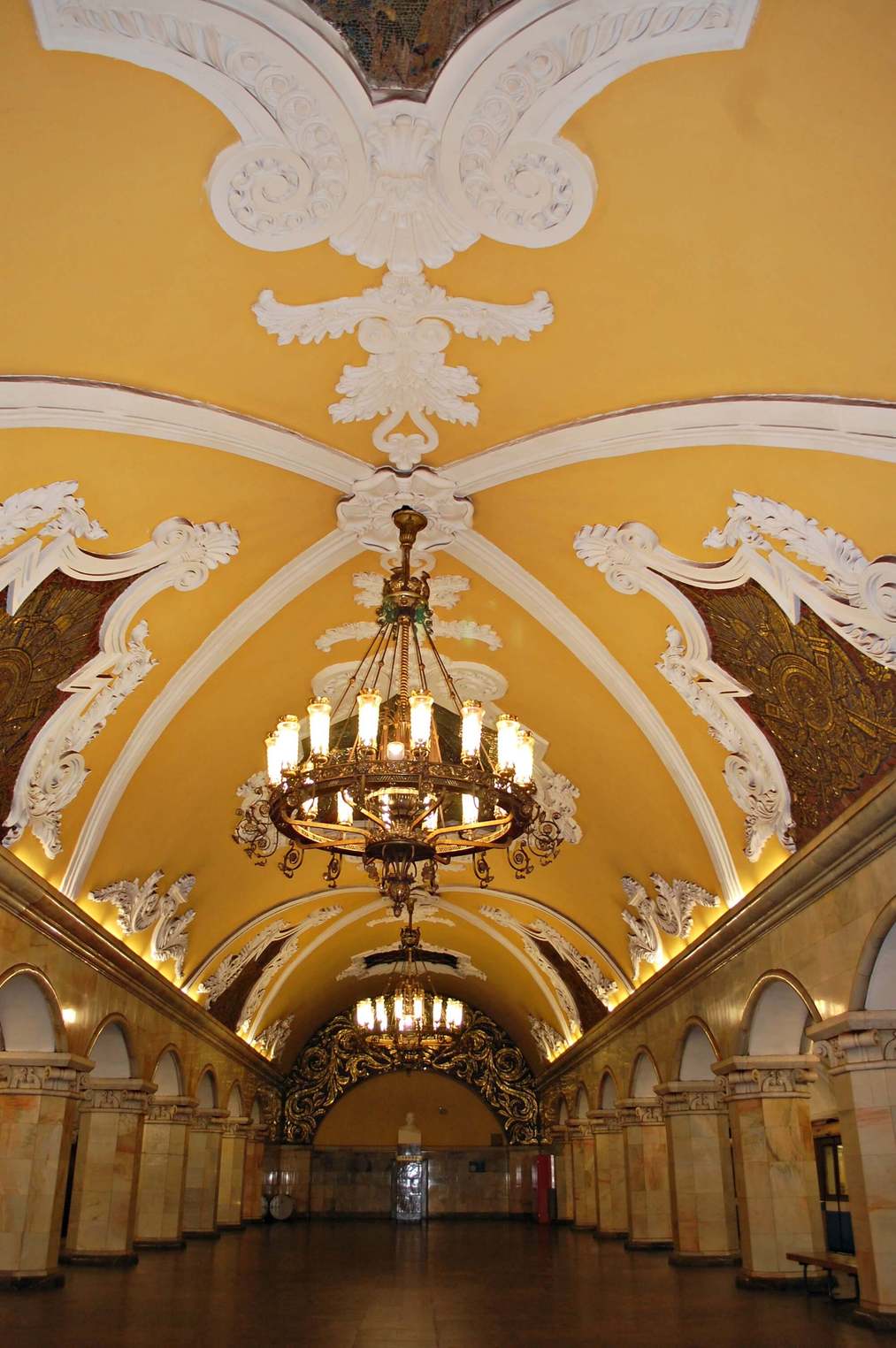
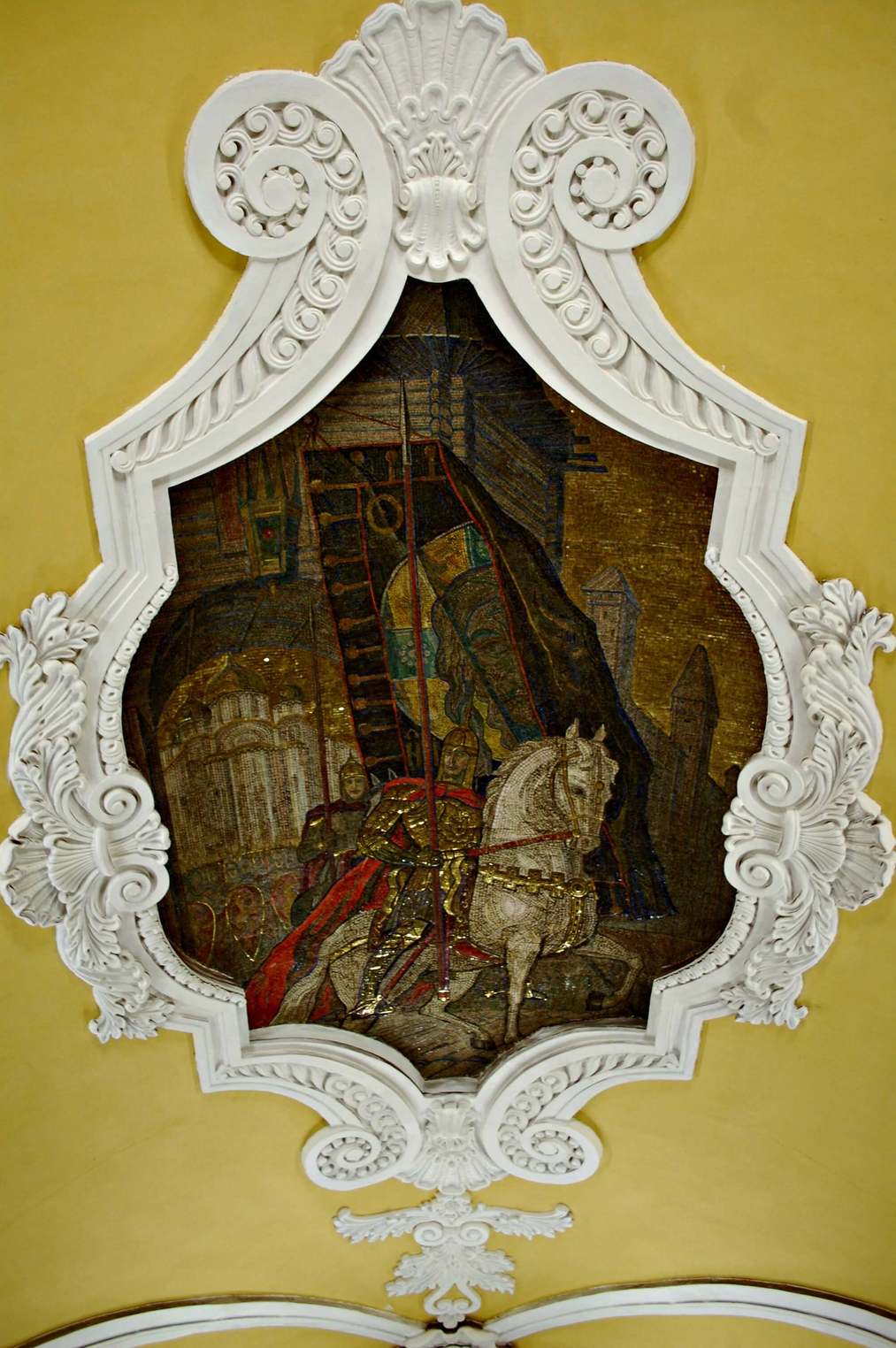
Arrive at Komsomolskaya (Комсомо́льская) Metro Station to start the tour. As it’s slightly outside of the city you will be probably be catching the metro here so depending on how you arrive at Komsomolskaya (Комсомо́льская) Metro Station you can arrive on either the red (1) line or brown (5) line. We arrived at the station on the red (1) line, it was underwhelming, was this it? Thankfully the next station required us to make our way to the brown (5) line and you finally experience the grand decor of the station. Words cannot describe how grand and beautiful these stations are, as you can see by these photos…
Komsomolskaya Metro Station Moscow Komsomolskaya Metro Station Moscow
Now you’ve perfectly set yourself for the next stop at the brown (5) line which will take you to Novoslobodskaya (Новослобо́дская) Metro Station. Getting off you are taken aback by the marvellous stained glass across the station.
Novoslobodskaya Metro Station
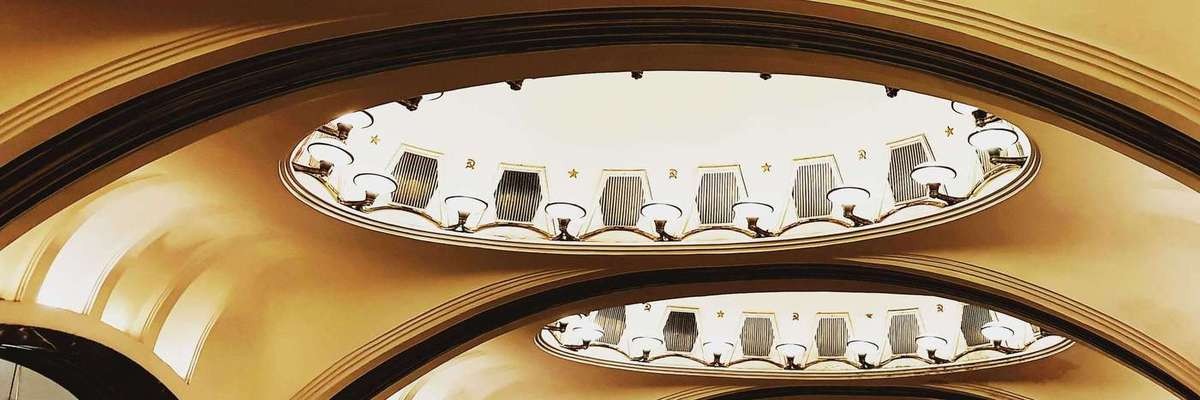
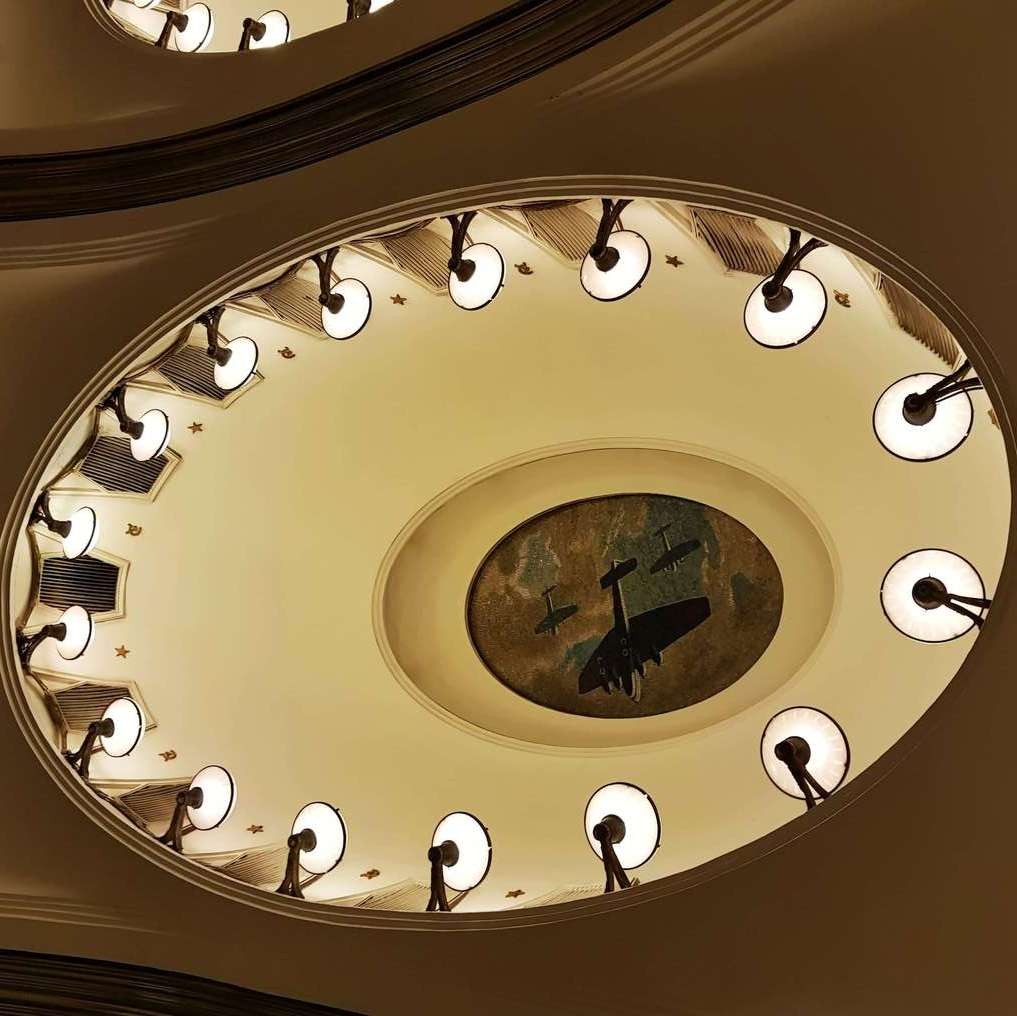
Swap at Berlorusskaya to green (2) line and get off at Mayakovskaya (Маяковская). When you first look at the hallways you cannot see the artwork hidden inside the oval shapes and walking under each one provides another mosaic masterpiece.
Mayakovskaya Metro Station Moscow
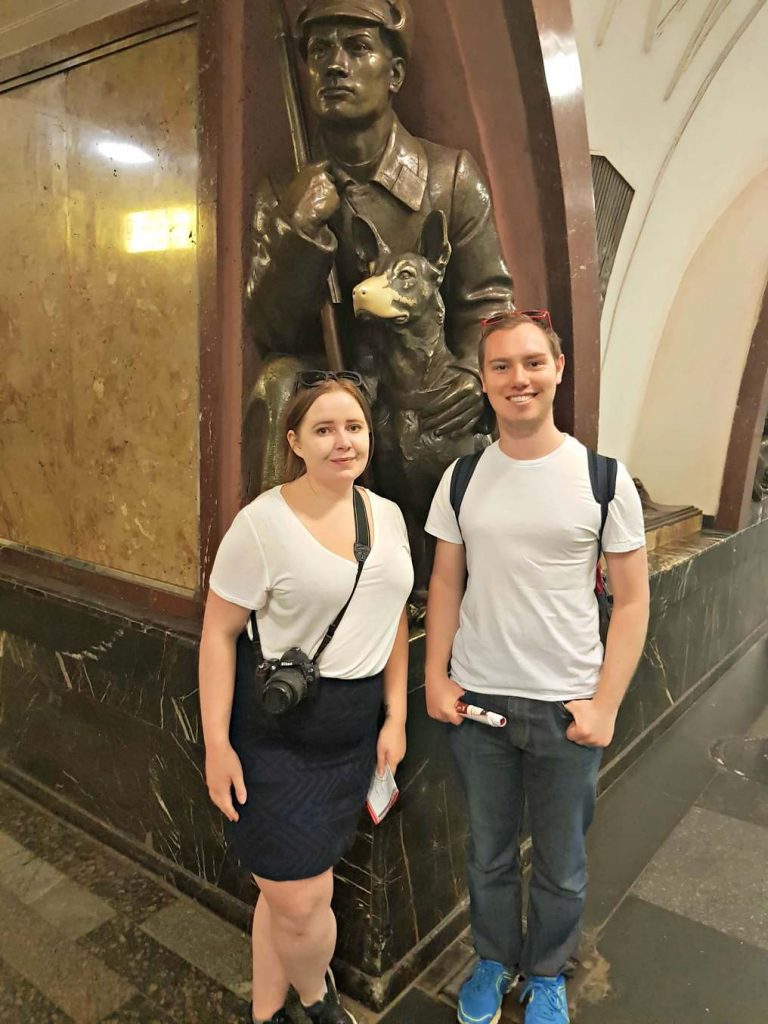
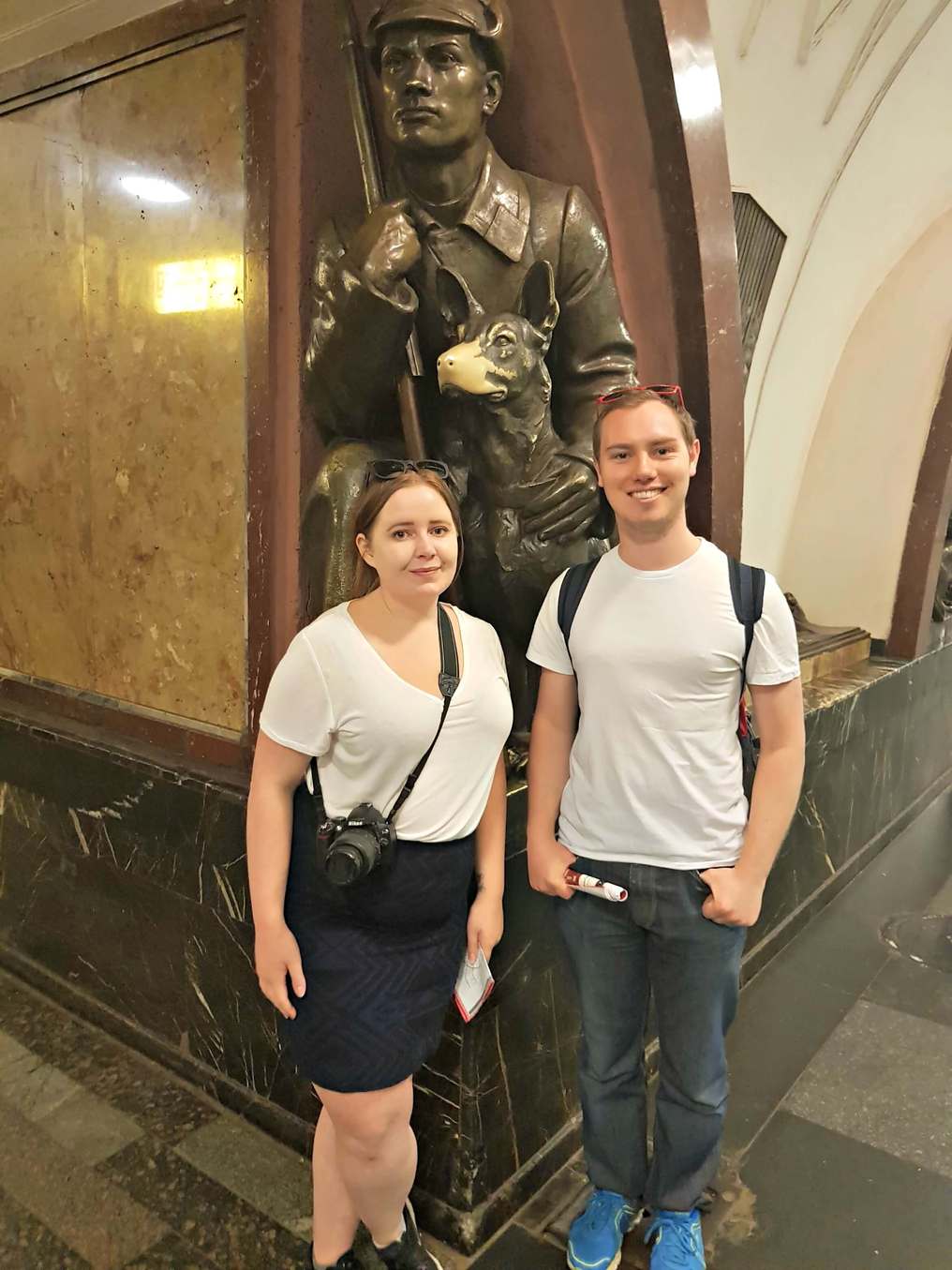
Last stop on the tour! Follow green (2) line to Teatralnaya and swap to blue (3) line to Ploschad Revolutsii (Пло́щадь Револю́ции) Metro Station. It’s full of statues depicting the people of the Soviet Union, there are a total of 76 sculptures in the station! You can tell the most popular statues as they are more worn like the man and his dog. Tourists and locals touch the dog’s nose for good luck.
Ploshchad Revolyutsii Metro Station Man with his Dog
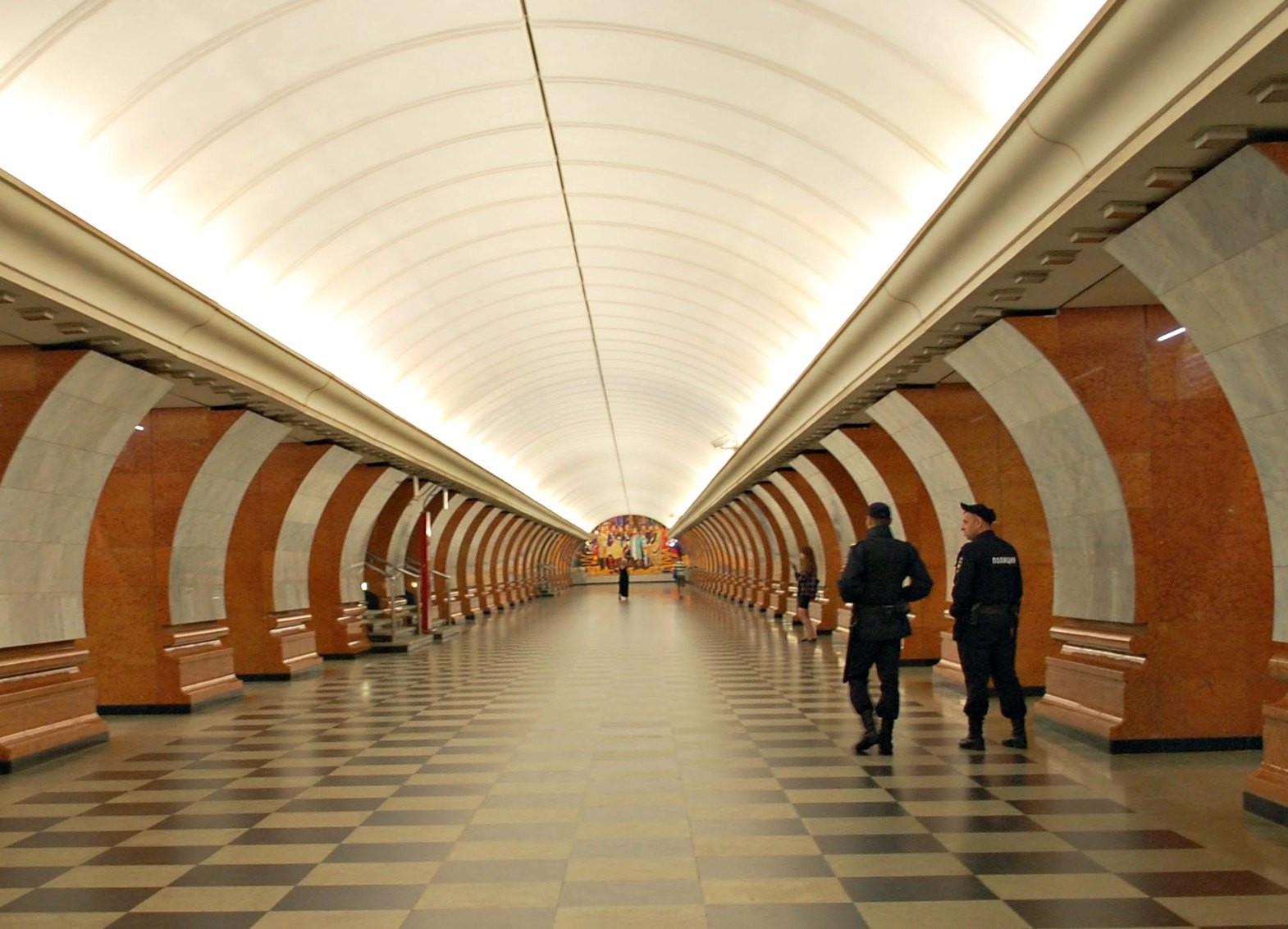
We did also venture out to Park Pobedy (Парк Победы). The station is a little less convenient to get to whereas the 4 above are located near/around the centre of Moscow. It is the third deepest station in the world after Arsenalna in Kiev and Admiralteyskaya in St Petersburg. An impressive ride up and down the escalator, a little terrifying if you are scared of heights.
Park Pobedy Metro Station
Have you ever ridden the Moscow Metro? Which station is your favourite? Let me know in the comments!
You can see why it’s Russia’s Cultural Capital with buildings like The Hermitage, The General Staff Building and other museums that have gathered true masterpieces of painting, sculpture and jewellery. It’s also home to the Mariinsky and Mikhailovsky Theatres which host Russia’s famous ballets.
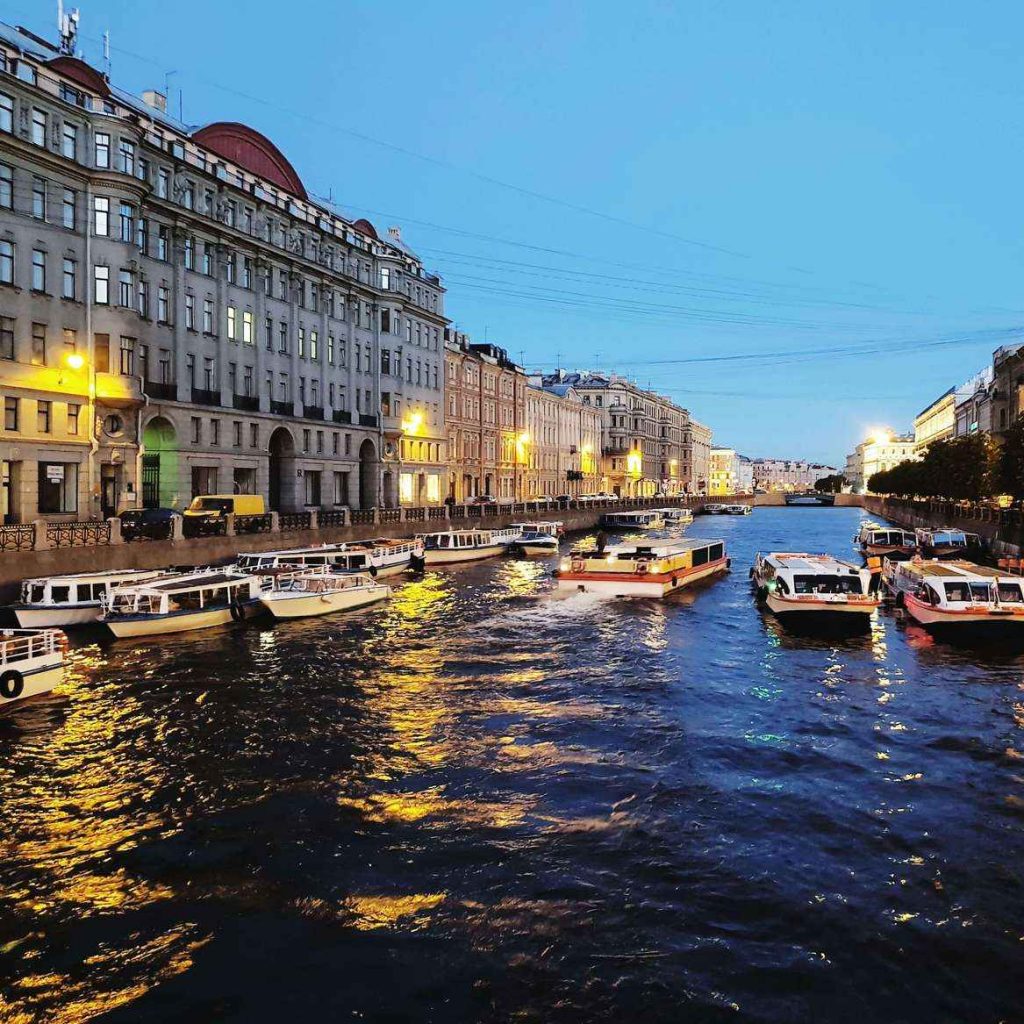
Summer is a fantastic time to visit St Petersburg, especially with the White Nights Festival. It’s when it never gets properly dark due to the high latitude. It’s not the only city that has White Nights but it has taken acclaim to this phenomenon with the city coming alive and bustling with people throughout the night as well as the day! The whole city seems to take on a two-month continuous round-the-clock celebration.
St Petersburg Canals during White Nights
Do I need a Russian Visa to Visit St Petersburg?
Russia requires you to have a visa unless you are arriving by boat to St Petersburg or your country is listed in the “visa-free regime”. Your St Petersburg visa will be free in this case and you are able to stay for 72 hours. Read more about Russian Visa’s in What you need to know before going to Russia.
How Many Days Should I Spend in St Petersburg?
Three days is a must, as there is so much to do and see. It’s best to gauge your stay on how much time it will take to do all the main sites. A 4 Day itinerary will allow you to complete a day trip to Catherine’s Palace or The Peterhof Grand Palace.
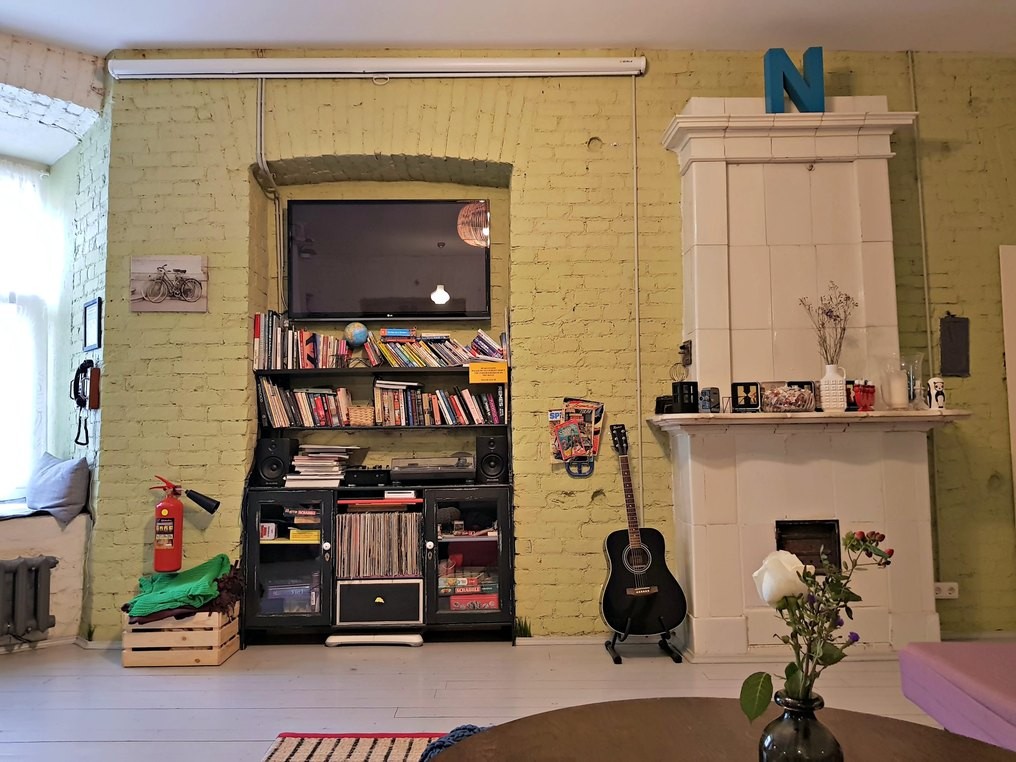
Soul Kitchen has to be one of the best hostels I’ve ever stayed at. Before we had even arrived they upgraded us to a private room instead of the 4-bed dorm we previously booked for the same price. When we arrived, they checked us in early and offered us coffee and a slice of apple cake for breakfast. The hostel had a welcoming and comfy feel that made you think you were at home. It’s won several awards for being one of the best hostels.
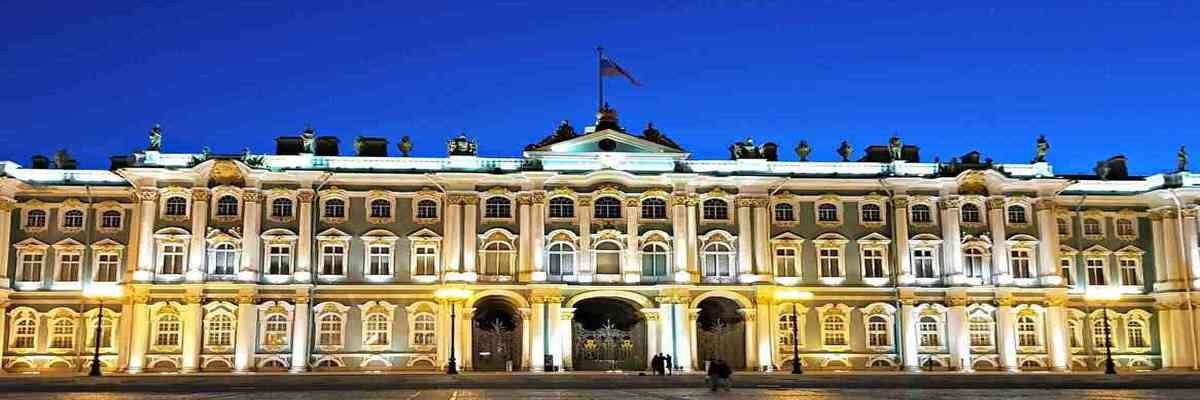
Start the first day with a bit of culture at the State Hermitage Museum and General Staff Building which is open every day except Monday. Tickets are 700 roubles, this gives you access to both buildings. If you are lucky enough to be in St Petersburg the first Thursday of the month then the museums will be free to enter.
The sheer size of the museums means that you can easily spend 3+ hours in each so allow a whole day to complete Hermitage and General Staff Building.
The secret to beating the queues is to get your ticket at the General Staff Building. It’s home to Russian and European decorative art, paintings and sculptures including Impressionist and Postimpressionist paintings for example work by Matisse and Picasso. Most of the impressionist paintings are located on the third floor and it’s also a great height to capture a photo of the Hermitage.
Grab some lunch before tackling the Hermitage. Try Shtolle (Штолле) pie shop or Bushe (Буше) bakery. Now to tackle the Hermitage and as a bonus, you get to skip the queues! The museum was founded in 1762 when Catherin the Great acquired an extensive collection of painting from Johann Ernst Gotzkowsky.
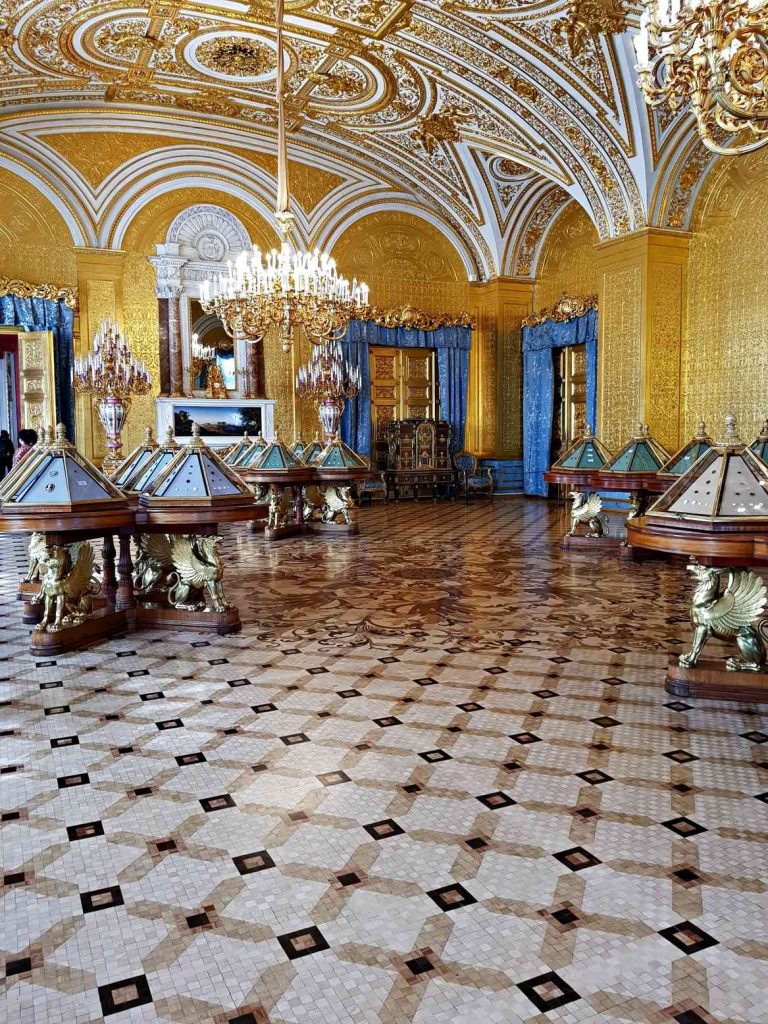
Inside the Hermitage
The museum holds the largest collection of paintings in the world and took us over 3 hours to see roughly 45% that was on display. Being such a large collection, the artwork is spread across 6 buildings; Winter Palace, Small Hermitage, Old Hermitage, New Hermitage, General Staff Building and Hermitage Theatre.
St Petersburg 4 Day Itinerary: Day Two
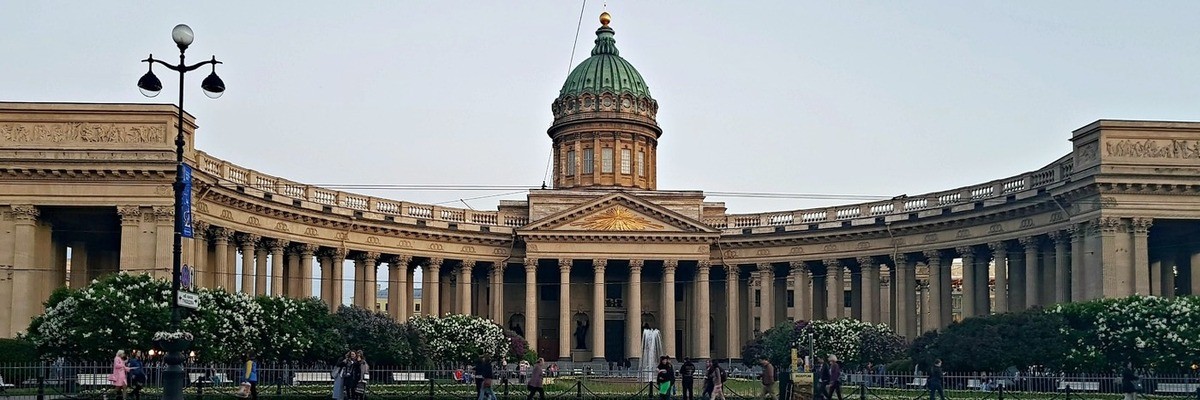
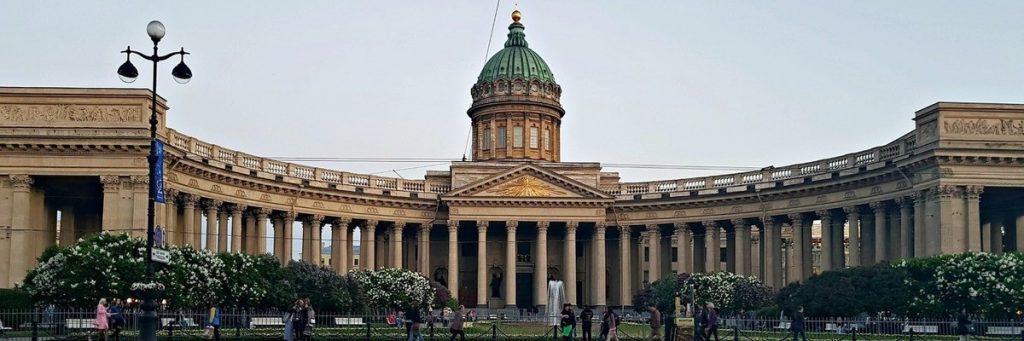
St Petersburg is home to a significant number of churches and cathedrals. There are three that I recommend seeing in the centre; Kazan Cathedral, St Isaac’s Cathedral and Church of the Saviour on the Spilled Blood. Do wear respectable clothing when entering working churches or cathedrals.
Kazan Cathedral is a traditional orthodox and is free to go into as it’s a working cathedral.
Kazan Cathedral
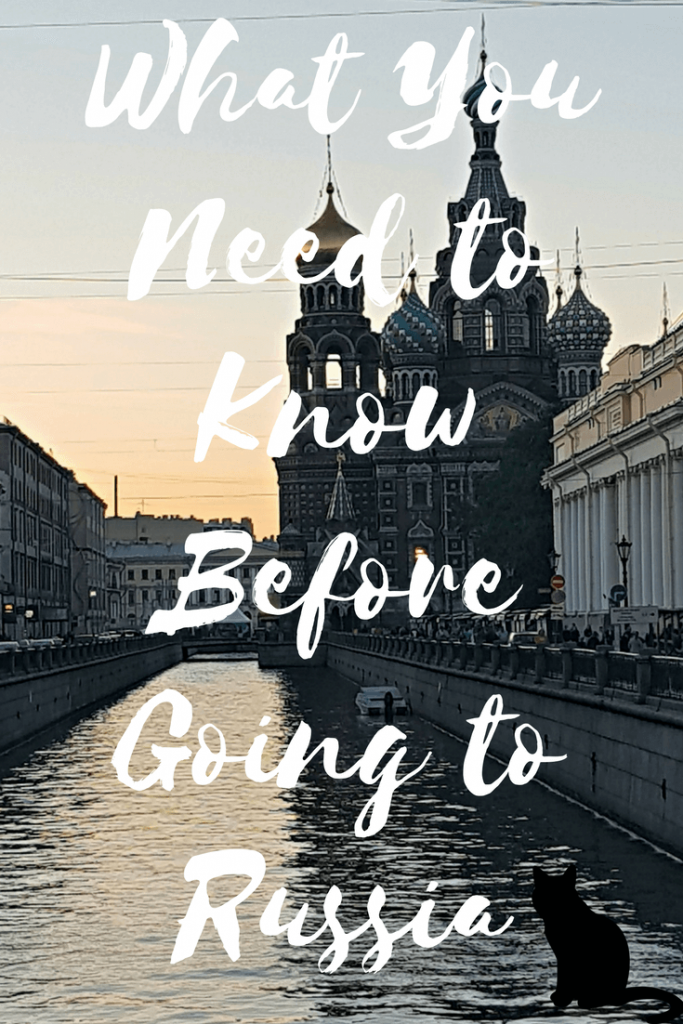
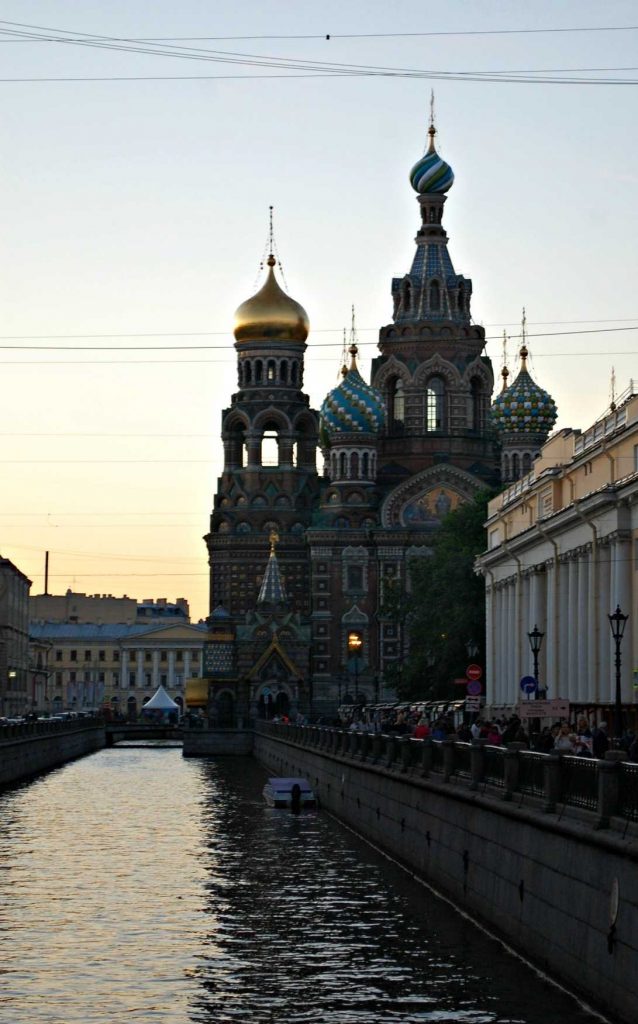
Continue down Griboyedov channel embankment and you’ll come across the Church of the Saviour on the Spilled Blood. Emperor Alexander II was fatally wounded in March 1881 at this site and they Alexander III built the church on this site to commemorate his father, hence the name Spilled Blood.
Church of the Saviour on the Spilled Blood
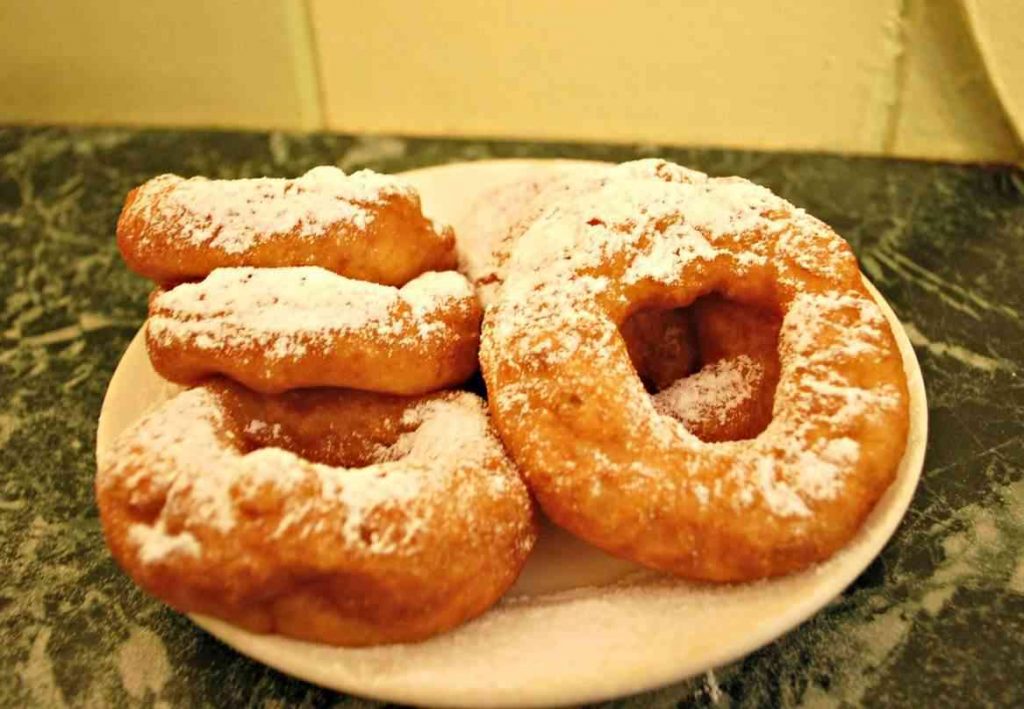
Stop for a cheap and cheerful Russian doughnut at Pyshechnaya (Пышечная). It’s a popular place with locals and tourists, the queues move fast so you won’t be waiting long for your doughnut.
Russian donut at Pyshechnaya
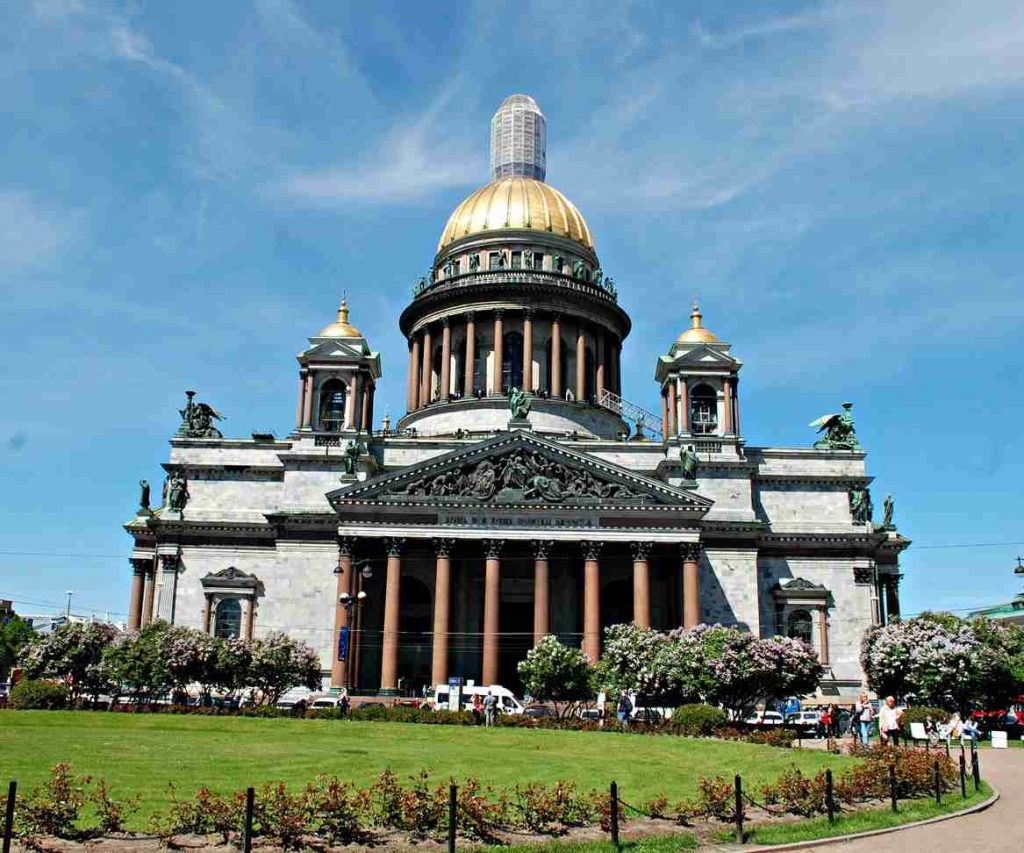
A ten-minute walk away is St Isaac’s Cathedral with its gleaming gold dome which is plated with pure gold and dominates the skyline of St Petersburg. No longer a working cathedral it has been turned into a museum and viewing point. It’s 250 roubles for the museum and 150 roubles for the viewing point. Note: The museum is not open on Wednesday and be aware that the price does change the viewing point based on the time.
St Isaacs Cathedral
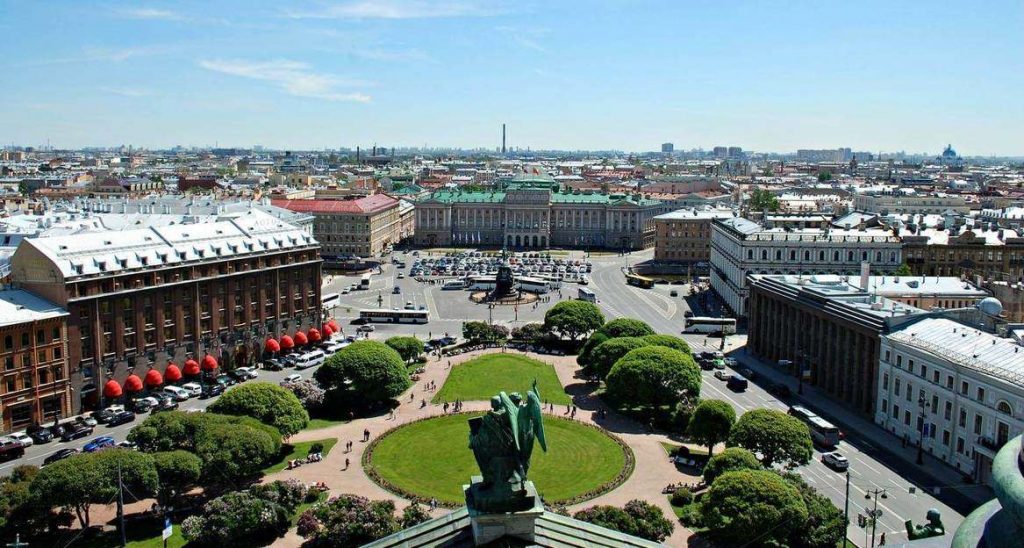
Work off those doughnuts by climbing the 262 steps to the top of St Isaacs Cathedral and admire the view of St Petersburg. As the city is low rise you’ll be able to see a lot from the cathedral.
View from St Issacs
Extend the cultural experience by heading to the ballet. Do book in advance as the more affordable tickets sell out fast. I managed to get tickets to the Mikhailovsky Theatre for £24 per ticket. The cheaper tickets sometimes have a restricted view so if you are purchasing circle tickets then either get the front row or back row so you can stand. Buy tickets to Mikhailovsky Theatre here.
St Petersburg 4 Day Itinerary: Day Three
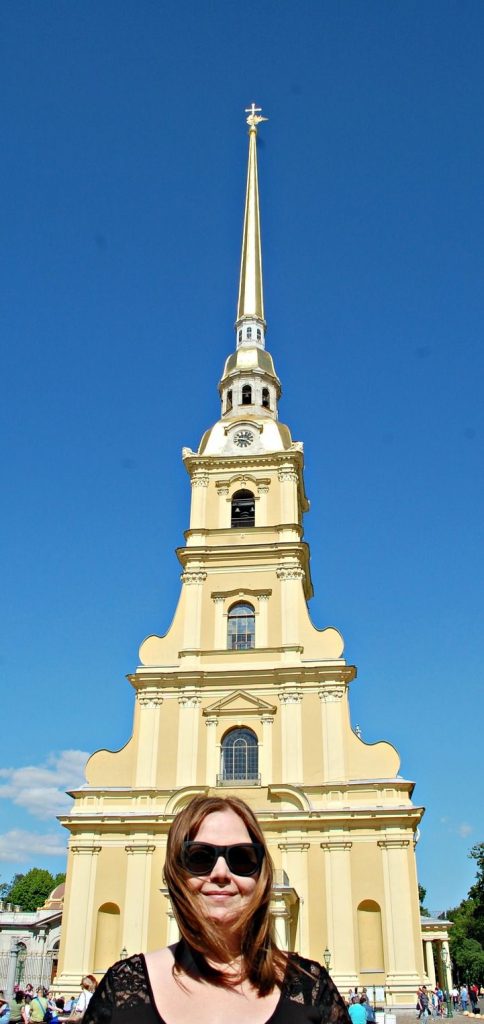
Enjoy a lovely walk across the Birzhevoy Bridge towards the Peter and Paul Fortress. Taking in the different views of the Hermitage and St Isaacs gleaming in the distance. The fortress complex is open to walk around. It was the original citadel of St. Petersburg and then in 1720 was turned into a garrison and prison. We didn’t enter any of the museums as we read on trip advisor that the museums were only in Russian.
Peter and Paul fortress
Continue completing a loop around the fortress and walk across Troitskiy Bridge. Take a break in the Summer Gardens or Mikhailovsky Gardens. During summer, you may come across an ice-cream truck. We stumbled across a guy selling unicorn ice-cream. Which colour would you choose, black or pink?
End the day by enjoying a Russian meal at the Soviet cafe.
St Petersburg 4 Day Itinerary: Day 4
A short distance away from St Petersburg is Catherine’s Palace and Peterhof Grand Palace. Both are stunning Palaces and worth a day trip to at least one.
Catherine Palace is located in the town of Tsarskoye Selo (Pushkin). The palace was once the summer residence of the Russian tsars. Now a museum, displaying over 300-years of history and elaborately decorated Rococo-style architecture. The palace is most famous for its baroque style and neoclassical interior that exemplifies Russian wealth and extravagance.
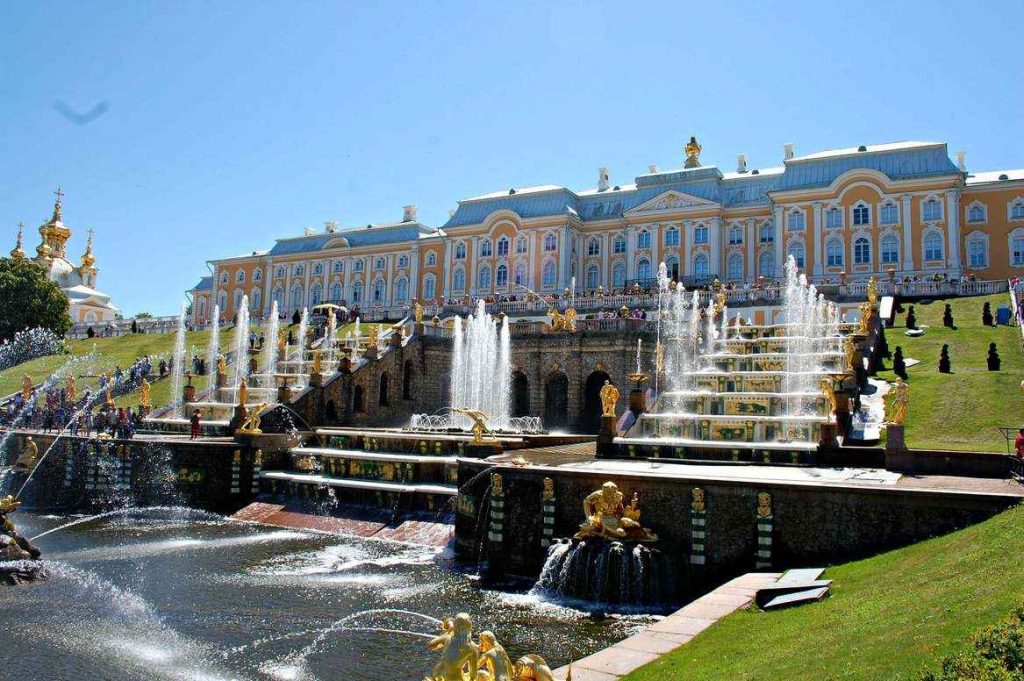
Our choice was Peterhof Grand Palace. The palace was founded by Peter the Great and is often referred to as the “Russian Versailles”. In the palace grounds there are 64 elaborate fountains and more than more than 200 bronze statues, bas-reliefs and other decorations.
Grand Cascade and Palace at Peterhof Palace
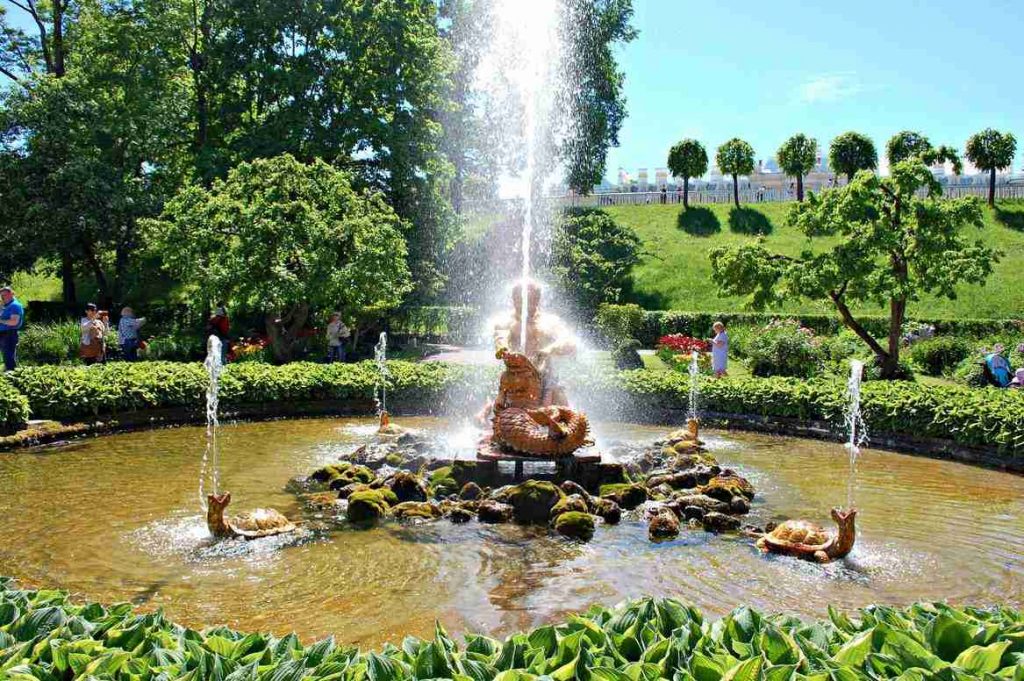
People mainly visit the lower park famous for its a range and diversity of fountains, the Grand Cascade being the most decadent running from the Grand Palace to the Marine Canal.
Fountains in the Lower Park at Peterhof Palace
How to get to Peterhof Grand Palace
We caught an Uber to Peterhof Grand Palace as it was only a couple of pounds each and seemed the simpler option at the time and then the Hydrofoil back to the city. This option ended up being around 1,100 roubles each.
However, you can catch the mini-buses (marshrutkas) № К-300, К-424, К-424А from Avtovo metro station which is the most budget-friendly option.
If you are not on a tight budget then the Hydrofoil from the Neva river embankments of the Lower park in Peterhof is super easy. It’s 800 roubles each way and try and get a window seat to catch the sites.
How much does it cost to visit Peterhof Grand Palace?
Depending on the attraction you wish to see at the Peterhof Grand Palace you will be presented with an associated fee. The most popular attractions are listed below
Lower Park is open 9am to 8pm, extended on Saturdays to 9pm and entrance fee is 750roubles.
Upper Garden is open 9am to 5.30pm, extended on Saturdays to 9.30pm and entrance is free.
Grand Palace is open daily except Monday and the last Tuesday of each month. The entrance fee is 700 roubles.
Below are the various different transport modes you can use to travel to St Petersburg.
Train
There are four mainline railway stations serving inter-city and international trains. Two are historic buildings in the very centre of the city, while the others are a short metro ride from Nevsky Prospekt and the downtown area.
To get between Moscow and St Petersburg or vis versa the easiest way is by train. You can either catch a day train that will take about 4 hours or save some money on accommodation and take an overnight train. Moscow to St Petersburg train cost for the 006А train with the 2nd class ticket was around £60 each. The train was modern and more comfortable than our Vietnam train experience.
A006 Train to St Petersburg
Airport
Pulkovo is the airport in St Petersburg and is split into two terminals. Pulkovo-2 is where most of the international traffic arrives at Pulkovo-1 is mostly a domestic airport. Pulkovo doesn’t have a metro station nearby and the bus is the only transport option. You have the option of Aeroport Express, Marshrutka minibus shuttle services or one of the city buses N39 or N13.
Cruise or Ferry
There are two passenger ports you can arrive into, one for sea passengers (Sea Station (Morskoy Vokzal)) and one for river passengers (River Station (Rechnoy Vokzal)) in the far south-east of the city.
Most passengers arrive by cruise ship and won’t have to worry about the port that you arrive at as the cruise companies will organise your onward transport.
Those who aren’t arriving by cruise are advised to plan your onward journey in advance as neither terminal is convenient for the city centre or most hotels.
Sea Station (Morskoy Vokzal)
The Sea Station (Morskoy Vokzal) is the docking point for St. Peter Line ferries from Helsinki, Stockholm and Tallinn. The station has no metro stations located nearby and you will need to catch a bus to get to the city centre.
River Station (Rechnoy Vokzal)
The River Station welcomes river cruises from Moscow and the Russian North, and is located in the far south-east of St. Petersburg on Prospekt Obukhovskoy Oborony. The closest metro station to the River Station is Proletarskaya Metro Station which is about a 10 minute walk away.
Bus
There is an increasing amount of coach options form international destinations to St Petersburg, the most popular bus options from Baltic States or Helsinki. The city does have a Central Bus Station, although many international routes are operated by non-Russian companies which use their own bus stops. These stops are generally close to either railway stations or major hotels. Some bus companies you can use to get to St Petersburg are:
Lux Express offering bus services from Estonia and Baltic States to St Petersburg.
Ecolines offering bus services from Latvia to St Petersburg.
Savonlinja offering bus services from Helsinki to St Petersburg.
Have you experienced White Nights? What were your favourite things about it?