Category: Europe

Europe is one of the world’s most beloved travel destinations. Europe has something for everyone and caters for all types of traveller. Whether it’s a city break, beach destination, backpacking, seeking incredible scenery, immersing yourself in history, exploring famous art works or looking for culinary experiences…

  • Driving the Golden Circle: A Guide to Iceland’s Most Iconic Route

    Driving the Golden Circle: A Guide to Iceland’s Most Iconic Route

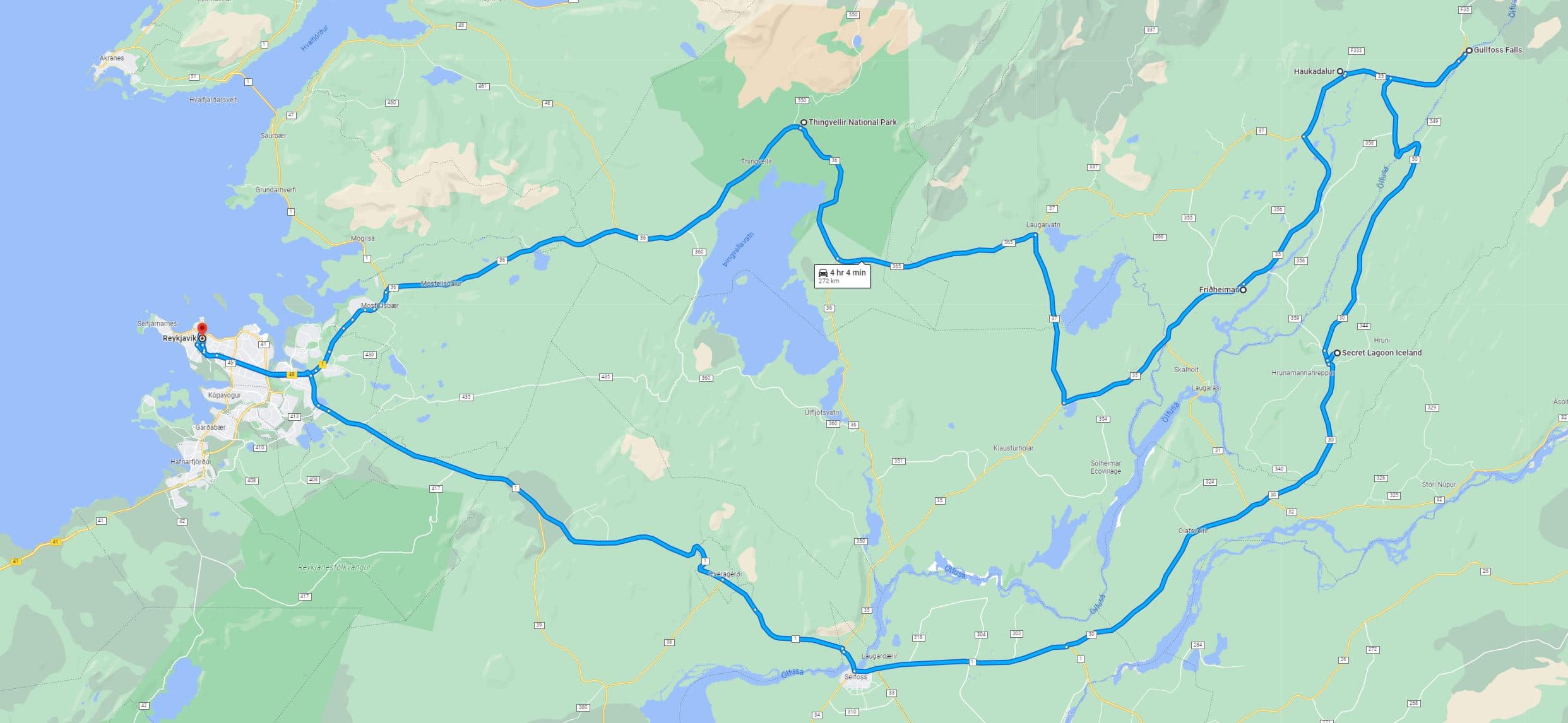
    The Golden Circle is by far the most popular day trip in southern Iceland. The circular route runs for about 186 miles and starts and ends in the capital city, Reykjavik. Some of Iceland’s top scenic attractions are along this route, making it a highlight of any short or long visit to Iceland.

    The Golden Circle is a great introduction to the country and all of its natural wonders. Iceland is famous for its dramatic landscape, and this mini roadtrip shows off some of its best, including gorgeous waterfalls, volcanic craters, glaciers, geothermal activity and a UNESCO World Heritage Site. Add to this the famous Icelandic ponies roaming throughout the land and you’ll quickly see just how magical Iceland really is.

    This guide will take you through all the basics of self-driving the Golden Circle with some additional tips and stops along the way. Of course, you can take a guided tour of the Golden Circle, but driving it yourself gives you more freedom, and the added bonus stops are worth their weight in gold.

    With the ease of the Golden Circle being a direct circular route from Reykjavik, it’s a straightforward way to explore the wonders of Iceland, even if you’re only staying a short while.
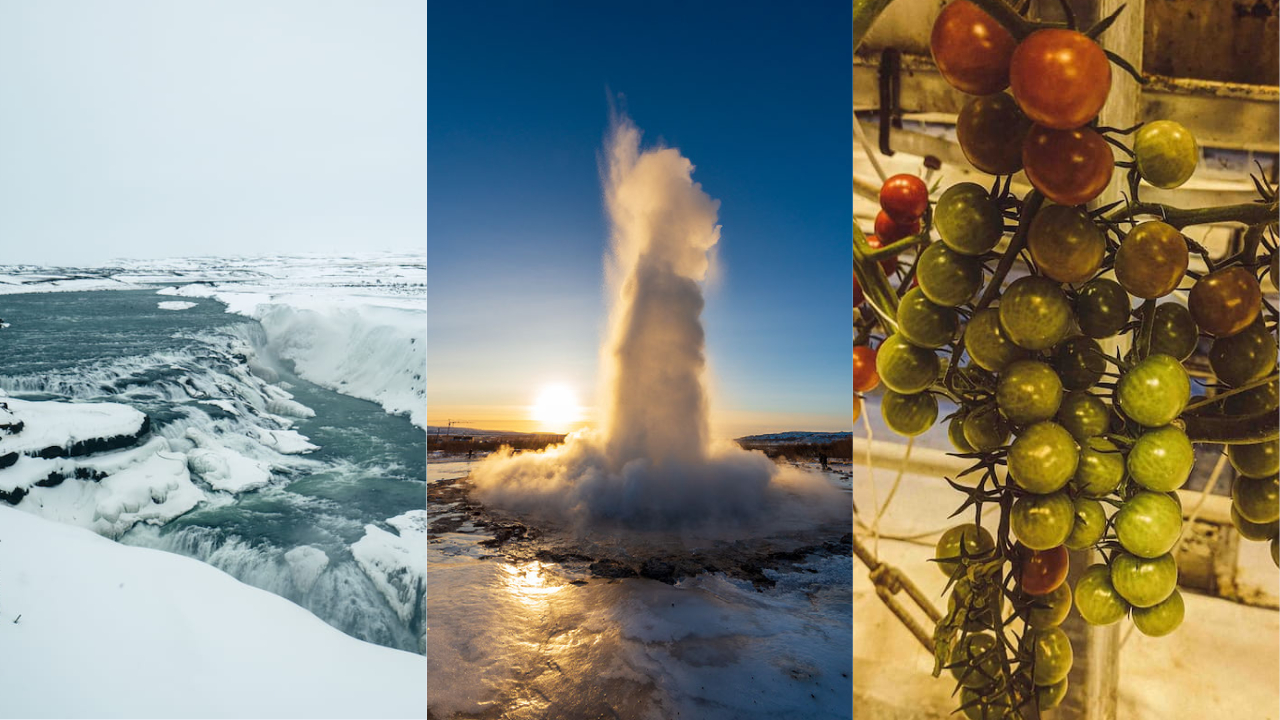
    Self Drive Golden Circle

    How long does it take to drive the Circle Circle?

    An average tour of the Golden Circle should take about 6-8 hours, but if you were to do it without stopping it would end up somewhere between 3-4 hours.

    I’ve added a few extras to the usual itinerary to make it an even more exciting adventure. Depending on the weather and tourism levels, I would factor in a full day for this trip, between 8-10 hours. You’ll want plenty of time to take in the unique and breathtaking scenery; the worst thing you could do is feel rushed.

    When can I visit the Golden Circle?
    Golden circle route
    Golden Circle route

    This guide is for a self-drive tour any time of the year. Yes, you can even drive the Golden Circle in the winter and you don’t need a 4×4 to do it. However, I would highly recommend 4×4 in the wintertime if you are heading off the main route.

    One of the scariest moments we had on the trip was visiting waterfall þórufoss, as a person that has never driven in snow nor in a snowstorm, it was challenging enough in 4×4. Going back on the main road we slid on the ice, my friends yelling brace! We were all good but I couldn’t have managed that in a smaller car.

    The paved roads are well-maintained and the convenience of this route to the city is what makes it so popular. There’s still a lot of tourism in the winter for those chasing after the Northern Lights, but it won’t be as busy as the summer months.

    If you’re visiting in the summer, you’ll have unlimited daylight at your disposal, meaning you can start later in the day and still have enough time for everything. In the winter, the daylight hours are very limited, so you never want to miss a chance to get out the door before sunrise.

    The great thing about driving the Golden Circle yourself is that you’re more likely to avoid crowds and enjoy more privacy along the way.

    Keep in mind that most Golden Circle tours leave in the morning from Reykjavik between 8-10am, with afternoon departures around noon and 2pm and most of them return to the city by 8pm. If you can, work your schedule around this to avoid the tour buses as much as possible.

    Why is it called the Golden Circle?

    The Golden Circle gets its name from one if its main attractions, Gullfoss – which translates from Icelandic to Golden Waterfall – along the roughly circular route. It is also sometimes called the Golden Triangle, due to the three main attractions. There’s a story that says Vigdís Finnbogadóttir, the president of Iceland from 1980-1996, was the first person to use the expression ‘Golden Circle’ and it just sort of stuck.

    In the north of Iceland, you’ll also find another popular circular driving route called the Diamond Circle. In the summer, many people will use the Golden Circle as a starting point for driving the full Ring Road around Iceland and up to the Diamond Circle.

    What are the highlights of the Golden Circle?

    The Golden Circle has three major attractions you’ll want to visit; Thingvellir National Park, Haukadalur Geothermal Field and Gullfoss. But you’re not limited to just these three! The area around the Golden Circle has many other attractions that can make your day even more enjoyable, like soaking in the geothermal hot springs.

    Next I’m going to guide you through each stop along the way in the order you might visit them.

    Thingvellir
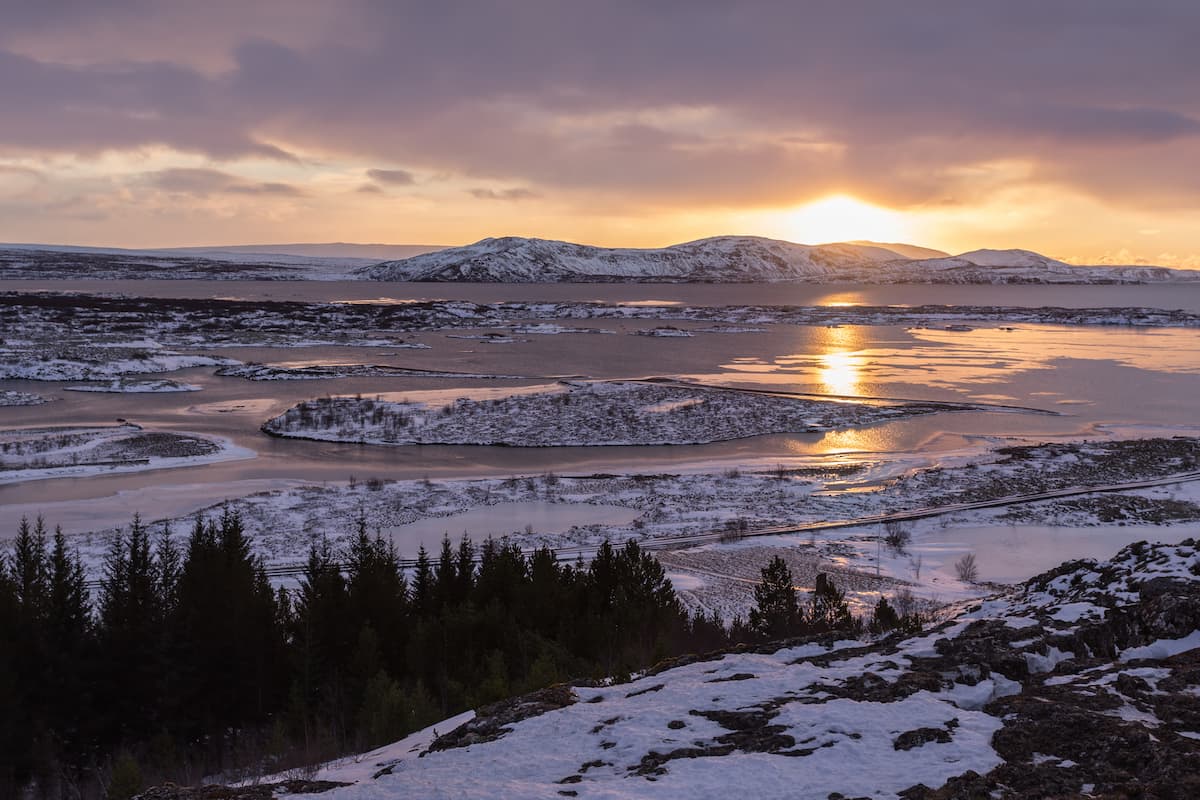
    Thingvellir National Park in Iceland
    Thingvellir National Park in Iceland

    Your first stop along the Golden Circle, driving in a clockwise direction, is the National Park Þingvellir, spelt Thingvellir in English. This was Iceland’s first national park and is now a UNESCO World Heritage Site. It’s an important stop from a cultural and geological perspective.

    Around fifty years after Iceland was first settled, Thingvellir became the location for Iceland’s first parliament, known as Althing, in 930 AD and continued there until 1798. Thingvellir was chosen as the parliament’s meeting location because of how easily reachable it was from all the different regions of Iceland in the summer months.

    It was this location where laws were passed, judicial hearings took place and it’s where the foundation for Iceland’s cultural roots were formed. So from a cultural standpoint alone, Thingvellir is an important stop.

    But then you have the fact that Iceland sits right on the middle of two continental plates, the Eurasian Plate and the North American Plate. Thingvellir just so happens to be found in the rift valley of these two plates, that are slowly drifting apart from each other.

    This means that part of your experience in Thingvellir National Park is that you can see and walk in the cracks that have opened up in the earth. There are even opportunities for a truly unique experience of snorkeling and diving in these fissures.
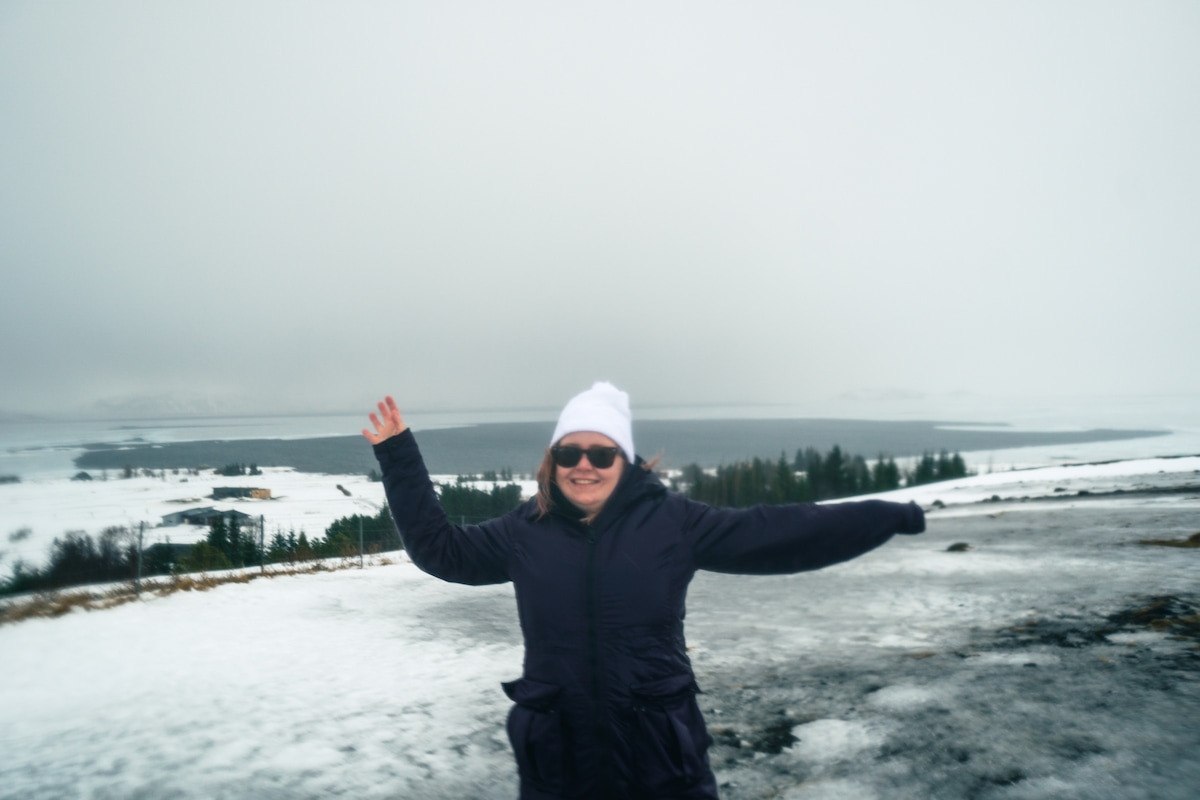
    Bad Weather conditions in Thingvellir National Park in Iceland
    Bad weather conditions in Thingvellir National Park in Iceland

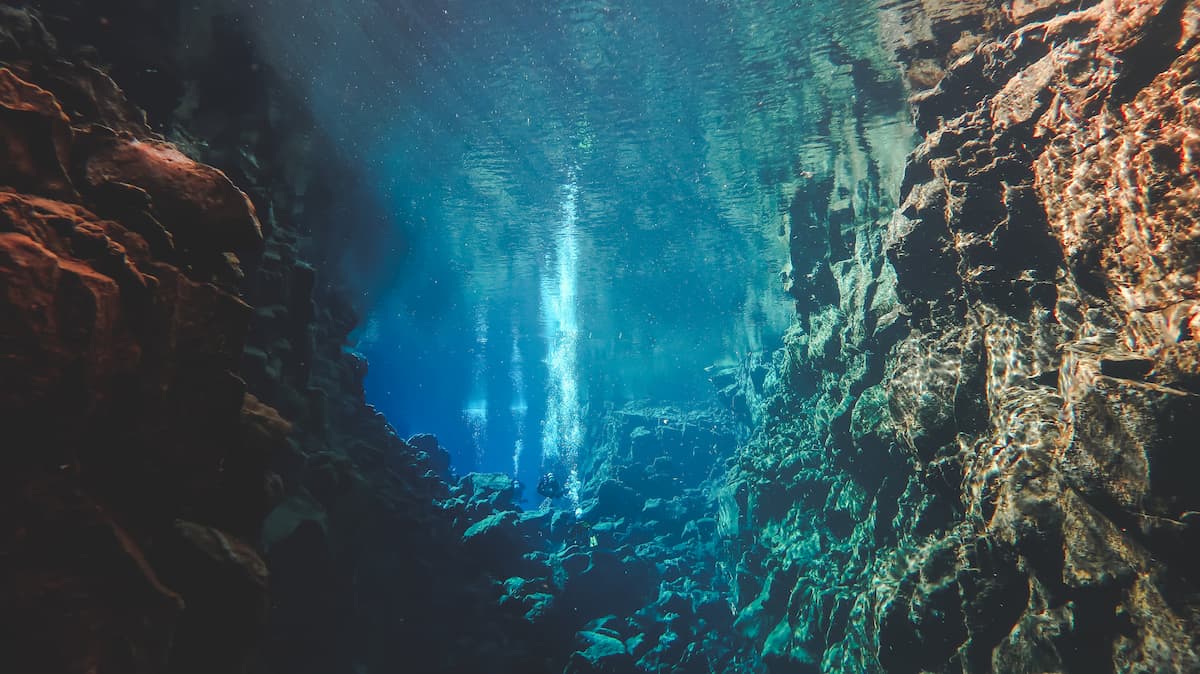
    Silfra at Thingvellir

    Snorkeling and diving in Blue crystal clear glacial water in Silfra Thingvellir national park Iceland
    Snorkeling and diving in Blue crystal clear glacial water in Silfra Thingvellir national park Iceland

    Usually when you think of Iceland, you think of cold, so scuba diving doesn’t necessarily come to mind when you’re considering a trip to the Arctic. However, within Thingvellir National Park, you’ll find the home of one of the top ten scuba sites in the world.

    Silfra provides a unique scuba diving and snorkeling experience unlike anywhere else. No matter what time of year you visit, you can actually plunge into the clearest water on earth, with wet suits of course.

    The water that reaches the fissure has taken 30 to 100 years to get there, filtering through lava rock along the way. This is what provides visibility for up to 100 metres. If you’re up for it, book ahead of time to experience underwater tunnels, terrain, and caverns that you won’t find anywhere else in the world.

    If scuba diving isn’t your thing, then there’s a ten minute walk from the parking lot that will also take you to a lovely waterfall called Oxararfoss. The walking paths through Thingvellir are free, however there is a small parking charge to be paid by credit or debit card. Plan on spending 30-90 minutes at the park, depending on the weather conditions.

    Game of Thrones fans will be excited to know that a number of scenes from the show were filmed in the national park, as well as other locations around Iceland.

    Friðheimar Tomato Farm
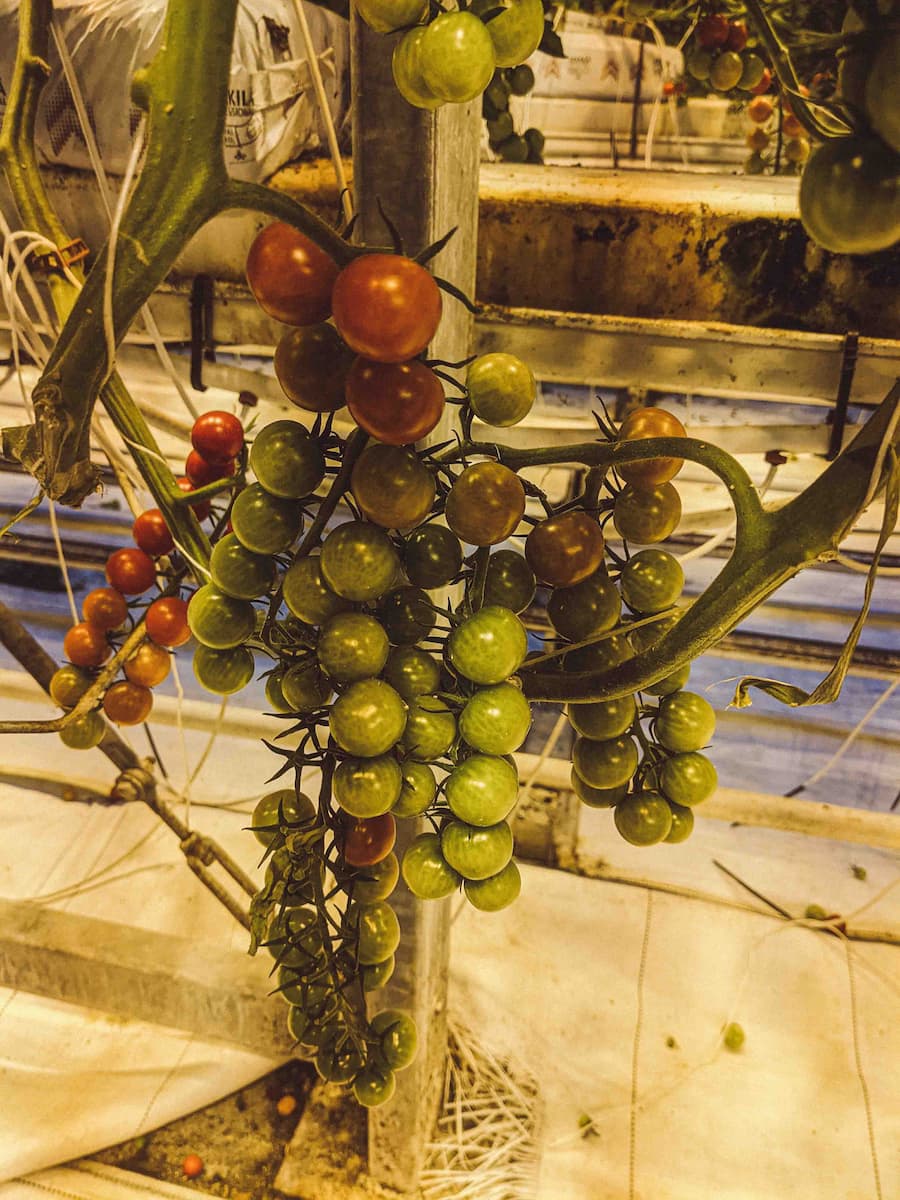
    Tomatoes growing at Friðheimar Tomato Farm
    Tomatoes growing at Friðheimar Tomato Farm

    After leaving the Thingvellir National Park, the next major highlight of the Golden Circle is about an hour’s drive. Before you reach that, though, you’ll probably want to stop for a hearty lunch! And for that I can’t recommend Friðheimar enough. This is a unique highlight to your day you don’t want to miss.

    Friðheimar is a tomato farm and restaurant located in the area of the Golden Circle that’s growing increasingly popular so book a table! They’re able to grow tomatoes all year round, despite Iceland’s long, dark winters, with artificial lighting in the greenhouses.

    From the moment you walk into this geothermal tomato farm, everything looks and smells of tomatoes. It’s a great choice for vegetarians and vegans in Iceland and the food is extraordinary. The one and only Friðheimar Tomato Soup is served on a buffet with sour cream, home baked bread, cucumber salsa, butter and fresh herbs. You won’t believe how fresh everything tastes.

    Money-saving tip: the soup is unlimited and you can eat as much as you like!
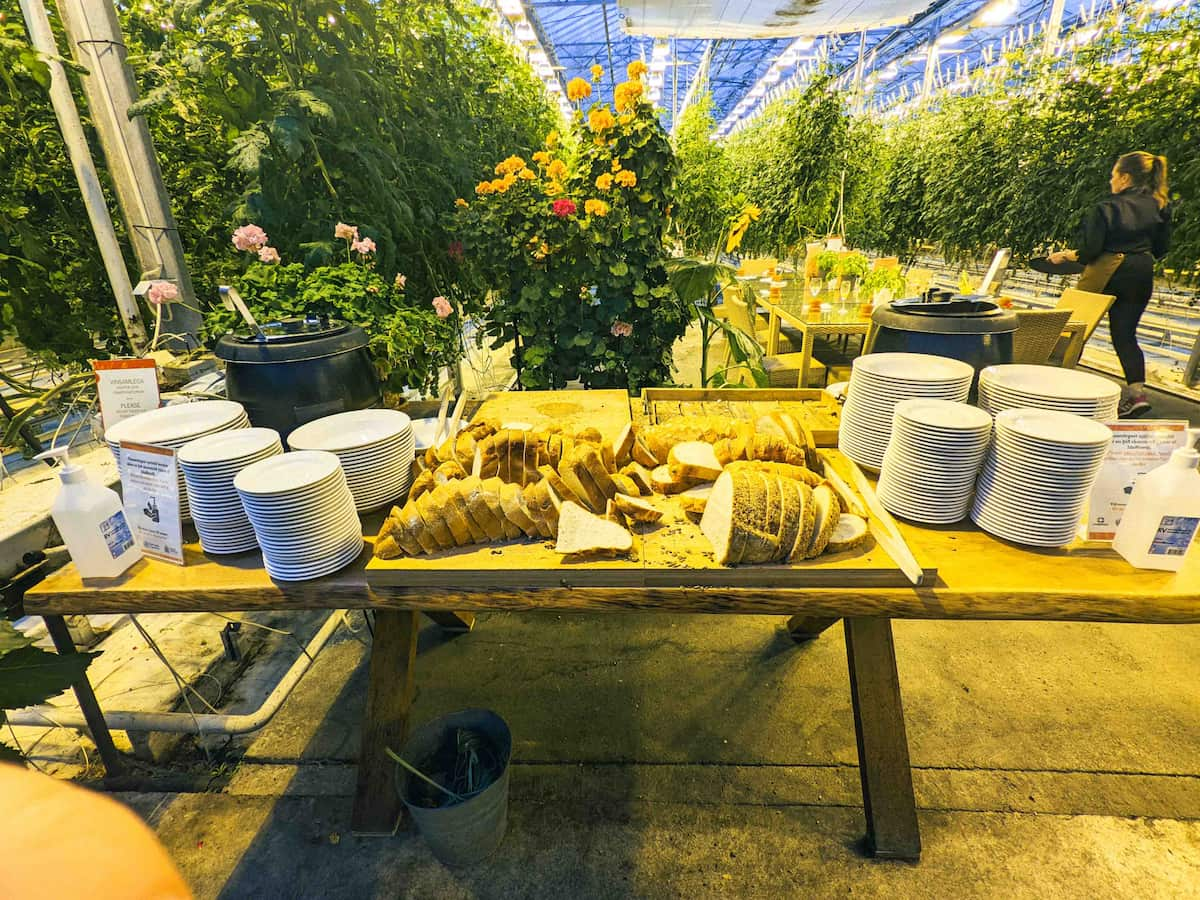
    Soup station at Friðheimar Tomato Farm
    Soup station at Friðheimar Tomato Farm

    Don’t hesitate to treat yourself to a Bloody Mary, which they obviously specialize in with all the tomatoes. It was the best Bloody Mary I’ve had in my life, in a uniquely gorgeous setting of tomato vines. Alternatively, they make their own beer flavoured with tomatoes.

    Greenhouse visits are also available all year round for pre-booked groups and you can even take away delicious food souvenirs such as tomato jam, cucumber salsa and tomato drinks. And if you want to visit the Icelandic ponies, pre-book a visit to the horse stables.

    You will not regret this enriching, wholesome stop at Friðheimar!

    Haukadalur Geothermal Field
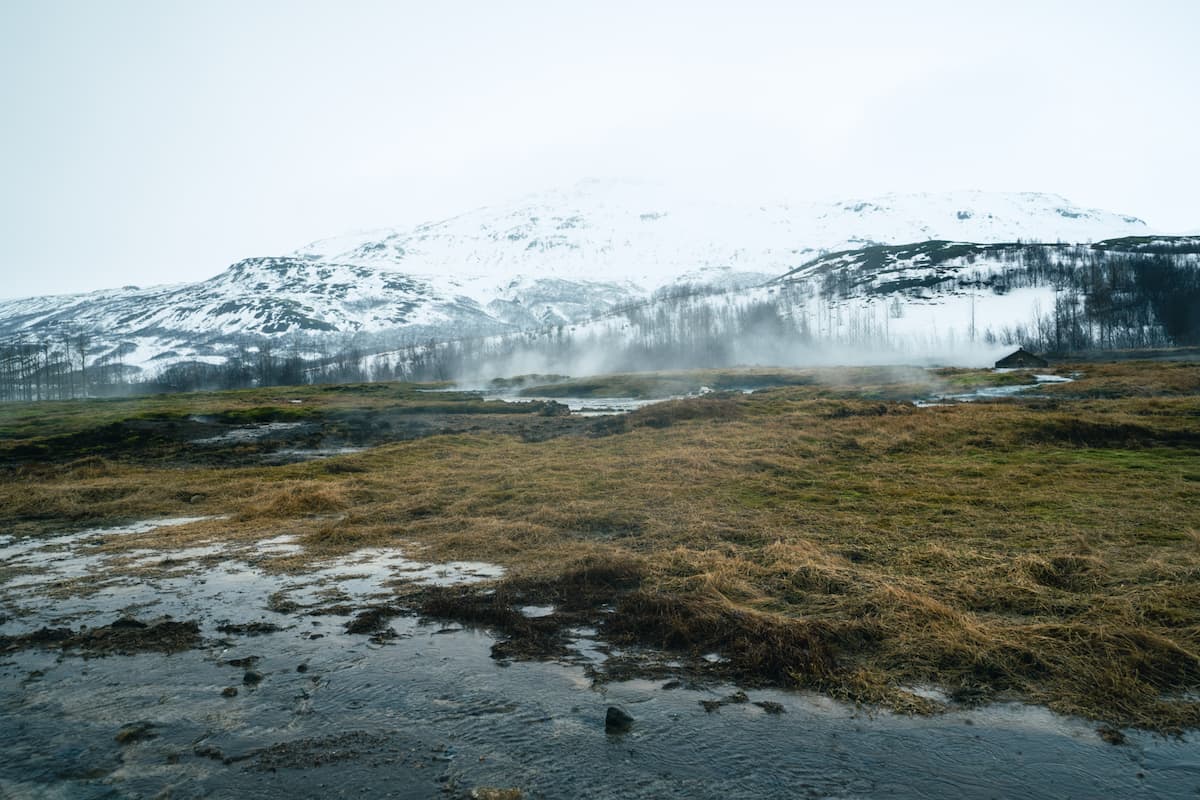
    Haukadalur Geothermal Field
    Haukadalur Geothermal Field

    Jump back into the car for the much shorter journey from Friðheimar to the next major sightseeing destination: Haukadalur Geothermal Field, also referred to as the Geysir Geothermal Area.

    The major geothermal wonders of this area are Iceland’s famous geysers, Strokkur and Geysir. In addition to these you’ll explore mud pots, hot springs and fumaroles (steam rising, essentially).

    Geysir is believed to have been erupting for at least 10,000 years, but is fairly dormant in modern times. If you’re lucky enough to see the spectacular eruption, you’ll witness boiling water and steam reaching over 400 feet in the air. But if you don’t get to see Geysir, never fear, Strokkur will save the day!

    Strokkur is just 50 metres from Geysir and usually erupts every five to ten minutes, so this is what you’re really there to see. The eruption is smaller than Geysir, averaging around 50ft in the air, but it’s still an impressive sight to behold.

    Visiting Haukadalur Geothermal Field is another free stop along your way and there’s free parking on site too! Next to the car park, there’s a large gift shop and plenty of toilet facilities so I recommend taking advantage of the bathroom break and food opportunity as well.

    Because Strokkur spouts often, you’ll have ample opportunity for a photo, just make sure and stick to the marked paths for safety. I found this stop to be the most crowded, with lots of tour buses so I spent the least amount of time here.

    Gullfoss Waterfall
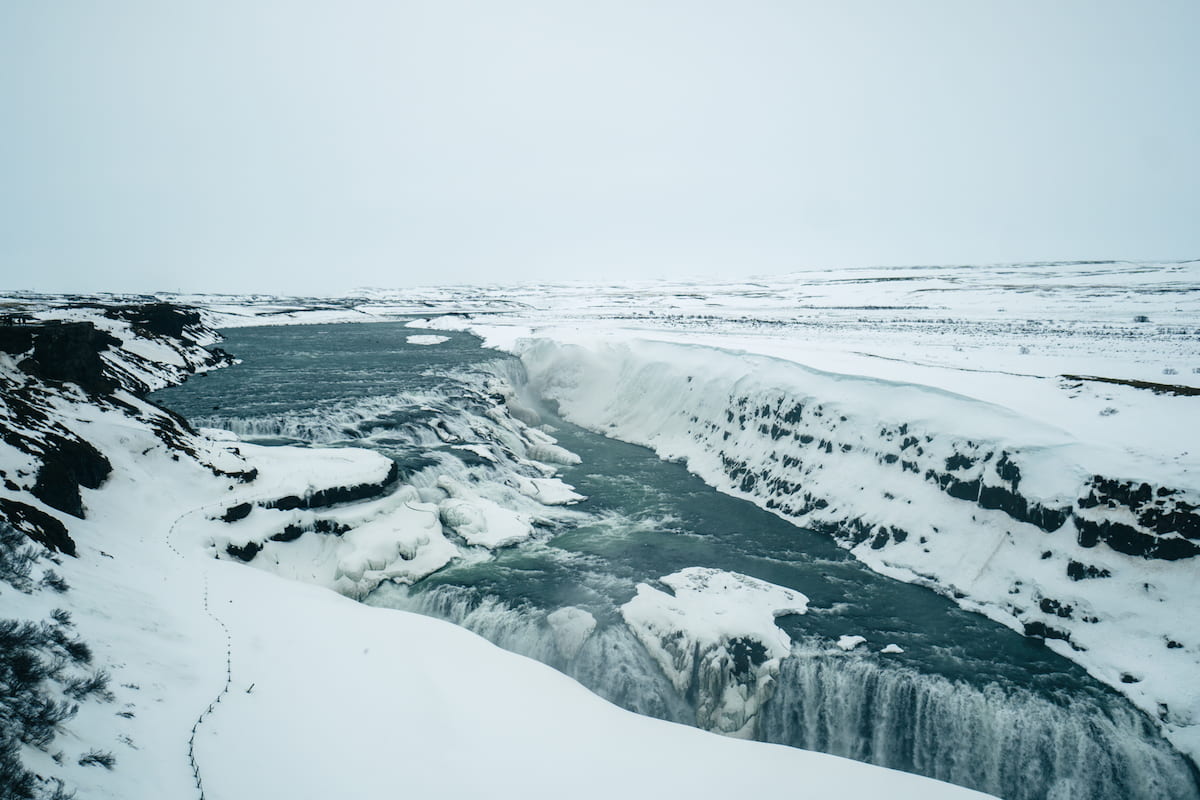
    Gullfoss Waterfall
    Gullfoss Waterfall

    Gullfoss waterfall is the last of the three major highlights of the Golden Circle. Gullfoss means ‘golden falls’ and is where the Golden Circle name comes from. Gullfoss is a favourite waterfall in Iceland and is only a ten minute drive from the geysers.

    Gullfoss is on the Hvítá River, with two main car parks, offering different views of the falls. With views at lower and higher elevations, there are steps that links the two and both viewpoints are definitely worth seeing.

    It’s also possible to walk along the edge of the river above the falls, but this will depend on weather conditions and time of year you’re visiting. This area is very windy and can be extremely cold in the winter months so you might not spend as much time as you think you will.
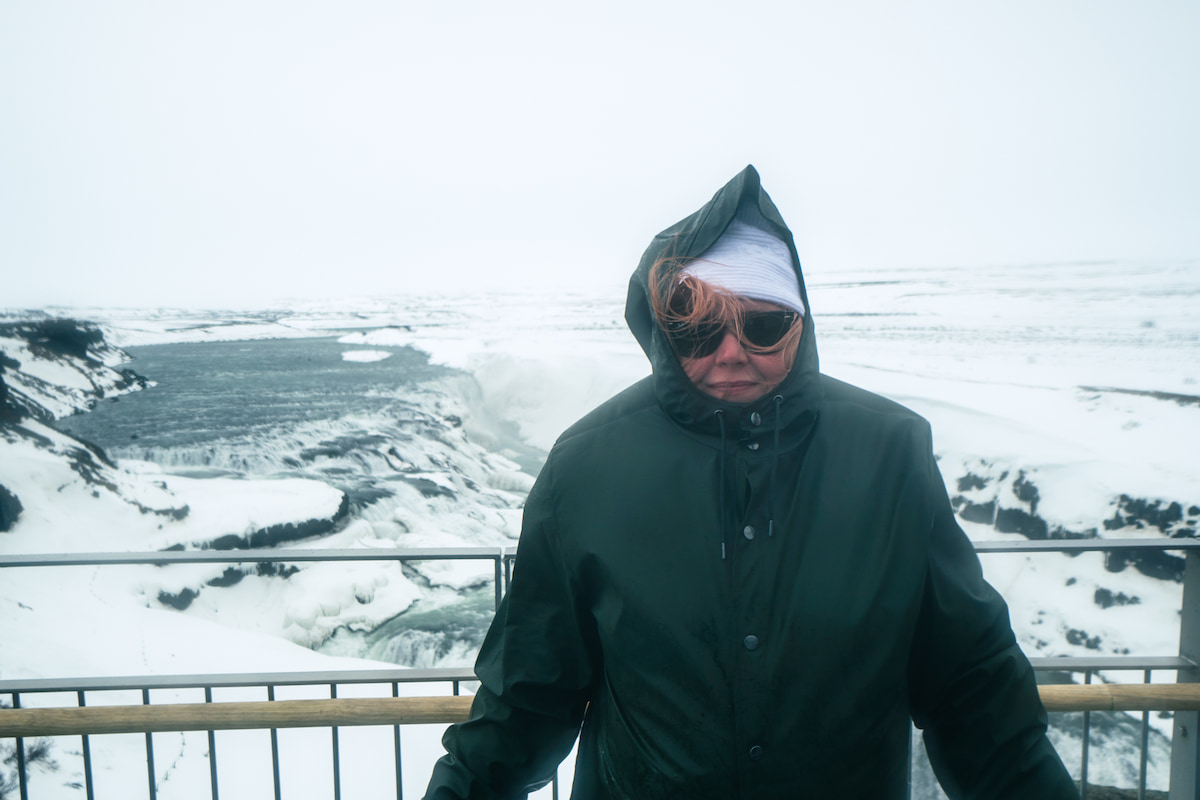
    Blown away at Gullfoss Waterfall
    Blown away at Gullfoss Waterfall

    The water originates in glacier Langjökull flowing down to the sea as glacial river Hvítá. The falls then cascade down across two levels. The first is around 36 feet in height and the second is around 70 feet in height, so it’s not just one tall, straight waterfall. In the summer, about 4900 cubic feet of water pass over the falls each second.

    In the summer there’s a good chance of seeing a rainbow in the spray of the waterfall if you visit in the afternoon and in the winter you’ll have a beautiful snow covered landscape.

    It’s free to visit and park at the falls, and you’ll also find a visitor centre, shop and café on site.

    What else is there to see around the Golden Circle area?

    Secret Lagoon Hot Spring
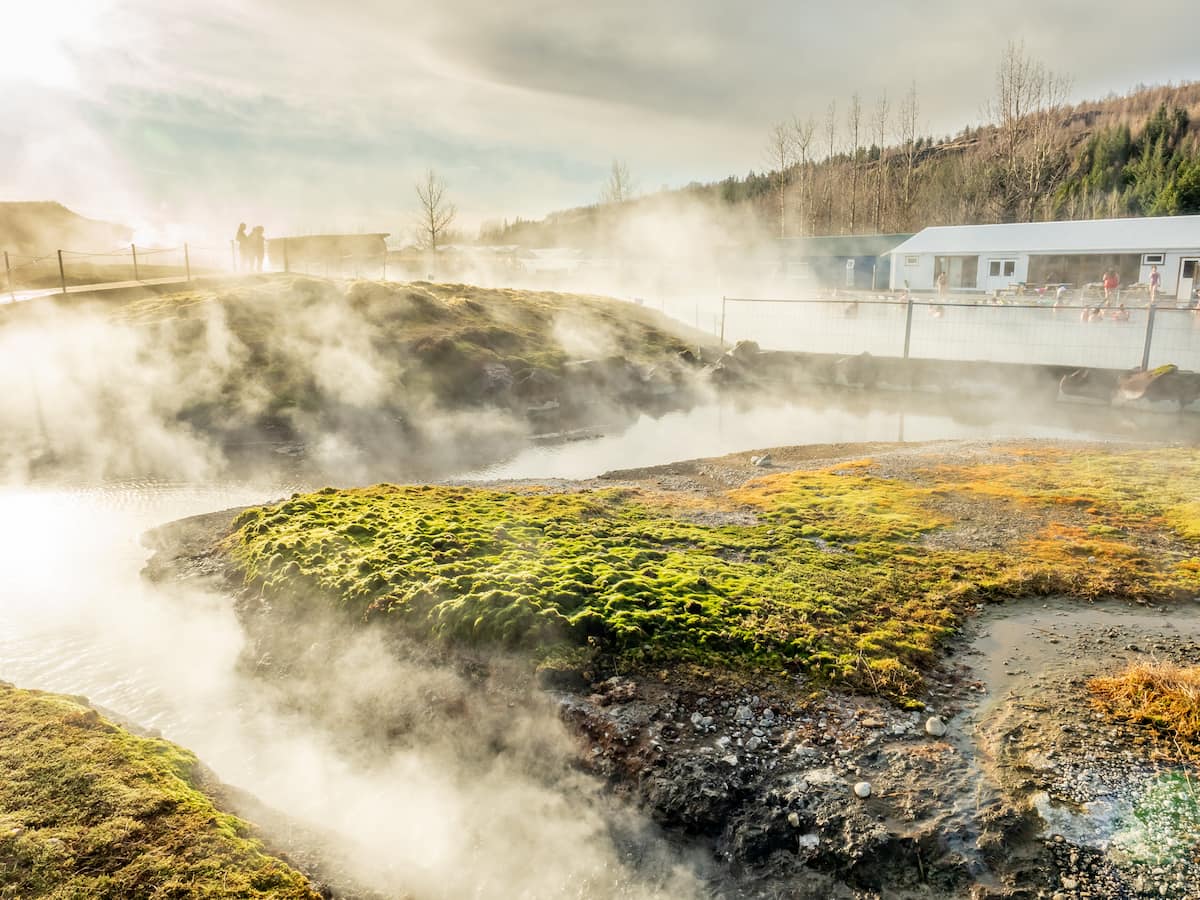
    Geothermal of hot spring pool in Iceland
    Geothermal of hot spring pool in Iceland

    Is there a better way to unwind after a long day than in a hot spring? And although the secret is out on this fantastic spot, you’ll be amongst locals.

    If you’ve followed this guide on a visit outside of the long days in summer, you’ll be happy to know that you should be arriving at the Secret Lagoon for sunset (if you time it well!) – and there’s nothing better than watching the sun set over the horizon while lounging in a hot geothermal pool.

    The Secret Lagoon, known locally as Gamla Laugin, is one of the oldest natural pools in Iceland. It was made at Hverahólmi, a geothermal area in the town of Flúðir in 1891, and is a special place with rich natural resources of warm water that comes from the hot springs.

    The Secret Lagoon will be a different experience for you if you’ve already visited the Blue Lagoon, as they keep the vibe simple and natural, with a more local feel. You’ll definitely find less tourists at this location, despite being just off the Golden Circle.

    The water in this geothermal pool gets very hot so you’ll have to be careful. This is because there’s actually three active geysers which spout every few minutes, showing off for the guests. Their names are Vaðmálahver, Básahver, or Litli Geysir and they provide 100% of the water supply in the lagoon.

    The warm, clean water is rich in sulphur, stays at 38-40 Celsius all year round and only takes 24 hours to complete a cycle of water replacement. You’ll be able to watch the boiling water in the little pools surrounding the main pool and it only adds to the magical ambience.

    There is an entrance fee that includes access to the change rooms, lockers and showers. Make sure and have your swimsuit and travel towel, but if for some reason you forget yours, both are available for hire for an extra charge.

    Please note that it’s required in Iceland to shower fully naked prior to entry to any of the swimming pools and there are not private cubicles. This is good to keep and mind and be prepared if you find this uncomfortable.

    Should I drive back to Reykjavik at the end of the day?

    If you’ve stayed at the Secret Lagoon past sunset (in the winter), you’ll now want to head back to the capital, where you started from. It’s an easy hour and a half drive, but it will be dark, so you’ll want to drive slow and be careful, especially since you’ll be so relaxed from the hot springs. There won’t be any stops along the way, so this will be a straight shot.

    If you’re following this route in the summer, you’ll have more daylight hours to stop along the way home if there’s any special spots that pique your interest. A notable stop is Kerið Crater, a volcanic caldera on the way back to Reykjavik.

    Just remember to never pull off on the side of the road suddenly. The roads in Iceland usually only have one lane in each direction with no shoulder, so it can be dangerous to stop without leaving space.

    Be sure not to confuse the Golden Circle with the Ring Road, which is an 828-mile drive around the entire island of Iceland that can take up to a week to complete. If you’re visiting in the summer, and you want to continue along the Ring Road instead of returning to Reykjavik via the Golden Circle, that’s another option for you at the end of the day.

    Thingvellir National Park has camping options or if you want to stay in a hotel, make sure and research this ahead of time and book in advance. Iceland isn’t really the best place for spur of the moment plans.

    I hope you’ve enjoyed learning about the Golden Circle and are ready for your trip! The Golden Circle is a bucket list item for many people and you won’t regret the time you took to visit all the attractions on the magical island of Iceland!
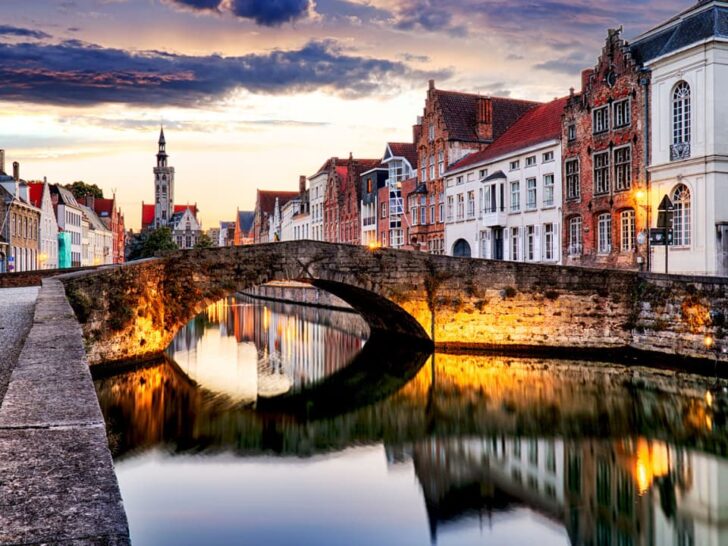
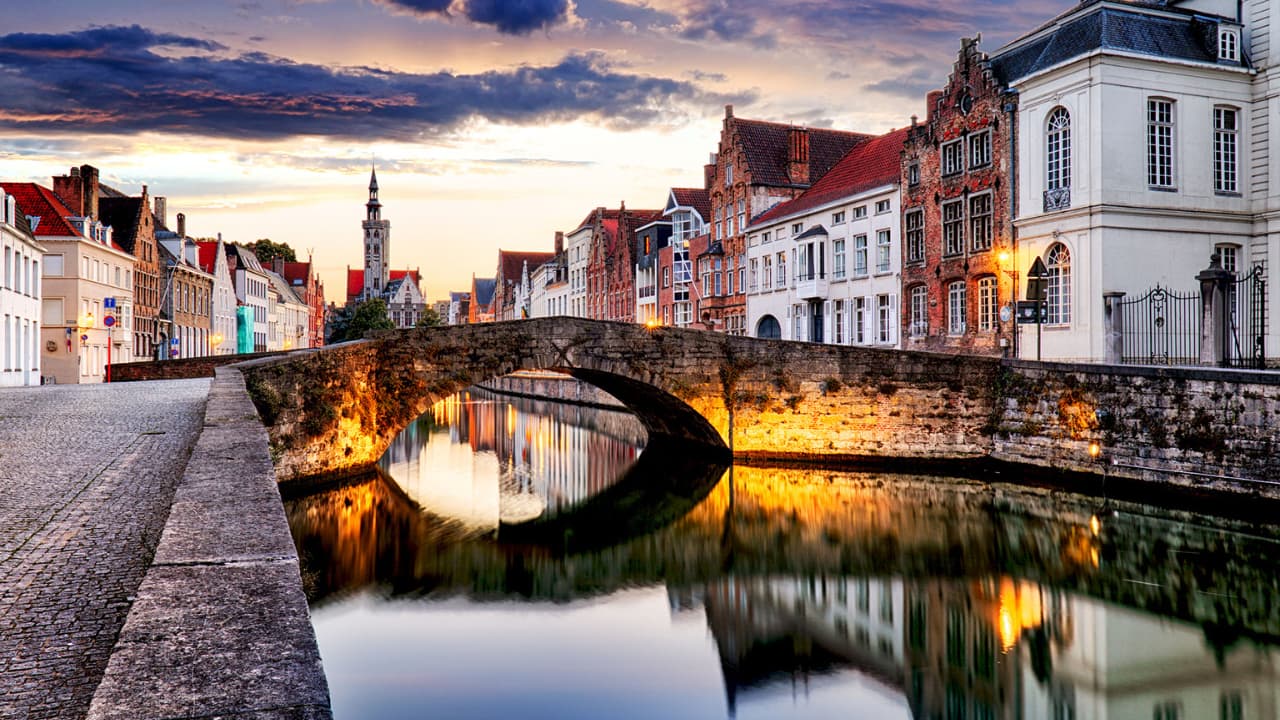
  • Bruges: A Weekend Escape to Belgium’s Romantic City

    Bruges: A Weekend Escape to Belgium’s Romantic City

    For the ultimate fairytale weekend away, look no further than Bruges! This picture-perfect city is the romantic weekend getaway you’ve been dreaming of, whether you’re travelling solo or with someone else in tow. You’re in for a sweet couple of days with leisurely strolls through chocolate-filled streets, a climb up a twisting tower, and afternoons spent skipping across the canals. And to make your visit even sweeter, I’ve created a guide to help you navigate your journey through Bruges.

    Oh, Bruges, how I love thee. I’m pretty sure my eyes still glaze over when I think back to my days in this swoon-worthy city, with the most perfect cobblestoned streets and pristine canals, complete with horse-drawn carriages replacing cars in the town square. The Venice of the North really couldn’t get more charming.

    Bruges: A Weekend Escape to Belgium's Romantic City

    Being just under a 2-hour train ride from the capital city of Brussels, arriving in Bruges on a Friday afternoon or evening is highly doable, and it’s a great way to get settled in and start exploring the city. Once you see just how magical it really is, you won’t want to stay cozied up in your hotel for long.

    This Medieval town can be whatever you want it to be, but slow is definitely the way to go. There’s plenty to do in Bruges and it’s nice and compact, making it super manageable by foot and easy to get around. And I’m going to show you an itinerary (with the addition of some hidden gems) that might feel jam-packed on paper, but once you’re there, you’ll see how close everything is and you can pick and choose which activities suit your personal preferences.

    Friday Evening

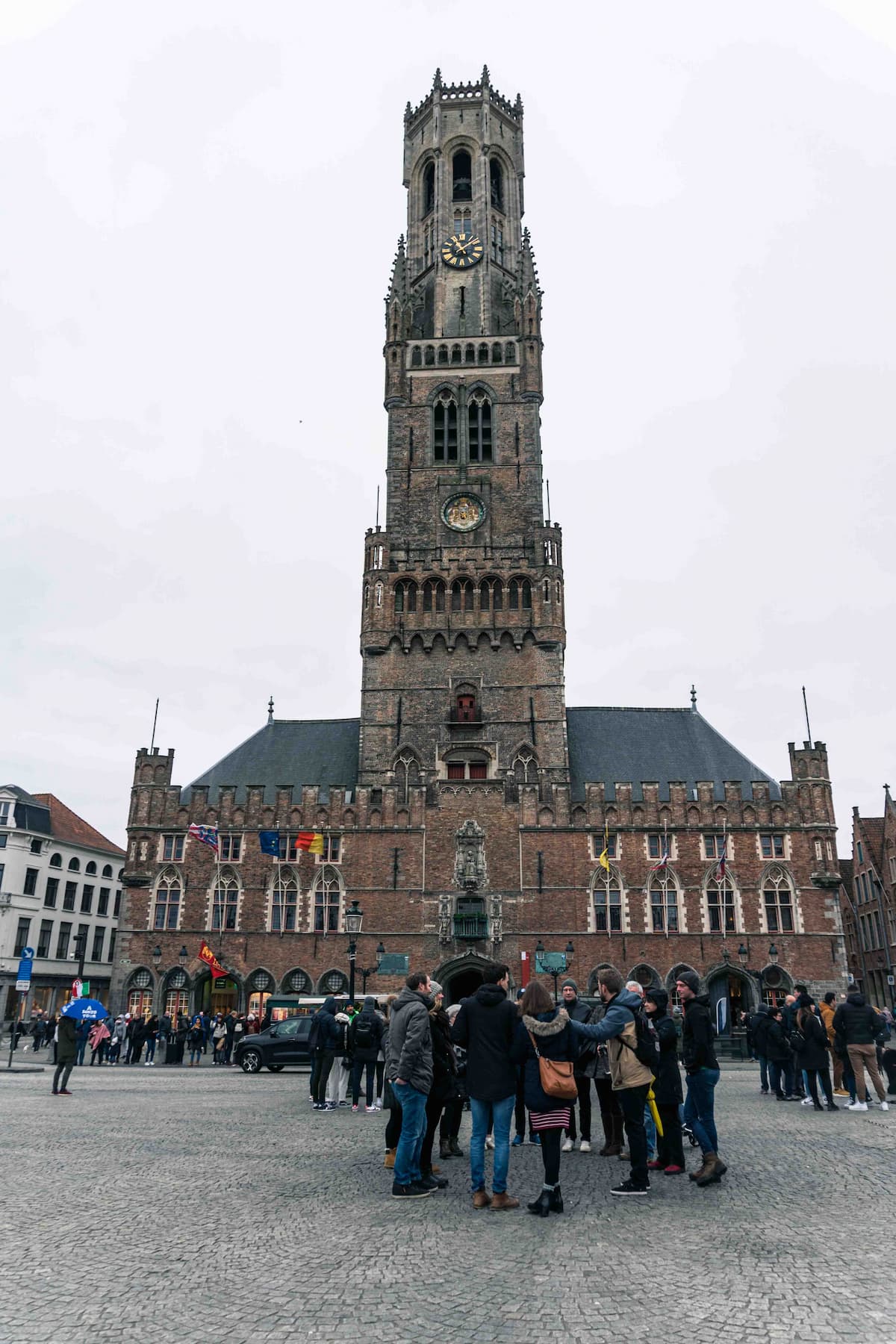
    Belfry Tower

    Belfry Tower offers excellent views over Bruges.
    Belfry Tower offers excellent views over Bruges.

    If you arrive before 6pm, I suggest heading to the Belfry Tower in the market square, straight away. It’s a great first stop on your adventure because towers always give you the best views of a city, and the Belfry is no exception. Awarded UNESCO World Heritage Site status, in times past it served as an observation tower and also protected against thieves and neighbouring enemies.

    Right in the heart of Bruges, this medieval bell tower overlooks the central Markt and will give you an overview of where you’ll be exploring throughout the weekend. Yes, you’ll have to climb 366 steps in order to get this bird’s eye view, but after your train ride, it’ll do you some good. You can even have a look at the old funds and charters of the place if you fancy a little more history.

    Hidden Gem: Arcade Behind the Belfry

    One of the hidden gems in this area is actually right behind the bell tower. There’s a particularly interesting painted arcade that can be found on Oude Brug Road that you should definitely check out. This covered walkway is perfect for snapping some unique photos or even to shelter from the weather.

    Saturday

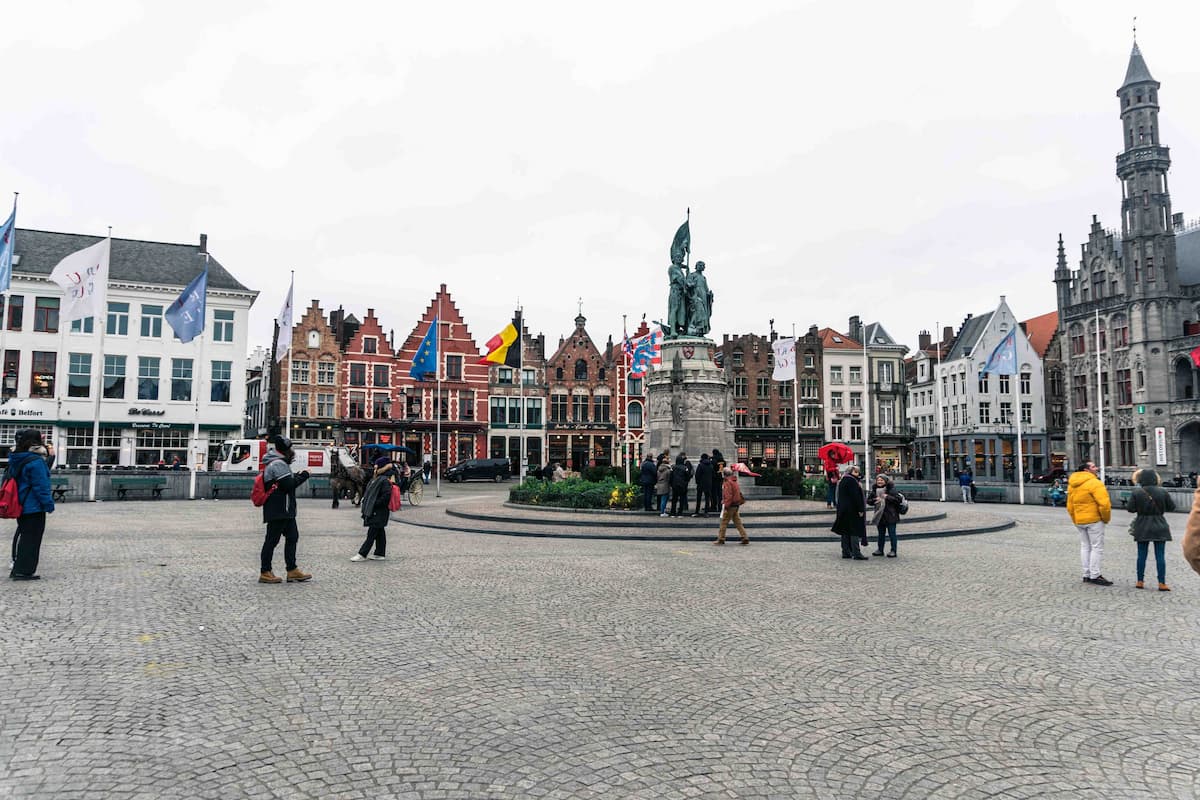
    Markt: the Market Square

    Markt Bruges
    Markt Bruges

    After a restful night of sleep and a delightful breakfast, make your way back to the Markt you glimpsed last night. Those gingerbread-style houses that Bruges is so famous for? You’ll find them here. You may have also noticed by now that the market square in Bruges is for pedestrians only. You won’t find any cars in this part of town, only a few horse-drawn carriages; perfect for a leisurely wander.

    Surrounded by beautiful shops, traditional cafes and brilliant architecture, the Markt has a wonderful ambience. You might even recognize some of these scenes from pretty postcards. Take some time and explore the streets and shops, enjoying the laid-back vibes and spotting the colourful brick houses of Bruges. On Wednesday mornings, a food and flower market pops up in the square. In November and December, you’ll find Christmas festivities are centred here.

    Hidden Gem: Medi Markt

    There is very little that could be considered ‘hidden’ in the central square of Bruges, but just in the shadows of the Belfry Tower, the pharmacy – Medi Markt – is about as close as you can get. The shop itself is an ordinary pharmacy, but the façade, next to the impressive Neogothic Provinciaal Hof building, is one of the more memorable and beautiful to gaze upon in the square.

    House Bouchoute

    Next, turn your gaze to the oldest house on the square. On the front, just beneath the roof, is an undeniably large compass that was installed in 1682, used as a handy tool for 17th-century merchants needing to know the direction of the wind. Yep, you read that right. Where most compasses show the magnetic North, this one depicts the direction of the wind. It’s very cool.

    The Old Chocolate House

    For the best hot chocolate of your life, take a break from admiring architecture and stop at the Old Chocolate House. It’s so good that unfortunately it’s no secret! You might have to queue a short while if it’s busy.

    Once sat upstairs inside this cosy little shop, you will be able to choose from a variety of the finest Belgian chocolate for your drink. Your mug of milk – more like a bowl, really – will arrive, and you can spoon as much or as little chocolate drops as you’d like into it for a taste of pure decadent indulgence.

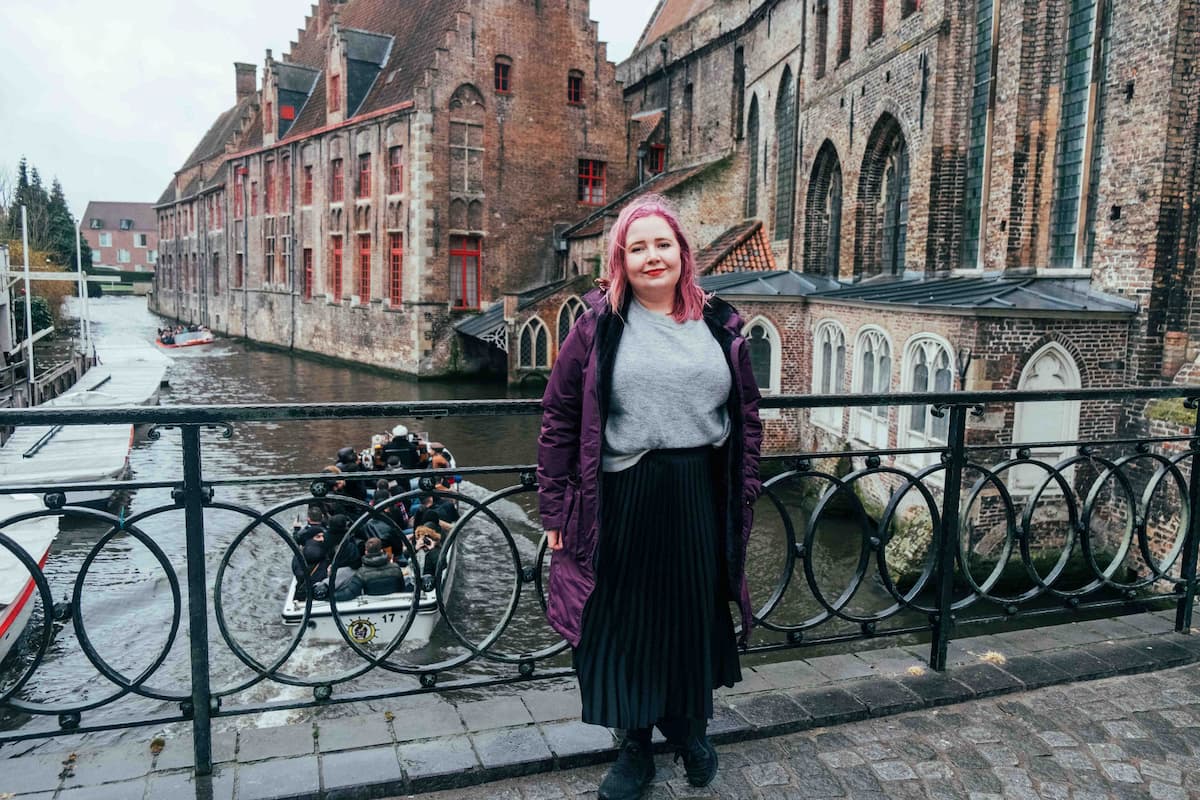
    Sint-Janshospitaal

    The canal with Sint-Janshospitaal
    The canal with Sint-Janshospitaal

    Also in the city centre is the Sint-Janshospitaal, which was in operation between the 12th-19th centuries. It’s home to some of the oldest surviving hospital buildings in Europe. You can explore inside for a fee, and see old furniture, sculptures, silverware and medical instruments. And if you do, make sure and check out the old dormitory, custodian’s room, pharmacy and Diksmuide attic. Or, you can just wander around the exterior, admiring the apothecary garden and secret little courtyards.

    Church of Our Lady

    Church of our lady in the background
    Church of our lady in the background

    The spire of this church completes the skyline of Bruges, alongside the Belfry. Being 115.5 metres tall, it’s the second highest brick tower in the world! The church itself is full of artistic treasures, including tombs, mosaics, and paintings like Michelangelo’s Madonna and Child.
    The main church part is free to enter, with the museum charging a small, but completely worth it, fee. Other exceptional artworks and woodcarvings include the Pieter Poubus’ Last Supper, the Adoration of the Shepherd, and Gerard David’s Transfiguration.

    Groeninge Museum

    If you’re up for some European art, the Groeninge Museum should be next on your list. The short walk between the church and the museum is just as beautiful, as you’ll find yourself crossing the scenic Boniface Bridge: a piece of art in its own right.

    This famous art museum is known for Belgian plastic arts, of all things, alongside neoclassical paintings from the 18th and 19th centuries, by Jan Van Eyck and Hugo Van Der Goes. Or you can even see masterpieces from the Renaissance and Baroque periods. I’m telling you, whatever your art tastes are, you’ll find it in this museum!
    Rozenhoedkaai

    Just a 3-minute walk from the Groeninge Museum is the most photographed spot in all of Bruges, Rozenhoedkaai. And you’ll quickly see why. I dare you to not take a hundred photos.

    This enchanting, historic part of Bruges is set along the lovely canals that once served as a popular location for mooring boats. You’ll see the iconic stunning buildings that look like castles in the background framed by willow trees gently swaying in the breeze, creating a picturesque scene you won’t be able to get enough of.

    Among the timeless scenery, you’ll also find quaint cafes, bars, and restaurants just beside the canal. You might want to stop for a drink at this point or just relax by the water and take it all in before heading to your next spot.

    Hidden Gem: Torture Museum

    Looking for the dark and macabre behind Bruges’ quaint serenity? This intense trip down Europe’s malevolent memory lane should do the trick. Right in the heart of Bruges, the Torture Museum once served as the city’s oldest prison in the Middle ages, and the old cellar has been transformed into this historical museum.

    Walk through and retrace the history of the one of the darkest times in humanity. Wax statues with authentic torture instruments show what mankind has been able to do to each other, how much we’ve evolved and where the pitfalls still are in the legal system. If you want to do something a little strange and off the beaten path, this is it.

    Belgian Waffles

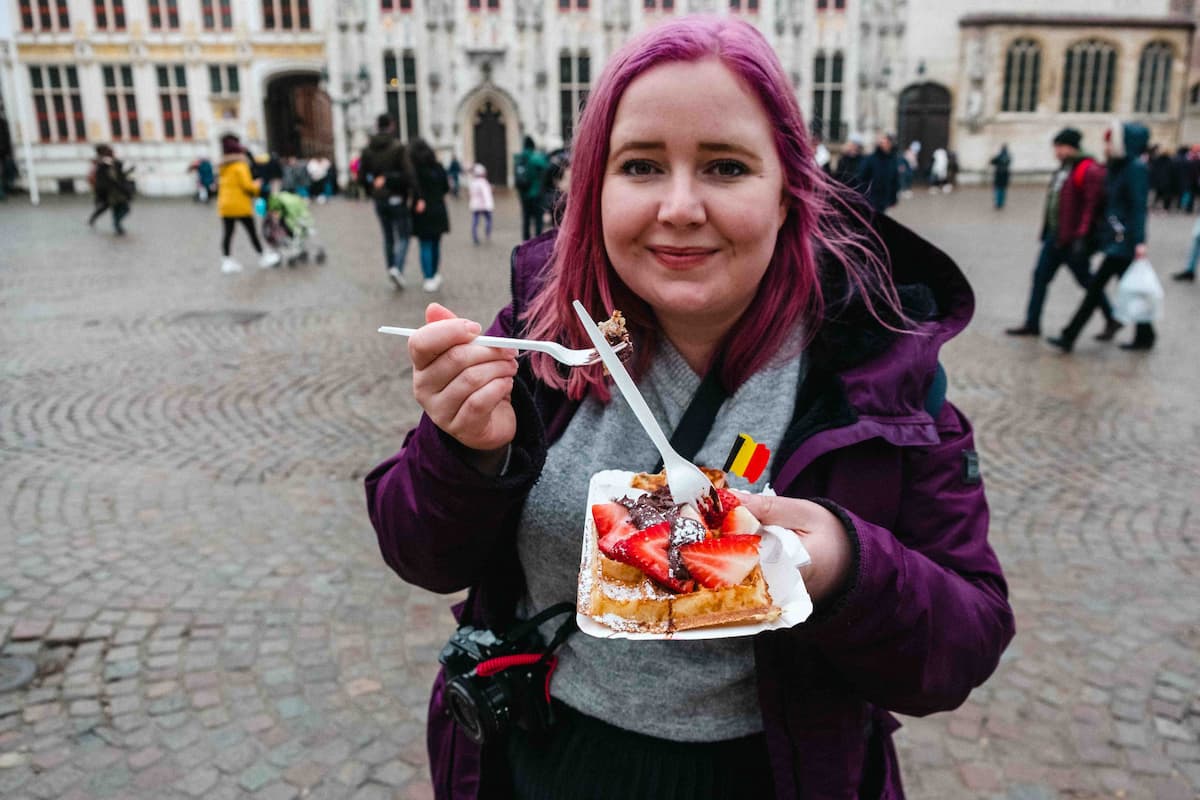
    Kat eating waffles in front of Provincial Court
    Kat eating waffles in front of Provincial Court

    For something a little lighter, you simply cannot visit Bruges with having tasted the traditional Belgian waffles once, or twice. There’s no shortage of cafes where you can try these sumptuous waffles!

    Recommendations:

    • Lizzie’s Wafels. You seriously won’t be able to get enough of these waffles! Fresh, light and crispy, with generous portions and plenty of toppings you can choose from, such as chocolate cream. Add the hot chocolate to your order and you’re golden.
    • The waffle truck in the Provincial Court Square.

    Shopping and Chocolate Tasting

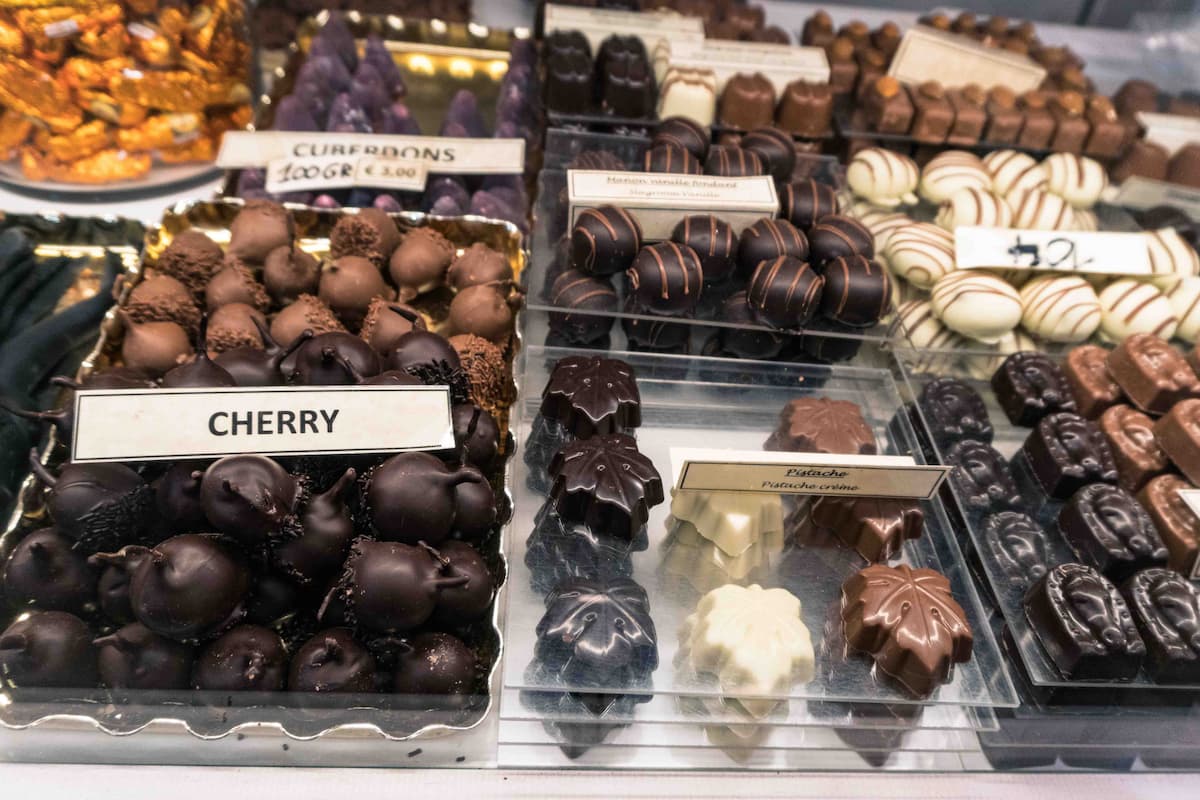
    Chocolate Tasting in Bruges is a must!
    Chocolate Tasting in Bruges is a must!

    After walking past all the cute shops in Bruges, you might be keen to get in a little shopping by now. Feel free to spend your afternoon weaving in and out of the speciality shops that feel deliberately placed, scattered about the city. From jewellery to Bruges’ famous lace or city souvenirs, I have no doubt you’ll find something special to take home with you.

    And let’s not forget the chocolate! The streets of Bruges are lined with chocolate shops and I’ll be surprised if you haven’t tried any by now. At Depla Chocolatier, pick up some truffles, chocolate covered fruit, or dark chocolate rice cakes. And stop here for one of the best cups of cappuccinos while you’re at.

    Chocolatier Dumon is another excellent choice – and while the truffles are delicious, I would recommend trying a plain bar of milk chocolate. It’s the best way to see the difference between your average chocolate bar and the finest chocolate in Belgium!

    Of if you fancy trying some chocolate on the more unusual side, The Chocolate Line does amazing handmade chocolates with interesting flavour combinations, like Miss Piggy (bacon and quinoa), Green Tokyo (wasabi) and Havana (tobacco leaves).

    Hidden Gem: Kantcentrum

    Did you know that Bruges is actually famous for their lace? You can hear the whole story of Bruges lace at the Lace Centre and Museum.

    It’s a little further away from the centre, but Bruges is so small that it’s still easily reachable if the museum piques your interest. Located in the renovated old lace school of the Sisters of the Immaculate Conception, you can hear testimonies from international lace experts that explain various types of lace and their geographical origin, as well as multimedia installations, with a focus on lace education in Bruges. And why not take some home with you?

    Canal Boat Tour

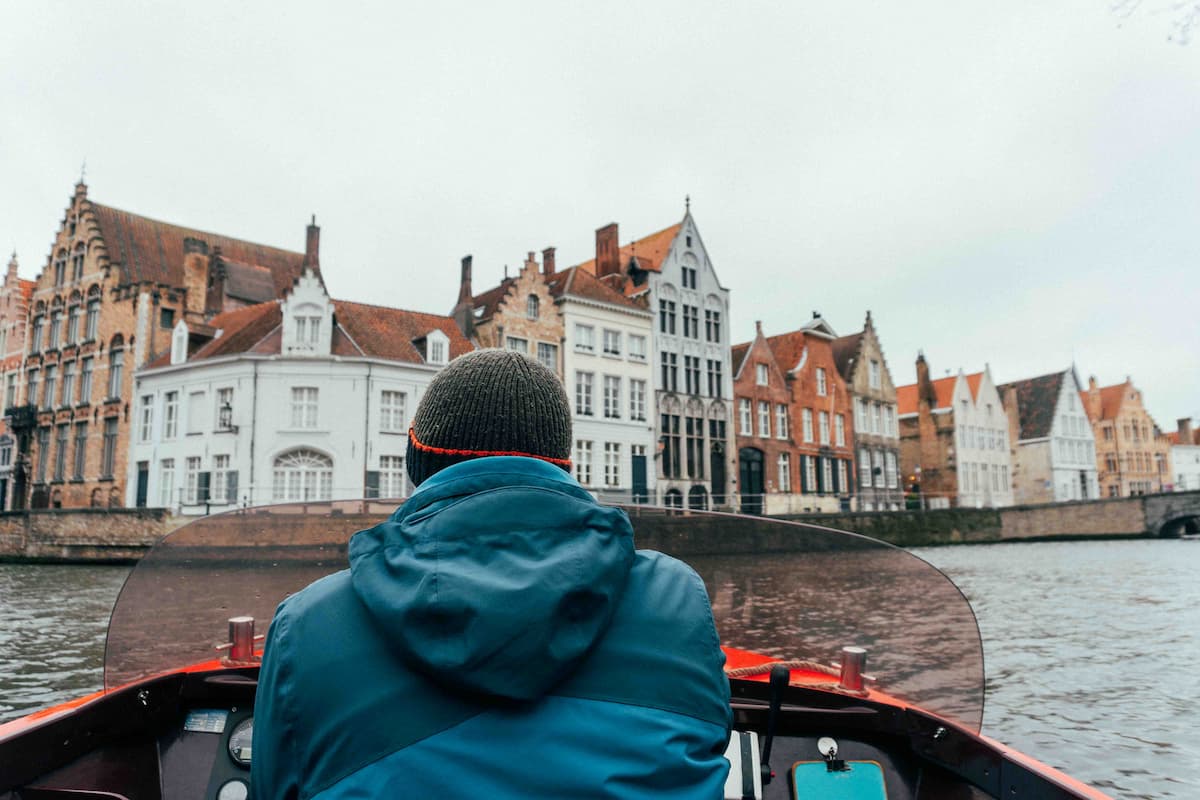
    Take a canal boat tour in Bruges.
    Take a canal boat tour in Bruges.

    Ah, a Bruge canal boat tour. This is a great way to wind down your first full day in Bruges. After exploring the city and its magical delights, feel free to put your feet up and explore the city from a different view.

    The canal tours are super relaxing and are a great way to snap some photos from different angles. Most tours set off near the Rozenhoedkaai. You might consider pre-booking your tickets in the morning for a canal tour as lines get long real quick on the weekends, especially if the weather is nice.

    Evening Dinner and Drinks

    Don’t forget you’re in Belgium, where they have some of the best beer in the world. Check out popular bars, Le Trappiste and Poatersgat. For dinner why not try one of Bruges’ Belgium stews, such as Elderberry Soup, Waterzooi, or Curried Mussel.

    Sunday

    You definitely want to start the day with a good brunch and I recommend going to That’s Toast, where they serve breakfast all day long. From granola and orange juice to Tiramisu French toast (drool) and mimosas, you can’t go wrong.

    Burg Square

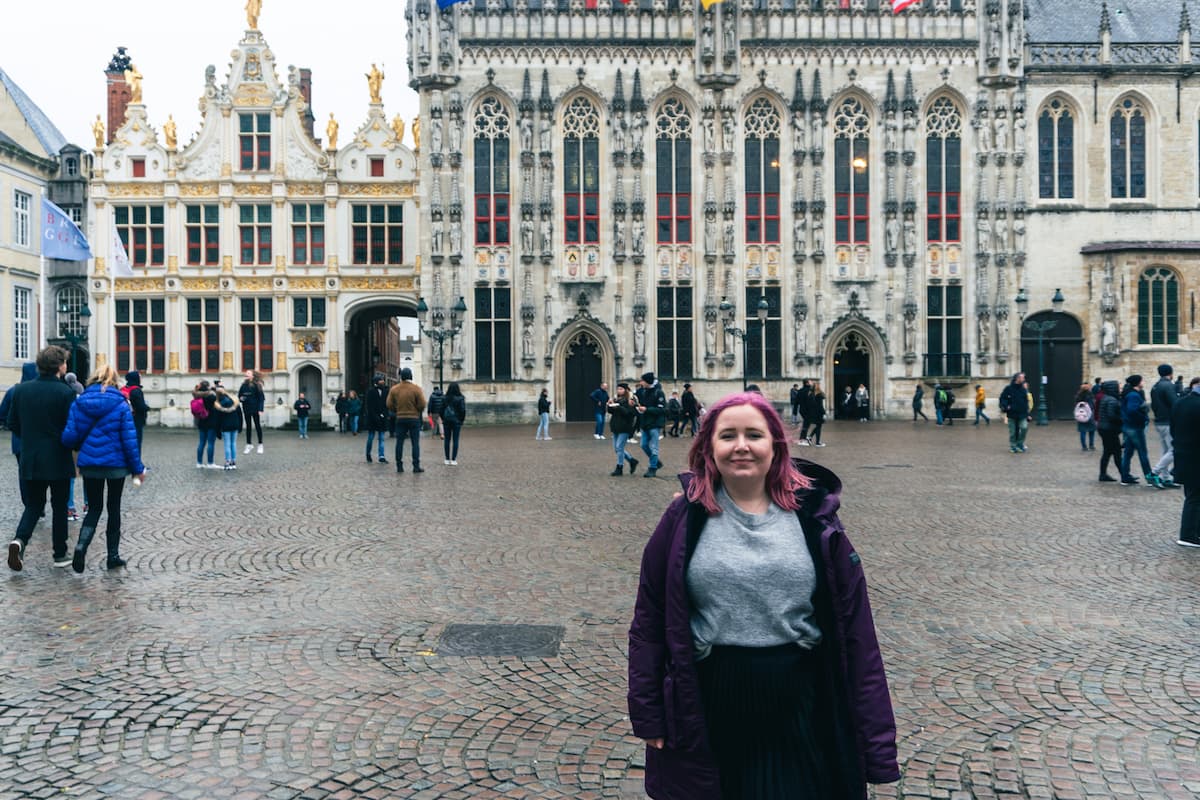
    They say that the Market Square is the heart of Bruges, but Burg Square is the soul. I’d have to agree wholeheartedly. This is the city’s centre of power, reflected in the Gothic and Neoclassical architecture.

    Stadhuis (City Hall)

    Kat in front of Stadhuis (City Hall)
    Stadhuis (City Hall)

    Within Brug Square is City Hall (1376-1421), one of the oldest in the Low Countries and it’s from here Bruges has been governed for more than 600 years. You absolutely do not want to miss the Gothic Hall, with its seriously impressive vault and 20th century murals. This place is a masterpiece in and of itself.

    Basilica of Holy Blood

    Next to the City Hall is the Basilica of Holy Blood, a Roman Catholic church built in the 12th century. This ancient church holds Bruges’ most cherished relic, an ornate vial filled with a little piece of fabric, believed to have been stained with the blood of Jesus. Each day it’s brought out from the upper chapel for the waves of tourists to admire. The chapel itself is the only one of its kind in West Flanders, being of Romanesque character.

    Historium Bruges

    Our next stop is the Historium. Prepare to step back in time! This is an imaginative way to discover Bruge through the medieval Golden age, with a short virtual experience. And it’s also a great place to snap some panoramic views of Market Square. If you wanted to, you could definitely spend a couple of hours here.

    Hidden Gem: Gallery Xpo Salvador Dali

    If you’re a Salvador Dali fan, then our next museum will be right up your alley. The Gallery Xpo has a fantastic collection of famous statues and graphics from Dali himself, set amongst a dramatic pink and gold backdrop. You might find long queues here, proving it’s not quite that hidden and definitely worth the wait. And splurge on the audio guide for sure!

    Choco Story

    For all the chocoholics out there, you don’t want to miss out on the Choco Story, for a chance to walk through the history of chocolate, see actual Belgian chocolate being made and sample some, of course. Here you’ll discover all the benefits of chocolate (as if we needed more reasons to eat it) and even the history of the infamous cocoa beans. Make sure and leave yourself a good hour or two for this decadent experience.

    Hidden Gem: Lumina Domestica

    Within the same building as the Choco Story, is the Lumina Domestica museum, or Lamp Museum. They even share the same ticket office. Convenient, eh? Don’t underestimate this hidden gem. Here you’ll find a whopping 6000 antiques and lamps, along with the history of the first light…fire, and progressing through the ages with all sorts of light-related inventions.

    Bruges Beer Experience

    If you’re somehow sick of chocolate at this stage, you could skip Choco Story and try out one of Belgium’s other biggest exports for style.

    The Bruges Beer Experience gives visitors the chance to learn all about the history of beer and the intricacy of the brewing process. Best of all, you get the chance to try some samples of local beer at the end of the tour!

    De Halve Maan

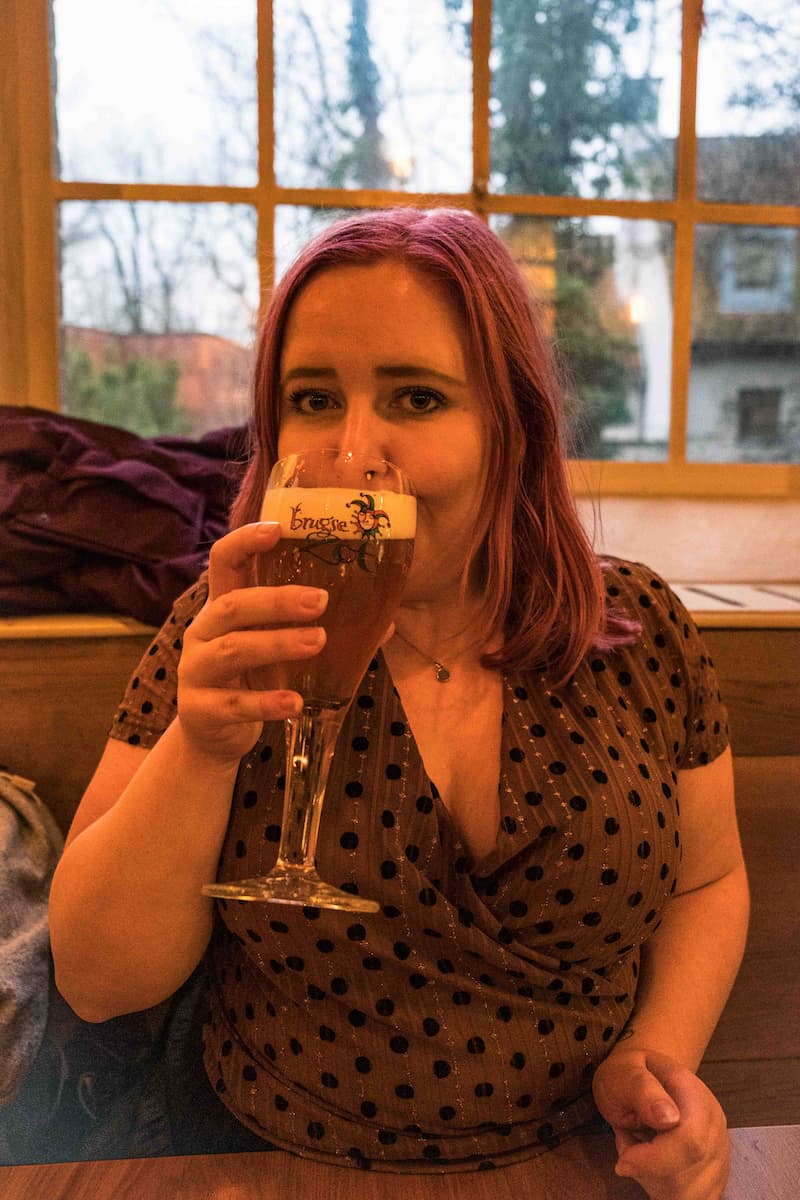
    Kat drinking beer at De Halve Maan
    Kat drinking beer at De Halve Maan

    Still sober? Your next stop might change that. You’ll be stepping into De Halve Maan, the only remaining brewery in Bruges! That’s right, since 1865, they’ve been making the best Belgian beers in Bruges, now in its sixth generation of the family business.

    If you’re a hardcore fan, or even if you’re not, there’s a 45-minute tour exploring the three-kilometre underground pipe. During the tour, you’ll learn the trade secrets of beer making and get to try the local beer, Brugse Zot.

    Minnewaterpark

    After you’ve relaxed with a pint, head to Minnewaterpark, for some peaceful time away from the crowds. Known to the locals as “The Lake of Love” because according to legend, if you walk over the lake with your loved one, you’ll experience eternal love. Complete with beautiful swans, it might not come as a surprise to learn it’s the most-visited romantic spot in Bruges.

    Almshouses

    Now this is some interesting Bruges history. Almshouses are small whitewashed houses that date back to the 14th century. Wealthy citizens and guilds formed little complexes, where single women and older adults could stay, but in return they had to pray for the rich, in special chapels near the houses. Nothing like the old-school Pay for Pray!

    But there are actually a total of 46 preserved church complexes that serve as shops and historic buildings now, with the Almshouse de Meulenaere being a popular one. It’s hard to tell the houses apart, but you’ll spot some with plants lining the doorways or with splashes of colour. And on all of them, you’ll see the founders’ names.

    Windmills of Bruges

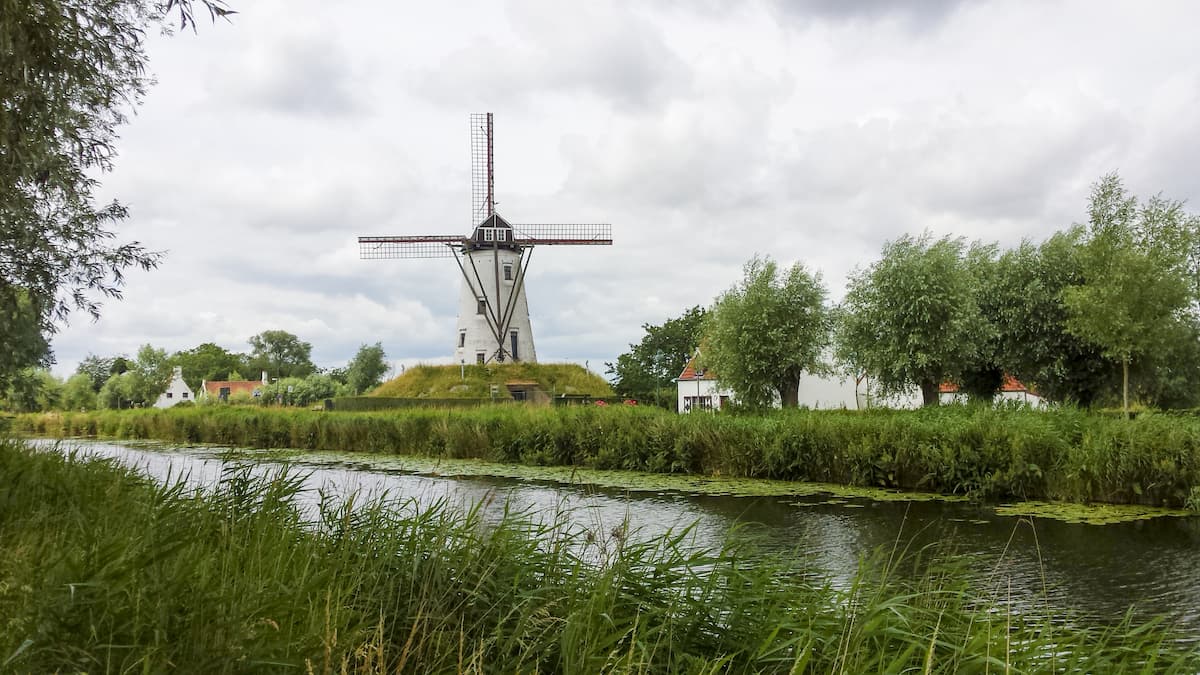
    Bonne chieremolen windmil from Bruges
    Bonne chieremolen windmil from Bruges

    Let us not forget the ramparts of Bruges, a six-kilometre park surrounding the old town. The ramparts are where you’ll find the four remaining windmills of of the original 23 in Bruges, as well as four very cool medieval town gates. Taking a lovely stroll along the ramparts and canals, while visiting the windmills is one of the best ways to get a feel for the town’s rich history.

    Koeleweimill

    Koeleweimill, aka Coelewey mill, was once used for corn and was originally located in Meulebeke. Originally built in 1765 as a wooden mill on a closed brick base, it was reconstructed on its current site by the city of Bruges after it broke down in 1980.

    Nieuwe Papegaai
    This mill is fun to see for its distinctive parrot on the roof, for which the windmill is named. It was originally built in 1790 as an oil mill called Hoge Seinemolen and moved to its current location in 1970 with a new name to boot.

    Sint-Janshuismill
    This is the oldest mill in Bruges, built in 1770 and the only one still in its original position. It’s also the only windmill with a museum for you to check out and I recommend you do so. Built as a wooden mill on four brick dices, this historic piece of architecture is still used today for grinding flour!

    Bonne Chiere
    A far younger mill is Staakmolen, or Bonne Chiere, built in 1844 and rebuilt in 1911 at its current location after a storm accident. This mill is built in the same style as Sint-Janshuismill, wooden with brick dices. Strangely enough, this mill was never actually used for grinding grain. It’s a show mill, only existing as decoration.

    Tip: If you’re bicycle confident, you can also rent a bike cycle around the rampants in a very short period of time.

    Beguinage Convent

    Back in the city square, head to the most silent spot there is; the Beguinage Convent. Called the “Princely Beguinage of the Vineyard,” this UNESCO world heritage site was once the home of the beguines, founded in 1245. The beguines were emancipated women who led a pious and celibate life, and today the beguinage is home to the nuns of the Order of St Benedict, as well as several other Bruges women who have decided to remain unmarried. If you happen to pass by at noon, you’ll have the chance to hear the beautiful sounds of the nuns chanting each day.

    Diamant Museum

    Now on to some sparkling adventures at the Diamant Museum. Would you believe that Bruges was the first city of diamonds in the world?! Bruges archives confirm that the city’s diamond trading and polishing began in the 14th century, and in the museum, which opened in 1999, you’ll learn all kinds of interesting facts about diamonds. You’ll even see how they cut and polish these gems through cutting demonstrations, and you can pick up a diamond souvenir in the gift shop.

    Hidden Gem: Concertgebouw Circuit

    Visiting the Bruges Concert Hall is one of the most underrated things to do in the city. But if you’re a fan of music and design, you’ll want to head over to this strangely modern building that has a famous acoustics and contemporary art collection. And I must say, you’ll get some of the most beautiful views of the entire city here as well.

    Where to Stay in Bruges

    There are six main areas for you to stay in Bruges and they’re – as should be expected in Bruges – all quaint, historic and picturesque. Here’s a list of the places to consider when booking your accommodations:

    1. The City Centre – to be right in the middle of all the action.
    2. Ezelstraat Quarter – best for those on a budget in northwest Bruges.
    3. Sint-Gillis Quarter – a quiet, though popular and slightly pricier area.
    4. Magdalena Quarter – quiet, serene and made for families.
    5. Sint-Anna Quarter – your off-the-beaten path location, where local residents live.
    6. Railway Station Sint-Michiels – not as popular and a little further out, but only a 10-min walk from Grote Markt.

    Well, that wraps up our weekend in beautiful Bruges! This uniquely picturesque place will leave you utterly speechless and I’ve no doubt you’ll want to visit again. With this weekend itinerary you’ll definitely cover all the best things to see and do in the city, making your time away absolutely perfect. Whether you’re looking for a romantic getaway or just something more low-key, the fairytale charm of Bruges is where you want to be!

    If you’re heading back to Brussels and your weekend in Bruges, why not spend an extra night exploring the capital city? Check out my post on weekend trips to Brussels and Bruges.

  • Brussels vs Bruges: Two Unique Belgian Cities, One Tough Choice

    Brussels vs Bruges: Two Unique Belgian Cities, One Tough Choice

    You have a weekend getaway coming up and you know you’re headed to Belgium, but you can’t decide which iconic city to choose from: Brussels or Bruges? I hear you. Both cities are worth a visit for their distinctly different charms, but for those short on time, this guide is here to help you decide.

    You’ll find that the majority of visitors to Belgium are headed one of two ways: Bruges, or Brussels. While not exactly far from one another, those on tight schedules will often only find time for one of these two fabulous cities. The good news is that both Brussels and Bruges are perfect for a 2 or 3-day break. But which city is the better choice for you?

    Brussels is a large cosmopolitan capital city with over a million residents, whereas Bruges is a more intimate, medieval, fairytale-like town.

    Brussels has a mix of cultures, diverse architecture, and many food and nightlife options. Bruges has a more relaxing atmosphere, where you can casually stroll along the picturesque canals and cobblestoned streets.

    But there’s a lot more to think about and learn about these two Belgium cities before making your decision. Here are highlights of both Brussels and Bruges to help you decide!

    Brussels vs Bruges

    Brussels and Bruges: History and Overview

    I’ll be honest, most travellers end up choosing Bruges over Brussels because its small, dreamlike, historic charm just seems to lure them in. Literally known as the jewel of Belgian tourism, it is hard to resist. However, Bruges can, somewhat like the canals of Venice to which it is so often compared, get awfully busy, so keep that in mind if you’re travelling in peak season.

    While Bruges is a quaint medieval town that seems almost frozen in time, with Brussels, you get what you’d expect; a vibrant, bustling city with a range of cultural activities to keep your senses engaged. Like any big city, you should keep on your toes – though any unsavoury areas are well out of typical touristic zones – but with its interesting mix of French and Flemish cultures, Brussels has its own charm.

    Both cities are very walkable and can be visited on foot in a full day or two. Even though Brussels is a large city, its centre is compact and easily explored. Bruges is unique in that travellers can take in the sights through canal boat rides, bicycles, or even horse-drawn carriage rides.

    Brussels has a large community of expat workers, including white collars from the Belgian government, European Union, and NATO, giving the city a special international vibe. But it does lack the antique charm of Bruges.

    Brussels

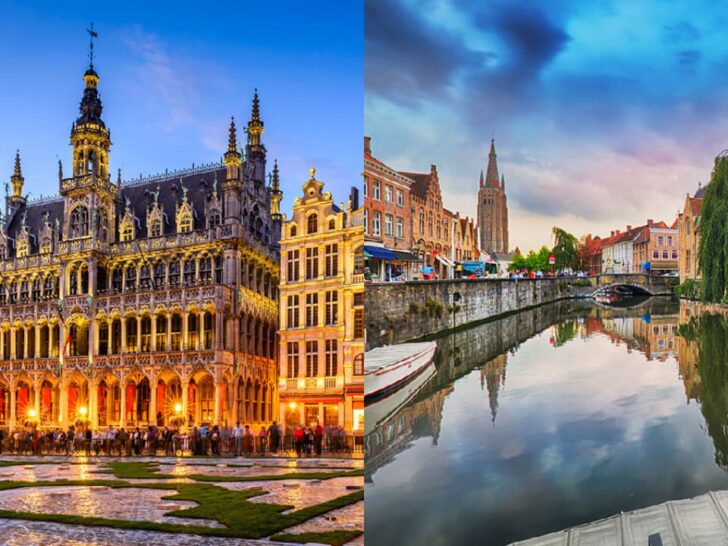
    Grand place in Brussels
    Grand place in Brussels

    Brussels was founded in 979 AD and is the capital city of Belgium, with the largest metropolitan area in the country. The 1400-1600s brought great wealth to the city and is visible in the beautiful, diverse architecture spread throughout.

    The city’s main square, called the Grand Place, is said to be one of the most beautiful squares in all of Europe.

    Brussels is also the headquarters to the European Union. 70% of the population are from other countries, making for a large immigrant population. Though Belgium is largely home to a mixture of French and Flemish (Dutch) speakers, the majority of residents in Brussels speak French.

    Bruges

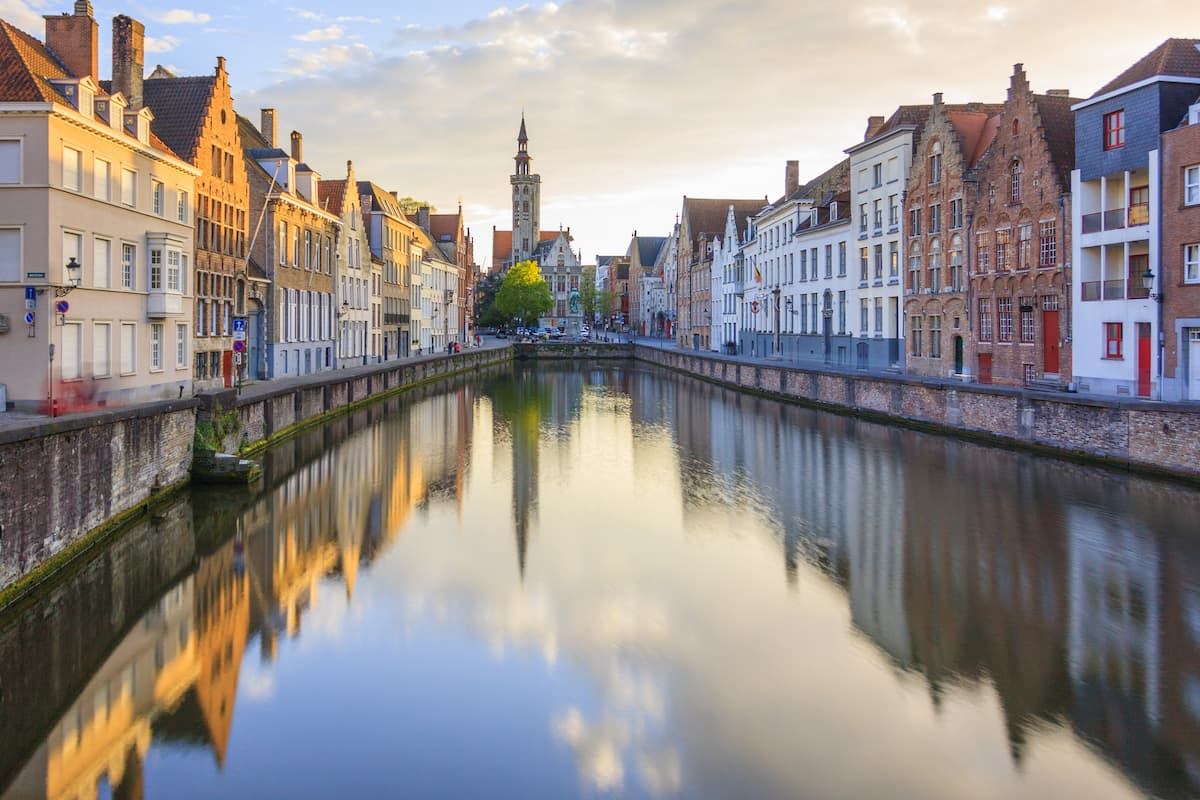
    The canal with Sint-Janshospitaal
    The canal with Sint-Janshospitaal

    At the time of writing, Bruges has close to 120,000 residents, making it the 6th largest city in Belgium. With many canals and over 80 bridges, Bruges is often referred to as the “Venice of the North,” similar to Amsterdam.

    Thankfully, the city suffered very little damage from either world war, and its waterways helped Bruges gain wealth throughout the centuries. Unlike Brussels, Bruges didn’t have to contend with a French army burning down the city in the 17th century! It’s declining importance after the 16th century helped ensure it became one of the best-preserved medieval towns in Europe.

    A wonderfully romantic city, made for boat rides and low-lit evening wanders. Bruges’ beautiful web of streets is unlike any place in the world, and while it may not be a match for someone looking for excitement, it’s a city sure to take your breath away.

    Bruges is known for its lace, chocolate shops, and Belgian beers, even boasting an underground beer pipeline!

    Sightseeing and Culture

    Brussels

    Mont des Arts park in Brussels
    Mont des Arts park in Brussels
    • The Grand Place in Brussels is the city’s main square and without a doubt the first attraction you’ll want to see.
    • Brussels City Hall is the oldest building in Grand Place, completed in 1420, is a known masterpiece of Gothic architecture.
    • A walk down Koningsstraat to see the Royal Palace and Park is also worth doing.
    • The Royal Saint-Hubert Galleries are a trio of gorgeous glass-covered shopping arcades filled with up-market boutiques and elegant coffee shops.
    • Look around the Palace of Justice and then just outside, take a glass elevator to the Marolles district, where you find a unique atmosphere with small stores and a nice little Sunday market.
    • You’ll recognize the Manneken Pis, a famous fountain sculpture designed in 1388. It’s one of the most beloved symbols of Brussels, and originally served as the means by which many Bruxellois received water.
    • And you’re sure to not miss the 102-metre tall Atomium, an historic landmark and international symbol, made for the 1958 World Expo.
    • Parc du Cinquantenaire is a major park in Brussels, where the monumental triple arch known as Arc du Cinquantenaire is located.
    • Museums to visit include the Brussels Art Museum, the Magritte Museum and Horta Museum.
    Kat next to Comic Book Strip in Brussels

    Like London, Brussels is also known for it many unique art murals around the city. Brussels was influential in the early days of the Art Nouveau movement; there are buildings scattered all over which can be visited, along with private buildings, via a tour offered by ARAU.

    Bruges

    Markt Bruges
    Markt Bruges
    • Market Square is the main square in Bruges, surrounded by some of the city’s most iconic buildings.
    • The Belfry Tower was founded in 1240 as a wooden tower on a stone building, and is the most famous and tallest part of Market square.
    • Bruges City Hall has Gothic architecture and was completed in 1421, being one of the oldest in the Low Countries.
    • Church of Our Lady Bruges is an impressive Catholic cathedral with a museum that boasts paintings, reliquaries, tombs and mosaics, and a Michelangelo Madonna and Child.
    • The Rozenhoedkaai, or Quay of the Rosary, is one of the most photographed and beautiful sights throughout the city of Bruges, with its canals and classic buildings.
    • The 12th-century Roman Catholic Basilica of the Holy Blood is stunning inside and out.
    • The Beguinage convent is a very special UNESCO site, where you can hear the nuns chanting at noon each day.
    • There are also several medieval city gates and windmills for you to visit.
    • And Bruges has its share of museums as well. Check out the Groeninge Museum of Art and the merchants house (Gruuthuis). 
    • Other popular attractions include the Lace Centre and the Chocolate Museum.
    Take a canal boat tour in Bruges.
    Take a canal boat tour in Bruges.

    With Bruges being a much smaller city, the sights are that much closer to each other and hard to miss. Every street is picturesque, with beautiful buildings and charming character.

    Being surrounded on three sides by canals, it’s easy to walk around the town, from the centre square to the Belfry Tower, across the bridges and canals along the Minnewater Lake, and back to the historic buildings of Bruges.

    Transportation and Getting Around

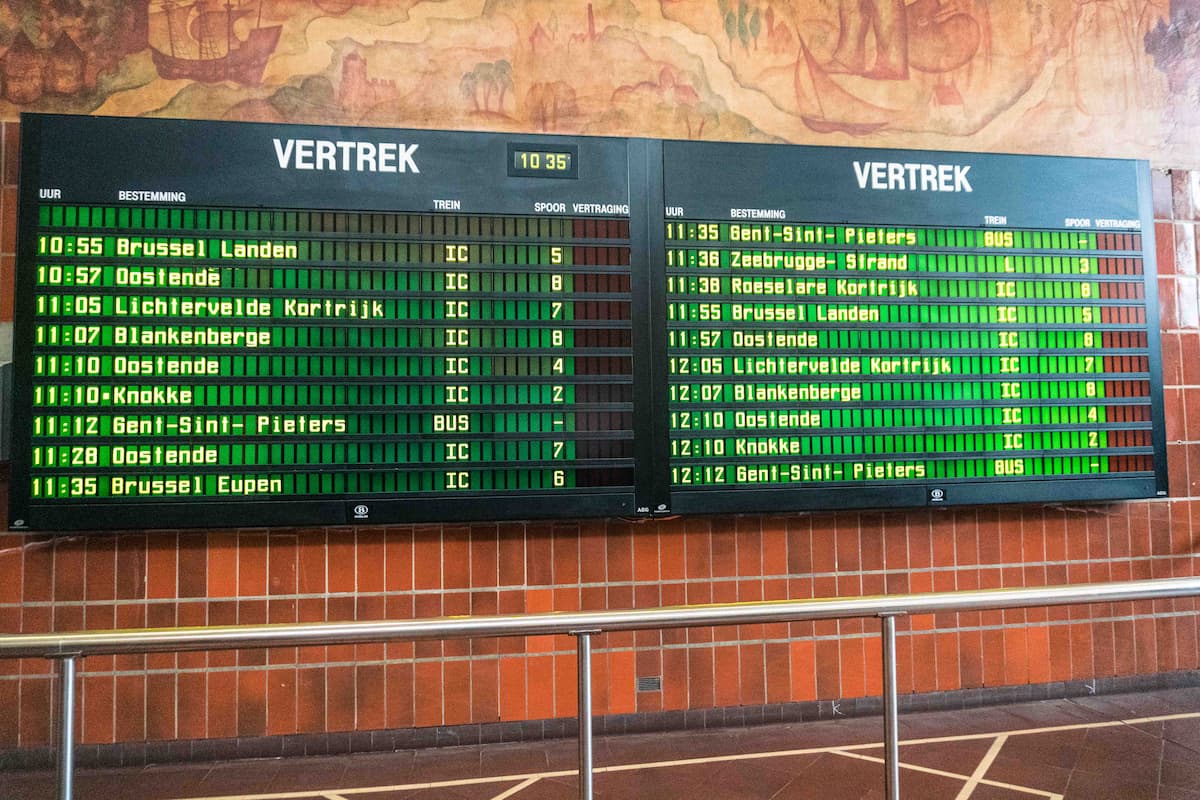
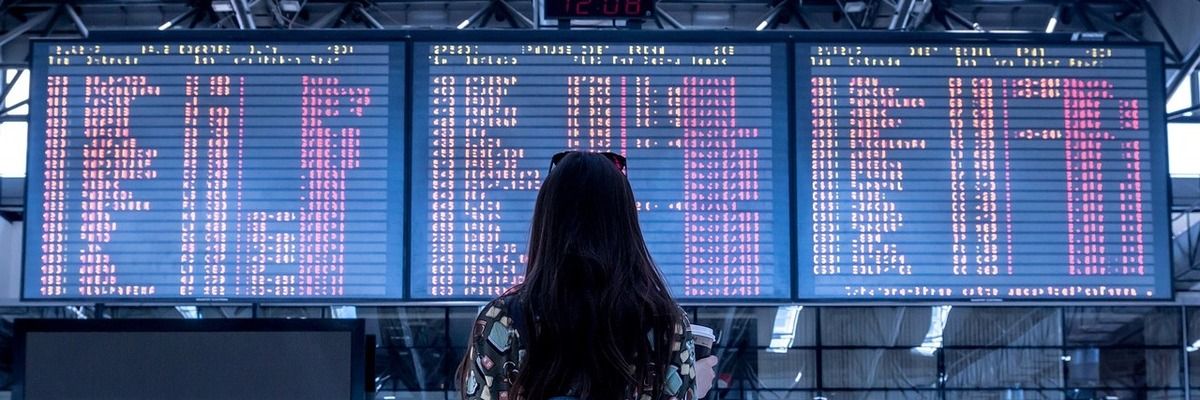
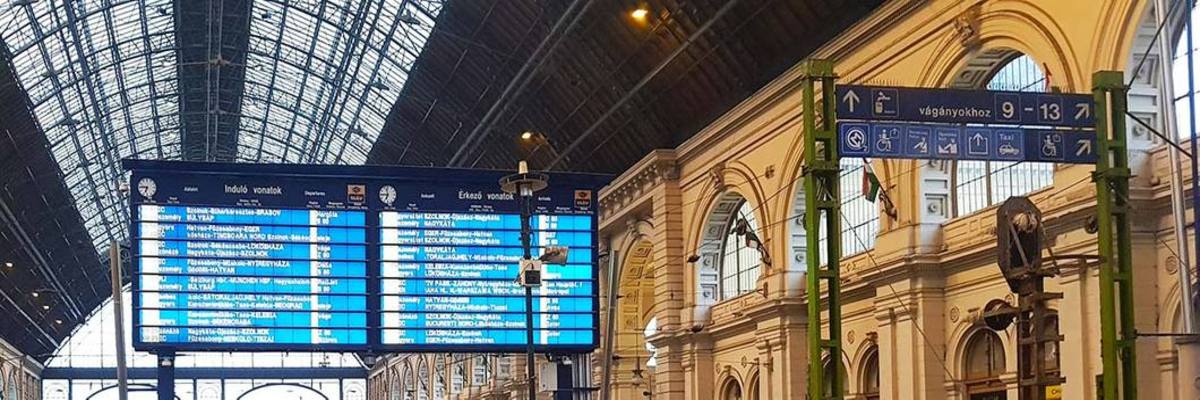
    Train timetable board in Belgium

    Brussels

    Most of Brussels can be explored by foot, with the city centre having many of the attractions you’ll want to visit. Other landmarks like the Atomium or National Basilica will require public transportation. Still, you can buy a 24-hour public transport pass for 7.50 Euros or use the contactless system for single tickets.

    Depending on what you’re going to be doing, it might make more sense to purchase The Brussels Card, which allows you to use public transportation as well as granting entry into the 39 museums in the city.

    Or, you can catch a hop-on, hop-off tourist bus. This is a good way to see the city, and it’s located right across the street from the central train station.

    Bruges

    Bruges was made for walking. It’s not a very large city and a lot of the city centre doesn’t even allow cars, which makes it even more pedestrian-friendly. They do have a handy network of buses though, that can take you around the outskirts of the city, but really, it’s all totally walkable. It’s definitely doable to get by without using public transport at all, except when and if you’re arriving and leaving by train.

    Two more unique and enchanting ways to see Bruges though, are by boat and horse-drawn carriage. They go hand-in-hand with the enchanting town. And last but not least, a bike ride is another sweet way to travel.

    Food and Nightlife

    Brussels

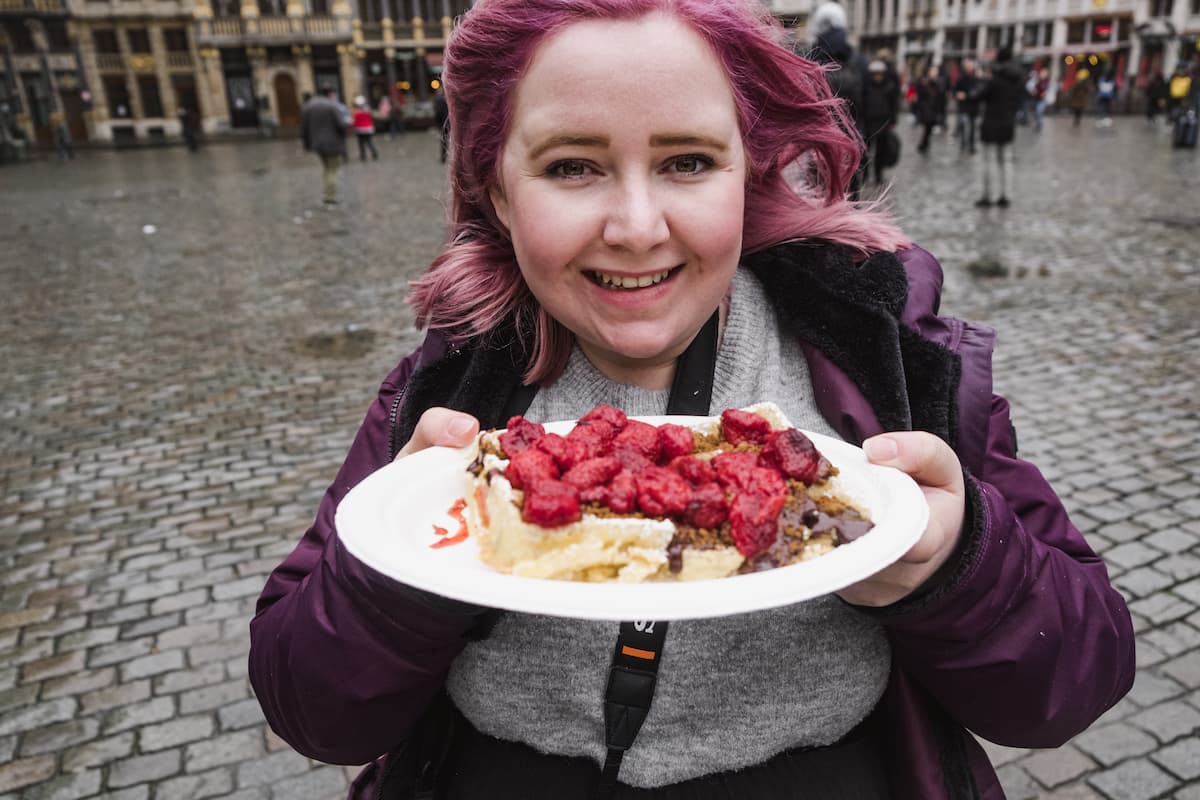
    Kat eating Belgium Waffles
    Eating Belgium Waffles
    • Frites are by far the best street food in Brussels. Belgians loves their frites and you will too after you’ve tasted them!
    • Of course, you can’t go to Belgium without finding Belgian waffle shops strewn throughout the capital. And there’s no better place to try them once, or twice.
    • Beer is also big in Belgium and they have a rivalry with Germany for which country has the best beer. You might be surprised to learn that Belgium is home to the world’s largest brewer, AB InBev, and has 224 breweries in the country.
    • Premium Belgian chocolates are very well-known throughout the world, and Brussels has over 500 different chocolatiers spread throughout the city. Do you realize what this means? That for every 2,000 people, there’s a chocolatier. Belgians know their chocolate. Even the popular Godiva chocolate was started in Brussels.
    • And you must try mussels in Brussels! “moules-frites” is a Belgian and Brussels specialty.

    If you’re looking for a good night out, Brussels definitely beats Bruges. It’s not as crazy as some other European countries, but can hold its own. The city centre has a plethora of bars, with many of them having deals such as 1 Euro pints. If you’re looking to dance the night away, check out You Night Club and Fuse, two of the biggest and most popular clubs in the city.

    Bruges

    Kat drink Brugse Zot at their brewery in Bruges
    Kat drink Brugse Zot at their brewery in Bruges
    • Bruges offers some one-of-a-kind dishes, such as popular Belgium stews. Be adventurous and try the Elderberry Soup, Waterzooi, Curried Mussel and Butternut Squash Soup, and Presoep.
    • You’ll also find the cobblestoned streets lined with chocolate shops, such as the reputable Chocolatier Dumon, said to make the best chocolate. You can even visit the Chocolate Museum.
    • The town is also famous for the incredibly creamy and soft Passendale cheese, named after the village it originates from.
    • Don’t leave without tasting some of the sweets while you’re in the area, especially the Brugsch swaentje, which stands for Bruges swans, an important symbol of Bruges.

    You’ll want to make early reservations in Bruges, especially for lunch, due to the large number of tourists that come in for the day. The evening gets very quiet though after the daytrippers leave, so you won’t find the nightlife that Brussels offers. But that doesn’t mean they don’t have a nightlife!

    Don’t forget you’re in Belgium, where they have some of the best beer in the world, so you’ll still find bars scattered throughout the city centre for bar hopping. Popular bars, Le Trappiste and Poatersgat, stay open until 1am or later on Sundays.

    There’s even a nightclub called De Coulissen Brugge for something a little more wild, and if cocktails are more your thing, the Garden of De Republiek Café is a good choice.

    Brussels or Bruges?

    Do you want to visit a large, bustling capital city, or a quaint medieval town, complete with cobblestoned streets and picturesque canals. If it’s the former, Brussels. For the latter, it’s Bruges. As you can see, you’re winning either way!

    If you’re not bothered either way, I’ll be honest and say Bruges is the more unique of the two. There are several fantastic metropolitan cities in Europe that can compete – and often surpass – what Brussels has to offer. Cute, exceptionally-preserved medieval cities with beautiful canals and delicious chocolate? Not quite so common.

    Why Not Do Both?

    And then there’s always the option to visit both cities. It’s not uncommon for travellers to do day-trips from one city to the other. Brussels and Bruges are only 60 miles apart, and about one hour by train, so their close proximity does make this a viable option. You’ll even find discounted round-trip fare on the weekends.

    I hope this guide has helped you decide which Belgium city is right for you! Belgium is a beautiful and really special country to visit and will leaving you wanting more. You can always visit them both if you’re still undecided!

  • 4 Incredible Viewpoints in Riga, Latvia

    4 Incredible Viewpoints in Riga, Latvia

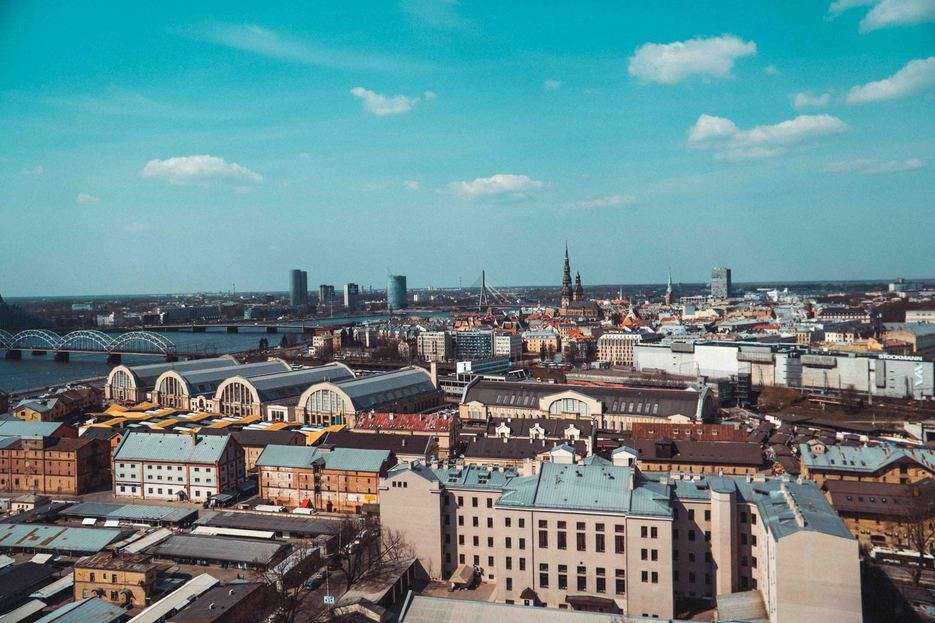
    One of my favourite things to do when travelling is hunting for amazing viewpoints. Riga doesn’t disappoint as the city provides you with 4 fantastic viewpoints! You’ll be able to get different views of Riga’s Old Town, the beautiful art nouveau architecture buildings, cobblestone streets and magnificent churches.

    I would recommend adding at least one of these viewpoints to your Riga sightseeing list:

    • St. Peter’s Church
    • Latvian Academy of Sciences – Panorama Observation Deck
    • Riga Skyline Bar
    • National Library of Latvia

    St. Peter’s Church

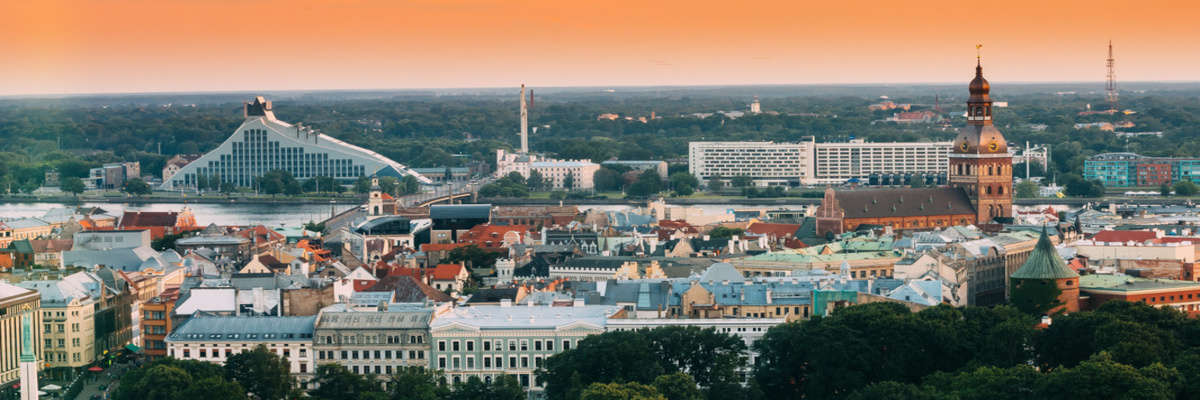
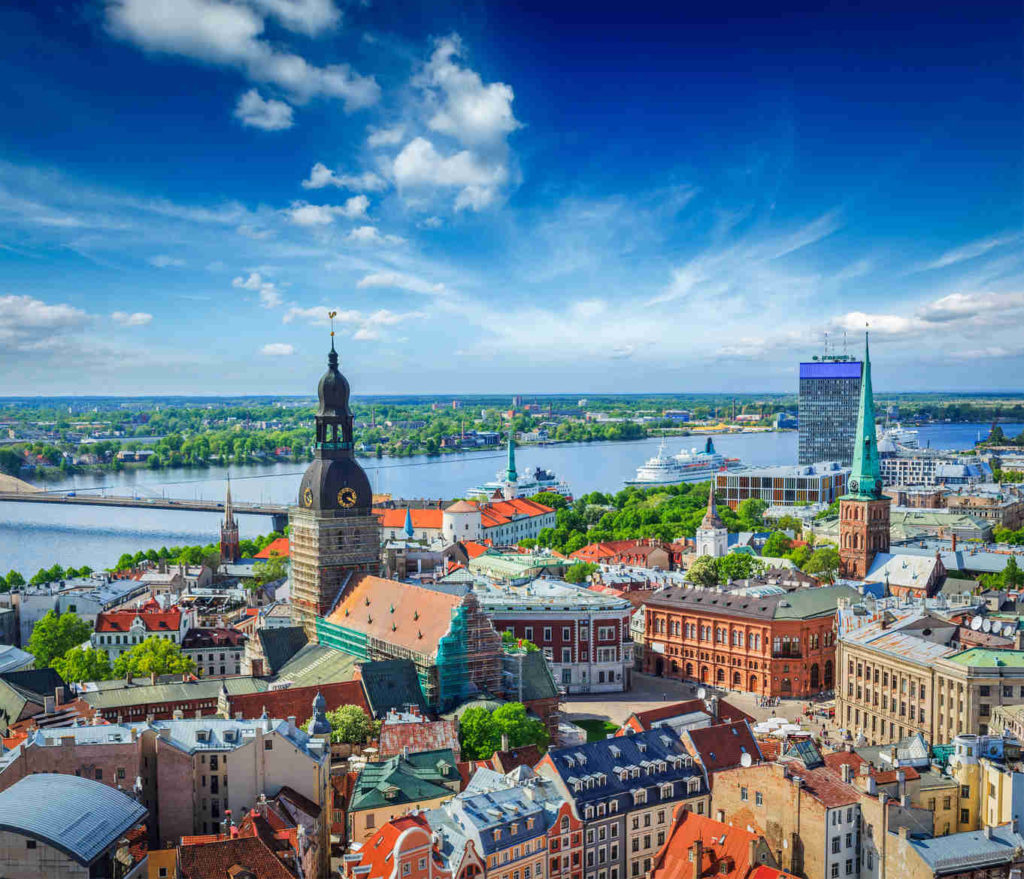
    View from St Peters Church Riga
    View from St Peters Church Riga

    I know that other people recommend doing this view but the disadvantage of this is that you don’t get views of St Peter’s Church itself. You do get amazing 360 views of the Old Town on the other hand. It’s a hard toss up so maybe do at least two views to get your fix of panoramic views over Riga!

    Tickets for St Peter’s church will set you back €9.00 and these are bought just inside the church. There will be a set of stairs and then a lift that will take you up to the view point. It will shake a little when getting up toward the top so don’t freak out when this starts happening.

    You’ll be able to get your iconic photo of the colourful houses and the city.

    Before leaving the church make sure you wander around the gallery inside the church which is all about Latvian people and life.

    Practical Information for St. Peter’s Church

    Website: https://peterbaznica.riga.lv/en/news/
    Address: Reformācijas laukums 1, Rīga, LV-1050
    Opening Times:
    1 May to 31 August
    Tuesday to Saturday: 10:00 – 19:00
    Sunday 12:00 – 19:00
    1 Sept – 30 Apr
    Tuesday to Saturday: 10:00 – 18:00
    Sunday: 12:00 – 18:00
    Price: 9.00 €

    Latvian Academy of Sciences – Panorama Observation Deck

    Latvian Academy of Sciences – Panorama Observation Deck
    Latvian Academy of Sciences – Panorama Observation Deck

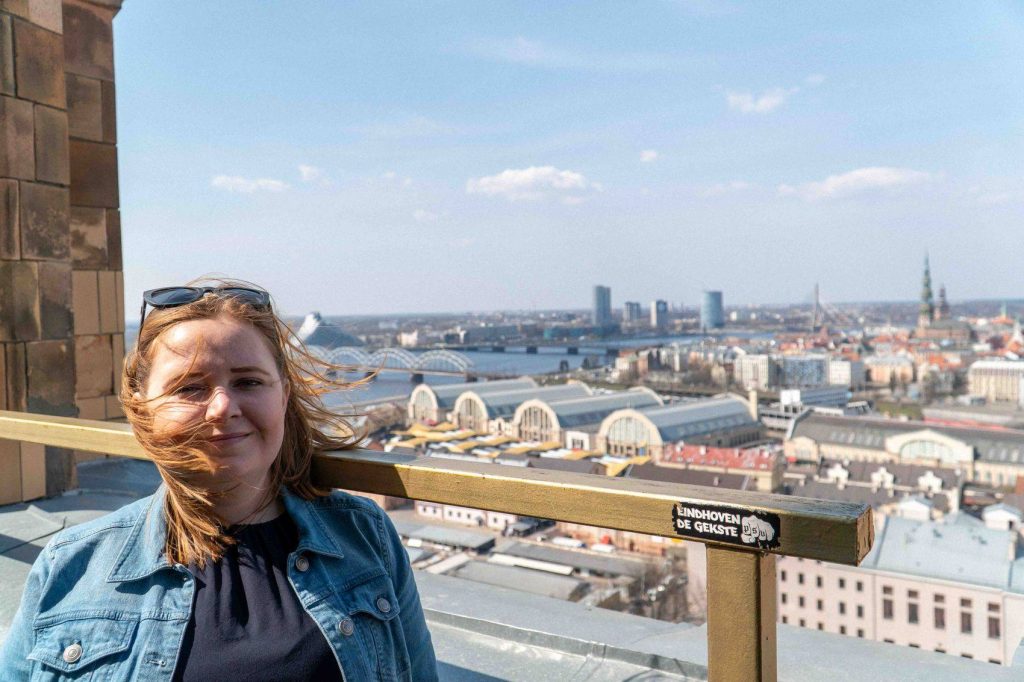
    The Latvian Academy of Sciences offers a perfect viewpoint and gives the best views without any obstructions in the way. In my opinion this view is better than that from St Peter’s Church as you can see St Peter’s Church in your view. As it’s slightly out of the city centre it will also give you a view of the TV tower, the library and the markets.

    If stairs are something you struggle with there are only 2 flight of stairs involved in this viewpoint. It’s located on the 17th floor which is 65-metre-high but has a lift to the 15th floor.

    The building is very noticeable as it’s built in Soviet Style and reminds me of the Palace of Culture and Science in Warsaw and Seven Sisters in Moscow. It was built in the honour of Communist leader Stalin and completed in 1961. Creepily the building was built on the site of a Lutheran cemetery and church.

    The building states that it is open from dawn to dusk and it costs €5.00 to enter. The viewing platform is open during the high season (April – October).

    Kat-at-Latvian-Academy-of-Sciences-Panorama-Observation-Deck-1
    As you can see it was super windy at the top!

    Practical Information for Latvian Academy of Sciences

    Address: Akadēmijas laukums 1, Rīga, LV-1050
    Opening time: 1 April to 31 October Monday to Sunday: 09:00 – 22:00
    Price: €5.00 (cash only)

    Riga Skyline Bar

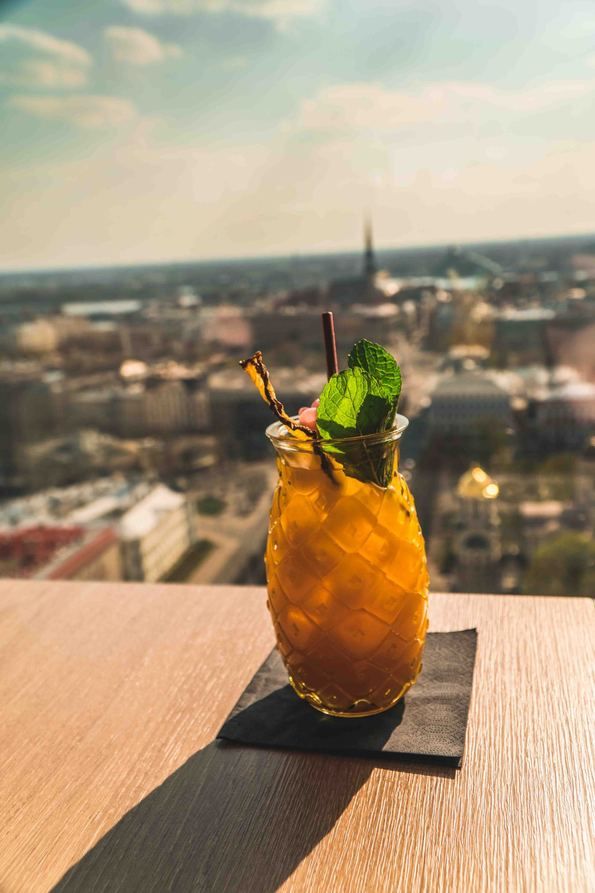
    Angel-Falls-cocktail-at-the-Radisson-Blu-Hotel-is-the-Skyline-Bar
    Angel Falls cocktail at the Radisson Blu Hotel is the Skyline Bar

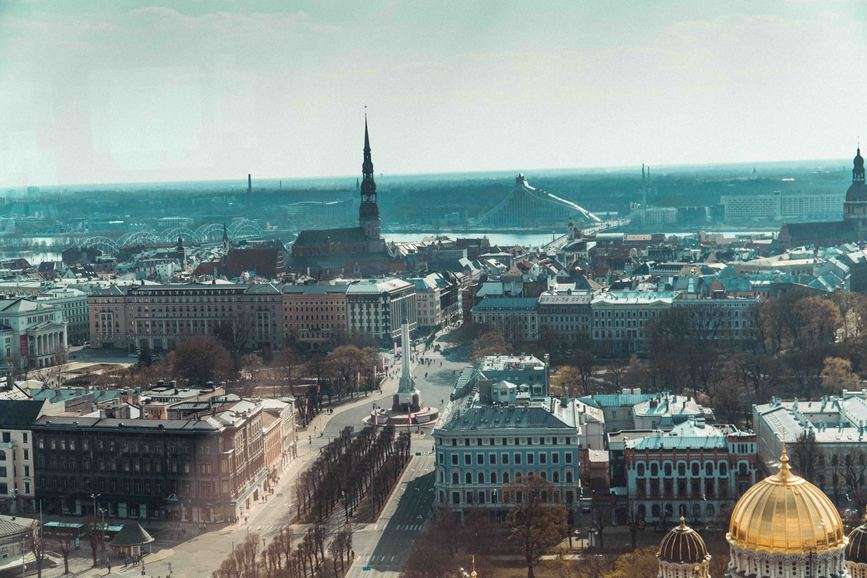
    Located in the Radisson Blu Hotel is the Skyline Bar located on the 26th floor. It’s a perfect place to relax with a cocktail an enjoying view of Riga. The building is out of the Old Town Again but gives you views on the Orthodox church, one of the boulevards into the city and of course views on the Old Town.

    The cocktails were absolutely delicious, I tried the Angel Falls cocktail which was a refreshing tropical drink made with Venezuelan & spiced rum, mango, passionfruit, pineapple juice, lime, sugar cane and bitters. There is no better way to end the day than this!

    Cocktails are around €9.00 to €12.00, mocktails are around €7.00 to €9.00 and beers are about €5.00. Be aware that there is a cover charge of €5.00 on Thursday to Sunday 21:00 to 01:00/02:00.

    The-view-at-Radisson-Blu-Hotel-is-the-Skyline-Bar
    The reflections made it hard to capture the best photo but the views are amazing!

    Practical Information for Riga Skyline Bar

    Website: https://www.radissonblu.com/en/latvijahotel-riga/bars. To see the food and drinks menu on offer, go to the Skyline Bar website.
    Address: Elizabetes iela 55, Centra rajons, Rīga, LV-1010, Latvia
    Opening Hours:
    Monday to Thursday: 12:00 – 02:00
    Friday to Saturday: 12:00 – 03:00
    Sunday: 11:30 – 02:00
    Price: Price of a drink, cover charges after 9 pm Thursday to Sunday of €5.00

    National Library of Latvia

    National Library of Latvia is located across the river so it’s nice to cross and see the city from the other side. It’s the cheapest view of Riga as you only need to store you coat and bag which is free. You do need a €1.00 coin to check in your bag but this is given back when you pick up your stuff.

    There is a slight downside to the view is that the windows have little dots on them and impacting taking photos of the view.

    To get to the top floor head to the reception when you arrive at the building and ask for a badge to the view point. This will allow you to take the lift to the top floor (but only on a Sunday). You will still be able to get views of the city on the other floors, but the top of course is the best.

    The great thing about the library is you can explore the library which is a bit like a museum and it’s away from the crowds of the Old Town. Also there is a café and restaurant where you can chill out and have a coffee.

    Practical Information for National Library of Latvia

    Website: https://www.lnb.lv/en
    Address: Mūkusalas iela 3, Rīga, LV-1423, Latvia
    Opening Hours:
    Monday to Friday: 09.00 – 20.00
    Saturday to Sunday: 10.00 – 17.00
    Price: No cost

    Expert Tips for Riga’s Must-See Views:

    • National Library of Latvia is the only free view of Riga and the top floor is only open on Sunday.
    • Skyline Bar is a relaxing and nice way to see views of Riga.
    • St Peter’s Church has the best views on the Old Town and be sure to check out the art exhibit at St. Peter’s.
    • The Science Academy Building Observation Deck is open during the high season (April – October).

    Where to Find the Viewpoints

    Here is a map of all the view points mentioned in the article, be sure to save this map before heading to Riga.

    Let me know in the comments below which was the best view of Riga!

  • How to Travel Through the Balkans (6 Modes Explained)

    How to Travel Through the Balkans (6 Modes Explained)

    One of my favourite places to travel is the Balkans. It’s super cheap, everyone’s really friendly however getting around can take a little planning or long-winded searches on the internet as I found out. The initial questions I had when planning my trip were:

    • What’s the best way to travel across these destinations?
    • Rent a car? Are the roads good in those countries?
    • Should we catch the train? Are the connections between the countries easy? Is it worth buying an InterRail Pass?
    • Is Bus or Coach easier?
    • What other modes of transport are available?

    In this guide, I will cover everything you need to know about transport in the Balkans. From travel tips, modes of transport you can take, useful website, safety travelling in the Balkans and much more. 

    How to get to the Balkans by Plane

    While low-cost carriers like Ryanair, Wizzair and Easyjet fly to destinations in the Balkans it’s not always cheap to fly into some of the destinations. In my experience flying into cities like Sofia, Zagreb, Athens or Budapest is way cheaper than flying into Belgrade from London for example. Plus, there is generally more flights into these cities. 

    It does mean that if you are planning a short trip it can either make the travel time longer or you end up spending more to get to the places you want to go to.

    To find flights I use websites like Skyscanner and Kayak to find the right flights, play around with routes etc. To get you started here are the major international airports in the Balkans:

    Flying to Albania
    Tirana International Airport Nënë Tereza.

    Flying to Bosnia and Herzegovina
    Sarajevo International Airport and Banja Luka International Airport.

    Flying to Bulgaria
    Sofia Airport, Plovdiv Airport, Burgas (Bourgas) Airport and Varn Airport

    Flying to Croatia
    Dubrovnik Airport and Zagreb Airport

    Flying to Kosovo
    Priština (Pristina International Airport)

    Flying to Macedonia
    Skopje International Airport and Ohrid St. Paul the Apostle Airport

    Flying to Moldova
    Chișinău International Airport

    Flying to Romania
    Bucharest Henri Coandă International Airport

    Flying to Serbia
    Belgrade Nikola Tesla Airport, Niš Constantine the Great Airport and Vršac Airport

    Flying to Montenegro
    Podgorica Airport

    Flying to Slovenia
    Ljubljana Jože Pučnik Airport

    Flying to Greece
    Athens International Airport

    How to get around the Balkans by Trains

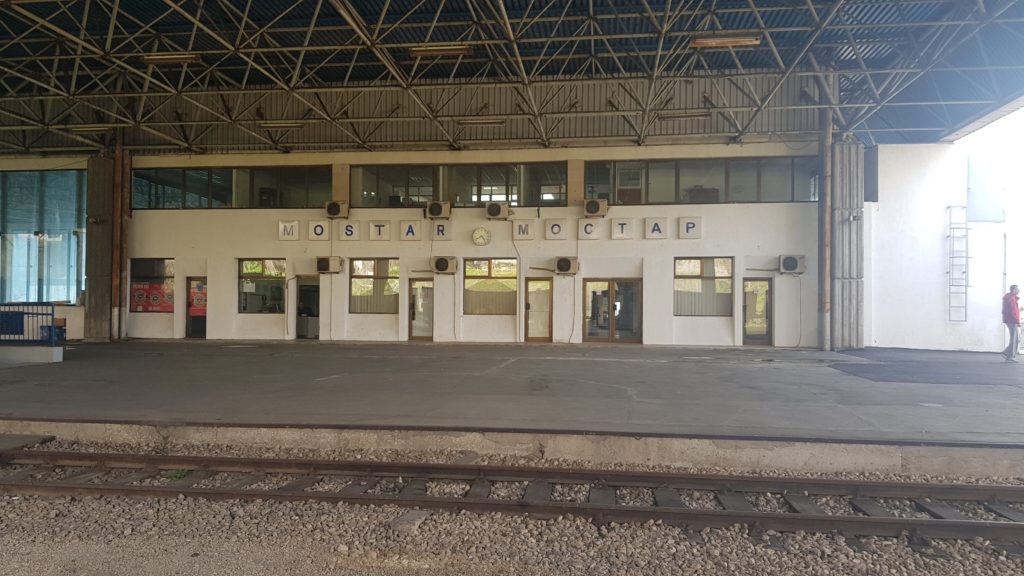
    Train station in Mostar Bosnia and Herzegovina

    Trains aren’t my preferred mode of transport in the Balkans as the connections between the countries are not always straightforward as it is by bus. When you do get trains, the scenery is absolutely stunning and is a great way to travel.

    An example of the difficulty of travelling by train is Dubrovnik to Split and seems like such an easy route to take but it’s not possible by train, you will only be able to catch a bus, ferry or Minibus there. Additionally, there are absolutely no trains to Greece or Albania, between Macedonia and Bulgaria, Croatia and Montenegro or Serbia and Bosnia and Herzegovina.

    Then you get journeys like Mostar to Sarajevo which is totally possible by train! My main point to this section is to do your research on train routes before travelling. Some countries it will be easier to reach from western Europe by train, so it can be another great way to enter the area and go by bus from there on.

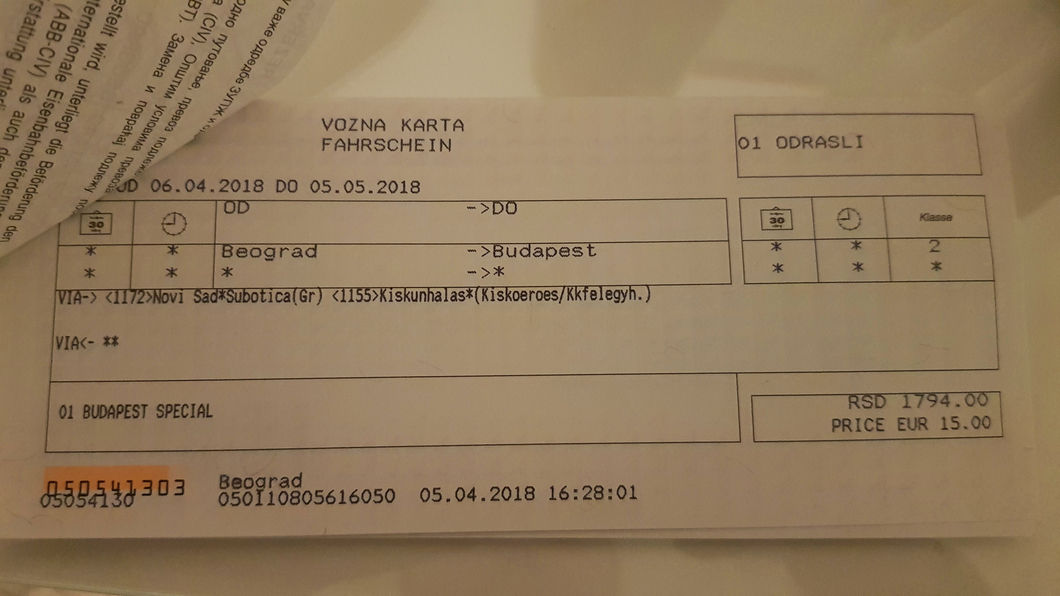
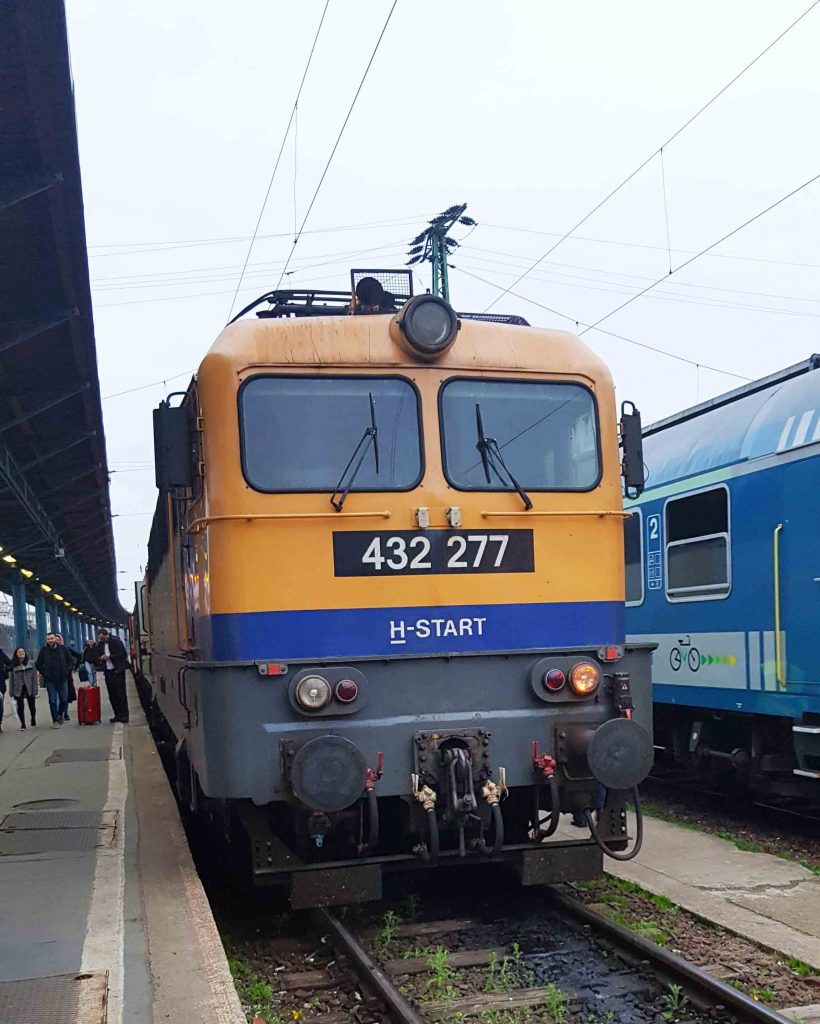
    Of course, there are benefits by travelling overland by train like catching an overnight train to save on a night’s accommodation like we did when catching an infamous overnight train from Belgrade to Budapest.

    Before you travel check out these websites which will give you more detailed information:

    • Rail Europe – Provides information on fares and passes as well as schedules for the most popular routes in Europe.
    • Man in Seat 61 – Provides excellent independent information and advice.

    Classes

    The classes on the trains will be based on whether you are taking a short trip or a trip that has sleeping options.

    As a general rule:

    • Hard seats – What I would say is as comfortable as a park bench. I had this style of seating on a train from Novi Sad to Belgrade which is fine for an hour or two’s train ride.
    • Soft seats – Available for both short travel and overnight trains. The seats are quite comfortable and were the option we ended up with on our train ride from Mostar to Sarajevo and Belgrade to Budapest. 
    • Third Class Berths – A six-person sleeping berth in a closed compartment. These styles of the cabin can be quite crowded with little room for your things and stuff. Although the cheapest option if you are looking to save money. This option isn’t as widely available.
    • Second Class Berth – A four-person sleeping berth in a closed compartment. If there are two of you, you will share with two other people but if there are three of you, you will often have the compartment to yourselves.
    • First Class Berth – A two-person sleeping berth and generally fancier with a washbasin and decoration. A high price tag will come with this option.

    Reservations

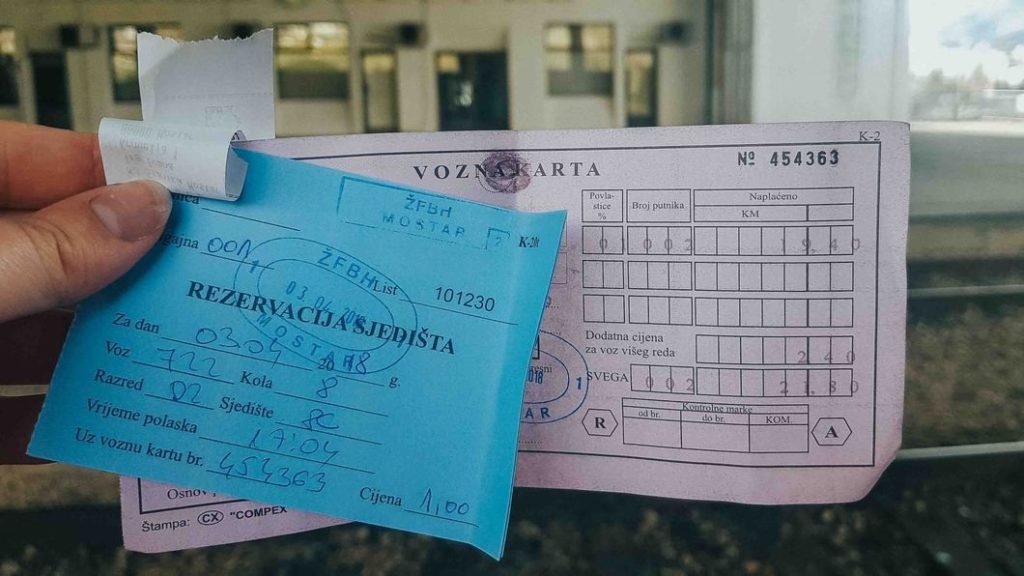
    Mostar to Sarajevo train tickets with reservations

    All our train reservations were made on the day or when we arrived at the city we were travelling from. Online booking is not common and will be dependent on the country or train provider. For Bosnia and Herzegovina and Serbia we were unable to book tickets online.

    It was super simple:

    • Buy tickets at the station (there are always places)
    • Some require having a seat reservation with your ticket (the ticket office should give you this). Seat reservations several days in advance are also recommended for busier routes and during peak summer periods, but this is only necessary if the timetable specifies that seat reservations are required.

    Rail Passes

    An option to consider is rail passes for your journey in the Balkans. Keep in mind that not all the countries covered by rail passes; Kosovo and Albania are notable exceptions.

    Discount prices are offered to travellers under the age of 26 and children aged four to 11 are eligible for a child rate. Discounted fares are also available if you are travelling in a group of two to five people (although you must always travel together).

    With the passes there are two options you can choose from:

    • Single-Country Passes – Simply it gives you train travel for one country, with the freedom to explore its numerous cities and towns. 
    • Multi-Country Passes – Allows you to travel across to multiple countries with a single rail pass. For the Balkans, these are offered by EuroRail.

    For more information look at Rail Europe.

    InterRail

    The InterRail Global pass is available for the following Balkans countries: Bosnia and Herzegovina, Croatia, Macedonia, Montenegro, Serbia and Slovenia.

    Europeans residents (living in Europe for over 6 months), some resident of Turkey and parts of North Africa are eligible for the InterRail pass. It’s not valid for the country you live in essentially so it’s good to check the terms and conditions before booking. The pass is not available to non-European residents.

    Check InterRail for more information.

    Eurail Global

    Just like the rail passes EuroRail offers single and multi-country passes which are available for non-European residents.

    Single country passes are allowing unlimited travel in Croatia, Greece, Serbia and Slovenia. 

    The multi-country pass allows travel in three, four or five neighbouring countries, including Croatia, Slovenia, Montenegro and Serbia. For some of the country’s combinations, two countries may be classified as one like Montenegro and Serbia are classified as one country for the purposes of this pass, as are Croatia and Slovenia.

    Check EuroRail for the latest information and purchases.

    Coach (Bus) Travel in the Balkans

    Coach (Bus) Travel in the Balkans

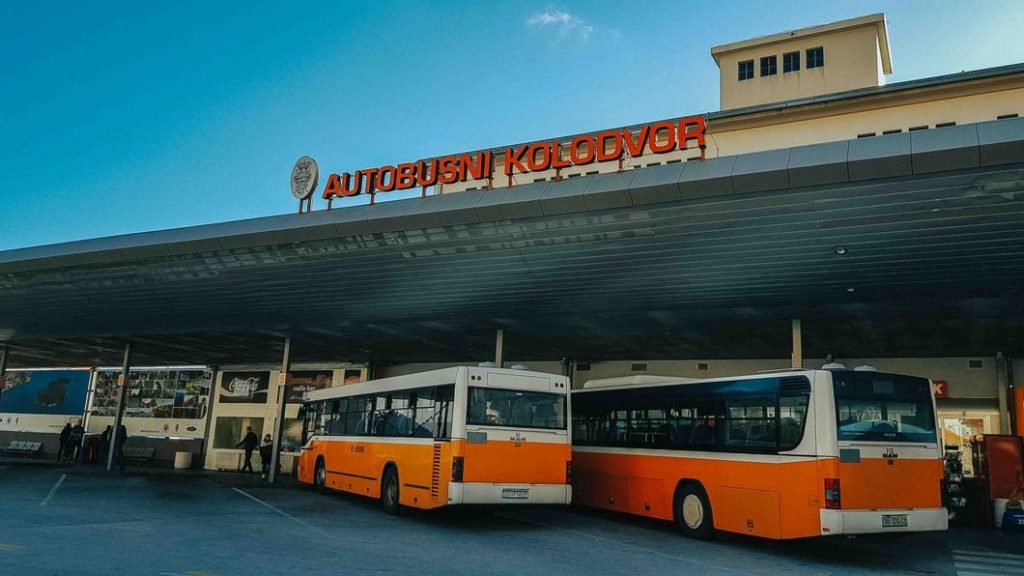
    Travelling around the Balkans by bus is quite easy! As with any bus travel, the journey can be quite long but with some entertainment, it’s a great way to catch up on some reading or movies. Unlike train travel buses operate in all countries both internally and internationally.

    Night buses are a good way to save on accommodation. For my Balkans trip, I decided not to do night travel in the end since most seemed to arrive at 4am in the morning and the accommodation was really cheap.

    Quick tips for bus travel:

    • Bring spare cash with you, some to cover the baggage charge and some to cover the toilet costs, you’ll be stuck otherwise!
    • Bring snacks and drinks, an obvious point but the food stops are not great.
    • There’s border control, so stay alerted and keep your belongings close to you.

    Bus Travel Within Countries

    Bus travel within countries is a lot cheaper than travelling internationally and can get you to more of the surrounding towns and areas. If you are struggling to get where you need to head to the bigger the towns which will have better connections.

    In most countries, bus routes are operated by multiple companies, each with its own timetables and fares. It can be hard to find a schedule or price information online and I’ll leave the best links and way to book in the booking section. 

    International Buses in the Balkans

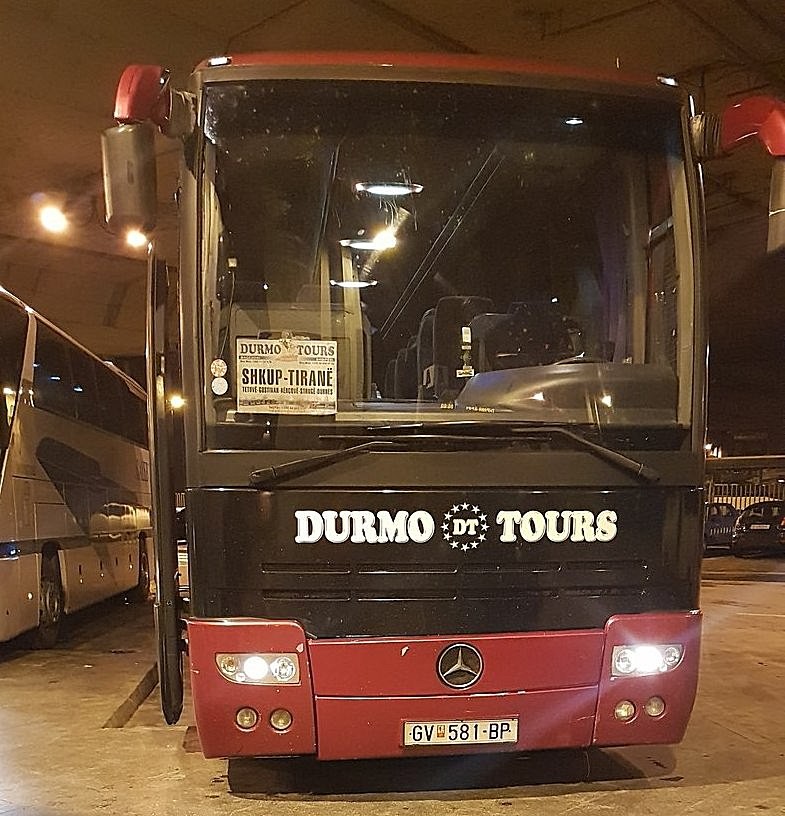
    Travelling by Coach (Bus) from Skopje to Tirana

    Most of our travel within the Balkans was international buses. Personally, I found this was the best way to get to the places we wanted to go. It did take a bit of planning to understand the routes and schedules and go to the bus stations beforehand to find the timetables and purchase tickets.

    Generally, our journeys were pretty easy going. The road can quality vary between countries making the comfortability and journey length different. For example, the road quality was poor in Albania and there is a tremendous number of potholes to endure on the trip! When we entered Montenegro, the road is better quality but they do have very windy roads along the coast added time to your bus journey.

    Border crossing can take a while depending on the traffic, lanes open or if they decide that they wish to search every bag individually.

    Here are detailed guides on the following routes:

    Booking Balkan Bus Travel

    Booking in advance isn’t a must and can be quite hard with the lack of online systems available. In countries like Slovenia and Croatia, it will be a lot easier to book online than somewhere like Macedonia or Albania.

    I would suggest when you arrive at your departure destination going to the bus station to get the latest timetable, understand which company you will be travelling with and just purchasing your ticket while you are there. With the more popular touristic places like Dubrovnik, there will be more demand during the summer months, so this would be the only time I recommend purchasing in advance.

    In doubt ask your hostel or hotel for help on getting the latest schedules and prices.

    Booking at the stations you will encounter two main types of a bus station, one in a parking lot and one in a building. In general, you needed to shop around or know the company you wished to travel in countries like Bulgaria and Albania, alternatively, sometimes there would just be central ticket desks selling tickets for all providers like in Montenegro, Bosnia and Herzegovina, and Croatia.

    For the central ticket, desk takes note of the carrier, so you can find the bus stand and bus you are meant to be on.

    The ticket price will not include the baggage fee so ensuring you have about 1 euro per bag in local currency is a must. We had a few awkward moments on our journey where we didn’t have the right change and ended up holding up the bus.

    How to Search Balkan Bus Routes

    The websites I used for searching bus routes in the Balkans were:

    It’s important to note that the websites may not give you reliable information. A good example was when we were travelling from Sofia to Skopje the bus, we were aiming for which was the 15:00 to Skopje arriving at 19:25. As a precaution, we went to the bus station to ensure we had the right times, bus companies and what not. When we arrived, it turned out the schedule was different than the ones available online, instead, there were buses running daily at 09:30, 16:00 and 19:00. However, when we were travelling the 19:00 was cancelled for the day we were catching a bus to Skopje.

    Border Crossings

    Bosnia and Herzegovina border crossing

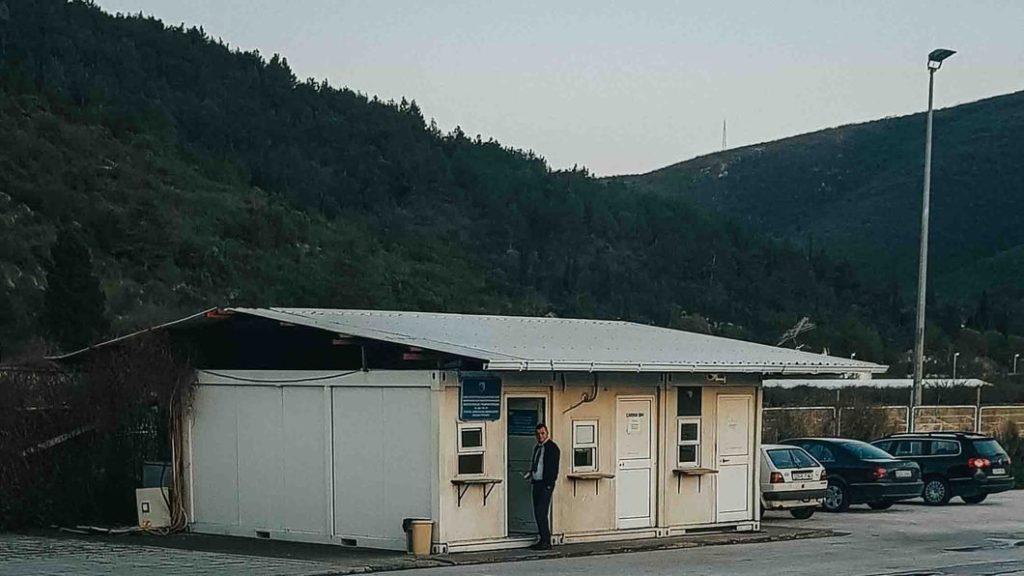
    Border crossings were generally easy in our experience. The guard would board the bus to check everyone’s passports or you would get off the bus to a passport counter. The passports were then taken for processing and once clear handed back to the passports back to the owners.

    There were brief checks underneath the bus in the luggage compartments or in some cases you were asked to take your luggage to a room with tables where the luggage would be checked by the guards. They may do stricter spot checks, but we were not subjected to these on our trip.

    Another thing to be mindful of when planning your trip is the complication with the Kosovo-Serbia border. Currently, Kosovo is not recognised by Serbia as an independent state so if you entered Kosovo via Albania, Macedonia or Montenegro, officials at the Serbian border will deem that you entered Serbia illegally and you will not be let in. To avoid this exit Kosovo via another country and then enter Serbia. Alternatively, if you enter Kosovo from Serbia then there is no issue entering Serbia.

    Minibuses

    Minibus (car) travel in the Balkans i.e. guy driving you in his 4-seater car
    Minibus (car) travel in the Balkans i.e. guy driving you in his 4-seater car

    About halfway into our Balkans trip, we discovered that lots of hostels had teed up with companies to provide minibus options between countries. The minibus options are surprisingly not too pricey compared to catching a bus and much quicker. 

    The minibuses can be anything from a large van to a guy driving you in his 4-seater car while you are squished together. Some are even door to door service which is a luxury!

    Booking Minibus Travel in the Balkans

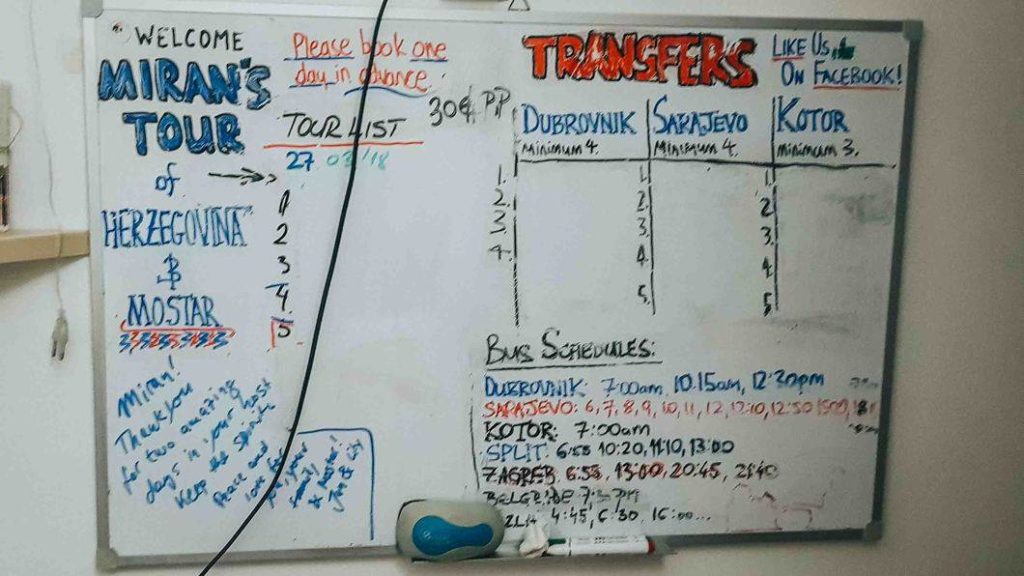
    Sign in the hostel to book minibus travel in the Balkans

    The best way to book minibus travel is via the hostel or hotel you are staying at. Normally in the reception area, there will be a sign stating the route and cost. Just tell the receptionist the route you wish to take and next thing you know it will be all booked, plus provided with all the details you need.

    You will be matched with other passengers travelling the same route as most services have a minimum number of 3 to 4 people before they will schedule your departure. In Sarajevo, we were lucky that another hotel/couple were heading to Belgrade when we needed too.

    To book online you can look at:

    • GoOpti for minibuses in northern Croatia, Slovenia, Italy and Austria.
    • Gea Tours have a range of route in the Balkans but there seem to be a few issues with their website and someone hacking their site, so I would use this with caution.
    • Taxi Travel operate transfers to the main cities in Austria, Croatia, Hungary and Serbia.

    Minibus routes

    There isn’t a definitive list available online, here is an example of routes available from Belgrade to other nearby cities:

    • Belgrade to Budapest
    • Belgrade to Sarajevo
    • Belgrade to Timisoara
    • Belgrade to Vienna
    • Belgrade to Zagreb

    Ferries

    Local ferries in the Balkans

    Ferries are a limited way of getting around the Balkans. Lots of the boats that go between the destinations are organised day tours like the popular day trip route Dubrovnik to Kotor and Budva in Montenegro.

    The routes you can take are:

    Travelling by Car

    The best way is definitely by car, preferably your own, because it’s difficult and expensive to take rental cars across borders. It’s the best strategy to get you to the offbeat destinations that you can’t get public transport too.

    An important thing to mention and I cover this above in the bus section (skip above) is how you enter and exit Kosovo. Make sure you plan this correctly so you don’t get into any trouble.

    Renting a Car

    Car rental within a country is great but as soon as you leave the country you’ve rented the car from there are fees or restrictions with crossing borders and one-way car hire. The option is best suited to those wanting to explore the country in-depth and dropping the car to the same destination.

    Things to consider before renting a car

    • Renting a car anywhere (apart from your home country) will require you to have your passport and driver’s license.
    • As a general rule for those that hold a European Union driving license, you will not need to obtain an International Drivers Permit (IDP). For example, if you are driving from London to the Balkans you may decide to drive through Italy which will require you to have an IDP if you don’t have EU license.
    • Check the simple things like no hidden fees, how many drivers you can have or that you have unlimited mileage.
    • One of the biggest ways that car rental companies earn money from you is via insurance. Picking up third-party insurance will save you a ton of money.
    • Can you drive manual transition? Most cars offered in Europe will be manual so if you can only drive automatic this may drive up the price.
    • Consider emailing the hire car company to negotiate the price of the rental.
    • Not all countries have the Latin alphabet some will be in Cyrillic alphabet making it interesting understanding where you need to go.
    • The Green Card Insurance System – you need a green card to show that you have insurance. Car hire companies will usually charge extra for this card (actually a piece of paper).

    Driving your own car

    Driving your own will give you the freedom to cross borders without all the costs that a hire car comes from. The crucial part of driving your own car is knowing the documentation you will need for your car to drive across borders. The main one is the Green Card Insurance System.

    Green Card Insurance System

    As I mentioned above the Green Card Insurance System is something you need to be aware of when driving your own car in the EU. This is your proof of insurance and shows on it the countries you’re insured to drive in. Ensure you are clear with your insures about which countries you can and can’t go to within your policy.

    Before you leave your home country make sure you have the green card otherwise you could end up paying double insurance to get another green card to enter your destination. It’s not applicable in all countries so check the countries you are travelling to and through.

    Is it Safe to Drive in the Balkans?

    Being a confident driver helps greatly with driving overseas. It’s an experience driving in the Balkans and not for the faint hearted. The roads can be the width of 1 to 1.5 cars, meaning you need to pull to the side of the road and let people pass. That doesn’t mean the locals will follow the same rules, generally they will be speeding past you whilst you are trying to be safe! Take it slow and keep to the road rules, at the end your safety is the most important part of driving.

    Animals on the road are another hazard of driving in the Balkans. You can stumble across all types of farm animals and wildlife.

    The road quality will be a mix of some good roads, some bad roads and some horrible roads. Researching the road quality and route you wish to take will ensure you get there safely and quickly. Here are some tips:

    • Check between different navigation systems
    • Look at Google Satellite to see the road quality
    • Search YouTube or Google to see if there are any videos, photos or comments about the roads
    • Ask locals for advice as the roads are constantly being re-done and the locals will know the best routes.
    • Travelling on a sealed road will be beat driving on an unsealed road. Sometime navigation systems send you via the quicker route but later you find out it’s a dirt track taking 5x times longer.

    In conclusion: Travelling in the Balkans requires a bit more flexibility and accepting of a mix of transport options available. Take the trains, if there are no trains take buses and rent a car here and there to explore regions more deeply.

    Have you ever been to the Balkans? What was your experience with transportation?! Any tips you recommend?

    More Balkans Articles

    How to Travel Through the Balkans
    How to Travel Through the Balkans: Everything you need to know about the different modes of transport in the Balkans from Bus, Train, Plane, Minibus, Ferries and Car. Balkan travel tips include how to get to your Balkans Destinations, useful website, safety travelling in the Balkans and much more. #Balkans #Croatia #BosniaandHerzegovina #Slovenia #Serbia #Montenegro #Kosovo #Macedonia #Bulgaria #Albania #Greece
  • Driving in Italy: 18 Tips on How to Drive as a Tourist

    Driving in Italy: 18 Tips on How to Drive as a Tourist

    Driving in Italy can be a stressful experience especially if it’s not in the language you speak or the side of the road you drive on. Personally, as long as it’s not city driving it’s well worth getting a car in Italy to explore the towns and regions.

    As a tourist, it’s always great to study up on the rules of the road before renting a car and driving yourself around in it. This everything I learnt when driving in Italy. P.s. if you happen to be visiting Tuscany check out the beautiful town of Radda.

    Do I need an International Driving License in Italy? (Officially known as International Drivers Permit (IDP))

    Renting a car anywhere (apart from your home country) will require you to have your passport and driver’s license. However, some countries also require an International Driving Permit (IDP).

    For those that hold a European Union driving license you will not need to obtain an International Drivers Permit (IDP). I drove in Italy with my UK license which is the pink format UK license (full license), however, if you are on the green format license (provisional) you will not be able to drive in Italy.

    If you have a non-European Union driving license you will need to obtain an IDP before arriving in Italy.

    How to Obtain an International Driving Permit?

    You can get an IDP at your local association for example;

    Make sure you go via an official website as there is a scam out there for IDP’s.

    It is the traveller’s responsibility to ensure that they have the appropriate paperwork. Even though you may not be requested to show your IDP by the car company or travel agent, if you get pulled over by the police they will be expecting to see your IDP. I recommend even though it seems a silly process it gives you peace of mind while driving legally during your trip to Italy for only a small fee.

    Cheap is not always best when renting

    Cheap is not Always Best When Renting a Car in Italy

    For our trip to Italy, I rented a car from a cheap hire company. It’s not awful but make sure to read the fine print and know exactly what comes with your rental. They really lure you in with their great offers!

    Check the simple things like no hidden fees, how many drivers you can have or that you have unlimited mileage.

    I may have hit a sign with our rental car (whoops…) thankfully it was exactly where there was damage on the car previously and no one was the wiser of my minor accident. Otherwise, those nasty fees would have definitely stung me.

    Driving in a new country can be stressful (especially Pisa!) and caused my minor accident so make sure you have insurance. One of the biggest ways that car rental companies earn money from you is via insurance. Picking up third party insurance will save you a ton of money.

    Manual Transmission is the Preferred Choice

    In Europe, it’s very common to get manual transmission cars and will be the option provided to you unless you specified otherwise. Make sure you let the car company that you want to rent an automatic or choose it as the option on the booking site and be prepared to pay a lot more.

    What else do I need to carry in my car when driving in Italy?

    You need to carry triangles in your car when driving in Italy

    I had no idea there were certain things that you need to carry in your car when driving in Italy. Thankfully the rental car companies will provide you with these items which they did for mine. Being in Tuscany I did not think I would need snow chains in March!

    Double check when you pick up the car just in case. Planning to drive your own car in Italy you will need to consider purchasing some of these items. So what do they expect you to have?

    • Warning triangles and reflective jackets (compulsory attire) – in case you need to pull over on the side of the road
    • UK cars will without a GB-euro symbol number plate to display a GB sticker
    • Snow chains during the winter months

    Other items to add to your checklist:

    • Full and valid driver’s licence
    • IDP card (if required)
    • Proof of Insurance
    • Passport/national ID
    • Headlamp beam deflectors (if required)
    • Proof of ownership (original V5C document, not a photocopy)

    Get a GPS or a Map

    Get a GPS or a Map When Driving in Italy

    I totally recommend that you get some sort of map or navigation as the roads or routes to get to places aren’t that straightforward. There is no way I would be able to navigate driving around without a GPS or a map.

    Which side of the road do you drive in Italy?

    In Italy they drive on the right-hand side of the road. Being a part of the small third-party of countries that drive on the left it can be a tad confusing (at least for me).

    How Do Petrol Stations Work In Italy?

    As I went with a cheap car hire company we had to fill up the car before going on a road trip the first lesson that we learnt and ended up with some pretty expensive full. There are two options to fill up your car, by an attendant or self-service.

    Turns out when the attendant fills up your car you get charged extra €16 cents per litre or gallon (I can’t remember). So make sure you find the self-section to save yourself some serious cash. It also seems to be the option that has the least amount of fill-up points.

    Look out for these signs to tell the difference between self-service and attendant service:

    Self service will look like this at an Italian service station.
    Self service will look like this at an Italian service station.
    Attendant service will look like this at an Italian service station
    Attendant service will look like this at an Italian service station

    Service stations are very frequent along all of the motorways just like most of Europe.

    Speed Limits in Italy

    Speed Limits to remember when driving in Italy
    Speed Limits to remember when driving in Italy.

    Speed limit signs seem to be very limited i.e. the ones that actually show what speed you are meant to go. Most signs are the national speed limits signs so they expect you to know the speed limits before you drive. Make sure you memorise this speed limit in the table below and don’t forget the speed limits vary depending on the weather.

    Speed Limits in Italy
    Motorway
    Dual Carriageway
    Open Road
    Town
    Dry Weather
    130 km/h
    110 km/h
    90 km/h
    50 km/h
    Wet Weather
    110 km/h
    90 km/h
    80 km/h
    50 km/h

    It Might Be Close But It Can Take You Long Time To Get There

    Italy has a lot of windy Roads not very many highways and the roads can be in quite a poor condition (which they introduce speed restrictions for instead of fixing the road). It might be 7 miles away but it can take up to 40 minutes to drive due to this unless you are a rally car driver.

    Everyone Goes Faster Than You In Generally

    Coming from Australia we would only have pretty strict road rules whilst some people break the rules we tend to be careful in breaking the rules as there are massive fines if you are caught. However in Europe you can get some people are going 50 kilometres over the speed limit. As a left lane is generally where people speed or overtake you keep to the right-hand lane. This way you don’t feel pressured to speed and save yourself a speeding fine.

    What is the alcohol limit in Italy?

    Drinking wine in Italy is definitely alluring especially with lunch or dinner. The alcohol limit in Italy is 0.05% so no more than 1 to 2 wines or the safest option don’t drink at all.

    How are fines issued in Italy?

    Speed Cameras in Italy
    Speed Cameras in Italy.

    Police officers usually do not patrol the roads but if are and pull you over the fine will be issued on the spot. The police can collect 1 quarter of the maximum fine and must give you an official receipt for the amount of the fine paid.

    If there is a sign showing with a police officer with a hand raised or orange autovelox boxes this indicates that there will be speed traps and check points.

    There are lots of cameras set up to register a car’s speed and if you are running over the limit it will automatically issue a ticket. If you’ve rented a car in Italy, the ticket will be sent to the car rental company and they will generally charge it to the credit card they have on file plus admin fees.

    Signs on the Autostrada

    Italy uses international road signs. You will see signs like national speed limit which is white and black, green background signs that indicate road names/ types and general signs saying:

    • Uscita meaning Exit
    • Entrata meaning Entrance
    • Tangenziale meaning tangential, usually a ring road around a large town

    Tolls

    Motorways in Italy can have tolls which are really easy to identify as they will have toll stations. There are three ways to pay for the tolls:

    • Cash
    • Credit Cards: Visa, Mastercard, American Express, Diners Club are accepted.
    • Telepass – unlikely method as a tourist, it requires you to have a transponder and linked up to your bank account.

    Depending on how you would like to pay, look out for the following signs:

    • Cash follow the white signs
    • Credit card follow the blue signs
    • Telepass follow the yellow signs.

    Be Careful at Entrances and Exits on the Motorway

    You will generally find that the entrance and exit ramps for the motorways in Italy can be very short or have quite tight corners so be careful when approaching these.

    Tailgating is Common

    Coming from a country where you are supposed to give space on the road, this is the total opposite in Italy. Italian drivers drive much closer to each other than we’d be used to especially when overtaking. They can come right up to your rear bumper and be a little daunting so the easiest thing to do is slow down, let them overtake and continue to drive safely.

    Never drive in the ZTL!

    They have these zones called Zona Traffico Limitato (“ZTL”) also referred to as the“Area Pedonale” which are areas restricted to limited traffic and/or pedestrians only. It’s illegal to drive in these zones unless you have a special permits to do so. Most permit holders are police, public transport and emergency vehicles so not us tourists!

    Watch where you park!

    Ah parking in Italy can be a nightmare in certain areas especially the big cities. Its best to check with your hotel where the best places to park and how to pay for parking as they will have the insider knowledge.

    Always make sure you have a ticket from the nearest parking meter and display it, the fine can add up really fast. The meters are normally coin only so have a few euros prepared.

    Other tips

    • No brainer tip, wear your seat belt.
    • Age limits apply to where people can sit in a car, for example children up to the age of 12 cannot travel in the front seat.
    • Don’t use your mobile phone while driving (again common sense).
    • Always have your headlights on, they are compulsory when you are driving on motorways, dual carriageways and on all out of town roads.
    • In some countries I know they allow you to turn right on a red traffic signal but this is illegal in Europe.

    Let us know in the comments below your tips for driving in Italy!

  • A Travel Guide to Radda in Chianti, Italy (A Dreamy Italian Town)

    A Travel Guide to Radda in Chianti, Italy (A Dreamy Italian Town)

    Dreaming about holidaying to a picturesque Italian town that is full of good wine and food, plus has incredible views like this?

    View of Radda
    View of Radda

    Look no further than the Tuscany region and the beautiful town of Radda. The town was originally built as a fortified town, some of Radda’s original city walls and towers are still intact. It’s architecture isn’t the main attraction its primary claim to fame is as a wine destination.

    With that there are a variety of wine bars, wine-centric restaurants and numerous well-known wineries in the surrounding countryside. So you can imagine it’s the perfect place to base yourself in Tuscany, it’s close to restaurants, surrounded by good wine and a drive away from major sites.

    What to do in the Dreamy Town of Radda in Chianti

    With an introduction like that you can guess that most of your time in Radda is spent drinking the fantastic wine, wandering the vineyards, eating and a day exploring the nearby towns. Here are 8 things to do in Radda, technically it’s 10 as point 8 is two day trips to neighbouring towns.

    Wander the Street (Town Walls, the Government Building and Medieval Walkways

    Streets of Radda
    Streets of Radda

    Radda was one of the towns in the Chianti region built as a fortified town to protect Florence from their “enemies”. The town had a few hiccups along the way and was completely destroyed in the invasion of 1478. Not to fear, the town was rebuilt (otherwise we wouldn’t be here)!

    So take a wander around the cobblestone streets and explore the history of Radda, discover the hidden and the city walls surround the town.

    Discover the Local Wineries

    Bar Dante in Radda
    Bar Dante in Radda

    Of course, wine lovers will have a great time during a Tuscany break, as outside the town the vineyards stretch for miles and the local shops all stock a good supply of famous Chianti wines.

    I made a massive assumption when I was planning to visit the wineries that they would be open! You need to book with the local wineries to try their wine, especially during low season. We surprised this Italian lady when knocking on her cellar door, she really didn’t expect tourists to be wandering around wanting to try wine.

    To find out what wineries are in the area skip to the next section.

    Learn about Chianti Wine

    Black Rooster of Chianti Wine
    Black Rooster of Chianti Wine

    Over 700 hundred years ago a wine brotherhood formed called Lega del Chianti. They were there to protect the Chianti region and improving agriculture, in particular, wine growing and making. Basically, they are the reason we have commercialised wine from the area.

    The famous rooster on the Chianti classic wines used to distinguish the wine from the area actually comes from the middle ages when Chianti has a “black rooster against a golden background” as its emblem symbolizing the close relation to the land.

    I wish there was a wine walking tour in the region that covers the history as it sounds absolutely fascinating, however, there isn’t so this would be a self-learning activity. Or ask one of the locals/ winemakers to tell you about the region and the wine!

    Slightly further out in Greve there is a Wine Academy. They offer several tastings and tour options. The Lords of Tuscany wine tasting will teach you about the history of Tuscany while guiding you through a tasting of some of its great wines.

    Eat lots of Italian Food

    Classic Italian Pizza
    Classic Italian Pizza

    Naturally in Italy you need to eat all the delicious Italian food. From casual trattoria (less formal than a restaurant, generally with no menus and wine served from a decanter) to restaurants offering a range of food from traditional dishes, cheese and wine pairings to pizzerias.

    I’ve listed all the restaurants we visited in Radda below. 

    Try Cantuccini with Vin Santo for Dessert (Biscotti di Prato)

    Try Cantuccini with Vin Santo for Dessert (Biscotti di Prato)
    Try Cantuccini with Vin Santo for Dessert (Biscotti di Prato)

    We were introduced to dipping cantuccini with Vin Santo (Biscotti di Prato) in Radda. This dessert is one of the more famous desserts from Tuscany. Either pick up the combination in one of the local stores or order at one of the restaurants (it’s a popular item on the menu). Simply dip the cantuccini in the wine. As the biscuits are quite hard the wine dipping softens the biscuit a little before eating.

    It’s the most amazing biscuit and food combination ever! Replace my coffee and biscuits with this any day!

    What is Vin Santo? It is a sweet dessert wine and golden yellow in colour. The wine is made from dried malvasia and trebbiano grapes from Tuscany that is aged in barrels for over three years.

    What is Cantuccini? It is a twice baked almond biscuits.

    Enjoy the views

    The Chianti region is an area Tuscany that stretches between Florence and Siena. Have you seen the gorgeous photos around of Tuscany? If not, here is just a perfect example of how stunning the area is….

    Find a spot where you can enjoy the endless views of vineyards, olive groves, the magical sunsets and just the scenery in general. A bonus if you find a balcony where you can have a glass of the locally produced wine!

    Pick up a souvenir

    Stove Espresso Machines
    Stove Espresso Machines

    Browse the boutique shops for traditional gifts and souvenirs, find locally made crafts and goods, and stock up on quality olive oils and wines. Buying souvenirs is not something I normally recommend but I love boutique shops especially ones that are selling kitchen gear! All the shops here are run by the locals so you will be supporting them as well.

    Explore the Neighbouring Towns

    The two choices I would recommend visiting on a day trip is San Gimignano and Sienna. The towns are roughly an hour’s drive from Radda.

    The towns are hot spots for tourists so if you want to avoid crowds of tourist buses and vendors fighting for your dollar then head early or later in the day to get the full charm of the towns. 

    San Gimignano

    Streets of San Gimignano
    Streets of San Gimignano

    Located up in the Tuscan hill side you will discover a visually striking and perfectly preserved walled town of San Gimignano. An iconic feature of the town is the 14 towers which once used to be 72. The locals used to have competitions on who could build the tallest towers until the Florentines decided to knock them down (except for San Gimignano lucky 14 towers).

    Here’s a quick half a day itinerary:

    At the centre of town is Pizza della Cisterna, a lively square filled with history, rustic façade and most importantly the best ice-cream is located in the square! Gelateria Dondoli. Make sure you grab some gelato here as it’s amazing then perch somewhere and people watch.

    Icecream from Gelateria Dondoli
    Icecream from Gelateria Dondoli

    Wander to the Piazza del Duomo where the Romanesque cathedral stands. You’ll find Sienese Gothic art from the 14th century. Admire the pair of towers nearby that have stood by each other for more than 700 years. The towers were built by the Salvucci family as vanity towers to show off.

    Get a bird eyes view of the city by heading to the newer City Hall, at 200 feet it is the tallest tower in the town. In side the City Hall there is a museum that documents how people dressed, lived, worked and warred in the 14th century.

    Other places to consider visiting:

    • Torre Grossa
    • Palazzo Comunale
    • Collegiate Church of San Gimignano
    • Sant’Agostino Church

    Siena

    Located slightly south of Florence is the wonderful Tuscan city Siena. Immerse yourself in the Gothic wonders of the city, dramatic architecture and one of world’s most unique piazza. 

    Piazza del Campo
    Piazza del Campo

    Here’s a quick half a day itinerary:

    At the heart of Siena is the Piazza del Campo and should be the starting point of your visit. It is one of the biggest medieval squares in the world and has an unmistakable peculiar shell-shape. 

    Make your way to the top of the square to find Fonte Gaiaits one of the most beautiful fountains in Siena. Unfortunately, it is a copy but you can see the original at the Museum complex of Santa Maria della Scala. 

    Head to Torre del Mangia for a bit of exercise and breathtaking views. Once you’ve climbed the 400 stairs you will be presented with views of Piazza del Campo, Cathedral and the distant hills of Tuscany. 

    Climbing stairs certainly makes me hungry and there are lots of restaurants to choose from but I find the best places are the little hole in the wall types. Look no further than La Piccola Ciaccineria it’s a great little pizza place. There are no seats so you will need to find somewhere to perch but for the price and quality, I have no complaints. 

    Siena Cathedral
    Siena Cathedral

    Other places to consider visiting:

    • the Cathedral
    • the Baptistery
    • the Complex of Santa Maria della Scala
    • the Public Palace of Siena
    • the Civic Museum
    • the Church of San Domenico

    Local wineries that offer tours and wine tastings near Radda

    Don’t be disappointed like we were and make sure you book in advance! All the websites, email address and phone numbers are included below to make the booking process super easy.

    Vignavecchia

    Vignavecchia winery
    Vignavecchia winery

    Only a short walk from town is Vignavecchia winery. It’s a winery that has been run by the Beccari family since the 1870’s producing a number of well-made red, white and rosato wines.

    Website: https://www.vignavecchia.com/
    Phone: +39/0577 738090

    Castello di Volpaia

    Winery in a castle anyone? A short drive away from Radda is the town of Volpaia. The village was built in the 11th century and most of the original architecture is still intact. The winery produces several highly-regarded Chianti, Chianti Riserva and Super-Tuscan wines and the whole village seem to be involved in the production!

    Reservations are required to tour the cellar and/or taste wines. The price for this is 16 euros If you miss booking a tour then there is a restaurant plus it comes with a terrace on the castle walls.

    Website: https://www.volpaia.it/
    Phone: +39 0577-738-066.
    e-mail: [email protected].

    Azienda Agricola Il Barlettaio

    Azienda Agricola Il Barlettaio
    Azienda Agricola Il Barlettaio

    Azienda Agricola Il Barlettaio is a local winery run in Radda run by the Minacci family. The winery is known for producing classic Chianti wine and produce a small number of bottles each year.
    We tried the:

    • Barlettaio 2014
    • Barlettaio 2013
    • Barlettaio Riserva 2011
    • Barlettaio 2012

    Just outside the shops is some picnic tables where it is the perfect place to enjoy a glass of wine overlooking the stunning landscape of Tuscany.

    Website: https://www.barlettaio.it/home%20gb.htm
    Telephone and Fax: +39 0577 738322
    e-mail: [email protected]

    Castello d’ Albola

    Castello di Albola is a drive away from Radda, whilst close the winding Tuscan roads will take you a little time to get there. It’s the highest vineyard in the Chianti Classico region with elevations from 1,150 to over 2,000ft above sea level.

    It’s beautiful estate that you can immerse yourself in Chianti Classico. The winery has been established since the 11th century and then bought by the Zonin Family in 1979. The family are passionate, dedicated and engaging winemakers. The estate upholds old practices of winemaking since it was opened. Try their Albola wines, including their awarded Chianti Classico and Classico Riserva. They also make an 8year old Vin Santo which means you can totally have Biscotti di Prato!

    The tour and wine tasting is 15 euros.

    Website: https://www.albola.it/
    Phone: +39 0577 738019
    e-mail:[email protected]

    Castello di Radda

    On the east hill of the village you will find Castello di Radda. It’s one of the newer wineries in the area and produces Chianti Classico with 100% Sangiovese grape.

    The Beretta family bought the winery in 2003 to expand in their winemaking. As an already establish sparkling winemaker through their other business Lo Sparviere which produces the precious Franciacorta sparkling wines. 

    Website: https://www.castellodiradda.com/en/
    Telephone: +39 0577 738992
    e-mail: [email protected]

    Casa Chianti Classico

    Casa Chianti Classico
    Casa Chianti Classico

    A short 5 minute walk outside the main centre of the town, down the hill and cannot be missed on your trip to the region. 

    The winery is set inside an old convent and is just magical. On a chilly evening you can warm up with the roasting fire but in the summer they have tables in the courtyard which will be an enchanting setting.  A very friendly welcoming staff and superb food and wine. 

    P.s.  no beer is served here, just their fantastic wine. 

    Website: https://www.casachianticlassico.it/en/who-we-are/
    Phone: 0577 738187 or 0577 7382278
    e-mail: [email protected]

    Food and Drink in Radda in Chianti

    Bar Dante

    Cheese at Bar Dante
    Cheese at Bar Dante

    Our first meal in Radda was at Bar Dante. The staff were so welcoming the minute we walked in the door. After an extremely hard time trying to decide on the amazing selection of food we opted for something simple and went with the cheese board and wine pairing. 

    A great introduction to Chianti wine and the cheese was delicious. 

    La Loggia Del Chianti

    Tiramisu at La Loggia Del Chianti
    Tiramisu at La Loggia Del Chianti

    We stopped here for dinner one night and the food was exceptional. Starting off with olive oil served with bread was particularly outstanding. I couldn’t get enough of it (mainly the olive oil).

    We then moved into pasta courses which again were incredible. My only disappointment was when my dish of ravioli arrived it only came with 5 pieces but this happens with this type of dish. To top off the food we got tiramisu. 

    The waiters did struggle to speak English but having a little Italian behind us we were fine. 

    Pizza Pie

    Pizza at Pizza Pie
    Pizza at Pizza Pie

    For a slightly cheaper and filling meal go to Pizza Pie. I swear the pizza was 20″+ and only cost around 20 euros. Again the food quality was amazing. I definitely rolled out of the restaurant… 

    La Bottega di Giovannino

    Good, authentic Tuscan food, excellent wine bar and really lovely staff. When I told them it was my boyfriends birthday they surprised us Cantuccini with Vin Santo. It was the first time I have ever tried this and now I think is now the best thing in the world. 

    Pasticceria Gelateria Sampoli & Lapis

    Perfect place to grab coffee and breakfast. Walk up to the bar, place your order, find a seat and enjoy the buzz of the local doing the same thing around you. 

    When to Visit

    When wine and good Italian wine is involved any time of the year is perfect for a visit. Of course there will be times of year that suit other more. Summer is perfect for the sun-worshippers as you will enjoy 30-degree weather. Prefer fewer crowds and milder temperature then Autumn and spring will be the perfect time with the temperature around 15c to 25c.
    The winters do get chilly being surrounded by the mountain which means that there will be snow. If you love winter then these are the best months for you.

    Where to stay in Radda

    As the town is small there is a limited amount of hotels and price ranges to choose from but there are enough options to suit most people budgets. Airbnb is also another option for the area. We stayed at the Palazzo Leopoldo during our time in Radda. 

    Palazzo Leopoldo Dimora Storica & SPA

    Palazzo Leopoldo Dimora Storica and SPA
    Palazzo Leopoldo Dimora Storica and SPA

    Located in the middle of town the hotel is walking distance to the restaurants and local wineries. Plus any hotels have Scenic views especially of the Tuscan landscape is a winner.

    The rooms are spacious with lush bathrooms and stunning views. The hotel offers an indoor pool and hot tub in the cellar, beneath the vaulted brick ceilings. General amenities are offered like free Wi-Fi and there is free parking in the town. 

    The staff were super friendly and knowledgeable about the area so if you have any questions about the area don’t forget to ask. In the rooms you will also find a folder detailing things to do in the area. 

    Palazzo San Niccolo

    Palazzo San Niccolo is the sister hotel of Palazzo Leopoldo and located just across the road. Similar style as Leopoldo tastefully decorated rooms, spacious, clean, with modern finishing, the bathroom are spacious and beautifully decorated.

    How to get to Radda

    For our trip we flew in Pisa and drove to Radda from there. It’s a cheaper destination to fly into and it’s only a 2-hour drive away. Florence is slightly closer to Radda and only an hours drive.

    Driving is the best option to get to Radda, there are buses but not very frequent. I highly recommend getting a GPS for your journey if you decide to drive. 

    For bus options:

    • From Florence you will need to take SITA 365A to Lucarelli (64 bus stops btw!) and swap to the Siena line S101 which will go first to Radda.
    • From Siena you will take the bus 125.

    Parking in Radda

    The parking in Radda is either around the city wall or on the main street. There is limited parking available but there will be both free and paid. Just look out for the white lined parking areas to score the free parking. The areas that have a blue outline will be the paid sections. 

  • How to Catch the Infamous Belgrade to Budapest Overnight Train

    How to Catch the Infamous Belgrade to Budapest Overnight Train

    After reading all the internet had to offer on the infamous Belgrade to Budapest Overnight Train I was a little worried about catching the train! I spoke to our hostel to double check that our decision was the right one and that we wouldn’t end up robbed or stranded somewhere. He laughed and mutter ahh the infamous overnight train.

    He assured us that it would be perfectly fine and the only part about the train journey he didn’t like was constantly being woken up by the guards for passport checking so we went ahead with our decision to continue with this option of getting to Budapest.

    Belgrade to Budapest Overnight Train Timetable

    The overnight train leaves Belgrade Centar station at 21:47 and is scheduled to arrive at Budapest Keleti at 05:50. Our train was 40 minutes later than expected, although if you are like us it wasted a bit of time whilst you are waiting to check in to your accommodation.

    Other trains you can catch from Belgrade to Budapest

    The night train isn’t appealing to everyone so there are two-day time trains that you can catch to Budapest.

    There is the 07:42 that leaves Belgrade Centar station and arrives Budapest Keleti at 16:04. It is a train that is actually en route to Vienna and is a high-quality train compared to the night train.

    The other train you can get is the 11:42 which arrives at Budapest Keleti at 20:04. It’s a small train and there will be no catering on this train, so bring your own picnic and drinks.

    Where to buy train tickets in Belgrade? How much will a ticket cost?

    Belgrade Centar station
    Belgrade Centar station

    The best and easiest way to buy train tickets is at the Belgrade Centar Station at Savski trg 2, Beograd 11000, Serbia. There is a way that Seat 61 mentions that you can reserve a seat on the overnight train but honestly the train wasn’t that busy and would be fine buying a ticket the day before or on the day.

    I really wanted to purchase the sleeper beds instead of the seats but there was a bit of a communication problem and ended up with second class seats which cost €15. The train itself is not very fancy whatsoever so I wouldn’t bother upgrading to first class as there will be barely any difference.

    After I realised where I went wrong, basically you buy the €15 ticket.  You can then pay an additional fee for a seat reservation which you can upgrade to a bed for an additional €8 for a bunk in a 6-berth compartment or €10 for a bunk in a 4-berth.

    Ticket from Belgrade to Budapest

    The guy at the hostel said we could negotiate with the guards to upgrade our seats, as we were aware how infamous the train was, we thought we would just be inviting trouble into our journey so didn’t try.

    What to expect on the train journey from Belgrade to Budapest?

    Safety

    Keep your wits about you on the train journey and ensure that you secure your belongings as there are numerous reports of people getting scammed or robbed.

    I was safe during my journey and I did not experience getting robbed, scammed or kicked off the train, however, I was really careful of how I acted and how I kept my belongings. I made sure that if someone was to get to my belongings they would have to wake me up before they could access them. Additionally, I didn’t have my phone out, show I had anything fancy like a laptop or just flaunt anything that shows I have money. As we were leaving Serbia we had about £3 left of Serbian dinar so robbing us wouldn’t have been very fruitful.

    I did also witness people getting escorted off the train in some random part of Serbia, it was a big group of people travelling together and not a solo traveller so I didn’t intervene. Do not get off the train if you are asked to, I would not normally recommend arguing with border security but the border is in the middle of nowhere and it’s early hours of the morning.

    Unexpected bus journey

    It is also common to have rail works happening which is what happened on our train journey. The journey started with a bus journey to Novi Sad and once we were in Novi Sad we boarded the train there.

    This did not cause any added complication as the buses were waiting outside of Belgrade Centar station to take us to Novi Sad. It is a short bus ride taking about 2 to 3 hours.

    The bus did host some interesting characters, one guy that seemed truly nice but unfortunately seemed to have had a drunken incident and smelt like piss. The rest of the people were mainly backpackers or locals travelling between the countries.

    Overall Experience

    I experienced a lot of broken sleep as you are woken up several times for various checks. I also wished I didn’t have a couple of beers beforehand as the bathrooms are less to be desired as well so using them less is for the better. It’s the glamorous life of travelling and having a small bladder.

    Kat on the train from Serbia to Budapest
    Me on the train from Serbia to Budapest

    Do I need to go through border security on the train?

    Going through border controls you will not get off the train. The security guards in Serbia will come and check that you match your passport and then take your passports off to the passport booth. I know that some people worry that their passports are being taken away but don’t worry it is only for a short period of time. I saw everyone’s passport being returned in my carriage and heard no complaints about missing passports.

    The security guards in Hungary came on with all their gear and checked everyone’s passport as they went down the train. Mine (Australian passport) was checked and stamped on the spot. Hungary is in the Schengen Zone so the general Europe visa rules will apply.

    Arriving at Budapest Train Station

    overnight train from Belgrade Centar station
    Our overnight train.

    By the time we arrived in Budapest we were exhausted and keen to get to our hostel, we survived the infamous Belgrade to Budapest train without any hiccups. Hopefully your experience won’t be too dissimilar to ours.

    The train station has a good connection with public transport, left luggage facilities, ticket offices, toilets, shops and cafes. Budapest is a pretty easy city to get around and has plenty of information desks to help you if you need anything.

    That’s my not so exciting infamous train journey from Belgrade to Budapest. Let me know in the comments below your experience!

    More Balkans Articles

  • Amazing Things to Do in Sintra (Portugal)

    Amazing Things to Do in Sintra (Portugal)

    Sintra is probably one of the most visited spots in Portugal and for good reason! Get ready to explore the colourful Palace of Pena, marvel in the old Castle of the Moors, get lost in the beautiful gardens of Quinta da Regaleira or enjoy one of the many hiking paths.

    Don’t forget about the incredible history of Sintra! Some of the history can be traced back to early civilisation stretching all the way back to the Neolithic times and the Romans who also spent some time here.

    Fast forward to now and here is us exploring the town filled with castles, parks and monasteries. Here is a quick summary of the things you need to know about visiting Sintra!

    What to Do in Sintra

    Sintra is the perfect place for those who love history, architecture or beautiful gardens. Everything just seems so stunning here! Let’s start with a quick breakdown of the major sights of Sintra and the amazing things you need to do when visiting: 

  • Park and National Palace of Pena
  • Castle of the Moors
  • The Quinta da Regaleira
  • Palace of Sintra (Palácio Nacional de Sintra)
  • Monserrate Palace
  • Try Travesseiro and Queijada
  • Cabo da Roca
  • Sintra Map with Attractions

    The map below highlights all the places I mention in this article and it is super handy to save on your phone for reference. 

    A map of Sintra can be picked up from the tourist information centre if you prefer these styles of maps. I always think maps are the perfect souvenir.

    Map of Sintra provided by the tourist office
    Map of Sintra provided by the tourist office

    1. Park and National Palace of Pena

    Park and National Palace of Pena
    Park and National Palace of Pena

    In the 19th century, Ferdinand II acquired the land in the 19th Century and set out to build a summer palace for the royal family. He appointed Ludwig von Eschwege to be the architect of this magnificent palace. Ludwig drew inspiration from the Manueline and Moorish styles, as well as from the great castles he visited along the Rhine River.

    It’s hard to miss the Palace of Pena, perched high on the hill and its striking colours on display. If you were wondering about the colours, the palace has been repainted with the original shades.

    The palace gardens host over five hundred different species of trees originating from all corners of the earth. It’s considered to have the richest and most unusual collection of tree species in Europe. Some of the plant species that can be found in the gardens can no longer be found where they originated from.

    The Pena Palace is a wonderful tourist attraction, but the popularity means that it can get very crowded during the summer. I suggest when visiting either plan to arrive early or late in the day to avoid the mid-morning/mid-afternoon coach tours. If you are short on time I suggest skipping the castle and focusing on the gardens.

    For costs, opening times and transport options skip to the bottom of the article. 

    2. Castle of the Moors

    Castle of the Moors
    Castle of the Moors

    As the name suggests the Castle of the Moors dates to the North African Moors. The castle was selected as it has a good vantage point over River Tagus and safeguarding the important trade town of Sintra.

    Detailed in the history books, Sintra was a very rich in cultivated fields and was one of the most important castles in the region. In 1092 the Christian crusade, led by King Alfonso VI of Castile, captured the castle, however, they were shortly driven out due to limited forces. During the first and second Christian crusade the castle flourished and was regarded as the highpoint of its history.

    The castle was eventually abandoned in the 16th century when the castle started to fall apart due to neglect, decay, fire and earthquakes. Fast forward to today and now the castle provides one of the best views of Sintra and Pena Palace. Pena Palace is higher, but the Castle of the Moors offers more of an uninterrupted view of the town, Pena Palace and the other palaces and parks in Sintra.

    3. The Quinta da Regaleira

    The Quinta da Regaleira
    The Quinta da Regaleira

    The Quinta da Regaleira is the place to explore more incredible and elaborate gardens with its 19th-century gothic mansion.

    The gardens are filled with a series of secret passages, caves, mystic religious symbols, lakes and fountains. The garden features two initiation wells which are not your typical wells as they were never filled with water and instead were used for ceremonial purposes that included Tarot initiation rites.

    The Quinta da Regaleira is a popular tourist attraction but not as popular as the Pena Palace or the Palácio Nacional. Most of the visitors are spread throughout the gardens so it never feels as crowded as some of the other attractions.

    4. Palace of Sintra (Palácio Nacional de Sintra)

    Palace of Sintra
    Palace of Sintra

    Located in the centre of Sintra you will notice this palace straight away with its pair of white conical towers above a mishmash of halls and annexes. It was the most lived in royal residence up until the fall of the monarchy in 1910.

    Whilst the palace has a plain exterior, inside the palace you will be able to spot the influences of all the palace’s former inhabitants. A great mix of architectural trends can be discovered from the Manueline, Moorish to Gothic.

    It generally gets busy here around lunchtime.

    5. Monserrate Palace

    Monserrate Palace
    Monserrate Palace

    Monserrate is less crowded generally as it is deep in the mountain range and slightly removed from Sintra’s other palaces as its 3.5km outside the town centre.

    Explore the Islamic influences of the residence, the latticework in the arches, arabesque stucco patterns on the stairway and the ceiling of the radiant music room. How could we forget the garden!? The park has bamboo plantations, grottoes, man-made waterfalls, ponds, cedars and tree ferns. Yet another example of the incredible architecture you can find in Sintra.

    6. Try Travesseiro and Queijada

    Try Travesseiro and Queijada
    Try Travesseiro and Queijada

    We all know about the famous Portuguese pastry custard tarts! Get ready for more delicious baked good in Sintra! There are two in particular that you should add to your list, travesseiro and queijada.

    Queijada is a small circular cake made with eggs, milk, sugar and cheese. The centre is a mild, soft cheese similar to ricotta is used in place of butter.

    Travesseiro us a cylindrical puff pastry filled with an almond and egg cream and best served with a cup of coffee.

    Where to pick up these delicious treats? Travesseiro is sold at Piriquita (Rua das Padarias 1/7) and queijada, the most famous of which is sold at the Fábrica das Verdadeiras Queijadas da Sapa (Volta do Duche 12).

    7. Cabo da Roca

    It was believed Cabo da Roca was the edge of the world until the 14th century! Now just the most westerly point of mainland Europe. Apart from enjoying views from the cliffs and hiking around you can visit the Cabo da Roca lighthouse which was the first purpose-built lighthouse in Portugal in 1772.

    Lastly there is a stone monument with a cross atop. The inscription on the side of the monument is a quote from the famous Portuguese poet Luis Camoes (1524–1580) who described the area as “Where the land ends and the sea begins”.

    Cabo da Roca is often included with day trips to Sintra, however, it is easy enough to get there by driving or taking the infrequent (once an hour) Cascais to Sintra bus route (bus number 403).

    Best Way to See Sintra (If You Only Have A Day)

    Kat at Pena Palace
    Kat at Pena Palace

    Start the day off early and get the 8.08am (summer) or 8.38am (winter) from Rossio Station to Sintra. You will arrive at 30 to 45 minutes before Pena Palace opens. I suggest starting your day here as it’s the highest point and then you can just enjoy the walk downhill!

    Catch the 434 bus to Pena Palace (more details below) next to Sintra stations. Be careful of scams near the station, for example, you may see someone selling the tickets for the “City Sightseeing” buses in Sintra, for €20. You can get to the Pena Palace for €5 either by the local bus, Uber or tuk tuk.

    At the ticket office grab a multi-site pass (more detail below). Spend a few hours exploring Pena Palace and its gardens before heading across to the Castle of Moors. It is about a 30-minute walk to the castle.

    As you’ve already picked up your multi-site pass just head towards the entrance. Castle of the Moors will take an hour or so to explore.  The walk back to Sintra Town centre will be about 50-minute walk and there are plenty of signs guiding you back to the town so no need to worry about getting lost. 🙂

    The traffic is intense around the area, so you can catch the local bus or tuk tuk back. We found that Ubers didn’t wish to travel up to the castle and continuously cancelled our requests.

    Grab some lunch in the town centre. We went to Cantinho Gourmet for lunch as it had the best vegetarian option on the day. It also has a great range of local drinks to choose from, I tried the Sharish Blue Magic Gin which turns pink when you mix the gin with tonic. Don’t forget to pick up some tasty travesseiro and queijada for desert!

    Depending on the time you have left and your energy levels head to either the Palace of Sintra (Palácio Nacional de Sintra), Quinta da Regaleira or Monserrate Palace.

    There are direct trains that will run late at night (i.e. 9pm etc) which is great as you will only be limited by when the attractions close.

    Entrance Tickets for the Castles of Sintra and Opening Times

    If you’re planning to visit a few of the sites make sure you purchase a multi-site pass from your first stop. Who doesn’t love to shave a few euros off the overall price?!

    Alternatively, you can also pick up tickets online at Parques de Sintra and save 5% buying online or if you have the Lisbon Card you can enjoy between10 to 15% off some of the attractions entrances.

    Most of the sights are open from 9.30am until 7.00pm during summer and 10.00am until 6.00pm. For the latest times visit the Parques de Sintra website.

    Is Sintra Worth Visiting?

    Castle of the Moors
    Castle of the Moors

    Yes!!! There are only so many words I can use to describe how excited I was to visit Sintra. I totally underestimated how many things there are to do in Sintra. Unsurprisingly, Sintra is a UNESCO World Heritage Site and so is every sight you’ll visit in Sintra.

    I must say I regretted not being able to spend more time in Sintra and hope to go back to explore the wonders that Sintra has to offer.

    How Long Should I Spend in Sintra?

    Visiting the town of Sintra is a popular day trip from Lisbon. This is exactly what we did on our last trip to Lisbon. It’s totally doable to see two to three of the attraction in Sintra in a day but if you want to see what Sintra really has to offer you ideally need two to three days.

    Is Sintra Too Touristy?

    Flocks of tourist buses do arrive in Sintra and can make it quite crowded. Summer is the busiest time to visit Sintra so if you’re not so keen on crowds, you might want to avoid the visiting during Summer, especially at the weekends.

    Alternatively, when visiting either plan to arrive early or late in the day to avoid the mid-morning/mid-afternoon coach tours. Some of the attractions are less busy than other so with a bit of planning you can time your visit to certain places to experience less of the crowds.

    Transport Options

    How to Get to Sintra From Lisbon

    Ticket Machine to use to get a ticket to Sintra
    Ticket Machine to use to get a ticket to Sintra

    Sintra is a quick 30-minute train ride from Lisbon and a bargain at € 2,15. The easiest way to get to Sintra from Lisbon is the regional Comboios do Portugal (CP) train from Rossio station. If you have been travelling around Lisbon I am sure you have picked up a reusable Viva Viagem card. Otherwise you can pick up a card for € 0,50 at Rossio railway station or almost any train or metro station in Lisbon.

    To get to Sintra load it with one of the following options:

    • Two one-way 4 zone tickets:  € 2,15 each way, so € 4,30 total (this the option we went for)
    • 24 hours: € 10,00 valid for unlimited trips on Comboios do Portugal (CP) trains, Carris trams and buses and metro
    • Zapping: € 1,80 each way, so € 3,60 total. As we were barely using transport when we were in Lisbon we didn’t opt to pre-fill our cards. It is the cheapest way you can travel as get a more favourable rate on trains, buses, trams and the metro than if you were to purchase a single ticket.

    I wouldn’t recommend driving to Sintra, the town has very congested roads and limited parking. At the end of the day it would just be a hassle and stressful with all the one-way systems they have implemented to deal with the tourist traffic.

    Getting Around Sintra Without a Car

    The town centre is a scenic 10-minute walk from the train station. To get to the points of interest in Sintra you can take the local bus, an Uber or one of the many hiking trails available.

    The Castle of the Moors and Pena Palace is a steep 3km incline to the top so for these you may want to take the bus or an Uber to the top and then walk back down. Quinta da Regaleira is a short walk from the station, however, Monserrate Palace is an additional 3km up the road.

    How to get to Sintra Points of Interest by Local Bus

    The Sintra 434 bus route makes a loop from the railway station to three major sites in Sintra: the National Palace of Sintra (Palácio Nacional de Sintra), the Castle of the Moors (Castelo dos Mouros), and Pena Palace (Palácio Nacional da Pena).

    The Sintra 435 bus route makes a loop from the town centre to Quinta da Regaleira and the Monserrate Palace (Palacio de Monserrate).

    Walking Routes Available

    Each walking route will require an average level to good level of fitness and take you through various forest paths to the Castle of the Moors and the Park and Palace of Pena. You can pick one of the following trails to get there; Santa Maria Trail, Lapa Trail and Seteais Trail.

    What to Pack for a Day Out in Sintra?

    Be prepare for some walking and pack or wear comfortable walking shoes! Even though you can get a bus/drive close to most of the main sights (unless you plan to hike up there), there is a lot of walking required when you’re there (on the cobbled street too).

    It has its own microclimate so even if it’s sunny in Lisbon doesn’t mean it is wonderful weather in Sinatra. Check the weather before you travel and bring along an umbrella or jumper/jacket.

    Undoubtedly pack a camera (optional), phone and a battery pack so you can capture all the wonderful views and buildings of Sintra.

    If you want to cram in as many sights as possible bring a packed lunch. That way you can save time on the wait time in a restaurant and get to the next sight. Plus, there are so many pretty parks and wonderful forests to enjoy your lunch.

    Lastly, bring along a water bottle to keep hydrated during the day.

    Let me know in the comments below your experience about visiting Sintra or any questions you may have!

  • Things to do in Skopje – A Complete Guide

    Things to do in Skopje – A Complete Guide

    Skopje is a quaint and unusual city that is well worth either being added to your Balkans trip or as an individual trip. I have pulled together a list of things to do in Skopje as well as providing a complete guide of how to get to Skopje, where to stay and local cuisine you should try whilst you are in Macedonia.

    Things to do in Skopje

    Free Walking Tour Skopje

    I recommend going on Skopje Walks whilst you are in Skopje. Miha was a great tour guide, he explained in a funny and witty way the reasons for building huge old/new buildings and monuments in Skopje. My favourite line of the tour was that the mayor had “copy and paste” syndrome. Around the city you can see a lot of elements around the world for example, the bull that is in front of the stock market but instead here it is in front of a shoe shop.

    You’ll also be joined by a pack of stray dogs during the walking tour. The dogs are really protective of Miha tour groups and quite entertaining, just as long as you are not driving a car or riding a bike. All the homeless dogs in Skopje are vaccinated, feed and de-sexed as a part of a programme. The dogs will have these yellow tags on their ears showing that they have been seen and not carrying any harmful diseases.

    Skopje walking tour and dog pack
    One of our many dog friends on the walking tour. Sometimes there are more dogs on the walking tour than people!

    See the Monuments in Plostad Makedonija and Around the City Centre (free)

    I didn’t think anywhere could have so many statues in one place but I think Skopje has won the prize. There are over 200 statues around Skopje. You could play “where is the statue” all day and still not find them all! They even started to run out of space so you will find the statue on the tops of buildings displaying Macedonian famous figures.

    Visit the Mother Teresa Memorial House (free)

    Mother Teresa (Teresa of Calcutta) was born in Skopje on August 26, 1910. Her original house was lost in the earthquake so in 2009, two years after her death, the Mother Teresa Memorial House was built in her honour. The museum displays photos, memorabilia and documents of Mother Teresa’s life and religious work. Above the museum there is a small chapel which you can visit.

    The museum is free and opens Monday through to Friday between 9 am an 8 pm and Saturday and Sunday between 9am and 2pm.

    Mother Teresa House
    Mother Teresa original house was lost in the earthquake. This is built as a museum to show how she lived in Skopje and her works throughout her life.

    Modern style church

    Have a quick look around Church of St. Clement of Ohrid and its modern style. It is the largest cathedral of the Macedonian Orthodox Church today.

    Wander through the Old Bazaar (free)

    Skopje’s is the second biggest bazaar in Europe to the Grand Bazaar in Istanbul. Start your walk through the bazaar at the Stone Bridge and continue your way through to the Kale Fortress. Around the area you will see active mosques, türbes (mausoleum tombs), converted hammams (bathhouses), churches, the Museum of Macedonia, the Museum of Modern Art, and several inns.

    Pick up some handcrafted gifts from copperware to traditional Macedonian folk costumes. With the Ottoman and Turkish influence traditional restaurants and coffee houses throughout selling kebab, lahmajun (meat pie), and Turkish delight.

    It is also the number one place in Skopje to enjoy cheap eats or enjoy some drinks whilst you people watch. During the 16th and 17th century, the Old Town was one of the most famous and largest open bazaars in the Balkans with a mix of eastern and western culture.

    Visit the Old Railway Station (free)

    In 1963 Skopje had an earthquake that brought down most of the city and now the Old Railway Station stands as a reminder of that day. It is one of the few parts of the city that stood to remain after the earthquake. Interestingly The clock on the railway station still points out the time when the earthquake happened, 05:17 am.

    Since 1970 it has become the Museum of the City of Skopje and hosts permanent exhibitions representing the history of Skopje. The museum is open Tuesday to Sunday between 09:00-15:00 and entry is free. You can still walk around the outside any time and see the damage from the earthquake.

    Old Railway Station

    Walk the Bridges (free)

    The Vardar River runs through Skopje and as you’d expect there are several bridges that link you to the other side. The most famous bridge is the Stone Bridge which was originally built under the Roman Emperor Justinian’s era when Skopje was known as a colony known as Skupi. The bridge was destroyed and then rebuilt under the Ottoman empire in the 15th Century then damaged again during the earthquake.

    Nearby the Stone Bridge will by the Art Bridge another pedestrian bridge lined with statues of notable Macedonian artists and musicians which leads you to the National Archaeology Museum.

    Stone Bridge in Skopje
    Stone Bridge in Skopje is a is a bridge across the Vardar River. The bridge was built to connect the two parts of the city, Christian and Muslim and now connects you to the Old town and new square on each end.

    National Archaeological Museum of the Republic Of Macedonia

    Explore the archaeological relics from ancient Macedonian times, including coins & statues from the Paleolithic Period 10.000 BC to the 14th c. A.D;  settling of the Slavs, 6th c. A.D to 1945.

    National Archaeological Museum of the Republic Of Macedonia
    National Archaeological Museum of the Republic Of Macedonia

    Hike to the Kale Fortress (free)

    Since the 6th century during the rule of Roman Emperor Justinian I the Kale Fortress has stood and watched over Skopje. The fortress was partially destroyed during the Ottoman occupation and today only 121 meters of the wall remains with three watchtowers.

    Kale Fortress is only 10-minute easy walk away from the city square. It also offers great views over the city! There are no information boards currently around the fortress.

    Kale Fortress
    Kale Fortress

    Take the Cable Car to the Millennium Cross

    On top of Vodno Mountain you will find the 66m tall Millennium Cross. On a clear day you can see the cross gleaming down from the mountain. It was built to commemorate 2,000 years of Christianity in Macedonia with donations from the Macedonian Orthodox Church.

    The easiest (i.e. less effort) way to get to the Millennium Cross is to take the bus and cable car to the top. Catch bus number 25 from main bus station in Skopje to the mountain which will be about 15 minutes from the station. There is the cable-car station in “Middle Vodno” which will take you to the cross costing about 100 MKD (£1.42).

    The harder way is to climb up Vodno Mountain to the Millennium Cross. The climb to the top will take 2-4 hours depending on the speed and the need for breaks and the track is about 5kms long. The entire trail passes through dense forest with mostly pine and chestnut.

    Visit Matka Canyon

    Matka Canyon is the ideal day trip from Skopje for anyone who loves nature, cool rocks and hiking. It’s hard to believe that this incredible canyon is just 15km away from the busy urban streets of Macedonia’s capital city.

    From the Skopje main bus station take bus number 60 to Matka Canyon. The bus stop is outside the main station next to the petrol station. Bus tickets can be bought on the bus and will take about 45 to 60 minutes.

    Eat the Local Food

    Skopje is the perfect place for meat lovers with hearty portions but there are also a few specialities for vegetarians to try like their famous bean casseroles, fresh salads (most likely covered with cheese) or deep-fried cheese-stuffed peppers.

    Fast food options in Skopje are like those in the rest of the Balkans: Burek (flaky, meat- or cheese-filled rolled pastries) and kebapi (minced-meat sausages). Sweet shops and bakeries selling syrupy tulumba are found throughout the city. Regional and international fare can also be found in the city center; particularly Turkish fare in the Old Bazaar.

    What Macedonia food should I try?

    Tavce Gravce

    Tavce gravce (literally meaning beans cooked in a skillet) and is widely considered as Macedonia national dish. Fresh beans are boiled, combined with onion, peppers, tomato, oil, flour and spices, and then baked slowly in an earthenware pot. Perfect dish for the vegetarians out there! And probably the only vegan dish on the menu (Macedonians love their cheese!)

    Tavce Gravce
    Tavce Gravce is a dish you must try in Macedonia! We tried our first Tavce Gravce at DM TP Kjebapcilnica in Skopje.

    Burek

    Burek is a flaky rolled pastry normally filled with meat, cheese, potato or spinach. A great breakfast on the go, maybe not the healthiest.? Burek can be found across the Balkans.

    Macedonian Pastries
    A snapshot of all the delicious pastries you can find in Macedonia. Don’t forget to try some Burek!

    Kebapi

    Kebapi is grilled minced meat composed into the shape of a sausage normally with onions, vegeta (which is a very popular mixture of Macedonian herbs) and paprika. Kabapi is served with freshly baked flatbread and kajmak, which is similar to sour cream or cream cheese.

    Kacamak

    Kacamak (also known as pura or bakrdan) is a very popular dish in Macedonia, is a thick and creamy mixture of cornmeal that is usually topped with crumbled feta cheese and yogurt.

    Ajvar

    Another Balkan favourite and a staple in Macedonia. It is a relish made from red bell peppers, eggplant, garlic and chili. Ajvar is commonly used in sandwiches and as a side salad. The relish can be super orange but don’t let the colour put you off as it is always delicious.

    Pastrmajlija

    Love your meat lovers pizza? Well, Macedonia has it’s very own called Pastrmajlija. It is a long oval-shaped pizza topped with diced pork (or lamb), and often fried egg.

    Rakija (Macedonian Brandy)

    Rakija is an alcoholic drink made from the distillation of fermented fruit like plums, apricots, cherries and other fruits. Generally, Rakija is homemade and can have high alcohol range (40% to 65%). You will be offered Rakija constantly during your trip! So be prepared for lots of shots.

    Rakija (Macedonian Brandy)
    No trip in the Balkans would be complete without being offered Rakija. If you go on Skopje free walking tours your break will come with a side of Rakija!

    Macedonia Wine

    As I am a lover of wine it was fantastic to discover the that Macedonia produces great wines. The country is the 25th largest producer of wine in the world and has over 24,000 hectares of vineyards.

    Macedonia specialises in, produces full-bodied, fruity red wines made mostly with dark-skinned Vranec and Smederevka grape varieties.
    Try the Vranec when you are eating some of the famous local dishes like Tavche Gravche (baked beans) or Selsko Meso (a classic meat dish). If you’re trying the local goats cheese, make sure you wash it down with a glass of Stanushina.

    Places to eat in Skopje

    DM TP Kjebapcilnica

    The food is delicious Tavche Gravche, the bread with cheese, meat dishes salads and side dishes. They all come with an affordable price tag. The space itself can be a bit tight during winter, so be sure to book a table if visiting on a weekend.

    Kaj Serdarot

    Our walking tour took us here for some Rakija shots before we ended up eating here. It’s a small place in the Old Bazar that serves tasty local food at good prices. The staff were friendly as well.

    Old City Bar

    Located in the Old Bazar is the Old City Bar it’s a small bar where you can stop for a few drinks. The bartender was super friendly, offered us lots of suggestions for dinner and local food we should try.

    Is Skopje Worth Visiting?

    Skopje is certainly worth visiting! It is fascinating as the city seems to be in the process of finding its identity. The government has invested massively in making the city centre look impressive. Most of the development was along the riverside promenades with grand new buildings, squares and hundreds of statues.

    A few other reasons why you should visit Macedonia….

    The incredible nature!

    Macedonia has beautiful lakes, big national parks and mountains; some only 30 minutes outside of Skopje. All of these can be enjoyed without having to share with hundreds of other tourists at the same time. There is a wide range of outdoor activities keeping you outdoorsy travellers busy.

    Matka Canyon
    Explore Macedonian wonderful beauty and take a day trip out to Matka Canyon during your visit to Skopje. It is only a short bus ride away!

    Very affordable!

    Macedonia won’t break the bank whilst you are travelling around. You will find that the price levels are way cheaper than other destinations in Europe. Not only is it affordable but you feel that you get great value for the money you spent. To give an example we had a what I thought was an extravagant dinner (5-6 dishes) that only came to £20! The wine was 50% of the total bill.

    We budgeted £50 a day for 2 people.

    You can find double rooms for under £20 night and meals rarely cost more than £10 in a restaurant including drinks.

    Friendliness of the Macedonians!

    It might not seem like it on the first impression of meeting a Macedonian but they are warm and welcoming people. Most younger people can speak English without a problem, and many of the older generations understand and can speak a little English.

    How Many Days Should I Spend in Skopje?

    I recommend spending two days in the city of Skopje. If you are an outdoor person or love nature you could add another two to three days on your trip. Near Skopje is some of Macedonia beautiful nature which can be an easy day trip from Skopje to Matka Canyon or Vodno (mountain). More on how to get to them below!

    How to get to Skopje?

    Skopje can be reached by all popular modes of transport and is aiming to be an important flight centre of Eastern Europe and into the Balkans.

    By Air

    Skopje has two airports with the most frequent flights arriving at Alexander the Great Airport of Skopje. The easiest routes by air can be reached from the following cities:
    London, Malmo, Eindhoven, Brussels, Dusseldorf, Dortmund, Munich, Zurich, Basel, Milan, Venice, Ljubljana, Vienna Zagreb, Rome, Belgrade, Istanbul, Izmir and Dubai.

    Ohrid Airport is the smaller airport which is used for small to medium-large aircraft.

    Check out Skyscanner or Kayak for the latest flight deals Skopje.

    By train

    The Skopje railway station is a 15-minute walk from the main square called Makedonija. The railway station has connections to Belgrade, Thessaloniki, Athens and Ljubljana. The express route Vienna-Thessaloniki passes through Skopje twice daily, once going to Thessaloniki and a second time returning to Vienna, passing through Belgrade and Ljubljana.

    Seat 61 will provide an in-depth guide on how to Skopje by train. 

    By Bus

    There are numerous bus lines connecting Macedonia with all neighbouring countries and other European cities. Buses are frequent and offer relatively inexpensive fares compared to other modes of transport. You can look at the SAS website for timetables and ticket prices.

    There is only one main international bus station in Skopje which is located next to the Railway Station. It’s about a 20-minute walk from the Alexander the Great Statue in Skopje City Centre. The bus station offers connections to all around the Balkans including Serbia, Albania, Bulgaria and Kosovo.

    Read more about my bus experience around the Balkans with How to get a bus from Sofia to Skopje or How to get a bus from Skopje to Tirana.

    Where to stay in Skopje?

    We stayed at the Urban Hostel in Skopje during our time in Skopje. When we arrived we got upgraded to an apartment that the hostel had and didn’t get to see much of the vibe of the hostel as it was in another complex.

    The hostel common areas were nice, clean and had utilities available. The staff were friendly and helpful. It was a 15-minute walk to the city centre and nearby cafes, restaurants and bars. Click more here to find out about Urban Hostel.

    When I was travelling the Balkans, I learned about two associations of hostels that offer 10% off if you use their flyers with the hostels when booking directly. One is the Balkan Backpacker (website) and the other is I Travel Balkans (Facebook Page). By using these associations and booking directly you could get 10% off the following hostels in Skopje:
    Get in Hostel (alternatively, use Booking.com to book here)
    Hi Skopje (alternatively use Booking.com to book here)
    Unity Hostel  (alternatively use Booking.com to book here).

    Do I need a visa for Macedonia?

    Macedonia does have visa requirements unless you are from one of these countries; Argentina, America, Albania, Australia, Azerbaijan, Botswana, Bosnia and Herzegovina, Brazil, Cuba, Israel, Japan, Kazakhstan, Canada, Costa Rica, Chile, European Union Citizen, Malta, Monaco, Mexico, United Arab Emirates, Ukraine, Turkey, Russia, Peru, Serbia, Uruguay, New Zealand, Kosovo, Peru, Panama, Montenegro and Venezuela. If you from one of the countries listed this means that you can stay in the country for up to 90 days.

    For further information about visas see Travel Macedonia,

    Let me know in the comments below how your trip to Skopje was! 

    More Balkans Articles

    Things to do in Skopje - A Complete Guide
    Are you planning a trip to Skopje, Macedonia? Check out this things to do in Skopje a complete guide including where to eat in Skopje, places to stay in Skopje, what to see in Skopje, things to do in Skopje, how to get to Skopje and much more. Save this Skopje travel guide to your travel board so you can find it later. #Skopje #Macedonia #ThingstodoinSkopje