Author: Kat

  • 17 Best UK Christmas Markets to Get Festive At

    17 Best UK Christmas Markets to Get Festive At

    Christmas Markets in the UK are some of the best, places like Winchester have often been voted the best Christmas Market in Europe. You know you’re going to get in the festive spirit with these locations.

    It’s one of the most popular events during this time of year, with thousands of visitors flocking to see what’s on offer at each location. From traditional German food stalls selling sausages and mugs of steaming hot spiced cider, to French patisseries serving up delicious pastries and cakes, there are plenty of options for everyone. And if you want something more unusual then why not try some local craft beers or wines?

    Let’s get in the festive vibe with these 17 Best Christmas Markets in the UK.

    1. Manchester Christmas Markets

    Dates: December 8 – December 22, 2021

    Manchester Christmas Market
    Manchester Christmas Market

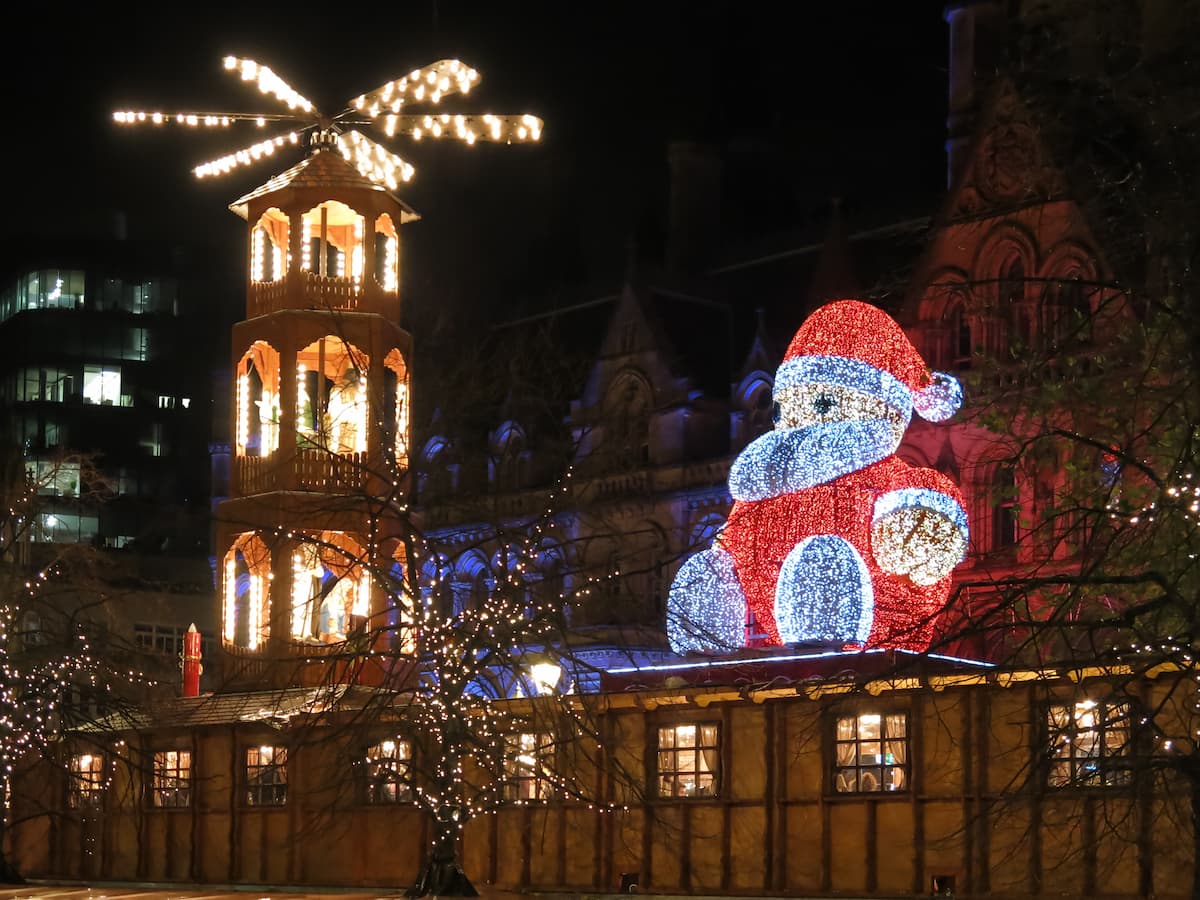
    Launched in 1999 in St. Annes Square, the award-winning Manchester Christmas Markets are some of the best in the northwest. Unlike some, the Manchester markets are stretched out across the town centre and attract millions of visitors annually. 

    These Christmas markets are the perfect place to meet for a festive mulled wine with friends or if you are looking to purchase the perfect Yuletide gift for that special someone. Even though they are spread out, Manchester is a pretty small town, so it does not take long to get around it.

    Other attractions include the mesmerising lights display at Piccadilly Gardens, or why not try out your ice skating skills on the ice rink at Cathedral Gardens?

    2. Winchester Christmas Markets

    Dates: November 19 – December 8, 2021

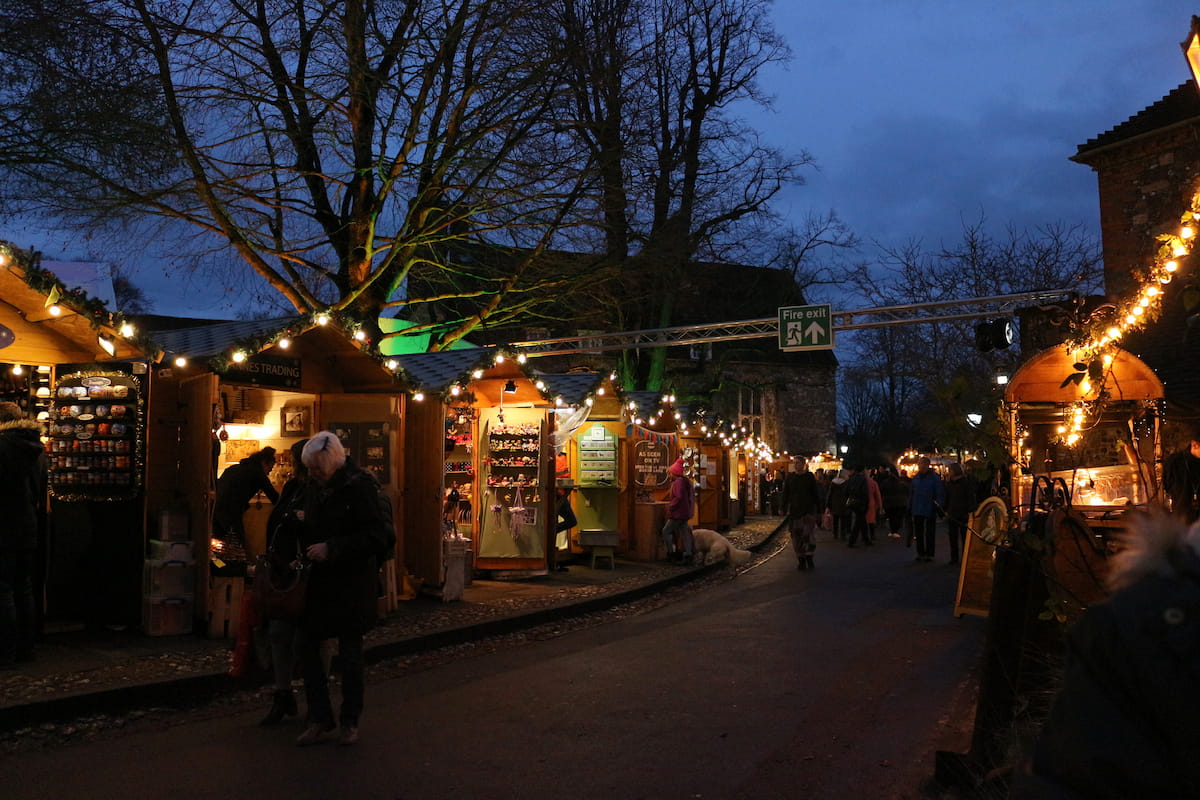
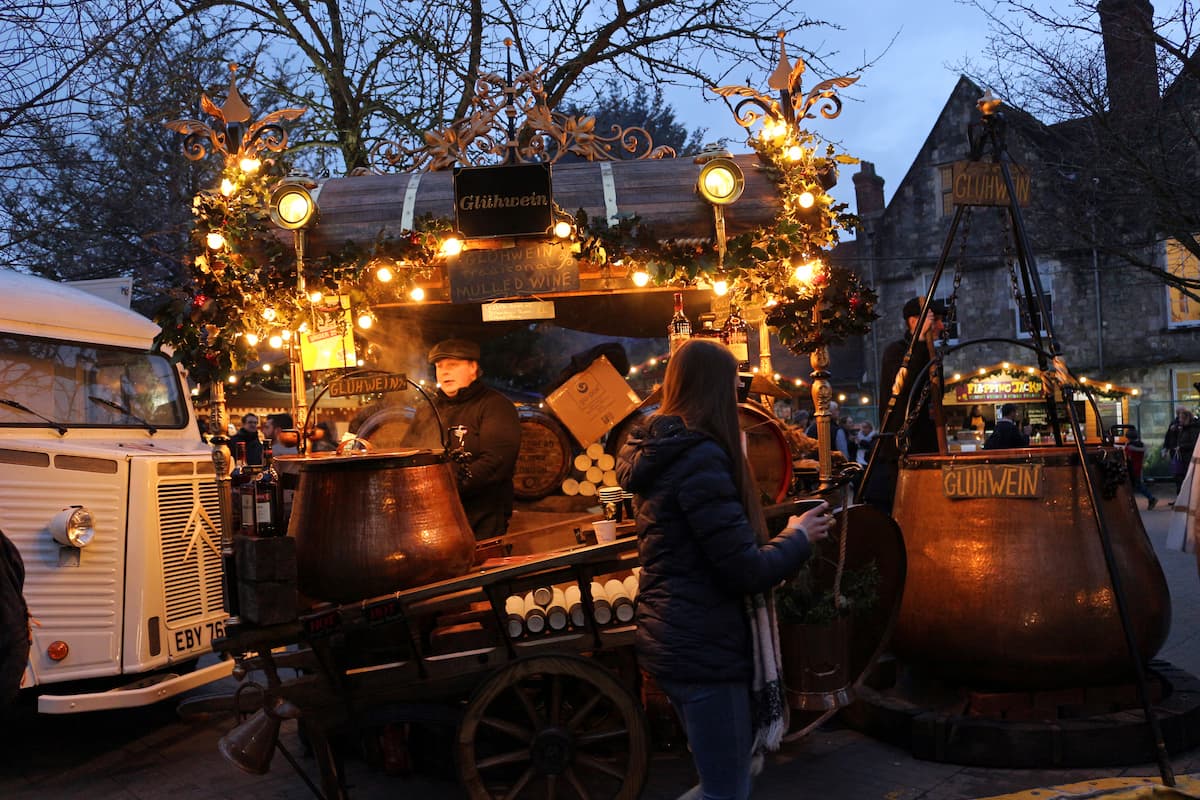
    Wine stall at Winchester Christmas Market
    Wine stall at Winchester Christmas Market

    Consistently voted one of the UK’s best Christmas markets,  Winchester has been voted the second-best place in the UK for its markets which are held in none other than Winchester Cathedral itself.

    Let go of all worries by immersing yourself in the hustle and bustle of these lively Christmas markets. German delicacies are aplenty in this place, including succulent Bratwurst hot dogs and raisin and walnut stollen. Our mouths are watering just thinking about it!
    3. Edinburgh Christmas Markets

    Dates: November 12, 2021 – January 5, 2022

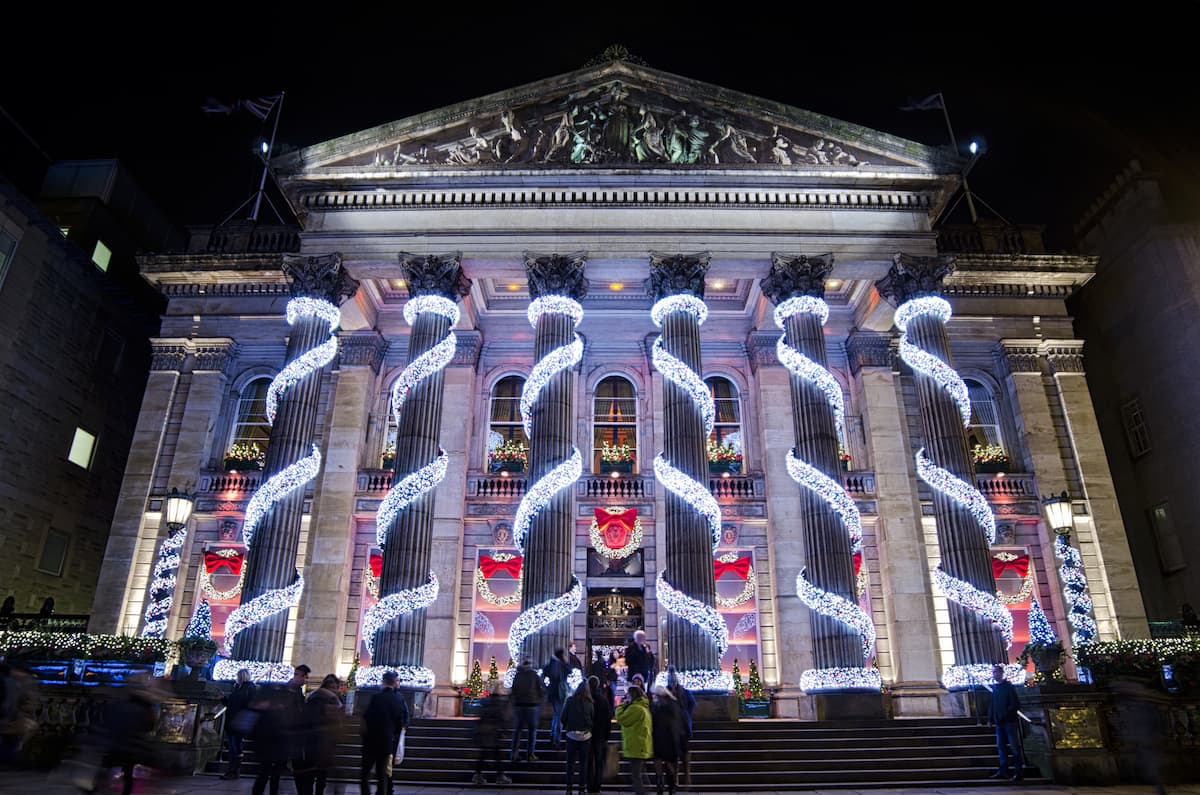
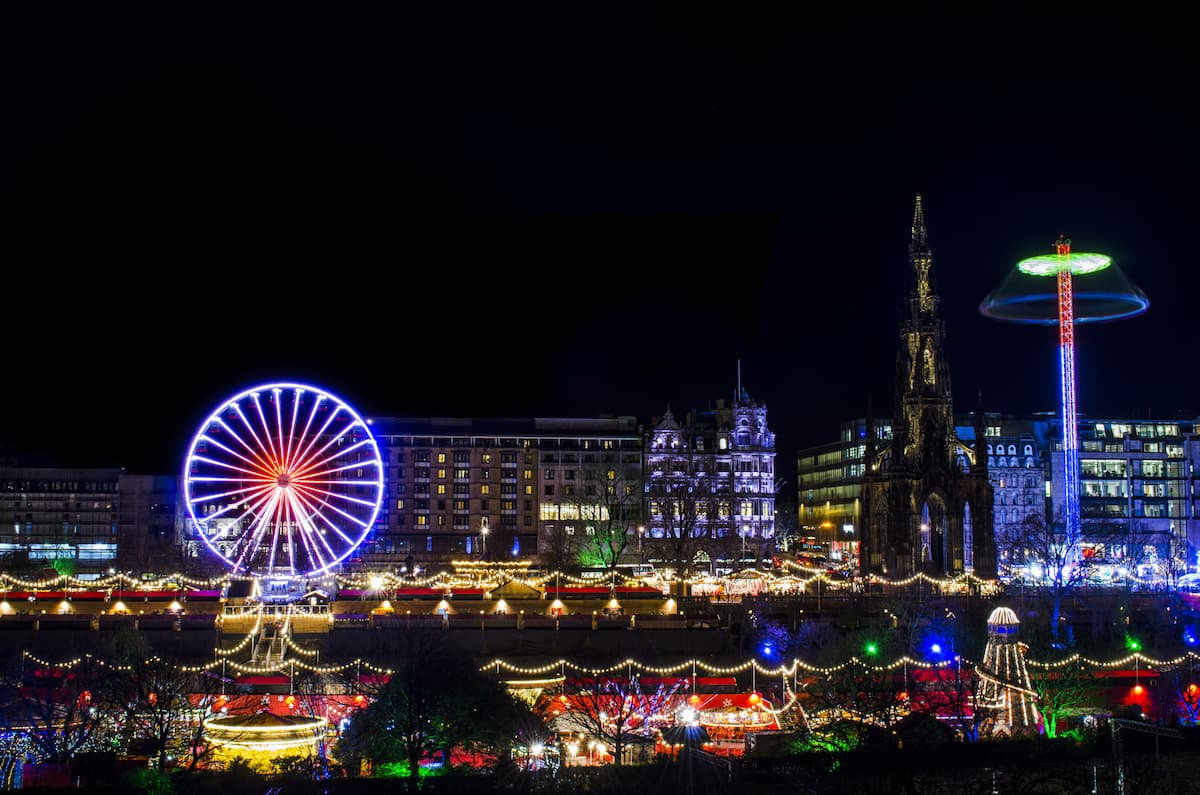
    Edinburgh during festive season
    Edinburgh during festive season

    Edinburgh Christmas Markets are one of the most popular in the UK. Known for its festivals, Edinburgh is not shy when it comes to providing for tourists. The Edinburgh Christmas markets not only cater to the public with ample food and drink but fun attractions such as the Ferris wheel and the star flyer can also be enjoyed by couples and families.

    While the main markets are based in East Princes Street Gardens – with the breathtaking Edinburgh Castle as the backdrop – there are more along the Royal Mile, which is just a short walk away.

    Fancy a romantic, illuminated walk? Then look no further than the Street of Light, whereby 60,000 lights are put on display annually. This happens on George Street or the Royal Mile and is a truly magical sight.

    If you have visited Edinburgh city before, you will know that parking can be a nightmare, so our advice would be to use public transport that is reasonably priced and frequent.

    4. Bath Christmas Market

    Dates: November 24 – December 19, 2021

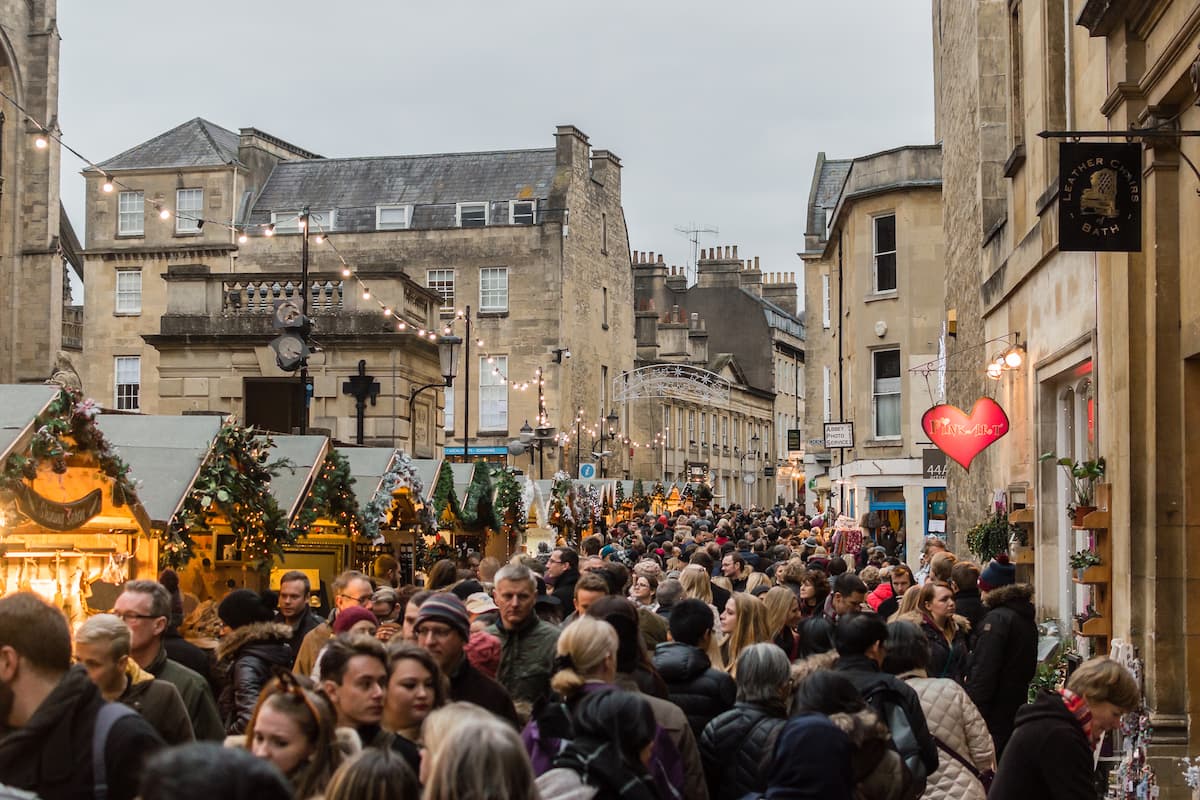
    Bath Christmas Market
    Bath Christmas Market

    Known for its beautiful architecture, Bath also has some great Christmas markets where you can feast on tasty potato pancakes and enjoy a delicious mug of creamy hot cocoa.

    Each stall is run by an independent business, serving the public with food, drinks or unique handcrafted gifts. The markets are all within walking distance of one another and can be found around the town centre and nearby the stunning Bath Cathedral.

    However, the most exciting attraction is the Victorian merry-go-round, which is a hit with both adults and children every year. The town of Bath is known for its stunning architecture, which looks even more magical at Christmas.

    5. Hyde Park Winter Wonderland

    Dates: November 19, 2021 – January 3, 2022

    Winter Wonderland in Hyde Park

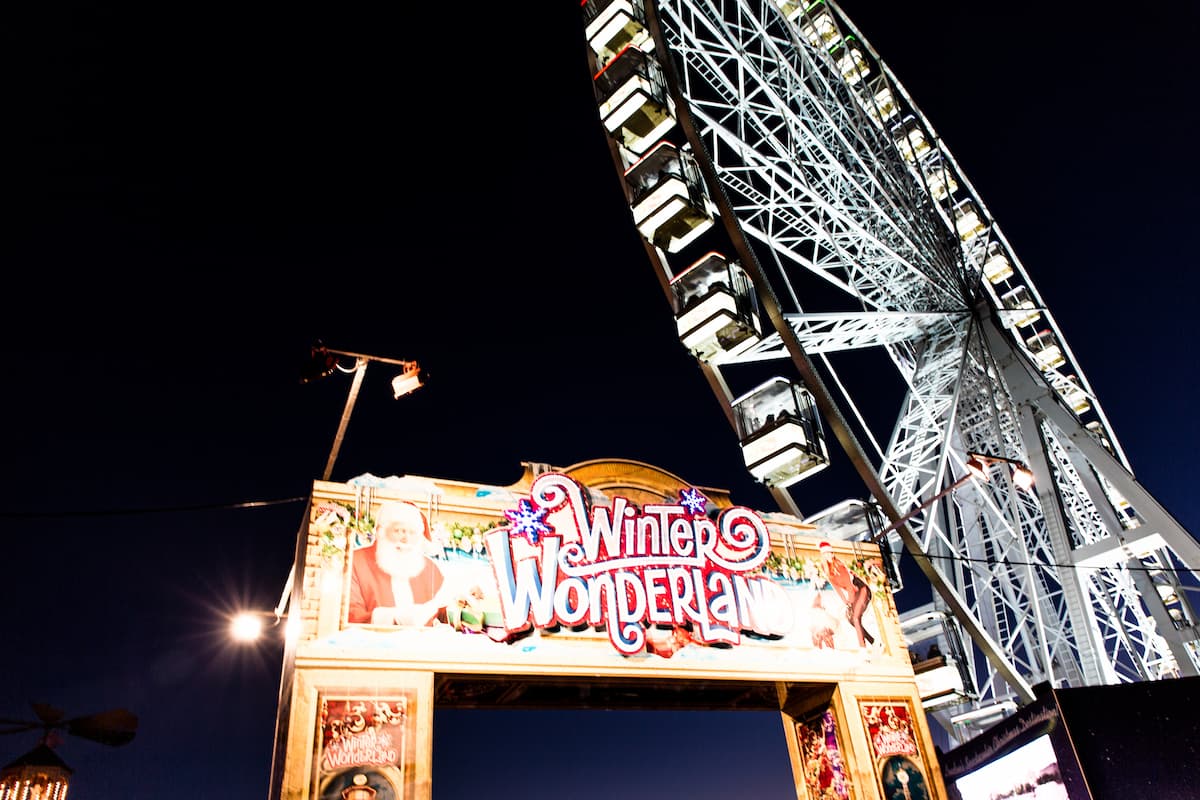
    If you are celebrating Christmas in London this year, pay a visit to Winter Wonderland at Hyde Park. Here you will find over 100 wooden huts serving visitors the finest German delicacies and festive drinks. Handmade trinkets and ornaments can be purchased if you are looking for the perfect Christmas gift.

    Not only is this place blanketed by fairy-lit stalls, but there is also an ice rink, fairground rides, and it wouldn’t be complete without a visit to Santa’s grotto! There is something for everyone at Winter Wonderland, but although entry is free, many of the rides are not, so think ahead and book in advance to avoid disappointment.

    Driving to this location can be a bit of a nightmare as the roads in London are particularly busy. Public transport is the best way of getting to Winter Wonderland.

    Here’s more London Christmas Markets you can visit!

    6. Birmingham Frankfurt Christmas Market

    Dates: November 4 – December 22, 2021

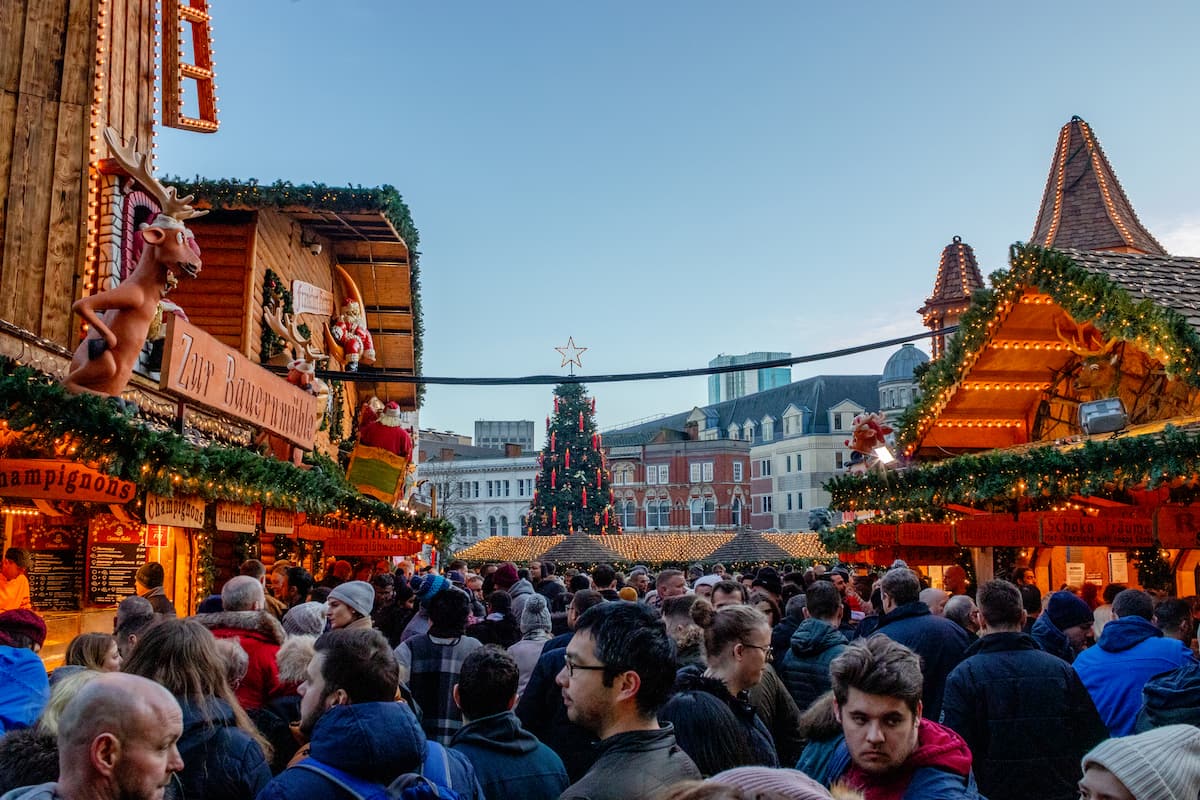
    Crowds enjoying the German Christmas market in Birmingham
    Crowds enjoying the German Christmas market in Birmingham

    The Birmingham Frankfurt Christmas Market is known as the largest market outside of Germany and Austria. With over 80 fairy-lit wooden huts, the markets stretch across the city centre, serving visitors freshly baked churros with chocolate and steaming mugs of mulled wine. Handcrafted decorations and framed festive pictures, as well as unique toys and games for children, can be purchased.

    The Birmingham Frankfurt Christmas market is easily one of the best Christmas markets in the UK. Therefore, it is also one of the busiest, particularly over the weekend. If the hustle and bustle isn’t quite your thing, a good tip is to arrive around lunchtime when they are just warming up.

    Again, public transport is heavily advised, and the New Street train station is just a few minutes walk from the markets that offer free entry to everyone.

    7. Belfast Christmas Markets

    Dates: November 20 – December 23, 2021

    belfast christmas markets

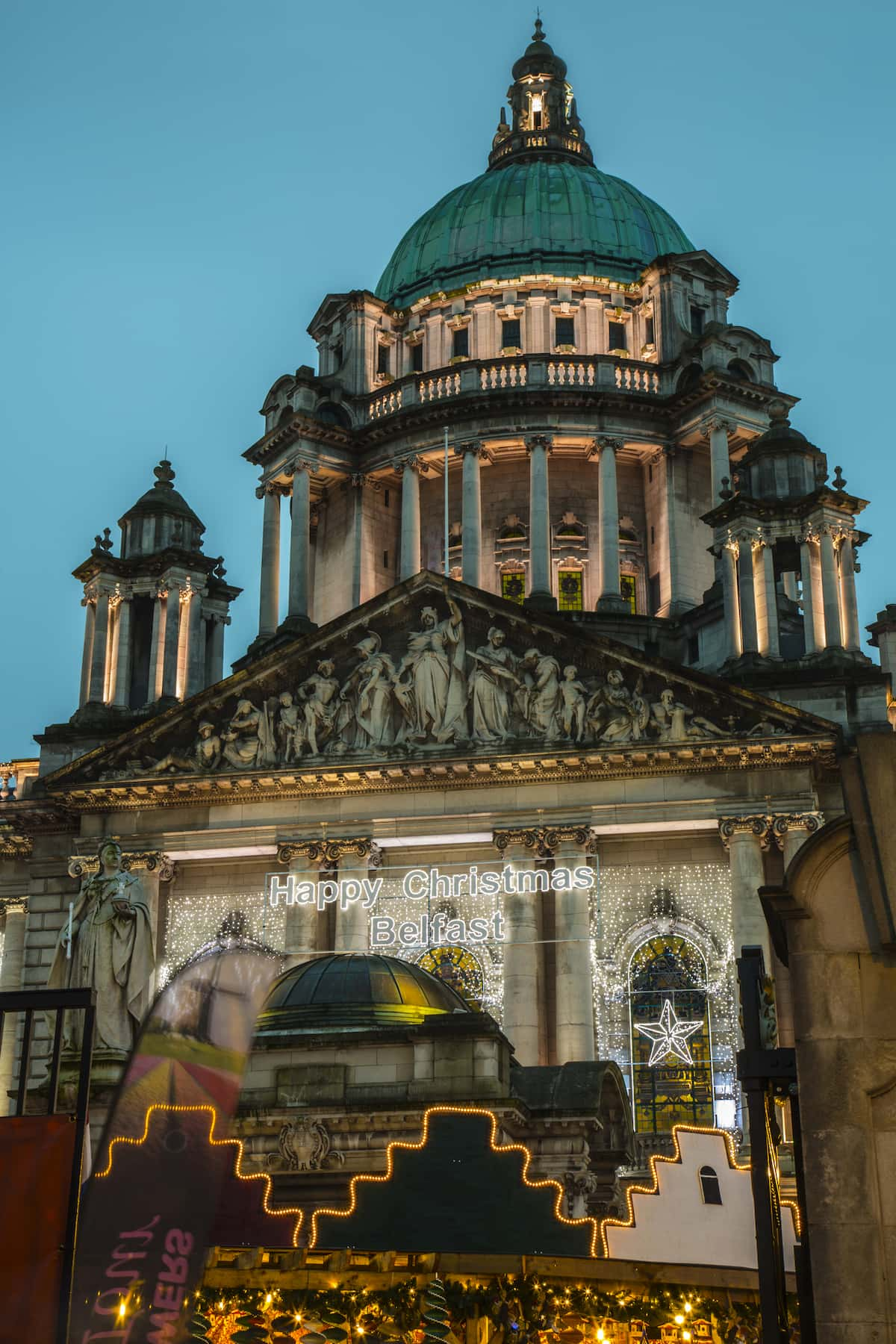
    Known as Northern Ireland’s main Christmas market, it certainly doesn’t disappoint. The adorable Alpine huts keep customers satisfied by serving up tasty treats and drinks. There are even two large heated beer tents for those who want to sit down and enjoy a stein of beer or glühwein (mulled wine).

    If that isn’t enough, there are also fairground rides for both adults and children to enjoy before visiting Santa in his grotto. The Belfast Christmas Markets are erected outside Belfast City Hall, which is a remarkable building on its own. In fact, once you have finished at the markets, why not take a tour of the City Hall for free?

    8. Southbank City Centre Christmas Markets

    Dates are yet to be confirmed, but they usually run from mid-November to early January.

    craft stalls at Christmas market at the Southbank
    Craft stalls at Christmas market at the Southbank

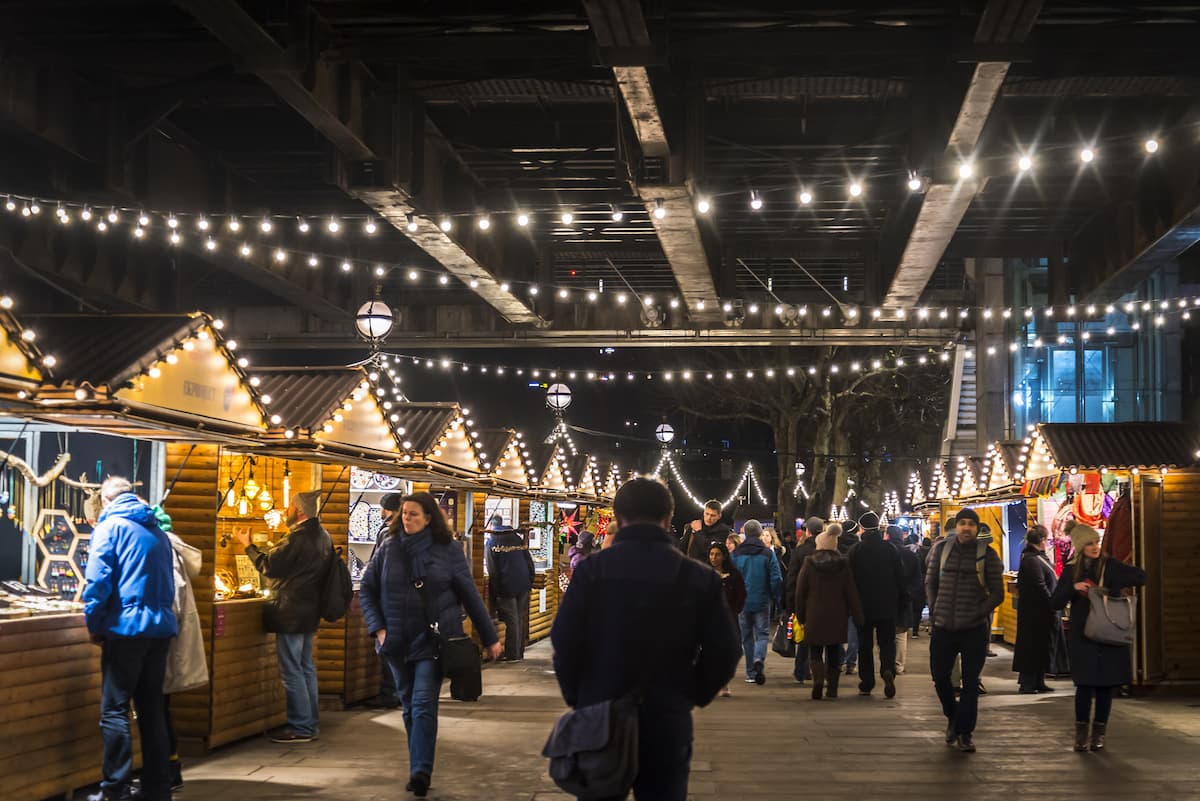
    What could be better than enjoying tasty treats and hot beverages whilst overlooking the Thames? Get yourself down to the Southbank City Centre Christmas markets to experience it for yourself!

    Spend the evening perusing the authentic wooden stalls for a new Christmas tree decoration, or maybe you are meeting up with friends for a festive tipple. Book a meal at The Jimmy Lodge Snow Globes, which can accommodate up to 10 people, so you can fine dine under the stars. There is always the rustic, vine-covered pergola at Applebee’s Fish, where friends and family can meet up for a well-deserved meal and a catch-up.

    Don’t forget to get a selfie with the gigantic Christmas tree before you leave!

    9. York St Nicholas Christmas Markets

    Dates: November 18 – December 23, 2021

    Without a doubt, York is one of the most beautiful towns in the UK. With its cobbled streets and quaint timber-framed houses, York rakes in its visitors all year round, particularly during the festive period.

    The York St Nicholas Christmas markets are spread out along Parliament Street and all the way down to St Sampsons Square. Here you will find numerous Alpine-style chalets serving nothing but the best festive food, drink and gifts.

    If you are a real foodie, then the York Christmas markets will not disappoint. Many stalls offer a choice of local cheeses, jams, chutneys and don’t forget to warm yourself up with a steaming mug of hot chocolate (you deserve that extra shot of Baileys!).

    The vintage funfair in King’s Square is great fun if you have children, with the helter-skelter and the merry-go-round being a top favourite! Strategically placed next to the funfair is a vendor selling mulled wine and cider if you fancy treating yourself to a little tipple!

    10. Leeds Christkindelmarkt

    Dates: November 6 – December 18, 2021

    Held annually at Millenium Square, Leeds Christkindelmarkt is one of the most established Christmas markets in the UK. Draped in twinkling fairy lights and festive decor, the square is transformed into a magical winter wonderland.

    Authentic wooden huts serve visitors with the finest German and Scandinavian delicacies as well as handmade jewellery, toys and unique Christmas tree decorations.

    You can’t leave without calling in for Breakfast with Santa, of course! Book in at Alp Chalet to dine with him before burning the calories off with a walk around the fairground rides. Breakfast with Santa is a ticketed event, so an early booking is highly recommended.

    11. Stratford-upon-Avon Victorian Christmas Market

    Dates: December 9 – December 12, 2021

    Stratford-upon-Avon Victorian Christmas Market
    Stratford-upon-Avon Victorian Christmas Market

    ‘To be, or not to be. That is the question.’

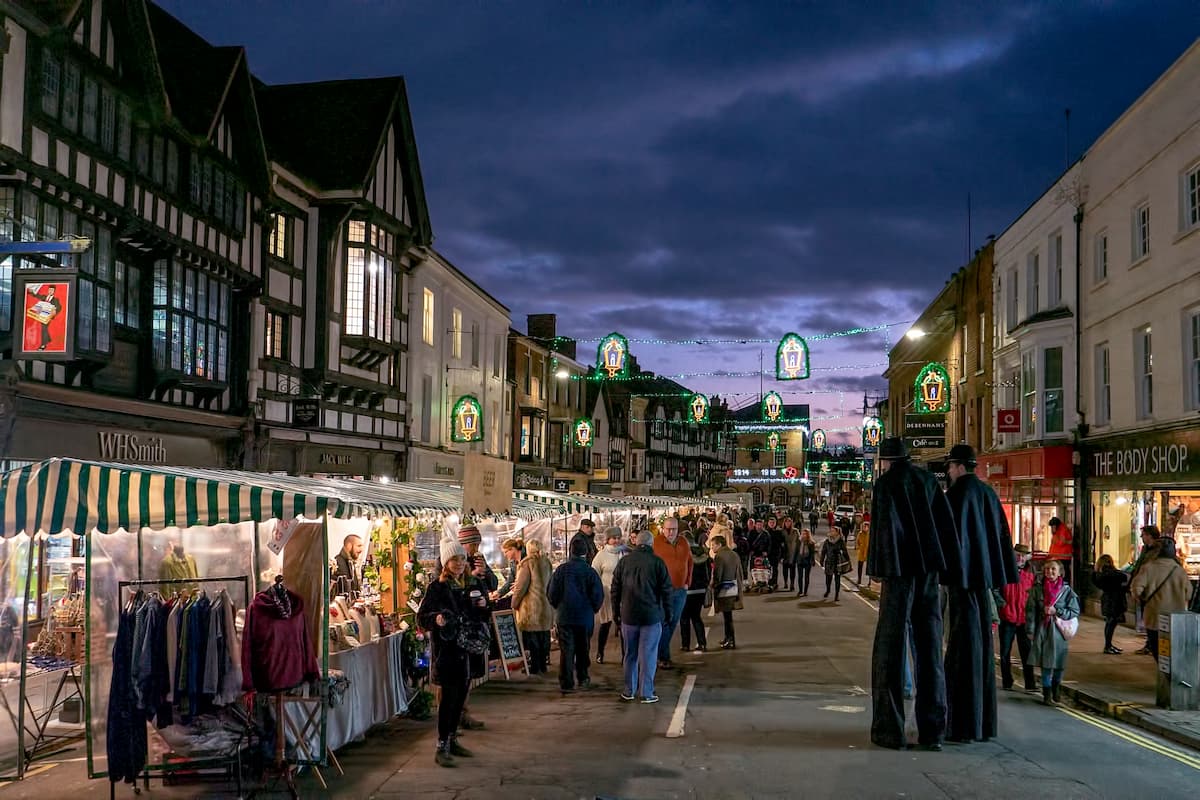
    Take a step back in time by visiting the award-winning Victorian Christmas markets. Located in the hometown of William Shakespeare, the Christmas markets cover several streets across the town centre and boast over 300 stalls. Each trader is dressed head-to-toe for the occasion in traditional Victorian garments. Enjoy your day by perusing the markets which sell festive treats and gifts suitable for all. A community craft fair will also be held at the town hall on Sheep Street if you are feeling creative.

    Last year, the Victorian Christmas markets had over 100,000 visitors, so arrive before lunchtime if you want to browse in peace! The opening times differ depending on which day you plan your visit, but they are roughly open between 10 am and 8 pm.

    12. Cardiff Christmas Market

    Dates: December 11 – December 23, 2021

    cardiff christmas market

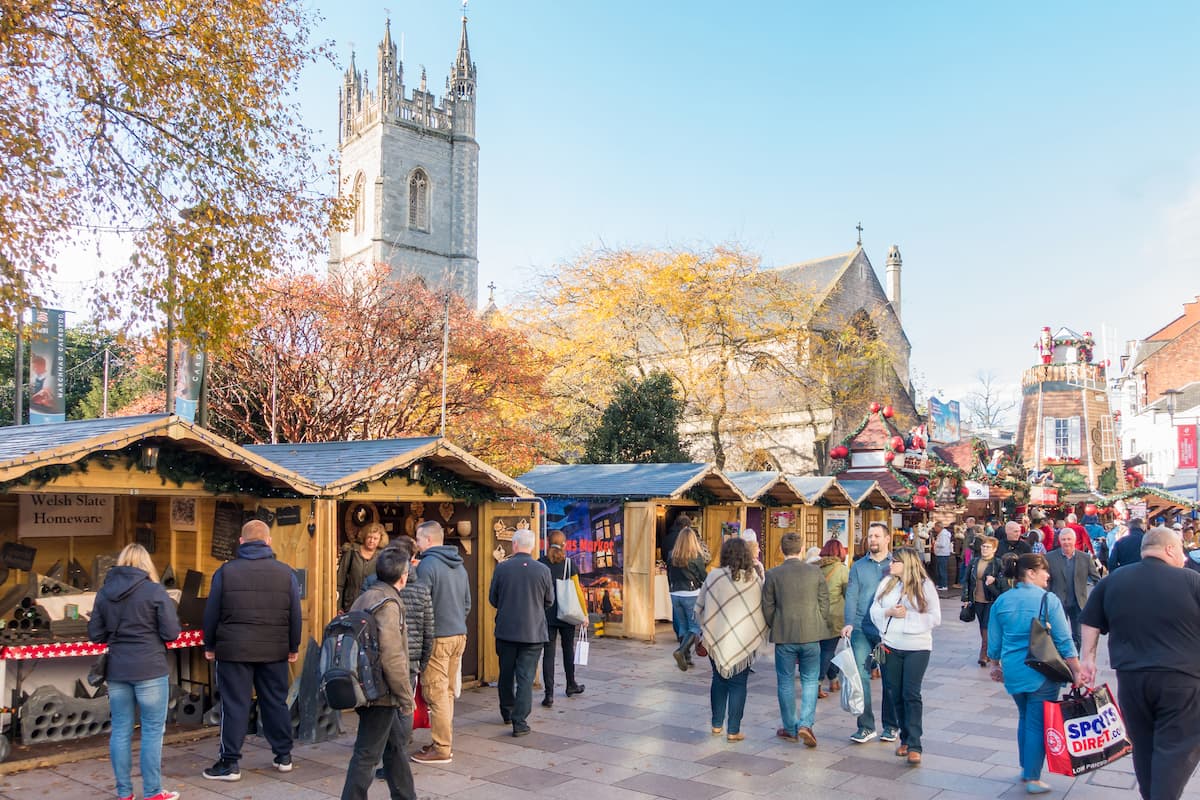
    The Cardiff Christmas Market is one of, if not the best in Wales. Get that festive feeling by indulging in delicious chocolate treats along with a cheeky mulled cider. Why not? It’s Christmas! Traditional welsh cakes can also be purchased along with ceramic goods and homemade gifts.

    A visit to the Gingerbreadmun House is a must. Treat the children to a sweet gingerbread man decorated with colourful icing and smiley faces. This can be found outside Cardiff Central Library. Santa’s Grotto is also worth a visit at the Black Tower at Cardiff Castle, a 13th-century landmark.

    Getting to the markets is easy as there are plenty of places to park your cars, such as local Park and Ride locations or an NCP. Alternatively, the bus and train services run frequently if you want to stay for a hot toddy or two!

    13. Nottingham Christmas Market

    Dates: December 4 – December 24, 2021

    Christmas Market in Old Market Square, Nottingham
    Christmas Market in Old Market Square, Nottingham

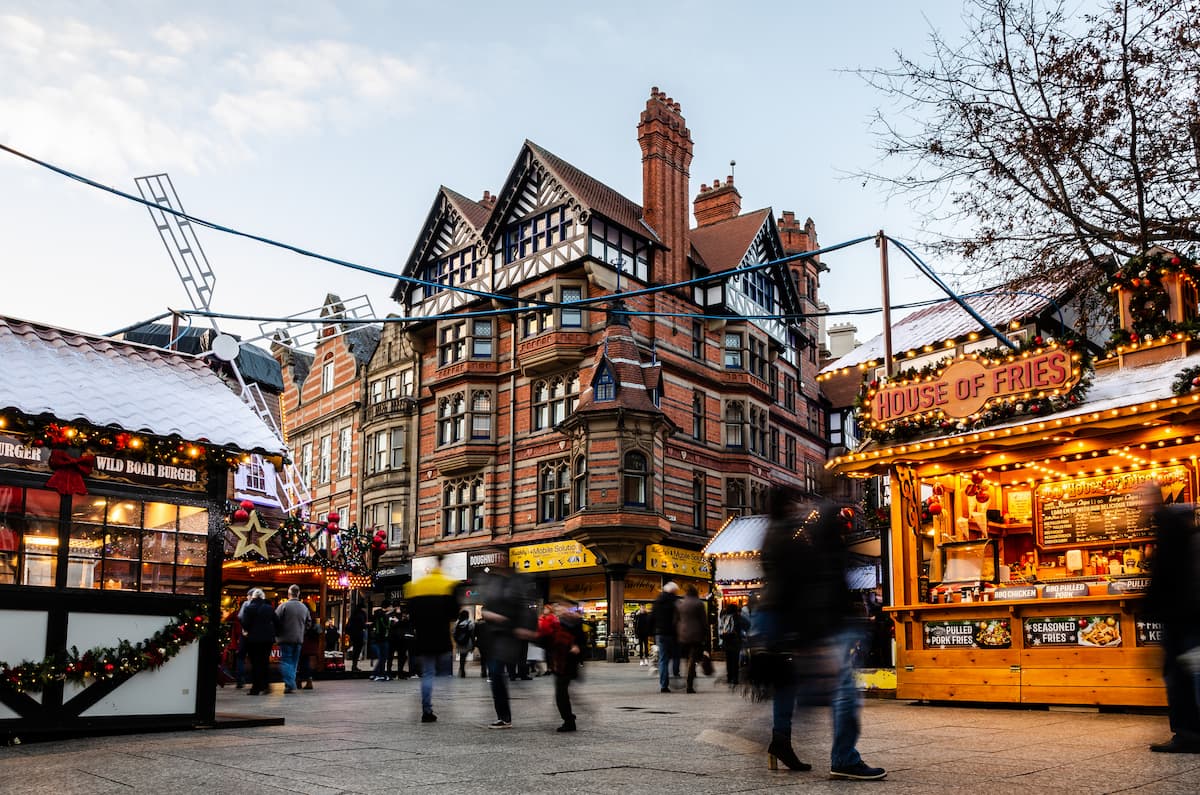
    Overlooked by a 32-meter high observation wheel, the Nottingham Christmas market is the largest in the East Midlands. With over 70 Bavarian-style wooden chalets, there is something for everyone, including continental food, local cheeses, handcrafted wooden toys and home accessories.

    The stalls stretch out across Old Market Square, Long Row and Smithy Row so visitors can browse the market without feeling too crowded. The 18-meter high Christmas tree is always a firm favourite and creates an exciting, festive atmosphere. There are also a variety of small rides for the young ones to enjoy – that should tire them out!

    Although there may be a small mug deposit to pay if you fancy a beverage, entry is free. If visiting by car, there are plenty of multi-storey car parks that can be found dotted around the town. Nottingham also has a main train station, as well as two bus stations and a reliable tram network.

    Due to the pandemic, the event has been scaled down, so do not hesitate to check out the website for full details.

    14. Chester Christmas Markets

    Dates: November 18 – December 22, 2021

    Eastgate Street Chester
    Eastgate Street Chester

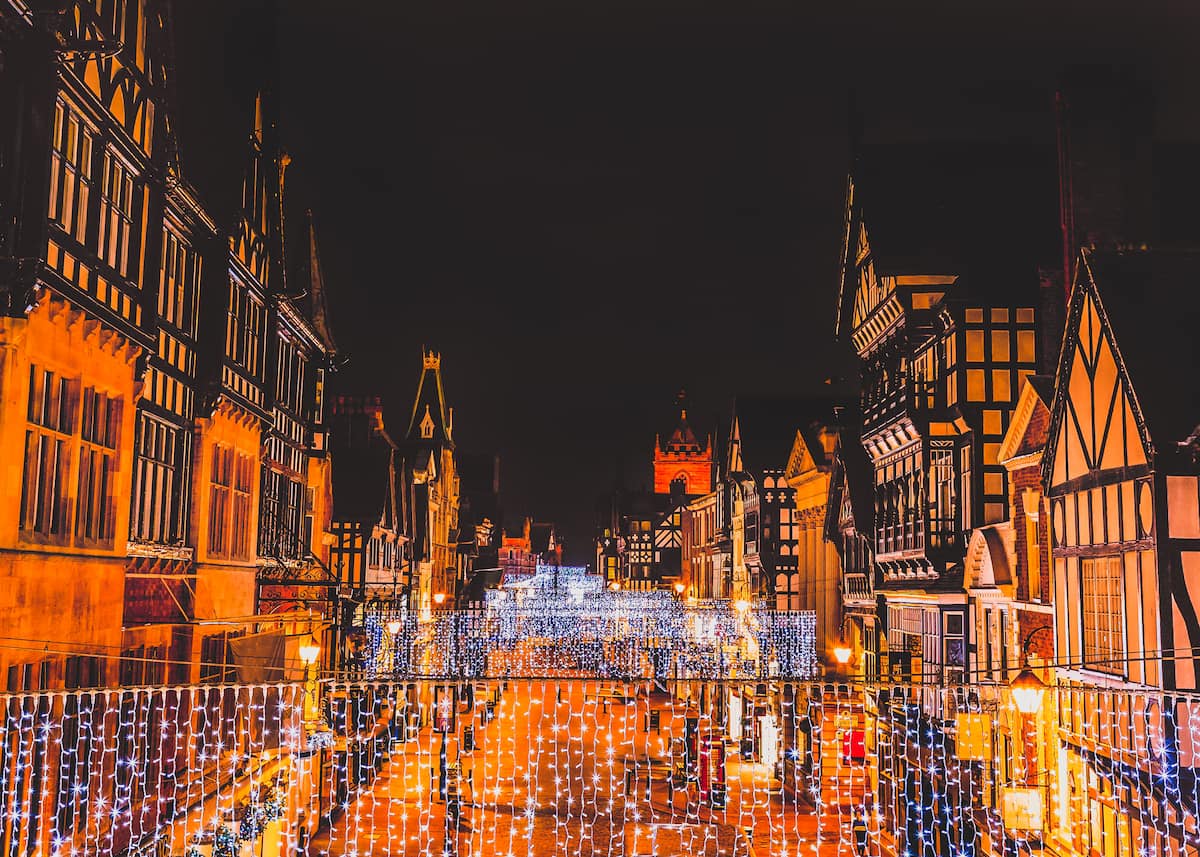
    The Chester Christmas markets are one of the best in Cheshire. Celebrated in the heart of the city, just a stone’s throw away from Chester Cathedral and Chester Town Hall, the markets boast 70 wooden fairy-lit chalets. Everything from succulent Yorkshire pudding wraps and hot toddies is sold here, including stocking fillers and authentic festive gifts.

    Have a pit stop at the Real Ale bar for a hot mulled wine before tucking into a tasty hog roast barm. The cathedral city of Chester is a beautiful place, so feel free to explore the cobbled streets to work off all of those mince pies!

    Getting around Chester is simple with its well-connected trains and frequent buses; there really is no need to take the car. However, if driving, there are many park and ride locations as well as multiple car parks. Entry to the market is completely free. It is open daily but with differing closing times. From Thursday to Saturday, the market closes at 8 pm. From Sunday to Wednesday, the markets close at an earlier time of 6:30 pm.

    15. Lincoln Christmas Market

    Dates: 2nd – 5th December 2021

    Open for just three days, this traditional market is located in the stunning Cathedral Quarter. Browse over 200 Bavarian-themed huts selling a wide selection of continental delicacies, hot beverages and plenty of handcrafted Yuletide gifts and accessories.

    Based between the gothic cathedral and the magnificent Norman Castle, the Lincoln Christmas markets make for the perfect day out with the family.

    Why not make a pit stop to St Paul-in-the-Bail, a 12th-century church that offers children the chance to write and decorate letters to Santa Claus. The finished product is then posted into the Christmas Postbox, where its destination is none other than the North Pole itself!

    If you have time, take a walk along Lincoln Castle with its illuminated walls. This event runs from 6 pm to 9 pm and offers visitors the chance to wander through mesmerising displays of twinkling fairy lights with refreshments to follow afterwards on the castle grounds.

    16. Rochester Christmas Markets

    Dates: Yet to be confirmed

    annual Rochester Dickensian Christmas Festival Parade
    Annual Rochester Dickensian Christmas Festival Parade

    The breath-taking view of the 11th century Rochester Castle should be enough to persuade anybody to visit the Rochester Christmas markets!

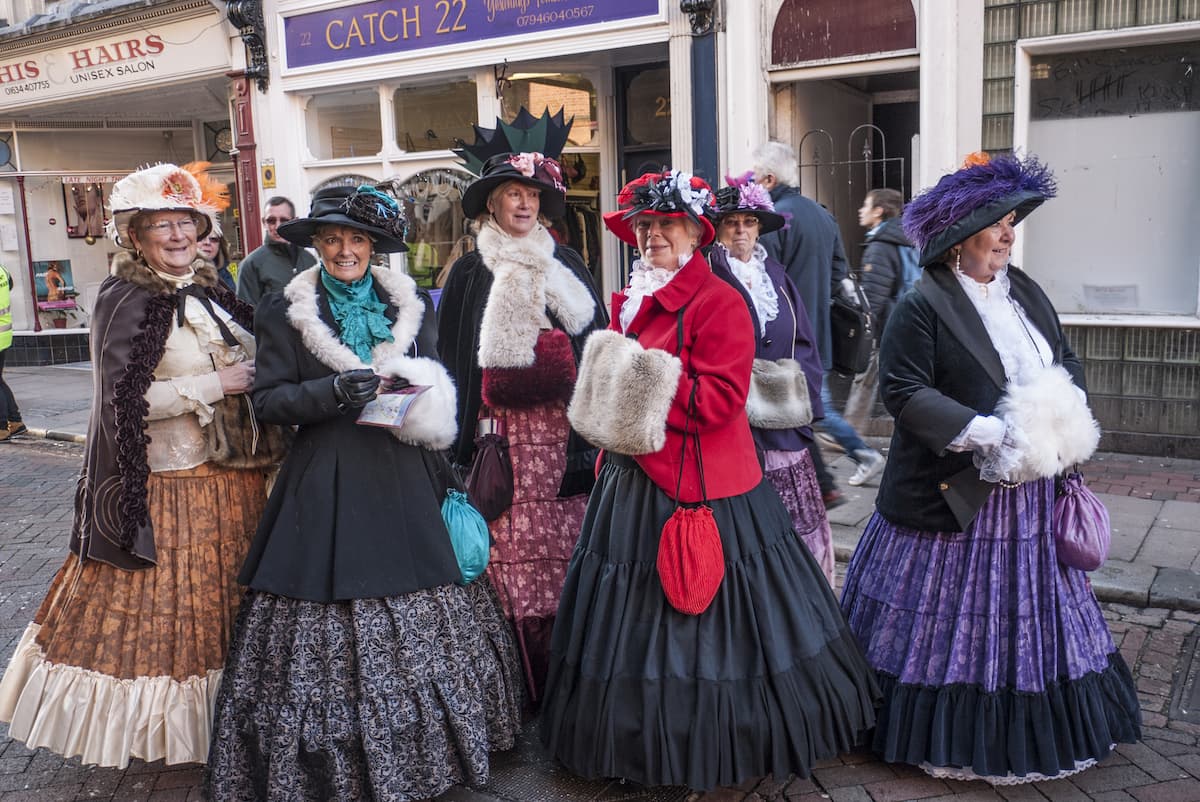
    This Kent-based market attracts over 130,000 visitors every year and can be found in Rochester’s Castle Gardens. Scour the stalls for authentic handmade gifts before treating yourself to a juicy hot dog followed by a delicious mug of hot chocolate. The markets coincide with the infamous Dickensian Victorian Festival, where costumed characters entertain visitors with carol-singing and parades.

    The opening days and times are still yet to be confirmed. You can keep up to date by visiting this website.

    17. Norwich Christmas Markets

    Dates: Yet to be confirmed.

    Norwich takes the festive season very seriously, so instead of just one market, it holds several across the city, all on the same weekend. The Norwich Global Christmas Market is the largest and is located in The Forum, where only the finest authentic handcrafted gifts and paintings can be purchased.

    Step outside the doors and enjoy churros with chocolate and festive mince pies before slurping on a hot mug of mulled cider (that’ll keep your hands warm!). The Norwich Christmas Fayre can be found over at the cathedral, where, unfortunately,  more indulging is required.

    Looking for meat-free choices? Look no further than the Vegan Christmas Market held at Open Norwich, where the tastiest of vegan treats can be enjoyed – all cruelty-free, of course.

    One of the most anticipated attractions is, of course, the Tunnel of Light which is one of the largest in Europe. This 45-meter spectacle consists of 57,000 LED bulbs and over five miles of cabling. Pretty impressive, huh?

    Other events worth checking out are the Norwich Castle projections, where the Norwich BID team showcases a new projection each year. So wrap up warm and enjoy the show! Or perhaps you fancy getting crafty with festive wreath making at the Maids Head Hotel, in which a festive brunch – along with a mandatory glass of fizz- is included in the price.

  • 18 British Christmas Traditions to Feel Festive

    18 British Christmas Traditions to Feel Festive

    Whenever Christmas is around the corner you know the festivities are about to start! Whether it’s your first time spending Christmas in the UK or you are interested in what the Brits do, here are some of the traditions you can expect. 

    From wearing crowns on your head to eating little mince pies, these are some of the best British Christmas traditions. 

    I personally love the adverts that are produced (they honestly are heartwarming), putting on a cheesy Christmas jumper and the festive spirit that comes out. Plus it’s cold so it makes a big difference from all the Australian Christmases I spent with hot summer days that were like 40 degree days! 

    1. Christmas Decorations

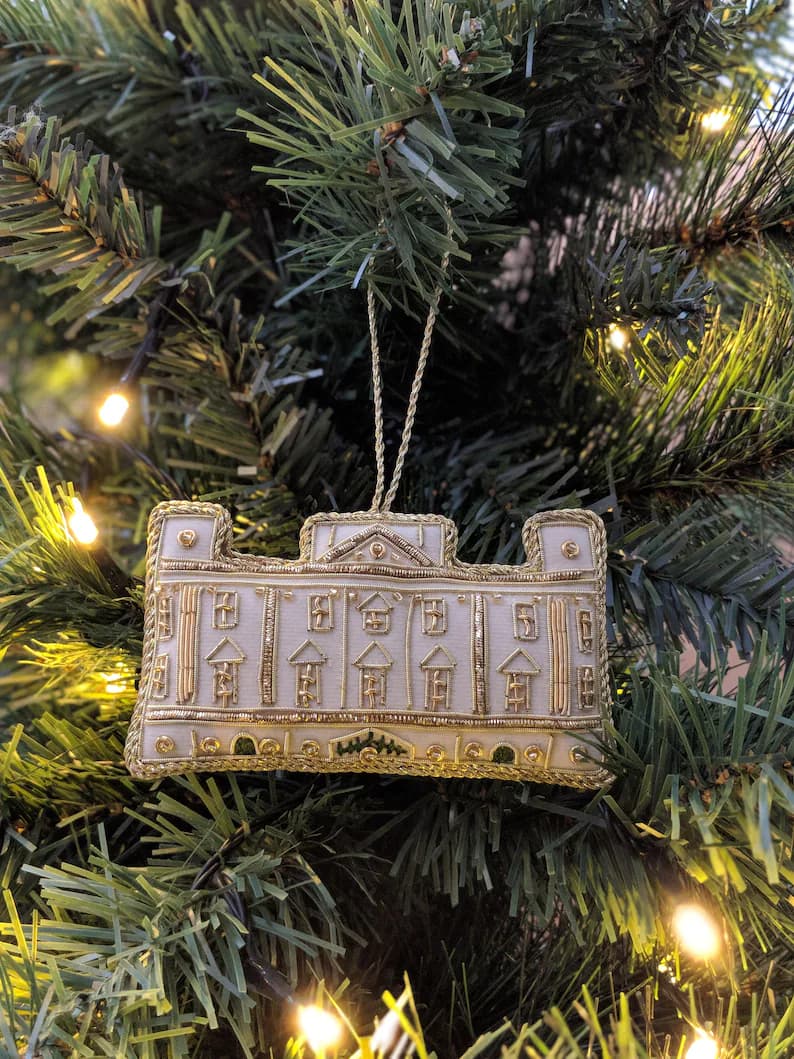
    Credit Shop Christmas Online on Esty of London Buckingham Palace Christmas decoration

    Christmas is probably the only time of the year you can line your walls and cover the ceilings with sparkly decorations and get away with it! Nowadays, the Christmas retail market is littered with illuminated ornaments and glittering decorative pieces that can be seen in stores from as early as September – yes, September!

    It is not enough to drape your Christmas tree with shiny baubles and sparkly tinsel. Today trees are adorned with personalised decorations for yourselves and even your pets. Why not make your tree London themed with decorations like this lovely handmade one of Buckingham Palace sold by Shop Christmas Online.

    Go hard or go home. Christmas decorations are no joke – and don’t get us started on the external ones!

    2. Buying a Real Christmas Tree

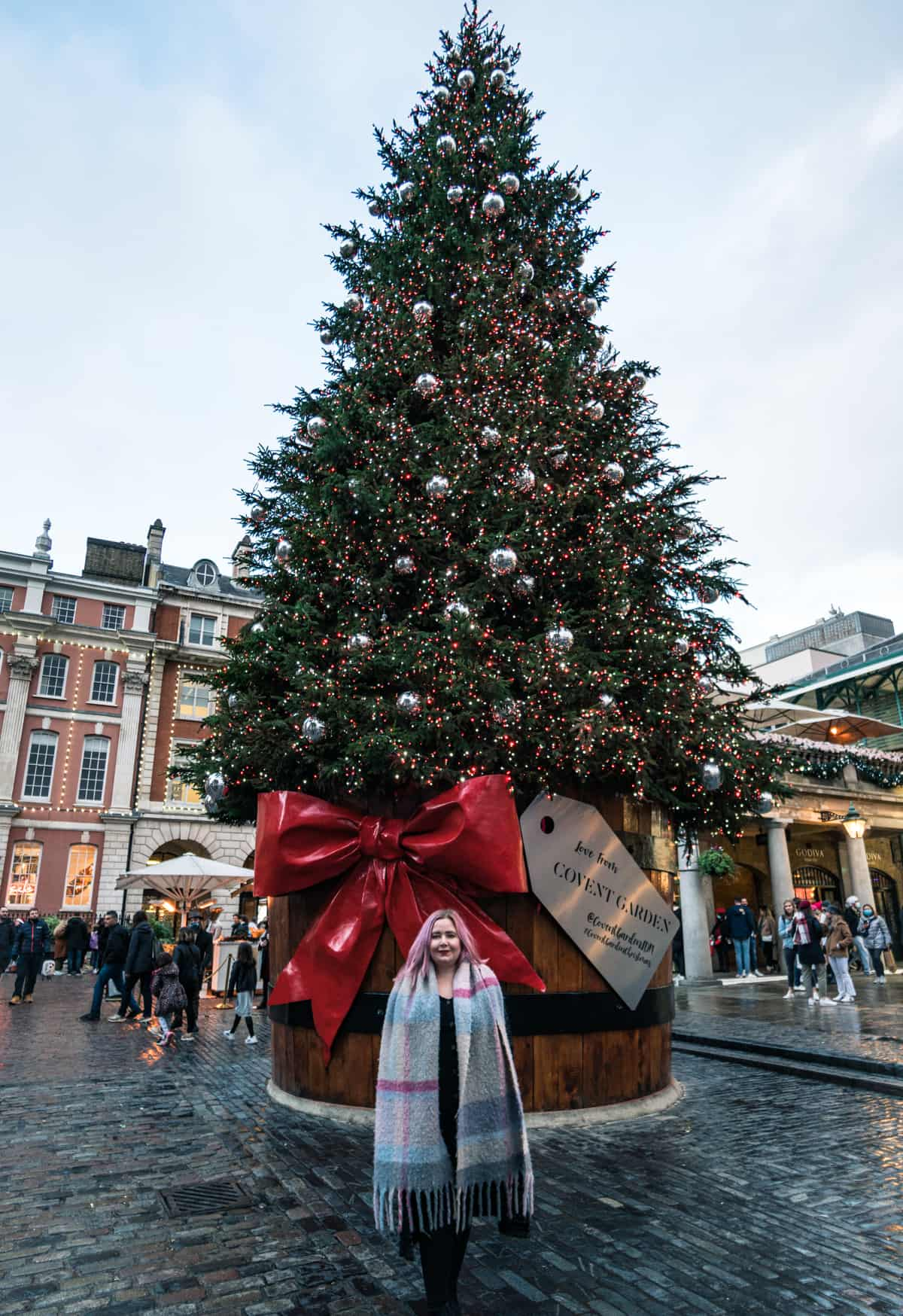
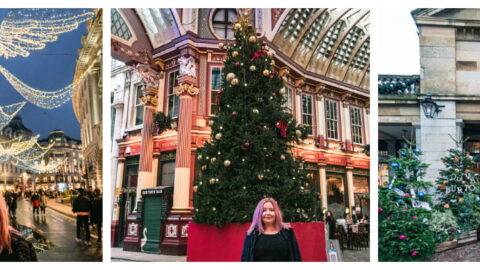
    Christmas tree in Covent Garden
    Christmas tree in Covent Garden

    A tree inside a house is plain strange. A tree inside a house at Christmas – completely normal!

    Who doesn’t appreciate the earthy smell of a real Christmas tree inside the home? The most exciting part is picking the perfect tree and taking it home to decorate. This is the perfect opportunity to keep the kids occupied for a while!

    The idea of the Christmas tree was invented by the Germans in the 16th century. The tree would be decorated with apples, roses and tinsel. However, it wasn’t until 1846 when Queen Victoria and her German husband, Prince Albert, made the headlines when they were pictured standing in front of one with their children. The Christmas tree then became a popular addition to most households and still is to this day.

    Did you know – Before electricity, people would decorate Christmas trees with real wax candles that would often result in house fires.

    3. Christmas Cards

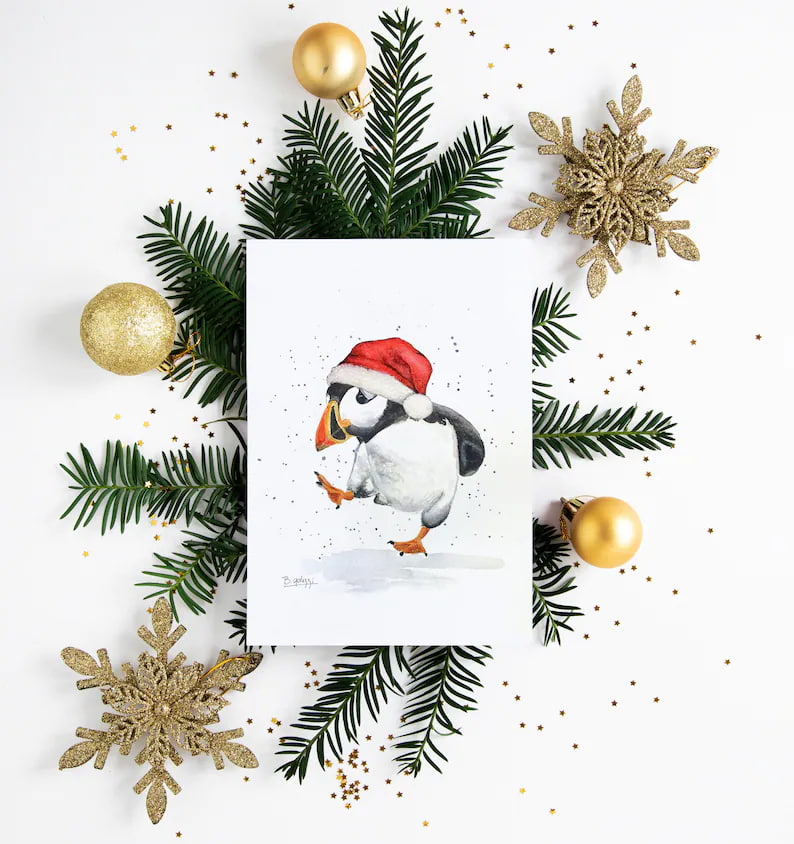
    Credit Roundabout Bunny on Etsy of British wildlife handmade boxed Christmas cards

    Send them to your loved ones, send them to your neighbours, send them to the mailman! Christmas cards are for everyone, and nobody should be left out. These thoughtful little letters are sent and received in millions at Christmas time and are displayed in windows and along the tops of fireplaces.

    The idea of Christmas cards was developed in 1843 by a man named Sir Henry Cole, a senior civil servant, along with the help of his artist friend, John Horsley. Sir Henry Cole was involved in the setting up of the ‘Public Record Office’ (known in the UK today as the Post Office) and wanted to find a way it could be used more by ordinary people.

    So together, they created the Christmas card we know and love today and sold them for one shilling each. The rest is history!

    If you are looking for some adorable Christmas Cards then Roundabout Bunny has some of the cutest British wildlife ones, check them out here.

    4. The John Lewis Christmas Advert

    Ah, the good old John Lewis adverts. Patiently waited for each year, these tear-jerking, two-minute adverts are a British favourite. The infamous adverts are usually short films sharing messages of love and joy through the spirit of Christmas.

    Here’s the 2020 Christmas ad which is called “Give a Little Love”.

    https://www.youtube.com/watch?v=Juv2c0xgGno

    Other firm favourites include the Coca-Cola advert (of course) and most recently, supermarket chain Aldi has been stirring up some competition.

    5. Switching On the Christmas Lights

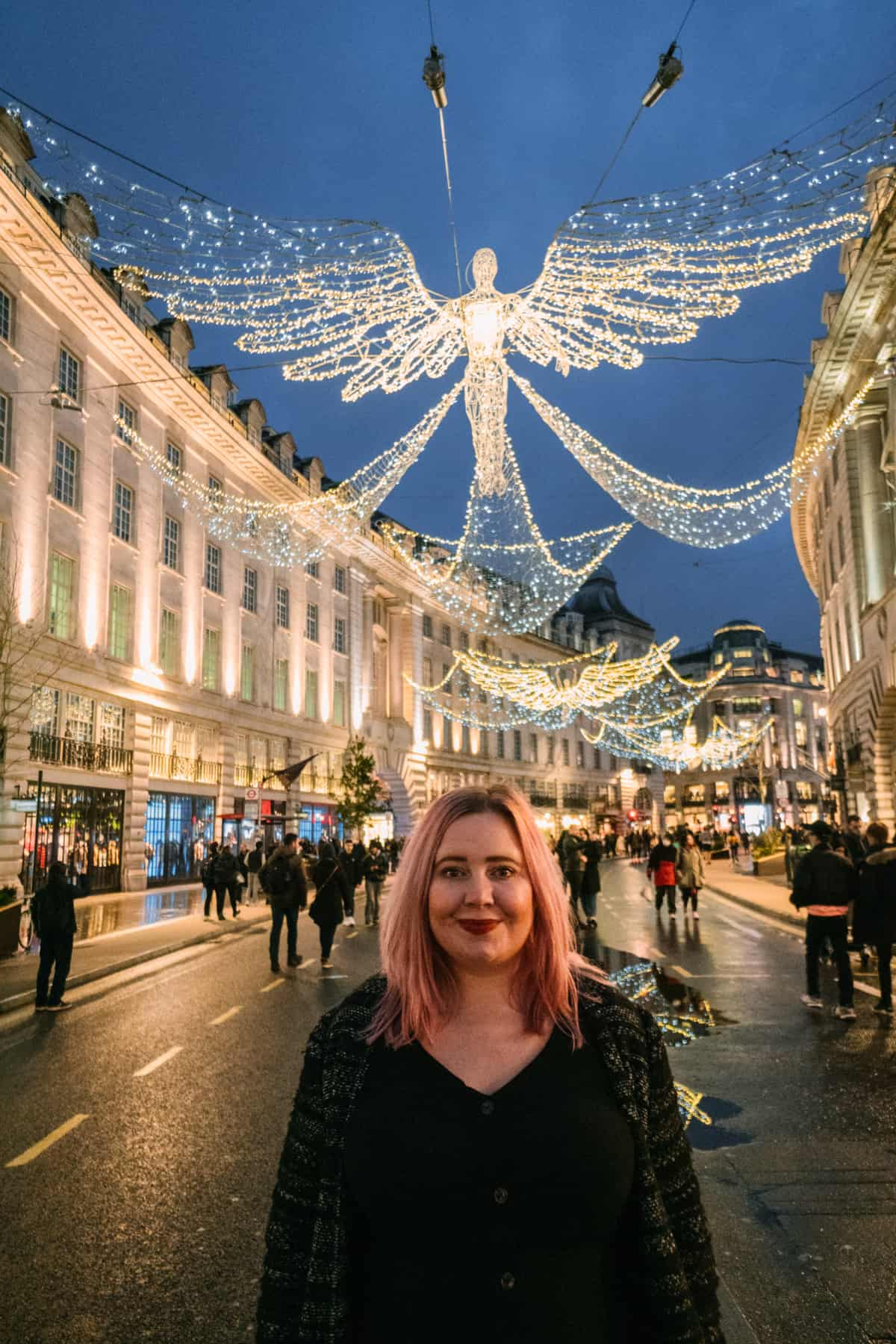
    Christmas Lights Display on Regents Street

    The act of switching on the lights is celebrated up and down the UK, usually with the help of a local celebrity. Christmas street lights were first put on display way back in 1954 on Regent Street, London.

    However, it is worth noting that before this, in 1935, Harry Selfridge, the owner of the world-famous luxury store Selfridges, hung exterior Christmas lights outside the store. This became a local attraction and made Selfridges stand out against the rest of the shops on the street.

    6. Christmas Markets

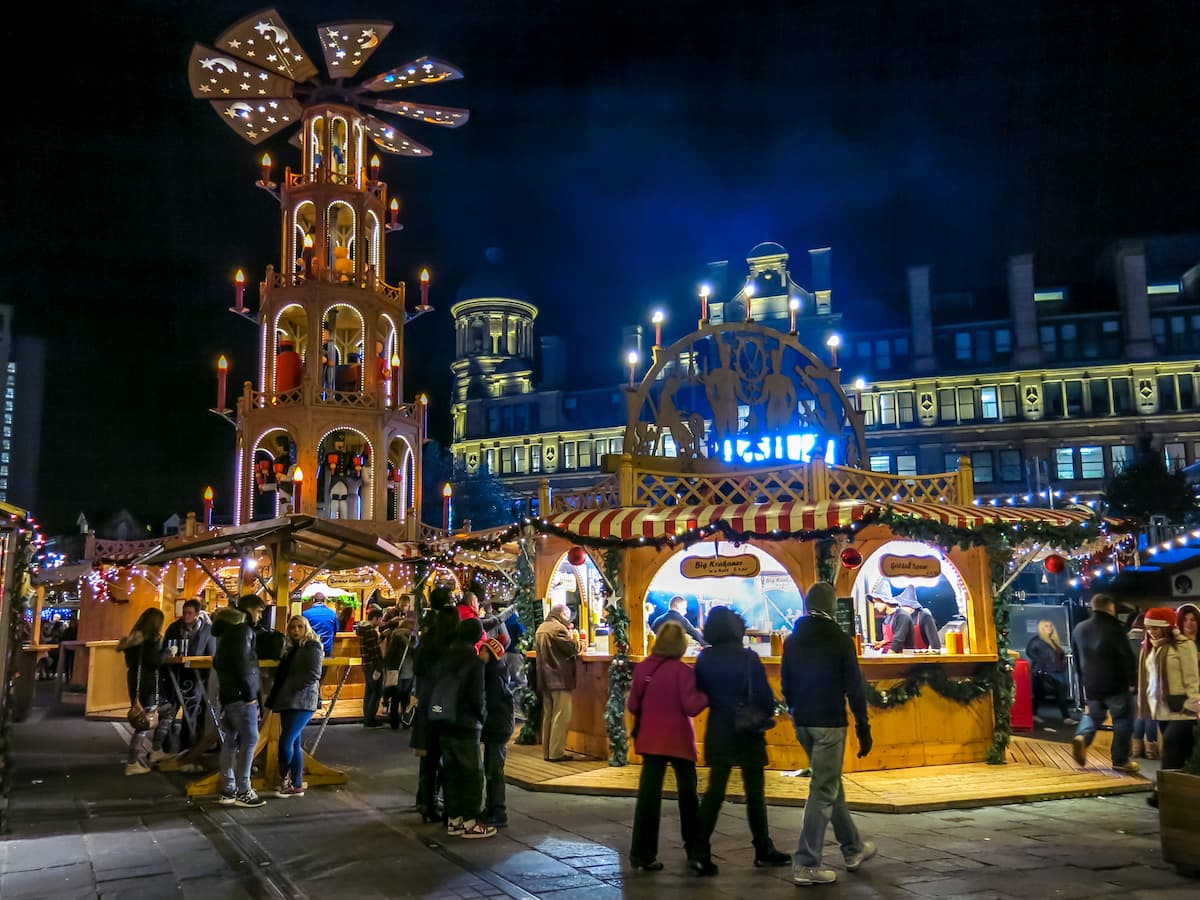
    Manchester Christmas Markets
    Manchester Christmas Markets

    A trip to the Christmas markets has to be on the cards at Christmas time. Located up and down the UK, the markets are a structure of small wooden stalls selling everything from mulled wine and churros with chocolate to unique handmade gifts and adorable trinkets.

    The first genuine Christmas market was held at Dresden’s Striezelmarkt, Germany, in 1434. Now you will find them in every major city in Britain, with Birmingham Christmas Market being the largest outside of Germany. The Christmas markets are a fantastic day out if you love to eat, drink and be merry!

    7. Midnight Mass

    Traditionally beginning at midnight on Christmas Eve, this popular Christmas custom is a celebration of the coming of Christ. Some services are held slightly earlier to allow families with young children to celebrate, of course.

    One of the most famous landmarks to hold a midnight mass service in the UK is Westminster Abbey which usually begins at 11:30 pm and ends at 1 pm.

    8. Carol Singing

    Deck the halls with boughs of holly…’

    Carol singing can be heard in most places in the lead up to the big day. From community performances to door to door visits, the history of Christmas carolling dates back to Pagan Winter Solstice celebrations. Pagans would celebrate by singing and dancing around in circular motions.

    The first English carols emerged in the 1400s and were written by English poet and priest John Audeley. Audeley composed a total of 25 Yuletide hymns that focused on the theme of repentance.

    Did you know? – In 1644, Oliver Cromwell banned Christmas altogether! It wasn’t until 1660 that this law was abolished, and people could once again celebrate the most wonderful time of the year.

    9. Christmas Crackers & Hats

    The history of Christmas crackers dates back to 1849 when baker and confectioner, Tom Smith, visited Paris and brought home a ‘bon bon.’ This consisted of a sugared almond wrapped in a twisted paper package. He replaced the sugared almond with small toys, jewellery and also included a motto or riddle as an extra.

    It wasn’t until later that he was inspired by the noise of a crackling fire and thought it’d be a good idea to include a surprise ‘bang’ inside the package. In the early 1900s, the Christmas cracker became a log-shaped cardboard package housing small knick-knacks that produced a ‘bang’ when pulled apart.

    The paper hats were added shortly after, an idea thought up by his sons, and the small riddles and mottos were replaced by jokes. The Christmas cracker soon became a festive tradition loved by all and is still popular today.

    10. Watching Christmas Movies

    It’s that time of year when it is perfectly acceptable to lounge around in your pj’s all day and snuggle up with a nice hot cup of cocoa to watch Christmas movies.

    This is the kind of activity that brings the family together to watch the cheesiest of Christmas films. Home Alone has got to be the number one Christmas movie, or what about The Grinch? There are so many to choose from and so many to get through from the comfort of your cosy home.

    11. Mistletoe

    Mistletoe

    Kissing under the mistletoe is a popular Christmas tradition, but what is it all about, and why do we do it?

    Historically, mistletoe was believed to bestow fertility and was also considered a plant of peace. In the middle ages, mistletoe was hung from doors and ceilings in a bid to ward off evil spirits.

    What you want to know is what the kissing part means, right? Well, a kiss shared under the mistletoe is interpreted as a promise to marry. So it may not be a good idea to kiss under the mistletoe at the office Christmas party!

    12. Swimming in the Sea

    Fancy taking a plunge into the icy waters of Great Britain on Christmas Day? No, neither do we.

    Bizarrely, swimming in the sea is a tradition celebrated annually, whereby people dress up and take to the freezing water. The event first took place at Brighton Swimming Club in 1860 when visiting a swimming pool was rare. If you wanted to learn how to swim, then the sea was the best way to learn, with Christmas day being no exception. Nowadays, swimming in the sea on Christmas Day has become an activity enjoyed by many throughout the country.

    People can be seen in Santa hats, elf costumes, and even mankinis, where they often take to the freezing depths for charity. So, why not give it a go this year?

    13. Boxing Day

    The day after Christmas is for lazing around the house, eating turkey sandwiches and maybe leaving the house to ‘blow away the cobwebs, i.e., get rid of that horrendous hangover.

    Believe it or not, Boxing Day has nothing to do with the sport and takes its name from when Queen Victoria ruled the country in the 1800s. The term refers to when rich people would box up gifts to give to the poor. This became a day off for servants who would receive a box of gifts from their masters before taking it home for their families.

    14. Christmas Eve is Reserved for Old Friends

    ‘Twas the night before Christmas’. Christmas Eve calls for a visit to the local pub to catch up with your old school friends who you only get to see this one night of every year.

    For families with small children, it is vital to leave a mince pie, a carrot and a small glass of milk next to your fireplace for when Father Christmas arrives. The long journey across the world is sure to leave him and his reindeer famished!

    15. The Queen’s Speech

    If your Christmas in London doesn’t include laying on the couch watching The Queen’s speech with a mince pie and a belly full of turkey, then you’re not doing it right! 

    First broadcast in 1952, The Queen’s speech is enjoyed by millions from all over the UK every year on Christmas Day at around 3pm. The Queen’s Christmas Day speech includes a look back over the year along with an uplifting message of support to the citizens of the UK. 

    It is the only time of the year when The Queen does not consult the UK government for advice and instead uses the help of her advisors to create the yearly speech. 

    16. British Christmas Treats

    Mince Pies

    Bucks Fizz

    Christmas morning isn’t the same without a little Bucks Fizz! This popular cocktail, a mixture of sparkling wine and orange juice, was named after British pop group, Bucks Fizz, after they won the Eurovision Song Contest in 1981. If you are familiar with Eurovision, you will know that the UK never wins, so it was a big deal back then – big enough to have an alcoholic beverage named after them that is still popular some forty years later!

    Mince Pies 

    Just thinking of these delicious fruit-filled pastries is enough to make our mouths water. Believe it or not, the inside of a mince pie is not actually meat but a tasty mixture of dried fruit and spices with a hint of cinnamon. 

    Taste tip – Warm it up and serve with a generous helping of brandy cream (thank us later!).

    Yule Log

    Yule love this! Historically, a yule log was a wooden log that was specially selected to be burnt on a hearth. According to ancient folklore, a portion of the log was burned each evening and placed underneath the bed for good luck up until the twelfth night. 

    Nowadays, a yule log is a chocolate cake made in the shape of a log which is enjoyed up and down the UK along with a steaming cup of tea!

    Mulled Wine

    Made from a mixture of red wine and spices, this alcoholic beverage is served hot and is the drink of choice at this time of year. 

    Did you know – In the 16th century during the Black Death years, mulled wine was deemed safer to consume than water!

    17. Christmas TV Specials

    Broadcast on Christmas Day, it is part of British tradition to watch a Christmas episode of MrsBrown’s Boys or Gavin and Stacey after devouring a monstrous Christmas dinner. The Christmas specials are filmed specially for the ‘big day’ and are viewed by millions each year. 

    18. Visit Father Christmas

    Have you been good this year? Why not pay a visit to the man himself to find out! Available to see at many locations from the Royal Albert Hall to Leicester Square, you’re sure to catch him before he leaves for the North Pole. 

  • 15 London Christmas Celebrations & Traditions You Need to Try

    15 London Christmas Celebrations & Traditions You Need to Try

    Looking to celebrate the most magical time of the year in London? Then look no further! There is something for everyone in the capital. 

    This is just a snippet of what there is to see and do in London around the festive season. Have fun and be sure to wrap up warm wherever you go!

    Discover 15 wonderful traditions that take place every year in this enchanting city. 

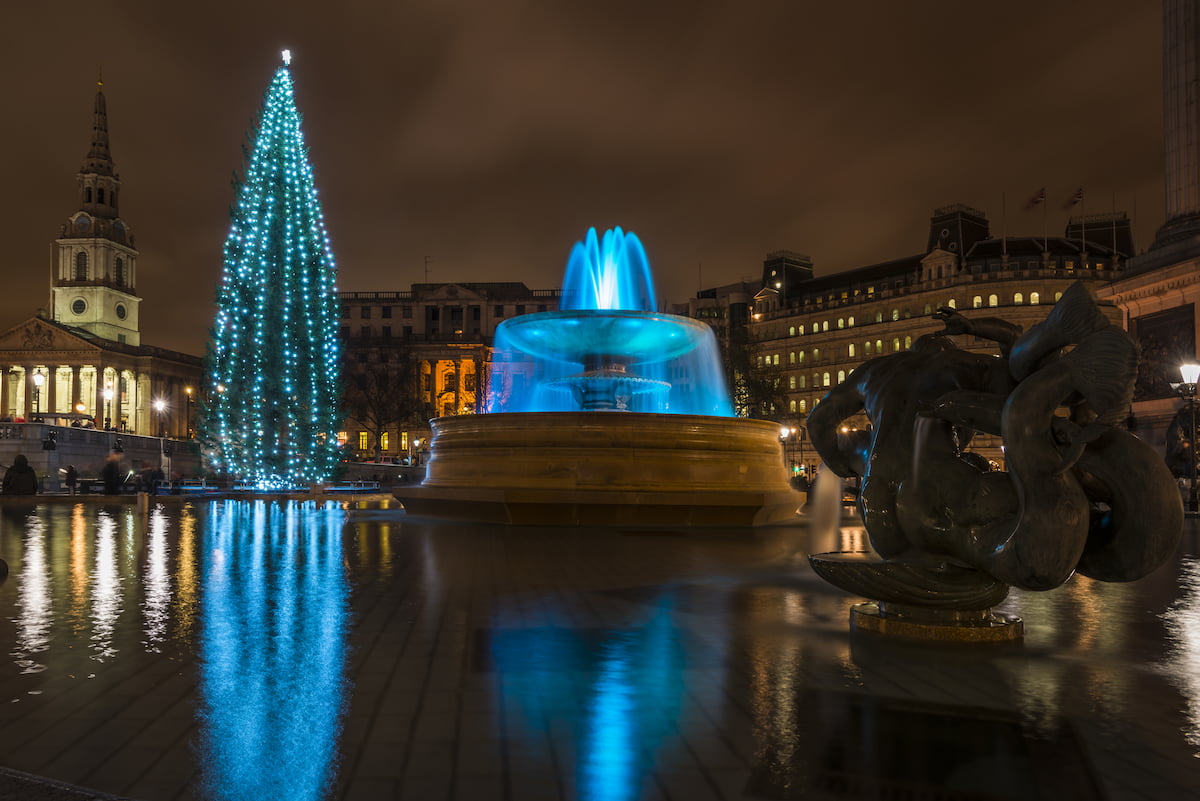
    See the Christmas Tree in Trafalgar Square

    Christmas Tree in Trafalgar Square

    Visit Trafalgar Square to take a look at the infamous Christmas tree that is carefully erected annually. This Norwegian tree was a gift from Oslo, Norway as a thank you for British help during the second world war. 

    In 1940, King Haakon VII was forced to flee to London after Germany invaded Norway. His speeches were broadcast to Norway through the BBC World Service, and at the same time, British forces trained Norwegian commandos to fight key Nazi installations in occupied Norway. The Christmas tree was first erected in 1947 and has been put up every year since. The rest is history! 

    Visit the Wonderful Christmas Lights Displays

    Christmas Lights Display on Regents Street

    Who doesn’t love to kick the festive season off with the turning on of Christmas lights

    London Christmas lights are often turned on by a local celebrity, the Christmas lights on Oxford Street, Bond Street, Carnaby Street or Covent Garden are by far the best in London (in our opinion). 

    Oxford Street lights were first lit in 1959 following the footsteps of nearby Regent Street. They have since been enjoyed yearly apart from 1976 and 1977 when the light display was absent due to the economic recession.

    Did you know – In the Victorian era, people lit up their Christmas trees by placing candles on them which often resulted in house fires. 

    Aww at the Christmas Window Displays 

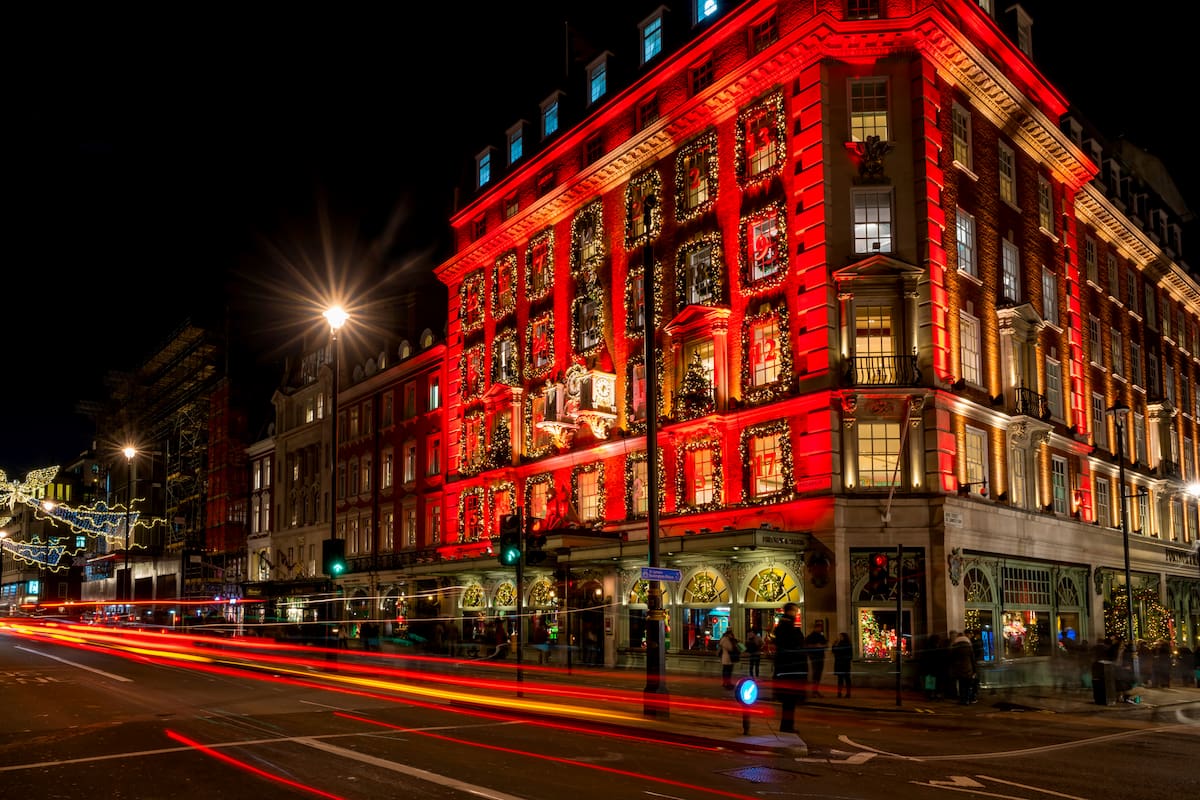
    Christmas Window Display at Fortnum and Mason

    Department stores in London will go all out with their Christmas window displays. Window shopping during the holidays is one of the best free things you can do. 

    The first on my list of recommendations is Selfridges. Every year they go all out for their Christmas displays and they even have a whole team dedicated to this. The 2020 displays were all about the ultimate symbol of the festive season – the Christmas tree. I love that they have a commitment to sustainability with Project Earth and the displays continue to use more recycled materials. 

    Harry Gordon Selfridge created the phrase ‘X shopping days until Christmas’. 

    Fortnum and Mason, The Queen’s grocer put on a great display. They believe Christmas festivities start when the Christmas displays are revealed. Eight iconic windows are decorated each year showcasing brilliant craftsmanship using hand sculpting, painting, lighting and bespoke engineering. 

    When you pop in don’t forget to pick up one of their luxury hampers (also happens to be a great gift!). 

    Harrods never fails to impress us with their displays every year! In 1908, Father Christmas made his first appearance in a store.

    Eating Mince Pies Whilst Watching a London Christmas Movie

    There is nothing better than eating mince pies whilst watching a classic London Christmas movie like Love Actually, Bridget Jones’ Diary, A Christmas Carol, Last Christmas, About a Boy, or The Holiday, just to name a few. 

    Some cinemas to check out are: 

    • Backyard Cinema creates a new theme each year for the holiday season.
    • Prince Charles Cinema always puts on a fantastic festive line-up! 
    • Luna Cinema has some seriously cool venues like Kensington Palace in the Pavilion on the Palace’s Orangery Lawn.

    Attend Midnight Mass at Westminster Abbey

    This beautiful church has been in London since 960. The church was rebuilt in 1245 into Gothic style and finished in 1517 The church is most likely where you saw Prince William and Kate’s wedding, as well as other Royal weddings and ceremonies. 

    Westminster Abbey celebrates the birth of Christ, the Light of the World, during a late-night service on Christmas Eve. There is singing of Christmas Carols, music from the Abbey Choir, and a sermon lasting about an hour and a half.

    Catch a Show at Royal Albert Hall

    The Royal Albert Hall has a great list of Christmas shows, there’s always something for everyone. From The Muppet Christmas Carol’ In Concert, The Nutcracker to Christmas With The Royal Choral Society and many other great shows. 

    Tickets to shows go on sale around August and make sure you book ahead to get the best prices and seats. 

    Explore The Hogwarts In The Snow

    The Sorting Hat at Warner Bros. Studio Tour London
    The Sorting Hat at Warner Bros. Studio Tour London

    All aboard the Hogwarts Express! Grab your wands as it’s time to visit the Great Hall with its festive makeover and sip butterbeer. The whole studio is covered in a blanket of snow from the Hogwarts castle model and shop fronts of Diagon Alley. 

    Booking tickets in advance is a must so get in early to avoid any disappointment. 

    Ice Skating at One of Iconic Locations

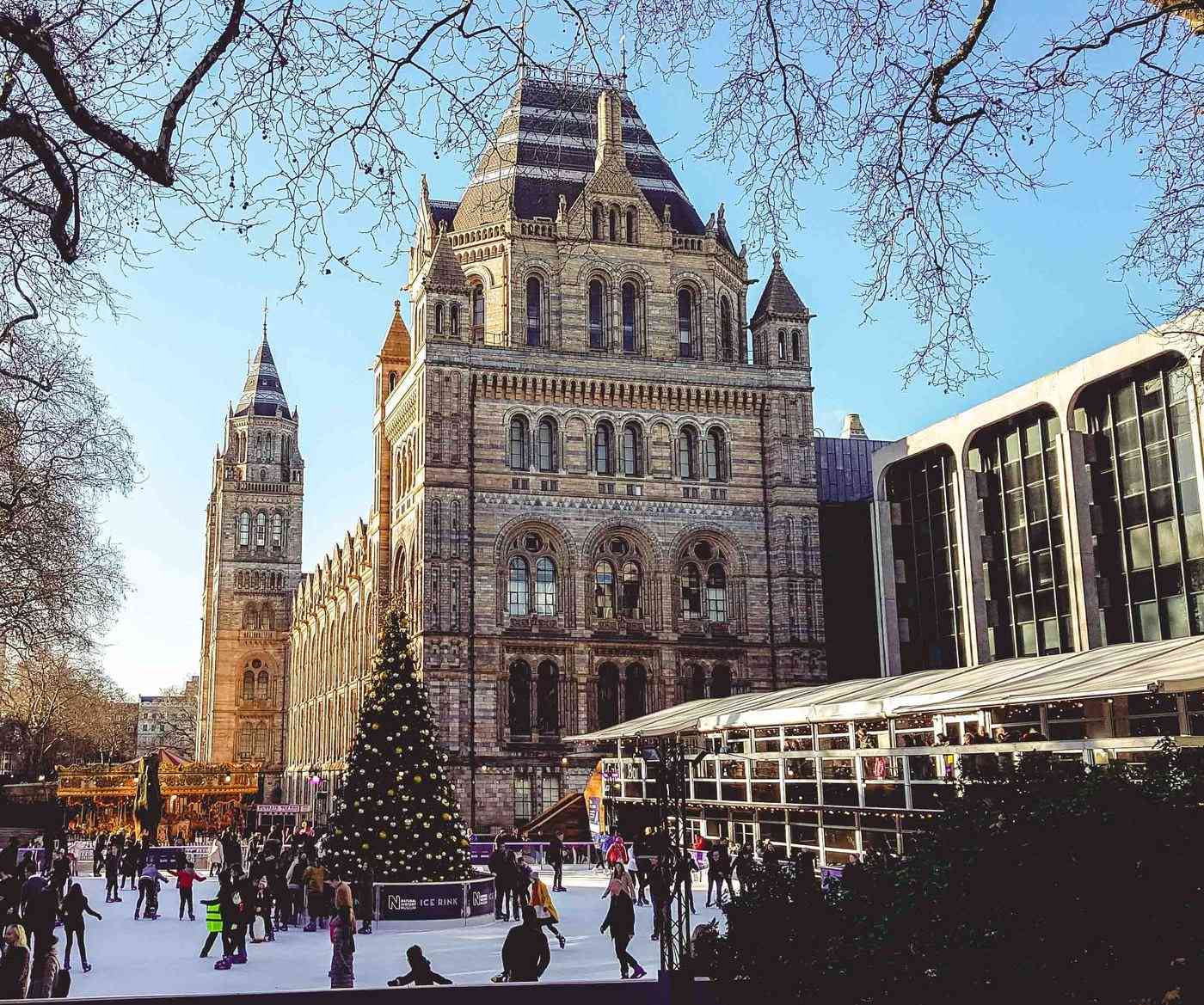
    Natural-History-Muesum-at-Christmas-time
    Christmas time at Natural History Museum is such a magical time.

    Natural History Museum and Somerset House bring out the true spirit of Christmas with their ice skating rinks. With the stunning buildings as the backdrops, it does make for a magical experience and photo opp! 

    Whether you want to try out your ice skating skills or people-watch whilst sipping a mulled wine, it’s a must-do. 

    London Pantomime

    Pantomime at Christmas time in England is a great activity
    Pantomime at Christmas time in England is a great activity

    Did we say pantomime? Oh no we didn’t. Oh, yes we did! (Did you see what we did there?) 

    The festive season simply isn’t complete without seeing a good old pantomime. 

    These light-hearted performances are perfect for a family day out and you will often see some famous faces with starring roles. A pantomime, commonly referred to as ‘panto’, is a musical comedy stage production that takes well-known fairy tales and puts a spin on them using slapstick comedy, singing and dancing. 

    They are enjoyed by families, particularly at Christmas time, and often include the audience in the jokes.

    Explore One of the Wonderful Christmas Markets

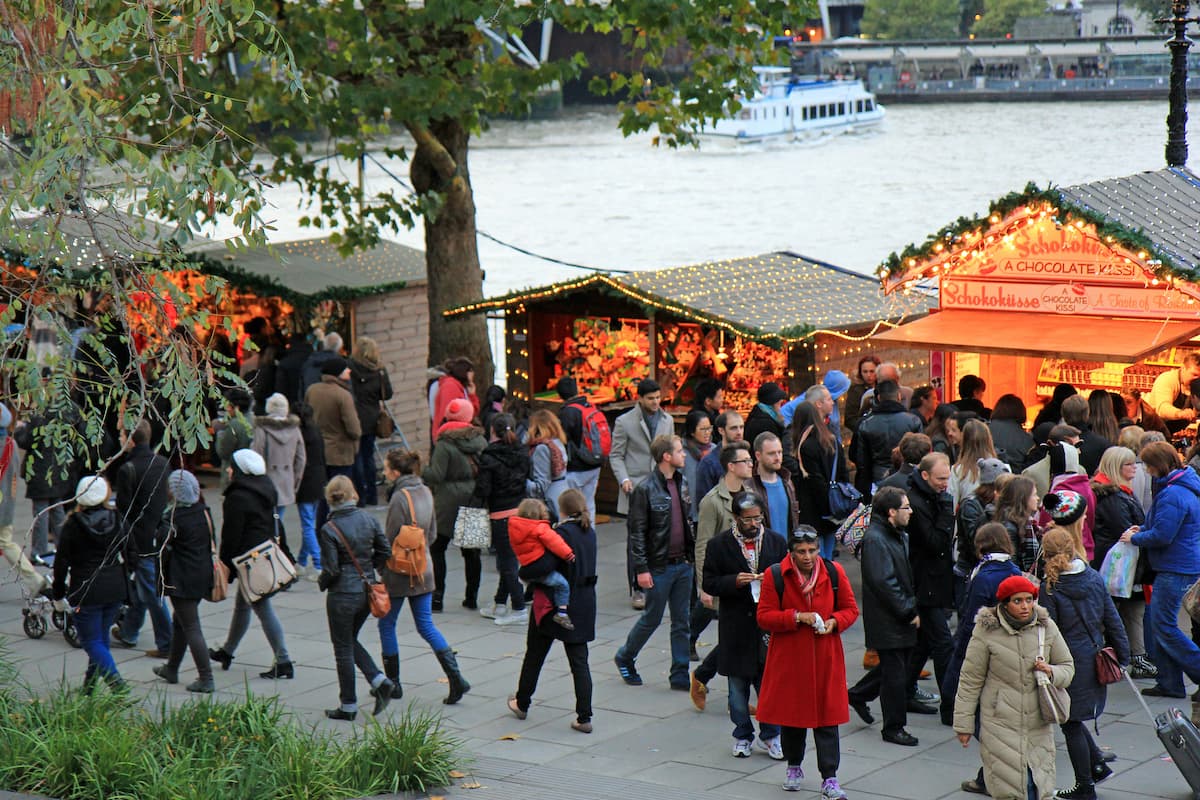
    Christmas Markets on the South Bank

    The Christmas markets are found dotted all over the country – but nothing beats the London Christmas markets! Enjoy a bratwurst sausage in a bun followed by a creamy hot chocolate whilst enjoying the hustle and bustle of the crowd.

    The markets are a place to enjoy delicious street food and purchase beautifully hand-crafted gifts for loved ones.

    The most popular markets can be found in Leicester Square, Greenwich, Southbank Centre and Kingston. 

    Winter Wonderland

    Winter Wonderland in Hyde Park

    Held annually at Hyde Park, Winter Wonderland is a truly magical event packed with jolly Christmas markets, exciting rides and fun attractions. Enjoy the spirit of Christmas with a spot of ice skating before entering the mythical ice kingdom made with 500 tonnes of sculptured ice! 

    Get Your Christmas Clothing Out! 

    Every year we pull out our Christmas jumpers (sweaters) and proudly wear them around London (at least I do). Whether it’s your friends roping you into a pub crawl, Christmas party or you just love Christmas there is always an excuse to wear one. Don’t forget about the socks, ties and any other clothing you can think of! 

    Get in early as all the good ones always sell out! Alternatively, buy a unique jumper at a thrift store or on Esty. 

    Christmas Afternoon Tea in London

    England is famous for its afternoon teas and what better way to enjoy the classic British tradition than with a Christmas theme. Restaurants and teas shops create beautiful spreads of foods with festive cakes, cookies, seasonal sandwiches and you can’t forget a scone with jam and clotted cream. 

    Seeing as you are celebrating add some champagne too! 

    Some of my recommendations are: 

    • The Ritz London.
    • The Langham.
    • The Waldorf Hilton.
    • Scoff & Banter (Budget friendly).
    • The Savoy.

    Go a Dip at Serpentine in Hyde Park

    The Serpentine Swimming Club have a Christmas tradition where they jump into the freezing cold water in Hyde Park to take part in the Peter Pan Cup. 

    Children’s writer J. M. Barrie used to present the winner of the 100-yard swimming race a cup. Because of Mr Barrie, the race was titled the Peter Pan Cup. 

    Whilst you may not want to jump into the freezing cold water it is the perfect thing to watch on Christmas day. 

    Decorate Your Christmas Tree with London Ornimates 

    Credit Shop Christmas Online: London Buckingham Palace Christmas decoration

    The world can thank Prince Albert, the beloved husband of Queen Victoria, for popularizing the tradition of Christmas without a tree.

    In 1848, a magazine published a drawing of Queen Victoria, Prince Albert, and their children celebrating around a decorated Christmas tree.

    Why not make it special by hanging some London decorations. Whether you are just visiting or live here there are so many iconic decorations you can get to remind you of your time here. 

  • Romantic Road Cotswolds (2 Drives You Can Take)

    Romantic Road Cotswolds (2 Drives You Can Take)

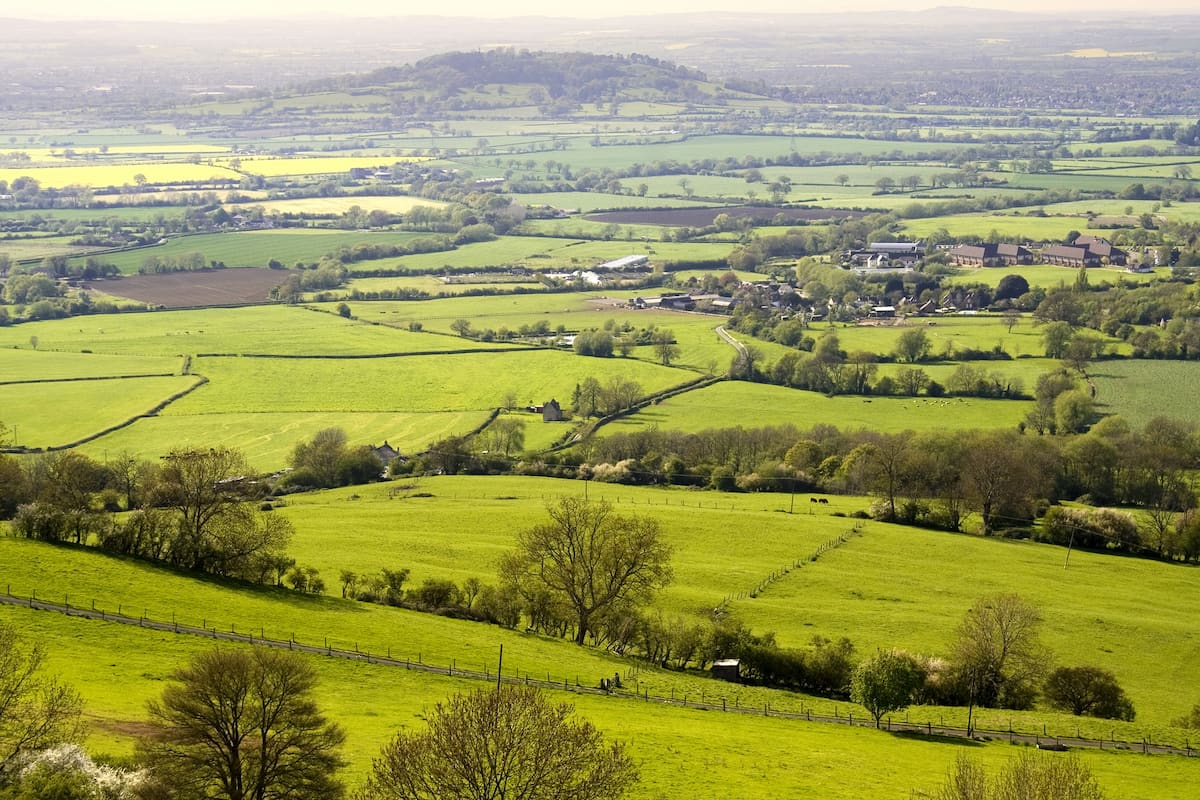
    The Cotswolds area in England is an Area of Outstanding Natural Beauty AONB with many Sites of Special Scientific Interest as well. 

    The outstanding natural beauty is enhanced by the man-made beauty of the honey-coloured stone cottages and the vast amount of ancient history and heritage in the area.

    Despite being a tourist hotspot, there are many, many opportunities for a romantic road trip within the Cotswolds and the area is awash with romantic cottages and hotels to stay in as well.

    Here, we are going to take you on not one but two romantic days out in the Cotswolds starting from the Regency Town of Cheltenham.

    Route 1: Romantic Road Cotswolds (with Off the Beaten Path Locations)

    Romantic Road Cotswolds (with Off the Beaten Path Locations)

    The getting away from it, the countryside meanders romantic road trip:

    This road trip is mainly about getting away from the madding crowd but not missing out on some beautiful, but busy places.  Hopefully, the advice on where to stop for a stroll will work and these places will not be overrun with couples who have read this enjoying romantic breaks!

    From Cheltenham

    Head out to the B4632 via Prestbury and you can enjoy the slower pace of the B road and admire some lovely houses on the outskirts of Cheltenham before entering the countryside.

    Just after a straight piece of road and the sign for Winchcombe and the 30 mile an hour sign turn right towards Belas Knap, right again into a narrow tree-lined lane Corndean Lane.

    The trees open up to reveal the lovely view of Belas Knap Long Barrow as you drive along the side of the hill.  Stay on this road until you reach a crossroads where you can turn right for Charlton Abbots and Guiting Power, take this turn.  Follow on and go straight across the crossroads for Guiting Power.

    Guiting Power is a nice, quiet village and an ideal place to park up and go for a walk to admire the many different building styles in the honey stone.

    Leaving Guiting Power head for Bourton-on-the-Water via B4068 and then Lower Slaughter and Upper Slaughter.  This route takes you onto the high ground again and affords stunning countryside views. 

    Once you get to Bourton-on-the-Water turn into Landsdowne which leads into the High Street and the prettiest part of the town.  You can decide if you want to stop here or drive through, if stopping there are parking spaces on the road that make a good place to walk along and back to.

    Pavement cafe, Bourton on the Water

    Continue along Rissington Road to Little Rissington and immediately before the road sign for Upper Rissington turn left signposted for Stow-on-the-Wold

    Turn left immediately after Phipp Feeds, you are going to Wyck Rissington, the smallest of the four Rissington’s and a place with a lovely 750-year-old church where Gustuv Holst was organist for a while.   

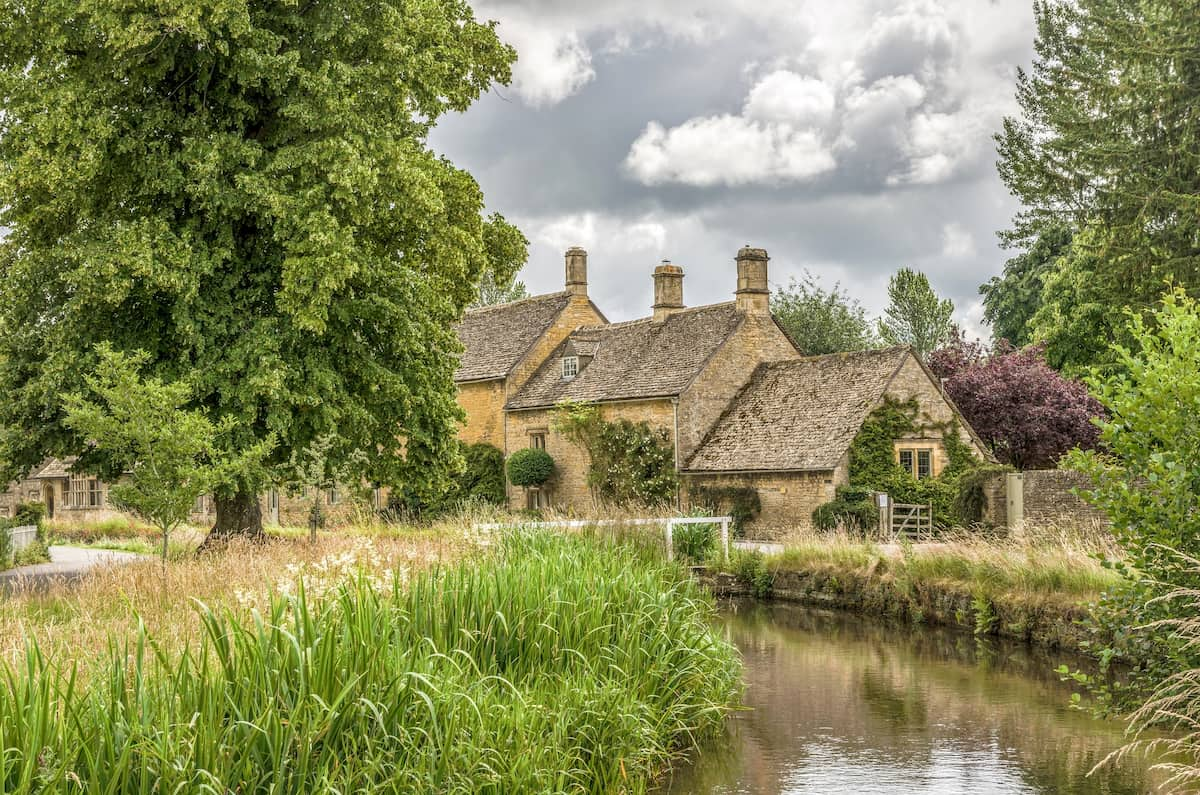
    Wyck Rissington takes you on to the A462 where you need to turn left and then right to Lower and then Upper Slaughter.  It is definitely worth stopping in Lower Slaughter and having a lovely walk, it should be much quieter and is less commercial than Bourton-on-the-Water and is a very beautiful, romantic place for a stroll.

    River Eye at Lower Slaughter

    Onwards towards Batsford Arboretum and you have a choice once you get there depending on your preferences…  Batsford Arboretum is described as a lovely place for a romantic walk and it does look very beautiful.

    However, you do have some more towns and villages to see and are on course for the National Trust’s very special, internationally renowned Hidcote Manor Gardens

    On the way to Batsford, you will pass through lovely Lower Swell, turn right at the T junction and on to Upper Swell where you briefly go onto the B4077 by turning left and then right.  This brings you onto the A424 and turn right onto the A44 towards Batsford Arboretum, or left to go straight to Blockley via the B4479.

    From Batsford Aboretum, it would be right from their entrance and then right onto the B4479 and through Blockley on towards Hidcote Manor Gardens.

    If not going to Hidcote Manor Gardens then you would not need to turn off for Blockley, but go on to the Broadway Tower.

    If going to Hidcote Manor Gardens pop it into the Sat Nav at Blockley, go on through Ebrington and you should soon pick up the brown signs for Hidcote Manor Gardens that will guide you in. 

    When you leave Hidcote Manor Gardens head for Broadway Tower a folly designed to be seen from Lady Coventry’s house in Worcester.  It is on one of the highest hills in the area and the views are stunning.

    Hidcote manor gardens in the english cotswolds

    Now, back to Cheltenham via the B4068 and A436.

    This trip is largely about exploring the beautiful country lanes and getting off of the usual road routes to do so.  Therefore, I strongly urge you to use a sat nav with caution, mainly only put on if you think you may have taken a wrong turn in the many lanes and are near the next destination.  The Romantic Road depends on being off the main routes.

    Approximately 4-5 hours drive time depending on traffic and approximately 75 miles.

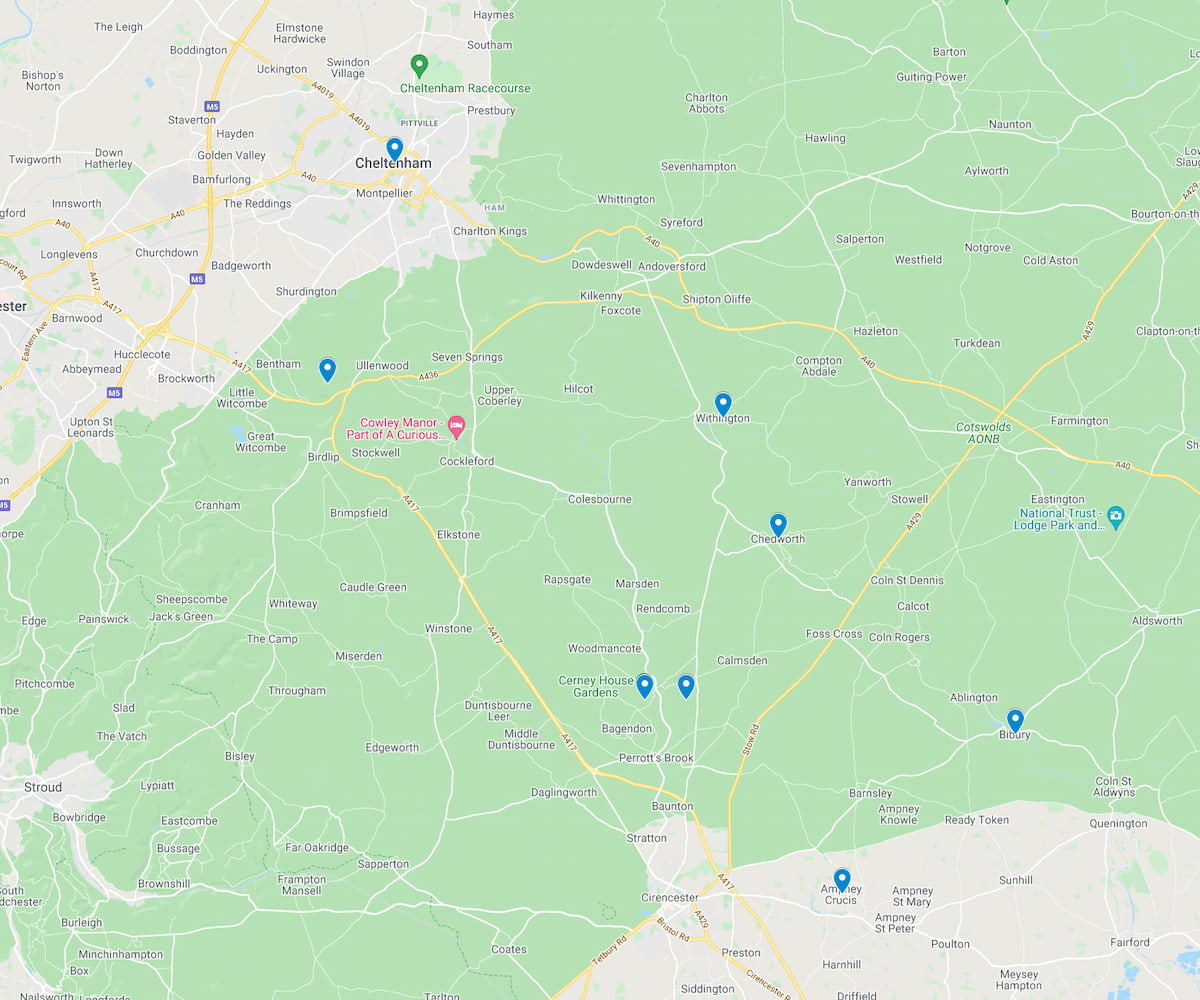
    Route 2: The Path Less Travelled Tour

    Route 2 The Path Less Travelled Tour

    This trip takes in some lovely ancient historical locations and landscapes as well as some achingly romantic settings for you to enjoy with your loved one.

    Head out of Cheltenham on the A40.  This takes you past the Dowdeswell Reservoir before you turn off towards Withington, Chedworth and Bibury.

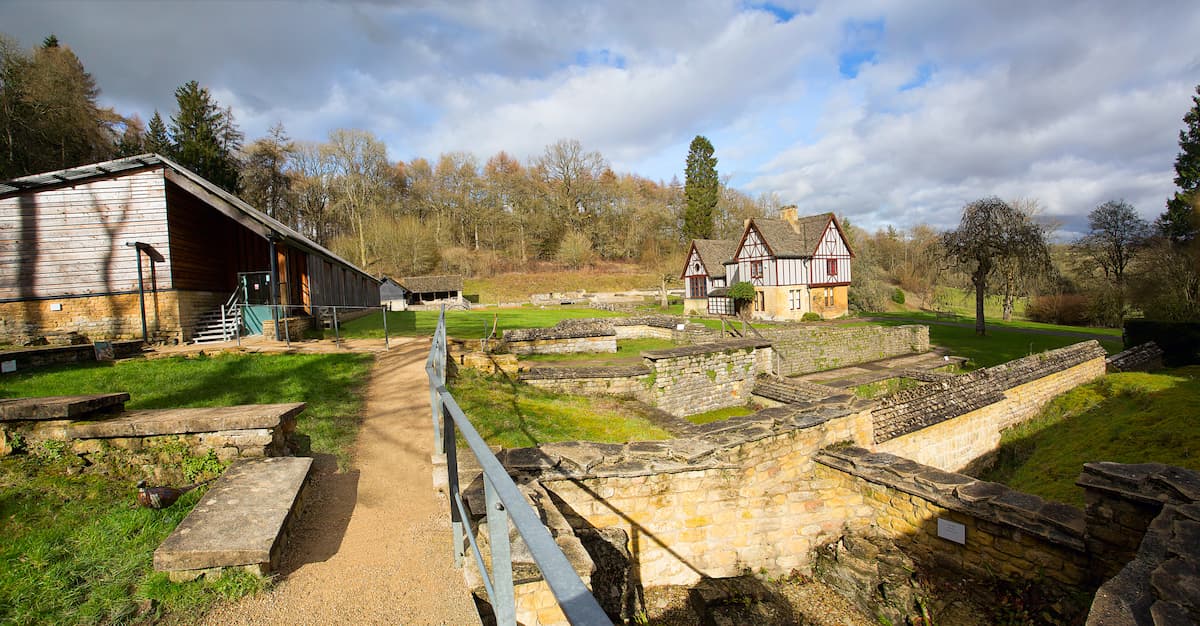
    Withington is a very pretty place to drive through and is a natural route to get the Chedworth, where a visit to the Chedworth Roman Villa is recommended along with a stroll around the village.  Depending on the time of day you set out, the Roman Villa is a romantic place for a picnic lunch.  Although, you may decide to enjoy a coffee at the onsite cafe at other times of day and have lunch elsewhere.

    Chedworth Roman Villa

    Before you go, have a look around Chedworth, there are some very pretty cottages.

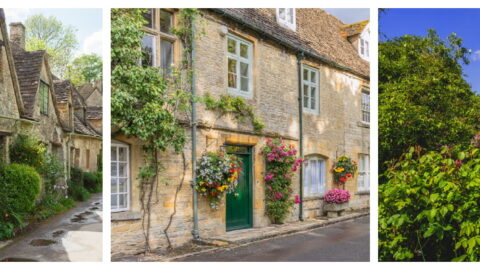
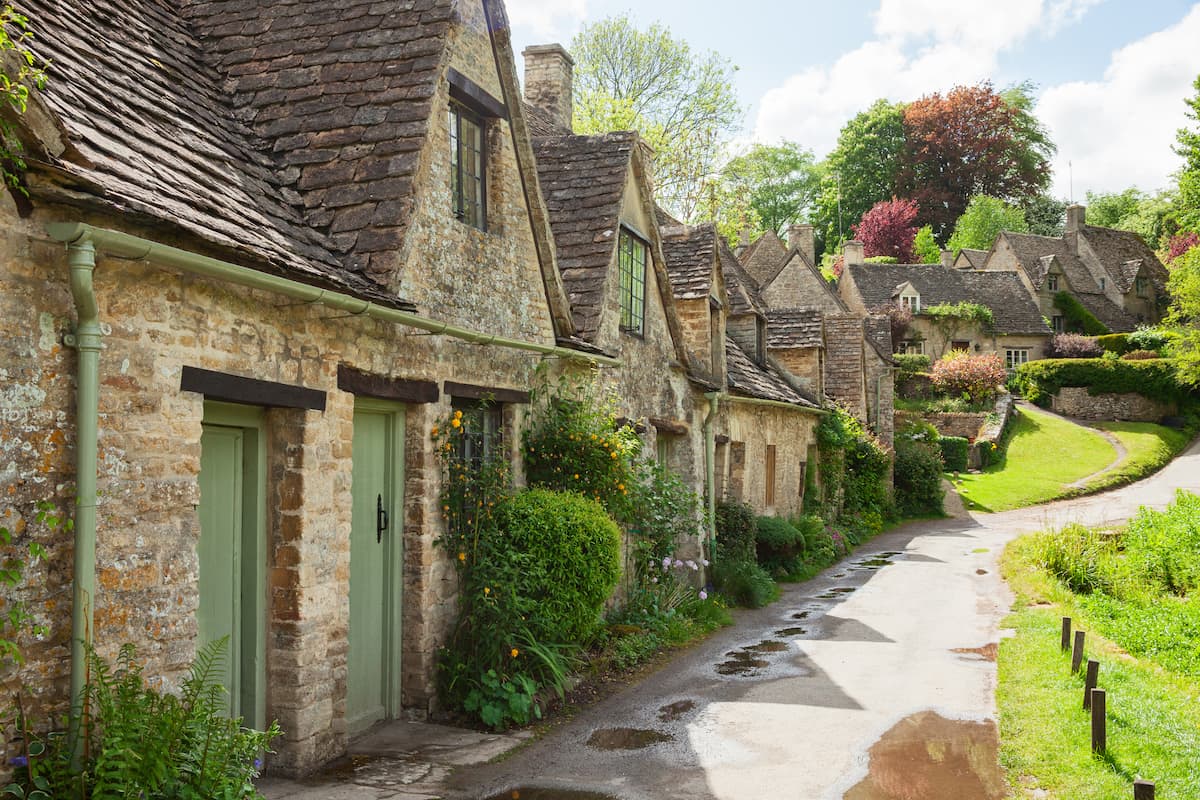
    Drive to Bilbury, you will travel a short way on the A429.  A must-stop location. Bilbury is beautiful, romantic and a perfect place to enjoy some relaxing time together, to allow the stresses of life to fade away as you walk arm in arm alongside the bubbling river and enjoy the peace and tranquillity that Bilbury offers. 

    Old street with traditional cottages in beautiful spring day , Bibury

    Ampney Crucis is the next drive-through location and when you get to the T junction, turn right and then follow the road through the village to the crossroads and turn right onto the A417, London Road towards Cirencester. 

    Pop Cerney House Gardens in the sat nav and you will be guided through Cirencester, a place to visit on a less romantic day.

    Cerney House Gardens is well known as a romantic beauty spot in the Cotswolds and is a must-visit location on this trip.  They have a cosy cafe, a shop and plant sales.

    When you have enjoyed the gardens, take a drive through the village of North Cerney, it is another one of those pretty, unassuming Cotswolds villages that is peaceful and beautiful.

    Driving back towards Cheltenham from North Cerney to enjoy some time at Crickley Hill, you are in an ancient, historical landscape: There is a great deal of Roman history in the area and Channel Four’s Time Team excavated near the route to find Roman ruins.  The area has many ancient burial mounds, barrows and hill forts.

    The route along the A435 is largely tree-lined to start with making for a very pleasing dappled light as you motor along. 

    After the turn off to Cockleford there is a small crossroads, with the left turn signposted for Cowley.  Turn off down here and into Cowley, a lovely off the beaten track place with some stunning architecture to see as you drive through.

    On the other side, the lane once again takes you into the heart of the ancient landscape as you head towards Crickley Hill.  After about 2 miles turn left at the crossroads onto the A436.  Observe the brown sign and turn right to Crickley Hill.

    Views from Crickley Hill Country park near Gloucester

    Crickley Hill is jointly managed by the National Trust and Gloucestershire Wildlife Trust and not only is it a lovely place for a walk, but it is of immense importance for wildlife.  It has evidence of human habitation right back to 4000 BC and the National Trust advise that it has magnificent views ‘magnificent views towards Robinswood Hill and May Hill, and the Brecon Beacons and Black Mountain beyond.’

    Following a bracing and romantic walk at Crickley Hill taking in the stunning far-reaching views, it is time to head back to your accommodation in Cheltenham for a luxurious bath and well-deserved cocktails.

    Approximately 2.5 – 3.5 hours drive depending on traffic and Approximately 56 miles.

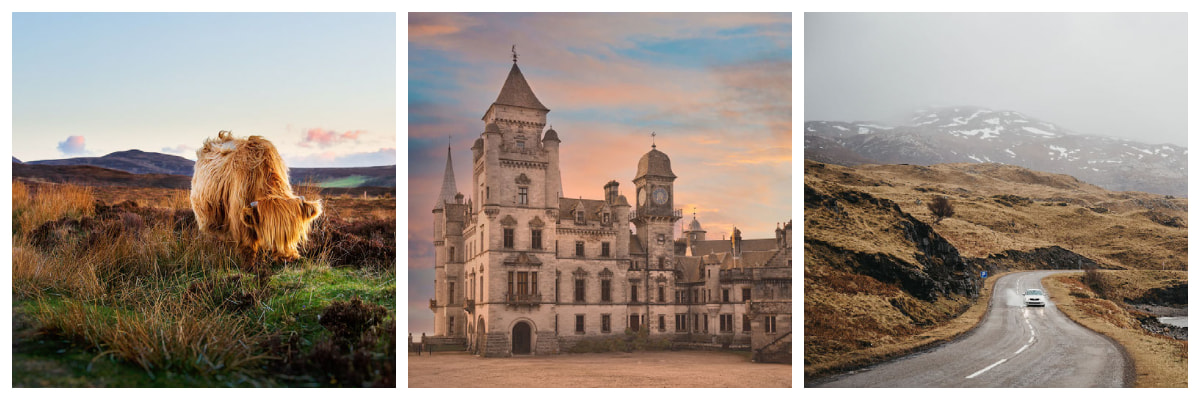
  • Scotlands North Coast 500: 7 Day Itinerary

    Scotlands North Coast 500: 7 Day Itinerary

    The North Coast 500, Scotland’s answer to Route 66, is one of the most well-known ways to tour the highlands by car, incorporating over five hundred miles of beaches, mountains, lochs and ocean into one trip of a lifetime.

    This trip begins in the city of Inverness and takes you north to some of the most northerly points of mainland Britain and back down again.  This seven-day itinerary is designed to be your ultimate guide to the NC500, helping you to see all of the essential parts of this coastal route and tailor the experience to you.

    North Coast 500

    Things to know before you go on North Coast 500

    It’s important to plan your NC500 trip in advance for the benefit of Scotland’s landscapes and residents.  The land around the north coast is very well preserved and it is important that it remains this way.  In order to do this, ensure that you dispose of litter and waste in the appropriate way and follow the Scottish Outdoor Access Code to ensure that the landscape is undamaged when you leave it.

    Here are some tips and things to think about while planning your trip:

    Camping as Accommodation

    Camping is an excellent form of accommodation to consider while doing the NC500.  The route is a popular one, so hotels, hostels and B&Bs tend to book out very quickly and far in advance.  This makes camping an ideal way to do the route if you haven’t planned as far in advance.

    This is also a very economical way to travel, as campsites tend to be very affordable in Scotland, with wild camping as an option too.

    Tricky Roads

    The road leading up to the infamous Bealach na Ba road reads “not advised for learner drivers”, and while this is a particularly tricky road, the advice can be applied to a large portion of the roads on the NC500.

    Many of the roads are narrow, winding and single-track roads with sharp bends and a lot of wildlife nearby, so it is best to have an experienced driver behind the wheel for the duration of the trip.

    Book in Advance

    As soon as you know the dates you are doing the route, book your accommodation.  Every single year the North Coast 500 gets more and more popular, and even more people are considering it in 2020 due to foreign travel restrictions being tighter.

    It is important to remember that everyone follows a very similar route with a lot of the same stops and destinations, therefore the accommodation on the route is booked out entirely well before the summer months begin; July’s slots normally book out around January time.

    The good news is that there are over 600 accommodation options on the route, so if you’re organised then the choice will be all yours!

    Travel Off-Peak

    Like any popular tourist attraction, it has times where it is busier than others, so if you really do want your pick of accommodation and a quieter experience at popular tourist attractions then it is certainly wise to consider doing the route at an off-peak time.

    Historically, the route has been busiest in June, July and August as these are the months where the weather is best and where British schools are on summer break.  If you are looking for a balance between weather and quieter seasons, then May and September are great options to go for.

    Day 1 – Inverness – Dornoch

    58 min drive

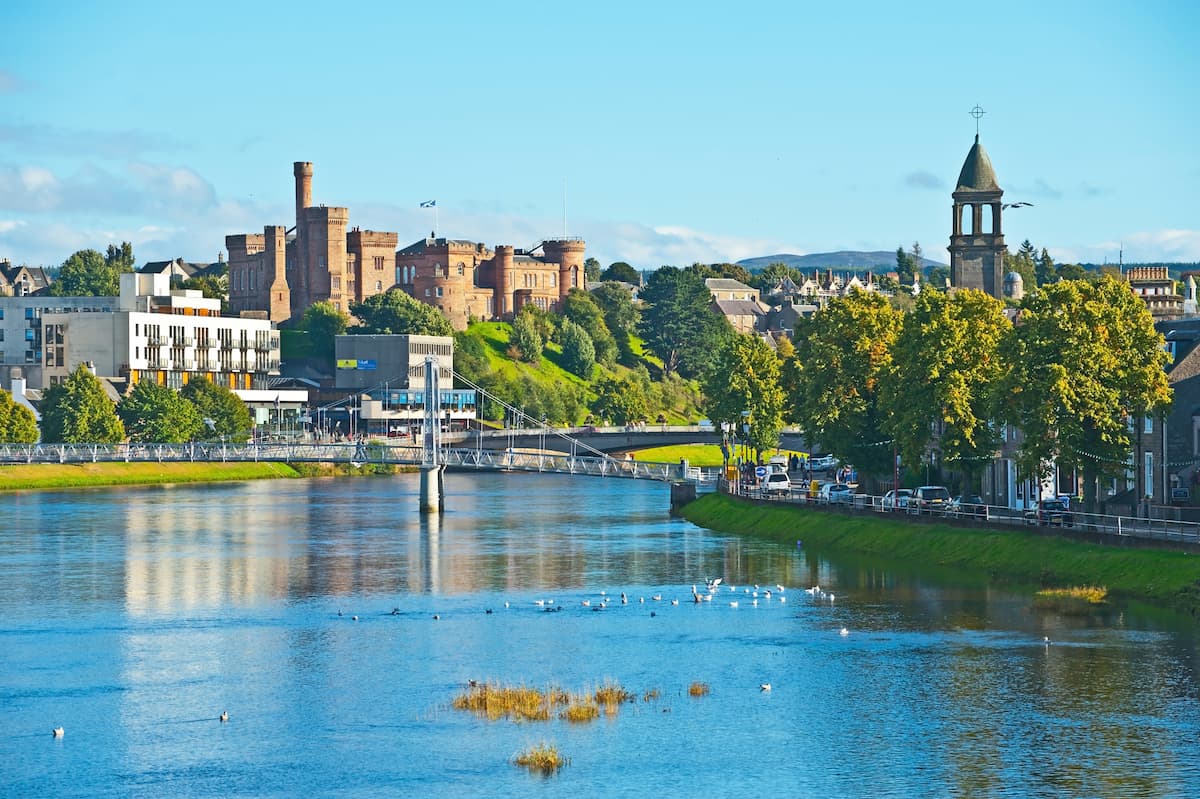
    River Ness and Inverness Castle

    Before you leave Inverness and begin on this road trip, you may wish to see a few of the sights before you hit the road.  The trip will also be taking you back to Inverness at the end so you can also choose whether you would like to see the city now or then.

    Whatever you decide to do, it is certainly worth your time to see the sights in and around the city, such as the castle and museum, or, only a short drive away, Loch Ness, Cawdor Castle and Culloden battlefield! It is certainly worth spending an entire day ticking off what you would like to see here.

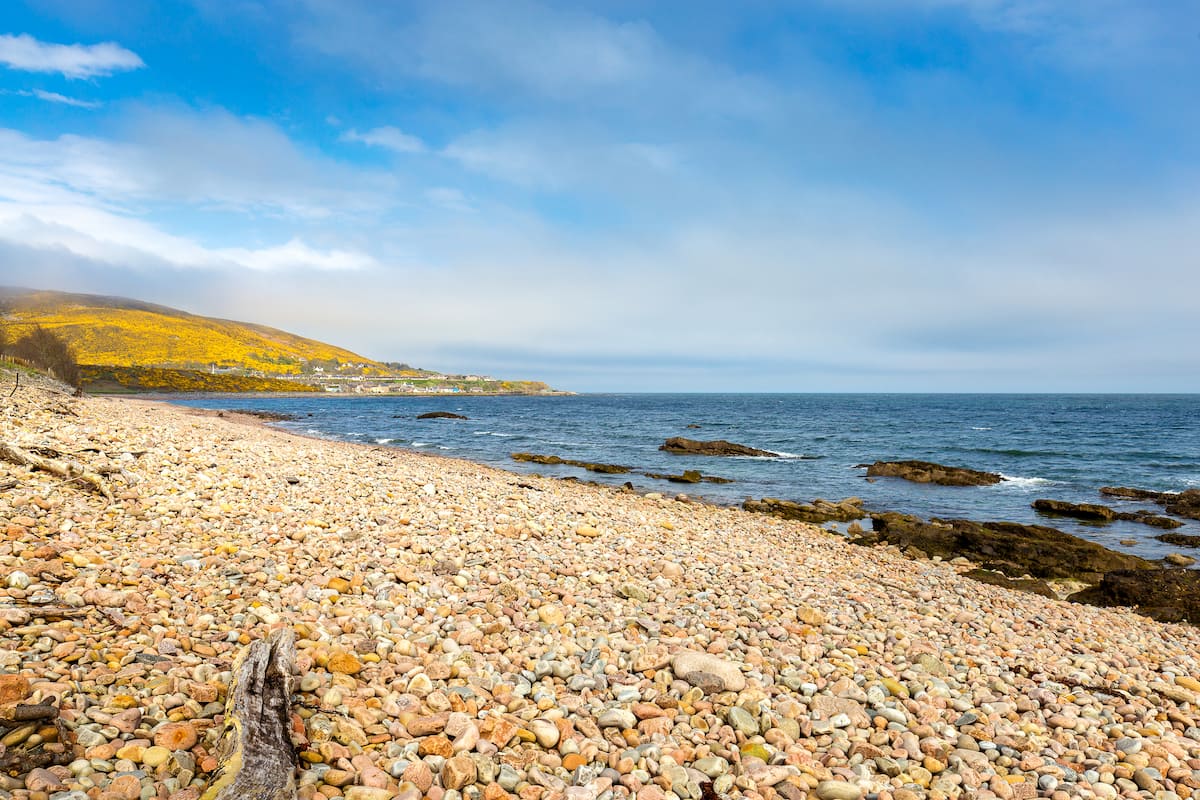
    Once you have left Inverness, you are only a short hours drive from the town of Dornoch, a small seaside resort located in the county of Sutherland near where the Dornoch Firth opens into the Moray Firth.  It is no surprise that this town is so well known for its beach, with long stretching golden sands and clear shallow waters making it perfect for a long stroll or a family day out on a summer day.

    If it’s walks and exploration that you’re looking for, on the other hand, then why not try out the Falls of Shin walk?  Follow the road that takes you through Achany Glen all the way to a beautiful forest clearing, from which you can take all sorts of trails through woods and hills perfectly suited to walkers of all different abilities.  This is also a great walk to take with children, as there are plenty of easy-going routes and an abundance of natural playgrounds for them to enjoy! 

    Following the outdoor theme here, Dornoch also offers an excellent opportunity for spotting different kinds of local wildlife, both on the land and in the sea, such as ospreys, red deer, sea birds, seals, dolphins and ducks, which can all be located around the coastal areas.  The landscape in and around Dornoch has been preserved well and therefore provides a great home for a whole host of species that aren’t common in many parts of Scotland.

    Dornoch. Architecture, Art and Nature

    Day 2 – Dornoch – Wick

    1 hr 26 min drive

    Hopefully, Dornoch was the perfect taste of what the North Coast 500 has in store for you and that you are ready for your second journey along the North Coast.  Today’s drive is not a long one, coming in at only around an hour and a half, but there are still plenty of stops that you can make along the way.

    Main attractions on the road:

    Loch Fleet

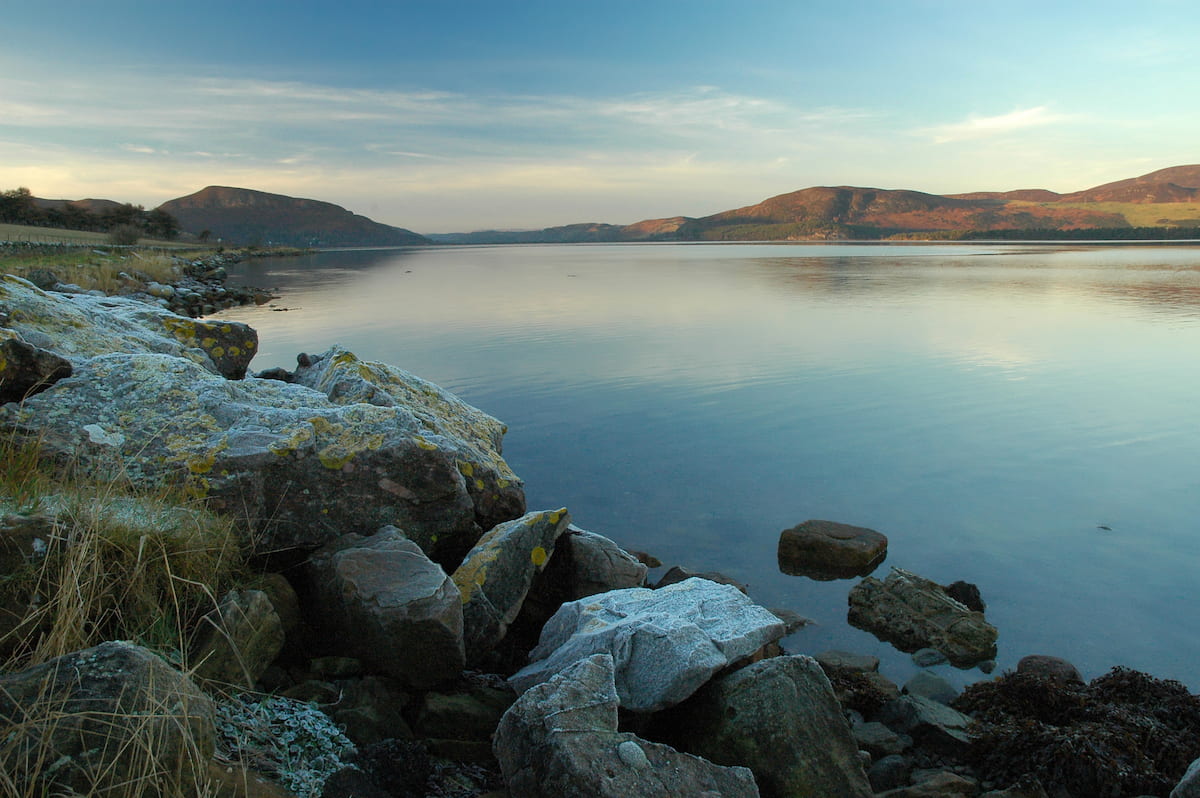
    Winter Dusk, Loch Fleet

    This loch is one of Scotland’s National Nature Reserves and exhibits a huge amount of animal and plant life to be observed, including otters, seals, wildfowl, sea birds, orchids and butterflies. 

    Due to the fact that the loch is a tidal basin, the landscape surrounding it is comprised of sand dunes, mudflats and pinewoods which prove to be a wonderful combination, particularly for those who enjoy bird watching and examining local plants.  There are plenty of excellent local walks to be done around the loch to experience these things.

    Golspie

    If you are looking to learn more about the history of the highlands, then Golspie is a great place to stop off and take some time to learn about the highland clearances through their statue of the First Duke of Sutherland erected in 1837. 

    The Duke is known for having a controversial role in the clearances and thus is a good place to gain some more knowledge of the effects that the clearances had on the people of the Highlands.

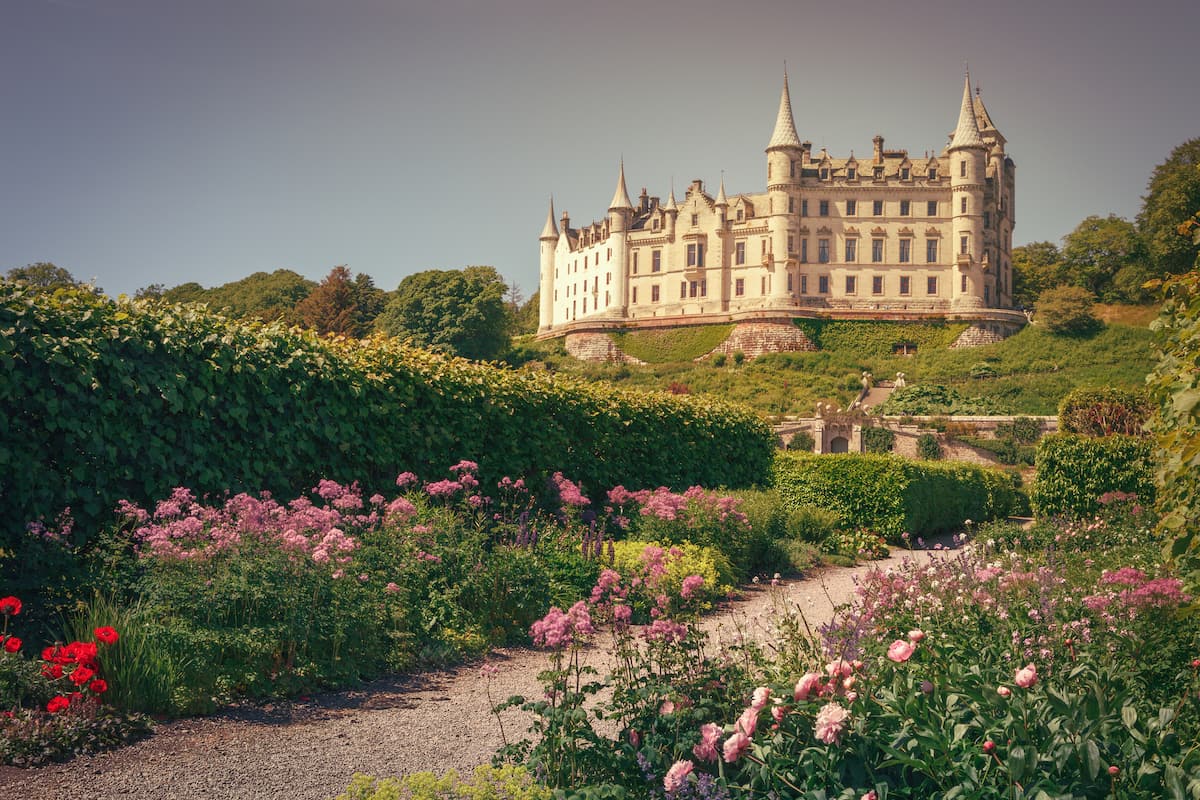
    Dunrobin Castle

    The beautiful Dunrobin castle, northern Highlands in Golspie

    You simply cannot miss this castle while driving the road up north; it is a towering castle that resembles something out of a fairytale, with its towering turrets and spires and bright white appearance. 

    It is the largest of the Highlands castles, sporting an impressive one hundred and eighty-nine rooms, and was inhabited from the 1300s to the 1800s by various royals.  After this, it was used as a naval hospital during the First World War, and a boys’ boarding school during the 1960s and 70s. 

    The castle is open from April to October every year, meaning that you can even go in and have a look at its splendour inside.  It is truly difficult not to feel like a royal while roaming these stunning halls.

    Helmsdale

    View to Helmsdale

    Furthering your education on the highland clearances (for all you History buffs out there), Helmsdale is one of the more modern highland villages, as it was formed as a place to resettle members of the communities who had been removed from surrounding areas as a result of the clearances. 

    The town has now developed its very own character and has many attractions besides its rich and interesting history.  One of the main attractions in this picturesque harbour village is salmon and herring fishing, which is how it originally prospered in the 19th century.

    Now that you’ve broken up your drive suitably, it’s time to get back on the road for that final stretch until you arrive at your final destination of the day, the historical town of Wick. 

    This is where you will be staying for the night, meaning that alongside the sights that you can see when you arrive in Wick, you can also check out the restaurants and pubs situated in the centre of the town, to experience the atmosphere alongside the locals.

    If Scotland’s world-famous Scotch is something that you are dying to try on your tour, then why not make the most of Wick’s very own Old Pulteney Distillery, which is open to the public for a variety of tours and tastings, so you can experience the popular drink the way it was supposed to be tasted!

    Day 3 – Wick – Durness via John O’ Groats

    Caithness and Sutherland

    2hrs 28 min drive

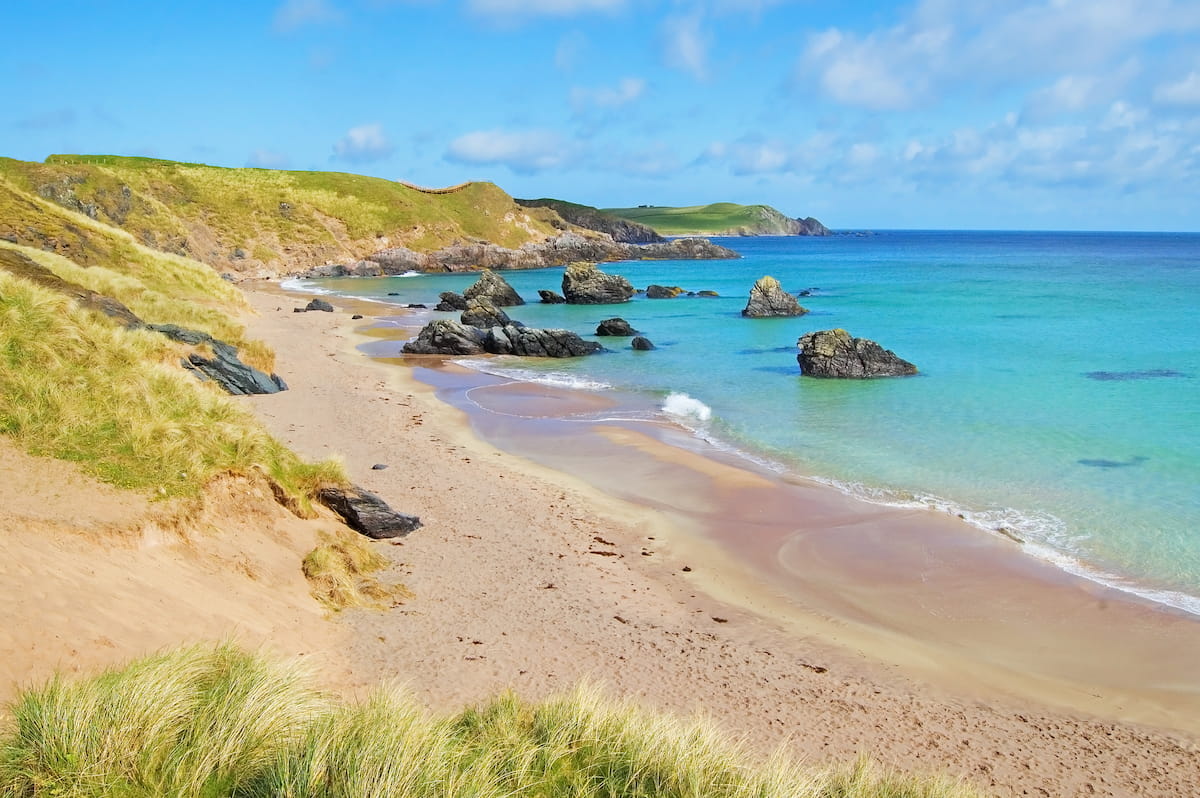
    Sango bay Durness beach

    This now concludes the western coast of the NC500, bringing you on to exploring the most northern parts of mainland Scotland.  Today sees you entering the North West Highlands Geopark, which holds a specific interest in terms of its geological features and also brings many a tourist due to its unrivalled beauty. 

    The next drive is the longest of the entire trip, coming in at nearly two and a half hours, but the good news is that you can break it up with one of the most popular stops on the North Coast 500, and the furthest northern settlement on mainland Britain, the world-famous John O’ Groats. 

    This drive will pose plenty of opportunities to see stunning scenery, more wildlife and some of Scotland’s best-hidden gem beaches.

    This drive will also see the driver encountering the first single-track roads of the trip, so it may be best to research some driving guides beforehand so that you feel more confident with how to drive on these types of roads. 

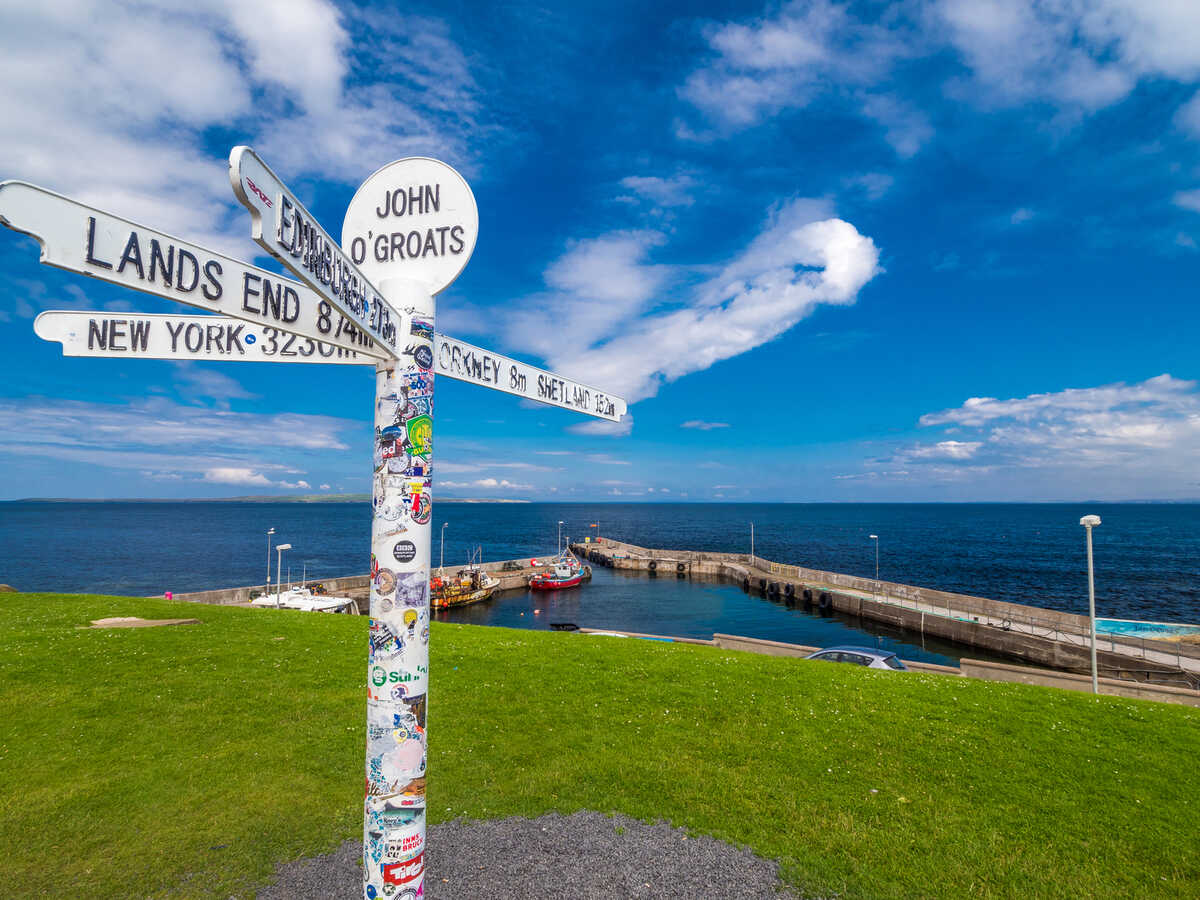
    John O’ Groats

    Sign-post-at-John-O-Groats-Scotland

    This destination made its name in the world when it was incorporated into the ‘End to End’ route which connects the two farthest points of Great Britain (the other being Land’s End in Cornwall).  Although it is not the most northerly point, it is the furthest northern settlement on Mainland Britain. 

    The settlement is a prime location for views out over the North Sea and onto Orkney.  If you are visiting the village in the summer months then it is a great opportunity to take a sightseeing ferry and see what sea life you can spot! 

    The coastline in this part of the world is truly breathtaking and unlike anything that can be seen along the west and east coasts of Scotland, and the colourful houses sat neatly by the harbour really do look like something out of a movie!  Those of you from more southern parts of the world may also be able to experience the Northern Lights from this part of the world, so keep your eye out for the times where you are most likely to see them!

    As you continue on to Durness, there are plenty more stops you can make along the way – such as Dunnet, Thurso, Bettyhill and Tongue – all with their fair share of attractions and sights to see. 

    Your destination for the night, however, will be the village of Durness, which is known for its pristine turquoise waters resembling those in the south of mainland Europe. 

    The main attractions here are certainly the coastal ones, including Smoo Cave, a massive cavern easily reached down its well-maintained steps; Cape Wrath, a rocky coastal viewpoint where one can see sky and sea for miles ahead; or Balnakeil Beach, known specifically for its clear blue waters and peaceful stretches of golden sands.

    Day 4 – Durness – Lochinver

    1hr 24 mins drive

    The drive from Durness to Lochinver is only around an hour and a half, but there is plenty to be seen along the way:

    Scourie

    Stunning sunset over the bay at Scourie

    Scourie is a small crofting village with a picturesque harbour with a unique looking rocky bay stretching far into the north-west. 

    Upon exploring the south side of the bay one can expect to see views stretching far north up the bay for the best views of the rocky landscape.  Ben Stack can also be seen from the right side of the bay, which is a popular site with tourists.

    Unapool

    Sunset at the Gleann Dubh loch in Unapool

    This is a great stop if you want to learn more about the North West Highland Geopark, as it has its very own exhibition room in the old Unapool schoolhouse. 

    There is plenty of visitor information here and a cafe where you can stop for a quick bite as well, and a small gift shop to give you the opportunity to support the Geopark! This can also give you some great ideas of other locations in the Geopark that you might want to visit on your travels.

    Once you’ve stopped at some of the quieter villages on your way to Lochinver, you can complete your journey and arrive in one of the most important fishing ports in the Assynt area; that’s right, you’ve arrived at Lochinver!

    There is so much to do in this stunning village, including pottery, hiking, cycling, fishing and walking – and don’t forget to stop off at the famous Lochinver Larder for one of their infamous pies.

    The town is split into three parts – the harbour, the village and Baddidarrach, along the shore of Loch Inver.  The village is where one can find a quaint high street with the main shops and services, including places to eat and drink. You can also visit the wonderful Assynt Visitor Centre, the free museum, and the Tourist information centre for more information on the local area.

    Day 5 – Lochinver – Gairloch

    2hrs 9mins drive

    Unidentified car driving on a road going through Scottish Highlands near Lochinver

    Making your way south down the west coast of Scotland, you are now making your way to the village of Gairloch, which will be your next destination.  Another popular stop on the NC500 is Ullapool, and for a full day guide on what to do here, check out our Highland Itinerary Guide.

    During this drive, your main attraction will certainly be the beaches – you are truly spoiled for choice!  The favourite of tourists and locals alike, however, is without doubt Mellon Udrigle Beach in Wester Ross, known for its white sand and turquoise waters that are just perfect for swimming in during the summer months.

    Gairloch itself, the destination of this drive, is like a concentrated version of the Scottish highlands due to the fact that it can offer you a little bit of everything that the highlands. It is a small village that spreads along the coastline, which has both beaches and rocky expanses.  It also offers islands, lochs and mountain views – it truly is like miniature highlands!

    Rather than being a once concentrated settlement, Gairloch actually has a few separate points within it that are worth visiting.  If it is Gairloch’s harbour that you are looking for then Charlestown is where you’re headed, but you can also head toward the golf club to the stunning beach, known for its sunset views.

    Driving north by Loch Gairloch then brings you to Strath which leads into Smithtown which is the commercial centre of Gairloch where you can find shops, inns and a hotel complete with a campsite which looks over the coast.  The views from all over Gairloch are what it is most known for, with its stunning shore and views over the Loch where it meets the sea.

    Day 6 – Gairloch – Beauly

    1hr 23mins drive

    Sunset over the dunes at Big Sand Beah at Gairloch

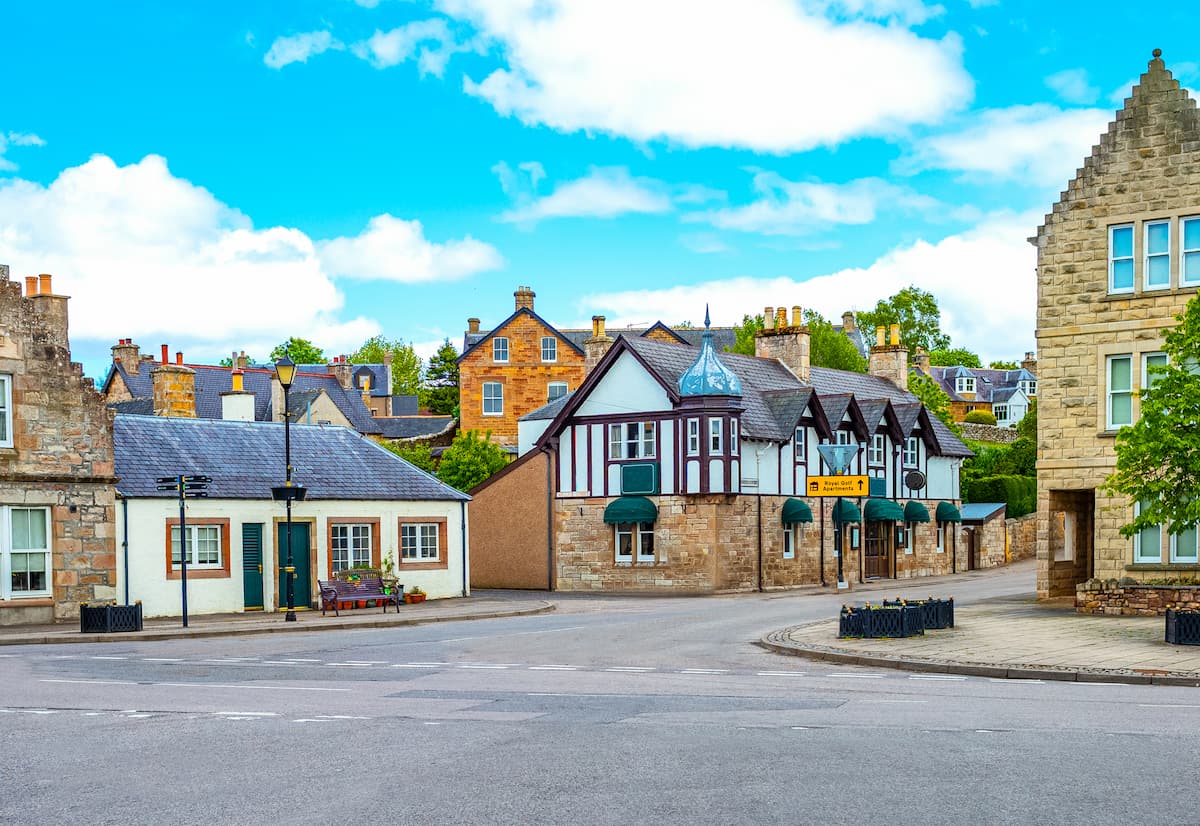
    We are now coming to the end of the trip and travelling to the thriving village of Beauly, nearly back to where we started the trip in Inverness. 

    Although you are only a twenty-minute drive away from Inverness now, Beauly is still a great place to stay for the night as it offers a whole range of things to do and a change of scene from the busy city.  We have had a share of difficult hikes on this trip and now reside in a location better suited to gentle walks around the River Beauly and the village.

    If you happen to be in the village on a Thursday evening, why not head over to the main square to hear Beauly’s own Pipe Band which plays there each week during the summer, providing an excellent atmosphere. 

    If you don’t happen to catch the band, however, then not to worry – the square is still the centre of activity in Beauly and there is still plenty to see and do around the area. There are many shops around the square as well as restaurants and pubs making it the perfect way to round off your NC500 trip – with a good meal and a drink!

    Day 7 – Beauly – Inverness

    26 mins drive

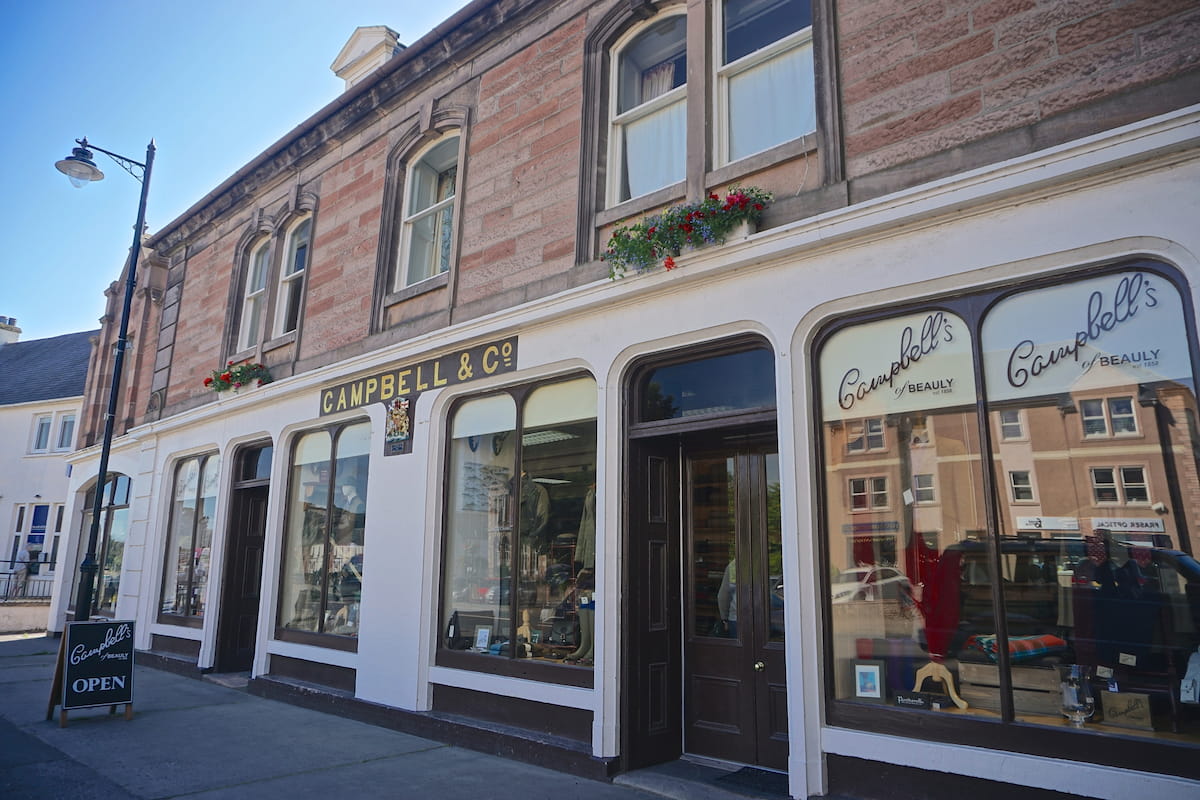
    The historic Campbell’s of Beauly 1858 on the High Street

    The route back to Inverness follows the southern shore of the Beauly Firth making it a very pleasant drive.

    FAQs

    How long does it take to drive the route?

    The standard advice from those who have travelled the route is that you take at least five days to travel the NC500 route, with between seven and ten days being the optimum period of time.  If you have less than five days then it is wise to focus on only part of the route or on perhaps two regions within the route.

    If you take more time to do the route, then you will simply be able to see more and spend more time in each place.  It is really up to you how long to choose to complete it in.  There is no shortage of places to see in the Highlands, and therefore it could be done over a much longer period of time, even incorporating some of the islands into the trip too.

    Is the route suitable for a caravan/motorhome?

    For the majority of the route, travelling in a motorhome or with a caravan will be fine.  However, the Bealach Na Ba stretch would not be suitable for a large motorhome or caravan, as it has a lot of steep hills and sharp bends, so if you are travelling with such a vehicle then it is recommended that you take the slip road up at the A896 instead for a safer journey.

    It is also recommended that you avoid the B869 from Lochinver to Kylesku in such a vehicle as

    this can also be difficult for large vehicles; instead, travel the A837 main road to be safe.

    How many miles is it?

    The route takes its name ‘NC500’ from the number of miles (roughly) that the drive is – it is 516 miles to be exact.

    This translates into 830.4km

    Where does the route officially start and finish?

    Officially the NC500 starts and ends exactly at Inverness castle, but more generally the route should take you in a loop around the Highlands and take you back to Inverness at the end.

    Does it matter which way round I go?

    This route takes you north on the east coast, and south on the west coast, but it is completely up to you which way round you choose to go.  Whether you go east or west, the route remains the same.

  • Top 17 Self Catering Castle Stays in England

    Top 17 Self Catering Castle Stays in England

    Staying in a castle is a romantic, wonderful experience.

    Whilst England has a selection of Castle Hotels offering indulgence and luxury, there are also a large number of wonderful, romantic, historic self catering options to stay in a castle.  Just imagine for a weekend or a week you are king or queen of all you survey?  Or, maybe you have always dreamt of being a princess or knight or your little darlings have?

    Read on for 17 handpicked top options for a holiday in a castle:

    All properties are unique and offer something different and special. They are not sorted in order of preference; they are sorted simply into alphabetical order.

    Blencowe Hall

    Penrith Cumbria – Sleeps 24

    Penrith Winter

    Seen from a distance Blencowe Hall looks like an impressive manor castle and indeed Blencowe Hall is a Grade I listed fortified manor house that has a rich history dating back to medieval times. 

    As you approach the house you can see the towers, one of which has the extensive damage evident from an attack during the English Civil War. 

    Blencowe has 12 bedrooms and 2 of these have huge glass windows that are an interesting contemporary repair that fills the gaps of the historic damage and leaves the history in place offering stunning views. 

    The decor is a traditional and contemporary style that compliments the period features. The grounds are lovely with formal gardens that reach 30 acres of walled gardens are in keeping with the style and age of the house.

    Blencowe is an extremely comfortable location for a family get together or offers various options for larger groups. The kitchen has a four oven Aga as well as an electric oven and gas hob. 

    There are 2 American style fridge freezers and plenty of equipment for large groups. There is a breakfast room and formal dining room both that seating 24, a butler’s pantry, games room, 11 bathrooms, 2 cloakrooms and plenty of space and comfort.

    USP:  The damaged tower with its modern repair.

    Book your stay here.

    Cotehele

    Near Saltash, Cornwall – Sleeps various

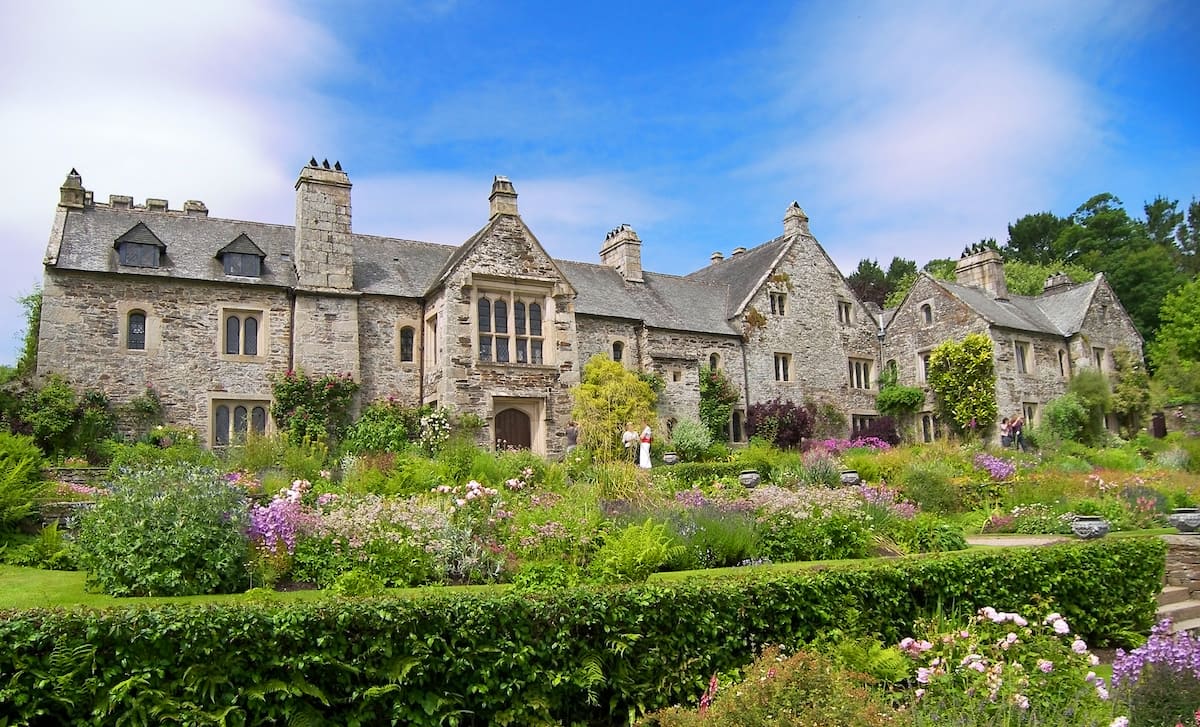
    Cotehele House

    Cotehele is a Medieval castle with Tudor additions and is a country estate in the care of the National Trust.  From the moment you arrive, you know you are caught up in the history of the place. 

    Cotehele is open to the public and has a range of activities, interests and shops to suit most people.  Few visitors though realise that one of the doors marked private leads to a holiday apartment or that the cottages near the sawpit are available to rent for holidays, or even that there are 2 other castle-like holiday cottages in the grounds.

    Hall Court

    The most special is Hall Court the apartment in the oldest part of the castle. Wow!  The apartment is accessed from the ground floor and sleeps 2.  Upstairs is a comfortable sitting room that oozes castle charm, a well-appointed kitchen/diner, a bathroom and a double bedroom. 

    For those going away with family as well as the romantic castle apartment, there are 8-holiday lets in all, with 7 cottages to choose from at Cotehele as well.

    Retainers Court

    Overlooking the ancient chapel, Retainers Court is a lovely 15th Century 2 story house, with thick walls and castle mullioned windows. 

    Retainers Court sleeps 3, having a sitting room, kitchen, dining area, bathroom, double and single bedrooms. Not accessible due to location and very steep stairs.  Under 12’s are not allowed to stay at Retainers Court.

    Malt House

    Malt House is situated on the private Cotehele Quay and overlooks the river Tamar, from the outside it looks like a mini castle due to its tower.  Sleeps 6 in king-size, twin and a room that can be either, en-suite to master and 2nd bathroom, kitchen, sitting room, utility and a tower room.

    All Cotehele Accommodation

    You come and go as you please and a later checkout is available on Sunday’s.  Guests have free access to the grounds out of hours, so can really enjoy the place once the visitors and staff have left or finished for the day.

    USP:  A true taste of an ancient working estate on the banks of a river.

    Deer Park

    Near Malton, Yorkshire – Sleeps 10

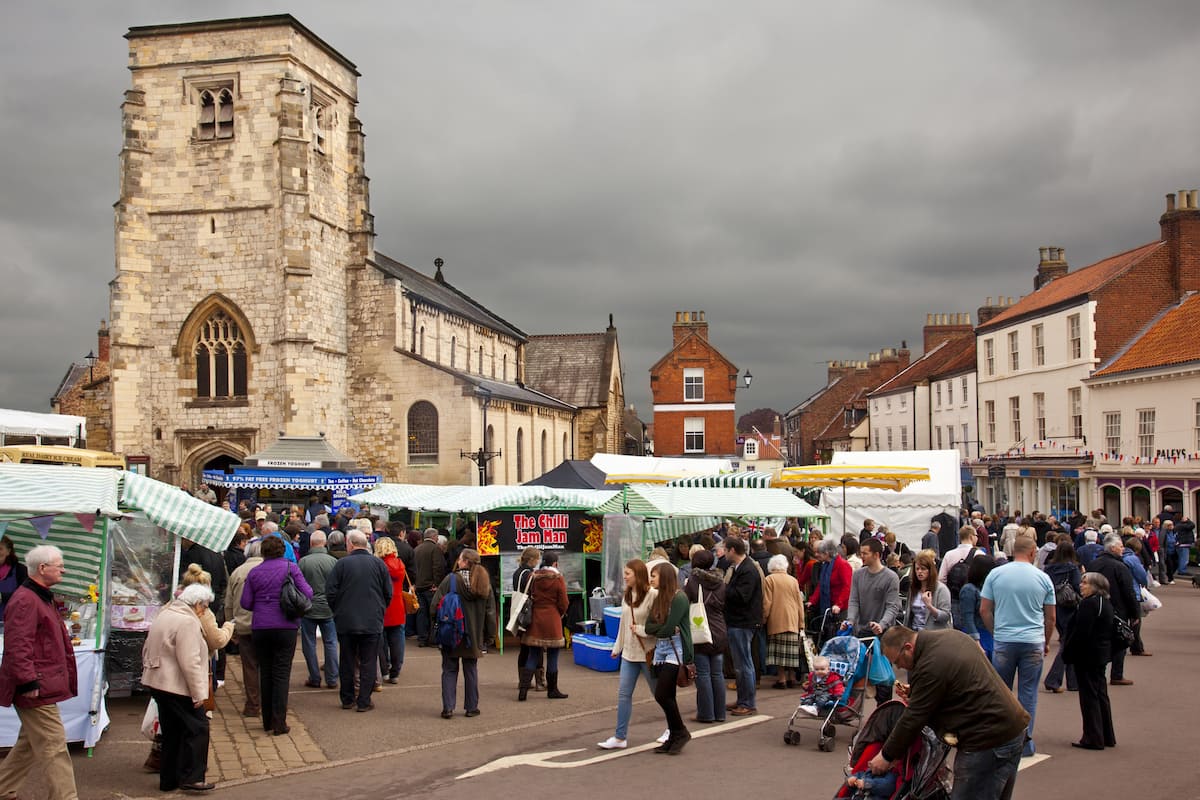
    Market Day - Malton - Yorkshire - England

    A folly built by the gentry to look like a castle that is now available for self-catering holidays.  Described as a ‘crenellated, gothic miniature castle with a long and fascinating history’, the folly is Grade II listed and surrounded by an enclosed garden with views over 20 acres of parkland to Scampston Hall a stately home. 

    With 6 bedrooms, including some on the ground floor the folly sleeps 10 and has a ramp for accessibility and they accept dogs.  On the ground floor there is a large kitchen including an Aga, utility room, dining room, breakfast room, drawing room, morning room and hall.

    USP:  A listed Folly making a mini castle that is accessible for all.

    Book your stay here.

    The Mediaeval South East Tower of Great Yarmouth

    Great Yarmouth, Norfolk – Sleeps 4 – 12

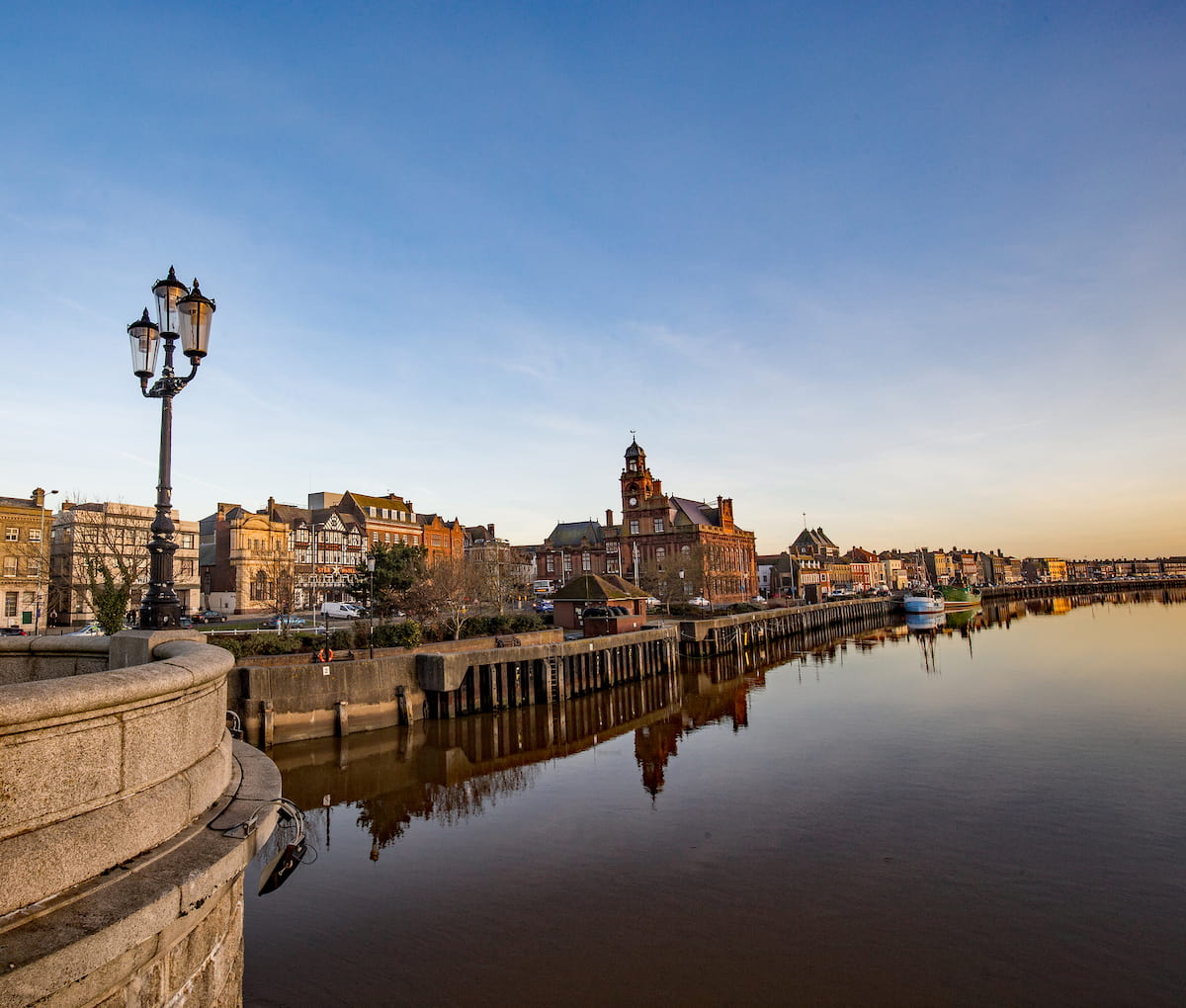
    A view along the Aouth Quay in the town of Great Yarmouth

    The Mediaeval castle that forms part of Great Yarmouth’s ancient wall is spread over 5 floors and has a kitchen diner, sitting room, two bedrooms, 1 double and twin and space for up to 4 double airbeds for larger groups,  there is 1 bathroom, a car parking space, with free on-street parking close by near the medieval wall. 

    The thick castle walls feature original + shaped windows and the interior stonework is mostly painted white below the beamed ceilings.  There are modern touches, there is Wifi and a dishwasher as well as everything you’d expect.  The decor is an eclectic mix of 19th and 20th Centuries and adds to the charm of the place.

    USP:  An historical building with accommodation over 5 floors.

    Book your stay on Airbnb here.

    The Old Folly

    Hunmanby near Filey, Yorkshire – Sleeps 2

    Stay in your own castle ruin for a week or weekend.  With gothic arched windows and vaulted ceilings, this folly has the feel of a castle and the outside appearance of a castle ruin.

    Near the Yorkshire coast, the comfortable accommodation comprises of a kitchen, comfortable sitting room, minstrels gallery and bedroom with modern bathroom.  Book a stay and dogs go free, the garden is accessed via a big archway and is shared, there is also shared freezer space.

    USP:  Stay in a very comfortable castle ruin.

    Book your accommodation here.

    Orchardleigh Castle

    Frome, Somerset – Sleeps 12

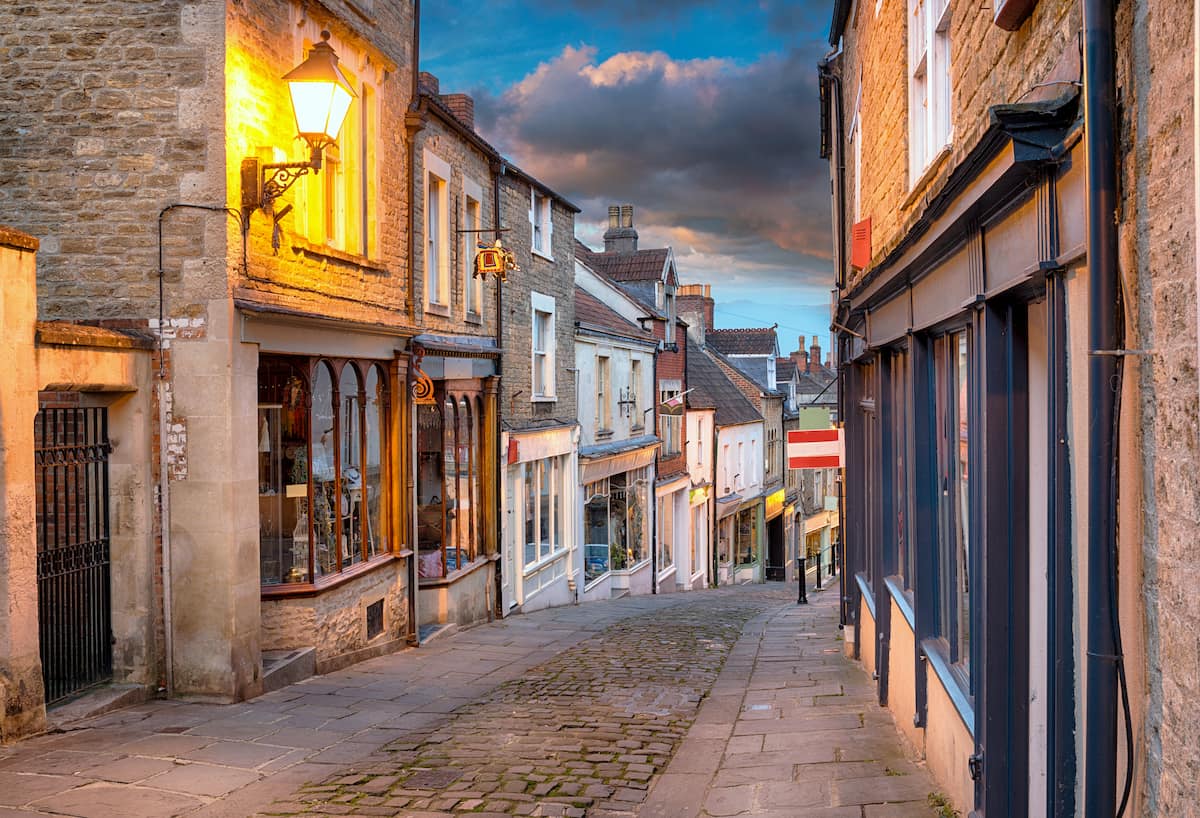
    Dusk at Frome

    Ten miles from Bath the Castle is set in a 500-acre estate and sleeps 24.  The 2 battlements can be rented separately and each sleeps 12.  Each battlement has a garden with hot tub and BBQ and inside the stone floors, wood panelling and exposed stone walls act as a reminder that this is a very old building. 

    USP:  2 battlements that can be booked together or separately.

    Book your stay here.

    Pottergate Tower

    Alnwick, Northumberland – Sleeps 2

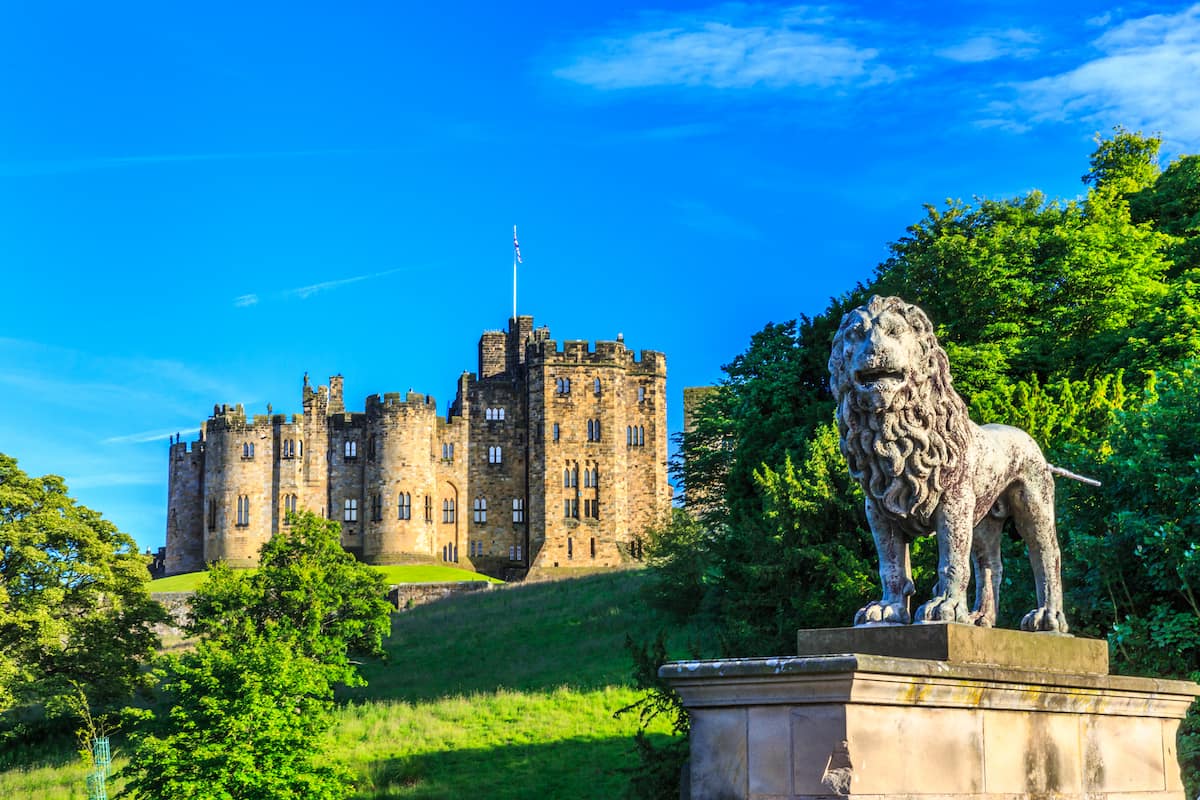
    Alnwick Castle, England

    Pottergate Tower sleeps 2 and was built as part of the town of Alnwick’s defences.  The contemporary furnishings are very tastefully done to enhance the ancient surroundings and the tower simply oozes tasteful, romantic charm.

    The views across the rooftops of Alnwick and beyond are stunning and include the castle itself and the surrounding countryside. 

    The first floor kitchen and dining area are reached via a spiral staircase and another staircase takes you up to the living area and luxurious modern bathroom. 

    The mezzanine bedroom at the top has a lovely beamed ceiling and stone walls; it feels like a true castle bedroom.  Pottergate has thick stone walls, arched windows and it is impossible to forget that this really is a Grade 2 listed medieval castle-like tower. 

    The tower is a historical landmark that was listed in 1952 and is an easy walk to Alnwick Castle, which is instantly recognisable as Hogwarts in the Harry Potter films.

    USP:  Unique contemporary style, tastefully done to compliment the medieval.  Overlooks “Hogwarts”, but had the name Potter already.

    Book the Pottergrate Tower here.

    Quartermasters Apartment Brancepeth Castle

    Brancepeth near Durham County Durham – Sleeps 3

    Quartermasters Apartment is a ground floor south facing apartment in the castle, one of the oldest castles in the north of England, Brancepeth Castle and is close to Durham, a UNESCO World Heritage Site. 

    The apartment sleeps 3 and features charming cosy accommodation that includes bare stone walls. The living space is open plan and there is a double bedroom and single bedroom, 2 shower rooms. 

    Guests have free access to some of the castle grounds and there is parking for 2 cars. The castle has a fascinating history and once belonged to the famous Neville family.

    USP:  Ground floor, wheelchair friendly.

    Book your stay at Brancepth Castle here.

    Scargill Castle

    County Durham – Sleeps 2

    Scargill Castle was built in 1550 on the site of an even earlier medieval castle. Recently it has been lovingly and carefully restored into a delightful retreat for two from a crumbling ruin. 

    21st Century comfort sits alongside the historic character with ease. When you arrive you pull into your own private parking space and go through a gate into your private sheltered courtyard gardens, go into the sunny entrance hall and marvel at the internal stone doorway leading to the stone staircase to the upstairs, the castle has a kitchen, banqueting dining hall, living room, bedroom and bathroom. 

    A hamper of food and wine is left for guests and treats for visiting dogs along with a tea tray set for when you arrive.

    USP:  See the restoration photos and those from the television programme Time Team.

    Book your stay at with Booking here.

    Shute Barton

    Axminster, Devon – Sleeps 10

    Shute Barton building in East Devon

    Shute Barton is described as an exclusive holiday home and as one of Devon’s most important manors.  Arriving at Shute Barton to start your holiday, you cannot help but be impressed by the battlements and tower. 

    There are many original features including one of the largest fireplaces in England in the Great Kitchen.  The house has 5 bedrooms and sleeps 10. The ground floor has a kitchen, laundry room, dining room, sitting room and games room as well as the Great Kitchen with that fireplace. 

    There are 2 steep spiral staircases to the bedrooms on the 1st floor.  The rooms are 3 doubles, a twin and a room that can be twin or double. 

    There is a staircase to a medieval hall on the top floor with an original ceiling that is unheated but available to guests.  There is a private garden exclusive to the castle on 2 sides and larger gardens to explore. 

    Shute Barton welcomes up to 2 dogs and late checkout is available on Sundays.

    USP:  Great Kitchen with its fireplace and the top floor medieval hall.

    Book your stay with the National Trust here.

    Tawstock Castle

    Barnstaple, Devon – Sleeps 8

    Barnstaple medieval Long Bridge which spans the River Taw in North Devon

    Tawstock is a Grade II listed 18th Century Bailey Castle situated on a rounded hilltop in open countryside that gives stunning 360 degree views of Devon countryside. 

    The wood-panelled ceilings top the mixture of original features and modern tech. The kitchen is modern, slick and partly circular, there is a living/dining area, a ground floor shower room, 4 bedrooms including 2 rounded ones, 2 doubles and 2 twins, and one of the twins has twin four poster beds which is a nice taste of history. There are 2 bathrooms. 

    Tawstock Castle has a roof terrace, an acre of fenced lawn and is set in 8 acres of parkland. There is ample parking and a helipad.

    USP:  A Hilltop standalone fortress.

    Book your stay with Booking here.

    The Tower

    Blickling, Norfolk – Sleeps 4

    The Tower is a romantic compact tower that looks like a castle and stands alone surrounded by its own garden and then countryside.  There is a fantastic roof terrace giving the added charm to the elegantly appointed little castle.

    The Tower sleeps 4 people but is not suitable for children under 6 due to the bedrooms being on different floors and separated by a steep spiral staircase. There is parking for 2 cars.    

    The accommodation comprises of a kitchen and a sitting/dining room and bathroom on the ground floor, with a twin that can be made into a double on the first floor and a further double bedroom with en-suite on the second floor.  The Tower roof terrace leads to the round tower.

    USP:  A castle in miniature that has a square and a round tower.

    Book your stay with National Trust here.

    The Turret

    Charlecote Park, WarwickSleeps 6

    With a view of the grounds and the entrance gatehouse and surrounding parkland, the Turret is another unique Castle style holiday home, this time in the Turret of a large country house.  Accessed by an ancient “secret” door the comfortable first floor self contained apartment sleeps 6 in 3 bedrooms has pretty latticed windows, period features and exposed beams.

    USP:  A secret door leads up to a comfortable apartment.

    Book your stay with Cottage World.

    Walton Castle

    Clevedon, Somerset – Sleeps 16

    Clevedon Pier sunset

    A fascinating castle with circular cobbles and lion statues, close to the sea and not far from Bristol this 17th Century castle sleeps 16 in 8 bedrooms, 5 of which are actually some of the eight castellated turrets that surround the central octagonal castle. 

    The main entrance opens into a large kitchen with an impressive circular granite dining table. On the first floor, there is a grand sitting room, library and reading room and on the top floor there is a lovely master bedroom with en-suite and a private terrace. 

    Downstairs from the kitchen there are 2 double rooms with a Jack and Jill bathroom and the 5 outside rooms all have en-suite.

    Outside there is a sunken patio that leads to the underground swimming pool, has a hot tub and BBQ area.

    USP:  Impressive castle with an underground swimming pool.

    Book your stay here.

    The Water Tower

    Trelissick Estate, TruroSleeps 2

    This is a romantic getaway that will take your breath away!  The arched barn door entrance leads to the winding staircase and the 4 storey Victorian tower has a circular shaped room on each floor. 

    It really does look like a fairytale princess tower and you could imagine Repunzel letting down her hair. The Water Tower sleeps 2 for a romantic getaway.

    The bathroom is on the ground floor, a double bedroom on the first floor, with the sitting room next and the kitchen/diner at the top, so this is truly a quirky place to stay. The accommodation is pretty and there is a reserved parking space and a garden that is shared with another holiday cottage. 

    USP:  Quirky fairytale princess tower.

    Book your stay with National Trust here.

    Watermouth Castle

    Near Ilfracombe, DevonSleeps various

    Watermouth Castle

    Situated at Watermouth Bay on the north coast of Devon and housing 7 self-contained apartments featuring a shared heated indoor swimming pool. 

    This castle was built in the mid 19th Century and has recently undergone extensive restoration.  2 of the apartments overlook the harbour, 3 overlook the south court of the castle towards the wooded hillside and 1 has sea views from the living room.

    The apartments are in a separate part of the castle to that which is open to the public; however guests enjoy free passes to the castle attractions which include a museum, theme park style attractions, a large model railway, underground theatre and water spectacular.  The castle is only 500 metres from the beach.

    USP:  An historic castle apartment stay on a mini theme park.

    Book your stay here.

    Whitehall Pele Tower

    Mealsgate, Cumbria – Sleeps 8

    A Grade 1 14th Century tower the miniature castle-like house has been the same family for over 150 years and has an acre of grounds incorporating a fascinating Victorian manor house ruin. 

    The first floor sitting room has a large Tudor fireplace and the tower sleeps 8 in 4 bedrooms, the large well-appointed kitchen/dining room incorporates 2 full-sized ovens and has a separate utility room.  Also, on the ground floor is a games room. 

    The first floor has a large sitting room and 2 bedrooms with a bathroom and separate WC.  On the top floor is the master bedroom, another bedroom and a bathroom and the stairs to the roof terrace. The Tower has views over the ancient pastureland that is home to lovely wildlife and birds.

    NB: The centrally heated house offers a unique and comfortable place to stay, but if the oil central heating is on for more than 8 hours there is an additional charge at £3.00 per extra hour per day.

    USP:  A Victorian Manor House ruin in the grounds of this 14C Tower.

    Book your stay with Cottages here.

    What better backdrop for a romantic weekend, or big family event that a castle….  Above are 17 of the best options in England to suit a variety of needs and tastes. 

    What they all have in common is their long history and sense of that history.  All have comfortable accommodation that is self-catering so you can come and go as you please, some offer catering options that you may wish to explore when you look into booking.


  • Best Places To Live In The UK

    Best Places To Live In The UK

    Are you thinking of making a big move to the UK? Or perhaps you’re thinking of relocating someplace else within the country? Either way, take a look at this guide to the best places to live in the UK. 

    The UK is full of fabulous places to set up home, complete with fantastic transport links, excellent schools, and activities for the whole family to enjoy. Whether it’s by the sea, nestled in the countryside, or close to bustling towns, the UK has some great places for you to potentially call home.

    Keep reading to find out more about the best places to live in the UK. 

    England

    Horsham, South East

    town centre in Horsham West Sussex

    Horsham is a market town in Sussex. Set in incredible parkland and beautiful countryside, the town is often voted one of the best places to live in England.

    It’s the perfect blend of old and new. Horsham has excellent transport links, and the hustle and bustle of the city is easy to get to. It’s under 30 minutes by car from Crawley and Gatwick, and the Horsham Train Station offers direct links to London. 

    But it’s not just the transport links that make Horsham such an attractive place to live. The town is popular with families as it boasts some great schools that have excellent Ofsted ratings. A large factor that affects how desirable a place is to live in, is the existence of green space.

    There are numerous fields, parks and open spaces in and around the town, such as Horsham Park, Warnham Local Nature Reserve and Leonardslee Lakes & Gardens. The National Trust Nymans is only a short drive away, and the High Weald Area of Outstanding Natural Beauty is also nearby. 

    In town, you’ll find plenty of places to eat and drink, from popular chains to independent restaurants. Although the town is more laid back, there are a few excellent pubs and bars. When it comes to leisure, you won’t run out of things to do. There are many gyms and sports clubs, an excellent high street, two markets a week, and a fab entertainment centre.

    Selby, Yorkshire and The Humber

    Centenary poppies display at Selby Town Hall

    Selby is a historic town and one of Yorkshire’s hidden gems. Situated in the heart of Yorkshire, it enjoys excellent transport links to Leeds, York and Hull, as well as the coast and Yorkshire’s National Parks. 

    Selby is a fantastic place to live, especially for families. The town is located in one of the safest parts of one of the safest counties in England, so it sees a lot of people staying long term.

    Another draw for families is the top quality education. Selby and the surrounding area has one of the country’s leading further education colleges, excellent primary schools and great independent schools. 

    One of the main draws that Selby has are the house prices, which are significantly lower than neighbouring urban areas. This means that you’ll get more bang for your buck. Plus, being surrounded by all that beautiful Yorkshire countryside makes it extra worth it.

    If you’re a walker or a cyclist, the Selby district has countless walks and trails that wind through picturesque villages and outstanding countryside. For something more local, Barlow Common Nature Reserve is a peaceful place for a stroll. 

    There are plenty of things to do in town as well. Selby Leisure Centre offers swimming pools, exercise classes and sports facilities. There’s also the Summit Indoor Adventure Park which is fun for the whole family.

    In the centre of town, you’ll find Selby Abbey, a huge and breathtaking medieval abbey founded in 1069. Fancy a bit of shopping? You’ll find a huge array of chains and independent shops. 

    Cheltenham, South West

    Sudeley Castle garden and church in Winchcombe, Cheltenham

    Cheltenham is a large spa town in Gloucestershire, on the edge of the Cotswolds. Famous for its Regency architecture, the town has plenty to offer. A word of warning: if you fancy moving to Cheltenham, you’ll need deep pockets as the house prices are higher than other areas in the UK.

    Having said that, it’s totally worth it. 88 miles west-northwest of London, 38 miles northeast of Bristol and 41 miles south of Birmingham, the town is well connected. London Paddington can be reached in just under two hours from Cheltenham Spa train station, and Bristol is only 45 minutes away by train.

    Cheltenham has been recognised as the best place to raise a family, and it’s no surprise why. There are 14 Ofsted ‘Outstanding’ schools within three miles of the town. But it’s not just the excellent schools that make Cheltenham such a great place to live. It’s also packed with things to do.  

    There are tons of lush green parks such as Montpellier Gardens and Pittville Park. There’s also the Sandford Parks Lido which is perfect for hot days.

    The town also happens to be a key shopping destination, with traditional shopping streets, arcades and markets. You’ll also find cultural treasures like the Cheltenham Town Hall, the Holst Birthplace Museum and the Pittville Pump Room.

    Of course, no conversation about Cheltenham would be complete without a mention of the legendary Cheltenham Racecourse.

    Bollington, North West

    An old factory on the banks of the canal near Bollington in Cheshire

    Fancy settling down somewhere in the North West? Bollington is the place to be. Situated in Cheshire, the town sits on the edge of the beautiful Peak District National Park and Macclesfield Forest.

    The Macclesfield Canal runs through Bollington, adding to the picturesque scenery. Plus, it’s known to residents as ‘Happy Valley’, so it’s definitely a great place to live. With so much outdoors to explore, it’s no wonder that the quality of life is so great in Bollington.

    Although transport links aren’t as well-connected as other places on this list (expect a longer drive to the M56 and M60 motorways), you can still access places like Macclesfield and Alderley Edge pretty easily. 

    With four primary schools in Bollington and secondary schools within travelling distance, it’s an ideal location for families. There are plenty of activities for the whole family to get involved in, whether it’s outdoor activities like walking and cycling, shopping or discovering the town’s famous landmark White Nancy.

    Bollington also has a fantastic community spirit, with plenty of local organisations, clubs and events like the Bollington Brass Band, Bollington Light Opera Group and Bollington Festival. Bollington also enjoys a good reputation for the number and quality of pubs and restaurants it has. 

    Scotland

    Dundee, Dundee

    Murraygate pedestrian street in Dundee

    Dundee is a coastal city in eastern Scotland, set at the mouth of the River Tay. Although it’s the country’s fourth largest city, it’s quite compact, making it easy to get around on foot. It also happens to be Scotland’s sunniest city, making it an attractive place to live.

    Another factor which makes it very liveable is how well connected the city is, with Edinburgh and Glasgow less than 90 minutes by train. Dundee Airport offers direct flights to London City Airport. 

    Another reason that Dundee is so attractive to live in is the abundance of schools. There are currently 38 primary schools, nine secondary schools, one special educational needs school and two universities in the city. Dundee is also not short of things to do.

    The city has gone through major regeneration, including the £1billion Dundee Waterfront project which has transformed it into a modern and vibrant city. There are plenty of shops, galleries and other cultural venues, with the food and drink scene really taking off. You’ll find a huge variety of cafes, bars and restaurants dotted around the city.

    Dundee is the first UK city to be awarded the UNESCO City of Design status. With a rich history of innovation and creativity, the city has become a hub for the digital industries, with the V&A Museum of Design being one of the most popular attractions. 

    With so much culture and history (plus, it’s super affordable compared to other Scottish cities), it’s a no brainer that Dundee is one of the best places to live in Scotland, and the UK.

    Leith, Edinburgh

    Dean Village along the river Water of Leith in Edinburgh

    Leith is a port area in the north of Edinburgh and one of the coolest neighbourhoods in the UK. In the 18th century, it was a busy port with huge ships bursting with wool, wine, spices and raw materials. Today, it’s a trendy area boasting its own distinct characters. The great thing about Leith is that it’s its own area, but benefits from all that Edinburgh has to offer. 

    One of these things is Edinburgh’s excellent transport links. The neighbourhood itself is only 12 minutes drive to the centre of Edinburgh, where you’ll find two mainline stations as well as Edinburgh Airport on the outskirts of town. 

    Leith is a great place to bring the kids up. While the kids will benefit from a wide selection of schools in Edinburgh and the surrounding areas, Leith has plenty of things to keep the whole family entertained. There are plenty of open spaces and walks, such as Leith Links and the Water of Leith Walkway.

    Plus, there’s always something happening in the neighbourhood. The Leith Festival combines eight days of theatre, music and arts, and is definitely not one to miss. You’ll find the Biscuit Factory, an arts and fashion hub, Leith Theatre and The Pitt, a street food market with live music.

    Speaking of food, the food and drink scene in Leith is second to none. As well as Michelin starred restaurants, there are also traditional pubs, delis, bistros and plenty of the famous Leith seafood.

    Dunblane, Stirling

    Dunblane Town Centre Scotland

    Dunblane is a town in central Scotland. Just a 10 minute drive north of Stirling, Dunblane is a commuter town. It has easy access to the A9, with Glasgow and Edinburgh commutable by car.

    The train station offers regular links to Glasgow and Edinburgh as well as Stirling and Perth. But Dunblane is far from being a shoddy commuter town. Its safe and friendly community, reputable schools, central location, and attractive surrounding countryside make it a great place to live. 

    Dunblane is a fantastic environment to raise a family. The low crime rates and community spirit make it a great place for families. There is also an excellent choice of schools, from primary schools through to high schools. Plus, the University of Stirling is only a short distance away. 

    There are tons of activities and events to get involved in Dunblane. You’ll find local sports clubs, youth clubs and voluntary groups. You also have the great outdoors on your doorstep, and there are woodland walks and biking trails in Laighills Park and Sherrifmuir. An hour’s drive away is the Trossachs National Park. 

    The town itself has an excellent range of local shops and a fabulous selection of bars and eateries. There are also some historical gems, like the Leighton Library and the best-known feature of the town, the impressive 13th-century cathedral.

    Wales

    Cowbridge, Vale of Glamorgan

    Cowbridge is a market town in the Vale of Glamorgan. Dating back to Roman times, it’s one of the few medieval walled towns in Wales.

    Full of history, quaint old buildings and surrounded by rolling Welsh countryside, it’s no wonder that Cowbridge is such an attractive place to live.

    What’s more, Cowbridge has great transport links, which makes it a popular commuter town. It’s about a 25-minute drive to Cardiff, with the nearest train station, Bridgend, only six miles away. 

    If you’re moving with the family, Cowbridge Comprehensive School is one of the best performing secondary schools in Wales. There is also a nursery and primary school in the area.

    If you’re a shopaholic, you’ll love Cowbridge. It’s been dubbed the ‘Bond Street of Wales’ for its unique blend of shops and boutiques, whether it’s fashion, furniture, vintage items, gifts or food. When it comes to food and drink, Cowbridge doesn’t disappoint. There are plenty of country pubs, restaurants and cafes to refuel. 

    For a small town, there’s a surprising amount of things to do. You have St Quentin’s Castle, Old Beaupre Castle, Cowbridge Physic Garden, South Wales Aviation Museum. Nearby, you’ll find the National Trust Dyffryn Gardens. Cowbridge is only a 20 minute drive to Nash Point, a headland and beach with an iconic lighthouse.

    Tenby, Pembrokeshire

    Boats in the bay at low tide with town view in Tenby bay, Wales

    Tenby is a harbour town in the southwest of the country, and arguably one of the best seaside towns in Wales.

    This isn’t the place to live if you want to be in the thick of it. It’s a relaxed, peaceful place that is perfect for people looking for a slower pace of life. Having said that, it’s not completely out of the way. There are rail services to Pembroke, Carmarthen and Swansea. A drive to Swansea is about an hour and a half. 

    There are a selection of primary schools, and one secondary school, so it may be something to think about if you’re moving with teenagers. However, there is plenty to keep the kids (and the adults) entertained.

    When it comes to beaches, you’ll be spoilt for choice. From family-friendly beaches to secluded beaches, there’s something for everyone.

    Walkers will love Tenby, as there are countless coastal walks right from the town. The Pembrokeshire Coast Path is one of the most scenic routes, a 4.5-mile walk with panoramic views. Caldey Island is only 20 minutes away by boat and is the perfect getaway. 

    Abergavenny, Monmouthshire

    Abergavenny Town, Wales

    Abergavenny is a market town in Monmouthshire and is nicknamed ‘The Gateway to Wales’. Surrounded by seven mountains, it’s the perfect base for exploring the Brecon Beacons National Park and the Blaenavon World Heritage Site. 

    If you’re thinking of moving here, one of the first things you’re going to want to know is if it’s well connected. The answer is yes! By train, Cardiff is only 40 minutes away, Newport is 25 minutes and Hereford is 24 minutes. Sounds perfect. But what about schools? Abergavenny has a selection of highly rated primary schools, and one secondary school. 

    The town is an excellent place to raise a family, and has tons of things for kids to explore. Aside from attractions like Abergavenny Castle and Museum, the town is surrounded by historical gems like Llanthony Priory. Being right on the doorstep to the mountains also means there’s a wealth of activities like hiking, walking, cycling and climbing. 

    If you’re a foodie, you’ll love Abergavenny. This lively town is famous for its annual food festival, which transforms the town’s streets into a huge buffet of food stalls, chef demonstrations and entertainment for two days each September. There are also regular food and craft markets which attract the best artisan producers. Sugar Loaf Vineyard overlooks the town, and you can drop in to sample some of the finest Welsh wine.

    Northern Ireland

    Holywood, Co Down

    The Dirty Duck restaurant and pub n Holywood County Down

    Holywood (not a typo!) is a town in the metropolitan area of Belfast, which lies on the shores of the Belfast Lough. It’s the perfect combination of seaside and city, with the vibrant Belfast only a short train journey away.

    Only 11 minutes drive from Belfast, Holywood benefits from all the great transport connections that the city has. Belfast has rail and road connections with towns and cities in Northern Ireland, and Belfast Airport has flights to over 70 destinations. 

    Families thinking of moving to Holywood will benefit from a wide selection of schools, an abundance of green areas, stunning views and a chic town centre.

    The town centre is a real hub of activity, with an emphasis on independent shops and boutiques, elegant eateries and traditional pubs. The town’s Victorian appeal has been perfectly preserved, but with all the modern amenities you could wish for. 

    There are plenty of sporting facilities and local parks which is perfect for those with an active lifestyle. If you fancy getting out on the water, the Holywood Yacht Club is one of the oldest yacht clubs in Ireland, catering for all levels and abilities.

    Ballycastle, Co Antrim

    Boats in the bay at low tide with town view in Tenby bay, Wales

    Ballycastle is a lively seaside town in County Antrim, situated on the north-easternmost tip of Ireland. Surrounded by the sea, glens, forests and ancient rock, the town is a beautiful place to set up home. It’s also a short drive from the iconic Giant’s Causeway.

    If you’re a Game of Thrones fan, you’ll be excited to know that Ballycastle and the surrounding area was used as filming locations. Never watched Game of Thrones? Not to worry. You can still enjoy the breathtaking natural beauty of the place.

    Some of the most popular attractions include Ballycastle Beach, Carrick-a-Rede Rope Bridge, Rathlin Island and the Antrim Coast and Glens Area of Outstanding Natural Beauty. 

    The town itself has a rich history with over 50 listed buildings within the ‘18th Century Conservation Area’. It blends old and new, with its very own Blue Flag Marina situated within the inner harbour.

    There are several primary and secondary schools in Ballycastle and the surrounding area, so it’s an ideal location for families. Although trains don’t come near Ballycastle, Belfast or Derry are just over an hour’s (very scenic) drive. 

    Hillsborough, Co Down

    Landscape view of Hillsborough Castle, Northern Ireland

    Hillsborough is a village in County Down, only 19km from Belfast. It’s the ideal place to be if you want to live in a quiet and peaceful setting without being too far from the city and all its amenities.

    The excellent location has resulted in Hillsborough becoming part of the commuter belt of Belfast. This also works well if you have kids, because even though there are several primary schools in and around Hillsborough, Belfast is just 20 minutes by car and has a wealth of schools to choose from.  

    Kids will find it pretty difficult to be bored in Hillsborough. Despite its size, the village has a lot to offer when it comes to outdoor activities. Hillsborough Forest offers 150 acres of mixed woodland to explore. Fancy a boat trip? The village is also only a half hour’s drive to the Lough Neagh lake.

    The town itself has an array of cheerful shops and cafes to enjoy. It’s also home to the International Oyster Festival which happens every year, and attracts visitors from all over the world.

    Many people think of the village as Northern Ireland’s answer to the Cotswolds, due its picturesque scenery and significant amounts of Georgian architecture. Speaking of architecture, the nearby Hillsborough Castle and Gardens is home to visiting royals, so if it’s good enough for the royals then it’s good enough for us. 

  • Moving Into a New House Checklist (UK)

    Moving Into a New House Checklist (UK)

    If you are moving home soon you’ll know just how daunting the process can feel. There are a million and one things to remember and it can become overwhelming very quickly.

    But never fear! I have created this detailed checklist to help you have a successful move into your new place in the UK, so you can begin your fresh start as seamlessly as possible.

    This moving checklist covers everything from changing over utilities and packing to your first day essential tasks in your new home.

    It’s split into two sections – ‘Before You Move’ and ‘After You Move’, to help you navigate both processes.

    Get your pen and paper ready (or simply save this article to refer to again and again during your move), and let’s get started…

    Before You Move

    Reminder Moving to a New House in calendar with pen

    Before you move house you will be itching to start the process, wanting to be in your lovely new home as soon as possible.

    It’s a great time to redirect that energy into a series of tasks that will make sure your moving process goes as smoothly as possible. Here is a helpful list of the things you’ll need to do before you move.

    Change Over Your Utilities/Bills

    Changing over your utilities ahead of time is a great first step to take before you move. This will save you stress down the line, and help keep you organised. 

    Make sure you contact the companies you currently have your utilities with and let them know you will be moving house. Provide your move-in date and begin the process.

    It’s a good time to start researching new service providers and to decide whether you would like to switch when in your new house for better deals.

    Here is a list of people you will need to contact/ things to check:

    • Contact your gas, water and electric service providers.
    • Look at home insurance companies and decide whether to stay with your current provider or to go for a better deal in your new house.
    • Check if your new house is set up with an alarm system, and contact the company to provide your details.
    • Notify the council that you will be moving, so they can recalculate your council tax ahead of time.

    Change of Address Tasks

    There are a number of things you will need to do when you change your address.

    You’ll need to call and notify the following of your upcoming change in address:

    • Contact the HMRC to let them know if you’re moving.
    • DVLA to update your driving licence. Don’t forget to do this, as you will need a new driving licence issued. A driving licence with an incorrect/old address will be invalid.
    • Your employer – make sure you let work know when you will be moving, so HR can update your employee records.
    • Doctor and dentist – it’s really important to keep your records up-to-date with healthcare practitioners. If you are moving out of a catchment area and need to switch GP surgery get this organised ahead of time for you and your family.
    • Bank – let your bank know when you will be changing address so they can update their records.
    • Insurance companies – if you have any personal insurance, pet insurance, car insurance or home insurance, make sure you let them know you will be changing address.
    • Postal service – let your postal service know you will be changing address so they can set up a postal redirect for your post.

    Also don’t forget to register to vote in your new area, and get set up on the electoral roll.

    Set Up a New Internet Provider

    Getting your internet set up ahead of time ready for your move-in date will save you a headache on your moving day.

    Don’t leave you and your family without the internet by skipping this step. This is essential for those who work from home or attend online education classes.

    Setting up with an internet provider can take some time, so make sure you do this well in advance. It’s best to ensure this is sorted two to three weeks in advance. Do your research and find a good deal!

    Register To a New Doctor

    If you are moving out of the catchment area for your current GP surgery then you will need to register with a new one.

    Make sure you get in touch with the GP surgery in your new area ahead of time, and register.

    This is really important for everyone in your family, as you don’t want to have any issues if someone falls ill.

    A good alternative is Babylon Health, they have an NHS service as well as a private so it’s a great stop-gap or permanent doctors choice.

    Important Documents

    Gathering and organising all of your important documents ahead of time will be a lifesaver during the stressful move process.

    You want to make sure you have everything filed and organised, so nothing is lost in the move. Things like medical records, birth certificates and passports need to be kept really safe and organised.

    If you have a big family, sorting this out is so vital, to make sure everyone’s records are properly kept.

    Arrange Leave From Work

    Make sure you notify your employer ahead of time of your moving date and you book the appropriate amount of leave from work.

    If you are unsure of your exact move-in date let your employer know and you may be able to work out a flexible annual leave date.

    If in doubt, and you have the holiday days spare, book the whole week off that your move-in date is expected to fall within. You can use the extra time to pack/unpack either side of the move-in date.

    Give Notice if Renting 

    If you are renting you will need to give appropriate notice to your landlord of when you expect to move out. 

    Double-check your renting contract and make sure you are clear on the amount of notice required. For some this will be one month, for others, it can be up to three.

    It’s best to be clear on this, to avoid stress and confusion at the last minute.

    Maintenance on New Home/Old Home

    You may need to organise maintenance and cleaning on both your new and current home.

    Book a cleaner for your house and for your new house to help you save on extra time and effort at either end of moving. The last thing you want is to have to clean both houses yourself, as this can be stressful and time-consuming. Shoe-horning two deep cleans into your moving schedule are unrealistic for many.

    You will also need to consider any home improvements that either home might need, and book a maintenance company accordingly. Any repairs, like issues with plumbing or a boiler maintenance check, need to be sorted in advance.

    Book a Moving Truck

    Moving day on the calendar is written in red. Calendar with a note with cardboard boxes and truck

    Booking your move with a moving company in advance is an essential part of the moving process. You want to make sure you can get a slot with a reputable company, which you can double-check and confirm with closer to the time.

    Shop around for good deals, but beware of companies with super low prices. You don’t want last-minute cancellations.

    It’s best to get a quote from a reputable company and go from there.

    Book Childcare and Pet Care

    Making sure children and pets will be out of the way of the movers is key to a successful moving day.

    Pets and small children can be injured during the moving process, as people will be carrying heavy furniture in and out of the homes. You don’t want anybody underfoot during this transition.

    Moving can also be a stressful time for both pets and children, and they will need to adjust in the new home once everything has settled and is quiet.

    Book your childcare and pet care in advance and take them either very early on the morning of the moving day, or even the night before.

    You yourself will need a good solid night’s rest the night before, as it will be a long and taxing day. Sometimes having the kids and pets away for the night makes for a more restful sleep without interruptions.

    Moving Insurance

    Getting some moving insurance is an excellent tip to follow, to ensure your items and home are protected in case of damage.

    There is nothing worse than long, heavy scratches over a wooden floor, or lost or broken valuables, with no funds to fix the issues. I’ve even seen someone moving truck catch fire on my street and lose all their belongings.

    When booking your moving insurance shop around for a good deal, make sure you fully read the fine print and understand what you are covered against.

    Then take photos and make sure they are dated, of all of the items for the move. Organise and catalogue these photos in case of damages, as proof for the insurance company in the event of a claim.

    Decluttering

    Before you start the packing process it’s a great time to declutter your house.

    Sort through everything and begin to throw away what you no longer need.

    Start by sorting one room at a time, and gradually moving through the home to declutter the space. Don’t forget the attic (if you have one) – there’s often way more up there than we realise. It’s easy to accumulate clutter over the years, especially if you have a family, and you don’t want to take it all with you into a new home.

    I suggest listening to decluttering themed podcasts whilst you work, to inspire you and help you decide what should stay and what should go.

    Here are some ideas of things that may need decluttering:

    • Kitchen: old tupperware that’s broken or unused, old pots and pans, mismatched sets of cutlery, chipped cups and mugs, multiple sets of wine glasses that aren’t used, old dish towels, old spice and herb pots.
    • Bathroom: old towels that are wearing thin, an old bath mat, old shower curtain, old toilet brush, half used products that have been sitting on the shelf for years, dusty unused cleaning supplies.
    • Bedroom: old bed sheets and linen, old clothes that you no longer wear, dusty curtains, unsushed decorative cushions, clutter in drawers.

    Packing

    Packed boxes with a sofa

    After decluttering the next step is packing. Approaching the packing in an organised clear way will save you stress down the line.

    Here are some steps to follow when packing, to ensure a smooth process:

    • Take photos of all of your items and create an inventory. Store them in a folder on your phone, to stay organised. This is especially good for valuables or delicate items, so you have a record of their condition prior to moving in the event of a moving insurance claim.
    • If you will be taking apart furniture, keep all of the screws and bolts in a bag and tape it to the underside of the piece. This will make it much easier on the other side when unpacking and putting furniture back together.
    • Label all of your packing boxes clearly. Include the name of the room/area the stuff came from, and start a numeric system of what should be unpacked first.
    • Protect your flooring on the moving day with cardboard or sheets to prevent scuffs on the floor. Buy these bits in advance so you have something to lay flat.
    • Don’t buy perishable food in the week leading up to your move. Instead eat your way through your cupboards, fridge and freezer. 
    • Defrost your fridge and freezer before you move them. Allocate a few days to this, to ensure it is done correctly and the appliances aren’t damaged during the move.
    • Do your laundry ahead of time – nobody wants to take a big bag of unclean clothes into their new home!
    • Label spare keys and window keys and keep them in a drawer in your kitchen for the new owners. This is a great way to stay organised and ensure any keys aren’t forgotten or lost during the move.
    • Keep your documents and valuables in a bag to keep on you the day of your move. It’s best to keep the most important things with you, and to not have them lost on a moving truck.

    It’s best to start packing a few weeks in advance and to plan a system for unpacking. Add numbers to your boxes and keep a written note on your phone, so you can stay on top of things on the other side.

    First Day Essential Items

    Zero-waste, plastic-free household concept with laundry and cleaning products.

    Many forget about the key essential items they will need for their first day in their new home. Often the home you move into will be completely empty, and you won’t even have toilet paper on hand.

    Here are some first day essential items to pack in advance before your move, to ensure your first day goes as smoothly as possible:

    • Household essentials – you’ll need some snacks, packaged sandwiches, water bottles and a change of clothes that aren’t packed away so you can easily grab them.
    • Toilet paper – this is a must! There’s nothing worse than needing the bathroom in an empty house.
    • Shower curtain (if needed) – often the previous owners will have taken or thrown away their shower curtain, which will leave the bathroom very wet if you need to take a shower.
    • Toiletries – make sure you have some travel sized shampoo, conditioner and body wash to hand for your first shower in the new home.
    • Towels – make sure you take an unpacked towel for each family member, and a hand towel for the kitchen.
    • Light bulbs – often the new home will be without light bulbs, leaving you in a sticky situation when the sun goes down. Pack some in advance to use immediately when you move in.
    • Tea towels – for general cleaning or mopping up spills.
    • Basic cleaning supplies – even if you booked a clean for the new home prior to moving in, it’s best to have some basic cleaning supplies on hand in case anything needs a quick extra clean.
    • Bed linens – make sure you have washed and dried bed linens ready to make the beds on your first day.
    • Basic tools – there may be loose screws in a kitchen cupboard, or a door handle that needs fixing on your first day in. Make sure you have some basic tools to do any quick fixes before unpacking your stuff.
    • Laundry detergent – having a bottle of laundry detergent ready to go in your new home will stop any unwanted piles of washing building up. Your moving day clothes will likely be grimey after the long move, and you’ll want to wash up.

    After You Move

    After your big move there are several things you will need to sort out on your very first day/week in the new home.

    Staying organised and being prepared for what needs to be done will make the first few days in your home as easy as possible.

    First Day Essential Tasks

    The first day in a new home is super exciting, and often a few essential tasks will fall to the wayside.

    Here is a list of what you will need to sort on on your first day in a new home, to keep you on track:

    • First aid kit – get together a first aid kit and put it somewhere visible. Make sure all of your family members know where it is. During the moving process it’s likely bumps and scratches, or even splinters may happen.
    • Carbon monoxide detectors – you’ll need to locate these in your new home and test them. Replace any batteries and make sure they are operational.
    • Fire extinguishers – make sure you locate the fire extinguisher in the house, or purchase one if there isn’t one.
    • Smoke detectors – locate and test the smoke detectors and make sure to replace the batteries if needs be.
    • Home security system – locate the home security system if there is one and file the paperwork.
    • New locks – speak to a locksmith and arrange for your locks to be changed.
    • Water meter – locate the water meter and take a reading, submit this.
    • Circuit breaker box – locate the circuit breaker box. If this is in a dark place like a cellar make sure you have a torch to hand, or that you can use your phone light torch to light the way.
    • Main water shut off valve – locate the water valve, in case you need to shut it off in an emergency.
    • Water heater – find your water heater/boiler and check when it was last serviced.
    • Gas and electricity meters – take readings from your gas and electricity meters, submit these to your provider.
    • Warranties/instruction manuals on electrical items – locate any paperwork for the electrical items in the house and file this with your important documents.
    • Any paint in storage to cover scuff on the walls – looking for spare paint in storage (maybe in a garage or shed) is a great thing to do on your first day, as there will likely be scuffs from moving in furniture that need painting over.
    • Find out whether there are spare kitchen or bathroom tiles in storage and which company they came from. You never know when one might crack and you’ll need to replace it.
    • Return your house key to the old home/ to your estate agent to hand over to the new owner.

    Garbage

    Once you are in the new house you should make time to find out your bin day/garbage system.

    Often this will be on a leaflet somewhere in the important documents for the house, or you can check this online with your local council.

    This is really important, as bins fill up quickly, and you don’t want to miss a week of disposal. After moving it’s likely you will have some increased waste, so it’s key you get it taken away.

    Unpacking

    Before you unpack make sure you walk around the new home and get a good feel for the layout. Make a note of electrical sockets, phone lines, light switches etc, so you know where everything is before your furniture covers it up.

    Unpack following the numerical system/labels you used to label your boxes. It’s best to get the whole family involved and tackle the most important rooms.

    If anything has been broken or lost you will need to make a claim on your moving insurance. Refer to your catalogue of photos on your phone and provide these when making a claim. 

    Food Delivery

    Food delivery service, male worker holding grocery bag, express food order

    Organise a food delivery for your new home, to save you having to go out food shopping. Get a next day delivery and stock up on all of the essentials.

    You’ll likely be very busy in the new house and won’t have time to fill the cupboards. Book in a delivery so you don’t have to worry.

    I hope you found this moving into a new house checklist helpful and you now feel confident to begin planning your moving process. 

    Feel free to refer back to this article and keep it as your personal checklist to help your moving process go as smoothly as possible.

  • 25 Pros and Cons of Living In England

    25 Pros and Cons of Living In England

    Weighing up whether you should move to the UK? And whether the pros and cons of England worth it? There are good and bad things about every country, and it’s always best to be really prepared before making any big moving decisions. All big changes come with challenges, but the rewards are often worth it.

    There are plenty of good reasons to move to England, but often film and media paint a rose-tinted version of English life. Whilst we do have the rolling hills and breathtaking countryside, there are some downsides.

    Here are the pros and cons of living in England, along with my own personal experiences in this wonderful country. 

    Pro: Excellent Public Transport System

    Catching the tube in London

    England is known for its excellent public transport system that spans the country.

    In London alone, the London underground system is a fantastic example of how impactful a good public transport system can be. The history of the underground began in the 19th century, with the first deep-level tube line opening in 1890. Over the past one hundred and thirty years the system has gone from strength to strength, and evolved into the efficient transport system it is today.

    Outside of London the country as a whole benefit from an excellent system of train stations (even in rural areas). The stations come with easy access for all and are generally reliable.

    The bus and coach routes that cover the country play an equally important role in the well functioning public transport system. Bus stops and stations cover the UK, from the most rural villages to busy cities.

    Bus times can vary, but in highly populated areas bus stops will usually offer services every 10 minutes or so. In more rural areas the bus may only come once an hour or in extreme cases only a few times per day. The takeaway here is that no matter where you are, it’s likely you’ll be able to access public transport in some form or another. This is great for people who don’t drive or can’t afford to own a car.

    Con: Public Transport

    Travelling-to-Edinburg-Scotland-by-Train.
    Paddington Train Station

    While public transport is great in England it also has its negatives. You’ll often hear Brits complain when there are delays and seems like they can be brought on by anything, leaves on the track, tracks are too hot from the sun, ice on the track and whatever else weather-related.

    Transport is also expensive! As an example, if you are commuting into London from a commuter area you can easily spend £5,000 a year on a train ticket.

    Psst… if you are looking at saving money on train fares consider getting a railcard. There are various types you can get, check out their website to see if one fits your needs. This can save you 1/3 on rail fares around Great Britain (although not on season tickets).

    Pro: National Health Service

    Thank you NHS sign in Brighton

    One of the biggest pros of living in England is having access to healthcare. Due to paying taxes in our wages the services are mostly free or have capping in place.

    The National Health Service, or ‘NHS’, is a vital service that promises a better quality of life for all. The NHS is a high contributor to England’s good standard of living, eliminating health care worries and financial stress for the masses.

    Being able to call for an ambulance without the worry of fees is a world-class luxury. If an elderly relative has a fall, or you or your partner have a cancer diagnosis, the additional stress caused by finances is simply not an issue here.

    It is worth noticing that dental care is not completely free here, and often requires a flat fee based on the service provided. However free dental care is available to qualifying low-income and elderly residents.

    Optical care is also not a free service and requires a fee. Many employers offer excellent employee benefits that will cover optical care. Some are able to access free optical care if they are vulnerable enough to qualify.

    It’s also important to be aware of the NHS surcharge as part of visa applications. It does depend on Visa type, so be sure to research this thoroughly if you are considering moving to England. For a 5-year Ancestry visa this can cost you upwards of £3,000 on top of your visa cost.

    Con: Waiting Times For Services

    The impact of 2020/2021 has had on the NHS means that there is now a long wait time for services and it’s understandable why there is an impact. I am thankful for the NHS efforts during this time and only thank them for their services.

    There is a KPI that 92% of patients should be treated within 18 weeks as part of the referral-to-treatment scheme. Since 2016 these have not been met and has hit a new high after 14 years.

    You may want to consider private healthcare if this is a concern for you.

    Pro: Areas of Outstanding Natural Beauty

    swan-and-moored-boats-in-Lake-Windermere

    If you enjoy the sublime views of nature, and a slower pace of life, then the English countryside will be very attractive to you.

    England has beautiful countryside that is hard to match. The rolling hills of Shropshire and the stunning views of the Lake District are just a couple of examples of how breathtaking the countryside here really is.

    Enjoy the quaint small-town life in chocolate box towns with tiny cottages. Or if you enjoy both nature and city life then come and experience the beautiful city parks this country has to offer.

    See for yourself the stretching moorlands that inspired English literature classics like Brontë’s Wuthering Heights or the rambling hills that inspired Tolkien’s Shire.

    England also has stunning beaches and seaside towns to enjoy. Cornwall in particular is a popular tourist destination with a highly sought after property market. In the summer months, the English seaside towns are super fun for a day trip out or a weekend away. Enjoy a classic portion of British fish and chips by the sea, or an ice cream looking out at the views.

    If hiking is more your thing than the call of the Peak District may be for you. Explore the adorable town of Bakewell and sample the world-famous Bakewell tart, or enjoy long hikes through the Yorkshire Dales. The possibilities are endless!

    Con: Over Tourism of Certain Areas

    Areas of Outstanding Natural Beauty like Cotswolds, Lake District or Peak District are known throughout the world for their stunning beauty and has many visitors every single year. This is great for England, as its economy thrives on tourism and it brings great support for the small businesses in rural areas. 

    However, we need to support responsible tourism and minimise our negative impacts on the environment and local communities. This is something that we learn over time while travelling and being conscious about it builds the habits over time.

    Taking care of the landscape mostly comes down to common sense, such as leaving sites how you found them, taking litter away and not dropping waste that conflicts with the natural ecosystem. 

    Or designing your trip carefully so that you’re leaving a positive footprint in England. For example, instead of driving there consider catching the train. Travelling in non-peak times so that your business is evenly spread.

    Instead of booking accommodation with Airbnb, see if you can book with the accommodation directly so they are getting money to support their small business.

    Pro: England’s Rich History

    Kat at Stonehenge

    England has a long and rich history that can be explored in person amongst mystical ruins and well-kept heritage buildings alike. Visit sites like Stonehenge, or the hillforts in Shropshire to learn about ancient civilisations. 

    England’s history is one of the most attractive pros in this list for those with a sense of adventure and a curious mind.

    This also bodes well for educational opportunities for kids too! Explore England’s castles and heritage sites and enjoy the rich historical settings.

    Stand on the grounds of ancient battles (think the battlefield and Abbey of the 1066 battle of Hastings) or view Buckingham Palace and its guards. There are plenty of things to do and see for history buffs! Ramble over the hills and view the remains of Roman forts or tour renovated stately manors.

    Whether you’re interested in ancient history or the Victorians (check out the Blists Hill Victorian town experience with operating Victorian shops and mills), there is something for all tastes. Throughout England, each town or city will have its own historical landmarks to explore.

    There is plenty to see for those who enjoy the industrial revolution period too, or for World War history fans. Tour hangers filled with old war planes or visit museums dedicated to England’s industrial revolution and see the magnificent machinery.

    Pro: Free Art Galleries and Museums

    Natural History Museum
    Natural History Museum

    Across the UK you will discover that museums are free! If you are interested in education, culture and arts then England has plenty of wonderful museums, art galleries and beautiful parks to peruse.

    This was mainly instated in 2001 and it is such a great privilege we have. Whilst they are free do consider when you’re visiting a museum making a donation or becoming a member to help support the maintenance.

    You will find that exhibitions are paid for and most places will have at least 1 runnings. My favourite is the wildlife photographer of the year award which is held at different venues in England.

    If art is more your thing then, England has a lot to offer in this space too. With art galleries spanning the country, there is always something to see and do.

    British Museum

    The British Museum is particularly attractive as it’s a world-famous museum with plenty to offer that is always changing and updating. No two visits are the same – come to see the attractions again and again.

    It’s a wonderful space dedicated to human history, art and culture full of wonders to browse. Established in 1753 the museum itself is a piece of British history.

    Tate Modern

    Check out the amazing Tate Modern in London – this art gallery resides in the former Bankside Power Station (wow!) and forms an iconic part of London. Not only does it house amazing work from artists all over the world but it actually has live art performances and installations to enjoy. The exhibitions it hosts throughout the year are another reason to visit this gallery over and over again.

    Pro: West End and Theatre

    If you enjoy theatre then England has some amazing spaces and performances to offer. See the breathtaking interiors of old theatres and enjoy modern performances of classic plays. What else could you expect from the home of Shakespeare?

    Across England there are great theatres, here are some of my favourites to go and see:

    • Book of Mormon
    • Hamilton
    • Harry Potter and the Cursed Child
    • Lion King
    • Any Shakespeare

    Pro: Bank Holidays

    One of the top pros of living in England is the bank holidays. Enjoy days off from work with bank holidays that pop up throughout the year.

    Here is a list of the bank holidays in 2022, for reference, so you can see how many extra paid days off you can get (in addition to your allotted annual leave from work!):

    3 January
    Monday
    New Year’s Day (substitute day)
    15 April
    Friday
    Good Friday
    18 April
    Monday
    Easter Monday
    2 May
    Monday
    Early May bank holiday
    2 June
    Thursday
    Spring bank holiday
    3 June
    Friday
    Platinum Jubilee bank holiday
    29 August
    Monday
    Summer bank holiday
    26 December
    Monday
    Boxing Day
    27 December
    Tuesday
    Christmas Day (substitute day)

    Bank holidays are fantastic paid time off days that can be enjoyed with family and friends. There is a pleasant English culture surrounding bank holidays, where the whole country feels joyful. 

    And best of all, these days come in addition to your paid annual leave allowance from work – you heard that right! It should be noted however that some jobs do require employees to work over bank holidays, but most do not.

    Celebrate the sunny bank holidays with friends at barbeque garden parties, or cosy up in the winter by the fire in an English pub. Bank holiday culture is great for all!

    Pro: Fabulous Cities

    Kat at Clifton Bridge in Bristol
    Kat at Clifton Bridge in Bristol

    Another fantastic pro of living in England is the fabulous cities it has to explore. Aside from London, the amazing capital city, England has many other big cities with their own attractions to enjoy.

    Visit Manchester’s Northern Quarter and sample dishes from world-famous restaurants (with all of the insta worthy glitz and glam) or head over to Bristol to enjoy the artsy scene (the home of Banksy!).

    If a fun English night out is your idea of a good time try the beautiful pubs of York and feel as though you have stepped back in time. There are plenty of pubs and swanky bars hidden in the nooks and crannies of York’s medieval streets.

    With plenty to do and see in cities across England, you’ll never run out of staycation ideas when living here.

    Here’s some inspiration to add to your list!

    Pro: British Culture

    British culture is another fun pro for moving to England. There’s a different accent in every city and a culture to match. England is a hub of cultural activity, and English people are fun to be around.

    The English music scene in particular is a great part of English culture that people travel from around the world to experience. 

    From gigs in your local pubs to full blown music festivals, the English music scene is an attractive pro for audiophiles! From Glastonbury and Reading to Download rock festival, there are festivals for all music tastes.

    Pro: Great Labour Laws and Employee Benefits

    England’s labour laws and employee benefits are an attractive reason to move to the country for many.

    Benefits for employees like sick pay, a company pension, maternity leave, annual leave, the right to unionise, and often optical and medical benefits too are amongst some of the employee benefits that are offered in job packages.

    Some companies go a step further and also offer great paternity leave, cancer insurance cover, physiotherapy, medical cover for the families of workers, an option to join employee shares schemes, fun evenings out on the company, bereavement leave, counselling and more.

    A national minimum wage too must be upheld, along with the right for employees to unionise and rules around working hours that can’t exceed 48 hours a week (in most cases).

    These laws are designed to protect employees and serve as an excellent incentive to move to the UK.

    Pro: Access to Free Education

    Access to free education is an excellent pro for moving to England. Education is vital for developing minds, and so it is offered for free for children between the ages of five to eighteen years old.

    Education is mandatory between the ages of five and sixteen. After the age of eighteen children are able to attend higher education at university, which is not free.

    Free education is a great benefit that England has to offer for younger people.

    Con: Unpredicatable Weather

    English weather is often the punchline for many British jokes, because of its unpredictability. It can be raining one minute and then beaming sunshine the next – you never quite know what you’re going to get.

    Whilst England and the rest of the UK does have defined seasons, sometimes snow can carry over into spring and April showers can carry into the summer months.

    The gloomy weather is often a grizzling complaint from locals, however, we do experience lovely summers, so it all balances out!

    Pro: People Make the Most of the Summer

    Kat in Norfolk with an Icecream

    You know when the sun comes out in England! People make the most of it, from heading to the beach, hosting a last-minute BBQ or enjoying a beer garden. The summer months are the best months to be living here as everyone gets their social calendar in.

    Con: House Prices

    The housing market in England is a point of contention for many, due to its difficult entry requirements.

    House prices are steep for buyers, and for many first time buyers it can be hard to get on the property ladder because of this.

    I highly recommend checking the house prices of the general area you would like to move to in the UK to get a decent idea of what you are in for, should you like to buy in future.

    The extra bits you need to buy a house can be tricky for some to obtain. Getting a mortgage requires a number of documents, and is easier if you have the following:

    • Have a permanent job in the UK and can produce three payslips from the last three months
    • Have been a resident of the UK for the last two years
    • Have a UK bank account

    The above can be hard for some to obtain and will require planning in advance.

    Con: Requirements to Move Here

    US Passport money and flag

    Visa requirements for the UK can pose as a con for some, as they can be quite hard to meet. Countries like Australia have easier requirements as we can access the Youth Mobility visa and in 2021 they agreed to extend this to 3 years. Other commonwealth countries are offered 2 years Youth Mobility visas.

    For US citizens this can be more difficult and a harder process to go through.

    Here is a quick rundown of what requirements you can expect when applying for a UK visa, for you to read on gov.uk here.

    Making sure you apply for the correct visa and have the supporting documents is a vital step to take when moving to the UK.

    Pro: Close to Europe

    Kat at Fisher Bastion in Budapest
    Kat at Fisher Bastion in Budapest

    One of the main reasons I moved to England was the proximity to Europe and the ability to travel there for a weekend. It’s such a luxury to have the option to be able to do this and if travel is on your list then England is a perfect location to be able to do it from.

    Con: Competitive Job Market

    The English job market can be quite competitive, and higher positions may have difficult education and experience requirements to meet.

    Whilst there are many resources to help you source a job in England, it is worth noting that the process can prove difficult for some.

    If you aren’t headhunted and recruited from abroad, you’ll need to get something lined up for yourself when you move.

    Here’s how I moved to the UK without a job and experiences getting one since living here.

    Con: Lower Average Wage (Outside of London)

    Another con is the average wage outside of London drops quite drastically. Before moving to the UK it’s best to have a good understanding of the average wage in the area you have your eye on, instead of looking at England’s average wage as a whole.

    Here are the average wages across big cities in England, to help you get the full picture:

    • London’s average wage is £39k
    • Manchester’s average wage is £30k
    • Bristol’s average wage is £31k
    • Liverpool’s average wage is £26k
    • Leeds’ average wage is £29k
    • Leicester’s average wage is £26k

    Con: Narrow Country Roads

    If you aren’t used to driving down small winding roads then you are in for a shock when you move to England!

    Even the largest and widest roads in the UK pale in comparison to the size of American roads for example.

    Small narrow country lanes are quite tricky to navigate, with there often only being enough space for one car to fit at a time. If you meet with another vehicle head on, one of you may have to reverse quite a long way until an indent or layby presents itself.

    Country roads on foggy days or late at night are not for the faint of heart. And what’s more – the locals who know the area well can often take these roads at quite the speed. Watch out!

    Con: Very Hard to Rent If You Have Pets

    London-Flat-Cat

    In England and the UK as a whole it can be very difficult to rent if you have pets. Some landlords may allow fish or a small hamster, but cats and dogs are usually completely off the table.

    If you have pets you will need to plan in advance when moving to the UK. Make sure you find accommodation that allows for your furry friends, or you’ll be in a spot of trouble when you arrive.

    Some landlords may be lenient about pets when asked directly, so it’s always worth dropping an email or giving a call to the landlord when looking at a prospective place to see if they will wave their rule.

    Buildings that are owned by large companies or blocks of flats will almost never allow for pets, so keep this in mind. You’re better off looking for somewhere that’s owned by a landlord with one or two properties on their portfolio, who you can develop a direct relationship with. In these cases, the landlords may be more lenient.

    Con: Small Houses

    If you are from America or anywhere else in the world that enjoys large houses, then the size of English houses may come as a bit of a shock to you.

    Whilst the UK and England have their fair share of mansions and big houses, the average English house is far smaller than the average American house for example.

    The average square footage of an English house is 729 square feet, whereas the average American square footage of a house is 2687 square feet.

    It’s best to check the average square footage of houses in your area, then compare them to the average in the area of the UK you would like to move to, so you can get a good idea of the difference.

    For some this may result in an improvement in square feet, but for most American readers this may come as a shock!

    Con: Scams (Phone, Text & e-mail)

    There are quite of scams! For spoof HMRC to text saying you need to pay import tax to receive your parcels. Some seem so real as well so it can be hard to tell. There are also lots of calls asking whether you’ve been in an accident!

    Also watch out for renting scams. If they ask you for money without seeing the property this should send red flags straight away. I’ve written an article on renting which describes the fees that you may pay as a part of renting, even though it says London it does apply to England.

    It’s something to watch out for when you move here. Unsure if you’re being scammed then Google, ask a friend or check with the company that sent you the text. If it seems odd then you’re probably right!

    Overall

    Living in England does have its upsides and downsides, but overall the beauty of the country, the NHS and overall quality of life certainly makes it a great contender for a big move.

    It’s always best to really know what you are in for by carefully considering the cons also. I hope my list will help you get a broader understanding of England.

  • Complete Packing List For England

    Complete Packing List For England

    There are several factors to consider before you visit England, most importantly, the weather! The temperamental nature of the climate here means you need to come prepared for any eventuality! 

    You need to allow for frequent changes in the weather when planning your packing list for England.

    Whatever time of year you visit, layering is key for every season.  Centre your vacation wardrobe around items that mix and match. That way you ensure that you can add or remove clothing as things heat up or cool down.

    It must have been a Brit who said:

    There is no such thing as bad weather just inappropriate clothing.

    Whatever else you neglect to take a thin waterproof coat or umbrella is essential. It’s very rare that you will get perfect weather here but sometimes England likes to surprise us like in Sept 2020 with 10 days of beautiful 25 C degrees. Here is a look at the other most important things to take with you on your exciting trip to England.

    england packing list

    Essential Travel Item

    Important travel documents are essential for any trip, some to consider when packing:

    • Passport: The most important item on the list (unless you live in the UK).
    • Driving License: Your driving license will be useful as well, even if you are not planning to hire a car as you can use it as an ID in most cases.
    • Visa (if required): Make sure you read the entry requirements to the UK. Some countries need a visa and others will need 6-month validity in their passport.
    • Tickets and documents: These are generally kept electronically but having a folder ready with everything handy will save you any stress. I always create Google maps with the places I’m staying and want to visit, an excel spreadsheet of all the places I’m staying and travel information. Keeping electronic versions of your passport and license will also help if anything happens to them. This will also be handy if you are flying into the UK as immigration may ask where you are staying.
    • Money: Card payments are widely accepted in England. In some cases, places won’t accept cash or card so it’s good to have a mix of both. I keep most of my money on a card and have about £40 in cash for the odd thing that requires it. Wise offers multi-currency cards which are perfect for travelling and have been my go-to card company for my business.
    • Credit Card (optional): Credit cards are great for backup or if you’re like me and like to gain points! MasterCard and Visa are widely accepted in England. American Express is not as widely accepted but has been growing over the past few years.
    • Travel Insurance: It’s not often something you have to use while travelling but if anything goes wrong on your travels you will be thankful you do. World Nomads offer travel insurance online and you can get a quote here.

    Essential Travel Clothing

    This list is created to be adjusted on whether you’re here for a weekend break to staying for a couple of weeks. And adjust to your style!

    Tops

    Kat in Norfolk with an Icecream

    I would recommend 2-3 tops, that can be re-worn a few times.

    • T-Shirts: Pack a couple of t-shirts that can be worn alone or when layering if the weather is changeable or turns cold. I go for more vest top style but whatever works great for layers and adding with bottom outfit.
    • Collared Shirts: These can look great! I love pairing mine with a dress or use as a light jacket. For men, these are great for pairing with cinos and it will give you the flexibility to go out to nicer places or just look snazzy for photos.
    • Long Sleeve Tops: These are great when you are layering your wardrobe to accommodate changing weather.

    Trousers, Jeans, Shorts and Skirts

    I would recommend 2 pairs of pants/bottom layers.

    • Jeans: personally I like wearing jeans and these work in most weather conditions so pack at least one pair.
    • Lightweight trousers: not only will they save weight in your luggage but if you do get wet they dry out quickly.
    • Chinos (men): are a great choice for smart casual or daytime wearing.
    • Skirts (women): are a good option for all weather types, in the summer it’s nice and cool, in the winter pair with some warm tights.
    • Shorts: Warm weather is ideal for having a pair of shorts.
    • Active Wear (if outdoor-based holiday): England has a lot of great walks and hikes available which a good pair of outdoor trousers will come in use.

    Dress

    Kat in a white dress at Durdle Door

    I love taking dresses on trips, something that can be both casual and dressed up. Add some stockings just in case it gets cold.

    Coat or Jacket

    A good coat or jacket is a must for the trip. In the summer bring a lighter jacket and for the winter, a winter coat.

    Jumper, Sweater or Cardigan

    Kat in Somerset at a Cider Farm

    A jumper or sweater that will go with most of the clothes you have brought with you will hopefully be something you don’t need, but it doesn’t take up much room in your case if you do need one.

    Cardigan is a surprisingly versatile item to take on vacation to England. Ideal when the English wheater is warm, but not quite warm enough, they work as a halfway house between nothing over your top and a jumper. 

    Waterproof Jacket

    A raincoat can be a better option than an umbrella depending on the weather and generally made of light material that it’s a nice addition to pack. Something like this Blacks Waterproof Jacket which comes in various colours!

    Scarf

    Kat in Covent Garden during Christmas

    A scarf is a great item, it adds warmth when it’s cold or be an easy item to use over a jacket in the summer.

    Consider bringing a pashmina scarf. “Pashmina” is a general term for a large scarf; it’s a style of scarf rather than a brand name or material type.  Modern Pashmina’s come in every possible colour and lots of different materials. If you don’t have one choose one bright and bold or to complement the capsule wardrobe you are taking on vacation.

    Underwear

    • Bra (women): Comfortable, sexy, sports bra or whatever type fits your style and holiday.
    • Socks: Even if you are going in the height of the English summer take a pair of comfy socks, they’ll double up as slippers on cold mornings.
    • Boxers (men): Add a pair for each day you’re travelling.
    • Underwear (women): If you’re anything like me then you’ll have a pair for each day and a few just-in-case spares.

    Pyjamas

    No matter what you sleep in, a set of PJ’s will serve you well. Just get changed when chilling with a glass of wine after an exhausting day of sightseeing. Ahh, Bliss!

    Swim Suite

    Planning on visiting the English Seaside or enjoying a swim in your hotel pool then bringing a swim suite is worth it.  

    Shoes

    Kat at glastonbury tor

    Comfortable footwear is a must, whatever you think you are going to be doing; you are bound to visit some historical sites, museums and the like.  For long walking days, I always pack trainers and then during the evening switch to comfy ballet flats or boots for the evening.

    If you are planning on hiking or exploring any of the outdoor areas then either good waterproof walking shoes or rain boots (wellington boots as we like to say!) are a must. I wear Brashers Walking Boots for the days I go hiking.

    There are lots of city and town areas in England that have cobbled streets which are not great for high heels or inappropriate shoes (at least in my opinion). Thicker heels like wedges or boots will be more appropriate.

    I’d add some flip flops if visiting in the summer or staying in a hostel (makes me feel better about using shared bathrooms).

    Electronics

    This is where I tend to pack the most stuff! My camera bag is always extremely full and it’s a battle between clothes and this!

    Phone

    Most of us won’t forget our phone when travel but the plugs to charge our phones can often be forgotten. Make sure you add these to your list!

    I suggest also downloading some apps to make your trip easier:

    • Google Maps – offline maps so you will be able to find your way around England without the internet. I also create maps of all the places I want to travel so that I have it handy when I land and can easily see whats in the area.
    • Trainline App – this will allow you to buy tickets for trains across Great Britain and it saves all your mobile tickets to the app when you register (great for not losing your tickets.
    • City Mapper – this is great for telling you all the routes available from buses to trains. It will even do things like show you the best carriage on the tube for your exit!
    • WhatsApp – I’d like to think most of us use WhatsApp these days but it’s the number one app people message each other in England on
    • Get Your Guide – This is great for booking attractions and will save your tickets on your phone.
    • Tiqets – Another great ticket company to use for booking attractions in England.
    • The National Trust – You can either get a membership or pay for sites individually. Discover what Britians countryside has to offer with over 585 places you can see.
    • Wise – I use this for checking the exchange rates but also it’s a great travel card. You can also download xe.com app if you prefer for exchange rates.

    Portable Travel Charger

    Running out of phone battery is frustrating when you’re out so having a portable charger will save you in those moments! I recommend the Anker range, they are always reliable. Check out the latest prices on Amazon here.

    Travel Adapter

    VGUARD-Worldwide-Travel-Adapter-4-USB-Ports
    My favourite travel adapter, save you bringing all the bulky plugs!

    An absolute must is a travel charger for your phones, camera and any other electrical or chargeable items from home. I have a multi-country use one so that I’m not needing one for every country I visit.

    I use this Worldwide Travel Adapter, you can find the latest prices on Amazon. The adapter covers most countries and has 3 USB ports that become so handy when you have loads of devices to charge.

    Headphones

    There are going to be times you want some peace and quiet or to listen to some music on your phone.  Don’t forget your headphones!

    I recently bought the Sennheiser Wireless Headphones, not only do they have great sound but the noise cancelling is brilliant! The only negative is that my hair occasionally gets caught in the headphones.

    Camera

    Most of us have cameras on our phones, but for the best possible shots, you cannot beat your standalone purpose-made camera.  So, for the best possible photographs while in England take a camera and snap away.

    Currently, I use a Sony to shoot all the videos and photos you find on my website. I have the crop framed mirrorless camera and I love it because it is compact. The only negative is you don’t get the full range on the lenses. Check out the latest prices for Sony A6600 on Amazon.

    For longer trips, I do bring portable hard drives and my laptop to transfer all my photos across. If you are bringing just your phone then look at online storage to backup all the photos.

    Toiletry Bag

    Adjust to your preferences, I try and keep this as light as possible. It’s generally where all the additional weight is added in!

    General Items

    • Eye Mask & Ear Plugs – Depending on the time difference and the type of accommodation you have and maybe whilst getting about on public transport, these may prove invaluable items that don’t take up much room.
    • Toothbrush and Toothpaste
    • Medication – Please don’t forget any prescribed medicines or meds that you use that may not be readily available. You will be able to get generic medication like panadol or ibuprofen over the counter here.

    Skin Care

    • Face Wash: A must-have to wash off the dirt and days outing.
    • Moisturiser: bring a good moisturiser as our skin does take a beating when travelling. I find the cold weather cracks my skin and then in the summer it gets the sun.
    • Sunscreen: Much to everyone’s shock, England can get warm and you can get sunburnt. If you’re travelling here in the summer add this to your list.
    • Travel-Friendly Makeup: I always bring foundation, mascara and a choice of my favourite lipsticks. As I travel with it in my hand luggage I make sure it’s travel-sized to go through security.
    • Body Wash: Normally I leave this behind as accommodation comes with it or I can pick it up at the store but you may want to bring your favourite body wash.
    • Chapstick – chapped lips is the worst! I recommend bringing some chapstick to avoid this. I love these handmade lip balm on Etsy, they are Organic Ingredients, Plastic-Free, Biodegradable, No Preservatives or Additives.

    Hair Care

    • Hairband: is handy to keep it back from your face if the wind gets up or when you don’t feel like washing your hair.
    • Hair Product: I try and keep this as travel-sized as possible as it adds weight. If you are visiting for the weekend then try and wash your hair before you come so you don’t need to worry about it. Or consider buying products here to save on the weight.

    Handy Items to Carry

    • Umbrella – Whichever time of year you visit England you will be very lucky not to get some rain.  Often it is the soft, gentle type that soon gets you soaked and an Umbrella is ideal for this type of rain. It can get windy here so I would make sure that it is a windy proof umbrella and something that won’t break.
    • Tote bag – in the UK we charge to add bags to your shopping, having a tote bag is great to save on buying bags or if you have additional things you need to carry around. Something like this London Skyline tote bag on Etsy.
    • Pen – Having a pen randomly comes in handy so I always have one in my bag.
    • Sunglasses – for when the sun occasionally comes out.
    • Reusable Water Bottle – You can drink the water in England so to save on money I bring on a reusable bottle like this Stainless Steel Water Bottle found on Amazon.
    • Hand Sanitiser – I feel like this is a must now! Add a small bottle in your bag.
    • Dry Bag Dyneema Cuben Fiber DCF Ultralight Waterproof Roll Top Dry Bag (mouth full!) is perfect for keeping whatever you need dry! The Dyneema material is lightweight, had high tear resistance and 15x stronger than steel. You won’t find anything else like it on the market.
    • Travel Towel (optional)Microfiber towels are brilliant for travelling, they are ultra-compact/lightweight, fast-drying and super absorbent. These towels not only have antibacterial ions but come in cute patterns and can be found on Etsy.
    • Laundry Bag – One of the worst things about any kind of holiday is the amount of dirty laundry that gradually piles up. Avoid getting dirty laundry mixed up with clean clothes by storing it in a laundry bag, such as this one reusable mesh laundry bag on Etsy.
    • Lightweight Combination Locks – If you’re leaving your luggage in places or staying in a hostel having a lock is important! TSA locks scarily easy to get keys for so I recommend a combination padlock like this one on Amazon.

    Backpack

    Chances are you’ll take a backpack on board as your hand luggage.  They really are the easiest bags to carry and tend to be a free part of your luggage.  Then, once you are in England they are a practical and easy bag to pack your daily needs into.

    I personally rate Osprey bags, I’ve had mine for over five years and they are still going strong. They aren’t the trendiest items but they are extremely practical. Here’s their ultra-light backpack range on Amazon.

    Things You Don’t Need to Take

    Please don’t PACK anything that makes you look like a tourist! You will stick out and you want to blend in like a local.

    Hair Dryer

    Hairdryers are big bulky items to take in your luggage allowance but also they may not be compatible with the UK voltage. If your hairdryer isn’t compatible with 230 volts then it will risk causing a fire hazard and American hair dryers are a classic for not being compatible. Read the instruction manual first to ensure safety for us in the UK.

    Generally, hotels and accommodation will have them.

    Heavy Items

    • Full sized shampoo and conditioner – these add additional weight and take up space.
    • Books – if you must bring 1 book but if you plan on lots of reading opt for a kindle or digital books.
    • Valuable jewellery or items – there is no need for valuable items to be brought on holiday with you. It just adds additional stress.

    Are You Reading this as a Resident in England?

    Well then, you will know most of this already!  Layers are key for clothes to take on vacation, pack light and dress for comfort and style.  The advantage of being a local is you are not restricted to what you can fly with. So, you lucky people can take more.

    Overseas or Staycationers:

    All have fun; England is a beautiful place with lots of things to see and do.

    How many you take of each item, is down to personal choice and how long your trip is for.  Just to be sure though, for each day you will need a vest, top, jumper, trousers, skirt or shorts, shoes and underwear.  Plus, the Pashmina and one of the coats to wear on top as well.

    Just remember, you’ll want to dress and pack for all types of weather in one day!  That’s easy enough – right!

    Have an absolutely fabulous time in England and one more thing…

    Don’t forget your travel insurance!