Tag: Canterbury

  • Canterbury Day Trip: Exploring Kent’s Historic, Hidden Gem

    Canterbury Day Trip: Exploring Kent’s Historic, Hidden Gem

    Canterbury is an ideal day trip from London, where you’ll explore Kent’s historic, hidden gem of a town.

    Being only 100 km from London, Canterbury is a short 2-hour train ride or you can opt for the high-speed train and arrive in just 50 minutes. If you’re a driver, you’ll be amazed at how quickly you’ll arrive by car in just over an hour!

    Two things usually spring to mind when thinking of Canterbury; the famous Canterbury Cathedral and Geoffrey Chaucer’s Canterbury Tales, and you’ll see why.

    You’ll quickly understand the appeal of this UNESCO World Heritage Site. You’ll feel like you’ve stepped back in time as you enter through the gates of Canterbury and into a maze of charming alleyways and medieval buildings. It was here in this town that St. Augustine converted the first Anglo Saxons in 597 and where pilgrims travelled to for centuries due to its holy roots.
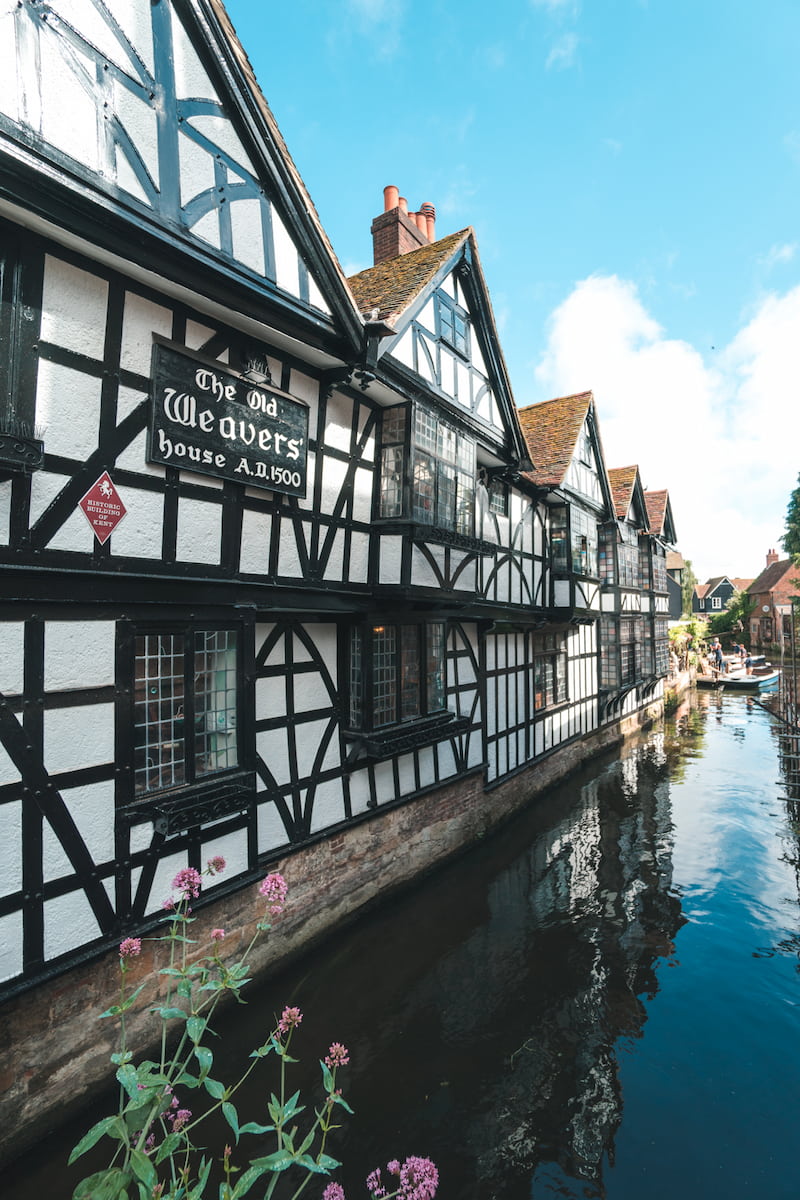
    the old weavers house canterbury
    The Old Weavers House Canterbury is one of the most photographed spots in England.

    Then you have the tranquillity of Westgate Gardens along the riverside, with an array of benches and green space, which will have you stepping back in time to a slower-paced life.

    This highly walkable and extremely charming town is well worth the trip for the Cathedral alone, but I’m going to give you a guide of all the best places to see and things to do in Canterbury to help plan your perfect day out. And being within easy reach of Whitstable and Herne Bay, you might decide to spend a couple of days exploring the area around Canterbury as well.

    So here’s how you can easily explore historic Canterbury in a day, without feeling rushed at all.

    The Goods Shed

    The Goods Shed food market in Canterbury
    The Goods Shed food market in Canterbury

    I recommend getting off the train at Canterbury West so you can start your day at The Goods Shed for a coffee. It’s literally right next door to the station. If you’re driving, there’s also a multi-story car park, where you can park for just $10 for the day.

    The Goods Shed is a fabulous little gem with lots of options for fresh food and photo ops. Being a farmer’s market, food stall and restaurant, it’s a foodie paradise. This is a great stop for chatting with locals and getting the freshest farm-to-table produce imaginable. You’ll find delectable cheeses and an olive selection to make your mouth water, along with local jams, olive oils and wines.

    Treat yourself to a full breakfast before your walking tour of Canterbury or have a pastry and coffee from The Bread Shop to perk you right up!

    The Westgate
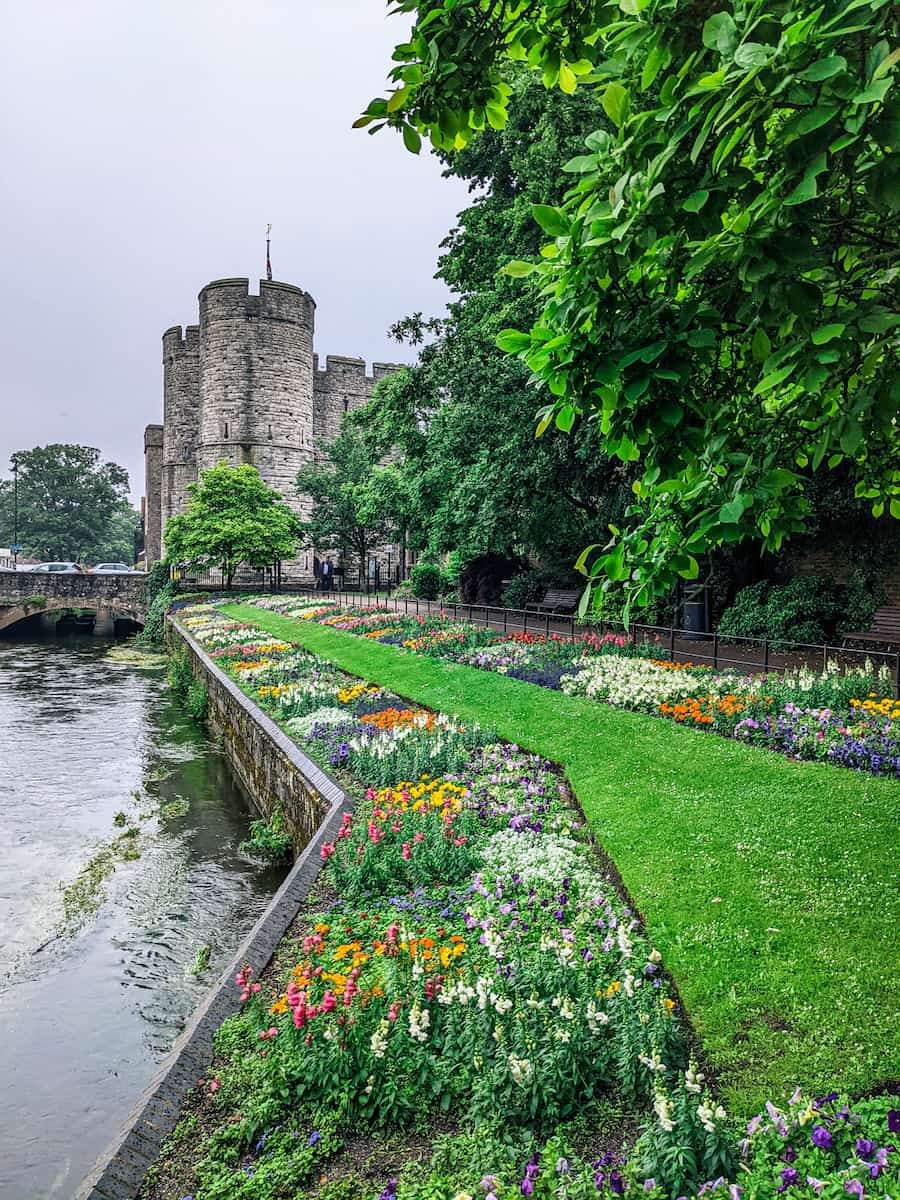
    The Westgate in Canterbury with Gardens and river in front
    The Westgate in Canterbury with Gardens with the River Stour

    It’s just a quick 5-minute walk from The Goods Shed to the Westgate, which is impossible to miss. The Westgate will give you a grand entrance into the cobbled streets of Canterbury. This 60-foot medieval gatehouse is the largest surviving city gate in all of England, and the last survivor of the seven original gatehouses in Canterbury, erected in 1379.

    Walk through these stout, towering gates and emerge into another world.

    Beany House of Art and Knowledge
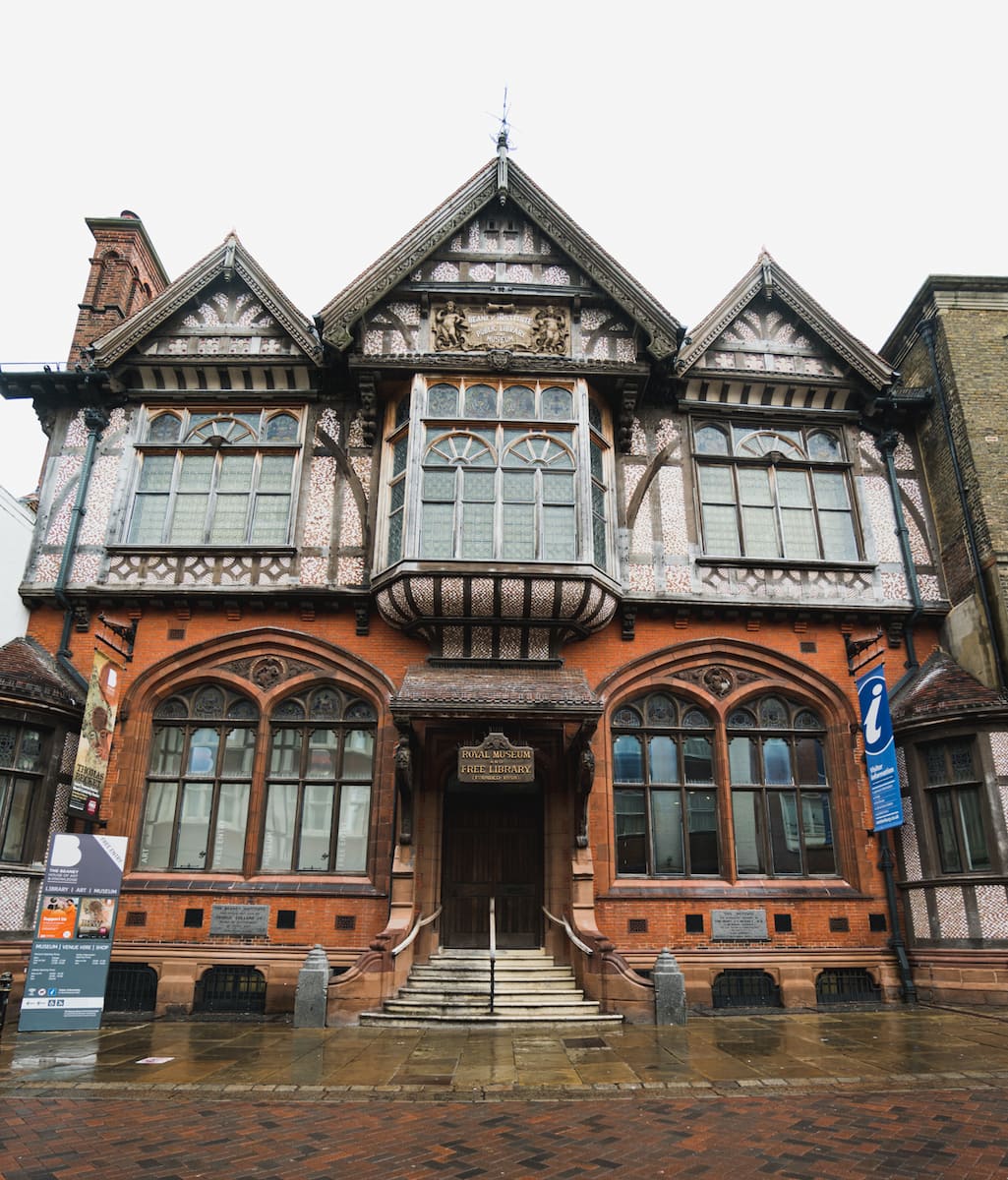
    Beany House of Art and Knowledge in Canterbury
    Beany House of Art and Knowledge in Canterbury

    As you make your way down the high street, you might find yourself smiling in awe as you enjoy the character of the medieval buildings, inns and pubs. Even the doorways are fun places to admire and get more photos.

    If you haven’t stopped too many times by now, in just 5-10 minutes you’ll come across an eccentric-looking building, with a gothic err on the left-hand side that will bring you to a halt. You might be tempted to keep walking, but follow the pull to go inside and you’ll find the most unexpected surprise; the Beany House of Art and Knowledge.

    Within this Victorian-era building you’ll find Canterbury’s Museum, Art Gallery, Library, Visitor Information Centre, and the best part; a public toilet! And all of this is free upon entry.

    I was really impressed with how much the Beany House had to offer. As you walk up the winding stairs, there’s a sign near the entrance that reads,“This collection has been filled by global travellers and is formed from the finds of mercenaries and missionaries, soldiers and diplomats, artists and writers.”   

    The Museum has a sizeable collection of Victorian taxidermy, artefacts from the ancient civilizations of Rome, Egypt and Greece, and exotic ethnographic objects from the time of the British Empire. It’s quite the collection and worth a visit to see.

    Butchery Lane
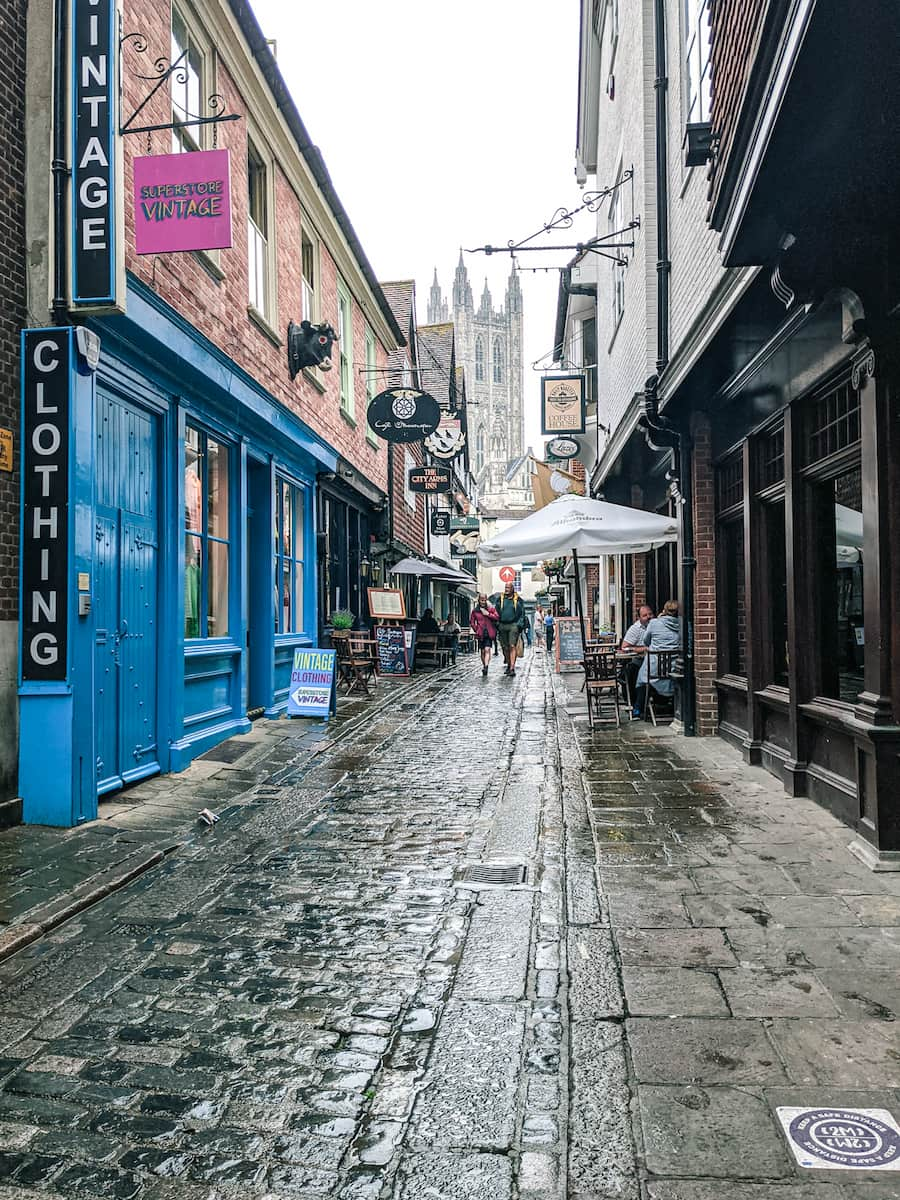
    Butchery Lane in Canterbury
    Butchery Lane in Canterbury is perfect for a photo op.

    After the Beany House, just a few minutes walk up the main road, you’ll turn left onto Butchery Lane to head towards Canterbury Cathedral. This is the most famous street in Canterbury and is a great place to stop and snap a photo of the cathedral from the street at a distance.

    Canterbury Roman Museum
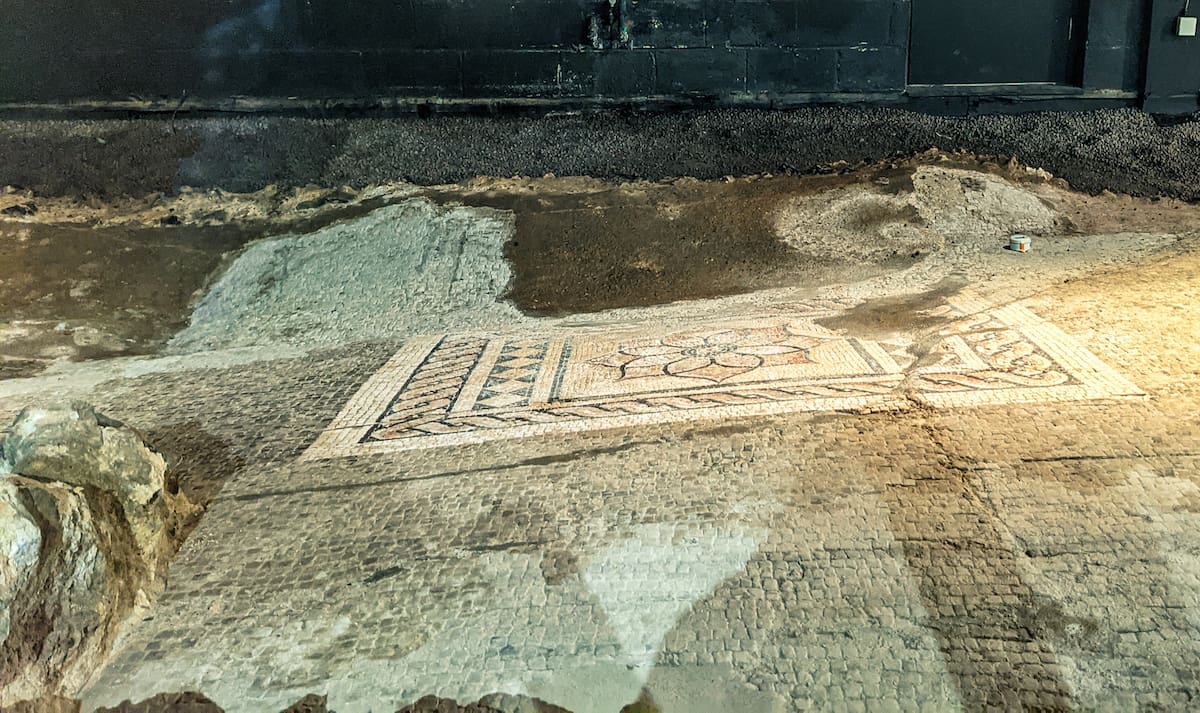
    Canterbury Roman Museum
    Canterbury Roman Museum

    If you’re not in a hurry to get to the cathedral, consider stopping off at the Canterbury Roman Museum, located on Butchery Lane. It’s a delight for history lovers. As Kent’s only Roman Museum, it’ll give you insight into Roman life in Britain. Here you’ll find the remains of a large Roman house, incredible mosaics, jewelry, and unusual glassware from ancient times.

    Canterbury Cathedral
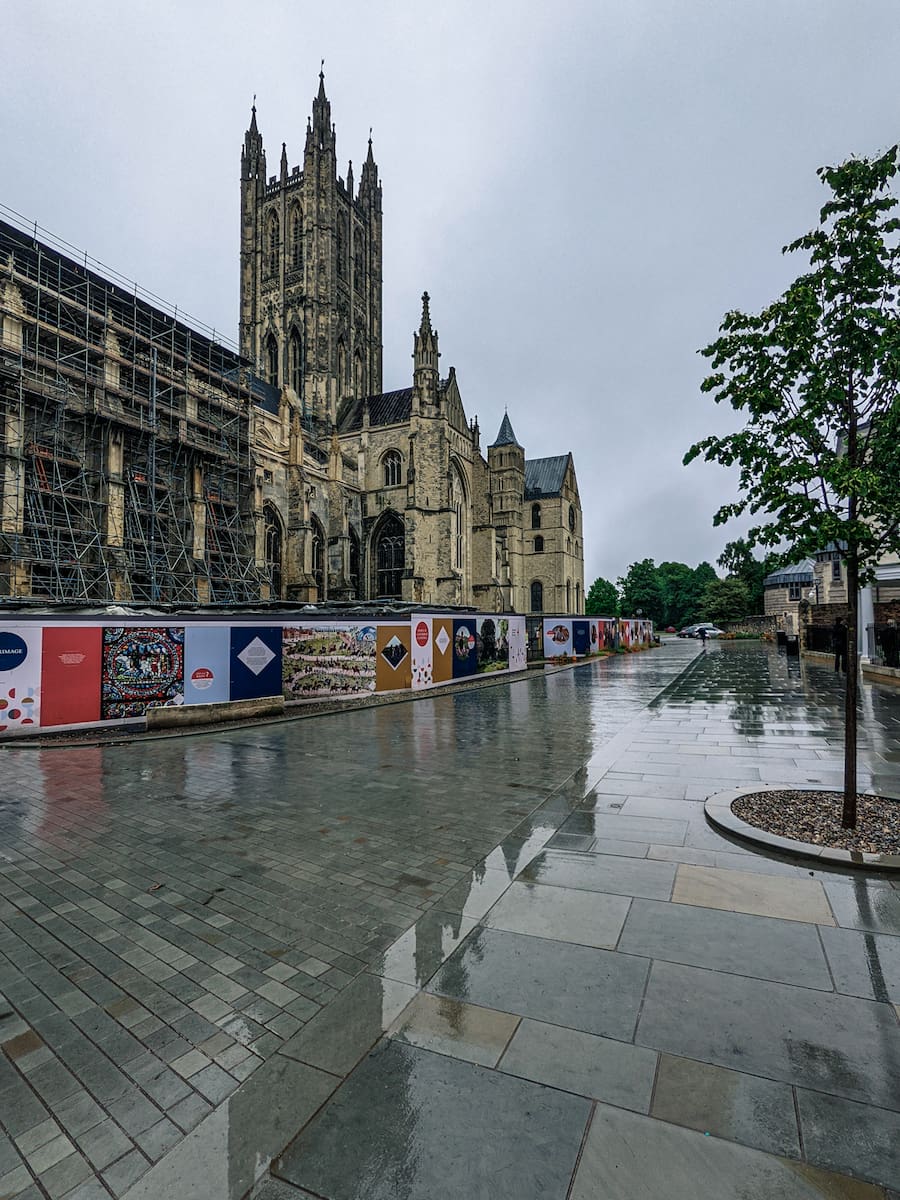
    Canterbury Cathedral in the rain
    Canterbury Cathedral

    The Canterbury Cathedral is a jaw-dropper, aptly named the most striking cathedral in all of Europe, and those are some big shoes to fill. I was in complete awe walking up to and through the cathedral and grounds. It’s easy to see why this is the main attraction in Canterbury. Give yourself a good two hours to explore here.

    With more than 1400 years of Christian history, the Canterbury Cathedral has seen it all. It’s the Mother Church of the Anglican community, had an influential role in the Magna Carta negotiations, and was the exact spot where Archbishop Thomas Becket was murdered in 1170. It really is the holiest of holy places in England.
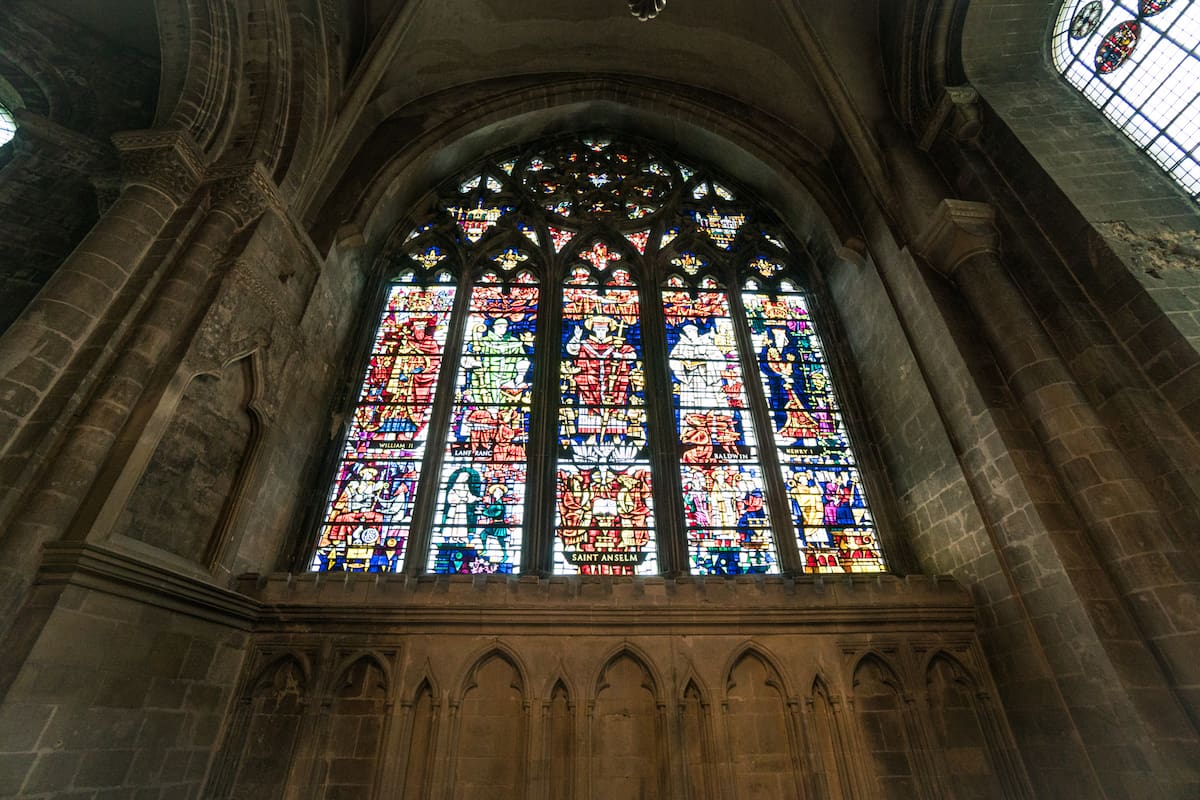
    Canterbury Cathedral stained glass windows
    Canterbury Cathedral stained glass windows

    The Cathedral was established when St. Augustine arrived in 597 AD as a missionary. He founded the cathedral within the Roman city walls and was made the first Archbishop of Canterbury. Pilgrims then began their pilgrimages to the city for prayers and religious services.

    Centuries later, Thomas Becket, the Archibishop of Canterbury from 1162-1170, was murdered by Henry II of England over a conflict, which became a key element in the history of the cathedral. After his death, it was decided the cathedral would undergo expansion.
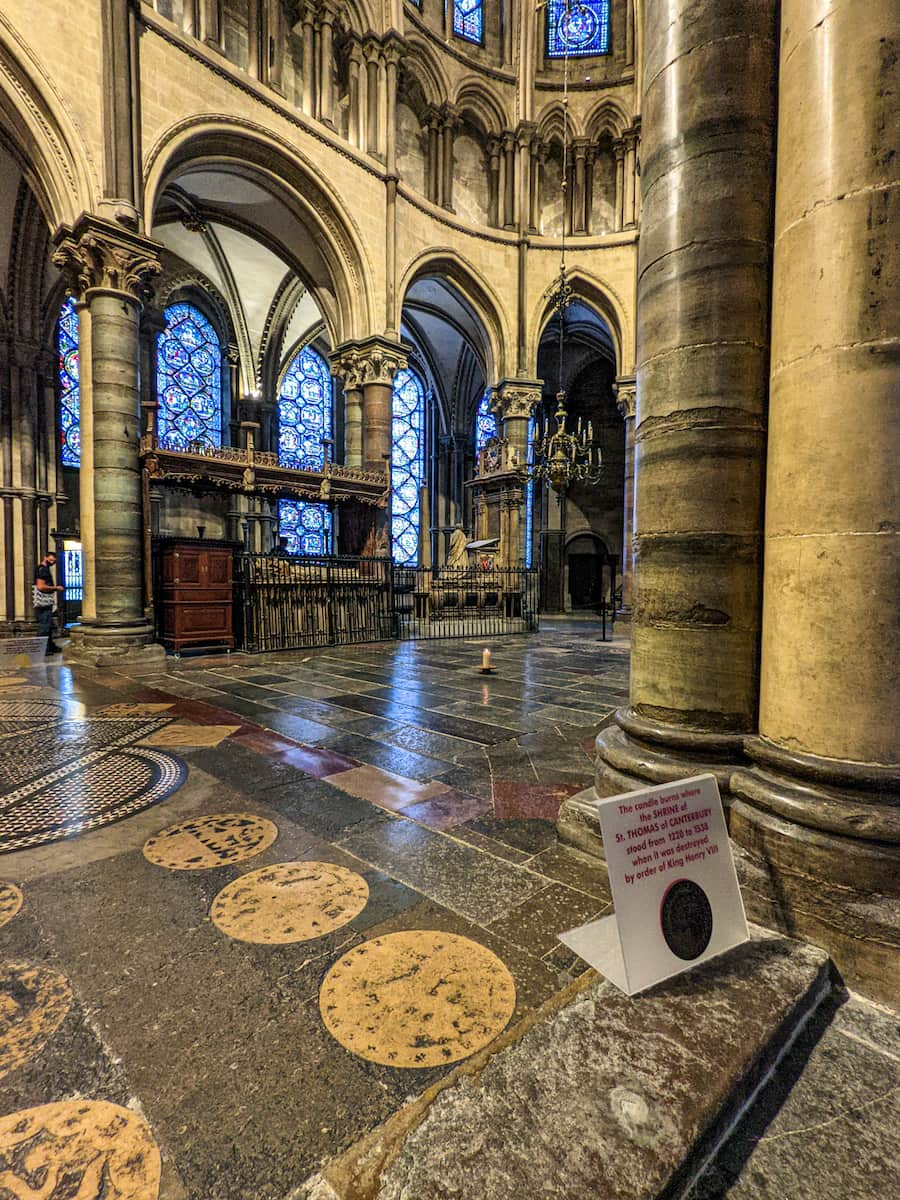
    St Thomas of Canterbury Tomb
    St Thomas of Canterbury Tomb

    Then a fire in 1872, completely tore down the Trinity Chapel roof and when the building was restored, it was restored in Gothic style.

    As you enter the cathedral through the imposing gates, you’ll first see the intricate, grand wooden door. Then make sure and look all the way up at the ceiling. It’s so high, I got a little dizzy, but it’s so beautiful, the breathtaking ceiling is not to be missed. The cathedral is famous for its fan-vaulted ceilings throughout the building.

    The massive crypt beneath the east end of the cathedral is the next place to visit once inside. It features Romanesque murals and carved pillars, with multiple rooms to explore.

    Take the time to marvel at the beautiful masonry on the exterior walls of the cathedral and the cathedral cloister. The cloister is where the monks would have meditated and studied, under a covered walk. Then there are statues that include the greatest of the archbishops, influential kings and queens who were connected with the cathedral.

    There’s also a corner that tells the history of the monastery that was part of the cathedral and what life was like on the monastery grounds for the monks. There’s really so much to learn at the Canterbury Cathedral and it’s all highly fascinating.

    Take a photo in the hallways of Canterbury Cathedral
    Take a photo in the hallways of Canterbury Cathedral

    Note: Unfortunately, they have been undergoing a series of renovation work, inside and outside, since 2014. But all that means is your view will be partially obstructed by scaffolding. I’ll admit, I was a little disappointed by this so I thought I’d mention it so you’re not surprised by it like I was. I was told that the construction is due to be completed by Spring 2022.

    The King’s School

    A short walk from the Canterbury Cathedral and still within its grounds, is the oldest operating school of England, The King’s School. The school has been in the exact same spot ever since the arrival of St. Augustine in 597 AD.

    If you visit Canterbury on a weekday, you’ll see loads of students roaming about, but you can only get a guided tour of the school if your child is interested in studying there. It’s worth taking some photos of the outside though and the high energy of the children makes it feel a little enchanting.

    Shrine of St Thomas of Canterbury

    Once you’ve left the cathedral grounds, turn left and you’ll find the Catholic Church and Shrine of St. Thomas of Canterbury up on the right-hand side about 5 minutes away.

    After the murder of Archbishop Thomas Becket, Canterbury became one of the major centres of pilgrimage in Christendom. Thomas’ shrine became the centre of great devotion and prayer until its destruction in 1538 under King Henry VIII.

    Fortunately, some relics from the original shrine in Canterbury Cathedral survived. They can be seen in the Martyrs’ Chapel. This is a sacred space to visit and offer up prayers and intentions for those who have spoken out against corruption and injustice.

    St Augustine’s Abbey Ruins

    Keep walking in the same direction (east) and you’ll come across St. Augustine’s Abbey. These ruins are an English heritage site that is part of Canterbury’s UNESCO heritage centre. It’s located to the east of Canterbury Cathedral and right outside the city walls. This is one of the most important religious sites in England.

    Ruins of the abbey and other buildings are now accessible by grass paths and gravel walkways and you can get a partial view from the gates at the road.

    There’s an exhibition within the ruins that traces the story of the abbey and its founders and there’s also a museum where you can check out excavated artefacts. And if you want the full-on experience, you can use the virtual reality headsets to experience firsthand what life in the abbey would’ve been like.

    Sir John Boys House

    After the Abbey, head back west towards the heart of town. You must visit the crooked Sir John Boys House, one of the most photographed buildings in Canterbury. It looks unreal! The crooked house with a crooked door tilts to the side at an angle that doesn’t seem possible for it to stand and you might wonder if it’s going to topple over any minute. But alas, it’s actually habitable!

    Sir John Boys House is located at the end of Palace Street, close to the cathedral. It houses a charity bookshop and is free to enter, but check online because it was closed as of January 2022. But it’s a fascinating stop for a photo and a must-see in person either way!

    The Parrot Pub

    By now you might be ready for a pint or a drink. The Parrot Pub is one of Canterbury’s oldest buildings and is the oldest pub in town. The Parrot was built on Roman foundations in the 14th century, at the same time the famous cathedral was under construction.

    You’ll find The Parrot tucked away down a picturesque cobbled street and inside you’ll find the historic style of the pub still holds true today. With medieval beams, enormous oak floorboards and authentic open fires, you can’t get much more atmospheric than this.

    Westgate Gardens

    Westgate Gardens with flowers
    Westgate Gardens

    After you’ve stopped for a pint or grub, you’ll be feeling nice and relaxed and ready for your final destination. One of the most enjoyable things to do in Canterbury is to enjoy a scenic walk through the Westgate Gardens. I ended my day doing just that.

    Westgate Gardens has 11 acres of public gardens, which are set around the Tower House, a medieval bastion constructed to defend Canterbury’s city wall.

    The Tower House was first made 100 years ago and has a 14th-century tower of the city wall. Have a walk following the River Stour upstream or take a historic river tour.

    If the weather’s nice, during your river tour, you’ll have a chance to learn the rich history of the city and even see the best architectural and historical sights, as well as hear some of Canterbury’s oldest myths and legends.

    Enjoy watching the swans in the river, passing over the small bridges and taking in the unique fauna. And check out some more crooked buildings across the river!

    Well, I hope you’ve enjoyed your historic day in Canterbury. I know it’s a day you won’t soon forget. I’m sure you’re thinking the cathedral alone will be worth your trip, but I’m sure you’ll see everything in Canterbury is worth visiting. Make sure and add this to your list of ideal day trips from London and gems of England you must see.
  • 10 Best Day Trips From London By Coach

    10 Best Day Trips From London By Coach

    No matter how great London is, sometimes you’ll find yourself needing a change in scenery. London is surrounded by towns and cities which are full of history, culture and attractive scenery. Here are the best day trips from London by coach.

    Coach travel is often the cheapest way to get around England if you don’t drive. The two main coach companies, National Express and Megabus, offer routes to many destinations around the country, and at bargain prices. 

    Below is a list of places that are only a short coach journey from London. Perhaps these can inspire your next day out!

    Colchester

    Colchester Essex with River Colne
    Colchester Essex with River Colne

    Just under three hours by coach from London Victoria is Colchester, a historic town in Essex. It’s known as Britain’s first city and was once the capital of Roman Britain (then called Camulodunum). With a history of over 2,000 years, there is plenty to explore here.

    To kickstart your historic tour of Colchester, the best place to start is the Colchester Castle Museum. The castle is home to the largest Norman castle keep in Europe, and was built on the foundations of the Roman Temple of Claudius. You can take a guided tour of the castle and visit the museum, where you can admire artefacts like mosaics and the Colchester Gladiator Vase.

    Castle Park is a lovely place to relax and have a picnic, with a boating lake, play park and crazy golf course. To explore more of the town’s Roman heritage, you can trace the remains of the Roman walls that were built around the city, including the Balkerne Gate, Britain’s oldest Roman gate. 

    One of the most popular attractions in the town is Colchester Zoo. With a large emphasis on conservation, the zoo is home to over 260 species from around the world. There are themed zones such as the Orangutan Forest, the Kingdom of the Wild and Edge of Africa.

    If you’re after more of a cultural day out, Colchester has some excellent museums and art galleries. Hollytrees Museum is a free, local history museum with a particularly interesting array of Colchester-made clocks.

    If it’s nature you’re interested in, the Natural History Museum has plenty of fascinating things to uncover. Make sure to visit Firstsite, an architecturally stunning art museum showcasing contemporary visual art, exhibitions, films and events. 

    Margate

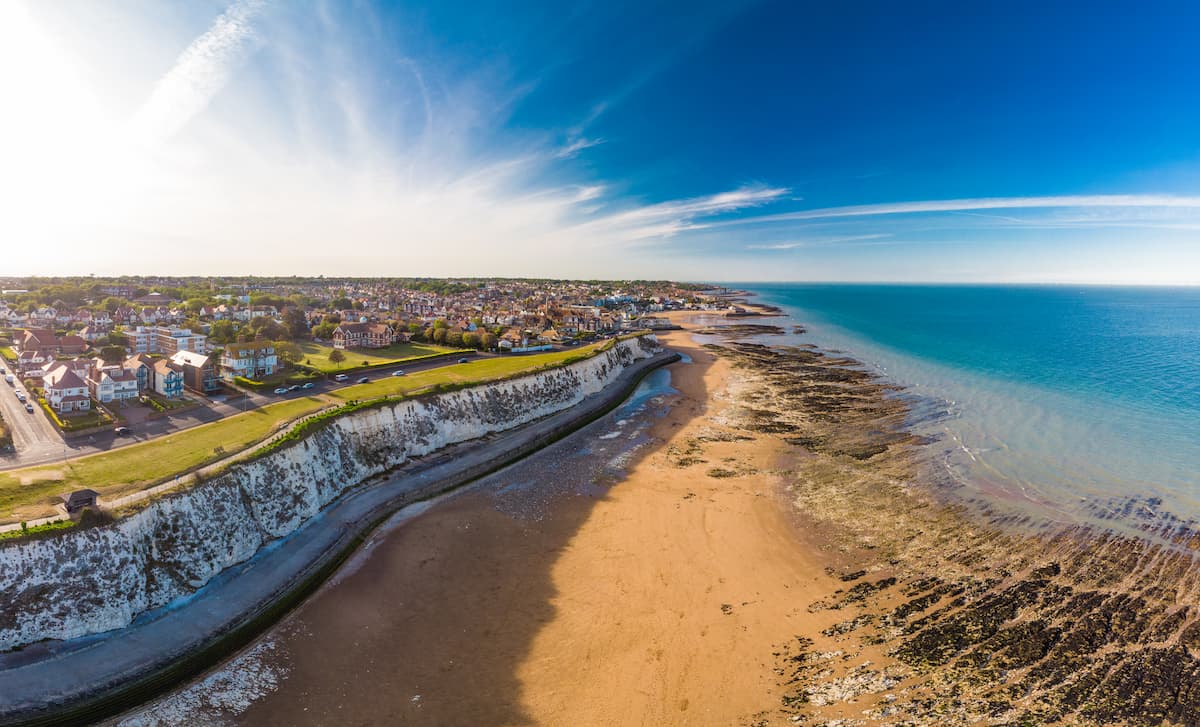
    Aerial view of the beach and white cliffs, Margate
    Aerial view of the beach and white cliffs, Margate

    Two hours and 40 minutes by coach, Margate is a seaside town on the southeast coast of Kent. Being so close to London, Margate has been a popular seaside resort for at least 250 years, with city-dwellers drawn to its sandy beaches. With all the classic fittings of a traditional seaside town like a theme park, arcades and theatres, the town is also artsy, young and uber cool.

    Margate Main Sands is a Blue Flag winning beach. Alongside the huge stretch of golden sands, you’ll find plenty of cafes, attractions and children’s rides. Just behind the beach is the Old Town, full of gorgeous Georgian and Victorian buildings housing independent shops, boutiques, galleries and cafes.

    Along the Main Sands you’ll also find Old Kent Market, an indoor market housed within an old cinema building from 1911. Find all sorts of things in here, from food and crafts, to vinyl and cocktails. 

    A must visit in Margate is Shell Grotto. Discovered in 1835, this mysterious structure consists of 70 ft of winding passages decorated with 4.6 million shells, forming mosaics of gods and goddesses, trees and patterns. No one actually knows why it was built, but there are plenty of interesting theories.

    If you’re into the arts then make sure to visit Turner Contemporary, an art museum built on the site of a boarding house in which J. M. W. Turner once lived in. You’ll find ever-changing exhibitions from local and international artists, focusing on art from 1750 to the present day.

    If you’re interested in learning more about Margate, the Margate Museum has engaging exhibitions on the evolution of the town as a seaside resort. 

    Brighton

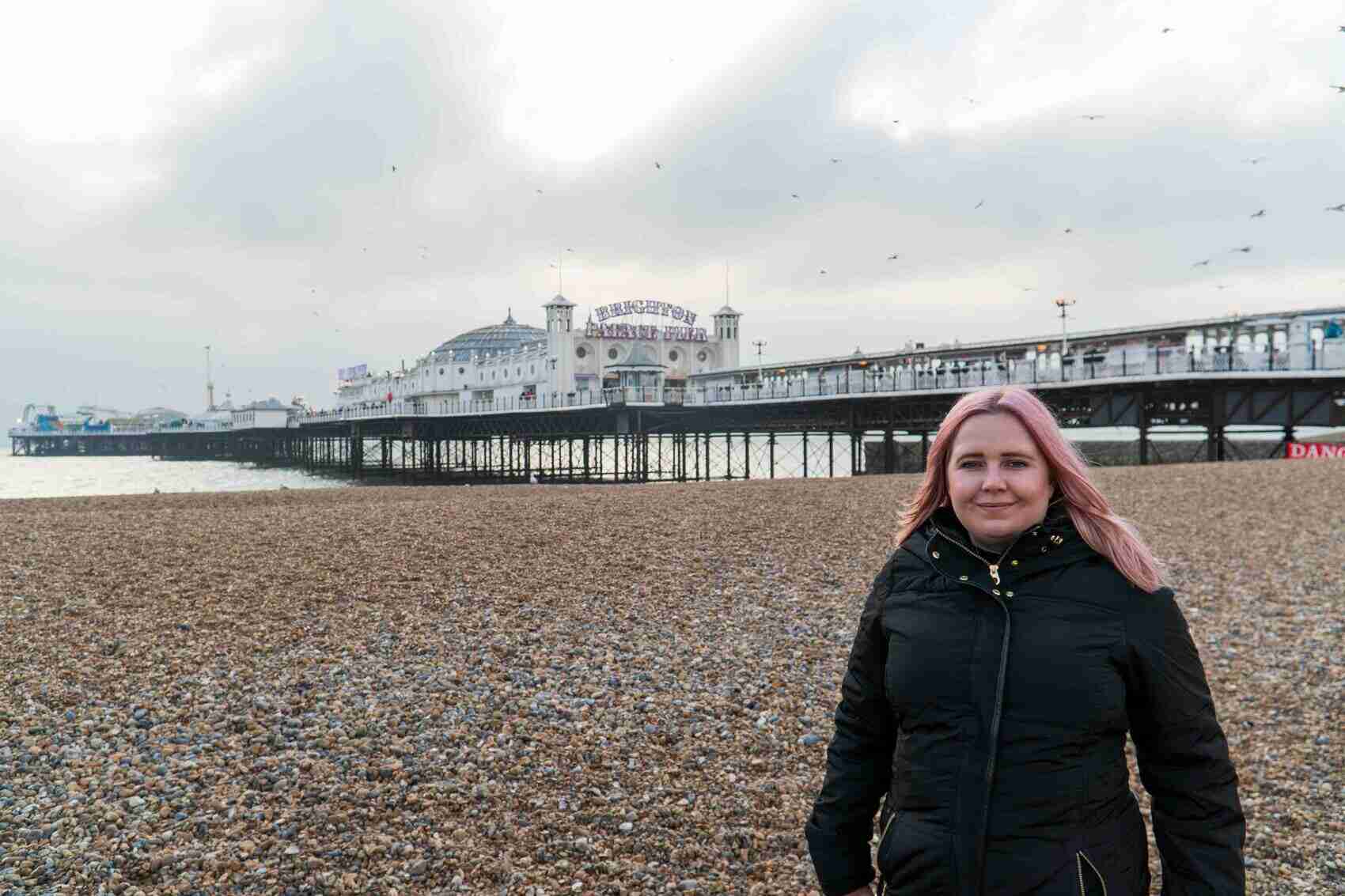
    Kat-at-Brighton-Pier

    It wouldn’t be a list of London day trips without Brighton. You can get to ‘London-by-the-Sea’ in two hours and 25 minutes from London Victoria. This seaside resort on the south coast of England attracts day-trippers from all over the south for days at the beach, shopping and partying.

    It’s home to Brighton Palace Pier, the UK’s biggest tourist attraction outside of London. The pier pushes out into the sea for half a kilometer and has fairground rides, traditional games, two arcades and a giant soft play area. Definitely a must-see.

    Down on Brighton Beach and Seafront, you’ll find a pebble beach that stretches over five miles long, as well as plenty of bars, clubs and cafes. One of the most popular attractions on the seafront is the British Airways i360. This observation tower has 360° panoramic views at 162 meters above the city. While you’re there, splash out on a cocktail at the Nyetimber Sky Bar.

    If you’re celebrating something, Brighton is the place to be. There are numerous bars and clubs to suit your needs, whether it’s gastropubs, gay bars, live music venues, stylish cocktail bars or mega-clubs. You can find them dotted around the Lanes, North Laine, Trafalgar Street, Churchill Square and Western Road.

    Need to find a last-minute gift? Brighton is a fab place for a spot for shopping. The Lanes, once an old fishing quarter, is now a maze of narrow alleys packed with restaurants, cafes, independent shops, boutiques and antique stores. You can also head to North Laine, a hip shopping district with over 300 shops. It’s a particularly great place to find artwork and designs, including glassware, jewellery, ceramics, sculptures and clothing. 

    Canterbury

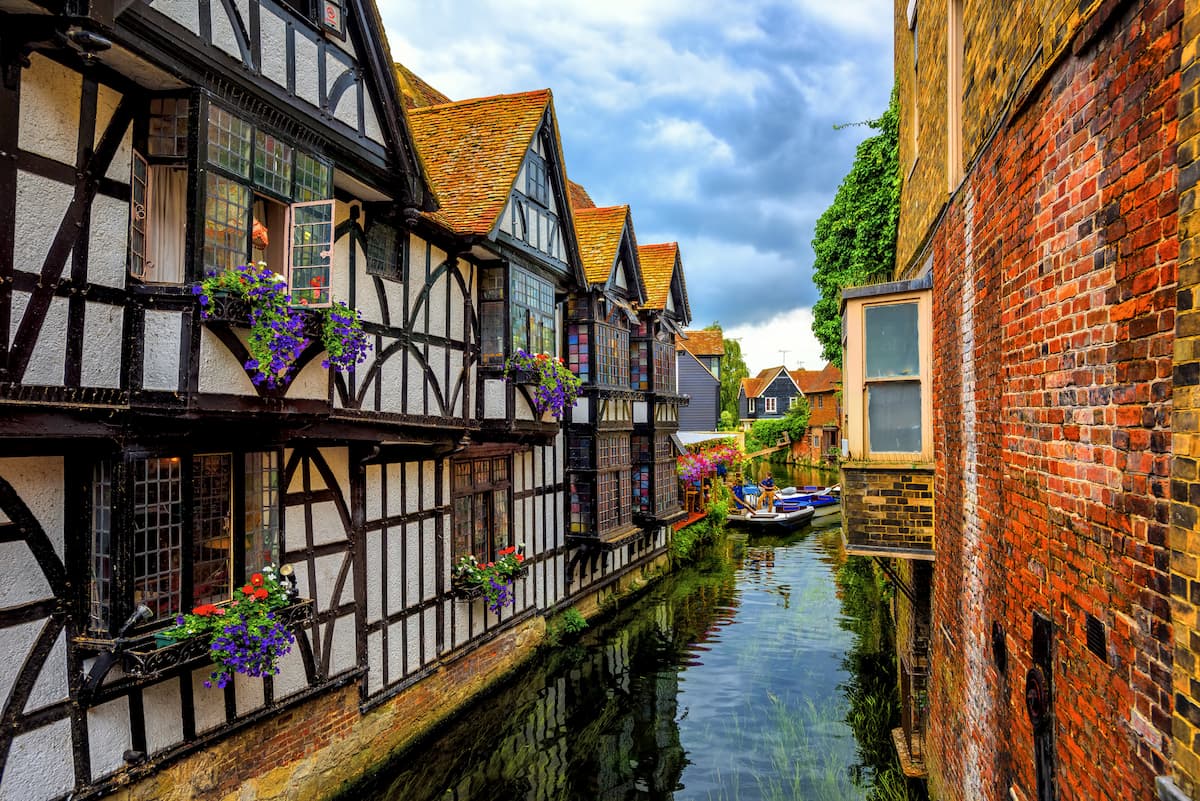
    Medieval houses and river Stour in Canterbury Old Town
    Medieval houses and river Stour in Canterbury Old Town

    Just two hours by coach will take you to Canterbury, a cathedral city and UNESCO World Heritage Site. With the River Stour winding through it, Canterbury is a beautiful city with plenty of old buildings and cobbled streets.

    No trip to the city is complete without visiting the famous cathedral, one of the oldest Christian structures in England. It’s best known as the site of the murder of Thomas Beckett, killed by King Henry II’s army in 1170. You can take a guided tour of the cathedral and admire the stunning architecture.

    The Romans have also made their mark on the city, and you can discover more about their legacy at the Canterbury Roman Museum. Built on the remains of a former Roman townhouse, there are a wide range of artefacts and original mosaics to see.

    Another fun museum is the Beaney House of Art & Knowledge. It showcases everything from paintings and ancient Egyptian artefacts, to Anglo-Saxon antiques and pilgrim badges. 

    Although the city is pedestrian-friendly, a fun way of sightseeing is by taking a boat tour down the river. From this vantage point, you can see landmarks like the Dominican Priory and Greyfriars Chapel from unique angles. After the boat tour, stop off for lunch at one of Canterbury’s many cafes (Cafe St Pierre is one of my favourites), or have a picnic at one of the city’s green spaces.

    Westgate Gardens are a huge area of different landscapes including woodland, meadows, formal gardens and riverside. After lunch, catch a show at Marlowe Theatre, Canterbury’s leading performing arts venue. Whatever you’re interested in, whether it’s concerts, dramas, musicals, contemporary dance shows, ballets, operas, comedy shows, you’ll definitely find something you enjoy.

    Winchester

    Nestled in the rolling chalk hills of the South Downs, Winchester is only one hour and 50 minutes from London. This ancient cathedral city has some of the country’s oldest institutions.

    The best place to start is Winchester Cathedral, and at over 170 metres long, is the world’s longest Gothic Cathedral. Step inside and discover over 1,000 years of history. Admire the 12th century wall paintings, medieval carvings and the illuminated Winchester Bible.

    Another stop you should make is the Winchester City Museum. Dating back to 1861, the museum has exhibits on historical Winchester, Jane Austen, the Romans and the Anglo-Saxons. While you won’t be able to see Winchester Castle in all its glory, you can still see the Great Hall, which is all that remains. One of the best remaining medieval halls in the country, the Hall has beautiful stained glass, marble columns and the perfectly manicured Queen Eleanor’s Garden. 

    As the city is surrounded by the South Downs, it would be rude not to get out in nature. While a long hike might not be practical on a day trip, there are still plenty of short walks in and around Winchester. One of the best ones is Watermeadows and St Catherines Hill. As you wander along the River Itchen, you’ll be spoilt with lush scenery and some of the city’s most dramatic landmarks.

    Cambridge

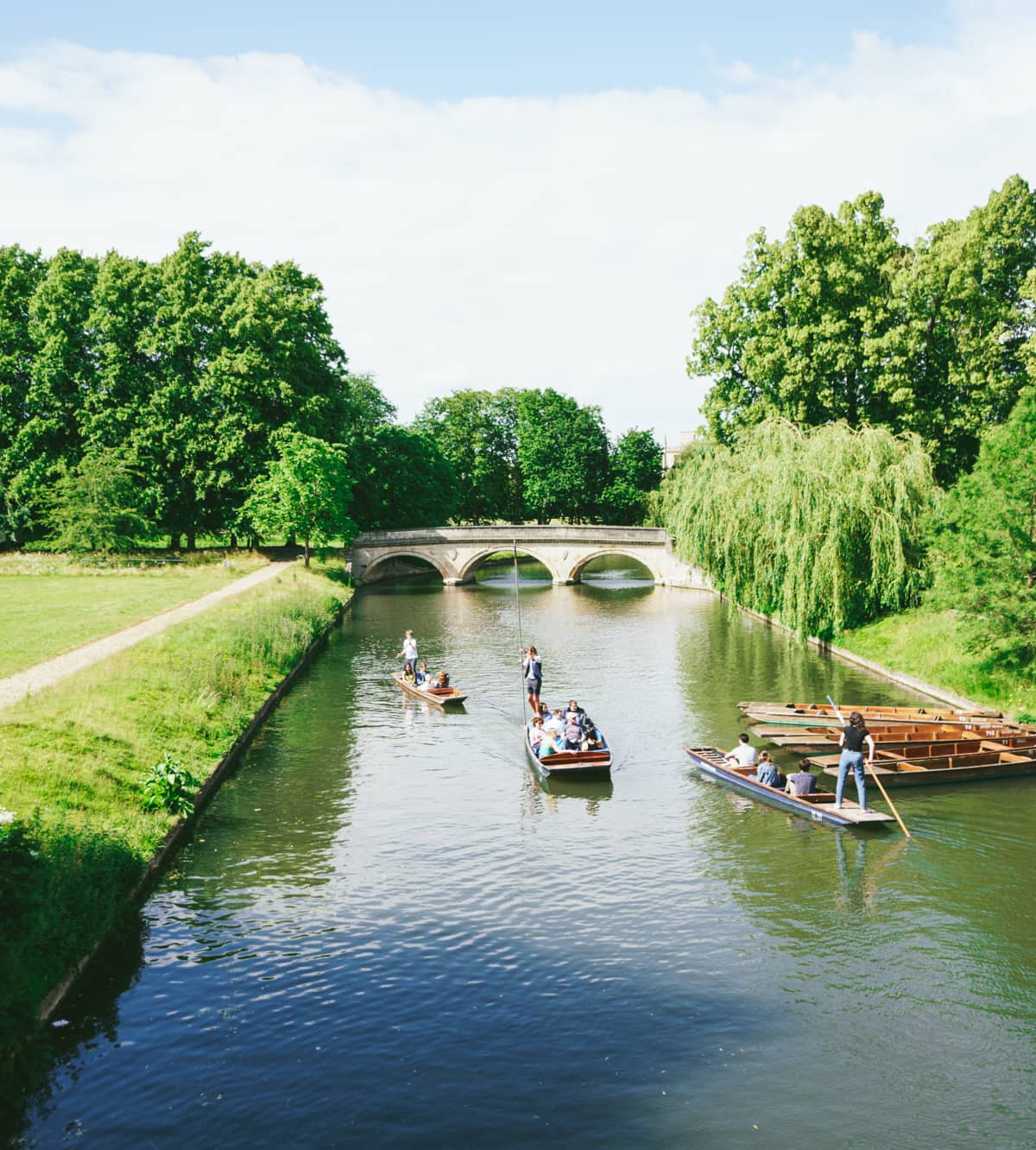
    Punting Down the River Cam
    Punting Down the River Cam

    While it may be more touristy than the other destinations on this list, you could argue that it’s popular for a reason. A two hour and 15 minute coach journey from London takes you to one of England’s finest cities.

    Synonymous with the world-renowned Cambridge University, the city boasts culture, history, architecture and plenty of things to do. If you want to learn more about the university, official tours of the colleges are offered by Blue Badge Guides. See exclusive parts of the campus and learn more about its history and quirky customs.

    Speaking of history, the Fitzwilliam Museum is the best place to step back in time. The museum is far from boring – it’s home to over half a million pieces of art that dates as far back as 2,500 BC. Whether it’s paintings, ancient artefacts, jewellery, textiles, arms and armour, the museum has it all. 

    If it’s a sunny day, one of the top activities in Cambridge is punting. A punt is a flat-bottomed boat that is propelled down a river by a punter. First introduced at the start of the 20th century, it has since become a popular local activity. Glide down the River Cam and see how many landmarks you can spot (spoiler: you’ll see King’s College Chapel, the Mathematical Bridge and the Bridge of Sighs).

    Another fun activity is visiting the Cambridge University Botanic Garden. Stretched over 40 acres, this heritage garden boasts over 8,000 plant species from all around the world. The gardens are divided into different sections, including the Mediterranean Beds, Scented Garden and Stream Garden. There are also several glasshouses full of tropical rainforests, desert flowers and alpine flora.

    Salisbury

    Two hours and 30 minutes by coach from London is Salisbury. This city is mostly known for one of the most famous visitor attractions in the UK, Stonehenge. It’s less than 10 miles from Salisbury, and you can get a coach tour from the city centre if you wish to visit it.

    Salisbury offers a lot more than just Stonehenge. The medieval cathedral city and its surrounding area is bursting with Neolithic, Bronze Age and Iron Age history, so there is plenty of history to explore. Salisbury Cathedral is a must-see. At 123 metres, this magnificent Gothic cathedral currently holds the record for the tallest spire in the UK.

    It’s also home to the largest cloister in the country, as well as housing one of the oldest working clocks in the world. If you can hack the 332 stairs, the tower tours are a must. The cathedral is home to the Magna Carta Chapter House, where the best-preserved copy of the 1215 Magna Carta lies. This is just one of four originals in the world and is definitely worth a viewing.

    If you’re interested in historic houses, then Salisbury doesn’t disappoint. Mompesson House is a townhouse constructed in the 18th century. Look out for the stucco work on the walls and ceiling, the oak staircase and period furniture.

    Arundells is another beautiful home, once the residence of former prime minister Sir Edward Heath. Guided tours are available and there are plenty of interesting things to see, including Heath’s personal collections.

    On a sunny day, there’s nothing better than a walk through Harnham Water Meadows. A source of inspiration for English painter John Constable, you can trace his footsteps on a two-mile circular walk that sets off from the cathedral. Sit beside the river and admire the lush views over to the cathedral.

    Folkestone

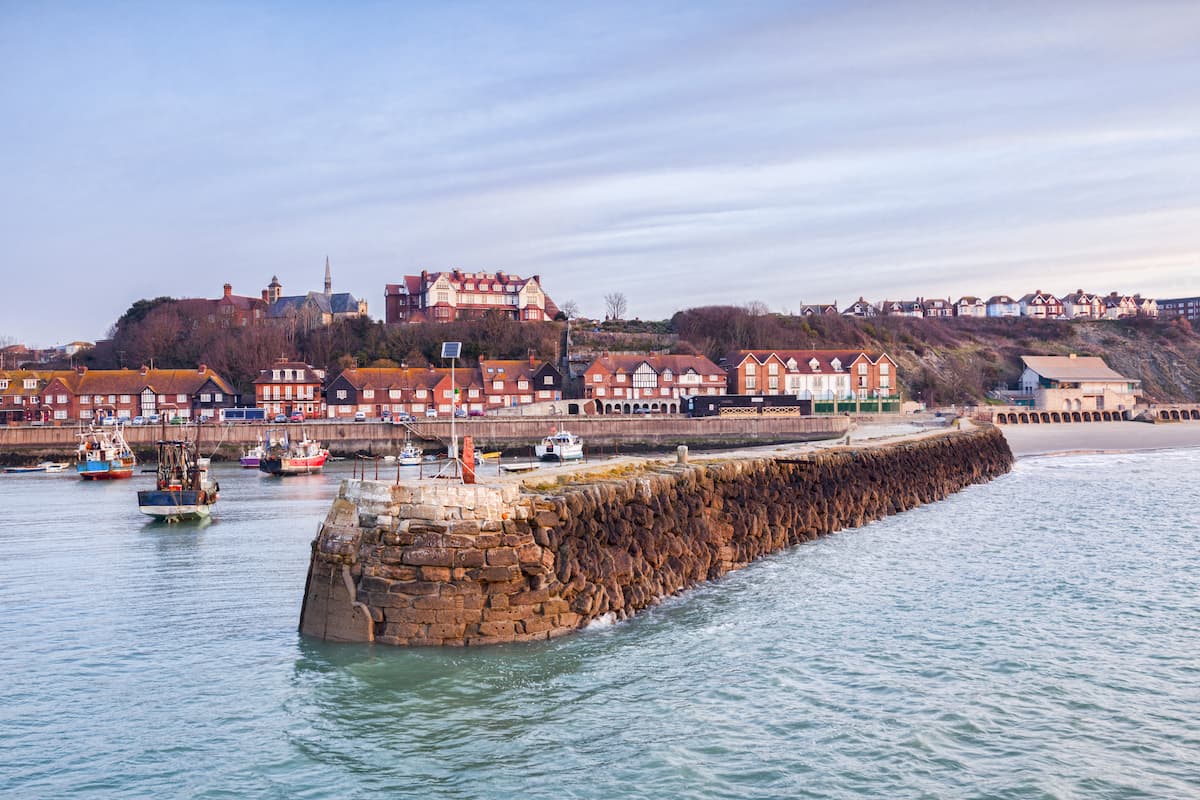
    Folkestone Harbour and Jetty
    Folkestone Harbour and Jetty

    Two hours and 35 minutes from London is Folkestone, a lovely seaside town in Kent. Right on the southern edge of the North Downs, the town lies in a valley between two cliffs. This position made it an important harbour and shipping port during the 19th and 20th centuries.

    Today, there are plenty of things to explore in the town, from Victorian architecture and waterfront parks, to a bustling harbour and exciting attractions. The main beach in Folkestone is Sunny Sands, a clean, sandy beach popular all year round. On the cliffs right above the beach is The Leas, a pretty promenade landscaped in the mid 19th century.

    Along the promenade you’ll find cafes, monuments and the Leas Cliff Hall Theatre. If you don’t fancy the zig-zagging steps up to the promenade, you can also take the cliff lift. One of the main attractions in Folkestone is the Harbour Arm. Until the turn of the millennium, this structure was used as a transport hub that linked Folkestone to mainland Europe. It fell into disuse for a number of years, before recently being rejuvenated. It’s now the best summer dining destination, with street food stalls, semi-permanent eateries and live music. You can even watch movies and sporting events at the Harbour Screen. 

    Within the historic town centre, you’ll find the Folkestone Creative Quarter. It’s home to a collection of galleries, artists’ studios and performance spaces, as well as quirky shops, cafes and restaurants. There is also the Quarterhouse, a performing arts venue with live music, film screenings, comedy and plays. To learn more about the history of the town, the Folkestone Museum covers five main themes: fashion, frontline, maritime, natural and ancient, and is a great place to spend an hour or so.

    Folkestone is surrounded by natural beauty, and getting outside is a must. Towards the east of the harbour is East Cliff and Warren Country Park, a 300 acre park and Site of Special Scientific Interest. As you walk along the paths, enjoy stunning views of the famous White Cliffs. Don’t forget to look down too, as this is one of the best places to go fossil hunting in the South East.

    Southampton

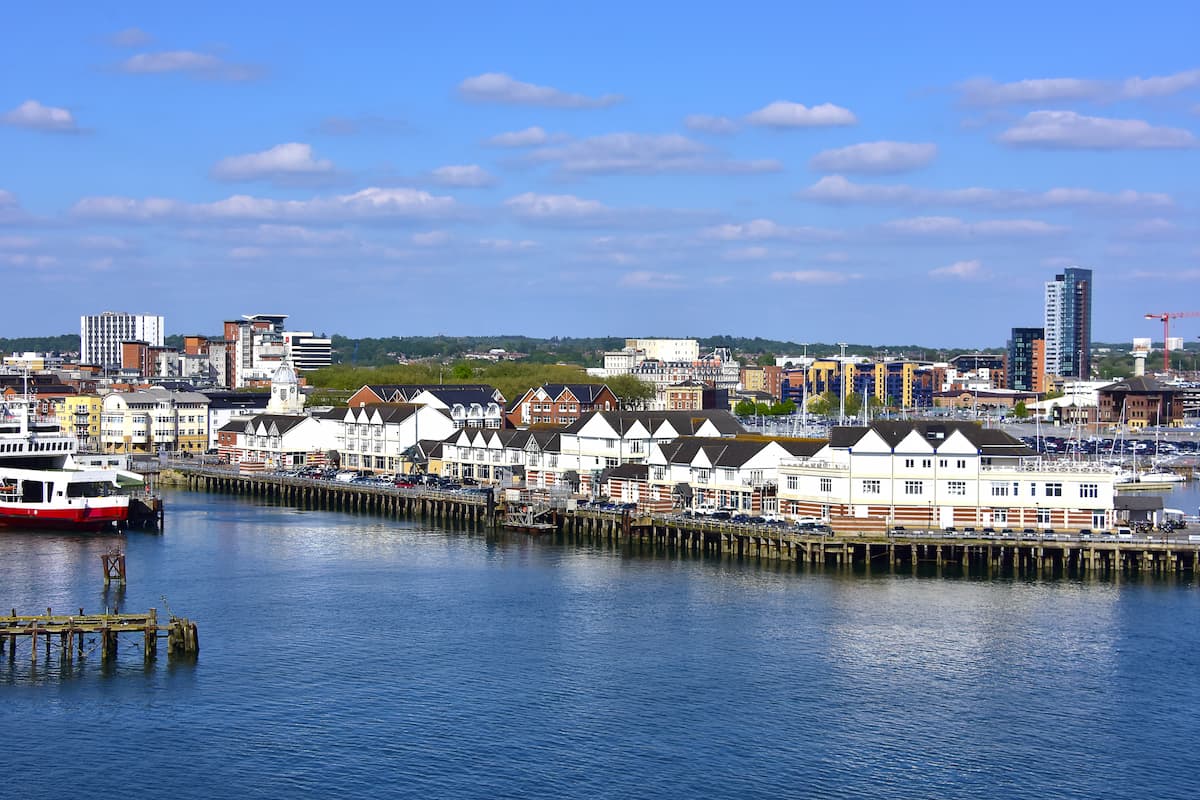
    Southampton England
    Southampton England

    Southampton is two hours and 20 minutes away from London by coach. Hampshire’s largest city, a visit to Southampton is a fantastic day out as there are plenty of things to do and see. The ill-fated Titanic departed from here and on the 100th anniversary of its departure, the SeaCity Museum was opened. Find out about Southampton’s history as a key port, and hear the stories of the people and goods that travelled through the city since the Middle Ages.

    Another interesting museum is the Solent Sky Museum. In the early 20th century, the city was home to the aviation manufacturer Supermarine who designed the Spitfire fighter plane. The museum showcases the story of the Supermarine brand, and you can check out the vast collection of planes, propellers and jet engines. 

    A fun way to see Southampton is from a ferry. With frequent departures from Southampton Town Pier, the Hythe Ferry makes a short, scenic trip over to the village of Hythe on the west side of the estuary. The trip also includes a ride on the world’s smallest gauge electric pier train, dating back to the First World War.

    One of the main draws for culture vultures is the Mayflower Theatre. This 2,300 capacity theatre first opened in 1928 as the Empire Theatre. Catch theatre productions, musicals, operas and stand-up comedy.

    If you’re keen to see some art, the Southampton City Art Gallery has one of the best art collections in the south of England, with up to 5,000 pieces of art covering eight centuries. 

    Portsmouth

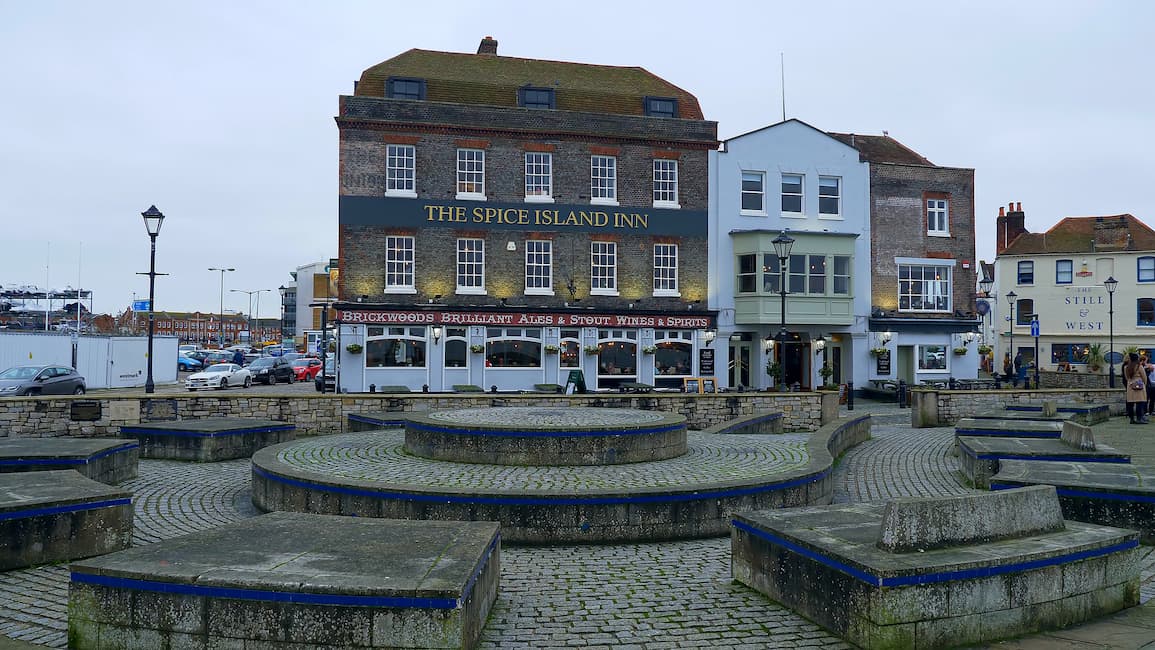
    Portsmouth England cityscape

    In just two hours, you can get from London to Portsmouth, a historic port city. There are tons of interesting attractions here, from museums and castles, to beaches and shopping. Portsmouth has been a significant naval base for centuries, and two thirds of the Royal Navy’s modern surface fleet is docked here.

    There are many ways you can explore this city’s rich maritime history. Portsmouth Historic Dockyard is an area of the HM Naval Base that is open to the public. You’ll find a collection of historic buildings and some of the most famous ships, like the HMS Victory, HMS Warrior and the HMS M33 which fought in the Battle of Gallipoli. You’ll also find the Royal Navy Submarine Museum, the Explosion Museum of Naval Firepower, National Museum of the Royal Navy and the Mary Rose Museum. 

    Once you’re clued up on your naval history, take a break along the seafront. The beach stretches along the entire southern end of Portsea Island, from Old Portsmouth to Eastney. One of the best attractions along the seafront is Southsea Castle. Built in 1544, the castle was constructed by King Henry VIII as part of a series of fortifications to protect the country from invaders. Explore the keep and enjoy panoramic views from the top all the way over to the Isle of Wight. Another interesting attraction along the seafront is the D-Day Story. This museum tells the story of the Allied invasion of Normandy in 1944, where Portsmouth was a key embarkation point. See the collection of artefacts including tanks, jeeps and machine guns.

    Portsmouth is a shopper’s paradise, with countless boutiques, markets and unique finds. Gunwharf Quays is a great place to find designer goods. It’s also the site of the Emirates Spinnaker Tower which offers stunning views across the city and sea. Commercial Road and Cascades Shopping Centre is also a fab place to find bargains. You can also take a short bus journey to Southsea which has plenty of antique shops, boutiques and independent stores.

    More England Articles

  • 12 Great Places To Visit Alone In England

    12 Great Places To Visit Alone In England

    Travelling solo in England is one of the best experiences. It’s quite safe, transport is excellent and the people are friendly. These are some of the best spots to visit, from dynamic cities, to seaside towns and rolling countryside.

    England’s rail network has good links around the country. There are coaches connecting cities and towns, and local buses within smaller areas. There’s also the option of hiring a car if you want more flexibility in getting around. Whichever way you decide to travel, there are so many beautiful destinations to explore.

    Keep reading to discover the best places to go as a solo traveller in England.

    1# London

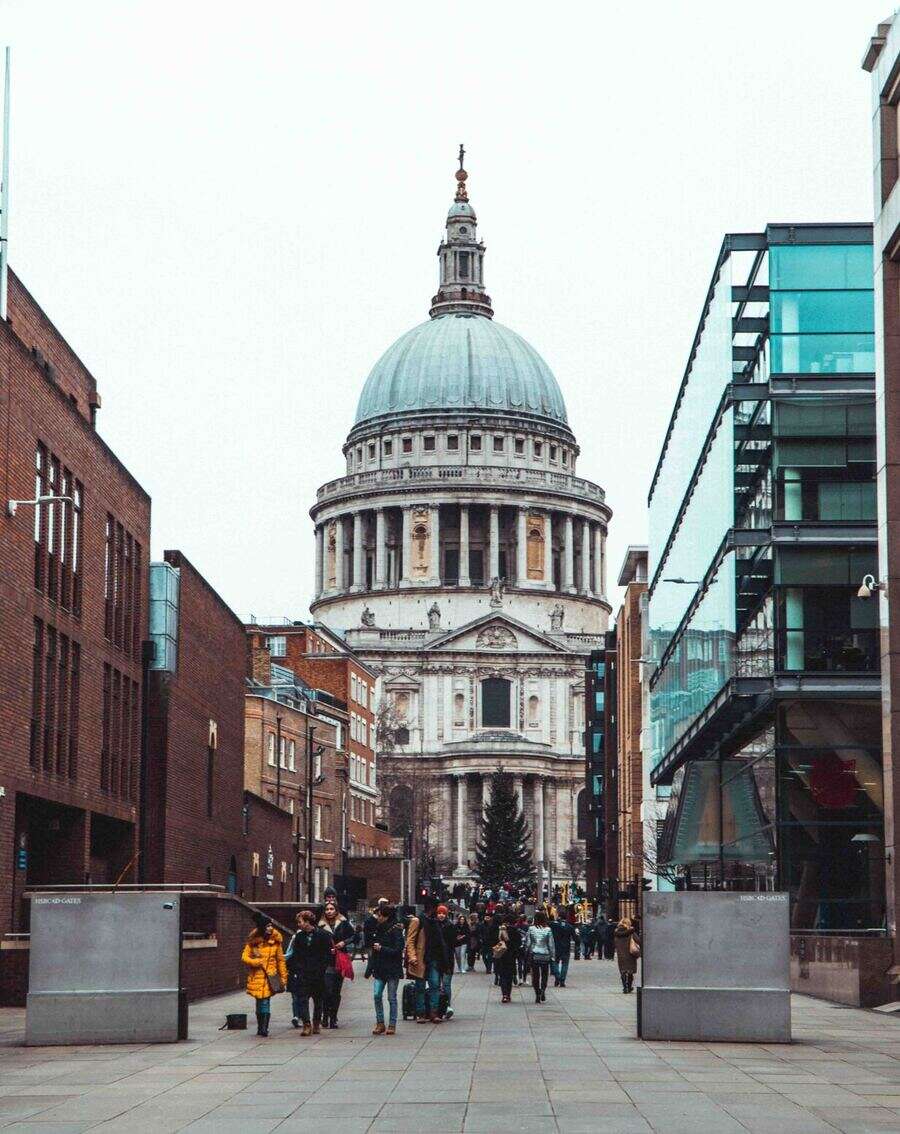
    St Pauls Cathedral
    St Pauls Cathedral

    Although England is so much more than London, the capital is definitely a great place to start if you’re travelling by yourself. You can get pretty much anywhere you like with Transport for London’s tube, buses and overground trains.

    The city is packed with world-class attractions, and whatever your interests are, you’re bound to find something to do. If you’re a history buff then London is the perfect destination. Some of the world’s most well known historical buildings are located in London.

    From royal residences like Buckingham Palace and Hampton Court Palace to religious monuments like Westminster Abbey and St Paul’s Cathedral, there is plenty of history to get lost in. London also has a large number of fascinating museums, from the Natural History Museum to the National Portrait Gallery.

    There are plenty of options for sightseeing as well. Whether you like to whizz through the city on an open deck tour bus, walk around neighbourhoods or sail down the Thames, you can choose how you want to explore. If you prefer to take it easy and want to avoid the tourist crowds, London has plenty of green spaces including Hyde Park, Primrose Hill and Hampstead Heath.

    If it’s raining, head to Kew Gardens for some incredible indoor jungles. You won’t be stuck finding a bargain either, as London is home to a huge variety of markets selling everything from fashion and jewellery, to vintage goods and antiques.

    2# Oxford, Oxfordshire

    Christ Church in Oxford England
    Christ Church in Oxford

    Oxford is a city that’s filled with beautiful old buildings, cobbled streets and picturesque views. Oxford Bus Company has great connections around the city, so you won’t be stuck for transport. Oxford is also a very bike-friendly city and is often the fastest way to get around, so it’s worth renting one out.

    Although the city centre isn’t too large, there are still plenty of things that you can see and do in Oxford. It would be pretty hard to visit the city without heading to its famous university. You can take a behind the scenes tour of the University of Oxford with a student, admire its amazing architecture and learn about its history.

    Another fun historical site is Oxford Castle and Prison. Visit the exhibitions and listen to the intriguing stories of the people who lived in the castle. Afterwards, climb St George’s Tower to enjoy panoramic views over Oxford.

    Those of you who have a green thumb will love a visit to Oxford Botanic Gardens & Arboretum. It’s the UK’s oldest botanic garden and a great place to unwind amongst the greenery.

    Another relaxing activity also happens to be a unique, quintessentially Oxford way of seeing the city – punting. Take in the charming old buildings as you float down the River Cherwell. If you’re looking to do a little shopping, the Covered Market has been selling everything from fresh produce to bric a brac since 1774.

    3# The Cotswolds

    Cotswolds-Towns-and-Villages

    The Cotswolds is an Area of Outstanding Natural Beauty which lies across six different counties. Covering almost 800 square miles, the best way to explore the area would be by car, as it offers you much more flexibility in the places you can visit. There are picturesque English villages, lively market towns, splendid country houses and rolling countryside.

    Bourton on Water is a beautiful village nicknamed ‘Venice of the Cotswolds’ because the River Windrush flows right through it. Attractions in the village include the Cotswolds Motor Museum and the Model Village. Another charming village is Painswick, known as the Queen of the Cotswolds. It’s home to some of the best-preserved settlements in the area and has some great walking trails.

    Cirencester is a lovely market town which was popular during the Roman era, and you can explore the Roman history at the Corinium Museum. For even more history, visit the impressive Berkeley Castle, originally built in the 12th century. If quirky old houses are more of your thing, then head to Snowshill Manor. This traditional Cotswolds manor house is filled with an assemblage of peculiar objects collected by the eccentric architect and artist Charles Paget Wade.

    Looking for a longer trip to the Cotswolds without a car? Here are 6 places to stay and how to get around the Cotswolds without a car.

    4# St Ives, Cornwall

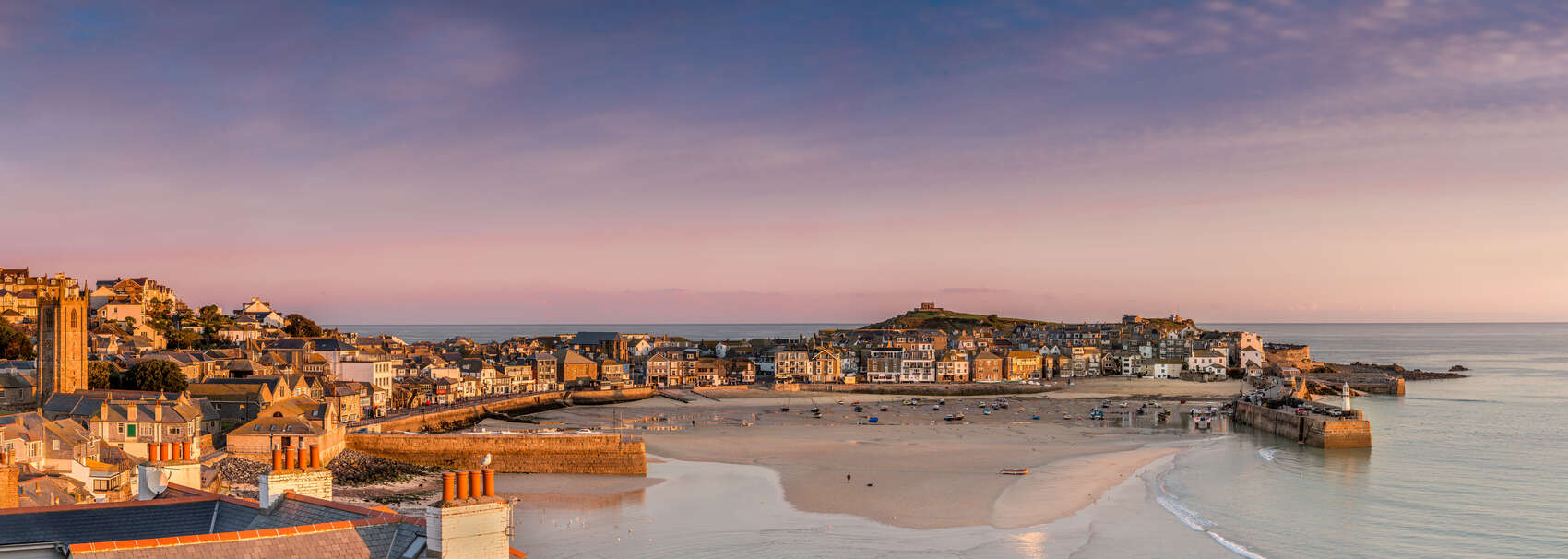
    St-Ives-Harbour-Cornwall

    St Ives is a picturesque seaside town in Cornwall, famous for its fantastic surf beaches and art scene. The views here are second to none, with sparkling blue waters, cobbled streets and whitewashed cottages. It’s pretty easy to get around St Ives on foot or bicycle.

    If you’re wanting to explore further out, it’s easiest to rent a car, although there are buses and trains that link St Ives with other coastal towns. If you’re interested in art, St Ives is a great place to be.

    Its scenery has attracted artists including Barbara Hepworth, Turner, Henry Moore and Whistler. There are over 30 local art shops and galleries to visit, and some of the best ones are the Tate St Ives, the Barbara Hepworth Museum and Sculpture Garden and the New Craftsman Gallery.

    Whether you enjoy watersports, paddling or relaxing on the sand, there are many beaches to choose from. From larger beaches like Porthminster and Harbour Beach, to quieter ones like Porthgwidden, you’re bound to find the perfect sandy spot for a picnic.

    Another great way to appreciate the sea views is to go on a coastal walk. There are many that you can take, including the St Ives to Carbis Bay walk, St Ives to Zennor walk and the St Ives to Lelant walk. If you’re keen to get out on the ocean, why not take a boat trip to Seal Island. Trips run from the harbour and take you seal spotting – you might also spot sharks, dolphins, porpoises and sea birds.

    5# Mersea Island, Essex

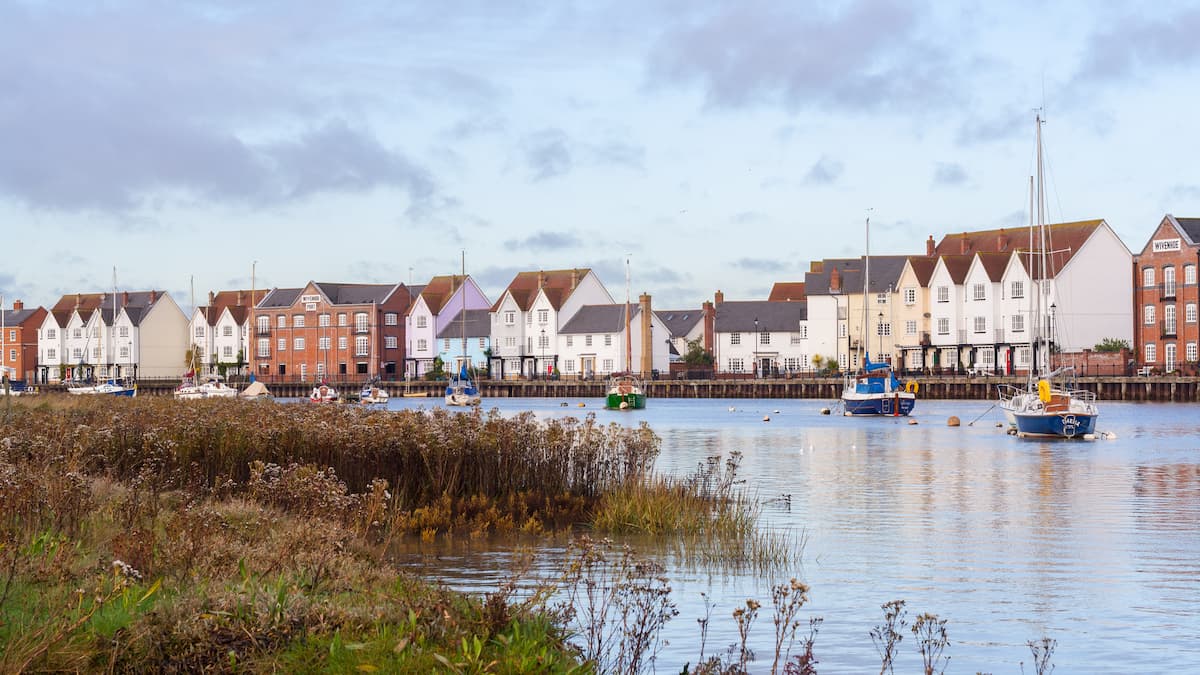
    An old boat in the salt marsh at West Mersea
    An old boat in the salt marsh at West Mersea

    Mersea Island is an island in the Blackwater and Colne Estuaries in Essex. The island is connected to the mainland by the Strood, a causeway which often floods at high tide. Before driving over, make sure you check the tide times.

    There are also buses which connect Colchester to West Mersea. Although the island is only eight miles square, there is so much to see and do. The waters around Mersea Island are calm and shallow, making it perfect for watersports. Paddleboarding, windsurfing, kitesurfing and sailing are particularly popular.

    There are breathtaking views all around and if you have time, you can walk the entire island which takes about five hours. You’ll pass tidal flats, colourful beach huts, the Blackwater Estuary and farm land. If you want a shorter route, take the Cudmore Grove Country Park circular route.

    There is evidence of human settlement on the island that dates back to pre-Roman times. It was very popular as a holiday destination for the Romans, as the Roman settlement of Colchester was nearby. Mersea Island was also a significant place for troops during both World Wars.

    To explore more of the history, head to Mersea Island Museum which has exhibitions on the local, natural and marine history of the island. After exploring, make sure you sample the freshly caught local seafood. It’s especially known for its oysters which are cultivated from the creeks surrounding the island.

    6# Norwich, Norfolk

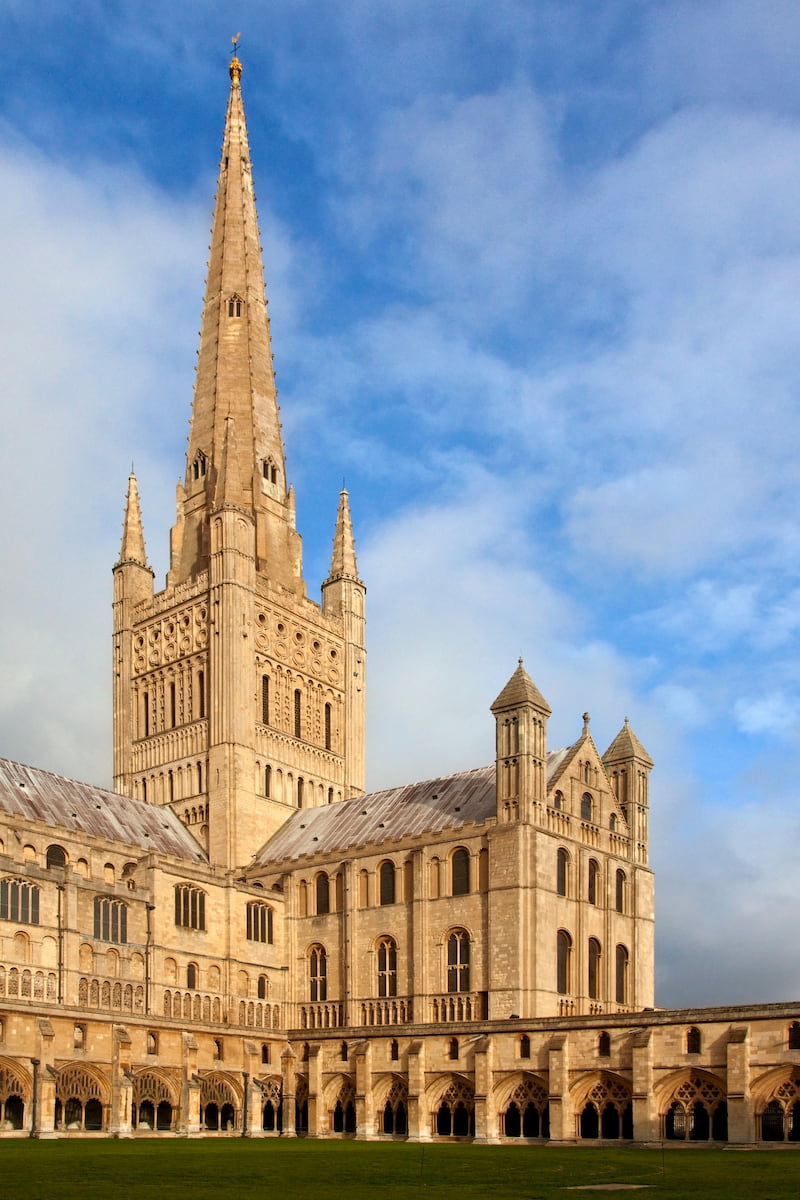
    Norwich Cathedral in the city of Norwich in the county of Norfolk in southeast England
    Norwich Cathedral in the city of Norwich in the county of Norfolk in southeast England

    The historic city of Norwich lies on the River Wensum in Norfolk. It’s a great place to visit solo as it’s safe, friendly and easy to get around. Steeped in history, Norwich is the most complete medieval city in the country, full of cobbled streets, ancient buildings, half-timbered houses and medieval lanes.

    The first stop for any traveller should be Norwich Cathedral. This iconic building has over 1,000 colourful roof bosses, sweeping vaulted walkways and the famous cloisters. Norwich Castle is another must-see. Built between 1066 and 1075, the castle served as a jail for most of its life. Take a guided tour and make your way up to the battlements for panoramic views over the city.

    Norwich is surrounded by beautiful countryside, and is the perfect place to spend time outdoors. Norwich is located within the Broads National Park, an area of navigable lakes and rivers. The park is filled with footpaths, nature reserves and wildlife parks – the perfect place to get away from it all. The best way to get around is by boat, canoe or kayak.

    It’s also easy to explore on foot or by bike, as there many quiet country lanes along the edges of the water. Back in the city, the Plantation Garden is a restored Victorian garden which is packed with colourful flower beds and unique plants. You’ll also find a gothic fountain, Italianate terrace and a rustic bridge.

    7# Liverpool, Merseyside

    Pier-Head-Liverpool

    This maritime city is a fantastic destination to visit alone. The city centre is compact and easy to walk around, and the Merseyrail and local buses connect you to surrounding areas. Liverpool is rich in history and culture with world-class attractions.

    It’s widely known as the birthplace of The Beatles, who were formed in the city in 1960. Check out The Beatles Story, an immersive walk-through experience with tons of memorabilia and merchandise. There are some amazing tribute acts who perform at The Cavern Club, an iconic live music venue that played a role in the birth of The Beatles.

    Why not take a Beatles Tour by Taxi in Liverpool. You will visit iconic sites such as Penny Lane and Strawberry Fields and learn what inspired this great band.

    Liverpool has a rich maritime history and was once one of the busiest docks in the world. The waterfront is a UNESCO World Heritage Site, and there are many attractions along it to explore. The Royal Albert Dock is a complex of dock buildings and warehouses, which is now a major tourist attraction.

    It’s home to the Tate Liverpool, as well as an array of independent shops, boutiques and cafes. The Merseyside Maritime Museum and the Museum of Liverpool are also along the waterfront. The best way to admire the city’s skyline is from the Mersey Ferry, via a hop-on-hop-off ride along the River Mersey.

    Liverpool Cathedral is the largest religious building in Britain and is definitely worth a visit. It’s a stunning building, home to the world’s highest and widest Gothic arches, the largest organ in the country and beautiful stained glass windows. Climb to the viewing platform for views across to Wales.

    8# Canterbury, Kent

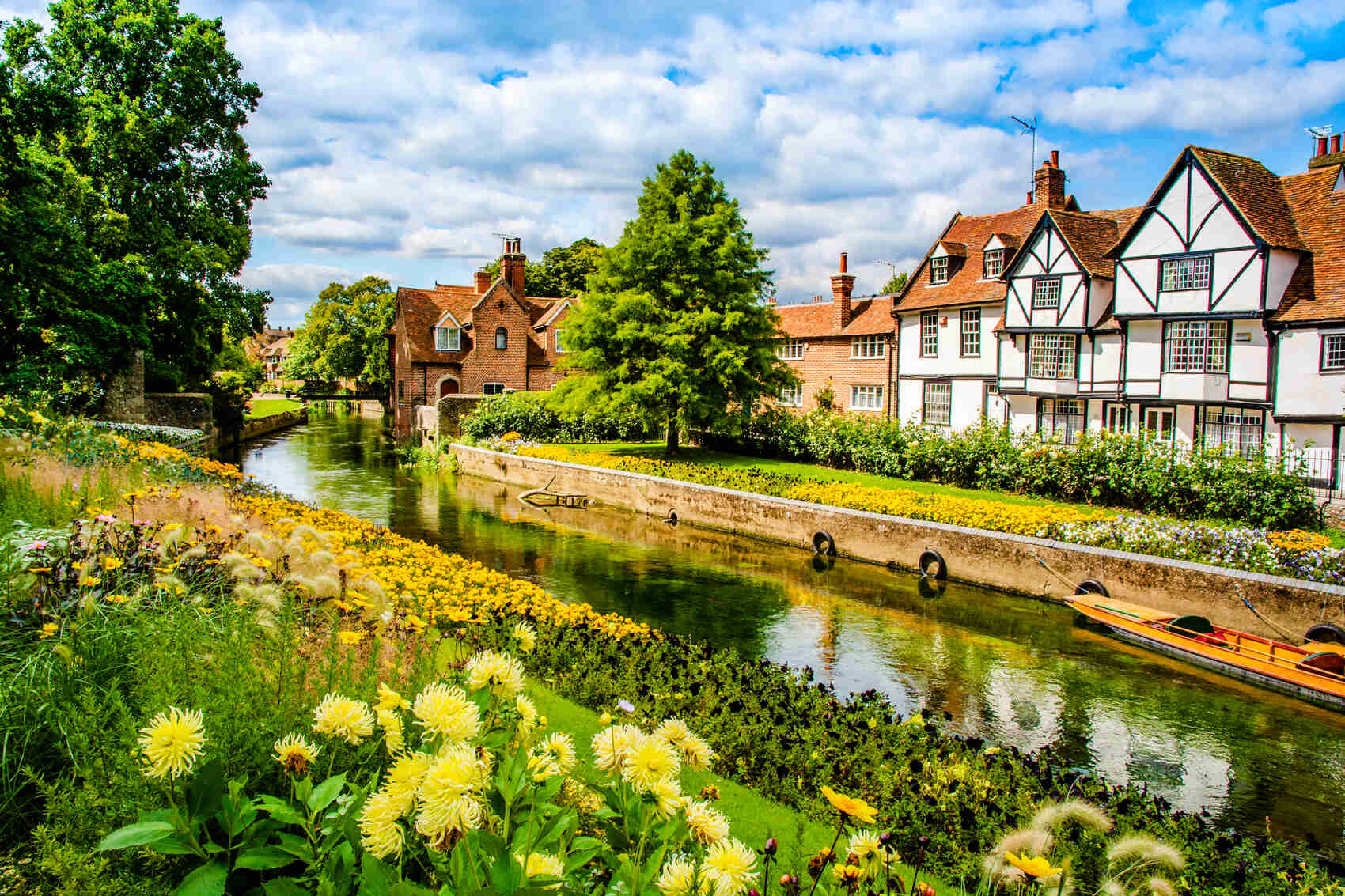
    Landscape-of-the-Great-Stour-river-near-Westgate-Gardens-Canterbury-Kent-UK

    Canterbury is a cathedral city and a UNESCO World Heritage Site. Situated on the River Stour, the city is easy to get around. It’s set up for pedestrians, although there are also local buses within the city centre. Canterbury is famous for its cathedral, and no visit to the city would be complete without stepping foot inside one of the oldest Christian structures in England.

    The cathedral is the seat of the Archbishop of Canterbury, although perhaps it’s best known as the place of murder of Thomas Becket who was killed by King Henry II’s army in 1170. Take a guided tour and trace the steps that pilgrims would’ve made in the Middle Ages.

    If you’re more interested in the Romans, the Canterbury Roman Museum is a fascinating place. It’s built on the remains of a former Roman town house, and you can even see the original mosaics as well as other artefacts that were used in everyday life.

    If you prefer a more relaxed approach to sightseeing, a boat tour down the River Stour is a unique way to see the city. Spot landmarks like the Dominican Priory and Greyfriars Chapel. There are many green spaces to chill out in too.

    Make your way to the Westgate Parks, a formation of four different landscape areas made up of woodland, meadows, gardens and riverside. Culture vultures will love a trip to the Marlowe Theatre, Canterbury’s leading performing arts venue. With a wide programme of concerts, dramas, musicals, contemporary dance shows, ballets, operas, comedy shows, you’ll definitely find something you enjoy.

    9# Exeter, Devon

    Exeter - River Exe

    Located on the River Exe, Exeter is a cathedral city in Devon. It was heavily influenced by the Romans, Tudors and Victorians, and boasts a rich history which is reflected in its sites and attractions.

    Exeter is quite compact and has excellent transport links, so getting around is simple. Exeter Cathedral is one of the prettiest cathedrals from the Medieval era. Take a guided or audio tour to hear the stories of the people who influenced it. Spot the highlights of the cathedral, including the 15th century Astronomical Clock and the Minstrels’ Gallery.

    Another historical sight in the city which can’t be missed are the Underground Passages. Unique to Exeter, this web of underground tunnels spreads for 425 metres across the city and were originally used to transport water in medieval times. Make your way through the tunnels on a guided tour.

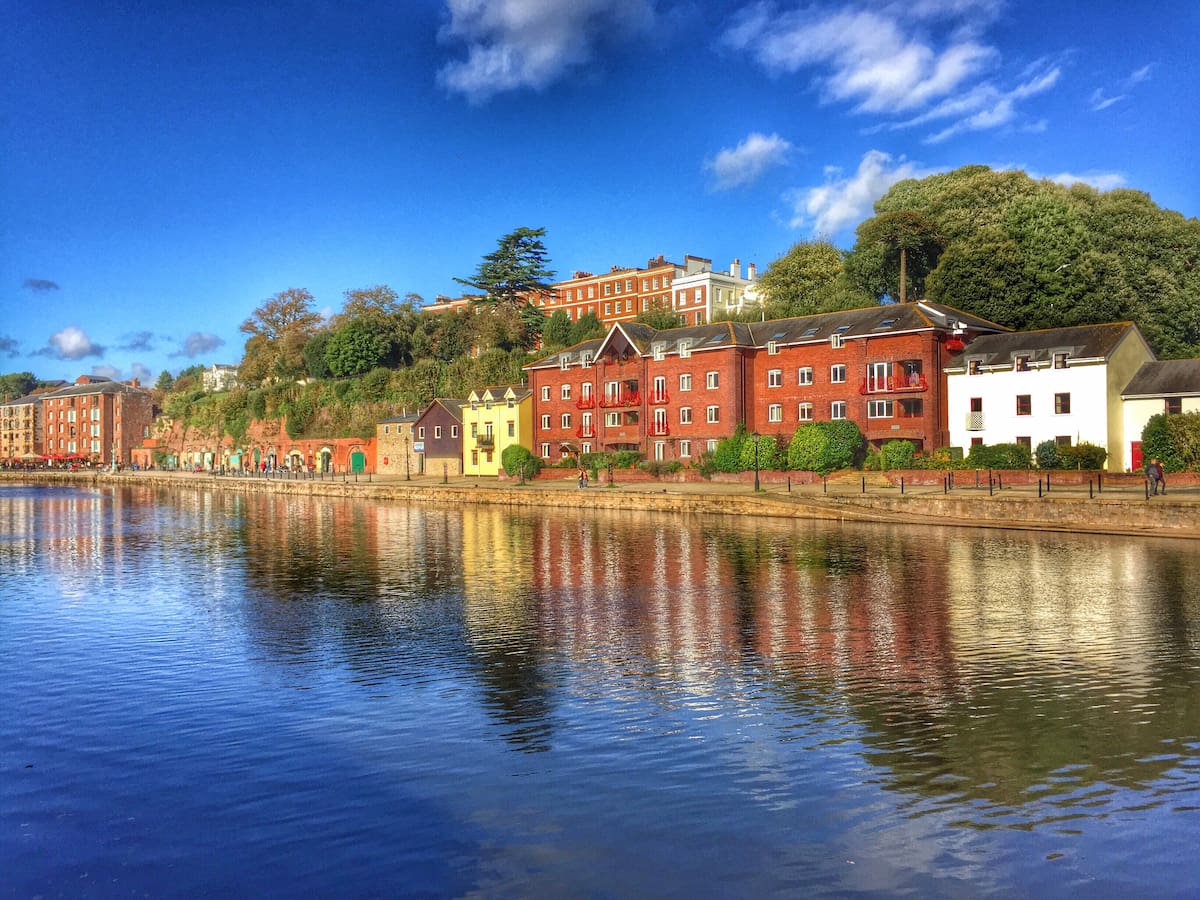
    Take a stroll through the city before stopping at the quayside. This is one of the most picturesque parts of Exeter and has a historically important past. Here you’ll see old warehouses and historic buildings, left behind from when the city was a thriving centre for the wool trade.

    There are lots of shops and cafes at the quayside, which is a lovely spot to have a drink by the water. For a little adventure, head out to Haldon Forest Park, a 15 minute drive from the city centre. There is so much to do here, including Nordic walking, cycling, mountain biking and the Go Ape Treetop Adventure.

    10# West Yorkshire

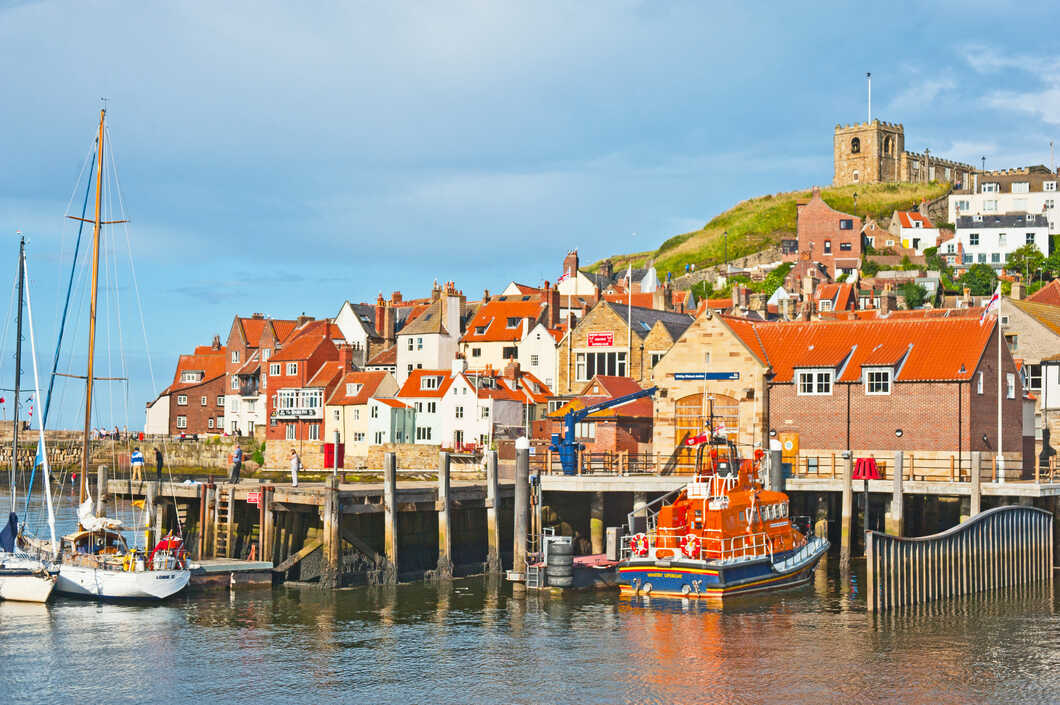
    Whitby in Yorkshire with yachts and Saint Mary's Church in the background.
    Whitby in Yorkshire with yachts and Saint Mary’s Church in the background.

    West Yorkshire is a county that has everything – cultural cities, quaint market towns and scenic countryside. There are excellent train, coach and bus connections which link villages, towns and cities throughout the county.

    For a spot of culture, head to the city of Leeds. It’s home to some wonderful art galleries, museums, theatres and live music venues which offer something to suit all tastes. Leeds Grand Theatre, City Varieties Music Hall and the Leeds Playhouse have a wide programme of events all year round.

    Make sure to visit the Royal Armouries and see over 75,000 pieces of arms and armour from around the world. If you’re more interested in sculptures, the Yorkshire Sculpture Park near Wakefield won’t disappoint. The open-air gallery displays modern and contemporary pieces, and is set over 500 acres of parkland.

    Experience the charm of a classic Yorkshire village in Haworth, once home to the Brontë sisters. Learn more about the famous bookwrights at the Brontë Parsonage Museum. Haworth is a great place to shop, and its pretty, cobbled High Street is packed with independent shops, boutiques, cafes and artisan bakeries.

    The village is a great starting point for different walks on the surrounding moors. If you’re looking for a woodland walk, Hardcastle Crags offers some lovely views. Just north of Hebden Bridge, this woodland valley has over 15 miles of footpath. Make your way past rocky ravines, tranquil streams and alluring waterfalls.

    11# The Lake District, Cumbria

    Windermere-in-the-Lake-District

    A trip to the Lake District is a must when visiting England. Located in Cumbria, its name comes from the collection of glacial lakes that lie amongst the fells, moors and valleys. Its beautiful countryside has inspired writers and artists for centuries, and it’s not hard to see why.

    It’s particularly popular with outdoor lovers and has plenty of hikes, walks and cycling trails. The Lakes is a great place to visit alone, as it’s very safe, the people are friendly and there is a wide choice of accommodation all around. The best way of getting around the area is by car, as a lot of the best places to see are quite remote and don’t have public transport links.

    A good base for exploring the Lakes is Ambleside, a small town with interesting shops, pretty houses and tons of great restaurants. From here, you can walk to Stockghyll Force, a waterfall walk that boasts sweeping views over the town.

    Grasmere is a pretty village filled with stone cottages and cafes. It’s home to Dove Cottage, where the writer William Wordsworth grew up. The Wordsworth Museum and Art Gallery is also located in the village.

    Head to Tarn Hows in Coniston Waters for one of the most picturesque views in the area. There is a circular walk around the water which is suitable for all abilities. Another picture-postcard view is Wasdale Head from Wastwater. Wastwater is the deepest lake in the Lake District, and is surrounded by mountains including Scafell Pike, the highest mountain in England.

    Full-day tours are also offered from Windermere and Oxenholme which is a great way to see the Lake District if you don’t want to rent a car and get the most out of your visit!

    12# Chester, Cheshire

    Chester was founded as a Roman fortress in the 1st century AD. It’s famous for its city walls which were built by the Romans as a defensive system. Stroll round the three kilometre walls and admire the many picturesque old buildings dotted round the city.

    Look out for the Eastgate Clock which marks the original entrance to the Roman fortress of Deva. Another fun way to admire the views is by visiting the Chester Cathedral and climbing to the top of the central tower. It serves some of the best views across one city, two countries and five counties. You can also take a boat tour along the River Dee, where you’ll get to see some of the city’s landmarks as well as an abundance of wildlife.

    You can’t visit Chester without going to Chester Zoo. One of the best zoos in the world and notable for its conservation efforts, Chester Zoo is enormous and is home to over 21,000 different animals. There are buses from Chester that travel straight to the zoo.

    If you love to shop, Chester is an excellent place to be. Chester Rows is a series of half-timbered buildings dating back to Medieval times, and is now used as shopping arcades. You’ll find big-name brands as well as independent retailers.

    To learn more about Chester and the surrounding area, visit the Grosvenor Museum. Housed in a magnificent Renaissance Revival building, you’ll come face to face with Roman artefacts, reconstructions of period houses, silverware, paintings and tombstones.

    When travelling solo in England, you’ll be spoilt for choice when it comes to places to see. You’ll find that England is safe to travel around, and the locals are friendly and accommodating. There is so much fascinating history and culture to explore, and whether you prefer cities, towns or the outdoors, you won’t be short of places to visit.