Category: Belgium

Belgium is best known for its  exceptional beer, Christmas Markets, waffles, tasty pomme frites and delicious chocolate. Here is my travel guide on what you need to know, what to see in Belgium, how to plan and much more.

  • Bruges: A Weekend Escape to Belgium’s Romantic City

    Bruges: A Weekend Escape to Belgium’s Romantic City

    For the ultimate fairytale weekend away, look no further than Bruges! This picture-perfect city is the romantic weekend getaway you’ve been dreaming of, whether you’re travelling solo or with someone else in tow. You’re in for a sweet couple of days with leisurely strolls through chocolate-filled streets, a climb up a twisting tower, and afternoons spent skipping across the canals. And to make your visit even sweeter, I’ve created a guide to help you navigate your journey through Bruges.

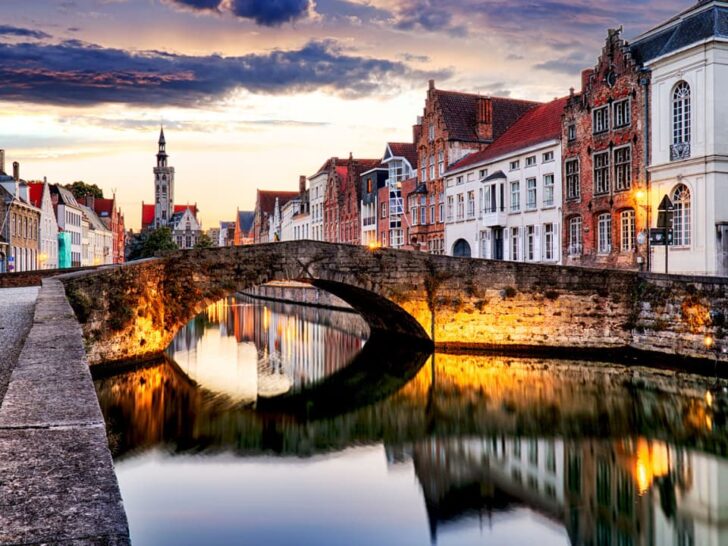
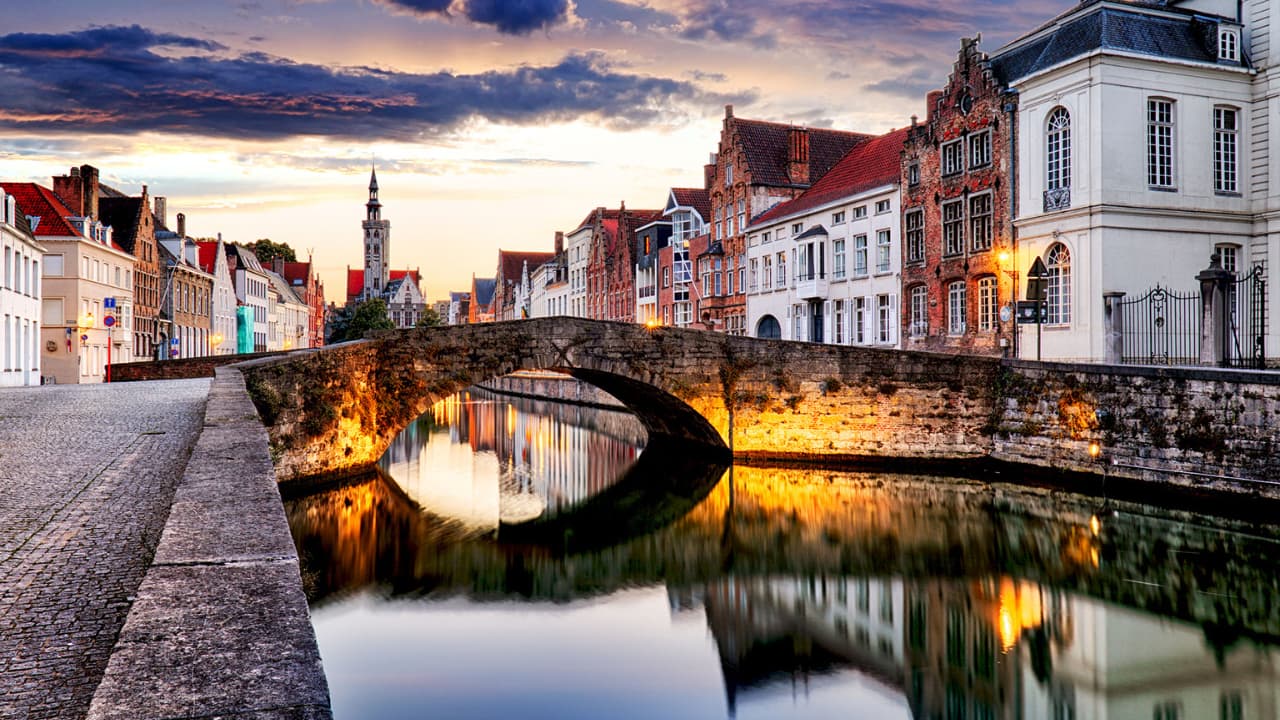
    Oh, Bruges, how I love thee. I’m pretty sure my eyes still glaze over when I think back to my days in this swoon-worthy city, with the most perfect cobblestoned streets and pristine canals, complete with horse-drawn carriages replacing cars in the town square. The Venice of the North really couldn’t get more charming.
    Bruges: A Weekend Escape to Belgium's Romantic City

    Being just under a 2-hour train ride from the capital city of Brussels, arriving in Bruges on a Friday afternoon or evening is highly doable, and it’s a great way to get settled in and start exploring the city. Once you see just how magical it really is, you won’t want to stay cozied up in your hotel for long.

    This Medieval town can be whatever you want it to be, but slow is definitely the way to go. There’s plenty to do in Bruges and it’s nice and compact, making it super manageable by foot and easy to get around. And I’m going to show you an itinerary (with the addition of some hidden gems) that might feel jam-packed on paper, but once you’re there, you’ll see how close everything is and you can pick and choose which activities suit your personal preferences.

    Friday Evening

    Belfry Tower
    Belfry Tower offers excellent views over Bruges.
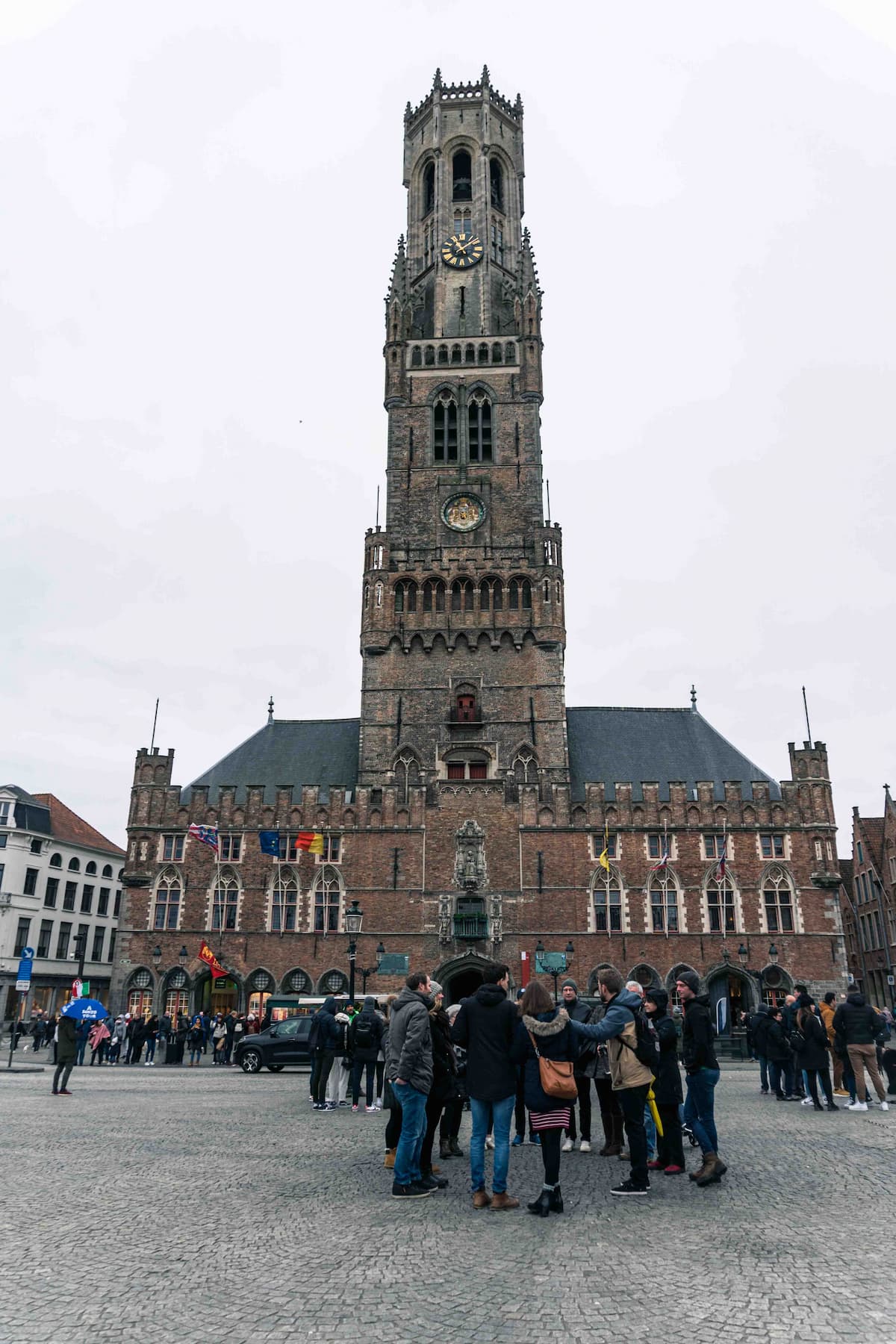
    Belfry Tower offers excellent views over Bruges.

    If you arrive before 6pm, I suggest heading to the Belfry Tower in the market square, straight away. It’s a great first stop on your adventure because towers always give you the best views of a city, and the Belfry is no exception. Awarded UNESCO World Heritage Site status, in times past it served as an observation tower and also protected against thieves and neighbouring enemies.

    Right in the heart of Bruges, this medieval bell tower overlooks the central Markt and will give you an overview of where you’ll be exploring throughout the weekend. Yes, you’ll have to climb 366 steps in order to get this bird’s eye view, but after your train ride, it’ll do you some good. You can even have a look at the old funds and charters of the place if you fancy a little more history.

    Hidden Gem: Arcade Behind the Belfry

    One of the hidden gems in this area is actually right behind the bell tower. There’s a particularly interesting painted arcade that can be found on Oude Brug Road that you should definitely check out. This covered walkway is perfect for snapping some unique photos or even to shelter from the weather.

    Saturday

    Markt: the Market Square
    Markt Bruges
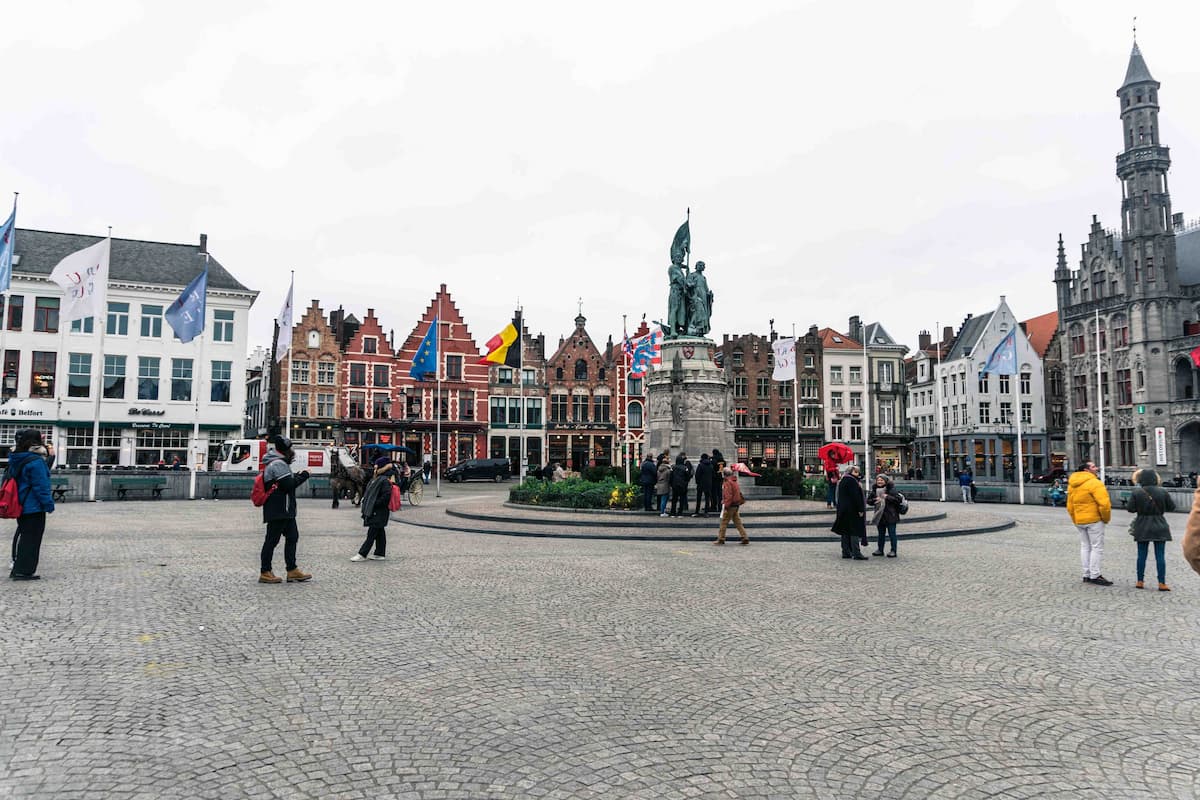
    Markt Bruges

    After a restful night of sleep and a delightful breakfast, make your way back to the Markt you glimpsed last night. Those gingerbread-style houses that Bruges is so famous for? You’ll find them here. You may have also noticed by now that the market square in Bruges is for pedestrians only. You won’t find any cars in this part of town, only a few horse-drawn carriages; perfect for a leisurely wander.

    Surrounded by beautiful shops, traditional cafes and brilliant architecture, the Markt has a wonderful ambience. You might even recognize some of these scenes from pretty postcards. Take some time and explore the streets and shops, enjoying the laid-back vibes and spotting the colourful brick houses of Bruges. On Wednesday mornings, a food and flower market pops up in the square. In November and December, you’ll find Christmas festivities are centred here.

    Hidden Gem: Medi Markt

    There is very little that could be considered ‘hidden’ in the central square of Bruges, but just in the shadows of the Belfry Tower, the pharmacy – Medi Markt – is about as close as you can get. The shop itself is an ordinary pharmacy, but the façade, next to the impressive Neogothic Provinciaal Hof building, is one of the more memorable and beautiful to gaze upon in the square.

    House Bouchoute

    Next, turn your gaze to the oldest house on the square. On the front, just beneath the roof, is an undeniably large compass that was installed in 1682, used as a handy tool for 17th-century merchants needing to know the direction of the wind. Yep, you read that right. Where most compasses show the magnetic North, this one depicts the direction of the wind. It’s very cool.

    The Old Chocolate House

    For the best hot chocolate of your life, take a break from admiring architecture and stop at the Old Chocolate House. It’s so good that unfortunately it’s no secret! You might have to queue a short while if it’s busy.

    Once sat upstairs inside this cosy little shop, you will be able to choose from a variety of the finest Belgian chocolate for your drink. Your mug of milk – more like a bowl, really – will arrive, and you can spoon as much or as little chocolate drops as you’d like into it for a taste of pure decadent indulgence.

    Sint-Janshospitaal
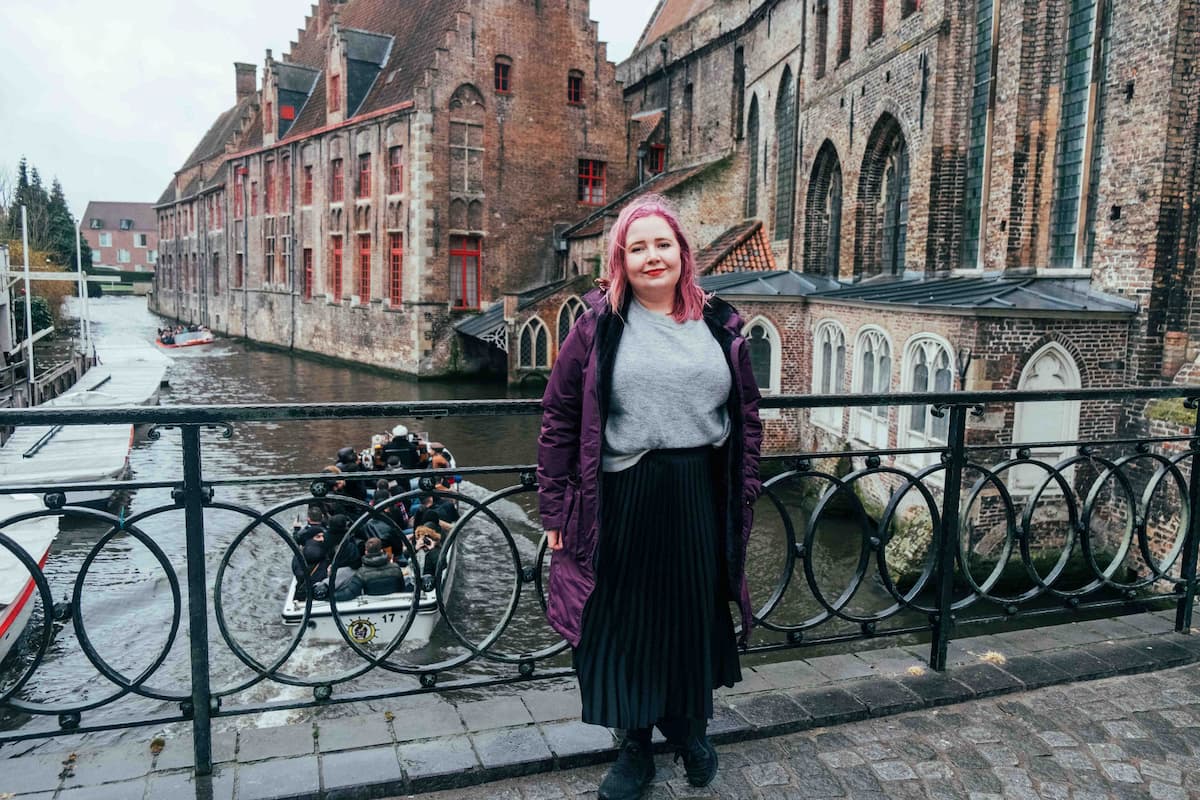
    The canal with Sint-Janshospitaal
    The canal with Sint-Janshospitaal

    Also in the city centre is the Sint-Janshospitaal, which was in operation between the 12th-19th centuries. It’s home to some of the oldest surviving hospital buildings in Europe. You can explore inside for a fee, and see old furniture, sculptures, silverware and medical instruments. And if you do, make sure and check out the old dormitory, custodian’s room, pharmacy and Diksmuide attic. Or, you can just wander around the exterior, admiring the apothecary garden and secret little courtyards.

    Church of Our Lady
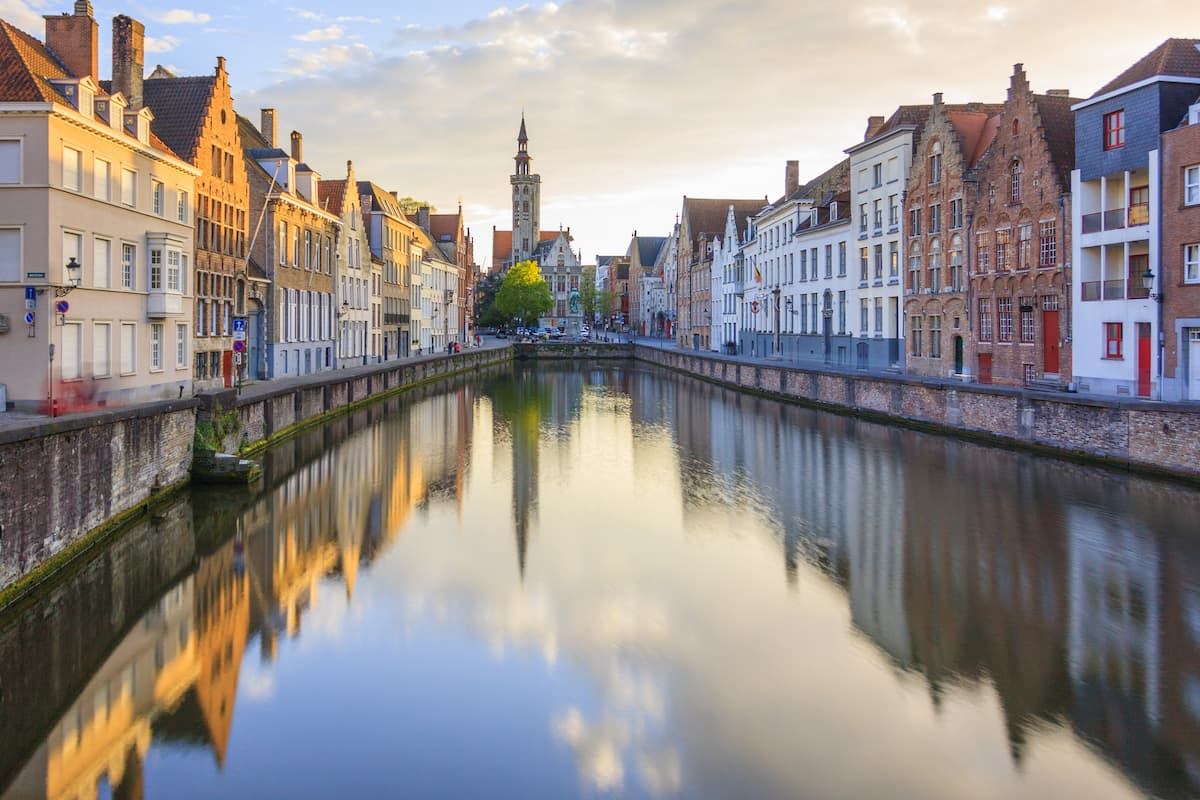
    Church of our lady in the background
    Church of our lady in the background

    The spire of this church completes the skyline of Bruges, alongside the Belfry. Being 115.5 metres tall, it’s the second highest brick tower in the world! The church itself is full of artistic treasures, including tombs, mosaics, and paintings like Michelangelo’s Madonna and Child.

    The main church part is free to enter, with the museum charging a small, but completely worth it, fee. Other exceptional artworks and woodcarvings include the Pieter Poubus’ Last Supper, the Adoration of the Shepherd, and Gerard David’s Transfiguration.

    Groeninge Museum

    If you’re up for some European art, the Groeninge Museum should be next on your list. The short walk between the church and the museum is just as beautiful, as you’ll find yourself crossing the scenic Boniface Bridge: a piece of art in its own right.

    This famous art museum is known for Belgian plastic arts, of all things, alongside neoclassical paintings from the 18th and 19th centuries, by Jan Van Eyck and Hugo Van Der Goes. Or you can even see masterpieces from the Renaissance and Baroque periods. I’m telling you, whatever your art tastes are, you’ll find it in this museum!

    Rozenhoedkaai

    Just a 3-minute walk from the Groeninge Museum is the most photographed spot in all of Bruges, Rozenhoedkaai. And you’ll quickly see why. I dare you to not take a hundred photos.

    This enchanting, historic part of Bruges is set along the lovely canals that once served as a popular location for mooring boats. You’ll see the iconic stunning buildings that look like castles in the background framed by willow trees gently swaying in the breeze, creating a picturesque scene you won’t be able to get enough of.

    Among the timeless scenery, you’ll also find quaint cafes, bars, and restaurants just beside the canal. You might want to stop for a drink at this point or just relax by the water and take it all in before heading to your next spot.

    Hidden Gem: Torture Museum

    Looking for the dark and macabre behind Bruges’ quaint serenity? This intense trip down Europe’s malevolent memory lane should do the trick. Right in the heart of Bruges, the Torture Museum once served as the city’s oldest prison in the Middle ages, and the old cellar has been transformed into this historical museum.

    Walk through and retrace the history of the one of the darkest times in humanity. Wax statues with authentic torture instruments show what mankind has been able to do to each other, how much we’ve evolved and where the pitfalls still are in the legal system. If you want to do something a little strange and off the beaten path, this is it.

    Belgian Waffles
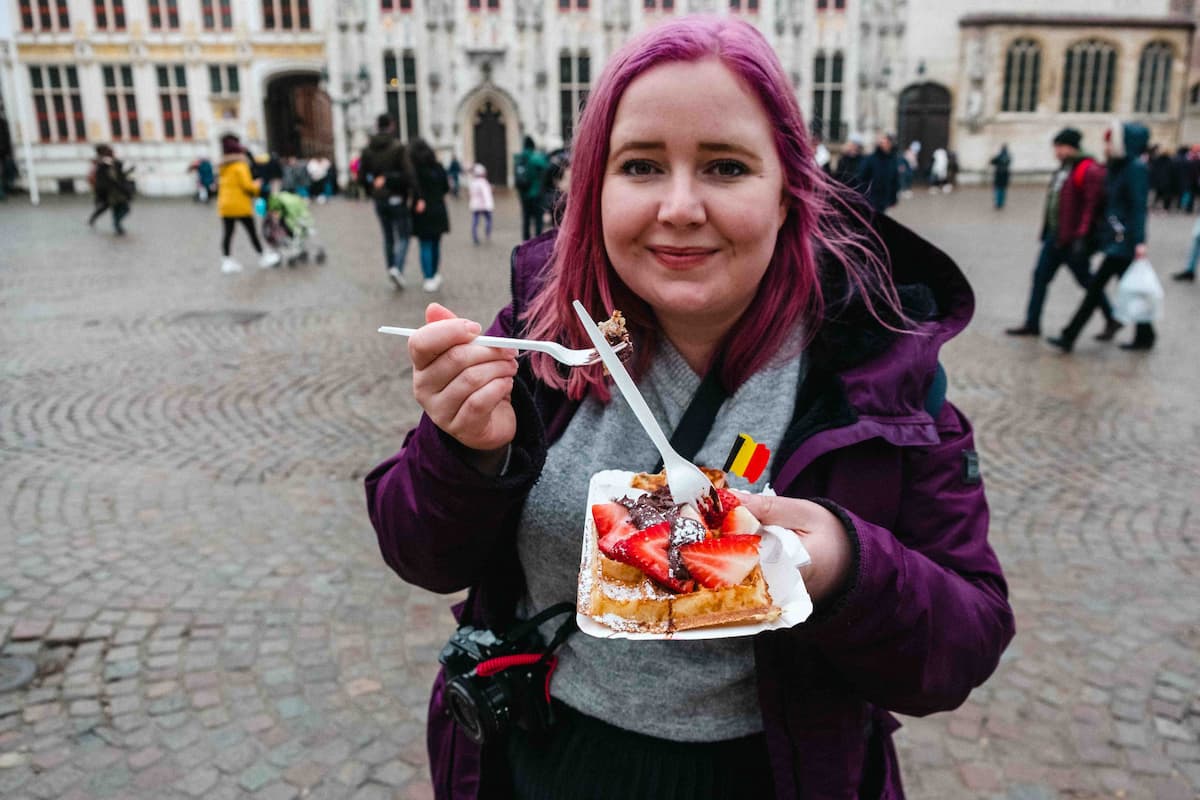
    Kat eating waffles in front of Provincial Court
    Kat eating waffles in front of Provincial Court

    For something a little lighter, you simply cannot visit Bruges with having tasted the traditional Belgian waffles once, or twice. There’s no shortage of cafes where you can try these sumptuous waffles!

    Recommendations:

    • Lizzie’s Wafels. You seriously won’t be able to get enough of these waffles! Fresh, light and crispy, with generous portions and plenty of toppings you can choose from, such as chocolate cream. Add the hot chocolate to your order and you’re golden.
    • The waffle truck in the Provincial Court Square.

    Shopping and Chocolate Tasting
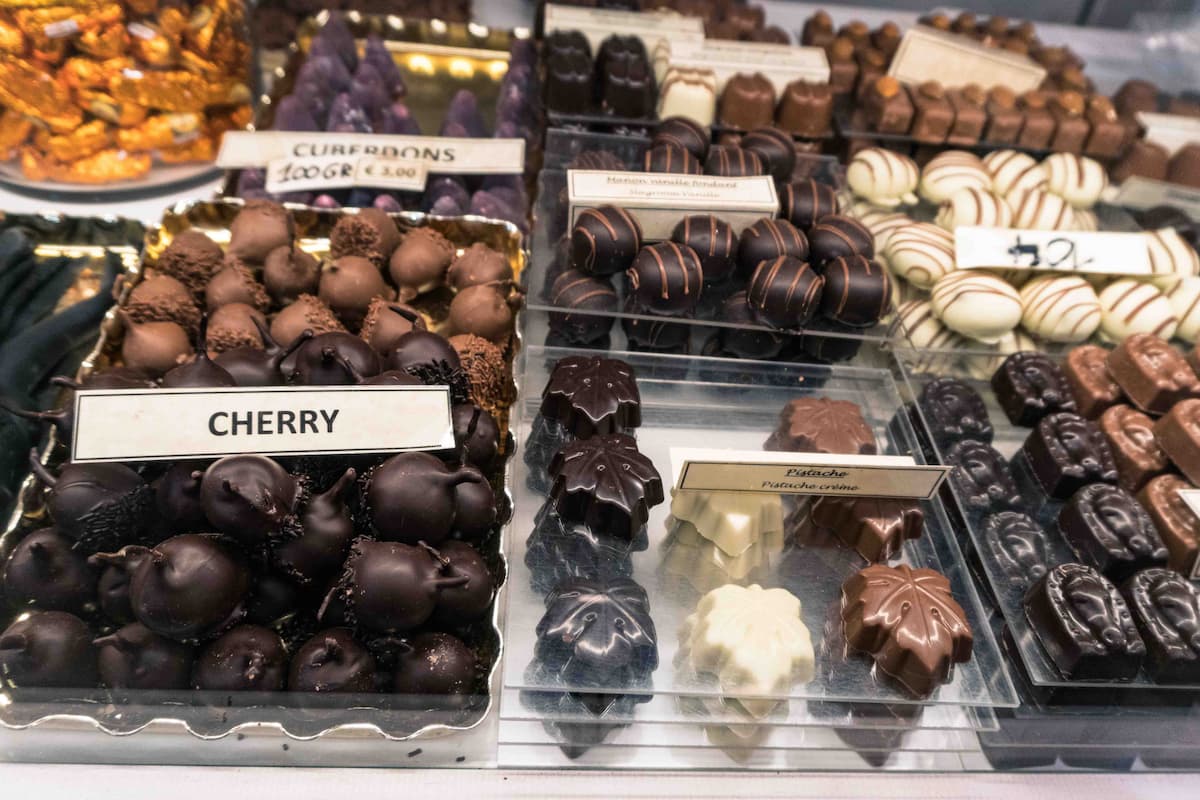
    Chocolate Tasting in Bruges is a must!
    Chocolate Tasting in Bruges is a must!

    After walking past all the cute shops in Bruges, you might be keen to get in a little shopping by now. Feel free to spend your afternoon weaving in and out of the speciality shops that feel deliberately placed, scattered about the city. From jewellery to Bruges’ famous lace or city souvenirs, I have no doubt you’ll find something special to take home with you.

    And let’s not forget the chocolate! The streets of Bruges are lined with chocolate shops and I’ll be surprised if you haven’t tried any by now. At Depla Chocolatier, pick up some truffles, chocolate covered fruit, or dark chocolate rice cakes. And stop here for one of the best cups of cappuccinos while you’re at.

    Chocolatier Dumon is another excellent choice – and while the truffles are delicious, I would recommend trying a plain bar of milk chocolate. It’s the best way to see the difference between your average chocolate bar and the finest chocolate in Belgium!

    Of if you fancy trying some chocolate on the more unusual side, The Chocolate Line does amazing handmade chocolates with interesting flavour combinations, like Miss Piggy (bacon and quinoa), Green Tokyo (wasabi) and Havana (tobacco leaves).

    Hidden Gem: Kantcentrum

    Did you know that Bruges is actually famous for their lace? You can hear the whole story of Bruges lace at the Lace Centre and Museum.

    It’s a little further away from the centre, but Bruges is so small that it’s still easily reachable if the museum piques your interest. Located in the renovated old lace school of the Sisters of the Immaculate Conception, you can hear testimonies from international lace experts that explain various types of lace and their geographical origin, as well as multimedia installations, with a focus on lace education in Bruges. And why not take some home with you?

    Canal Boat Tour
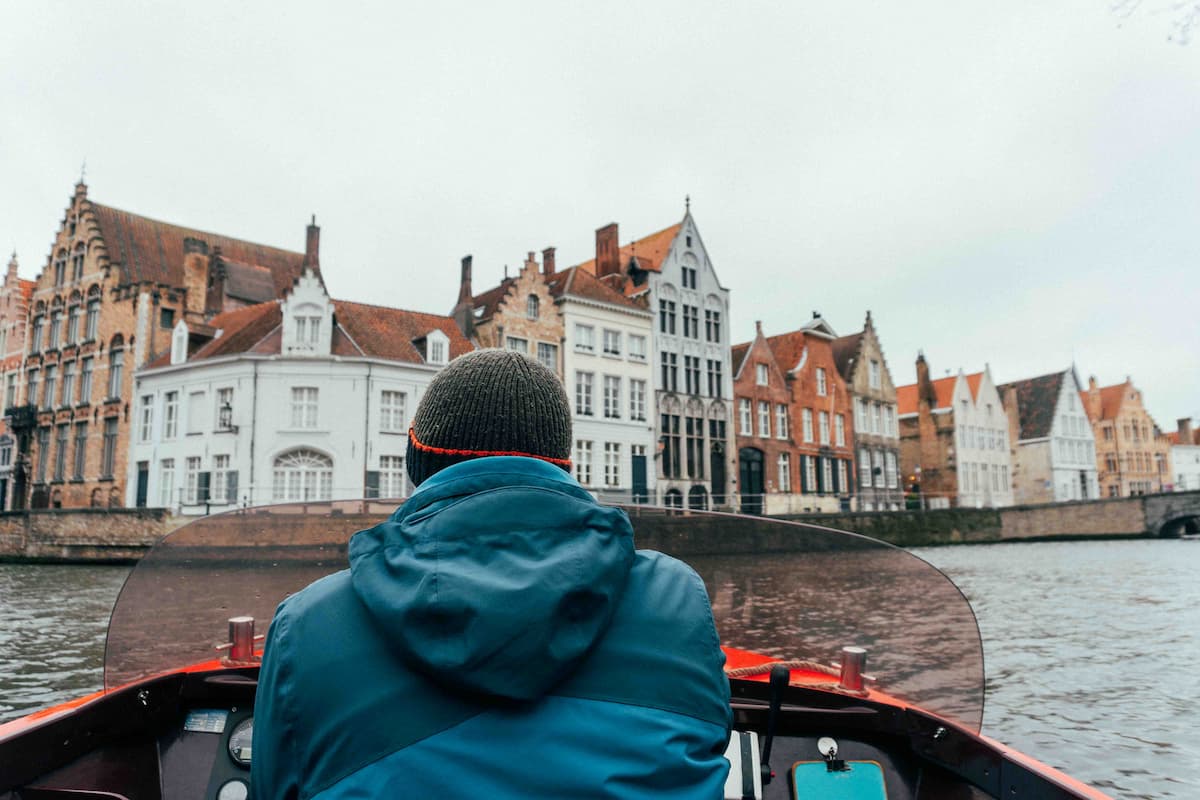
    Take a canal boat tour in Bruges.
    Take a canal boat tour in Bruges.

    Ah, a Bruge canal boat tour. This is a great way to wind down your first full day in Bruges. After exploring the city and its magical delights, feel free to put your feet up and explore the city from a different view.

    The canal tours are super relaxing and are a great way to snap some photos from different angles. Most tours set off near the Rozenhoedkaai. You might consider pre-booking your tickets in the morning for a canal tour as lines get long real quick on the weekends, especially if the weather is nice.

    Evening Dinner and Drinks

    Don’t forget you’re in Belgium, where they have some of the best beer in the world. Check out popular bars, Le Trappiste and Poatersgat. For dinner why not try one of Bruges’ Belgium stews, such as Elderberry Soup, Waterzooi, or Curried Mussel.

    Sunday

    You definitely want to start the day with a good brunch and I recommend going to That’s Toast, where they serve breakfast all day long. From granola and orange juice to Tiramisu French toast (drool) and mimosas, you can’t go wrong.

    Burg Square

    They say that the Market Square is the heart of Bruges, but Burg Square is the soul. I’d have to agree wholeheartedly. This is the city’s centre of power, reflected in the Gothic and Neoclassical architecture.

    Stadhuis (City Hall)
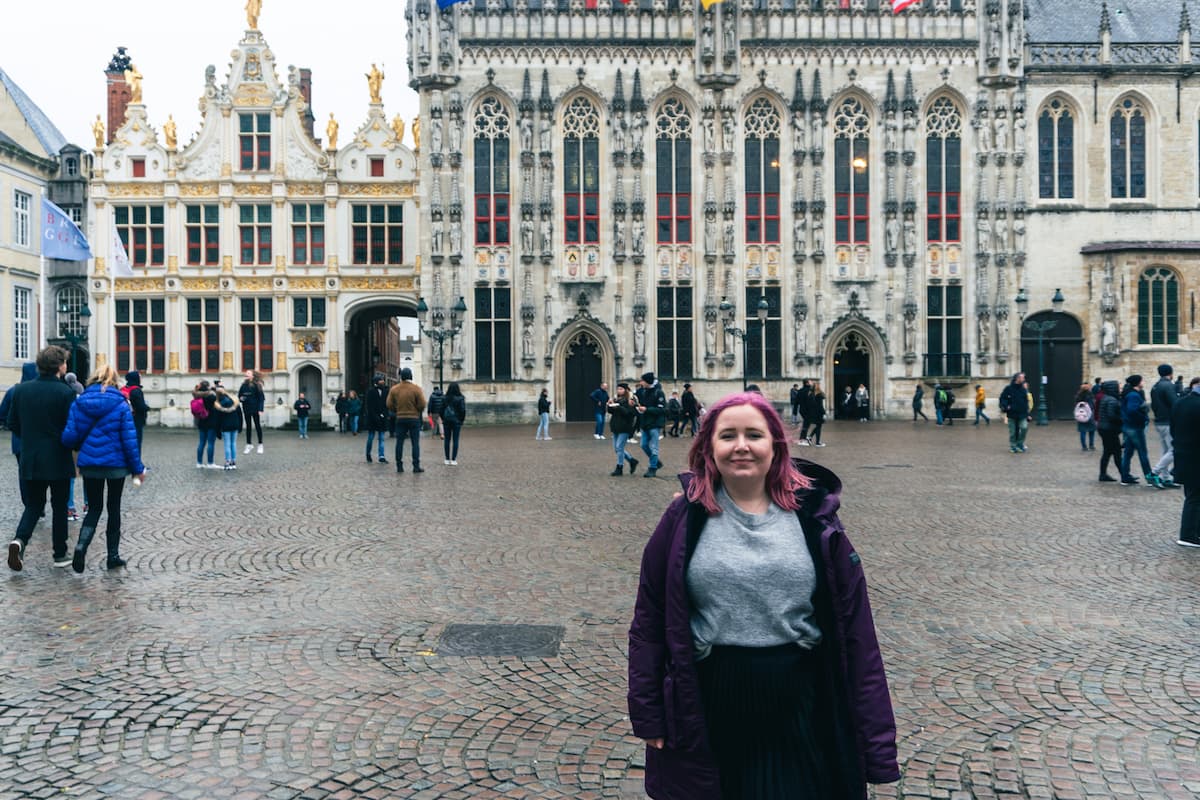
    Kat in front of Stadhuis (City Hall)
    Stadhuis (City Hall)

    Within Brug Square is City Hall (1376-1421), one of the oldest in the Low Countries and it’s from here Bruges has been governed for more than 600 years. You absolutely do not want to miss the Gothic Hall, with its seriously impressive vault and 20th century murals. This place is a masterpiece in and of itself.

    Basilica of Holy Blood

    Next to the City Hall is the Basilica of Holy Blood, a Roman Catholic church built in the 12th century. This ancient church holds Bruges’ most cherished relic, an ornate vial filled with a little piece of fabric, believed to have been stained with the blood of Jesus. Each day it’s brought out from the upper chapel for the waves of tourists to admire. The chapel itself is the only one of its kind in West Flanders, being of Romanesque character.

    Historium Bruges

    Our next stop is the Historium. Prepare to step back in time! This is an imaginative way to discover Bruge through the medieval Golden age, with a short virtual experience. And it’s also a great place to snap some panoramic views of Market Square. If you wanted to, you could definitely spend a couple of hours here.

    Hidden Gem: Gallery Xpo Salvador Dali

    If you’re a Salvador Dali fan, then our next museum will be right up your alley. The Gallery Xpo has a fantastic collection of famous statues and graphics from Dali himself, set amongst a dramatic pink and gold backdrop. You might find long queues here, proving it’s not quite that hidden and definitely worth the wait. And splurge on the audio guide for sure!

    Choco Story

    For all the chocoholics out there, you don’t want to miss out on the Choco Story, for a chance to walk through the history of chocolate, see actual Belgian chocolate being made and sample some, of course. Here you’ll discover all the benefits of chocolate (as if we needed more reasons to eat it) and even the history of the infamous cocoa beans. Make sure and leave yourself a good hour or two for this decadent experience.

    Hidden Gem: Lumina Domestica

    Within the same building as the Choco Story, is the Lumina Domestica museum, or Lamp Museum. They even share the same ticket office. Convenient, eh? Don’t underestimate this hidden gem. Here you’ll find a whopping 6000 antiques and lamps, along with the history of the first light…fire, and progressing through the ages with all sorts of light-related inventions.

    Bruges Beer Experience

    If you’re somehow sick of chocolate at this stage, you could skip Choco Story and try out one of Belgium’s other biggest exports for style.

    The Bruges Beer Experience gives visitors the chance to learn all about the history of beer and the intricacy of the brewing process. Best of all, you get the chance to try some samples of local beer at the end of the tour!

    De Halve Maan
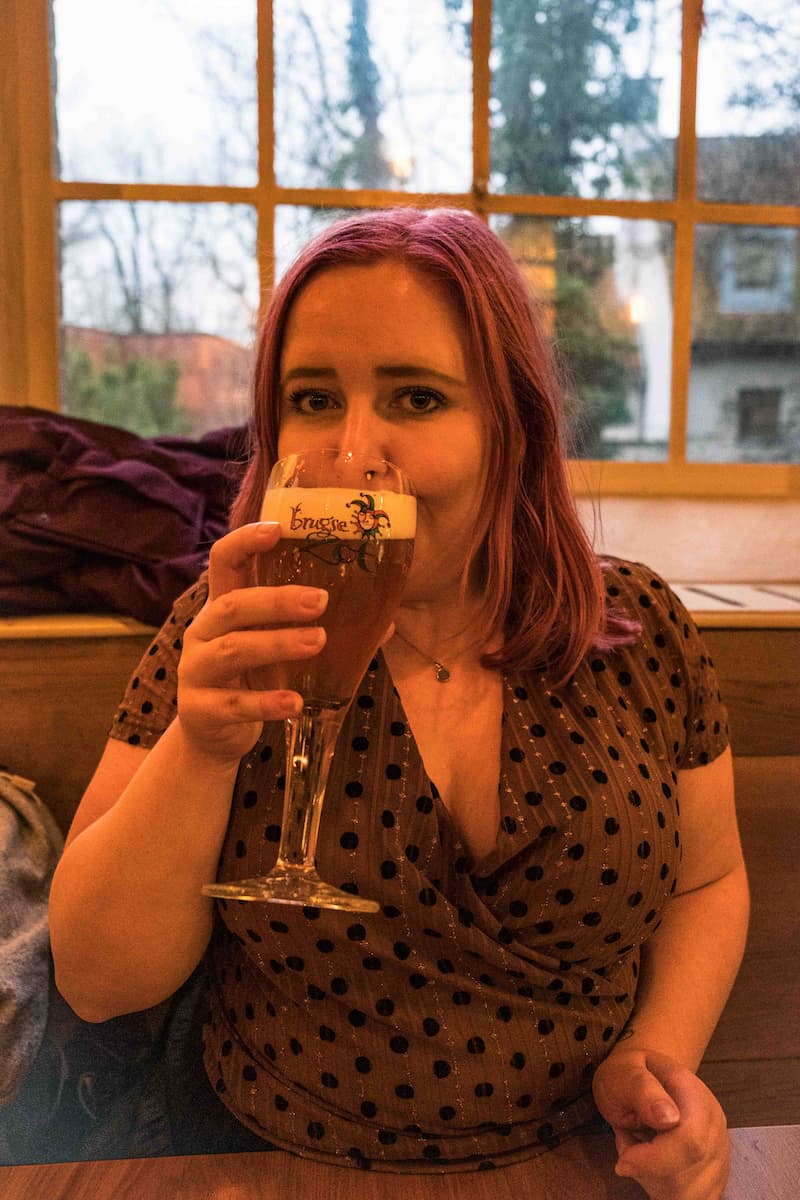
    Kat drinking beer at De Halve Maan
    Kat drinking beer at De Halve Maan

    Still sober? Your next stop might change that. You’ll be stepping into De Halve Maan, the only remaining brewery in Bruges! That’s right, since 1865, they’ve been making the best Belgian beers in Bruges, now in its sixth generation of the family business.

    If you’re a hardcore fan, or even if you’re not, there’s a 45-minute tour exploring the three-kilometre underground pipe. During the tour, you’ll learn the trade secrets of beer making and get to try the local beer, Brugse Zot.

    Minnewaterpark

    After you’ve relaxed with a pint, head to Minnewaterpark, for some peaceful time away from the crowds. Known to the locals as “The Lake of Love” because according to legend, if you walk over the lake with your loved one, you’ll experience eternal love. Complete with beautiful swans, it might not come as a surprise to learn it’s the most-visited romantic spot in Bruges.

    Almshouses

    Now this is some interesting Bruges history. Almshouses are small whitewashed houses that date back to the 14th century. Wealthy citizens and guilds formed little complexes, where single women and older adults could stay, but in return they had to pray for the rich, in special chapels near the houses. Nothing like the old-school Pay for Pray!

    But there are actually a total of 46 preserved church complexes that serve as shops and historic buildings now, with the Almshouse de Meulenaere being a popular one. It’s hard to tell the houses apart, but you’ll spot some with plants lining the doorways or with splashes of colour. And on all of them, you’ll see the founders’ names.

    Windmills of Bruges
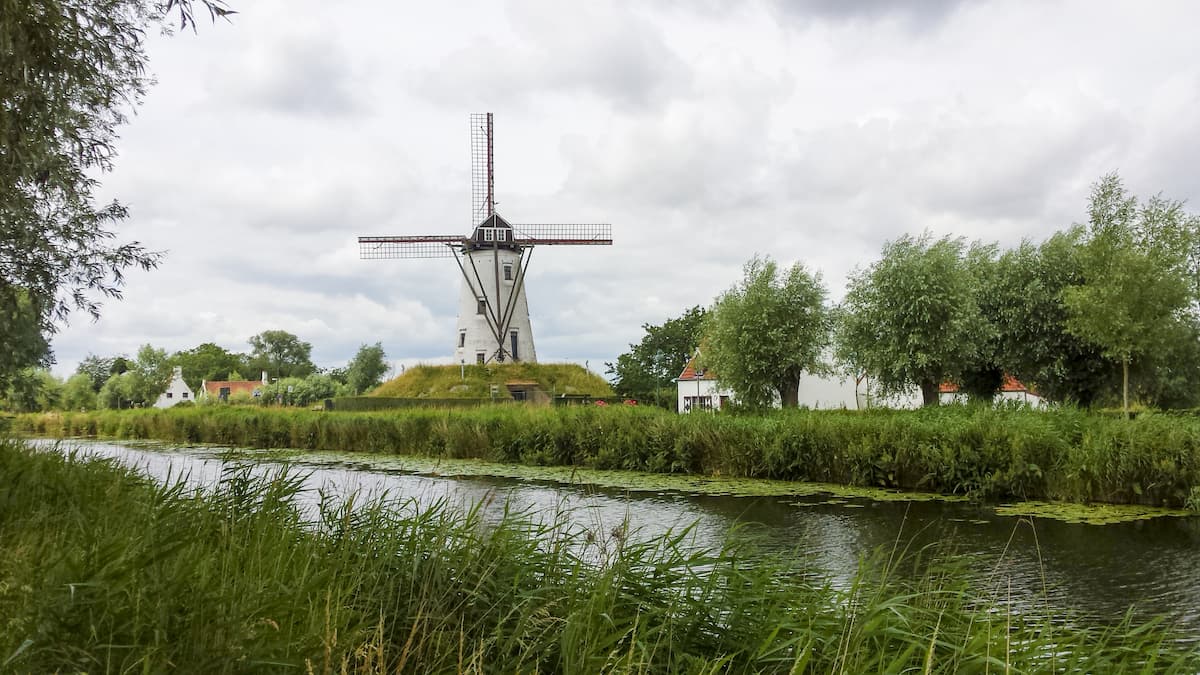
    Bonne chieremolen windmil from Bruges
    Bonne chieremolen windmil from Bruges

    Let us not forget the ramparts of Bruges, a six-kilometre park surrounding the old town. The ramparts are where you’ll find the four remaining windmills of of the original 23 in Bruges, as well as four very cool medieval town gates. Taking a lovely stroll along the ramparts and canals, while visiting the windmills is one of the best ways to get a feel for the town’s rich history.

    Koeleweimill

    Koeleweimill, aka Coelewey mill, was once used for corn and was originally located in Meulebeke. Originally built in 1765 as a wooden mill on a closed brick base, it was reconstructed on its current site by the city of Bruges after it broke down in 1980.

    Nieuwe Papegaai
    This mill is fun to see for its distinctive parrot on the roof, for which the windmill is named. It was originally built in 1790 as an oil mill called Hoge Seinemolen and moved to its current location in 1970 with a new name to boot.

    Sint-Janshuismill
    This is the oldest mill in Bruges, built in 1770 and the only one still in its original position. It’s also the only windmill with a museum for you to check out and I recommend you do so. Built as a wooden mill on four brick dices, this historic piece of architecture is still used today for grinding flour!

    Bonne Chiere
    A far younger mill is Staakmolen, or Bonne Chiere, built in 1844 and rebuilt in 1911 at its current location after a storm accident. This mill is built in the same style as Sint-Janshuismill, wooden with brick dices. Strangely enough, this mill was never actually used for grinding grain. It’s a show mill, only existing as decoration.

    Tip: If you’re bicycle confident, you can also rent a bike cycle around the rampants in a very short period of time.

    Beguinage Convent

    Back in the city square, head to the most silent spot there is; the Beguinage Convent. Called the “Princely Beguinage of the Vineyard,” this UNESCO world heritage site was once the home of the beguines, founded in 1245. The beguines were emancipated women who led a pious and celibate life, and today the beguinage is home to the nuns of the Order of St Benedict, as well as several other Bruges women who have decided to remain unmarried. If you happen to pass by at noon, you’ll have the chance to hear the beautiful sounds of the nuns chanting each day.

    Diamant Museum

    Now on to some sparkling adventures at the Diamant Museum. Would you believe that Bruges was the first city of diamonds in the world?! Bruges archives confirm that the city’s diamond trading and polishing began in the 14th century, and in the museum, which opened in 1999, you’ll learn all kinds of interesting facts about diamonds. You’ll even see how they cut and polish these gems through cutting demonstrations, and you can pick up a diamond souvenir in the gift shop.

    Hidden Gem: Concertgebouw Circuit

    Visiting the Bruges Concert Hall is one of the most underrated things to do in the city. But if you’re a fan of music and design, you’ll want to head over to this strangely modern building that has a famous acoustics and contemporary art collection. And I must say, you’ll get some of the most beautiful views of the entire city here as well.

    Where to Stay in Bruges

    There are six main areas for you to stay in Bruges and they’re – as should be expected in Bruges – all quaint, historic and picturesque. Here’s a list of the places to consider when booking your accommodations:

    1. The City Centre – to be right in the middle of all the action.
    2. Ezelstraat Quarter – best for those on a budget in northwest Bruges.
    3. Sint-Gillis Quarter – a quiet, though popular and slightly pricier area.
    4. Magdalena Quarter – quiet, serene and made for families.
    5. Sint-Anna Quarter – your off-the-beaten path location, where local residents live.
    6. Railway Station Sint-Michiels – not as popular and a little further out, but only a 10-min walk from Grote Markt.

    Well, that wraps up our weekend in beautiful Bruges! This uniquely picturesque place will leave you utterly speechless and I’ve no doubt you’ll want to visit again. With this weekend itinerary you’ll definitely cover all the best things to see and do in the city, making your time away absolutely perfect. Whether you’re looking for a romantic getaway or just something more low-key, the fairytale charm of Bruges is where you want to be!

    If you’re heading back to Brussels and your weekend in Bruges, why not spend an extra night exploring the capital city? Check out my post on weekend trips to Brussels and Bruges.
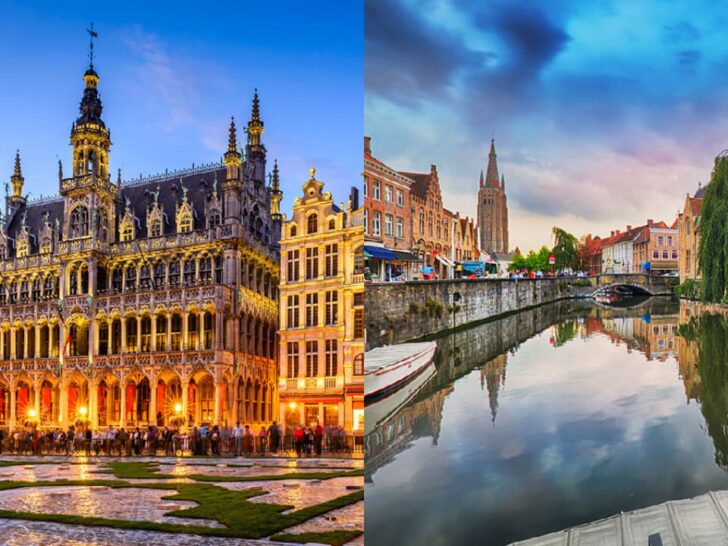
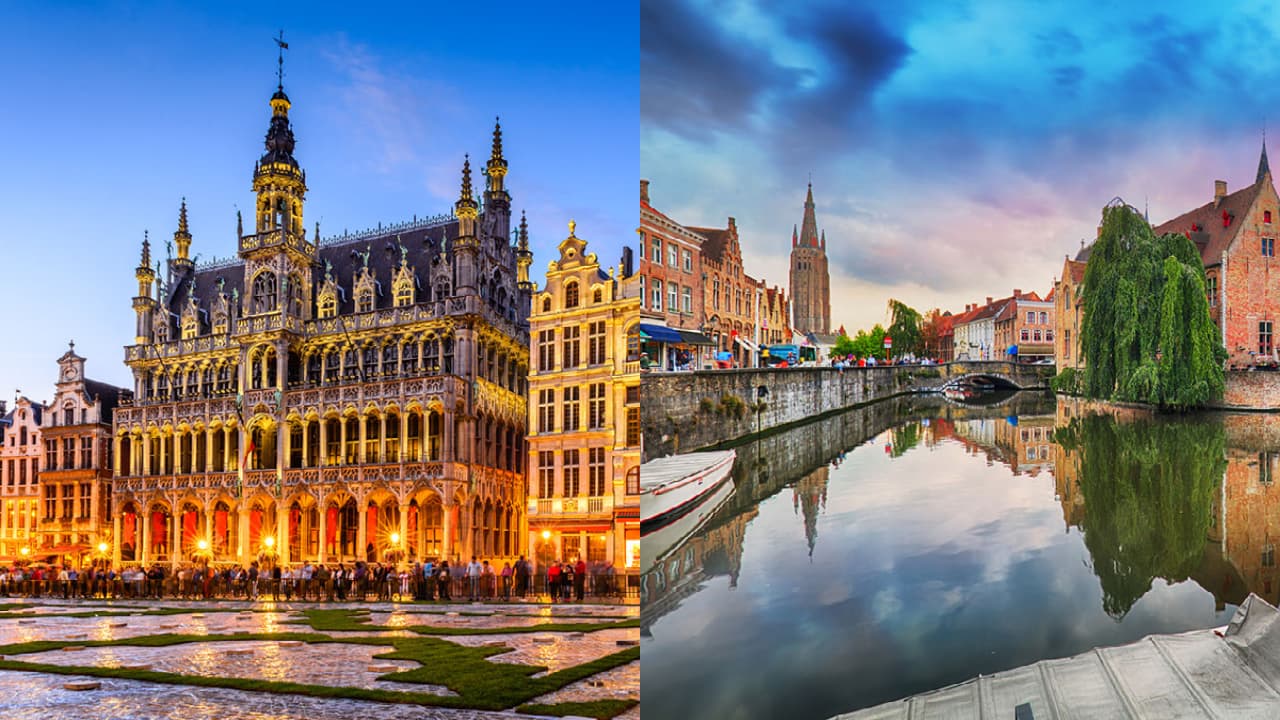
  • Brussels vs Bruges: Two Unique Belgian Cities, One Tough Choice

    Brussels vs Bruges: Two Unique Belgian Cities, One Tough Choice

    You have a weekend getaway coming up and you know you’re headed to Belgium, but you can’t decide which iconic city to choose from: Brussels or Bruges? I hear you. Both cities are worth a visit for their distinctly different charms, but for those short on time, this guide is here to help you decide.

    You’ll find that the majority of visitors to Belgium are headed one of two ways: Bruges, or Brussels. While not exactly far from one another, those on tight schedules will often only find time for one of these two fabulous cities. The good news is that both Brussels and Bruges are perfect for a 2 or 3-day break. But which city is the better choice for you?

    Brussels is a large cosmopolitan capital city with over a million residents, whereas Bruges is a more intimate, medieval, fairytale-like town.

    Brussels has a mix of cultures, diverse architecture, and many food and nightlife options. Bruges has a more relaxing atmosphere, where you can casually stroll along the picturesque canals and cobblestoned streets.

    But there’s a lot more to think about and learn about these two Belgium cities before making your decision. Here are highlights of both Brussels and Bruges to help you decide!

    Brussels vs Bruges

    Brussels and Bruges: History and Overview

    I’ll be honest, most travellers end up choosing Bruges over Brussels because its small, dreamlike, historic charm just seems to lure them in. Literally known as the jewel of Belgian tourism, it is hard to resist. However, Bruges can, somewhat like the canals of Venice to which it is so often compared, get awfully busy, so keep that in mind if you’re travelling in peak season.

    While Bruges is a quaint medieval town that seems almost frozen in time, with Brussels, you get what you’d expect; a vibrant, bustling city with a range of cultural activities to keep your senses engaged. Like any big city, you should keep on your toes – though any unsavoury areas are well out of typical touristic zones – but with its interesting mix of French and Flemish cultures, Brussels has its own charm.

    Both cities are very walkable and can be visited on foot in a full day or two. Even though Brussels is a large city, its centre is compact and easily explored. Bruges is unique in that travellers can take in the sights through canal boat rides, bicycles, or even horse-drawn carriage rides.

    Brussels has a large community of expat workers, including white collars from the Belgian government, European Union, and NATO, giving the city a special international vibe. But it does lack the antique charm of Bruges.

    Brussels

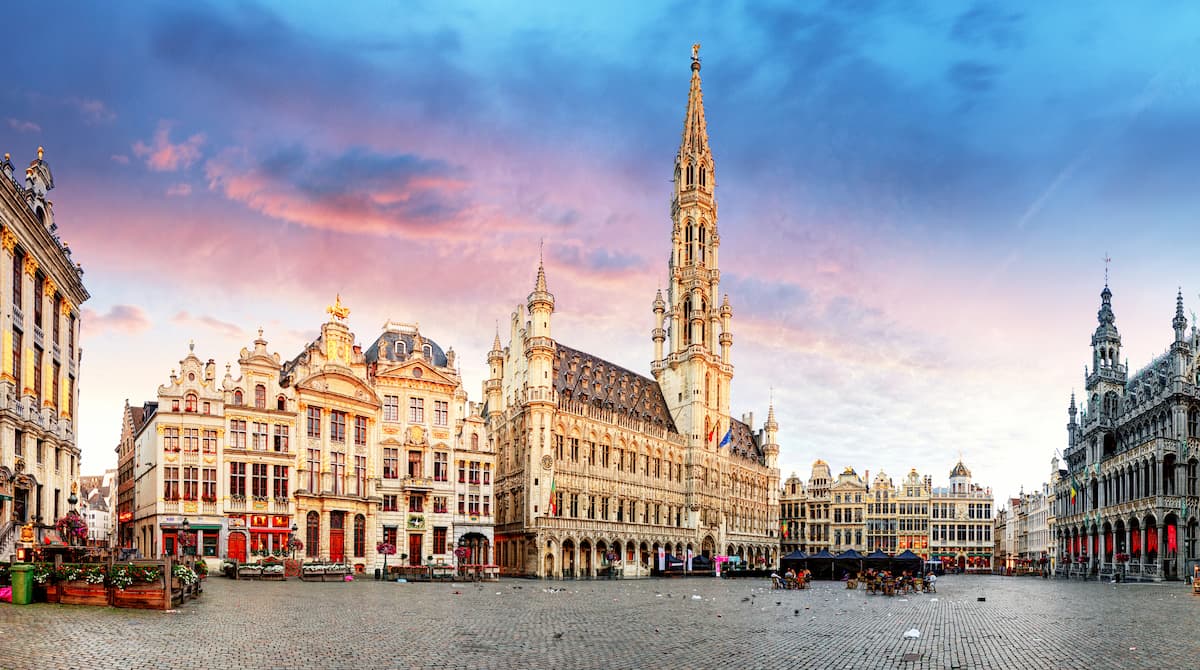
    Grand place in Brussels
    Grand place in Brussels

    Brussels was founded in 979 AD and is the capital city of Belgium, with the largest metropolitan area in the country. The 1400-1600s brought great wealth to the city and is visible in the beautiful, diverse architecture spread throughout.

    The city’s main square, called the Grand Place, is said to be one of the most beautiful squares in all of Europe.

    Brussels is also the headquarters to the European Union. 70% of the population are from other countries, making for a large immigrant population. Though Belgium is largely home to a mixture of French and Flemish (Dutch) speakers, the majority of residents in Brussels speak French.

    Bruges

    The canal with Sint-Janshospitaal
    The canal with Sint-Janshospitaal

    At the time of writing, Bruges has close to 120,000 residents, making it the 6th largest city in Belgium. With many canals and over 80 bridges, Bruges is often referred to as the “Venice of the North,” similar to Amsterdam.

    Thankfully, the city suffered very little damage from either world war, and its waterways helped Bruges gain wealth throughout the centuries. Unlike Brussels, Bruges didn’t have to contend with a French army burning down the city in the 17th century! It’s declining importance after the 16th century helped ensure it became one of the best-preserved medieval towns in Europe.

    A wonderfully romantic city, made for boat rides and low-lit evening wanders. Bruges’ beautiful web of streets is unlike any place in the world, and while it may not be a match for someone looking for excitement, it’s a city sure to take your breath away.

    Bruges is known for its lace, chocolate shops, and Belgian beers, even boasting an underground beer pipeline!

    Sightseeing and Culture

    Brussels

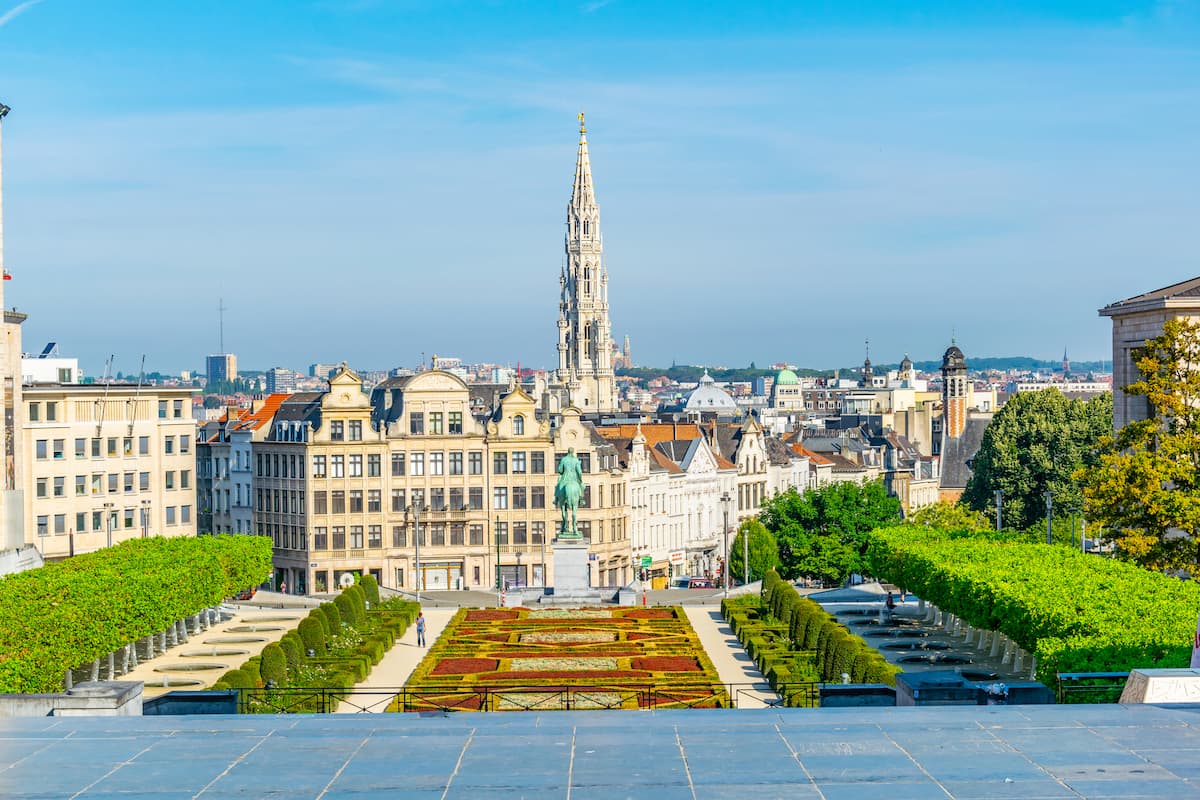
    Mont des Arts park in Brussels
    Mont des Arts park in Brussels
    • The Grand Place in Brussels is the city’s main square and without a doubt the first attraction you’ll want to see.
    • Brussels City Hall is the oldest building in Grand Place, completed in 1420, is a known masterpiece of Gothic architecture.
    • A walk down Koningsstraat to see the Royal Palace and Park is also worth doing.
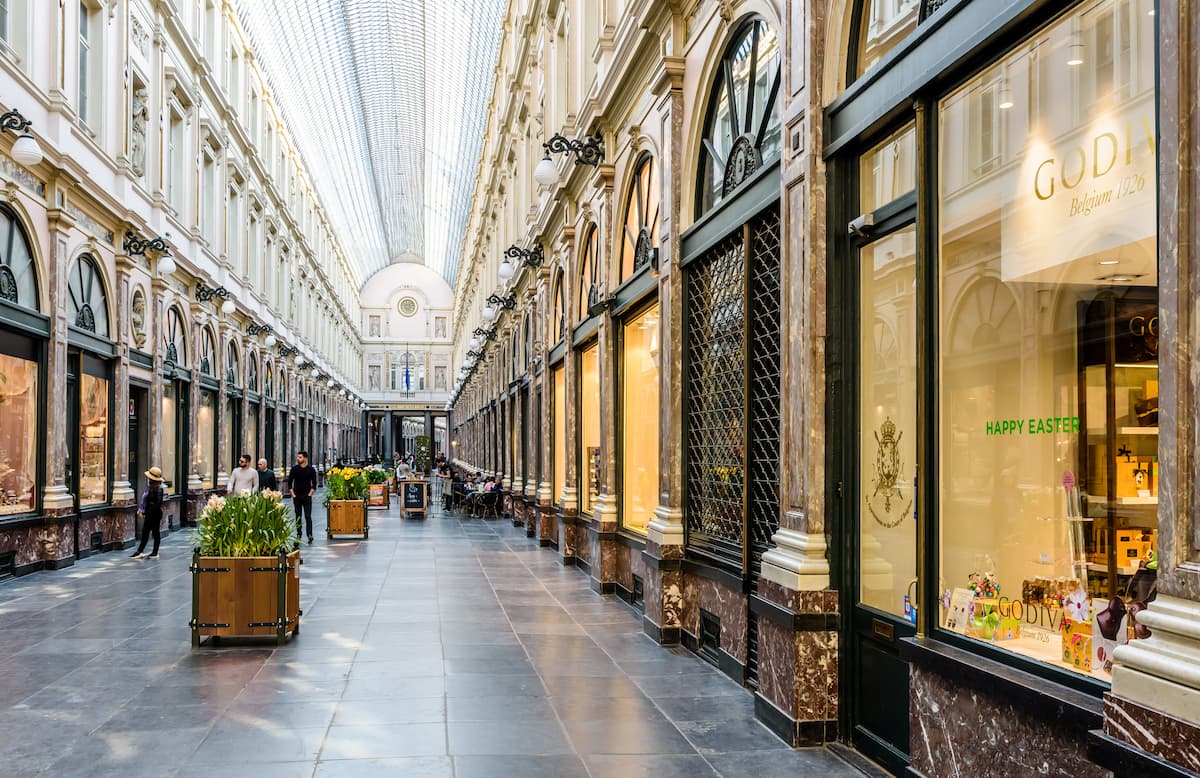
    • The Royal Saint-Hubert Galleries are a trio of gorgeous glass-covered shopping arcades filled with up-market boutiques and elegant coffee shops.
    • Look around the Palace of Justice and then just outside, take a glass elevator to the Marolles district, where you find a unique atmosphere with small stores and a nice little Sunday market.
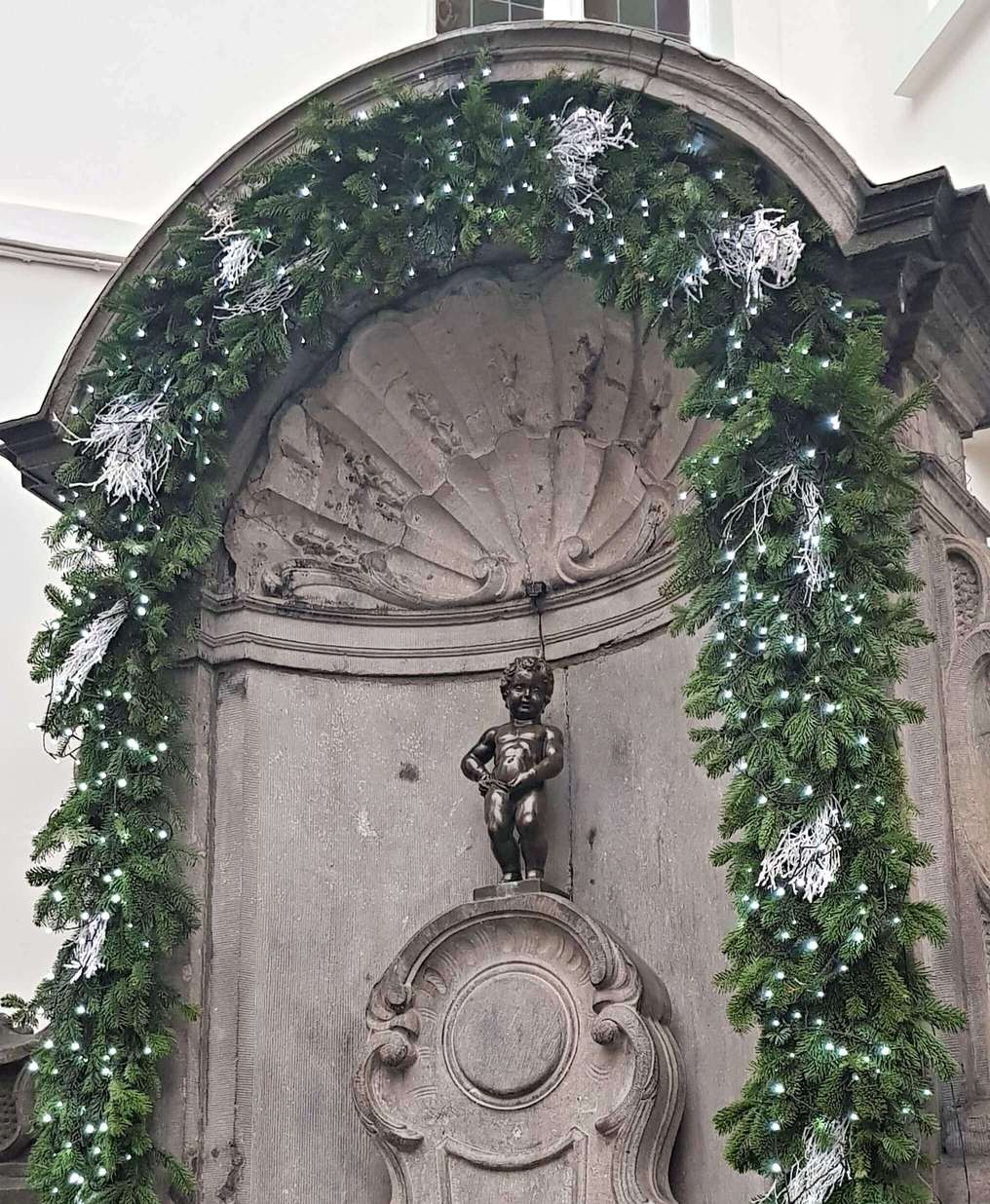
    • You’ll recognize the Manneken Pis, a famous fountain sculpture designed in 1388. It’s one of the most beloved symbols of Brussels, and originally served as the means by which many Bruxellois received water.
    • And you’re sure to not miss the 102-metre tall Atomium, an historic landmark and international symbol, made for the 1958 World Expo.
    • Parc du Cinquantenaire is a major park in Brussels, where the monumental triple arch known as Arc du Cinquantenaire is located.
    • Museums to visit include the Brussels Art Museum, the Magritte Museum and Horta Museum.
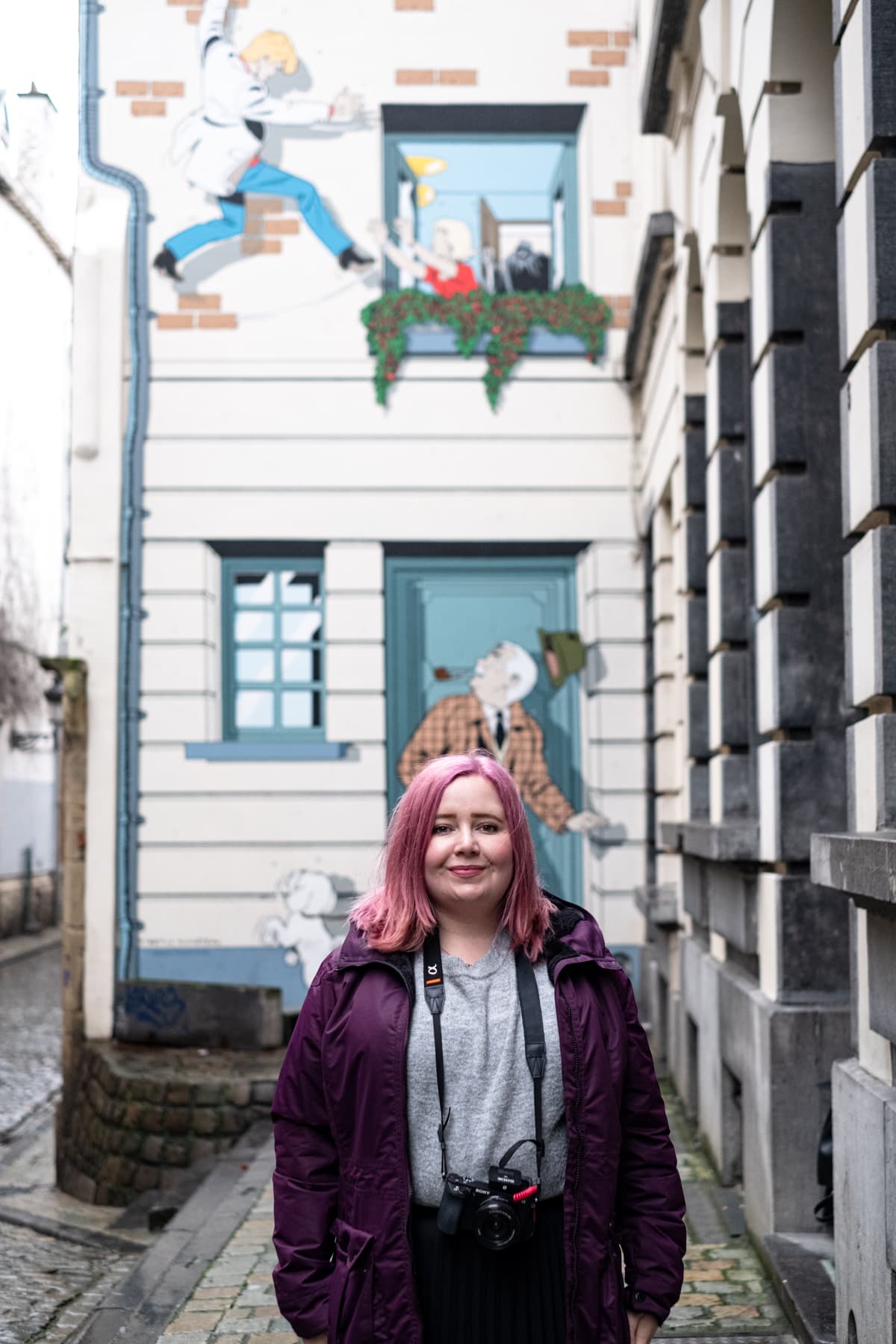
    Kat next to Comic Book Strip in Brussels

    Like London, Brussels is also known for it many unique art murals around the city. Brussels was influential in the early days of the Art Nouveau movement; there are buildings scattered all over which can be visited, along with private buildings, via a tour offered by ARAU.

    Bruges

    Markt Bruges
    Markt Bruges
    • Market Square is the main square in Bruges, surrounded by some of the city’s most iconic buildings.
    • The Belfry Tower was founded in 1240 as a wooden tower on a stone building, and is the most famous and tallest part of Market square.
    • Bruges City Hall has Gothic architecture and was completed in 1421, being one of the oldest in the Low Countries.
    • Church of Our Lady Bruges is an impressive Catholic cathedral with a museum that boasts paintings, reliquaries, tombs and mosaics, and a Michelangelo Madonna and Child.
    • The Rozenhoedkaai, or Quay of the Rosary, is one of the most photographed and beautiful sights throughout the city of Bruges, with its canals and classic buildings.
    • The 12th-century Roman Catholic Basilica of the Holy Blood is stunning inside and out.
    • The Beguinage convent is a very special UNESCO site, where you can hear the nuns chanting at noon each day.
    • There are also several medieval city gates and windmills for you to visit.
    • And Bruges has its share of museums as well. Check out the Groeninge Museum of Art and the merchants house (Gruuthuis). 
    • Other popular attractions include the Lace Centre and the Chocolate Museum.
    Take a canal boat tour in Bruges.
    Take a canal boat tour in Bruges.

    With Bruges being a much smaller city, the sights are that much closer to each other and hard to miss. Every street is picturesque, with beautiful buildings and charming character.

    Being surrounded on three sides by canals, it’s easy to walk around the town, from the centre square to the Belfry Tower, across the bridges and canals along the Minnewater Lake, and back to the historic buildings of Bruges.

    Transportation and Getting Around

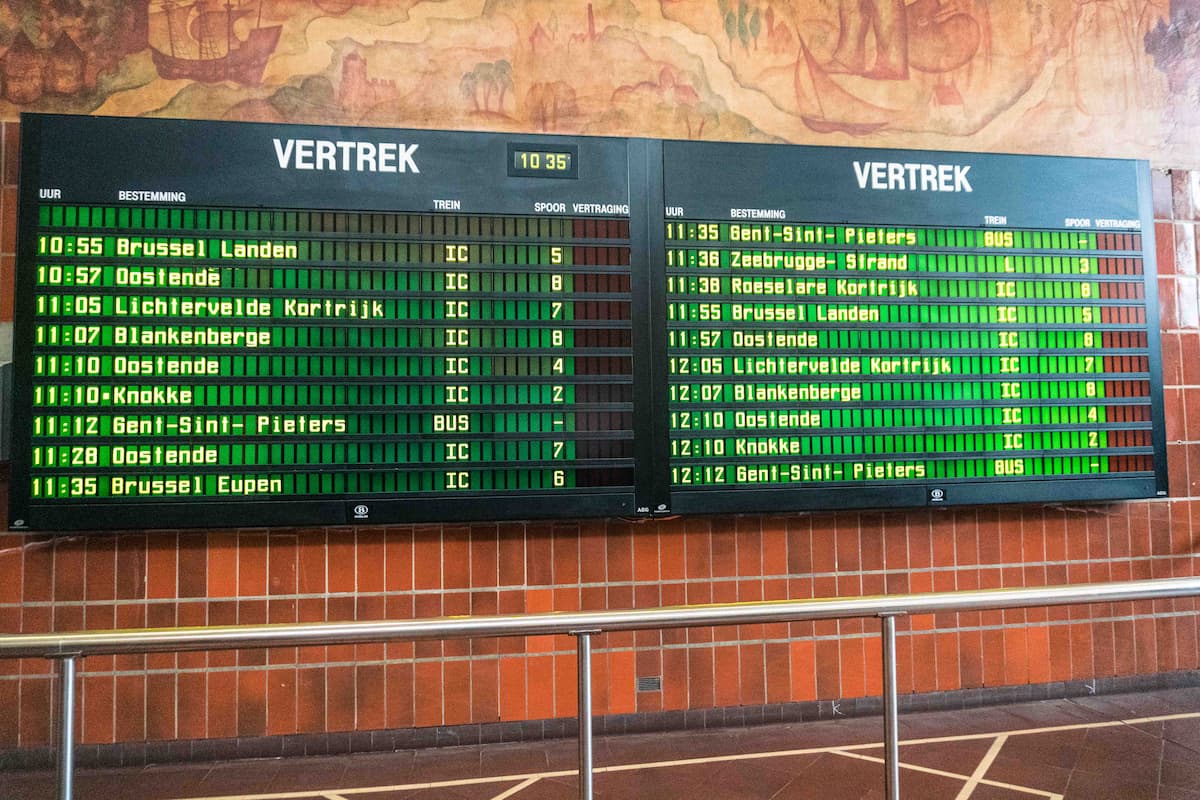
    Train timetable board in Belgium

    Brussels

    Most of Brussels can be explored by foot, with the city centre having many of the attractions you’ll want to visit. Other landmarks like the Atomium or National Basilica will require public transportation. Still, you can buy a 24-hour public transport pass for 7.50 Euros or use the contactless system for single tickets.

    Depending on what you’re going to be doing, it might make more sense to purchase The Brussels Card, which allows you to use public transportation as well as granting entry into the 39 museums in the city.

    Or, you can catch a hop-on, hop-off tourist bus. This is a good way to see the city, and it’s located right across the street from the central train station.

    Bruges

    Bruges was made for walking. It’s not a very large city and a lot of the city centre doesn’t even allow cars, which makes it even more pedestrian-friendly. They do have a handy network of buses though, that can take you around the outskirts of the city, but really, it’s all totally walkable. It’s definitely doable to get by without using public transport at all, except when and if you’re arriving and leaving by train.

    Two more unique and enchanting ways to see Bruges though, are by boat and horse-drawn carriage. They go hand-in-hand with the enchanting town. And last but not least, a bike ride is another sweet way to travel.

    Food and Nightlife

    Brussels

    Kat eating Belgium Waffles
    Eating Belgium Waffles
    • Frites are by far the best street food in Brussels. Belgians loves their frites and you will too after you’ve tasted them!
    • Of course, you can’t go to Belgium without finding Belgian waffle shops strewn throughout the capital. And there’s no better place to try them once, or twice.
    • Beer is also big in Belgium and they have a rivalry with Germany for which country has the best beer. You might be surprised to learn that Belgium is home to the world’s largest brewer, AB InBev, and has 224 breweries in the country.
    • Premium Belgian chocolates are very well-known throughout the world, and Brussels has over 500 different chocolatiers spread throughout the city. Do you realize what this means? That for every 2,000 people, there’s a chocolatier. Belgians know their chocolate. Even the popular Godiva chocolate was started in Brussels.
    • And you must try mussels in Brussels! “moules-frites” is a Belgian and Brussels specialty.

    If you’re looking for a good night out, Brussels definitely beats Bruges. It’s not as crazy as some other European countries, but can hold its own. The city centre has a plethora of bars, with many of them having deals such as 1 Euro pints. If you’re looking to dance the night away, check out You Night Club and Fuse, two of the biggest and most popular clubs in the city.

    Bruges

    Kat drink Brugse Zot at their brewery in Bruges
    Kat drink Brugse Zot at their brewery in Bruges
    • Bruges offers some one-of-a-kind dishes, such as popular Belgium stews. Be adventurous and try the Elderberry Soup, Waterzooi, Curried Mussel and Butternut Squash Soup, and Presoep.
    • You’ll also find the cobblestoned streets lined with chocolate shops, such as the reputable Chocolatier Dumon, said to make the best chocolate. You can even visit the Chocolate Museum.
    • The town is also famous for the incredibly creamy and soft Passendale cheese, named after the village it originates from.
    • Don’t leave without tasting some of the sweets while you’re in the area, especially the Brugsch swaentje, which stands for Bruges swans, an important symbol of Bruges.

    You’ll want to make early reservations in Bruges, especially for lunch, due to the large number of tourists that come in for the day. The evening gets very quiet though after the daytrippers leave, so you won’t find the nightlife that Brussels offers. But that doesn’t mean they don’t have a nightlife!

    Don’t forget you’re in Belgium, where they have some of the best beer in the world, so you’ll still find bars scattered throughout the city centre for bar hopping. Popular bars, Le Trappiste and Poatersgat, stay open until 1am or later on Sundays.

    There’s even a nightclub called De Coulissen Brugge for something a little more wild, and if cocktails are more your thing, the Garden of De Republiek Café is a good choice.

    Brussels or Bruges?

    Do you want to visit a large, bustling capital city, or a quaint medieval town, complete with cobblestoned streets and picturesque canals. If it’s the former, Brussels. For the latter, it’s Bruges. As you can see, you’re winning either way!

    If you’re not bothered either way, I’ll be honest and say Bruges is the more unique of the two. There are several fantastic metropolitan cities in Europe that can compete – and often surpass – what Brussels has to offer. Cute, exceptionally-preserved medieval cities with beautiful canals and delicious chocolate? Not quite so common.

    Why Not Do Both?

    And then there’s always the option to visit both cities. It’s not uncommon for travellers to do day-trips from one city to the other. Brussels and Bruges are only 60 miles apart, and about one hour by train, so their close proximity does make this a viable option. You’ll even find discounted round-trip fare on the weekends.

    I hope this guide has helped you decide which Belgium city is right for you! Belgium is a beautiful and really special country to visit and will leaving you wanting more. You can always visit them both if you’re still undecided!

  • One Day in Brussels: Awesome Day Trip You Need to Do

    One Day in Brussels: Awesome Day Trip You Need to Do

    There is so much to do in Brussels in a day that you could easily stretch it so much longer. As you may know, Belgium is probably best known for its beer, waffles, pomme frites and chocolate.

    This day itinerary is crafted to get your fill of all these delights whilst seeing all the sights in the Belgian capital. 

    The best thing about a day trip to Brussels is that most touristy sights are within walking distance of each other and you will be able to maximise your time here. Unless you end up drinking too many strong Belgium beers.

    One Day in Brussels

    Things You Should Know Before Going To Brussels 

    With a day trip, it’s easy to get caught up in the tourist traps or not know the low down of the city. Here are a couple of things you should know when visiting. 

    Money: Euro is the currency. 

    Train Stations: There are 3 train stations in Brussels Nord, Brussels Centrale and Brussels Midi, make sure you check where you arrive and depart from. Occasionally, people turn up to the wrong ones and miss their trains. 

    Airports: There are two airports in Brussels; Brussels Airport (the closest airport) and Brussels South Charleroi Airport (the furthest airport where cheaper airlines generally fly into). 

    National Languages: There are 3 national languages in Belgium. Depending on where you are travelling, you will find there will be a dominant language for that area. French and Flemish are mostly spoken in Brussels but they also speak German in areas of Belgium.

    Explore the Lovely Neighbourhoods: I highly recommend wandering around the cute cobblestone streets of Sablon, St Gilles and Les Marolles. 

    Visit the Quirky Museums: Museum of Musical Instruments, the Royal Museum of Army and Military History, Autoworld, and the Belgian Comic Strip Museum. If you plan on seeing a few museums pick up a Brussels Card as this will give you access for a set price. 

    Find the Best Views: In my opinion, there is nothing better than a panoramic view of a city. Here’s where you get the best views in Brussels:

    • 5th Floor of the Royal Library of Belgium.
    • 10th Floor of the Museum of Musical Instruments.

    Be Careful Where You Eat on Rue de Bouchers: It is a street full of pushy waiters trying to get you to eat there with inflated tourist prices and subpar food. I have a fantastic restaurant recommendation later in the article that is worth eating at but do be careful! 

    Find the Less Busy Chocolate Shops: A lot of the chocolatiers have shops outside of the Galeries; these won’t be as busy and better options to visit. Open Google Maps and type in the chocolatier you wish to visit. You will be able to take your time, try the chocolates and get a lot better customer service. 

    Avoid the 1 Euro Waffle stands!: These will likely be very mediocre waffles and disappoint you! Later in the article, I recommend the waffle company I like to visit but do your research so you can get the best possible waffles. 

    Make the Most of Lunch Specials: Lots of restaurants offer lunch specials which is a great way to save money and get a good meal! Consider this over splurging for dinner. 

    What to do in Brussels in One Day

    I have designed this day in Brussels itinerary to fit in all the main sites on a logical walking route. Plus it is totally adjustable to your interests and I’ve added some other restaurants, chocolatiers, pomme frites and drink places for alternative options. 

    Parc de Bruxelles (Brussels Park) 

    Starting your day off at Parc de Bruxelles (Brussel Park) also known as “Parc Royal”. It’s the largest urban park in Brussels and a great way to start the morning with a nice stroll. 

    In the 1770s the whole area of Court was completely changed. Thanks to Guimard who drew the new design for the park and Zinner the gardener. The park was transformed with sculptures, fountains and footpaths.

    Palais Royal de Bruxelles (Royal Palace)

    Royal Palace in Brussels in summer day

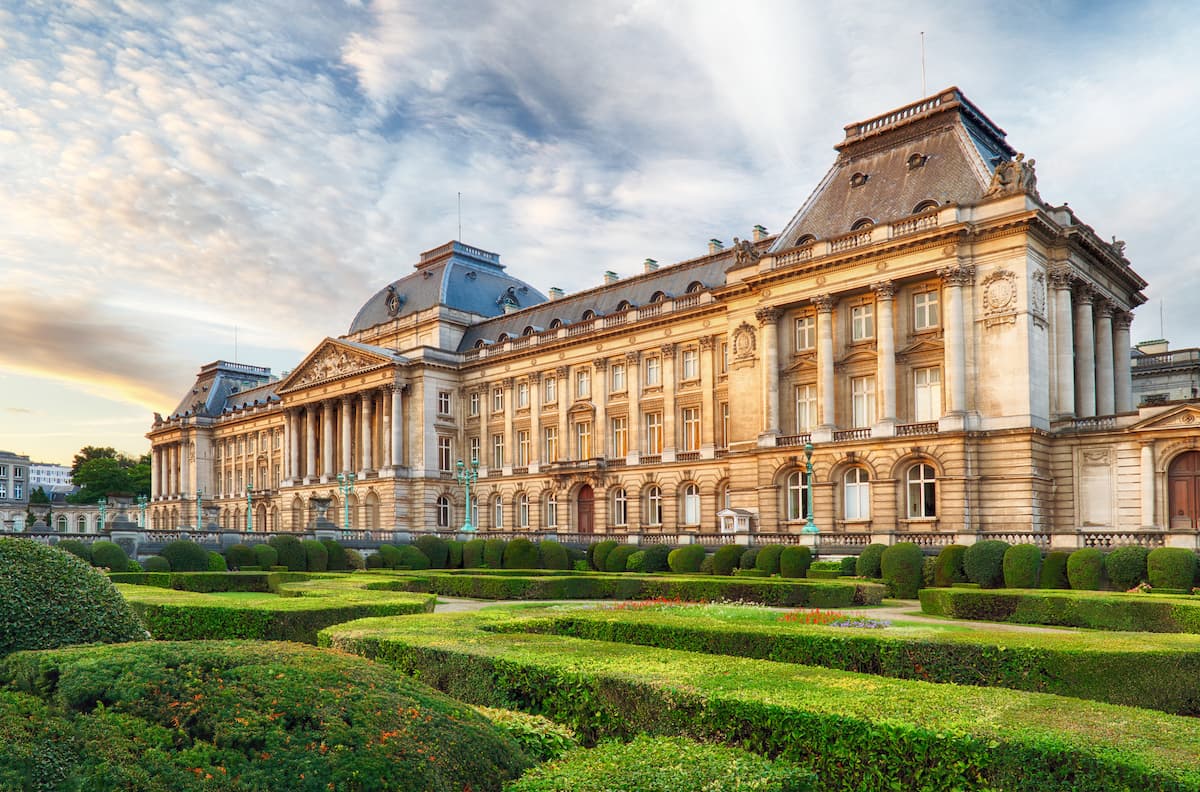
    From the park, you will see one of the cities most magnificent landmarks, the Royal Palace. The facade you see today is from the 1900th was instructed to be built by King Leopold II. Architect Alphonse Balat designed new rooms like the ‘Grand Staircase’, ‘Throne Room’ and the ‘Grande Gallerie’. 

    It’s no longer home to the King and Queen of Belgium and is now used for Head of State duties. 

    There is only a short window that you can visit inside the Palace. Between the 21 July (the national bank holiday) until the beginning of September. The Palace opens from Tuesday until Sunday at 10:30 am and closes at 5 pm. 

    Place Royale 

    Place Royale is quite photogenic so grab a quick photo and admire the picturesque place.

    It’s a public square surrounded by Neoclassical buildings, lined with gardens and at the centre of the square is a statue of Godfrey of Bouillon, (the leader of the first crusade in 1096) mounted on his horse. The main building you’ll notice is Saint Jacques-sur-Coudenberg and it has a magnificent view of Palais de Justice.

    Mont des Arts – Views and Museums 

    Mont des Arts park in Brussels

    Mont des Arts translate to the hill/mount of arts which means you must come here for the views and art.

    The area was converted into the arts’ quarter by King Leopold II at the end of the 19th century. They sourced various architects and urban planners to create a space to accommodate different cultural institutions.

    You’ll find historic sites like the National Archives of Belgium, the Royal Library of Belgium and the Museum of Music Instruments. If you love views then make sure you use the tip at the beginning of the article!

    The public park has a chilled ambience, during the summer it’s great to have a drink and spend an afternoon here whilst enjoying the views. 

    Cathédrale Saint-Michel et Sainte-Gudule (St Michael and St Gudula Cathedral)

    The Cathedral is built in Gothic style architecture and took over 300 years to build. From 1047 until the eighth century the cathedral was called St Michael, it was renamed St Michael and St Gudula Cathedral when the relics of the martyr of St Gudula were brought to the cathedral. 

    Even though it was built centuries ago, only in 1962 was it given cathedral status. 

    Galeries Royales Saint-Hubert (the Royal Saint-Hubert Galleries)

    The King`s gallery in the Saint-Hubert Royal Galleries in Brussels

    The Galeries are elegant are shopping arcades, you will find three that are connected together’ Galerie de la Reine, Galerie du Roi and the Galerie des Princes.  

    Inside are little shops selling jewellery, chocolate shops, boutiques, restaurants and bars. The main attraction is the beautiful ceiling. It is a little touristy but it’s free and a wonderful place to browse and enjoy the architecture. 

    On a rainy day, you can also catch a movie at one of the cinemas; Cinema Galeries in the Royal Galleries or Cinematek. They show movies in multiple languages. 

    If you love a bookstore then you must check out Bortier Gallery (on rue de la Madeleine). They have a fantastic range of second-hand books.

    Lunch at Aux Armes de Bruxelles

    Most of the restaurants on Rue des Bouchers are often poor quality and your general tourist places, however, there are always some great places around if you know where to go. As one of my friends used to live in Brussels she had the perfect place to recommend and one that locals would visit on Rue des Bouchers which is called Aux Armes de Bruxelles.

    Rudy Vanlancker has brought back Aux Armes de Bruxelles to its former glory. His goal to make the restaurant to be the most beautiful brasserie in the downtown area.

    You’re guaranteed food that tastes great, in a traditional Belgian style and friendly staff. 

    Alternative spots to grab food in Brussels: 

    • Madame Chapeau in St Jacques is famous for Brussels seafood.
    • Les Brassins in Ixelles for the rabbit stew. 
    • Soleil d’Afrique in Matong for the vibrant food and cocktail.
    • Rue de Flandres off Place St Catherine for Asian cuisine. 
    • Pin Pon is a converted fire station into a hipster vibe brunch spot. 

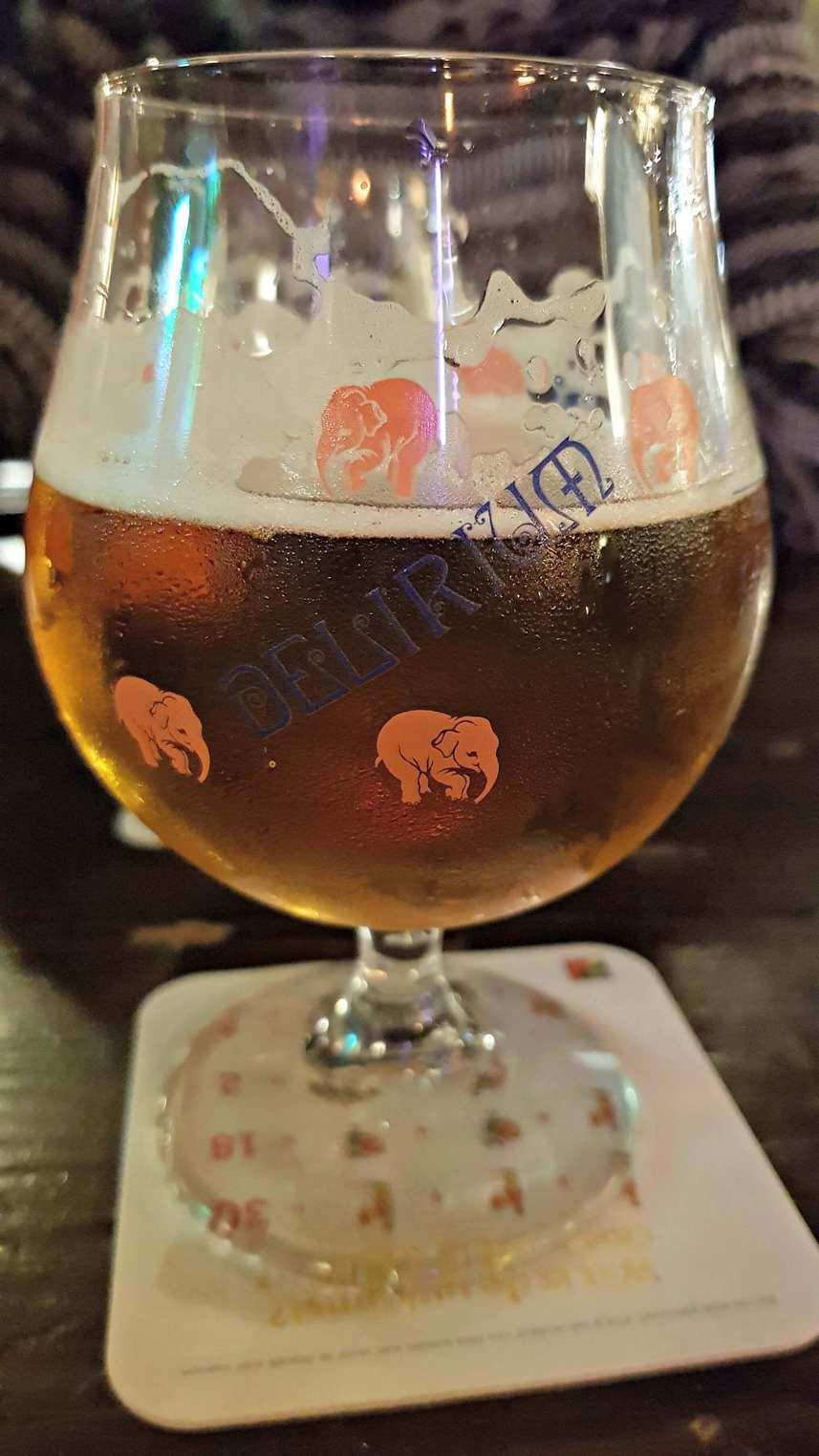
    Try some Belgian Beer at Delirium 

    Brussels trip to Delirium Cafe

    Délirium Café is located near Aux Armes de Bruxelles, it’s down a little passage called Impasse de la Fidélité. The sister Jeanneke Pis of the Manneken-Pis is also here opposite the entrance. Grab a quick photo before entering Délirium Café.

    It’s no wonder beer lovers from around the world love this place. You can taste more than 2000 beers from around the globe. Delirium Café holds the Guinness World Record for the most beers offered!

    The Belgium Delirium Café offers a range of beers from over 60 countries, that’s about 2000 beers including beers from Belgium! Make sure you try one of Delirium’s delicious beers whilst you are there.

    Do be careful with Belgium beers as they are generally around 7% – 9%. We always opt for half beers when we are in Belgium due to the strength. 

    One of my favourite things to do when travelling is learning! If you want to know more about Belgium Beer, I highly recommend taking a tour. This will be a few hours, sampling different beers and visiting some of the top bars in Brussels. Find out more information about the tour on Get Your Guide

    Grote Markt (Grand Place) 

    Grand place in Brussels

    Grand Palace is the central square with lovely guild houses and the town hall, the designs are breathtaking and you could spend hours staring at the details. 

    A panorama of the square should be taken by anyone visiting Grand Place. You will be able to see all the wonderful buildings in the city square.

    Buildings worth mentioning: 

    • Hotel de Ville (Town Hall): Southeast of the square is the Town Hall. The building is Brabantine Gothic architecture and the oldest building in the square. Looking up at the tower you will see the archangel Michael staring at you from the 96m tower which was constructed in the fifteenth century. Guided tours do run in the building in Dutch, English and French on Tuesday and Wednesday afternoons. 
    • Maison du Roi: Currently this is the Museum of the City of Brussels (Musée de la Ville de Bruxelles) that features artworks from the sixteenth century and some of Mannekin Pis’ wardrobe (the peeing statue you will see on your tour)! Before it was the museum this was the King’s House and owned by Charles V, ruler of the Spanish Empire and the Holy Roman Empire. 
    • Maison des Ducs de Brabant: You can’t do anything else but look at the beautiful exterior of the six houses. The buildings are known as “Ducs de Brabant” due to the statues of dukes that adorn the walls. If there was a photo opportunity, that would be it. The place is always crowded and there is no good time to take a photograph, but try anyway.
    • Le Pigeon: The artists’ guildhall was where Victor Hugo lived during his time in exile from France.
    • Guild Houses: The Grand Place is lined on each side with a number of guild houses and a few private houses. They are mostly reconstruction in 1695 after the bombardment. The facades are based on Italian Baroque with some Flemish influences and include pilasters and balustrades.

    It is the perfect place for a photo opportunity so make sure you get your cameras ready. If you do come here earlier in the day i.e. before 8am the square will be lined with rubbish bags etc so just be warned you might have to get creative with your photography. 

    During the Christmas holidays, you will see a truly magical sight. The Grand Place is full of festive events and markets. Brussels holds other festivals in the square as well such as the famous colourful flower carpet they lay every two years.

    Eat Some Waffles at Maison Dandoy

    list of the best things

    Now that you’ve got a bit more walking out of the way it’s time for some of the best waffles in Brussels! Jean-Baptiste opened the first Maison Dandoy shop in the heart of Brussels in 1829 so it’s ingrained in the history of the city. 

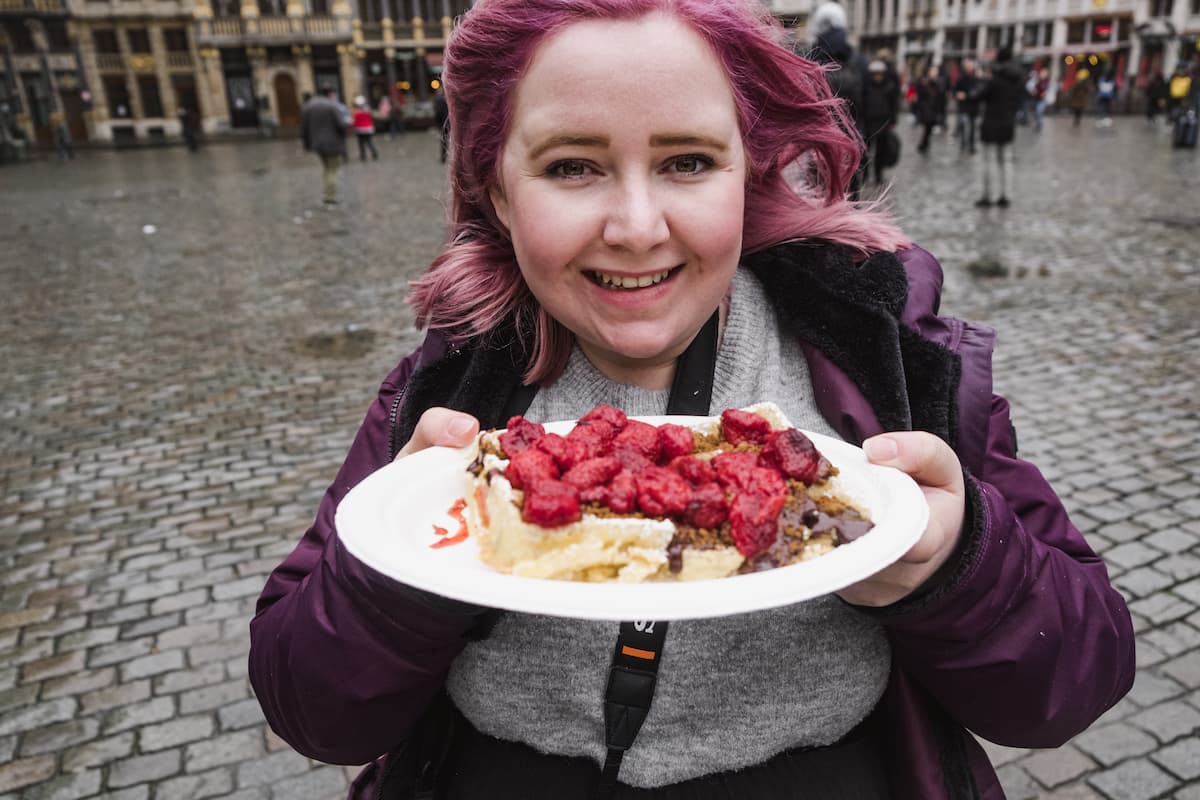
    They have a pop-up waffle shop just around the corner from Grand Place. I had the best waffles topped with strawberries and chocolate! 

    Maurice Vermersch of Brussels created the waffle we all know and love. The lovely crispiness on the outside and fluffy waffle insides, with the deep square pockets imprinted in from the iron. He introduced these to Americans in 1964 World’s Fair in New York City and this is when they became popular. The name changed from Brussels waffles to Belgian waffles as he thought most Americans didn’t know where Brussels was. 

    There is also another waffle you can try, the Liege waffle. It’s extra sweet as it contains pearl sugar in the dough, causing a delicious caramelised crust. Think of it like a really dense brioche bun but in a waffle. 

    And if you haven’t had enough sweet, there are more! Maison Dandoyare is most famous for its speculoos. The biscuits are made with butter, brown sugar and then moulded into handcrafted wooden moulds. There are all sorts of flavours you can try! These make the perfect gift to take home or a snack while you’re travelling around. 

    Comic Strip Walk

    Kat next to Comic Book Strip in Brussels

    Started in the 1990s to pay tribute to the characters and authors of the Franco-Belgian comics. Some of the comics you can see are ‘The Adventures of Tintin’, ‘The Smurfs’ to ‘The Adventures of Astérix’. 

    This can be an outing in itself, however, if you only have a day then there are a few in a little cluster before you head to your next destination. 

    Do look out for them when you are walking around though! I’ve added some additional ones on the map too but visit Brussels has a whole guide on the Comic Strip Walk. 

    Manneken Pis Statue

    Brussels trip to Manneken-Pis Statue

    Manneken-Pis statue is often referred to as one of the worst tourist attractions but since you’re here you might as well see it. Basically, the statue is a naked boy peeing into a fountain.

    They love to dress the statue in costumes, they get creative too! Anything from Elvis, Dracula, Santa Claus just to name a few. He actually has over 1000 outfits which are pretty impressive for a statue. 

    And if you are wondering what the legends are surrounding the Manneken Pis Statue, then these are my favourite three: 

    • The little boy tried to put a fire out and thus saved the city. 
    • During a battle in Ransbeke the boy was in a bucket in some trees and peed on the enemies and made them lose the battle. 
    • Or… The boy peed on the witch’s house and decided to turn him into a statue. 

    Try Some Belgian Chocolates 

    Belgium has some of the best chocolate in the world, especially its chocolate pralines. You can’t visit unless you sample some chocolate goodies. You will find both good and bad chocolatiers in the heart of Brussels so make sure you do your research before choosing one. 

    For those who are chocolate addicts check out independently owned Elisabeth, Artisan Chocolatier Mary or Neuhaus. 

    Neuhaus (on Rue de l’Etuve)

    There is a shop just located around the corner from Manneken-Pis statue on Rue de l’Etuve. It was started by Jean Neuhaus who was a Swiss with Italian roots when he decided to layer the medicines he was giving people with a fine layer of chocolate. 

    His grandson in 1912 invented the Belgian praline. Basically, he evolved his grandad’s idea, instead of filling the chocolates with medicine it had the delightful filling of pralines. Then continuing the inventions Louise Agostini, Jean Neuhaus Jr.’s wife created the ballotin which is the beautiful chocolate box that is iconic today. 

    Elisabeth (on Rue au Beurre)

    This independent boutique named Elisabeth sells some of Belgium’s best sweets. The owner travels all over the country to taste famous Belgian delicacies as well as long-forgotten local cuisine. From Cuberdon noses to Frederic Blondeel’s to tasty chocolate truffles, you’ll find something to buy here. 

    Artisan Chocolatier Mary

    One of the most famous chocolate shops in Brussels is Artisan Chocolatier Mary. The first shop opened in 1919 and has always been busy. The original boutique on Rue Royale has an array of pralines and hand-rolled truffles that you have to try! 

    If you want to splash out, go to Pierre Marcolini. It’s also about 15-20 minutes’ walk from Grand Place and is a nice area to wander with more shops, cafes and bars.

    Alternatively, sign up for a chocolate workshop at Zaabär. They hold regular courses on learning to make chocolate and makes for a great day out! Or sample gourmet chocolate with a tasting tour. Discovering the best chocolatiers in the city. Find the tour here on Get Your Guide. 

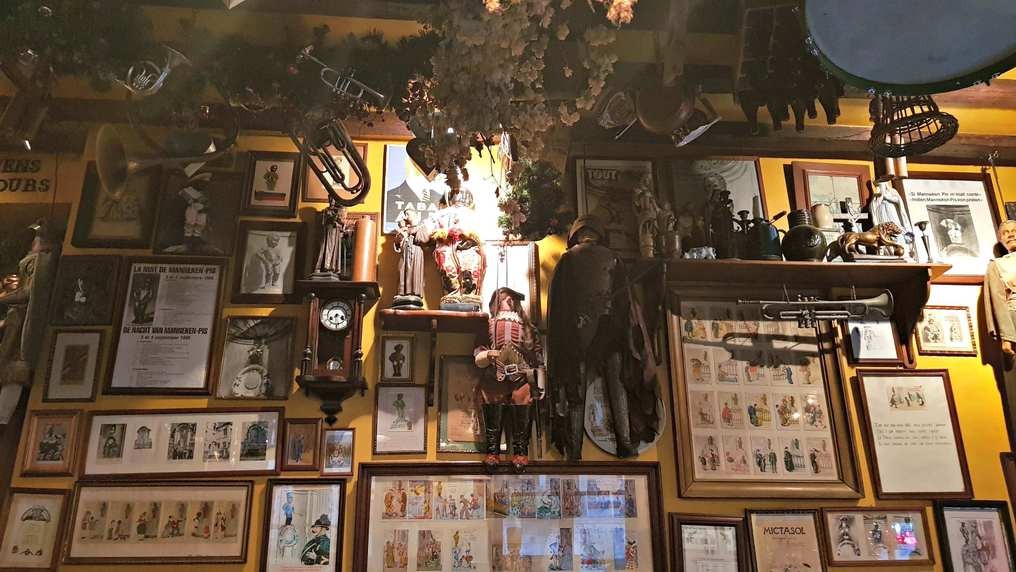
    Ready for Another Drink? Try Poechenellekelde or Goupil le Fol 

    Brussels trip to Poechenellekelde

    Poechenellekelde has a unique atmosphere with lots of puppets dangling from the ceiling and they have an excellent range of Belgian beers. As you are in Belgium you must also try a lambic beer. It’s a sour fruity beer unique to Belgium.

    I highly recommend pairing a lambic with a cuberdon which is a cone-shaped Belgian candy. On my beer tour in Ghent my tour guide introduce this to me and it was an amazing pairing! 

    Nearby is a quirky little wine bar called Goupil le Fol (cash only). The bar specialises in cherry wine, blackberry and raspberry wine, nut wine and liquors. The interior is very quirky! The wine was so delicious, too easy to drink and way stronger than it tasted.

    Alternative spots to grab a drink in Brussels: 

    • Café Belga.
    • Moeder Lambic.
    • Brussels Beer Project.
    • La Brocante.
    • Lord Byron.

    Finish the Day off With Fries

    After a few drinks, the best way to end the day is with some pomme frites! Always a great idea to soak up the alcohol and prevent a hangover. Even if you haven’t spent the day drinking these are a must to try anyway! 

    In World War 1, there was a misunderstanding that Belgiums speak French and the American soldiers, therefore, thought they were in France. So when they stumble across these delicious deep-fried potatoes they called them French Fries. 

    The pomme frites are Bintje potatoes that are cut into thick pieces and double-cooked in beef tallow. They first cook the fries at a lower heat and then deep fry them at higher heat just before serving. 

    Most of the best Fries are found outside the centre of Brussel but Kirstie Will Travel recommends trying Café Georgette. They come in cute newspaper wrappings, leave the skin on the fries and have some of the best sauces.   

    Do beware if you’re a vegetarian then most pomme frites are not vegetarian friendly as it’s cooked in beef drippings. 

    Other places to add to your list is: 

    • Fries Food Truck in Place Flagey
    • Maison Antoine
    • Friterie du Miroir

    How to Get to Brussels 

    Brussels is easy to get to by multiple transport modes. Here are some options: 

    Brussels by Plane

    The nearest airport to the city is Brussels Airport, which is around 25 minutes drive from Grand Place. There is also Brussels South Charleroi Airport which tends to have the cheaper flights (Ryanair), but it is just over an hour away.

    Brussels Airport has direct trains that run every 15 minutes and takes 17 minutes to travel into Central Brussels.

    Brussels South Charleroi Airport needs you to get a train and bus. Take any bus on line A and you’ll arrive at Charleroi-South station which will take you to the centre.

    Day trip to Brussels by Rail

    It is super easy to do a day trip to Brussels from London by rail, just catch the Eurostar. The Eurostar runs regularly, getting you from London to Brussels within 2 hours. Trains also run from Paris, Amsterdam and Luxembourg.

    Brussels by Bus

    Bus companies run various routes to Brussels from cities like Amsterdam, Berlin, London and Paris.

    Flixbus and Eurolines are two popular bus companies that run services to Brussels.

    Where to Go Next in Belgium? 

    Belgium has so many great places to visit! Make sure you check out this 3 Day Belgium Itinerary that covers Brugges (so-called The North Venice) and Ghent. Both are wonderful historic cities and perfect to visit whilst you’re in Belgium. 

    So, fellow adventurers, as you can see on what to do in Brussels in a day trip and it is so easy to get around. If you would prefer to do Brussels in a day in a guided tour then the City of Brussels gives you some options.